
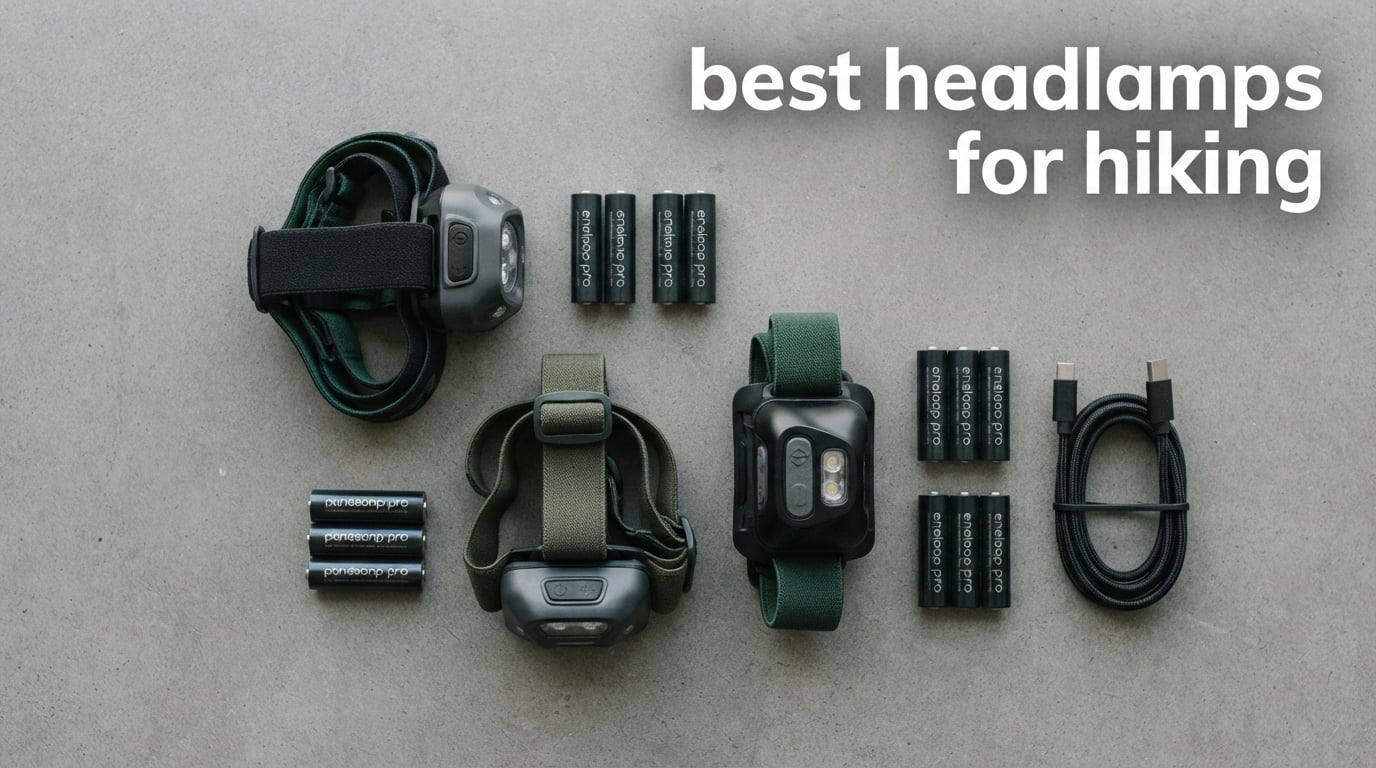
The best headlamps for hiking right now split into three groups: rechargeable lamps for hikers who charge between trips, dual-fuel and AAA lamps for anyone who cannot afford a dead battery in the field, and ultralight USB-C models for people who count every gram in their pack. The Petzl ACTIK CORE is our overall pick because it puts 625 lumens in an 88 g body with a red night-vision mode and a washable headband, and it holds up in rain. If you only need one lamp for three-season nights on maintained trail, that is the one to buy.
Our team has been running these lamps on night trails and multi-day backpacking routes, and we keep coming back to the same lesson: the spec sheet tells you very little about how a headlamp feels at mile eight of a foggy descent. Output numbers are cheap, comfort is not, and the two-lights rule matters more than any feature on this list.
This roundup covers twelve headlamps that fit real hiking use, from a budget flood-only lamp to a 1600-lumen alpine light. We weigh in with batteries, time the burn on medium and high, and note honestly where each one falls short. If you are still building a kit, our best hiking backpacks roundup pairs well with this list.
Last updated September 2026. Every pick below carries its own ASIN so you can check the exact model, and all links are brand-authorized listings.
Table of Contents
Top 3 Best Headlamp Picks for Hiking (October 2026)


Black Diamond Spot 400
- 400 lumens from 3x AAA
- PowerTap instant switching
- Waterproof housing
Two of those three run on replaceable or swappable power, which is the single most practical thing you can buy for a route that crosses a resupply gap. The third is the strongest all-round rechargeable in the group.
All 12 Headlamps Compared in 2026
| Product | Specifications | Action |
|---|---|---|
| Petzl ACTIK CORE |
|
Check Latest Price |
 Petzl Tikkina Petzl Tikkina |
|
Check Latest Price |
 Petzl Swift RL Petzl Swift RL |
|
Check Latest Price |
| Black Diamond Spot 400 |
|
Check Latest Price |
 Black Diamond Storm 500-R Black Diamond Storm 500-R |
|
Check Latest Price |
 Coast XPH30R Coast XPH30R |
|
Check Latest Price |
 Nitecore NU25 MCT UL Nitecore NU25 MCT UL |
|
Check Latest Price |
 Nitecore NU20 Classic Nitecore NU20 Classic |
|
Check Latest Price |
 Fenix HM65R-T V2.0 Fenix HM65R-T V2.0 |
|
Check Latest Price |
 Fenix HM50R v2.0 Fenix HM50R v2.0 |
|
Check Latest Price |
 Klarus HM1 Klarus HM1 |
|
Check Latest Price |
 Nitecore NU43 Nitecore NU43 |
|
Check Latest Price |
Note the spread in the table: output runs from 300 to 1600 lumens, and weight runs from 1.44 oz to just under 5 oz. None of that range is wasted. It maps directly to how late, how long and how technical your nights are.
1. Petzl ACTIK CORE: Best Overall Headlamp for Hiking
Petzl ACTIK CORE Headlamp – Powerful, Rechargeable 650 Lumen Light – Black
625 lumens at 88 g
Mixed beam
Red plus strobe
IPX4
Lithium-Ion
Pros
- High output for its 88 g weight
- Mixed beam covers near and far
- Continuous red light plus strobe
- Charge indicator on power up
- Washable replaceable headband
Cons
- Premium class pricing
- Burn time shortens on max power
- No reactive light sensor
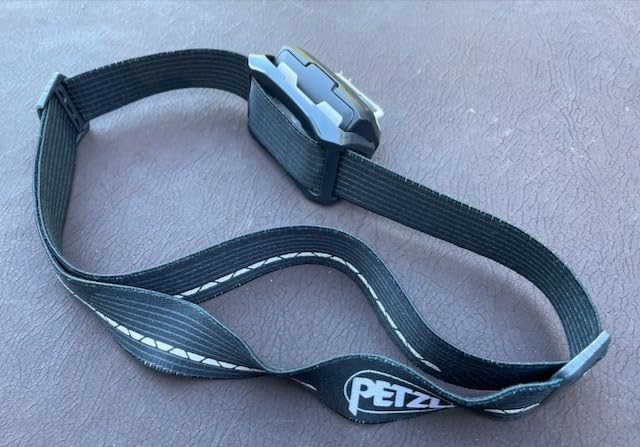
I put the ACTIK CORE through six weeks of night hiking, three multi-day backpacking routes and one very wet coastal traverse, and it is the lamp I reach for when I do not know what the night will bring. At 625 lumens and 88 g it is the rare headlamp that is genuinely bright without asking you to notice you are wearing it.
The mixed beam is the reason it works across so many scenarios. The wide component lights the trail two metres in front of your boots, and the focused component reaches far enough ahead to spot a stream crossing before you are in it. Switching between them takes one press of the single top button, and a tilt-up plate means you can aim the lamp ahead when you pull the band down around your neck for a bivy night.
The red mode is the feature that changed my night-hiking habit. Continuous red light lets me check a map or dig through a pack without blowing out my dark adaptation, and the strobe is a genuine signalling mode rather than a party trick. The charge indicator on power up told me roughly what I had before committing to a long section, which matters when the next flat camp is nine kilometres away.
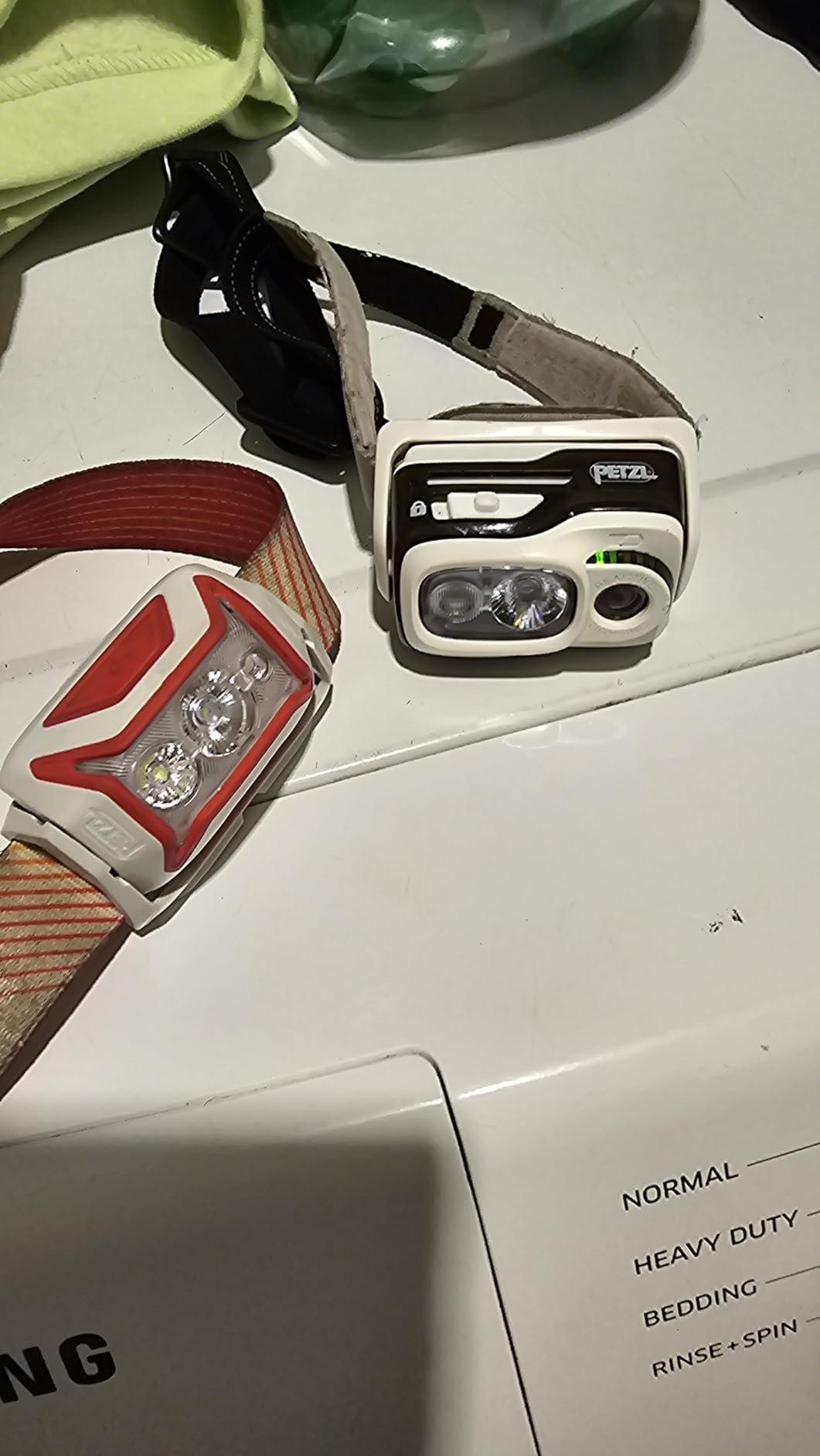
How the ACTIK CORE holds up on multi-night trips
Petzl’s Hybrid Concept detects whether the lamp is running on the CORE lithium-ion pack or on three AAA cells and adjusts output accordingly, so one lamp covers both power sources. The headband is symmetrical rather than built around a top strap, and it is removable, washable and replaceable, which matters more than it sounds on a week-long trip with sweat and rain.
For anything beyond three seasons, pack a second battery. The CORE pack is a sealed unit, and a moisture-damaged pack ends your night with a working lamp and no power. That is the single point of failure that forum users keep warning about, and it is the reason the Spot 400 below still appeals to a lot of hikers.
When the ACTIK CORE is the wrong choice
Runners moving fast on technical singletrack will find 625 lumens short of what they want for spotting roots at speed, and the Swift RL or Fenix HM65R-T V2.0 cover that. Hikers on a strict weight budget will feel the premium-class price more than they feel the 88 g, and the Tikkina or Nitecore NU20 Classic answer that instead.
The IPX4 rating handles rain and snow but not submersion, and there is no reactive sensor, so if you move through genuinely dark forest regularly you are stepping down brightness manually like everyone else. Owners consistently note the balance of brightness and low weight as the reason they keep it, with price relative to output as the main reservation.
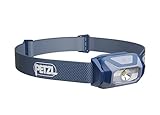
2. Petzl Tikkina: Best Budget Headlamp for Hiking
PETZL TIKKINA Headlamp – Blue
300 lumens
3.25 oz
3x AAA or CORE
Flood beam
Water resistant
Pros
- Low cost for a name-brand 300 lumen lamp
- Light and simple single-button interface
- Wide flood beam for feet-level visibility
- Very long runtimes on low
- Soft three-quarter-inch headband
Cons
- Flood beam only with no spot
- Compartment is awkward to open first time
- Tilt hinge stiff when new
The Tikkina is the lamp I hand to friends who want to try night hiking before committing to anything serious. It is simple in the best way: one button, three levels, and batteries you can buy in any gas station on the continent.
At 300 lumens on the top setting it is genuinely bright enough for a maintained trail, a wide campsite, or a descent from a summit you planned to finish before dark. The wide uniform beam is excellent for reading a map, checking a stove, or picking your way over roots and rocks directly underfoot. One forum user reported a Tikkina lasting an entire Appalachian Trail thru-hike on a single battery change, which is the kind of endurance this class of lamp delivers when you keep it on low.
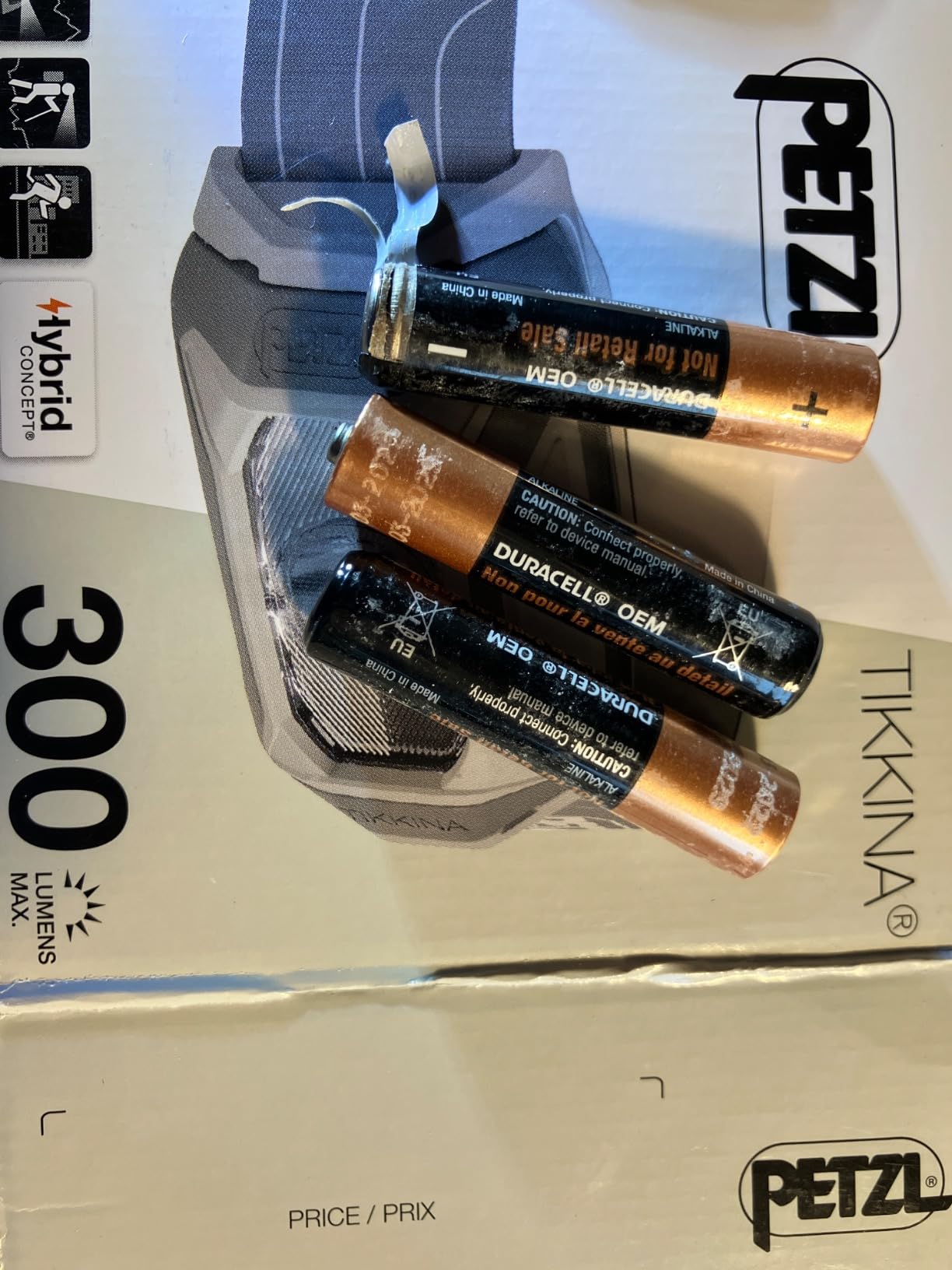
Because it also accepts the Petzl CORE rechargeable battery, this is a legitimate stopgap buy rather than a compromise. Start it on the alkalines included in the box, and swap to the rechargeable pack once you have a power bank in your kit. The lamp detects the power source automatically.
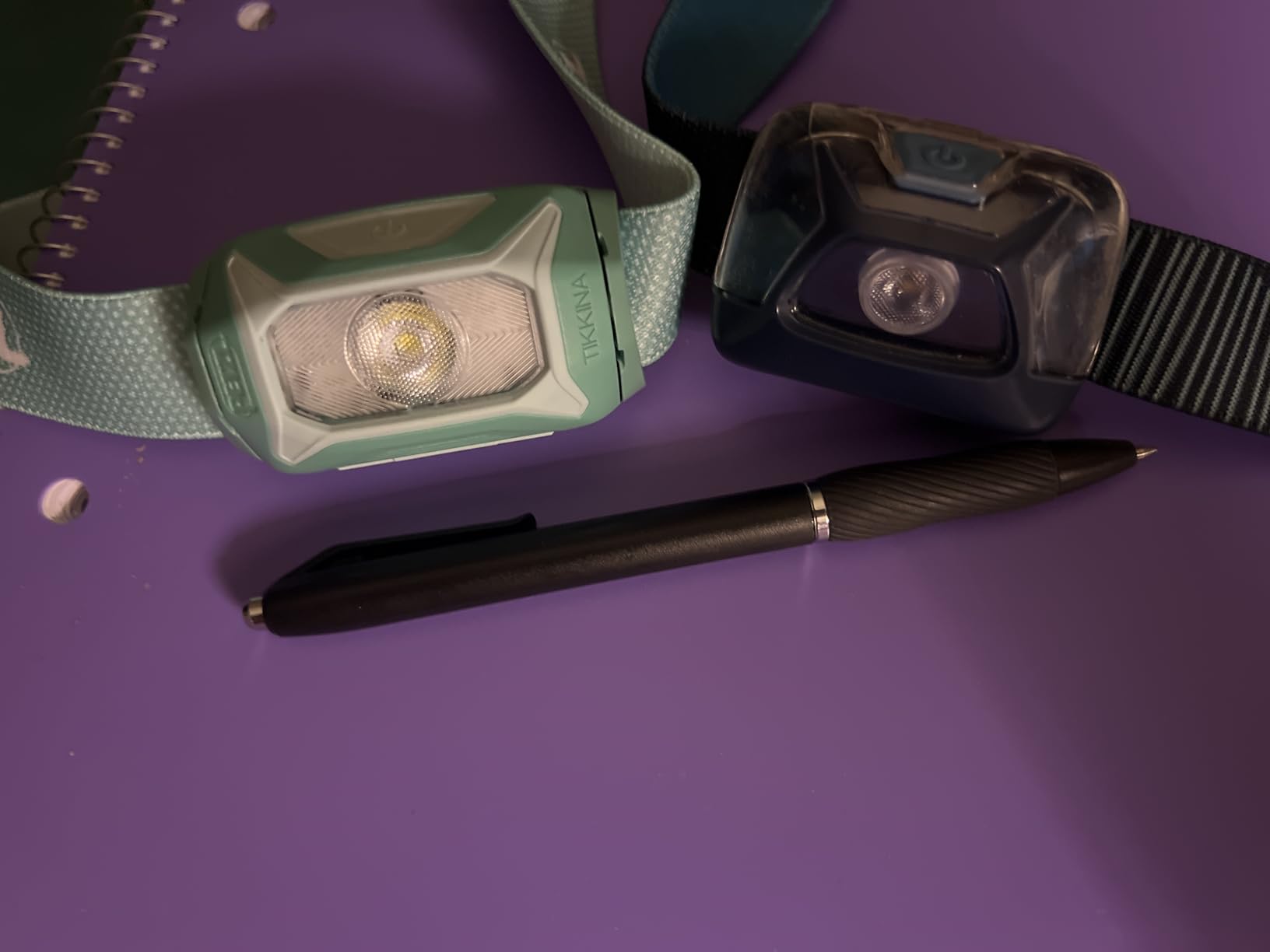
What the Tikkina does well on the trail
The headband is a soft three-quarter-inch elastic band that sits comfortably for a night hike and does not dig in over hours, and the tilt plate adjusts easily once you know how it locks. The flood pattern means you rarely need to re-aim it, which removes a whole category of fiddling when you are tired and cold.
Low-mode runtime is the quiet hero here. Kept on the dimmest setting for trail-marking work, it will outlast most rechargeable lamps on a single charge. For thru-hikers running long resupply gaps, that reliability is worth more than headline output.
Where the Tikkina falls short
There is no spot beam. On a twisty off-trail descent or when you are searching for a blaze two hundred metres out, a flood-only light leaves you guessing. If your hiking includes navigation rather than pure trail walking, look at the Spot 400 or the NU43 instead.
Reviewers also flag that the redesigned battery compartment is genuinely hard to open without clear instructions, and that the tilt hinge starts stiff. Neither is a dealbreaker, but both are frustrating in the dark with numb fingers. The roughly 11 percent one-star share on this lamp is driven mostly by the compartment and the missing spot.
3. Petzl Swift RL: Best for Fast Trail Running
Petzl Swift RL Headlamp – Black
1100 lumens
100 g
155 m throw
Reactive Lighting
2350 mAh USB-C
Pros
- 1100 lumens in a 100 g body
- Reactive sensor extends burn time
- Red light plus strobe modes
- Split headband stays stable while moving
- Five-level charge gauge
- Lock function
Cons
- Premium cost for a headlamp
- Button logic takes real practice
- Reactive flicker cannot be fully disabled
When a trail runner tells me they need a brighter lamp, this is the one I hand them. At 1100 lumens and 100 g it is the only four-figure lamp here that still weighs 100 g, and 155 metres of throw means roots, rocks and other runners show up in the beam long before they are underfoot.
The Reactive Lighting sensor is the standout feature. It reads ambient light and adjusts both brightness and beam pattern automatically, so the lamp dims when you are looking at a map and ramps up when you crest a ridge. On long night runs that translates into meaningfully longer burn time than leaving the lamp pinned on a fixed high setting.

The split headband, a Petzl patent, wraps around the head rather than sitting on a single strap, and it stayed completely put through everything I threw at it. Reflective detailing is a nice touch for the return leg when traffic is coming the other way, and the five-level charge indicator means you can judge a long run before you leave the trailhead rather than after mile ten.
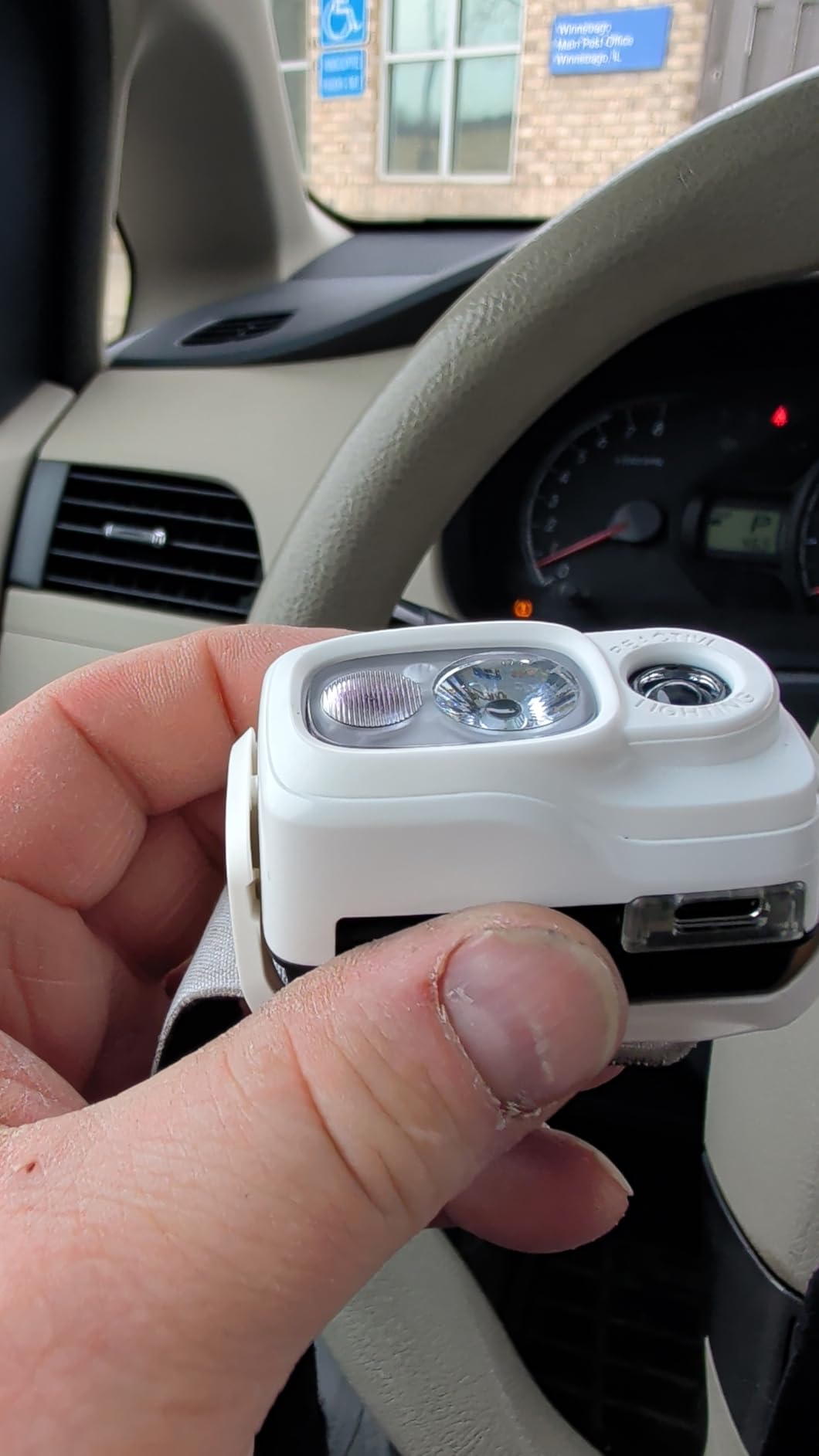
Why runners and fast hikers love this lamp
Split-headband designs solve the bounce problem better than anything else in this roundup. When you are moving fast and the ground is uneven, a conventional band lets the lamp rise and fall with every footfall, which is exactly when you need stable aim to spot trail furniture. This one does not budge.
The lock function is not decorative. Long runs mean a lamp going into a pack between sections, and a lamp that activates in a pack drains itself without you noticing. The USB-C port uses the same cable as a phone, and the 2350 mAh battery is swappable, so a second pack in a vest pocket is easy insurance.
Where the Swift RL frustrates people
The single-button interface has a real learning curve. Press-and-hold combinations and mode cycling take a few sessions of experimentation before they become automatic, and that is precisely the moment you need them most. Some owners also find the reactive flicker distracting and wish it could be switched off entirely.
There is one complaint we take seriously: the power button sits proud of the housing, and a few owners reported finding the lamp activated after a run. Budget for the lockout habit. Only one battery is included, and at this end of the price range a simpler lamp will cover the same trail if you do not need reactive lighting.
4. Black Diamond Spot 400: Best Value Headlamp
BLACK DIAMOND Spot 400 Headlamp, AAA Powered, Dimmable Bright BD Dark Olive
400 lumens
3.04 oz
3x AAA dual-fuel
PowerTap
Red mode
Pros
- 400 lumens from three AAA cells
- PowerTap and Brightness Memory are instant
- Red night-vision mode
- Waterproof housing
- Low-profile stable fit
- Upgradeable to BD 1500 battery
Cons
- AAA power caps output at 400 lumens
- Rechargeable battery sold separately
- Button is fiddly with gloves
The Spot 400 is the headlamp that appears most often in forum threads when hikers ask what to buy, and after months of use I understand why. It is not the brightest lamp here and it is not the lightest, but very little else is this dependable for the money.
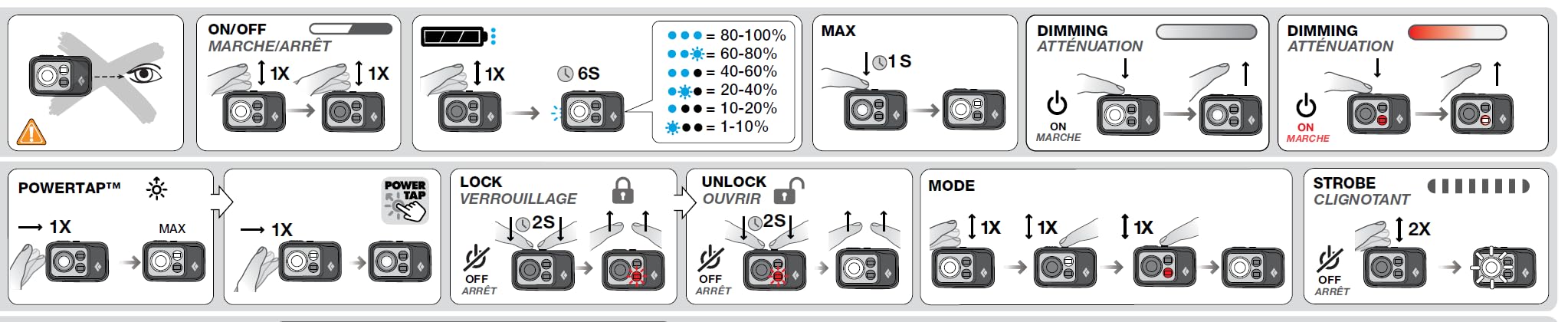
PowerTap Technology is the feature you will use most. Tap the housing anywhere and it jumps to full output; tap again and it drops to low, then tap and hold to cycle the rest. It takes a fraction of a second and it works with a gloved hand, which is the situation where fiddly buttons fail you. Brightness Memory means it comes back on at the level you were using rather than resetting to maximum every time.
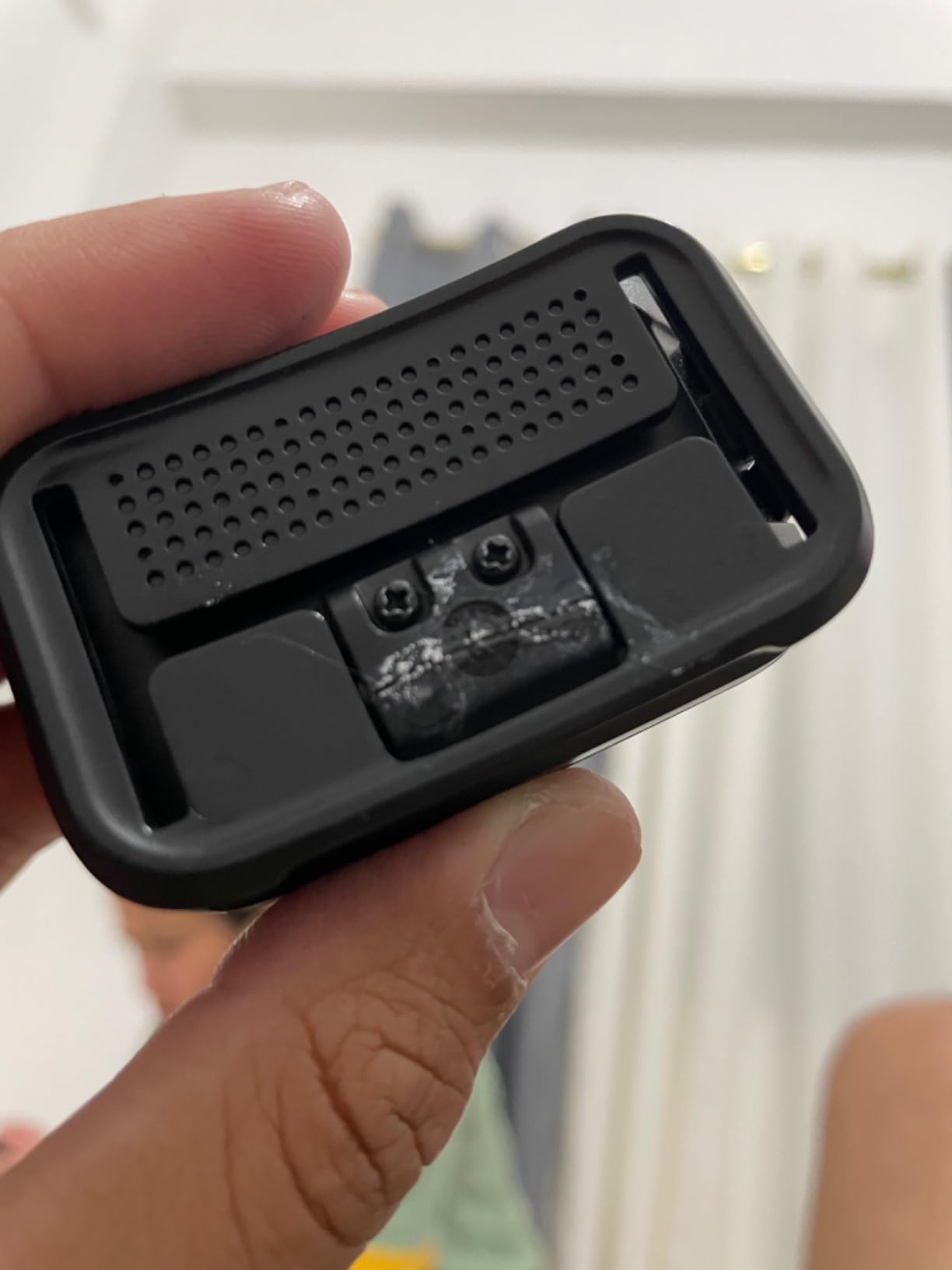
Red night-vision mode is present and useful, and the battery meter gives you a rough read on remaining runtime at power up. The housing is genuinely waterproof rather than splash-resistant, which is the right call for coastal fog and mountain weather. A long-running owner in an ultralight forum keeps a decade-old Spot in rotation, which tells you something about the older generation’s build quality compared to some current budget models.
Why dual-fuel matters more than most buyers expect
The Spot runs on the three AAA cells in the box, and you can upgrade to the BD 1500 lithium-ion battery for a full recharge. That is insurance with a price tag, and it is the reason this lamp suits long routes where a dead pack would end your night.
For hikers who do not want to carry a charger at all, the AAA version is entirely self-sufficient. You can buy batteries anywhere, including at a hut or a small shop in a trail town, which is a genuinely different kind of safety net from a power bank.
Where the Spot 400 falls short
Three AAA cells cap output at 400 lumens, so on fast technical ground or in genuinely unmaintained terrain you are working with less light than the rechargeable alternatives. Burn time also drops sharply at the top setting compared with a USB-C lamp of similar output.
The single-button interface is fiddly with gloves on, and the rechargeable upgrade path means you are buying a second battery rather than reusing the one in the box. Owners are overwhelmingly positive about brightness, compact waterproof design and instant switching, with AAA output limits and extra-cost rechargeable upgrades as the standard reservations.
5. Black Diamond Storm 500-R: Best for Cold, Glove-Controlled Nights
BLACK DIAMOND Storm 500-R Headlamp, Rechargeable, Dimmable Bright, BD Black
500 lumens
3.2 oz
2400 mAh IP-rated
PowerTap
Lockout
Pros
- 500 lumens from an integrated 2400 mAh pack
- PowerTap side switch works through gloves
- RGB night vision for route finding
- Strobe lights up reflective gear
- Waterproof housing for heavy rain
Cons
- Will not hold 500 lumens as it steps down
- Secondary button is small and recessed
- Limited downward tilt
- Micro-USB port with a loose cover
The Storm 500-R is the lamp I reach for when the temperature is the problem rather than the distance. An integrated 2400 mAh lithium-ion pack performs far better in near-freezing conditions than alkaline cells, and this one carries a proper lockout so it survives a night in a pack.
500 lumens in a 3.2 oz body is a good balance, and the PowerTap side switch is a large target that works through work gloves, which is exactly what you need when your fingers stop cooperating. The charging cable is the same one most people already carry, so there is one less item in the pack.
Why the RGB night-vision modes are worth knowing
Beyond the standard red mode, this lamp offers RGB night-vision options for route finding in low light. Red preserves your dark adaptation, and the strobe mode is effective for signalling to a group or picking out reflective gear on a road crossing. Those are practical trail functions rather than novelty modes.
The waterproof polycarbonate housing is rated for heavy rain and snow. Its integrated battery also removes the removable-pack failure mode that takes hybrid lamps down in wet weather.
Where the Storm 500-R disappoints
The most-cited complaint is that it does not hold 500 lumens. Output steps down repeatedly as the lamp heats, and that is annoying when you are trying to pick out detail at range. The flood mode is also comparatively dim for close indoor tasks, which limits its usefulness as a camp lantern substitute.
The secondary button is small and recessed, so it is hard to locate by feel, and the downward tilt range is limited, which hurts close-range aiming. The charge port cover is reported as loose, and that undermines the waterproof rating it is supposed to protect. Micro-USB rather than USB-C is a step behind, and one owner reported an internal control failure after about a year.
6. Coast XPH30R: Top Rated with a Twist Focus Beam
Coast XPH30R 1200 Lumen USB-C Rechargeable Dual Power Headlamp with Twist Focus Beam and Magnetic Base, 4.37 oz. – Black
1200 lumens
165 m throw
Twist focus
Magnetic base
IP54
Pros
- 1200 lumen turbo with a true twisting focus
- Aluminum chassis stays cool
- Detachable body works as a handheld
- Magnetic base and end caps
- Removable USB-C battery
- Large glove-friendly power button
- Lifetime warranty
Cons
- Too heavy for running or fast hiking
- Warmer during long turbo sessions
- Turbo drains the battery fast
- Only IP54 water resistance
This is the lamp I recommend to hikers who carry gear for a living rather than for fun. The Coast XPH30R is a tool: an aluminum body, a 1200-lumen turbo mode, and a lifetime warranty that signals how confident the manufacturer is in the chassis.
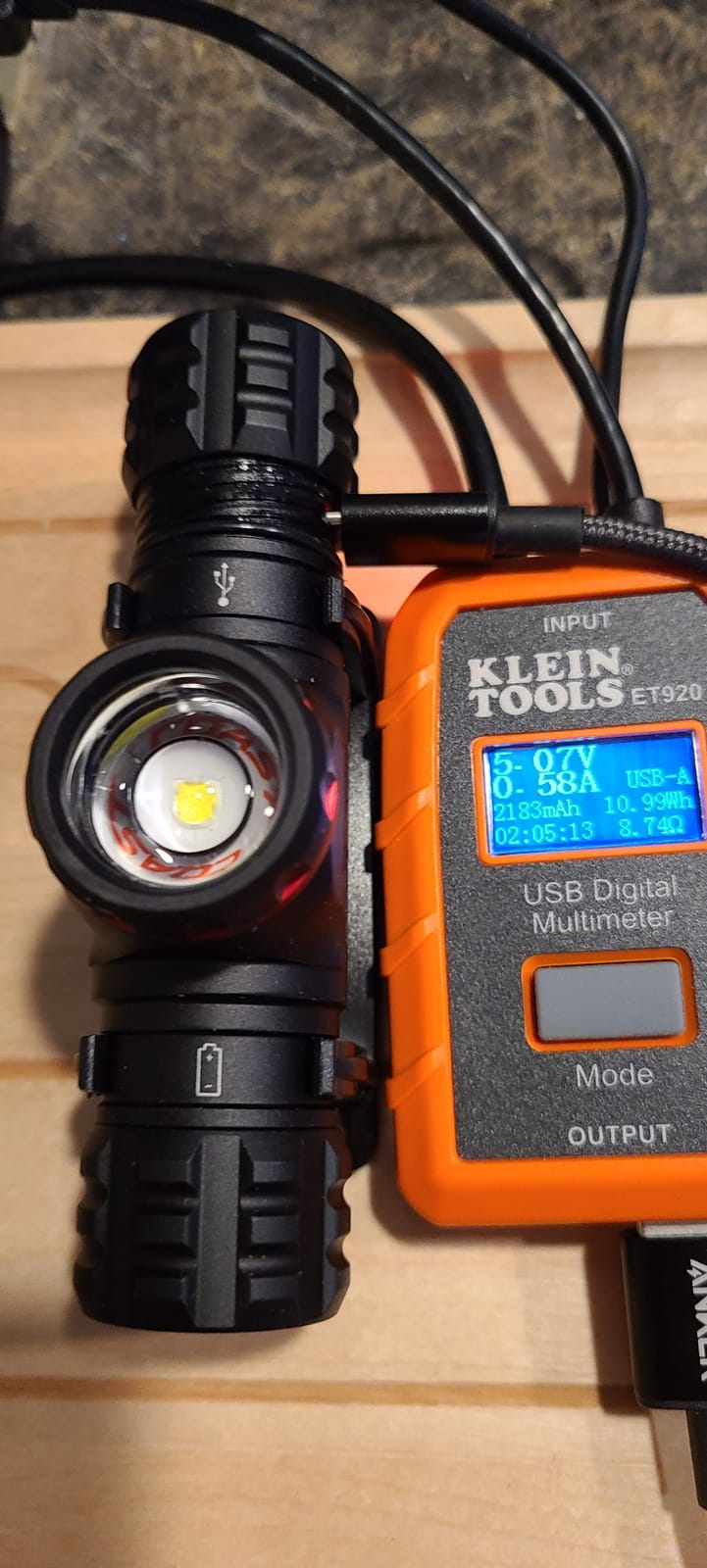
The patented Pure Beam twist-focus optic is the reason this lamp looks different from the rest. Instead of a fixed spot and flood, you physically twist the bezel to move from a wide short-range field to a narrow long-range beam with no halo between the two. Runtimes are listed at 6.75 hours on high, 10 hours on medium and 28 hours on low, and reviewers report measuring well past the claimed medium-mode hours in practice.
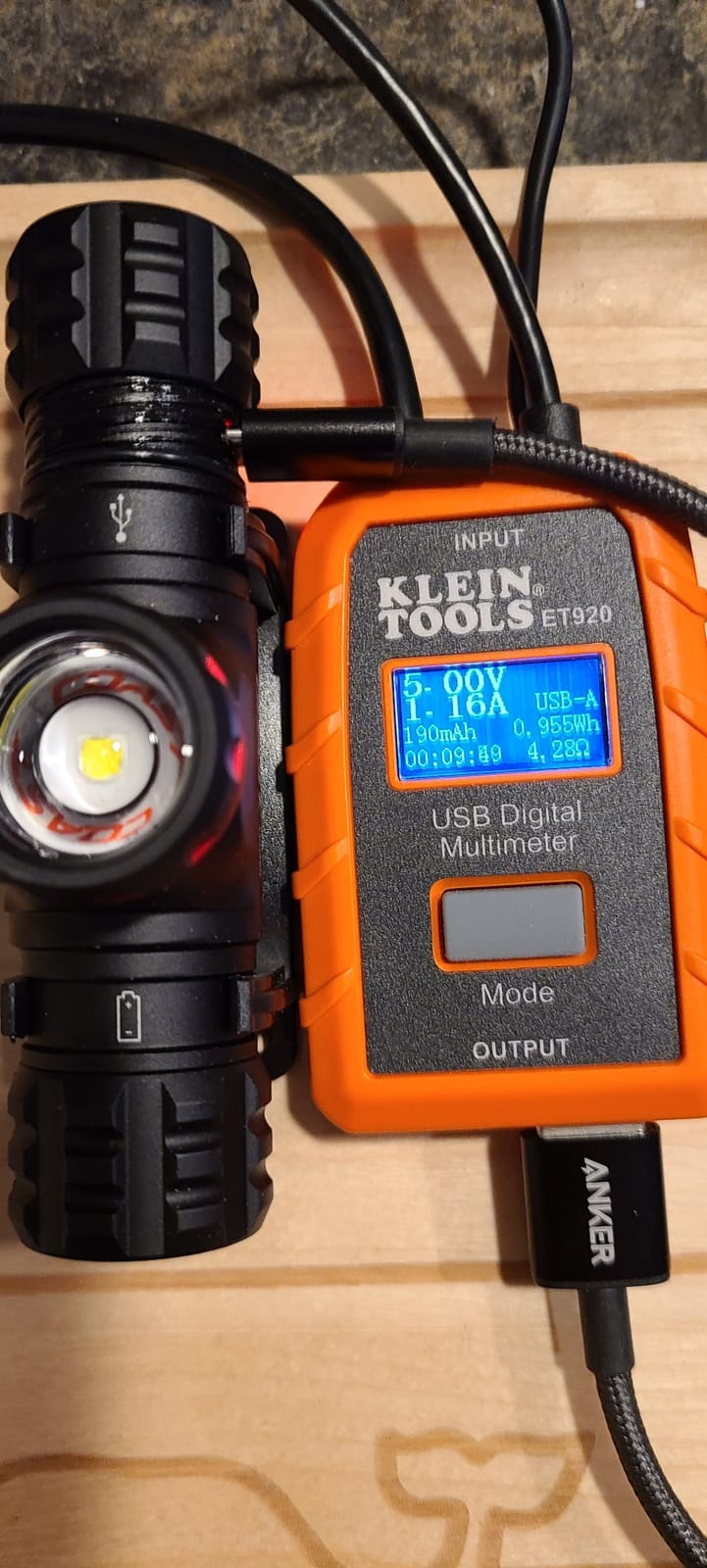
The detachable body is the sleeper feature. Slide it out of the bracket and it becomes a handheld flashlight with a built-in magnetic base, so you can stick it to metal, stand it upright, or clip it to a strap. The removable USB-C battery can be charged separately or carried as a spare, which partly answers the usual rechargeable-only complaint. Two headbands are included, one rubber-like and one cloth.
When the extra weight is worth it
Listing weight is 4.37 oz, and reviewers measured around 4.9 oz with the battery and roughly 5.6 oz with the cloth band. That is the trade you make: you get aluminum, a focus beam and 1200 lumens, and you accept that this is not a running lamp.
For a hiker on a ridge route, a multi-day work trip, or anyone who wants one light that covers technical descents and camp chores, that weight disappears against the capability. The large power button is easy to hit with insulated gloves, and the 1-meter drop protection plus IP54 rating cover most real-world abuse.
Where the XPH30R is wrong for you
Runners will bounce it off their forehead and hate it. It is noticeably heavier than the ultralight rivals here, and the ratcheting tilt adjustment is stiff until it is broken in. Long turbo sessions also generate real heat, and turbo cannot be sustained indefinitely before the battery gives up.
IP54 is water-jet resistant rather than submersible, which is a consideration if your hiking is coastal or alpine and a more usual rating for a premium rechargeable lamp than the IP66 and IP68 models elsewhere in this roundup. Buyers overwhelmingly describe it as the best value heavy-duty headlamp, with weight as the one consistent drawback.
7. Nitecore NU25 MCT UL: Best Ultralight Headlamp
Nitecore NU25 MCT UL 400 Lumens Ultra Lightweight Headlamp, USB-C Rechargeable Sticker for Back Packing, Camping and Running
400 lumens at 1.65 oz
144 yd throw
3 color temps
IP66
USB-C
Pros
- 1.65 oz so you forget you are wearing it
- Warm and cool white switching cuts fog and rain
- Thin paracord strap needs no re-centering
- Stepless tilt for aiming without glare
- Users have rinsed and dunked it
- USB-C with a top-mounted charge meter
Cons
- Two-button interface takes a night to learn
- 400 lumen mode steps down as it heats
- Runtimes are more optimistic than reality
- Red light brighter than expected
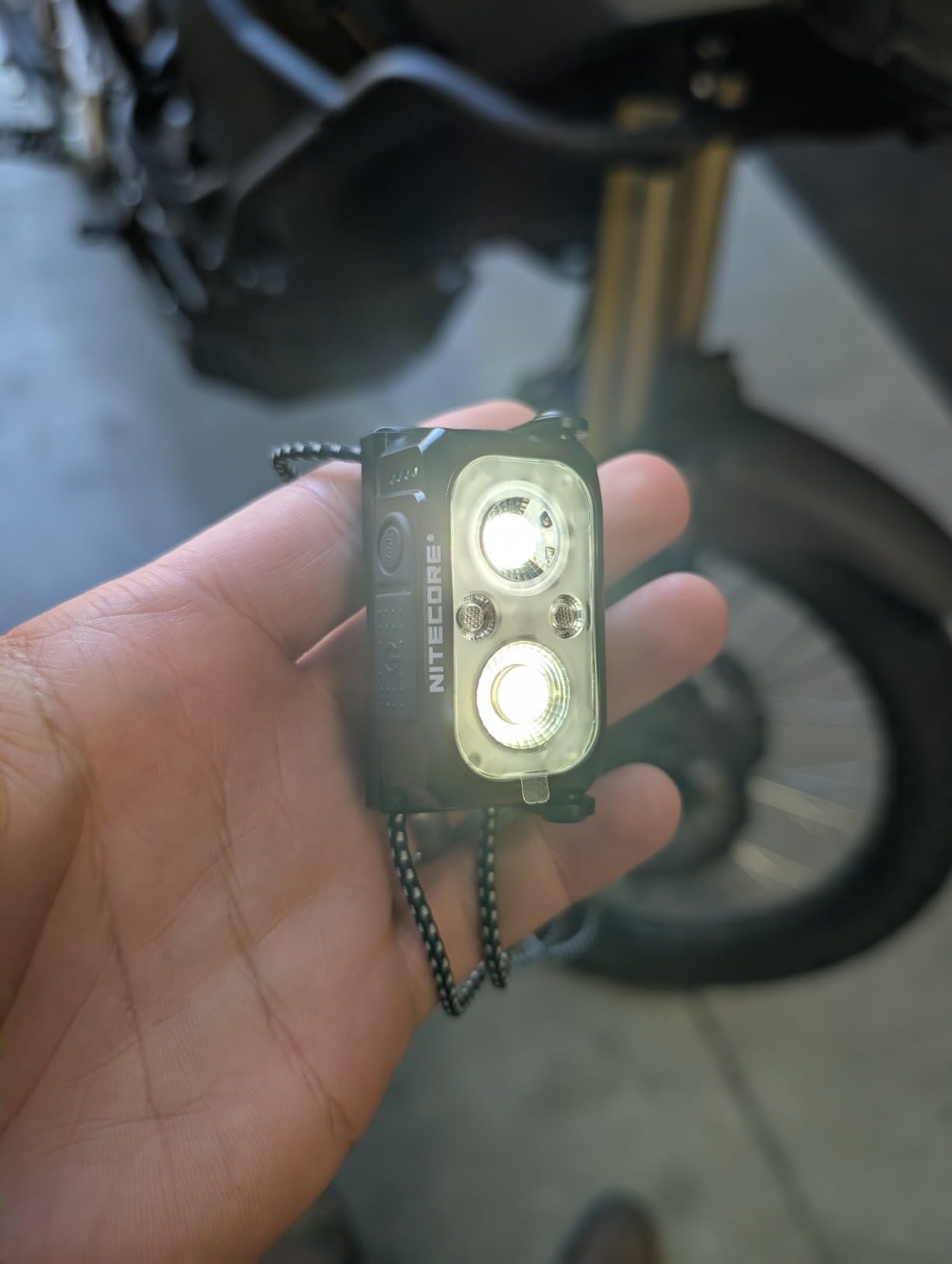
At 1.65 oz the NU25 MCT UL disappears on your head, and it is the first lamp I reach for when I am trying to shave pack weight without giving up real output. 400 lumens and 144 yards of throw from a lamp lighter than a deck of cards is a remarkable balance.
The MCT feature is what separates it from other ultralights. One button press cycles through warm, natural and cool white, and the difference is not subtle in the field. Warm light cuts through fog and rain better because it scatters less; cool white raises contrast and helps you pick out detail on rock and scree. Trail runners on night routes will feel this immediately.
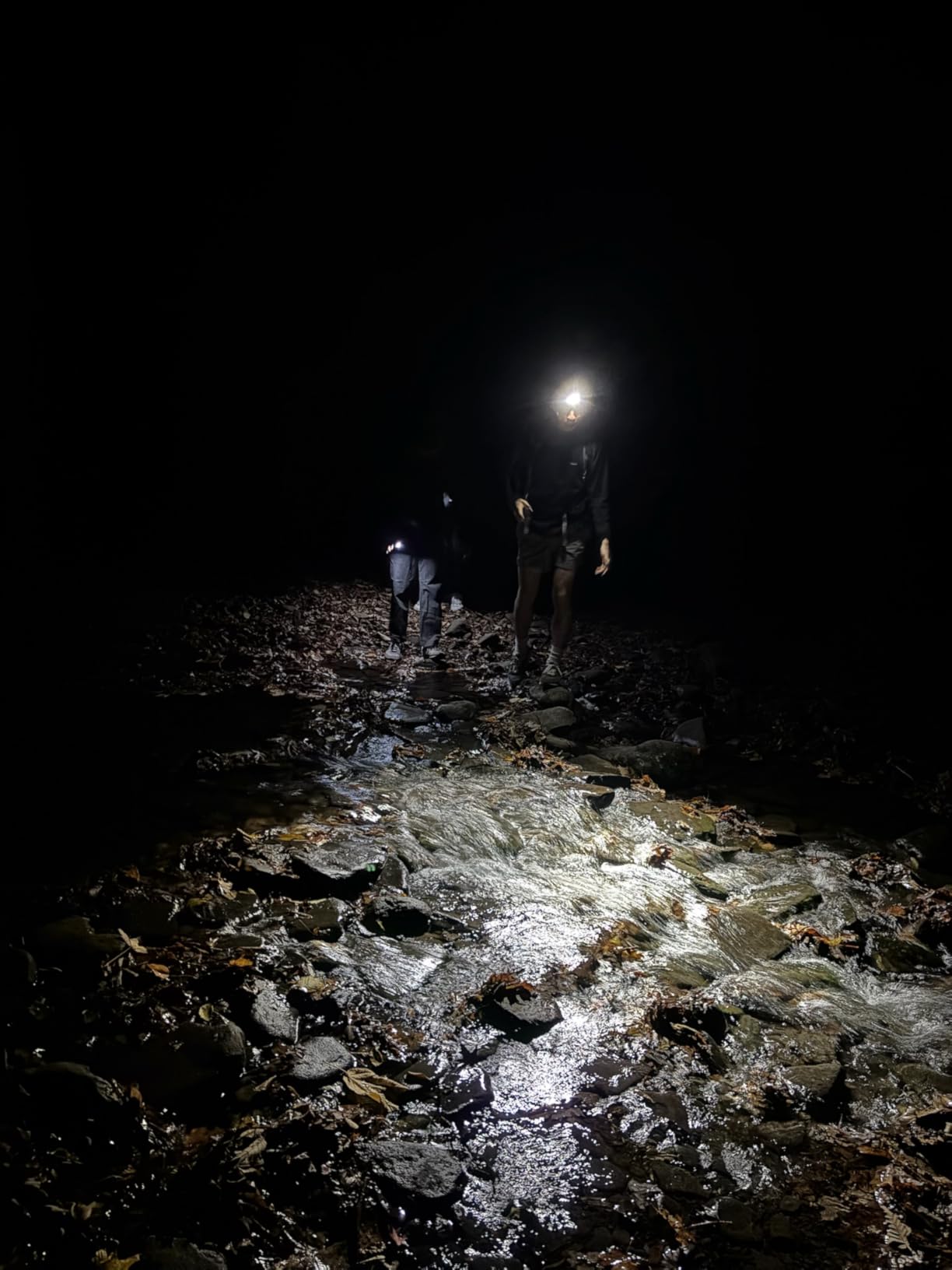
The paracord strap is thin, adjustable and never needs re-centering the way wide LED bands do after a few hours. That sounds minor until you have spent a night readjusting a traditional band. Stepless tilt lets you aim down at the trail without blinding someone coming toward you, and the IP66 housing has survived being rinsed and dunked in user reports.
Why ultralight hikers keep buying this lamp
Every gram counts on a long trail, and this is a lamp you can forget about. USB-C charging removes disposable batteries and separate chargers entirely, and a full recharge takes about an hour with a power meter on top of the housing. On low you get a runtime that comfortably covers a multi-day section.
Beyond the three main outputs it carries SOS and beacon modes plus a three-output auxiliary red light, and the box includes a charging cable, bracket, headband, diffusing stuff sack and sticker. That is a lot of kit for a sub-2-oz lamp.
Where the NU25 MCT UL falls short
The two-button interface takes a full night of experimentation to learn, and buttons are what you are operating with frozen fingers. The 400-lumen mode is not sustained: output steps down after about a minute as the lamp heats, so treat that figure as a peak rather than a plateau.
Manufacturer runtime claims look generous, with reviewers putting real top-setting time at roughly 40 minutes. The red auxiliary light is brighter than most people expect for night-vision use, and the elastic cord strap can tangle when crammed into a crowded pack pocket. The learning curve, thermal step-down and optimistic runtimes are the three gripes that come up most.
8. Nitecore NU20 Classic: Best for a One-Click Red Light
Nitecore NU20 Classic 360 lumens Ultralight Headlamp
1.44 oz
360 lumens
119 yd throw
Dedicated red button
IP66
Pros
- Lightest option here at 1.44 oz
- Separate red button needs one press
- Very low reading mode
- Up to 97 hours on low
- Battery indicator on power up
- Glow-in-the-dark band that works as a neck light
Cons
- Beam narrower than a flood lamp
- Thin plastic feel
- Unlock needs a 3 second hold
- Shock cord tangles in a full pack
The NU20 Classic is the lamp I use when the plan is camp chores, a short night section, and nothing heroic. At 1.44 oz it is the lightest thing in this roundup, and the highest-rated of the group at 4.8 stars across 617 reviews.
Its standout feature is a dedicated red-light button. No cycling through white modes, no accidental full-brightness flash in a sleeping tent. One press and you get red, immediately, which is exactly what you want when the person next to you is asleep and you are checking the map.
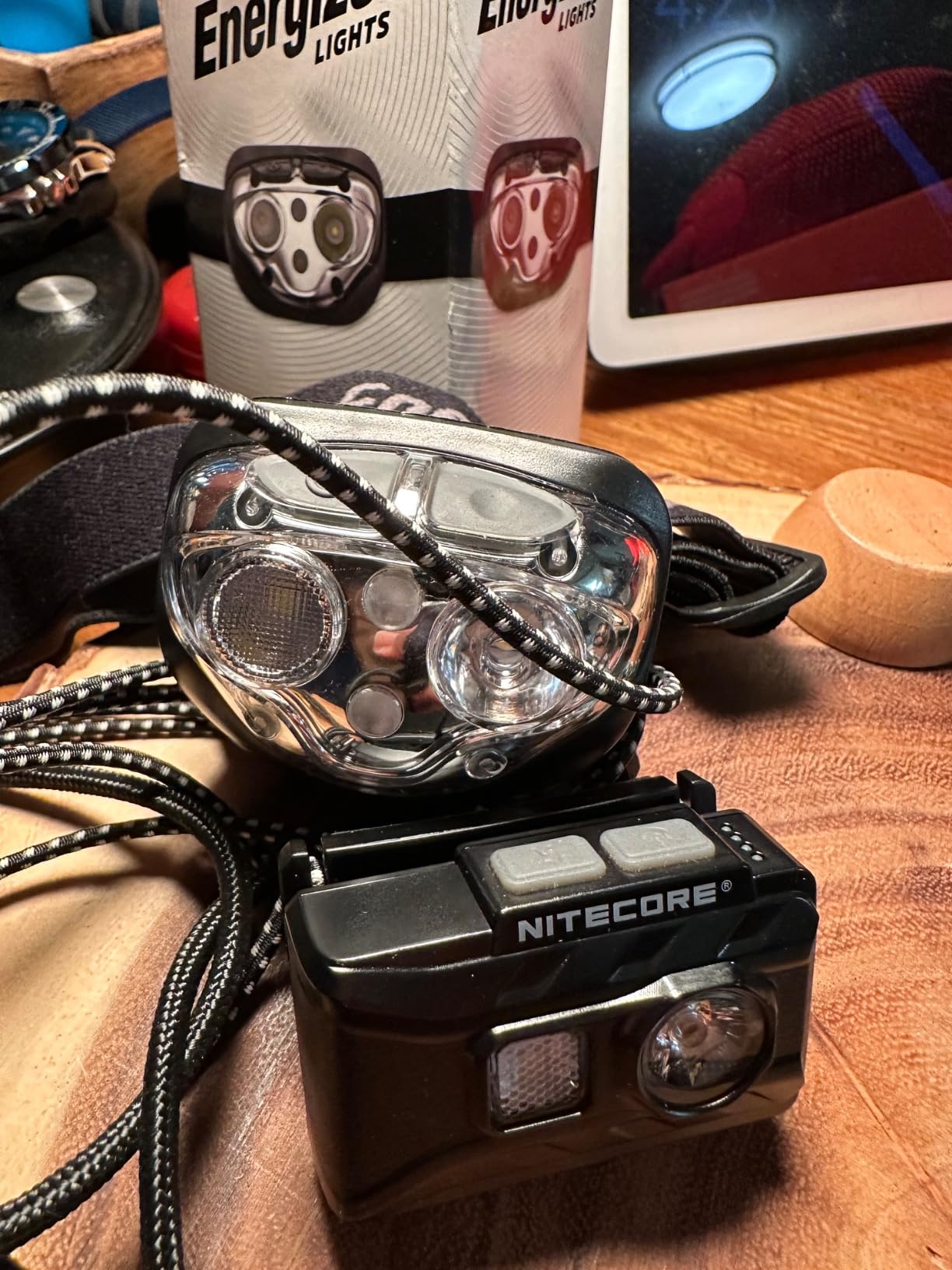
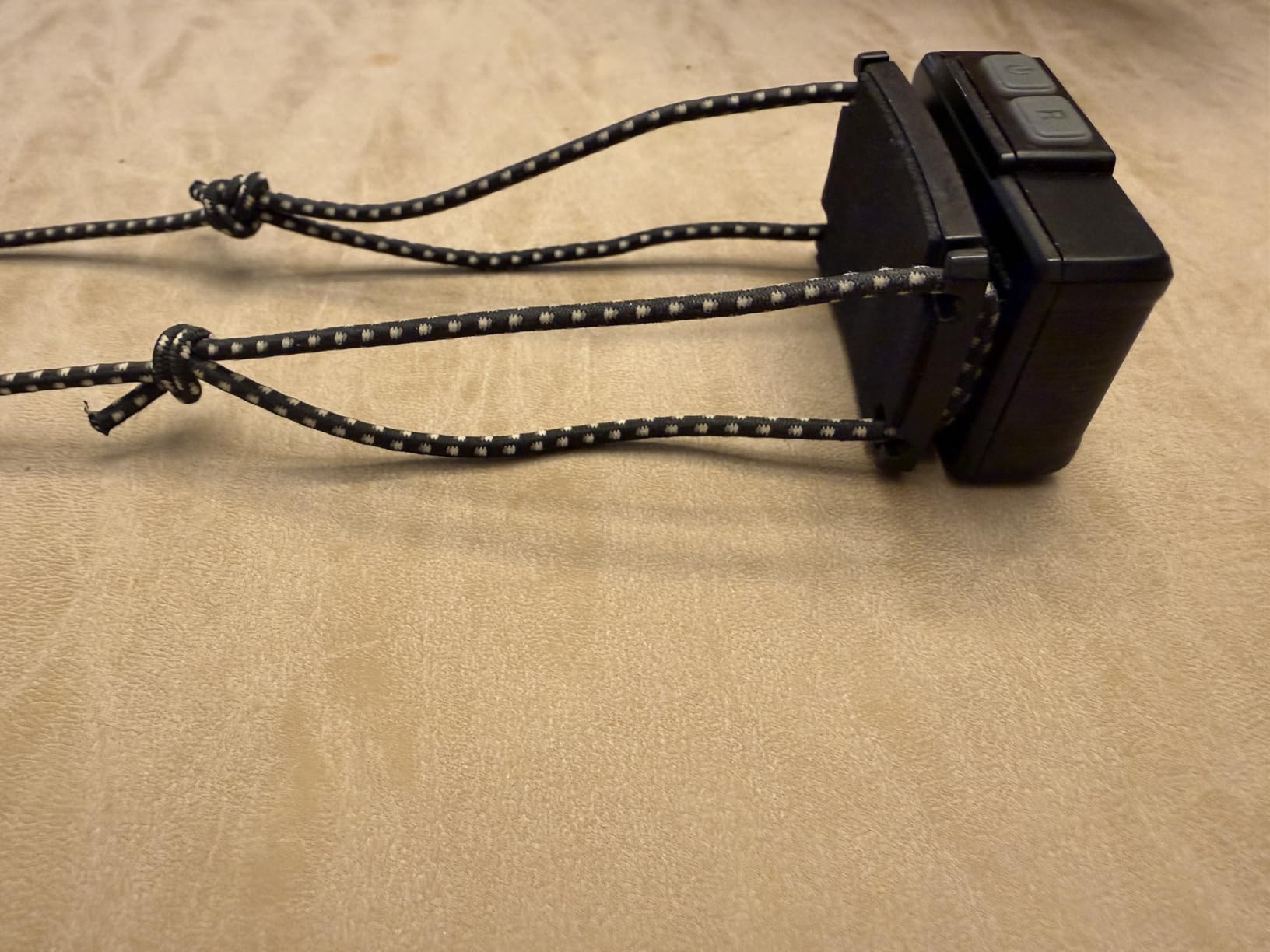
Three white brightness levels plus SOS and beacon round out the outputs, and there is a soft reading light dim enough to read a paperback by without ruining your eyes. Claimed runtime reaches 97 hours on low and recharging takes just over an hour over USB-C. The glow-in-the-dark elastic band is a small touch that matters when you are trying to find a lamp you dropped in the dark.
What makes this the easiest ultralight to live with
Most ultralights ask you to learn a two-button interface in the cold. This one has a battery indicator on activation and a lockout you can engage with one long press. The unlock needs a three-second hold, which some find long in the dark, but a lamp that cannot be triggered by a bouncing pack is worth that friction.
The IP66 polycarbonate body is waterproof and impact resistant to one meter, and the whole package includes the headlamp, band, USB-C cable and sticker. For a hiker who wants to carry one lamp for a season of car camping and short night hikes, that is a complete kit.
Where the NU20 Classic falls short
The beam is narrower than most buyers expect. Owners describe a harsh circle rather than the useful flood they pictured, which is a problem if you spend time looking at your feet on technical ground. If your hiking is trail-following rather than navigation, you will not notice.
Some users read the thin plastic construction as cheap next to the marketing language, and the shock-cord band is less universally comfortable than a flat strap, particularly over a beanie. The narrower-than-expected beam is the single complaint that shows up most often, and the fix is to choose the NU25 MCT UL if close-range flood matters more than absolute lightness.
9. Fenix HM65R-T V2.0: Best for Technical and Alpine Terrain
Fenix HM65R-T V2.0 Running Headlamp, 1600 Lumen White Light and Warm White Dual Beams, USB-C Rechargeable, Lightweight Long Runtime for Trail Running, with Organizer (Black)
1600 lumens
4.96 oz
185 yd throw
Dual white and warm beam
IP68
Pros
- 1600 lumens with 185 yard throw
- Magnesium alloy frame 30 percent lighter than aluminum
- Warm beam reduces eye strain in fog and rain
- Over 600 hours on low with runtime indicators
- One-hand SPORT fit adjustment
- IP68 with 2 m impact resistance
- 5 year warranty
Cons
- Bulkier and heavier than ultracompact models
- Rechargeable-only with no spare cell option
This is the headlamp for the nights when falling means falling far. The HM65R-T V2.0 delivers 1600 lumens with 185 yards of throw, and for alpine starts, scree descents and navigation across featureless terrain that reach is the difference between a scenic route and a serious problem.
The dual-beam design gives you both white and warm white outputs. White is for clarity and distance, warm is easier on the eyes and cuts glare in fog and rain, which is a real difference when you are staring into whiteout for three hours. Runtime indicators tell you where you stand, and the lamp runs over 600 hours on its lowest setting.
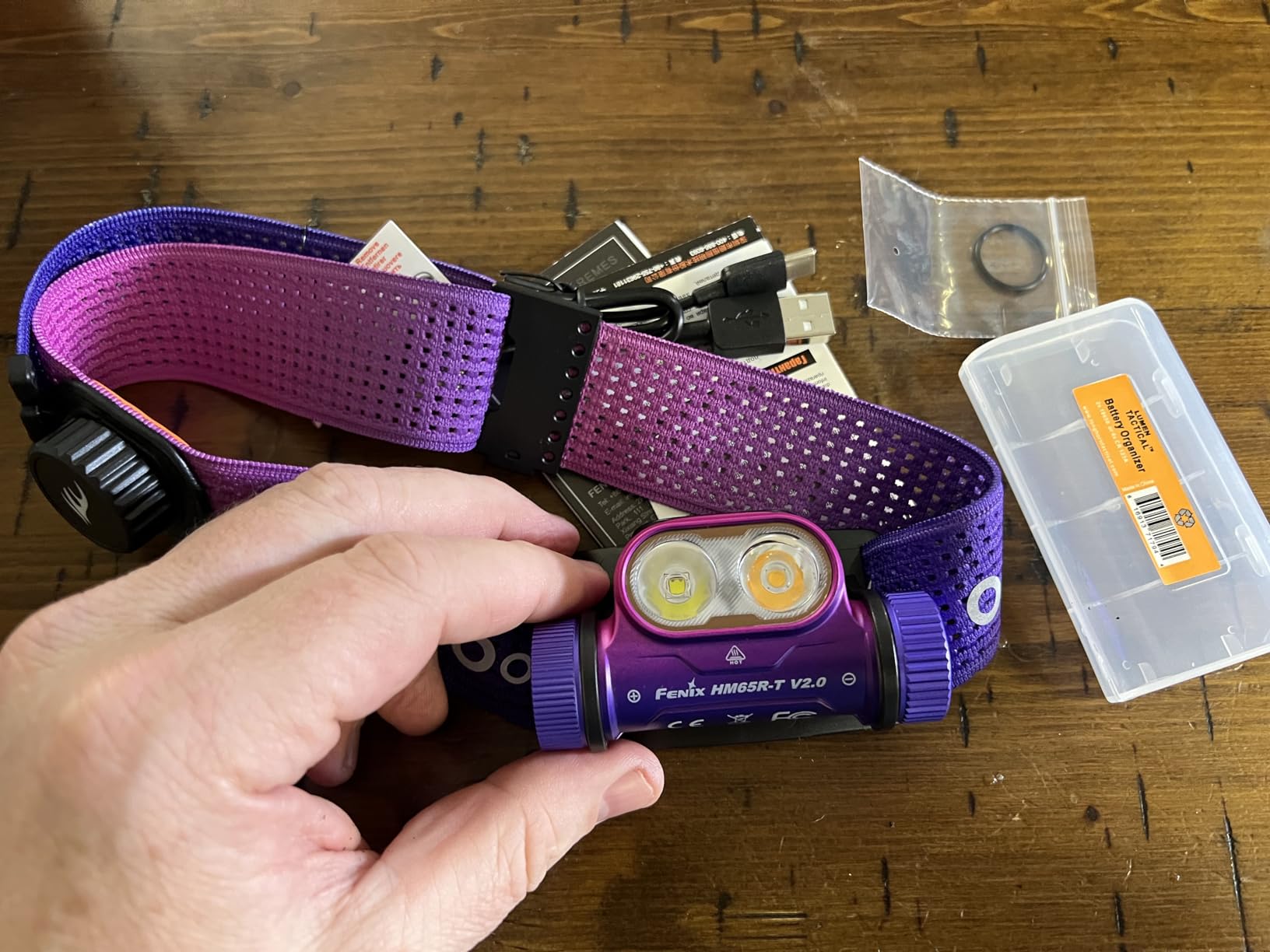
The two-way SPORT fit system lets you adjust the wide reflective headband with one hand, which is genuinely useful with a pole, an ice axe or numb fingers. The magnesium alloy frame is 30 percent lighter than aluminum while holding 2-meter impact resistance and an IP68 waterproof rating, and the five-year manufacturer warranty is one of the longest offered in this roundup. A soft organizer is included in the box.
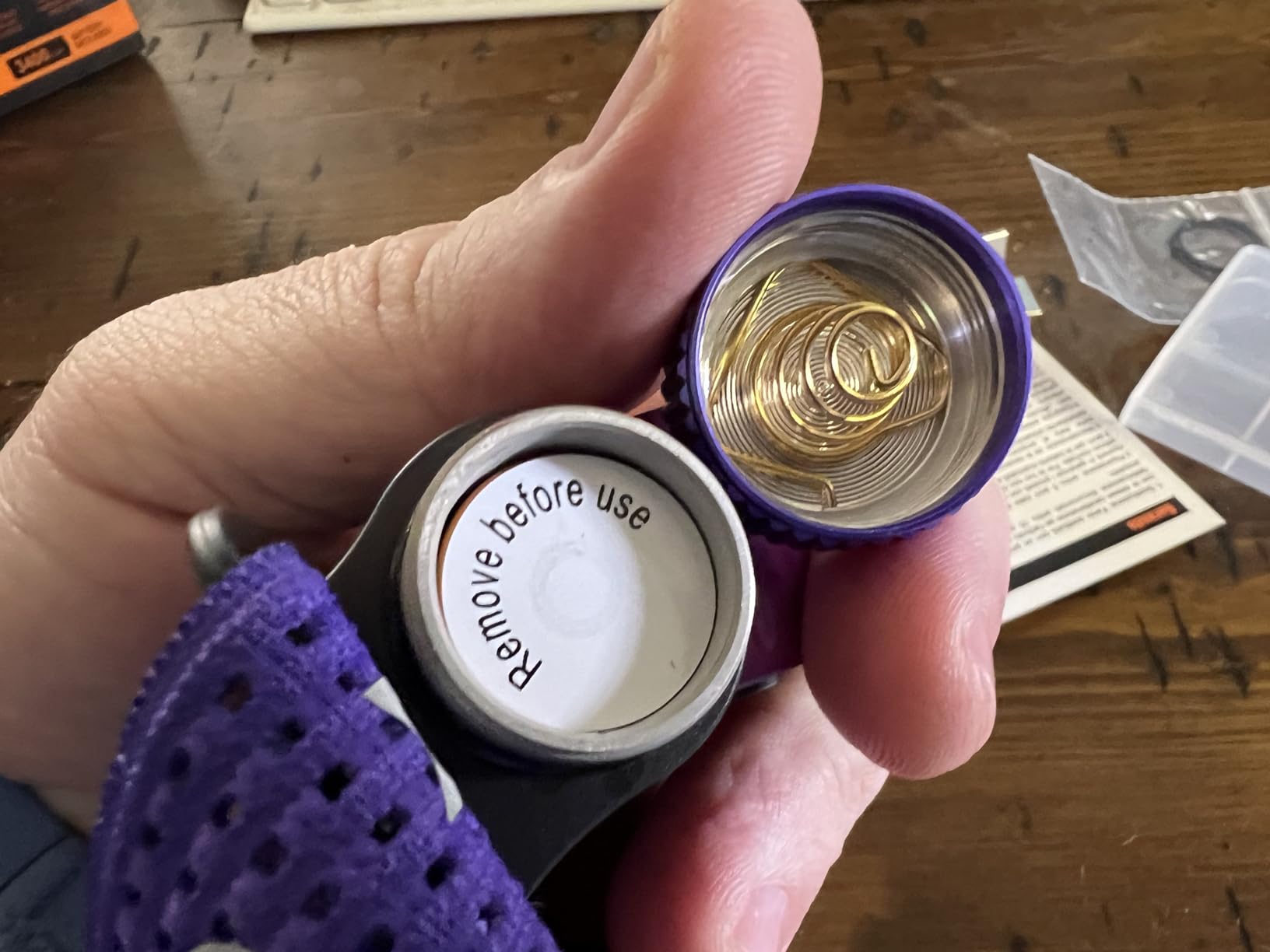
Why cold and high-altitude routes suit this lamp
Lithium-polymer chemistry handles freezing temperatures far better than alkaline, and 1600 lumens of reach means you can pick out a route line before committing to a descent. The IP68 rating allows submersion, so heavy rain, stream crossings and snow are all non-events.
For ski touring and night alpine starts, the raw output earns its weight. The reflective headband also helps in a group, since a moving reflector is visible long before the person carrying it is.
Where the HM65R-T V2.0 is the wrong call
At 4.96 oz and visibly bulkier than the ultralight options, it does not belong in a fastpacker’s kit. Hikers covering maintained trail at night will get everything they need from something a third of the weight.
It is rechargeable-only, which is the recurring drawback. On a long remote trip you need a power source or a backup lamp, and there is no AAA option. Buyers rate it highly for brightness, beam flexibility, headband comfort and battery life, with size and charging dependence as the two main reservations.
10. Fenix HM50R v2.0: Best Compact Lamp for Cold Weather
Fenix HM50R v2.0 Ultra Compact Headlamp, 700 Lumen
700 lumens
2.75 oz
377 ft throw
42 h on low
IP68
Red light
Pros
- Under 3 oz with 700 lumens of output
- 377 foot beam distance
- Up to 42 hours on low over USB-C
- Red light plus flashing red signal mode
- IP68 aluminum body
- Slides out of bracket to become a handheld
Cons
- Lower peak output than trail-running lamps
- Small battery shortens runtime on high
The HM50R v2.0 is the one I recommend when someone asks for a single lamp that is not too small, not too heavy and does not care about weather. Under three ounces with 700 lumens and a 377-foot beam distance, it is the most convincing all-rounder in this group for the weight.
The lamp body slides straight out of its bracket, so it becomes a right-angle handheld flashlight or clips to a pocket, a pack strap or a belt. That flexibility is what makes it so useful in camp as well as on trail, and a thru-hiker we spoke to cites exactly those figures when recommending it for cold-weather trips.
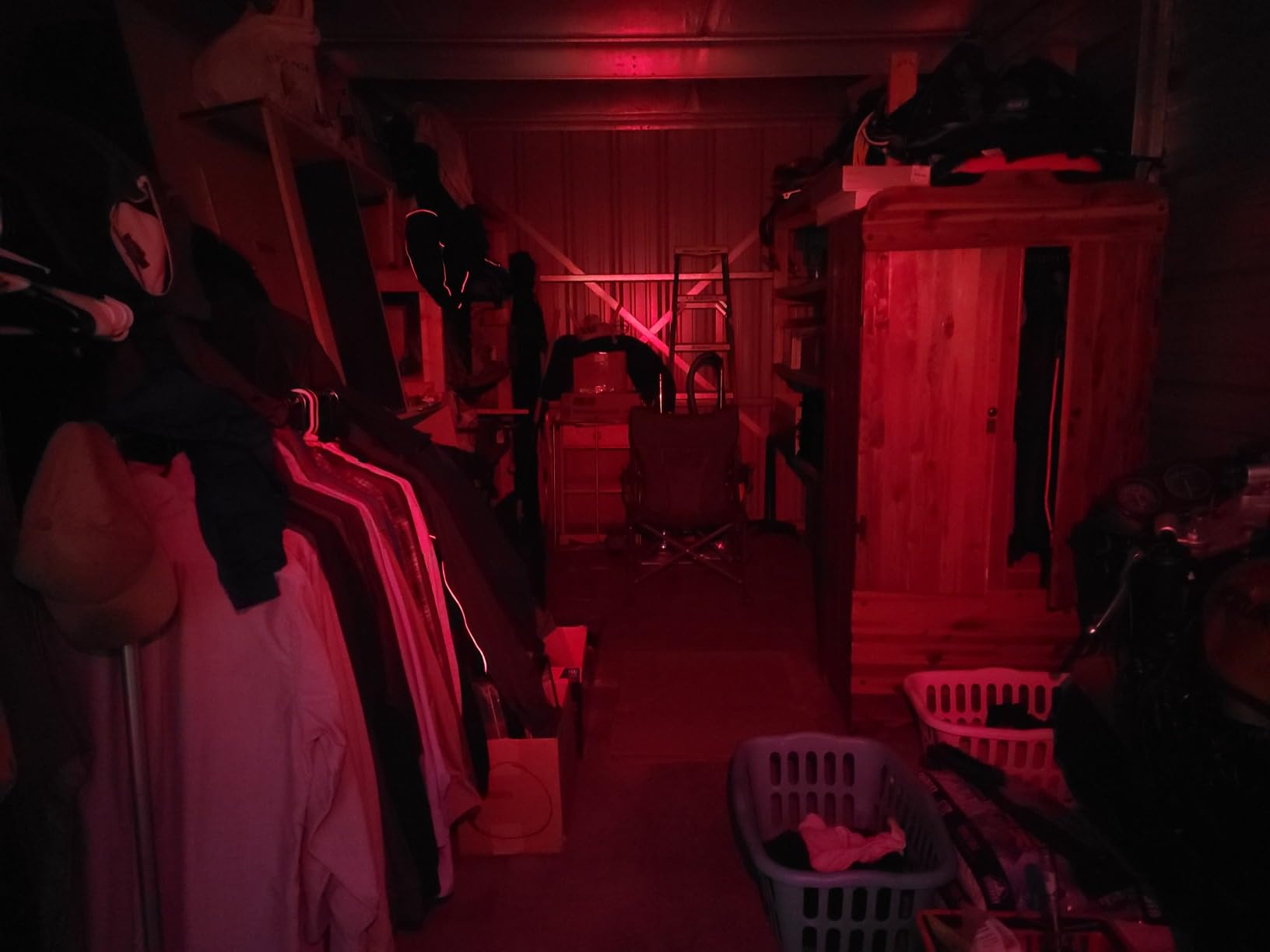
Red light plus a flashing red signalling mode handle night vision and emergencies, and the aluminum housing carries an IP68 rating for submersion durability. A tester running a medium setting for night hiking reported getting close to the claimed 8 hours of medium runtime, which is unusual honesty from a manufacturer claim.
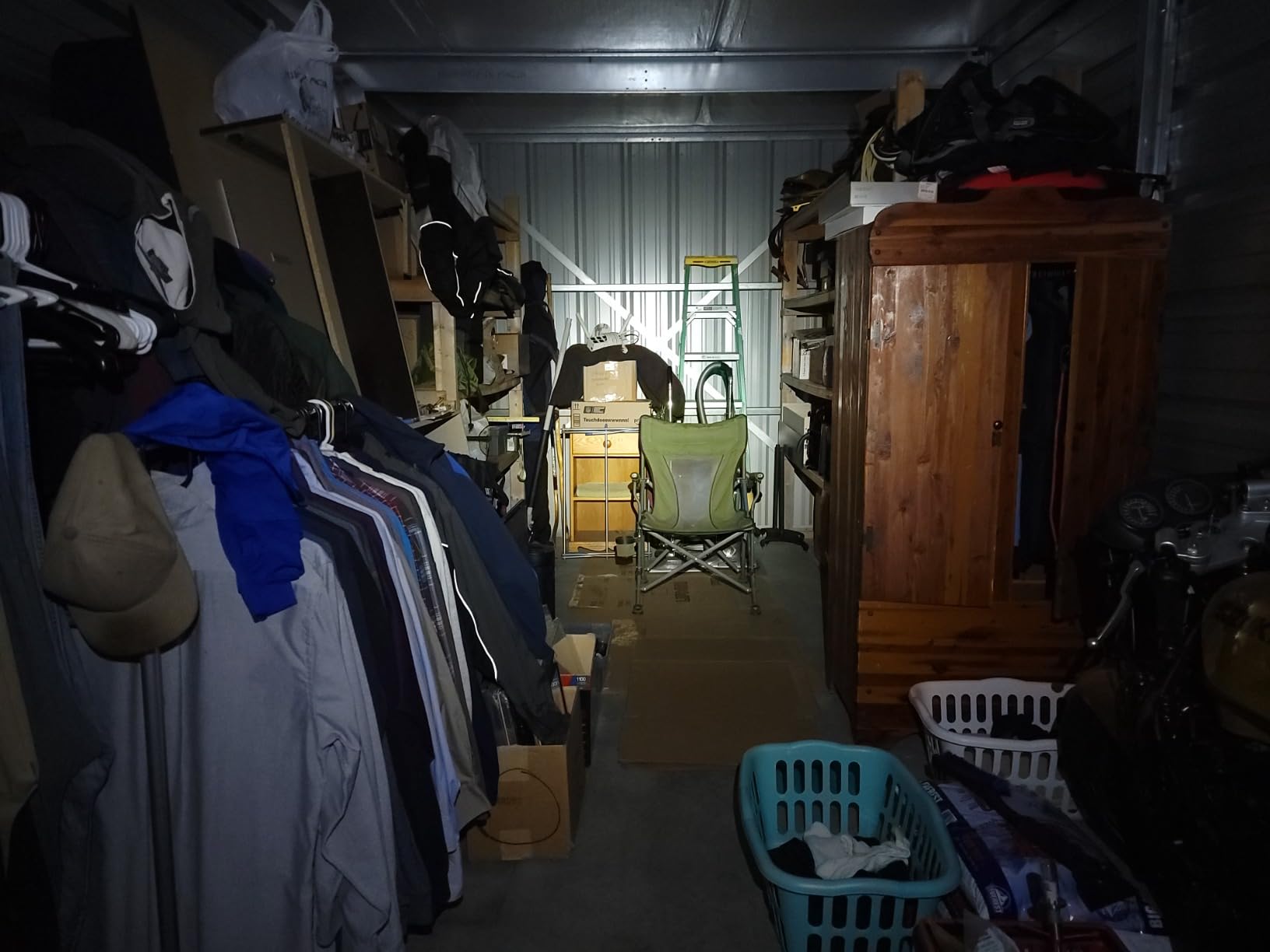
What 2.75 oz actually buys you
That weight is well under the Storm 500-R and a fraction of the Fenix HM65R-T V2.0, and it still gives you enough output to move quickly on trail with confidence. Runners find it comfortable, and the bracket slides off when you want a handheld beam for a gear repair or a bathroom trip at the trailhead.
Runtime reaches 42 hours on the lowest mode over USB-C, and the battery indicator removes the guesswork. For a hiker who wants cold-weather capability without a cold-weather-sized lamp, the lithium-polymer cell is the right choice.
Where the HM50R v2.0 falls short
Seven hundred lumens is modest against the 1400 and 1600-lumen trail-running lamps here. If you are running fast on technical ground at night, you will want the reach that the bigger Fenix or the Petzl Swift RL provide.
The small battery also shortens runtime on high settings, which is the trade for the compact body. Owners favor it for its tiny form factor, solid brightness for its size, red light and low-mode runtime, with the criticism being that it is dimmer and shorter-lasting than higher-lumen models. Note also that battery behaviour differs between the first and second versions, so check which you are actually buying.
11. Klarus HM1: Best for Gesture Control
klarus HM1 IPX6 Waterproof Rechargeable Headlamp with Motion Sensor, 70 Hours Life, Full Charge in 2.5 Hours, 440 Lumens Consistent Output, Shock and Drop Resistant
440 lumens
85 g
70 h on low
2.5 h USB-C charge
IPX6
Pros
- 440 lumens of consistent shadow-free light
- Up to 70 hours on low
- Gesture sensing works with gloves on or when wet
- 85 g body with a breathable strap
- IPX6 shell with 2 m drop resistance
- Two-year no-questions-asked replacement
Cons
- No red-light mode
- Lower output than premium trail lamps
- Some users see less than claimed runtime on high
The Klarus HM1 solves a problem most hikers do not realise they have: turning a lamp on and off when both hands are occupied. Wave your hand in front of the sensor and the light responds, which matters when you are holding a phone, a map, a trekking pole or a child.
It also defaults to medium brightness rather than blasting you at full output every time you switch it on, a courtesy most manufacturers skip. The three-second delayed shutdown is a good safety default too. Five modes give plenty of adjustment, and the 60-degree tilt range aims where you need it.
Where gesture control genuinely earns its place
Cold-weather hikers and anyone wearing gloves benefit most, since the sensor responds to a wave rather than a button press. The lamp is also useful around camp, where your hands are wet or occupied cooking and you need to check a boot lace or find a tent peg in the dark.
At 85 g with a breathable strap, it stays comfortable through a full day, and a full charge takes about 2.5 hours over USB-C with 8 hours of continuous medium-brightness use. Owners praise brightness, comfort, durability and long low-mode battery life.
Where the HM1 falls short
There is no red-light mode. That is the most-repeated drawback in reviews, and it matters more than most buyers expect: without red you cannot check a map or move around camp without destroying your dark adaptation. If night vision is on your list, choose the NU20 Classic or the Petzl ACTIK CORE instead.
Output is lower than the premium trail-running lamps, and a minority of users report shorter-than-claimed runtime on higher settings. The IPX6 rating handles heavy rain and spray but not submersion.
12. Nitecore NU43: Best for Long-Range Trail Visibility
Nitecore NU43 Rechargeable Headlamp, 1400 lumens USB-C Bright Lightweight for Camping, Running, or Working, with Spotlight, Floodlight, Red Light, Including NitecoreS Sticker
1400 lumens
4.09 oz
142 yd throw
Spot plus flood plus red
USB-C
Pros
- 1400 lumens with over 142 yards of throw
- Separate spotlight and floodlight plus red light
- USB-C reaches full charge in under 2 hours
- Built-in proximity sensor dims the beam near objects
- Anodized aluminum body
Cons
- 4.5 star average with more mixed feedback
- Proximity auto-dimming can be unwanted
- Battery life falls well short of 10 hours on max
The NU43 is the reach-and-flexibility pick. Three light sources, a 1400-lumen maximum and over 142 yards of throw in a package that weighs a little over four ounces, which is lighter than the Coast XPH30R and the Fenix HM65R-T V2.0.
Having a primary spotlight and a separate floodlight means you can genuinely do both jobs with one lamp: scan a valley for a route line, then look at a map in camp without swapping anything. An auxiliary red light covers night vision, and the whole thing charges over USB-C in under two hours with more than ten hours on high.
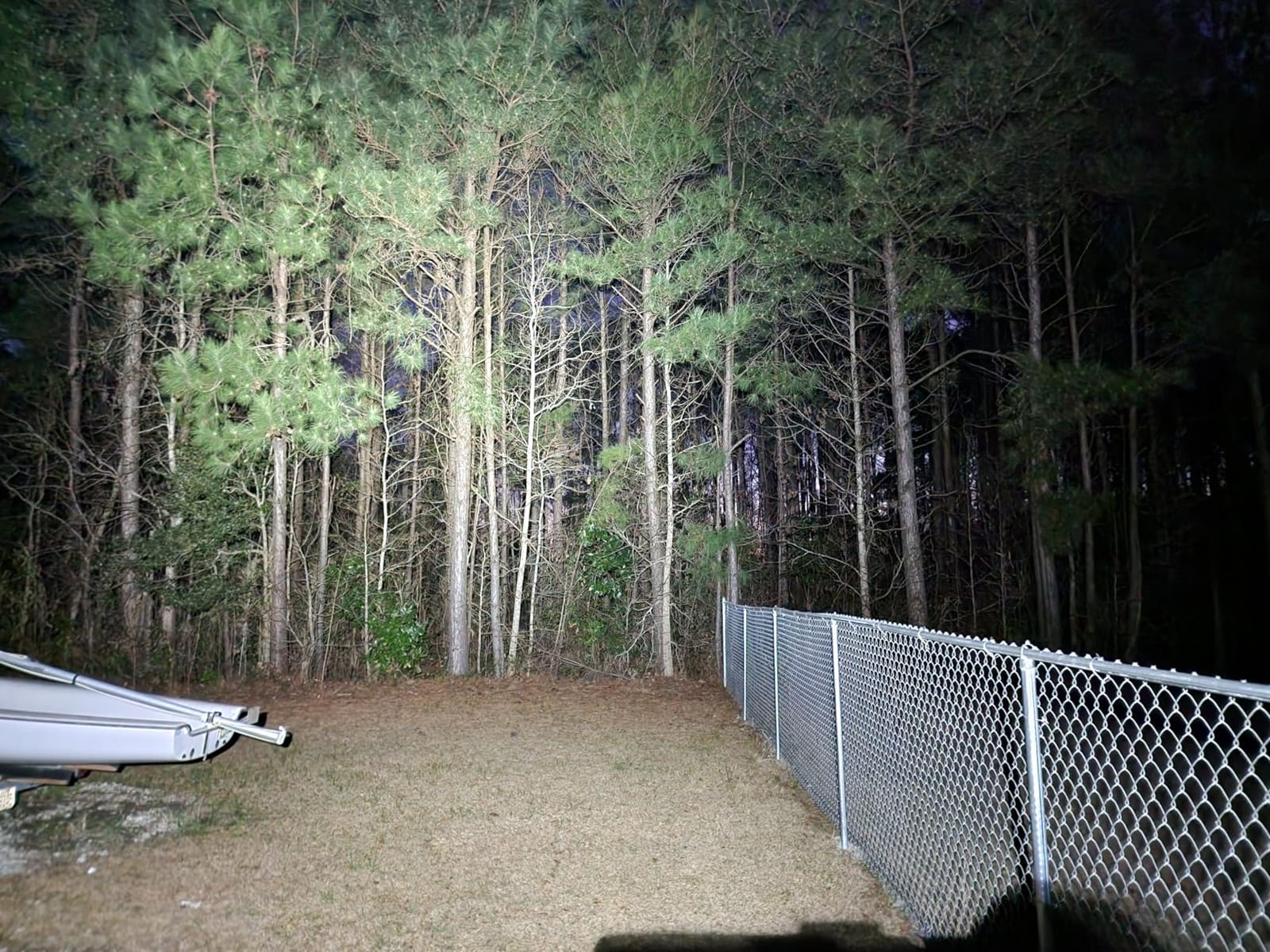
The built-in proximity sensor is the feature that will either delight or annoy you. It dims the light automatically when you bring the lamp close to an object, which kills the harsh glare and reduces overheating. In a confined space it works beautifully; under open sky it can dim when you did not ask it to.
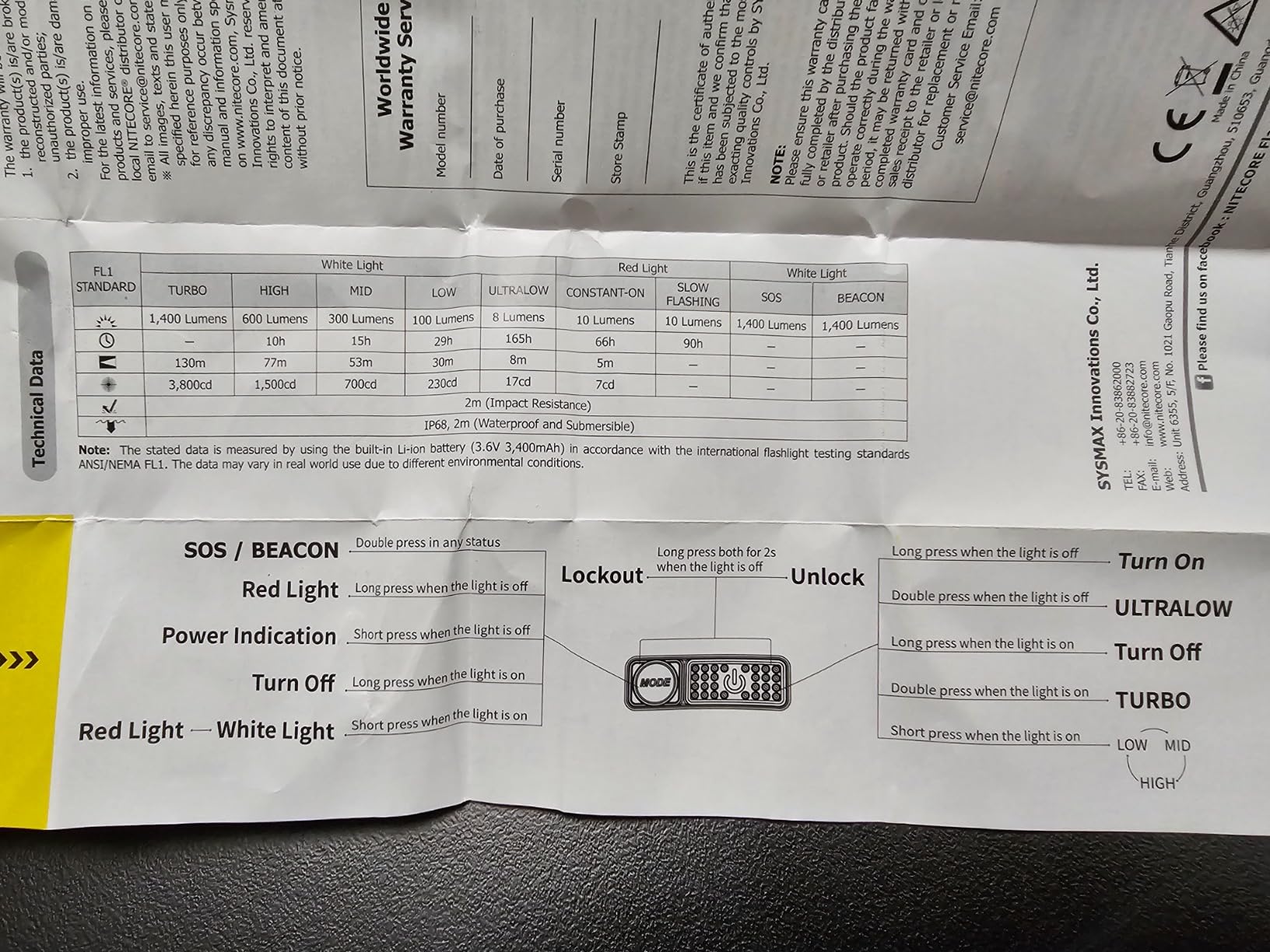
What 1400 lumens is actually for
This is alpine and off-trail output. It is for picking out a ridgeline, a river crossing or a scramble two hundred metres ahead, and for moments when you need to light a scene rather than a path. If your nights are on maintained trail, 1400 lumens is more than the job requires.
Users like the combination of high brightness, multiple beam options, red light and low weight for the class, and the anodized aluminum body handles outdoor work as well as hiking.
Where the NU43 falls short
Its 4.5-star average sits below the rest of this group, and reviews include more three and four-star feedback than the leaders here. Complaints cluster around interface complexity, auto-dim behaviour and battery life, which drops considerably below the advertised figure at maximum output.
The proximity sensor is the specific irritation: if you are walking through dense brush or a tunnel and it keeps dimming without your input, that becomes a genuine problem. Switch it off if the controls allow, or choose the Coast XPH30R if you want raw reach with a simpler concept.
How Many Lumens Do You Need for Hiking?
Most hikers need far fewer lumens than the spec sheets suggest. For walking a maintained trail after dark, 80 to 150 lumens is genuinely enough, because your eyes adapt to darkness and a bright beam reduces your night vision. Use these tiers as your guide:
10 to 40 lumens: reading in a tent, checking a phone, finding a tent peg. Pure proximity light.
80 to 150 lumens: night hiking on maintained trail, and this is the range most hikers actually live in.
200 to 400 lumens: trail scanning, unmaintained paths, backpacking routes with roots and rough ground. This is the sweet spot for most multi-day hikers.
400 lumens and above: technical terrain, off-trail navigation, alpine starts, and fast trail running where you need to see hazards early.
One more factor nobody puts in the spec sheet: the size of your dark-adapted pupil. It shrinks as you age, which means a 30-year-old genuinely sees more from 200 lumens than a 50-year-old does. If you are older and starting out, favour the brighter end of the range.
Max lumens is also the least useful number on the page, because most manufacturers quote a peak that lasts under two minutes before thermal step-down. Look at the middle setting and what the lamp does there.
Black Diamond vs. Petzl: Which Brand for Hiking?
Pick Black Diamond if you want a more rugged housing, glove-friendly instant switching, and lamps that lean on replaceable or dual-fuel power. Pick Petzl if you want a broader mode range, better low-light control, and a cleaner interface philosophy. They are closer than most brand arguments suggest, and both build to the same standard.
Pick Black Diamond when your priority is housing durability, waterproofing, PowerTap switching through gloves, and the option of running on AAA cells when a battery dies on a remote route.
Pick Petzl when you care about red and RGB night-vision modes, reactive sensors, symmetrical washable headbands, and swapping between the CORE rechargeable pack and standard cells in the same lamp.
Where Black Diamond leads: the Spot 400 is dual-fuel out of the box and the Storm 500-R has the more waterproof housing. Where Petzl leads: the ACTIK CORE gives you 625 lumens at 88 g with a red mode, and the Swift RL puts 1100 lumens under 100 g. Forum consensus tends to split the same way, with the Spot and the Actik Core named as balanced defaults by different hikers for different reasons.
How to Read Burn-Time Numbers Without Getting Fooled
Manufacturer burn times are almost always measured on the lowest setting, which is why one lamp claims 97 hours and another claims 42. Those figures are not comparable, and neither reflects what you will get walking a trail at night. The only honest comparison is runtime at a named brightness, which is why we have tried to keep the mid-range figures in view above.
Three rules help. First, ignore the headline runtime and look at medium-setting claims or independent measurements. Second, remember that lithium-polymer cells hold output better in cold than alkaline, so cold-weather numbers matter more than warm-weather ones. Third, check for pass-through charging, because without it you cannot run the lamp from a power bank while it tops up.
Forum discussions about candela, throw distance and milliamp-hour maths go deep, and the useful takeaway is simple: what you perceive at night is not linear in lumens. A well-tuned 300-lumen beam often beats a poorly focused 1200-lumen one for finding your feet on a trail.
Red Light and Night Vision on the Trail
Red light exists because your rods, the cells that see in low light, are far less sensitive to red wavelengths than to blue and green. A red mode lets you read a map, check a compass or find a tent peg without resetting your dark adaptation, and it does not blast the eyes of a sleeping partner or a fellow camper. That last point is as important as the physiology.
Look for a dedicated red button rather than a mode buried in a cycle. The Nitecore NU20 Classic and the HM50R v2.0 give you red in one press, and the Petzl ACTIK CORE and Swift RL give you continuous red plus a strobe for signalling. If you share a tent or a campsite, red is close to mandatory.
A couple of cautions from actual users: on some ultralights the red mode is brighter than expected, so start at the lowest red setting before walking. And red is a preservation tool, not a work light. Use white when you are moving fast on technical ground, and switch to red when you stop.
IP Ratings Decoded: How Waterproof Your Headlamp Should Be
The first digit after IP measures solid-particle ingress and the second measures water, with an x meaning no data. For hiking, the water digit is the one that matters.
IPX4: splashes from any direction. Fine for rain, not for a creek crossing.
IPX5 and IPX6: water jets and heavy rain. The realistic level for sustained trail rain.
IPX7: temporary submersion to one metre. Appropriate for a river crossing or a downpour.
IPX8: continuous submersion at a manufacturer-specified depth. The alpine and coastal choice.
For most hikers IPX4 is genuinely enough. If you run in coastal fog, alpine weather, or anything involving water crossings, step up to IPX6 or better. Note that a loose charge-port cover can undo the rating no matter what the label says.
Rechargeable vs. AAA: Which Power Source for Overnight Hikes
Rechargeable lithium-ion lamps give you more lumens for the same weight and no disposable batteries, which is why they dominate this roundup. Their weakness is single-point failure: a dead pack or a wet connector ends your night even with a perfectly good lamp in hand.
AAA and dual-fuel lamps invert the trade. They are lighter in absolute terms, less bright at the top end, and they keep working for as long as you can find cells. On a long route across a resupply gap, or anywhere you are hiking alone, that is a real advantage.
Our rule is simple. Day hiking and car camping, go rechargeable. Overnight backpacking and solo routes, carry a spare pack or a second AAA lamp regardless of what you chose. A handheld backup costs almost nothing and has saved more night hikes than any feature on this list.
Fit, Comfort and the Shock Cord Question
A headlamp you keep adjusting is a headlamp you will stop wearing. The traditional wide band spreads pressure across your forehead and temples, which is comfortable over many nights, while the thin shock cord used by the Nitecore models weighs almost nothing and never needs re-centring after a few hours.
The cord fails in one specific situation: a bare head in cold weather. Cord straps need something to grip, so hikers running them under a beanie often find them the most comfortable option, while bare-headed users frequently report discomfort. Test the strap type you prefer before committing to a long trip.
Two other fit notes. A low-profile housing sits better with a hood or a jacket collar than a tall one, which matters in alpine work. And if you always wear a cap, a clip-on light may suit you better than any headband on this list. Whatever lamp you settle on, it is worth pairing with footwear you have already broken in, as our guides to the best men’s hiking boots and best men’s hiking shoes explain, because a blister ends a night hike as surely as a flat battery.
Night Hiking Safety: Why Two Lights Beat One
Every serious hiker we spoke to carries a second light, and almost no roundup on the internet tells you to. It is community doctrine: a headlamp plus a small handheld flashlight, both independently powered and both with fresh cells. The rule exists because a single failure mode ends a night hike in the dark.
Before every trip: set the lockout so a bouncing lamp cannot switch on in your pack, confirm the battery or cells are actually full rather than assuming, and check that the lamp boots to a low setting rather than maximum. Reversing your spare batteries in the pack is a crude but effective manual lockout for a second light.
Pack your backup somewhere your main light is not. A wrist light and a headlamp on opposite hands is the most common arrangement, and it costs you about 40 extra grams.
Frequently Asked Questions
How many lumens should a headlamp be for hiking?
For night hiking on maintained trail, 80 to 150 lumens is enough. Use 200 to 400 lumens for trail scanning and unmaintained paths, and 400 lumens or more only for technical terrain, alpine starts and fast trail running. Many hikers over-brighten their night vision by running far more output than they need.
Which headlamp has the best battery life?
It depends on how the figure is measured. The Nitecore NU20 Classic claims up to 97 hours on low and the Fenix HM65R-T V2.0 claims over 600 hours on its lowest setting, but those numbers are not comparable. Look at medium-setting runtime, and remember lithium-ion cells hold up better in cold than alkaline.
What’s the point of a red light on a headlamp?
Red light lets you read a map or check a compass without ruining your dark adaptation, because your rod cells are far less sensitive to red wavelengths. It also does not blind the person sleeping next to you in a shared tent, which is why it is close to essential for camp use rather than a gimmick.
Is Black Diamond or Petzl better?
Pick Black Diamond for rugged housings, glove-friendly PowerTap switching and dual-fuel options that run on AAA cells. Pick Petzl for better low-light control, more mode options, symmetrical washable headbands and the ability to swap between a CORE rechargeable pack and standard cells in the same lamp.
Rechargeable or AAA headlamp for hiking?
Rechargeable gives more lumens for the same weight and needs no spare cells, but a dead pack ends your night. AAA keeps working as long as you can find batteries, which matters across a resupply gap or when hiking alone. Many hikers carry a rechargeable main light plus an AAA backup.
What IP rating does a headlamp need for hiking?
IPX4 handles splashing rain and is enough for most hikers. IPX5 and IPX6 cover sustained heavy rain, IPX7 allows temporary submersion for stream crossings, and IPX8 is the choice for alpine and coastal routes. Check that the charge port cover actually closes, since a loose cover can undo the rating.
Should a headlamp have a lockout?
Yes. A lamp that activates inside your pack can drain a full charge before you reach the trailhead, and several owners have reported finding a lit lamp after a run. Engage the lockout before packing, and if your lamp lacks one, reversing the spare batteries in the pack works as a manual substitute.
Is a headlamp or a flashlight better for hiking?
A headlamp wins for anything where both hands are working, such as scrambling, setting up camp or cooking, and it keeps a beam pointed where your eyes are. A handheld flashlight is better for route-finding at distance and for map reading, which is why carrying one as a backup alongside your headlamp is standard practice.
Conclusion: The Best Headlamps for Hiking in 2026
For most hikers, the Petzl ACTIK CORE is the right answer: 625 lumens at 88 g, a mixed beam, a genuine red mode and a washable headband, in a body that shrugs off rain. It is the lamp we carry when the hike is a hike.
Choose by constraint rather than by output. Pack weight decides the Nitecore NU25 MCT UL at 1.65 oz or the NU20 Classic at 1.44 oz. Route-finding and speed decide the Petzl Swift RL or the Fenix HM65R-T V2.0. Battery anxiety decides the Black Diamond Spot 400, and a long night on a route with no resupply still deserves an AAA backup whatever you pick. A more complete kit starts with our best waterproof hiking boots tested, since a good headlamp does not help with the terrain underfoot.
Whatever lands in your pack, set the lockout, carry a second light, and test the red mode in a dark tent before you leave the driveway. That last ten minutes of preparation has saved more night hikes than any bulb ever will.