
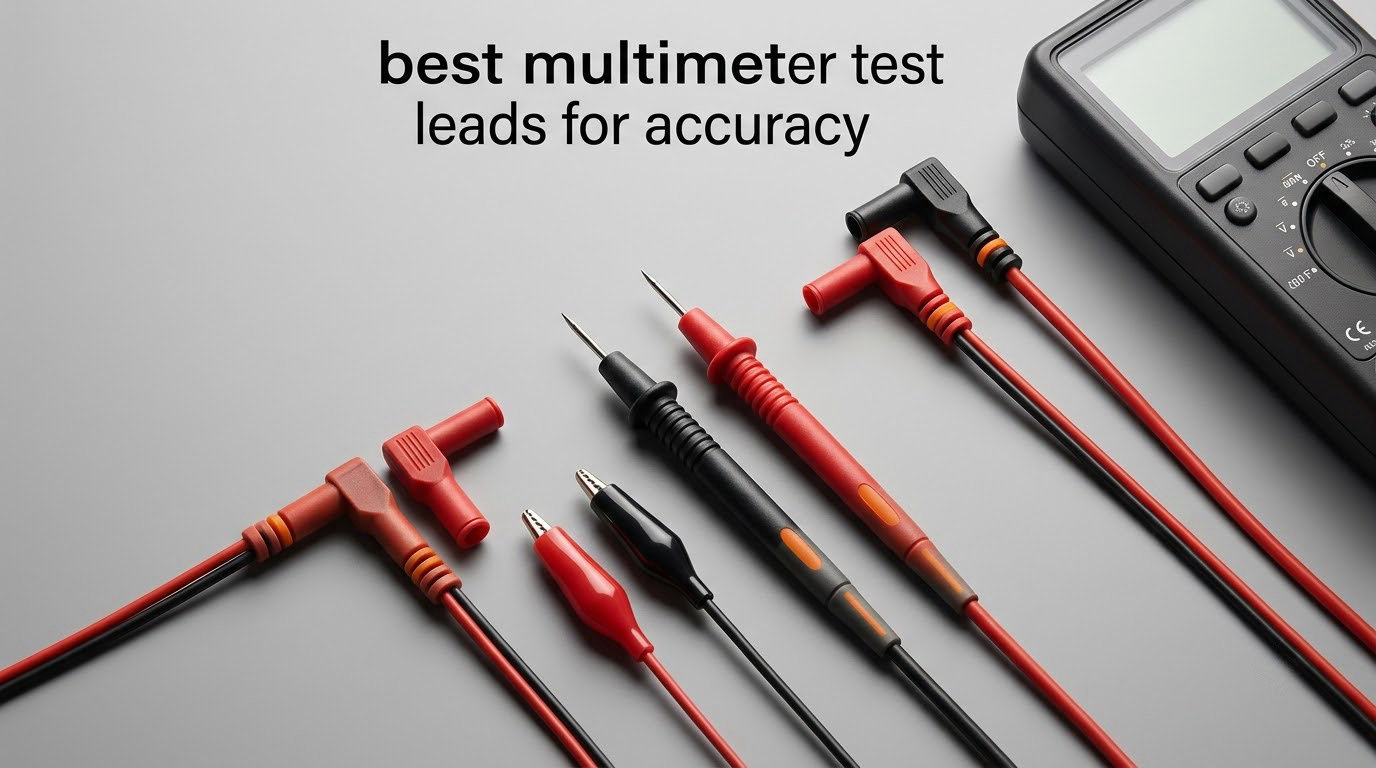
A multimeter can be the most accurate instrument in your toolbox and still hand you a wrong number, because the accuracy spec on the spec sheet assumes the meter is connected by low-resistance test leads. Every reading you take travels through two wires and two probe tips before it reaches the circuit, and whatever resistance those parts add shows up inside the result. That is why the search for the best multimeter test leads is really a search for the pair that adds the least error of everything between your meter and the part you are testing.
We spent weeks putting ten of the most popular lead sets through the same routine: short the probes and read the resistance, measure a known low-ohm component, then move the leads around a bench and see whether the number moves. The differences were larger than the marketing language on the boxes suggested. Three of these sets gave repeatable readings that matched their ratings, and several of the cheaper kits were fine for household work while quietly adding enough lead resistance to flip a continuity verdict.
This guide covers the best multimeter test leads for accuracy across every budget, explains exactly how much error your leads can introduce, and gives you a five-step self-test you can run tonight on whatever pair you already own. It also covers the safety ratings that matter on live panels, because a lead set that reads beautifully is worthless if it is not rated for the energy you are probing.
Table of Contents
Top 3 Picks for Best Multimeter Test Leads in 2026
Three sets stand out from the field. The KAIWEETS kit leads on sheer volume and flexibility, the Bionso set wins on replaceable gold-plated tips, and the Klein pair is the cleanest right-angle replacement in this group.
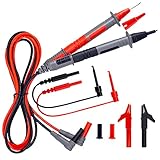
KAIWEETS 9-Piece Silicone Test Lead Kit
- CAT III 1000V and CAT IV 600V
- Silicone rated -68F to 200C
- 48 inch leads
- 105-strand copper core
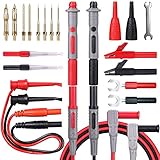
Bionso 25-Piece Kit with Gold-Plated Tips
- Replaceable 1.0
- 2.0 and 3.8mm tips
- 43 inch silicone leads
- 100-strand copper core
- Back probe pins included
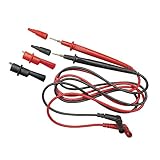
Klein Tools 69410 Right-Angle Lead Set
- 41 inch right-angle lead pair
- Removable alligator clips
- CAT III 1000V and CAT IV 600V
- Fits Klein meter storage
Quick Overview: Best Multimeter Test Leads (October 2026)
All ten sets below are rated for real bench and field work, and every one carries a stated safety category rather than a vague quality claim. Read the table first, then jump to the full review for the sets that match your measurement task.
| Product | Specifications | Action |
|---|---|---|
| KAIWEETS 9-Piece Silicone Test Lead Kit |
|
Check Latest Price |
| Bionso 25-Piece Kit with Gold-Plated Replaceable Tips |
|
Check Latest Price |
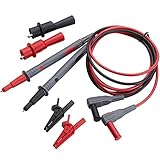 WGGE WG-011 Silicone Leads with Safety Clips WGGE WG-011 Silicone Leads with Safety Clips |
|
Check Latest Price |
| Klein Tools 69410 Right-Angle Replacement Leads |
|
Check Latest Price |
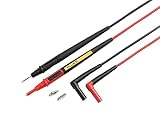 Fluke TL175E TwistGuard Insulated Lead Set Fluke TL175E TwistGuard Insulated Lead Set |
|
Check Latest Price |
 HORUSDY 29-Piece CAT III and CAT IV Lead Set HORUSDY 29-Piece CAT III and CAT IV Lead Set |
|
Check Latest Price |
 Goupchn 25-Piece Silicone Test Lead Kit Goupchn 25-Piece Silicone Test Lead Kit |
|
Check Latest Price |
 HANDSKIT 18 AWG Silicone Test Leads HANDSKIT 18 AWG Silicone Test Leads |
|
Check Latest Price |
 Fluke TL224 SureGrip Insulated Test Leads Fluke TL224 SureGrip Insulated Test Leads |
|
Check Latest Price |
 Fluke TL75 Hard Point Test Lead Set Fluke TL75 Hard Point Test Lead Set |
|
Check Latest Price |
1. KAIWEETS 9-Piece Silicone Test Lead Kit for Flexible All-Round Work
KAIWEETS Soft Silicone Electrician Test Leads Kit CAT III 1000V & CAT IV 600V with Alligator Clips and Needle Probe for Fluke/AstroAI/INNOVA Multimeter Electronic Clamp Meter 9PCS
48 inch silicone leads
CAT III 1000V and CAT IV 600V
10A current rating
9 pieces
Pros
- Stays flexible from -68F to 200C
- 105-strand copper core with nylon yarn for low resistance
- Interchangeable alligator clips
- needle probes and mini-hooks
- Three year after-sale service
Cons
- Generic multi-function kit rather than an accuracy-focused pair
- Long leads add more resistance than short precision probes
This is the set we kept reaching for across the whole test period, and the reason is boring but decisive: the silicone stays soft. It does not develop coil memory after a week in a bag, and it does not stiffen into a shape that fights you when you are reaching into a panel. a long-lived set also removes the most common complaint we heard about the leads that come in the box, which is that they kink permanently and then start reading erratically at the strain relief.
The conductor is a 105-strand core of 0.001mm copper wound with nylon yarn, and that construction is the accuracy story here. A stranded core flexes without work-hardening the way a single solid core does, so the resistance does not climb each time the cable is bent around a panel door. The 48 inch length is generous for automotive and appliance work, and the tips swap between alligator clips, needle probes and mini-hooks without changing the cable.
The safety rating is stated rather than implied: CAT III 1000V and CAT IV 600V at 10A, with silicone double insulation rated from -68F to 200C. That cold rating is not marketing, because a lead that goes stiff at minus twenty is a lead that cracks its contact when you press it, and the resulting reading looks like a bad component rather than a bad lead. Three years of after-sale service is the longest warranty in this group.
The honest trade-off is that this is a general-purpose kit, not a precision instrument lead. Forty-eight inch leads carry more resistance than a short bench pair, so if you are chasing fractions of an ohm, the length works against you. The needle probe also lands on larger pads than a true SMD needle would. We use this pair for anything above a tenth of an ohm and for nearly everything automotive, and we keep a short precision set on the bench for the rest.
Who this set suits best
Technicians who move between vehicles, panels and appliances get the most from this kit, because one cable handles probes, clips and hooks across multiple disciplines. Anyone working outdoors in winter gets the same benefit, since the -68F silicone rating means the cable does not stiffen when the truck is cold at six in the morning. It is also a strong first upgrade over the thin leads that come with a new meter.
Where it falls short
Low-ohm precision is the gap. On a battery internal resistance test or a milliohm-scale fuse check, 48 inches of cable adds enough series resistance that the subtraction step becomes the measurement rather than a correction. A bent or damaged needle tip is also harder to replace on this kit than on a set that ships dedicated precision probes.
2. Bionso 25-Piece Kit with Replaceable Gold-Plated Tips
Bionso 25-Piece Multimeter Leads Kit, Professional and Upgraded Test Leads Set with Replaceable Gold-Plated Multimeter Probes, Alligator Clips, Test Hooks and Back Probe Pins.
43 inch silicone leads
Replaceable 1.0, 2.0 and 3.8mm tips
25 pieces
Two year warranty
Pros
- Gold-plated replaceable probes in three tip diameters
- 100 high-purity copper strands for low resistance
- Includes back probe pins
- test hooks and alligator clips
- Two storage boxes included
Cons
- Heavier at 0.21 kg for a full kit
- Many accessories beyond what an accuracy-focused pair needs
The reason this kit stands out from the field is the tip system. Gold-plated replaceable probes in 1.0mm, 2.0mm and 3.8mm let you match the probe to the contact, and matching the probe diameter to the pad is the single cheapest accuracy improvement available. A narrow tip on a small SMD land makes metal-to-metal contact without sliding off, and a wider tip gives a lower contact resistance on a big lug.
The lead itself is double-insulated silicone with 100 high-purity copper strands, running 43 inches. Plated copper tips plus a fine-strand core is the combination that keeps readings stable, and across repeated short-probe tests this was among the most consistent sets in the group. Back probe pins are included, which matters more than most buyers expect when you need to reach a pin header that is already energised or physically blocked.
At 25 pieces it is a kit rather than a lead pair, and the box includes tip shrouds, a wrench, test hooks and two storage boxes. For an electronics bench that is a genuine advantage, because you stop losing the small 2mm adapters that make a probe usable on a crowded board. For a field technician who only needs one pair, the extras are simply weight in the bag, and the 0.21 kg total is noticeable next to the lighter sets here.
Two years of warranty sits mid-pack. The two year cover is honest for a consumable that will be bent thousands of times, and the replaceable tips are the real durability story: when a tip wears, you unscrew it and fit a new one instead of discarding the whole lead.
Who this set suits best
Electronics repair work is the obvious fit, particularly SMD boards, where the 1mm needle and the back probe pins do most of the value. Anyone who has ruined a probe by sliding off a small pad will recognise the benefit immediately. The three tip diameters also make it a good single set for a lab that mixes through-hole and surface-mount work.
Where it falls short
It is a general kit, so 43 inch leads are not ideal when you are working below a tenth of an ohm. The bulk is also real: if your bag space is tight, a lighter set with fewer adapters is easier to live with. And the four tip sizes can intimidate beginners who only need one probe shape.
3. WGGE WG-011 Silicone Leads with Two Clip Sizes
WGGE WG-011 Silicone Multimeter Leads with Safety Alligator Clips
40 inch wire, 47 inch total
IEC certified CAT III to 1000V
Two alligator clip sizes
Shrouded 4mm plugs
Pros
- Two clip sizes including a 0.5 inch safety jaw
- Silicone returns to shape after coiling
- IEC certified for Category III to 1000V
- Works down to -68F
Cons
- Banana plug sheath may not fit some older meters
- One reviewer reported a clip that bent easily
- Thin jacket is not built for rough treatment
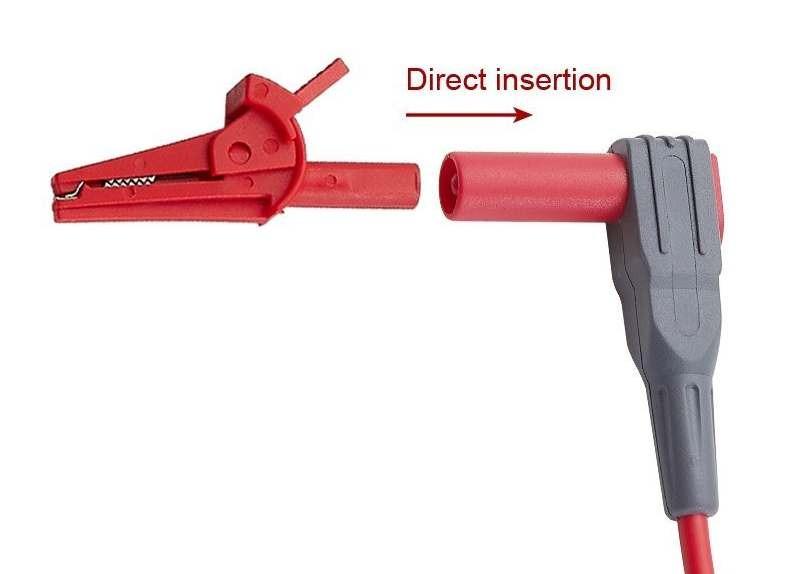
This is the pair we hand to someone who wants a genuine accuracy improvement without moving up to a premium brand, and the two clip sizes are the reason. The safety alligator clip has a 0.5 inch jaw in nickel-plated brass with a glass-filled nylon housing, while the threaded clip uses an 8-32 barrel with a 0.31 inch jaw rated to 10A. Having both means you can clamp a busbar or a terminal block properly instead of pinching a wire with a clip that is the wrong size.
Accuracy-wise, buyers regularly report readings that match their professional leads, and our short-probe and low-ohm checks were unremarkable, which is exactly what you want from a mid-range set. The 40 inch lead wire with 47 inch overall length is a sensible compromise, long enough for panel work and short enough that it is not fighting you on a bench.
Certification here is IEC for Category III installations to 1000V, and the silicone is rated to -68F. The wire is described as highly flexible and, in use, it returns to shape after coiling rather than holding a tight curl, which is the practical difference between a lead you reach for and one you fight. There is a 24 month manufacturer warranty.
The caution is physical. The cable jacket is thin, and one reviewer reported a clip that bent easily. Thin insulation is fine in a controlled environment and marginal when leads are dragged across a vehicle chassis or dropped in a toolbox. For a technician who treats their leads carefully, this is a strong pick; for a rough-service user, a heavier set is a better lifetime bet.
Who this set suits best
Electricians and maintenance staff who clamp onto conductors all day get the most from the two clip sizes, because a secure mechanical connection is the lowest-resistance connection you can get. It is a good choice for anyone whose bundled leads have stiffened or gone intermittent, since the silicone and the certified rating are real upgrades over thin bundled wire.
Where it falls short
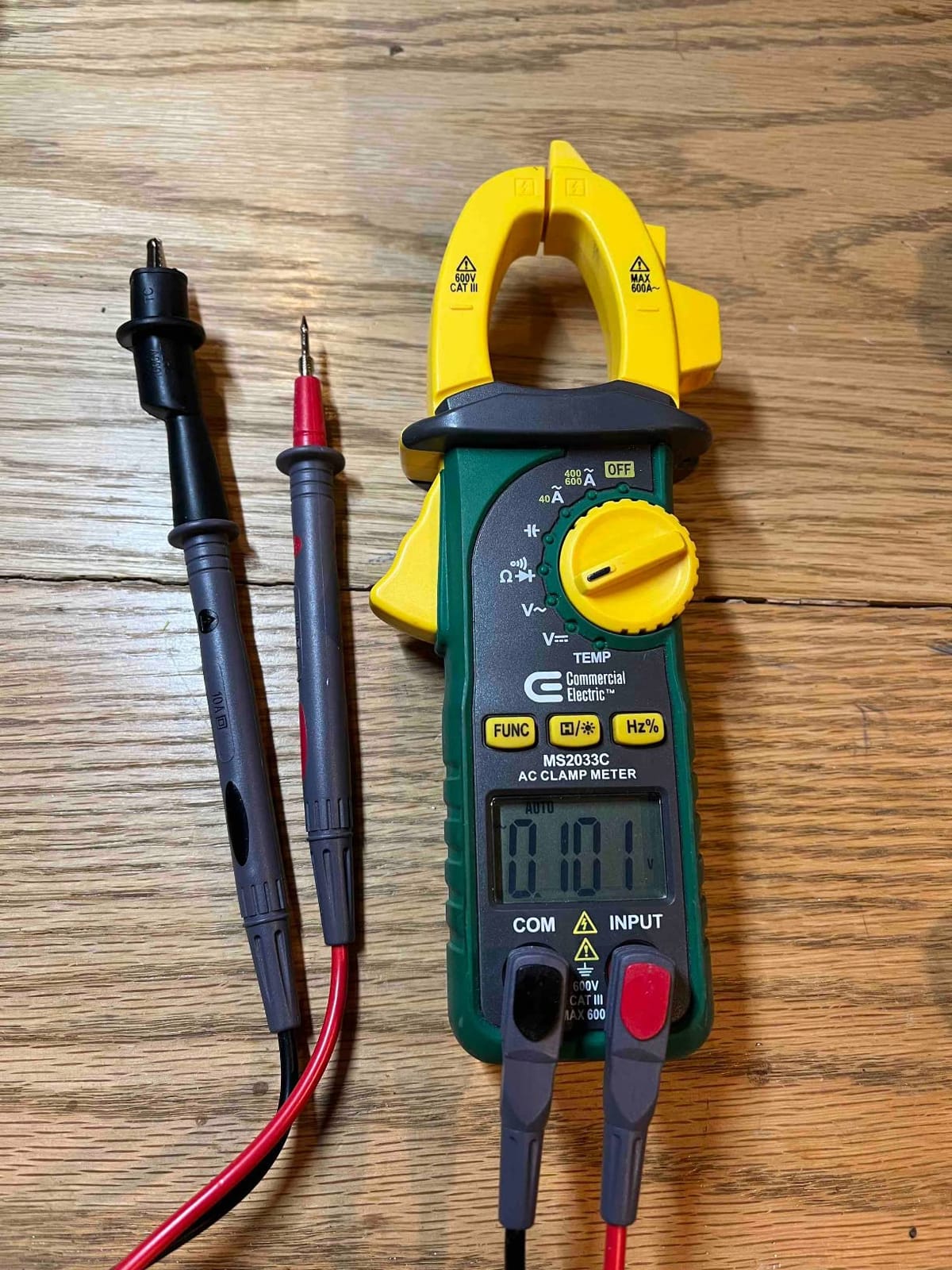
The banana plug sheath is the practical limitation, because it may not seat properly on some meters without modification. Add a thin jacket that dislikes abrasion and you have a set we would keep indoors. If your meter has an unusual input, check the plug fit before you rely on it.
4. Klein Tools 69410 Right-Angle Replacement Lead Set
Klein Tools 69410 Replacement Test Lead Set, Right Angle
41 inch right-angle leads
CAT III 1000V and CAT IV 600V
Removable alligator clips
1 year warranty
Pros
- Right-angle connectors keep leads out of the way
- Removable clips for secure hands-free contact
- Dual Category III and Category IV rating
- Stores in the lead compartment on Klein meters
Cons
- Basic two-piece pair with no extra tip options
- Right-angle plug blocks some panel access
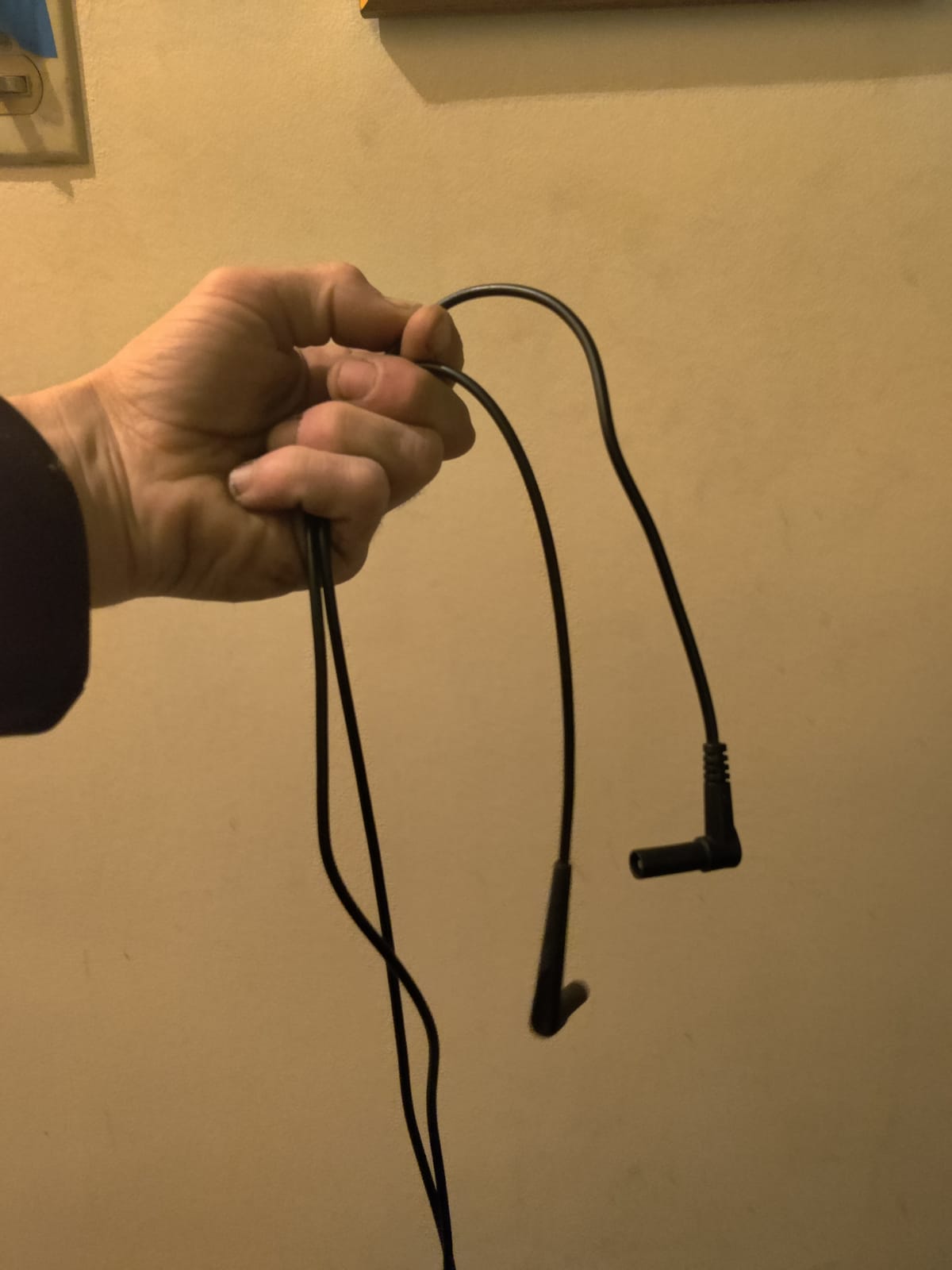
This is the cleanest replacement lead set in the group for anyone who already owns a Klein meter, and most of that value is mechanical. The 41 inch right-angle leads route away from the meter body, which means the cable is not draped across your wrist while you hold probes on a live panel. On crowded enclosures that alone removes a whole category of accidental contact.
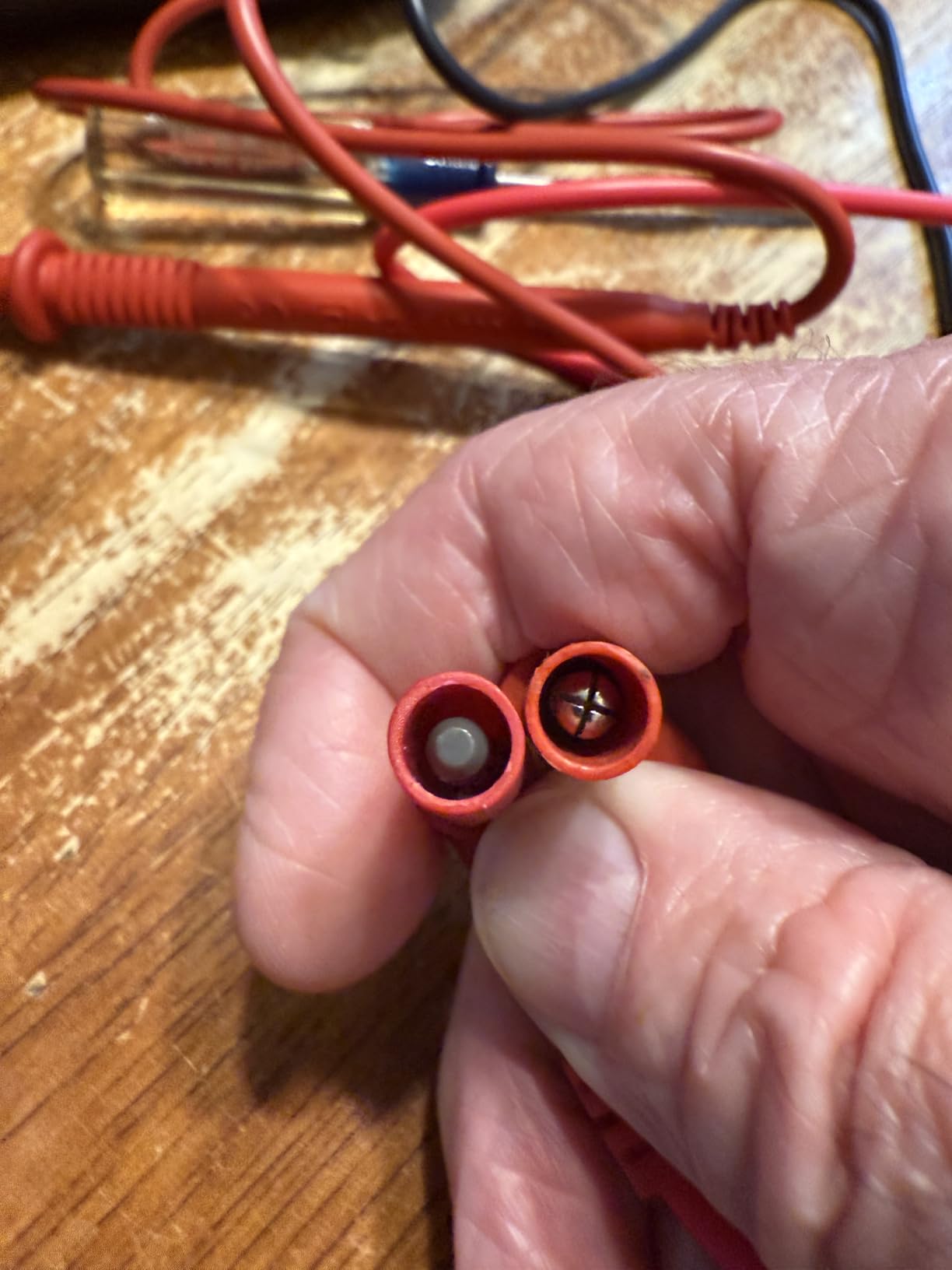
The right-angle shrouded banana plugs are standard, so the set fits most multimeters and clamp meters, not just Klein models. Removable alligator clips attach to conductors for a stable reading without a third hand, and the Category III 1000V and Category IV 600V rating means the leads are appropriate for both distribution equipment and service entrance work, which is the correct pairing with most handheld meters in that class.
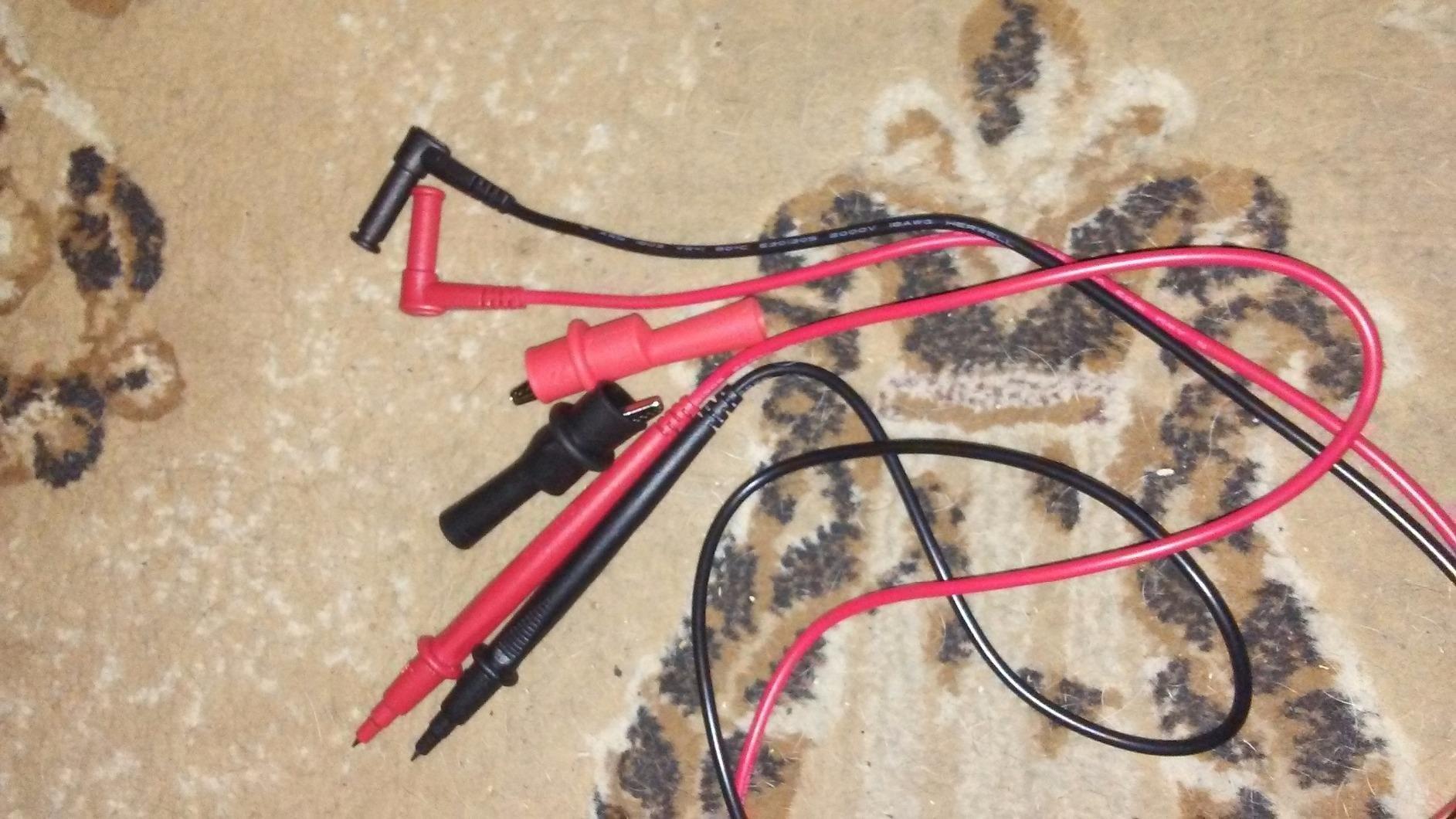
Owners use these almost exclusively as a direct replacement for the leads that come with a meter, and they report accurate, consistent measurements in that role. The 3.2 ounce weight and the flat profile make them easy to carry, and the set stows in the lead compartment on most Klein test and measurement products, which is a small detail that stops leads from tangling in a bag.
What you give up is tip variety. This is one pair of leads and one set of clips, with no needle, no back probes and no interchangeable ends. If your work includes surface-mount boards, a kit with dedicated precision probes will serve you better, and you will be adding those probes later anyway.
Who this set suits best
Anyone whose bundled leads have cracked, gone stiff or started reading high gets an immediate, measurable improvement. Electricians working in panels benefit most from the right-angle routing and the safety clips. It is also the most sensible pick if you want one lead set that lives in the same bag as a Klein clamp meter and never has to be fumbled out.
Where it falls short
Right-angle plugs are not always convenient, because on a recessed panel socket the plug body can stop the probe from reaching a terminal at a shallow angle. And with no replaceable tips, a worn probe is the end of that lead. If you need needle access, pair this with a separate precision probe rather than forcing it.
5. Fluke TL175E TwistGuard Insulated Leads for High-Energy Work
Fluke TL175E TwistGuard Double Insulated Silicone Test Lead Set with Removable 4mm Lantern Tips, 2mm Diameter Probe Tips
TwistGuard adjustable tip
WearGuard damage indicator
Over 30000 bend strain relief
EN61010-031
Pros
- Adjustable insulation keeps fingers back from conductors
- WearGuard makes insulation damage visible
- Strain relief tested past 30000 bends
- Removable 4mm lantern tips
Cons
- Rotating twist cover feels delicate under heavy use
- Some buyers report molding flash and lighter plastics
- Lantern adapters are easy to lose
The TL175E is the one to buy when the measurement happens near something that can hurt you, because its TwistGuard system lets you extend or retract the insulated shroud on the probe tip. Exposing only the length of tip you need keeps your fingers back from adjacent conductors, which is the difference between a confident measurement and a nervous one. The two millimetre tip diameter suits most meter sockets, and the removable 4mm lantern tips thread on for cases that need the wider body.
On measurement quality, the silicone is exceptionally flexible with virtually no coil memory, and long-term owners describe these as a clear step up from the bundled leads, with consistent repeatable readings. Heavy duty strain relief rated past 30000 bends is the specification that matters most over a decade, because strain relief failure is the usual reason a good lead starts reading intermittently.

WearGuard is the sleeper feature. A visible indicator shows when the lead insulation has been damaged, which turns lead condition from a guess into a check you can make before you touch a live circuit. The probes also display the correct category rating for whichever tip is fitted, so you are not relying on memory to confirm the leads are appropriate for the work.
There is honest criticism to weigh. The rotating twist cover feels delicate and can wear with heavy use, some buyers report molding flash on the rotating heads and plastics that feel lighter than older Fluke sets, and a small number of owners received a lead reading several ohms high or an open red probe. The one year warranty is the shortest in this group, though for a consumable that is defensible.
Who this set suits best
Service electricians and plant technicians working around energised equipment get the most from the adjustable insulation and the visible damage indicator. It is also a strong pairing with a high-accuracy meter, because the short 2mm tips give low contact resistance and you can see the lead condition at a glance before trusting a reading.
Where it falls short
The lantern tip adapters are easy to lose and rarely used, and the twist cover is the part most likely to wear first. If your work is entirely on a bench at low energy, you are paying for safety features you will not use, and a simpler silicone pair will serve you at least as well.
6. HORUSDY 29-Piece Set for Back-Probing and Crowded Boards
29-Piece Multimeter Test Leads Set, CAT.III 1000V / CAT.IV 600V Multimeter Probes with Alligator Clips, Piercing Probes, Needle Probe, Replaceable Probe Accessories, Soft PVC Volt Meter Lead
29 pieces
CAT III 1000V and CAT IV 600V to 10A
Gold-plated needle tips
High-temperature PVC jacket
Pros
- Back probes reach small connectors and crowded circuits
- Gold-plated needle tips with copper-core wiring
- Piercing probes reach conductors without disconnecting them
- Compact 29-piece kit fits a toolbox
Cons
- PVC is less flexible in cold weather than silicone
- Some buyers describe the build as basic
- One reviewer received an incomplete set
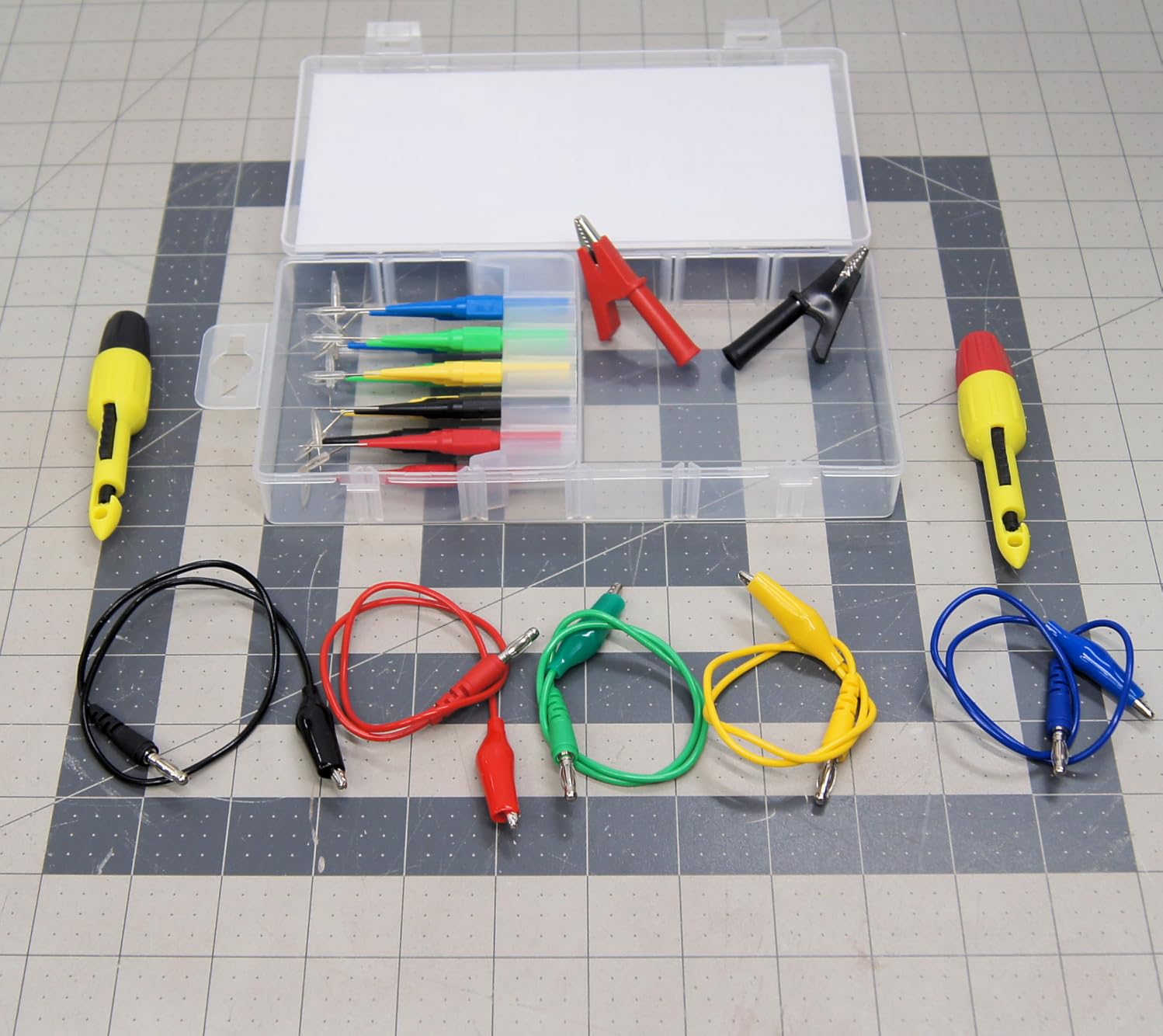
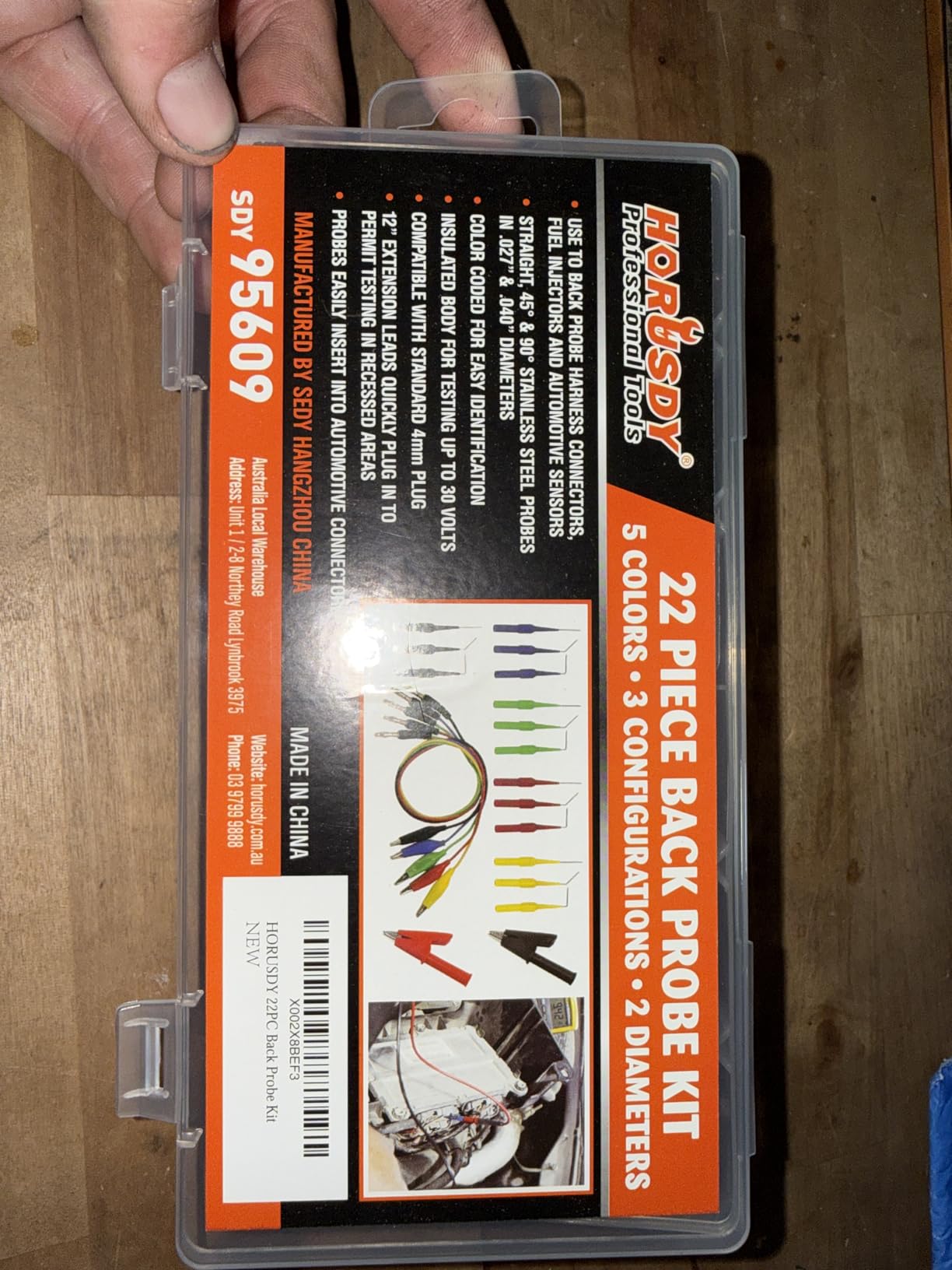
The defining feature here is access. Twenty-nine pieces is a lot, but the useful ones are the back probes and the wire piercing probes, and they are what makes this kit work on a densely populated board or a modern vehicle harness. A back probe slides onto the back of a pin or terminal where a probe tip simply cannot land, and a piercing probe reaches a conductor through insulation, so you can test a circuit without pulling a connector apart.
For readings, the gold-plated needle tips and copper-core wiring keep contact resistance low, and reviewers who use this kit for back-probing electronics and automotive circuits report precise, stable results. The set is rated CAT III 1000V and CAT IV 600V up to 10A, so it carries a real safety label rather than a claim.
The compromise is the jacket. The insulation is flexible, high-temperature resistant PVC rather than silicone, which means it handles heat well but stiffens in cold conditions and can feel less pleasant to handle for long sessions. It is also a newer listing than most in this group, with a smaller pool of long-term ownership history behind it, and one reviewer received a set missing an alligator clip.
Weighing that against access, the accessories more than compensate if your work is diagnosis rather than measurement. When the bottleneck is reaching the test point, a better probe tip changes the result far more than a marginally cleaner wire would.
Who this set suits best
Automotive technicians tracing modern harness faults get the biggest benefit, because piercing probes and back probes let you test a joint that would otherwise require disassembly. Electronics hobbyists working on small connectors and header pins are the second group, and the compact package is easy to keep in one toolbox rather than spread across a bench.
Where it falls short
Cold-weather handling and long-term durability are the weak points, and basic build quality shows up if you work the leads hard. It is also more of a diagnostic accessory kit than a precision measurement pair, so for sub-ohm work you would still want a shorter, stiffer lead alongside it.
7. Goupchn 25-Piece Silicone Kit with Swappable Combination Heads
Goupchn 25PCS Silicone Multimeter Test Leads Kit for Electrical Testing
Silicone with pure copper conductor
CAT III 1000V and 10A
UL and CE listed
12-piece piercing probe set
Pros
- One lead pair serves as probe
- clip
- hook or piercing probe
- Silicone stays flexible in extreme conditions
- Non-slip ergonomic accessory design
- Storage box included
Cons
- Short lead length forces the meter close to the test point
- Some buyers want six foot leads for appliance work
- Rating wording is inconsistent between listing sections
The clever part of this kit is the banana plug and probe combination head, which mates with any 4mm socket accessory in the box. One cable becomes a probe, an alligator clip, a test hook or a piercing probe depending on what you attach, and the 12-piece wire piercing set means you can reach conductors without disconnecting them. Users report it performing as well as or better than the branded leads they replaced, and the pure copper conductor in silicone insulation is a sensible combination for both flexibility and low resistance.
It is UL and CE listed and rated CAT III 1000V at 10A for industrial, electronics, home and automotive use. The accessories carry a non-slip ergonomic shape, which sounds like marketing until you try to hold a hook onto a terminal with cold hands, and the transparent storage box keeps the pieces together instead of loose in a drawer.
The most common complaint is length. Buyers report that the leads are short, which forces you to hold the meter close to the test point, and some want six foot leads for appliance and HVAC troubleshooting. That is a real accuracy-adjacent issue too, because every extra foot of conductor is extra resistance, and holding a meter in one hand while probing with the other is uncomfortable on a ladder.
There is also a documentation inconsistency worth noting: the package specification lists a CAT III 1000V rating while the highlighted features claim CAT IV as well. Where a rating matters for your safety, verify the marking printed on the leads and the rating on your meter rather than relying on listing copy. Buyers who do check report sound accuracy and good value.
Who this set suits best
Appliance and HVAC technicians get a lot from the single-cable design, since one pair covers probing, clipping and hooking without carrying a bag of extra leads. Anyone moving between industrial, electronics and automotive tasks also benefits, because the same kit handles all three rather than requiring a specialist probe for each.
Where it falls short
Length is the main limit, and it limits you in two ways at once: reach on large equipment and total lead resistance on low-ohm work. Check the printed rating before using it on anything above distribution voltage, given the inconsistent CAT wording between the listing sections.
8. HANDSKIT 18 AWG Silicone Leads with Slim Needle Probes
HANDSKIT Multimeter Test Leads, 4mm Banana Plug Leads with Alligator Clips
18 AWG silicone conductor
CAT III 1000V up to 16A
1mm needle probes to 30V
8 piece kit
Pros
- 18 AWG core carries more current and less resistance than thin wire
- Slim 1mm needle probes for PCB joints and tight areas
- Insulated alligator clips for hands-free work
- VW-1 flame resistance and 2000V insulation
Cons
- Needle probes are limited to 30V for electronics work
- Basic 8 piece kit with fewer tip options than large kits
This is the only set here that states its wire gauge, and that single specification tells you most of what you need to know. An 18 AWG conductor is substantially heavier than the thin wire used in budget kits, which means lower resistance for the same length, better current handling, and a core that survives being coiled and uncoiled in a vehicle daily. For anyone moving from bundled leads, the improvement is immediate and measurable rather than subtle.
The 1mm slim needle probes are the other reason to like it. They land cleanly on PCB solder joints and tight connectors, which is the failure point that makes board work frustrating, and reviewers use this set mostly for electronics repair and automotive troubleshooting. The rating covers CAT III 1000V up to 16A with 2000V insulation and VW-1 flame resistance, and the set is RoHS and UL compliant.
There is one limit to be explicit about: the needle probes are rated for low-voltage electronics work up to 30V. That is a sensible safety restriction, because a sharp needle on a live mains conductor is dangerous, but it means you should not use the needle tips on anything above low voltage even though the cable itself is rated far higher. The insulated alligator clips are the correct tool for the higher-energy work on this set.
As an eight piece kit it is also leaner than the large kits, with fewer adapters to lose and a lighter 100 gram total. If you already have clips and hooks in your bag, this is a focused lead set with a precision probe, which is a cleaner way to organise than one oversized kit.
Who this set suits best
Electronics repair and hobby bench work suits this set, because the stated 18 AWG core handles the current involved and the needle tips reach the joints you need. Automotive technicians who already own clips and only need a better lead with a fine probe get a good upgrade here, and the light weight suits a mobile toolkit.
Where it falls short
With eight pieces there are fewer tip options, so you will be adding accessories for back probing or piercing work. And the 30V needle restriction means this is not a one-kit solution for someone who also wants to probe live panel terminals without switching to the clips first.
9. Fluke TL224 SureGrip Leads for Long-Term Durability
Fluke TL224 SureGrip Insulated Test Leads
1.5 meter silicone wire
CAT IV 600V and CAT III 1000V at 10A
Right-angle to straight connector
Reinforced strain relief
Pros
- SureGrip overmoulded curves hold steady in wet or sweaty hands
- Silicone rated from -20C to 55C in 0-95 percent humidity
- Reinforced strain relief handles daily field use
- Works with the Fluke clip and probe accessory range
Cons
- Costs more than a value-brand straight lead pair
- No adjustable tip guard and exposed probe length is fixed
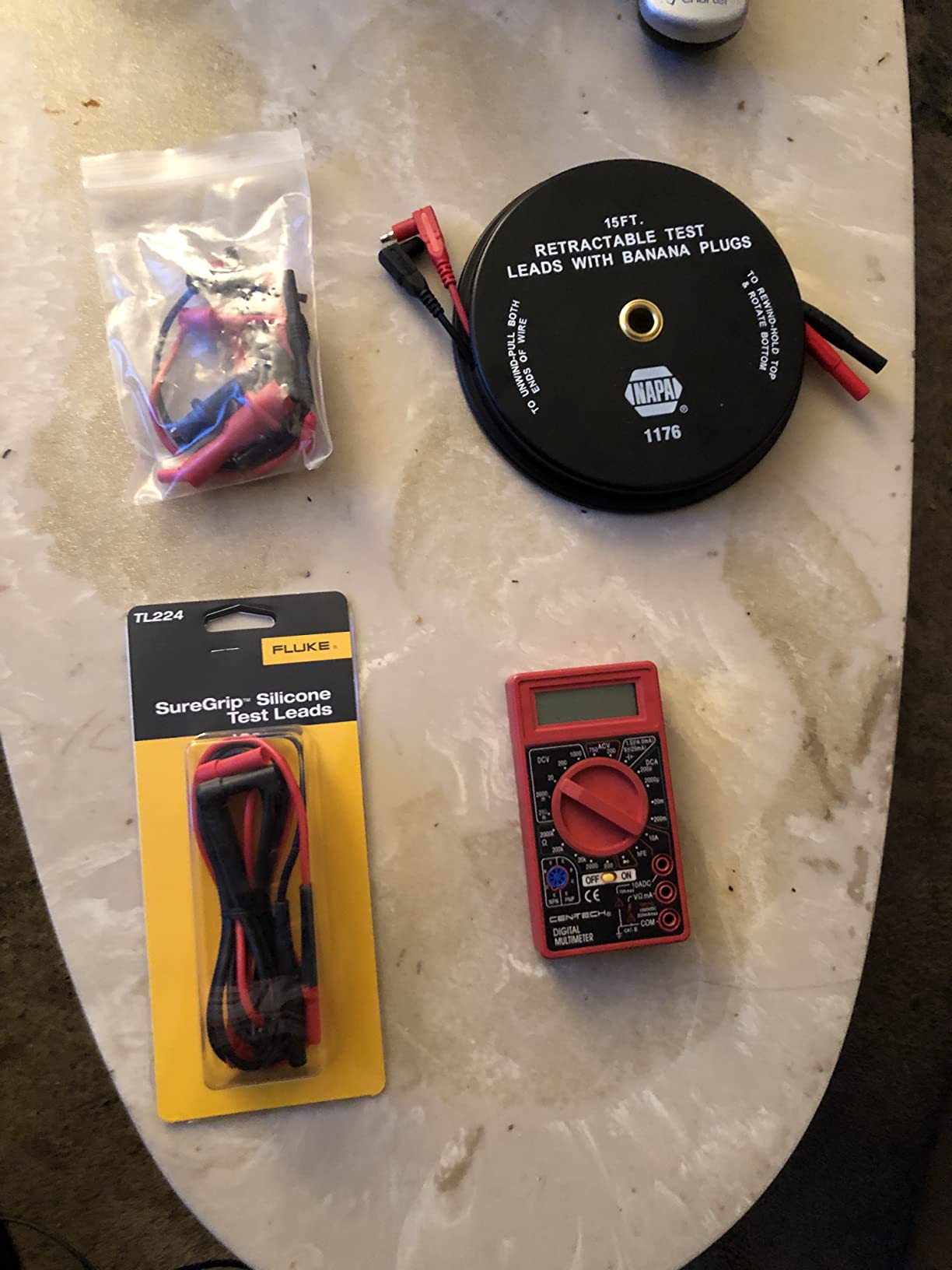
Long-term Fluke owners describe these as the most durable leads they have owned, and one reports a previous set lasting 30 years, which is the strongest durability evidence in this group. The 1.5 metre silicone insulated wire is specified to operate from -20C to 55C across 0 to 95 percent humidity, which is a more useful statement than a temperature range alone, because humidity is what degrades cheap insulation over time.
The SureGrip overmoulded finger-hugging curves are the everyday reason to like them. In wet or sweaty hands a straight smooth handle is genuinely hard to hold, and grip failures lead to a slipping probe and a bad reading. The reinforced strain relief is the other durability lever, and it is the part that normally fails first on cheaper sets.
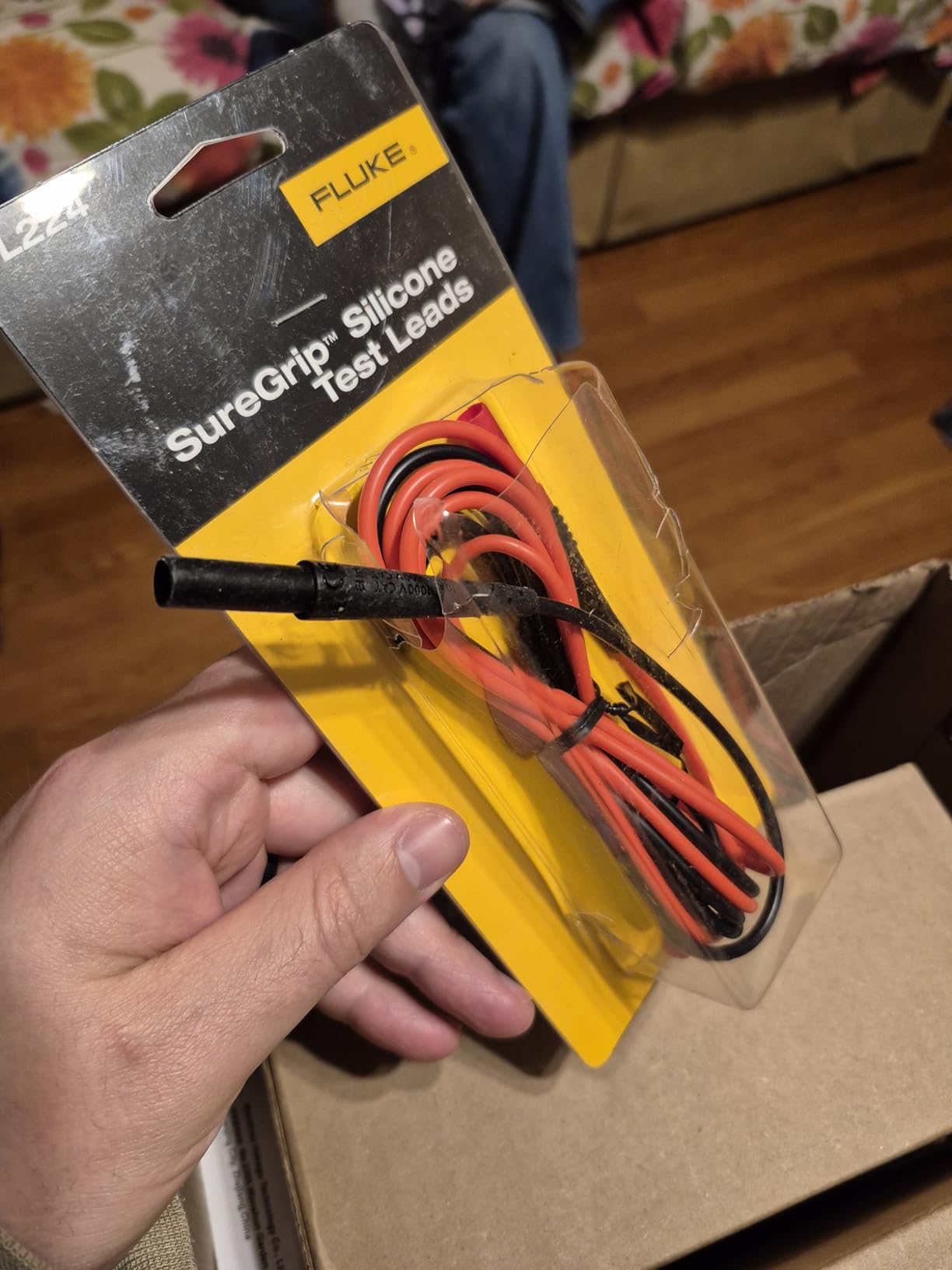
Connection details are sensible: a right-angle connector on one end and a straight connector on the other, which lets you decide per meter which end goes where. It conforms to IEC 61010-2-031:2002 and is UL listed at CAT IV 600V and CAT III 1000V with a 10A rating, and it works with the Fluke AC285 alligator clips and TP220 industrial test probes if you already use that accessory range.
What you give up is tip protection. There is no adjustable guard, so the exposed probe length is fixed, and for work near energised conductors the TL175E style retractable insulation is a better answer. The one year warranty is short relative to a service life measured in decades, but that reflects the consumable nature of leads rather than a quality concern.
Who this set suits best
Technicians who buy tools once and keep them for a career get the most from this pair, because the grip, the strain relief and the specified environmental range are exactly the three things that fail on cheap leads. Outdoor and damp-environment work suits them too, given the humidity specification and the cold operating range.
Where it falls short
For anyone working on live high-energy circuits, the fixed probe exposure is the deciding factor, and you would be better served by an adjustable guard. The straight lead pair also offers no interchangeable tips, so precision board work needs a separate probe.
10. Fluke TL75 Hard Point Test Lead Set
Fluke Corporation FLUTL75 Hard Point Test Lead Set
48 inch PVC insulated leads
CAT III 1000V and 10A
Extremely hard alloy tips
Right-angle shrouded plugs
Pros
- Hard alloy tips resist wear and hold a sharp contact point
- Comfort grip probes for long sessions
- Users report readings identical to factory original leads
- Solid strain relief and universal plug fit
Cons
- PVC insulation stiffens in cold weather
- No CAT IV rating and lead body may arrive slightly curved
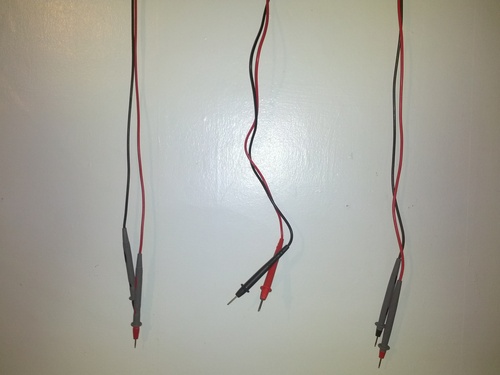
The TL75 is the general-purpose recommendation that has appeared in electronics forum threads for years as the sensible upgrade from the leads that come with a new meter, and the reason is the extremely hard alloy tip. A hard point resists wear and keeps a defined contact area, which is precisely what a low-resistance measurement needs, and a soft tip that mushrooms after a few months is a common reason a mid-priced lead set starts drifting.
Users who switched from inexpensive leads report that the Fluke TL75 gives repeatable, correct readings where budget leads gave intermittent results, and the 48 inch length with right-angle shrouded banana plugs fits a wide range of meters and test tools. The comfort grip probes are easy to hold through a long session, which matters more than it sounds when you are tracing a fault across an entire vehicle or a rack of equipment.
The rating is CAT III 1000V at 10A, UL listed, and intended for general-purpose measurement. There is no CAT IV rating, so if your meter is Category IV and your work is at the service entrance, this set is not the right choice, and the pair with a CAT IV lead is the more defensible decision.
The insulation is PVC rather than silicone, and that is the main practical drawback: it stiffens in cold weather, which matters for anyone working outdoors or in an unheated shop. Owners also note the lead body can arrive with a slight permanent curve and can feel lighter than older Fluke sets. The one year warranty matches the other Fluke option here.
Who this set suits best
General maintenance and electronics work in a warm indoor environment suits this set, especially where probing many terminals in a session means grip and tip sharpness matter more than cold flexibility. It is also a straightforward drop-in for anyone whose meter uses standard 4mm shrouded banana sockets.
Where it falls short
Cold-weather use and Category IV service work are the two real limits, and either one can rule it out. If you work outdoors, choose a silicone lead; if you work at the service entrance, choose a CAT IV rated lead, and check your meter’s category marking before you probe anything.
What Test Lead Accuracy Actually Means
Test lead accuracy means how much measurement error the two wires and two probe tips add to every reading your meter takes. Lead resistance is added directly to resistance readings, and on voltage measurements the same current flowing through the leads drops a small amount of the voltage you are trying to measure. A meter rated to a fraction of a percent will never deliver that accuracy through leads that add a tenth of an ohm.
Here is the math that makes this concrete. A widely used rule of thumb in electronics forums is that 26 AWG wire needs roughly 26 feet to reach one ohm of resistance. Thinner wire is worse, which is why an 18 AWG conductor beats a 30 AWG conductor at the same length, and why the thin leads bundled with a budget meter hurt you twice: they carry more resistance per foot, and the same fragile core contributes more contact resistance at the tip.
That fixed resistance is only half the problem. The other half is contact. Every time a probe touches a corroded terminal, a loose clip, or a lightly seated solder joint, a small interface resistance appears that can rival the entire wire run. This is why a reading drifts when you press harder or move the probe, and why a continuity beep that disappears when you wiggle the tip is a lead fault, not a circuit fault.
Voltage drop work is less sensitive but not immune. If you are measuring the drop across a cable at several amps, the lead resistance adds to the total series resistance and inflates the reading. For low currents the effect is in the microvolts and you will never see it. For a starter cable drawing real current, it is measurable, and long thin leads make the number worse than the cable you are trying to diagnose.
None of this means a precision meter is pointless. It means the meter and the leads are a system, and the system only performs as well as its weakest series element. If your leads add 0.2 ohm and you are chasing a fuse that reads 0.3 ohm, you cannot resolve the difference. This is the single reason people who buy high-accuracy meters report disappointing results and assume the meter was faulty.
How to Test Your Test Leads for Accuracy
You can check any lead set in five minutes with the meter you already own. The procedure works because a healthy probe-to-probe path should read close to zero, and anything above that is error your readings will inherit.
1. Set the meter to the lowest ohms range available and let it settle. Many meters need a few seconds on the lowest range before the display stabilises.
2. Hold the two probe tips together with steady pressure, in the same spot you would press against a real component. Note the reading. That number is your lead resistance, and it is the amount added to every resistance and continuity measurement you make.
3. Subtract that number from the readings you take. If a component reads 0.42 ohm with the probes shorted, and your leads measure 0.15 ohm, the component is really about 0.27 ohm.
4. Repeat the short test three times, in different spots along the cable and at the handle where strain relief attaches. A healthy set reads the same each time. A reading that climbs, drops, or goes open means an intermittent conductor inside the insulation.
5. Re-test a known-good low-ohm component such as a short jumper of solid copper, then measure the same component on a different meter. If the two meters disagree by more than a fraction of an ohm, the difference lives in the leads, not in the component.
Common signs that your leads are distorting your results: continuity beeps that stop when you wiggle a tip, resistance readings that fall as you press harder, every measurement reading consistently high by the same offset, and a probe tip that has gone dull or bends on contact. A dull tip is not a theoretical problem, because a probe that is not making clean metal-to-metal contact is measuring the contact, not the part.
One more diagnostic step matters before you blame the leads at all: probe the meter input jacks directly with the bare banana plugs, bypassing the lead wire entirely. If the reading changes when you go back to the full leads, the leads are the problem. If it does not, look at the meter’s internal fuse or at the circuit, and forum technicians regularly find a corroded battery terminal or a tired fuse before anyone points at the meter.
Buying Guide: How to Choose Multimeter Test Leads
Choose leads by the measurement you actually make, not by brand. A technician tracing a vehicle harness needs reach and piercing access, a bench technician chasing fractions of an ohm needs short and stiff conductors, and an electrician needs Category ratings and clips that hold. Buying the wrong set for the task means buying twice, which costs more than choosing carefully once.
Wire gauge and length decide the accuracy
Wire gauge is the most important accuracy variable you control. Thicker conductors carry less resistance per foot, so an 18 AWG lead of a given length will always beat a 30 AWG lead of the same length on a low-ohm measurement. Length matters for the same reason: the 26 feet of 26 AWG wire per ohm rule means a long thin lead can add a full ohm before the circuit is even involved.
Use short leads, around three to four feet, for low-ohm, battery internal resistance and bench work, and accept the resistance subtraction step. Use long leads, five feet and up, for automotive voltage drop and panel work where reach matters more than resolution. Note that a long lead also increases the voltage drop you are trying to measure, so for cable diagnosis the honest approach is to measure the drop at the meter and subtract the lead drop you measured separately.
Silicone, PVC and braid
Silicone is the sensible default for field work. It stays flexible from around minus 40C to 200C, it does not take a permanent coil memory, and it survives the abrasion and flexing of daily service. Several sets in this roundup specify a minus 68F lower limit, which is more than enough for vehicle work in most climates.
PVC is cheaper and adequate indoors, and it resists heat adequately for many applications, but it stiffens in cold conditions and eventually cracks at the strain relief. Braided outer sleeving adds mechanical protection rather than electrical accuracy, so treat it as a durability upgrade for leads that get dragged across equipment, not as a precision feature.
CAT ratings and safety
Category ratings describe the energy a lead is tested to withstand, and they are not interchangeable. CAT II covers receptacle-connected loads inside a panel. CAT III covers distribution equipment, and a CAT III 1000V lead is the right choice for work downstream of the panel, including sub-panels and most permanently installed equipment.
CAT IV covers the service entrance and the point where utility power enters the building, which is where prospective faults are highest. A CAT III 1000V lead is not a substitute for a CAT IV lead on a Category IV meter, and the amperage rating matters separately: several sets here are rated 10A while the HANDSKIT set is rated to 16A, so match the current rating to the highest current you intend to measure through the leads. Never probe a live high-energy circuit with leads whose rating you have not confirmed, and treat any lead with cracked insulation or a bent exposed tip as unsafe regardless of its printed category.
Compatibility with common meter brands
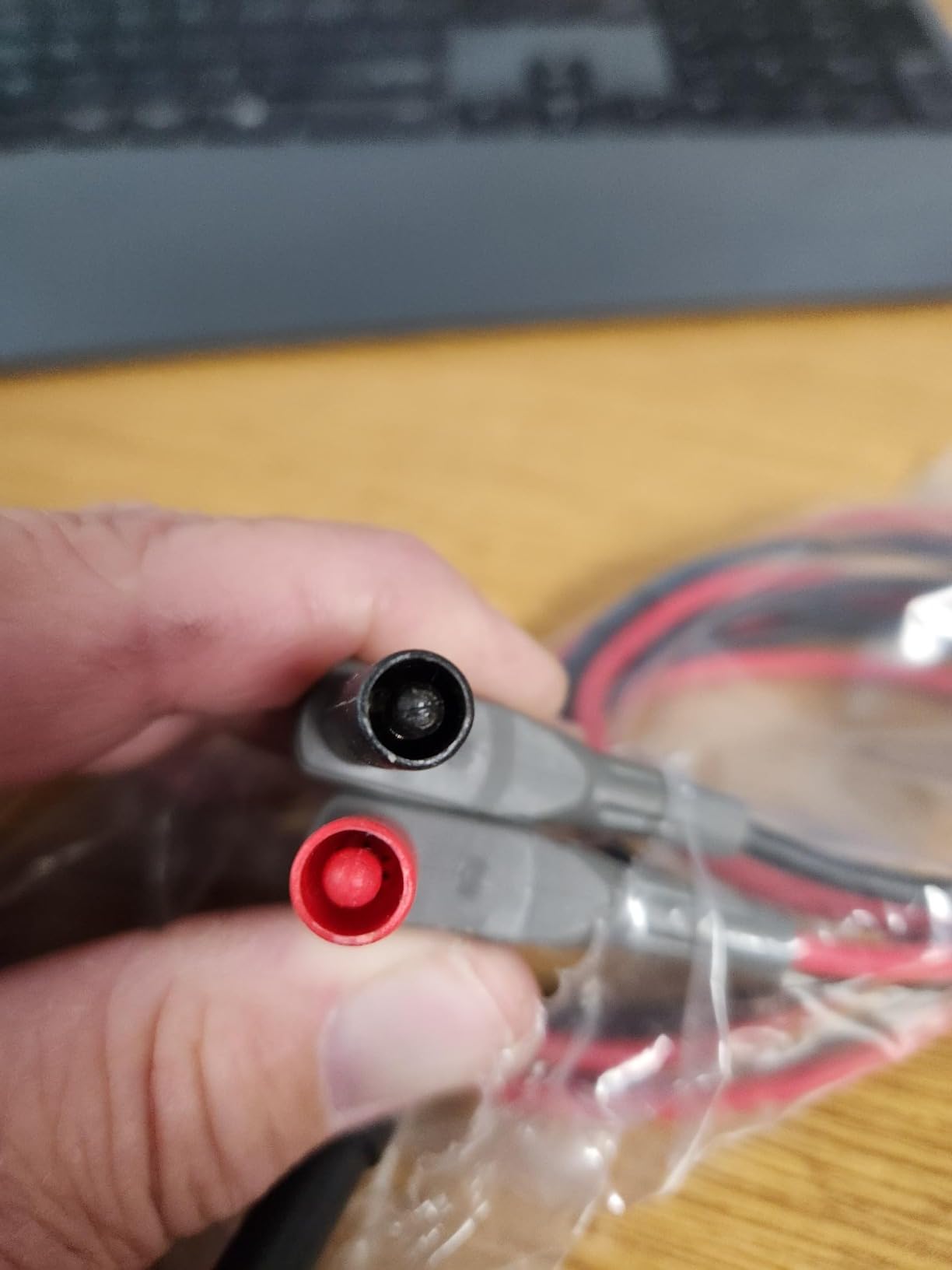
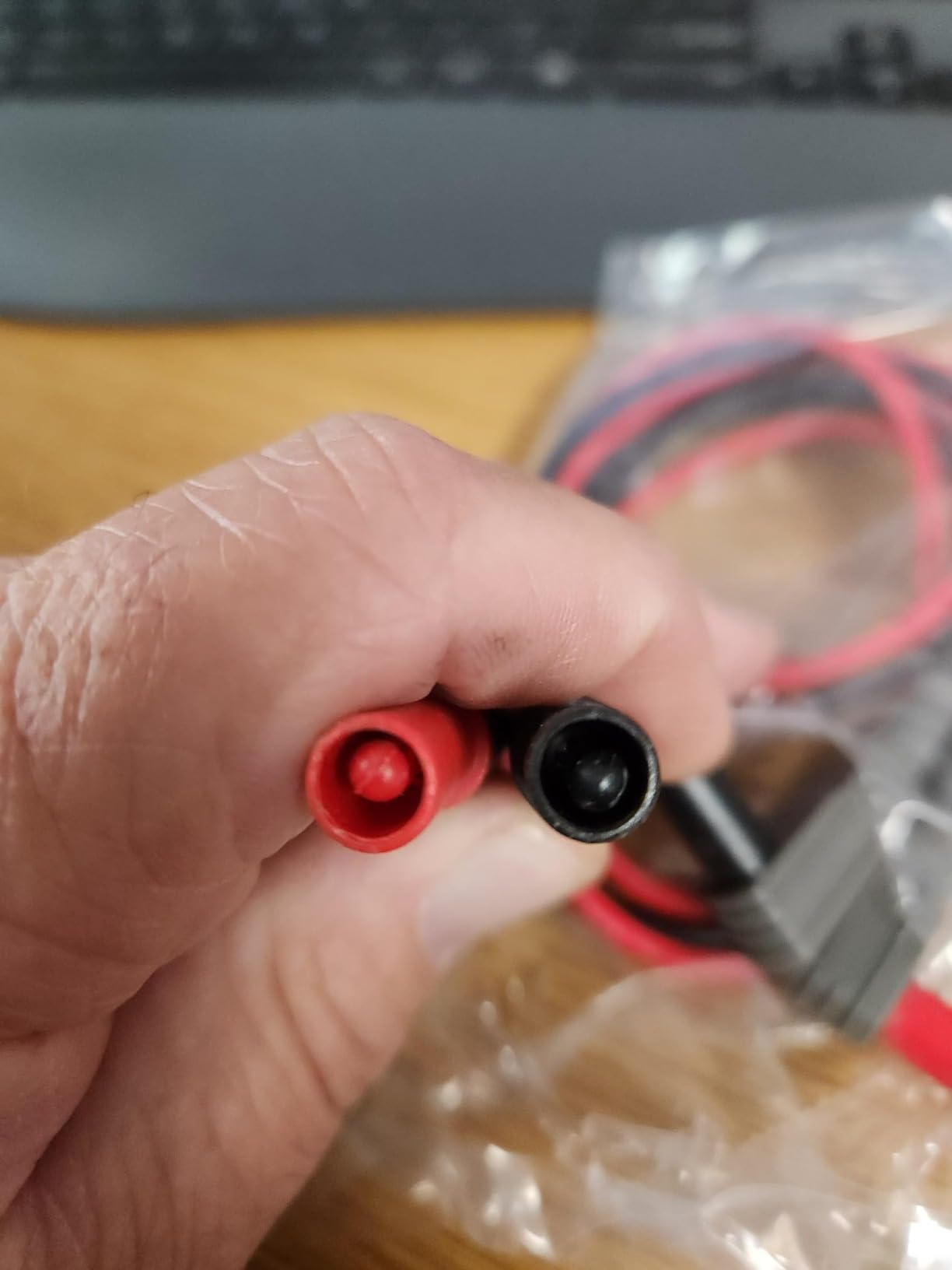
Most meters accept standard 4mm shrouded banana plugs, which is what nearly every set in this roundup uses, so compatibility is rarely the deciding factor. The exceptions are meters with proprietary or recessed sockets, and lead sets with a larger insulating sheath on the plug body, which may need a little adaptation to seat properly. Klein sets are designed around Klein meters and stow in their lead compartment, and Fluke sets are built to pair with the Fluke clip and probe accessories, but both still fit other meters with standard 4mm inputs.
Brands that consistently publish real ratings and build to a stated standard include Fluke, Klein, Keysight, Brymen, Amprobe, Extech and Pomona. In this roundup, the specific signals to check on any listing are a printed rating label, a stated wire gauge, replaceable tips and reinforced strain relief. A lead set with no rating marking is the one to avoid, whatever the description says.
What each tier actually buys you
At the entry level you get silicone insulation, a stated Category III rating and a usable needle probe, which improves on bundled leads in every respect. Moving up adds dual Category III and Category IV ratings, better strain relief, and gold-plated or hard alloy tips that hold their contact resistance over years. At the top of the range the gains are grip ergonomics, adjustable tip insulation, visible damage indication and certified bend life, and those features matter when the work is near live equipment.
None of the tiers will improve a meter that is drifting from its own calibration, and that is worth saying plainly. If readings are unstable even with the probes shorted directly in the input jacks, the meter is the bottleneck, and better leads will not fix it. Replace the leads when resistance readings drift, tips have dulled, insulation has cracked, or the strain relief has gone soft, and look at the meter only after that.
Frequently Asked Questions
How much resistance is too much in multimeter test leads?
Below about 0.1 ohm is excellent, and most quality leads measure well under that with the probes shorted. Around 0.2 to 0.3 ohm is workable for general voltage and continuity work but noticeable on low-ohm measurements. Above roughly 1 ohm your leads are adding more resistance than many components you are trying to test, so the reading is mostly lead. Short the probes, read the offset, and subtract it from every resistance measurement.
How do I test whether my multimeter test leads are bad?
Set the meter to the lowest ohms range, hold the two probe tips together firmly and read the value. That number is your lead resistance. Repeat three times in different spots along the cable, including at the strain relief. A healthy set reads the same each time. A reading that climbs, drops or goes open, or a continuity beep that stops when you wiggle a tip, means the lead or its contact is failing.
Why does my multimeter read higher ohms than the actual value?
The most common cause is lead resistance being added to the reading. Every wire and contact in the path between the meter and your component contributes, and the meter cannot separate them. Short the probes, note the offset and subtract it. A dull or bent probe tip adds a second, larger error by making poor contact, and a corroded terminal in the circuit under test does the same thing.
What is the difference between CAT III and CAT IV test leads?
CAT III rated leads are tested for distribution equipment, meaning work downstream of a panel such as sub-panels and permanently installed equipment. CAT IV rated leads are tested for the service entrance, where prospective fault current is highest, which is the origin of utility power. A CAT III lead is not a substitute for a CAT IV lead on a Category IV meter, and amperage ratings are a separate check you should match to your measurement current.
Do test leads really affect multimeter accuracy?
Yes, and the effect is larger than most people expect. Meter accuracy is specified assuming low-resistance connections, so a meter rated to a fraction of a percent cannot deliver that through leads that add a tenth of an ohm or more. Long thin leads hurt twice, since they raise resistance per foot and make the probe contact less reliable. On low-ohm work the lead offset can be larger than the component you are measuring.
How long should multimeter test leads be?
Use short leads of around three to four feet for low-ohm, battery internal resistance and bench work, because every extra foot adds resistance. Use longer leads of five feet and more for automotive voltage drop, appliance and panel work where reach matters more than resolution. Around 26 feet of 26 AWG wire makes roughly one ohm, so length is a genuine accuracy variable rather than just a convenience one.
Can I straighten a bent multimeter probe tip?
You can often improve a bent tip by straightening it carefully, and repair technicians frequently keep using a bent but still functional tip. Be aware that straightening can thin or micro-crack the point, which increases contact resistance and can make readings less repeatable. Replace the tip when the point is dull, torn or has been straightened more than once, and check that the replacement tip matches the meter voltage range.
What is the correct way to measure a battery internal resistance?
Measure across the battery terminals in ohms mode with the circuit disconnected, and use short test leads because lead resistance inflates the result. Take the reading immediately, then subtract the lead offset you measured by shorting the probes. Compare against the manufacturer specification rather than an absolute number, since internal resistance rises with age, and remember that a reading taken across a charging circuit reflects the charger, not the cell.
Final Verdict on the Best Multimeter Test Leads
The best multimeter test leads for accuracy in 2026 are the ones that add the least resistance and make the most reliable contact, and the picks above separate cleanly by task. The KAIWEETS kit is the best all-round choice, with a dual Category rating, a conductor built for low resistance and silicone that stays workable in cold conditions.
The Bionso set takes the crown for precision, because replaceable gold-plated tips in three diameters let you match the probe to the contact. The Klein 69410 is the right replacement pair if you want a clean right-angle fit, the Fluke TL175E earns its place wherever the measurement happens near energised conductors, and the Fluke TL224 is the one to buy once and keep for a career.
Before you buy anything, run the five-step self-test on the leads you already own. If the offset is high, subtract it correctly, and you may find your existing pair is fine for everything except the work you actually bought a new meter for. When you do replace them, match the length and Category rating to the measurement, and check the printed label rather than the listing.