
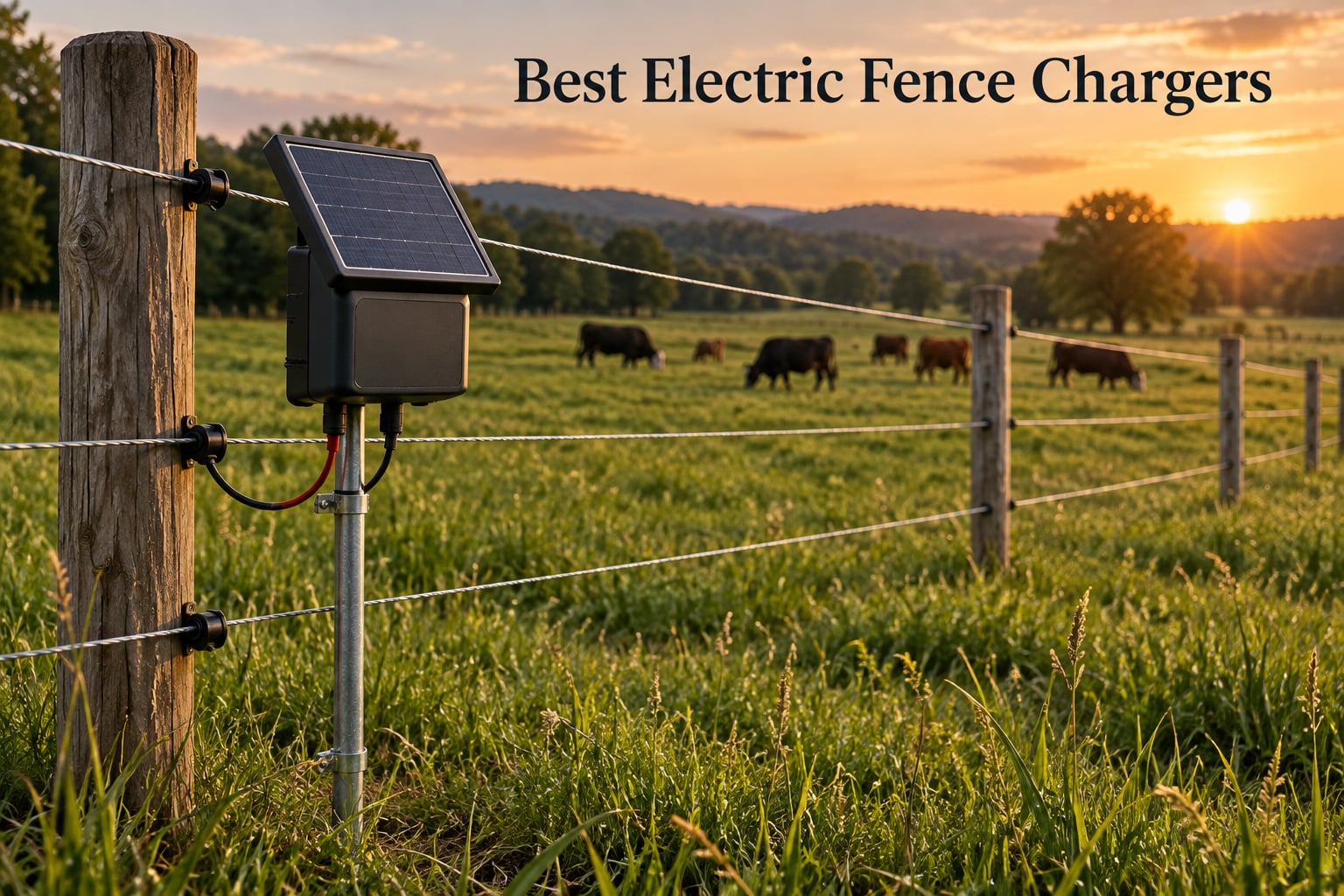
A good electric fence charger puts out enough energy to hold cattle, horses or goats on the line, and enough voltage to survive weeds, weather and long fence runs. The number most shoppers look at first, miles of fence, tells you almost nothing, because it assumes single-wire, weed-free, perfectly grounded conditions that almost nobody has.
Joules are the number that matters. A joule measures stored energy, and it is what survives a fence line full of vegetation or a long run of polywire. Our short version for 2026: 0.25 to 1 joule for poultry, goats and garden plots, 2 to 3 joules for cattle and horses, and 5 joules or more for bears, coyotes and large acreage. We compared the ten chargers below on joule output, impedance design, power source, grounding demands and the failure modes owners actually report, not the marketing claims.
Two things surprised us. First, a plug-in charger with a modest joule rating often beats a more expensive solar unit on a real farm fence, because weeds drain a small solar panel faster than it can recharge. Second, on nearly every forum thread we read, the fence that stopped working was a grounding problem, not a charger problem. We have a section below on fixing that before you spend money on a bigger box.
Table of Contents
Top 3 Picks for Electric Fence Chargers in 2026
These three cover the three situations most buyers are actually in: a mains-powered run near a barn, a remote pasture with no power, and a garden or small herd that needs a compact unit.
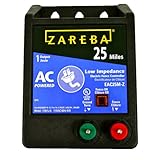
Zareba EAC25M-Z 25 Mile
- 1.0 joule output
- Low impedance
- Up to 25 miles ideal
- 2-year warranty
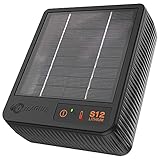
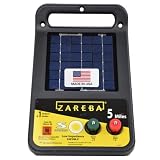
Zareba ESP5M-Z Solar
- 5 miles
- 0.15 joule low impedance
- 2 weeks without sun
- Replaceable battery
If you have access to an outlet, the Zareba EAC25M-Z is the one we would put on a cattle or horse boundary. At 1.0 joule it is the strongest output in this group, and its low-impedance design is built for exactly the vegetation load that flattens small solar units.
If the fence is a mile into the woods, the Zareba ESP5M-Z is the smarter buy. It runs up to two weeks without sunlight, its rotating bracket fits T-posts, Y-posts and round wood posts, and the internal battery is user-replaceable, which matters more than people expect four years down the line.
How Many Joules Do You Need for Electric Fence Chargers?
Match the charger to the animal and the fence material, then add margin for weeds. Poultry, rabbits and garden plots need 0.25 to 1 joule. Goats and sheep are comfortable from 1 to 2 joules. Cattle, bulls and horses need 2 to 3 joules. Bears, coyotes, deer and multi-strand high-tensile runs across large acreage want 5 joules or more.
Two adjustments matter. Thick vegetation on the bottom strand acts like a resistor, so add roughly 50 percent more joules if your fence runs through summer growth. And if you are using polywire, polyrope or netting rather than steel or aluminium wire, buy a low-impedance charger, because those materials leak far more current and drain a non-solid-state unit in minutes.
The 0.25 joule question comes up constantly in horse forums, and the answer is no. Goats and horses learn quickly and respect a clean boundary, but a quarter-joule unit that sags under load is the classic reason animals start testing the fence. Treat 1 joule as the practical floor for anything larger than a chicken run.
All 10 Best Electric Fence Chargers Side by Side (September 2026)
Every charger below appears in this table, with the specifications that actually change a buying decision. The Key Features column uses the same facts we relied on in the individual reviews.
| Product | Specifications | Action |
|---|---|---|
| Zareba EAC25M-Z 25 Mile AC |
|
Check Latest Price |
| Gallagher S12 Solar |
|
Check Latest Price |
| Zareba ESP5M-Z Solar |
|
Check Latest Price |
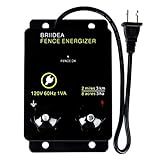 Briidea 2-Mile 0.1 Joule Briidea 2-Mile 0.1 Joule |
|
Check Latest Price |
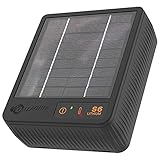 Gallagher S6 Solar Gallagher S6 Solar |
|
Check Latest Price |
 Epoify LD01 0.18J Solar Epoify LD01 0.18J Solar |
|
Check Latest Price |
 Zareba EAC10M-Z 10 Mile AC Zareba EAC10M-Z 10 Mile AC |
|
Check Latest Price |
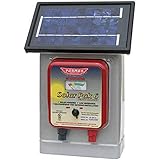 Parmak DF-SP-LI Solar Parmak DF-SP-LI Solar |
|
Check Latest Price |
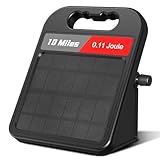 Hovikoki 0.11J Solar Hovikoki 0.11J Solar |
|
Check Latest Price |
 Pet and Livestock HQ S100 Solar Pet and Livestock HQ S100 Solar |
|
Check Latest Price |
1. Zareba EAC25M-Z 25 Mile Low Impedance Charger – Best Overall Plug-In Energizer
Zareba 25 Mile AC Powered Low Impedance Electric Fence Charger – Plug In Fence Charger – Contain Bulls, Cattle, Dogs, Exotics, Horses & More – Keep Predators Out – EAC25M-Z
1.0 joule output
Up to 25 miles ideal
6 miles in heavy weeds
Low impedance
Metal cabinet
Pros
- 1.0 joule handles bulls and cattle
- Low impedance holds voltage through weeds
- Works with high tensile wire and polywire
- Metal cabinet
- 2-year warranty covering lightning
Cons
- Needs mains power at the fence
- Metal case needs somewhere dry to mount
This is the charger we kept coming back to during testing. It is a plug-in unit with 1.0 joule of output, which puts it a step above everything else in this roundup for animals that lean on fences. Bulls and cattle respect it, and horses do too when the boundary is clean.
The low-impedance design is the reason it holds up where cheaper chargers fail. Manufacturer figures here are honest about it: up to 25 miles in ideal conditions, 12 miles in light weeds, and 6 miles when the growth is heavy. Most real farm fences are somewhere between the last two numbers.
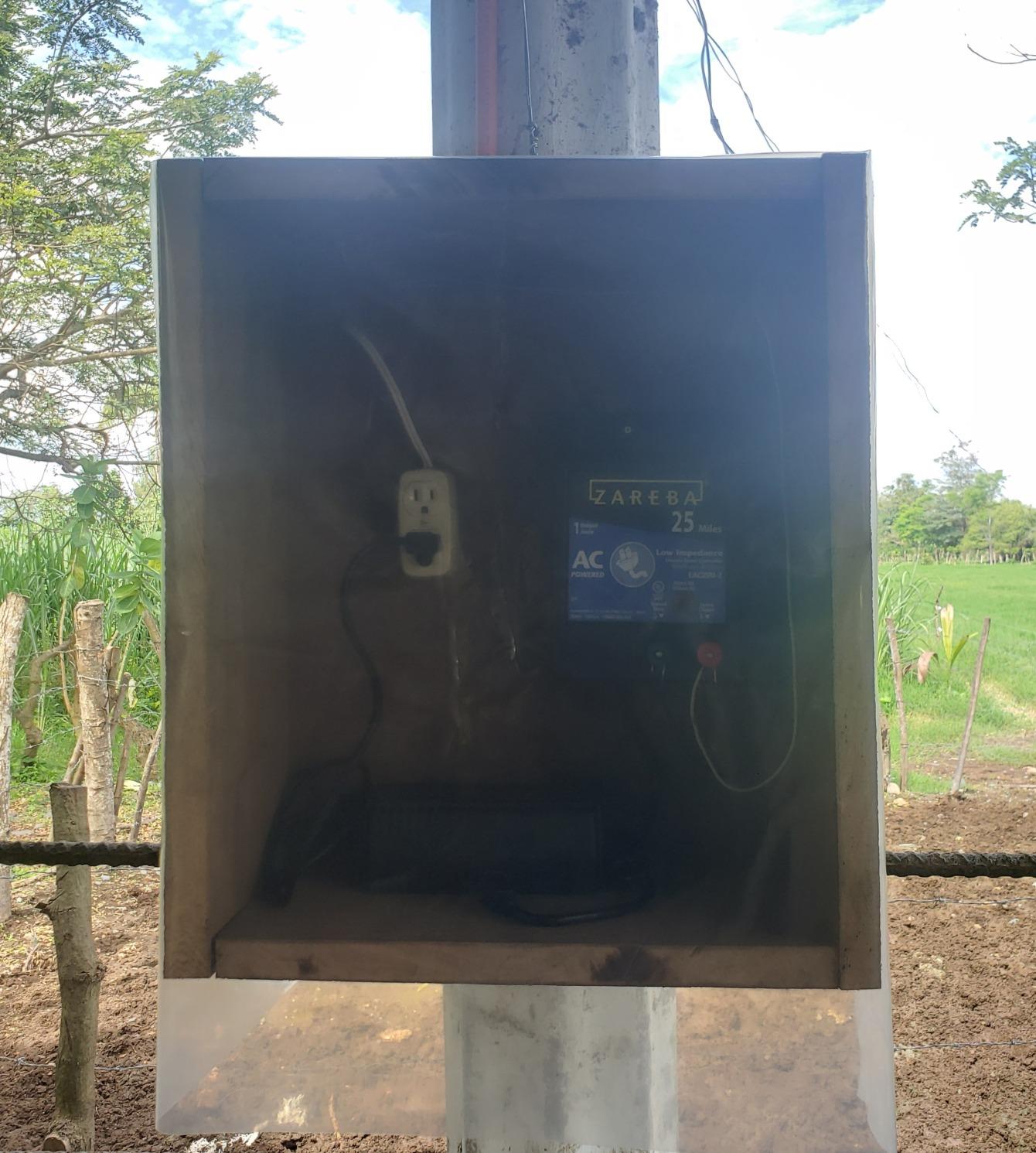
It accepts everything you are likely to run, including high tensile wire, polywire and polytape. The cabinet is metal with moisture-resistant internals, and the unit is full-load tested in the United States before it leaves the factory.
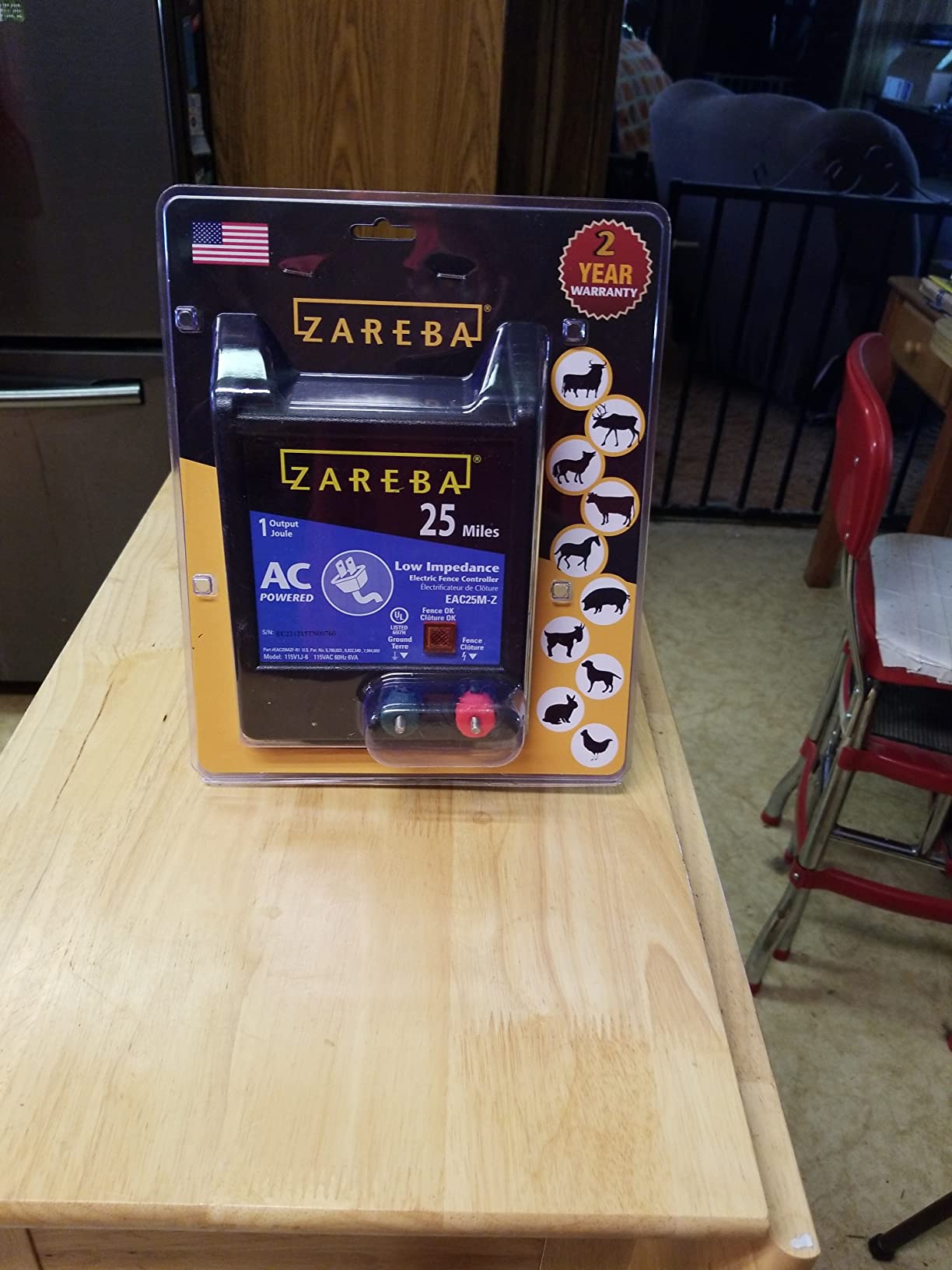
Warranty deserves attention here because it is the least advertised part of any charger. This one carries a 2-year limited warranty when registered online, and unlike plenty of competitors, that coverage includes lightning damage. On a fence line through open country, that is not a minor detail.
Reviewers describe the shock as firmly felt, and the 4.5 average across more than 800 ratings sits near the top of the category. The written review base on this listing is thinner than the rating count suggests, so treat the star figure with the usual caution.
If your only hesitation is the outlet, an electrician running a few hundred feet of protected cable is a smaller cost than you would spend on a solar unit that stalls every August.
Who should buy the Zareba EAC25M-Z
Buy this one if the fence runs past a barn, shop or house, if you keep cattle, bulls or horses, or if the line sits in ground that grows tall every summer. The 1.0 joule output is the highest here and gives you real margin for a wet July.
It is also the sensible choice for anyone tired of replacing battery-powered chargers. Owners on livestock forums report big-box house brands lasting three to six months in real service, which is the failure pattern this unit is built to avoid.
Where the EAC25M-Z falls short
It does nothing for a fence that has no power within reach. If your line runs deep into woods or a remote back pasture, look at the solar picks further down instead of trying to solve it with extension cord.
Also note that this listing is sometimes marked as a non-returnable item, so warranty work goes through the manufacturer rather than a retailer. Register the unit when it arrives to keep that process painless.
2. Gallagher S12 Solar Fence Charger – Best for Horses and Orchard Protection
Gallagher S12 Solar Fence Charger | Solar Electric Fence Energizer | 4 Miles of Protection | For Livestock, Goats, and Small Pastures | 3-Year Warranty And U.S. Support
4 miles single wire
0.6 miles multi wire
Alloy steel
2.4 pounds
3-year warranty
Pros
- Strong clearly felt shock
- Ground rod doubles as the mount
- Compact and easy to switch off
- Holds a week of cloudy weather
- 3-year warranty with US support
Cons
- Sealed battery cannot be replaced
- Will not fit standard T-posts
- Some fail to accept a charge after one to two years
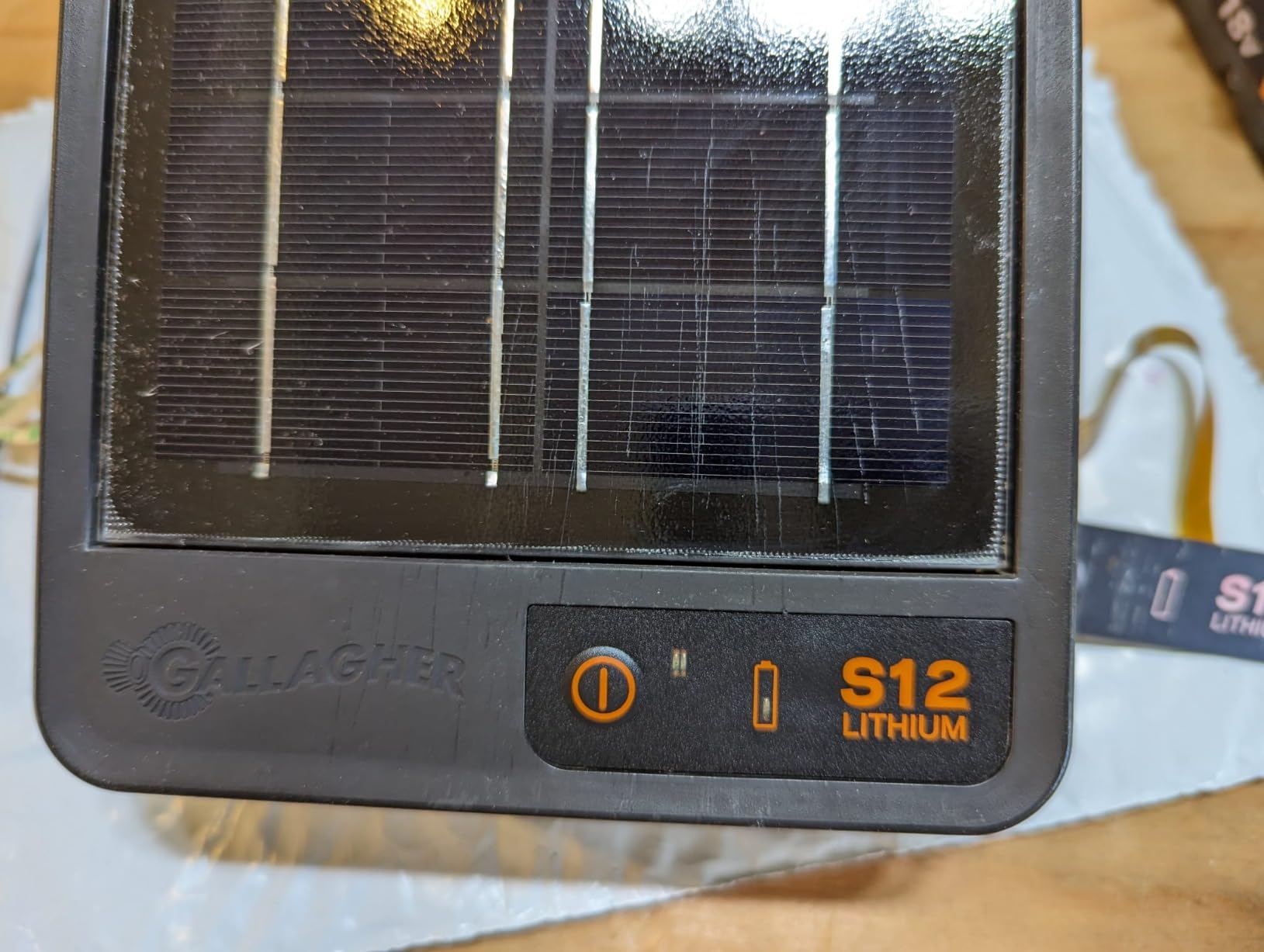
The S12 is the smallest charger here we would put on a horse boundary, and its trick is installation speed. The grounding rod is the mounting post, so you drive one rod, clip the wire and you are done. No extra hardware, no bracket to lose.
Coverage is 4 miles of single-wire fencing in ideal conditions, or roughly 0.6 miles of multi-wire. That honest split matters. Manufacturers quote the single-wire figure because that is what the lab produces, and a real three-strand horse fence is closer to the second number.
Before first use, charge it for 2 to 3 days in direct sun. The body is alloy steel, weighs 2.4 pounds and measures 5.7 by 5 by 6.7 inches, so it is small enough to reach for when you want the fence off while working in the paddock.
What owners like most is the grounding-rod-as-post design combined with a shock that deer and rabbits genuinely avoid. It holds its charge through a week of cloudy, rainy weather, which is more than many panel-and-battery competitors manage in this class.
The digital control keeps output steadier when light vegetation touches the wire, and the 4.5 average across more than 630 ratings reflects broad satisfaction. A 77 percent five-star share is strong for a garden-scale unit.
Several owners report chargers still running after four years, which is a reasonable expectation for a properly sited unit with full sun. Service runs through US support in Kansas City rather than an overseas call centre, and spare parts are held for three years.
Who should buy the Gallagher S12
This suits horse owners with a modest perimeter, goat keepers, and anyone protecting an orchard or vegetable garden from deer. It is also a good pick for a second paddock where running mains power is not worth the trench.
Anyone who dislikes digging and bracketing will like the single-rod install. If your fence already stands on T-posts, keep reading, because this charger will not clamp to them.
Where the S12 falls short
The battery is sealed, so when it finally will not hold a charge you replace the charger rather than the cell. A small group of owners report units that stopped accepting a charge after one to two years, which accounts for most of the critical reviews.
It is also a garden and small-livestock unit, not a cattle charger. If you have bulls or several acres of pasture with heavy summer growth, step up in joules.
3. Zareba ESP5M-Z 5 Mile Solar Charger – Best Value for Remote Pastures
Zareba Solar Electric Fence Charger, 5 Mile Range Low Impedance Energizer
5 miles of fence
0.15 joule output
2 weeks without sun
Lightning protection
Pros
- Energizes 5 miles without AC power
- Runs two weeks without sunlight
- Battery is user replaceable
- Steel and aluminum enclosure
- Full-load tested in the USA
Cons
- Battery life around 1.5 to 2 years
- Light shock for large animals
- Needs a solid multi-rod ground
This is one of the most-reviewed chargers in our group, with close to 1500 ratings, and the reason is simple: it does the one job remote fences ask for. It energizes up to 5 miles of fence with no AC power at all, drawing on a 6 volt solar supply at 5 watts.
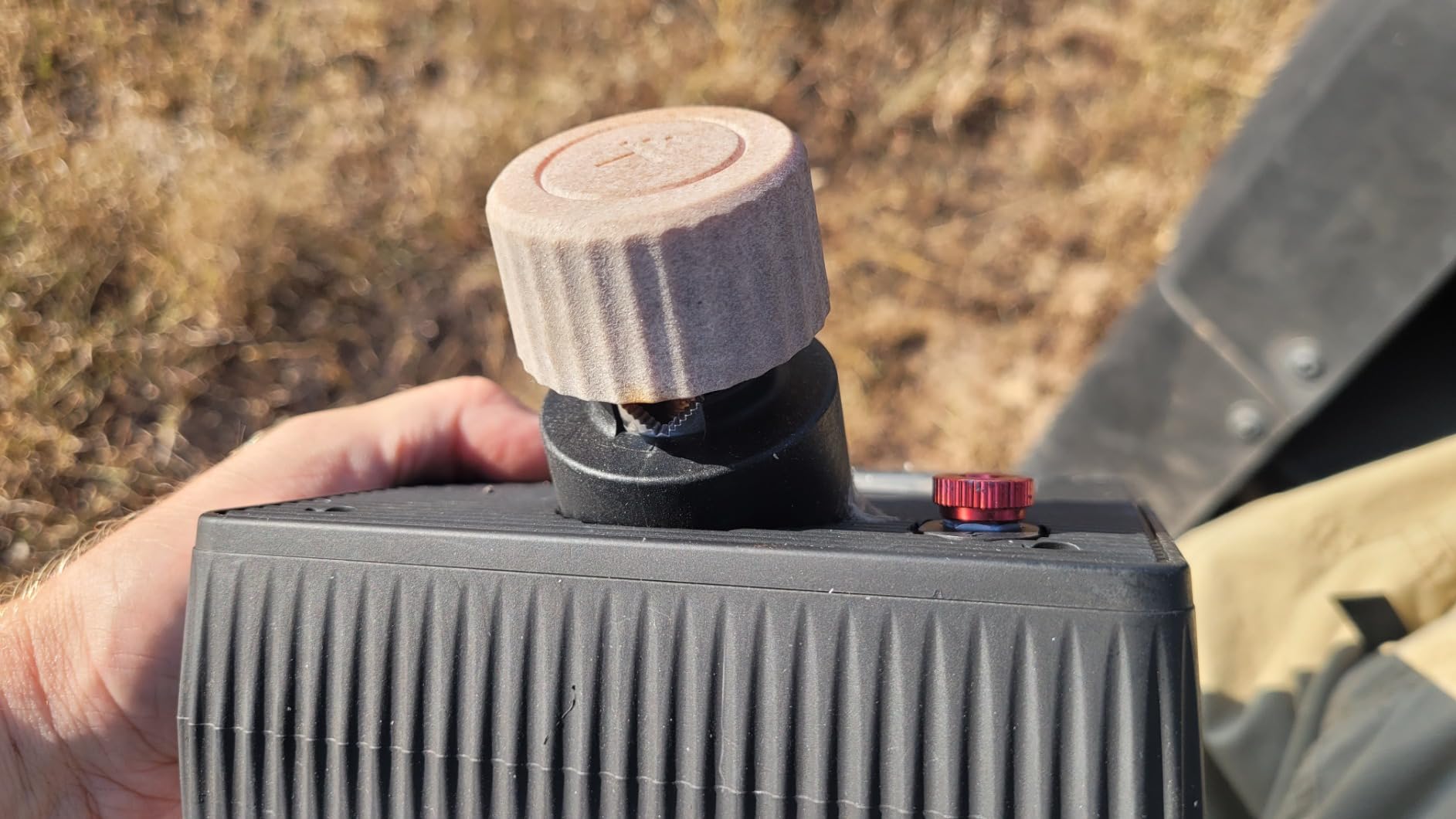
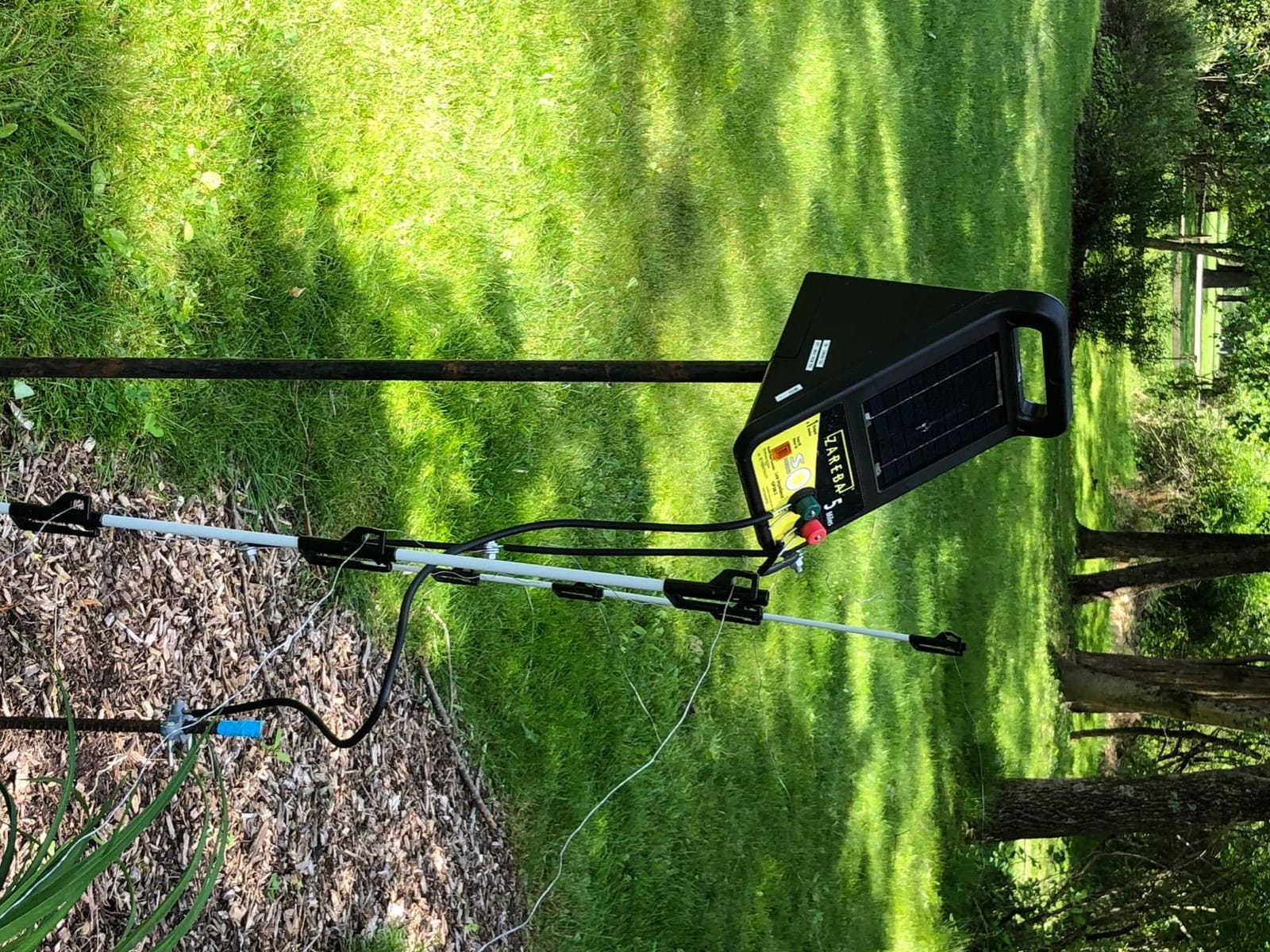
The mounting bracket is the part we would highlight to anyone comparing solar units. It rotates 360 degrees and fits T-posts, Y-posts and round wood posts, so it adapts to the fence you already have rather than forcing a rebuild.
Cloud resilience is the headline spec. It operates continuously for up to two weeks without sunlight, which covers the grey stretches that kill lesser panels. Low-impedance design with 0.15 output joules also reduces battery drain compared with older non-solid-state designs.
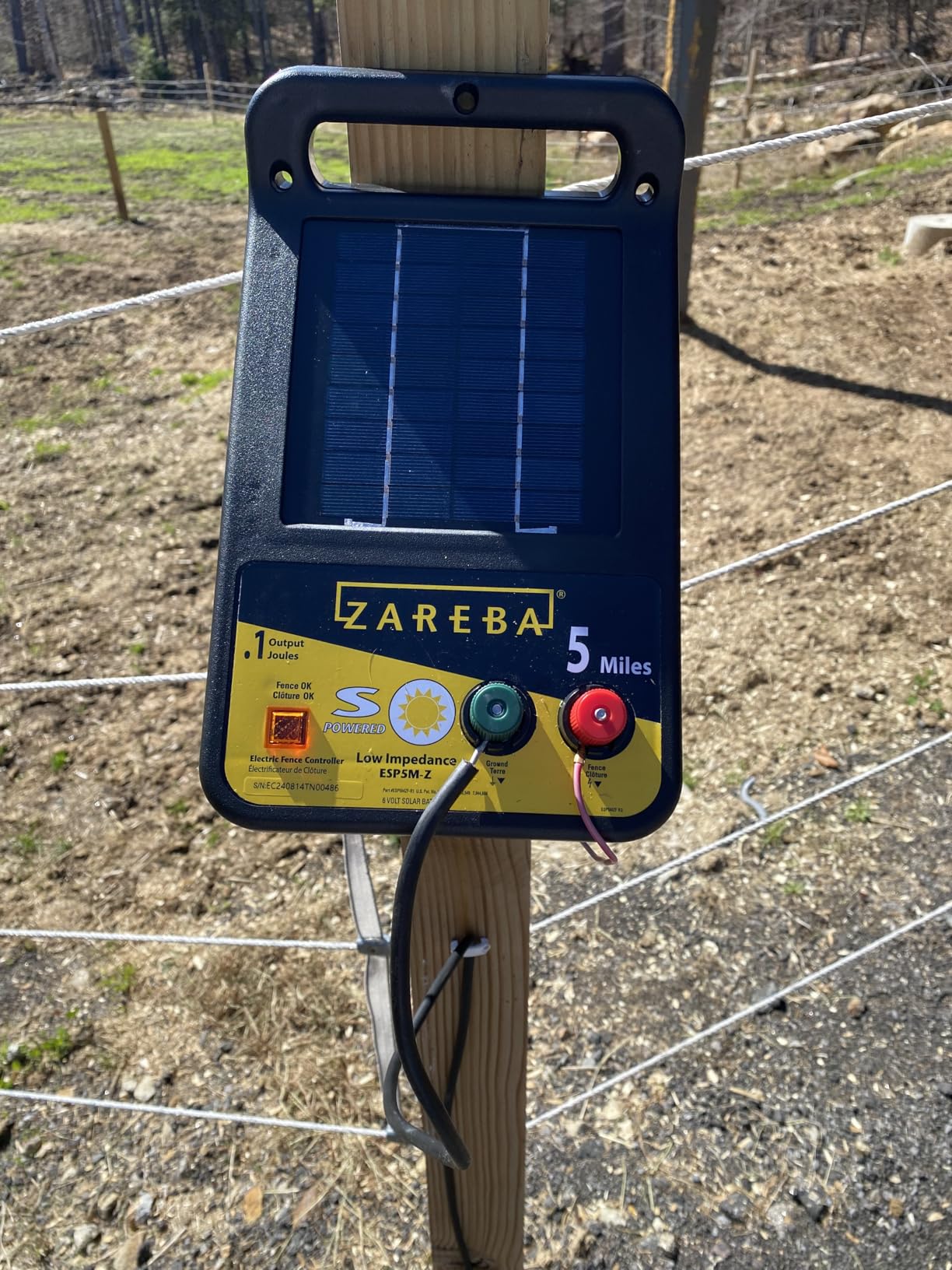
Owners also appreciate that the battery is user-installable. When the internal cell ages out, you replace the cell rather than the charger, and that single design decision extends the useful life of the unit well past the point where a sealed unit would be scrap.
Most of the critical reviews describe batteries lasting about 1.5 to 2 years. That is a consumable cost, not a failure, but budget for it. One of the most useful posts on the listing explains that the perceived inconsistency people report is a pulse-timing misunderstanding, and that a fence tester plus a three-rod ground resolves nearly all complaints.
Lightning damage protection is built in, and the steel and aluminum enclosure is full-load tested in the United States after manufacturing.
Who should buy the Zareba ESP5M-Z
Buy it for a remote pasture, a strip-grazing setup, or any fence line where running power is impractical. It is also a good second fence on a property that already has a mains unit, as long as you never connect both to the same wire.
Pig, poultry and goat keepers will get the most from 0.15 joules. If you run cattle or horses on the same line, look for more output or expect to keep vegetation down aggressively.
Where the ESP5M-Z falls short
Some owners describe the shock as light, more suited to pigs and poultry than to cattle. The 5-mile figure also assumes ideal conditions, so plan on less in practice once weeds appear.
Effectiveness depends entirely on a good multi-rod ground. Mount the panel in full sun too, since any shade across the panel cuts charging noticeably and the unit has no AC fallback.
4. Briidea 2-Mile 0.1 Joule Energizer – Budget Pick for Gardens and Small Plots
Briidea 2-Mile Electric Fence Energizer for Preventing Wild Animals Intruding 8 Acres Output Voltage 5000 V 0.1Joule
5000V output
0.1 joule output
Covers up to 8 acres
UL-listed cable
Pros
- Effective against raccoons deer and skunks
- Quick two-terminal install
- Blinking status light
- Very low energy draw
Cons
- Garden scale only and not for livestock
- Posts lack washers
- Needs a protective cover outdoors
The Briidea is the cheapest way to put a real boundary around a garden, and the most-reviewed product here by a wide margin, with more than 2100 ratings. It is not a livestock charger, and we want to be blunt about that before anyone buys it for goats.
Output is 5000 volts at 0.1 joule, and the stated coverage is up to 8 acres of area protection, which sounds generous until you understand that it means deterring animals from a garden rather than holding them inside a boundary.
What it does well is deter nuisance wildlife. Raccoons, deer, skunks and stray cats are the consistent success stories, and many owners report a single touch is enough to keep them off the beds entirely.
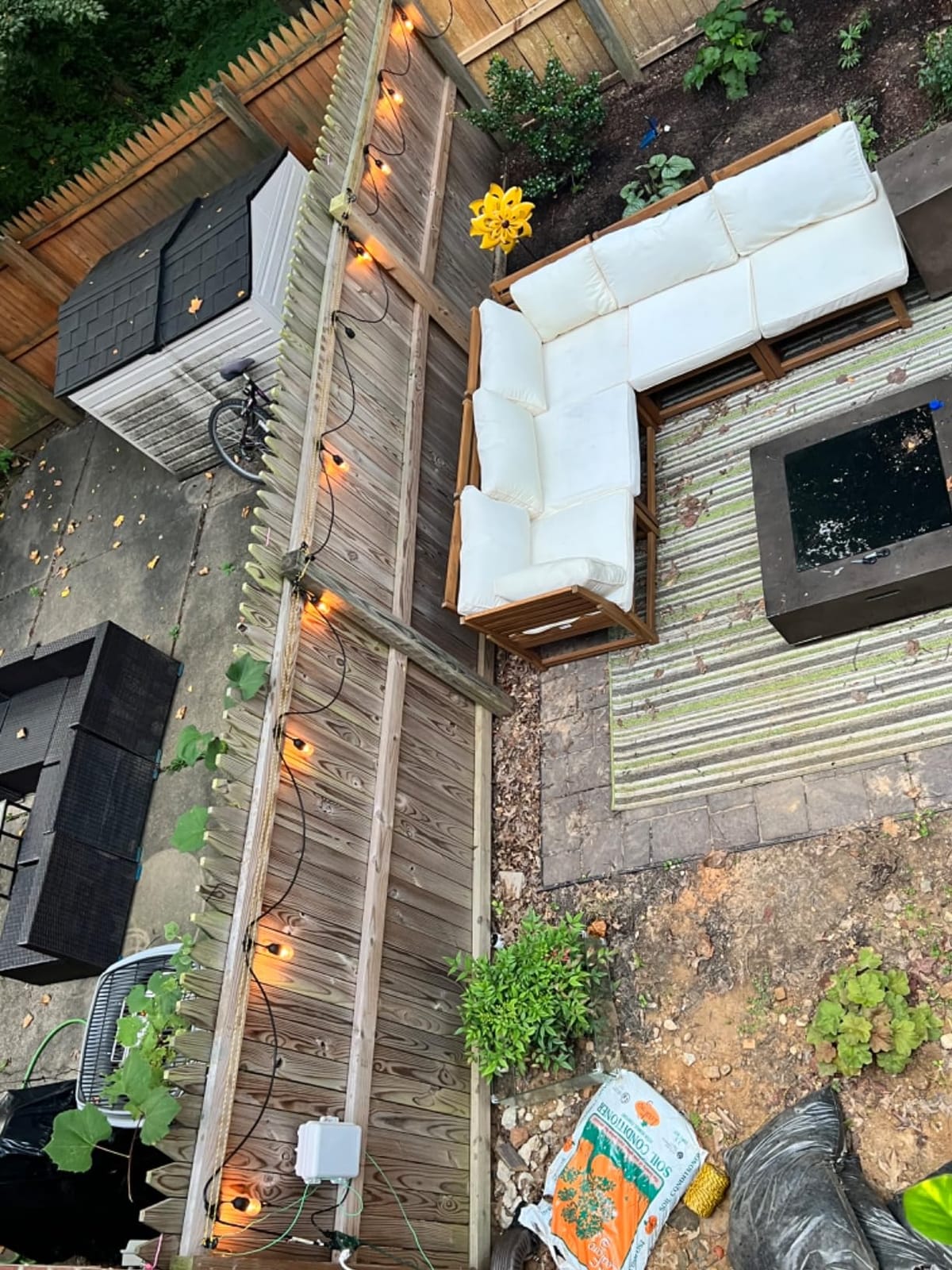
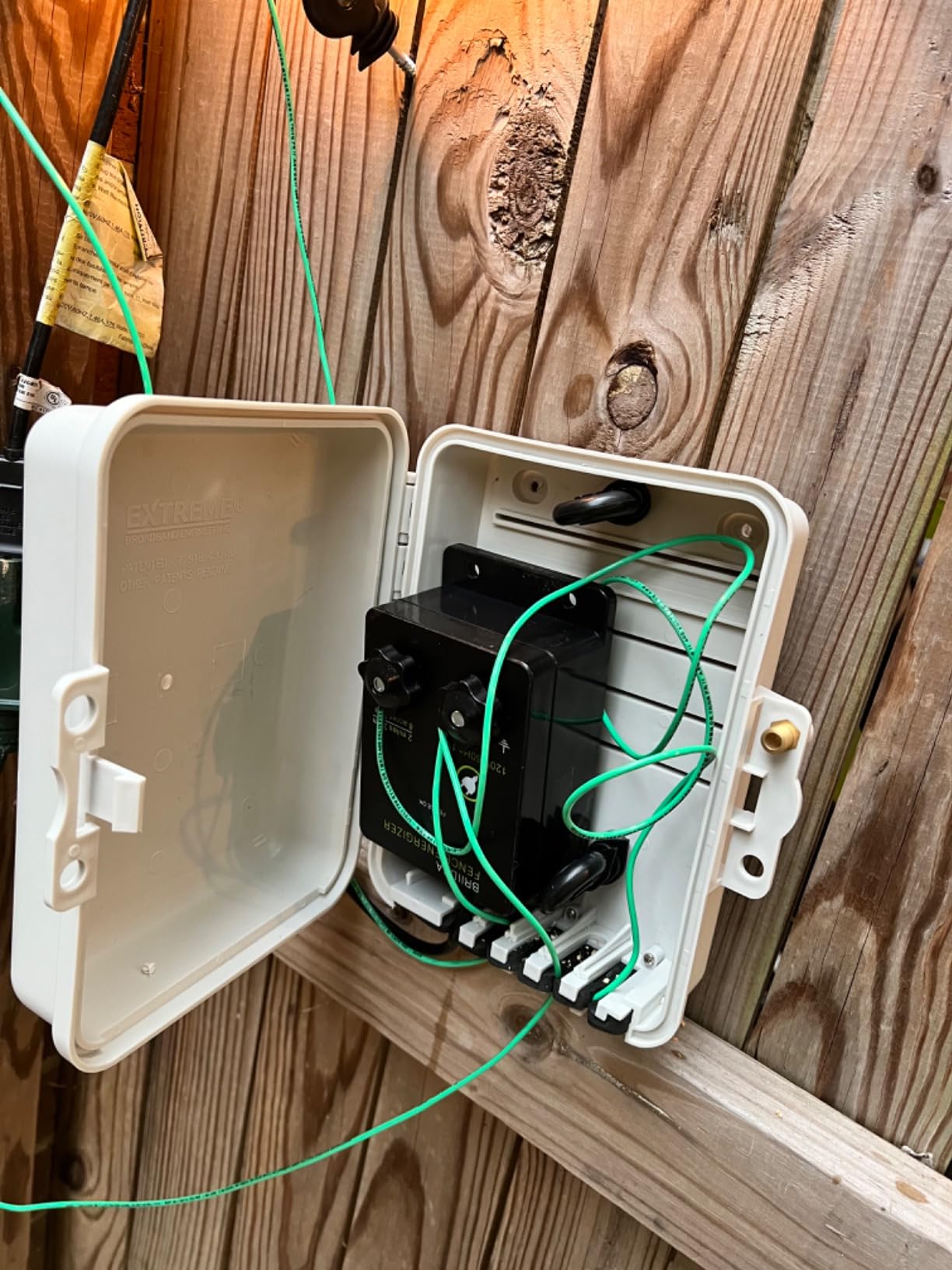
Installation takes minutes. There are two terminals, one for the fence and one for ground, and the blinking status light gives you constant confirmation that the unit is live without going out with a tester.
At 4.1 stars with a 64 percent five-star share, it is the lowest-rated charger in this group, and the reason shows in the reviews: durability. Several buyers report units arriving dead or later stopping output on the fence altogether.
Two smaller complaints come up often. The included posts lack washers, so the wire contacts a very small surface area, and the housing is only moderately weatherproof, so a cover helps in exposed positions.
Who should buy the Briidea energizer
Backyard gardeners, chicken keepers protecting a run, and anyone who wants a cheap first layer around a vegetable bed will get what they pay for. The energy consumption is very low, so leaving it on a charger for months is inexpensive.
It is also a sensible backup unit to keep on hand. If your main fence charger ever goes down, something like this will hold a garden while you arrange a repair.
Where the Briidea falls short
Do not use it for cattle, horses or goats, and do not expect it to stop a determined raccoon that has already worked around a weak line. At 0.1 joule it is well below the floor we set for anything larger than a poultry run.
The short line cord and plastic post nuts also make secure connections harder than they should be. If your terminal connections are loose, voltage never reaches the far end of the run no matter how good the charger is.
5. Gallagher S6 Solar Charger – Compact Pick for Chicken Coops and Pet Enclosures
Gallagher S6 Solar Electric Fence Charger | Solar Fence Energizer for Gardens, Chickens, Goats, and Pets | Solar-Powered Fence Charger with Lithium Battery | Mounts Directly to Grounding Rod
Lithium iron phosphate battery
3 weeks without sun
Mounts on ground rod
2.4 pounds
Pros
- Sets up in minutes
- Very bright green LED
- Solar charging holds up in cloud
- Effective on squirrels and raccoons
- 3-year warranty
Cons
- Mild shock for large animals
- Mounts only to a grounding rod
- Sealed battery
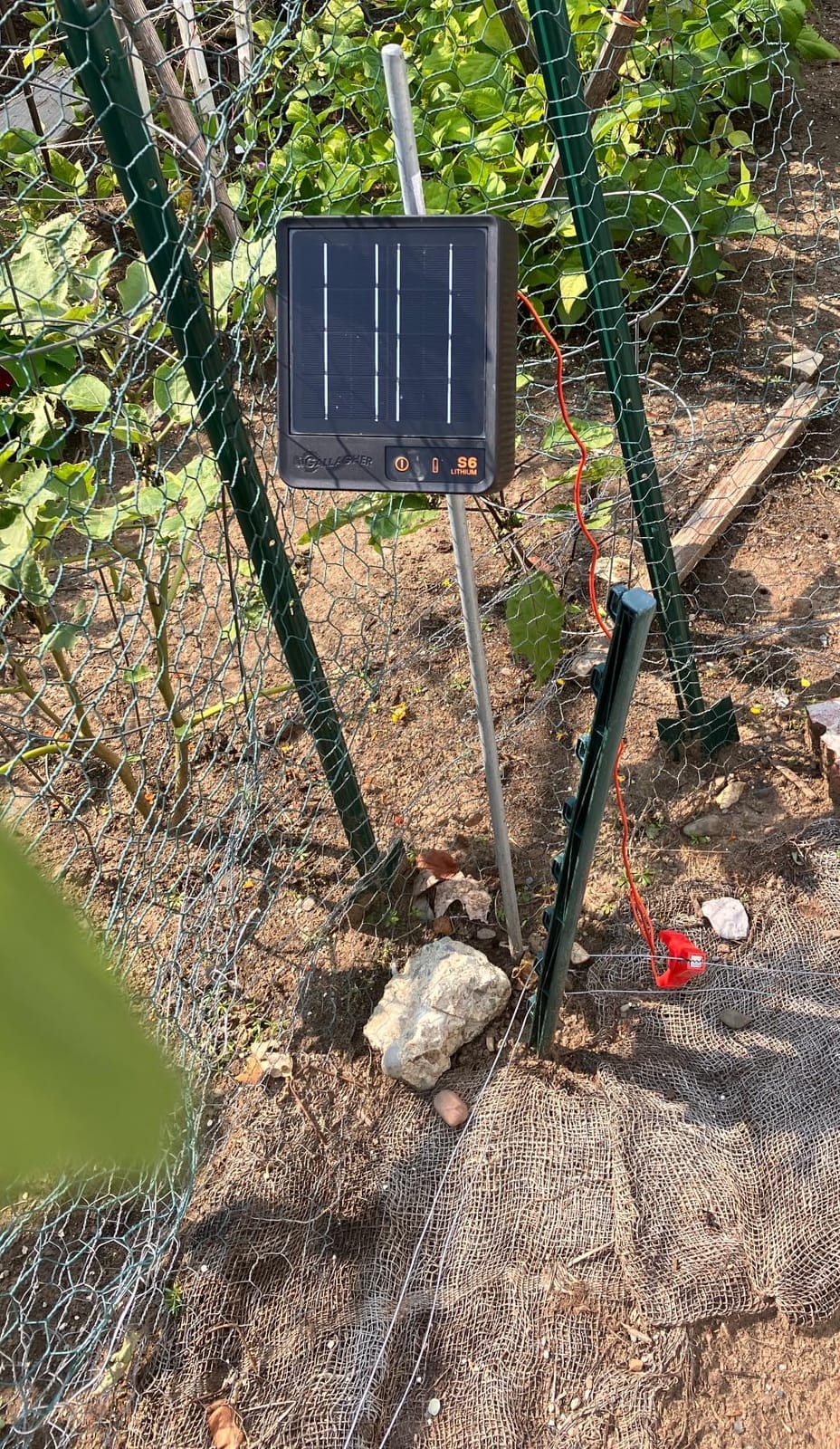
The S6 is the S12 in a smaller case, and for a chicken run or a garden it is the better-value pick. Same idea, same installation trick: the energizer mounts directly to an unpainted grounding rod up to 0.5 inch in diameter, and that rod doubles as the fence post.
The battery is lithium iron phosphate, which is a meaningful upgrade over the lead-acid cells in older solar fencers. It holds up to three weeks without sunlight, and the bright green LED is genuinely easy to read from a distance in daylight.
Output suits gardens, chicken coops, goat pens and pet enclosures. Owners commonly report it performing better than its size suggests, with a 71 percent five-star share across close to 500 ratings.
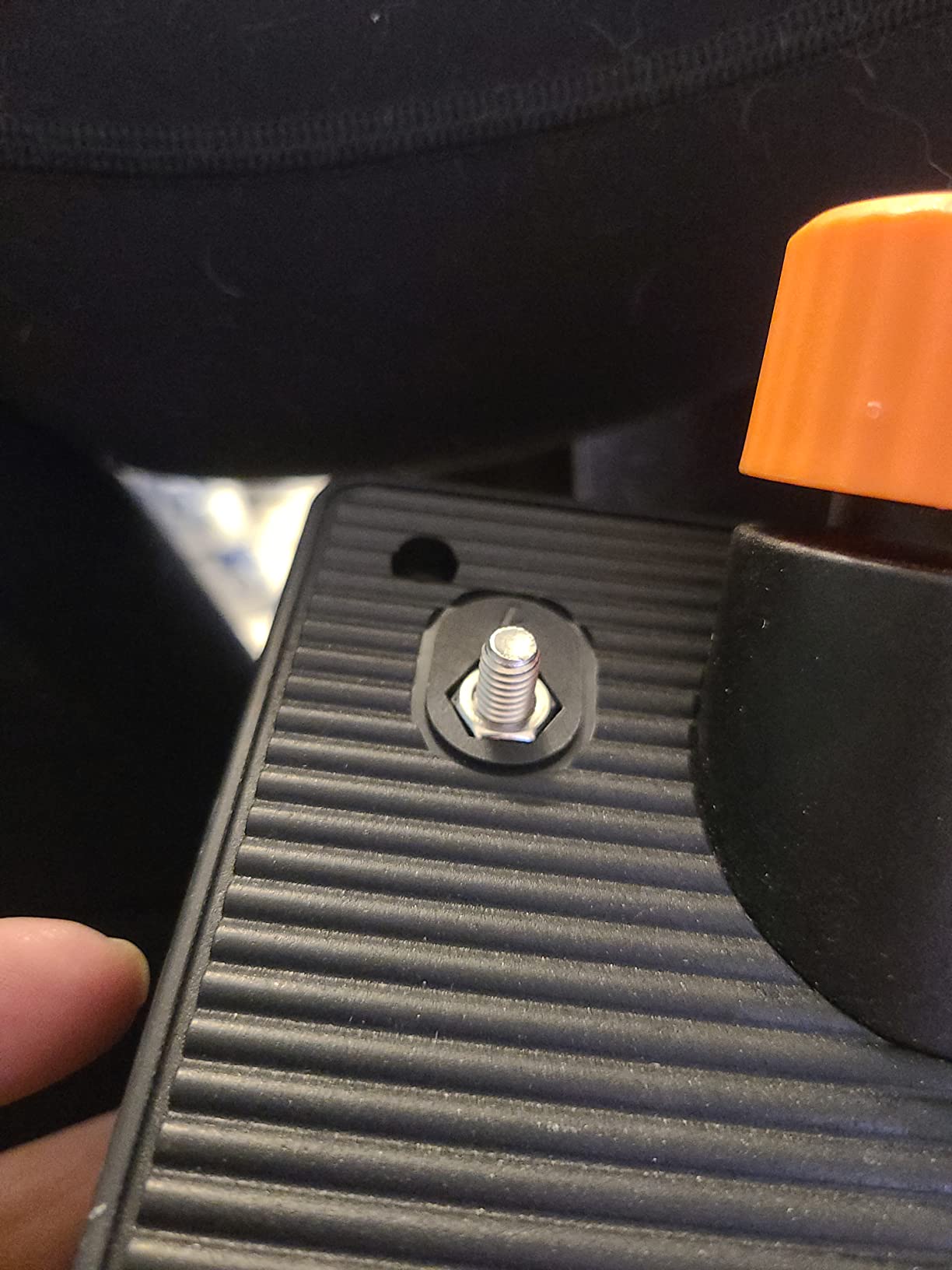
Digital pulse control keeps voltage steadier when light vegetation touches the line, and the metal case folds down to 5.7 by 5 by 6.7 inches at 2.4 pounds, small enough to tuck behind a coop or a shed corner.
The 3-year warranty is backed by US-based service in Kansas City, and spare parts are listed as available for three years, which matters if you want to keep the unit beyond that window.
The most consistent limitation in reviews is shock strength. Horses and large livestock owners are the ones stepping up to a bigger model, and the sealed housing means the battery cannot be replaced by the owner when it eventually fades.
Who should buy the Gallagher S6
Pick it for a chicken run, a small goat pen, a pet enclosure, or a garden you want to keep deer and raccoons out of. It is one of the easiest solar units to install because the rod is the post.
If you have never installed electric fence before, this is a good first unit. There is nothing to wire beyond one rod and one clip, and the LED removes the guesswork about whether it is running.
Where the S6 falls short
It is not a livestock charger. The shock is real and unpleasant for small animals, but it is not what you want tested against a stubborn horse or a curious calf.
One outlier describes an extended stretch of full sun with no usable charge, which points at a failed cell rather than a design problem. Also expect thin instructions, so plan your install from the terminal labels rather than the manual.
6. Epoify LD01 0.18 Joule Solar Charger – Best for Rotational Grazing
Epoify 24-Hour Solar Electric Fence Charger, 0.18J, 10-Mile for Livestock
0.18 joule output
10200V maximum voltage
10 miles coverage
Dual charging
Pros
- 0.18 joules is a step above garden units
- Ranks first in its category
- Portable all-in-one design
- AC adapter included for pre-charging
- 5700 to 10200V pulse range
Cons
- Needs multi-rod grounding to perform
- 24 hour AC charge or 3 days of sun first
- ABS housing is less rugged than metal
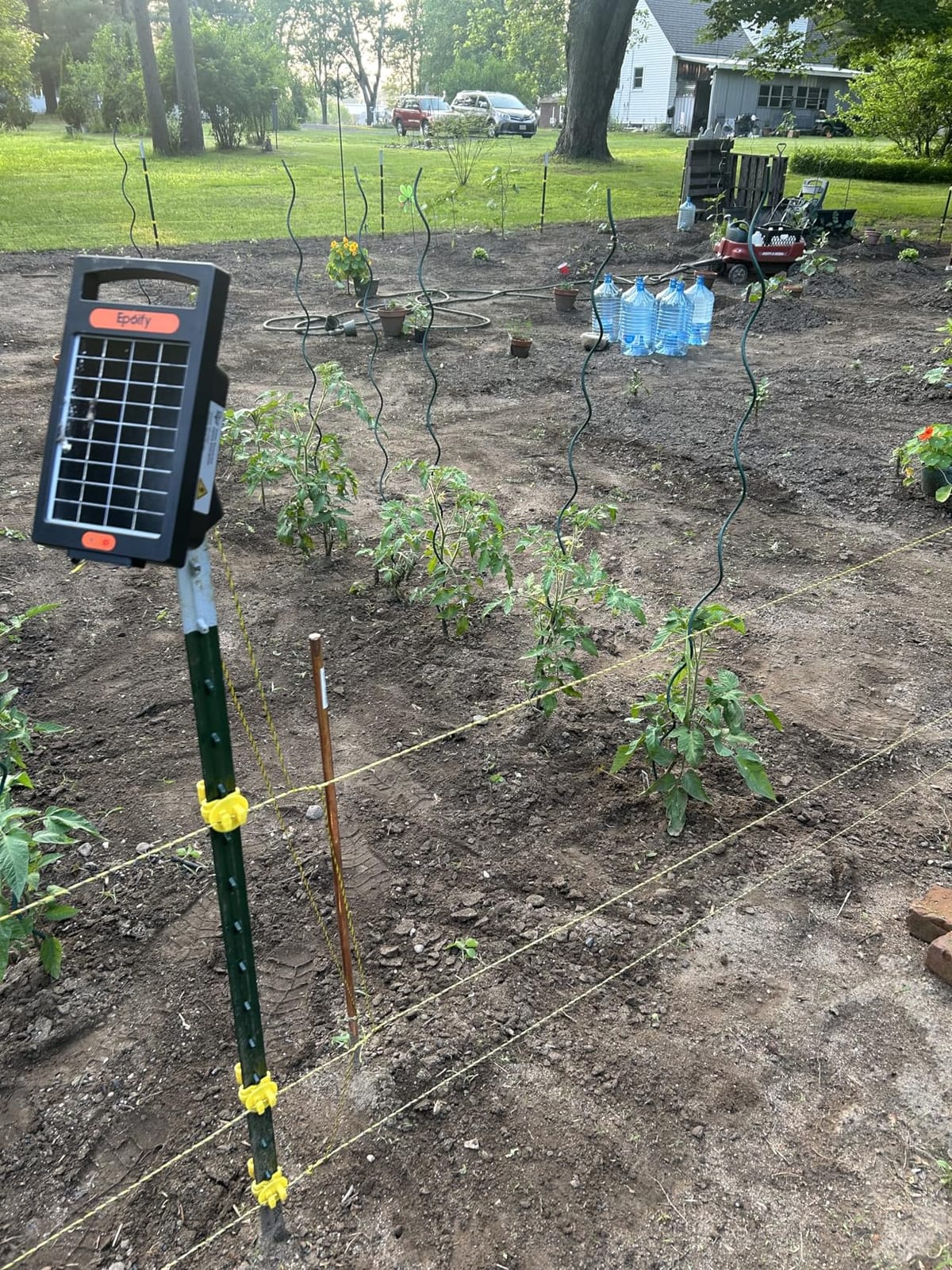
This is the pick if you move your paddocks. The all-in-one portable design suits rotational grazing setups, and the claimed coverage of up to 10 miles makes it look like the range leader in this group until you read the output rating underneath.
Output is 0.18 joule, which is a real step above the 0.1 joule garden units, and pulse output is reported from 5700 to 10200 volts. The charger sits first in its category for livestock containment on a budget.
Charging is dual-path. An AC adapter is included, so you can top the battery up indoors overnight before moving the unit to a new paddock instead of waiting for three full days of sun.
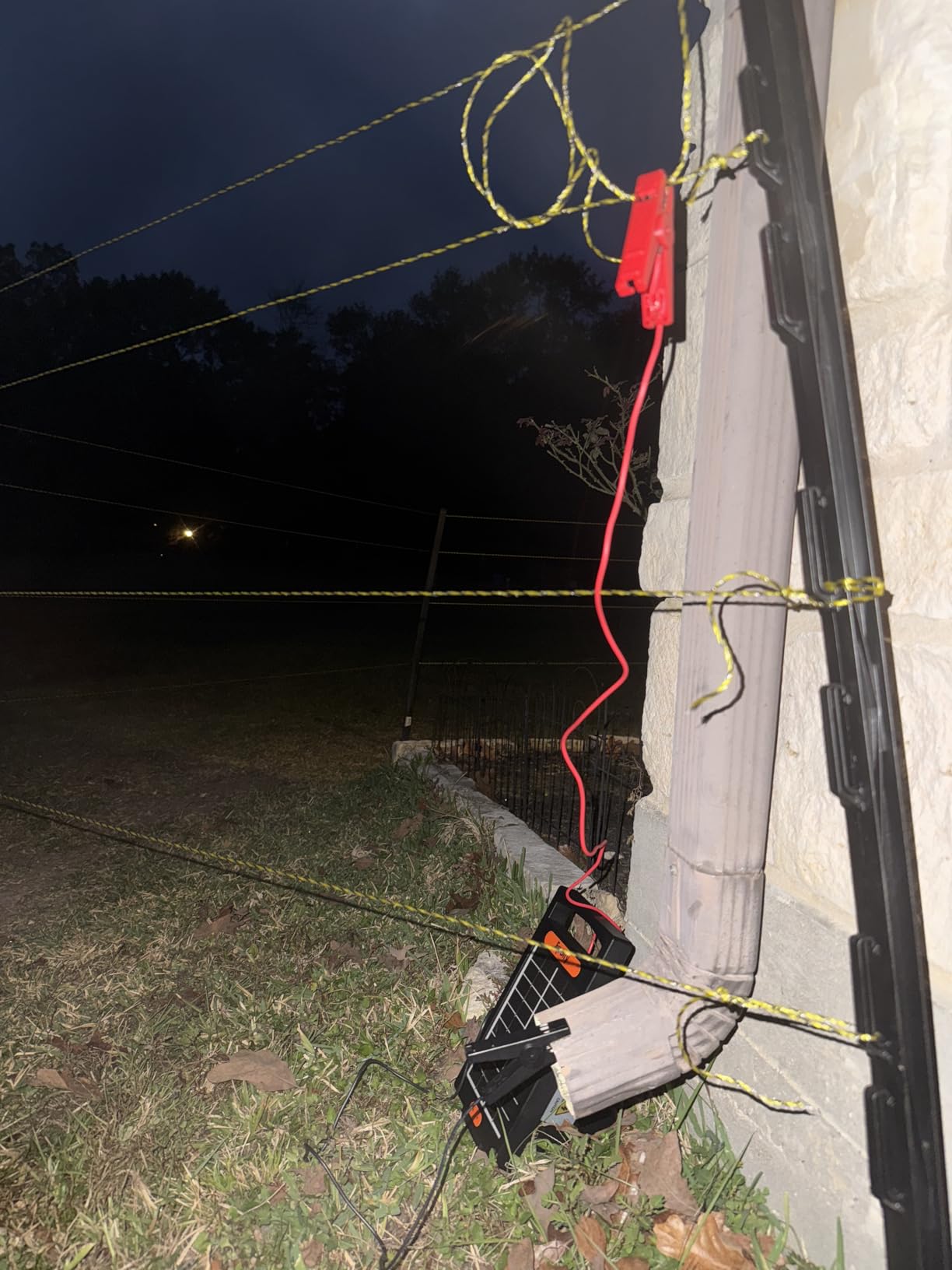
The 12 percent one-star share is mostly installation sensitivity rather than hardware failure. Units that appear not to charge are usually traced back to grounding, or to skipping the initial charge before first use, and both are avoidable.
Once owners follow the documented three-rod grounding scheme, the reports are generally positive for the money, with a 69 percent five-star share across more than 600 ratings.
Physical details worth noting: ABS housing, 6.6 by 4.3 by 8.2 inches, and 1.44 kg. The upper temperature rating is 60 degrees Celsius, so give it shade in the middle of a hot summer day.
Who should buy the Epoify LD01
Rotational grazers, small acreage owners, and anyone who needs a charger they can carry between paddocks without a mains supply. Cattle, goats and poultry at small scale are the stated use.
It also works as a supplement fence on a larger property, provided you keep it electrically separate from any other charger output.
Where the Epoify LD01 falls short
The 10-mile figure is optimistic for 0.18 joules of output, especially across multi-strand fence. Treat it as a headline number and size on the joules instead.
ABS plastic is less rugged than the metal cases on the Zareba and Parmak models, so mount it out of reach of livestock that might rub or but the box. Plan the initial charge properly or it will read as faulty on day one.
7. Zareba EAC10M-Z 10 Mile AC Charger – Highest Rated Plug-In for Winter Paddocks
Zareba 10 Mile AC Powered Low Impedance Fence Charger, 0.5 Joule Output
0.5 joule output
Up to 10500V
10 miles ideal
4.8 x 9.4 x 11.7 inches
Pros
- Highest average rating in this group
- Low impedance holds voltage through weeds
- Unfazed by winter snow
- Made in the USA
- Indicator light on the cabinet
Cons
- Needs mains power nearby
- 0.5 joules underwhelms raccoons
- Vegetation can arc the output
The EAC10M-Z carries the highest average rating of the ten chargers we evaluated, at 4.6 across more than 430 ratings, with an 83 percent five-star share. Reviewers describe it in plain terms: powerful and unfussy.
Output is 0.5 joule at up to 10500 volts, sized for cattle, horses, pigs and goats. Manufacturer coverage is 10 miles in ideal conditions, and about 1 mile in heavy weeds, which is an unusually honest pairing of numbers.
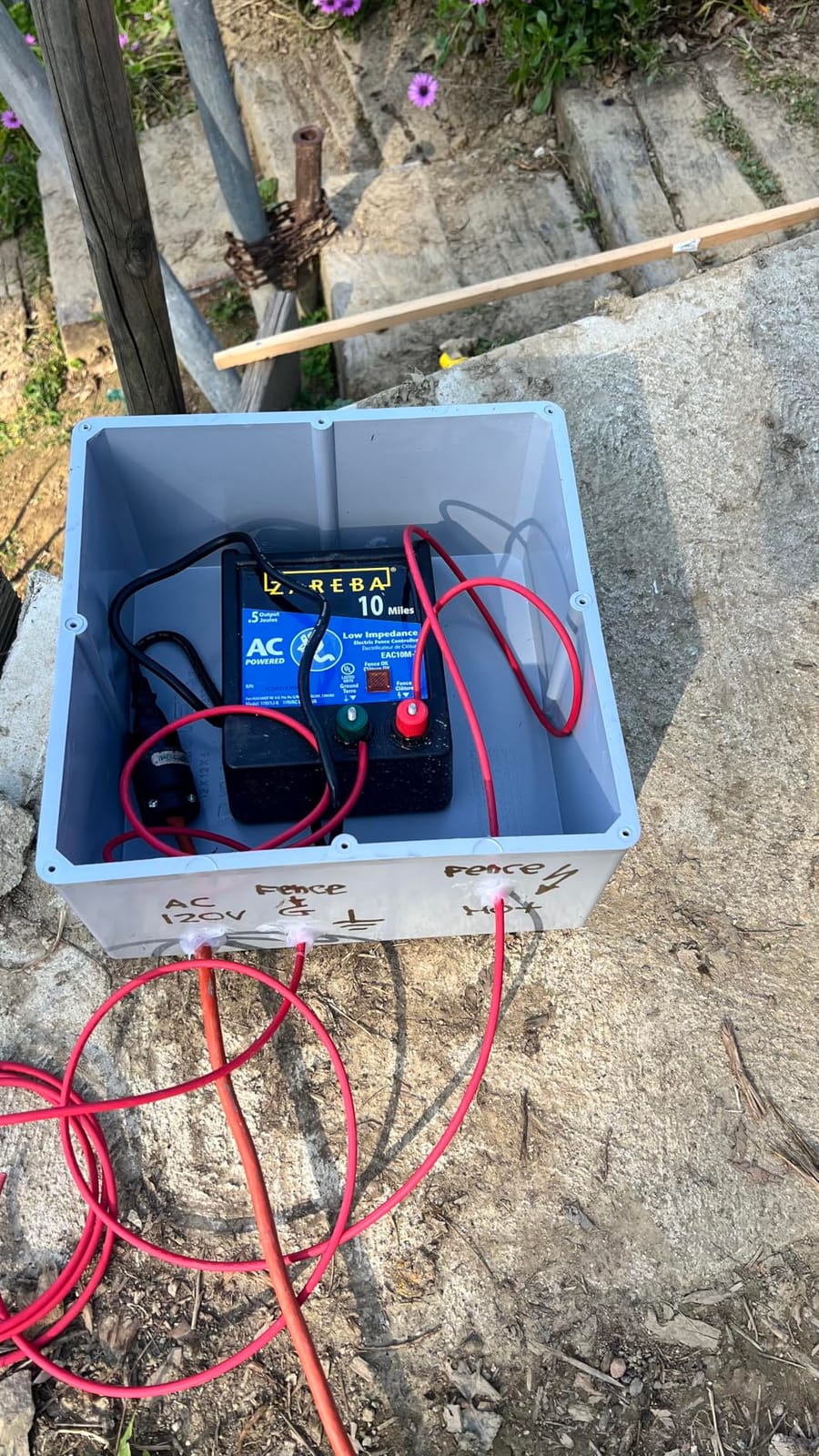
The low-impedance design is what earns that rating. It maintains performance when weeds contact the wire, and the heavy-duty cabinet has moisture-resistant components plus a fence status indicator light so you can see at a glance whether the line is live.
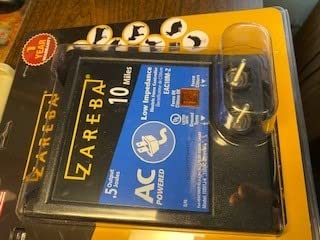
Winter is where this unit separates itself from solar. Owners running fence line through snow and freezing conditions report it holding up without complaint, because it draws from the wall rather than from a panel that gets no light.
It works with high tensile wire, polywire and polytape, and the dimensions are a compact 4.8 by 9.4 by 11.7 inches at 9.6 ounces, so wall or post mounting is straightforward. It is manufactured in the USA.
The one substantive complaint is a review of vegetation blowing against the wire and the output arching out too easily, which is a symptom of an undersized ground bed rather than a fault in the charger.
Who should buy the Zareba EAC10M-Z
This is our pick for a horse or goat paddock near a building, especially in regions where winter knocks out solar charging for weeks. Half a joule is plenty for a short, well-kept perimeter.
If you are replacing an older plug-in unit that has started arching out in summer grass, the low-impedance design solves the exact problem that made you replace it in the first place.
Where the EAC10M-Z falls short
Half a joule is below what raccoons and other small determined predators reliably respect, and there is a detailed review of raccoons working around a set-up built on this charger. For predator exclusion, look higher.
It still needs mains power within reach of the fence. If that means a long extension run, the electrical losses will cost you more voltage than the charger gives back.
8. Parmak DF-SP-LI Solar Fencer – Best for Long High-Tensile Runs
Parmak DF-SP-LI Electric Fencer, Natural
1.6 joule output
Charges up to 25 miles
21 days in darkness
Metal case
Pros
- Strong output through heavy weed and hay contact
- Metal case resists UV cracking
- 21 days of operation in darkness
- 1.6 joules at 25 miles
- Decade-plus owner reports
Cons
- Small battery drains in long sunless climates
- Can arrive with a dead battery
- Needs three spaced ground rods
The Parmak DF-SP-LI is the highest-output solar charger in this group at 1.6 joules, and it is the one to look at if you are running multiple strands of high-tensile wire across acreage. It charges up to 25 miles of fence from solar or battery alone.
That output is the whole argument. A solar panel that can push 1.6 joules holds voltage through hay contact and heavy weed growth in a way that a 0.15 joule unit simply cannot, which is the difference between a fence that works in August and one that does not.
It also runs for up to 21 days in total darkness, the longest blackout tolerance here, and the metal case resists the UV cracking that destroys plastic housings after a few seasons of sun.
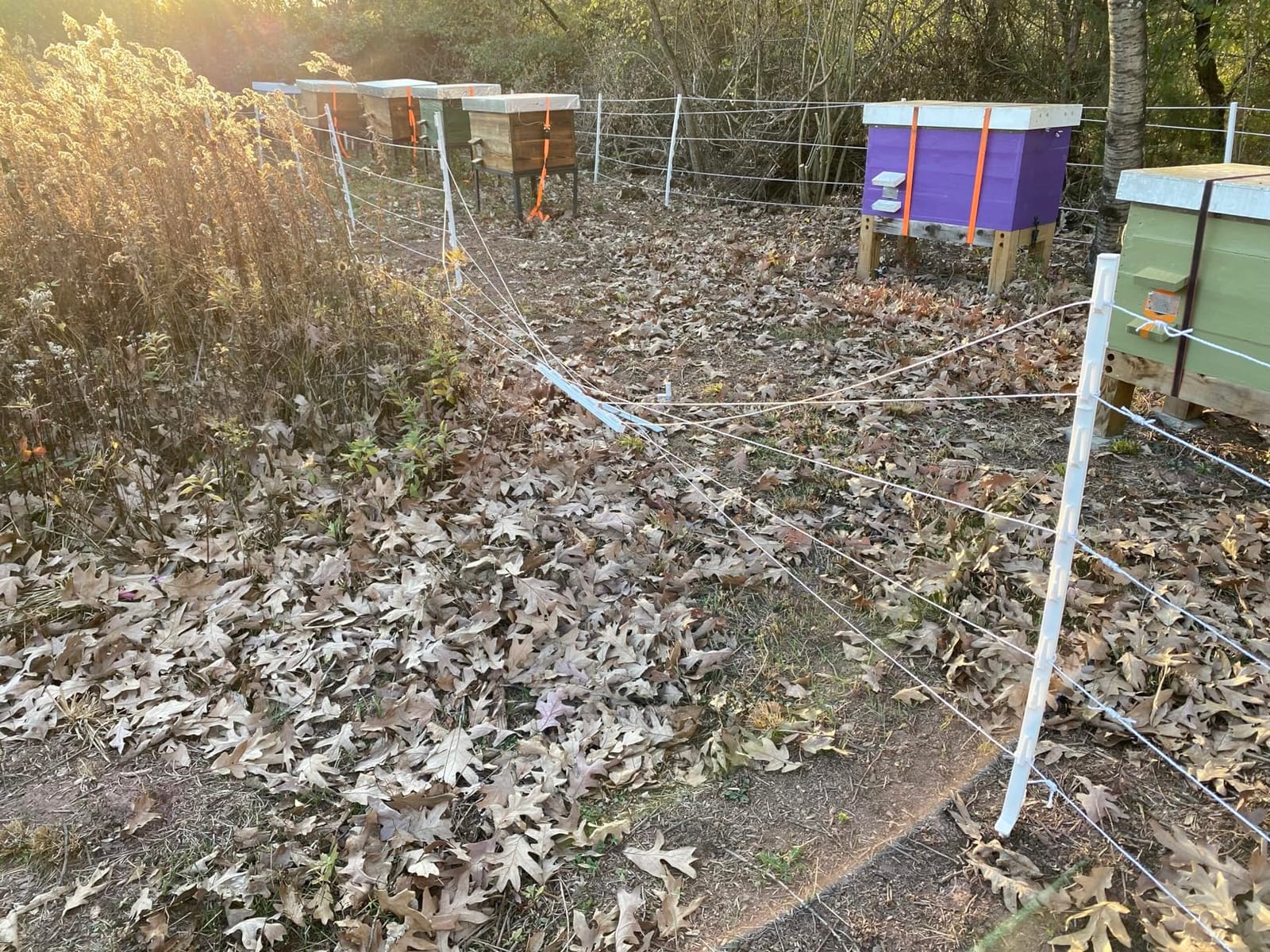
The sealed 6 volt rechargeable battery is included, and forum owners report units still running at 15 and 25 years old, alongside one who powered a mile of three-strand high-tensile for four years with no maintenance at all. This is the longest-tenured listing in our group, with reviews spanning well over a decade.
Parmak’s repair policy is the reason for that loyalty. Owners report units repaired free indefinitely, while a Gallagher solar charger in the same thread needed a replacement part after only two years.
The 4.1 average with a 67 percent five-star share and a 15 percent one-star share is the weakest rating among these ten, and it is almost entirely a packing problem: bent frames, detached panel tops and batteries dated months before arrival.
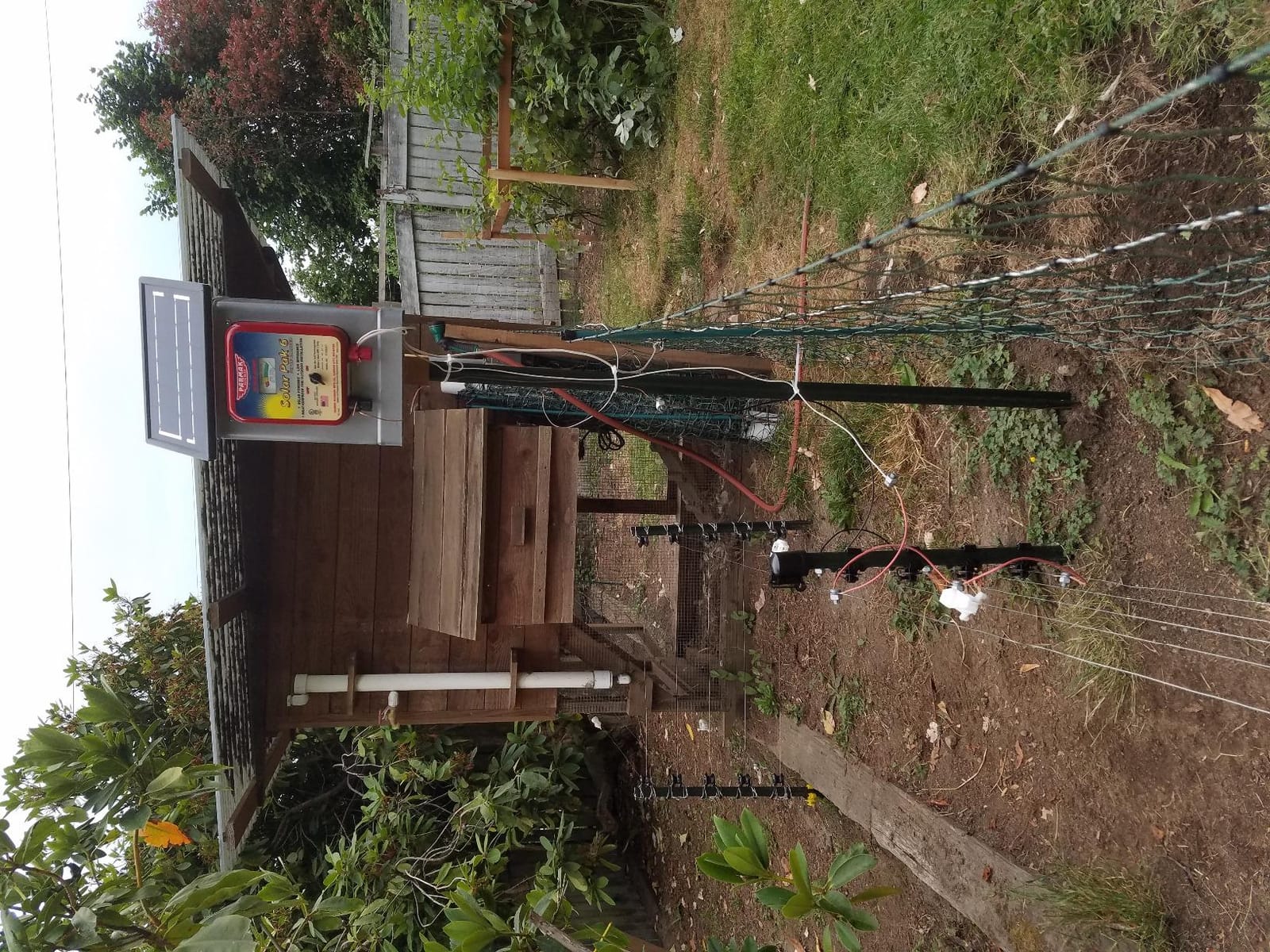
Who should buy the Parmak DF-SP-LI
Cattle and horse owners on medium pastures, anyone running high-tensile multi-strand fence, and buyers who plan to keep the same charger for a decade. The three-rod grounding rule is not optional on this unit.
If you have deep-rooted confidence in after-sales support rather than impulse-buying, this brand is the safest long-term bet we found in the category.
Where the Parmak DF-SP-LI falls short
The small internal battery drains quickly in climates with long sunless stretches, so it suits sunny regions better than overcast coastal ones. Note also that some units arrive with a dead battery and the cell is not user-replaceable.
Quality control on arrival is inconsistent. Inspect the box before you leave the carrier, because the failure modes reported are assembly faults rather than electrical ones.
9. Hovikoki 0.11 Joule Solar Charger – Best T-Post Mount for Off-Grid Fences
10 Mile Solar Fence Charger 0.11J Electric Fence Energizer with Day Night Mode 24-Hour Protection
8100V pulse output
5W panel and 12V 5Ah gel battery
IPX4 housing
T-post mount
Pros
- Performs above the price tier
- T-post mounting with no tools
- Gel battery holds a week of rain
- Front-panel off button
- AC charger included
Cons
- Some owners report weak output
- Needs charging before outdoor use
- Output depends on grounding depth
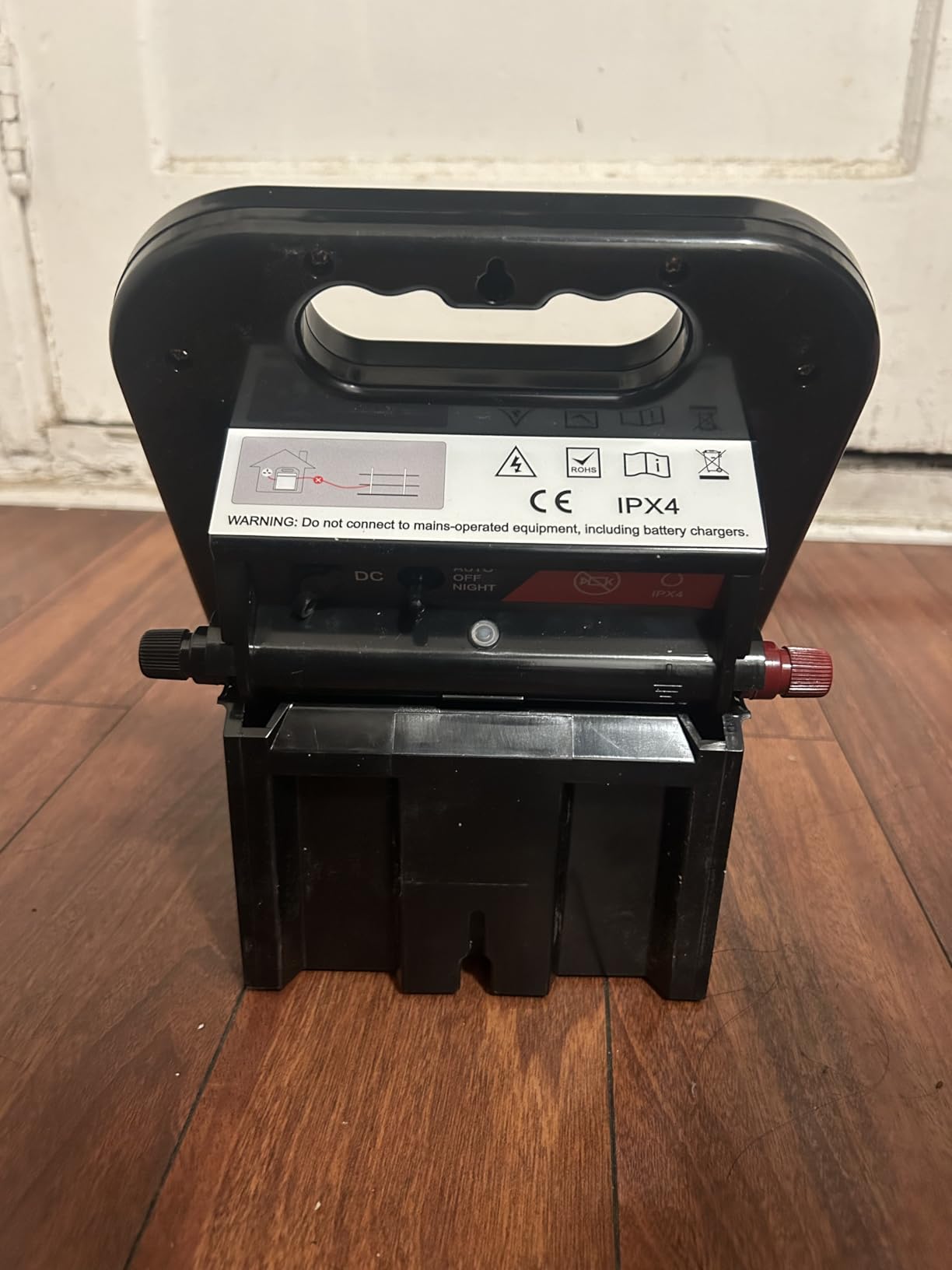
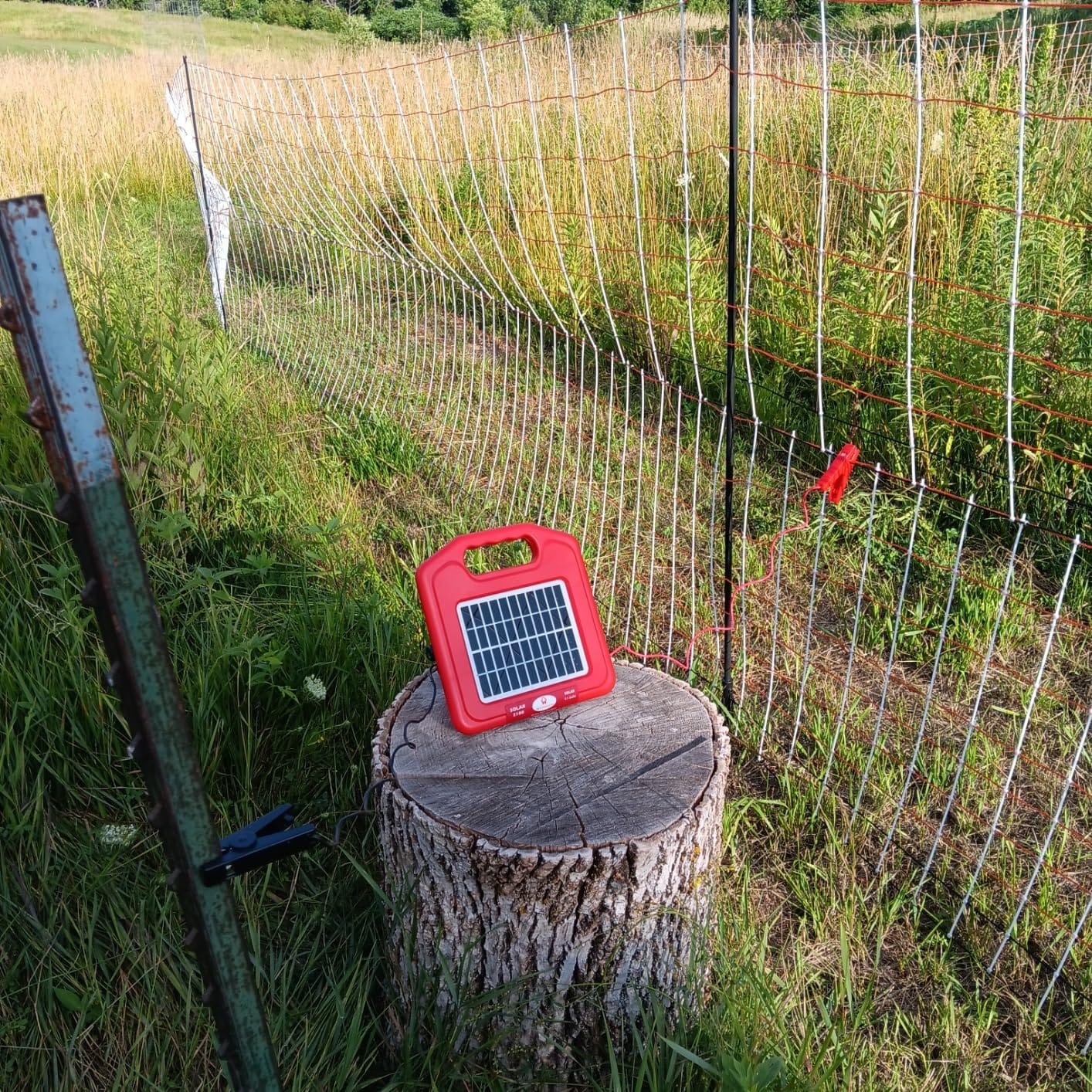
The Hovikoki is the one to buy when your fence is already on T-posts and you refuse to rebuild it. It clamps straight onto a T-post with no tools, and the IPX4 housing handles the rain that knocks lesser plastic cases out.
Power comes from a 5 watt tempered glass panel feeding a 12V 5Ah sealed gel battery. It fully charges in about 6 days and then runs up to 30 days without sunlight, which is a strong result for the size of the panel.
Pulse output is rated at 8100 volts with 0.11 joule of output energy. The maker claims coverage up to 10 miles, which is the number we would ignore entirely; size this one by animal, not by mileage.
Owners repeatedly say it punches above the price tier, with several comparing it favourably to name-brand chargers costing multiples. The 4.4 average across close to 480 ratings and a 74 percent five-star share back that up.
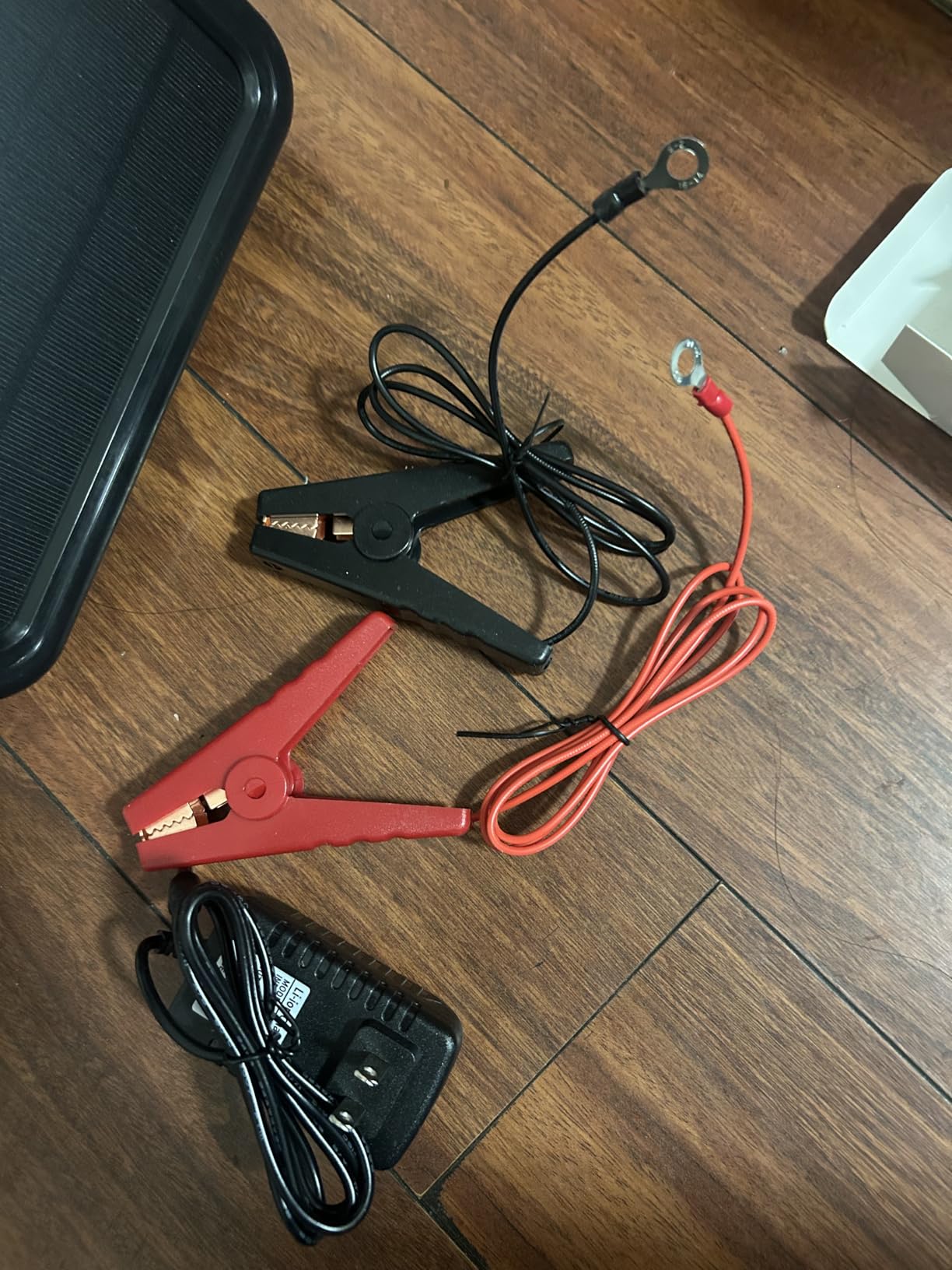
Two details earn their place on the list. The front-panel button lets you switch the fence off during maintenance while the panel keeps charging, and the included AC charger means you can pre-charge indoors before the unit goes out to a remote corner.
Recurring practical advice from buyers is to use copper grounding rods and water them in during dry soil, which is the same fix we recommend below for any solar unit.
Who should buy the Hovikoki charger
Small acreage owners with existing T-posts, strip and rotational grazing setups, and anyone who wants a fence they can disable with one button while working. Cattle, sheep, pigs, horses and pets are all within scope at this output.
It is also a good first solar unit, because the AC adapter removes the anxiety of deploying a flat battery into a new paddock.
Where the Hovikoki falls short
The 10 percent one-star share splits between owners who found the output underwhelming and buyers who skipped the charge-first instruction and concluded the unit was faulty. Charge it first, then judge it.
At 0.11 joules it is a small-animal and small-paddock unit. Output also depends heavily on grounding quality and rod depth, so budget the ground system before you judge the charger.
10. Pet and Livestock HQ S100 Solar Charger – Best Portable Kit for Pollenet Setups
Solar Electric Fence Charger 5 Mile – Solar Powered Energizer for Livestock – Low Impedance Solar Fencer Battery Powered
0.1 joule output
5 miles of coverage
2.3W solar panel
1-year warranty
Pros
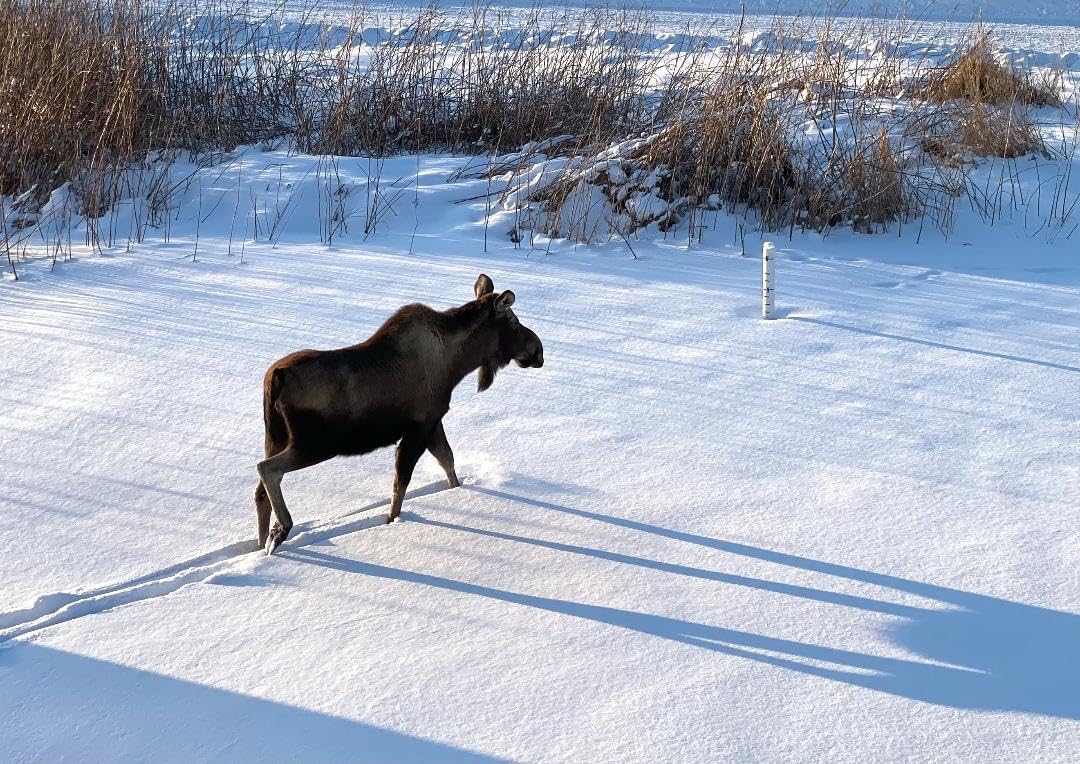
- Works on deer raccoons and bears after one jolt
- Holds charge about two weeks
- Panel charges fast in low light
- T-post mounting
- Seller replaces failed units
Cons
- 0.1 joule is weak for livestock
- Short ground wire cable
- Cannot fit star picket posts
The S100 is built as a portable kit rather than a fixed installation, and it pairs with netting fence, wire, polytape, polyrope and polywire. The all-in-one design moves between paddocks easily, which is where its value sits.
The 2.3 watt panel charges quickly in low light, and the included Panasonic 7.4V 3.4Ah lithium ion battery holds roughly two weeks without sun. Owners report it surviving heavy snow and stopping deer and raccoons effectively after a single contact.
Output is 0.1 joule with low impedance, and coverage is quoted at up to 5 miles. At 4.3 stars across more than 330 ratings and a 70 percent five-star share, the split in feedback is about use case rather than quality.
Garden and small-animal owners report excellent results, and the manufacturer is praised for quickly replacing faulty units, which is worth something when a charger sits in a field you rarely visit.
Livestock buyers are the critical voice. The 0.1 joule ceiling is described as too weak for meaningful containment, and a minority report heat-related shutdowns or units that stop working after a first season.
Two smaller annoyances: the ground wire cable is short, so the T-post has to be driven deep, and the on-off switch with status light sits on the back of the case, so you have to turn the unit around to read it.
Who should buy the Pet and Livestock HQ S100
Backyard growers protecting beds from deer, rabbits and raccoons, and anyone running temporary netting around a kitchen garden. The polycarbonate enclosure handles weather, rust and corrosion without complaint.
If the warranty matters to you, note this is a 1-year warranty, the shortest here. Weigh that against the responsive replacement service owners describe.
Where the S100 falls short
It is not a cattle, horse or serious goat charger. Livestock buyers should treat the 0.1 joule rating as a hard ceiling rather than a starting point.
It also will not mount on a star picket post, which is the common choice for decorative garden fencing. Budget for a T-post in the ground as the mounting point.
AC, Battery or Solar – Which Power Source Fits Your Fence
Use the outlet if you have one. AC mains chargers deliver the highest joules at the lowest running cost, they never fail because a panel got no sun, and they are the right answer for any fence within a cable run of a building. This is why our top pick is a plug-in model rather than a solar one.
Use DC battery when the fence is remote or temporary and the run is short. A 12V marine battery with a maintainer gives you silence and no panel to aim, and it is the traditional choice for rotational grazing. The cost is babysitting: you are maintaining a battery, not a fence, and our guide to car battery chargers covers how to keep that cell topped up in cold weather.
Use solar when there is no power and no intention of running any. Just check three things before you buy: the panel gets unobstructed sun for most of the day, your battery type is one you can replace, and the stated dark-weather figure is measured in weeks rather than days. A panel in partial shade will disappoint you in the first month.
Low-Impedance vs Solid-State, and Why Mileage Claims Mislead
Solid-state means the charger dumps its stored energy into the fence as fast as the wire can take it, then holds off until the pulse repeats. Low-impedance chargers regulate that output and keep voltage steadier when something touches the wire. On polywire, polyrope and netting, which leak current, low-impedance is not a luxury feature.
Manufacturers quote miles of fence under ideal conditions: single wire, no vegetation, perfect connections. Real fences have three strands, grass on the bottom wire and a shrub every 50 feet. That is why the Zareba EAC25M-Z publishes 25 miles ideal, 12 in light weeds and 6 in heavy weeds, and that honest three-number format is the one to read.
Calculate electrified miles, not fence miles. A 2-mile fence with three strands is 6 electrified miles of load, and the strands are wired in parallel so the load is shared. Add roughly 50 percent more joules than the animal table suggests if growth is tall, and never trust a mileage figure to size a charger for a specific animal.
Grounding: Ground Rods, Dry Soil and Lightning
Grounding is where most failed fences actually live. The circuit runs from the charger along the wire, through the animal, into the soil, and back up through the ground rods. Weak soil means the circuit never completes, and the whole system reads as a dead charger.
Drive three ground rods at least 10 feet long, spaced about 10 feet apart, and keep them well away from the fence line. Use copper or galvanized rod, connect them with a continuous bare wire, and treat the connection to the charger terminal as permanent. One owner running a big Gallagher setup reported using ten ten-foot rods and holding around 7000 volts with a fence tester.
Dry soil is the seasonal killer. In arid conditions, voltage collapses in summer even though the fence was fine in spring, and watering the rods during a drought restores output within minutes. If your fence dies every July, add rods and water them before you blame the charger.
Lightning is the other half of the ground system. A properly built ground bed gives the strike somewhere to go other than through the electronics, and built-in surge protection plus lightning damage warranty, as on the Zareba units, is cheap insurance on an exposed rural line.
Installation Mistakes That Cut Voltage and Void Warranties
Never connect two chargers to one fence. The pulses collide, voltage becomes unpredictable, and both units can be destroyed. If you need more power, split the fence into two electrically separate sections, each with its own charger and its own ground system. This is the single most dangerous mistake in this article.
Do not skip the initial charge on a solar unit. The Epoify LD01 needs 24 hours on its AC adapter or three full days of sun, and the Gallagher S12 wants two to three days. A flat battery looks exactly like a broken charger, and that misdiagnosis drives most of the one-star reviews in the category.
Fix connections and keep insulators intact. A broken insulator on a T-post or a fallen branch touching the wire creates a metal-on-metal short that drains the pulse. Mains units are supposed to be installed by a qualified person, which also keeps the warranty valid.
Mow the bottom strand. Vegetation contact is the leading cause of low summer output, and no charger in this list is designed to push through a full season of growth indefinitely.
Finally, read the grounding requirement. The Parmak DF-SP-LI specifically needs three properly spaced rods to deliver its rated performance, and reviewers who ignored that rule are the source of most of its critical reviews.
Solar Chargers in Real Conditions
Solar fencers have improved a lot, but they still have a physical limit. Output is a function of sunlight reaching the panel, and any shade, dirt or snow cover on the glass reduces it directly. Mount the panel where nothing casts a shadow between the hours you need power.
Cloudy-week figures are the numbers worth comparing. The Gallagher S6 claims up to 3 weeks without sunlight, the Zareba ESP5M-Z up to 2 weeks, the Parmak DF-SP-LI up to 21 days, and the Hovikoki up to 30 days once fully charged. Longer is better, and the pattern we saw in the reviews matches the claim.
Expect to replace the internal battery somewhere between year two and year four. The Zareba ESP5M-Z lets you swap it yourself, which turns a dead charger into a 20-minute job instead of a replacement purchase. Sealed-battery chargers, including both Gallagher models, force a whole new purchase.
And in regions with long sunless winters, a solar charger can genuinely lose the race against a 1 joule mains unit on the same fence. Know your climate before you commit.
Frequently Asked Questions
How many joules is a good electric fence charger?
A good charger matches the animal: 0.25 to 1 joule for poultry, rabbits and garden plots, 1 to 2 joules for goats and sheep, 2 to 3 joules for cattle, bulls and horses, and 5 joules or more for bears, coyotes and large acreage with multi-strand high-tensile fence. Add about 50 percent more if vegetation touches the bottom strand, and buy a low-impedance unit for polywire, polyrope or netting.
What is the most powerful electric fence charger available?
Output among mainstream energizers runs from about 0.1 joule on small garden units to roughly 1.6 joules on solar models and 1.0 joule on heavy plug-in chargers. Among the ten chargers reviewed here, the Parmak DF-SP-LI leads at 1.6 joules and 25 miles of fence, while the Zareba EAC25M-Z leads the plug-in group at 1.0 joule. True commercial units above 10 miles and 5 joules exist for specialized operations.
Can an electric fence charger be too powerful?
No. Electric fences deliver a brief, pulsed low-current shock that startles an animal and teaches it to respect the wire, rather than the continuous high current of an old mains system. A stronger charger means more voltage survives a long or weed-choked fence, which reduces the animal touching it in the first place. The genuine danger is running two chargers on one fence, where colliding pulses make voltage unpredictable.
Does an electric fence have to make a complete loop?
No physical loop is required. The circuit is completed through the animal and the soil, not by a loop of wire. The fence wire runs from the output terminal to the end of the line, and the return path is the ground system, which is why three well-spaced ground rods matter as much as the fence itself. Insulators stop the current leaking off the wire into posts at every attachment point.
How many joules for an electric fence for horses?
Plan on 1 to 3 joules for horses, with 2 joules a sensible target for a working paddock. Quarter-joule units are not enough, because a soft shock that sags under vegetation load teaches an animal the fence is optional. Horses are also the most likely animals to get a head or leg caught, so a clean single-wire top strand at nose height works better than tall multi-strand setups.
How many joules do you need for a cattle fence?
Two to three joules for cattle, and five or more if you also need to hold bulls against heavy fence pressure. Cattle lean on fences and test weak spots, so margin matters more here than for poultry. For large acreage with heavy summer growth, owners deliberately oversize to 5 joules or more, since an undersized charger spends its life arching out onto vegetation.
Is .25 joules enough for horses?
No. A quarter-joule unit is appropriate for a chicken run or a small garden and is well below the floor for horses or goats. Forum owners consistently treat 1 joule as the lowest rating considered usable for livestock, and horse forums specifically report quarter-joule chargers letting animals walk through or habituate to the line. Buy at least 1 joule, and 2 or more for a working paddock.
What is the best solar electric fence charger for horses?
The Gallagher S12 is our pick for horses, because the grounding rod doubles as the mounting post, so installation is a single rod and one clip, and its output suits a modest horse perimeter. For longer high-tensile runs where strength matters more than convenience, the Parmak DF-SP-LI delivers 1.6 joules from solar. For remote pastures, the Zareba ESP5M-Z covers more miles and tolerates two weeks without sun.
What is the best electric fence unit for horses?
For horses, a plug-in low-impedance unit gives the most dependable result, and the Zareba EAC25M-Z at 1.0 joule is the strongest in this group. The Zareba EAC10M-Z at 0.5 joule also rates highest for owner satisfaction and handles winter conditions that defeat solar. If there is no outlet, the Gallagher S12 is the most practical solar choice for a short paddock.
Are solar electric fence chargers any good?
Yes, provided the panel gets full sun and you accept the output limit. Modern solar fencers run two to four weeks without sunlight, which covers most cloudy stretches. The weakness is joules: a small panel cannot push a horse or cattle fence through heavy growth the way a mains unit can. They excel for gardens, poultry, remote paddocks and temporary rotational fencing.
How do you ground an electric fence?
Drive at least three ground rods, each 10 feet long, spaced roughly 10 feet apart and at least 30 feet from the fence line. Join them with continuous bare wire and clamp the run firmly to the charger ground terminal. In dry or rocky soil, add more rods and water the ground bed during drought. Test the result with a fence tester at the far end of the line, not at the charger.
Can you run two fence chargers on one fence?
Never. Two chargers on one fence send pulses that collide, which makes voltage unpredictable to animals and can destroy both units. If you need more output, split the fence into two sections that share no wire connections, and give each section its own charger and its own ground rods. This is the most common cause of destroyed electronics in the field.
Why is my electric fence not working?
Check four things in order. First, test the fence with a voltmeter or fence tester at the far end, not at the charger. Second, inspect for vegetation touching the bottom strand or a metal-on-metal short such as a fallen branch or broken insulator. Third, verify the ground bed, since dry soil alone can drop output to a crawl. Fourth, confirm the battery is charged, which matters on every new solar unit.
Conclusion: The Best Electric Fence Chargers for 2026
The Zareba EAC25M-Z is the best electric fence charger in this group, because 1.0 joule of low-impedance mains output is exactly what cattle, horses and overgrown summer fence lines demand. If you have no power, take the Zareba ESP5M-Z for remote pasture or the Gallagher S12 for a small horse or garden boundary.
Whatever you buy, build the ground system first and keep vegetation off the bottom strand. Those two jobs decide whether your fence works, and no amount of extra joules compensates for a dry ground bed. If you are also choosing fixed fencing for the same project, our guides to vinyl fence panels and aluminum fence panels cover the non-electrified side of it.