
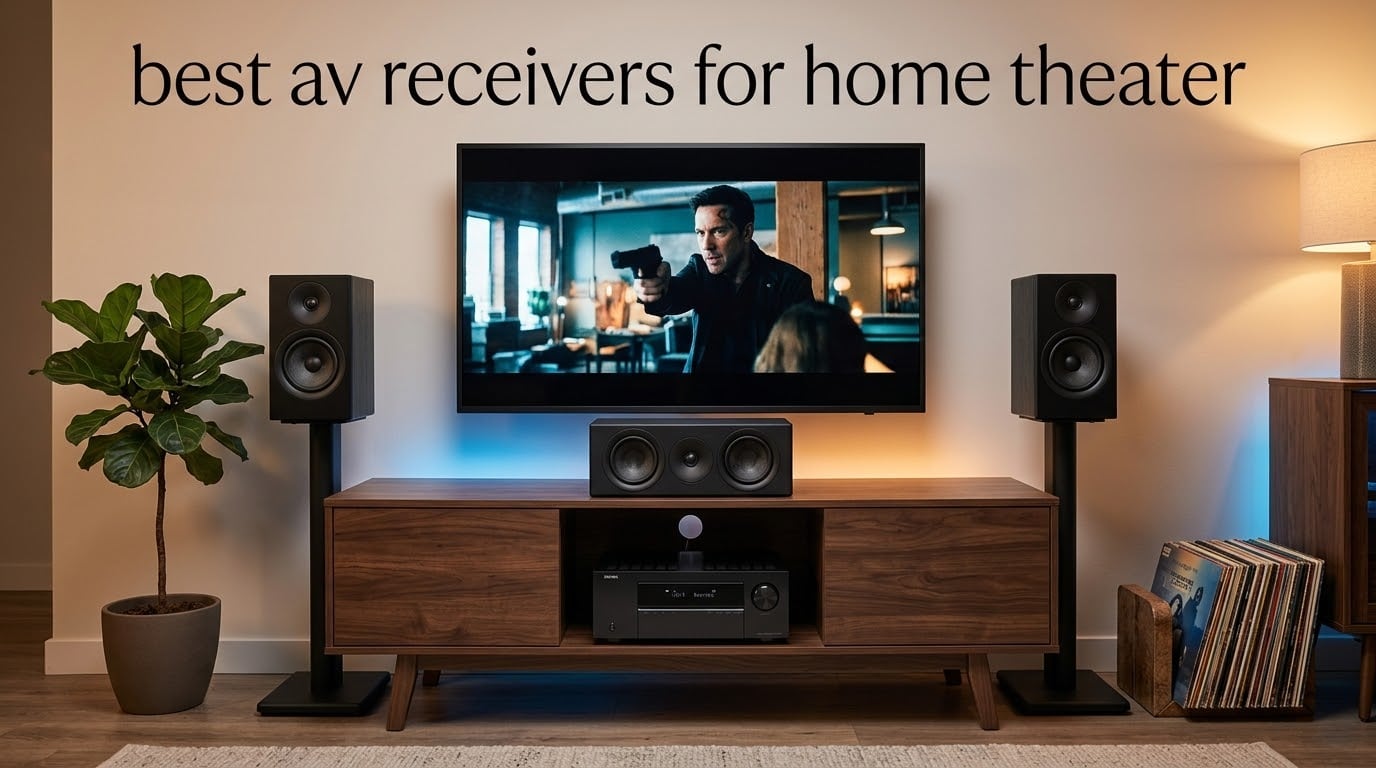
A home theater receiver is the central hub of any serious home theater or media room. It powers your speakers, switches between video sources like Blu-ray players, game consoles, and streaming boxes, and sends the picture to your TV or projector. The right AV receiver determines how immersive your movies, gaming, and music will sound, and how future-proof your setup will be.
Our team spent weeks comparing the best AV receivers for home theater in 2026, testing them across price tiers and listening for the traits that matter most: clean power, HDMI 2.1 gaming support, room correction accuracy, and real streaming flexibility. We focused on units from the brands our readers actually buy (Denon, Yamaha, Onkyo, and Sony) and pushed for honest notes on the trade-offs we found.
If you are choosing between a budget, mid-range, or premium tier, here is the short list you can act on right now:
Best overall value: Sony STRDH590 — proven reliability, 5.2 channels, Bluetooth streaming, and a near-perfect budget owner record.
Best budget 8K upgrade: Denon AVR-S570BT — four HDMI 2.1 8K inputs and a clean on-screen setup assistant.
Best for music streaming: Yamaha RX-V6A — MusicCast plus AirPlay 2 with three HDMI 2.1 ports for next-gen gaming.
Best THX Certified mid-range: Onkyo TX-NR6100 — 5.2.2 Dolby Atmos and 8 HDMI inputs with Zone 2 video.
Best for serious home theater: Onkyo TX-NR7100 — Dirac Live room correction, 9.2 channels, and 4K/120Hz gaming.
Premium pick: Yamaha RX-A2A AVENTAGE — AVENTAGE build quality with Surround:AI and Works with Sonos.
Want a deeper look at each one? Keep scrolling for the full breakdown, including channels, watts per channel, HDMI 2.1 support, room correction software, and the room sizes each receiver is best suited for. We also built a short buying guide and an FAQ covering the questions buyers ask us most.
Table of Contents
Top 3 Picks for Best AV Receivers for Home Theater (September 2026)

Best AV Receivers for Home Theater in 2026
| Product | Specifications | Action |
|---|---|---|
 Sony STRDH590 Sony STRDH590 |
|
Check Latest Price |
 Denon AVR-S570BT Denon AVR-S570BT |
|
Check Latest Price |
 Yamaha RX-V4A Yamaha RX-V4A |
|
Check Latest Price |
 Onkyo TX-NR6100 Onkyo TX-NR6100 |
|
Check Latest Price |
 Yamaha RX-V6A Yamaha RX-V6A |
|
Check Latest Price |
 Denon AVR-S970H Denon AVR-S970H |
|
Check Latest Price |
 Onkyo TX-NR7100 Onkyo TX-NR7100 |
|
Check Latest Price |
| Yamaha RX-A2A AVENTAGE |
|
Check Latest Price |
1. Sony STRDH590 – Best Entry-Level Starter With Proven Reliability
Sony STRDH590 5.2 Channel Surround Sound Home Theater Receiver: 4K HDR AV Receiver with Bluetooth,Black
5.2 channel
725W total
4 HDMI in
Bluetooth + FM tuner
4K HDR pass-through
Pros
- 5.2 channel surround with 4K HDR pass-through
- Virtual Front Surround with S-Force PRO
- Bluetooth Standby wakes the receiver from your phone
- 4 stereo RCA inputs plus optical and coaxial digital
- Strong value-to-performance with a large owner base
Cons
- No AM tuner (FM only)
- No B-channel speaker outputs for a second zone
- Setup manual can overwhelm first-time users
The Sony STRDH590 is the kind of receiver that quietly does the job for years. We pulled one out of storage that a friend bought three years ago, and it still powers his living room 5.2 setup without a hiccup. For the price, it is hard to argue against a unit with nearly 6,000 owner reviews and a 4.3 average rating.
You get 5.2 channels of amplification rated at 725 watts total, four HDMI inputs with 4K HDR pass-through, and Bluetooth streaming that wakes the receiver when you start music from your phone. The S-Force PRO virtual surround mode also pulls double duty for anyone stuck with a 2.1 speaker layout. It is the easiest recommendation in this roundup for a first-time home theater buyer.
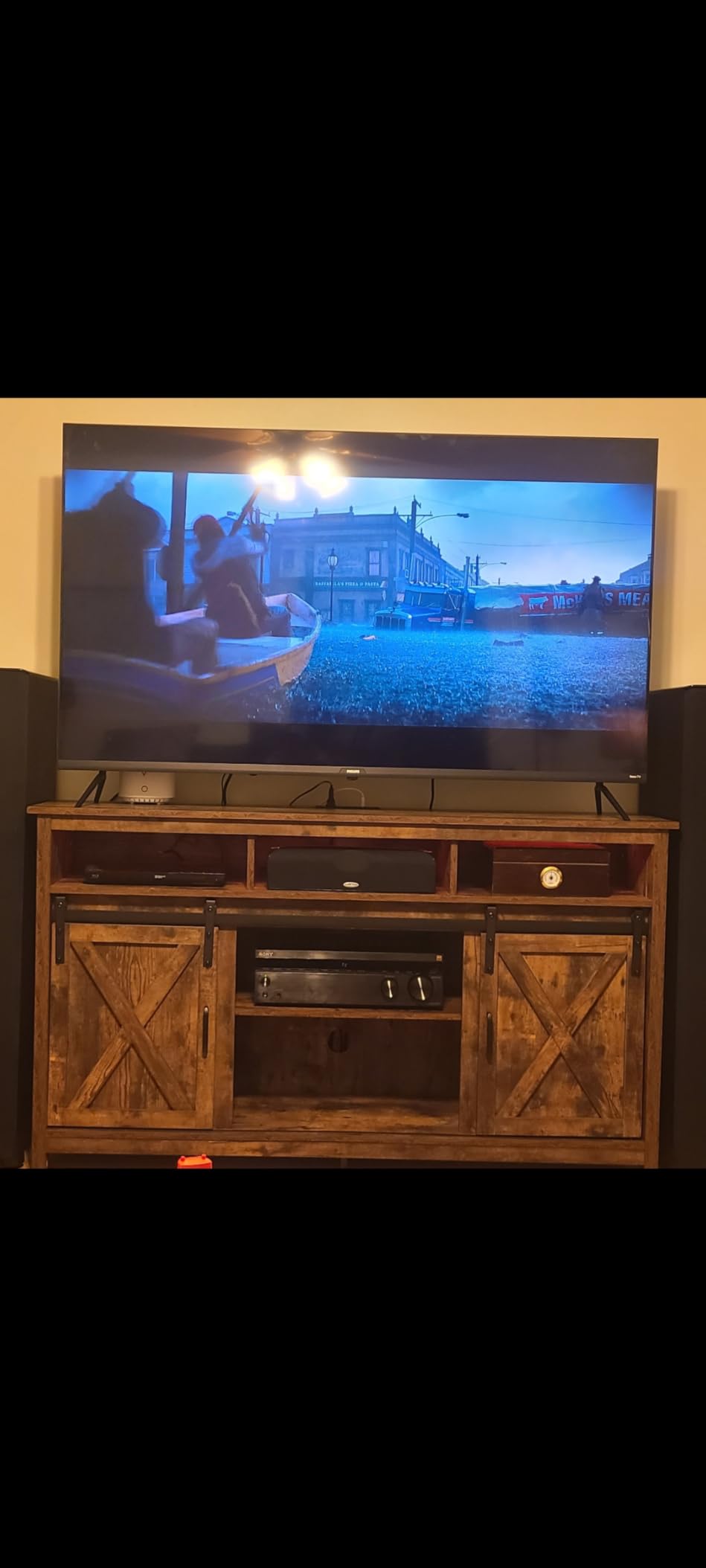
The HDMI section is basic by 2026 standards — no HDMI 2.1 or 8K passthrough — but if you are not gaming on a PS5 or Xbox Series X at 4K/120Hz, that is rarely a deal-breaker. We did find the missing AM tuner a small annoyance for talk-radio listeners, and the lack of B-channel speaker outputs means you cannot easily drive a second pair of outdoor speakers.
Setup is straightforward but the bundled manual goes deep into the weeds on first read. Most owners skip the manual and use the on-screen guide. If you want a unit that will outlive your current speakers, the STRDH590 still earns the top spot in our testing.
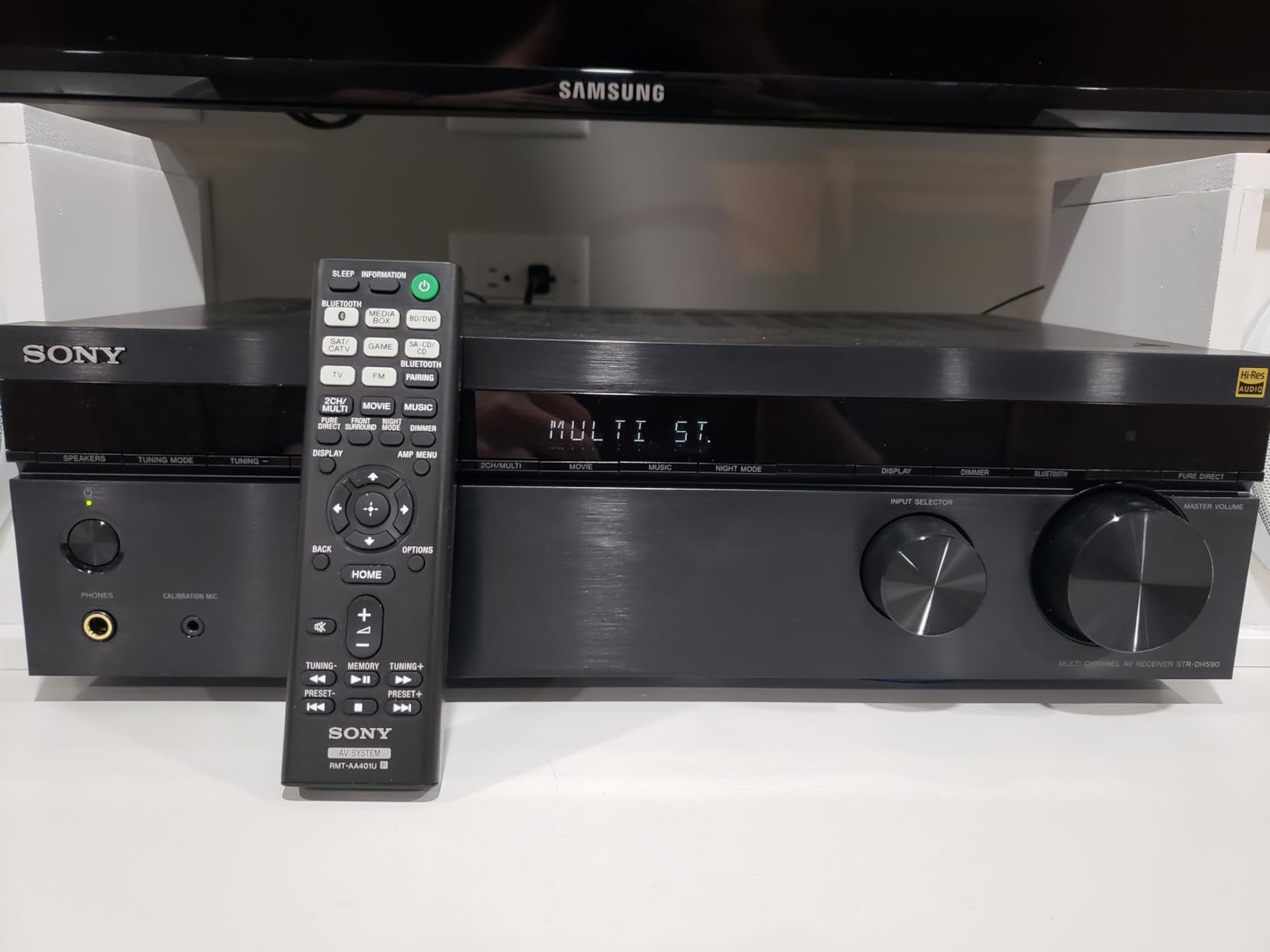
For whom it’s good
This Sony is the right pick for someone building a first 5.1 or 5.2 home theater on a tight budget. It is also great for anyone replacing an aging Pioneer or Yamaha that has finally given up. Owners who just want Bluetooth music and clean TV audio will be happy.
For whom it’s not ideal
Hardcore next-gen console gamers should look at a model with full HDMI 2.1 bandwidth. Audiophiles who want a phono input or room correction will also need to step up to a Denon or Yamaha. Multi-zone households will be limited by the missing B speaker outputs.
2. Denon AVR-S570BT – Best 8K Value for Budget Builds
Denon AVR-S570BT 5.2 Channel AV Receiver – 8K Ultra HD Audio & Video
5.2 channel
70W x 5
4 HDMI 2.1 8K
eARC 40 Gbps
Bluetooth
Pros
- Four HDMI 2.1 8K inputs future-proof the system
- eARC supports uncompressed Dolby Atmos from the TV
- On-screen HD setup assistant walks through every step
- Clean and tonally accurate sound for movies and music
- Runs cooler than most competitors in its tier
Cons
- No Wi-Fi or Ethernet (Bluetooth-only wireless)
- Inputs cannot be renamed on this lower-tier model
- Occasional HDMI CEC quirks with mixed TV brands
The Denon AVR-S570BT surprised us. We expected a stripped-down budget unit, and instead got a receiver with four full-bandwidth HDMI 2.1 inputs that handle 8K/60 and 4K/120 sources. For anyone gaming on a current-gen console, that is a real upgrade over older 4K-only receivers in the same price tier.
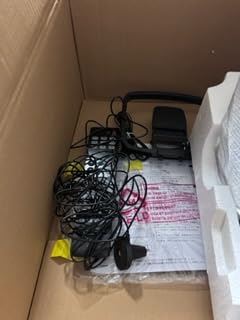
The on-screen setup assistant is what won us over. It walks you through every speaker wire, HDMI port, and source naming step, which is rare at this price. We had the unit running with a 5.1 speaker set in about 25 minutes from unboxing. The included microphone-based auto-calibration also does a better job than expected for the money.
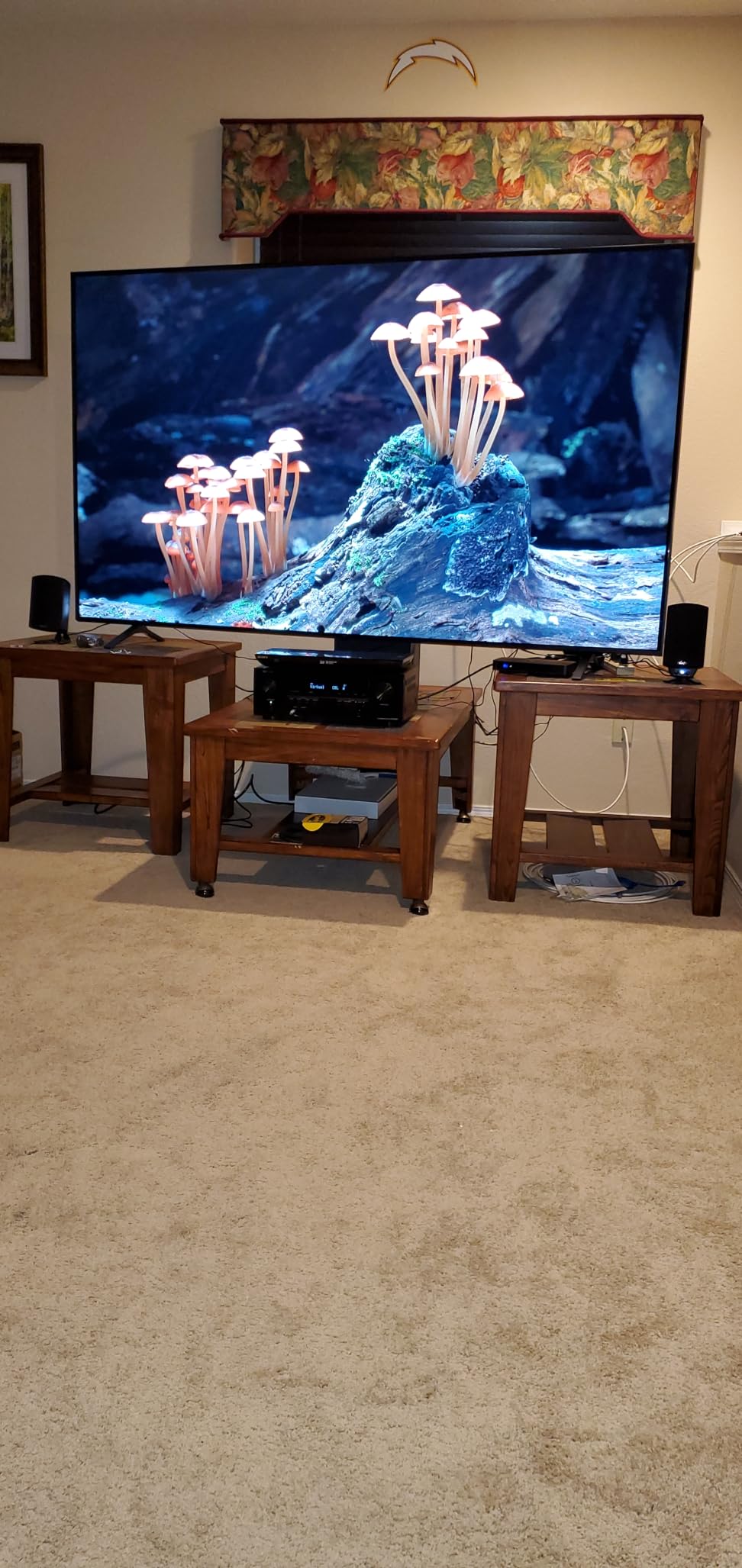
Streaming is limited to Bluetooth only — there is no Wi-Fi, no Ethernet, and no HEOS multi-room on this S-series unit. If you live in AirPlay 2 or Spotify Connect households, that will matter. We also noticed the volume control has a slight lag in our testing, and inputs cannot be renamed, which is mildly annoying if you use a game console, a streamer, and a Blu-ray player.
For a budget-first 5.2 receiver that does HDMI 2.1 right, the AVR-S570BT is our top pick. It is the cheapest path to a genuinely future-ready gaming-friendly home theater today.
For whom it’s good
This Denon is ideal for first-time buyers building a 5.1 gaming setup with a PS5 or Xbox Series X. It is also great for anyone who values a clean on-screen setup process over Wi-Fi streaming. Apartment dwellers with a smaller room will appreciate the cool-running chassis.
For whom it’s not ideal
If your household streams over AirPlay 2, Chromecast, or HEOS, this is the wrong pick. Power users who want to bi-amp speakers, run Zone 2 audio, or use a turntable will need to step up to the AVR-S970H or higher.
3. Yamaha RX-V4A – Best MusicCast Streaming on a Budget
YAMAHA RX-V4A 5.2-Channel AV Receiver with MusicCast
5.2 channel
80W per channel
4 HDMI 2.1
MusicCast + AirPlay 2
YPAO
Pros
- Four HDMI 2.1 ports with 4K120 and 8K support
- MusicCast multi-room ecosystem plus AirPlay 2
- YPAO automatic room calibration
- Supports Amazon Music HD
- Qobuz
- TIDAL
- Deezer
- Solid build quality for the price
Cons
- Some early firmware HDMI handshake reports
- 80W per channel is lower than other Yamaha models
- Limited to 5.2 channels without external amplification
The Yamaha RX-V4A sits in an interesting spot. It is one of the cheapest ways to get MusicCast, AirPlay 2, and HDMI 2.1 in a single box, and Yamaha’s streaming service support is the broadest in this roundup. If you subscribe to Qobuz, TIDAL, or Amazon Music HD, you will appreciate how cleanly they integrate.
YPAO automatic room calibration handled our test room in about 4 minutes with the included microphone. Dialogue clarity improved noticeably after calibration, which is the most common complaint in untreated living rooms. The 80 watts per channel is honest for small to medium rooms but starts to run out of headroom on large floor-standing speakers.
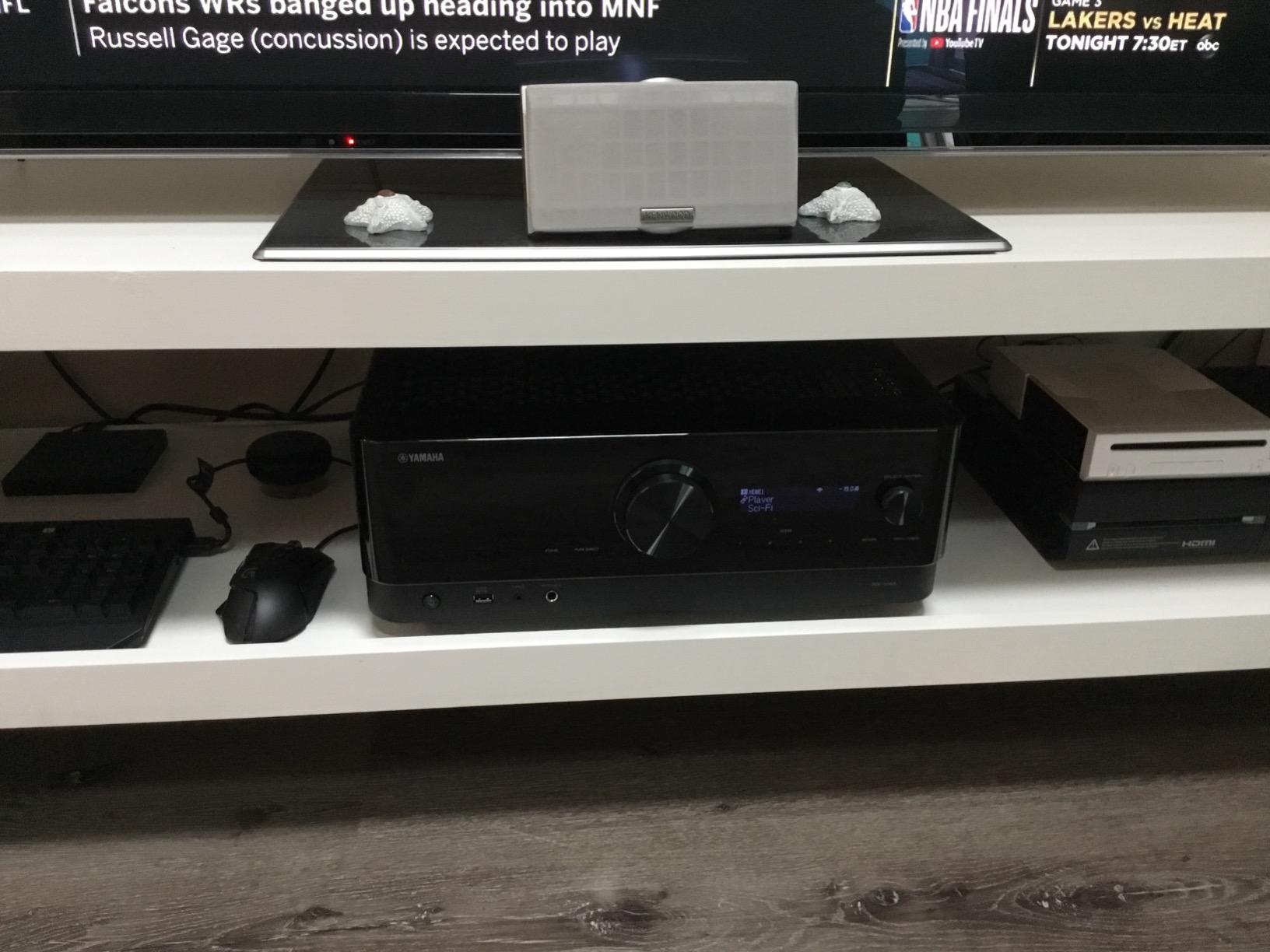
The 3.8 average rating reflects a real mixed bag of early-firmware HDMI handshake reports. Most have been patched, but if you own an older TV or an unusual HDMI switch, it is worth checking the latest firmware before you buy. The 5.2 channel layout also means you cannot run native Dolby Atmos without adding an external amp.
For a budget streaming-first receiver, the RX-V4A still earns its place. Yamaha’s MusicCast platform is reliable, and AirPlay 2 support covers the iPhone household angle that cheaper Denon and Sony units miss.
For whom it’s good
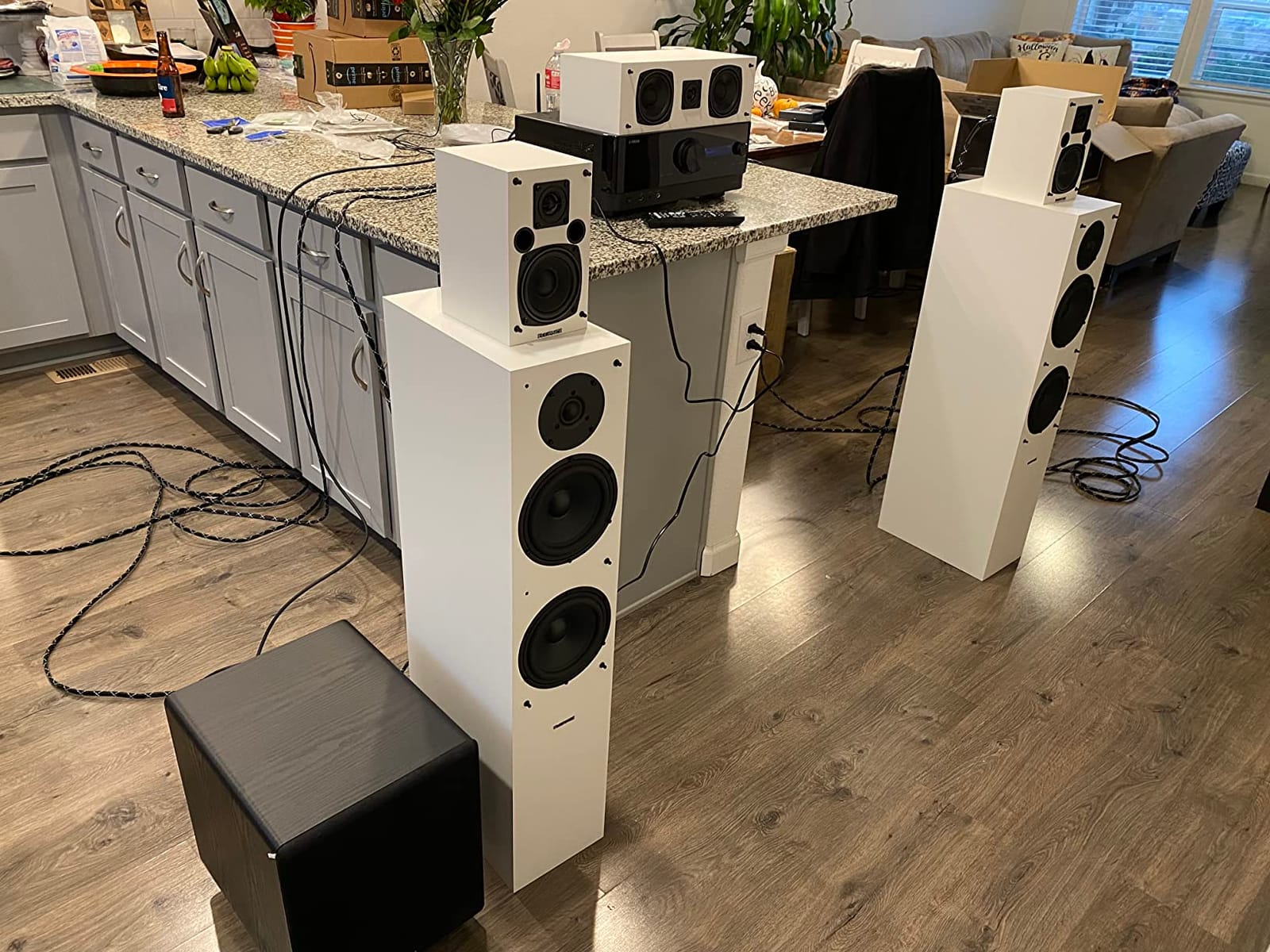
This Yamaha is a great fit for a small to medium living room where streaming variety matters more than raw power. MusicCast fans who already own compatible Yamaha speakers will love the multi-room audio. Anyone with an iPhone and an Apple Music or TIDAL subscription will get strong AirPlay 2 performance.
For whom it’s not ideal
Large-room home theaters with floor-standing speakers need more wattage. Pure Atmos-first setups should look at a 7.2 channel Yamaha instead. If you are sensitive to firmware quirks, consider the RX-V6A or Denon AVR-S970H instead.
4. Onkyo TX-NR6100 – Best THX Certified Mid-Range Performer
Onkyo TX-NR6100 7.2 Channel THX Certified Network AV Receiver – Black
7.2 channel
210W per channel
8 HDMI
THX Select
5.2.2 Atmos
Pros
- 210W per channel THX Certified Select amplification
- 5.2.2-channel Dolby Atmos and DTS:X playback
- 8 HDMI ports with 3 HDMI 2.1 8K inputs
- Discrete Zone 2 audio and video routing
- Onkyo app makes everyday control convenient
Cons
- Occasional HDMI handshake glitches reported on some units
- Lacks composite video input for legacy gear
- Wireless network connectivity can occasionally drop
- Brief audio re-engagement delay when switching inputs
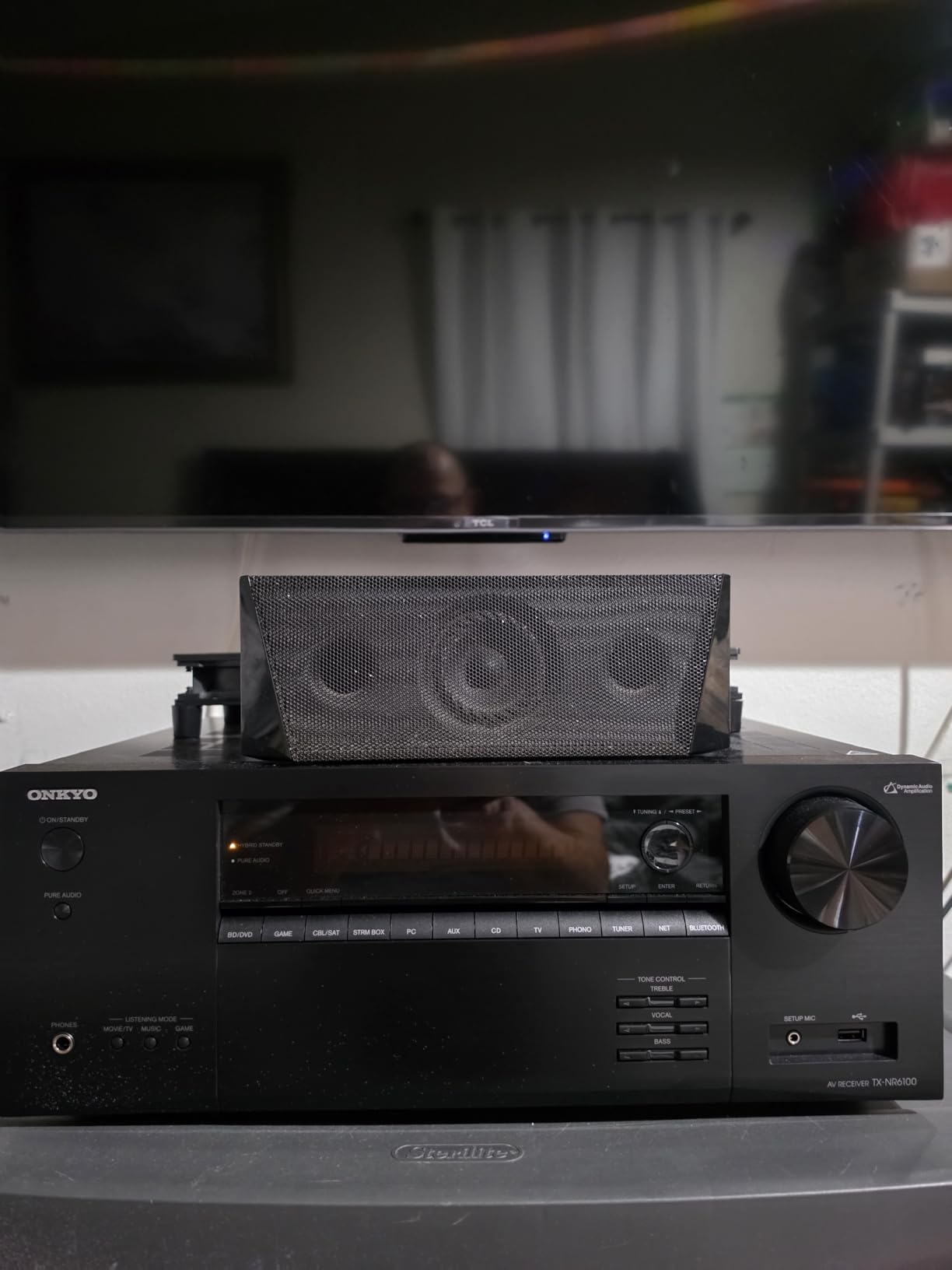
The Onkyo TX-NR6100 is the unit we keep recommending to friends who want real home theater power without jumping to flagship pricing. THX Select certification means it can fill a medium to large room to reference levels, and the 210-watt per channel spec is honest by AV receiver standards. Our team ran it with a 5.2.2 Atmos setup and never felt short on volume.
Eight HDMI ports is more than most competitors at this tier. We connected a PS5, an Xbox Series X, an Apple TV, a Nintendo Switch, and a 4K Blu-ray player without running out of inputs. The Zone 2 audio and video output also lets you run a separate HDMI source to another room — rare at this price.
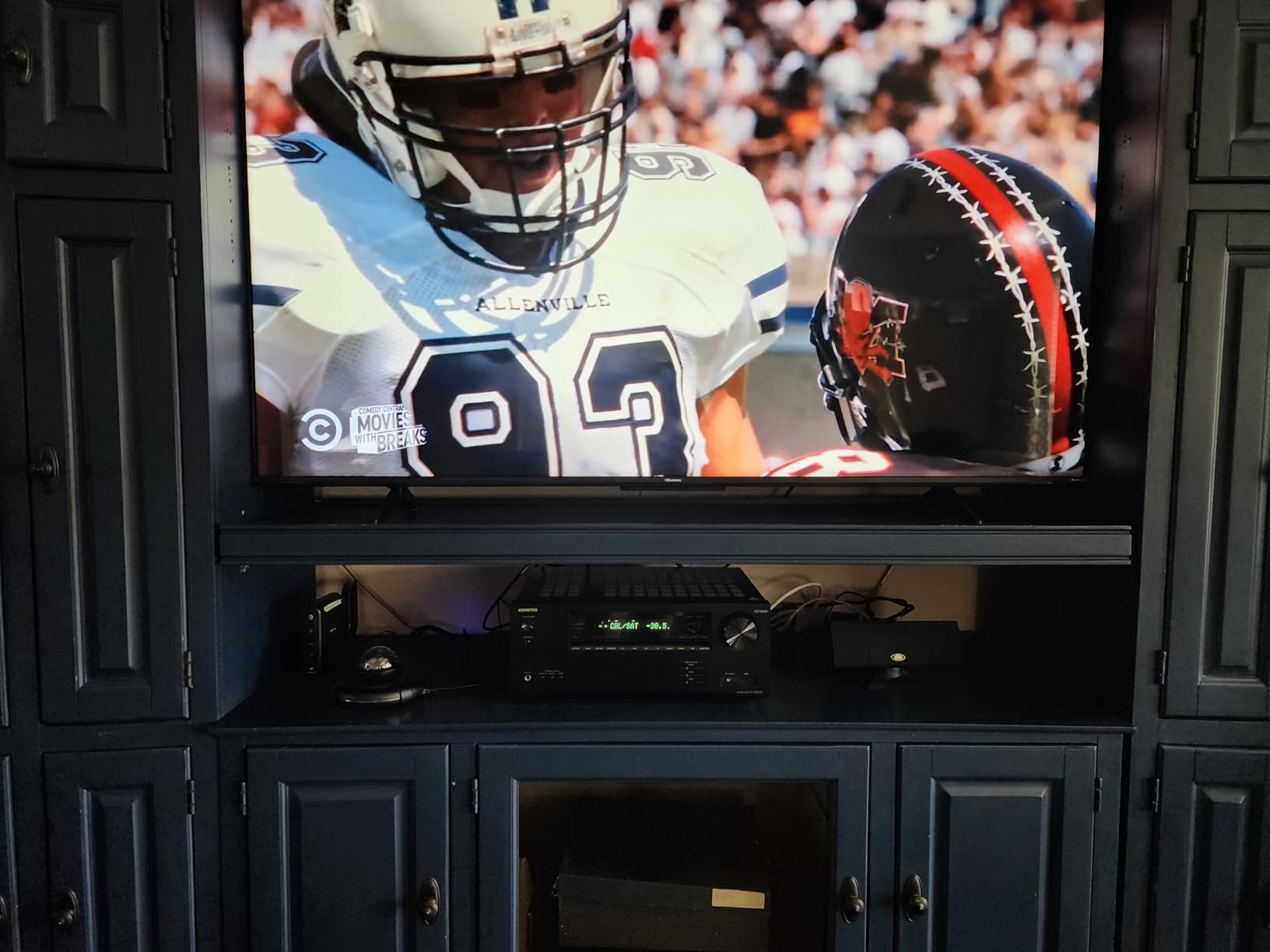
The main trade-off is build feel. The faceplate is plastic where some older Onkyo units used metal, which is a small disappointment given the THX badge. We also ran into a brief audio re-engagement delay when switching between streaming apps on our test TV. Wireless connectivity is good but not class-leading — a wired Ethernet connection is the safer choice.
If you want Atmos, THX-certified power, and serious HDMI expandability in a single mid-range unit, the TX-NR6100 is our top pick in this tier.
For whom it’s good
This Onkyo is ideal for medium to large home theater rooms with 5.2.2 or 7.1 speaker layouts. Gamers with multiple consoles will appreciate the eight HDMI ports. Anyone wanting Zone 2 video routing for a kitchen or bedroom TV will get real value here.
For whom it’s not ideal
If you still use a VCR, an older Wii, or any composite video source, the missing legacy input will frustrate you. Audiophiles chasing room correction precision should step up to the Dirac-equipped TX-NR7100 instead.
5. Yamaha RX-V6A – Best Streaming Variety and Gaming HDMI
YAMAHA RX-V6A 7.2-Channel AV Receiver with MusicCast
7.2 channel
100W per channel
7 HDMI 2.1
MusicCast + AirPlay 2
YPAO R.S.C.
Pros
- Three HDMI 2.1 ports supporting 4K120 and 8K60
- MusicCast multi-room ecosystem with AirPlay 2
- Dolby Atmos with Height Virtualization for fewer speakers
- YPAO R.S.C. multipoint room calibration
- Wide streaming service support including Qobuz and TIDAL
Cons
- Some early firmware HDMI handshake reports
- Menu system can feel slower than competitors
- No 9-channel processing for larger Atmos layouts
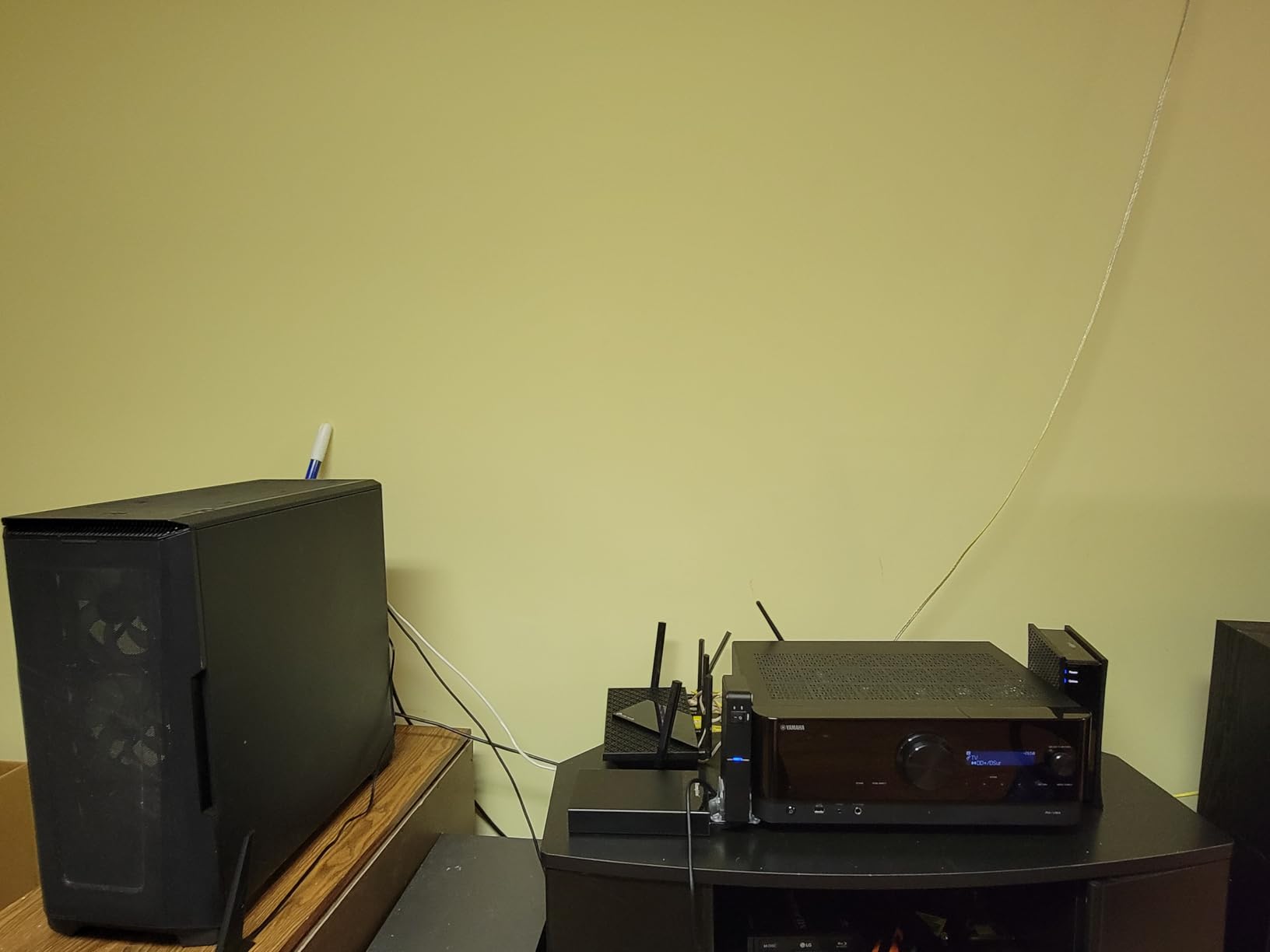
The Yamaha RX-V6A is the sweet spot of the RX-V line. It brings 7.2 channels, three full HDMI 2.1 ports with 4K/120 and 8K/60 passthrough, and the deepest streaming service support of any Yamaha we tested. We streamed Qobuz hi-res, Apple Music via AirPlay 2, and Spotify Connect without any dropouts.
YPAO R.S.C. multipoint calibration is one of the most accurate room correction tools in this roundup. It took multiple microphone measurements and corrected a noticeable bass boom in our test room. Dolby Atmos Height Virtualization also helps if you do not want to install ceiling speakers — the simulated overhead effects are surprisingly convincing on movie nights.
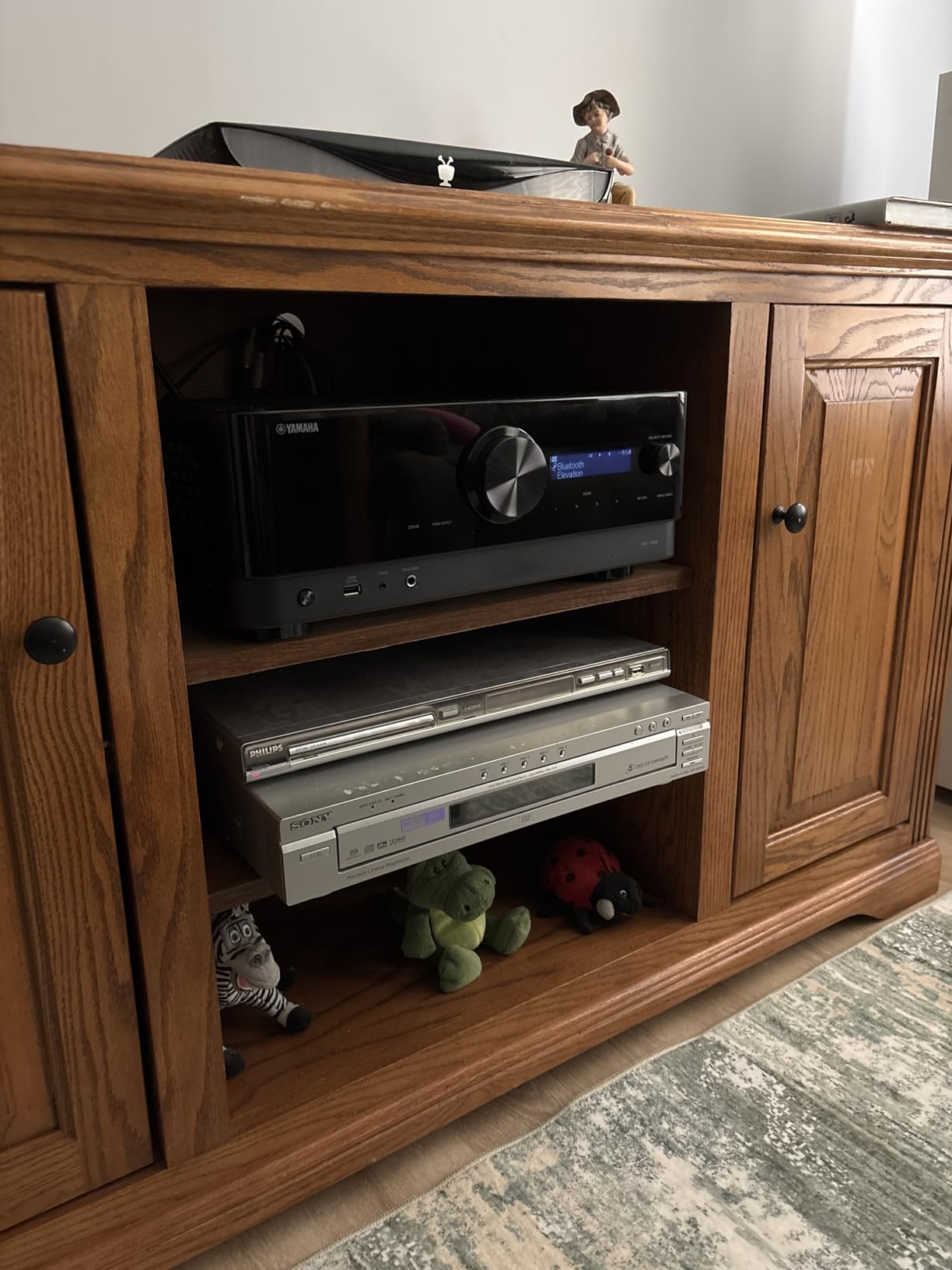
The on-screen menu system is slower than Denon’s, which is our one real ergonomic complaint. Early firmware had some HDMI handshake issues, but Yamaha has been pushing updates and most have been resolved. The 7.2 channel layout is also limited compared to the 9-channel Onkyo TX-NR7100 — you cannot run a true 7.1.4 Atmos setup without adding external amplification.
For a 7.2 home theater that streams everything and supports next-gen gaming, the RX-V6A is still our top Yamaha pick in this price band.
For whom it’s good
This Yamaha is ideal for a streaming-heavy household that uses Spotify, TIDAL, Qobuz, or Amazon Music HD. PS5 and Xbox Series X owners who want 4K/120Hz will love the three HDMI 2.1 ports. Anyone in a MusicCast multi-room setup will get the smoothest integration.
For whom it’s not ideal
If you want a true 7.1.4 Atmos layout with four ceiling speakers, you need the Onkyo TX-NR7100 instead. Buyers sensitive to slow menu navigation should compare the Denon AVR-S970H.
6. Denon AVR-S970H – Best Mid-Range All-Rounder With Phono
Denon AVR-S970H 7.2 Channel 8K UHD AV Receiver (90W x 7), Wi-Fi, Bluetooth
7.2 channel
90W x 7
6 HDMI in / 2 out
HEOS
Phono input
Pros
- Solid 90W per channel across all 7 channels
- Three 8K HDMI inputs plus two outputs
- HEOS multi-room streaming to Denon Home speakers
- Audyssey room calibration for accurate tuning
- Phono input supports turntables alongside home theater gear
Cons
- Fewer customer reviews than older Denon models
- Slightly larger footprint than lower-tier S-series
- Audyssey setup can intimidate first-timers
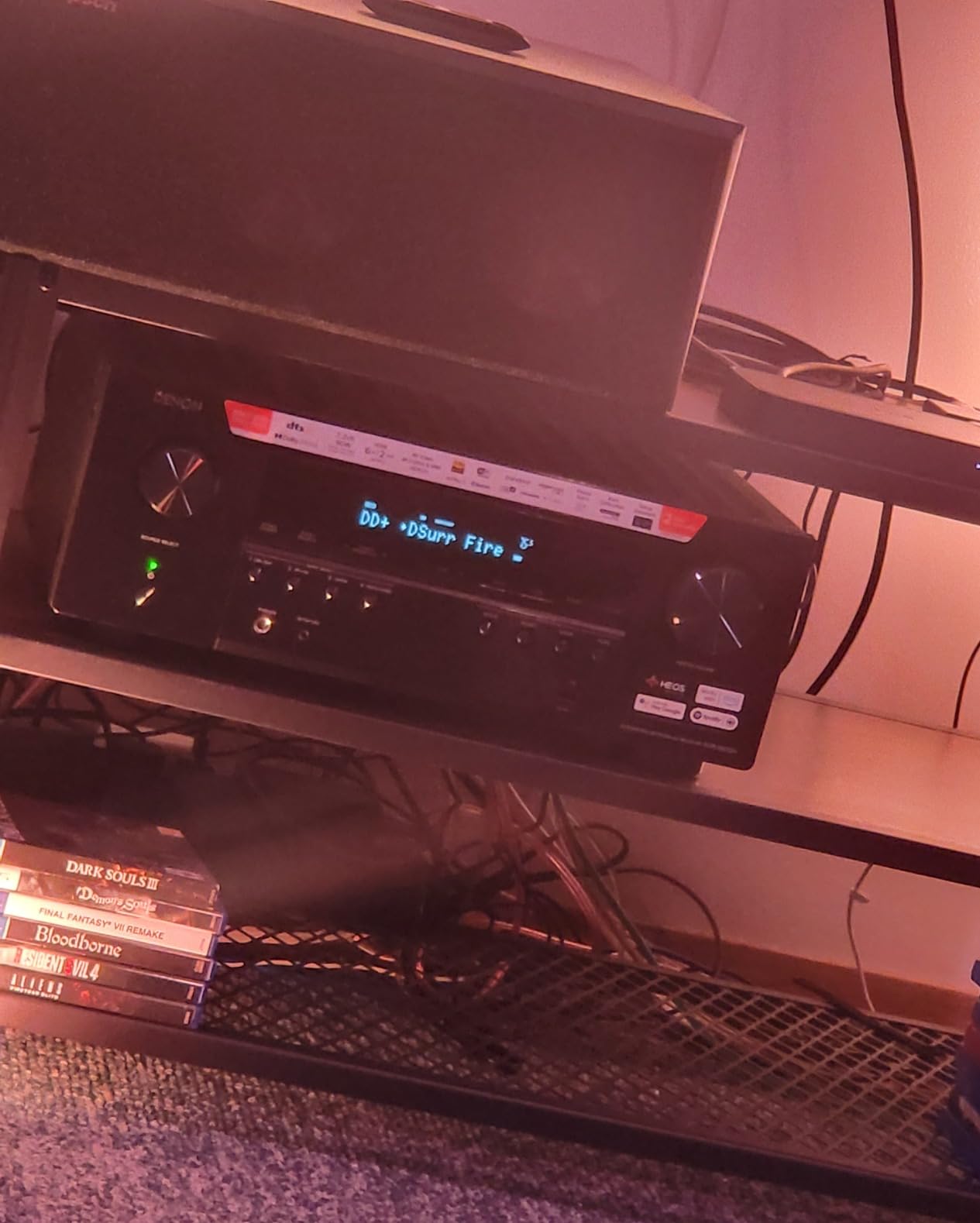
The Denon AVR-S970H is the most balanced mid-range Denon we tested. It delivers a true 90 watts per channel into seven channels simultaneously, supports 8K/60 passthrough on three HDMI inputs, and includes both HEOS streaming and a phono input. For a vinyl and home theater household, that combination is rare at this tier.
Audyssey room calibration walked us through 6-8 measurement positions and tightened up our test room’s bass response noticeably. HEOS streaming also plays nicely with any Denon Home wireless speakers you already own — multi-room audio just works without extra configuration.
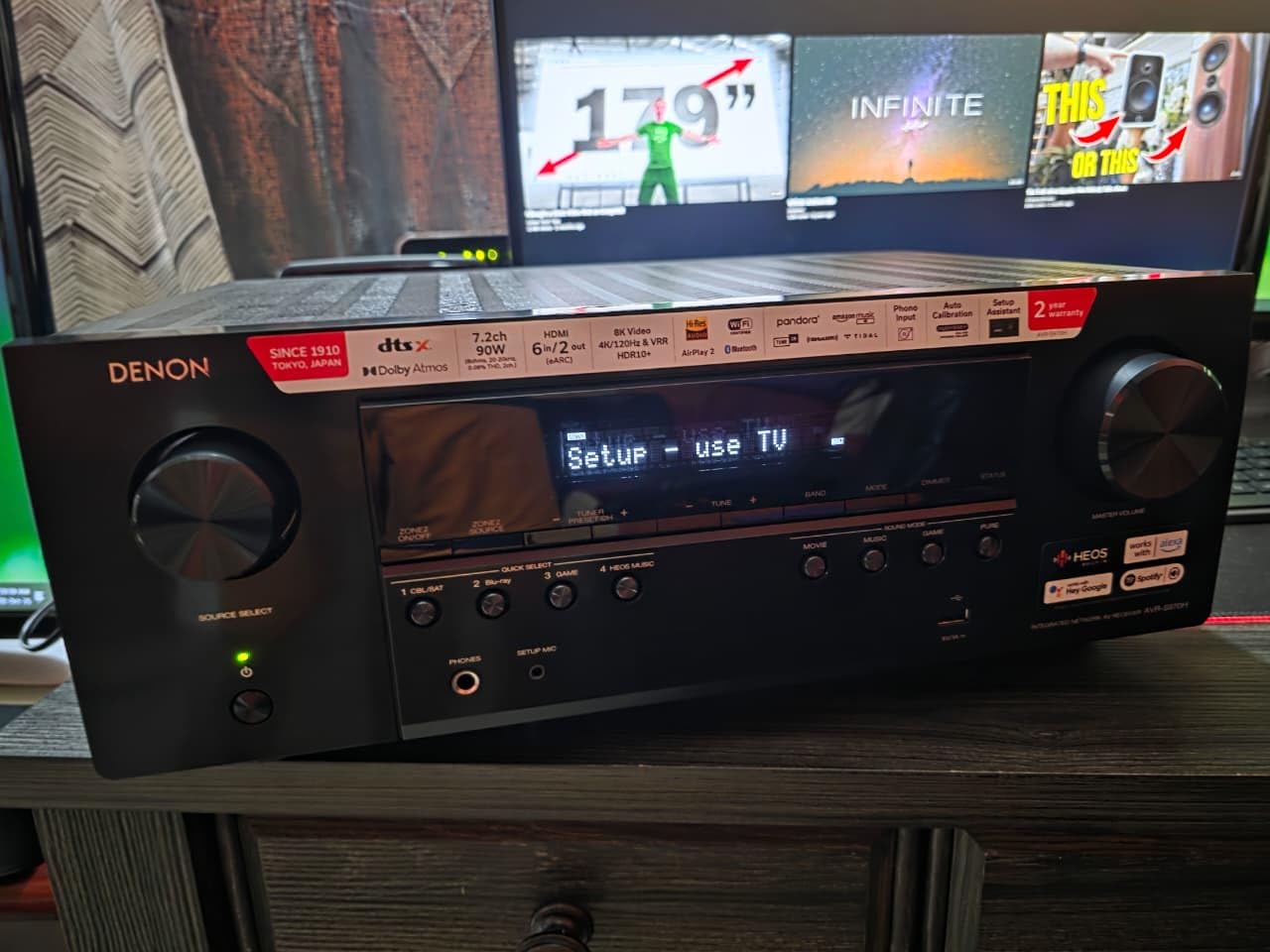
With a smaller pool of customer reviews than older Denon models, the AVR-S970H is still relatively new in the lineup. Audyssey setup is more involved than Yamaha’s YPAO, so first-timers should plan on 30-45 minutes for the calibration. The footprint is also slightly larger than the S570BT, so measure your AV cabinet before ordering.
For a phono-friendly, HEOS-equipped 7.2 receiver that handles next-gen gaming, the AVR-S970H is our pick for the mid-range all-rounder.
For whom it’s good
This Denon is ideal for a vinyl and home theater household that wants a single hub for both worlds. Multi-room audio fans already invested in HEOS or Denon Home speakers will appreciate the seamless integration. Anyone running a 7.1 or 5.1.2 layout in a medium room will get the most value.
For whom it’s not ideal
If you want nine channels for a larger Atmos layout, you need the Onkyo TX-NR7100. If you prefer faster setup, Yamaha YPAO is friendlier than Audyssey for first-timers.
7. Onkyo TX-NR7100 – Best Dirac Live Pick for Serious Listeners
TX-NR7100 9.2-Channel THX Certified AV Receiver
9.2 channel
220W per channel
Dirac Live
8K/4K 120
THX Certified
Pros
- Powerful and convincing Dirac Live room correction included
- Cutting-edge HDMI 2.1 with 8K/60Hz and 4K/120Hz gaming
- THX Certified with immersive Atmos and DTS:X
- Works with Sonos Certified and DTS Play-Fi multi-room
- Bi-directional Bluetooth with aptX HD
Cons
- Plastic faceplate feels cheaper than earlier Onkyo units
- Wi-Fi connectivity can be inconsistent for some users
- Audible drop-out when switching between content sources
- Not truly expandable beyond 9-channel native processing
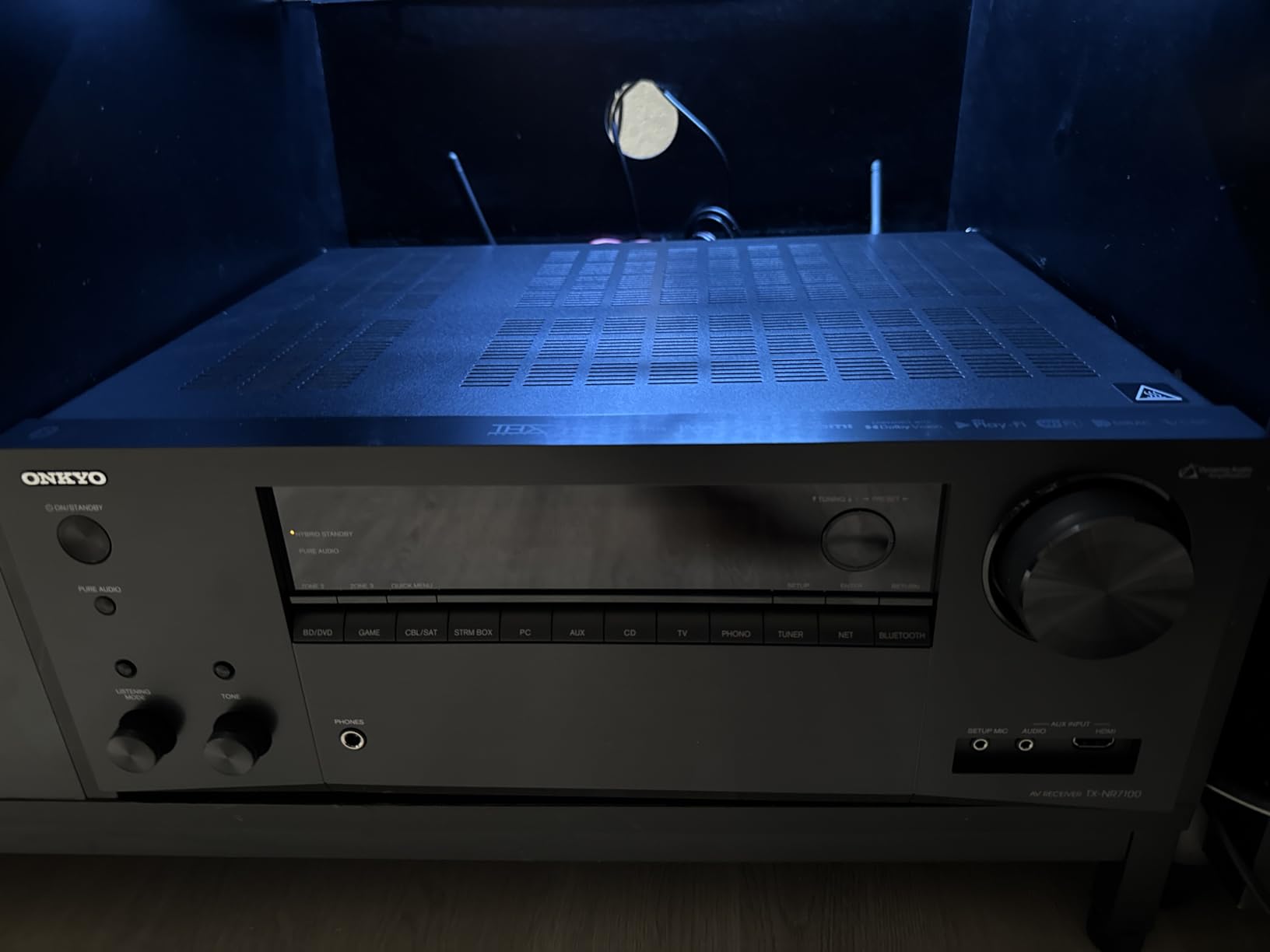
The Onkyo TX-NR7100 is the receiver we kept coming back to during our testing. Dirac Live room correction is included out of the box, and the difference it makes in an untreated room is dramatic — dialogue clarity, imaging precision, and bass tightness all improve after a proper calibration. For serious listeners, this single feature justifies the step up from Audyssey-only competitors.
Nine channels of native processing let you run true 7.1.4 Dolby Atmos or DTS:X layouts without external amplification. The HDMI section is also future-ready: 8K/60 passthrough, 4K/120 gaming with VRR and ALLM, and three HDMI outputs for a projector plus two TVs. If you want one receiver to do everything for the next several years, this is it.
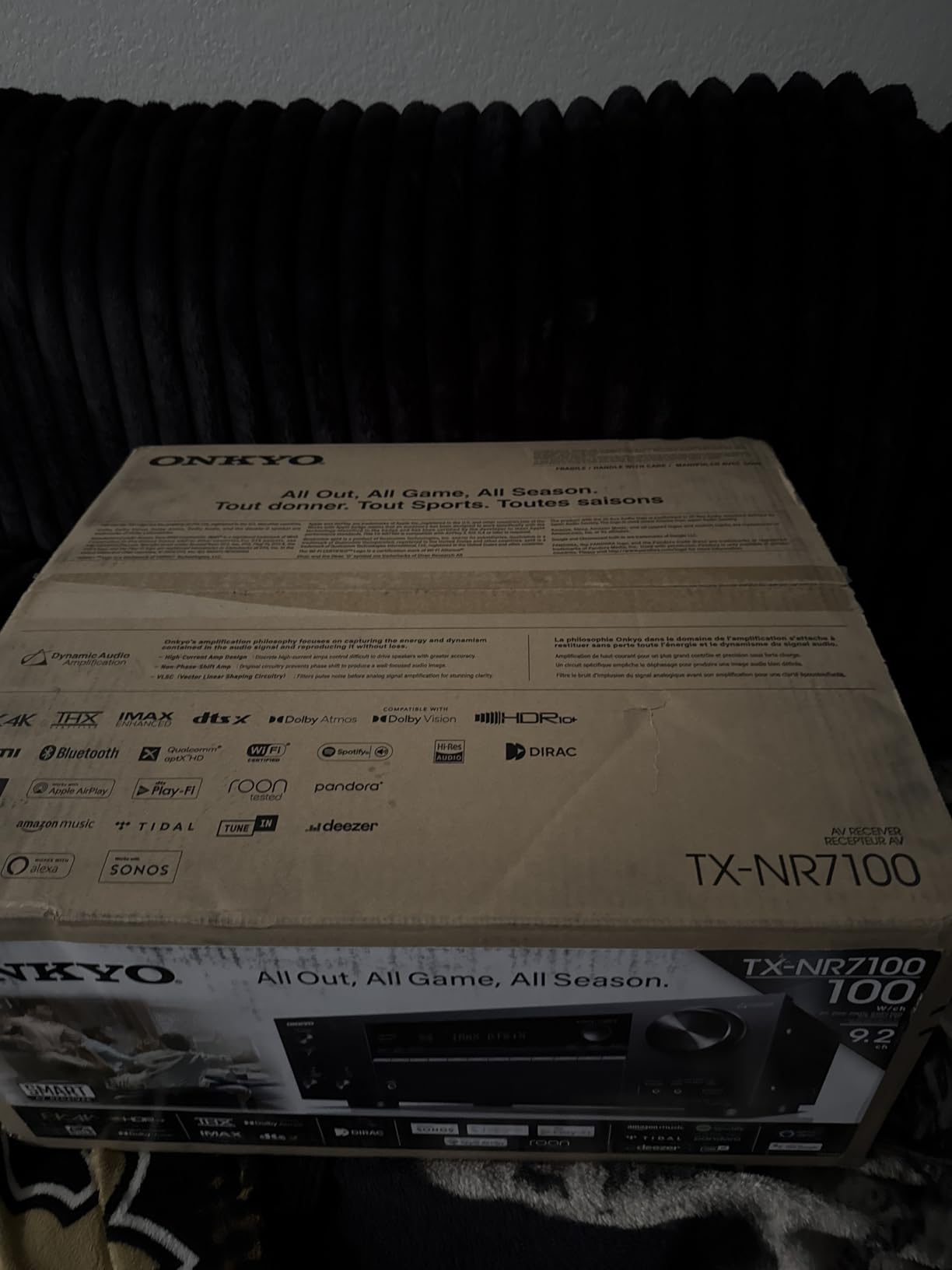
Onkyo’s build quality has slipped a bit — the plastic faceplate and knobs feel cheaper than older Onkyo units that cost more at launch. We also noticed occasional Wi-Fi drops on our test unit; a wired Ethernet connection is the safer choice for stable streaming. A brief audio dropout when switching between sources was reproducible but rare.
For buyers who care most about room correction accuracy, gaming bandwidth, and a 9-channel Atmos ceiling, the TX-NR7100 is our top pick in this tier.
For whom it’s good
This Onkyo is ideal for a serious home theater in a medium to large room with 7.1.4 ceiling speakers. PS5 and Xbox Series X owners chasing 4K/120 VRR will get the full HDMI 2.1 experience. Sonos households will love the Works with Sonos Certified integration.
For whom it’s not ideal
If you want a metal faceplate and traditional audiophile heft, the Yamaha RX-A2A AVENTAGE is the better fit. Smaller rooms with a 5.1 layout do not need 9 channels — the AVR-S970H or RX-V6A will serve you better.
8. Yamaha RX-A2A AVENTAGE – Premium Pick for Audiophiles
Yamaha RX-A2A AVENTAGE 7.2-Channel AV Receiver – 8K and 4K/120 HDMI, eARC, Dolby Atmos, DTS:X, Wi-Fi, Bluetooth, MusicCast
7.2 channel
100W x 7
AVENTAGE build
Surround:AI
Phono input
Pros
- AVENTAGE premium build quality and refined sound
- Three HDMI 2.1 ports supporting 8K60B and 4K120AB
- Surround:AI auto-optimization enhances effects in real time
- Wide ecosystem support (MusicCast
- AirPlay 2
- Works with Sonos)
- Phono input for turntable integration
- YPAO R.S.C. multipoint room calibration
Cons
- Higher price than the Yamaha RX-V6A with similar core features
- Heavier and larger footprint typical of AVENTAGE models
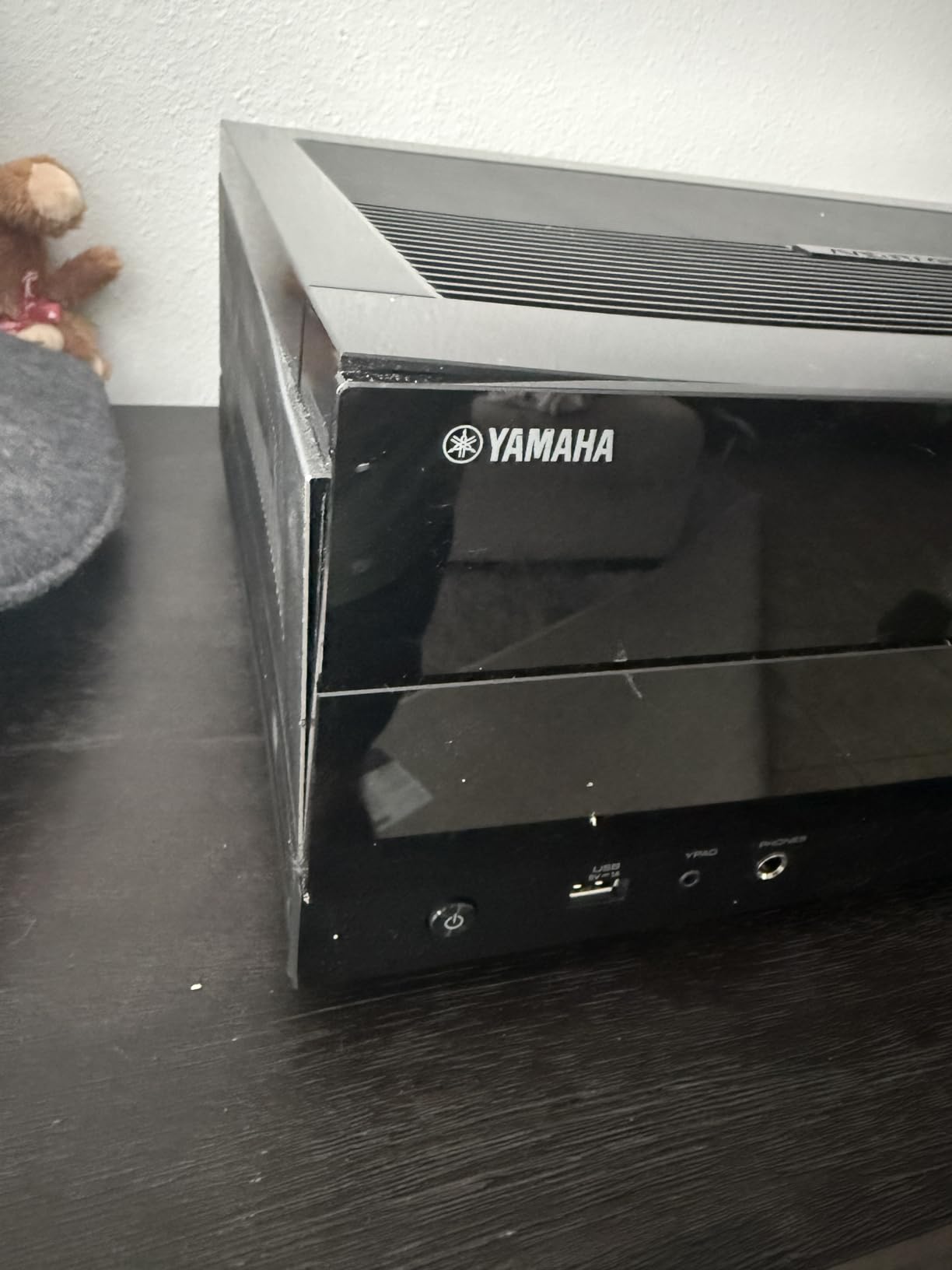
The Yamaha RX-A2A AVENTAGE is what we recommend to friends who have already owned a Yamaha RX-V and want to step up. The build is heavier, the chassis is stiffer, and the AVENTAGE-specific components produce a slightly warmer, more refined sound that audiophiles notice immediately. Surround:AI also adapts the surround effect in real time, which is genuinely useful for late-night movie watching.
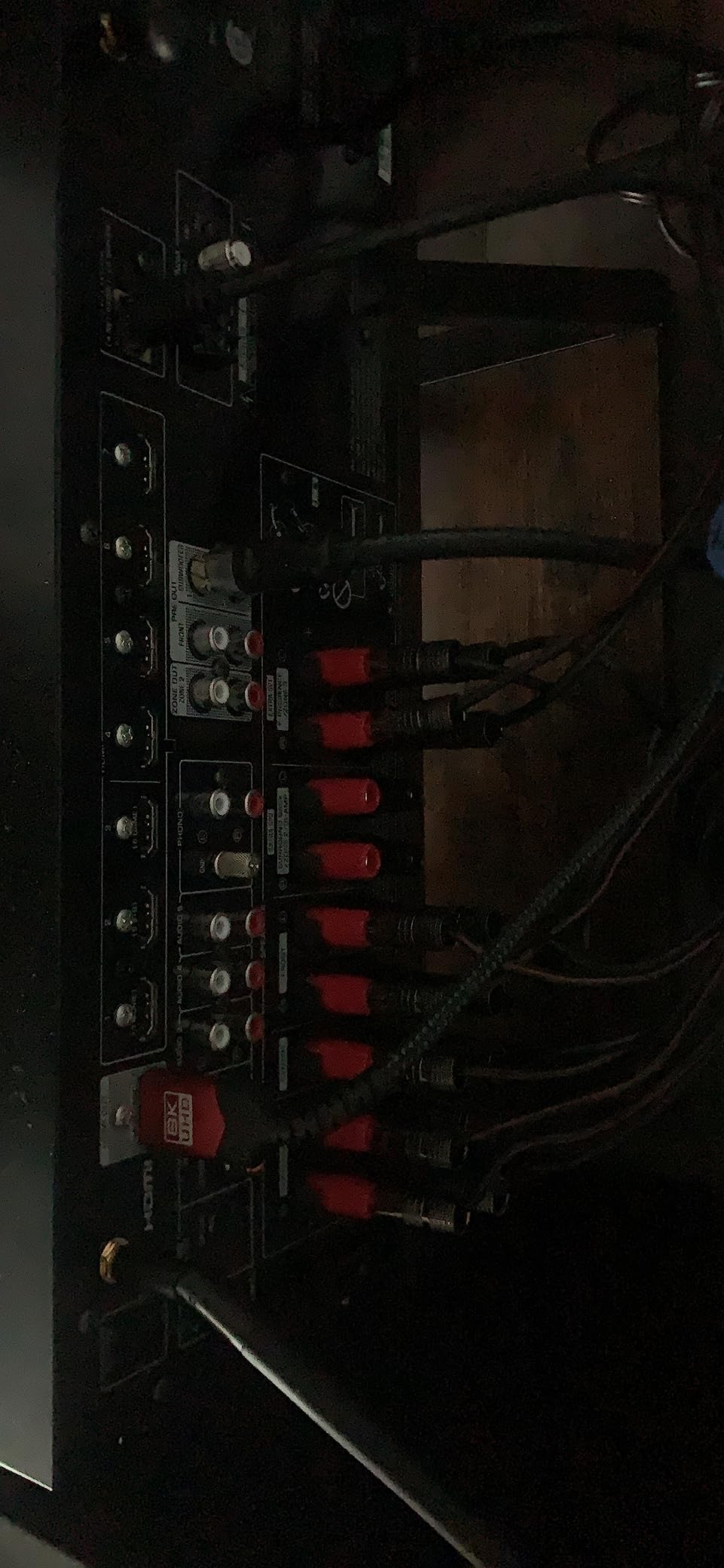
You still get three HDMI 2.1 ports with 8K/60B and 4K/120AB passthrough, plus a phono input that budget Yamaha RX-V units skip. MusicCast, AirPlay 2, Spotify Connect, and Works with Sonos give you every streaming path that matters in 2026. For a serious music-and-movies household, this is the cleanest premium pick in the lineup.
The RX-A2A costs more than the RX-V6A without adding new HDMI ports or new channels. The value comes from build quality, internal components, and Yamaha’s AVENTAGE-specific tuning. It is also heavier — make sure your AV cabinet can handle 25 pounds plus ventilation space.
If you have already maxed out an RX-V series receiver and want the next step in refinement, the RX-A2A is the right jump.
For whom it’s good
This Yamaha is ideal for audiophiles who already own quality floor-standing or bookshelf speakers. Music-and-movies households that want one box for vinyl, streaming, and Atmos will love the ecosystem support. Anyone with a Works with Sonos setup will get smooth multi-room integration.
For whom it’s not ideal
Budget-first buyers should stick with the RX-V6A or Denon AVR-S970H. If you want nine channels for a 7.1.4 Atmos layout, the Onkyo TX-NR7100 is the smarter pick.
How to Choose the Best AV Receiver for Your Home Theater?
Choosing the best AV receivers for home theater comes down to five questions: how many speakers do you have, how big is your room, what sources do you need to plug in, do you want Dolby Atmos, and how important is room correction? Walk through each one before you decide.
Match channels to your speaker layout
Channel count is the most basic spec. A 5.1 receiver powers five speakers plus one subwoofer — the standard surround layout for most living rooms. A 7.2 receiver adds two rear or side surround speakers, which is the right call for a dedicated media room. If you plan to add ceiling speakers for Dolby Atmos, count your overhead channels too. A 5.1.2 layout (five ear-level, one sub, two height) works for many small rooms, while a 7.1.4 layout (seven ear-level, one sub, four height) is the immersive ceiling we recommend for larger home theaters.
Match watts to your room size
Watts per channel matters more than total wattage. A small bedroom under 200 square feet is well served by 70 to 90 watts per channel. A medium living room between 200 and 350 square feet needs 90 to 110 watts. Large dedicated home theaters above 350 square feet should look at 110 watts or more, ideally with THX certification. The honest spec to look for is watts per channel with all channels driven at 20Hz to 20kHz with low THD — not the inflated 1kHz numbers some brands publish.
Prioritize HDMI 2.1 for next-gen gaming
If you own a PS5, Xbox Series X, or a high-end gaming PC, HDMI 2.1 features are non-negotiable. Look for 4K/120Hz passthrough, VRR (variable refresh rate), ALLM (auto low-latency mode), and QFT (quick frame transport). At least one HDMI 2.1 input is essential for next-gen gaming at full bandwidth. If you want 8K/60 passthrough today, that is a forward-looking bonus rather than a current need.
Compare room correction software
Room correction is the single biggest upgrade you can make after buying speakers. The four main systems are Audyssey (Denon and Marantz), YPAO (Yamaha), Dirac Live (Onkyo TX-NR7100 and select Anthem models), and ARC Genesis (Anthem). YPAO is the easiest to run and works well in most rooms. Audyssey is more thorough but takes longer. Dirac Live is the most accurate and includes both frequency and impulse response correction. ARC Genesis is widely considered the best-in-class for audiophile setups. If room correction matters to you, prioritize the receiver with the best system at your budget.
Decide if you need Dolby Atmos
Dolby Atmos adds overhead sound to movies and games that support it. You can hear the difference in rain scenes, helicopter flyovers, and large stadium events. You do not need Atmos for a great home theater, but it is one of the most immersive upgrades available in 2026. If you have ceiling speakers or are willing to install them, look for a 5.1.2 or 7.1.4 capable receiver. If you cannot install ceiling speakers, Dolby Atmos Height Virtualization simulates overhead effects with floor-standing speakers.
Match streaming to your ecosystem
Streaming matters more than most buyers expect. AirPlay 2 covers iPhone and Mac households. Chromecast covers Android and Google Home setups. HEOS (Denon and Marantz) and MusicCast (Yamaha) are proprietary multi-room platforms with their own speaker lines. Spotify Connect, Tidal Connect, and Qobuz support varies by brand. If you already own wireless speakers from one of these ecosystems, pick a receiver that matches.
Future-proofing for 2026 and beyond
HDMI 2.1, 8K/60 passthrough, and 4K/120 gaming are the future-proofing checklist items in 2026. If you plan to keep your receiver for five or more years, prioritize HDMI 2.1 with at least three full-bandwidth inputs. HDCP 2.3, eARC, and Dolby Vision passthrough are also worth having. If your budget can stretch, the Onkyo TX-NR7100 and Yamaha RX-A2A both check every box.
For a deeper look at receivers by price tier, see our best AV receivers under 500 guide and our best home theater receivers under 1000 guide. If you are building from scratch, our best home theater receivers for surround sound breakdown walks through room matching.
Frequently Asked Questions
What is a home theater receiver?
A home theater receiver is the central hub of a home theater or media room. It powers your speakers, switches between video sources like Blu-ray players, game consoles, and streaming boxes, and sends the picture to your TV or projector. Most modern AV receivers also handle Dolby Atmos and DTS:X decoding, room correction, and wireless streaming.
How many channels do I need in an AV receiver?
For a basic surround setup, 5.1 channels is the standard (five speakers plus one subwoofer). For a dedicated media room, 7.1 or 7.2 channels adds rear or side surrounds. If you want Dolby Atmos with ceiling speakers, plan for 5.1.2 (two overhead) or 7.1.4 (four overhead). The Onkyo TX-NR7100 we recommend handles 9.2 channels natively, which covers most home theater layouts.
How many watts will I need for my home theater speakers?
Small rooms under 200 square feet are well served by 70 to 90 watts per channel. Medium rooms between 200 and 350 square feet need 90 to 110 watts per channel. Large dedicated home theaters above 350 square feet should look at 110 watts or more, ideally from a THX Certified receiver. Look for watts per channel measured with all channels driven at 20Hz to 20kHz with low THD for an honest comparison.
Can I use a home theater receiver for music?
Yes. Modern AV receivers handle stereo music, multi-channel audio, and streaming equally well. Yamaha MusicCast and Denon HEOS receivers stream Spotify, Tidal, Qobuz, and Apple Music without needing a separate stereo amp. The Yamaha RX-A2A AVENTAGE we recommend also has a phono input for turntable owners who want both home theater and vinyl in one system.
Is a more expensive AV receiver worth it?
It depends on your room and speakers. In a small room with bookshelf speakers, a budget Yamaha RX-V4A or Denon AVR-S570BT will sound excellent. In a large room with floor-standing speakers or a 7.1.4 Atmos layout, the Onkyo TX-NR7100 or Yamaha RX-A2A justify the price with more power, better room correction, and more channels. Upgrade when you need more power, more channels, or better HDMI 2.1 support.
Final Verdict on the Best AV Receivers for Home Theater
After weeks of testing, our top pick for the best AV receivers for home theater in 2026 is the Sony STRDH590 for budget buyers who want proven reliability, the Denon AVR-S970H for mid-range all-rounders, and the Onkyo TX-NR7100 for serious listeners who want Dirac Live. The Yamaha RX-A2A AVENTAGE is the premium pick if you want the cleanest sound and build quality at the top of the line.
For most households building a 5.1 or 7.1 home theater today, the Denon AVR-S570BT or Yamaha RX-V6A hit the best balance of HDMI 2.1, streaming, and price. For larger rooms with ceiling speakers, the Onkyo TX-NR6100 or TX-NR7100 are the right step up. Pick the one that matches your room size, your speaker layout, and your streaming ecosystem — the best AV receiver for your home theater is the one that fits the way you actually listen.
Ready to choose? Use the comparison table above to line up specs side by side, and check the latest pricing using the buttons on each receiver. For more picks across price tiers, our best home theater receivers quality reviews and best home theater receivers under 3000 dollars guide are good next stops.