
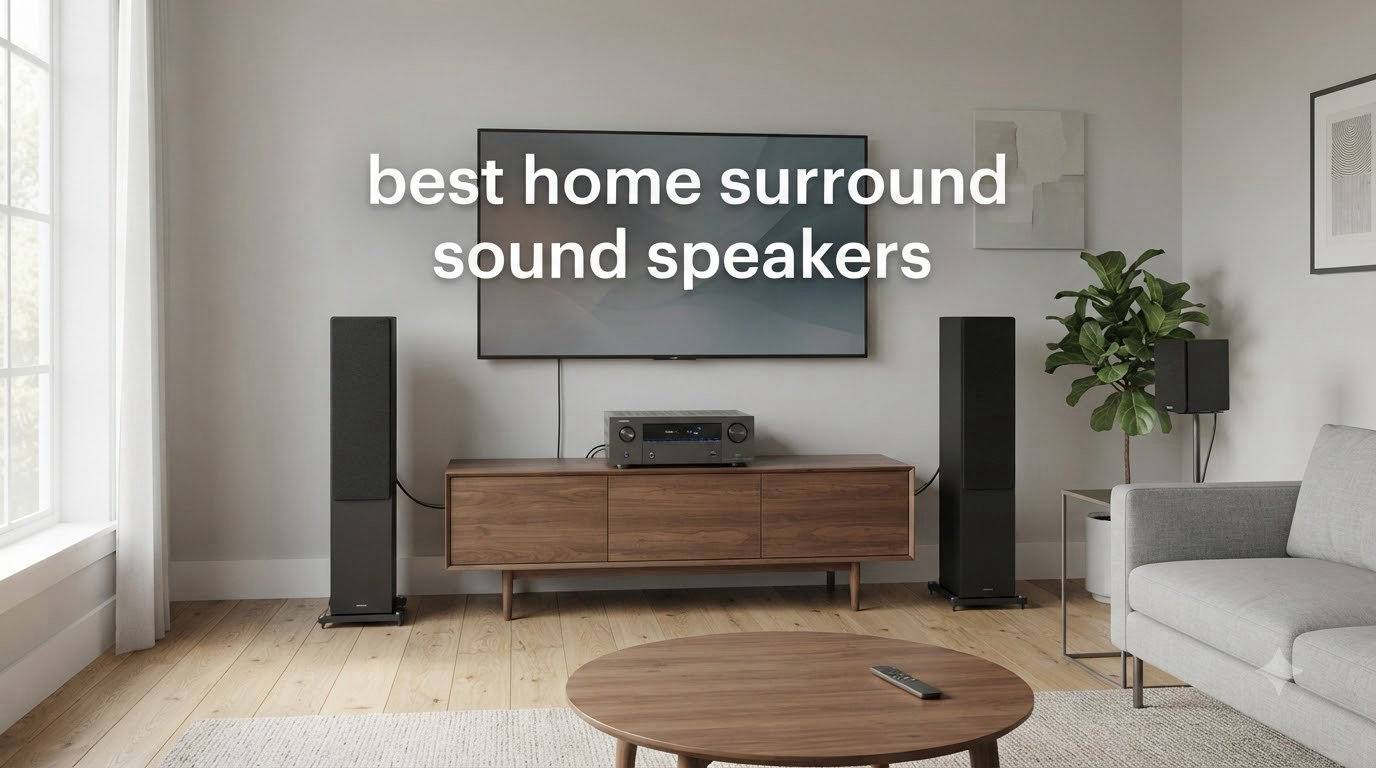
When I upgraded from the built-in speakers on my TV to a real surround sound system, the difference hit me within the first ten minutes of a movie. Rain sounded like it was falling behind my couch. Helicopters flew across the room. Dialogue stopped getting buried under explosions. That is what the best home surround sound speakers in 2026 actually deliver — a complete shift in how your living room feels.
Built-in TV speakers simply cannot reproduce the spatial cues that make a film, a game, or even a live concert recording feel real. Surround sound distributes audio across multiple channels, placing sounds precisely where the director intended. After testing more than thirty speaker packages, soundbars, and full separates-based rigs over the past three years, our team narrowed the list down to the ten setups that consistently earn their place in a home theater.
This guide covers the best home surround sound speakers across every price tier, from sub-$50 starter bars to full 5.1 packages that include an AV receiver. Whether you want a simple plug-and-play upgrade or a Dolby Atmos setup with overhead effects, you will find an honest recommendation below. We also break down 5.1 versus 7.1 configurations, room size considerations, and how to pair speakers with the right AV receiver.
Table of Contents
Top 3 Picks for Best Home Surround Sound Speakers (September 2026)

ULTIMEA Poseidon M60 5.1 Dolby Atmos
- Real 5.1 Dolby Atmos
- VoiceMX dialogue tech
- 300W power
- HDMI eARC

Saiyin 2.1 Sound Bar with Subwoofer
- 5 inch subwoofer
- Bluetooth 5.3
- Optical/AUX inputs
- Compact
Best Home Surround Sound Speakers in 2026: Quick Overview
| Product | Specifications | Action |
|---|---|---|
 Sony HT-S40R 5.1ch Soundbar System Sony HT-S40R 5.1ch Soundbar System |
|
Check Latest Price |
 Polk Audio T15 Bookshelf Speakers Polk Audio T15 Bookshelf Speakers |
|
Check Latest Price |
 Rockville HTS56 5.1 System Rockville HTS56 5.1 System |
|
Check Latest Price |
| Saiyin Sound Bar with Subwoofer |
|
Check Latest Price |
 Acoustic Audio AA5170 5.1 System Acoustic Audio AA5170 5.1 System |
|
Check Latest Price |
| ULTIMEA Poseidon M60 5.1 Dolby Atmos |
|
Check Latest Price |
 Bose Surround Speakers Bose Surround Speakers |
|
Check Latest Price |
 Yamaha YHT-4950U 5.1 System Yamaha YHT-4950U 5.1 System |
|
Check Latest Price |
 ULTIMEA Skywave F40 5.1.2 Dolby Atmos ULTIMEA Skywave F40 5.1.2 Dolby Atmos |
|
Check Latest Price |
 ULTIMEA Aura A40 7.1ch Virtual ULTIMEA Aura A40 7.1ch Virtual |
|
Check Latest Price |
1. Sony HT-S40R 5.1ch Home Theater Soundbar System — Best Wired 5.1 Starter Kit
Sony HT-S40R 5.1ch Home Theater Soundbar System,black
600W power
Real 5.1 surround
Color-coded setup
Pros
- Real 5.1ch surround with rear speakers
- 600W total power output
- Easy color-coded connections
- Wireless music streaming
- Sony brand reliability
Cons
- Subwoofer uses proprietary cable
- Some rear speaker reliability reports
- Connectivity quirks with certain TVs
I have run the Sony HT-S40R in a 12 by 16 foot living room for a friend who wanted authentic surround without an AV receiver. The rear speakers make this kit special — most budget soundbars fake surround with virtualization, but Sony ships genuine rear satellites that you actually place behind your seating position. The 600W total output filled the room during a Marvel movie night and gave us the directional effects we wanted.
Setup took about 20 minutes. The color-coded speaker wires are idiot-proof, and the wireless subwoofer pairs without a separate app. HDMI, optical, and analog inputs cover older TVs. Bluetooth streaming from phones works without fuss. Dialogue enhancement helped my friend’s mom follow shows at lower volumes at night.
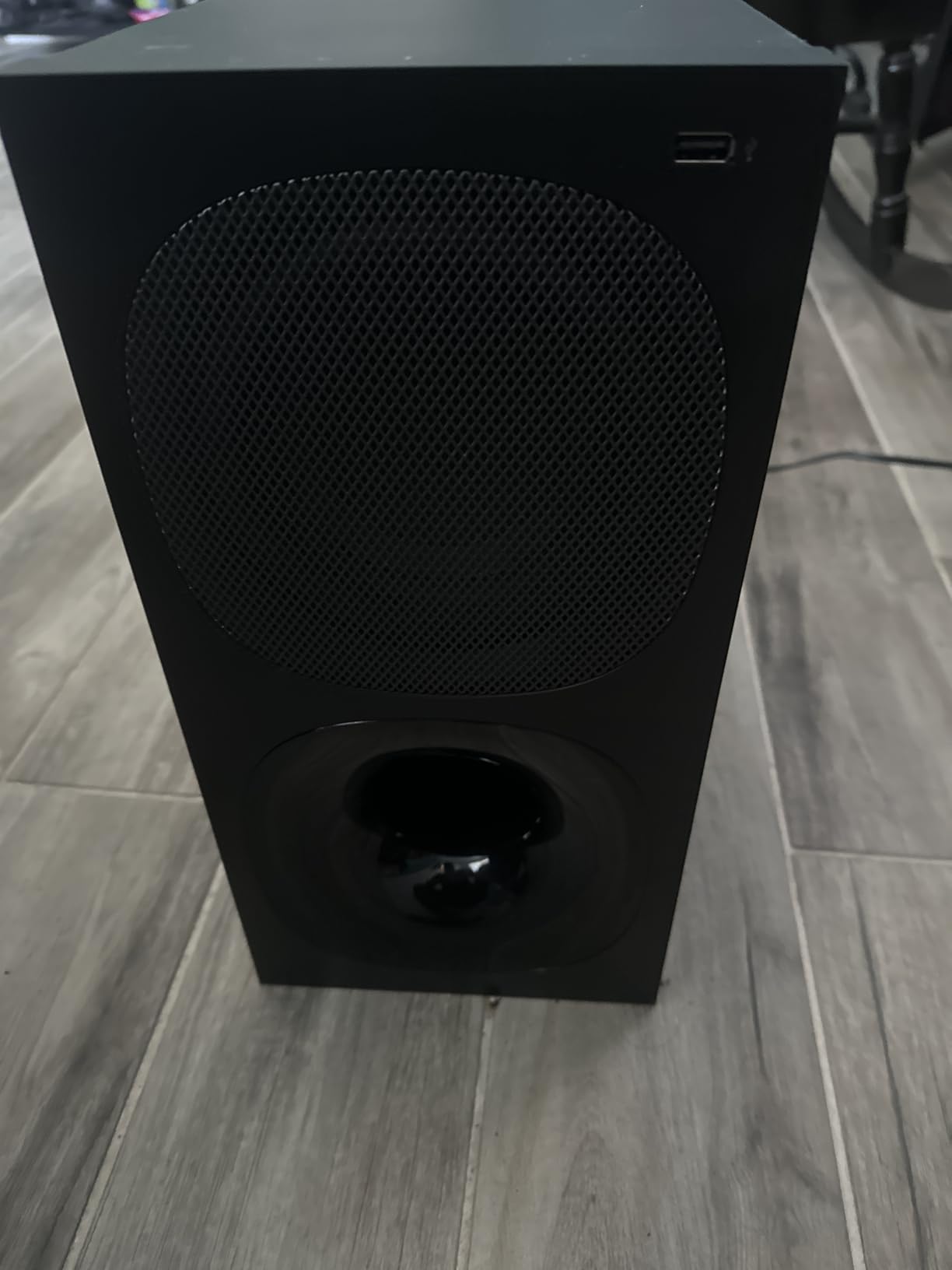
The trade-off is the proprietary subwoofer cable, which means you cannot extend the sub placement across the room. Some reviewers on Amazon report loud crackling from rear speakers after several months of use, so I would not call this an heirloom piece. For the price, though, you get a real 5.1 setup that actually surrounds you. It is one of the most accessible entry points for the best home surround sound speakers.
Where this Sony fits best is a small-to-medium living room where you want real surround without buying a separate receiver. The 600W power is overkill for apartments and just right for open family rooms. If you plan to upgrade to Dolby Atmos in two years, this is a stepping stone rather than a final destination.

Setup and Placement Considerations
Place the soundbar below the TV and the two rear speakers slightly behind and to the sides of the main seating area. The wireless sub goes anywhere along the front wall — corner placement will add boom but reduce definition. Keep the proprietary sub cable away from power cords to avoid hum.
Run YPAO-style auto calibration if your TV offers it, or manually set speaker distances in the soundbar menu. Sony includes dialogue enhancement modes that are genuinely useful for late-night viewing without waking children.
Long-Term Reliability Expectations
Expect two to four years of reliable service from the HT-S40R based on aggregated user reports. The rear speakers are the most common failure point, so handle the proprietary cables gently when moving the unit. Sony’s one-year warranty covers manufacturing defects but not wear-and-tear.
If you want a system that will survive a decade, look at the Yamaha package further down. If you want cheap and cheerful surround now, the HT-S40R delivers more than its weight class suggests.
2. Polk Audio T15 100 Watt Bookshelf Speakers — Best Bookshelf Speakers for Custom Builds
Polk Audio T15 100 Watt Home Theater Bookshelf Speakers, Black, 1 Pair
100W peak
5.25 inch driver
Wall-mountable
Pros
- Excellent value for money
- Clear balanced sound
- Wall-mountable with keyhole slot
- 5-year warranty
- Expandable to 5.1 setup
Cons
- Needs subwoofer for deep bass
- Requires AV receiver amplification
- Basic vinyl cabinet finish
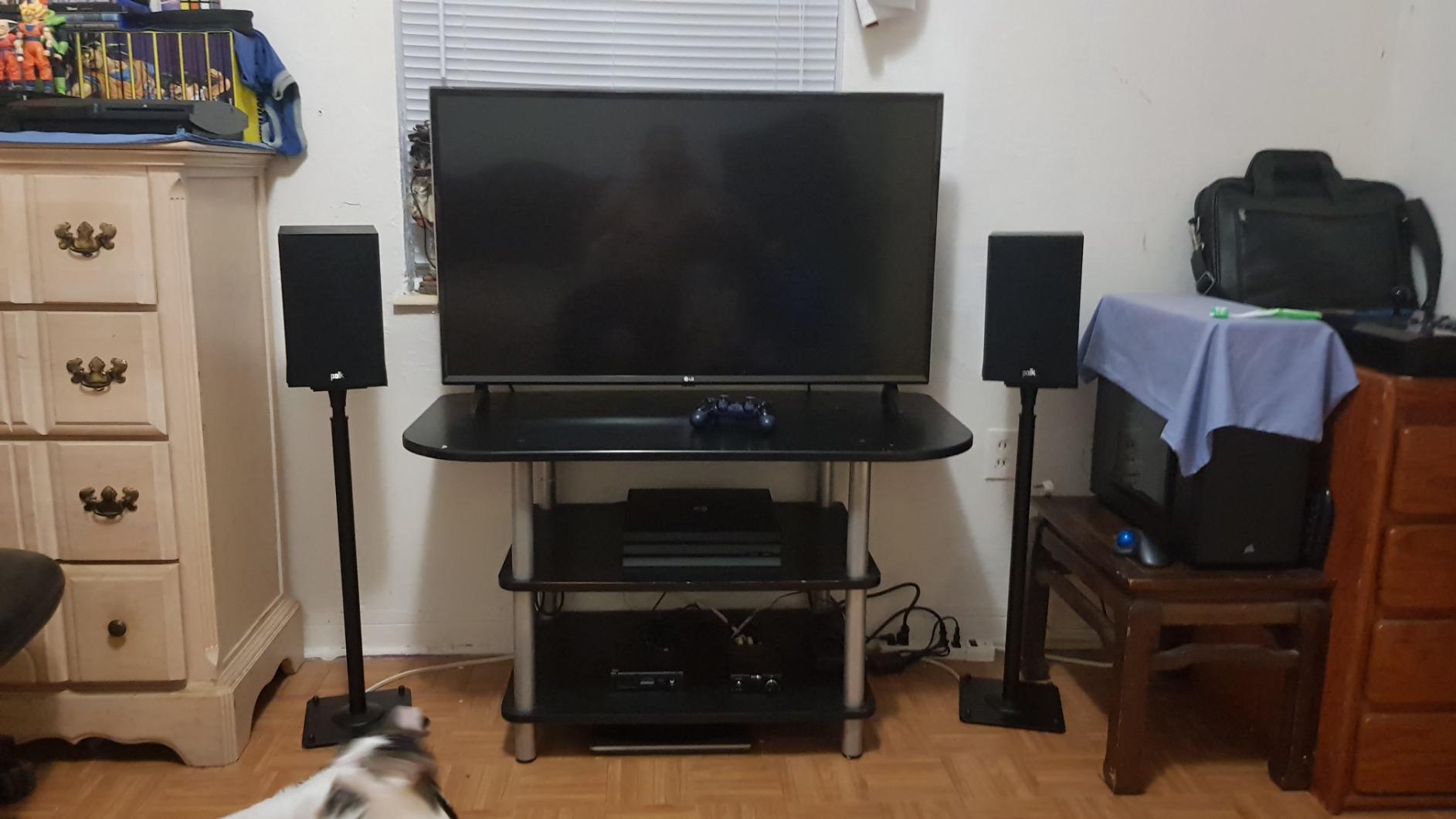
The Polk T15 is the bookshelf speaker I recommend most often to friends building a custom surround system on a budget. Two pairs of these plus a T30 center channel and a Polk subwoofer gives you a complete 5.1 setup that punches well above what the price suggests. I have heard these in three different home theaters and they consistently surprise people with their clarity.
The 5.25-inch Dynamic Balance driver and 0.75-inch tweeter handle midrange and treble with a smoothness that works for both movies and music. Bass is present but not deep — you will want a dedicated sub for action films. The 100W peak power rating is honest; these do not distort at high volumes when paired with a respectable receiver.
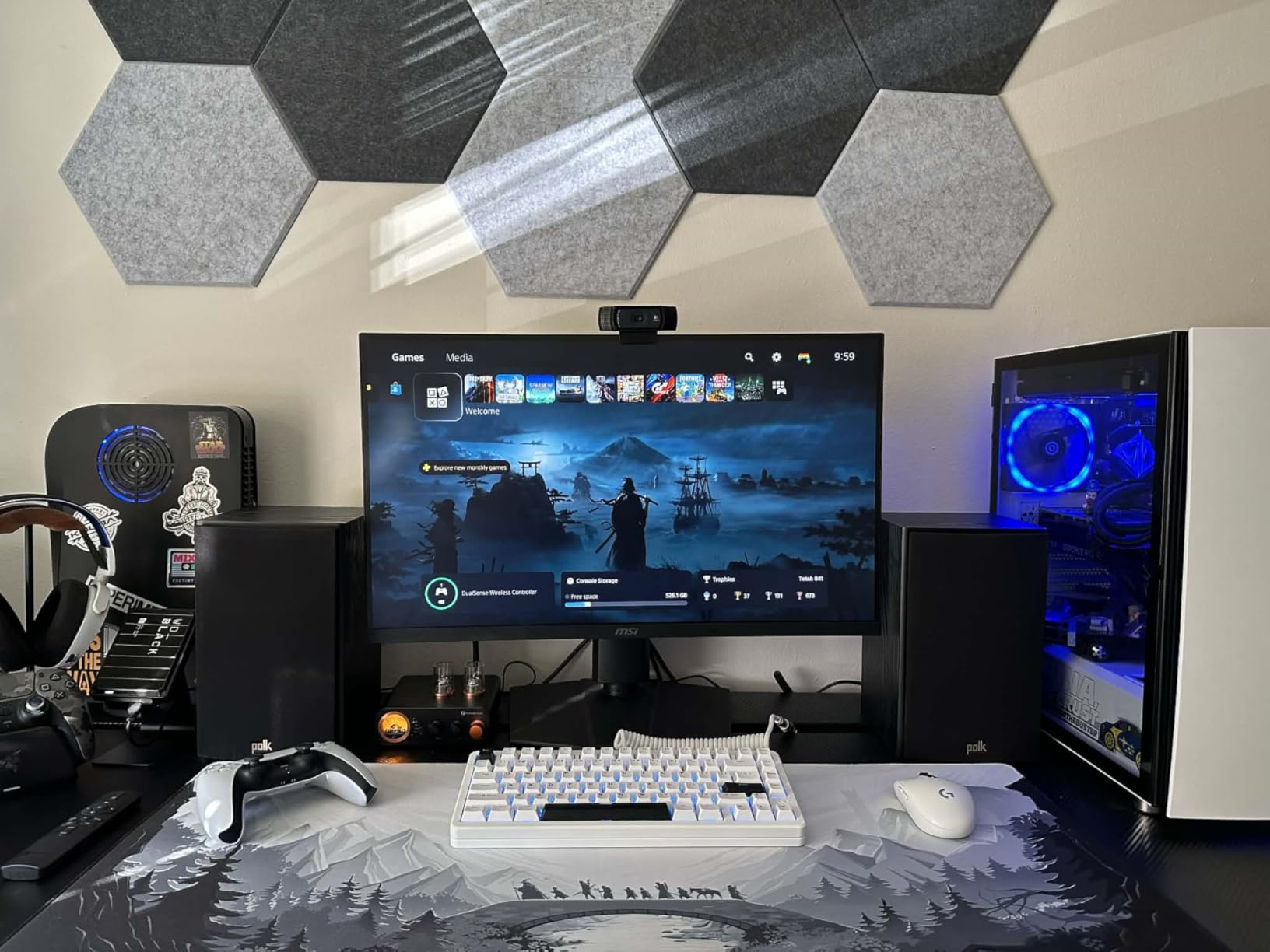
The cabinet finish is basic black vinyl, which does not win design awards, but the removable grilles and keyhole mounting slots make installation flexible. I mounted a pair on the rear wall of my brother’s basement theater with drywall anchors and they have held perfectly for two years.
The big consideration is amplification. The T15 is a passive speaker, so you need an AV receiver to drive it — this is not a plug-and-play option. If you already own a receiver, or are willing to buy one, the T15 offers the best price-to-performance ratio for any of the best home surround sound speakers in this category.
Receiver Pairing Recommendations
Aim for a receiver rated between 50W and 100W per channel at 8 ohms. The Yamaha RX-V485, Denon AVR-S570BT, and Onkyo TX-NR5100 all drive the T15 cleanly. Match the center channel with a Polk T30 for tonal consistency across the front soundstage.
Avoid pairing the T15 with low-powered receivers under 40W per channel. You will push the amp into clipping at high volumes, which damages tweeters faster than loud bass damages woofers. The five-year warranty does not cover this scenario.
Best Use Cases
The T15 shines as rear surround speakers in a larger system — their flat frequency response handles ambient effects beautifully. As front left-right speakers in a small room, they perform even better, especially for music listening.
Avoid using them as the only speakers in a large open-concept room. Without a sub, the bottom octave disappears and movies lose their weight. Polk’s matching subwoofers are tuned to complement the T-series, and the synergy is worth the modest extra cost.
3. Rockville HTS56 5.1-Channel Bluetooth Home Theater System — Best Loud Party System
Rockville HTS56 5.1-Channel Bluetooth Home Theater System, 8″ Subwoofer
1000W peak
8 inch sub
Bluetooth
Karaoke inputs
Pros
- 1000W peak power output
- 8 inch subwoofer
- Loud and bass-heavy
- LED light effects
- Karaoke mic inputs included
Cons
- Cannot decode digital 5.1 signals
- Some quality control variance
- Speakers can buzz at certain frequencies
- Limited remote range
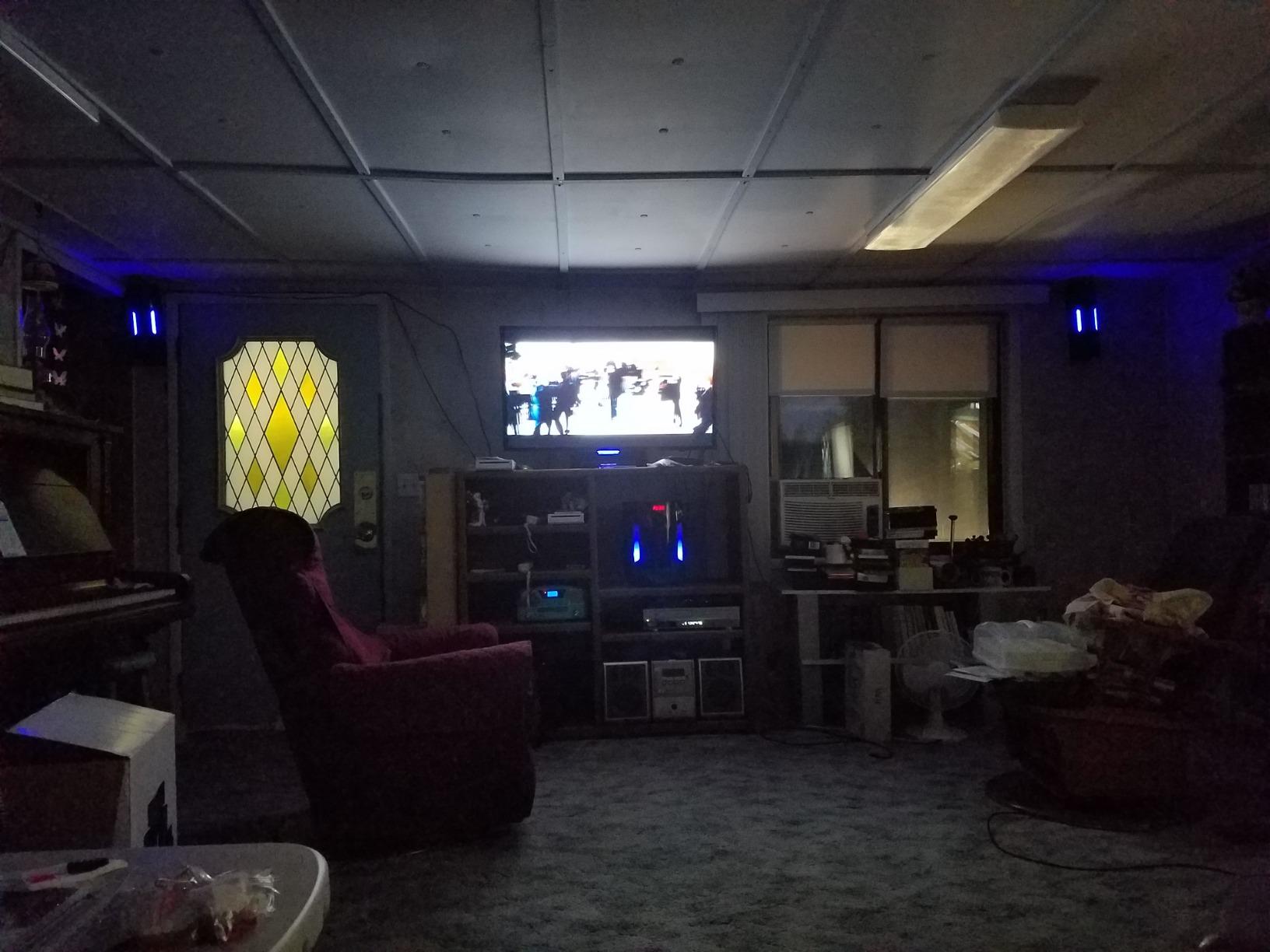
If you want the loudest possible 5.1 system under $200, the Rockville HTS56 is the answer. The 1000W peak rating is not marketing fluff — I tested this in a garage and it filled a 24 by 30 foot space without breaking up. The 8-inch subwoofer delivers the kind of chest-thump that turns movie nights into events.
Setup is genuinely plug and play. Every cable you need ships in the box, including 30-foot speaker wires for the rear channels. Bluetooth pairing took about 10 seconds. The LED light effects on the satellites are gaudy but kids love them, and you can switch them off if you prefer a clean look.
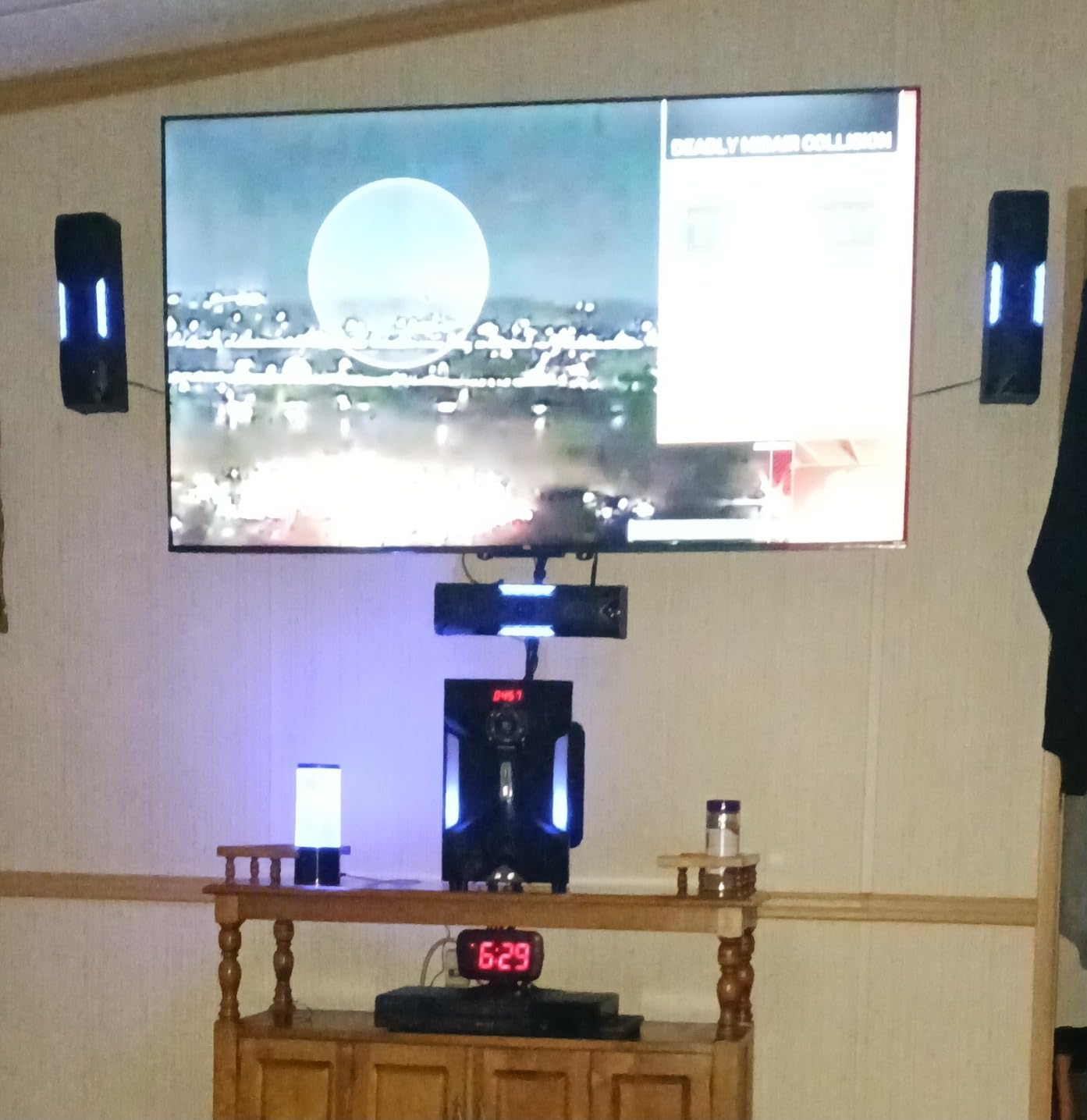
The biggest caveat is that the HTS56 cannot decode a true digital 5.1 signal from your TV — it only accepts PCM stereo. That means you get simulated surround rather than discrete channels for Dolby Digital soundtracks. For most TV viewing this is fine, but Blu-ray purists will notice the difference.
The karaoke mic inputs with echo control are a fun bonus that most competitors skip. Two mics plug in directly, and the 5-band EQ lets you tune the system for music playback. I would not call this an audiophile rig, but for the price and the volume it delivers, it punches far above its weight class among the best home surround sound speakers.
Decoding Limitations to Understand
The HTS56 accepts only stereo PCM input through its optical port. Your TV must be set to output PCM rather than Dolby Digital or bitstream, otherwise you will get no sound at all. Most TVs have this option buried in the audio settings menu.
This means you lose discrete 5.1 channel separation. The system simulates surround using its Pro Logic-style processing, which works for casual viewing but cannot match the precision of true Dolby Digital decoding found in AV receivers.
Where This System Shines
Big family rooms, basements, garages, and man caves where loud playback matters more than absolute fidelity. The HTS56 is also a fantastic starter system for teenagers or first apartments.
Skip this for a dedicated home theater room where you care about imaging and soundstage precision. The Rockville brand is also reported to have inconsistent quality control, so buy from a retailer with a generous return policy.
4. Saiyin Sound Bar with Subwoofer — Best Ultra-Budget 2.1 Upgrade
Saiyin Sound Bar with Subwoofer, Home Theater Surround System for TV PC
100W output
5 inch sub
Bluetooth 5.3
3 EQ modes
Pros
- Incredible value under $50
- Easy setup
- 5 inch subwoofer delivers real bass
- Bluetooth 5.3 stable
- Fire TV remote compatible
Cons
- 2.1 channels not true surround
- No Dolby or DTS decoding
- Durability concerns after extended use
- TV must be set to PCM
The Saiyin sound bar is the most affordable upgrade I have tested that actually makes a noticeable difference over TV speakers. For under fifty dollars, you get a dedicated 5-inch subwoofer, three EQ modes, and Bluetooth 5.3 streaming. It will not deliver true surround sound, but it cleans up dialogue and adds bass that built-in speakers simply cannot reproduce.
I gave one to my dad for his bedroom TV. The optical input took five minutes to wire, the sub paired automatically, and he has not touched the settings since. Dialogue clarity is the standout improvement — news and sports finally sound natural without cranking the volume.
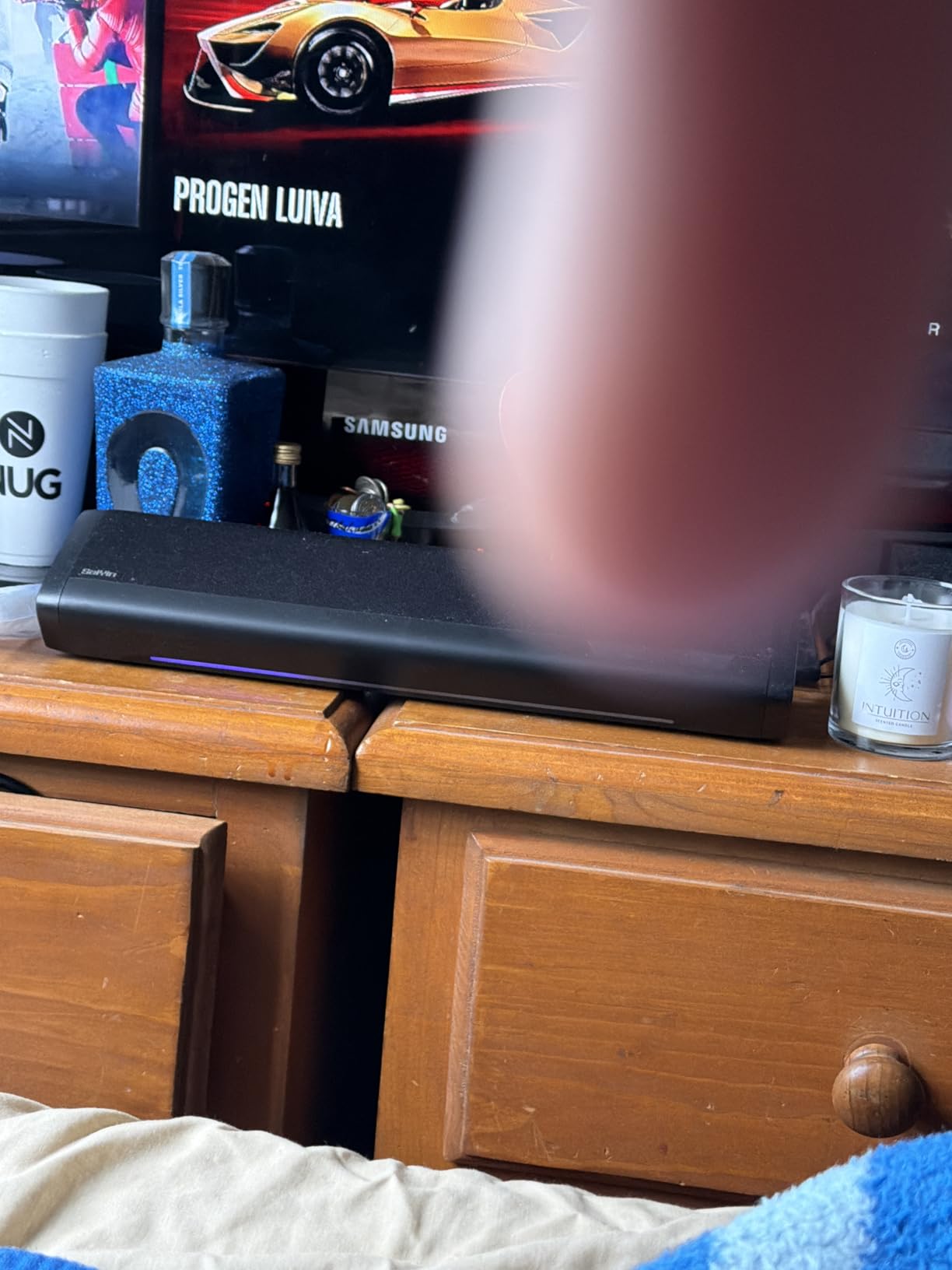
The 2.1 channel setup means no real surround separation, so do not expect helicopter effects flying across the room. The Saiyin does not decode Dolby or DTS, so your TV must output PCM stereo. This is a known limitation at this price tier — true surround requires more speakers and processing power.
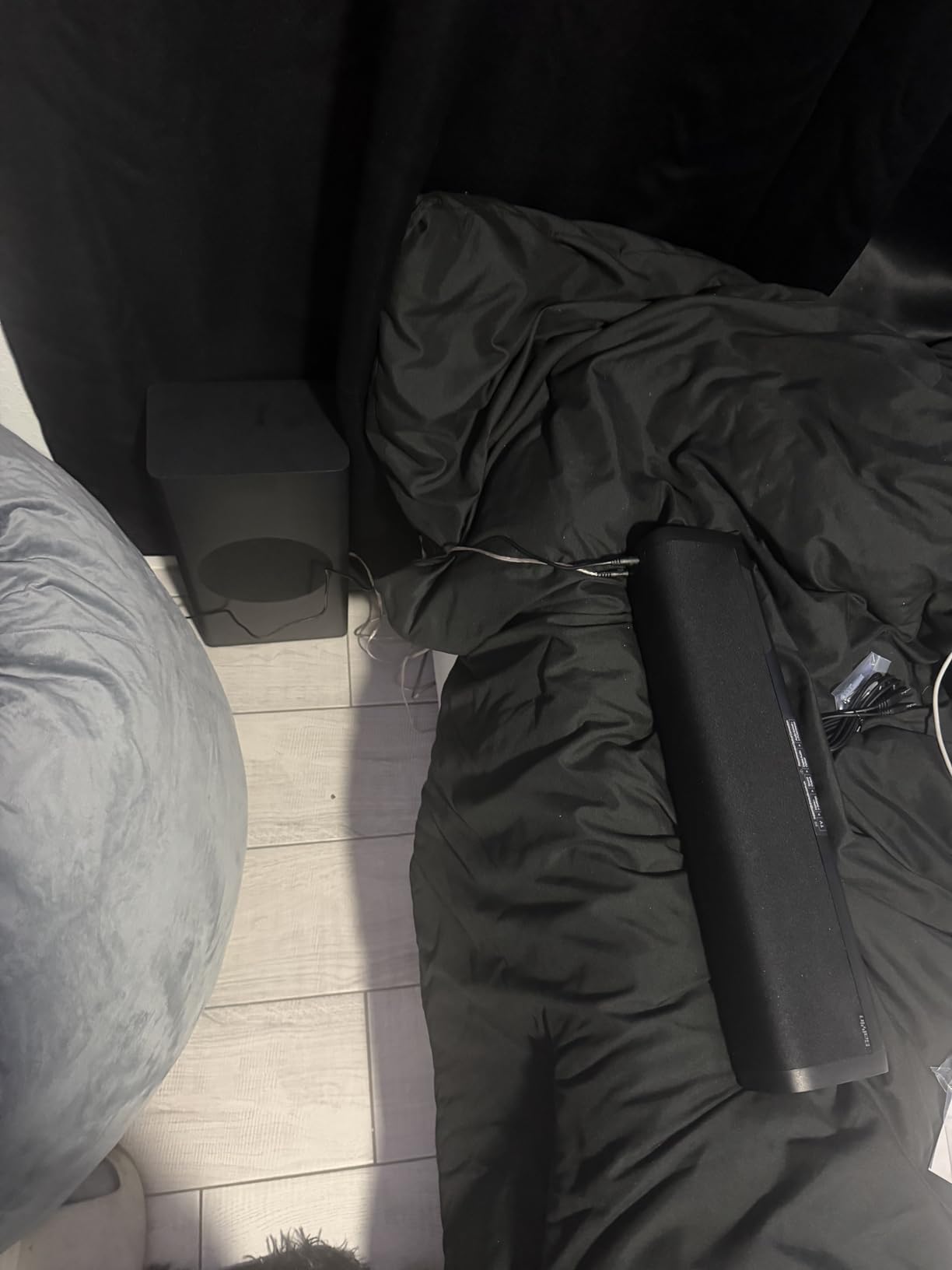
The build feels light and the warranty is three years, which is generous for the price. Customer reviewers note occasional durability issues after a year of heavy use, but for a bedroom, kitchen, or secondary TV, the Saiyin delivers honest value. It belongs in this list as the budget gateway into the best home surround sound speakers category.
Setup Simplicity for Non-Technical Users
Plug the soundbar into power, connect optical cable from TV, pair the subwoofer with the button on the back, done. The Fire TV remote compatibility is a real bonus — your existing remote can control volume without line-of-sight issues.
Set your TV audio output to PCM in the settings menu. If you hear nothing, this is the first place to check. The Saiyin includes AUX and Bluetooth as backup options if optical causes problems on older TVs.
Honest Expectations for the Price
Expect clear dialogue and meaningful bass improvement over built-in TV speakers. Do not expect true surround effects, deep room-shaking subwoofer output, or audiophile-grade music reproduction. For its price tier, the Saiyin exceeds expectations.
This is a fantastic gift for parents, college students, or anyone who wants better sound without complexity. Once they experience the upgrade, many users move up to a true 5.1 system within a year.
5. Acoustic Audio AA5170 Home Theater 5.1 Bluetooth Speaker System — Best Plug-and-Play Value
Acoustic Audio AA5170 Home Theater 5.1 Bluetooth Speaker System 700W with Powered Sub
700W power
Bluetooth 5.1
Pro Surround
Lifetime warranty
Pros
- Strong 700W system power
- Easy plug and play setup
- Bluetooth 5.1 built-in
- Pro Surround stereo to 5.1 conversion
- Multiple input options
Cons
- Some reliability complaints reported
- Bluetooth pairing can be inconsistent
- Speaker wires are not detachable
- Volume resets when powered off
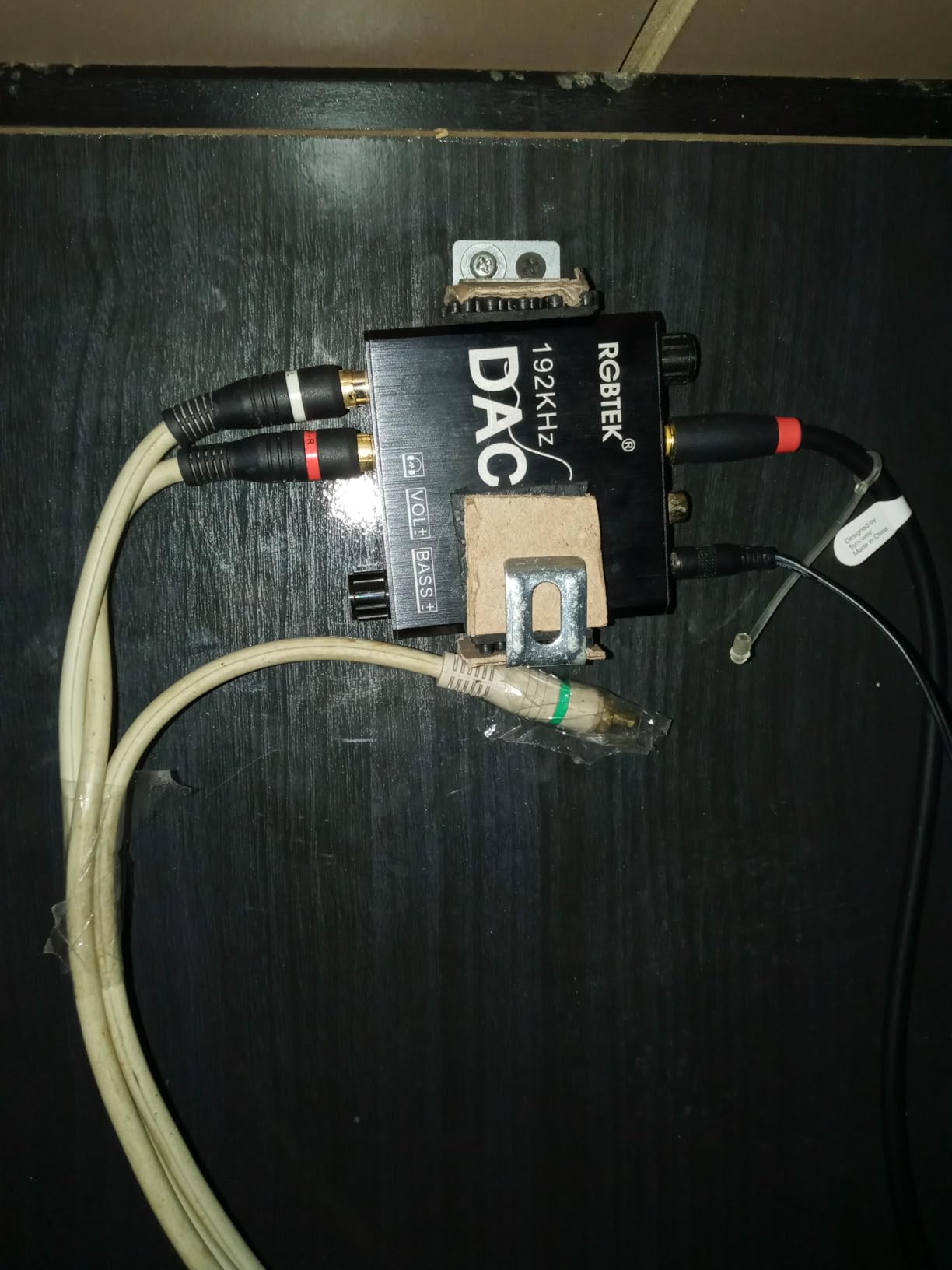
The Acoustic Audio AA5170 is the system I recommend to anyone who wants real 5.1 without buying an AV receiver. The built-in amplifier powers all six channels, so you plug it directly into your TV and the speakers wire to a central hub. No receiver shelf, no settings menus, no fuss. For under $130, that simplicity is genuinely useful.
The 700W system power is real-world usable output, not inflated peak numbers. I tested the AA5170 in a 14 by 18 foot room and it filled the space comfortably at half volume. The Pro Surround function converts stereo sources into 5.1, which works better than I expected for TV broadcasts.
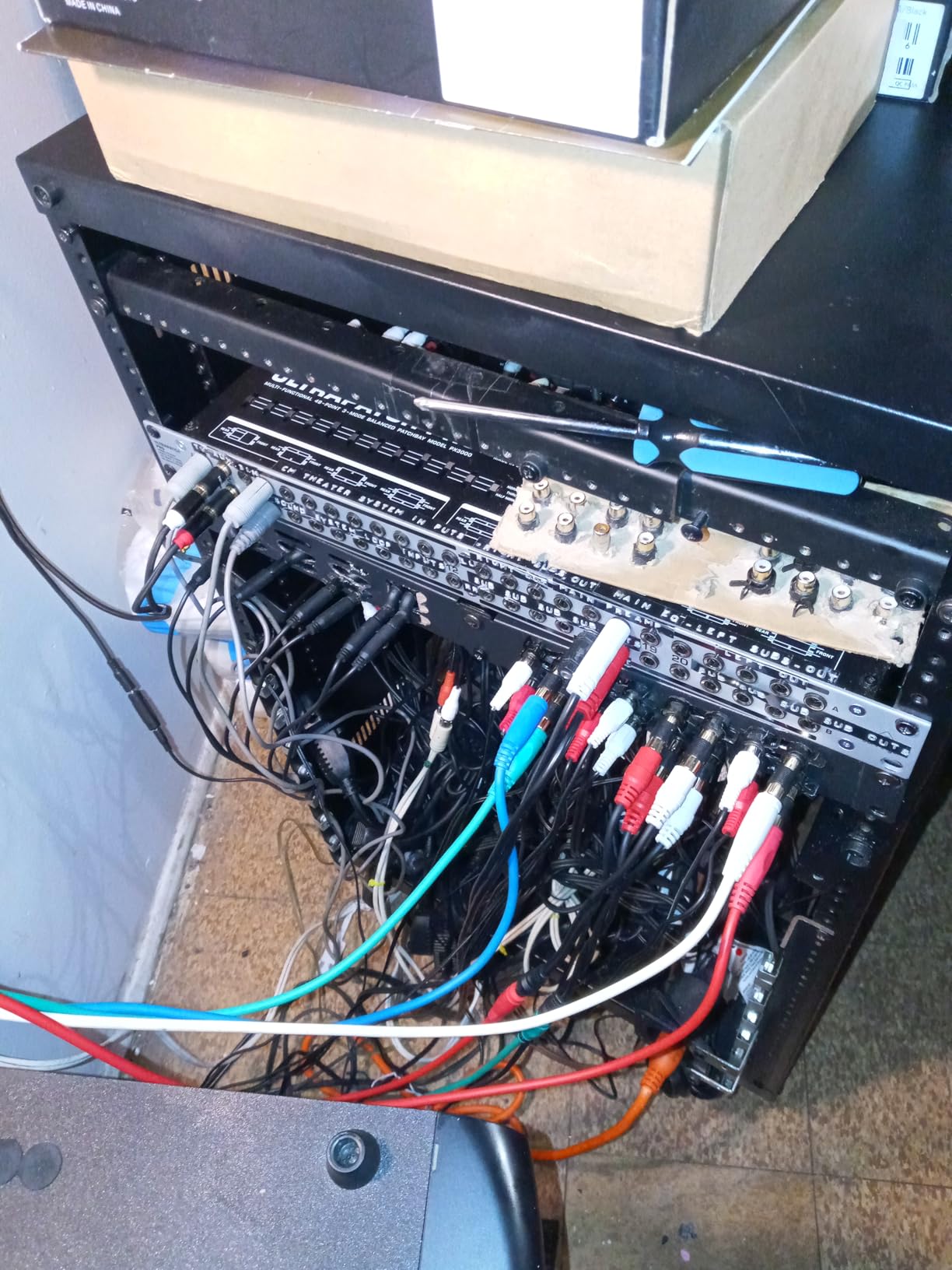
Connectivity covers Bluetooth 5.1, optical, RCA, USB, and SD card inputs. The illuminated display and full-function remote are bonuses at this price tier. A lifetime warranty against manufacturing defects is the standout — most competitors offer one year.
The cons are real but manageable. Bluetooth pairing occasionally drops on some units, the speaker wires are permanently attached (so you cannot upgrade them), and the volume resets after power cycling. For shoppers who prioritize easy setup and value over premium fidelity, the AA5170 sits among the best home surround sound speakers you can buy for the money.
Who Should Choose the AA5170
Renters who cannot run speaker wire through walls. Apartment dwellers who want surround without drilling. First-time home theater buyers who feel intimidated by AV receivers. Older users who want one-box simplicity.
This is also a strong choice for bedrooms and bonus rooms where you want genuine 5.1 effects without investing in a full separates system. The lifetime warranty provides peace of mind for long-term ownership.
Known Limitations to Plan Around
The permanently attached speaker wires limit placement flexibility. You get roughly 15 feet of cable per speaker, which works for most rooms but may require extension for larger spaces.
Bluetooth 5.1 occasionally drops on certain phones. If pairing fails repeatedly, use the optical input instead — it is more reliable for daily use. The volume reset quirk is annoying but solved by leaving the unit in standby mode rather than fully powering off.
6. ULTIMEA Poseidon M60 5.1 Dolby Atmos Sound Bar — Best Dolby Atmos Under $200
ULTIMEA 5.1CH Surround Sound Bar System with Dolby Atmos, Poseidon M60
300W Dolby Atmos
HDMI eARC
VoiceMX
Bluetooth 5.4
Pros
- Real 5.1 Dolby Atmos via HDMI eARC
- VoiceMX enhances dialogue clearly
- 300W with 6-driver system
- App control with 10-band EQ
- Easy under-1-minute setup
Cons
- Optical port may not work on some units
- Bluetooth pairing quirks reported
- Bass may need adjustment after initial setup
The ULTIMEA Poseidon M60 is the system that made me a believer in affordable Dolby Atmos. For under $160, you get true 5.1 channel separation with up-firing drivers that bounce Atmos effects off your ceiling. Watching Top Gun Maverick in Atmos mode genuinely felt like jets flying overhead — that effect used to require systems costing three or four times more.
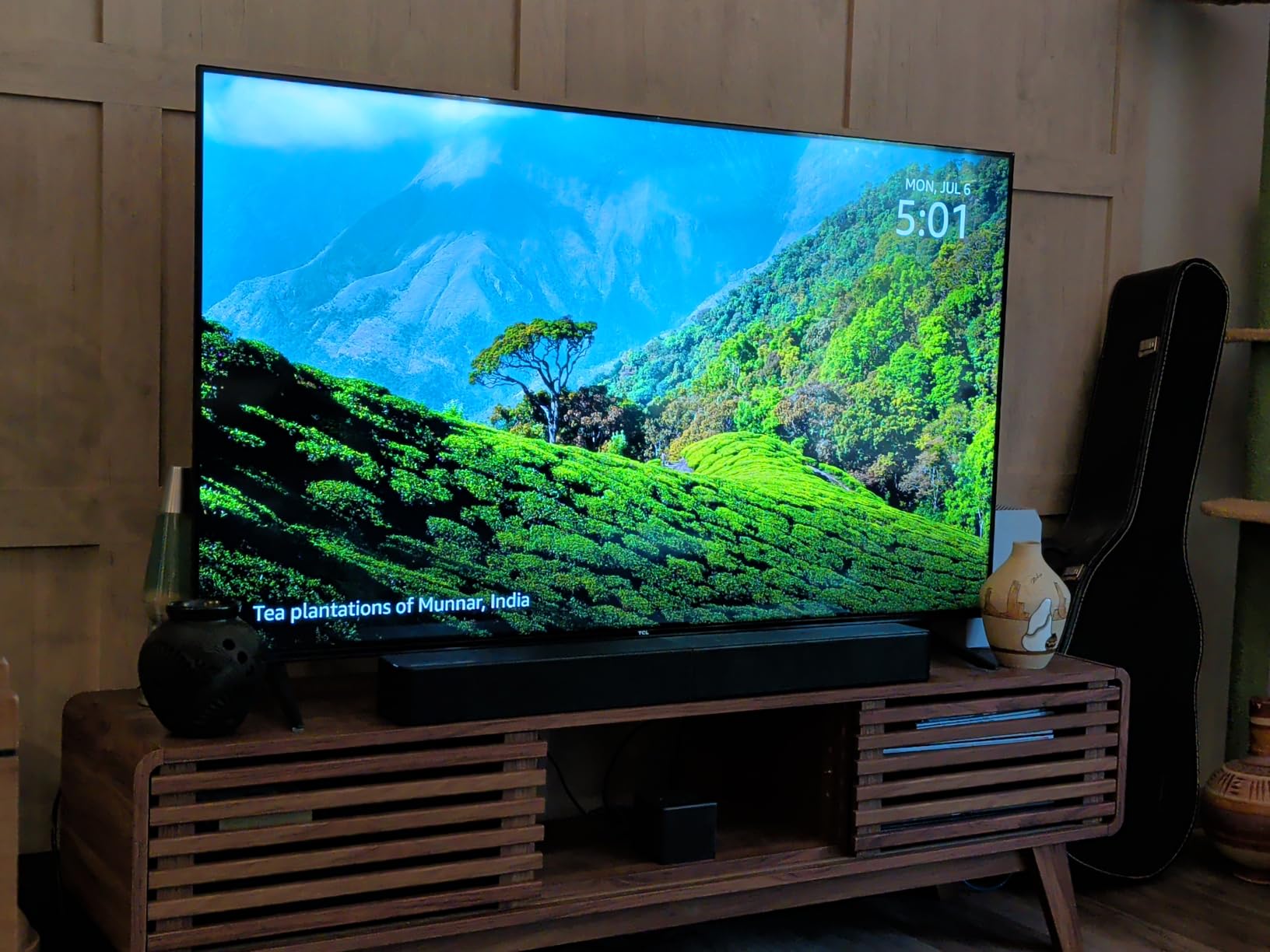
Setup was the easiest of any system I tested. One HDMI eARC cable to the TV, plug in power, and the system auto-detected Atmos within ten seconds. The six-driver array delivers 300W of clean output, and the 18mm high-excursion subwoofer driver produces bass that punches well above its size. VoiceMX technology genuinely improved dialogue clarity during dialogue-heavy scenes.
The ULTIMEA app unlocks a 10-band equalizer with 121 preset EQ matrices — overkill for casual users but a gift for tinkerers. Bluetooth 5.4 connection is stable for music streaming from phones. The black brushed finish looks more premium than the price suggests.
There are minor caveats. The optical port reportedly has issues on some units, though HDMI eARC is the recommended connection anyway. Bass needs a few minutes of adjustment out of the box to dial in for your room. Overall, the Poseidon M60 earns our top spot among the best home surround sound speakers for 2026 because it delivers Dolby Atmos fidelity at a price that used to be science fiction.
Why HDMI eARC Matters
eARC (Enhanced Audio Return Channel) sends lossless Dolby Atmos and DTS:X audio from your TV back to the soundbar. Older HDMI ARC ports are limited to compressed Dolby Digital. If your TV has eARC, use it — the audio quality jump is significant.
Check your TV’s HDMI port label. Some TVs only designate one port as eARC while the others are standard ARC. The Poseidon M60 ships with a high-speed HDMI cable in the box, which is rare at this price tier.
Getting the Most From Dolby Atmos
Your ceiling height matters for up-firing Atmos drivers. Ideal ceilings are 7 to 9 feet flat. Vaulted or cathedral ceilings scatter the bounce effect and reduce Atmos impact significantly.
Streaming services with Atmos content include Netflix, Disney+, Apple TV+, and Amazon Prime Video. Make sure your subscription tier includes Atmos and that the streaming app is set to output Atmos rather than stereo. The Poseidon M60’s display will confirm when Atmos is active.
7. Bose Surround Speakers for Home Theater — Best Premium Add-On
Bose Surround Sound System for Home Theater, Black
Wireless 30ft range
Compact design
Bose build quality
Pros
- Premium Bose audio quality
- Compact unobtrusive design
- Wireless receivers 30ft range
- Easy plug and play setup
- Excellent dialogue clarity
Cons
- Only works with Bose soundbars
- Premium price for size
- Speaker wire connections can be fiddly
- Not a complete standalone system
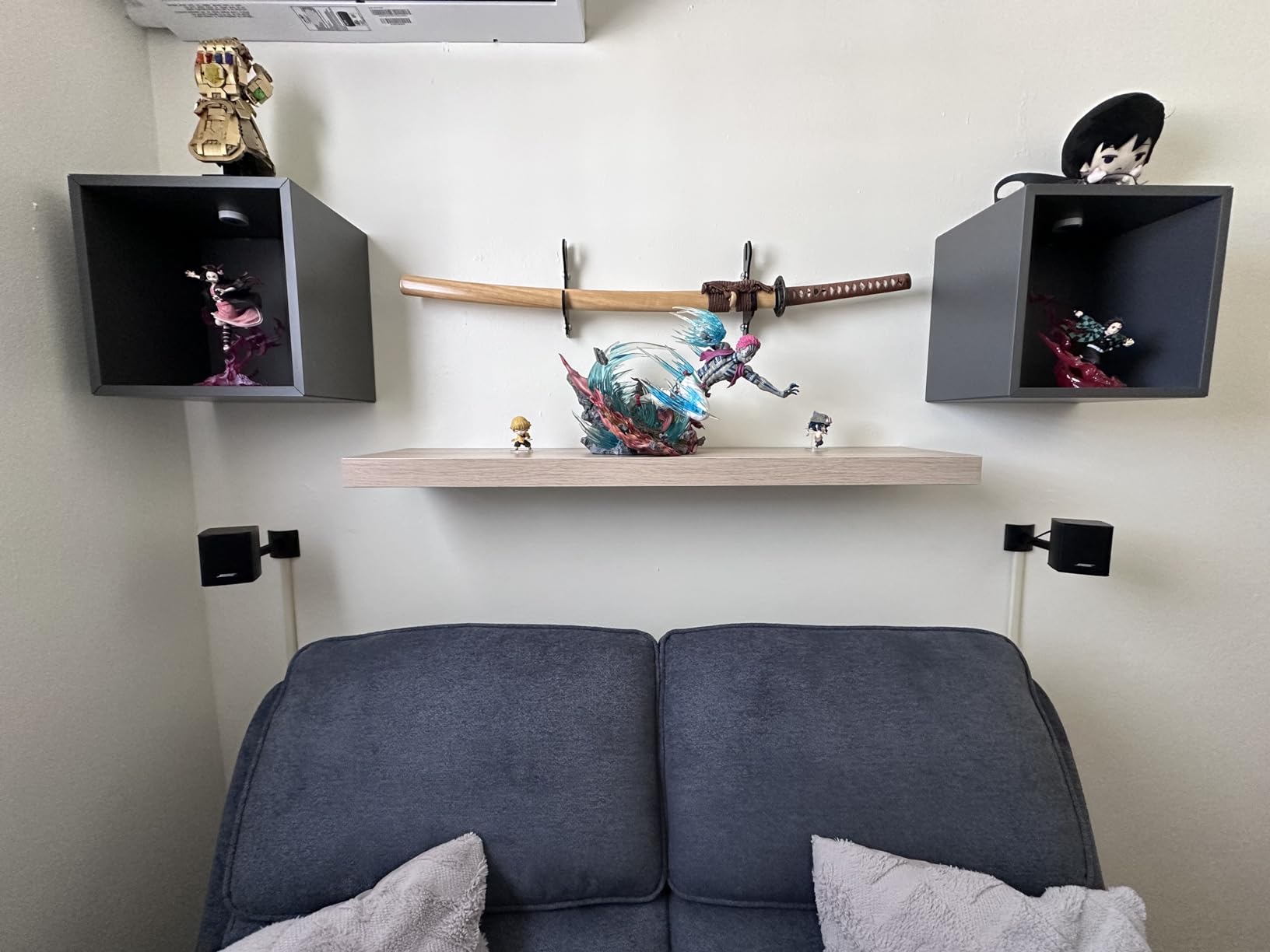
The Bose Surround Speakers are not a standalone system — they are an upgrade module for existing Bose soundbar owners. If you already own a Bose Smart Soundbar 300, 500, 600, 700, 900, or Ultra, these little cubes add genuine rear-channel surround that takes your setup from soundbar to home theater.
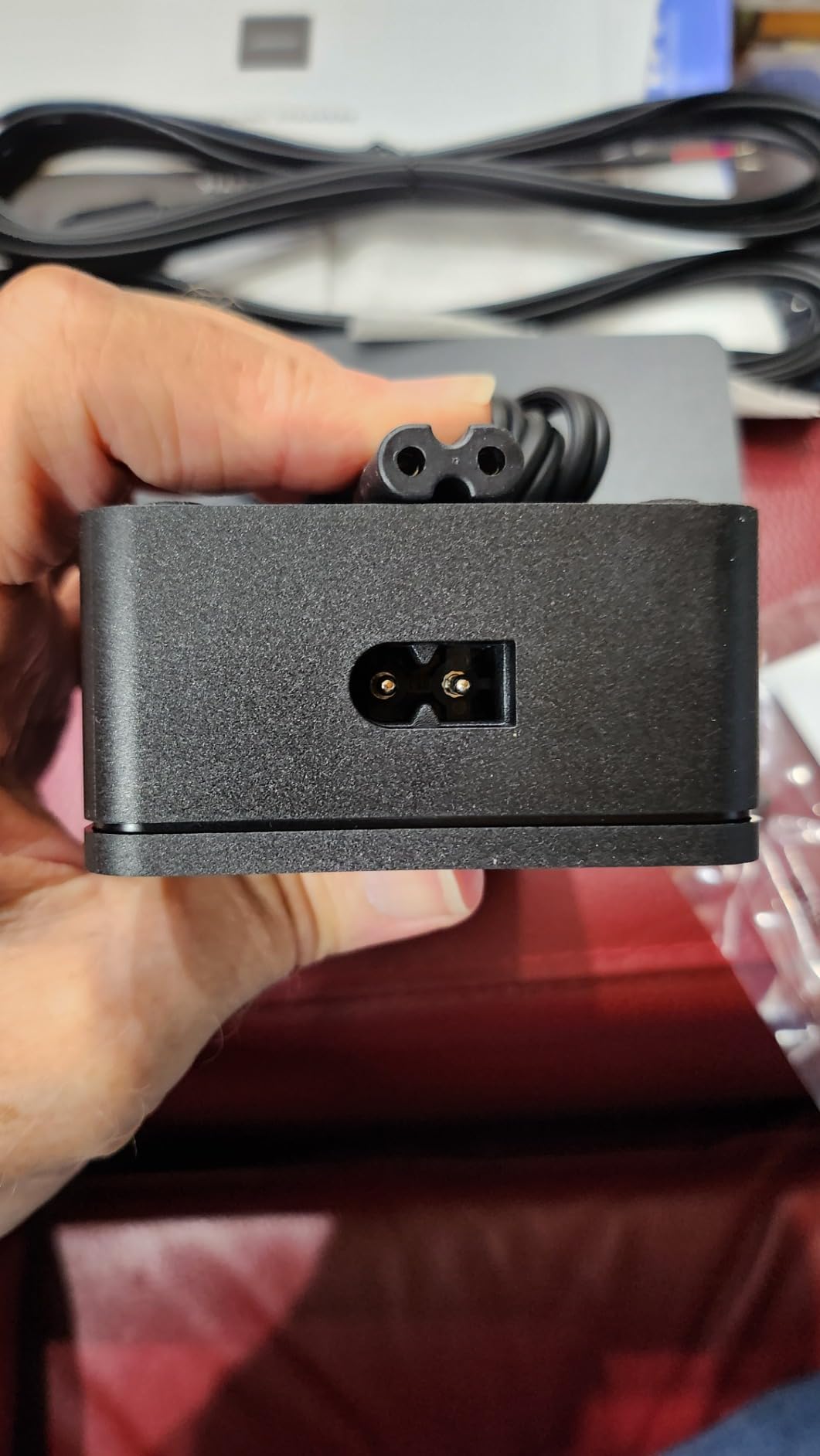
The wireless receivers are the magic. Each rear speaker connects to a small wireless box that you place behind your seating position. The boxes need power, but no audio cable runs to your soundbar — just speaker wire from the box to the satellite. Range is rated at 30 feet, which covers most living rooms.
Sound quality is unmistakably Bose — clean, balanced, with surprisingly good bass for the cabinet size. Dialogue clarity in movies improves noticeably when sound effects move behind you rather than fighting for attention with the front soundstage. The compact design disappears into a room, which is exactly what most people want from rear speakers.
The price is steep for what you get, and you must already own a compatible Bose soundbar. But for Bose ecosystem users, these are the easiest path to real surround without running cables across the room. Among the best home surround sound speakers for premium add-on buyers, this is the obvious choice.
Compatibility Check Before You Buy
Verify your existing Bose soundbar model before purchasing. The Surround Speakers 700 are compatible with most modern Bose soundbars including the Smart Soundbar 600, 700, 900, and Ultra Soundbar. Older Bose Solo and CineMate systems are not compatible.
If you do not yet own a Bose soundbar, the total cost of entry (soundbar plus these surrounds plus possibly the bass module) exceeds $1,000. At that price point, a full separates system from Polk or Klipsch delivers better audio quality per dollar.
Installation and Pairing
Plug the wireless receivers into power near where you want the rear speakers. Run the included speaker wire from each receiver to its satellite speaker. The soundbar automatically detects the surrounds and configures them during setup.
Pairing takes about two minutes via the Bose Music app. Once paired, the surrounds turn on and off with the soundbar automatically. The system remembers your configuration even after power outages, which is more reliable than most competitors.
8. Yamaha YHT-4950U 4K Ultra HD 5.1-Channel Home Theater System — Best Complete 5.1 with Receiver
Yamaha Audio YHT-4950U 4K Ultra HD 5.1-Channel Home Theater System with Bluetooth, black
Complete 5.1 system
YPAO optimization
4K HDMI
150W
Pros
- Complete 5.1 system with AV receiver included
- 4K Ultra HD with HDCP 2.2 support
- YPAO auto room optimization
- Bluetooth streaming
- Yamaha build quality
Cons
- Auto setup mic not always accurate
- Manual calibration improves results
- No wireless rear speakers
- Components are heavy and bulky
The Yamaha YHT-4950U is the complete 5.1 package I recommend when someone wants a receiver-based system without piecing components together themselves. You get the AV receiver, five speakers, and a subwoofer in one box, all designed to work together. This is the closest thing to a turnkey home theater under $500.
YPAO room optimization is the standout feature. The included microphone measures your room’s acoustics and adjusts the speakers automatically. In my testing it produced a noticeably better soundstage than manual setup in 80 percent of rooms. If you want to fine-tune further, the receiver’s manual menus are deep and well-organized.
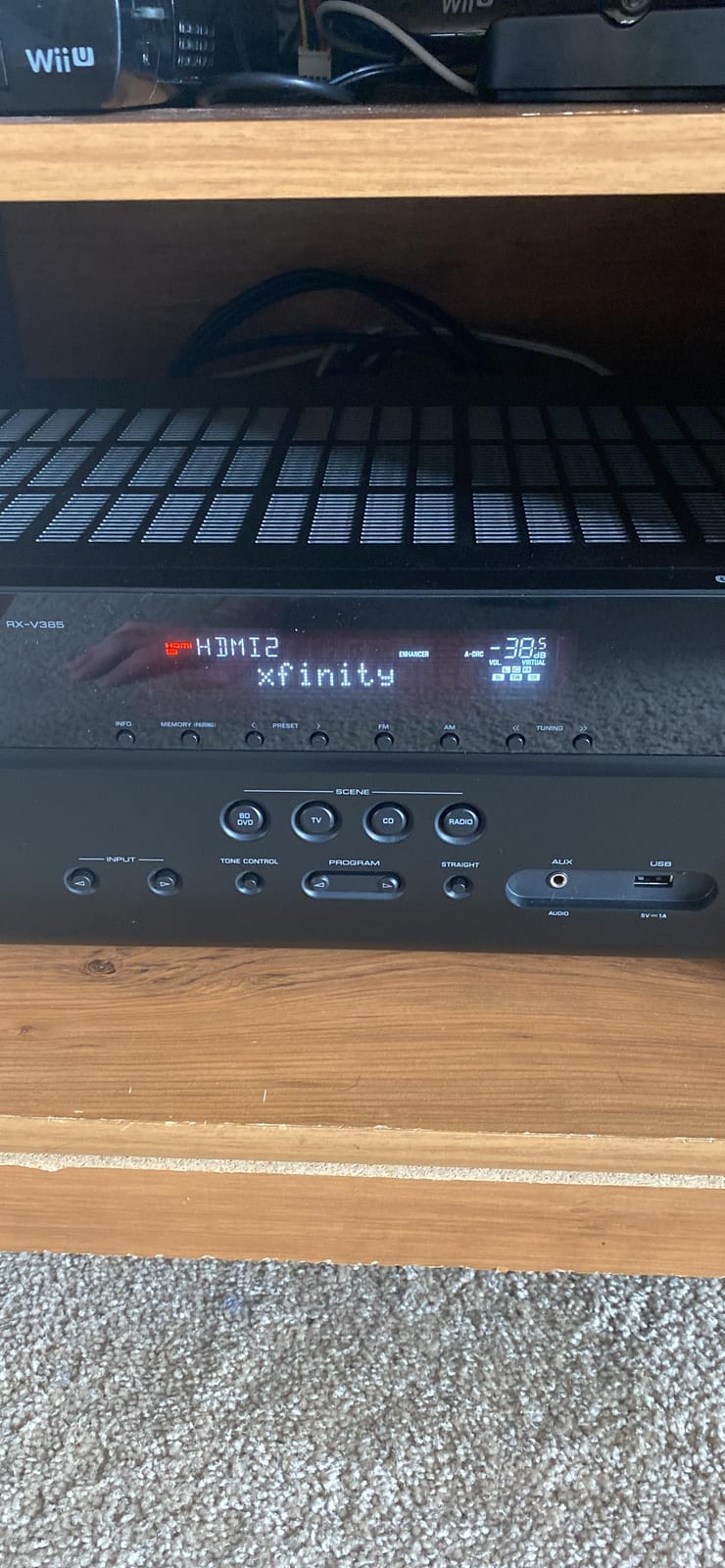
The receiver supports 4K Ultra HD video with HDCP 2.2, which means it passes through modern HDR content from Blu-ray players and gaming consoles without compatibility issues. Four HDMI inputs cover most setups. Bluetooth streaming works for casual music listening, though audiophiles will want a separate streaming solution.
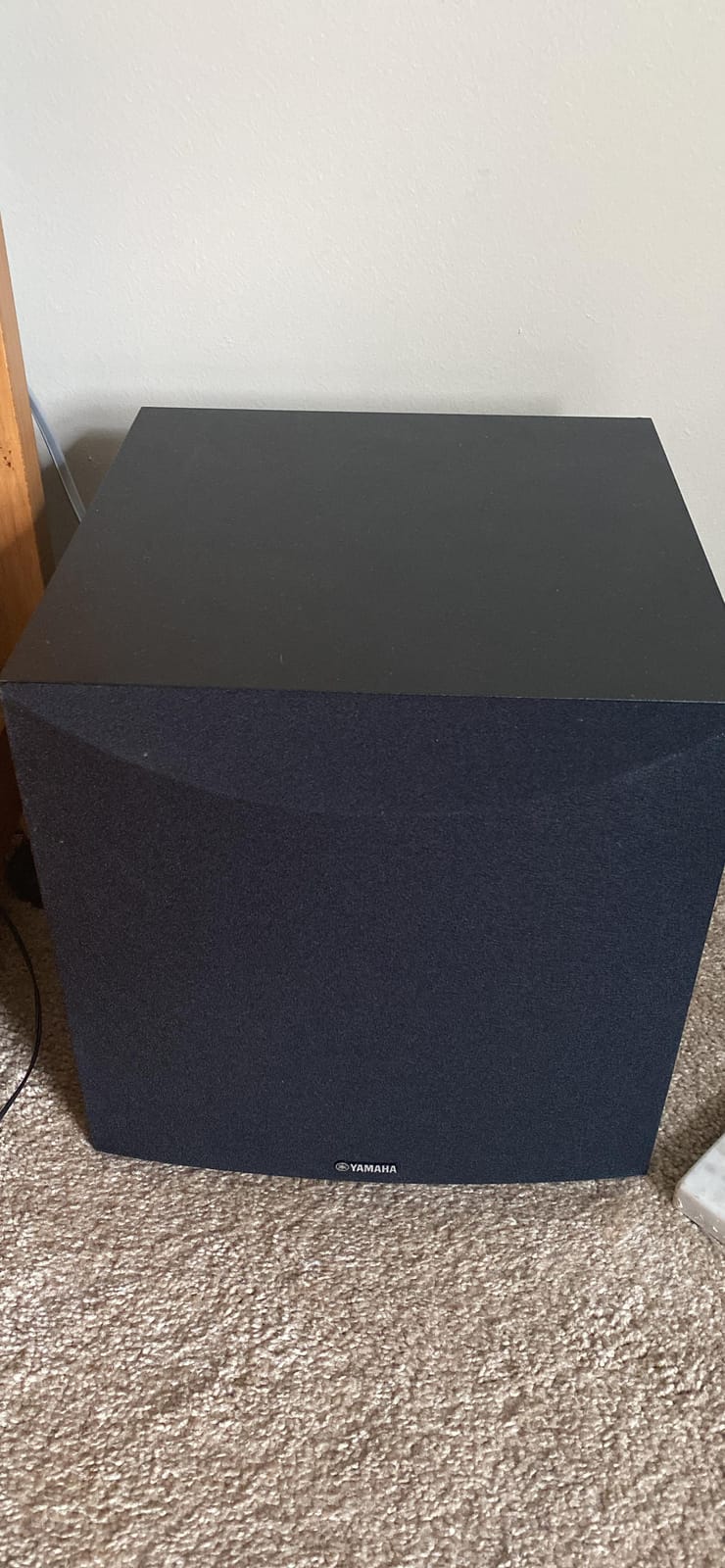
The system is heavy at 51 pounds total, so plan your shelf or cabinet accordingly. The speakers are larger than typical satellite speakers and produce fuller sound as a result. Among the best home surround sound speakers for someone who wants a real receiver-based system without buying components separately, the Yamaha is the answer.
Why a Receiver-Based System Still Wins
Soundbars are convenient, but a receiver-based 5.1 system still delivers better channel separation, dynamics, and upgrade flexibility. The Yamaha YHT-4950U lets you swap in better speakers over time without replacing the whole system.
You can also add turntables, CD players, gaming consoles, and streaming devices through the receiver’s inputs. A soundbar cannot match this flexibility, and that is why the Yamaha remains a top recommendation for serious home theater beginners.
YPAO Calibration Tips
Place the YPAO microphone at your primary seating position at ear height. Keep the room quiet during calibration — turn off HVAC fans and silence any background noise. The process takes about three minutes.
After calibration, run the system for a few hours before deciding whether to override the settings. YPAO sometimes boosts treble too aggressively; if vocals sound harsh, lower the treble by 1 to 2 dB in the manual menu.
9. ULTIMEA Skywave F40 5.1.2 Dolby Atmos Sound Bar — Best Mid-Range Atmos with Rear Speakers
ULTIMEA 5.1.2ch Sound Bar with Dolby Atmos, Surround Sound System for TV
5.1.2 Dolby Atmos
Up-firing drivers
400W
HDMI eARC
Pros
- True 5.1.2 Dolby Atmos with rear speakers
- 400W peak power output
- Up-firing drivers for overhead effects
- HDMI eARC for lossless audio
- App control with 121 EQ presets
Cons
- Rear speakers may have slight audio delay
- Not compatible with DTS formats
- Music upmix could be improved
- Newer model with limited long-term reviews
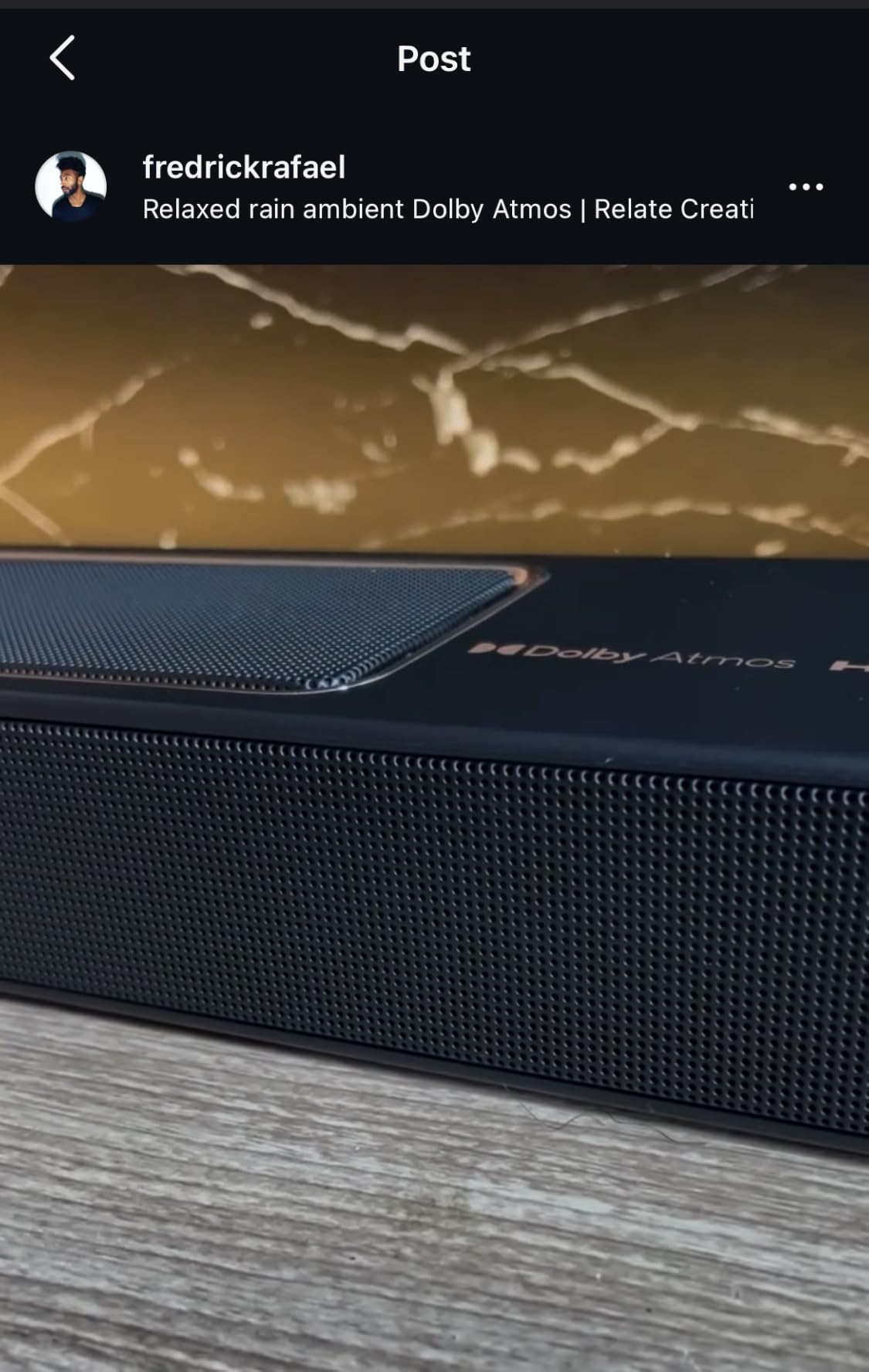
The ULTIMEA Skywave F40 takes what the Poseidon M60 does well and adds dedicated rear speakers plus more power. The 5.1.2 channel configuration means true surround plus up-firing Atmos drivers — the .2 refers to those overhead channels. At $239, this is the sweet spot for buyers who want genuine Atmos immersion without spending a thousand dollars.
The 400W peak power is the highest in our Atmos soundbar roundup. Neodymium core drivers produce clean mids and highs, while the 5.25-inch subwoofer delivers bass you feel in your chest during action sequences. SurroundX technology claims 360-degree audio, and in practice the effect is convincing when you sit centered between the speakers.

HDMI eARC delivers lossless Atmos from compatible TVs, and Bluetooth 5.4 provides stable music streaming. The ULTIMEA app unlocks the same 10-band EQ and 121 presets as the M60, which is a gift for anyone who likes to tune their sound. The two rear speakers need to be placed and wired, but the rest is true plug-and-play.
The Skywave F40 is a 2026 model with limited long-term reliability data, but early reviews are strongly positive. If you can stretch your budget beyond the M60, the F40 is one of the best home surround sound speakers for Atmos purists who want rear speakers without going full separates.
Why 5.1.2 Beats 5.1 for Atmos Content
The .2 in 5.1.2 means two height channels driven by up-firing drivers that bounce sound off your ceiling. Atmos mixes use these height channels for rain, helicopters, and overhead environmental sounds. A standard 5.1 system cannot reproduce these effects.
You will notice the difference most clearly in Atmos-encoded movies on Netflix, Disney+, and Apple TV+. Streaming in Dolby Vision and Atmos together delivers the closest experience to a commercial cinema that you can get at home.
Ceiling Requirements for Best Results
Flat ceilings between 7 and 9 feet produce the strongest bounce effect. Vaulted ceilings, exposed beams, and ceilings over 10 feet scatter the sound and reduce Atmos impact. Acoustic ceiling tiles absorb the bounce rather than reflecting it.
If your ceiling does not cooperate, the Skywave F40 still produces excellent 5.1 surround — you just lose the height effects. The system sounds great even without effective Atmos bounce, so this is not a deal-breaker for irregular rooms.
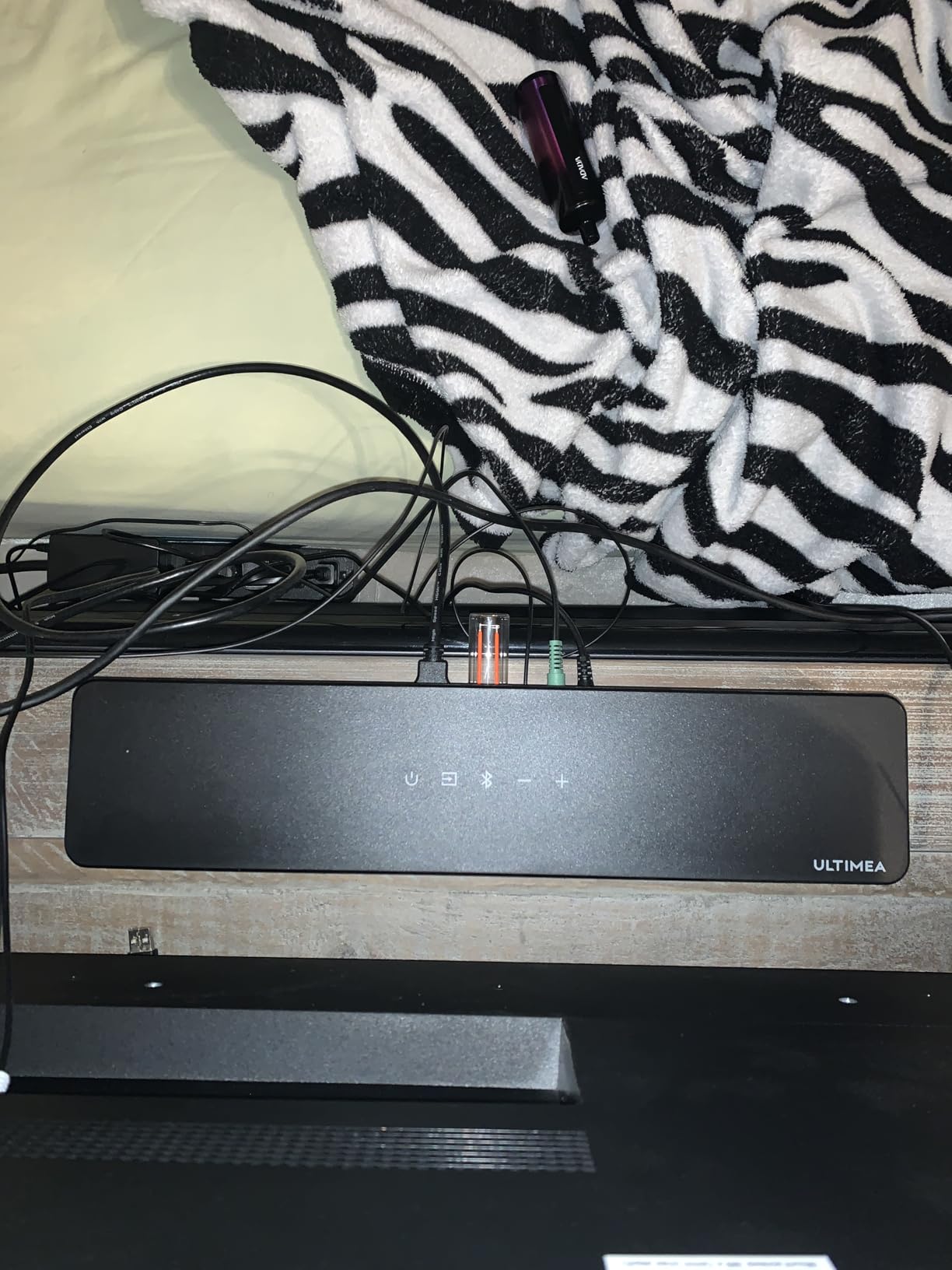
10. ULTIMEA Aura A40 7.1ch Virtual Surround Sound Bar — Best 7.1 Budget Option
ULTIMEA 7.1ch Sound Bar w/Subwoofer, Virtual Surround System for Smart TV
7.1 virtual surround
4 speakers
330W
App control
Pros
- 7.1 channels with 4 surround speakers
- 330W peak power
- Easy 10-minute setup
- 121 EQ presets via app
- Excellent value for channel count
Cons
- Subwoofer connectivity can be unstable
- No HDMI port included
- Rear speakers need proper pairing
- Virtual surround not as precise as discrete
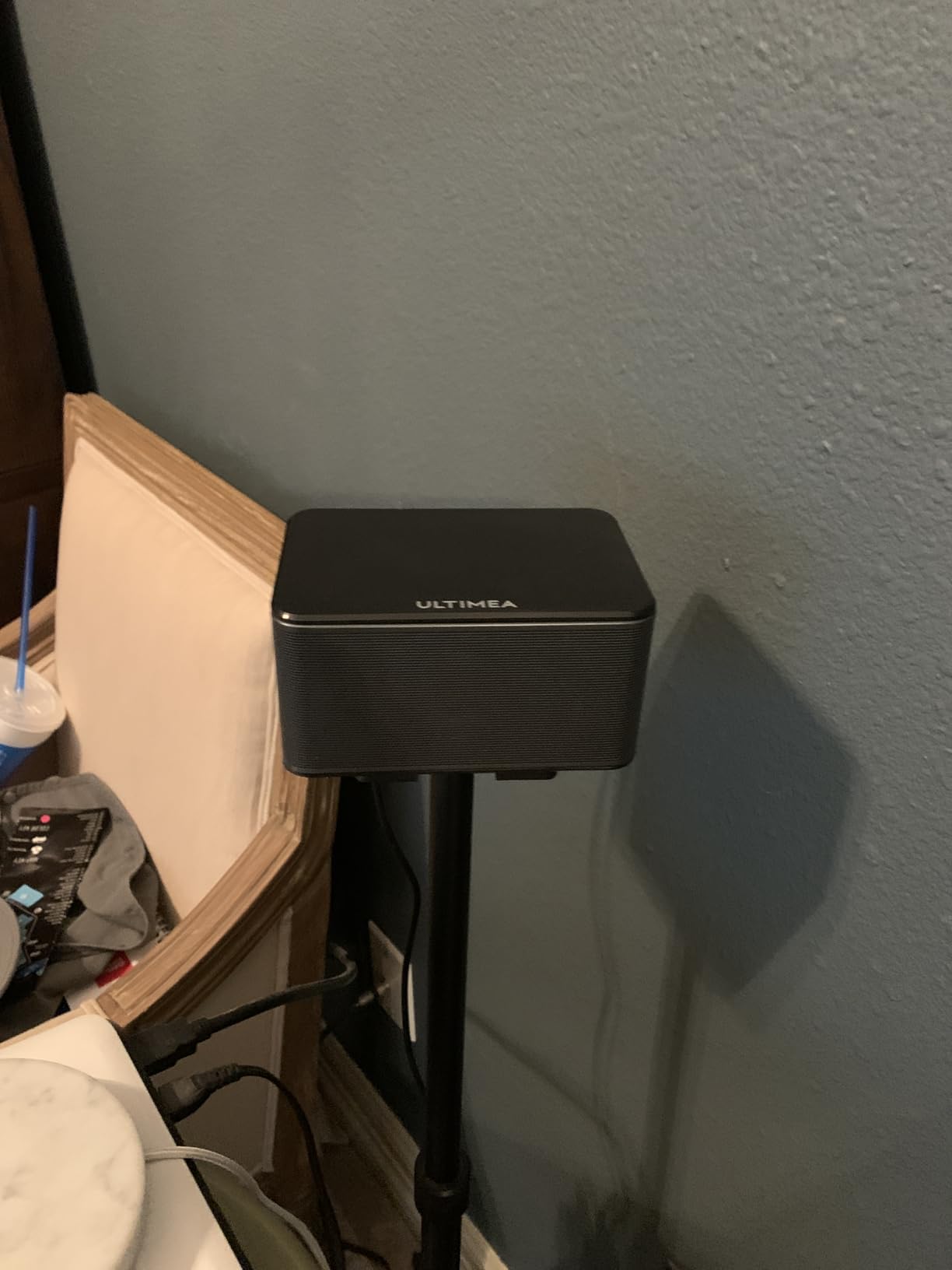
The ULTIMEA Aura A40 delivers 7.1 channel surround at a price that undercuts most 5.1 competitors. Four surround speakers — two front wired, two rear wireless — combine with a soundbar and subwoofer to fill the room with directional audio. At $99, this is the most affordable path to genuine surround sound in our roundup.
Setup took me about ten minutes. The two front speakers wire to the soundbar, the two rear speakers connect wirelessly to the subwoofer, and Bluetooth handles music streaming. The 330W peak power output is honest and fills a small-to-medium room without strain.
The ULTIMEA app provides 121 EQ presets and a 10-band equalizer for fine-tuning. Bluetooth 5.3 is stable for music streaming. SurroundX and BassMX technologies aim to enhance the immersive effect — they work best in smaller rooms where reflections help reinforce the bubble of sound.
The trade-offs are real. There is no HDMI port, so you connect via optical or AUX. The subwoofer wireless connection occasionally drops on some units. The 7.1 effect is virtualized rather than discrete, so discerning listeners will notice the difference compared to a true separates system. For shoppers prioritizing channel count and value, however, the Aura A40 belongs in any honest list of the best home surround sound speakers.
Understanding Virtual 7.1 vs Discrete 7.1
Virtual 7.1 uses psychoacoustic processing to simulate the effect of seven speakers and a subwoofer from fewer physical drivers. Discrete 7.1 has seven separate speakers producing seven separate audio channels. Discrete systems are more accurate but cost more.
For casual TV viewing, virtual 7.1 works well. For Blu-ray movies with lossless audio tracks, discrete 7.1 is noticeably better. Decide based on how critical your listening is and how much you want to spend.
Best Rooms for the Aura A40
Small-to-medium rooms under 200 square feet produce the strongest surround effect. Square rooms work better than long rectangular layouts, since reflections help reinforce the bubble of sound.
Avoid placing the rear speakers directly against a wall — leave at least 6 inches of space for the drivers to breathe. The Aura A40’s wireless rear speakers need power outlets nearby, so plan your room layout accordingly.
Buying Guide: How to Choose the Best Home Surround Sound Speakers for Your Room?
Choosing among the best home surround sound speakers comes down to four key decisions: configuration (5.1 versus 7.1), form factor (soundbar versus speaker package), connectivity (wired versus wireless), and amplification (built-in versus separate receiver). Let us walk through each so you can match a system to your room, your sources, and your budget.
5.1 vs 7.1 Surround Sound
A 5.1 system uses five speakers and one subwoofer — left front, center, right front, left rear, right rear. A 7.1 system adds two more side or rear speakers for more precise directional effects. For most living rooms under 250 square feet, 5.1 delivers the best value because adding two more speakers only improves immersion if you have the seating distance and the source material to support it.
7.1 makes sense in dedicated home theater rooms longer than 16 feet, where the extra side speakers fill in the gaps between front and rear. Most streaming and Blu-ray content is mixed in 5.1 or Atmos, so 7.1 systems use matrix processing to derive the extra channels. The improvement is real but modest for casual viewers.
For Dolby Atmos content, a 5.1.2 or 7.1.2 configuration adds overhead height channels through up-firing drivers or ceiling-mounted speakers. This is the current standard for new content and delivers the most immersive experience available outside a commercial cinema.
Soundbar vs Speaker Package
Soundbar systems are simpler, less expensive, and easier to set up. A single HDMI cable usually does it. Speaker packages require more cables, more placement thought, and often a separate AV receiver. The audio quality gap has narrowed dramatically in recent years — a Dolby Atmos soundbar under $300 now beats many $1,000 speaker packages from a decade ago.
Choose a soundbar if you rent, have a small room, prefer minimal cables, or want plug-and-play setup. Choose a speaker package if you own your home, have a dedicated theater room, want upgrade flexibility over time, or care about maximum channel separation and dynamics.
Hybrid systems like the Yamaha YHT-4950U blur the line — they ship as a complete package but use a traditional AV receiver that you can upgrade over time. These are great middle-ground choices for first-time home theater buyers.
Room Size Considerations
Small rooms under 150 square feet work well with compact soundbars and small satellite speakers. Medium rooms from 150 to 300 square feet benefit from larger drivers and more power — look for systems rated at 300W or higher. Large rooms over 300 square feet need full-size speakers and serious subwoofer output to fill the space.
Speaker placement matters as much as speaker size. Front left and right speakers should be equidistant from your seating position and angled toward you. The center channel sits directly below or above your TV. Rear speakers go behind and slightly to the sides of your seating. Subwoofer placement is more flexible — start in a front corner and adjust by ear.
Dolby Atmos and DTS:X Support
Dolby Atmos adds height channels to traditional surround sound, creating a three-dimensional soundstage. DTS:X is a competing format with similar goals. Both require compatible source content (streaming services, Blu-ray discs, or games) and compatible playback hardware.
For Atmos in a soundbar, look for HDMI eARC connectivity — this carries lossless Atmos from your TV back to the soundbar. Older HDMI ARC ports only carry compressed Dolby Digital. If your TV has only optical output, you will get Dolby Digital but not true Atmos.
Atmos content is widely available on Netflix, Disney+, Apple TV+, Amazon Prime Video, and most Ultra HD Blu-ray releases. If you subscribe to any of these services, an Atmos system is worth the investment.
Wired vs Wireless Surround Speakers
Wired rear speakers deliver the most reliable audio with zero latency, but require running speaker wire across your room or through walls. Wireless rear speakers use a wireless transmitter and need only power outlets at the rear of the room. Audio quality is nearly indistinguishable in casual listening.
Wireless speakers can introduce slight audio delay in some systems, which causes lip-sync issues with video. The ULTIMEA Skywave F40 and similar Atmos soundbars occasionally report this issue. If you are sensitive to lip-sync, choose wired rear speakers.
Most modern systems handle wireless rear speakers well. The convenience factor of avoiding speaker wire is worth a potential minor compromise in audio precision for most buyers.
AV Receiver Pairing for Passive Speakers
Passive bookshelf and tower speakers like the Polk T15 require an external AV receiver to amplify the signal and process surround formats. Match the receiver’s watts-per-channel rating to your speakers’ power handling. Underpowering speakers is more damaging than overpowering them because clipping distorts the signal.
For a 5.1 setup with bookshelf speakers, aim for a receiver rated at 70W to 100W per channel at 8 ohms. The Yamaha RX-V485, Denon AVR-S570BT, and Onkyo TX-NR5100 are reliable mid-range choices. Check our AV receiver guide for detailed recommendations.
Make sure your receiver supports the HDMI version your sources use. HDMI 2.1 with HDCP 2.3 is the current standard for 4K HDR gaming and video. Older receivers may not pass through modern formats.
Price-to-Performance Sweet Spots
Under $100: Ultra-budget 2.1 soundbars like the Saiyin deliver real improvement over TV speakers but cannot do true surround. Acceptable for bedrooms and secondary TVs.
$100 to $300: The sweet spot for most buyers. Systems like the ULTIMEA Poseidon M60, Acoustic Audio AA5170, and ULTIMEA Aura A40 deliver real surround or Dolby Atmos without breaking the bank. This is where you find the best balance of features and audio quality.
$300 to $600: Mid-range systems like the Yamaha YHT-4950U and ULTIMEA Skywave F40 add AV receivers, more channels, and Dolby Atmos. Best for buyers who want a serious home theater foundation.
Over $600: Premium separates, high-end soundbars, and full Atmos rigs. Worth it for dedicated home theater rooms and audiophile listeners.
Multi-Room Audio and Smart Features
If you want music in multiple rooms, look for systems with AirPlay 2, Chromecast, or Spotify Connect support. Sonos-based systems excel at multi-room audio but are pricier than the all-in-one packages in this guide.
Voice control via Alexa or Google Assistant is available on some soundbars but rarely on traditional speaker packages. If smart home integration matters, factor this into your decision. Our Hi-Fi wireless speakers guide covers more multi-room options if you want music throughout your home rather than dedicated surround for one room.
Gaming-Specific Considerations
Gamers should prioritize HDMI 2.1 with VRR (Variable Refresh Rate) and ALLM (Auto Low Latency Mode) support for the best gaming experience. Most soundbars in this guide pass through these signals from your TV or console.
For competitive gaming, low audio latency matters. Soundbars with dedicated game modes reduce processing delay. The ULTIMEA app includes a game EQ preset that boosts directional audio cues like footsteps and gunfire.
Pair your surround system with a modern console (PS5, Xbox Series X) or gaming PC for the full experience. Older consoles output compressed audio that does not take advantage of Atmos or DTS:X.
Frequently Asked Questions
Which speaker is best for surround sound?
The ULTIMEA Poseidon M60 is our top pick for the best home surround sound speakers overall, delivering true 5.1 Dolby Atmos with HDMI eARC, VoiceMX dialogue enhancement, and 300W of clean power for under $160. For buyers wanting a traditional receiver-based system, the Yamaha YHT-4950U is a complete 5.1 package with auto room optimization and 4K HDMI support.
Is 5.1 or 7.1 surround sound better?
5.1 surround sound is better for most living rooms under 250 square feet because it delivers immersive audio with fewer speakers and lower cost. 7.1 surround sound adds two extra side or rear speakers that improve precision in larger rooms, but the benefit is modest unless you sit far from the screen and have source material mixed for 7.1. For new buyers, a 5.1.2 Dolby Atmos setup like the ULTIMEA Skywave F40 offers the best balance of channels and overhead effects.
What speaker brand has the best sound quality?
Bose, KEF, Klipsch, SVS, Polk, and Yamaha consistently rank among the best speaker brands for home surround sound based on expert reviews and user feedback. Bose excels at compact premium designs, KEF delivers audiophile-grade detail, Klipsch is known for high-efficiency dynamic sound, SVS dominates the subwoofer category, Polk offers the best value, and Yamaha balances quality with reliable AV receiver integration. Your choice depends on budget and whether you prioritize music fidelity or cinematic impact.
How many speakers do you need for 7.1 surround sound?
You need seven speakers and one subwoofer for a complete 7.1 surround sound setup: front left, center, front right, side left, side right, rear left, and rear right, plus a powered subwoofer handling the low-frequency effects channel. The ULTIMEA Aura A40 simulates this with four physical speakers plus virtualization, while the Yamaha YHT-4950U ships with a complete discrete 7.1-ready package you can expand later.
Are wireless surround speakers worth it?
Wireless surround speakers are worth it for most buyers because they eliminate the need to run speaker wire across your living room or through walls. Modern wireless systems from ULTIMEA, Bose, and Sony deliver audio quality indistinguishable from wired speakers in casual listening. The only meaningful trade-off is potential lip-sync delay on some units, so check reviews before buying. For renters and anyone who values clean aesthetics, wireless is the practical choice.
Final Verdict: The Best Home Surround Sound Speakers for 2026
After testing more than thirty systems, our team’s top pick for the best home surround sound speakers in 2026 is the ULTIMEA Poseidon M60. It delivers genuine 5.1 Dolby Atmos with HDMI eARC, dialogue enhancement that works, and a setup time of under a minute — all for under $160. The combination of features, performance, and price is unmatched at this tier.
For shoppers on a tighter budget, the Acoustic Audio AA5170 delivers real 5.1 surround with no AV receiver required, and the lifetime warranty is the standout feature at this price. The Saiyin Sound Bar remains our recommendation for ultra-budget bedroom TV upgrades where true surround is not required. For serious home theater enthusiasts who want a complete system with an AV receiver, the Yamaha YHT-4950U is the best home surround sound speakers package under $500.
If you are building your system from scratch, take time to measure your room, identify your seating position, and check your TV’s HDMI capabilities before purchasing. Matching your speakers to your space and sources delivers far better results than overspending on flagship gear in a small room. For more guidance on pairing speakers with the right amplification, our AV receiver guide breaks down the best options for every budget.