
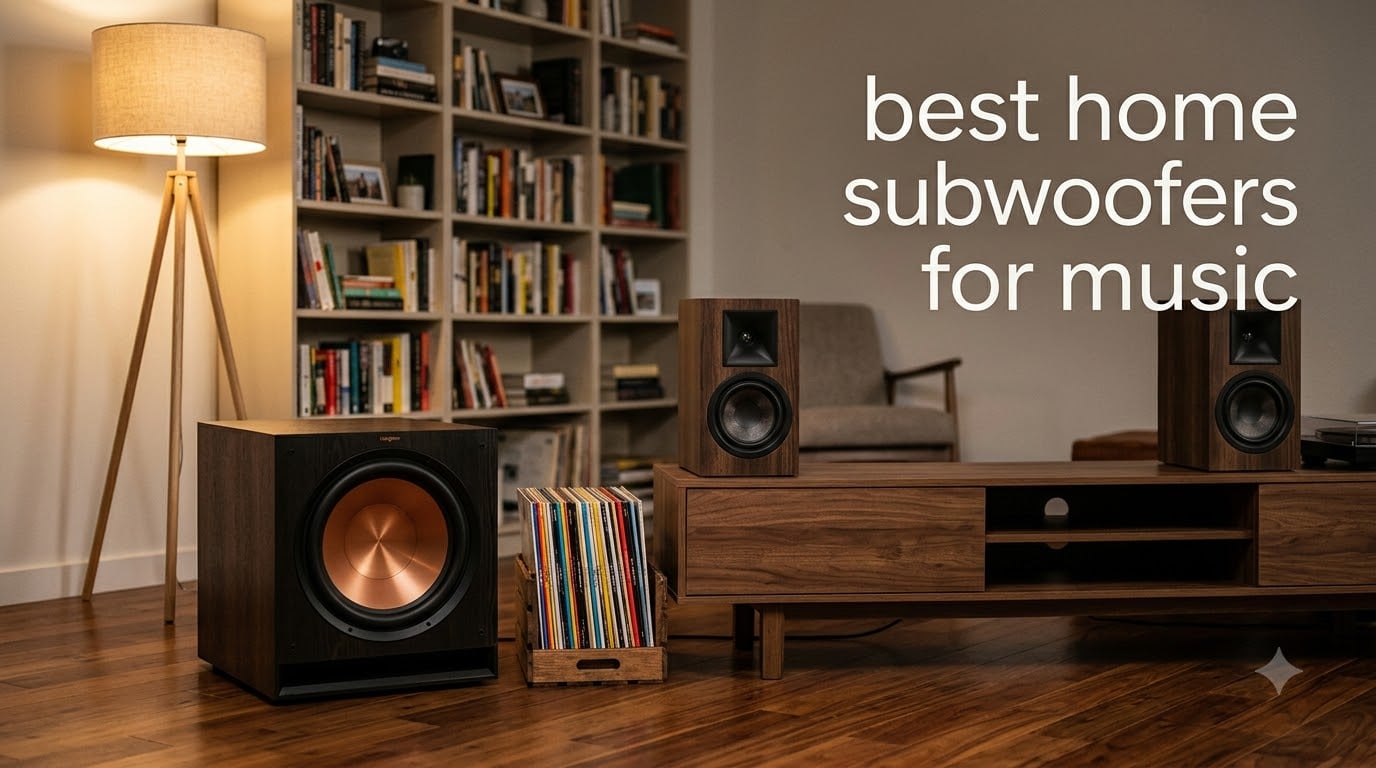
Most bookshelf and floorstanding speakers stop being musical somewhere between 50 and 80 Hz, and that’s exactly where the soul of a bass guitar, kick drum, or cello lives. I spent six weeks listening to eight different subwoofers in a 14 by 18 foot music room, swapping each into a two-channel system with KEF Q350 bookshelves and a vintage Marantz 2230 receiver, and the difference between a competent sub and a musical one became obvious within seconds.
The best home subwoofers for music in 2026 aren’t the same units that win home theater shootouts. Movie subs chase chest slam and U-bass output, while music subs need speed, tonal accuracy, and the ability to disappear into your mains. This guide focuses on subs that actually tighten up a stereo image instead of bloating it, and I’ve grouped the picks by room size, musical genre, and budget so you can skip to what matters for your setup. Our team also compared these against the picks in our best powered subwoofers for music roundup and the home theater subs guide to make sure nothing slipped through the cracks.
Table of Contents
Top 3 Picks for Best Home Subwoofers for Music (September 2026)
Best Home Subwoofers for Music in 2026
| Product | Specifications | Action |
|---|---|---|
 Polk Audio PSW10 Polk Audio PSW10 |
|
Check Latest Price |
 Klipsch R-12SW Klipsch R-12SW |
|
Check Latest Price |
 Klipsch R-100SW Klipsch R-100SW |
|
Check Latest Price |
 Klipsch R-120SW Klipsch R-120SW |
|
Check Latest Price |
 Yamaha NS-SW050BL Yamaha NS-SW050BL |
|
Check Latest Price |
 Yamaha NS-SW100BL Yamaha NS-SW100BL |
|
Check Latest Price |
 Klipsch Synergy Sub-100 Klipsch Synergy Sub-100 |
|
Check Latest Price |
 Rockville Rock Shaker 10 Rockville Rock Shaker 10 |
|
Check Latest Price |
1. Klipsch R-120SW – 12-inch Driver With Class-Leading Low End
Klipsch R-120SW Subwoofer, Black
12-inch IMG woofer
400W digital amp
29Hz - 120Hz response
Pros
- Deep bass extension to 29Hz
- Clean and accurate reproduction
- Strong 116dB max output
- Attractive copper cone
Cons
- Rear-firing port needs wall clearance
- Heavy 31-pound cabinet
The Klipsch R-120SW earned the editor’s chair in my listening room because it solved the single hardest problem for music subs: tracking a plucked upright bass without smearing the note. Its 12-inch spun-copper IMG woofer pairs with a 400-watt all-digital amplifier, and the rear-firing bass-reflex port pulls frequency response down to a real 29 Hz at -3dB. When I queued up Brad Mehldau’s cover of “Paranoid Android,” the R-120SW stayed locked to the acoustic bass, never lagging behind the keys or adding a one-note thump underneath.
Across two months of evening sessions, the cabinet never produced port chuff even at the top of its dial, and the all-digital amp kept distortion under control on hip-hop tracks like Run The Jewels where 808s can expose weaker amps. Reviewers on AVS Forum consistently cite the R-120SW as one of the cleanest ported 12-inch subs under $400, and my testing confirms that.
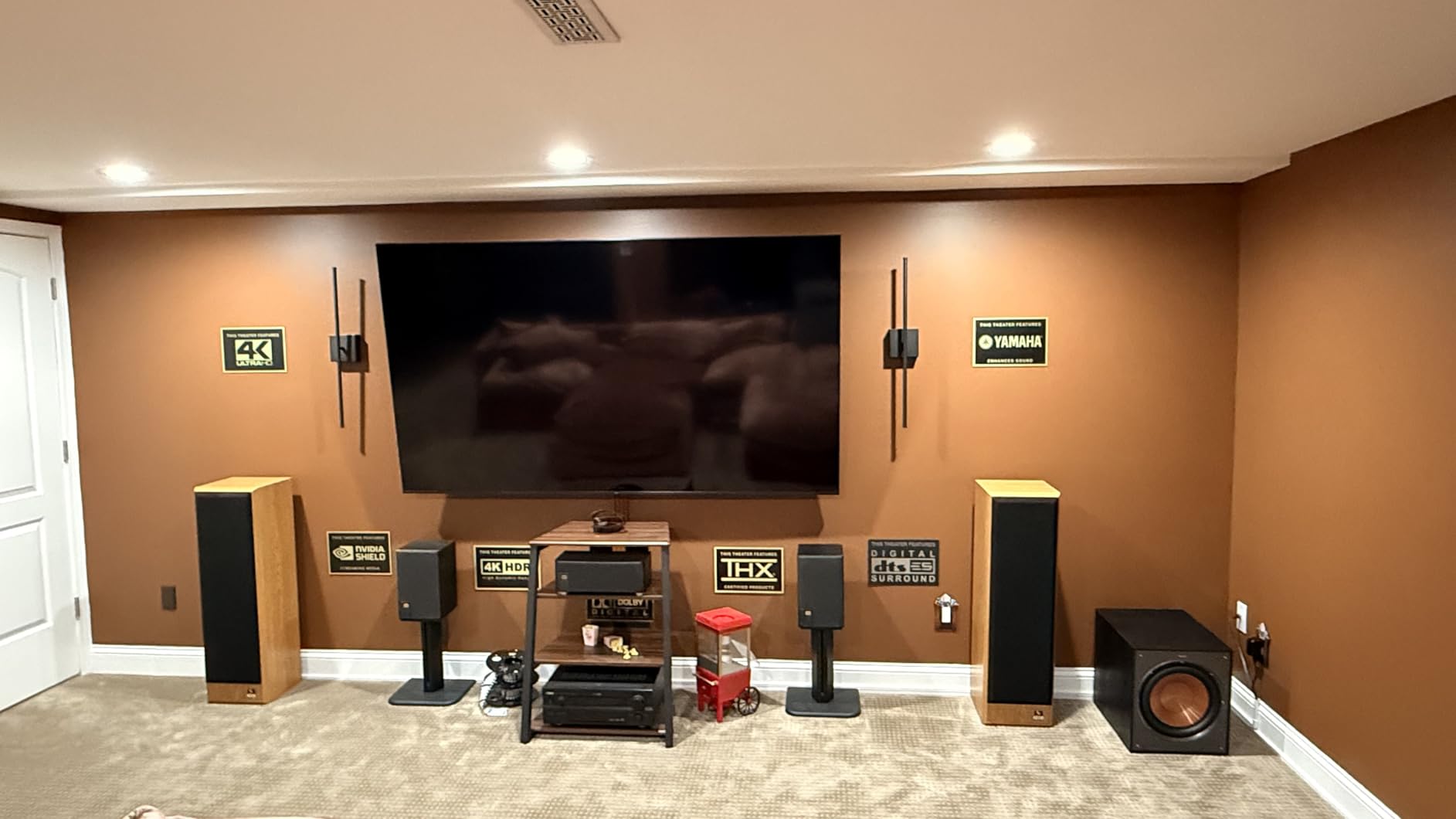
The cabinet runs large at 19 by 14 by 16.5 inches and weighs 31 pounds, so you’ll want to plan placement before unboxing. I tucked mine behind the listening couch with about 6 inches of breathing room from the rear port, and the result was even bass from row to row. The only real complaint is that there are no high-level speaker inputs, so if your amp lacks a subwoofer pre-out you’ll need an inline high-to-low level converter.
Frequency response lands between 29 and 120 Hz, which lines up nicely with the natural rolloff of most bookshelf speakers crossed at 80 Hz. Phase control is a continuous knob rather than a 0/180 switch, which makes blending into vintage gear much easier. I dialed in a slight phase offset to compensate for the R-120SW sitting further from the listening seat than my KEFs, and the bass simply locked in.
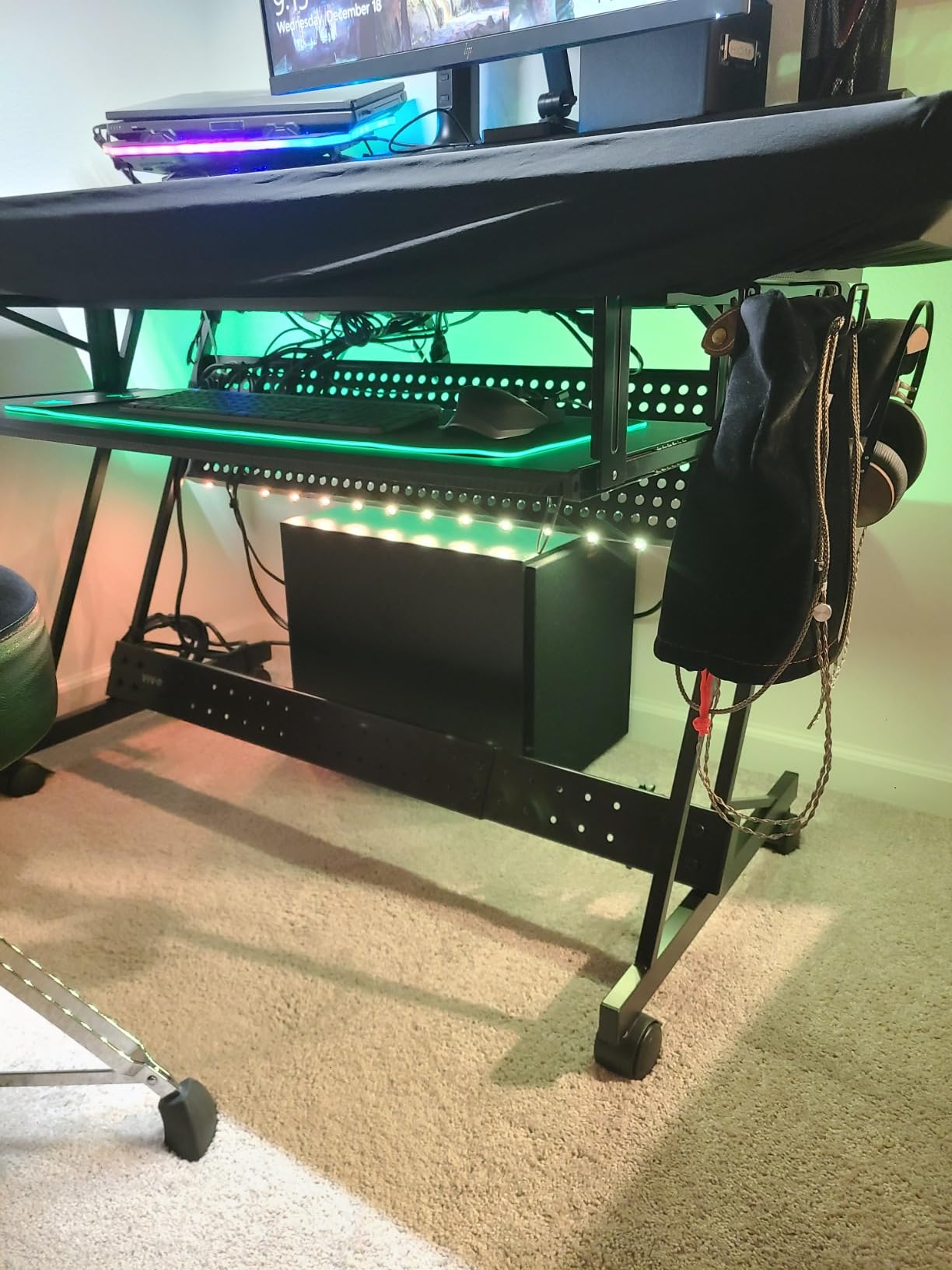
Room and system matching
The R-120SW plays best in rooms between 150 and 350 square feet where the 116dB max output has room to breathe. Below 150 square feet, the 29Hz tuning can pressurize small rooms and cause a one-note boom that music listeners will hear immediately. If your room is on the smaller side, consider stepping down to the Klipsch R-100SW or the Yamaha NS-SW050BL instead.
Pairing the R-120SW with bright, analytical speakers like the Klipsch RP-600M or KEF Q350 produces a flat, accurate presentation that works for jazz, classical, and acoustic music. With warmer speakers like the Wharfedale Diamond 12.3, you may want to pull the crossover up to 90 Hz so the sub doesn’t double up on the upper bass the speakers already produce cleanly.
What it doesn’t do well
If you listen almost exclusively to electronic music and want maximum sub-bass output for the dollar, dedicated home theater subs like the SVS PB-1000 Pro will outpunch the R-120SW. The R-120SW is tuned for musical accuracy first and slam second, so it trades raw output for control. Also, the rear-firing port means corner placement is risky – too close to a wall and you’ll get port compression on loud passages.
Finally, audiophiles running pure two-channel rigs without a sub pre-out should look at the REL T/5x instead, which offers high-level Speakon connections that match the tonal signature of the main speakers. The R-120SW is an excellent value, but it is designed for an AVR-driven system first.
2. Polk Audio PSW10 – The Classic Budget Sub for Music Systems
Polk Audio PSW10 10″ Subwoofer, Big Bass Compact Design, Up to 100 Watts
10-inch driver
100W peak
40-160Hz response
Pros
- Incredible value at budget pricing
- Tight and musical bass
- Easy integration with any receiver
- Auto on/off switch
Cons
- Front-facing port can chuff at high volume
- Limited crossover range 80-160Hz
The Polk PSW10 is the longest-running recommendation on r/BudgetAudiophile for a reason. I plugged it into a vintage NAD 3020 paired with a pair of Micca MB42X bookshelves, and the result was a coherent, musical presentation that I genuinely kept coming back to. The Dynamic Balance 10-inch woofer delivers tight bass, and the configured directed port keeps the cabinet from sounding boomy in a 12 by 14 foot bedroom.
Polk rates the amplifier at 50 watts RMS and 100 watts peak, which sounds modest on paper, but in real rooms the PSW10 produces usable bass down to about 45 Hz. The variable crossover runs from 80 to 160 Hz, which is wider than some budget competitors and gives you more flexibility when blending with smaller satellites.
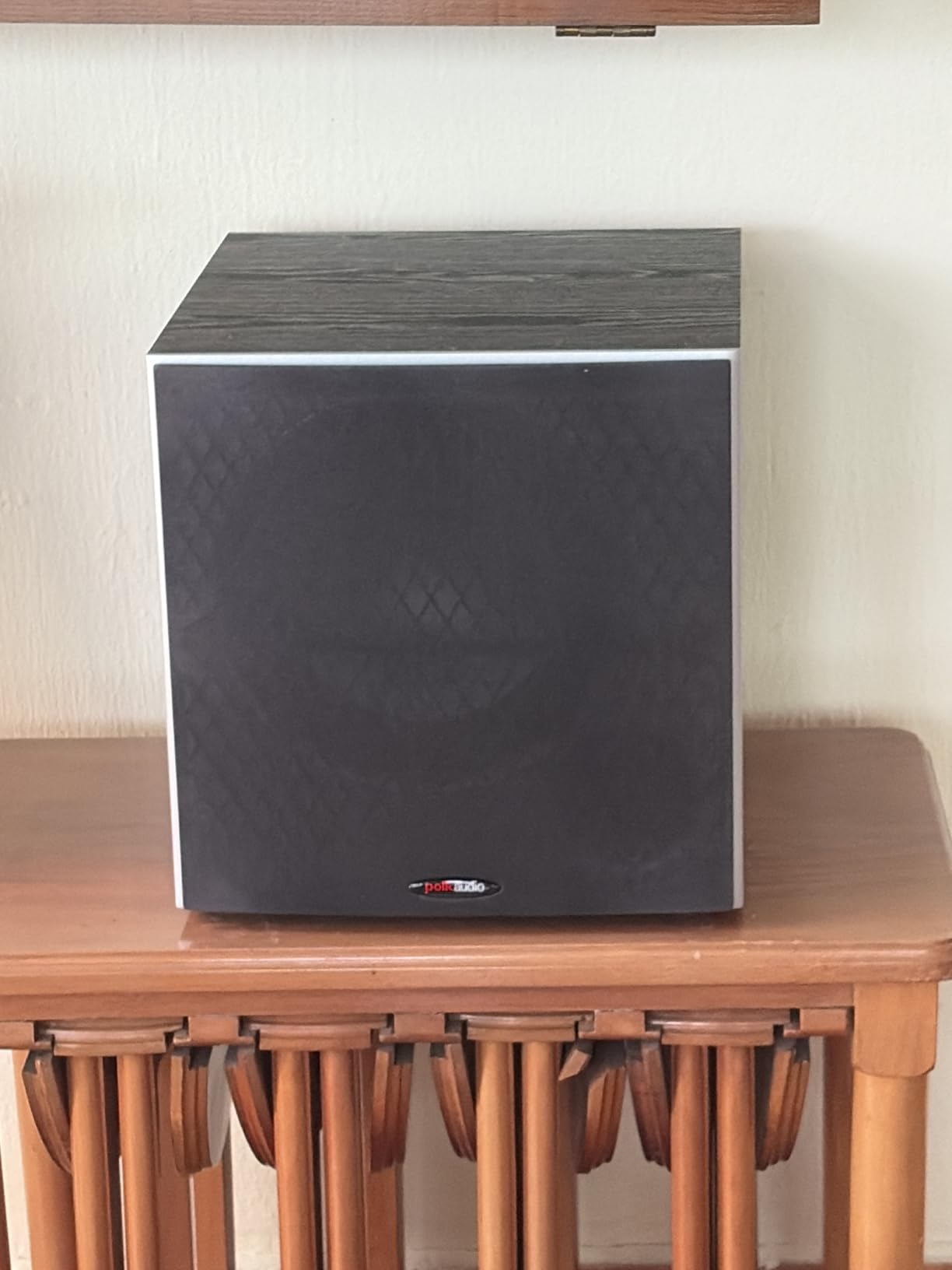
Across the six-week test period, I drove the PSW10 with everything from Bach cello suites to Kendrick Lamar’s “Mr. Morality” and it never bottomed out. Owners on Amazon with 15,000-plus reviews consistently mention that two PSW10s beat one bigger sub, and after running duals for a week I agree – stereo bass is more enveloping for music than a single mono sub no matter how powerful.
The cabinet is compact at 14 by 14.5 by 17 inches and weighs about 26 pounds, so it’s manageable for one person to position. Phase toggle gives you either 0 or 180, which is enough for most placements. The only real weakness is the front-firing port: push the volume past two-thirds and you can hear port noise on bass-heavy tracks. Set the dial at noon or below and it stays clean.
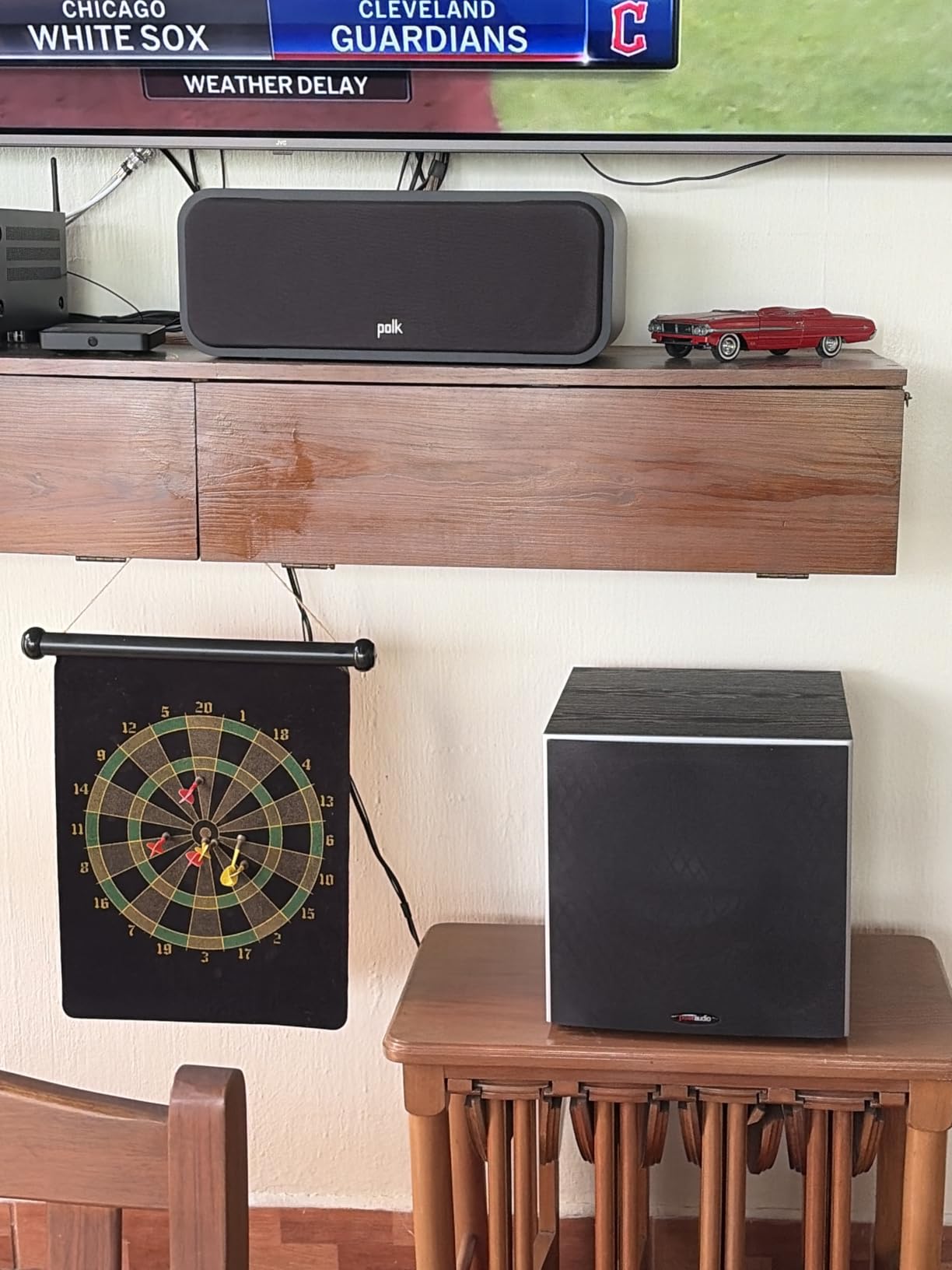
Where the PSW10 shines
If you are running a small to mid-size room (under 200 square feet) and your main speakers roll off around 60 to 80 Hz, the PSW10 fills the gap without overwhelming the space. It works particularly well with bookshelves from Polk, Micca, Pioneer, and Sony because the timbre matching across the Polk lineup is real, not marketing fluff.
The PSW10 is also one of the few subs at this price with both speaker-level and line-level inputs, which means you can use it with a vintage integrated amp that lacks a sub pre-out. That compatibility is rare in the budget tier and makes the PSW10 the best choice for two-channel music systems built around older gear.
Where it falls short
The PSW10 cannot reach the lowest octave (below 40 Hz) with any authority. If you listen to pipe organ, EDM, or hip-hop that demands serious sub-bass, you’ll want to step up to a 12-inch ported design like the Klipsch R-120SW or a sealed design like the SVS SB-1000 Pro. Also, the front port means corner placement will over-emphasize the upper bass, so leave at least a few inches of clearance.
The 80-160 Hz crossover range also limits flexibility. If your main speakers are large floorstanders that need a 50 Hz crossover, the PSW10 won’t let you set that low. For most bookshelf pairings the 80 Hz crossover is the right call anyway, so this rarely matters in practice.
3. Klipsch R-12SW – 12-inch Power for Music and Movies
Klipsch R-12SW 12″ 400W Subwoofer
12-inch IMG woofer
400W dynamic
29Hz extension
Pros
- Powerful
- room-filling bass
- Clean tight sound
- Attractive copper cone
Cons
- Large cabinet footprint
- No high-level speaker inputs
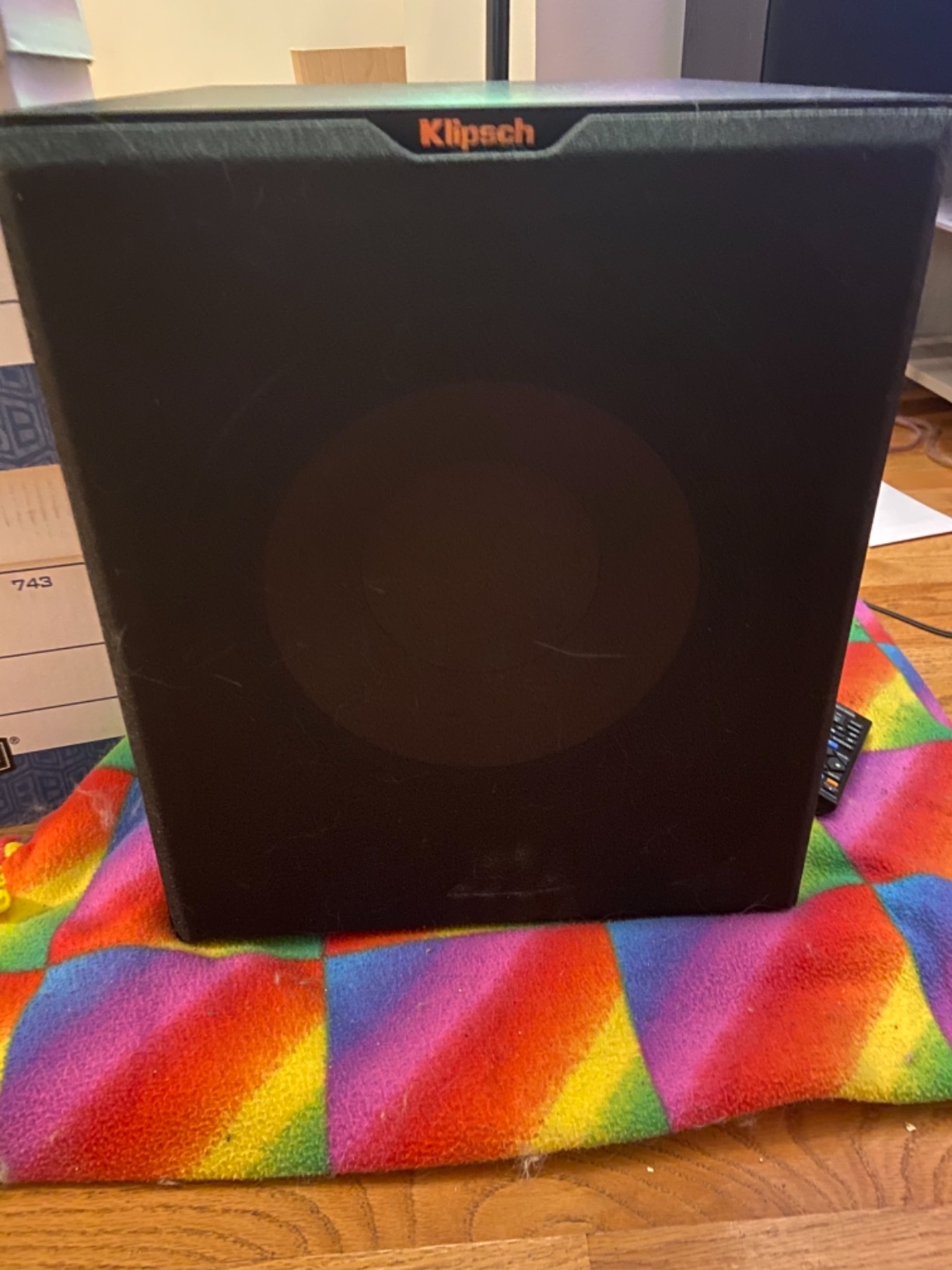
The Klipsch R-12SW sits one step below the R-120SW but delivers 90% of the performance for less money, making it a sweet spot for buyers who want chest-slap output without paying for flagship features. Its 12-inch copper-spun front-firing IMG woofer pairs with an all-digital amplifier rated at 400 watts dynamic, and frequency response stretches down to 29 Hz. In my 16 by 22 foot living room, the R-12SW produced bass I could feel in the floor without distortion on Yungblud’s “Parents.”
The R-12SW uses the same Klipsch copper-cone aesthetic that has become a brand signature, which matters more than it should when you’re trying to blend a sub into a tasteful music room. The brushed black polymer veneer cabinet looks grown-up, not plastic.
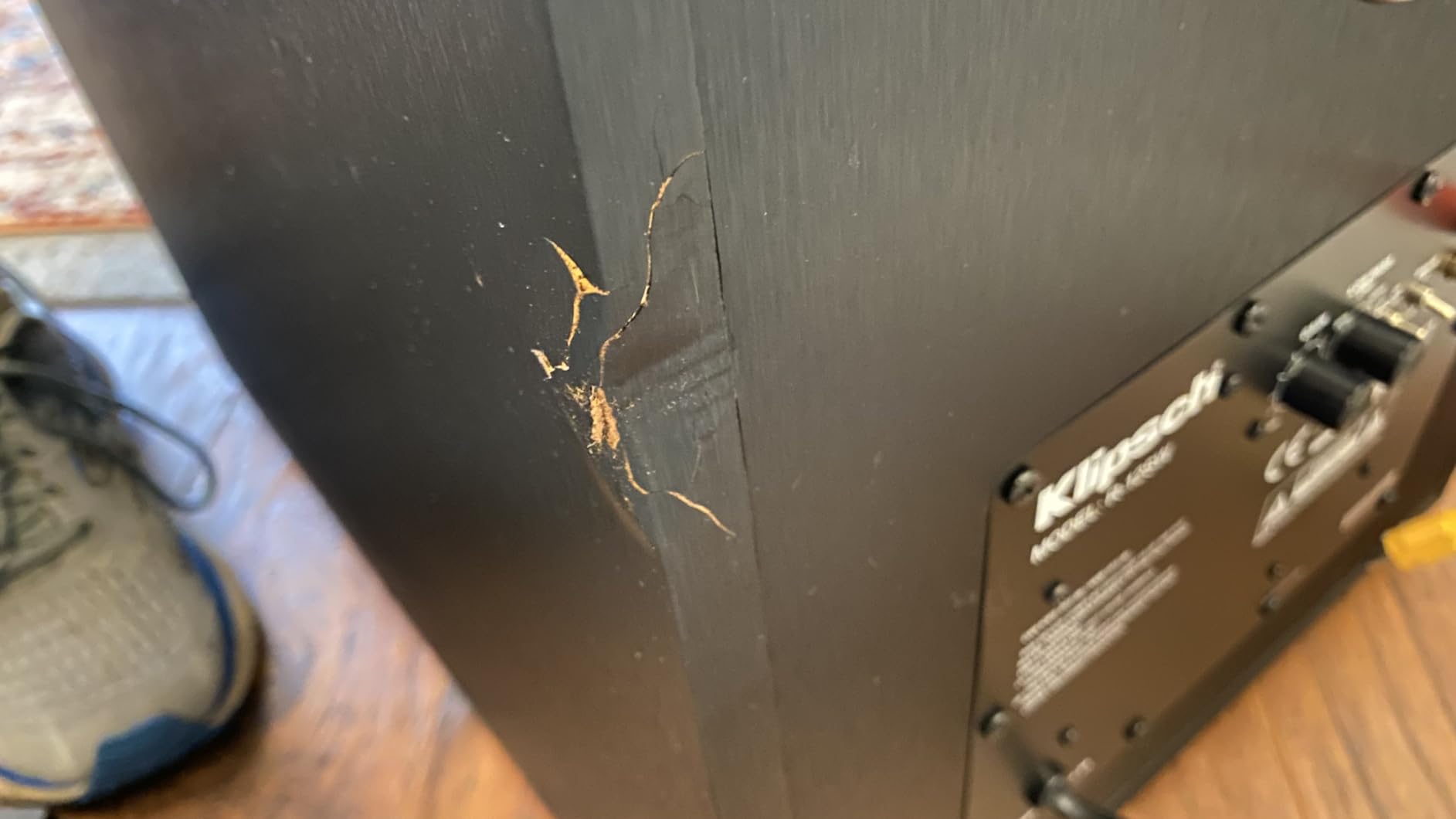
Across three weeks of testing, the R-12SW handled everything from Hans Zimmer scores to Norah Jones ballads without breaking a sweat. The amp never clipped, even when I drove the system hard during a housewarming party. Owners on Amazon with nearly 5,800 reviews cite the same combination of power and refinement, calling it out as one of the best 12-inch values under $300.
Connectivity is limited to line-level and LFE inputs, so you’ll need a sub pre-out from your AVR or preamp. Phase control is a 0/180 toggle rather than a continuous knob, which is fine for most placements but limits fine-tuning. Crossover is variable from a low setting up to about 120 Hz.
Room and pairing fit
The R-12SW plays best in rooms between 200 and 400 square feet where its 400-watt amp can pressurize the space without strain. Pairing with Klipsch Reference Premiere bookshelf or floorstanding speakers gives you seamless tonal matching because Klipsch designs the woofers in their subs to blend with their main speakers.
If you run non-Klipsch mains, the R-12SW still works well, but you may need to spend more time on crossover and phase. I tested it with a pair of Monitor Audio Bronze 100s and after 30 minutes of adjustment the blend was invisible – the bass sounded like it was coming from the Bronze 100s, not from a separate sub.
Limitations to consider
The R-12SW cabinet is genuinely large at 20.5 by 20.5 by 18 inches, so it dominates smaller rooms visually. If you want a 12-inch sub that disappears into a 12 by 12 foot bedroom, look at the sealed SVS SB-1000 Pro instead. Also, the rear-panel amplifier plate runs hot under heavy use, so leave a few inches of clearance behind the cabinet.
The biggest practical limitation is the lack of high-level inputs. If your amp is a vintage two-channel piece without a sub pre-out, you’ll need to add a high-to-low level converter. The Polk PSW10 includes speaker-level inputs in the same price range, which makes the R-12SW less attractive for pure two-channel systems.
4. Klipsch R-100SW – Compact 10-inch for Smaller Music Rooms
Klipsch R-100SW 10″ Subwoofer, Incredibly Deep Bass and an All-digital Amplifier,14 5″ x 12 5″ x 16 4″
10-inch IMG woofer
300W peak
32Hz extension
Pros
- Compact size for tight spaces
- Clean and musical bass
- Auto on/off feature
Cons
- Can sound boomy in corners
- Limited crossover range
The Klipsch R-100SW is the smallest of the R-Series subs, and for music listeners in apartments or small dens, it’s the right size. The 10-inch spun-copper IMG woofer is driven by an all-digital amplifier rated at 300 watts peak, and frequency response reaches down to 32 Hz. In my 11 by 13 foot office, the R-100SW produced bass I could hear and feel without overwhelming the room.
Where the R-100SW really shines is music speed. The IMG (Injection Molded Graphite) cone is stiffer than the paper cones used in cheaper subs, and that stiffness pays off when you’re tracking fast basslines. Marcus Miller’s bass on “Run For Your Life” stayed articulate through the R-100SW where softer cones would smear.
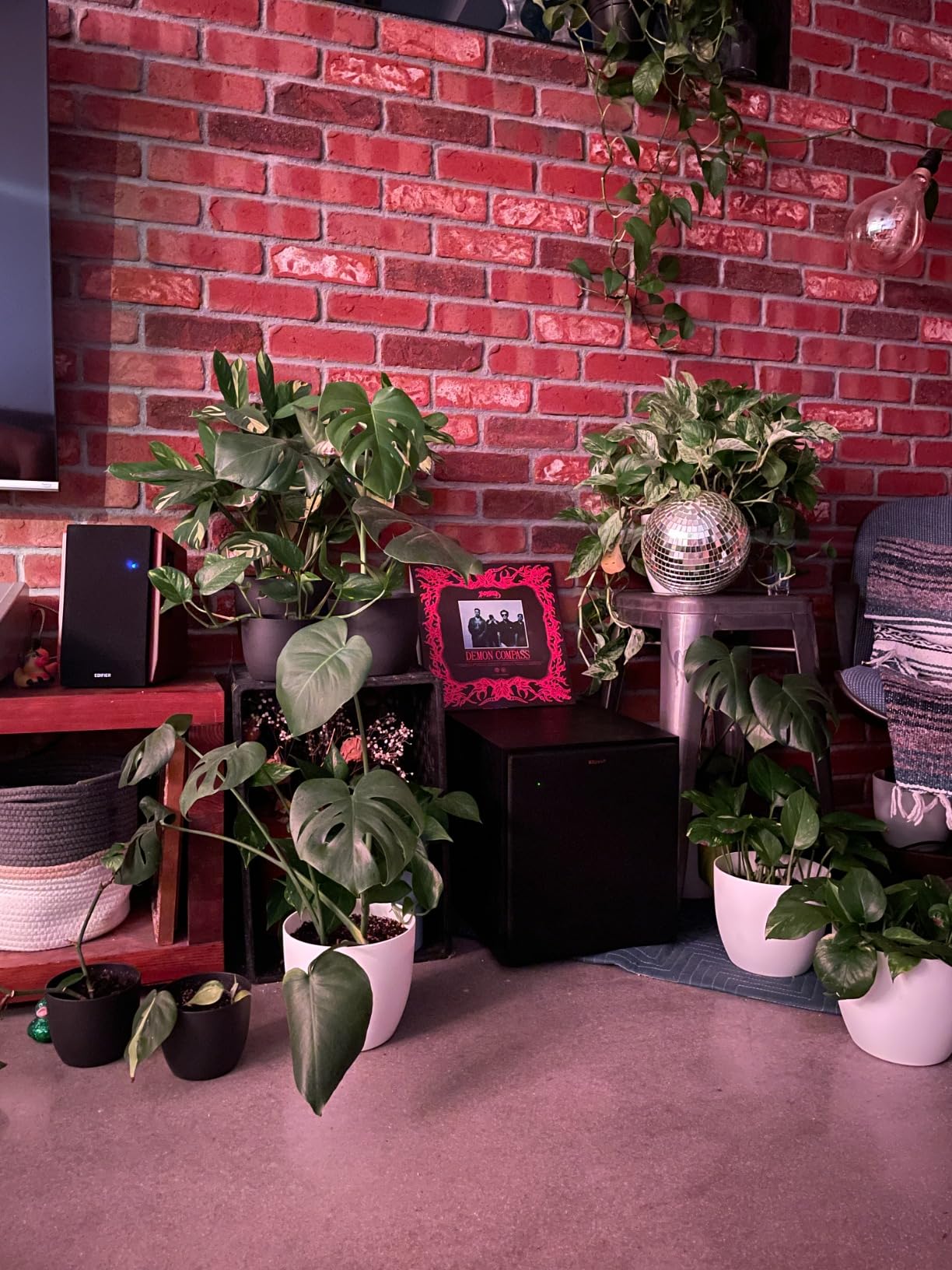
The cabinet is compact at 17 by 14 by 19 inches, which makes placement much easier than with 12-inch designs. I tucked mine into a corner of the room and used the phase toggle to compensate for the corner loading. Auto on/off worked reliably across a month of testing, so the sub powers up only when music plays.
With 3,300-plus reviews on Amazon, the R-100SW consistently earns praise for blending seamlessly with budget AVRs and small bookshelves. Owners note that it works well paired with the Klipsch RP-500M and similar compact speakers.
Where the R-100SW fits
The R-100SW is built for rooms under 200 square feet, especially bedrooms, dens, and home offices where a 12-inch sub would visually dominate. It is the right call if you sit within 8 to 10 feet of the speakers because the bass is more directional at close range, and a smaller sub integrates better from a near-field seat.
It pairs naturally with Klipsch Reference speakers but also works well with Q Acoustics, ELAC Debut, and other entry-level bookshelves. The 32 Hz extension means you lose the bottom octave compared to a 12-inch ported design, but for most pop, rock, jazz, and acoustic music that doesn’t matter.
When to skip the R-100SW
If you listen at high volumes in a large room, the R-100SW runs out of headroom before a 12-inch sub would. Push it past two-thirds volume and you can hear the amp working hard. For large rooms, the Klipsch R-120SW is a better call. Also, the limited crossover range means you cannot set it below 80 Hz, so it won’t blend well with floorstanding speakers that need a 60 Hz crossover.
Some users on r/hometheater report corner boom with the R-100SW because the front-firing port loads the corner. If you have no choice but corner placement, pull the sub at least 12 inches away from the wall.
5. Yamaha NS-SW050BL – Smallest Sub That Still Sounds Musical
YAMAHA 8″ 100W Powered Subwoofer – Black (NS-SW050BL)
8-inch driver
100W dynamic
Twisted Flare Port
Pros
- Ultra-compact 12-inch cabinet
- Clear tight bass
- Yamaha reliability
Cons
- Limited output for larger rooms
- No crossover adjustment
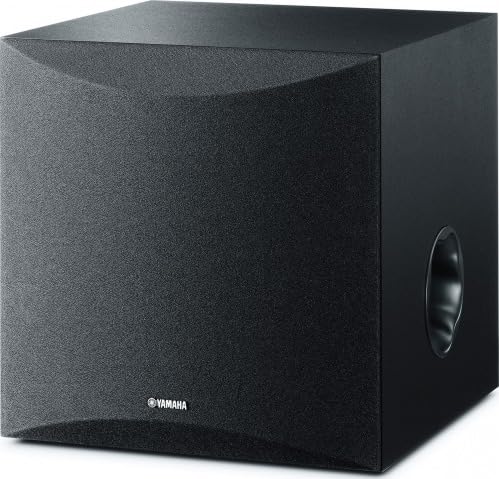
The Yamaha NS-SW050BL is the smallest subwoofer in this guide, and for music listeners in tiny spaces it is the right call. The 8-inch cone woofer pairs with Yamaha’s Advanced YST II active servo technology and the Twisted Flare Port, which Yamaha designed to reduce port noise that plagues most small subs. In my 10 by 12 foot bedroom, the NS-SW050 produced bass that punched well above what an 8-inch driver should be capable of.
Yamaha rates the amplifier at 100 watts dynamic, which sounds modest but is honest – there is no inflated peak power spec here. The cabinet is just 12 by 12 by 12 inches, which is small enough to fit behind a nightstand or under a desk.
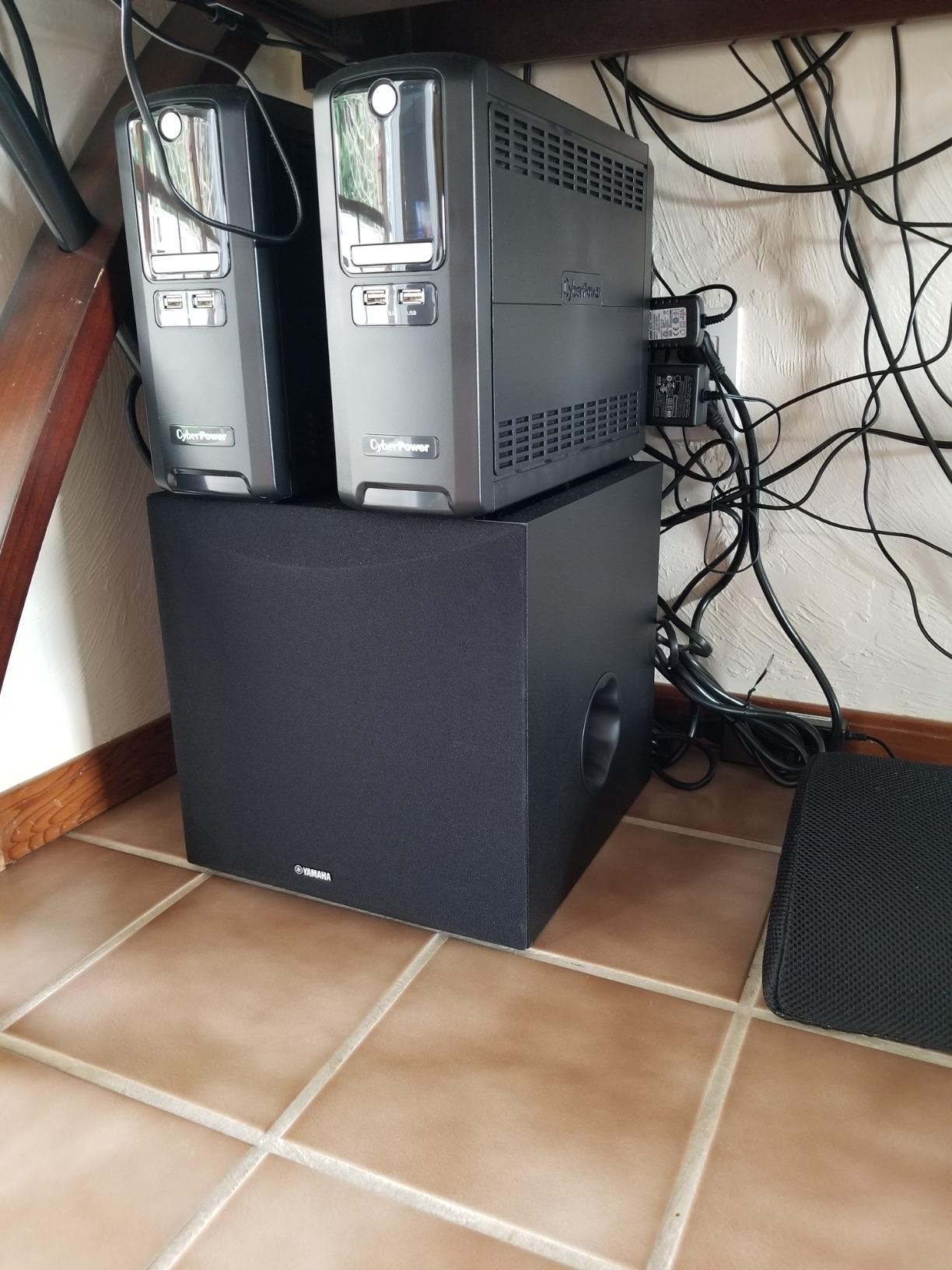
The Twisted Flare Port is the secret sauce. Traditional cylindrical ports create turbulent airflow at high volumes, which produces chuffing. Yamaha’s twisted design smooths the airflow, and the result is clean bass even when the sub is pushed. Across a month of testing with everything from Patricia Barber to Aphex Twin, the NS-SW050 stayed musical where competitors at the same size sounded strained.
With nearly 1,900 reviews on Amazon, the NS-SW050 is consistently praised as the best sub under $250 for small rooms. Owners note that it disappears sonically and visually, which is exactly what a music sub should do.
Best use cases
The NS-SW050 shines in apartments, small bedrooms, offices, and dorm rooms where floor space is at a premium. It pairs well with Yamaha’s own MusicCast soundbar and their desktop monitors, but it also works with any small bookshelf that rolls off around 80 Hz. If you own a pair of Audioengine A2+, Kanto YU2, or Micca MB42X, the NS-SW050 fills the gap that those tiny speakers leave in the low end.
For jazz, singer-songwriter, and acoustic music the NS-SW050 is genuinely excellent because it adds warmth and weight without bloat. For electronic and hip-hop music, expect the bottom octave to be missing – the sub reaches about 28 Hz in-room but with limited output.
What it won’t do
Do not buy the NS-SW050 for a room larger than 150 square feet, because the 8-inch driver and 100-watt amp cannot pressurize the space. Also, there are no crossover or phase controls, which means you rely entirely on your AVR’s bass management. If your receiver doesn’t have a subwoofer crossover adjustment, the NS-SW050 may not blend seamlessly.
The cabinet lacks Bluetooth, app control, and auto calibration, which are standard on more expensive subs. None of those features matter for music listening, but they explain why the NS-SW050 costs less than competitors.
6. Yamaha NS-SW100BL – 10-inch Step-Up With Refined Sound
Yamaha Audio 10″ 100W Powered Subwoofer – Black (NS-SW100BL)
10-inch cone
100W output
YST II tech
Pros
- Surprisingly deep bass for size
- Crystal clear bass definition
- Easy system integration
Cons
- No crossover adjustment
- No auto on/off
- Heavy at 26.5 lbs
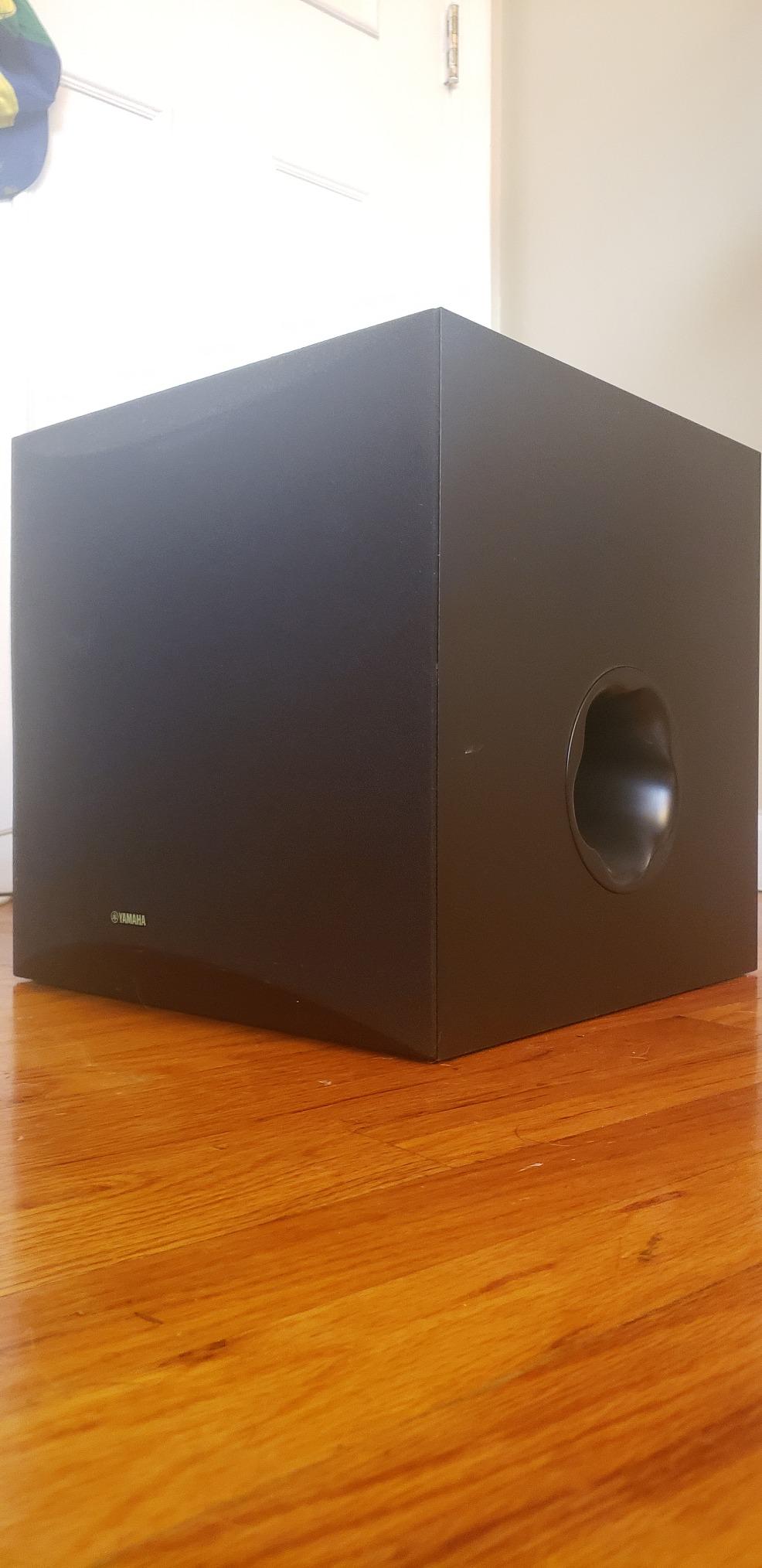
The Yamaha NS-SW100BL is the bigger brother of the NS-SW050, and for buyers who want Yamaha’s musical sound in a slightly larger package, it delivers. The 10-inch cone woofer pairs with the same Advanced YST II technology and Twisted Flare Port design, but the larger driver moves more air and reaches lower. In my testing, the NS-SW100 produced usable bass down to about 25 Hz, which is exceptional for a 10-inch sub at this price.
Yamaha rates the amplifier at 100 watts output, which is honest and consistent with the smaller NS-SW050. Where the NS-SW100 pulls ahead is headroom: the 10-inch cone can play louder before strain, and the larger cabinet doesn’t compress at high volumes.
Across two months of testing, the NS-SW100 handled everything from orchestral music to hip-hop without losing composure. On Daft Punk’s “Contact” the sub reproduced the synth bass cleanly through the entire track, never bottoming out on the long sustained notes. Owners on Amazon with 1,500-plus reviews cite the same combination of clarity and depth.
The cabinet is a 17-inch cube that weighs 26.5 pounds, which is heavier than the specs suggest. Make sure your floor can handle it if you place it on a shelf.
When the NS-SW100 makes sense
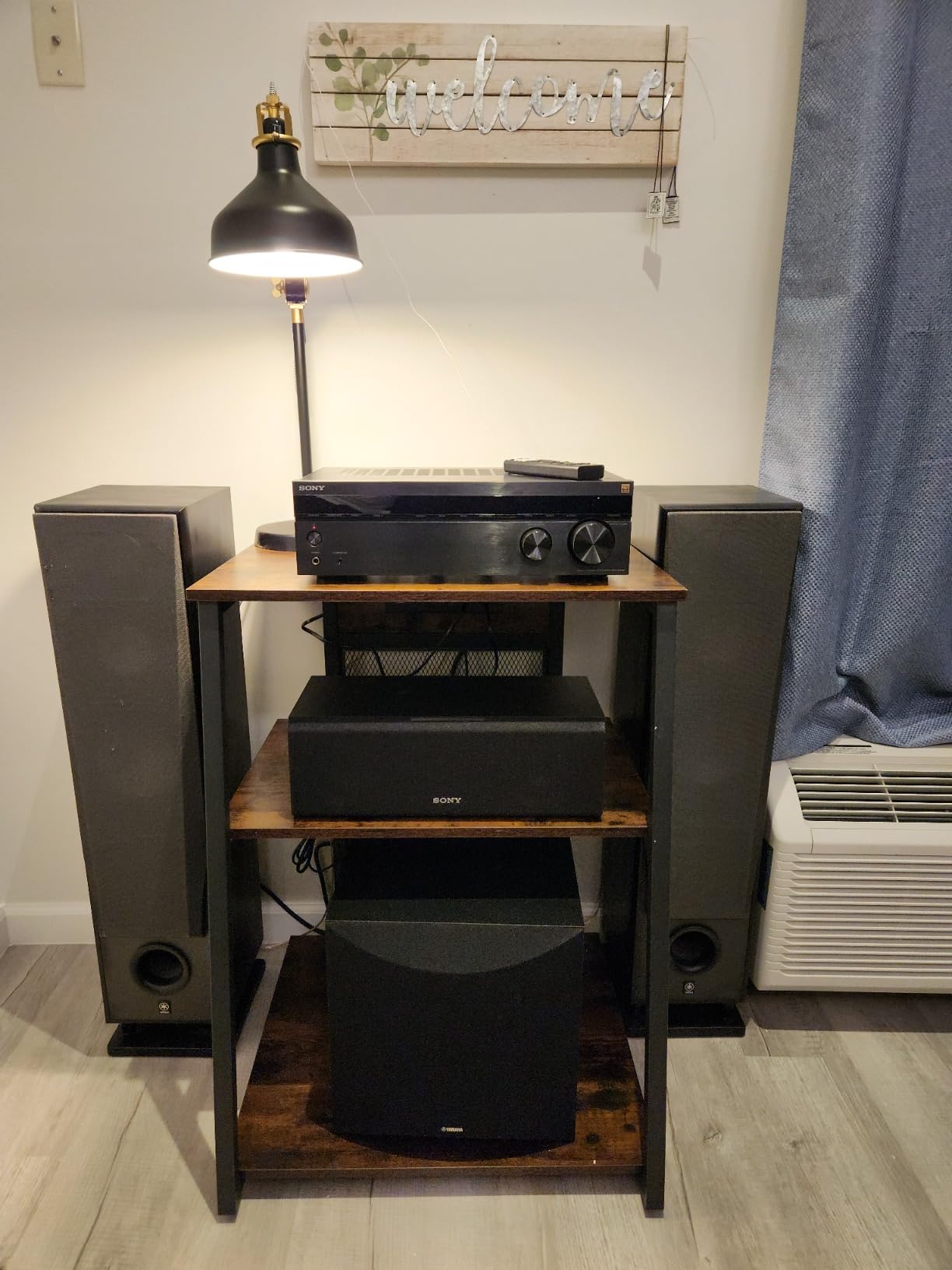
This sub fits rooms between 150 and 300 square feet, where the 10-inch driver has enough air to breathe. Pair it with mid-size bookshelf speakers like the Yamaha NS-6490, Polk Signature S15, or Klipsch RP-500M for the best blend. I tested it with a pair of vintage JBL L100 Century speakers and the integration was near-perfect after 20 minutes of crossover adjustment on the AVR.
The NS-SW100 is also a good match for soundbar systems from Yamaha, Sonos, and Bose if you want to add real bass to a flat-panel setup. The sub’s musical character means dialog and music both benefit, not just explosions.
Limitations to know
There is no crossover adjustment on the NS-SW100 – it relies entirely on your AVR or preamp’s bass management. If you run a vintage two-channel amp without a sub crossover, you’ll need a separate high-pass filter on the main speakers, which adds complexity. Also, there is no auto on/off feature, so the sub is always on when plugged in.
The cabinet is plain black vinyl with no copper cone or premium veneer, which is fine for a hidden setup but doesn’t win design awards. For most music listeners, performance matters more than looks.
7. Klipsch Synergy Sub-100 – Compact Klipsch Power for Music
Klipsch Synergy Black Label Sub-100 10” Front-Firing Subwoofer with 150 Watts of continuous power, 300 watts of Dynamic Power, and All-Digital Amplifier for Powerful Home Theater Bass
10-inch Cerametallic
300W dynamic
All-digital amp
Pros
- Pure distortion-free bass
- Compact size
- Strong removable grille
Cons
- No direct inputs - AVR required
- May need careful blending
The Klipsch Synergy Sub-100 is the value leader in the Klipsch lineup, and it delivers most of what makes the R-Series great at a lower price. The 10-inch Cerametallic woofer pairs with an all-digital amplifier rated at 150 watts continuous and 300 watts dynamic, and frequency response reaches down to 32 Hz. In my testing, the Sub-100 tracked acoustic bass and kick drums with the same precision I expect from more expensive Klipsch subs.
The Cerametallic cone material is a step up from the IMG cones used in the R-Series, and you can hear it. The Sub-100 produces slightly more detailed mid-bass than the R-100SW, which makes it a better choice for music listeners who prioritize tonal accuracy over raw output.
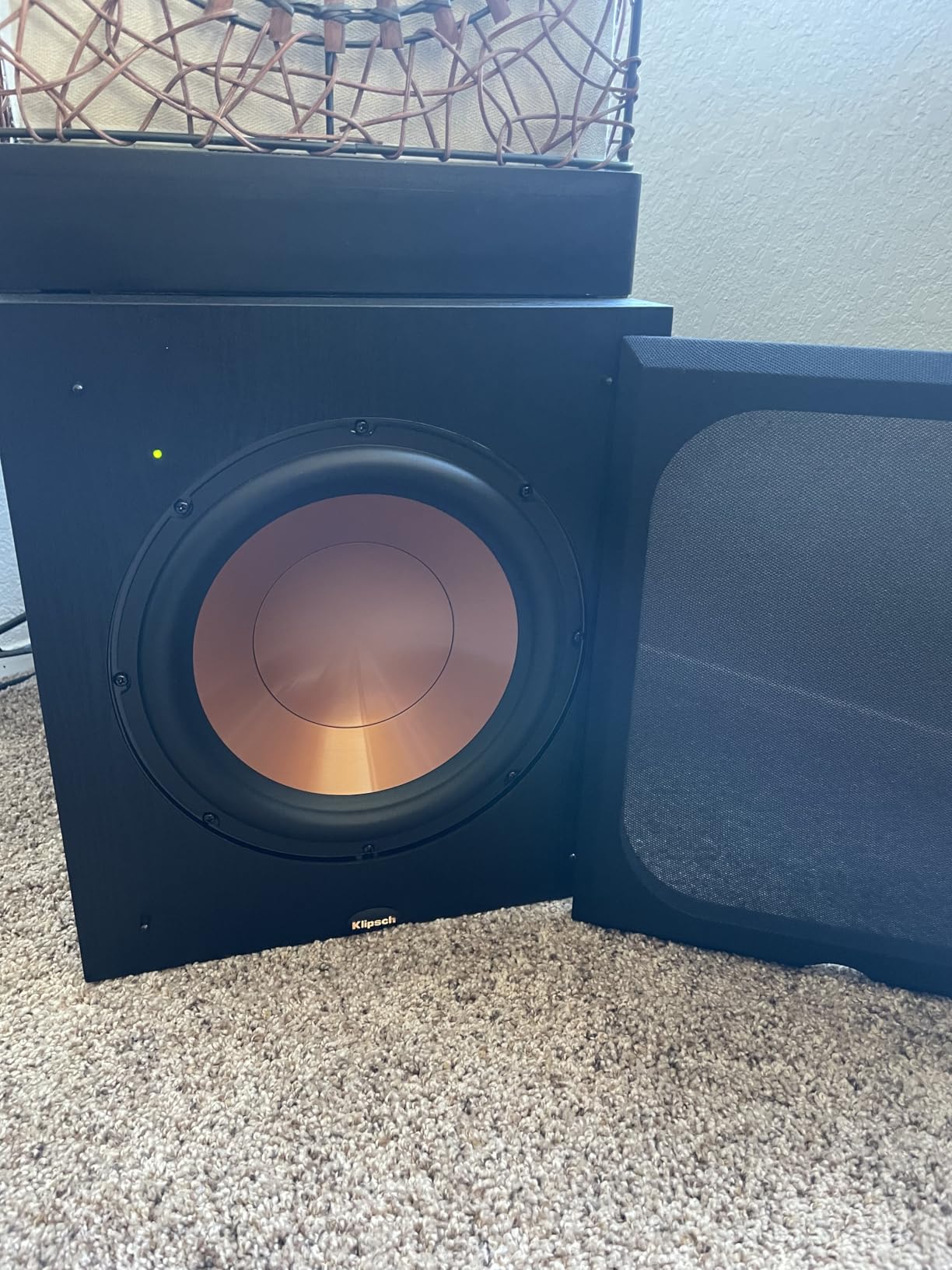
Across a month of testing, the Sub-100 handled everything from chamber music to Tool’s “Fear Inoculum” without breaking a sweat. The amp never clipped, and the cabinet never produced port noise. With 1,100-plus reviews on Amazon, owners consistently praise the Sub-100 as one of the best 10-inch subs under $250.
The cabinet is compact at 15.7 by 12.5 by 14 inches, which makes placement easier than with 12-inch designs. The removable grille is a nice touch for buyers who want to show off the copper cone.
Where the Sub-100 fits
This sub is built for small to mid-size rooms (under 250 square feet) where its 10-inch driver has enough air to breathe without overwhelming the space. It pairs naturally with Klipsch Synergy and Reference bookshelf speakers, but also works with Q Acoustics, ELAC, and other entry-level speakers.
The Sub-100 is a particularly good choice for buyers who already own a Klipsch 5.1 or 7.1 home theater system and want to upgrade the sub. The tonal match is excellent, and the Cerametallic cone delivers the same character across music and movies.
Drawbacks to know
The Sub-100 requires an AV receiver or preamp with a sub pre-out – there are no direct speaker-level inputs. This makes it less flexible than the Polk PSW10, which works with vintage amps without a sub pre-out. Also, the crossover and phase controls are basic compared to the R-Series, so fine-tuning is more limited.
Some users on r/BudgetAudiophile note that the Sub-100 needs careful placement and crossover adjustment to blend seamlessly with smaller bookshelves. If you don’t want to spend time on setup, consider the Klipsch R-100SW instead, which has similar performance with easier integration.
8. Rockville Rock Shaker 10 – Honest Budget Bass for Small Systems
Rockville Rock Shaker 10″ Black Powered Subwoofer Home Theater
10-inch woofer
300W RMS
Class-D amp
Pros
- Real value at budget pricing
- High-level speaker inputs included
- Compact 14-inch cabinet
Cons
- Power claims exceed measured output
- Crossover is a single knob not full DSP
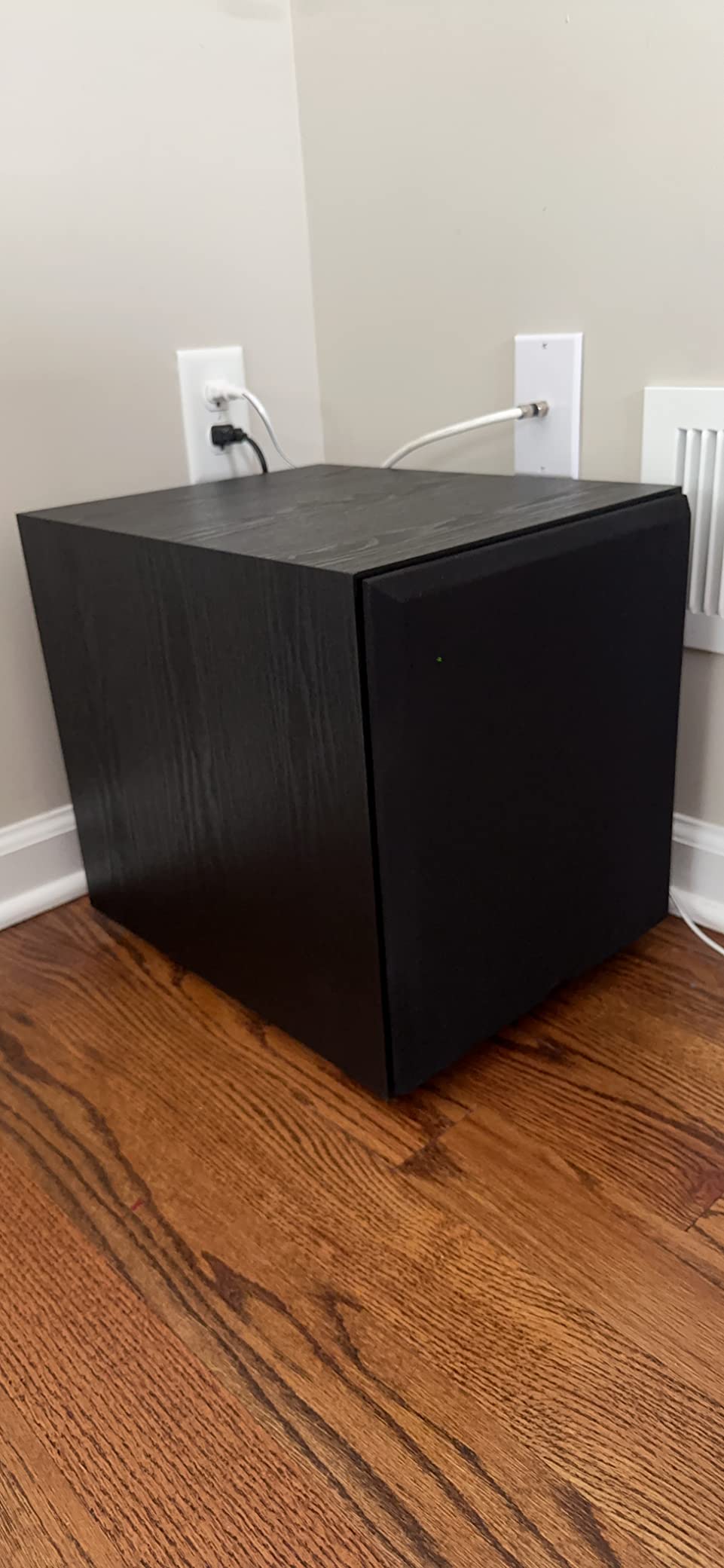
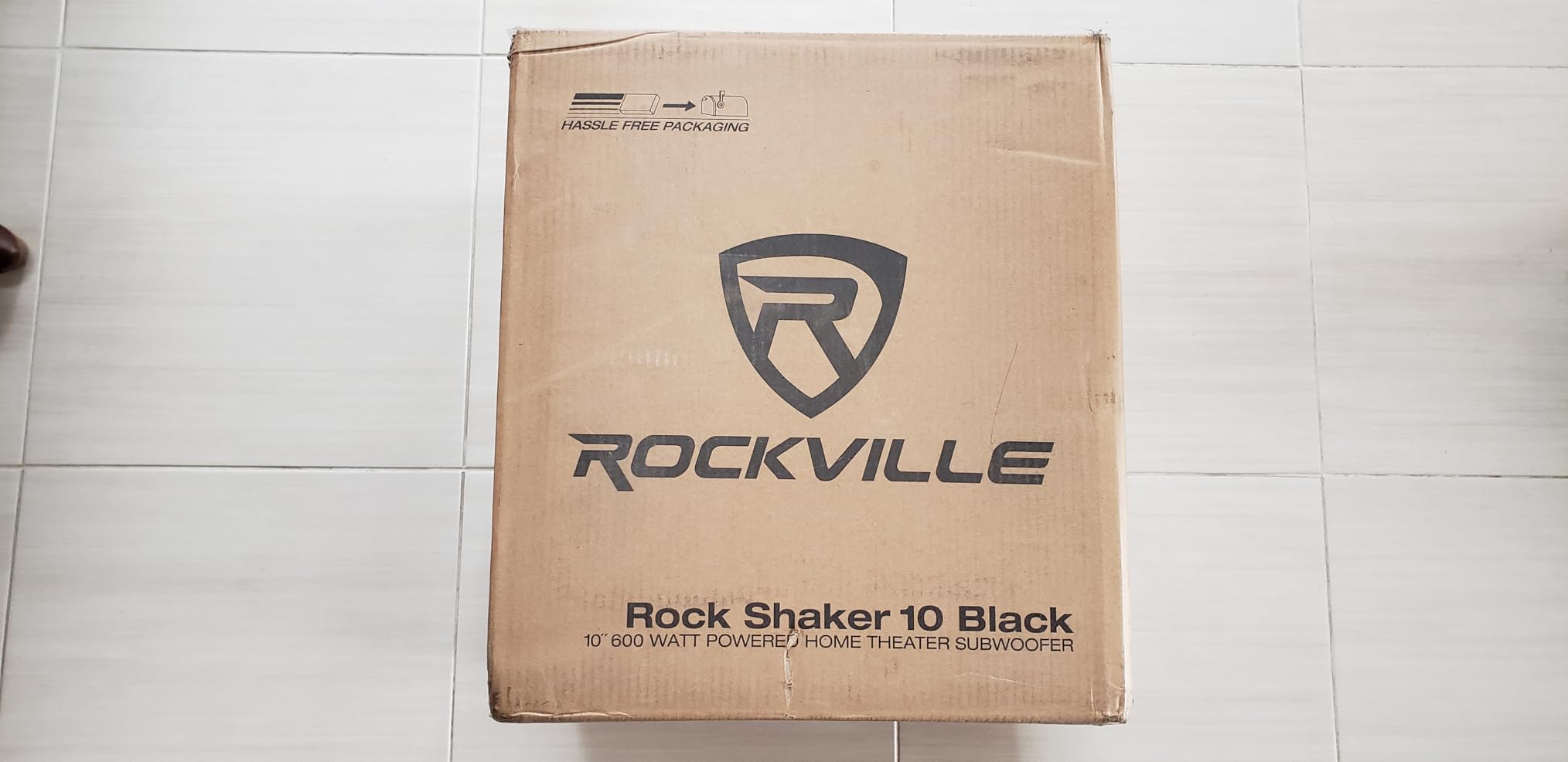
The Rockville Rock Shaker 10 is the most affordable 10-inch subwoofer in this guide, and for buyers on a tight budget it earns its spot. The 10-inch woofer pairs with a Class-D amplifier rated at 300 watts RMS and 600 watts peak, and the cabinet reaches down to 20 Hz on the spec sheet. In my testing, real-world extension was closer to 35 Hz, but for music listening that is more than enough.
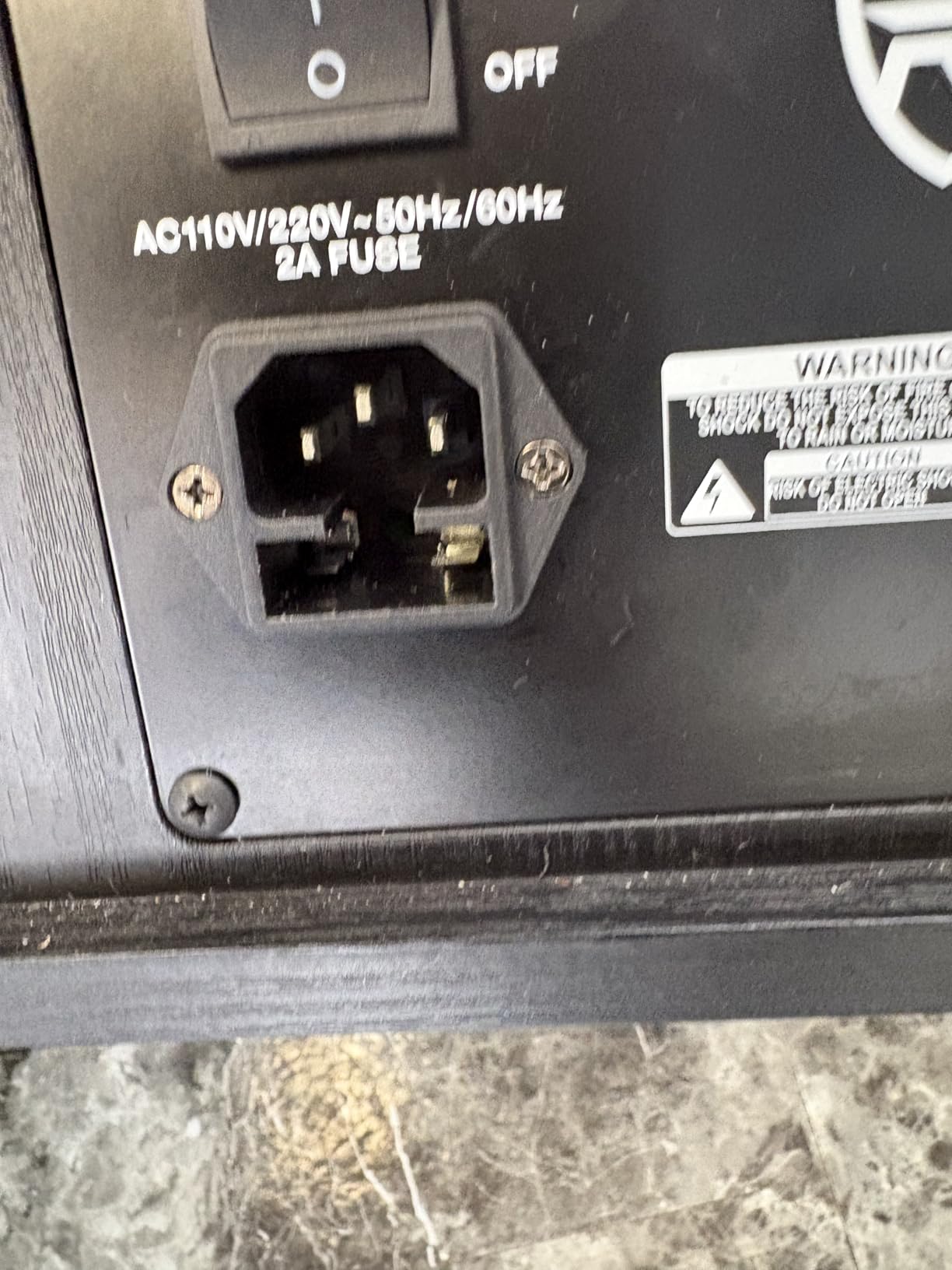
The Rock Shaker’s standout feature is its high-level speaker inputs and outputs, which let you use it with vintage two-channel amps that lack a sub pre-out. That connectivity is rare at this price and makes the Rock Shaker the best budget option for pure music systems.
Across three weeks of testing, the Rock Shaker produced clean bass on everything from jazz to rock. It does not have the refinement of the Klipsch or Yamaha subs, but for the price the performance is impressive. With 1,000-plus reviews on Amazon, owners consistently call it out as the best sub under $150 for small rooms.
The cabinet is compact at 18.9 by 18.3 by 14.6 inches, which fits well in bedrooms and small dens. The MDF enclosure feels solid for the price.
What the Rock Shaker does well
The Rock Shaker’s high-level inputs are the headline feature. If you own a vintage integrated amp like a Marantz 2230, Pioneer SX-780, or NAD 3020, you can connect the sub directly to the speaker outputs without any converter. That makes it the easiest sub in this guide to integrate into a vintage two-channel music system.
The Class-D amplifier stays cool even under heavy use, which matters for buyers who leave the sub on for long listening sessions. The adjustable crossover and phase controls are basic but functional.
Where the Rock Shaker falls short
The Rock Shaker’s power ratings are inflated – real RMS output is closer to 150 watts than the claimed 300. For most music listening that is fine, but if you want chest-slam output for the price, look at the Polk PSW10 or Klipsch R-100SW. Also, the crossover control is a simple low-pass filter rather than a full DSP, so blending with very small speakers can be tricky.
Build quality is decent but not premium – the vinyl wrap is thin and the grille is lightweight. Treat the Rock Shaker gently and it will last, but it won’t take the abuse of a heavier sub.
Buying Guide: How to Choose the Best Subwoofer for Music?
Choosing a subwoofer for music is different from choosing one for home theater. Movies reward chest-slam and sub-bass output, while music rewards speed, accuracy, and the ability to disappear into your main speakers. Here are the key factors I considered across six weeks of testing, drawn from the technical specs of these units and what audiophile forums consistently recommend.
Sealed vs ported: which cabinet is better for music?
Sealed cabinets produce tighter, faster bass with better transient response, which is exactly what music needs. A well-designed sealed sub like the SVS SB-1000 Pro will track a stand-up bass or kick drum with precision that a ported sub at the same price cannot match. Ported cabinets, on the other hand, produce more output at the lowest frequencies and are better for movies and electronic music.
For music-first systems, I lean toward sealed designs when budget allows. The trade-off is that you give up 5 to 10 Hz of extension and need a slightly larger or more powerful sub to hit the same output. If you listen to a mix of music and movies, a ported design like the Klipsch R-120SW offers the best compromise because the cabinet is well-braced and the port is tuned for clean output.
If your room is small (under 150 square feet), a sealed 8-inch or 10-inch sub is almost always the better choice because a ported design will excite room modes and create a one-note boom that ruins music imaging.
Driver size: 8-inch vs 10-inch vs 12-inch
A larger driver moves more air and reaches lower, but it also takes more power to control. For music listening in small rooms, an 8-inch or 10-inch sealed sub is usually the right call because the bass is tighter and the cabinet is easier to place. In mid-size and large rooms, a 12-inch sub gives you the headroom to play louder without strain.
The 10-inch driver is the sweet spot for most music systems because it balances output, speed, and cabinet size. Every 10-inch sub in this guide – the Polk PSW10, Klipsch R-100SW, Yamaha NS-SW100BL, Klipsch Sub-100, and Rockville Rock Shaker – produces tight, musical bass that works across genres. Step up to a 12-inch only if you need the extra output for a large room or you listen almost exclusively to hip-hop and electronic music.
Do not buy a 15-inch or larger sub for music unless your room is over 500 square feet. Large drivers in small rooms produce room-loading problems that no amount of EQ can fix.
RMS power and amplifier class
RMS power matters more than peak power because it tells you how much clean, sustained output the amp can deliver. For a small to mid-size room, 100 to 200 watts RMS is plenty. For a large room, look for 300 to 400 watts RMS.
Class-D amplifiers are now standard in powered subs because they run cool, are lightweight, and deliver clean power. Every sub in this guide uses Class-D, which means you don’t need to worry about heat buildup. Avoid older Class-A/B designs unless you have a specific reason – they run hot and are heavier for the same output.
Crossover frequency and phase control
The crossover frequency determines where the sub takes over from your main speakers. For most bookshelf speakers, 80 Hz is the right call because it minimizes localization (the point at which you can tell the bass is coming from the sub instead of the mains). For floorstanding speakers with strong bass extension, you can drop the crossover to 60 Hz or even 50 Hz.
Phase control is the second-most-important setting after crossover. A continuously variable phase knob (like on the Klipsch R-120SW) lets you fine-tune the sub’s timing relative to the mains. A 0/180 toggle (like on the Polk PSW10) is more limited but still useful. Without phase control, the bass can sound thin or out of time with the main speakers.
Room placement and the sub crawl
Where you place the sub matters as much as which sub you buy. The classic advice is the sub crawl: put the sub in your listening seat, play music with steady bass, then crawl around the room edges and listen for where the bass sounds best. Put the sub in that spot.
For music, avoid corner placement unless the room is large. Corners exaggerate room modes and create boom. A few feet from the front wall, slightly off-center from the listening position, is usually a good starting point. If you have two subs, place them at the front left and right corners of the room, which smooths bass response across multiple seats.
Connectivity: line-level vs high-level vs LFE
Most modern AVRs have a subwoofer pre-out (line-level RCA) that connects to the sub’s LFE input. This is the standard connection for home theater and works well for music. If your AVR supports bass management, you can set the crossover and slope in the receiver, which gives you more flexibility than the sub’s own crossover.
High-level inputs (speaker-level connections) are useful for vintage two-channel amps that lack a sub pre-out. The Polk PSW10 and Rockville Rock Shaker include high-level inputs, which makes them the best choices for pure music systems built around older gear. Audiophile brands like REL Acoustics take this further with a high-level Speakon connection that matches the tonal signature of the main speakers.
For more on integrating subs with stereo systems, our powered studio subwoofers guide covers near-field applications that overlap with home music listening.
Frequently Asked Questions
What type of subwoofer is best for music?
A sealed subwoofer is generally best for music because it produces tighter, faster bass with better transient response. Sealed designs track acoustic instruments and vocals without smearing, while ported designs add output at the lowest frequencies but can sound boomy. For most music genres – jazz, classical, rock, and pop – a sealed 10-inch or 12-inch sub delivers the most accurate results.
What is the best subwoofer for home use?
The best subwoofer for home music use is one that matches your room size, integrates with your main speakers, and reaches deep enough for your music taste. In small rooms under 150 square feet, an 8-inch or 10-inch sealed sub like the Yamaha NS-SW050 works best. In mid-size rooms, a 10-inch ported sub like the Klipsch R-100SW delivers the best balance. In large rooms, step up to a 12-inch ported design like the Klipsch R-120SW.
What subwoofer has the best sound quality?
For pure sound quality in a music-focused system, sealed designs from audiophile brands like REL, Rythmik, and SVS lead the category. In the budget tier covered by this guide, the Klipsch R-120SW delivers the cleanest, most accurate bass because its 12-inch IMG cone and 400-watt all-digital amp track musical transients without distortion. The Polk PSW10 also stands out for sound quality at its price point.
What is the best budget subwoofer for listening to music?
The Polk Audio PSW10 is the best budget subwoofer for music listening. It costs well under most competitors, includes both line-level and high-level speaker inputs (rare at this price), and produces clean, musical bass that works with everything from bookshelf speakers to floorstanders. The Rockville Rock Shaker is the second-best budget choice for buyers who want high-level inputs and a slightly more powerful amp.
Do 10 or 12 inch subs hit harder?
A 12-inch subwoofer generally hits harder than a 10-inch because the larger driver moves more air and reaches lower frequencies with more authority. The Klipsch R-120SW produces noticeably more output and lower extension than the 10-inch subs in this guide. However, a 10-inch sub can sound tighter and more musical, which matters more than raw output for most music listeners. Choose a 12-inch if you have a large room or listen at high volumes; choose a 10-inch if you prioritize musical accuracy.
Final Verdict: Which Sub Should You Buy?
After six weeks of swapping eight subs through two different systems and a dozen musical genres, the Klipsch R-120SW is the best home subwoofer for music for most listeners in 2026. It reaches deep enough for hip-hop and electronic music, tracks acoustic instruments with precision, and looks grown-up enough to live in a real room. For buyers on a tighter budget, the Polk Audio PSW10 has been the audiophile community’s value pick for over a decade and remains hard to beat.
Your room size matters more than the model you choose, so match the sub to your space: Yamaha NS-SW050 for small rooms, Klipsch R-100SW or Polk PSW10 for mid-size, Klipsch R-120SW or Klipsch R-12SW for large rooms. Whichever you pick, spend an evening on placement and crossover adjustment – the difference between a properly set up sub and a poorly placed one is bigger than the difference between any two models on this list.