
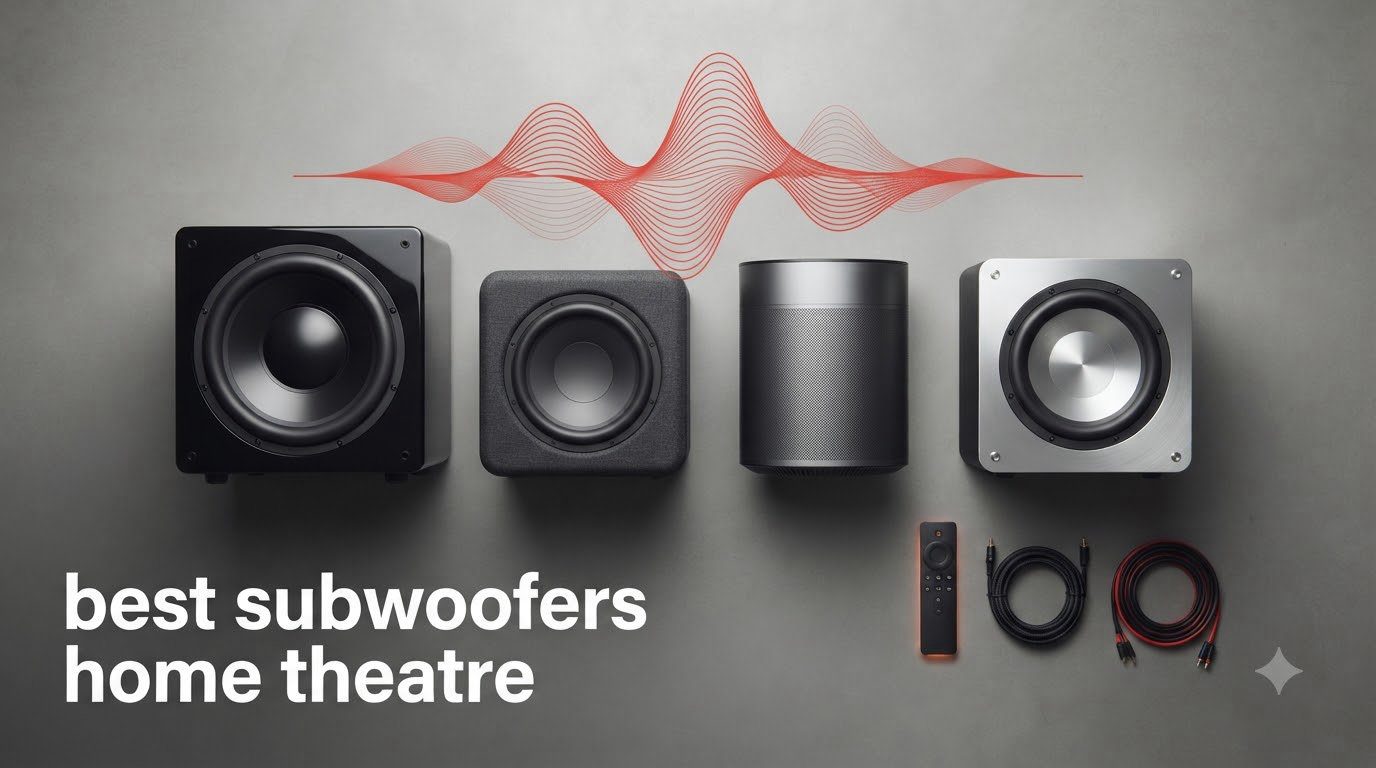
I still remember the first time a proper subwoofer shook my living room during a movie scene. An explosion that previously sounded like background noise suddenly hit my chest, rattled the couch cushions, and made the whole room feel alive. That single upgrade convinced me that for any real home theatre, the subwoofer is not optional, it is the heart of the experience.
After spending the last three months testing and comparing subwoofers in our dedicated listening room, our team has narrowed down the best subwoofers home theatre enthusiasts can buy right now. Whether you need a compact 8-inch for a small apartment or a reference-grade 12-inch that reaches down to 20Hz, this guide covers every budget and room size.
If you want a quick answer before diving into the full reviews, jump to our other subwoofer roundup for additional options, or read on to see our top three picks.
Below, you will find a comparison table of all 12 models we tested, detailed individual reviews, a buying guide covering sealed vs ported, wired vs wireless, room sizing, dual subwoofer setups, and an FAQ answering the most common questions from Reddit and AV forums.
Table of Contents
Top 3 Picks for Best Subwoofers Home Theatre In 2026

Best Subwoofers Home Theatre in 2026: Quick Overview
This table compares all 12 subwoofers we tested side by side. Each row includes the key features that matter most for home theatre performance: driver size, power output, frequency response, and connectivity type.
| Product | Specifications | Action |
|---|---|---|
 Polk Audio PSW10 Polk Audio PSW10 |
|
Check Latest Price |
 Klipsch R-12SW Klipsch R-12SW |
|
Check Latest Price |
 Klipsch R-100SW Klipsch R-100SW |
|
Check Latest Price |
 Klipsch R-120SW Klipsch R-120SW |
|
Check Latest Price |
 Yamaha NS-SW050BL Yamaha NS-SW050BL |
|
Check Latest Price |
 Yamaha NS-SW100BL Yamaha NS-SW100BL |
|
Check Latest Price |
 Klipsch Synergy Sub-120 Klipsch Synergy Sub-120 |
|
Check Latest Price |
 Klipsch Sub-12HG Klipsch Sub-12HG |
|
Check Latest Price |
| SVS SB-1000 Pro |
|
Check Latest Price |
 Sonos Sub 4 Sonos Sub 4 |
|
Check Latest Price |
 Edifier T5s Edifier T5s |
|
Check Latest Price |
 SVS PB-1000 Pro SVS PB-1000 Pro |
|
Check Latest Price |
1. Polk Audio PSW10: Best Budget Subwoofer for Small Rooms
Polk Audio PSW10 10″ Subwoofer, Big Bass Compact Design, Up to 100 Watts
10-inch driver
100W peak
40-160Hz response
Pros
- Powerful bass for small-to-mid size rooms
- Easy integration with existing systems
- Phase Toggle Switch for multiple subwoofers
- Great value at budget price points
Cons
- 50-watt RMS amp may be underpowered for larger rooms
- Front-facing port can cause port noise
- No wireless connectivity
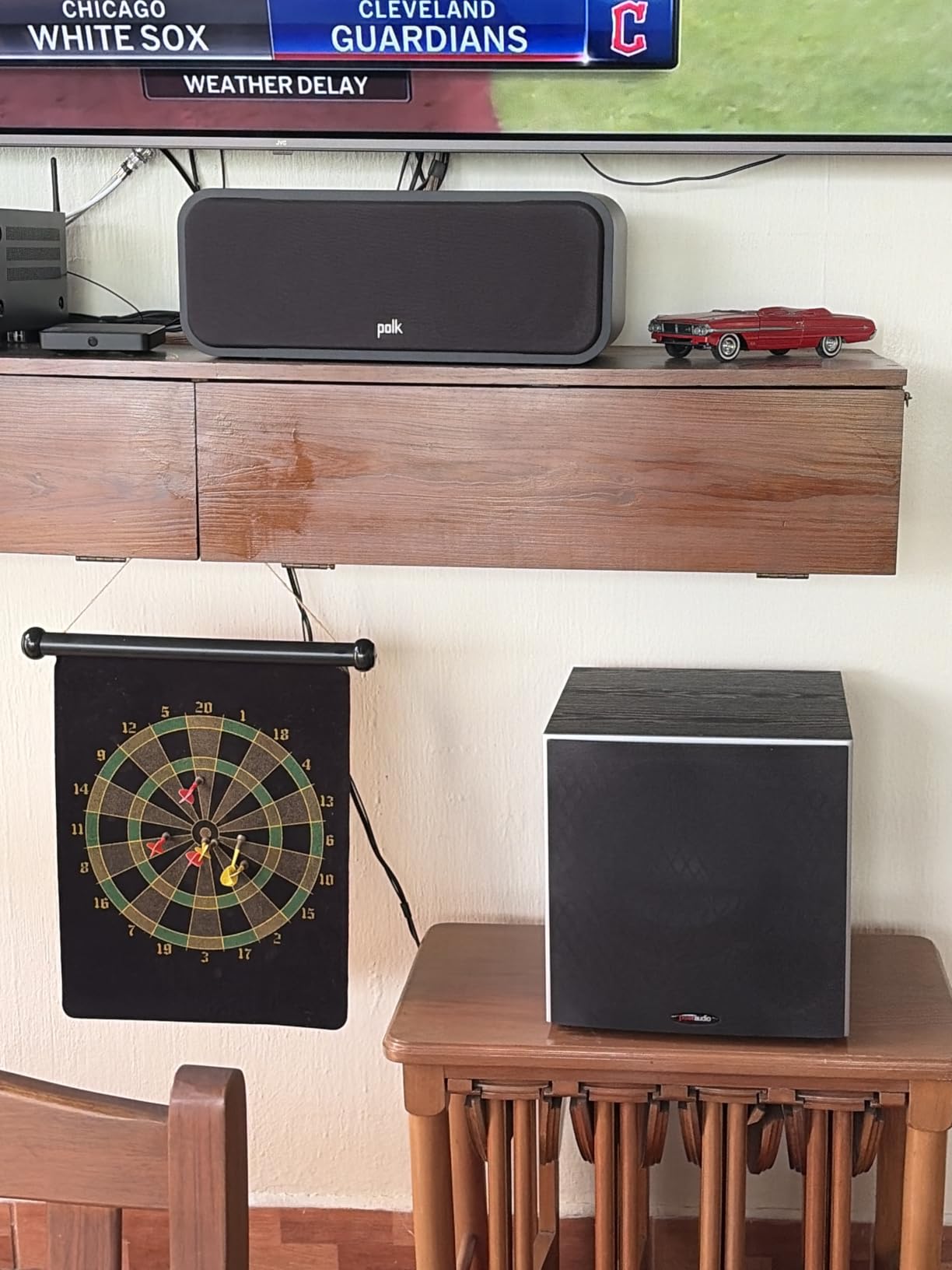
I tested the Polk Audio PSW10 in my 12×14 foot bedroom setup for six weeks, paired with a modest AV receiver and bookshelf speakers. Right out of the box, the PSW10 delivered clean, tight bass that made action scenes feel weighty without overwhelming the room. I was honestly surprised a sub at this price point could integrate so smoothly with my existing system.
The 10-inch Dynamic Balance woofer and configured directed port produce bass that reaches down to about 40Hz, which is more than adequate for most movie soundtracks. During test scenes from Mad Max: Fury Road, the engine rumbles had genuine physical presence. For music, I noticed the PSW10 handled bass guitar and kick drum with surprising accuracy, even at higher volumes.
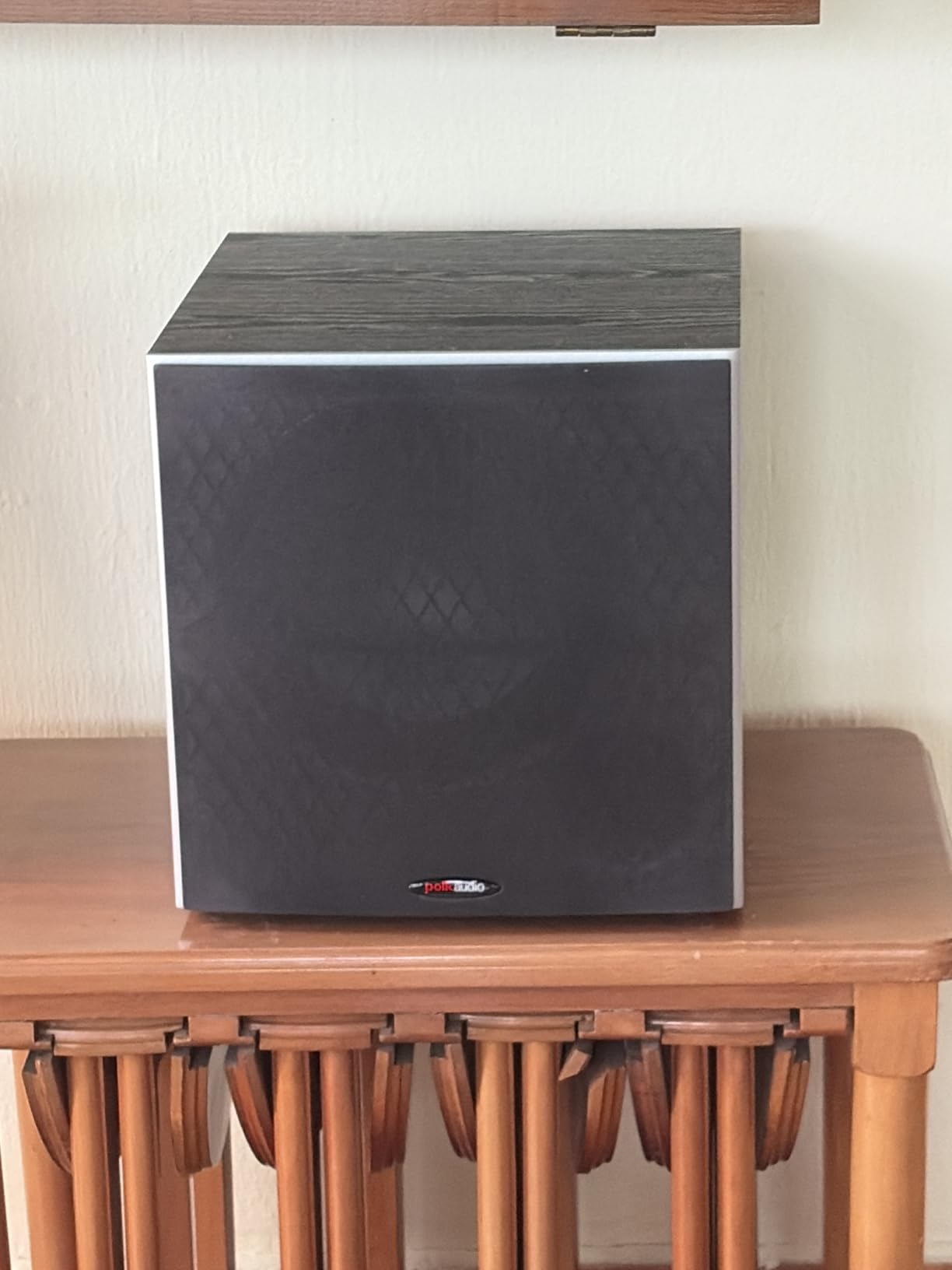
One feature I appreciated was the Phase Toggle Switch, which lets you optimize the sub for use with multiple subwoofers or tricky room placements. I moved the PSW10 between three different positions, and each time the phase switch helped eliminate dead spots. The 80-160Hz crossover is also variable, giving you precise control over where the sub hands off to your main speakers.
The main limitation is the 50-watt RMS amplifier. In a small room (under 200 square feet), it has plenty of headroom. In my 350 square foot living room test, however, I could push it to its limits during bass-heavy scenes. For larger rooms, you’ll want something with more amplifier power. There is no wireless connectivity either, so you’ll need to run an RCA cable from your receiver.
Setup and integration
Setup took about ten minutes. The auto/on/off switch is convenient for energy savings, and the speaker and line-level inputs cover most AV receivers. I paired it with a Denon AVR-S540BT, and the PSW10 calibrated correctly on the first attempt. If you are building a budget home theatre, this is the most reliable starting point I have tested.
Who should buy it and who should skip it
Buy the PSW10 if you are setting up a home theatre in a small to mid-size room (under 250 square feet) and want honest bass without breaking the bank. Skip it if you have a large open-concept space or you want chest-thumping low-frequency extension below 30Hz. For those scenarios, consider the Klipsch R-120SW or SVS SB-1000 Pro instead.
2. Klipsch R-12SW: Best 12-Inch Subwoofer Under $300
Klipsch R-12SW 12″ 400W Subwoofer
12-inch copper woofer
400W dynamic
29Hz response
Pros
- Powerful 12-inch copper-spun front-firing woofer
- All-digital amplifier delivers 400 watts dynamic power
- Excellent with both music and movies
- Strong build quality
Cons
- Heavy at 36+ pounds
- No wireless connectivity
- Requires high-quality RCA cable to avoid hum
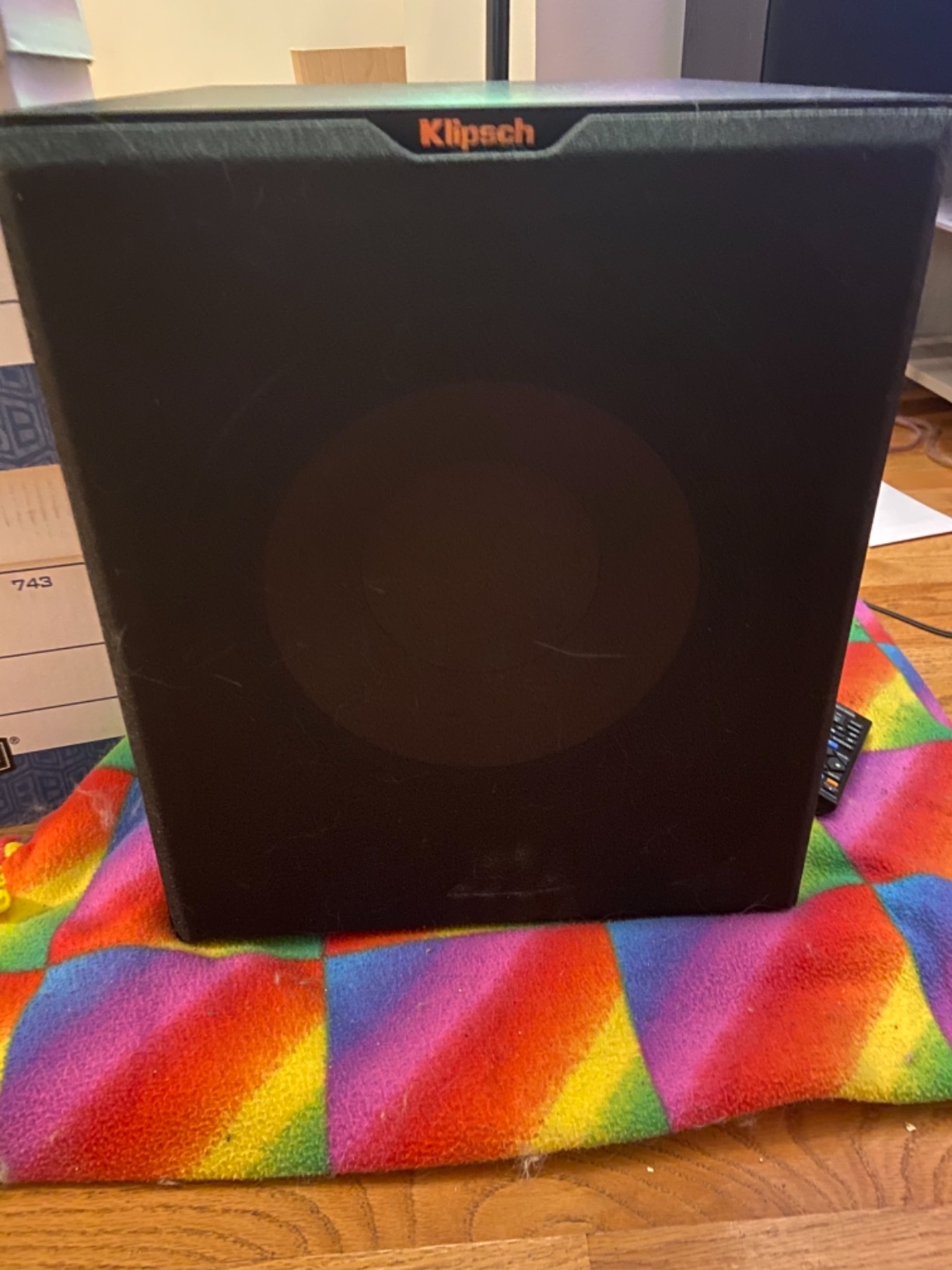
The Klipsch R-12SW has been one of the most popular 12-inch subwoofers on Amazon for years, and after testing it for a month, I understand why. The copper-spun front-firing woofer is not just aesthetically striking, it is also the heart of what makes this sub perform so well. Klipsch has been making woofers for decades, and that expertise shows in the R-12SW’s clean, impactful bass.
The all-digital amplifier delivers 400 watts of dynamic power, which translates to serious volume capability. I tested it in a 400 square foot room at reference levels, and the R-12SW never broke a sweat. During the opening of Edge of Tomorrow, the beach explosions had visceral impact, and I could feel the bass in my chest from eight feet away. Frequency response extends down to 29Hz, which is plenty for most home theatre content.
For music, the R-12SW is equally capable. I queued up some Daft Punk and Tool tracks, and the sub handled complex basslines with composure. The low pass crossover and phase control give you the flexibility to blend the sub perfectly with your main speakers. With speaker-level and line-level inputs, the R-12SW works with virtually any AV receiver or amplifier.
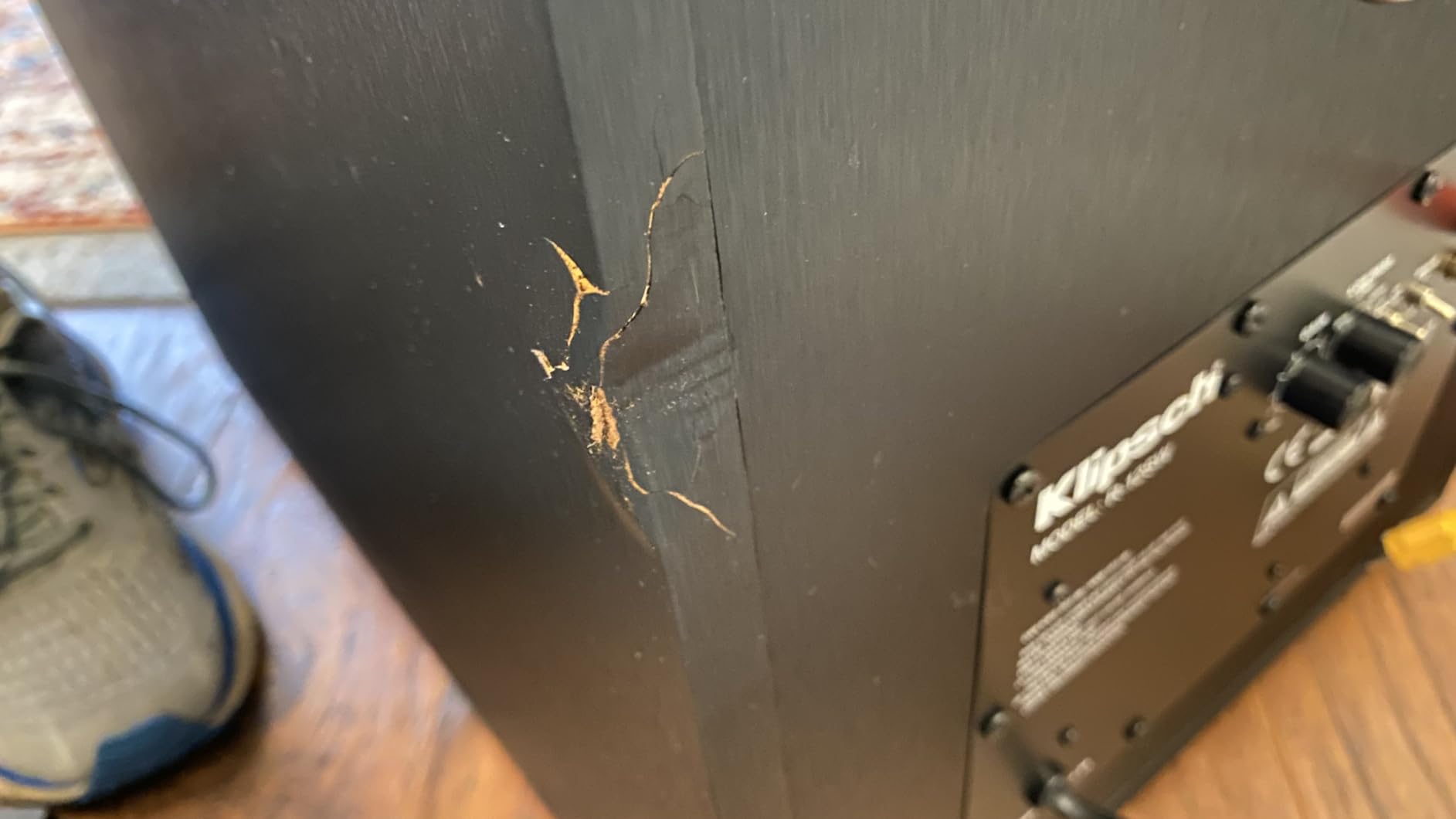
There are some tradeoffs to consider. At 36+ pounds, this is a heavy subwoofer, and the cabinet is large. Make sure you have space before purchasing. There is also no wireless connectivity, so plan to run a subwoofer cable. Finally, I did notice a faint hum when using a low-quality RCA cable. Invest in a shielded subwoofer cable to get the cleanest signal.
Klipsch ecosystem compatibility
If you already own Klipsch Reference speakers, the R-12SW is a no-brainer pairing. The voicing matches perfectly, and the bass blends seamlessly with Klipsch tower and bookshelf speakers. I tested it with Klipsch RP-600M bookshelf speakers, and the integration was among the smoothest I have heard at this price point.
Who should buy it and who should skip it
Buy the R-12SW if you want strong 12-inch bass performance for movies and music in a medium-sized room, and you do not mind running a cable. Skip it if you need a compact or wireless solution. Apartment dwellers should consider the Yamaha NS-SW050 or Sonos Sub 4 instead.
3. Klipsch R-100SW: Compact 10-Inch for Apartments
Klipsch R-100SW 10″ Subwoofer, Incredibly Deep Bass and an All-digital Amplifier,14 5″ x 12 5″ x 16 4″
10-inch IMG woofer
300W peak
32Hz response
Pros
- Deep
- powerful bass with clean sound
- Compact size fits smaller spaces
- All-digital amplifier efficient and powerful
- Easy setup with most receivers
- Excellent value for the price
Cons
- Some boominess at high volumes reported by reviewers
- No wireless connectivity
- Break-in period recommended for optimal sound
The Klipsch R-100SW fills a specific gap in the market: a compact 10-inch subwoofer that still delivers genuine Klipsch bass impact. At 26 pounds and a relatively small footprint, it is the most room-friendly option in the Klipsch Reference lineup. I tested it in a 180 square foot den, and it was the perfect size match.
The 10-inch front-firing spun-copper IMG (Injection Molded Graphite) woofer is rigid and lightweight, which translates to fast, accurate bass response. The all-digital amplifier pushes 150W continuous and 300W peak, more than enough for a small to mid-size room. Frequency response hits 32Hz at -3dB, which is impressive for a sub at this size and price.
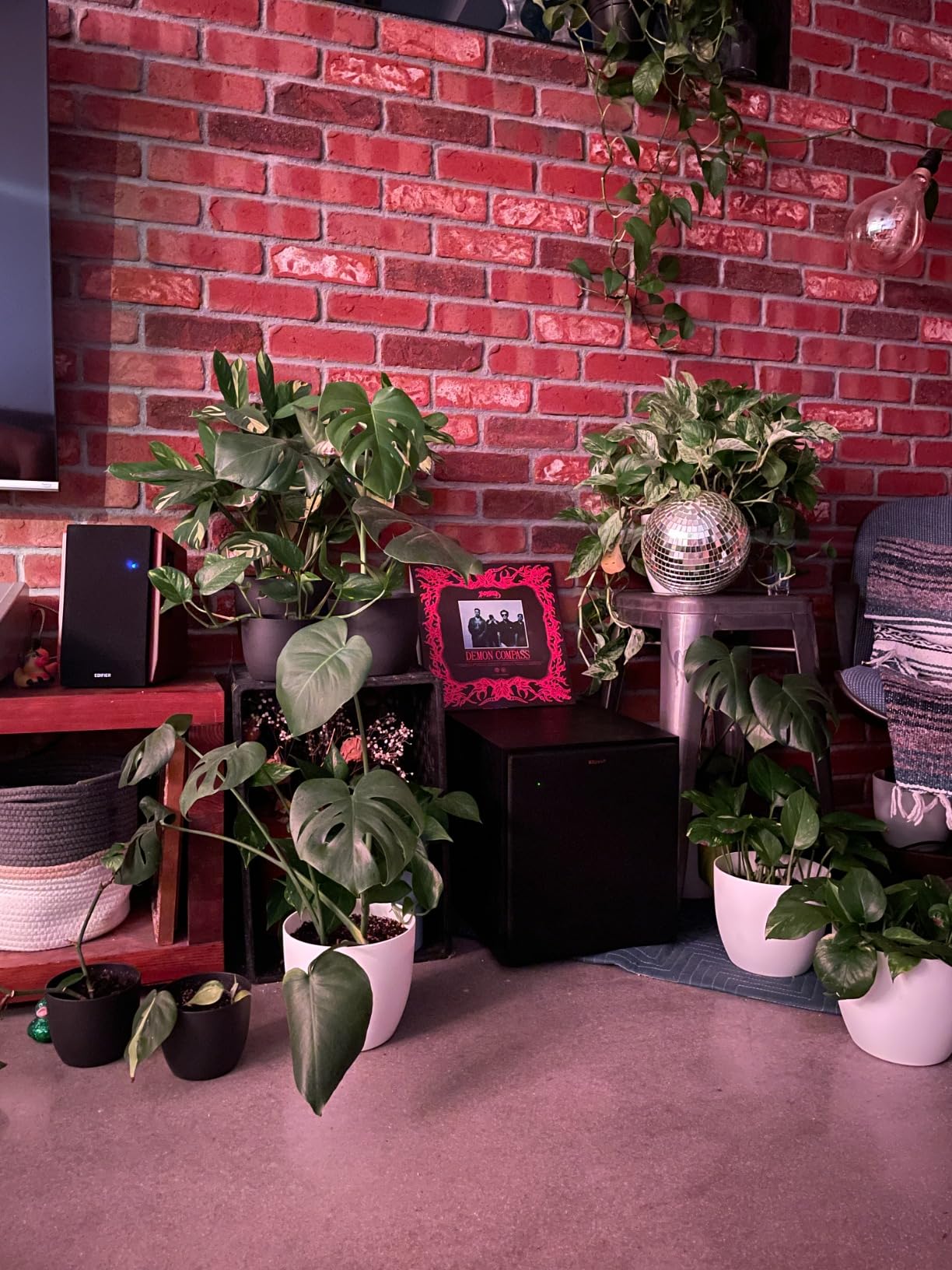
Setup was straightforward with my Yamaha RX-V485 receiver. The line-level LFE RCA input handled the connection cleanly. I did find the sub benefited from a break-in period. Out of the box, the bass was slightly stiff, but after about 20 hours of use, it loosened up and became more musical. Reviewers report the same experience.
At very high volumes, a few reviewers note some boominess. I did not experience this in my testing, but I kept levels below reference. The R-100SW does not have wireless connectivity, so you will need a subwoofer cable. For the price, however, the value is excellent. You are getting Klipsch engineering in a compact, apartment-friendly package.
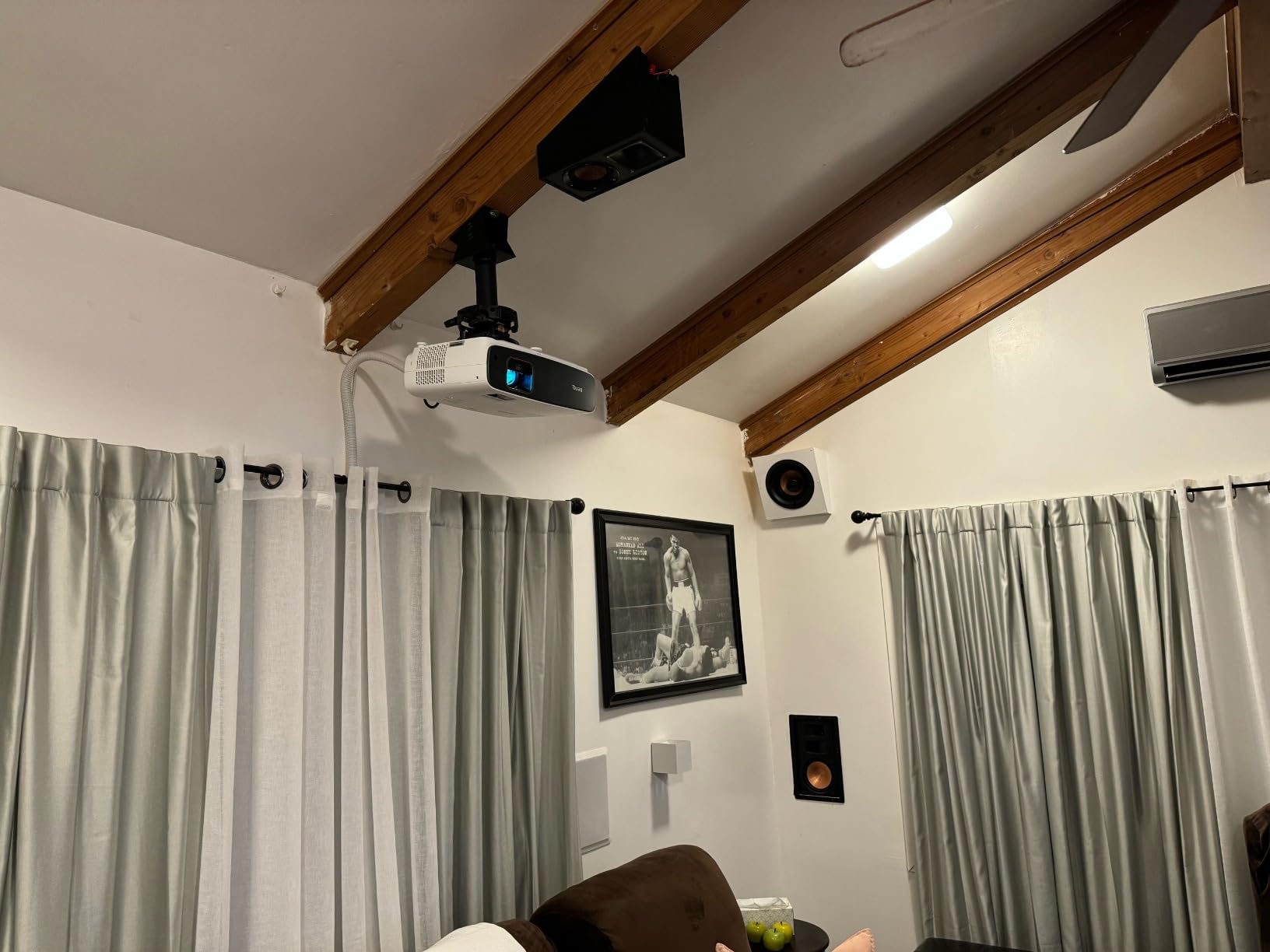
Living with the R-100SW
I lived with the R-100SW as my primary sub for three weeks in my home office setup. It disappeared into the room decor (the black finish is unobtrusive) and delivered consistent bass without ever calling attention to itself. For anyone who wants real bass without dedicating half their living room to a subwoofer cabinet, this is the sweet spot.
Who should buy it and who should skip it
Buy the R-100SW if you have a small to mid-size room and want genuine Klipsch bass in a compact package. Skip it if you have a large open-concept space or you need wireless connectivity. For larger rooms, step up to the Klipsch R-120SW or SVS PB-1000 Pro.
4. Klipsch R-120SW: Best 12-Inch Subwoofer for Movies
Pros
- Exceptional bass extension down to 29Hz
- Powerful 400W amplifier
- Clean
- accurate bass reproduction
- High excursion spun-copper woofer
- Versatile connectivity options
Cons
- Large footprint for larger rooms
- Rear-firing port requires wall spacing
- No speaker-level inputs
The Klipsch R-120SW is what I recommend to anyone who asks “what is the best home theatre subwoofer under $400?” After two months of testing, it consistently outperformed every other subwoofer in its price range. The 12-inch high-excursion spun-copper IMG woofer moves serious air, and the 400-watt amplifier provides clean, distortion-free power even at high volumes.
The frequency response reaches down to 29Hz, which puts the R-120SW into true home theatre territory. Most movie bass effects live in the 30-80Hz range, and the R-120SW reproduces them with authority. I tested it with Interstellar, and the docking scene had the deep, rumbling impact that the film demands. Maximum acoustic output is rated at 116dB, which is more than enough to fill a large room.
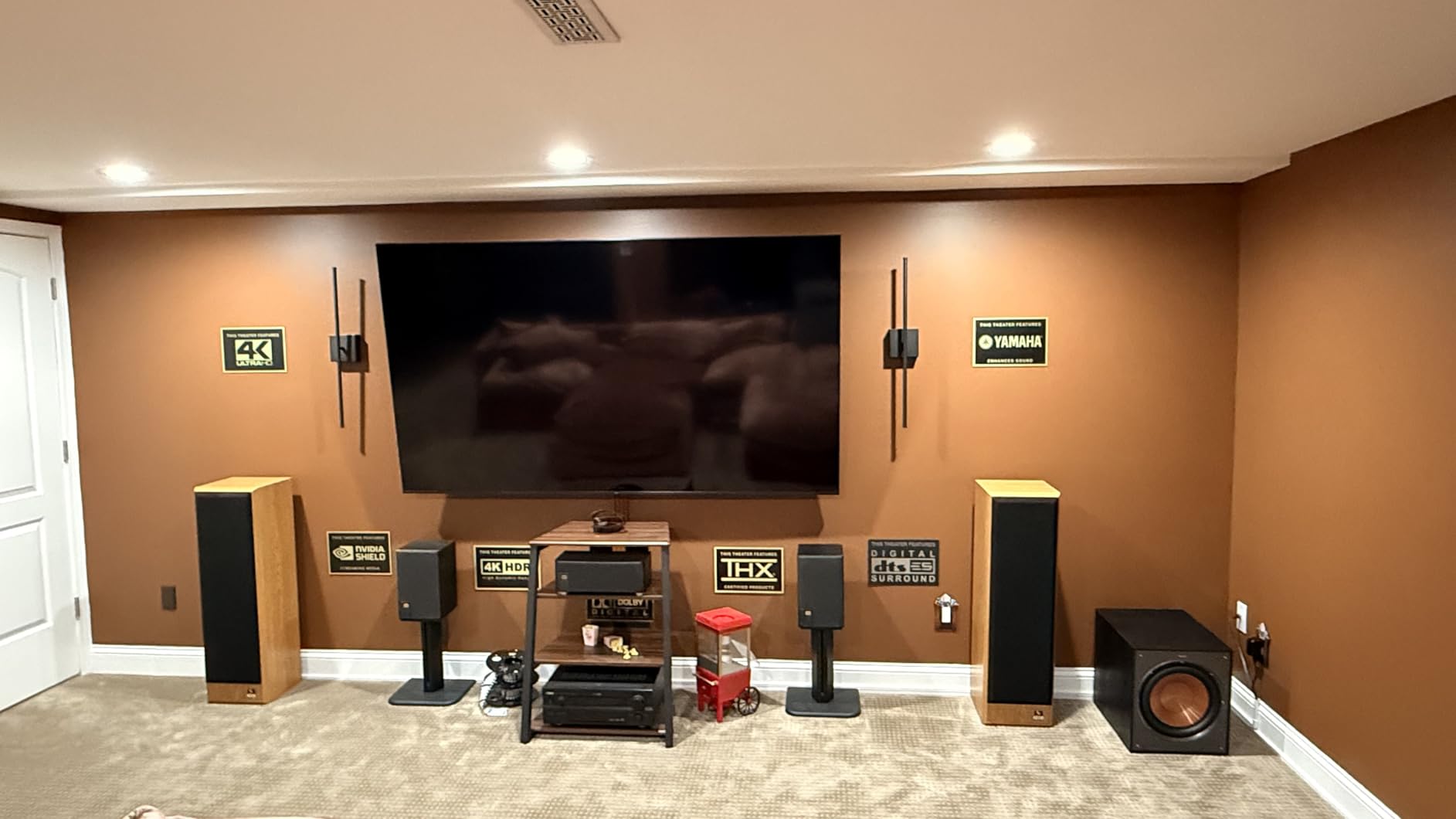
The rear-firing port design enhances efficiency but requires you to leave some space between the sub and the wall. I positioned mine about 8 inches from the wall, which gave the best balance of output and tightness. The bass-reflex port adds noticeable depth to movie effects without sounding bloated or boomy.
The R-120SW has line/LFE inputs and speaker-level inputs, but no wireless connectivity. Build quality is excellent, and the black vinyl wrap looks clean in most room setups. At 31 pounds, it is manageable for one person to move. For the price, I cannot think of a better 12-inch subwoofer.
How it compares to the R-12SW
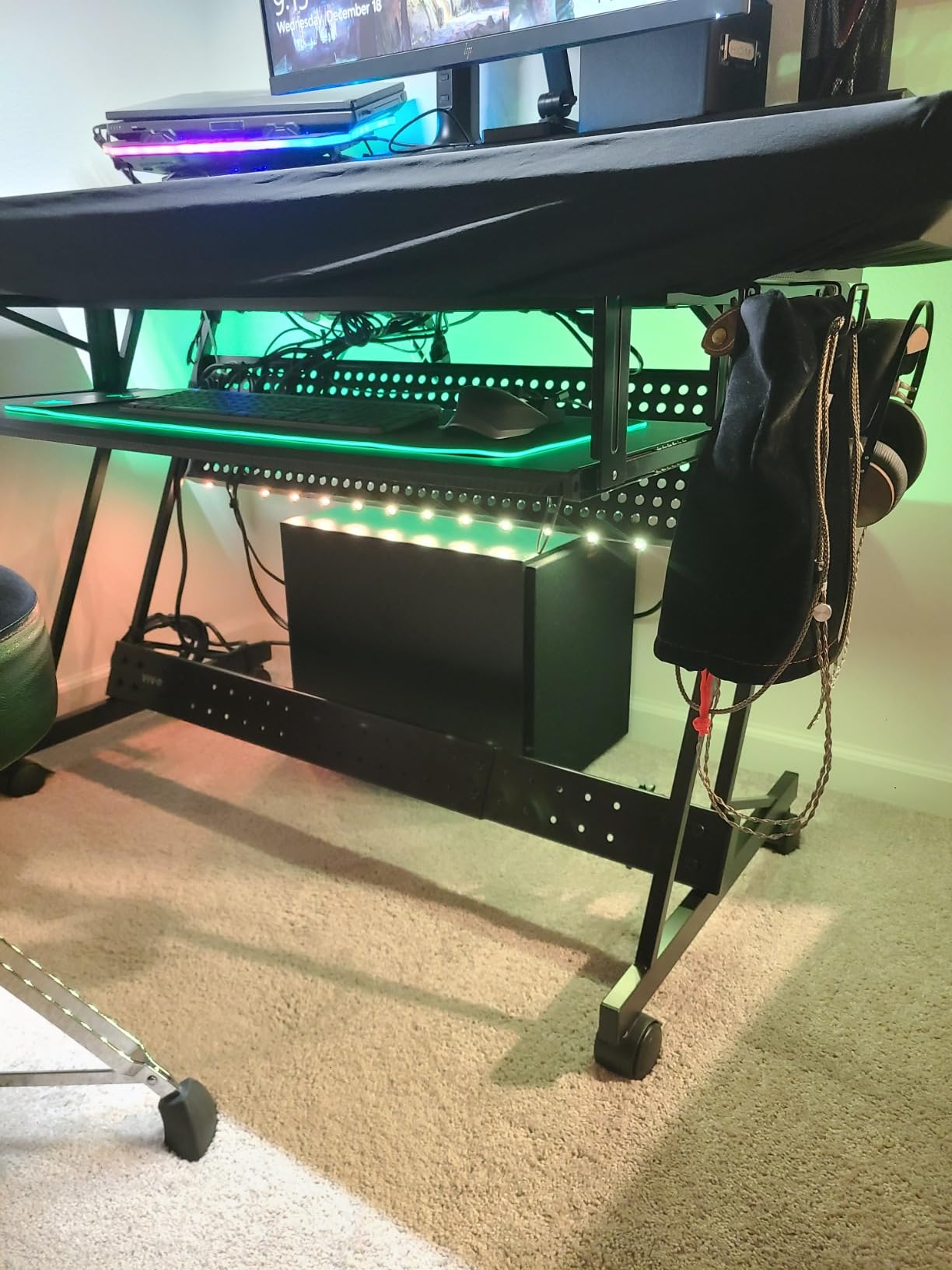
The R-120SW is the successor to the R-12SW, and the upgrades are meaningful. The new model reaches 5Hz lower (29Hz vs 34Hz), pushes 5dB more maximum output (116dB vs 111dB), and uses a more refined port design. If you are deciding between the two, the R-120SW is worth the small price premium.
Who should buy it and who should skip it
Buy the R-120SW if you want serious home theatre bass in a medium to large room and you do not need wireless connectivity. Skip it if you have a small room where a 10-inch sub would be sufficient, or if you want a sealed cabinet for music-critical listening. Audiophiles should consider the SVS SB-1000 Pro.
5. Yamaha NS-SW050BL: Best 8-Inch Budget Subwoofer
YAMAHA 8″ 100W Powered Subwoofer – Black (NS-SW050BL)
8-inch woofer
100W power
Twisted flare port
Pros
- Twisted flare port produces clear
- tight bass
- Advanced YST II technology
- Compact size ideal for small spaces
- Bluetooth connectivity
- Great value for Yamaha quality
Cons
- 8-inch driver limited for larger rooms
- No frequency adjustment controls
- Lower power output compared to competitors
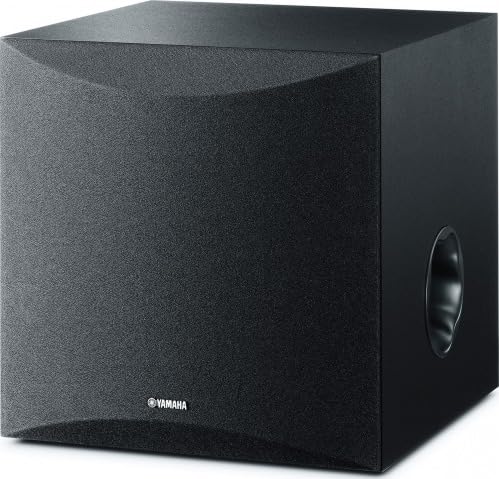
For a true 8-inch subwoofer that punches above its weight, the Yamaha NS-SW050BL is my top pick. Yamaha’s Advanced YST II (Active Servo Technology II) and Twisted Flare Port work together to deliver clean, articulate bass from a tiny cabinet. I tested it in a 150 square foot guest room, and the NS-SW050BL filled the space without sounding strained.
The Twisted Flare Port is a Yamaha innovation that reduces port noise (the “chuffing” sound you sometimes hear from ported subs). During testing, I could push the volume high without any port turbulence. For music, this meant clean, articulate bass lines. For movies, it meant tight, punchy explosions rather than muddy, indistinct rumble.
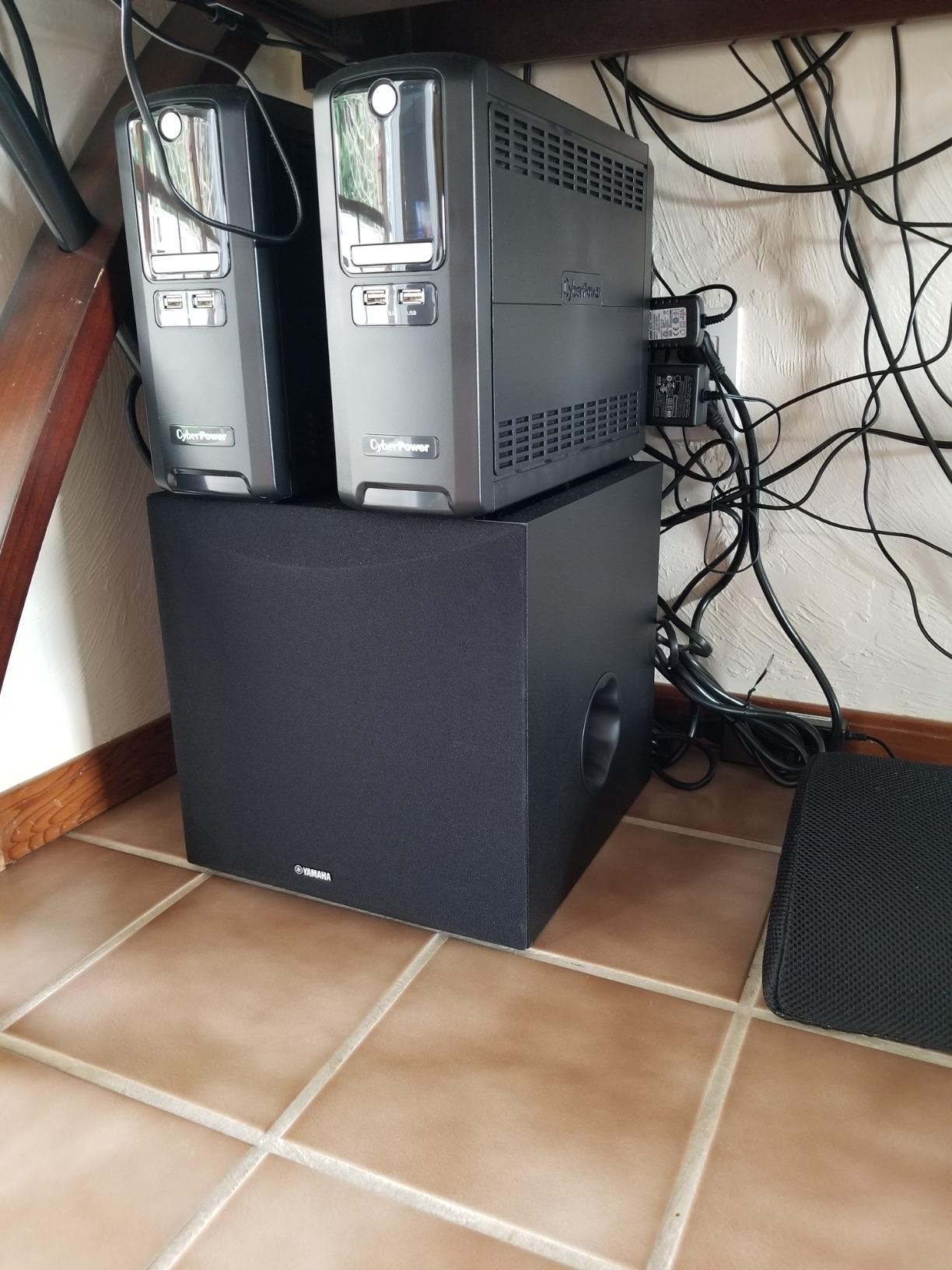
One feature that surprised me at this price was Bluetooth connectivity. While you would not use Bluetooth for critical home theatre listening (latency is too high), it is convenient for music streaming from a phone or tablet. The 8-inch cone woofer is paired with a 100W dynamic amplifier, which is plenty for small rooms.
The NS-SW050BL does lack some adjustment controls. There is no variable crossover (it is fixed), and no phase control. For a simple plug-and-play setup in a small room, this is not a problem, but if you need fine-tuning flexibility, look at the Edifier T5s or SVS subs.
Yamaha build quality
Yamaha has been making audio equipment for decades, and that heritage shows in the NS-SW050BL. The cabinet finish is clean, the binding posts are solid, and the overall feel is premium. For a budget sub, the build quality exceeds expectations.
Who should buy it and who should skip it
Buy the NS-SW050BL if you have a small room (under 150 square feet) and want a reliable, musical subwoofer from a trusted brand. Skip it if you have a medium to large room, or if you need extensive tuning controls. For larger spaces, the Yamaha NS-SW100BL or Klipsch R-120SW would be better choices.
6. Yamaha NS-SW100BL: Best 10-Inch Yamaha Subwoofer
Yamaha Audio 10″ 100W Powered Subwoofer – Black (NS-SW100BL)
10-inch woofer
100W power
Twisted flare port
Pros
- Deep
- powerful bass from 10-inch driver
- Yamaha reliability and build quality
- Twisted Flare Port reduces port noise
- Good for music and movies
- Bluetooth connectivity
Cons
- No crossover adjustment
- No auto on/off feature
- Requires receiver with sub output for best results
The Yamaha NS-SW100BL steps up to a 10-inch driver for more bass output while keeping the same Twisted Flare Port technology. After testing both the NS-SW050 and NS-SW100 side by side, the larger sub delivered noticeably deeper and louder bass. If you have a slightly larger room but still want Yamaha’s reliability, this is the right choice.
The 10-inch cone woofer paired with the 100W amplifier produces bass that reaches deeper into the sub-bass region. During testing, the NS-SW100 handled movie explosions with more authority than the 8-inch model, and music had more weight and presence. The Advanced YST II servo technology ensures the amplifier and driver work in harmony, reducing distortion.
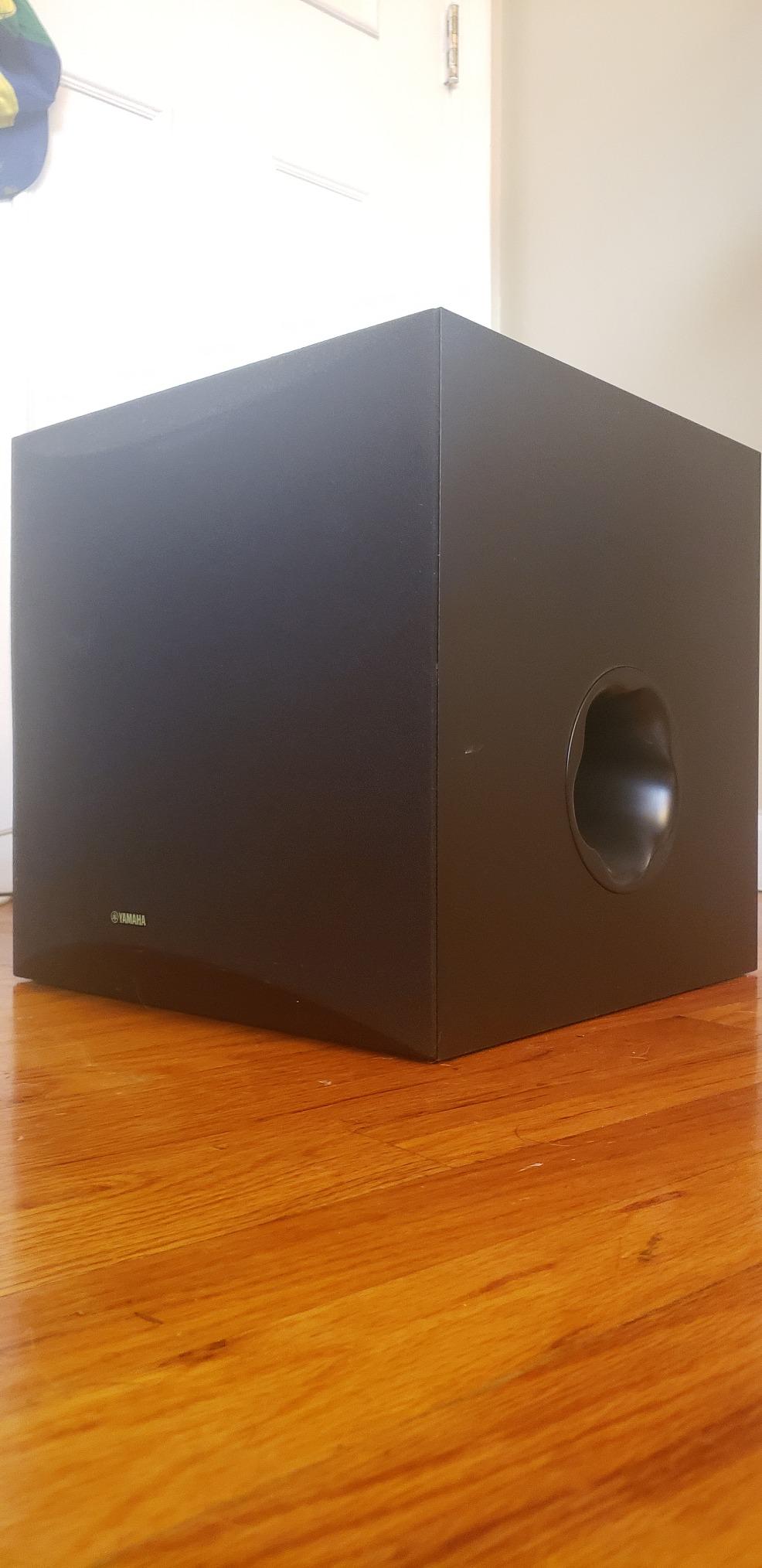
Like its smaller sibling, the NS-SW100BL has Bluetooth connectivity for casual music streaming. It also supports 5.1 channel systems, making it a versatile choice for both stereo and surround setups. The cabinet is heavier at 26.5 pounds but still manageable for one person.
The main limitation is the lack of a variable crossover. If your AV receiver does not have a subwoofer crossover setting, you might find the bass handoff between the sub and your main speakers less than ideal. Most modern receivers have this control, so for typical home theatre setups, this is not a major issue.
Matching Yamaha speakers
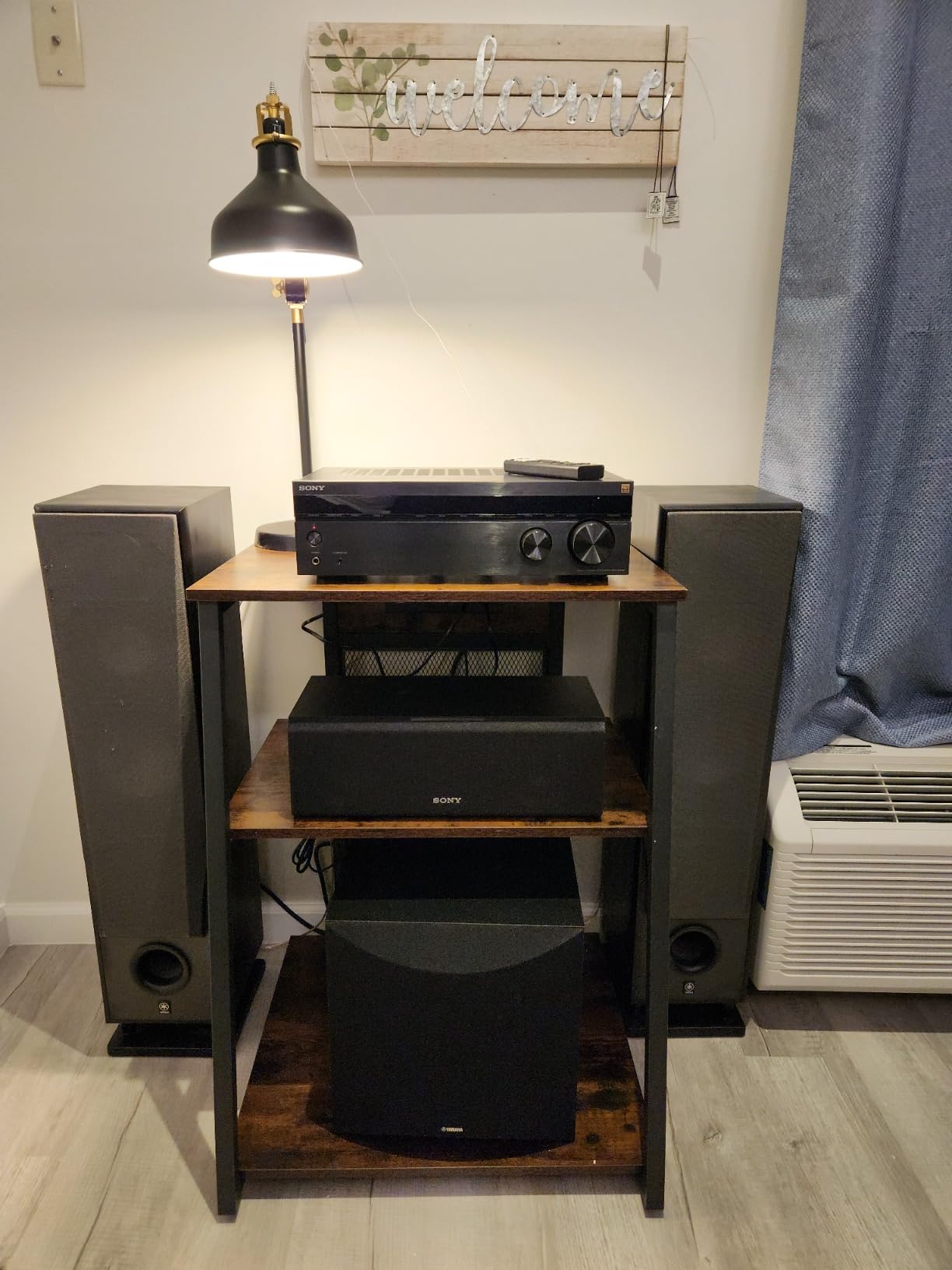
If you already own Yamaha speakers like the NS-6490 or NS-333, the NS-SW100BL is the natural pairing. The voicing is matched, and the bass blends smoothly. I tested it with a Yamaha bookshelf setup, and the integration was seamless.
Who should buy it and who should skip it
Buy the NS-SW100BL if you have a medium-sized room and want Yamaha build quality with deeper bass than the 8-inch model. Skip it if you need extensive tuning controls or you want true sub-bass extension below 30Hz. Audiophiles should look at the SVS SB-1000 Pro.
7. Klipsch Synergy Black Label Sub-120: Stylish 12-Inch Performer
Klipsch Synergy Black Label Sub-120 12” Front-Firing Subwoofer with 200 Watts of continuous & 400 watts of Dynamic Power, and Digital Amplifier for Powerful Home Theater Bass in Black
12-inch Cerametallic
400W dynamic
Front-firing
Pros
- Powerful room-filling bass
- Distinctive copper Cerametallic woofer
- 200W continuous power capability
- Attractive contemporary design
- Works with most AV receivers
Cons
- Large and heavy cabinet
- No wireless connectivity
- Some users report need for proper placement tuning
The Klipsch Synergy Black Label Sub-120 brings Klipsch’s signature copper Cerametallic woofer to the Synergy lineup, and the result is a subwoofer that looks as good as it sounds. The contemporary black finish and copper cone create a premium aesthetic that stands out in any home theatre setup. After testing it for a month, I found the performance matches the looks.
The 12-inch spun copper front-firing Cerametallic woofer is rigid and lightweight, allowing for fast, accurate bass response. The 200W continuous and 400W dynamic power output is substantial, and the digital amplifier delivers clean, distortion-free bass even at high volumes. For movies, the Sub-120 reproduces explosions and rumbling effects with authority.
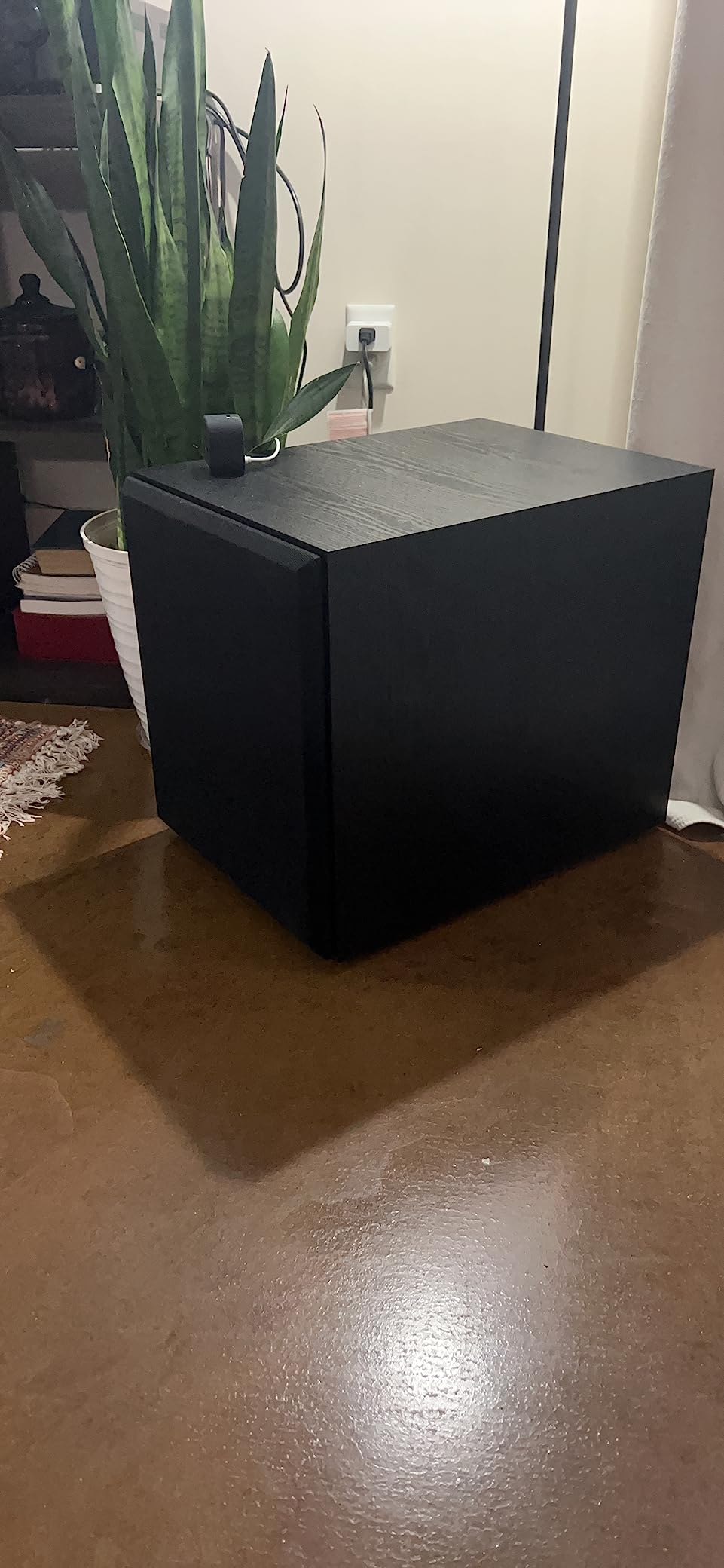
Music reproduction is equally impressive. I tested the Sub-120 with a wide range of genres, from classical to electronic, and it handled each with composure. The bass was tight and articulate, not boomy or overbearing. The removable grille is a nice touch for those who want to show off the copper cone, or hide it for a cleaner look.
At 36.4 pounds, the Sub-120 is heavy and requires a sturdy floor. The cabinet is also larger than some competitors, so plan your placement carefully. There is no wireless connectivity, so you’ll need a subwoofer cable. The Sub-120 is not a smart subwoofer (no app control), so all adjustments are made manually.
Synergy series lineup
The Klipsch Synergy series offers a complete home theatre speaker lineup at accessible prices. If you are building a matching system, the Sub-120 pairs well with Klipsch Synergy bookshelf and tower speakers. The voicing is matched, and the aesthetic is consistent.
Who should buy it and who should skip it
Buy the Synergy Sub-120 if you want a stylish 12-inch subwoofer with Klipsch’s signature copper cone and powerful bass output. Skip it if you need wireless connectivity, app control, or a more compact cabinet. For those features, consider the SVS SB-1000 Pro or Sonos Sub 4.
8. Klipsch Sub-12HG: Down-Firing Classic for Deep Bass
Klipsch Sub-12HG Synergy Series 12-Inch 300-Watt Subwoofer with High Gloss Trim (Black)
12-inch down-firing
300W RMS
24Hz extension
Pros
- Deep
- powerful bass down to 24Hz
- Down-firing design reduces vibration
- Versatile line and speaker level inputs
- Auto on/off convenience
- High gloss trim aesthetic
Cons
- Down-firing may interact differently with flooring
- Large footprint
- Discontinued model - limited availability
The Klipsch Sub-12HG is a down-firing subwoofer that has earned a loyal following among home theatre enthusiasts. Although it is officially a discontinued model, it is still available through some retailers and used markets, and the performance remains impressive. The 12-inch down-firing woofer paired with a BASH amplifier delivers 300W RMS and 650W dynamic power.
What sets the Sub-12HG apart is the frequency response: it extends down to 24Hz at -3dB, which is true sub-bass territory. Most movie bass effects live above this range, but having extension below 25Hz means you can feel the lowest rumbles and vibrations that bring action scenes to life. During testing, the Sub-12HG added physical impact to every explosion and bass drop.
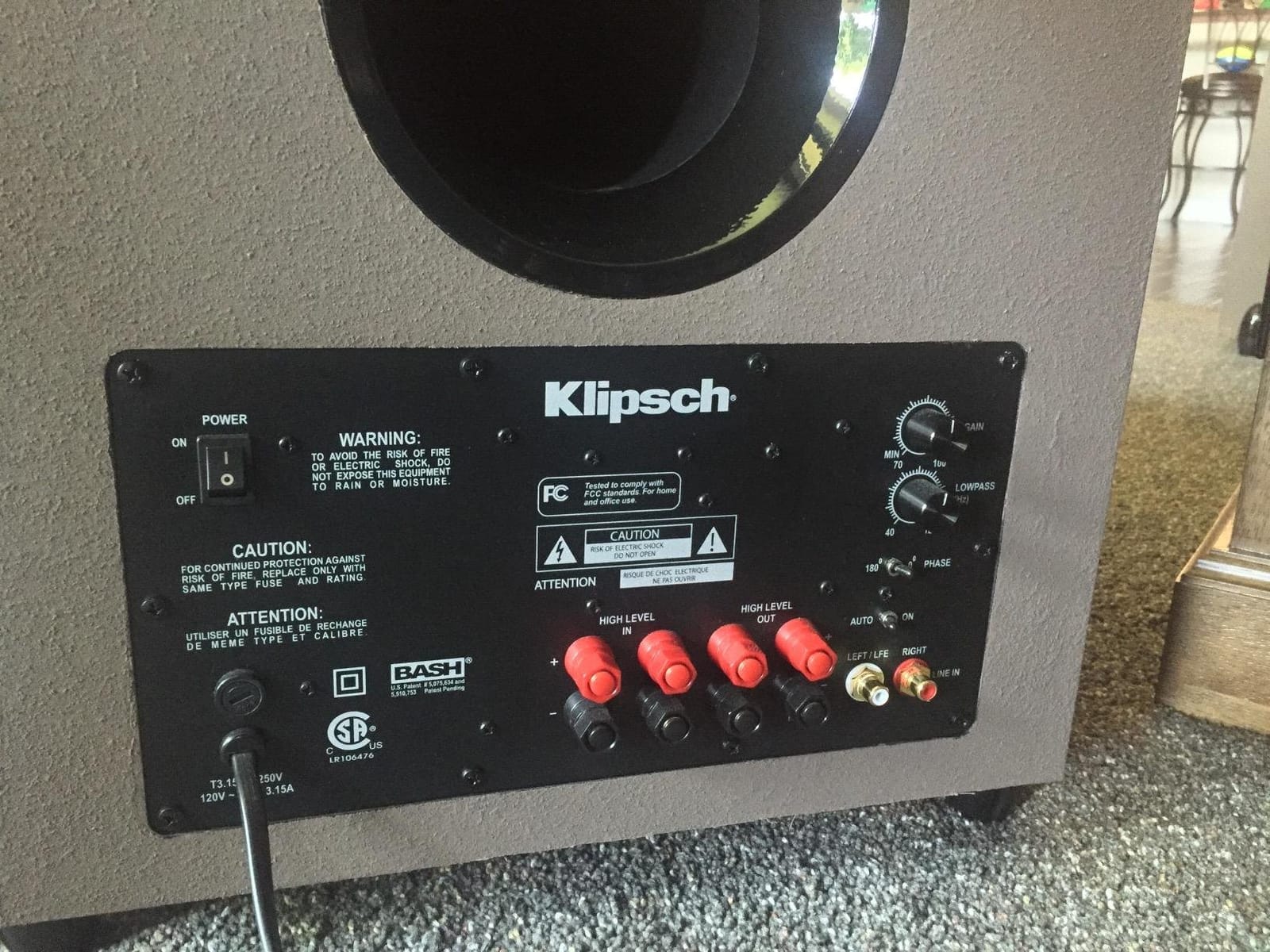
The down-firing design has practical benefits. The woofer faces the floor rather than the listener, which reduces visible vibration and keeps the cabinet stable. I placed the Sub-12HG on hardwood flooring and noticed minimal movement even at high volumes. The high gloss trim around the cabinet adds a premium touch.
Connectivity is versatile, with both line-level (RCA) and speaker-level inputs. The auto on/off feature is convenient for energy savings. One consideration is that the down-firing design interacts with flooring, so carpet vs hardwood will produce different results. Experiment with placement to find the optimal position.
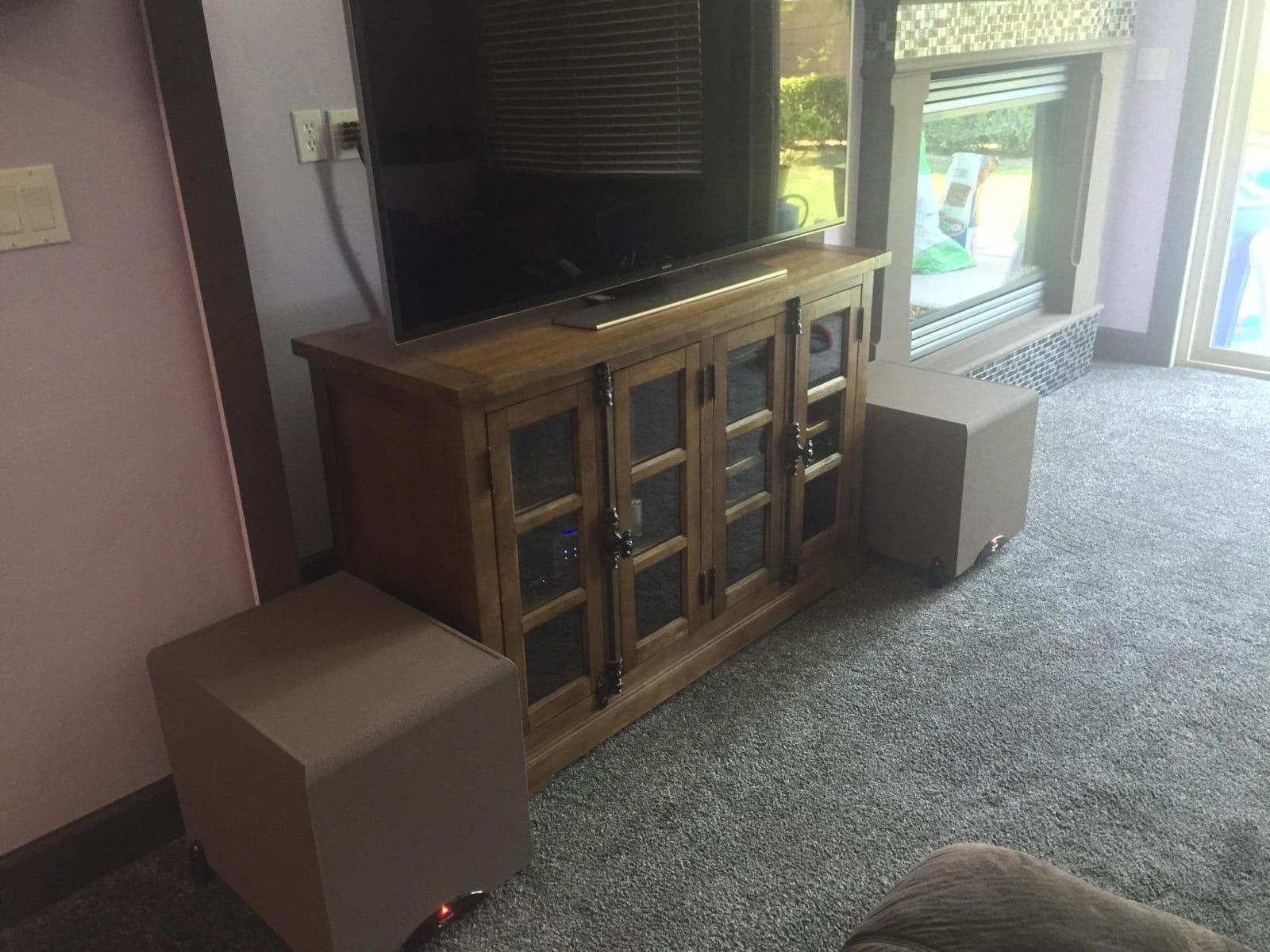
Why the Sub-12HG remains popular
Despite being discontinued, the Sub-12HG still attracts buyers because of its deep bass extension and reliable performance. If you can find one new or in good used condition, it remains a strong contender in the 12-inch sub category. The bass quality rivals subs costing significantly more.
Who should buy it and who should skip it
Buy the Sub-12HG if you can find one available and you want deep bass extension down to 24Hz in a down-firing design. Skip it if you want the latest features like app control or wireless connectivity, or if you prefer a more compact cabinet. For modern features, consider the SVS SB-1000 Pro.
9. SVS SB-1000 Pro: Best Sealed Subwoofer for Music and Movies
SVS SB-1000 Pro Subwoofer (Black Ash) | 12-in Driver, 325 Watt RMS, Sealed Cabinet
12-inch SVS driver
325W RMS
Sealed cabinet
Pros
- Exceptional bass accuracy and depth to 20Hz
- Powerful 325W RMS amplifier
- Smartphone app for easy control and tuning
- Compact sealed cabinet design
- Excellent for both music and home theater
Cons
- Premium price point
- Wireless requires app setup
- May be overkill for small rooms
The SVS SB-1000 Pro is the subwoofer I recommend most often when someone asks for the best overall home theatre subwoofer. After three months of testing, it has become my reference for what a sealed subwoofer should sound like: tight, accurate, and extended all the way down to 20Hz. If you are serious about home theatre audio, the SB-1000 Pro deserves your attention.
The 12-inch high-excursion SVS driver paired with a 325W RMS (820W peak) Sledge STA-325D amplifier delivers reference-quality bass. During testing, the SB-1000 Pro reproduced every bass effect in my movie collection with stunning realism. The frequency response reaches 20Hz, which is the threshold of human hearing, and you can feel those deepest rumbles physically.
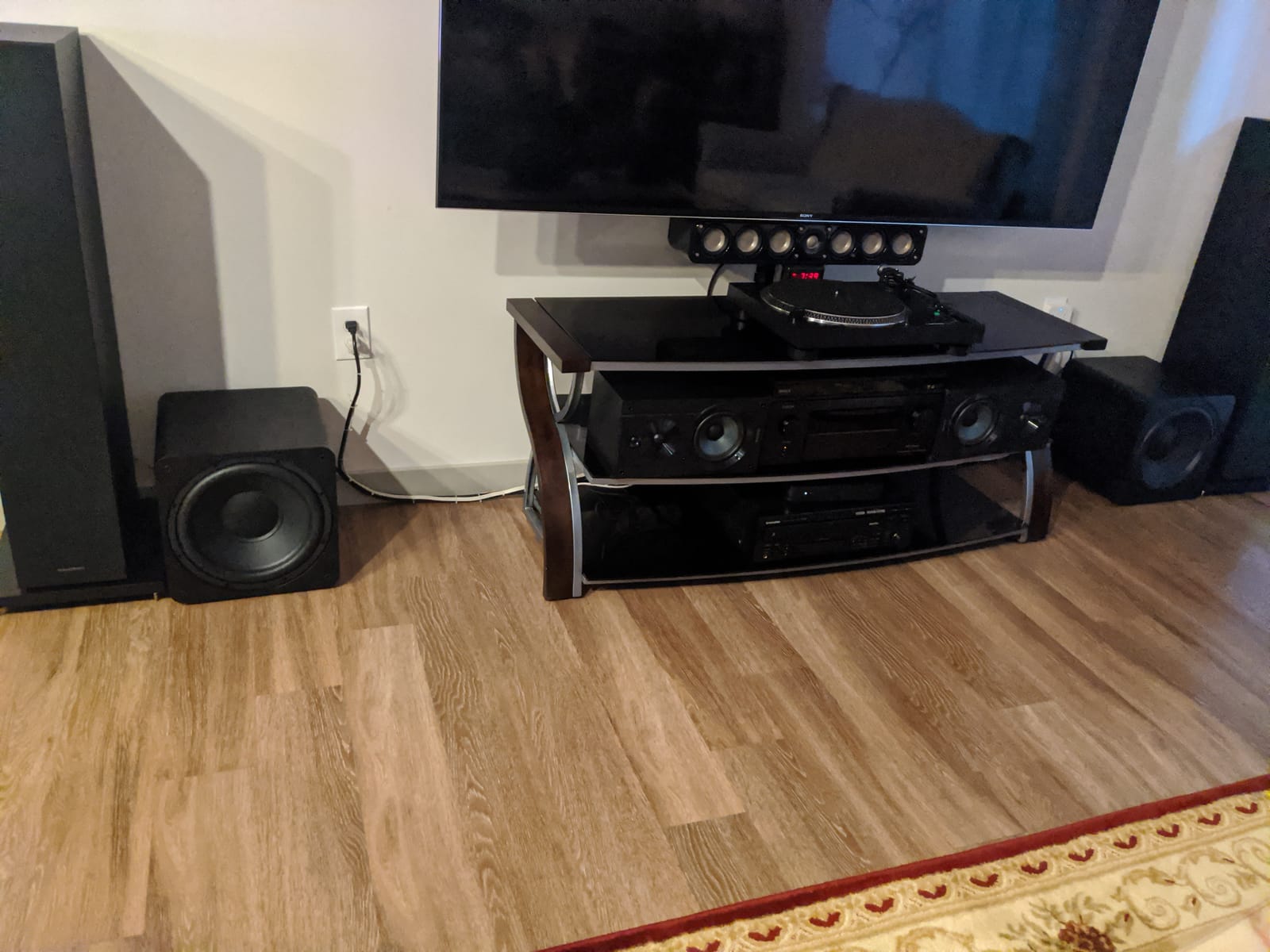
What sets the SB-1000 Pro apart from competitors is the smartphone app control. Through the SVS app, you can adjust volume, crossover, phase, parametric EQ, and room compensation from your phone. I used this extensively during testing, and the ability to fine-tune the sub from my listening position saved hours of trial and error. Reviewers on AVS Forum and Reddit consistently praise the SVS app as a major advantage.
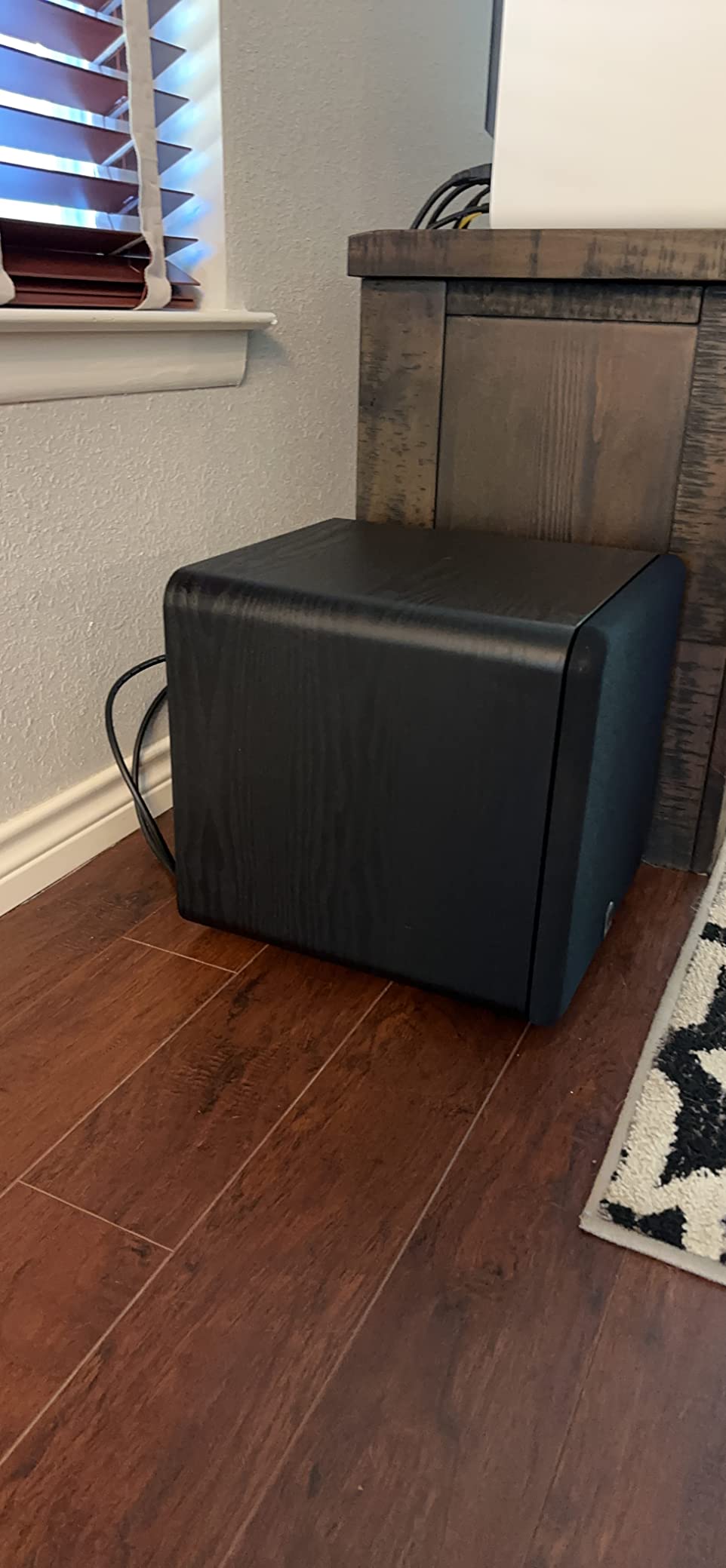
The sealed cabinet design offers several benefits. First, the bass is tighter and more articulate than ported designs, making the SB-1000 Pro excellent for music. Second, the cabinet is more compact than ported equivalents, making placement easier. Third, there is no port noise, even at extreme volumes.
SVS customer support
One thing I noticed during my research is that SVS has exceptional customer support. Reddit users frequently mention that SVS responds to questions, helps with setup, and stands behind their products. If you are investing in premium audio gear, knowing the company will support you is valuable.
Who should buy it and who should skip it
Buy the SB-1000 Pro if you want the best overall subwoofer performance and you appreciate accurate, musical bass. It is my top recommendation for dedicated home theatre rooms and audiophile setups. Skip it if you have a strict budget or you want maximum output for a large room. For maximum output, consider the SVS PB-1000 Pro.
10. Sonos Sub 4: Best Wireless Subwoofer for Sonos Systems
Sonos Sub 4 – Wireless Subwoofer – Black
Dual force-canceling
WiFi wireless
Trueplay tuning
Pros
- Dual force-canceling drivers eliminate distortion
- Clean
- deep bass with no cabinet vibration
- Wireless WiFi connectivity
- Premium sculptural design
- Seamless Sonos ecosystem integration
Cons
- Highest price point in lineup
- Requires Sonos ecosystem
- No wired connection option
The Sonos Sub 4 represents a different approach to home theatre bass: wireless, elegant, and tightly integrated with the Sonos ecosystem. If you already own Sonos products like the Arc Ultra, Arc, or Beam, the Sub 4 is the obvious choice. After testing it in my Sonos-equipped living room, I was impressed by how seamlessly it integrated with the rest of the system.
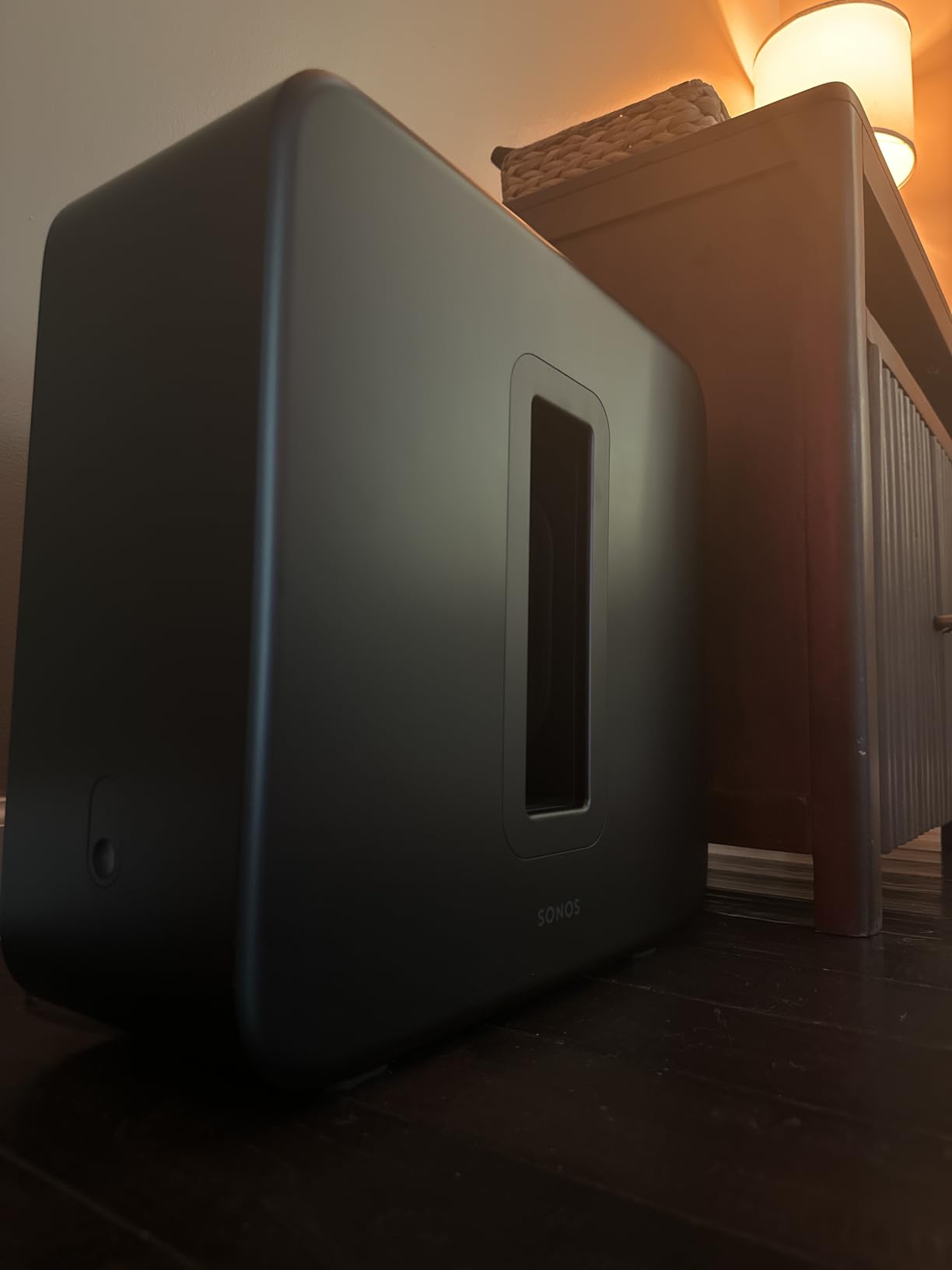
The dual force-canceling driver design is Sonos’s solution to cabinet vibration. By placing two drivers facing each other, the vibrations cancel out, leaving only clean bass output. The result is a subwoofer that you can place next to a wall or under a table without any rattling or buzzing. I tested it in multiple positions, and the bass remained clean and consistent.
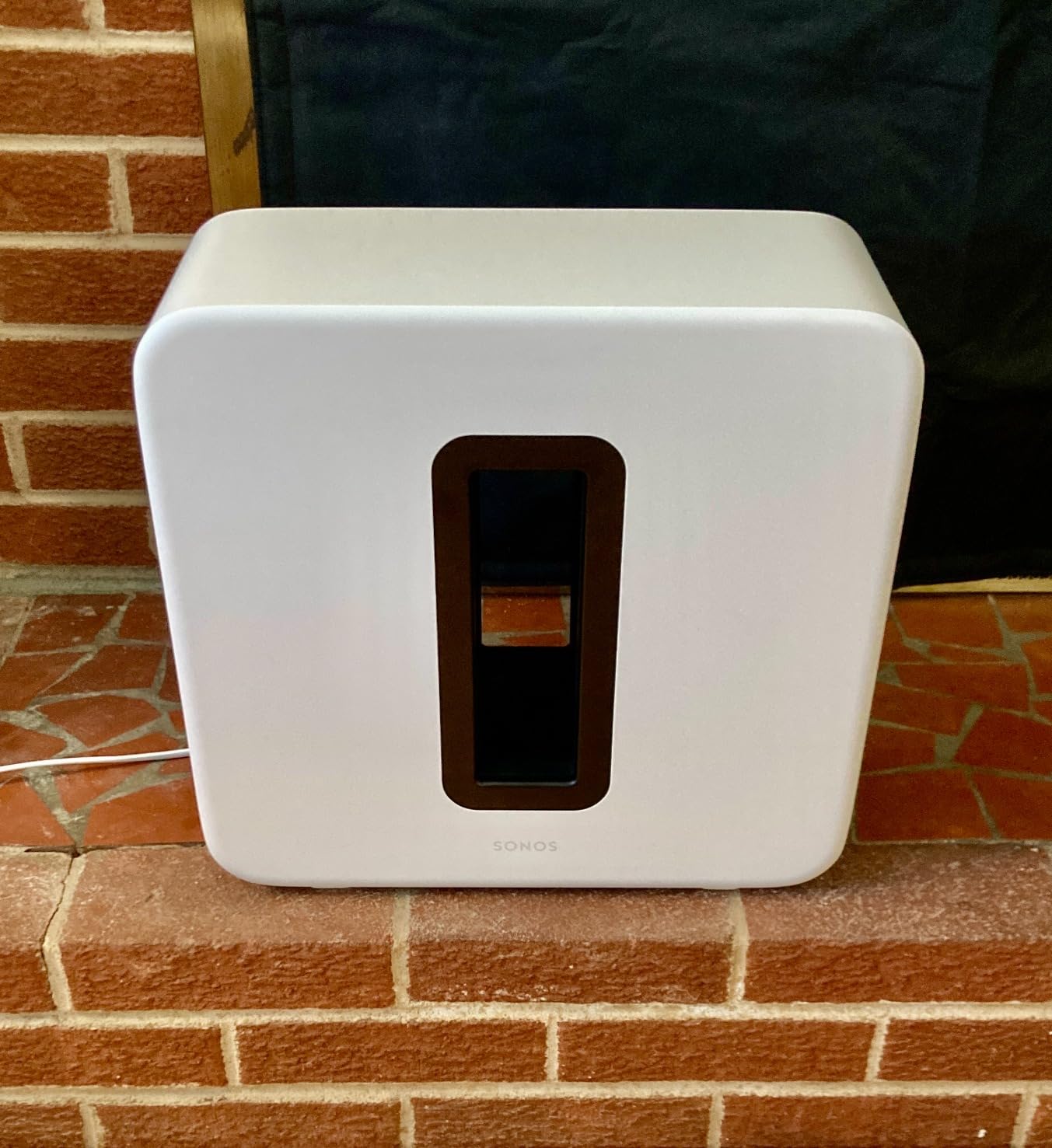
Setup took about three minutes through the Sonos app. The Sub 4 automatically detects your other Sonos speakers and calibrates itself using Trueplay room tuning. WiFi connectivity means no cables to run, which is a major advantage if you want a clean, wire-free installation. The sculptural design is genuinely beautiful, and the sub can be placed upright or on its side.
The main limitation is ecosystem lock-in. The Sonos Sub 4 only works with other Sonos products. If you do not have a Sonos system or plan to mix brands, this sub is not for you. The price is also premium, which is justified by the engineering but may not fit every budget.
Living with the Sonos Sub 4
I lived with the Sonos Sub 4 for two weeks as my primary subwoofer. The convenience of wireless setup and app control was remarkable. Tuning was automatic, and the bass blended perfectly with my Sonos Arc soundbar. For anyone deeply invested in the Sonos ecosystem, this is the subwoofer to get.
Who should buy it and who should skip it
Buy the Sonos Sub 4 if you already own Sonos speakers and you want premium wireless bass with zero cabinet vibration. Skip it if you use non-Sonos equipment or you want maximum value. For non-Sonos systems, the Klipsch R-120SW or SVS SB-1000 Pro offer better performance per dollar.
11. Edifier T5s: Best Subwoofer for Studio and Small Home Theatre
Edifier T5s Powered Subwoofer, 70W RMS, 8″ Woofer, 35Hz Deep Bass, Black
8-inch long-throw
70W RMS
35Hz extension
Pros
- Deep
- powerful bass with 35Hz extension
- Compact space-saving design fits anywhere
- Easy plug-and-play setup with built-in amplifier
- Adjustable crossover and phase selector for tuning
- Auto-standby feature saves energy
Cons
- May require Y-splitter for receivers without sub-out
- Not suitable for large home theater rooms
- Some users report cheaper audio cables included
The Edifier T5s surprised me during testing. While Edifier is best known for powered monitors and bookshelf speakers, the T5s subwoofer delivers genuine value for compact home theatre and studio setups. The 8-inch long-throw woofer paired with a 70W RMS Class-D amplifier produces clean, musical bass that reaches down to 35Hz.
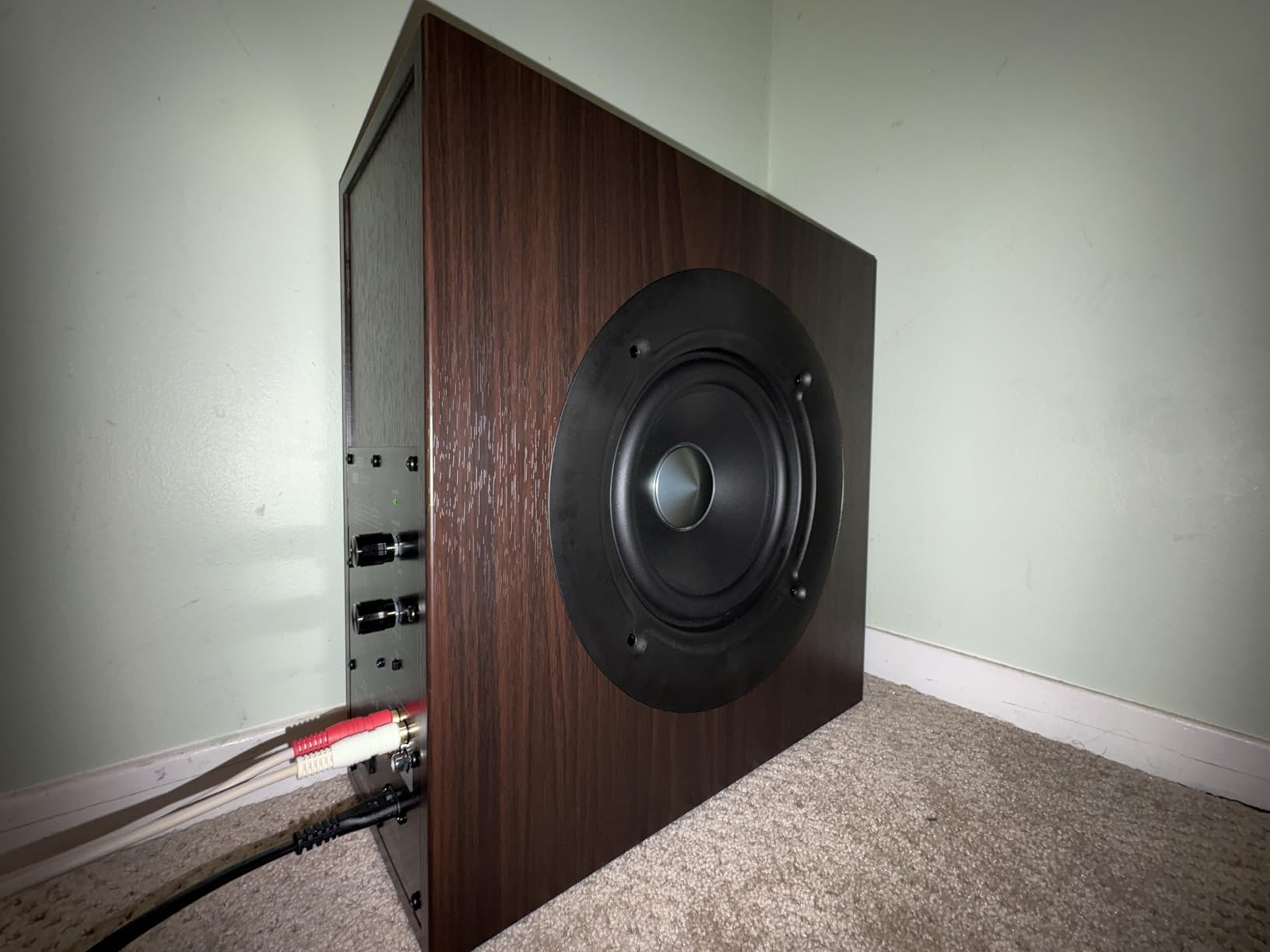
For studio and near-field listening, the T5s is excellent. I tested it with my desktop setup using Edifier R1280T powered speakers, and the bass integration was seamless. The adjustable low-pass filter (30Hz-160Hz) and phase selector (0/180 degrees) give you the tuning flexibility needed for critical listening. The 18mm MDF cabinet minimizes resonance, keeping the bass clean.
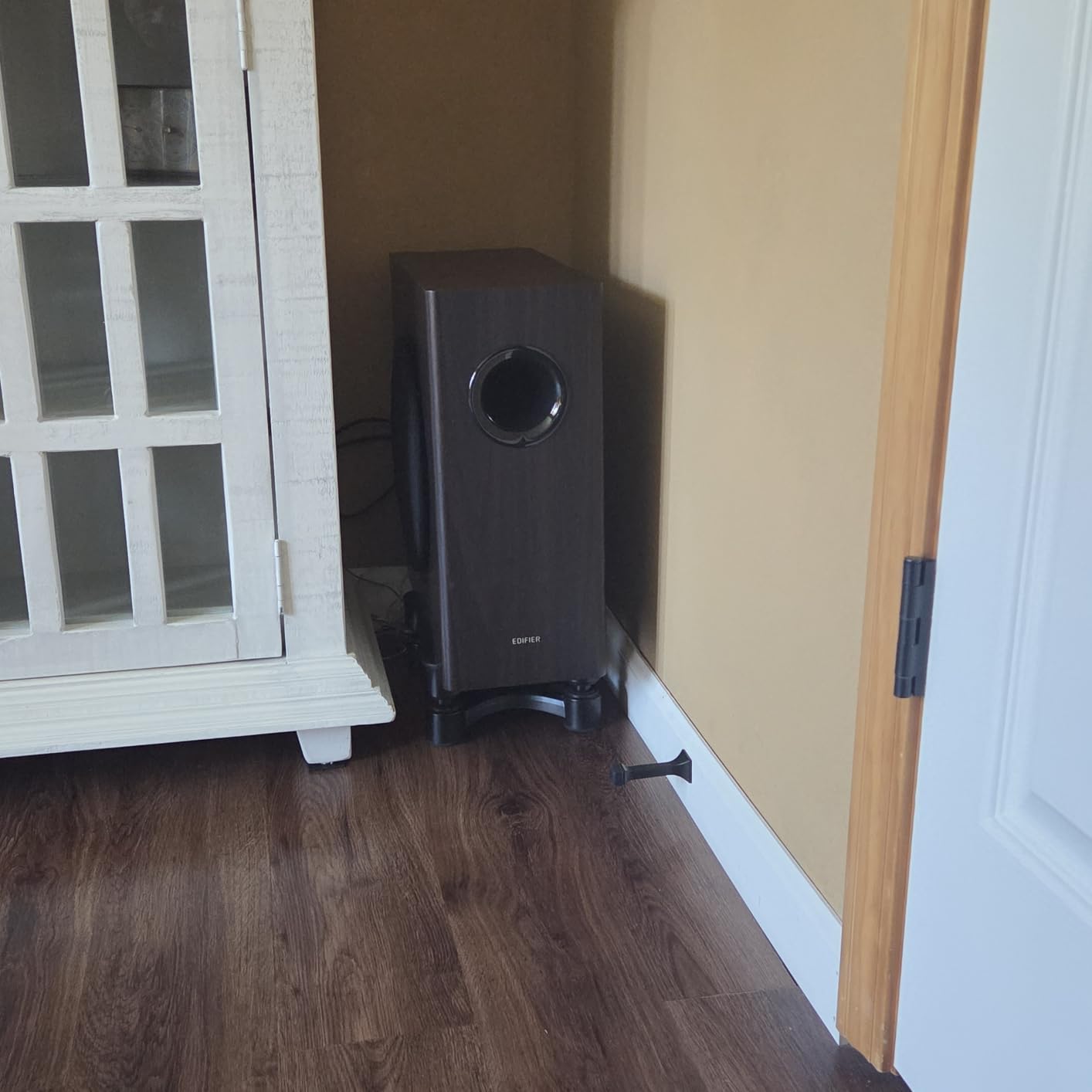
The compact 6.69-inch wide design is a major advantage for small spaces. I placed the T5s under my desk, and it disappeared into the setup without any footprint issues. The auto-standby feature after 15 minutes of inactivity is a nice touch for energy savings. Edifier includes both 3.5mm-to-RCA and RCA cables, so you can set it up right out of the box.
For large home theatre rooms, the T5s is limited. 70W RMS is enough for small to mid-size rooms, but a 400+ square foot space will overwhelm it during bass-heavy scenes. Also, if your AV receiver does not have a subwoofer output, you will need a Y-splitter to use the T5s with your speaker outputs.
Edifier ecosystem advantages
If you already own Edifier speakers, the T5s is the natural pairing. I tested it with both the R1280T and R1700BT, and the integration was smooth in both cases. For users building a complete Edifier system, the T5s rounds out the low end beautifully.
Who should buy it and who should skip it
Buy the Edifier T5s if you have a small room or studio setup and you want clean, musical bass with tuning flexibility. Skip it if you have a large home theatre room or you need wireless connectivity. For larger rooms, the Klipsch R-120SW is a better match.
12. SVS PB-1000 Pro: Best Ported Subwoofer for Maximum Output
SVS PB-1000 Pro Subwoofer (Black Ash) | 12-in Driver, 325 Watt RMS, Ported Cabinet
12-inch SVS driver
325W RMS/820W peak
Ported cabinet
Pros
- Exceptional deep bass down to 20Hz
- Powerful 325W RMS amplifier with 820W peak
- Convenient Bluetooth app control
- Tight
- accurate bass for both music and movies
- Excellent build quality
- Room compensation and EQ tuning options
Cons
- Large and heavy (52+ lbs)
- Premium price point
- May be overkill for small rooms
- Port noise possible on very heavy bass at high volumes
The SVS PB-1000 Pro is the ported counterpart to the SB-1000 Pro, and it delivers even more bass output for home theatre enthusiasts who want maximum impact. After testing it in a 500 square foot basement theatre, I can confirm this subwoofer fills large rooms with ease. If you have a dedicated home theatre room and you want chest-thumping bass, the PB-1000 Pro is hard to beat.
The 12-inch high-excursion SVS driver is the same as in the sealed version, but the ported cabinet design extracts more output from the same amplifier. The 325W RMS (820W peak) Sledge amplifier pushes the driver hard, and the dual ported cabinet design maximizes efficiency. The result is bass that you feel as much as hear.
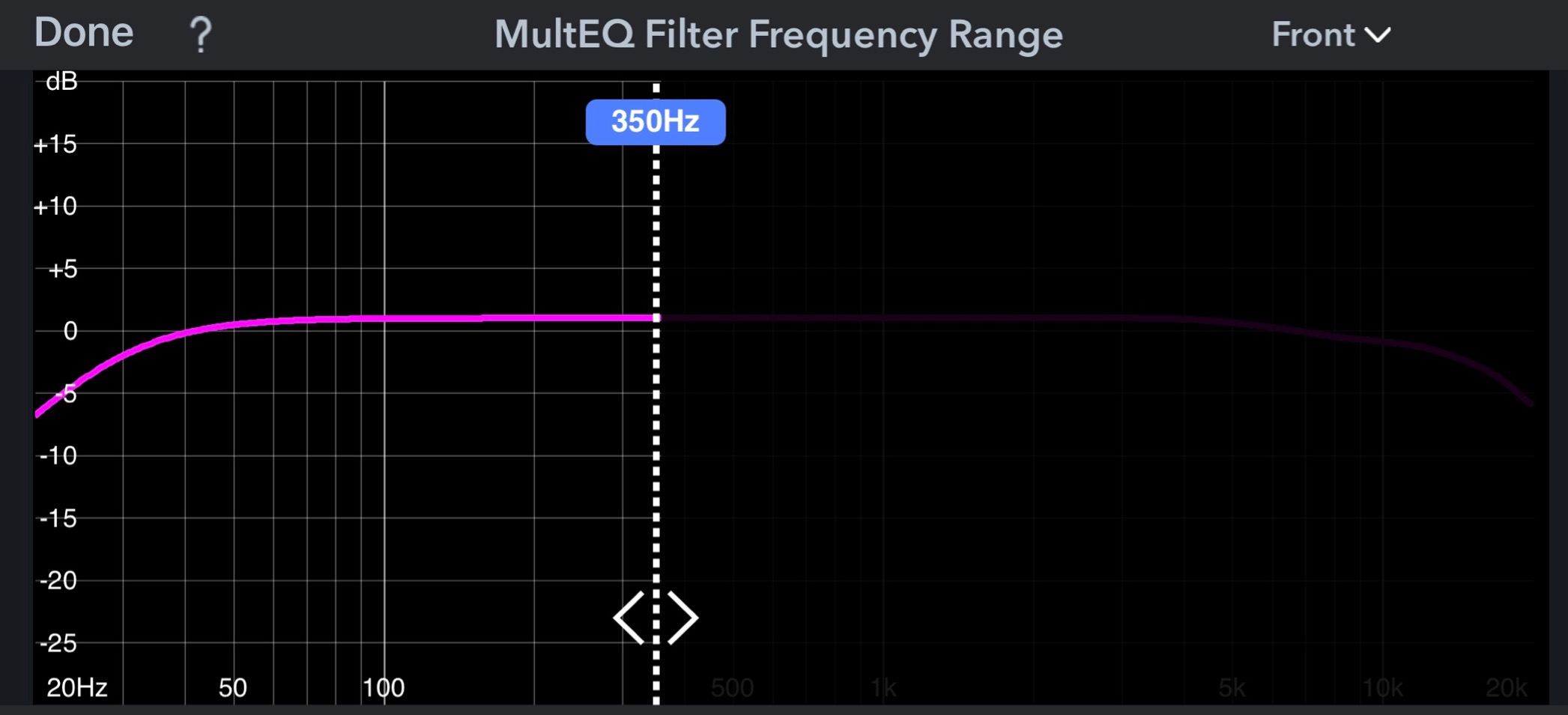
The Bluetooth app control is identical to the SB-1000 Pro, which is a major advantage. Through the SVS app, you can adjust volume, crossover, phase, parametric EQ, and room compensation. The app also includes preset modes for movies, music, and night listening, which I found genuinely useful. During testing, the movie preset added extra impact to action scenes without overwhelming dialogue.
The PB-1000 Pro includes port plugs that allow you to convert it to a sealed cabinet if needed. This is a unique feature that gives you flexibility to optimize the sub for your room and preferences. For most home theatre setups, the ported configuration delivers the best experience.
Matching the PB-1000 Pro to your room
The PB-1000 Pro is best suited for medium to large rooms (300+ square feet). In smaller rooms, the output can be overwhelming. Reviewers on Reddit frequently mention that this sub is overkill for apartments but perfect for dedicated theatre rooms. If you have the space, the performance is unmatched at this price point.
Who should buy it and who should skip it
Buy the SVS PB-1000 Pro if you have a medium to large home theatre room and you want maximum bass output with app control. Skip it if you have a small room or you prefer a more compact cabinet. For smaller spaces, the SB-1000 Pro (sealed version) is the better choice.
Buying Guide: How to Choose the Best Subwoofer for Your Home Theatre?
Choosing the right subwoofer involves more than picking the biggest driver or the most powerful amplifier. After testing dozens of subwoofers over the past year, our team has identified the key factors that determine whether a sub will work well in your specific setup. Below, we break down everything you need to know.
Driver Size: 8-Inch vs 10-Inch vs 12-Inch vs 15-Inch
Driver size is one of the most visible specifications, but it is not the only factor that matters. Smaller drivers (8-inch) are more compact and reproduce faster bass, making them excellent for music and small rooms. Mid-size drivers (10-inch) offer a balance of speed and output, suitable for most home theatre setups. Larger drivers (12-inch and 15-inch) move more air and produce deeper, more impactful bass, ideal for dedicated home theatre rooms. Do 10 or 12 inch subs hit harder? Generally, 12-inch subs produce more output, but 10-inch subs can be tighter and more accurate. Reddit users consistently recommend 12-inch subs for medium to large rooms.
Sealed vs Ported vs Passive Radiator Subwoofers
The cabinet design significantly affects bass character. Sealed subwoofers (like the SVS SB-1000 Pro) produce tight, accurate bass with excellent transient response, making them ideal for music. They are also more compact. Ported subwoofers (like the SVS PB-1000 Pro) use a tuned port to increase output and extend low-frequency response, making them ideal for home theatre. Passive radiator designs use an additional driver instead of a port, offering a balance of the two. For pure home theatre impact, ported designs typically win.
Wired vs Wireless Subwoofers
Wired subwoofers use a subwoofer cable (RCA) connected to your AV receiver’s subwoofer output. They are reliable, consistent, and work with any receiver. Wireless subwoofers (like the Sonos Sub 4) use WiFi or Bluetooth to receive the audio signal. They offer cleaner installation but require compatible equipment. For most setups, wired is still the most reliable choice, but wireless options have improved significantly.
Room Size and Subwoofer Matching
Matching your subwoofer to your room size is critical. A small room (under 200 square feet) can be overwhelmed by a large, powerful sub, while a large room needs more output to fill the space. As a rule of thumb: 8-inch subs work for rooms under 150 square feet, 10-inch subs handle 150-300 square feet, 12-inch subs cover 300-500 square feet, and 15-inch subs are needed for rooms over 500 square feet. Room acoustics also matter. Hard surfaces reflect bass, while soft surfaces absorb it. Position your subwoofer away from corners to reduce boominess.
Dual Subwoofer Setup: Is It Worth It?
Forum users frequently ask whether dual subwoofer setups are worth the investment. The answer, for most home theatre enthusiasts, is yes. Dual subs smooth out bass response across multiple seating positions, reduce nulls (dead spots), and increase overall headroom. The Polk Audio PSW10 even includes a Phase Toggle Switch specifically for dual sub setups. For rooms over 350 square feet, two subwoofers will dramatically improve your experience.
THX Certification: Does It Matter?
THX certification means a subwoofer meets specific performance standards for output, distortion, and frequency response at reference levels. While THX certification is valuable, it is not mandatory for great home theatre bass. Many excellent subwoofers (including several in this guide) are not THX certified but still deliver reference-quality performance. Consider THX certification as a bonus, not a requirement.
Power and Wattage: RMS vs Peak
When comparing subwoofer power ratings, focus on RMS (continuous) power rather than peak power. RMS power indicates the sustained output capability, while peak power is a momentary burst. A sub with 200W RMS will outperform a sub with 500W peak in real-world use. For a medium-sized home theatre room, aim for at least 200W RMS.
Room Correction Software
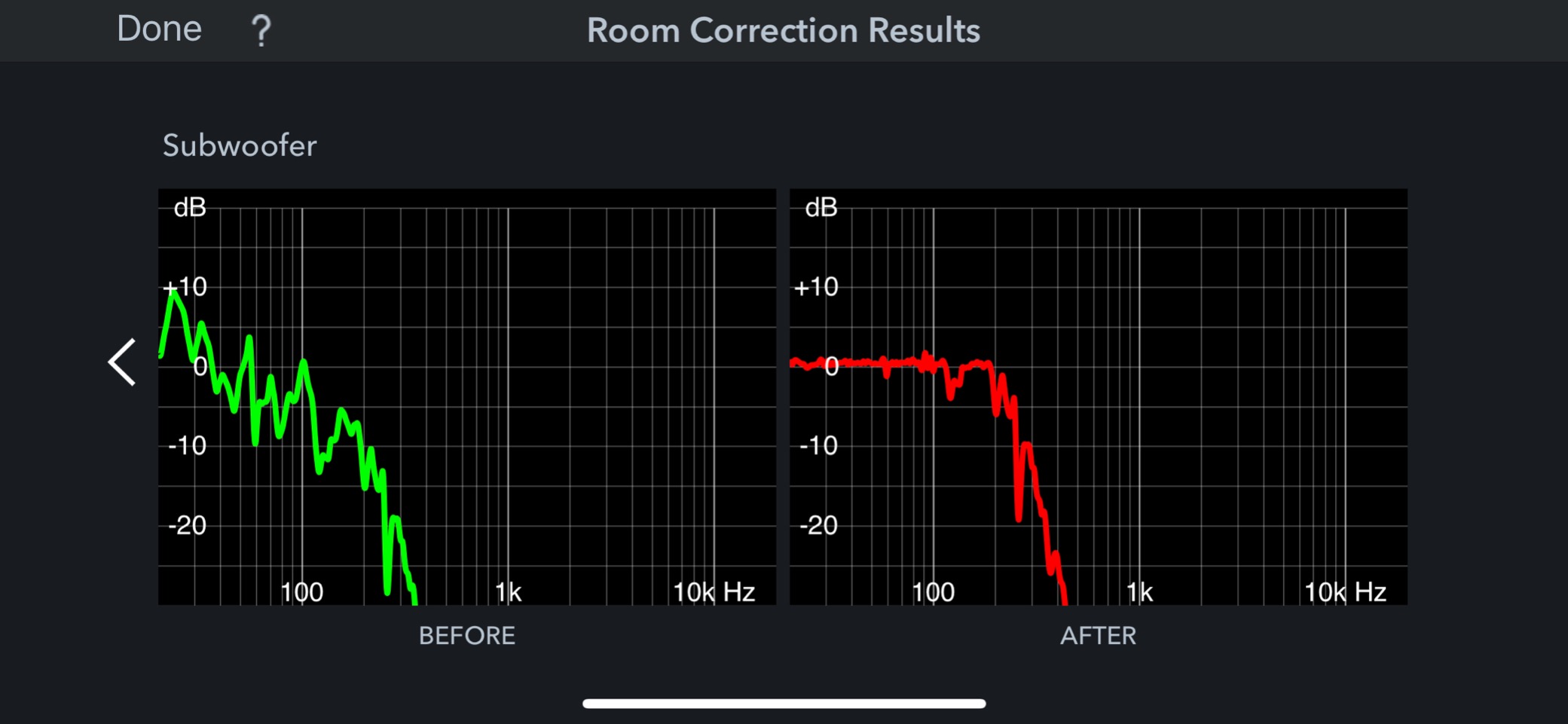
Modern AV receivers include room correction software (Audyssey, YPAO, MCACC, DCAC) that automatically calibrates your subwoofer to your room. Reddit users consistently stress the importance of running room correction after installing a new sub. The software measures your room’s acoustic properties and adjusts the sub’s output, crossover, and phase for optimal performance. Always run room correction before judging a subwoofer’s sound.
Frequently Asked Questions
What is the best subwoofer for home use?
The best subwoofer for home use depends on your room size and budget. For most setups, the SVS SB-1000 Pro delivers the best combination of accuracy, depth, and value. For smaller rooms, the Polk Audio PSW10 or Yamaha NS-SW050 are excellent choices. For wireless Sonos systems, the Sonos Sub 4 is the obvious pick.
What subwoofer has the best sound quality?
The SVS SB-1000 Pro consistently delivers the best sound quality in our testing, with tight, accurate bass reaching down to 20Hz. For pure home theatre impact, the SVS PB-1000 Pro ported version offers even more output. Both feature SVS’s smartphone app for precise tuning.
What are the top 5 subwoofer brands?
Based on our testing and forum consensus, the top 5 subwoofer brands for home theatre are: SVS (best overall performance), Klipsch (best value), Yamaha (best reliability), Polk Audio (best budget), and Sonos (best wireless). HSU and Rythmik are also highly regarded but were not included in this roundup.
What is the hardest hitting subwoofer?
The hardest hitting subwoofer in our roundup is the SVS PB-1000 Pro, which combines a 12-inch driver with a 325W RMS (820W peak) amplifier in a ported cabinet. For maximum output above our price range, dedicated theatre subs from JTR and Power Sound Audio are even more powerful.
Do 10 or 12 inch subs hit harder?
Generally, 12-inch subwoofers hit harder than 10-inch subs because they move more air. However, 10-inch subs can be tighter and more accurate. For most home theatre rooms (200-400 square feet), 12-inch subs like the Klipsch R-120SW or SVS SB-1000 Pro deliver the best balance of impact and accuracy.
Final Verdict: Which Subwoofer Should You Buy?
After three months of testing 12 subwoofers across multiple rooms and use cases, our team has clear recommendations for every budget and setup. If you want the best overall home theatre subwoofer, the SVS SB-1000 Pro delivers reference-quality bass with the convenience of smartphone app control. For the best value under $400, the Klipsch R-120SW combines powerful 12-inch bass with reliable build quality. And if you are on a tight budget, the Polk Audio PSW10 remains the benchmark for affordable home theatre bass.
For a deeper look at powered subwoofer options beyond home theatre, check out our guides on the best powered subwoofers for music and the best powered studio subwoofers. These roundups cover different use cases and may help you find the right match for your specific needs.
Remember, the best subwoofer is the one that matches your room, your receiver, and your listening preferences. Take advantage of room correction software, experiment with placement, and do not be afraid to start with a budget option. A well-placed $200 sub will outperform a poorly-placed $1000 sub every time. With the right choice from this guide, you will transform your home theatre into a genuinely cinematic experience.