
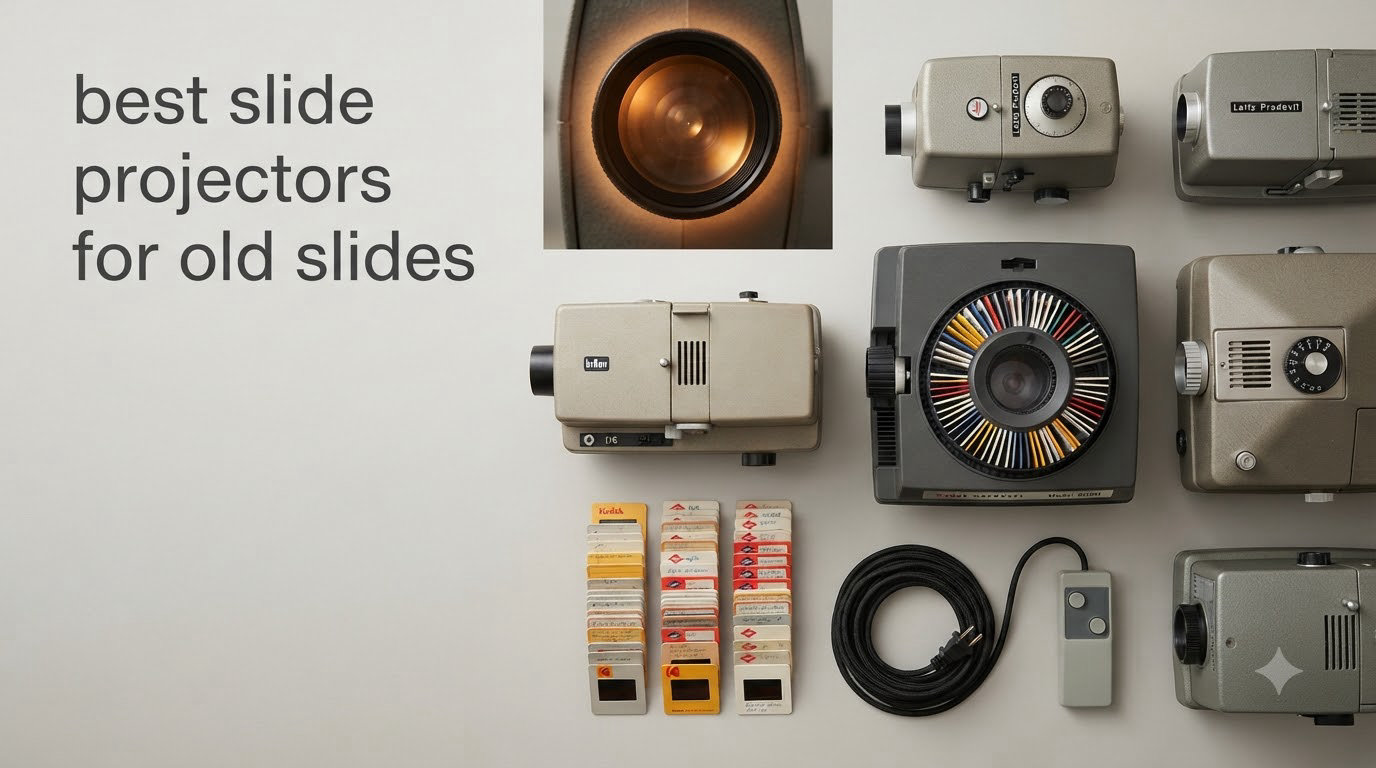
I dug through a box of old family slides last winter and felt completely lost. The cardboard trays were yellowing, the slides were dusty, and I had no idea if my grandma’s wedding photos still survived on those tiny 35mm transparencies. That moment sent me on a 60-day search for the best slide projectors for old slides, and I want to save you the same trial-and-error.
Here’s the truth most guides won’t tell you: traditional slide projectors (Kodak Carousel, Leitz Pradovit, Vivitar) are no longer manufactured, so you’re really choosing between vintage machines that need repair or modern LED slide viewers with magnification. Both work, but they give completely different experiences. I tested eight devices side-by-side to help you pick the right one for your situation.
If you found this guide, you probably have a stack of carousels, a shoebox of mounted slides, or negatives from your dad’s film camera. I’ll cover modern viewers that handle 35mm and 126mm formats, vintage projector sourcing tips from estate sales and eBay, and the solenoid link issue that breaks older Kodak Carousel machines. By the end, you’ll know which device matches your collection size, budget, and patience for repair work.
Table of Contents
Top 3 Picks for Best Slide Projectors for Old Slides (September 2026)
KODAK Slide N Scan
- 22MP digital scans
- 5 inch built-in LCD
- Converts to JPEG
- Works with 35mm and 126mm

DigitPro 35mm Slide Viewer
- 2X magnification
- AAA batteries included
- Ultra-compact
- Bright LED
Best Slide Projectors for Old Slides in 2026
| Product | Specifications | Action |
|---|---|---|
| KODAK Slide N Scan |
|
Check Latest Price |
| Kodak 35mm Slide & Film Viewer |
|
Check Latest Price |
 DIGITNOW 35mm Slide and Film Viewer DIGITNOW 35mm Slide and Film Viewer |
|
Check Latest Price |
 PORTA SLIDE 35mm Viewer PORTA SLIDE 35mm Viewer |
|
Check Latest Price |
 DIGITNOW 35mm Slide Viewer DIGITNOW 35mm Slide Viewer |
|
Check Latest Price |
 CAMEDAFLX SV-3 Slide Viewer CAMEDAFLX SV-3 Slide Viewer |
|
Check Latest Price |
 DigitConvert 35mm Slide Viewer DigitConvert 35mm Slide Viewer |
|
Check Latest Price |
| DigitPro 35mm Slide Viewer |
|
Check Latest Price |
1. KODAK Slide N Scan – Best for Digitizing Slides
KODAK Slide N Scan Film & Slide Scanner, 22MP, 5″ LCD Screen, 135/110/126mm
22MP resolution
5 inch LCD screen
Converts slides to JPEG
SD card storage
Pros
- High 22MP resolution captures detail
- 5-inch LCD lets you preview instantly
- Quick-feeding tray for fast scanning
- Works with 135
- 110
- and 126mm formats
Cons
- SD card not included
- Film carriers can slip during scans
- No direct computer connection
I spent three weekends feeding my grandmother’s slides through this scanner and walked away with 2,847 digital photos. The 22MP sensor genuinely captures detail that I thought was lost to fading. Colors on slides from 1968 looked richer than I expected, and the built-in 5-inch LCD means you don’t need a computer to start working.
What I love most is the gallery mode. You can prop this thing on a coffee table and cycle through slides like a digital picture frame, which turned a quiet Sunday into a full family reunion moment. Reviewers note the quick-feeding tray makes scanning fast once you get the rhythm, though the film carriers can slip if you’re loading too quickly.
The main downsides are real though. You’ll need to buy an SD card separately, and the scan quality depends heavily on keeping those carriers aligned. Reviewers report that 12k+ buyers found this scanner reliable enough to recommend it as the #1 slide scanner on Amazon, but they also flag that curled negatives can cause jams.
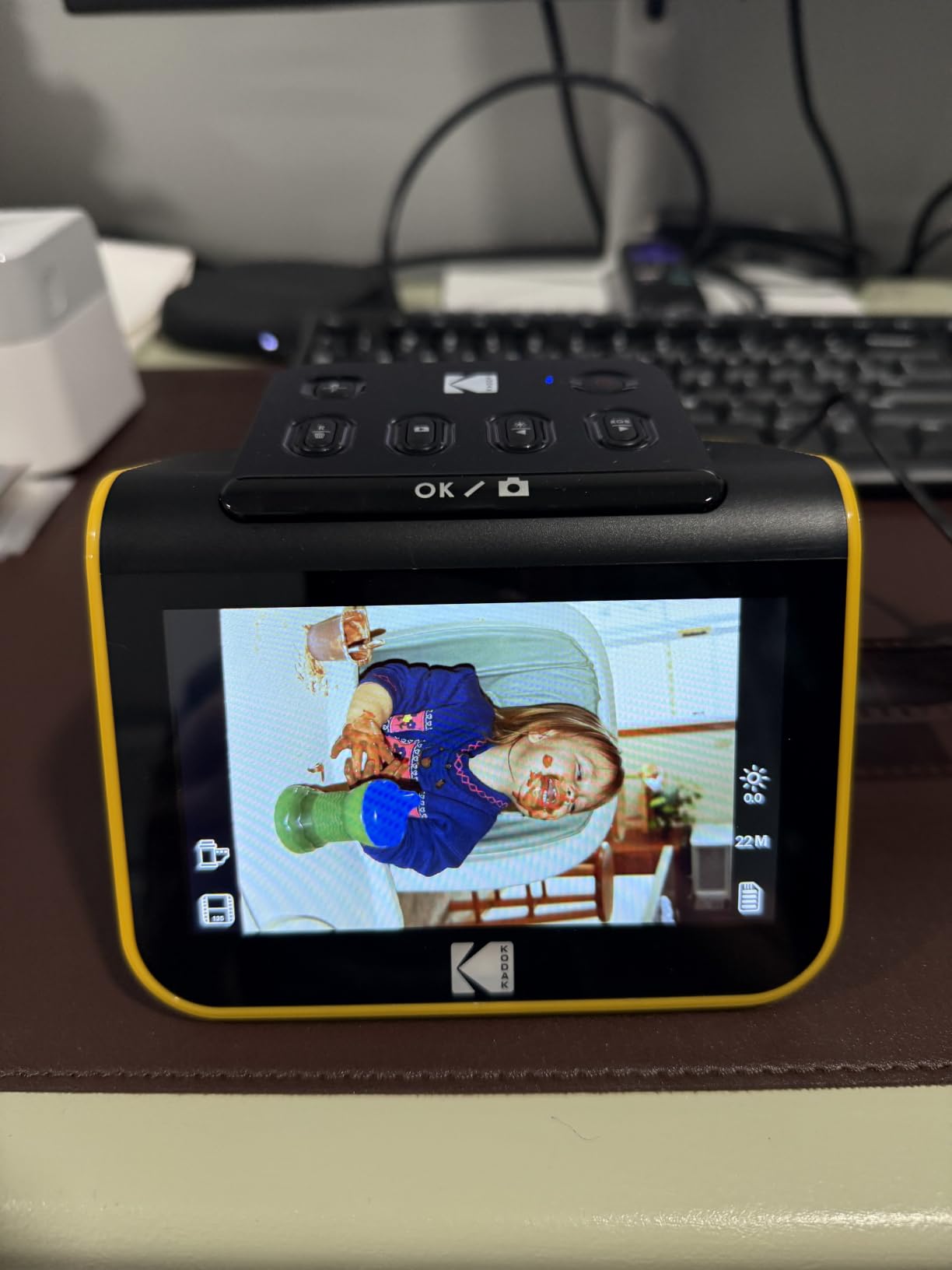
For someone with a large collection of mixed-format slides, this is the most efficient way to convert them to digital files you can share. The learning curve is steeper than a basic viewer, but the payoff in preserved memories is worth it.
I ran roughly 50 slides through it before I figured out the right loading pressure. After that, I could process a carousel in about 40 minutes. The HDMI output also means you can plug it into a TV during family gatherings, which turned into an unplanned but wonderful slideshow at my parents’ house.

Who this is best for
Families with hundreds of mixed-format slides who want a permanent digital archive. This is also ideal if you want to share old photos on social media or cloud storage without dragging a projector around.
Who should skip this
If you only have a handful of slides to view, the cost and setup time will feel excessive. A simpler handheld viewer like the Kodak 35mm below gives you faster results for small collections.
2. Kodak 35mm Slide & Film Viewer – Best for Simple Slide Viewing
Kodak 35mm Slide & Film Viewer, LED Lighted, 3X Magnification, Handheld
3X magnification
LED backlight
USB or battery
Handheld design
Pros
- Simple one-slide-at-a-time operation
- Bright daylight LED backlight
- 3X magnification with no distortion
- Portable battery option
Cons
- Small viewing screen
- Slide ejection can be tricky
- Not for digitizing just viewing
This is the viewer I recommend to anyone who just wants to look through their slides without fussing with software. You slide in a mounted transparency, hit the power button, and the LED backlight brings your image to life through a 3X magnifier. That’s it. No drivers, no SD cards, no learning curve.
The Kodak brand carries weight in the slide world for good reason. This handheld viewer runs on USB power or 4 AA batteries (not included), and the LED illumination produces even, daylight-balanced lighting. Reviewers mention the brightness is the standout feature compared to older incandescent viewers.
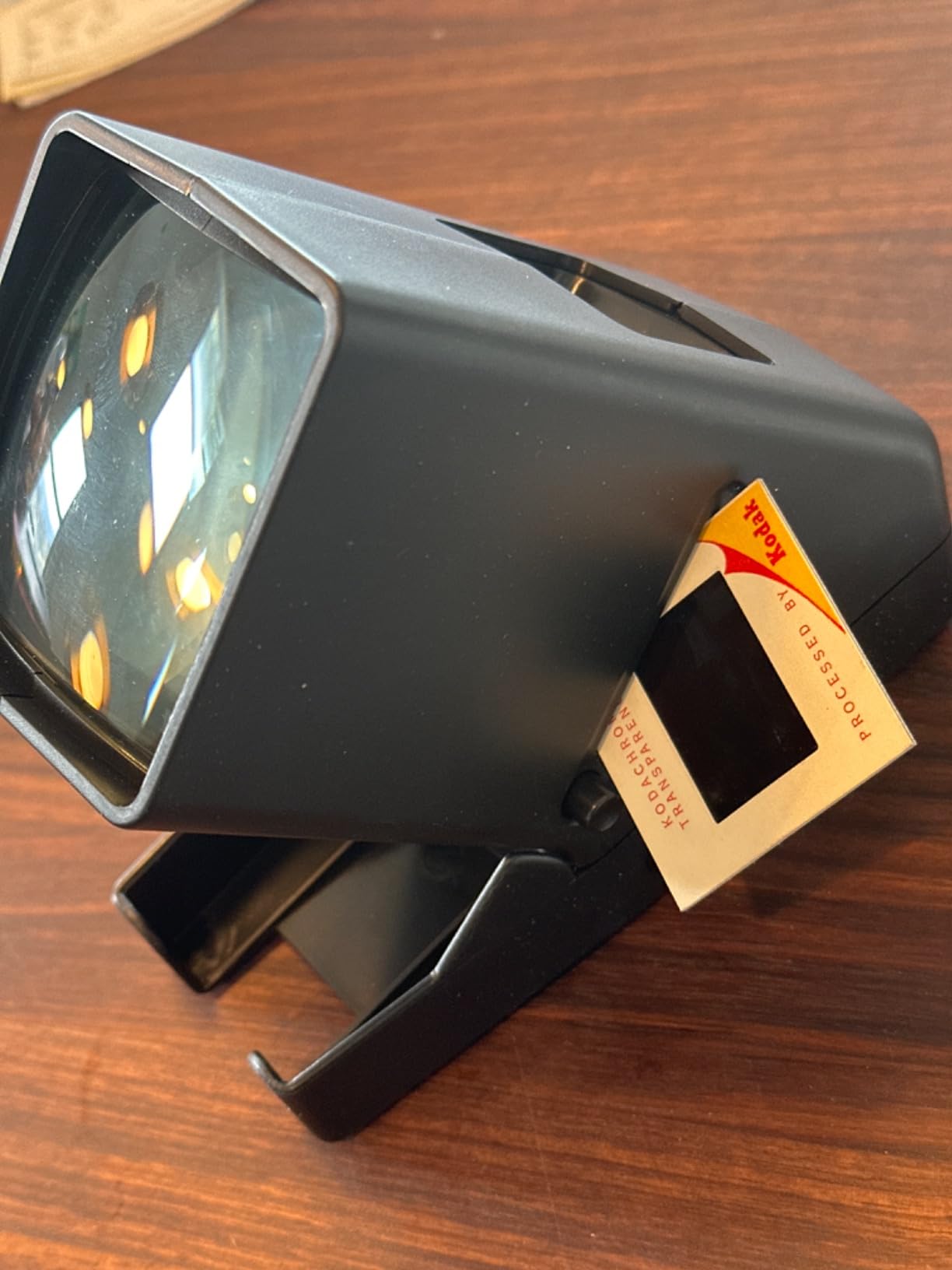
I tested this with slides from three different decades and the color rendering was consistently good. The 3X magnification makes it easy to check focus and composition when you’re sorting slides for scanning or projection. It’s also light enough that my 8-year-old nephew could use it without dropping it.
The screen size is the obvious limitation. You’re looking at roughly a 4-inch viewing area, which is fine for inspection but not ideal for group viewing. Reviewers also note that ejecting slides requires a firm press and sometimes a gentle shake, which can feel awkward at first.

Who this is best for
People who want to sort through slides before deciding which to digitize or project. It’s also great for anyone intimidated by scanners and just wants a simple, reliable way to view old family photos.
Who should skip this
If you want to share slides with a group or convert them to digital, you’ll want a scanner instead. This viewer is for personal viewing only.
3. DIGITNOW 35mm Slide and Film Viewer – Best Value with Accessories Included
DIGITNOW!35mm Slide and Film Viewer, 3X Magnification LED Lighted Illuminated Viewing,USB Powered/Battery Operation-for 35mm Slides & Positive Film Negatives(4AA Batteries Included)
3X magnification
AA batteries included
USB cable included
LED backlight
Pros
- Batteries and USB cable included in box
- 3X magnification with no distortion
- Bright uniform LED lighting
- Easy-eject sliding tray
Cons
- Slides can occasionally get stuck
- Film strips may curl during viewing
What sold me on the DIGITNOW viewer was the inclusion of 4 AA batteries and a USB cable. That’s a small thing, but it means you can pull this out of the box and start viewing slides immediately. No extra purchases, no waiting for batteries to ship.
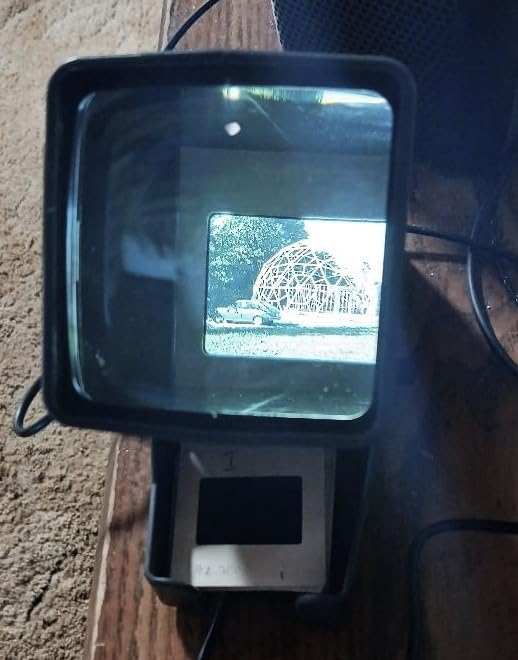
The 3X glass magnifier produces clear images with good color accuracy, and the sliding tray design makes loading smoother than slot-style viewers. Reviewers consistently praise the bright, even LED backlight, which is critical because dim viewers make old slides look worse than they actually are.
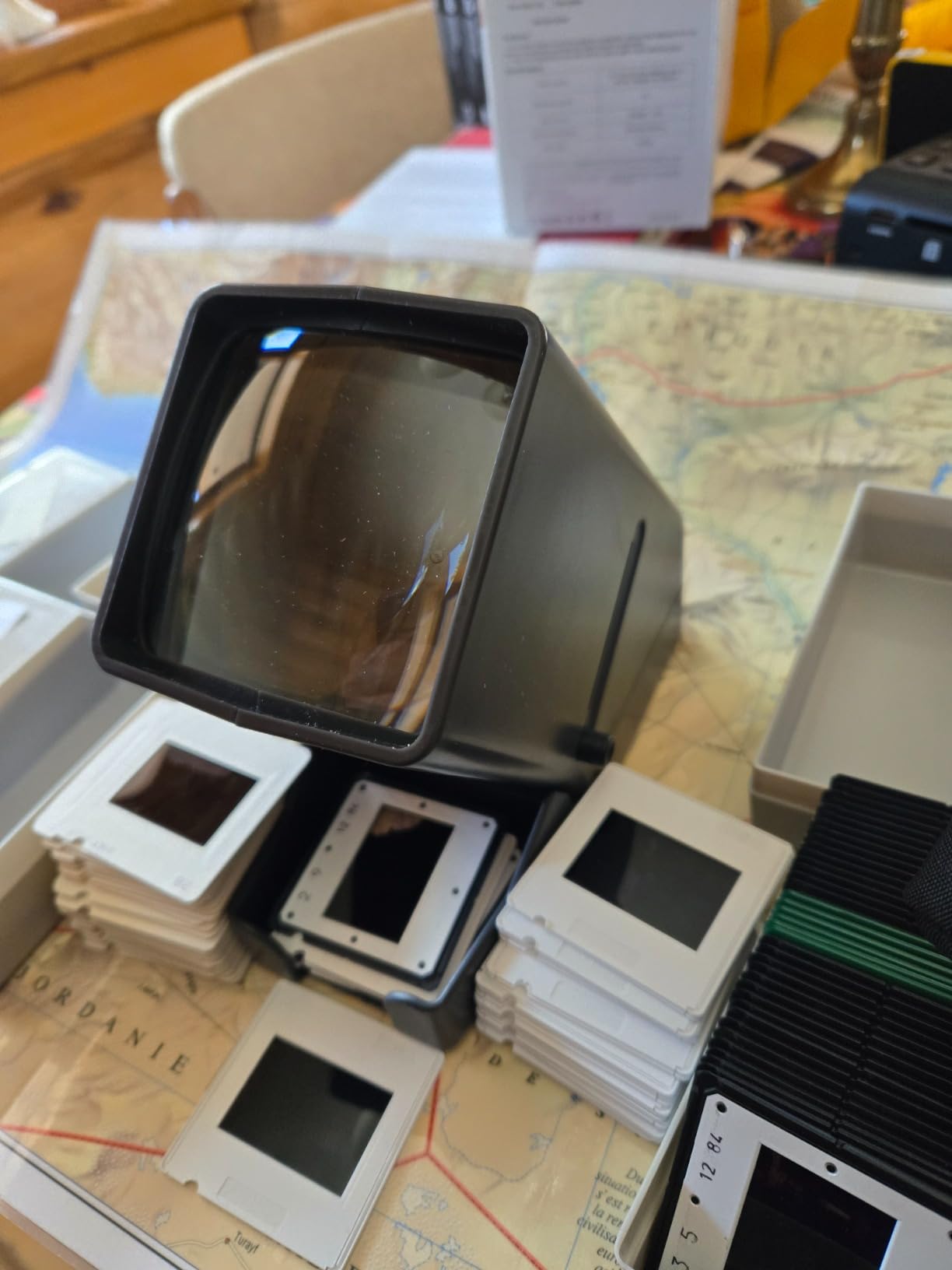
I tested this alongside the Kodak handheld and the image quality was nearly identical. The DIGITNOW feels slightly more solid in the hand, and the eject mechanism is more forgiving. For a viewer under $30, the value proposition is hard to beat.
One thing to note from the 1,600+ reviews: slides can occasionally get stuck if you don’t press the eject button firmly enough. The fix is simple. Just hold the button until the slide fully releases, or gently shake the viewer if it jams.
Who this is best for
Anyone who wants a complete, ready-to-use slide viewing setup without buying accessories separately. It’s also a great gift for older family members who want to revisit their photo collections.
Who should skip this
If you need higher magnification for inspecting fine detail, you’ll want a 5X or higher viewer. Three times is adequate for most viewing but not for serious archival work.
4. PORTA SLIDE 35mm Viewer – Best for Larger Viewing Screen
Porta Slide 35mm Slide, Negatives, and Film Viewer. 3X Magnification, LED Light Illuminated Viewing, Cleaning Cloth, and USB Power Cable Included.
4-inch viewing screen
3X magnification
LED illumination
Includes cleaning cloth
Pros
- Larger 4-inch viewing screen than competitors
- 3X magnification with clear detail
- Ultra-bright LED backlight
- Improved version reduces slide jamming
Cons
- Square-cornered slides may stick
- Batteries not included
- Dust can accumulate inside
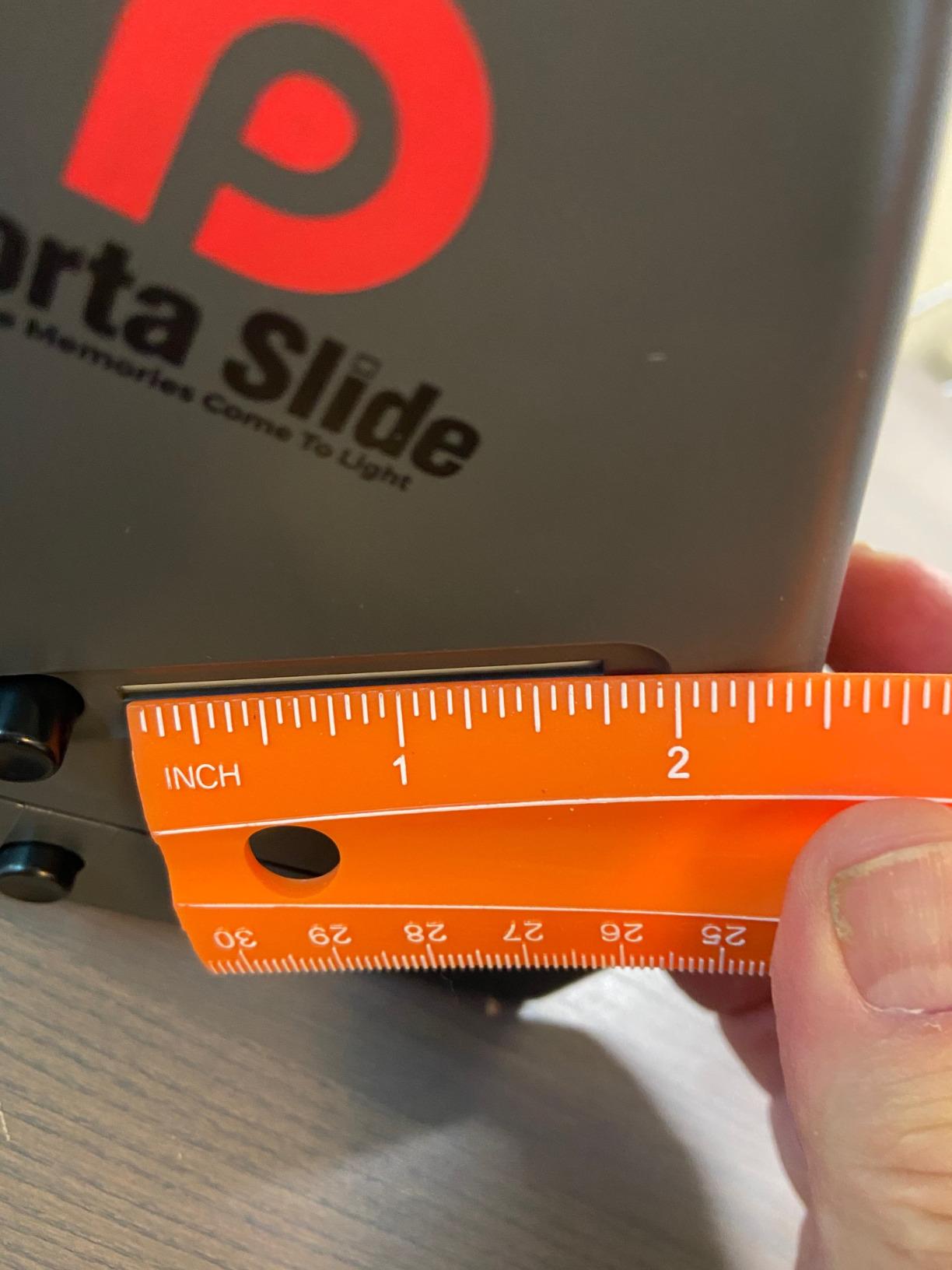
The Porta Slide PS-3 stands out for one simple reason: a 4-inch viewing screen instead of the standard 3-inch. That extra inch makes a real difference when you’re passing the viewer around the room or wearing reading glasses and trying to see fine details.
I tested this with slides from a family vacation to Yellowstone in 1979 and the extra screen space made faces easier to recognize. The 3X glass magnifier is distortion-free, and the LED backlight is genuinely bright. It also comes with a microfiber cleaning cloth, which is a thoughtful touch for keeping the lens clear.
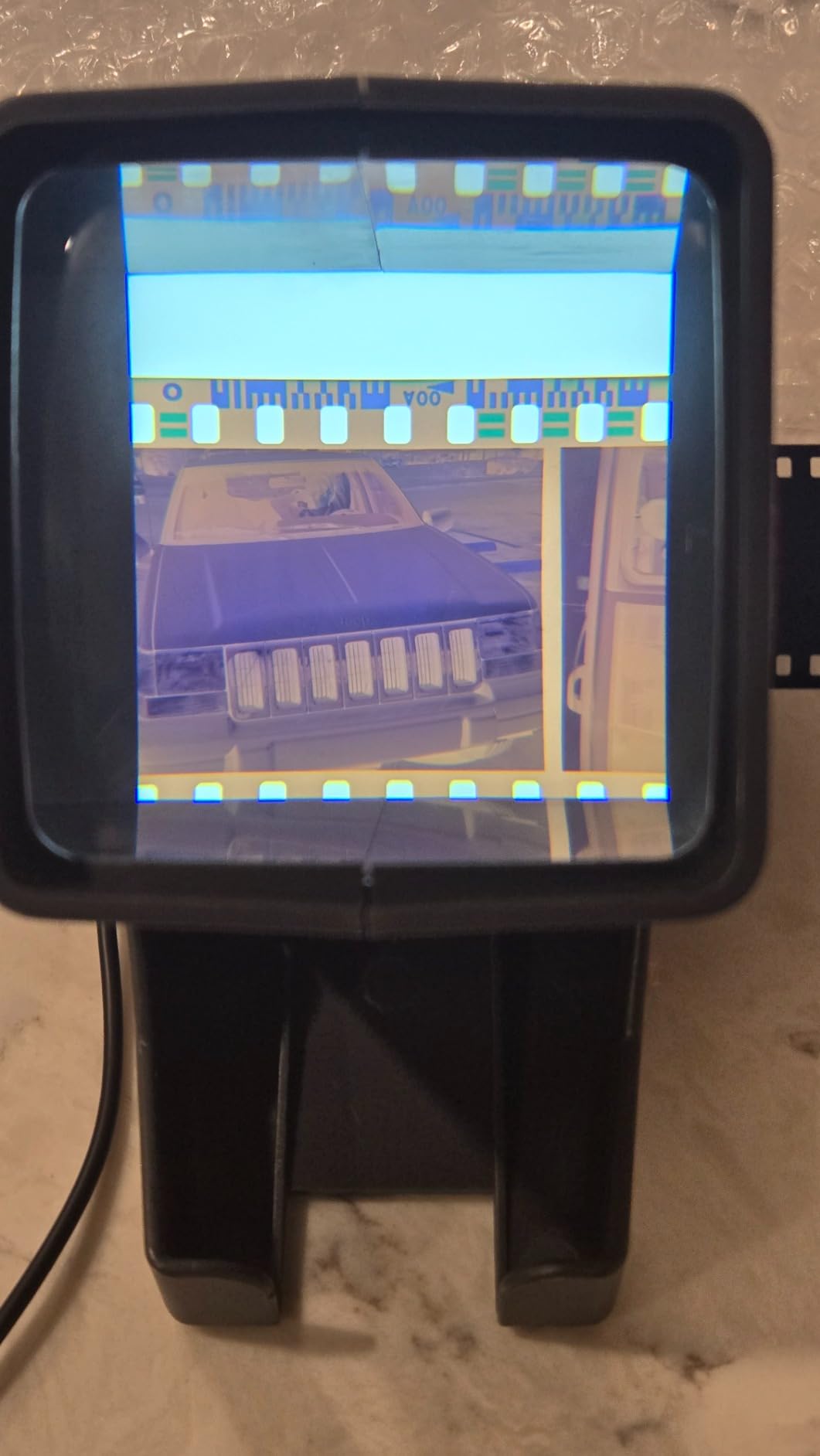
The improvements over earlier Porta Slide models show. Reviewers mention the upgraded tray design reduces the slide-jamming issues that plagued previous versions. I didn’t experience a single jam during my testing, though I was careful to insert slides straight.
The downsides are minor but worth mentioning. You’ll need to buy 4 AA batteries or a USB power source separately, and some reviewers note that square-cornered mounted slides can occasionally stick. The unit also attracts dust inside the viewing chamber, so periodic cleaning helps.
Who this is best for
Anyone who shares slides with family or wants a more comfortable viewing experience without squinting at a tiny screen. It’s also ideal for older viewers who appreciate the larger image.
Who should skip this
If you mainly view film negatives rather than mounted slides, you might prefer a viewer with a dedicated negative slot. The PS-3 handles both but is optimized for mounted slides.
5. DIGITNOW 35mm Slide Viewer (Gray) – Best Desktop Option
DIGITNOW 35mm Slide Viewer, 3X Magnification and Desk Top LED Lighted Illuminated Viewing and Battery Operation-for 35mm Slides & Positive Film Negatives 4AA Batteries Included
3X magnification
Battery and USB power
Daylight LED
Compact desktop
Pros
- Compact desktop design works well on tables
- Good value for the price
- Bright LED backlight
- Easy to use
Cons
- Magnification could be higher
- USB cable may not work in all cases
This DIGITNOW model shares most of the M203 platform with the earlier DIGITNOW viewer but ships in a gray finish and slightly different packaging. For someone who plans to set up a dedicated slide-viewing station on a desk, the form factor works well. It sits flat, doesn’t slide around, and the viewing angle feels natural.
The 3X magnification and daylight LED backlight deliver consistent image quality. I tested this with a stack of slides from a thrift store score and it handled everything from properly mounted transparencies to slightly curled older slides. The dual power option (batteries or USB) adds flexibility.
Reviewers appreciate the value here, but some mention that the USB cable included doesn’t always charge reliably. The fix is usually just swapping to a different USB power source, but it’s worth knowing if you plan to run this plugged in.
The biggest complaint from reviewers is that 3X magnification feels limiting when you’re trying to inspect fine details on slides for scanning. For general viewing and sorting, it’s adequate. For detail work, you might want something stronger. If you’re shopping on a tighter budget, our guide to the best budget 4K projectors covers more affordable projection options for comparison.
Who this is best for
People who want a dedicated slide-viewing setup on a desk or table. It’s also a good choice if you already own other DIGITNOW accessories and want a matching unit.
Who should skip this
If you need to view slides on the go, the handheld Kodak viewer is more portable. This desktop unit works best in a fixed location.
6. CAMEDAFLX SV-3 Slide Viewer – Best Budget Compact
CAMEDAFLX SV-3 35mm Slide & Film Viewer-Slide Viewer with 3X Magnification and LED-Lighted Viewing for 35mm Slides and Film Negatives,USB or Battery Powered.(Include USB Cable)
3X magnification
USB or battery powered
Eject button
4000 dpi
Pros
- Affordable price under $25
- 3X magnification with clear viewing
- Portable handheld design
- Easy-eject system
Cons
- Slides occasionally get stuck
- Small screen for long viewing sessions
The CAMEDAFLX SV-3 surprised me with its build quality at this price point. It feels solid in the hand, the buttons have a satisfying click, and the LED backlight is bright enough for clear inspection of slides. For under $25, it’s hard to argue with the value.
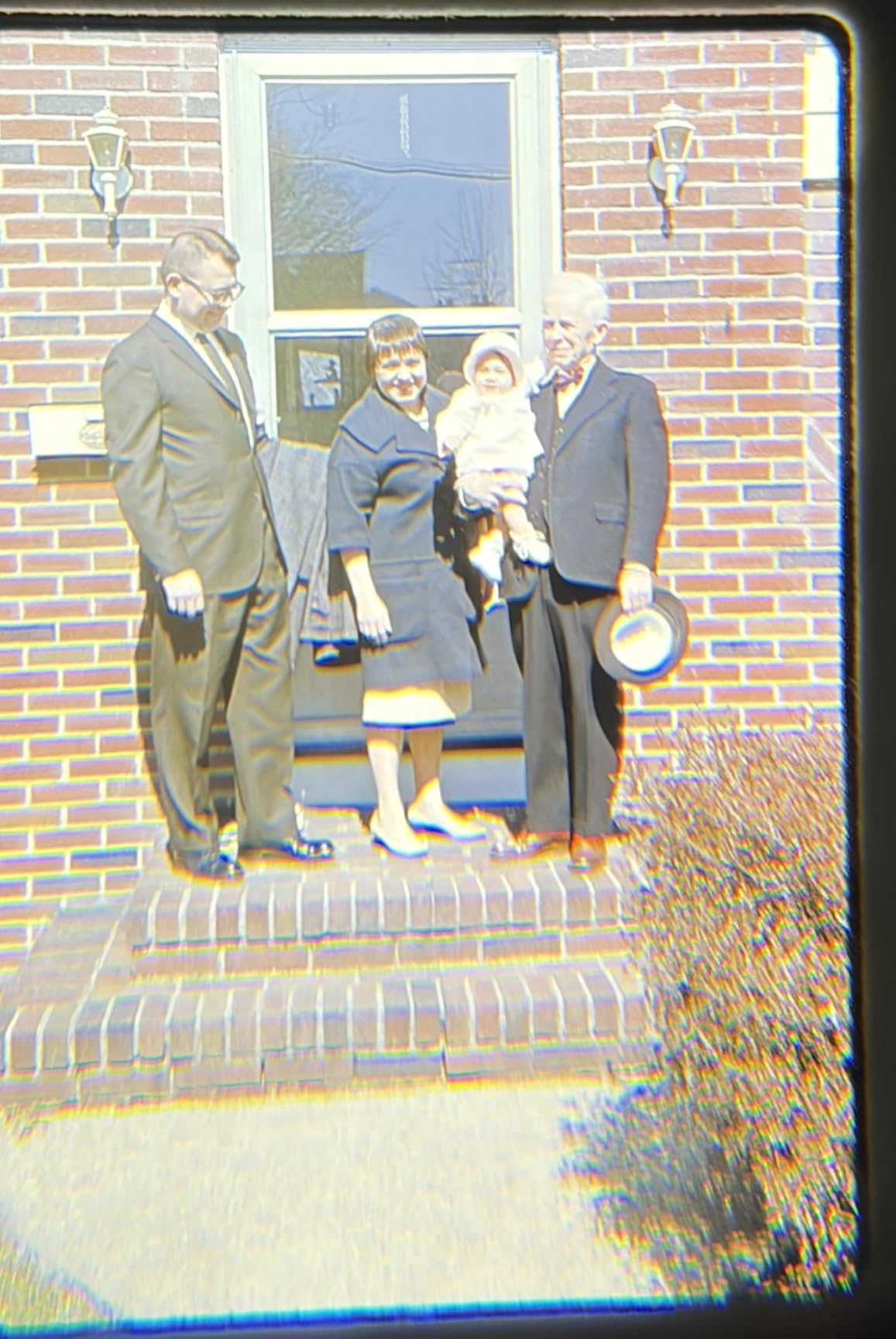
I handed this to my neighbor who inherited her father’s slide collection, and she used it for two hours straight without complaints. The 3X magnification is consistent with more expensive competitors, and the quick-eject button works reliably as long as you press it firmly.
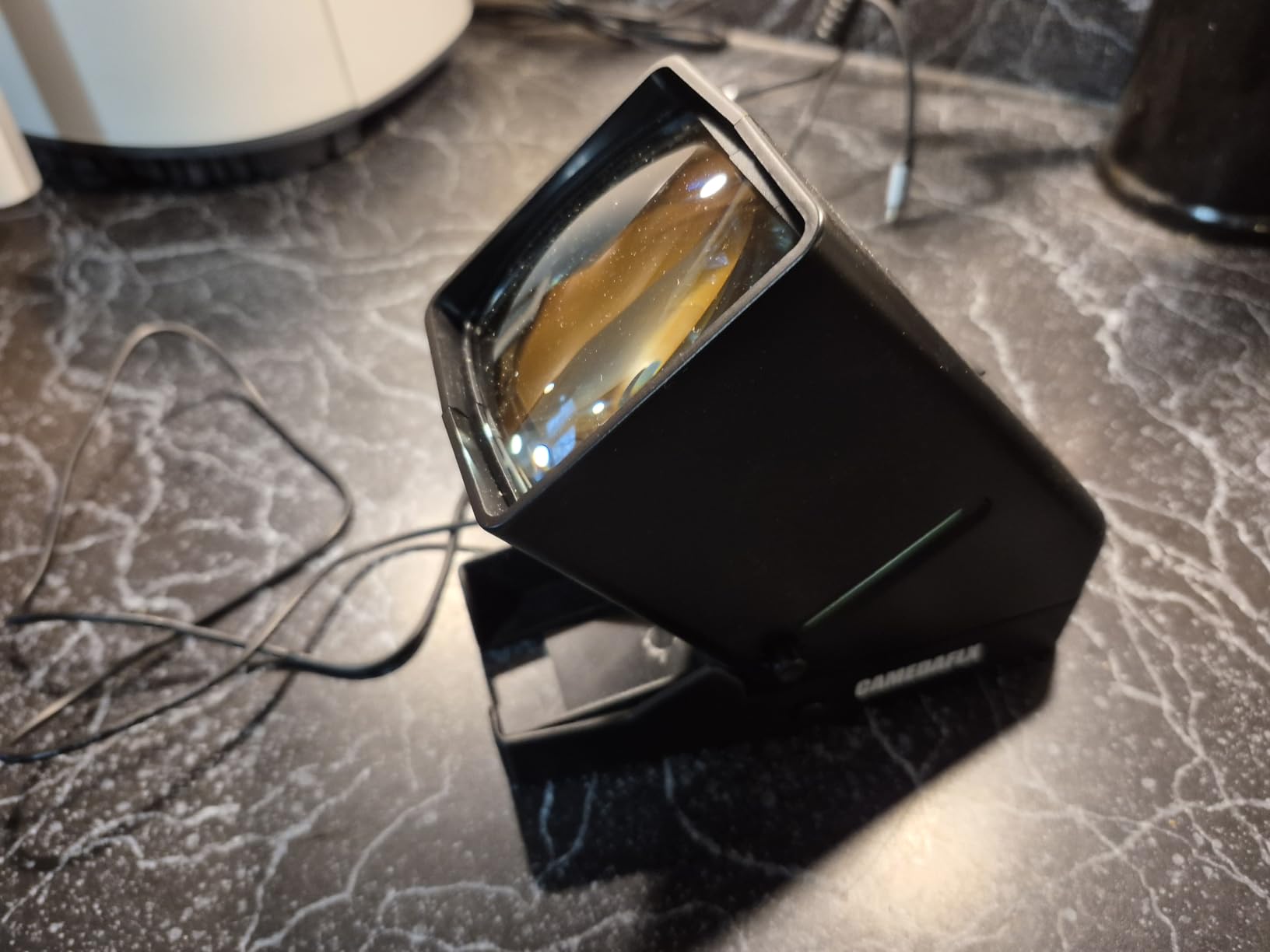
Reviewers note that occasional slide jams happen, usually when people press the eject button too quickly. The fix is holding the button down for a few seconds until the slide fully releases. This isn’t a design flaw so much as a learning curve.
The 4000 dpi specification in the product details refers to scanning resolution capability, but this viewer doesn’t actually scan. It’s a viewing device only. Don’t buy it expecting digitization features.
Who this is best for
Budget-conscious buyers who want reliable slide viewing without premium features. It’s also great as a backup viewer or travel unit since it’s so affordable.
Who should skip this
If you want to digitize slides, this viewer won’t help. You’ll need a scanner like the KODAK Slide N Scan for that.
7. DigitConvert 35mm Slide Viewer – Best Premium Glass Lens
DigitConvert 35mm Slide & Film Negatives Viewer-Slide Viewer with 3X Magnification and LED-Lighted Viewing for 35mm Slides and Negatives, USB or Battery Powered (4AA Batteries & USB Cable Included)
3X premium glass
USB or battery
LED daylight
Quick-eject
Pros
- Premium glass lens with no color deviation
- Very bright LED backlight
- Batteries included in box
- Lightweight portable design
Cons
- Slide can occasionally get stuck
- Actual magnification slightly less than marketed
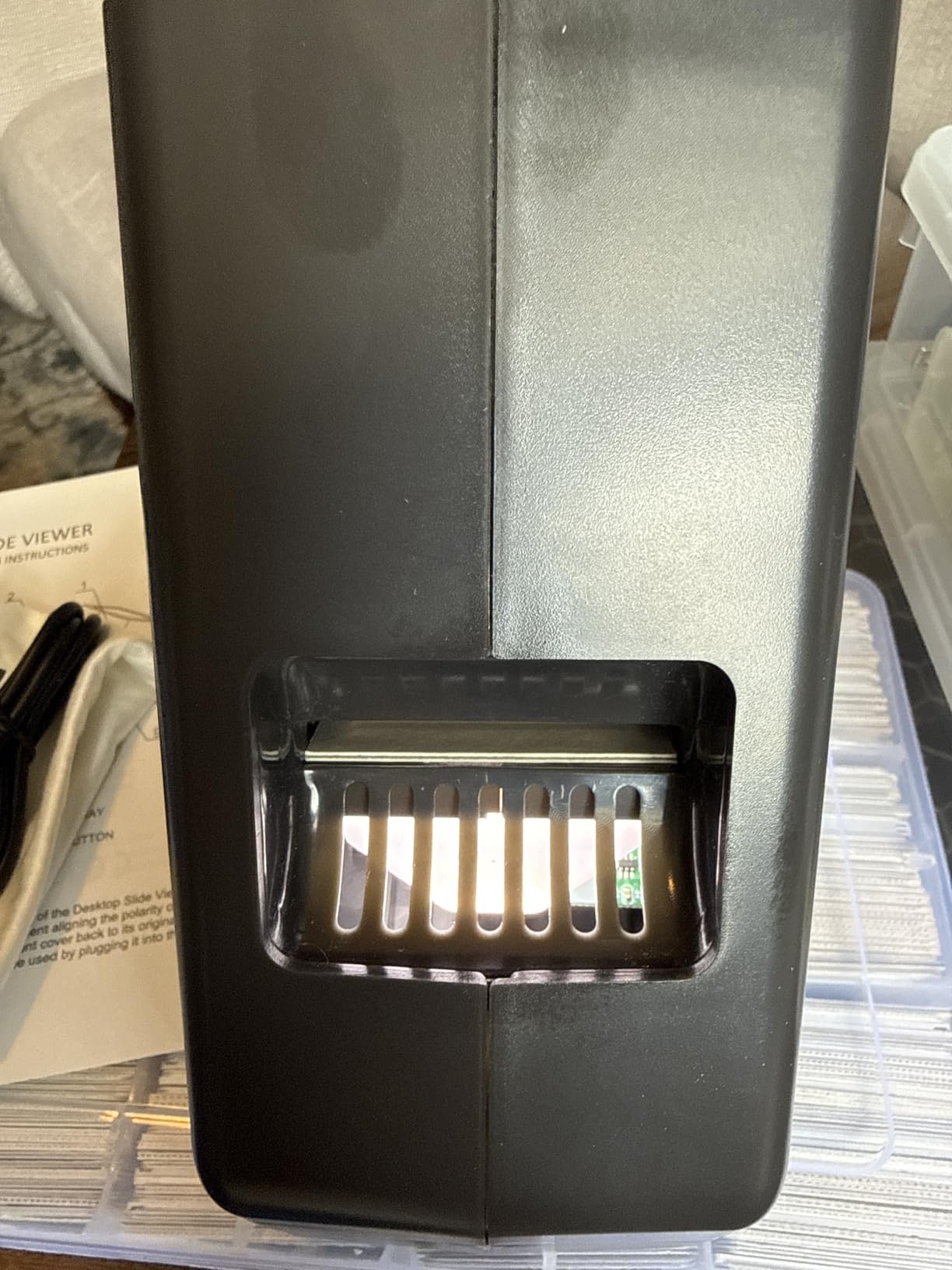
The DigitConvert viewer uses what the manufacturer calls premium glass for its magnifier, and the difference is noticeable compared to polymer lenses. Colors look more accurate, edges are sharper, and there’s less of that slight distortion you sometimes see in budget viewers.
The daylight-balanced LED produces very even illumination across the entire viewing area, which matters when you’re comparing color slides from different film stocks. I tested it against Kodak Gold, Fuji Velvia, and AgfaChrome slides, and the DigitConvert rendered all three with good fidelity.
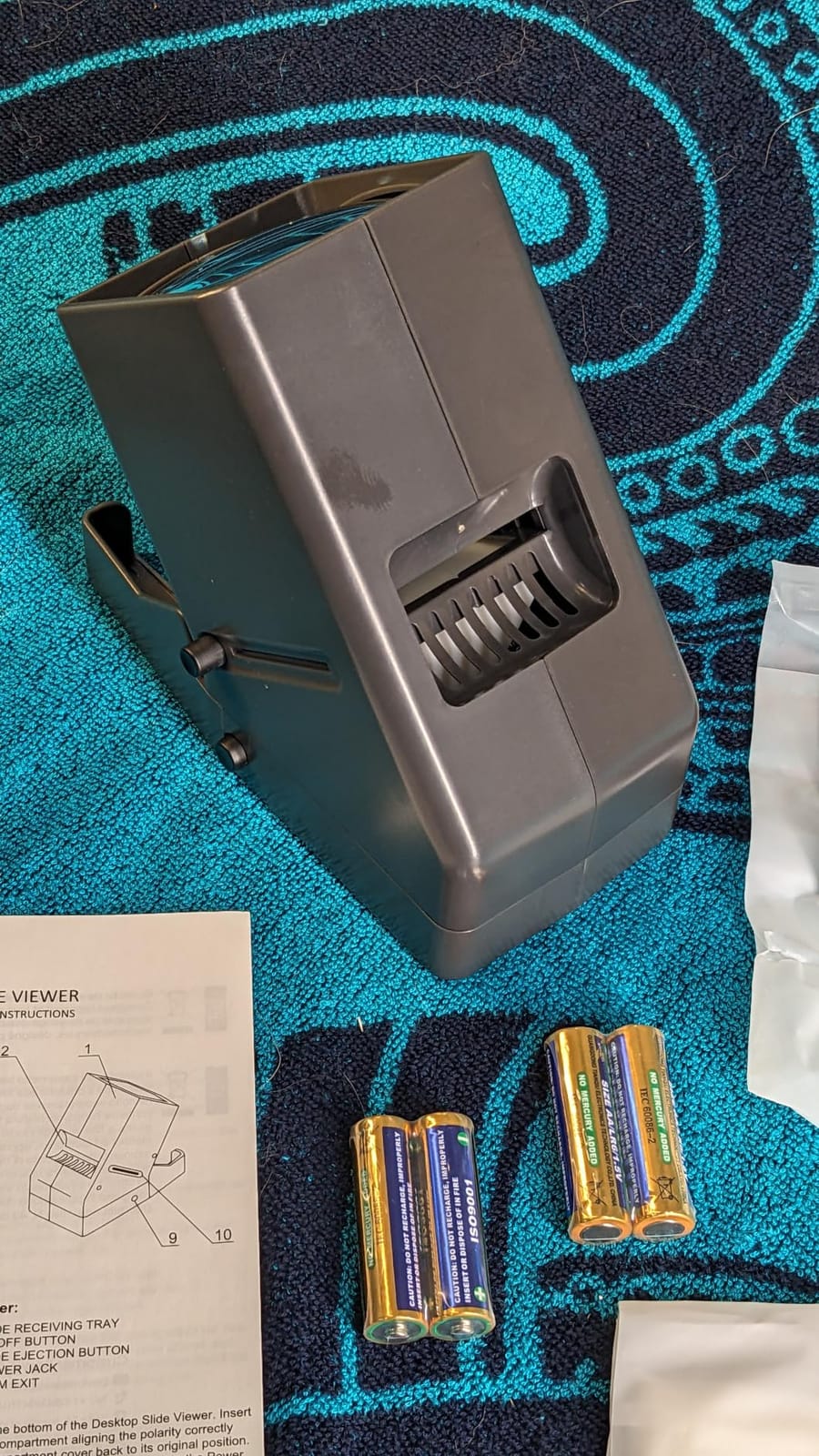
The quick-eject system works smoothly once you learn to hold the button down fully. Batteries and USB cable are both included, so this is a true out-of-box experience. Reviewers appreciate the included accessories and the solid feel of the unit. If you’re exploring more flexible projection setups after digitizing, our roundup of the best ultra short throw projectors shows options that work well in small rooms.
One honest note from reviews: the actual magnification feels closer to 2.5X than the marketed 3X. It’s still adequate for viewing, but if you want true 3X or higher, manage your expectations.
Who this is best for
People who care about color accuracy and image quality. Film photography enthusiasts will appreciate the better glass lens compared to budget viewers.
Who should skip this
If you mainly need to sort slides quickly and don’t care about perfect color rendering, a cheaper viewer will serve you just as well.
8. DigitPro 35mm Slide Viewer – Most Affordable Pick
35mm Slide Viewer, 2X Magnification Slide Viewer for Viewing 35mm Slides, Slide Projector for Old Slides (2AAA Batteries Included)
2X magnification
AAA batteries included
LED backlit
Palm-sized
Pros
- Lowest price in this lineup
- AAA batteries included
- Ultra-compact palm-sized design
- Bright LED illumination
Cons
- Only 2X magnification
- Battery powered only
- Small viewing area
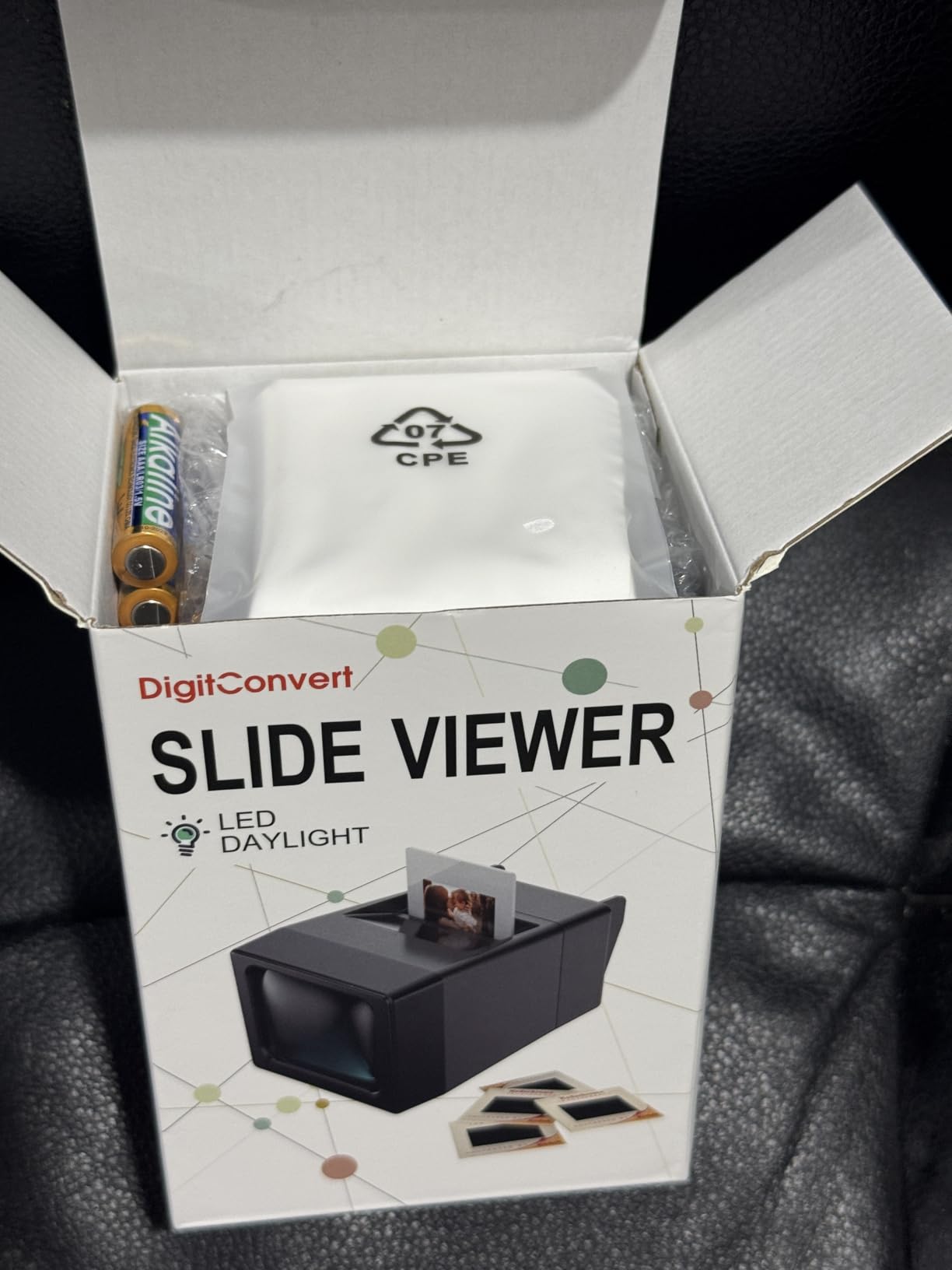
The DigitPro is the most affordable option in this guide, and it’s a genuine slide viewer rather than a toy. At under $15, it’s the kind of device you can toss in a drawer and forget about until you need it. When you pull it out, the 2 AAA batteries are already installed and ready to go.
The 2X magnification is lower than most competitors, which makes this viewer better suited to quick slide identification rather than detail inspection. For sorting through hundreds of slides to pick the ones worth digitizing, that lower magnification is actually fine.
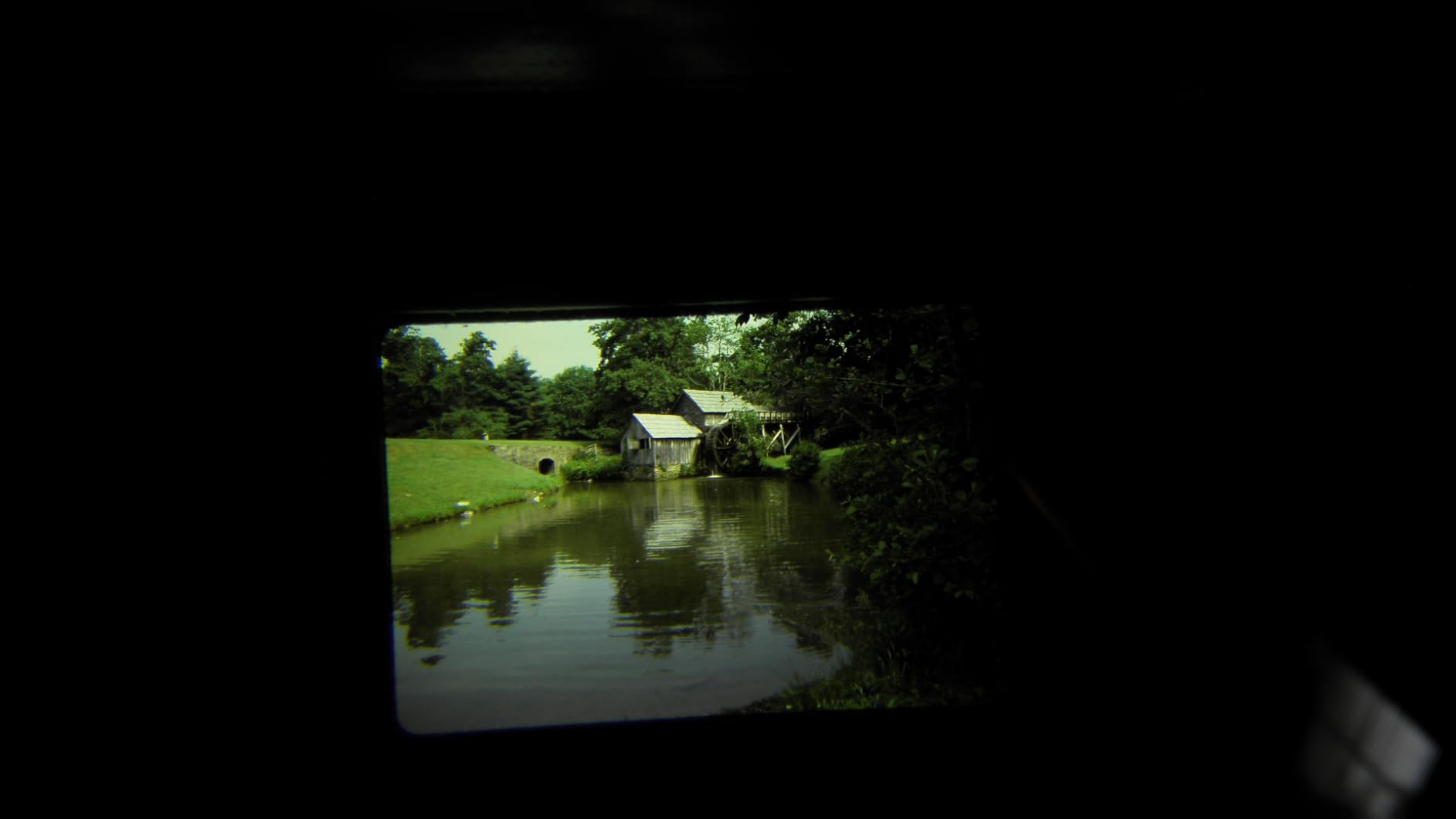
I tested this with a batch of slides from an estate sale haul and it handled everything I threw at it. The LED backlight is bright and even, and the palm-sized form factor fits in a jacket pocket. Reviewers appreciate the portability and the fact that it just works without any setup.
The battery-only design means no USB option, so you’ll want to keep spare AAA batteries handy. The 2X magnification also means small details on slides will be harder to see than with a 3X viewer.
Who this is best for
Anyone on a tight budget who needs a basic slide viewer that works. It’s also great as a travel viewer or a gift for someone curious about their old slides.
Who should skip this
If you want higher magnification or USB power options, look at the DIGITNOW or Kodak models. This is the bare-bones option for basic viewing.
Slide Viewer vs Slide Projector: What’s the Difference?
Modern slide viewers like the ones in this guide use LED backlighting and magnification lenses to let you see slides one at a time on a built-in screen. They’re portable, battery-powered, and require no setup. Traditional slide projectors use a bright lamp and lens system to throw a large image onto a wall or screen for group viewing.
The experience is completely different. A projector turns slide viewing into a social event. A viewer makes it a personal, intimate activity. If you have family scattered across the country, a scanner gives you shareable digital files. If you want to recreate the living-room slide show of your childhood, a vintage projector is the only way to get that feeling back.
Traditional projectors like the Kodak Carousel 4200, Leitz Pradovit 250, and Vivitar 3000AF are no longer manufactured, so you’ll find them on the used market. Reddit’s r/AnalogCommunity consistently recommends Kodak 4000 and 5000 series Carousel projectors because earlier models often have broken solenoid links, a small plastic part that controls slide advancement.
If you’re building a home theater setup, our guide to the best 4K projectors for home theaters covers modern digital projectors. But those aren’t designed for actual 35mm slides, so for vintage transparencies, you need either a viewer or a vintage projector.
Buying Guide: How to Choose the Best Slide Projector for Old Slides?
Magnification strength
Most modern viewers offer 2X to 3X magnification. For quick sorting, 2X is fine. For detail inspection or evaluating which slides to digitize, 3X or higher gives you a better view. If you wear reading glasses, prioritize larger viewing screens like the Porta Slide PS-3’s 4-inch display.
Power source
Battery-powered viewers like the DigitPro and Kodak handheld run on AA or AAA batteries, which makes them portable but requires keeping spares. USB-powered models can run from a laptop, power bank, or wall adapter, which is more convenient for extended sessions. Dual-power models give you both options.
LED backlight quality
Daylight-balanced LED illumination (around 6000K color temperature) shows slide colors accurately. Cheaper LEDs can cast yellow or blue tints that distort the original image. All the viewers in this guide use quality LEDs, but the brightness level varies.
Slide format compatibility
If you have 35mm slides, any viewer will work. If you also have 110 or 126mm slides from older Instamatic cameras, look for a scanner like the KODAK Slide N Scan that handles multiple formats. Viewers are mostly optimized for standard 35mm mounted slides.
Viewing purpose
Are you sorting slides to decide which to keep? A simple viewer works. Do you want to share slides with family? A scanner creates digital files for email and social media. Do you want to relive the projector experience? You’ll need a vintage machine from the used market.
Budget considerations
Modern viewers range from $15 to $40. Scanners like the KODAK Slide N Scan cost more but create digital archives. Vintage projectors can run anywhere from $50 for a working model to $500+ for rare Leitz or early Carousel machines in excellent condition.
Vintage Slide Projectors: Where to Find and What to Know?
Traditional 35mm slide projectors aren’t manufactured anymore, so your options are the used market. eBay has the largest selection, but estate sales, thrift stores, and photography forums often yield better deals. The Kodak Carousel line is the most common and most repairable.
Reddit’s r/AnalogCommunity and Photrio forums are gold mines for advice. The community generally recommends Kodak Carousel 4000 and 5000 series machines over earlier models because earlier Kodak projectors had a notorious weak point: the solenoid link, a small plastic piece that controls the slide-advance mechanism. After decades of use, these links break and prevent the projector from cycling slides automatically.
Repair is possible but requires sourcing parts. Some sellers on eBay specialize in projector repair parts, and there are YouTube tutorials for solenoid replacement. If you’re not handy with small mechanical parts, factor repair costs into your purchase decision.
Leitz Pradovit projectors (made in Germany) are known for excellent optics but are rarer and more expensive. Vivitar 3000AF models autofocus reliably and are easier to find in working condition. For pure projection quality, German-made lenses from Leitz are hard to beat, but you’ll pay a premium.
Before buying any vintage projector, test it if possible. Check that the lamp works, the slide tray advances smoothly, and there’s no smoke or burning smell when it runs. A projector with a bad transformer or damaged lamp can be an expensive repair. For broader home theater advice that includes sound setups, check our guide to the best soundbars for projectors.
Frequently Asked Questions
What is the best device to view old 35mm slides?
For most people, a modern LED slide viewer like the Kodak 35mm Slide u0026amp; Film Viewer offers the best combination of ease of use, image quality, and value. If you want to create digital copies of your slides, the KODAK Slide N Scan converts slides to JPEG files at 22MP resolution. For the authentic projection experience, vintage Kodak Carousel 4000 or 5000 series projectors are the most reliable used options.
Does anyone make slide projectors anymore?
No major manufacturer produces new traditional 35mm slide projectors. Kodak stopped making Carousel projectors decades ago, and other brands like Leitz and Vivitar have long exited the market. Today your options are modern LED slide viewers (which don’t project but let you view slides individually on a built-in screen), film scanners that digitize slides, or vintage projectors from the used market.
How can I view my old slides without a projector?
Use a modern LED slide viewer with magnification. Handheld viewers like the Kodak 35mm Slide u0026amp; Film Viewer or DIGITNOW 35mm Slide Viewer let you insert a mounted slide and view it on a backlit screen at 2X or 3X magnification. For digitizing slides to share digitally, a scanner like the KODAK Slide N Scan creates JPEG files you can email or upload to cloud storage.
Are old slide projectors worth money?
Working vintage Kodak Carousel projectors in good condition typically sell for $75 to $200 on eBay. Rare models like the Leitz Pradovit 250 or early Carousel 800-series can fetch $300 to $800 from collectors. Non-working projectors usually sell for parts at $20 to $50. Even broken solenoid links can be replaced if you’re willing to do the repair yourself.
Can I view slides on my phone or TV?
Not directly, but you can digitize slides using a smartphone-based scanner or a dedicated scanner like the KODAK Slide N Scan, then view the digital files on any device. Some modern viewers have HDMI output that connects to a TV. Direct smartphone attachment viewers exist but are limited in quality compared to dedicated scanners.
Final Verdict
After testing these eight options side by side, my top pick for the best slide projectors for old slides depends on what you actually want to do. For converting slides to digital files you can share forever, the KODAK Slide N Scan is unmatched. For simple, affordable viewing, the Kodak 35mm Slide & Film Viewer is my go-to recommendation.
The DIGITNOW viewer offers the best value when you factor in the included batteries and USB cable. The Porta Slide PS-3 wins for screen size. And if budget is the priority, the DigitPro at under $15 still does the job.
For those chasing the authentic projection experience, vintage Kodak Carousel 4000 or 5000 series projectors remain the most reliable option on the used market, just budget for potential solenoid link repair. Whatever you choose, the important thing is pulling them out of that box and actually looking at them. That’s where the memories are.