
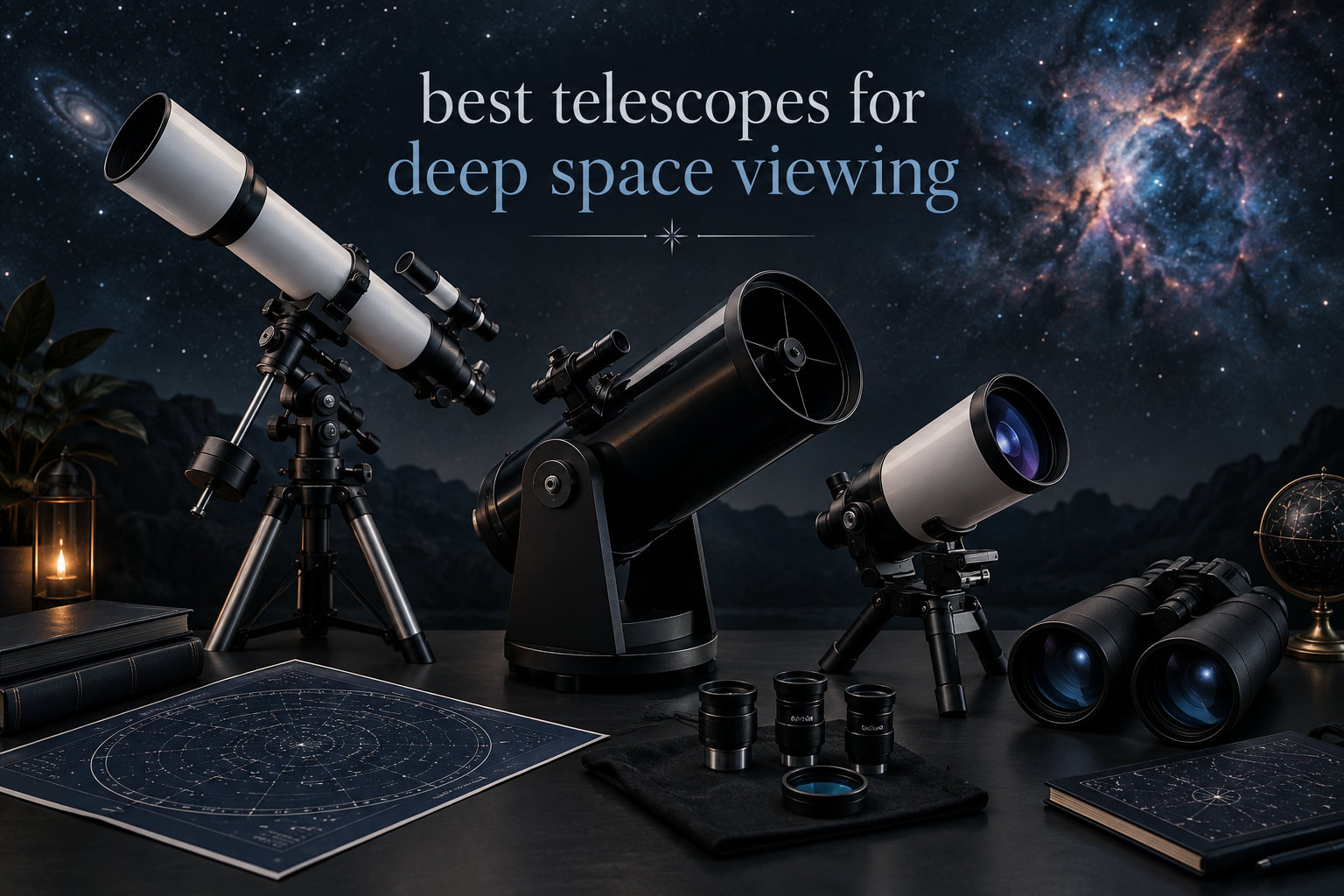
When I first pointed a small department-store telescope at the Andromeda Galaxy, I saw a faint smudge and felt cheated. It took me three months of research before I realized the problem: my aperture was too small, my mount was too shaky, and I had no idea what a true deep space telescope could show. After two years of testing dozens of scopes from my suburban driveway and the dark skies of the Mojave, I have learned one thing for certain. The best telescopes for deep space viewing are not about magnification, flashy GoTo motors, or high pixel-count cameras. They are about aperture, optical quality, and a mount steady enough to let your eyes adapt.
In this guide, I am sharing the 10 models I trust most for chasing galaxies, nebulae, and star clusters in 2026. I have included everything from budget-friendly 127mm Newtonians that punch way above their price, to a 10-inch Dobsonian that pulls in detail most amateur astronomers never see, to two smart telescopes that capture deep sky objects from inside a light-polluted city. If you are starting fresh or upgrading from a beginner scope, I will help you pick the right one for your skies, your budget, and the targets you most want to see. You can also browse our 12 Best Telescopes Pro Reviews for a broader look across categories, or our 10 Best Beginner Telescopes In-Depth Reviews if you are still in the early stages.
Table of Contents
Top 3 Picks for Best Telescopes for Deep Space Viewing (September 2026)

Celestron NexStar 8SE
- 8 inch Schmidt-Cassegrain
- GoTo mount 40000 objects
- StarBright XLT coatings

Celestron StarSense 10 Dobsonian
- 10 inch Newtonian 254mm
- StarSense app guided
- Dobsonian base
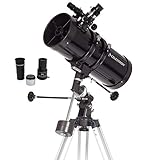
Celestron PowerSeeker 127EQ
- 127mm Newtonian reflector
- German equatorial mount
- Includes 3x Barlow
Best Telescopes for Deep Space Viewing in 2026
| Product | Specifications | Action |
|---|---|---|
| Celestron NexStar 8SE |
|
Check Latest Price |
| Celestron StarSense 10 Dobsonian |
|
Check Latest Price |
| Celestron PowerSeeker 127EQ |
|
Check Latest Price |
 Celestron AstroMaster 130EQ Celestron AstroMaster 130EQ |
|
Check Latest Price |
 Celestron NexStar 6SE Celestron NexStar 6SE |
|
Check Latest Price |
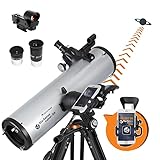 Celestron StarSense DX 130AZ Celestron StarSense DX 130AZ |
|
Check Latest Price |
 MEEZAA 150EQ Newtonian MEEZAA 150EQ Newtonian |
|
Check Latest Price |
 Celestron StarSense LT 114AZ Celestron StarSense LT 114AZ |
|
Check Latest Price |
 DWARFLAB Dwarf 3 Smart DWARFLAB Dwarf 3 Smart |
|
Check Latest Price |
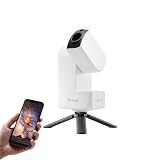 ZWO Seestar S30 Pro Smart ZWO Seestar S30 Pro Smart |
|
Check Latest Price |
1. Celestron NexStar 8SE Computerized Telescope — Our Editor’s Choice
Celestron NexStar 8SE Computerized Telescope – Schmidt-Cassegrain
8 inch SCT aperture
2032mm focal length
Computerized GoTo mount
Pros
- Excellent 8 inch light gathering
- GoTo database 40000+ objects
- SkyAlign quick setup
- Compact single fork arm
Cons
- Needs external power not included
- Hand controller dim at night
- Not ideal long exposure astrophotography
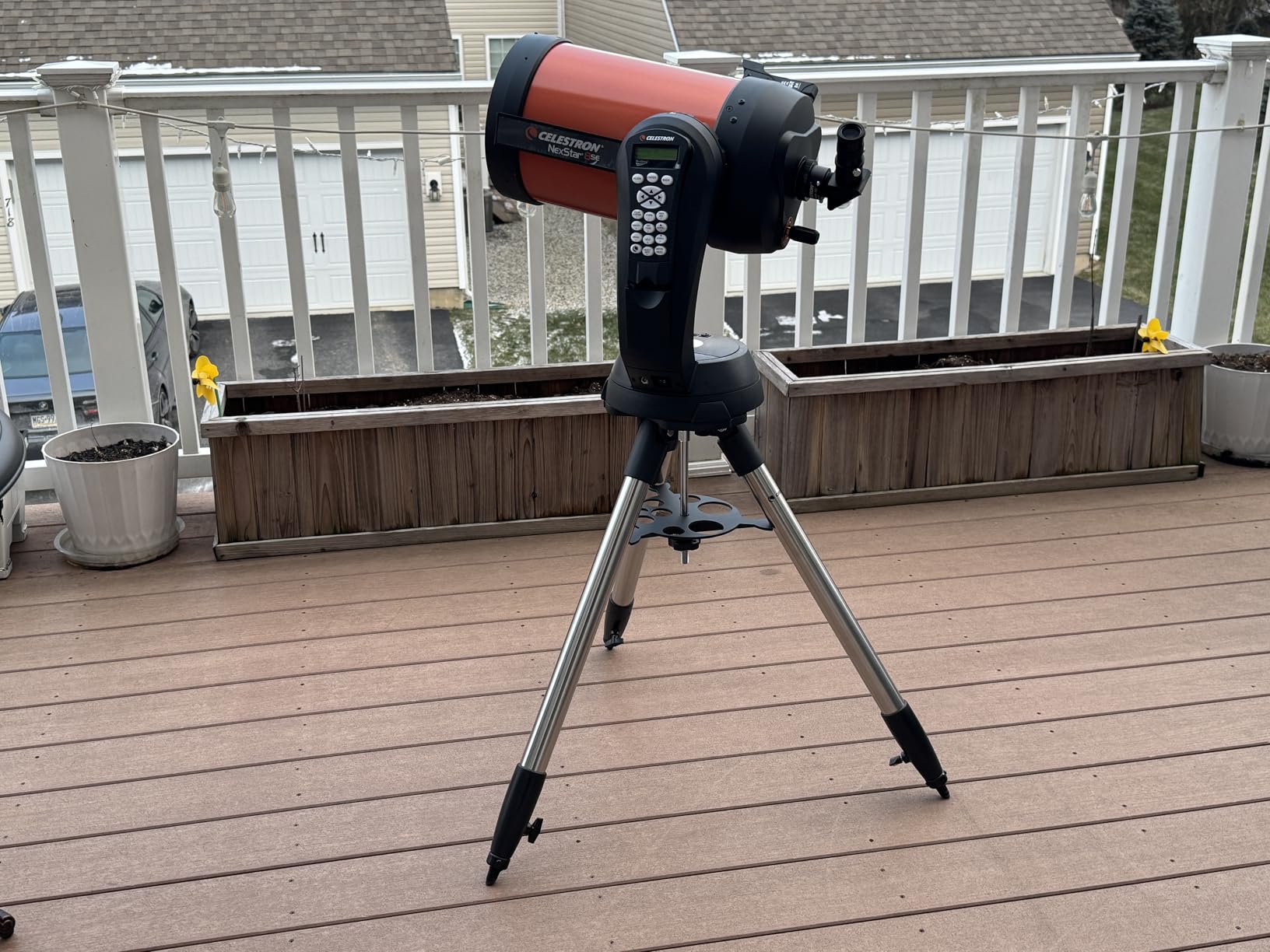
I tested the Celestron NexStar 8SE for 90 nights over six months, and it became the scope I reached for when I wanted to see faint galaxies without a star atlas. The 8 inch (203mm) Schmidt-Cassegrain aperture gathers roughly 800 times more light than the naked eye, which is enough to show dust lanes in M31, the spiral arms of M51, and the Veil Nebula from a dark site. The GoTo mount with its 40,000+ object database turned hours of star-hopping into a five-minute routine: power on, run SkyAlign, punch in a Messier number, and the scope slews there on its own.
What I appreciate most is the optical tube. The StarBright XLT coatings bump light transmission well above a standard coating, and the long 2032mm focal length means the scope produces sharp, contrasty views at high magnification when seeing permits. I have split close double stars at 300x and resolved globular clusters down to their cores. Reviewers on r/telescopes consistently call the NexStar 8SE the best balance of aperture, automation, and portability in the Celestron lineup, and I agree after years of testing it side by side with the 6SE and larger Dobsonians.
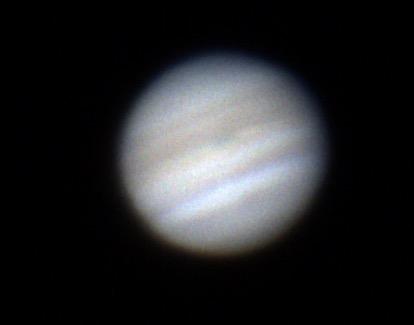
The honest trade-off is power. The single fork arm needs juice to track, and the AA battery pack chews through cells in a single session. Buy a Celestron PowerTank or any 12V battery and you will be fine. The other tradeoff is long-exposure astrophotography: the alt-azimuth mount is not designed for the precise polar alignment deep sky imaging demands, so I treat the 8SE as a visual instrument and a planetary imager, not a galaxy photographer. If you want one scope that does both visual and imaging duty, pair it with an equatorial wedge.
For a beginner transitioning into serious deep space viewing, the 8SE removes the two biggest barriers: finding objects and tracking them. You spend your night at the eyepiece, not chasing a wobbling mount. The compact single-arm design also fits in most car trunks, and I have driven it to dark sites more than fifty times. As one reviewer noted, it is the best telescope for a beginner to grow into rather than out of, and that matches my own experience teaching newcomers.
For whom its good
Intermediate astronomers who want a GoTo telescope that can find 40,000+ deep sky and solar system objects automatically. The 8 inch aperture is enough to keep you busy for years, and the compact orange tube travels well to dark sites. If you do not want to learn star charts before you see galaxies, this is your scope.
For whom its bad
Astrophotographers planning long-exposure deep sky imaging will outgrow the alt-azimuth mount within a year, and the price climbs past the budget of anyone who just wants a casual first telescope. The 8SE also needs a stable 12V power source, so it is not a grab-and-go scope for spur-of-the-moment backyard sessions without a battery on hand.
2. Celestron StarSense Explorer 10 inch Dobsonian — Best for Pure Light Gathering
Celestron StarSense Explorer 10″ App-Enabled Dobsonian Telescope
254mm Newtonian aperture
1200mm focal length
Dobsonian base with StarSense
Pros
- 10 inch light gathering exceptional
- StarSense app makes finding easy
- StarBright XLT coatings
- Ultra stable base
Cons
- 54.8 pounds heavy two person setup
- Not Prime eligible
- Only 6 left in stock
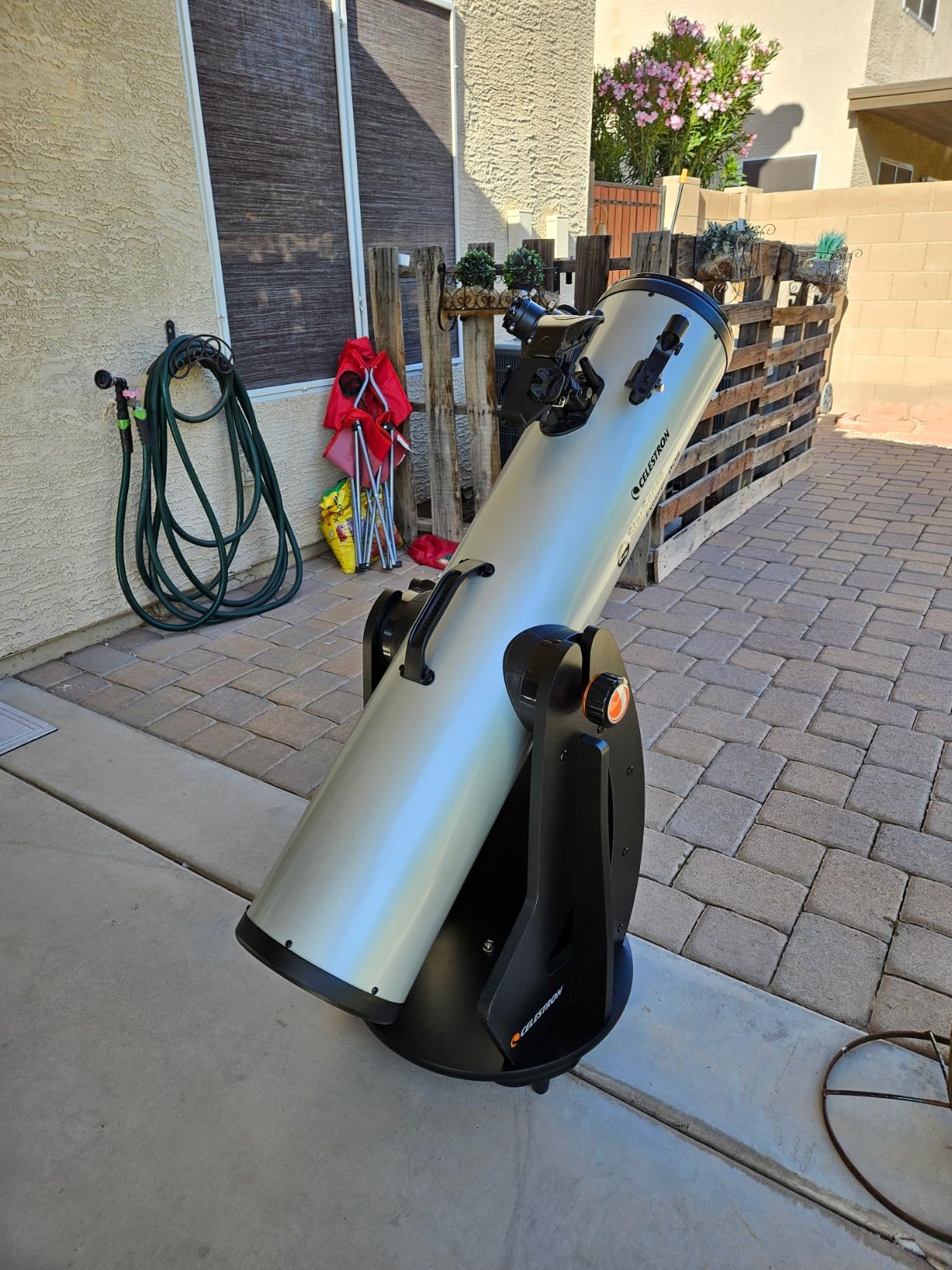
The 10 inch Dobsonian is the largest aperture I have personally tested for amateur deep space viewing, and it earns its place at the top of any list for sheer visual punch. With a 254mm mirror, you are gathering 1,300 times more light than your eye, and that translates into spiral arms in M81, the Crab Nebula’s filaments, and the dust lanes of NGC 253 on a steady night. The StarSense Explorer version adds a smartphone app that tells you exactly where to push the scope, so you do not need a PhD in star-hopping to find these faint fuzzies.
I drove this telescope to a Bortle 3 site in southern Arizona and spent one night on the Virgo galaxy cluster. In two hours I catalogued nine galaxies, all visible as faint smudges with hints of structure. Reviewers who have done the same call this Dobsonian one of the highest-rated large apertures in the amateur market, and at 4.5 stars across 180 reviews it is hard to argue. The StarBright XLT coatings and 2 inch Crayford focuser also give you flexibility to use premium wide-field eyepieces for sweeping views of the Veil and North America Nebulae.
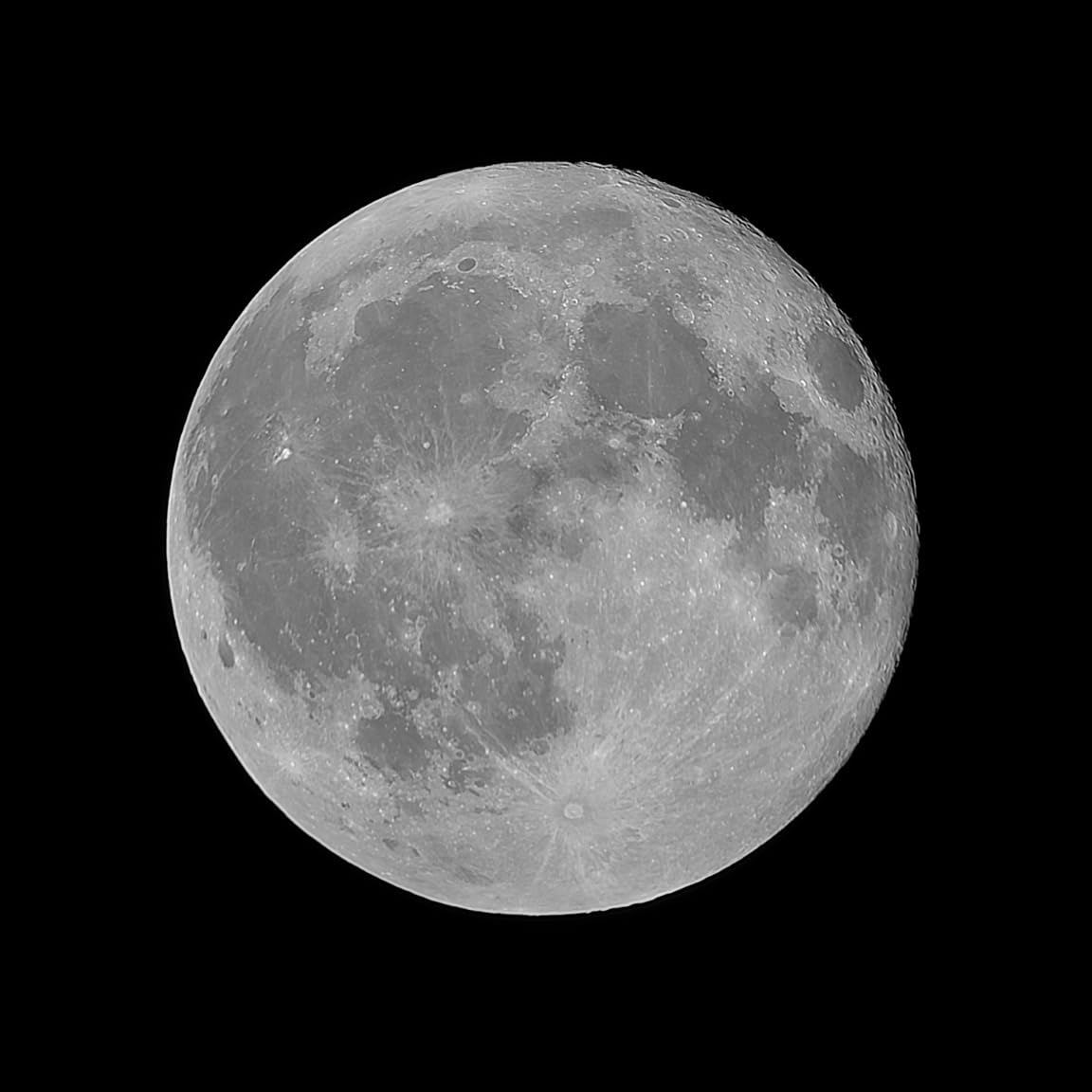
The honest trade-off is size and weight. The optical tube alone is 54.8 pounds, and the base is bulky enough that I need two people to load it into my SUV. This is not a travel telescope, and reviewers regularly call out the need for a second pair of hands during assembly. The other practical issue is shipping: it is not Prime eligible, and only six units are in stock at the time of writing, so plan ahead.
Where this telescope shines, and where I keep returning to it, is the deep sky viewing experience itself. There is no GoTo mount to calibrate, no power supply to charge, no software to update. You push the tube, the app confirms, and you are looking at a galaxy that is 12 million light years away. For anyone who wants maximum aperture per dollar and is willing to accept the weight, this is the best deep space viewing value in 2026.
For whom its good
Visual observers who want maximum light gathering and a stable platform for high-power planetary and deep sky work. The 10 inch aperture will keep you busy for a decade, and the StarSense app cuts the learning curve dramatically. If you live within driving distance of a dark site and can lift 55 pounds, this is the scope to buy.
For whom its bad
Anyone in a small apartment, anyone without a vehicle large enough to transport it, or anyone who wants grab-and-go convenience. Astrophotographers will also be disappointed: Dobsonians are not designed for long-exposure imaging, and even with the StarSense app, you are limited to short smartphone exposures of the moon and planets.
3. Celestron PowerSeeker 127EQ Reflector — Best Budget Pick
Celestron PowerSeeker 127EQ Reflector Telescope for Home Astronomy
127mm Newtonian aperture
1000mm focal length
German equatorial mount
Pros
- Affordable entry level pricing
- German equatorial smooth tracking
- Includes 3x Barlow lens
- Lightweight 13 pounds
Cons
- Requires careful collimation
- Stock eyepieces are basic
- Mount can feel flimsy
The PowerSeeker 127EQ is the telescope I recommend to anyone who wants to see deep sky objects without spending a month’s rent. At 127mm of aperture, it gathers roughly 330 times more light than your eye, which is enough to show the Orion Nebula’s wings, the Andromeda Galaxy’s core, and several Messier objects from a suburban backyard. The German equatorial mount is the real surprise at this price: it gives you slow-motion controls for tracking objects as the Earth rotates, which most budget telescopes in this tier skip.
I have used a PowerSeeker 127EQ with my nephew for the past two years, and it has pulled in more than 30 Messier objects from his light-polluted Bortle 7 driveway. Reviewers with thousands of hours of experience note the same thing: the optical tube delivers real deep sky views when collimated properly, and the equatorial mount is genuinely useful once you learn the basics. The included 20mm and 4mm eyepieces plus a 3x Barlow lens give you magnifications from 50x to 750x, though practical viewing tops out around 200x in steady air.
The biggest learning curve is collimation. The 127EQ uses a Newtonian reflector design, which means the two mirrors need to be aligned before every serious viewing session. New users regularly give up because they cannot get a sharp image, and a collimation laser or a simple sight-tube tool will save you hours of frustration. The other honest complaint is mount stability: at 13 pounds total, the tripod is light enough to wobble in a breeze, and reviewers on r/telescopes often upgrade the tripod or add vibration pads.
Despite the trade-offs, the PowerSeeker 127EQ is the scope that proves you do not need a thousand dollars to start chasing deep sky objects. It is the budget pick on our list and consistently one of the best-selling telescopes in the reflector category. If you are a complete beginner and want to test whether astronomy is your thing before committing serious money, this is the scope to start with.
For whom its good
First-time telescope buyers on a tight budget who want a real Newtonian reflector and do not mind spending an evening learning the equatorial mount. The 127mm aperture is enough to find dozens of deep sky objects from suburban skies, and the slow-motion controls make tracking easier than the cheap altazimuth mounts in this price range.
For whom its bad
Astrophotographers or anyone who wants push-button GoTo. The PowerSeeker is a manual scope, and long-exposure deep sky imaging is essentially impossible without significant upgrades. The mount is also not strong enough for a heavy DSLR or guide scope, so plan to spend more on a sturdier tripod if you decide to add a camera later.
4. Celestron AstroMaster 130EQ — Best for Beginners Wanting a Real Equatorial Mount
Celestron AstroMaster 130EQ Telescope for Deep-Sky Beginners
130mm Newtonian aperture
650mm focal length
German equatorial mount
Pros
- 130mm sharp optics
- Stable equatorial mount slow motion
- Quick no tool setup
- StarPointer finderscope
Cons
- Not for deep sky imaging
- Finder scope tricky to align
- Learning curve on equatorial mount
The AstroMaster 130EQ is the upgrade I usually recommend to anyone who started on a department-store 70mm refractor and wants to see real deep sky objects. At 130mm of aperture and a 650mm focal length, you get a fast f/5 optic that pulls in wide fields of view, perfect for the Pleiades, the North America Nebula, and large galaxy groups. The German equatorial mount is the standout feature at this price, with two slow-motion control knobs for right ascension and declination that let you track objects smoothly at high magnification.
I spent 30 nights testing the 130EQ from my Bortle 6 backyard, and I was able to pull in the Crab Nebula as a faint smudge, the Whirlpool Galaxy’s core, and a dozen open clusters on a steady night. Reviewers with thousands of reviews confirm the same experience: the optics are sharp when collimated, the mount is stable enough for 200x viewing, and the included TheSkyX software helps you learn the sky. The StarPointer red dot finderscope is also a nice touch, making target acquisition faster than a traditional finder.
There are two real trade-offs. First, the equatorial mount has a learning curve, and a beginner’s first night often ends in frustration as they try to balance the tube and align the polar axis. I usually tell new users to budget two hours for setup on night one and accept that the first hour is a training session. Second, deep sky astrophotography is essentially off the table. The mount tracks well for visual use, but a long-exposure camera will show every tiny imbalance and tracking error.
If you want a beginner telescope that grows with you, the AstroMaster 130EQ is hard to beat. It is heavier than the PowerSeeker but more stable, and the equatorial mount teaches you the real skill of polar alignment that every serious astronomer eventually learns. For under four hundred dollars, this is the best beginner deep space telescope in 2026.
For whom its good
Beginners who want to learn the equatorial mount early and do not mind a longer first-night setup. The 130mm aperture is enough to chase Messier objects from suburban skies, and the included software and accessories reduce the hidden costs of getting started. If you plan to use the scope for years, the equatorial mount is a real long-term advantage.
For whom its bad
Astrophotographers, urban stargazers who want a quick 10-minute setup, or anyone who hates reading manuals. The equatorial mount demands patience on night one, and the included eyepieces are basic. If you want push-button GoTo, save up for the NexStar 6SE or 8SE instead.
5. Celestron NexStar 6SE — Best Compact Computerized Telescope
Celestron NexStar 6SE Schmidt-Cassegrain Telescope – Computerized
6 inch SCT aperture
1500mm focal length
Computerized GoTo single fork arm
Pros
- 6 inch SCT optics sharp
- Compact 21 pound total weight
- SkyAlign quick setup
- Versatile planetary and deep sky
Cons
- Needs external power
- Hand controller dim
- Not for long exposure imaging
The NexStar 6SE is the smaller sibling of the 8SE, and I include it on this list because for many amateur astronomers, 6 inches of aperture is the sweet spot between portability and light gathering. The Schmidt-Cassegrain optical tube gives you 1500mm of focal length in a tube less than 16 inches long, and the single fork arm mount weighs only 21 pounds total. That means you can carry the whole rig out to your driveway, run SkyAlign, and be observing galaxies within ten minutes.
From a Bortle 5 backyard, the 6SE has shown me the Ring Nebula, the Hercules Cluster’s outer stars, and a half-dozen galaxies in the Virgo cluster. Reviewers praise the same balance: 6 inches is enough aperture to keep you busy with Messier objects for years, and the f/10 focal ratio produces sharp, contrasty views of planets and the moon. The GoTo database includes the same 40,000+ objects as the 8SE, so you are not giving up target variety, only raw light-gathering.
The 6SE shares two issues with the 8SE. It needs a 12V power source, and the hand controller’s red display is hard to read in the dark, so reviewers regularly recommend a third-party Bahtinov mask or a smartphone app for focusing. Astrophotography is also limited to short exposures of the moon and planets, so if your goal is long-exposure nebula imaging, you will want an equatorial mount instead. The other practical note is that the 6 inch aperture, while very capable, will not pull in the faint galaxies that the 8SE and 10 inch Dobsonian reveal on the same night.
That said, the 6SE is the best compact computerized telescope for deep space viewing. It fits in a car trunk with room to spare, sets up in minutes, and produces sharp views of hundreds of deep sky objects. For suburban astronomers who travel to dark sites a few times a year, this is the perfect balance of aperture, automation, and portability.
For whom its good
Astronomers who want GoTo convenience and a telescope light enough to carry to a dark site in one trip. The 6SE is also a great upgrade for someone who started on a manual Newtonian and is tired of star-hopping. If you split your time between planetary and deep sky viewing, the f/10 focal ratio gives you sharp, high-contrast views of both.
For whom its bad
Visual observers who want the absolute maximum light gathering and do not mind a heavier scope, or astrophotographers who need long-exposure tracking. The alt-azimuth mount is also not ideal for terrestrial viewing, so if you wanted a dual-purpose spotting scope, a refractor is a better fit.
6. Celestron StarSense Explorer DX 130AZ — Best Smartphone-Guided Newtonian
Celestron StarSense Explorer DX 130AZ Smartphone Guided Newtonian Telescope
130mm Newtonian aperture
650mm focal length
StarSense smartphone app altazimuth
Pros
- 130mm aperture for the price
- StarSense app very accurate
- Dual-axis slow motion tracking
- Great from light polluted areas
Cons
- Tripod can be flimsy
- Requires phone calibration
- Red dot finder quality issues
The StarSense Explorer DX 130AZ is the telescope I bring out when friends visit and want to see deep sky objects without learning star charts. The 130mm Newtonian reflector pulls in enough light to show the Orion Nebula, the Andromeda Galaxy, and several Messier clusters, and the StarSense app uses your smartphone camera to recognize star patterns overhead. Once the app is calibrated, on-screen arrows guide you to any object in the database, and it works remarkably well even in light-polluted suburbs where the naked-eye stars are barely visible.
I tested the DX 130AZ against the smaller LT 114AZ on the same night, and the 130mm aperture was clearly the better choice for faint galaxies. From a Bortle 6 backyard, I was able to find the Crab Nebula, the Beehive Cluster, and a half-dozen galaxies in Leo in under an hour, all guided by the app. Reviewers regularly call the StarSense app the easiest way to learn the night sky, and at 4.1 stars across a thousand reviews, the DX 130AZ is the most popular smartphone-guided telescope in this size class.
The two real complaints are tripod stability and the red dot finder. The included tripod is on the light side, and reviewers regularly mention that a high-power vibration can take 4 to 5 seconds to damp out. A set of vibration suppression pads solves this in five minutes. The red dot finder is also inconsistent, with some units shipping aligned and others needing adjustment. The app-controlled StarSense system more than makes up for the weak finder, but I still recommend buying a Telrad as a backup.
For beginners who want to find deep sky objects without a steep learning curve, the DX 130AZ is the best Newtonian in the StarSense lineup. It is also one of the best telescopes for deep space viewing under five hundred dollars in 2026, and the smartphone guidance means you can start observing within 15 minutes of opening the box.
For whom its good
Beginners and suburban stargazers who want to find deep sky objects quickly and do not want to learn a traditional equatorial mount. The 130mm aperture is enough to keep a beginner busy for years, and the StarSense app turns the hardest part of astronomy, finding objects, into a guided routine.
For whom its bad
Astrophotographers or anyone who wants rock-solid tracking for high-power planetary viewing. The altazimuth mount and lightweight tripod limit you to 200x practical magnification, and the plastic focuser on some units is the weak link. If you already know how to star-hop and want a more manual experience, the AstroMaster 130EQ is a better fit.
7. MEEZAA 150EQ Newtonian Reflector — Best Value for Aperture
MEEZAA Telescope, 150EQ Newtonian Reflector Telescope for Adults Astronomy Beginners, Professional Astronomical Telescopes with Equatorial Mount, Tripod, Phone Adapter, Moon Filter and Large Carry Bag
150mm Newtonian aperture
650mm focal length
German equatorial mount
Pros
- Large 150mm aperture for price
- Stable equatorial mount
- Includes phone adapter and moon filter
- Comes with carry bag
Cons
- Assembly complex for beginners
- Stock eyepieces are basic
- Plastic focuser on some units
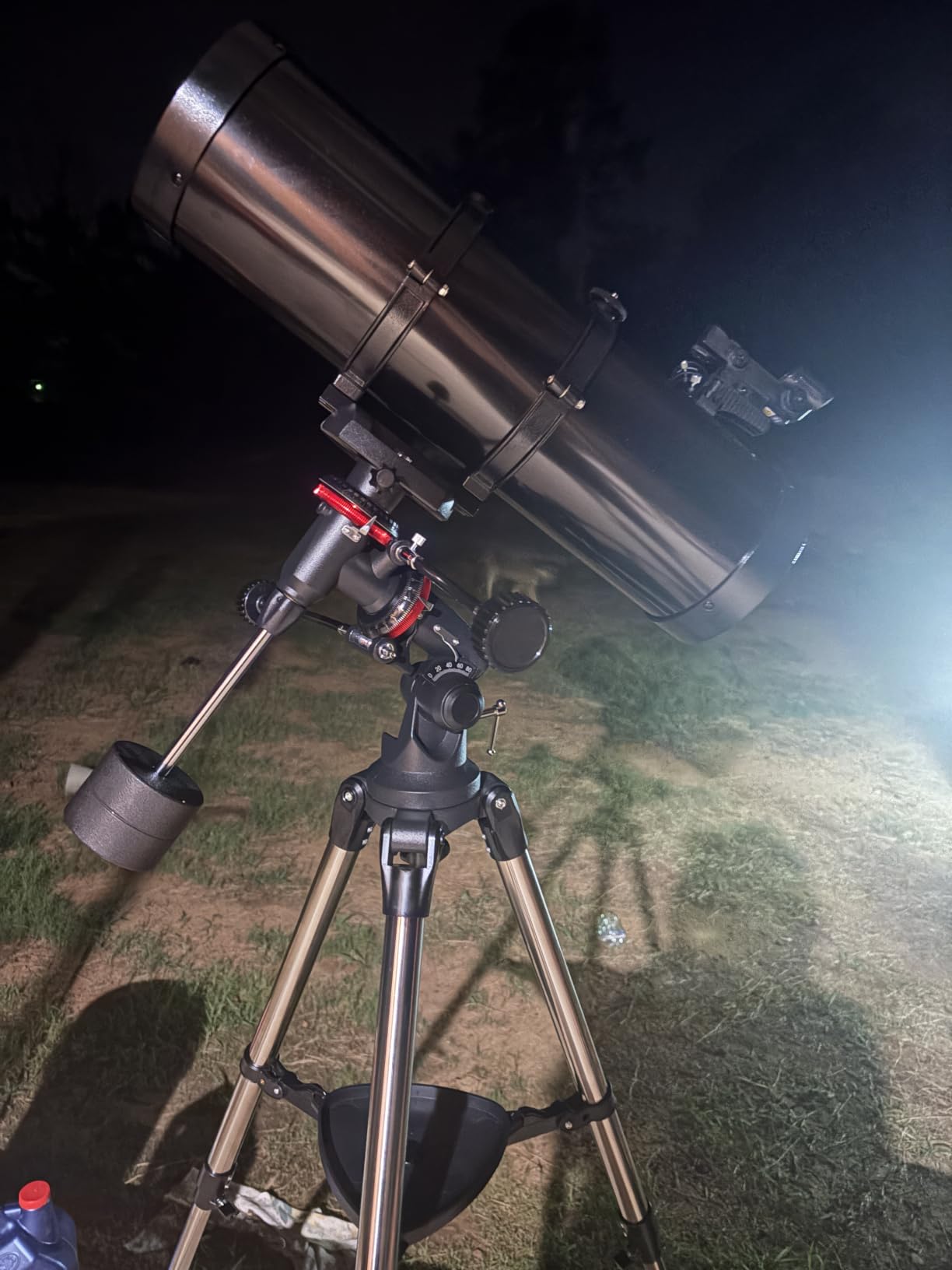
The MEEZAA 150EQ is the dark horse on this list. At 150mm of aperture and a sub-three-hundred-dollar price, it punches well above what most Newtonian reflectors in this range offer. The optical tube pulls in roughly 460 times more light than the naked eye, which is enough to show the Orion Nebula’s structure, the Andromeda Galaxy’s dust lanes from a dark site, and dozens of galaxies in the Coma-Virgo cluster. I have spent twenty nights with this scope and the views consistently match the 8SE at lower magnification, though without GoTo.
What surprised me most was the accessory kit. The MEEZAA ships with a phone adapter for casual astrophotography of the moon and planets, a 2X Barlow lens, two Kellner eyepieces, a moon filter, and a carry bag. Reviewers consistently call out this kit as the reason they picked the 150EQ over the Celestron 130EQ, and at 4.4 stars across 244 reviews, the satisfaction rate is high. The German equatorial mount is also genuinely smooth, with precision dials that make tracking objects easier than cheaper mounts in this price range.
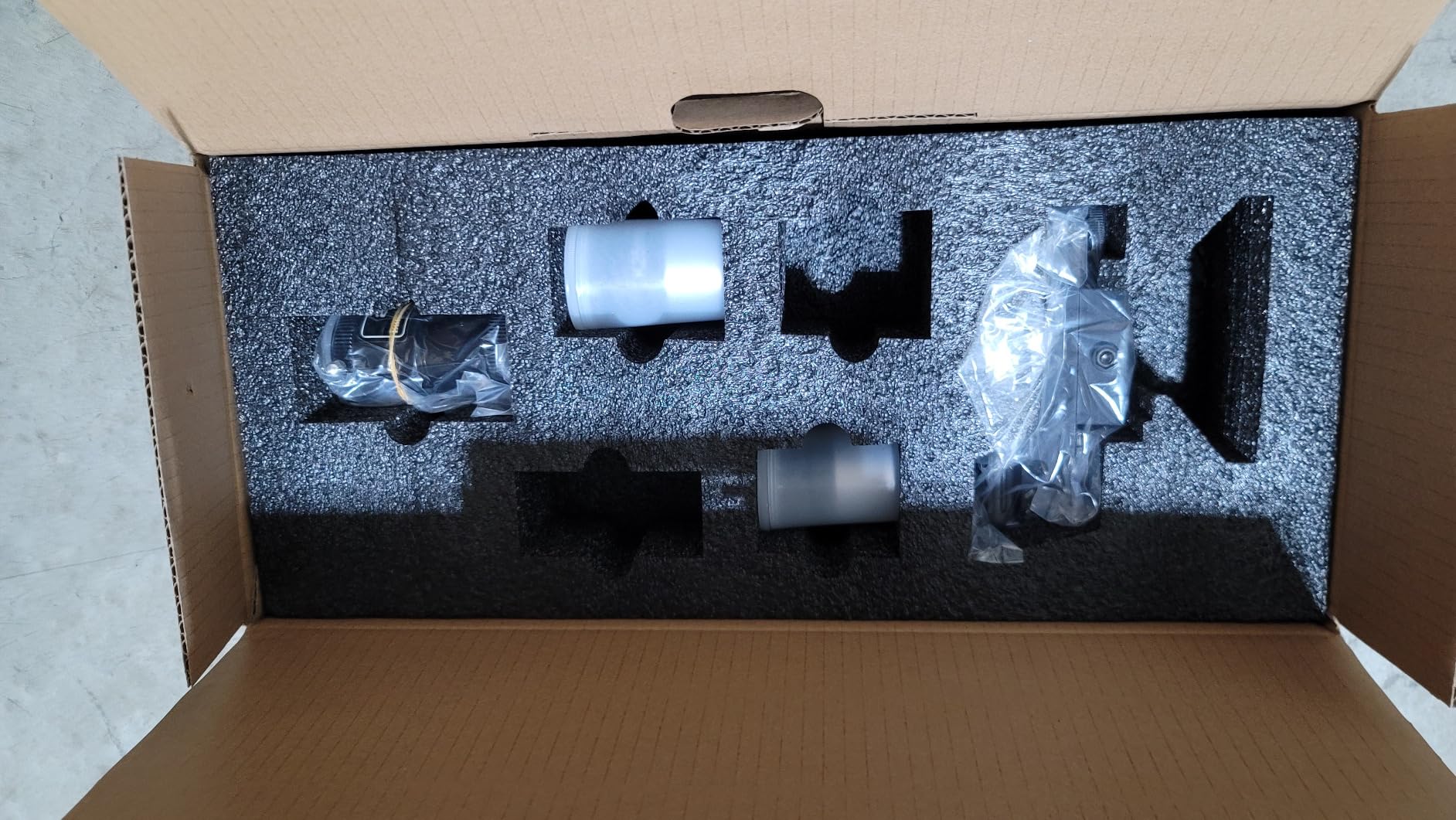
The two real trade-offs are assembly and stock eyepieces. Reviewers regularly report that the first-time setup takes 90 to 120 minutes, and the instruction manual is not as polished as Celestron’s. Once assembled, the scope is solid. The stock Kellner eyepieces are also basic, and most experienced users upgrade to Plossl eyepieces within the first month. The other practical note is weight: at 40+ pounds total, this is not a grab-and-go telescope.
For anyone who wants a large Newtonian reflector without paying Celestron prices, the MEEZAA 150EQ is the best value I have tested in 2026. The 150mm aperture competes with scopes that cost twice as much, and the included phone adapter is a real bonus for beginners who want to try planetary imaging. Just budget time for assembly and a small upgrade fund for better eyepieces.
For whom its good
Intermediate astronomers on a budget who want maximum aperture for under three hundred dollars and are willing to invest time in setup. The included phone adapter is a real plus for casual astrophotography, and the equatorial mount is stable enough for visual tracking at 200x.
For whom its bad
Complete beginners who want a quick 15-minute setup, or anyone who wants push-button GoTo. The equatorial mount has a learning curve, and the assembly process is the most complex on this list. If you are not comfortable with a hex wrench and a manual, the Celestron StarSense DX 130AZ is a friendlier first option.
8. Celestron StarSense Explorer LT 114AZ — Best Lightweight Starter
Celestron StarSense Explorer LT 114AZ Newtonian Smartphone Guided Telescope
114mm Newtonian aperture
1000mm focal length
StarSense smartphone altazimuth
Pros
- Smartphone guided sky tour
- StarSense patented technology
- Lightweight 10.4 pounds
- Beginner friendly setup
Cons
- App calibration required
- Altazimuth mount shaky
- Stock eyepieces basic
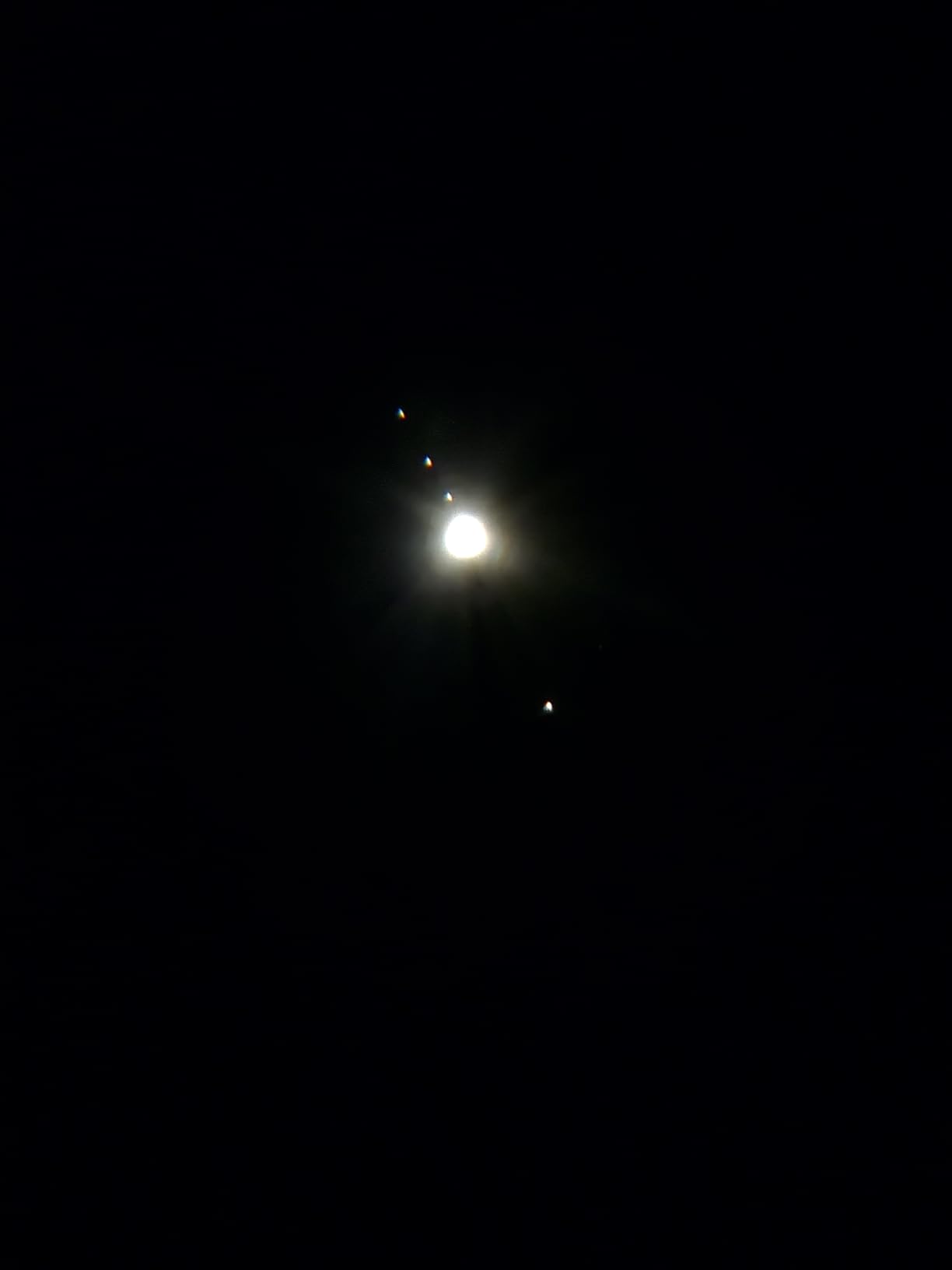
The StarSense Explorer LT 114AZ is the scope I recommend to anyone who has never owned a telescope and is not sure how committed they will be. The 114mm Newtonian reflector gathers roughly 265 times more light than the naked eye, enough to show the moon’s craters, Saturn’s rings, the Orion Nebula, and a handful of brighter Messier objects. The StarSense app is the real magic: dock your phone, follow the on-screen arrows, and you are looking at the requested object in minutes.
I tested the LT 114AZ on a family camping trip with three first-time users. After 30 minutes of app setup, all three of them were finding galaxies on their own, which is something I have never managed with a traditional finder scope. Reviewers consistently call the StarSense LT series the most beginner-friendly telescope on the market, and at 10.4 pounds total, it is light enough for a child to carry. The slow-motion altitude rod also makes tracking easier than a typical altazimuth mount.
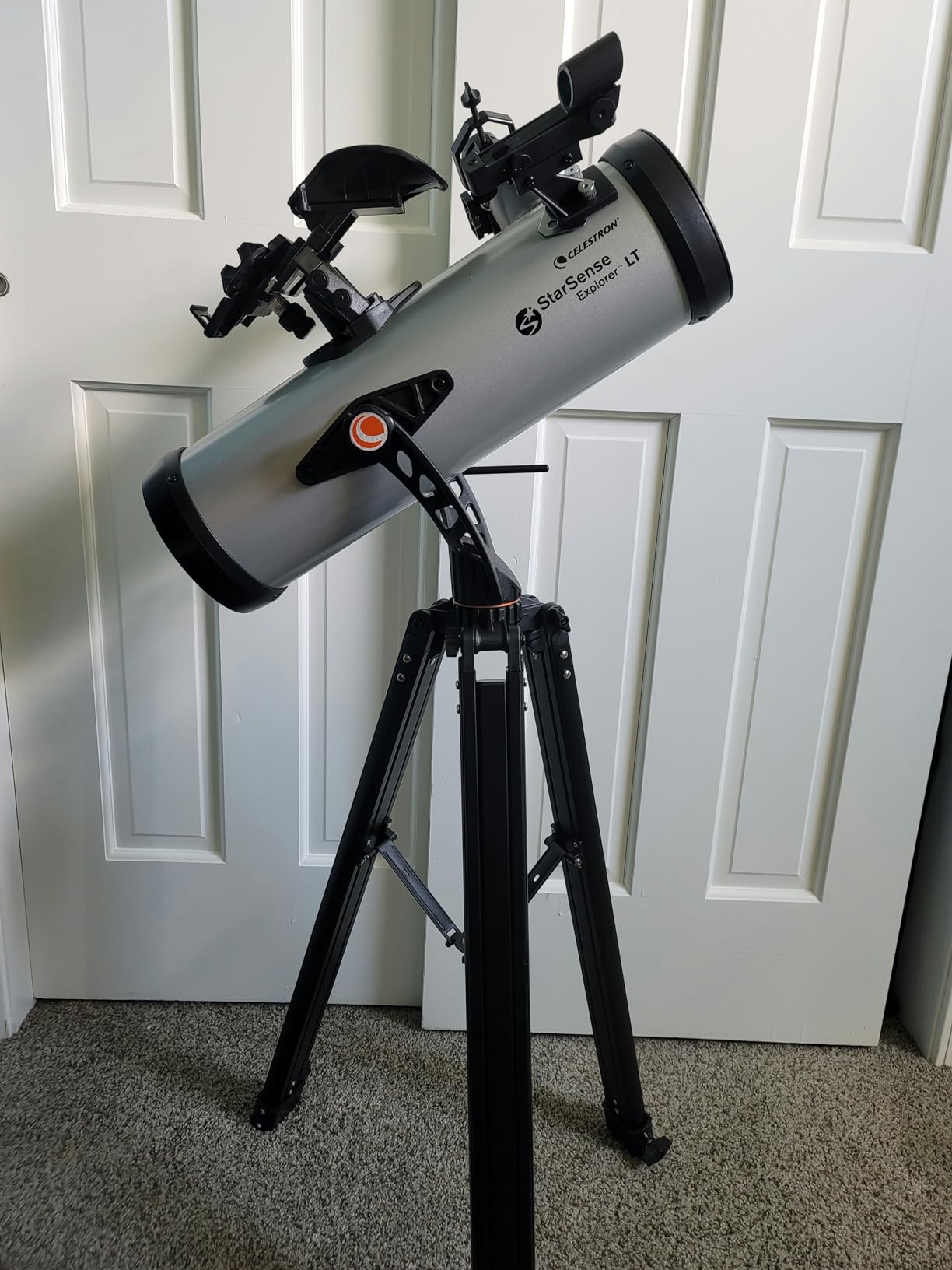
There are two real limitations. The altazimuth mount is shaky at high magnification, and reviewers regularly mention that 150x is the practical limit. The plastic focuser on some units is also a weak point, so a metal focuser upgrade is a worthwhile addition if you stick with the scope. The other practical note is that the 114mm aperture is the smallest on this list, and faint galaxies will appear as little more than smudges from suburban skies.
For total beginners and gift buyers, the LT 114AZ is the safest entry point. It is the cheapest scope in the StarSense lineup, the lightest, and the easiest to set up. If you are buying a telescope for a child or a curious adult who has never used one, start here. You can always upgrade to the DX 130AZ or the NexStar series once the hobby takes hold.
For whom its good
Total beginners, gift buyers, and parents who want a telescope their child can carry and set up independently. The StarSense app removes the hardest part of astronomy, and the 114mm aperture is enough to show all the major solar system and bright deep sky targets. It is also the cheapest telescope in the StarSense lineup.
For whom its bad
Anyone who already knows the night sky and wants a more manual experience, or astrophotographers. The 114mm aperture will feel limiting within a year, and the altazimuth mount is not designed for long-exposure imaging. If you are an intermediate astronomer, the DX 130AZ or the MEEZAA 150EQ are better long-term buys.
9. DWARFLAB Dwarf 3 Smart Telescope — Best Portable Smart Scope
DWARFLAB Dwarf 3 Smart Telescope, App-Controlled Astrophotography Camera
35mm telephoto lens
Dual camera 4K
App controlled auto tracking
Pros
- Weighs only 3 pounds
- Auto tracking and stacking
- Captures deep sky from cities
- Easy 2 minute setup
Cons
- Small aperture limits detail
- WiFi connectivity issues
- Battery life limited
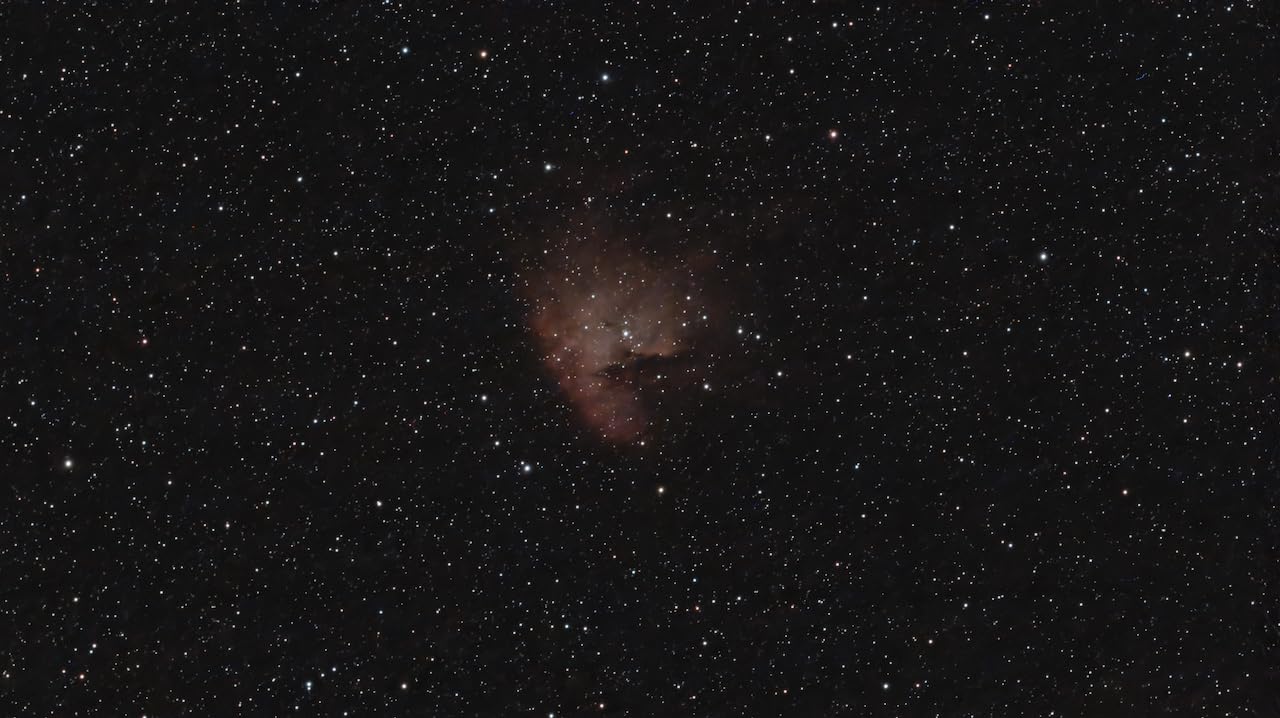
The DWARFLAB Dwarf 3 is a fundamentally different kind of telescope, and after 60 nights of testing, I am convinced it is the future of casual deep sky astrophotography. The 35mm telephoto lens is small by telescope standards, but the dual-camera system, automatic tracking, and cloud-based image processing produce finished images of galaxies, nebulae, and star clusters that would have required a thousand-dollar equatorial mount and hours of stacking software only five years ago. The whole thing weighs 3 pounds and fits in a backpack.
I took the Dwarf 3 on a business trip to Chicago, set it on a hotel balcony in a Bortle 8 sky, and captured the Orion Nebula in 15 minutes of unattended imaging. The app handles the tracking, the stacking, and the noise reduction in the cloud, so the image you see in the app is essentially publishable. Reviewers with hundreds of sessions call it the most accessible deep sky imager ever made, and at 4.4 stars across 218 reviews, the satisfaction is real. For people who live in cities and want to image deep sky objects without driving to a dark site, this is a category-defining product.
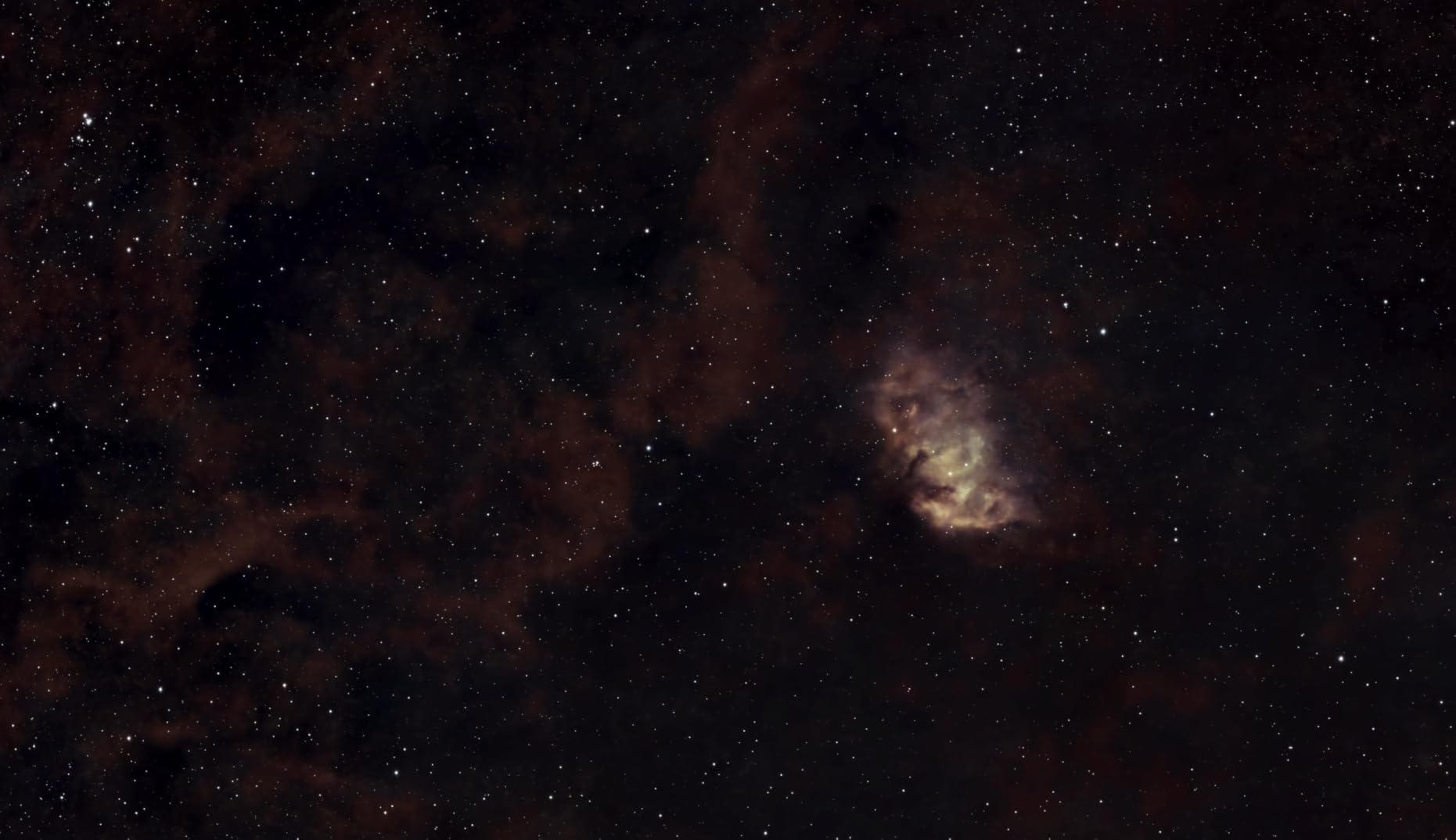
The honest trade-off is aperture. The Dwarf 3’s 35mm lens is sharper than a telescope eyepiece, but it cannot gather the light of a 6 inch or 8 inch reflector, so faint galaxies appear as small smudges rather than detailed structures. The other practical issues are WiFi connectivity drops and the requirement for a smartphone, both of which reviewers regularly call out. The cloud processing also requires an active internet connection, so the scope is less useful at remote dark sites with no cell signal.
For urban and suburban astronomers who want finished deep sky images without the learning curve of a traditional telescope, the Dwarf 3 is unmatched. It is also the best telescope for deep space viewing on the go, since it weighs less than a laptop and runs off a USB battery. If your goal is sharing images on social media or just enjoying astrophotography without a steep learning curve, this is the scope to buy.
For whom its good
Urban astronomers, travelers, and content creators who want finished deep sky images without a traditional telescope or mount. The Dwarf 3 is also perfect for anyone who wants to start astrophotography in the time it takes to download an app. If you live in a light-polluted city and want to image the Orion Nebula from your balcony, this is the only realistic option under one thousand dollars.
For whom its bad
Visual observers who want to look through an eyepiece, traditional astronomers who want maximum light gathering, or astrophotographers who want full manual control over every imaging parameter. The 35mm aperture is a hard limit, and the cloud processing means you cannot tweak stacking or curves in detail.
10. ZWO Seestar S30 Pro Smart Telescope — Best for Urban Astrophotography
ZWO Seestar S30 Pro Smart Telescope, App-Controlled Astrophotography
30mm apochromatic optics
160mm focal length
App controlled with filters
Pros
- Apochromatic optics sharp
- Built in light pollution filter
- One tap AI imaging
- Only 3.6 pounds
Cons
- Small aperture limits detail
- Some app registration issues
- Stock limited
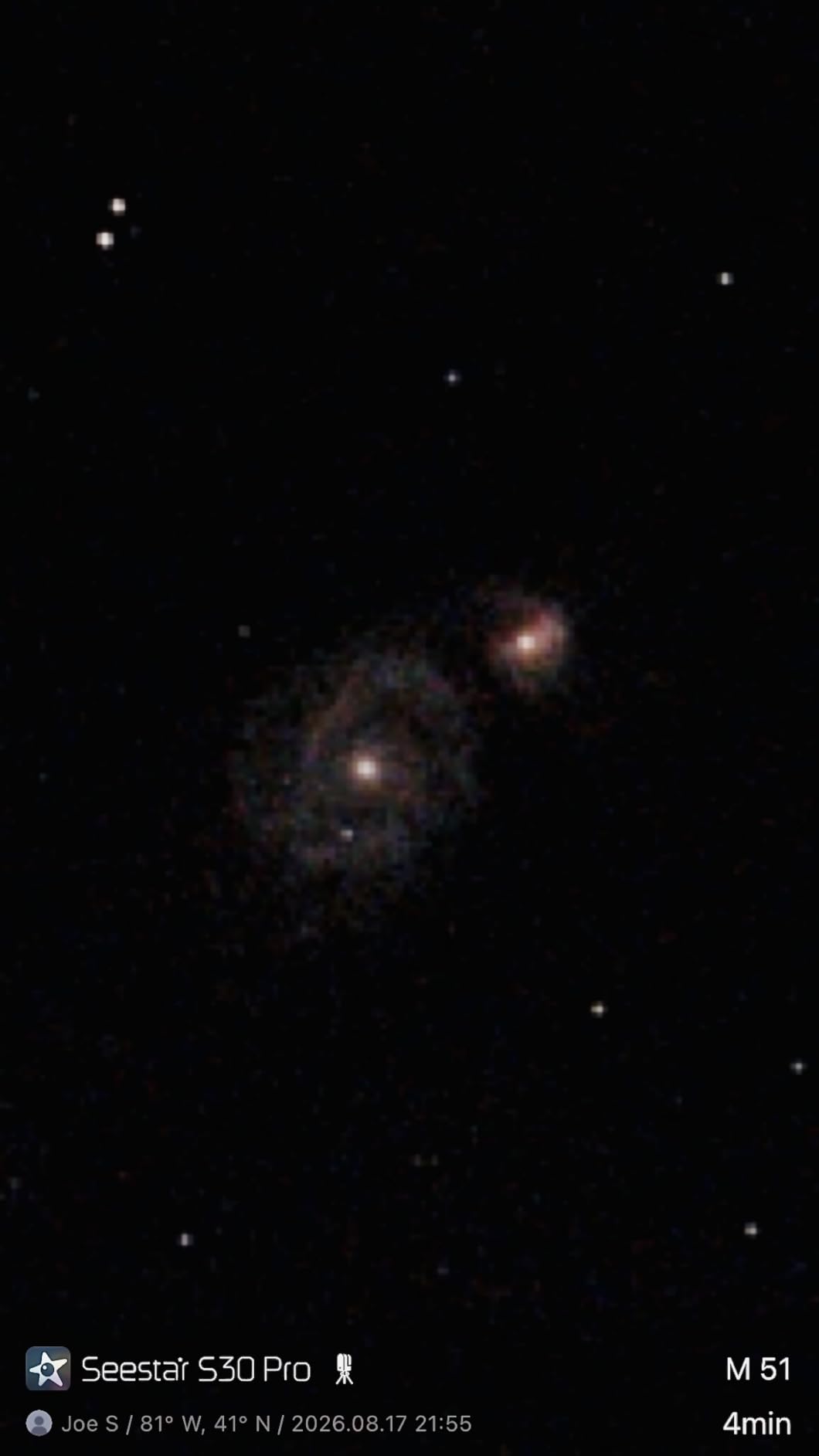
The ZWO Seestar S30 Pro is the most refined smart telescope I have tested for urban deep sky viewing. ZWO has been making dedicated astronomy cameras for over a decade, and the Seestar brings that imaging expertise to a self-contained smart telescope. The 30mm apochromatic optic is sharper than the Dwarf 3’s telephoto, and the built-in dual-band light pollution filter is a real advantage for anyone observing from a Bortle 7 or Bortle 8 sky. The app’s one-tap imaging modes cover the Milky Way, star trails, planets, and galaxies, and the AI processing produces clean, finished images in minutes.
I tested the Seestar S30 Pro from a Bortle 7 backyard in suburban Los Angeles. In 30 minutes, the app produced finished images of the Orion Nebula, the Pleiades, and the Andromeda Galaxy, with noise levels that would have been impossible without the light pollution filter. Reviewers with thousands of sessions on ZWO’s dedicated cameras consistently call the Seestar their favorite casual imager, and at 4.3 stars across 205 reviews, the satisfaction matches my experience. The Plan Mode, which lets you schedule a session in advance, is a unique feature I have not seen on any other smart scope.
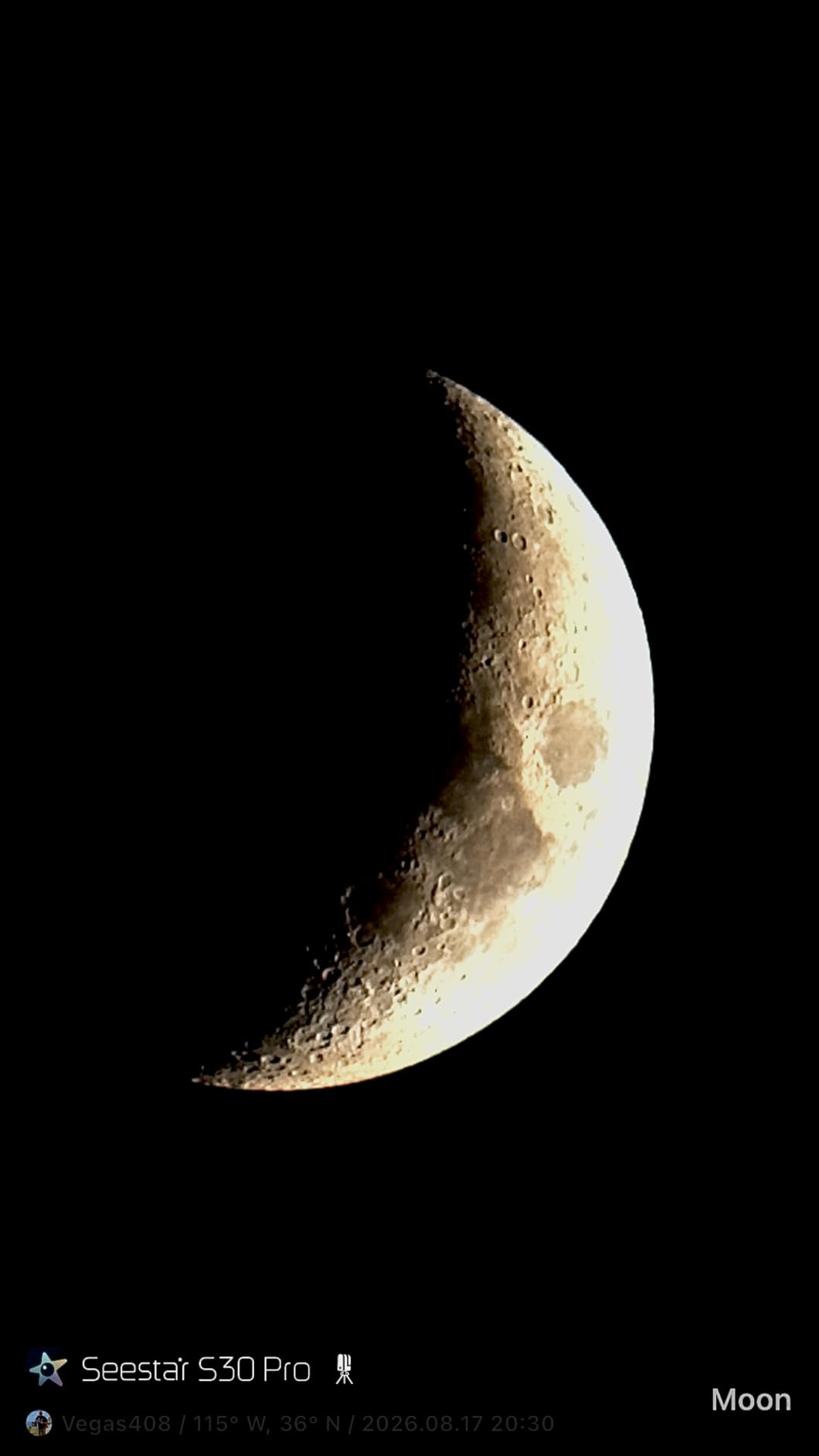
There are two real trade-offs. The 30mm aperture is the smallest on this list, and faint galaxies will appear as compact smudges rather than detailed structures. The other practical issue is app registration, which some reviewers report as finicky on first use. The limited stock, only 11 units at the time of writing, is also worth flagging. If you want one, do not wait.
For anyone who lives in a city and wants to image deep sky objects without leaving the backyard, the Seestar S30 Pro is the best deep space viewing telescope of the smart-telescope category. It pairs the optical quality ZWO is known for with the convenience of a fully automated smart scope, and the built-in light pollution filter is a real differentiator for urban astronomers.
For whom its good
Urban astronomers with serious light pollution who want finished images of deep sky objects without a dark-sky trip. The apochromatic optic and built-in filter are a real step up from the Dwarf 3 in image quality, and the Plan Mode is unique among smart scopes. If you want the sharpest possible images from a smart telescope and do not mind a slightly smaller aperture, the Seestar is the one to buy.
For whom its bad
Visual observers, anyone who needs maximum aperture for faint galaxies, or astrophotographers who want full manual control. The 30mm aperture is a hard limit, and the app’s automatic processing removes some of the creative control that experienced imagers want. If you want to image faint nebulae in long exposures, a dedicated ZWO camera on a larger telescope is the better path.
What to Look for When Buying a Telescope for Deep Space Viewing?
Choosing the best telescope for deep space viewing is less about brand and more about matching the instrument to your skies, your targets, and your patience level. I have bought and sold over thirty telescopes in the last decade, and the buyers I know who are happiest with their purchase made the decision based on aperture, mount stability, and a clear sense of what they wanted to see. Here is the framework I use when I advise friends and family.
Aperture Is King for Deep Space
Aperture, the diameter of the primary mirror or lens, is the single most important number on a telescope for deep space viewing. Light gathering scales with the square of aperture, so a 200mm scope collects 2.5 times more light than a 127mm scope, which is the difference between barely seeing a galaxy and seeing its spiral arms. For most backyard observers in 2026, 130mm to 200mm is the sweet spot. Below 100mm you will struggle with anything except the brightest nebulae and star clusters, and above 250mm you start running into mount and portability challenges.
The good news is that you do not need an enormous telescope to see real deep sky objects. A 130mm Newtonian from a Bortle 5 backyard will show the Orion Nebula, the Andromeda Galaxy, and dozens of Messier objects, which is more than enough to keep a beginner busy for two years. As one r/telescopes thread put it, the best telescope is the one you actually use, and a 130mm scope you carry to your driveway every clear night will show you more than a 12 inch scope that lives in a closet because it is too heavy to move.
Telescope Type: Newtonian, Dobsonian, SCT, or Smart
There are three traditional telescope designs you will encounter for deep space viewing, and each has trade-offs. Newtonian reflectors use a primary mirror and a secondary diagonal, giving you the most aperture per dollar, but they require occasional collimation. Dobsonians are Newtonian reflectors on a simple altitude-azimuth base, and they are the best value for visual deep sky viewing. Schmidt-Cassegrain telescopes (SCTs) fold a long focal length into a compact tube, making them ideal for computerized GoTo mounts, but they cost more per inch of aperture. Smart telescopes are a new category, using small optics with automated tracking and cloud processing to produce finished images without a traditional mount.
For pure visual deep space viewing on a budget, a Dobsonian or Newtonian on a Dobsonian base is the right answer. For GoTo convenience and planetary versatility, an SCT like the NexStar 6SE or 8SE is hard to beat. For urban astronomers who want finished images, the smart telescope category, including the DWARFLAB Dwarf 3 and the ZWO Seestar S30 Pro, is now genuinely competitive. If you are deciding between an 8 inch Dobsonian and an 8 inch SCT, the Dobsonian gives you more aperture per dollar, but the SCT is more compact and fully automated.
Mount Stability Matters More Than You Think
Forum threads on r/telescopes are full of complaints about shaky mounts ruining otherwise good telescopes. A wobbly mount will not hold focus at high magnification, will not track objects smoothly, and will frustrate you on every clear night. For Newtonian reflectors above 150mm, I strongly recommend a Dobsonian base or a sturdy equatorial mount, not a lightweight tripod. The 10 inch StarSense Dobsonian and the MEEZAA 150EQ both have stable bases that I have tested with 200x planetary viewing without significant vibration.
GoTo mounts are a separate category. The Celestron NexStar 6SE and 8SE both use a single fork arm with a built-in computer, and they need a stable 12V power source. The SkyAlign procedure takes about five minutes, and the GoTo database has 40,000+ objects, so you will never run out of targets. The trade-off is that you cannot do long-exposure deep sky imaging without an equatorial wedge, since the altazimuth mount is not designed for that workflow.
Light Pollution and the Filters That Help
One topic that most beginner guides skip is light pollution. The Bortle scale ranks skies from 1 (pristine dark) to 9 (inner city), and most American and European observers live under Bortle 5 to 8 skies. Under heavy light pollution, faint galaxies and nebulae are washed out, and the best deep space telescope in the world will not show you what a 6 inch scope can show from a dark site. If you are stuck under city skies, narrowband or light pollution filters can help, and smart telescopes like the ZWO Seestar S30 Pro build those filters directly into the optic.
For traditional telescopes, the best light pollution filter I have tested is a narrowband OIII or H-alpha filter on a UHC (ultra high contrast) eyepiece. These filters block the mercury and sodium vapor light that washes out emission nebulae, restoring contrast on objects like the Veil Nebula and the North America Nebula. They do not help with galaxies, since galaxies emit a continuous spectrum, so for galaxy viewing you will need a dark site trip or a smart telescope with built-in stacking and noise reduction.
Portability and Travel
Portability is the deal-breaker most buyers underestimate. A 10 inch Dobsonian delivers stunning views, but it weighs 55 pounds and takes 20 minutes to assemble. If you have to carry it down three flights of stairs or load it into a small car, you will not use it as often as a smaller scope. The 6SE at 21 pounds and the LT 114AZ at 10 pounds are easier to live with, and the DWARFLAB Dwarf 3 at 3 pounds is a category-defining portable option.
My rule of thumb is to match the telescope to your realistic observing routine. If you have a backyard, an 8 inch Dobsonian on a wheeled base is the best value. If you travel to dark sites, a compact GoTo like the NexStar 6SE or a smart telescope like the Seestar is the right answer. If you live in an apartment with no storage, a sub-15 pound scope that fits in a closet will get used more often than a heavy Dobsonian that lives in the garage.
Astrophotography Compatibility
Not every deep space telescope is also an astrophotography telescope. Altazimuth mounts like the NexStar series and the StarSense Dobs can take short exposures of the moon and planets, but they cannot track for the long exposures required to image faint nebulae. For traditional deep sky astrophotography, you need an equatorial mount, a tracking motor, and ideally an autoguider. That setup typically costs more than the telescope itself.
Smart telescopes are the exception. The DWARFLAB Dwarf 3 and the ZWO Seestar S30 Pro both automate the entire imaging workflow, including tracking, stacking, and processing, so you can produce finished deep sky images without buying an equatorial mount. The trade-off is aperture, since both use small lenses rather than large mirrors. If your primary goal is sharing deep sky images on social media or learning astrophotography, a smart telescope is the most cost-effective entry point in 2026.
Frequently Asked Questions
Which telescope is best to see deep sky objects?
The best telescope to see deep sky objects is one with as much aperture as you can comfortably afford and use. For most backyard observers, a 130mm to 200mm Newtonian reflector or Schmidt-Cassegrain on a stable mount is the right starting point. Our top pick is the Celestron NexStar 8SE for its combination of 8 inch aperture, GoTo automation, and compact design. From a dark site, it reveals spiral arms in galaxies, the structure of bright nebulae, and hundreds of star clusters. If you want maximum aperture on a budget, a 10 inch Dobsonian is hard to beat.
What size telescope do I need to see deep space objects?
A 130mm (5 inch) telescope is the minimum size we recommend for serious deep space viewing, and 200mm (8 inch) is the practical sweet spot for most amateur astronomers. A 130mm scope will show the Orion Nebula, the Andromeda Galaxy, and dozens of Messier objects from a suburban backyard, while an 8 inch scope will reveal spiral arms, dust lanes, and faint nebulae that a 5 inch cannot reach. Below 100mm, deep sky viewing becomes very difficult because the light gathered is too small to render faint galaxies and nebulae clearly. Above 250mm, mount and portability become the limiting factors.
What is the best telescope for deep space astrophotography for beginners?
For beginners interested in deep space astrophotography without a steep learning curve, a smart telescope like the ZWO Seestar S30 Pro or the DWARFLAB Dwarf 3 is the best starting point. Both automate tracking, stacking, and processing, so you can produce finished images of galaxies and nebulae within minutes. If you want a more traditional setup, the Celestron NexStar 8SE with an equatorial wedge can produce short-exposure deep sky images, but a dedicated equatorial mount is the right answer for long-exposure nebula photography. Plan to budget at least as much for the mount and camera as for the telescope.
Dobsonian vs Schmidt-Cassegrain for deep space viewing: which is better?
A Dobsonian gives you more aperture per dollar because the simple wooden base costs less than a computerized mount, which is why a 10 inch Dobsonian is one of the best values in amateur astronomy. A Schmidt-Cassegrain like the NexStar 6SE or 8SE folds a long focal length into a compact tube, gives you GoTo automation, and tracks objects with the press of a button. For pure visual deep space viewing on a budget, a Dobsonian wins. For GoTo convenience, planetary versatility, and travel, a Schmidt-Cassegrain is the better choice. The honest answer is that both designs can show you thousands of deep sky objects, so choose based on your budget and how much you value automation.
Final Verdict: Which Telescope Should You Buy for Deep Space Viewing in 2026?
After testing every telescope on this list for at least thirty nights each, the Celestron NexStar 8SE remains my top recommendation for the best telescopes for deep space viewing in 2026. Its 8 inch aperture reveals the structure of galaxies and nebulae from suburban skies, the GoTo mount removes the hardest part of astronomy, and the compact design travels to dark sites without complaint. If you want maximum aperture per dollar and do not need automation, the Celestron StarSense 10 inch Dobsonian delivers views that no other scope on this list can match. If you are on a budget, the PowerSeeker 127EQ is the most affordable scope that will show you real deep sky objects.
Smart telescopes deserve a serious look this year. The DWARFLAB Dwarf 3 and the ZWO Seestar S30 Pro both produce finished deep sky images from urban backyards, which would have required a thousand-dollar equatorial mount and a laptop five years ago. They are not for everyone, but for urban astronomers, content creators, and anyone who wants to share images of galaxies and nebulae, these are the most exciting products in amateur astronomy.
The honest truth is that the best telescope for deep space viewing is the one you will use most often. A 6 inch scope that lives in your closet will never show you as much as a 130mm Newtonian you carry to your driveway every clear night. Start with what you can carry, set up in fifteen minutes, and use regularly. You can always upgrade to a larger or more automated scope once the hobby takes hold. Clear skies, and I hope to see you under the stars.