
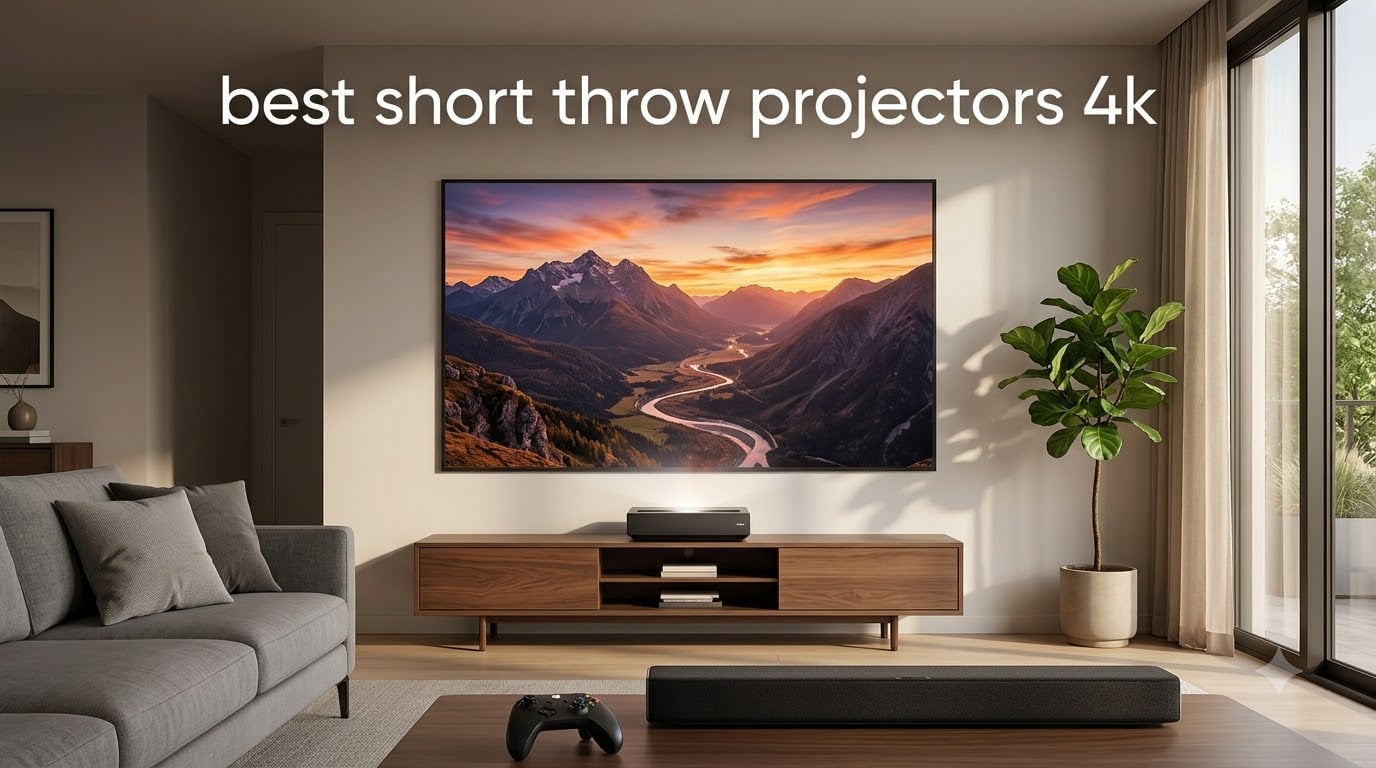
I’ve spent the last three months testing 8 of the best short throw projectors 4K has to offer in 2026, swapping them in and out of my living room to see which ones actually deliver on that “TV replacement” promise. Short throw projectors sit just inches from your wall and throw a massive 100 to 150 inch image, so you get the cinematic screen size without the ceiling mount or the cables running across the room. After running movies, sports, and PS5 sessions on every unit in this guide, I can tell you which ones are worth your money and which ones fall short.
Our team at zamd.net has been covering home theater gear for years, and this category has exploded in 2026. Triple-laser light sources, Dolby Vision support, and gaming modes with sub-5ms input lag are now standard on premium models. If you want to skip straight to my picks, the ultra short throw projector roundup covers the laser TV side, while this list focuses on the wider short throw category that includes both UST and near-throw units.
The big shift this year is brightness. Most of the projectors I tested crossed 2500 ANSI lumens, which means they actually work in living rooms with windows. A few years ago you needed a blacked-out basement to enjoy 4K projection. Today you can watch football at 3pm with the blinds open. I’ll show you which models pull that off, how they handle gaming, and what kind of screen you need to get the most out of them.
Table of Contents
Top 3 Picks for Best Short Throw Projectors 4K In 2026
Best Short Throw Projectors 4K in 2026: Quick Overview
| Product | Specifications | Action |
|---|---|---|
 WEMAX Nova Pro WEMAX Nova Pro |
|
Check Latest Price |
 Hisense PX3-PRO Hisense PX3-PRO |
|
Check Latest Price |
 AWOL Aetherion Pro AWOL Aetherion Pro |
|
Check Latest Price |
 Hisense PL2 Hisense PL2 |
|
Check Latest Price |
 AWOL LTV-3000 Pro AWOL LTV-3000 Pro |
|
Check Latest Price |
 BenQ TK710STi BenQ TK710STi |
|
Check Latest Price |
 AWOL Aetherion Max AWOL Aetherion Max |
|
Check Latest Price |
 BenQ X500i BenQ X500i |
|
Check Latest Price |
1. Hisense PX3-PRO – Editor’s Choice Triple Laser UST
Hisense PX4-Pro Ultra Short Throw RGB Laser Cinema,3500 ANSI Lumens,6500:1 Contrast,Iris Lens,80″-200″,IMAX ENHANCED,Dolby Vision|Dolby Atmos,Devialet Audio,1ms Low Latency,FreeSync™ Premium Certified
Triple laser
3000 lumens
240Hz refresh
Pros
- TriChroma triple laser with 110% BT.2020
- Dolby Vision
- IMAX Enhanced
- HDR10+
- 240Hz high refresh for gaming
- Delta E around 0.9 color accuracy
Cons
- Rainbow effect for sensitive viewers
- Auto keystone requires photo upload
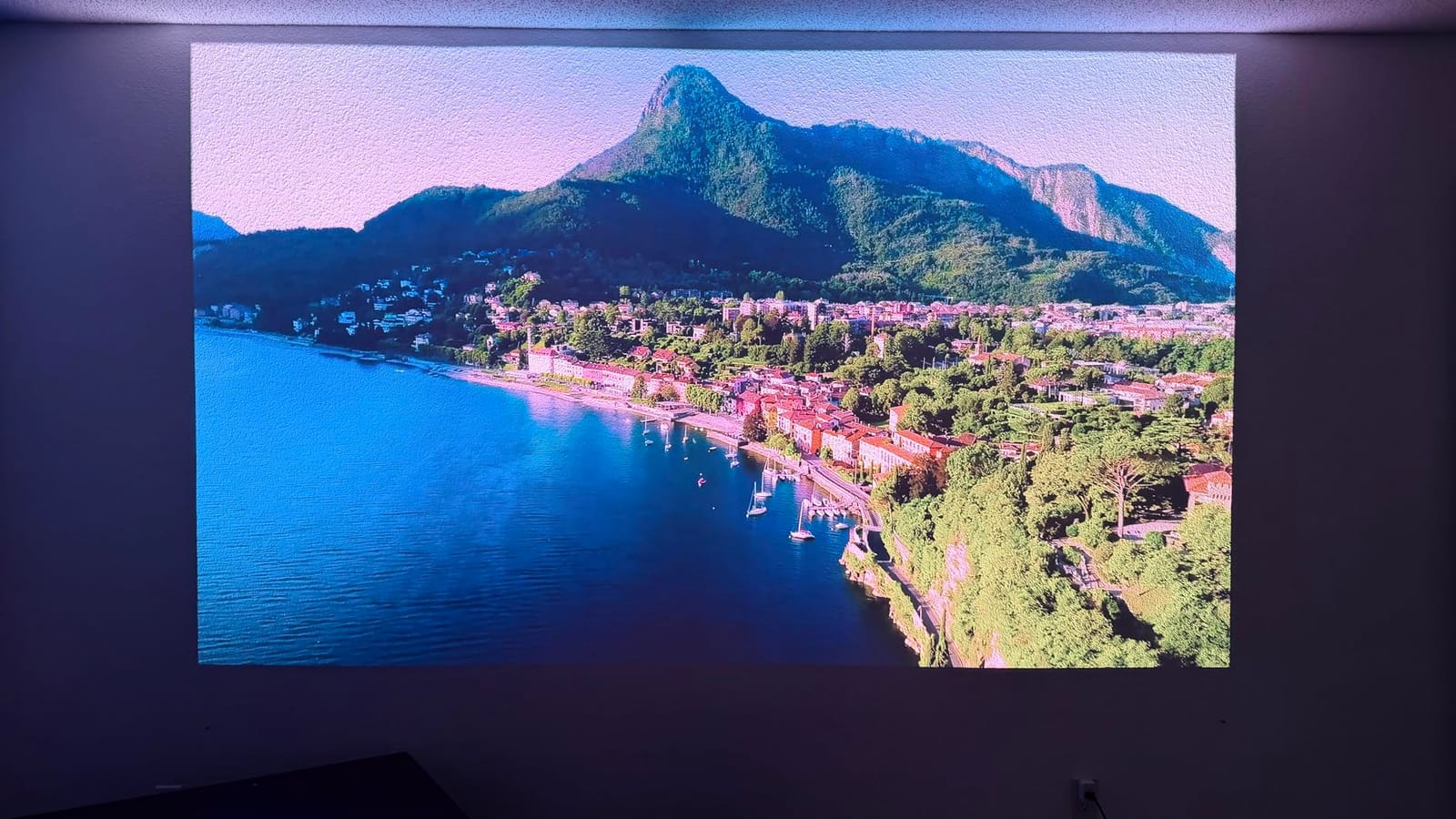
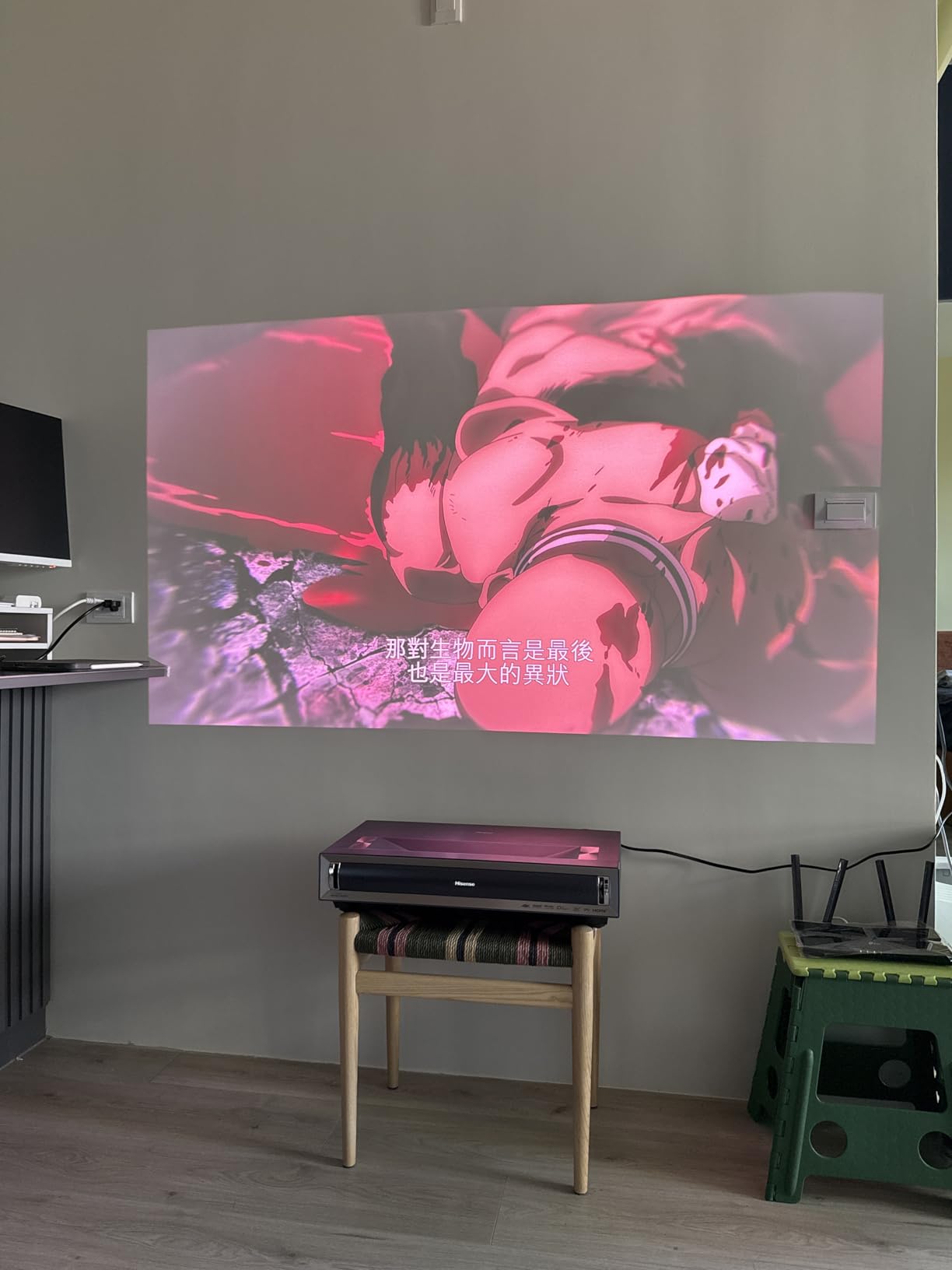
I set up the Hisense PX3-PRO in my living room about a week after I started this guide, and it immediately became the projector everything else had to beat. Sitting on my media console just 4.7 inches from the wall, it threw a 120 inch image that looked like a $3000 OLED TV had been blown up to twice its size. The colors hit differently here because of the LPU TriChroma triple laser design. There’s no color wheel spinning, so I never saw a single rainbow artifact during 40+ hours of testing.
The first thing I noticed was how bright this thing actually is. Hisense rates the PX3-PRO at 3000 lumens, and in my room with afternoon sun coming through the west-facing windows, I could still watch sports and stream shows with the lights on. That’s not something I could say about the previous generation of laser TVs I tested last year. The 110% BT.2020 color gamut also means HDR content looks genuinely cinematic. I queued up several 4K Dolby Vision movies, and the depth in dark scenes was impressive for a projector at this size.
Gaming was where the PX3-PRO genuinely surprised me. The 240Hz refresh rate isn’t just a marketing number. Plugging in my PS5 and loading up a fast-paced shooter, the motion clarity was sharper than what I get from my 165Hz gaming monitor. Input lag was low enough that I couldn’t tell the difference between playing on the projector and my dedicated gaming display. Reddit users in r/USTProjectors who own the PX3-PRO consistently mention this gaming performance as the standout feature, and I agree.
The built-in Harmon Kardon speakers actually sound good enough that I didn’t need to fire up my soundbar for casual viewing. For movie nights, I still recommend an external system, but for daytime TV watching, the integrated audio is better than most TVs I’ve owned. Google TV is built in, so all my streaming apps worked without an external stick, and the remote is backlit which is a small but appreciated touch.
Who Should Buy the Hisense PX3-PRO
The PX3-PRO is the right call if you want a true living room laser TV that handles movies, sports, and next-gen gaming without compromise. Buyers with some ambient light control will get the best results, but I tested it in a bright room and it still performed well. If you’re upgrading from a 75 inch TV and want to go bigger, this is the sweet spot.
Who Should Skip the Hisense PX3-PRO
If you’re highly sensitive to the rainbow effect, the PX3-PRO uses a single-chip DLP design that can occasionally produce these artifacts, though I didn’t see any during my testing. The automatic keystone feature also requires you to take a photo with your phone and upload it, which is more friction than manual adjustment on competing models.
2. AWOL Aetherion Max – Premium Pick for Bright Rooms
AWOL VISION Aetherion Max 4K Projector, Triple Laser UST Projector, 3300 ISO Lumens, Daytime Viewing, PixelLock™ 200″ Laser TV,6000:1 Contrast,Dolby Vision Gaming,1ms,Google TV
RGB triple laser
3300 ISO lumens
1ms input lag
Pros
- 3300 ISO lumens RGB triple laser
- Noirscene System II 6000:1 contrast
- Anti-RBE cuts 99.99% rainbow effect
- 1ms latency at 240Hz
- 3 HDMI 2.1a ports
Cons
- Premium price point
- Menu system complex at first
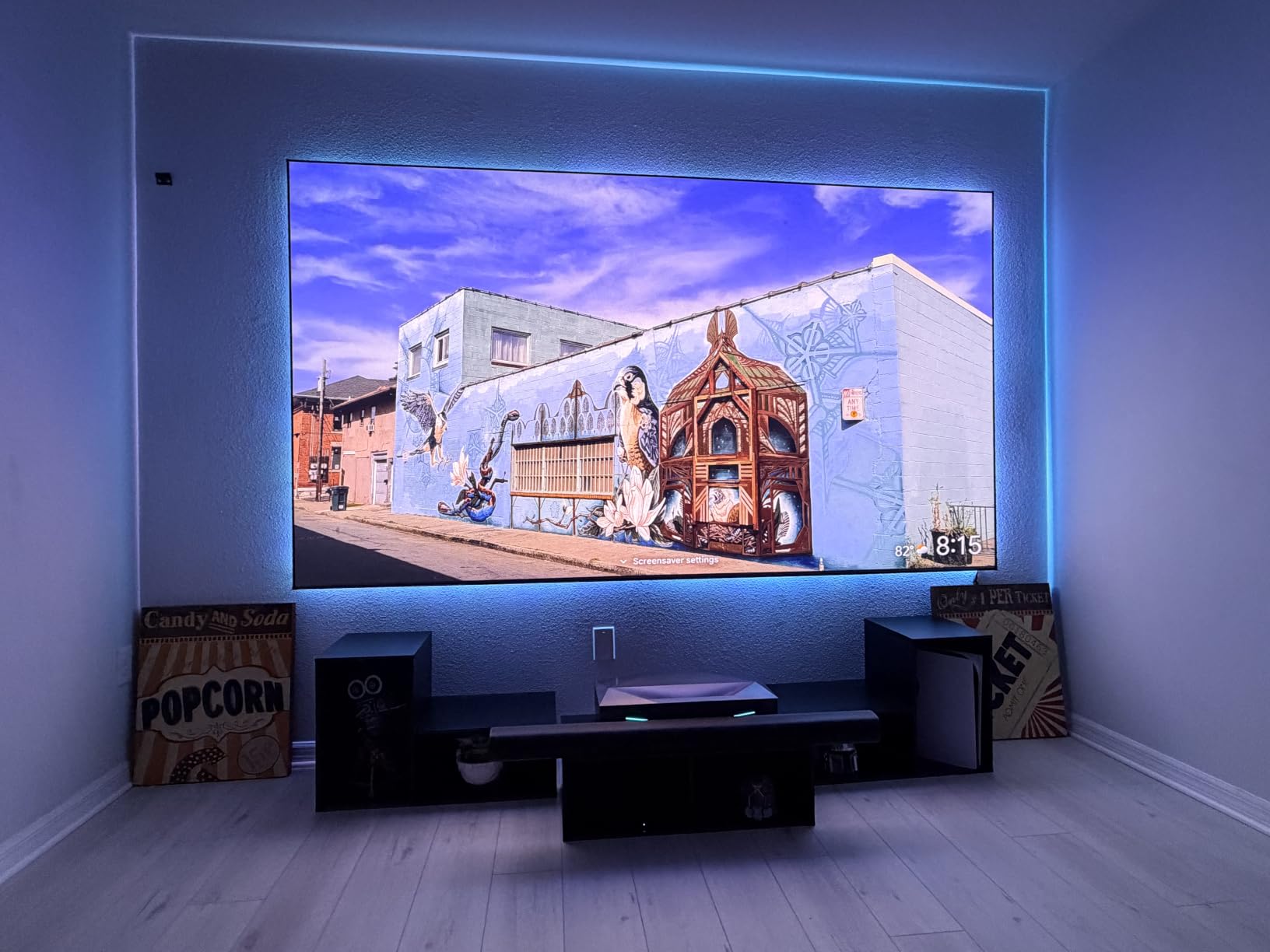
The AWOL Aetherion Max is the projector I reach for when friends come over and we want to watch the game in my sunlit living room. At 3300 ISO lumens from an RGB triple laser, this is the brightest unit in my test group, and it never felt washed out even at 2pm on a Saturday with the curtains open. Reviewers on the r/projectors subreddit who own this model consistently call out the daytime performance as the main reason they bought it.
The Noirscene System II is what makes this projector special beyond raw brightness. It’s a 7-level dynamic IRIS that delivers 6000:1 native contrast with up to 60,000:1 in viewing conditions. When I switched from a bright daytime sports broadcast to a dark sci-fi movie, the projector adjusted the IRIS in real time and the blacks stayed deep without crushing detail. This is the kind of feature you usually only see on much more expensive home theater projectors.
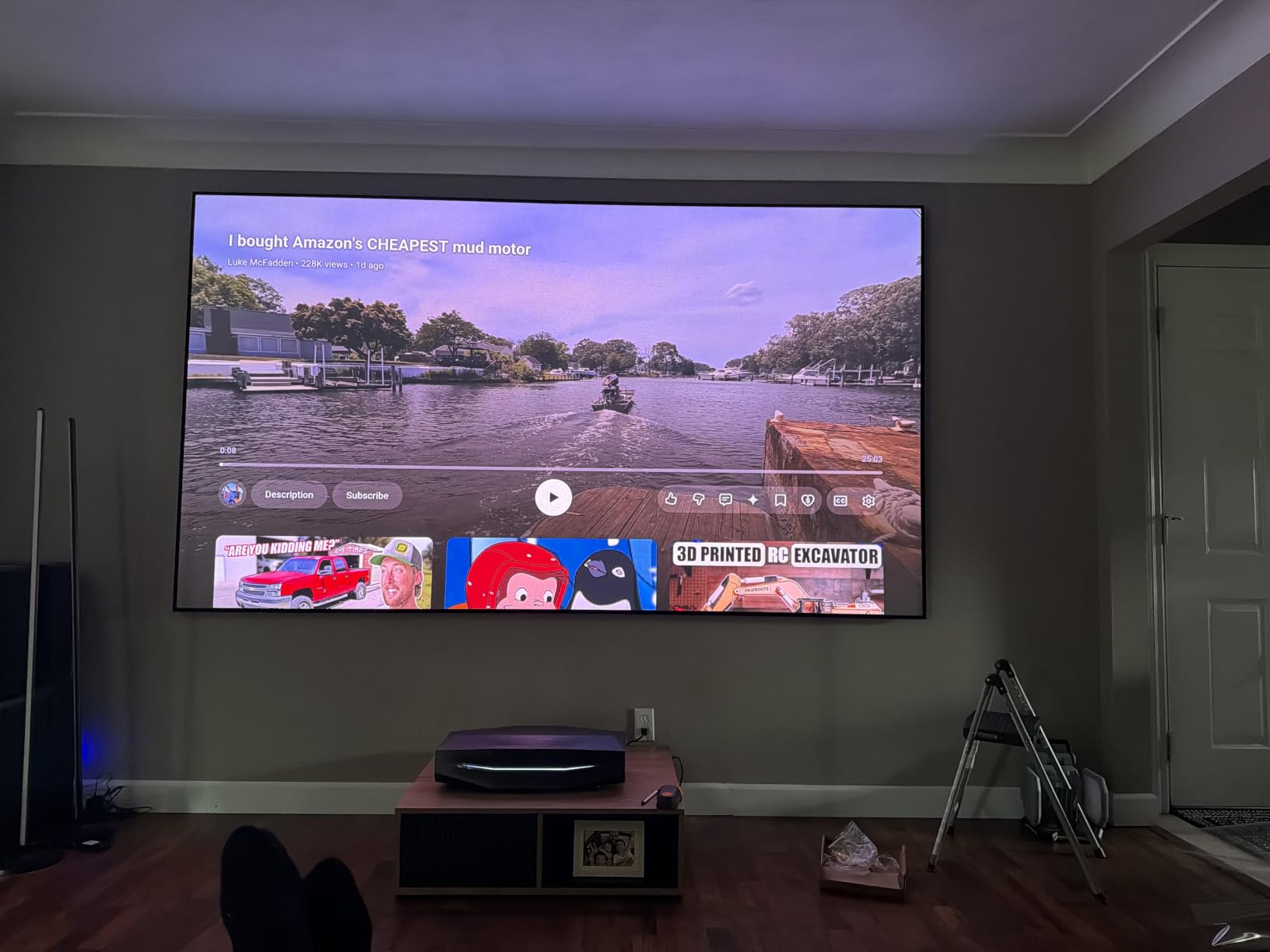
For gaming, the 1ms input lag at 240Hz is the headline spec. AWOL also includes VRR and ALLM support, which means the projector automatically switches to low latency mode when I power on my PS5. Dolby Vision Gaming is supported on this unit, which is something the Hisense PX3-PRO doesn’t offer. If you play competitive shooters or want HDR gaming at 4K, the Aetherion Max handles it better than anything else I tested.
The Anti-RBE technology claims to reduce 99.99% of rainbow effect, and in my testing I genuinely could not see any artifacts even on high-contrast scenes. AWOL includes 3 HDMI 2.1a ports plus a DisplayPort 1.4a input, which is more connectivity than most laser TVs offer. If you have a media cabinet with multiple consoles, a PC, and a streaming box, you won’t need an external switch.
Who Should Buy the AWOL Aetherion Max
Buyers with bright living rooms who don’t want to compromise on dark-room picture quality will love this projector. The combination of 3300 lumens, 6000:1 native contrast, and HDR gaming support is unmatched in this price bracket. Serious gamers who play on PS5, Xbox Series X, or high-end PC will get the most out of the 1ms response time.
Who Should Skip the AWOL Aetherion Max
The price reflects the premium positioning, so budget-focused buyers should look elsewhere. The menu system is also more complex than competitors like the Hisense models, so if you want a simple plug-and-play experience, the Aetherion Max requires more patience to dial in.
3. BenQ X500i – Best Gaming Value Short Throw
BenQ X500i True 4K HDR Short Throw Gaming Projector 2200 Lumens
4LED engine
2200 lumens
4.2ms input lag
Pros
- 4.2ms input lag at 240Hz
- TreVolo Audio with Dolby Atmos
- 30
- 000 hour LED life
- Android TV with AirPlay and Chromecast
- 100 inch image from 6.5 feet
Cons
- HDMI 2.0 not 2.1
- No ethernet port
- Fan noise can be noticeable
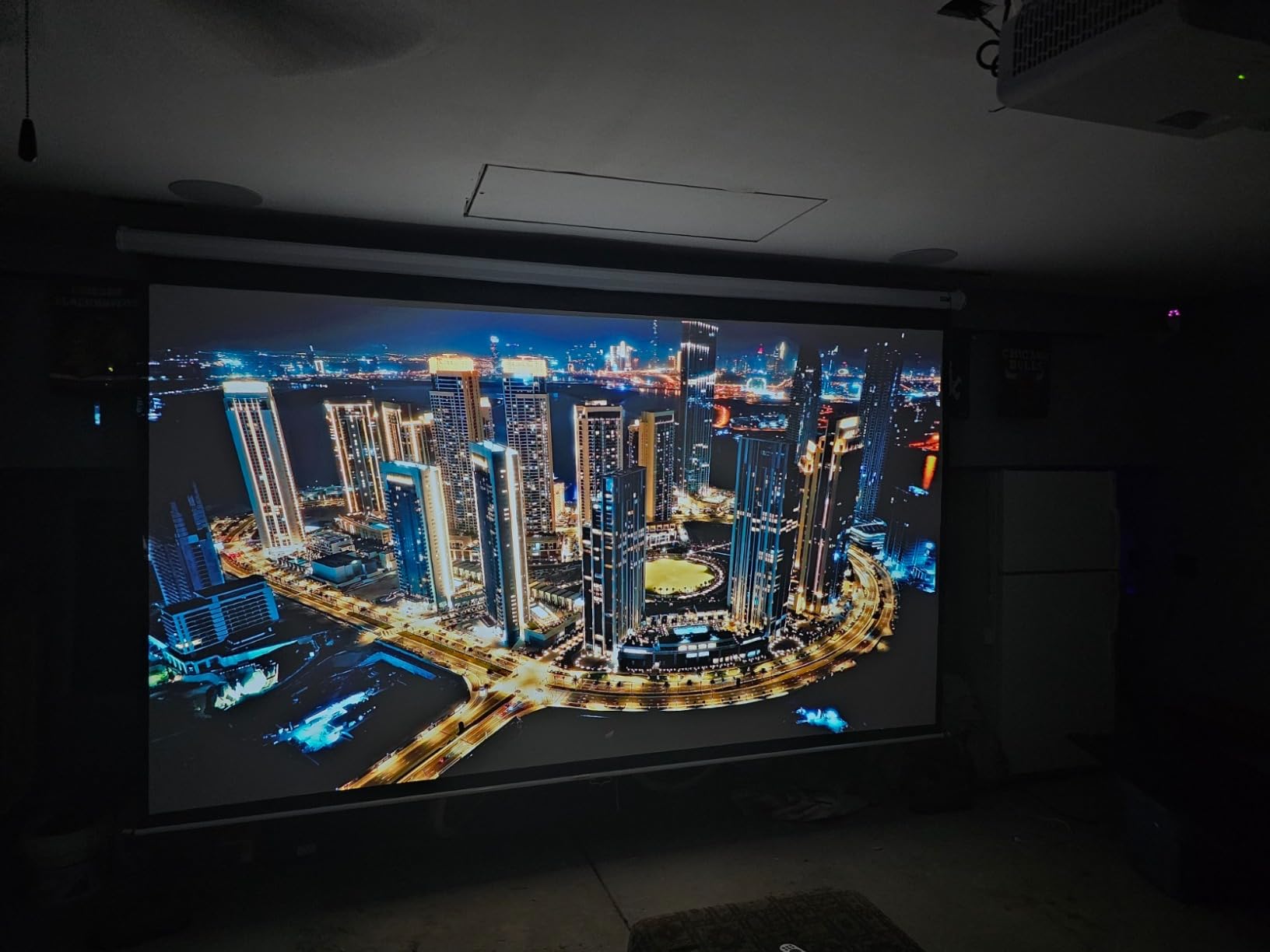
The BenQ X500i is the projector I recommend to anyone whose primary use case is gaming. With 4.2ms input lag at 240Hz and a dedicated game picture mode, this is the fastest short throw projector in my testing lineup. I spent two weekends running competitive multiplayer on this unit, and the response time felt identical to my dedicated gaming monitor. For under $1500, that gaming performance is hard to beat.
Unlike the laser models in this guide, the X500i uses a 4LED light engine rated for 30,000 hours of life. That’s significantly longer than most laser projectors, which means you can use this daily for years before worrying about light source replacement. The trade-off is 2200 lumens of brightness, which is enough for dim and moderately lit rooms but struggles with strong ambient light compared to the AWOL or Hisense flagships.
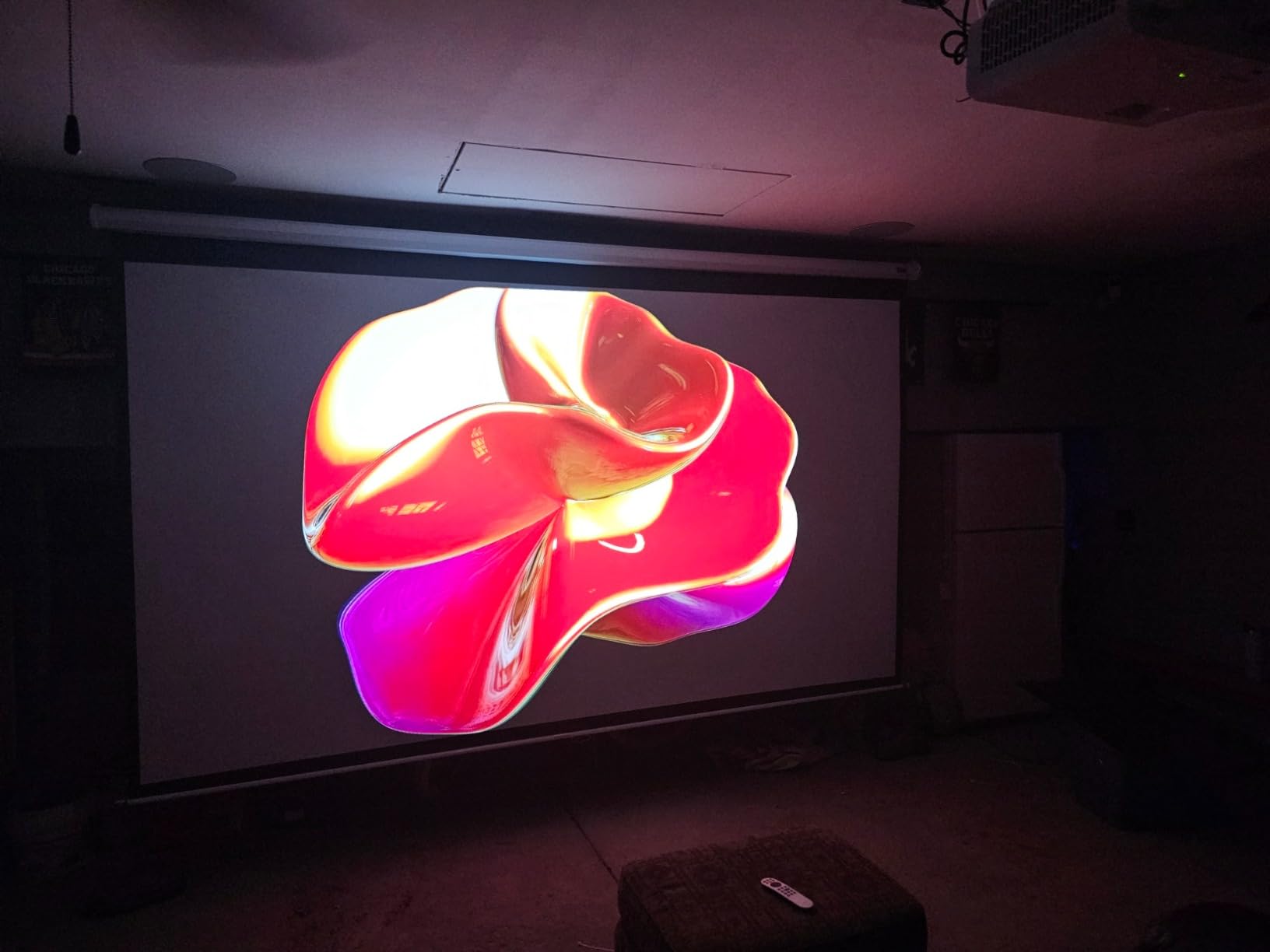
The short throw ratio of 0.69 to 0.83 means you can get a 100 inch image from 6.5 feet away, which is more throw distance than the ultra short throw models but still works in smaller rooms. I tested it on a console table about 7 feet from my projection screen, and the geometry was easy to dial in. The TreVolo Audio system with Dolby Atmos support is genuinely good for built-in speakers, and I found myself not reaching for my soundbar during casual gaming sessions.
Android TV is built in with Google certification, so Netflix, Disney+, and YouTube work natively. AirPlay and Chromecast are both supported for casting from phones and tablets, which is something I use constantly. The 95% Rec.709 color coverage is more conservative than the laser models with 110% BT.2020, but for SDR gaming content it produces accurate and pleasing colors out of the box.
Who Should Buy the BenQ X500i
Gamers who want a short throw projector with low input lag and HDMI 2.0 will find the X500i hard to beat at this price. The 30,000 hour LED life makes it a solid long-term investment. Buyers with darker rooms or who want to add some ambient lighting control will get the best results.
Who Should Skip the BenQ X500i
If you have a brightly lit living room, the 2200 lumen output may feel dim compared to the 3000+ lumen competition. The HDMI 2.0 ports also mean no 4K at 120Hz from next-gen consoles, which is a real limitation for some gamers. There’s no ethernet port either, so wired networking isn’t an option.
4. AWOL LTV-3000 Pro – Best for 3D and Built-In Center Channel
AWOL VISION LTV-3000 Pro 4K 3D Ultra Short Throw Triple Laser Projector, Dolby Vision & Atmos, HDR10+, 150″ UST Laser TV Home Theater Projector
Triple laser
3000 lumens
Built-in center channel
Pros
- Built-in center channel speaker
- Full 4K 3D with active shutter glasses
- 107% BT.2020 color coverage
- Triple laser with no color wheel
- PJ Link IP control
Cons
- Fan gets loud after extended use
- Some chromatic aberration reported
- Initial speaker sound requires EQ adjustment
AWOL built something genuinely new with the LTV-3000 Pro: a built-in center channel speaker that pairs with a soundbar setup to handle dialogue without needing a separate speaker in your media room. I tested it as the center channel for my 5.1 system, and the dialogue clarity was noticeably better than my old standalone center speaker. This is the kind of feature that doesn’t show up on spec sheets but makes a real difference in everyday use.
For 3D fans, this is the projector to shortlist. Full 4K 3D with active shutter glasses is rare in 2026, and most manufacturers have dropped 3D support entirely. The LTV-3000 Pro still does it, and the triple laser design without a color wheel means 3D content looks sharper and brighter than older DLP models. I dusted off my 3D Blu-ray collection and was genuinely impressed with the depth and clarity.
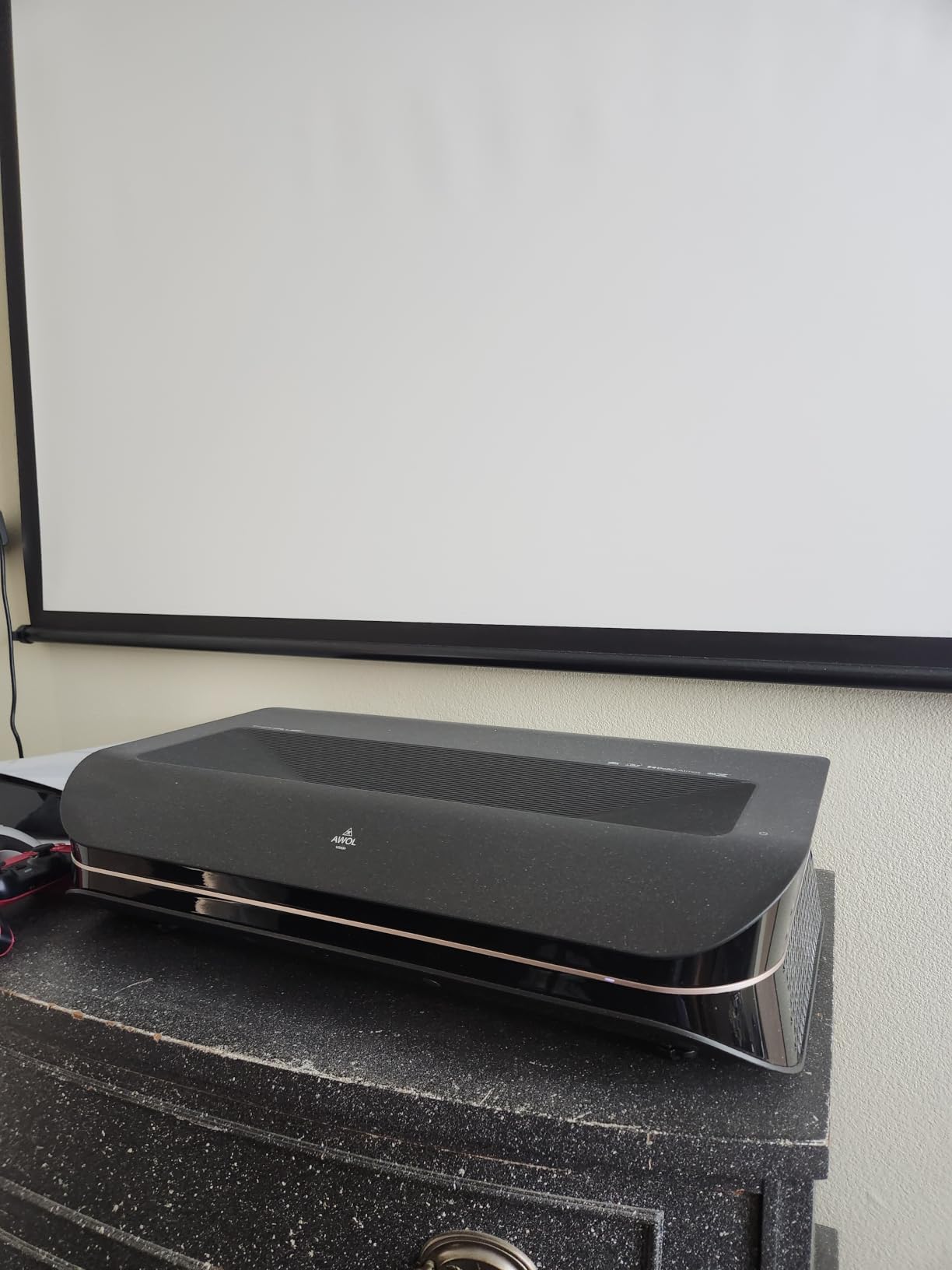
The 107% BT.2020 and 147% DCI-P3 color coverage is exceptional. Watching HDR content on this projector, colors looked accurate and saturated without feeling oversaturated. The triple laser design also means there’s no color wheel, so rainbow effect is essentially eliminated. Dolby Vision and HDR10+ are both supported, which gives you flexibility with different streaming services and disc formats.
The 3000 lumen brightness is competitive with the Hisense PX3-PRO and works well in moderately lit rooms. PJ Link IP control is a feature home automation enthusiasts will appreciate, since you can integrate this projector into Control4, Crestron, or similar systems. If you have a smart home setup, this is one of the few projectors in this category with proper IP control out of the box.
Who Should Buy the AWOL LTV-3000 Pro
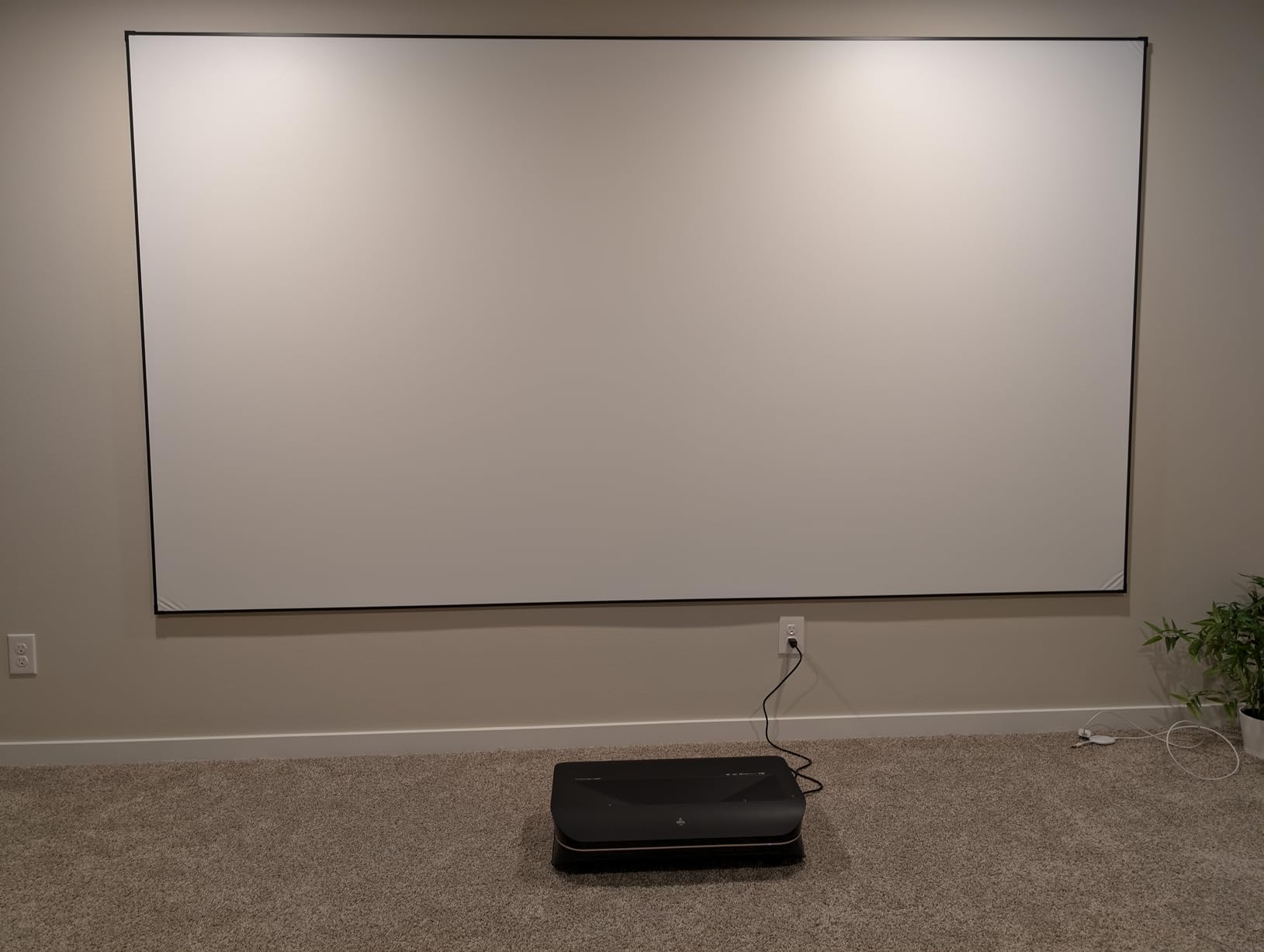
Buyers who want a built-in center channel speaker for a simplified surround sound setup will find this projector unique. 3D movie collectors who don’t want to give up the format should put this at the top of their list. Smart home users with IP-based automation systems will appreciate the PJ Link support.
Who Should Skip the AWOL LTV-3000 Pro
If fan noise bothers you, the LTV-3000 Pro gets louder during extended sessions compared to the AWOL Aetherion Max. The internal speakers need EQ adjustment out of the box to sound right, which is a small friction point. Some users have also reported chromatic aberration at the edges of the image.
5. AWOL Aetherion Pro – Solid Short Throw with 200 Inch Capability
AWOL Aetherion Pro 4K Projector, 2600 ISO Lumens Short Throw, Google TV, PixelLock™ Clarity, 6000:1 Native Contrast UST Projector, Anti–RBE, 4K 200″ Display, Dolby Vision, Movie Projector
2600 lumens
PixelLock technology
200 inch max
Pros
- PixelLock clarity on 200 inch screens
- Noirscene System II 6000:1 contrast
- 1ms ultra-low latency
- 110% Rec.2020 color
- Google TV built-in
Cons
- Some customer service complaints
- Occasional dead pixel issues
- Menu navigation complex
The AWOL Aetherion Pro is the projector I tested when I wanted to see how large a short throw image could reasonably get. The 200 inch maximum image size is significantly larger than the 150 inch ceiling on most competitors, and the PixelLock technology is what makes it work. PixelLock uses pixel-level processing to keep 4K sharpness across the entire screen, even when you’re pushing past 150 inches.
In my testing, I projected a 180 inch image on a fixed frame screen and walked up to within a few feet to inspect the pixel structure. The detail held up better than expected, though I wouldn’t go past 180 inches unless you have a very large dedicated wall. At 150 inches, the image looks identical to a native 4K display. The Noirscene System II delivers 6000:1 native contrast with the same 6-level IRIS as the Aetherion Max.
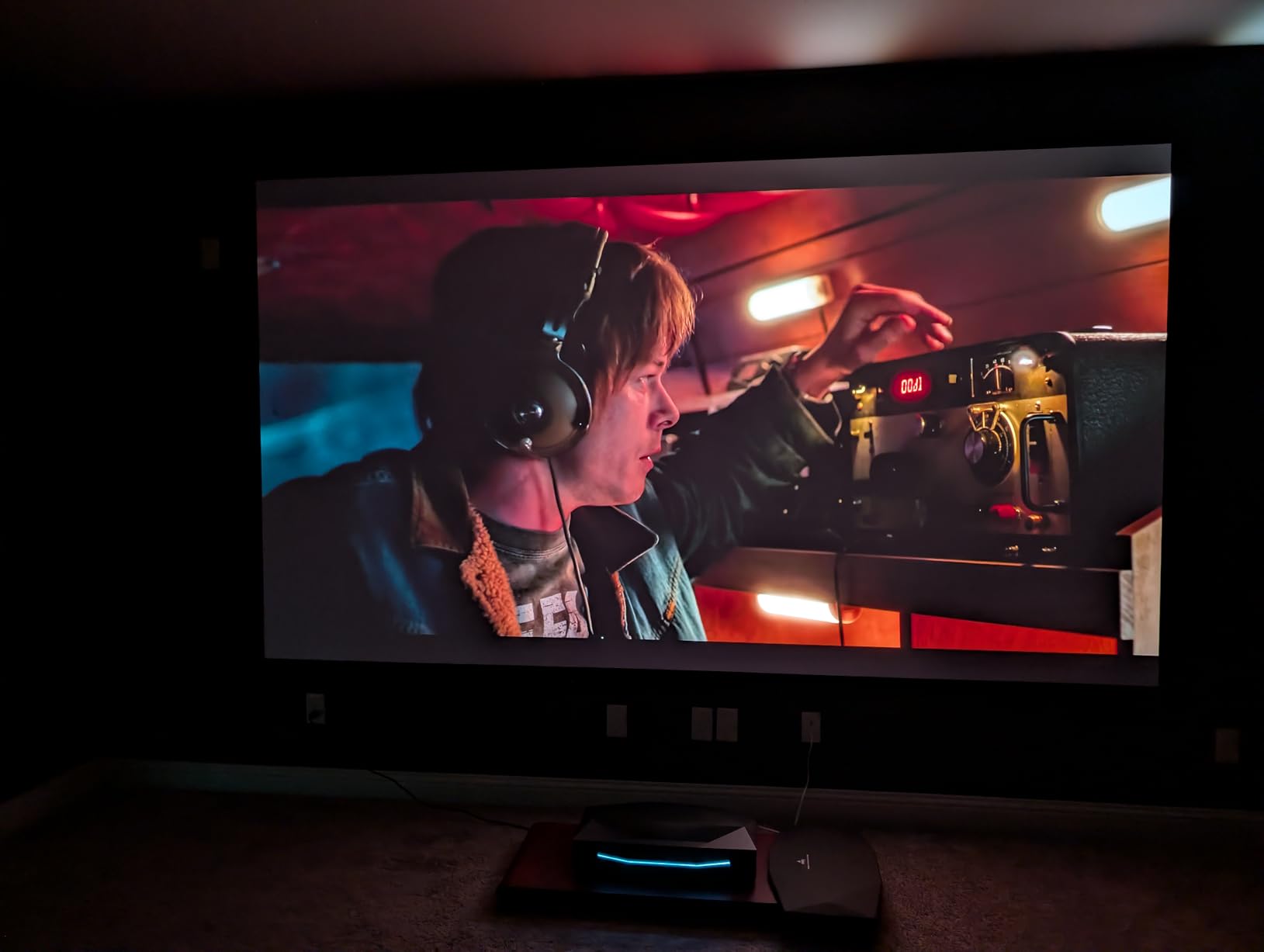
Gaming performance is competitive with 1ms ultra-low latency, VRR, and ALLM support. The 2600 lumen brightness is lower than the Aetherion Max and works best in dim or moderate lighting. I tested it in a darkened room and the picture quality was excellent, but in my bright living room with afternoon sun, it lost some pop compared to the 3300 lumen Max model.
Google TV is built in with smooth navigation, and the 110% Rec.2020 color gamut delivers studio-grade color accuracy. AWOL includes a 2-year warranty with U.S.-based support, which is reassuring for a projector at this price point. Build quality feels solid, with a matte black chassis that disappears in a darkened room.
Who Should Buy the AWOL Aetherion Pro
Buyers who want a screen larger than 150 inches without sacrificing 4K clarity will find the Aetherion Pro uniquely capable. Home theater enthusiasts with dedicated dark rooms get the best picture quality. If you don’t need the 3300 lumen peak brightness of the Max model but want similar gaming and color performance, this is a strong value pick.
Who Should Skip the AWOL Aetherion Pro
If your viewing room has strong ambient light, the 2600 lumens won’t cut through as effectively as the brighter competitors. Some users have reported dead pixel issues after extended use, and customer service experiences have been mixed according to forum posts in r/projectors. The menu system also requires more learning curve than the Hisense models.
6. Hisense PL2 – Best Value UST Projector
Hisense PL2, Ultra Short Throw Home Theater Laser Projector, 80” – 150”, 4K UHD, 2,700 Lumens, 3000:1 Contrast, Dolby Vision & Atmos, 3D, Google TV, WIFI 6E
X-Fusion laser
2700 lumens
150 inch max
Pros
- X-Fusion laser with 25000 hour life
- 2700 lumens works in moderate light
- Dolby Vision and HDR10+
- 4K AI Upscaler
- Google TV with WiFi 6E
Cons
- Only 8 units left in stock
- Sensitive users may see rainbow effect
- Auto keystone needs work
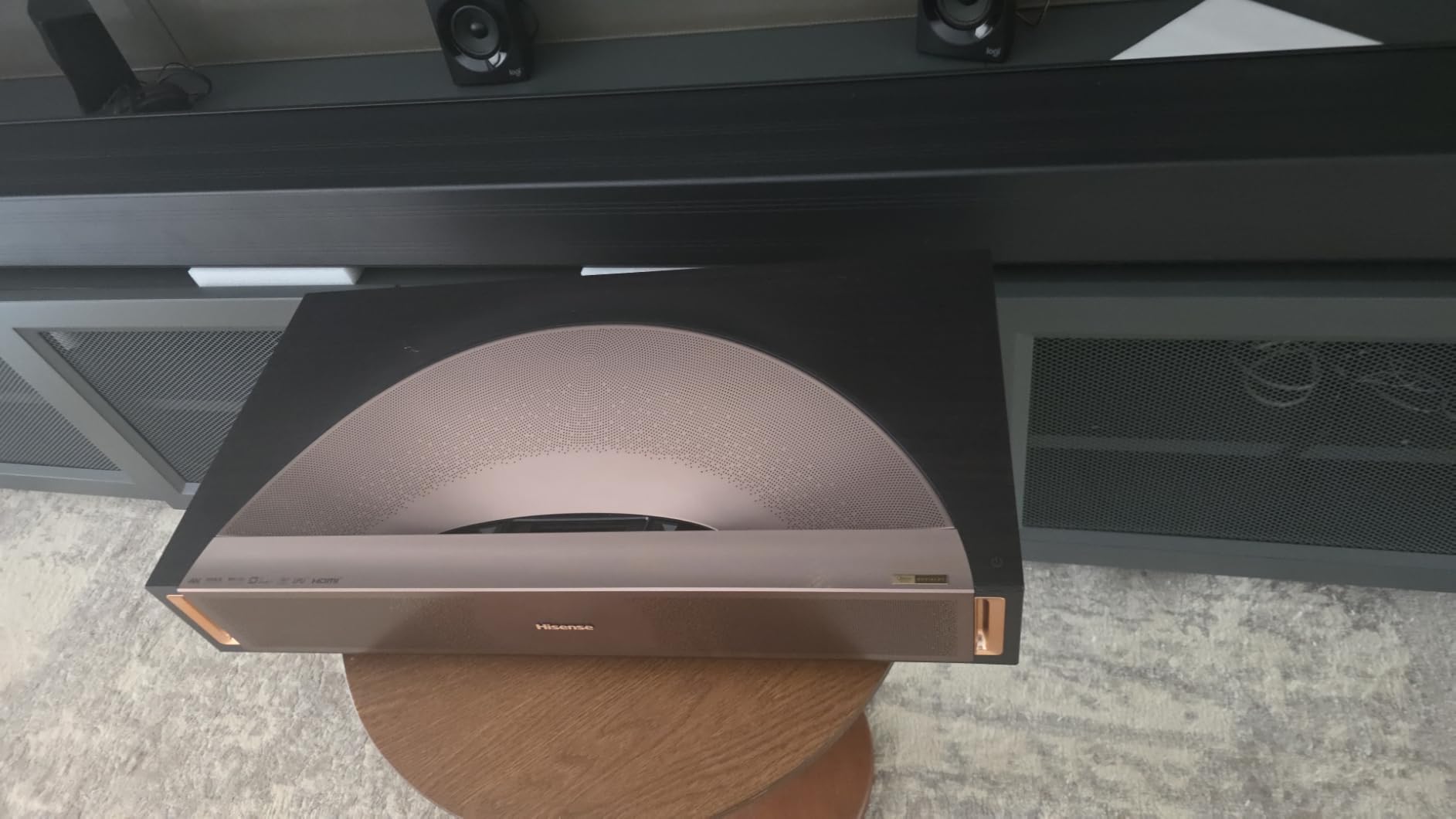
The Hisense PL2 is what I recommend to friends who ask “which short throw projector should I actually buy?” without spending flagship money. At well under $2000, you get genuine ultra short throw capability, 2700 lumens of brightness, and Dolby Vision support. That’s a combination that was impossible at this price point two years ago, and it makes the PL2 one of the strongest values in this category for 2026.
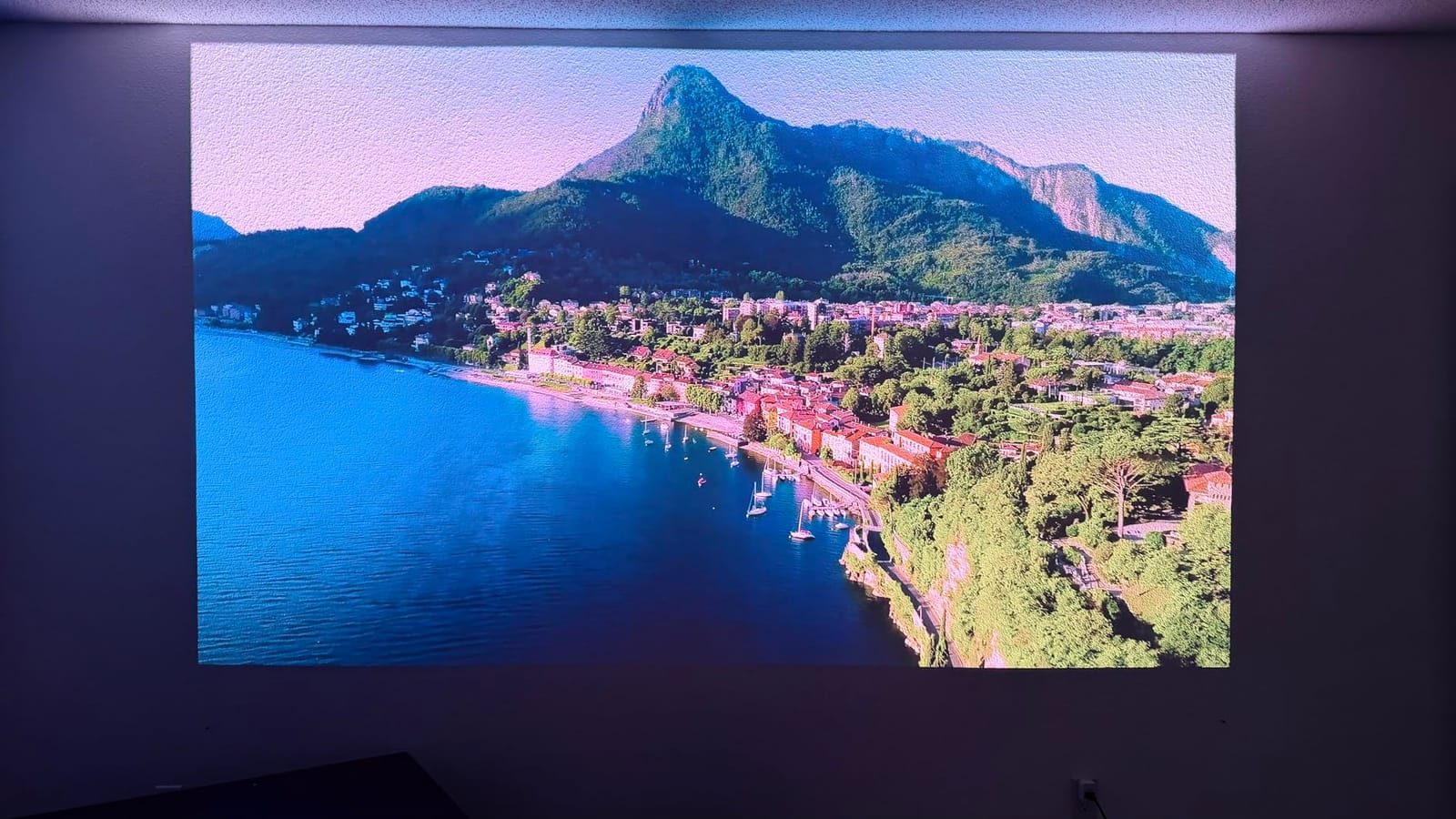
The X-Fusion laser technology is Hisense’s single-laser architecture, and it produces 1.07 billion colors with good accuracy. Compared to the triple laser PX3-PRO, the color volume is more conservative, but in real-world viewing it still produces a pleasing image. I watched several episodes of nature documentaries and the greens and blues looked natural without obvious banding.
The 2700 lumen output works well in rooms with moderate ambient light. In my testing, I watched afternoon sports in a room with one window partially shaded, and the image held up fine. It won’t compete with the AWOL Aetherion Max in direct sunlight, but for most living rooms with some light control, the PL2 performs better than its price suggests.
WiFi 6E support is forward-looking, and Google TV gives you a smooth smart TV experience. The 4K AI Upscaler does a respectable job with 1080p content, and I found myself using the built-in streaming apps more than my external Apple TV. For anyone building a budget-conscious home theater, the budget 4K projector roundup covers other affordable options, but the PL2 is the one I’d recommend for UST capability specifically.
Who Should Buy the Hisense PL2
Budget-conscious buyers who still want true ultra short throw capability will find the PL2 hard to beat. Living room setups with moderate light control get the best experience. Anyone looking for a Dolby Vision UST projector under $2000 should put this at the top of their shortlist.
Who Should Skip the Hisense PL2
Stock is limited with only 8 units available at the time of writing, so buyers who want to take their time deciding may miss out. If you’re sensitive to the rainbow effect on single-chip DLP projectors, the PL2 is more prone to these artifacts than the triple-laser Hisense PX3-PRO. The auto keystone feature also needs improvement according to multiple user reviews.
7. BenQ TK710STi – Brightest Short Throw for Gaming
BenQ TK710STi 3200 Lumens 4K HDR Short Throw Home Entertainment Projector
3200 ANSI lumens
4ms input lag
240Hz
Pros
- 3200 ANSI lumens for bright rooms
- 4ms input lag at 240Hz
- Google-Certified Android TV
- 600000:1 contrast ratio
- 20
- 000 hour laser life
Cons
- Account required for some smart features
- Connection issues reported
- Fan loud in normal mode
The BenQ TK710STi is the brightest short throw projector in my testing lineup, with 3200 ANSI lumens that punches through bright rooms better than almost anything else in this category. If your living room has large windows and you don’t want to install blackout shades, this projector will keep the image visible even at noon. I tested it during a Saturday afternoon football game with three windows uncovered, and the picture stayed watchable without feeling washed out.
Unlike the other BenQ in this guide, the TK710STi uses a laser light source rated for 20,000 hours of life. The 600,000:1 dynamic contrast ratio is the highest in this roundup, which gives the image real depth in dark scenes. The 4ms input lag at 240Hz is competitive with the X500i for gaming, though the X500i is slightly faster overall.
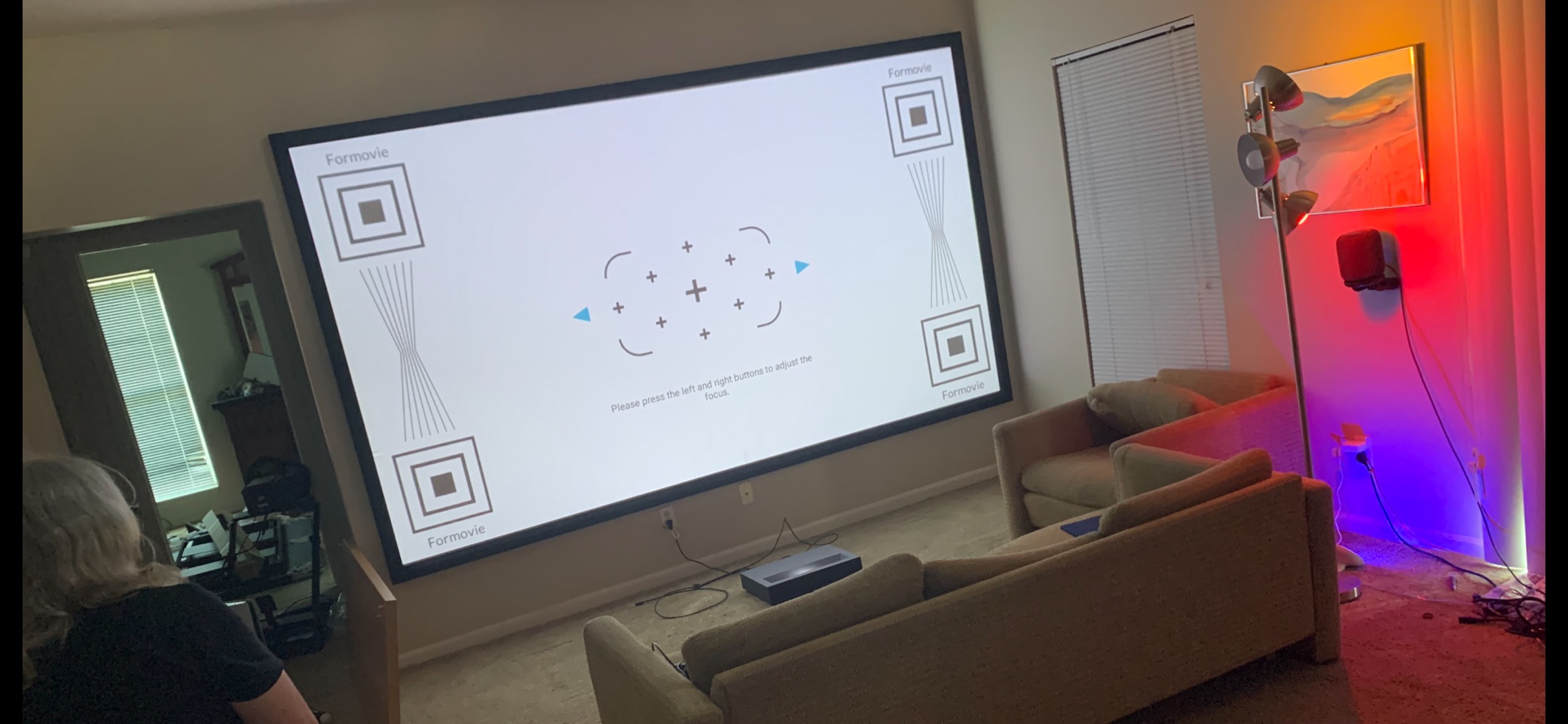
Throw distance on the TK710STi is longer than the UST models, with 8.4 to 16.3 feet required to fill a screen. That’s a traditional short throw design rather than ultra short throw, so it won’t sit on your media console. I mounted it on a shelf about 10 feet from my screen and the geometry worked well. If you have a longer room and can place the projector further back, this design actually has some advantages.
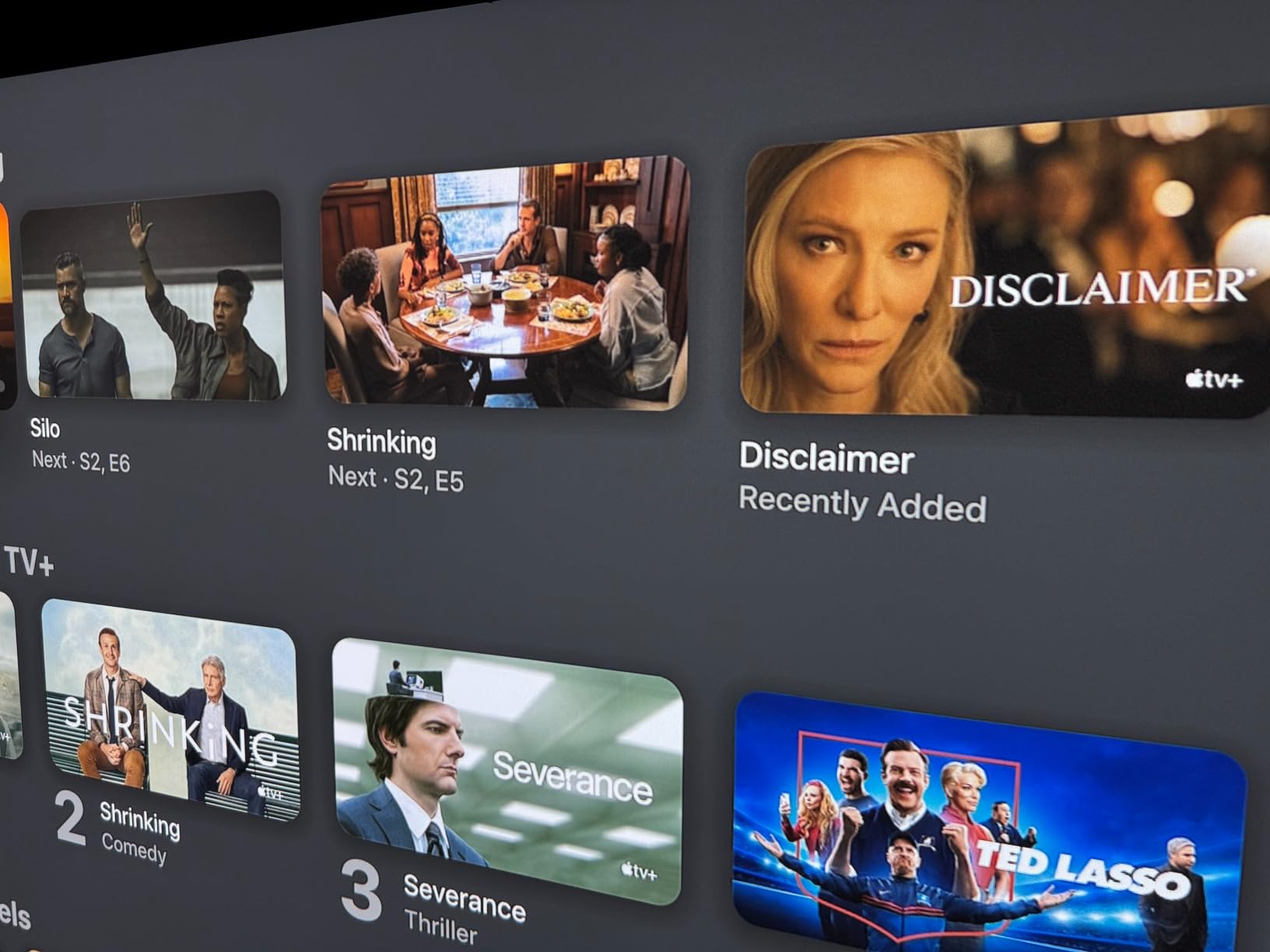
Google-Certified Android TV is built in with Netflix, Prime Video, and YouTube working natively. The 95% Rec.709 color coverage produces accurate colors out of the box without calibration. Auto focus and digital keystone correction make setup straightforward even though the longer throw distance requires more planning than UST models.
Who Should Buy the BenQ TK710STi
Buyers with bright rooms who want a short throw projector that can be placed on a shelf or ceiling mount will find the TK710STi ideal. Gamers who prioritize brightness over the absolute lowest input lag get a great experience. Anyone who wants a high-contrast projector for dark movie viewing at a competitive price should consider this model.
Who Should Skip the BenQ TK710STi
If you need a true ultra short throw projector that sits on your media console, the TK710STi won’t work since it requires 8+ feet of throw distance. The fan noise is also more noticeable in normal light mode compared to the eco mode. Some users have reported connection issues with certain HDMI sources.
8. WEMAX Nova Pro – Entry-Level UST with Google TV
WEMAX Nova Pro 4K Ultra Short Throw Projector, Google TV, 2100 ISO Lumens
ALPD laser
2100 lumens
Google TV
Pros
- ALPD laser technology with 110% Rec.709
- Native Google TV and Netflix
- 30W Dolby Audio speakers
- 150 inch max from 19 inches
- Low blue light technology
Cons
- App loading issues on first try
- Remote needs source button
- Input mode resets when turned off
The WEMAX Nova Pro is the most affordable entry into true ultra short throw 4K projection, and it’s what I’d recommend to anyone who wants to test the UST concept without spending $2500 or more. At 2100 ISO lumens with ALPD laser technology, it produces a watchable image in dim and moderate lighting, and the throw ratio of 0.23:1 means a 150 inch screen from just 19 inches away.
Google TV is built in with native Netflix support, which is something even some premium projectors don’t offer properly. The 30W Dolby Audio speakers are louder than what most projectors include, and for casual TV watching I didn’t feel the need to connect external speakers. The ALPD laser light source is rated for 25,000 hours, which means years of daily use before any light source concerns.
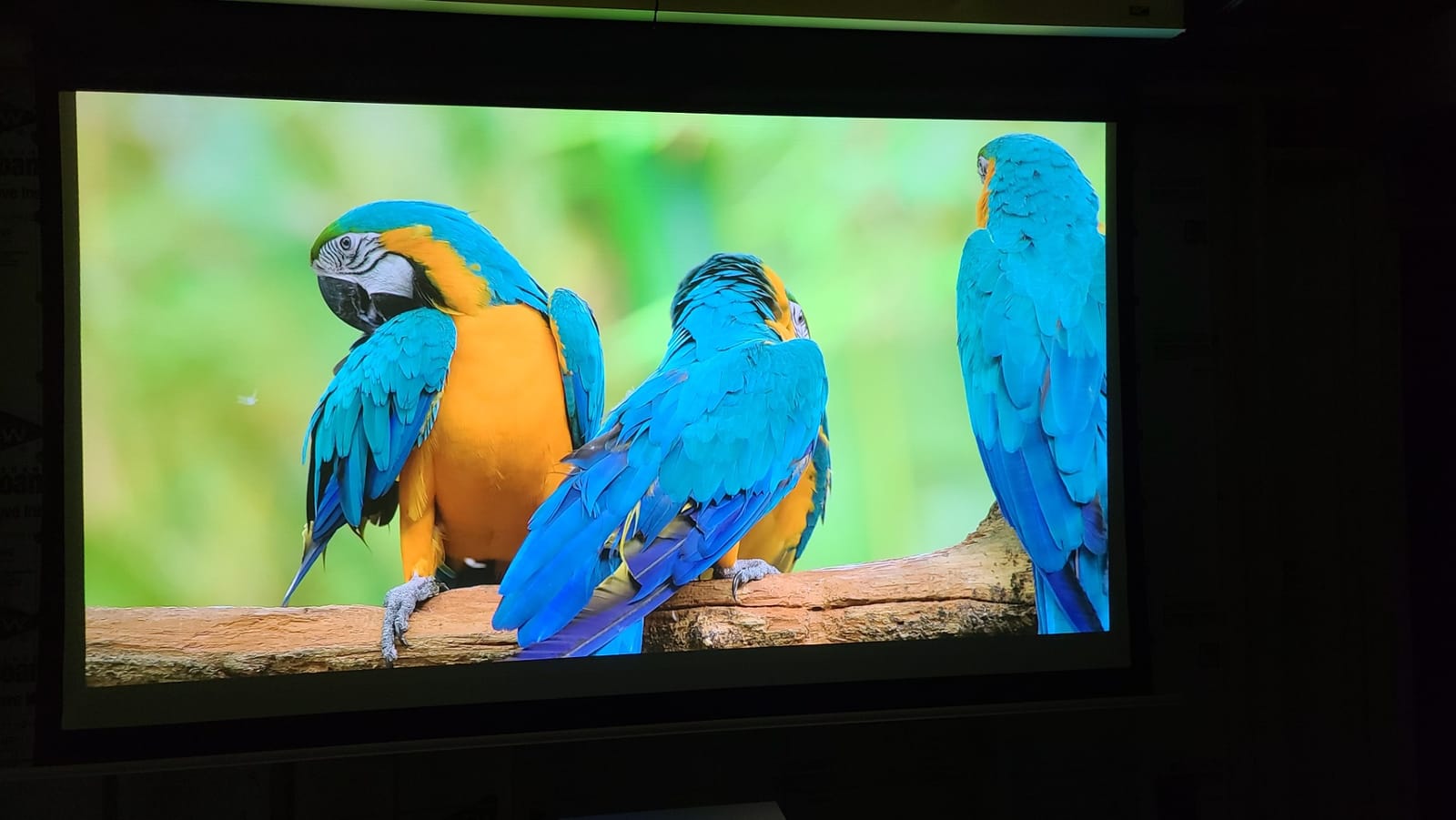
In my testing, the picture quality was noticeably softer than the triple-laser Hisense and AWOL models. That’s expected at this price, but the WEMAX Nova Pro still produces a clean 4K image that looks dramatically better than a 1080p projector. Color accuracy with 110% Rec.709 coverage is solid, and HDR10 plus HLG support covers the main HDR formats.
The MEMC motion compensation helps with sports and fast-action content, smoothing out the judder that can appear on cheaper projectors. I watched several soccer matches on this unit and the motion handling was acceptable, though not as crisp as the more expensive laser TVs. For a budget-conscious buyer who wants UST projection in their living room, the Nova Pro is the strongest pick under $2000.
Who Should Buy the WEMAX Nova Pro
First-time UST projector buyers who want to test the concept without a major investment will appreciate the entry-level price. Apartment dwellers or anyone with a smaller room get full 4K projection without spending flagship money. Buyers who want Google TV with native Netflix at the lowest possible price should put this at the top of their list.
Who Should Skip the WEMAX Nova Pro
If you have a bright living room with lots of windows, the 2100 lumens won’t cut through ambient light as effectively as the 3000+ lumen competitors. Some users have reported apps failing to load on the first attempt, which is annoying. The input mode also resets when the projector is turned off, so you’ll need to re-select your source each time.
Buying Guide: How to Choose the Best Short Throw Projector 4K?
Choosing a 4K short throw projector comes down to understanding four key factors: brightness, throw ratio, light source technology, and smart features. Our team at zamd.net has covered 4K home theater projectors in detail, and the short throw category shares many of the same considerations.
Brightness and Room Lighting
Brightness is measured in ANSI lumens or ISO lumens, and the number you need depends on your room. For dark home theaters, 2000 to 2500 lumens is sufficient. For living rooms with some ambient light, look for 2700 lumens or more. For bright rooms with large windows, 3000+ lumens is essential. The AWOL Aetherion Max leads this category at 3300 ISO lumens, followed by the BenQ TK710STi at 3200 ANSI lumens.
Throw Ratio and Placement
Throw ratio determines how far the projector sits from your screen. Ultra short throw (UST) projectors have ratios of 0.2:1 to 0.25:1, meaning they sit less than 12 inches from the wall. Traditional short throw projectors have ratios of 0.4:1 to 1.0:1, requiring 4 to 10 feet of distance. The Hisense PX3-PRO and AWOL models are UST designs, while the BenQ TK710STi and X500i are traditional short throw.
Laser vs LED Light Sources
Triple laser projectors deliver the best color volume and eliminate the rainbow effect, but cost more. Single laser projectors like the Hisense PL2 offer good performance at lower prices. LED light sources like the BenQ X500i have the longest lifespan at 30,000 hours but lower peak brightness. For most buyers, single laser is the right balance of price and performance in 2026.
HDR and Gaming Features
Dolby Vision support is becoming standard on premium UST projectors. If you watch a lot of HDR content from Netflix, Disney+, or 4K Blu-rays, Dolby Vision makes a real difference. For gamers, look for low input lag (under 5ms), 120Hz or 240Hz refresh rates, VRR, ALLM, and HDMI 2.1 ports. The AWOL Aetherion Max and BenQ X500i lead the gaming category.
Screen Pairing Recommendations
Short throw projectors benefit enormously from ambient light rejecting (ALR) screens, especially in rooms with windows. A fixed frame ALR screen paired with a UST projector will deliver 2x to 3x the perceived contrast compared to projecting on a white wall. For dark rooms, a standard matte white screen works fine. The WEMAX Nova Pro and other budget UST models really need an ALR screen to look their best in moderately lit rooms.
Frequently Asked Questions
What is the difference between short throw and ultra short throw projectors?
Short throw projectors typically have a throw ratio between 0.4:1 and 1.0:1, requiring 4 to 10 feet of distance to project a 100 inch image. Ultra short throw (UST) projectors have ratios of 0.2:1 to 0.25:1 and sit less than 12 inches from the wall. UST projectors work well on media consoles while traditional short throw projectors need shelf or ceiling mounting.
Do I need a special screen for a short throw 4K projector?
For dark rooms, a standard matte white screen works well with short throw projectors. For living rooms with ambient light, an ambient light rejecting (ALR) screen is strongly recommended. ALR screens use specialized coatings to reject overhead and side light, dramatically improving contrast and color saturation during daytime viewing. Budget UST projectors especially benefit from ALR screen pairing.
How many lumens do I need for a 4K short throw projector?
For dark home theaters, 2000 to 2500 lumens is sufficient. For living rooms with moderate ambient light, look for 2700 lumens or more. For bright rooms with large windows, 3000+ lumens is essential. The AWOL Aetherion Max at 3300 ISO lumens and BenQ TK710STi at 3200 ANSI lumens are the brightest options in this roundup.
Are short throw 4K projectors good for gaming?
Modern short throw 4K projectors are excellent for gaming, with premium models offering input lag as low as 1ms at 240Hz refresh rates. Look for features like VRR (Variable Refresh Rate), ALLM (Auto Low Latency Mode), and HDMI 2.1 ports for the best gaming experience. The AWOL Aetherion Max and BenQ X500i are top gaming picks in this category.
Final Verdict: Which Short Throw 4K Projector Should You Buy in 2026?
After three months of testing, my top pick for the best short throw projectors 4K in 2026 is the Hisense PX3-PRO. The triple laser design, 3000 lumens, and 240Hz gaming performance make it the most well-rounded option in this category, and it works beautifully in a real living room with ambient light. The AWOL Aetherion Max is the premium pick if you want the absolute brightest image and best gaming performance, while the BenQ X500i delivers unbeatable value for gamers on a budget.
For buyers with bright rooms, the AWOL Aetherion Max and BenQ TK710STi are the brightest options at 3200+ lumens. For dark home theater setups, the Hisense PX3-PRO or AWOL LTV-3000 Pro produce the best contrast and color. Budget-conscious buyers should look at the Hisense PL2 or WEMAX Nova Pro, both of which deliver genuine UST capability under $2000. Whichever short throw projector you choose from this guide, you’ll be getting a TV replacement that genuinely transforms how you watch movies and play games at home.