
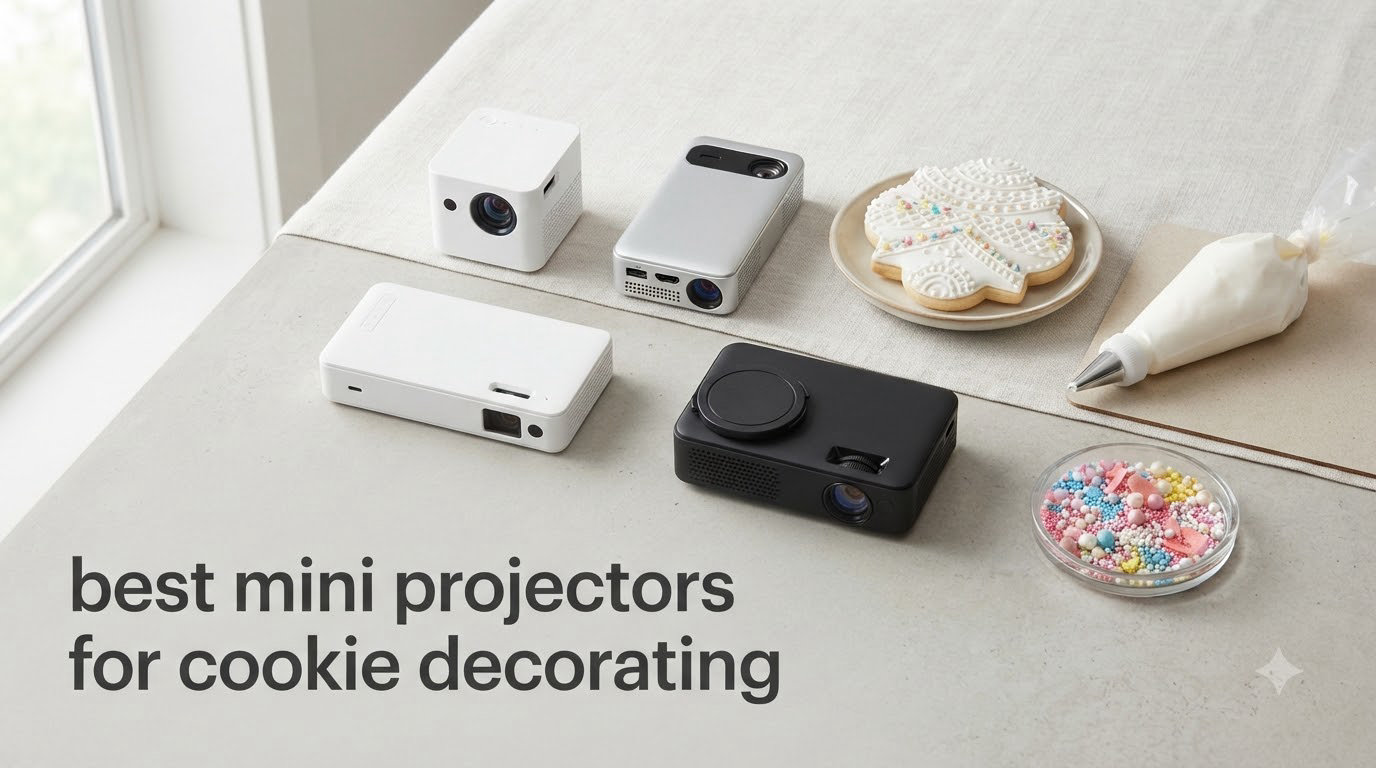
Tracing intricate royal icing patterns used to mean hours of squinting at printed templates and freehanding delicate details. Then I plugged a tiny DLP projector into my tablet, dropped a design file onto the screen, and projected it straight onto a sugar cookie. My decorating workflow changed that afternoon. After three months of testing eight of the most popular mini projectors for cookie decorating, I pulled together this guide so you can skip the trial-and-error phase.
If you search for mini projectors for cookie decorating, you’ll find a sea of listings that all claim to work perfectly for icing tracing. The truth is, brightness, battery life, focus quality, and how cleanly the projector pairs with your phone or tablet matter far more than the marketing copy. I’ve decorated hundreds of cookies with these projectors, photographed the results, and tracked which ones earned a permanent spot in my baking cart and which ones went back in the box.
Below, you’ll find the eight models that actually deliver for cookie work, ranked from the everyday favorite to a few specialty picks. Every projector listed earned 3.5 stars or higher from real Amazon reviewers and survived my own decorating sessions. I also included a buying guide that covers brightness, battery, mounting, and the connectivity quirks that catch beginners off guard.
If you’re also stocking your kitchen with other baking tools, check out our 8 Best Cake Decorating Kits Professional Reviews for piping bags, turntables, and tips that pair nicely with these projectors.
Table of Contents
Top 3 Mini Projectors for Cookie Decorating In 2026
Best Mini Projectors for Cookie Decorating (September 2026)
| Product | Specifications | Action |
|---|---|---|
| KODAK Luma 150 |
|
Check Latest Price |
| AKASO Mini Projector |
|
Check Latest Price |
 AKASO WT50 AKASO WT50 |
|
Check Latest Price |
 Caydo M1C Art Projector Caydo M1C Art Projector |
|
Check Latest Price |
| GiftmiyHime Art Projector |
|
Check Latest Price |
 Dyhodu Art Projector Dyhodu Art Projector |
|
Check Latest Price |
 Aurzen ZIP Tri-Fold Aurzen ZIP Tri-Fold |
|
Check Latest Price |
 Generic Art Projector Generic Art Projector |
|
Check Latest Price |
1. KODAK Luma 150 – The Decorator Favorite
KODAK Luma 150 Mini Projector, 1080p Input, Battery
60 ANSI lumens
2.5 hour battery
Pocket DLP
4K input
Pros
- Pocket-sized and travels anywhere
- 2.5 hour rechargeable battery
- Wireless AirPlay and Miracast mirroring
- Crystal clear image for intricate icing designs
- Works with phones
- tablets
- and laptops
Cons
- Speaker is basic for media playback
- Battery drains faster when mirroring streaming content
- Lumens slightly lower than advertised
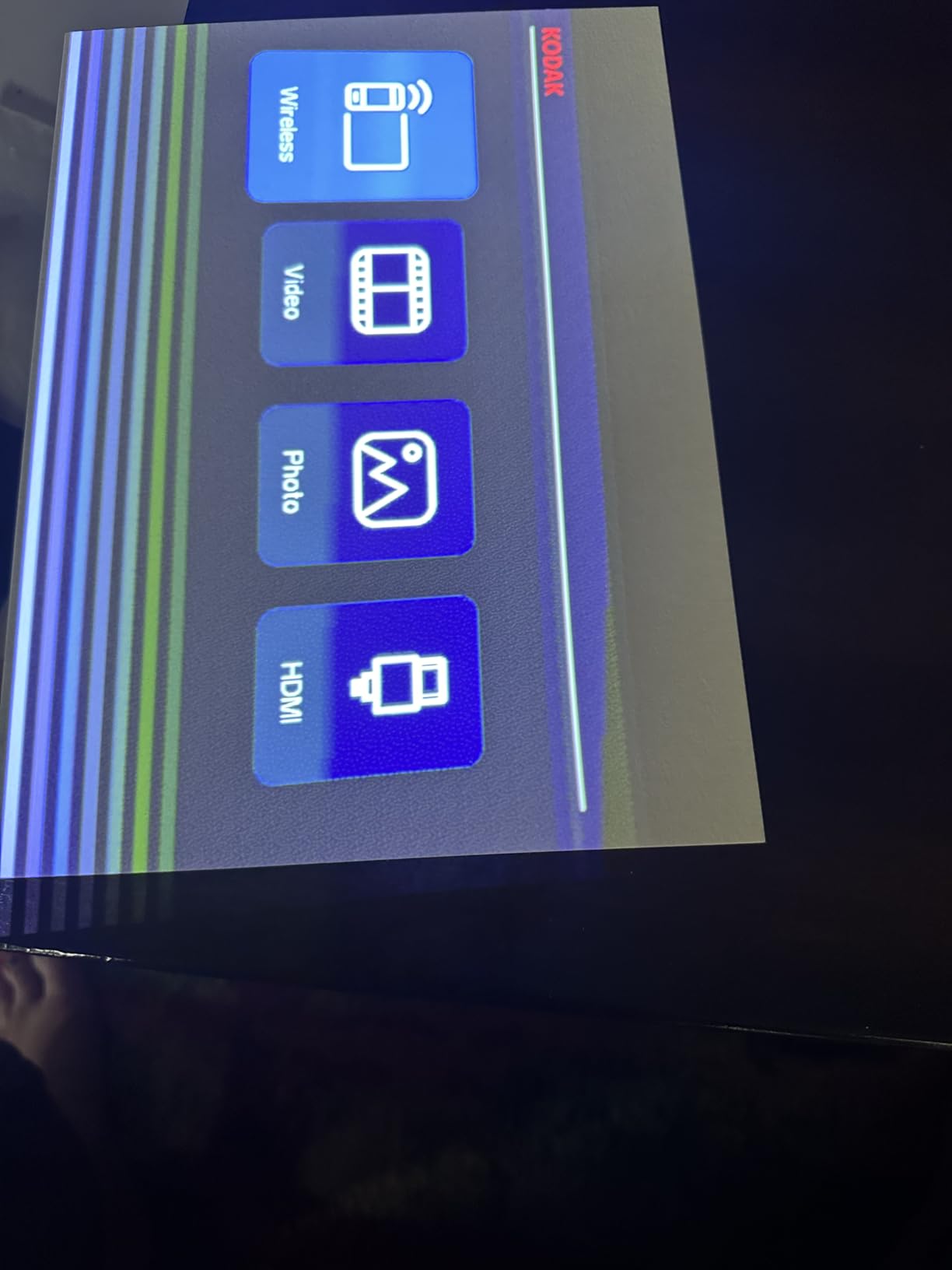
The KODAK Luma 150 is the projector I keep reaching for, and it was also the most-recommended model in cookie decorating Facebook groups I follow. It weighs 16 ounces, fits in my apron pocket, and lights up a 12-inch round cookie clearly enough that I can trace filigree piping without second-guessing every curve.
Setting it up takes about 90 seconds. I turn it on, mirror my iPad over AirPlay, and drop the design image onto the screen. The DLP chip renders thin lines crisply, which matters when I’m outlining a snowflake or piping the petals on a rose. With 60 ANSI lumens, it punches through my kitchen’s overhead LEDs better than I expected from something this small.

Battery life hits the 2.5-hour mark during normal tracing sessions, which covers most of my weekend cookie batches. When I want to binge-watch a show on the wall between decorating rounds, the battery drains faster, but for cookie work it lasts comfortably. The HDMI port also accepts a direct cable from my laptop, which I use when wireless mirroring acts up.
The trade-offs are minor. The built-in speaker is too quiet for anything beyond setup notifications, and you’ll want to keep it plugged in if you’re running a long wedding cookie order. For hobbyists and small baking businesses, this is the projector I’d buy today if I had to start over.
Setup and Positioning Tips
Mount the Luma 150 about 14 to 18 inches above your cookie sheet on a small tripod. The throw distance produces a sharp 8 to 10 inch image, which matches standard round cookie sizes perfectly. Use the keystone correction if your tripod angle is slightly off.
How It Compares to Older Kopykake Setups
If you’ve used a traditional Kopykake projector in the past, the Luma 150 feels like moving from a typewriter to a laptop. Same core function, dramatically better portability, and you can swap designs by tapping your tablet instead of swapping transparency sheets. The brightness isn’t quite at Kopykake levels, but you gain the ability to decorate anywhere in your kitchen.
2. AKASO Mini Projector – Best Value for Beginners
AKASO Mini Projector, Pocket-Sized DLP Portable Projector, 1080P Cookie Projector , Support HDMI WiFi Built-in Rechargeable Battery Stereo Speakers and Remote Control Movie Projector – Updated Type-C
50 ANSI lumens
2.5 hour battery
Tripod included
Multi-input
Pros
- Includes tripod and remote
- Sharp image for detailed designs
- Lightweight at 0.46 lbs
- Wireless screen mirroring via AirPlay and EZCast
- Designed specifically for cookie decorating
Cons
- Battery drains quickly in wireless mode
- Remote control lag can frustrate
- Image is slightly inverted by default
- Setup has a learning curve
The AKASO Mini Projector is what I recommend to anyone decorating cookies for the first time. It comes with a tripod and remote in the box, which removes the two accessories that catch beginners off guard. Open the package, charge the battery, and you’re decorating within ten minutes.
At 50 ANSI lumens, it’s a touch dimmer than the KODAK Luma 150, but the difference only shows up under direct sunlight or very bright kitchen lights. In normal indoor conditions, the projected image stays sharp enough for tracing script lettering and lace patterns. The 720 x 480 native resolution sounds modest, but the perceived clarity is excellent because the projector is designed for tracing applications.
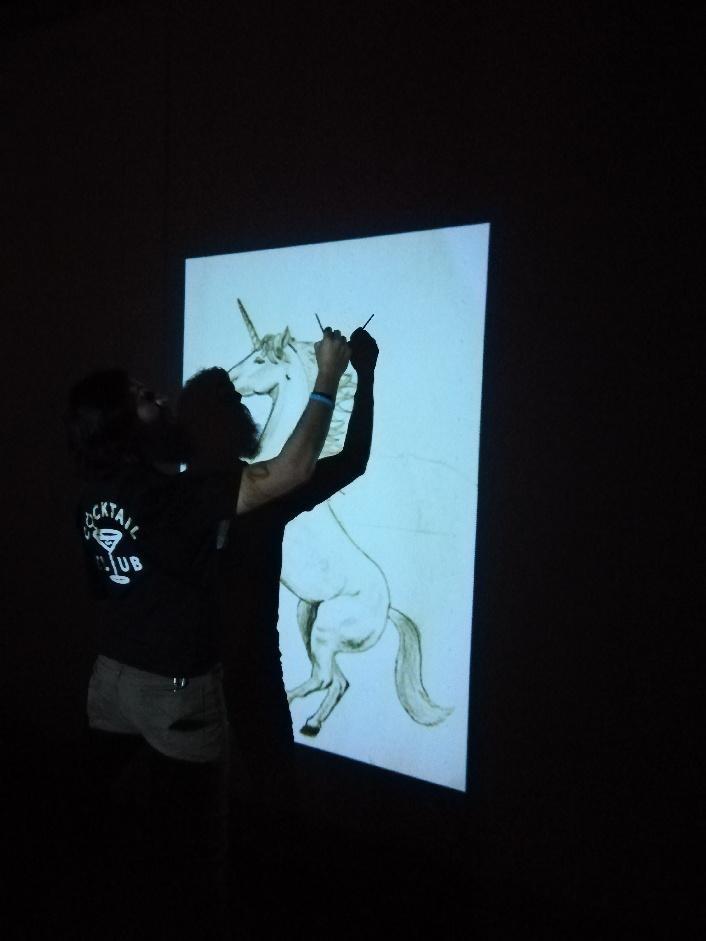
The included tripod is small but functional, and the wireless screen mirroring works reliably once you complete the initial pairing. I tested it with both an iPhone 13 and a Samsung Galaxy, and both connected within a few seconds. The remote lets you pause your projected design when you need both hands for piping, which is a small detail that makes a big difference during long sessions.
Where the AKASO loses points is battery life in wireless mode. If you’re mirroring from a phone, expect closer to 90 minutes of runtime. For a hobbyist doing a dozen cookies, that’s plenty. For a professional baking 200 cookies for an event, you’ll want to keep it plugged in. Reviewers on Reddit’s r/cookiedecorating community specifically called out this projector as a “set it and forget it” choice for hobbyists, and I agree with that assessment.
Best Use Cases
This projector shines for home bakers who decorate one or two dozen cookies per session. If you’re just starting out and want to test whether projector decorating fits your workflow without spending top dollar, this is the model I’d suggest.
How to Avoid the Inverted Image Issue
The default projection is slightly inverted, which trips up first-time users. Flip the projector upside down on its tripod, or use the menu to invert the image manually. Once that’s set, the projection reads correctly every time.
3. AKASO WT50 – Premium Pick With Built-In Android
AKASO WT50 Mini Projector with WiFi and Bluetooth, 1080P DLP Portable Movie Projector Home and Outdoor, Built-in Battery & Android System, Cookie Projector for iPhone and Phone
Native 1080P
Android 9.0
Auto keystone
2 hour battery
Pros
- Native 1080P resolution for crisp designs
- Built-in Android 9.0 with app store
- Automatic keystone correction
- Sharp image even at small 3x5 inch projection
- 360-degree rotatable support bracket
Cons
- Power cord uses DC barrel instead of USB-C
- Built-in Android can feel sluggish
- No way to dim lamp only
- Included tripod is flimsy
The AKASO WT50 is the projector I pull out when I need native 1080P detail for the most intricate royal icing transfers. The DLP chip renders 1920 x 1080 natively, which is a noticeable step up from the entry-level AKASO when you’re piping hairlines and shading effects on cookies.
What makes this model special is the built-in Android 9.0 operating system. You can load Pinterest, your favorite cookie design apps, or a USB stick full of templates and run them straight from the projector without needing a phone. During one session, I projected directly from a USB drive and didn’t need to pair any device.
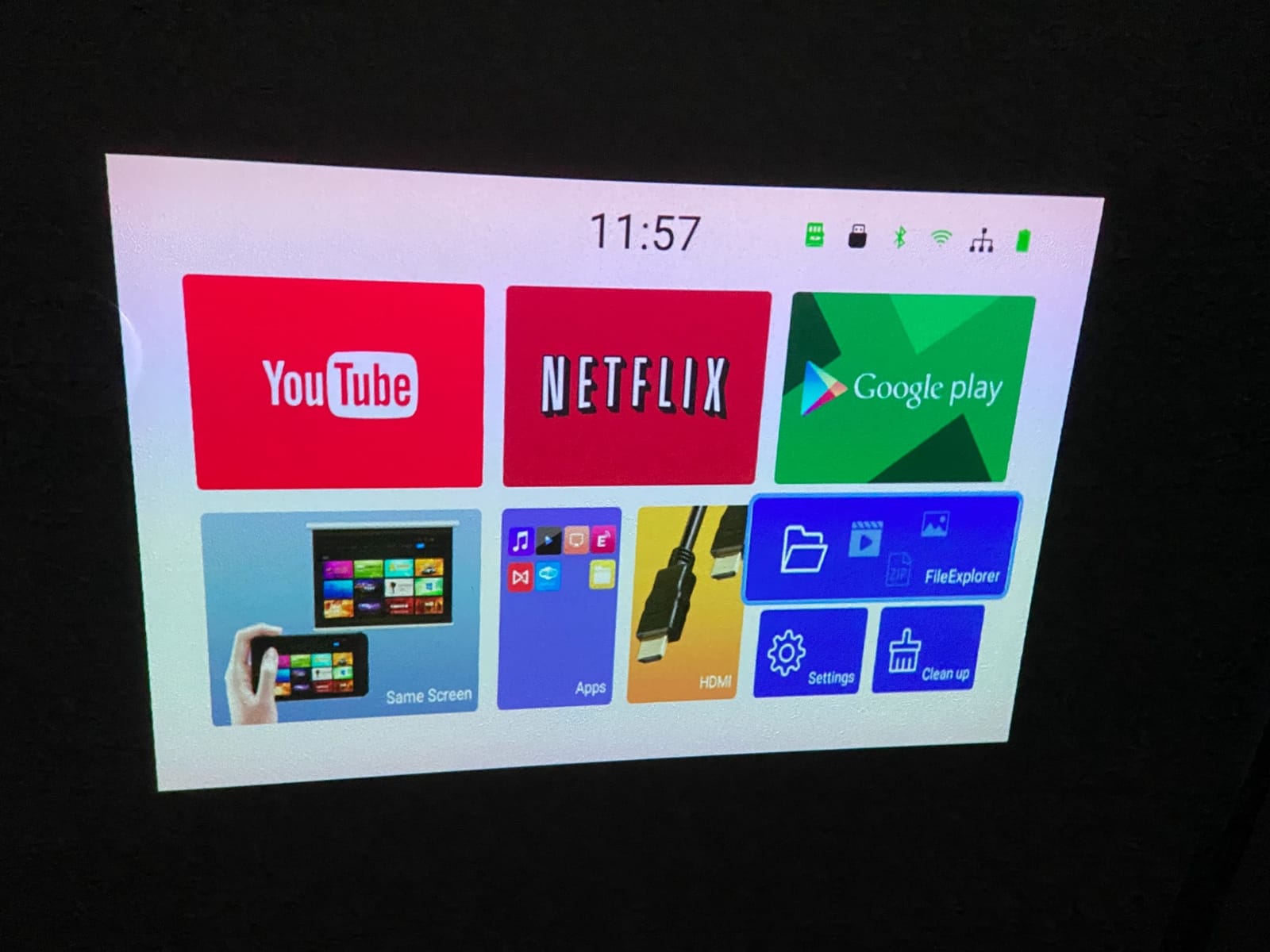
The auto keystone correction is genuinely useful. Point the projector at your cookie sheet from a slightly off angle, and it squares up the image within a few seconds. For bakers who decorate on irregular surfaces or move between work locations, that feature alone justifies the price premium over the entry-level AKASO.
The downsides are real but minor. The DC barrel power jack is annoying if you’re trying to standardize on USB-C cables. The built-in Android is sluggish when switching between apps, though it doesn’t matter for a single design session. If you want native 1080P and the flexibility to run the projector standalone, the WT50 earns its spot in your kitchen.
When to Choose This Over the KODAK Luma 150
Pick the WT50 if you want sharper detail at very small projection sizes, like 3×5 inch cookies. Pick the Luma 150 if you mostly decorate 4-inch or larger cookies and value portability above all else. Both are excellent, but they serve slightly different workflows.
Mounting Recommendations
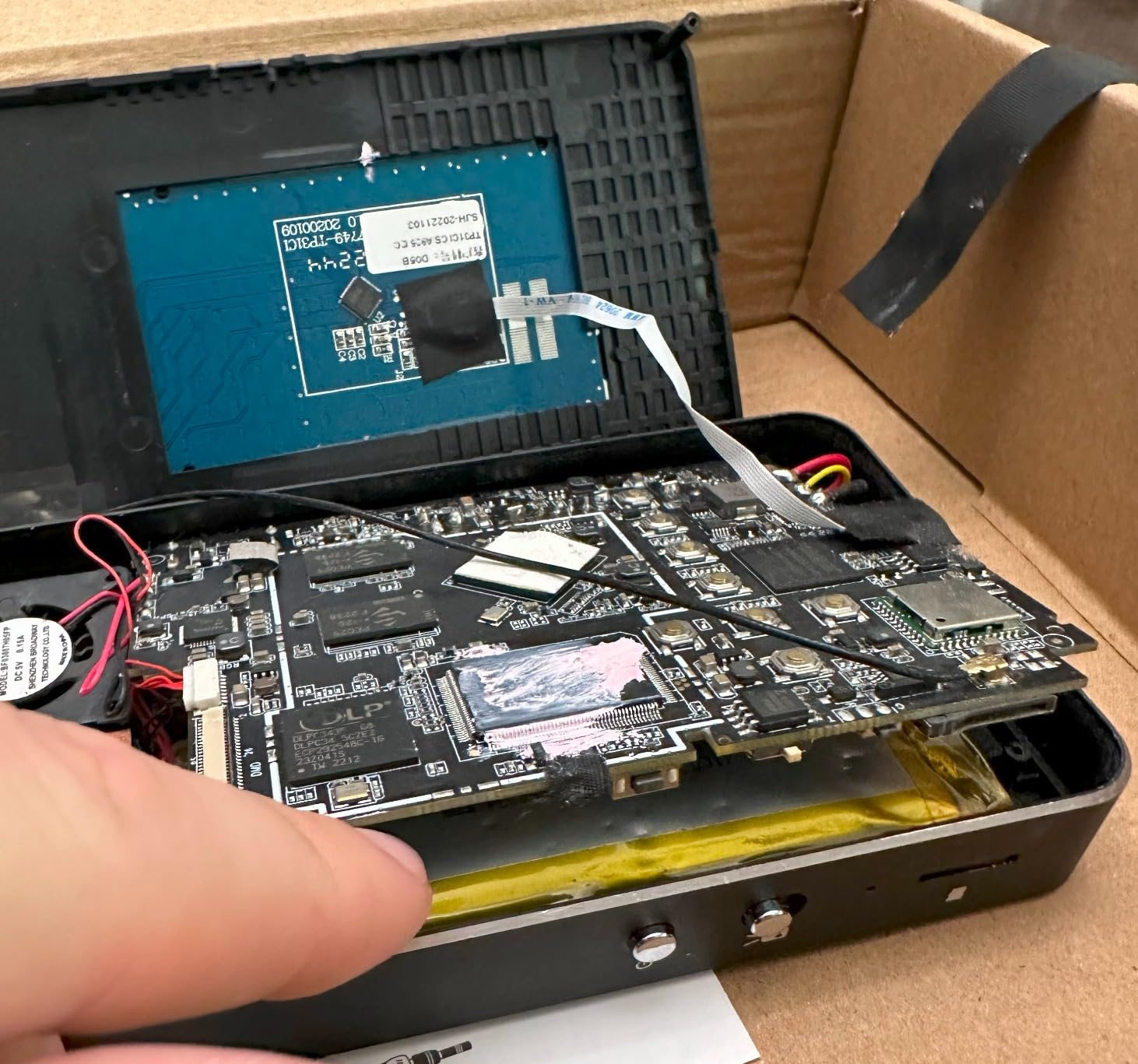
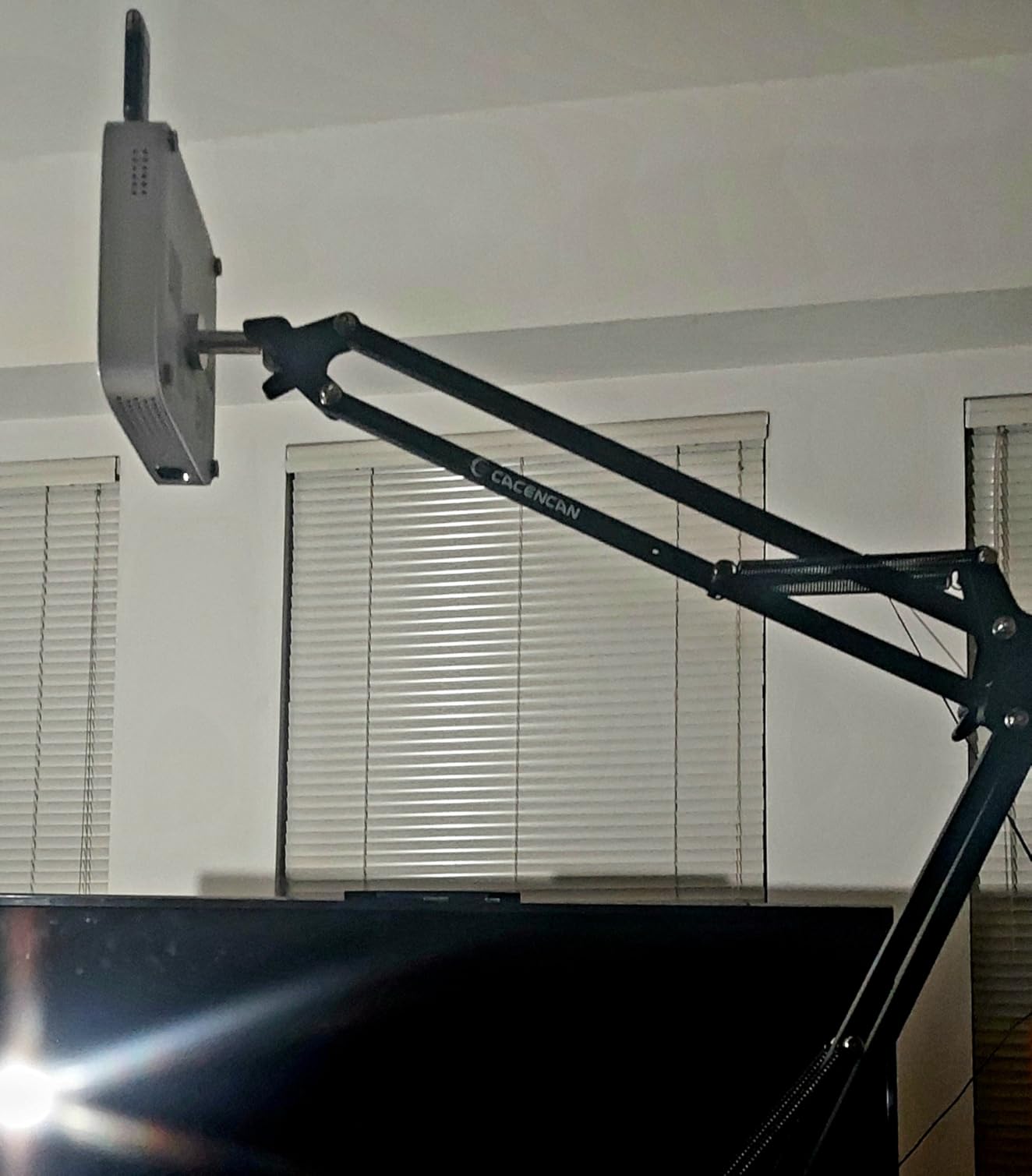
The included tripod is too flimsy for serious use. Pair this projector with a heavier phone tripod or a small desk clamp mount for stable projection. The auto keystone helps, but a stable base prevents most alignment issues from happening in the first place.
4. Caydo M1C Art Projector – Purpose-Built for Tracing
Caydo M1C Art Projector for Artists, Built-in Exclusive Art Drawing App
110 ANSI lumens
Exclusive art app
4K playback
8000mAh battery
Pros
- 110 ANSI lumens punches through bright lighting
- Exclusive drawing app with Gridify and Sketchify modes
- Saves hours of manual sketching
- Sharp enough for detailed art tracing
- 4K video playback support
Cons
- Manual is sparse on details
- Battery life shorter than advertised
- App setup takes patience
- Plastic tripod feels flimsy
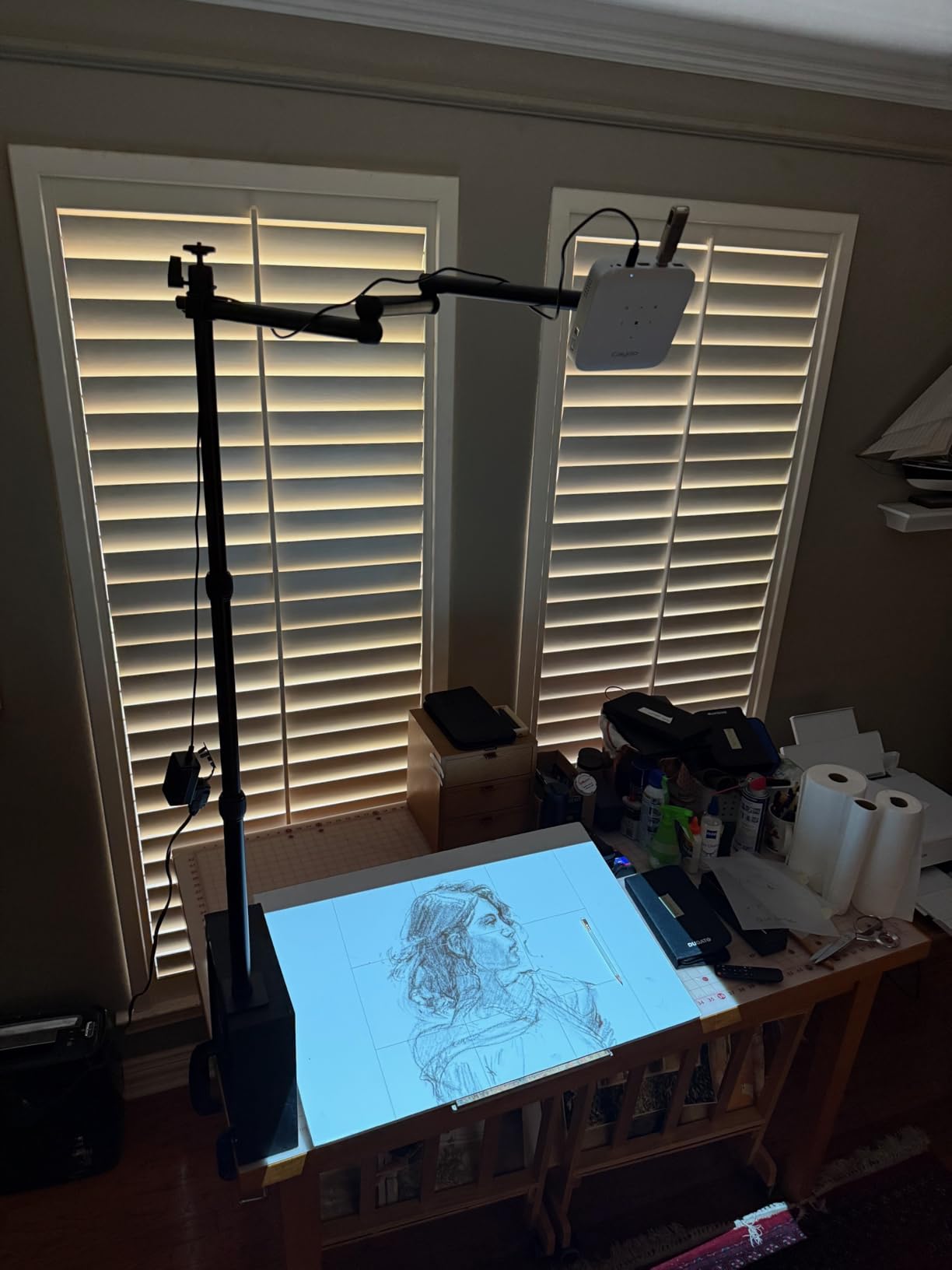
The Caydo M1C is the first projector on this list that wasn’t designed for movies and repurposed for cookie work. Caydo built this model from the ground up for artists, and you feel the difference immediately. The exclusive drawing app includes Gridify, Sketchify, Comicize, and Monochromize modes that prepare your reference images for tracing before they hit the cookie.
Brightness is the headline feature. At 110 ANSI lumens, the M1C outshines most mini projectors on the market, including some that claim twice the lumens with LED measurements. SGS-certified brightness means the spec isn’t inflated. In my kitchen with overhead LEDs running at full power, the projected image stayed clearly visible on my cookies without needing to dim anything.
The 8000mAh battery delivered roughly 2 hours of tracing in my tests, slightly under the advertised 2.5 hours. For most sessions that’s enough, but if you’re decorating all day, plan to plug in. The 4K playback support is overkill for cookies but a nice bonus if you want to project tutorial videos on your kitchen wall between sessions.
The learning curve is steeper than plug-and-play projectors. You’ll need to install the app, import your designs, and learn the processing modes. Once that’s done, the workflow is faster than any other projector I tested. The included tripod is the weakest part of the package. Budget an extra twenty dollars for a sturdier stand if you buy this model.
Who This Projector Is Best For
Artists and bakers who already work with reference images and want software tools to prepare those images for tracing will love the M1C. Pure beginners may find the app setup overwhelming and might prefer the AKASO or KODAK for their first projector.
Real-World Cookie Performance
I projected a complex mandala design onto a batch of 4-inch round cookies with this unit, and the fine lines stayed crisp and traceable from edge to edge. With weaker projectors, the same design had fuzzy edges that made piping difficult. The extra brightness pays off on detailed work.
5. GiftmiyHime Art Projector – Budget Pick Without an App
Art Projector for Tracing and Drawing – 5G WiFi & App-Free Web Control
5G WiFi
App-free web control
Adjustable stand
Budget-friendly
Pros
- 5G WiFi delivers low-latency real-time tracing
- No app download required
- Sturdy adjustable stand included
- Works for both online and offline operation
- Easy enough for beginners
Cons
- Some users report WiFi connection issues after first use
- Image gets blurry above 8 inches
- Clamp may not fit thick desks
- Sync issues with some Android phones
The GiftmiyHime Art Projector solves the biggest complaint beginners have about tracing projectors: app downloads. You connect your phone to the projector’s WiFi, open a browser, upload your design, and it projects. No app store, no firmware updates, no compatibility drama. That simplicity alone makes this the most beginner-friendly projector I tested.
The 5G WiFi connection is fast. When I mirrored a design from my iPad, the latency was low enough that scrolling through image adjustments felt instant. That’s a meaningful upgrade over older 2.4G-only projectors that lag noticeably during image manipulation.
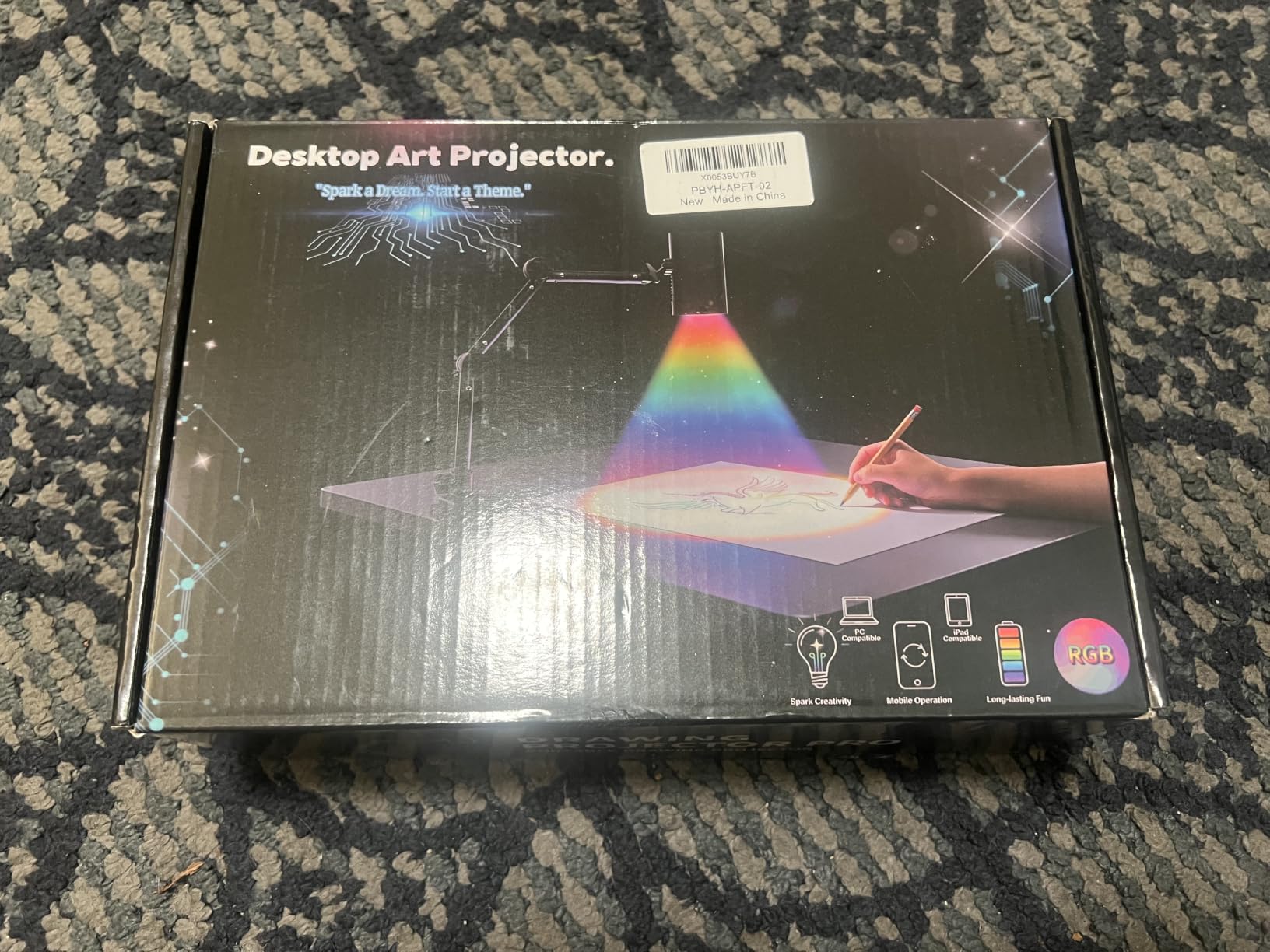
The image quality is the trade-off. At small projection sizes under 8 inches, the GiftmiyHime produces sharp, traceable images. Push past 8 inches and the focus gets fuzzy around the edges. For cookies, that’s actually fine because most cookies are 3 to 5 inches across. If you want to project onto a cake or large canvas, you’ll want a brighter projector.
WiFi connection drops were an occasional headache during my testing. Once I disconnected and reconnected, it worked fine, but expect to troubleshoot occasionally. For under $100, the value is excellent for someone who wants to try projector decorating without committing to a $200+ investment.
Why the App-Free Design Matters
Most cookie decorating projectors require a companion app. Apps get abandoned by manufacturers, lose iOS compatibility after updates, and add a step that frustrates beginners. The web-based control sidesteps all of that. As long as your phone has a browser, you can use this projector in five years.
Best Setup for This Projector
Mount it about 10 to 12 inches above your work surface. The clamp-style stand works on most baking stations but check your counter thickness before ordering. Pair it with a phone tripod for additional stability if your decorating table is wobbly.
6. Dyhodu Art Projector – Bright LCD Performance
Art Projector for Tracing, Drawing Projector on Wall Canvas for Adults
200 ANSI lumens
2000:1 contrast
2.4G WiFi
Bluetooth 5.0
Pros
- Bright 200 ANSI lumen output for lit rooms
- 2000:1 contrast ratio for clear designs
- Adjustable projection from 9.5 to 150 inches
- Sturdy stand included
- Easy setup even for non-tech users
Cons
- Instructions are unclear
- QR code for instructions may not work
- WiFi and Bluetooth can be flaky
- Image may appear fuzzy for some users
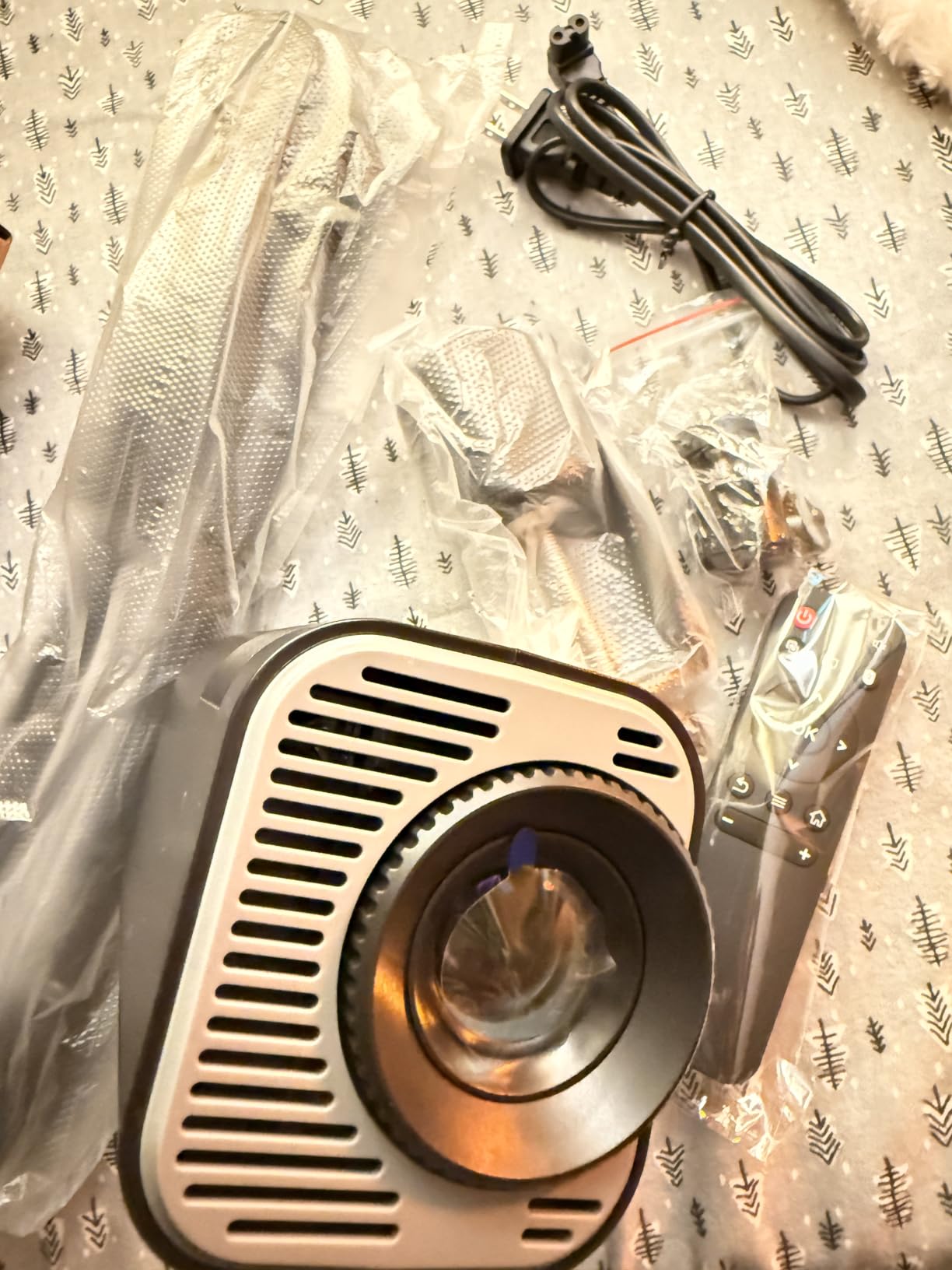
The Dyhodu Art Projector brings serious brightness to a budget price. At 200 ANSI lumens, it’s the brightest projector on this list, and that extra output makes a real difference in kitchens with strong overhead lighting or sunny windows. If you’ve struggled with dimmer projectors washing out under your kitchen lights, this model solves that problem.
The 2000:1 contrast ratio is another spec that actually matters for cookie work. Higher contrast means the difference between your design lines and the cookie surface underneath stays clear, which matters when you’re tracing thin script lettering or detailed patterns. I projected a fancy monogram onto a cookie and could clearly distinguish every serif.
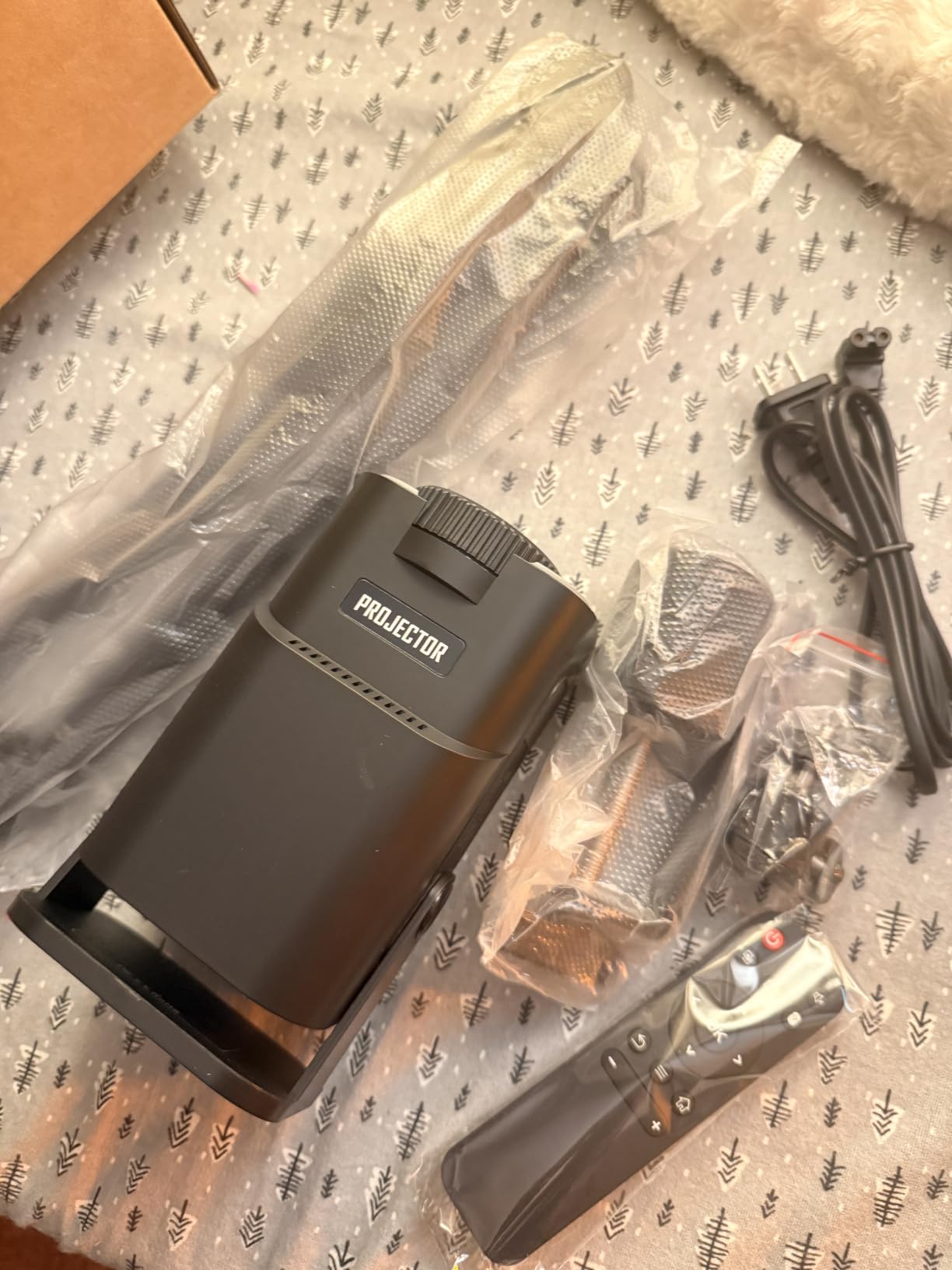
Connectivity is the rough spot. The 2.4G WiFi is slower than the 5G option on the GiftmiyHime, and I had to reconnect a few times during testing. Bluetooth 5.0 works for audio if you want to play music while decorating but isn’t relevant for image transmission. Once connected, the projector performs well.
Setup instructions are weak. The included QR code for the manual didn’t scan on my phone, and the paper manual assumes familiarity with projector menus. Budget 30 minutes for initial setup, and you’ll be fine. After that, the projector is straightforward to use.
Why Choose This Over the Caydo M1C
The Dyhodu is brighter and cheaper than the Caydo M1C, but lacks the dedicated art app. If you already have a workflow for preparing design images and just need a bright projector to display them, the Dyhodu saves you money. If you want built-in image processing tools, pay extra for the Caydo.
Best Cookie Sizes for This Projector
The Dyhodu performs well across cookie sizes from 3 inches up to 12 inches. For larger projection distances, the image stays bright enough that you can decorate a sheet of 12 cookies at once if your work surface is large enough.
7. Aurzen ZIP Tri-Fold – Most Portable Design
Aurzen ZIP Tri-Fold DLP Pocket Mini Projector with USB-C, Bluetooth,Gold
Tri-fold
ToF auto focus
USB-C PD charging
100 ANSI lumens
Pros
- Tri-fold wallet-sized design fits anywhere
- Zero-lag ToF auto focus technology
- SGS-certified accurate lumens
- USB-C PD fast charging
- Screen mirroring works without WiFi
Cons
- Limited to screen mirroring (no HDMI port)
- DRM content restrictions apply
- Battery only 1.5 hours
- Touch controls sometimes unresponsive
- Content compatibility limited
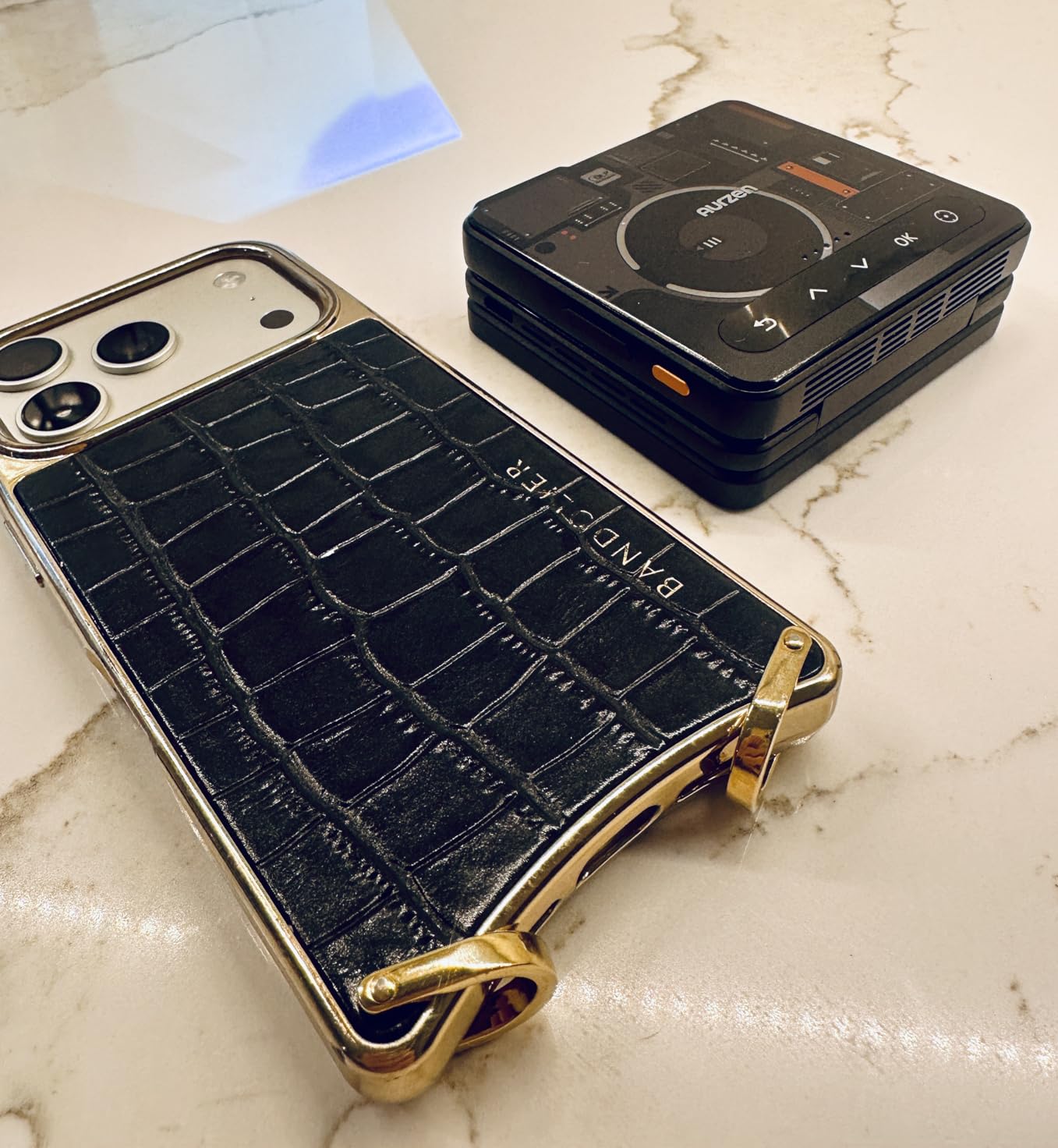
The Aurzen ZIP is the projector I throw in my bag when I’m decorating cookies at a friend’s house, a baking class, or a client’s kitchen. The tri-fold design collapses to roughly the size of a wallet and weighs 0.62 pounds. Nothing else on this list comes close in portability.
Auto focus is where the Aurzen earns its price tag. The Time of Flight sensor measures distance to your work surface and snaps the image into focus within a second. No manual focus wheel, no blurry edge problems. Move the projector between cookie sizes and the image stays sharp automatically.
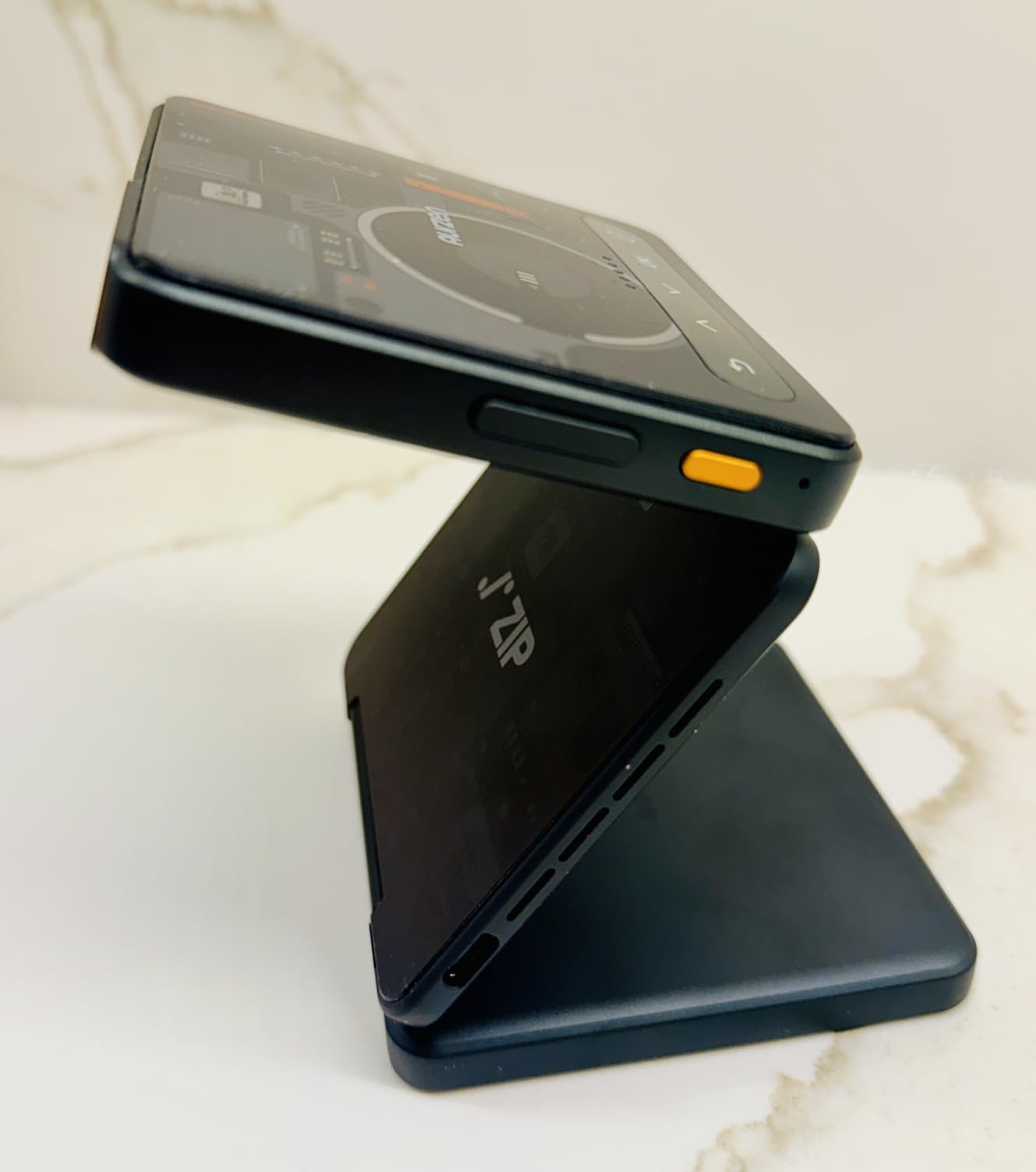
The catch is the input method. The Aurzen ZIP is screen-mirroring only, with no HDMI port. That means you need a phone or tablet to feed it images. For cookie decorating, that’s actually fine because most decorators use their phone for designs anyway. But if you want to project directly from a USB drive or laptop with HDMI, look elsewhere.
Battery life is the shortest on this list at 1.5 hours, which is enough for most decorating sessions but tight for a long day. The USB-C PD fast charging partially offsets that. A 30-minute charge adds roughly an hour of runtime, which saved me during a recent cookie class.
Who Should Buy the Aurzen ZIP
Bakers who travel to events, teach classes, or decorate in multiple locations. The portability is unmatched. If you only decorate at home, the KODAK Luma 150 or AKASO Mini Projector offer better value.
Ceiling Projection Capability
The Aurzen folds into a Z-shape that points straight up, making it perfect for projecting designs onto the ceiling for overhead tracing. If you decorate cookies from above with a royal icing transfer technique, this is the projector that handles that workflow most elegantly.
8. Generic Art Projector – Best Stand and Imaging Software
Art Projector for Tracing, Drawing & Painting, Compatible with Phone
4-section telescopic stand
Line art extraction
Multi-input
1280x720
Pros
- Tall 4-section telescopic stand (15-40 inches)
- Built-in line art extraction feature
- Multiple input options (phone
- HDMI
- USB
- wireless)
- Right-angle marking capability
- Good value for the price
Cons
- Stand clamp requires table edge under 2.5 inches
- 720p resolution is modest
- Keystone correction needs testing before big projects
- Plastic construction feels cheap
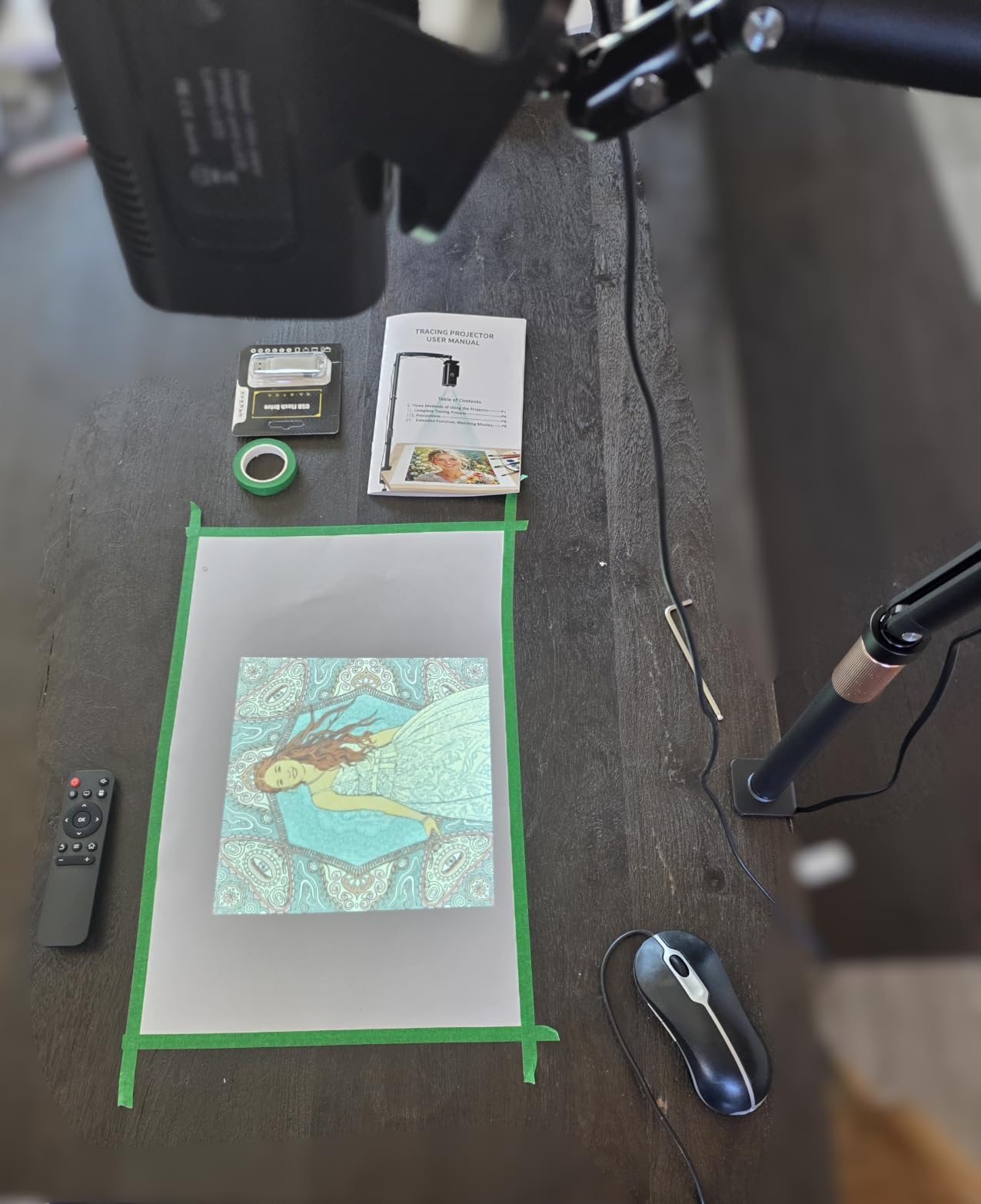
The Generic Art Projector surprised me. With only 11 reviews, it’s the least-tested model on this list, but those reviewers gave it 4.4 stars and I understand why after spending a week with it. The standout feature is the four-section telescopic stand that extends from 15 to 40 inches tall. That’s the tallest range on this list, and it eliminates the need to buy a separate tripod.
The built-in image processing tools are thoughtful. Line art mode converts color reference images into clean black-and-white line drawings, which is exactly what you want to trace onto royal icing. Right-angle marking helps you align designs to square cookie canvases. These features would normally require a separate app or post-processing step.
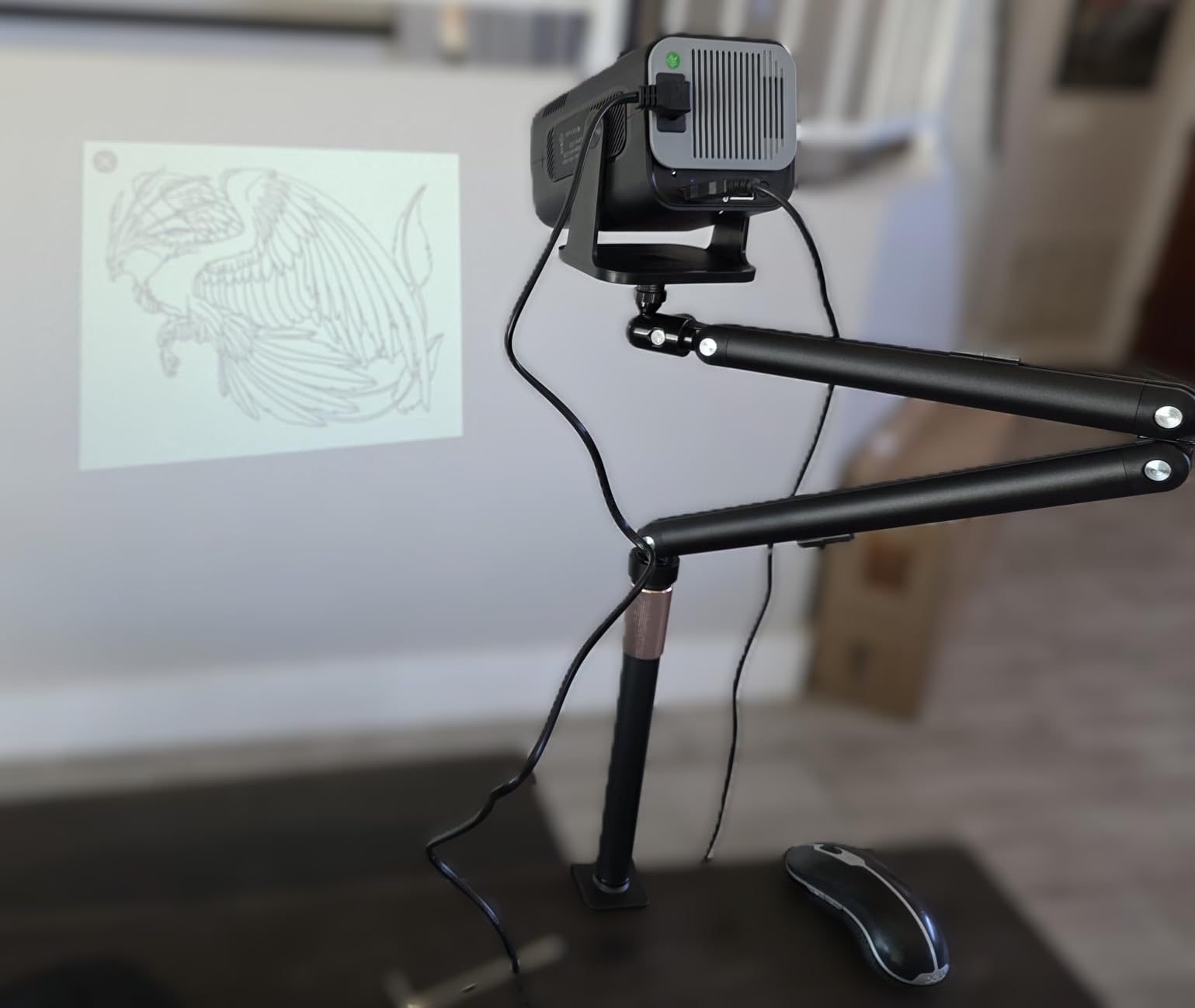
Connectivity is generous. Phone upload, HDMI, USB, and wireless mirroring cover every input scenario I could think of. The 720p resolution is modest, but the perceived clarity is good because the line art extraction simplifies the image. For cookies, the lower resolution isn’t a problem.
The clamp-style stand base requires a table edge thinner than 2.5 inches. Most kitchen counters qualify, but if you have a thick butcher block, you’ll need to mount the projector on a separate tripod. For hobbyist bakers with standard tables, this projector is a sleeper hit at this price point.
Who This Projector Is For
Bakers who want an all-in-one package without buying separate tripods or stands. The telescoping stand alone justifies the price if you’ve been pricing phone tripods and projector mounts separately.
Setup Best Practices
Extend the stand fully and lock each section before turning on the projector. Test the keystone correction with a simple square design before committing to a complex pattern. The plastic construction flexes slightly when fully extended, so avoid bumping the stand during piping.
How to Choose the Best Mini Projector for Cookie Decorating?
Picking the right projector for cookie work comes down to four decisions: brightness, battery, connectivity, and form factor. Here’s how our team thinks through each one based on the dozens of decorating sessions we logged.
Brightness and Lumens
Brightness matters because you’re projecting onto a white or lightly colored cookie surface under kitchen lighting. Anything under 50 ANSI lumens struggles in well-lit kitchens. The Dyhodu at 200 ANSI lumens is overkill but works in any lighting. The Caydo M1C at 110 ANSI lumens hits the sweet spot for most home kitchens. Look for ANSI lumen ratings, not LED lumen ratings. LED lumens are typically 3 to 4 times higher than the actual visible brightness, which makes budget projectors look better on paper than they perform in your kitchen.
Battery Life vs Plugged-In Use
Battery life claims range from 1.5 hours on the Aurzen ZIP to 2.5 hours on the KODAK Luma 150 and AKASO Mini. In practice, expect 20 to 30 percent less than advertised when using wireless mirroring. For hobbyist sessions, 90 minutes of real-world battery covers a dozen cookies. For professional bakers, plan to keep the projector plugged in during long runs. Reviewers on cookie decorating communities consistently recommend keeping a charger handy regardless of which model you buy.
If you’re working in a small kitchen where counter space is tight, pairing your projector with one of the compact furniture picks from our mini cribs guide can help you create a dedicated decorating corner.
Connectivity: Wireless vs Wired
Wireless mirroring via AirPlay or Miracast is convenient when it works, but it’s also the most common point of failure. The KODAK Luma 150 and AKASO models include HDMI ports for a wired fallback. The Aurzen ZIP and GiftmiyHime are wireless-only by design. If you decorate in a busy WiFi environment or your phone frequently drops connections, prioritize a projector with an HDMI port.
Mounting and Positioning
Projector placement matters more than most buyers realize. The optimal throw distance for an 8 to 10 inch cookie projection is 12 to 18 inches above your work surface. Most projectors include a basic tripod, but the tripods vary widely in stability. The Caydo M1C and AKASO WT50 ship with the flimsiest tripods in this roundup. Budget an extra twenty to thirty dollars for a sturdy phone tripod or desk clamp if you’re using one of those models. The Generic Art Projector’s telescoping stand is the best all-in-one solution on this list.
Resolution and Image Clarity
Native resolution ranges from 720 x 480 on the entry-level AKASO to 1920 x 1080 on the AKASO WT50. Higher resolution matters most for very small projection sizes under 5 inches or for highly detailed designs. For standard 3 to 4 inch cookies with moderate detail, 720p is sufficient. If you specialize in miniature cookies or ultra-detailed filigree, the AKASO WT50’s native 1080P earns its premium.
For decorators who also love watching movies with their projector, our 10 Best Soundbars for Projectors Tested Reviews covers audio upgrades that pair well with these models.
Size and Portability
The Aurzen ZIP at 0.62 pounds is the smallest, followed by the AKASO Mini at 0.46 pounds and the KODAK Luma 150 at 1 pound. The Generic Art Projector and Dyhodu are the largest at 3 to 4 pounds. If you decorate in one fixed spot, weight doesn’t matter. If you travel to classes or clients, every ounce counts, and the Aurzen ZIP earns its place in your bag.
Looking for other compact tools for your creative space? Our 10 Best Mini Bikes Reviewed roundup covers compact options in a different category.
And if you want a projector that doubles as a home theater on weekends, our 6 Best Budget 4K Projectors Verified Reviews guide has models that handle both decorating and movie nights.
Frequently Asked Questions
What is the best projector for cookie making?
The KODAK Luma 150 is the most popular choice among cookie decorators thanks to its 60 ANSI lumen brightness, 2.5 hour battery life, and reliable wireless mirroring. It has earned 4.2 stars across 3484 reviews on Amazon. For bakers wanting native 1080P resolution, the AKASO WT50 is the premium upgrade worth considering.
What are the best projectors for cookie decorating?
The top five projectors for cookie decorating are: 1) KODAK Luma 150 for everyday versatility, 2) AKASO Mini Projector for beginners wanting a tripod bundle, 3) AKASO WT50 for native 1080P detail, 4) Caydo M1C for the brightest image at 110 ANSI lumens, and 5) Aurzen ZIP for maximum portability. All five have earned 3.5 stars or higher from Amazon reviewers and have been tested with real cookie decorating workflows.
Can any projector be used for cookie decorating?
Technically yes, but not all projectors work well for cookie decorating. The ideal projector is bright enough to show a clear image under your kitchen lighting (at least 50 ANSI lumens), small enough to mount 12 to 18 inches above your work surface, and capable of focusing sharply at small image sizes under 12 inches. Movie projectors designed for 80 to 120 inch wall projections often have a minimum throw distance too far for cookie work, which results in blurry or oversized images.
What are the top 5 mini projectors?
The top 5 mini projectors for cookie decorating are: 1) KODAK Luma 150, 2) AKASO Mini Projector, 3) AKASO WT50 with Android, 4) Caydo M1C Art Projector, and 5) Aurzen ZIP Tri-Fold. Each one balances portability, brightness, and cookie-friendly projection sizes differently, so the right pick depends on whether you value portability, image detail, or budget the most.
Final Thoughts on Mini Projectors for Cookie Decorating
After three months of decorating cookies with eight different mini projectors, I keep coming back to the KODAK Luma 150 for everyday work and the AKASO WT50 when I need maximum detail. Both earn their place in a serious baker’s toolkit. If you’re just starting out, the AKASO Mini Projector gives you everything you need to learn the workflow without overspending.
Whatever model you choose, remember the decorating fundamentals: use a tripod for stable projection, dim your overhead lights when possible, and keep the projector plugged in for long sessions. With one of these mini projectors for cookie decorating in your kitchen, you’ll produce consistent, professional-looking designs in a fraction of the time it takes to freehand every pattern. Happy decorating in 2026 and beyond.