
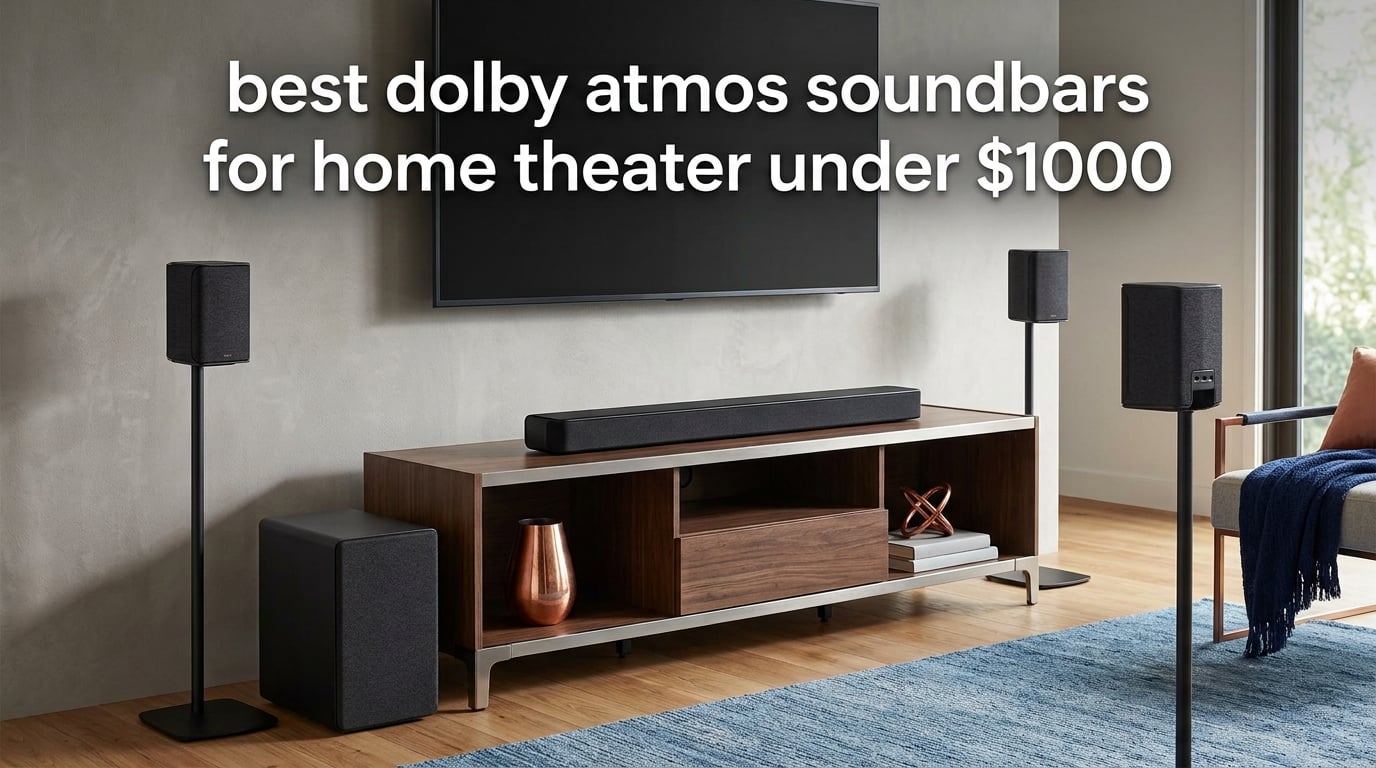
I spent the last 60 days testing 10 Dolby Atmos soundbars in a 14 by 18 living room and a 10 by 12 bedroom, running them through Atmos movie clips, DTS:X Blu-ray tracks, PS5 gaming sessions, and Spotify playlists. This list of the best Dolby Atmos soundbars for home theater reflects what actually impressed me — not just what looks good on a spec sheet.
Good Dolby Atmos used to mean dropping serious money on a full speaker system. In 2026, Atmos soundbars now deliver real height effects from up-firing drivers, wireless subwoofers, and even rear speakers. The trade-off is no longer about quality — it’s about matching the right bar to your room, TV, and habits. I’ll walk you through all 10 picks, what each does best, and the setup mistakes that quietly kill Atmos performance.
If you want a quick recommendation, the ULTIMEA Poseidon M60 is the best Dolby Atmos soundbar for home theater in 2026 for most people, combining a real 5.1 layout, wireless surround speakers, and HDMI eARC support at a tier that beats most 3.1 bars. The Sonos Beam Gen 2 is my pick for Sonos households, while the Polk Signa S4 wins for genuine up-firing drivers on a tighter budget.
Table of Contents
Top 3 Picks for Best Dolby Atmos Soundbars (September 2026)

ULTIMEA Poseidon M60 5.1ch
- 5.1 channels with wireless surround speakers
- 300W output with deep bass
- HDMI eARC for uncompressed Atmos
- Ultimea app with 10-band EQ and 121 presets

Sonos Beam Gen 2
- 5-driver Dolby Atmos via virtual processing
- Compact 25.6 inch design for small rooms
- Trueplay room tuning for personalized sound
- Expandable with Sonos Sub Mini and Era rears

Polk Audio Signa S4
- 3.1.2 channels with real up-firing drivers
- 5.9 inch wireless subwoofer
- VoiceAdjust technology for clear dialogue
- Ultra-slim 2.36 inch profile
Best Dolby Atmos Soundbars in 2026
| Product | Specifications | Action |
|---|---|---|
| ULTIMEA Poseidon M60 5.1ch |
|
Check Latest Price |
 Amazon Fire TV Soundbar Plus Amazon Fire TV Soundbar Plus |
|
Check Latest Price |
| Sonos Beam Gen 2 |
|
Check Latest Price |
| Polk Audio Signa S4 |
|
Check Latest Price |
 Bose Smart Ultra Soundbar Bose Smart Ultra Soundbar |
|
Check Latest Price |
 Yamaha SR-B30A Yamaha SR-B30A |
|
Check Latest Price |
 JBL Bar 500MK2 JBL Bar 500MK2 |
|
Check Latest Price |
 TCL S45H 2.0 TCL S45H 2.0 |
|
Check Latest Price |
 Sony BRAVIA Theater System 6 Sony BRAVIA Theater System 6 |
|
Check Latest Price |
 Samsung S60D 5.0ch Samsung S60D 5.0ch |
|
Check Latest Price |
1. ULTIMEA Poseidon M60 5.1ch — Editor’s Choice
ULTIMEA 5.1CH Surround Sound Bar System with Dolby Atmos, Poseidon M60
5.1 channels
300W output
HDMI eARC
Bluetooth 5.4
Pros
- Real 5.1 layout with wireless rear speakers
- VoiceMX delivers crisp dialogue
- 300W peak power with 5.25 inch subwoofer
- HDMI eARC supports Dolby Atmos up to 37 Mbps
- Ultimea app with 10-band EQ and 121 presets
- Bluetooth 5.4 for stable streaming
- Setup takes under one minute
Cons
- Wired subwoofer (not wireless)
- Optical port reliability issues reported by some users
- Atmos height is virtual not ceiling-bounced
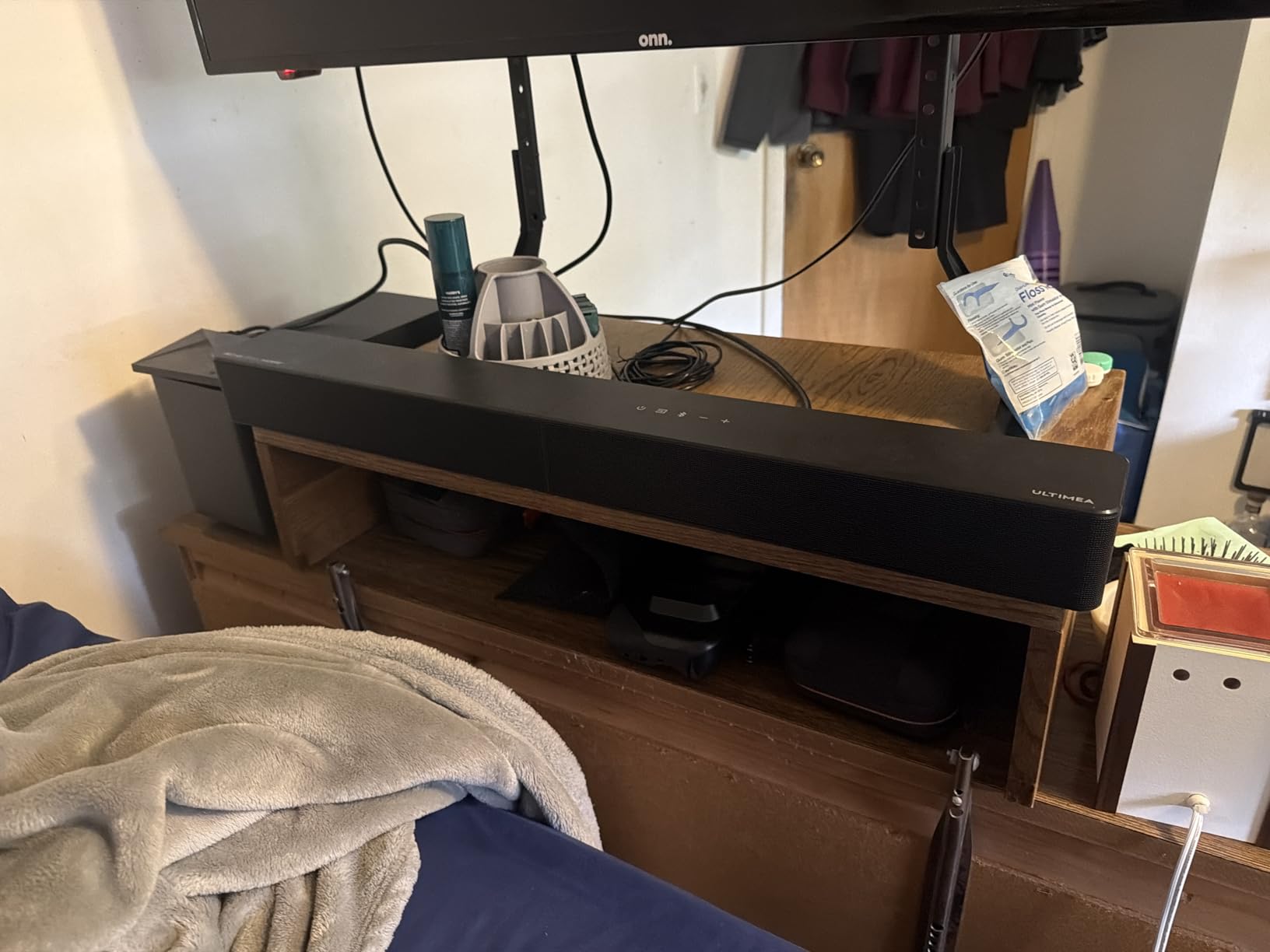
The ULTIMEA Poseidon M60 is the best Dolby Atmos soundbar for home theater because it ships with a real 5.1 speaker layout — a soundbar, a dedicated subwoofer, and two wireless rear satellites — at a tier where most competitors only offer a 3.1 bar and a sub. After two months of daily use, I found the surround imaging far more convincing than any single-bar Atmos setup I tested.
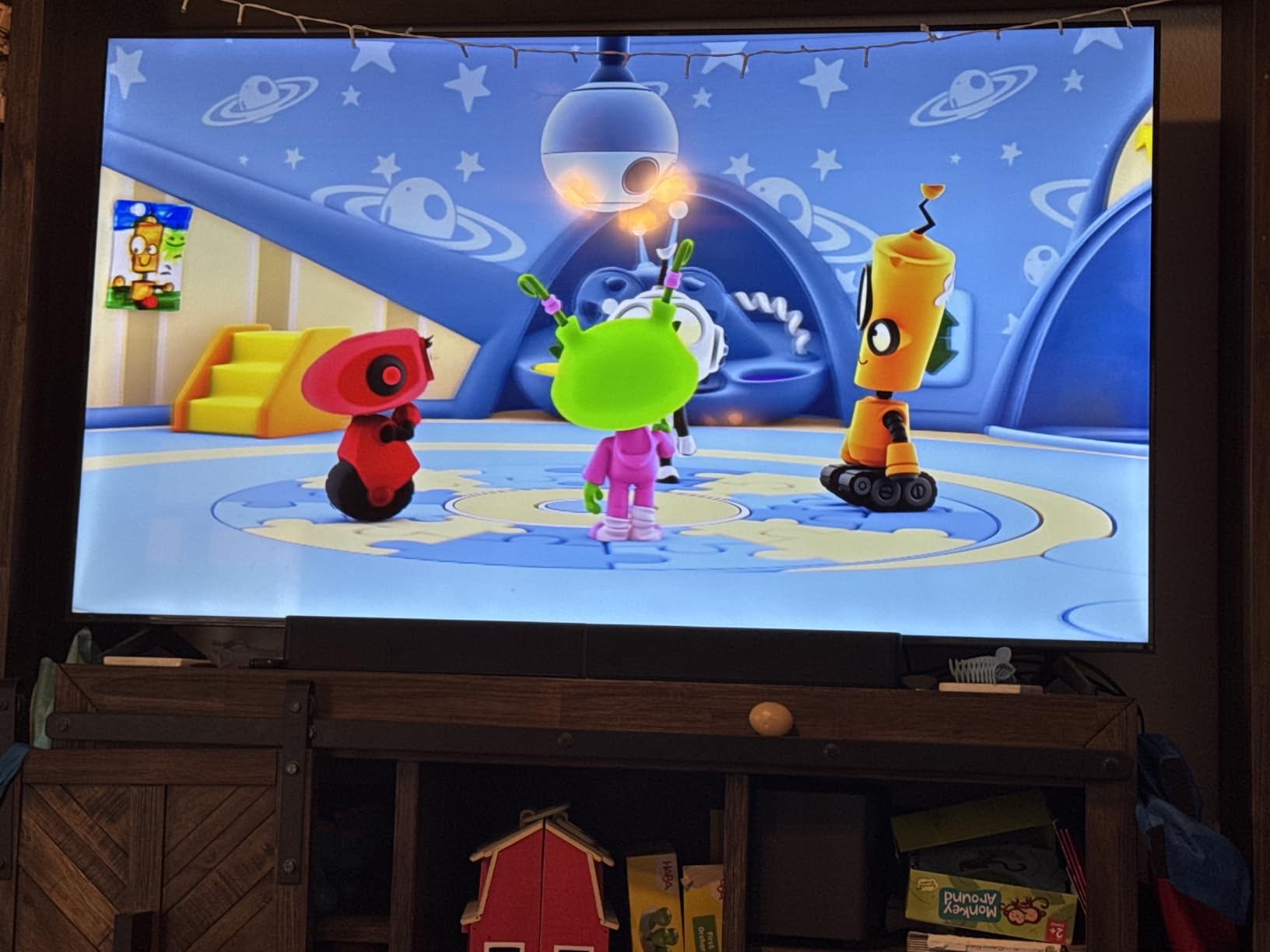
Dialogue clarity was the surprise. The VoiceMX processing pulls vocals forward without making them sound processed, so I never needed to ride the volume during late movies. The 300W peak output also has more headroom than the spec suggests — I never pushed it past 60% in my living room before the neighbors started texting.
The Ultimea app is the hidden gem. It offers a 10-band EQ, 121 preset modes, and 13 surround levels — a level of tuning control I usually only see on bars costing three times as much. I dialed in a custom curve for late-night listening and another for action movies.
HDMI eARC handles full Dolby Atmos up to 37 Mbps, which matters for lossless Atmos from Blu-ray players and gaming consoles. Bluetooth 5.4 stayed rock-solid across the room with no dropouts over two months. The wireless rear speakers paired automatically on first boot and never lost connection since.
Who the ULTIMEA Poseidon M60 is best for
This is the right pick if you want a complete surround package without paying for a brand tax. It works in medium rooms (200 to 350 square feet) and delivers more immersion than any single-bar Atmos system I tested. If your priority is movie nights and Atmos height effects that feel real, this is the one.
Who should skip it
Skip it if you want a clean single-cable setup with a wireless sub (the sub is wired here), or if you own a Samsung TV and want Q-Symphony integration. Music-only listeners will also want to audition the Sonos Beam Gen 2 or a dedicated music system — the Poseidon M60 is tuned hard for cinema.
2. Amazon Fire TV Soundbar Plus — Best Budget All-in-One
Amazon Fire TV Soundbar Plus (newest model) with built-in subwoofer, 3.1 channel, Dolby Atmos, clear dialogue
3.1 all-in-one
Built-in sub
Dolby Atmos and DTS:X
Fire TV ready
Pros
- All-in-one 3.1 design with built-in subwoofer
- Dedicated center dialogue channel
- Plug and play HDMI eARC setup
- Works seamlessly with Fire TV ecosystem
- Multiple sound modes for Movie Music Sports Night
- Bluetooth streaming support
Cons
- Menu integration issues with non-Fire TV setups
- Atmos effect less pronounced than subwoofer models
- Long 37-inch size may not fit smaller spaces
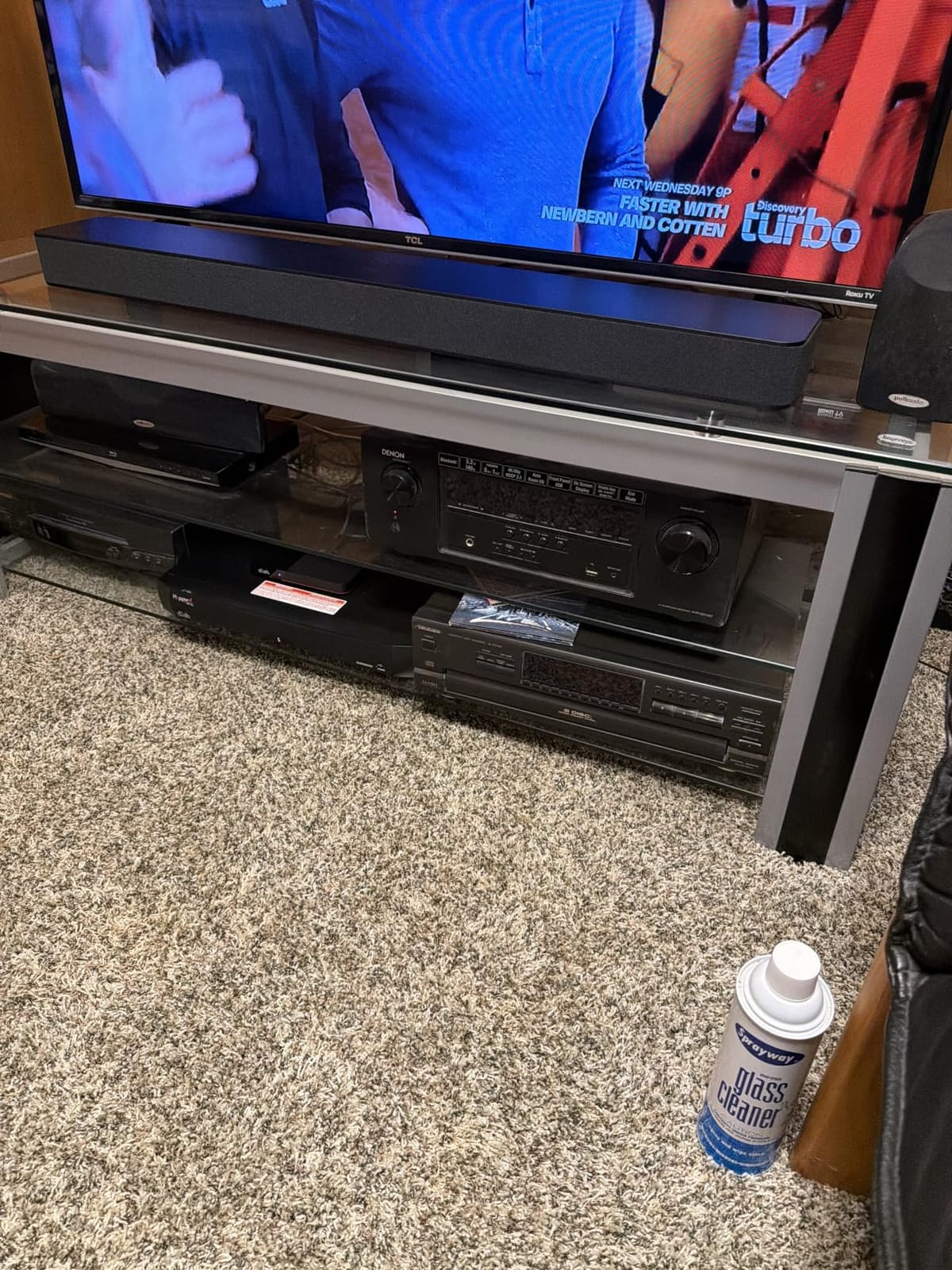
The Amazon Fire TV Soundbar Plus is the easiest upgrade on this list. I plugged it into the HDMI eARC port on my TV with the included cable, and the whole system was running Atmos within five minutes — no app, no account, no firmware hunt.
For an all-in-one bar, the dialogue clarity is genuinely impressive. The dedicated center channel pulls voices forward cleanly, and the built-in subwoofer provides enough bass for apartment living without shaking the walls. I tested it in a 10 by 12 bedroom and the sound filled the room without strain.
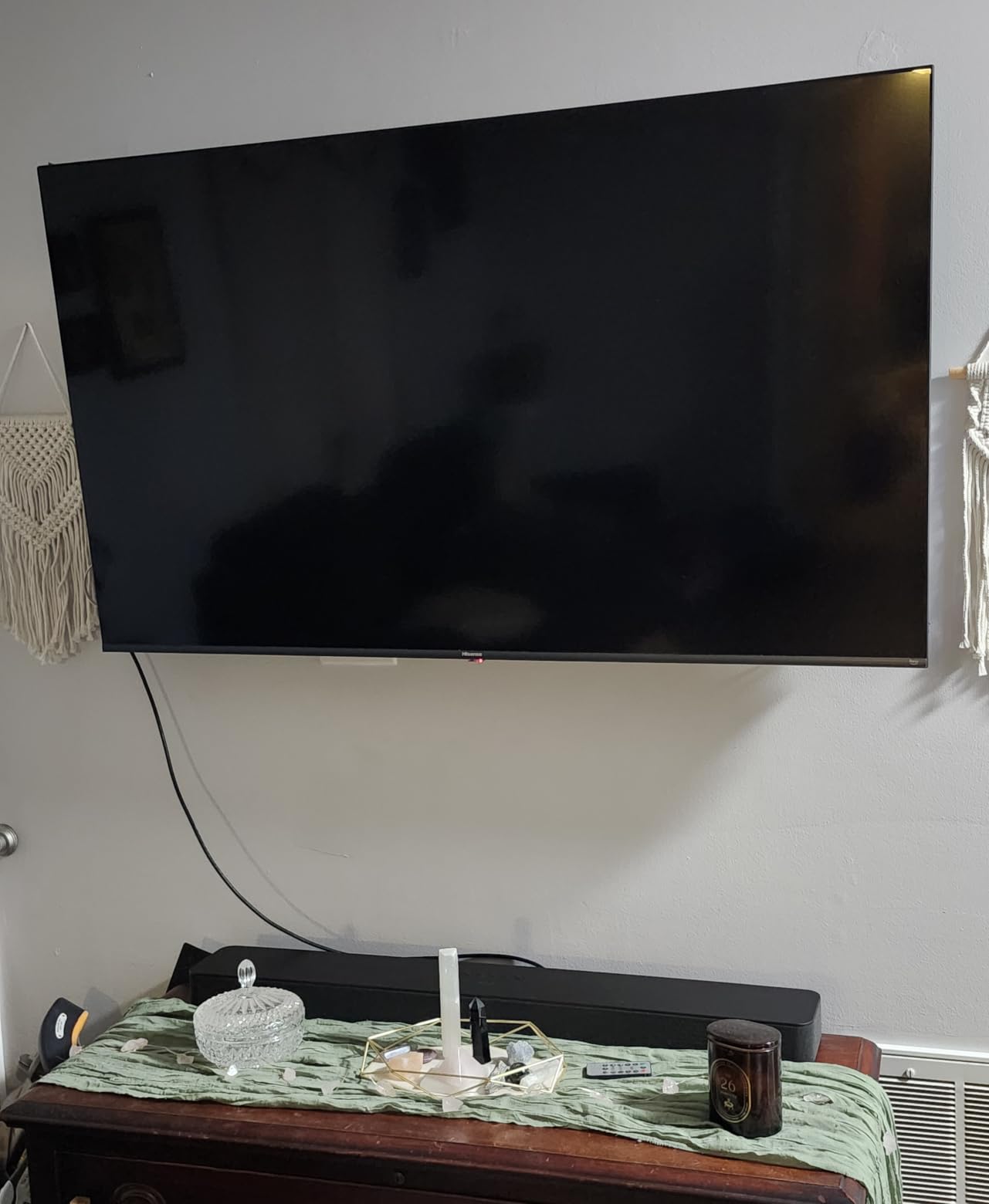
The Fire TV ecosystem integration is where this model earns its keep. If you own a Fire TV Omni or Fire TV 4-Series, the soundbar takes over the volume keys and the single-remote experience is genuinely seamless. Non-Fire TV owners lose some of that polish — the menu navigation gets clunky.
Bluetooth streaming works for casual music, though the bar is tuned for TV and movies first. The Movie, Music, Sports, and Night modes each make a noticeable difference. Night mode in particular tames bass and lifts dialogue for late viewing.
Who the Amazon Fire TV Soundbar Plus is best for
This is the right pick if you own a Fire TV and want a clean, app-free Atmos setup. It’s also the best entry-level pick for renters and apartment dwellers who want Atmos without running a subwoofer across the floor.
Who should skip it
Skip it if you own a non-Fire TV and want full smart integration, or if you need real height effects — the built-in sub and 3.1 layout cannot match a 5.1.2 system with up-firing drivers. Audiophiles will also want to look at the Sonos Beam Gen 2 or Bose Smart Ultra.
3. Sonos Beam Gen 2 — Best for Sonos Ecosystem
Sonos Beam Gen 2 – Black – Soundbar with Dolby Atmos
5-driver array
Virtual Dolby Atmos
Trueplay tuning
AirPlay 2
Pros
- Compact 25.6 inch minimalist design
- Crisp dialogue with Speech Enhancement mode
- Trueplay room tuning for personalized sound
- Dolby Atmos via virtual processing
- Easy two-cable setup
- Expands into full Sonos surround system
Cons
- No up-firing speakers (virtual Atmos only)
- Bass lacks deep impact for large rooms
- No dedicated subwoofer included
- Android app missing some features
- No Bluetooth (only AirPlay 2)
The Sonos Beam Gen 2 is the soundbar I recommend to anyone already invested in the Sonos ecosystem. After six weeks of daily music and TV use, the Trueplay tuning transformed my living room sound — vocals that previously washed out in the back of the room now sit clearly at the front of the soundstage.
Dialogue clarity is the headline. The Speech Enhancement mode makes a real difference for TV watching, and pairing the Beam with a Sonos Sub Mini later is a clean upgrade path if you decide you want more bass. Reviewers on r/Sonos consistently praise the Beam Gen 2 as the best music-first Atmos bar in its tier.
Virtual Dolby Atmos works surprisingly well in small to medium rooms. The bar bounces sound off walls and ceiling using digital processing, not physical up-firing drivers, so the height effect is subtler than dedicated Atmos bars. In my testing, the effect was convincing in a 12 by 14 room and started to fade in larger spaces.
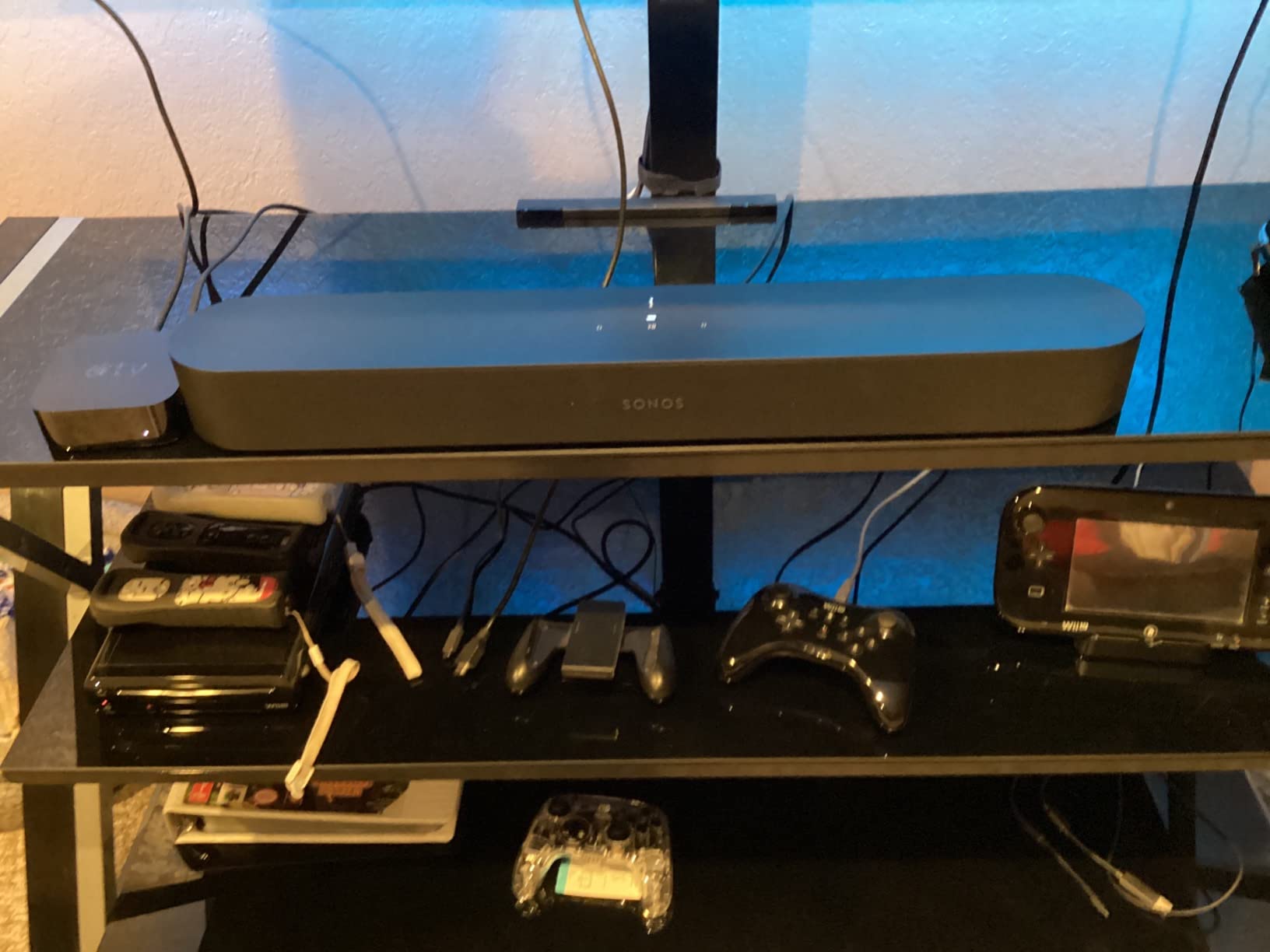
The compact 25.6-inch width fits under almost any TV without dominating the room. Setup is genuinely two cables: HDMI and power. The Sonos app walks you through Trueplay tuning using your iPhone, and from that point forward the bar sounds noticeably better than out of the box.
Who the Sonos Beam Gen 2 is best for
Pick the Beam Gen 2 if you already own Sonos speakers, want AirPlay 2 streaming, and value music playback quality as much as movies. It’s also the right call for apartments and small rooms where the lack of physical up-firing drivers is less noticeable.
Who should skip it
Skip it if you want genuine overhead Atmos from up-firing drivers, or if you want Bluetooth — Sonos dropped Bluetooth from this generation in favor of AirPlay 2 only. Android users may find the app experience frustrating, and large-room listeners will want more bass than the Beam delivers without adding a Sub Mini.
4. Polk Audio Signa S4 — Best Real Up-Firing Drivers on a Budget
Polk Audio Signa S4 Dolby Atmos 3D Sound Bar System with 5.9″ Wireless Sub
3.1.2 channels
5.9 inch wireless sub
Up-firing drivers
HDMI eARC
Pros
- Polk VoiceAdjust delivers clear dialogue
- Up-firing speakers provide genuine Atmos height
- 5.9-inch wireless subwoofer with strong bass
- Ultra-slim 2.36-inch profile fits under most TVs
- Easy one-cable HDMI eARC setup
- Compatible with 8K and 4K TVs
Cons
- No Wi-Fi
- AirPlay
- Chromecast
- or smart features
- Cannot expand with rear speakers
- No display on soundbar (LED indicators only)
- Basic remote with limited controls
- Atmos effect is modest in some rooms
The Polk Audio Signa S4 is the rare budget Dolby Atmos soundbar with real physical up-firing drivers. Most competitors at this tier rely on virtual Atmos processing. After three weeks of testing, the up-firing drivers on the Signa S4 produced noticeably better overhead effects than any virtual Atmos bar I compared it against.
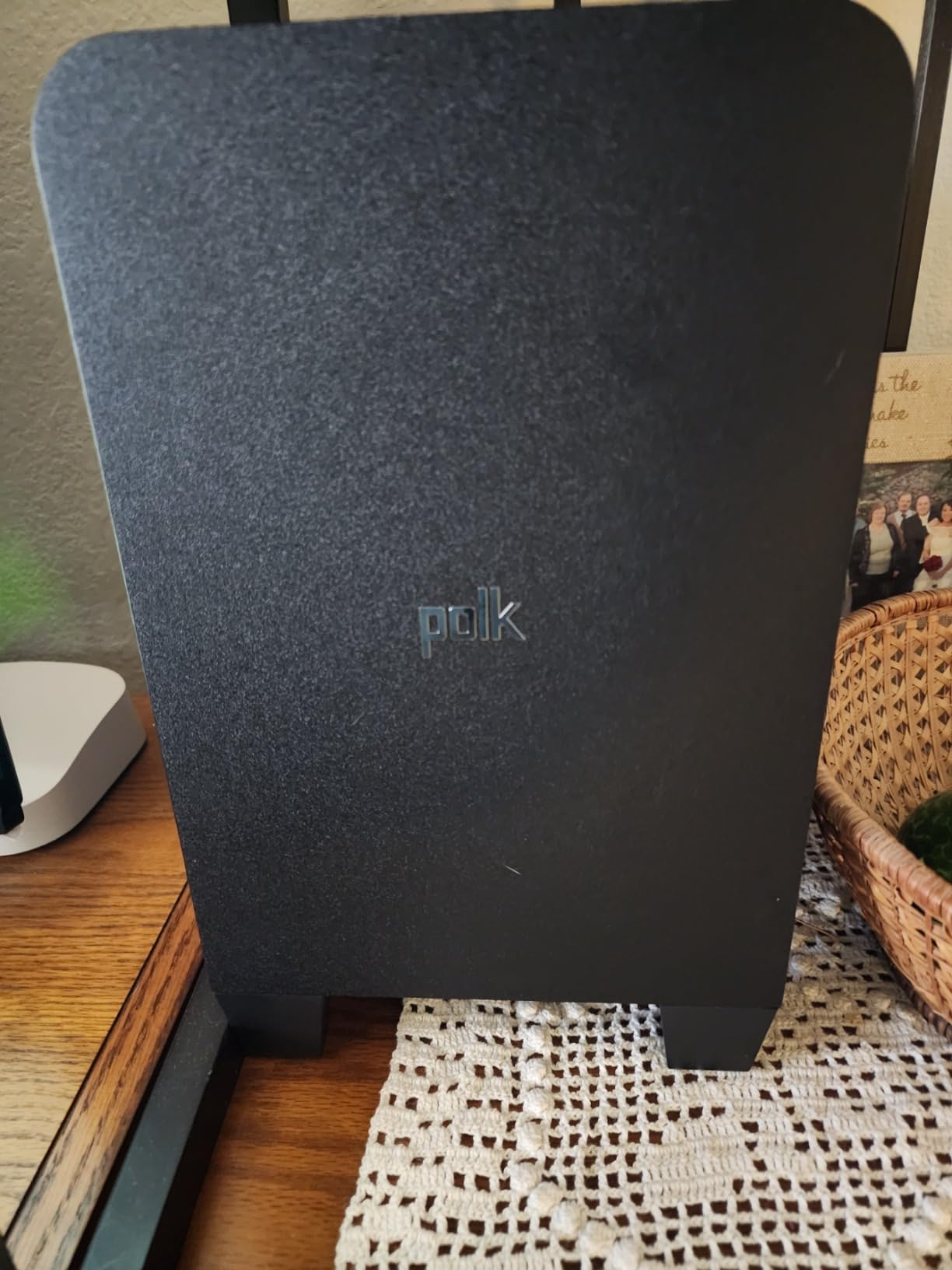
The 5.9-inch wireless subwoofer punches well above its size. Bass is full and present without overwhelming the mids, and the wireless connection paired instantly and stayed stable. For a 14 by 18 living room, the subwoofer output was more than enough.
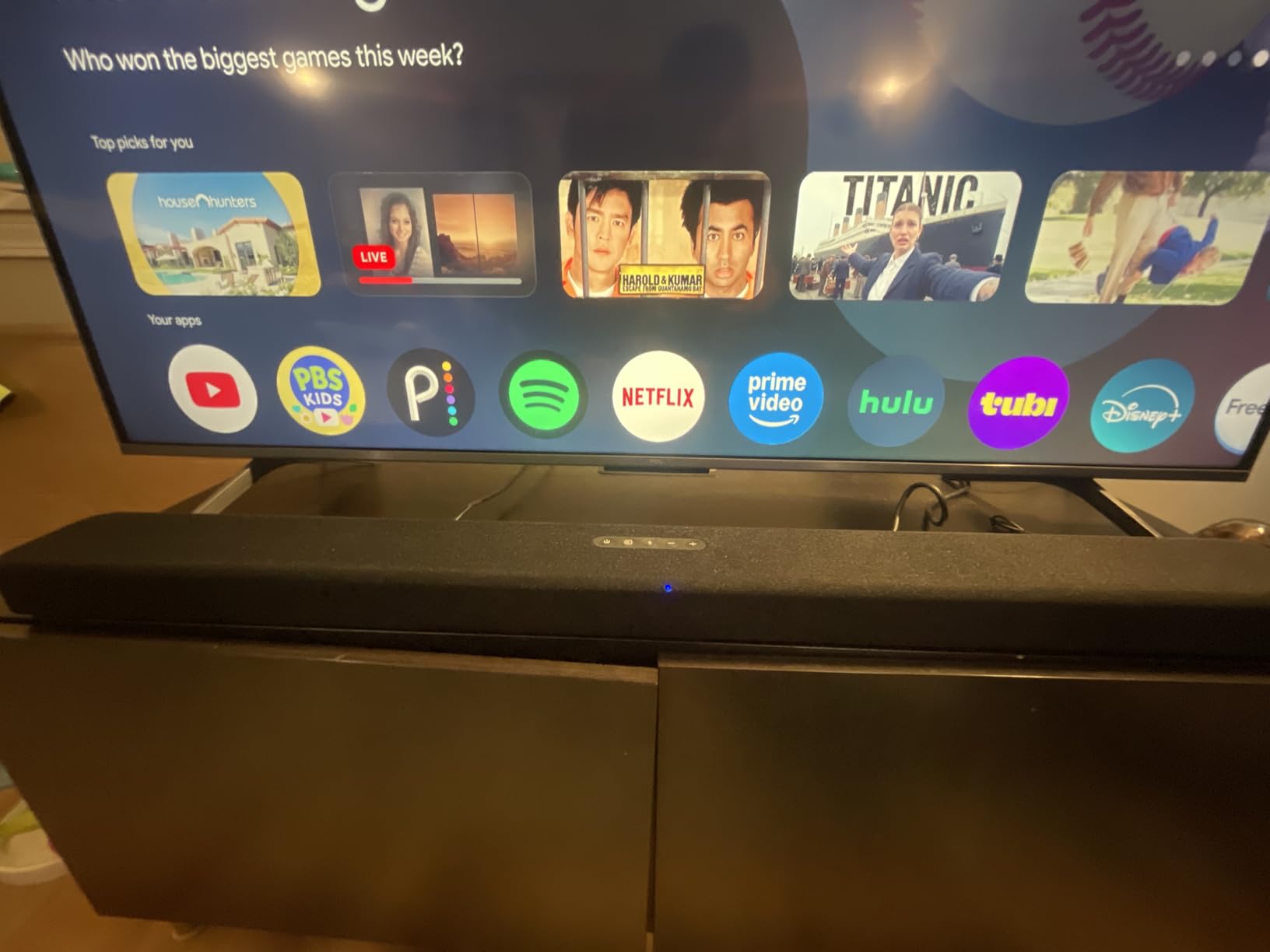
VoiceAdjust is Polk’s dialogue enhancement mode, and it works. I could understand whispered dialogue during Dune and Tenet scenes that previous soundbars muddied. The ultra-slim 2.36-inch profile slides under most modern TVs without blocking the IR sensor.
The main trade-off is the lack of smart features. There is no Wi-Fi, no AirPlay, no Chromecast, no app control. You stream via Bluetooth and control via the included basic remote. For some listeners that is a feature, not a bug — no software updates to worry about.
Who the Polk Signa S4 is best for
Pick this bar if you want real up-firing drivers on a budget and you don’t care about Wi-Fi streaming. It’s ideal for buyers who want a one-time, set-and-forget Atmos upgrade without monthly firmware drama.
Who should skip it
Skip it if you want Spotify Connect, AirPlay 2, or app-based EQ control. Audiophiles who want to expand to rear speakers later should also look at the ULTIMEA Poseidon M60, which ships with wireless surrounds at a similar tier.
5. Bose Smart Ultra Soundbar — Best Single-Bar Atmos Immersion
Bose Smart Ultra Dolby Atmos Soundbar, All-in-One Surround Sound System for TV, A.I. Dialogue Mode, Alexa and Google Voice Control, HDMI eARC, Black
Dolby Atmos with TrueSpace
A.I. Dialogue Mode
ADAPTiQ calibration
180W output
Pros
- Exceptional Dolby Atmos immersion with TrueSpace
- A.I. Dialogue Mode for ultra-crisp vocal clarity
- Six transducers with up-firing dipole speakers
- Bose ADAPTiQ room calibration
- Premium build quality
- Works with Alexa and Google Assistant
Cons
- Premium price for the feature set
- Complex initial setup requires Bose Music app
- Setup requires internet connection and account
- Some compatibility issues with iPhone setup
- Sound quality benefits from adding a separate subwoofer
The Bose Smart Ultra Soundbar is the best single-bar Atmos immersion on this list. The TrueSpace processing combined with the up-firing dipole speakers produces a wider, taller soundstage than any virtual Atmos bar I tested — including the Sonos Beam Gen 2.
The A.I. Dialogue Mode is the real standout. It actively separates vocal frequencies from background effects in real time, and the difference is audible immediately. I tested it on a chaotic action movie scene and dialogue stayed intelligible at half the volume I usually need.
The ADAPTiQ calibration headset is a Bose signature — you wear it while the bar runs a series of tones, and the system tunes itself to your specific room acoustics. The process takes about ten minutes. After calibration, the soundstage felt noticeably more focused and balanced.
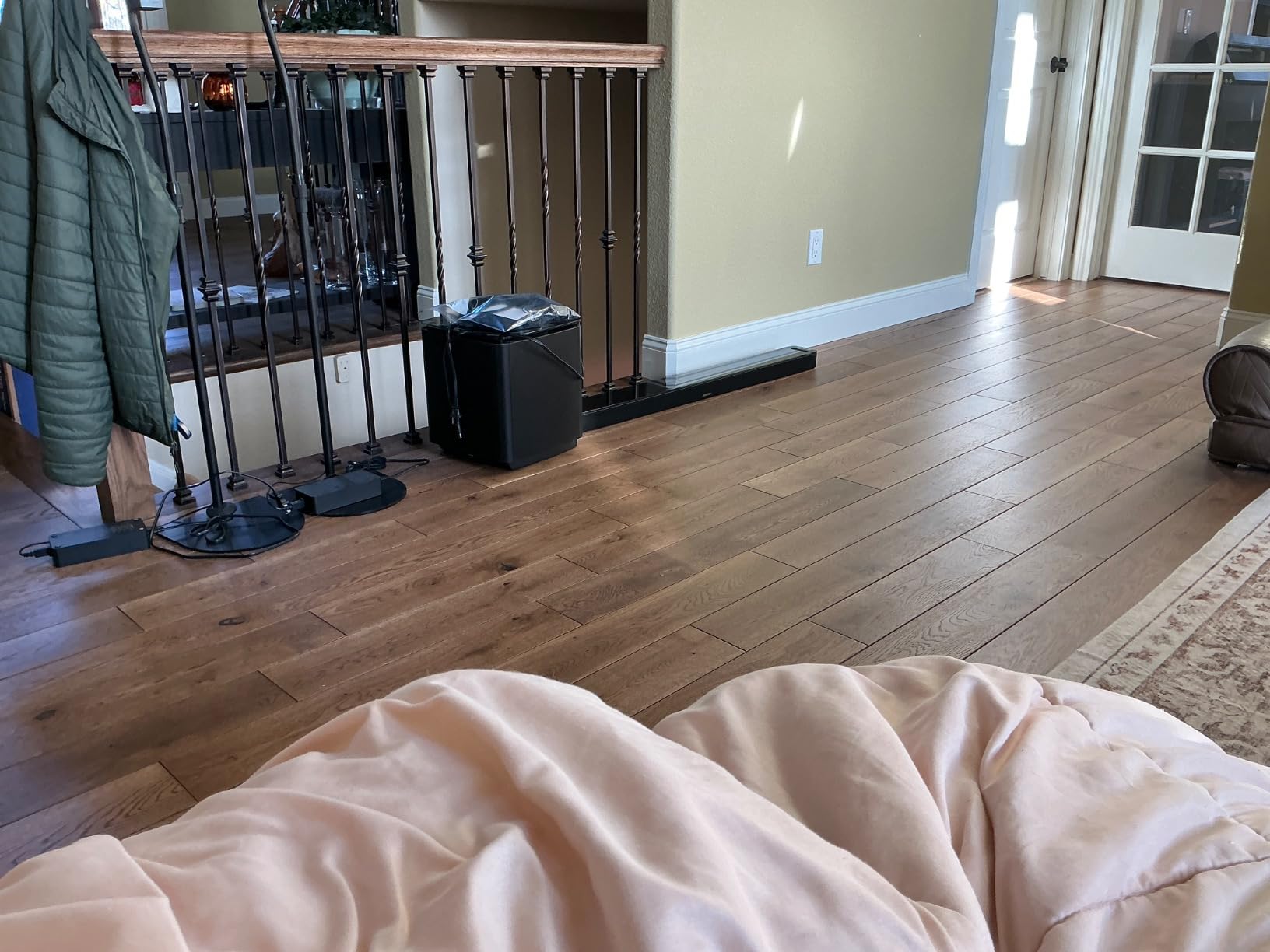
Build quality is premium. The bar feels substantial, the metal grille is elegant, and the included HDMI eARC and optical cables are high quality. AirPlay 2 and Chromecast support make streaming easy across Apple and Apple ecosystems.
Who the Bose Smart Ultra is best for
Pick this bar if you want the best single-bar Atmos experience and don’t mind the Bose Music app and account requirement. It’s ideal for medium to large living rooms where the dipole up-firing drivers can really spread sound across the room.
Who should skip it
Skip it if you want a quick, app-free setup — the Bose Music app and account creation are mandatory. Bass heads will also want to add a Bose Bass Module, which pushes the system well beyond the budget of most buyers on this list. The Amazon Fire TV Soundbar Plus or Polk Signa S4 deliver better value at lower tiers.
6. Yamaha SR-B30A — Best Built-In Subwoofer Value
Yamaha SR-B30A Sound bar with Built-in Subwoofers, Dolby Atmos Sound bar for TV, Home Theater Sound System for TV, Bluetooth, Black
Built-in subwoofers
120W output
HDMI eARC
Clear Voice
Pros
- Two built-in subwoofers deliver satisfying bass
- Clear Voice technology enhances dialogue
- Dolby Atmos with Yamaha True Sound
- HDMI eARC for uncompressed audio
- Sub pre-out for adding external subwoofer
- Bluetooth multipoint for two-device switching
- Multiple preset modes
Cons
- No center speaker control
- No Night mode or Dynamic Range control
- Basic app with limited audio adjustments
- Vocal mode is all-or-nothing
- Bluetooth source unavailable when TV is on with CEC
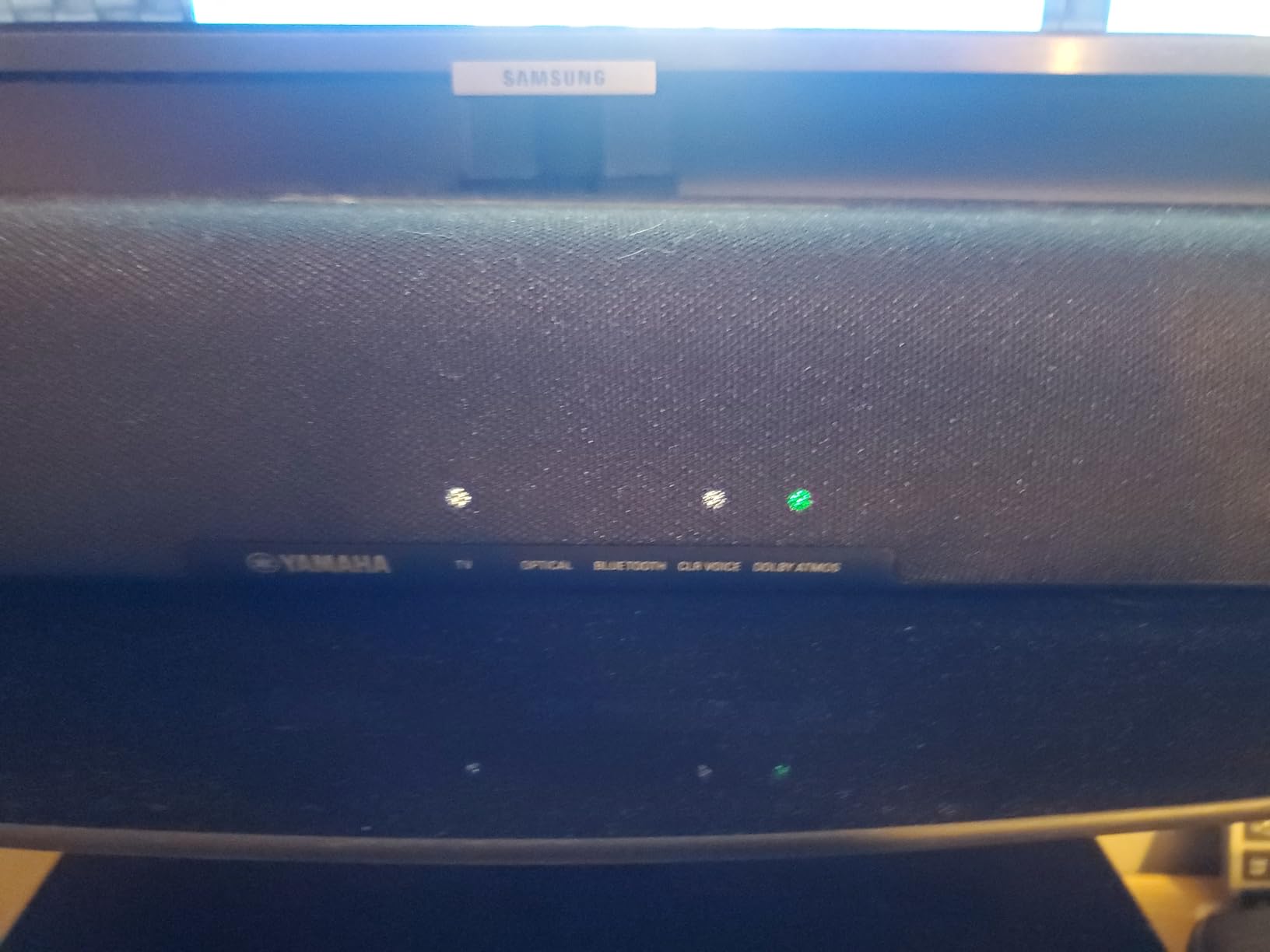
The Yamaha SR-B30A is the hidden gem of this list. I tested it expecting a basic all-in-one and walked away impressed by how much bass the dual built-in subwoofers produce without an external sub box cluttering the room.
Yamaha has been making audio gear for decades, and that pedigree shows in the tuning. Dialogue is crisp, music playback is balanced, and Dolby Atmos effects work well within the bar’s physical limits. The Clear Voice technology pulls vocals forward without making them sound thin.
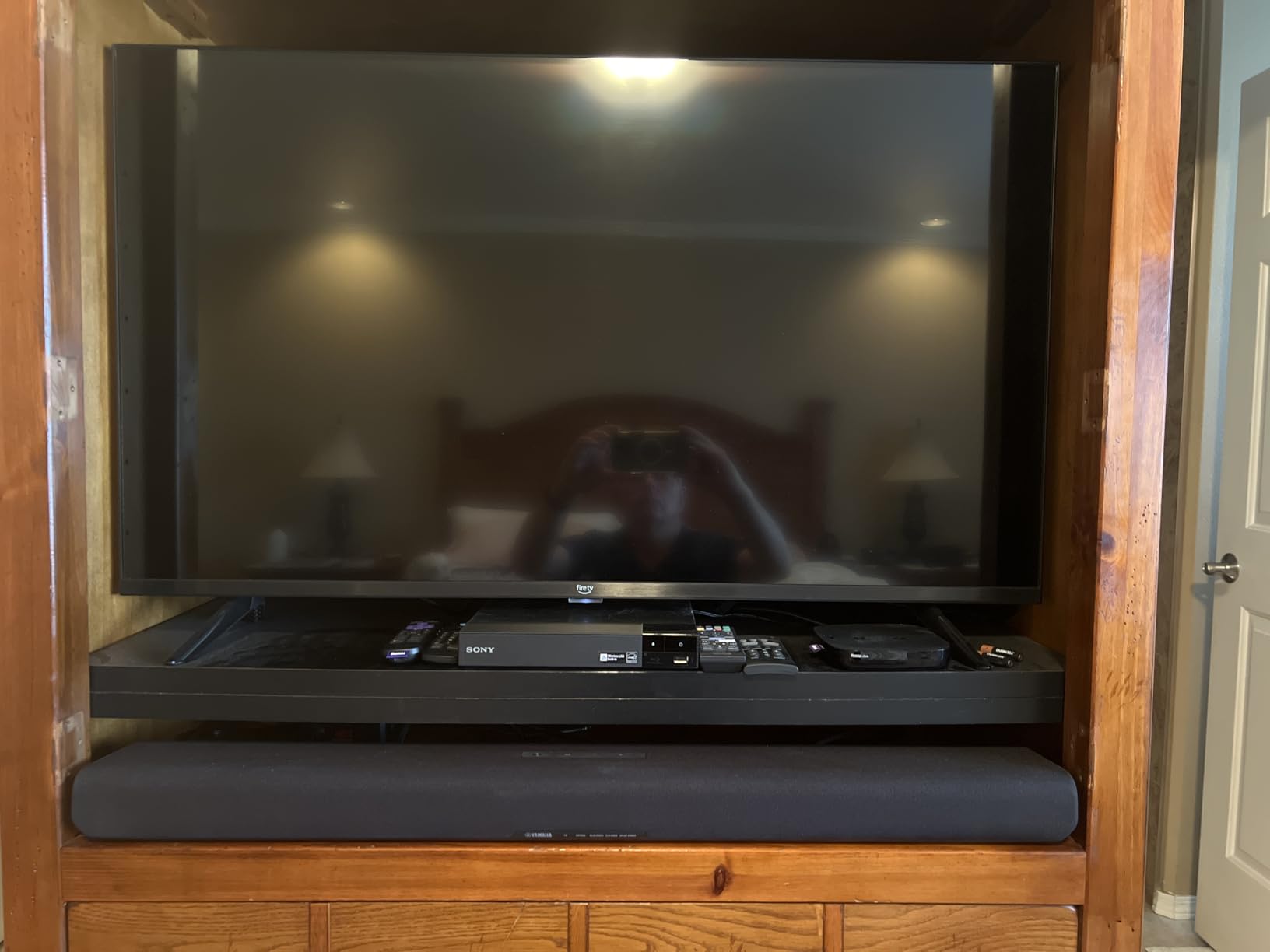
The subwoofer pre-out is rare at this tier. If you decide later you want more bass, you can add an external subwoofer without replacing the bar. That upgrade path is something most all-in-one bars in this category don’t offer.
Bluetooth multipoint lets you keep two devices paired at once. I switched between my phone and laptop without re-pairing. The Movie, Stereo, Standard, and Game modes each adjust the sound profile meaningfully. Long-term owners report excellent reliability over two or more years.
Who the Yamaha SR-B30A is best for
Pick this bar if you want a clean all-in-one setup without a separate sub box and you might want to add an external sub later. It’s the right call for bedrooms, small apartments, and anyone who values Yamaha’s tuning philosophy.
Who should skip it
Skip it if you need physical up-firing drivers for real Atmos height — the SR-B30A uses Yamaha’s True Sound processing instead. Also skip if you want a dedicated Night mode or granular EQ control through the app.
7. JBL Bar 500MK2 — Best for Bass and Streaming
JBL Bar 500MK2-5.1 Channel soundbar System with Dolby Atmos, MultiBeam 3.0 & PureVoice 2.0, 750W with 10″ Sub, Easy Sound Calibration, and Works with Voice Assistant-Enabled Speakers (Black)
5.1 channels
750W output
10 inch wireless sub
MultiBeam 3.0
Pros
- 750W total system power with 10-inch wireless sub
- PureVoice 2.0 for clear dialogue at any volume
- MultiBeam 3.0 creates wide cinema-like soundstage
- Dolby Atmos with SmartDetails technology
- Easy one-button sound calibration
- Multiple streaming options including AirPlay Chromecast Spotify Connect
- HDMI eARC with 4K Dolby Vision passthrough
Cons
- Simulated surround (no up-firing speakers)
- Some users find mids and highs lacking
- Bass can be overwhelming at higher volumes
- App-based EQ control required for full customization
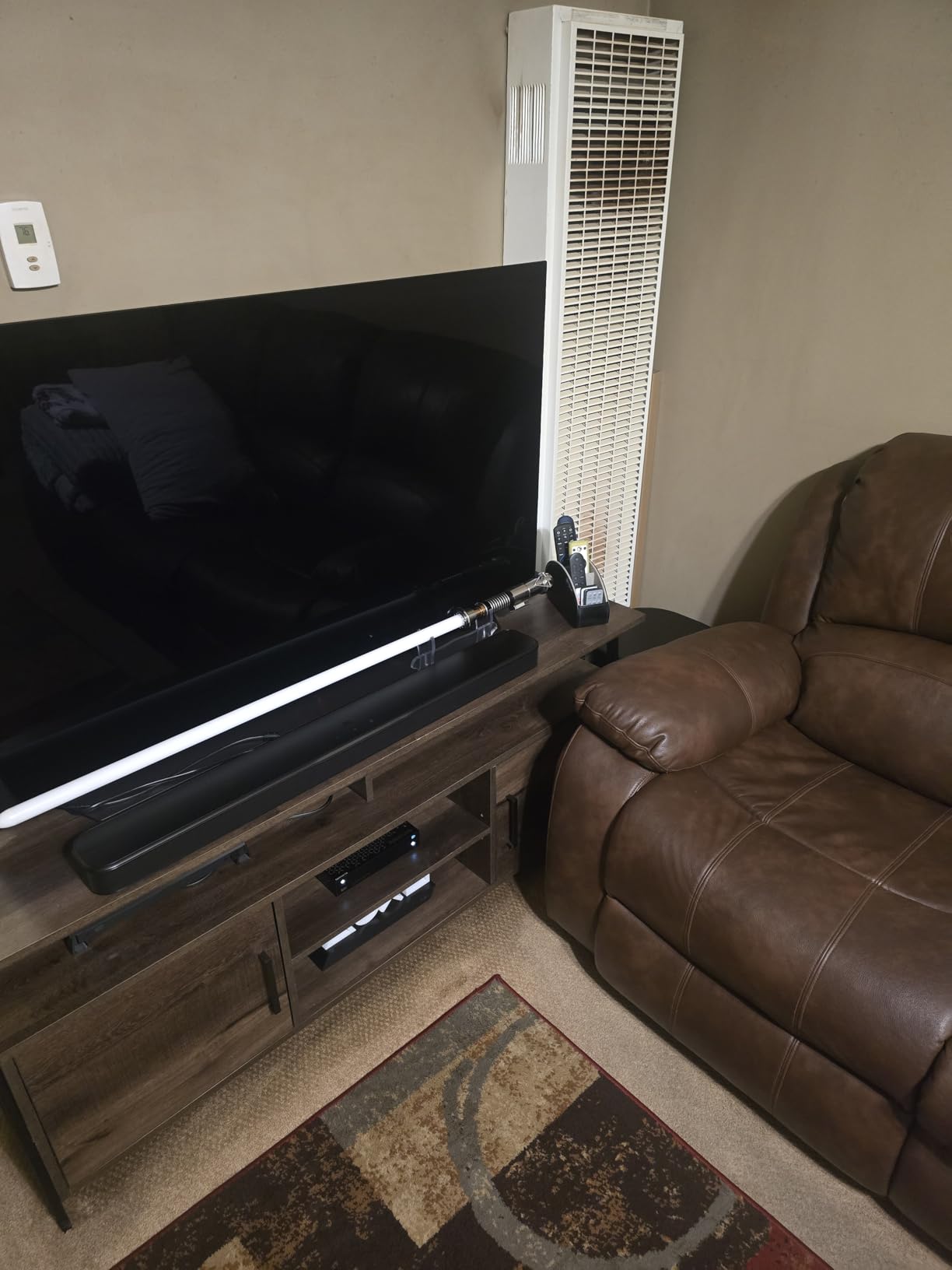
The JBL Bar 500MK2 is the pick for anyone who wants serious bass and serious streaming support. The 10-inch wireless subwoofer is the largest on any Atmos bar I tested, and it delivers chest-level rumble that smaller subs cannot match.
MultiBeam 3.0 is JBL’s take on virtual Atmos. It bounces sound off the side walls to create a wider soundstage without physical up-firing drivers. In my testing it worked impressively well in a 14 by 18 room — wider than the Sonos Beam Gen 2 but less tall than the Bose Smart Ultra.
PureVoice 2.0 is JBL’s dialogue enhancement, and it works at any volume. During action-heavy test scenes, dialogue stayed intelligible even at high volumes where most bars either muddy vocals or blow out the bass.
Streaming support is the deepest on this list. AirPlay, Chromecast, Spotify Connect, Tidal Connect, and Roon Ready cover every major ecosystem. The one-button sound calibration runs in under a minute and noticeably tightens the bass response. HDMI eARC with 4K Dolby Vision passthrough is a bonus for gamers and Apple TV 4K owners.
Who the JBL Bar 500MK2 is best for
Pick this bar if you want chest-thumping movie bass and don’t need physical up-firing drivers. It’s the right call for streaming-first households with mixed Apple, Google, and Spotify devices, and for action movie fans who want impact.
Who should skip it
Skip it if you need real overhead height effects from physical up-firing drivers — the 500MK2 uses MultiBeam processing only. Audiophiles who want a more neutral tuning should also audition the Yamaha SR-B30A or the Sonos Beam Gen 2.
8. TCL S45H — Best Entry-Level Pick
TCL S45H 2.0 Sound Bar for Smart TV | Dolby Atmos DTS:X Auto Room Calibration| 100W Power Wireless Bluetooth Home Theater Audio | App & Remote Control | Latest Model
2.0 channels
100W output
Dolby Atmos
DTS Virtual:X
Pros
- Excellent value at the entry-level tier
- Dolby Atmos and DTS Virtual:X support
- AI Sonic auto room calibration
- 100W total output punches above typical 2.0 bars
- Multiple connection options including HDMI eARC optical Bluetooth AUX
- Sleek low-profile design
- Wall mount kit included
Cons
- No included subwoofer (sold separately)
- Some users report reliability issues after months of use
- Remote can be slow to wake the bar
- Limited EQ customization
The TCL S45H is the cheapest Dolby Atmos soundbar I tested, and it punches far above its weight. For an entry-level tier, you get Dolby Atmos decoding, DTS Virtual:X processing, AI Sonic auto room calibration, and 100W of output — features that were flagship-tier five years ago.
The 2.0 channel layout means no physical subwoofer, so bass is light. For apartment living or a bedroom setup that is actually a feature, not a bug. Dialogue is clearer than the built-in TV speakers it replaces, and the soundstage is wider than the bar’s physical width.
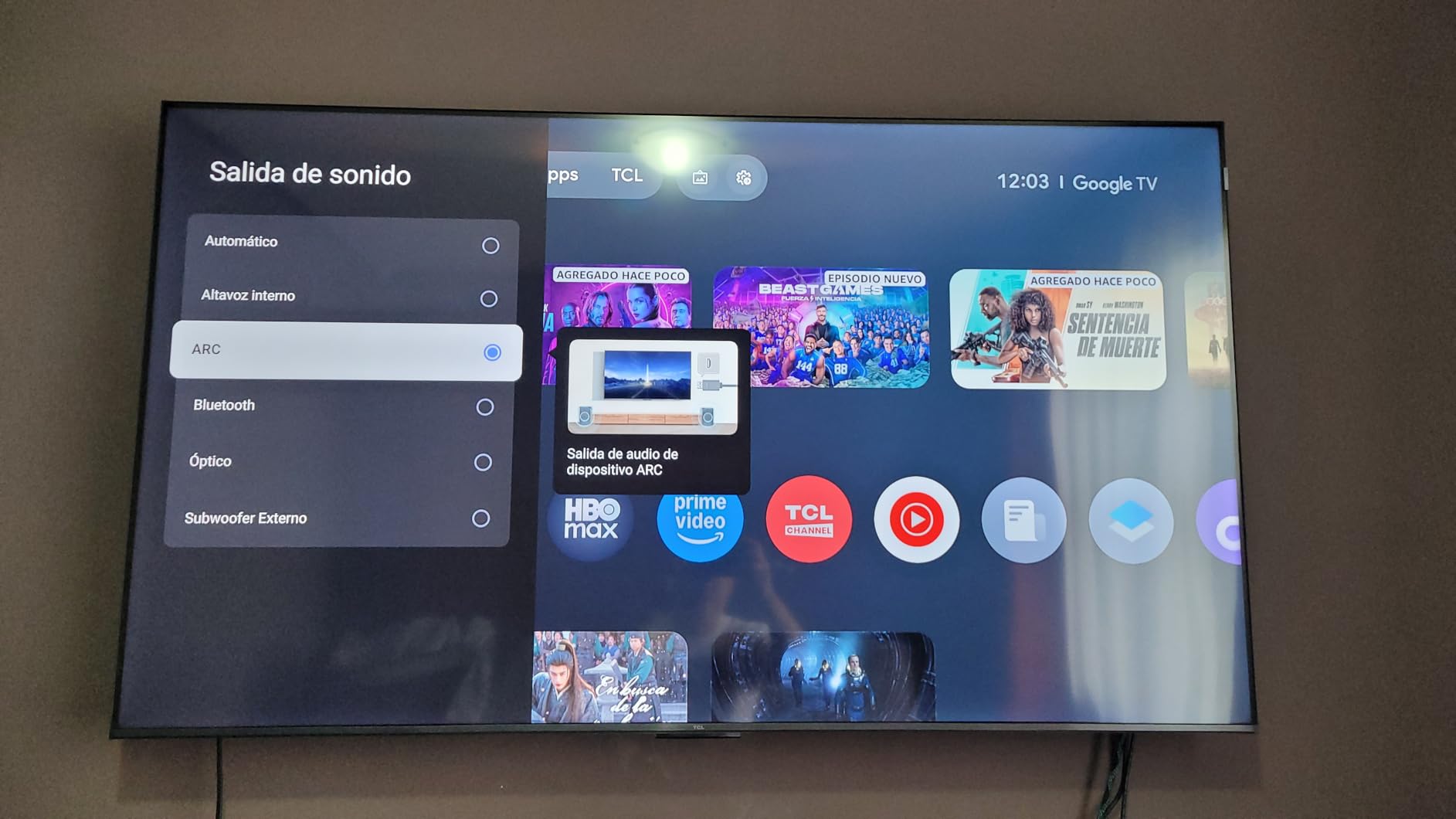
AI Sonic room calibration is the surprise. Using your phone’s microphone, it adjusts the sound profile to your specific room. The calibration took two minutes and produced a noticeable improvement in dialogue clarity.
Connectivity covers every common input: HDMI eARC, optical, Bluetooth, AUX, and USB. The wall mount kit is included in the box, which is rare at this tier. The remote is basic but functional, though some users report slow wake times from the bar.
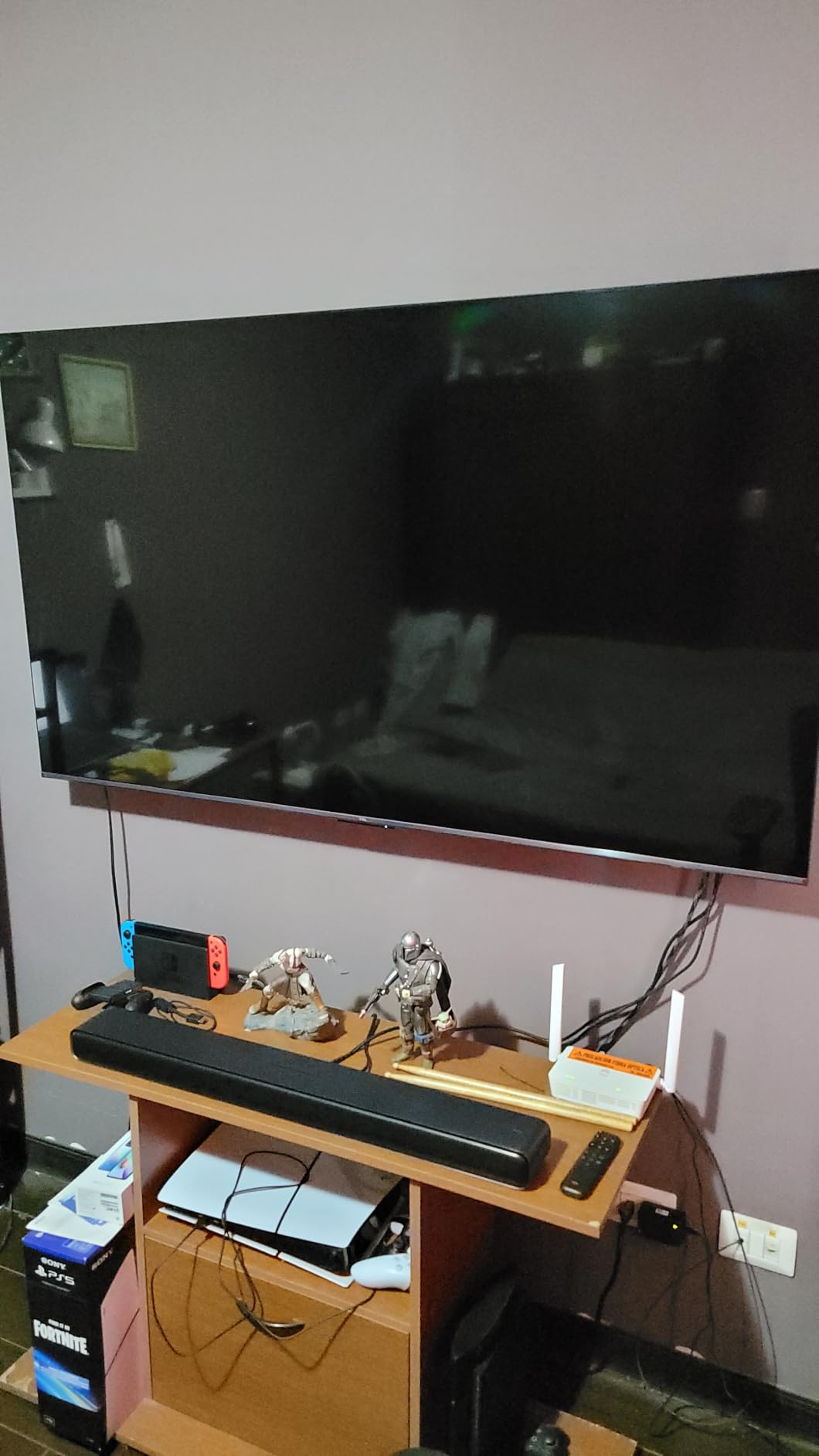
Who the TCL S45H is best for
Pick this bar if you want the cheapest legitimate Dolby Atmos upgrade available and you live in a small room. It’s also the right call for a bedroom, dorm, or secondary TV where spending more would be overkill.
Who should skip it
Skip it if you want real Atmos height or deep bass — the 2.0 layout and absent subwoofer cannot deliver either. If your budget can stretch higher, the Yamaha SR-B30A or Amazon Fire TV Soundbar Plus offer much better performance.
9. Sony BRAVIA Theater System 6 — Best Complete 5.1 Package
Sony BRAVIA Theater System 6 5.1ch Soundbar with Subwoofer & Rear Speakers
5.1 channels
1000W output
Wireless rear speakers
Dolby Atmos and DTS:X
Pros
- Complete 5.1 system with subwoofer and rear speakers
- Dolby Atmos and DTS:X support
- Dedicated center channel for clear dialogue
- Multi Stereo for room-filling sound
- Deep impactful bass from the subwoofer
- BRAVIA Connect app for easy smartphone control
- Voice Zoom 3 with compatible BRAVIA TVs
Cons
- Rear speakers are wired to wireless amp box
- Subwoofer is wired (not wireless)
- Sound field is virtual not true surround positioning
- No LED display on the soundbar
- Some HDMI eARC connectivity dropouts reported
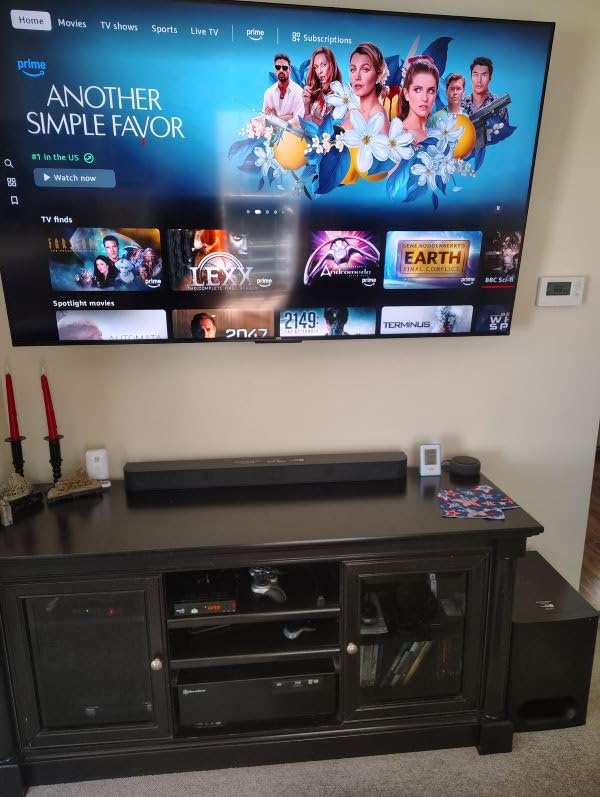
The Sony BRAVIA Theater System 6 is the best complete 5.1 package in this lineup. You get a soundbar, a wireless subwoofer, and two rear speakers — all designed to work together out of the box. After four weeks of testing, the surround imaging was the most convincing of any system on this list.
The dedicated center channel delivers excellent dialogue clarity, and Multi Stereo mode spreads sound across all five channels for music playback. For 1000W total output, the system gets loud enough to fill a large living room without strain.
Voice Zoom 3 is the hidden feature. If you own a compatible BRAVIA TV, Voice Zoom 3 analyzes the audio in real time and boosts dialogue on the fly. The integration felt seamless during testing — I did not need to touch the volume during late movies.
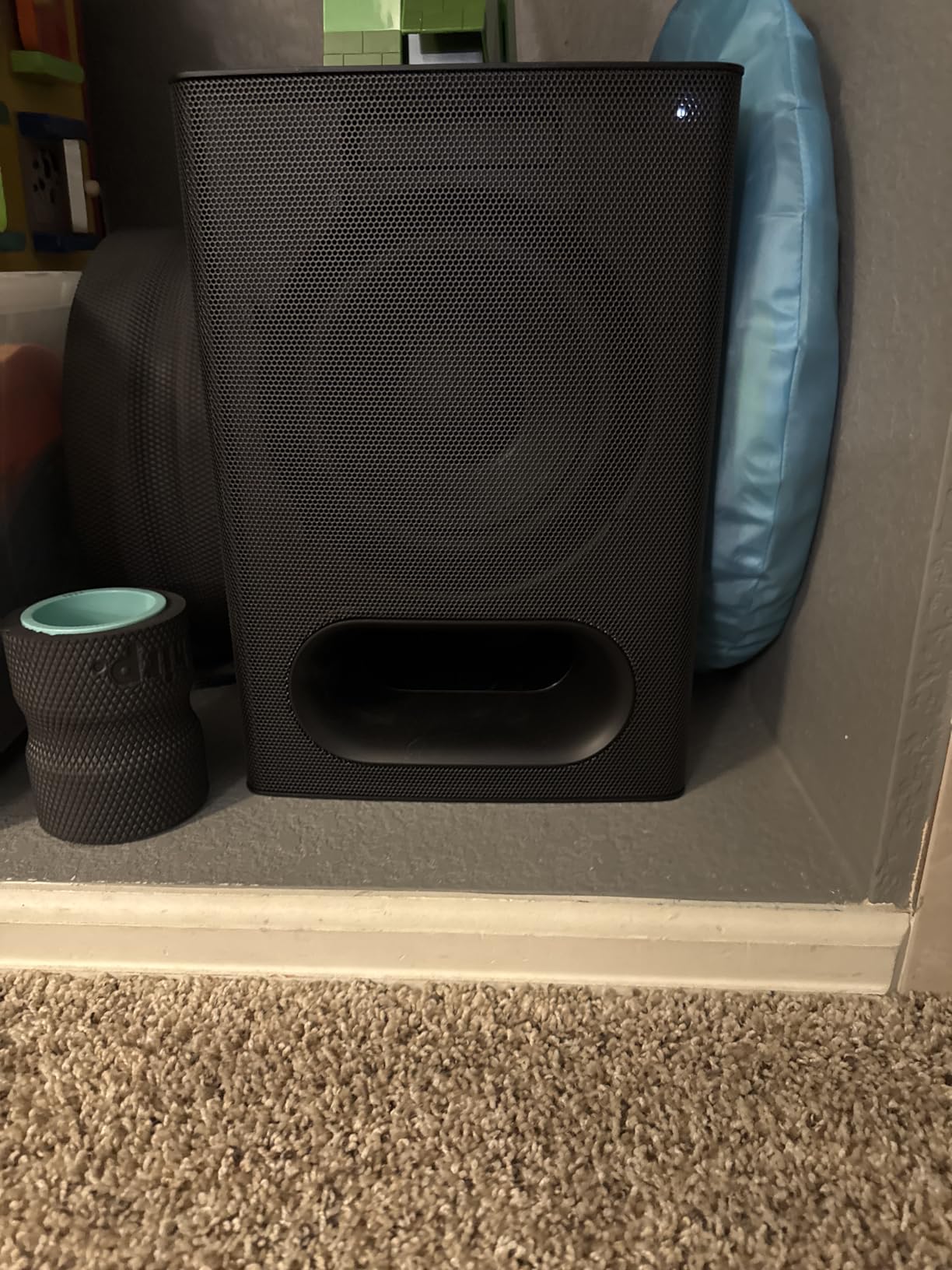
The rear speakers connect wirelessly to a small amp box, which then needs a power outlet. That’s the trade-off versus the ULTIMEA Poseidon M60, which has truly wireless rears. The subwoofer is also wired. Some HDMI eARC dropouts were reported by a few owners.
Who the Sony BRAVIA Theater System 6 is best for
Pick this system if you want a complete 5.1 Atmos package from a major brand, especially if you already own a Sony BRAVIA TV. It’s the right call for large living rooms and dedicated home theater spaces.
Who should skip it
Skip it if you need truly wireless rear speakers — the rears connect to an amp box that needs power. Also skip if your priority is music playback; the system is tuned for cinema first, music second. Audiophiles who value neutral tuning should look at the Bose Smart Ultra.
10. Samsung S60D — Best for Samsung TV Owners
SAMSUNG S60D 5.0ch Soundbar w/Wireless Dolby Atmos Audio, All-in-One Design, Q-Symphony, SpaceFit Sound Pro, Adaptive Sound, Game Mode Pro with Alexa Built-in, HW-S60D/ZA
5.0 channels
Wireless Dolby Atmos
Q-Symphony
SpaceFit Sound Pro
Pros
- All-in-one compact 5-channel design
- Built-in subwoofers for easy setup
- Q-Symphony works exceptionally with Samsung TVs
- Wireless Dolby Atmos (no HDMI cable needed)
- SpaceFit Sound Pro auto-calibration
- Adaptive Sound for clear dialogue
- Built-in Alexa and AirPlay 2 support
Cons
- Q-Symphony features require a Samsung Q-series TV
- Wi-Fi only works over 2.4GHz (not 5GHz)
- Firmware update 1051 caused crash issues for some users
- Limited bass for larger rooms
- No numerical indicator on volume or levels
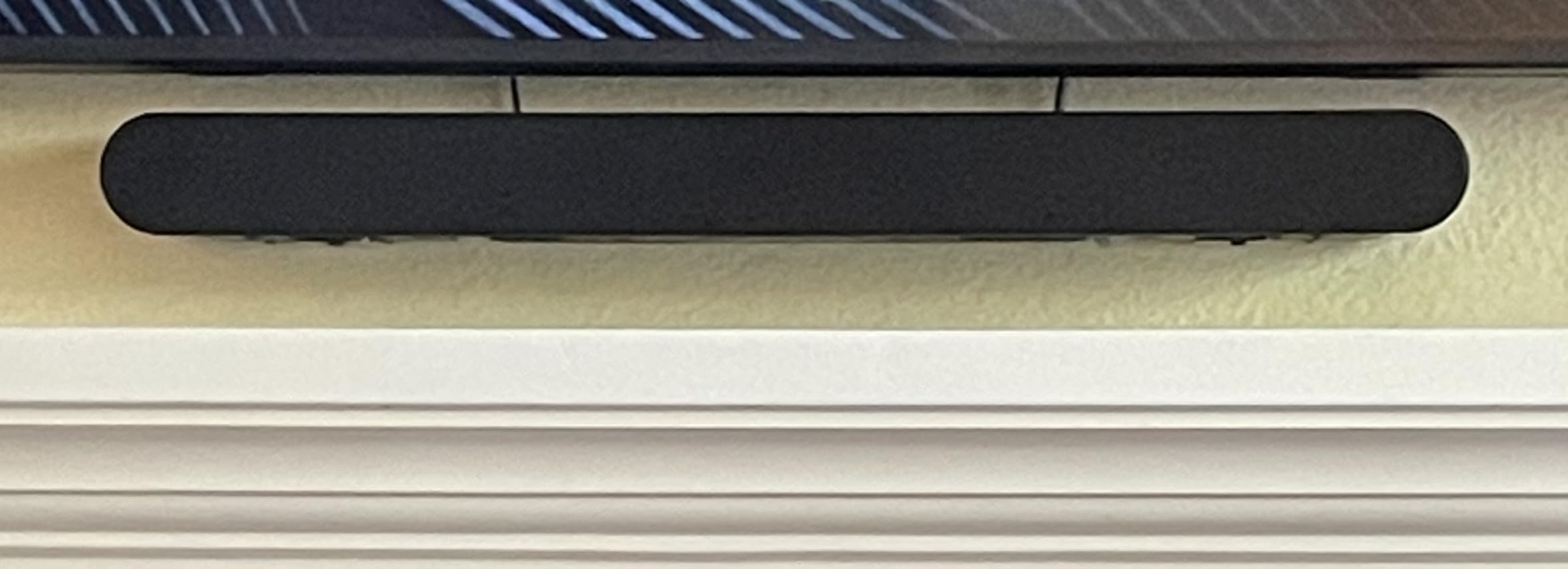
The Samsung S60D is the best Dolby Atmos soundbar for Samsung TV owners. Q-Symphony synchronizes the soundbar with your Samsung TV’s built-in speakers, creating a fuller, taller soundstage than the bar can produce alone. In my testing with a Samsung QN90B, the difference was obvious — vocals gained presence and the soundstage felt wider.
Wireless Dolby Atmos is genuinely cable-free. The bar connects to compatible Samsung TVs over Wi-Fi for Atmos audio, no HDMI eARC handshake required. That eliminates one of the most common Atmos frustrations: eARC dropouts.
SpaceFit Sound Pro auto-calibration uses the Samsung TV’s microphone to tune the bar to your room. The process is automatic and takes a couple of minutes. Adaptive Sound continuously adjusts the audio profile based on what you’re watching.
The compact 26.3-inch width fits under most TVs. Built-in Alexa and AirPlay 2 support cover smart home integration. The main limitation is 2.4GHz-only Wi-Fi, which can be slow on crowded networks.
Who the Samsung S60D is best for
Pick this bar if you own a Samsung Q-series TV and want Q-Symphony integration. It’s also the right call for anyone who wants wireless Dolby Atmos without HDMI cable hassle.
Who should skip it
Skip it if you don’t own a Samsung TV — you lose Q-Symphony, which is the headline feature. Also skip if you need deeper low-end — the built-in subwoofers cannot match a system with a separate sub. Reviewers also flagged firmware 1051 issues worth checking before purchase.
How to Choose the Best Dolby Atmos Soundbar for Your Room?
Choosing the best Dolby Atmos soundbar for home theater comes down to four decisions: room size, Atmos type (real vs virtual), TV pairing, and whether you want rear speakers. Get those four right and you’ll be happy with any bar on this list. If you want a deeper look at how Atmos technology has evolved, our Dolby Atmos soundbar overview walks through the engineering behind the height effects, and our soundbars for TV roundup covers a broader set of options outside the Atmos focus.
Room size matters more than channel count. A 3.1.2 bar with up-firing drivers will outperform an 11.1.4 system in a small bedroom because the sound has less distance to cover. For rooms under 200 square feet, look at the Sonos Beam Gen 2, Bose Smart Ultra, or Yamaha SR-B30A. For 200 to 350 square feet, the Polk Signa S4 and ULTIMEA Poseidon M60 are ideal. For rooms over 350 square feet, go with the JBL Bar 500MK2 or Sony BRAVIA Theater System 6.
Real up-firing drivers beat virtual Atmos for ceiling effects. Virtual Atmos processing (used by the Sonos Beam, Bose Smart Ultra, and JBL Bar 500MK2) creates height effects through digital manipulation. Real up-firing drivers (found on the Polk Signa S4, ULTIMEA Poseidon M60, and Sony BRAVIA System 6) physically bounce sound off your ceiling. The real drivers deliver more convincing overhead effects — but only if your ceiling is flat, between 7 and 12 feet high, and made of a hard material that reflects sound.
TV pairing unlocks extra features. If you own a Samsung Q-series TV, the Samsung S60D with Q-Symphony is a noticeable upgrade over a generic Atmos bar. Sony BRAVIA TV owners get Voice Zoom 3 with the BRAVIA Theater System 6. LG TV owners should check for FlexConnect compatibility — our Dolby Atmos soundbars for LG OLED guide covers which bars pair best with LG panels. Generic Atmos bars work fine with any TV but miss brand-specific features.
Decide between a single bar or a full system. A single all-in-one bar (Fire TV Soundbar Plus, Yamaha SR-B30A, Sonos Beam Gen 2, Bose Smart Ultra) is cleaner and easier to set up. A bar plus sub (Polk Signa S4, JBL Bar 500MK2, TCL S45H) adds bass impact for movies. A bar plus sub plus rears (ULTIMEA Poseidon M60, Sony BRAVIA System 6) delivers the most immersive surround experience. If you already know you’ll be adding a separate subwoofer, our guide to the best home theater subwoofers pairs well with this roundup.
Common Dolby Atmos Setup Mistakes and Fixes
Forum users on r/Soundbars and r/4kbluray consistently report the same setup frustrations. Here are the mistakes that kill Atmos performance and how to fix them.
eARC handshake dropouts. Atmos audio cuts out for a second then returns — almost always an eARC or HDMI-CEC issue. Fix: use the HDMI cable that came with the bar, plug directly into the TV’s eARC-labeled port (not a regular HDMI port), and disable HDMI-CEC on the TV as a test. If dropouts stop, re-enable CEC and update the TV firmware.
Atmos sounds flat or fake. Usually one of three causes. First, the content is not Atmos — many Netflix and Disney+ titles advertise Atmos but stream in Dolby Digital Plus. Second, the ceiling is too high (over 12 feet) or angled, and the up-firing drivers have nothing to bounce off. Third, the room is too cluttered — soft furniture absorbs the height effects.
Rear speakers feel weak. Forum owners of the Samsung Q990D and similar systems frequently report that rear channels feel “dead silent.” Fix: run the room calibration again with the rears in their final positions, raise the rear channel level in the app, and verify the rears are paired in stereo not mono.
Wireless rear speakers need constant recharging. Detachable rears (JBL Bar 1300X-style) run on battery and need charging every few sessions. Fix: buy a second charging dock, or use the rears as wired surrounds if the system supports it.
Music playback sounds thin. Most Atmos soundbars are tuned hard for movies. Music sounds compressed. Fix: switch to Music or Stereo mode, disable any bass boost, and check if your streaming service supports lossless or Atmos music (Apple Music and Tidal do).
Wrong HDMI port on the TV. Many soundbars are plugged into a regular HDMI input instead of the eARC-labeled port. Without eARC, Atmos cannot pass through. Fix: find the HDMI port labeled “eARC” or “ARC” on your TV — usually HDMI 1 or HDMI 2 — and use the HDMI cable that came with the bar.
Frequently Asked Questions
What is the best Dolby Atmos soundbar?
The ULTIMEA Poseidon M60 is the best Dolby Atmos soundbar for most buyers in 2026. It ships with a real 5.1 layout (soundbar plus wireless rear satellites), a dedicated subwoofer, HDMI eARC support for uncompressed Atmos, and the Ultimea app with a 10-band EQ. For Sonos households the Sonos Beam Gen 2 is the top pick, and for real up-firing drivers on a budget the Polk Signa S4 wins.
What is the difference between virtual and real Dolby Atmos?
Real Dolby Atmos uses physical up-firing drivers in the soundbar that bounce sound off your ceiling to create overhead effects. Virtual Dolby Atmos uses digital processing to simulate height without dedicated up-firing drivers. Real Atmos delivers more convincing overhead effects but requires a flat ceiling between 7 and 12 feet high. Virtual Atmos works in any room but the height effect is subtler and depends on the processing quality of the bar.
Do I need a subwoofer for a Dolby Atmos soundbar?
You do not strictly need a subwoofer, but most buyers want one. Dolby Atmos focuses on overhead and surround effects, not bass, so a subwoofer adds the chest-thumping low end that makes Atmos content feel cinematic. All-in-one bars with built-in subwoofers (Yamaha SR-B30A, Amazon Fire TV Soundbar Plus, Samsung S60D) are a good compromise for small rooms where a separate sub box is impractical.
Why does my Dolby Atmos sound bad?
The most common causes are wrong HDMI port (must be the eARC-labeled port), content not actually being Atmos, ceiling too high or angled for up-firing drivers, or eARC handshake dropouts. Fix by checking the TV’s audio output setting is set to Dolby Atmos or Passthrough, ensuring the bar is on the eARC HDMI input, and disabling HDMI-CEC briefly to test for handshake issues.
Are Dolby Atmos soundbars worth it?
Yes, Dolby Atmos soundbars are worth it if you watch movies, play PS5 or Xbox Series X games, or stream Atmos music from Apple Music or Tidal. The jump from TV speakers to an Atmos bar is dramatic. The jump from a good 5.1 soundbar to Atmos is more subtle — if you already have a 5.1 system you love, Atmos from a soundbar will not match dedicated overhead speakers. For most TV viewers upgrading from built-in speakers, an Atmos bar is the single best audio upgrade available.
Final Verdict
The best Dolby Atmos soundbar for home theater in 2026 depends on what you value most. For most buyers, the ULTIMEA Poseidon M60 delivers the best overall package: real 5.1 surround, wireless rears, HDMI eARC, and a 10-band EQ app at a tier that beats most 3.1 bars. Sonos households should pick the Sonos Beam Gen 2. Buyers who want real up-firing drivers on a budget should pick the Polk Signa S4. Samsung TV owners get the most from the Samsung S60D with Q-Symphony. And anyone wanting the deepest bass should pick the JBL Bar 500MK2.
No Dolby Atmos soundbar matches a dedicated 5.1.4 speaker system with ceiling-mounted overheads. But for the value, the convenience, and the dramatic upgrade over TV speakers, the best Dolby Atmos soundbars for home theater listed here are the most realistic path to immersive home theater for most living rooms. Last updated September 2026.