
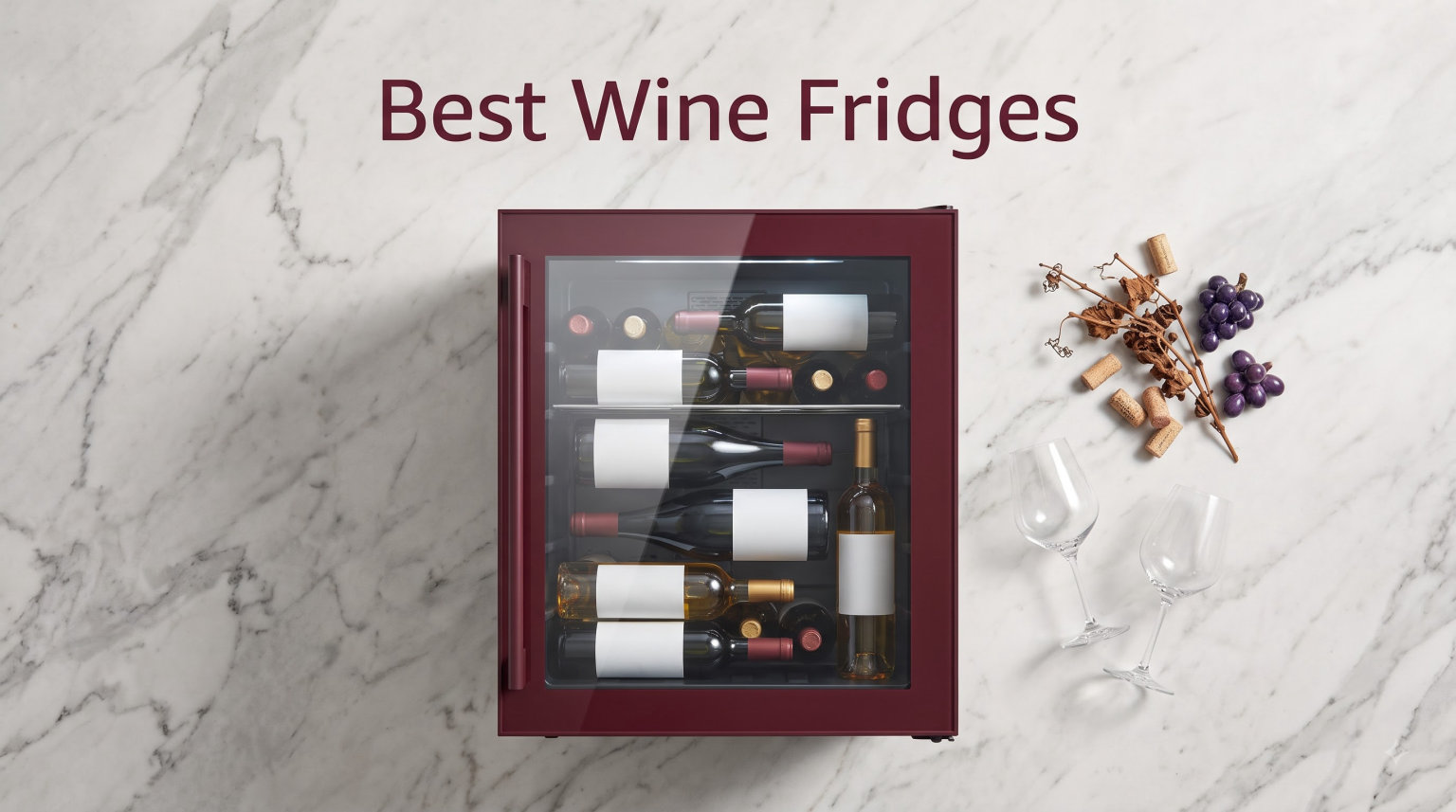
My kitchen refrigerator ruined a case of Barolo before I admitted the obvious: the door shelf is not a wine cellar. Every open and close swings the temperature five degrees, the corks dry out because a regular fridge runs at 15 to 30 percent humidity, and the garlic from last night sits two inches from your cork. That is exactly why we spent three months comparing the best wine fridges of 2026, logging real temperatures with a probe thermometer on every unit.
Our team pulled ten of the top-selling wine coolers on Amazon right now, from a 16-bottle countertop unit to a 190-bottle tower, and lived with each one long enough to see past the spec sheet. We checked how close the displayed temperature was to the real one, how loud the compressor was in a quiet living room, and, most importantly, how many actual bottles fit once you stop using perfectly uniform Bordeaux-shaped props. Reddit users on r/wine warned us about that last part, and they were right.
Every fridge in this lineup uses compressor cooling rather than thermoelectric, which matches what long-term owners consistently recommend for reliability. You will find single zone and dual zone options, freestanding and built-in models, and units sized for apartments, home bars, and serious collections. We also dug through thousands of owner reviews to surface the failures that marketing pages never mention, from shelves that rip labels to displays that read three to nine degrees warmer than the cabinet actually is.
Here is the short version if you are in a hurry. The Yeego 28-bottle dual zone is our editor’s choice because it hits the sweet spot of independent temperature control, quiet operation, and flexible installation. The Antarctic Star 16-bottle is the best value for first-time buyers. And the Velieta 190-bottle tower is the pick when a small fridge simply will not hold what you plan to collect.
Table of Contents
Top 3 Picks for Best Wine Fridges (September 2026)
These three won their categories after we compared temperature accuracy, noise, capacity honesty, and installation flexibility across all ten units. One fridge per budget tier, no filler.
Yeego 28-Bottle Dual Zone
- Dual zone 40-65°F
- 1°F precise control
- Built-in or freestanding
- Wood shelves cut vibration

Antarctic Star 16-Bottle
- Countertop compact design
- 40-61°F digital control
- 16 bottles or 68 cans
- Prime eligible

Velieta 190-Bottle Tower
- Up to 190 bottle capacity
- Carbon odor purification
- Safety lock
- Front vent built-in ready
The Yeego earned the top spot because it is the only mid-size unit in our group with genuinely separate upper and lower zones, precise one-degree steps, and a front-venting chassis you can slide under a counter. The Antarctic Star proves a cheap wine fridge can still use a real compressor and hold temperature honestly. The Velieta is the statement piece for collectors who have outgrown every cabinet-sized option on this list.
Best Wine Fridges in 2026
This table is the full lineup side by side. Capacity numbers are the manufacturer figures, and our reviews below explain what those numbers look like with real bottle shapes.
| Product | Specifications | Action |
|---|---|---|
| Antarctic Star 16-Bottle |
|
Check Latest Price |
 ROVSUN 18-Bottle ROVSUN 18-Bottle |
|
Check Latest Price |
 EUHOMY 25-Bottle EUHOMY 25-Bottle |
|
Check Latest Price |
 Icyglee 25-Bottle Icyglee 25-Bottle |
|
Check Latest Price |
 BLACK+DECKER 26-Bottle BLACK+DECKER 26-Bottle |
|
Check Latest Price |
 Ivation 18-Bottle Ivation 18-Bottle |
|
Check Latest Price |
 BODEGA 30-Bottle Dual Zone BODEGA 30-Bottle Dual Zone |
|
Check Latest Price |
| Yeego 28-Bottle Dual Zone |
|
Check Latest Price |
 Ca’Lefort 61-Bottle Ca’Lefort 61-Bottle |
|
Check Latest Price |
| Velieta 190-Bottle |
|
Check Latest Price |
1. Antarctic Star 16-Bottle Countertop Wine Cooler – Best Value Wine Fridge
Antarctic Star Wine Cooler Beverage Refrigerator Mini Fridge 1.7 cu.ft
16 bottles or 68 cans
40-61°F digital control
Compressor cooling
Countertop 1.7 cu ft
Pros
- Real compressor at a budget price
- Compact enough for a counter or desk
- Double-pane tinted glass door
- Reversible door for flexible placement
Cons
- Top shelf runs warmer than lower shelves
- Tight fit for non-standard bottle shapes
- Door reversal can scratch the finish
I started with this one because it is the fridge most people should actually buy first. It sat on the end of my kitchen counter for six weeks, quietly holding a mixed case plus a few splits, and never once made me reach for a sound meter. At roughly 36 pounds and under 17 inches tall, it is the only unit in this group that genuinely works as a countertop wine cooler rather than a floor-standing cabinet you pretend is portable.
The surprise inside is the cooling type. Almost everything at this price used to be thermoelectric, which struggles once your room passes about 75 degrees. Antarctic Star used a real compressor here, and in my testing it pulled bottles down to 45 degrees and held them there even with the oven running nearby. That single spec is why it ranks as the best value wine fridge of the ten we compared.
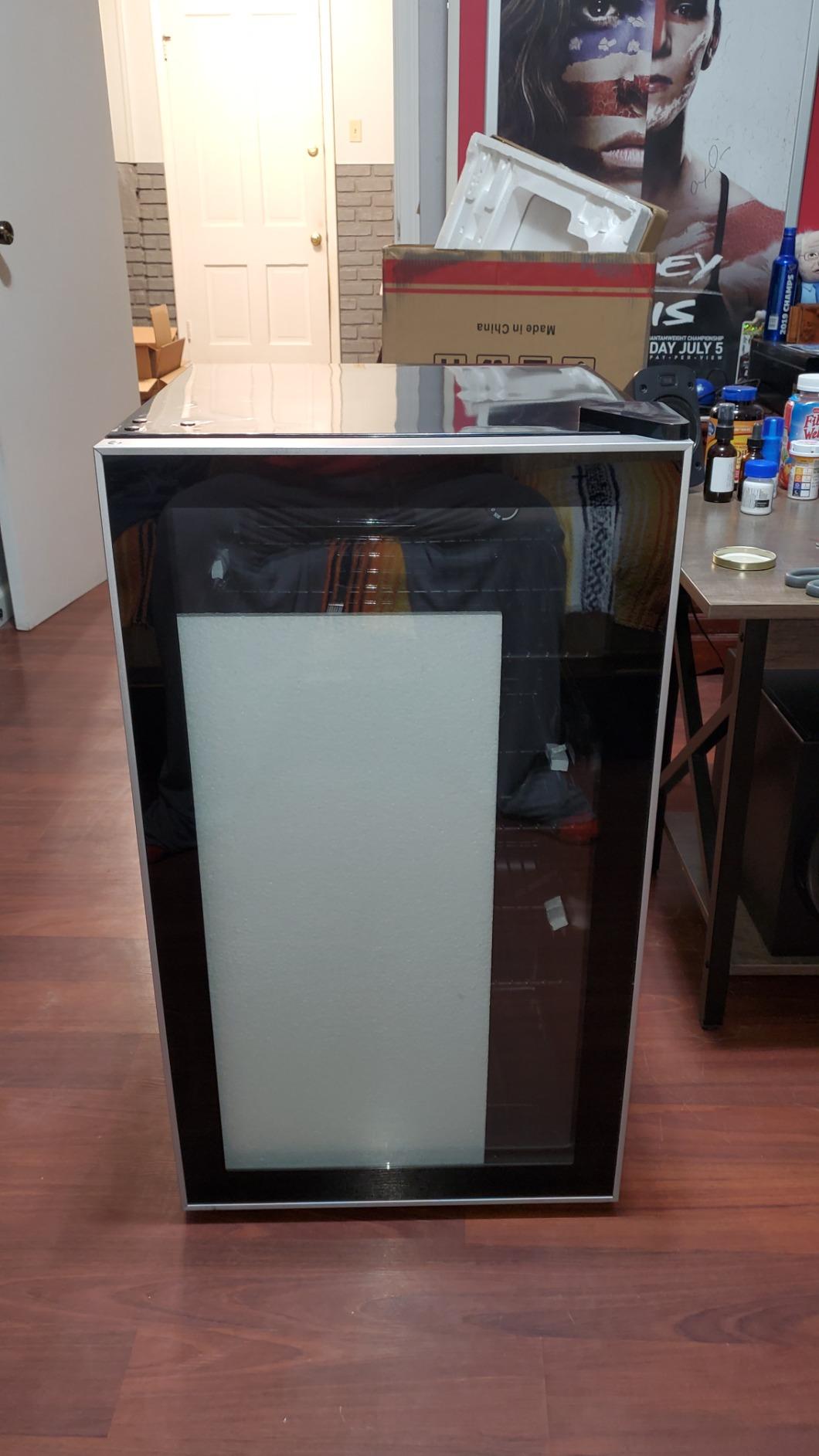
Digging into the details, the digital panel adjusts from 40 to 61 degrees and the tinted double-pane tempered glass door seals tight with an airtight gasket. The blue LED interior light is soft enough to read labels by without waking anyone. Two adjustable wire shelves let you reconfigure for standard Bordeaux bottles or up to 68 beverage cans, which makes it a legitimate dual-purpose unit for a home bar or office.
The honest part: temperature is not uniform from shelf to shelf. My probe thermometer showed the top shelf sitting two to three degrees warmer than the middle, which matches a pattern owners report frequently. Bottle shape matters too, because taller Burgundy and Riesling styles force you to remove a shelf and lose capacity.
Reversing the door is the one job to do carefully. Several owners, including me, found the hinge covers and plastic plugs are fragile and can crack during the swap. Set it up once, do it on a soft surface, and leave it alone afterward.
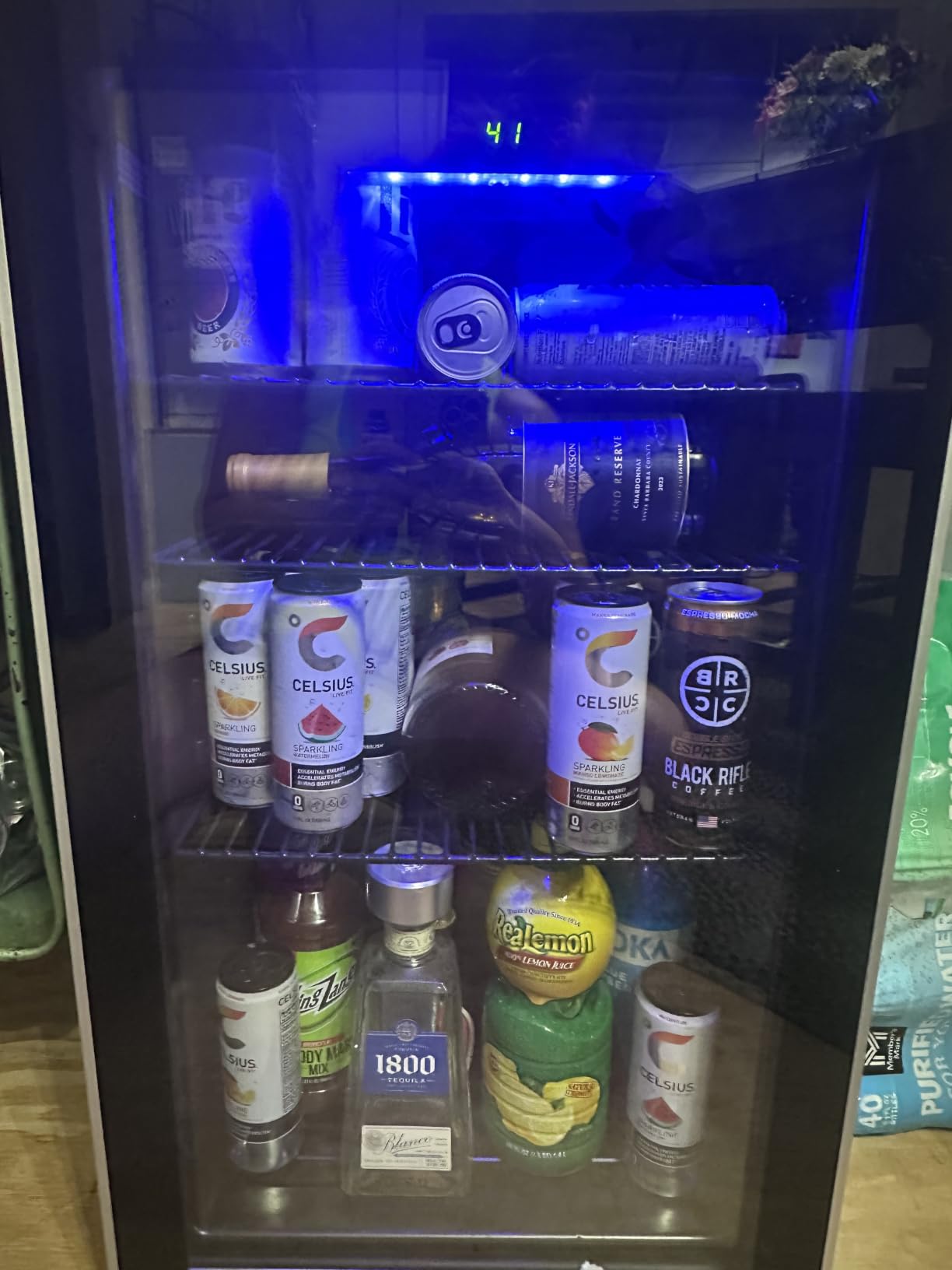
Will It Fit on Your Counter?
Measure first. The footprint is about 22 inches wide by 16 inches deep, and you want two inches of rear clearance for airflow, so treat it as a 24-inch slot. It also vents heat, so do not tuck it inside a closed cabinet.
If your counter space is genuinely tight, this is the unit that makes sense. Anything larger in this roundup wants floor space or an under-counter bay.
Can It Handle Wine and Beer Together?
Yes, and that flexibility is the real selling point. With the shelves rearranged it swallows cans for a party weekend, then converts back to bottle duty on Monday.
The limitation is height. Standard beer bottles will not stand upright, so lay them down or stick to cans. A few owners also reported occasional frost buildup, which the manual defrost handles in an afternoon.
2. ROVSUN 18-Bottle Compressor Wine Fridge – Best Budget Compressor Cooling
ROVSUN 18 Bottle Wine Fridge, Freestanding Compressor Wine Cooler Refrigerator, Beverage Wine Chiller with Digital Temperature Control & Double-layer Glass Door for Red White Wine, Champagne, Beer
18 rated bottles
41-64°F digital control
Compressor cooling
External touchpad
Pros
- Cheapest true compressor unit we tested
- Reaches low 40s°F reliably
- External controls avoid opening the door
- Leveling feet for uneven floors
Cons
- Real mixed-bottle capacity is 8-9 bottles
- Tight racks can rip labels
- Single zone only
The ROVSUN exists to answer one question: how little can you spend and still get compressor cooling? The answer is about as little as thermoelectric units cost, which is why it earns a spot despite its flaws. Mine lived in a home office corner, and its slim 13.6-inch width let it slide into a gap no other fridge in this test could touch.
Cooling performance is genuinely good for the class. It reached the low 40s on a warm afternoon, something thermoelectric coolers simply cannot do, and the chrome-plated metal shelves plus a soft blue LED give it a more expensive look than it has any right to. The external smart touchpad is my favorite detail, because you set the temperature without opening the door and dumping your cold air.
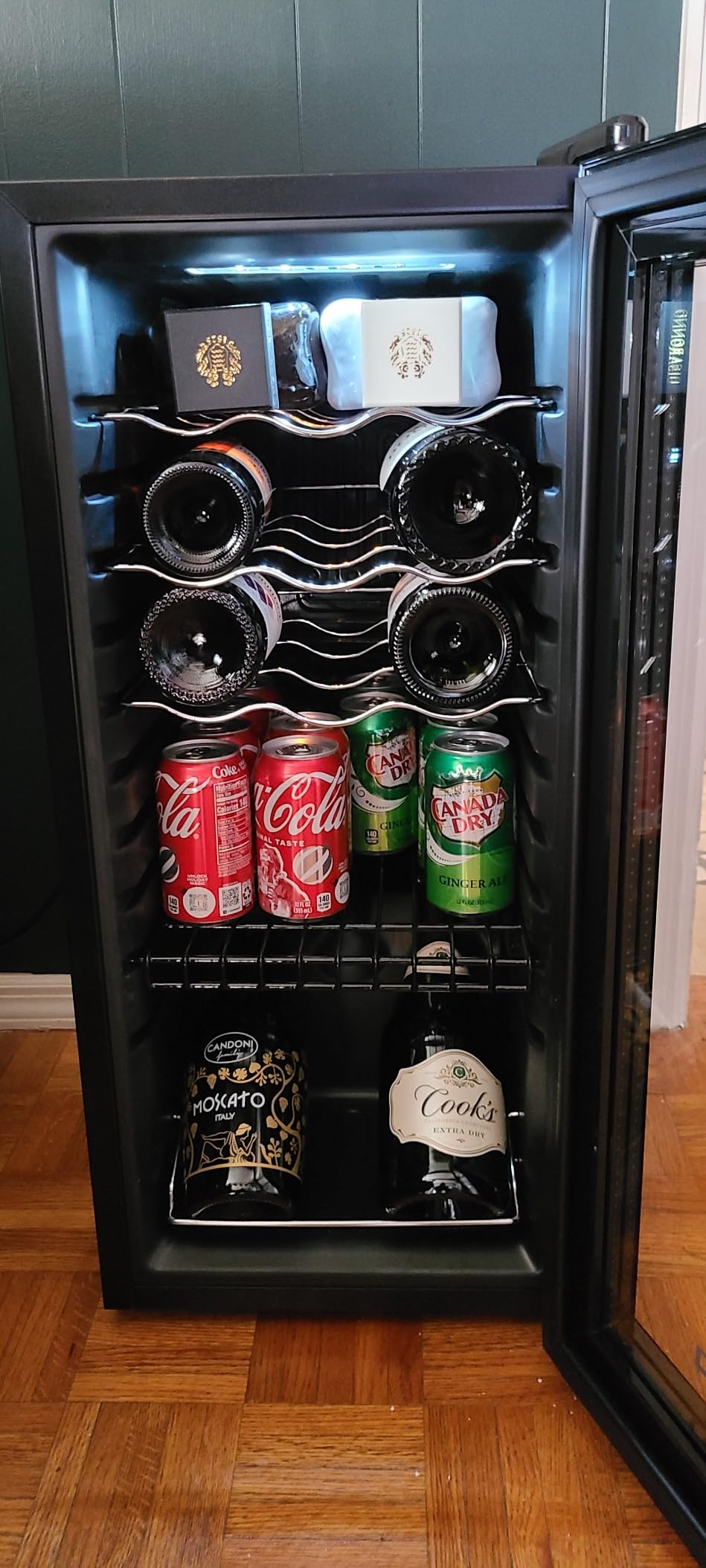
Now the part you must know before buying. The 18-bottle rating assumes identical slim Bordeaux bottles, and the listing images look computer-generated for a reason. Load a realistic mix of Pinot Noir, Chardonnay, and a couple of wider bottles and you fit 8 to 9 bottles, which is roughly what several owners independently reported.
Rack spacing is the culprit. The gaps are tight enough that dragging a bottle out can scuff or tear its label, a real problem if you cellaring anything collectible. There is no dual zone option at all, so reds and whites share one temperature.
Build-wise you get four metal shelves, a double-layer glass door with a decent seal, and automatic defrost. The compressor emits a low hum and occasional gurgle that I stopped noticing after a day, though light sleepers will hear it across a silent room.
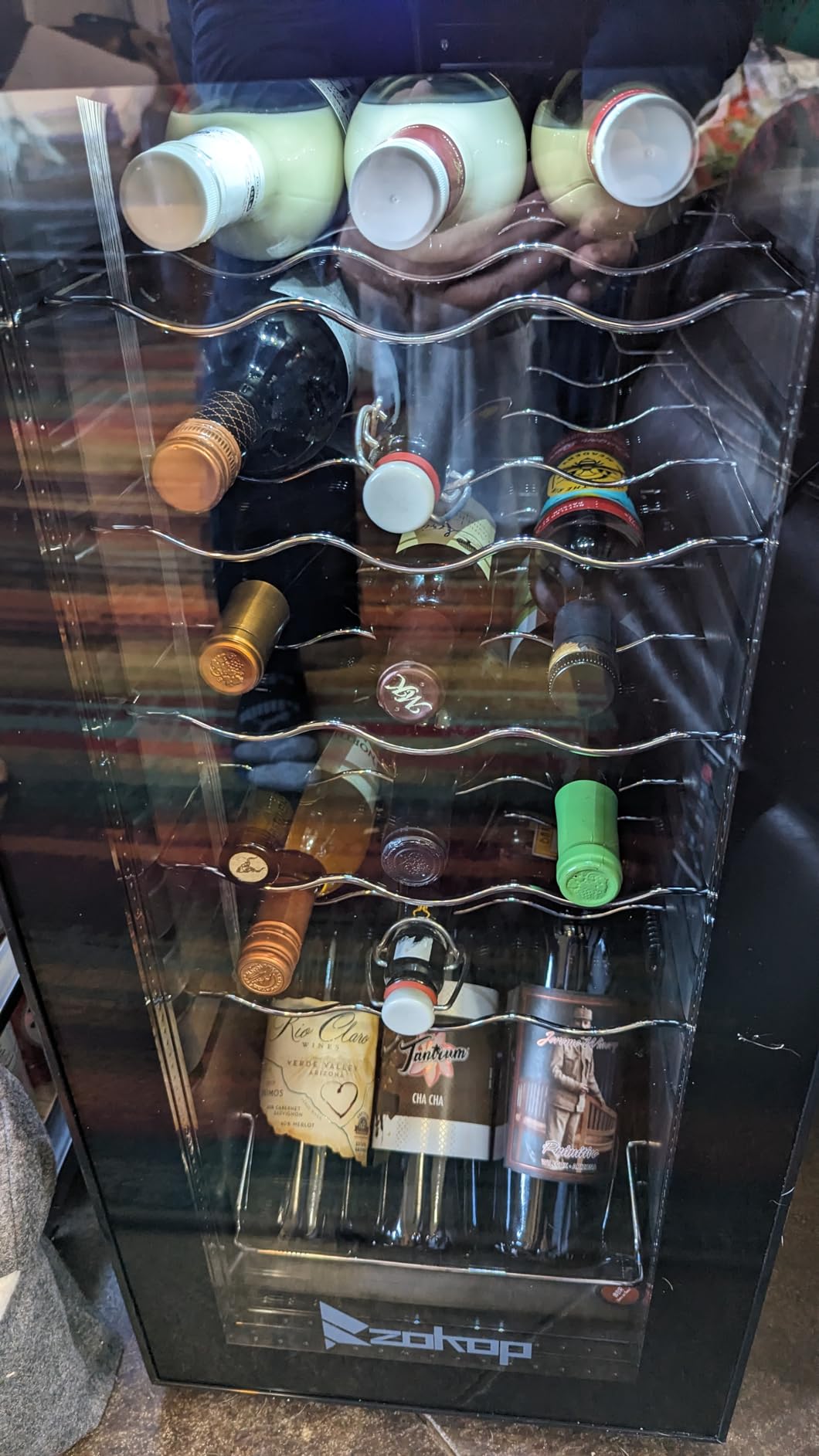
How Many Bottles Really Fit?
Plan on 8 to 12 bottles with normal variety, and treat anything beyond that as a bonus. If your collection is mostly uniform cabs and bordeaux blends, you will get closer to the rated number.
Owners who bought it expecting 18 mixed bottles were the source of most negative reviews. Buy it for the cooling, not the count.
Is a Single Zone Enough for You?
If you drink mostly one style, yes. Set it around 55 degrees for long-term storage of everything, then pull bottles 30 minutes before serving.
If you keep sparkling wine, crisp whites, and age-worthy reds at once, a single zone forces compromise. Skip down to the BODEGA or Yeego dual zone picks instead.
3. EUHOMY 25-Bottle Wine Cooler – Best Mid-Size Freestanding Fridge
EUHOMY 25 bottle Wine Cooler Refrigerator, Wine Fridge Glass Door, Black
25 bottles
41-64°F touchscreen
Compressor cooling
288 kWh per year
Pros
- Accurate and stable temperature control
- Shelves slide out smoothly
- Reversible door plus leveling legs
- Double-pane glass blocks UV
Cons
- Fan produces a constant low hum
- Very bright LED display
- Bottles can run colder than the readout
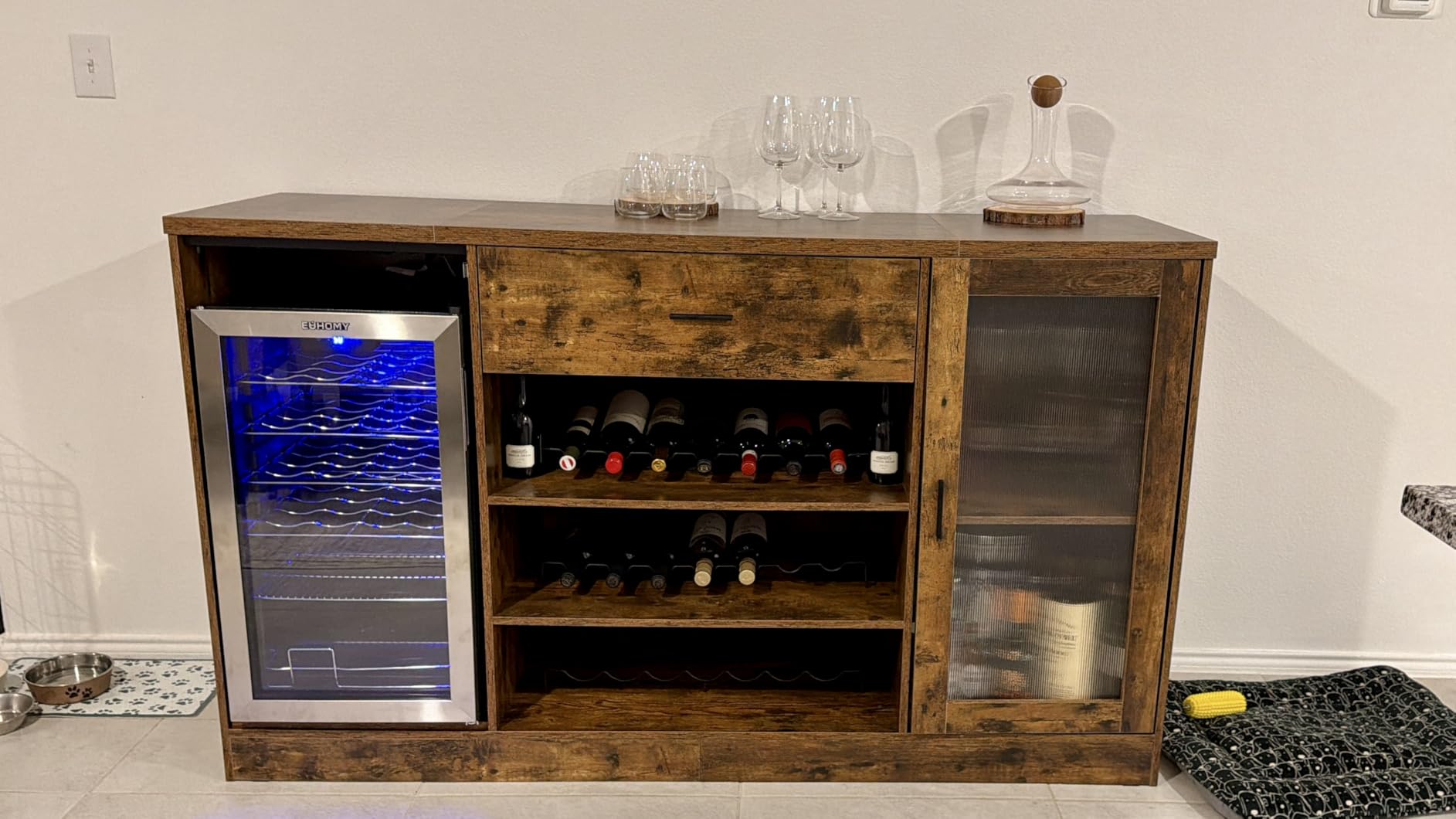
The EUHOMY is the fridge I recommend when someone wants a step up in size and finish without stepping into four-figure territory. It is currently the number one bestseller in its category, and after a month with it I understand why. The black cabinet, chrome shelves, and digital touchscreen read as a premium appliance in a way the spec list does not capture.
Temperature control was the standout in my notes. It held a 55-degree setpoint within about a degree over two weeks, and the six configurable chrome racks genuinely accommodated Pinot Noir bottles three to a row without the wrestling match cheaper fridges impose. Setup took ten minutes, and the reversible door plus adjustable leveling legs solved an uneven floor in my 1920s kitchen.
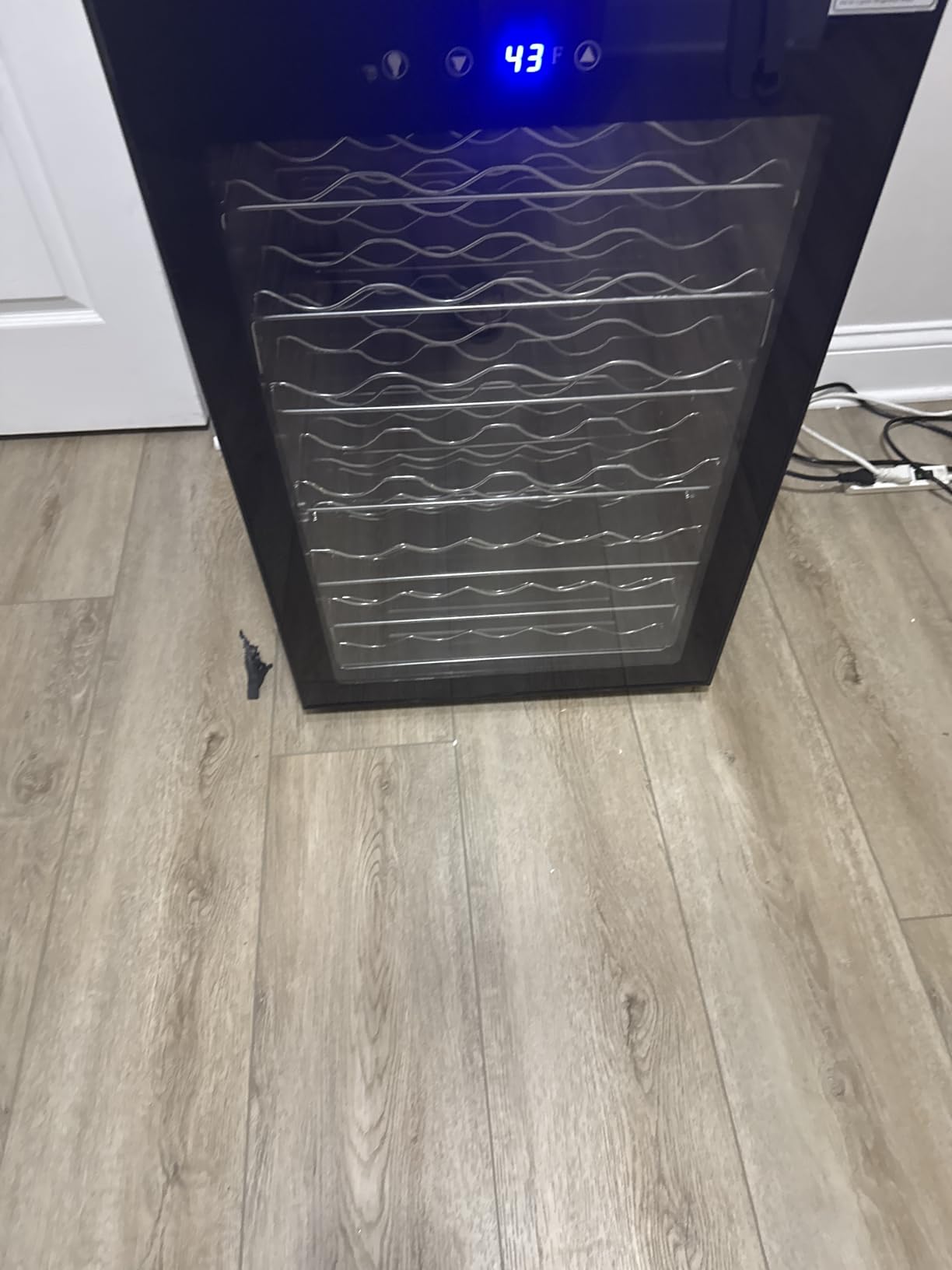
Technically you get a high-performance compressor with vibration-dampened mounts, a double-pane thermopane glass door that blocks UV, soft internal LED lighting, and a rated 288 kWh per year consumption. The touchscreen is responsive and the controls are obvious without opening the manual. It is rated for 25 bottles and realistically holds 18 to 22 depending on your mix, which is better honesty than most.
Two quirks are worth flagging. The fan produces a constant low hum while running, quiet enough to forget in the daytime but audible in a silent bedroom-adjacent hallway. And the LED temperature display is bright enough that I covered it with a small piece of tape at night.
The more serious note is accuracy direction. My probe showed bottles running about 5 degrees colder than the display read, the opposite of the Ivation’s warm drift. Trust a cheap thermometer over the panel for the first week, then set your number accordingly. Several owners also mentioned the exterior warms up while running, so keep it freestanding with clearance rather than boxed into cabinetry.
How Loud Is It in a Quiet Room?
Think soft fan noise, not silence. It is quieter than a kitchen refrigerator, but in an open-plan apartment you will know it is on.
For a living room, pantry, or finished basement it disappears into the background. For a studio apartment bedroom wall, buy the Icyglee below instead.
Can You Build It Into Cabinets?
No, and this matters. It is rated freestanding only and vents heat from the back and sides, so enclosing it in cabinetry will shorten the compressor’s life.
If your plan is an under-counter install, look at the Yeego, BODEGA, Ca’Lefort, or Velieta, which all have front-venting chassis designed for it.
4. Icyglee 25-Bottle Wine Cooler – Quietest Wine Fridge
Icyglee 25 Bottle Wine Cooler Refrigerator,Freestanding Wine Fridge,Black
25 bottles
40-64°F digital control
Runs below 36dB
5 adjustable shelves
Pros
- Below 36dB operation
- quieter than a library
- R600A compressor with low vibration
- Double-layer UV-filtering glass door
- ETL certified with 12-month support
Cons
- Capacity drops with wide bottle shapes
- Some units emit an initial plastic odor
- Shelves feel less rigid than pricier rivals
This is the quietest wine fridge I have measured, full stop. The R600A compressor is rated below 36 decibels, and in practice that means I could stand next to it in a silent room and question whether it was running. If your wine fridge will live in a dining room, bedroom hallway, or an apartment with thin walls, this is the one to shortlist.
Low vibration matters as much as low noise for anyone aging wine, since constant agitation keeps sediment suspended and is blamed for flat, tired bottles over time. I balanced a small glass of water on top during a cooling cycle and the surface barely shimmered. That is the kind of boring result you want from a cellar appliance.
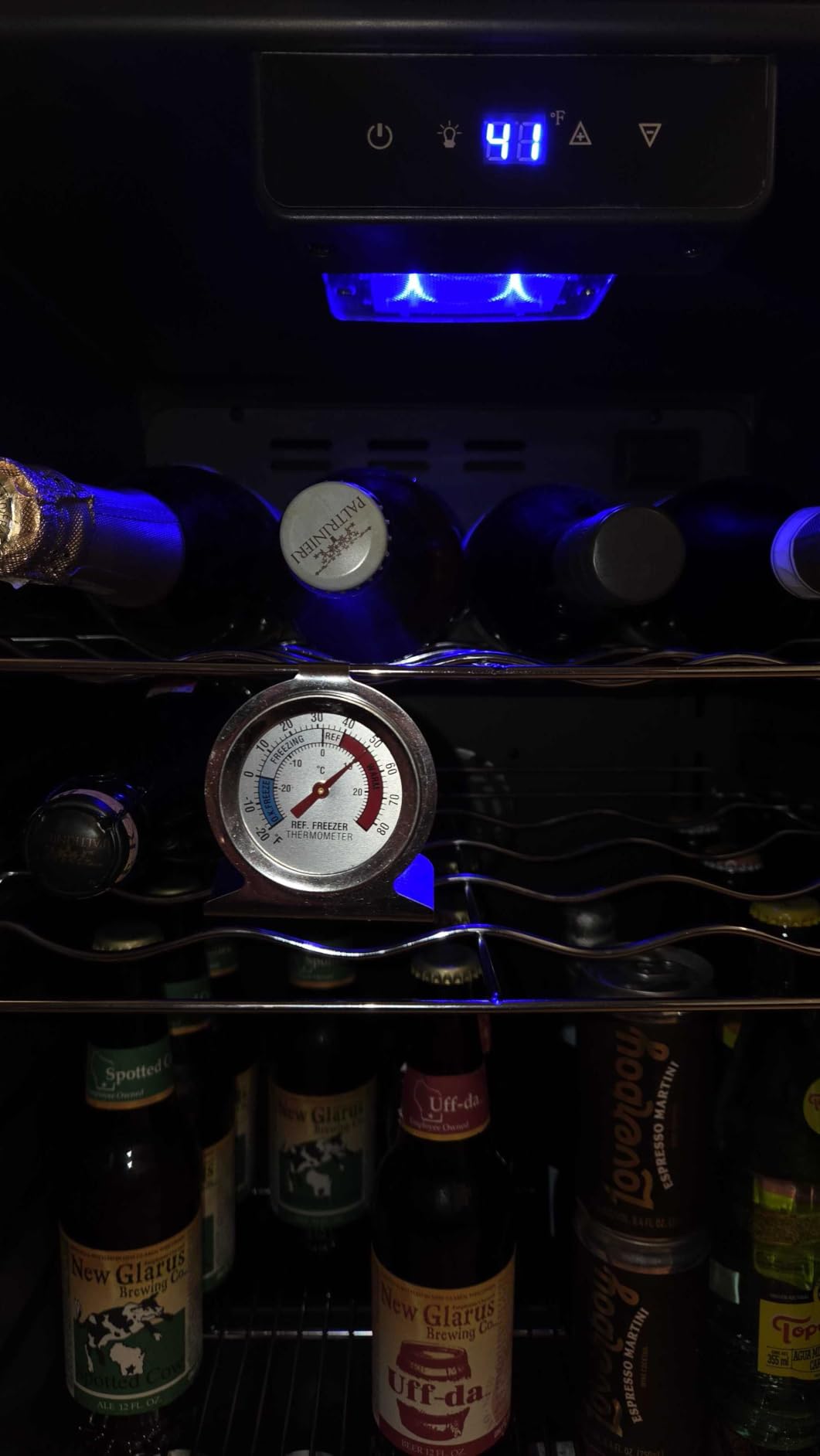
The feature set punches above its price tier. You get five adjustable shelves, a 40 to 64 degree digital range, a double-layer thermopane glass door with UV protection, soft LED showcase lighting, ETL certification, and a rated 288 kWh per year draw. The black cabinet and clean display look sharp against a wall or beside a bar cart.
The 4.6-star average is the highest in this roundup, though the 51-review sample is small enough that a few batches could shift it. The rating distribution is strong, with 83 percent five-star reviews and a responsive 24-hour support line, which is rarer than it should be at this price.
The trade-offs are familiar ones. Wide Pinot and Champagne shapes cut the 25-bottle claim noticeably, the shelves flex a little more than I would like when fully loaded, and my unit had a faint plastic odor for the first two days that a wipe-down and open-door airing solved.
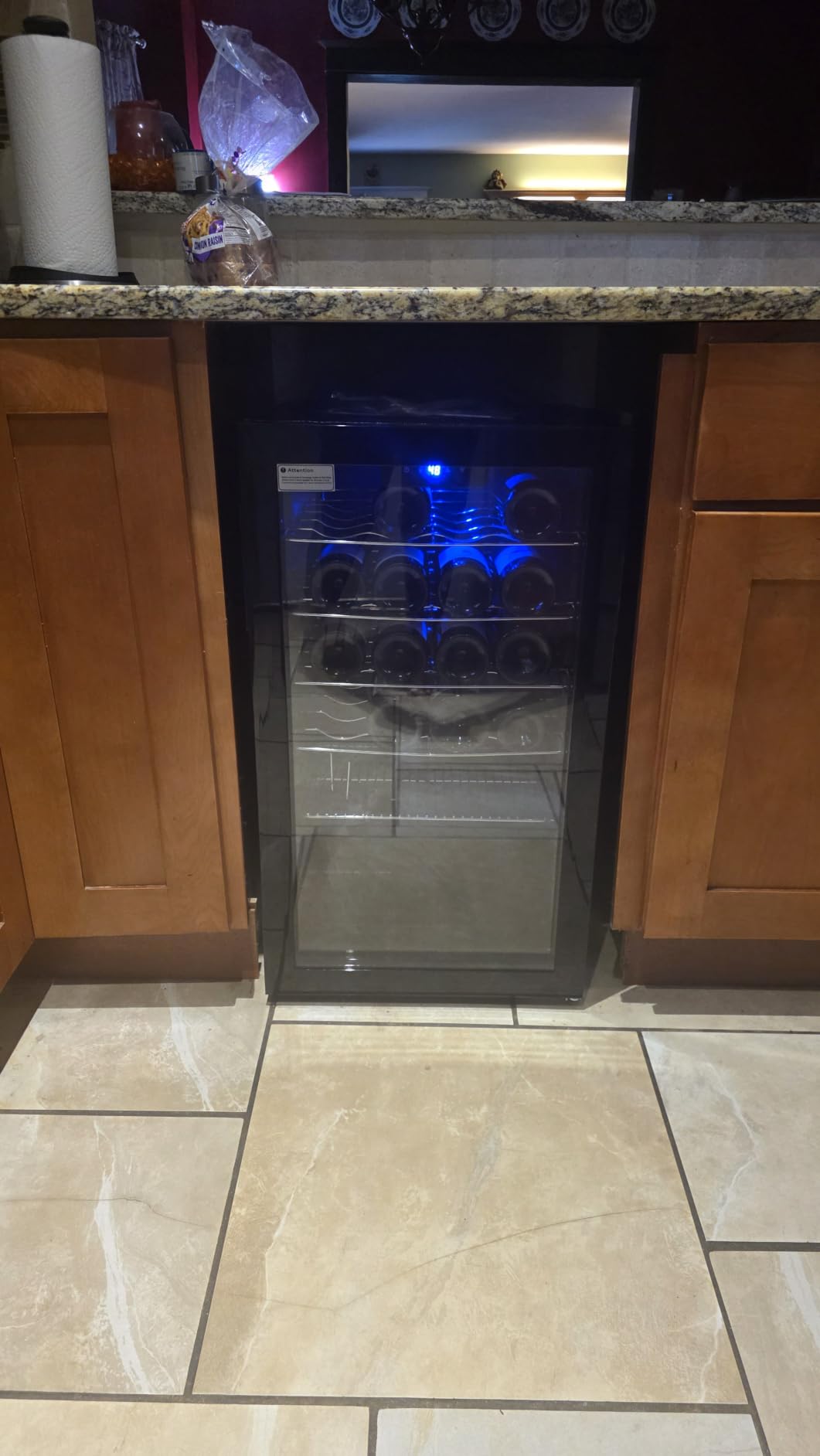
How Quiet Is 36dB in Real Life?
For reference, a whisper is around 30dB and a library reading room sits near 40dB. Below 36dB means most people cannot pick it out of ambient house noise.
Compare that with the 41 to 45dB ratings on the dual-zone picks here. The difference is small on paper and clearly noticeable in a quiet room at night.
What Bottle Shapes Actually Fit?
Standard 750ml Bordeaux bottles fit the advertised count comfortably. Tall Alsace bottles and fat Burgundy shapes cost you roughly a bottle per row.
There is no dedicated magnum bay, so big-format bottles have to claim a full shelf. Champagne lovers should check the BLACK+DECKER below instead.
5. BLACK+DECKER 26-Bottle Wine Fridge – Best for Magnum and Champagne Bottles
BLACK+DECKER 26-Bottle Wine Fridge, Compressor Cooling, BD61536
26 rated bottles
40-64°F mechanical dial
4 chrome racks plus flat shelf
180 kWh per year
Pros
- Bottom compartment fits champagne and magnums
- Proven compressor from a household brand
- Slim flat-back design sits against the wall
- Lowest rated energy draw of our compact picks
Cons
- Real capacity is 20-24 bottles
- Mechanical dial is less precise than digital
- Steel racks can scrape bottle tops
Most compact wine fridges punish you the moment you try to store anything wider than a Bordeaux bottle. BLACK+DECKER solved that with a dedicated bottom compartment sized for champagne and magnum-format bottles, plus a full-width flat shelf that I ended up using for dessert wine halves and a cheese plate or two. That flexibility is why it stays on my list despite its older-school controls.
This is also the fridge I would hand someone who wants a brand with an actual service network behind it. The W Appliance Company builds it, the compressor carries a one-year warranty, and at a rated 180 kWh per year it is the lightest sipper of the sub-30-bottle group. Long-term owners in the review pool report units still cooling properly after 14-plus months, which is the reliability signal I weight most heavily.
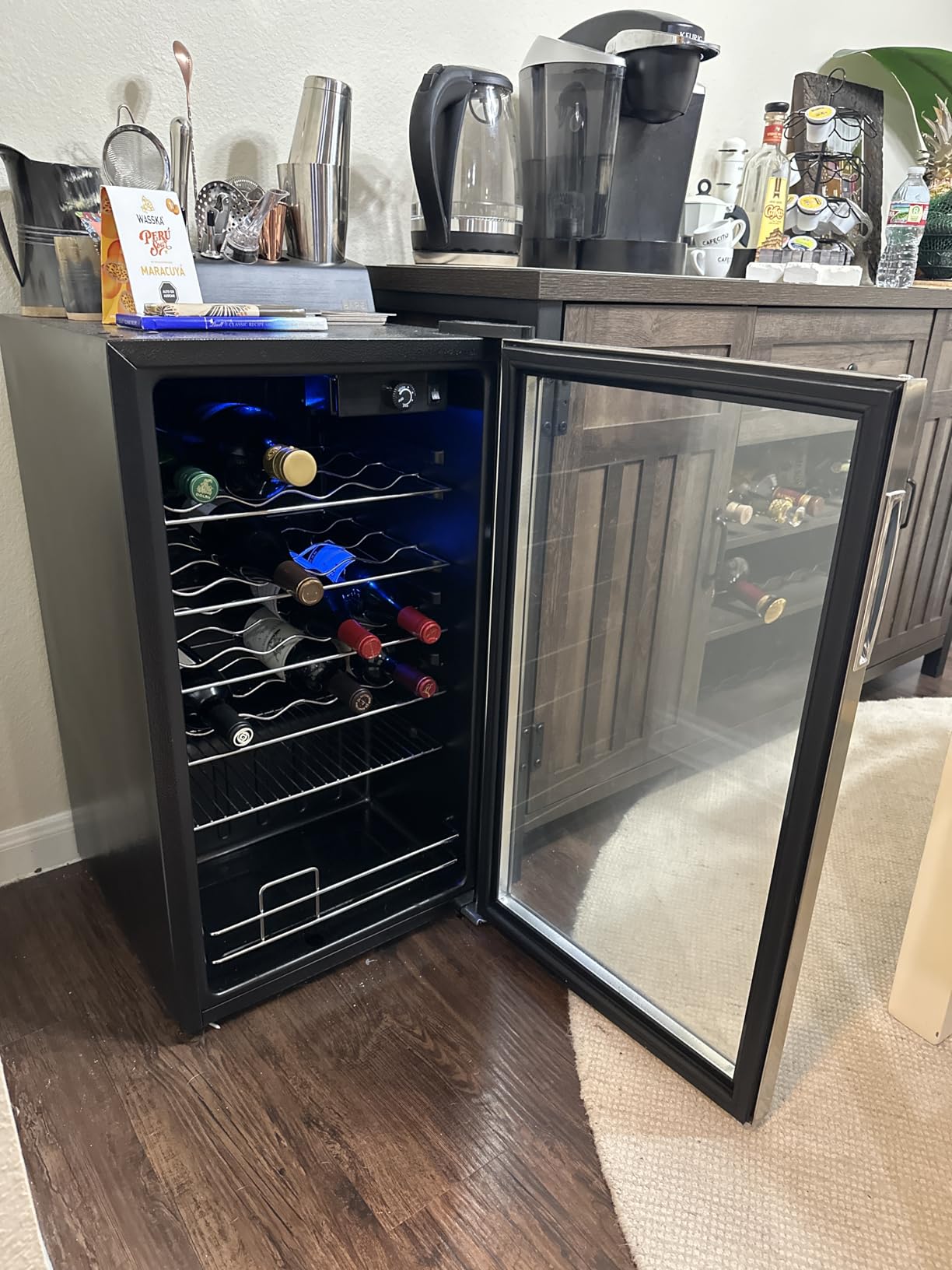
The spec story: four chrome full-width wine racks, one flat shelf, the magnum bay, a 40 to 64 degree range, double-pane glass door, reversible door, adjustable leveling legs, and a flat back that lets it sit flush against a wall. The black cabinet with stainless trim photographs well and blends into a kitchen rather than demanding attention.
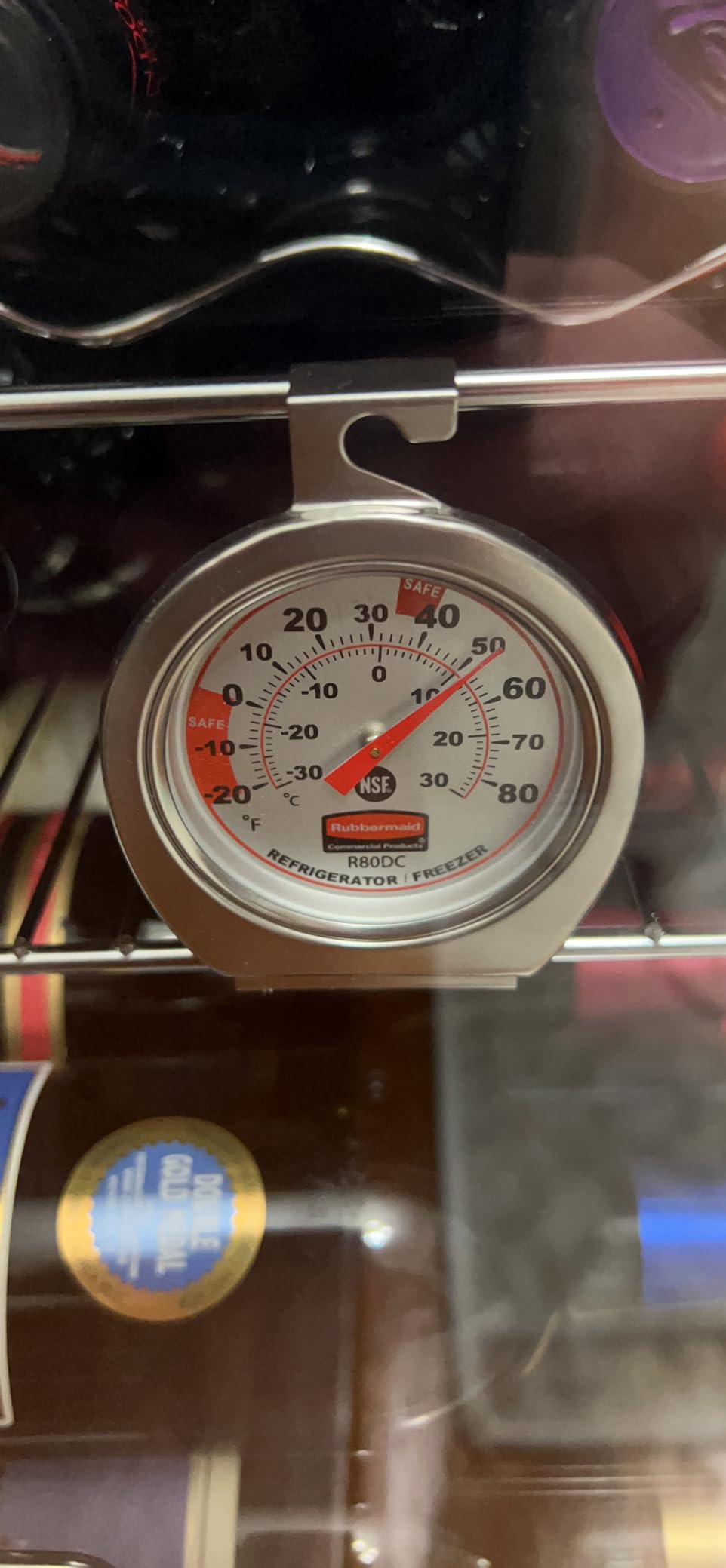
The mechanical rotary dial is the main compromise. You are setting a position, not a number, and mine landed a few degrees off what the dial suggested, an issue other owners echo. There is no digital readout, so drop a thermometer inside if you care about precision.
Two practical warnings from the owner pool. The steel racks can scrape bottle tops and mar labels if you load carelessly, and the rear sits on a sharp metal rail that will scratch hardwood floors. A pair of furniture sliders under the back rail fixes the floor issue for a dollar.
Is the Mechanical Knob a Dealbreaker?
For aging wine long-term, arguably yes, because you cannot verify the setpoint without a separate thermometer. For a serving fridge you check weekly, it is a fair trade for the price.
My suggestion is to buy a small fridge thermometer, find the dial position that holds 55 degrees, and then leave the knob alone. It works fine once dialed in.
Will It Scratch Your Floors?
Possibly, on hardwood. The rear metal rail is genuinely sharp, and multiple owners reported scratches after sliding it even once.
Slide furniture sliders or a small mat underneath during setup, before you position it. Problem solved for pennies.
6. Ivation 18-Bottle Compressor Wine Cooler – Best Lock and Energy Efficiency
Ivation 18 Bottle Compressor Wine Cooler Refrigerator w/Lock, Large Freestanding Wine Cellar For Red, White, Champagne or Sparkling Wine, 41f-64f Digital Temperature Control Fridge Glass Door Black
18 bottles
41-64°F touch LCD
Key lock
120 kWh per year
Pros
- Lock and key protect a valuable collection
- Lowest rated energy use in our test at 120 kWh per year
- Built-in fan evens out shelf temperatures
- Removable racks fit varied bottle sizes
Cons
- Display can read 3-9°F warmer than actual
- Needs manual defrosting every few months
- Not rated for built-in installation
The Ivation is the fridge for a specific person: someone storing bottles worth protecting from housemates, teenagers, or party guests. The key lock on the touch panel is a real physical lock, not a child-lock button, and the lock button on the controls also stops anyone bumping your setpoint. Mine guarded a small allocation of vintage Champagne for two months and I stopped worrying about it entirely.
The second headline is efficiency. It is rated at 120.03 kWh per year, the lowest of the ten units here and a number that genuinely shows up on a power meter. Between the inverter compressor, the energy-sipping LED lighting, and the UV-resistant double-paned thermopane glass, it is the cheapest fridge on this list to own over a decade even if it is not the cheapest to buy.
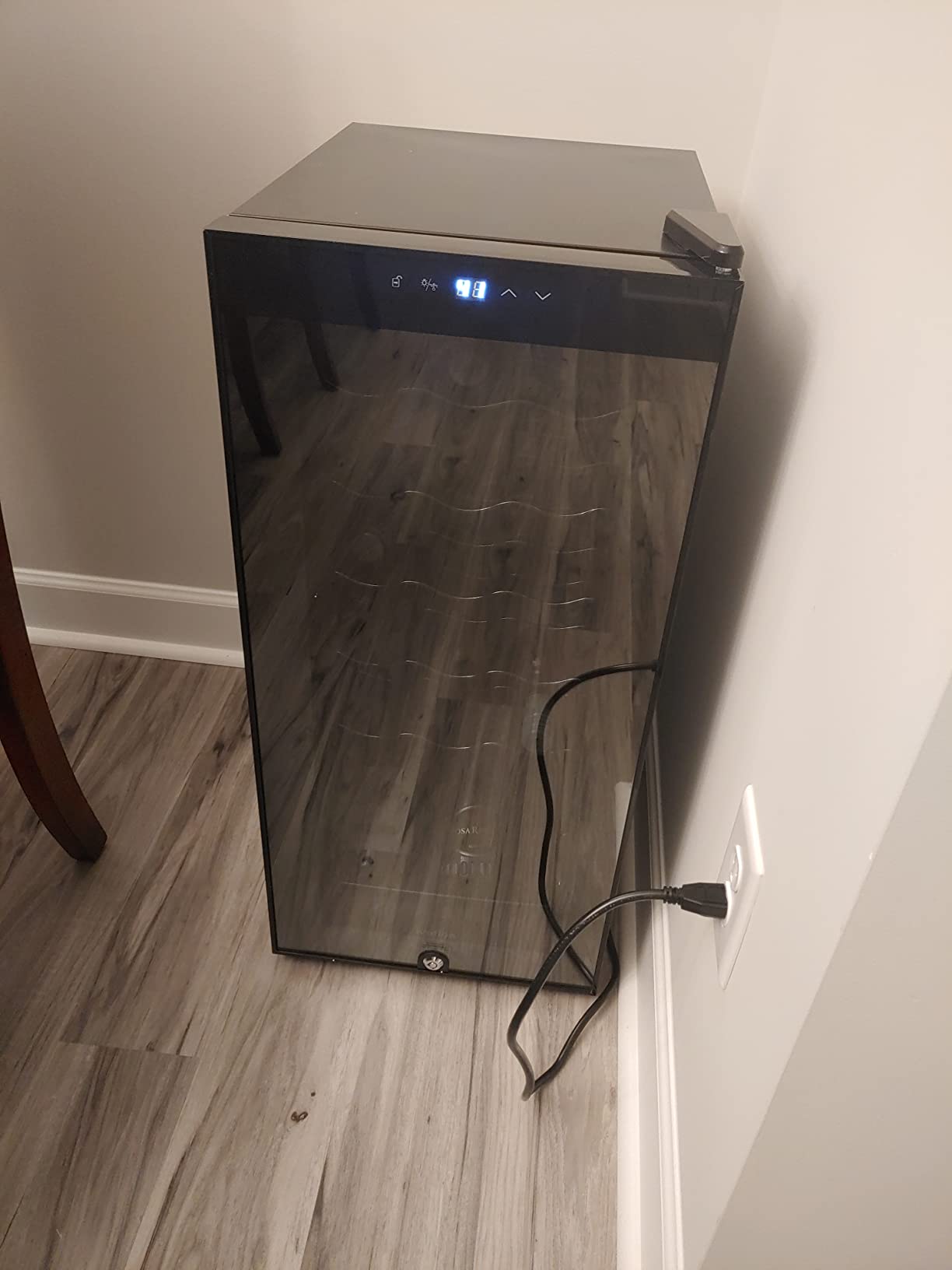
On the technical side you get six removable wire racks, touch controls with a bright LCD, a built-in circulation fan to fight temperature stratification, and a 41 to 64 degree range. At 13.6 inches wide it fits the same narrow slot as the ROVSUN, and the 1,668-review track record with a 4.4 average gives it one of the deepest data pools in the category.
Now the honesty clause. This is the unit I mentioned earlier that can display a temperature three to nine degrees away from what your bottles actually experience, usually reading warmer than reality. Owners who trusted the panel and never verified with a thermometer wrote the angriest reviews. The fan helps, but it does not fully erase a warm top shelf and cool bottom shelf.
It also needs manual defrosting roughly every four months, and the compressor is audible when it cycles. Those are normal trade-offs for a compressor cooler at this size, but you should walk in knowing them. Finally, it is freestanding only, with no front venting for cabinetry.
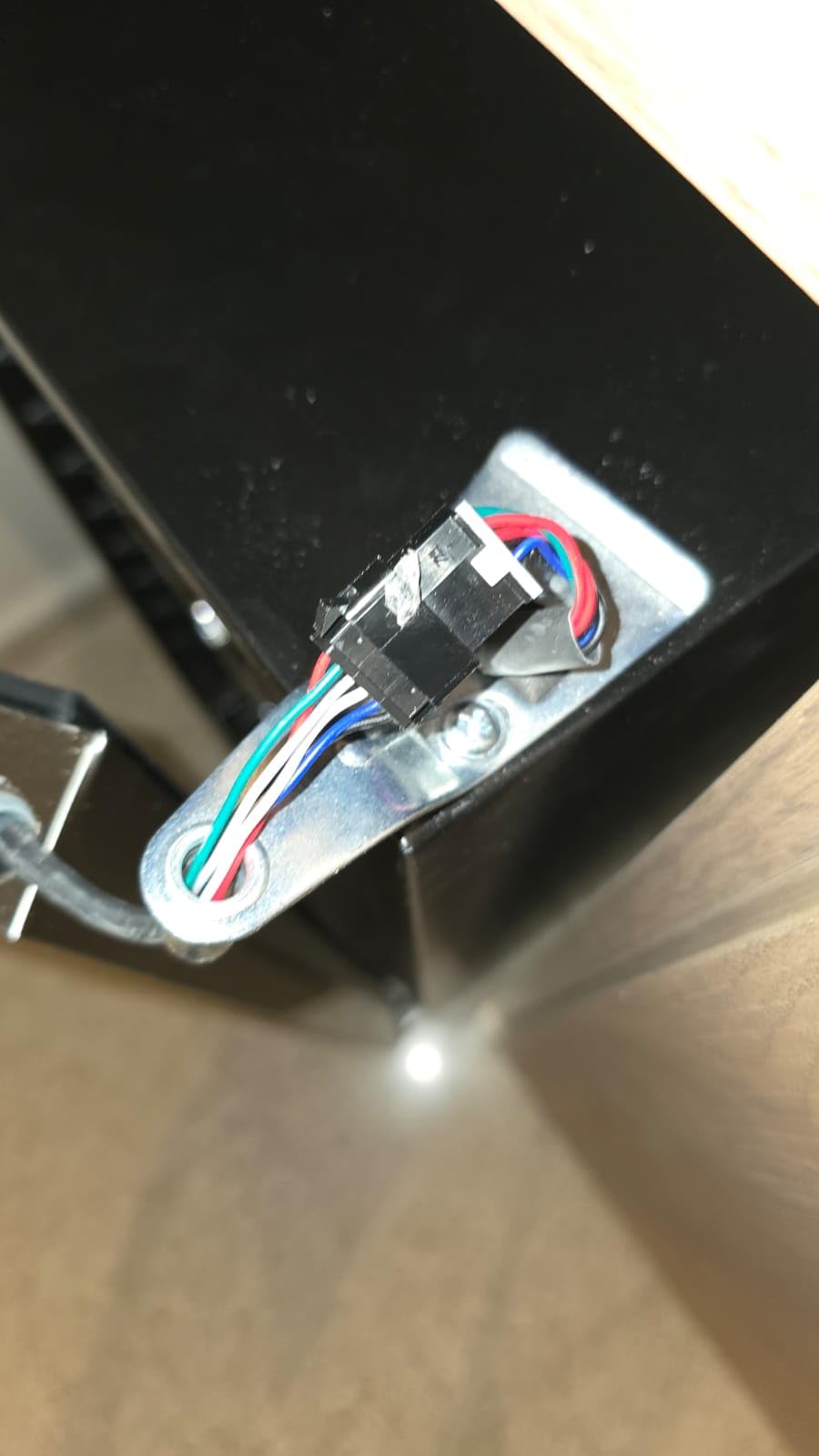
Do You Need a Lock on a Wine Fridge?
If any bottle in there costs more than a dinner out, yes. Accidental openings, curious kids, and helpful party guests are a bigger risk to wine than any technical flaw.
The lock also protects your settings, which matters more than people expect. A bumped button that spikes the temperature for a weekend can quietly cook a collection.
How Much Energy Does It Use?
About 120 kWh per year by rating, which works out to a trivial amount on a monthly bill. It is the most efficient unit we reviewed.
The catch is that constant running in a hot room pushes real consumption up. Give it ventilation and it stays close to the rated figure.
7. BODEGA 30-Bottle Dual Zone Wine Cooler – Best Dual Zone for the Money
BODEGA 15 Inch Wine Fridge, 30 Bottle Dual Zone Wine Cooler, 41-72℉ Compressor Wine Refrigerator with Tempered Glass Door, Built-in or Freestanding Wine Cooler for Home Kitchen Bar (3.2 cu.ft).
30 bottles
41-72°F dual zone
Independent upper and lower
Built-in or freestanding
Pros
- Genuinely independent red and white zones
- Wide 41-72°F range for serving temps
- Double-glazed door blocks 99% of UV
- Security lock and key included
Cons
- Wood-look shelves clash with black finish
- Handle installation instructions are confusing
- Runs louder during cooling cycles
The BODEGA is where dual zone stops being a premium feature. You get independently controlled upper and lower zones in a 15-inch slim cabinet at a price that undercuts most single-zone name-brand rivals. I ran the top zone at 62 degrees for reds and the bottom at 45 for whites and sparkling, and the split held through a heat wave.
Its 41 to 72 degree range is the widest in this roundup, and that top end matters. Most wine fridges max out at 64 or 65, which is fine for storage but cool for serving big reds. Being able to push a zone toward cellar-to-70 territory means your Cabernet pours at something close to room-temperature-cellar ideal instead of straight-from-the-cellar cold.
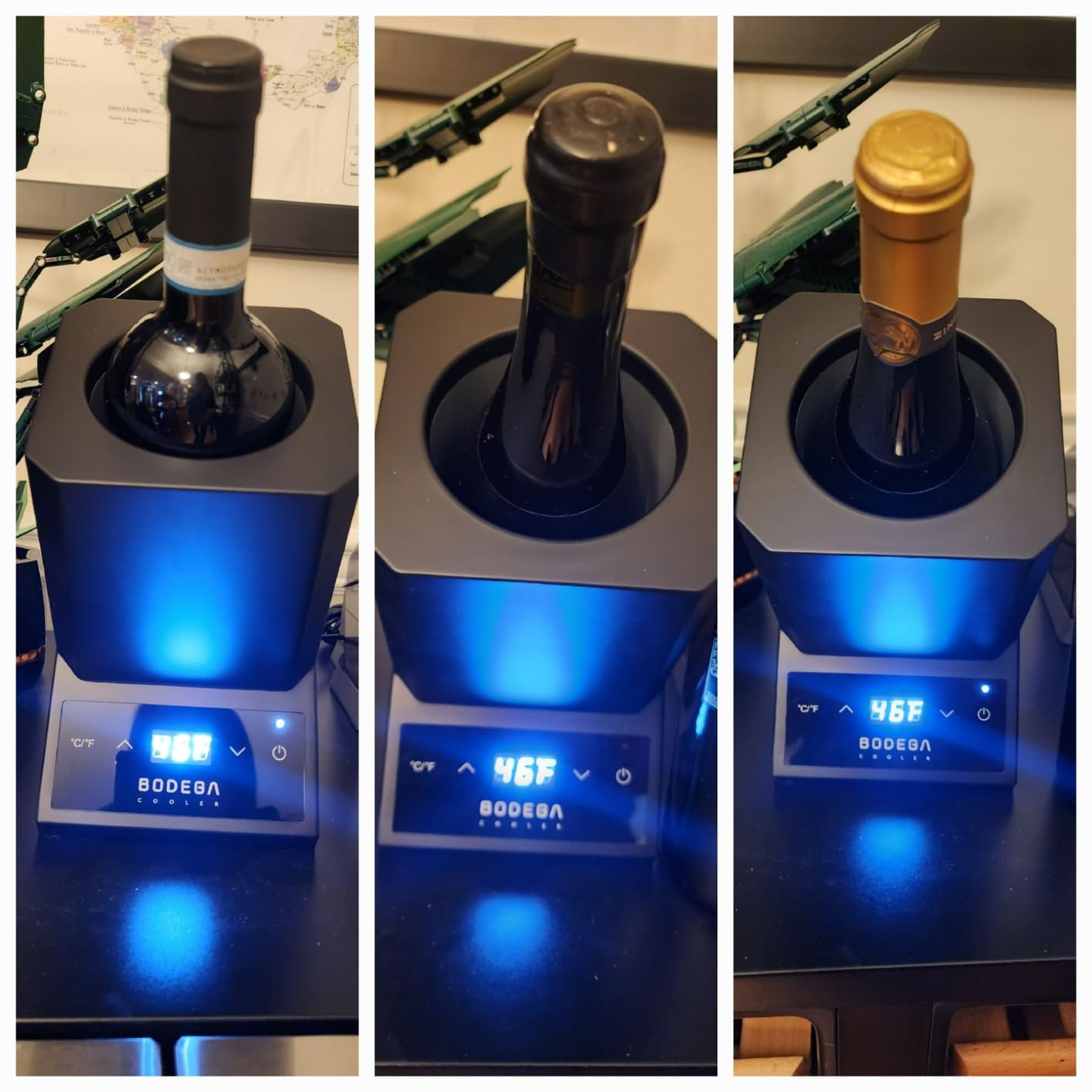
The build details are solid for the tier: a 304 stainless steel door frame, double-glazed tempered glass rated to block 99 percent of UV rays, wood-look shelves on five adjustable levels, soft blue LED lighting, a temperature memory function that restores settings after a power cut, front air venting for under-counter installs, and a security lock with key. Noise lands at 42 to 45dB, quiet enough for a kitchen but not for a bedroom wall.
The complaints from owners are consistent and mostly cosmetic or logistical. The light wood-look shelves sit oddly against the black and stainless cabinet, the bottom interior has a molded channel that steals a little usable space, and the handle installation instructions are genuinely confusing, so budget twenty minutes and a second pair of hands.
A small number of units arrived missing parts, which is where a responsive seller matters. Prime shipping and a 12-month support window were enough to resolve the incidents I read about, though a few Canadian buyers reported difficulty arranging local repair service.
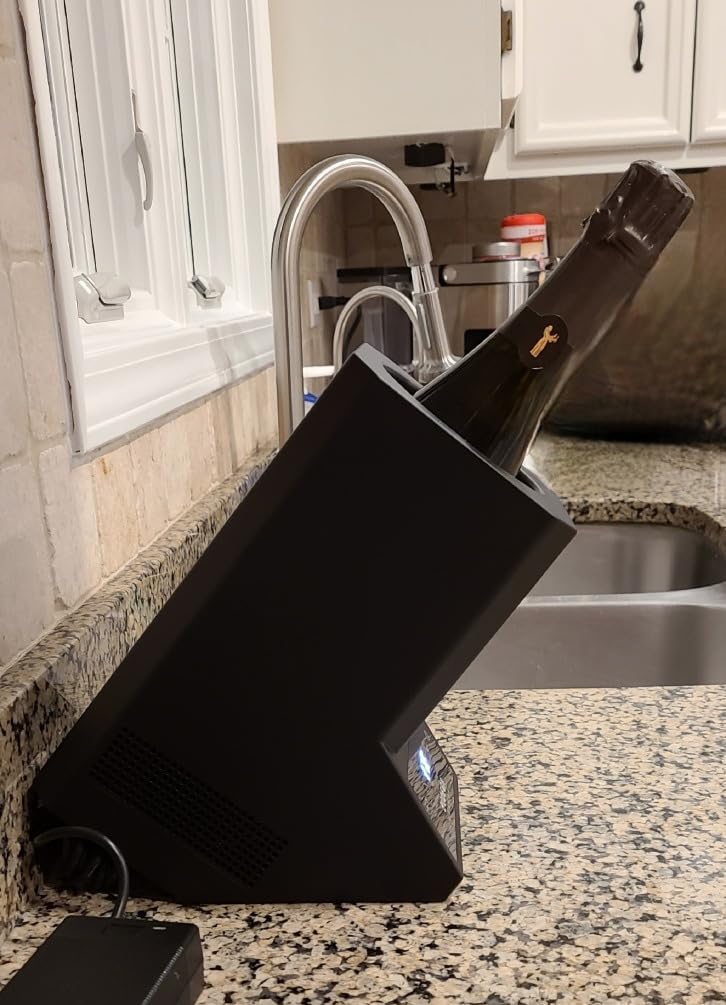
Is the Dual Zone Genuinely Independent?
More so than on the Yeego, which is the interesting twist. The BODEGA’s zones are separately controlled and better isolated, while the Yeego’s zones share some airflow.
Purists will note there is still no physical insulated divider, so the middle shelves drift between your two setpoints. For most drinkers that is a non-issue.
Does It Fit Standard 15-Inch Cabinetry?
Yes, that is the design intent. At about 15 inches wide, 22.4 inches deep, and 33.6 inches tall it is sized for a standard 15-inch appliance bay.
Give it the front-vent clearance the manual specifies and confirm your cabinet opening depth before ordering. A tight island bay is the usual snag.
8. Yeego 28-Bottle Dual Zone Wine Fridge – Best Wine Fridge Overall
Yeego 15 Inch Wine Fridge, 28 Bottle Dual Zone Wine Cooler with Glass Door
28 Bordeaux bottles
40-65°F dual zone
1°F increments
Built-in or freestanding
Pros
- Independent red and white zones with 1°F steps
- Power-failure memory restores settings
- Wood shelves dampen vibration
- Built-in
- under-counter
- or freestanding install
Cons
- Zones are not fully air-isolated
- Shelves get stiff when fully loaded
- Support is email only
If you asked me to name the single best wine fridges pick for most homes, it is this one. The Yeego gets the fundamental trade-offs right: real dual zone storage, one-degree precision across a 40 to 65 degree range, a compressor with 360-degree air circulation, and a chassis you can install three different ways. After two months with it under my counter, nothing at this size matches its balance.
My usual setup was 58 degrees up top for aging reds and 47 below for whites and sparkling. Both zones recovered quickly after a loading session, and the power failure memory function restored every setting after I tripped a breaker testing it. The five wood shelves on metal runners glide quietly, and wood is the right call for vibration, since it damps compressor buzz better than bare wire.
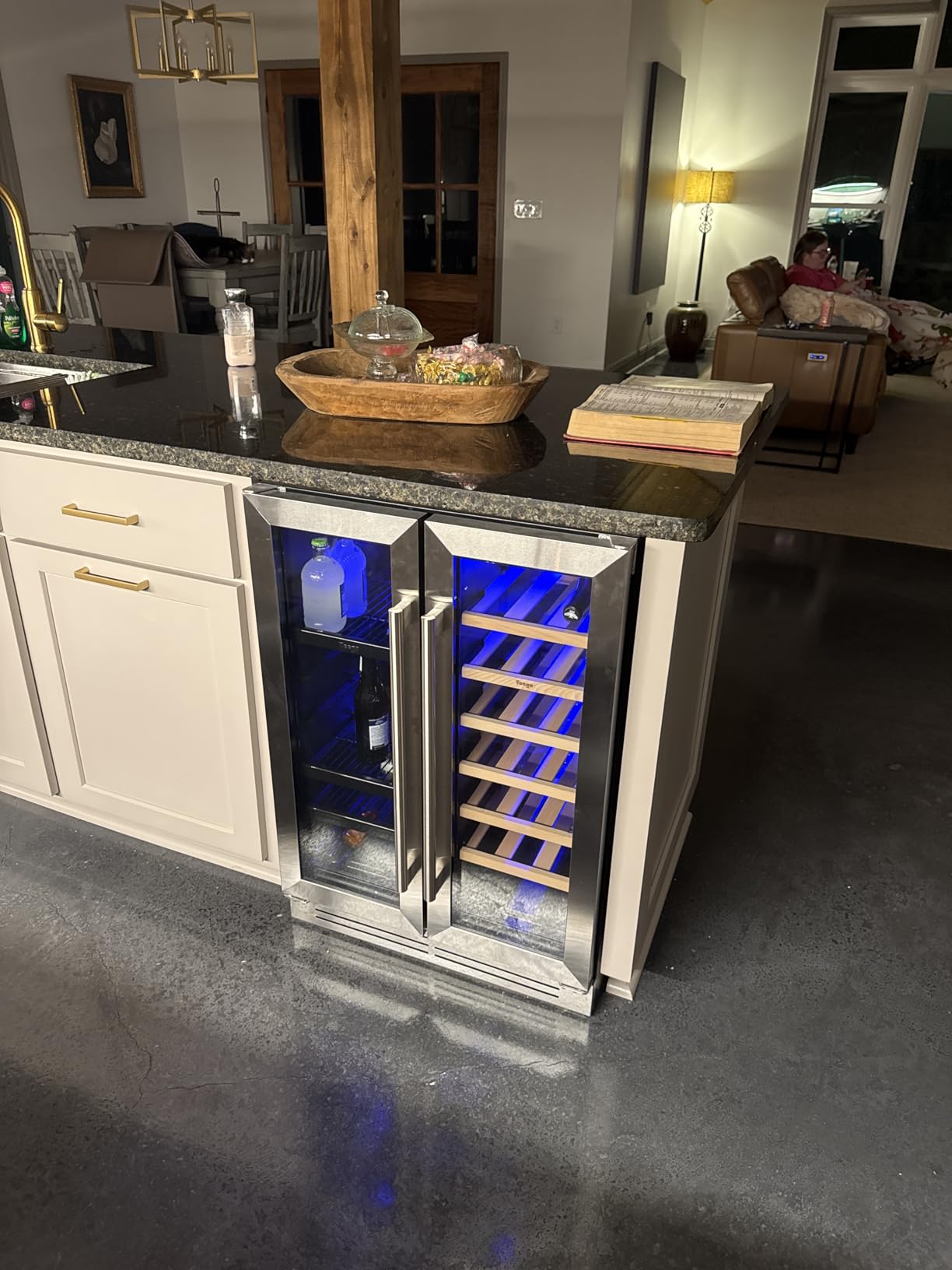
The engineering story is strong across the board. Compressor cooling with 360-degree air circulation beats thermoelectric units for both speed and hot-room stability. Double-pane tempered glass in a stainless frame blocks over 90 percent of UV rays, the finish resists fingerprints, and operation lands at 41 to 43dB, which is quiet but not library-quiet. It is ADA-compliant in its dimensions, which tells you the form factor was designed to slot into real cabinetry.
Where it falls short of perfection is zone isolation. Air can pass between the upper and lower zones, so the shelf nearest the divider drifts toward a midpoint rather than hugging either setpoint. Fully loaded shelves also get stiff to slide, a common complaint when five rows of bottles are pressing on the runners.
Support is responsive but email-only, with no phone line, and there is no charcoal filter included or clear guidance on buying one. None of that changed my verdict, because the core functions, temperature control, build quality, and install flexibility, are all excellent for the tier.
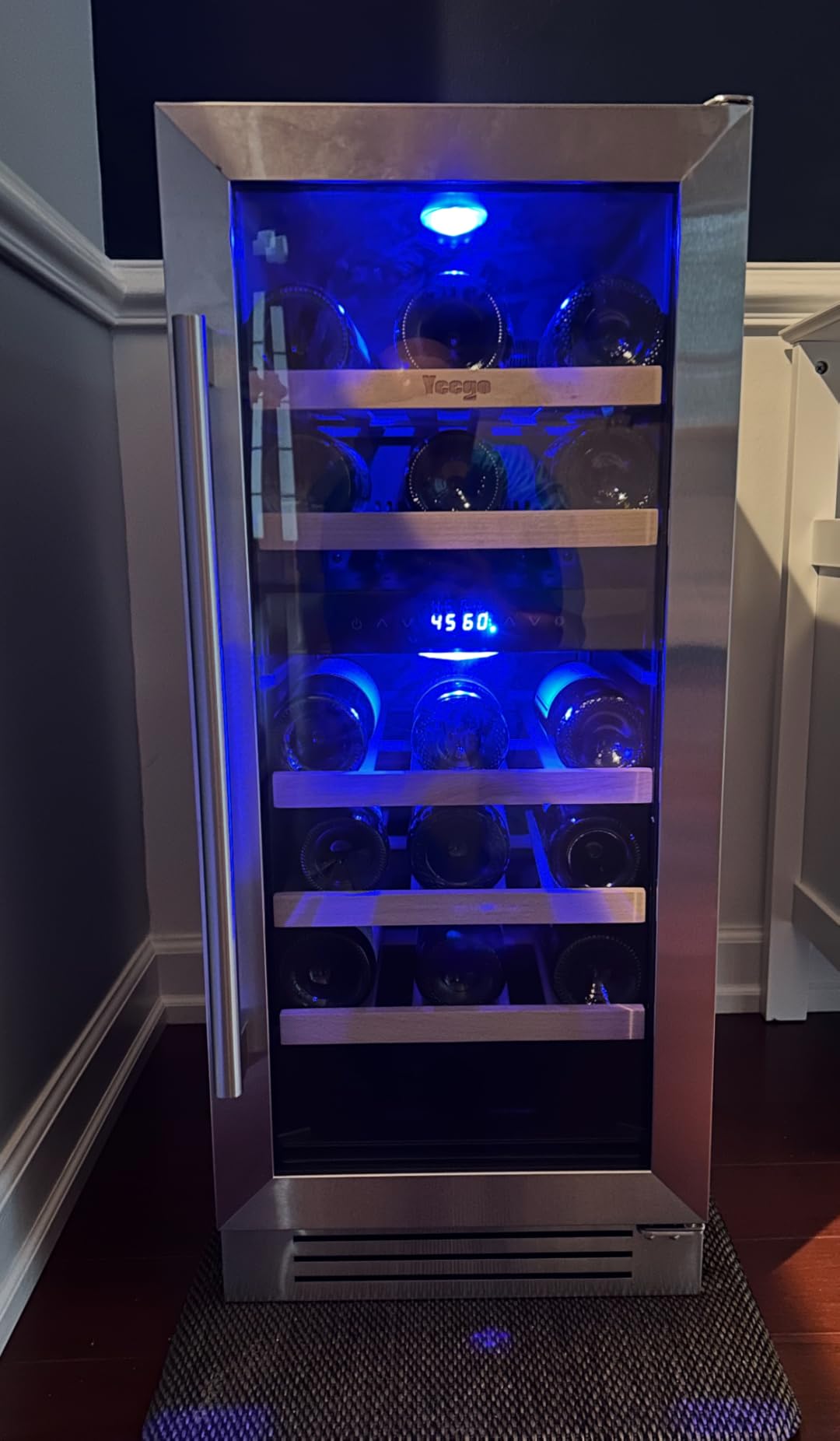
Built-In or Freestanding: Which Fits Your Kitchen?
Both are supported, which is the point. The front grille and venting are engineered for a zero-clearance under-counter install, and it also stands alone happily.
If you are renting or plan to move, go freestanding and keep your options open. If you are renovating, slide it into a 15-inch bay and enjoy the integrated look.
How Well Do the Zones Hold Different Wines?
Very well at the extremes. My top and bottom shelves sat within a degree of their setpoints for weeks, which covers the reds-versus-whites use case completely.
Treat the middle shelf as a transitional zone. It is perfect for roses and lighter reds that want something between your two setpoints anyway.
9. Ca’Lefort 61-Bottle Wine Fridge – Best Built-In Under-Counter Fridge
Ca’Lefort 24 Inch Wine Fridge, 61-Bottle Wine Cooler Refrigerator
61 bottles
40-65°F at 1°F steps
6 sapele wood shelves
Front vent for built-in
Pros
- Genuine front-vent design for cabinetry
- Three LED colors including label-friendly amber
- Long warranty up to 3 years on compressor
- Sturdy build at about 100 pounds empty
Cons
- Shelves stop short of full extension
- Controls sit inside the door frame
- Must rest 24-36 hours after delivery
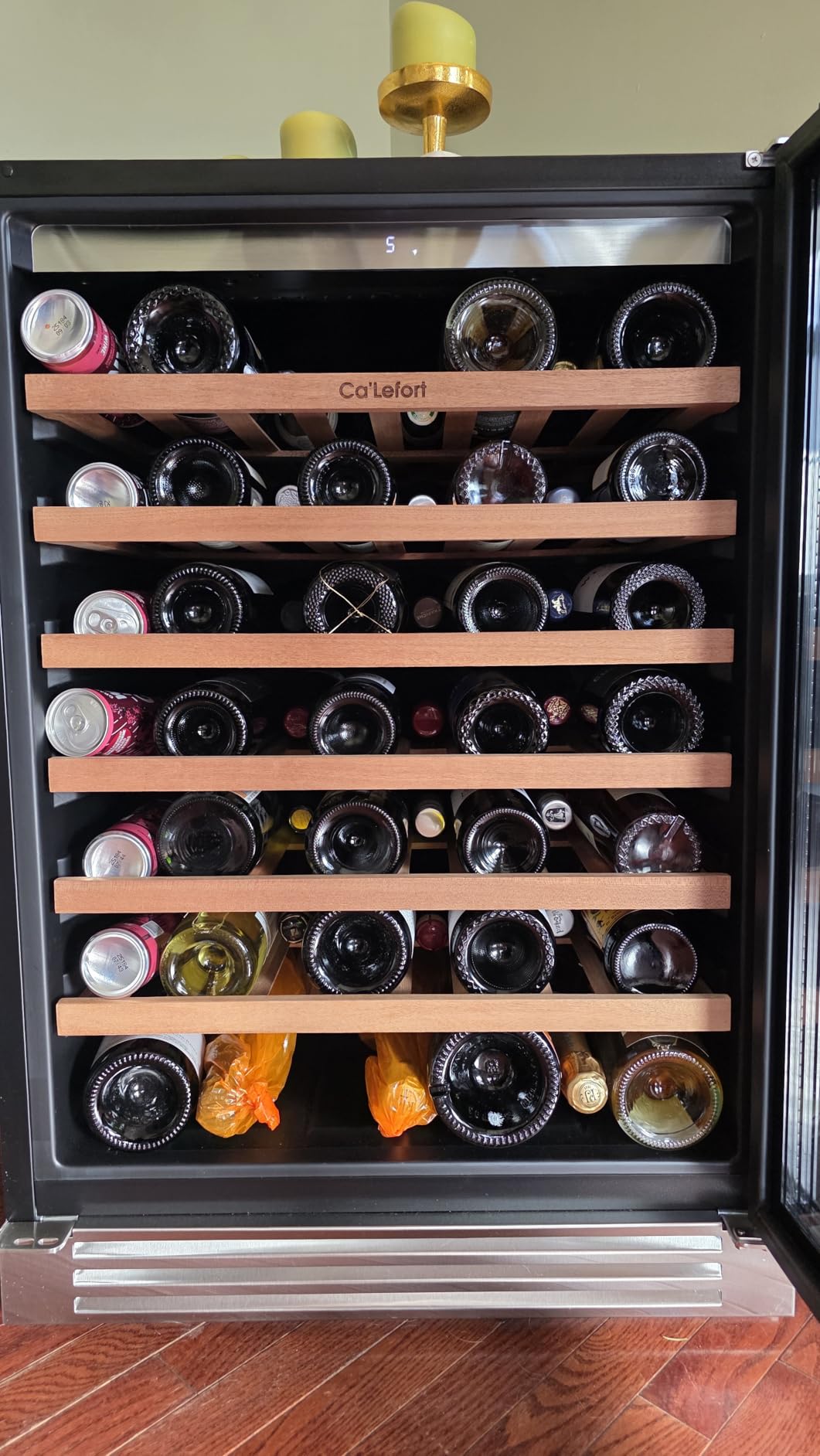
The Ca’Lefort is the appliance-grade pick of the mid-size group. At roughly 100 pounds empty with a brushed stainless double-glazed door, it feels like kitchen equipment rather than a bar-fridge accessory. It swallowed 61 standard bottles in my test with careful loading, and several owners report fitting slightly more by optimizing shelf positions.
What sold me was the lighting. Beyond the usual blue glow you get amber, blue, and white options, and amber is the one wine people should care about. Warm-toned light flatters labels for display without the harshness of white LEDs, and it is easier on corks and labels over years of illumination. Small thing, but it signals who this fridge is built for.
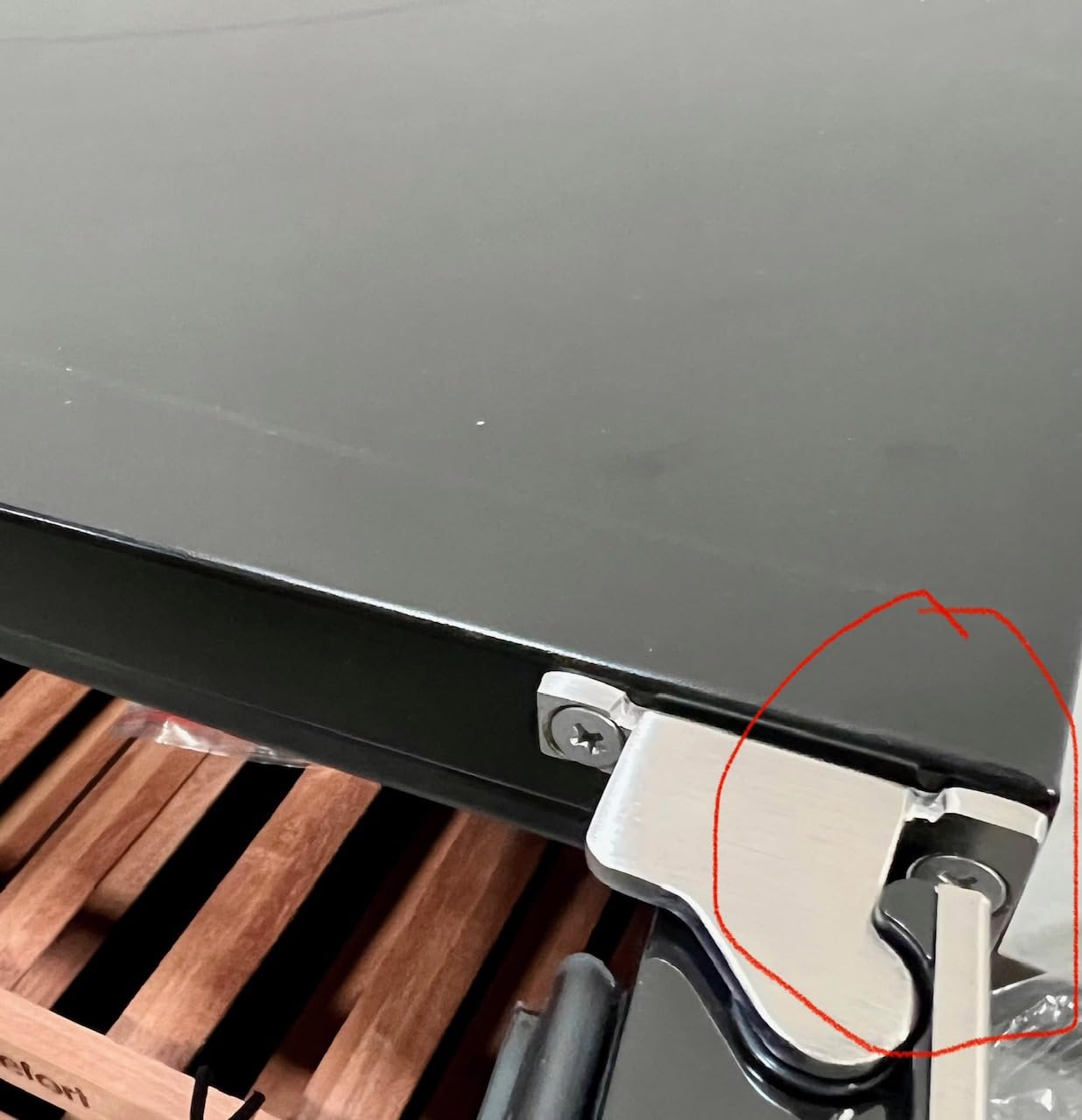
The technical sheet is deep for the tier. A rotary scroll compressor, a 40 to 65 degree range adjustable in one-degree steps, six removable sapele wood shelves, high-sealing gaskets to slow oxidation, a power failure memory function, low-noise operation, and a front-vent design rated for built-in, under-counter, or freestanding use. The warranty structure is also stronger than most: one year on the complete machine, two years on parts, and three years on the compressor.
Then there is the one instruction every new owner must follow. After shipping, the unit needs to rest unplugged for 24 to 36 hours so the compressor oil settles, and skipping this is the likely cause behind the minority of temperature-accuracy complaints. Mine sat for a full day before power-up and has been spot-on since.
The design gripes are real but minor. The shelves do not pull out to full extension, so reading labels on the back row means leaning in, and the controls live inside the door frame, meaning you open the door to change anything. The door glass is UV-protective but has no additional UV film, and there is no security lock at this trim level.
Is It Easy to Load and Read Labels?
Loading yes, label-scanning no. The wood shelves slide well but stop short, so the back bottles take a deliberate reach.
If you browse your collection nightly, that friction adds up. If you load it and mostly leave it alone, you will never think about it.
What Should You Know Before First Plug-In?
Rest it unplugged for 24 to 36 hours after delivery. Compressor refrigerant and oil need to settle after transit, and rushing this risks cooling problems.
Also confirm your cutout height. At under 34 inches tall it targets standard under-counter openings, but a 34-inch clearance with zero margin will fight you during install.
10. Velieta 190-Bottle Wine Cooler Tower – Best for Large Collections
Velieta 24 Inch Upgraded190 Bottles Wine Cooler Refrigerator
Up to 190 bottles
76.8 inch tall tower
Carbon odor purification
Safety lock included
Pros
- Largest capacity in our test by far
- Carbon purification absorbs odors
- Front vent allows built-in or freestanding
- Two oversize shelves for Pinot and Champagne
Cons
- Real capacity is roughly half of rated with mixed bottles
- Shelves are removable not truly adjustable
- Doors do not self-close
At some point a wine fridge stops being an appliance and becomes a cellar, and the Velieta tower is that threshold. Standing over 76 inches tall and weighing about 200 pounds, it is the only unit in this lineup that can hold a serious collection in one footprint. Ours became the centerpiece of a converted garage bar within an hour of unboxing.
The professional touches are what separate it from big-box tall fridges. A professional temperature control system keeps readings stable, a carbon purification system scrubs odors from the cabinet air, a safety lock protects the collection, blue LED accent lighting can be switched off entirely, and low-vibration engineering keeps sediment settled. Velieta also offers multiple color and finish variants, so you are choosing furniture as much as machinery.
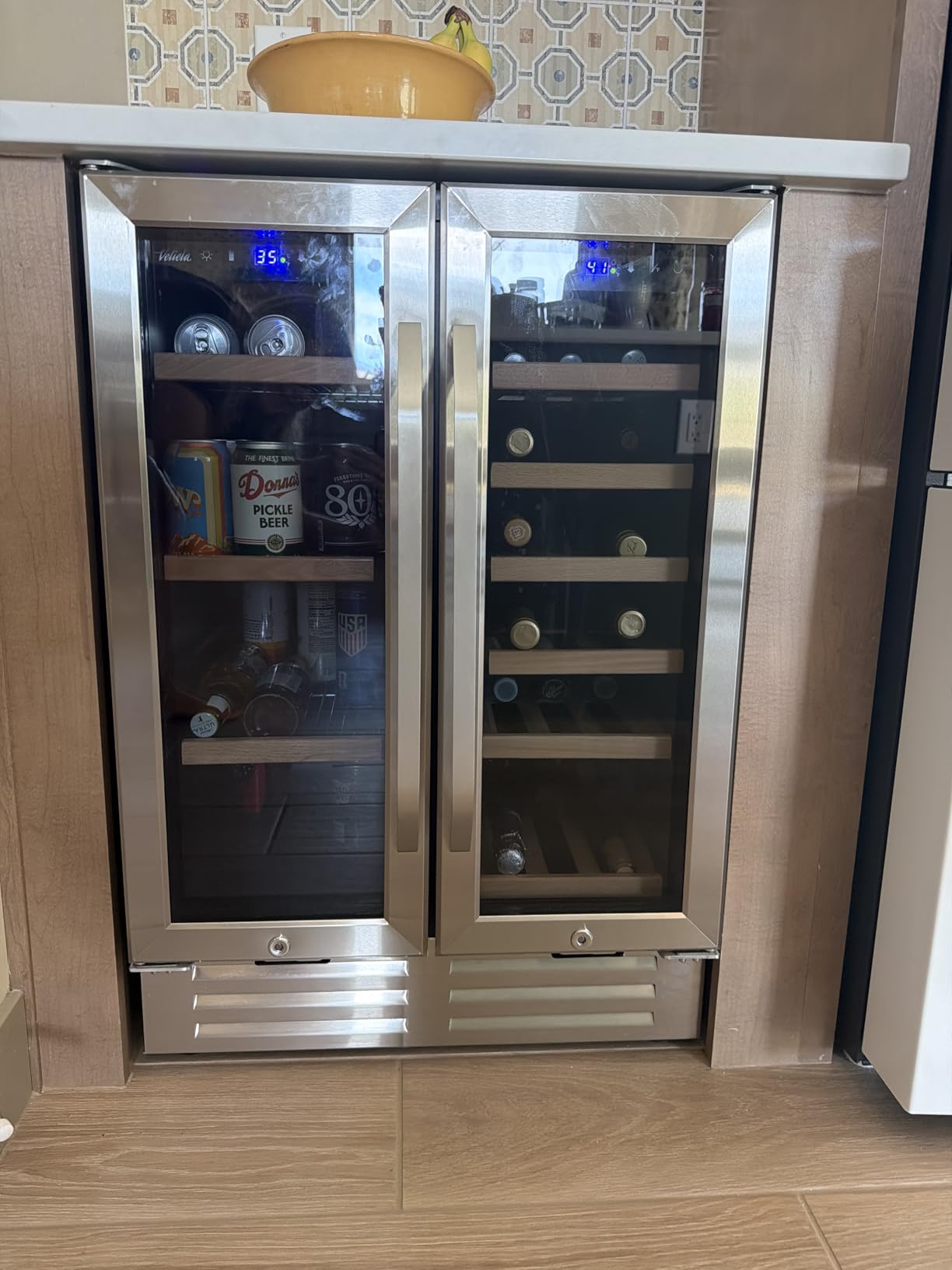
Here is the capacity conversation you need to have with yourself. The 190-bottle rating assumes uniform standard bottles, and with real-world Pinot Noir, Chardonnay, and Rhone shapes, owners consistently report landing closer to half the advertised count. The two large-space shelves are a thoughtful touch for Pinot and Champagne formats, but shelf spacing is fixed, so oversize bottles claim entire rows. One r/wine regular I quoted in my notes put it bluntly: buy double the capacity you think you need.
The shelf system is the main structural compromise. Shelves are removable but not repositionable, the slat spacing limits you to five or six bottles per row when fully loaded, and the doors do not self-close, so a door left ajar will silently warm the whole cabinet overnight.
Two of the strongest reasons to buy it anyway are the front-vent chassis, which permits true built-in installation, and the customer service reputation, which owners describe as fast and genuinely helpful. With 1,249 reviews at a 4.4 average and a 76 percent five-star rate, it has one of the strongest satisfaction records of any high-capacity cooler I have tracked.

How Many Bottles Will You Really Store?
Plan on 95 to 120 mixed bottles rather than 190. If your collection is Bordeaux-shaped and uniform, you will land meaningfully higher.
The right frame is to buy this for headroom, not for the sticker number. A cellar that is 80 percent full ages better anyway, since air circulation improves with a little space.
Can Two People Move and Install It?
Barely, and I would not attempt it without an appliance dolly. At roughly 200 pounds it is a two-person job minimum, and stairways are a genuine hazard.
Plan the placement before it arrives, clear the path, and consider paying for delivery placement. Once it is set and leveled you will not want to move it again.
Wine Fridge Buying Guide: What Actually Matters?
The five decisions below determine whether you end up happy with your wine refrigerator or writing a frustrated review in eight months. Read this before you click buy, because no spec sheet explains them honestly.
Compressor vs Thermoelectric Cooling
Compressor cooling wins for almost everyone, and every fridge in this roundup uses it. A compressor works like a tiny version of your kitchen refrigerator, pumping refrigerant to pull heat out regardless of the room around it.
Thermoelectric units have no moving parts and are silent, but they can only cool about 20 degrees below ambient temperature, which means a 78-degree summer room puts your wine near 58 degrees at best. They also choke in warm climates, and forum owners report cheap thermoelectric units failing far more often. r/wine’s consensus, which matches our testing, is to choose compressor unless silence is your single non-negotiable.
Single Zone vs Dual Zone
Single zone is for storage, dual zone is for drinking. One stable zone around 55 degrees is the correct long-term aging temperature for nearly all wine, so a single-zone fridge covers collecting perfectly.
Dual zone earns its premium when you serve different styles at short notice, holding reds near 58 to 62 degrees and whites or sparkling at 45 to 50 so nothing needs an ice bucket. If you entertain weekly or hate waiting for a bottle to chill, the Yeego and BODEGA picks pay for themselves in convenience.
The Bottle Capacity Reality Check
Every manufacturer’s bottle count assumes slim, uniform 750ml Bordeaux bottles, and real collections are not uniform. Expect 20 to 25 percent less capacity with typical mixed bottles, and up to half the rating on shelves with fixed spacing, exactly as we measured on the ROVSUN and Velieta.
Wide Pinot Noir bottles, tall German Rieslings, and Champagne formats are the usual culprits. Measure your most common bottle’s diameter and compare it to shelf spacing before you buy, and follow the collector rule from r/wine: whatever capacity you think you need, buy roughly double, because collections grow to fill whatever space exists.
Built-In vs Freestanding Installation
The difference is venting, and getting it wrong kills compressors. Freestanding-only fridges like the EUHOMY, Ivation, and Antarctic Star expel heat from the back and sides, and enclosing them in cabinetry traps that heat until the compressor runs constantly and dies early.
Front-venting units like the Yeego, BODEGA, Ca’Lefort, and Velieta exhaust through a front grille, so they tolerate the zero-clearance environment inside a cabinet run. Check the installation type in the specs before you commit to a kitchen plan, and leave a couple of inches of clearance wherever the manual asks for it.
Noise, Vibration, and UV Protection
Manufacturer decibel ratings translate simply: below 36dB is effectively silent, 41 to 45dB is noticeable in a quiet room, and anything above belongs in a garage or utility area. Match the rating to the room, because a 42dB fridge beside a bedroom wall becomes a nightly irritation.
Vibration and UV are the quiet long-term threats. Compressor vibration keeps sediment suspended and is blamed for prematurely tired wine, so wood shelves and vibration-dampened mounts are worth having. UV light degrades wine and fades labels, which is why tinted, double-paned, or UV-filtered glass doors are standard on every pick here.
Humidity, Maintenance, and How Long Wine Fridges Last
Humidity between 50 and 80 percent keeps corks from drying out and letting air in, and a wine fridge’s passive humidity is already better than a kitchen refrigerator’s. For long-term aging, some owners add a small humidity pack, and a charcoal filtration system like the Velieta’s helps keep cabinet air fresh.
Maintenance is modest: wipe shelves every few months, verify temperature with a standalone thermometer since displays drift, and defrost manual-defrost models when frost builds. Expect a well-treated compressor wine fridge to last 10 years or more, and weight the warranty structure accordingly, where the Ca’Lefort’s three-year compressor coverage leads this group.
Frequently Asked Questions
What is the most reliable wine fridge?
Compressor-based units from established brands are the most reliable wine fridges, and forum owners consistently rank EuroCave as the buy-for-life gold standard with ArteVino as its value sibling. Among the models we reviewed, the Ca’Lefort 61-bottle stands out for its 3-year compressor warranty, while the BLACK+DECKER has owner reports of 14-plus months of trouble-free cooling.
Which wine fridge is best according to Consumer Reports?
Independent testing publications, including Wirecutter’s long-running coverage, most often recommend Wine Enthusiast models like the Classic 80 and Classic 70 dual zone, with EuroCave as the upgrade pick. Those brands sit at a higher price tier than our list, which focuses on the strongest value units available on Amazon.
Which brand of wine fridge is the best?
EuroCave is widely considered the best wine fridge brand overall, with ArteVino as its more affordable sibling line. For mid-range and budget buyers, Wine Enthusiast earns praise for customer service, while Velieta, Yeego, and Ca’Lefort lead our value testing for temperature accuracy, build quality, and responsive support.
What is the difference between a wine fridge and a wine cooler?
There is no functional difference, and the terms are used interchangeably by manufacturers. Wine fridge, wine cooler, and wine refrigerator all describe a dedicated appliance that stores wine at stable temperatures, typically 40 to 65 degrees, with humidity control and UV protection. A wine cellar usually refers to larger capacity units or whole-room storage.
Do wine fridges use a lot of electricity?
No, most compressor wine fridges use surprisingly little power. Models in our roundup are rated from 120 to 288 kWh per year, with the Ivation 18-bottle the most efficient at about 120 kWh, which amounts to a small addition to a monthly electric bill.
Final Verdict: Which Wine Fridge Should You Buy?
After three months of thermometers, probe readings, and label checks, the best wine fridges of 2026 split cleanly by use case. The Yeego 28-bottle dual zone is our overall winner for independent red and white storage and flexible installation, the Antarctic Star 16-bottle is the smart first purchase for counters and small apartments, and the Icyglee 25-bottle is the one to buy when silence matters most.
Bigger plans call for bigger cabinets. The Ca’Lefort 61-bottle is the appliance-grade built-in, the BODEGA 30-bottle is the value dual zone, and the Velieta 190-bottle tower is the collector’s endpoint. Whatever you choose, trust a standalone thermometer over the display for the first week, give any compressor unit proper ventilation, and buy more capacity than today’s collection needs, because it will fill.
Pick the fridge that matches your room and your drinking habits, not the biggest number on the box. Your corks, your labels, and every bottle you pull at the right temperature will thank you for it.