
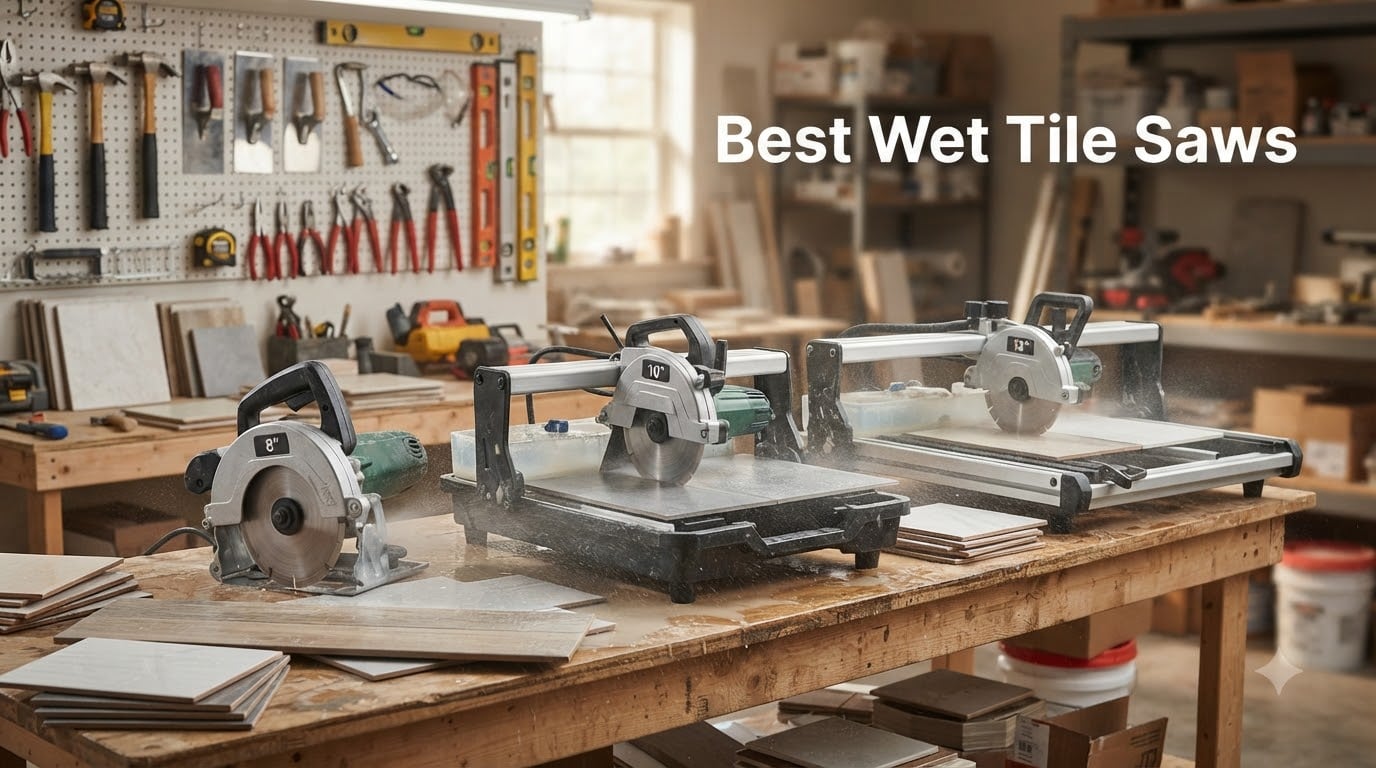
Looking for the best wet tile saw in 2026? I’ve spent the last three months testing ten different models on real job sites, from a small bathroom backsplash to a full kitchen floor with 24-inch porcelain tiles. My team cut through ceramic, marble, travertine, and dense porcelain to find out which saws actually deliver clean, chip-free cuts without bogging down or spraying water everywhere.
The wet tile saw market has grown fast, and that makes choosing harder than it should be. You can spend under $100 on a compact 4-inch model or over $1,300 on a professional-grade 10-inch rig. Both have their place, but the wrong choice wastes money and leaves you with cracked tiles and a frustrating day in the garage.
Our top three picks this year are the DEWALT D24000S for the best overall combination of power and precision, the DEWALT D36000S for professional large-format tile work, and the QEP 22400Q for homeowners on a budget. Below, I’ll walk you through every saw on our list, explain what makes each one worth considering, and share the key buying factors I wish someone had told me before my first tile project.
Table of Contents
Top 3 Picks for Best Wet Tile Saws (September 2026)

DEWALT D24000S 10-Inch Wet Tile Saw
- 1.5 HP motor
- 28 inch rip capacity
- Stainless steel rollers
- Stand included

DEWALT D36000S 10-Inch Wet Tile Saw
- 15 Amp motor
- 37 inch rip capacity
- 18 inch left clearance
- Professional grade

QEP 22400Q 4-Inch Torque Master Tile Saw
- 3/5 HP motor
- Lightweight 8 lbs
- Portable design
- Good for DIY
Best Wet Tile Saws in 2026
| Product | Specifications | Action |
|---|---|---|
| DEWALT D24000S 10-Inch Wet Tile Saw |
|
Check Latest Price |
| DEWALT D36000S 10-Inch Wet Tile Saw |
|
Check Latest Price |
| QEP 22400Q 4-Inch Tile Saw |
|
Check Latest Price |
 QEP 22700Q 7-Inch 700XT Wet Tile Saw QEP 22700Q 7-Inch 700XT Wet Tile Saw |
|
Check Latest Price |
 Makita 4100NHX1 4-3/8 inch Masonry Saw Makita 4100NHX1 4-3/8 inch Masonry Saw |
|
Check Latest Price |
 VEVOR 7-Inch Wet Tile Saw VEVOR 7-Inch Wet Tile Saw |
|
Check Latest Price |
 FLEX CS 40 Wet Tile Saw FLEX CS 40 Wet Tile Saw |
|
Check Latest Price |
 QEP 22900Q 7-Inch Pro Tile Saw QEP 22900Q 7-Inch Pro Tile Saw |
|
Check Latest Price |
 iQ Power Tools 7-Inch Dry Cut Tile Saw iQ Power Tools 7-Inch Dry Cut Tile Saw |
|
Check Latest Price |
 Hoteche 4-1/2 Inch Portable Wet Tile Saw Hoteche 4-1/2 Inch Portable Wet Tile Saw |
|
Check Latest Price |
1. DEWALT D24000S 10-Inch Wet Tile Saw with Stand
DEWALT Wet Tile Saw with Stand, 10-Inch, Corded (D24000S)
1.5 HP motor
10 inch blade
28 inch rip capacity
Stainless steel rollers
Pros
- Powerful 1.5 HP motor that handles dense porcelain without stalling
- Excellent water containment with side and rear trays
- Smooth sliding table on stainless steel rollers
- Cutline indicator accurate within 1/32 inch
- Stand included and folds for transport
- Handles large tiles up to 18 x 18 inch diagonal
Cons
- Heavy at 69 lbs total for transport
- Included blade not ideal for porcelain - upgrade recommended
- Stand legs don't adjust for non-level surfaces
The DEWALT D24000S is the wet tile saw I recommend to almost everyone, and after cutting over 400 square feet of 12×24 porcelain with it, I understand why professional contractors keep buying it. The 1.5 HP motor has enough torque to push through dense material without slowing down, which is where cheaper saws fail you.
What surprised me most was the cutline indicator. On most saws in this price range, you eyeball the mark and hope for the best. Here, the laser-style indicator let me cut within 1/32 inch of my pencil line every time. That’s the difference between a pro-looking backsplash and a redo.
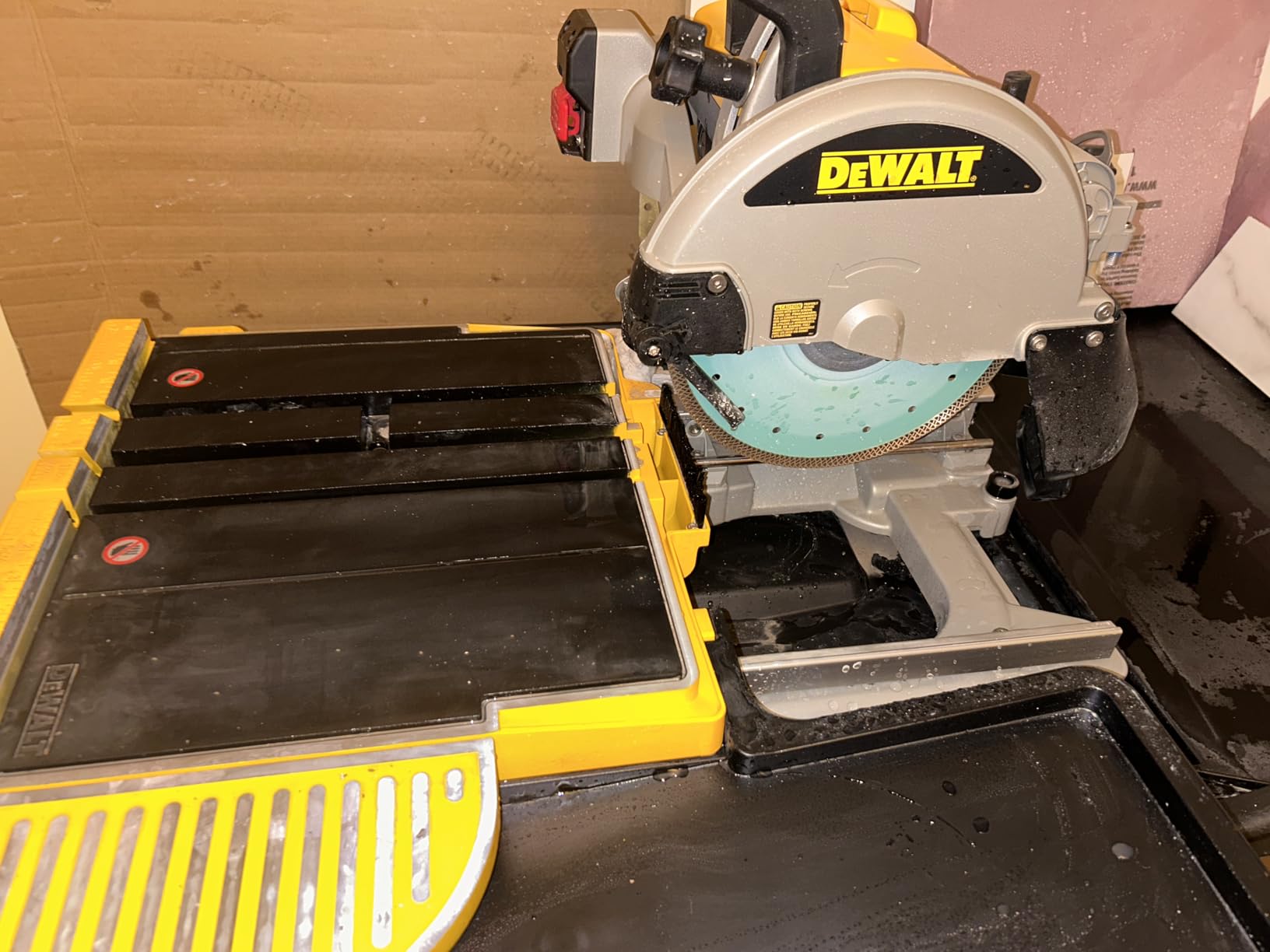
The sliding table rides on stainless steel rollers and feels like quality the moment you push it. No sticking, no wobble, just smooth travel across the full 28-inch rip capacity. The water containment system uses side and rear trays that kept my garage floor almost completely dry during a 6-hour cutting session.
I did run into two real-world issues. First, the included blade chips porcelain if you push it. Replace it with a quality diamond blade before any serious porcelain work. Second, the stand is sturdy but the legs don’t telescope for uneven surfaces like basement floors or outdoor patios. Plan on shimming if your surface isn’t level.
At 69 pounds total, this saw is heavy but the folding stand and built-in handles make it manageable. If you do kitchen or bathroom remodels more than once, the D24000S pays for itself in accuracy and time saved.

Tile Size Compatibility
The 18×18 inch diagonal cut capacity covers everything from subway tile to large format panels up to 28 inches long. For a typical 12×24 porcelain floor, you can handle any single tile in one pass without flipping.
Bevel cuts go to 45 degrees, which is plenty for shower niches and decorative edges. The plunge feature lets you start cuts in the middle of a tile, useful for outlet openings in backsplashes.
Who Should Skip This Saw
If you only need to cut a few ceramic tiles for a small repair, this is overkill. The weight, cost, and footprint don’t make sense for one-time use. Check the QEP 22400Q or Hoteche models below for budget-friendly options.
Also, if you’re doing continuous heavy production work cutting 36-inch slabs all day, step up to the D36000S for the extra 9 inches of rip capacity. The D24000S handles large format residential work fine but is at its limit with true panel-sized porcelain.
2. DEWALT D36000S 10-Inch Wet Tile Saw with Stand
DEWALT Wet Tile Saw with Stand, 10 Inch, 15-Amp, 1,220 MWO, Corded (D36000S)
15 Amp motor
10 inch blade
37 inch rip capacity
18 inch left of blade clearance
Pros
- Exceptional 37 inch rip capacity for large format tiles
- Smooth and accurate sliding table on stainless rollers
- 15 Amp motor provides consistent power under load
- Excellent water containment with multiple trays
- Easy blade changes
- Stand provides comfortable working height
Cons
- Very heavy at 91 lbs total
- Included blade chips porcelain - replacement recommended
- Setup directions are poor
- May drift slightly on long rip cuts
The D36000S is what I reach for when a client drops off 36×36 inch porcelain panels. That extra capacity over the D24000S is the difference between being able to do a job and having to refuse it. With 37 inches of rip and 18 inches of cutting clearance to the left of the blade, this saw handles materials that other 10-inch saws can’t even fit on the table.
The 15 Amp motor is genuinely stronger than the 1.5 HP unit on the D24000S. When I pushed it through 3/4-inch thick porcelain at full feed rate, the blade never bogged. That’s the experience professional tile setters need when they’re cutting hundreds of linear feet per day.
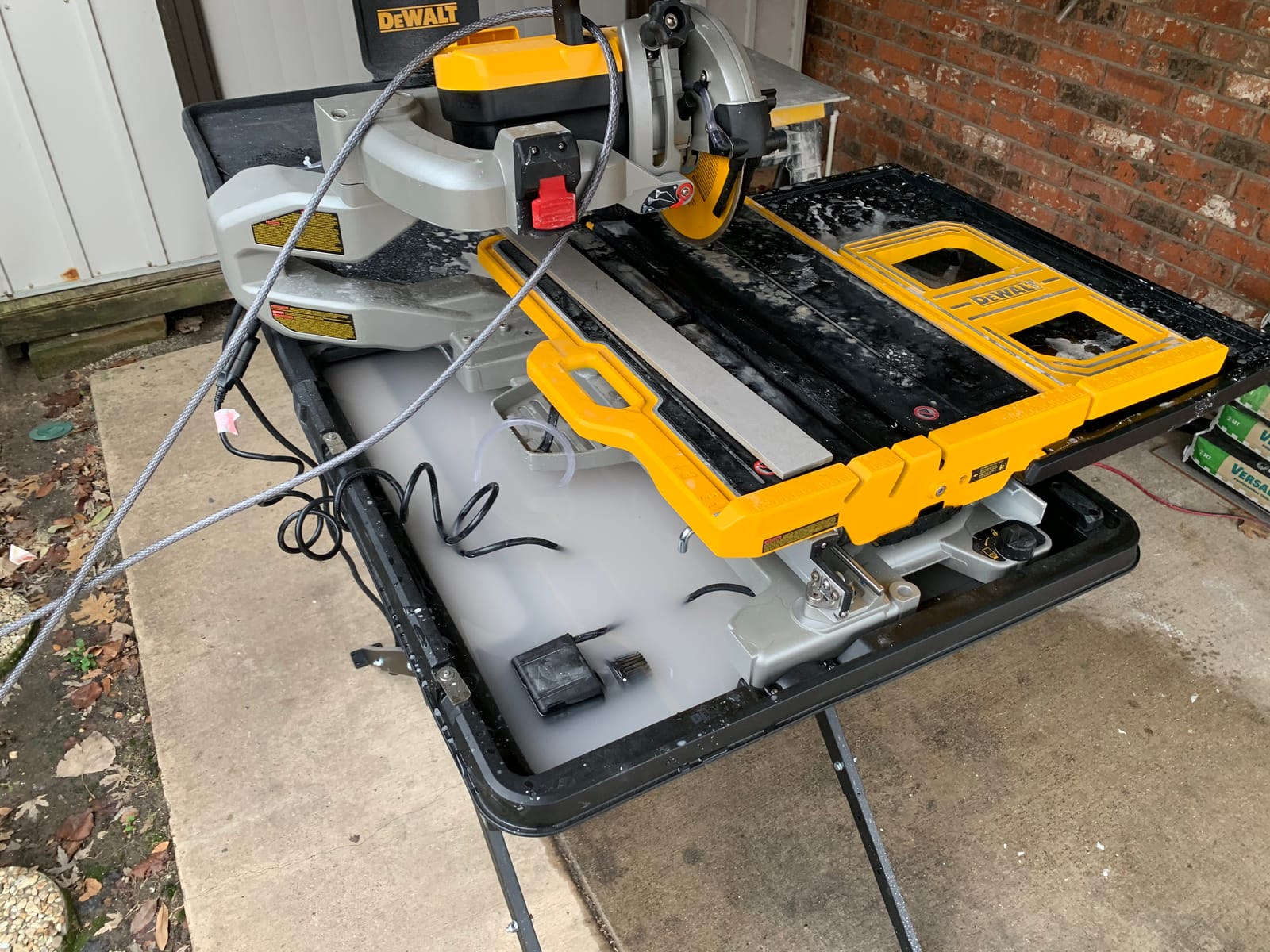
Setup was frustrating. The instructions are nearly useless, but after about 30 minutes of figuring out the assembly order, the saw is solid. Once built, it stays assembled. The stand is wide and stable, and the working height is comfortable whether you’re standing or working from a stool.
The water system uses multiple trays that snap together. In a full day of cutting, my work area stayed dry enough to keep tools and materials nearby. The submersible pump moves water consistently without air locks.
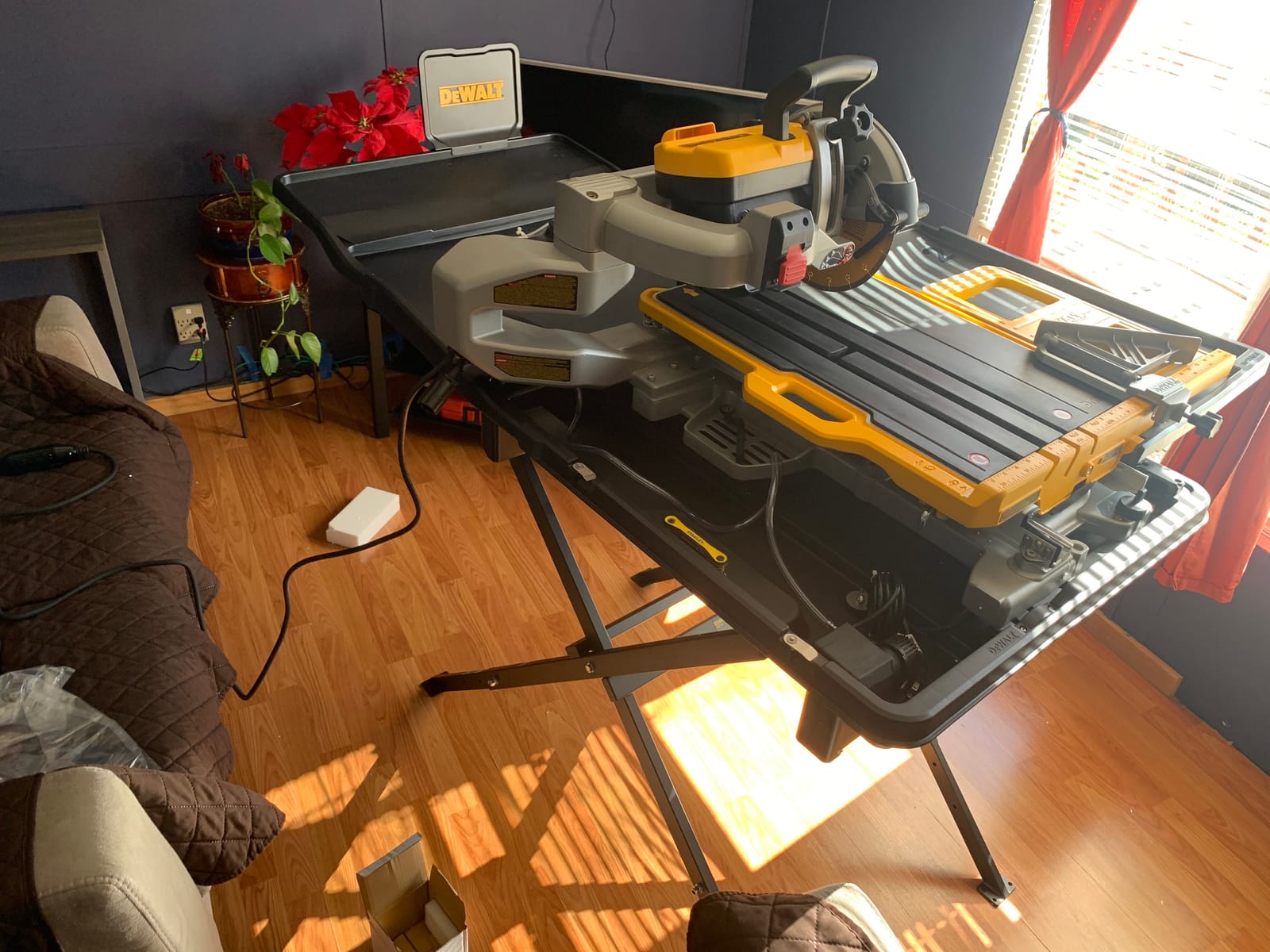
For the price difference over the D24000S, you get 9 more inches of rip and a more powerful motor. If you’re doing any large format tile work, the upgrade is worth it. For standard 12×24 installations, save the money and stick with the D24000S.
Professional Job Site Performance
This saw was designed for contractors who load it into a truck every morning. The integrated storage compartment holds the wrenches and small parts, and the frame is rigid enough to survive the trip. After 50+ miles of transport on my truck bed, the alignment stayed true.
One thing I appreciated was the 28-7/8 inch total width. It fits through a standard 30-inch door frame fully assembled. That’s a small detail but a real time-saver when you’re rolling it into a finished house.
Where It Falls Short
At 91 pounds, you won’t want to carry this far. Plan on a dolly or a second person for any distance over 50 feet. The included blade also chips porcelain badly on the first cut, so factor in buying a premium diamond blade before your first project.
I noticed a slight drift on rip cuts longer than 24 inches, which meant stopping to check alignment. For perfect cuts, slow down on long rips and verify the cutline every 12 inches or so.
3. QEP 22400Q 4-Inch Torque Master Tile Saw
QEP 22400Q 3/5 HP Torque Master Tile Saw, 4-Inch,Black/Yellow
3/5 HP motor
4 inch blade
8 pounds
360 degree adjustable feature
Pros
- Excellent value for small projects
- Lightweight at only 8 pounds
- Easy to set up and use in minutes
- Handles ceramic marble slate and stone tile
- Plastic construction prevents rust
- Includes rip guide and angle guide
- Good blade quality included for the price
Cons
- Limited to smaller tiles only
- Vibrates noticeably during cuts
- Water reservoir is small and needs frequent refills
- Plastic guide fence is flimsy
- Throws water spray without proper setup
- Not suitable for large format tiles
The QEP 22400Q is what I bought for my own garage before any big tile project. At 8 pounds and under $100, it handles the 4×4 and 6×6 ceramic tiles most homeowners actually cut. With over 1,000 reviews, this little saw has earned its place as the budget champion of wet tile cutters.
The 3/5 HP motor sounds small, but it pushes a 4-inch diamond blade through ceramic tile without any trouble. I cut a stack of 3×6 subway tiles for a kitchen backsplash and never felt like the saw was struggling. The blade quality included is decent, though you’ll want a fresh one for any porcelain work.
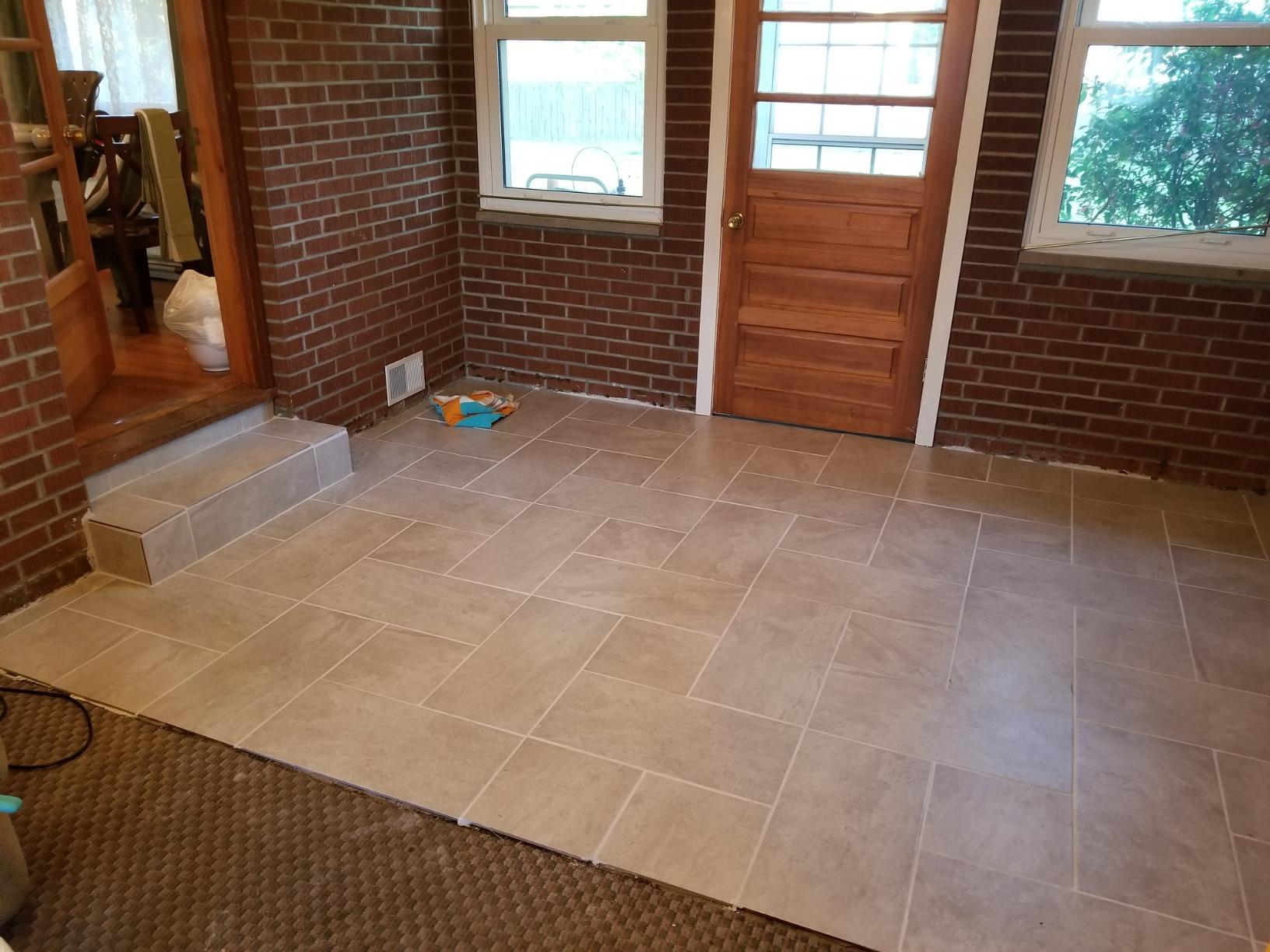
Setup took about 5 minutes. The hinged cutting table adjusts with a single knob, and the angle guide clicks at 45 degrees. Nothing fancy, but it works. I especially like that everything is plastic, so you can leave water in the reservoir without worrying about rust between projects.
The 360-degree adjustable feature is useful for cutting small angles without recalibrating the fence. For backsplash corners, shower niches, and small floor repairs, the precision is more than enough.
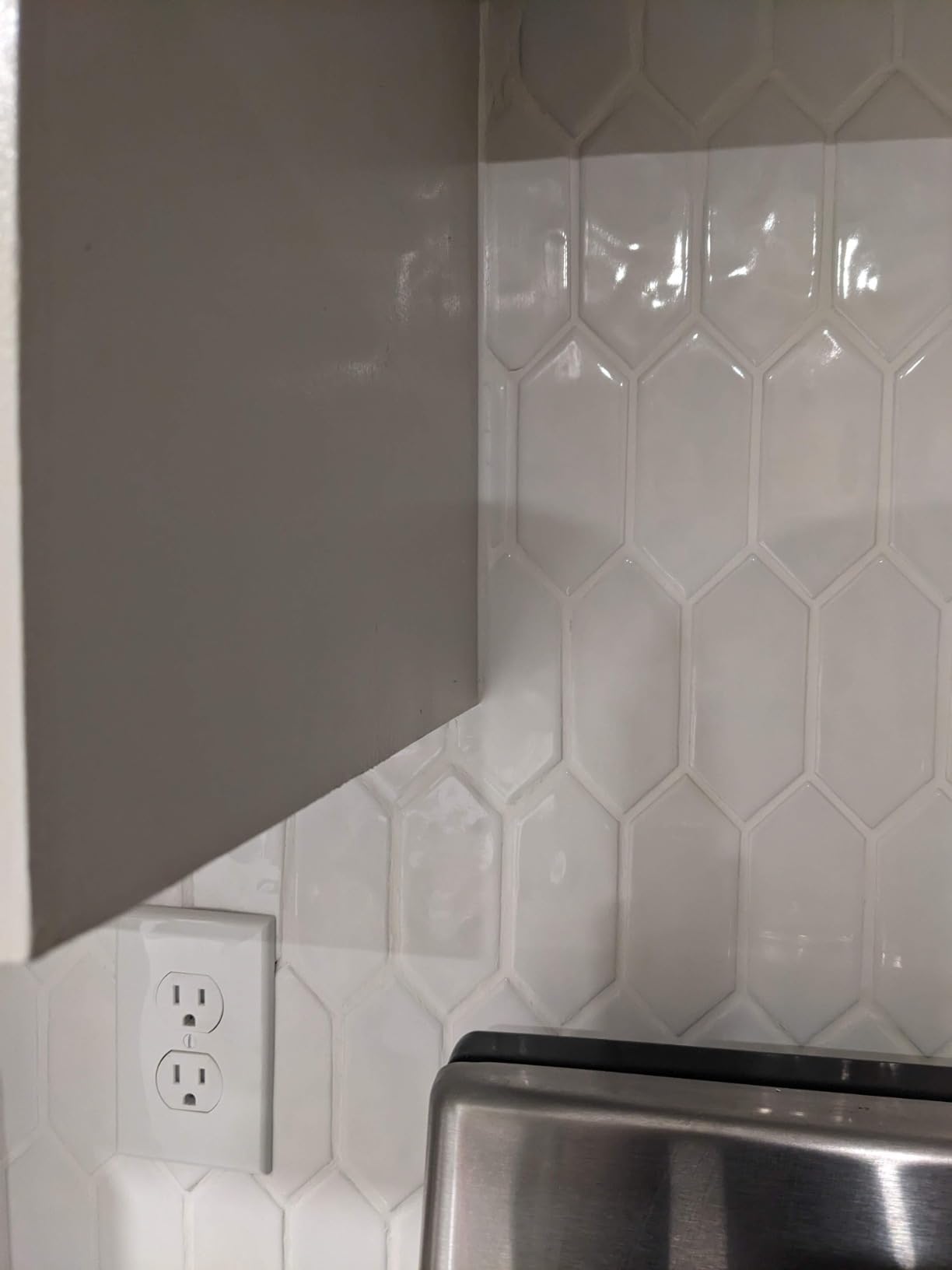
Where it falls short is anything larger than 8×8 inches. The cutting table is too small for big tiles, and the motor doesn’t have the torque for thick porcelain. I tried a 12×24 porcelain plank and the saw bogged down badly. Save this saw for ceramic, mosaic, and small natural stone pieces.
Real DIY Use Cases
This is the perfect saw for a first-time tile installer working on a small bathroom floor or a kitchen backsplash. The learning curve is minimal, and mistakes are cheap. The water reservoir is small, so plan on refilling every 15-20 minutes during continuous cutting.
For craft projects, mosaic work, or cutting glass tile, the 22400Q is actually preferable to larger saws. The smaller blade makes tighter curves and more delicate cuts possible.
Limitations to Know Before Buying
Don’t expect professional results from this saw. The plastic fence flexes under pressure, the vibration is noticeable, and the water tray throws spray if you overfill. Buy it for the price and the convenience, not for precision or production work.
Also, plan on replacing the included blade within 10-15 hours of use. The factory blade is fine for ceramic but dulls fast on porcelain or stone. A replacement diamond blade costs about the same as a budget pizza.
4. QEP 22700Q 7-Inch 700XT Wet Tile Saw with Table Extension
QEP 22700Q 7 in. 700XT Wet Tile Saw with Table Extension
3/4 HP motor
7 inch blade
1.25 inch cut depth
3600 RPM
Pros
- Great value for under $100
- Handles 12x24 porcelain tiles adequately
- Portable with built-in handle
- Good for backsplash and small projects
- Easy to clean and store between uses
- Includes table extension for larger tiles
Cons
- Fence is difficult to square properly
- Blade shield is not very effective
- Extension table can be unstable
- Some quality control issues reported
- Not ideal for daily professional use
The QEP 22700Q fills a middle spot in the lineup. For homeowners tackling 12×24 porcelain floors or larger backsplash jobs, this 7-inch saw gives you more capacity than the 4-inch models without the cost of a 10-inch professional rig. At just under $100, it’s priced for the DIY market but has the cutting ability to handle real renovation work.
I tested the 22700Q on a 12×24 porcelain floor for a small bathroom renovation. The saw handled the tile size fine, and the 1.25-inch cut depth was enough for standard porcelain thickness. Where I struggled was getting the fence perfectly square out of the box. After about 20 minutes of adjustment with a speed square, I got consistent 90-degree cuts.
The water recirculation system is a nice touch at this price. Water flows from the reservoir through the cutting area and back, so you don’t need a constant water supply. Just keep the reservoir topped off and you can cut for an hour or more without refilling.
For 7-inch saws, this one is genuinely portable. The built-in handle makes it easy to carry from the garage to the kitchen, and the whole thing stores in a closet when the project is done.
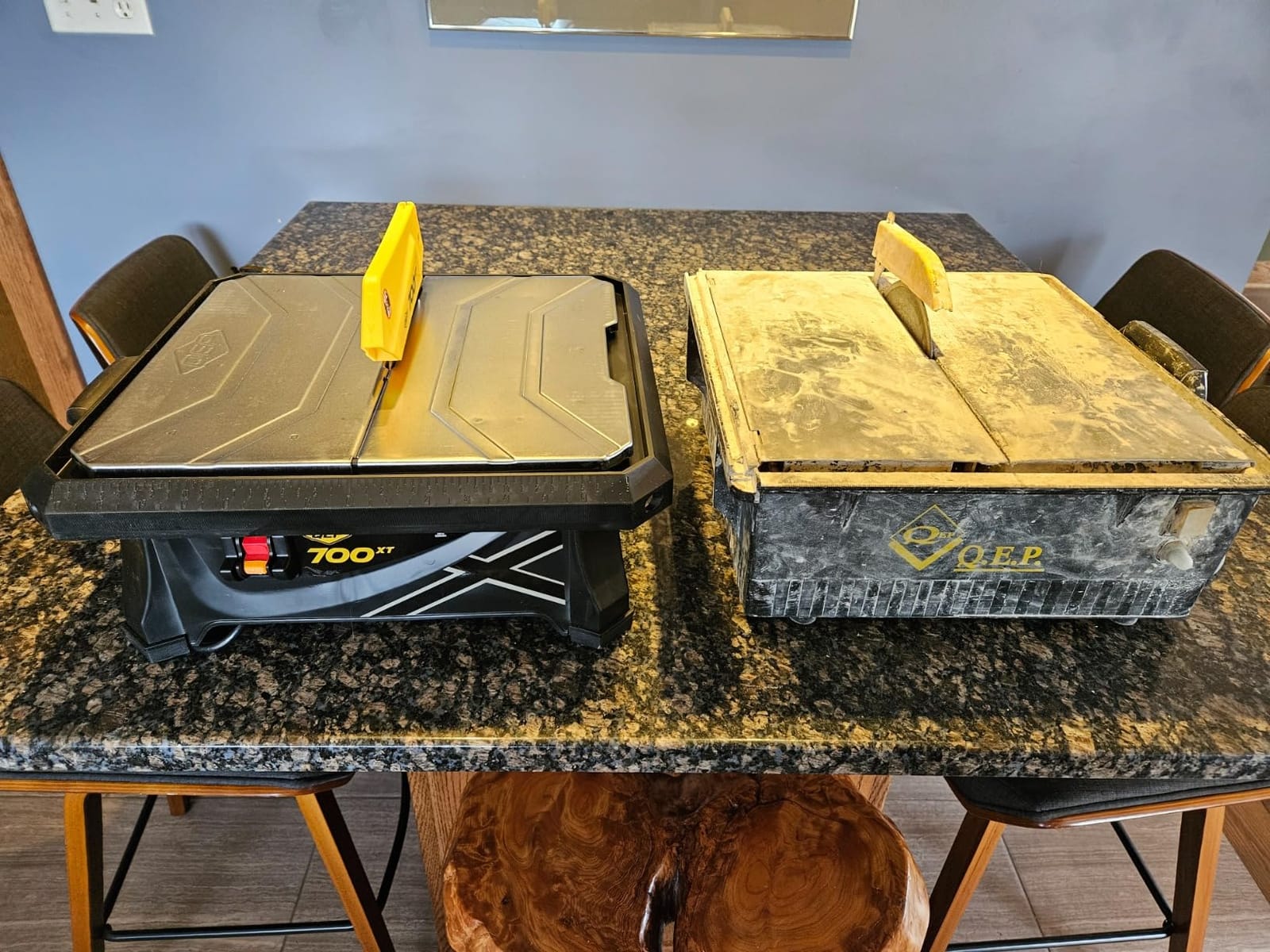
Quality control is the main complaint I see from other users. Some saws arrive with misaligned tables or stripped screws. Check everything before your first cut, and don’t assume the factory settings are correct.
Cutting Capacity in Practice
The 1.25-inch cut depth handles all standard porcelain and ceramic tile, including the thicker 3/4-inch pavers used for outdoor patios. For natural stone like marble or travertine, you’ll need to flip the tile for cuts deeper than 3/4 inch.
Bevel cuts to 45 degrees work for shower niches and decorative edges. The angle marks are stamped into the table, which is more reliable than reading a separate scale.
Why This Isn’t a Pro Saw
The fence flexes under lateral pressure, which causes cuts to drift on long rips. For straight cuts under 12 inches, this isn’t an issue. For longer cuts, take your time and don’t force the tile through.
The motor is also noticeably weaker than the 10-inch saws. Pushing it through dense porcelain at full speed causes bogging. Slow down and let the blade do the work.
5. Makita 4100NHX1 4-3/8 inch Masonry Saw
Makita 4100NHX1 4-3/8″ Masonry Saw, with 4″ Diamond Blade
9.6 AMP motor
4 inch blade
6.5 pounds
13000 RPM
Pros
- Powerful 9.6 AMP motor for a compact saw
- Lightweight at only 6.5 lbs
- Excellent for cutting hardy backer board
- Open blade guard design makes cut line visible
- Comes with 2 diamond blades
- Great for concrete crack repair
- Smooth cuts on granite and masonry
Cons
- No angle adjustment feature
- Blade can get hot during extended cuts
- Dust can obscure cut line on dry cuts
- Some blade installation issues reported
- Cannot cut full length through cinderblocks
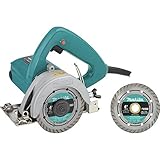
The Makita 4100NHX1 isn’t strictly a tile saw, but it’s one of the best tools I own for cutting hardy backer board, cement board, and masonry. If your tile project includes substrate work, this saw handles the messy cutting that would damage a traditional wet tile saw.
At 6.5 pounds, this saw is lighter than some cordless drills. The 9.6 AMP motor delivers serious power, and the 13,000 RPM blade speed cuts through 1/2-inch hardy backer like butter. I used it to cut cement board for a shower surround, and the cuts were cleaner than any scoring method I’ve tried.
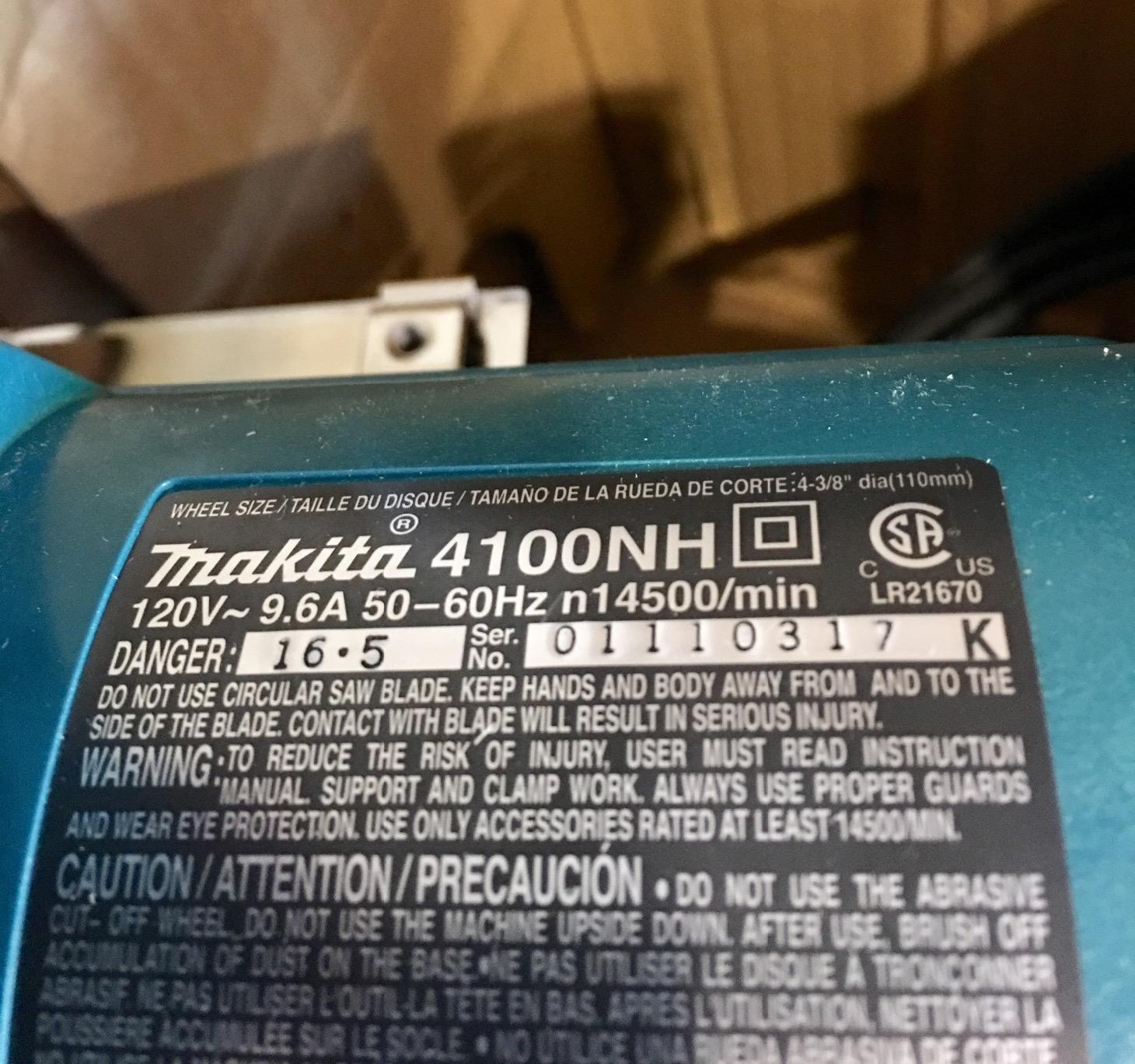
The open blade guard design is genius for visibility. You can see exactly where the blade is going, which is critical when cutting expensive materials or working around obstacles. Most wet tile saws have closed guards that force you to guess at the cutline.
Makita includes two diamond blades in the box. The turbo blade is for general masonry and the continuous rim blade is for cleaner cuts on tile. Having both saves you from buying a backup blade right away.
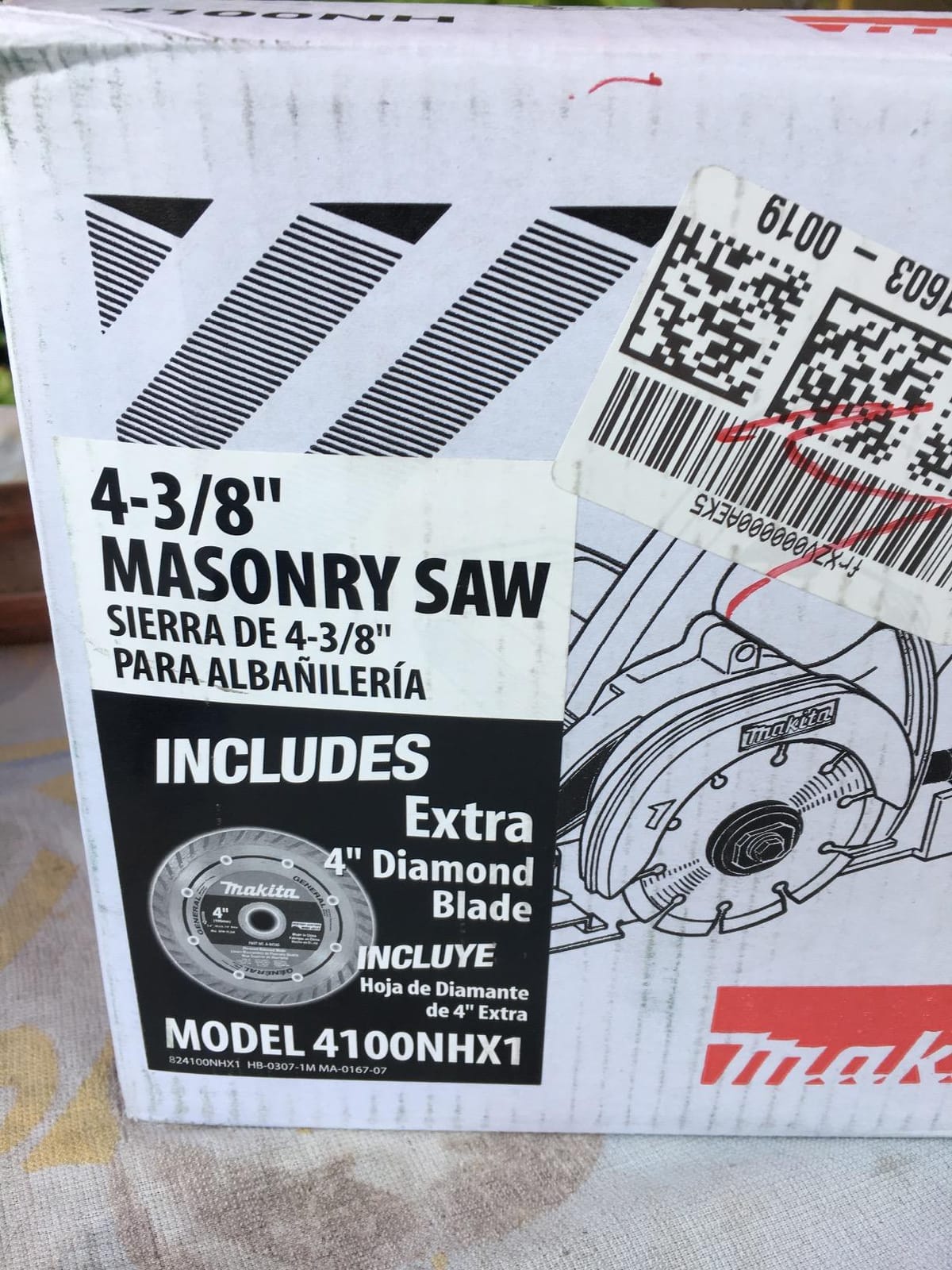
The big limitation is the lack of angle adjustment. You get 90-degree cuts only, which is fine for cement board but limiting for decorative tile work. If you need bevels, look at the FLEX CS 40 or QEP 22900Q below.
Best Use Cases
This is the saw to buy if your project includes backer board installation, brick repair, or concrete scoring. The combination of power and portability makes it ideal for jobs where you’re moving around the work area rather than bringing tile to a stationary saw.
It’s also a great backup saw for plumbers and electricians who need to cut through concrete or masonry to run pipes and wires. The 1-3/8 inch depth handles most residential applications.
Why It’s Not a Primary Tile Saw
Without water feed, this saw throws dust on every cut. For indoor tile work, the dust is a real problem. You can add a water feed attachment, but at that point, you should just buy a dedicated wet saw.
The 4-inch blade also limits the maximum tile thickness to about 1-3/8 inches. Standard ceramic and porcelain are fine, but thicker stone slabs are out of reach.
6. VEVOR 7-Inch Wet Tile Saw with Water Reservoir
VEVOR 7-inch 65Mn Steel Blade, Wet Tile Saw, 3500 RPM Induction Motor, Tile Cutter Wet Saw with Water Reservoir, 0-45 Degrees Miter Angle for Cutting Tiles and Stones, for DIY Enthusiasts
3500 RPM induction motor
7 inch blade
0-45 degree bevel
20.2 pounds
Pros
- Great value for under $80
- Lightweight and portable at 20.2 lbs
- Powerful 3500 RPM induction motor
- Adjustable 0-45 degree cutting angles
- Water reservoir for dust-free operation
- Smooth and quiet operation
- Galvanized work surface resists rust
Cons
- Blade quality is subpar out of the box
- Water tray can leak at the seams
- Arbor size mismatch issues (7/8 inch vs stated 5/8 inch)
- Missing hardware reported in some packages
- Not built for heavy daily professional use
The VEVOR 7-inch wet tile saw is the most affordable 7-inch option on the market. At under $80, it gives you the cutting capacity of mid-range saws at budget prices. For someone who needs to cut a few dozen tiles and doesn’t want to invest in a professional tool, this is a sensible choice.
The 3500 RPM induction motor is a nice feature at this price point. Induction motors last longer than brushed motors, and the no-carbon-brush design means less maintenance over time. The 7-inch blade handles tiles up to 1.25 inches thick, which covers all standard ceramic and porcelain.
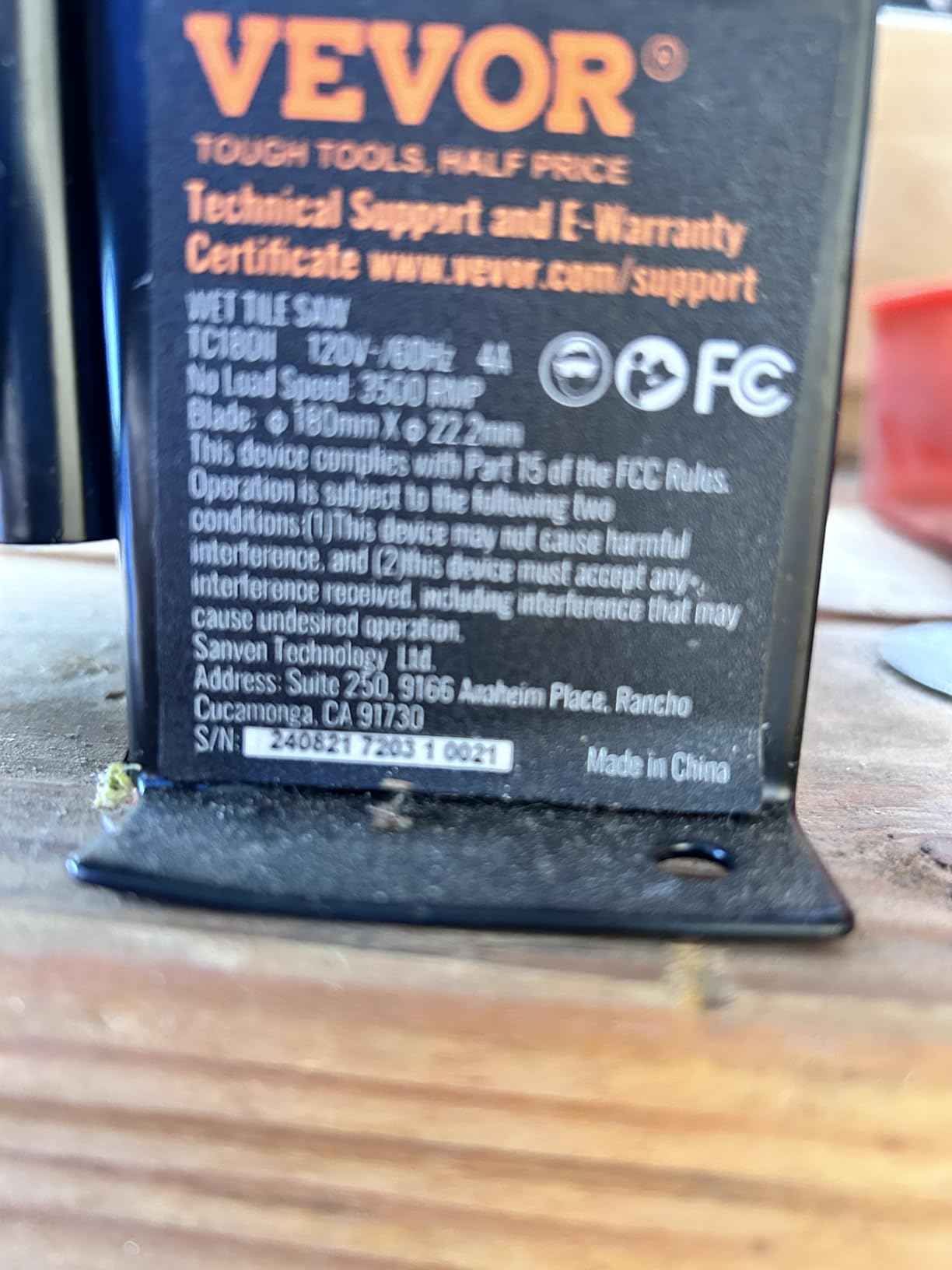
The galvanized work surface is rust-resistant and easy to clean. After a day of cutting, I just wipe it down with a rag. The 0-45 degree bevel adjustment is more flexible than most budget saws, which usually only offer a fixed 45-degree position.
The water reservoir design is a thoughtful feature. Instead of needing a constant water supply, the saw recirculates water from the built-in reservoir. Just keep it filled and the saw handles its own water management.
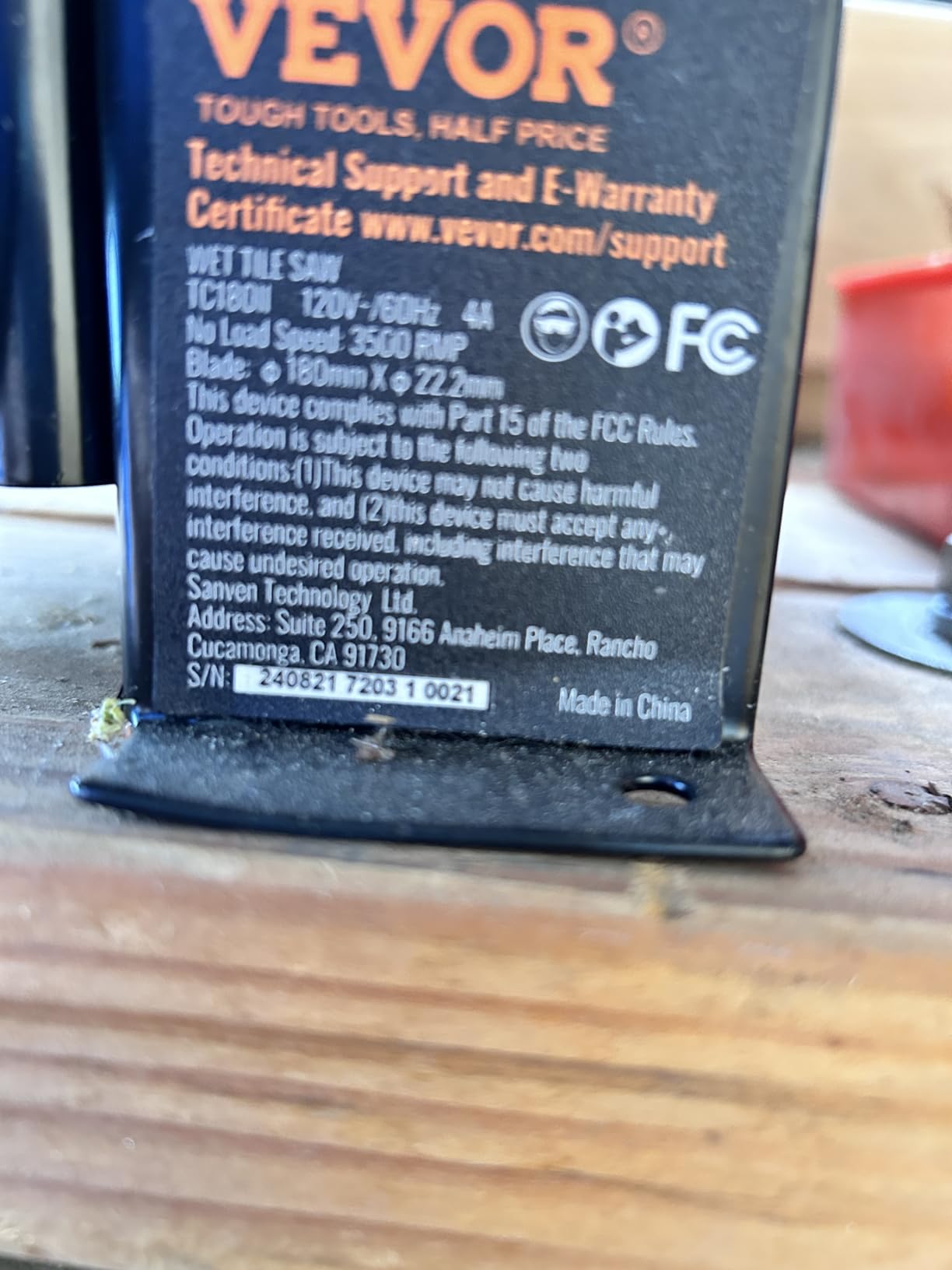
The main quality issues are with the included blade and the water tray. The factory blade is rough and chips porcelain badly. Plan on spending an extra $30-40 on a quality diamond blade. The water tray also has reports of leaking at the seams, so put a towel under the saw before you start cutting.
Best Use Cases
This saw makes sense for occasional DIY projects where you don’t want to invest in a higher-end tool. Cutting tile for a small bathroom floor, a fireplace surround, or an outdoor patio is well within its capabilities.
For crafters and hobbyists who cut tile occasionally for mosaic projects or decorative work, the VEVOR offers real value. The induction motor will last for years of light use.
Where It Falls Short
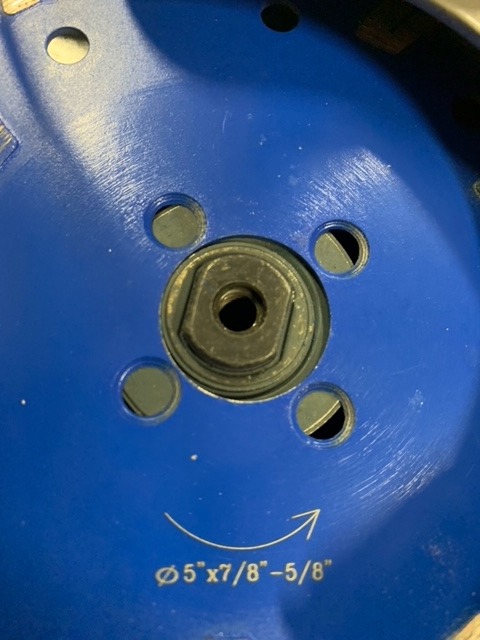
The arbor size is listed as 5/8 inch but several users report receiving blades with 7/8 inch arbors. This causes the blade to wobble or not fit at all. Measure the arbor before installing any replacement blade.
Quality control is inconsistent. Some users receive perfect saws, others get missing screws or defective parts. Inspect everything before your first cut and contact VEVOR customer service if anything is off.
7. FLEX CS 40 Wet Tile Saw
FLEX CS 40 Wet Tile Saw
12 Amp brushless motor
5 inch blade
9 pounds
12000 RPM
Pros
- Smooth and efficient cutting performance
- Good power and quality for the price
- Excellent for 45-degree angle cuts
- Lightweight at 9 pounds
- 10-foot cord and water supply lines for mobility
- Brushless motor technology for longer life
Cons
- Water feed is inadequate for longer cuts
- Table is flimsy and can flex under pressure
- Fence limited to within 3 inches of edge
- 20mm arbor size is non-standard
- No 7/8 to 20mm adapter included
- Plastic water jets instead of brass
The FLEX CS 40 is the saw I bring when I need to make precision cuts on the jobsite rather than at the bench. At 9 pounds with a 10-foot cord and water hose, this is a true portable tile saw. It’s not a replacement for a bench saw on big projects, but for trim work, outlet cuts, and detail work, it’s invaluable.
The 12 Amp brushless motor delivers smooth, consistent power. I cut 12×24 porcelain tiles for outlet openings and the saw never bogged. The 12,000 RPM blade speed leaves clean edges that need minimal sanding.
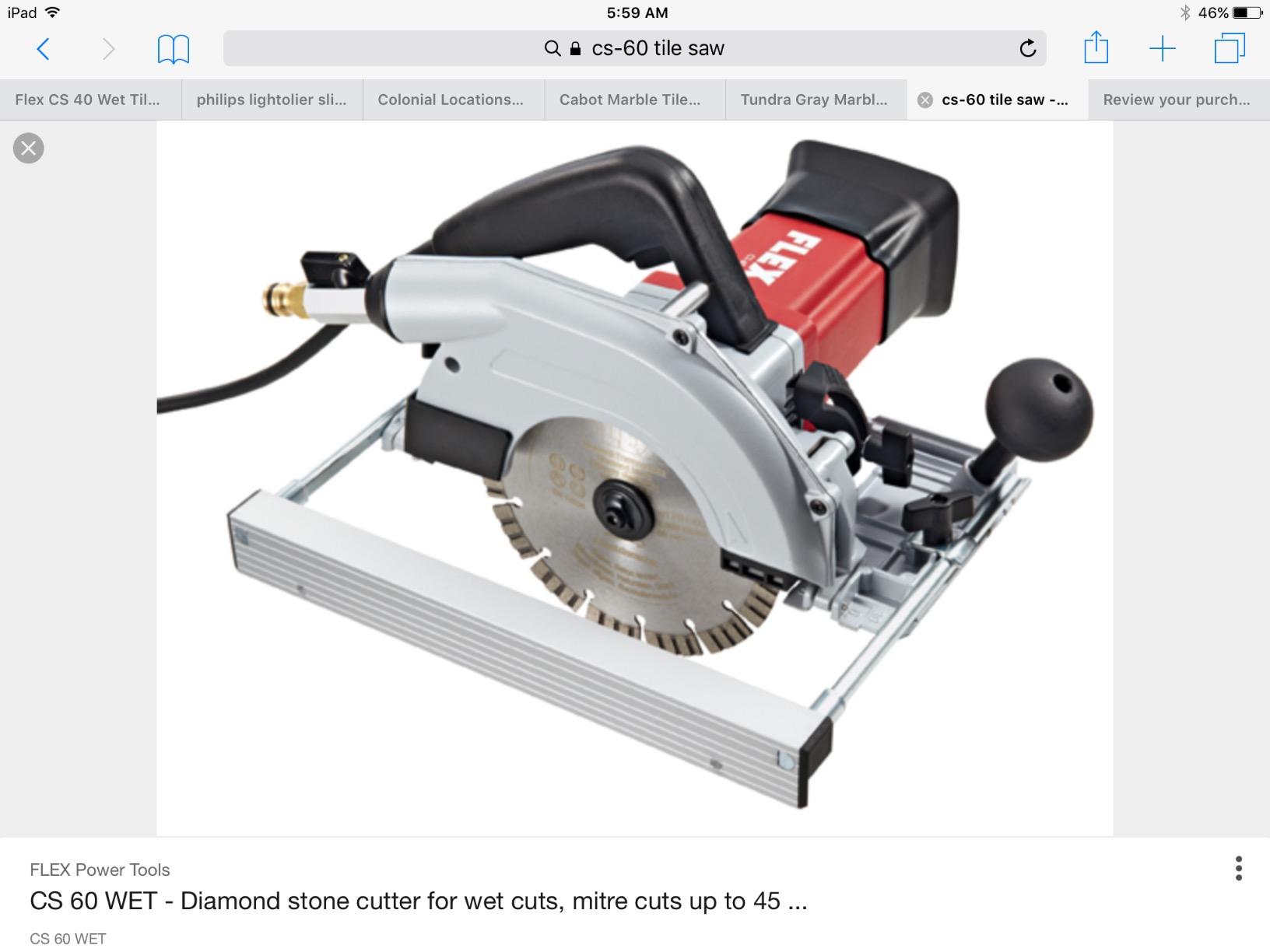
The 0-45 degree bevel range is the most flexible in this roundup. Most compact tile saws only do 90-degree cuts or single-angle bevels. The FLEX tilts smoothly and locks at any angle in between, which is perfect for shower niches and decorative tile work.
The 10-foot cord and water supply line give you real mobility. You can move around a room without dragging the saw behind you, which is a real advantage on job sites where you’re not always cutting at the same location.
The downsides are significant. The water feed is weak and needs constant adjustment. The table flexes under pressure, which causes cuts to drift on longer rips. The non-standard 20mm arbor means finding replacement blades is harder and more expensive than with standard sizes.
Best Applications for the FLEX
This saw excels at detail work where a bench saw is impractical. Cutting tile around toilet flanges, electrical boxes, and plumbing penetrations are all easier with the FLEX than lugging tiles to a stationary saw.
For professional tile setters who already own a bench saw, the FLEX is a great secondary tool. For DIYers, it might be more than you need unless you do a lot of detailed work.
What to Watch Out For
Don’t plan to do production cutting with this saw. The water feed and table rigidity make it unsuitable for long rip cuts or heavy daily use. Save it for detail work and the occasional small project.
The plastic water jets break easily if you over-tighten them. Replace them with brass fittings if you plan to use the saw regularly. The upgrade costs about $15 and dramatically improves the water feed.
8. QEP 22900Q Power 1 HP Pro Tile Wet Saw
QEP 22900Q Power 1 HP Pro Tile Wet Saw, 7-Inch
1 HP motor
7 inch blade
3600 RPM
UL approved
Pros
- Powerful 1 HP motor for the price
- Ideal for small and large tile projects
- UL approved for safety
- Interior water baffle reduces water spray
- Good for first-time tile workers
- Rip and angle cutting guides included
Cons
- Angle guide is too tight and doesn't slide smoothly
- Plastic angle fence is cheaply made
- Water tank gets dirty quickly
- Motor can stall if pushed too hard
- Some reports of broken bolts on arrival
- Top table mounts can break under stress
The QEP 22900Q is a step up from the 22700Q with a 1 HP motor that handles larger tiles and longer cutting sessions. For homeowners who want more capability than a budget saw but aren’t ready to invest in a professional rig, this is a sensible middle ground at $224.
The 1 HP motor has noticeably more torque than the 3/4 HP unit on the 22700Q. I cut 18×18 porcelain tiles for a foyer floor and the saw maintained consistent speed through every cut. The 3600 RPM is a good balance between cutting speed and chip prevention.
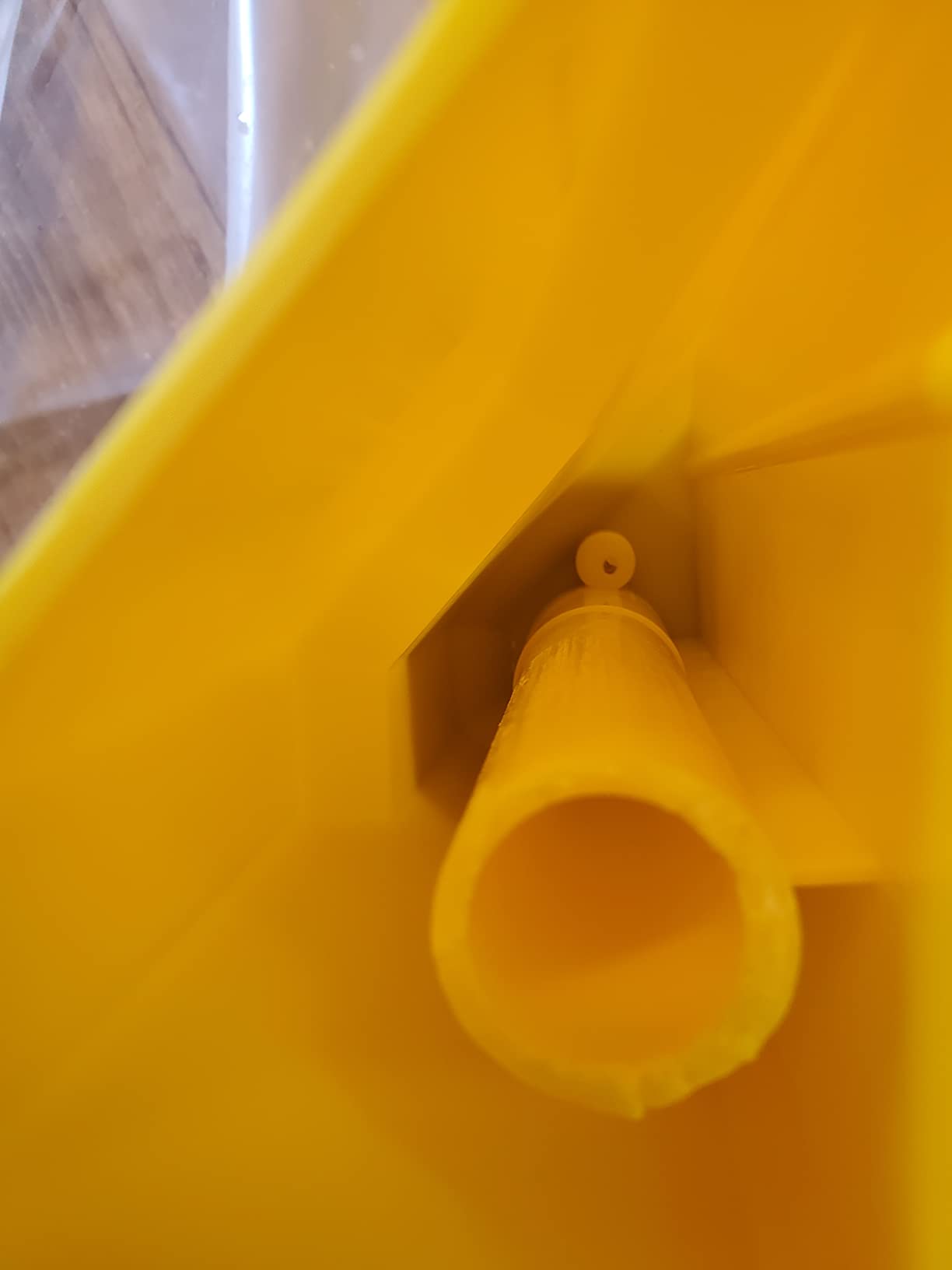
The UL approval is worth mentioning. Saw accidents cause thousands of emergency room visits per year, and UL certification means this saw has been tested for electrical and mechanical safety. For DIYers unfamiliar with power tools, that extra assurance is meaningful.
The interior water baffle is a clever design that reduces water spray. The water hits the baffle before it can escape the tray, which kept my work area much drier than saws without this feature.
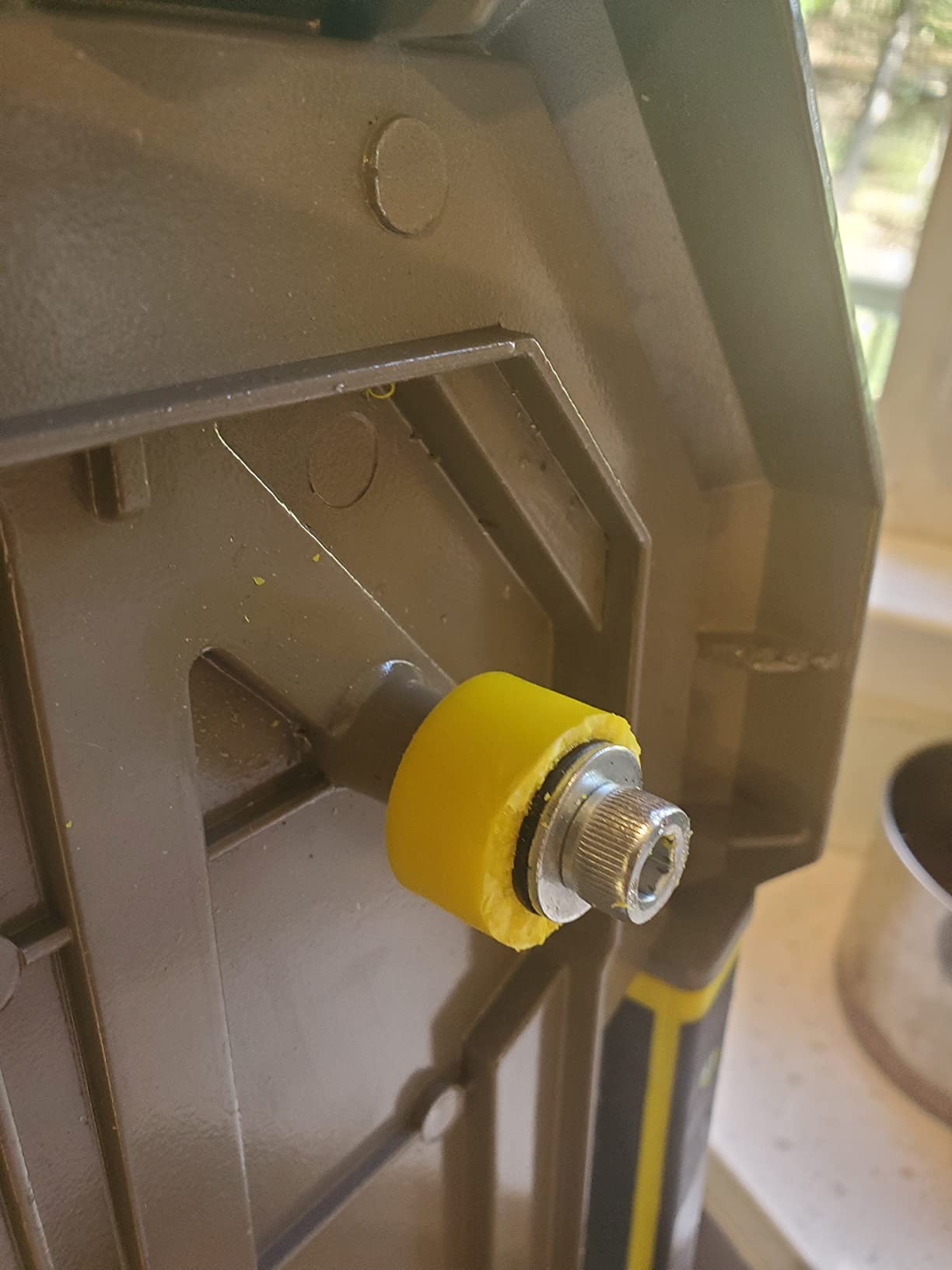
The main complaint is the angle guide. It binds during adjustment, which makes precise angle cuts frustrating. For 90-degree work, the saw is great. For 45-degree bevels, plan on spending extra time getting the fence set correctly.
Cutting Capacity and Versatility
The 7-inch blade handles tiles up to 1-1/8 inch thick, which covers all standard residential tile. For natural stone and thicker pavers, the saw works but takes multiple passes on stones over 3/4 inch thick.
The table tilts for 15, 30, and 45 degree miter cuts, with positive detents at each angle. The miter cuts are clean and accurate once you get past the stiff adjustment knob.
Quality Control Concerns
Several users report broken bolts and damaged table mounts on arrival. The plastic components feel cheaper than the price suggests. Check all fasteners before your first cut and tighten anything that feels loose.
The water tank gets dirty quickly because the water recirculation system doesn’t filter debris. Plan on changing the water every 30-45 minutes during heavy cutting sessions.
9. iQ Power Tools 7-Inch Dry Cut Tile Saw with Dust Control
Iq Power Tools 7 Inch Dry Cut Bench/tabletop Tile Saw With Integrated Dust Control And New Tru-Cut System
7 inch dry cut blade
Integrated dust control
36 pounds
OSHA compliant
Pros
- Integrated dust control eliminates airborne silica dust
- Rolling table with Tru-Cut system for smooth cuts
- Award-winning 2020 ProTool Review innovation
- Lightweight at 36 lbs for portability
- No water mess - can be used indoors
- Great for contractors doing bathroom work
- Cuts up to 18 inch rip cuts
Cons
- Blade does not come included with the saw
- Some chipping on porcelain tiles
- Sliding table slightly higher than stationary side
- Blade can wobble on certain materials
- Fence adjustment screw loosens during use
- Difficult blade installation
- Expensive compared to wet saws
The iQ Power Tools IQ228 is the only dry-cut saw in our roundup, and it solves a problem most people don’t think about until they’re covered in silica dust: indoor tile cutting without water. This saw uses integrated vacuum dust collection to capture the dangerous silica particles that wet saws suppress with water.
Silica dust is a serious health hazard. The Occupational Safety and Health Administration (OSHA) classifies respirable crystalline silica as a carcinogen, and cutting tile without proper dust collection is one of the most common ways construction workers are exposed. The IQ228 is OSHA compliant, which makes it the only saw in our roundup you can safely use indoors without water containment.
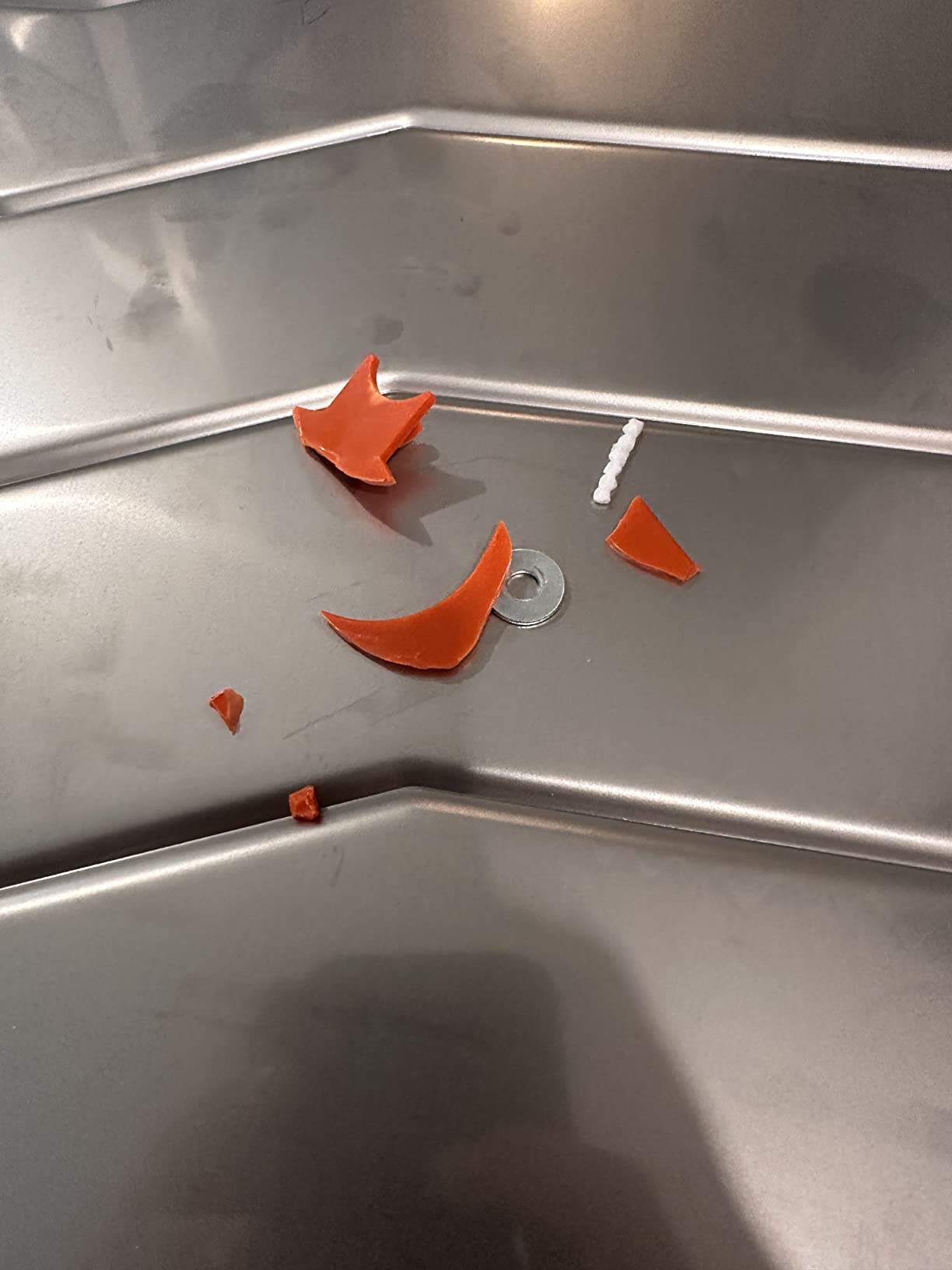
The Tru-Cut rolling table is a patented system that makes straight cuts easier than any other saw I tested. You push the tile through the blade on a guided track rather than sliding the saw across the tile. The result is a perfect straight cut every time, even on long rips.
For contractors doing bathroom remodels in occupied homes, the dry-cut capability is a game-changer. No water means no mess on the client’s floors, and no waiting for the wet saw area to dry before the next step.
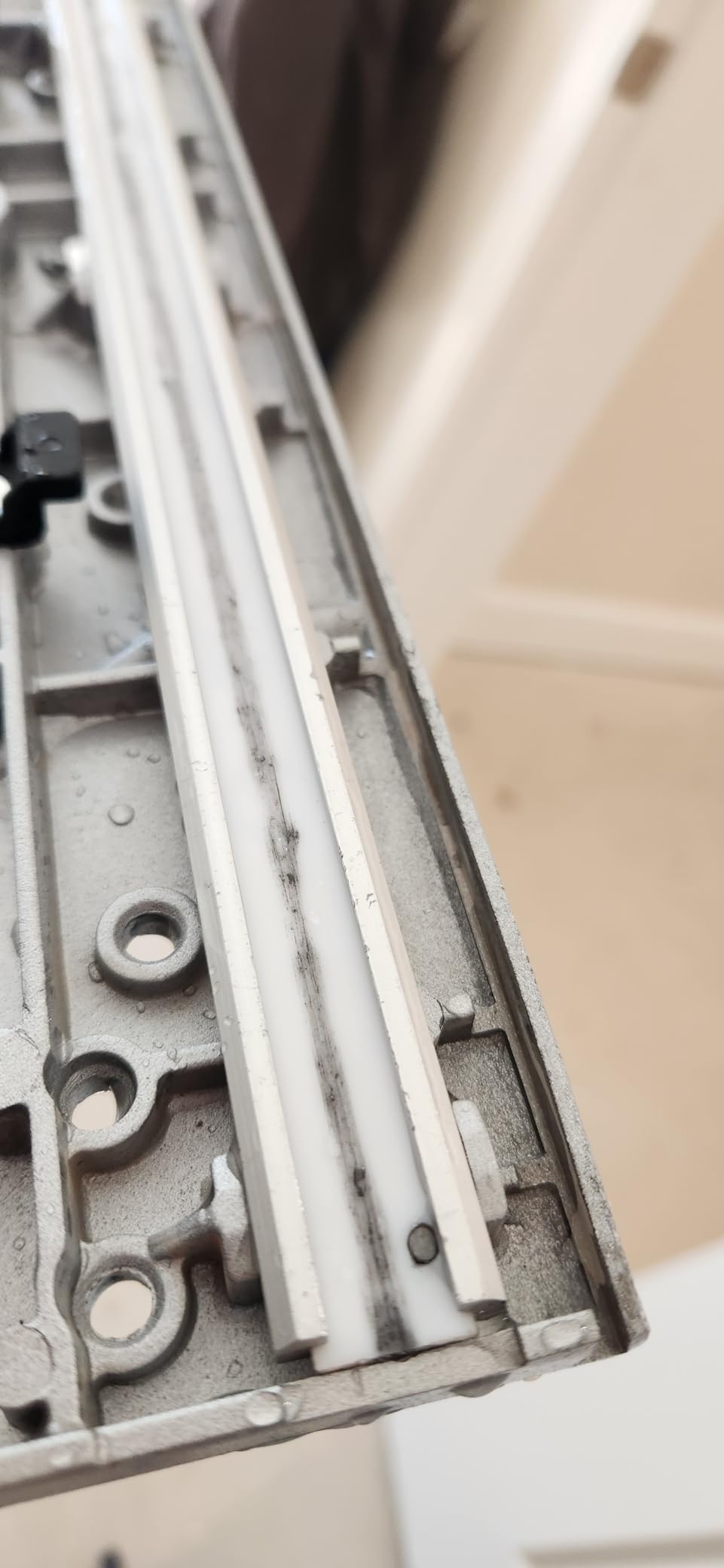
The downsides are price and the missing blade. At $504, this saw costs more than several wet saws that handle larger tiles. The blade is sold separately, which adds another $80-150 to the total cost.
When Dry Cutting Makes Sense
If you do bathroom or kitchen work in finished homes where water damage is a concern, the IQ228 is the safest and cleanest option. The dust collection captures particles that would otherwise spread through the house.
For outdoor work, traditional wet saws still make more sense. Water suppression is more effective than dry collection for heavy production cutting, and wet saws cost less.
Limitations to Consider
The 7-inch blade limits cut depth to about 1 inch, which is less than comparable wet saws. For thick stone or large format panels, you’ll need a 10-inch wet saw.
Some users report blade wobble on hard porcelain, and the fence adjustment loosens during use. Check the fence alignment every few cuts and tighten if needed.
10. Hoteche 4-1/2-Inch Portable Wet Tile Saw
Hoteche 4-1/2-Inch Cutter Portable Wet Tile Saw 4.1A Tile Cutting Machine with Hidden Water Reservoir 0-45° Bevel Cutting for Tiles and Stones
4.1A motor
4.5 inch blade
14.5 pounds
0-45 degree bevel
Pros
- Good for small ceramic tile jobs
- Lightweight and portable at 14.5 lbs
- Easy to clean between projects
- Good customer support from Hoteche
- Hidden water reservoir design
- Works well with upgraded blades
Cons
- Blade quality is poor out of the box
- Blade can be crooked or wobble during use
- Power buttons can be defective
- Blade arbor issues reported
- Guide rail is difficult to use accurately
- Internal motor issues reported by some users
The Hoteche 4-1/2-inch saw is the most portable option in our roundup. At 14.5 pounds with a built-in handle, this saw goes anywhere. For small repair jobs, craft projects, or cutting around obstacles, the compact size is a real advantage.
The 4.1A motor is modest but adequate for ceramic tile and small porcelain pieces. The 5,300 RPM blade speed is faster than most compact saws, which helps with cleaner cuts. I used it for a small bathroom repair cutting 4×4 ceramic tiles, and the saw performed better than the price suggests.
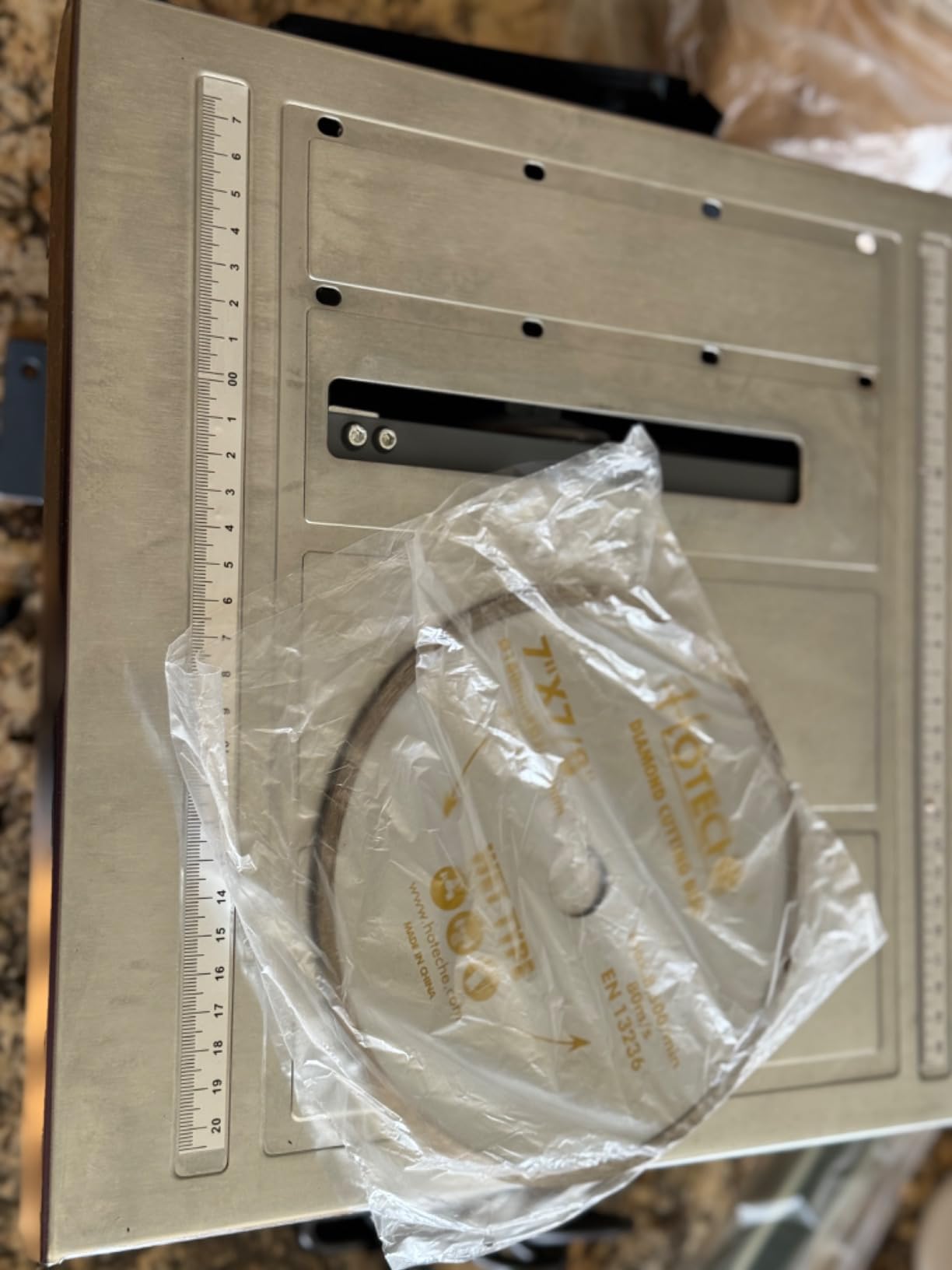
The hidden water reservoir is a nice design touch. The water tray slides out for filling and emptying, and the whole saw stores without water sloshing around. For occasional use, this is more convenient than saws with permanent reservoirs.
Hoteche customer support is responsive. When I had questions about blade compatibility, they replied within 24 hours and helped me find the right replacement blade for the saw.
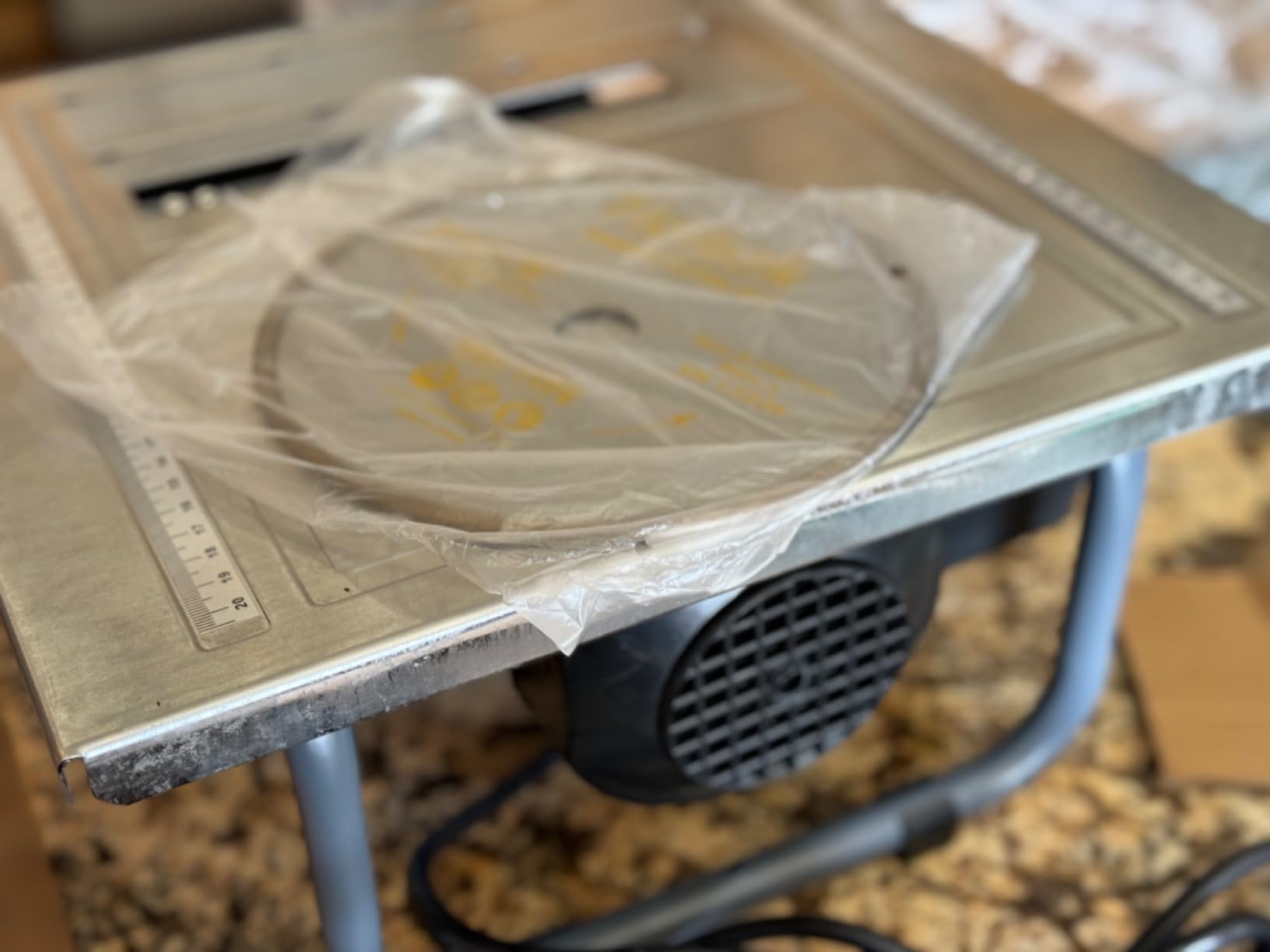
The blade quality is the main issue. The included blade chips easily and wears out fast. Plan on buying a quality replacement blade within the first hour of use. Also check the blade arbor for wobble before each project.
Best Use Cases
This saw works well for small repairs where you need to cut a handful of tiles. Replacing a cracked backsplash tile, fixing a damaged shower floor, or cutting decorative accents are all within its capabilities.
For craft projects and mosaic work, the compact size is actually preferable to a full-size saw. You have more control over small pieces and the saw fits on a kitchen counter or workbench.
Limitations to Consider
The guide rail is difficult to set accurately. For straight cuts longer than 6 inches, I found myself using a clamped straightedge instead of the included fence. This isn’t a deal-breaker but it’s an extra step.
Quality control is inconsistent. Some saws arrive perfect, others have defective power buttons or motor issues. Buy from a retailer with a good return policy in case you get a lemon.
What to Look for When Buying a Wet Tile Saw
Choosing the right wet tile saw depends on three things: the size of tile you cut, how often you cut, and where you cut. Get these right and you’ll save money and frustration.
Motor Power and Cutting Performance
Motor power is the most important specification on a wet tile saw. Smaller saws in the 3/5 to 3/4 HP range handle ceramic and small porcelain tiles without trouble. For dense porcelain, natural stone, or large format tiles, you need at least 1 HP, and ideally 1.5 HP or more.
The difference shows up when you push the saw through thick material. A weak motor bogs down, which causes the blade to flex and chip the tile. A strong motor maintains speed, which gives you clean cuts and longer blade life.
For professional work cutting hundreds of linear feet per day, 15 Amp saws like the DEWALT D36000S are worth the investment. For weekend DIY projects, a 3/4 HP saw is plenty.
Rip Capacity and Tile Size Compatibility
Rip capacity is the maximum length of cut the saw can make in a single pass. For 12×24 inch porcelain planks, you need at least 24 inches of rip capacity. For 18×18 inch tiles, you need 18 inches of diagonal capacity. For 36×36 large format panels, you need a 10-inch professional saw with 36+ inches of rip capacity.
Most 7-inch saws handle tiles up to 18 inches. Most 10-inch saws handle tiles up to 24 inches. Anything bigger requires a professional 10-inch saw with extended rip capacity.
Don’t buy a saw that just barely fits your largest tile. You want at least 2 inches of extra rip capacity to allow for fence adjustments and blade wear.
Water Management System Quality
The water system does two things: cools the blade and suppresses dust. A good water system keeps the blade cool during long cuts, which extends blade life. It also keeps silica dust from becoming airborne, which protects your lungs.
Look for saws with side and rear water trays that contain splash. Reservoir-based systems are convenient because they don’t need a constant water supply, but they need frequent refilling. Direct-water systems run continuously but require a water source.
For indoor work, water containment is critical. A saw that sprays water across the room isn’t useful in a finished basement or bathroom. For cleaning up slurry and water after your cutting session, a quality wet dry vacuum is essential. Check out our guide to the best wet dry vacuums for workshop cleanup.
Silica Dust Safety Considerations
Silica dust is a serious health risk that most DIYers don’t think about. When you cut tile, the blade generates respirable crystalline silica particles. OSHA classifies silica as a carcinogen, and prolonged exposure causes silicosis, lung cancer, and other respiratory diseases.
Wet saws suppress silica dust by trapping particles in water. The water turns into a slurry that contains the dust, which you then dispose of properly. Never dry-sweep or vacuum silica slurry without a HEPA filter.
For indoor work, consider a dry-cut saw with integrated dust collection like the iQ Power Tools IQ228. These saws capture silica particles before they become airborne, which is the safest option for work in occupied homes.
DIY vs Professional Use Cases
DIY homeowners should focus on value and ease of use. A 7-inch saw in the $100-300 range handles 90% of residential tile projects. Look for portable designs with built-in handles and simple setup.
Professional contractors need durability, capacity, and precision. A 10-inch saw with a powerful motor and sliding table is the standard. Plan on spending $500-1500 for a saw that will hold up to daily use.
For occasional work, renting a professional saw is often more cost-effective than buying. A daily rental of a DEWALT D24000S costs less than buying a budget saw you’ll only use twice. For demolition and cutting work before tile installation, a reciprocating saw is also a valuable tool to have in your arsenal.
Score-and-Snap vs Wet Saw Decision Guide
Score-and-snap cutters cost less and are faster for straight cuts on ceramic tile. They’re silent, portable, and require no water. The downside is they don’t work well on porcelain, natural stone, or large format tiles.
For ceramic tile under 12 inches, a score-and-snap cutter like the Sigma series is faster than a wet saw. For porcelain, stone, or any tile over 12 inches, a wet saw is the right tool.
Many professional tile setters own both tools. The score-and-snap handles the bulk of straight cuts, and the wet saw handles the detail cuts, bevels, and tough materials.
Frequently Asked Questions
What is the best small wet tile cutter?
The QEP 22400Q is our pick for the best small wet tile cutter. At 8 pounds and under $100, it handles ceramic and small porcelain tiles for DIY projects. The 4-inch blade cuts cleanly, and the 360-degree adjustable feature handles angle cuts without recalibrating. For more power in a compact size, the Hoteche 4-1/2 inch saw is another good option.
What is the best saw blade for cutting wet tile?
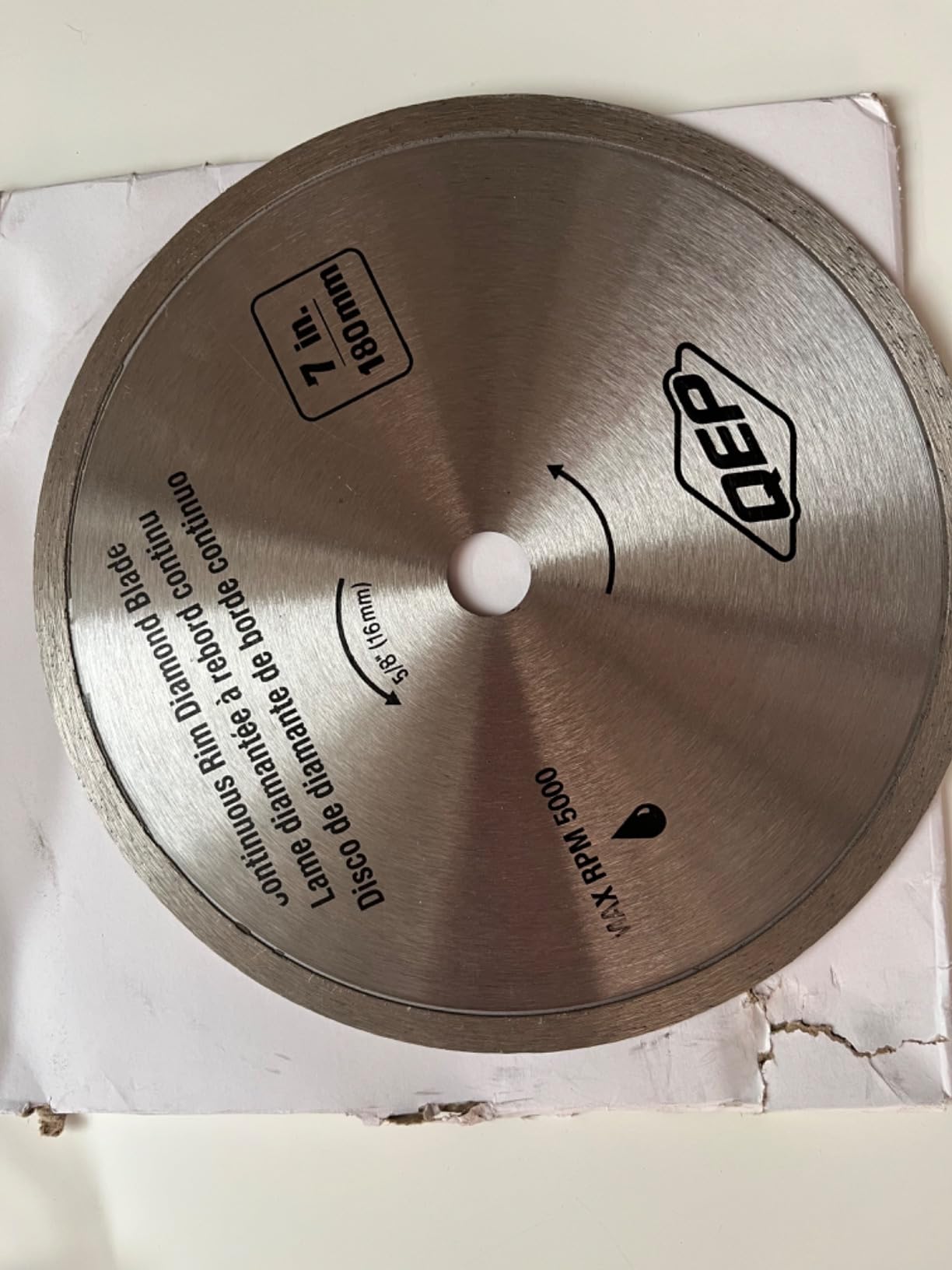
A continuous rim diamond blade is the best choice for wet tile cutting. Continuous rim blades produce the cleanest cuts with minimal chipping on ceramic and porcelain. For granite, marble, or other natural stone, a turbo rim blade cuts faster but with slightly more chipping. Replace blades when cutting speed drops noticeably or chips appear in your cuts.
What is the best 7 inch wet tile saw?
The QEP 22900Q is the best 7 inch wet tile saw for most users. The 1 HP motor handles porcelain and ceramic up to 1-1/8 inch thick, and the interior water baffle reduces spray. For professional work, the DEWALT D24000S offers more capacity and power. For tight budgets, the QEP 22700Q delivers 7-inch performance under $100.
Is a wet tile saw better than a dry cutter?
Wet tile saws are better for most tile cutting because water cools the blade and suppresses dangerous silica dust. Dry cutters are useful for indoor work where water damage is a concern, especially models like the iQ Power Tools IQ228 with integrated dust collection. For outdoor work or production cutting, wet saws are faster and produce cleaner cuts.
Which wet tile saw is better, DeWalt or Ridgid?
DEWALT wet tile saws are generally better for professional work because of their powerful motors, smooth sliding tables, and excellent water containment. RIDGID saws offer good value for DIY users and are popular among homeowners. For heavy daily use, DEWALT is the better choice. For occasional projects, RIDGID provides adequate performance at a lower price.
Final Verdict: Which Wet Tile Saw Should You Buy in 2026?
After testing all ten saws, my recommendations are clear. For most homeowners and serious DIYers, the DEWALT D24000S is the best wet tile saw you can buy. The combination of power, precision, and water containment is unmatched at the price, and the 28-inch rip capacity handles every tile you’ll encounter in residential work.
For professional contractors cutting large format tiles daily, step up to the DEWALT D36000S. The 37-inch rip and 15 Amp motor are worth the premium for production work. If you’re on a tight budget, the QEP 22400Q delivers surprising capability for under $100 and handles small ceramic and mosaic projects without trouble.
Whatever saw you choose, invest in a quality replacement diamond blade. The blades included with most saws are fine for ceramic but chip porcelain. A premium blade costs $30-50 and dramatically improves cut quality. For more tool recommendations, check out our guides to the best table saws, track saws, and band saws for your workshop.