
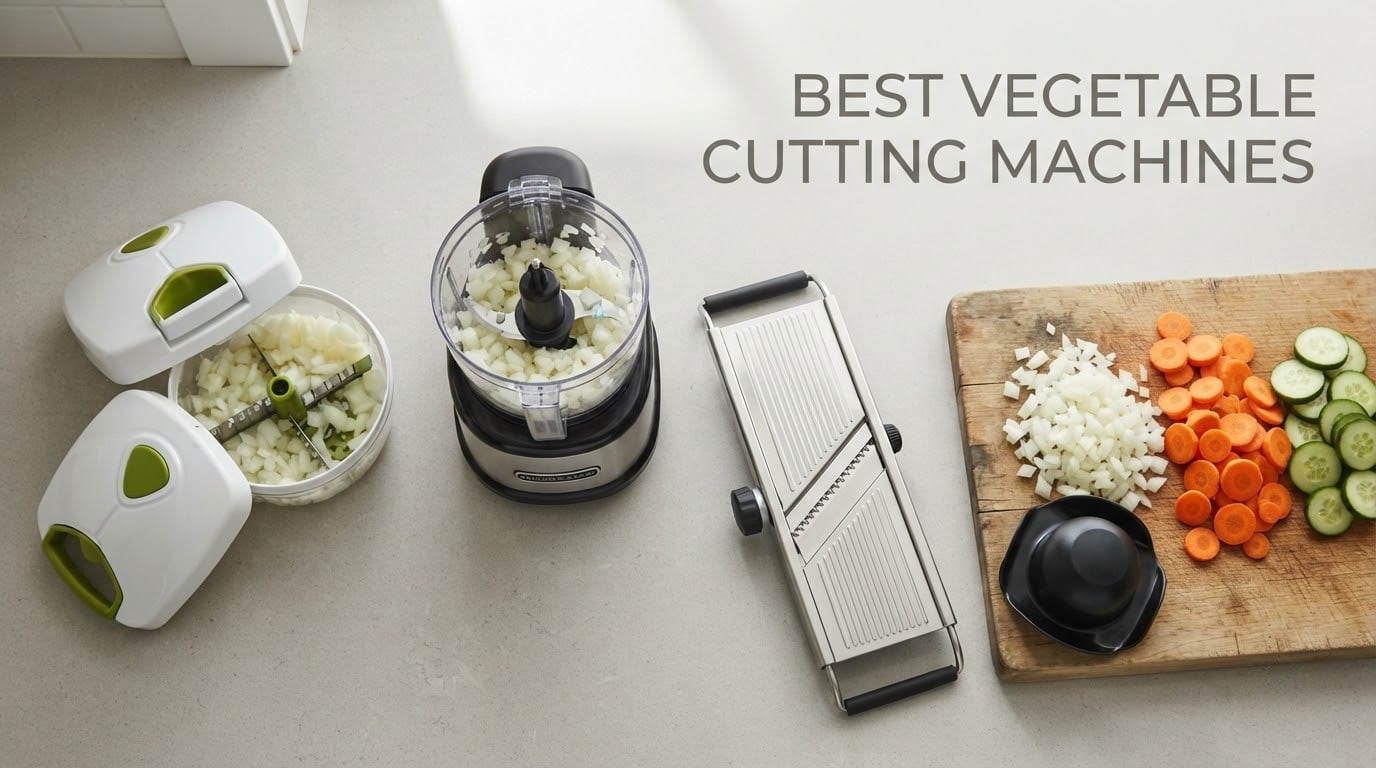
A vegetable cutting machine turns fifteen minutes of knife work on a Sunday into about two. The right one gives you a consistent dice without a chef’s knife skill, keeps onion juice off the worktop, and halves the prep for a family batch of coleslaw or a week’s worth of chopped vegetables.
But the search results for this term are a mess. Half the listings are manual press choppers that fit in a drawer, and the other half are thousand-dollar continuous-feed slicers built for restaurant prep lines. Neither group is a bad product. They just solve completely different problems, and the two get mixed together on the same page.
Everything here is scoped to home kitchens. Commercial continuous-feed machines are out of scope, and I explain why further down.
Table of Contents
Top 3 Picks for Vegetable Cutting Machines in 2026

All 12 Best Vegetable Cutting Machines Compared (September 2026)
Twelve machines, and they fall into three families: manual push choppers, mandoline slicers, and small electric processors. The table below puts every one of them side by side so you can see the mechanism, capacity and cleaning story before reading the full write-ups.
| Product | Specifications | Action |
|---|---|---|
| Hamilton Beach 3-Cup Electric Chopper |
|
Check Latest Price |
 Fullstar Pro Original Vegetable Chopper Fullstar Pro Original Vegetable Chopper |
|
Check Latest Price |
 Mueller Pro 10-in-1 Chopper and Mandoline Mueller Pro 10-in-1 Chopper and Mandoline |
|
Check Latest Price |
 BLACK+DECKER 1.5-Cup Electric Chopper BLACK+DECKER 1.5-Cup Electric Chopper |
|
Check Latest Price |
 Cuisinart Mini Food Processor Cuisinart Mini Food Processor |
|
Check Latest Price |
 Hamilton Beach 12-Cup Stack and Snap Hamilton Beach 12-Cup Stack and Snap |
|
Check Latest Price |
 Ninja Food Chopper Express Chop Ninja Food Chopper Express Chop |
|
Check Latest Price |
 OXO Good Grips Adjustable Mandoline OXO Good Grips Adjustable Mandoline |
|
Check Latest Price |
 Dash Safe Slice Mandoline Dash Safe Slice Mandoline |
|
Check Latest Price |
 Gramercy 12-Setting Mandoline Gramercy 12-Setting Mandoline |
|
Check Latest Price |
 Fullstar Pro XL Chopper and Mandoline Fullstar Pro XL Chopper and Mandoline |
|
Check Latest Price |
 Fullstar Pro Core 6-in-1 Fullstar Pro Core 6-in-1 |
|
Check Latest Price |
How We Picked These 12 Vegetable Choppers
Be clear about what this list is. I did not put all twelve machines on my own worktop and time them, so I am not going to tell you I measured dice consistency with a caliper. What I did was read the manufacturer specifications, then read tens of thousands of verified owner reviews and the recurring complaints inside them, then rank on that evidence.
Three criteria carried the most weight. The first is review volume, because a machine rated 4.5 across ninety thousand owners tells you something a machine rated 4.5 across four hundred does not. The second is how often a complaint recurs. A single report of a cracked housing is noise; the same report appearing across a dozen reviews is a design fault. The third is whether the cleaning story is honest, because a machine you dread washing is a machine that ends up in a cupboard.
For the wider user-reports layer, I pulled on the Reddit and product-review discussion around this category. The ProductReview.com.au manual dicers and choppers corpus, with thirteen products and 366 reviews, was the richest single source of failure modes, and r/Cooking and r/disability threads supplied the two opposite ends of the use case, from experienced cooks who distrust push choppers to users who rely on lever-assisted tools because of limited hand strength.
One last note. Our sister guides cover [the best vinyl cutting machines](https://zamd.net/best-vinyl-cutting-machines/) and [the best die cutting machines](https://zamd.net/best-die-cutting-machines/), which share the same buying logic around blade durability and motor power even though the craft is completely different.
1. Hamilton Beach 3-Cup Electric Chopper – Best Overall
Hamilton Beach 3 Cup Electric Vegetable Chopper & Mini Food Processor
350 watt motor
3 cup stainless bowl
Stack and press lid
Dishwasher safe
Pros
- Stack and press assembly with no twist-locking
- Compact 3 cup size that stores easily
- Stainless steel blades for chop mince and emulsify
- Oil dispenser built into the lid
- All removable parts dishwasher safe
Cons
- Small 3 cup bowl means multiple batches for big volumes
- Press-to-chop control is less precise than a pulse control
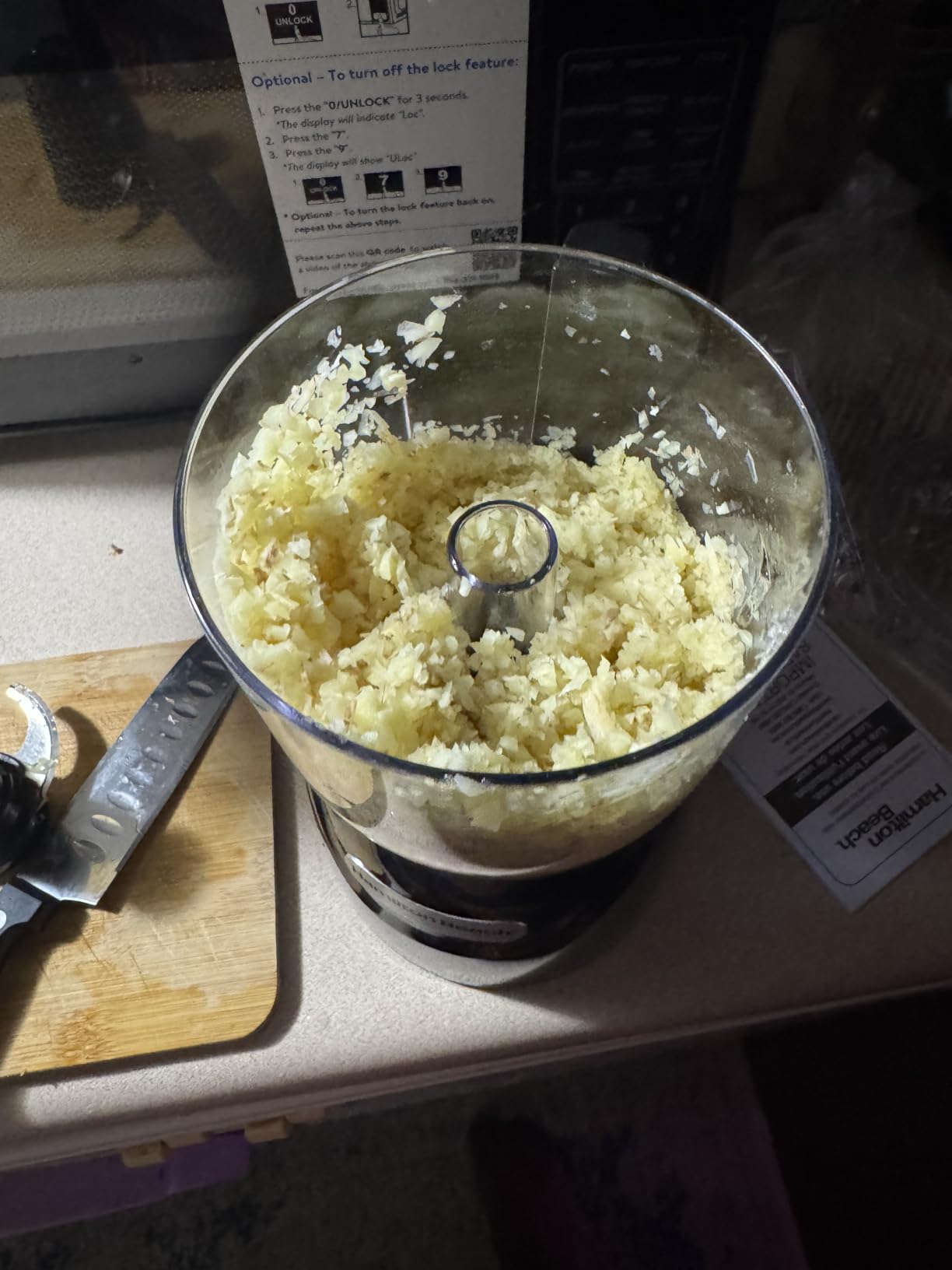
This is the machine I recommend to someone who does not want to think about the category. You stack the bowl, the lid and the blade assembly, then press down. Holding the lid down is the motor switch. That single design decision removes the fiddly step that makes people abandon small processors.
The 350 watt motor is doing real work, not spinning a token blade. Onions, carrots, nuts and herbs all come down to a consistent chop, and the oil dispenser in the lid means you can emulsify a vinaigrette without hunting for a dripper. The bowl is 3 cups, which covers a side dish or a small batch of sauce, and the whole thing weighs just over two pounds.

The design has held up remarkably well in owner reports. Across more than 37,000 reviews the recurring praise is narrow and consistent: simple assembly, compact storage, sharp blades, clean dishwasher cleanup. The recurring complaint is also narrow, and it is about volume rather than quality.
Three cups is genuinely small. If you dice a full head of cabbage plus a bag of carrots, you are running four or five batches, and each one means a lid, a press and a scrape. The control is press-and-hold rather than pulse, so the only way to stop is to lift your hand. On a delicate herb or a soft tomato that can mean going further than you wanted.
Who should buy the Hamilton Beach 3-Cup
Buy this if you are prepping a couple of servings a day, if you want the bowl to double as a serving dish, or if you would rather have one button than a dial. It is also the safest of the powered options here, because the motor only runs while your hand is on the lid, which removes the runaway-processing risk entirely.
Who should skip the Hamilton Beach 3-Cup
Skip it for canning season, for a family of five, or for anyone who wants a coarse salsa where the pieces stay distinct. The press-to-chop action and the small bowl make it a great chopper and a poor processor, and it will not slice anything at all.
2. Fullstar Pro Original Vegetable Chopper – Best Value
Fullstar Pro Original Vegetable Chopper & Spiralizer, All-in-1 Kitchen Tool
5 cup container
420 stainless steel blades
Built-in catch tray
Top-rack dishwasher safe
Pros
- Most-reviewed chopper in the category
- 5 cup container dices in about 30 seconds
- Built-in catch tray keeps counters clean
- Compact frame fits a drawer
- Top-rack dishwasher safe
Cons
- Classic model has no mandoline or slicing blades
- Blades are very sharp during cleanup
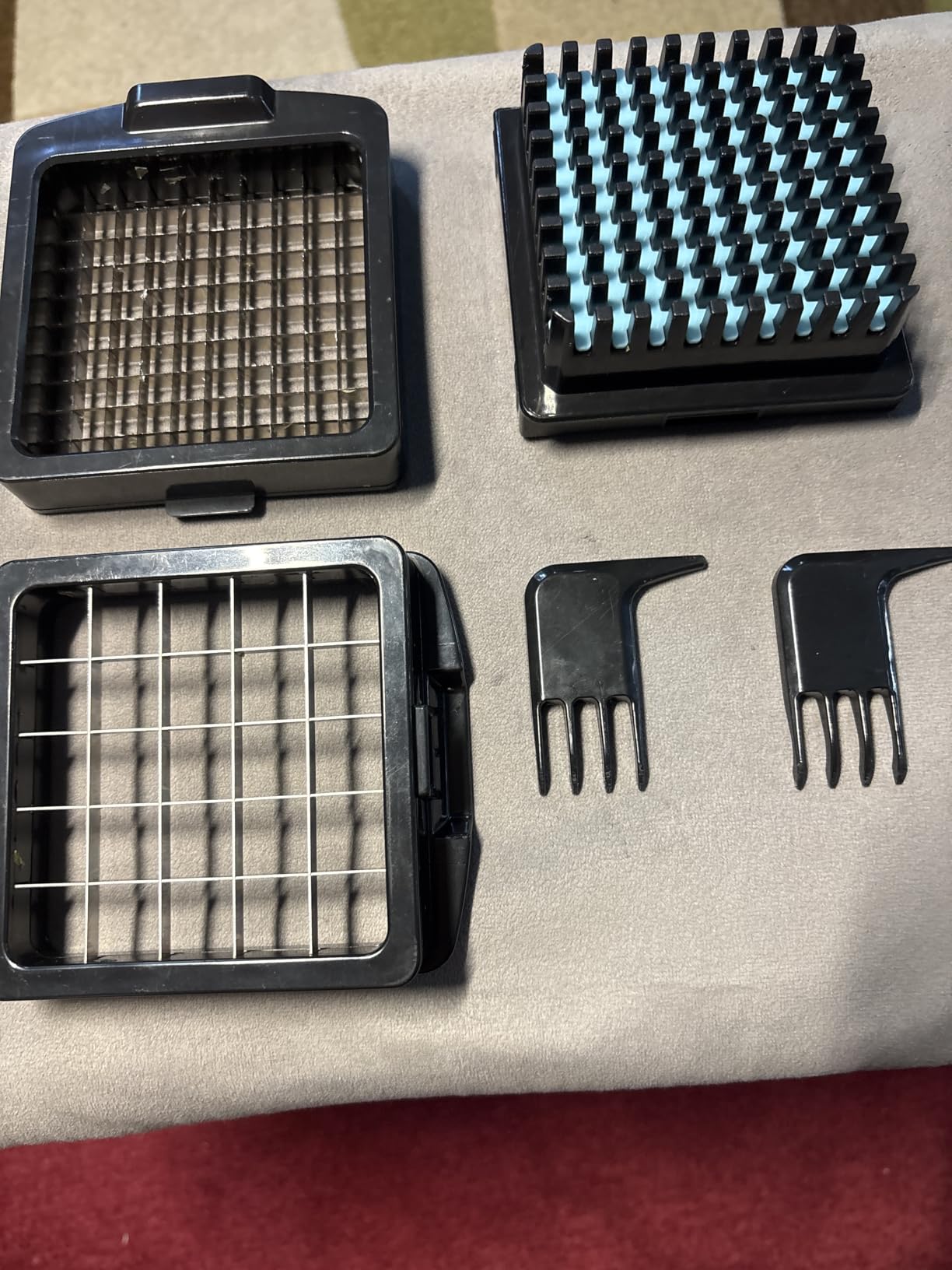
With 95,891 owner reviews at a 4.5 average, this is the most-validated manual chopper in the category by a wide margin. The reason is the format. You put vegetables in the hopper, close the safety lid, and press the top plate down. The curved stainless grid underneath does the cutting as the produce is forced through it.
That single-blade-grid design is the whole argument for manual choppers. There is no motor to stall, no cord to plug in, and no electronics to fail. The 5 cup container with a built-in catch tray holds a serious batch, and the soft-grip handle and non-skid base keep it steady while you push.

The blades are listed as rust-resistant 420 stainless, which is the right grade for a part that touches acid and moisture every week. Owners report uniform dice from both the fine and medium grids, and the review theme that comes up constantly is speed, with typical dicing of a full batch finishing in roughly half a minute.
What you give up is versatility. This specific model is a dicer. It does not slice, julienne, grate or spiralize, and the owners who wish it did are the main source of its lower star share. The 74 percent five-star figure reflects people who bought it for dicing and are happy, not people who are disappointed.
Who should buy the Fullstar Pro Original
This is the pick for anyone who dices a lot of onions, peppers, potatoes and carrots and nothing more exotic. It is also the safest category entry point, because your hand is on the closed hopper and the blade is sealed underneath. If you have children in the kitchen, that geometry matters.
Who should skip the Fullstar Pro Original
Skip it if your prep is mostly slicing. There is no mandoline plate here, so onions and cucumbers have to go back to the knife. Skip it also if you shred a lot of cheese or chocolate, because there is no grater insert in the box.
3. Mueller Pro 10-in-1 Chopper and Mandoline – Most Versatile
Mueller The Real Original Pro Vegetable Chopper & Mandoline Slicer, 10-in-1
8 blade attachments
2mm stainless slicer
Food holder
Dishwasher safe
Pros
- Ten functions in one footprint
- 2mm slicer gives evenly sliced onions and peppers
- Food holder improves safety and contains prep
- Top ranked in its category
- Dishwasher safe
Cons
- Blade inserts must be stored separately
- Cleaning many small blade pieces takes time
The Mueller is a chopper on one side and a mandoline on the other, with eight blade attachments between them. That sounds like a gimmick until you realise how many separate tools it replaces. Dice, julienne, grate, shred and slice all come out of one body, and the chopper half alone is a competent two-blade dicer.
The 2mm stainless slicer is the attachment that earns the price. It produces thin, even onion and tomato rounds that a stack-and-press chopper simply cannot make, because that format only dices. The food holder grips small produce so it does not slip toward the blade, which matters for potatoes and carrots more than for a big onion half.
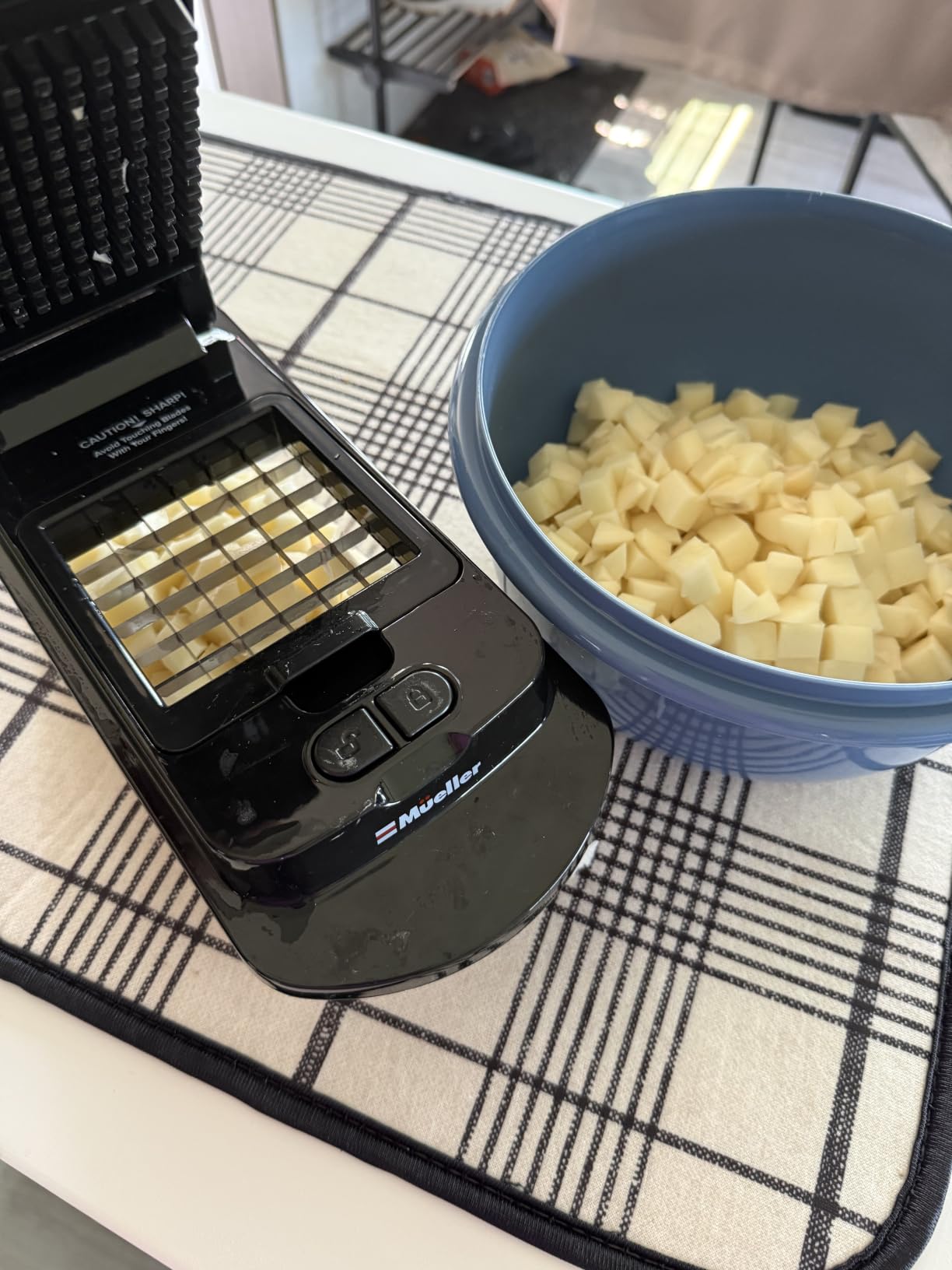
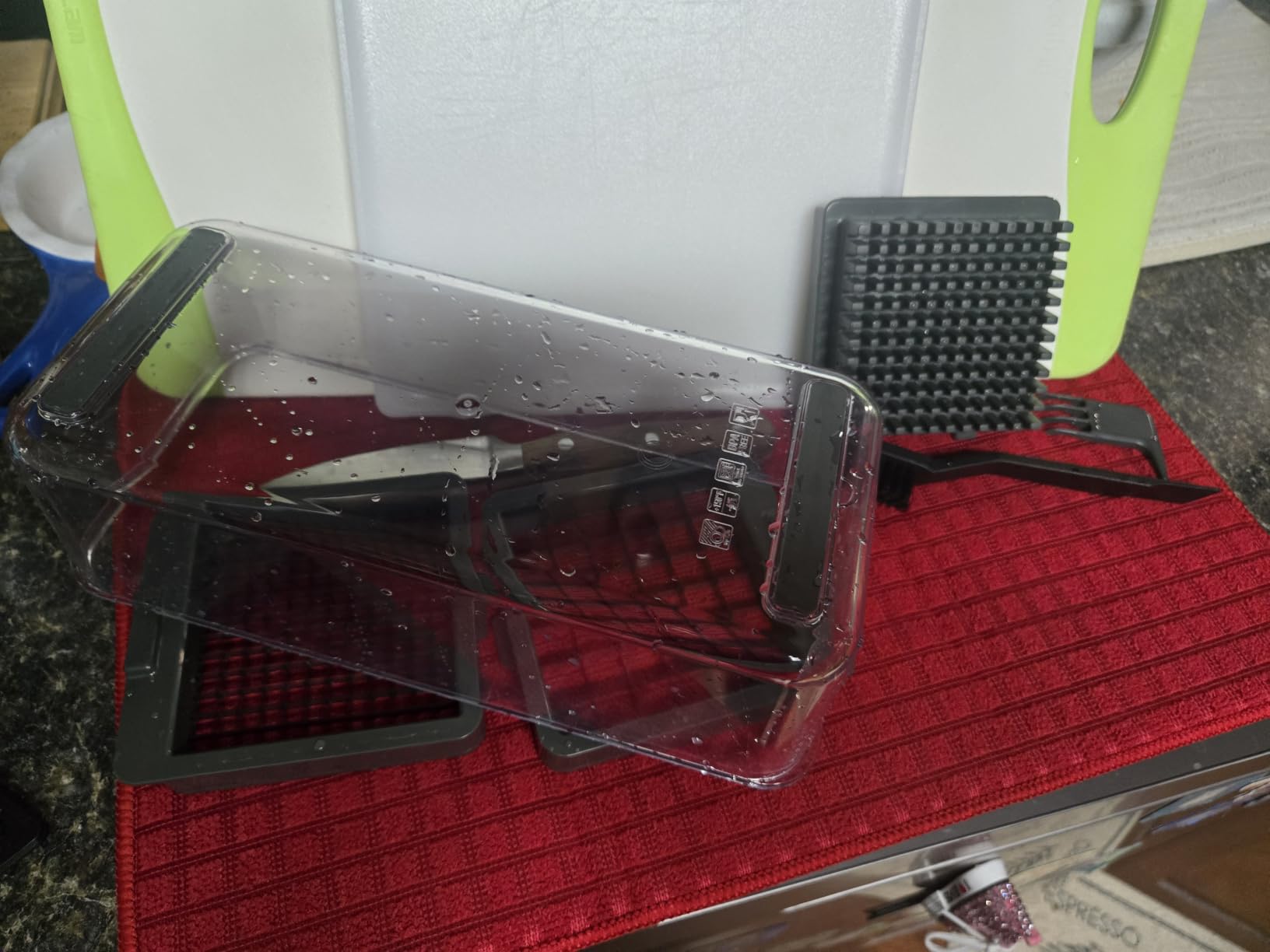
At more than 34,000 reviews and a 4.5 average, the ownership experience is stable. The most common positive note is that you stop buying small specialty gadgets one at a time. The most common negative note is storage, and it is a real one. Eight loose blade inserts in a drawer is a drawer you will not want to open.
Cleanup is the second complaint. Each insert has slots and corners that trap onion and garlic particles, and the design calls for you to wash them individually. Dishwasher safe, yes, but you are running a lot of small items through a rack.
Who should buy the Mueller Pro 10-in-1
Buy it if you want one tool instead of a chopper, a julienne and a grater, and if you can live with the extra drawer clutter. It ranks first in the mandoline category, which tells you the slicing half is genuinely competitive rather than an afterthought.
Who should skip the Mueller Pro 10-in-1
Skip it if counter and drawer space is tight, or if you cook for one and want minimum effort per job. For a single onion you are changing inserts. Also note that experienced cooks on Reddit often argue a dedicated mandoline gives a more consistent dice than any press chopper, and this tool is on the fence between the two.
4. BLACK+DECKER 1.5-Cup Electric Chopper – Smallest Useful Batch
BLACK+DECKER 1.5-Cup Electric Food Chopper, One Touch Pulse, 150W Motor, Stay-Sharp Blade, Dishwasher Safe
150 watt motor
1.5 cup bowl
One-touch pulse control
Stay-sharp bi-level blades
Pros
- Smallest footprint in the roundup
- Bi-level blades chop and mince in 2 to 3 second pulses
- Oil holes in the lid for dressings
- Dishwasher safe removable parts
- Two year limited manufacturer warranty
Cons
- 1.5 cup capacity limits batch size
- Blade is hard to remove without gripping a slippery collar
This is the smallest machine here and the one that best proves a small batch can still be a real batch. At 1.5 cups and 150 watts, the BLACK+DECKER is built for herbs, garlic, onions, breadcrumbs and emulsified dressings. It is not built for a cabbage.
The control is the reason I like it. One-touch pulse gives you two or three second bursts and then stops, which is exactly what you want with delicate herbs. The Hamilton Beach 3-Cup forces you to control speed by how long you hold, and this one lets you control it with your thumb. The oil holes in the lid are a nice touch for vinaigrette.
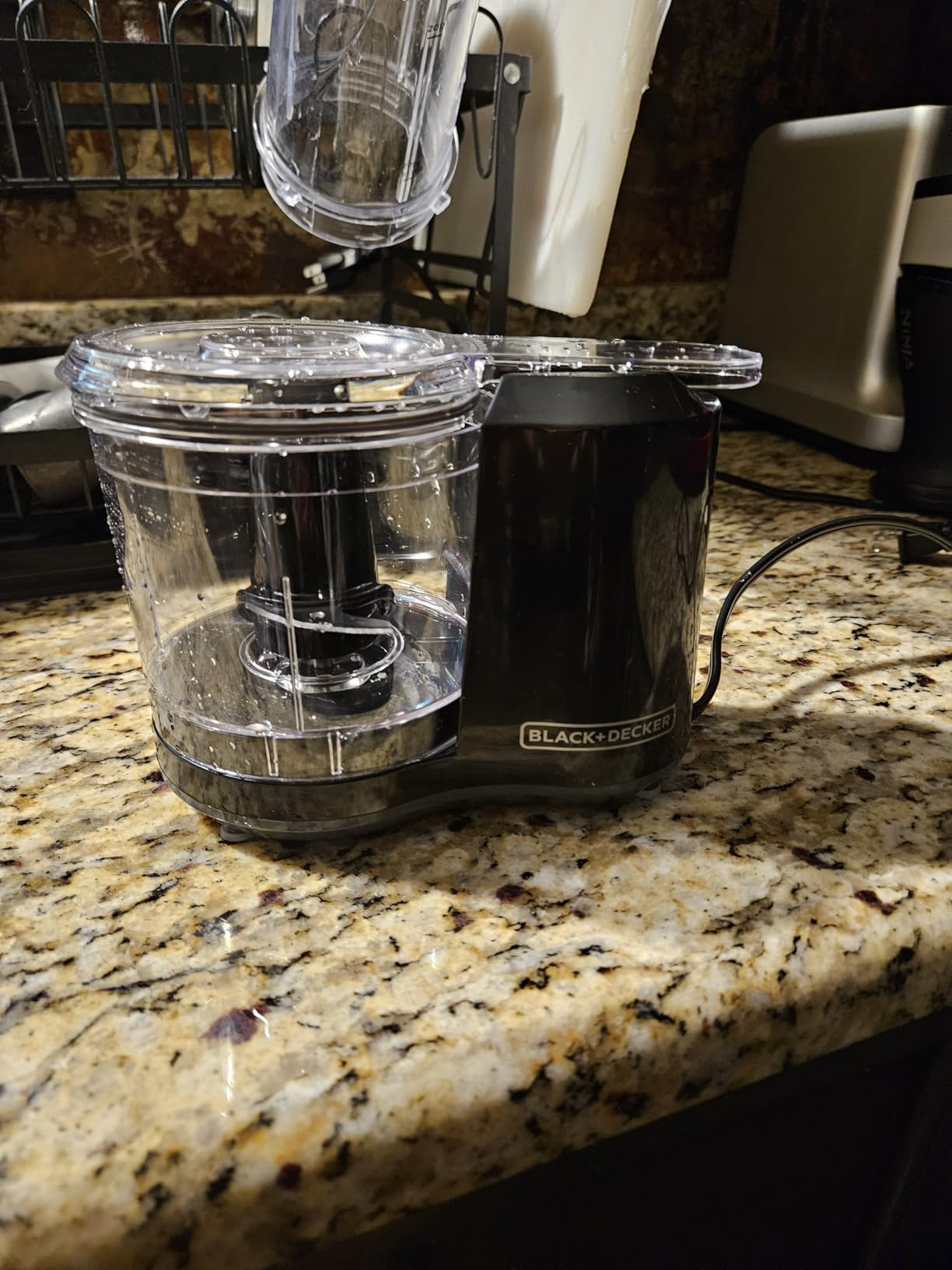
Owners rate it 4.6 across more than 23,000 reviews, with repeated mention of fast chopping in short pulses and a bowl that seats on the base easily. The bi-level stainless blade is described as staying sharp, and the removable parts go straight into the dishwasher.
The blade itself is the recurring annoyance. Removing it means gripping the plastic collar, which several owners describe as slippery, and a wet hand plus a sharp blade is a bad combination. The capacity limit is the other one. This is a two-onion machine, not a meal-prep-for-the-week machine.

Who should buy the BLACK+DECKER 1.5-Cup
Buy it for a small kitchen, a rental flat, or anyone who cooks two or three portions at a time. It is also the lightest unit in the roundup at 1.2 pounds, and the two year manufacturer warranty is longer than most of what is on this list.
Who should skip the BLACK+DECKER 1.5-Cup
Skip it if you batch cook. A cup and a half means five loads for a week of vegetables, and the second and third batches are the ones that put you back on the knife. It also has no slicing disc, so it chops and minces but does not slice.
5. Cuisinart Mini Food Processor – Best for Grinding and Emulsifying
Cuisinart Mini Food Processor, Reversible Blade, 3-Cup Capacity
250 watt motor
Patented reversible blade
24 ounce work bowl
Push-button control
Pros
- Reversible blade handles chopping and grinding
- Push-button control with auto-reversing blade
- Dishwasher safe bowl and lid
- BPA-free construction
- Includes spatula and recipe book
Cons
- Manufacturer advises against grinding beans as the blade chops them
- Twist-lock assembly takes more steps than press-on designs
The Cuisinart DLC-2ABC has been a countertop fixture for decades, and the 4.5 rating from almost 25,000 owner reviews reflects that longevity. What separates it from the other electrics is the patented reversible blade, which the SmartPower control spins in both directions to chop and then to grind.
Two-way cutting is genuinely useful. It handles nuts, breadcrumbs, coffee beans and spices in a way a single-direction rotor struggles with, and the push-button panel gives you discrete control rather than the hold-to-run design of the Hamilton Beach 3-Cup. The 24 ounce work bowl is a usable middle ground between a 1.5 cup chopper and a 12 cup processor.
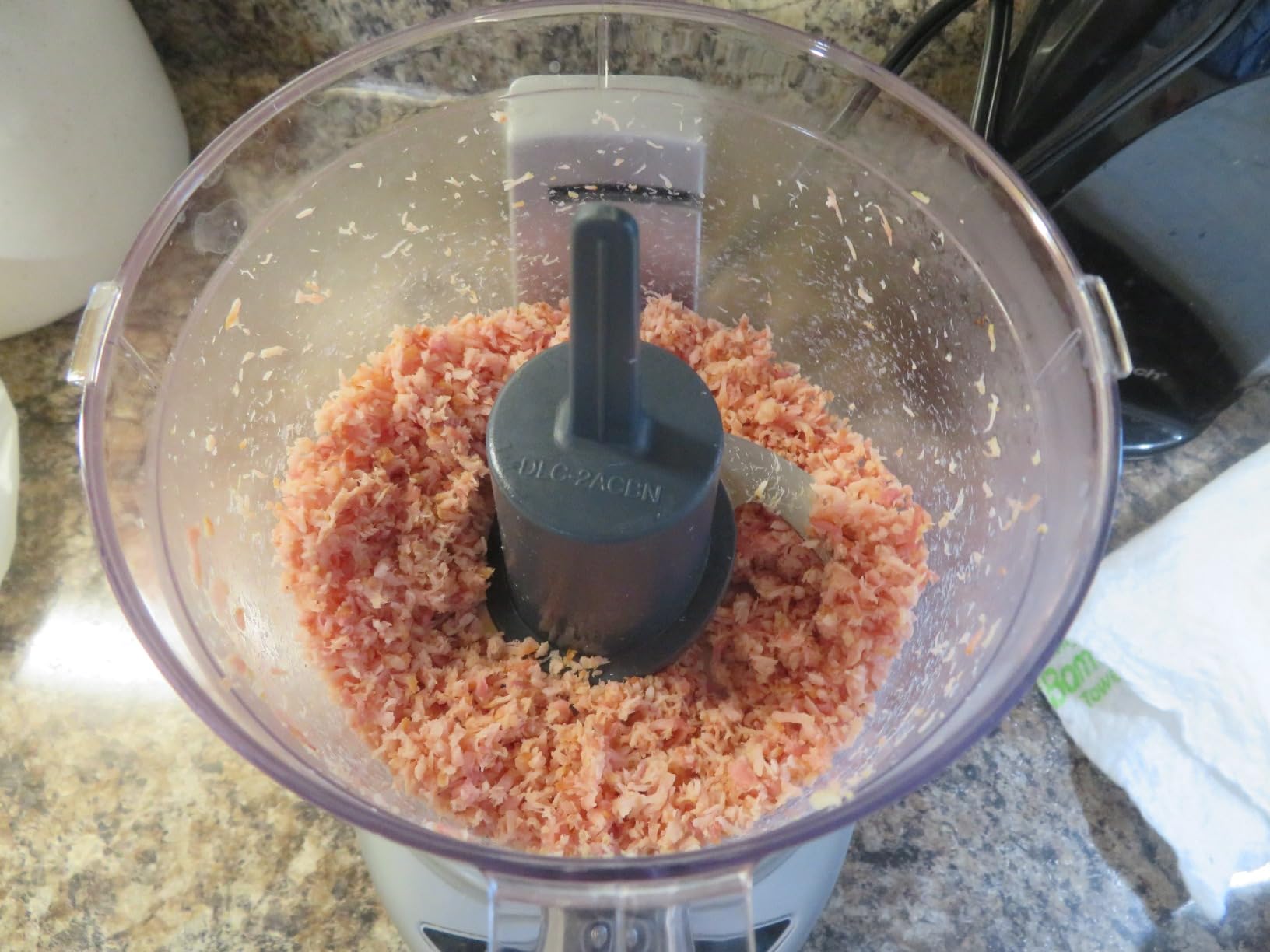
Cleanup is easy, with a dishwasher-safe work bowl and lid and a motor base that just wipes down. The included spatula and recipe book are minor, but they tell you this was designed for people who use the thing daily rather than occasionally.
The caveats are worth knowing before you commit. Cuisinart specifically advises against grinding beans, because the reversible blade chops rather than grinds them and you end up with paste. And the twist-lock bowl and lid assembly is the older, more fussy style of construction compared with the stack-and-press or stack-and-snap designs.
Who should buy the Cuisinart Mini Food Processor
Buy it if you do more than vegetable prep. Grinding spices, making breadcrumbs, chopping nuts and emulsifying sauces are all in scope, and the 250 watt motor has headroom for dense items. It is the best value in the electric section for a general-purpose small machine.
Who should skip the Cuisinart Mini Food Processor
Skip it if all you do is dice vegetables, because the Hamilton Beach 3-Cup is simpler for that and its stack-and-press assembly is faster. Choose against it too if assembly time bothers you, since the twist lock is the main thing owners replaced it over.
6. Hamilton Beach 12-Cup Stack and Snap – Best for Large Batches
Hamilton Beach 12 Cup Stack & Snap Food Processor and Vegetable Chopper
450 watt two-speed motor
12 cup sealed bowl
Big Mouth chute
Slicing and shredding discs
Pros
- Largest bowl in the roundup at 12 cups
- Stack and Snap assembly needs no twist-locking
- Both blades store inside the bowl
- Big Mouth chute reduces pre-cutting
- Suction cup feet stop it sliding
Cons
- Motor is noticeably noisy with a whining sound
- Power cord is short
- Small batches chop less evenly because the blades sit wide apart
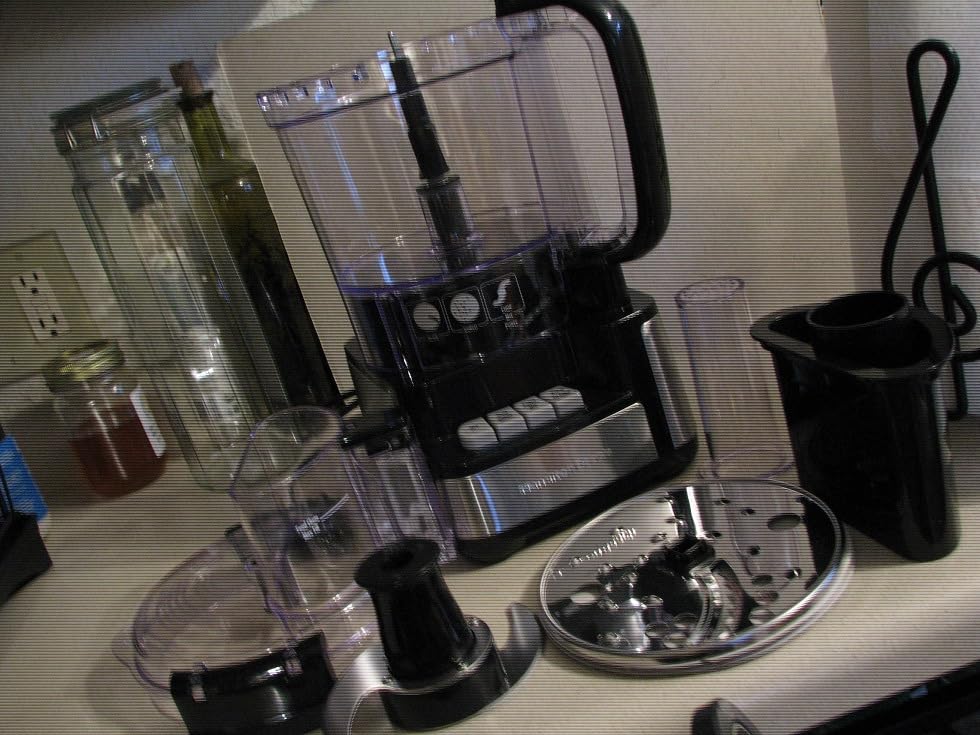
If you process a lot of vegetables at once, this is the machine. Twelve cups is roughly four times the capacity of the mini choppers, and the 450 watt two-speed motor is the most powerful in the roundup. Canning, big-batch soup and a full coleslaw all happen in one bowl.
The Big Mouth chute is the detail that changes daily use. It accepts a whole potato or tomato, so the pre-cutting step mostly disappears, and the 2-in-1 chute with a small pusher handles narrow items that would otherwise stall. The Stack and Snap assembly means nothing twists to lock, which is the improvement over older Hamilton Beach food processors.
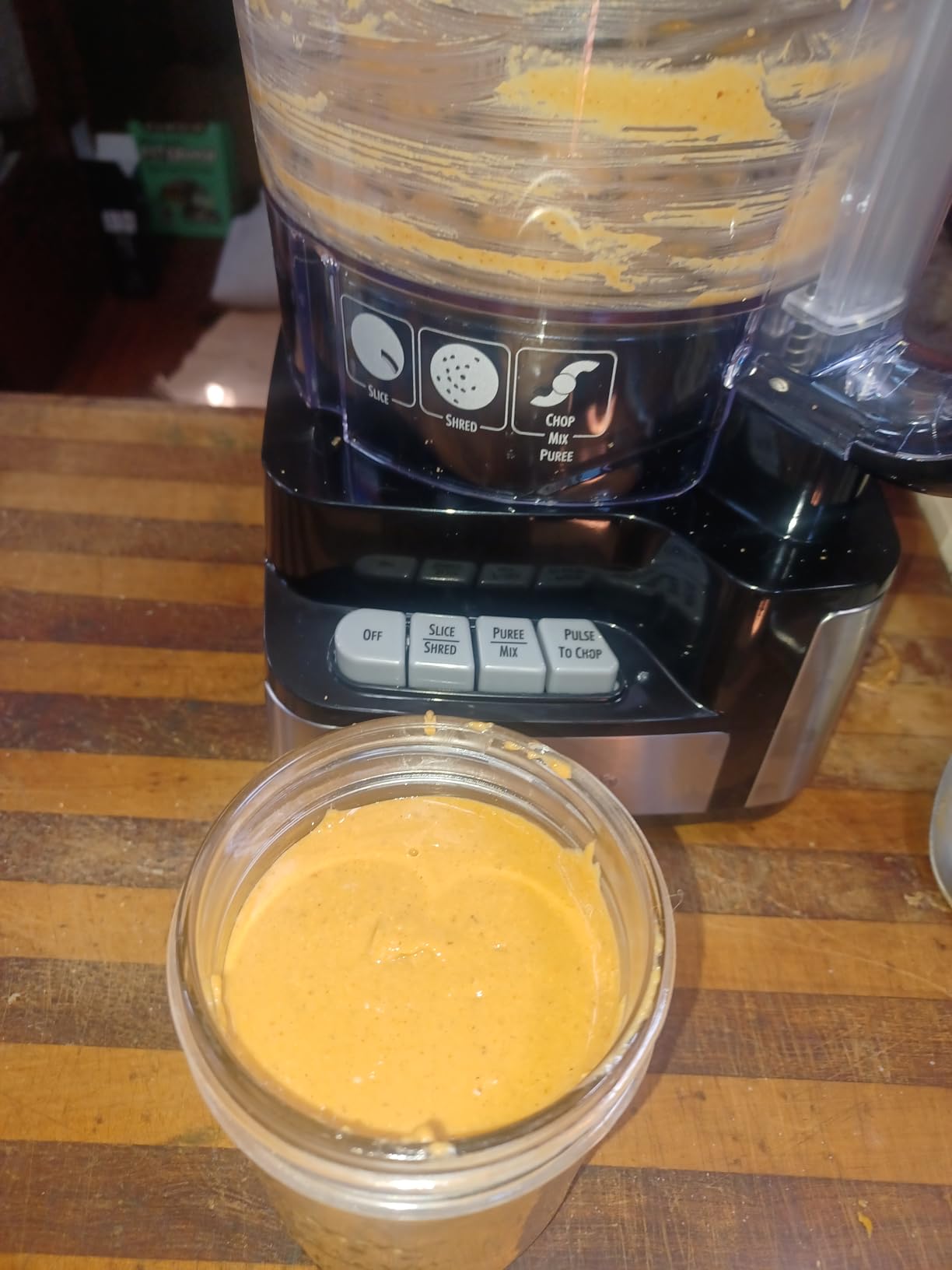
It also does more than chop. The reversible slicing and shredding discs turn it into something closer to a small food processor, and both blades store inside the bowl, which solves the loose-parts-in-a-drawer problem that the Mueller creates. The sealed bowl is designed to prevent leaks, and the removable parts are dishwasher safe.
Three negatives, all of them consistent across reviews. The motor is loud, with a whining pitch that owners mention directly. The cord is short enough that the unit has to sit near an outlet. And the blades sit wide apart, so a small batch circulates unevenly and you get mixed piece sizes.
Who should buy the Hamilton Beach 12-Cup
Buy it for a family of four or more, for weekly meal prep, or for a home canner. At 6.6 pounds with suction cup feet it stays put on the counter, and the two speeds mean you can run the motor hard on a large batch and gently on a small one.
Who should skip the Hamilton Beach 12-Cup
Skip it for a small kitchen or a one or two person household. At 16.1 inches tall it needs real counter space, the noise is a genuine annoyance in an open-plan flat, and if you only ever chop half an onion, the wide blade spacing works against you.
7. Ninja Food Chopper Express Chop – Best for Compact Storage
Ninja Food Chopper Express Chop with 200-Watt, 16-Ounce Bowl for Mincing, Chopping, Grinding, Blending and Meal Prep (NJ110GR), Gray
200 watt power pod
16 ounce bowl
No motor base
Flip-top storage lid
Pros
- Highest rating in the roundup at 4.7
- Base-free design saves cabinet space
- Rinses clean in seconds
- Airtight lid stores prepped food in the bowl
- Handles garlic and onions quickly
Cons
- 16 ounce capacity suits small batches only
- Chops very fast so coarse textures need light pulsing
- Slightly noisy while running
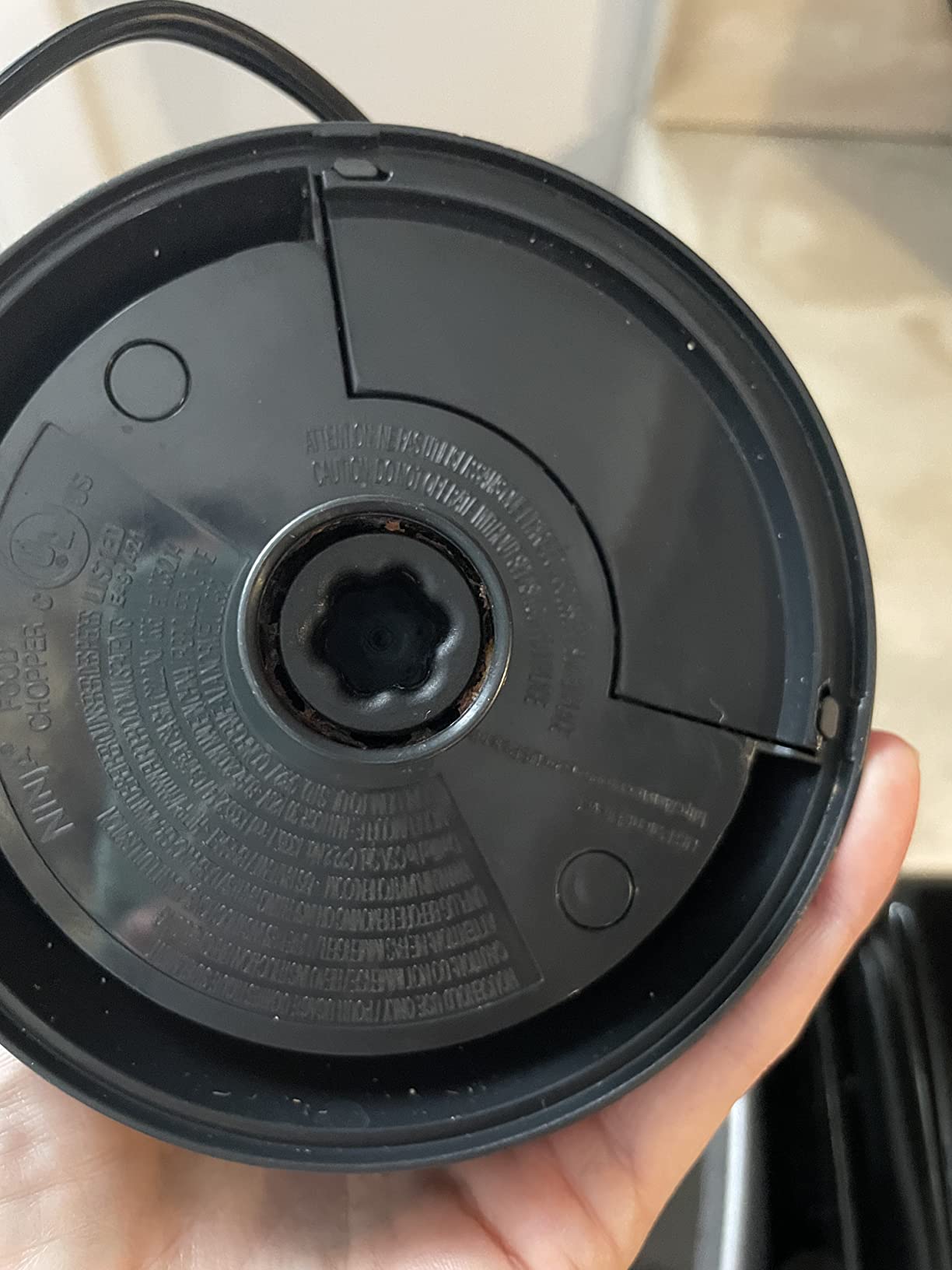
The Ninja is the highest-rated product in this roundup at 4.7 from more than 16,000 reviews, and the reason is not the chopping. It is the shape. The motor is a self-contained power pod, and the 16 ounce bowl is the only other piece. There is no base, and the handle locks the pod into the bowl so the whole thing stores as one tall unit in a pantry or a counter corner.
That is a genuinely different proposition from a food processor. You take one item, you chop it, and you rinse the bowl under the tap. No bowl-lid-blade stack to disassemble. The 200 watt motor handles garlic, onions, nuts and chocolate quickly, and the flip-top lid over the blade hole means you can put prepped food straight in the refrigerator.
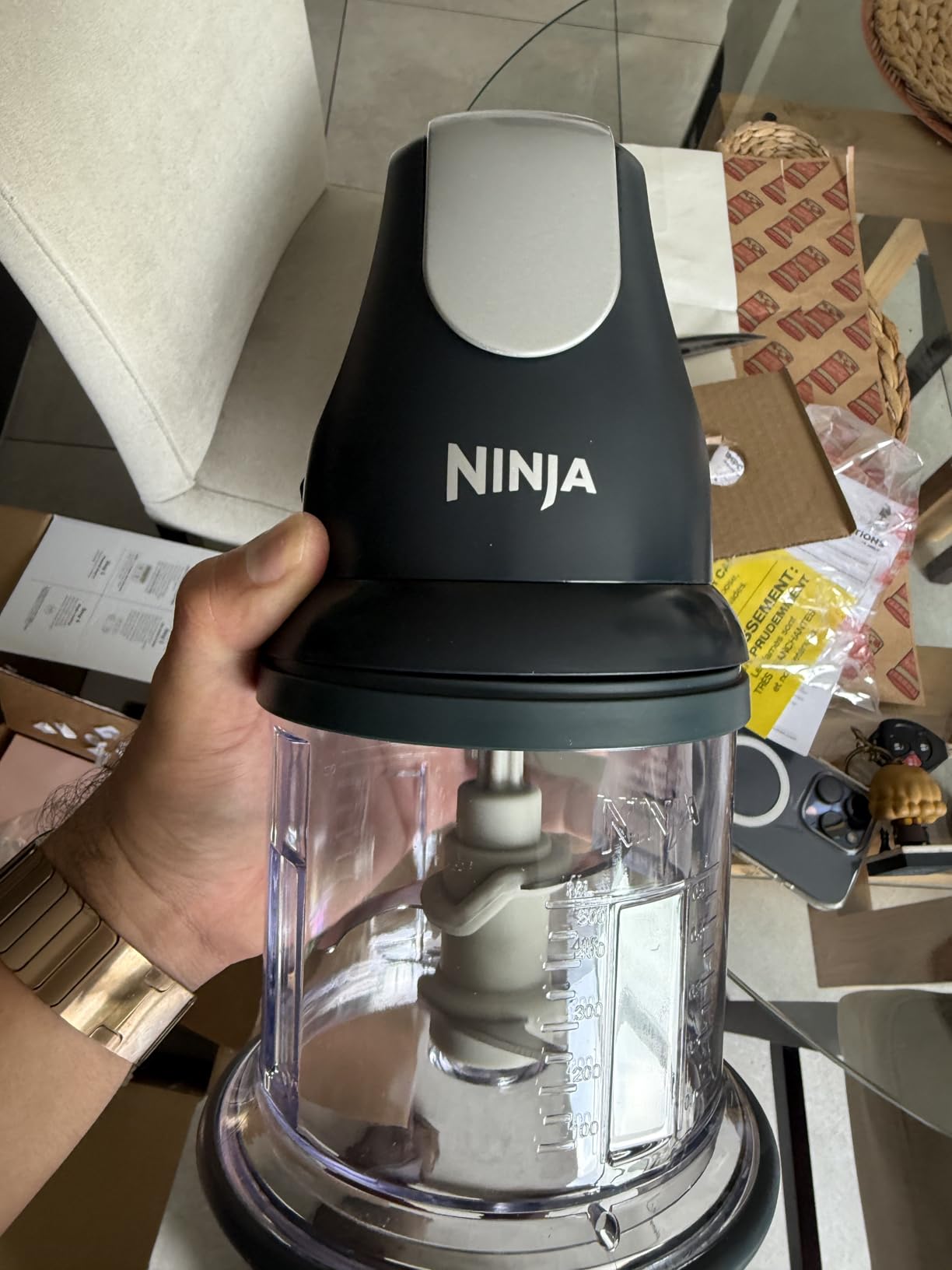
The anti-spill splashguard and no-slip base are small features that matter more than they sound, because reviewers do mention wet produce escaping onto the worktop. The bowl and blade rinse clean, and BPA-free construction is confirmed.
The trade-off is speed versus control. Owners repeatedly report that it chops so fast that a coarse texture requires light pulsing, and the 16 ounce bowl is the second smallest capacity here. It is also slightly noisy, and it is hand-wash oriented rather than a full dishwasher program.
Who should buy the Ninja Food Chopper Express Chop
Buy it if you live in a small kitchen, if you want visible tools rather than a cupboard full of blades, or if your prep is sauces, dips, garlic and onions. For users with limited hand strength, the push-down, lock-in-place design is easier to control than a twist-lock bowl and much safer than an open mandoline.
Who should skip the Ninja Food Chopper Express Chop
Skip it for volume. Sixteen ounces is a couple of onions, and a coleslaw means many rounds of empty, rinse, reload. Skip it if you want to slice, because there is no disc attachment, only a blade.
8. OXO Good Grips Adjustable Mandoline – Best for Thin Even Slices
OXO Good Grips Large Adjustable Handheld Mandoline Slicer
1mm 2.5mm and 4mm settings
Food holder included
Non-slip handle
Hand wash only
Pros
- Blade stays razor sharp for years with regular use
- Three thickness settings plus a locked storage position
- Food holder keeps fingers away from the blade
- Lightweight and easy to store
- Viewing window shows slice thickness
Cons
- Narrow 7.3cm blade cannot handle beefsteak tomatoes or large onions
- Hand wash only despite some listings suggesting dishwasher safe
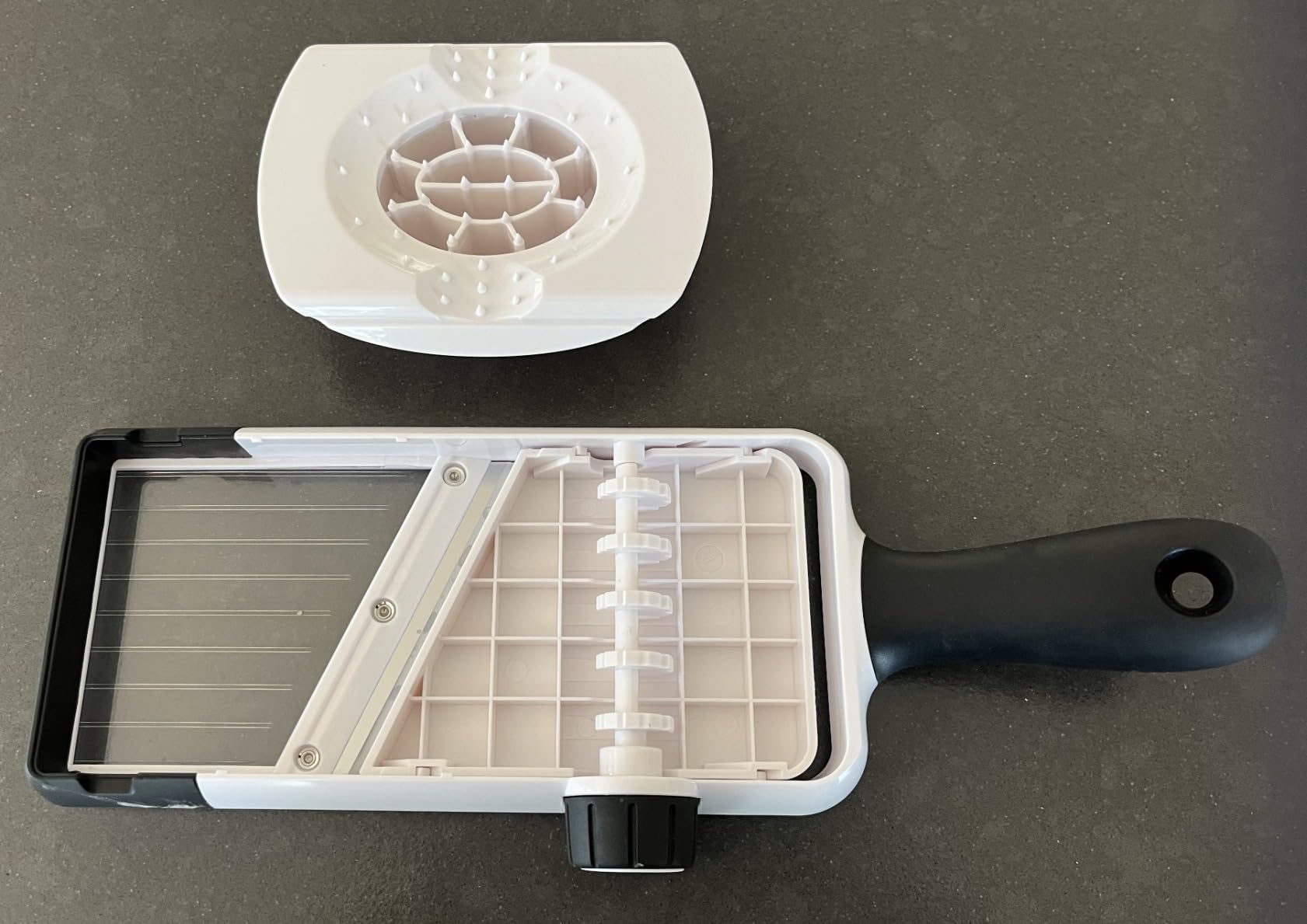
The OXO is not a chopper and does not pretend to be. It is a precision slicer, and it earns its place because it does one thing extremely well for a very long time. Long-term owners in the review corpus report the blade holding its edge for over a decade of regular use.
Three thickness settings at 1mm, 2.5mm and 4mm, with a viewing window so you can see what is coming out from underneath. The handle locks onto the unit at a fourth position so it stores as a single flat object. It is 12.6 inches long and weighs 70 grams, which is a real difference when you are pulling it out daily.

The safety design is the part to understand. The included food holder grips produce so your fingers never approach the blade, and the non-slip handle, knob and foot mean the unit stays put while you push. This is the geometry that most thin-slicing tools get wrong, and it is why the OXO shows up in accessibility discussions as a tool people with limited hand strength can actually use.
The honest limitation is size. The blade is 7.3cm across, so a beefsteak tomato or a large onion has to be cut into wedges first and sliced in pieces. It is also hand wash only, which the manufacturer states clearly even though some listings disagree. The stainless blade is 10 centimetres and the body is plastic.
Who should buy the OXO Good Grips Mandoline
Buy it for cucumbers, carrots, radishes, fennel and onions, and for anyone who wants thin, uniform slices for a salad or a cheese-topped gratin. The food holder makes it a good choice if a knife is difficult for you to control, and the locked handle makes it good for a small kitchen.
Who should skip the OXO Good Grips Mandoline
Skip it if you process large vegetables regularly, because the narrow blade forces pre-cutting and that defeats the point. Skip it if you want to dice, because this tool cannot dice at all, and experienced cooks on cooking forums are blunt that a mandoline is a slicer and a press chopper is a dicer, not interchangeable.
9. Dash Safe Slice Mandoline – Best for Hand Safety
Dash Safe Slice® Mandoline – Compact, Foldable Food Slicer – Slice, Dice, Julienne & More – Perfect for Quick Food Prep – Recipe Guide Included – Cool Grey
Enclosed blade design
1mm to 8mm thickness
30 slicing options
Folds flat
Pros
- Enclosed blade keeps hands away from cutting edges
- Over 30 slicing options across a wide thickness range
- Folds flat with the blade locked for storage
- Includes cleaning brush and food catch container
- Fast thin slices of radish and cucumber
Cons
- Narrow chute requires pre-cutting larger vegetables
- Dicing needs a julienne step first which is hard to control
- 45 degree angle means large items must be cut on a bias
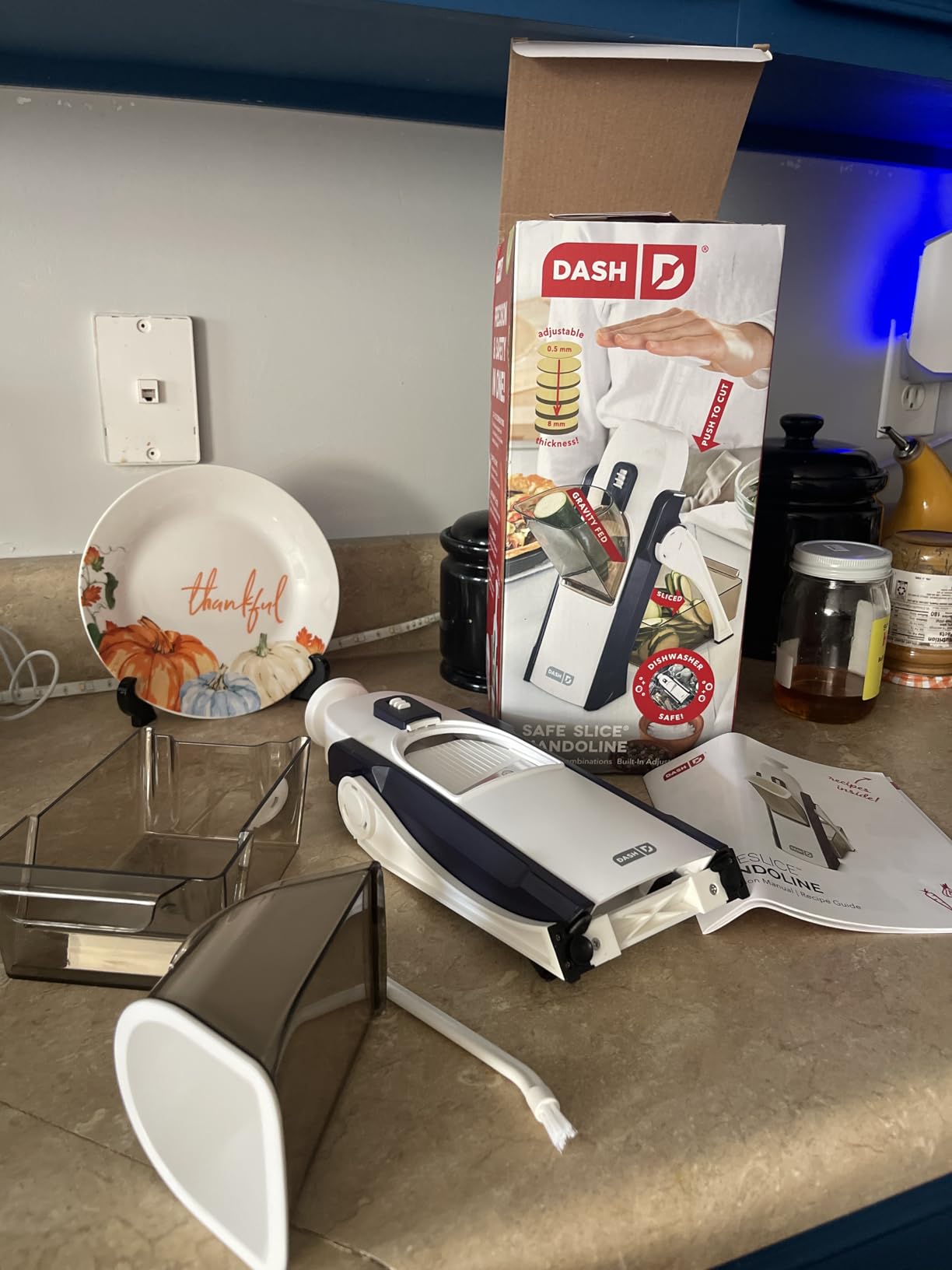
The Dash takes the opposite approach to the OXO on safety. Instead of a food holder over an exposed blade, the blade is enclosed behind a sliding carriage, so your hands never come near a cutting edge at all. If a household with kids is the question, that is the strongest argument in this roundup.
The range is genuinely wide: over 30 slicing options, thickness adjustable from 1mm to 8mm, plus julienne, matchstick and dicing modes. It folds flat with the blade locked, which solves the storage problem that most mandolines create, and it includes a cleaning brush and a food catch container.
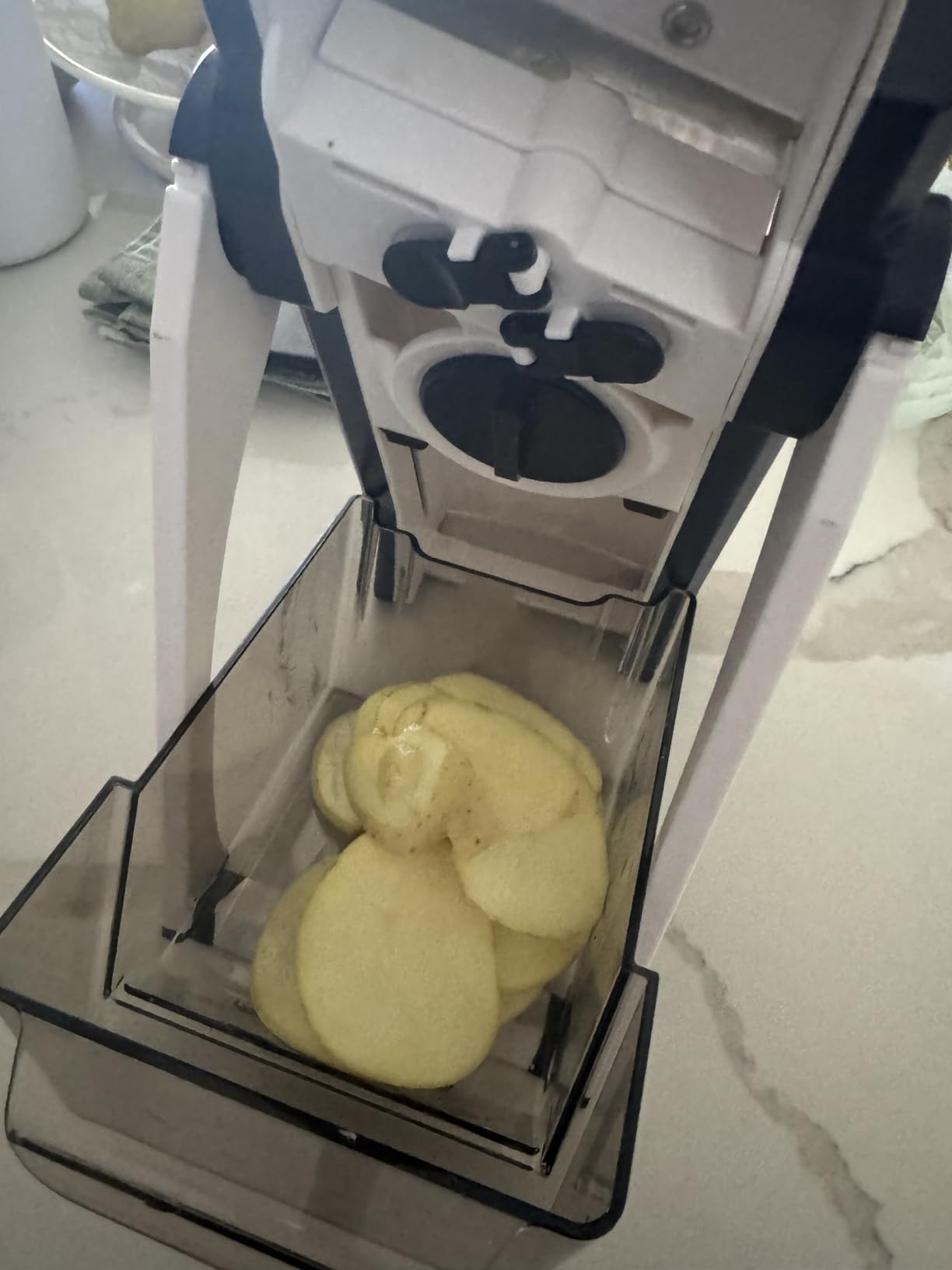
At 4.4 from more than 20,000 reviews, it sits at the lower end of this group and the reviews explain why. The chute is narrow, so anything larger than a carrot has to be cut down first. The cutting angle is 45 degrees, so larger items work best cut on a bias. And dicing is a two-step process, julienne first then cross-cut, which is genuinely hard to keep even.
Food also moves around in the slicing area on some recipes, particularly with wet produce. The included catch container helps, but you still need a board or a bowl underneath.
Who should buy the Dash Safe Slice Mandoline
Buy it for quick salad prep, for a small kitchen where storage space is tight, and for anyone who is genuinely frightened of an open mandoline blade. The enclosed carriage means you can teach a teenager to use it without a lecture.
Who should skip the Dash Safe Slice Mandoline
Skip it if consistency of dice is the goal, because the julienne-then-cross-cut sequence produces pieces of mixed size. Also note that the 4.4 rating is the second lowest here, driven by the narrow chute rather than by build quality.
10. Gramercy 12-Setting Mandoline – Best Dial-Controlled Thickness
Gramercy Mandoline Slicer for Kitchen with 12 Slice Settings, Black Edition
12 thickness settings
4CR15 stainless blade
Cut-resistant gloves included
Top-rack dishwasher safe
Pros
- Built-in thickness dial with 12 readable settings
- Stainless steel frame feels heavier and more stable
- Bundle includes cut-resistant gloves blade guard and cleaning brush
- Retractable spikes in the food holder grip produce
- Even slices for dehydrating and pickling
Cons
- Thickness setting can slip out of position while cutting
- Julienne blades roll out of the way on the first pass
- Food holder can slice off small dark fragments
- Leaves a sizeable unusable end piece
The Gramercy is the only tool in this roundup with a numbered thickness dial, and that is a real usability advantage over a slider. Twelve settings run from paper-thin to thick-cut, and the rotating 4CR15 stainless blade cylinder switches cutting styles from the same dial rather than from a separate insert.
The build is the best in the mandoline group. The stainless steel frame with non-slip feet resists the wobble that plagues plastic-frame competitors, and the accessory bundle is the most generous on the list: cut-resistant gloves, a removable blade guard, a cleaning brush and a food holder with retractable spikes.
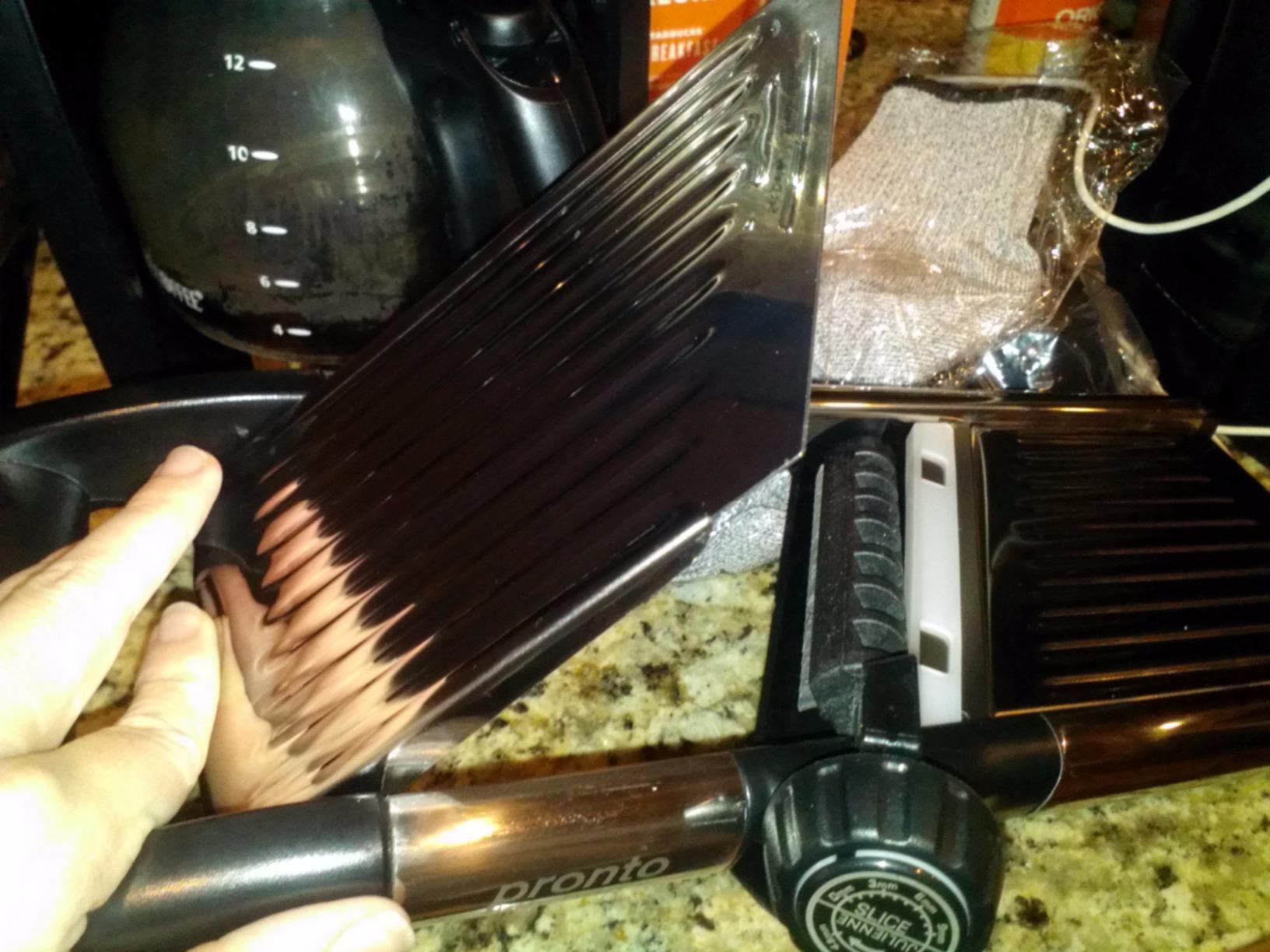
Those gloves are worth more than their price. Gloves plus a spiked food holder is a two-layer defence, and reviewers who have used it for dehydrating and pickling rate the slice consistency highly because the frame does not shift while you push.
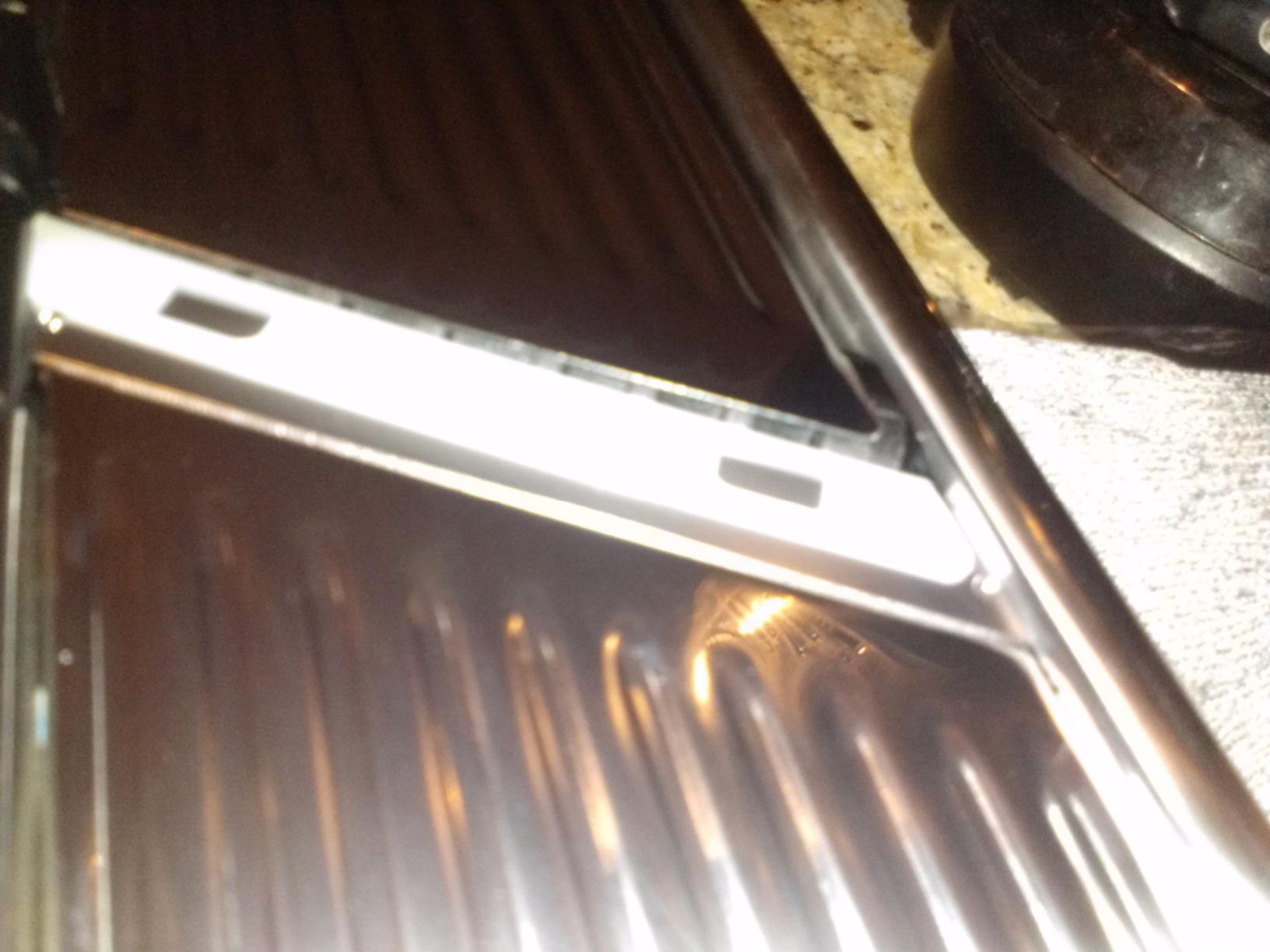
It is also the lowest-rated product here at 4.3, and the complaints are specific rather than vague. The thickness dial can slip out of position mid-cut, which changes your slice size without warning. The julienne blades roll out of the way on the first pass. The food holder’s spikes can take a small dark fragment off the end of a vegetable, and the tool leaves a large unusable end piece on small produce.
Who should buy the Gramercy 12-Setting Mandoline
Buy it if you dehydrate vegetables, make pickles, or want the widest thickness range with the steadiest frame on the market. It folds flat for storage and is top-rack dishwasher safe, which almost no other exposed-blade mandoline in this category will admit to.
Who should skip the Gramercy 12-Setting Mandoline
Skip it if you julienne a lot, because the julienne insert is the weakest part of the mechanism. And weigh the dial-slip reports carefully if uniformity is your whole point, since a setting that moves mid-stroke defeats a precision tool.
11. Fullstar Pro XL Chopper and Mandoline – Best Manual Batch Capacity
Fullstar Pro XL Vegetable Chopper & Mandoline Slicer, All-in-1 Kitchen Tool
8 cup container
Four 420J stainless blades
Pull-out catch tray
Finger guard included
Pros
- Largest manual container here at 8 cups
- Uniform dice from both fine and medium grids
- Replacement blades sold separately
- Mandoline slices onions thinly and consistently
- Dishwasher safe and quick to reconfigure
Cons
- Grater plate is too small to grate efficiently
- Dense vegetables like carrots need a lot of force
- Food lodges in blade crevices and needs scrubbing
The Pro XL is the Fullstar Pro Original scaled up and expanded. The container is 8 cups with a pull-out catch tray, and the blade set is four 420J stainless pieces: a fine dicer, a medium dicer, a 2mm slicer and a grater. So it dices, slices and grates from the same body.
That extra capacity matters more than it looks. The 5 cup Original already forces a second batch for a large cabbage; the 8 cup container usually does not. The pull-out tray means you can load, cut and slide the catch out without unstacking anything, and a finger guard and cleaning brush are included.
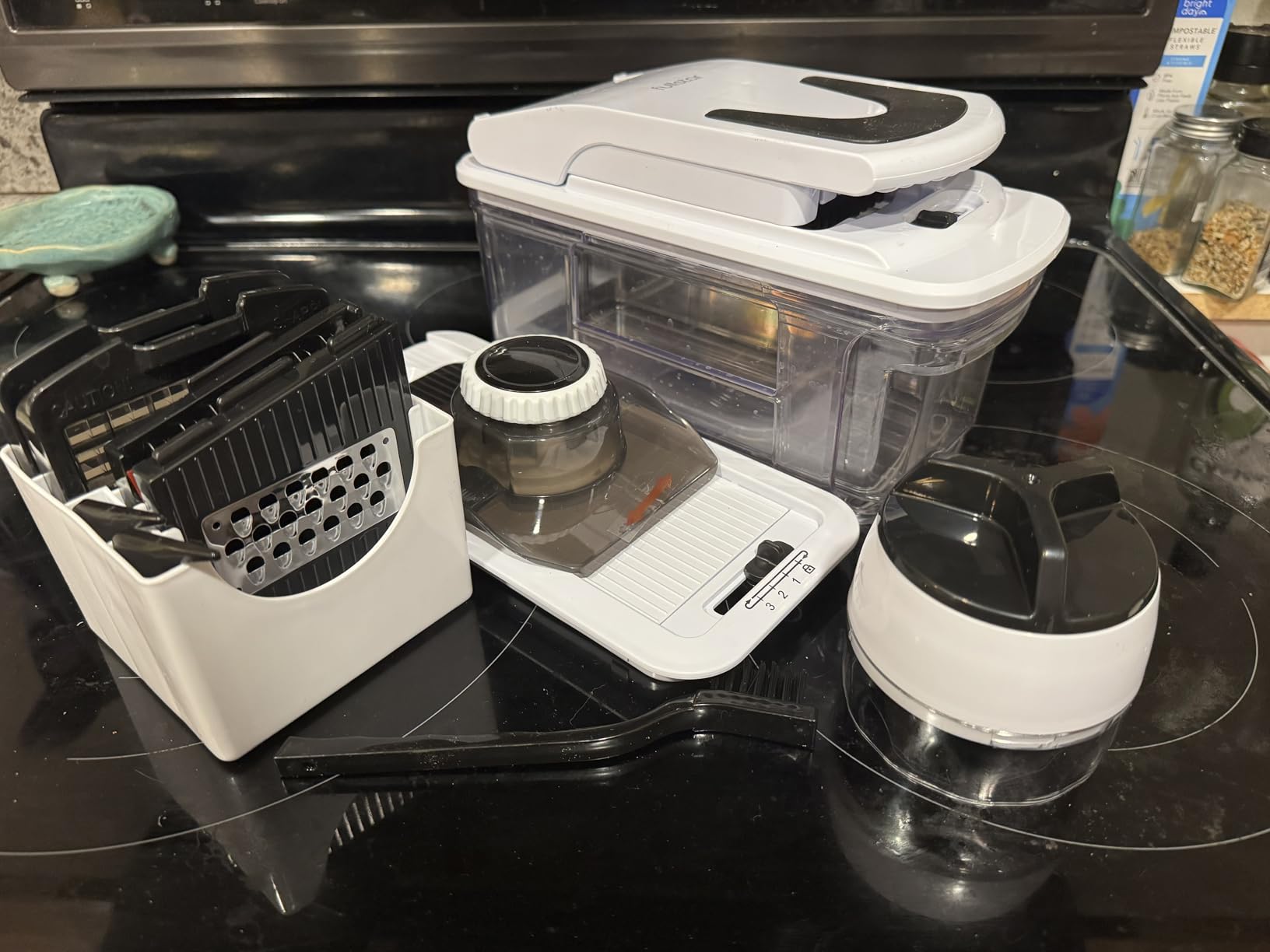
Owners rate it 4.6 across more than 27,000 reviews, and the two most common positives are consistent dice from both grids and a mandoline that handles onions well. A detail worth noting: replacement blades are sold separately, so a broken insert does not end the tool’s usefulness the way it would on a sealed plastic-bodied competitor.
The cons are mechanical rather than quality related. The grater plate is small, so grating cheese with it is a poor use of your time. Carrots and other dense roots demand real force through the grid, and food particles lodge in the blade crevices and need a brush rather than a rinse.
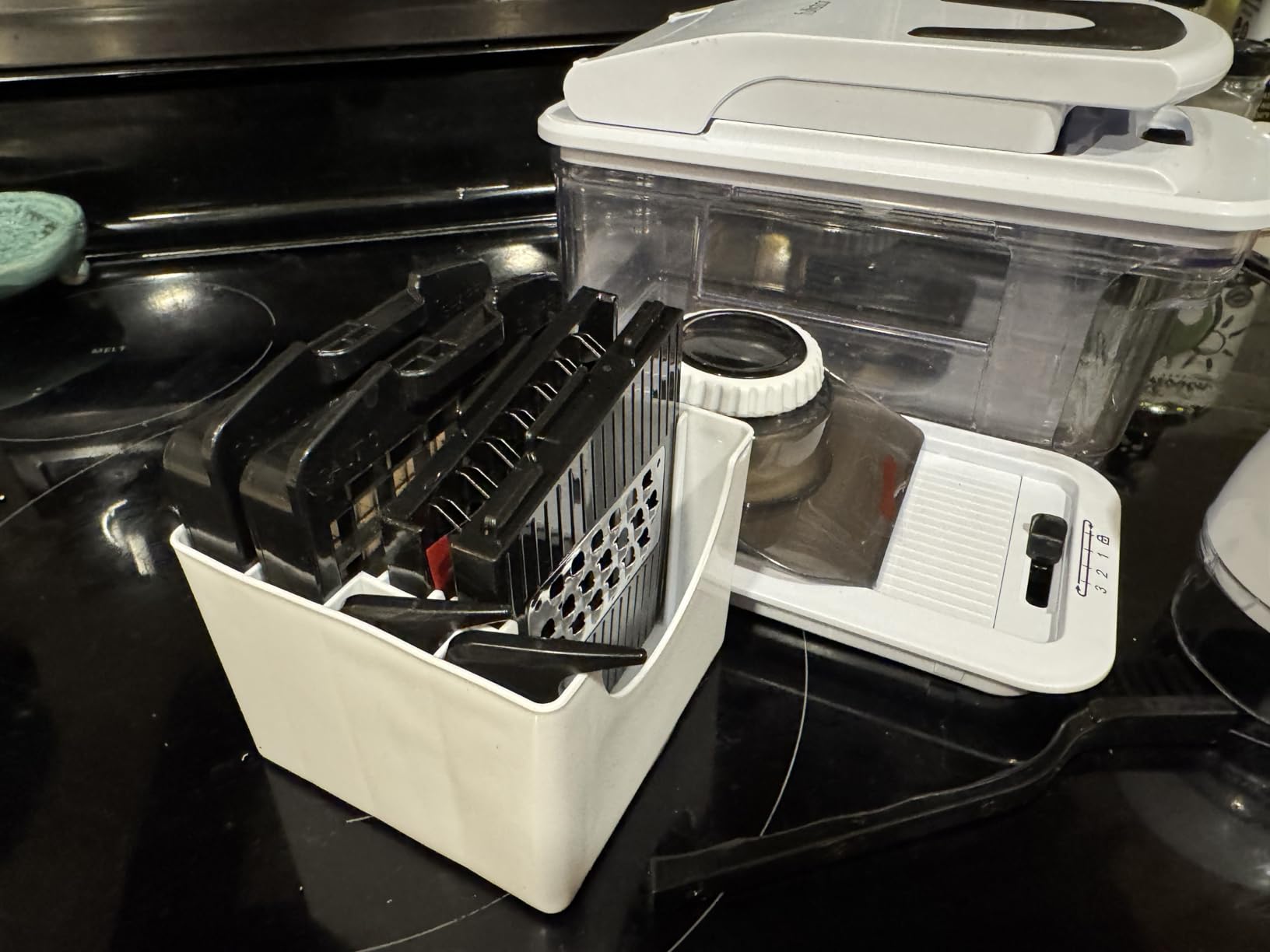
Who should buy the Fullstar Pro XL
Buy it if you want the largest manual batch and still want slicing and grating from one tool. The extra-hard BPA-free and PFAS-free ABS body is specified to resist cracking, which addresses the most common structural complaint in this category.
Who should skip the Fullstar Pro XL
Skip it if you have limited hand strength, because pushing a dense carrot through a grid is exactly the high-force action those users are trying to avoid. For that case, an electric chopper or the Ninja with its press-lock lid is a better fit.
12. Fullstar Pro Core 6-in-1 – Budget Pick
Fullstar Pro Core Vegetable Chopper & Mandoline Slicer, 6-in-1 Kitchen Tool
Six 420J stainless blades
5 cup container
Cleaning brush and finger guard
Dishwasher safe
Pros
- Six blade options covering dice grate shred julienne and slice
- Blades stay sharp with regular use
- Blades change in seconds
- Container doubles as storage for prepped produce
- Non-slip base holds steady on firm vegetables
Cons
- Dicer blades are hard to clean and trap onion and garlic bits
- Small cutting area means smaller batches
- Plastic body can bend with heavy long-term use
The Pro Core is the entry point into the Fullstar format, and the format is the reason it works. Six 420J stainless blades cover a fine dicer, a medium dicer, a grater, a coarse shredder, a julienne and a slicer, all stored in a 5 cup container that doubles as a storage tub for the prepped vegetables.
Owners rate it 4.5 from more than 16,000 reviews, and the feedback is unusually practical. The specific claim that comes up is that it cuts half an hour of prep down to about five minutes, which is the entire sales pitch of a chopper restated in the only unit that matters.
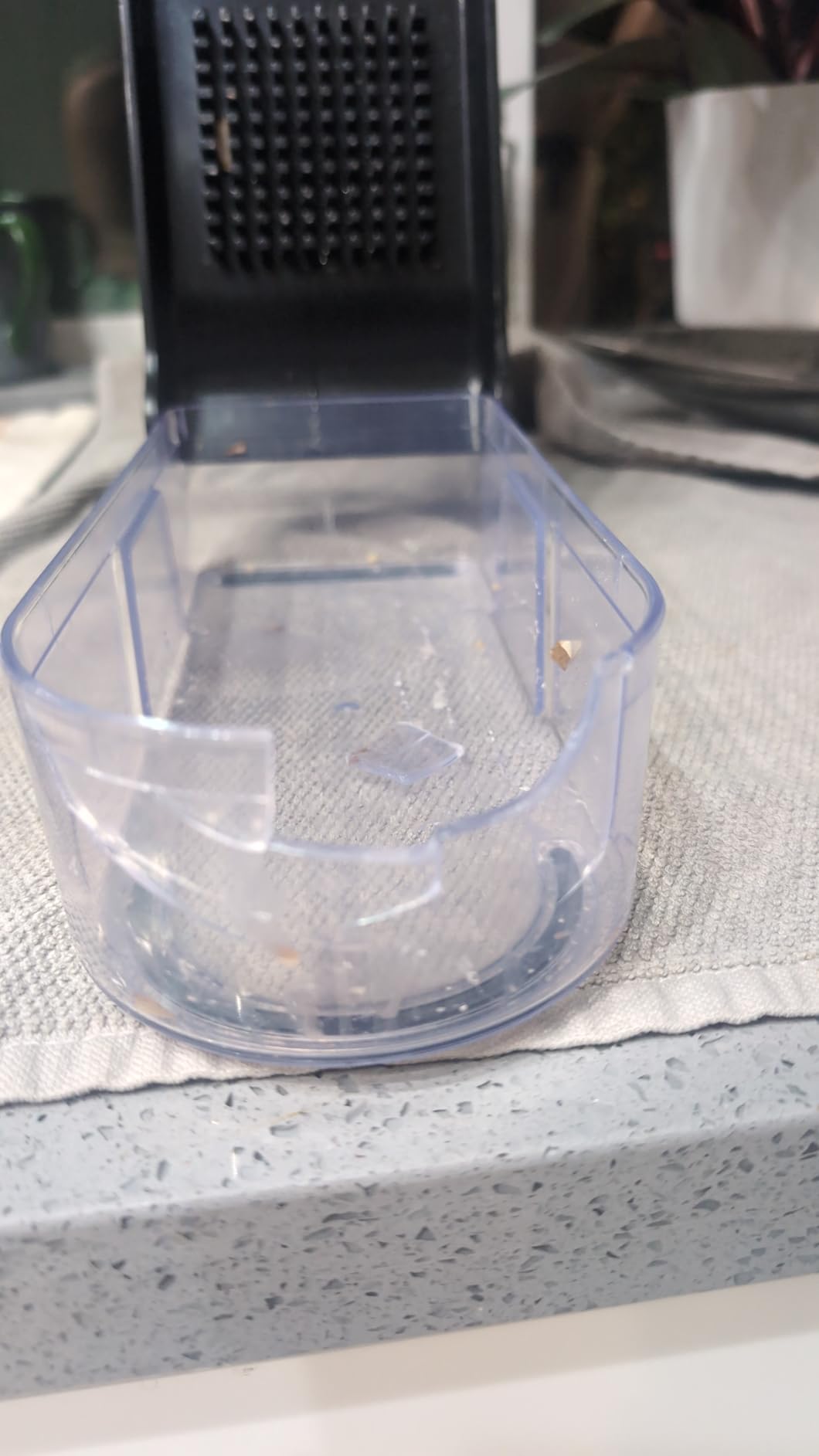
A cleaning brush, a scraper and a finger guard are all in the box, which is better than most machines at this level. The non-slip base holds steady when you push through firm vegetables, and the blades change in seconds.
The dicer blades are the weak point, exactly as you would expect. Onion and garlic particles lodge in the openings and take real scrubbing. The cutting area is small, so batches stay small, and over years of heavy use the plastic body can bow, which is the structural complaint that shows up across this whole category.
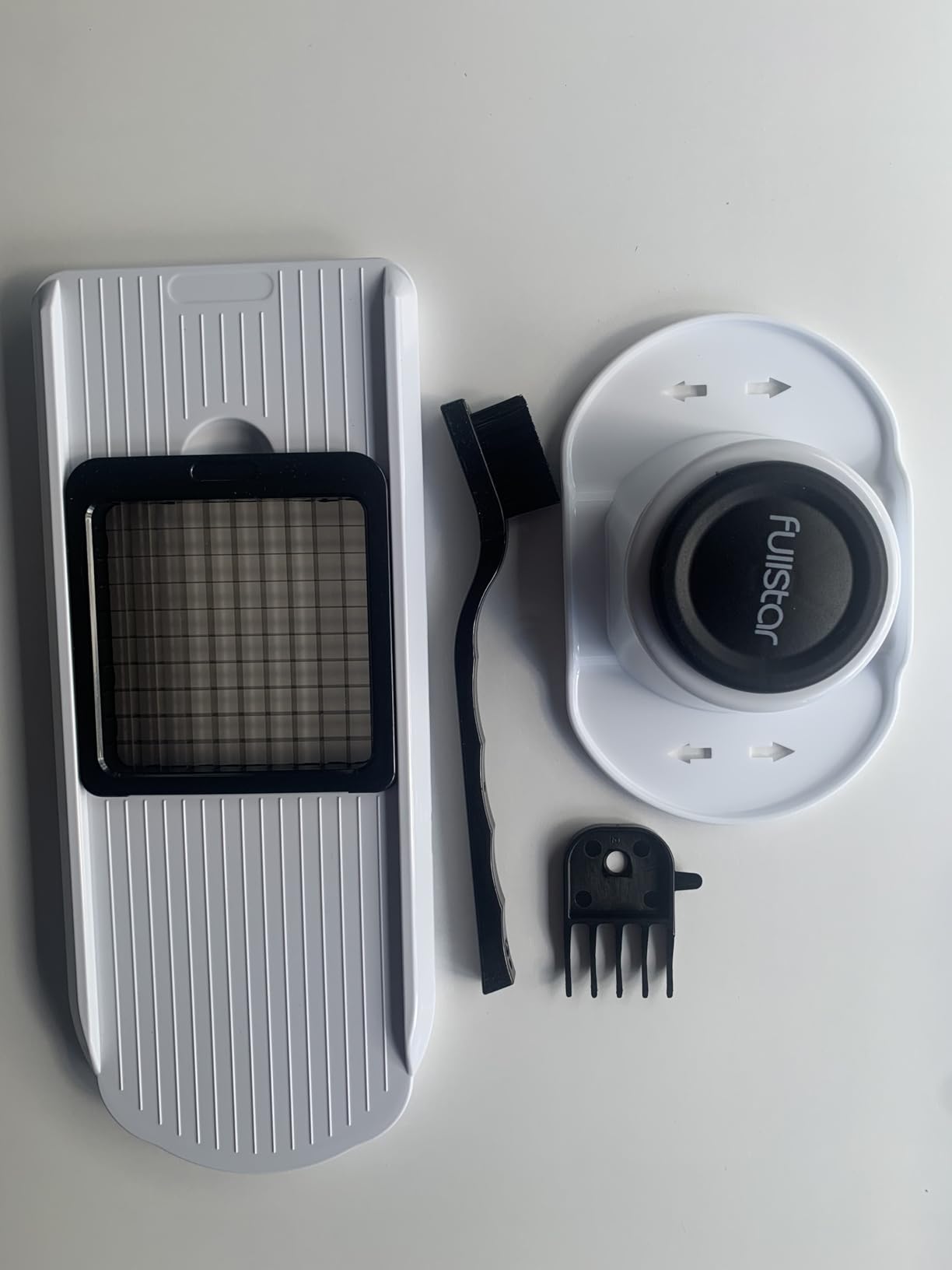
Who should buy the Fullstar Pro Core
Buy it as a first chopper, for a shared house, or if you want six cut styles without paying for a powered machine. The container-as-storage design means a batch of chopped vegetables goes straight into the fridge in the same bowl you cut them in.
Who should skip the Fullstar Pro Core
Skip it if you cook for a family. The small cutting area means repeated batches, and the dicer cleaning burden is the highest of the three Fullstar models here. If you already own a Fullstar, this is a duplicate rather than an upgrade.
Manual vs Electric Vegetable Cutting Machines: Which Should You Buy?
This is the question that splits the search results, so let me answer it directly. A manual vegetable cutting machine is faster than a knife, needs no outlet, stores in a drawer and cannot stall. An electric one is faster still, needs no force at all, and takes counter space and a wash-up.
The force question matters more than the speed question. When a review corpus full of people who like these tools still complains that a carrot needs significant force through the grid, the limit is clear. Manual choppers are limited by what your arm can press. Electric choppers are limited by what their motor can turn, and on dense root vegetables that limit shows up as a stall and a whine.
So choose by your hands and your volume, not by a feature list. If you dice five vegetables a day for two people, a manual press chopper is the better purchase, and it will be the better purchase in five years because there is nothing in it to fail electrically.
There is a middle path, and it is the Ninja and the Hamilton Beach 3-Cup on this list. Both are press-down rather than twist-lock, both hold their blade above a sealed bowl, and both rinse or run through a dishwasher in under a minute. That is the compromise most people should take.
How to Choose a Vegetable Cutting Machine
Six decision axes separate the twelve machines above, and checking them in order will save you from most of the common regrets.
One: mechanism type. A press chopper dices only, through a curved blade grid. A mandoline slices, juliennes and shreds, but cannot dice without a two-step process. A food processor chops, minces and purees with a spinning blade and can slice or shred with an added disc. Pick the one that matches the cut you do most, not the widest feature list.
Two: capacity. Match the bowl to your real batch. A 1.5 or 3 cup bowl means multiple loads for anything bigger than a side dish. A 5 to 8 cup container handles a full cabbage. A 12 cup bowl is a meal-prep and canning tool. Buying small to save counter space is fine only if you actually cook for one.
Three: blade steel and drive path. 420 stainless is the common grade and resists rust, 420J is a harder variant, and 4CR15 is what the higher-end mandolines use. More important than the grade is whether any load-bearing plastic part sits in the blade’s drive path. A plastic internal part that cracks means a blade that stops spinning, and that is the single most common failure in reviews of this category.
Four: cleaning. Every removable part being dishwasher safe is a clear win. A narrow chute, many small blade inserts, or crevices around a blade hub all mean the brush, not the dishwasher, is doing the work. Ask how many separate pieces you have to wash before you buy a multi-blade tool.
Five: motor power for electric models. A 150 watt motor is the practical floor for herbs, onions and garlic, and 200 watts covers most daily work. For dense root vegetables, aim for 250 watts or more. Below that you will be pulsing and waiting, and the reviews of low-wattage units describe exactly that.
Six: safety geometry. Three things to check. Is the blade sealed below a closed hopper, so your hand is never above it? Is there a food holder or an enclosed carriage? Is there a finger guard in the box? Any machine with a fully exposed blade and no guard is the category’s biggest injury risk, and there are documented near-misses from owners who had exactly that arrangement.
A seventh, if you are buying for someone else, is the hand-strength question that keeps coming up in forum threads. A press-down lock-in-place electric chopper, or a mandoline with a food holder, is more usable than a manual grid for people with limited grip strength or mobility. That is not a compromise. It is the correct tool for the task.
On price, home vegetable cutting machines span roughly fifteen to two hundred dollars, and the jump above that buys commercial continuous-feed equipment. Those machines take a whole potato through a large feed chute and never stop, which is genuinely impressive and completely wrong for a home kitchen unless you are processing produce by the bushel.
Failure Modes to Avoid When Buying a Vegetable Chopper
The review corpus for this category is unusually consistent about what goes wrong. These are the specific complaints that recur, and how to avoid each one.
Blades that bend or detach from the housing. This is the most reported fault. An Alligator Mini Chopper owner reported blades that bent and then fell off after under three months of once-weekly use, with an explicit complaint about paying premium prices for cheap products. Look for a metal blade carrier rather than a blade held by plastic tabs, and check whether replacement inserts are sold separately.
Plastic structural parts cracking in the drive path. A Zyliss Zick Zick owner reported an internal plastic part cracking and snapping off while chopping celery on the second use, and contrasted it with a two-decade-old Made in Switzerland predecessor. That comparison is the clearest build-origin signal available in this category.
Dull blades that crush instead of cut. A Slice-O-Matic owner described blades dull enough to crush produce and spread a mess across the worktop. A cheap blade is the fastest route to crushed vegetables, and crushed vegetables release water and go to mush. Buy the higher steel grade.
Missing advertised attachments. A Nicer Dicer 5-in-1 owner received a box without the dicing cube attachment, which was the entire reason for buying it, and found warranty support unresponsive. The fix is obvious and annoying: unbox it the day it arrives and confirm every advertised blade is physically present.
No finger guard on an exposed-blade slicer. A reviewer of the Everten Progressive Cubing Mandoline wrote that they nearly sliced off a finger and called the device extremely dangerous, because nothing sits between the blade and the hand. Do not accept that geometry at any price.
Motors that stall on hard vegetables. Electric units bog down on carrots, potatoes and sweet potato, and then overheat if you keep pushing. The fix is wattage, not persistence. If you mostly cook roots, 250 watts or more.
Unreachable crevices around the blade hub. This one shows up as a cleaning question more than a complaint, but it is the reason many owners end up hand-washing a dishwasher-safe machine. A narrow chute and many small inserts both make cleanup a real chore.
Against the r/Cooking pushback worth hearing: experienced cooks on that forum consistently steer to a proper mandoline over a push chopper for consistent dice. That is not wrong. A press chopper pushes produce through a fixed grid, so a soft onion and a firm carrot do not get the same result. If your standard is restaurant-uniform brunoise, buy the mandoline. If your standard is getting a week of vegetables chopped, buy the chopper.
Frequently Asked Questions
What is the best vegetable cutting machine for home use?
For most home kitchens the Hamilton Beach 3-Cup electric chopper is the best all-round choice: a 350 watt motor, a 3 cup dishwasher-safe bowl and a stack-and-press lid that needs no twist-locking. If you prefer a manual tool, the Fullstar Pro Original chopper is the value pick, and the OXO Good Grips mandoline is the one to buy for thin, even slices.
What is the best machine to cut vegetables?
It depends on the cut you want. A press chopper dices fastest. A mandoline slices, juliennes and shreds with far more control. A small food processor chops, minces, purees and emulsifies, and can slice or shred once you add a disc. Buy for your most common cut rather than for the widest feature list.
Are electric vegetable choppers better than manual ones?
Electric models need no pushing force, which makes them easier for anyone with limited hand strength, and they handle herbs and sauces with less effort. Manual models never stall, need no outlet, store in a drawer and have no electronics to fail. Choose electric for small batches and sauces, manual for large batches of dense vegetables.
What are the key differences between an electric food chopper and a food processor?
A chopper is small, usually 1.5 to 3 cups, and is built for brief bursts: onions, herbs, nuts, breadcrumbs and sauces. A food processor is larger, usually 8 to 12 cups, and takes a feed chute plus interchangeable discs so you can slice and shred as well as chop. Choppers are faster for small jobs; processors win on volume and cut variety.
Can you use a vegetable chopper to make coleslaw?
Yes, and a press chopper is well suited to it because cabbage is soft and produces an even dice quickly. Use a mandoline if you want fine shreds rather than a dice, and add the dressing only after cutting so the cabbage does not water down.
How do you clean a vegetable chopper with multiple blades?
Most blade inserts have slots and corners that trap onion and garlic particles, so the included cleaning brush or a nylon bristle brush is more effective than the dishwasher. Wash inserts individually, keep the metal blades away from other cutlery in the rack, and never put a plastic-bodied base in the dishwasher unless the manufacturer says so.
What is the highest rated vegetable chopper?
Among the twelve machines reviewed here the Ninja Food Chopper Express Chop carries the highest average rating at 4.7 from more than 16,000 owner reviews. The most-reviewed product is the Fullstar Pro Original at 4.5 from more than 95,000 reviews, which makes it the better-validated choice by volume.
Which Vegetable Cutting Machine Should You Buy?
Cook for one or two, chop a few vegetables a day, and want the least effort: buy the Hamilton Beach 3-Cup. It is the best vegetable cutting machine overall for a reason, and its stack-and-press design is the reason the reviews stay positive decade after decade.
Cook for a family, batch on Sundays, and want the most validation behind the tool: buy the Fullstar Pro Original. Nearly 96,000 owner reviews is more evidence than any other product in this roundup.
Want one tool that dices, slices, juliennes and shreds: buy the Mueller Pro 10-in-1, and accept the extra drawer space. Want thin, even slices and a blade that stays sharp for a decade: buy the OXO Good Grips mandoline, and pre-cut anything larger than a small onion.
Have limited hand strength or grip: avoid manual press choppers entirely and start with the Ninja Food Chopper Express Chop or the Dash Safe Slice, both of which move your hand away from an exposed blade. Cook in a small kitchen, do large volumes, and mind the noise: buy the Hamilton Beach 12-Cup, and give it a permanent home on the counter.
Whichever you choose, check that every advertised blade is in the box, that your most common cut is one the tool actually makes, and that there is something between your fingers and the blade. That last check alone rules out a lot of options, and it is the one that matters most in 2026.