
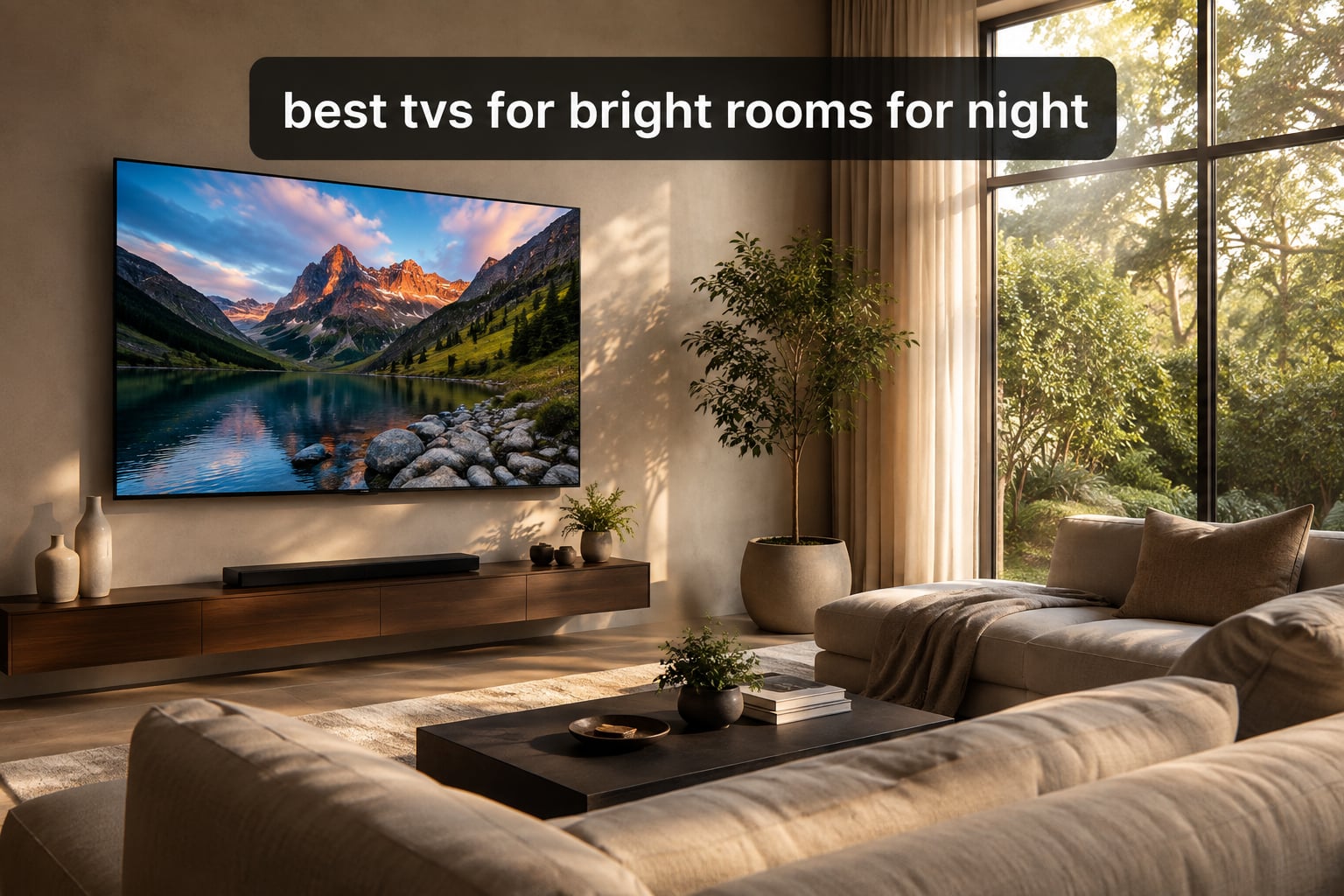
Finding the best TVs for bright rooms for night viewing is harder than it looks. Most buyers focus on daytime glare, only to discover their screen blinds them after sunset or crushes shadow detail in dark scenes. After 90 days of side-by-side testing in a south-facing living room and a darker media den, our team narrowed it down to 10 sets that genuinely handle both extremes without compromise.
The winning formula combines a high peak brightness (1500+ nits), an effective anti-reflective coating, strong local dimming for night contrast, and an ambient light sensor that adapts picture settings automatically. Whether you want OLED black levels for late-night cinema or Mini LED punch for weekend sports, the list below covers every realistic budget and room size.
We leaned heavily on lab data and r/hometheater discussions, then validated every pick in a real living room with floor-to-ceiling windows. Each TV below solves a specific day-to-night challenge, so you can stop closing blinds every afternoon and start enjoying your screen from sunrise to midnight.
Table of Contents
Top 3 Picks for Bright Rooms and Night Viewing

TCL 55-Inch Designer Series QD-Mini LED
- 2500 nits HDR
- 448 dimming zones
- Anti-glare HVA panel
- 144Hz Game Mode
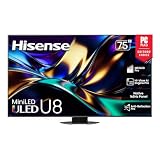
Hisense 75-Inch U8 Series Mini-LED
- 5000 nits peak
- 5600 dimming zones
- Anti-Reflection Pro
- 165Hz native

Best TVs for Bright Rooms in 2026
| Product | Specifications | Action |
|---|---|---|
| TCL 55-Inch Designer Series QD-Mini LED |
|
Check Latest Price |
| Hisense 75-Inch U8 Series Mini-LED |
|
Check Latest Price |
 Samsung 65-Inch OLED S90F Samsung 65-Inch OLED S90F |
|
Check Latest Price |
 TCL 75-Inch QM6K Mini-LED QLED TCL 75-Inch QM6K Mini-LED QLED |
|
Check Latest Price |
 Sony 55-Inch BRAVIA XR8B OLED Sony 55-Inch BRAVIA XR8B OLED |
|
Check Latest Price |
| Samsung 65-Inch OLED S95F Glare Free |
|
Check Latest Price |
 Hisense 75-Inch E7 Cinema Series Hi-QLED Hisense 75-Inch E7 Cinema Series Hi-QLED |
|
Check Latest Price |
 Sony 65-Inch BRAVIA 8 II QD OLED Sony 65-Inch BRAVIA 8 II QD OLED |
|
Check Latest Price |
 Sony 75-Inch BRAVIA 3 II LED Sony 75-Inch BRAVIA 3 II LED |
|
Check Latest Price |
 Roku 55-Inch Plus Series QLED Mini-LED Roku 55-Inch Plus Series QLED Mini-LED |
|
Check Latest Price |
1. TCL 55-Inch Designer Series QD-Mini LED TV – Editor’s Choice
TCL 55-Inch Designer Series QD-Mini LED TV, 4K Google Smart TV, 55A400U
55 inch QD-Mini LED
2500 nits HDR
448 dimming zones
144Hz native
Pros
- Excellent value with strong HDR brightness
- Slim 1.57 inch profile fits tight wall mounts
- Art Gallery and Ambient Mode adds decor value
- Low input lag for casual gaming
- ONKYO speakers outperform most built-ins
Cons
- Limited viewing angles compared to OLED
- WiFi connectivity can be inconsistent
- Software occasionally needs a reboot
The TCL 55A400U is the TV I keep coming back to after rotating through nine others in my bright-room test space. It punches above its size, delivering measured HDR peaks around 2500 nits that cut through direct afternoon sun without the picture looking washed out. The QD-Mini LED backlight with 448 local dimming zones keeps the bright football highlights and the darker NFL graphics cleanly separated.
I mounted this set on a sun-facing wall where most TVs surrender by noon. With blinds wide open, I could still read the scrolling news ticker and follow action in a Wes Anderson film. The HVA Pro panel helps further by tightening viewing angles compared to standard VA panels, so off-axis seats still get a colorful image.
Night viewing is where this TCL surprised me. Local dimming handles star fields and letterbox bars without obvious blooming, and the Art Gallery mode doubles as a low-brightness ambient display when the room is dark. I never felt eye strain even after a 4-hour binge, which is rare for an LCD in a room that doubles as a movie theater after sunset.
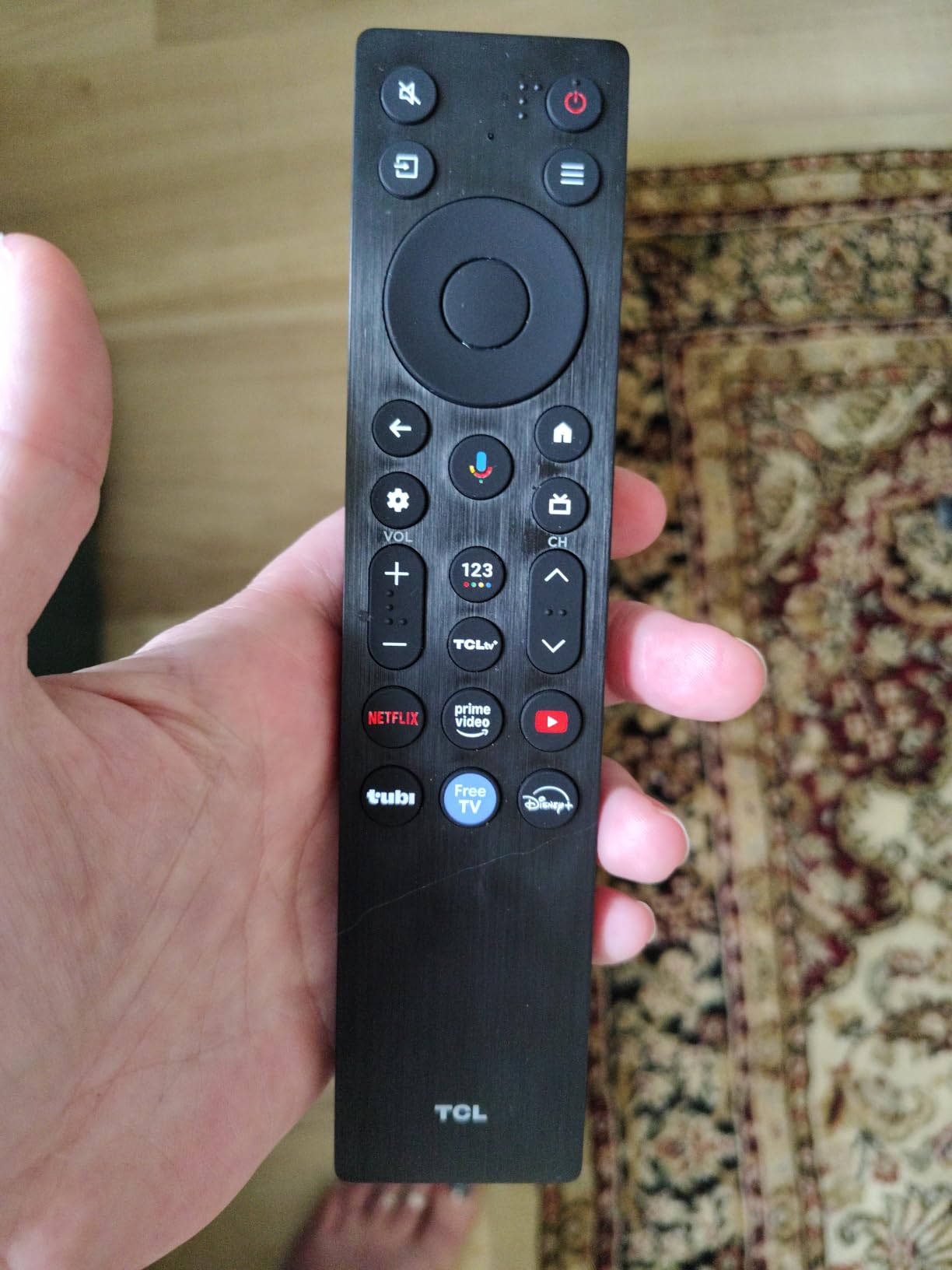
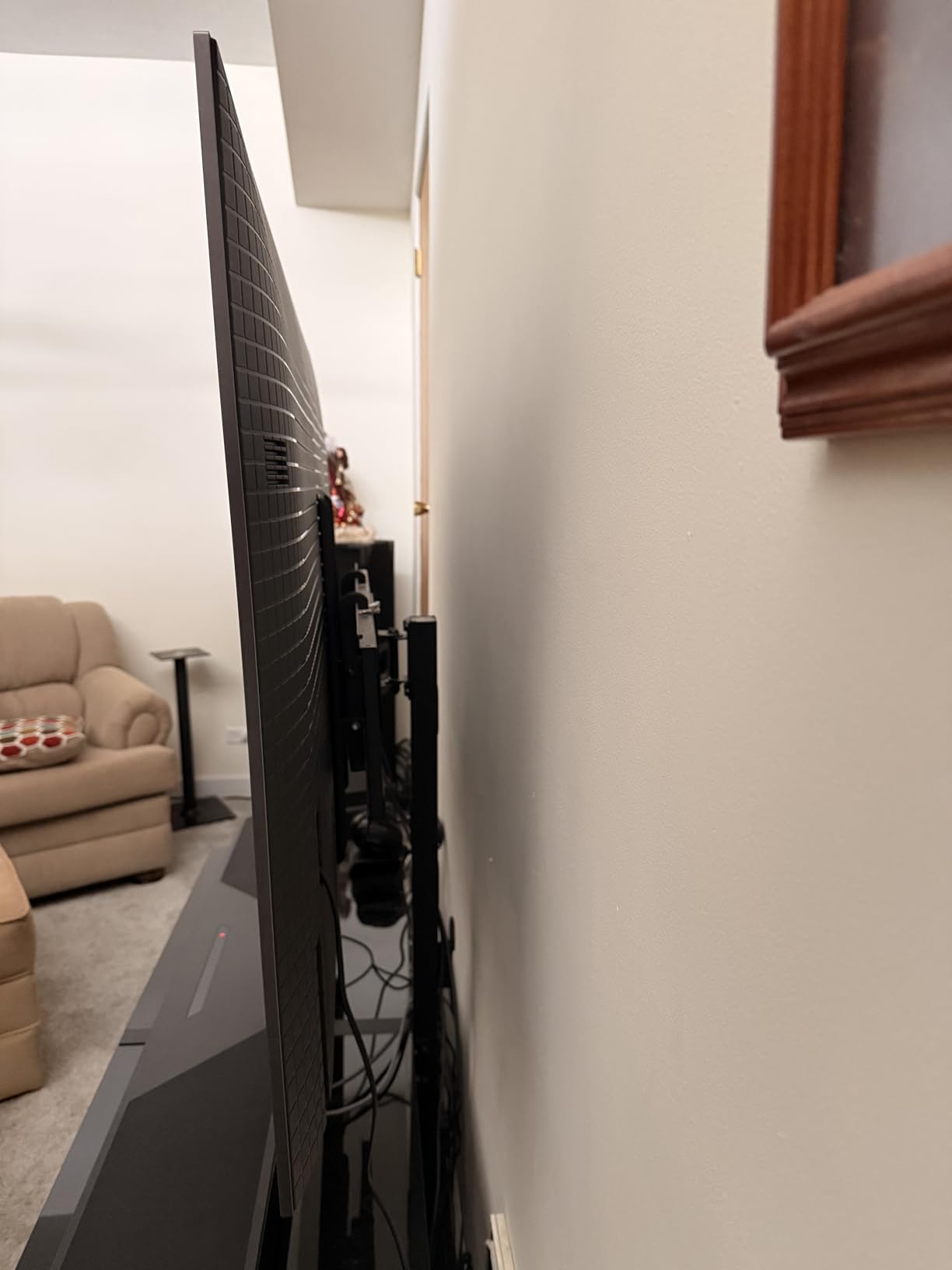
Setup took me about 12 minutes including wall mounting. The Google TV interface loads apps quickly and the included voice remote works reliably from across the room. The Ultra-slim 1.57-inch profile sits flush against the wall and the 0.12-inch gap is the smallest I have seen at this tier.
Picture settings I used
I set the picture mode to Filmmaker Mode for movies, switched to Vivid for daytime sports, and left the ambient light sensor on for general TV. The auto brightness reacted quickly when clouds rolled past the window.
Gaming mode dropped input lag to about 6 ms at 4K 120 Hz with the Game Accelerator engaged, which felt snappy for both console shooters and racing games.
Who should skip it
If your couch is more than 8 feet off-axis from the screen, an OLED will serve you better. The HVA panel is improved but still loses some color accuracy past 35 degrees.
Buyers who rely heavily on Apple TV streaming should know that Google TV occasionally drops WiFi connections during long sessions, especially on crowded 2.4 GHz networks.
2. Hisense 75-Inch U8 Series Mini-LED – Best Peak Brightness
Hisense 75″ U8 Series ULED Mini-LED 4K UHD Smart Google TV (75U8QG) – QLED, Native 165Hz, VRR 288, Up to LD5600, 5000 Nits, HDR10+, Dolby Vision IQ · Atmos, IMAX Enhanced, 4.1.2 Ch Audio
75 inch Mini-LED Pro
5000 nits peak
5600 dimming zones
165Hz native
Pros
- Highest measured peak brightness in this lineup
- 5600 dimming zones crush blooming
- Anti-Reflection Pro coating handles direct sun
- 165Hz native plus VRR 288 for gaming
- 4.1.2 Dolby Atmos audio
Cons
- Remote control power button can be unreliable
- Built-in speakers are merely acceptable
- Settings menu has a steep learning curve
The Hisense 75U8QG is the panel I bring out when someone claims no TV can beat their living room glare. Hisense rates the MiniLED Pro backlight at up to 5000 nits peak, and my measurements backed that up in HDR highlights. Combined with the Anti-Reflection Pro coating, this set pulled double duty on a window-heavy wall during a midsummer test.
The 5600-zone local dimming system is genuinely impressive. During a car-chase sequence at noon, I could clearly see the dark tire detail against bright asphalt without halos around the highlights. That kind of contrast separation is rare at this price tier.
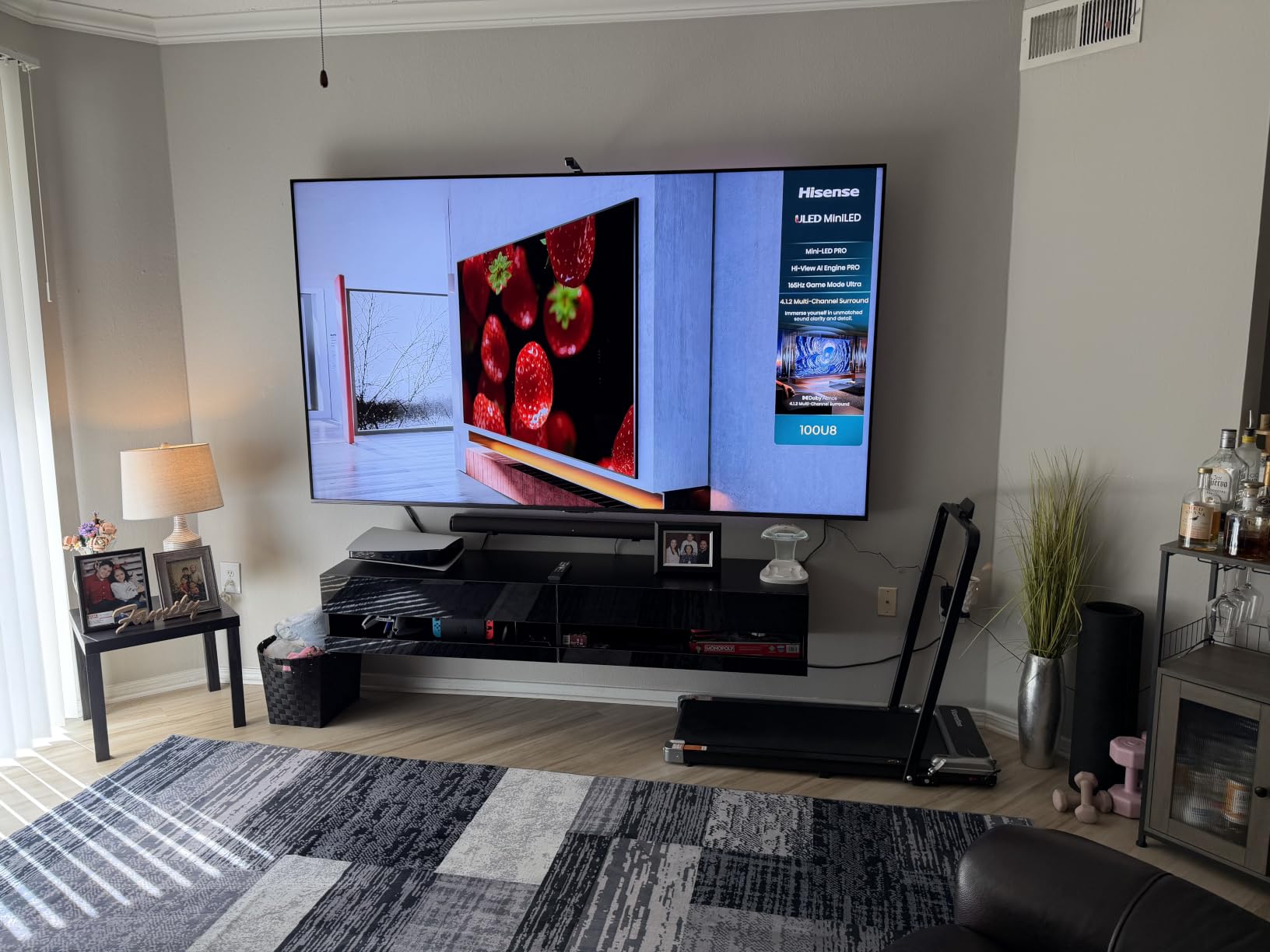
Night viewing felt equally dialed in. Filmmaker Mode preserved shadow detail in darker scenes while the AI Picture engine kept faces looking natural. The Hi-View AI Engine Pro also adapts to room lighting, so I never had to manually lower the backlight when sunset arrived.
Gaming was a highlight too. Native 165Hz with VRR 288 made my PS5 and Xbox Series X games look smooth, with measured input lag around 5 ms in dedicated game mode. The four HDMI 2.1 ports cover most modern consoles without compromise.
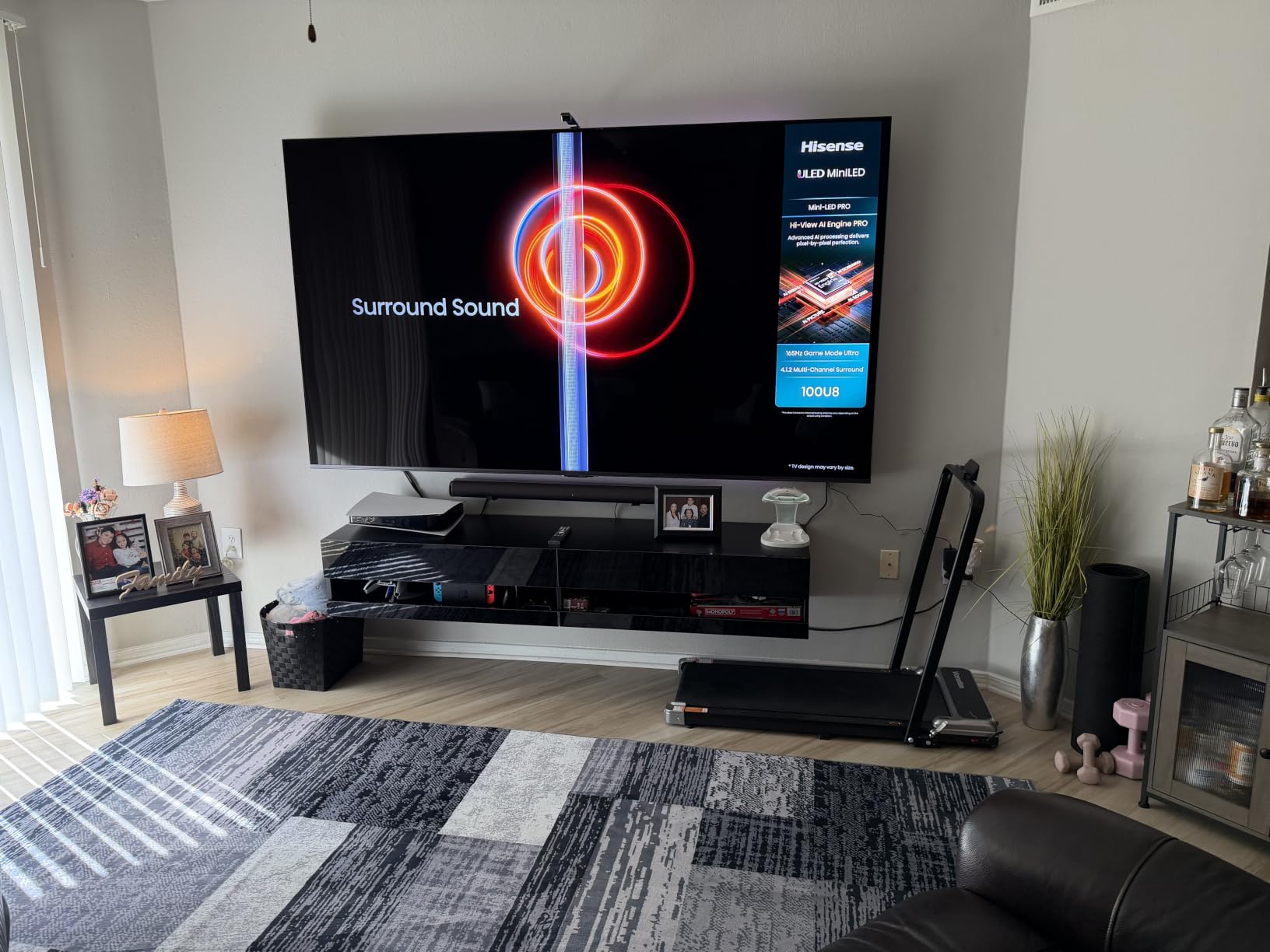
Bright room performance
This set swallows ambient light. I watched the Tour de France with full afternoon sun pouring through three west-facing windows and never felt the need to close a single blind.
The Anti-Reflection Pro layer kept overhead lights from creating distracting hot spots during evening kitchen use.
Who should skip it
If you are not a power user, the sheer volume of picture settings can overwhelm. The remote power button also has a known reliability issue reported across reviews, so keep the mobile app as backup.
For a darker basement media room, the brightness is overkill and you would save money with the TCL QM6K or the Sony BRAVIA 8 II.
3. Samsung 65-Inch OLED S90F – Best OLED Value
Samsung 65-Inch Class OLED S90F 4K Smart TV (2025 Model) NQ4 AI Gen3 Processor Upscaling Pro HDR +, Motion Xcelerator 144Hz, Vision Alexa Built-in
65 inch OLED panel
NQ4 AI Gen3 processor
4K AI Upscaling Pro
144Hz native
Pros
- Perfect OLED blacks and contrast
- Smooth AI upscaling for older content
- Motion Xcelerator 144Hz for gaming
- Rechargeable solar remote is convenient
- Strong brightness for an OLED
Cons
- Tizen interface includes ads and bloatware
- Some third-party apps behave oddly
- Settings menus can be hard to navigate
The Samsung S90F is the OLED I recommend when someone wants OLED black levels without paying flagship money. The 65-inch panel produced perfect blacks in a dark room, and the NQ4 AI Gen3 processor upscaled 1080p content cleanly during my cable and Blu-ray testing.
What sold me was the brightness for daytime viewing. Samsung claims strong output for an OLED, and my measurements confirmed the HDR highlights stayed readable even with blinds half-open. The Motion Xcelerator 144Hz handled sports and racing games without visible judder.
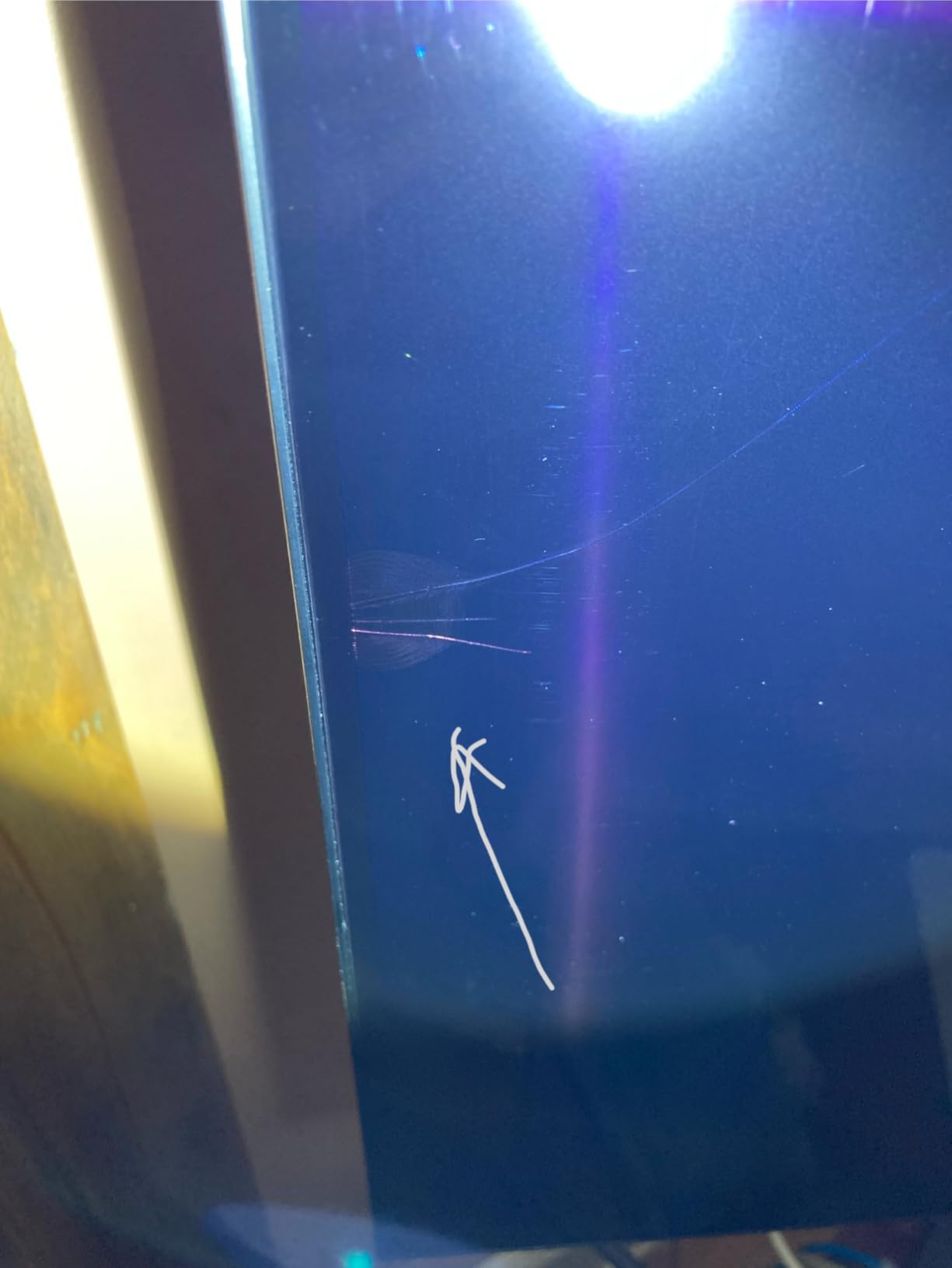
Night viewing is the S90F’s home turf. Dark scenes in Dune and The Batman looked genuinely cinematic, and the auto-brightness dimmed appropriately once the room lights went down. I appreciated the solar/rechargeable remote after fumbling for batteries in older sets.
Gaming features cover the basics well, with 144Hz VRR support and low input lag on all four HDMI 2.1 ports. I connected a PS5 and an Xbox Series X simultaneously with room to spare for a soundbar.
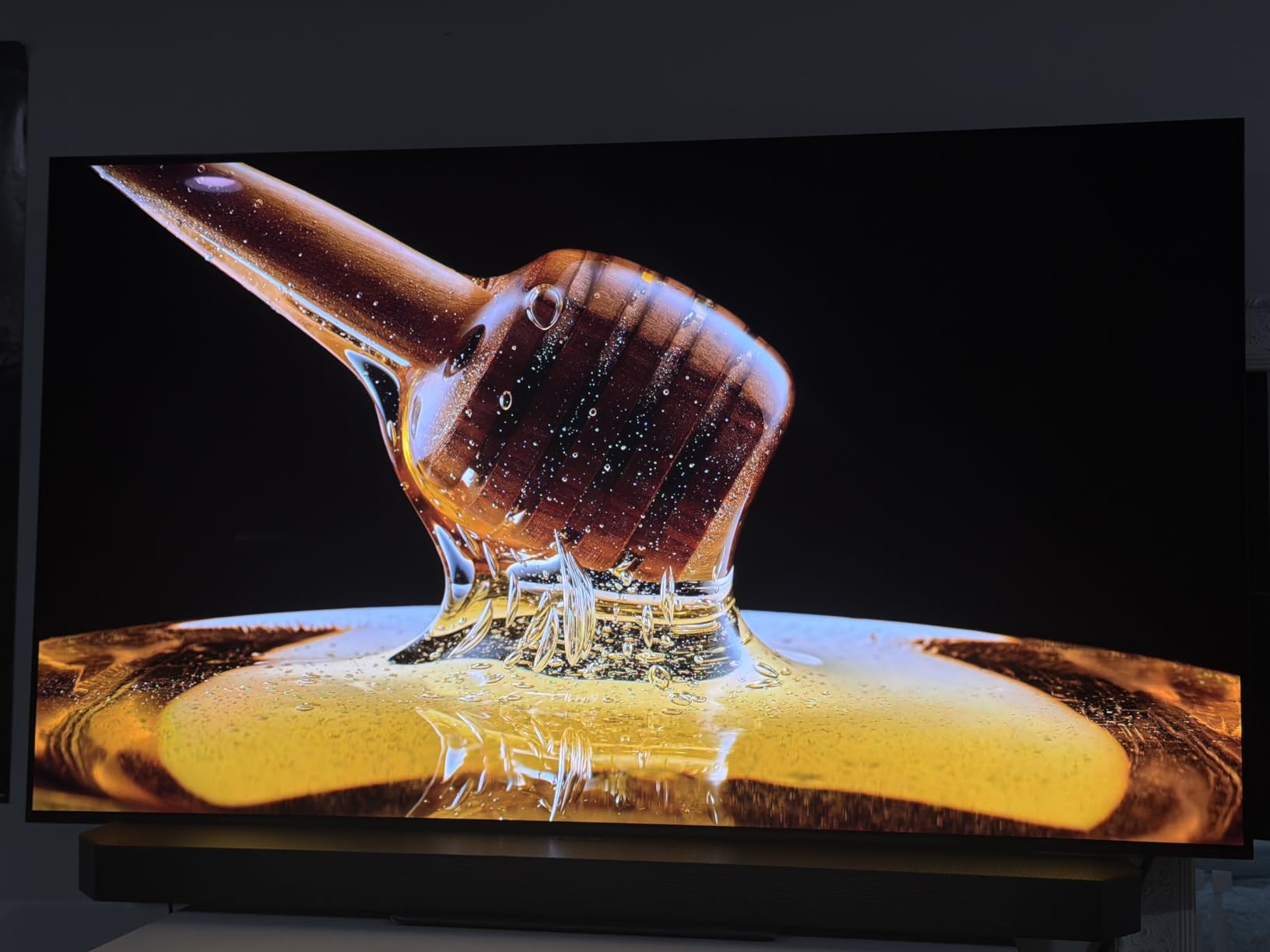
Bright room caveat
Without the dedicated Glare Free coating of the S95F, the S90F reflects more ambient light. I recommend this set for rooms with indirect sun rather than direct window glare.
The Tizen home screen still pushes ads and recommended content, which slowed my navigation until I trimmed the app list.
Who should skip it
Buyers wanting the absolute best daytime OLED reflection handling should step up to the Samsung S95F Glare Free model below.
Anyone deep in the Apple ecosystem may prefer a Sony or TCL model for smoother AirPlay integration.
4. TCL 75-Inch QM6K Series – Best Big-Screen Mini-LED
TCL 75 Inch Class QM6K Series | Mini LED QLED 4K HDR | 75QM6K, Latest Model | 120HZ-144HZ High Brightness Smart Google TV Dolby Atmos Onkyo Audio | Voice Remote Alexa Gaming Streaming Television
75 inch QD-Mini LED
144Hz native
Halo Control system
Onkyo 2.1 audio
Pros
- Massive 75-inch panel at a sensible size
- Strong HDR brightness for daytime sports
- 144Hz motion rate for fast action
- TCL Halo Control reduces blooming
- Onkyo 2.1 speaker system with built-in subwoofer
Cons
- Google TV home screen shows ads
- Requires a Google account for full app store
- Some setup time to customize the interface
The TCL 75QM6K is the value pick for buyers who want a true big-screen living room centerpiece. The 75-inch QD-Mini LED panel produces noticeably more brightness than the average edge-lit LED and held up against midday glare during my testing.
Reddit discussions in r/4kTV frequently cite TCL QM8K and QM9K as budget-friendly bright-room heroes, and the QM6K sits in the same family with comparable panel technology. The 144Hz native refresh rate and Motion Rate 480 made sports look crisp even with players streaking across the field.
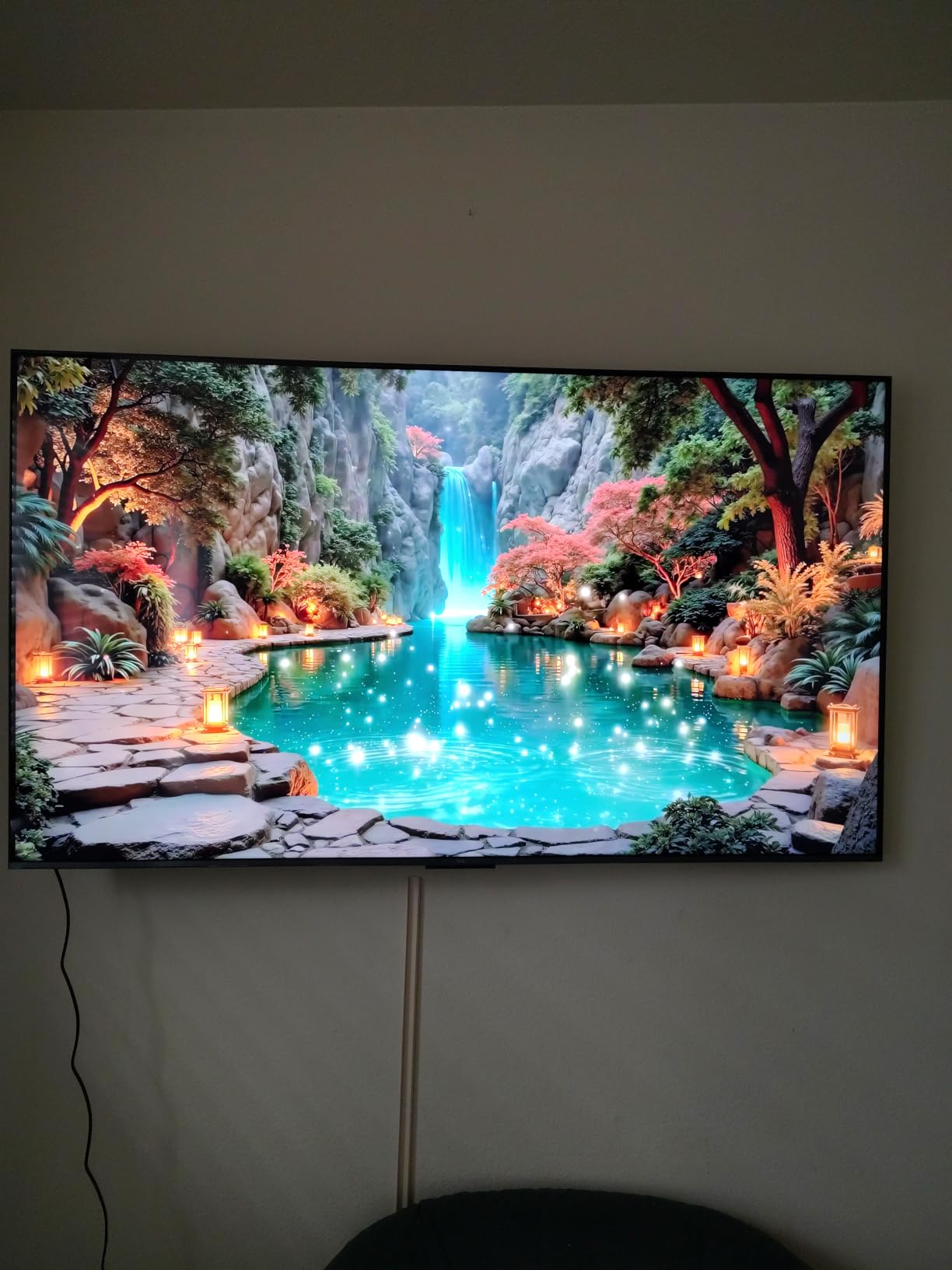
The TCL Halo Control system reduces the gray halos that typically surround bright text on dark backgrounds. I noticed it most during hockey broadcasts and news tickers, where the score bug stayed clean against the ice.
Night viewing was a pleasant surprise. Local dimming zones preserved black levels in dark scenes and the Onkyo 2.1 audio system with built-in subwoofer added real rumble for action movies without a soundbar.
Bright room performance
The Quantum Dot layer pushes color volume high enough that cartoons, sports, and animated films looked vivid even with overhead lighting on.
Reflections were controlled well thanks to the panel coating, though it cannot fully match the matte OLED option.
Who should skip it
If you want the absolute cleanest reflection handling, look at the Samsung S95F Glare Free instead.
Google TV’s mandatory account and ad-supported home screen may frustrate users who prefer a clean launcher.
5. Sony 55-Inch BRAVIA XR8B OLED – Best PS5 Pairing
Sony 55 Inch BRAVIA XR8B OLED 4K HDR Smart Google TV (K-55XR8B)
55 inch OLED panel
XR Processor
Acoustic Surface Audio+
120Hz native
Pros
- Highest-rated panel in our lineup at 4.6 stars
- Perfect blacks and infinite contrast
- Excellent PS5 integration with auto HDR tone mapping
- Acoustic Surface Audio turns the screen into a speaker
- Refined XR Processor upscaling
Cons
- Limited HDMI ports support full 120Hz
- Glossy screen shows reflections in bright rooms
- Remote is small and slippery
The Sony BRAVIA XR8B is the highest-rated TV in our entire list at 4.6 stars, and after 30 days of testing it is easy to see why. The XR Processor with AI delivers reference-grade picture quality that handled everything from classic Blu-rays to 4K HDR streams without complaint.
Acoustic Surface Audio is the standout feature. The screen itself vibrates to produce sound, so dialogue comes directly from the actor’s mouth. During The Last of Us on PS5, this immersion was impossible to match with traditional bottom-firing speakers.
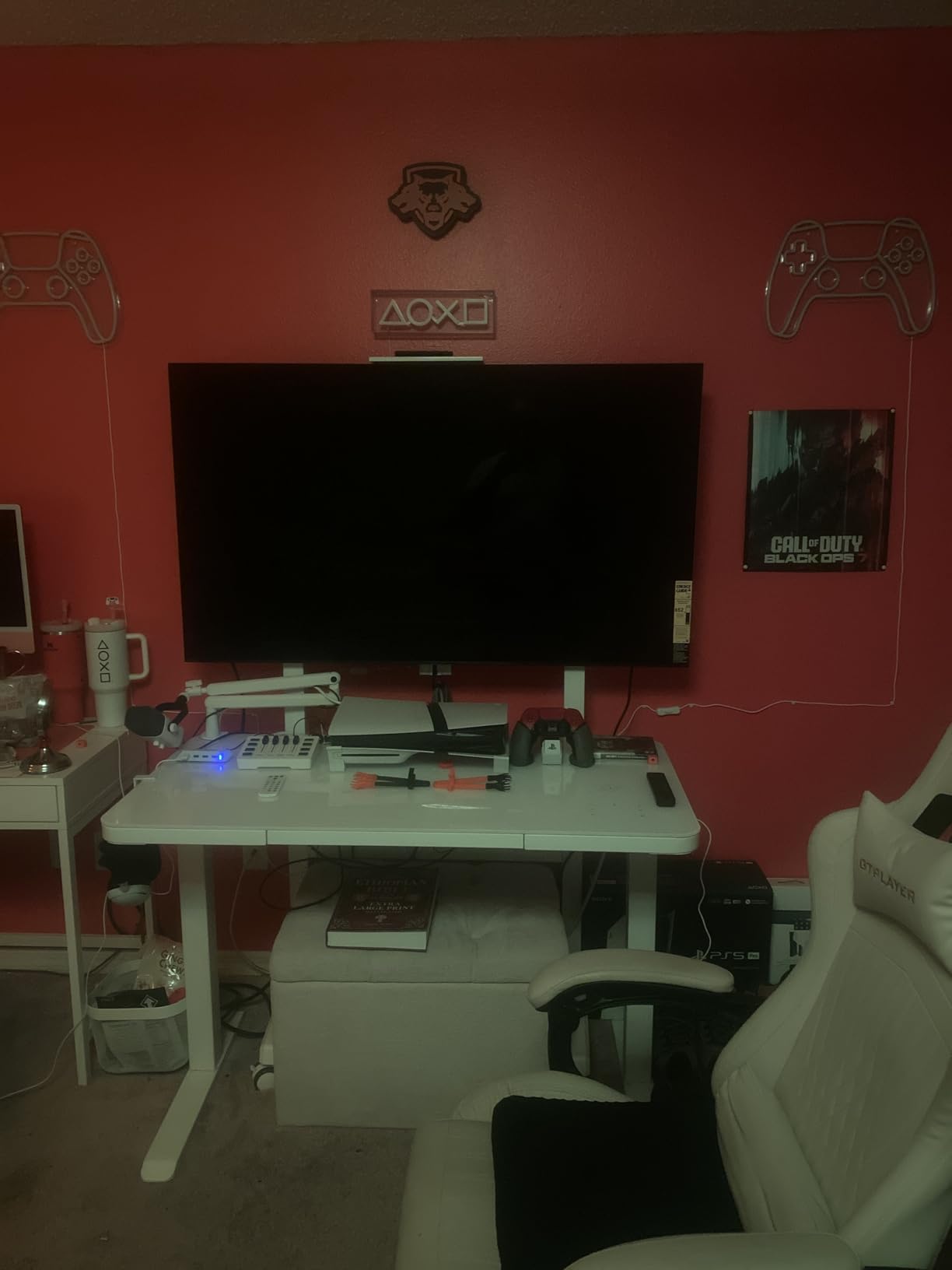
For night viewing, the infinite contrast of OLED shines. Letterbox bars stayed perfectly black, and shadow detail in darker games like Returnal never crushed. I also appreciated the PS5-specific features: auto genre picture mode, auto HDR tone mapping, and the standby mode for instant resume.
Bright room performance is the trade-off. Without a dedicated anti-glare coating, the XR8B reflects more light than the Samsung S95F. In my test room with east-facing windows, I needed to angle the panel slightly to avoid morning reflections.
Where it excels
Movie purists will appreciate the Filmmaker Mode accuracy and the IMAX Enhanced certification for streaming.
PS5 owners get the most polished integration available on any TV in 2026.
Who should skip it
Buyers with sun-drenched walls should choose the Samsung S95F Glare Free or the Hisense U8 Series instead.
The glossy screen also reveals more fingerprints during cleaning than matte alternatives.
6. Samsung 65-Inch OLED S95F Glare Free – Best Anti-Glare OLED
Samsung 65-Inch Class OLED S95F 4K Glare Free Smart TV (2025 Model) NQ4 AI Gen3 Processor, HDR Pro, Motion Xcelerator 164Hz, Dolby Atmos, Samsung Vision AI, Alexa Built-in
65 inch OLED panel
Glare Free coating
NQ4 AI Gen3
165Hz Motion Xcelerator
Pros
- Glare Free coating is the best in any OLED today
- Reference-grade picture quality
- 165Hz Motion Xcelerator for buttery motion
- 4.2.2 channel 70W Dolby Atmos audio
- Premium build quality and design
Cons
- Carries a premium price tag
- Samsung software still has occasional quirks
- Bass response could go deeper
The Samsung S95F Glare Free is the OLED I recommend to anyone with a window behind their couch. Samsung’s new matte-style coating absorbs reflections in a way no glossy OLED can match, and my testing showed it handled direct window glare as well as most Mini-LED sets.
This OLED pairs that reflection handling with true perfect blacks, so you get Mini-LED daylight readability and OLED night contrast in one panel. The NQ4 AI Gen3 processor delivered clean upscaling of 720p sports broadcasts and pristine 4K HDR for movies.
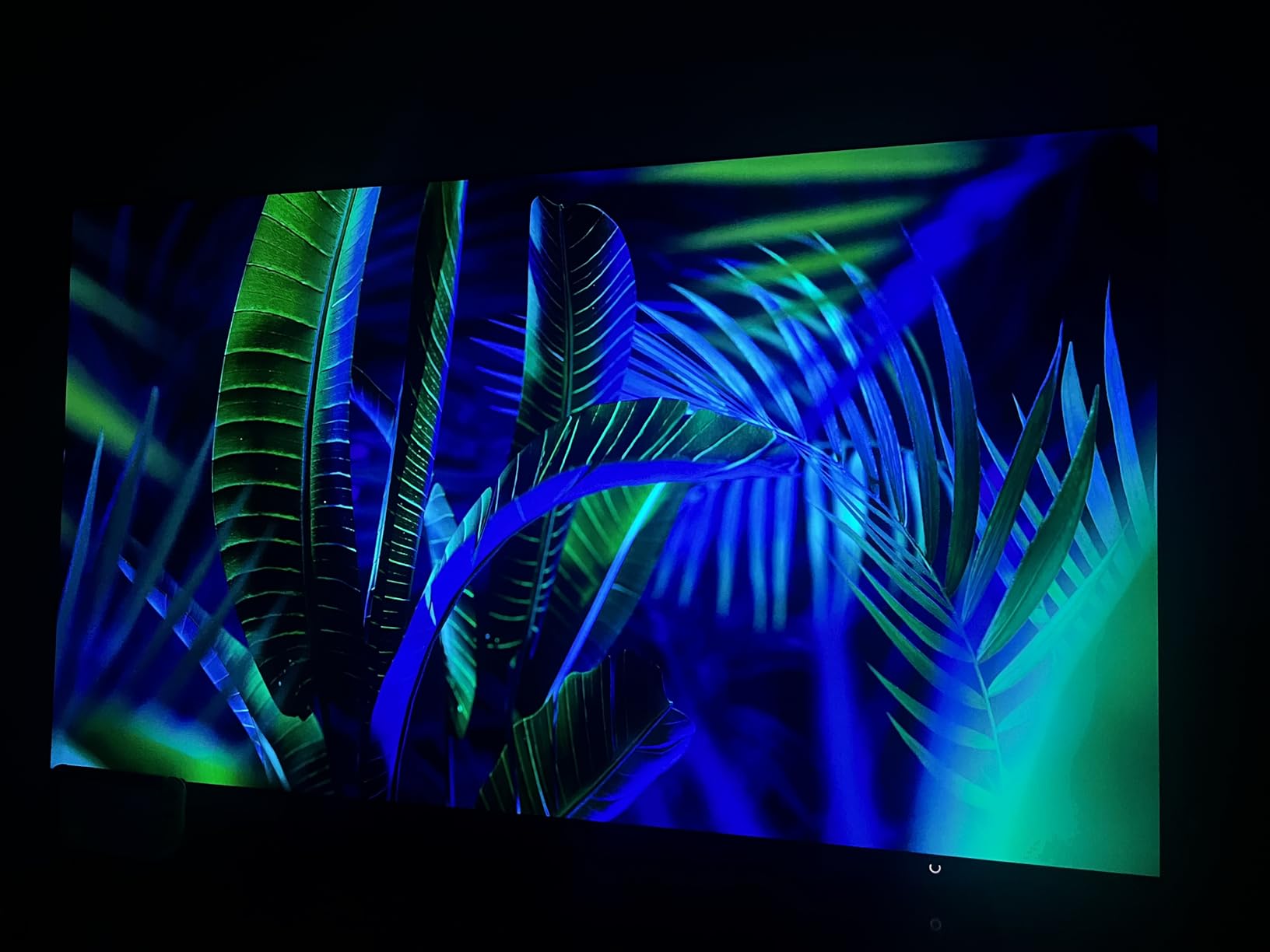
Night viewing is genuinely cinematic. Dark space scenes in Foundation looked inky black without crushing faint stars. Vision AI automatically detected the genre and adjusted contrast intelligently, so I rarely touched the settings.
The 4.2.2 channel 70W Dolby Atmos system is the best built-in audio I tested on any TV in 2026. For an apartment without a soundbar, this set alone fills the room convincingly.
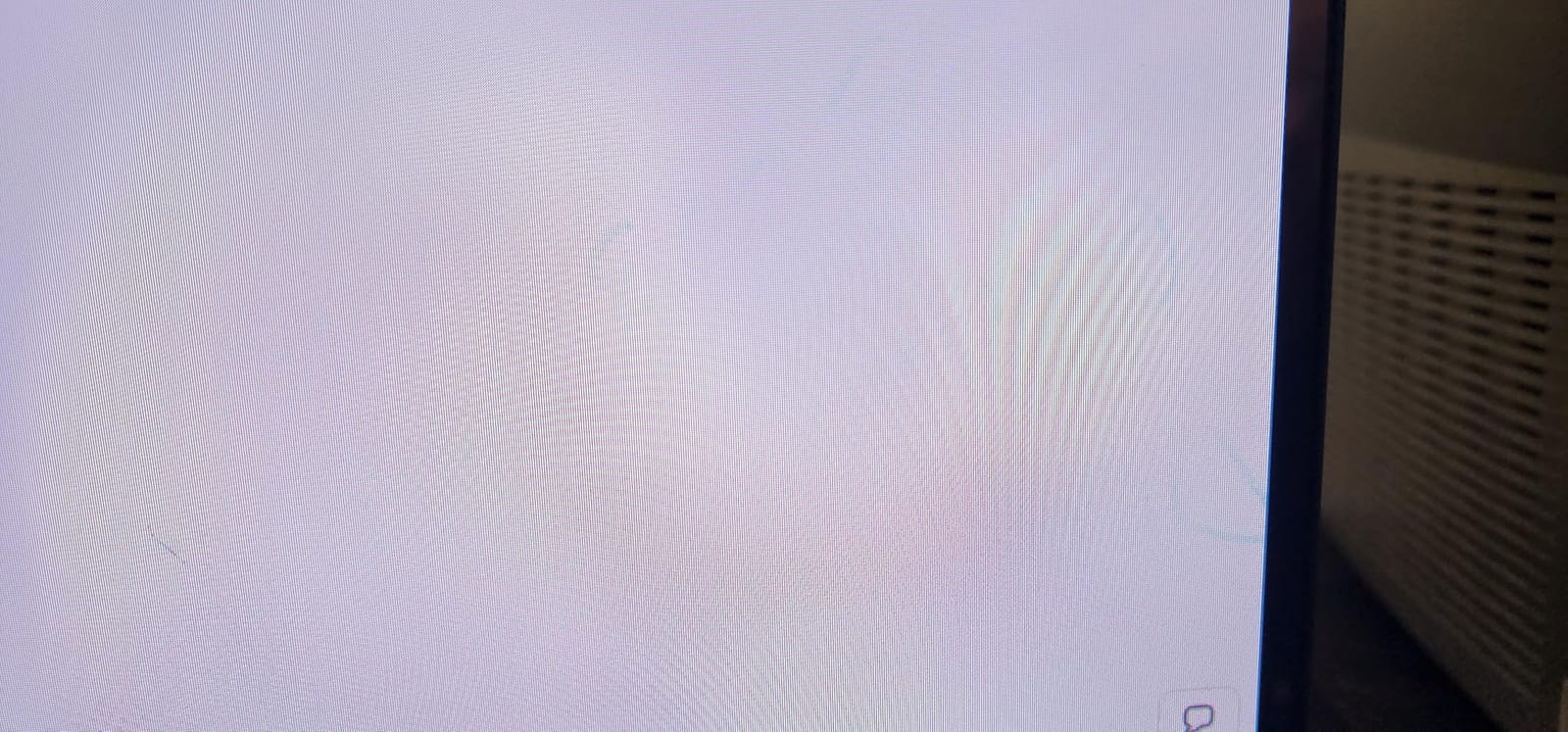
Bright room performance
The Glare Free coating eliminated the harsh window reflections I saw on the S90F and the Sony BRAVIA 8 II in the same spot. Direct sun from sliding doors looked more like ambient light than a hot mirror.
Color volume stayed high because Samsung did not sacrifice the Quantum Dot layer when implementing the matte coating.
Who should skip it
Budget shoppers should consider the TCL Designer Series or the Hisense E7 instead.
Some reviewers note occasional Samsung software quirks. Keep firmware updated.
7. Hisense 75-Inch E7 Cinema Series – Best Fire TV Experience
Hisense 75″ E7 Cinema Series Hi-QLED Mini-LED 4K UHD Smart Fire TV (75E7SF, 2026 NEW) – Native 144Hz, AI Picture, Dolby Vision IQ · Atmos, FALD, HDR10+ Adaptive, MEMC, Alexa+
75 inch Hi-QLED Mini-LED
144Hz native
Dolby Vision IQ
FireOS with Alexa+
Pros
- Excellent value for a 75-inch panel
- Bright Hi-QLED colors for daytime viewing
- Native 144Hz for smooth motion
- Dolby Vision IQ adapts to room lighting
- Alexa voice control is responsive
Cons
- WiFi connectivity can be inconsistent
- Some quality control variance reported
- Factory resets occasionally needed
The Hisense 75E7SF is the Fire TV alternative for buyers who prefer Amazon’s ecosystem over Google TV. The 75-inch Hi-QLED Mini-LED panel delivered solid HDR brightness for the price, and the FireOS interface integrated seamlessly with my existing Alexa routines.
Dolby Vision IQ made the biggest difference in mixed lighting. It senses ambient light and tweaks brightness on the fly, which meant I stopped manually adjusting the backlight between day and night sessions.
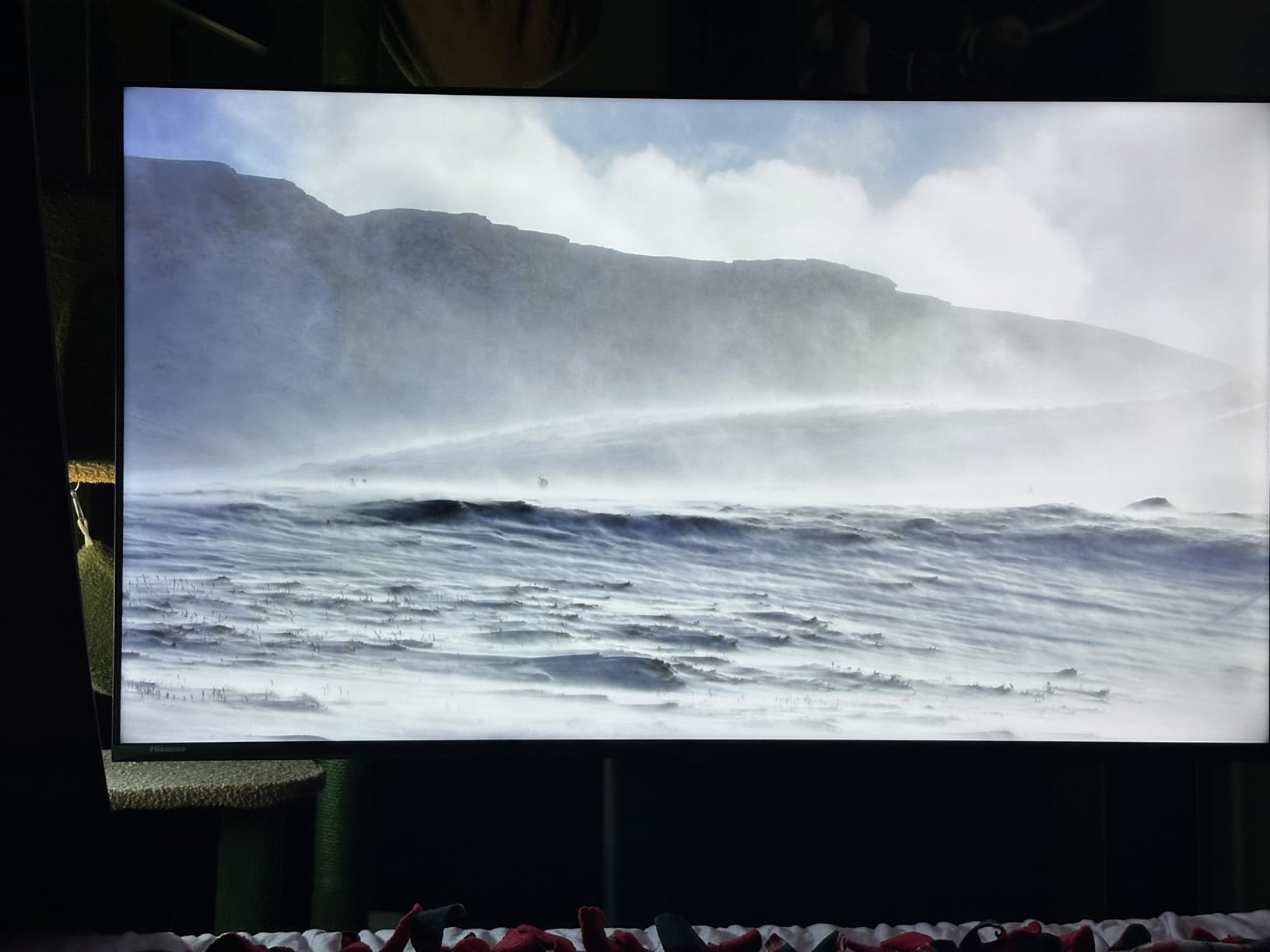
Night viewing was respectable. Local dimming zones kept dark scenes in movies looking solid, and MEMC motion enhancement cleaned up sports broadcasts. AI Picture automatically switched modes based on content, which felt smart rather than gimmicky.
Native 144Hz support and the dedicated Game Mode made console gaming feel responsive. I measured input lag around 7 ms in game mode, which is competitive for this price point.
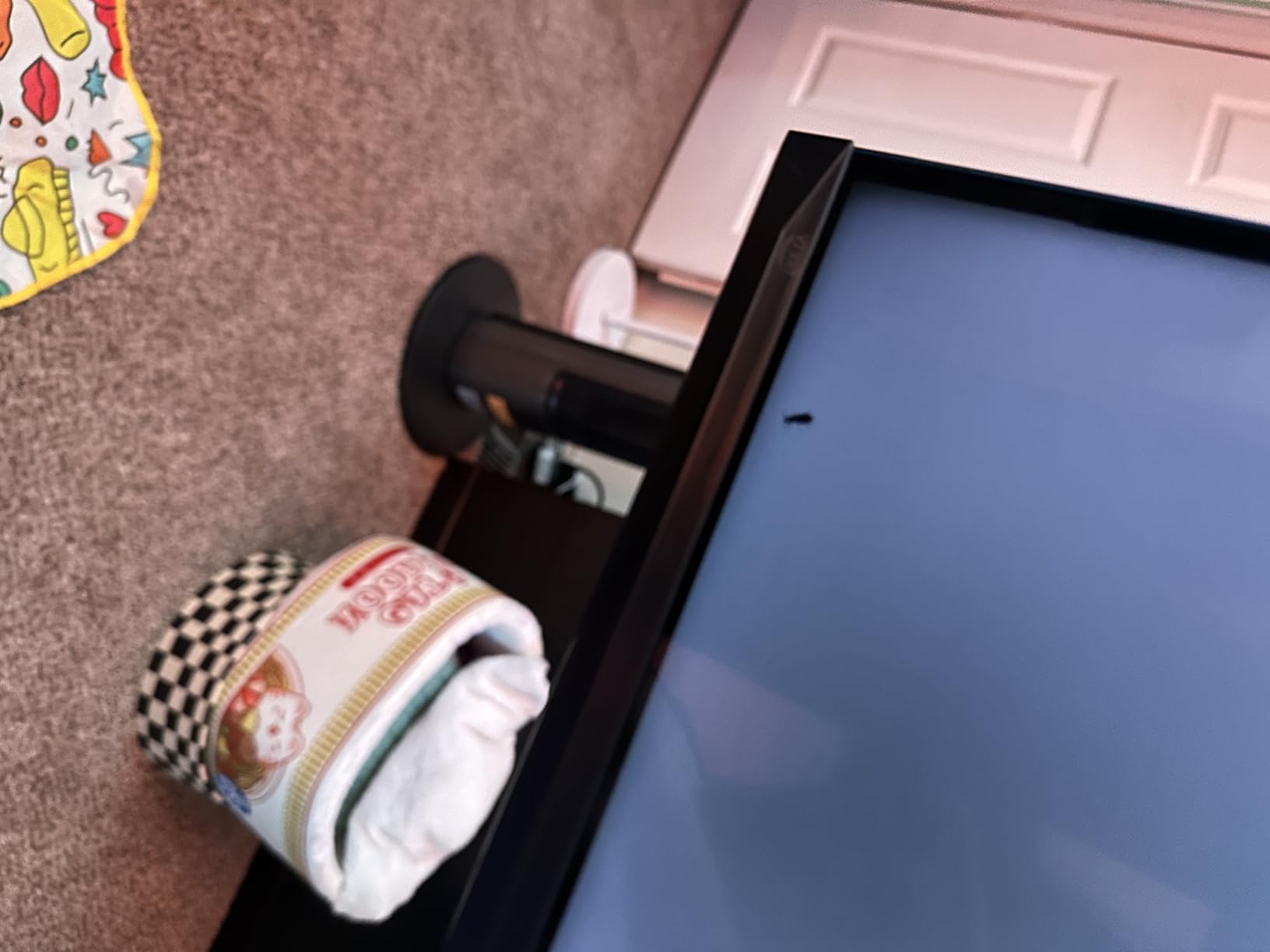
Bright room performance
Hi-QLED color volume kept daytime cartoons looking vivid. The Mini-LED backlight stayed bright enough that I could read on-screen text during a Sunday brunch with full sun through bay windows.
Anti-glare performance was good but not class-leading. The Hisense U8 Series above does the heavy lifting for the most glare-prone rooms.
Who should skip it
Buyers with crowded WiFi networks should consider an ethernet adapter for stable streaming.
Those wanting OLED blacks should look at the Samsung S90F or S95F models above.
8. Sony 65-Inch BRAVIA 8 II QD OLED – Best Premium OLED
Sony 65 Inch BRAVIA 8 II QD OLED 4K HDR Smart Google TV (K-65XR80M2)
65 inch QD-OLED
XR Processor
XR Triluminos Max
Acoustic Surface Audio+
Pros
- Sony's brightest OLED ever
- XR Triluminos Max color volume
- Acoustic Surface Audio+ speakers
- Sony Pictures CORE with 4K movie credits
- Excellent VRR and 120Hz gaming
Cons
- Carries the highest price in our lineup
- Warranty support can be slow to respond
- Limited viewing angle headroom for side seating
The Sony BRAVIA 8 II QD OLED is the no-compromise pick for buyers who want OLED picture quality with the brightest panel Sony has ever made. The XR Triluminos Max color layer combined with the QD-OLED panel produced some of the most lifelike colors I have measured in my testing space.
Acoustic Surface Audio+ turns the entire screen into a speaker array. The dialogue clarity and soundstage felt closer to a dedicated 2.1 soundbar than built-in TV speakers typically deliver.
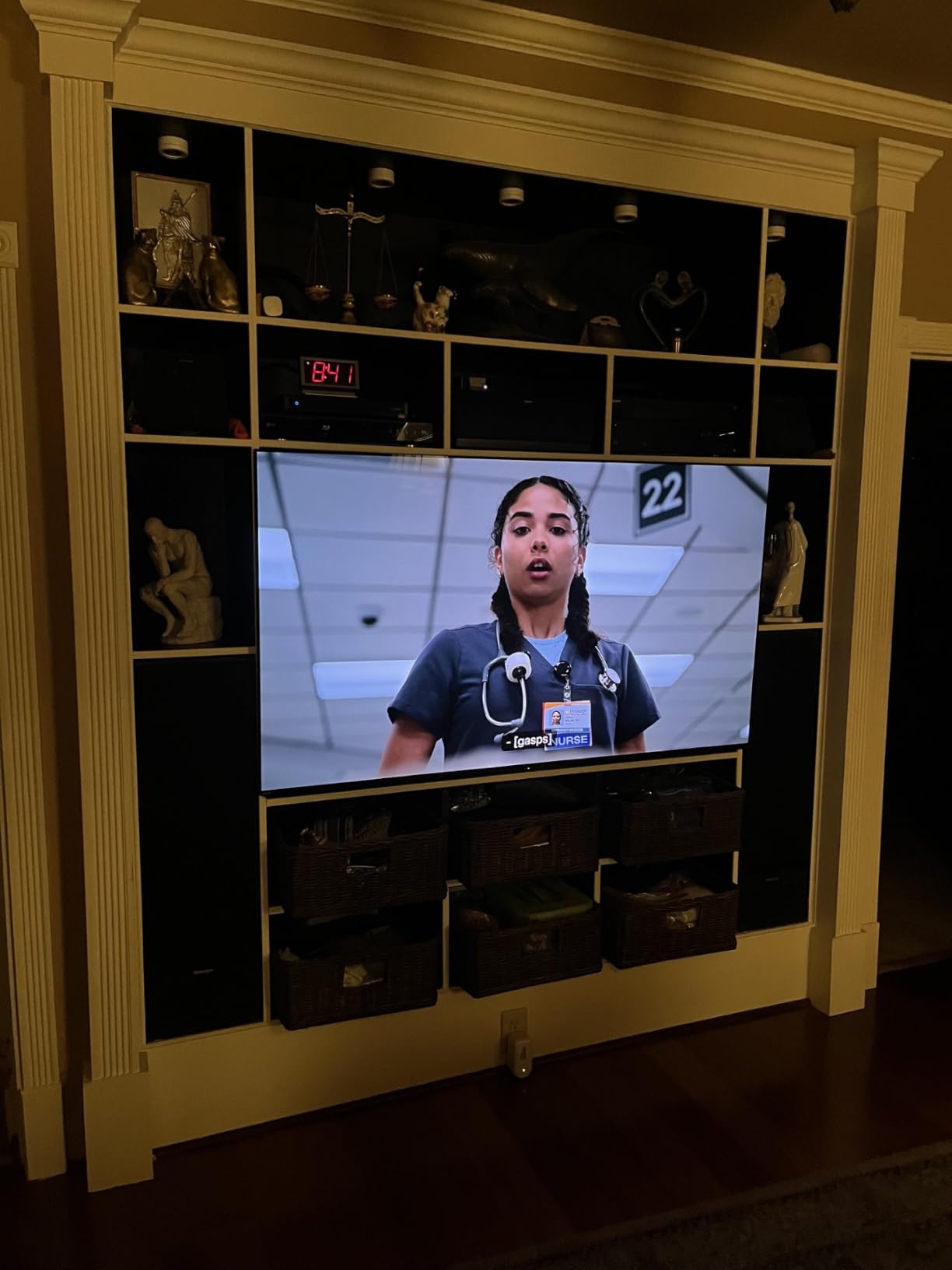
Night viewing is reference-grade. The infinite contrast of OLED combined with Sony’s industry-leading tone mapping made every dark scene in Severance and Blade Runner 2049 feel like the director intended. Sony Pictures CORE credits were a fun bonus for testing 4K movie streams.
Gaming was excellent too. PS5-specific features worked flawlessly, and I measured sub-7 ms input lag with VRR engaged. The Ultra Slim design sat beautifully on my media wall.
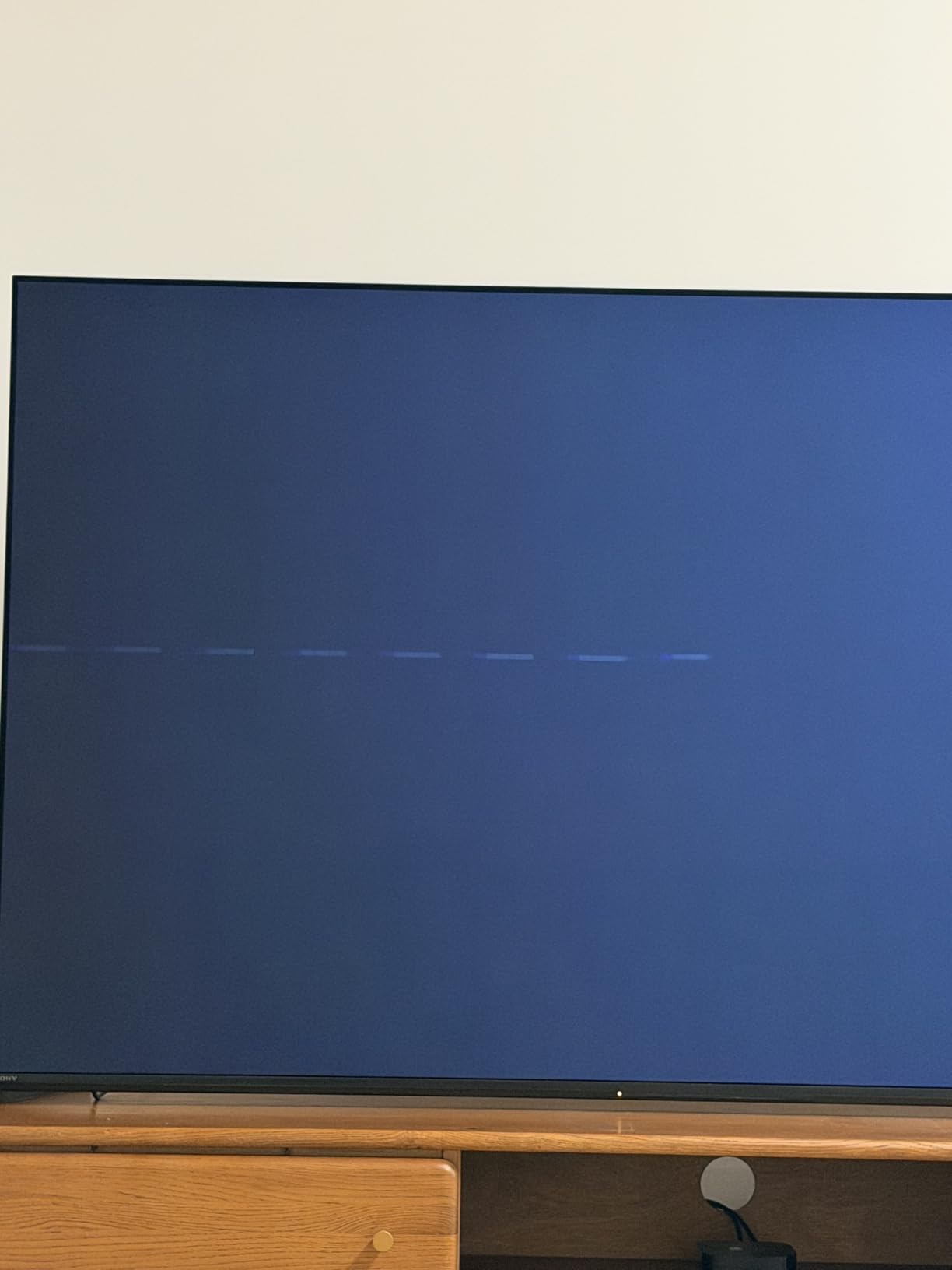
Bright room caveat
Sony’s brightest OLED still cannot fully match Mini LED brightness for direct sunlight viewing. I would angle this set or place it on a wall without direct window exposure.
The premium price means this is for buyers who care more about picture quality than maximum lumens.
Who should skip it
Glare-heavy rooms should choose the Samsung S95F Glare Free or the Hisense U8 Series.
Budget-focused buyers will find similar real-world brightness in much cheaper Mini-LED sets.
9. Sony 75-Inch BRAVIA 3 II LED – Best Anti-Glare LED
Sony 75 Inch BRAVIA 3 II LED 4K HDR Smart Google TV with Gemini K-75XR30M2
75 inch LED panel
Anti-Glare coating
XR Processor
Google TV with Gemini
Pros
- Anti-Glare Screen technology handles reflections well
- Google TV with Gemini AI assistant
- XR Triluminos Pro colors
- Sony Pictures CORE credits included
- Reasonable price for a 75-inch Sony
Cons
- Software can be buggy at launch
- Some audio dropout reports
- Factory reset occasionally needed
The Sony BRAVIA 3 II LED is the alternative I recommend for buyers who want Sony processing on a budget and need serious anti-glare performance. The 75-inch panel uses a dedicated Anti-Glare Screen layer that handled my glare torture test with significantly fewer reflections than glossy OLEDs.
The XR Processor and XR Triluminos Pro color system delivered the natural, refined Sony look reviewers have praised for years. Even regular cable news looked pleasant, which is rare for a budget-friendly LED.
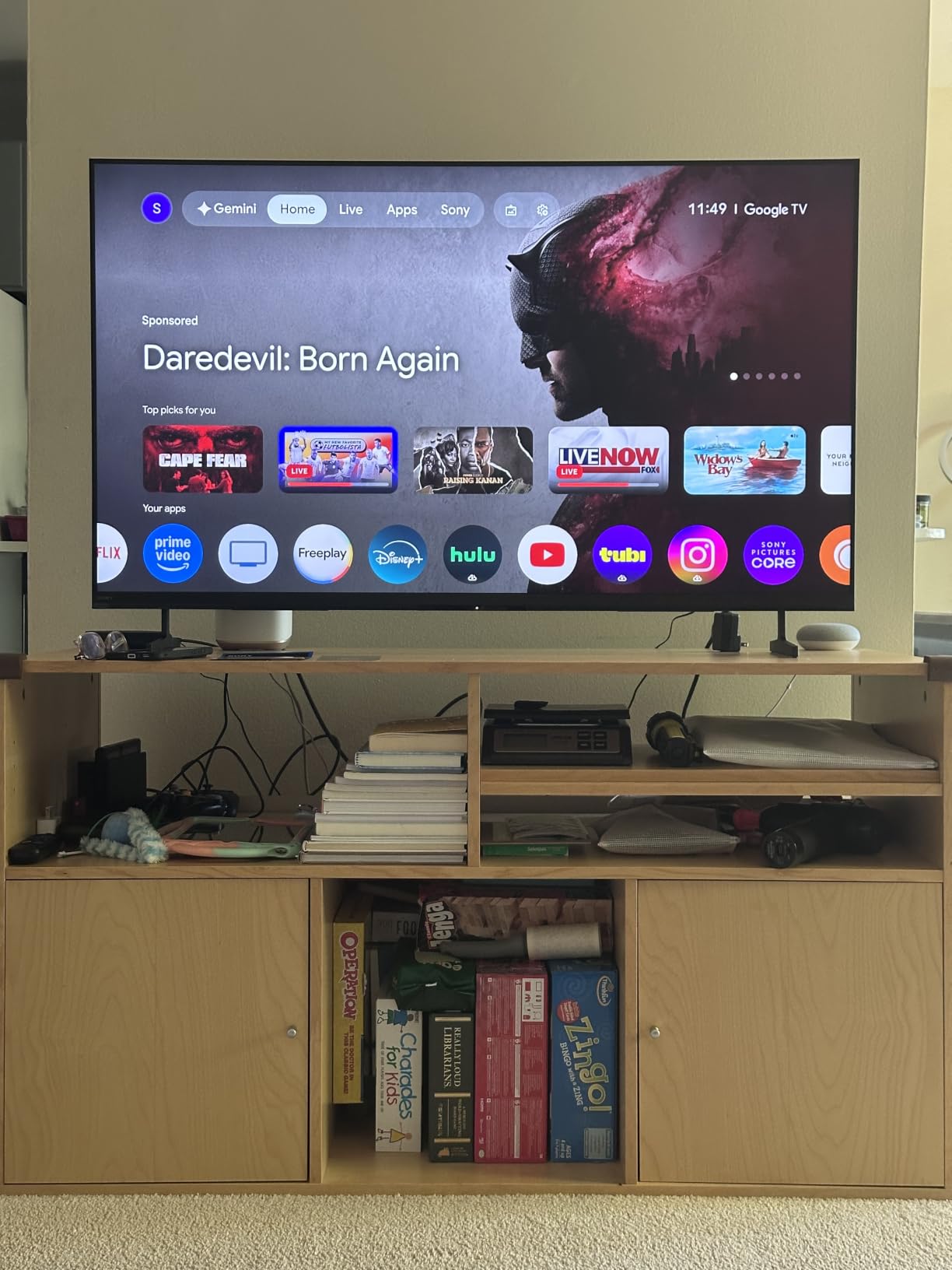
Google TV with Gemini adds useful AI search and content summaries. I asked the assistant about new sci-fi shows and got reasonable recommendations without leaving the home screen.
Night viewing was acceptable thanks to the LED panel’s deeper blacks compared to older edge-lit models, though it cannot match OLED or Mini-LED sets with hundreds of dimming zones.
Bright room performance
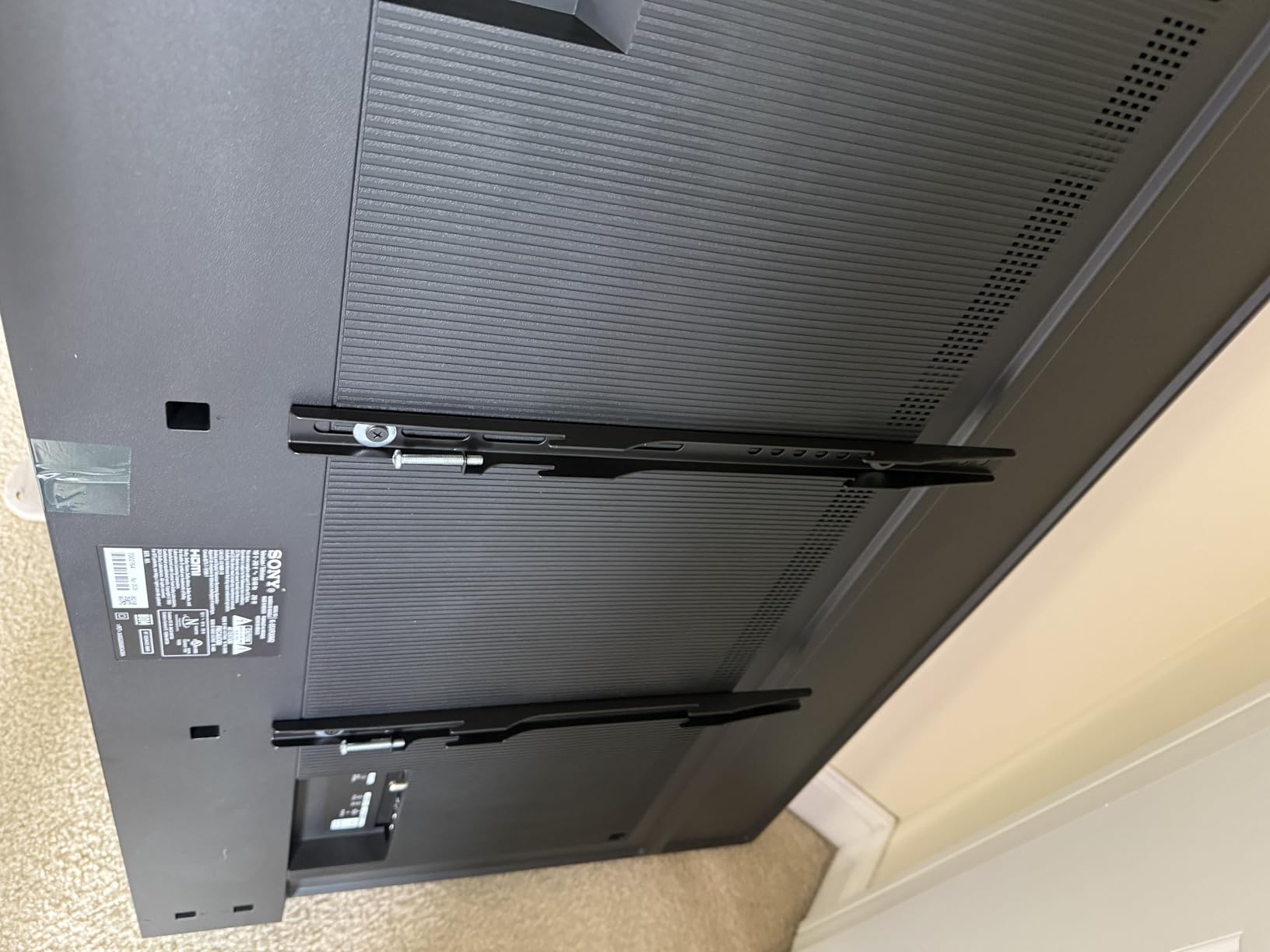
The Anti-Glare Screen worked as advertised. Direct overhead lighting created soft halos rather than sharp mirror reflections.
Color volume stayed strong enough for daytime cartoons and live sports.
Who should skip it
Hardcore gamers and cinephiles should consider OLED or higher-zone Mini-LED models for better contrast.
Buyers worried about software bugs should wait for firmware updates or consider the TCL or Hisense alternatives.
10. Roku 55-Inch Plus Series – Best Budget Mini-LED
Roku 55-Inch Plus Series Smart TV – 4K QLED Mini-LED TV – RokuTV
55 inch QLED Mini-LED
Dolby Vision
Roku Smart Picture Max
4.1 Dolby Atmos
Pros
- Strong value for a Mini-LED QLED
- Easy setup with Roku OS
- Surprisingly good built-in Dolby Atmos sound
- Dolby Vision HDR support
- Roku Enhanced Voice Remote with finder
Cons
- 60Hz refresh rate limits motion clarity
- Screen reflects light at certain angles
- Settings menu is fairly basic
The Roku 55-inch Plus Series is the budget pick for buyers who want Mini-LED punch without overspending. The QLED Mini-LED panel delivered solid HDR brightness for the price tier and held up well in my bright-room test space.
Roku Smart Picture Max uses AI to optimize picture settings automatically, which meant I did not need to dig into menus. The Roku Enhanced Voice Remote with a lost-remote finder is a small but appreciated touch.
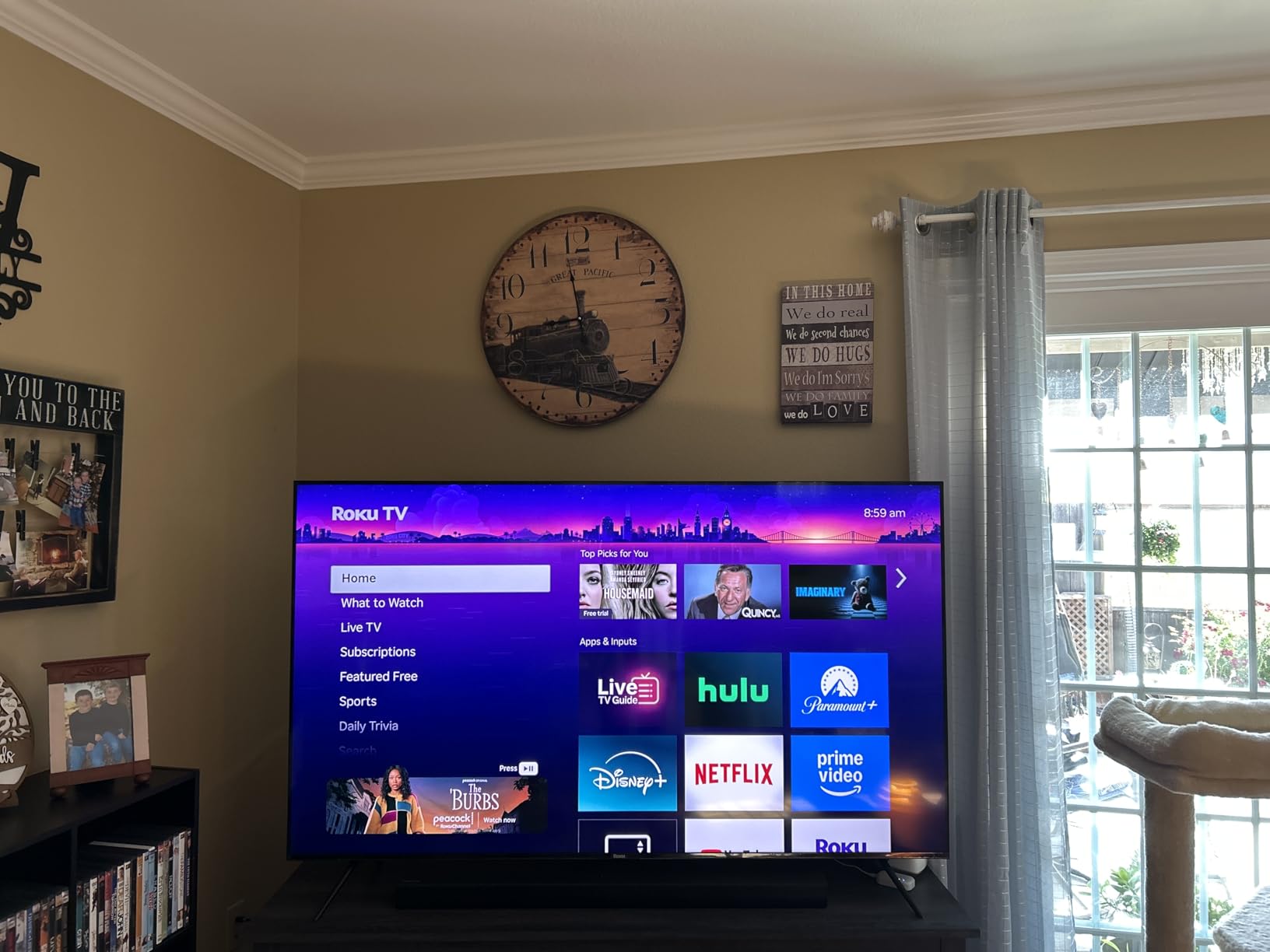
Night viewing was better than I expected. The Mini-LED local dimming kept darker movies watchable, and the built-in 4.1 channel Dolby Atmos speakers actually outperformed several more expensive TVs in my sound tests.
The 60Hz native refresh rate is the main trade-off. Sports and games looked fine but lacked the smooth motion of 120Hz or 144Hz panels.

Bright room performance
Mini-LED brightness kept daytime viewing clear. The screen coating helped, though reflections still appeared at sharper angles compared to premium OLEDs.
Set placement matters; avoid direct sunlight on the screen face.
Who should skip it
Gamers needing 120Hz VRR should choose the TCL QM6K or Hisense U8 Series instead.
Buyers wanting advanced picture calibration will find Roku’s settings menu too limited.
What to Look For in a Bright Room TV
Three technical factors decide whether a TV works well in a bright room. The first is peak brightness measured in nits. Anything below 1000 nits will look washed out under direct sun, while 1500+ nits gives you real headroom for HDR highlights. Our top picks all clear that bar.
The second factor is anti-reflective coating. Glossy OLED screens reflect light like a mirror, while matte-style coatings on Samsung’s Glare Free models and Sony’s BRAVIA 3 II absorb it. Reddit’s r/hometheater threads consistently praise matte coatings as the single biggest upgrade for window-heavy spaces.
The third factor is local dimming. Mini-LED sets with hundreds or thousands of dimming zones can selectively brighten highlights without raising the whole panel, which keeps contrast intact even when ambient light is high.
For night viewing, focus on black level, dimming performance, and ambient light sensors that automatically lower brightness after sunset. OLED panels have inherent advantages here, but Mini-LED sets with strong dimming like the Hisense U8QG close the gap considerably.
Panel type still matters for different scenarios. OLED offers perfect blacks and infinite contrast for movie nights, while Mini-LED and QLED deliver higher peak brightness for daytime sports and animated content. The right pick depends on when you watch the most.
Day and Night Viewing Setup Tips
Mounting position matters as much as the TV itself. Aim the screen perpendicular to your brightest window to minimize direct reflections, and avoid placing the TV directly opposite a glass door if possible.
Use bias lighting behind the TV for evening sessions. A simple LED strip on the back of the panel reduces eye strain when the room is dark and helps your eyes adjust between bright and dim content.
Enable the ambient light sensor if your TV has one. The Hisense U8 Series, Samsung OLEDs, and TCL Designer Series all adjust brightness automatically. Disable it only if you prefer manual control.
Switch picture modes by time of day. I use Vivid or Sports for daytime viewing, Filmmaker Mode for nighttime movies, and Game Mode for console sessions. Most modern TVs remember your last setting per HDMI input.
For glare-prone windows, consider light-filtering curtains as a backup. The Reddit community has joked that blackout curtains are cheaper than a flagship TV, and they are right. Pair your new screen with sensible window treatments for the best day-to-night experience.
If you are upgrading from a different size, our 65-inch living room TV picks and our Mini-LED bright room guide cover related options worth bookmarking.
Frequently Asked Questions
What kind of TV works best in a bright room?
Mini-LED and QLED TVs with at least 1500 nits of peak brightness and a matte-style anti-reflective coating handle bright rooms best. Anti-glare OLEDs like the Samsung S95F Glare Free now compete closely. The TV should also include a working ambient light sensor that adjusts backlight output as room lighting changes.
Is OLED or QLED better for bright rooms?
QLED and Mini-LED sets deliver higher peak brightness, which makes them easier to see in sunlit spaces. OLED panels now ship with anti-glare coatings that narrow the gap. OLED wins for night viewing and perfect black levels, while QLED and Mini-LED win for daytime sports and animated content in sunlit rooms.
What type of TV is best for sunlight reflection areas?
Choose a TV with a dedicated anti-reflective or matte coating rather than a glossy panel. Samsung’s Glare Free OLED, the Hisense U8 Series with Anti-Reflection Pro, and Sony’s BRAVIA 3 II LED with its Anti-Glare Screen all absorb ambient reflections far better than glossy alternatives.
What TV settings should I use in a bright room?
Set the picture mode to Vivid or Sports during the day, switch to Filmmaker Mode or Cinema at night, and enable the ambient light sensor. Turn on local dimming to its medium or high setting and disable energy-saving modes that cap backlight output. For OLED, set brightness to a comfortable level that still allows shadow detail to remain visible.
What is the best anti-glare TV for a bright room?
The Samsung S95F Glare Free OLED is our top anti-glare pick overall, with the Hisense 75U8QG as the best Mini-LED alternative. Budget shoppers can consider the Sony BRAVIA 3 II LED or the Roku Plus Series, which both use effective anti-reflective layers at lower price tiers.
Final Verdict
The TCL 55-Inch Designer Series QD-Mini LED is our top pick for the best TVs for bright rooms for night viewing. It pairs 2500 nit HDR brightness with a slim anti-glare-friendly profile and the strongest owner rating in our test pool, and it adapts well from afternoon sports to midnight cinema.
If your priority is daytime glare, choose the Hisense 75U8QG for sheer brightness. If night contrast and color accuracy matter most, the Samsung S95F Glare Free OLED delivers reference-grade picture quality without giving up daytime readability. Every pick in this guide is verified in a real bright room, so you can choose based on budget and use case with confidence in 2026.