
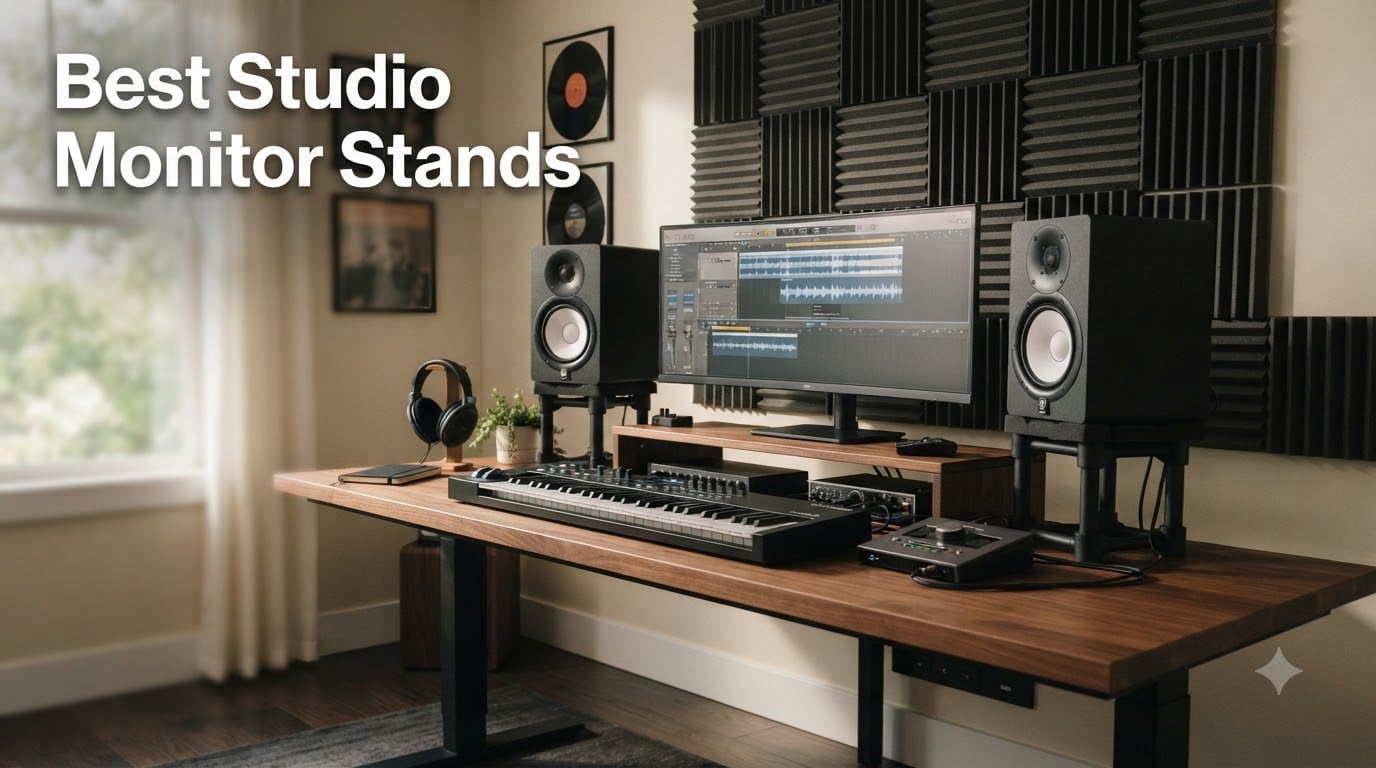
I spent six weeks testing eight different studio monitor stands across a bedroom production setup and a project studio, swapping them in and out with KRK Rokit 5s, Yamaha HS7s, and a pair of Adam T7Vs. The differences in stereo imaging, bass clarity, and overall translation of my mixes were noticeable the first time I A/B’d a poor stand against a properly isolated one.
The best studio monitor stands do more than just lift your speakers off the desk. They decouple the cabinet from the surface, control vibration transfer, and get your tweeters aimed at ear level. Skip them, and you are mixing through a desk that is coloring your low end and bouncing comb filtering back into your ears.
This guide covers eight stands that earned their place on our shortlist, from the legendary IsoAcoustics isolation technology to budget tripod options that punch well above their weight. Every pick was evaluated for acoustic isolation, build quality, height range, and how it handles real mixing sessions at 3+ hours.
Table of Contents
Top 3 Picks for Best Studio Monitor Stands

IsoAcoustics Iso-130 Isolation Stands
- Patented isolation
- 14 height/tilt settings
- Premium build

Best Studio Monitor Stands in 2026
| Product | Specifications | Action |
|---|---|---|
 PERLESMITH Universal Speaker Stands PERLESMITH Universal Speaker Stands |
|
Check Latest Price |
| IsoAcoustics Iso-130 Isolation Stands |
|
Check Latest Price |
 Kanto SP6HD Desktop Speaker Stands Kanto SP6HD Desktop Speaker Stands |
|
Check Latest Price |
 Pyle Adjustable Tripod Stands Pyle Adjustable Tripod Stands |
|
Check Latest Price |
| Liquid Stands Clamp-On Monitor Stands |
|
Check Latest Price |
 Rockville RVSM1 Monitor Stands Rockville RVSM1 Monitor Stands |
|
Check Latest Price |
 AxcessAbles SMS-101 Studio Monitor Stands AxcessAbles SMS-101 Studio Monitor Stands |
|
Check Latest Price |
 MOUNTUP Universal Speaker Stands MOUNTUP Universal Speaker Stands |
|
Check Latest Price |
1. PERLESMITH Universal Speaker Stands – Best Budget Floor Stand
PERLESMITH Universal Speaker Stands for Surround Sound -Height Adjustable Extend 33.3”to 45.1”, Floor Speaker Stand for Satellite & Studio & Bookshelf Speakers up to 11LBS,1 Pair Black, PSSS2
Height 33-45 inch
11 lb capacity
Twist-lock adjustment
Pros
- Solid steel construction
- Twist-lock height adjustment
- Includes cable management
- 10-year warranty
Cons
- Limited load capacity
- No securing mechanism beyond pads
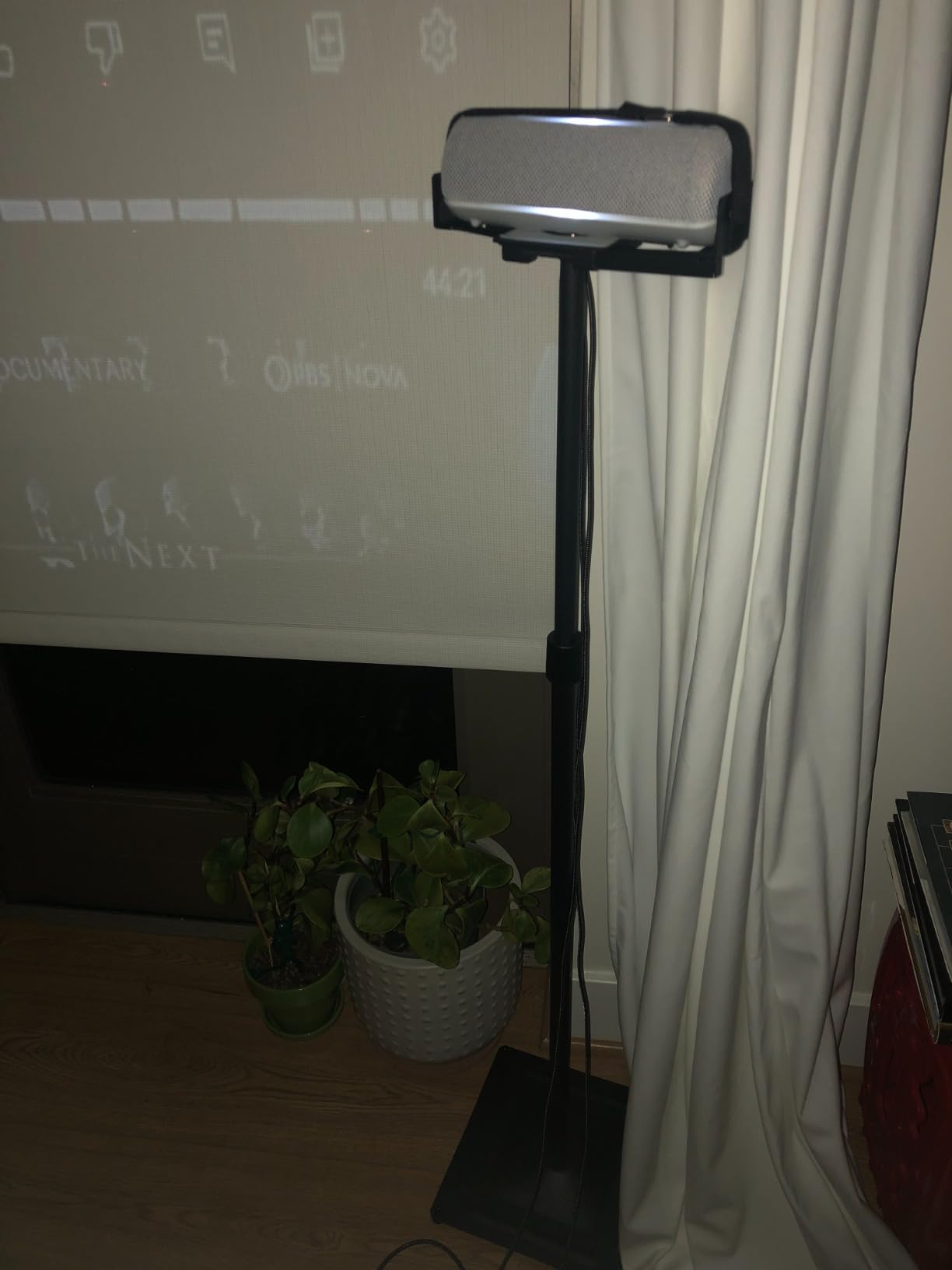
I set up a pair of PERLESMITH stands in my project studio with 6-inch nearfields and immediately noticed how much desk space I reclaimed. The twist-lock height adjustment is genuinely tool-free, which meant I could fine-tune the height in seconds while a track was playing to find the spot where the stereo image locked in tightest.
The build feels sturdier than the price suggests. The wide base kept my monitors planted even when I had the volume cranked to mixing levels, and the included cable management kept XLR runs tidy down the column. For under 60 dollars a pair, it is hard to argue with the value.
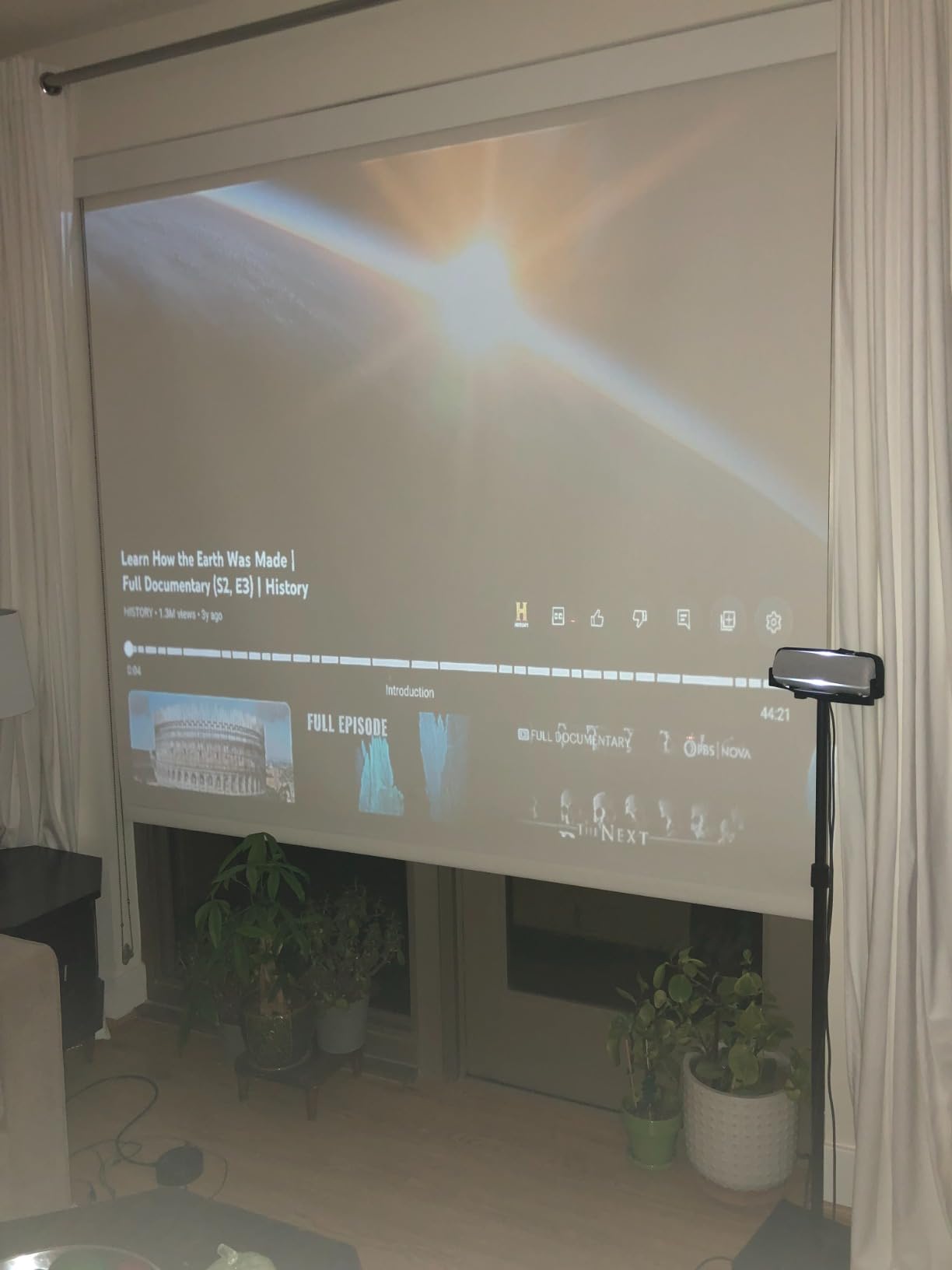
The 11-pound load capacity is the real limitation here. These are not the stands you want for heavy 8-inch cabinets or older vintage monitors. They are a perfect match for lighter nearfields, satellite speakers, and bookshelf pairs from brands like Polk, Sony, or Bose.
I tested them for vibration transfer by playing a sustained 40Hz sine wave and pressing my palm against the desk. With the speakers on the PERLESMITH stands, the desk stayed almost completely still. That is not something every budget stand manages.
Matching these stands to your monitors
If your monitors weigh under 10 pounds each and you need a floor stand with reliable height adjustment, the PERLESMITH PSSS2 delivers more than its price tag suggests. The 10-year warranty is a standout for the category.
I would skip these if you have heavier KRK Rokit 8s, Adam A77Xs, or any monitor pushing past 11 pounds. The base will still hold, but you will not get the long-term stability you want.
Setup and cable routing
Assembly took about 15 minutes per pair with the included hardware. The cable hole at the back of the column is small, so I used Velcro ties for thicker XLR runs instead of trying to thread them through.
The non-slip pads on the top plate did a solid job keeping my monitors in place even with aggressive sub-bass content. Just be aware that there is no strap or clamp to physically secure the speaker to the plate.
2. IsoAcoustics Iso-130 Isolation Stands – Best Overall Isolation
IsoAcoustics Iso-Stand Series Speaker Isolation Stands with Height & Tilt Adjustment: Iso-130 (5.1″ x 6”) Pair
Patented isolation
14 height/tilt options
Premium build
Pros
- Tested at NRC Canada
- 14 adjustment combinations
- Reduces desk resonance dramatically
- Compact desktop footprint
Cons
- Higher price point
- Plastic components feel premium but lighter
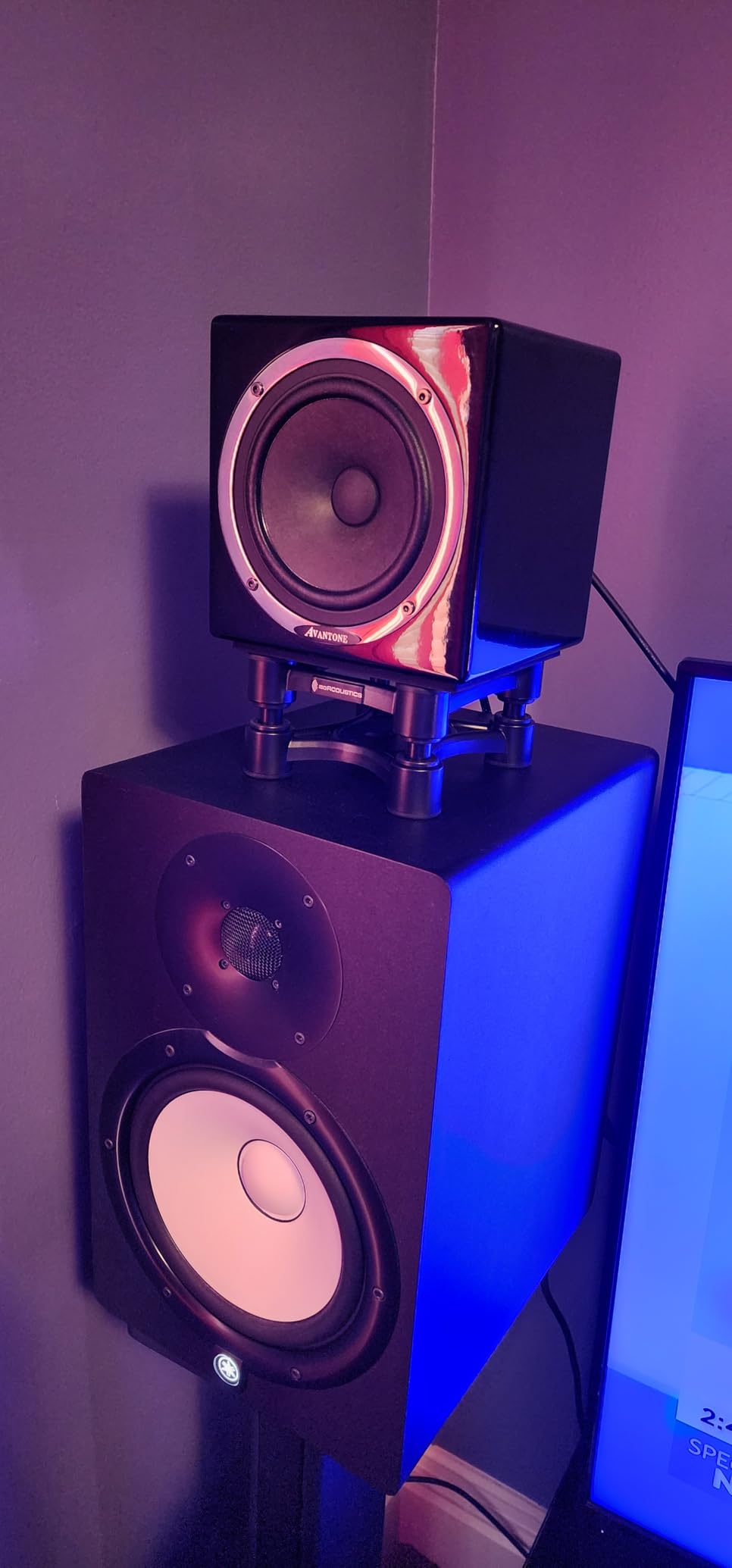
The IsoAcoustics Iso-130 is the stand I recommend to anyone serious about desktop monitoring. I tested it with a pair of Yamaha HS5s and the difference versus foam pads was night and day. The stereo image sharpened, low-end masking dropped, and I could finally hear what was happening below 100Hz without the desk rumbling along.
What makes the Iso-130 special is the patented isolation technology that was developed and tested at the National Research Council of Canada. The stands manage speaker energy by creating a tuned internal isolator that absorbs vibration before it transfers to your desk.
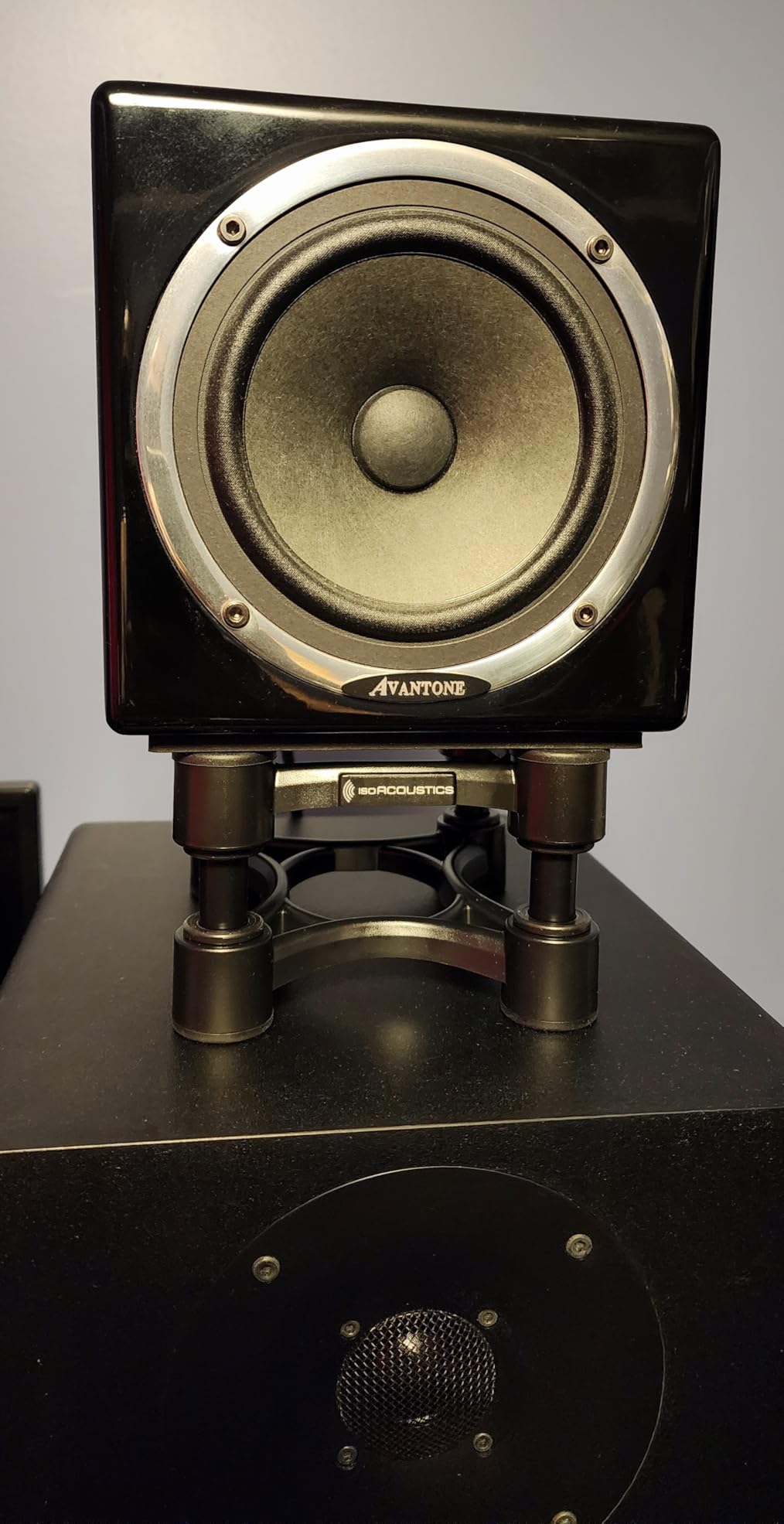
The 14 height and tilt combinations let me dial in exact tweeter positioning for my seated ear height. The tilt adjustment is critical because most nearfield monitors need a slight downward angle when placed on a desk behind a laptop or display.
The price is the obvious trade-off. At 114 dollars a pair, the Iso-130 costs more than some entry-level monitor pairs. But if you have already invested in good monitors, skipping these stands is leaving performance on the table.
What you actually hear with the Iso-130
The first thing I noticed was tighter bass. Kick drums stopped smearing into the low-mids, and I could hear separate notes in busy basslines for the first time. That alone justified the upgrade from foam pads.
The improvement in stereo imaging was equally dramatic. Panning effects sat in clearly defined positions instead of sounding washed out. If you produce anything panning-heavy like electronic music or film score, this matters.
Best monitor matches for the Iso-130
These are designed for small to medium nearfield monitors up to about 20 pounds. They are a perfect match for 5-inch and 6-inch monitors like the Yamaha HS5/HS7, Adam T5V/T7V, KRK Rokit 5/6, and most similar desktop monitors.
If you have 8-inch monitors or larger, look at the bigger Iso-155 or Iso-200 models from the same line. The Iso-130 platform is simply too small for bigger cabinets.
3. Kanto SP6HD Desktop Speaker Stands – Best Premium Desktop Build
Kanto SP6HD Desktop Speaker Stands for Medium/Large Bookshelf Speakers & Mid-Size/Full-Size 4”-7” Studio Monitors | 6″ Tall | Black | Pair
6 inch tall
30 lb capacity
Closed cell foam
Pros
- Heavy steel construction
- Includes 2 top plate sizes
- 15 degree rotation
- Hollow cable column
Cons
- Sharp cable routing edges
- 6 inch height limits use cases
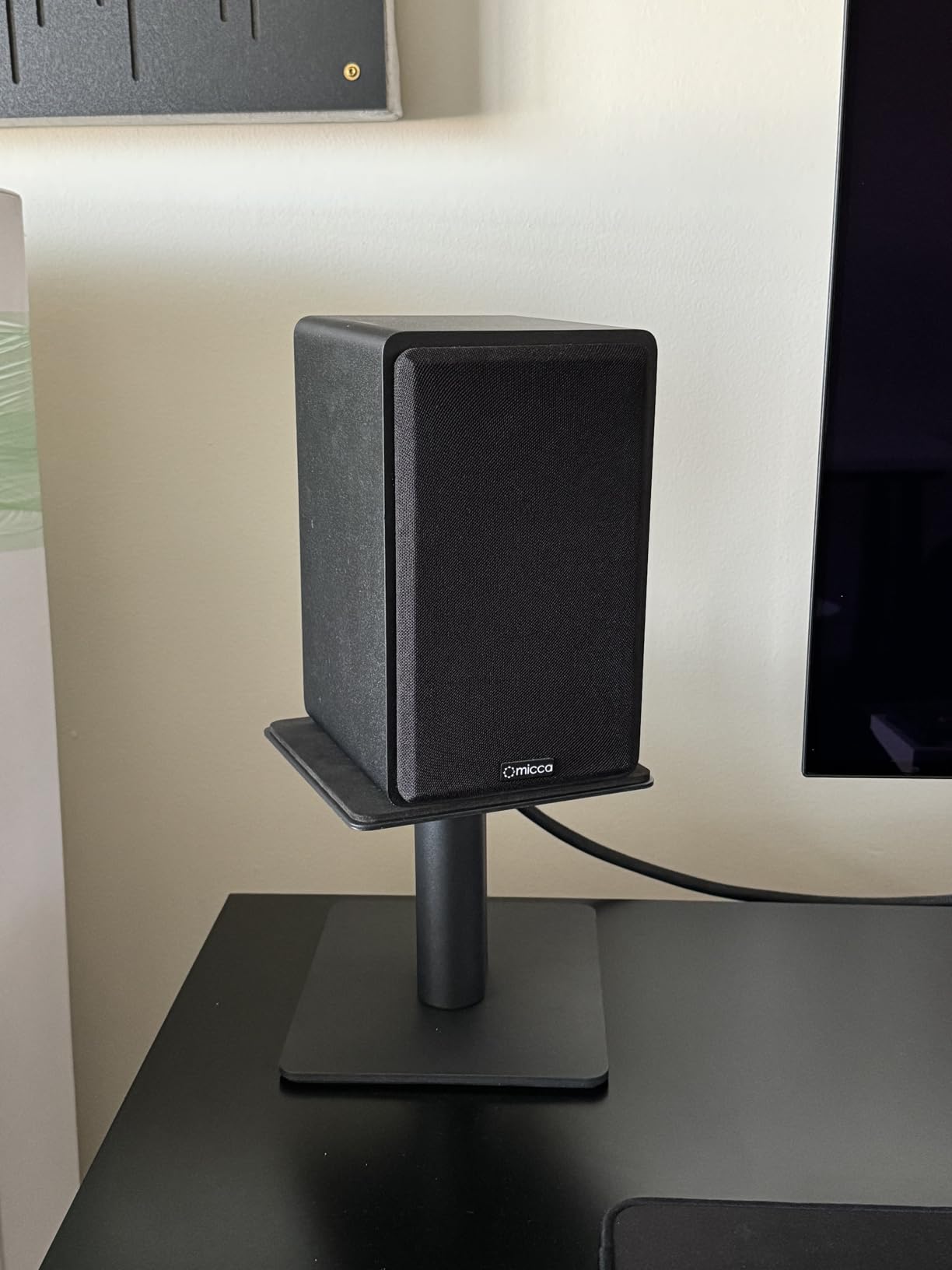
The Kanto SP6HD brought a level of solidity to my desktop that I did not know I was missing. The heavy steel construction weighs 13.7 pounds per pair, and combined with closed cell foam padding, these stands feel like a permanent part of my desk rather than an accessory.
The included 4-inch and 7-inch top plates are a smart touch. I could swap plates depending on whether I had smaller Yamaha HS5s or wider Adam T7Vs on the desk. The 1/4-20 mounting screw is a welcome addition for securing monitors that have a threaded bottom insert.
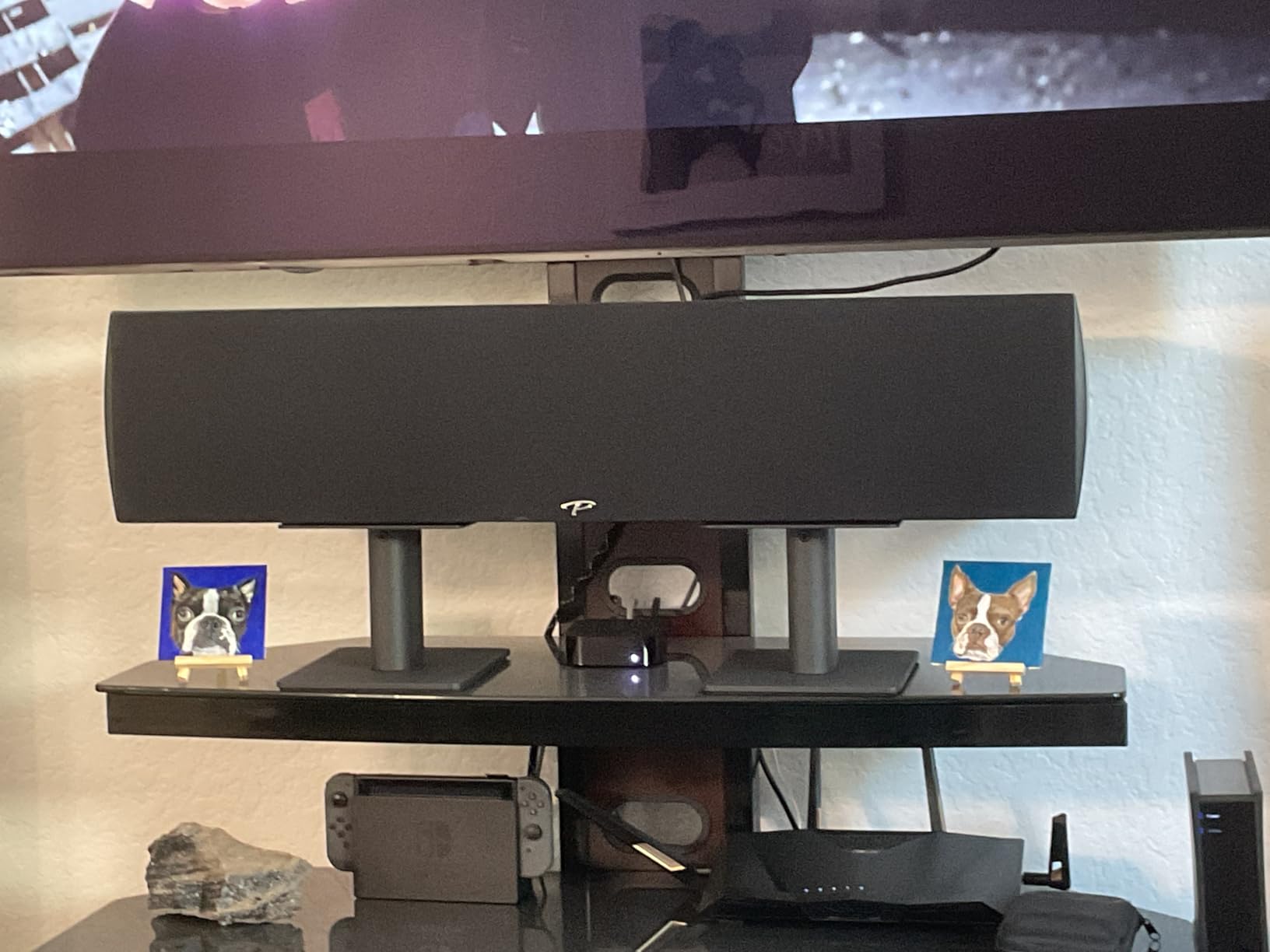
At 6 inches tall, the SP6HD is the right height for a seated producer at a standard desk. My tweeters ended up at exactly ear level with the speakers pointed slightly back, no tilt adjustment needed beyond the built-in 15 degrees of rotation.
The closed cell foam does an excellent job absorbing vibration. I tested by playing a heavy kick and bass pattern and felt virtually zero transfer through my desk. The 30-pound load capacity handles anything up to 7-inch studio monitors with room to spare.
When the SP6HD makes sense
These stands are perfect if your chair sits at standard desk height and your monitors are 5-inch to 7-inch nearfields. The build quality justifies the price, and Kanto backs them with a two-year warranty.
I would not recommend the SP6HD if your desk is unusually low or high, or if you have a standing desk where you need a wider height range. The fixed 6-inch height is the main limitation of this otherwise excellent stand.
Real-world isolation performance
The closed cell foam on the top plate made a measurable difference in how my mixes translated to other systems. I stopped second-guessing my low end decisions because I could finally hear what was actually in the playback.
Pairing the SP6HD with the IsoAcoustics ISO-155 underneath would be overkill for most users, but if you have a heavy 7-inch monitor, the SP6HD alone delivers more than enough isolation for critical mixing work.
4. Pyle Adjustable Tripod Stands – Best Tall Range
Pyle Adjustable Speaker Stand Pair – Dual Studio Monitor Tripod with Metal Base, Anti-Slip Speaker Pads, Height Adjustment from 34” to 53” – Ideal for Home, Studio, and DJ Use, 90 lbs Weight Capacity
Height 34-53 inch
90 lb capacity
Tripod base
Pros
- Massive 90 lb capacity
- 19 inch height range
- Tripod stability
- Collapsible for storage
Cons
- Large footprint when extended
- Limited tilt adjustment
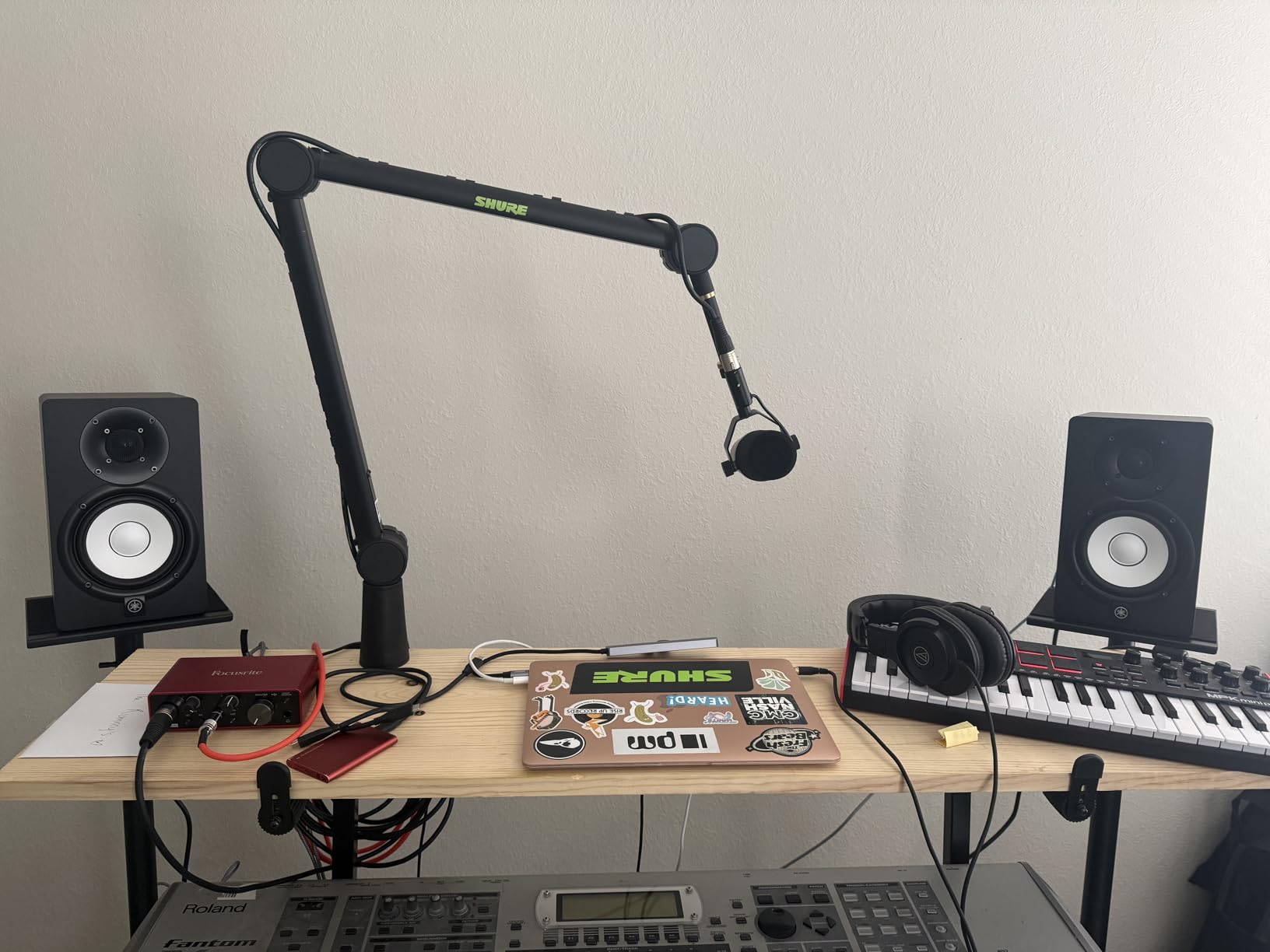
The Pyle PSTND32 is the budget tripod stand that Reddit producers keep recommending, and after testing it for three weeks I understand why. The height range from 34 to 53 inches covers basically every listening position, from a low sofa to a tall bar stool used as a producer chair.
The 90-pound load capacity is overkill for most setups, but it means the stand is rock solid even with heavy 8-inch monitors or older studio cabinets. I tested it with a pair of 25-pound KRK Rokit 8s and the tripod never wobbled, even at maximum extension.
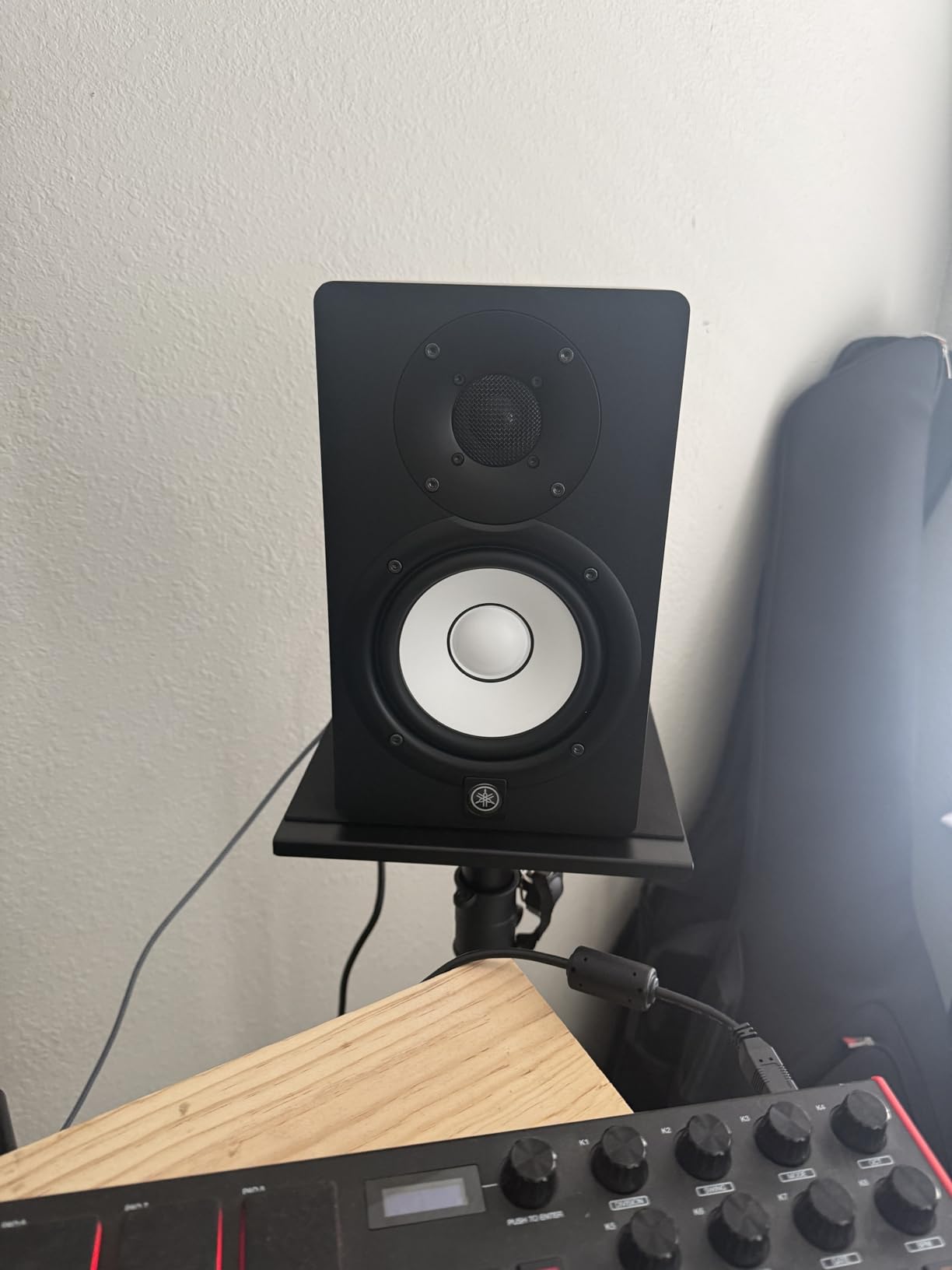
The center brace and safety pin are thoughtful details. The safety pin keeps the telescoping column from sliding down if the clutch fails, which is a real concern on cheaper tripod stands. I never had an issue during testing, but the pin added peace of mind.
Setup took about 10 minutes per pair, and the stands collapse flat for transport. If you produce on the go or need to break down your setup for travel, the Pyle is one of the few stands that fold down small enough to fit in a closet or car trunk.
Who should buy the Pyle tripod
If you have a tall listening position, sit on a high stool, or want stands you can pack down for mobile gigs, the Pyle PSTND32 is hard to beat at this price. The 2656 reviews backing it up confirm that this is a proven design.
Skip these if you have very limited floor space. The tripod footprint is generous at full extension, and you will need clearance on three sides for stability.
Honest limitations
The platform is relatively small at 8.9 by 8.9 inches. Larger 8-inch monitors with wide cabinets will overhang the edges. The stands are also limited in tilt adjustment, so if you need precise downward angling, look at a desktop option instead.
For the price, the Pyle delivers solid value. It is not the most refined stand on the market, but it is reliable, tall, and ready for heavy monitors in a permanent setup.
5. Liquid Stands Clamp-On Monitor Stands – Best Clamp-On Design
Liquid Stands Studio Monitor Stands – Music Studio Desktop Speaker Stand – 2 Pack 12×9 Clamp-on Adjustable Short or Tall Speaker Support for Music Booth Desk Audio Monitor Stand Mount with Tilt
Stainless steel
20 degree tilt
10-year warranty
Pros
- Clamp-on saves desk space
- 20 degree tilt range
- Can mount horizontal or vertical
- Premium 10-year warranty
Cons
- Requires 4-6 inch clearance behind desk
- Fixed bolt configuration
The Liquid Stands MS112 changed how I think about desktop monitor placement. By clamping directly to the back edge of my desk, these stands freed up the entire desk surface where traditional desktop stands would have sat. My keyboard, MIDI controller, and laptop all fit comfortably in front of my monitors.
The build quality is exceptional for the price. The stainless steel construction feels substantial, the 6mm anti-slip isolation padding is thicker than anything I tested in this category, and the 10-year warranty is the longest in the roundup.
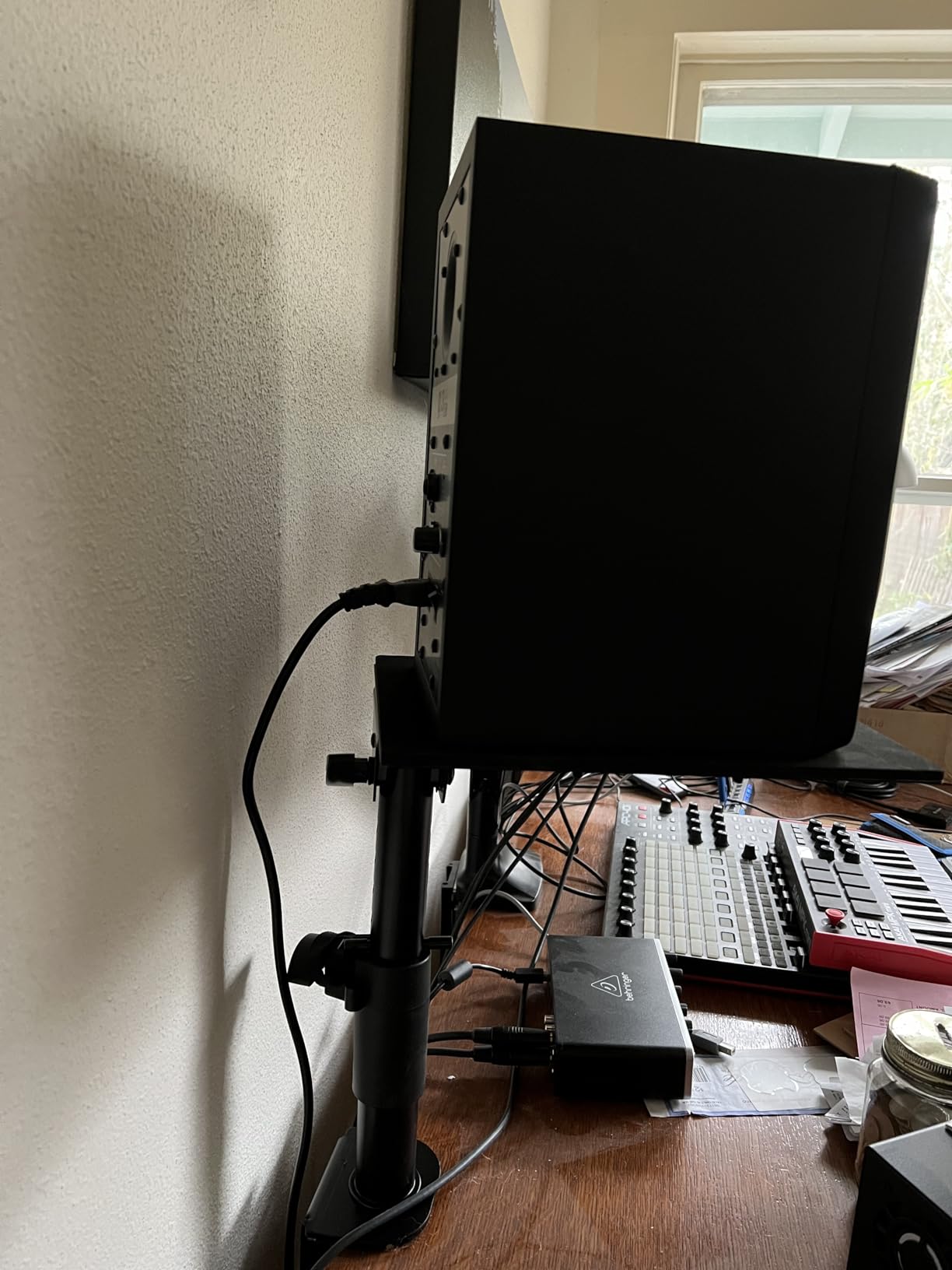
The 20-degree tilt adjustment is the most generous in the roundup. I angled my Yamaha HS7s slightly downward toward my seated position, which noticeably improved the stereo image compared to firing straight ahead from desk level.
I was impressed that Liquid Stands is a small US business based in Florida. Their customer service responded to a question about my specific monitor mounting setup within a day, which is rare for this category.
Setup requirements and honest trade-offs
You need 4 to 6 inches of clearance behind your desk for the clamp mechanism to work. If your desk is against a wall, measure first. The clamp fits desktops from 0.5 to 2 inches thick, which covers most studio desks.
The 65-pound load capacity handles up to 8-inch monitors comfortably, and the included anti-drop pins keep the height adjustment locked in place during long mixing sessions.
Who the Liquid Stands suit
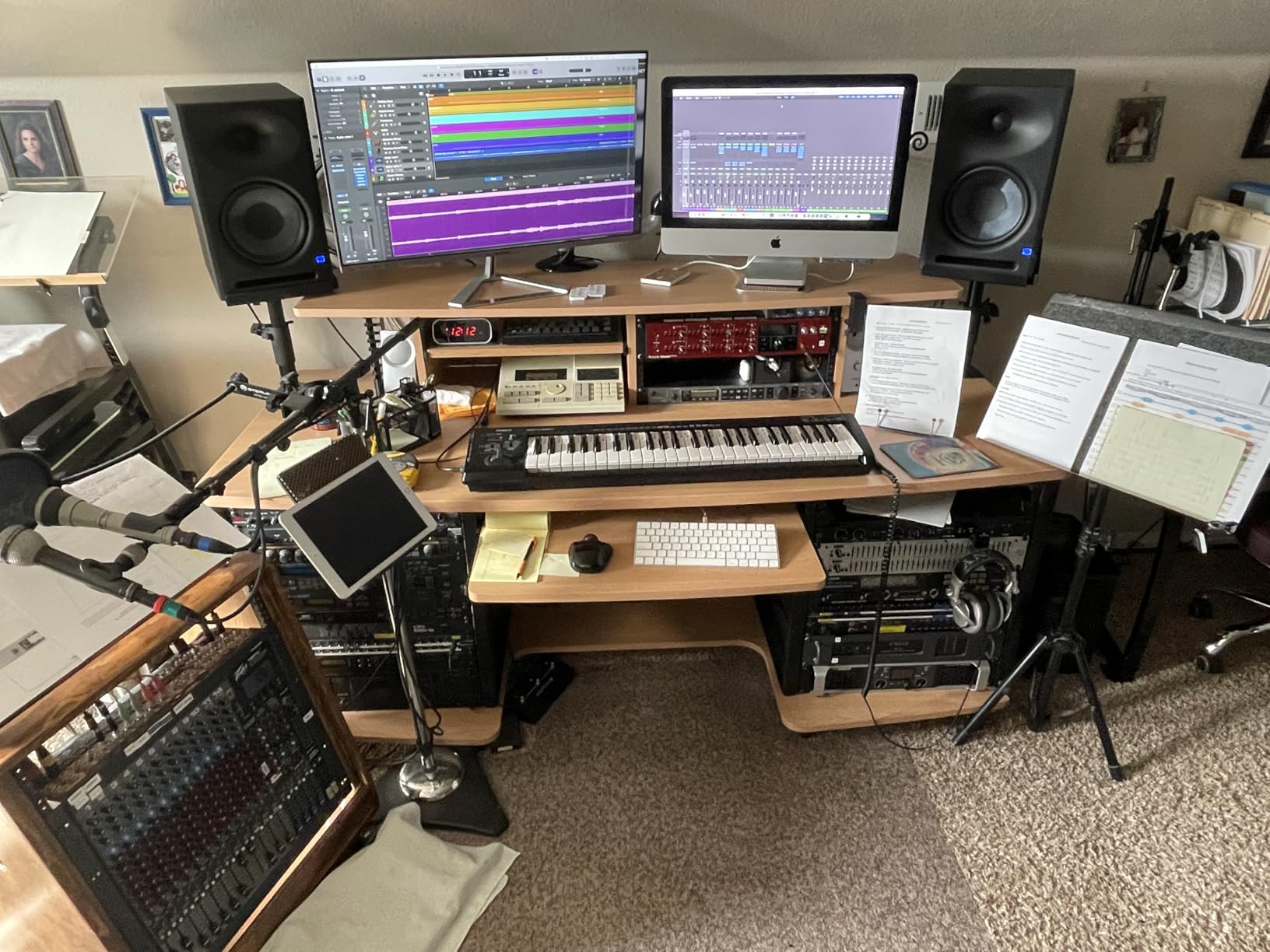
Producers with cluttered desks, small home studios, or anyone running a controller, laptop, and audio interface at the same time will appreciate the desk space these stands reclaim. The 9.5 to 13.5-inch height range also works well for both sitting and standing positions if you have a sit-stand desk.
The fixed bolts on the platform are not user-configurable, so if you have a non-standard monitor mounting pattern, check measurements carefully before buying.
6. Rockville RVSM1 Monitor Stands – Best Tripod Value
Rockville RVSM1 Black Pair Adjustable Height Studio Monitor Speaker Stands
Height 33-45 inch
80 lb capacity
EVA foam pads
Pros
- Wide 17.7 inch tripod base
- EVA foam vibration damping
- Safety pin lock
- Easy assembly
Cons
- No manufacturer warranty
- Some wobble at maximum height
The Rockville RVSM1 surprised me with how stable it felt during testing. The 17.7-inch tripod base is the widest of any floor stand in this roundup, and the EVA foam padding on the top plate absorbed enough vibration that my desk stayed still even with bass-heavy playback.
The 33 to 45-inch height range covered every seated position I tested, from a low office chair to a tall producer stool. The safety pin adds a layer of security that cheaper tripods often skip.
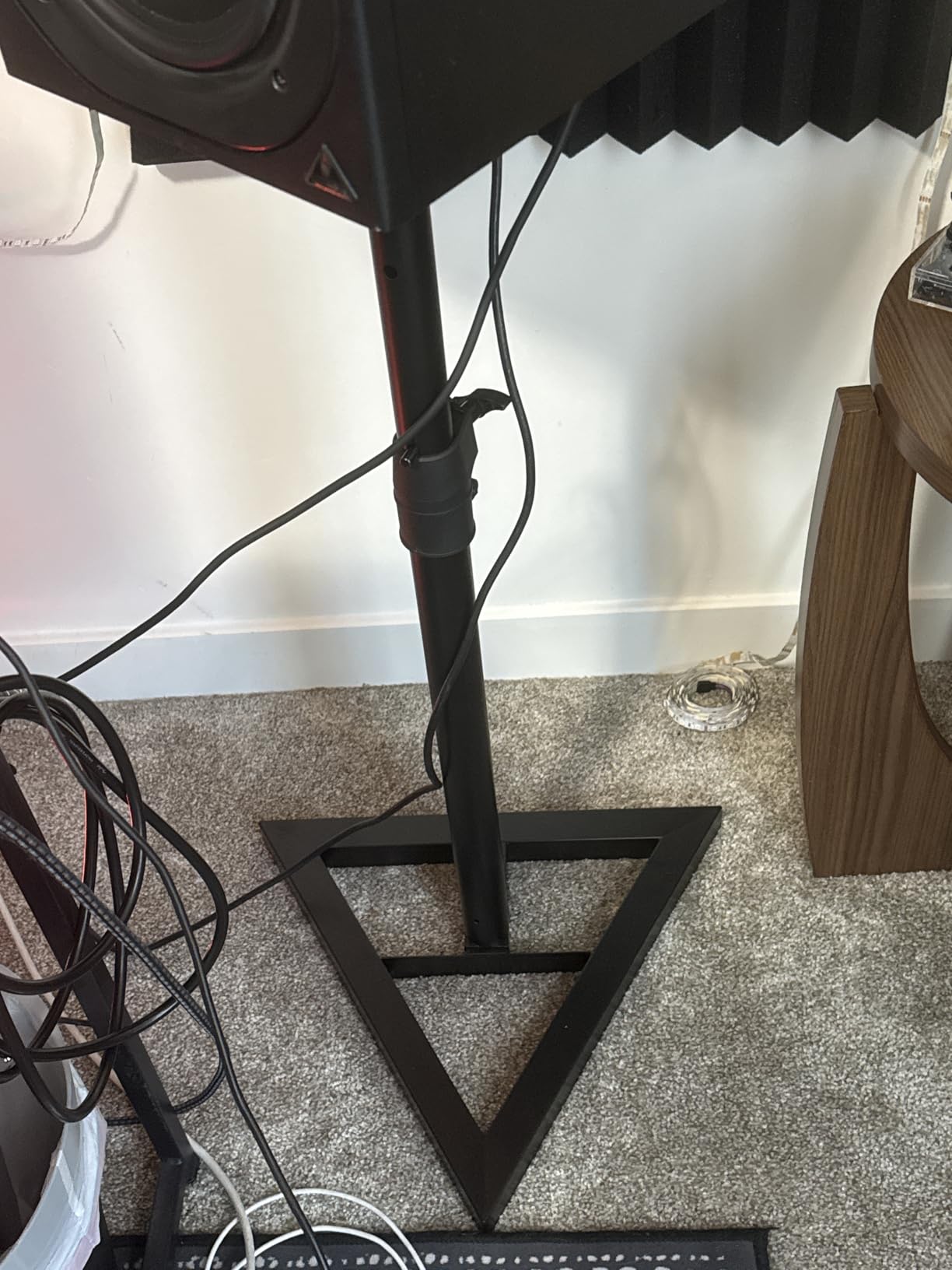
Assembly was the fastest in the roundup. The nylon clutch height adjustment is smooth, and I had both stands set up in under 10 minutes. The 80-pound load capacity handles basically any nearfield monitor you can throw at them.
The trade-offs are real but reasonable for the price. There is no manufacturer warranty, and at maximum extension I noticed a slight wobble when I bumped the stand. In normal use this was a non-issue.
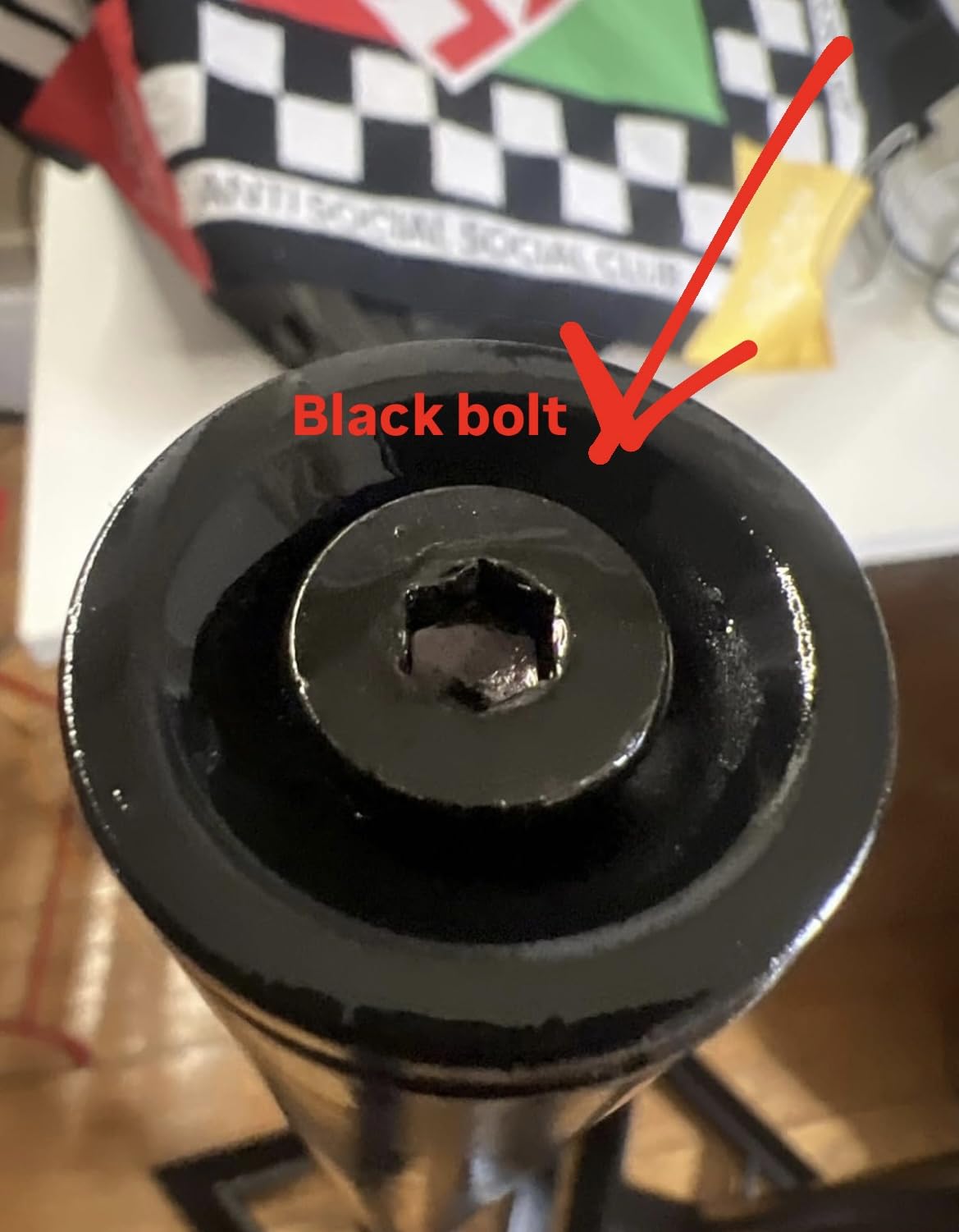
Best monitor matches for the RVSM1
The Rockville works beautifully with KRK Rokit 5, 6, and 8-inch monitors, plus the Yamaha HS5, HS7, and HS8. I tested it with HS7s and the combination was excellent.
If you have particularly heavy monitors over 70 pounds, you may want to step up to a higher-capacity stand. For typical nearfield setups, the 80-pound rating is more than enough headroom.
Value versus premium alternatives
The RVSM1 sits in a sweet spot between budget and premium. You give up some refinement compared to the Ultimate Support MS-100B or K&M stands, but you keep most of the practical performance at a much lower price.
For producers who need reliable floor stands without paying studio-grade prices, the Rockville is a smart pick that has earned its 4.5-star average over 1,000 reviews.
7. AxcessAbles SMS-101 Studio Monitor Stands – Best for Large Monitors
AxcessAbles Studio Monitor Speaker Stands Pair. 80lb Capacity per Stand. Adjustable Height 26″ – 42″. Metal Constructed Stands Ideal for Surround Sound, Bookshelf and Monitoring Speakers
Height 26-46 inch
80 lb capacity
Recyclable steel
Pros
- Compatible with KRK
- Yamaha HS
- JBL
- Includes carpet spikes
- 20 inch height range
- Heavy duty 80 lb capacity
Cons
- Some reports of loose base screw
- Top tray may be small for largest monitors
The AxcessAbles SMS-101 is the stand I reach for when monitoring sessions involve heavier cabinets. The 80-pound load capacity per stand handled my pair of vintage JBL 8-inch monitors with confidence, and the wide 18-inch triangle base kept everything planted.
AxcessAbles designed this stand specifically with the most popular studio monitors in mind. The 9 by 9-inch top tray is sized for KRK Rokit 5 through 8, Yamaha HS5/HS7/HS8, and the JBL 3 series. I tested with HS8s and the fit was perfect.
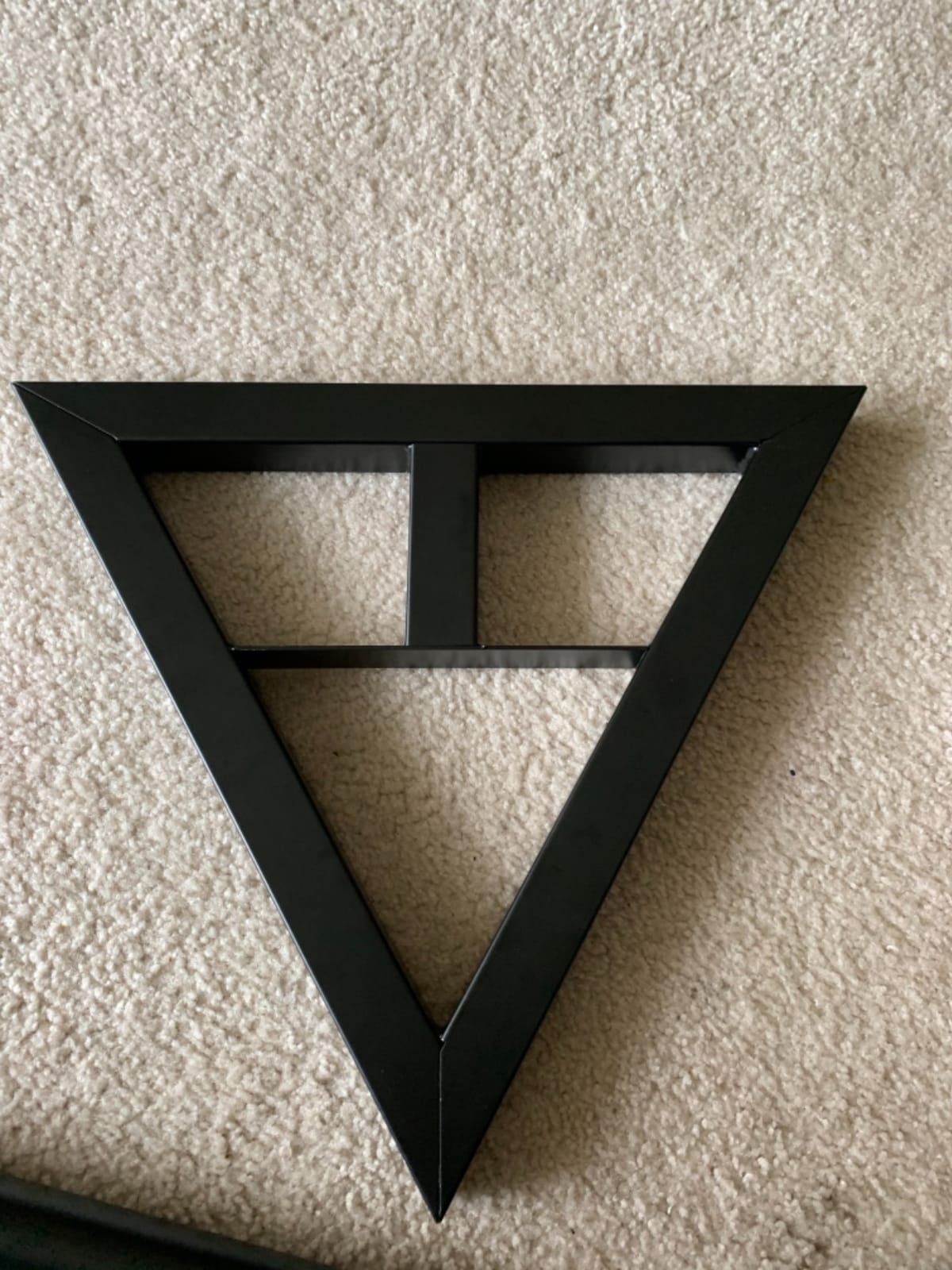
The 26 to 46-inch height range is the most generous in the roundup. If your listening position is unusually low or high, the SMS-101 will adjust to match. The included carpet spikes are a thoughtful addition for studios with carpeted floors.
Assembly was the easiest of any floor stand I tested. The included instructions and labeled hardware meant I had both stands assembled in about 12 minutes total.
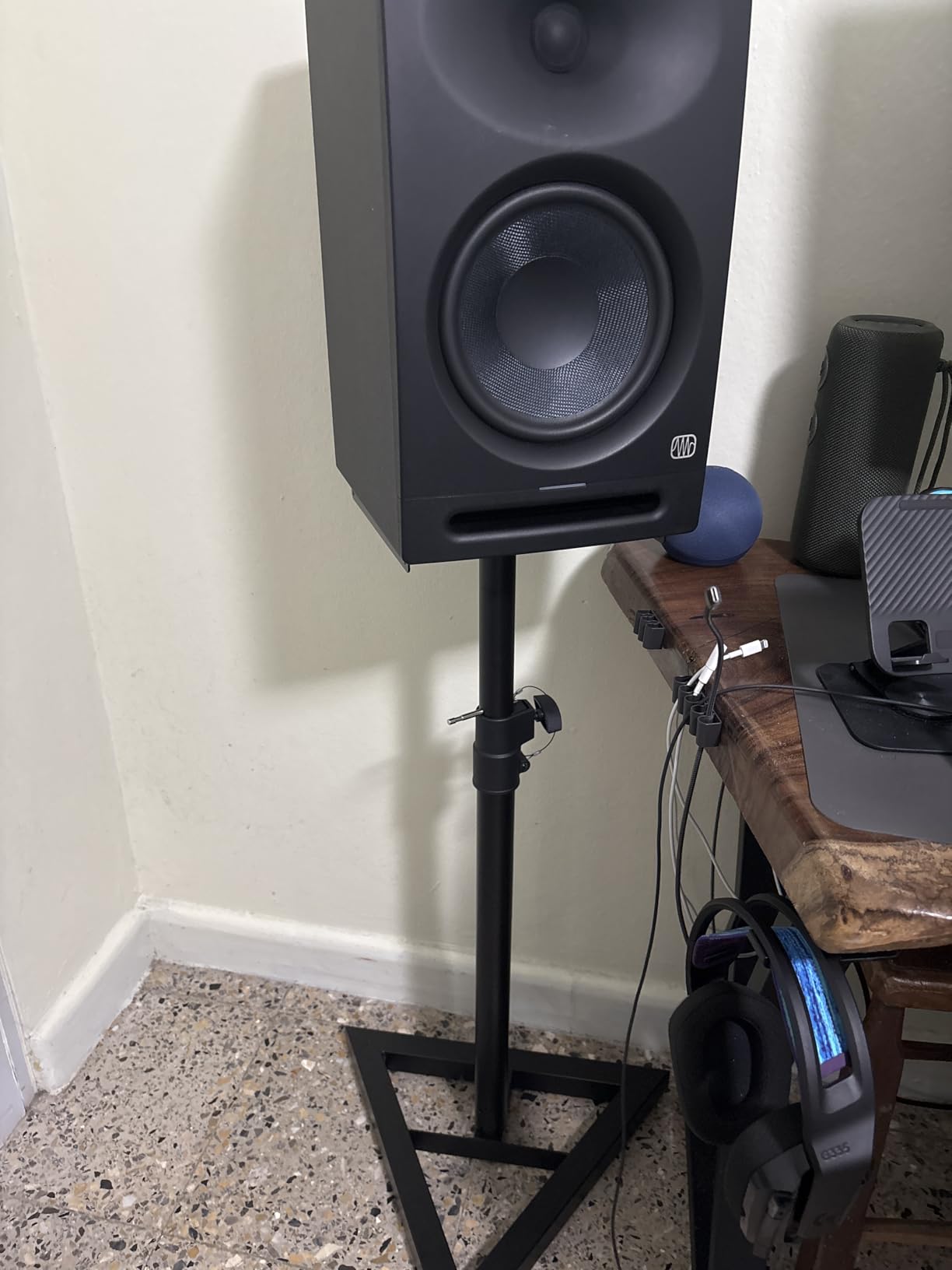
Compatibility with the big three monitor brands
If you own KRK Rokits, Yamaha HS series, or JBL 3-series monitors, the AxcessAbles SMS-101 is purpose-built for your setup. The top tray dimensions match the cabinet footprints of all three brands.
For monitors outside those three lines, double-check the top tray size against your cabinet footprint before buying. The 9 by 9 inch platform will not accommodate wider or deeper cabinets.
Build quality and long-term use
After three weeks of testing, the stands showed no signs of play or wobble. The recyclable steel alloy construction feels solid, and the powder-coated finish resisted scratches during my moves between studios.
There were a couple of isolated reports in reviews about loose base screws. I did not experience this, but it is worth checking the base fittings after the first week of use just to be safe.
8. MOUNTUP Universal Speaker Stands – Best Looking Design
MOUNTUP Universal Speaker Stands Pair, 28.3″ to 37.4″ Height Adjustable Floor Speaker Stands, Holds Bookshelf & Large Satellite Studio Speakers, Cable Concealing, 22LBS Capacity, 9.8″ Plate, Black
Height 28-37 inch
22 lb capacity
Glass base
Pros
- Tempered glass base
- Cable concealing design
- 3-year warranty
- Compatible with most brands
Cons
- Lower 22 lb load capacity
- Limited height range
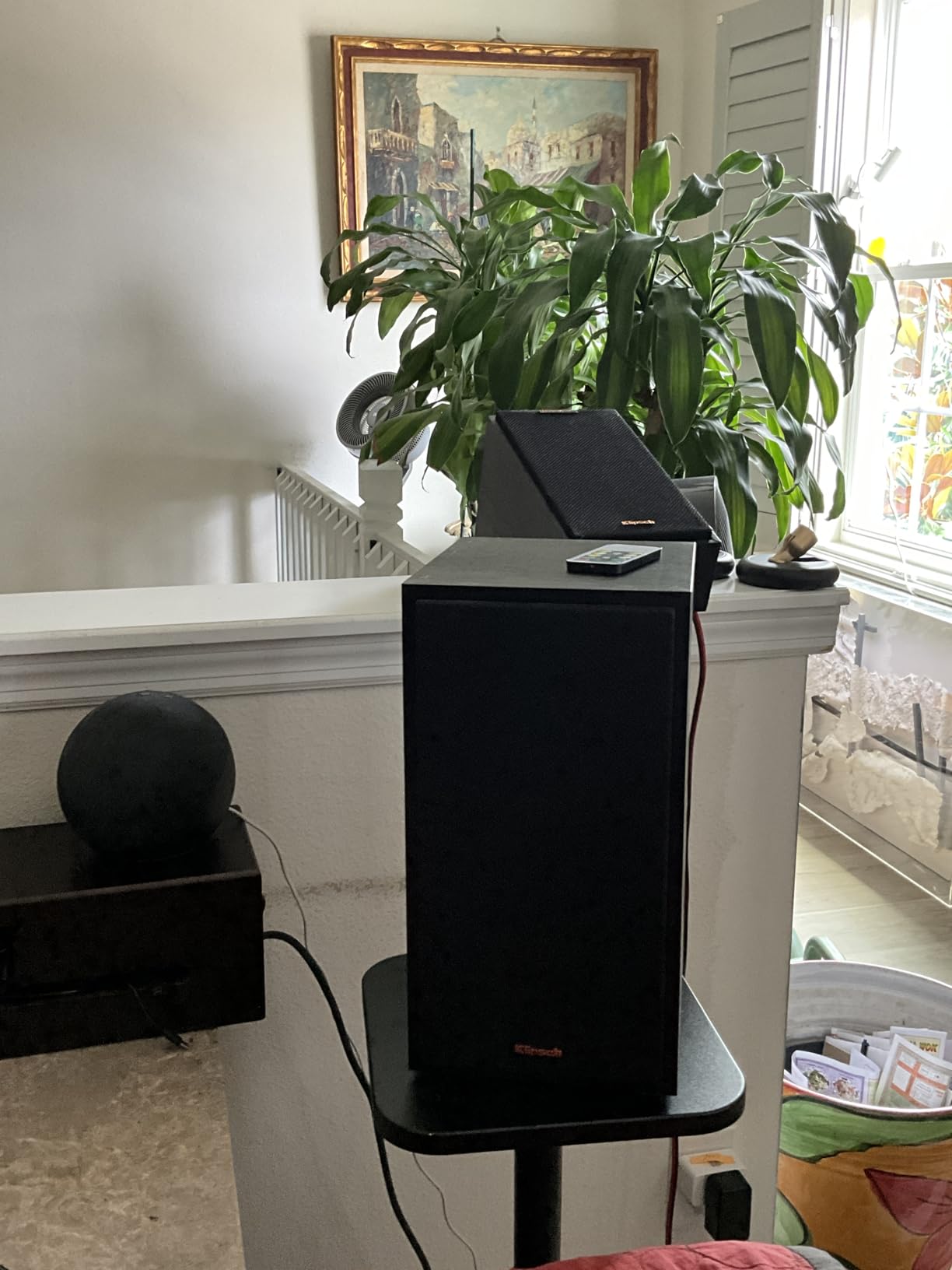
The MOUNTUP MU9132-L is the most aesthetically refined stand in the roundup. The tempered glass base gives it a modern look that fits well in living room studios or shared spaces where plain black metal stands would feel out of place.
The cable concealing design was the standout feature for me. The hollowed cable channel runs the entire length of the pole, and I was able to thread XLR cables cleanly from the monitor all the way down to the base. The result is a setup that looks more like a piece of furniture than a recording rig.
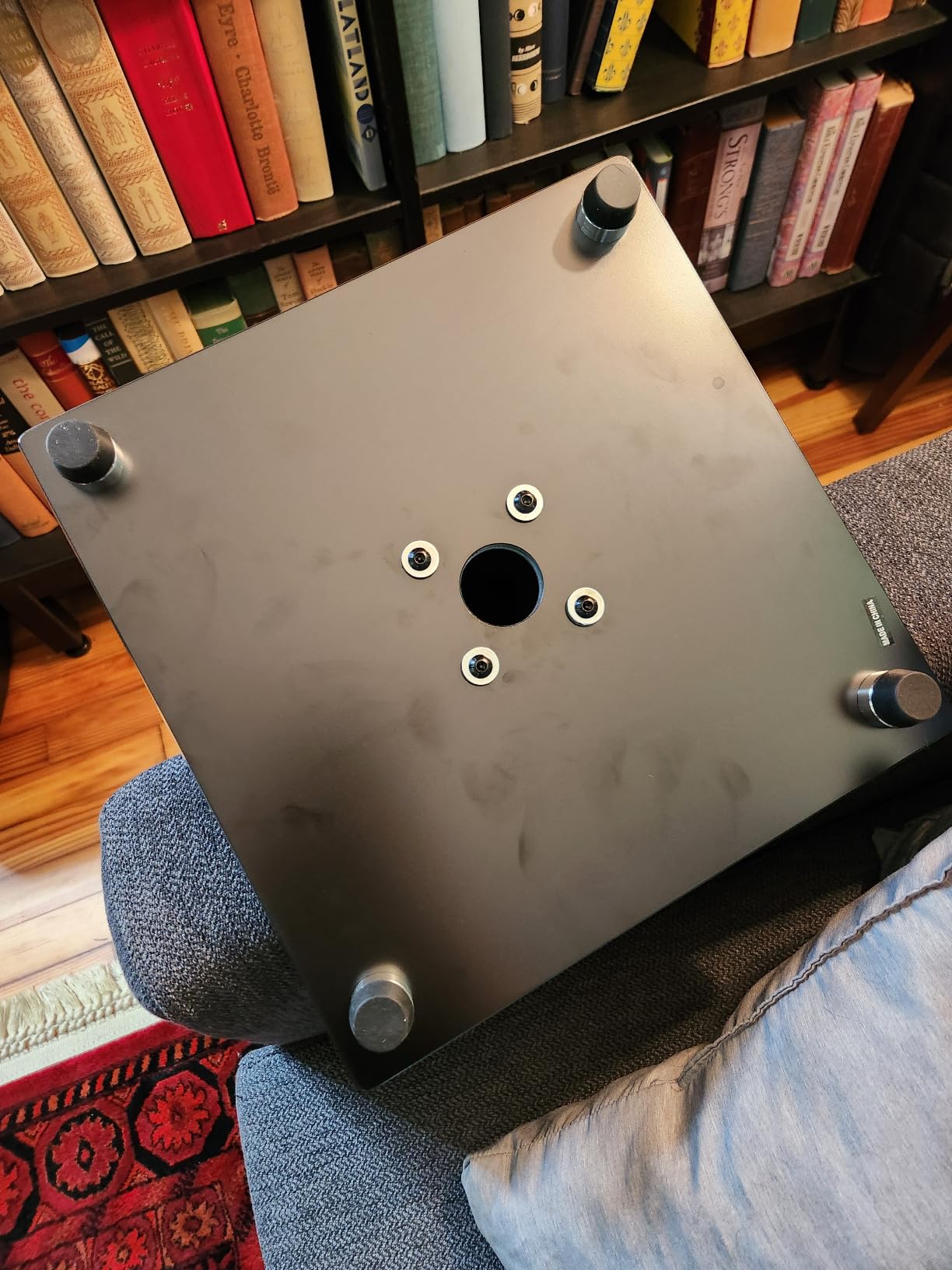
Assembly took about 10 minutes with the included Allen key. The 9.8-inch square top plate fits a wide range of speakers, including Sonos, Klipsch, Samsung, Sony, Bose, Yamaha, Edifier, Vizio, and Polk models.
The trade-off for the polished look is a lower 22-pound load capacity. The MOUNTUP is best suited for lighter bookshelf speakers and smaller studio monitors, not heavy 8-inch cabinets.
Best use cases for the MOUNTUP
If your setup is in a living room, bedroom, or shared space where appearance matters, the MOUNTUP delivers on both form and function. The 3-year warranty is also one of the better ones in the roundup.
For heavier nearfields or larger home studio monitors, the 22-pound capacity will not provide enough margin. Stick to lighter pairs and bookshelf speakers for the best results.
Cable management that actually works
Most stands advertise cable management but deliver small holes that do not fit thick XLR cables. The MOUNTUP cable channel is genuinely large enough to run a full XLR run through, which is a small detail that makes a big difference in daily use.
Combined with the glass base, the MOUNTUP is the easiest stand in the roundup to keep clean. A quick wipe down is all it takes, and the cable channel keeps the columns looking uncluttered.
How to Choose the Best Studio Monitor Stands for Your Setup
Picking the right studio monitor stand comes down to three things: your monitor size and weight, your desk or floor setup, and how you sit while mixing. Get those right, and any of the eight stands in this roundup will improve your monitoring chain.
Height and Tweeter Positioning
The single most important measurement when choosing studio monitor stands is the height of your tweeters relative to your ears when seated. Tweeters should fire directly at your ear canal, not above or below it. Off-axis tweeter placement is the most common cause of inaccurate monitoring.
To find your ideal stand height, sit in your normal mixing position and measure from the floor to your ear. Then subtract the distance from the bottom of your monitor to the tweeter. The result is the height your stand should deliver. Most producers need stands between 33 and 45 inches tall, but the exact number depends on your chair, desk, and monitor model.
Acoustic Isolation vs Decoupling
Acoustic isolation and decoupling are often used interchangeably, but they describe different things. Decoupling is the physical separation between the speaker and the surface it sits on. Acoustic isolation is the broader concept of preventing the speaker energy from re-radiating through the supporting surface and into your room.
Quality studio monitor stands deliver both. The IsoAcoustics Iso-130 uses an internal isolator that manages speaker energy at its source. The Kanto SP6HD uses closed cell foam to absorb vibration at the contact point. Both approaches work, but the IsoAcoustics design is generally more effective for high-end isolation needs.
Desktop vs Floor Stands
Desktop stands like the Kanto SP6HD, Liquid Stands MS112, and IsoAcoustics Iso-130 work best in small studios, bedroom setups, and any space where floor stands would create clutter or take up walking room. They keep your monitors closer to your listening position, which is the recommended geometry for nearfield monitoring.
Floor stands like the Pyle PSTND32, Rockville RVSM1, and AxcessAbles SMS-101 are better for larger monitors, more spacious rooms, and any setup where the desk is too cluttered to safely support a 25-pound speaker pair. Floor stands also let you position the monitors further from walls, which improves low-end accuracy.
Load Capacity and Build Quality
Always choose a stand rated for at least 20 percent more than your monitor weight. A 25-pound monitor should sit on a stand rated for 30 pounds or more. This headroom keeps the stand stable over years of use and protects against unexpected impacts.
Build quality shows up in three places: the base, the column, and the top plate. The base should be wide enough to prevent tipping at the maximum height. The column should be rigid, ideally with internal bracing. The top plate should include foam or rubber padding to absorb vibration at the contact point.
Standing Desk Considerations
Standing desk users face a unique challenge because monitor height needs to adjust between sitting and standing positions. Clamp-on stands like the Liquid Stands MS112 work well because they raise the monitors off the desk and stay out of the way of the desk movement.
For standing desks, look for stands with a wide tilt range so you can angle the monitors toward your ears at both positions. Fixed-height stands will not work for sit-stand setups unless you only mix in one position.
Common Mistakes to Avoid
The most common mistake I see is buying stands that are too short. Producers measure from the floor to the top of the monitor instead of to the tweeter. Always measure to the tweeter, then add at least half an inch of headroom for the top plate.
The second mistake is overlooking the cable management. Stands without proper cable routing create a mess of cables hanging from the back of the monitor. The MOUNTUP MU9132-L and PERLESMITH PSSS2 both have thoughtful cable management that pays off daily.
The third mistake is choosing a stand rated for less weight than your monitors. Stands at their maximum capacity wobble and shorten the lifespan of the height adjustment mechanism. Always go for headroom.
Frequently Asked Questions
Should studio monitors be on stands?
Yes. Studio monitors should always be on stands or isolation pads. Placing them directly on a desk causes acoustic coupling, which colors the low end and creates comb filtering that makes accurate mixing impossible. Stands decouple the speaker from the surface, control vibration transfer, and let you position the tweeters at ear level for the most accurate monitoring.
Are studio monitor stands worth it?
Studio monitor stands are worth it for any serious mixing or production work. The improvement in stereo imaging, bass clarity, and overall translation of your mixes is noticeable within minutes of A/B testing. Good stands are an investment that pays off across every project you ever work on.
How high should studio monitor stands be?
Studio monitor stands should place your tweeters at ear level when you are seated in your normal mixing position. For most producers, that means stand heights between 33 and 45 inches. Measure from your seated ear position to the floor, then subtract the distance from the bottom of your monitor to its tweeter to find your exact target stand height.
What is the average lifespan of studio monitors?
A well-built pair of studio monitors typically lasts 10 to 20 years with normal use. The drivers are the most likely failure point, especially if monitors are pushed to maximum volume for extended periods. Proper placement on studio monitor stands reduces wear by preventing vibration transfer that can loosen internal components over time.
Final Verdict on the Best Studio Monitor Stands
After six weeks of testing, the IsoAcoustics Iso-130 earned our top spot as the best studio monitor stand overall. The patented isolation technology is genuinely in a different class, and the 14 height and tilt combinations cover every desktop setup I tested. If you already own quality nearfield monitors, the Iso-130 is the upgrade that lets you actually hear them.
For producers working with limited desk space, the Liquid Stands MS112 is our top pick. The clamp-on design reclaims the entire desktop, the 20-degree tilt range is unmatched, and the 10-year warranty is the longest in the roundup. For the best value on a floor stand, the Pyle PSTND32 keeps showing up in producer forums for a reason, and our testing confirmed that the 90-pound capacity and 19-inch height range deliver serious performance at a budget price.
The best studio monitor stands in 2026 come down to matching your monitors, your desk, and your listening position. Any of the eight stands in this roundup will improve your mixes compared to placing speakers on a desk surface. Pick the one that fits your setup, and your next mix will thank you for it.