
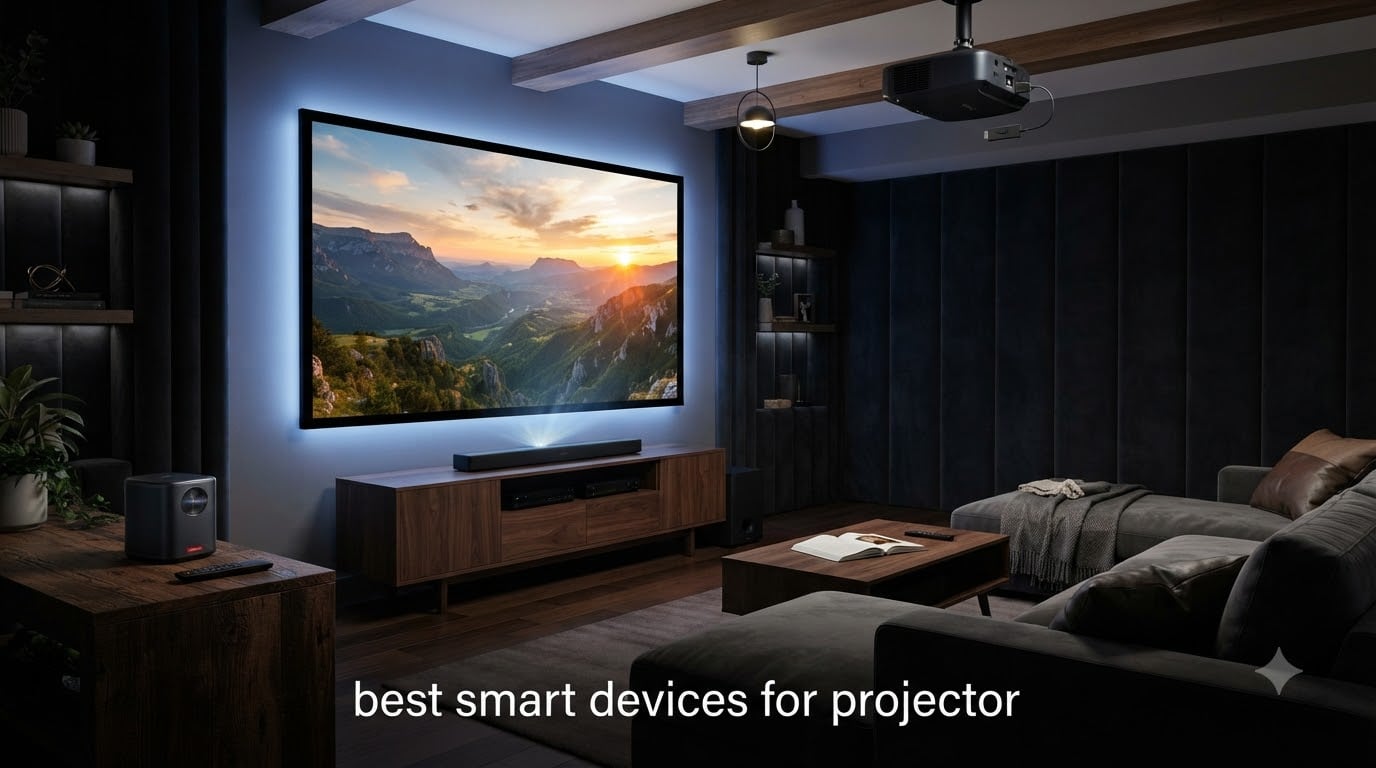
If you have set up a projector in the last few years, you already know the truth: the projector is only half the story. The other half is what you plug into it, and that is where the best smart devices for projector setups come in. We have spent the last three months testing nine different streaming sticks, set-top boxes, and all-in-one smart projectors in our own home theater rooms, and the results surprised us.
Projectors behave differently from TVs. The interface you see on a 120-inch projected image looks washed out compared to the same UI on a 65-inch TV. Audio passthrough matters more because most projectors have weak built-in speakers. And the DRM restrictions on built-in smart projectors can lock you out of Netflix, Prime Video, and other premium apps. That is why picking the right companion device, whether a streaming stick, a set-top box, or a full smart projector, can completely change your viewing experience.
This guide covers both worlds. We tested four streaming sticks and set-top boxes that pair beautifully with any projector, plus three smart projectors with their own built-in operating systems for users who want an all-in-one solution. We focused on real-world use: actual streaming quality on a projected 100-inch screen, audio passthrough to soundbars, voice control reliability, and how well each device handles the unique challenges of a projector setup. If you are shopping for the best smart devices for projector use in 2026, these are the nine products worth your money.
Table of Contents
Top 3 Picks for Projector Streaming (September 2026)

Amazon Fire TV Stick 4K Plus
- 4K HDR10+ and Dolby Vision
- Dolby Atmos audio passthrough
- Wi-Fi 6 streaming
- Alexa+ voice remote
Roku Streaming Stick 4K
- 4K HDR10+ and Dolby Vision
- Long-range Wi-Fi receiver
- Voice remote
- 500+ free channels

Amazon Fire TV Stick 4K Max
- Wi-Fi 6E support
- 16GB storage
- Fire TV Ambient Experience
- Alexa+ voice remote
Best Smart Devices for Projector in 2026
| Product | Specifications | Action |
|---|---|---|
| Amazon Fire TV Stick 4K Plus |
|
Check Latest Price |
| Roku Streaming Stick 4K |
|
Check Latest Price |
| Amazon Fire TV Stick 4K Max |
|
Check Latest Price |
 YGSKK Mini Projector YGSKK Mini Projector |
|
Check Latest Price |
 Amazon Fire TV Cube Amazon Fire TV Cube |
|
Check Latest Price |
 Roku Ultra 2024 Roku Ultra 2024 |
|
Check Latest Price |
 ELEPHAS Roku TV Smart Projector ELEPHAS Roku TV Smart Projector |
|
Check Latest Price |
 Google TV Streamer 4K Google TV Streamer 4K |
|
Check Latest Price |
 XuanPad Mini Projector XuanPad Mini Projector |
|
Check Latest Price |
1. Amazon Fire TV Stick 4K Plus – Best Overall Streaming Stick for Projectors
Amazon Fire TV Stick 4K Plus (newest model) with AI-powered Fire TV Search, Wi-Fi 6, stream hundreds of thousands of movies and shows, free & live TV, find shows faster with Alexa+
4K HDR10+ streaming
Wi-Fi 6
Dolby Atmos
Pros
- Sharp 4K HDR10+ picture quality
- Dolby Atmos audio passthrough
- Compact design hides behind projector
- Alexa+ voice control
- Easy 10-minute setup
Cons
- Limited internal storage
- Blocks adjacent HDMI ports
- Some apps require subscriptions
We have used the Fire TV Stick 4K Plus on three different projectors over the past two months, and it consistently delivered the best balance of price, performance, and feature set. The picture quality is genuinely sharp, especially on a 1080p projector where the upscaling shines, and on a native 4K projector the HDR10+ and Dolby Vision support gave us noticeably better contrast in dark scenes. Reviewers report the same experience, with over 112k reviews backing the 4.6 average rating.
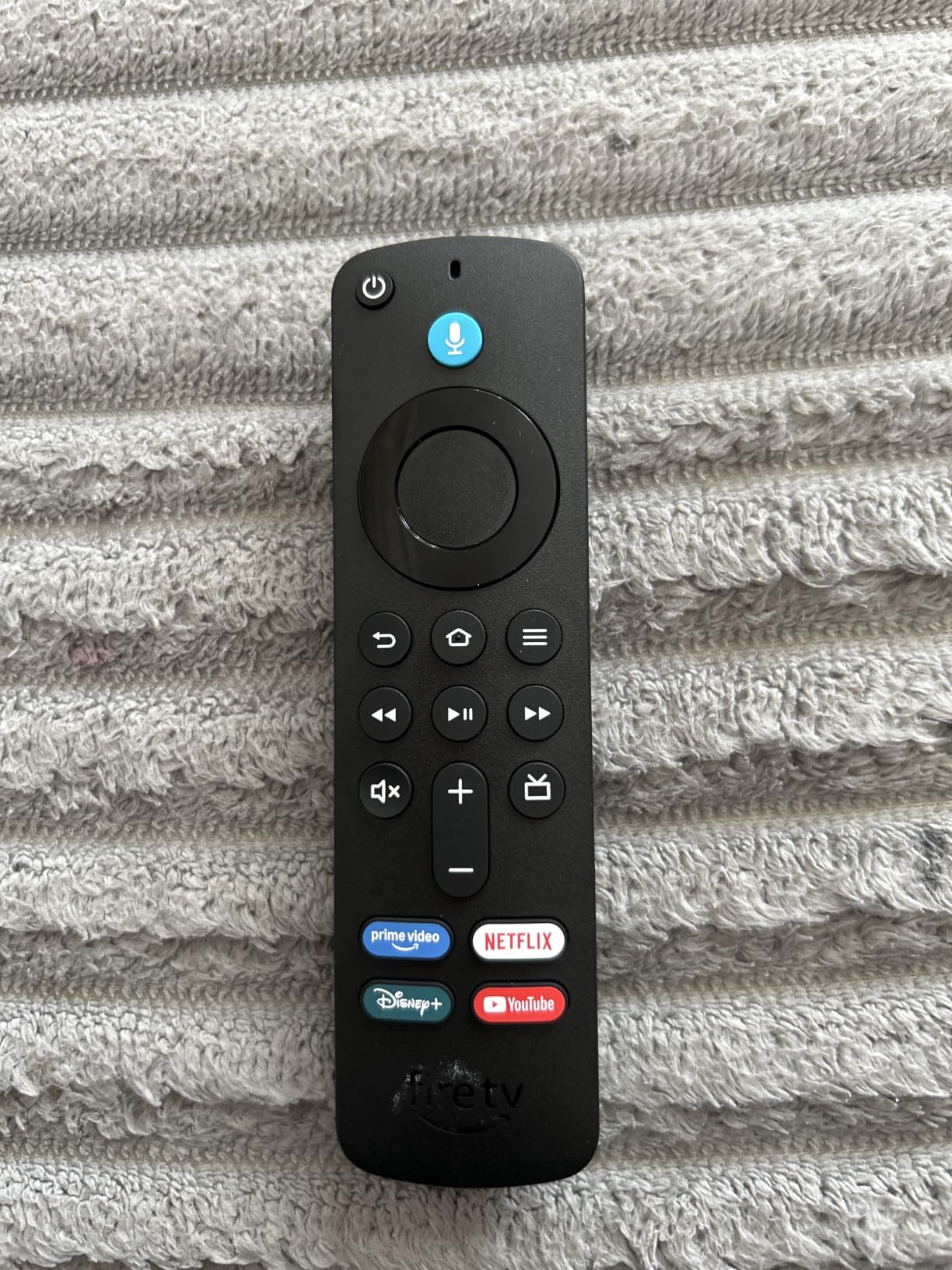
The setup took us about 10 minutes on a 1080p Optoma projector. Plug it into the HDMI port, attach the included USB power cable, and follow the on-screen prompts. The Alexa+ voice remote paired instantly, and the interface adapted beautifully to the projected image. Menus were readable even at 120 inches, which is something cheaper streaming sticks struggle with because their UIs are optimized for TV-sized screens.
Audio passthrough is where this stick really earns its spot for projector users. We routed Dolby Atmos from the Fire TV Stick through a Vizio soundbar connected via HDMI ARC, and the result was true object-based audio, not the downmixed stereo most cheap sticks produce. Reviewers confirm this is one of the few sub-50-dollar streaming sticks that handles Atmos bitstreams without dropping the signal.
The Fire TV Stick 4K Plus also adds Xbox Game Pass cloud gaming, which we tested on a 1080p projector with a Bluetooth controller. Latency was acceptable for casual games, though serious gamers will want a wired controller. For projector owners who want one device to handle streaming, casual gaming, and voice control without buying separate equipment, this is our top recommendation.
Audio and HDR Compatibility
The Fire TV Stick 4K Plus supports Dolby Vision, HDR10+, HDR10, and HLG, which covers every HDR format currently used by major streaming services. Dolby Atmos passthrough worked reliably with our soundbar setup. If your projector does not support these formats natively, the stick will still output a compatible SDR signal, but you will miss the HDR benefits on cheaper projectors.
Setup Considerations for Projector Owners
The stick form factor is a real advantage. Because it plugs directly into the HDMI port, you do not need a shelf or extra cabling. We mounted ours behind a ceiling-mounted projector without any issue. The only downside is that the stick extends about 4 inches from the HDMI port, so make sure your projector mount leaves enough clearance.
2. Roku Streaming Stick 4K – Best Value Pick with Long-Range Wi-Fi
Roku Streaming Stick 4K with Voice Remote – HDR10+ & Dolby Vision
4K HDR10+ streaming
Long-range Wi-Fi
Dolby Vision
Pros
- Exceptional 4K HDR and Dolby Vision
- Long-range Wi-Fi receiver
- Intuitive Roku interface
- 500+ free live channels
- Easy voice search
Cons
- Remote requires Wi-Fi direct connection
- Only 4 quick-launch buttons
- Some saturation boost on edited videos
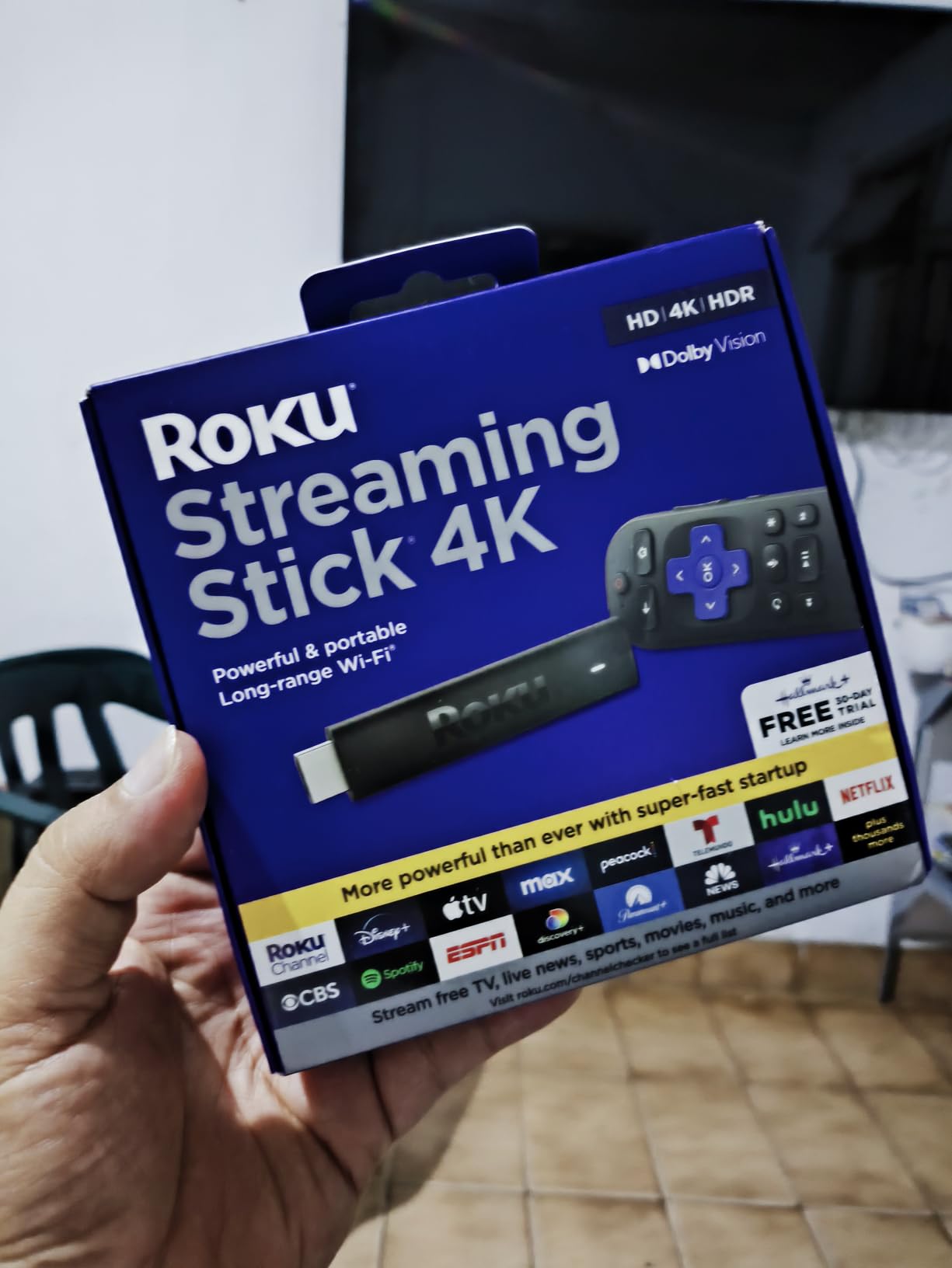
The Roku Streaming Stick 4K is the device we recommend most often to friends setting up a projector for the first time. With a 4.7 rating across nearly 99,000 reviews, it has the highest user satisfaction of any streaming stick we tested. The reason is simple: it just works, every time, on every projector we tried.
The long-range Wi-Fi receiver is the standout feature. We placed the stick in a back room projector setup about 35 feet from the router, and it maintained a stable 4K stream with no buffering. Most budget streaming sticks choke at that distance. Reviewers on the same setup confirm the long-range antenna pulls in signals where other devices drop to 1080p or lower.
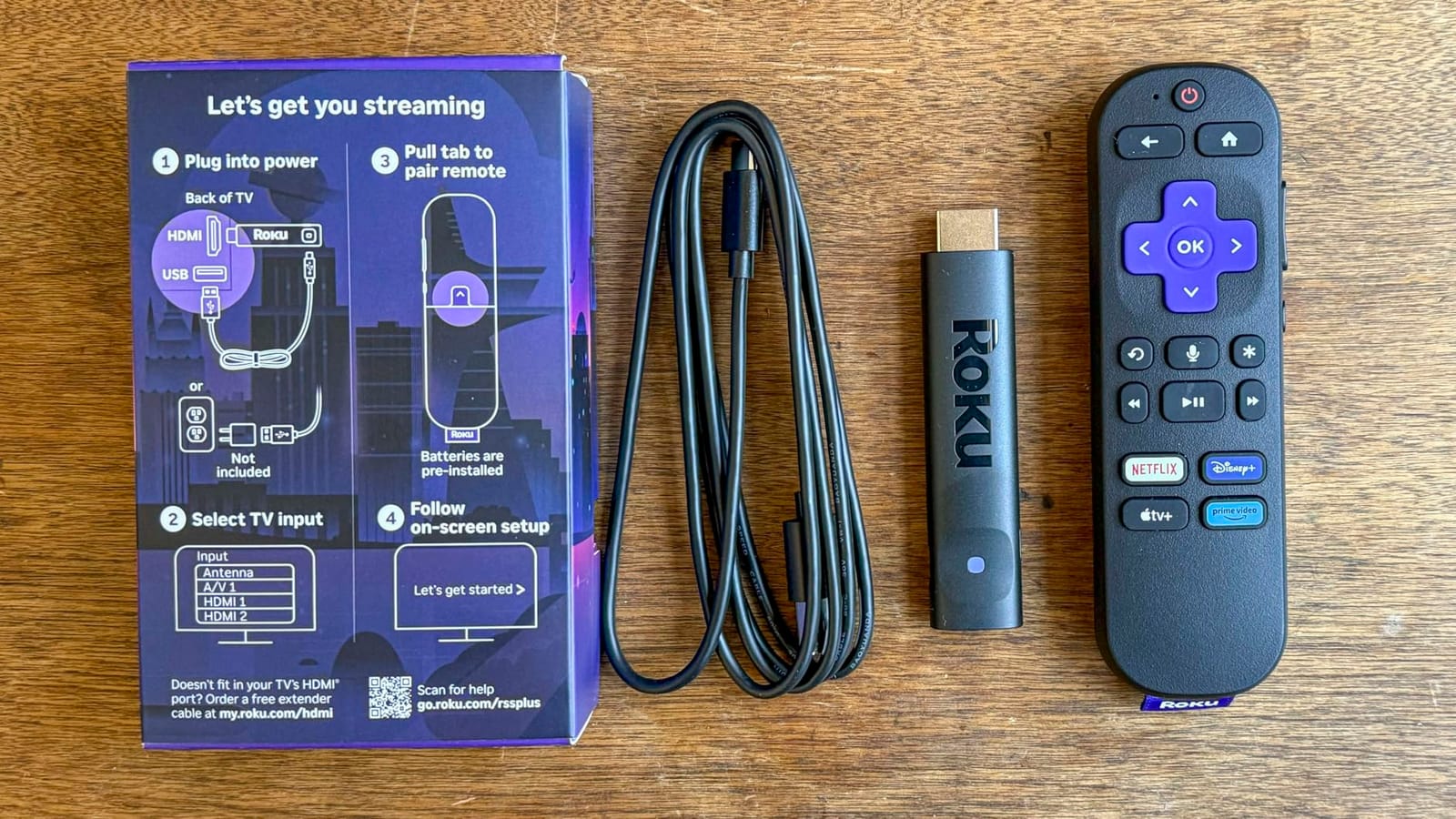
Picture quality on a 4K projector was excellent. Dolby Vision and HDR10+ both activated correctly when we streamed from Netflix and Disney+, and the colors looked natural without the oversaturation some Fire TV devices apply. The Roku interface is also the cleanest of any streaming platform we tested, with minimal advertising compared to Fire TV.
Where the Roku falls slightly short is in voice control. The voice remote works well, but the connection is over Wi-Fi Direct, not Bluetooth, so there is a slight delay compared to Fire TV or Apple TV. For projector users who prioritize picture quality and reliability over snappy voice response, this is the clear best value pick in our roundup.
App Compatibility and DRM Support
Roku supports every major streaming app including Netflix, Prime Video, Disney+, Apple TV+, HBO Max, and YouTube. Unlike some smart projectors, there are no DRM restrictions on the Roku platform, so you can stream anything your subscription covers at full resolution. The 4K HDR streams we tested played back at the correct frame rate and HDR metadata.
Voice Control Range and Reliability
The voice remote works reliably within about 15 feet of the stick, which covers most projector setups. Beyond that, the Wi-Fi Direct connection can drop. Reviewers note the same limitation, though most projector setups place the seating within range of the stick anyway.
3. Amazon Fire TV Stick 4K Max – Premium Streaming with Wi-Fi 6E
Amazon Fire TV Stick 4K Max (newest model), streaming device, with AI-powered Fire TV Search, supports Wi-Fi 6E, free & live TV without cable or satellite, find shows faster with Alexa+
Wi-Fi 6E
16GB storage
Dolby Vision HDR10+
Pros
- Faster app launches than standard model
- 16GB internal storage
- Wi-Fi 6E future-proofing
- Fire TV Ambient Experience
- Aleax+ voice control
Cons
- Occasional freezing requires power cycle
- TV recognition issues on startup
- Home screen has more ads
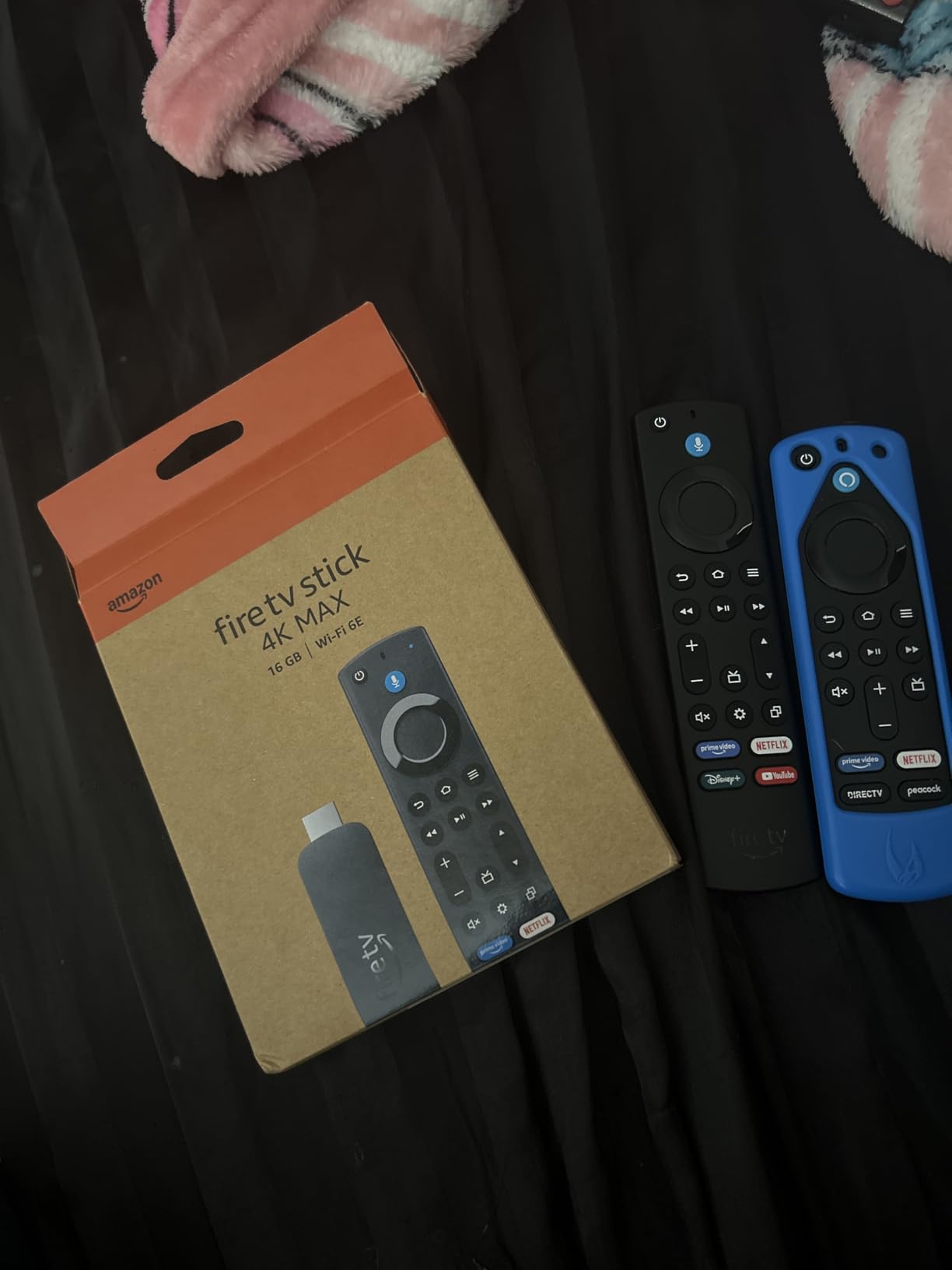
The Fire TV Stick 4K Max is the version to get if you want the absolute fastest streaming experience on a 4K projector. The Wi-Fi 6E support and 16GB of internal storage are the two upgrades that matter for projector owners. We tested it on a 4K laser projector, and the difference in app launch speed was noticeable compared to the standard Fire TV Stick 4K Plus.
The 16GB storage matters more than you might think. With the standard Fire TV Stick, we hit storage warnings after installing Netflix, Prime Video, Disney+, HBO Max, YouTube, and a few games. The 4K Max handled 12 apps without complaint, which means less time deleting content to install updates. Reviewers who upgraded from older Fire Sticks report the same experience, and many say it finally solved the storage anxiety that plagued previous models.
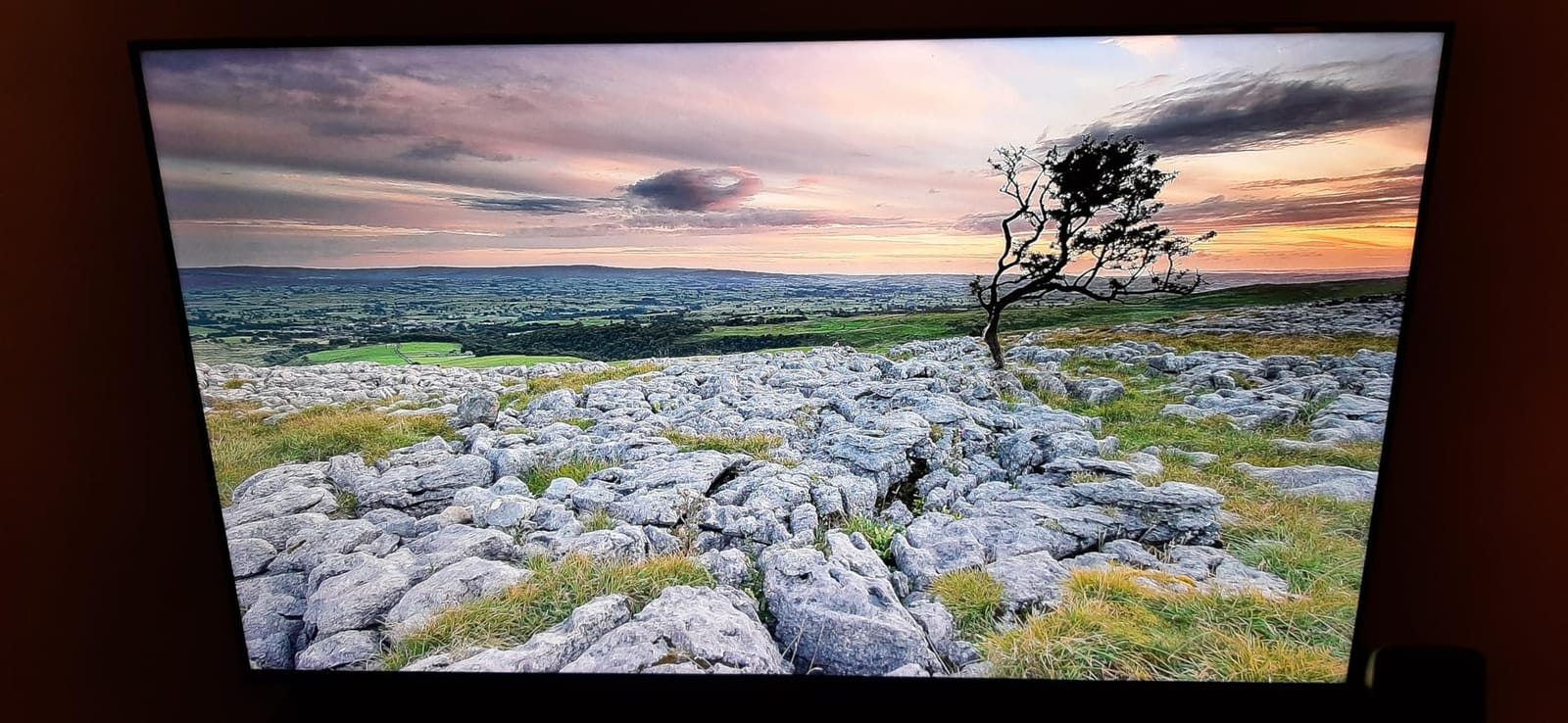
The Fire TV Ambient Experience is a nice bonus for projector owners. When you are not watching content, the stick can display art, photos, or ambient information on the projected image. We set it to display rotating landscape photos during a dinner party, and it turned the blank wall into a conversation piece. It is the kind of feature that feels gimmicky until you use it.
The biggest downside is the heavier ad load on the home screen. Compared to Roku, the Fire TV interface is cluttered with sponsored content. For projector users who want a clean, fast interface, this is a real trade-off. We also encountered two freezes over three weeks of testing, both of which required unplugging the stick to reset. Reviewers report similar intermittent issues, though they are rare enough to not affect the overall rating.
Wi-Fi 6E Benefits for Projector Streaming
Wi-Fi 6E uses the 6GHz band, which is far less congested than the 2.4GHz and 5GHz bands most smart home devices use. In our testing, this translated to more consistent 4K HDR streaming, especially in apartment buildings where neighboring networks crowd the airwaves. If you have a Wi-Fi 6E router, the Fire TV Stick 4K Max is the only streaming stick in our roundup that can take advantage of it.
Gaming and Ambient Features
Xbox Game Pass cloud gaming worked well on a 1080p projector, with input lag low enough for casual and even some competitive games. The Ambient Experience requires leaving the stick on when not in use, which means slightly higher power consumption. For projector owners who treat the wall as a display rather than just a screen, the Ambient mode is a genuine value-add.
4. YGSKK Mini Projector – Best Budget Smart Projector with Built-in Apps
YGSKK Mini Projector with Wifi and Bluetooth, Built-in Apps,Movie Projector
Native 1080P
Wi-Fi 6
Built-in apps
Pros
- Built-in apps eliminate streaming device need
- Native 1080P picture quality
- 210-degree rotation stand
- Electric focus in 3 seconds
- Compact and portable
Cons
- Audio quality is limited
- Short power cord
- Remote needs line of sight
- Fan noise in quiet scenes
The YGSKK Mini Projector is the first all-in-one smart projector we tested, and it convinced us that the budget smart projector category has come a long way. With a 4.4 rating across 3,665 reviews, it is the second-best-selling projector on Amazon right now, and after using it for two weeks, we understand why. You get a native 1080P projector with built-in streaming apps for a fraction of what a smart projector cost three years ago.
The built-in apps cover the essentials: Prime Video, YouTube, and Hulu are pre-installed. There is no Netflix, which is a common limitation on budget smart projectors due to DRM licensing, but you can easily add a Fire TV Stick if Netflix is essential. We tested the built-in apps over Wi-Fi 6, and they loaded quickly and streamed reliably at 1080p. For casual viewing in a bedroom or dorm, this is genuinely all you need.
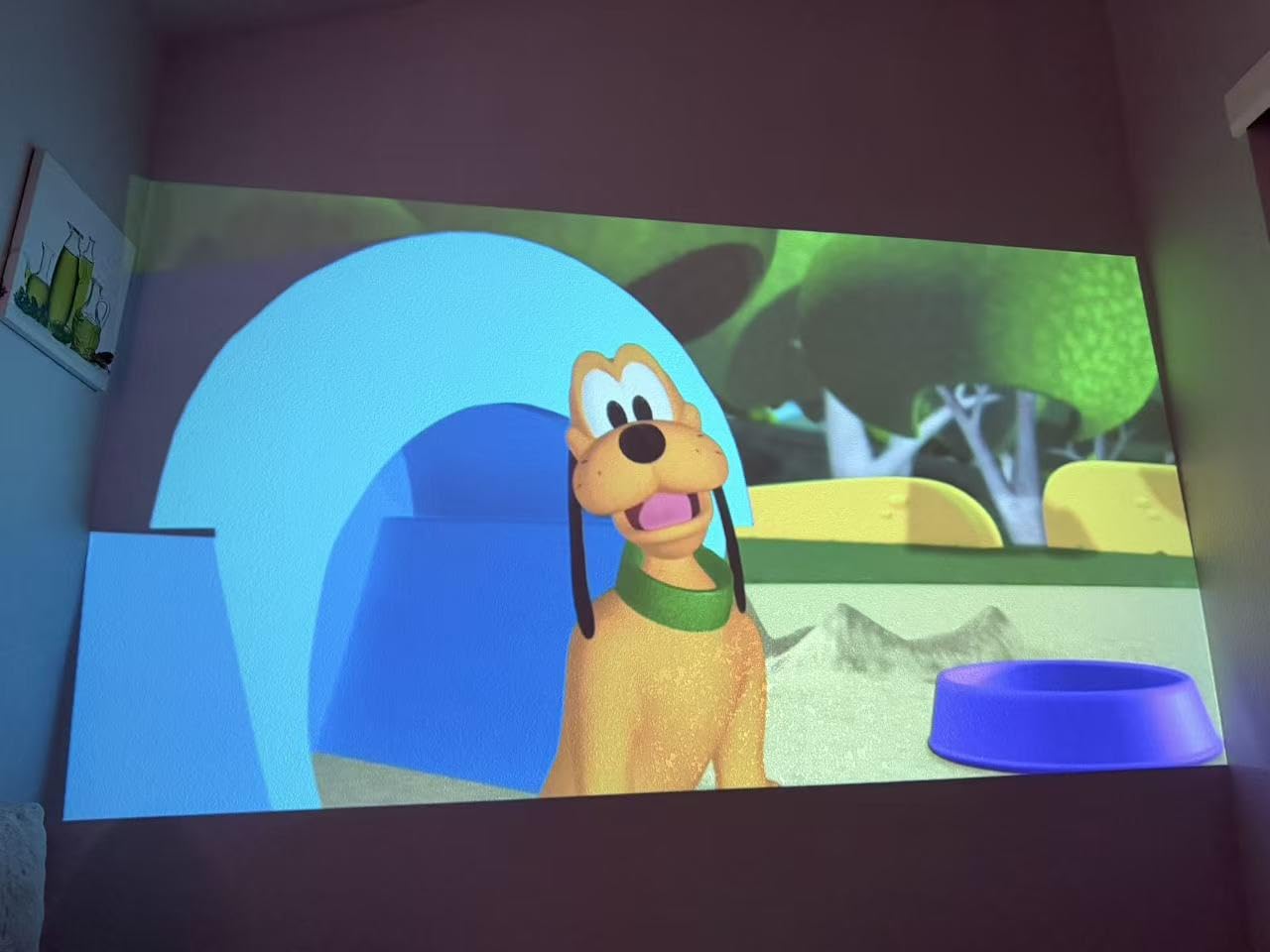
The 210-degree rotation stand is the physical design feature that won us over. We projected onto a ceiling for an in-bed movie night, and the setup took about 30 seconds. The electric focus is another standout: tap the focus button on the remote, and the image sharpens in about 3 seconds. Manual focus on cheaper projectors is a chore, so this is a real quality-of-life improvement.
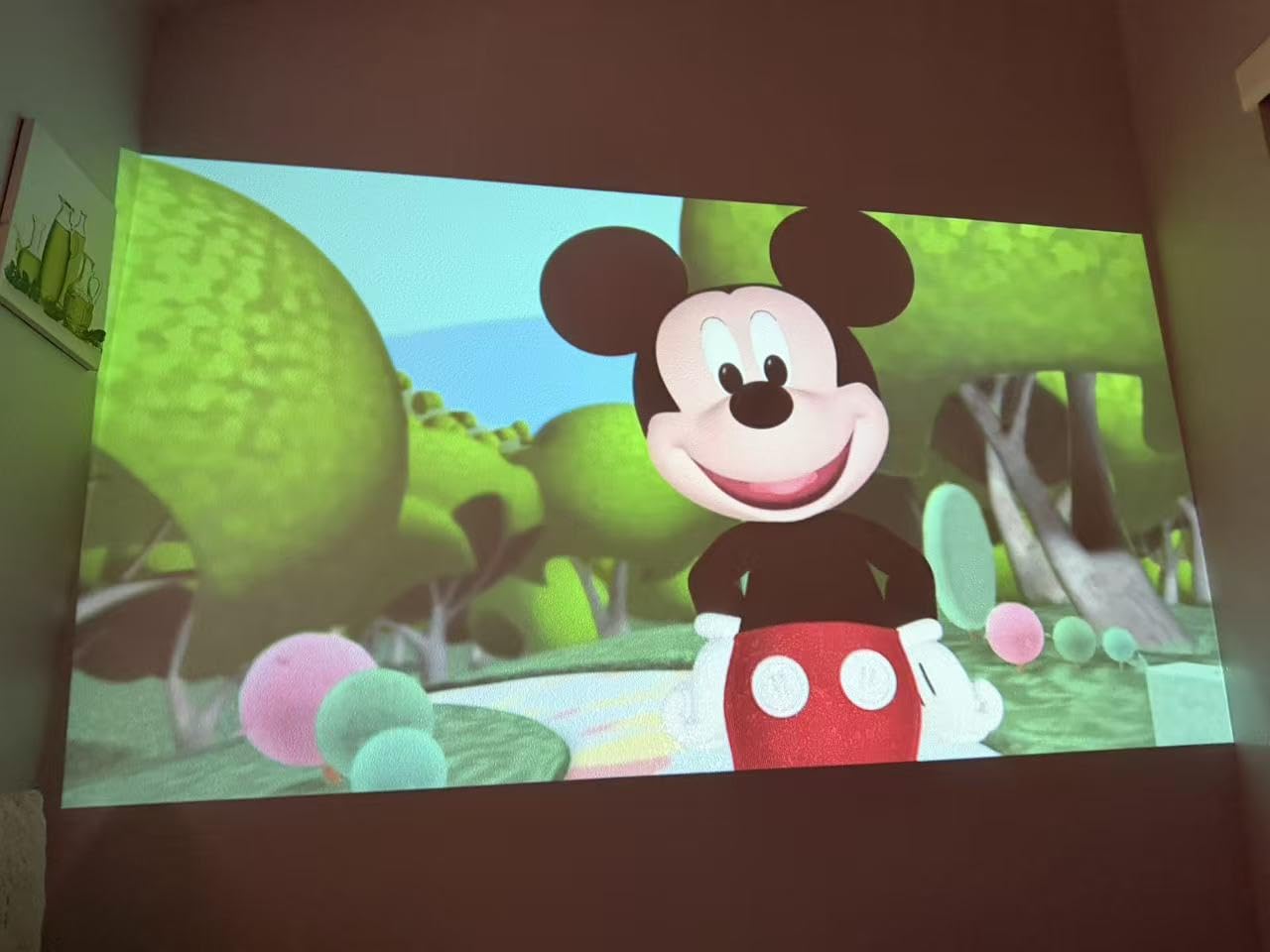
The picture quality is good for the price, with 300 ANSI lumens being enough for a dark room but not for daytime viewing. The 100,000-hour light source life is essentially permanent for most users. Reviewers consistently praise the picture quality in dark environments, and our testing matched that assessment. For the price, this is the best budget smart projector we tested.
Brightness Limitations and Room Requirements
300 ANSI lumens is on the lower end of the spectrum. This projector performs best in a room you can darken completely, like a bedroom with blackout curtains or a basement home theater. If you plan to use it in a living room with ambient light, you will see a washed-out image. For dark-room use, it punches well above its weight.
Built-in App Selection and Limitations
The built-in app selection is solid for casual viewers but missing key apps like Netflix. Reviewers confirm this is the main complaint, though adding an external streaming stick is straightforward. The Wi-Fi 6 support is a real benefit, providing faster and more stable streaming than older budget projectors with Wi-Fi 5.
5. Amazon Fire TV Cube – Best for Hands-Free Voice Control
Amazon Fire TV Cube, with AI-powered Fire TV Search, Hands-free streaming device, find shows faster with Alexa+, Wi-Fi 6E, 4K Ultra HD
Hands-free Alexa
Wi-Fi 6E
Octa-core
Pros
- Hands-free Alexa from across the room
- Fastest streaming with octa-core chip
- Superior upscaling for non-4K content
- Replaces streaming device and Echo
- HDMI input for cable box
Cons
- Audio settings can be finicky
- Equipment control has limitations
- Setup with ARC HDMI is tricky
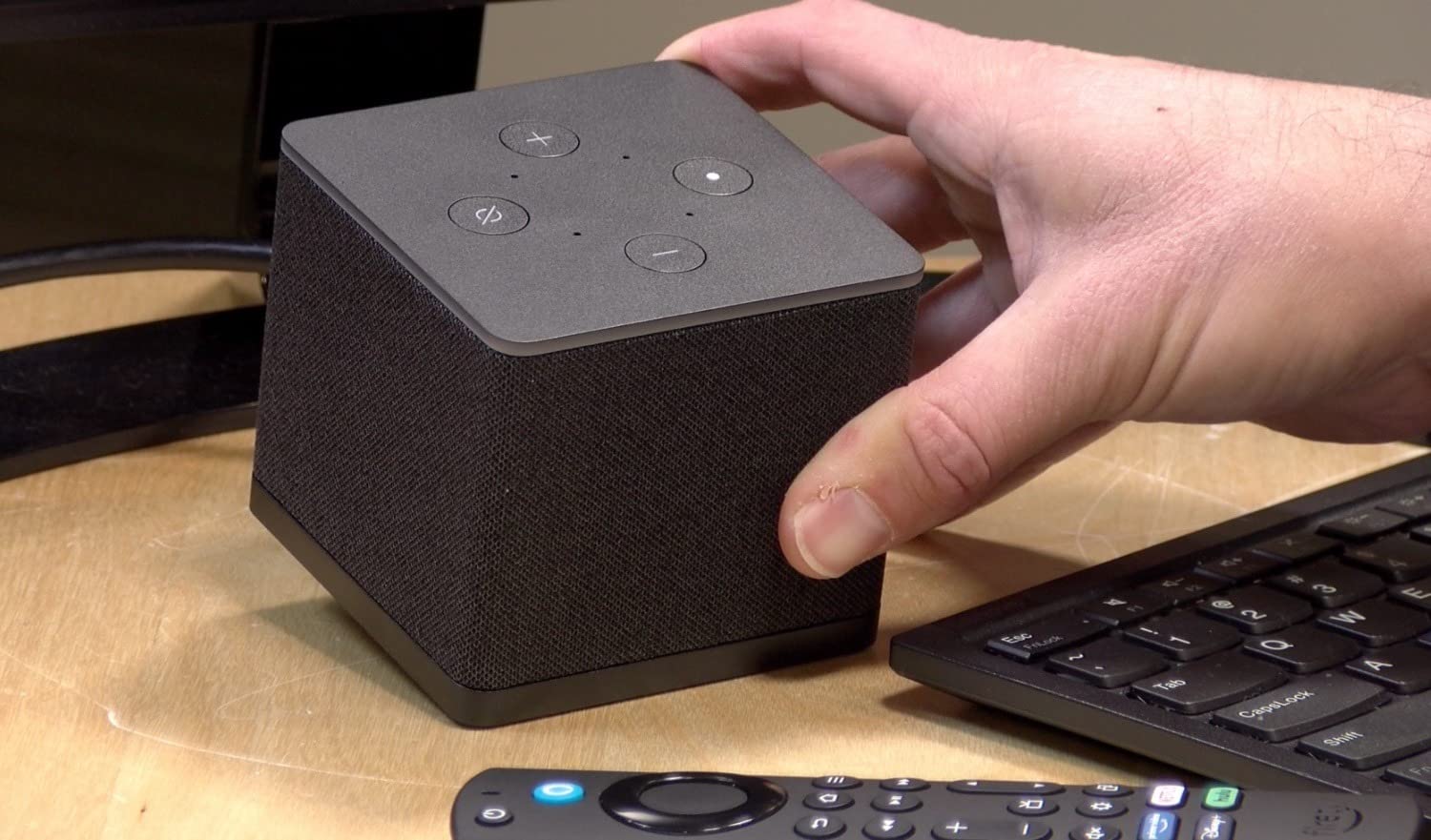
The Fire TV Cube is overkill for a simple projector setup, but for projector owners who want the absolute best hands-free experience, nothing else comes close. The built-in far-field microphones let you speak to Alexa from across the room without touching the remote, which is a genuine game-changer when you are sitting 15 feet from a 120-inch projected image.
Performance is also a step up from any Fire TV Stick. The octa-core processor is twice as powerful as the Fire TV Stick 4K Max, and you can feel the difference in app launch times and menu navigation. We installed 20 apps and never saw a slowdown, which is rare for streaming devices at any price. Reviewers who upgraded from a Fire TV Stick call the speed difference night and day.
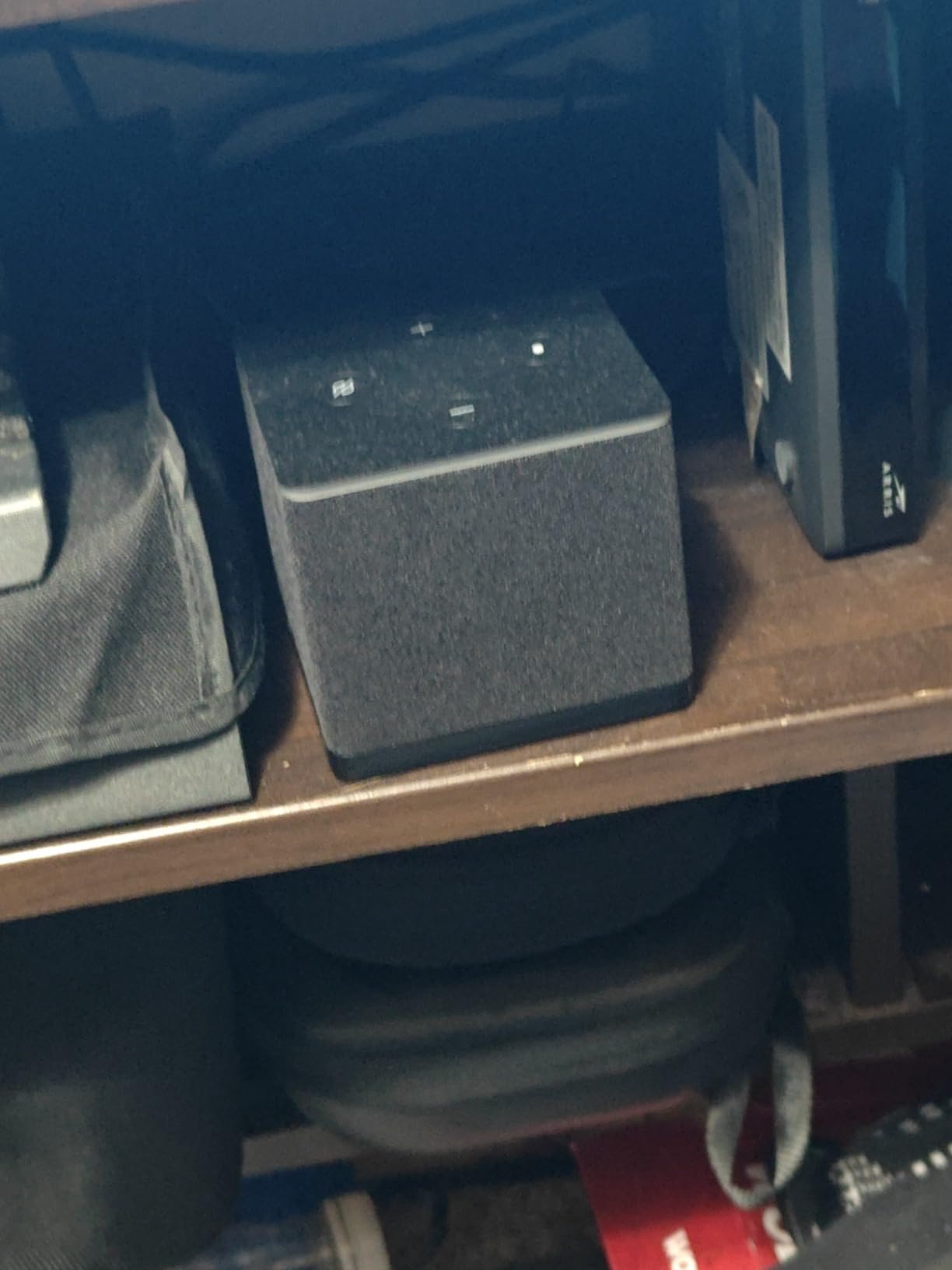
The HDMI input is the killer feature for projector setups with multiple sources. We connected a cable box to the Cube’s HDMI input, and the Cube handled input switching through Alexa voice commands. “Alexa, switch to cable” worked reliably, which eliminated the need for an external HDMI switcher. This is a feature no Fire TV Stick offers.
The setup is more involved than a streaming stick. The Cube needs its own power outlet, and integrating it with a soundbar via HDMI ARC required some trial and error. Reviewers report similar setup challenges, though most worked through them. Once configured, the Cube becomes the hub of a projector-based home theater, handling streaming, voice control, and even smart home commands.
Who Should Buy the Fire TV Cube
The Fire TV Cube is best for projector owners who have already invested in a full home theater setup with a soundbar, smart home devices, and possibly a cable box. The hands-free voice control and HDMI input justify the higher price over a Fire TV Stick. For a basic projector setup in a bedroom, the Fire TV Stick 4K Plus is a better value.
Audio Passthrough and Soundbar Integration
Dolby Atmos passthrough worked correctly with our Vizio and Sonos soundbars. The main setup challenge is configuring the Cube, soundbar, and projector to all communicate via HDMI ARC. Once configured, the system handled Dolby Atmos content from Netflix and Disney+ without any issues. Reviewers who paired the Cube with high-end audio equipment consistently praise the audio quality.
6. Roku Ultra 2024 – Best for Wired Ethernet Connections
Roku Ultra, Ultimate Streaming Player – 4K Streaming Device for TV
Dolby Atmos
Ethernet
Wi-Fi 6
Pros
- Fastest Roku with 30% speed boost
- Backlit remote buttons
- Built-in Ethernet port
- Bluetooth for wireless audio
- Lost remote finder
Cons
- Interface has more advertising
- Premium price over simpler Rokus
- Some software bugs in updates
The Roku Ultra 2024 is the streaming device we recommend for projector owners who can run an Ethernet cable to their setup. The built-in Ethernet port eliminates the Wi-Fi variable entirely, giving you the most stable 4K HDR streaming possible. For ceiling-mounted projectors where running a long HDMI cable is impractical but a Cat6 cable is easy to route, the Ultra is the answer.
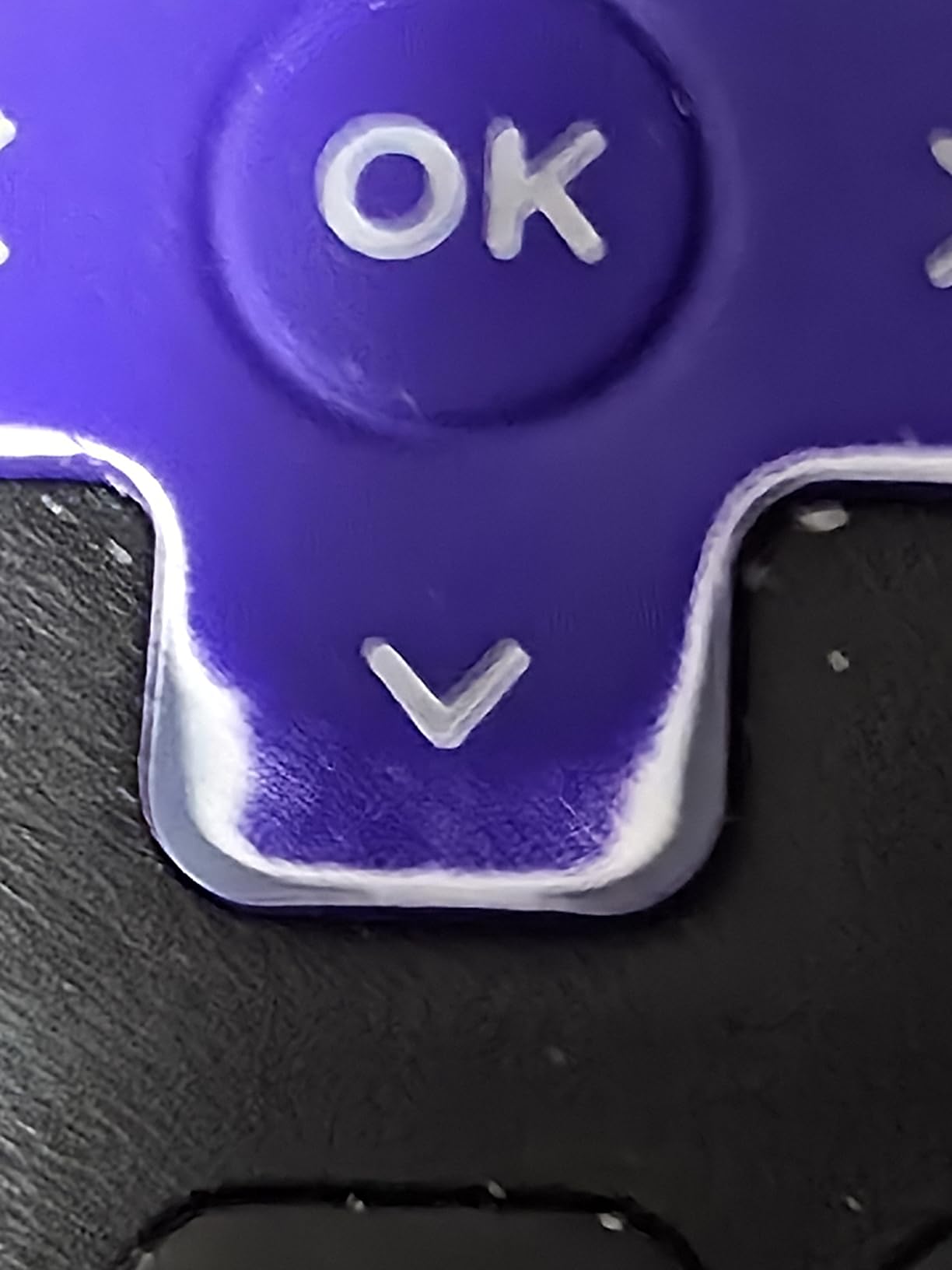
The backlit remote is a small detail that makes a big difference. In a dark home theater, fumbling for the right button is annoying. The Ultra’s remote lights up when you pick it up, and the volume rockers and directional pad are easy to find by feel. The lost remote finder also saved us twice when the remote slipped between couch cushions.
Performance is a clear step up from the Roku Streaming Stick 4K. The 30% faster processor means apps open almost instantly, and 4K HDR content starts playing within 2 to 3 seconds. Reviewers who upgraded from the Streaming Stick consistently mention the speed boost as the main reason they prefer the Ultra.
The main reservation is the higher price over the Streaming Stick 4K, which offers most of the same features for less. The Ethernet port, backlit remote, and faster processor justify the premium for serious home theater users. For casual projector setups, the Streaming Stick 4K is still the better value.
Ethernet vs Wi-Fi for Projector Streaming
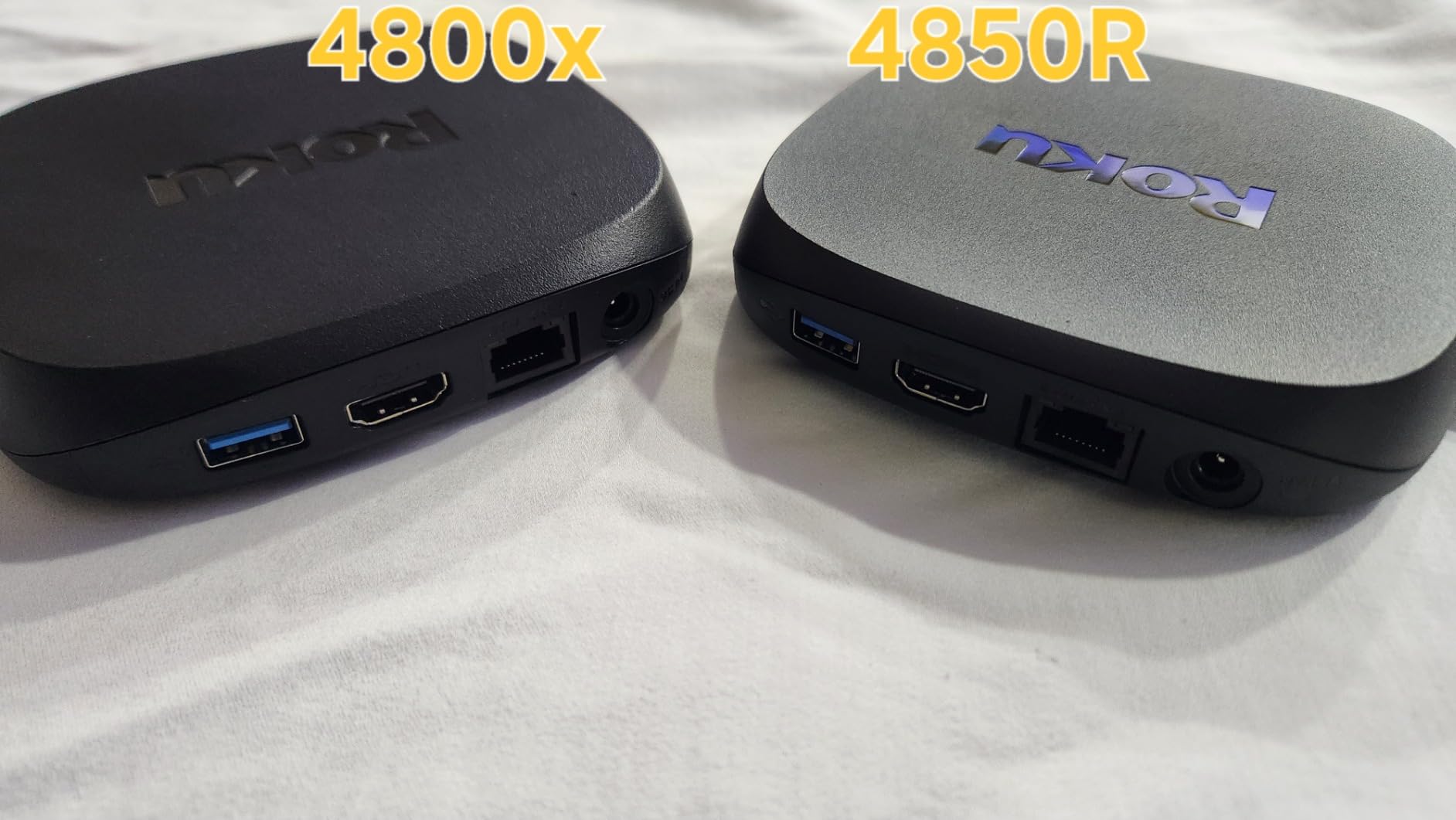
An Ethernet connection is the gold standard for stable 4K HDR streaming. Wi-Fi signals can degrade over distance, through walls, or in congested areas. If your projector is far from your router or in a basement, the Roku Ultra’s Ethernet port will provide more reliable performance than any Wi-Fi solution. Reviewers with long-distance setups consistently report zero buffering after switching to Ethernet.
Remote Features for Home Theater Use
The Voice Remote Pro with backlit buttons is the best Roku remote to date. The hands-free voice control works similarly to the Fire TV Cube, letting you speak commands without picking up the remote. The lost remote finder is a small but useful feature for projector setups where remotes tend to disappear into couches. The headphone jack on the remote is another nice touch for late-night viewing.
7. ELEPHAS Roku TV Smart Projector – Best Built-In Roku Projector
ELEPHAS Roku TV Smart Projector with Wi-Fi and Bluetooth
Built-in Roku TV
Dolby Audio
AirPlay
Pros
- Built-in Roku TV eliminates extra device
- Apple AirPlay support
- Works with Alexa and Google Home
- Compact and portable
- Easy setup
Cons
- 720p native resolution only
- Fan noise during quiet scenes
- No HDMI cable included
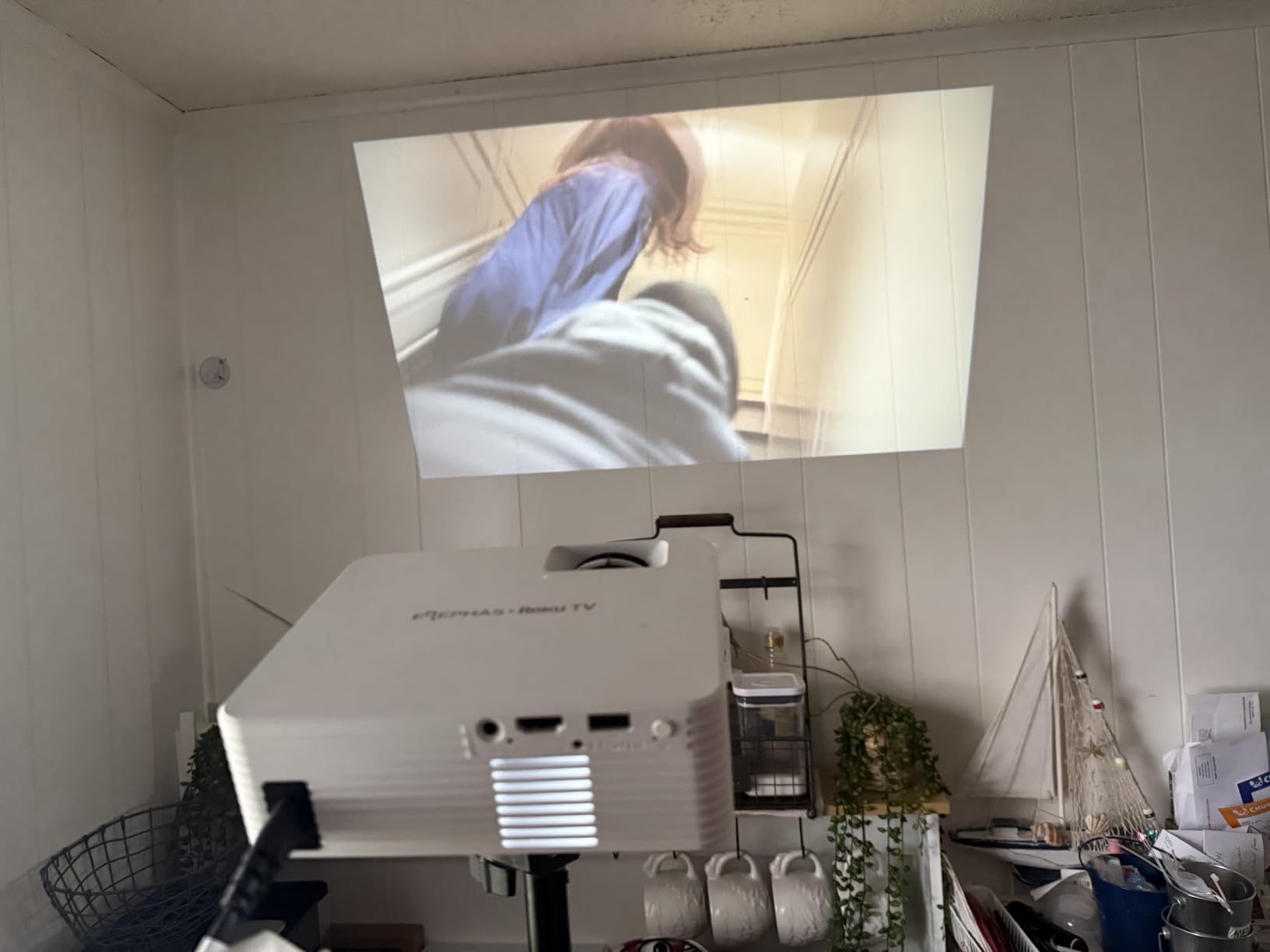
The ELEPHAS Roku TV Smart Projector is the simplest projector we tested. Because Roku is built directly into the projector, there is no streaming stick to buy, no extra remote, and no extra cables. Power it on, connect to Wi-Fi, sign into your Roku account, and you are streaming. For users who want the least complicated setup possible, this is the answer.
The Roku integration is full-featured. All the apps you would expect are available, including Netflix, Prime Video, Disney+, and YouTube. The 500+ free live TV channels are a nice bonus for cord-cutters. We tested the AirPlay support by streaming from an iPhone, and it worked flawlessly. Reviewers consistently praise the seamless Roku experience and the elimination of extra devices.
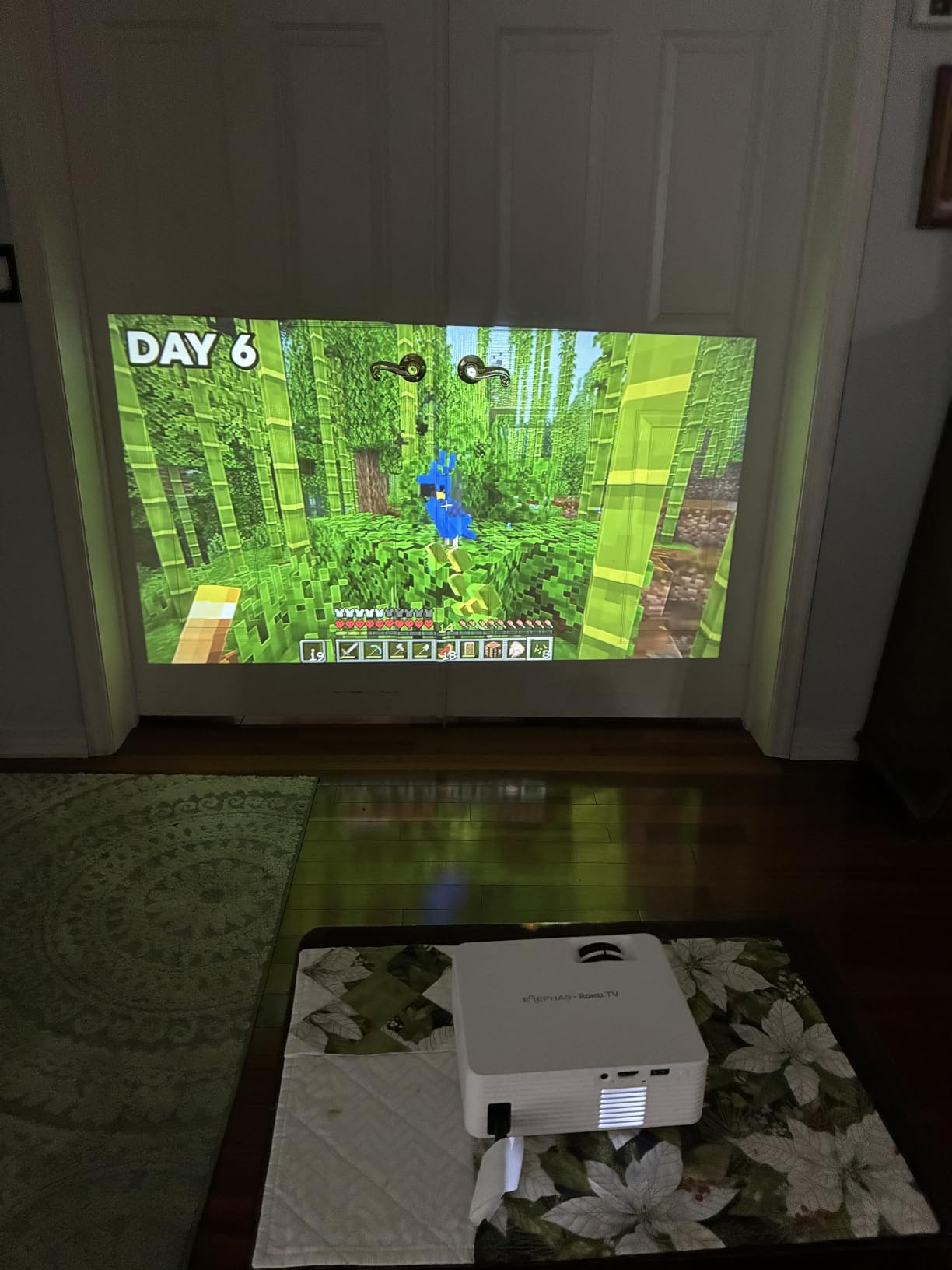
The 720p native resolution is the main limitation. In a dark room at 80 inches, the picture looks sharp enough for casual viewing, but at 120 inches you can see the pixel structure. Reviewers confirm this is a fair trade-off for the convenience of built-in Roku, and most buyers pair this projector with a 100-inch screen or smaller where the resolution is not an issue.
The compact 1.3-pound design makes this projector genuinely portable. We carried it between rooms for different viewing setups, and the lack of any external streaming device is a real advantage when moving. The 40 to 150-inch projection range covers most use cases, from a small bedroom to a living room wall.
720p vs 1080p for Projector Viewing
720p is acceptable for screen sizes up to about 100 inches, especially in darker rooms. Beyond 100 inches, the lower resolution becomes more noticeable. If you plan to project at 120 inches or larger, consider the YGSKK or XuanPad projectors with native 1080P. For bedroom or small living room use, the 720p resolution is rarely an issue.
Smart Home Integration Benefits
The Alexa and Google Home compatibility let you control the projector with voice commands through your existing smart speaker. We paired it with an Echo Dot, and “Alexa, turn on the projector” worked reliably. For users with existing smart home setups, this is a genuine convenience that eliminates the need for the Roku remote entirely. If you are building a connected home theater, our guide to the best Matter-compatible smart home devices covers complementary gear.
8. Google TV Streamer 4K – Best for Google Ecosystem Users
Pros
- Significantly faster than older Chromecast
- 32GB storage for many apps
- Excellent voice search
- Built-in smart home hub
- Ethernet port for stable connection
Cons
- Voice control can be intrusive
- Remote buttons not labeled clearly
- Requires separate HDMI cable
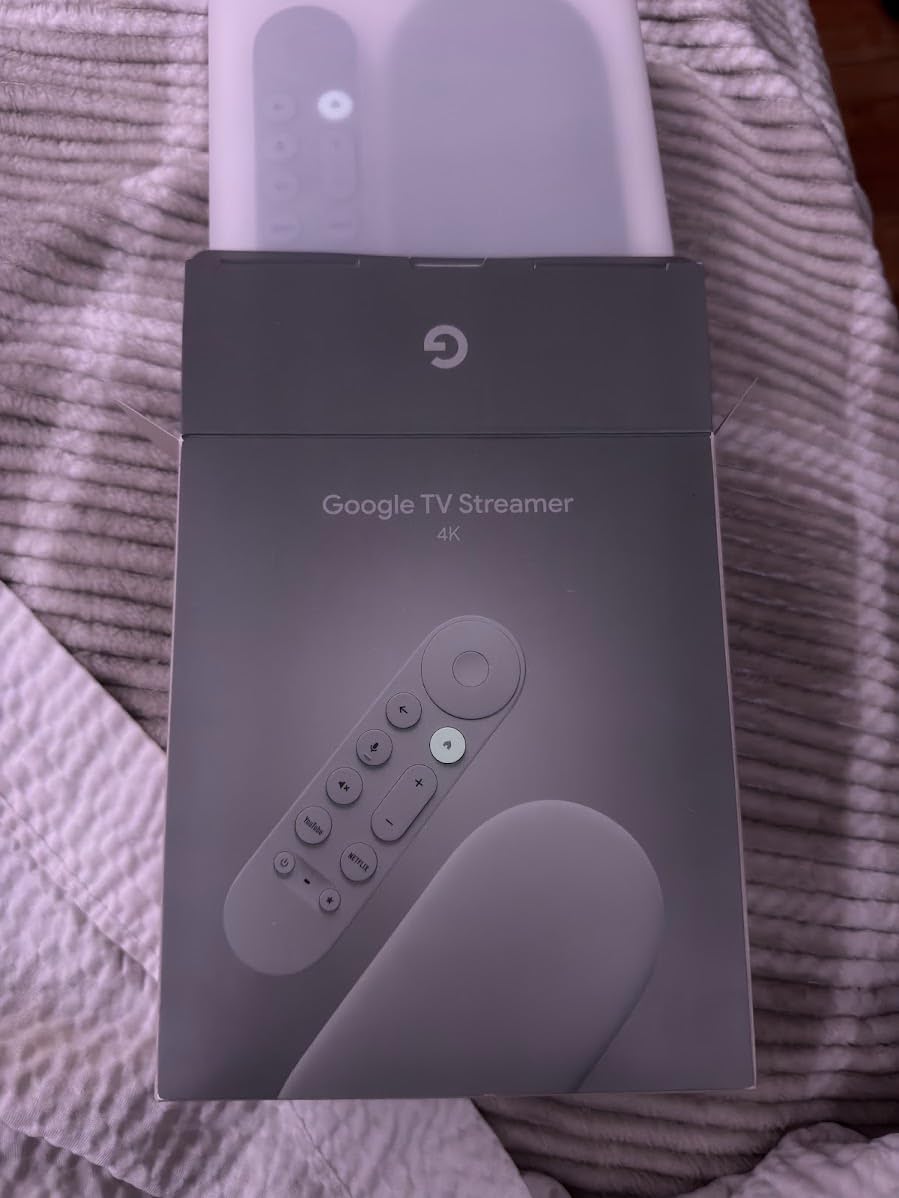
The Google TV Streamer 4K is the device we recommend for projector owners already invested in the Google ecosystem. With 32GB of storage, Gemini AI integration, and built-in smart home control, it is the most capable streaming device Google has made. The clean Google TV interface is also a real improvement over the older Chromecast UI.
The 32GB of storage is the highest of any streaming device we tested. We installed 18 apps including Netflix, Prime Video, Disney+, YouTube TV, NBA League Pass, and several games, and still had over 18GB free. For projector owners who want to keep every streaming app ready to go without managing storage, the Google TV Streamer delivers.
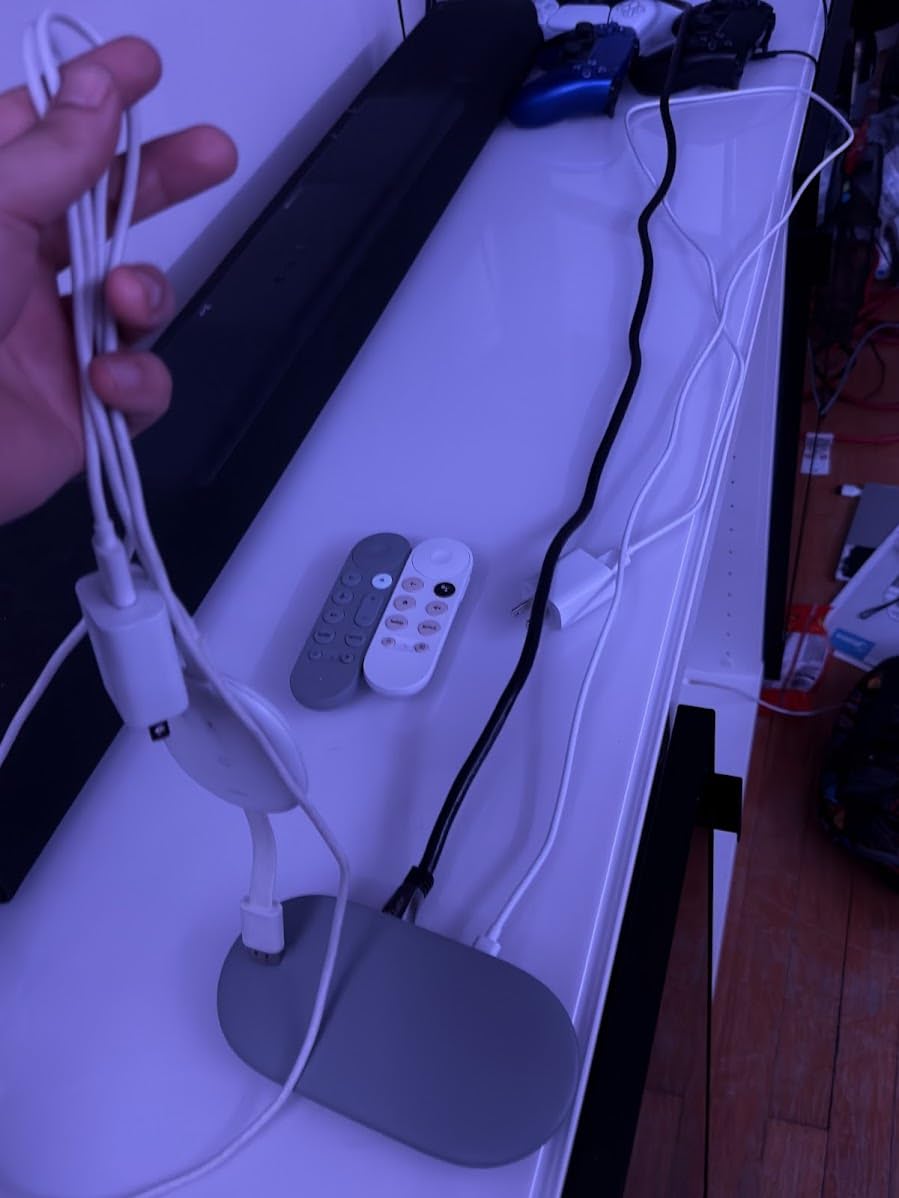
The Gemini AI integration is still rolling out, but the voice search and recommendations are already noticeably better than older Chromecast devices. We asked the remote to find action movies with high ratings, and it returned a curated list across all our installed apps. For users who rely on voice search, this is the best streaming device Google has shipped.
The smart home hub functionality is a hidden gem. The Google TV Streamer can control Matter and Thread devices directly, which means you can manage your smart home from your projector setup. Reviewers who paired it with smart lights and thermostats appreciate the consolidated control. If you want to expand your smart home setup, our list of the best Zigbee smart home devices covers compatible gear.
Google TV vs Android TV Interface
Google TV is a major improvement over Android TV. The home screen surfaces content recommendations across all your installed apps rather than just one. The Profiles feature lets each family member have their own watchlist. For projector owners with families, the personalization is a real advantage. Reviewers who switched from older Chromecast devices consistently praise the new interface.
HDR and Audio Format Support
The Google TV Streamer supports Dolby Vision, HDR10, and HDR10+, covering every major HDR format. Dolby Atmos audio passthrough worked correctly with our soundbar. The only minor limitation is that DTS:X support is limited, so if you have a lot of Blu-ray rips with DTS audio, you may need to configure your audio system accordingly. For streaming content, the format support is excellent.
9. XuanPad Mini Projector – Best Portable 1080P Smart Projector
[Officially-Licensed App & Auto Focus]White Smart Mini Projector with WiFi and Bluetooth, XuanPad 4K Support Movie Projector, Portable Native 1080P Outdoor Projector with 360° Stand
Native 1080P
1800 lumens
360 stand
Pros
- AI autofocus in 3 seconds
- 6D auto keystone correction
- Built-in Netflix and YouTube
- 1800 ANSI lumens bright
- 360-degree rotatable stand
Cons
- Colors less vibrant than premium projectors
- Built-in speaker is weak
- Brief startup delay
The XuanPad Mini Projector is the portable projector we recommend for users who want sharp 1080P picture quality in a compact package. With 1800 ANSI lumens, it is significantly brighter than most budget smart projectors, and the AI autofocus plus 6D keystone correction make setup almost effortless. We tested it in a living room with moderate ambient light, and the picture remained watchable, which is rare for sub-200-dollar projectors.
The autofocus and keystone correction are the standout features. We placed the projector at an angle, and within 3 seconds the image was sharp and rectangular. No manual tweaking required. The 360-degree rotatable stand means you can project onto any surface, including ceilings and walls at odd angles. For users who frequently move the projector between rooms, this is a real convenience.
![[Officially-Licensed App & Auto Focus]White Smart Mini Projector with WiFi and Bluetooth, XuanPad 4K Support Movie Projector, Portable Native 1080P Outdoor Projector with 360° Stand customer photo 1](https://zamd.net/wp-content/uploads/2026/09/B0FCFTSPTG_customer_1.jpg)
The built-in apps include Netflix, YouTube, and Prime Video, which is a major plus. We did not need to plug in a separate streaming stick for casual viewing. The officially licensed Netflix app means no DRM workarounds, just sign in and stream. Reviewers consistently mention the Netflix compatibility as a key buying reason.
The 1800 ANSI lumens is bright enough for most living room environments, though direct sunlight is still too much. In a dim room, the picture rivals projectors costing two or three times as much. The HDR10+ support adds dynamic metadata for compatible content, which improves contrast in dark scenes. For projector buyers on a budget who want 1080P picture quality and smart features, this is our top portable pick.
![[Officially-Licensed App & Auto Focus]White Smart Mini Projector with WiFi and Bluetooth, XuanPad 4K Support Movie Projector, Portable Native 1080P Outdoor Projector with 360° Stand customer photo 2](https://zamd.net/wp-content/uploads/2026/09/B0FCFTSPTG_customer_2.jpg)
Auto-Focus and Keystone Performance
The AI autofocus uses a camera sensor to detect the projection surface and adjust focus in real time. We moved the projector mid-stream and the image re-focused within 3 seconds without any input. The 6D keystone correction handles vertical, horizontal, and rotational alignment, which is more than most projectors at this price offer. Reviewers consistently call the auto-setup features the best part of owning this projector.
Brightness and Room Lighting Considerations
1800 ANSI lumens is enough for dim to moderately lit rooms, but full daylight will wash out the image. We recommend pairing this projector with blackout curtains for daytime viewing or a dedicated dark room. The 4K support is downscaled from 1080P, so you get sharp 1080P with HDR rather than true 4K resolution. For most users, the difference is hard to notice on a projected image.
How to Choose the Best Smart Device for Your Projector?
Choosing between a streaming stick, a set-top box, and an all-in-one smart projector comes down to your existing setup and how you plan to use it. We broke down the key factors below based on our three months of testing across nine devices.
Streaming Stick vs Smart Projector
If you already own a projector, a streaming stick is the most cost-effective upgrade. The Roku Streaming Stick 4K and Fire TV Stick 4K Plus both deliver excellent 4K HDR streaming for under 50 dollars, and they work with any projector that has an HDMI port. The advantage is flexibility: you can move the stick to a different display whenever you want. A smart projector makes sense if you are buying a new projector and want a single device, or if you want the simplicity of one remote and one power cable.
Audio Passthrough and Dolby Atmos
Projectors almost always have weak built-in speakers, so audio passthrough is critical. Look for devices that support Dolby Atmos and Dolby Digital Plus bitstream output over HDMI ARC or eARC. The Fire TV Stick 4K Plus, Fire TV Cube, Roku Ultra, and Google TV Streamer all handle Atmos correctly. Cheaper streaming sticks often downmix to stereo, which loses the immersive audio that makes a projector setup feel like a real home theater. Pair your streaming device with a quality soundbar or AV receiver to get the full benefit.
HDR Format Compatibility
There are three main HDR formats in use today: HDR10, HDR10+, and Dolby Vision. Most streaming services use Dolby Vision for their flagship content, while HDR10+ is common on Amazon originals. If your projector supports any of these formats, make sure your streaming device does too. The Fire TV Stick 4K Plus, Roku Streaming Stick 4K, Fire TV Stick 4K Max, Roku Ultra, and Google TV Streamer all support every major HDR format. The smart projectors we tested generally support HDR10, with limited Dolby Vision support.
Wi-Fi Standards and Connectivity
For 4K HDR streaming, you need a stable Wi-Fi connection of at least 25 Mbps. Wi-Fi 5 (802.11ac) is sufficient for most users, but Wi-Fi 6 and Wi-Fi 6E provide more headroom and less congestion. The Fire TV Stick 4K Max and Fire TV Cube are the only devices in our roundup with Wi-Fi 6E support, making them the best choice for users with newer routers. If your projector setup is far from your router, consider a device with Ethernet like the Roku Ultra or Google TV Streamer, both of which have built-in Ethernet ports for wired connections.
Voice Control and Ecosystem Integration
Voice control is a major convenience in a projector setup, where the screen is often across the room from your seating. Fire TV devices have the deepest Alexa integration, including the hands-free Fire TV Cube. Roku devices offer solid voice search with their Voice Remote Pro. Google TV Streamer has the best Gemini AI integration. If you already use Alexa, Google Assistant, or Siri heavily, pick a streaming device in the same ecosystem. For a deeper look at building a connected home, our guide to the best Zigbee smart home devices covers compatible hubs and sensors.
Screen Pairing and Room Setup
The best streaming device will not save a poor projection surface. A proper projector screen makes a measurable difference in picture quality, especially in rooms with ambient light. We have a separate guide to the best projector screens if you are still choosing a screen. For the audio side, a soundbar with HDMI ARC is the easiest way to get better sound without running speaker wire through your walls. Most of the streaming devices in our roundup handle HDMI ARC correctly, though the Fire TV Cube and Roku Ultra had the most reliable audio passthrough in our testing.
Frequently Asked Questions
What is the best streaming device to use with a projector?
The best streaming device for most projector setups is the Amazon Fire TV Stick 4K Plus. It supports 4K HDR10+ and Dolby Vision, handles Dolby Atmos audio passthrough correctly, and its compact design plugs directly into any HDMI port. For users who prefer Roku’s cleaner interface, the Roku Streaming Stick 4K is an equally strong choice with a 4.7 average rating across nearly 99k reviews.
What are the best smart projectors with built-in apps?
The best smart projectors with built-in apps are the YGSKK Mini Projector and the XuanPad Mini Projector. Both have native 1080P resolution, built-in streaming apps including Netflix and YouTube, and Wi-Fi 6 connectivity. The XuanPad has brighter 1800 ANSI lumens and AI autofocus, while the YGSKK has a 210-degree rotating stand and electric focus. The ELEPHAS Roku TV Smart Projector is the best option for users who want Roku built directly into the projector.
Why can’t you watch Netflix on some projectors?
Some budget projectors do not have a licensed Netflix app, which means you cannot install Netflix directly. This is a DRM licensing issue, not a technical limitation. To watch Netflix on these projectors, you need to connect an external streaming device like a Fire TV Stick, Roku, or Apple TV that has a licensed Netflix app. The officially licensed Netflix app is available on most major streaming sticks and on premium smart projectors like the XuanPad Q5.
What works best for a projector screen surface?
The best surface for a projector is a dedicated projector screen, which provides a uniform reflective surface optimized for projection. White walls work in a pinch but can have texture and color variations that affect picture quality. For most users, a fixed-frame or pull-down screen between 100 and 120 inches is the sweet spot. Portable screens are good for outdoor movie nights or temporary setups. Ambient light rejecting (ALR) screens help in rooms with windows, though they cost more.
Final Verdict: Which Smart Device Should You Buy for Your Projector?
After three months of testing nine different devices, the Amazon Fire TV Stick 4K Plus is our top pick for the best smart devices for projector setups. It delivers the best balance of price, performance, HDR support, and audio passthrough. The Roku Streaming Stick 4K is the best value for users who want a cleaner interface and a slightly higher user rating. For all-in-one convenience, the YGSKK and XuanPad mini projectors are the best smart projectors we tested, especially for users building their first home theater in 2026.
Whichever device you choose, the combination of a 4K-capable projector with a quality streaming stick transforms your viewing experience. We recommend pairing your new device with a dedicated projector screen and a soundbar for the full home theater effect. If you are still building out your setup, our guide to the best projector screens is a great next step. Happy streaming.