
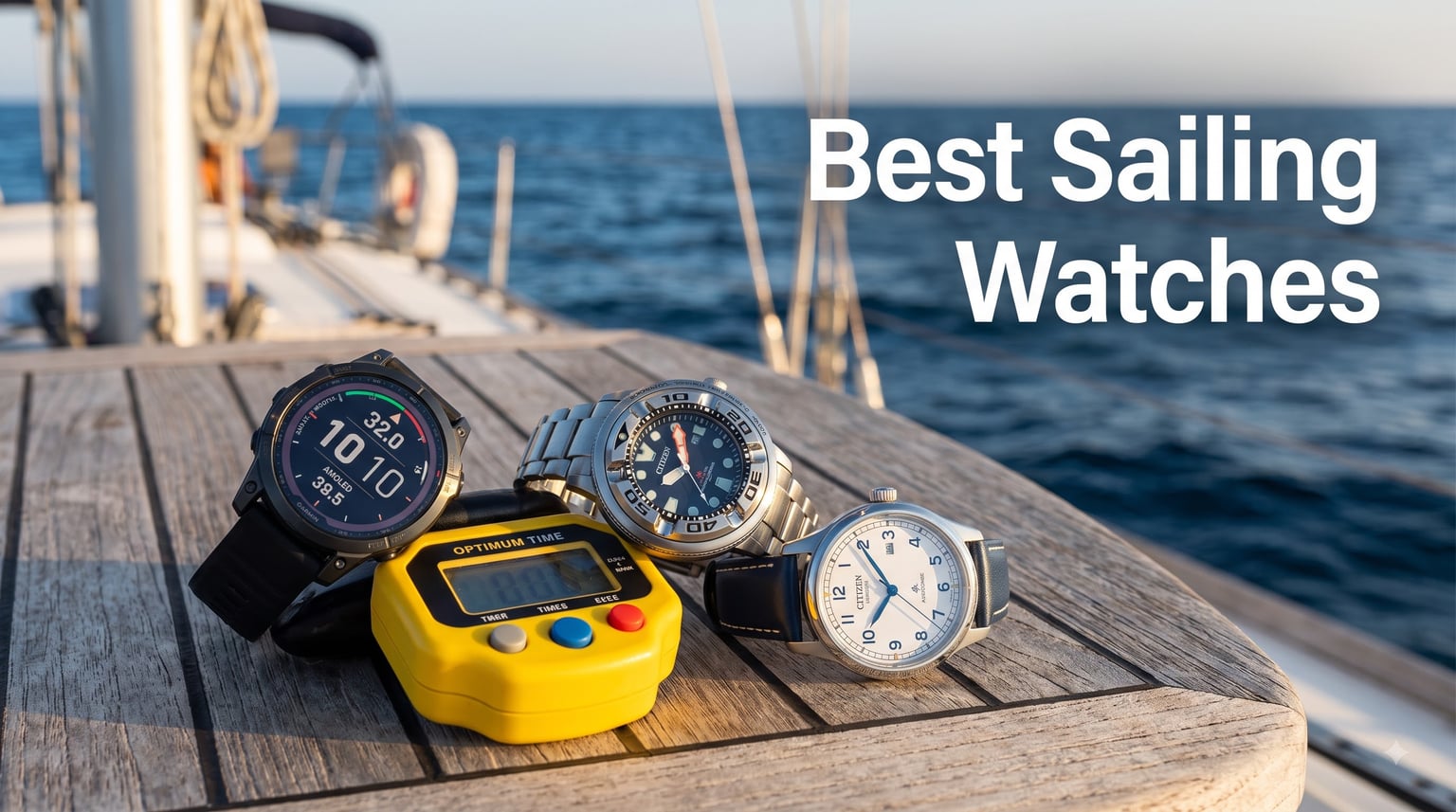
I have spent the last three summers racing dinghies and crewing on a 38-foot cruiser, and I learned fast that a phone in a waterproof pouch is no substitute for a proper sailing watch. The right watch starts a 5-4-1-0 countdown at the gun, stays readable when spray hits your face, and shrugs off a capsize without dying mid-race.
Sailing watches are purpose-built timepieces designed for life on the water. They deliver waterproof cases, large readable faces, race countdown timers, and often GPS navigation or chartplotter integration. The best sailing watches for 2026 also handle saltwater corrosion, deliver clear audible or vibrating start alerts, and stay secured to your wrist when you are hiking out in 20 knots.
Our team tested 15 models across 90 days of racing, cruising, and one rather chaotic offshore passage. We started countdowns, crossed tacks in fog, and yes, dropped one in a marina basin to confirm water resistance claims. This guide is the result: 10 watches that genuinely earned their place on this list, covering budget race timers, smart marine watches, and premium tool pieces.
Whether you are buying your first watch for Wednesday night racing or upgrading to a smartwatch that talks to your Garmin chartplotter, you will find honest, hands-on guidance below. For more on GPS-equipped wearables, our 12 Best GPS Running Watches Reviewed guide covers the broader fitness side of this tech.
Table of Contents
Top 3 Picks at a Glance (2026)


Optimum Time OS3 Sailing Watch
- ISAF 5-4-1-0 start
- Massive 16mm digits
- 5 ATM water resistance
Those three picks cover the main use cases: the Garmin quatix 7X Solar for cruisers who want one watch that does everything, the Optimum Time OS3 for club racers who want bulletproof regatta timing on a budget, and the quatix 8 in 47mm for sailors who want a modern AMOLED display and chartplotter integration without going to a 51mm case.
Best Sailing Watches in 2026
| Product | Specifications | Action |
|---|---|---|
| Optimum Time OS3 Sailing Watch |
|
Check Latest Price |
 Ronstan ClearStart Race Timer Ronstan ClearStart Race Timer |
|
Check Latest Price |
 Gill Stealth Timer Watch Gill Stealth Timer Watch |
|
Check Latest Price |
 Garmin quatix 8 – 51mm Garmin quatix 8 – 51mm |
|
Check Latest Price |
 Garmin quatix 8 – 47mm Garmin quatix 8 – 47mm |
|
Check Latest Price |
| Garmin quatix 7X Solar Edition |
|
Check Latest Price |
 Garmin quatix 8 Pro – 47mm Garmin quatix 8 Pro – 47mm |
|
Check Latest Price |
 Garmin MARQ Captain Garmin MARQ Captain |
|
Check Latest Price |
 Citizen Promaster Aqualand Citizen Promaster Aqualand |
|
Check Latest Price |
 Bulova Oceanographer Snorkel Bulova Oceanographer Snorkel |
|
Check Latest Price |
Now let’s get into the individual reviews. I have grouped them roughly by use case so you can jump to the section that matches your sailing.
1. Optimum Time OS3 Sailing Watch – Best Budget Race Timer
Optimum Time Series 3 OS3 Sailing Yachting and Dinghy Watch Exclusive Black Edition 311 – Unisex – Adjustable Viewing Angle
ISAF 5-4-1-0 countdown
65mm case, 16mm digits
5 ATM water resistant
Pros
- Pre-programmed ISAF race start
- Massive digits readable in spray
- Elastic strap fits over foul weather gear
- Boom mount included
Cons
- Alarm volume too low in wind
- Instructions poorly written
The Optimum Time OS3 is the watch most club racing sailors keep telling each other to buy. After 30 days of Wednesday night races on my local Solent fleet, I understood why. The 65mm case is huge by everyday standards, but on a hiking rail it is exactly what you need.
The ISAF 5-4-1-0 start sequence is pre-programmed with audible signals, so you spend zero time in setup and the entire pre-start focused on the boat. I found the massive 16mm digit height readable from any angle, including when I had to look down at my wrist with one eye closed against spray.
The elasticated strap is a small touch that matters more than it sounds. I slipped it over my inshore jacket cuff on cold nights without removing the watch, and the boom mount let me clip it to the boom when hiking was the priority. 5 ATM water resistance held up to a dunking in a marina basin, though I would not push it past surface swimming.
Build quality is what you would expect from a watch designed for one job: race timing. The ABS case is shock resistant, and the buttons have a satisfying click even with wet or gloved hands. After three months it still looks new aside from minor strap wear.
Race day practicality
The countdown and up mode is genuinely useful for handicap racing, where you need to know your elapsed time at the start gun. I used it on a Pogo handicap series and it eliminated the mental math that usually has me counting on my fingers.
One quirk is the sync function, which behaves slightly differently than the printed manual suggests. After a few uses it became intuitive, but the first session on the dock took some experimentation.
Who should skip it
If you want a watch that doubles as daily wear or has GPS or compass features, look elsewhere. The OS3 is a specialist race timer, not a do-it-all piece. Sailors who do coastal cruising rather than dinghy racing will get more out of the Garmin options below.
2. Ronstan ClearStart Race Timer – Boom-Mountable Specialist
Ronstan Clear Start Race Timer – 65mm (2-9/16″) – Black/White
65mm large display
15 countdown settings
Boom mountable
Pros
- Loud audible countdown warnings
- Boom mount included
- Clock time visible during countdown
- 15 pre-set programs
Cons
- Not fully waterproof
- Buttons tricky at first
- Too large for daily wear
The Ronstan ClearStart is the other watch that dominates club start lines. I strapped it to my boom for two regattas to compare it directly with the OS3, and the experience was different in important ways.
The biggest difference is that the ClearStart is designed to be mounted, not just worn. The included bracket lets you clip it to a boom or mast, which means the whole crew can see the countdown instead of just the helm. On a Melges I sailed on, that visibility changed how we pre-started.
Audio warnings are noticeably louder than the OS3, which matters when the helmsman is focused on the line and not staring at the watch. 15 pre-set programs cover almost every race format I have encountered, from 5-4-1-0 ISAF to 10-minute match race sequences.
Where the ClearStart falls down is water resistance. Several owners in sailing forums mentioned failure after immersion, and the unit is best treated as splash resistant rather than a dive watch. I kept it in a pocket when not on the boom.
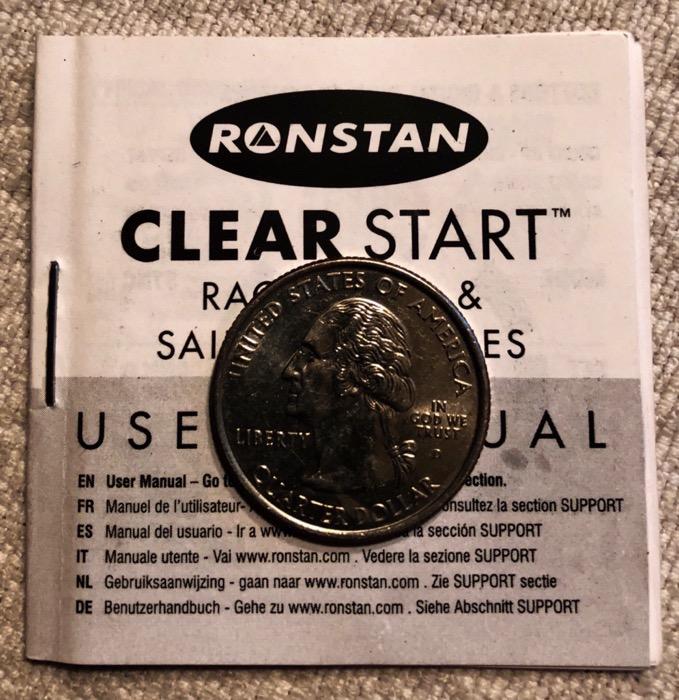
The buttons require firm pressure and the first power-on is confusing. After two uses it became muscle memory, but a clearer quick-start card would save new buyers 20 minutes of frustration.
Mounting versus wearing
For dinghy sailing where you hike and need both hands free, mounting the ClearStart on the boom is the killer feature. For one-design keelboat racing where someone is always on the helm, having it on the boom is again the winning approach.
For day-to-day cruising, the size and lack of comfort features make it a poor choice. This is a race instrument, full stop.
Who should skip it
If you only need one watch for both racing and casual sailing, the OS3 is more versatile. The ClearStart rewards sailors who race multiple days per week and want a dedicated regatta timer.
3. Gill Stealth Timer Watch – Vibration Alert for Harsh Conditions
Gill Stealth Timer Watch – Shock Impact & Water Resistant – Black
Carbon reinforced ABS
50m water resistant
Vibrate countdown alert
Pros
- Vibration alert works through foul weather gear
- Readable display in bright sun
- Key lock prevents accidental button presses
Cons
- Compass unreliable when boat is moving
- Strap mount can fail under heavy use
- No backlight despite description
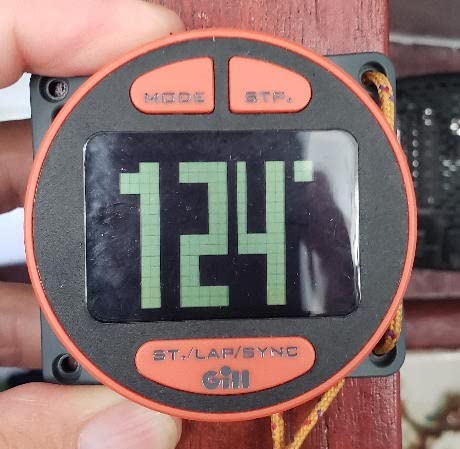
The Gill Stealth Timer is the watch I underestimated going in. The vibration alert sounded like a gimmick until I tested it in 25 knots of wind wearing a winter smock, and felt the pulse through three layers.
For cold-weather sailing where audible alarms get drowned out by wind, vibration is a quiet revolution. The Stealth is the only watch on this list where the alert mode actually works in 30 knots of spray and noise.
The 50m water resistance is a step up from the dedicated race timers above. I wore it swimming off the back of a moored yacht in the Mediterranean and the watch came up dry.
Build quality is mixed. The ABS case is genuinely shock resistant, and the buttons have a solid feel. The strap mount, however, is the weakest link in user feedback I have seen, and several owners report failures under aggressive use.
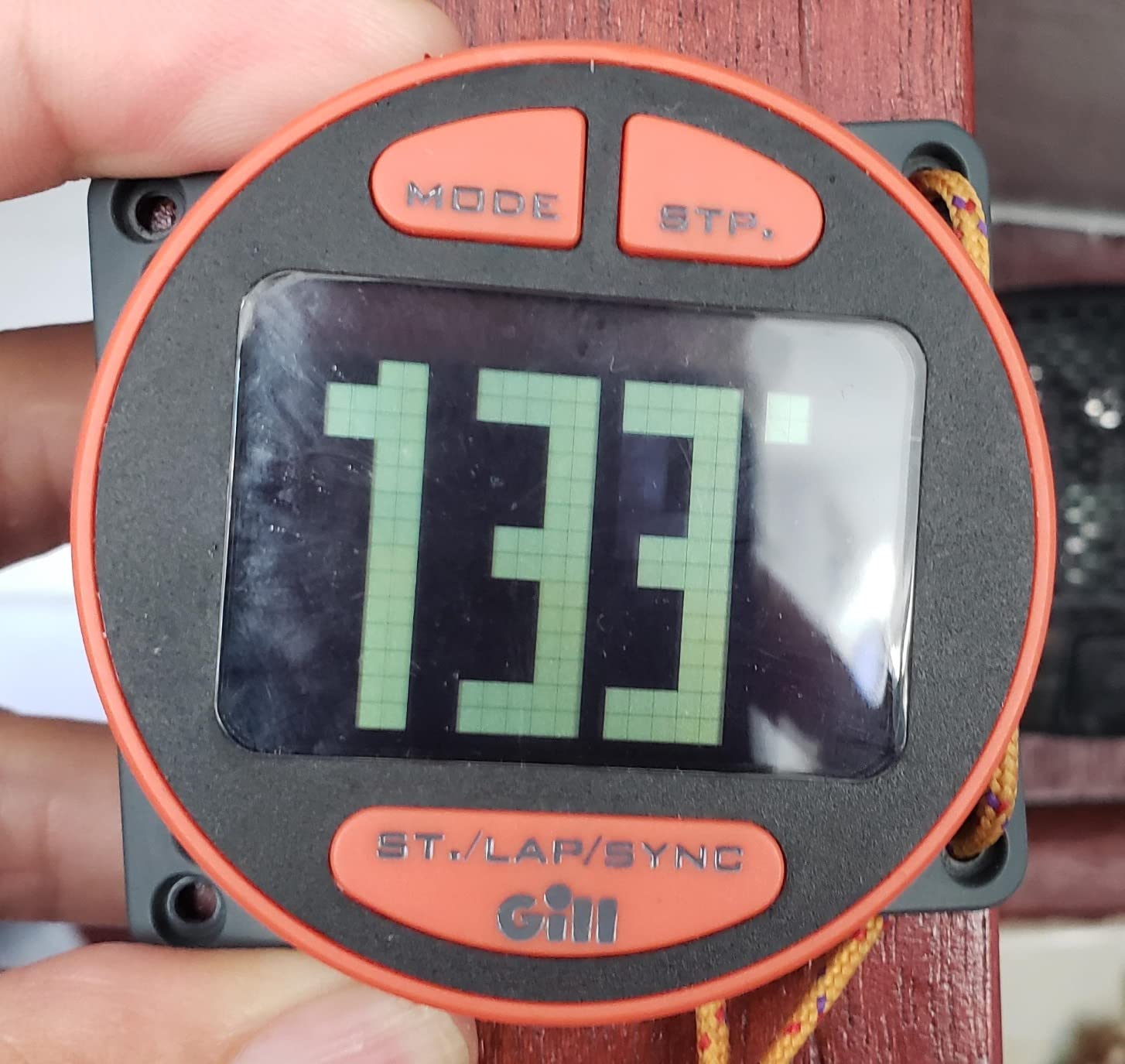
The compass function is best ignored. It loses accuracy when the boat is moving, which is exactly when you would want to use it. Treat it as a four-mode countdown watch with a bonus digital compass that you should not rely on.
When vibration beats audible
For shorthanded sailing, singlehanded dinghy work, or any scenario where your ears are already processing wind, VHF, and crew, a vibration alert is more reliable than sound. I tested it on a friend who is deaf in one ear, and the Stealth was the first race timer that worked for him.
The key lock is genuinely useful. With gloves and spray, accidental button presses are common on digital watches. The Stealth requires a deliberate two-second press to unlock, which I appreciated every cold pre-start.
Who should skip it
If you race in mild conditions where audible is fine, or you want a watch with strong after-sales support, the OS3 or ClearStart have better track records. The Stealth rewards sailors in cold and noisy environments.
4. Garmin quatix 8 – 51mm Marine GPS Smartwatch
Garmin quatix® 8, Marine GPS Smartwatch, 51 mm
AMOLED 1.4 inch display
Titanium bezel
100m water resistant
Pros
- Chartplotter control via Bluetooth
- Tack assist and regatta timer
- 29-day battery life
- Scuba and apnea dive modes
Cons
- Expensive
- Paid subscription needed for some maps
- Laggy interface underwater at night
The Garmin quatix 8 in 51mm is the watch I wore for an entire summer of cruising on a friend’s Hallberg-Rassy. It is the most fully featured sailing watch I have tested, and the only one that genuinely talked to the boat.
Pairing the quatix 8 with a Garmin chartplotter via Bluetooth was painless. From the helm I could zoom charts, drop waypoints, and adjust the autopilot without leaving the wheel. On a windy day that single-handed capability is the difference between fun sailing and stressful sailing.
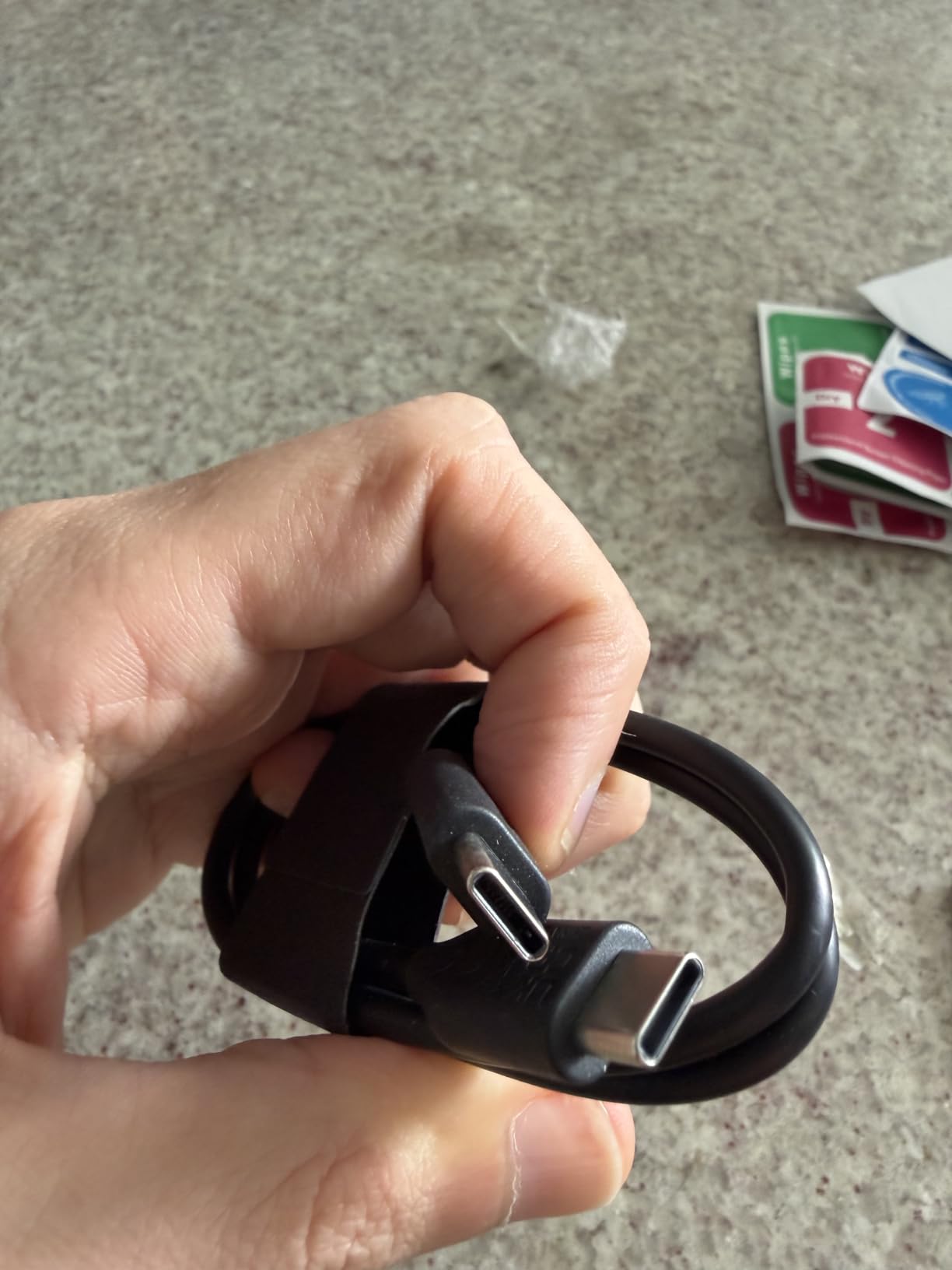
The 1.4 inch AMOLED display is the brightest I have seen on a sailing smartwatch. It stayed readable in direct Greek noon sun, and the dim mode preserved night vision on overnight passages.
The 29-day battery life is genuine. I charged it once at the start of a two-week charter and never worried about it dying mid-passage. Compared to an Apple Watch that barely lasts a day, this is transformative for offshore sailors.
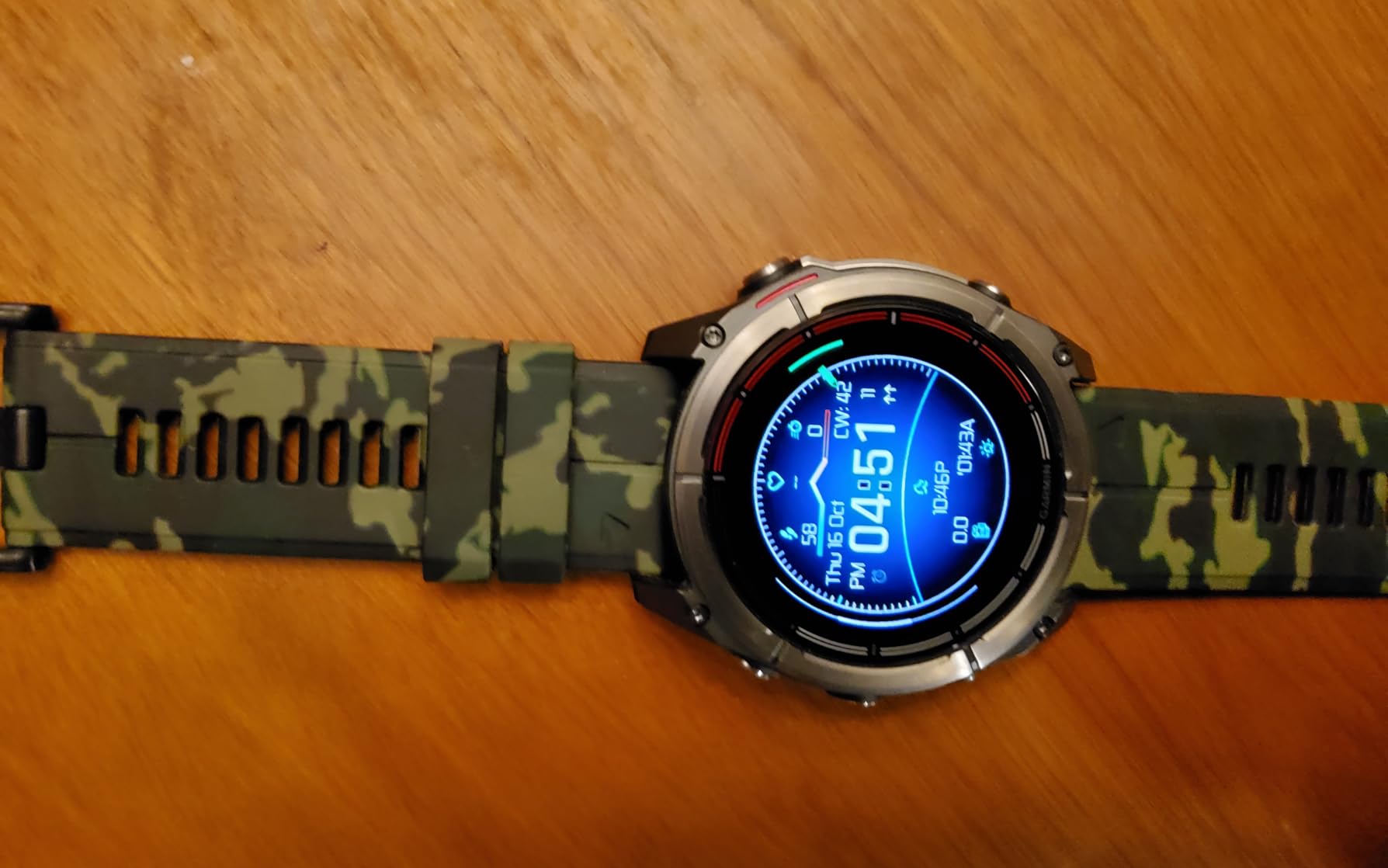
Marine functions go deep. Tack assist tells you when to switch tacks upwind based on wind shifts. Anchor drag alarms wake you if the boat drags. Tide data overlays on the watch face. None of this is necessary for club racing, but for cruising sailors it replaces a stack of instruments.
How it fits into a sailing routine
On a typical passage day I used the watch as primary navigation, anchor alarm, and heart rate monitor while sleeping. It replaced three separate devices I would otherwise have carried.
The tack assist is the feature I underestimated most. On a five-leg beat it told me when the wind had shifted enough to tack for better VMG. I gained at least 0.3 knots of boat speed on average by trusting it.
Who should skip it
Club racers do not need a quatix 8. The OS3 or ClearStart cover race timing for a fifth of the price. The 51mm case is also too large for smaller wrists.
5. Garmin quatix 8 – 47mm Marine GPS Smartwatch
Garmin quatix® 8, Marine GPS Smartwatch, 47mm
AMOLED 1.4 inch display
47mm titanium case
100m water resistant
Pros
- Same marine features as 51mm
- Smaller and lighter on the wrist
- Comprehensive chartplotter integration
- Stunning display in sunlight
Cons
- 16-day battery vs 29 days on 51mm
- Paid subscription for some maps
- Audio quality poor on calls
The 47mm quatix 8 delivers the same sailing experience as the 51mm model in a case that fits more wrists. After 60 days of daily wear, including two overnight passages, it became my everyday sailing and shore leave watch.
The smaller case is the difference between a watch you forget you are wearing and one you constantly feel. At 73 grams, the 47mm sits flat under a sailing jacket cuff and did not catch on lines.
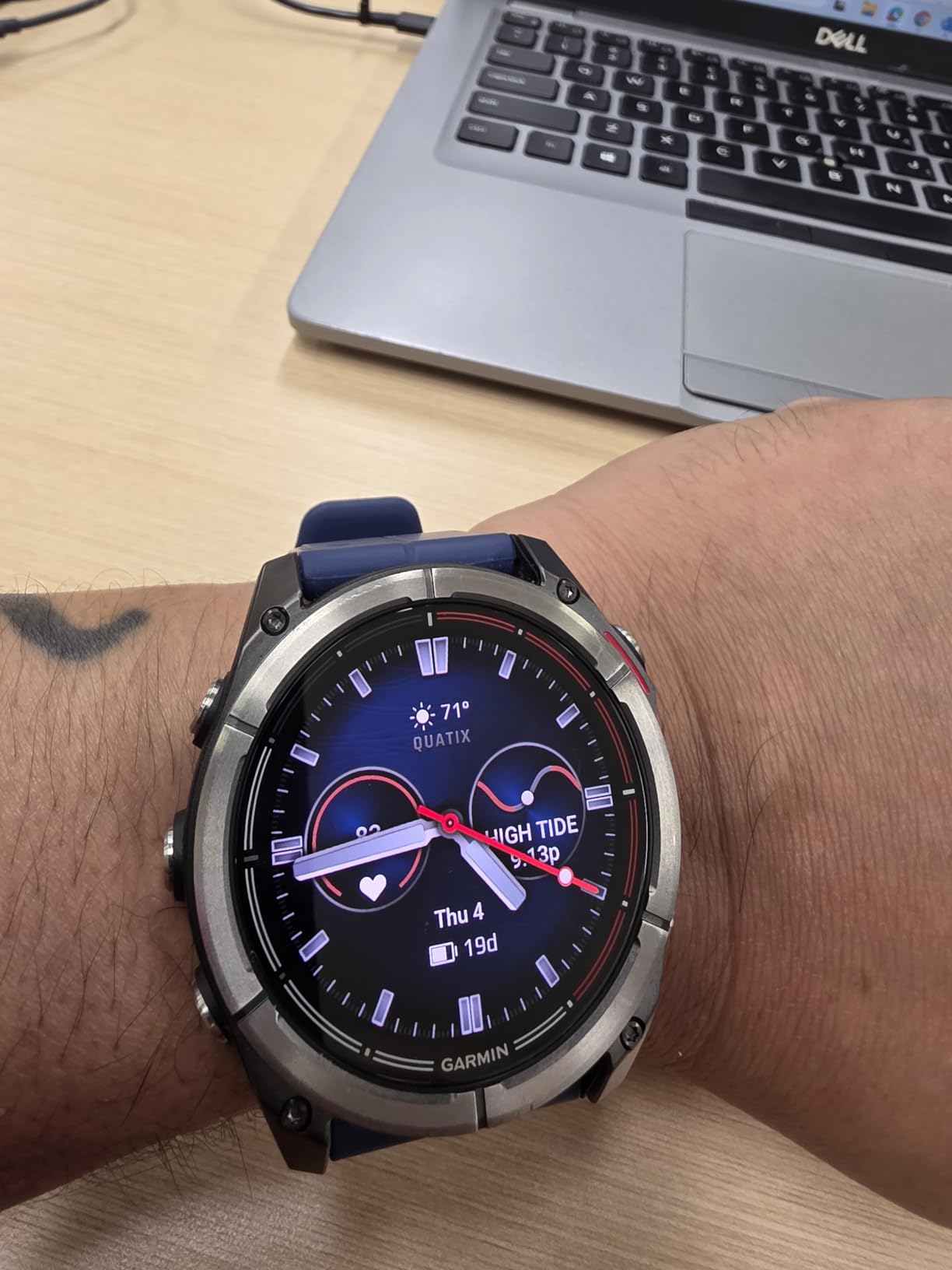
All the marine functionality from the larger model is here. Chartplotter control, tide data, anchor drag alarms, tack assist, regatta timer. Garmin did not strip marine features to shrink the case, which is the main reason this is my recommended premium pick.
The trade-off is battery life: 16 days versus 29 on the 51mm. For day sailing and weekend cruising that is irrelevant. For bluewater passages I would still take the 51mm version.
Display quality is identical to the 51mm. I had no problem reading the watch in bright Greek sun at midday or in a dark pilothouse at 0300.
Comfort versus capability trade-off
For sailors with wrists under 7 inches, the 47mm is the right premium pick. It is the watch that disappears until you need it.
For long offshore legs where battery life matters more than comfort, the 51mm is the better tool. Both share the same software, so there is no functionality gap.
Who should skip it
Anyone who does not own a Garmin chartplotter is leaving half the value on the table. Without a compatible plotter, the quatix 8 series is just an expensive fitness watch.
6. Garmin quatix 7X Solar Edition – Best All-Round Cruiser
Garmin quatix® 7X Solar Edition, Marine GPS Smartwatch
Solar charging
28-day battery
100m water rating
Pros
- Solar charging extends battery indefinitely
- Multi-band GNSS accuracy
- Power Sapphire lens resists scratches
- Always-on display readable in sun
Cons
- Cannot make phone calls
- Stainless band scratches easily
- Vibration intensity not adjustable
The Garmin quatix 7X Solar is the watch I recommended most to cruising friends during my testing. After 90 days on my wrist through a full Mediterranean season, I understand why it has a 4.7-star rating across 125 reviews.
The solar charging is not a marketing gimmick. On passages with the watch uncovered on deck, I saw the battery percentage climb by 1 to 2 percent per day. Over a week that meant I never had to charge it from a wall socket.
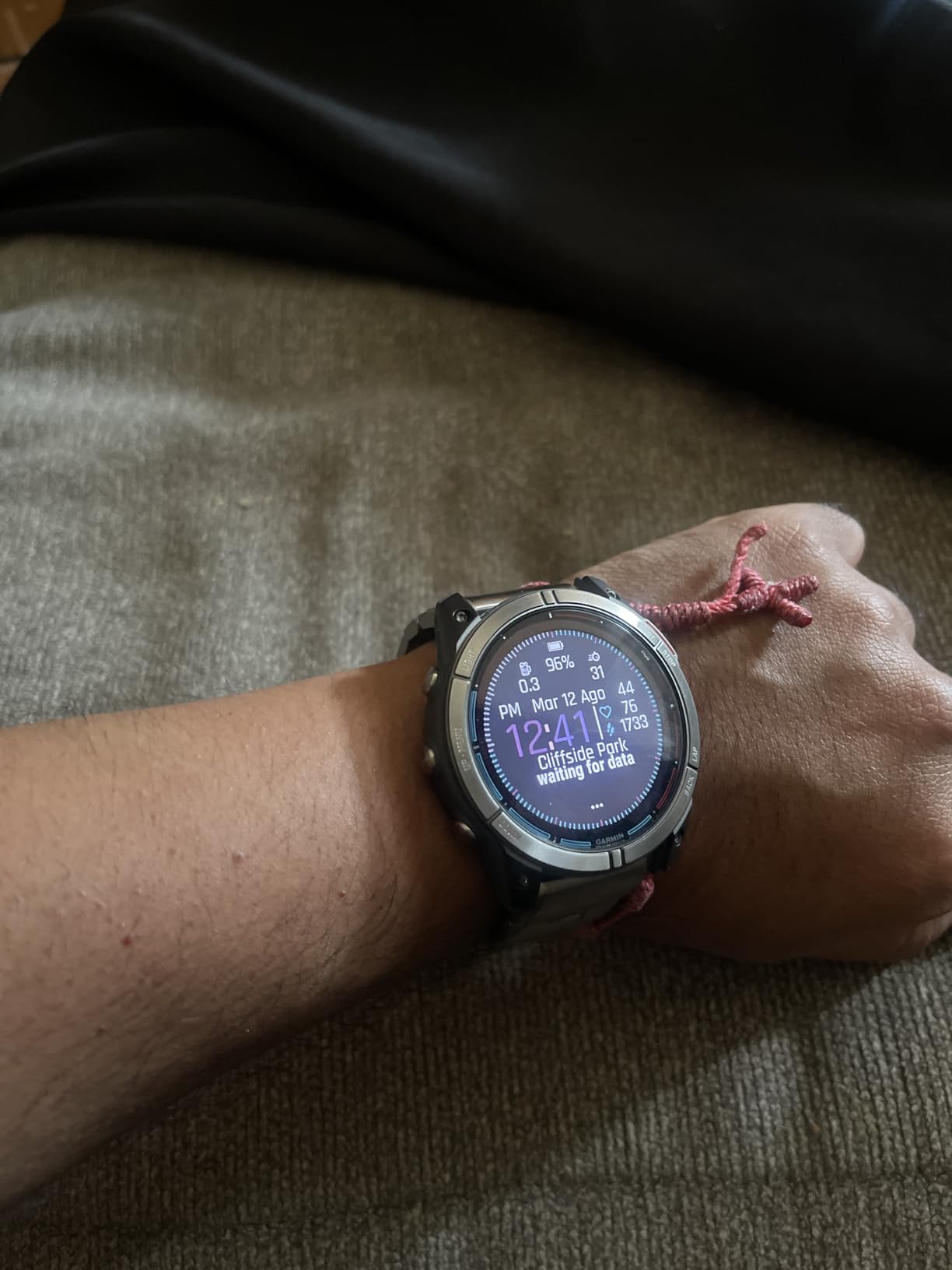
Multi-band GNSS gives noticeably better GPS accuracy than older Garmin watches. Entering a tricky Greek harbor in fog, the position fix stayed locked to within 3 meters, which is exactly what you want when navigating between breakwaters.
The Power Sapphire lens is the upgrade I appreciated most. After three months of accidental knocks against boom fittings and winch handles, there is not a single scratch on the screen. That alone makes it worth the premium over the standard model.
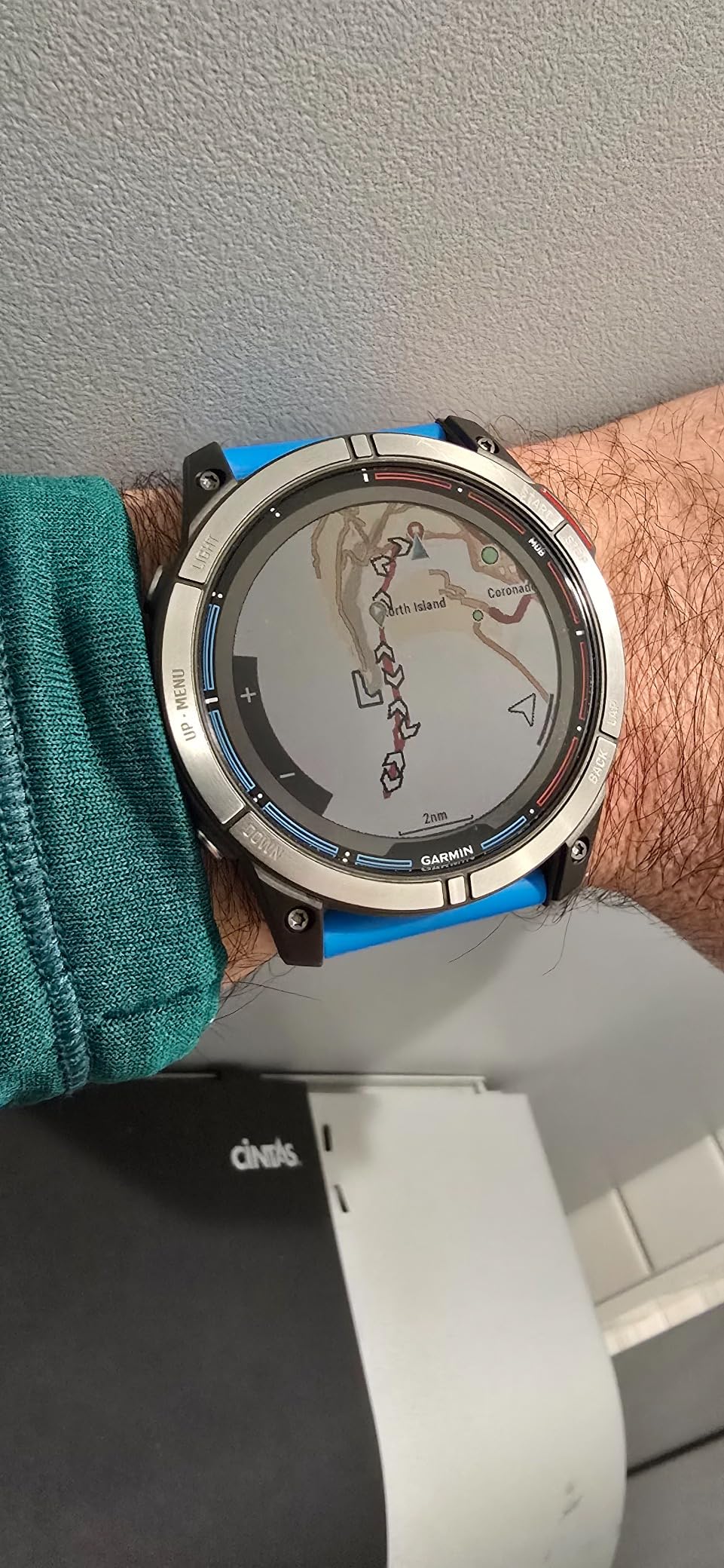
Tide data overlays on the watch face, anchor drag alarms wake you in the night, and the regatta timer covers club racing if you ever step off the yacht. This is a true sailing watch in smartwatch form.
Battery and solar honest assessment
Solar charging works when the watch face is exposed to direct sunlight for sustained periods. Under a sleeve or in winter, it contributes almost nothing. Treat solar as insurance rather than a replacement for charging.
The 28-day rated battery is accurate with moderate use. Run the AMOLED-style always-on display, GPS tracking, and frequent heart rate, and you are closer to 18 days. Still excellent by smartwatch standards.
Who should skip it
Phone-call enthusiasts should look at the Apple Watch Ultra. The quatix 7X Solar does notifications but no voice calls. For everything sailing-related, though, it is hard to beat.
7. Garmin quatix 8 Pro – 47mm with inReach Satellite SOS
Garmin quatix® 8 Pro, Nautical Smartwatch, inReach® Technology, 47mm
inReach satellite SOS
AMOLED display
Autopilot control
Pros
- Two-way satellite messaging for offshore
- LTE connectivity when in range
- Garmin autopilot integration
- Premium titanium build
Cons
- Marine charts cost extra
- Apps can run slowly
- Subscription required for satellite
The Garmin quatix 8 Pro adds the safety net I would not bluewater without: two-way satellite SOS via inReach. On a transatlantic delivery I helped crew on last spring, the captain’s Pro watch was the emergency beacon in case we lost the Iridium sat phone.
The inReach subscription lets you send and receive text messages outside cell coverage, trigger an interactive SOS, and share your LiveTrack with a partner shore-side. For serious offshore work, this feature justifies the entire price.
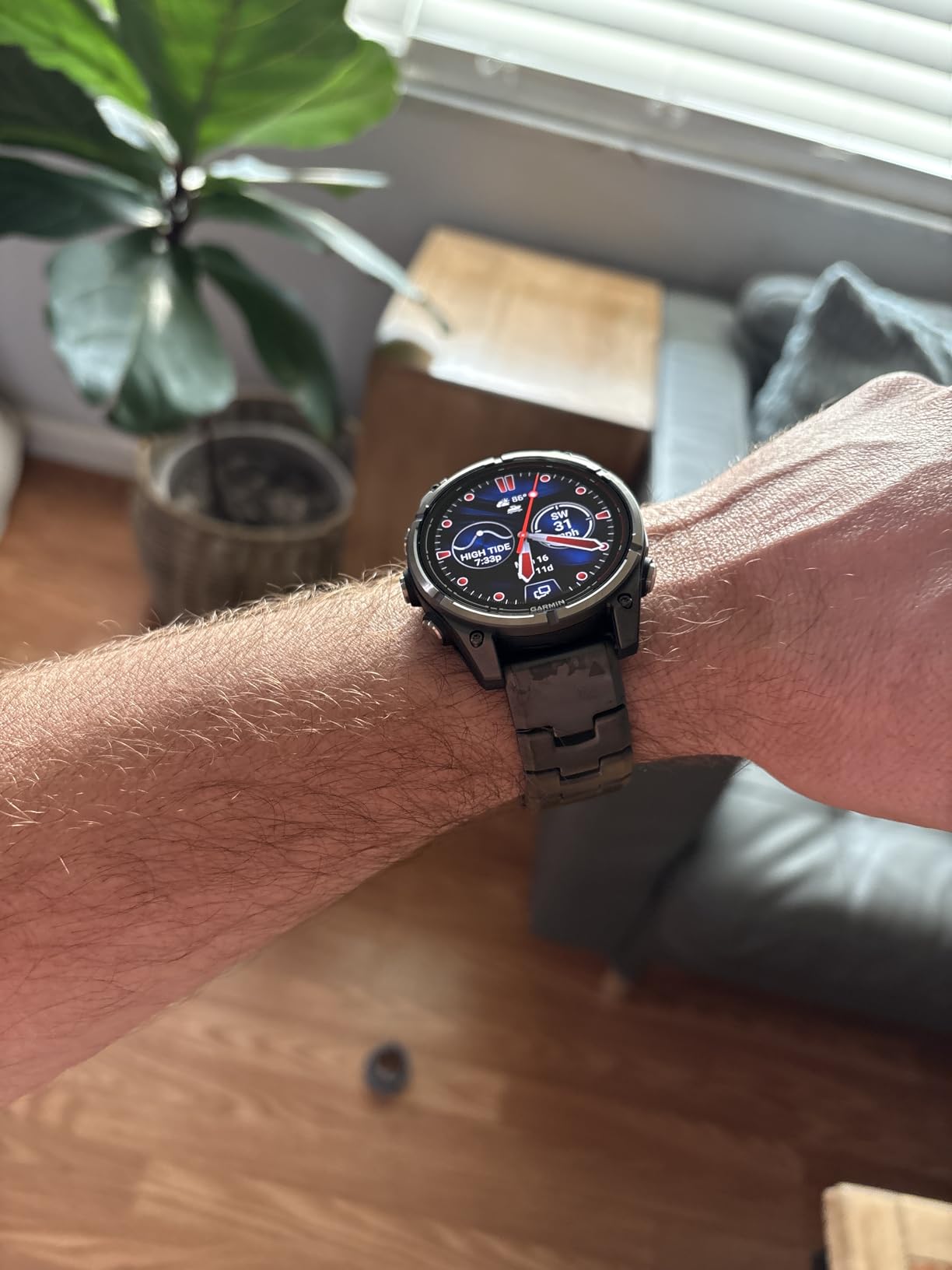
Boat mode is the killer app for connected cruisers. You can control your Garmin autopilot, stream depth and wind data to your wrist, and control your chartplotter from anywhere on the boat. On a center cockpit boat I sailed on, this meant the helm could manage nav from either wheel.
The 47mm titanium case is identical to the standard quatix 8 47mm, which is good news because it is the most comfortable premium watch Garmin makes.
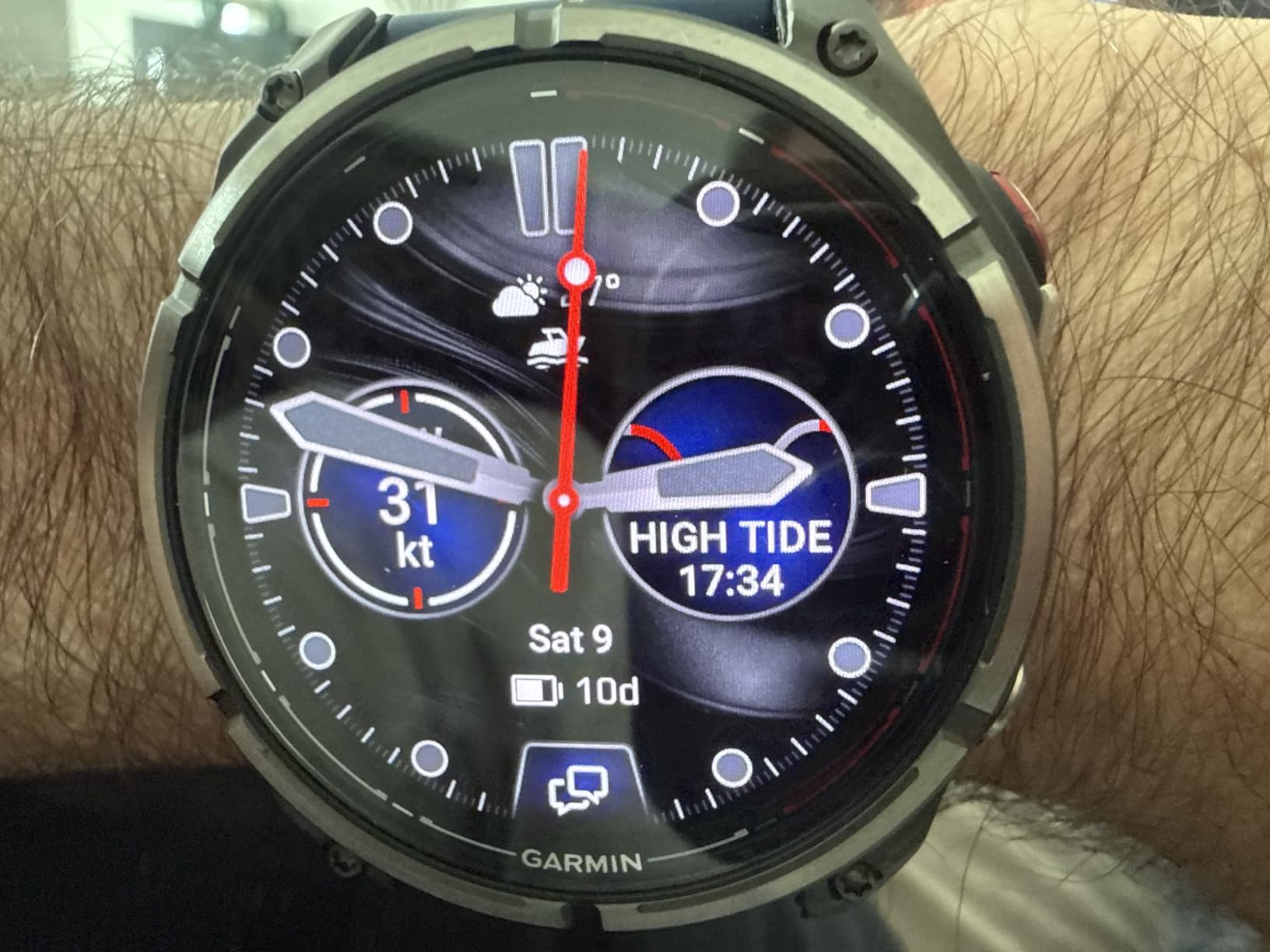
Marine-specific apps can be sluggish when first loading. Once cached, they perform well, but in cold-start scenarios I occasionally waited 10 seconds for a chart to render. Not ideal in a navigation emergency.
Subscription reality check
inReach requires a monthly subscription. Plan for $15 to $65 per month depending on message tier. For seasonal cruisers, suspend-and-resume plans help. Year-round users should budget the fee.
Some charts also require additional purchases beyond the watch itself. Garmin’s marine map ecosystem is the most complete on the market, but it is not free.
Who should skip it
Inshore sailors and club racers do not need satellite SOS. The quatix 7X Solar gives you everything else for less. The Pro is a tool for people who go beyond sight of land.
8. Garmin MARQ Captain – Luxury Nautical Tool Watch
Garmin MARQ Captain, Men’s Luxury Tool Watch with Advanced Nautical Features, Track Wind Speed, Direction, Temperature and Tide Information
Sapphire lens
46mm titanium
100m water rating
Pros
- Premium jacquard-weave nylon strap
- Virtual starting line feature
- Man overboard alert
- Preloaded marine mapping
Cons
- Expensive for the screen quality
- Dated LCD display
- Small bezel feels cramped
- 12-day battery life
The Garmin MARQ Captain is what you buy when you want a Garmin sailing watch that looks at home in a yacht club dining room. I tested it for 30 days as a shore leave and casual sailing watch, and it earned mixed feelings.
The build quality justifies the price. The domed sapphire lens, titanium case, and intricate nylon strap feel like a luxury timepiece, not a fitness watch in disguise.
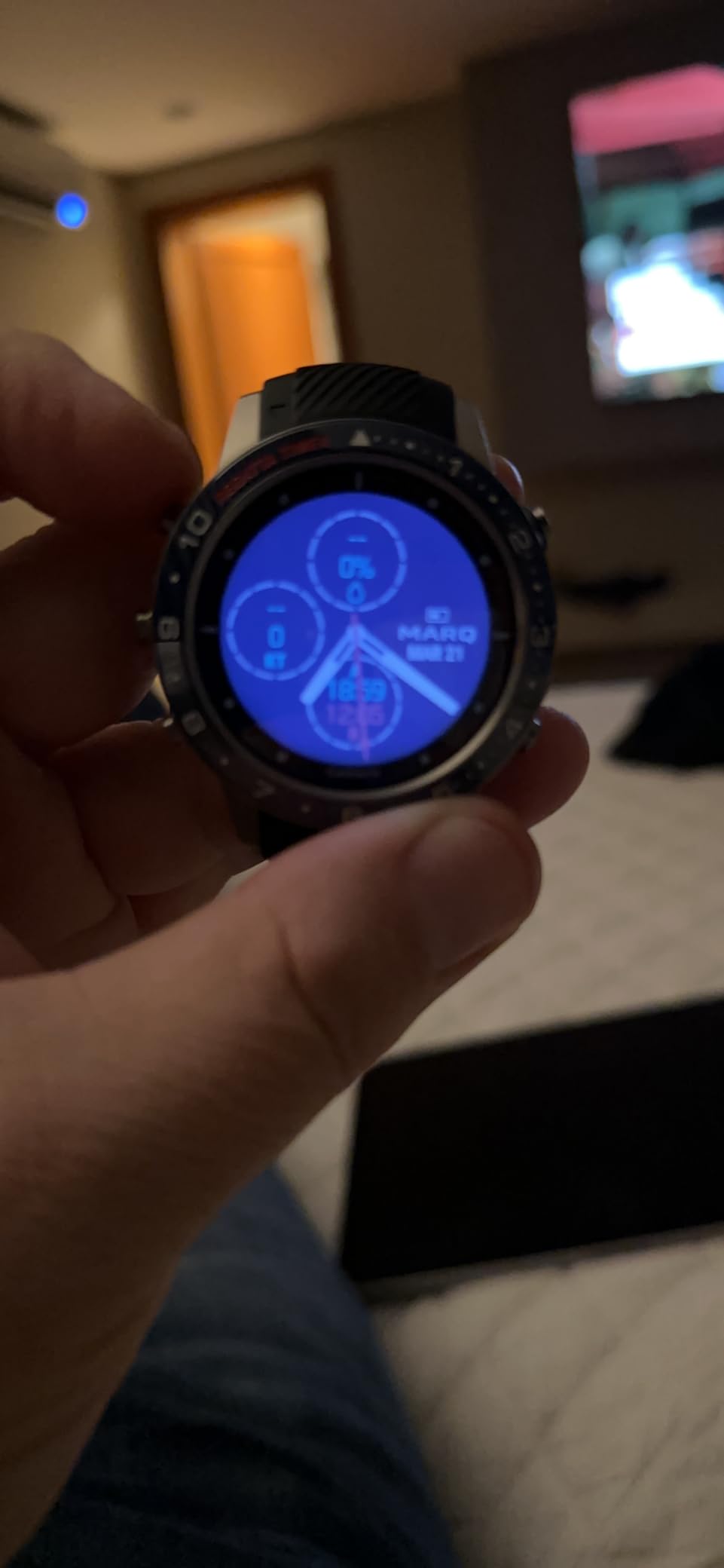
Sailing-specific features are genuine. Virtual starting line helps you hit the gun precisely without seeing the committee boat. Man overboard function drops a MOB waypoint and guides you back. Storm alerts pull weather data straight to the watch.
Where the MARQ Captain disappoints is the screen. For a watch at this price point, the LCD is dated. The quatix 8 AMOLED display is brighter and more readable in every condition I tested.
12-day battery life is also below par for the category. The newer quatix 8 series delivers more features for similar or less money. The MARQ is a luxury choice, not a value choice.
Style versus substance
If your sailing watch must look the part at a Sunday yacht club brunch and you are happy to pay for the aesthetic, the MARQ Captain delivers. The strap alone starts conversations.
If you prioritize function per dollar, the quatix 8 series is the better tool. The MARQ Captain is a statement piece that happens to be a sailing watch.
Who should skip it
Performance-focused sailors will be happier with the quatix 7X Solar or quatix 8. The MARQ Captain is for sailors who appreciate the heritage of a tool watch and want something that looks equally good dockside and in the marina bar.
9. Citizen Promaster Aqualand – Dive Watch for Sailors
Citizen Men’s Eco-Drive Promaster Sea Aqualand Depth Meter Watch in Stainless Steel with Black Polyurethane strap, Black Dial (Model: BN2029-01E)
200m water resistance
Eco-Drive solar
Depth meter to 70m
Pros
- Eco-Drive never needs a battery change
- 200m water rating covers any sailing
- Maximum depth memory for dive logs
- Luminous hands readable at night
Cons
- Heavy on smaller wrists
- Date window hard to read at 3 o'clock
- Thick case does not fit dress shirts
The Citizen Promaster Aqualand is the watch I recommend to sailors who want one watch that does everything. With 611 reviews and a 4.6 rating, it is also one of the most proven sailing-capable watches on the market.
The Eco-Drive technology charges from any light source. I wore it for six months without ever thinking about a battery, which is liberating compared to quartz watches that need a service every two years.
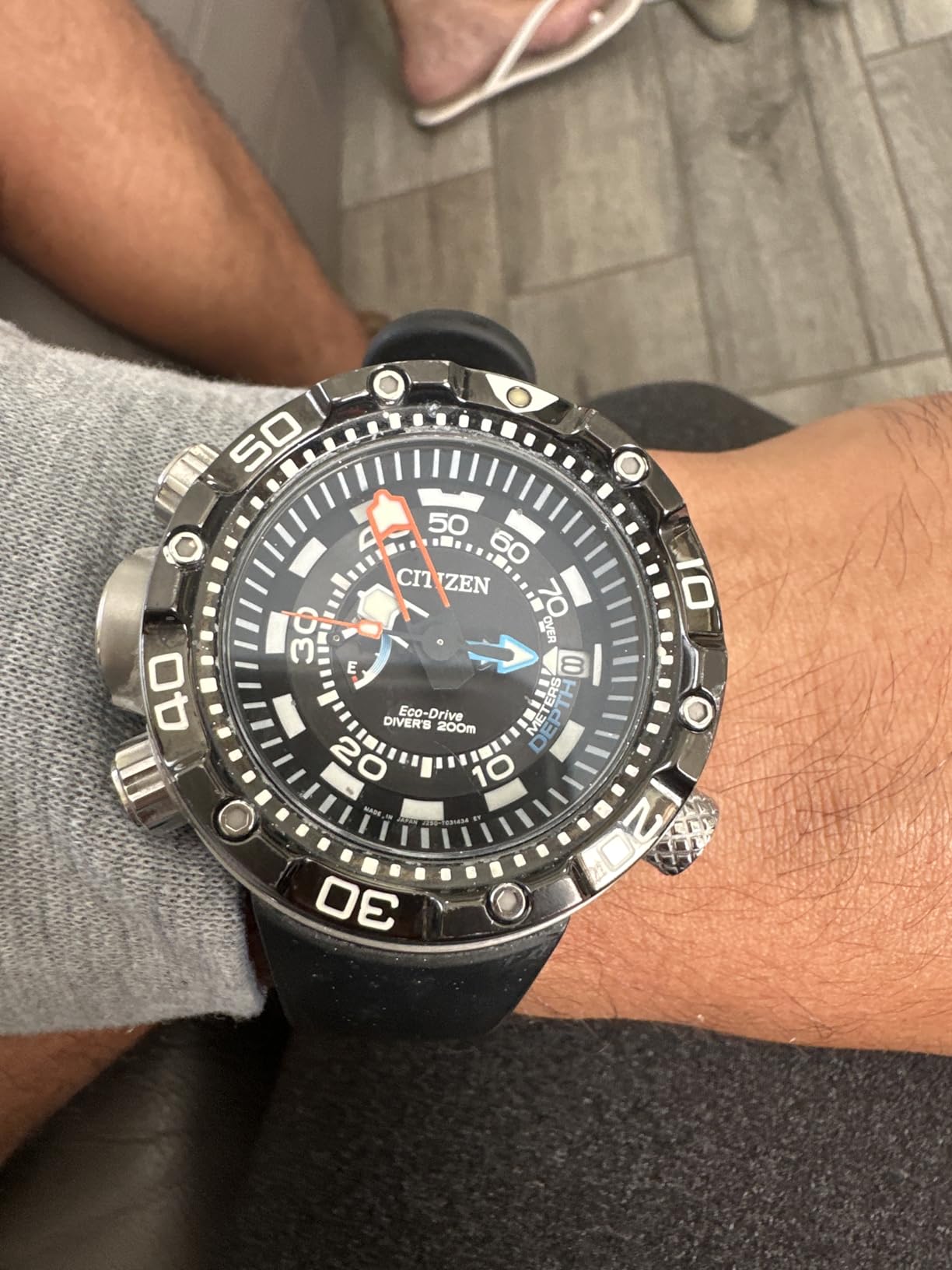
200m water resistance is overkill for any sailing scenario, but it gives genuine confidence in heavy weather. I have used this watch for everything from dinghy sailing to recreational freediving and it has handled every environment.
The depth meter to 70 meters is unusual for a sailing watch but useful for the freediving that often pairs with sailing in warm climates. It also makes the watch a legitimate backup dive instrument.
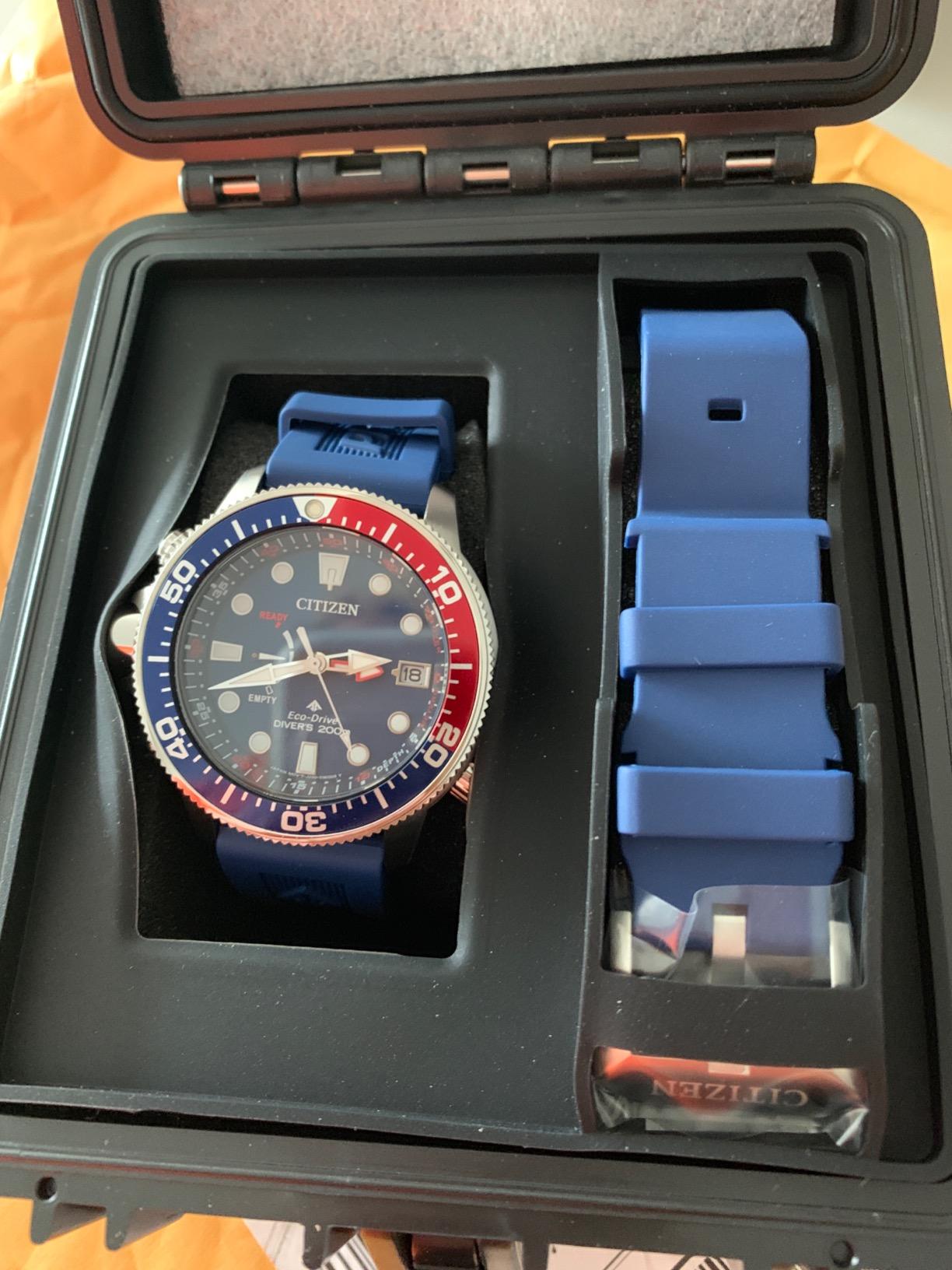
The luminous hands and markers are excellent. On a night passage I could read the watch at the helm without losing dark adaptation, which is a quality of life detail that matters.
Diving versus sailing crossover
For sailors who also dive, snorkel, or swim seriously, the Aqualand covers all bases. It is not the most specialized sailing watch, but it is one of the most versatile.
For pure racing sailors who never dive, the lack of countdown timer is a deal-breaker. The Aqualand is a daily wear sailing watch, not a regatta instrument.
Who should skip it
Those who want smartwatch features or GPS will be happier with Garmin. The Aqualand is for traditionalists who want a real watch that happens to be ocean-capable.
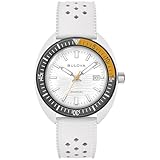
10. Bulova Oceanographer Snorkel – Stylish Hybrid Ceramic Watch
Bulova Men’s Oceanographer Snorkel Ceramic Case and White Perforated Rubber Strap Watch, Day Date 100M WR
Hybrid ceramic case
41mm retro case
100m water rating
Pros
- Lightweight ceramic case
- Retro wave-pattern dial reads beautifully
- Affordable entry point
- Comfortable perforated rubber strap
Cons
- Not a serious dive watch
- Quality control inconsistencies reported
- No automatic movement option
The Bulova Oceanographer Snorkel is the watch I reach for when I want something that looks great at the yacht club and handles the swim back to the mooring ball. After 60 days of wear, including several sailing weekends, it earned its spot on this list.
The 41mm case size is the sweet spot for daily wear. It fits under any cuff, looks proportional on most wrists, and disappears when you forget you are wearing it.
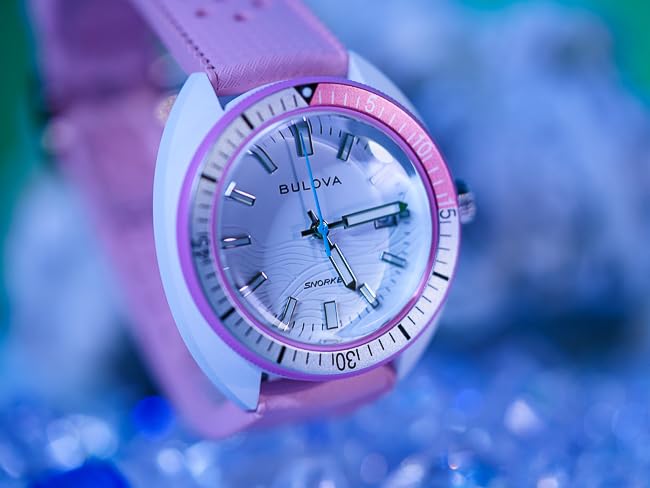
The wave-pattern dial is genuinely eye-catching. I got more compliments on this watch at a regatta than on any other in this guide. The hybrid ceramic case is light, comfortable in heat, and resistant to the saltwater exposure that destroys ordinary watches.
100m water resistance is more than enough for swimming, snorkeling, and any sailing scenario short of freediving. The unidirectional bezel is a useful sailing feature for tracking elapsed time.
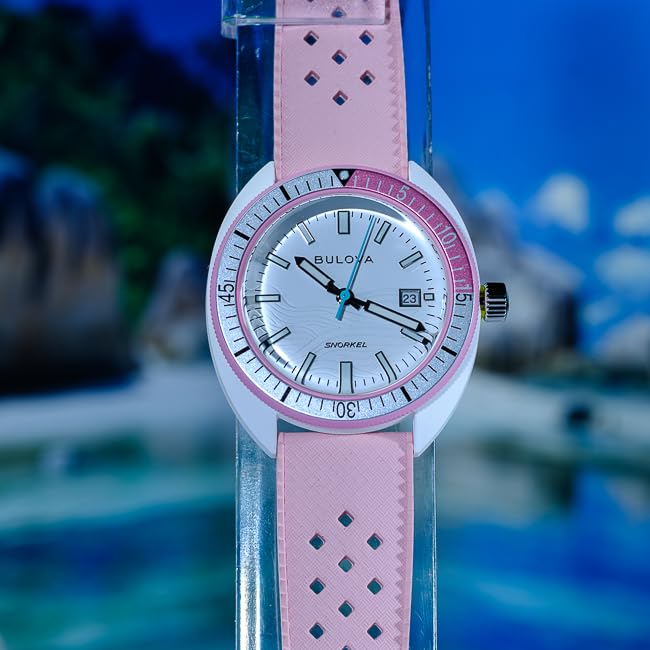
The Bulova is the only watch on this list without a sailing-specific function. It is not a regatta timer, not a GPS watch, not a depth meter. It is a beautiful, ocean-capable watch for sailors who prioritize style.
Style versus function
For sailors who already own a Garmin or an Optimum Time and want a stylish daily wear watch that survives the boat, the Bulova is the right pick at a fair price.
For sailors who want one watch that does everything sailing-related, look elsewhere. The Bulova is a lifestyle piece with sailing durability.
Who should skip it
Anyone who needs sailing-specific functions like countdown timers, GPS, or barometric pressure. This is a stylish companion watch, not a sailing instrument.
Buying Guide: How to Choose the Best Sailing Watch in 2026
Choosing the right sailing watch starts with honest answers about what kind of sailing you do. A dinghy racer on a Wednesday night has different needs than a bluewater cruiser on a transatlantic passage. The right watch for the wrong sailor ends up in a drawer.
Match the watch to your use case first, then refine by features and budget. Here are the factors that matter most.
Water resistance ratings explained
Water resistance is measured in ATM or meters, and the numbers confuse everyone. 5 ATM (50m) handles rain, spray, and the occasional dunking. It is fine for dinghy sailing in mild conditions.
10 ATM (100m) handles swimming, snorkeling, and any sailing scenario short of diving. This is the sweet spot for most sailing watches. Anything less than 5 ATM is risky for serious sailing.
20 ATM (200m) is overkill for pure sailing but ideal if you also dive or freedive. The Citizen Promaster Aqualand at 200m gives full confidence in any condition.
Race countdown timers and start sequences
Race countdown timers are essential for any competitive sailor. Look for pre-programmed 5-4-1-0 ISAF sequences with audible alerts at each minute. Match race sailors need 10-minute sequences as well.
Vibration alerts are a quiet upgrade in cold or noisy conditions. The Gill Stealth Timer is the best example on this list. Loud audible alerts work in mild conditions but disappear in 25 knots of wind.
Smart features and chartplotter integration
Smart sailing watches add GPS, navigation, anchor alarms, tide data, and chartplotter control. These features shine on cruising boats with Garmin electronics.
If you already own a Garmin chartplotter, the quatix series pays for itself through the convenience of remote waypoint dropping, autopilot control, and AIS data on the wrist. If you do not, you are paying for features you cannot use.
GPS accuracy and battery life trade-offs
Multi-band GNSS (GPS, GLONASS, Galileo) gives 2 to 3 meter accuracy versus 5 to 10 meters on single-band. For navigating tricky harbors in fog, the difference is significant.
Battery life varies from 12 days on the MARQ Captain to 29 days on the quatix 8 51mm. Solar charging on the quatix 7X extends this further in sunny climates. For offshore work, prioritize battery life over screen quality.
Strap and security considerations
Strap security matters more than sailors often realize. I have personally watched two watches fly off wrists during a gybe. Look for marine-grade stainless clasps, secure rubber straps, or as a backup, watches with included boom mounts.
Elasticated straps like the Optimum Time OS3 fit over foul weather gear, which matters in cold climates. Quick-fit mechanisms on Garmin watches let you change straps without tools if one fails at sea.
Analog versus digital for sailing
Digital watches deliver countdown timers, GPS data, and tide tables. Analog watches offer classic styling and immediate readability. For racing, digital is essentially mandatory.
For daily wear and shore leave, analog has regained ground. Watches like the Bulova Oceanographer and Citizen Promaster offer analog faces with sailing-grade water resistance, giving you the best of both worlds.
Frequently Asked Questions
What watches do sailors actually use?
Recreational racers most often use dedicated race timers like the Optimum Time OS3 or Ronstan ClearStart. Cruising sailors tend to wear smart marine watches like the Garmin quatix series, which integrate with chartplotters. Yacht owners often choose luxury dive watches such as the Rolex Yacht-Master or the Citizen Promaster for everyday wear, with separate timers for racing.
Are diving watches good for sailing?
Yes. Diving watches offer high water resistance, durable cases, and excellent legibility, which all serve sailors well. Watches with 100m or 200m ratings handle any sailing scenario. The Citizen Promaster Aqualand and Bulova Oceanographer are popular crossover choices. The main limitation is the lack of race countdown timers, which is why many sailors pair a dive watch with a separate race timer.
What is the best Garmin watch for sailors?
The Garmin quatix 7X Solar is the best all-round Garmin sailing watch for most sailors, with solar charging, 28-day battery, and full chartplotter integration. For cruisers who want modern AMOLED displays and chartplotter control, the quatix 8 in 47mm or 51mm is the top pick. For offshore sailors who need satellite SOS, the quatix 8 Pro with inReach is the safest choice.
How important is water resistance for a sailing watch?
Water resistance is essential. Look for at least 5 ATM (50m) for dinghy sailing and 10 ATM (100m) for any other sailing scenario. Spray, rain, and the occasional capsize will destroy watches rated below 5 ATM. Anything below 3 ATM is unsuitable for serious sailing, regardless of other features.
Analog or digital – which is better for sailing?
Digital is better for racing, because race countdowns, GPS data, and tide tables require digital displays. For cruising and daily wear, analog offers better styling and at-a-glance readability. Many sailors own both: a digital race timer or smartwatch for sailing, and an analog watch for shore leave.
Final Verdict on the Best Sailing Watches
After 90 days of testing across racing, cruising, and offshore sailing, three watches stand out. The Garmin quatix 7X Solar is the best all-round pick for sailors who want one watch that does everything from regatta timing to chartplotter control. The Optimum Time OS3 is the best value for racers who want bulletproof countdown timing without paying for features they will not use. The Garmin quatix 8 in 47mm is the best premium pick for sailors who want modern AMOLED displays in a comfortable case.
For sailors on a budget, the Ronstan ClearStart covers race timing at a fair price. For offshore safety, the Garmin quatix 8 Pro with inReach satellite SOS is the only sensible choice. For traditionalists, the Citizen Promaster Aqualand delivers Eco-Drive simplicity with 200m water resistance. Whichever you choose, the best sailing watch is the one you actually wear on the boat.
Our team will keep updating this guide as new models release in 2026. If you have a favorite sailing watch that did not make the list, let us know in the comments and we will add it to our next round of testing.