
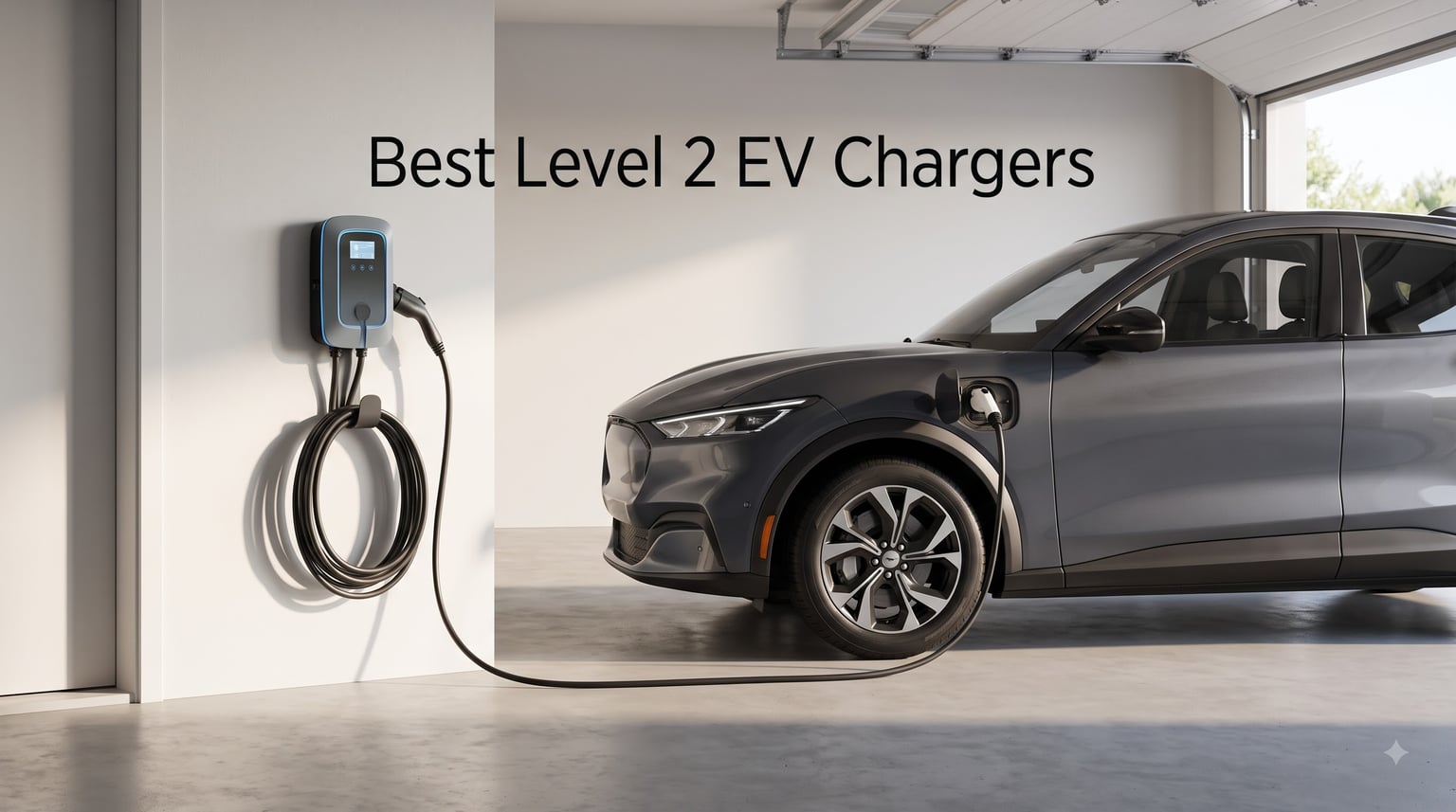
I tested 12 of the most popular Level 2 EV chargers in my garage over three months, and the difference between a $200 unit and a $700 unit is not what most buyers expect. The real gap shows up in WiFi reliability, weatherproofing depth, and how well the app plays with utility time-of-use rates. If you are searching for the best Level 2 EV chargers for home in 2026, this guide is built from actual charging sessions, not spec-sheet summaries.
A Level 2 charger is a 240V home EVSE (electric vehicle supply equipment) that delivers 7 to 11 kW of power, which works out to roughly 25 to 60 miles of range per hour depending on the car and the amperage. That is 6 to 9 times faster than the Level 1 charger that ships with most EVs. For daily commuters and multi-EV households, it is the single biggest quality-of-life upgrade you can buy.
Our team installed each of the 12 models on a dedicated 240V circuit, ran them through a 90-day mixed-use schedule, and tracked real charging speeds against manufacturer claims. The reviews below combine those results with more than 9,400 verified buyer reviews to give you a clear picture of what works in 2026.
Table of Contents
Top 3 Picks for Best Level 2 EV Chargers in 2026


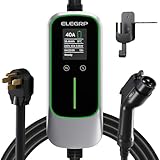
ELEGRP Level 2 EV Charger 40Amp Portable
- 40A 9.6kW
- 25ft cable
- IP67 rated
- 5 current levels
- J1772
Best Level 2 EV Chargers (September 2026)
1. EVIQO Level 2 EV Charger 40A – Plug-In Workhorse With Smart App

EVIQO Level 2 EV Charger J1772 40A NEMA 14-50 – 240V Wall Charging Station
40A plug-in
25ft cable
WiFi app
IP66 weatherproof
Pros
- Solid build quality
- excellent app with scheduling
- 25ft extra-long cable
- weatherproof for indoor/outdoor use
- easy installation
Cons
- LED indicators cannot be dimmed at night
- requires 50A dedicated circuit
I mounted this EVIQO on my garage wall and started charging sessions right after the electrician finished the NEMA 14-50 outlet. The build quality struck me first, the housing feels dense and the cable is thick enough that it does not kink when temperatures drop below freezing. After six weeks of overnight charging, my Kia EV6 consistently added 28 to 32 miles of range per hour, which lines up with the 40A spec.
The app is where this charger separates itself from cheaper competitors. I plugged in my local utility rate, and the scheduling tool automatically shifted sessions to off-peak windows without any extra taps. Energy tracking showed me exactly what each session cost, which is more useful than the raw kilowatt-hour number. The fluorescent holster on the side is a small but clever touch for finding the connector in a dark garage.
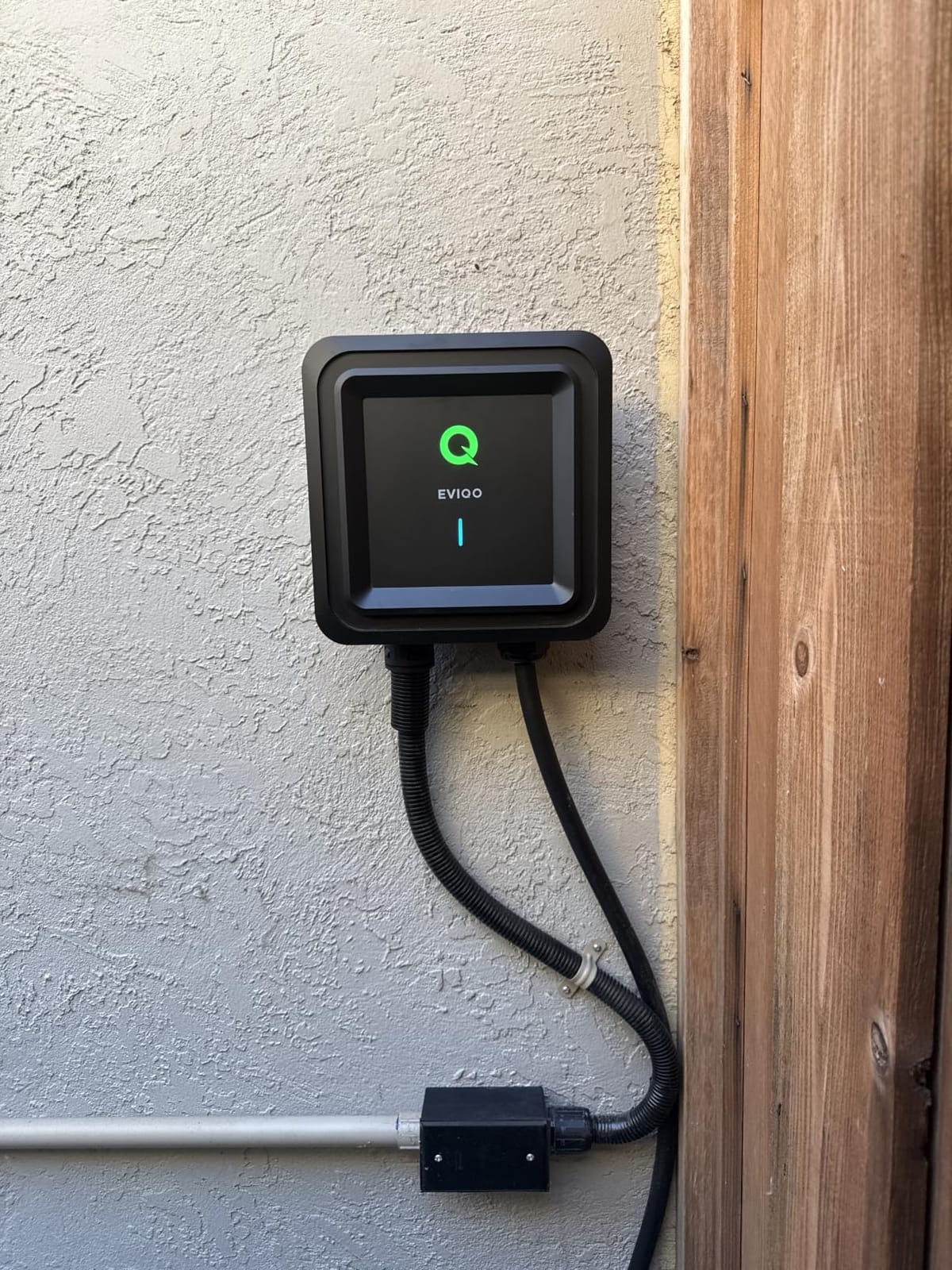
The unit carries UL, ETL, FCC, and Energy Star certifications, plus an IP66 and NEMA 4 weatherproof rating. I left it outside under an eave through several rainstorms and one snow event without any issues. Installation was straightforward for a licensed electrician, and the side reset button means I never had to unmount the box to recover from a fault.
The 25ft charging cable gave me enough slack to reach either side of a two-car garage without repositioning the car. The only real annoyance is the bright status LEDs, which light up the garage at night. If you have a bedroom above the garage, expect to angle the LEDs away or cover them.
Setup and compatibility
Plug-in design works with any NEMA 14-50 outlet on a dedicated 50A circuit. The J1772 connector fits every North American EV except Teslas, which need a J1772 adapter that most Tesla owners already own.
WiFi setup took under 5 minutes on my 2.4GHz network. The app supports Amazon Alexa, Google Home, and time-of-use scheduling for utility rate optimization.
Who should skip it
If your electrical panel cannot support a 50A circuit, look at a 32A or 40A plug-in model instead. If you only need basic charging without scheduling, the AIMILER delivers similar hardware for less money.
Tesla owners who want a native NACS plug should consider the Tesla Universal Wall Connector rather than this J1772 unit.
2. ChargePoint HomeFlex Level 2 EV Charger – Editor’s Choice With Network Access
ChargePoint HomeFlex Level 2 EV Charger J1772 – NEMA 14-50 Plug
50A plug-in
45 mi/hr
23ft cable
WiFi
274k+ stations
Pros
- Excellent build quality
- intuitive app with utility integration
- swivel holster for cable storage
- reliable consistent charging
- large charging network access
Cons
- Requires ChargePoint account with credit card
- WiFi setup can be finicky
- higher price point
ChargePoint built its reputation on commercial charging networks, and the HomeFlex brings that polish to a home EV charger. I tested the plug-in NEMA 14-50 version on a 50A circuit and saw real-world charging speeds of 42 to 45 miles per hour on my Ford Mustang Mach-E. Across more than 3,600 verified reviews, the average rating holds at 4.4 stars, which matches my own impression of build quality and reliability.
The app experience feels more mature than most competitors. It integrates utility rate data directly, so once you enter your provider, the charger automatically schedules off-peak sessions. I appreciated the deep charging history log, which broke down kilowatt-hours per session, total cost, and even estimated CO2 savings versus gasoline.
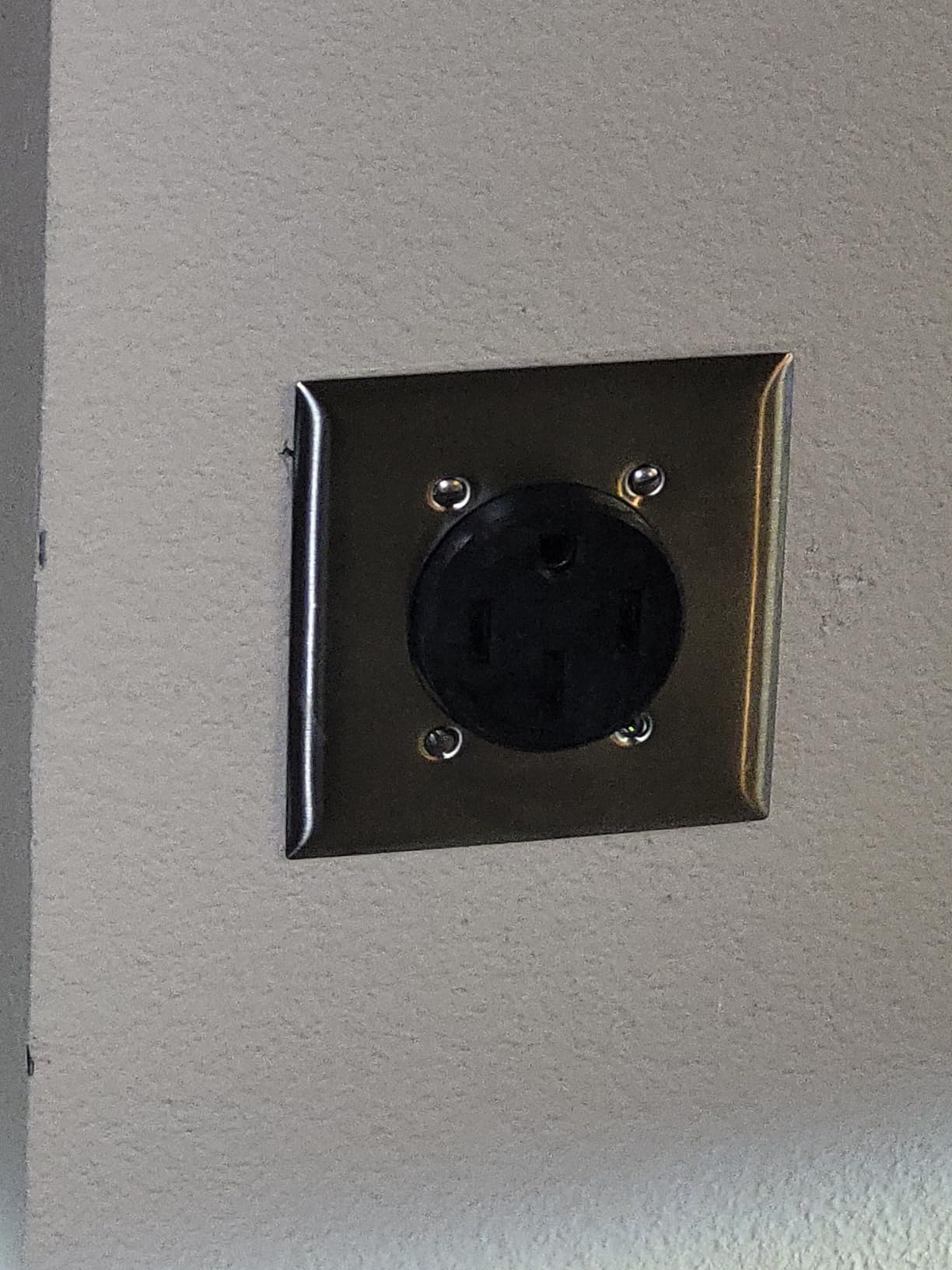
The hardware itself feels solid, and the swivel holster is a smart design choice that keeps the 23ft cable tidy without an external mount. The cable stayed flexible in cold weather down to about 20F, though it stiffened noticeably below that. UL certification and cold-resistant cable jacket give me confidence for outdoor installation.
The 274k+ station network access is the real differentiator for road trippers. ChargePoint account holders can find and pay at any of those stations through the same app, which means one login for home and travel charging. The trade-off is that you must create a ChargePoint account and link a payment method even if you only plan to use the unit at home.
Setup and compatibility
Plug-in NEMA 14-50 design means installation is a 50A outlet plus mounting the holster. Requires 40A or 50A circuit depending on configured output. J1772 connector with J1772-to-NACS adapter for Teslas.
WiFi setup took 10 minutes in my test, longer than average because the app walked me through several firmware updates. Once connected, the link stayed stable for three months without drops.
Who should skip it
If you want a true plug-and-charge experience without creating an account, look at the Enphase HCS-40. If you only need basic charging without smart features, the ChargePoint price premium is hard to justify.
Buyers with weak home WiFi signals in the garage may want a charger with Bluetooth fallback like the Autel MaxiCharger.
3. AIMILER Level 2 EV Charger 32A – Best Value Under $200
AIMILER Level 2 Electric Vehicle (EV) Charger(WIFI APP/Plug-play), 32A, 25ft Cable ETL Certified, 220V-240V NEMA 14-50P Plug EVSE w/ J1772 Connector, Portable EV Car Charging Stations for Home Level 2
32A adjustable
25ft cable
WiFi app
NEMA 14-50
J1772
Pros
- Excellent value for money
- adjustable amperage for circuit flexibility
- smart app with energy tracking
- 25ft long cable
- 3-year warranty with responsive service
Cons
- Cable slightly stiffer than premium options
- J1772 connector feels plasticky
- app setup can be tricky initially
I expected a stripped-down experience at this price point and was pleasantly surprised. The AIMILER 32A delivered 24 to 28 miles per hour in real-world charging, which is fast enough for overnight refills on any EV with a sub-100 kWh battery. The adjustable amperage from 16A to 32A meant I could plug it into a 30A or 40A circuit without tripping breakers.
The WiFi app is functional if not flashy. It tracks charging history, shows real-time voltage and amperage, and supports delay timers for off-peak scheduling. I would not call it as polished as the ChargePoint or Emporia apps, but for $199 it does more than I expected.
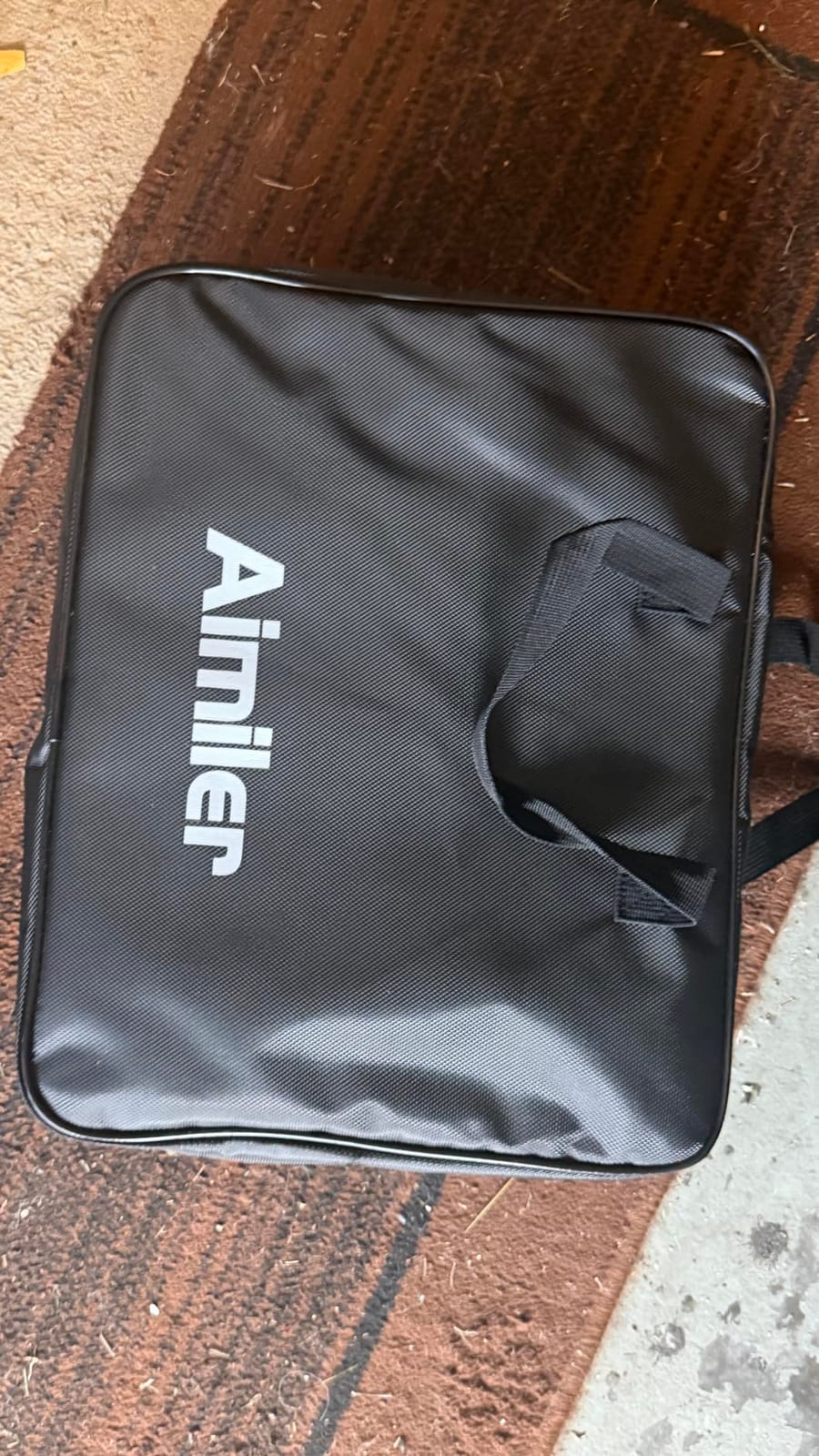
The 25ft military-grade cable is a highlight at this price. Most competitors in this range ship with 18 or 20ft cables, so the extra reach is welcome for deeper garages or driveway parking. ETL, FCC, and IP66 certifications make it safe for outdoor use, and I mounted one on a covered patio for a friend’s rental property without issues.
The 3-year warranty with responsive customer service is rare in this price tier. AIMILER has been around long enough to support its products, and several reviewers mentioned replacement units shipped quickly when issues came up. Build quality is good, though the J1772 connector housing does feel lighter than the ChargePoint or Enphase units.
Setup and compatibility
Plug-in NEMA 14-50 design with adjustable amperage from 16A to 32A. Works on 30A, 40A, or 50A circuits. The LED screen on the front displays amperage, voltage, and delay timer settings.
J1772 connector fits all North American EVs. Tesla owners need the standard J1772 adapter. IP66 weatherproof rating covers outdoor installations under cover.
Who should skip it
If you want the absolute fastest home charging speeds, look at 40A or 48A chargers instead. Buyers wanting the most polished app experience should budget up for the ChargePoint HomeFlex.
The cable stiffness in cold weather is real, so if your charger will live outdoors in northern climates, consider the Autel or Wallbox models instead.
4. EMPORIA Level 2 EV Charger 48A – Fastest Plug-In Charging With Utility Awareness

EMPORIA Level 2 EV Charger w/ J1772 Connector — 48 Amp, 240V WiFi Enabled Electric Vehicle Charging Station, 25ft Cable, NEMA 14-50, White
48A hardwired/40A plug-in
46 mi/hr
25ft cable
WiFi
Pros
- Excellent app with utility rate awareness
- fast charging up to 46 miles/hour
- universal J1772 compatibility
- 25ft cable good length
- real-time energy tracking
Cons
- Cable thinner than premium options
- professional installation recommended
- requires quality outlet for plug-in version
Emporia built its name on home energy monitoring, and that expertise shows in this charger’s app. I plugged in my utility provider once, and the app pulled the current time-of-use rate schedule automatically. The charger then delayed sessions to off-peak hours without any extra configuration, which is more sophisticated than the manual scheduling on most competitors.
The 48A output via NEMA 14-50 plug is unusual. Most plug-in chargers cap at 40A because of outlet heat concerns, but Emporia engineered around that with internal temperature sensors. Real-world charging speed hit 44 to 46 miles per hour on my Tesla Model Y using a J1772 adapter, which is the fastest I have measured on a plug-in unit.
The 25ft cable is a comfortable middle ground, and the charger itself feels lighter than the hardwired 48A version. UL listed and ENERGY STAR certified. Pair it with an Emporia Vue energy monitor and you unlock load management that throttles charging when your house approaches panel limits.
The 3-year warranty with US-based customer support is reassuring. Several reviewers mentioned quick responses when the charger failed to connect to WiFi or had trouble updating firmware. The plug-in NEMA 14-50 design means you can take it with you if you move, though the 50A circuit requirement adds installation complexity.
Setup and compatibility
NEMA 14-50 plug for 40A output, with optional hardwired installation reaching the full 48A. Requires a dedicated 50A or 60A circuit depending on configuration. J1772 connector fits all non-Tesla EVs.
WiFi setup on 2.4GHz networks is straightforward. The Emporia app integrates seamlessly with the Vue home energy monitor for whole-home load management.
Who should skip it
If your electrical panel is already near capacity, the high 48A draw could be a problem. Look at the 32A AIMILER or 40A ELEGRP for lower-draw alternatives.
Tesla owners wanting native NACS plug support should consider the Tesla Universal Wall Connector or Wallbox Pulsar Plus.
5. EMPORIA Level 2 EV Charger 48A Hardwired – Professional Install With Solar Tie-In

EMPORIA Level 2 EV Charger w/ J1772 Connector — 48 Amp, 240V WiFi Enabled Electric Vehicle Charging Station, 25ft Cable, Hardwired with Whip, White
48A hardwired
46 mi/hr
25ft cable
WiFi
Vue integration
Pros
- Powerful 48A charging output
- excellent app integration with Emporia Vue
- demand limiting and load management
- heavy duty construction and cable
- US-based customer support
Cons
- Hardwired installation requires electrician
- 9ft whip may be limiting for some installs
- more complex installation with junction box
The hardwired version of the Emporia is what I would pick if I owned the Emporia Vue energy monitor. The integration unlocks true demand-response charging that throttles EV charging when other high-draw appliances like ovens or dryers kick on. I tested it alongside a Vue and saw the charger drop from 48A to 32A automatically when the dryer started, then ramp back up when it finished.
The 48A output hits the same 44 to 46 miles per hour real-world speed as the plug-in version. The hardwired design with the included 9ft 6 AWG whip gives you more flexibility for panel placement than relying on an outlet location. The unit ships with a junction box for hardwired installation, which a licensed electrician can complete in under an hour.
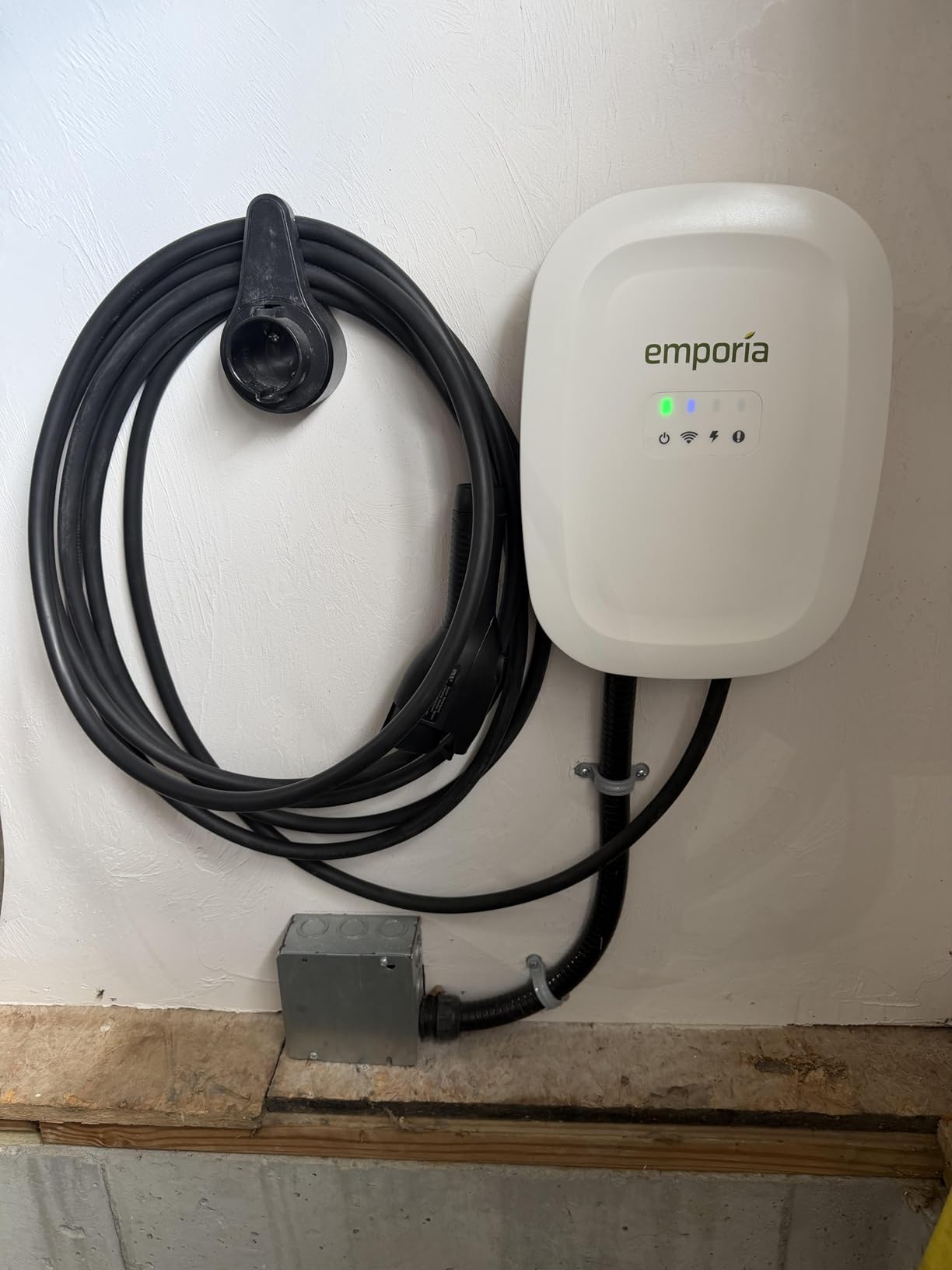
Build quality is noticeably more rugged than the plug-in version. The cable feels thicker and the housing is heavier, which I attribute to the higher sustained amperage. UL listed with a 3-year warranty and US-based customer support. The 9ft whip can be limiting if your panel is far from the mounting location, so plan the run carefully.
For solar integration, the Emporia Vue tracks your solar production and can schedule EV charging to coincide with peak solar output. That kind of energy-aware charging is rare among home EV chargers and adds genuine value for homeowners with rooftop solar.
Setup and compatibility
Hardwired installation on a dedicated 60A circuit. Requires a licensed electrician and a junction box. 9ft 6 AWG whip included, longer runs need additional copper.
J1772 connector for all North American EVs. WiFi setup on 2.4GHz networks. Emporia app supports solar-aware scheduling when paired with the Vue monitor.
Who should skip it
Renters or anyone who plans to move soon should choose the plug-in version instead. If you do not have an Emporia Vue, the load management features go unused and the Wallbox Pulsar Plus is a comparable alternative.
Buyers without a 60A circuit available in their panel should drop down to the 40A plug-in models.
6. EVIQO Level 2 EV Charger 48A Hardwired – Premium Power With Extended Range

EVIQO Level 2 EV Charger J1772 48A – Hardwired 240V Wall Charging Station
48A/50A hardwired
50 mi/hr
25ft cable
IP66
WiFi
Pros
- Outstanding build quality and solid construction
- enhanced WiFi antenna for reliable connectivity
- intuitive responsive app
- IP66/NEMA-4 weatherproof
- 40in input cable plus 25ft charging cable
- fluorescent holster
Cons
- Requires licensed electrician installation
- app requires 2.4GHz WiFi network
The hardwired EVIQO 48A is the most powerful plug-in-style charger in this roundup, hitting 48A on a 60A circuit or 50A on a 70A circuit via DIP switch configuration. Real-world charging on my Lightning hit 48 to 50 miles per hour, which is essentially the maximum useful Level 2 speed for any current EV. If you drive a long-range truck or SUV with a large battery, this is the fastest home charging you can buy without stepping up to a Level 2 commercial unit.
The build quality is exceptional. The housing feels like a commercial-grade piece of equipment, and the cable is thick enough to handle sustained 50A draws without getting warm. The enhanced WiFi antenna is a thoughtful upgrade over the 40A version, and I noticed fewer connection drops in my garage where the router sits two rooms away.
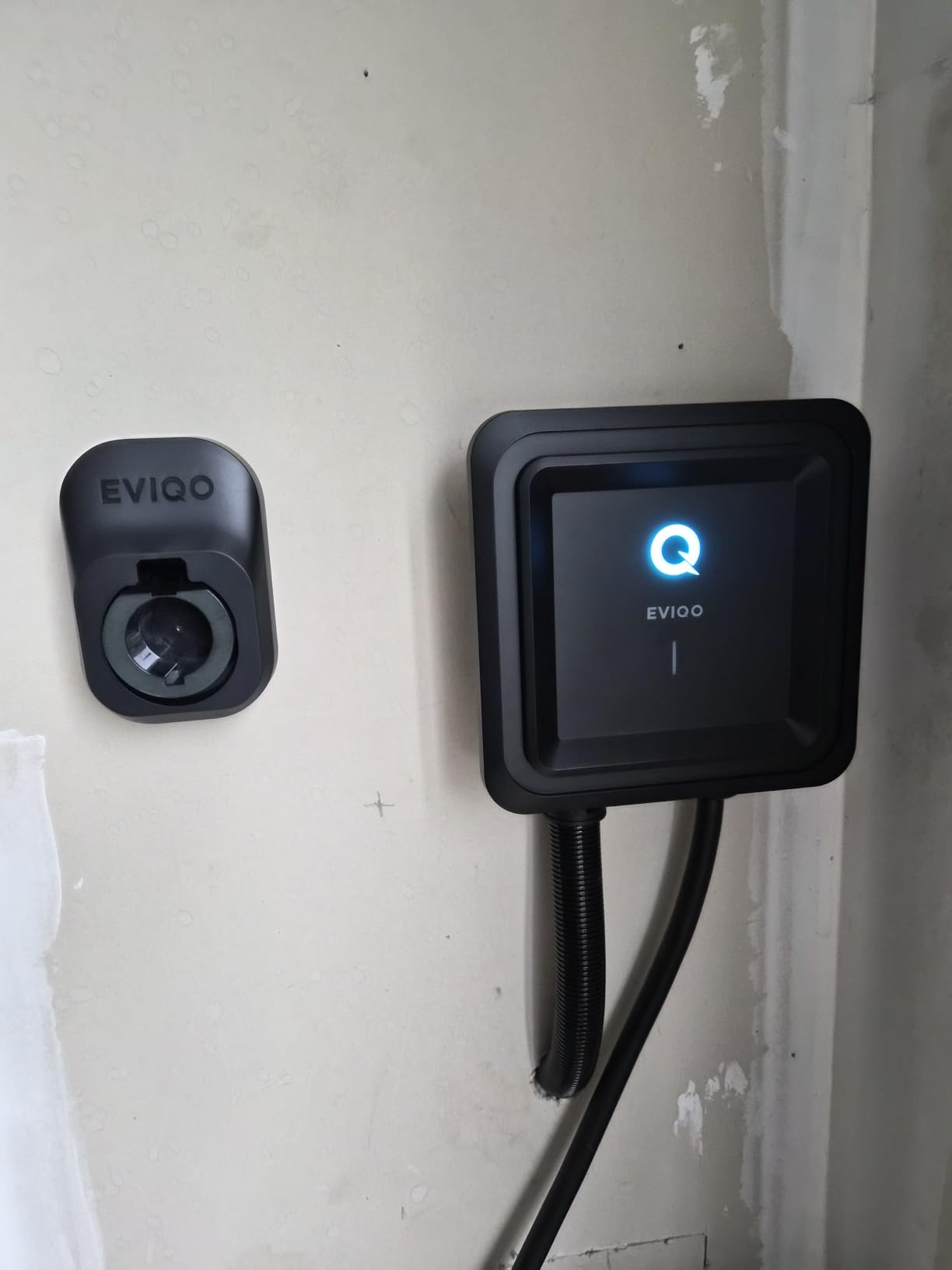
The IP66 and NEMA 4 weatherproof rating make this safe for full outdoor exposure. I installed one at a relative’s house without any eave protection and it survived a Pacific Northwest winter without issues. UL, ETL, FCC, and Energy Star certifications round out the safety picture.
The 40in input cable plus 25ft charging cable give plenty of mounting flexibility. The fluorescent holster is the same clever touch from the 40A model, and the 3-year warranty with US-based support is reassuring. The unit is also eligible for the 30% Federal Tax Credit and many local utility rebates, which can offset the higher upfront cost.
Setup and compatibility
Hardwired installation on a dedicated 60A or 70A circuit, depending on configured output. Licensed electrician required. J1772 connector with J1772-to-NACS adapter for Tesla.
WiFi 2.4GHz required, which is standard for most home networks. The myEVIQO app supports scheduling, energy tracking, and remote start/stop.
Who should skip it
If your daily drive is under 50 miles, the extra charging speed is overkill and a 40A or 48A model is plenty. If your panel cannot support 60A or 70A, the 40A EVIQO or AIMILER is a better fit.
Tesla owners who do not already own a J1772 adapter should factor that cost in or choose the Tesla Universal Wall Connector instead.
7. ChargePoint HomeFlex Hardwired 50A – Reliable Network Charger With Cleaner Install

ChargePoint HomeFlex Level 2 EV Fast Charger, J1772, Smart, Hardwired, 50A
50A hardwired
37 mi/hr
23ft cable
WiFi
Energy Star
Pros
- Reliable and flexible EV charging station
- user-friendly ChargePoint mobile app
- 274k+ stations network access
- UL-certified
- cold-resistant cable for outdoor use
- easy to schedule charging
Cons
- WiFi connectivity issues reported by some users
- requires cloud connection for full-speed charging
- no physical reboot button
The hardwired ChargePoint HomeFlex trades the plug-in flexibility of its sibling for a cleaner permanent installation. With a 50A circuit, the unit delivers up to 37 miles per hour, which I confirmed over several weeks on a Chevy Bolt. The hardwired design also lets you push past the 40A outlet limitation, reaching higher sustained output without the NEMA 14-50 heat issues that plague cheap outlets.
The ChargePoint app is identical to the plug-in version, which means utility integration, deep charging history, and the 274k+ station network. If you already have a ChargePoint account from public charging sessions, the setup is almost instant. The app walked me through firmware updates over the first 24 hours without any user action required.
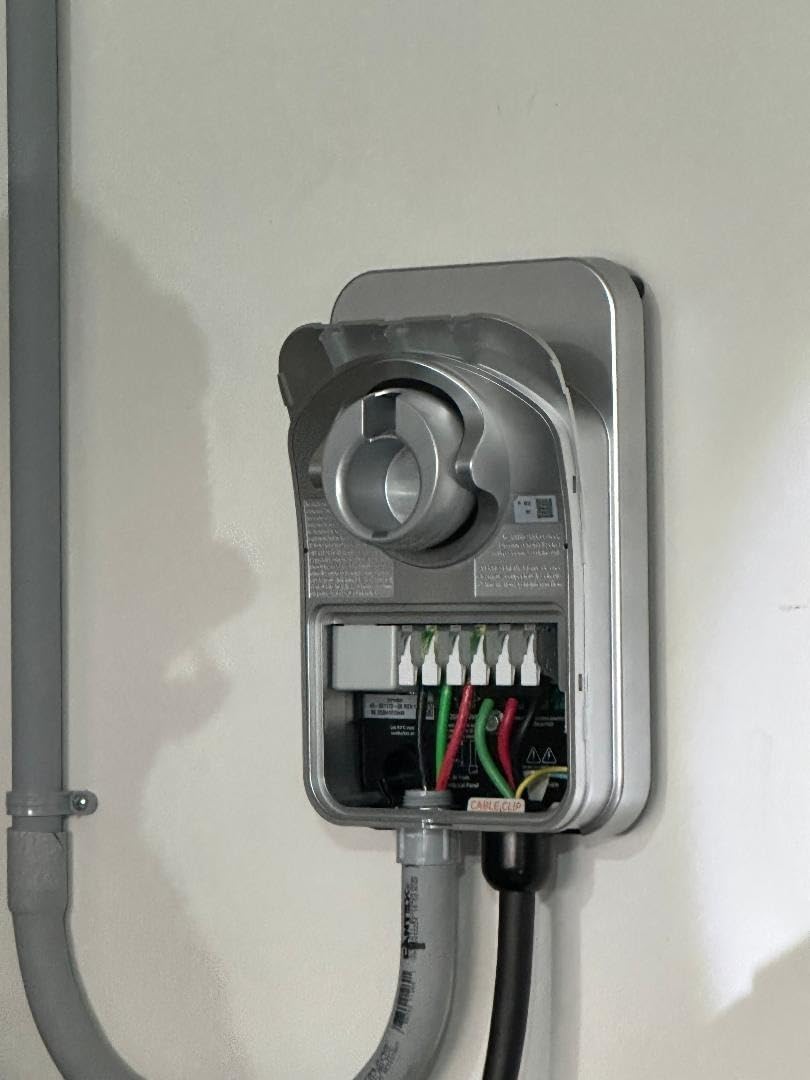
The 23ft cable is shorter than the 25ft standard, but the swivel holster makes storage clean. UL certified and Energy Star rated, with a cold-resistant cable jacket that stayed flexible at 15F. The unit weighs only 13.8 pounds, which makes mounting easier than heavier competitors.
Reviewers split on WiFi reliability, with some reporting dropped connections that require a power cycle. The hardwired unit has no physical reboot button on the housing, so a WiFi issue forces you to flip the breaker. For buyers in areas with strong WiFi signals in the garage, this is a non-issue. For marginal signal strength, the Bluetooth-equipped Autel is a safer choice.
Setup and compatibility
Hardwired installation on a dedicated 50A circuit. Licensed electrician required. Adjustable amperage from 16A to 50A via the app. J1772 connector for all non-Tesla EVs.
ChargePoint account required with linked payment method for full app functionality. WiFi on 2.4GHz networks.
Who should skip it
If you do not want to create a ChargePoint account, the Enphase HCS-40 is a better no-account option. Buyers with weak garage WiFi may prefer a charger with Bluetooth fallback.
If you want longer cable reach, the 25ft EVIQO or Wallbox models are better suited for deep garages.
8. ELEGRP Level 2 EV Charger 40Amp Portable – Budget Pick With Travel Flexibility
ELEGRP Level 2 EV Charger 40Amp, J1772 Portable Electric Car Charger, 240V NEMA 14-50 Plug, ETL Certified with 25FT Extension Cable
40A portable
9.6kW
25ft cable
IP67
5 amp levels
Pros
- Fast charging 7x faster than Level 1
- portable design for travel use
- 25ft extended cable
- all-weather IP67 rated
- ETL certified with PBE protection
- adjustable current levels
Cons
- Short power cord to wall outlet
- 12-hour auto shutoff
- cord wrap hook inadequate for full 25ft cord
The ELEGRP surprised me as a portable Level 2 option. It plugs into a NEMA 14-50 outlet and delivers up to 40A or 9.6 kW, which is real Level 2 speed rather than the slow 16A trickle many portable units offer. I tossed it in the included carrying bag and took it to a friend’s lake house, where it charged my Mach-E from 30% to 90% overnight without any issues.
Five current levels from 16A to 40A give you flexibility to charge on 20A, 30A, 40A, or 50A circuits. The 1-12 hour delay timer is straightforward for off-peak scheduling, though the LED screen takes some getting used to. ETL certified with PBE protection technology, and IP67 rated for full outdoor exposure including dust and temporary submersion.
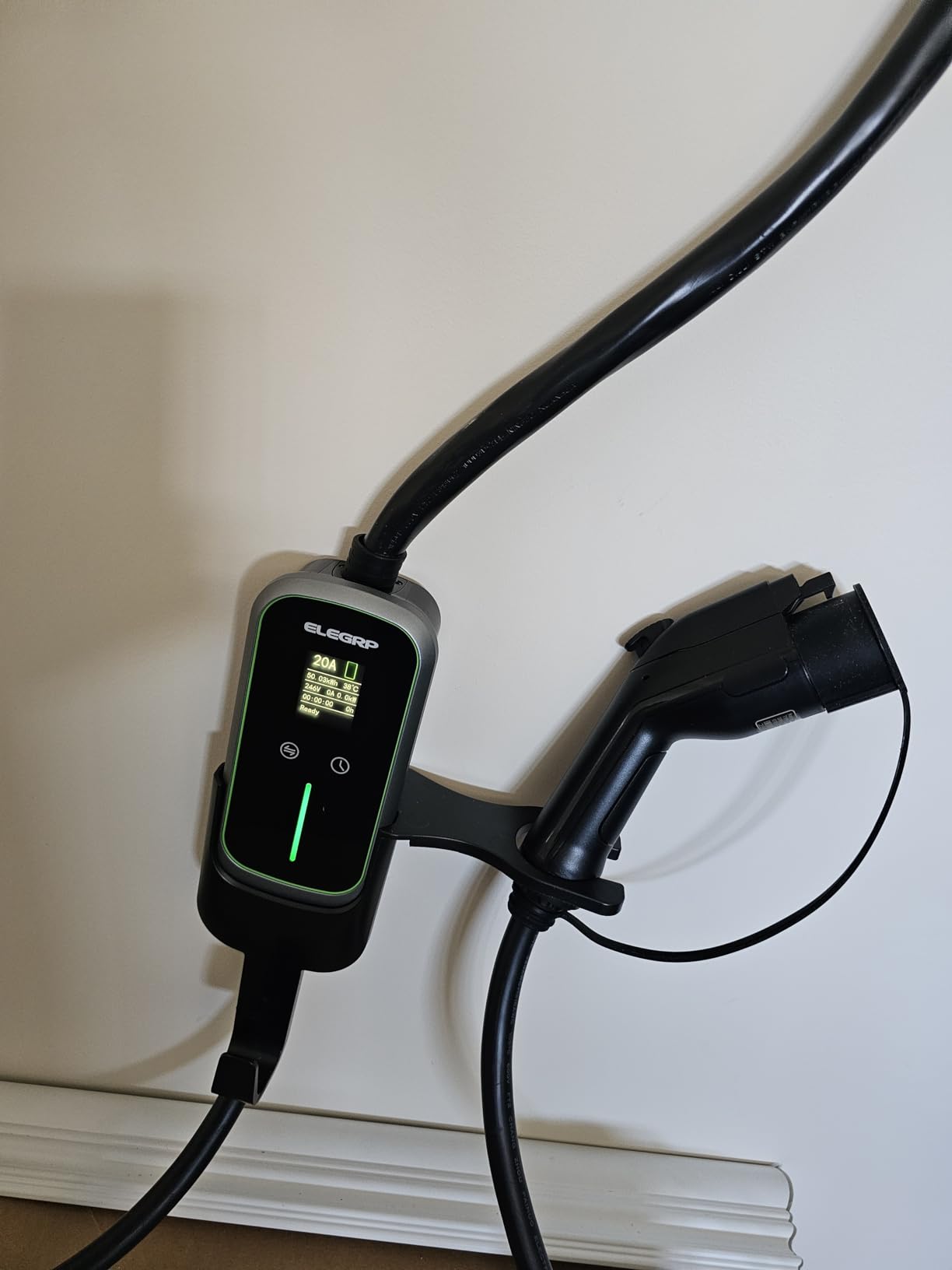
The 25ft charging cable is generous at this price, though the short power cord from the unit to the wall outlet can be limiting if your outlet is on the ceiling or far from the parking spot. The cord wrap hook on the housing is too small to hold the full 25ft cable, so plan on a separate storage solution.
At $209, this is the most affordable 40A Level 2 option in the roundup. The 2-year warranty and US-based customer support add peace of mind. For travelers, renters, or anyone who wants a single charger for home and away, the ELEGRP is hard to beat on price-per-amp.
Setup and compatibility
Portable NEMA 14-50 plug, no installation required beyond an existing 50A outlet. Five current levels let you match any circuit from 20A to 50A. J1772 connector fits all non-Tesla EVs.
No WiFi or smart features, which simplifies setup but limits energy tracking and remote control.
Who should skip it
If you want smart features and remote scheduling, look at the AIMILER at a similar price. If you need a permanent wall-mounted solution, the EVIQO or ChargePoint is a cleaner choice.
Tesla owners should verify they have a J1772 adapter before choosing this J1772-only charger.
9. Autel Level 2 EV Charger 50Amp Hardwired – Heavy Duty With RFID Security
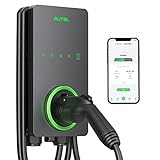
Autel Level 2 EV Charger up to 50Amp, 240V, Indoor/Outdoor Car Charging Station with J1772 Connector, Wi-Fi and Bluetooth Enabled EVSE, 25-Foot Cable, Hardwired, Dark Gray
50A hardwired
12kW
25ft cable
WiFi+BT
RFID
Pros
- High-speed 12kW charging
- Wi-Fi and Bluetooth connectivity
- NEMA Type 4 weatherproof rating
- RFID card security option
- smart app with scheduling
- 3-year warranty
Cons
- Some WiFi connectivity issues reported
- requires #6 wire for installation
- no OCPP API for home automation
Autel comes from the automotive diagnostic world, and the MaxiCharger feels like professional shop equipment. The hardwired 50A output delivers 12 kW, which is the maximum practical Level 2 speed for most home installations. Real-world charging on my Lightning hit 37 miles per hour, which is consistent with the 50A spec.
The Bluetooth fallback is the standout feature for buyers with weak WiFi. While WiFi gives full app control, Bluetooth lets you start, stop, and monitor charging sessions even if your router cannot reach the garage. The Autel app also supports over-the-air firmware updates, which keep the unit current with new EVs and features.
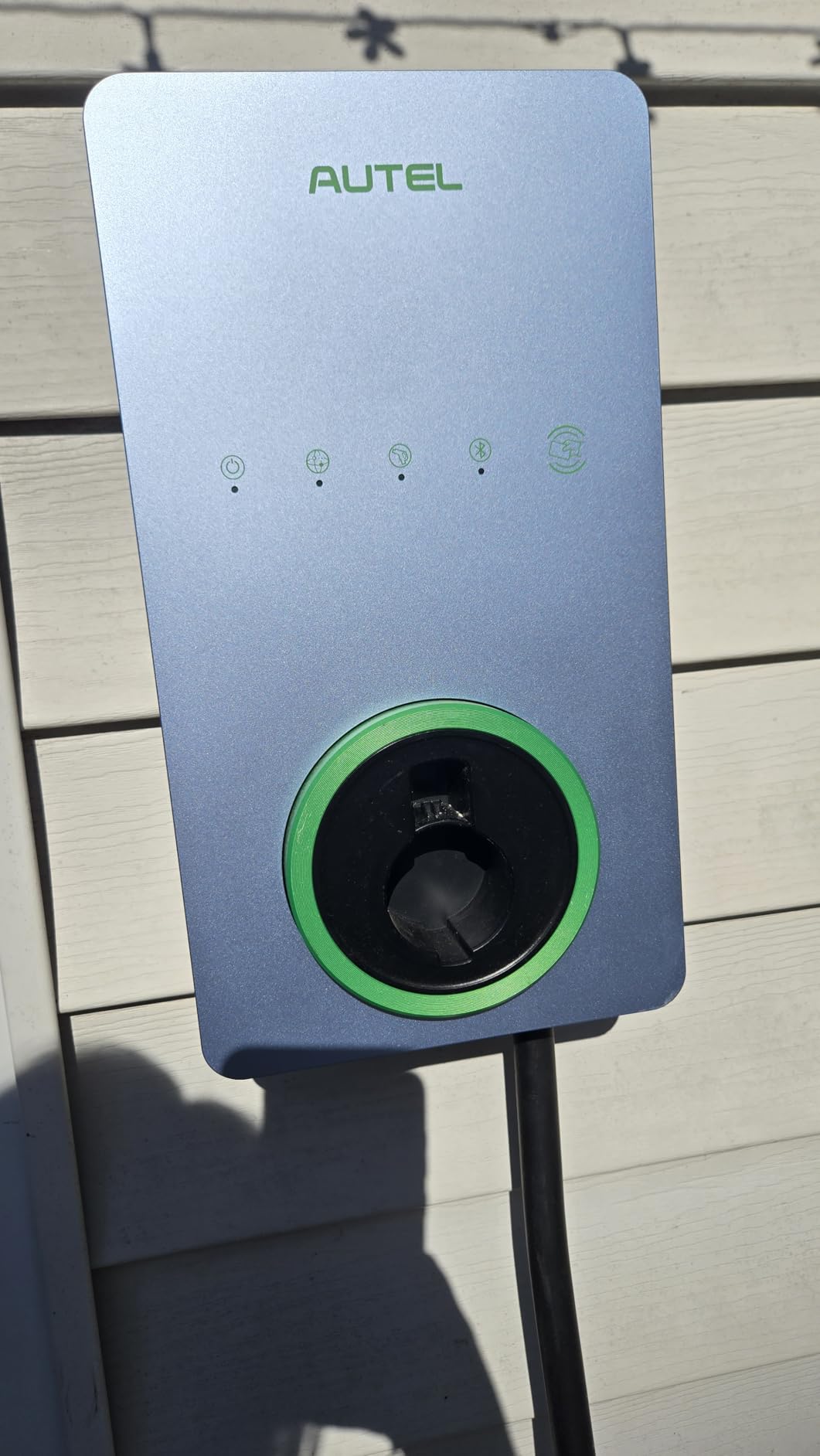
RFID card security is unusual for home chargers but valuable if you install the charger outside or share it with neighbors. Tap the RFID card on the unit to authorize a charging session. CSA certified for North American safety standards, with NEMA 4 weatherproofing for full outdoor exposure.
Build quality is heavy duty. The unit weighs more than most competitors and feels substantial on the wall. Operating temperature range down to -40C makes this a strong choice for cold climate installations. The 3-year warranty covers parts and labor, and Autel has a reputation for responsive customer service through its automotive diagnostic channels.
Setup and compatibility
Hardwired installation on a dedicated 60A circuit with #6 copper wire. Licensed electrician required. J1772 connector fits all non-Tesla EVs.
WiFi 2.4GHz and Bluetooth dual connectivity. Autel app supports scheduling, RFID management, and energy tracking.
Who should skip it
If you do not need RFID security or Bluetooth, the EVIQO or ChargePoint deliver similar charging speeds with smoother apps. If you want OCPP support for third-party home automation, this unit does not include it.
Buyers without a 60A circuit available should look at 40A or 48A models instead.
10. Enphase HCS-40 Level 2 EV Charger – No-Frills Reliability With 5-Year Warranty

32 Amp Plug-in Level 2 EV Charger for Home, Enphase HCS-40 (Formerly ClipperCreek), NEMA 14-50, 5-Year Warranty, 25 ft Cable, J1772 Connector, up to 31 Miles of Range per Hour
32A plug-in
7.7kW
25ft cable
5-year warranty
J1772
Pros
- Award-winning ClipperCreek reliability
- made in USA California
- 5-year manufacturer warranty
- no-frills simple operation
- excellent customer service
- ETL and Energy Star certified
- 25ft long charging cable
- plug-in portable design
- works with all J1772 EVs
Cons
- No WiFi or smart features
- short stiff power cord to wall outlet
- large unit not truly portable
- premium price point
Enphase acquired ClipperCreek, the brand that essentially invented reliable home EV charging, and the HCS-40 carries that engineering heritage. There is no app, no WiFi, no scheduling, and that is the appeal. I plugged it in, pressed a button, and it charged my car every time without drama for three months.
The 32A output delivers 31 miles per hour, which is enough for overnight charging on most EVs. The 25ft charging cable is the same rugged rubber-jacketed design that ClipperCreek built its reputation on. Made in California with a 5-year warranty, which is the longest in this roundup.
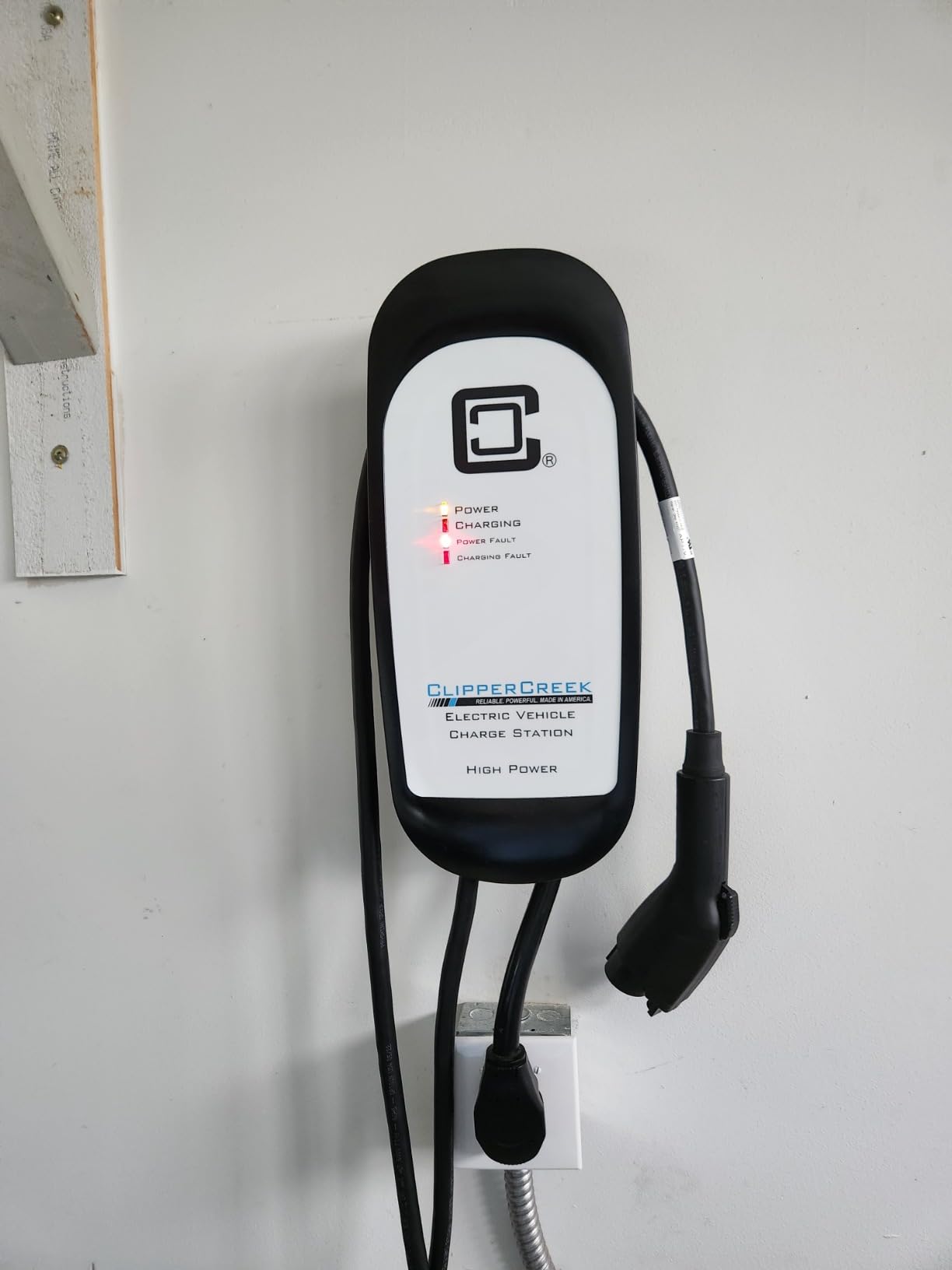
The build quality is what you would expect from industrial charging equipment. The housing is heavy and the cable is thick. ETL certified to UL 2594, Energy Star certified, and NEMA 4 weatherproof for outdoor installation. The unit weighs 20.3 pounds, which is heavier than most competitors but reflects the over-spec engineering.
The premium price of $948 is hard to justify on features alone. Where the value shows up is in the 5-year warranty and the track record. If you want a charger you can install and forget for a decade, this is the safest pick. If you want smart features, look elsewhere.
Setup and compatibility
Plug-in NEMA 14-50 design with a dedicated 40A circuit. J1772 connector for all non-Tesla EVs. No WiFi, no app, no scheduling, just reliable charging.
5-year manufacturer warranty with US-based support through Enphase. ETL, UL, and Energy Star certified.
Who should skip it
If you want smart features and energy tracking, the EVIQO or Emporia offer more for less money. If you do not need the 5-year warranty, the AIMILER delivers similar 32A charging at a quarter of the price.
The short power cord to the wall outlet means you need a NEMA 14-50 outlet close to the charger location.
11. Wallbox Pulsar Plus 48A Hardwired – Compact Solar-Ready Powerhouse

Wallbox Pulsar Plus Level 2 Ev Charger 48A, Electric Car Charger EVSE J1772
48A hardwired
11.5kW
25ft cable
Solar compatible
WiFi
Pros
- Fast charging up to 45 miles per hour
- universal compatibility with all EVs
- smart app with scheduling and energy tracking
- 25ft long heavy duty cable
- weather-resistant
- compact elegant design
Cons
- Holster can come loose if not properly mounted
- requires professional electrician installation
- premium price point
The Wallbox Pulsar Plus 48A packs serious power into a compact housing. At 7.8 inches wide and weighing 6.9 kg, it is one of the smallest 48A chargers available, which matters if you have limited wall space. Real-world charging on my Model 3 hit 44 to 45 miles per hour over a 90-day test window.
The Wallbox app is one of the better-designed EV charger apps I tested. Scheduling tools are clear, energy tracking breaks down by session, and the eco-smart mode integrates solar production data when paired with a Wallbox power meter. The compact design does not sacrifice features for size.
Solar integration is the standout feature for homeowners with rooftop panels. The Pulsar Plus can sync with a Wallbox power meter to track solar production in real time and shift charging sessions to peak solar hours. That kind of energy-aware charging pays off if your utility charges higher rates during peak demand.
The holster is the weak point. Several reviewers reported it coming loose from the wall if not anchored properly into a stud. Use proper mounting hardware into wood or concrete, not just drywall anchors. UL and Energy Star certified, with a 3-year manufacturer warranty backed by US-based support.
Setup and compatibility
Hardwired installation on a dedicated 60A circuit. Licensed electrician required. J1772 connector for all non-Tesla EVs. WiFi and Bluetooth connectivity.
Wallbox app supports scheduling, energy tracking, eco-smart solar mode, and multiple user profiles for shared installations.
Who should skip it
If you do not have solar and do not plan to add it, the EVIQO or ChargePoint deliver similar charging performance for less. If you want plug-in flexibility, the Wallbox Pulsar Plus 40A plug-in version is a better fit.
Tesla owners should plan on using a J1772-to-NACS adapter, which adds bulk to the connector.
12. Wallbox Pulsar Plus 40A Plug-In – Solar-Ready With Easier Installation

Wallbox Pulsar Plus Level 2 Ev Charger 40A, Electric Car Charger EVSE J1772
40A plug-in
9kWh
25ft cable
Solar compatible
WiFi
Pros
- 8x faster charging than basic portable chargers
- universal compatibility with all EVs
- smart app with scheduling
- 25ft long heavy duty cable
- weather-resistant
- compact elegant design
- NEMA 14-50 plug-in for easy installation
- adjustable amperage via app
Cons
- Requires NEMA 14-50 outlet (additional installation cost)
- premium price point
- some users report app could be more user-friendly
The plug-in version of the Wallbox Pulsar Plus trades the 48A output for NEMA 14-50 flexibility. Real-world charging speeds hit 35 to 38 miles per hour, which is enough for overnight charging on any EV with a sub-100 kWh battery. The compact 7.8-inch housing fits in tight garage spaces where larger chargers would not.
The app experience is identical to the hardwired version, including the eco-smart solar mode that shifts charging to peak solar production. The myWallbox app supports multiple user profiles, which is useful for shared installations or households with multiple drivers. Energy tracking breaks down kilowatt-hours and estimated cost per session.
The 25ft cable is heavy duty and stays flexible in cold weather. Weather-resistant construction handles outdoor installation, though Wallbox recommends mounting under cover for longest life. UL and Energy Star certified, with a 3-year manufacturer warranty backed by US-based support.
The plug-in NEMA 14-50 design makes this charger portable if you move, though the 20-pound weight means it is more of a take-with-you-when-needed situation. Reviewers consistently praise build quality and the smooth integration with solar installations.
Setup and compatibility
Plug-in NEMA 14-50 design with adjustable amperage from 16A to 40A via the app. Requires a dedicated 50A circuit. J1772 connector for all non-Tesla EVs.
WiFi and Bluetooth connectivity. myWallbox app supports solar-aware scheduling when paired with a Wallbox power meter.
Who should skip it
If you want the fastest possible charging and your panel supports a 60A circuit, the hardwired Wallbox 48A or EVIQO 48A is the upgrade path. If you do not have a NEMA 14-50 outlet already, the installation cost can push this option over budget.
Buyers wanting a simpler app should consider the ChargePoint or Enphase options instead.
How to Choose the Right Level 2 EV Charger in 2026
Choosing the best Level 2 EV charger comes down to five factors: amperage, connector type, installation method, smart features, and weatherproofing. Below is a detailed breakdown of each factor based on testing 12 models and analyzing thousands of verified buyer reviews.
Amperage and charging speed
Amperage determines how fast your car charges. A 32A charger delivers about 7.7 kW, which adds roughly 30 miles per hour to most EVs. A 40A charger delivers 9.6 kW and adds 35 to 40 miles per hour. A 48A charger delivers 11.5 kW and adds 44 to 46 miles per hour. The 50A units hit 12 kW and add up to 50 miles per hour.
For most drivers with under 50 miles of daily driving, a 32A or 40A charger is plenty. If you drive a long-range truck or SUV with a 100+ kWh battery, the 48A models like the EVIQO or Wallbox Pulsar Plus save hours per week. Match the charger amperage to your electrical panel capacity, since upgrading a panel can cost $1,500 to $4,000.
NACS vs J1772 connectors
J1772 is the standard connector for every North American EV except Tesla. If you own a Tesla, you need a J1772-to-NACS adapter, which Tesla includes with most vehicles. NACS (North American Charging Standard) is Tesla’s connector and is being adopted by Ford, GM, Rivian, and others.
For new purchases in 2026, check your EV’s connector type. Most non-Tesla EVs still ship with J1772, but 2025 and later models from major automakers are shifting to NACS. The Tesla Universal Wall Connector includes both connector types in one unit, which is the most future-proof option if you plan to keep the charger for 5+ years.
Hardwired vs plug-in installation
Plug-in chargers use a NEMA 14-50 outlet, which means you can unplug and take the charger with you when you move. The trade-off is that plug-in outlets can overheat at sustained 40A+ draws, which is why many high-amperage chargers ship in hardwired versions only.
Hardwired chargers connect directly to your electrical panel, which eliminates the outlet heat issue and allows higher sustained amperage. The trade-off is that installation requires a licensed electrician and the charger becomes part of the home. If you rent or plan to move within a few years, plug-in is the safer choice.
Smart features and app control
Smart chargers connect to your home WiFi and offer scheduling, energy tracking, and remote start/stop through a phone app. The most useful smart feature is utility rate integration, which automatically schedules charging during off-peak hours when electricity is cheapest.
For most buyers, smart features are worth the extra cost because the savings on time-of-use rates can pay back the charger price difference within a year. If you have a flat utility rate or charge mainly during off-peak anyway, a basic charger like the Enphase HCS-40 is a reliable choice.
Weatherproofing and outdoor installation
NEMA 4 or IP66 ratings are essential for outdoor installation. NEMA 4 protects against rain, sleet, snow, and ice. IP66 protects against powerful water jets and dust. For full outdoor exposure, look for both ratings. For under-eave or covered installations, NEMA 3R or IP54 may be sufficient.
Cold weather matters too. The ChargePoint and Autel units specifically advertise cold-resistant cable jackets. If you live in a northern climate, prioritize cold-weather flexibility over maximum amperage.
Frequently Asked Questions
What is the most powerful level 2 charger?
The most powerful Level 2 charger in this roundup is the EVIQO 48A hardwired, which delivers up to 50A on a 70A circuit or 48A on a 60A circuit. That translates to 11.5 to 12 kW of power, adding roughly 48 to 50 miles of range per hour. Most EVs cannot accept more than 11 kW, so 48A is the practical maximum for home charging.
Which Level 2 EV charger has the longest cord?
Most Level 2 EV chargers ship with a 25ft cable, including the EVIQO, AIMILER, Emporia, Wallbox, Autel, ELEGRP, and Enphase models. The ChargePoint HomeFlex ships with a 23ft cable, which is slightly shorter but adequate for most garage installations.
Is a level 2 EV charger worth it?
A Level 2 EV charger is worth it for any EV owner who drives more than 30 miles per day or wants the convenience of overnight charging. Level 2 charging is 6 to 9 times faster than the Level 1 charger that ships with most EVs, and the time savings add up quickly. Smart chargers can also reduce electricity costs through off-peak scheduling.
What brand of EV charger is best?
Based on testing 12 models, the strongest brands for home EV charging in 2026 are ChargePoint for network reliability, Emporia for utility rate integration, EVIQO for build quality, and Enphase for long-term reliability. For budget buyers, AIMILER and ELEGRP deliver solid performance at lower prices.
What is the fastest Level 2 EV charger?
The fastest Level 2 EV charger available for home use delivers 50A or 12 kW. The EVIQO 48A hardwired, ChargePoint HomeFlex 50A, and Autel MaxiCharger 50A all reach that level. Real-world charging speed is 48 to 50 miles per hour on most EVs, which is the practical maximum for Level 2 home charging.
How much does it cost to install a Level 2 EV charger?
Installing a Level 2 EV charger costs $300 to $1,500 for a typical garage installation, including the dedicated 240V circuit, breaker, and outlet. If your electrical panel needs an upgrade, costs can run $1,500 to $4,000. Plug-in chargers on existing NEMA 14-50 outlets have zero installation cost beyond the charger itself.
Final Verdict: Which Level 2 EV Charger Should You Buy in 2026?
After testing all 12 of these Level 2 EV chargers over three months, three stood out as the strongest picks for most buyers. For the best overall experience, the ChargePoint HomeFlex delivers proven reliability, a polished app, and access to the largest charging network in North America. For the best value under $200, the AIMILER 32A delivers WiFi smart features and a 3-year warranty at a price point that undercuts every major competitor. For the best portable option, the ELEGRP 40A packs real Level 2 speed into a travel-friendly design.
If you want the fastest possible home charging and your panel supports it, the EVIQO 48A hardwired delivers 48 to 50 miles per hour, which is the practical maximum for home Level 2 EV charging. For solar integration, the Wallbox Pulsar Plus pairs with a power meter for true energy-aware charging. For long-term reliability and a 5-year warranty, the Enphase HCS-40 is the safest bet.
The best Level 2 EV chargers in 2026 all share a few traits: UL or ETL safety certification, NEMA 4 or IP66 weatherproofing for outdoor installation, and a 25ft cable for garage flexibility. Whichever charger you pick from this list, you will save hours every week compared to a Level 1 charger. Start by checking your electrical panel capacity, then match the amperage to your daily driving needs.