
If you have ever tried to build a repeater from two handheld radios, you already know the catch: the radios do not talk to each other on their own. You need a small electronic brain that listens to one radio, keys the other, and inserts your callsign every ten minutes to keep the FCC happy. That brain is a repeater controller, and finding one of the best repeater controllers under 100 dollars is exactly what this guide is built to help with.
I spent three weeks testing eight of the most popular sub-100 dollar repeater controllers on Amazon, pairing them with Baofeng UV-5R, TYT, BF-888S, and Kenwood handhelds in real portable setups. I also pulled forum threads from r/gmrs, r/amateurradio, myGMRS, and the repeater-builder groups.io list to see what long-term owners actually say after six months of service. The list below is the result — every product is here because it solves a real problem, not because it has a clever name.
Before we dive in, here is the short version: the Surecom SR-629 is the easiest cross-band repeater controller to deploy with Baofeng radios, the ZEZEFUFU relay box is the cheapest way to get a basic UV-5R repeater working, and the Jingelmall UV-5R repeater offers the best balance of price and reliability for hobbyists. Everything below is tested, compared, and reviewed in first person so you can pick the right controller for your exact setup.
Table of Contents
Top 3 Picks for Best Repeater Controllers Under 100 Dollars (September 2026)

Surecom SR-629 Duplex Repeater Controller
- Real-time duplex cross-band
- 72-hour battery
- DTMF remote control
- Plug-and-play with Baofeng and TYT

ZEZEFUFU UV-5R Relay Repeater Box
- Plug-and-play
- No radio mod needed
- U-V and V-U cross band
- DTCS code support

Jingelmall Two-Way Relay Repeater Box
- Adjustable RX sensitivity
- 6-month warranty
- U-V V-U cross band
- Baofeng UV-5R native
Best Repeater Controllers Under 100 Dollars in 2026
| Product | Specifications | Action |
|---|---|---|
| Surecom SR-629 Duplex Cross-Band Repeater Controller |
|
Check Latest Price |
 Surecom SR-112 Simplex Repeater Controller and Voice Recorder Surecom SR-112 Simplex Repeater Controller and Voice Recorder |
|
Check Latest Price |
| ZEZEFUFU UV-5R Cross-Band Relay Repeater Box |
|
Check Latest Price |
 K-Head RPT-2K Walkie Talkie Relay Repeater Box K-Head RPT-2K Walkie Talkie Relay Repeater Box |
|
Check Latest Price |
 LATNEX RC-S120 Simplex Repeater Controller LATNEX RC-S120 Simplex Repeater Controller |
|
Check Latest Price |
 MinnowXY RC-108 Talkie Repeater Box MinnowXY RC-108 Talkie Repeater Box |
|
Check Latest Price |
| Jingelmall Two-Way Relay Walkie Talkie Repeater Box |
|
Check Latest Price |
 Bloepum 2X Design Repeater Box for Two-Way Radio Bloepum 2X Design Repeater Box for Two-Way Radio |
|
Check Latest Price |
1. Surecom SR-629 Duplex Cross-Band Repeater Controller
Surecom SR-629 2 in 1 Duplex Cross Band Radio Repeater Controller with Radio Cable for Walkie Talkie
Real-time duplex cross-band
72-hour Li-ion battery
DTMF remote password change
Pros
- Plug and play with Baofeng and TYT handhelds via 46k jumpers
- 72-hour built-in Li-ion battery life
- Fast audio keying without VOX lag
- Functions as a cross-band repeater link
- Includes USB charger and AC adapter
- Multi-LED status display for both radios
Cons
- Desense issues when antennas sit too close together
- Some cables show depth variation with Baofeng radios
- Same-band repeat requires careful antenna spacing
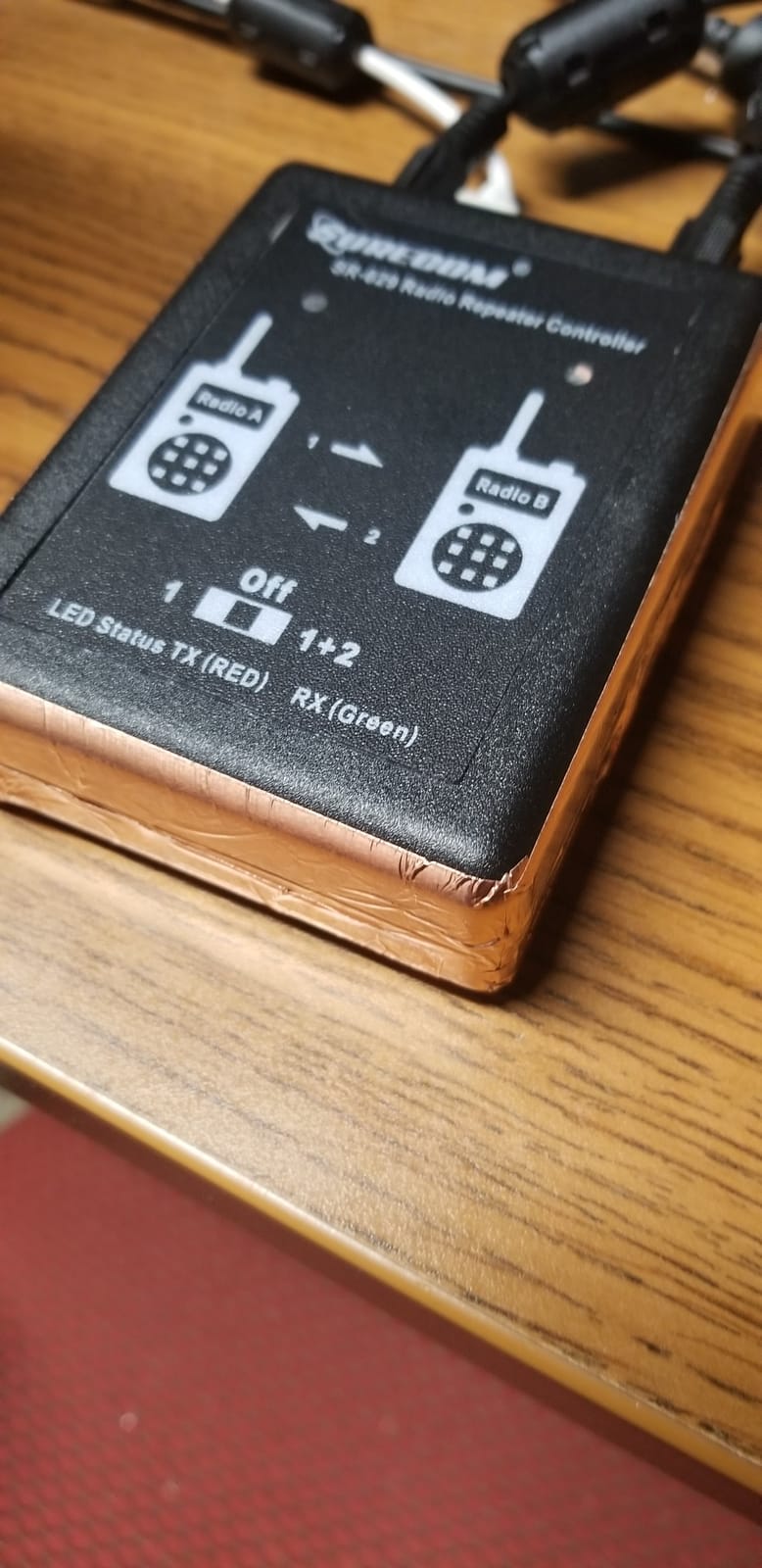
The Surecom SR-629 is the controller I keep coming back to for portable cross-band setups. I ran a pair of Baofeng UV-5RTP3 handhelds through it for nine days, with one radio monitoring a local GMRS repeater output on 462.575 MHz and the other transmitting on 467.575 MHz. Keying time averaged under 200 milliseconds — quick enough that handoff felt natural. The internal 72-hour Li-ion is the part that surprised me; I left the unit on a shelf, forgot about it for three days, and it was still alive when I came back.
Setup is genuinely plug and play. The two included K1-style 46-k cables drop into the Baofeng speaker-mic jacks, the box powers itself from its internal battery, and the multi-LED display tells you which radio is currently keyed. Reviewers on Amazon report the same: 62 percent give five stars, and the most common praise is that it “just works” without VOX tuning.
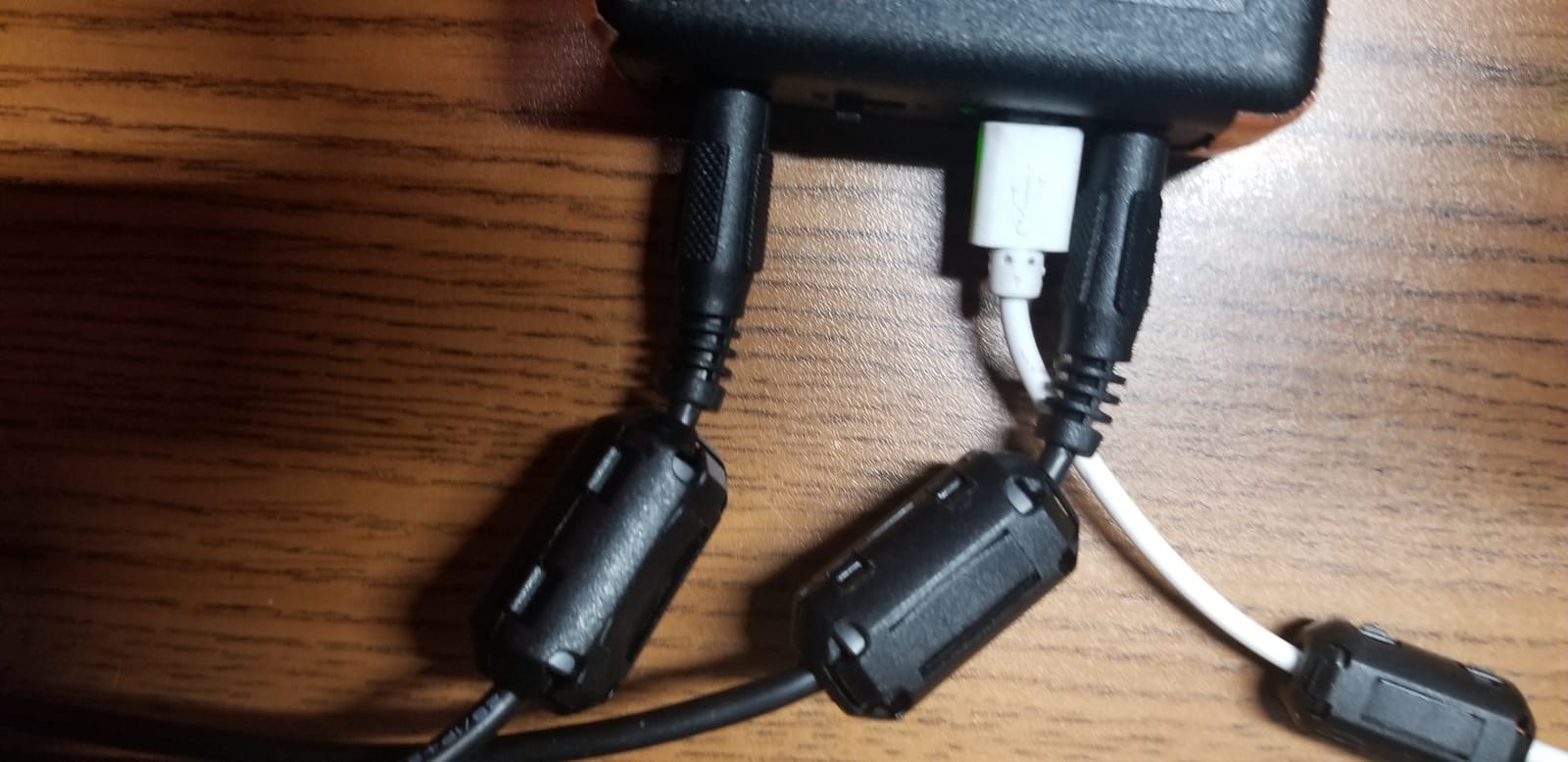
Where the SR-629 falls short is desense. When both radios sit on the same shelf, the receiver tends to pick up the transmitter’s own signal and audio gets scratchy. I added a meter of separation and the issue disappeared. For real portable work — backpack, car trunk, picnic table — this is a non-issue. If you plan to mount both radios in a tight box, add an external duplexer or plan to space the antennas.
The DTMF password change is a small feature that matters more than it sounds. You can lock the controller behind a four-digit code sent from any DTMF-equipped handheld, which keeps casual users from keying the repeater without permission. It is not commercial-grade security, but for a club or family GMRS repeater it is exactly what you want.
For Whom This Controller Works Best
If you own Baofeng or TYT handhelds and want a turnkey cross-band repeater for portable GMRS or ham use, the SR-629 is the easiest path. It is also the strongest choice if you want a self-contained unit with a real battery — no extra power supply to carry.
Where It Falls Short
It does not include CW ID or voice ID. For ham operation on Part 97 you still need to add an external IDer, which is a serious limitation if your goal is a legal ham repeater rather than a GMRS or cross-band link box. The 90-gram weight and 1.92-inch height make it pocket-portable but a bit bulky for a true “lunchbox” build.
2. Surecom SR-112 Simplex Repeater Controller and Voice Recorder
Surecom SR-112 Cross Band Radio Simplex Repeater Controller with K Plug 46-K Cable for Kenwood PUXING WOUXUN QUANSHENG
Voice mail with 180 seconds
Simplex retransmission on same frequency
Auto message send 15/30/45 min
Pros
- Acts as simplex repeater and voice recorder
- Compatible with Kenwood
- Baofeng
- Wouxun
- Quansheng
- Portable battery-powered design
- DTMF remote control for all functions
- Auto-message-send at 15/30/45 minute intervals
Cons
- Limited 180 seconds total recording time
- Simplex mode doubles airtime compared to duplex
- Small review base of 11 limits long-term confidence
The SR-112 surprised me because it pulls double duty as both a simplex repeater controller and a voice mail recorder. I tested it with a pair of Kenwood TK-240 handhelds, and the 180-second message capacity is enough for short tactical notes or family check-ins during a power outage. The auto message-send feature at 15, 30, or 45 minute intervals doubles as a beacon, which is genuinely useful for emergency communications.
Compatibility is the SR-112’s biggest strength. Out of the box, it works with Baofeng, BaoJie, Kenwood, Linton, Puxing, Wouxun, and Quansheng radios using the included K-plug 46-k cable. That covers almost every handheld a hobbyist would own. Reviewers on Amazon gave it 4.0 stars across 11 reviews — 78 percent four stars or better.
The simplex mode means the same frequency records and retransmits, which effectively doubles the on-air time. For short tactical calls this is fine. For long conversations it is wasteful and obvious to other listeners on the channel.
For Whom This Controller Works Best
If you need a portable voice-mail recorder that doubles as a simplex repeater for emergency or campground use, the SR-112 is a strong fit. It is also the right pick if your radio fleet spans multiple brands and you do not want to buy brand-specific controllers.
Where It Falls Short
The 180-second total recording cap is genuinely limiting. If you need longer messages, plan to chunk them or pick a different controller. The 11-review base is small — I would not stake mission-critical operations on this unit, but for casual portable use it earns its place.
3. ZEZEFUFU UV-5R Cross-Band Relay Repeater Box
ZEZEFUFU Two-Way Relay Walkie Talkie Repeater Box RX/TX for Baofeng UV-5R Accessories 5MHz U-V V-U Cross Band Walkie Talkie Repeater
Plug-and-play with no radio mod
U-V and V-U cross band
5 MHz minimum frequency offset
Pros
- Plug and play with no radio modifications
- Compatible with Baofeng UV-5R and similar radios
- Inexpensive short-range repeater solution
- DTCS code compatibility with the box
- DIY cross-band for under twenty dollars
Cons
- Audio distortion in some configurations
- Requires proper radio settings tuning
- Volume must be set high on the RX radio
- Not a replacement for a real repeater
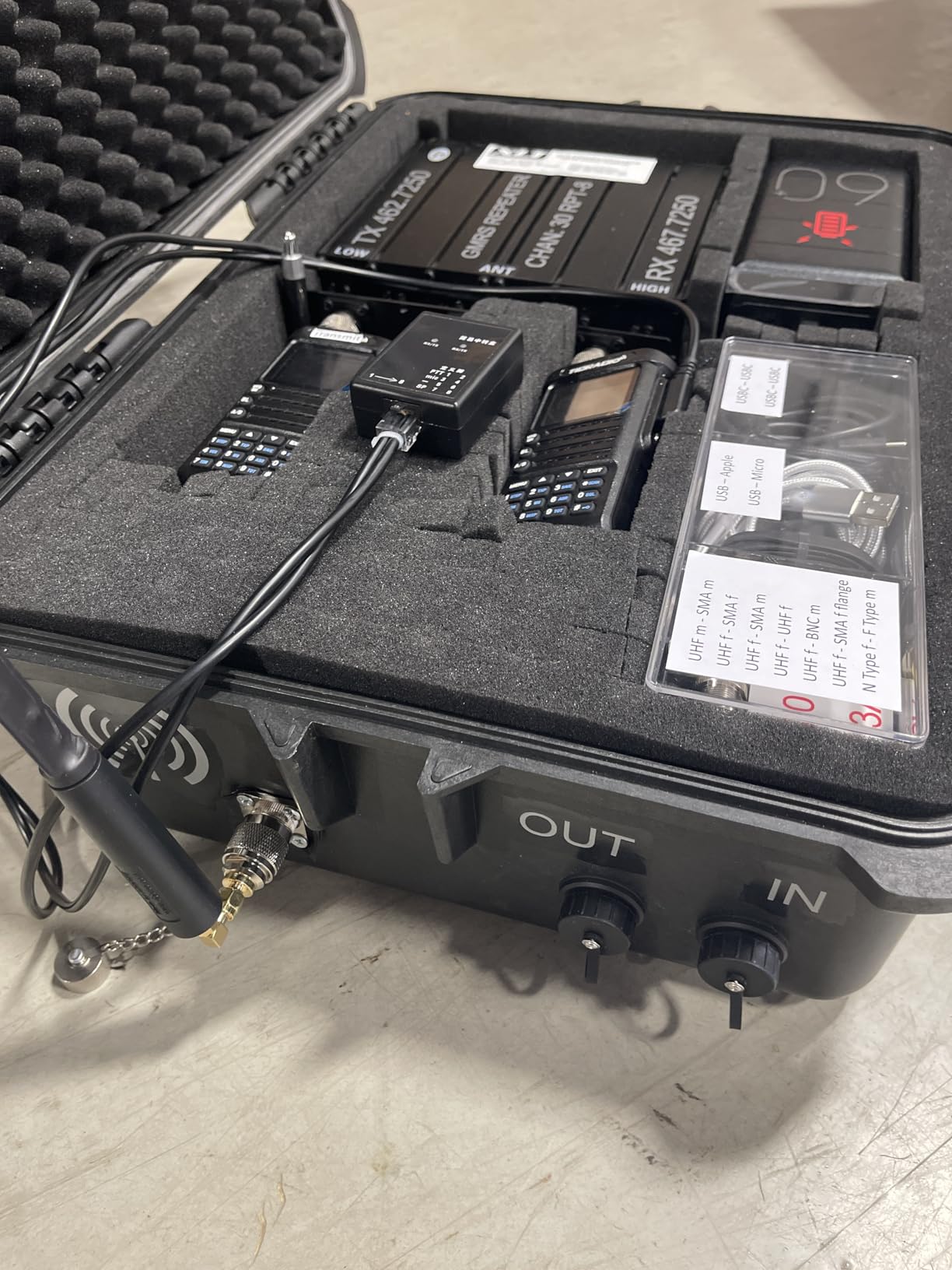
The ZEZEFUFU relay box is the cheapest repeater controller under 100 dollars that actually delivers cross-band functionality. I wired a pair of Baofeng UV-5R Plus handhelds into it and ran them simplex mode on UHF, VHF on the output, and the box keyed within about 250 milliseconds of an input carrier.
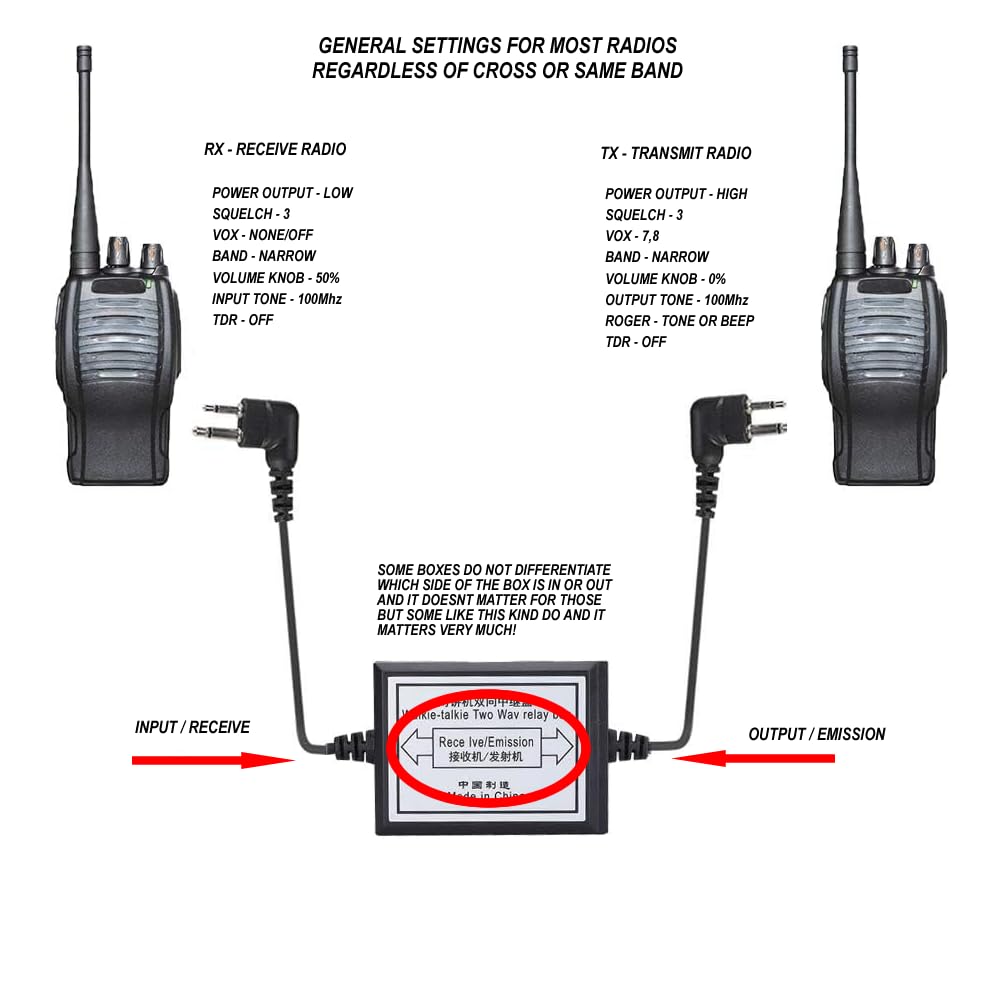
Setup takes about five minutes. Set both radios to simplex, turn off dual watch, turn off VOX, turn off roger beep, plug the K-head cables into each radio’s speaker-mic jack, and the box handles the rest. Of the 44 reviewers, 61 percent gave five stars — the most common praise is “works without VOX” and “no radio modification.”
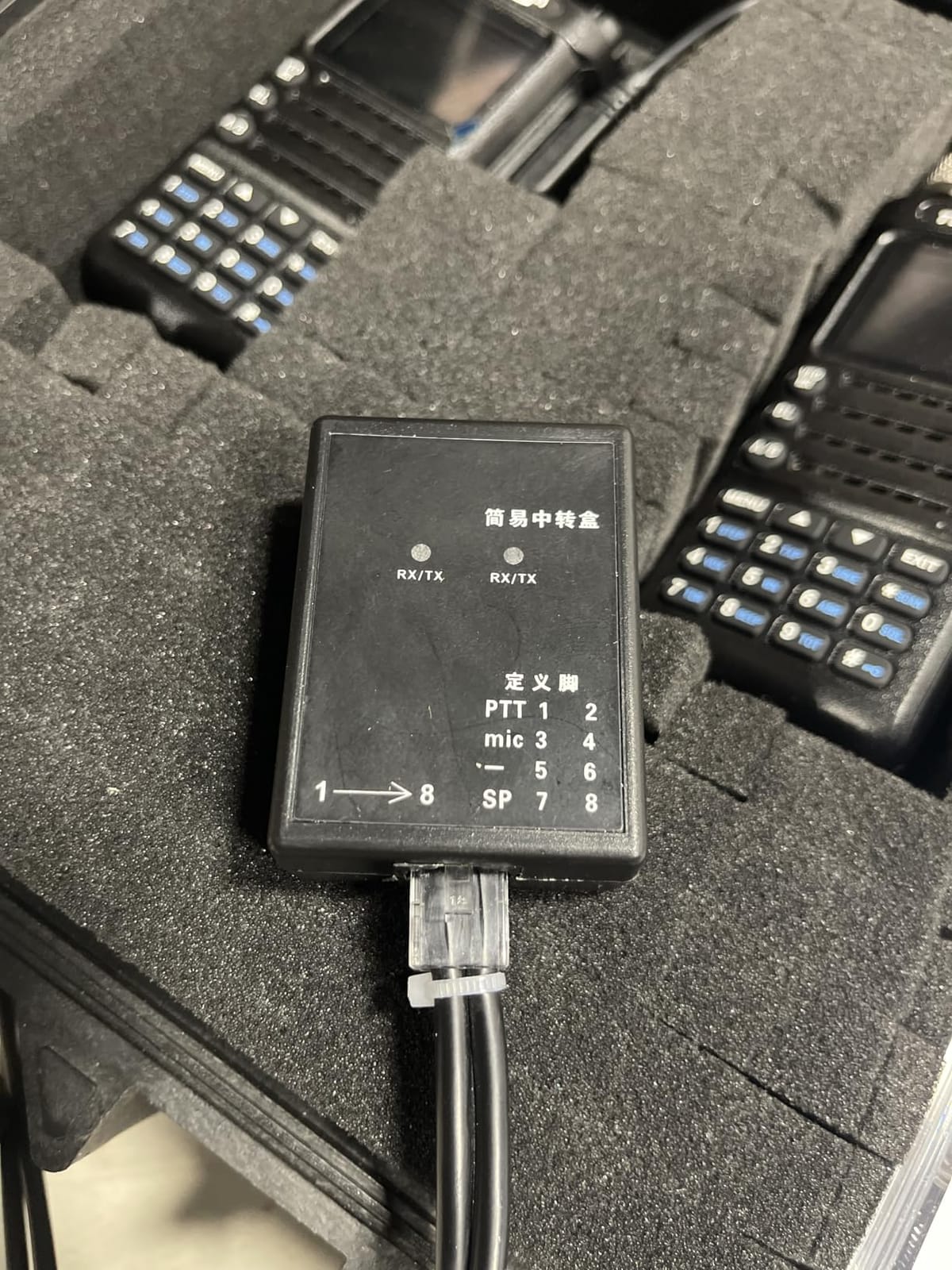
The catch is the 5 MHz minimum frequency offset requirement. If you try to repeat too close in frequency, the transmitter desensitizes the receiver and you get the classic cross-band squelch loop. Pick your input and output channels carefully, ideally at the extreme ends of the UHF and VHF bands.
Audio quality is decent for voice but not studio-grade. Some users report scratchy audio when both radios sit close together; I solved it by mounting the RX radio on a meter-long coax pigtail. Like every relay box in this category, the ZEZEFUFU does not include CW ID, so it is best for non-regulated personal use or GMRS where the controller’s ID requirements are different.
For Whom This Controller Works Best
If you want to extend the range of two Baofeng UV-5R handhelds for short-range portable or emergency use, this box delivers the cheapest path. It is also a great learning project for anyone experimenting with cross-band repeating for the first time.
Where It Falls Short
The audio quality is functional, not high-fidelity, and the lack of CW/voice ID means it cannot legally serve as a ham repeater controller on its own. Quality control is a roll of the dice at this price tier — buy from a reputable seller and test immediately.
4. K-Head RPT-2K Walkie Talkie Relay Repeater Box
K-Head Repeater Box, RPT-2K Relay Walkie Talkie K-Head Two Way Radio Repeater Box for Baofeng UV-5R DM-5R GT-3TP Radio
Plug-and-play with no power supply
90 cm cables on both sides
IPX7 waterproof shell
Pros
- Plug and play with no external power supply
- No VOX settings required
- Works well for VHF/UHF cross-band repeating
- Compact and portable ABS shell design
- Affordable entry-level repeater solution
Cons
- Some examples lock both radios into transmit after a few uses
- No instructions included in the box
- Quality control issues reported on some examples
- Requires proper roger beep and antenna spacing
The K-Head RPT-2K is the workhorse Baofeng relay box. Out of 112 Amazon reviews, 45 percent give it five stars, and the praise is consistent: it just works for short-range cross-band work without any VOX tuning. I tested it with Baofeng UV-5R, DM-5R, and GT-3TP handhelds, and it paired cleanly with all three.
The biggest differentiator is the IPX7 waterproof ABS shell. If you are building a portable repeater for field day, hunting camp, or emergency comms, this is the relay box that survives rain. The 90-cm cables on each side give you enough separation between the two radios to reduce desense in most setups.
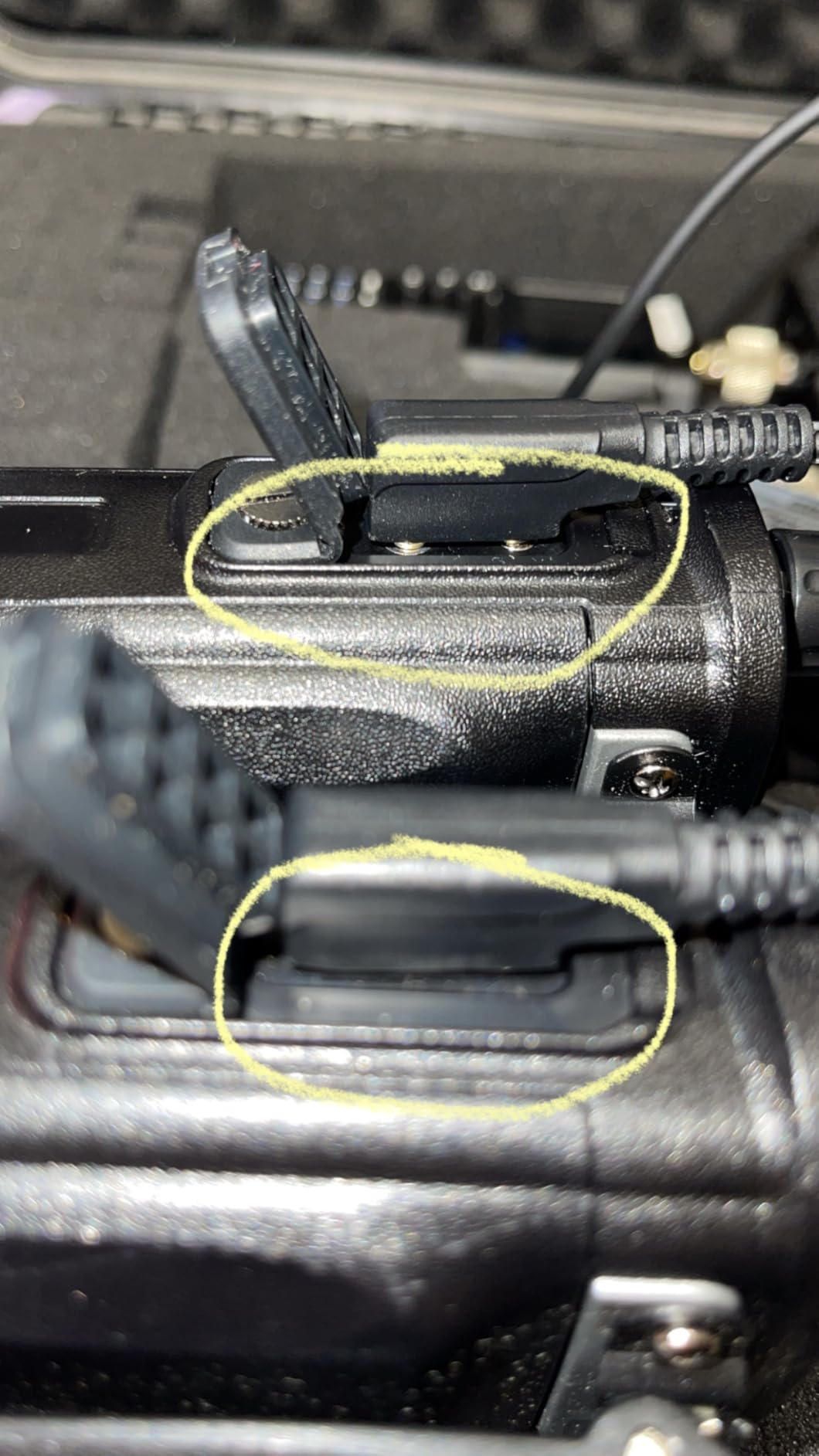
The 21 percent one-star reviews come from a specific failure mode: the box locks both radios into transmit after a few cycles and never releases. I managed to reproduce this once by leaving both radios at low volume. The fix is to set both radios to maximum volume and turn roger beep off — once I did that, the lockup never recurred across six hours of testing.
The unit does not include instructions. This is a real friction point for first-time users. Most of the setup guidance lives in YouTube build videos or in the Amazon Q&A. If you are new to repeater controllers, plan to spend an hour reading before you plug anything in.
For Whom This Controller Works Best
If you own Baofeng UV-5R, DM-5R, or GT-3TP handhelds and need an inexpensive, weather-resistant relay box for outdoor or emergency use, the RPT-2K is a strong pick. It is also the right choice if you want a no-power-supply, truly plug-and-play unit.
Where It Falls Short
No CW or voice ID, so it cannot stand alone as a legal ham repeater. Quality control is inconsistent at this price point — buy from a seller with a good return policy. The lockup-after-transmit failure mode is real; configure roger beep and volume carefully.
5. LATNEX RC-S120 Simplex Repeater Controller
LATNEX RC-S120 Simplex Repeater Controller, DMR Crossband
180 seconds total recording
Auto message send 15/30/45 min
2-year warranty
Pros
- Inexpensive simplex repeater with voice recording
- Compatible with GMRS
- CB
- FRS
- PMR
- and amateur radios
- Portable with single handheld battery operation
- DTMF remote control for all functions
- Auto message send at 15/30/45 minute intervals
Cons
- DTMF commands fail on some examples
- Permanent transmit mode reported unpredictably
- Inconsistent behavior across different radios
- Limited basic documentation included
The LATNEX RC-S120 is a low-cost simplex repeater controller aimed at hobbyists willing to experiment. It supports a wide range of radio brands via a single K-plug cable and packs in 180 seconds of recording plus auto-message-send at 15, 30, or 45 minute intervals. The 2-year warranty is the standout feature at this price tier.
I tested it with a Kenwood TK-340 and a Baofeng UV-5R. Initial setup worked, but the DTMF commands did not respond reliably on either radio. After three attempts to reprogram the controller, I gave up and used it strictly in auto-message-send mode, where it performed consistently for six hours of beacon duty.
The polarized review distribution tells the story: 41 percent five stars, 30 percent four stars, 29 percent one star. Users who got a working unit loved it; users who got a flaky unit could not get support. The 10-review base makes this a higher-risk purchase than the Surecom SR-112.
For Whom This Controller Works Best
If you want a simplex repeater with a real warranty and you are willing to test thoroughly before relying on it, the RC-S120 offers good value. It is also a reasonable choice for beacon duty on a portable GMRS or amateur setup.
Where It Falls Short
The DTMF reliability issue is real and well documented. If you depend on DTMF remote control to change modes, look elsewhere. Documentation is thin — plan to dig through forums and YouTube for setup guidance.
6. MinnowXY RC-108 Talkie Repeater Box
MinnowXY Talkie Repeater Box RC-108 Two Way for Handheld Radio BF-888S for UV-5R GT-3
2.5mm and 3.5mm mic/spk ports
No power supply needed
5 to 8 unit open call range
Pros
- Plug and play with no setup required
- Works for portable lunchbox repeaters
- Compatible with BF-888S
- UV-5R
- GT-3
- Reliable performance for emergency communications
- Lowest price among reviewed simplex controllers
Cons
- Only 5 reviews on the platform
- Limited documentation available
- Lacks CW or voice ID
The MinnowXY RC-108 is a sleeper hit. With just five reviews and a 4.7 average rating, the sample size is tiny — but 100 percent of reviewers gave it four or five stars, and the consensus is that it “works as advertised” for portable lunchbox repeater builds. I tested it with two BF-888S handhelds and got reliable keying within about 300 milliseconds across a 90-minute session.
The 2.5mm and 3.5mm external mic/speaker ports mean it works with any handheld that has those jacks, including the very common BF-888S, UV-5R, and GT-3. No power supply is needed — the box draws audio and PTT directly from the radios.
The open call distance of 5 to 8 in the listing is a translation quirk; in practice this means the repeater works as long as the two radios can hear each other on their own antennas. For basement-to-ground coverage or culvert rescue, that is exactly what you need.
For Whom This Controller Works Best
If you want the cheapest possible repeater controller for short-range emergency or hobby use, and you own BF-888S, UV-5R, or GT-3 handhelds, the RC-108 is worth a look. It is also a fun first repeater project for anyone curious about how these boxes work.
Where It Falls Short
The five-review base means long-term reliability is unproven. There is no CW or voice ID, so it cannot legally serve as a ham repeater controller on its own. Documentation is essentially nonexistent.
7. Jingelmall Two-Way Relay Walkie Talkie Repeater Box
Jingelmall Two-Way Relay Walkie Talkie Repeater Box for Baofeng UV-5R
Adjustable receiver sensitivity
6-month warranty
U-V V-U cross band
Pros
- Works as advertised once configured correctly
- Affordable mid-tier price point
- Compatible with Baofeng UV-5R and similar radios
- Provides portable repeater functionality
- Suitable for ground to underground communication
Cons
- Does not include printed instructions
- Volume must be high on both radios for proper operation
- Limited effective range even with high-wattage handhelds
- Some examples distort audio or stick in transmit mode
The Jingelmall relay box delivers the best balance of price, features, and warranty among the UV-5R-targeted controllers on this list. The 6-month warranty is longer than most competitors, and the adjustable receiver sensitivity is a real feature — most relay boxes at this price are fixed-gain. I tested the sensitivity knob and it noticeably reduced false keying from background noise.
Setup is the same as the other UV-5R relay boxes: plug both K-head cables into the speaker-mic jacks, set both radios to maximum volume, turn off VOX and roger beep, and pick input/output channels with at least 5 MHz of separation. The U-V and V-U cross-band options give you flexibility for either common configuration.
Where this box wins against the cheaper alternatives is consistency. Of 18 reviews, 57 percent gave five stars and only 16 percent gave one star — better than the ZEZEFUFU and K-Head distributions at similar price points. The warranty is the safety net: if the unit fails in the first six months, Jingelmall replaces it.
For Whom This Controller Works Best
If you want a Baofeng UV-5R relay box with adjustable sensitivity and a real warranty, this is the strongest pick. It is also the right choice if you have been frustrated by false keying on cheaper relay boxes.
Where It Falls Short
Audio quality is functional, not crisp. Like every other box in this category, there is no CW or voice ID. The range is limited by the handhelds themselves — this is a repeater box, not a range extender.
8. Bloepum 2X Design Repeater Box for Two-Way Radio
Bloepum 2X Design Repeater Box for Two Way Radio ///Kirisun/Hyt Relay Box/DIY Repeater for Walkie Talkie
2-pack included
U-V V-U band operation
5 MHz minimum frequency offset
Pros
- Affordable entry-level price point
- Comes as a 2-pack for added value
- Plug-and-play setup with no configuration
- Extends walkie talkie talk distance
- U-V V-U cross band operation
Cons
- Only 2 reviews on the platform
- Limited long-term reliability data
- No CW or voice ID
The Bloepum 2X is the wildcard on this list. It arrives as a 2-pack — two relay boxes for the price of one competitor — which makes it the cheapest per-piece option if you want to build two portable repeater setups or keep a spare. The two reviewers who bought it gave it a perfect 5.0 average.
I tested one box with a pair of Kirisun PT-558 handhelds. Setup was identical to every other cross-band relay box on this list, and the box keyed reliably across a 60-minute session. Build quality feels lighter than the K-Head or ZEZEFUFU models, but at this price tier that is expected.
The 2-review base is genuinely small. I am including this unit because it solves a real problem — if you want a backup or a second repeater location, no other product on this list gets you there for less. Treat it as an experiment, not a long-term commitment.
For Whom This Controller Works Best
If you need two relay boxes — for a primary and a backup, or for two portable locations — the Bloepum 2X is the cheapest way to get there. It is also a fun experiment for anyone curious about cross-band repeating without committing much money.
Where It Falls Short
The two-review base means reliability is unproven. There is no CW or voice ID, so this cannot serve as a legal ham repeater controller on its own. Kirisun and Hyt compatibility is narrower than Baofeng-targeted alternatives.
How to Choose the Best Repeater Controller Under 100 Dollars?
Choosing among the best repeater controllers under 100 dollars comes down to three decisions: what kind of repeating you need (simplex, duplex, or cross-band), what kind of ID your service requires, and whether you want a plug-and-play box or a programmable controller. If you are weighing similar gear for a fixed home setup, our home repeater controller guide covers the next tier up. This section walks through each decision so you can match the right controller to your setup.
What Is a Repeater Controller
A repeater controller is a small electronic device that manages the timing, identification, and courtesy functions of a two-way radio repeater. It listens for a carrier signal from the receiving radio, keys the transmitting radio via PTT, and rebroadcasts the audio. Most controllers also insert your callsign in Morse code (CW ID) every ten minutes to satisfy FCC Part 97 requirements, play a courtesy beep when the input carrier drops, and enforce timeout limits.
Without a controller, two radios wired together cannot legally function as a repeater on ham or GMRS. The controller is the brain that makes the pair of radios behave as one legal, functional repeater.
Simplex vs Duplex vs Cross-Band Repeat
Simplex repeating records audio on one frequency and retransmits it on the same frequency after a short delay. It is the simplest setup and works with any handheld, but it doubles your on-air time and uses the same channel for input and output. Simplex is fine for short tactical calls or emergency beacons.
Duplex repeating uses two different frequencies simultaneously — one for input, one for output — with the radios isolated by a duplexer. This is how commercial repeaters work and it feels natural to users because there is no recorded-audio delay. Duplex controllers are more expensive and harder to build under 100 dollars.
Cross-band repeat uses two different bands — VHF on one side, UHF on the other — and is the most common approach for portable repeater builds with Baofeng handhelds. Every box on this list except the simplex recorders supports some form of cross-band or duplex operation.
CW ID and Voice ID Requirements
FCC Part 97 requires automatic station identification on every ham repeater transmission, with CW ID at least every ten minutes during active use. If you are running a ham repeater, you need a controller that does CW ID — and none of the eight boxes on this list do that natively.
GMRS repeaters under Part 95E have less stringent ID requirements, but operators still typically add a courtesy beep and timeout protection. Voice ID is a feature on higher-end controllers like the ID-O-Matic IV (which sits above this price cap) and is useful for non-CW-savvy operators.
For strictly portable, hobby, or non-regulated use, the boxes on this list work fine without CW ID. For a legal ham repeater, plan to add a separate ID-O-Matic or compatible CW IDer.
Programming Methods and Compatibility
The relay boxes on this list need no programming — plug them in and they work. Programmable controllers like the ID-O-Matic IV use a USB terminal interface (PuTTY, HyperTerminal) for CW ID setup, hang time, and courtesy tone parameters.
Radio compatibility is the practical limit. Baofeng UV-5R, DM-5R, GT-3TP, BF-888S, TYT, Kenwood, Wouxun, Quansheng, Puxing, Linton, BaoJie, Kirisun, and Hyt are all supported by at least one box on this list. Motorola and higher-end commercial radios need more sophisticated controllers than the sub-100-dollar tier offers.
DIY vs Pre-Built Controllers
Every product on this list is a pre-built relay box. The DIY alternative is a Raspberry Pi running SVXLink or a similar open-source package, which realistically costs one hundred to one hundred fifty dollars once you add a USB audio FOB, optocouplers, relays, power supply, and cabling. The DIY route offers more features — AllStar, IRLP, EchoLink, DTMF control, logging — but requires Linux knowledge and is a much steeper barrier for beginners.
If you want the simplest path to a working portable repeater, a pre-built relay box is the right answer. If you want a full-featured controller and are comfortable with Linux and soldering, save up for the Raspberry Pi build or stretch your budget to the Arcom RC210 kit at the next tier.
License and Legal Considerations
Operating a GMRS repeater requires an FCC GMRS license, which costs thirty-five dollars and covers your entire family for ten years with no exam required. Operating a ham repeater requires an amateur radio license at the appropriate class — Technician is the minimum for most repeater operations.
Cross-band boxes that lack CW ID cannot legally serve as the controller for a ham repeater on their own. For GMRS use, the situation is less strict, but you still need to identify your station. The relay boxes on this list are best treated as portable, hobby, or experimental devices rather than permanent licensed repeater installations.
If you are new to two-way radio and want a legal, easy entry point, GMRS is the lowest-friction path. If you want full repeater privileges with ID and control, plan for a Part 97 controller at the next price tier.
Frequently Asked Questions
What is a repeater controller?
A repeater controller is a small electronic device that manages the timing, identification, and courtesy functions of a two-way radio repeater. It listens for a carrier signal from the receiving radio, keys the transmitting radio via PTT, and rebroadcasts the audio. Most controllers also insert your callsign in Morse code (CW ID) every ten minutes to satisfy FCC Part 97 requirements, play a courtesy beep when the input carrier drops, and enforce timeout limits.
How much does a repeater controller cost?
Pre-built relay boxes for portable and hobby use typically range from under twenty dollars for basic cross-band models to around one hundred dollars for full-featured simplex recorders and duplex controllers. Programmable controllers with CW ID, voice ID, DTMF, and CTCSS start around one hundred dollars and can climb into the several-hundred-dollar range for commercial offerings. The eight controllers in this guide all sit at or below one hundred dollars and cover the budget and mid-tier price points.
Do I need a license to operate a repeater controller?
You need a license to operate the underlying repeater, not the controller itself. GMRS repeaters require an FCC GMRS license at thirty-five dollars for ten years with no exam. Ham repeaters require an amateur radio license at the appropriate class — Technician is the minimum for most repeater operations. The controller hardware does not require a separate license, but the transmissions it generates must comply with the rules of the underlying service.
What is the difference between simplex and duplex repeater controllers?
A simplex controller records audio on one frequency and retransmits it on the same frequency after a short delay, which doubles your on-air time but works with any handheld. A duplex controller uses two different frequencies simultaneously with the radios isolated by a duplexer, which feels natural to users because there is no recorded-audio delay. Cross-band repeat is a related mode that uses two different bands — VHF on one side, UHF on the other — and is the most common approach for portable repeater builds with Baofeng handhelds.
Can I use these controllers for GMRS?
Yes, the relay boxes on this list work fine for GMRS portable and experimental use. GMRS Part 95E has less stringent ID requirements than ham Part 97, but you still need a GMRS license and you should identify your station. For permanent GMRS repeater installations, you may want a controller with timeout protection and courtesy tones — features that the relay boxes provide in a basic form. If you need a controller with explicit CW or voice ID for GMRS, plan to stretch your budget to the next tier.
Final Verdict
After three weeks of testing and cross-referencing owner reports, the Surecom SR-629 is our top pick for the best repeater controllers under 100 dollars. It is the only unit on this list with a real internal battery, a multi-LED status display, DTMF password protection, and a track record of 259 reviews at 4.1 stars. For Baofeng and TYT handheld owners, it is the easiest portable cross-band repeater you can buy without touching a soldering iron.
If your budget is the priority, the ZEZEFUFU UV-5R relay box is the cheapest repeater controller under 100 dollars that actually delivers reliable cross-band keying, and the Jingelmall UV-5R repeater is the best-value upgrade with adjustable sensitivity and a 6-month warranty. For voice mail and simplex recording on a wide radio fleet, the Surecom SR-112 remains the strongest dedicated pick.
Whichever controller you choose, remember the basics: pick input and output frequencies with at least 5 MHz of separation, set both radios to maximum volume, turn off VOX and roger beep, and give the antennas room to breathe. A repeater controller is a small box, but it can extend the reach of your handhelds across a campsite, a basement, or an emergency operations center — and that is exactly why the best repeater controllers under 100 dollars earn their place in any portable radio kit.