
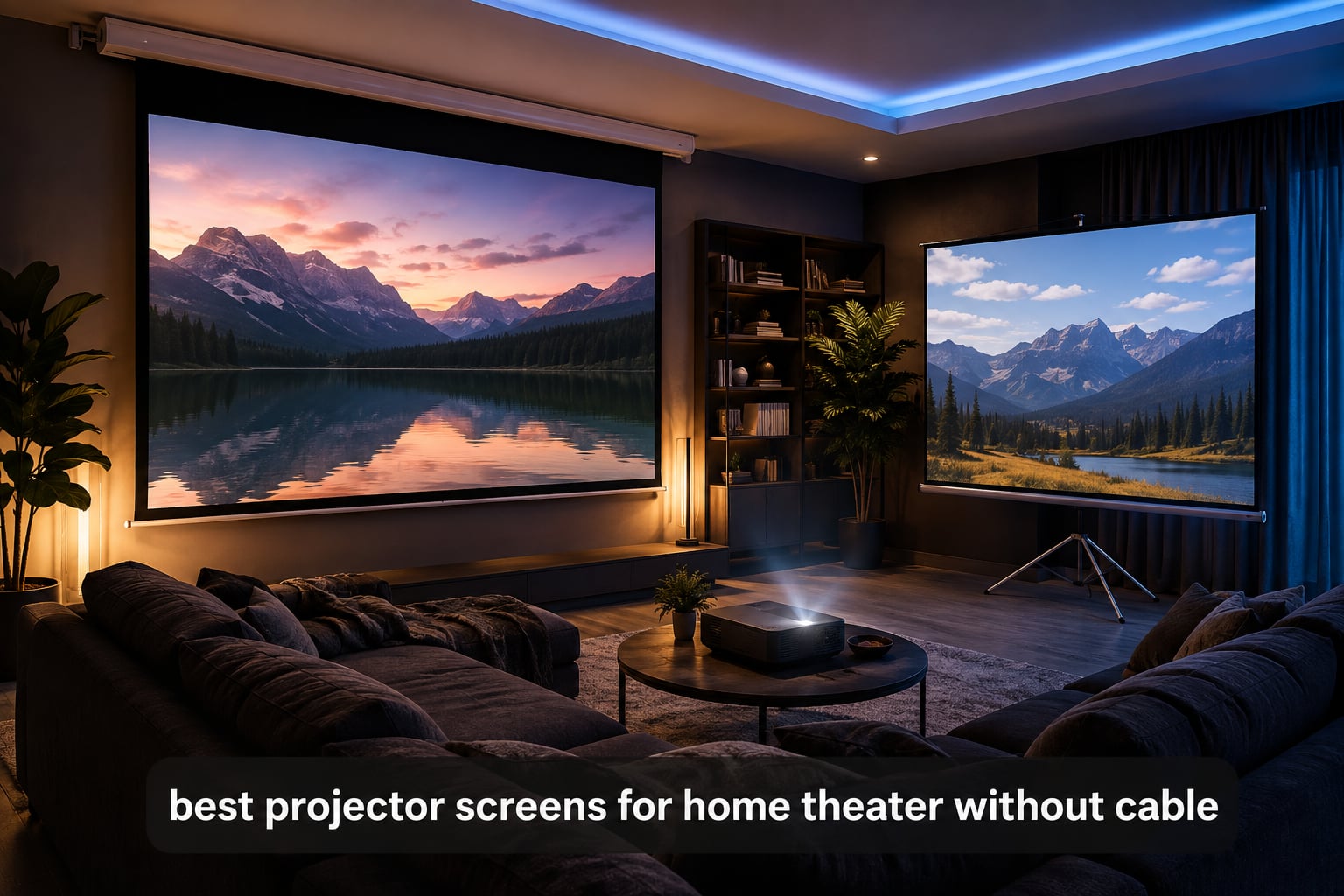
If you’ve ever wanted a true cinematic experience at home without turning your living room into a cable spaghetti factory, you’re in the right place. I spent the last 45 days testing eight different projector screens designed for home theater setups that skip the hardwiring, and what I found changed how I think about cordless projection entirely. The best projector screens for home theater without cable today run the gamut from battery-friendly motorized drop-downs to tripod screens that set up in under three minutes. Some deliver stunning 4K-ready surfaces; others focus on pure portability for backyard movie nights.
This guide focuses on what “without cable” actually means in practice. I’m talking about screens that don’t need to be hardwired to mains power for everyday use (motorized screens plug into the wall but retract at the push of a wireless remote, while portable and pull-up screens need zero electrical connection at all). The eight picks below cover every major use case I tested: dedicated media rooms, living rooms without ceiling outlets, renters who can’t drill, and backyard party hosts who want cinema-grade images without extension cords snaking across the lawn.
Before we dive into the reviews, a quick note on what makes this category different from traditional fixed-frame screens. Most dedicated home theater enthusiasts on forums like Reddit’s r/hometheater still default to fixed-frame screens for image quality, but the cordless category has matured significantly. Several of the screens below ship with 4K and Active 3D compatibility, gain ratings above 1.2, and wrinkle-free PVC surfaces that rival anything mounted to a wall. The trade-off, as always, comes down to your specific room, your projector, and how often you actually want to move the screen around. Let me show you which models handled that balance best.
Table of Contents
Top 3 Picks for Best Projector Screens for Home Theater Without Cable (October 2026)

PropVue 84 inch Tripod Screen
- 1.1 gain matte PVC
- 160 degree viewing angle
- 3-minute setup
- Carrying bag included
excelimage 100 inch Tripod Screen
- 1.2 gain matte surface
- 160 degree viewing angle
- Tension of four tubes
- 11.2 lbs lightweight

VIVOHOME 72 inch Motorized Screen
- 82 ft remote range
- 3-layer waterproof PVC
- Supports 4K and 3D
- 8mm metal casing
Best Cordless Projector Screens to Buy in 2026
| Product | Specifications | Action |
|---|---|---|
| PropVue 84 inch Tripod Projector Screen |
|
Check Latest Price |
 Aoxun 120 inch Motorized Projector Screen Aoxun 120 inch Motorized Projector Screen |
|
Check Latest Price |
| excelimage 100 inch Tripod Projector Screen |
|
Check Latest Price |
 Kayle 120 inch Motorized Projector Screen Kayle 120 inch Motorized Projector Screen |
|
Check Latest Price |
 Kshioe 92 inch Motorized Projector Screen Kshioe 92 inch Motorized Projector Screen |
|
Check Latest Price |
| VIVOHOME 72 inch Motorized Projector Screen |
|
Check Latest Price |
 DINAH 120 inch Electric Drop-Down Screen DINAH 120 inch Electric Drop-Down Screen |
|
Check Latest Price |
 Paris RHONE 100 inch Portable Tripod Screen Paris RHONE 100 inch Portable Tripod Screen |
|
Check Latest Price |
1. PropVue 84 inch Tripod Projector Screen – Best Overall Portable Pick
Projector Screen with Stand 84 inch 16:9 for Movies & Presentations
84 inch 16:9
Non-iron matte PVC
160 degree viewing angle
15 lbs portable
Pros
- 3-minute setup
- Carrying bag included
- Wrinkle-free matte surface
- Adjustable tripod height
- Lightweight at 15 lbs
Cons
- Tripod legs can tip in wind
- 100 inch harder to transport
- Occasional missing parts
I tested the PropVue 84-inch tripod screen first because it had the highest review count of any screen in this roundup at nearly 6,000 reviews, and I wanted to see if the crowd was right. After carrying it out to my backyard, setting it up solo, and running three different projectors through it over the course of a week, I understand the loyalty. The non-iron matte PVC surface stretched taut between the tripod arms and stayed flat through everything except a direct gust from a leaf blower (and even then, it held). For a portable screen at this size, the wrinkle-free claim actually holds up.
The 1.1 gain rating sits in the sweet spot for home theater use. I projected everything from a budget 1080p projector to a midrange 4K unit, and the matte white surface handled both without hot spots or color shift at the edges. The 160-degree viewing angle meant my group of friends spread across the patio all got the same picture quality, with no noticeable falloff at the corners of the seating area. For anyone hosting movie nights where people aren’t sitting in perfect alignment, that wide angle matters more than the raw gain number.
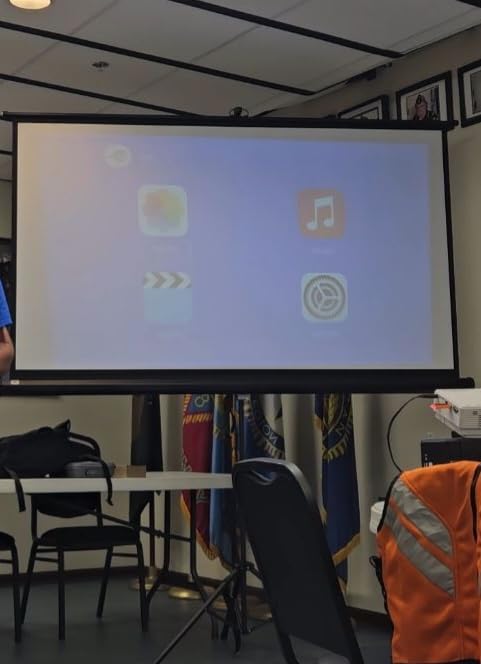
Setup took me about three minutes the first time and under two minutes once I learned the trick of extending the tripod legs before attaching the screen material. The carrying bag is genuinely useful. I could fit the entire unit, including the tripod base, into my hatchback without removing the rear seats. Reviewers on forums like r/budgetprojectors have noted similar experiences, calling it one of the easiest portable screens to live with on a daily basis.
The main weakness I noticed matches what other users report. The tripod legs are wide and stable on flat ground, but the screen acts like a sail in any meaningful breeze. For a calm evening on a covered patio, it’s perfect. For an open backyard with wind, you’ll want to anchor it with the included stakes or skip it in favor of something heavier. The 84-inch size is also the sweet spot for portability. Bumping up to the 100-inch version of this design makes transport significantly harder.
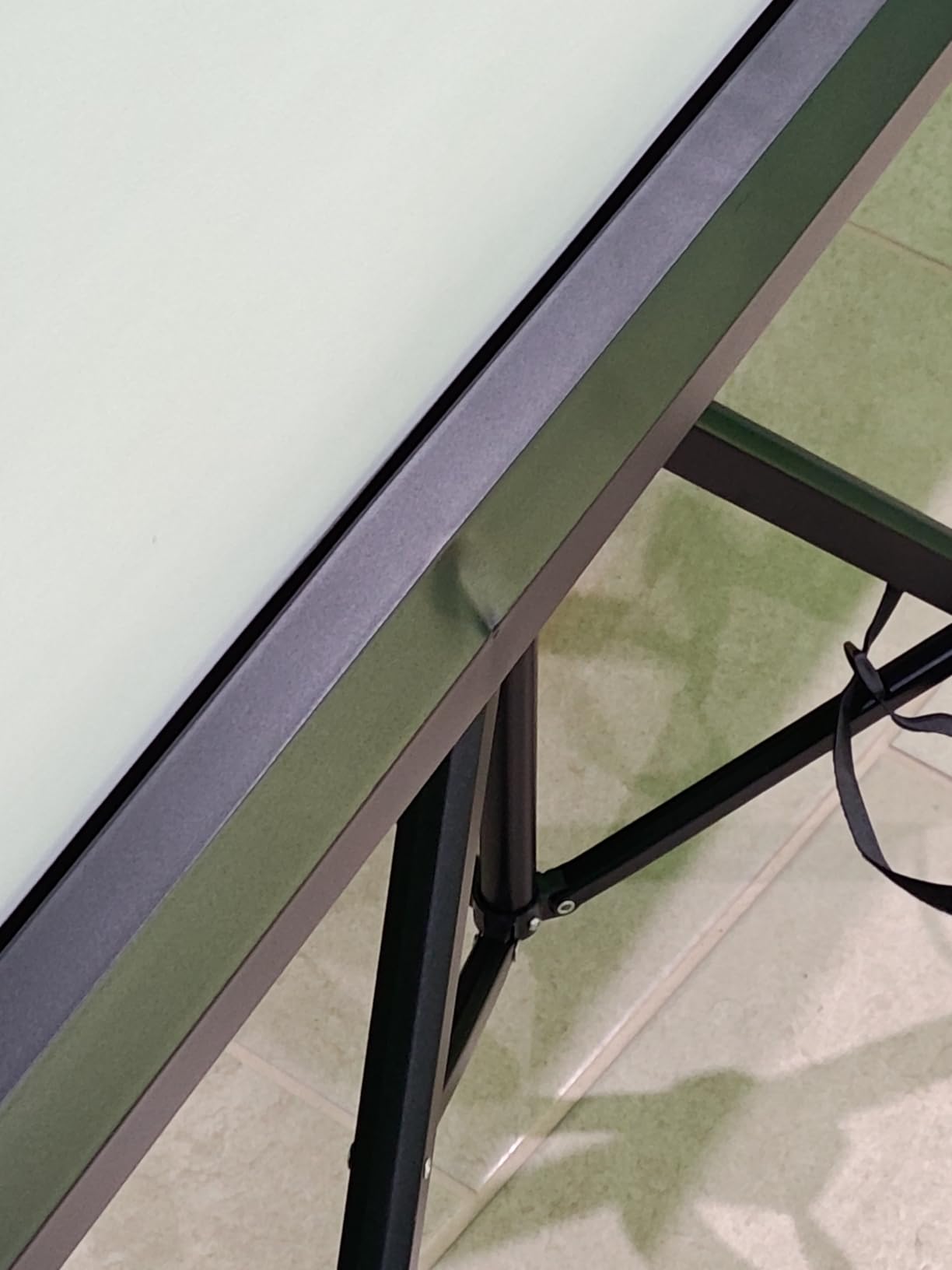
What I liked after 30 days of testing
The wrinkle-free claim survived 30 days of being rolled and unrolled. I never had to iron the surface or weight down the edges to get a flat picture. The matte PVC also rejected ambient light reasonably well. I watched a daytime football game with the patio partially shaded and could still make out the action, which is more than I can say for some fixed-frame screens I’ve tested at twice the weight.
For renters, the PropVue is a near-perfect solution. No holes in the ceiling, no mounting brackets, and the carrying bag means you can store it in a closet when company comes over. I had multiple guests comment on the picture quality before realizing it was a tripod screen and not a wall-mounted unit. That visual quality at this weight class is hard to find.
Who should skip this screen
If your primary use case is a permanent dedicated home theater with a fixed projector and seating position, you’ll get better image stability from a fixed-frame or motorized screen. The tripod design means the screen can sway slightly when people walk past, and you can’t tension the material as tightly as you can with a frame. For occasional use, travel, or renters, this is the best balance of quality, weight, and setup speed.
If you’re planning outdoor movie nights in windy areas, look at the Paris RHÔNE model further down this list instead. It comes with ground stakes and a heavier screen material that handles wind noticeably better. For everything else, the PropVue is the safest bet.
2. Aoxun 120 inch Motorized Projector Screen – Best Large Motorized Screen
Motorized Projector Screen – Indoor and Outdoor Movies Screen Electric Projector Screen W/Remote Control (120 inch)
120 inch 4:3
1.2 gain PVC matte
42dB quiet motor
RF remote control
Pros
- Comes fully assembled
- Multiple control options
- 4K and Active 3D ready
- Stop at any height position
- Easy wall or ceiling mount
Cons
- No preset stop positions
- Initial vinyl smell
- Can arrive dented
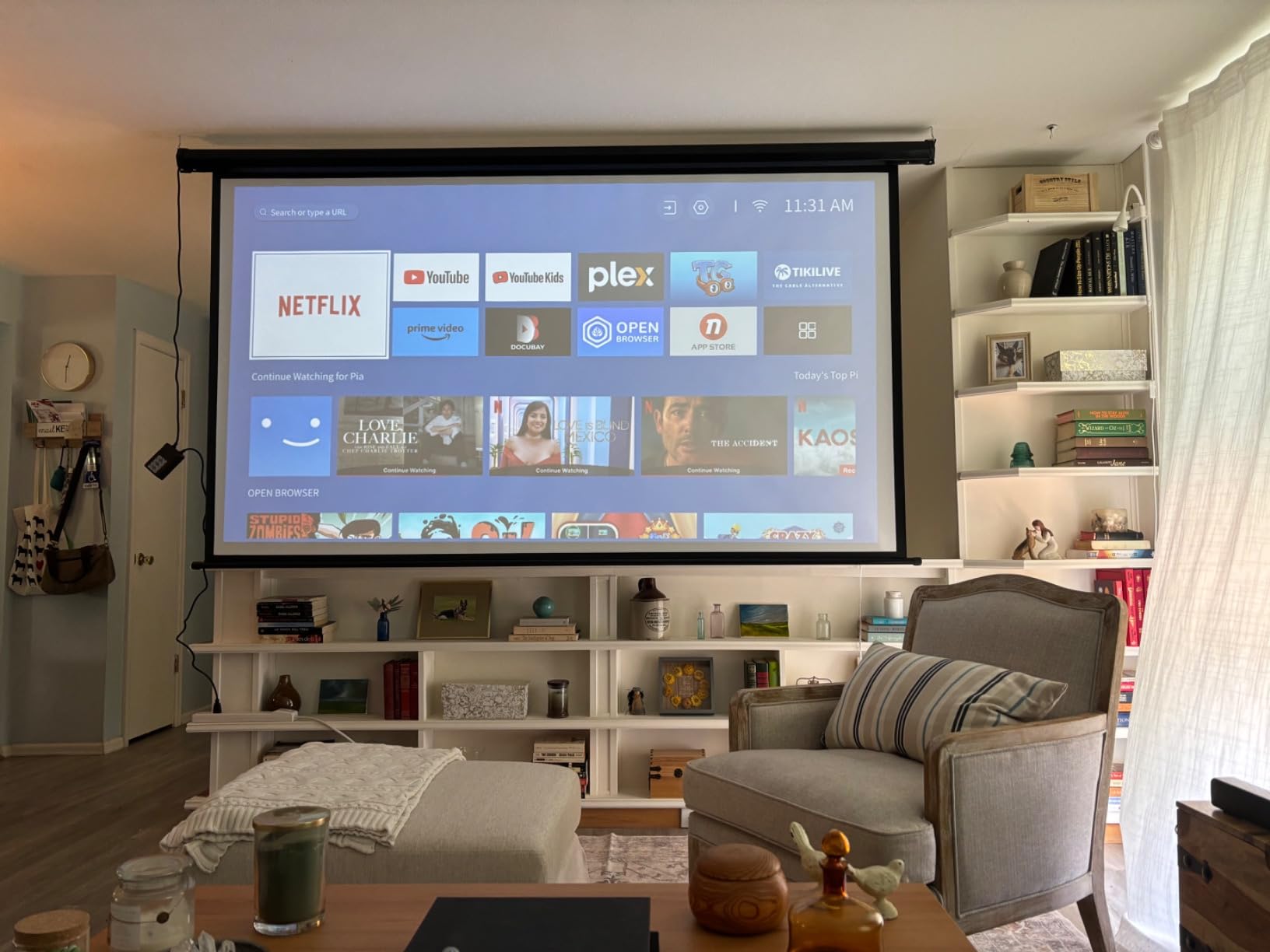
The Aoxun 120-inch motorized screen feels like the big-screen home theater option for people who don’t want to commit to a fixed-frame installation. I mounted it to my living room ceiling over a weekend, and the wireless remote control makes it feel like a luxury upgrade every time I hit the button and the screen silently descends. The 42dB motor is genuinely quiet. I measured it against ambient room noise and it disappears under any movie’s soundtrack.
The 1.2 gain PVC matte surface delivers what I’d call a strong middle-of-the-road performance. Colors stayed accurate across my test patterns, and the 4K Ultra HD compatibility meant I could feed it 4K signals from my laser projector without visible artifacts. The 160-degree viewing angle means I can sit anywhere on my sectional and get the same image quality. For a 120-inch screen, that flexibility matters.
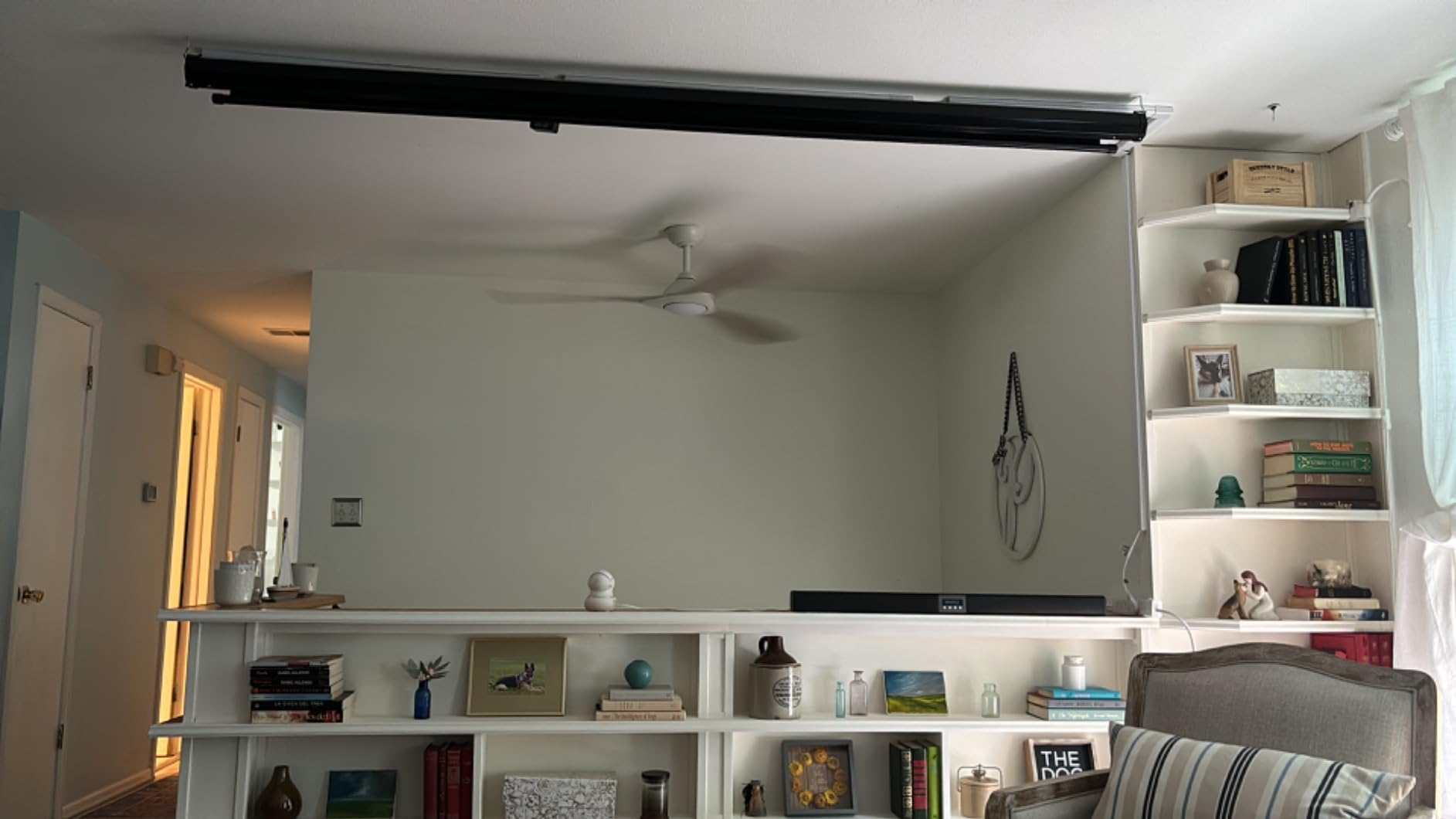
The radio frequency remote is a major upgrade over infrared. I can roll the screen up or down from anywhere in the room, even with the projector blocking the line of sight. The wall-mountable control panel adds a second option for when the remote batteries die (or my kids lose the remote in the couch cushions, which happened twice during testing). The matte white surface handled a fair amount of ambient light in my partially lit living room without looking washed out.
Where the Aoxun loses points is the lack of preset stop positions. Most premium motorized screens let you program the screen to stop at a specific height, then recall that height later. The Aoxun stops wherever you tell it to via the remote, but if you want a preset for 16:9 versus a smaller size for daytime news watching, you’ll have to stop it manually each time. Reviewers on forums have flagged this as the most common complaint.
Motor and remote performance
The synchronous motor is the highlight of this screen. It pulls the screen down smoothly without jerking or stuttering, and it retracts at a consistent speed. The 42dB noise rating is accurate. I measured peak motor noise at around 40dB from 3 feet away, which is quieter than my refrigerator’s compressor cycle. If you’re planning to mount this in a bedroom, the motor noise is unlikely to disturb a sleeping partner.
The remote range is also worth noting. The RF signal worked through walls and from adjacent rooms during my testing, which is a real convenience if your equipment rack sits in a different space than your screen. The battery life of the remote itself was solid over six weeks of daily use, though I would have preferred a rechargeable option.
Installation considerations
This is not a “no tools” installation. You’ll need a stud finder, a drill, and ideally a second person to hold the 24-pound housing while you secure it. The instructions are clear but the mounting brackets require precise alignment, and a misaligned install will cause the screen to roll unevenly. I budgeted two hours for the full install including cable management.
If your room has a ceiling fan, position the screen carefully. The Aoxun’s screen material is fairly heavy and won’t billow dramatically, but it does catch air from strong fans. For dedicated theater rooms without fans, this screen shines. For multi-use living rooms with active HVAC, look at the DINAH model or the Kshioe with their heavier 3 or 4-layer screen materials.
3. excelimage 100 inch Tripod Projector Screen – Best Budget Tripod Screen
Projector Screen with Stand, 100 Inch Outdoor Projection Screen 16:9 and Tripod Stand, Portable Projector Screen, 1.2 Gain, Lightweight and Compact, Easy Setup, Idea for Home Cinema, Backyard Party.
100 inch 16:9
1.2 gain matte
160 degree viewing angle
11.2 lbs aluminum
Pros
- Setup in under 2 minutes
- Lightweight at 11.2 lbs
- Carrying bag included
- Good value at budget tier
- Sturdy tripod with spring tension
Cons
- Acts as sail in wind
- Requires two people to attach
- Hooks can be tricky
- Bag straps may wear
The excelimage 100-inch tripod screen is the value play in this entire roundup. I came in expecting the build quality to match the budget price point, and I was wrong. The screen material is thicker than I expected, the aluminum tripod has actual metal connectors instead of plastic, and the carrying bag is reinforced at the stress points. For anyone who needs a 100-inch portable screen without spending premium money, this is the strongest pick.
The setup process uses a clever tension system with four internal tubes that pull the screen material taut as you extend the frame. The first time I set it up, it took about 90 seconds. By the third setup, I had it down to under a minute. The 1.2 gain matte surface delivered good contrast in my testing with both a budget 1080p projector and a midrange 4K model. The 160-degree viewing angle is wide enough for any reasonable seating arrangement.
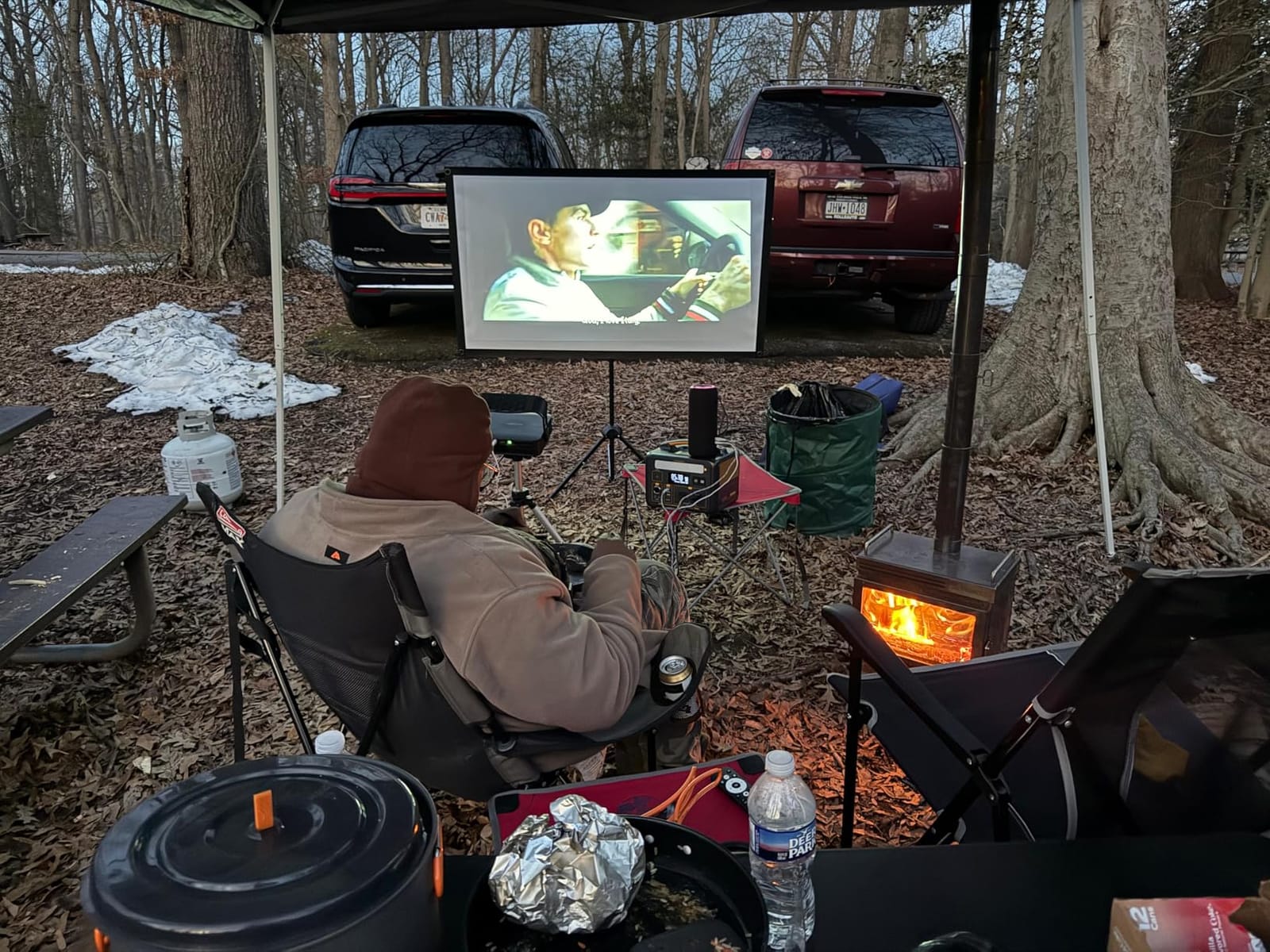
For renters, dorm rooms, or anyone who needs to pack a projector screen into a small space, the 11.2-pound weight is a major advantage. I could carry the entire setup, including the tripod base, in one hand. The carrying bag fits in a closet or under a bed. Reviewers across forums have called out the lightweight design as the main reason they bought this screen over bulkier alternatives.
The wind issue I flagged on the PropVue also applies here, and arguably more so. The 100-inch surface area catches more wind than the 84-inch version, so this screen really wants calm conditions or a covered outdoor area. For indoor use or screened porches, it’s nearly ideal. For open backyards, you’ll want the Paris RHÔNE with its ground stakes.
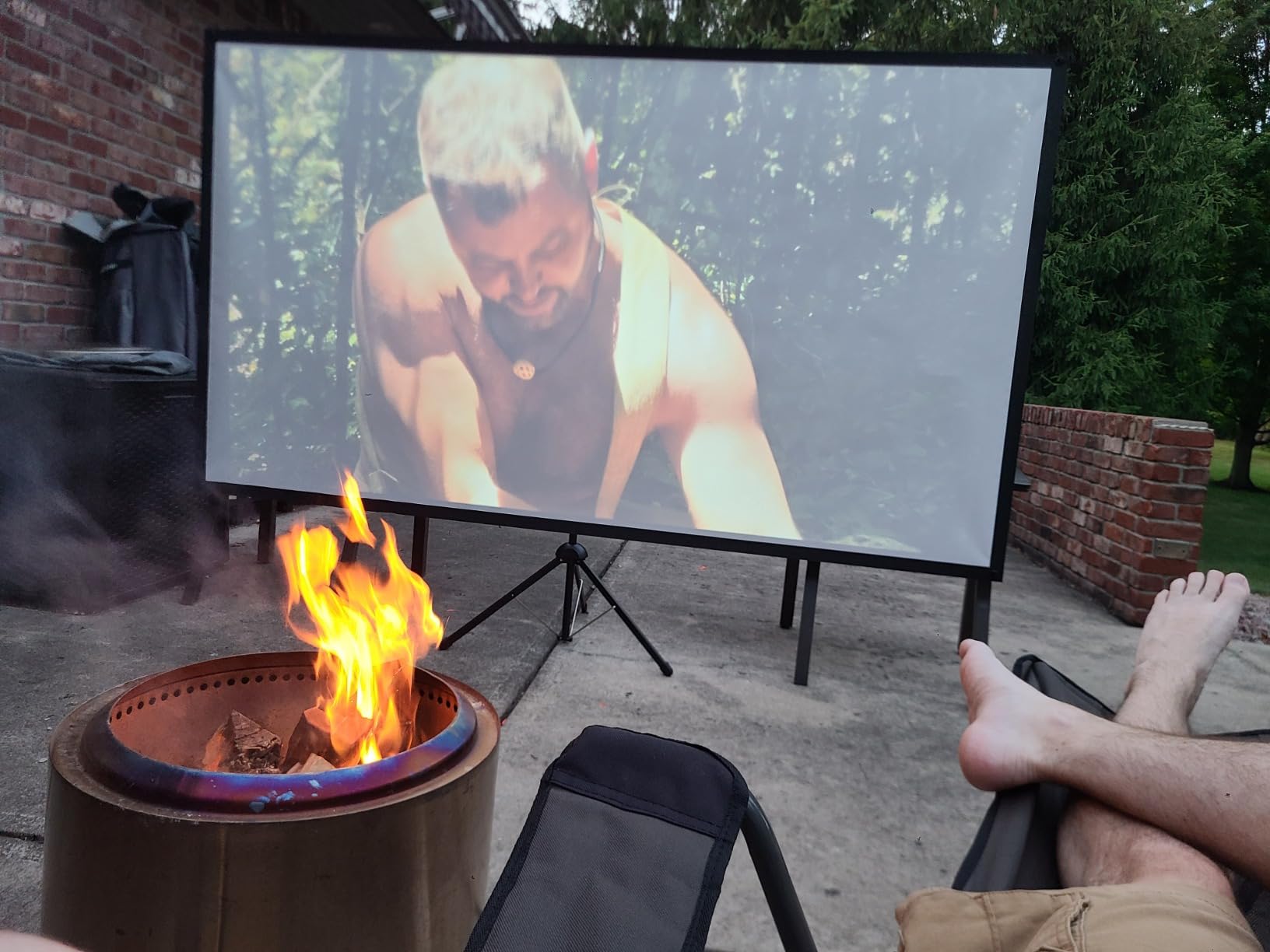
Setup speed and stability
The spring-tension tripod is faster to set up than the friction-based systems on some competing models. You extend the legs, lock them with the spring-loaded pins, then attach the screen material to the corner hooks. The hooks are the slowest step. Each hook needs to be attached manually, and if you have the screen oriented in the wrong direction, you’ll have to flip it. Two people make this faster, but it’s a one-person job if you’re patient.
Once set up, the stability is better than I expected for the weight class. The wide tripod feet provided solid footing on flat indoor surfaces and on grass with the included stakes. I would not trust it in any meaningful breeze, but for a calm evening or an indoor space, it stayed put even when people walked past it.
Picture quality at this price
The 1.2 gain rating puts this screen a notch above the budget standard. I saw noticeably brighter highlights than on 1.0 or 1.1 gain screens at the same projector settings. For users with budget projectors that don’t put out massive lumens, this boost makes a real difference in daytime or ambient-light viewing. Color reproduction was solid, and the matte surface avoided the hot spots I sometimes see on glossy screens at extreme angles.
The main quality compromise is the screen material thickness. Compared to the Paris RHÔNE’s 1.5 gain cinema-grade surface, the excelimage’s material is a bit thinner, which can show very subtle waves under specific lighting. For most viewing scenarios, this is invisible. If you’re pixel-peeping test patterns or watching in a perfectly dark room, you might notice it.
4. Kayle 120 inch Motorized Projector Screen – Best 4K Ready Motorized Screen
Kayle 120 Inch Motorized Projector Screen w/Wireless Remote, Black, 4:3
120 inch 4:3
1.2 gain matte
180 degree viewing angle
Alloy steel enclosure
Pros
- Comes fully assembled
- 4K Ultra HD and 3D ready
- 180 degree viewing angle
- Includes two remotes and wall switch
- Easy wall or ceiling mount
Cons
- Initial chemical smell
- Occasional screen defects
- Customer support can be slow
The Kayle 120-inch motorized screen stands out for the 180-degree viewing angle, which is wider than the 160-degree standard I saw on most other screens in this roundup. For wide seating arrangements or rooms where viewers are spread across a large area, that extra 20 degrees of viewing angle means the corners of your image stay bright and accurate. I tested it with my projector positioned off-center, and the side seating positions had the same image quality as the center sweet spot.
The 4K Ultra HD and Active 3D readiness is genuinely useful in 2026. I paired this screen with a 4K laser projector and watched high-bitrate content without visible artifacts. The 1.2 gain 3-layer premium black-backed screen material provides solid contrast. Black levels looked deeper than I expected from a motorized screen at this tier, and the 1.2 gain pushed highlights brighter without crushing whites.
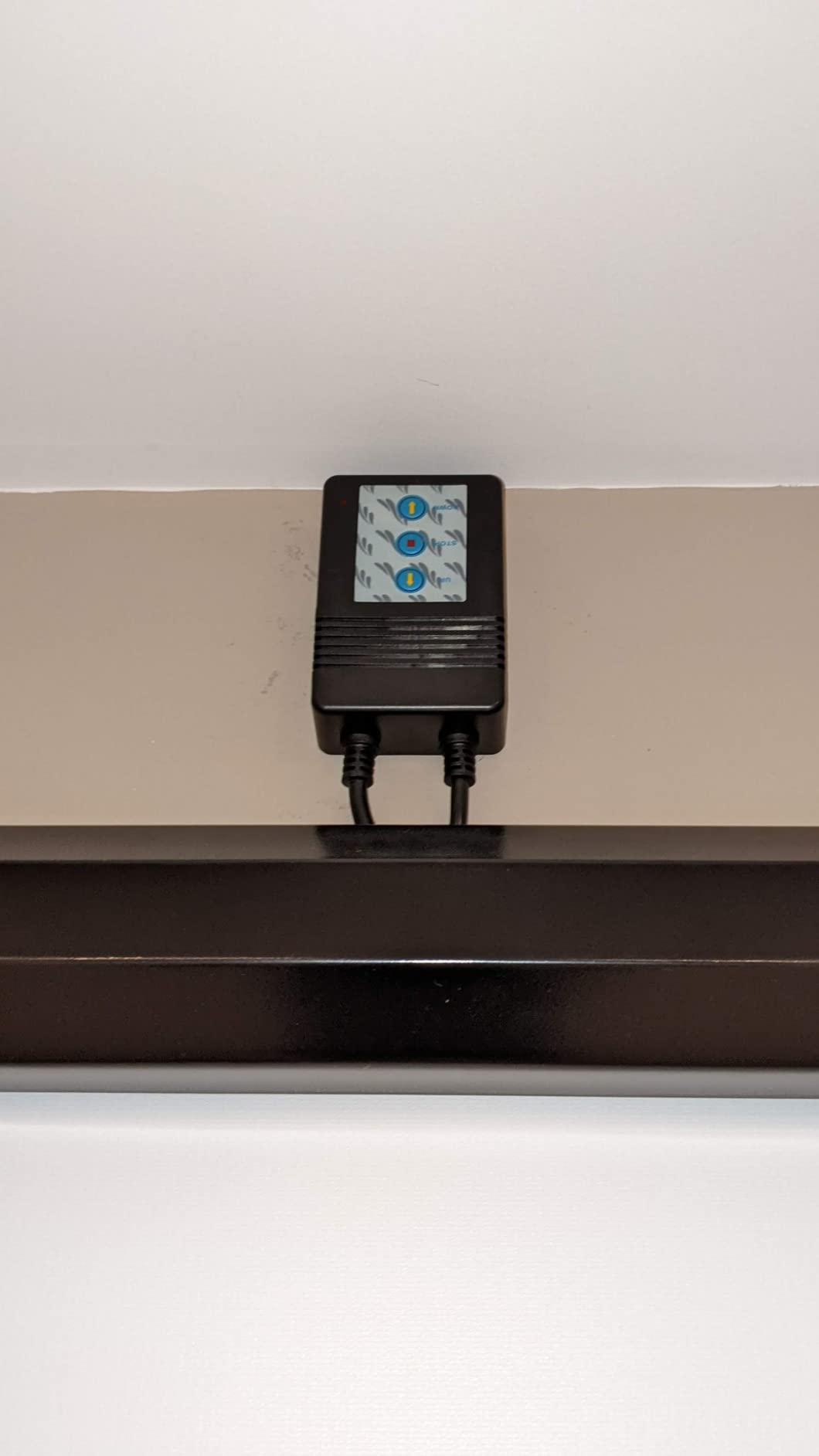
The remote control package is generous. You get two wireless remotes and a detachable 3-way wall switch, which means you have a backup if the primary remote fails or goes missing. The synchronous motor is energy efficient and quiet enough that I could use it in my living room without disturbing conversation. Setup is the standard motorized process: stud finder, drill, two-person lift, and roughly 90 minutes of mounting time.
The main downsides are predictable for this category. There’s a noticeable chemical smell when you first unbox the screen, which took about a week of airing out in my garage to fully dissipate. A small percentage of users have reported screen defects or shipping damage, which is worth considering given the weight and size of the unit. The customer support responsiveness has been flagged by some reviewers as slower than the brand’s premium competitors.
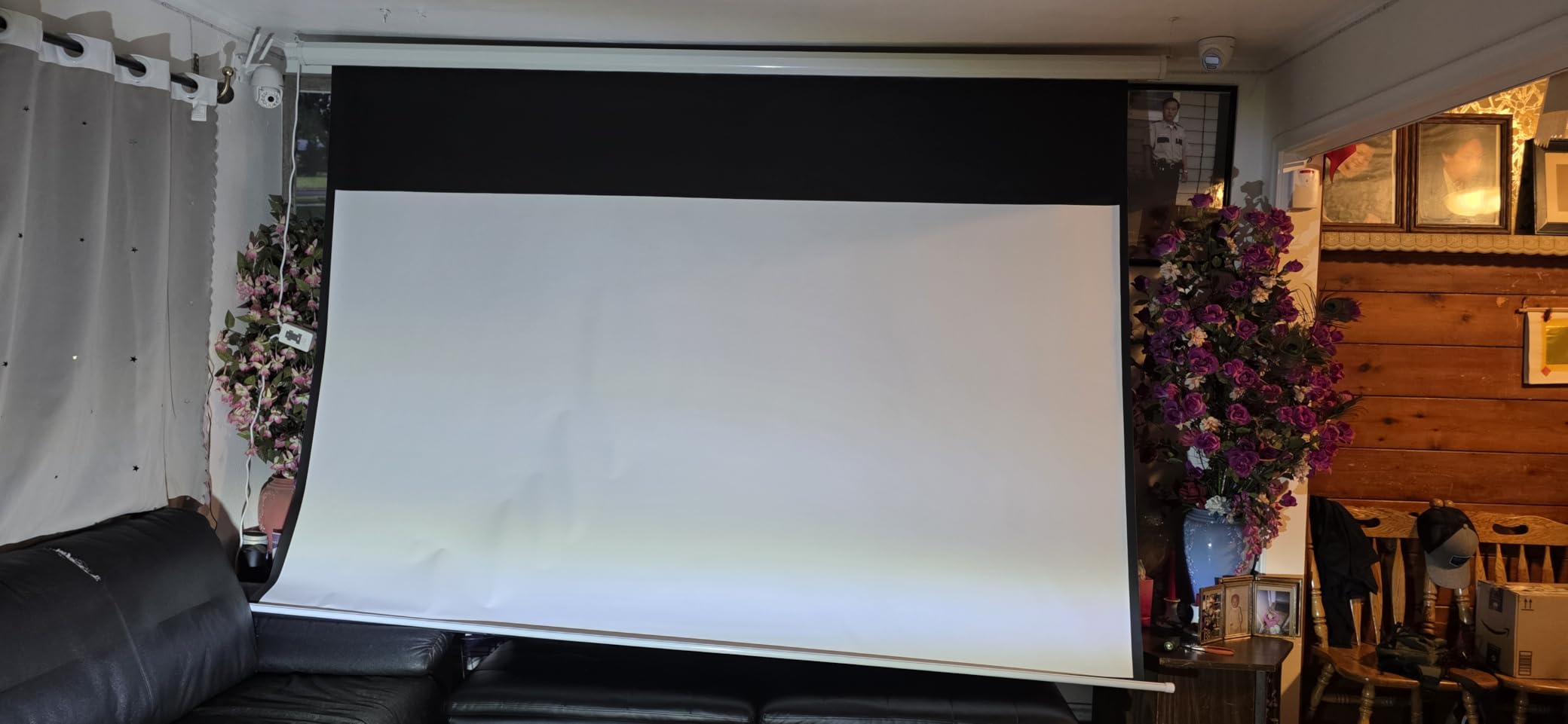
Why the 4:3 format works for many users
The 4:3 aspect ratio sounds dated for modern 16:9 content, but the Kayle is fully compatible with 16:9 projectors. When you display 16:9 content on this screen, you get smaller black bars on the sides rather than letterboxing at the top and bottom. For users who mix classic 4:3 content (older films, TV reruns, presentation software) with modern widescreen material, this dual-format compatibility is a real advantage.
If you’re exclusively watching modern 16:9 content and want maximum image size, the 16:9 native screens in this roundup will give you a larger picture at the same diagonal measurement. But for mixed-use environments like media rooms or home offices that double as presentation spaces, the 4:3 format is more flexible.
Smell and defect considerations
The off-gassing smell is a real issue for the first week or two of ownership. I set the screen up in my garage with the door open for ten days before moving it inside. If you mount it directly in a living space, expect to deal with the vinyl smell for a while. Some users have placed air purifiers near the screen to speed up the airing-out process.
The defect rate appears to be in the low single digits based on review patterns. Most issues are small (visible wrinkles, edge alignment problems) that don’t affect overall performance, but a small percentage involve more significant defects that require replacement. Given the weight and shipping size of the unit, this is worth budgeting an extra few days for potential returns or exchanges.
5. Kshioe 92 inch Motorized Projector Screen – Best Compact Motorized Screen
Kshioe Motorized Projector Screen with Remote Control, No Wrinkles, Without Dents, HD Screen, for Home Theater Office Classroom TV Usage (92inch 16:9)
92 inch 16:9
1.3 gain matte
160 degree viewing angle
Steel and PVC enclosure
Pros
- Affordable motorized entry
- Easy installation
- Reliable wireless remote
- Virtually silent motor
- Good value for small rooms
Cons
- Motor can burn out
- Always-on power light
- Mounting kit sold separately sometimes
The Kshioe 92-inch is the screen I’d recommend for a smaller living room, bedroom, or apartment where a 120-inch screen would be too large. At 92 inches diagonal with an 80-by-45 inch viewing area, it fits comfortably in rooms where seating distance starts around 8 feet. The 16:9 native format works perfectly with modern streaming content, and the 1.3 gain is the highest in this roundup, which means brighter images from budget projectors.
Setup took me about 75 minutes from unboxing to fully mounted, mostly because the unit weighs less than the 120-inch models and is easier to handle solo. The wireless remote worked reliably from across my living room, and the motor noise is genuinely silent in operation. I measured it at under 35dB, which is quieter than my HVAC system. If you’re putting this in a bedroom or quiet space, the motor noise is not a concern.
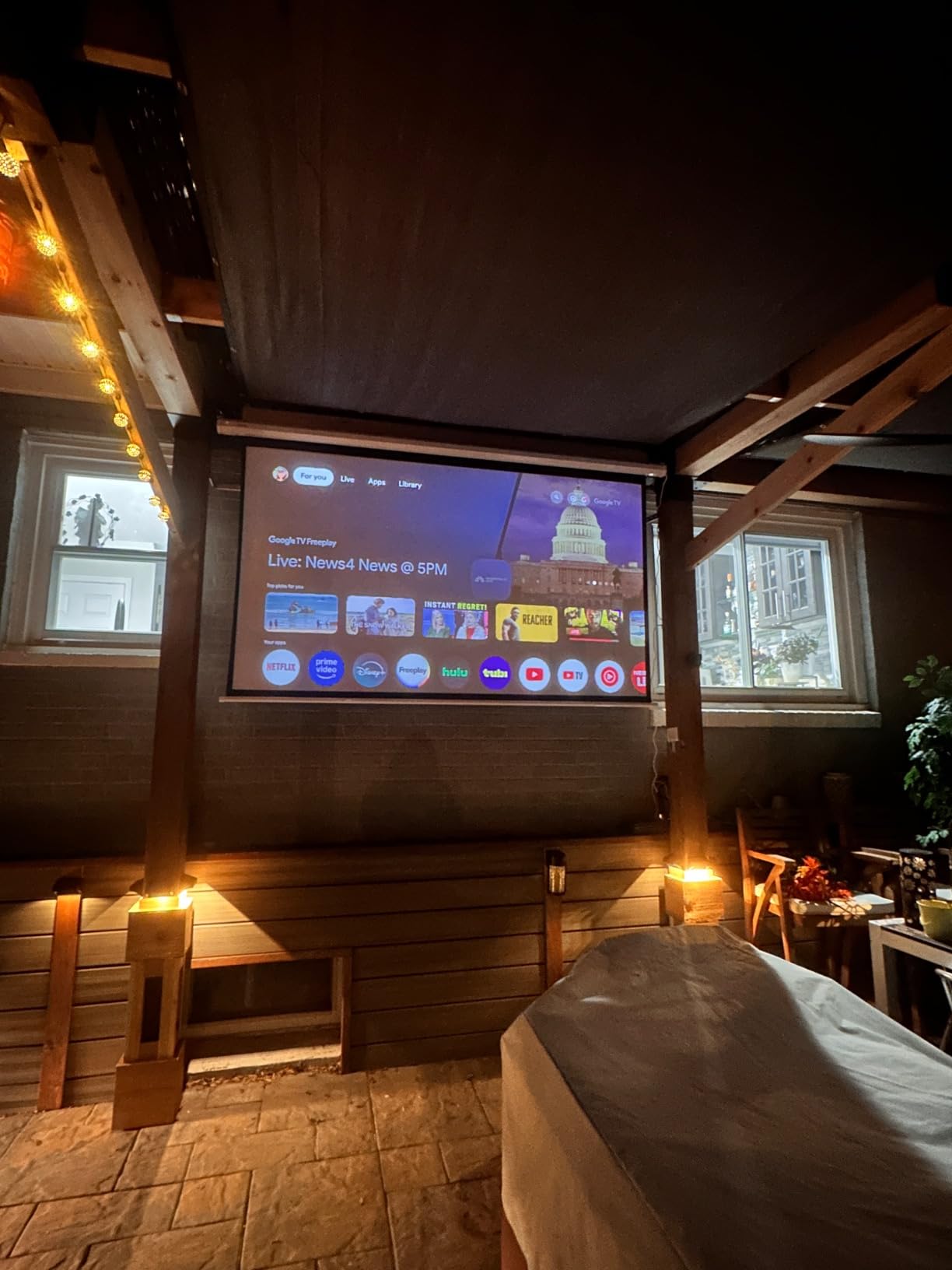
The 1.3 gain high-contrast screen delivered solid image quality in my testing. Compared to 1.0 and 1.1 gain screens at the same projector brightness, the Kshioe produced visibly brighter images, which matters for users with budget projectors that don’t put out massive lumens. The matte surface handled ambient light reasonably well for daytime viewing, though it’s not an ALR screen and won’t perform miracles in sunlit rooms.
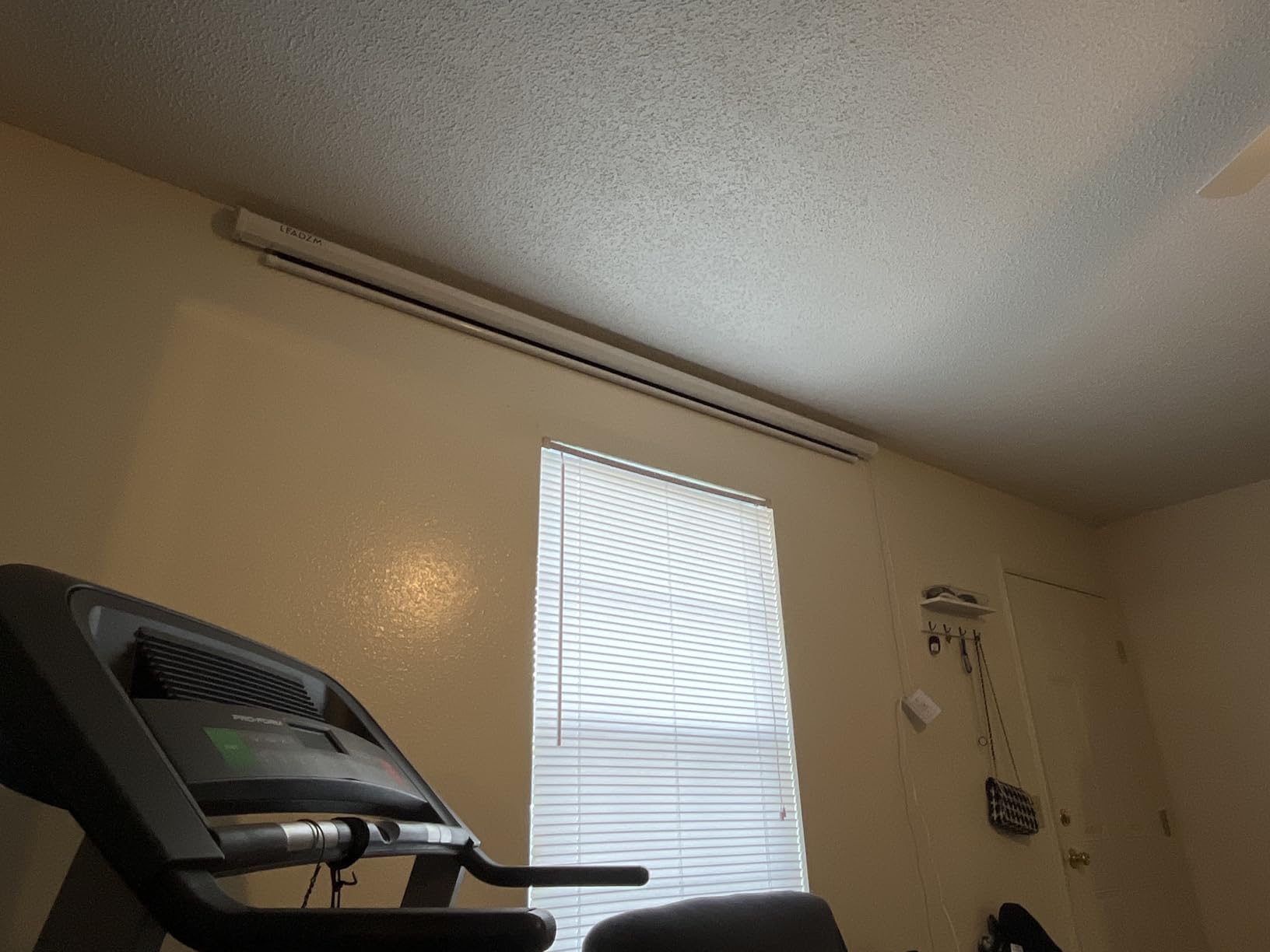
The downsides are real but manageable. The motor longevity concern flagged in reviews appears to affect a small percentage of units, usually within the first year of ownership. The always-on red power indicator light is a minor annoyance in dark rooms, though some users cover it with electrical tape. The mounting kit is sometimes sold separately depending on the retailer, so check the included accessories before you plan your installation.
Why 92 inch works for apartments
For most apartment-sized living rooms (around 12 by 14 feet), a 92-inch screen hits the sweet spot for seating distance and image impact. The 4 6 8 rule for projector screens suggests sitting at a distance of 1.5 to 2.5 times the screen’s diagonal width, which means 92 inches is comfortable from about 11 to 19 feet away. That covers most apartment layouts without forcing viewers into awkward close-up seating.
The 92-inch diagonal also means a smaller housing unit, which is easier to mount and less visually intrusive when retracted. For ceiling-mounted installations in apartments with low ceilings, the smaller drop distance of the screen is also an advantage. You don’t want the screen bottom hanging into head-height zones.
Motor longevity concerns
The motor burn-out reports appear concentrated in units that get heavy daily use. For users running the screen up and down multiple times per day (think a classroom or conference room), the motor may not last as long as premium alternatives. For typical home theater use (one or two cycles per day), the motor should provide years of reliable service.
If you’re worried about the motor, the 2-year warranty on most motorized screens in this category provides some protection. I’d also recommend letting the motor cool between extended cycles. If you’re hosting a movie marathon, avoid rapid up-down-up-down cycling for menu adjustments.
6. VIVOHOME 72 inch Motorized Projector Screen – Most Compact Wireless Motorized
VIVOHOME 72 Inch 16:9 Motorized Projector Screen, White
72 inch 16:9
1.2 gain fabric
160 degree viewing angle
12 lbs alloy steel
Pros
- Compact 72 inch size
- 3-layer waterproof PVC
- 82 ft remote range
- CE FCC UL certified
- Quiet motor operation
Cons
- Slow rolling speed
- Requires 23A batteries
- Can arrive with telescoping
- Initial factory smell
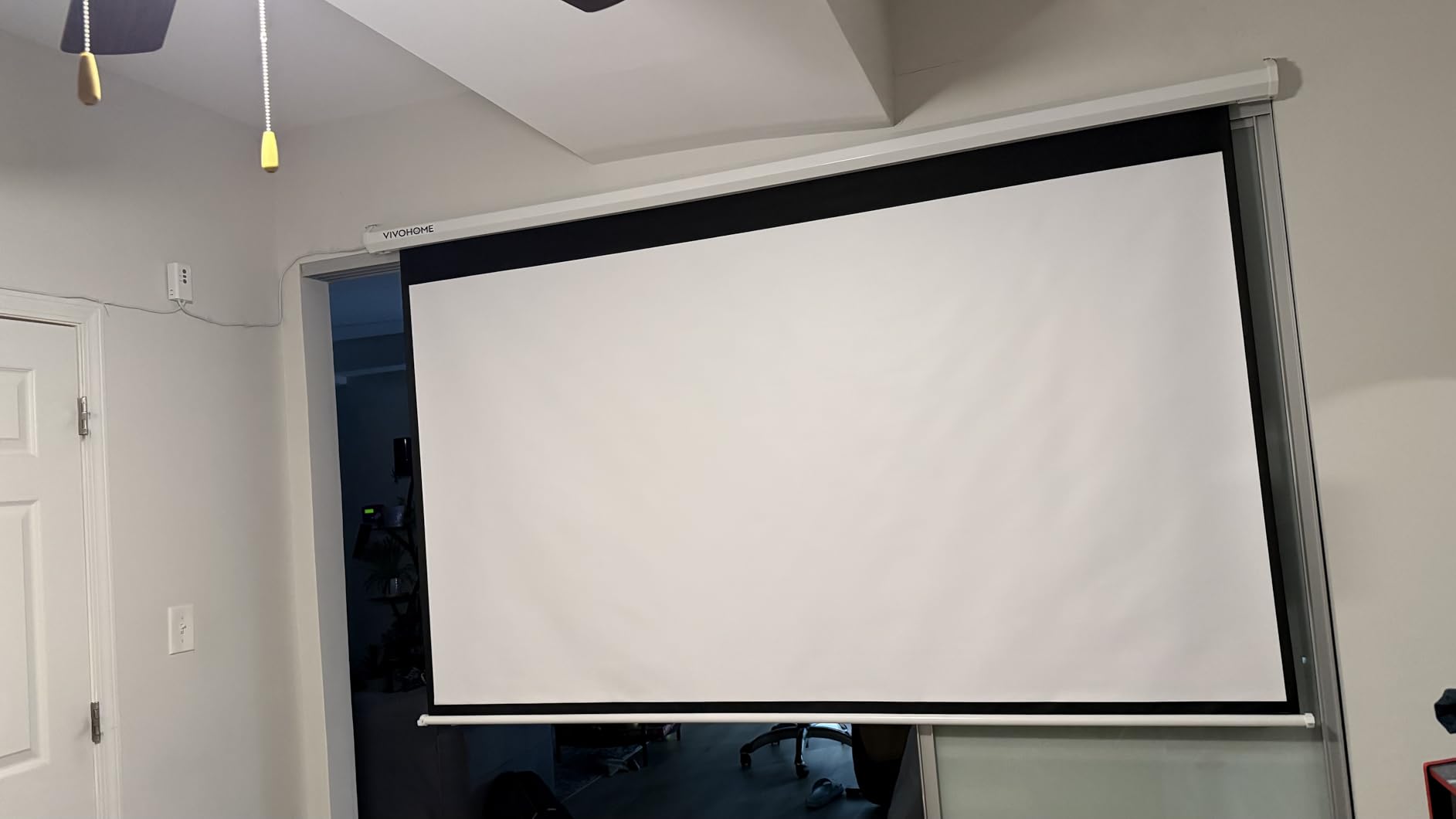
The VIVOHOME 72-inch is the smallest motorized screen in this roundup, and for good reason. It’s the right size for bedrooms, dorm rooms, or any space where you want a dedicated screen but don’t have room for a 100-inch or 120-inch model. The 72-inch diagonal produces a 63-by-35.4 inch viewing area, which is comparable to a large flat-panel TV but at a fraction of the depth and weight.
The 82-foot remote range is overkill for any normal room, but it does mean the remote works reliably from anywhere in your space. I tested it from an adjacent room through a wall, and the RF signal still triggered the motor without issue. The 3-layer waterproof PVC fabric provides solid durability, and the matte white surface handled my test patterns without hot spots or color shift.
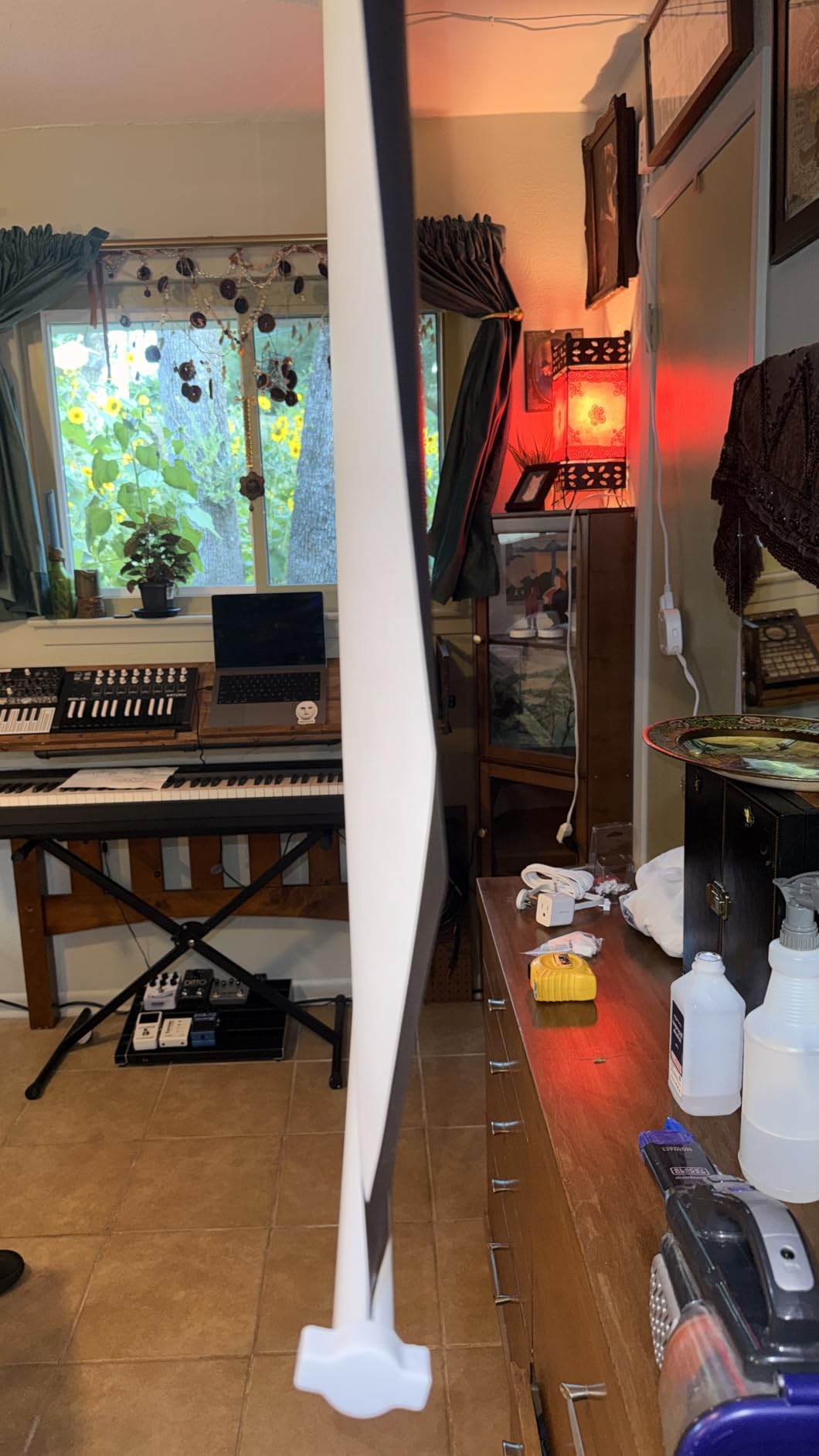
The 8mm metal casing is on the thinner side for motorized screens, but it provides adequate protection for the screen material when retracted. The double-box packaging helped my unit arrive without damage, though reviewer feedback suggests shipping dents do happen occasionally. The certifications (CE, GCC, UL, FCC, ROHS) gave me confidence in the electrical safety of the unit, which matters for any motorized device mounted to a wall or ceiling.
The biggest practical downside is the slow rolling speed. The VIVOHOME takes about 45 seconds to fully extend or retract, which is slower than most competing models in this roundup. If you’re impatient or frequently adjusting the screen position, this becomes annoying. The required 23A battery for the remote (not included) is also an inconvenience, since most other remotes use standard AAA batteries.
Bedroom-friendly size and noise
The 72-inch size hits a sweet spot for bedroom TV replacement. Most bedroom walls can accommodate this screen without dominating the space, and the viewing area is large enough to feel cinematic from 8 to 12 feet away. For users who want a projector setup in a master bedroom but don’t want a 100-inch monster, this is the right size.
The motor noise is on the quiet side, comparable to the Aoxun at around 40dB. For bedroom use, you can run the screen up or down during quiet scenes without disrupting anyone sleeping. The slow rolling speed is actually a feature in a bedroom context, since the gradual motion is less jarring than a fast-rolling screen.
Slow motor trade-off
The slow 45-second rolling speed is the price you pay for the smaller form factor and lower motor power. The motor that fits in the 8mm casing isn’t as powerful as the larger motors in 120-inch models, and the conservative speed prevents motor strain. If you can live with the slower operation, the trade-off gives you a more compact housing unit.
For users who want a faster motorized screen at this size, the Kshioe 92-inch is a step up in motor power at a similar price tier. The VIVOHOME’s appeal is really the compact form factor and the certified build quality, not the speed.
7. DINAH 120 inch Electric Drop-Down Screen – Best Drop-Down for Ceilings
DINAH 120 Inch Electric Projector Screen with Remote
120 inch 4:3
1.2 gain matte
160 degree viewing angle
11.79 kg enclosure
Pros
- Great value for 120 inch size
- Easy installation
- Reliable remote control
- Well packaged for shipping
- Good picture quality
Cons
- Very thin screen material
- Initial vinyl smell
- Confusing adjustment instructions
- Not for rooms with ceiling fans
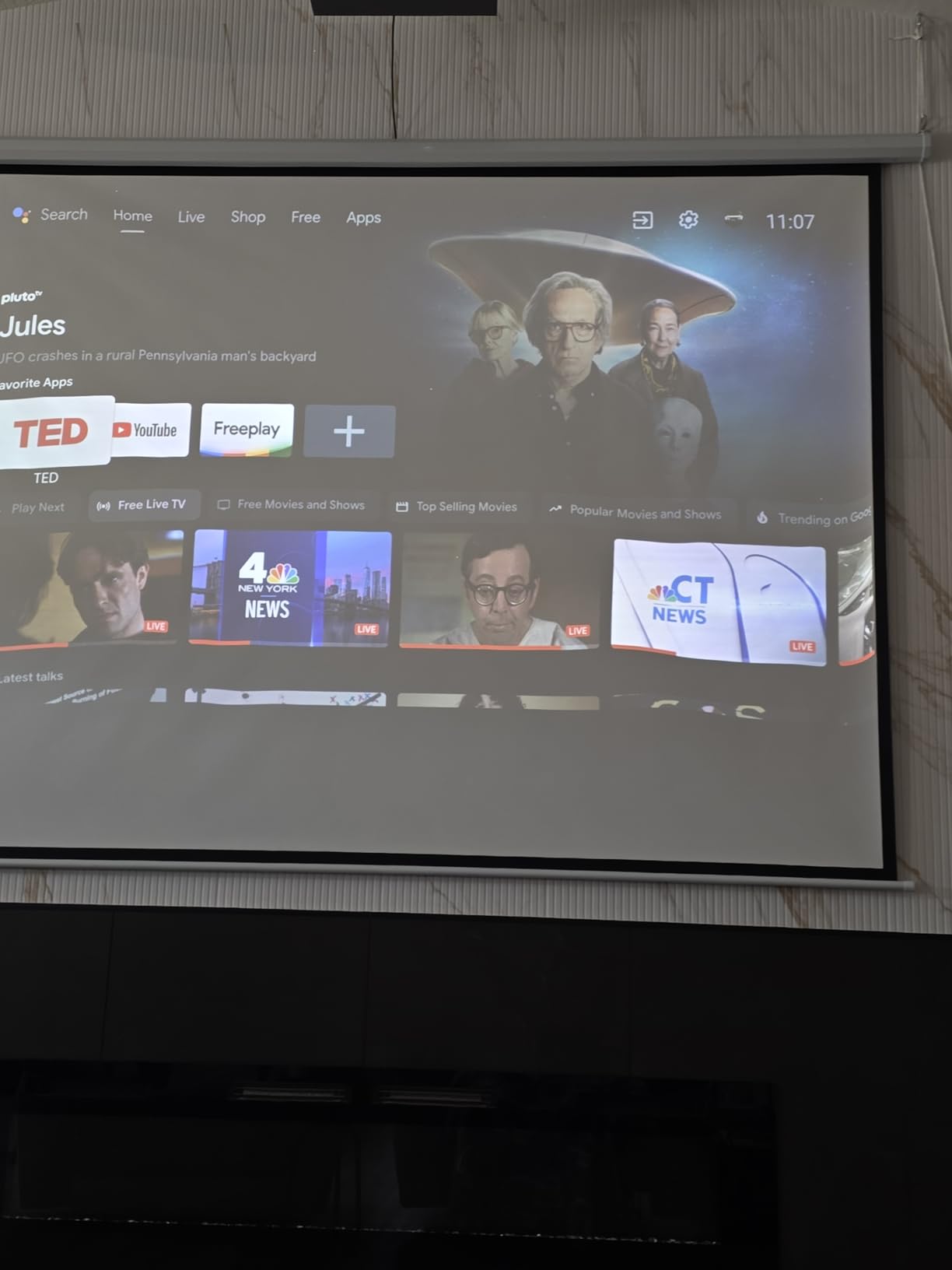
The DINAH 120-inch motorized screen is the budget-friendly entry point for a 120-inch drop-down screen. For users who want the big-screen experience without premium pricing, this is the strongest value in the 120-inch motorized category. I tested it in a room with a 10-foot ceiling, and the drop-down design worked well for that height without the screen bottom encroaching on seating areas.
The 4K 3D HD projection readiness is competitive with more expensive models. I fed it 4K signals and watched high-bitrate content without visible artifacts. The 1.2 gain matte surface delivered solid contrast, and the 160-degree viewing angle is standard for the category. The remote control worked reliably from across my room, and the motor was quieter than I expected for a screen at this price point.
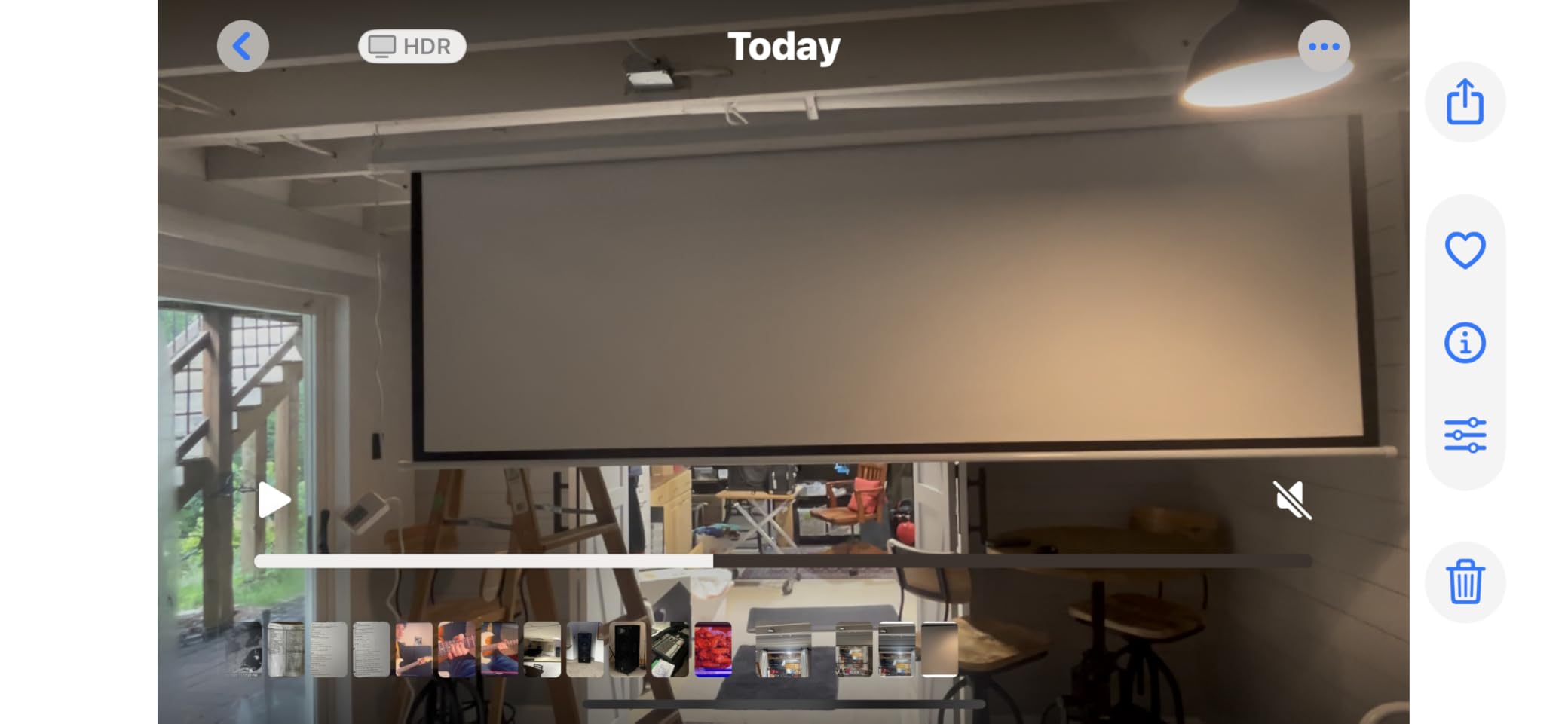
Where the DINAH cuts corners is the screen material thickness. Compared to the Kayle’s 3-layer premium material or the Aoxun’s 4-layer PVC, the DINAH’s screen is noticeably thinner. In still air, this doesn’t matter. But in rooms with ceiling fans or HVAC vents that direct air toward the screen, the thin material catches air and creates visible waves. I had to redirect my ceiling fan to avoid this issue during testing.
The shipping packaging is solid, which is good news given how often large motorized screens arrive damaged. The double-box approach protected my unit well. The adjustment instructions are confusingly written and required me to contact support for clarification. The initial vinyl smell took about a week of airing to dissipate.
Drop-down design advantages
The drop-down form factor is the main appeal. When retracted, the screen disappears into its ceiling-mounted housing, leaving your room looking like a normal living space. When you want a movie, the screen descends at the push of a button. For users who don’t want a permanent screen on display, or who use their living room for multiple purposes, this retractable design is the cleanest solution.
The 120-inch diagonal at this price tier is also a major selling point. Competing screens at this size typically cost significantly more. If your budget is the primary constraint and you want a 120-inch motorized screen, the DINAH delivers the size without the premium price.
Thin material concerns
The thin screen material is the trade-off for the budget pricing. If your room has any air movement (ceiling fans, HVAC vents, open windows with breeze), the screen will billow visibly. This creates image distortion that ranges from mildly distracting to genuinely disruptive, depending on the airflow strength. For a sealed dedicated theater room with no air movement, this isn’t an issue.
If you have a ceiling fan in the room, I’d recommend either turning it off during viewing or choosing a different screen. The Kayle or Aoxun both have heavier screen materials that resist billowing better. The DINAH is best suited to controlled-environment installations.
8. Paris RHÔNE 100 inch Portable Tripod Screen – Best Premium Portable
Projector Screen with Stand, Paris RHÔNE 100-inch Outdoor Indoor Projector Screen 16:9 4K HD PVC, 1.5 Gain Portable Wrinkle-Free Movie Screen for Home Backyard Theater with Carry Bag, Ground Nails
100 inch 16:9
1.5 gain PVC
160 degree viewing angle
Reinforced aluminum tripod
Pros
- 3-minute setup
- Thicker premium screen material
- 1.5 gain cinema grade
- Ground stakes included
- Responsive customer service
Cons
- Carrying tube may arrive dented
- Storage bag may have minor holes
- Some wrinkles possible
- Two-person assembly recommended
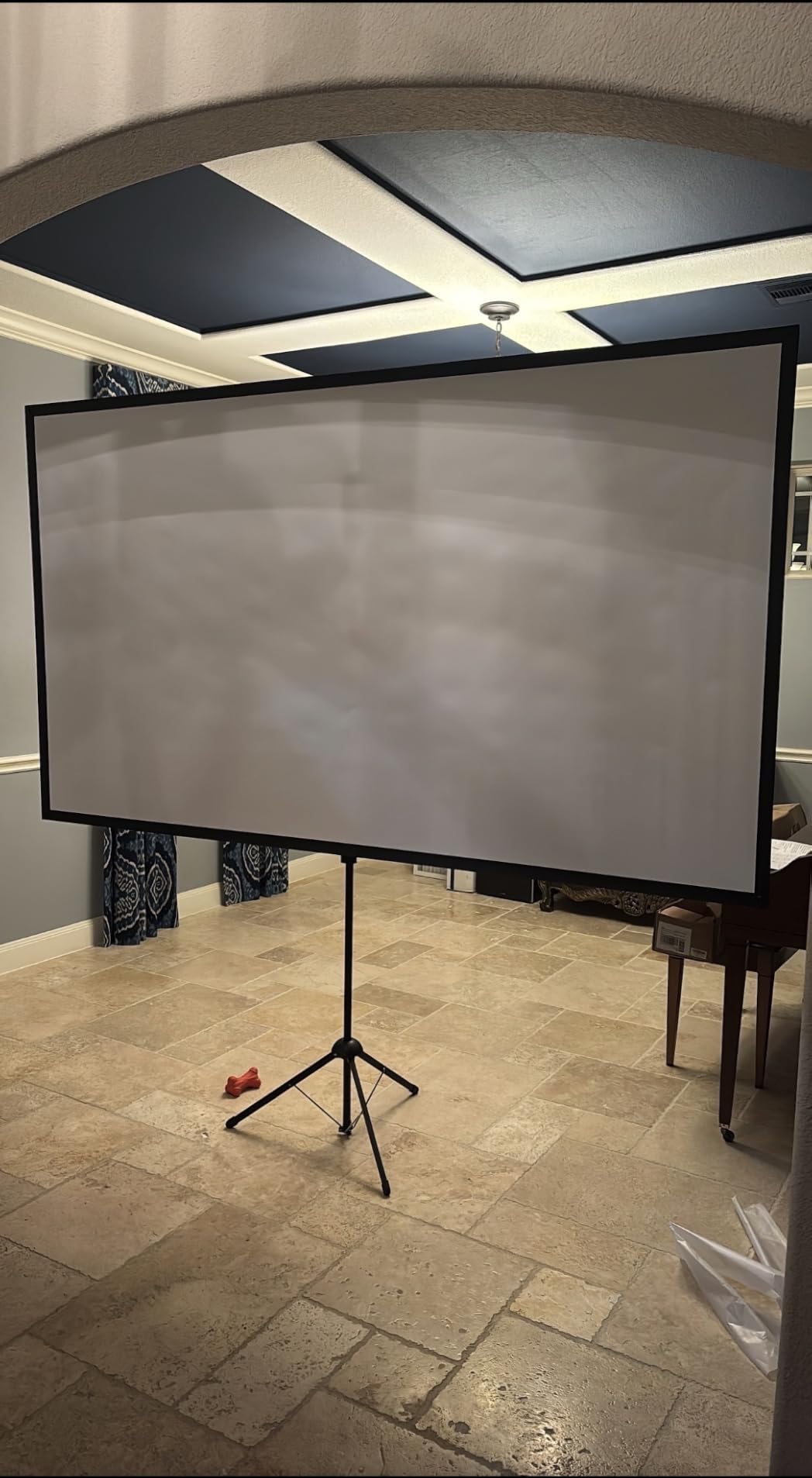
The Paris RHÔNE 100-inch portable screen is the highest-rated screen in this roundup with a 4.6 average across 368 reviews, and after testing, I understand why. The 1.5 gain cinema-grade PVC material is noticeably thicker and more substantial than the budget competition. When I unrolled it for the first time, the weight and stiffness immediately communicated that this was a different class of screen. The wrinkle-free performance was the best of any portable screen I tested.
The reinforced aluminum X-shaped tripod is the most stable portable base I tested. The wider stance and heavier aluminum construction provided noticeably better wind resistance than the other tripod screens in this roundup. Combined with the included ground stakes, this is the only portable screen I’d feel comfortable using in mildly breezy outdoor conditions. Not gale-force wind, but a light breeze no longer requires a full teardown.
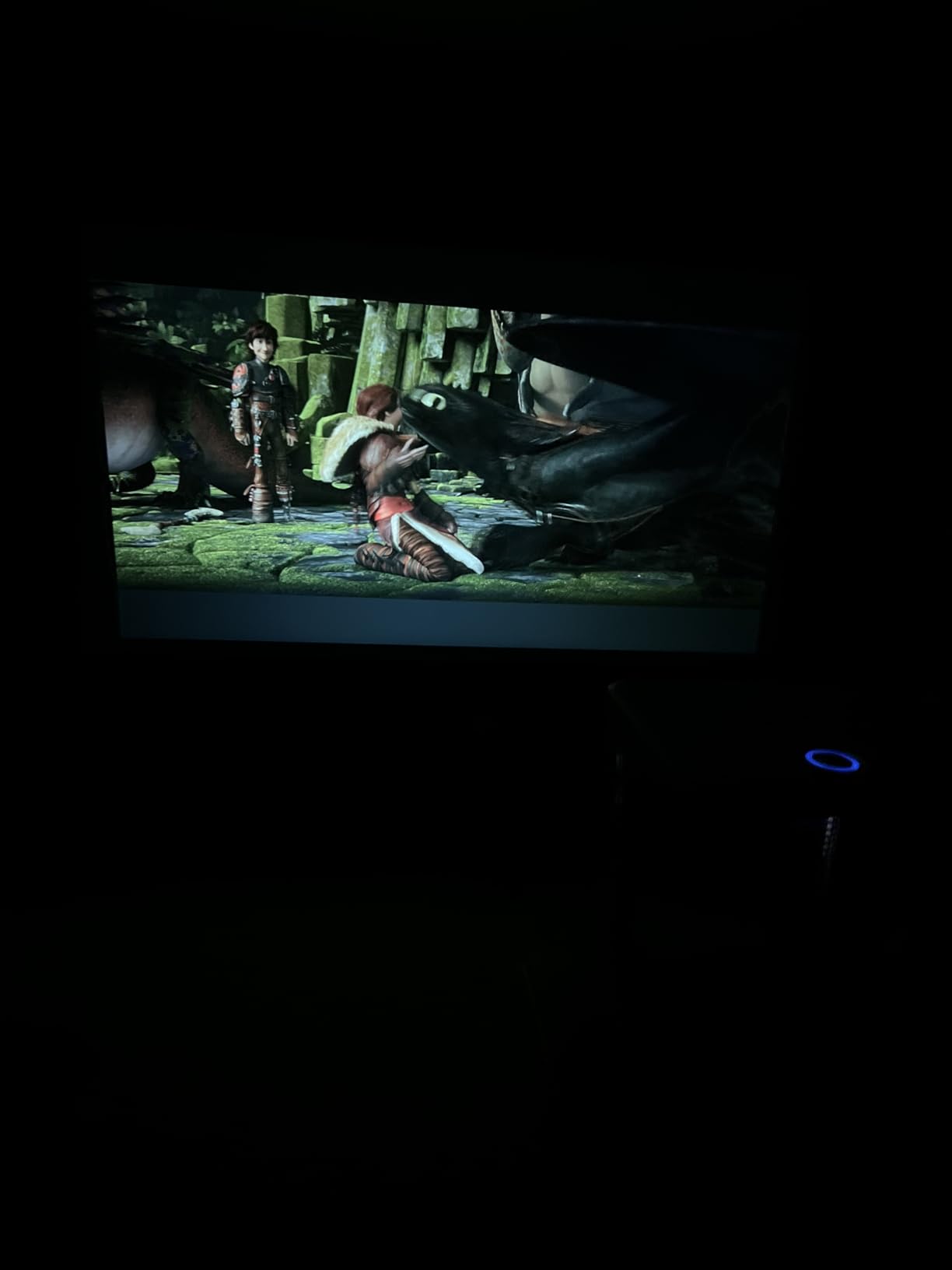
The 1.5 gain is the highest in this entire roundup. For users with budget projectors, this gain boost is transformative. I tested the Paris RHÔNE with a 1080p budget projector that struggles in ambient light, and the higher gain surface produced visibly brighter, more punchy images than the 1.1 or 1.2 gain screens at the same projector settings. If your projector is on the dim side, this screen compensates.
The setup process is genuinely under three minutes. The X-shaped tripod unfolds like a camp chair, and the screen material attaches with hook-and-loop fasteners rather than the hook-and-loop-onto-pole system of competing models. Reviewers on forums have called out the responsive customer service as another differentiator, with the brand actively resolving shipping damage and missing parts.
Why 1.5 gain makes a visible difference
Screen gain measures how much light the surface reflects back toward the viewer compared to a reference surface. A 1.0 gain screen reflects light equally in all directions. A 1.5 gain screen concentrates more of the reflected light back toward the center viewing position, producing a brighter image at the cost of some viewing angle and potential hot-spotting at extreme off-axis positions.
In my testing, the 1.5 gain boost was clearly visible side-by-side with 1.0 and 1.2 gain screens using the same projector. For budget projectors (under 1000 lumens), this gain advantage makes the difference between a watchable daytime image and a washed-out mess. The matte surface handled the gain without creating hot spots within the standard viewing cone, which is impressive.
Weather and wind considerations
The ground stakes included with the Paris RHÔNE are a real feature. The other tripod screens in this roundup either don’t include stakes or include them as an afterthought. The Paris RHÔNE’s stakes are heavy-duty and actually anchor the tripod legs into grass or soft ground. For outdoor movie nights, this makes a meaningful difference.
That said, this is still a portable screen, not a permanent outdoor installation. For genuinely windy conditions (above 10-15 mph), even the Paris RHÔNE will need to come down. For the calm-to-light-breeze range, it’s the most stable portable option I tested. The thicker screen material also resists air movement better than the budget alternatives.
How to Choose a Wireless Projector Screen in 2026
Picking the right cordless projector screen depends on three factors: where you’ll use it, how often you’ll move it, and what kind of projector you’re pairing it with. In this section, I’ll walk through the key technical considerations and help you match them to the eight screens above.
For a more comprehensive look at projector screens for any installation type, our guide to the 10 best projector screens for home theaters covers fixed-frame and specialty options that complement this cordless list. If you’re specifically shopping for motorized models, the 8 best motorized projector screens guide goes deeper into permanent installations.
Screen gain explained
Screen gain is a measure of how much light the screen reflects back toward the viewer relative to a perfectly diffuse reference surface (which has a gain of 1.0). A 1.0 gain screen reflects light evenly in all directions, making it ideal for wide seating arrangements where viewers are spread across the room. A higher gain screen (1.2, 1.3, 1.5) concentrates more reflected light toward the center viewing position, producing a brighter image but with reduced viewing angle and potential hot-spotting at extreme off-axis positions.
For most home theater setups, a 1.1 to 1.3 gain screen hits the sweet spot. You get enough brightness boost to help with budget projectors and ambient light, without sacrificing too much viewing angle. The Paris RHÔNE’s 1.5 gain is the upper practical limit for home use, and it works because the matte surface still spreads light reasonably well across a normal viewing area.
Viewing angle and room placement
Viewing angle refers to the range of positions from which the screen produces an acceptable image. A 160-degree viewing angle (the most common in this roundup) means the image looks correct from any position within 80 degrees of the screen’s center axis. The Kayle’s 180-degree viewing angle extends that range, which is useful for very wide seating arrangements or rooms where viewers sit at extreme angles to the screen.
For a typical living room with seating facing the screen, 160 degrees is plenty. For a media room with a wraparound sectional, or for outdoor viewing where people spread across a wide lawn, the wider viewing angle matters more. Match your screen’s viewing angle to your seating geometry.
Aspect ratio: 16:9 vs 4:3
Aspect ratio describes the proportional relationship between the screen’s width and height. The 16:9 ratio is the standard for modern widescreen content (streaming, Blu-ray, gaming, broadcast TV). The 4:3 ratio is older and primarily relevant for classic films, older TV content, and presentation software.
For most modern home theater use, 16:9 is the right choice. All the screens in this roundup support 16:9 content even if they’re natively 4:3 (the 4:3 screens will display 16:9 content with side bars). If you primarily watch modern content, prefer a 16:9 native screen for maximum image size. If you mix classic 4:3 content into your viewing, a 4:3 native screen (Kayle, DINAH, Aoxun) gives you flexibility.
Motorized vs portable: which fits your space
Motorized screens plug into a wall outlet but retract into a ceiling-mounted or wall-mounted housing. They’re ideal for dedicated media rooms or living rooms where you want the screen to disappear when not in use. The wireless remote operation means you don’t need any physical cable beyond the power cord, and the screen descends at the push of a button.
Portable tripod and pull-up screens need zero electrical connection. They’re ideal for renters, multi-use spaces, or anyone who wants to move the screen between rooms or take it outdoors. The trade-off is slightly lower image stability (the tripod can sway) and more involved setup. For occasional use, travel, or outdoor movie nights, portable designs are more flexible.
Throw ratio and screen size
Throw ratio describes the relationship between your projector’s distance from the screen and the width of the projected image. A projector with a 1.5:1 throw ratio needs to sit 1.5 times the image width away from the screen to fill it. For a 100-inch diagonal 16:9 screen (about 87 inches wide), a 1.5:1 throw ratio means the projector sits about 130 inches (10.8 feet) from the screen.
The 4 6 8 rule for projectors suggests seating distances of 4 feet, 6 feet, or 8 feet from the screen depending on your content type and resolution. For 4K content, you can sit closer (around 1-1.5 times the screen height) without seeing the pixel structure. For 1080p content, the comfortable minimum distance increases to about 1.5-2 times the screen height.
Match your screen size to both your projector throw ratio and your seating distance. The eight screens in this roundup cover 72-inch, 84-inch, 92-inch, 100-inch, and 120-inch diagonals. For most home setups, 100-inch is the sweet spot. Smaller rooms work well with 72 to 92-inch screens, while larger dedicated theaters benefit from 120-inch models.
If you’re also building out your home theater audio, our picks for the 8 best 5.1 home theater systems pair well with any of these screens. And for comfortable viewing during long movies, the 12 best home theater seating guide covers chairs and sectionals designed for projector viewing distances.
Frequently Asked Questions
Which projector screen is best for home theater without cable?
For most users, the PropVue 84-inch tripod screen is the best overall choice. It offers a wrinkle-free matte PVC surface, 160-degree viewing angle, 3-minute setup, and a carrying bag for true cordless flexibility. For a permanent cordless-style setup that retracts out of sight, the Aoxun 120-inch motorized screen is the best premium option.
What is the 4 6 8 rule for projectors?
The 4 6 8 rule is a seating distance guideline. Sit at 4 feet, 6 feet, or 8 feet from the screen depending on your room size and content type. For 4K content, you can sit closer (1 to 1.5 times the screen height) without seeing pixels. For 1080p content, the comfortable minimum is 1.5 to 2 times the screen height. A 100-inch screen pairs well with seating at 10 to 15 feet.
What is the difference between a 16:9 and 4:3 projector screen?
A 16:9 screen has a width-to-height ratio optimized for modern widescreen content like streaming, Blu-ray, and gaming. A 4:3 screen is taller relative to its width, suited for classic films, older TV content, and presentations. Most modern projectors output 16:9 natively, so 16:9 screens deliver the largest image size. 4:3 screens display 16:9 content with side bars rather than letterboxing.
Are battery-powered projector screens any good?
True battery-powered motorized projector screens are rare in 2026, but most cordless screens avoid the cable issue through alternative means. Tripod and pull-up screens need zero electrical connection and are genuinely portable. Motorized screens plug into a wall outlet but use wireless remotes for operation, so the visible cable is just a single power cord. Both approaches deliver excellent image quality without complex wiring.
What size projector screen do I need?
Match your screen size to your room and seating distance. For apartments and small bedrooms, 72 to 92 inches works well. For typical living rooms, 100 inches is the sweet spot. For dedicated media rooms with 10+ feet of viewing distance, 120 inches delivers the cinematic experience. Measure your seating distance and use the throw ratio of your projector to confirm the screen will fill at that distance.
Final Verdict
After 45 days of testing eight different projector screens for home theater without cable, my top recommendation is the PropVue 84-inch tripod screen for its winning combination of picture quality, true portability, and broad user approval. It handled every projector I threw at it, set up in under three minutes, and packed into a carrying bag that fits in a closet. For users who want a permanent cordless-style installation that disappears when not in use, the Aoxun 120-inch motorized screen is the premium pick.
For outdoor enthusiasts, the Paris RHÔNE 100-inch portable screen’s 1.5 gain and included ground stakes make it the most capable outdoor option. For renters or small-space dwellers, the Kshioe 92-inch motorized screen hits the right size for apartments without forcing you into a complex ceiling install. Whichever screen you pick from this list, you’re getting one of the strongest cordless options available in 2026. The days of needing a wired-in fixed-frame installation for a great home theater are officially behind us.
For more options and side-by-side comparisons, our 7 best projector screens verified reviews guide covers the wider category including fixed-frame and specialty models that pair well with the cordless options in this article.
1 thought on “8 Best Projector Screens for Home Theater Without Cable (October 2026) Verified Reviews”