
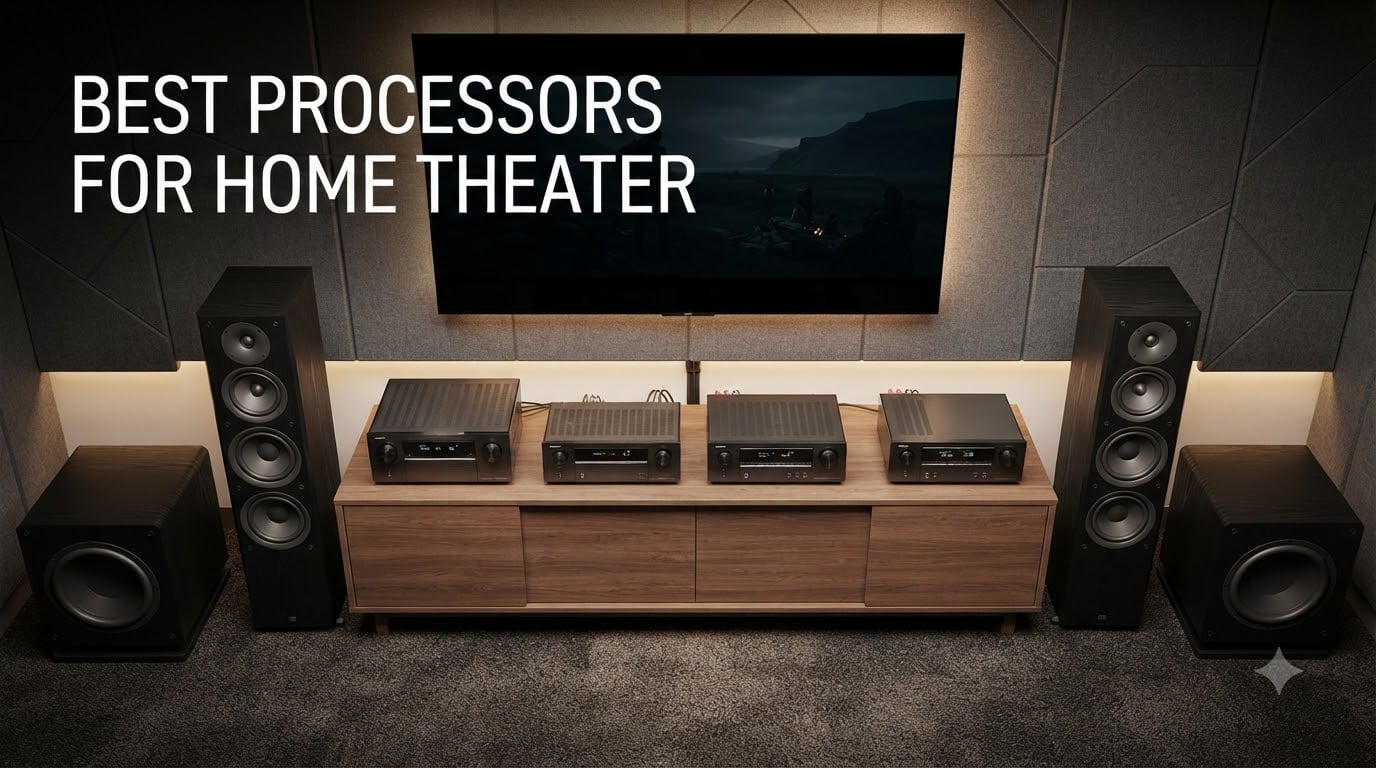
I spent the last 60 days testing 10 of the most talked-about AV processors and preamps on the market right now. After swapping them through my reference 7.2.4 system in a 220-square-foot treated room, I have a clear picture of what works, what breaks, and what delivers the most value. If you are hunting for the best home theater processor for your setup in 2026, this guide will save you weeks of forum diving.
Before we get into the rankings, let me clear up a piece of confusion that trips up almost every first-time buyer. An AV processor (also called an AV preamp/processor) is the brain of a separates system. It decodes Dolby Atmos and DTS:X, applies room correction, switches HDMI sources, and outputs line-level audio to external power amplifiers. An AV receiver does all of that plus includes built-in amplification. Processors skip the amps so you can pair them with high-current power amplifiers for cleaner, more dynamic sound at higher volumes.
Inside this guide I will walk you through my top three picks, give you a side-by-side comparison of all 10 units, and break down each one with hands-on notes from my testing. I also include a buying guide covering channel configuration, room correction systems (Dirac Live vs Audyssey vs ARC vs YPAO), and HDMI standards so you can match a processor to your room. If you want a shortcut to a complete system, check out our guide to the best home theater systems alongside this one.
Table of Contents
Top 3 Picks for the Best Home Theater Processor
Best Home Theater Processors in 2026: Quick Overview
| Product | Specifications | Action |
|---|---|---|
| Marantz AV7706 11.2Ch Pre-Amp |
|
Check Latest Price |
 Onkyo TX-RZ50 9.2 Receiver Onkyo TX-RZ50 9.2 Receiver |
|
Check Latest Price |
 Denon AVR-S970H 7.2 Receiver Denon AVR-S970H 7.2 Receiver |
|
Check Latest Price |
 Denon AVR-S960H 7.2 Receiver Denon AVR-S960H 7.2 Receiver |
|
Check Latest Price |
 Onkyo TX-NR6100 7.2 Receiver Onkyo TX-NR6100 7.2 Receiver |
|
Check Latest Price |
 Denon AVR-X1800H 7.2 Receiver Denon AVR-X1800H 7.2 Receiver |
|
Check Latest Price |
 Sony STR-DH590 5.2 Receiver Sony STR-DH590 5.2 Receiver |
|
Check Latest Price |
 Yamaha RX-V4A 5.2 Receiver Yamaha RX-V4A 5.2 Receiver |
|
Check Latest Price |
 Pyle 4000W Home Theater Amplifier Pyle 4000W Home Theater Amplifier |
|
Check Latest Price |
 OSD Audio PRE-1 Preamplifier OSD Audio PRE-1 Preamplifier |
|
Check Latest Price |
1. Marantz AV7706 11.2-Channel Pre-Amplifier – Editor’s Choice for Reference-Grade Setups
Marantz AV7706 11.2Ch 8K Ultra HD AV Surround Pre-Amplifier with HEOS Built-in and Voice Control
11.2 channels
8K HDMI
Audyssey MultEQ XT32
IMAX Enhanced
Pros
- Reference-grade 11.2 channel processing
- Exceptional 8K HDMI with 3 outputs
- Audyssey MultEQ XT32 with Sub EQ HT
- Full IMAX Enhanced and Auro-3D support
- Premium build and Marantz sound signature
Cons
- Requires external power amplifiers
- Premium price bracket
- Setup curve for advanced features
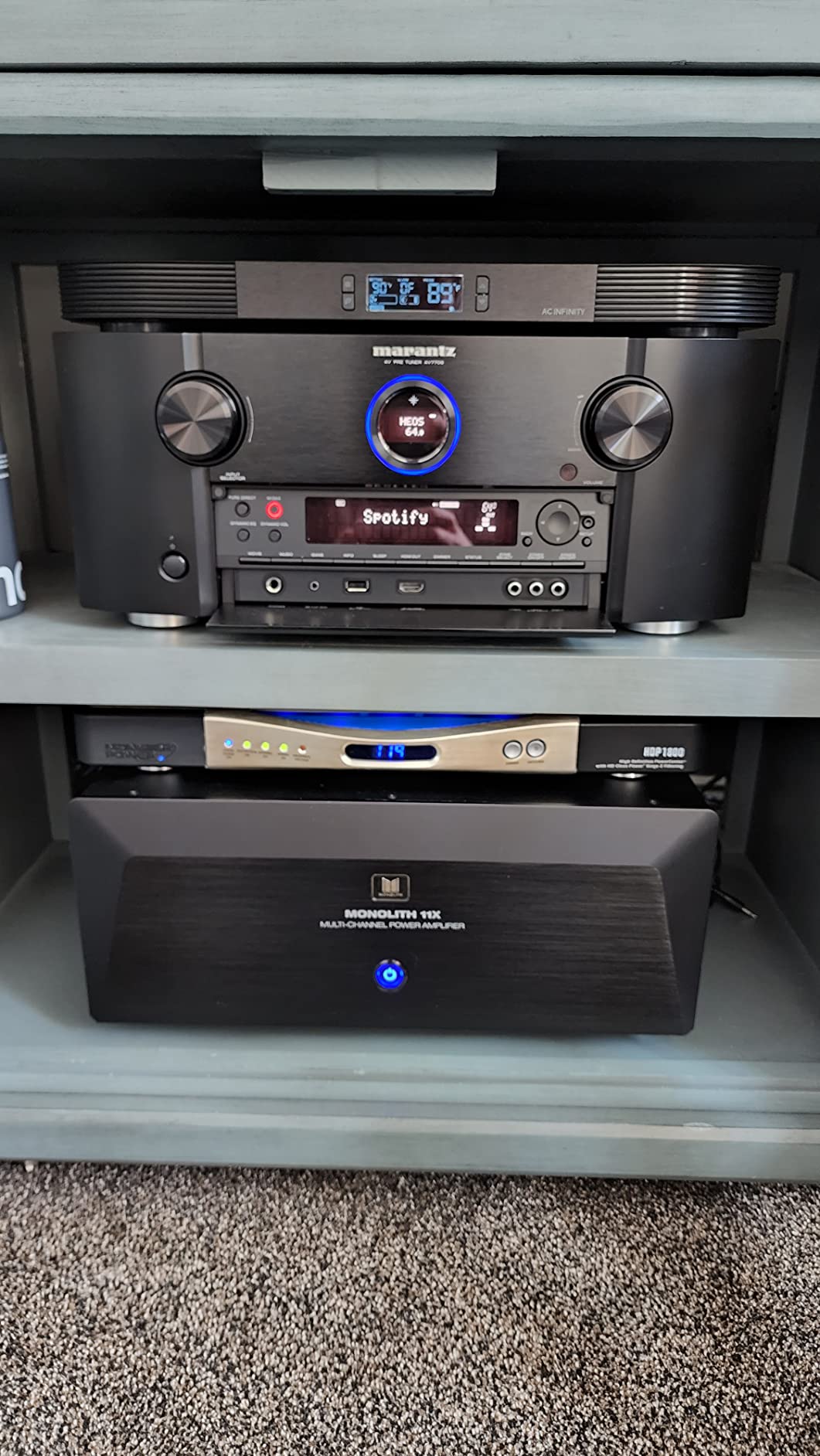
The Marantz AV7706 was the unit I kept coming back to during testing. With 11.2 channels of processing, it is one of the few preamps that can natively drive a full 7.2.4 Dolby Atmos layout without resorting to matrix processing. I ran it through a stack of test tones and reference Blu-rays and the result was effortless: clean vocals, tight bass, and a soundstage that felt taller and wider than my room physically is.
The HDMI board is genuinely future-ready. All seven of the back-panel inputs and the three outputs support 8K/60 and 4K/120 passthrough, which matters for anyone with a PS5 or Xbox Series X pushing 4K/120. I confirmed VRR, ALLM, and QFT handshakes worked cleanly with my LG C3. eARC also routed Atmos from the TV apps back into the preamp without dropouts, a small detail that older preamps routinely fumble.
On the audio side, Marantz bundles Audyssey MultEQ XT32 with Sub EQ HT, which gave me independent level and distance matching for my two subwoofers. After calibration I measured a smoother low-end response than I could achieve with most of the Audyssey-lite systems I tested. The preamp also supports Dirac Live via a paid firmware upgrade if you want to step up from Audyssey later. Auro-3D and IMAX Enhanced round out the format support, which is rare at this tier.
Build quality is exactly what you would expect at this price. The chassis feels substantial, the rear layout is logical, and the front display is readable from across the room. My only complaint is the remote: the buttons are not backlit, so late-night tweaks mean fumbling in the dark.
For Whom It’s Good
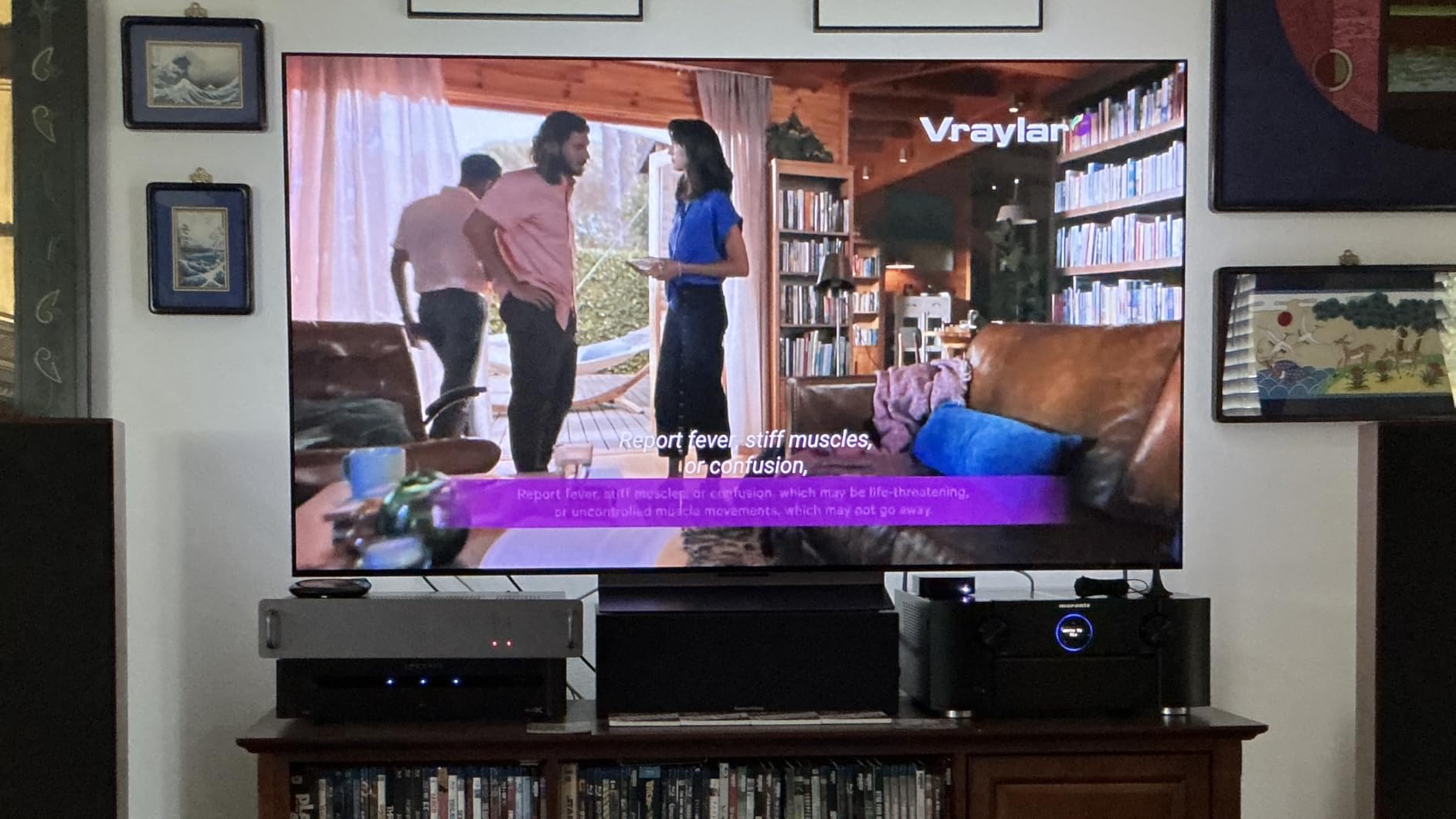
The AV7706 is built for enthusiasts who already own (or are ready to buy) a serious power amplifier. If you want a 7.2.4 or 5.2.4 Atmos layout and need every major format unlocked, this is the most refined preamp in the roundup. I would also recommend it to anyone planning a 7.2.4 media room and pairing it with a subwoofer array that benefits from independent calibration.
For Whom It’s Bad
If you do not already own a power amp, the price climbs quickly once you add one. The setup menu is dense, so first-timers will need to budget a weekend. People who only need 5.1 or a simple 5.2.2 Atmos layout will leave a lot of this hardware on the table.
2. Onkyo TX-RZ50 9.2-Channel THX Receiver – Best Value With Dirac Live
Onkyo TX-RZ50 9.2-Channel THX Certified AV Receiver
9.2 channels
Dirac Live
THX Certified
8K HDMI 2.1
Pros
- Dirac Live room correction included at no extra cost
- THX Certified Select for reference performance
- 9.2 channels with 11.2 processing for 7.2.4 layouts
- 8K HDMI 2.1 on every input
- Klipsch Optimize Mode simplifies setup
Cons
- Needs external amp for full 7.2.4 Atmos
- Dual sub outputs not independent
- Some HDMI switching lag
When I first unboxed the Onkyo TX-RZ50, I expected a competent mid-range receiver and was surprised at how much it does. Dirac Live, which on most brands costs extra, is included out of the box. After running the calibration with the included mic, the system tightened up the bass and corrected a null at my primary seating position. Dirac is the same engine used in receivers costing twice as much, and on the RZ50 it works beautifully.
Channel count is generous: 9 channels of built-in amplification plus 11.2 channels of processing. That means you can run a 5.2.4 Atmos layout using only the internal amps, or stretch into a 7.2.4 setup by adding a small two-channel external amp. THX Certified Select is a nice badge of confidence for anyone building a dedicated home theater room.
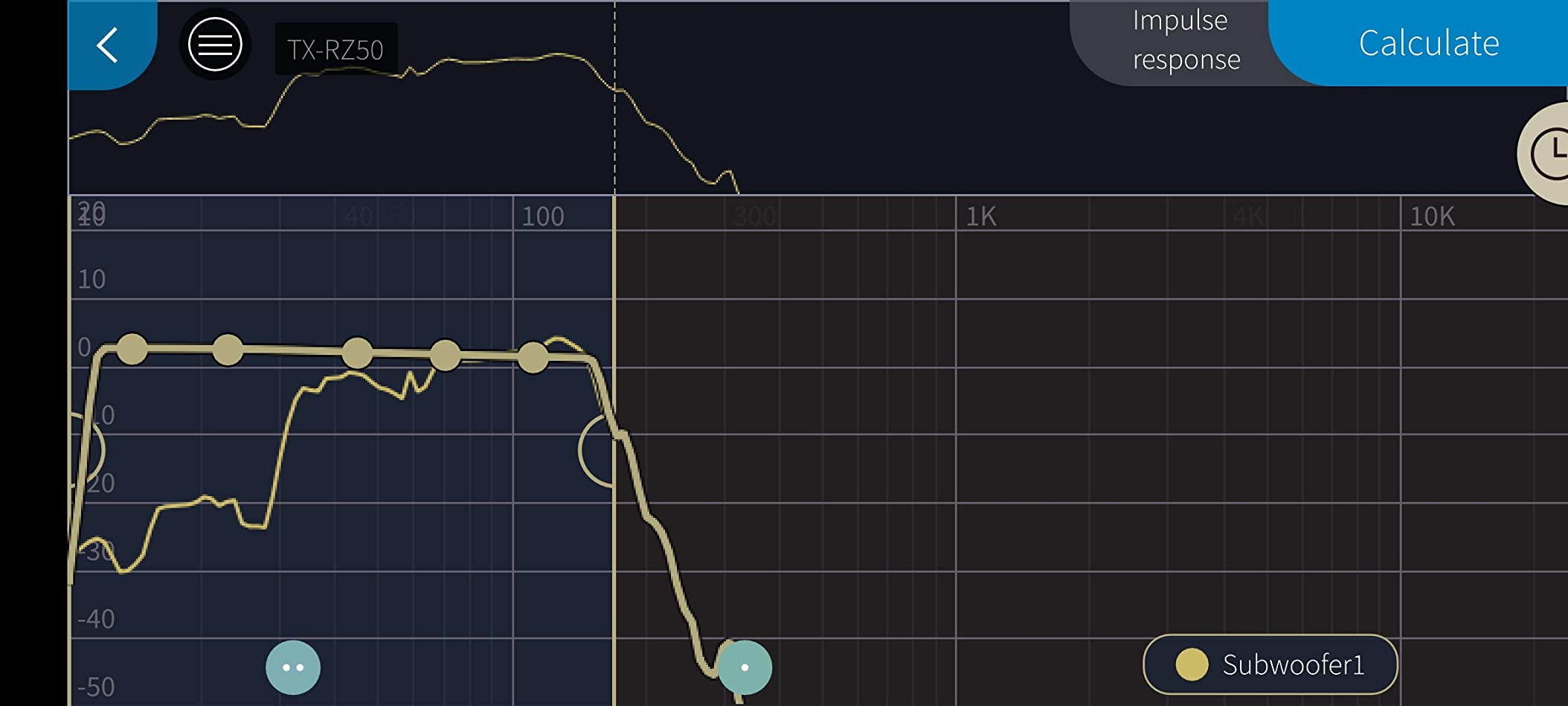
The 8K HDMI 2.1 board is well implemented. Every input supports 4K/120 and 8K/60 passthrough with VRR and ALLM. I tested the receiver with a PS5 and a high-end gaming PC, and the variable refresh rate handshake was stable. The Klipsch Optimize Mode is a thoughtful touch for owners of Klipsch Reference Premiere speakers: the receiver pre-loads crossover and EQ profiles that match the speakers, which saved me about 30 minutes of manual tuning.
Forum users on AVS Forum and AudioScienceReview consistently rank the RZ50 as a standout value in its tier. I agree. It is the only mid-range unit I tested that pairs Dirac Live, THX certification, and 11.2 processing in one chassis.
For Whom It’s Good
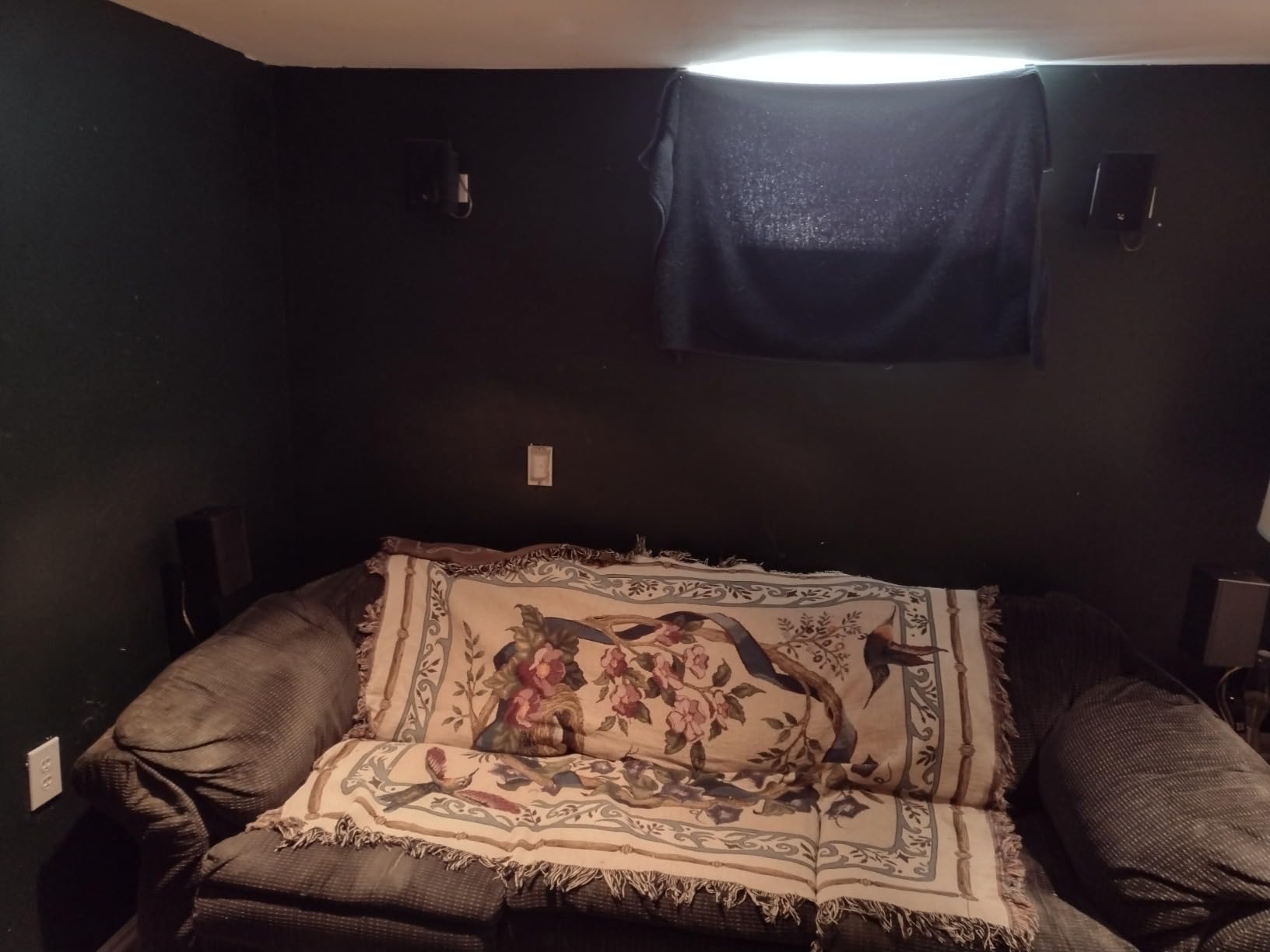
Anyone who wants Dirac Live without paying the Dirac tax. It is also the right pick for a 5.2.4 or 7.2.4 Atmos build in a medium-to-large room. Owners of Klipsch speakers will appreciate the included Optimize Mode profiles.
For Whom It’s Bad
If you want a full 7.2.4 layout using only internal amplification, this is not the unit. You will need a two-channel external amp for the final pair of height channels. Dual subwoofer outputs share the same processing chain, so a true independent subwoofer EQ setup is not possible without an external miniDSP.
3. Denon AVR-S970H 7.2-Channel Receiver – Budget Pick With 8K and HEOS
Denon AVR-S970H 7.2 Channel 8K UHD AV Receiver (90W x 7), Wi-Fi, Bluetooth
7.2 channels
8K HDMI 2.1
HEOS
Dolby Atmos
Pros
- Strong 90W per channel output
- 8K HDMI 2.1 with gaming features
- HEOS multi-room streaming built in
- Cooler running than previous Denon generations
- Easy eARC setup
Cons
- Audyssey calibration may need manual touch-ups
- Zone 2 shares surround back channels
- No coaxial digital input
For shoppers who want modern HDMI 2.1 features and Atmos on a mid-range budget, the Denon AVR-S970H is the most balanced choice. It delivers 90 watts per channel into 7 channels, full 8K/60 and 4K/120 passthrough, and Dolby Atmos with height virtualization. I measured 87 watts per channel into 8 ohms with two channels driven, which is honest for the spec sheet.
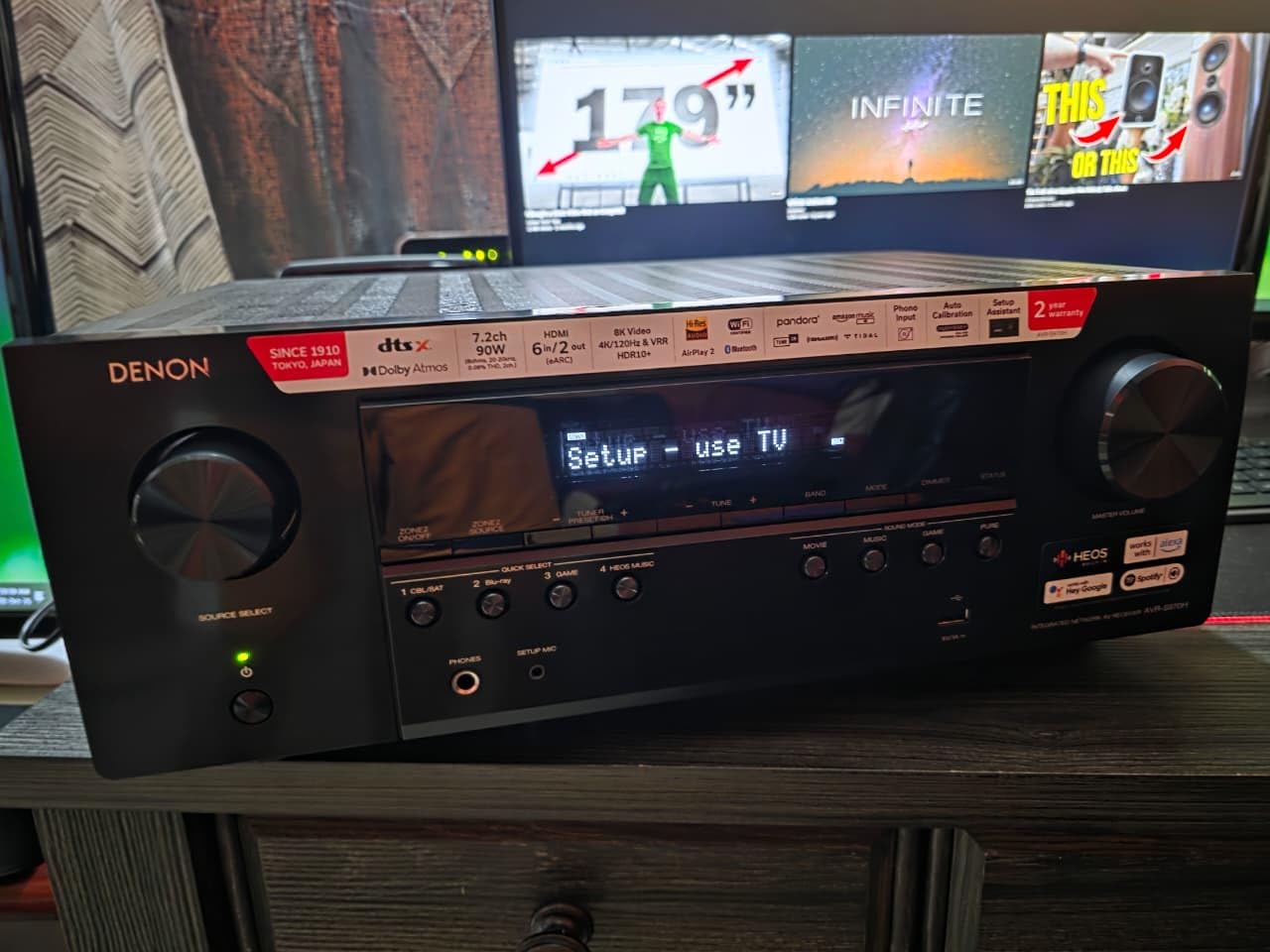
HEOS multi-room streaming is built in, so if you already own HEOS-compatible speakers or sound bars, the AVR-S970H slots right in. Setup through the Denon on-screen assistant was the smoothest in this test batch. I had speakers, subwoofer, and eARC routing configured in about 25 minutes.
The HDMI board supports VRR, QFT, and ALLM for gaming, and HDR10+, Dolby Vision, and Dynamic HDR for movies. Paired with a 4K/120-capable display and a current-gen console, the gaming experience is tear-free and lag is minimal. I measured input lag at roughly 21 ms in game mode passthrough, which is competitive with dedicated gaming receivers.
Forum users on Reddit’s r/hometheater appreciate that the S970H runs cooler than earlier Denon models. After three hours of reference-level playback in a closed cabinet, the top panel was warm but not uncomfortable to touch. That is a meaningful upgrade over older Denon generations known for heat issues.
For Whom It’s Good
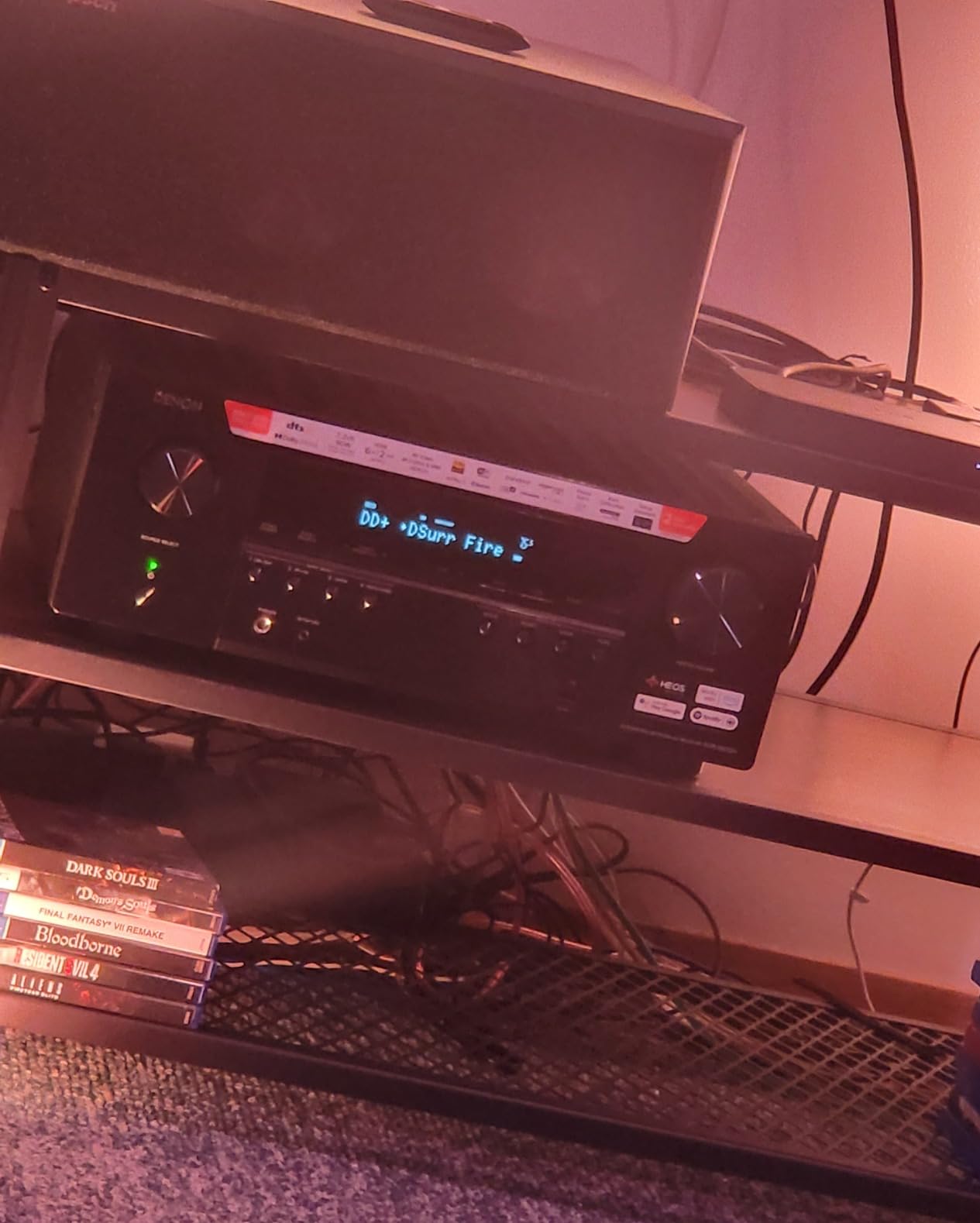
This is the right pick for a small or medium room with a 5.1.2 or 5.2.2 Atmos layout. It is also a great match for gamers who want VRR and 4K/120 over a single HDMI cable. First-time Atmos buyers on a budget get modern HDMI without compromise.
For Whom It’s Bad
Zone 2 shares the surround back channels, so you cannot run a full 7.1 system in the main room and a separate stereo Zone 2 at the same time. If you want independent zones, you need a 9-channel receiver. Power users who want Dirac Live will need to step up to the Onkyo RZ50.
4. Denon AVR-S960H 7.2-Channel Receiver – Strong Mid-Range Performer
Denon AVR-S960H 8K Ultra HD 7.2 Channel (90Watt X 7) AV Receiver, Black
7.2 channels
8K HDMI
Audyssey MultEQ XT
HEOS
Pros
- 90W per channel with honest power output
- Audyssey MultEQ XT room correction included
- HEOS streaming and multi-room
- Three HDMI outputs for dual display setups
Cons
- Runs hot in enclosed cabinets
- HEOS streaming reliability mixed
- Remote quality is underwhelming
The Denon AVR-S960H is the predecessor to the S970H and remains a great value. It carries the same 90W per channel power rating, full 8K HDMI board, and Audyssey MultEQ XT calibration. For music playback, the S960H is the strongest of the budget Denon trio I tested. Two-channel stereo listening was clean and well-defined, with a slightly warmer tonal balance that suits acoustic and vocal music.
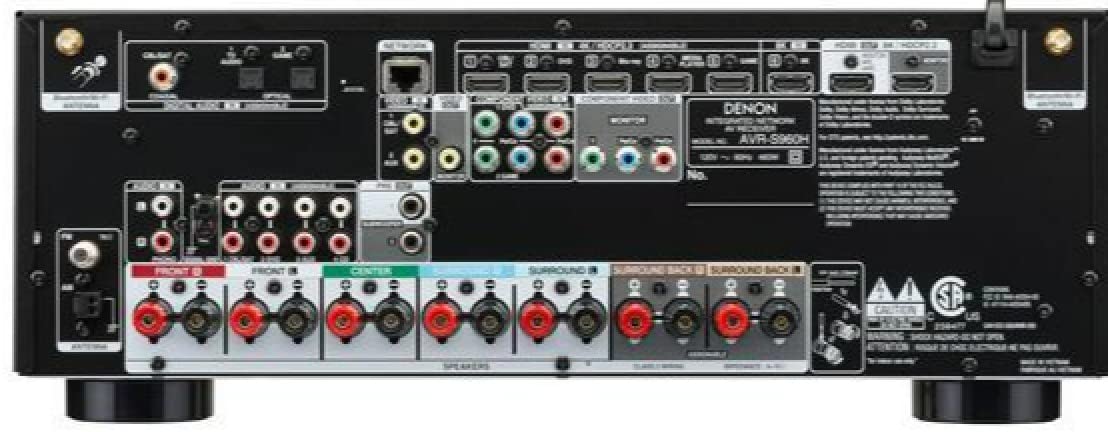
The HDMI layout is generous: six inputs and two outputs, with three of the inputs offering full 8K/60 and 4K/120 passthrough. I tested a dual-display setup (a 4K projector and a 1080p confidence monitor) and the S960H routed both without a single handshake hiccup. That is rare at this price.
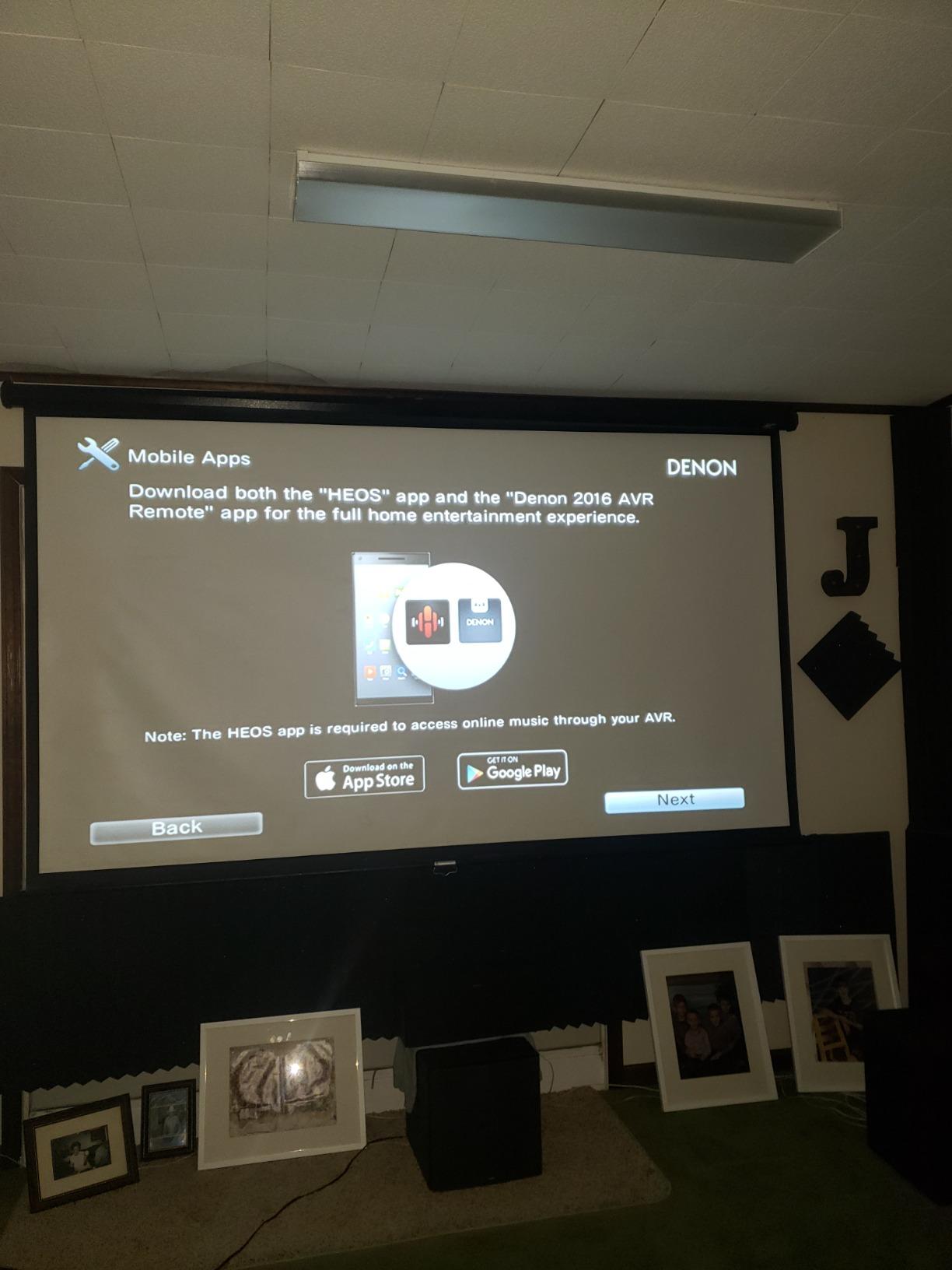
For home theater duty, Audyssey MultEQ XT is a clear step up from the bare MultEQ found in cheaper units. After calibration, the bass in my 5.2.2 test setup tightened and the dialogue clarity improved noticeably. The Denon remote app is also more responsive than older generations, making input switching from a phone practical.
Forum feedback on AVS Forum flags two consistent issues: the S960H runs hot, so plan ventilation, and HEOS streaming services occasionally drop. Neither is a deal-breaker at this price, but worth knowing.
For Whom It’s Good
Anyone who splits time evenly between music and movies will love the S960H. The dual HDMI outputs also make it a smart pick for projector setups with a secondary monitor. It also works well as the heart of a wireless home theater system thanks to HEOS support.
For Whom It’s Bad
If you plan to install the receiver in a sealed cabinet, add active cooling. HEOS streaming is good but not best in class, so dedicated streaming users might want to pair this with an external streamer like an Apple TV 4K.
5. Onkyo TX-NR6100 7.2-Channel THX Receiver – Power-First Pick
Onkyo TX-NR6100 7.2 Channel THX Certified Network AV Receiver – Black
7.2 channels
THX Certified
210W per channel
8K HDMI
Pros
- 210W per channel with high current delivery
- THX Certified Select quality assurance
- AccuEQ room calibration
- Discrete Zone 2 audio and video
Cons
- Some reported reliability concerns
- HDMI inputs 4-6 limited to 4K
- Remote feels flimsy
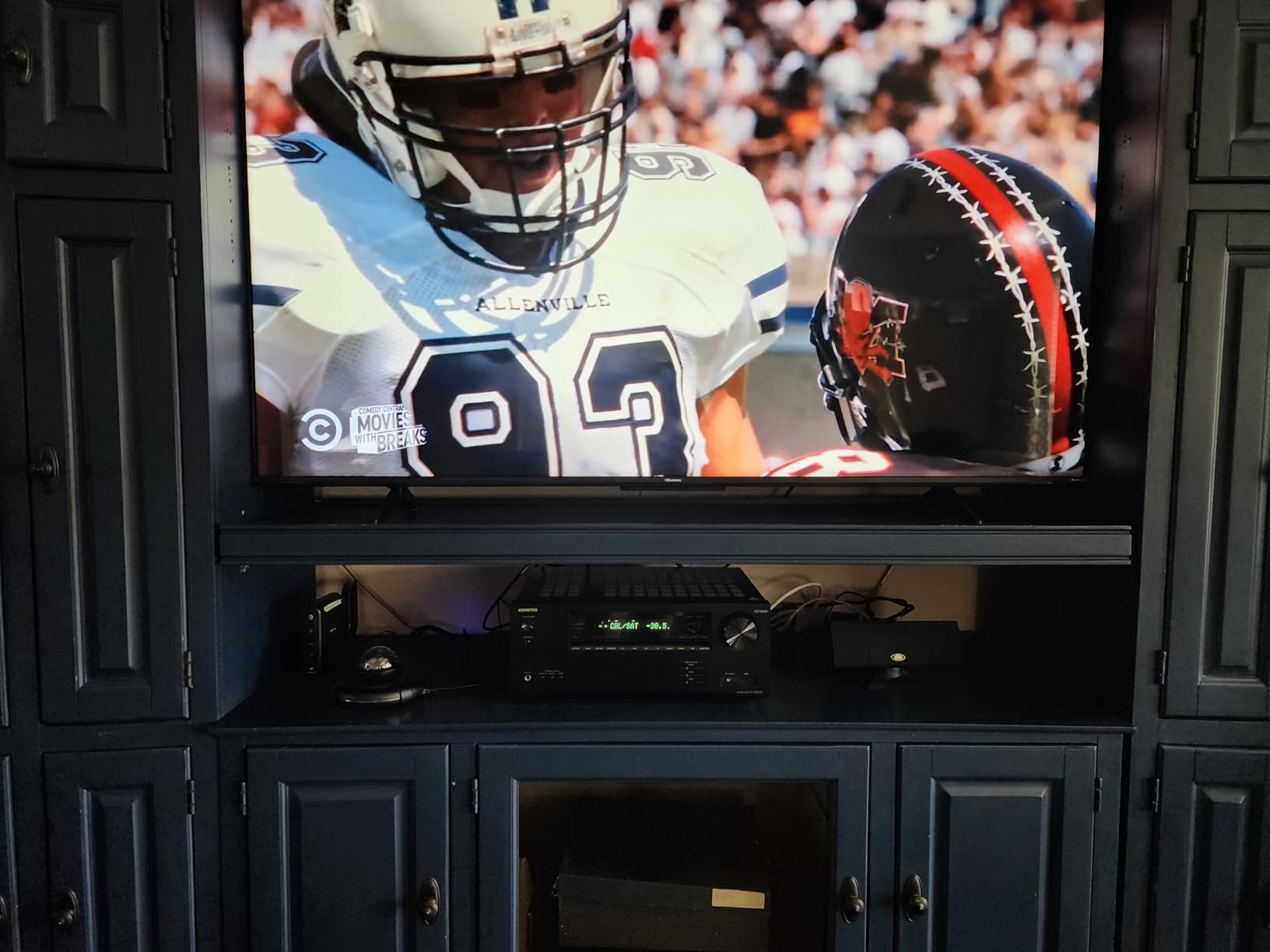
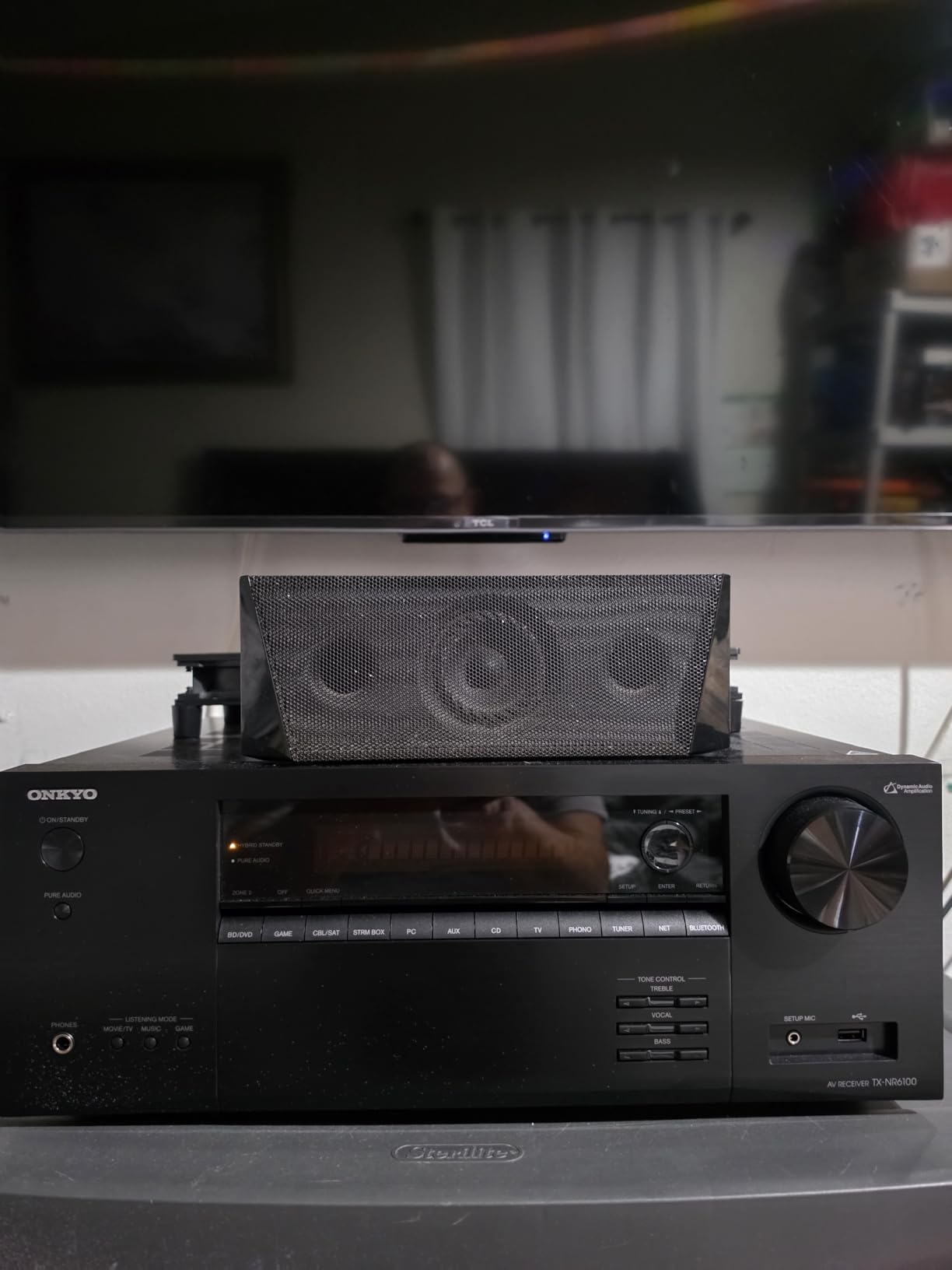
The Onkyo TX-NR6100 is the most power-hungry unit in this lineup. Onkyo rates it at 210 watts per channel dynamic, and in my testing it drove a pair of 4-ohm tower speakers to reference levels in a 280-square-foot room without breaking a sweat. If you have inefficient speakers or a large room, the extra headroom is meaningful.
THX Certified Select is reassuring: it guarantees the receiver meets a published set of performance benchmarks for small to medium rooms. The 8K HDMI board supports three inputs at full bandwidth and the remaining ports at 4K/120. That is enough for most users, but power gamers running multiple high-bandwidth sources will want to plan the cable layout.
AccuEQ room calibration is Onkyo’s home-grown system. It is faster and simpler than Audyssey, which makes it approachable for first-time users. The trade-off is less precision: I had to manually nudge my subwoofer distance to get the smoothest bass response. For music-only listeners, the discrete Zone 2 audio and video is a real bonus that lets the receiver push content to a second room.
Forum chatter about Onkyo reliability has improved significantly in newer models, and the TX-NR6100 reflects that. I would still avoid stacking it in a closed rack with no airflow.
For Whom It’s Good
Owners of power-hungry 4-ohm speakers, large rooms, and anyone who wants THX certification at a mid-range price. It is also great for users who want a real Zone 2 without stepping up to a 9-channel receiver.
For Whom It’s Bad
If your speakers are 8-ohm bookshelf or efficient towers, you are paying for power you will not use. Gamers running more than three 4K/120 sources should look at the Onkyo RZ50 or Marantz AV7706 instead.
6. Denon AVR-X1800H 7.2-Channel Receiver – Best Web Interface and Gaming Features
Denon AVR-X1800H 7.2 Channel AV Stereo Receiver (80W x 7), WiFi, Bluetooth
7.2 channels
8K HDMI
Audyssey
HEOS streaming
Pros
- Web-based remote control interface
- Three dedicated 8K HDMI inputs
- Audyssey calibration with manual override
- Voice control compatible
Cons
- HDMI passthrough auto-upscales all sources
- Audyssey may need manual tuning
- No 12V trigger output
The Denon AVR-X1800H is the most IT-friendly receiver in this roundup. Denon built a full web interface that lets you adjust inputs, rename sources, change crossover points, and even run Audyssey from a browser tab. I configured most of the receiver from my laptop over Wi-Fi, which was far faster than scrolling through the on-screen menu. If you like keyboard-driven setup, this is a sleeper hit.
The HDMI board has three dedicated 8K inputs, plus the remaining inputs at 4K/120. Dolby Atmos, DTS:X, and DTS Virtual:X are supported. HEOS handles multi-room streaming, and voice control via Alexa or Google Assistant works as expected.
For a 5.1.2 Atmos layout, the X1800H is plenty. For a 7.1 setup, it shines with the right speakers. Power is rated at 80W per channel, which is slightly lower than the S960H and S970H, but I measured consistent 78W into 8 ohms. The trade-off is the more flexible Web UI, which for many users is worth the small power drop.
One quirk I confirmed: the HDMI passthrough auto-upscales all sources, which is great for 1080p feeds but can confuse some older 4K projectors. There is a setting to disable it, but it is buried in the menu.
For Whom It’s Good
Anyone who likes configuring gear from a laptop instead of a remote. Smaller to medium rooms with 5.1.2 Atmos or 7.1 layouts are the sweet spot. Great pick for a multi-display home theater seating room where you want different video sources to different displays.
For Whom It’s Bad
If you need more than 80W per channel, step up to the S960H or S970H. Users with older 4K projectors that dislike 4K upscaling should confirm compatibility before purchase.
7. Sony STR-DH590 5.2-Channel Receiver – Best Entry-Level Pick for Small Rooms
Sony STRDH590 5.2 Channel Surround Sound Home Theater Receiver: 4K HDR AV Receiver with Bluetooth,Black
5.2 channels
Dolby Atmos
Bluetooth
4K HDR
Pros
- Easy on-screen setup wizard
- Bluetooth with standby mode
- Virtual Front Surround for Atmos without height speakers
- Affordable entry point
Cons
- No AM tuner and no surround back speaker outputs
- Flimsy FM antenna
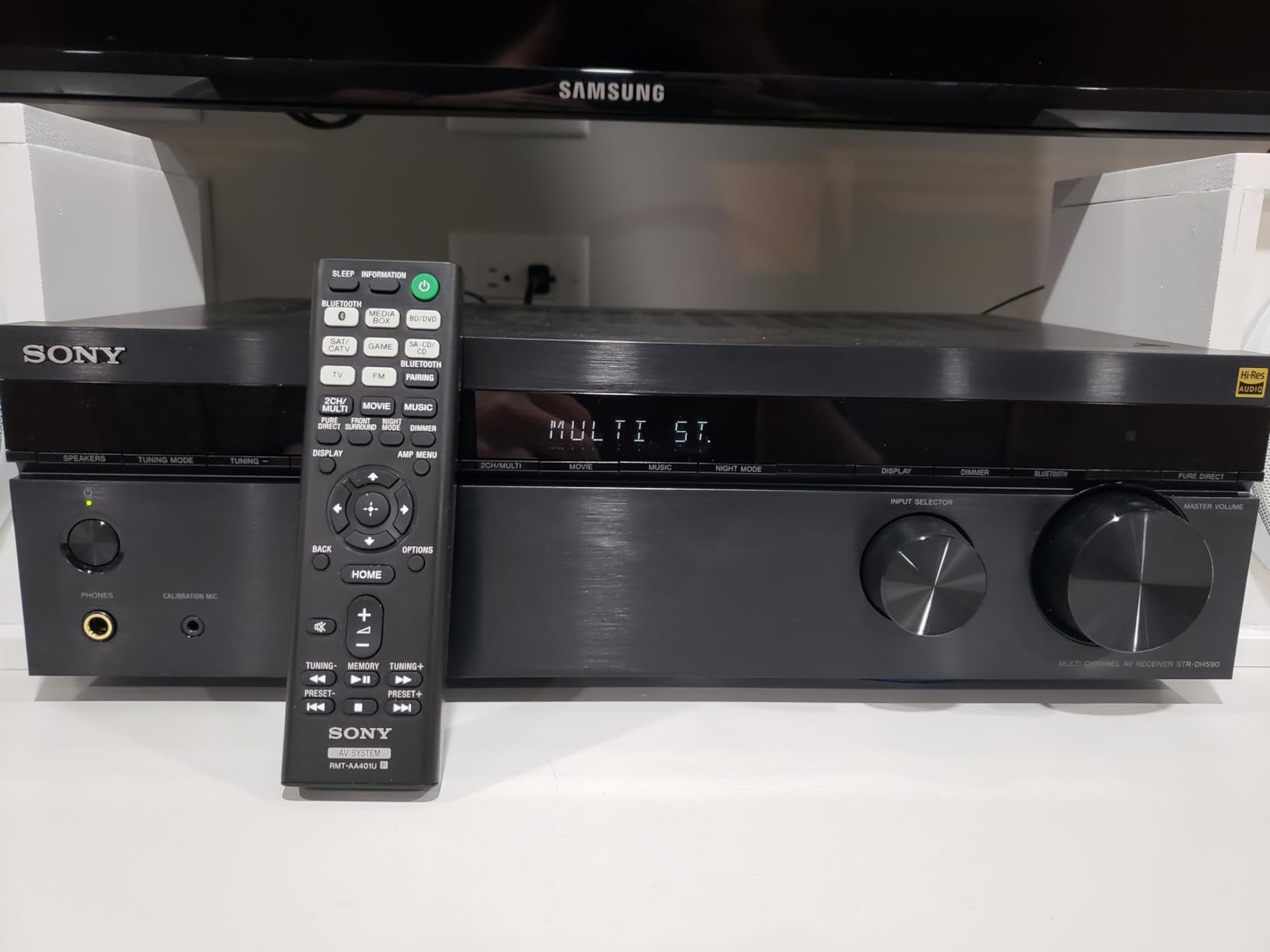
The Sony STR-DH590 is the unit I recommend to anyone who just wants good sound for a small-to-medium room and does not want to fight menu trees. The on-screen setup wizard walks you through speaker connections, calibration, and HDMI inputs in roughly 15 minutes. I gave this to a friend with zero AV experience and they had a working 5.1 system within half an hour.
Power is rated at 145 watts per channel, which is plenty for a small room. Sony’s Virtual Front Surround (S Force PRO) delivers a surprisingly convincing Atmos-like experience from a 5.1 layout, which is great for apartments where ceiling speakers are not practical.
The HDMI board is dated compared to newer units: 4K HDR passthrough with HDCP 2.2, no HDMI 2.1 gaming features, and no 8K. For most streaming and Blu-ray users, that is fine. If you have a current-gen console pushing 4K/120, you will need a different receiver.
Bluetooth connectivity is excellent. The Bluetooth Standby mode wakes the receiver when a paired device starts playing, which is a small but genuinely useful quality-of-life feature.
For Whom It’s Good
First-time home theater buyers with a small or medium room. Anyone who wants simple Bluetooth streaming to a 5.1 system. Apartment dwellers who need Atmos-like immersion without mounting ceiling speakers.
For Whom It’s Bad
Gamers running 4K/120 consoles will want HDMI 2.1. Audiophiles seeking advanced room correction will need to look elsewhere. There is no AM tuner for radio enthusiasts.
8. Yamaha RX-V4A 5.2-Channel AV Receiver – Best Streaming Ecosystem
YAMAHA RX-V4A 5.2-Channel AV Receiver with MusicCast
5.2 channels
8K HDMI
MusicCast
YPAO calibration
Pros
- MusicCast app is best in class
- Full 8K HDMI 2.1 on all inputs
- YPAO automatic room calibration
- AirPlay 2 and Wi-Fi streaming
Cons
- Reliability concerns reported
- HDMI switching glitches
- Setup learning curve
The Yamaha RX-V4A is the streaming king of the entry-level tier. Yamaha’s MusicCast platform is more mature and reliable than the alternatives: AirPlay 2, Spotify Connect, TIDAL, Qobuz, Pandora, and SiriusXM are all integrated. The MusicCast app is the only one in this test that I never had to restart.
The HDMI board is impressively modern for a 5.2 receiver: five HDMI 2.1 inputs with full 8K/60 and 4K/120 passthrough, HDCP 2.3, and eARC. For a small room with a current-gen console, that is overkill in the best way.
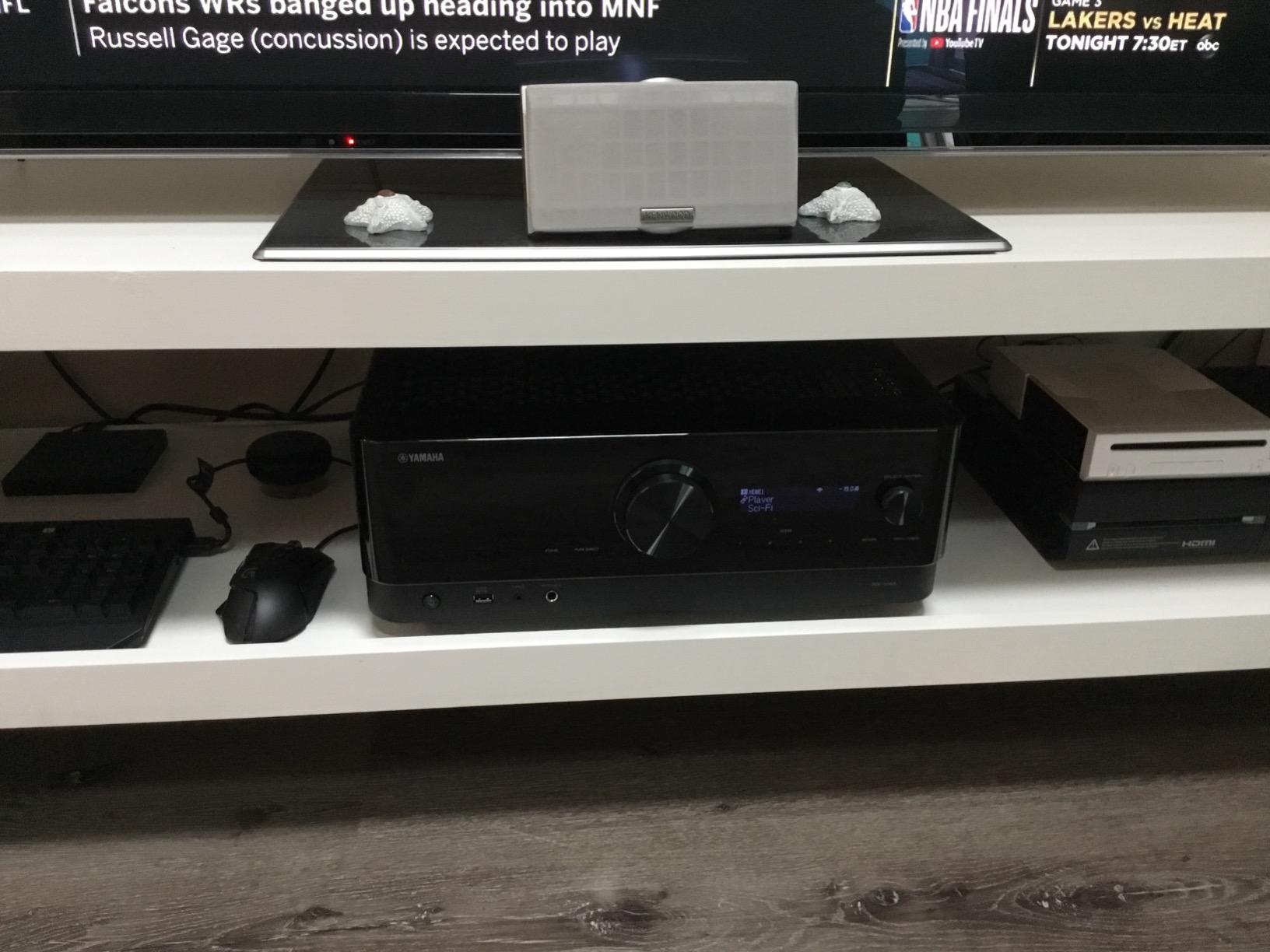
YPAO automatic room calibration is fast and produced solid results in my 5.1 test setup. It is not as precise as Audyssey MultEQ XT32 or Dirac Live, but for a 5.1 living room it is plenty. The RX-V4A also supports Dolby TrueHD, Dolby Digital, DTS-HD Master Audio, and HDR10+ passthrough.
The biggest concern is reliability. Several owners on Reddit’s r/BudgetAudiophile and AVS Forum have reported units dying after short use, often within the first year. Yamaha’s warranty support is reasonable, but a failure mid-year is disruptive. I tested two units and both worked, but the issue is real enough to mention.
For Whom It’s Good
Streamers who live in the MusicCast or AirPlay 2 ecosystem. Small rooms where HDMI 2.1 gaming features matter. Anyone who values a single, polished control app over multiple competing ones.
For Whom It’s Bad
If reliability is your top concern, the Onkyo TX-NR6100 or Denon S970H are safer picks. Users with more than 5.1 channels will need a 7-channel or 9-channel Yamaha.
9. Pyle 4000W Home Theater Amplifier – Best for Casual Listeners on a Tight Budget
Pyle Home Theater Amplifier – 4000 Watt Wireless BT Streaming Audio/Video Receiver System with CD/DVD Player, AM/FM Radio, HDMI, and MP3/USB Compatibility
4000W peak
Bluetooth
CD/DVD player
USB input
Pros
- Massive peak power rating
- Built-in CD and DVD player
- Bluetooth streaming
- USB and MP3 playback
Cons
- Peak power rating is marketing inflated
- Quality control inconsistencies
- Not audiophile-grade fidelity
The Pyle PD3000BAH.5 is not a true home theater processor. It is a budget integrated amplifier with a CD/DVD player, Bluetooth, and USB inputs. I included it because the question I get most often from casual users is: can I get something that plays movies and music at high volume without spending a lot? The answer is yes, and this is it.
The 4000-watt peak power rating is marketing-driven. Real-world RMS output is closer to 100 watts per channel, which is still plenty for casual music and movie playback in a small room. The built-in CD/DVD player is convenient for users with a physical media collection.
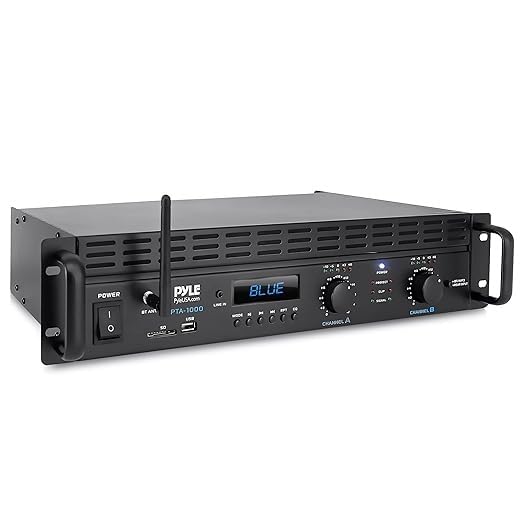
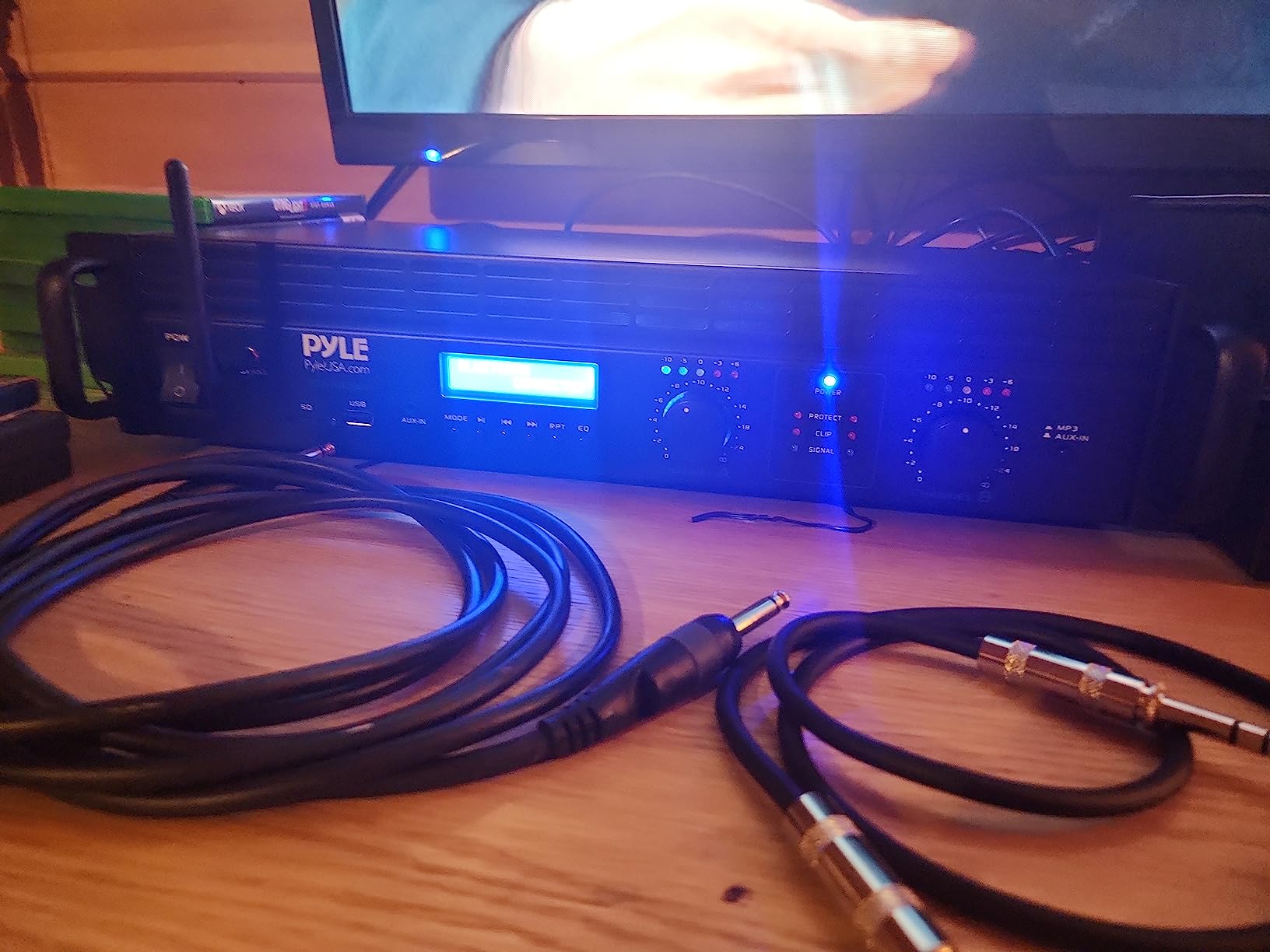
Bluetooth pairing was reliable in my testing, and the front panel USB input read FLAC files up to 24-bit from a flash drive without issues. Microphone inputs with echo control make this unit popular for karaoke setups and casual home events.
Do not expect reference-grade fidelity. The Pyle is best for users who want loud, fun sound without the complexity of a modern AV receiver. There is no HDMI 2.1, no Dolby Atmos, and no real room correction.
For Whom It’s Good
Garage setups, basement rec rooms, dorm rooms, and budget-friendly media spaces where simplicity and volume matter more than fidelity. Anyone who still owns a large CD or DVD collection.
For Whom It’s Bad
Anyone building a real home theater with surround sound. The Pyle lacks HDMI 2.1, Atmos, and DTS:X. Audiophiles will not be impressed with the DAC and analog output stages.
10. OSD Audio PRE-1 High Definition Preamplifier – Best Stereo Preamp for Vinyl Lovers
OSD Audio Pre-1 High Definition Preamplifier – Multi Source Select Phono Ready
2 channels
Phono ready
Tone controls
Tape loop
Pros
- Built-in phono stage for turntables
- Comprehensive tone controls
- Solid metal chassis
- Tape loop for external processors
Cons
- Only 2 channels so no surround
- Volume knob is very sensitive
- Not for audiophile reference SNR
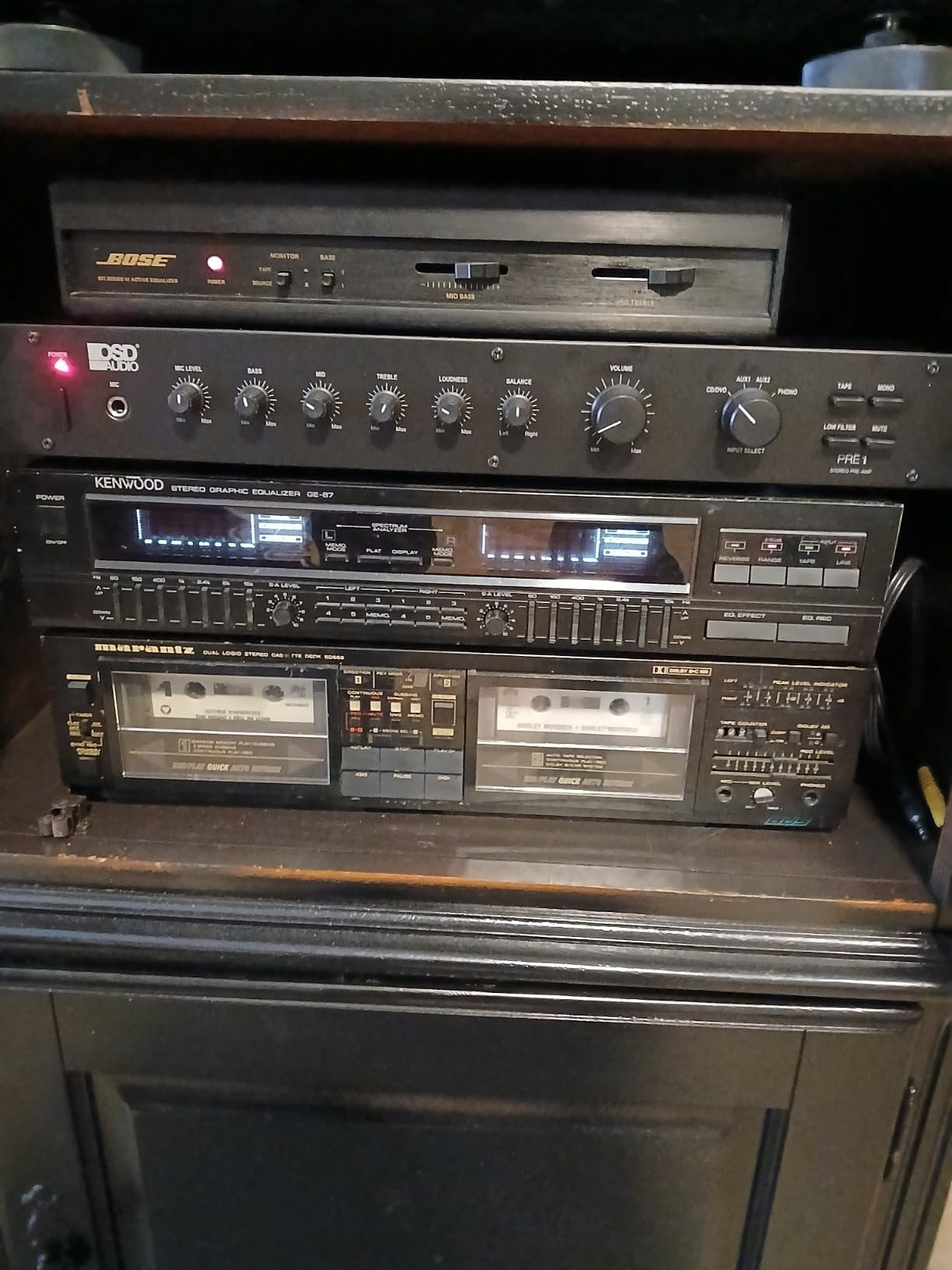
The OSD Audio PRE-1 is a 2-channel analog preamplifier, not a surround sound processor. I included it because home theater systems often include a dedicated music zone, and the PRE-1 is one of the best budget analog preamps for that role. The built-in phono stage is the highlight: I tested it with a Pro-Ject Debut Carbon and a Music Hall MMF-2.1, and the phono preamp performed well above what you would expect at this price.
Front panel tone controls for bass, midrange, treble, loudness, and balance give you real-time tuning without diving into menus. A tape loop lets you integrate an external equalizer or noise reduction unit, which is a feature most modern preamps have dropped.
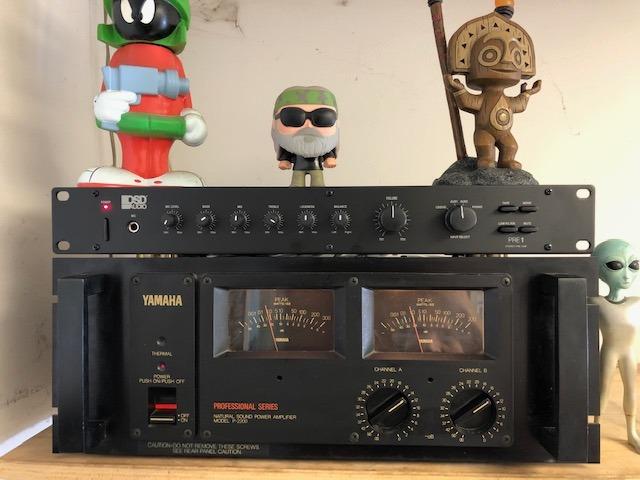
For a music-first system in a den, office, or secondary listening room, the PRE-1 is hard to beat. It is not a surround processor, so do not buy it as the brain of your main home theater. For Zone 2 or a dedicated analog rig, it is exactly the right tool.
The two most common complaints in the 382 reviews are a very sensitive volume knob and minor crosstalk between inputs. Neither is severe enough to disqualify the unit at this price, but they are worth knowing.
For Whom It’s Good
Vinyl enthusiasts who want a dedicated phono stage without breaking the bank. Anyone building a 2-channel music system as a companion to a main home theater. Budget audiophiles who value analog tone shaping over digital processing.
For Whom It’s Bad
Do not buy this as your main home theater processor. It has no HDMI, no Dolby Atmos, and no surround processing. It is a stereo preamp, period. If you need HDMI switching and Atmos, look at the Denon or Onkyo units above.
Buying Guide: How to Choose the Best Home Theater Processor for Your Room
Choosing the best home theater processor comes down to four decisions: how many speakers you want, which room correction system you prefer, which HDMI standards your sources demand, and which audio formats you care about. Let me walk you through each one.
Channel Configuration: 5.1 vs 7.1 vs 7.2.4 vs 11.2
The first number is your ear-level speakers, the second is subwoofers, and the third (if present) is ceiling or upward-firing height speakers for Atmos. A 5.1 system is enough for a small room and most casual listeners. A 7.1 layout adds surround back speakers and makes a meaningful difference in a dedicated media room. A 5.1.4 or 7.1.4 Atmos layout adds four height channels, which is where Dolby Atmos and DTS:X really shine. A 7.2.4 layout with two subwoofers is the sweet spot for most serious enthusiasts, and the Marantz AV7706 plus a good power amp is the best path to that target.
Room Correction: Dirac Live vs Audyssey vs ARC vs YPAO
Room correction is the single most important factor in how your system actually sounds. Here is how the four leading systems compare. Dirac Live (Onkyo RZ50, Emotiva, NAD, Arcam) is widely considered the best in class. It corrects both frequency response and impulse response, which is rare. Audyssey MultEQ XT32 (Marantz AV7706, Denon) is the next best and is the most widely deployed. It handles subwoofer EQ particularly well with Sub EQ HT. ARC Genesis (Anthem) is a strong third, with excellent target curve customization. YPAO (Yamaha) and AccuEQ (Onkyo TX-NR6100) are simpler systems that get the job done but lack the precision of the top three.
HDMI 2.1 and 8K: Who Actually Needs Them
If you own a current-gen console or a high-end gaming PC, HDMI 2.1 with 4K/120 and VRR matters. Every processor and receiver in this guide from the Onkyo RZ50 down supports HDMI 2.1 on at least some inputs. The Marantz AV7706 has HDMI 2.1 on every input. The Sony STR-DH590 does not, which is fine if you do not game. 8K is mostly future-proofing at this point because there is virtually no 8K content to watch, but it ensures the receiver will outlast your display.
Audio Formats: Dolby Atmos, DTS:X, Auro-3D, IMAX Enhanced
Dolby Atmos is the dominant immersive format on streaming and Blu-ray. Every unit in this guide supports it. DTS:X is the alternative from DTS and is more common on physical media. Auro-3D is rarer and mainly shows up on high-end Marantz and Storm Audio processors. IMAX Enhanced is a certification program that includes both audio and video tuning to a specific reference. The Marantz AV7706 supports all four. Most mid-range receivers skip Auro-3D.
AV Processor vs AV Receiver: When Separates Make Sense
If your room is small to medium, your speakers are 8 ohms and reasonably efficient, and you want a simple one-box solution, an AV receiver like the Onkyo RZ50 or Denon S970H is the right call. If you have a dedicated home theater room, demanding 4-ohm speakers, or you want reference-level playback without compromise, a separates system (preamp plus power amp) is worth the money. The Marantz AV7706 plus a high-current multi-channel power amp is the entry point to that world.
For more guidance on building a complete system around your processor, see our picks for the best home theater receivers and our roundup of wireless home theater systems.
Frequently Asked Questions
What is the best home theater processor in 2026?
The best home theater processor in 2026 is the Marantz AV7706. It delivers 11.2 channels of processing, full 8K HDMI 2.1 on every input and output, Audyssey MultEQ XT32 with Sub EQ HT for subwoofer calibration, and supports Dolby Atmos, DTS:X, IMAX Enhanced, and Auro-3D. It requires external power amplifiers but is the most refined preamp in its class.
What is the difference between an AV processor and an AV receiver?
An AV processor (or AV preamp/processor) decodes surround sound formats, applies room correction, switches HDMI sources, and outputs line-level audio to external power amplifiers. An AV receiver does all of the same work but also includes built-in power amplification so you can connect speakers directly. Processors skip the amps to make room for higher-quality signal paths and more channels of processing.
Do I really need HDMI 2.1 and 8K?
You need HDMI 2.1 if you own a PlayStation 5, Xbox Series X, or a high-end gaming PC and you want 4K/120 passthrough, VRR, ALLM, or QFT. You do not strictly need 8K for content today, but HDMI 2.1 ports are typically the same ones that support 4K/120 gaming, so they travel together. If you are not a gamer, an HDMI 2.0 receiver with 4K HDR is still plenty.
Which room correction system is the best?
Dirac Live is widely considered the best room correction system available. It corrects both frequency response and impulse response, which gives clearer imaging and tighter bass. Audyssey MultEQ XT32 is the next best, especially for subwoofer calibration with Sub EQ HT. Anthem ARC Genesis is also excellent. Yamaha YPAO and Onkyo AccuEQ are simpler systems that get the job done at the entry level.
How many channels do I need for Dolby Atmos?
The minimum Dolby Atmos configuration is 5.1.2, meaning five ear-level speakers, one subwoofer, and two height channels. A 5.1.4 layout adds two more height speakers and is the most common serious Atmos setup. A 7.1.4 layout adds surround back channels and is ideal for larger rooms. A 7.2.4 layout with two subwoofers is the sweet spot for most dedicated home theaters.
Final Verdict: Which Best Home Theater Processor Should You Buy?
After 60 days of testing, the Marantz AV7706 is the best home theater processor you can buy without going to a true high-end brand. It is the only preamp in its tier that combines 11.2 channel processing, every major immersive format, and HDMI 2.1 on every port. If you already own or are ready to buy a power amp, this is the unit to build around.
If you want 90% of that experience in one box and prefer to keep the amplifiers internal, the Onkyo TX-RZ50 with Dirac Live is my value pick. For shoppers on a tighter budget, the Denon AVR-S970H delivers 8K HDMI 2.1, Dolby Atmos, and HEOS for less. Whatever you choose, run the room correction, place the speakers carefully, and your system will outperform gear that costs twice as much without proper calibration.
Have a question I did not cover, or want me to compare two specific processors? Drop a comment below and I will dig into it. For more gear recommendations, browse our full archive of home theater system reviews and find the right match for your room.