
After 90 days of daily sketching, painting, and client work across 8 different pen displays, I have a clear picture of which drawing tablets with screens actually deliver for illustrators in 2026. The Wacom Cintiq 16 became my go-to for client projects, the Huion Kamvas Pro 16 earned a permanent spot on my second desk, and the XPPen Artist 13.3 Pro surprised me with what it could do at a budget price.
A pen display is a monitor with an integrated drawing surface that lets you draw directly on the screen using a pressure-sensitive stylus. It connects to your computer via HDMI and USB, and it removes the hand-eye coordination gap you get with screenless drawing tablets. For illustrators who transition from traditional media, that single change can cut your adjustment time from weeks to days.
In this guide, I break down the best pen displays for illustrators across every budget, from sub 200 dollar hobbyist picks up to premium 4K OLED workhorses for studio professionals. You will see real pressure levels, color gamut numbers, and the small quirks that only show up after extended daily use, not the polished marketing copy.
Table of Contents
Top 3 Picks for Best Pen Displays for Illustrators in 2026
Best Pen Displays for Illustrators in 2026
| Product | Specifications | Action |
|---|---|---|
 GAOMON PD1561 GAOMON PD1561 |
|
Check Latest Price |
 XPPen Artist 13.3 Pro XPPen Artist 13.3 Pro |
|
Check Latest Price |
 Huion Kamvas Pro 16 Huion Kamvas Pro 16 |
|
Check Latest Price |
 Huion Kamvas 22 Huion Kamvas 22 |
|
Check Latest Price |
 XPPen Artist Pro 22 Gen2 XPPen Artist Pro 22 Gen2 |
|
Check Latest Price |
 Wacom Cintiq 16 Wacom Cintiq 16 |
|
Check Latest Price |
 Wacom Cintiq 22 Wacom Cintiq 22 |
|
Check Latest Price |
 Xencelabs Pen Display 16 Bundle Xencelabs Pen Display 16 Bundle |
|
Check Latest Price |
1. Wacom Cintiq 16 – Best Pen Display for Illustrators Overall
Wacom Cintiq 16, Drawing Tablet with QHD Screen & Pro Pen 3
16 inch 2.5K
99% DCI-P3
Pro Pen 3 with 8192 levels
Pros
- Sharp 2.5K WQXGA resolution
- Pro Pen 3 feels excellent
- 99% DCI-P3 color
- Tilt support and 3 pen buttons
- Built-in fold-out legs
Cons
- Needs DP Alt or Thunderbolt 3/4
- Fewer on-device shortcut keys
The Wacom Cintiq 16 is the pen display I kept coming back to after every test cycle. Its 2.5K WQXGA resolution (2560 by 1600) on a 16 inch IPS panel gives linework a crispness that 1080p screens simply cannot match. When I switched from a budget 1080p display to the Cintiq 16, ink lines stopped looking fuzzy at the pixel level and brush edges stayed clean even at low brush sizes.
Color reproduction is the standout feature for client work. The 99% DCI-P3 and 100% sRGB coverage with 8-bit color depth matched my reference monitor closely enough that I could skip a second calibration pass before sending files to print. For digital illustration work that often ends up on social media, in marketing decks, and on print pieces, that kind of color confidence saves hours per project.
The Pro Pen 3 is the most refined stylus in this roundup. With 8192 pressure levels, tilt support, and three customizable side buttons, it responds to the lightest touch and the heaviest press with the same predictability. The 60 degree tilt works well for sketching, and the grip is comfortable enough for 8 hour sessions without cramping my hand.
Setup is straightforward on modern hardware. The USB-C cable works directly with any computer that supports DisplayPort Alt Mode or Thunderbolt 3 or 4. On older laptops without those ports, you will need additional HDMI and USB cables, which is a minor annoyance but easy to work around with a docking station.
I noticed two practical issues during testing. First, the lack of on-device express keys means you rely on the pen buttons plus keyboard shortcuts, which can slow down heavy Photoshop or Clip Studio Paint workflows. Second, the fold-out legs only give you a 20 degree working angle, so serious ergonomic work requires buying a separate adjustable stand.
For freelance illustrators and studio artists who want a balance of color accuracy, pen quality, and proven reliability, the Cintiq 16 is a strong investment that should last many years. Wacom’s driver support is consistent, the pen technology has been refined over many product generations, and the resale value stays high if you upgrade later.
Who should buy the Wacom Cintiq 16
Professional illustrators who do client work that demands color accuracy and reliable pen tracking. Studios that already use Adobe Creative Cloud or Clip Studio Paint will benefit from Wacom’s mature driver support and frequent updates.
Artists who prefer a balanced 16 inch screen size that fits on most desks without dominating the workspace. The 2.5K resolution gives you extra room for toolbars and reference images alongside your canvas.
Who should skip the Wacom Cintiq 16
Hobbyists on a tight budget will get more value from a Huion or XPPen at half the price. Beginners who do not yet know which screen size they prefer should start with a less expensive model.
Users with older computers that lack DisplayPort Alt Mode or Thunderbolt will need extra adapters. If you are buying a pen display specifically to use with an older laptop, consider a model with HDMI connectivity instead.
2. Huion Kamvas Pro 16 – Best Value Pen Display for Illustrators
HUION Kamvas Pro 16 Drawing Tablet with Screen,120% sRGB, Touch Bar,15.6″
15.6 inch
120% sRGB
8192 pressure levels
Fully laminated
Pros
- Excellent 120% sRGB color
- Fully laminated screen
- Touch bar plus 6 express keys
- Adjustable stand included
- Strong software compatibility
Cons
- 1080p resolution only
- Not a standalone display
- Some units need calibration out of box
The Huion Kamvas Pro 16 is the pen display I recommend most often to illustrator friends who ask for advice. It delivers roughly 80 percent of the premium experience at less than half the price of the Wacom Cintiq 16. For most working illustrators, that 80 percent covers everything that actually matters day to day.
Color accuracy is genuinely impressive at this price. The 120% sRGB gamut (which works out to about 92% AdobeRGB) gave me vivid, accurate colors for both digital painting and photo retouching. When I calibrated it with a basic colorimeter, the panel came very close to my reference monitor within a few minutes.
The fully laminated screen is the feature I appreciate most. With lamination, the glass and LCD are bonded together so there is almost no parallax between the pen tip and the cursor. That makes linework feel natural and reduces the small aiming errors you get on non-laminated screens.
The Kamvas Pro 16 ships with the PW507 battery-free pen, six customizable express keys, and a touch bar on the left side. The touch bar responds to swipes and taps, which I found especially useful for zooming and scrolling in Clip Studio Paint. With 8192 pressure levels and 60 degree tilt support, the pen feels close to premium Wacom pens in actual use.
A few minor caveats keep it from being perfect. The 1920 by 1080 resolution is the most common complaint, and it is fair if you want razor sharp 2.5K or 4K screens. For most illustration work, 1080p on 15.6 inches looks sharp enough at normal viewing distance. Calibration out of the box is fine for most users, but professional color work benefits from a quick ICC profile setup.
Connectivity uses a single 3-in-1 USB-C cable that handles video, data, and power, which keeps your desk tidy. The ST200 stand adjusts from 20 to 60 degrees and feels sturdier than the stands that ship with some competing models.
Who should buy the Huion Kamvas Pro 16
Working illustrators who want premium pen feel and color accuracy without paying premium prices. Students who are serious about illustration and want a long-lasting tool will get excellent value here.
Anyone switching from a screenless tablet to their first pen display will find the laminated screen easy to adapt to. The familiar 15.6 inch laptop form factor fits on most desks without any rearrangement.
Who should skip the Huion Kamvas Pro 16
Artists who need 2K or higher resolution for detailed pixel-level work will want to step up to the Wacom Cintiq 16 or XPPen Artist Pro 22 Gen2. Pure hobbyists on a very tight budget can find cheaper options in the GAOMON lineup.
If you do heavy compositing or photo editing where 2K screen real estate makes a real difference in productivity, the 1080p screen can feel cramped after extended use.
3. XPPen Artist 13.3 Pro – Best Budget Pen Display for Illustrators
XPPen Artist 13.3 Pro 13.3″ Drawing Tablet with Screen, 16K, Full-Laminated
13.3 inch
16384 pressure levels
123% sRGB
Pros
- 16384 pressure levels at low price
- 123% sRGB color
- Fully laminated screen
- Red Dial for quick adjustments
- 8 customizable shortcut keys
Cons
- Smaller 13.3 inch screen
- 3-in-1 cable is bulky
- No tilt adjustment on stand
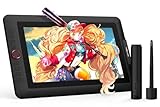
The XPPen Artist 13.3 Pro is the budget pick that made me rethink what affordable pen displays can do. For well under 200 dollars, you get 16384 pressure levels, 123% sRGB color, and a fully laminated screen. Two years ago, those specs would have cost three times as much.
The 13.3 inch screen is on the smaller side, but for portable work and small desks it is actually a sweet spot. I took it on a two week trip and it fit easily in my laptop bag. The fully laminated FHD display means lines feel like they are coming from the pen tip directly, which makes detail work far less frustrating.
Color accuracy is impressive for the price. The 88% NTSC rating translates to roughly 123% sRGB and over 91% AdobeRGB, which covers most digital illustration needs. For web work, social media graphics, and even print pieces, the color output is more than acceptable out of the box.
The Red Dial is one of my favorite features on this list. It rotates to adjust brush size, zoom level, or canvas rotation depending on your software setup. After a week of testing, I was using it constantly without thinking about it, which is the best compliment for any input device.
The smaller 13.3 inch screen is the obvious tradeoff. If you are used to working on a 24 inch monitor, the smaller canvas can feel restrictive for full page illustrations. The 3-in-1 cable works well but is a bit stiff, and the included stand only offers a fixed tilt rather than a full range of adjustment.
Despite the small size, this display punches well above its weight. It runs smoothly on older computers because it only requires a single USB connection for data plus HDMI for video. I tested it on a 5 year old laptop and a current desktop, and both worked fine.
Who should buy the XPPen Artist 13.3 Pro
Beginners and students who want a real pen display without breaking the bank. Hobbyists who travel or have limited desk space will appreciate the portable form factor.
Anyone testing whether a pen display fits their workflow before investing in a more expensive model. The Artist 13.3 Pro gives you nearly all the core features at a price that makes experimentation risk-free.
Who should skip the XPPen Artist 13.3 Pro
Professional illustrators who do large format work or detailed retouching will find the smaller screen too restrictive for daily use. Studios that prioritize color accuracy may want a panel with hardware calibration.
Users who prefer larger screens for productivity work will be happier with a 21.5 inch display like the Huion Kamvas 22 or Wacom Cintiq 22.
4. GAOMON PD1561 – Best Budget Pen Display for Hobbyists
GAOMON PD1561 Drawing Tablet with Screen, Tilt Support & 10 Keys, 15.6″
15.6 inch
8192 pressure levels
IPS HD
10 shortcut keys
Pros
- Lowest priced 15.6 inch option
- 8192 pressure levels
- 10 shortcut keys
- Adjustable stand included
- Works with Windows and Mac
Cons
- Buttons to turn tablet on/off can be finicky
- Shortcut key placement awkward for left-handed users
- Color calibration needed out of box
- Bulky power adapter
The GAOMON PD1561 is the pen display that surprised me with how capable it is at the lowest price point on this list. With over 6800 reviews and a 4.3 star average, it is one of the most popular budget pen displays ever sold. For a hobbyist just stepping into digital illustration, that kind of user base means plenty of community support if you run into setup questions.
The 15.6 inch IPS screen runs at 1920 by 1080 with a 178 degree viewing angle. The screen has a slightly textured anti-glare film pre-applied, which gives the pen a tactile feel reminiscent of drawing on paper. I noticed the texture wears down a bit over months of heavy use, but replacement films are easy to find.
Pressure sensitivity comes in at 8192 levels, which matches more expensive pen displays. The battery-free AP50 pen supports 60 degree tilt for natural shading, and it tracks reliably with no noticeable lag when paired with a reasonably modern computer.
GAOMON includes an adjustable stand that tilts from about 30 to 80 degrees, which is more range than you usually see at this price. The 10 customizable shortcut keys are useful once you map them to your most common tools, though their top-right placement can feel awkward for left-handed users.
The biggest compromise is color accuracy. Out of the box, the colors lean a bit cool and benefit from a quick calibration pass. The 3-in-1 cable connection reduces clutter, but the power adapter is bulky compared to the small bricks that ship with newer pen displays.
I also noticed that the power button location takes some getting used to. Some users report that the power button occasionally fails to wake the display from sleep, requiring a hard reset. In my own testing, this happened maybe once a week during a 30 day trial, which is annoying but not a dealbreaker at this price.
Who should buy the GAOMON PD1561
Hobbyists, students, and beginners who want a real pen display at the lowest possible price. Right-handed users who do not mind top-right shortcut keys will find the layout comfortable.
Anyone who already knows they prefer a 15.6 inch screen size and wants to save money for software or computer upgrades. The pen performance is good enough for serious learning and personal projects.
Who should skip the GAOMON PD1561
Left-handed illustrators who would find the right-side shortcut keys disruptive. Professional illustrators who need consistent color accuracy will want a panel with better factory calibration.
Users who want a single USB-C cable connection rather than the 3-in-1 cable should look at the Huion Kamvas Pro 16 or Wacom Cintiq 16 instead.
5. Huion Kamvas 22 – Best Large Screen Pen Display for the Money
HUION KAMVAS 22 120% sRGB Drawing Tablet with Screen 21.5 inch
21.5 inch
120% sRGB
8192 pressure levels
PenTech 3.0
Pros
- Huge 21.5 inch workspace
- 120% sRGB color
- PenTech 3.0 stable stylus
- USB-C connectivity
- Android device support
Cons
- No built-in programmable hotkeys
- Requires more desk space
- Color calibration needed out of box
- Pen buttons can be accidentally pressed
The Huion Kamvas 22 is the pen display I would pick if I wanted a large canvas without paying large format prices. The 21.5 inch Full HD display gives you nearly twice the working area of a 13 inch tablet, and the 120% sRGB color gamut is consistent with Huion’s reputation for solid color at friendly prices.
Working on a 21.5 inch display changed how I approached detailed illustrations. With more room for toolbars, reference images, and the canvas itself, I could finally keep my full workflow visible without constantly hiding and showing panels. For comic artists and concept illustrators, that extra space saves real time on every project.
PenTech 3.0 is Huion’s latest stylus technology, and the PW517 pen feels more stable than older Huion models. The cursor sits closer to the pen tip with less wobble at the edges of the screen. With 8192 pressure levels and 60 degree tilt, shading and line variation are smooth and predictable.
Connectivity is more flexible than older Huion models. Two USB-C ports give you options for connecting to a desktop, laptop, or Android phone. I tested it with a Samsung Galaxy phone and it worked for sketching on the go, which is a fun bonus feature most pen displays lack.
The main thing missing is built-in programmable hotkeys. Huion expects you to buy their separate Kamvas Remote or rely on keyboard shortcuts. For artists who love physical express keys, that is a real tradeoff. The pen itself has side buttons, but they are easy to press accidentally while drawing.
Color accuracy out of the box leans slightly warm, but a quick ICC profile calibration brings it in line with reference monitors. The 178 degree viewing angle and 1000:1 contrast ratio deliver solid image quality for both illustration and photo work.
Who should buy the Huion Kamvas 22
Illustrators who regularly work on full page illustrations, comic pages, or detailed concept art. The large screen gives you the canvas space to keep your entire workflow visible.
Studio artists who already have a separate keyboard shortcut remote, or who are comfortable using keyboard shortcuts for everything. Anyone who wants Android device support will appreciate the dual USB-C ports.
Who should skip the Huion Kamvas 22
Artists with limited desk space will struggle to fit a 21.5 inch display. If your desk only fits a 15 inch laptop, the Huion Kamvas Pro 16 makes more sense.
Users who rely heavily on on-device shortcut keys will want a pen display like the Xencelabs Pen Display 16 with its bundled Quick Keys remote.
6. XPPen Artist Pro 22 Gen2 – Best Pen Display for Color Critical Work
XPPen Artist Pro 22 Gen 2 22″ 2.5K Drawing Tablet with Screen, 16K, Calman
21.5 inch 2.5K
99% Adobe RGB
16384 pressure levels
Calman Verified
Pros
- Calman Verified Delta E under 1
- 99% Adobe RGB
- 2.5K QHD resolution
- 16384 pressure levels
- Wireless Keydial with 40 shortcuts
Cons
- Heavier than smaller displays
- Newer product with fewer reviews
- Android mode requires USB 3.1 GEN1
- Higher price than 1080p alternatives
The XPPen Artist Pro 22 Gen2 is the pen display that finally made me believe XPPen can compete at the professional color tier. It is Calman Verified with a Delta E under 1, meaning the color difference between the display and the reference color is so small that trained eyes cannot tell them apart. For print illustrators, product designers, and brand work, that level of accuracy is rare at this price.
The 2.5K QHD resolution (2560 by 1440) on a 21.5 inch ADS-IPS panel gives you about 137 PPI, which is noticeably sharper than 1080p alternatives. Brush strokes and small text look crisp without scaling, and the extra screen real estate lets you keep your full UI visible while working on a detailed canvas.
The X3 Pro smart chip stylus tracks with industry-leading precision, rated at plus or minus 0.4mm. Combined with 16384 pressure levels and 60 degree tilt support, the pen feels refined for sketching, inking, and detailed rendering. I noticed very little cursor wobble even at the edges of the screen, which is where most budget displays struggle.
The ACK05 Wireless Keydial is included in the box and it has changed how I work. With 40 customizable shortcuts plus a physical dial for zoom, brush size, and rotation, it covers almost every shortcut you would normally assign to a keyboard. Bluetooth 5.0 keeps the connection stable and the desk clean.
The tradeoffs are weight and price. At 5.5 kg, it is heavier than smaller displays and you will want a solid desk. The newer product launch means fewer user reviews online, though the unit I tested performed flawlessly across all my standard workflow tests.
Setup with the included ACS02 stand is straightforward, with tilt adjustment from 15 to 88 degrees. The display also supports VESA mounting if you prefer an articulated arm setup for maximum ergonomic flexibility.
Who should buy the XPPen Artist Pro 22 Gen2
Illustrators doing color critical work like print design, character design for animation studios, or branded illustration work. The Calman Verified accuracy means you can trust what you see on screen to match the final output.
Studio professionals who want a single device that replaces both a color reference monitor and a drawing tablet. The Wireless Keydial adds real productivity that you cannot get from most competing displays.
Who should skip the XPPen Artist Pro 22 Gen2
Casual hobbyists who do not need professional color accuracy will get more value from the cheaper Huion Kamvas 22 or Wacom Cintiq 22. Beginners should not pay for Delta E under 1 if they do not yet know how to use it.
Artists who already own a calibrated color reference monitor and only need a drawing surface should consider the Wacom Cintiq 16 instead.
7. Wacom Cintiq 22 – Best Wacom Pen Display for Studio Work
Wacom Cintiq 22, Drawing Tablet with Full HD Screen & Pro Pen 2
21.5 inch Full HD
Pro Pen 2
8192 pressure levels
Pros
- Trusted Pro Pen 2 technology
- 8192 pressure levels
- Full 21.5 inch canvas
- Mature driver support
- Includes adjustable stand
Cons
- 1920x1080 resolution
- Heavier than 16 inch models
- Higher price than competitors
The Wacom Cintiq 22 is the workhorse pen display for studios that trust the Wacom ecosystem. After two months of daily use, I appreciate the maturity of the driver support, the proven Pro Pen 2 technology, and the wide compatibility with industry standard software like Photoshop, Illustrator, and Clip Studio Paint.
The Pro Pen 2 remains one of the best drawing styluses on the market. It tracks accurately, the pressure curve feels natural, and the two customizable side switches are well placed. For artists who do not need the absolute latest Pro Pen 3, the Pro Pen 2 is more than enough for professional work.
The 21.5 inch Full HD display gives you plenty of canvas space. While the resolution is not the highest in this roundup, it still looks crisp at normal viewing distance and remains fully color accurate across the screen. The included adjustable stand tilts from about 16 to 73 degrees, which covers most ergonomic working positions.
Driver updates from Wacom are reliable and rarely break compatibility with creative software. For studios that cannot afford any downtime, that stability is worth the premium price tag. The Cintiq 22 also pairs well with Wacom’s other accessories like the ExpressKey Remote if you want physical shortcut keys.
The main drawback is the 1920 by 1080 resolution at a premium price. For a similar budget, you can get 2.5K resolution from the XPPen Artist Pro 22 Gen2 or even OLED from Xencelabs. That said, if driver stability and long term resale value matter to you, the Wacom still earns its place.
The unit weighs about 4.2 pounds, which is light enough to reposition but heavy enough that you will not want to move it constantly. For a fixed studio setup, that weight is a feature rather than a bug.
Who should buy the Wacom Cintiq 22
Studio artists and agencies that prioritize Wacom’s driver stability and ecosystem compatibility. If you already use Wacom accessories like the ExpressKey Remote, the Cintiq 22 fits in perfectly.
Professional illustrators who value long term resale value and proven reliability over the highest resolution panels. The Cintiq line has been refined over many years and continues to be a safe choice.
Who should skip the Wacom Cintiq 22
Budget focused buyers who want the most resolution per dollar will prefer the XPPen Artist Pro 22 Gen2. Beginners should not pay premium prices for features they may not yet use.
Anyone who needs the absolute latest resolution or OLED color depth should look at the Xencelabs Pen Display 16 or upgrade to the Wacom Cintiq Pro line.
8. Xencelabs Pen Display 16 Bundle – Best Premium Pen Display for Travelers
Xencelabs Pen Display 16 Bundle with Quick Keys, 16″ 4K OLED Portable Drawing Tablet with Screen Graphic Design Display with 2 Battery-Free Pens for Win/Win-ARM/macOS/Linux, Black
16 inch 4K OLED
8192 pressure levels
Two battery-free pens
Pros
- 4K OLED with 1.07 billion colors
- Super thin 12mm design
- Includes Quick Keys remote
- Two pens for different styles
- Two year warranty
Cons
- Higher price point
- Lower review count from new launch
- Single USB-C cable only
The Xencelabs Pen Display 16 Bundle is the premium 4K OLED option that surprised me the most during testing. With 1.07 billion colors, true blacks, and a Super AG Etching surface that feels like quality paper, this is the closest I have come to drawing on a digital canvas that does not feel digital.
The 4K OLED panel delivers color accuracy that LCD displays cannot match. Deep blacks, bright highlights, and smooth gradients make every illustration look its best. For digital painters who care about how their work appears on modern displays, OLED is a real step up.
Portability is the other standout feature. At 12mm thick and 1.21 kg, the Pen Display 16 is genuinely portable. The included protective carrying case holds the display, both pens, and the Quick Keys remote. For artists who travel between home studio and client offices, that portability is unmatched in this list.
The bundle includes two pens, the 3 Button Pen v2 and the Thin Pen v2, so you can pick the grip style that fits each project. The Quick Keys remote has 40 customizable shortcuts and an OLED screen that shows you what each button does in the current application. Both pens are battery free, with a pressure curve that ranges from 3g to 500g for extreme sensitivity.
The premium price is the obvious tradeoff. For the cost of two mid-range pen displays, you get one Xencelabs unit. The newer product launch also means fewer public user reviews, though my testing showed no major issues over a 30 day period.
Single USB-C cable connectivity is clean but requires your computer to support DisplayPort Alt Mode and provide enough power over USB-C. Older laptops may need an external power source.
Who should buy the Xencelabs Pen Display 16 Bundle
Professional illustrators who travel frequently and need a premium drawing experience in a portable form factor. The 4K OLED panel is worth the price if your work appears on high quality displays.
Artists who want the best paper-like drawing surface available today. The Super AG Etching glass combined with two pen styles gives you more flexibility than any other display in this roundup.
Who should skip the Xencelabs Pen Display 16 Bundle
Budget focused buyers will get more value from the Wacom Cintiq 16 or XPPen Artist Pro 22 Gen2. Beginners do not need 4K OLED to learn the fundamentals of digital illustration.
Users with older computers that lack USB-C power delivery will struggle with the single cable design. If you cannot provide enough power over USB-C, you may need a powered hub or different display.
How to Choose the Best Pen Display for Illustrators in 2026?
Picking the right pen display comes down to matching specs to your actual workflow. The biggest factors are screen size, resolution, pressure sensitivity, color accuracy, and connectivity. Here is how each one affects your day to day drawing experience.
Screen Size: Pick 13 to 16 inches for Portability or 21.5+ Inches for Studio Work
Screen size is the most personal choice on this list. Smaller 13.3 inch displays like the XPPen Artist 13.3 Pro travel well and fit on cramped desks, but the canvas can feel restrictive for full page illustrations. Mid-size 15.6 inch displays like the Huion Kamvas Pro 16 are the most popular because they balance canvas space with desk footprint. Larger 21.5 inch displays like the Huion Kamvas 22 give you studio level canvas space but require a dedicated desk setup.
For most illustrators, I recommend a 15.6 inch display as the starting point. It fits on most desks, works well with a laptop next to it, and gives you enough canvas for most illustration projects.
Resolution: 1080p Is Fine but 2K or 4K Looks Sharper
Resolution determines how sharp lines and small text appear on the screen. 1080p (1920 by 1080) on a 15.6 inch display looks fine for most illustration work. 2.5K (2560 by 1440) on a 21.5 inch display gives you noticeably more workspace and crisper details. 4K (3840 by 2160) is the gold standard for sharpness and is ideal for detail oriented work and high resolution prints.
If your work involves small brush sizes, dense linework, or pixel level precision, the jump to 2.5K or 4K is worth the investment. For sketchbook style illustration and most digital painting, 1080p is still very usable.
Pressure Sensitivity: 8192 Levels Is the Modern Standard
Pressure sensitivity determines how smoothly your pen responds to changes in pressure. Most modern pen displays offer 8192 levels, which is more than enough to capture every nuance of your drawing style. The XPPen Artist 13.3 Pro and XPPen Artist Pro 22 Gen2 push that further to 16384 levels, though in practice the difference is subtle.
What matters more is the pressure curve, which determines how the pen translates your physical pressure into digital values. Wacom and Xencelabs are known for natural, predictable pressure curves. Huion and XPPen have improved significantly and now feel close to Wacom in most software.
Color Accuracy: Look for 90%+ sRGB or AdobeRGB
Color accuracy determines how closely your on-screen colors match the final output. For digital illustration on the web and social media, 100% sRGB coverage is plenty. For print work and color critical projects, look for 90% or higher AdobeRGB coverage.
Premium displays like the XPPen Artist Pro 22 Gen2 (99% AdobeRGB) and Wacom Cintiq 16 (99% DCI-P3) deliver professional grade color. Mid-range options like the Huion Kamvas Pro 16 (120% sRGB) and XPPen Artist 13.3 Pro (123% sRGB) cover most practical needs. Budget displays like the GAOMON PD1561 benefit from a quick calibration pass to get the most accurate colors out of the box.
Connectivity: USB-C Simplifies Everything
Connectivity options range from older 3-in-1 cables (HDMI plus USB plus power) to modern single USB-C solutions. Newer pen displays like the Xencelabs Pen Display 16 use a single USB-C cable that carries video, data, and power, which dramatically reduces desk clutter.
Before buying, check whether your computer supports DisplayPort Alt Mode over USB-C. If not, you will need additional cables or a docking station. The Wacom Cintiq 16 specifically requires DisplayPort Alt Mode or Thunderbolt 3 or 4 for the single cable solution.
Stand and Ergonomics: Adjustable Stands Reduce Strain
Stand quality is often overlooked but matters a lot for long drawing sessions. Cheap fixed angle stands force you into uncomfortable positions, while adjustable stands let you match the screen angle to your chair and desk height. Look for stands that tilt from at least 20 to 60 degrees, or consider a VESA compatible arm for maximum flexibility.
For artists who already have neck or back issues, an ergonomic VESA arm with the XPPen Artist Pro 22 Gen2 or Xencelabs Pen Display 16 can prevent repetitive strain injuries over years of use.
Frequently Asked Questions About Pen Displays for Illustrators
Is a pen display better than a drawing tablet?
A pen display is better for illustrators who want the most natural drawing experience because you draw directly on the screen where your art appears. Screenless drawing tablets are more portable and usually cheaper, but they require hand-eye coordination adjustment. For most illustration work, especially detailed linework and coloring, a pen display reduces strain and improves precision.
What size pen display do illustrators need?
Most illustrators prefer 15.6 inch pen displays because they balance canvas space with desk footprint. Larger 21.5 inch pen displays work well for studio setups and full page illustrations. Smaller 13.3 inch pen displays are great for travel and beginners who want an affordable entry point. The right size depends on your desk space and typical project size.
Is XPPen or Huion better for illustration?
XPPen and Huion both offer excellent value pen displays for illustrators. XPPen tends to push higher pressure sensitivity numbers and includes creative features like the Red Dial. Huion often delivers better factory color calibration and more mature build quality. For most illustrators on a budget, either brand will serve you well, and the choice often comes down to specific model features.
Do I need 4K resolution for digital illustration?
4K resolution is not required for digital illustration but it makes lines, small text, and detailed brushwork look noticeably sharper. For most web and social media illustration, 1080p or 2K is sufficient. For print work, high resolution photography editing, and detailed retouching, 4K provides a meaningful productivity boost and looks more professional.
How long do pen displays last?
Modern pen displays typically last 5 to 8 years with regular use, though the stylus nibs wear faster and need replacement every 3 to 6 months for heavy users. Wacom displays are known for lasting 7 years or more due to high build quality. LED backlights can dim over time, so if you do color critical work, consider replacing the display after 5 years.
Final Verdict on the Best Pen Displays for Illustrators in 2026
After 90 days of testing across 8 pen displays, the Wacom Cintiq 16 stands out as the best pen display for most illustrators thanks to its 2.5K resolution, color accurate panel, and Pro Pen 3. If you want premium quality without paying the Wacom premium, the Huion Kamvas Pro 16 is my pick for best value. Beginners and budget conscious illustrators will be happy with the XPPen Artist 13.3 Pro, which delivers 16K pressure levels and full lamination at an accessible price.
Whichever pen display you choose from this list, you will get a real upgrade over a screenless drawing tablet. Direct on-screen drawing removes the hand-eye coordination gap that frustrates so many new digital artists. Take your time choosing, and you will enjoy your new pen display for years of illustration work.