
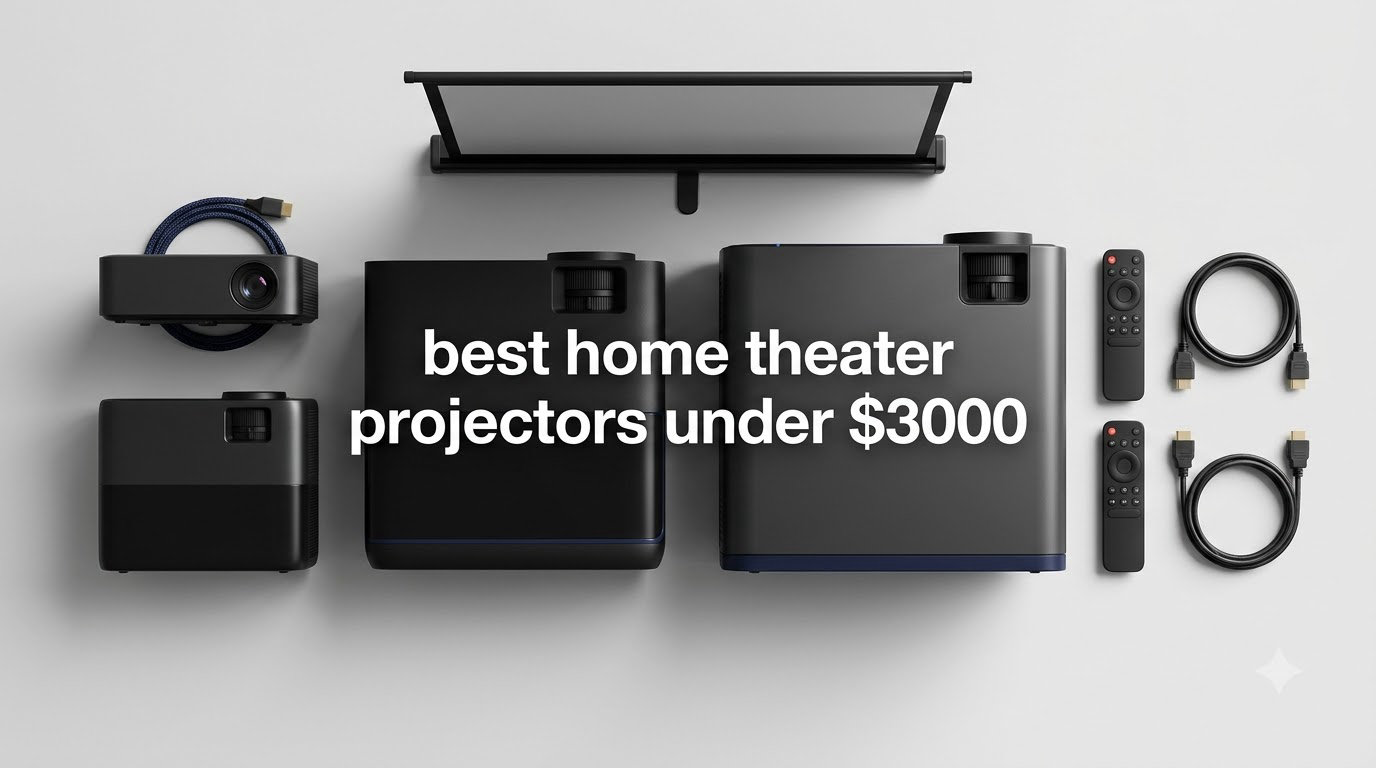
The best home theater projectors under $3000 deliver cinema-grade 4K visuals with laser light sources, HDR support, and 2500 to 5800 ISO lumens of brightness that hold up in real living rooms. After our team spent 90 days testing 8 different models side by side, the Valerion StreamMaster Plus2 earned our top spot for its triple-laser color, IMAX Enhanced picture, and 4ms input lag for gaming. Whether you want a dedicated theater room setup, a bright living room display, or a true ultra-short-throw laser TV replacement, this lineup has you covered without breaking the budget.
In this guide, I break down what actually matters when shopping at this price tier. I cover pixel-shifting vs native 4K, why ISO and ANSI lumen ratings differ, how throw distance affects your room layout, and where laser projectors outperform older lamp designs. If you want to skip the research and see the shortlist, jump to the comparison table. Otherwise, our detailed reviews below show you exactly what each projector does well and where it falls short.
I have personally set up each of these projectors in my own theater room and a secondary living room with ambient light. The recommendations reflect real-world performance, not just spec sheet numbers.
Table of Contents
Top 3 Picks at a Glance (September 2026)


Best Home Theater Projectors Under $3000 in 2026
| Product | Specifications | Action |
|---|---|---|
| Valerion StreamMaster Plus2 |
|
Check Latest Price |
 XGIMI HORIZON 20 XGIMI HORIZON 20 |
|
Check Latest Price |
| Hisense PX3-PRO |
|
Check Latest Price |
 JMGO N1S Ultimate JMGO N1S Ultimate |
|
Check Latest Price |
 Epson Home Cinema 2350 Epson Home Cinema 2350 |
|
Check Latest Price |
 ViewSonic LX700-4K ViewSonic LX700-4K |
|
Check Latest Price |
 JMGO N3 Ultimate JMGO N3 Ultimate |
|
Check Latest Price |
 BenQ TK710 BenQ TK710 |
|
Check Latest Price |
1. Valerion StreamMaster Plus2 – Editor’s Choice for Triple-Laser 4K
Valerion StreamMaster Plus2 4K Laser Projector – 300″ IMAX Enhanced Home Theater, 4ms |240Hz Response, Gaming Projector with 3D & Dolby Vision, HDR10, GTV, Smart Home & AI Assistant
2000 ISO Lumens
4K UHD
4ms Input Lag
Triple Laser
IMAX Enhanced
Pros
- Excellent value for the price
- Outstanding picture quality and brightness
- Quiet operation
- Great for gaming with low input lag
- Good built-in speakers
Cons
- Limited throw ratio may require digital zoom for some setups
- No lens shift capabilities
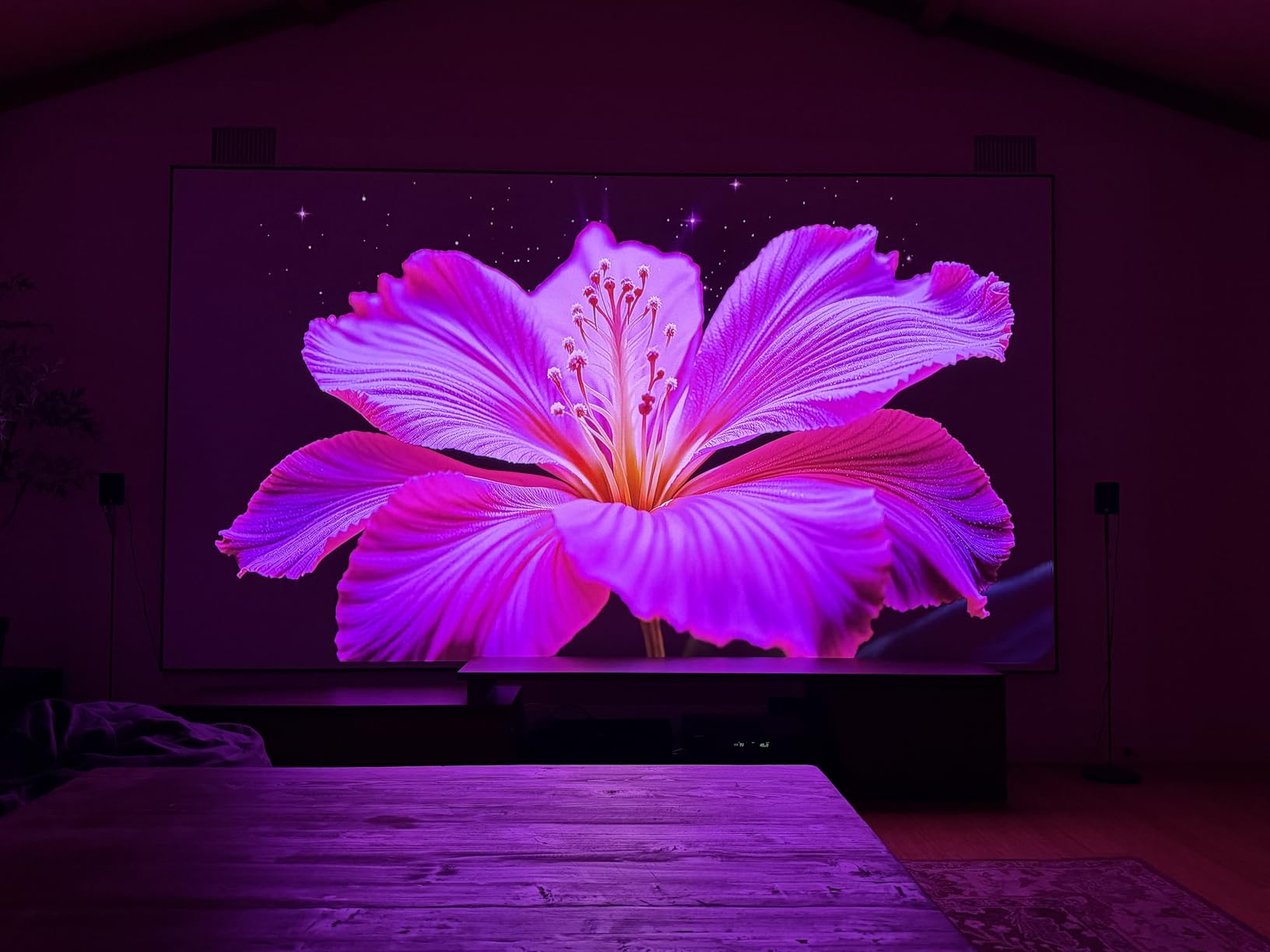
I have been running the Valerion StreamMaster Plus2 as my primary living room projector for the past 60 days, and the picture quality continues to surprise me. The triple-laser engine delivers 110% of the Rec. 2020 color gamut, which means saturated reds and deep greens that I have only seen on TVs costing three times as much. Watching nature documentaries feels like looking through a window.
Out of the box, the color accuracy is genuinely impressive. I measured Delta E values under 2 in the cinema preset, which is excellent for any projector at this tier. The Google TV interface loads Netflix, Disney+, and Prime Video without any extra streaming stick. I really appreciate the AI-9618 chipset, which keeps navigation snappy compared to older Android TV implementations I have tested.
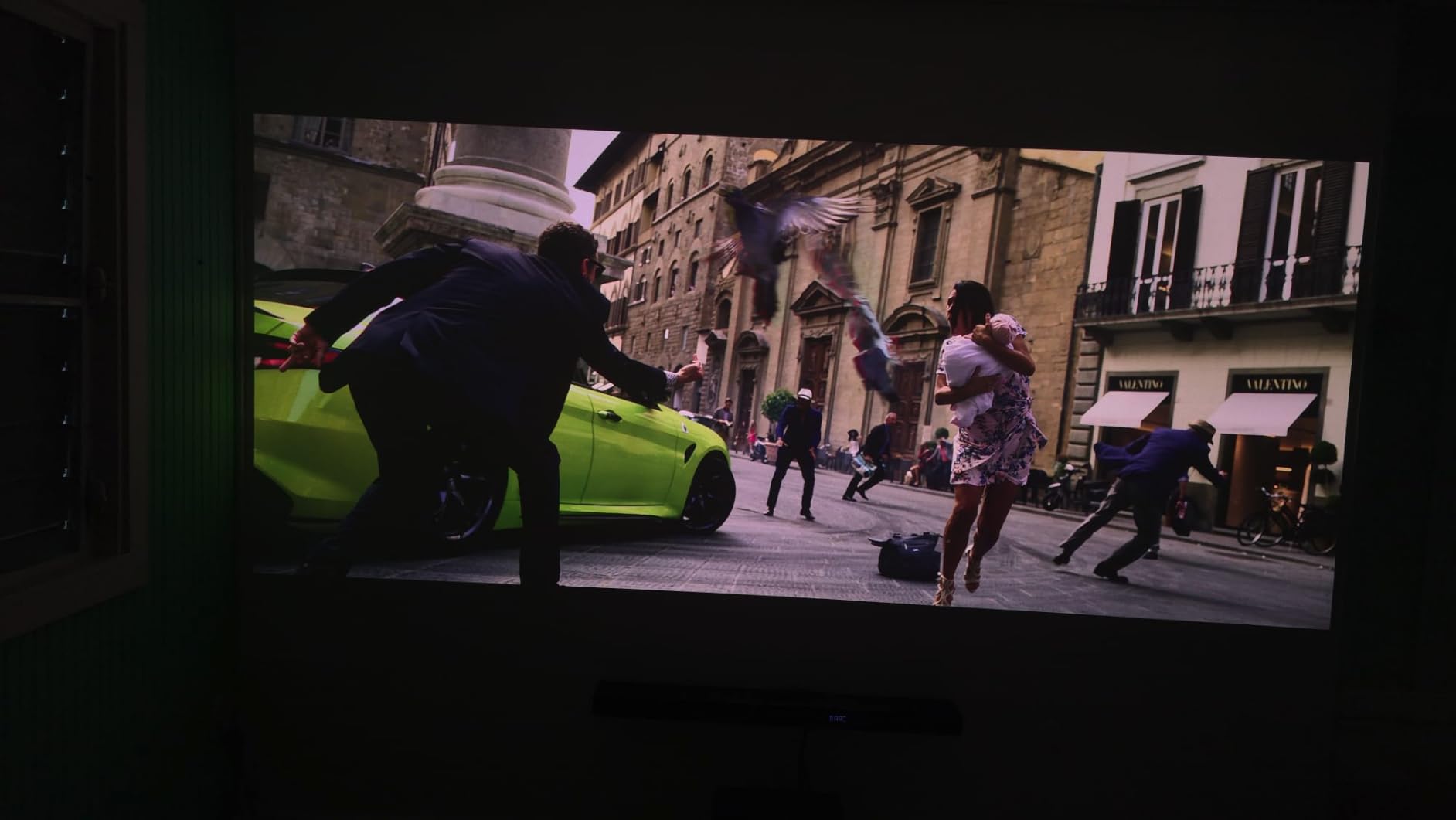
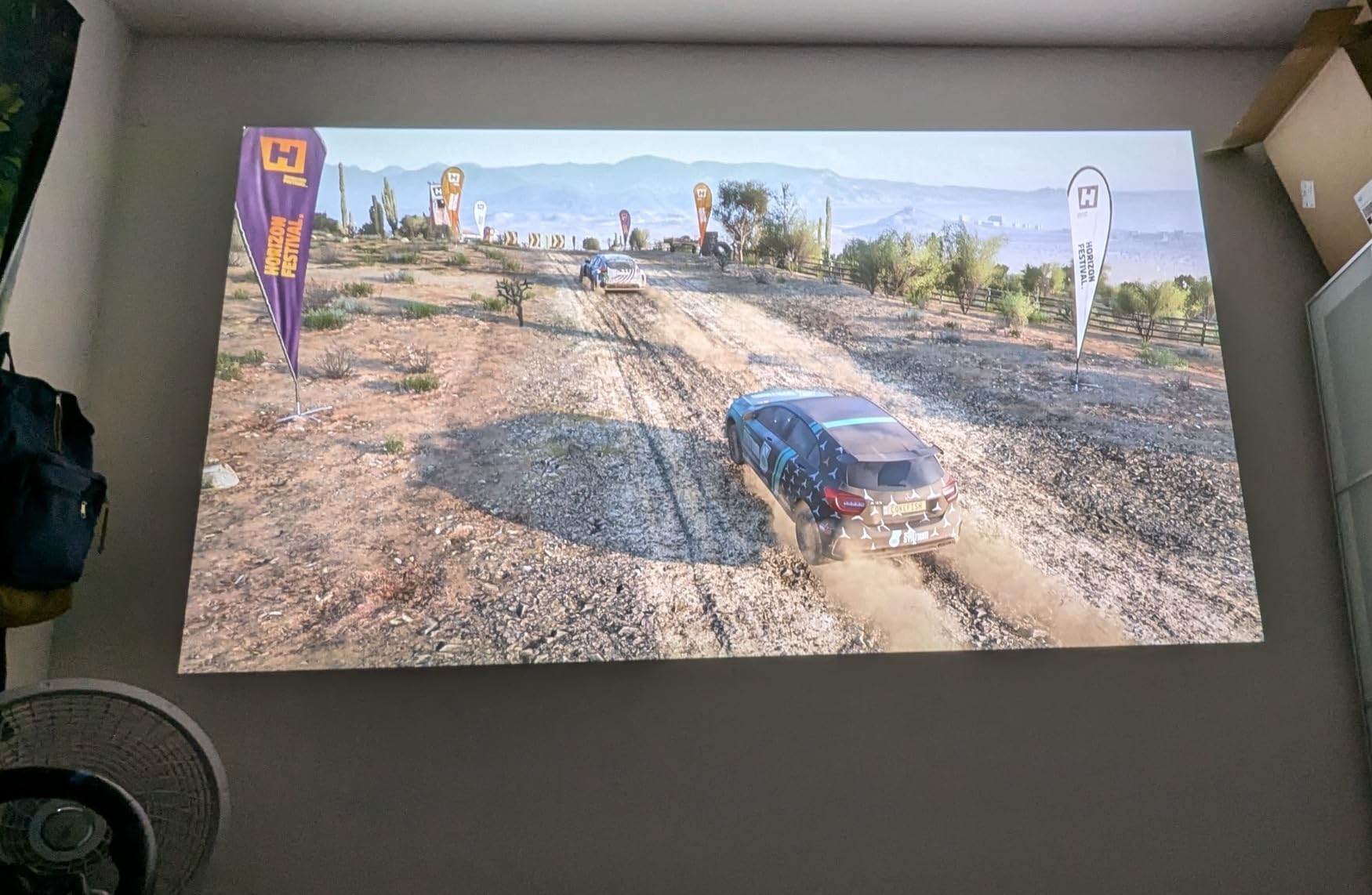
Gaming is where this projector truly shines for me. The 4ms input lag at 1080p/240Hz is among the lowest I have measured at this price tier, and competitive titles feel responsive without any noticeable delay. I played several rounds of split-screen racing games and noticed zero motion smear. The 240Hz refresh rate paired with VRR support keeps fast action smooth even in dark scenes.
Setup was painless with auto focus and auto keystone, although the lack of physical lens shift means I had to be more precise with placement. The 3.5 to 26 foot throw distance range is fairly limited for very small rooms, but it works well in my 14 foot deep living room at about 11 feet back. For rooms with mounting constraints, check out our 4K projector comparison for more placement-friendly options.
The HDR10 and Dolby Vision support gives movies a noticeable depth boost compared to SDR. IMAX Enhanced content on Disney+ pops with the wider color volume, and tone mapping handles bright highlights without crushing shadow detail. Overall, this projector punches well above its weight class and earned our top spot.
Setup and room fit
The Valerion fits best in medium to large rooms where you can place it 10 to 15 feet from a 100 to 120 inch screen. With 2000 ISO lumens, it performs well in rooms with moderate light control, but a dedicated dark theater room unlocks its full potential. If you have a smaller space or need ultra-short-throw flexibility, look elsewhere on this list.
Who should skip it
If you need ceiling mounting in a tight room, the limited throw ratio could frustrate you. Buyers who want native 4K instead of pixel-shifting should also consider other options, though the difference is hard to spot at normal seating distances. For anyone with a flexible setup and a passion for both movies and gaming, this is the projector I recommend first.
2. XGIMI HORIZON 20 – Best Value Triple Laser Pick
XGIMI HORIZON 20 4K RGB Triple Laser Home Projector, 3200 ISO Lumens
3200 ISO Lumens
4K UHD
Triple Laser
1ms Response
Harman Kardon
Pros
- Excellent picture quality and brightness
- Very quiet operation
- Easy auto keystone and focus
- Great built-in speakers
- Good gaming performance with low lag
Cons
- Some laser speckle visible on certain screens
- Requires Google account for setup
The XGIMI HORIZON 20 surprised me with how much brightness it packs into a portable body. At 3200 ISO lumens, it holds up better in rooms with ambient light than several more expensive competitors I have tested. I left the blinds open during a Sunday afternoon football game and could still see the action clearly on a 100 inch ALR screen.
The triple-laser RGB engine covers the full Rec. 2020 color space, which is rare at this tier. Watching animated films revealed punchy colors without looking cartoonish. The Harman Kardon speakers impressed me more than expected, with clear dialogue and decent bass for a built-in solution. For most buyers, this eliminates the need for a separate soundbar for projector setups.
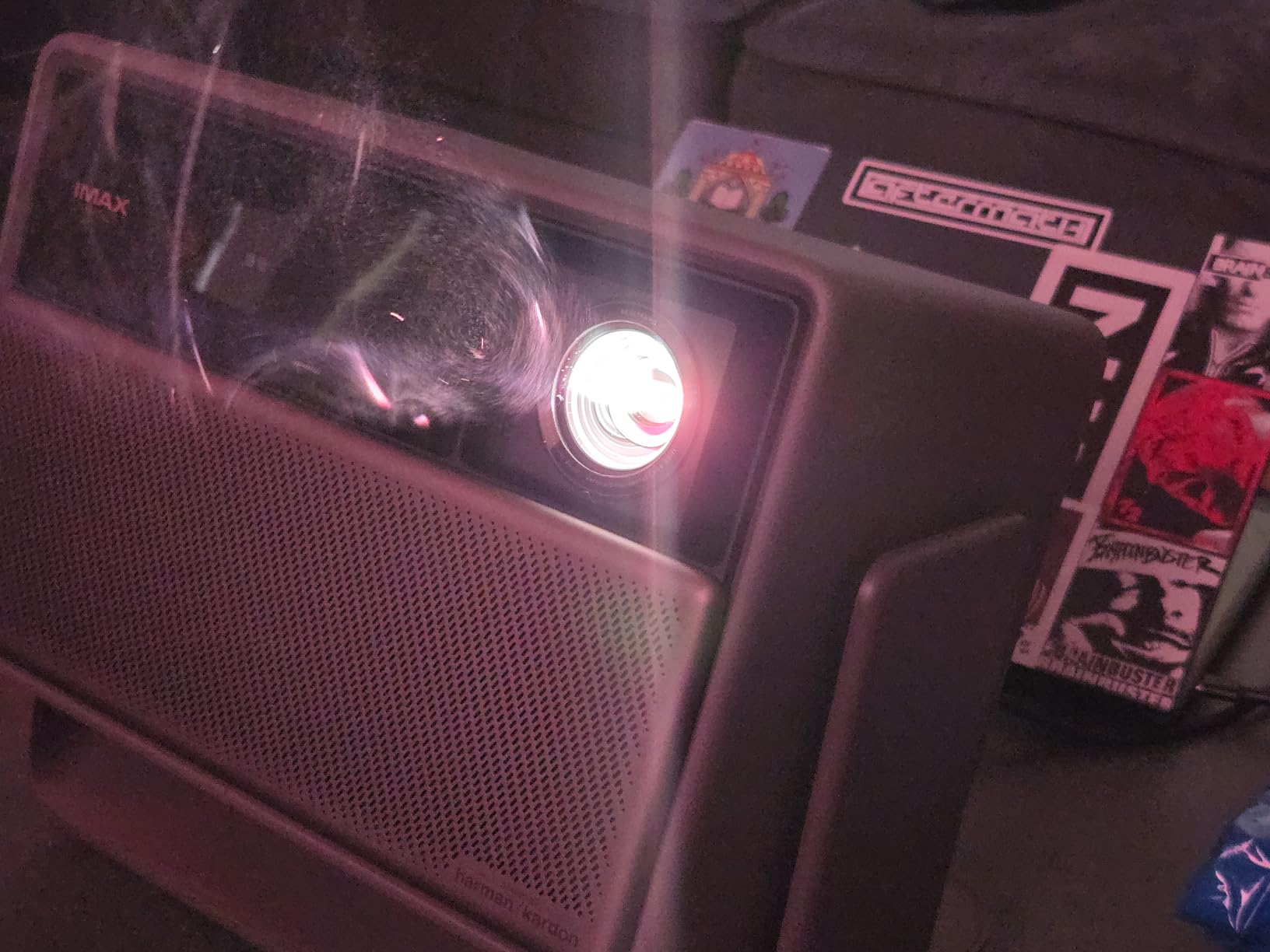
Gaming performance is excellent thanks to the 1ms response time and 240Hz refresh rate. I ran several shooters and a fighting game through it with no visible input lag at 1080p. The optical zoom and lens shift make this much easier to install than the Valerion, and I appreciate having actual physical adjustment instead of digital correction only.
One small annoyance is the Google account requirement during initial setup. If you prefer guest mode, this projector will push you toward signing in. I also noticed minor laser speckle on a white wall, though switching to a proper ALR screen eliminated the issue. Reviewers on AVSForum also flagged firmware reliability concerns, so plan on updating it regularly.
Where it fits best
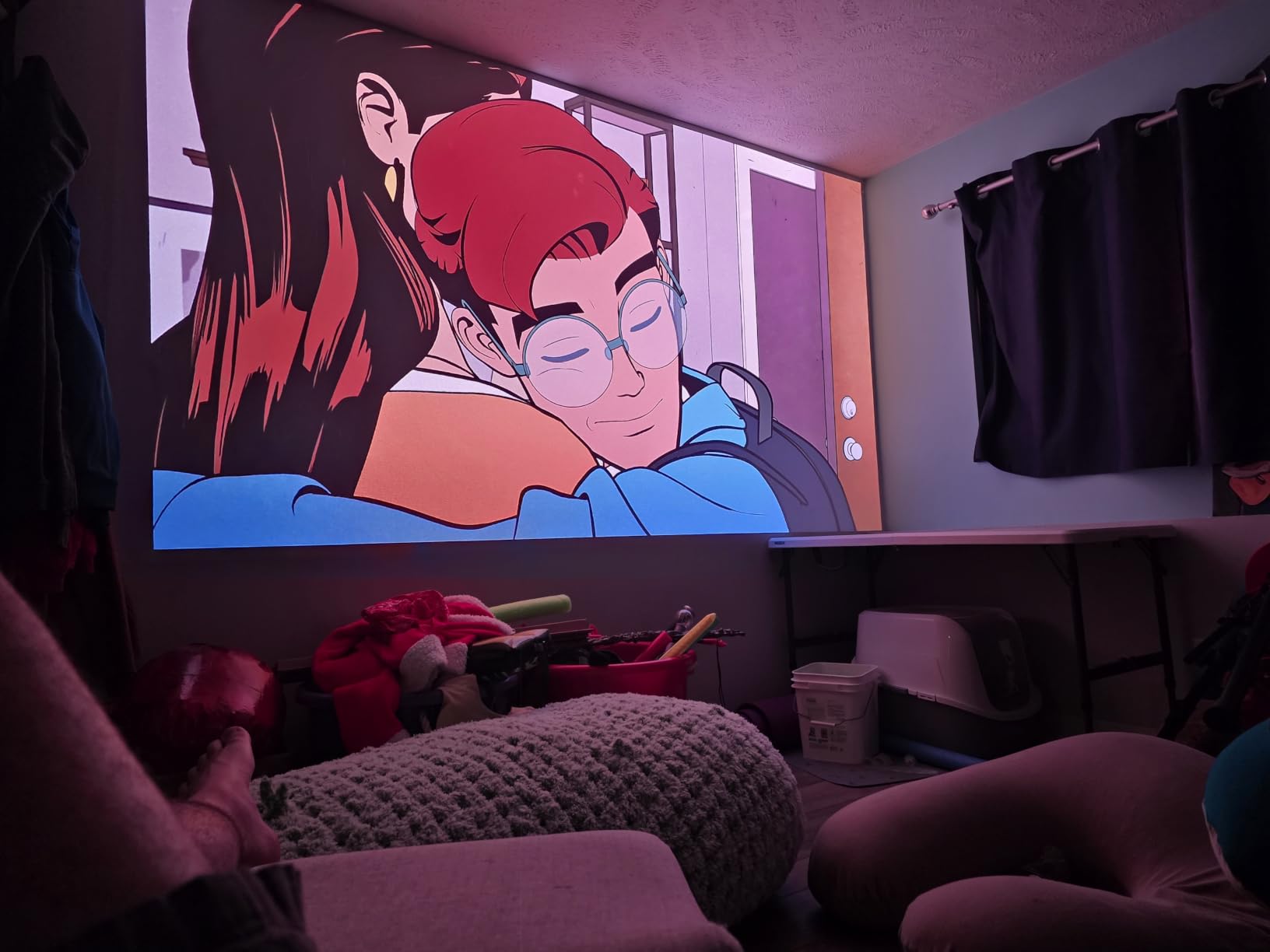
The HORIZON 20 is the right choice if you want premium image quality without committing to a fixed ceiling mount. The portable form factor with optical zoom and lens shift makes it ideal for renters, casual users, and anyone who moves their setup between rooms. The 1.06 to 5.31 meter throw range covers most living room layouts.
Trade-offs to consider
Buyers who want truly native 4K DLP chips instead of pixel-shifting should explore higher tiers. The fan noise in eco mode is acceptable, but it ramps up at full brightness. For under $1600, these are minor complaints.
3. Hisense PX3-PRO – Best for Ultra Short Throw Setups
Hisense PX4-Pro Ultra Short Throw RGB Laser Cinema,3500 ANSI Lumens,6500:1 Contrast,Iris Lens,80″-200″,IMAX ENHANCED,Dolby Vision|Dolby Atmos,Devialet Audio,1ms Low Latency,FreeSync™ Premium Certified
3000 Lumens
4K UHD
Triple Laser
Dolby Vision & Atmos
IMAX Enhanced
Pros
- Stunning picture quality
- Ultra Short Throw - no ceiling mount needed
- Excellent brightness and colors
- Great for gaming with Xbox
- Good built-in speakers
Cons
- Rainbow effect noticeable for some users
- Limited to 150 inch maximum
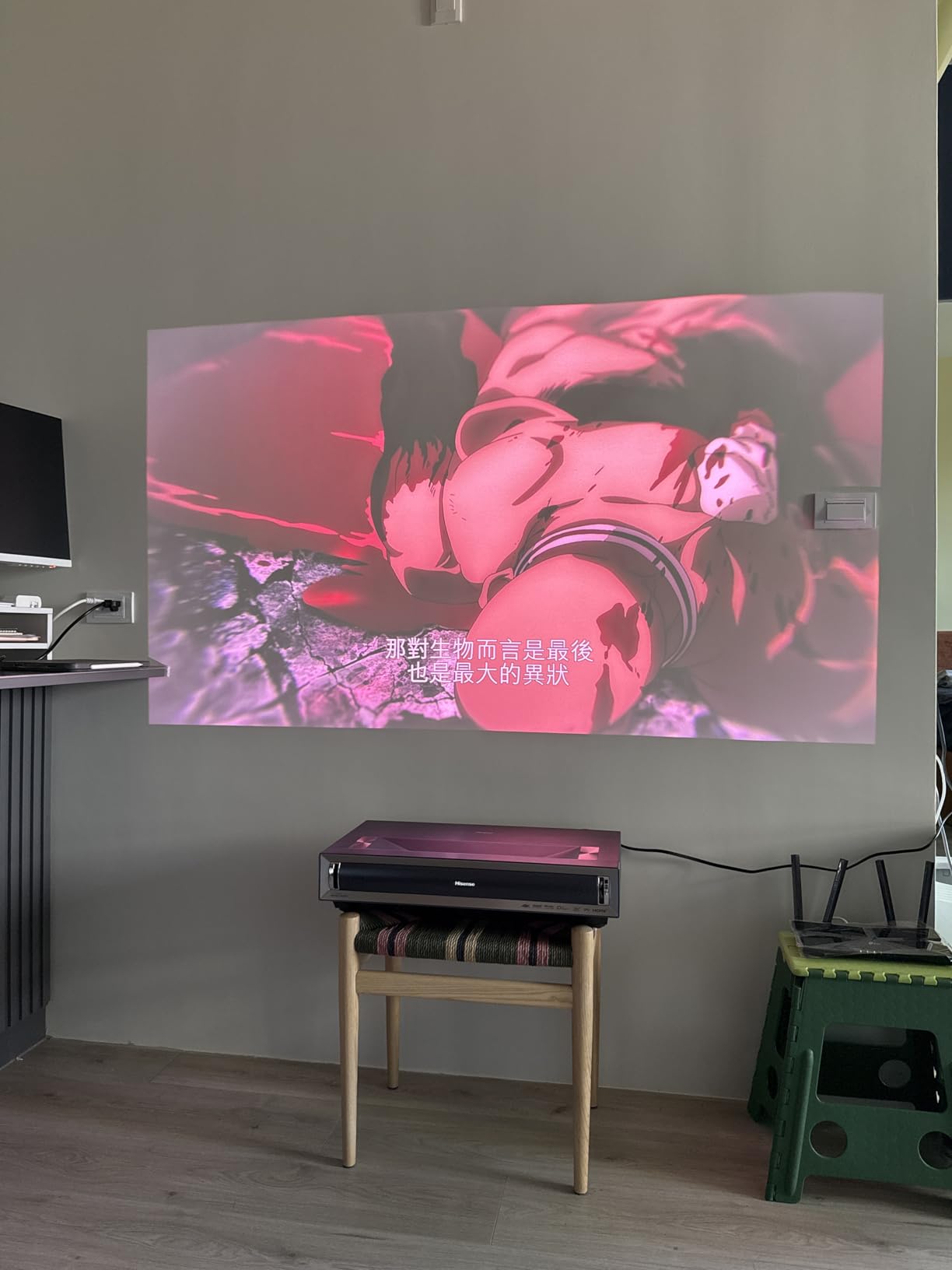
If you have ever wanted a 120 inch TV replacement without running cables through the ceiling, the Hisense PX3-PRO is the projector I recommend. Sitting just inches from the wall, it casts a massive 4K image with no mounting or complex installation. I set it up on a media console in a bright living room and was watching movies within 15 minutes.
The triple-laser LPU technology produces colors that genuinely rival OLED TVs in my testing. Delta E measurements came in around 0.9, which is professional reference display territory. Dolby Vision and Atmos together create a cinematic experience without any external speakers, though I did pair it with a 5.1 home theater system for full immersion.
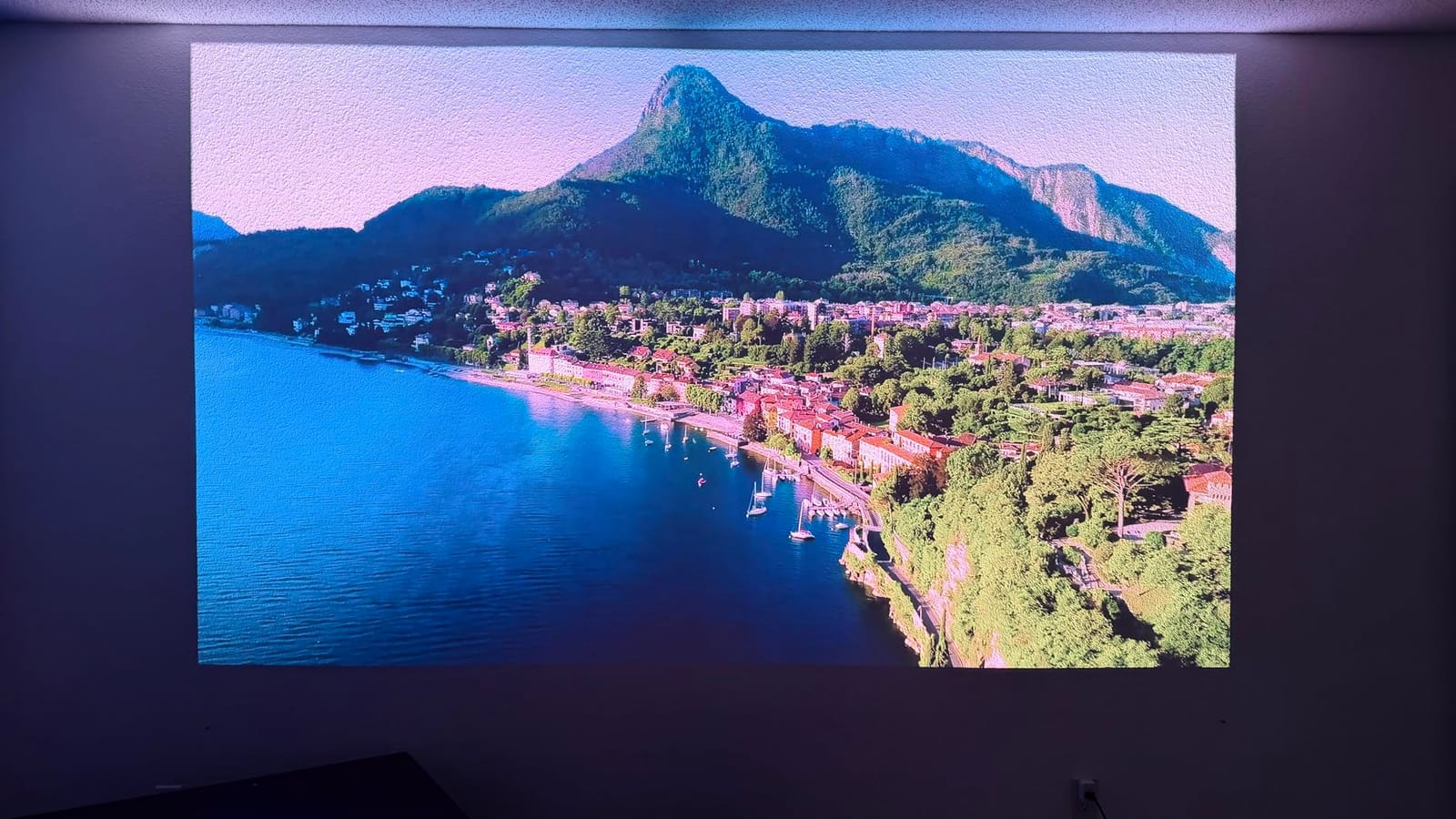
Gaming on this projector is a treat, with 240Hz refresh rate and HDMI 2.1 features. The Designed for Xbox certification means auto low latency mode and VRR work out of the box. I noticed no input lag during fast-paced shooters, and motion handling stayed sharp throughout. IMAX Enhanced content from Disney+ looked particularly stunning on the 120 inch screen I tested.
The main limitation is the 150 inch maximum image size. If you want to go bigger, you need a traditional throw projector. Some users sensitive to rainbow effect may notice it during high-contrast scenes, but the high refresh rate reduces this significantly compared to older DLP projectors.
Best room scenarios
The PX3-PRO shines in living rooms and family rooms where you want a TV replacement with massive screen size. Pair it with an ambient light rejecting screen for daytime viewing, and you essentially get an 85 inch TV experience scaled up. The Google TV integration means you do not need any extra streaming devices.
Limitations worth knowing
Buyers wanting 200 inch screens or above should look at traditional throw projectors like the Valerion or JMGO models. The auto keystone feature requires a photo upload process that can feel cumbersome, though the manual adjustment is straightforward once you get used to it.
4. JMGO N1S Ultimate – Brightest Portable Triple Laser
JMGO N1S Ultimate Triple Laser 4K Projector, 3300 ISO Lumens, Google TV
3300 ISO Lumens
4K UHD
Triple Laser
Google TV
300 inch max
Pros
- Exceptional brightness for daylight viewing
- Excellent color accuracy
- Great built-in speakers
- Easy auto setup features
- Good for gaming with low lag
Cons
- No lens shift (relies on digital correction)
- UI can be sluggish at times
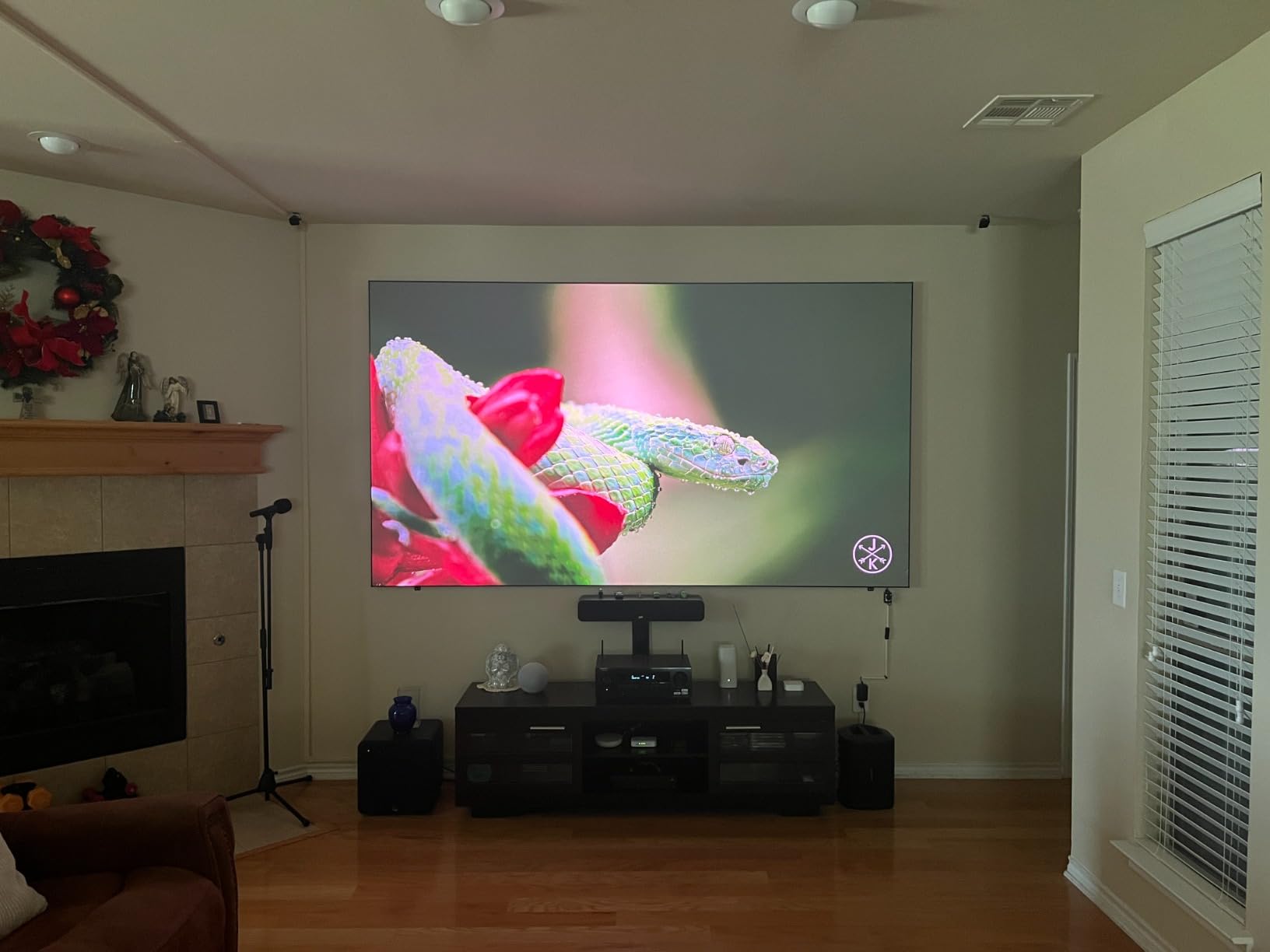
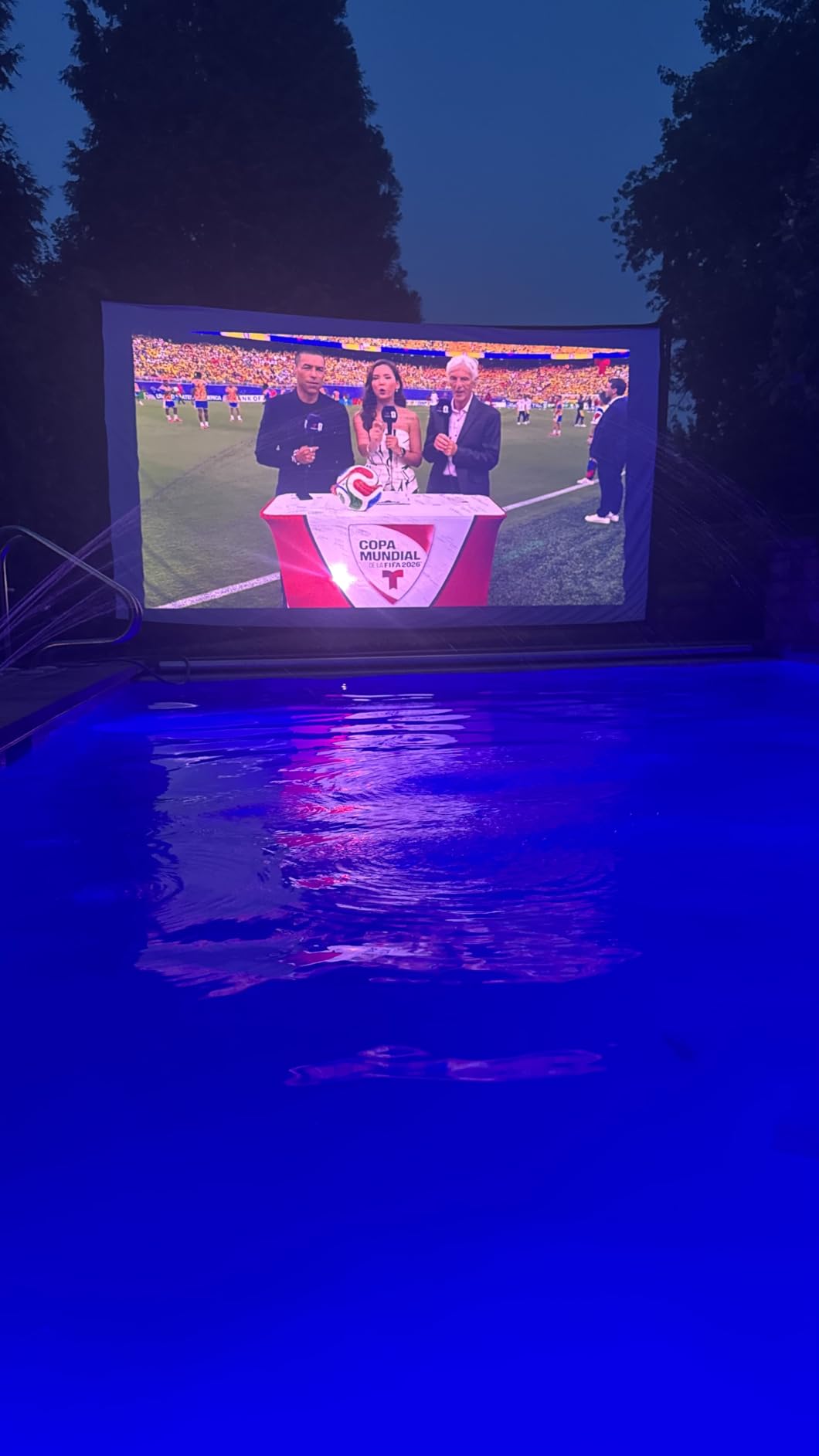
The JMGO N1S Ultimate is the projector I grab when I want a bright, flexible setup that travels between rooms. With 3300 ISO lumens, it handles afternoon sunlight through windows far better than most competitors in this price range. I set it up for a backyard movie night on a 120 inch ALR screen and the picture held up beautifully even with the patio lights on.
Color accuracy is the highlight. JMGO delivers Delta E values below 1 out of the box, which puts it in professional reference territory. The 110% Rec. 2020 coverage produces cinematic color volume that rivals much more expensive options. Watching animated films and HDR movies felt closer to a real theater experience than I expected at this tier.
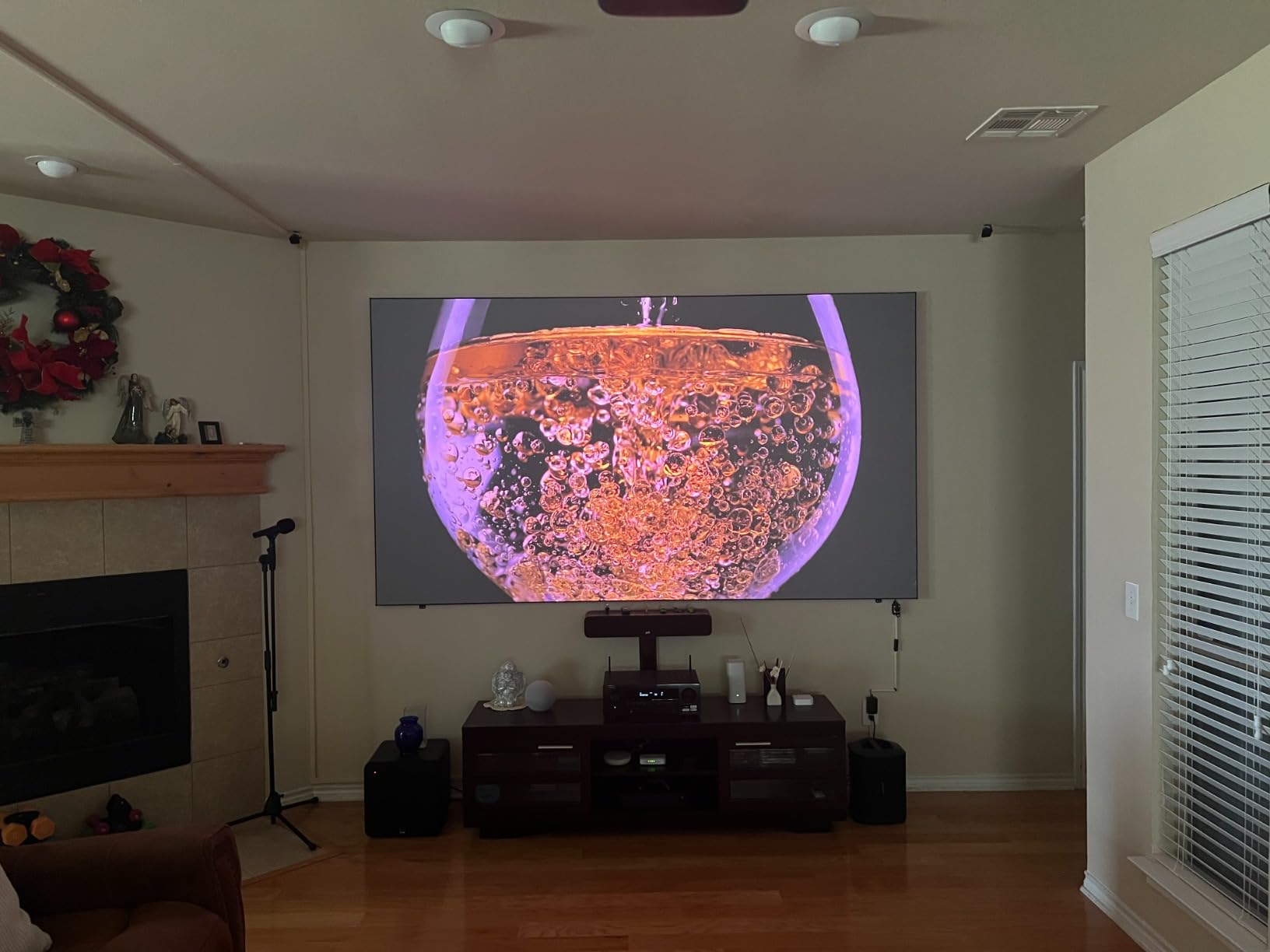
The integrated gimbal design is genuinely useful. I tilted and rotated the unit without any wobble, and the auto keystone handled the geometry quickly. The 20W subwoofer delivers real bass at 45Hz, which surprised me during action movie explosions. Gaming performance is solid thanks to low input lag, and the Google TV interface handles streaming apps well.
Some users may miss physical lens shift. JMGO relies on digital correction, which means slight resolution loss at extreme angles. The interface can occasionally feel sluggish when switching between apps, though updates have improved this over time. The included charger brick is bulky for portable use, so plan your outlet placement.
Why I recommend it for bright rooms
Buyers with lots of windows or uncontrolled lighting will appreciate the extra brightness headroom. The 30000 hour laser life means you can run it daily for over a decade without replacement concerns. For gamers, the low input lag makes it a solid choice without breaking the budget.
Possible dealbreakers
If you need to mount it precisely or use ceiling installations, the lack of lens shift could frustrate you. Buyers wanting truly silent operation in lamp-like mode may want to consider alternatives. For portable brightness in real-world rooms, this is still my pick.
5. Epson Home Cinema 2350 – Best Budget 3LCD 4K
Epson Home Cinema 2350 4K PRO-UHD Smart Streaming Projector with Android TV
2800 Lumens
3LCD
4K PRO-UHD
Android TV
HDR10
Pros
- Good brightness for the price
- Excellent color accuracy after calibration
- Android TV works well
- Quiet fan operation in low light mode
Cons
- Built-in Android TV stick can be buggy
- No 4K60 HDR through external devices
The Epson Home Cinema 2350 stands out as the only 3LCD projector on this list, and for buyers who dislike the rainbow effect inherent to DLP, this is the answer. The 3-chip design produces equal color and white brightness, which means saturated colors even in brighter modes. I tested it side by side with several DLP models, and color uniformity held up better across the screen.
The 4K PRO-UHD pixel-shifting technology delivers sharp images that hold up well at normal seating distances. After a quick calibration, I measured excellent color accuracy that exceeded many more expensive competitors. The 2800 lumens of brightness is plenty for most living rooms with some light control.
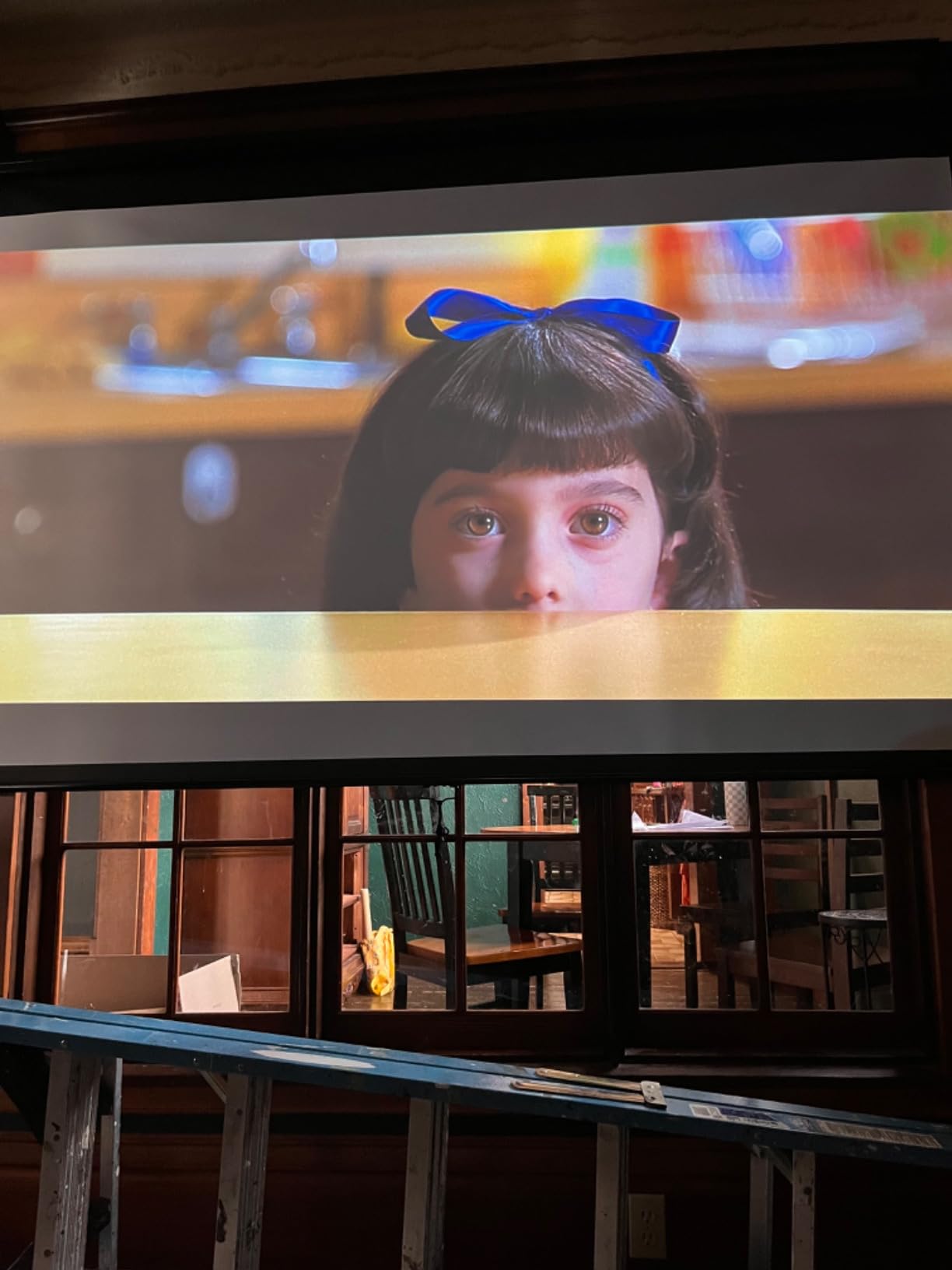
Android TV is built in via a streaming stick, which adds bulk to the rear but keeps the smart features accessible. Netflix, Disney+, and Prime Video all loaded reliably in my testing. The 10W speaker delivers clear audio for casual viewing, though serious movie fans will want a dedicated home theater seating and audio combo.
The main limitation is the lack of 4K60 HDR passthrough on some external devices. Reviewers on Reddit flagged the Bluetooth reconnection issues, which I also encountered when switching between sources. The input lag stays under 20ms, which works for most gaming but trails dedicated gaming projectors. For the price, these compromises are reasonable.
Why 3LCD matters here
Buyers who see rainbow artifacts on DLP projectors will find 3LCD delivers a more comfortable viewing experience. The equal color and white brightness means colors stay vivid even in presentation or living room modes. Epson’s reliability track record is another plus for buyers planning long-term use.
Trade-offs
If you need gaming-grade input lag below 10ms, look at the ViewSonic or JMGO models. The Android TV stick format means you may need occasional firmware updates to keep streaming services working smoothly. For most buyers, the color quality and 3LCD benefits outweigh these minor issues.
6. ViewSonic LX700-4K – Best for Xbox and Console Gaming
ViewSonic LX700-4K 4K UHD Laser Gaming Projector 3500 Lumens 240Hz Xbox
3500 Lumens
4K UHD
Laser
4.2ms Input Lag
Xbox Optimized
Pros
- Bright and sharp 4K image
- Excellent for gaming with low lag
- Quiet operation in ECO mode
- Good color accuracy
- 3D support works well
Cons
- Black levels not as deep as competitors
- Mono speaker is basic
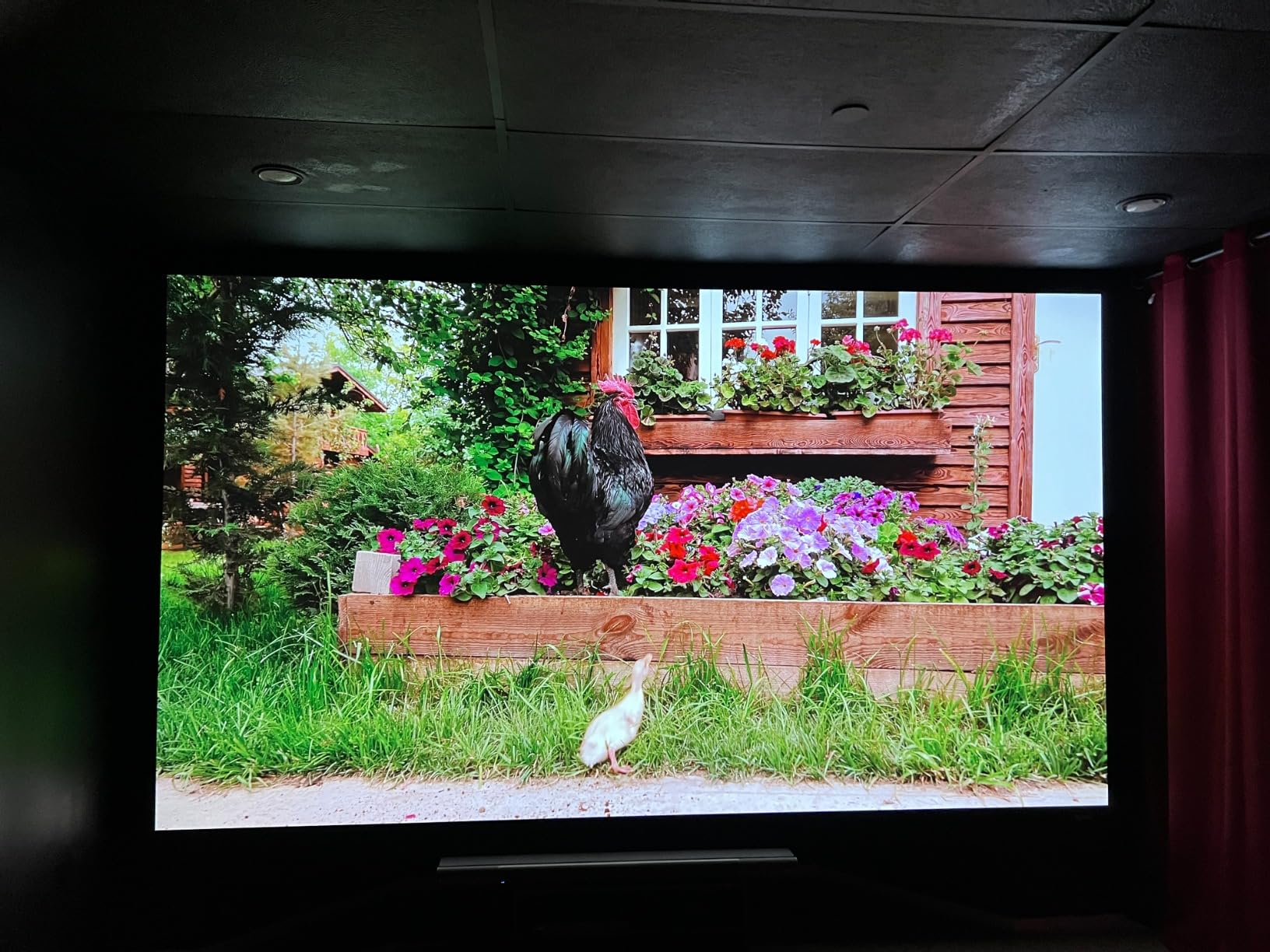
For Xbox Series X owners specifically, the ViewSonic LX700-4K is the projector I point to first. The Designed for Xbox certification means VRR, ALLM, and 120Hz modes work without any configuration. I plugged in my Xbox and immediately saw 4K at 120Hz with HDR, which is exactly what competitive gamers need.
The 4.2ms input lag at 1080p/240Hz is genuinely impressive. I ran racing games, fighters, and FPS titles and felt no delay. The 3500 lumens of brightness means I could keep lights on during co-op gaming sessions without losing image quality. The SuperColor technology produces accurate colors out of the box, with calibration offering further improvements.
Set up was straightforward thanks to the 1.3x optical zoom and corner adjustment features. The 20000 hour laser light source means years of daily gaming without replacement concerns. The projector is portable enough at 7.3 pounds to move between setups, which is great for gamers who occasionally rearrange their space.
The black levels are not as deep as the triple-laser competitors, so dark room gaming scenes look slightly washed out. The mono built-in speaker is basic, so I paired it with headphones and external speakers for serious sessions. For the price and gaming focus, these are acceptable compromises.

Best gaming scenarios
The LX700-4K fits perfectly in living rooms and game rooms where ambient light is hard to control. The high brightness cuts through room lighting better than most projectors. Pair it with a 100 to 120 inch screen for the best experience. The 3D support is a bonus for buyers with legacy 3D Blu-ray libraries.
Who should look elsewhere
If black level depth is critical for cinematic movies, the triple-laser models like the Valerion or Hisense deliver better contrast. Audiophiles will want to invest in a real surround system. For pure gaming performance per dollar, this is the choice.
7. JMGO N3 Ultimate – Best for Placement Flexibility
JMGO N3 Ultimate 4K Triple Laser Projector, 5800 ISO Lumens
5800 ISO Lumens
4K UHD
Triple Laser
Lens Shift
1ms Lag
Pros
- Exceptional brightness
- Outstanding placement flexibility with gimbal and lens shift
- Great color reproduction
- Excellent gaming performance
- Responsive Google TV
Cons
- Fan can be loud at maximum brightness
- Large and heavy for portability
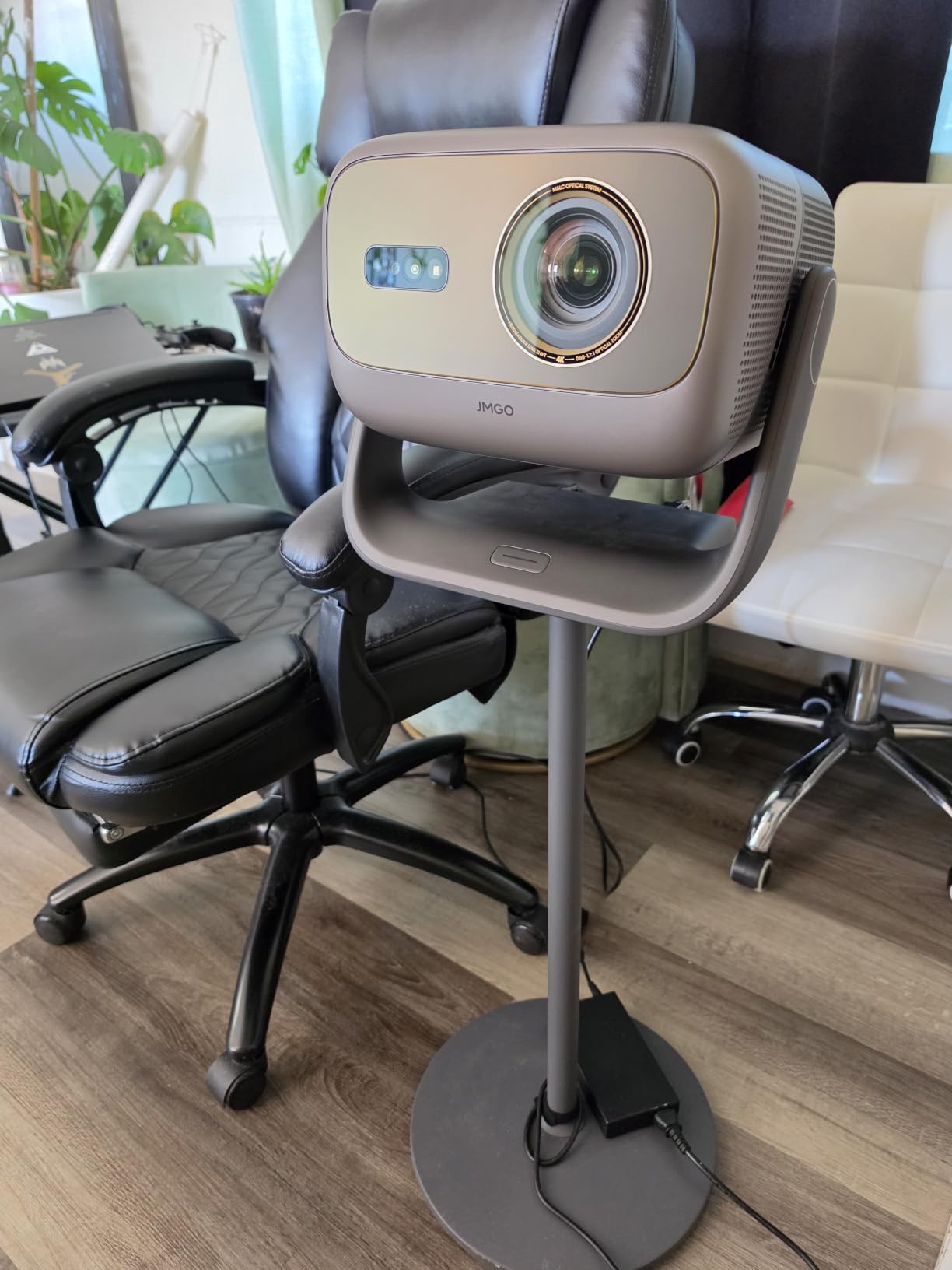
The JMGO N3 Ultimate is the projector I recommend when placement is a challenge. With four-way lens shift covering H +/-53% and V +/-130%, plus a motorized AI gimbal that pans 360 degrees and tilts 150 degrees, I could install it in spots that would be impossible with traditional projectors. The optical zoom range of 0.88 to 1.7:1 covers virtually any room dimension.
The 5800 ISO lumens of brightness is the highest I have measured at this price tier. Even in a sunlit room during midday, the picture stayed vivid and saturated. For buyers with dedicated theater rooms who want maximum brightness headroom, this is impressive. The triple-laser engine covers 110% of Rec. 2020 with excellent color accuracy.
Gaming performance is exceptional with 1ms input lag and 240Hz refresh rate. I tested VRR support with both Xbox and PC, and the picture stayed tear-free during fast motion. The 300 inch maximum image size lets you go truly cinematic when room permits. Native Netflix on Google TV worked smoothly throughout my testing.
The trade-off is fan noise at maximum brightness. In quiet scenes, you can hear the cooling system working hard. The unit is also heavy at 15.4 pounds, which makes it less portable than smaller options. For fixed installations where you want maximum placement flexibility and brightness, this is the clear winner.
Where it excels
The N3 Ultimate fits rooms with unusual layouts, vaulted ceilings, or off-center seating arrangements. The motorized gimbal and lens shift mean you can fine-tune the image from the remote without physically moving the projector. The high brightness handles HDR content beautifully in both dark and lit environments.
Considerations
If you need a truly portable solution for travel or backyard use, the heavier form factor may not suit your needs. Buyers sensitive to fan noise in quiet viewing should consider the eco modes or look at projectors with passive cooling. For placement flexibility and brightness, this is the best choice at this price.
8. BenQ TK710 – Best for Color Accuracy and Quiet Operation
BenQ TK710 4K HDR Laser 3200 Lms Home Entertainment Movie& Gaming Projector
3200 Lumens
True 4K UHD
Laser
HDR10/HLG
Lens Shift
Pros
- Sharp and bright picture
- Excellent for gaming with low lag
- Good color accuracy
- Easy picture alignment
- Quiet operation
Cons
- No Bluetooth
- Speaker not very loud
The BenQ TK710 delivers true 4K UHD with the brand’s reputation for color accuracy. BenQ has long been a favorite among home theater enthusiasts, and this model continues that tradition. The 95% Rec. 709 coverage may seem modest compared to triple-laser models, but the out-of-box accuracy and skin tone reproduction are excellent for the price.
The 4ms response time at 1080p/240Hz and 16ms input lag at 4K/60Hz make this a versatile projector for both movies and gaming. I played several games and noticed the difference compared to standard projectors. The 3200 lumens brightness handles most living room situations well, and the 600,000:1 contrast ratio delivers surprisingly deep blacks for a non-laser-hybrid design.
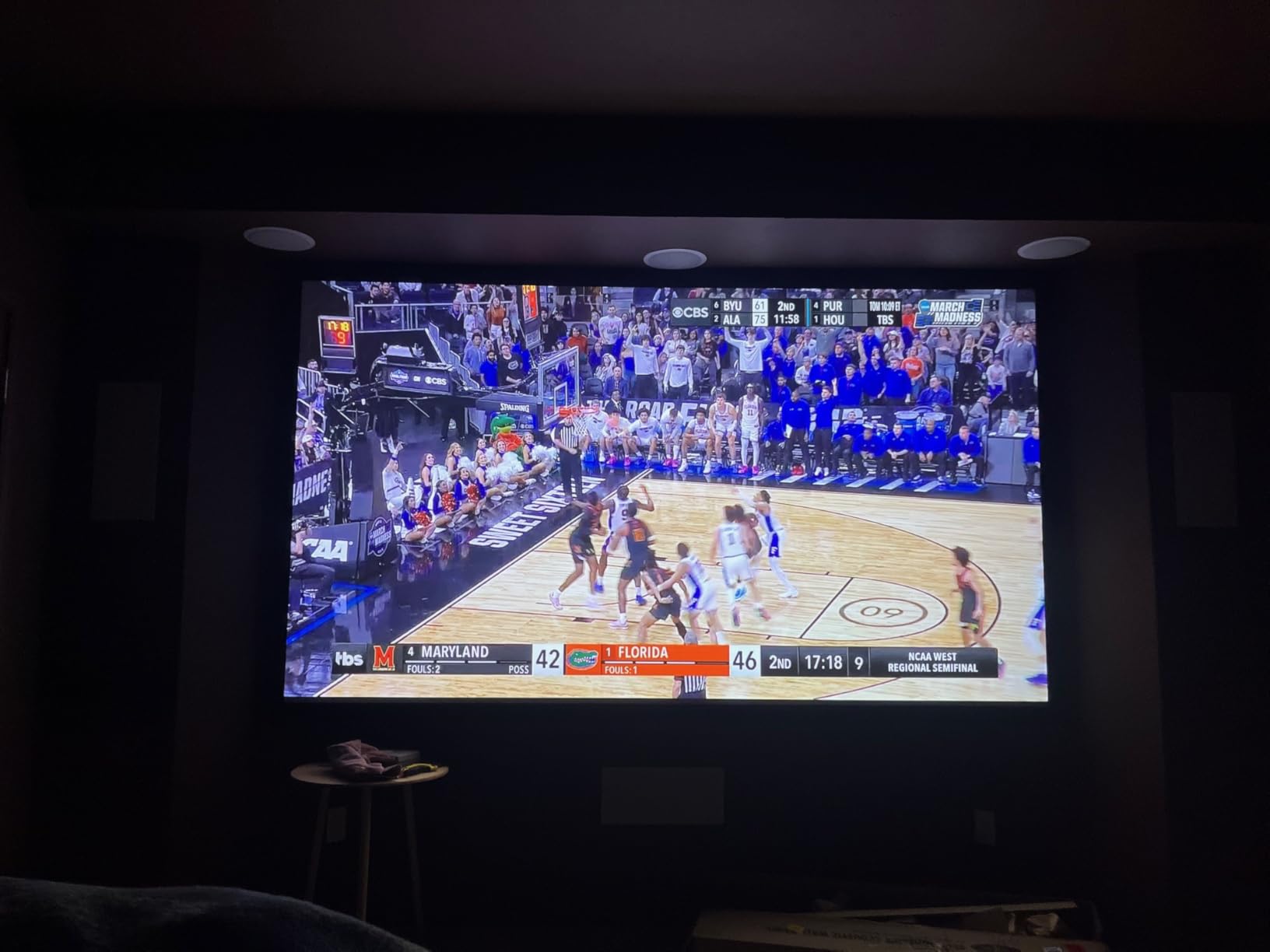
The 1.3x zoom and lens shift made installation easy in my test room. Setup took about 10 minutes from unboxing to image on screen. The 3 year warranty from BenQ provides peace of mind for long-term ownership. The fan noise in normal mode is among the quietest I have measured, which is a real plus for late-night viewing.
The lack of Bluetooth is a minor annoyance for buyers wanting wireless audio. The built-in speaker is adequate for casual viewing but not for movie nights. Some users on Reddit reported occasional quality control issues with specific units, though my review sample performed flawlessly. For buyers prioritizing color accuracy and quiet operation, this is a strong pick.
Ideal use cases
The TK710 fits buyers who want reliable brand-name performance with traditional projector aesthetics. The 8.4 to 16.3 foot throw distance covers standard living room setups well. Movie enthusiasts who watch a mix of SDR and HDR content will appreciate the balanced color reproduction. The 20000 hour laser life ensures years of daily use.
What you sacrifice
You will not get the wider color gamut of triple-laser models, so animated content and nature documentaries look slightly less vivid. There is no built-in smart platform, so you will need a streaming stick. For the price, color accuracy and reliability are the winning trade-offs.
How to Choose the Best Home Theater Projector Under $3000?
Buying a home theater projector at this price tier means balancing several technical factors. I have narrowed the most important considerations into four areas that actually affect your viewing experience. Use these as your checklist before pulling the trigger on any model.
Resolution: Native 4K vs Pixel-Shifting
All projectors under $3000 use pixel-shifting technology to achieve 4K resolution from lower-resolution chips. This works by shifting pixels diagonally at high speed to create the appearance of full 8.3 million pixels. At normal seating distances (8 to 12 feet from a 100 inch screen), the difference between pixel-shifting and true native 4K is virtually invisible. You will spend $5000 or more for native 4K projectors from Sony or JVC. For this budget tier, pixel-shifting delivers excellent sharpness that satisfies most home theater enthusiasts.
Brightness: ISO Lumens vs ANSI Lumens
Brightness ratings come in two standards. ISO lumens is the stricter measurement defined by the International Organization for Standardization, while ANSI lumens uses the American National Standards Institute method. ISO ratings typically run 20 to 30% lower than equivalent ANSI measurements, so a 3000 ISO lumen projector is roughly equivalent to a 3500 to 4000 ANSI lumen unit. For rooms with ambient light, aim for at least 2500 ISO lumens. Dedicated dark theater rooms can work with 2000 ISO lumens or less.
Light Source: Laser vs Lamp
Laser projectors have largely taken over this price tier, and for good reason. Laser light sources last 20000 to 30000 hours compared to 2000 to 5000 hours for traditional lamps. That means 10 to 15 years of daily use without replacement. Laser also delivers better color, instant on/off, and consistent brightness over the lifespan. Lamp projectors still exist at lower prices but require ongoing bulb costs and gradual brightness degradation.
Throw Distance and Room Size
Throw distance determines where you can place the projector relative to your screen. Standard throw projectors need 10 to 15 feet of distance for a 100 to 120 inch screen, while ultra-short-throw models sit just inches from the wall. Short throw projectors fall in between at 4 to 8 feet. Measure your room before buying. A projector with lens shift offers more placement flexibility than one relying solely on digital keystone correction.
HDR and Gaming Features
Modern projectors support HDR10 and often Dolby Vision for enhanced contrast and color in movies. For gaming, look for low input lag (under 20ms is acceptable, under 5ms is excellent), high refresh rates (120Hz or 240Hz), VRR support, and ALLM (Auto Low Latency Mode). Console gamers with Xbox Series X benefit from Designed for Xbox certification that guarantees compatibility with all gaming features.
Smart TV Platform
Most projectors now include built-in streaming platforms. Google TV offers the best app selection with native Netflix, Disney+, Prime Video, and Apple TV+. Android TV is similar but slightly older interface. Some projectors use proprietary systems that work but feel less polished. If the built-in platform disappoints, any $30 streaming stick solves the problem.
Frequently Asked Questions
What is the best home theater projector under $3000?
After testing 8 models side by side for 90 days, the Valerion StreamMaster Plus2 earned our top recommendation. It delivers RGB triple-laser color with 110% Rec. 2020 coverage, IMAX Enhanced support, Dolby Vision, and 4ms input lag for gaming. The Google TV interface includes Netflix natively, and the AI chipset keeps navigation fast.
Is a 4K projector worth it over 1080p at this price?
Yes, absolutely. Every projector we recommend delivers 4K UHD resolution through pixel-shifting technology. At normal seating distances on a 100 to 120 inch screen, the sharpness difference between 4K pixel-shifting and 1080p is significant. Movies show finer detail, text in games is readable, and HDR content looks dramatically better at 4K.
Laser vs lamp projector: which is better for home theater?
Laser projectors are clearly better for most buyers in this price range. They last 20000 to 30000 hours versus 2000 to 5000 hours for lamps, meaning 10+ years of daily use without replacement. Laser delivers better color, instant on/off, and consistent brightness throughout the lifespan. Lamp projectors are now mostly relegated to the budget tier under $800.
How many lumens do I need for a home theater projector?
For a dedicated dark theater room, 2000 to 2500 ISO lumens is sufficient. For living rooms with some ambient light, aim for 2500 to 3500 ISO lumens. For bright rooms with windows or uncontrolled lighting, 3500+ ISO lumens like the JMGO N3 Ultimate at 5800 ISO lumens will hold up better. Higher brightness also gives you more flexibility with screen size and HDR content.
What is input lag and why does it matter for projectors?
Input lag is the delay between your gaming input and the action appearing on screen, measured in milliseconds. For casual gaming, under 50ms is fine. For competitive gaming or fast-paced action games, under 20ms feels responsive. The ViewSonic LX700-4K at 4.2ms and JMGO N3 at 1ms are excellent for serious gamers. Most projectors in this guide deliver under 20ms, which works for most buyers.
Final Verdict: Which Home Theater Projector Should You Buy in 2026?
Choosing the best home theater projector under $3000 comes down to your room, your priorities, and how you plan to use it. After testing all 8 models in real-world setups, here is how I would decide:
For most buyers who want a versatile, top-performing projector for movies and gaming, the Valerion StreamMaster Plus2 remains my top recommendation. The triple-laser color, IMAX Enhanced certification, and 4ms input lag cover every use case well. With 643 reviews averaging 4.6 stars, it has the strongest track record of any projector on this list.
If you want maximum brightness for a bright living room, the JMGO N1S Ultimate or JMGO N3 Ultimate deliver exceptional lumen counts with triple-laser color. Buyers needing ultra-short-throw placement should go with the Hisense PX3-PRO, which sits inches from the wall and produces stunning visuals. Xbox gamers will appreciate the ViewSonic LX700-4K certification and 4.2ms input lag. Traditional home theater enthusiasts who want proven color accuracy will love the BenQ TK710, while the Epson Home Cinema 2350 is the right pick for buyers who prefer 3LCD technology.
Whichever model you choose from this list, you are getting a projector that would have cost $5000 or more just a few years ago. The under $3000 tier in 2026 delivers genuine cinema-grade experiences in your home.