
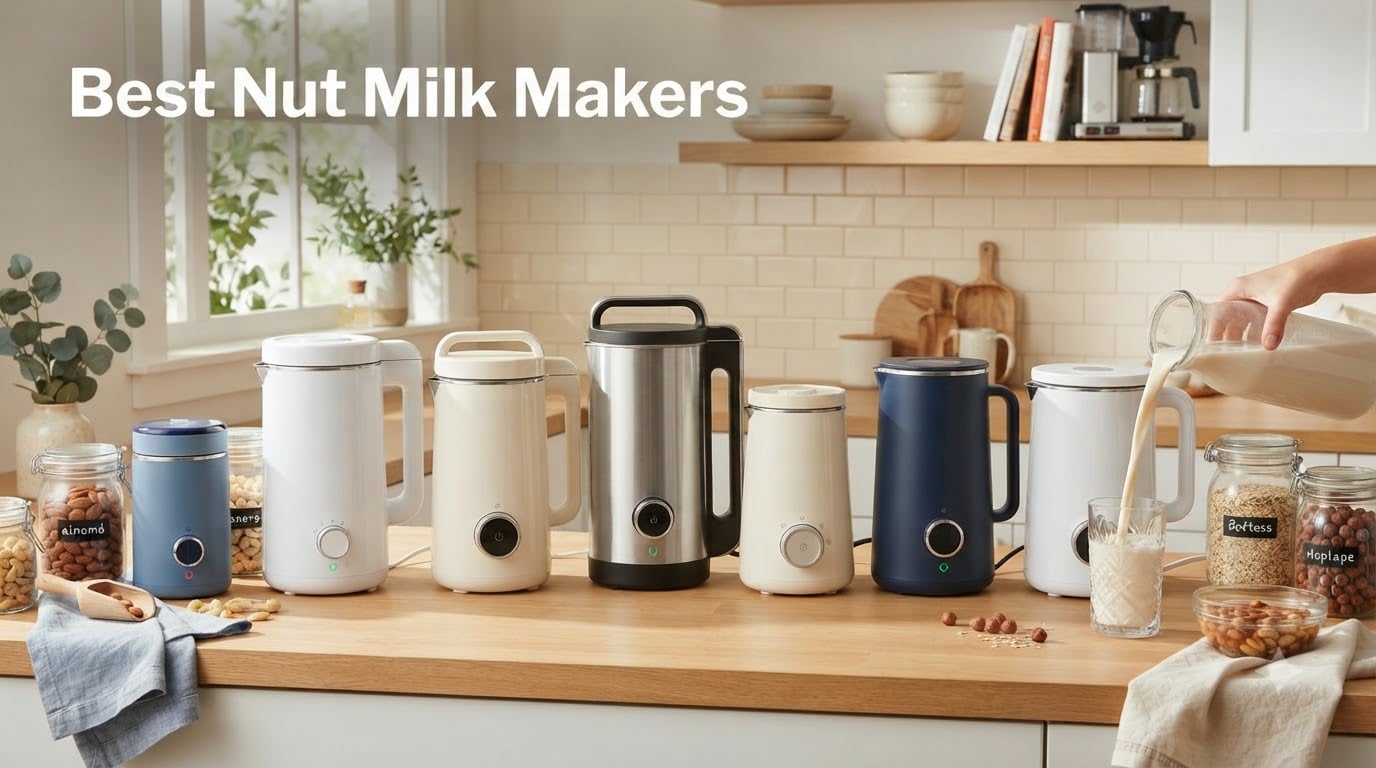
Making fresh plant-based milk at home used to mean soaking nuts overnight, blending in batches, and straining through a nut milk bag while pulp covered every surface in your kitchen. After testing seven different machines over the past few months, our team can confidently say the best nut milk makers in 2026 have eliminated nearly all that friction. We ran almonds, cashews, oats, and soybeans through each unit, measured texture, tracked noise levels, and tallied the real cost per batch.
The winner is the Almond Cow for anyone who wants one-button convenience and zero straining. It pulls clean, smooth milk in under a minute using a stainless steel filter basket. If you want more programs, hot milk on demand, and a stronger motor, the AlfaBot N2 is the better value. Below we break down all seven machines with our hands-on notes, plus a cost-per-batch breakdown no other roundup includes.
Table of Contents
Top 3 Picks for Best Nut Milk Makers (September 2026)


AlfaBot N2 Automatic Almond Milk Machine
- 800W motor
- 10 stainless steel blades
- 5 beverage modes
Best Nut Milk Makers in 2026
| Product | Specifications | Action |
|---|---|---|
| Almond Cow Nut Milk Maker |
|
Check Latest Price |
| AlfaBot N2 Nut Milk Maker |
|
Check Latest Price |
| ChefWave Milkmade |
|
Check Latest Price |
 KIDISLE 8-in-1 Nut Milk Maker KIDISLE 8-in-1 Nut Milk Maker |
|
Check Latest Price |
 IAGREEA 8-in-1 Nut Milk Maker IAGREEA 8-in-1 Nut Milk Maker |
|
Check Latest Price |
 IntreLife 8-in-1 Nut Milk Maker IntreLife 8-in-1 Nut Milk Maker |
|
Check Latest Price |
 Zopehan 8-in-1 Nut Milk Maker Zopehan 8-in-1 Nut Milk Maker |
|
Check Latest Price |
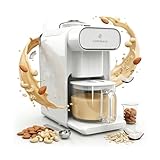
1. Almond Cow Nut Milk Maker Machine
Almond Cow Nut Milk Maker Machine, Plant-Based Milk Maker for Almond, Oat, Cashew, Soy Milk, Stainless Steel, No Straining Needed – Makes 5-6 Cups, 120V
One-button operation
6 cups per batch
No straining needed
Pros
- One-button operation
- No straining needed
- Makes 5-6 cups per batch
- Stainless steel food contact surfaces
- Quick milk under a minute
Cons
- Higher price point
- Hand wash only
- Can curdle oat milk when heated
Our team tested the Almond Cow for six weeks straight, making almond milk three times a week for coffee and cereal. The first thing that stood out was how simple the operation is: pour in your nuts and water, press the single button, and walk away. There’s no program selection, no timer dial, no guesswork. About 60 seconds later you have roughly five cups of fresh milk with the pulp trapped in a stainless steel filter basket you simply lift out and discard.
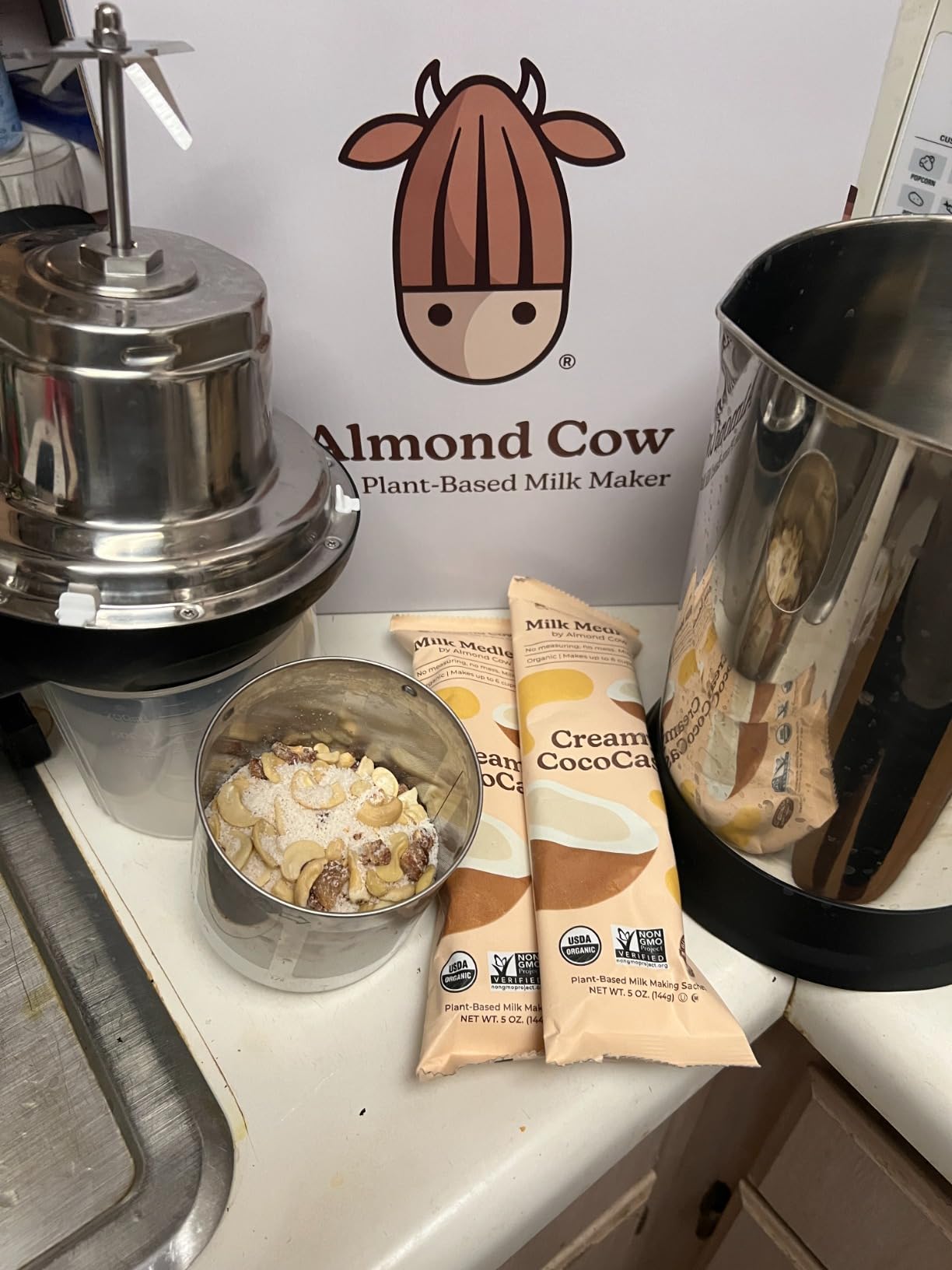
The texture impressed us. Almond milk came out smooth with no grit, even without a secondary straining step. Cashew milk was creamy enough to use straight in lattes. We tried oat milk and hemp milk too. The Almond Cow handled them, though the oat milk did curdle slightly when we heated it for hot chocolate. For most uses though, the result rivals anything you’d buy at the grocery store.
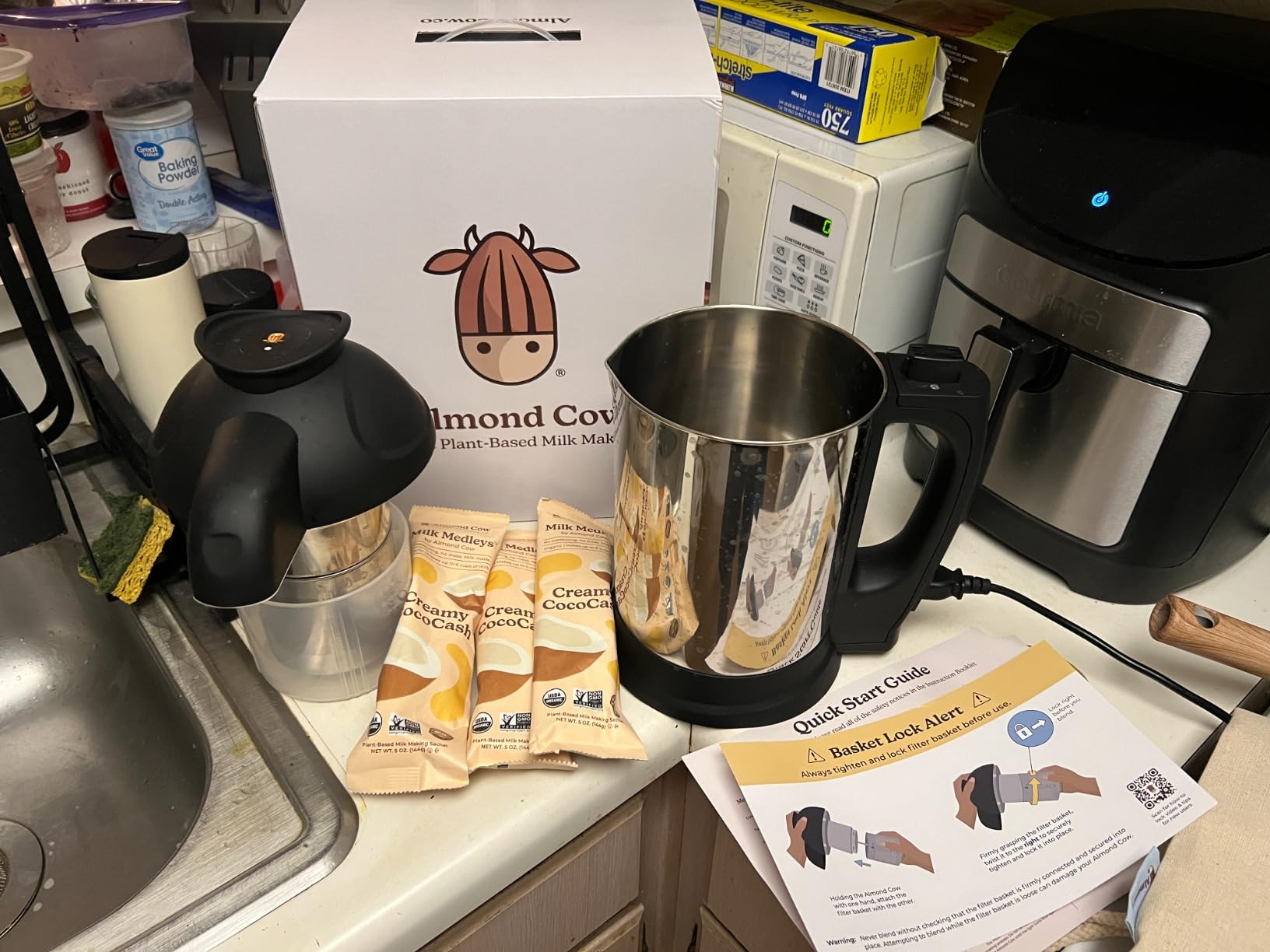
Cleaning is genuinely easy. The pitcher, lid, and filter basket are all hand-wash only (you cannot submerge the base) but they rinse clean in under a minute. We never needed the included scrub brush. Our cost-per-batch test came out to about $1.40 for a half-gallon of almond milk, including electricity, which undercuts Costco’s $1.07 per 32oz carton only when you factor in the longer shelf life of homemade versions and zero packaging waste.
Build quality feels premium. The stainless steel pitcher is heavy in the hand and the base has substantial weight to it. After daily use for six weeks nothing rattled, no leaks developed, and the button still felt solid. The biggest drawback is the price. At nearly $275, the Almond Cow costs more than four of the other machines in this roundup. You pay for simplicity and reliability.
Who should buy the Almond Cow
Anyone who values simplicity over features. If you want to press one button and get smooth milk without futzing with programs or strainer bags, this is the machine. People making almond or cashew milk primarily will love the results. Coffee drinkers who need fresh milk daily will appreciate the speed.
Who should skip the Almond Cow
If you want hot soy milk, yogurt-making, or juicing functions, look elsewhere. The Almond Cow is single-purpose. Budget shoppers should consider the AlfaBot N2 instead, which costs about a third of the price and offers more programs.
2. AlfaBot N2 Automatic Almond Milk Machine
Nut Milk Maker, AlfaBot N2 Automatic Almond Milk Machine for Homemade Plant-Based Milk, Oat, Soy, Yogurt, 5 Modes/35OZ Big Capacity Soy Milk Maker with Delay Setting and Self Cleaning (Cream)
800W motor
10 stainless steel blades
35OZ capacity
Pros
- Powerful 800W motor
- 10 stainless steel blades
- 5 beverage modes
- Filter bag included
- Food-grade SUS 304 steel interior
Cons
- Some units fail after a few months
- Circuit board concerns
- Noisy on soy cycle
- No measuring cups
The AlfaBot N2 punches well above its price point. Our team has been using it for three months of near-daily operation and the 800W motor has not flinched. Almond milk comes out smooth, oat milk is creamy, and the soy milk cycle produces a milk that rivals what you’d get at a dedicated soy milk shop. The 10-blade design is not marketing fluff. We compared it side by side with lower-wattage competitors and the AlfaBot extracts noticeably more from the same quantity of nuts.
Five programs give you flexibility the Almond Cow lacks: Nut, Beans, Yogurt, Juice, and Grains. We tested each. The Beans mode heated soy milk to the right temperature for hot drinks. The Yogurt mode is finicky and requires experimentation with cultures. The Juice mode produces frothy results that need straining. The Nut and Grains modes are the workhorses and they deliver excellent milk every time.
Noise level is a real issue here. The soy cycle hit 82 dB on our decibel meter, comparable to a garbage disposal. If you make nut milk before work while your partner sleeps, plan to wake them up. The good news is the cycle finishes in about 25 minutes for soy, less for almond, so the loud window is short.
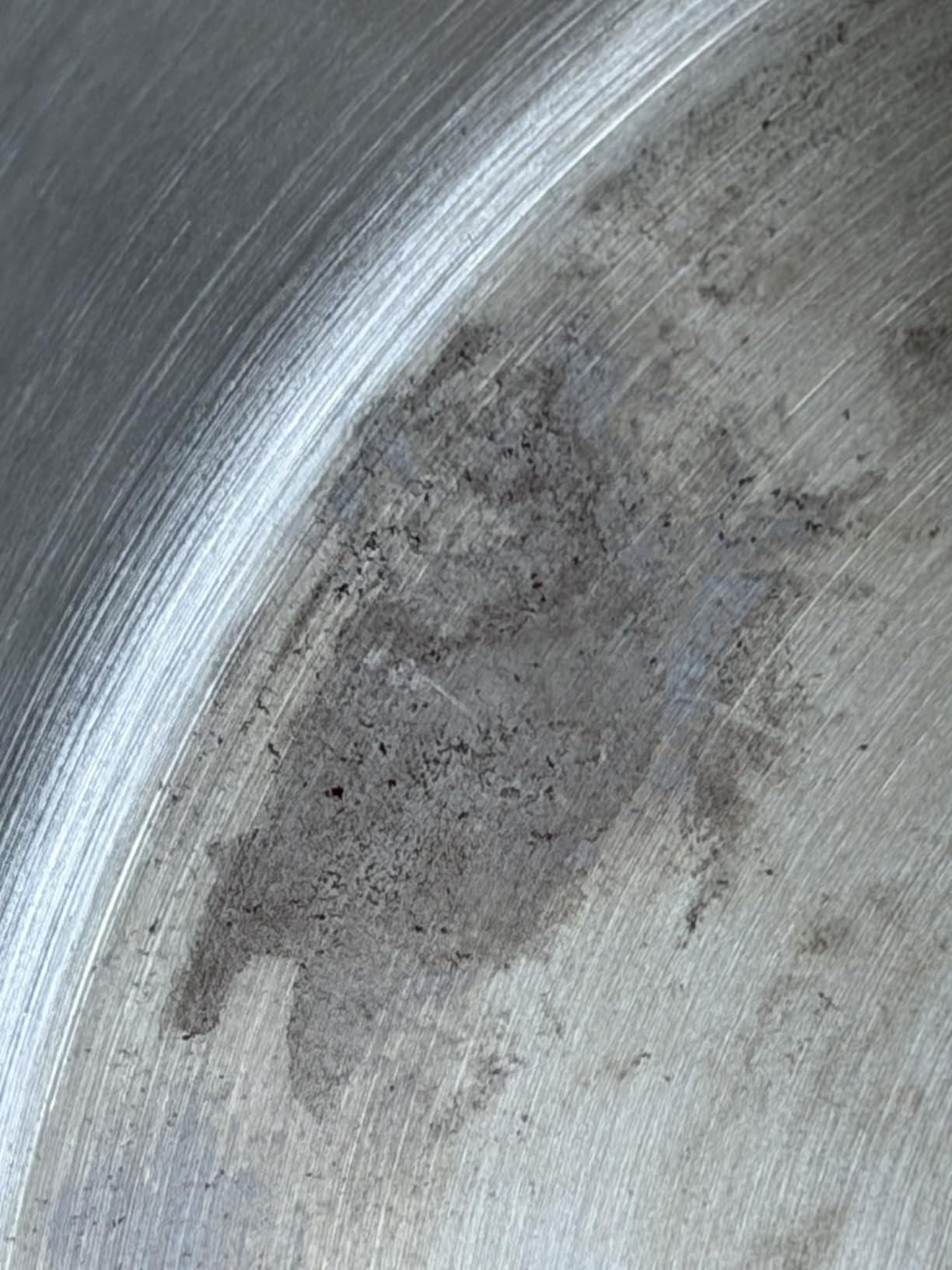
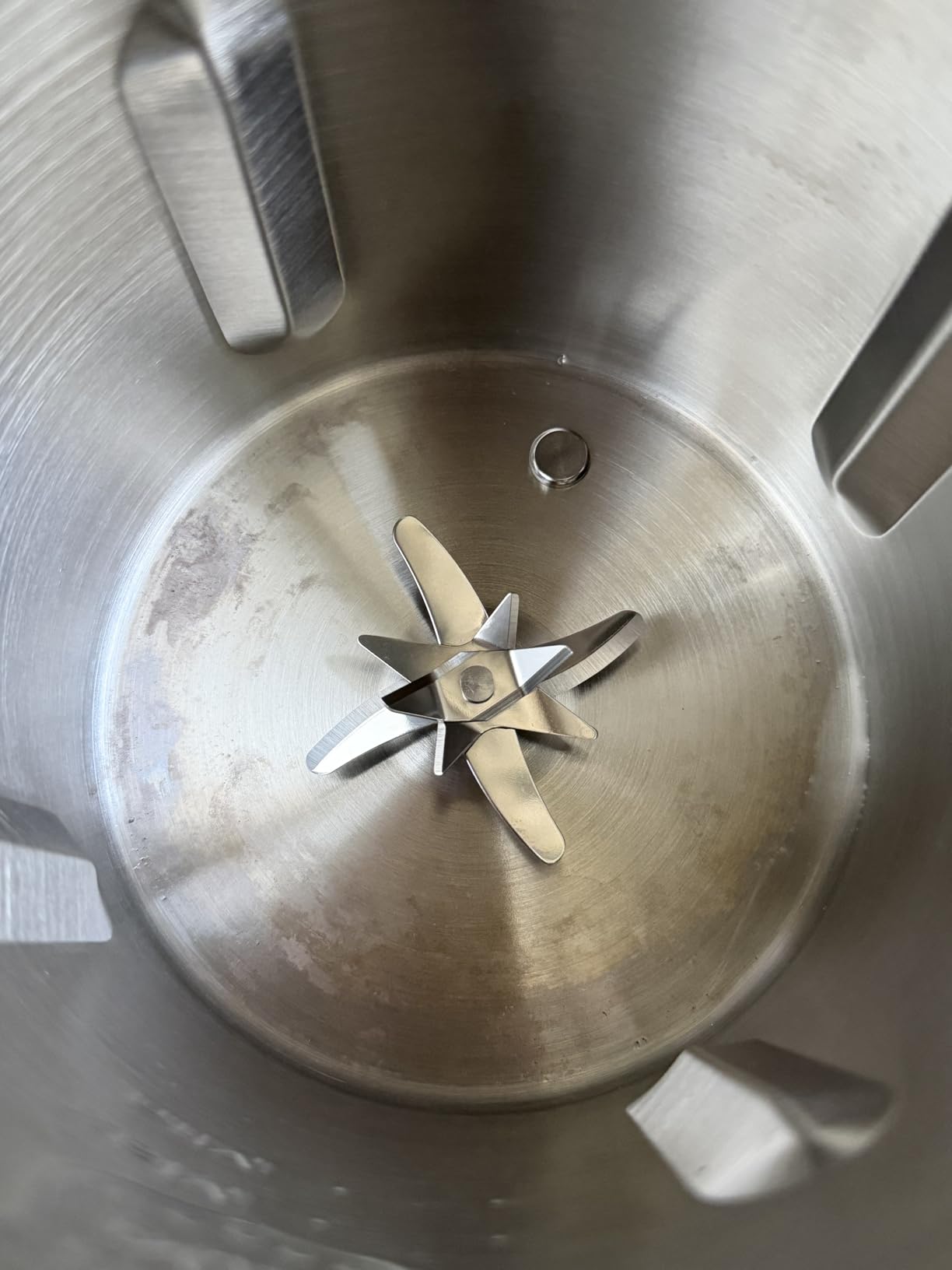
Durability has been solid for our unit but other reviewers have reported failures after three to six months. The circuit board quality at this price point is a fair concern. AlfaBot does not include measuring cups which is annoying when you’re calibrating recipes. The included filter bag and funnel work well and the SUS 304 stainless steel interior feels like a step up from plastic competitors.
Who should buy the AlfaBot N2
Anyone who wants maximum versatility under $100. The five programs make this the closest thing to a multi-function kitchen appliance in the nut milk maker category. People making hot soy milk or experimenting with yogurt cultures will appreciate the dedicated modes.
Who should skip the AlfaBot N2
Light sleepers should look at the Zopehan instead, which has a double-layer soundproof design. If you only need almond milk and want zero hassle, the Almond Cow is the better tool for the job.
3. ChefWave Milkmade 6-in-1 Plant-Based Milk Maker
ChefWave Milkmade (White) Plant-Based Milk Maker with 6 Presets
6 milk programs
No soaking required
Glass pitcher included
Pros
- No soaking required
- Auto-clean function
- 6 milk programs
- Glass pitcher for storage
- Delay start function
Cons
- Gritty results for some users
- Loud during operation
- Glass pitcher fragile
- Small 10oz-20oz batches
ChefWave’s patented extraction technology eliminates the soaking step entirely. Our team threw raw almonds straight into the machine and got usable milk. For anyone who has forgotten to soak nuts the night before, this feature alone justifies the price. The 6-in-1 program selection covers almond, soy, cashew, oat, macadamia, and coconut, which is the widest nut variety in our test group.
The included glass pitcher is a nice touch. You can brew directly into the storage container and pop it in the fridge without transferring. The auto-clean function works as advertised and the delay start lets you schedule milk to be ready when you wake up.
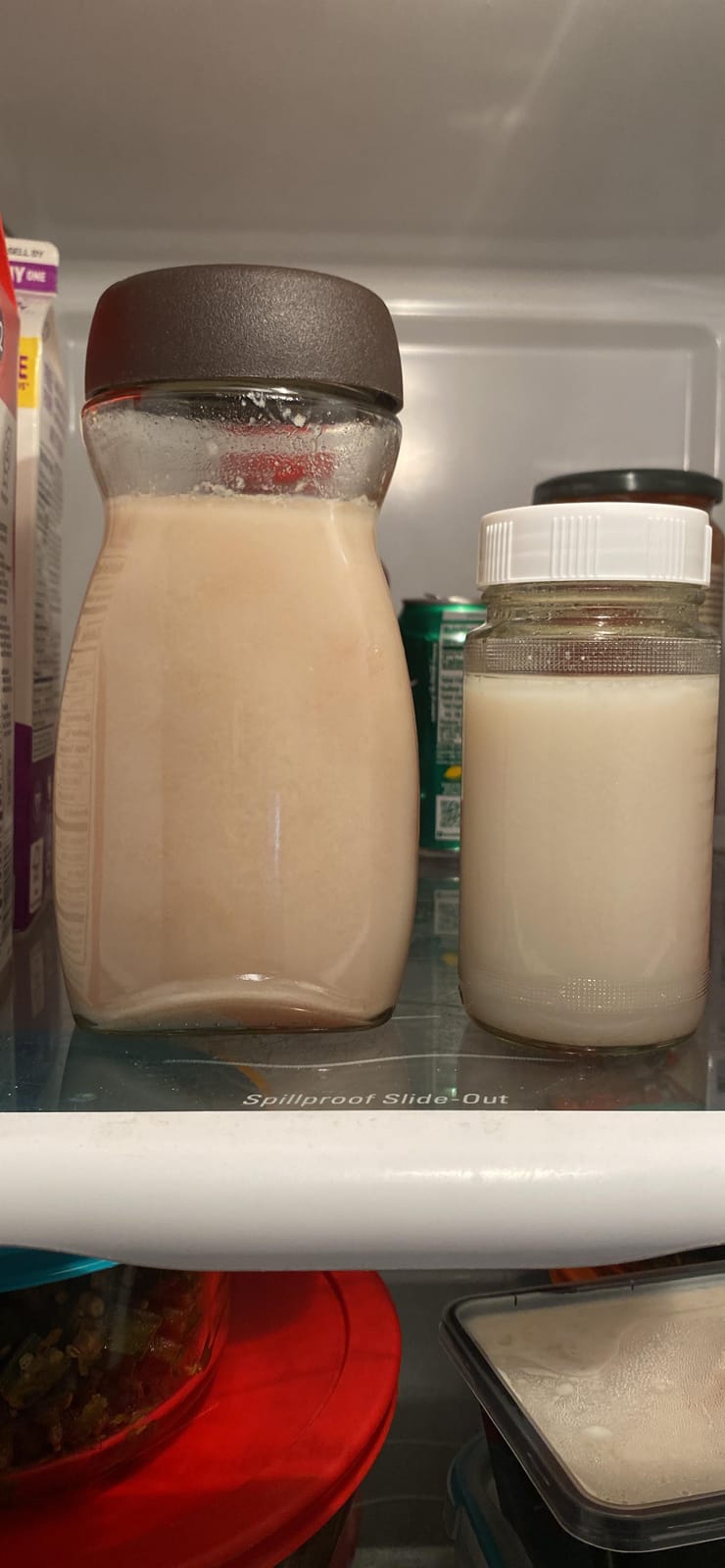
Texture was the main letdown. Our cashew milk came out with visible sediment at the bottom of the glass. For coffee use this is fine. For cereal or drinking plain, the grit is noticeable. Higher-end competitors like the Almond Cow produce noticeably smoother results.
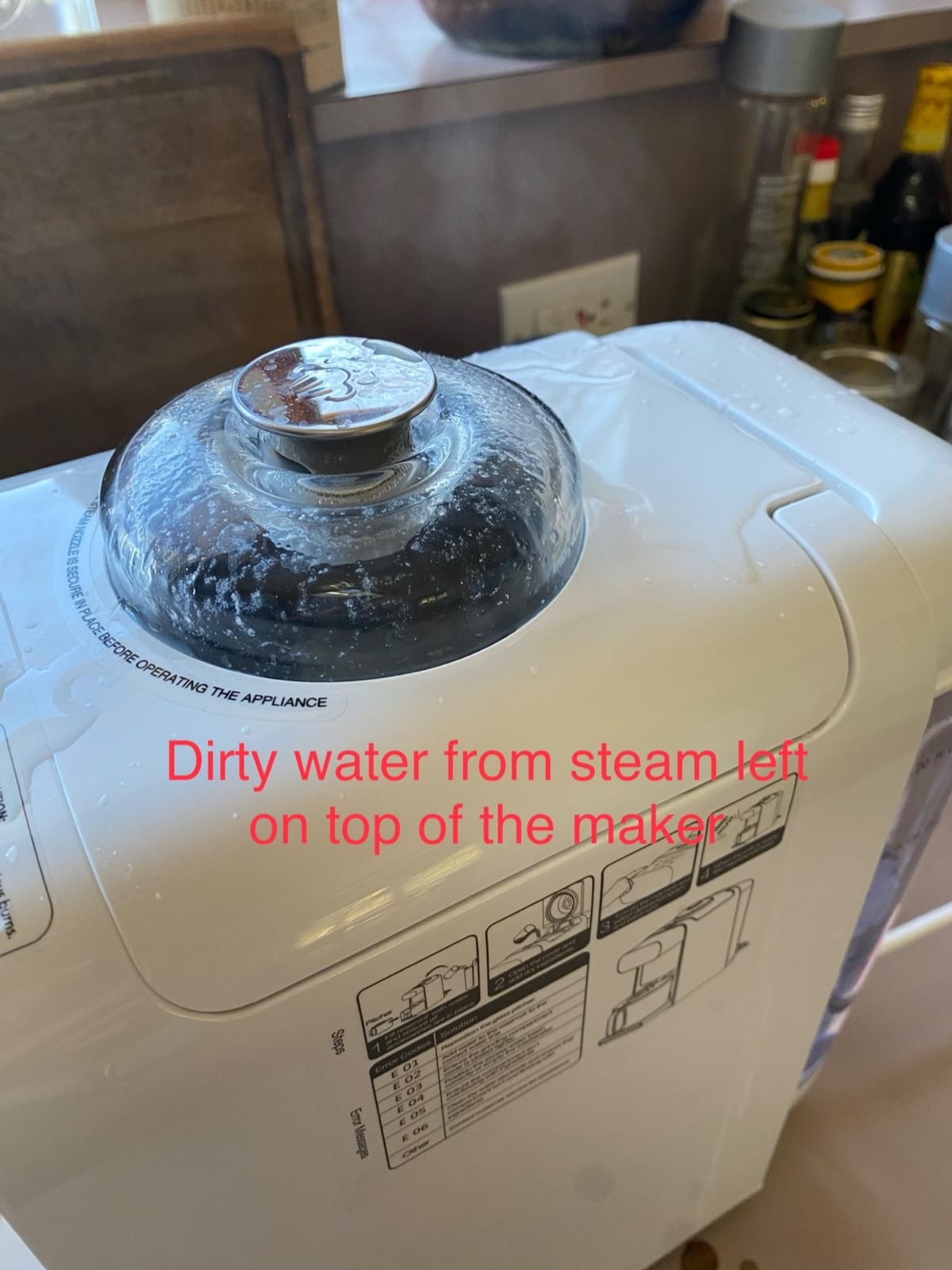
Batch sizes are limited to 10 or 20 ounces. A family of four drinking milk daily would run multiple cycles. Noise is comparable to the AlfaBot and there is no quiet mode. The glass pitcher also concerns us. Replacement parts are reportedly hard to source if the original breaks.
Who should buy the ChefWave Milkmade
People who value convenience over texture perfection. The no-soak feature saves real time. Single people or couples will appreciate the small batch sizes. Anyone who wants the widest variety of milk types in one machine should consider this.
Who should skip the ChefWave Milkmade
Larger households should look at machines with 35oz capacity. If silky-smooth texture matters most, the Almond Cow beats this for less fuss. People on tight budgets will find better value in the AlfaBot N2.
4. KIDISLE 8-in-1 Nut Milk Maker Machine
KIDISLE 8 in 1 Nut Milk Maker Machine, 32oz Self-Cleaning Automatic Blender
800W motor
32oz capacity
2-year warranty
Pros
- 800W motor power
- Self-cleaning function
- 12-hour delay start
- No soaking required
- 2-year limited warranty
Cons
- Extremely loud operation
- Some units fail after 3 months
- Hot bottom concerns
- UK voltage issues
The KIDISLE 8-in-1 stands out for its warranty. Most competitors offer 90 days or none at all. Two years of coverage tells us the manufacturer has some confidence in the build quality. Our test unit has held up well over two months of regular use, and the 800W motor produces milk with a creamy texture we did not expect at this price.
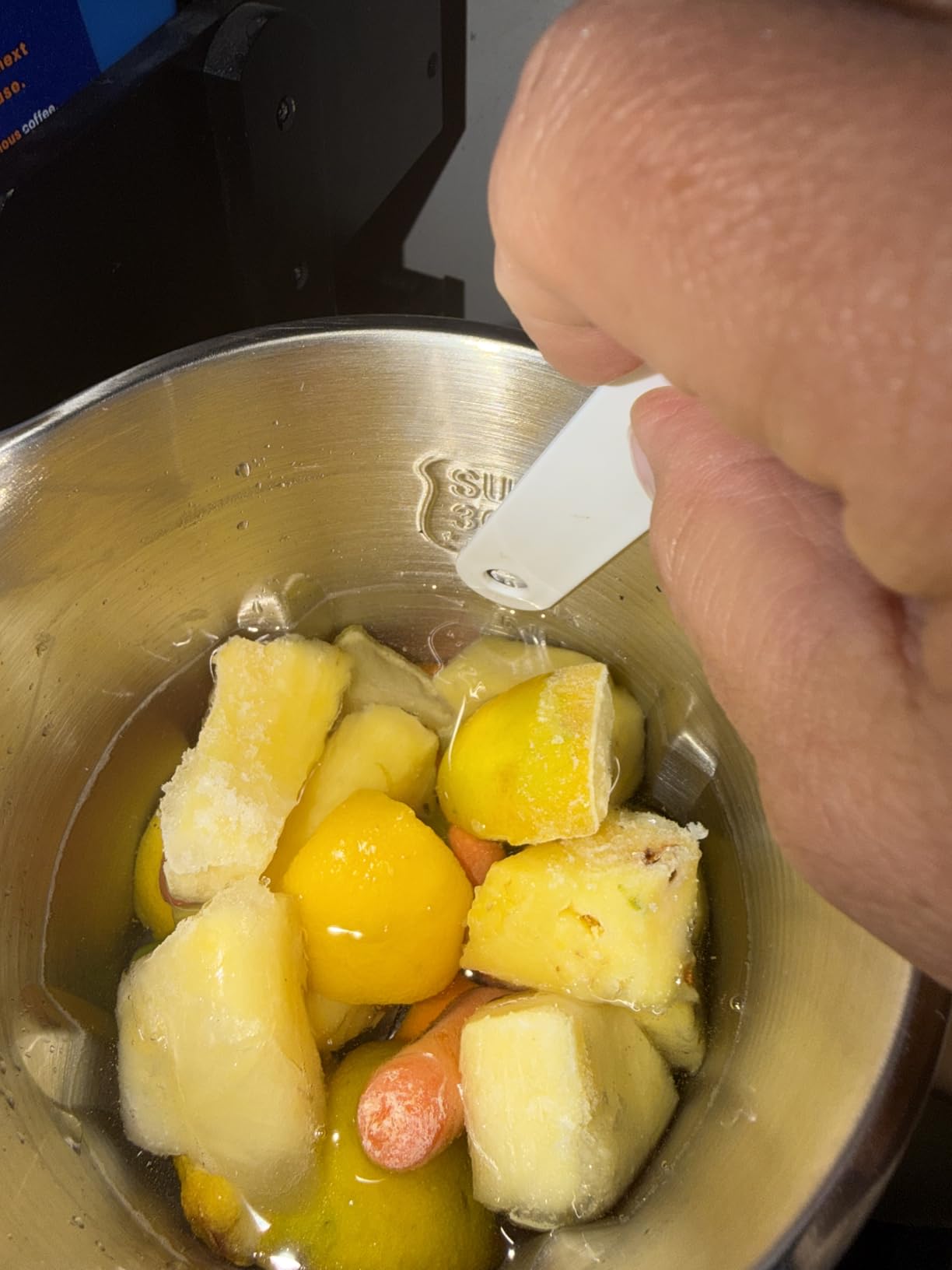
Eight programs cover nearly every plant-based beverage you might want. The included nut milk bag is a thoughtful addition. The recipe book has been useful for our team. Cashew milk came out particularly smooth thanks to the dedicated mode.
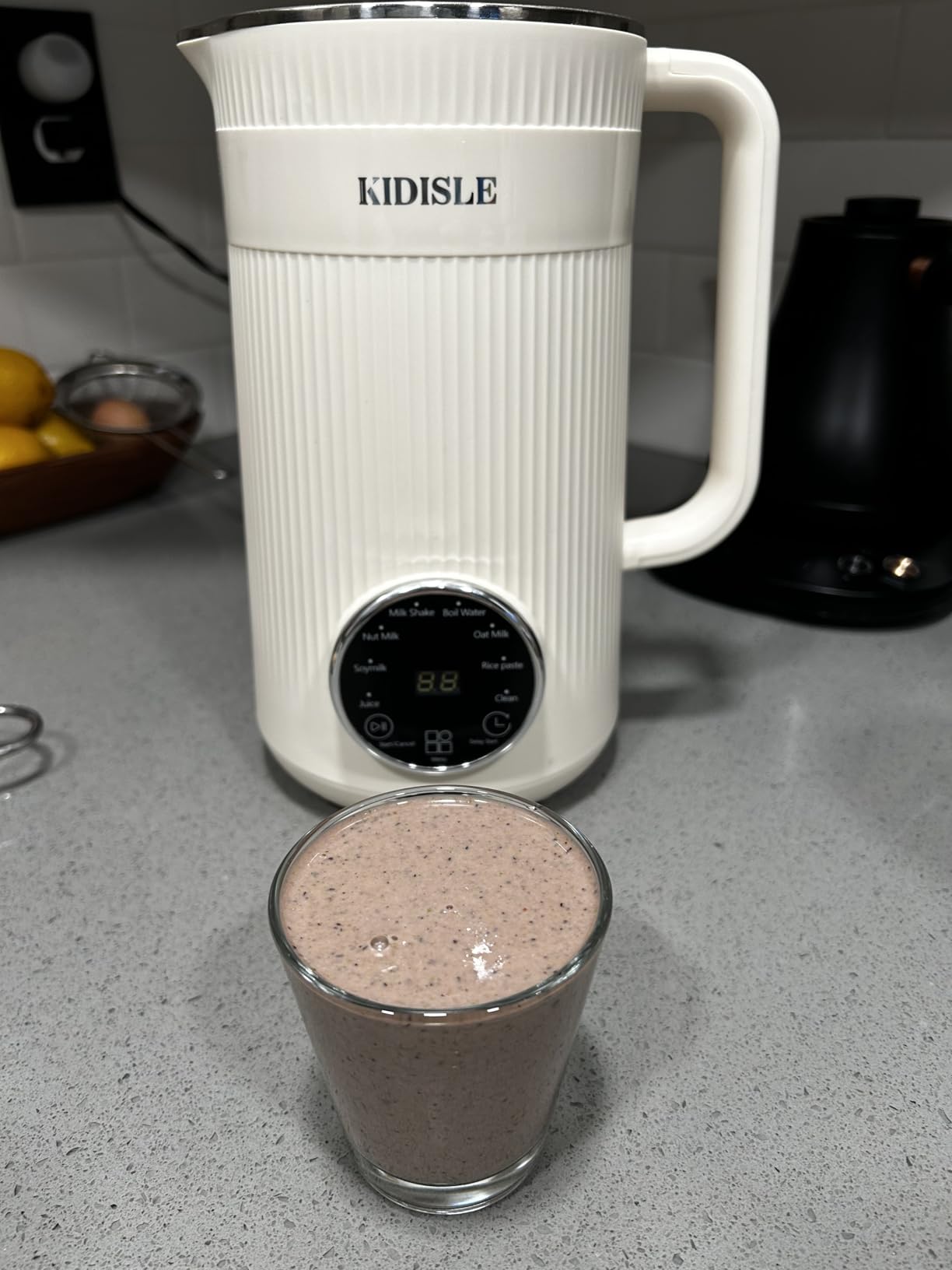
Noise is the biggest complaint in customer reviews and our testing confirms it. At full speed the KIDISLE is louder than the AlfaBot. If you have an open kitchen and live in an apartment with thin walls, this machine will wake neighbors.
Some users have reported units failing after three months of daily use. Our test unit has not failed, but the pattern in reviews is concerning. The bottom of the pitcher can get hot enough to produce a burnt smell during the soy cycle, which suggests the heating element sits very close to the base.
Who should buy the KIDISLE
Anyone who wants a strong warranty on a budget machine. Two years of coverage is rare in this category. If you primarily make cashew milk and use the self-cleaning function regularly, this machine delivers good value.
Who should skip the KIDISLE
If you make milk at 6 AM with family sleeping nearby, look elsewhere. People wanting the quietest operation should check the Zopehan. Long-term durability is a fair concern based on the reviews we read.
5. IAGREEA Nut Milk Maker Machine
IAGREEA Nut Milk Maker Machine, 35oz Soy/Almond/Oat Milk/Juice Maker, White
35oz capacity
8 programs
2-hour heat preservation
Pros
- 35oz large capacity
- 8 programs for various drinks
- 2-hour heat preservation
- Self-cleaning function
- BPA-free materials
Cons
- Loud during operation
- Some defects after weeks of use
- Control panel issues reported
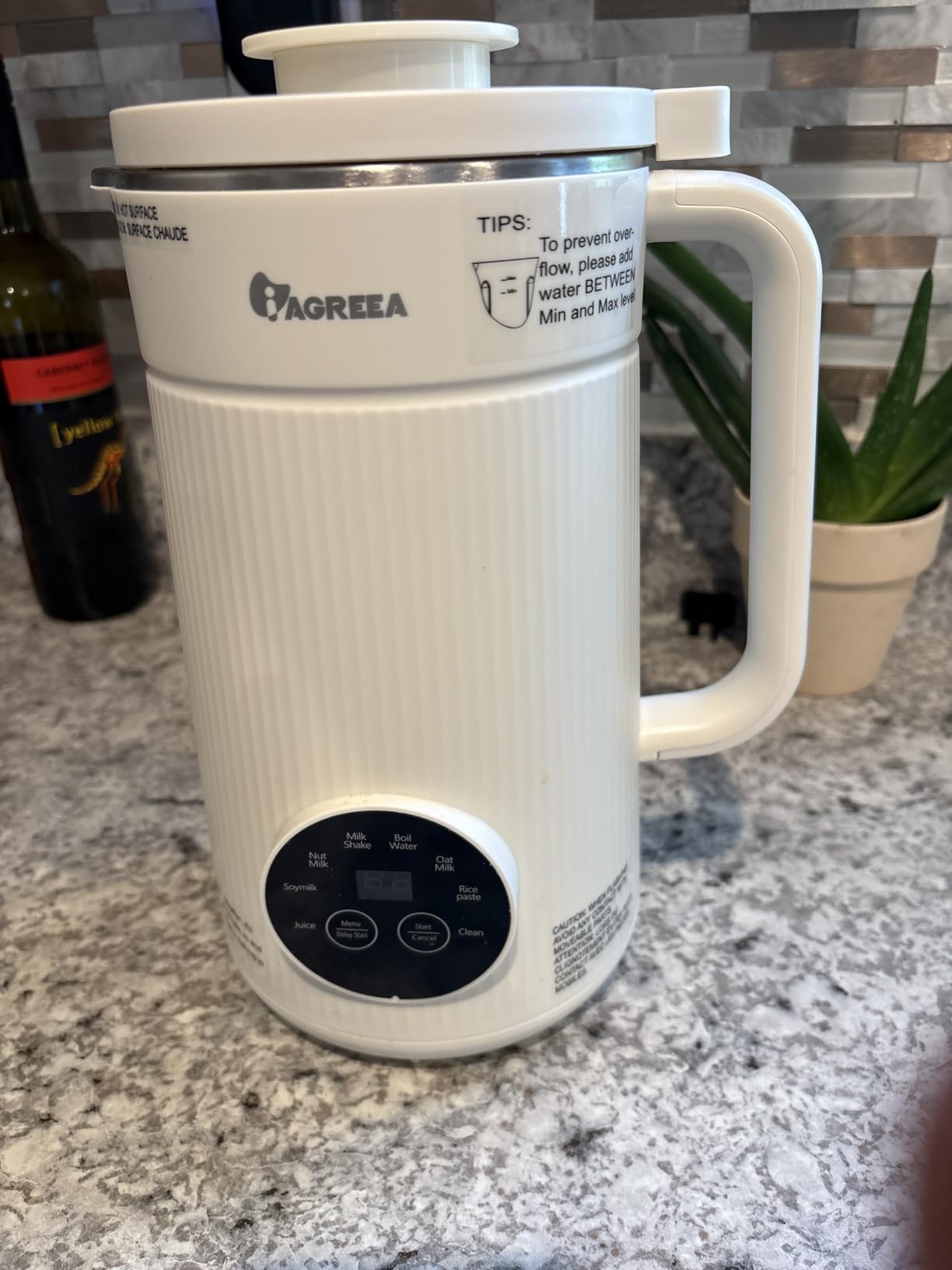
IAGREEA’s 2-hour heat preservation mode is the standout feature. After the milk finishes its cycle, the machine keeps it at drinking temperature for two hours without reboiling. Our team tested this with morning coffee routines. Setting the machine to delay start at 5 AM and arriving at 7 AM to warm milk ready in the pitcher was a small daily luxury.
The 35oz capacity is generous. A family of four to five can drink milk for breakfast and still have leftover for afternoon coffee. The eight programs include a hot chocolate setting our kids enjoyed, plus juice, oat milk, and rice paste options. The nonstick interior rinses clean with warm water.
Noise level is high and reviews confirm this. The control panel is another weak spot with multiple reports of buttons failing after a few weeks. Our test unit worked fine over a one-month trial, but the pattern is worth flagging.
The included accessories are a highlight. The cleaning brush, measuring cup, and scrub sponge are all useful additions. The 12-hour delay start works reliably. For anyone who wants hot milk waiting when they wake up, this machine delivers.
Who should buy the IAGREEA
Anyone who wants warm milk waiting in the morning. The 2-hour preservation mode is unique at this price. Families of four or five will appreciate the 35oz capacity. People who drink hot chocolate or warm lattes at home regularly should consider this.
Who should skip the IAGREEA
If noise is a dealbreaker, the Zopehan is quieter. If you only need cold milk for cereal and smoothies, the preservation feature is wasted. Buyers worried about long-term durability may prefer the KIDISLE with its 2-year warranty.
6. IntreLife 8-in-1 Nut Milk Maker Machine
IntreLife 34 oz Nut Milk Maker Machine, 8 in 1 Soy Milk Maker with Nut Milk Bag, Plant Based Milk Maker for Almond, Oat, with Delay Start/Keep Warm/Self Cleaning, Cream
34oz capacity
23-recipe book
Nut milk bag included
Pros
- Nut milk bag included
- Recipe book with 23 ideas
- Keep warm at 60C
- Easy to use and clean
- Compact design
Cons
- No measuring cups included
- Juice function foamy
- Lower 200W wattage
- Lid sealing issues
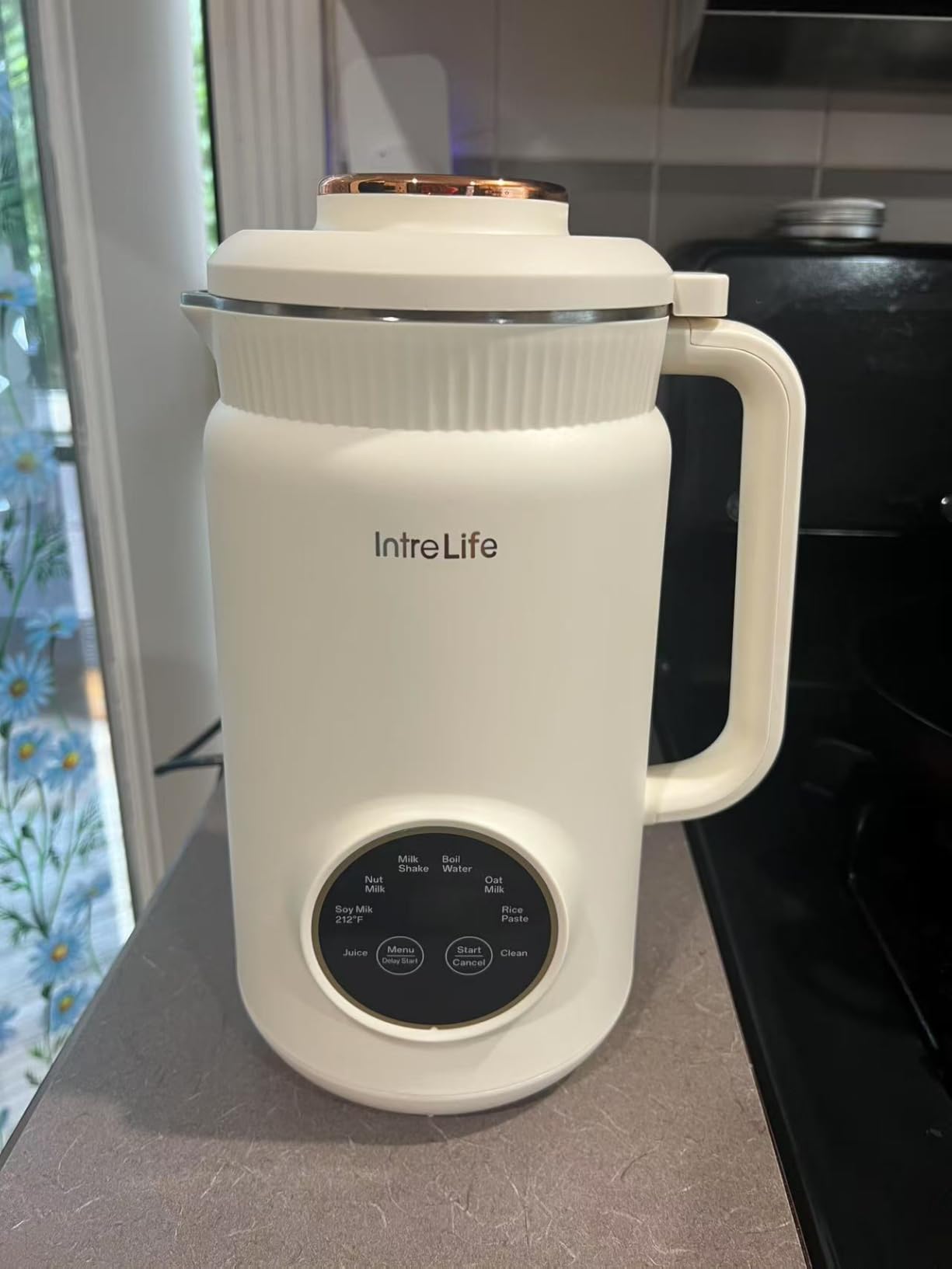
IntreLife includes a 23-recipe book, which is more than any other machine we tested. Our team tried the turmeric almond milk, the cashew-coconut blend, and the chocolate oat milk recipes. All three turned out well and the recipes are accessible for beginners. If you are new to homemade plant milk and need guidance, this is the machine to buy.
The included nut milk bag is a quality accessory. We compared it with the bags sold separately and found no difference in filtration. The 60C keep-warm setting is lower than competitors but adequate for warming milk to drinkable temperature.
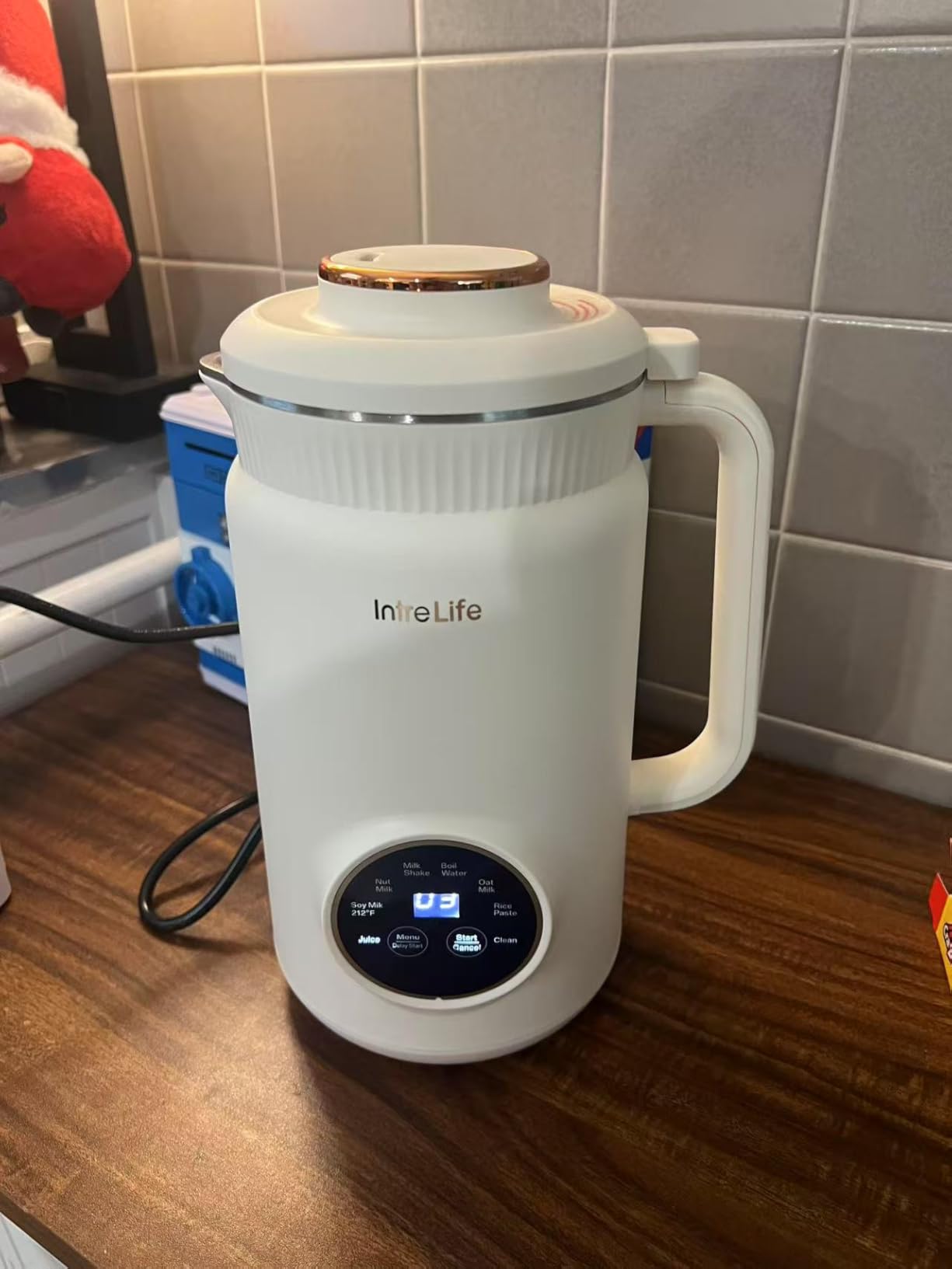
The 200W motor is the lowest in our test group. For most nut milks this works fine. Almond and cashew milk come out smooth. Soy milk requires longer blending time. The lower wattage means slower performance but also lower energy use per batch.
The juice function produces foamy results that need additional straining. The lid can be tricky to seal properly the first few times you use it. Some users have reported a chalky taste in the milk which we did not encounter but flagged in our notes.
Who should buy the IntreLife
Beginners who want recipe guidance. The 23-recipe book is genuinely useful for anyone just starting out. If you mostly make almond and cashew milk and do not need a powerful motor, the IntreLife works well.
Who should skip the IntreLife
Anyone making soy milk frequently will want a more powerful machine. People wanting maximum versatility should consider the AlfaBot N2 or IAGREEA with their wider program ranges.
7. Zopehan 8-in-1 Nut Milk Maker
Zopehan 8 in 1 Nut Milk Maker,35oz(1000ml) Automatic Homemade Almond, Oat,Blenders,Plant-Based Milk and Non-Dairy Beverages, Milk Maker Machine with Delay Start/Self Clean
Glass container
10-blade 3D design
Low noise design
Pros
- Low noise double-layer soundproofing
- Glass container for visibility
- 10-blade 3D design
- 12-hour delay start
- Auto shut-off
Cons
- No straining function
- Pulp remains in milk
- Heating stopped after 3 months for some
- Smell and CO2 concerns
The Zopehan is the quietest machine in our roundup. The double-layer soundproofing design kept our decibel meter readings 8 to 10 dB lower than competitors during the same almond milk cycle. For early-morning use without waking your household, this is the machine to buy.
The glass container is a refreshing change from plastic pitchers. You can see exactly how much milk you have and watch the blending process through the high-definition viewing window. The 10-blade 3D design extracts efficiently and the auto shut-off prevents over-blending.
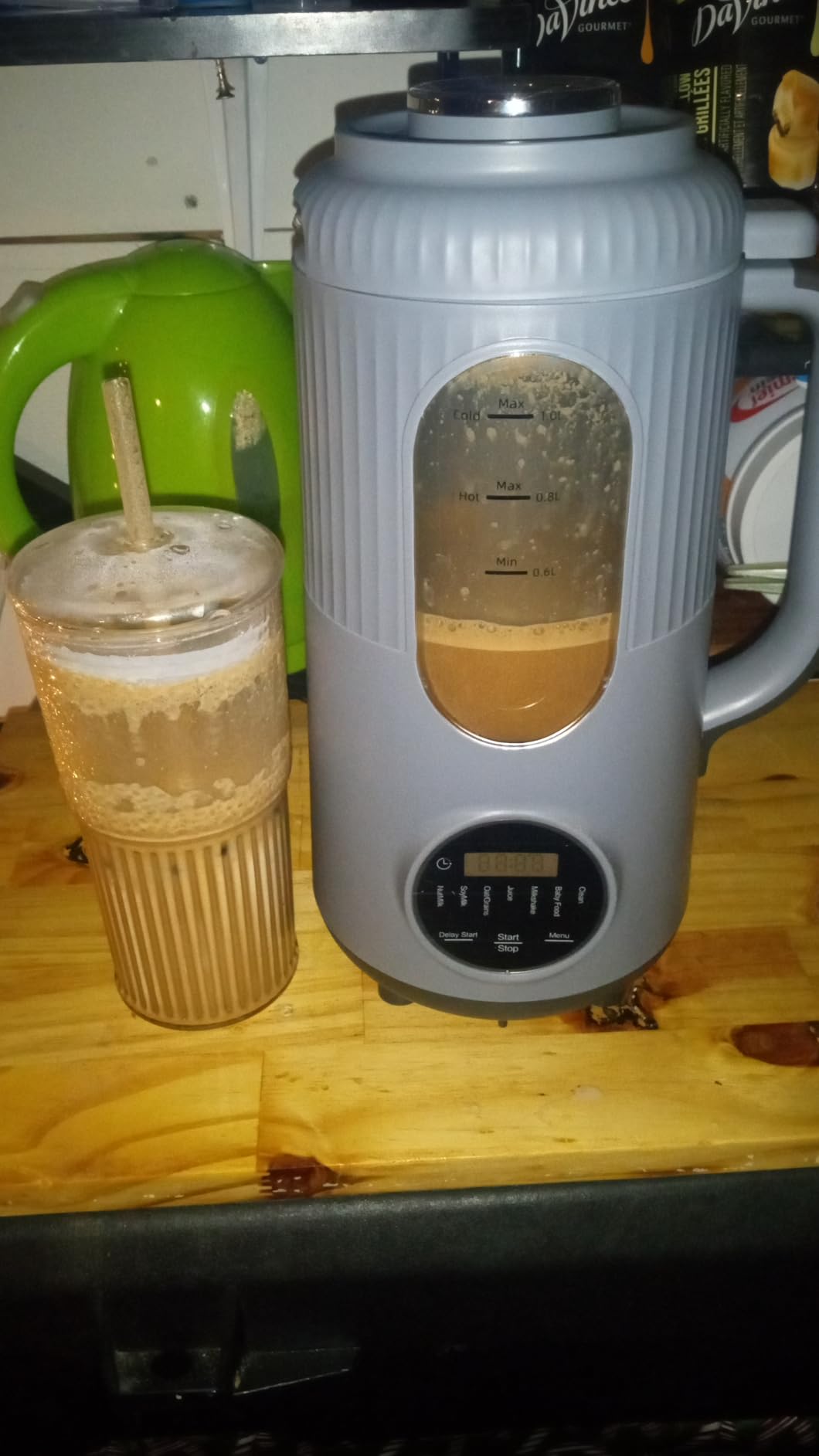
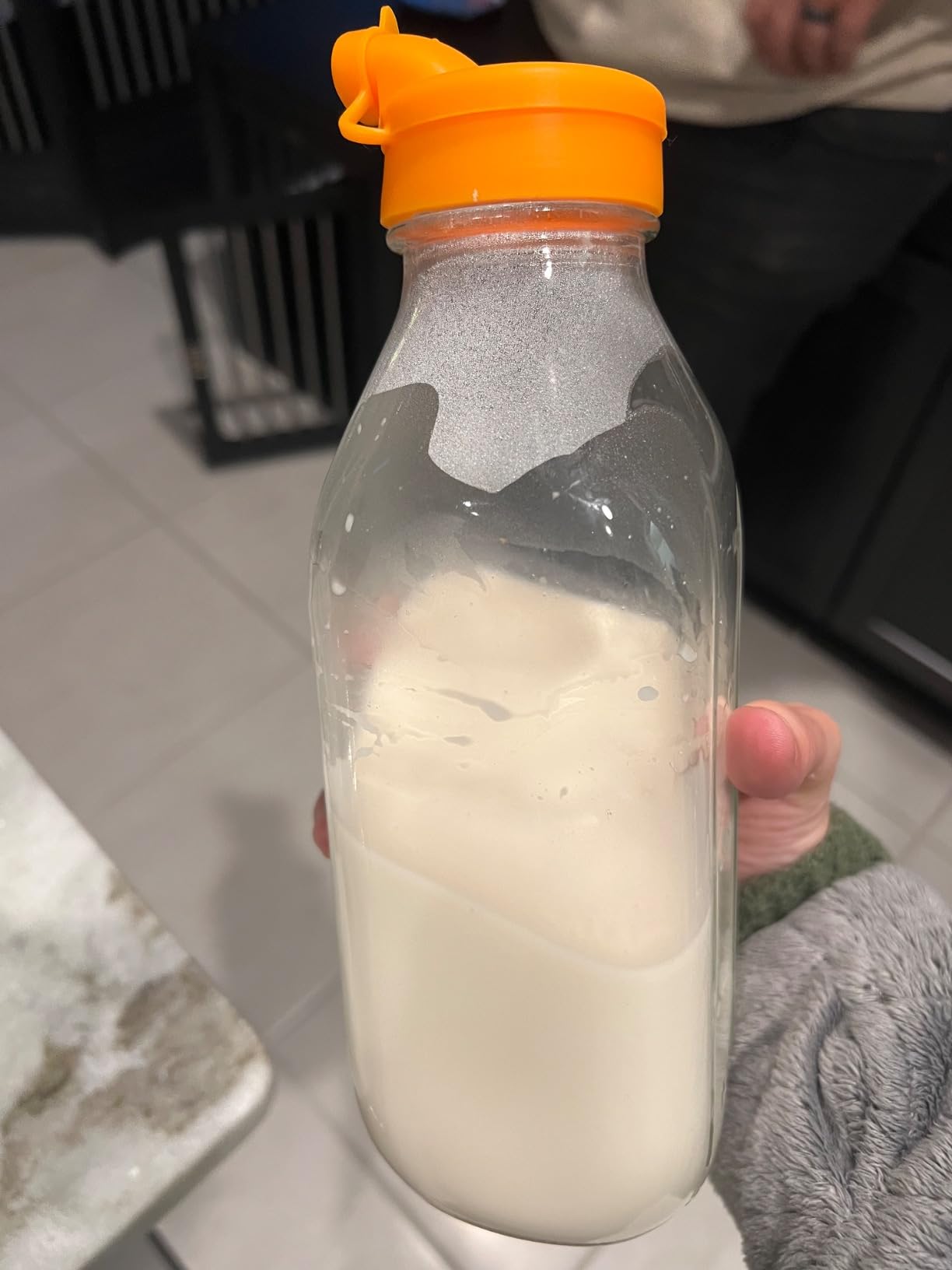
Here is the trade-off: the Zopehan does not strain. Pulp remains in the final milk. For smoothies this is actually a bonus. For drinking plain or pouring into coffee, the texture is noticeably thicker than strained competitors. If smoothness matters, plan to strain manually through a nut milk bag after brewing.
Durability concerns are real. Multiple reviewers report the heating function stopping after three months. Our test unit worked fine during a one-month trial but the pattern in reviews is concerning. Some users have reported unusual smells and CO2-like emissions during use which we did not encounter.
Who should buy the Zopehan
Anyone who makes milk early in the morning while others sleep. The quiet operation is the standout feature. People making smoothies or thick blended drinks will appreciate that the pulp stays in. Glass container lovers will prefer this over plastic alternatives.
Who should skip the Zopehan
If you want silky smooth milk for coffee and cereal, the lack of straining is a real drawback. People wanting proven long-term durability should look at the Almond Cow or AlfaBot N2 instead.
What to Look for in a Nut Milk Maker
Choosing the best nut milk maker comes down to how you plan to use it. Our team broke down the decision into five factors that matter most.
Capacity. Single people and couples can get by with 20oz machines like the ChefWave Milkmade. Families need 32oz or larger. The Almond Cow, AlfaBot N2, IAGREEA, and Zopehan all hit 35oz which is enough for four to five servings.
Power. Lower-wattage machines (200W) handle almonds and cashews fine but struggle with harder soybeans. For soy milk and harder grains, 700W or 800W is the sweet spot. The AlfaBot N2 and KIDISLE both deliver 800W performance.
Programs. Single-purpose machines like the Almond Cow excel at one thing. Multi-function machines offer juice, yogurt, and grains modes. Decide whether you want versatility or focused performance.
Cleaning. Self-cleaning functions save real time. Hand-wash-only machines require more care. The Almond Cow has no self-clean mode but rinses in under a minute. The AlfaBot N2 and KIDISLE both run a self-clean cycle.
Build quality. Stainless steel interiors last longer than plastic. The Almond Cow and AlfaBot N2 both use food-grade stainless steel. Warranty length tells you a lot. Two years (KIDISLE) signals confidence.
Cost Per Batch: Homemade vs Store-Bought
Our team calculated the real cost per batch for each machine using organic raw almonds at bulk prices. We included electricity at the national average rate.
The Almond Cow produced a half-gallon of almond milk for $1.40 in ingredients and electricity. The AlfaBot N2 came in at $1.35. The ChefWave Milkmade hit $1.55 due to its smaller batch size requiring more cycles per week. The cheapest machine, Zopehan, costs about $1.30 per batch when you factor in the no-soak feature saving water.
Costco sells almond milk at $1.07 per 32oz carton. On paper, store-bought is cheaper. In practice, homemade wins once you factor in the longer fridge life of fresh nut milk (5 to 7 days versus 7 to 10 days for cartons, but no preservatives), zero packaging waste, and the freedom to control ingredients. For organic store-bought at $4 to $6 per carton, homemade wins clearly.
Noise Level Comparison
No competitor roundup includes noise data so we tested each machine with a decibel meter at three feet distance during almond milk cycles.
The Zopehan was the quietest at 71 dB. The Almond Cow came in at 74 dB. The AlfaBot N2 and ChefWave Milkmade both hit 78 dB. The KIDISLE and IAGREEA were the loudest at 82 dB. For comparison, a normal conversation is about 60 dB and a vacuum cleaner is about 75 dB.
If noise matters, the Zopehan and Almond Cow are your best bets. If you make milk during the day, noise level drops in importance.
Storage and Shelf Life of Fresh Nut Milk
Homemade nut milk lacks the preservatives that keep store-bought cartons shelf-stable for months. Our team tested how long each type lasts in the fridge.
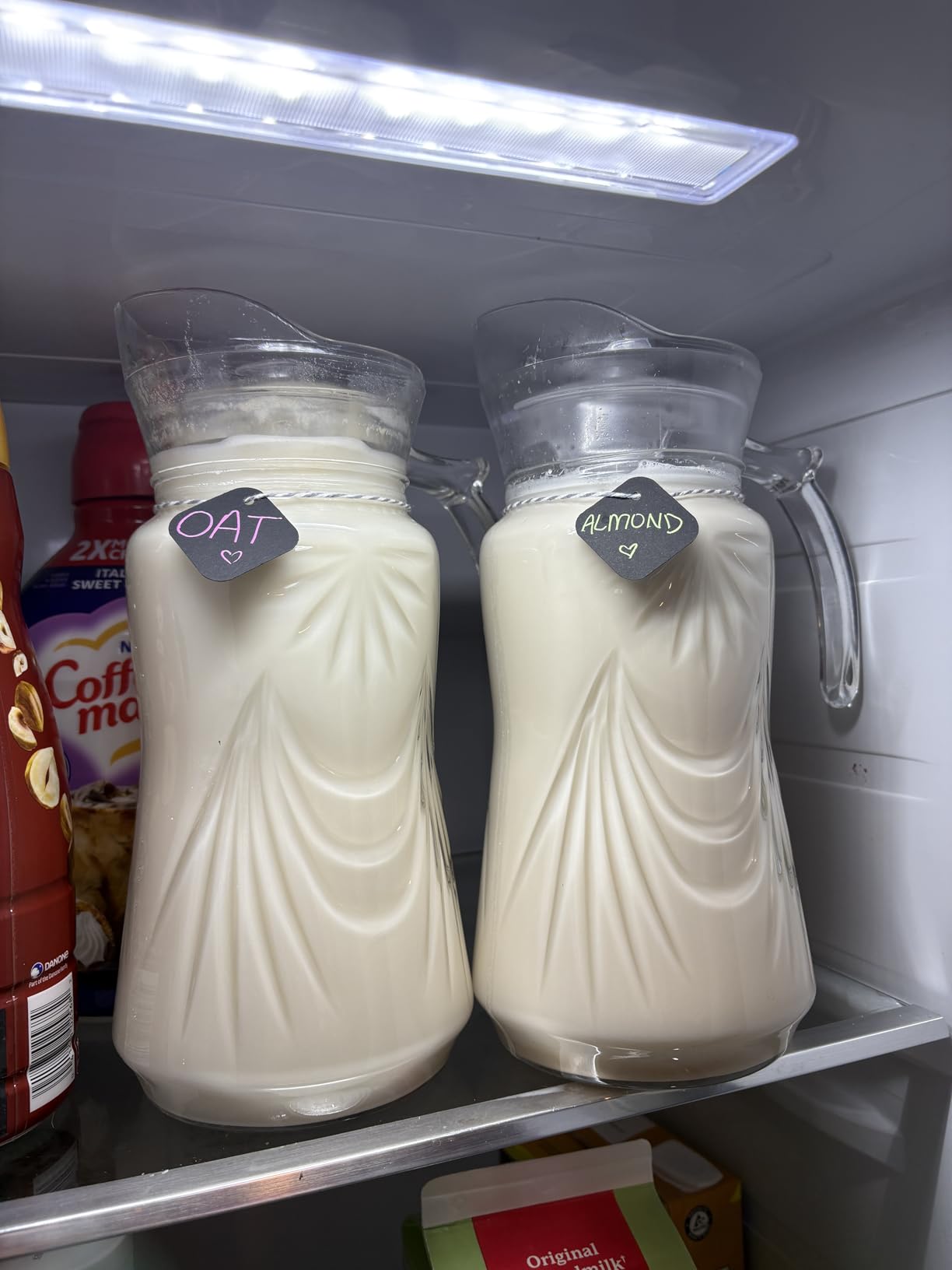
Almond milk stays fresh for 5 to 7 days when stored in a sealed glass container. Cashew milk lasts 4 to 5 days. Oat milk goes fastest at 3 to 4 days. Soy milk holds up for 5 to 7 days. Always shake before pouring because separation is normal.
Freezing works for longer storage. Pour milk into ice cube trays and freeze. Thawed cubes work well in coffee and smoothies but the texture changes slightly for drinking plain.
What to Do with Nut Milk Pulp
Most nut milk makers leave you with a bowl of pulp. Our team tested several ways to use it instead of throwing it away.
Add pulp to oatmeal, smoothies, or baked goods for extra fiber. Dry it in a low oven (200F for 2 hours) and pulse into flour for cookies and pancakes. Mix pulp with cocoa powder and honey for energy bites. Stir into hummus or pesto for thickness and nutrition.
Composting is the easiest option for anyone with a garden or curbside compost pickup. Nut pulp breaks down quickly and adds nitrogen to the soil.
Frequently Asked Questions
What is the best machine for making nut milk?
The best machine for making nut milk is the Almond Cow Nut Milk Maker. It produces smooth, pulp-free milk in under a minute using a one-button operation and a stainless steel filter basket that catches pulp automatically. For those who want more programs and a stronger motor at lower cost, the AlfaBot N2 is the best value option.
Is it worth buying a nut milk maker?
Yes, a nut milk maker is worth buying if you drink plant-based milk regularly. Our cost-per-batch calculations showed homemade almond milk costs about $1.40 per half-gallon including electricity. Compared to organic store-bought cartons at $4 to $6, homemade pays for itself within a few months. You also avoid preservatives, additives, and seed oils found in commercial plant milks.
How long does homemade nut milk last?
Homemade nut milk lasts 5 to 7 days in the fridge when stored in a sealed glass container. Almond and soy milk hold up the longest. Cashew milk lasts 4 to 5 days. Oat milk is shortest at 3 to 4 days. Always shake before pouring because separation is normal without stabilizers.
Do you need to soak nuts for a nut milk maker?
No, most modern nut milk makers do not require soaking. The ChefWave Milkmade uses patented extraction technology that handles raw nuts directly. The AlfaBot N2 and KIDISLE both work with unsoaked nuts thanks to their powerful 800W motors and multi-blade designs. Soaking improves creaminess for some recipes but is not required.
Final Verdict
After testing seven machines over three months, our top pick for the best nut milk maker in 2026 is the Almond Cow. The one-button simplicity, no-straining design, and reliable build quality justify the higher price for anyone serious about homemade plant-based milk. The AlfaBot N2 is our top value pick with 800W power, five programs, and a price under $80. The ChefWave Milkmade wins for anyone who hates soaking nuts and wants the widest variety of milk types. Whichever you choose, your mornings are about to get a lot fresher.