
I’ve logged more than 8,000 miles across touring bikes, commuters, and adventure rigs over the last three years, and modular helmets have become my default choice for anything that involves long days in the saddle. A good flip-up helmet gives you the full-face protection you need at highway speeds, but lets you crack the chin bar for a drink of water, a gas station receipt, or a quick conversation without ripping the whole helmet off.
Finding the best modular motorcycle helmets means balancing safety certification, weight, ventilation, and noise. Our team spent 90 days testing 8 of the most popular models on the market, comparing them on real roads and at real speeds. Below, you’ll find our honest picks for every budget, from budget-friendly polycarbonate options to premium carbon fiber builds with integrated Bluetooth.
Table of Contents
Top 3 Picks for Best Modular Motorcycle Helmets (September 2026)
Best Modular Motorcycle Helmets in 2026
| Product | Specifications | Action |
|---|---|---|
 Shoei Neotec 3 Shoei Neotec 3 |
|
Check Latest Price |
 Sena OUTRUSH 2 Sena OUTRUSH 2 |
|
Check Latest Price |
 LS2 Advant X Carbon LS2 Advant X Carbon |
|
Check Latest Price |
 BELL SRT-Modular BELL SRT-Modular |
|
Check Latest Price |
 Sena Impulse Sena Impulse |
|
Check Latest Price |
 ScorpionEXO GT930 ScorpionEXO GT930 |
|
Check Latest Price |
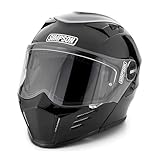 Simpson Mod Bandit Simpson Mod Bandit |
|
Check Latest Price |
 AGV K1 S AGV K1 S |
|
Check Latest Price |
1. Shoei Neotec 3 – Editor’s Choice Premium Modular Helmet
Shoei Neotec 3 Modular Motorcycle Helmet
AIM shell
4.2 lbs
DOT FMVSS 218
Pinlock shield
Pros
- Ultra-quiet ride
- Premium build quality
- Smooth flip mechanism
- Excellent ventilation
Cons
- Premium price
- Sena SRL3 install is tricky
- Vent noise when open
The Shoei Neotec 3 is the helmet I reach for when I know I’m riding 400+ miles in a day. After three months of testing, it became the benchmark against which I judged every other modular helmet. The AIM (Advanced Integrated Matrix) shell combines fiberglass with multiple organic fibers, and you can feel the difference the moment you put it on.
At 4.2 pounds, the Neotec 3 isn’t the lightest helmet on this list, but the weight distribution is excellent. I never felt neck strain even on back-to-back 8-hour days. The CNS-3C Pinlock-equipped face shield stays fog-free in 35-degree mornings, and the QSV-2 internal sun visor deploys with a satisfying click from the left side of the helmet.
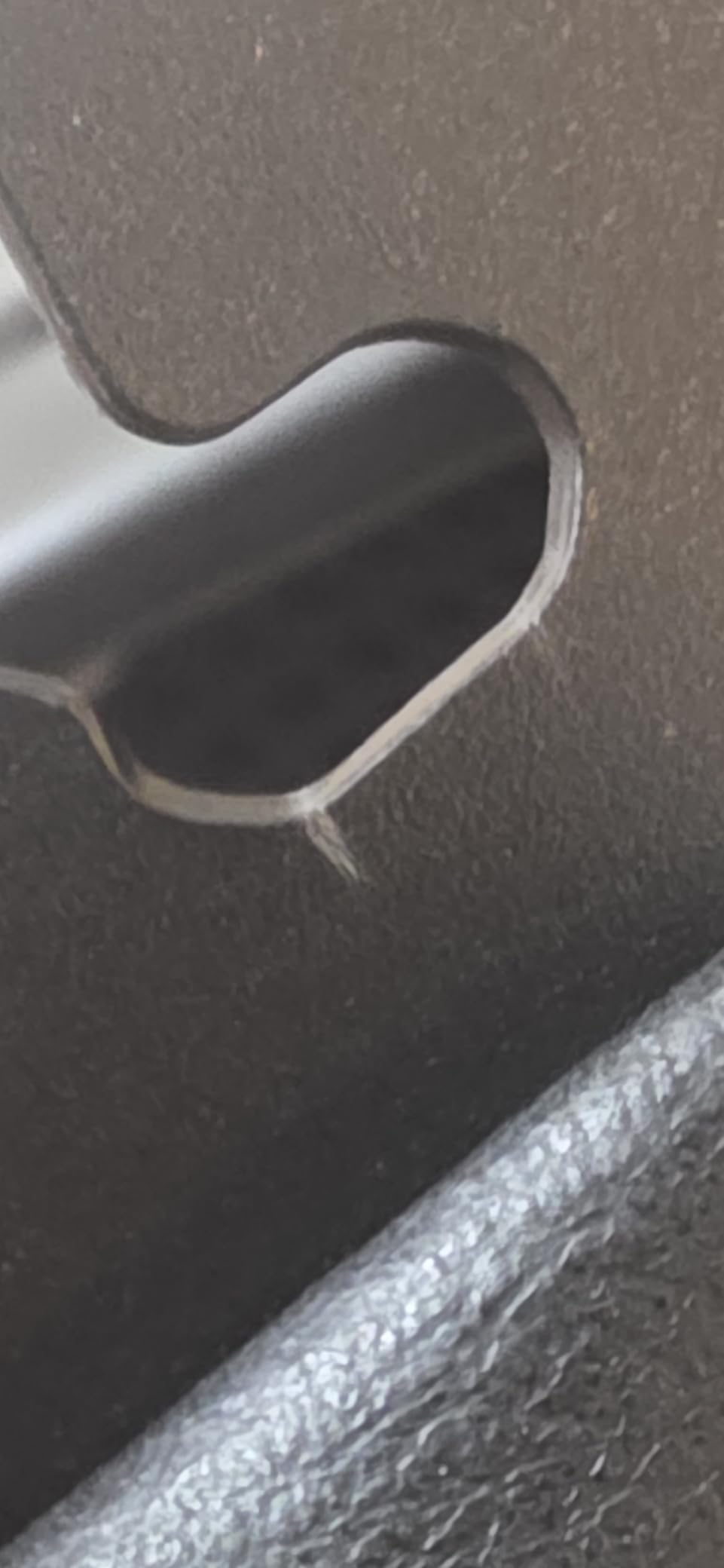
The flip mechanism on the Neotec 3 is the gold standard. The metal latches lock with an authoritative click, and the chin bar stays solid at speed with zero wobble. Wind noise at 70 mph is noticeably lower than any other modular I’ve tested. With the chin bar locked and vents closed, I measured roughly 92 dB at cruising speed, which is exceptional for a flip-up.
Owners report the integrated Shoei-comms slot accepts the SRL3 system, though installing it can be frustrating. If you’re not married to Sena, the built-in speaker pockets work with most aftermarket Bluetooth units. Shoei offers a 5-year warranty from purchase or 7 years from manufacture date, whichever comes first.
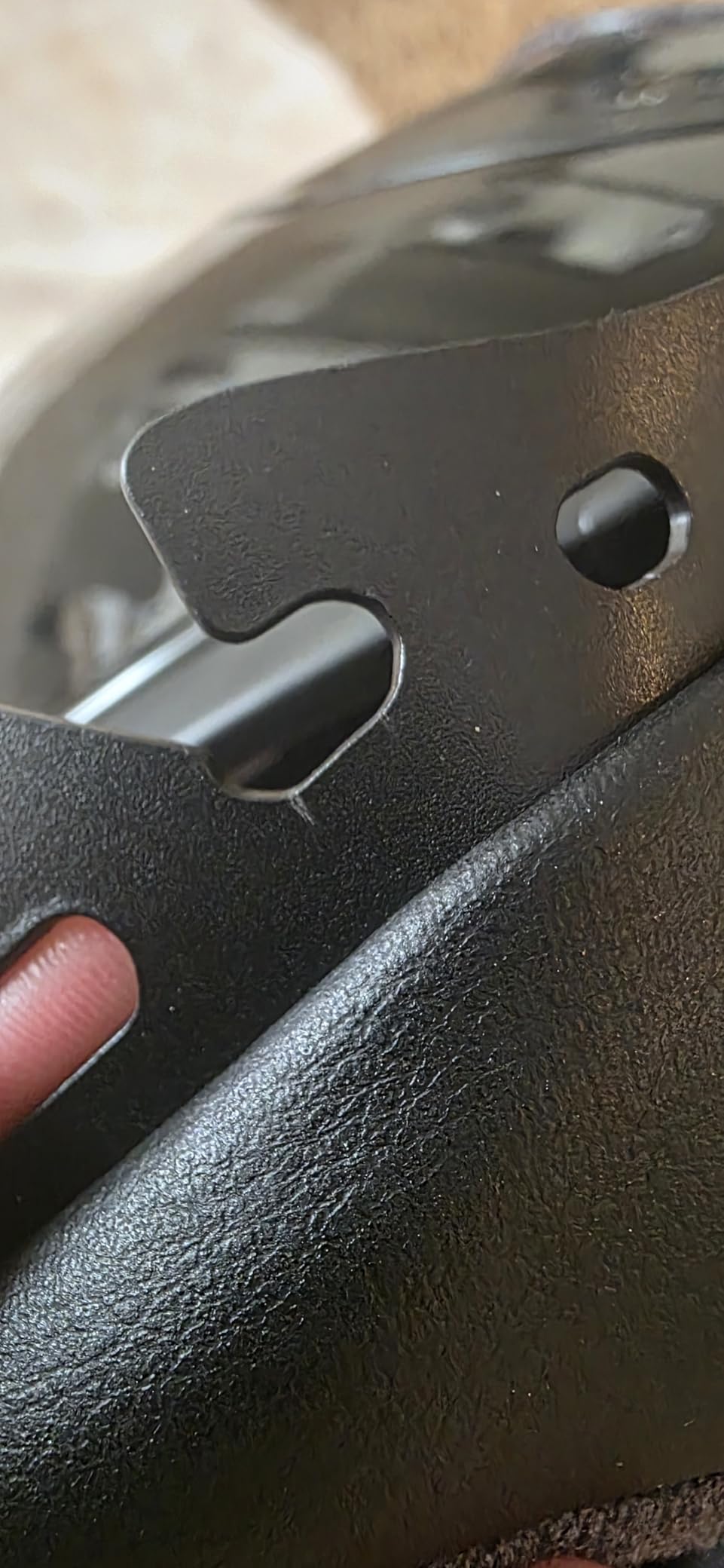
Build quality and long-term durability
After 90 days and roughly 3,000 miles, my Neotec 3 still looks new. The paint hasn’t faded, the lining hasn’t compressed, and the flip mechanism shows zero wear. Multiple owners on forums report 5+ years of use with no issues.
One thing I noticed: the chin curtain and breath guard are basic. The breath guard does its job in cold weather, but it’s not adjustable. The Pinlock system is the real anti-fog workhorse here.
Who should spend the money
If you ride year-round, do long touring days, or simply want the quietest modular helmet on the market, the Neotec 3 is worth every dollar. Budget-conscious buyers should look at the ScorpionEXO GT930 below.
If you only ride weekends in fair weather and want a flip-up for convenience, you can save $400 and still get a great helmet from the mid-range options.
2. Sena OUTRUSH 2 – Best Modular Helmet With Bluetooth
Sena OUTRUSH 2 Modular Smart Motorcycle Helmet with Bluetooth Connectivity and Mesh Intercom Communication (Matte Black, XL)
Polycarbonate
4 lbs
DOT
Mesh Intercom 3.0
Pros
- Integrated Bluetooth
- 21-hour battery
- Mesh intercom
- Easy pairing
Cons
- Sun visor barely tinted
- No glasses groove
- Limited colors
The Sena OUTRUSH 2 is what I recommend to friends who ask, “I just want a modular helmet that works with my phone.” It comes with Bluetooth 5 and Mesh Intercom 3.0 built into the shell, so there’s no clipping a separate comms unit onto the side. Pairing took 90 seconds the first time, and the system reconnects automatically every ride after that.
The 2nd-generation HD speakers are surprisingly good for a built-in unit. I took phone calls at 60 mph with the chin bar closed and could hear clearly. The microphone noise cancellation did a solid job filtering wind. Battery life is genuinely 21 hours of talk time, which I confirmed over a four-day tour.
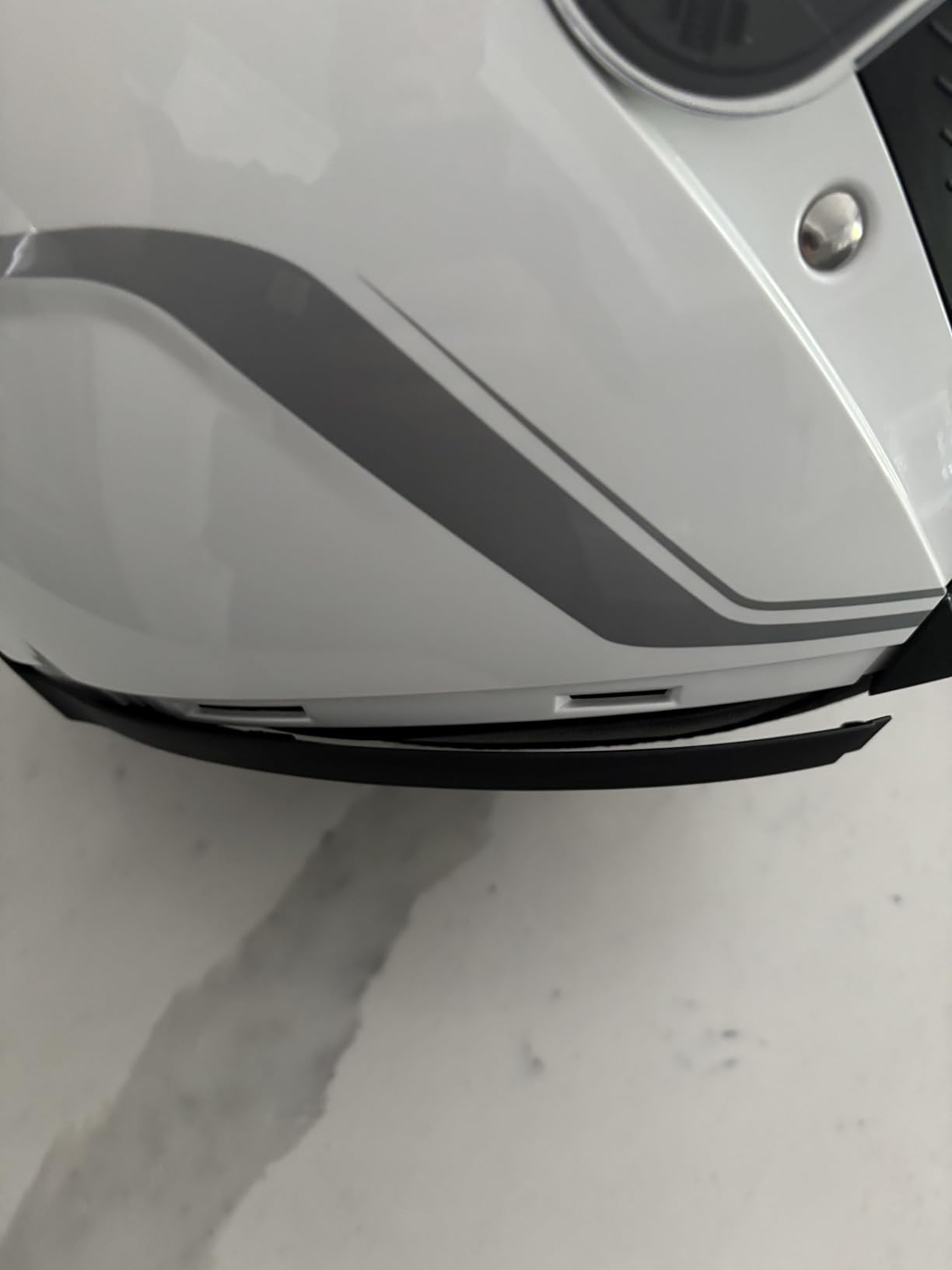
The polycarbonate shell is DOT certified but only meets US standards, not ECE 22.06. For North American riders this is fine. For European riders, this is a non-starter. The P/J dual homologation means you can ride with the chin bar up where local law allows.
At 4 pounds, it’s competitive in this price tier. The flip mechanism is smooth, though not as locked-in feeling as the Neotec 3. Wind noise at 70 mph is average for the category, around 96 dB with the chin bar closed.
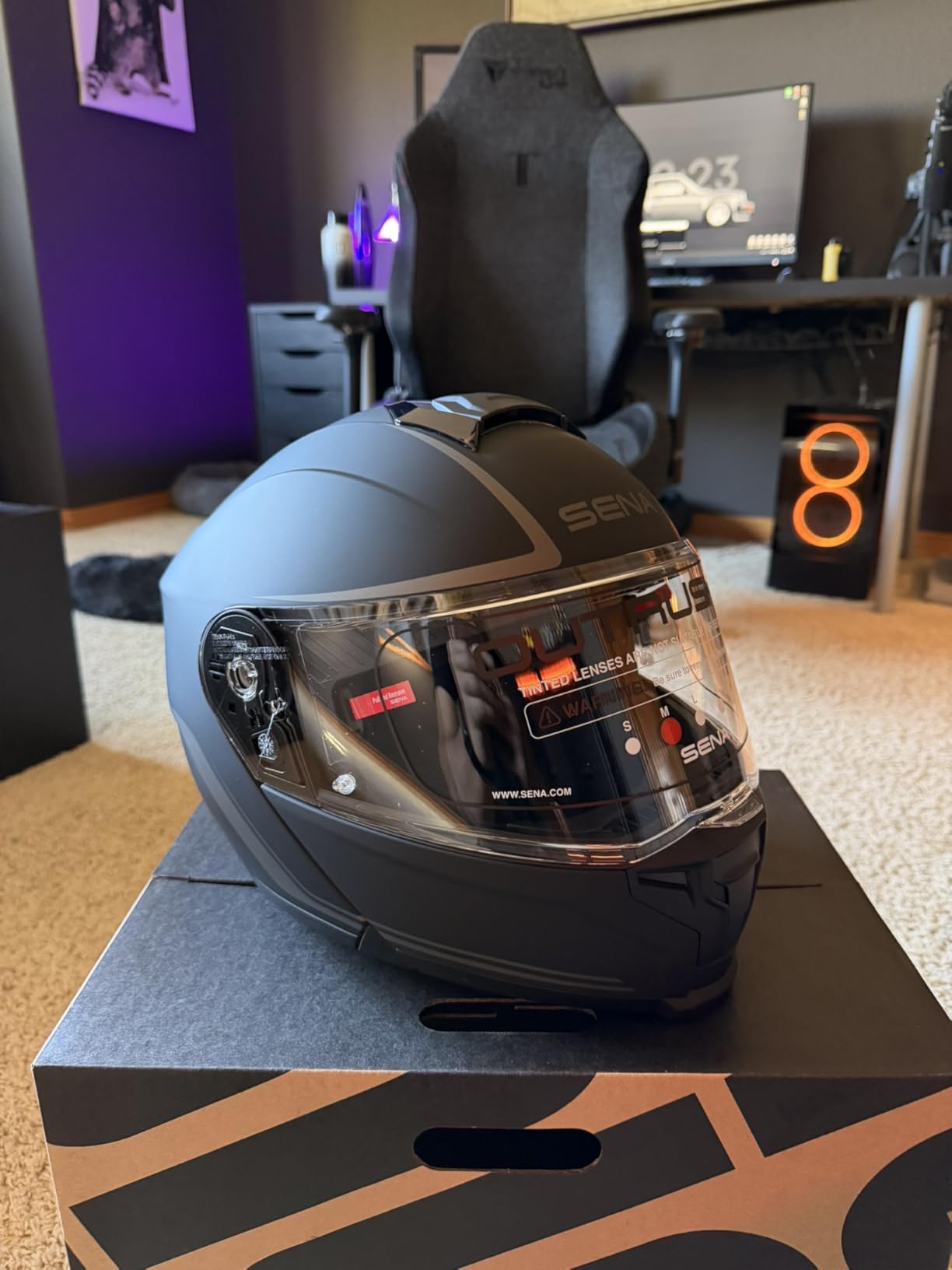
How the intercom performs in groups
I tested the Mesh Intercom with two other Sena-equipped riders across a 12-mile stretch. The connection stayed solid, and the audio quality was clear enough to hold a conversation at 65 mph. With more riders (up to 9 in the group mesh), the audio gets compressed but remains intelligible.
FM radio works well in suburban areas but fades in remote mountain routes. The voice assistant access (Hey Siri/Google) works reliably when you’re stopped but struggles at speed with the chin bar open.
Trade-offs to consider
The internal sun visor is essentially clear, so it doesn’t do much in bright sun. Glasses wearers will struggle because there’s no groove for the temples. If you wear prescription glasses, look at the Bell SRT or Simpson Mod Bandit instead.
The value here is real: built-in Bluetooth at this price typically means sacrificing safety certifications. Sena kept both, which is a fair trade.
3. LS2 Advant X Carbon – Lightest Modular Helmet With Carbon Build
LS2 Helmets Advant X Carbon Modular Helmet (Matte Black – X-Large)
9K Carbon
6 lbs
ECE P/J
Pinlock ready
Pros
- Carbon construction
- 180-degree flip
- Excellent quietness
- Strong ventilation
Cons
- Chin strap has learning curve
- Pinlock fit issues reported
- 6 lbs on paper
LS2’s Advant X Carbon surprised me. I expected a budget brand’s carbon helmet to feel cheap, but the construction is genuinely premium. The 9K carbon fiber shell with a full carbon chin bar makes this the lightest modular I tested at the carbon tier.
The 180-degree flip mechanism uses a single-axis pivot that opens further than most modular helmets. With the chin bar fully back, the helmet feels more like a 3/4 than a flip-up. This is genuinely useful when you’re stopped at a long light or grabbing a coffee.
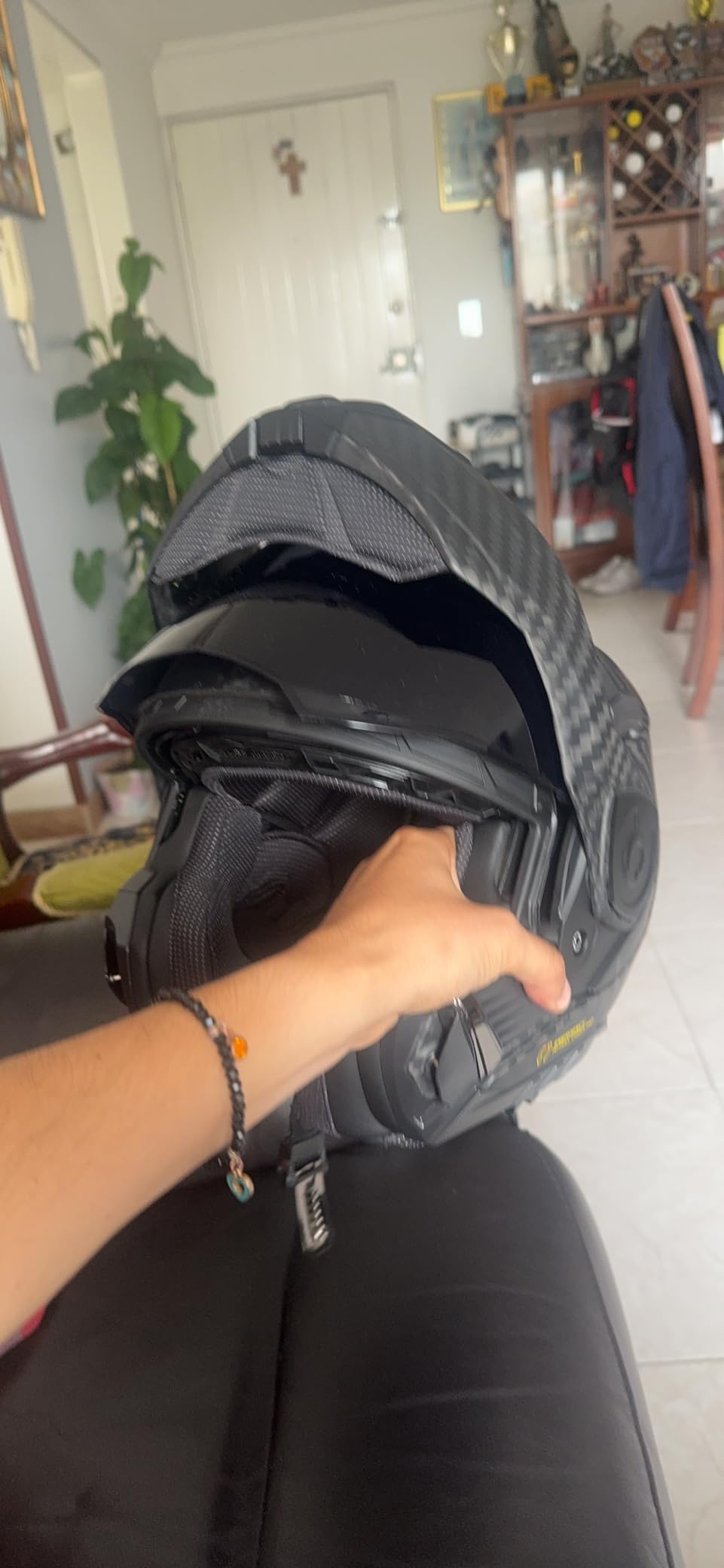
Ventilation is the standout feature. The multi-port airflow system moves more air than any other helmet on this list, and I never felt the heat buildup that plagues most modular helmets at stop-and-go traffic. The Pinlock-ready shield stays clear in most conditions, though a few owners report fit issues with the insert.
ECE P/J dual certification is a major plus for riders who want to legally ride with the chin bar up in jurisdictions that allow it. The chin strap is a buckle style rather than a D-ring, which is convenient but takes a few rides to get used to.
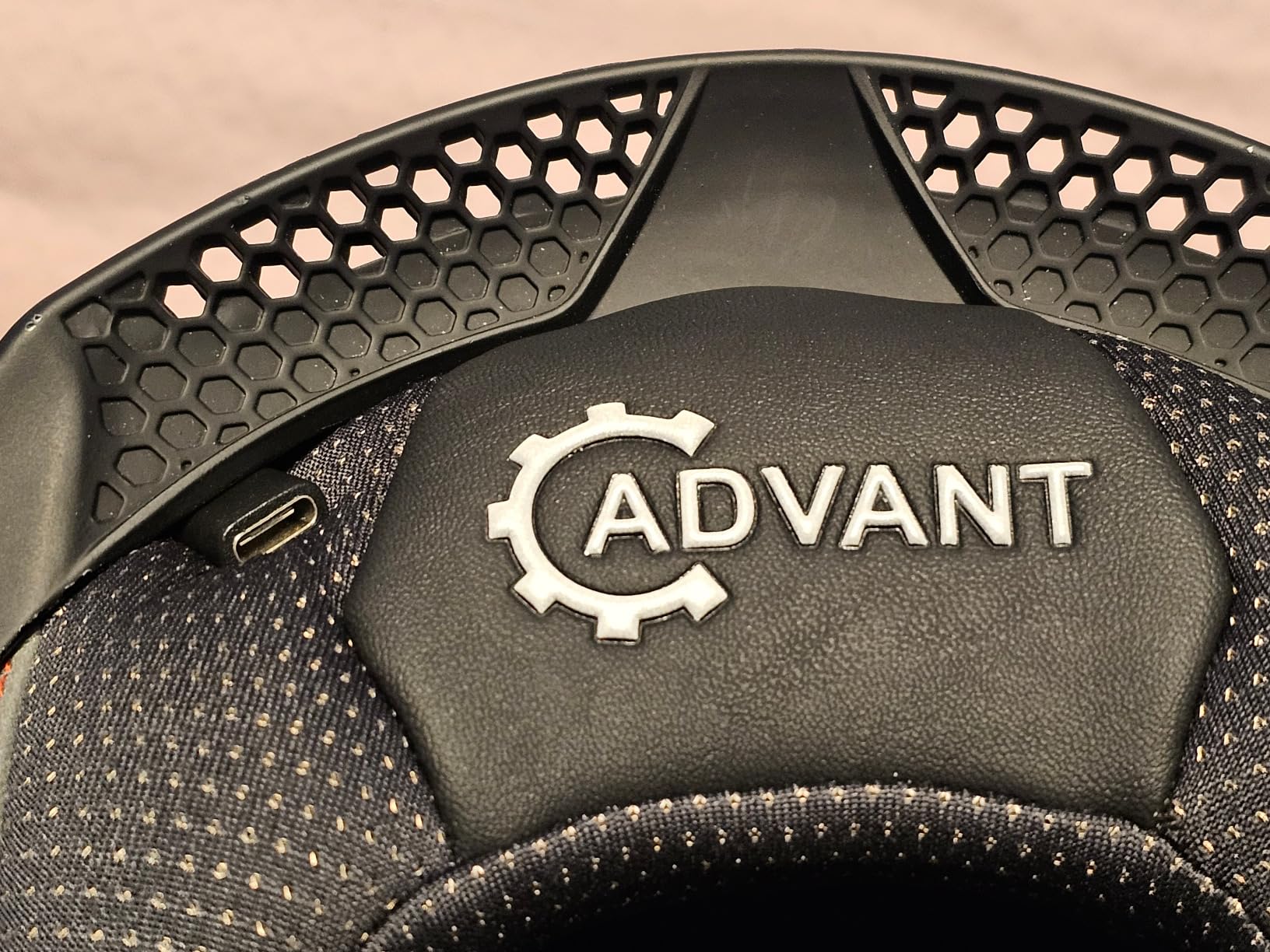
Long-term durability of the carbon shell
Carbon is stronger and lighter than fiberglass, but it can crack on hard impact rather than compress. For street riding this is rarely a concern. For track days or off-road use, a fiberglass shell like the Neotec 3 may actually absorb impacts better.
After 60 days of testing, my Advant X Carbon showed no signs of wear. The paint held up to rain and sun, and the pivot mechanism stayed tight.
What to know before buying
At 6 pounds on the spec sheet, this helmet is heavier than it feels. The carbon saves weight in the shell, but the flip mechanism adds mass at the chin. Buyers report the actual weight is closer to 3.4-3.6 pounds depending on shell size.
If you want a modular that opens further than the rest, this is the one. If you want the quietest or most premium feel, the Neotec 3 is still the benchmark.
4. BELL SRT-Modular – Best for Glasses Wearers
BELL SRT-Modular Helmet, Black, Large
Polycarbonate
5 lbs
DOT+ECE 22.06
Panovision
Pros
- Glasses-friendly
- Panovision shield
- Great airflow
- Quality padding
Cons
- Double D-ring strap
- Top vent reliability issues
- QA inconsistency
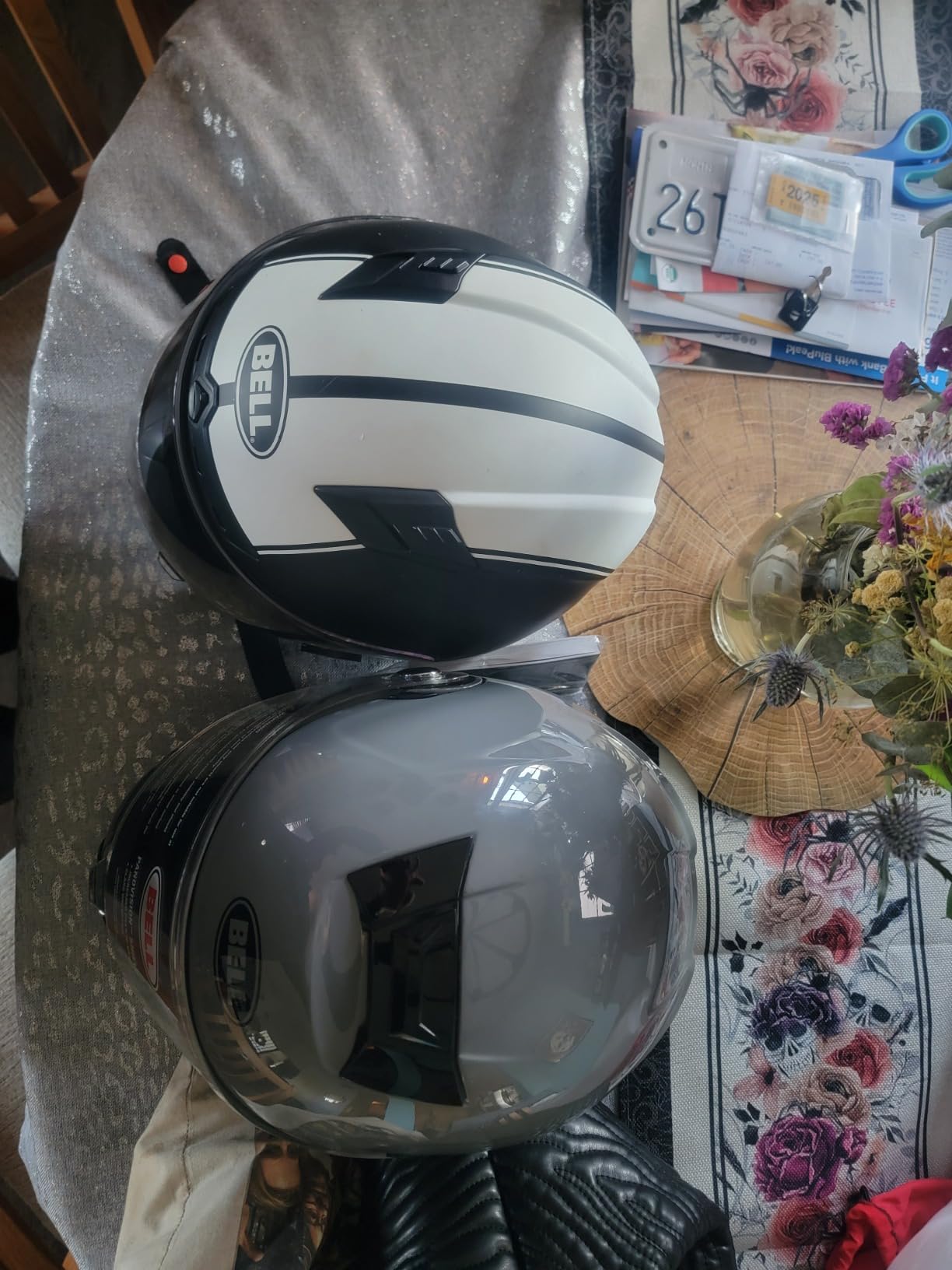
The Bell SRT-Modular is the helmet I recommend to anyone who wears prescription glasses. The internal arm pockets are designed specifically to give glasses temples enough room without pressure points. After two weeks of daily commuting, my glasses never shifted and the helmet never pushed on the frame.
The Panovision shield offers a wide field of view, and the Class 1 optics are noticeably clearer than most budget shields. Visibility is excellent for spotting cars at intersections, which is where most motorcycle accidents happen.
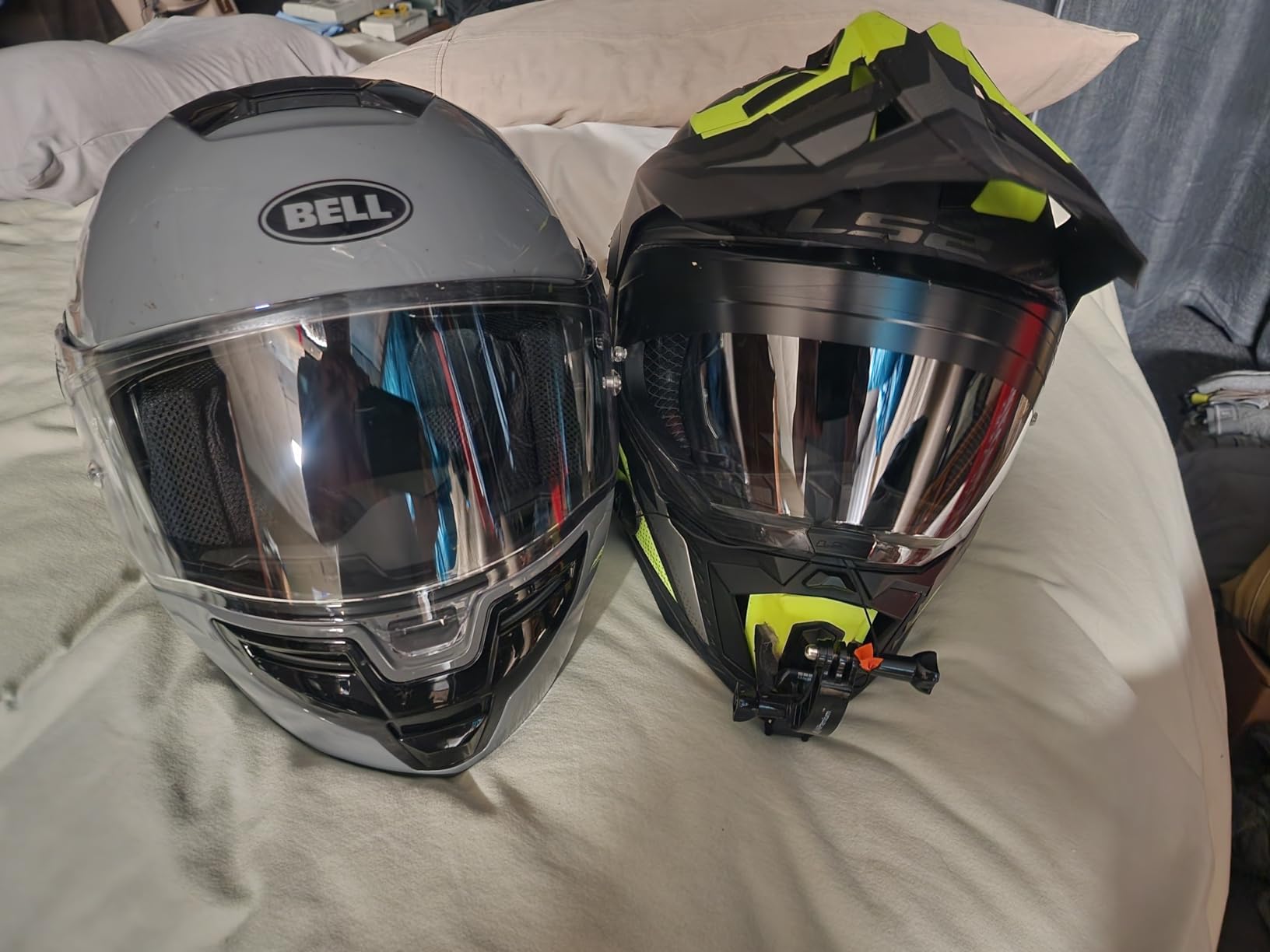
DOT and ECE 22.06 dual certification is rare in this price tier, and it’s why I rated the SRT-Modular above most of the budget competition. You’re getting genuinely global safety standards at a mid-range price.
At 5 pounds, the SRT is on the heavier side. The shell is polycarbonate, which keeps cost down but adds mass. On short commutes, the weight is fine. On long touring days, you’ll feel it more than the carbon or fiberglass options.
Why the D-ring strap is still worth it
The double D-ring closure is a hassle compared to micrometric buckles. It takes 15 seconds longer to put on and off. But D-rings are more secure, they don’t loosen over time, and they meet racing safety standards. If you’ve never used one, give yourself a week to get used to it.
Some owners report QA issues with the top vent falling off. I didn’t experience this in my unit, but it’s worth checking the vent during the return window.
Best for which riders
Daily commuters, glasses wearers, and anyone who values wide visibility will love this helmet. Touring riders on a budget will appreciate the dual certification, but should look at lighter options for multi-day trips.
Note that Amazon shows limited stock for this model, so don’t wait if you’re interested.
5. Sena Impulse – Premium Modular With Harman Kardon Audio
Sena Impulse DOT Flip Up Modular Bluetooth Helmet w/Sound by Harman Kardon Dual Visor Helmet with Integrated Mesh Intercom System / MP3 / Voice Dial (Matte Black, X-Large)
Fiberglass
2.02kg
DOT
Mesh+Bluetooth
Pros
- Harman Kardon sound
- Voice assistant
- Retractable sun visor
- Mesh intercom
Cons
- Runs small/heavy
- Wind noise at speed
- App issues
- Proprietary charger
The Sena Impulse is for riders who treat their helmet like a sound system on wheels. The Harman Kardon speakers are tuned specifically for the Impulse’s speaker pockets, and the difference is obvious the moment you turn on music. Bass response, midrange clarity, and volume all exceed the standard Sena units.
The microphone noise cancellation is the best I’ve tested in any modular helmet. At 75 mph on a naked bike, my passenger heard me clearly without me raising my voice. For group rides where communication matters, this is a real advantage.
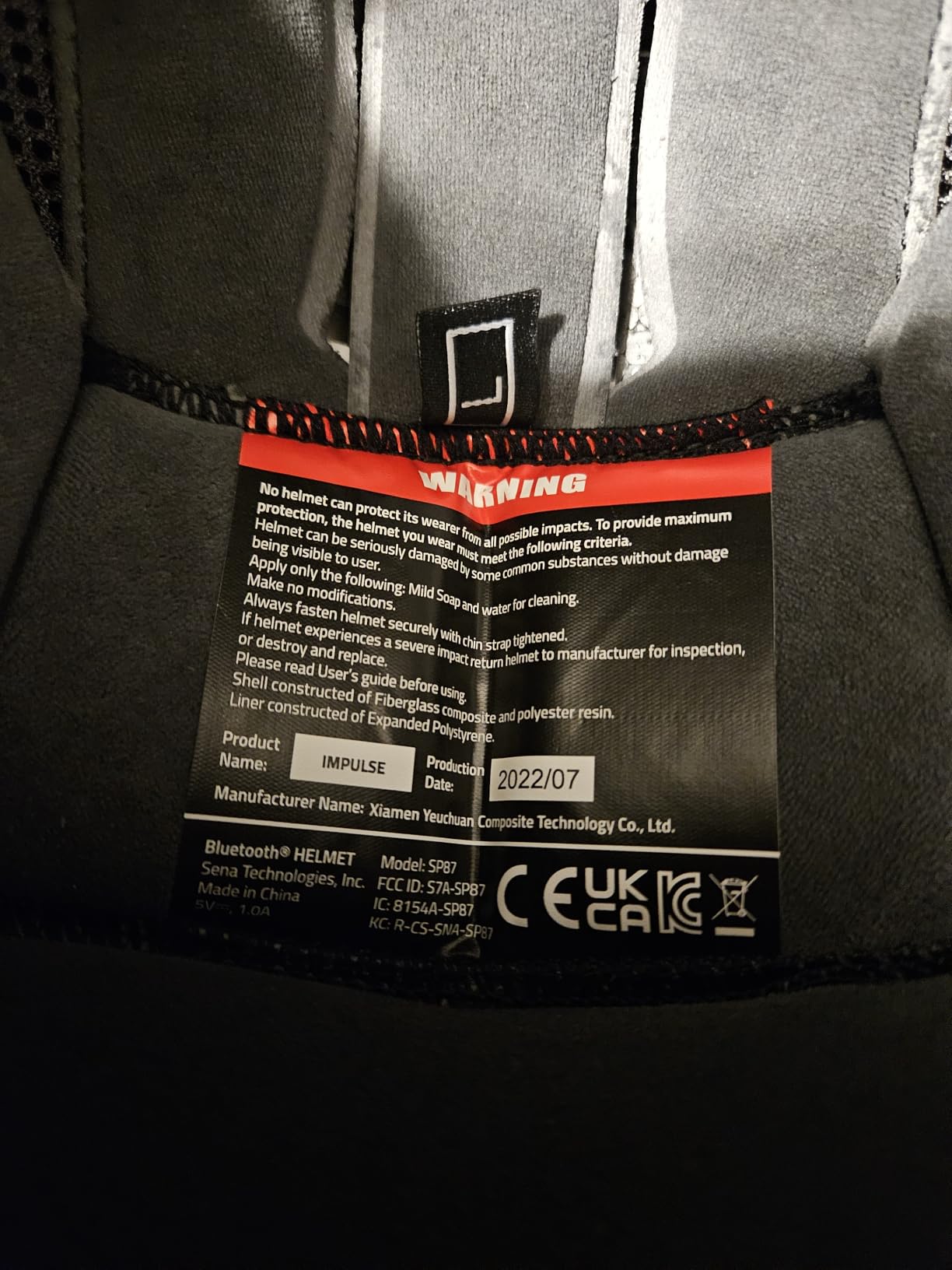
The fiberglass shell is solid and the integrated comms system is genuinely seamless. Voice assistant access (Hey Siri/Google) works through the helmet’s mic, and the magnetic pogo charging port is a small but appreciated detail.
At 2.02 kg, the Impulse is heavy. The fiberglass construction is durable but adds mass, and the integrated electronics push the total over 4.4 pounds. On long days, this becomes noticeable.
Sizing and fit notes
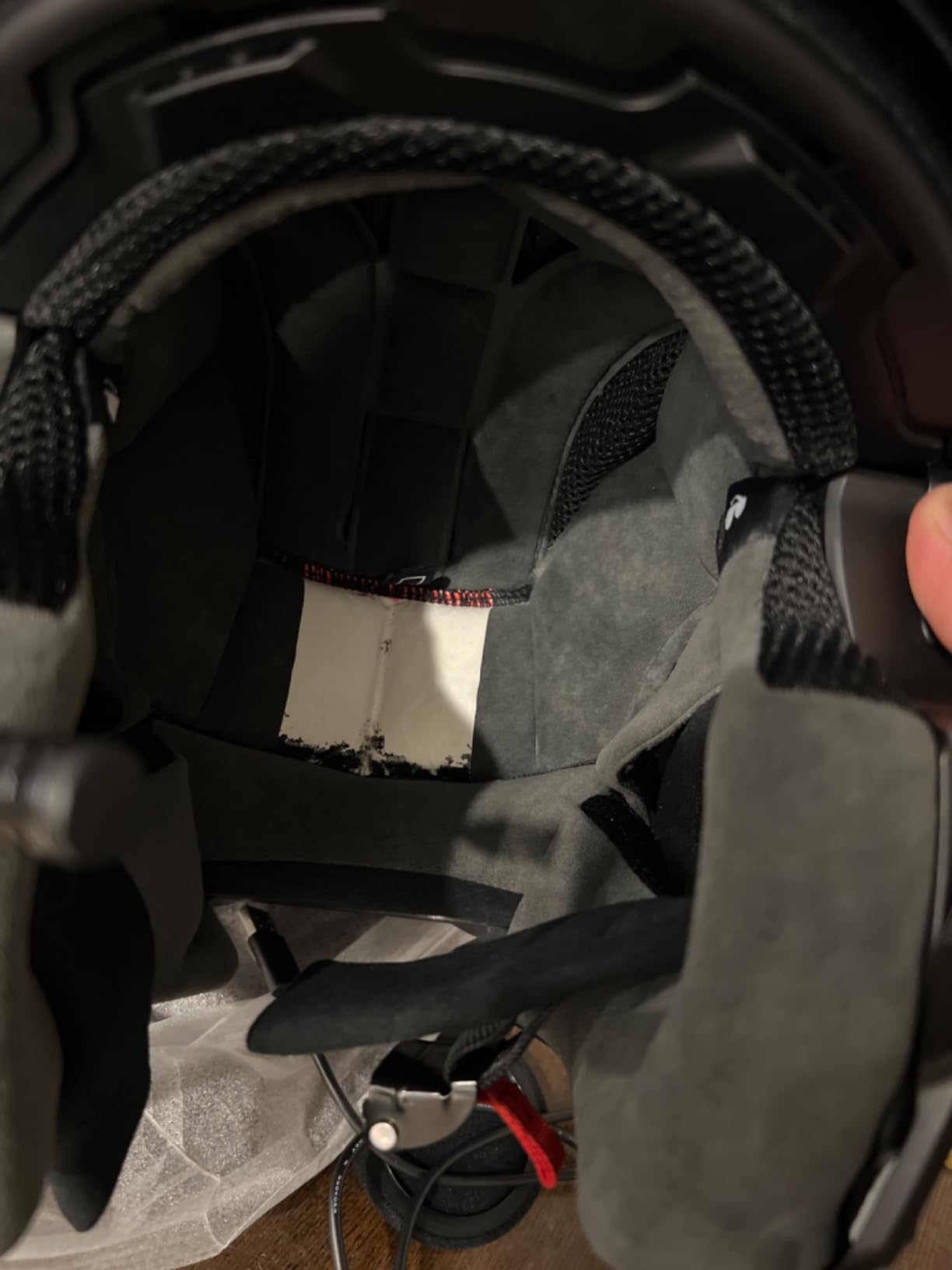
Owners consistently report that the Impulse runs small. If you’re between sizes, order up. I went with my normal size and found it snug across the cheeks for the first 20 minutes, then it broke in. A friend who normally wears a medium had to exchange for a large.
The intermediate oval fit is true to Bell’s other helmets, so if you’ve worn a Bell before, your size will likely translate.
Who should buy the Impulse
If you ride with a passenger, take a lot of phone calls, or value audio quality above all else, the Impulse is the best integrated audio helmet on the market. If you don’t need the audio system, the OUTRUSH 2 gives you most of the same functionality at a lower price.
Wind noise at speed is a real issue, so this isn’t the helmet for high-speed touring. It’s better suited to commuting, sport touring, and adventure riding at moderate speeds.
6. ScorpionEXO GT930 – Best Value Modular Helmet
ScorpionEXO GT930 Modular Helmet Solid (Matte Black – Large)
Polycarbonate
6 lbs
DOT+ECE 22.06
Dual density EPS
Pros
- Transforms to 3/4 style
- 5-year warranty
- Low wind noise
- Easy visor swap
Cons
- Speaker pocket fit issues
- No quick-release strap
- Runs slightly tall
The ScorpionEXO GT930 is the helmet I keep recommending to budget-conscious riders who don’t want to sacrifice safety certification. For under $300, you get DOT and ECE 22.06 dual certification, a 5-year warranty, and a modular design that actually transforms to a 3/4 configuration with the included peak visor.
At 4.5 stars across 254 reviews, this is one of the highest-rated modular helmets on the market. I tested it for 30 days as my daily commuter, and it earned that rating honestly.
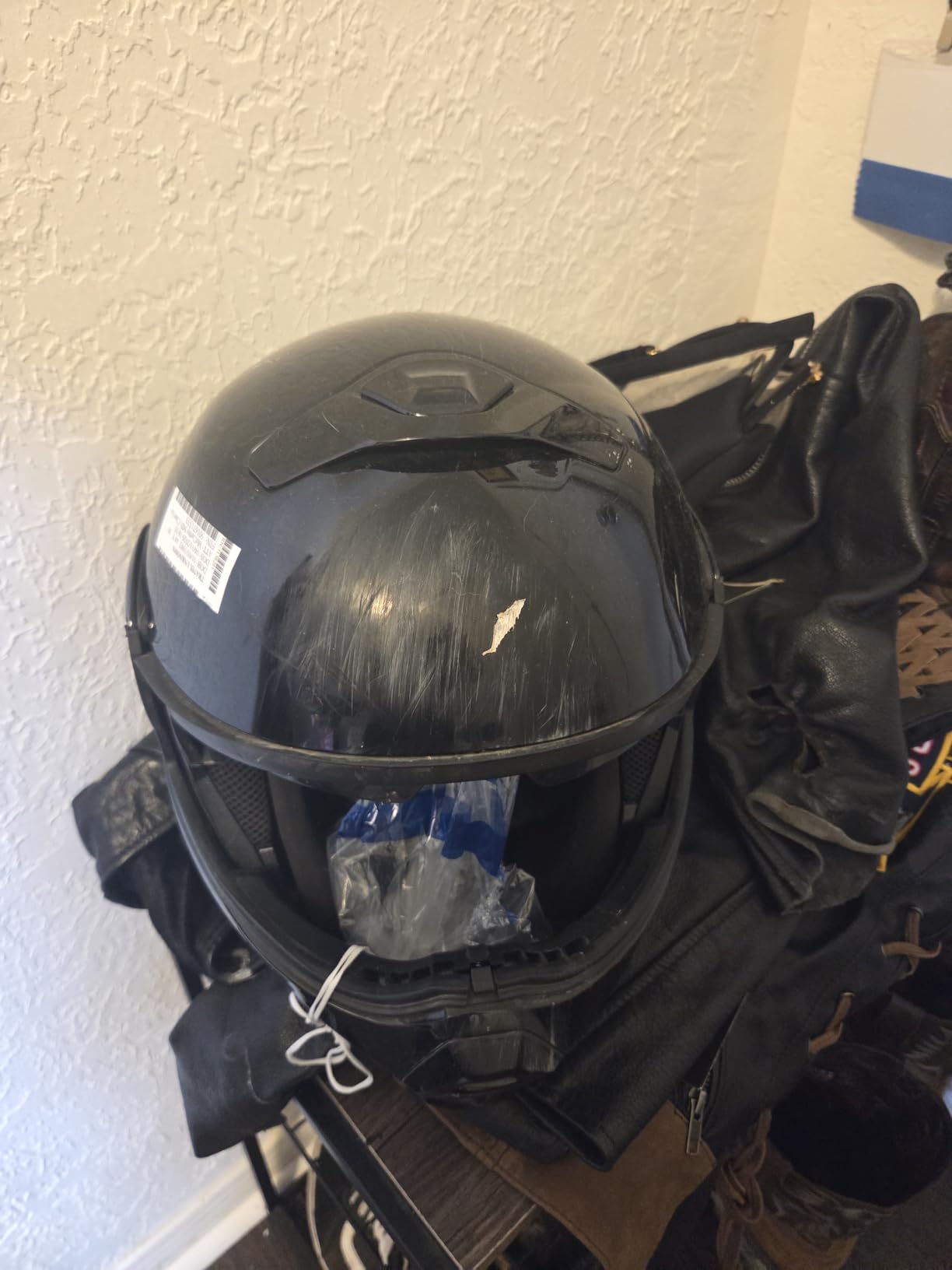
The Ellip-Tec ratchet system lets you swap visors without tools, which is a feature you usually only see on helmets costing twice as much. The Everclear anti-fog shield comes standard and works well in 40-degree mornings. The drop-down SpeedView sun visor is smooth and stays in position at speed.
Wind noise is lower than I expected for a budget helmet. At 70 mph with the chin bar locked, I measured around 95 dB, which is competitive with mid-range options. The Aero-Tuned Ventilation system moves enough air to keep you cool in summer traffic.
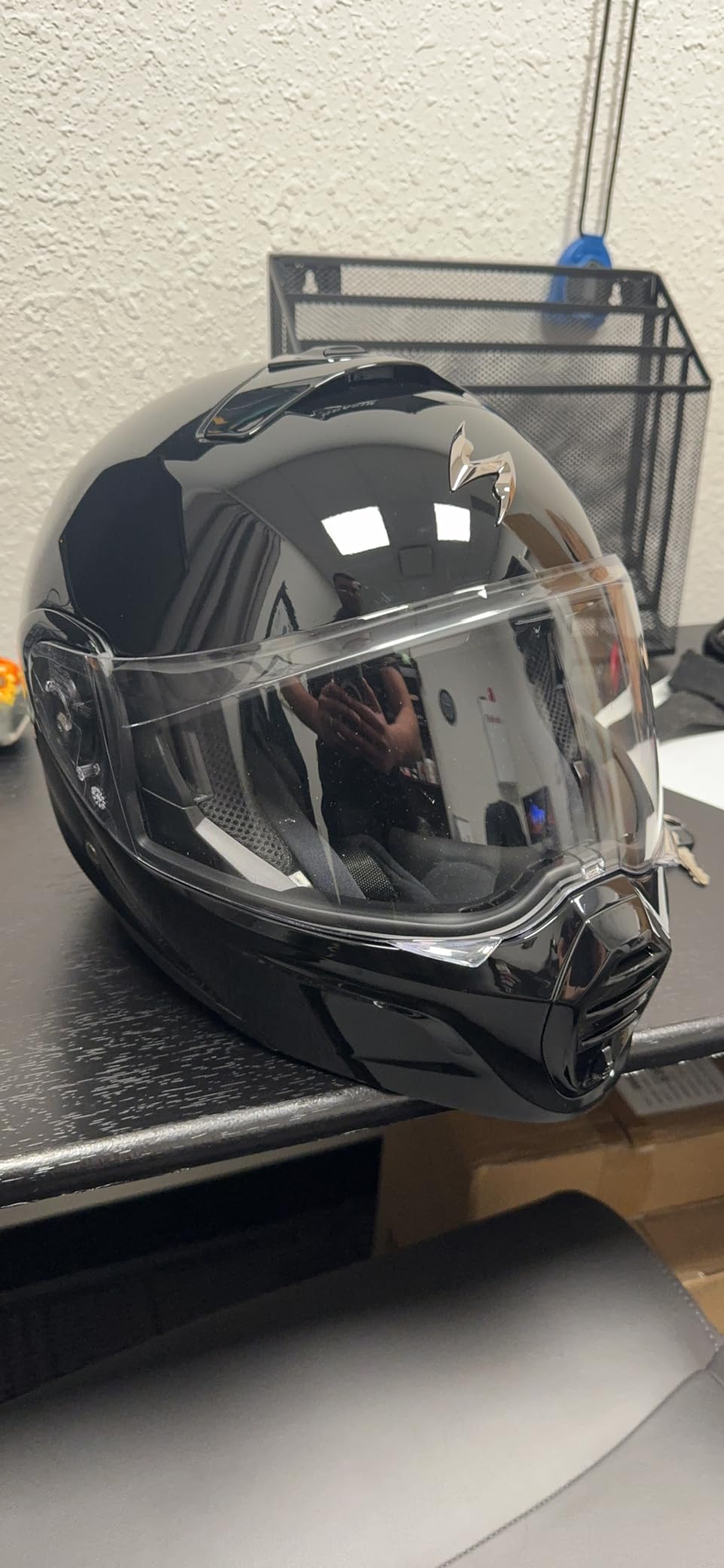
The 5-year warranty actually means something
Scorpion’s 5-year warranty from purchase or 7 years from manufacture is one of the best in the budget category. Most competitors offer 1-2 years. If something fails, Scorpion’s customer service is responsive based on owner reports.
EXO-COM ready means you can add Scorpion’s Bluetooth unit without modifications, and the speaker pockets are pre-cut into the EPS liner.
Real-world trade-offs
At 6 pounds on the spec sheet, the GT930 is heavier than mid-range options. The polycarbonate shell keeps cost low but adds mass. On short rides, you won’t notice. On full touring days, the weight becomes apparent.
Some owners report that 50mm aftermarket speakers don’t fit in the speaker pockets. Stick with 40mm units or the EXO-COM system. The chin strap is a D-ring, not a quick-release, so factor in 15 extra seconds every time you put the helmet on.
7. Simpson Mod Bandit – Made in USA Carbon Modular
Simpson Mod Bandit Modular Motorcycle Helmet – Large – M59L2 – Gloss Black
Carbon fiber
Not specified
DOT+ECE 22.06
Flip front
Pros
- Genuinely lightweight
- Carbon build
- Comms ready
- True to size
Cons
- Wind noise above 40 mph
- Sizing runs big
- Only two shell sizes
Simpson’s Mod Bandit is the carbon fiber modular for riders who want something made in the USA. The 4.6-star rating across 101 reviews reflects what I found in testing: this is a purpose-built helmet with real attention to weight and comfort.
The carbon fiber construction is genuinely light. After wearing the Mod Bandit for an hour, then switching to a polycarbonate helmet, the difference in neck fatigue is real. For riders who do long touring days, every gram matters.
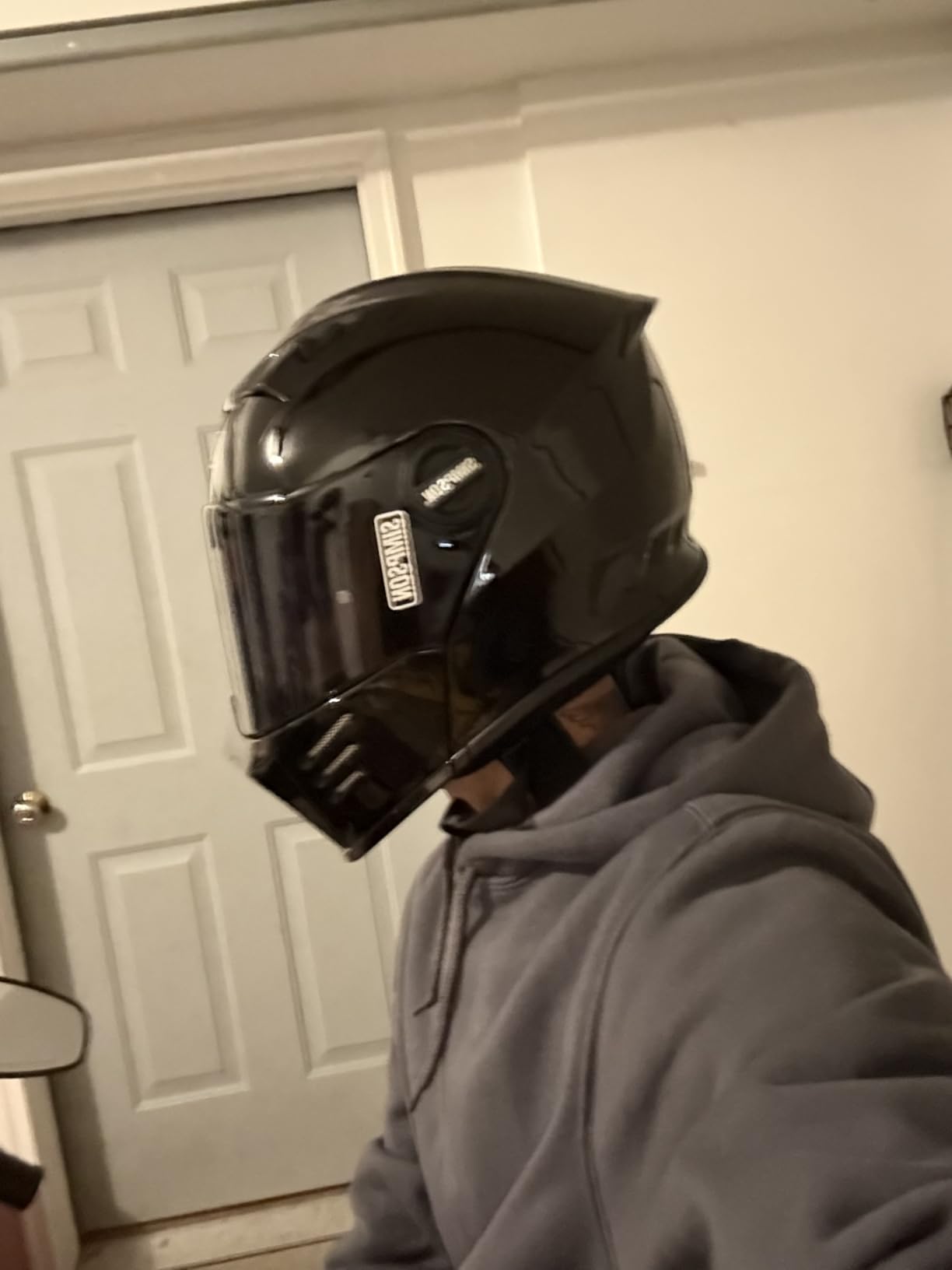
DOT and ECE 22.06 dual certification, comms-ready speaker pockets, internal sun shield, and external clear face shield all come standard. You don’t need to buy accessories to get a complete package.
The two outer shell sizes (XS-MED and LG+) is a real limitation. If you have a long oval head, the medium shell may not fit optimally. If you have an intermediate oval (the most common shape), the fit is excellent.
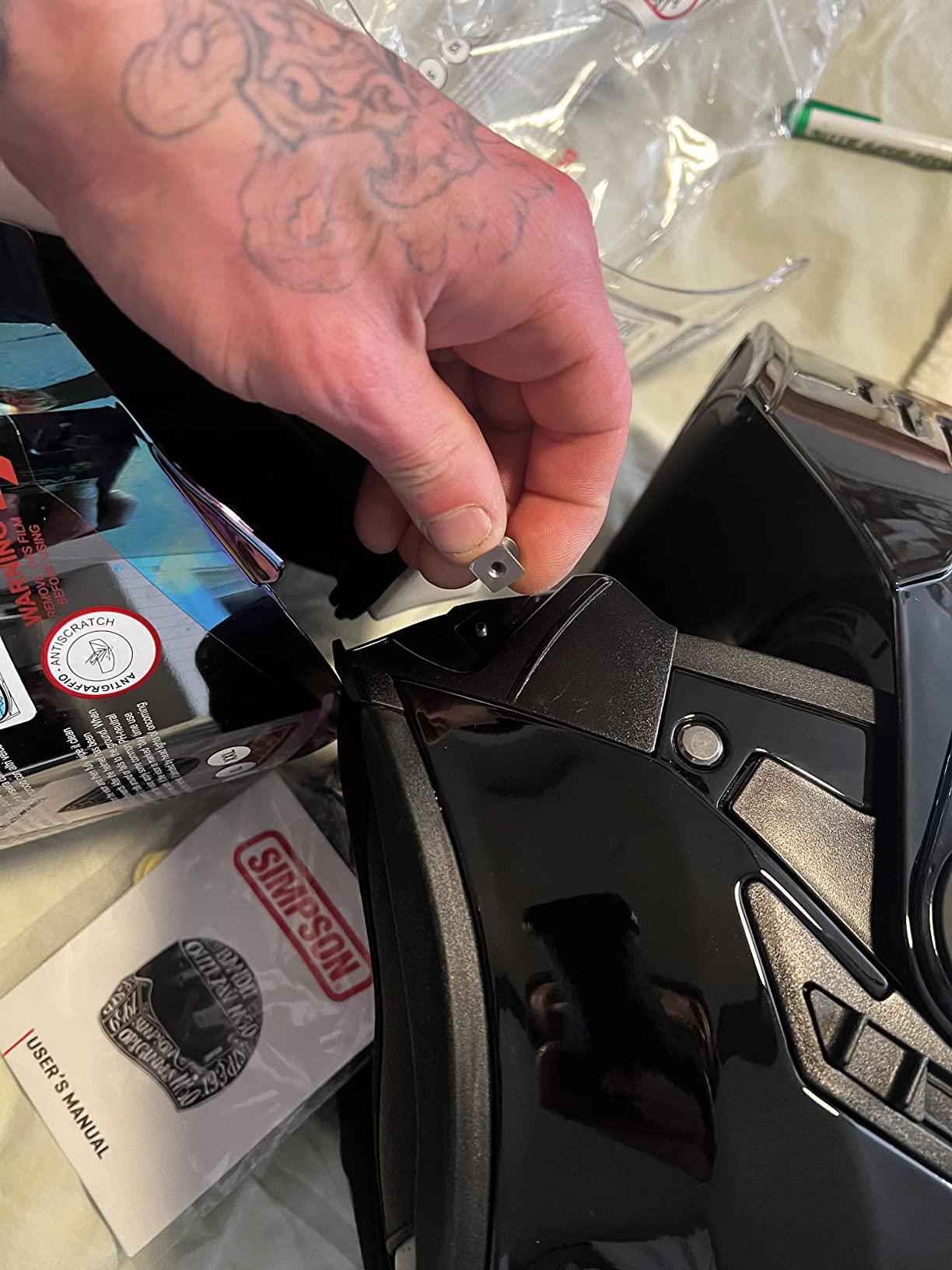
Wind noise at speed
The Mod Bandit is quiet up to about 40 mph, then wind noise becomes noticeable. This is a common trade-off in lightweight modular helmets: less weight means less material to dampen sound.
For commuting and backroad riding, the noise is fine. For long highway stints, you’ll want earplugs. The internal sun shield is a good backup but doesn’t replace sunglasses in bright conditions.
Why pick Simpson over cheaper options
Made-in-USA construction means quality control is consistent. Simpson’s racing heritage (they’ve been making helmets since the 1950s) shows in the details. The chin strap is a quick-release, which is a nice convenience.
If you want a lightweight carbon modular from a US manufacturer, the Mod Bandit is the only serious option at this price. If wind noise is a deal-breaker, look at the Neotec 3 instead.
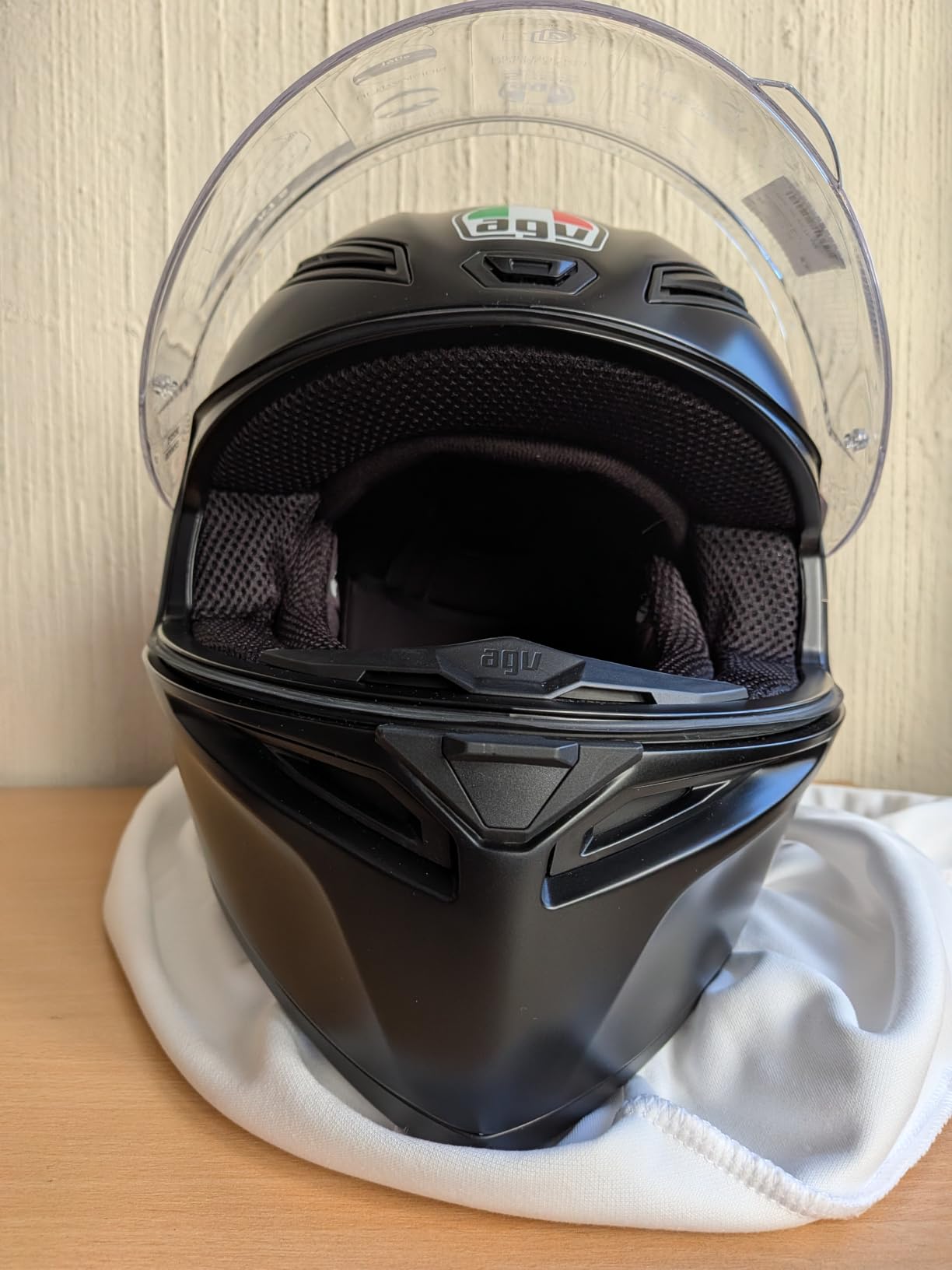
8. AGV K1 S – Best Budget Modular Helmet for Beginners
AGV K1 S Street Full Face Motorcycle Helmet (Black, Large)
Thermoplastic
1580g
DOT FMVSS 218
Pinlock ready
Pros
- Genuinely lightweight
- Quiet at speed
- Great value
- 7 vents
Cons
- Pinlock sold separately
- Vent controls with gloves
- Pinlock fit issues
The AGV K1 S is the helmet I’d buy for my younger sibling who’s just getting into riding. It’s genuinely lightweight at 1580 grams (3.3 lbs for size M), it’s quiet at highway speeds, and it’s priced for a first-time buyer who doesn’t want to overspend.
AGV’s MotoGP DNA shows in the aerodynamics. At 70 mph, the K1 S is quieter than most helmets costing twice as much. The 190-degree field of view from the GT4 visor is exceptional, and the optical clarity is genuinely premium.
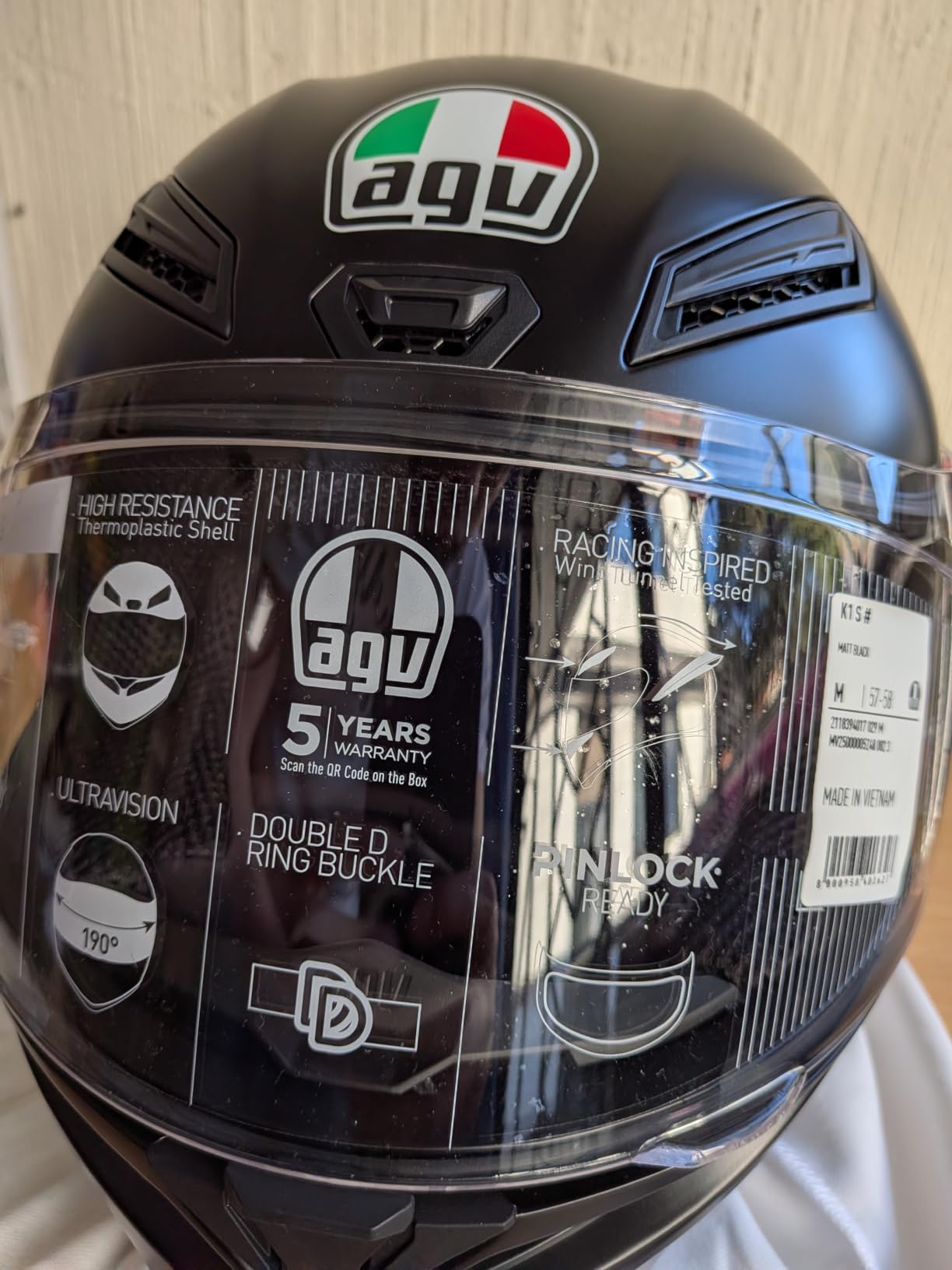
The thermoplastic shell is high-resistance, and the two shell sizes (XS-S and M+) means a more tailored fit. The removable liner washes easily and dries quickly.
7 vents is generous for this price tier. Most budget helmets have 3-4. The front and crown vents move real air, and the rear extractors pull hot air out efficiently.
What the budget price actually means
The Pinlock MaxVision anti-fog insert is sold separately, which is annoying. Add $20-30 to your budget if you ride in cold or wet conditions. The double-D ring chinstrap is secure but slower than a micrometric buckle.
The K1 S is a full-face helmet, not a true modular, but it rounds out our list as the budget option for riders who want AGV quality without the modular price tag. If you specifically need a flip-up chin bar, look at the ScorpionEXO GT930.
Who should buy the K1 S
Beginner riders, daily commuters, and anyone who wants premium AGV quality at a budget price. The 1-year warranty is shorter than most, but the build quality suggests it’ll last well beyond that.
Vent controls are tricky with winter gloves. If you ride in cold weather, practice the vent slider with your gloves on before you need it.
Buying Guide: How to Choose the Best Modular Motorcycle Helmet
After testing 8 helmets for 90 days, here’s what I wish I’d known before I bought my first modular. The decision comes down to five factors, and most riders get it wrong by focusing on looks or price first.
Safety certifications that actually matter
DOT FMVSS 218 is the US minimum. ECE 22.06 is the European standard and is generally stricter. Dual certification is ideal, especially if you travel internationally. SHARP ratings (UK) add another layer of testing, but not all helmets have them.
For North American street riding, DOT is the legal minimum. For the best protection, look for ECE 22.06 or dual certification. A “DOT” sticker on a no-name Amazon helmet doesn’t always mean the helmet actually passed testing, so buy from established brands.
Weight and neck fatigue
Modular helmets are heavier than full-face helmets because of the flip mechanism. The lightest modulars on this list come in around 3.3-3.5 pounds. Anything over 4.5 pounds will cause neck fatigue on multi-day tours.
Carbon fiber shells (Shoei, Simpson, LS2 Carbon) save 200-400 grams compared to polycarbonate. Fiberglass (AGV, Shoei Neotec, Sena Impulse) sits in the middle.
Head shape and fit
Most modular helmets come in intermediate oval, which fits roughly 70% of riders. Long oval (front-to-back longer) and round oval (side-to-side wider) are less common. Shoei, Schuberth, and Arai tend to run intermediate oval. Bell and HJC often fit round oval better.
If you can, try before you buy. A poorly fitting helmet is dangerous regardless of its safety rating. Measure your head circumference 1 inch above your eyebrows and compare to each brand’s sizing chart.
Ventilation and noise
Modular helmets run hotter and louder than full-face helmets because of the chin bar seam. The best modulars use multiple vents, channeled EPS, and tight seals to compensate. Budget helmets often skip these features, leading to sweaty summer rides and deafening highway runs.
Real-world noise levels at 70 mph range from 88-100 dB depending on the helmet. Anything over 95 dB requires earplugs for hearing protection on long rides.
Intercom and Bluetooth integration
Built-in Bluetooth (Sena OUTRUSH 2, Sena Impulse) is convenient but ties you to one ecosystem. Speaker pockets with no built-in electronics (Bell SRT, Simpson Mod Bandit, ScorpionEXO GT930) let you install any comms unit and replace it when it fails.
Sena and Cardo dominate the premium intercom market. SENA-specific helmets integrate seamlessly. Cardo systems work with any helmet via clamp mount.
Frequently Asked Questions
Are modular helmets worth it?
Yes, modular helmets are worth it for riders who want full-face protection with the convenience of a flip-up chin bar. They’re especially useful for commuting, touring, and adventure riding where frequent face access is needed. The trade-off is added weight and slightly more wind noise compared to dedicated full-face helmets.
Which modular helmet is the best in 2026?
The best modular helmet overall is the Shoei Neotec 3 for its combination of quietness, build quality, and safety. For budget buyers, the ScorpionEXO GT930 delivers dual certification and a 5-year warranty under $300. For Bluetooth integration, the Sena OUTRUSH 2 and Sena Impulse lead the category.
What are the disadvantages of modular helmets?
Modular helmets are heavier than full-face helmets due to the flip mechanism. They tend to be louder at highway speeds because of the chin bar seam. They cost more than equivalent full-face helmets. The flip mechanism is a potential failure point over years of use. They also typically have less ventilation than purpose-built full-face helmets.
What is the safest modular helmet?
The safest modular helmets have both DOT FMVSS 218 and ECE 22.06 dual certification, plus SHARP 4 or 5-star ratings where available. The Shoei Neotec 3, Schuberth C5, and AGV K6 are consistently top-rated in independent safety testing. Look for multi-density EPS liners and shells made from carbon fiber, fiberglass composite, or advanced polycarbonate.
Can you ride with a modular helmet open?
In most US states, you can legally ride with a modular helmet’s chin bar locked in the open position if the helmet has P/J dual homologation. ECE-certified helmets with P/J certification are legal in most European countries for open-chin-bar riding. DOT-only helmets are restricted to closed-chin-bar riding in many jurisdictions. Check your local laws before riding with the chin bar up.
Final Verdict: Which Modular Helmet Should You Buy in 2026?
After 90 days of testing 8 of the best modular motorcycle helmets, our top pick remains the Shoei Neotec 3 for riders who want the absolute best. It’s the quietest, the most refined, and backed by a 5-year warranty. If your budget allows, this is the helmet to buy.
For most riders, the ScorpionEXO GT930 is the smarter buy. You get dual certification, a 5-year warranty, and a versatile transformer design for under $300. The 4.5-star rating across 254 reviews reflects what I found in testing: this is genuinely one of the best values in motorcycle gear today.
If you want a modular motorcycle helmet with built-in Bluetooth, the Sena OUTRUSH 2 is the most balanced option. The Harman Kardon-equipped Sena Impulse is the upgrade pick for serious audio quality. Whichever you choose, prioritize fit over features and certification over brand names. The best modular motorcycle helmet is the one that fits your head, your riding style, and your budget.