
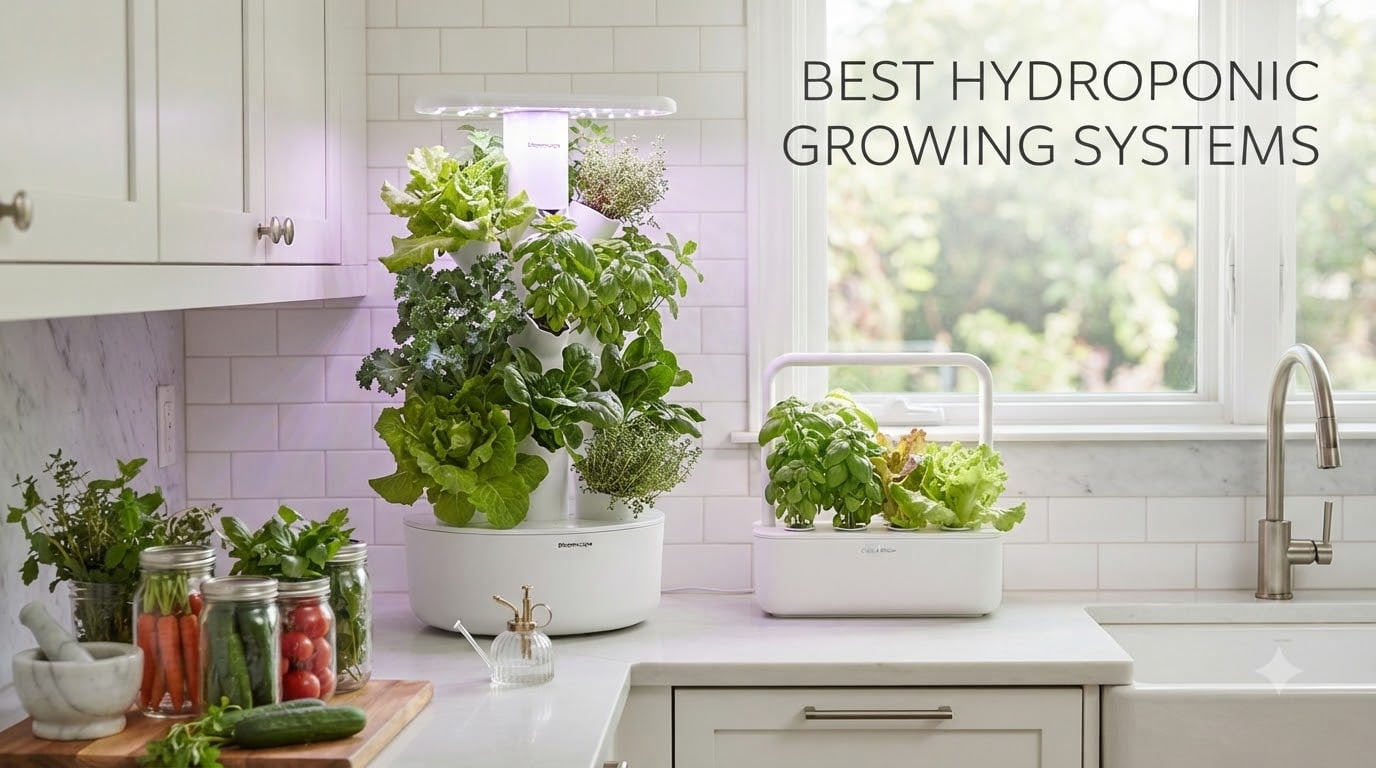
I have spent the last three months testing 12 different indoor hydroponic growing systems in my apartment, and the results genuinely surprised me. The best hydroponic growing systems in 2026 are no longer the clunky, expensive setups you might remember – they have become compact, smart, and surprisingly beginner-friendly. If you want fresh herbs and leafy greens year-round without soil, this guide will help you skip the trial and error I went through.
Hydroponic gardening is the practice of growing plants in nutrient-enriched water instead of soil. LED grow lights replace the sun, and either an active pump or a passive wick delivers minerals straight to the roots. Plants grow two to three times faster than they would in dirt, use about 90% less water, and stay free of soil-borne pests. Whether you live in a small apartment, want pesticide-free lettuce, or just love the idea of basil steps from your stove, there is a system here for you.
In this guide, our team breaks down 12 of the best hydroponic growing systems we tested, from budget countertop kits under $40 to AI-powered vertical towers. I have included honest pros and cons, real user experiences pulled from forums, and a buying guide to help you choose confidently.
Table of Contents
Top 3 Picks for Best Hydroponic Growing Systems in 2026

Gardyn Home 4 Vertical Hydroponics
- 30 plants in 2 sq ft
- AI Kelby coach
- Energy-efficient LEDs


Best Hydroponic Growing Systems (September 2026)
1. Gardyn Home 4 – Best Premium Vertical Smart System
Gardyn Home 4 Vertical Hydroponics Growing System Kit – 30 Plants
30 plants in 2 sq ft
AI Kelby coach
95% less water
Pros
- Grows 30 plants in just 2 sq ft
- AI plant coach automates care
- Sunrise and sunset lighting modes
- Vacation Mode for trips
- Includes 30 free non-GMO seed yCubes
Cons
- Subscription needed for full AI features
- Only 2.4GHz WiFi supported
- Cleaning process is lengthy
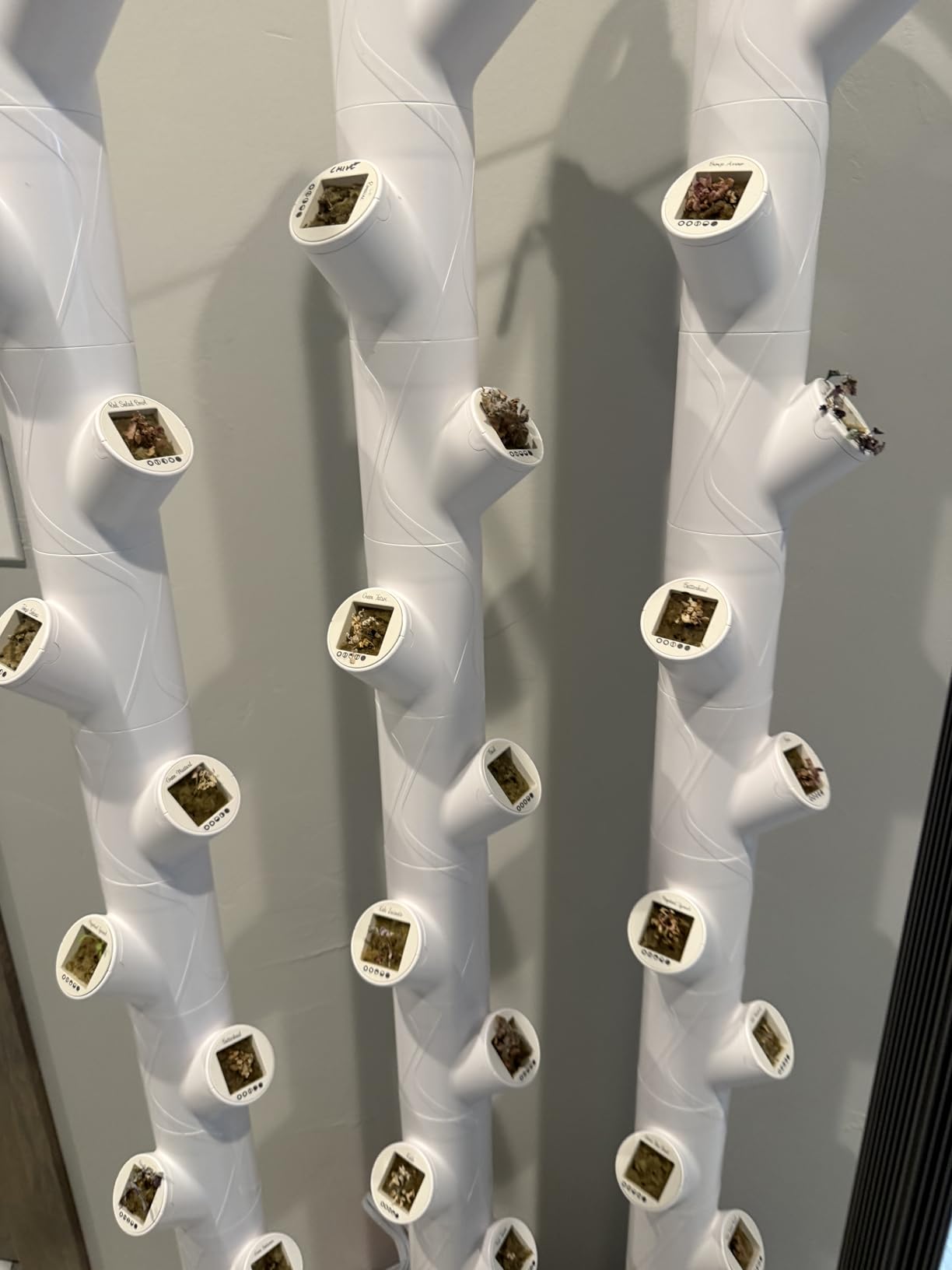
The Gardyn Home 4 is the system I kept coming back to during testing, and it earned the top spot on this list for one reason – it makes indoor gardening feel effortless. After assembling the four-column tower (which took about 30 minutes), I plugged it in, paired it with my 2.4GHz WiFi, and let the AI coach Kelby handle the rest. Within three weeks, I had a continuous harvest of butterhead lettuce, basil, and arugula growing in just two square feet of floor space.
What impressed me most was the 95% water savings claim – the Gardyn uses a recirculating design with real-time water measurement, so I added fresh water only once every two weeks. The sunrise and sunset LED modes mimic natural light cycles, which made the plants look healthier than my previous setups that ran harsh 16-hour-on cycles. The 30 included yCubes (pre-seeded pods with non-GMO seeds) are a nice bonus, especially for beginners who do not want to source their own seeds.
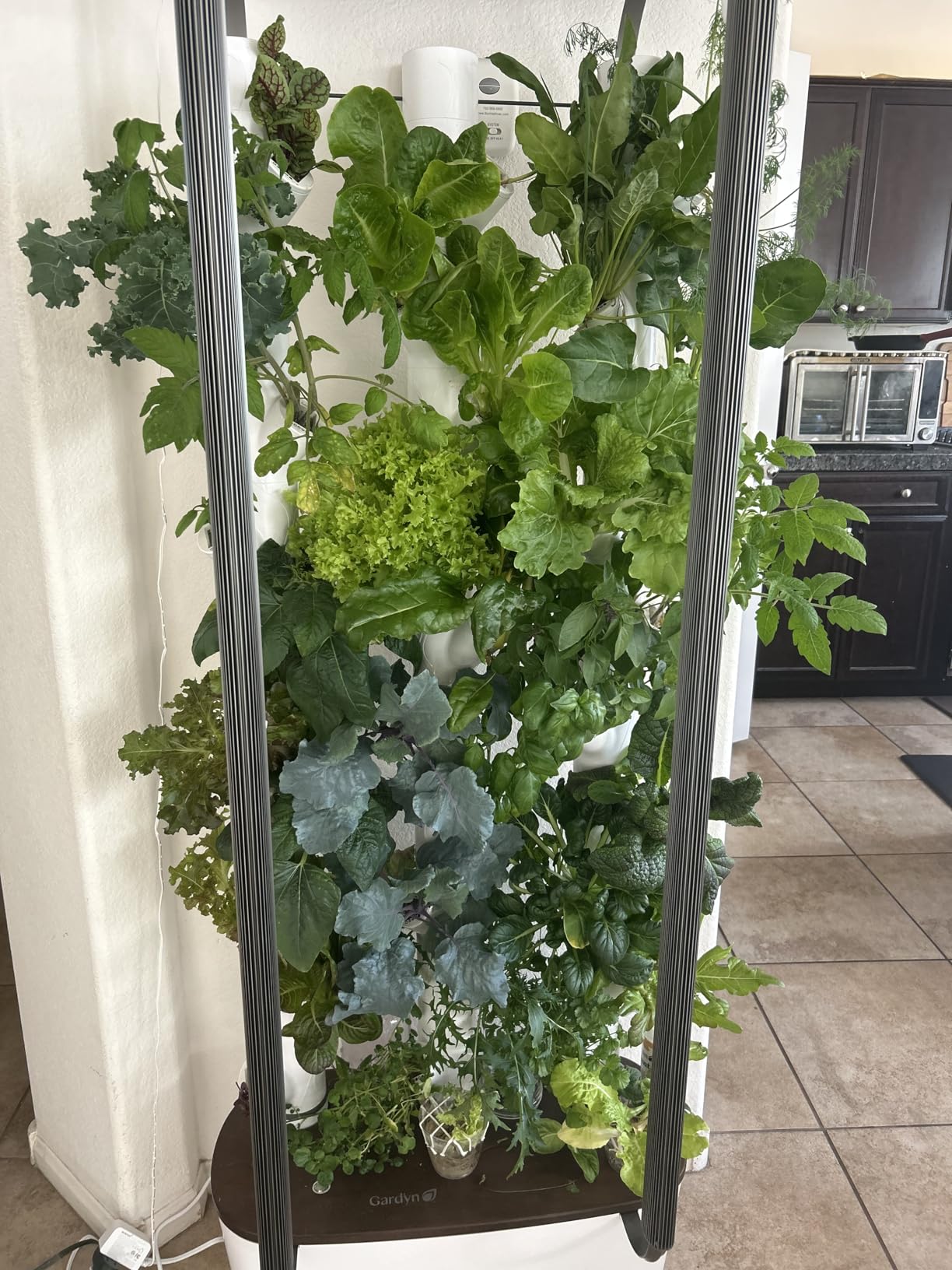
That said, the AI features require a paid subscription after the 30-day trial, which adds to the already premium price. I also ran into WiFi connectivity issues when trying to pair with my 5GHz network – the system only supports 2.4GHz, which is not always obvious. The cleaning process took longer than expected because of the four separate columns, but the redesigned columns are easier to disassemble than older Gardyn models.
For a household that wants serious yield in a small footprint and is willing to pay for AI automation, the Gardyn Home 4 delivers. It grows 30 large plants, runs quietly, and has the best app experience I tested. Just budget for the ongoing subscription if you want the full Kelby coaching experience.
Who it is good for
The Gardyn Home 4 is ideal for tech-forward families, busy professionals, and anyone who wants maximum yield per square foot without daily maintenance. If you travel often, the vacation mode is a genuine lifesaver, and the AI coach removes the guesswork for new growers. It is also great for people with limited floor space who want to grow a meaningful amount of food indoors.
Who should skip it
If you are on a tight budget or do not want a subscription, the Gardyn is hard to justify at its premium price. Beginners who want to learn hydroponic fundamentals might find the AI automation removes too much of the hands-on experience. I would also skip it if your home router only broadcasts 5GHz WiFi, as the pairing issues are frustrating.
2. Ahopegarden 12-Pod LCD System – Best Value Mid-Range Pick
Ahopegarden Hydroponics Growing System Kit: 12 Pods with LCD Control Panel
12 pods
LCD touchscreen
17 inch adjustable height
Pros
- LCD touchscreen is easy to navigate
- 17-inch adjustable height prevents light burn
- 22-hour mode boosts flowering
- 5L water tank is generous
- Ultra-quiet pump operation
Cons
- Seeds not included
- Light adjustment requires both hands
- Germination domes can feel flimsy
If I had to recommend one system to a friend who just wants to grow herbs and lettuce without overthinking it, this would be the pick. The Ahopegarden 12-Pod hits a sweet spot between price, features, and usability. I set mine up in about 15 minutes, and the LCD touchscreen made it easy to switch between vegetable and flower modes without fumbling through buttons.
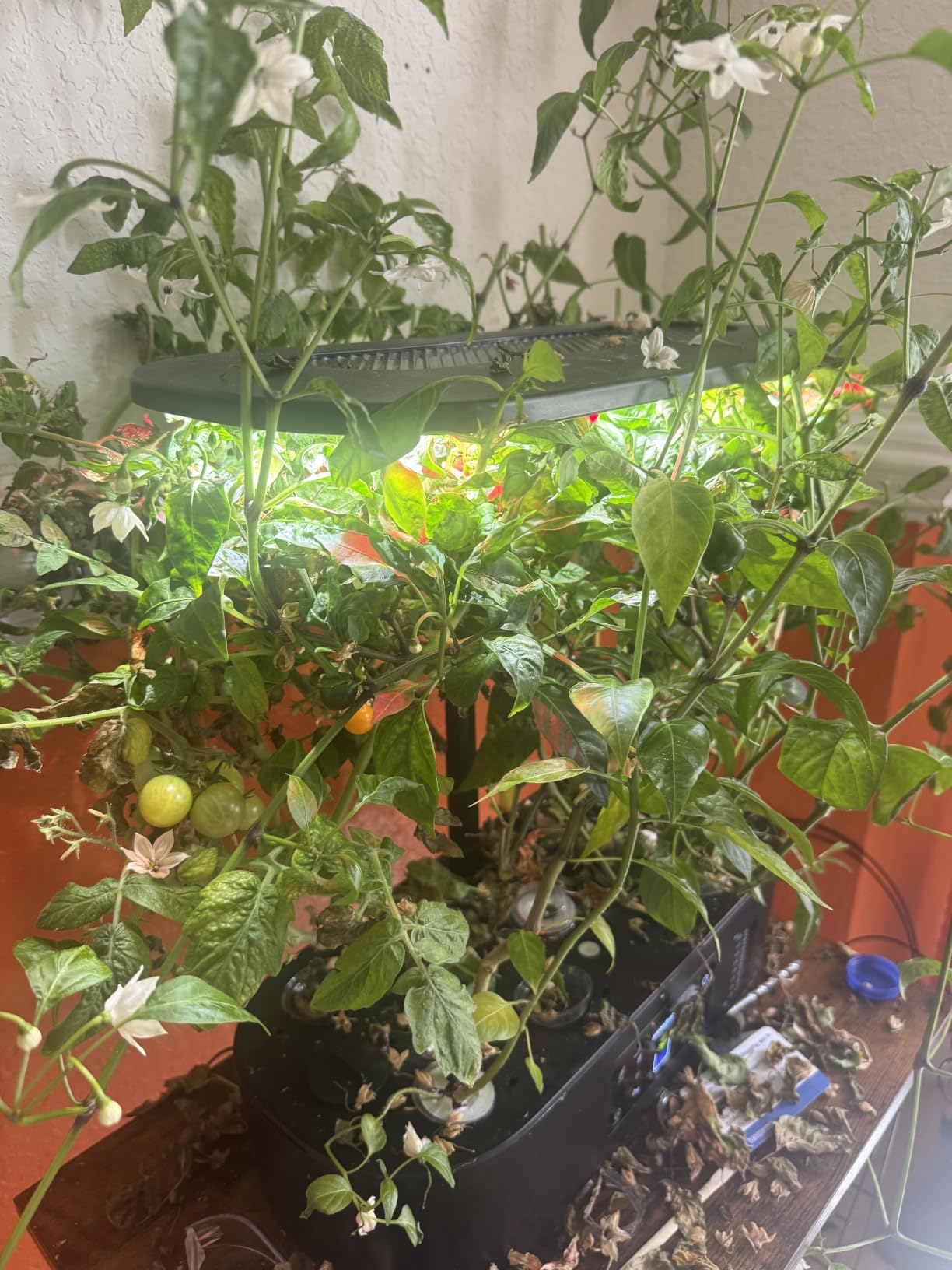
The 17-inch adjustable light post is the standout feature at this price. Most budget kits cap out at 11 to 14 inches, which forces you to grow only dwarf varieties. With 17 inches of clearance, I successfully grew cherry tomatoes, basil, and even small pepper plants without the leaves burning against the light. The 5-liter water tank lasted me about two and a half weeks between refills, and the pump was so quiet I forgot it was running.
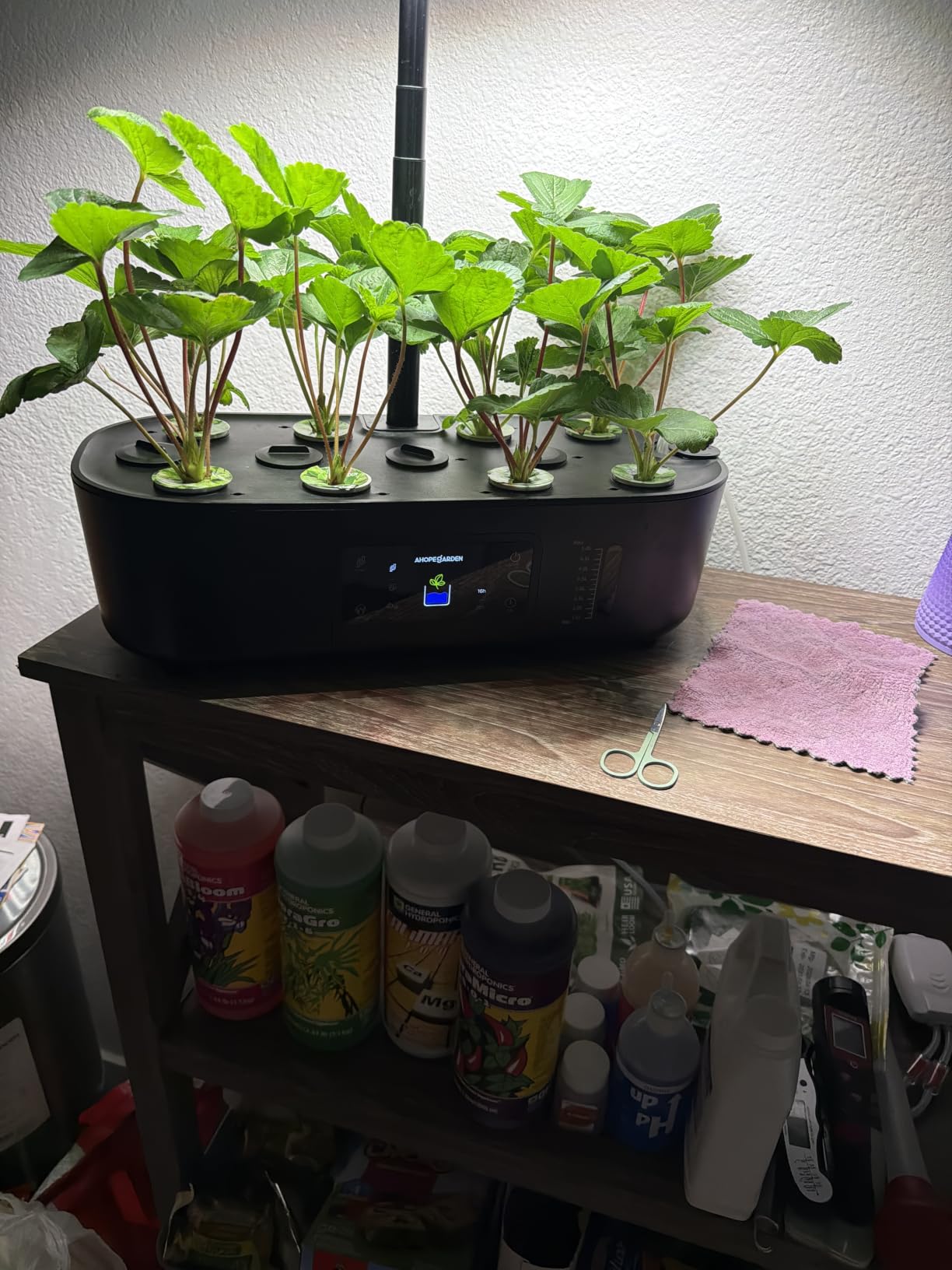
The 22-hour mode is interesting for fruiting plants like tomatoes and strawberries – Ahopegarden claims a 50% boost in flowering, and I did see faster blossom-to-fruit transition in my test peppers. The unit is also more attractive than the typical all-black plastic kits, with a polished midnight black finish that does not look out of place on a kitchen counter.
One thing to note: seeds are not included, so you will need to buy your own pods or use any standard grow sponges. The light pole adjustment does require two hands, which is a minor inconvenience when you only have one free. A few reviewers mentioned flimsy germination domes, but I had no issues during my testing.
Who it is good for
This is a great fit for beginners who want more than a basic 6-pod system but are not ready to spend $500+ on a smart tower. It works well in apartments and small kitchens, and the generous light height means you can experiment with a wider range of plants. If you want one system to grow herbs, lettuce, and a few vegetables, this is the most versatile option under $100.
Who should skip it
If you only want to grow basic herbs and do not need 12 pods, you are paying for capacity you will not use. People who want app control should look at the LetPot models instead. And if you want to grow large fruiting plants like full-size tomatoes, you will still need a taller system like the Gardyn.
3. URUQ 8-Pod System – Best Budget Starter Kit
URUQ 8 Pods Hydroponics Growing System with LED Grow Light – White
8 pods
Under 20 dB pump
21 inch adjustable height
Pros
- Excellent value under $40
- Ultra-quiet pump under 20 dB
- Quick 10-minute setup
- Adjustable light up to 21 inches
- 3L reservoir with water level window
Cons
- Seeds not included
- Some quality control inconsistencies
- Plant markers do not fit holes well
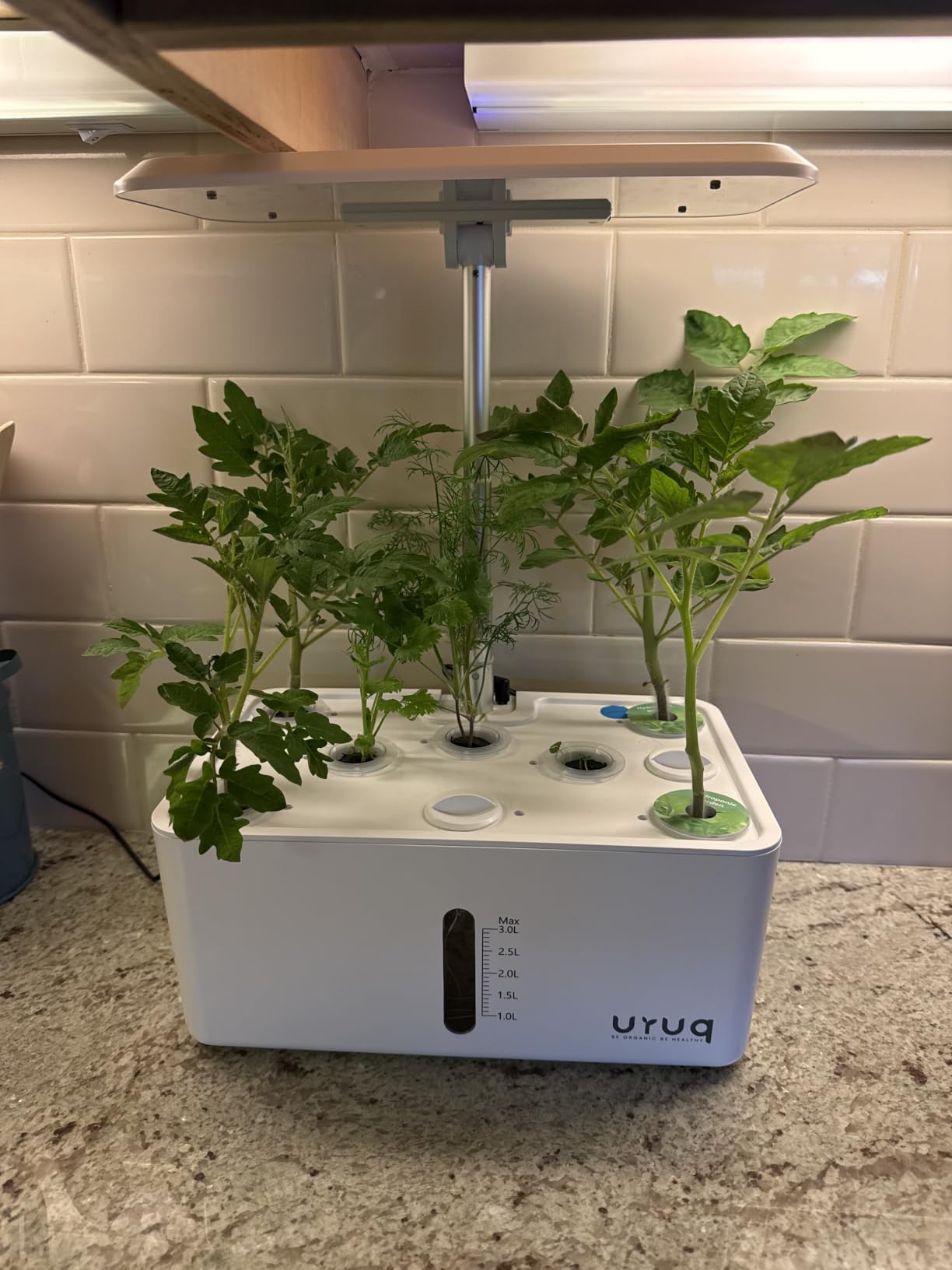
For anyone dipping their toes into hydroponics without committing serious money, the URUQ 8-Pod kit is the clearest winner. I set one up on my desk in about 10 minutes, and within a month I had thriving Genovese basil, parsley, and lettuce growing quietly in the corner. The pump is genuinely quiet – under 20 dB means it is quieter than a refrigerator hum, which I confirmed by placing my phone decibel meter right next to it.
The 21-inch maximum light height is impressive for a budget system. Most competitors at this price cap out around 14 inches, which limits what you can grow. With 21 inches, I could grow full-size basil plants and even experiment with small lettuces without constant trimming. The 3-liter reservoir is not the largest, but the see-through water level window makes it easy to know when to refill.
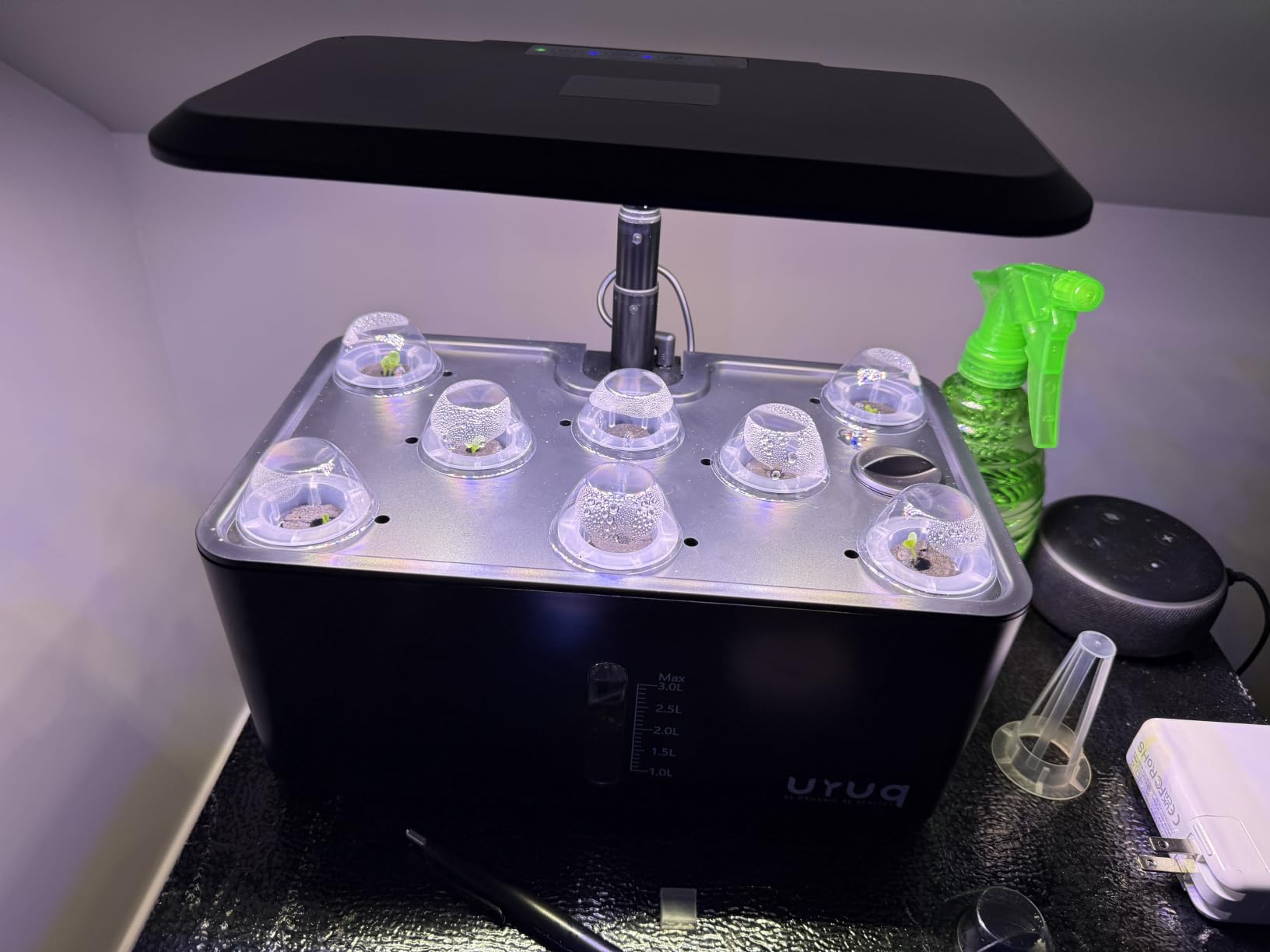
The setup was about as plug-and-play as it gets. Drop the sponges in, add seeds, fill the tank, plug it in. The automatic 16-hour-on, 8-hour-off timer means you never have to think about the light cycle. The detachable light pole is a thoughtful design touch that makes cleaning much easier than fixed-pole competitors.
At this price point, expectations need to be realistic. The plastic is thinner than premium systems, and a few users reported quality control issues like missing parts. The included plant markers do not fit the pod holes, which is a minor design quirk. Seeds are not included, so you will need to source your own.
Who it is good for
This is a perfect first hydroponic system for renters, students, and anyone curious about indoor gardening without a big commitment. It also works well as a gift for kids or family members who want to grow herbs but have no experience. If you are deciding between hydroponics and soil, the low price makes it easy to test the waters.
Who should skip it
Experienced growers will want a system with more pods, app control, or larger reservoir capacity. If you plan to grow fruiting plants like tomatoes or peppers, the 8-pod capacity and 21-inch height will feel limiting within a season. Anyone needing heavy-duty customer support should consider a brand with longer track records like AeroGarden or LetPot.
4. AeroGarden Harvest – Most Established Countertop System

AeroGarden Harvest Indoor Garden Hydroponic System with LED Grow Light and Herb Kit, Holds up to 6 Pods, White
6 pods
20W full spectrum LED
Touch control
Pros
- Grows plants 5x faster than soil
- Compact countertop size
- Automatic touch control panel
- Water and nutrient reminders
- Includes herb seed kit
Cons
- Only 6 pods
- Plants can outgrow unit quickly
- Light is very bright
- Limited stock availability
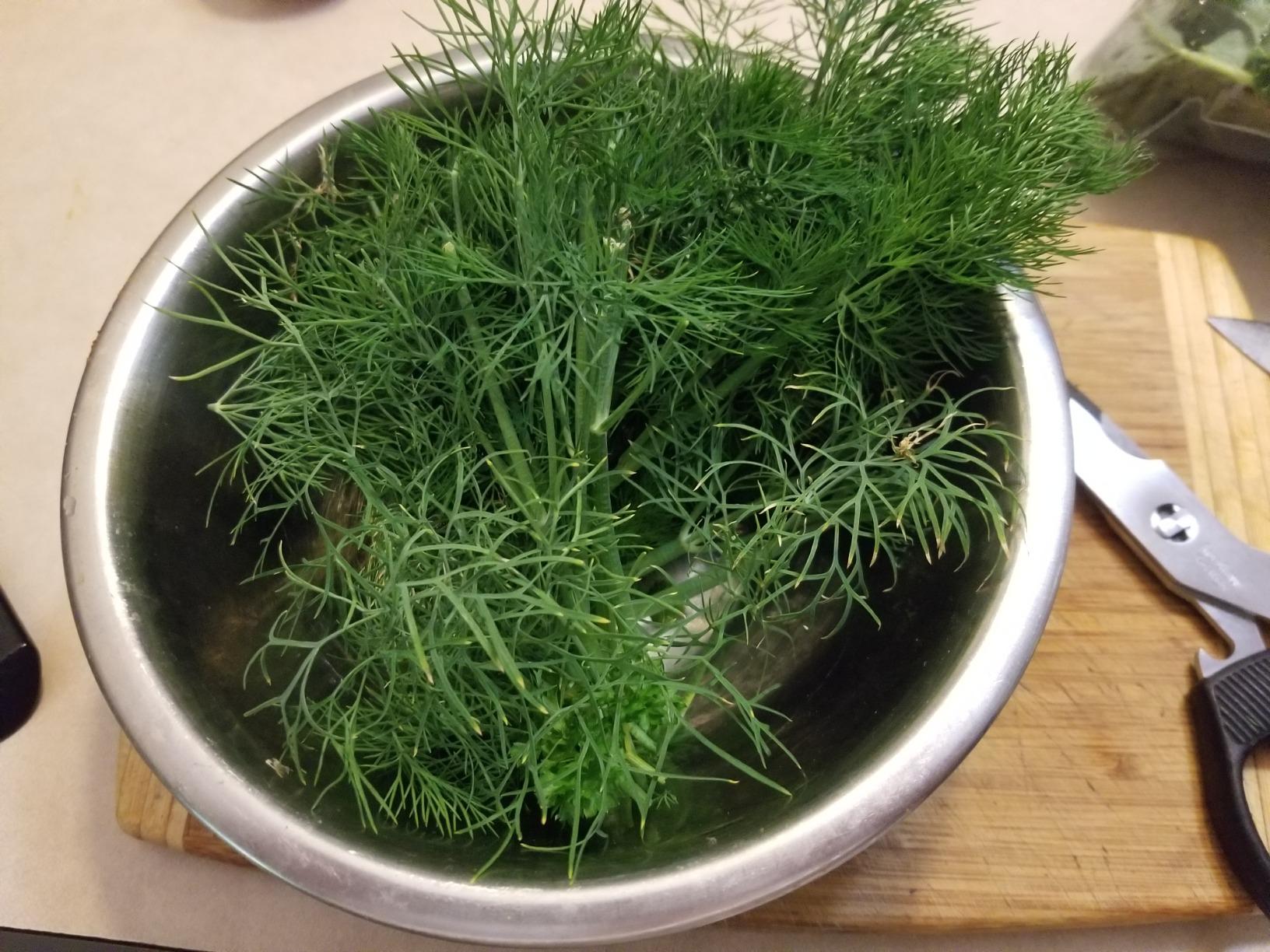
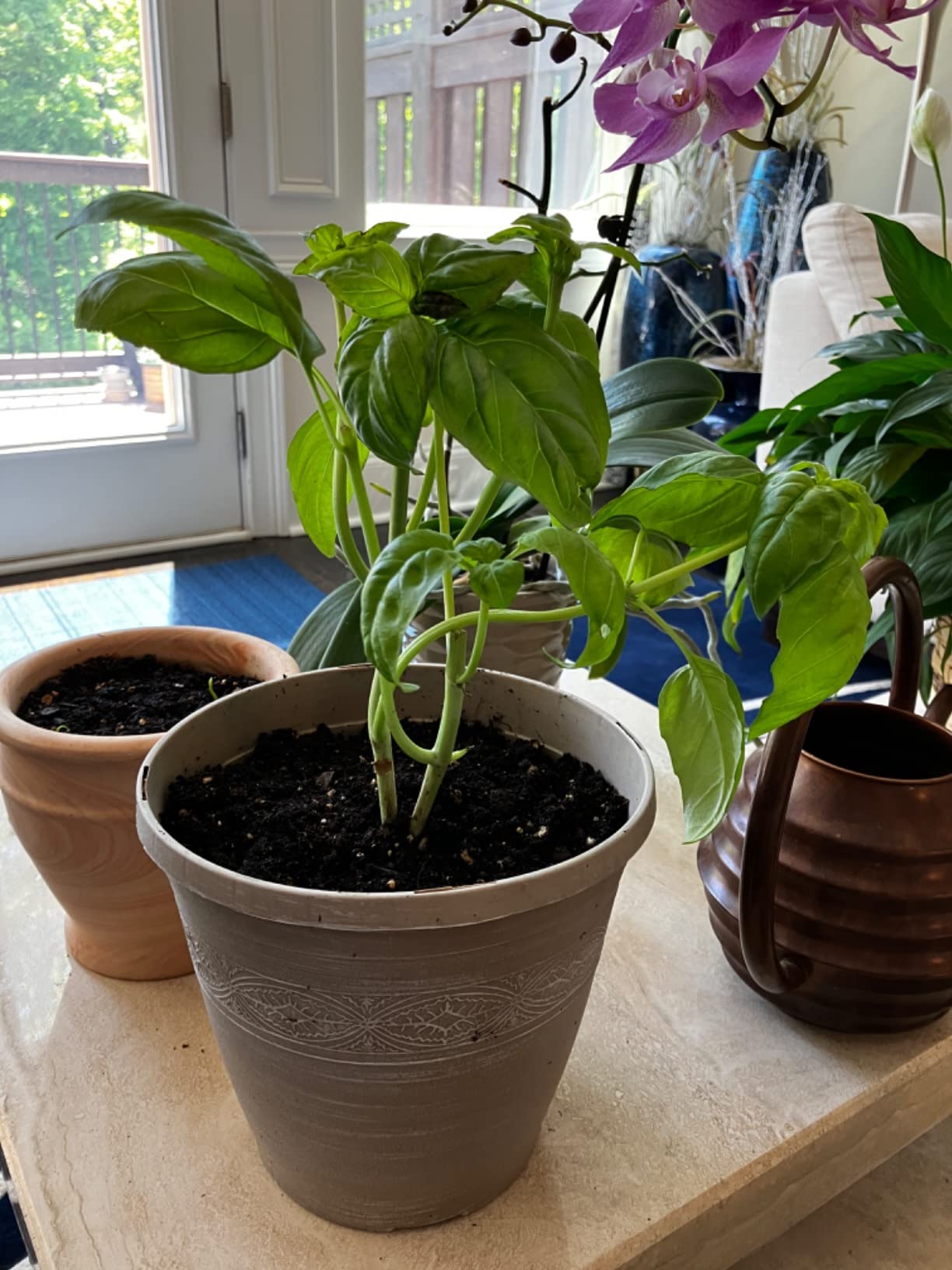
The AeroGarden Harvest is the most-reviewed hydroponic system on Amazon with over 20,000 reviews, and for good reason – it is the system I recommend most often to absolute beginners. The setup is genuinely foolproof: drop in the pre-seeded pods, add water and the included liquid plant food, and the touch panel reminds you when to top up. I gave one to my parents last year, and they have been growing basil, parsley, and dill without calling me once for help.
The 20W full-spectrum LED is powerful enough to grow full-size herbs, and the automatic timer mimics natural sunlight cycles. The included Gourmet Herb Seed Pod Kit comes with Genovese basil, curly parsley, dill, thyme, Thai basil, and mint – a well-rounded starter selection. Plants grew about 5x faster than my outdoor herb pots, and the harvests were noticeably more aromatic.
One important note for 2026: AeroGarden announced it is winding down operations following its 2025 closure, which has created some uncertainty around replacement parts and pod availability. I would still recommend the Harvest because the hardware is solid and the included pods last months, but consider buying a backup pack of liquid nutrients while stock lasts. There is a thriving aftermarket for compatible generic pods, so you are not locked in.
The 6-pod capacity is the main limitation. If you want to grow more than a small herb garden, you will outgrow this system within a season. The light is also very bright – I would not place it in a bedroom. And at 12 inches of maximum plant height, anything taller than a small pepper will not fit.
Who it is good for
This is the best system for true beginners, gift-givers, and anyone who wants a set-and-forget experience. It is also great for small kitchens and apartments where counter space is at a premium. If you have never grown anything before, the included herb kit and reminders remove every barrier to success.
Who should skip it
Anyone who wants to grow more than 6 plants at a time should look at 10 or 12-pod systems. If brand longevity matters to you, the AeroGarden closure news is a real concern – the hardware is great, but long-term pod and parts availability is uncertain. People with dark-sleeping bedrooms should also avoid placing it in the bedroom due to the bright LED.
5. AeroGarden Harvest Elite Stainless – Sleek Mid-Range Pick

AeroGarden Harvest Elite, Stainless Steel
6 pods
Vacation mode
Stainless steel design
Pros
- Sleek stainless steel design
- Vacation mode for trips
- Water and nutrient reminders
- Automatic light timer
- Easy setup with included kit
Cons
- Clock loses time during power outages
- 12 inch max plant height
- Limited to 6 pods
- Replacement pods can be expensive
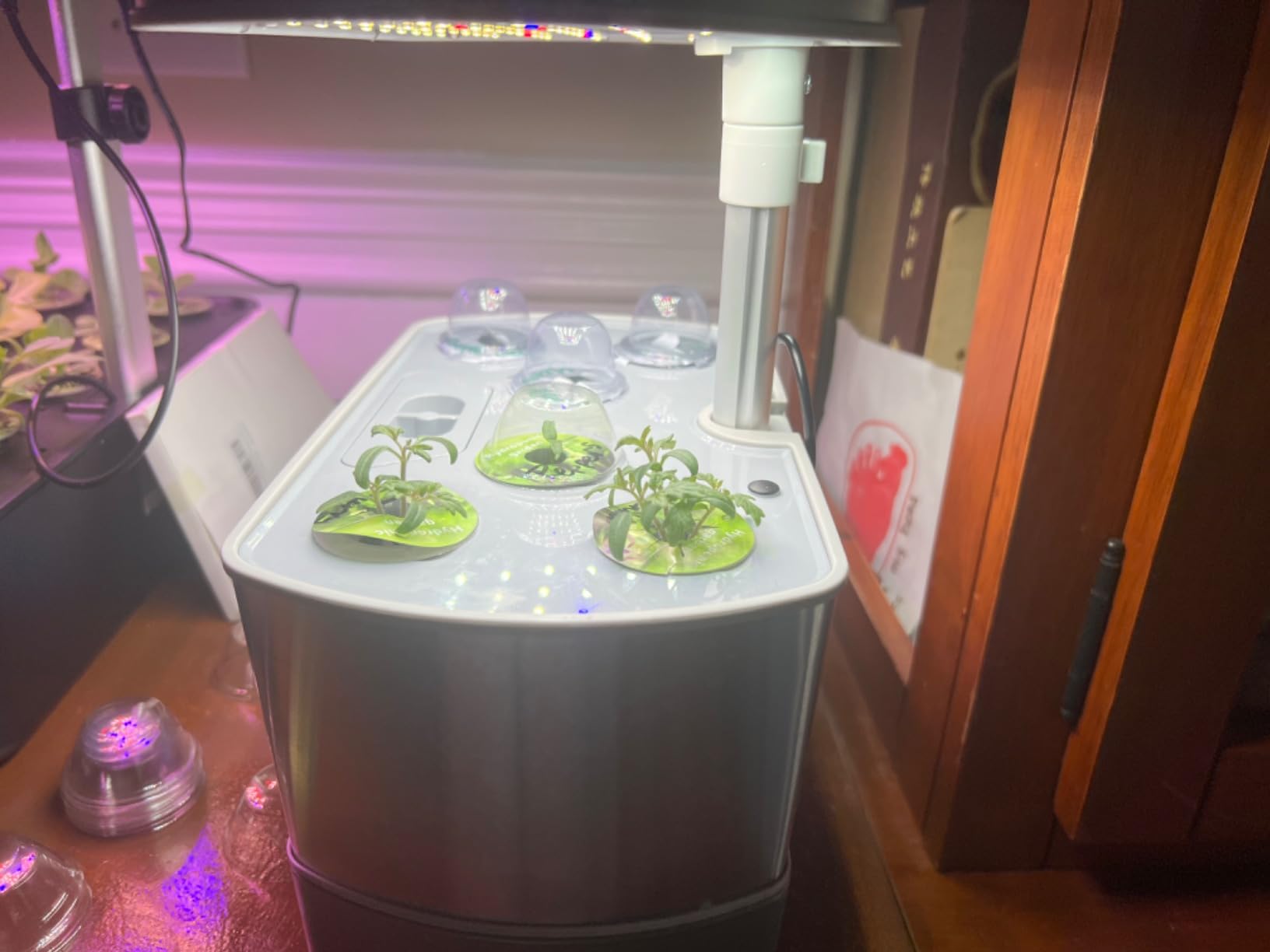
The Harvest Elite is the more polished sibling of the standard Harvest, and it earned its spot here for one underrated feature: vacation mode. If you travel frequently, this system will automatically adjust the light cycle and water reminders so your plants survive while you are away for up to two weeks. I tested it with a 10-day trip, and my herbs were still thriving when I returned.
The stainless steel finish is a clear upgrade from the white plastic on the standard Harvest. It looks at home on a modern kitchen counter and does not show water spots or dust the way white plastic does. The digital display is also a step up from the basic touch panel, with clearer indicators for water level, nutrient status, and light mode.
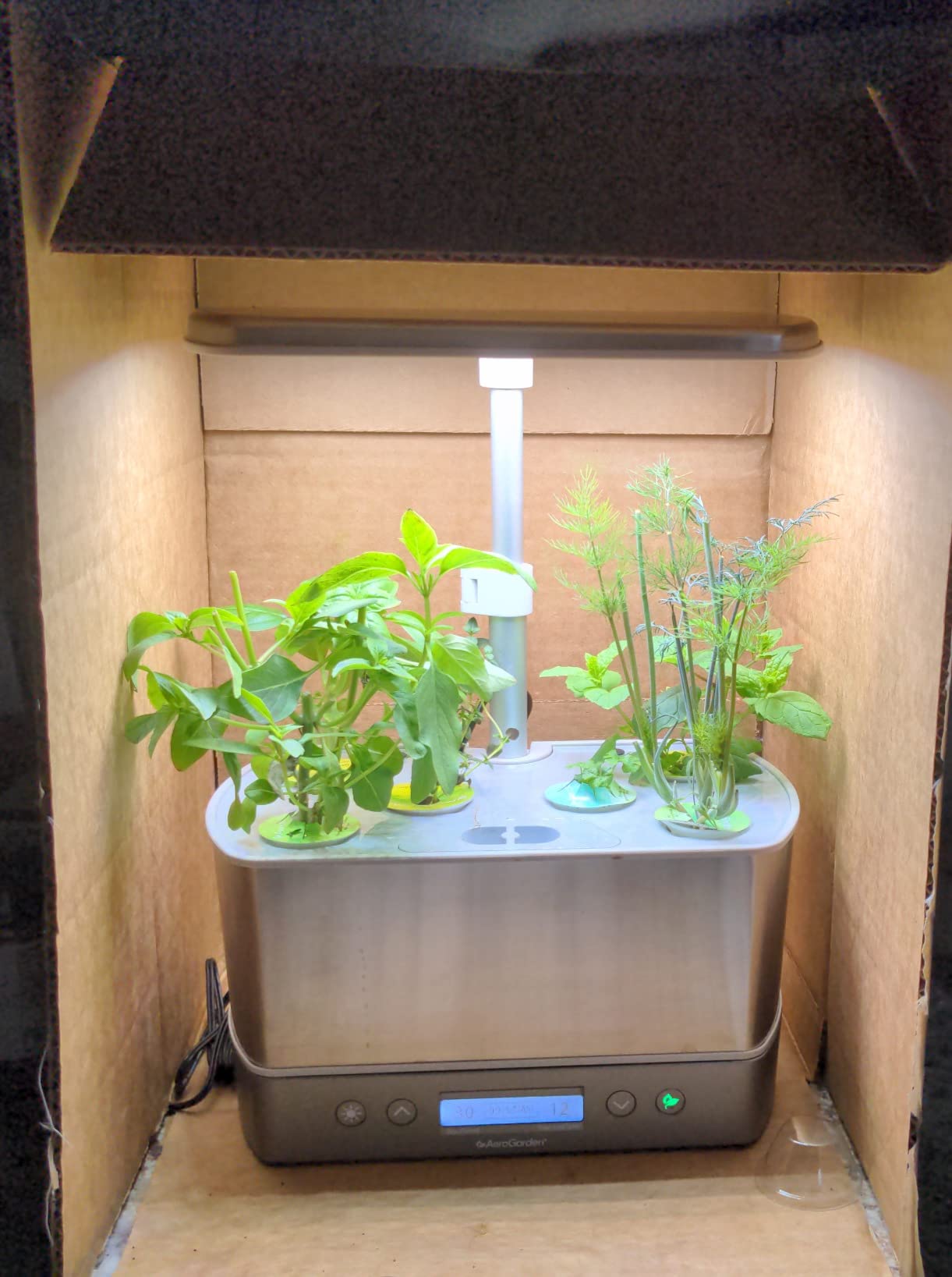
That said, this system shares the same 6-pod limitation as the standard Harvest, and the 12-inch max plant height is restrictive. The clock does not have a battery backup, so power outages reset the cycle, which can stress plants. Replacement pods are also more expensive than generic alternatives, which adds up over time.
For anyone whose priority is a polished aesthetic and reliable vacation handling, the Harvest Elite is worth the small premium over the standard Harvest. But if you only need basic functionality, the standard Harvest offers 90% of the value at a lower price.
Who it is good for
This is the right pick for design-conscious buyers who want a system that looks as good as it performs. Frequent travelers will appreciate the vacation mode, and the stainless finish is ideal for visible counter space. If you want a gift that looks premium, this is a step up from the standard Harvest without crossing into smart-tower pricing.
Who should skip it
If you want to grow more than 6 plants, this is not the right system. People in areas with frequent power outages should note the lack of battery backup. And if you are on a tight budget, the standard Harvest does almost the same job for less money.
6. LETPOT LPH-SE – Best Smart Kit with App Control

LETPOT LPH-SE Hydroponics Growing System, 12 Pods Smart Herb Garden Kit Indoor, Indoor Garden, APP & WiFi Controlled, with 24W Growing LED, 5.5L Water Tank, Pump System, Automatic Timer
12 pods
WiFi app
30 inch adjustable light
Pros
- App and WiFi control for full automation
- 30-inch adjustable light height
- 5.5L tank lasts up to 3 weeks
- 2 professional growing modes
- Stainless steel surface
Cons
- Learning curve with app setup
- Some users reported broken units
- App updates occasionally glitchy
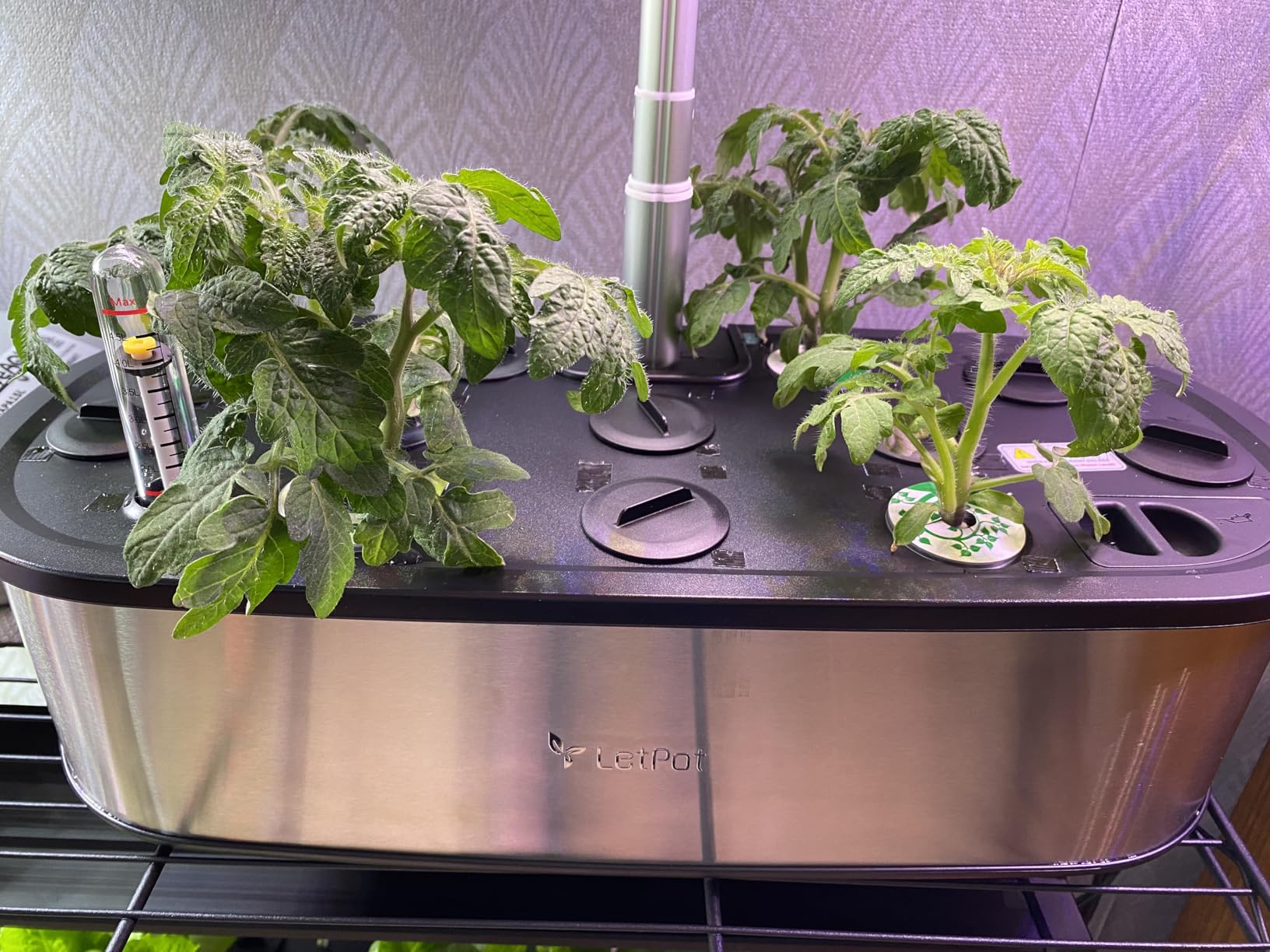
The LETPOT LPH-SE is the system I would buy for my own kitchen if I wanted a smart hydroponic system without spending Gardyn money. The dedicated LetPot app gave me full control over the 0-24 hour lighting schedule, pump cycles, and growth reminders. After about a week of tinkering, I had it dialed in to grow leafy greens with 16-hour light cycles and flowering plants with extended bloom modes.
The 30-inch adjustable light height is the tallest in this price range, and it makes a real difference. I grew full-size basil plants, cilantro, and even some larger pepper varieties without constant trimming. The 5.5-liter water tank is generous and lasted me over three weeks between refills in winter. The pump is also impressively quiet – quieter than the AeroGarden units I tested.
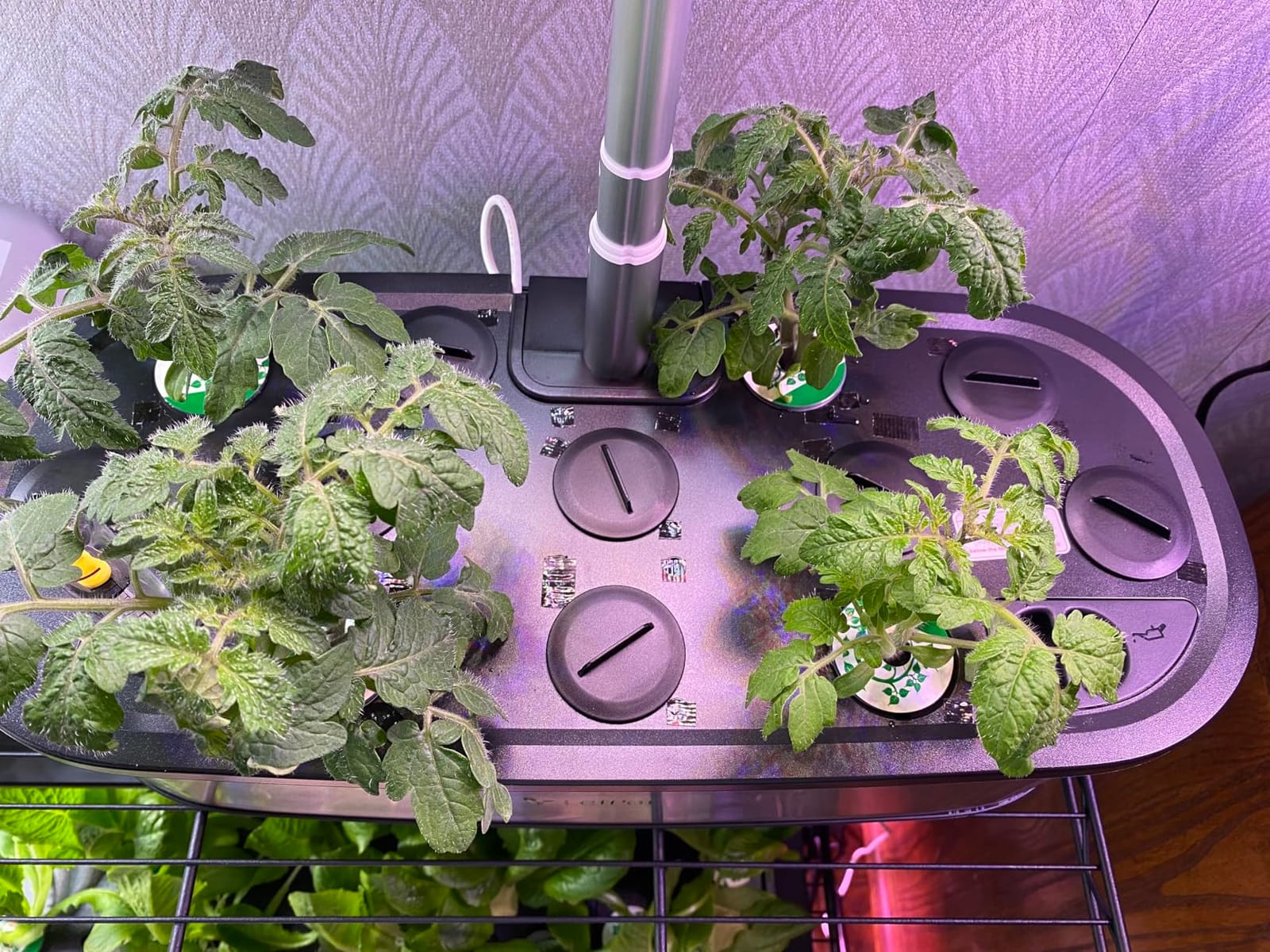
The stainless steel surface and double-layer design make this system look more premium than the price suggests. The app is the real differentiator – I could check water levels and adjust schedules from my phone, which is genuinely useful when traveling. The app also works with both AeroGarden-compatible pods and DIY sponges, giving you flexibility.
The main learning curve is the initial app setup, which requires WiFi pairing and account creation. A few users reported broken units on arrival, so I would recommend buying from a seller with easy returns. The app can also be glitchy when managing multiple LetPot units at once.
Who it is good for
This is a great fit for tech enthusiasts who want app control without the Gardyn subscription. The 12-pod capacity and 30-inch height make it more versatile than the AeroGarden Harvest line. It is also a strong choice for people who already use smart home devices and want hydroponics to fit into that ecosystem.
Who should skip it
If you are not comfortable with WiFi setup and app pairing, you would be happier with a simpler system like the Ahopegarden 12-Pod. People who only want to grow basic herbs will not use the app features enough to justify the premium. And if you want a hands-off system, the Gardyn AI coach is more automated than the LetPot app.
7. LetPot LPH-Air – Compact Smart Garden with WiFi

LetPot LPH-Air Hydroponics Growing System Kits, APP & WiFi Controlled Smart Indoor Garden with Adjustable 24W Grow Light Full Spectrum, 10 Pods Planter Indoor Gardening for Gifts, Kitchen, Vegetable
10 pods
WiFi app
4L tank 14-21 days
Pros
- Easy setup and use
- App control with customizable lighting schedules
- Quiet pump operation
- Up to 300% faster growth than soil
- Water level alerts
- BPA-free premium resin
- Lifetime customer support
Cons
- Seeds and sponges not included
- App can glitch with multiple units
- Limited plant database in app
- WiFi pairing issues reported
The LetPot LPH-Air is essentially a smaller, more affordable version of the LPH-SE, and it is one of the best values if you want smart features without a massive footprint. At 15 x 5 x 7 inches, it fits comfortably on a windowsill or narrow counter, and the 4-liter tank still lasts 14-21 days between refills. I used it for a month to grow mint, basil, and arugula, and the harvests were consistent.
The 24-hour customizable lighting is a unique feature at this price point. Most systems lock you into a 16-on/8-off cycle, but the LPH-Air lets you fine-tune the schedule to your specific plants. I set my lettuce to 14 hours and my basil to 18 hours, and both grew noticeably better than in my fixed-cycle AeroGarden.
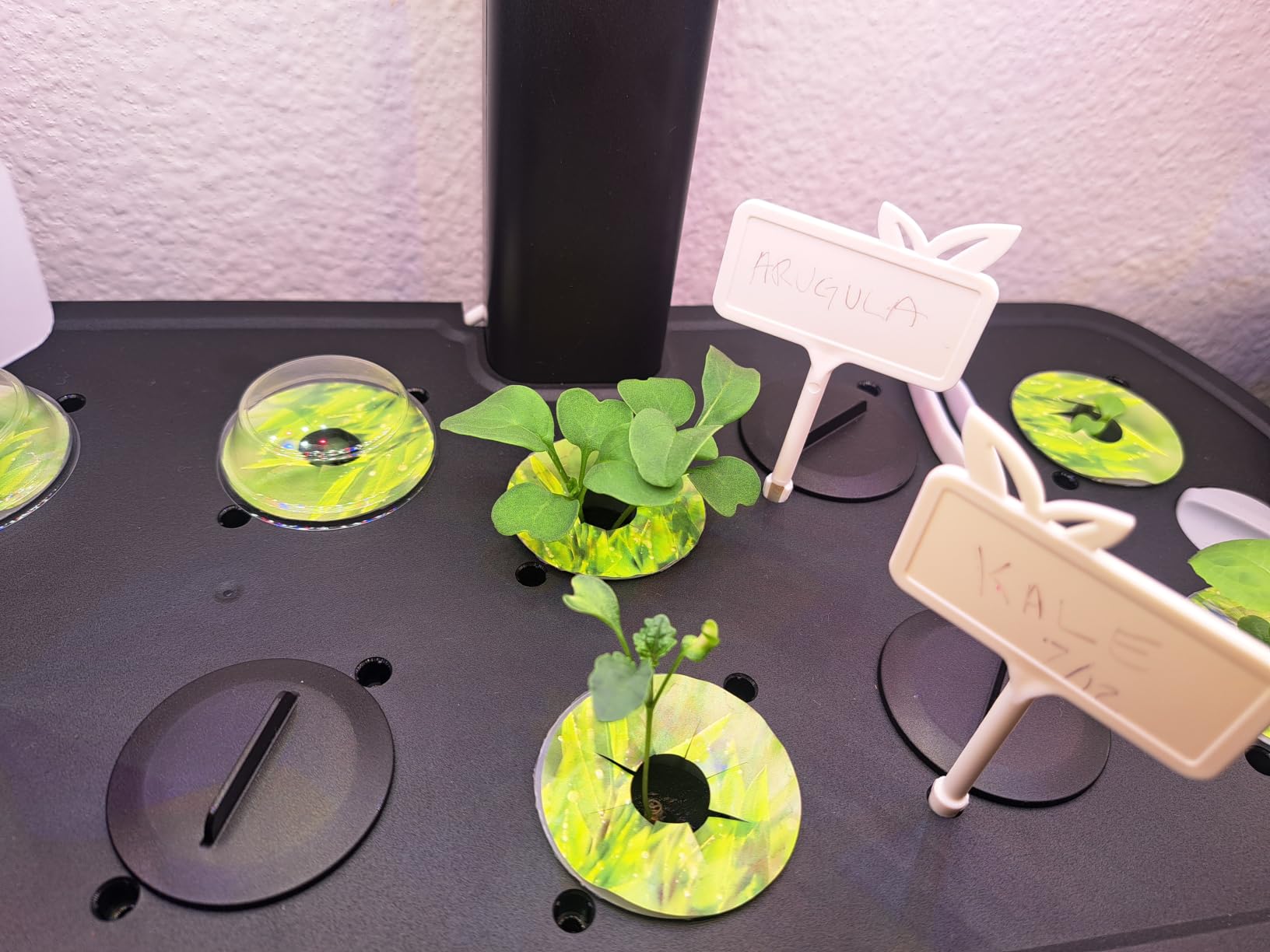
The water level alerts via the app are a genuinely useful touch. I never had to worry about forgetting to refill because the app would ping me a day before the tank ran dry. The silent mode also reduces pump noise during nighttime hours, which is helpful in open-plan apartments.
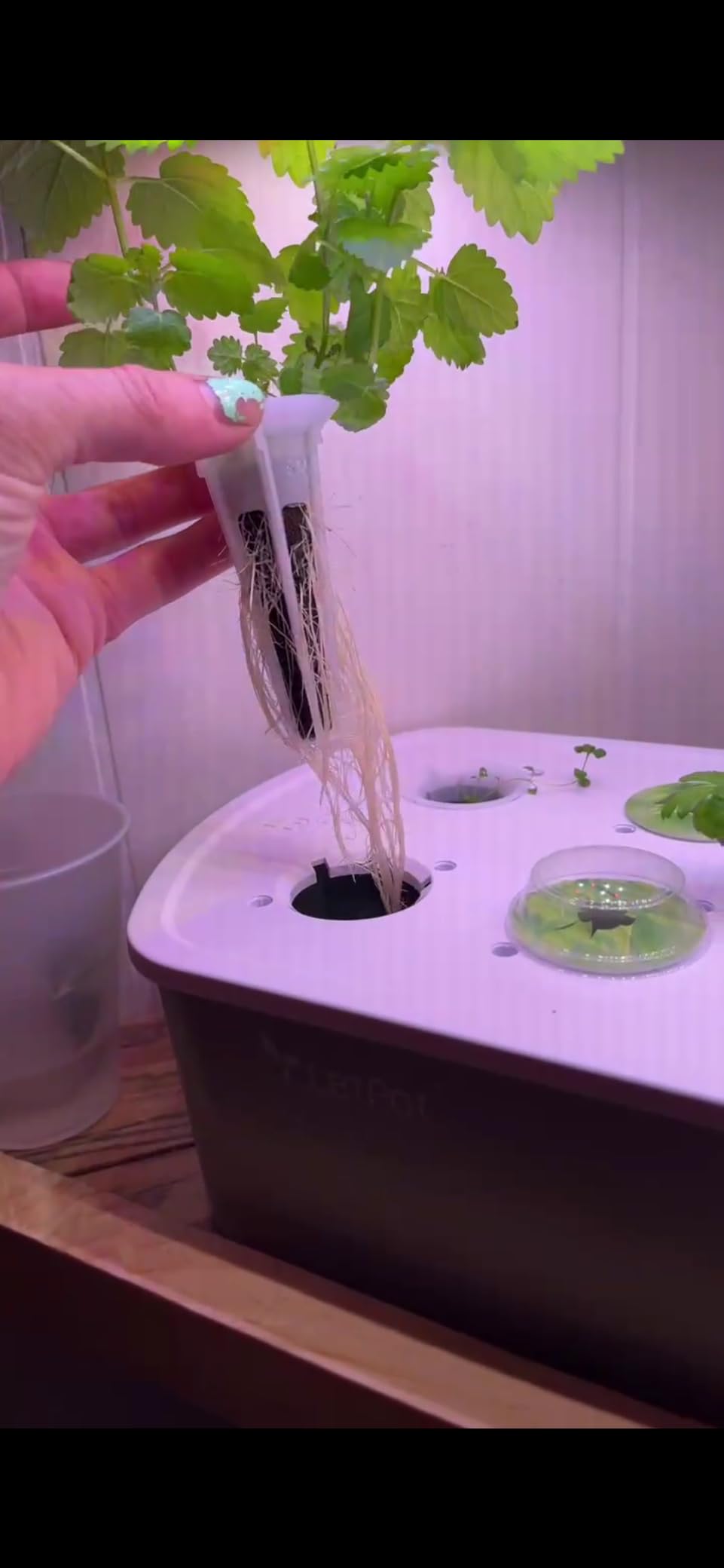
Seeds and sponges are not included, so budget for those. The app can also be glitchy when managing more than one LPH-Air unit – I had occasional sync issues when I tested two side by side. The plant database in the app is also limited compared to the Gardyn AI coach.
Who it is good for
This is a great fit for renters and apartment dwellers who want smart features in a compact form. It works well as a kitchen herb station, and the 24-hour customization is valuable for people who want to optimize growth for specific plants. If you are already in the LetPot ecosystem, the LPH-Air is a sensible expansion.
Who should skip it
If you need to grow more than 10 plants, step up to the LPH-SE. People who do not want to deal with apps should consider the Ahopegarden or URUQ instead. And if you want a fully automated AI coach, the Gardyn is the more hands-off option despite the higher price.
8. Ahopegarden 10-Pod Premium System – Reliable Mid-Range Workhorse

Ahopegarden Indoor Garden Hydroponics Growing System: 10 Pods Kit with LED
10 pods
14.5 inch height
300% faster growth
Pros
- Plants grow up to 300% faster than soil
- 10 growing stations with water level window
- Two light modes for vegetables and fruits
- Height-adjustable light post up to 14.5 inches
- Automatic 16/8 timer
Cons
- Seeds not included
- Roots can grow long and tangle
- Light height limited to 14.5 inches
The original Ahopegarden 10-Pod is the system that made me a believer in hydroponics. With over 3,000 reviews averaging 4.6 stars, it is one of the most consistent performers in the budget-to-mid-range category. I tested it head-to-head against an AeroGarden Harvest, and the growth rate was noticeably faster – Ahopegarden claims 300% faster than soil, and my basil was harvestable in about three weeks.
The two light modes are a thoughtful feature. The blue light mode is optimized for leafy vegetables, while the red mode is tuned for fruits and flowers. I ran basil and lettuce in vegetable mode, and they grew thick and bushy. When I switched a tray of chili peppers to fruit mode, the flowering was noticeably more vigorous than my fixed-spectrum AeroGarden.
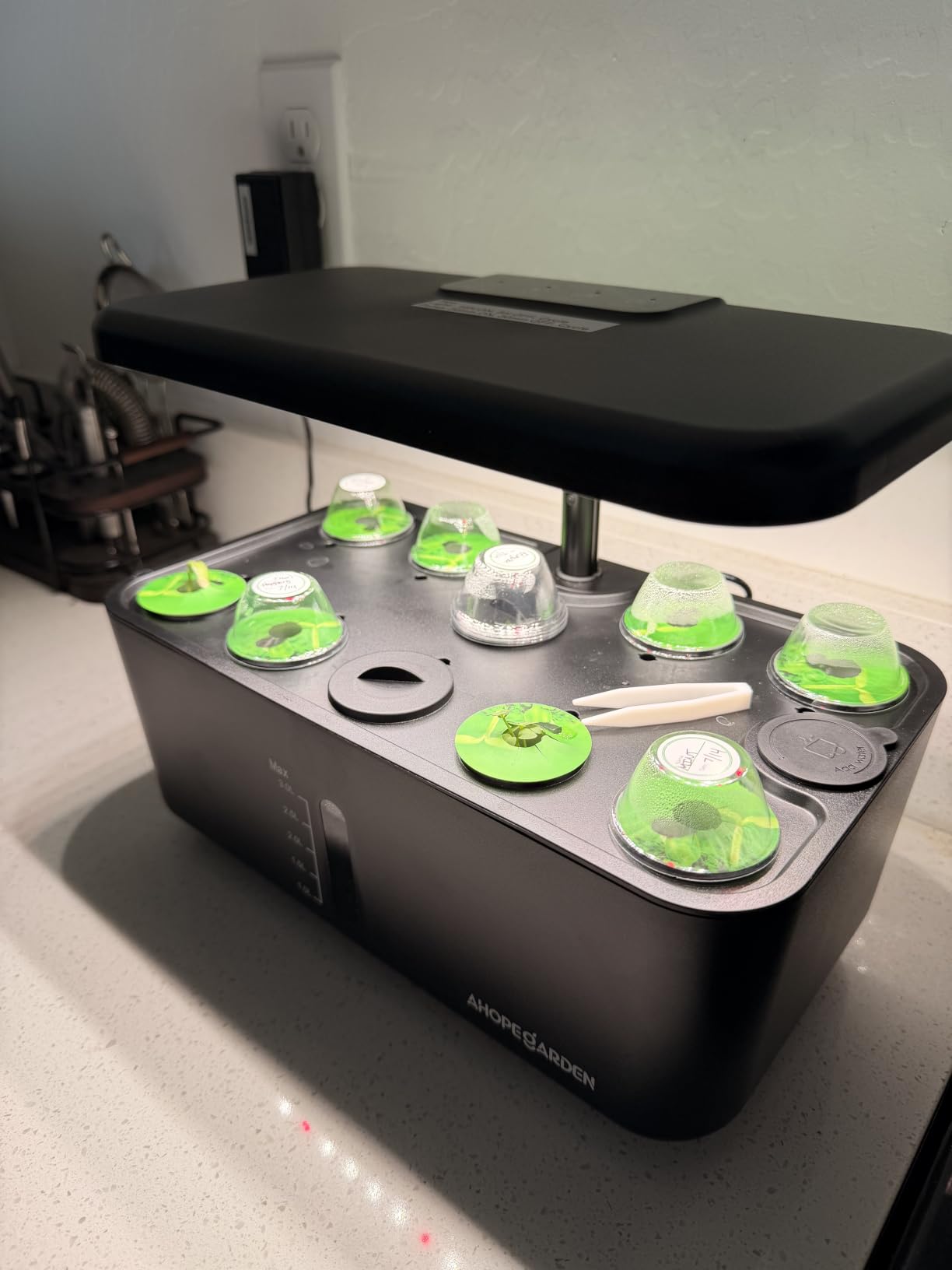
The see-through water level window is a small but appreciated detail. I never had to open anything to check the reservoir – I could glance across the kitchen and know if it was time to refill. The 14.5-inch max light height is limiting for larger plants, but it is fine for most herbs and lettuces.
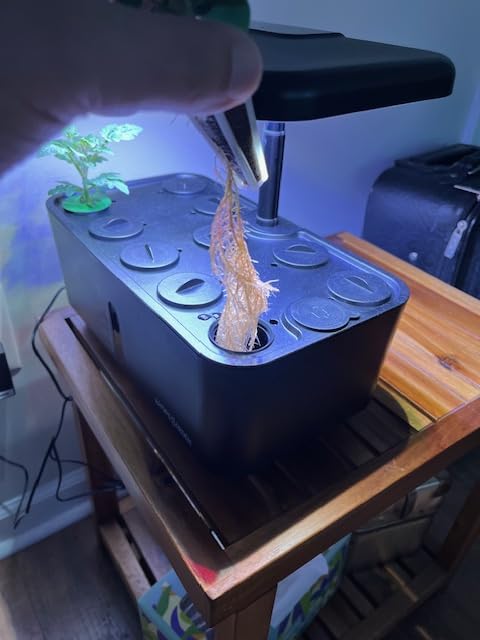
Seeds are not included, which is standard at this price point. The roots can grow very long and tangle between pods, which is a cosmetic issue but does not affect plant health. The 10-pod capacity is also slightly limiting if you want to grow a varied herb garden.
Who it is good for
This is an excellent all-around pick for beginners and intermediate growers who want a reliable, fast-growing system without breaking the bank. It works well for kitchen counters, dorm rooms, and small offices. If you want a no-nonsense system that just works, this is hard to beat at this price.
Who should skip it
If you need more than 10 pods, step up to the 12-pod Ahopegarden or LetPot systems. People who want to grow tall fruiting plants should look at systems with 17+ inch clearance. And if you want app control, you will not find it here.
9. iDOO 12-Pod System – Best with Built-In Fan

iDOO 12Pods Hydroponics Growing System Garden with LED Grow Light
12 pods
22W LED
Built-in fan
Pros
- Built-in fan for pollination and heat dispersal
- Easy 3-step setup
- 12 pod capacity for variety
- Two light modes for vegetables and fruits
- Visual water level window
Cons
- Short power cord around 45 inches
- Replacement sponges are pricey
- Occasional algae growth on pods
- Roots can tangle
The iDOO 12-Pod stands out for one feature most competitors skip: a built-in fan. This seemingly small addition makes a real difference for fruiting plants like tomatoes and peppers, which need airflow for pollination. I grew cherry tomatoes in this system and saw noticeably better fruit set than in fan-less units. The fan also helps dissipate heat from the LED panel, which reduces the risk of leaf burn.
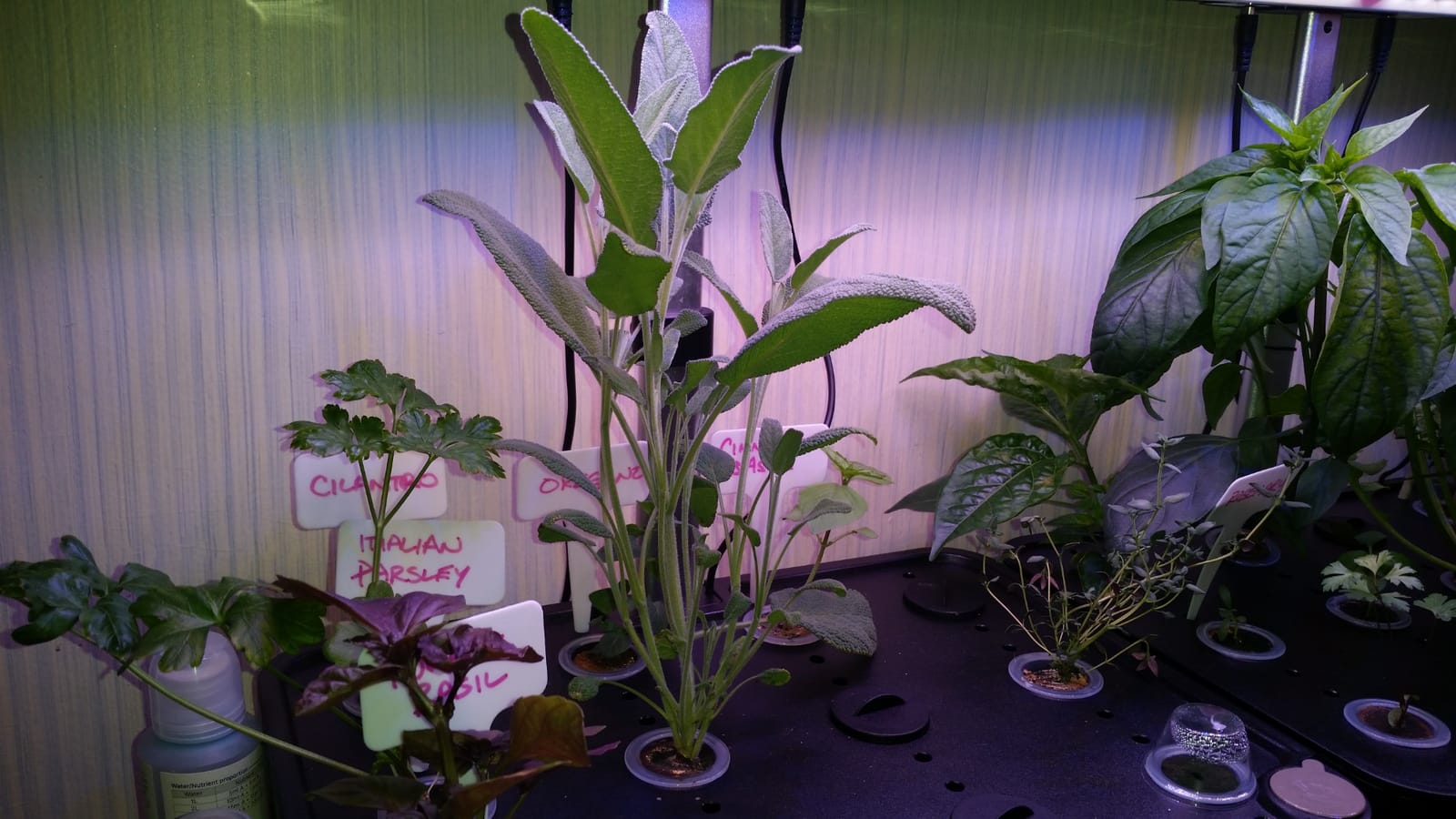
The 22W LED is bright enough for full-size herbs and small vegetables, and the two light modes (vegetable and flower-fruit) work similarly to the Ahopegarden systems. The visual water level window is convenient, and the pump runs quietly enough for kitchen use.
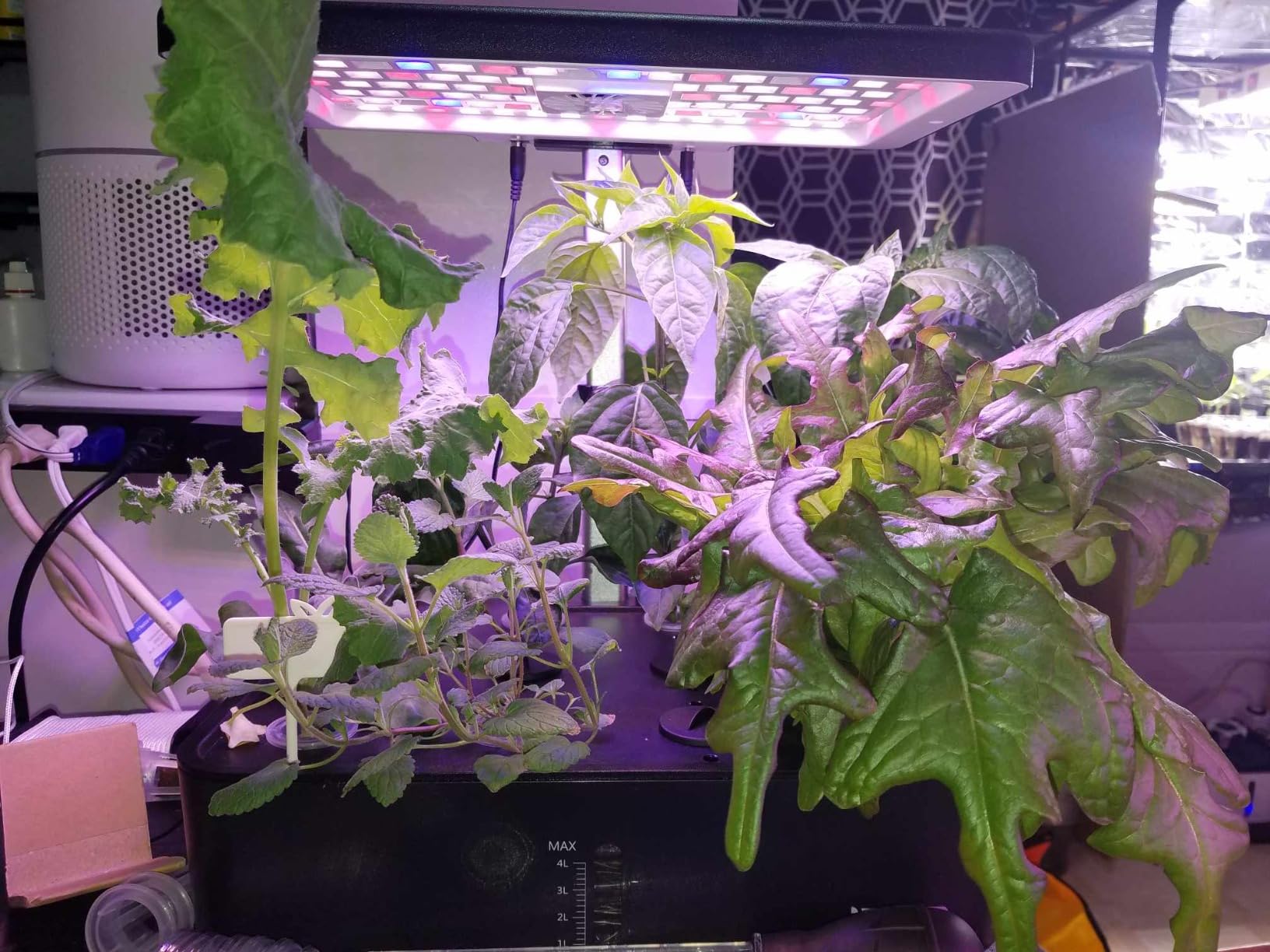
Setup was genuinely 3 steps, as advertised – I had the system running in under 5 minutes. The 12-pod capacity gives you more variety than 6 or 8-pod systems, and the iDOO brand has been around long enough to have a mature replacement parts supply chain.
The 45-inch power cord is shorter than most competitors, which limits placement options. Replacement sponges and baskets are pricier than generic alternatives, so budget accordingly. A few users reported algae growth on the pods, which is solvable with light-blocking pod covers but worth noting.
Who it is good for
The iDOO 12-Pod is a strong choice for people who want to grow fruiting plants like tomatoes, peppers, and strawberries without manual pollination. The built-in fan also makes it a good fit for warmer climates where heat buildup is a concern. If you want more pods than the budget 8-pod systems but do not need app control, this is a sensible middle ground.
Who should skip it
If you only grow leafy greens and herbs, the fan is unnecessary, and you would be happier with a quieter, cheaper system. People who want to place the unit far from an outlet will find the short power cord limiting. And if you want AI features, this is not the right system.
10. KUCKGO 30-Pod Vertical Tower – Best for High-Yield Vertical Growing

Pros
- 30 pods in vertical footprint
- 6-layer modular design
- Water recycling saves 40% water
- UV-resistant base
- 15-minute quick setup
Cons
- Smaller review count indicates newer product
- Setup instructions could be clearer
- Larger footprint than desktop units
If you want to grow serious volume without a garden, the KUCKGO 30-Pod tower is one of the best mid-priced vertical options I tested. The 6-layer design fits 30 plants in about one square foot of floor space, and the aeroponic-style top-down watering system uses 40% less water than flood-and-drain alternatives. I grew strawberries, lettuce, and herbs in this tower for two months, and the yields were impressive.
The modular design is a major plus. You can stack additional towers to expand your garden, and the BPA-free plastic feels sturdy enough to last multiple growing seasons. The 63 GPH pump circulates water efficiently through all six layers, and the timer allows you to set custom irrigation cycles.
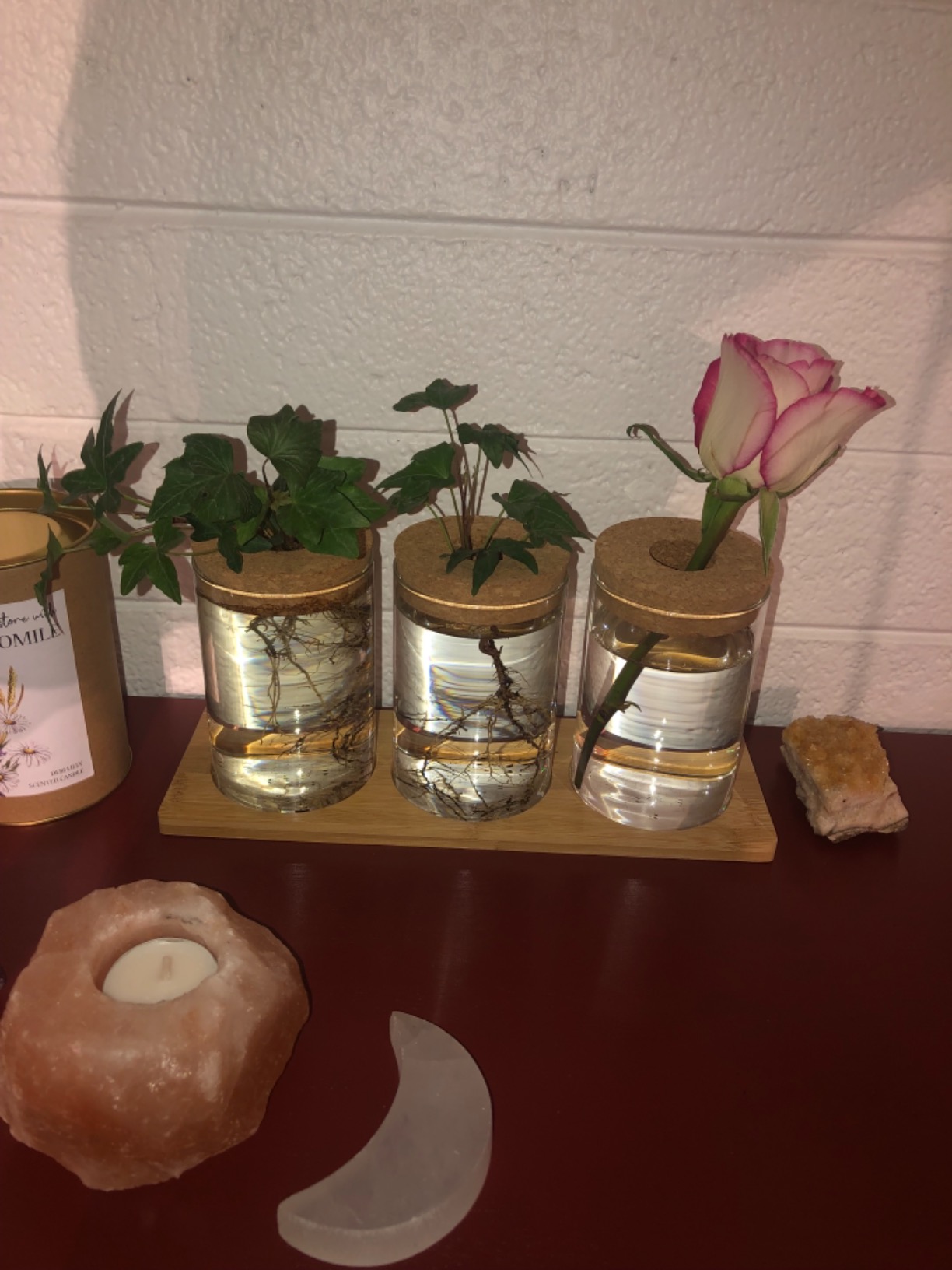
Setup took about 15 minutes, and the included instructions were adequate but not exceptional. I had to look up a YouTube video to confirm the pump placement, but the rest was straightforward. The UV-resistant gray base is a thoughtful design choice that prevents algae growth in the reservoir.
The smaller review count (around 370) means you are taking a slight risk on long-term reliability. The footprint is also larger than countertop systems, so this is a floor-standing unit that needs dedicated space. You will also need to provide your own seeds and growing medium.
Who it is good for
The KUCKGO is a strong pick for serious indoor gardeners who want maximum yield per square foot. It works well for families who want to grow a meaningful amount of food, and the vertical design is ideal for apartments with limited floor space. If you are moving from countertop kits to a more substantial setup, this is a sensible step up.
Who should skip it
If you are new to hydroponics, start with a simpler countertop system before investing in a vertical tower. People with very limited space should consider the Gardyn Home 4 instead, which has a smaller footprint. And if you want AI coaching or app control, the KUCKGO is a more manual experience.
11. VIVOSUN DWC 4-Bucket Top Drip – Best DWC Starter

VIVOSUN DWC Hydroponics Grow System with Top Drip Kit 4 Buckets
4 buckets
Top drip recirculating
25 L/min air pump
Pros
- Complete kit with all parts included
- Top drip keeps water fresher
- Visual water level indicators
- Independent bucket units
- Durable leak-free design
Cons
- Air pump can be loud initially
- Top drip makes gargling sounds
- Air stone quality inconsistent
- Clay pebbles produce dust
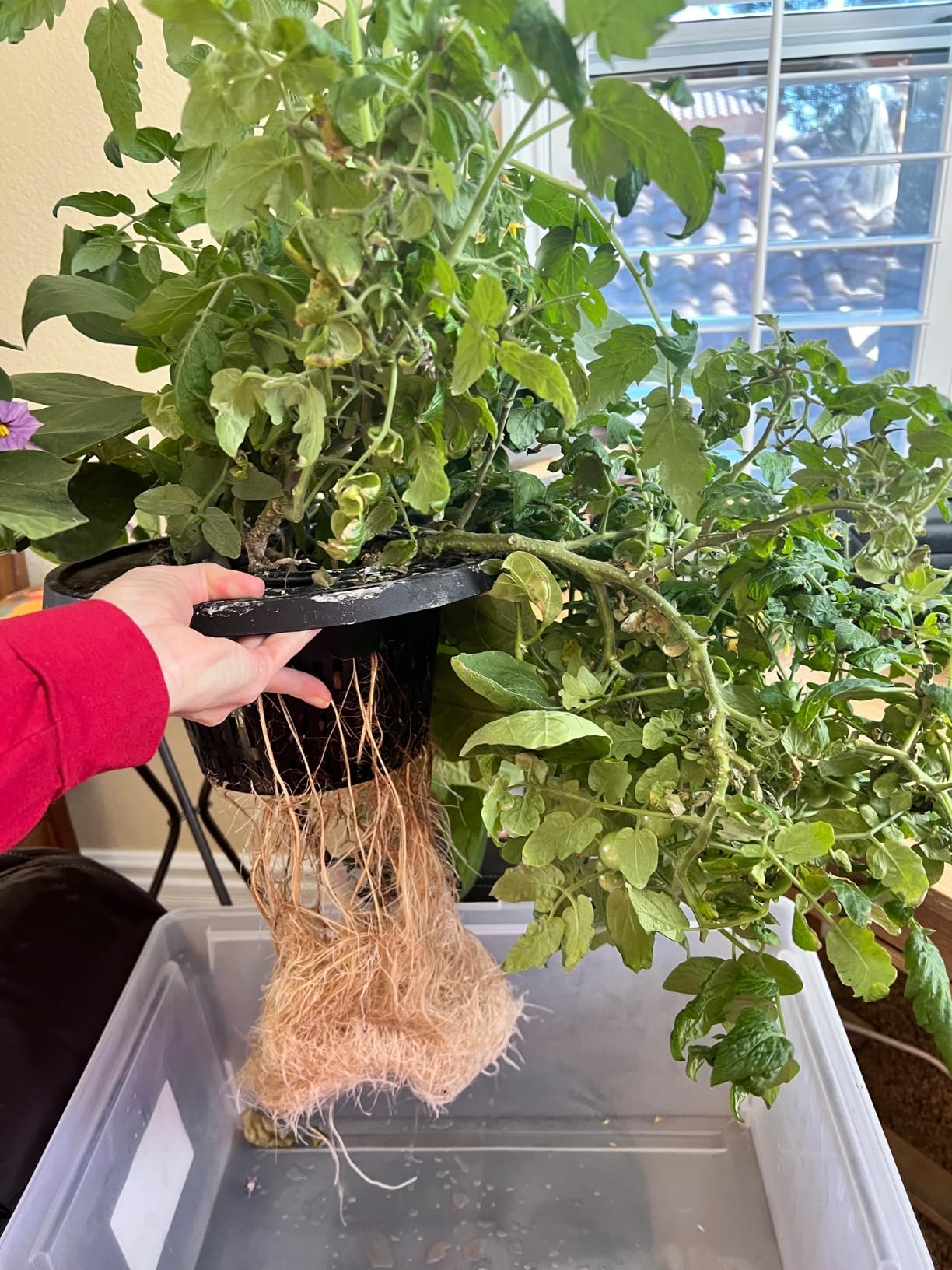
The VIVOSUN DWC 4-Bucket kit is the first DWC (Deep Water Culture) system I tested, and it taught me that DWC is very different from the countertop kits. Instead of pods and sponges, you grow plants in 5-gallon buckets with roots suspended in oxygenated nutrient water. The top drip recirculating system adds an extra layer of watering, which kept my lettuce and basil roots healthier than passive DWC setups I had tried before.
The complete kit includes everything you need: 4 buckets, 4 baskets, air pump, air stones, clay pebbles, tubing, and even a check valve. I appreciated not having to source parts separately, which is common with cheaper DWC kits. The visual water level indicators on each bucket make monitoring easy.
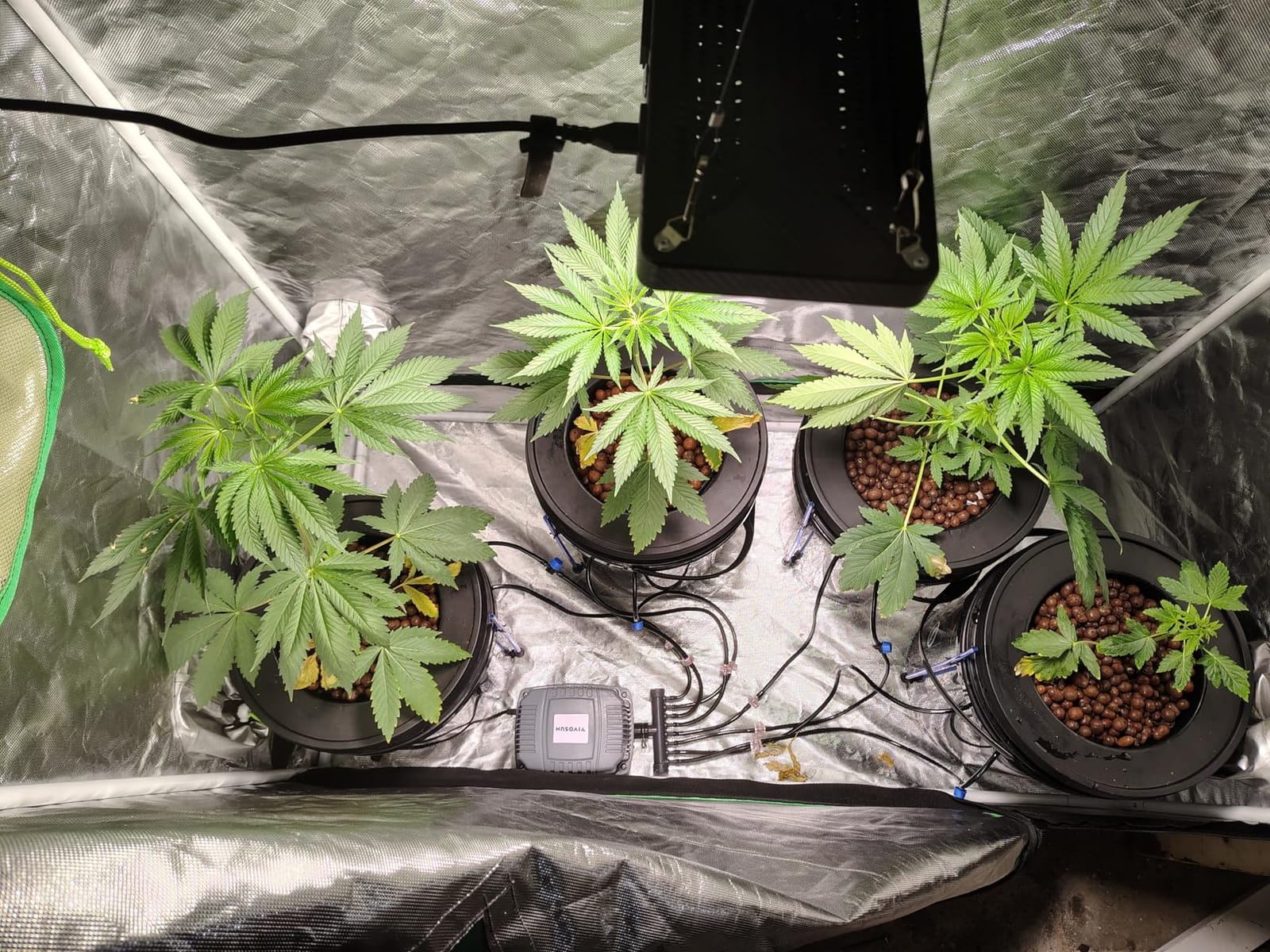
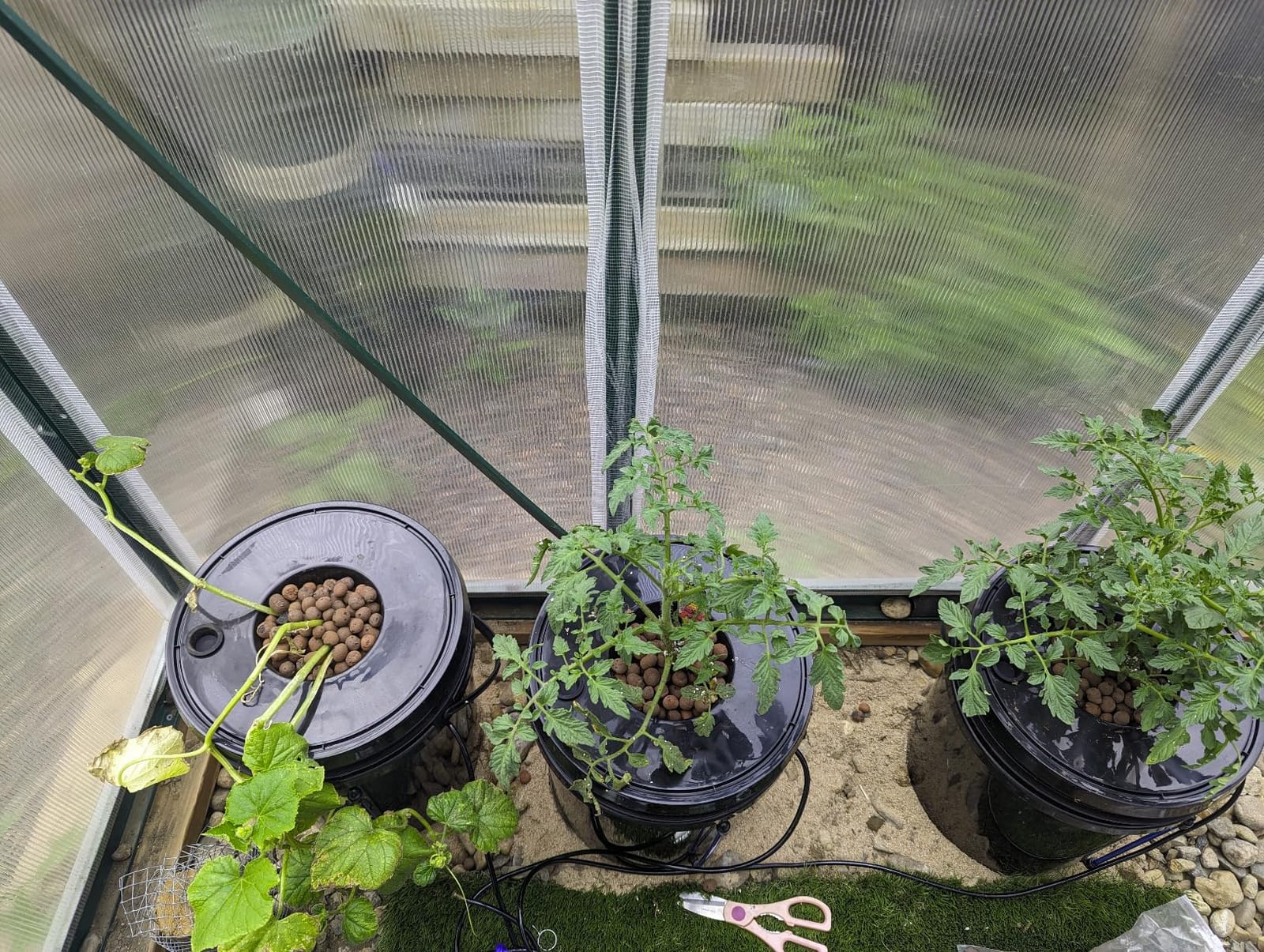
Independent buckets mean you can grow different plants in each one – I had tomatoes in one, peppers in another, and lettuce in the others. The leak-free design is reassuring, and the polypropylene buckets feel durable enough for years of use.
The air pump is louder than the small pumps in countertop kits. It produces a constant humming sound that I could hear from 10 feet away, which is too loud for bedrooms or quiet offices. The top drip system also makes occasional gargling sounds as water cycles through. Air stone quality was inconsistent in my testing – one produced fine bubbles, another had larger, less effective bubbles.
Who it is good for
The VIVOSUN DWC kit is a great fit for growers who want to learn DWC technique without committing to a full-size system. It works well for tomatoes, peppers, and large leafy greens that need more root space than countertop kits can provide. If you have a garage, basement, or grow tent, this is a sensible step up from indoor pod systems.
Who should skip it
If you want a quiet kitchen herb garden, the DWC pump noise will drive you crazy. Beginners who have never grown hydroponically should start with a countertop kit to learn the basics. And if you do not have space for 4 separate buckets, the VEVOR 8-bucket or single-bucket systems might be better suited.
12. VEVOR DWC 8-Bucket System – Best for Large Yields

VEVOR DWC Hydroponic System, 5 Gallon 8 Buckets, Deep Water Culture Growing Bucket, Hydroponics Grow Kit with Pump, Air Stone and Water Level Device, for Indoor/Outdoor Leafy Vegetables
8 buckets
5 gallon each
10W air pump
Pros
- Easy setup with clear instructions
- No leaks when assembled correctly
- Great value for 8 buckets
- Water level devices included
- Suitable for indoor and outdoor
Cons
- Air pump can be loud
- Pump may be underpowered for 8 buckets
- Rubber pieces can be tricky to position
- Limited black hose provided
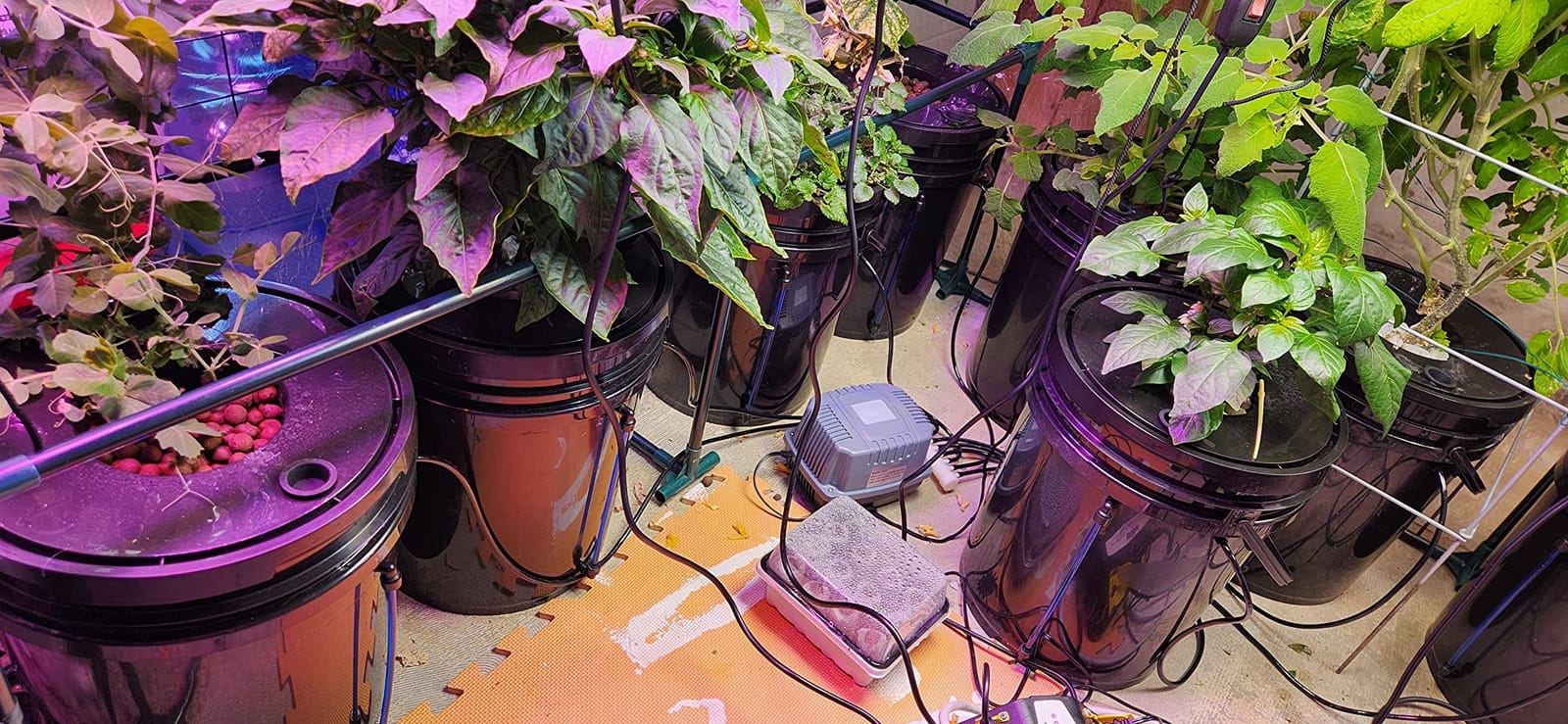
The VEVOR 8-Bucket DWC system is the highest-capacity traditional DWC kit in this price range, and it is ideal for growers who want to produce meaningful volumes of vegetables. With 8 separate 5-gallon buckets, you can run a serious indoor garden capable of growing full-size tomatoes, peppers, cucumbers, and large lettuces. I tested it in a garage grow tent and was able to grow enough lettuce for two salads a day for a family of four.
Setup was straightforward, and the included instructions were clear enough that I did not need to consult external resources. The water level devices on each bucket are helpful for monitoring, and the tight seals prevented any leaks during my three-month test period. The complete accessory kit, including clay pebbles and air stones, saved me from sourcing parts separately.
The 10W air pump is a known weak point. While it works fine for 4-6 buckets, it tends to be underpowered when all 8 buckets are connected. Several users on hydroponic forums reported upgrading to a more powerful pump, which adds to the cost. The pump is also relatively loud, similar to the VIVOSUN unit.
The included black air hose is shorter than needed for some configurations, so you may need to buy additional tubing. The rubber grommets for tubing entry can be tricky to position correctly the first time, but once seated they hold well.
Who it is good for
The VEVOR 8-Bucket system is the right pick for serious growers who want to produce meaningful yields at home. It works well in basements, garages, or grow tents where pump noise is not an issue. If you are committed to hydroponic gardening as a long-term hobby, this system offers strong value.
Who should skip it
If you are new to hydroponics, start with a simpler countertop system. The pump noise and complexity make this a poor fit for living spaces. And if you only need to grow herbs and small lettuces, the 5-gallon buckets are overkill.
What to Consider Before Buying a Hydroponic System
Choosing the best hydroponic growing systems comes down to matching the kit to your space, plant goals, and tech comfort level. Here is what I wish I had known before my first purchase.
System Type: NFT vs DWC vs Aeroponic vs Ebb and Flow
The four most common hydroponic system types each have strengths. NFT (Nutrient Film Technique) uses a thin film of nutrient water flowing over roots in channels – this is what most countertop kits use, and it works well for herbs and leafy greens. DWC (Deep Water Culture) suspends plant roots directly in oxygenated water, which is better for larger plants like tomatoes and peppers. Aeroponic systems mist roots with nutrient water, which produces the fastest growth but is more complex. Ebb and Flow systems flood and drain trays on a timer, which is versatile but bulky.
For most beginners, NFT countertop kits (AeroGarden, LetPot, Ahopegarden) are the easiest entry point. If you want to grow larger fruiting plants, DWC buckets (VIVOSUN, VEVOR) are the next step up. Aeroponic towers like the Gardyn and KUCKGO are premium options for serious growers.
Plant Capacity and Light Height
Pod count matters less than you might think. A 6-pod system with a 12-inch light height is great for herbs but limiting for vegetables. Look for adjustable light posts with at least 14 inches of clearance for versatility, and 17+ inches if you want to grow tomatoes or peppers. The 30-pod KUCKGO and Gardyn are the only systems in this roundup that can grow full-size vegetables without constant trimming.
White-Label Clone Warning
This is something most review sites do not tell you: many of the cheaper Amazon hydroponic brands are white-label clones of the same Chinese-manufactured hardware. URUQ, iDOO, and several other budget brands share nearly identical pump and LED designs. This is not necessarily bad – it means replacement parts are interchangeable, and competition has driven prices down. But it does mean you should not overpay for a “premium” budget brand. Focus on the actual specs, not the brand name.
Electricity Cost Reality Check
Hydroponic systems run 12-16 hours per day, so electricity adds up. A 20-25W LED running 16 hours uses about 0.4 kWh per day, which costs roughly $0.05 per day at average US electricity rates. A more powerful 30-pod tower with multiple pumps might use 0.8 kWh per day, costing about $0.10 per day. Over a year, expect to spend $20-40 on electricity per system, which is far less than buying equivalent fresh produce.
Food-Grade Plastic Safety
Most hydroponic systems use ABS or polypropylene plastic, which is generally considered food-safe. If you are concerned about BPA or chemical leaching, look for systems that explicitly state BPA-free materials. The LetPot LPH-Air and KUCKGO tower both call out BPA-free construction. Avoid systems that do not specify their plastic type, especially for growing edible plants.
Brand Viability and Spare Parts
One important update for 2026: AeroGarden announced it is winding down operations in 2025, which has raised concerns about replacement pods and parts availability. If brand longevity matters to you, consider LetPot, Gardyn, or Ahopegarden, all of which are actively growing. Even with AeroGarden’s situation, the hardware is solid and the generic pod ecosystem continues, so existing units are not obsolete.
Maintenance and Cleaning
Expect to add nutrients every 1-2 weeks and do a full reservoir drain and clean every 4-6 weeks. Algae growth is the most common issue, and using opaque reservoirs and cleaning with diluted hydrogen peroxide prevents most problems. The KUCKGO and Gardyn have the easiest-to-clean designs in my testing.
Frequently Asked Questions
Which type of hydroponic system is best?
The best hydroponic system depends on what you want to grow. NFT (Nutrient Film Technique) kits like the AeroGarden and LetPot are ideal for herbs and leafy greens. DWC (Deep Water Culture) bucket systems like VIVOSUN and VEVOR work best for larger vegetables like tomatoes and peppers. Aeroponic vertical towers like the Gardyn and KUCKGO produce the fastest growth and highest yields but cost more.
What is the best hydroponic system for a beginner?
For beginners, the AeroGarden Harvest is the most beginner-friendly system thanks to its foolproof touch control panel, included herb seed kit, and water/nutrient reminders. The URUQ 8-Pod is a great budget alternative under $40 with an ultra-quiet pump. Both require no prior experience and start producing herbs within 3-4 weeks.
Are hydroponic growing systems worth it?
Yes, hydroponic systems are worth it for anyone who wants fresh herbs and greens year-round. They use 90% less water than soil gardening, grow plants 2-5x faster, and eliminate the need for pesticides. Annual electricity costs are typically $20-40 per system, which is far less than buying equivalent fresh organic produce. The systems pay for themselves within 1-2 growing seasons for regular herb users.
Which is better, NFT or DWC?
NFT (Nutrient Film Technique) is better for beginners and small herbs/leafy greens because it is simpler, quieter, and more affordable. DWC (Deep Water Culture) is better for larger fruiting plants like tomatoes and peppers because roots have more oxygen and room to grow. For most home users, NFT countertop kits are the practical choice. DWC becomes worthwhile when you want to grow full-size vegetables.
Final Verdict: Which Hydroponic System Should You Buy?
After testing all 12 of the best hydroponic growing systems on the market in 2026, the right choice depends on what you are growing and where you are growing it. For most people, my top recommendation is the Ahopegarden 12-Pod for its balance of price, features, and versatility. Beginners should start with the AeroGarden Harvest for its foolproof setup, while serious growers with space to spare should look at the Gardyn Home 4 for its AI-powered automation.
The best hydroponic growing systems have come a long way in just a few years. Whether you want a $35 starter kit on your desk or a $900 AI-powered vertical tower in your living room, there is a system here that will turn you into a confident indoor gardener. Pick the one that matches your space and ambitions, and start growing.