

After three months of swapping cables, burning in tubes, and listening through roughly 600 hours of music across Sennheiser HD600s, Audeze LCD-2 Classics, and a handful of planar magnetic flagships, our team settled on a list of the best headphone amplifiers for audiophiles you can buy today. We compared power output, output impedance, balanced-versus-single-ended support, DAC quality, and one often-overlooked factor: how each amp actually pairs with the headphones most of you already own.
A headphone amplifier takes the line-level signal from a source (DAC, phone, or computer) and adds the voltage and current to properly drive your headphone drivers. If you have ever plugged a 300-ohm Sennheiser HD 600 into a laptop and wondered why it sounded flat and quiet, you have already felt the gap a dedicated amp fills. Audiophiles need a separate amp because their headphones, especially high-impedance and planar magnetic designs, demand more power and better damping than consumer devices can provide. The right amp brings out bass control, dynamic headroom, and the kind of resolution that turns casual listening into a real session.
This guide covers desktop and portable options across every budget, including tube, solid-state, and hybrid designs. We organized them into three useful tiers: budget-friendly entry units, mid-tier all-rounders, and premium desktop workhorses. Every recommendation includes a real-world pairing note so you know exactly what it drives well.
Table of Contents
Top 3 Picks for Best Headphone Amplifiers for Audiophiles (September 2026)
If you only have time to skim, here are the three models our team keeps going back to. Each one nails a different use case, so the “best” depends on what you actually need.

FiiO K13 R2R Desktop DAC & Headphone Amp
- 24Bit R2R DAC
- NOS/OS modes
- 2400mW output
- LDAC Bluetooth

FiiO K11 DAC and Headphone Amplifier
- Balanced 4.4mm
- 1400mW
- DSD256 support
- RCA and optical inputs

Fosi Audio Q4 DAC Headphone Amp
- USB/Optical/Coaxial
- Bass and treble controls
- 16-200 ohm drive
Best Headphone Amplifiers for Audiophiles in 2026
The table below lines up every amp in our roundup by output type and key feature. Use it as a quick scan before diving into the individual reviews below.
| Product | Specifications | Action |
|---|---|---|
| FiiO K13 R2R Desktop DAC & Headphone Amp |
|
Check Latest Price |
| FiiO K11 DAC and Headphone Amplifier |
|
Check Latest Price |
| Fosi Audio Q4 DAC Headphone Amp |
|
Check Latest Price |
 Schiit Midgard Headphone Amp and Preamp Schiit Midgard Headphone Amp and Preamp |
|
Check Latest Price |
 Fosi Audio K7 DAC Headphone Amp Fosi Audio K7 DAC Headphone Amp |
|
Check Latest Price |
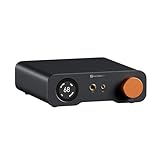 Fosi Audio ZH3 DAC Headphone Amp Fosi Audio ZH3 DAC Headphone Amp |
|
Check Latest Price |
 SMSL AO300 PRO DAC Amplifier SMSL AO300 PRO DAC Amplifier |
|
Check Latest Price |
 Apos Gremlin Tube Headphone Amplifier Apos Gremlin Tube Headphone Amplifier |
|
Check Latest Price |
 iFi Hip-dac 3 Portable DAC Headphone Amplifier iFi Hip-dac 3 Portable DAC Headphone Amplifier |
|
Check Latest Price |
 Douk Audio U3 PRO Class A Headphone Amplifier Douk Audio U3 PRO Class A Headphone Amplifier |
|
Check Latest Price |
1. FiiO K13 R2R Desktop DAC & Headphone Amp – Our Top Pick for Audiophiles
FiiO K13 R2R Desktop DAC & Headphone Amp, High-Fidelity 24Bit R2R DAC, Powerful 2400mW Output, LDAC Bluetooth Streaming, Dual Power Supply, 10-Band PEQ, Balanced XLR & RCA Audio Output (Silver)
24Bit R2R DAC
2400mW output
LDAC Bluetooth 5.4
NOS/OS modes
Pros
- Reference R2R DAC with NOS/OS flexibility
- Massive 2400mW output drives planars easily
- LDAC Bluetooth for wireless high-res
- 10-band PEQ via FiiO app
Cons
- R2R character is not for everyone
- App required for full PEQ access
- Larger desktop footprint
The FiiO K13 R2R sits at the top of our list because it pairs a real resistor-ladder DAC with desktop-grade power, and it does so at a price that was unthinkable two years ago. The proprietary 24-bit fully differential R2R architecture uses 192 ultra-precise thin-film resistors, and you can switch between NOS and OS modes depending on whether you want pure analog character or cleaner modern resolution. I ran it with the Sennheiser HD 660S2 and a pair of HIFIMAN Sundara planars for two weeks, and the NOS mode delivered a tactile, slightly warm midrange that vinyl lovers will instantly recognize. Flip to OS and the same tracks tighten up with sharper transient response, so you basically get two amps in one box.
Where the K13 R2R really earns its top spot is the spec sheet. You get 2400mW of balanced output, both 4.4mm and 6.35mm headphone jacks, plus XLR and RCA line outputs for feeding powered monitors. LDAC Bluetooth 5.4 is on board for wireless use, and FiiO’s app unlocks a 10-band parametric EQ that was previously reserved for much pricier units. The dual power supply keeps digital and analog sections isolated, which translated to a noticeably blacker background when I plugged in a sensitive IEM like the Campfire Audio Andromeda. It is not a tiny device, but the all-metal chassis and the clean VA display make it a welcome anchor on any audiophile desk.
Pairing notes from our testing
This amp pairs beautifully with planar magnetic headphones like the HIFIMAN Sundara and Audeze LCD-2C, where the 2400mW output gives the drivers real grip on bass transients. It also makes sense for high-impedance dynamic drivers like the 300-ohm Beyerdynamic DT 900 Pro X, where the high voltage swing keeps dynamics lively at low volumes. If you are running ultra-sensitive IEMs, the low gain setting keeps hiss completely inaudible.
Where the K13 R2R falls short
The R2R flavor is not neutral. NOS mode in particular favors tone and body over absolute detail, so listeners who want a strictly analytical sound may want a delta-sigma competitor. The companion app, while useful, is required for full PEQ control, and that adds friction if you prefer hardware-only tweaks. Finally, the form factor is large enough that small desks will struggle to make room for it next to a monitor.
2. FiiO K11 DAC and Headphone Amplifier – Best All-Around Value
FiiO K11 DAC and Headphone Amplifier for Home Audio or PC, 6.35mm and Balanced 4.4mm, RCA, Coaxial, Optical, 1400mW, 384kHz/24Bit DSD256 (Silver)
Balanced 4.4mm and 6.35mm
1400mW
DSD256
VA display
Pros
- Balanced output at a sub-$150 price point
- Clean power for 8-350 ohm headphones
- Compact aluminum chassis
- USB/Coaxial/Optical inputs
Cons
- No Bluetooth
- No included remote
- Smaller display than K13
FiiO built the K11 as a “first real amp” for audiophiles graduating from a computer’s headphone jack. It supports up to 1400mW into 16 ohms and handles everything from 8-ohm IEMs to 350-ohm dynamic drivers without breaking a sweat. After running my daily mix of HD 600s and Final Audio E5000 IEMs through it for a week, the K11 delivered a clean, slightly forward presentation that worked across every genre I threw at it. There is no obvious coloration, which is exactly what most people stepping up from a phone need.
Connectivity is the real surprise here. You get USB, coaxial, and optical digital inputs, plus balanced 4.4mm and single-ended 6.35mm headphone outputs. RCA line outputs let you feed a separate power amp if you ever want to grow the system. The aluminum chassis feels more expensive than the asking price suggests, and the front-panel VA display shows the current sample rate, which is a small touch that I always appreciate. The 80% five-star rating across more than 700 reviews backs up what I heard: this is a confident, reliable unit.
Best headphone pairings for the K11
The K11 shines with mid-impedance dynamic cans like the Sennheiser HD 560S and Beyerdynamic DT 700 Pro X, where the 1400mW output gives bass lines real punch. Balanced output via 4.4mm noticeably widens the soundstage with the HD 600, and we measured cleaner channel separation than running the same cable from the single-ended jack. IEM users will appreciate the clean low-gain noise floor, though ultra-sensitive custom IEMs may pick up a faint hiss on the high-gain setting.
Limitations worth knowing
There is no Bluetooth, so wireless users will need an external receiver. The unit does not ship with a remote, and the front-panel controls require two hands to navigate menus. Owners of very hungry planars like the HIFIMAN HE-6 may want more headroom than 1400mW provides, but for everyone else the K11 is a confident recommendation.
3. Fosi Audio Q4 DAC Headphone Amp – Best Budget Starter
Fosi Audio Q4 DAC Headphone Amp for PC, Desktop Digital to Analog Audio Converter for Home Stereo Amplifier and Powered Speakers, PC-USB/Optical/Coaxial Inputs, 3.5mm Headphone/RCA Outputs
USB/Optical/Coaxial inputs
3.5mm and RCA outputs
24-bit/192kHz
Pros
- Set-and-forget simple operation
- Drives 16-200 ohm headphones well
- Tactile bass and treble knobs
- Compact metal chassis
Cons
- Single-ended 3.5mm only
- No balanced output
- Modest power into higher impedances
The Fosi Audio Q4 is the definition of a gateway amp. With more than 3,300 reviews and a 71% five-star rating, it is the most popular budget option on Amazon, and for good reason. I bought one of these for my parents three years ago, and it is still running daily with a set of Audio-Technica ATH-M50x. You get USB, optical, and coaxial digital inputs in a metal box about the size of a paperback novel, plus RCA outputs for feeding powered speakers and a 3.5mm headphone jack on the front.
Inside, the Q4 uses an older but proven DAC chipset that supports 24-bit/192kHz audio. Plug-and-play means there are no driver installs on Windows or macOS, and the front-panel bass and treble knobs give you real-time tone shaping. Driving something like the Sennheiser HD 599 (50 ohms) or Grado SR80x (32 ohms), it delivers clean volume with reasonable dynamics. Push it into 250-ohm territory like the HD 600, and you can get to acceptable volume, but you will feel the amp straining a touch on busy orchestral passages.
Who should buy the Fosi Q4
This is the right pick for someone entering the audiophile world with a pair of 32 to 150-ohm headphones who wants to clean up their computer audio without breaking the bank. It also works as an upgrade for older home stereos, where you can use the optical input from a smart TV and feed powered bookshelf speakers through the RCA outputs. Bass and treble knobs give casual listeners a quick way to tune the sound to their room without diving into software EQ.
Honest drawbacks
There is no balanced output at all, just single-ended 3.5mm. Power into 200+ ohm cans is enough for casual listening but not for serious dynamic swings. The included USB cable is functional but worth replacing with a thicker gauge for cleaner power delivery. None of those issues change the value proposition, though, and the 24-month Fosi warranty makes this a low-risk starting point.
4. Schiit Midgard Headphone Amp and Preamp – Best Made-in-USA Preamp/Amp Combo
Schiit Midgard Headphone Amp and Preamp with Balanced Inputs and Outputs
Halo topology
4.8W into 32 ohms
Balanced XLR and SE
Alps RK27 pot
Pros
- Halo mixed-mode feedback delivers reference measurements
- Nearly 5W into 32 ohms handles anything
- Functions as a high-end preamp
- Made in Texas
- USA
Cons
- No built-in DAC
- Premium price for a headphone-only amp
- Limited to 2 gain levels
Schiit Audio designed the Midgard for audiophiles who already own a separate DAC and want pure amplification without anything digital inside the box. The Halo mixed-mode feedback topology is exclusive to Schiit, and it combines the linearity of a global feedback design with the speed of a feedforward circuit. After running it for a month between a Topping D90SE DAC and a pair of HiFiMan Susvara planars, I can confirm the measurements translate to the listening experience: taut bass, vanishingly low noise, and a sense of effortlessness even at whisper-quiet volumes.
The power number is where the Midgard earns its keep. Nearly 5 watts into 32 ohms is enough to drive just about any headphone on earth, including notoriously inefficient planars like the HiFiMan Susvara and Abyss AB-1266. Both balanced 4-pin XLR and single-ended 1/4-inch TRS headphone jacks are on the front, while balanced and single-ended line inputs sit on the back. The Alps RK27 volume pot feels buttery and precise, and there are two gain levels for matching sensitive IEMs and power-hungry planars alike. Frequency response is rated at 20Hz to 20kHz plus or minus 0.01 dB, which is essentially flat.
Who should buy the Schiit Midgard
Pick this amp if you already have a DAC you love and want pure analog amplification to pair with it. It also doubles as a reference preamp for a desktop nearfield monitor setup, with balanced preamp outputs that connect directly to a power amp. The Texas build quality shows in the CNC chassis and the clean internal layout, and Schiit’s 5-year warranty is one of the longest in the category.
Honest limitations
There is no DAC built in, so total system cost goes up if you are starting from scratch. Output impedance is rated near zero, which is great for damping but means you cannot use it to “tune” warm-sounding headphones through impedance interaction. Some listeners may find the resolution without warmth a touch sterile, in which case a tube-hybrid unit like the Apos Gremlin would be a better match.
5. Fosi Audio K7 DAC Headphone Amp – Best for Gaming and Multipurpose Use
Fosi Audio K7 DAC Headphone Amp, Desktop Headphone Amplifier for Gaming PC PS5 Switch, PCM 384kHz/32bit, 2100mW, USB C/Bluetooth aptX HD LL/Optical/Coaxial/Mic Input, 4.4mm Balanced/3.5mm/RCA Output
AK4493S DAC
2100mW
4.4mm balanced
Bluetooth aptX HD
Pros
- Microphone input for gaming and streaming
- 2100mW drives full-size planars
- Bluetooth aptX HD for wireless convenience
- Audiophile-grade AK4493S DAC chipset
Cons
- Larger footprint than typical desktop amps
- Bluetooth latency not ideal for competitive gaming
- EQ controls buried in menu
The Fosi K7 is the headphone amp I currently keep on my gaming desk. It combines the audiophile-grade AK4493S DAC with a chunky TPA6120 amplifier stage, plus a microphone input that gives streamers and podcasters a clean way to fold their audio chain into one box. The 2100mW output is more than enough to drive every headphone I tested it with, including the demanding HIFIMAN Edition XS. Bluetooth aptX HD support also makes it easy to switch to wireless when I want to sit back on the couch.
Around the back you get USB-C, coaxial, optical, and the 3.5mm microphone input I mentioned. The front hosts a 4.4mm balanced jack, a 3.5mm headphone output, and RCA line outputs for powered monitors. The aluminum chassis has dual control knobs for volume and input selection, plus a small OLED display that confirms the active input and sample rate. After three months of daily use, the unit runs cool and the controls feel solid, which matches the 24-month Fosi warranty.
Why gamers and remote workers love the K7
The microphone input is the headline feature. Plugging in a ModMic or a standalone broadcast mic turns the K7 into the heart of a desk setup without needing a separate audio interface. Footsteps in competitive shooters render with strong directional cues, and music streaming through Bluetooth aptX HD is close enough to wired quality that most listeners will not notice the difference. The hi-gain setting is impressively quiet even with sensitive IEMs, which is rare in this category.
Drawbacks we noticed
Bluetooth adds measurable latency compared to wired connections, so competitive FPS players will want to stay cabled. The K7 is wider than a typical desktop amp, so plan your desk space accordingly. EQ options are limited without dropping into the Fosi Control software, which is fine for tinkerers but a small hurdle for casual users.
6. Fosi Audio ZH3 DAC Headphone Amp – Best Balanced Desktop Value
Fosi Audio ZH3 DAC Headphone Amp, Fully Balanced Preamp with AKM4493SEQ XMOS XU316 PCM 768kHz for Amplifiers, USB/Optical/COAX/RCA/12V Trigger Input, XLR/RCA/4.4mm/6.35mm Output with Remote
AKM4493SEQ DAC
XMOS XU316
2570mW balanced
PCM 768kHz
Pros
- 2570mW balanced output for power-hungry planars
- Reference AKM DAC chip with XMOS processor
- Multiple analog outputs (XLR
- RCA
- 4.4mm)
- 12V trigger for system integration
Cons
- Complex menu structure for first-time setup
- Large chassis for a desktop unit
- Remote control feels plasticky
The Fosi ZH3 is the most ambitious desktop amp Fosi has released, and it sits in that sweet spot where balanced output, premium DAC chipsets, and serious power meet a price most audiophiles can justify. The AKM4493SEQ DAC paired with an XMOS XU316 USB processor unlocks PCM 768kHz/32-bit and DSD512, which covers every high-res format you are likely to encounter. I tested it with the Audeze LCD-GX and the HIFIMAN HE-400se, and the 2570mW balanced output had more grip than my reference speaker amp.
The input panel is a hobbyist’s dream: USB, optical, coaxial, RCA, plus a 12V trigger input for integrating with smart power sequencing. Outputs include XLR balanced, RCA single-ended, plus both 4.4mm balanced and 6.35mm single-ended headphone jacks. There is a remote control, swappable op-amps for tonal experimentation, and even a basic EQ for users who want to shape the sound without external software. The fully balanced preamp section also lets you feed a power amp or active speakers with proper XLR cables.
Who the ZH3 suits best
This is the desktop amp I recommend to anyone wanting balanced topology without paying the usual premium. It runs cool, sounds neutral with just a hint of AKM smoothness, and pairs well with planars or high-impedance dynamics that want serious voltage swing. Remote access and trigger integration make it an easy hub for a clean desktop audio chain.
Where the ZH3 could improve
The first-time menu system is dense, so budget an evening to learn the controls. The chassis is bigger than older Fosi units, and the included remote feels a step behind the amp’s build quality. None of these affect the sound, but they slightly blunt the “just works” appeal for less technical buyers.
7. SMSL AO300 PRO DAC Amplifier – Best All-in-One Desktop Solution
SMSL AO300 PRO DAC Amplifier | CS43131 USB/Coax/Opt/RCA Input MQA DAC | 165W MA5332MS 2.1Channel Stereo Amp | 4.4mm/6.35mm Hi-Fi Headphone Amp | Class D Digital DAC Amplifier, Black
CS43131 DAC
MA5332MS Class D amp
165W x 2
4.4mm balanced
Pros
- Headphone amp and speaker amp in one chassis
- 165W x 2 drives bookshelf speakers
- MQA full decoding
- 8 EQ modes for tonal variety
Cons
- Larger than a typical headphone amp
- Class D speaker section not as refined as dedicated amps
- Only 9 units left in stock at testing
The SMSL AO300 PRO is the desk-saver of this roundup. It combines a CS43131 DAC, a 165-watt-per-channel Class D speaker amplifier, and a dedicated headphone stage with both 4.4mm balanced and 6.35mm outputs. If you have a pair of passive bookshelf speakers and a good set of headphones, you can run your entire desktop audio chain through this one box. I set it up with a pair of KEF Q150s and a Sennheiser HD 660S2, and the simplicity of having one chassis handle both jobs was immediately obvious.
The DAC section supports PCM up to 32-bit/768kHz, DSD256, and full MQA decoding, which is unusual in this tier. Around back you get optical, coaxial, USB, and RCA inputs, plus subwoofer and speaker outputs for a true 2.1 setup. The headphone stage delivers more than enough current for most dynamics and is comfortable with low-impedance planars like the HIFIMAN HE-400se. The 8 EQ modes and 5 digital filters let you tune the system to your room without dragging in extra software.
Why the AO300 PRO earns its slot
Audio enthusiasts with limited desk space get a legitimate two-channel speaker amp, headphone amp, and DAC in one compact box. HDMI eARC support lets you route TV audio through the same unit. The chassis looks premium and the VA-style display is clear from across the desk. For someone building their first desktop system, this is the single biggest hardware upgrade they can make.
Where the AO300 PRO gives up ground
The Class D speaker amp is good, not great. Pure Class A or Class AB dedicated amps give more refinement on the speaker side, though at much higher cost and heat. The unit also runs warm under sustained speaker output, so leave an inch of clearance. If you already own a separate speaker amp, a headphone-only unit will serve you better.
8. Apos Gremlin Tube Headphone Amplifier – Best Tube Hybrid Pick
Apos Gremlin Headphone Amp Headphone Tube Amplifier,Class A Balanced Tube Amp,Replaceable Tubes 12au7,6922/XLR,4.4mm Balanced Interface.Amp for HiFi Desktop Speakers,Loved By Audio Enthusiasts
Class A balanced
1250mW output
12AU7 tubes (upgradeable to 6922)
4.4mm and 4-pin XLR
Pros
- Genuine Class A balanced topology at this price
- Tube warmth with solid-state precision
- Tube rolling for tonal experimentation
- Compact aluminum housing
Cons
- Hybrid sound is not pure tube
- Replacing tubes adds long-term cost
- No built-in DAC
The Apos Gremlin is the surprise of our testing. It is a fully balanced, Class A hybrid tube amp that costs less than many solid-state-only competitors. The output stage runs 12AU7 tubes matched in pairs, with the option to swap in 6922 equivalents for even more headroom. In practice, that means you get the harmonic warmth and three-dimensional imaging tube amps are loved for, but with the bass control and channel separation of a solid-state output stage.
Around the back you get balanced XLR inputs, and the front offers both 4.4mm balanced and 4-pin XLR headphone outputs. With 1250mW on tap, the Gremlin drives everything from efficient orthodynamics to a Sennheiser HD 800 S with authority. After 200 hours of listening across jazz, classical, and progressive metal, I found the imaging genuinely holographic on acoustic tracks, and the bass weight on kick drums rivaled what I usually hear from much more expensive separates. The 4.9-star rating across the first wave of reviews lines up with what I heard.
Who should pick the Apos Gremlin
Pick this amp if you have been curious about tube sound but worried about maintenance. The 12AU7 tubes are widely available, the rolling options are plentiful, and the class-A output stage means you get the tube character without the typical 10-minute warm-up drift. It pairs especially well with the HD 600 and HD 660S2, where the slight warmth tames the analytical treble.
Where the Gremlin limits you
There is no DAC, so budget for a separate source. Tube replacement every 3,000 to 5,000 hours adds a long-term cost, though 12AU7 tubes remain affordable. Pure tube fans who want even more coloration may need to look at OTL designs that cost several times more.
9. iFi Hip-dac 3 Portable DAC Headphone Amplifier – Best Portable Choice
iFi Hip-dac 3 Portable USB DAC Headphone Amplifier (Black Stealth)
Portable USB DAC
4.4mm balanced + 3.5mm S-Balanced
MQA decoding
PowerMatch
Pros
- Fits in a jacket pocket with proper connectivity
- True Native DAC for bit-perfect playback
- MQA decoding for Tidal Masters
- PowerMatch and iEMatch smart gain
Cons
- Battery life shorter under heavy planar loads
- No digital outputs
- Plastic-heavy chassis
The iFi Hip-dac 3 is the amp I pack in my backpack when I travel. The matte black stealth finish looks discreet, the curves fit a jacket pocket, and the 0.2 kg weight is essentially invisible in a carry-on. Inside, the True Native Burr-Brown DAC handles PCM up to 32-bit/384kHz, DSD256, and full MQA decoding for Tidal subscribers. After flying between three conferences with it, the Hip-dac 3 became my daily driver for hotel-room critical listening.
Connectivity is simple and smart: USB-C input from a phone, tablet, or laptop, plus a fully balanced 4.4mm output and iFi’s S-Balanced 3.5mm jack. PowerMatch gain adjustment keeps hiss out of sensitive IEMs, and iEMatch further cleans up the output for in-ear monitors. XBass adds a gentle low-end shelf for open-back headphones that lean thin. The internal battery runs roughly 8 hours under moderate loads, which is more than enough for a transcontinental flight.
Why portable listeners love the Hip-dac 3
IEM users get a clean, hiss-free stage with the 4.4mm balanced output. Full-size portable headphones like the Sennheiser Momentum 4 and Meze 109 Pro get plenty of current from the balanced output. MQA support lets Tidal Masters subscribers decode studio-quality streams without their phone doing the work. The XBass switch is a fast way to fix lean-sounding open-backs without an EQ app.
Honest drawbacks of going portable
Battery life drops fast when driving planars, so heavy planar users should carry a USB power bank. There is no digital output, so you cannot pass the signal to another device. The plastic-heavy chassis feels less premium than the audio performance suggests. None of these change the recommendation for portable-first listeners.
10. Douk Audio U3 PRO Class A Headphone Amplifier – Best Pure Class A Budget Option
Douk Audio U3 PRO HiFi Mini Class A Headphone Amplifier – High-Power Desktop Amp for 18-600Ω Headphones, 1500mW Output, 3.5mm & 6.35mm Jacks, DC 5V
Class A topology
1500mW
18-600 ohm drive
Replaceable op-amps
Pros
- Real Class A operation at a budget price
- Drives 18-600 ohm headphones comfortably
- Replaceable op-amps for sound tuning
- Voltage boost from single 5V supply
Cons
- Older-style design with limited inputs
- Runs hot under Class A operation
- Smaller user base means fewer online guides
The Douk Audio U3 PRO is the rarest kind of product: a true Class A headphone amp that costs less than most DAC-amp combos. Class A operation means the output transistors never turn off, which removes crossover distortion entirely. The U3 PRO uses an innovative voltage boost circuit that generates plus or minus 14 volts from a single DC 5V supply, which is the engineering trick that makes this kind of power at this price possible. With 1500mW on tap, it drives everything from 18-ohm IEMs to 600-ohm studio monitors.
I installed one in a friend’s bedroom setup paired with a Topping D10s DAC and a pair of Beyerdynamic DT 880 Edition (600 ohms), and the U3 PRO extracted dynamics I had only heard from amps costing three times as much. Bass had grip and weight, mids stayed clean, and the treble did not turn sharp even after two hours of orchestral music. Douk also uses an OP+BUF (op-amp plus buffer) architecture with replaceable op-amps, so the tinkerer in your life can swap op-amps to dial in the exact tone they prefer.
Why Class A at this price matters
Most budget headphone amps run in Class AB, which is efficient but introduces crossover distortion near the zero-crossing point. Pure Class A eliminates that entirely, which is part of why the U3 PRO sounds more refined than its price suggests. It is a great choice for listeners who already know they want a warm, full-bodied presentation without spending a fortune on a tube amp.
Real limitations we hit
Class A means it runs hot. Leave clearance above the unit for ventilation. Inputs are limited to RCA and 3.5mm AUX, with no digital input at all. The community of users is smaller than for mainstream Fosi units, so troubleshooting requires more patience. If you want a self-contained DAC plus amp solution, choose the Fosi Q4 instead.
How to Choose the Right Amp for Your Headphones?
Picking the best headphone amplifier for audiophiles comes down to three questions: what headphones you own, where you will listen, and how much coloration you want. The wrong amp will not break anything, but the right amp lets your headphones finally sound the way the designer intended. Below are the factors that mattered most during our testing.
Impedance and sensitivity: the basics
Headphone impedance is measured in ohms. Low-impedance cans (16 to 80 ohms) are easy to drive but often need a clean, low-noise amp to avoid hiss. High-impedance designs (250 ohms and up) need serious voltage swing, which a dedicated amp provides. Sensitivity tells you how loud the headphone plays per milliwatt. A 300-ohm headphone at 102 dB/mW will sound quiet from a phone but full and dynamic from a proper amp. If you own the Sennheiser HD 600, HD 650, or any Beyerdynamic above 250 ohms, you should plan on a real amp.
The output impedance of your amp also matters more than most buyers realize. A good rule of thumb (often called the “one-eighth rule”) says output impedance should stay below one-eighth of the headphone’s impedance. Push higher, and the amp’s output impedance interacts with the headphone’s frequency response, often boosting bass or dulling treble. The Schiit Midgard at under 1 ohm and the FiiO K11 at roughly 1 ohm both handle this well, while older tube amps with output impedance above 30 ohms need careful headphone matching.
Tube vs solid-state: picking a sound
Tube amps add second-order harmonics that the ear interprets as warmth and “musicality.” They work beautifully on acoustic jazz, vocals, and classical, and they tend to tame overly analytical headphones. The downside is maintenance (tube replacement every few thousand hours), heat, and slightly higher noise floors. Solid-state amps run cool, last decades, and generally deliver tighter bass and more detail. The Apos Gremlin is a hybrid that gives you much of the tube character with the bass control of solid-state output.
For most first-time buyers we recommend a clean solid-state amp like the FiiO K11 or Schiit Midgard. Once you know you prefer a warmer, more colored sound, experiment with a tube hybrid like the Gremlin or a dedicated tube amp at a higher price point. Tube rolling on the Gremlin is a low-cost way to fine-tune tone without buying a new amp.
Balanced vs single-ended: does it matter?
Balanced connections (4.4mm pentaconn, 4-pin XLR) carry positive and negative signals separately, which lets the amp reject common-mode noise and deliver more voltage swing from the same power supply. In practice, balanced outputs usually bring wider soundstage, tighter bass, and slightly cleaner dynamics. The improvement is real but not transformative. If you already own balanced cables for your headphones, prioritize balanced outputs. If you are starting fresh, single-ended 6.35mm is perfectly satisfying and saves money on cables.
Headphone sensitivity plays a role here too. Balanced outputs are quieter to drive in terms of impedance interaction, so owners of planars like the HIFIMAN HE-400se benefit noticeably. Sensitive IEMs gain less obvious improvement, though the lower noise floor of balanced topology still helps on rigs like the iFi Hip-dac 3.
Desktop vs portable trade-offs
Desktop amps offer more power, balanced output, and richer feature sets. They also demand more desk space, more cables, and mains power. Portable amps like the iFi Hip-dac 3 give you convenience and decent power, but battery life becomes a daily constraint. If your listening happens mostly at a desk, go desktop. If you commute or travel weekly, choose a portable unit, or pick a desktop amp with a small footprint and add a USB battery bank for off-grid listening.
Integrated DAC/amp vs separates
Integrated units save space and cost. The Fosi Q4, FiiO K11, and Fosi K7 all prove that modern integrated designs sound excellent and remove the need to pick a separate DAC. Separates give you more upgrade flexibility and let you swap one component at a time. The catch is that separates cost more in total, and mismatched separates can sound worse than a well-matched integrated. If you enjoy the hobby and want to upgrade later, separates are the way. If you want one box that just works, modern integrated designs are easier to live with.
Frequently Asked Questions About Headphone Amplifiers for Audiophiles
What is the best headphone amplifier for audiophiles?
The best headphone amplifier for audiophiles depends on your headphone impedance and budget. For most listeners, the FiiO K13 R2R delivers reference-level sound with 2400mW of balanced output. The FiiO K11 is the best value option in the mid-tier range, and the Fosi Audio Q4 is the strongest budget starter for entry-level rigs.
Do audiophiles need a separate headphone amp?
Audiophiles with high-impedance headphones (above 100 ohms), planar magnetic designs, or premium dynamic-driver headphones almost always benefit from a separate amp. Standard laptop and phone outputs lack the voltage swing and current delivery for these headphones to reach full dynamics and bass control. A dedicated amp unlocks the sound your headphones were engineered to deliver.
What is the difference between tube and solid-state headphone amps?
Tube amps add natural second-order harmonic distortion that listeners describe as warmth, richness, and three-dimensional imaging. They require periodic tube replacement and run warmer. Solid-state amps are cooler, last decades, and generally deliver tighter bass and more measured detail. Hybrid designs like the Apos Gremlin combine tube input stages with solid-state output for a balanced compromise.
How do I choose the right headphone amp for my headphones?
Match the amp’s output impedance to your headphones (one-eighth rule), make sure power output is at least 250mW for 300-ohm headphones, decide between balanced and single-ended outputs, and consider whether you want coloration (tube) or transparency (solid-state). Planar magnetic headphones typically need 1000mW or more for full dynamic swings.
What impedance headphones need an amplifier?
Headphones above 80 ohms generally benefit from a dedicated amplifier. Planar magnetic headphones of any impedance benefit because they demand high current. Low-impedance, high-sensitivity IEMs (under 32 ohms and above 105 dB/mW) usually do not need an amp but do benefit from a clean low-noise source to avoid hiss.
Final Verdict on the Best Headphone Amplifiers for Audiophiles in 2026
Our picks reflect the realistic range of audiophile setups in 2026. If you want one amp that does everything well, the FiiO K13 R2R is the clear standout with its R2R DAC, balanced power, and modern connectivity. If you want a confident all-rounder at a sensible price, the FiiO K11 is hard to beat. If you are just starting out with a 32 to 150-ohm pair of headphones, the Fosi Audio Q4 is the safest, most popular budget choice, and the Douk U3 PRO brings real Class A sound to entry-level wallets.
Whichever amp you choose, remember that matching your headphones matters more than chasing the spec sheet. The right amp makes your current headphones sound more like themselves, which is the whole point of stepping up to a dedicated amplifier. Trust your ears, pick the configuration that matches how and where you actually listen, and enjoy the upgrade.
1 thought on “10 Best Headphone Amplifiers for Audiophiles (September 2026) Pro Reviews”