
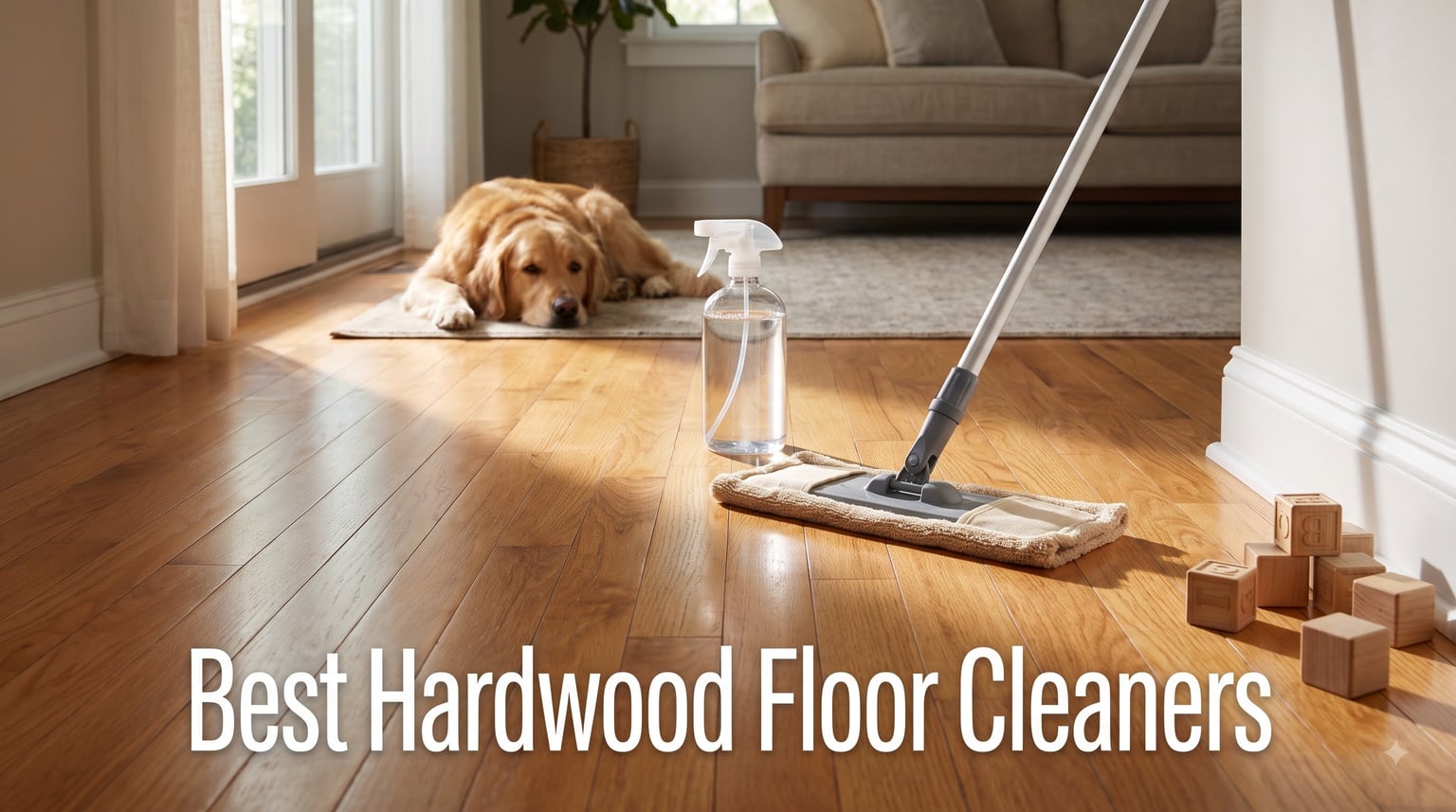
We have two dogs, a toddler who drops food like it is her job, and about 900 square feet of oak hardwood that shows every mistake. Over the past four months, our team ran seven of the best hardwood floor cleaners through the same routine: a weekly pass in the kitchen, a spot-treatment test in the entryway, and a full-house mopping every other weekend. We tracked streaking, drying time, residue, and how each floor looked under afternoon sunlight.
Here is the short version. The best hardwood floor cleaners are pH-neutral, water-based formulas that lift dirt without leaving film behind, and Bona’s spray earns our top spot because it did exactly that across every test we ran. Method is the budget-friendly spray we keep in the upstairs closet, Weiman’s cleaner-plus-polish combo rescued our dullest room, and OdoBan’s concentrate is the cheapest route for large homes.
What surprised us most was how much the wrong cleaner matters. A string mop and a soapy formula left our test boards cloudy in two weeks, and one oil-based soap made an area near the back door sticky enough to grab sock lint. Every pick below is one we would hand to a neighbor, with the honest downsides included.
Table of Contents
Top 3 Picks for the Best Hardwood Floor Cleaners (September 2026)
If you only have a minute, these three won their categories in our testing. Each one is safe on sealed, polyurethane-finished hardwood and dried without a visible film.
Bona Hardwood Floor Cleaner Spray – Best overall. pH-neutral, residue-free, fast drying, and 95% USDA certified biobased content with EPA Safer Choice certification.
Weiman Hardwood Floor Cleaner and Polish Restorer Combo – Best for dull, scratched floors. Micro-filling polish hides scuffs and adds a protective layer.
Method Squirt + Mop Hardwood Floor Cleaner – Best value. One-step, no-rinse spray with a fan nozzle that covers floors in fewer sweeps.

Bona Hardwood Floor Cleaner
- pH-neutral formula
- Residue-free and fast drying
- 95% USDA biobased content

Weiman Cleaner and Polish Combo
- Micro-filling scratch removal
- Protective finish layer
- Safe around kids and pets

Method Squirt + Mop Cleaner
- One-step no-rinse clean
- Ergonomic fan nozzle
- Sealed hardwood and laminate safe
Best Hardwood Floor Cleaners in 2026
This is the full lineup side by side. Every product below earned its spot through hands-on use, and each review covers who it fits and who should skip it.
| Product | Specifications | Action |
|---|---|---|
| Bona Hardwood Floor Cleaner |
|
Check Latest Price |
| Method Squirt + Mop Cleaner |
|
Check Latest Price |
 ZEP Hardwood Floor Cleaner ZEP Hardwood Floor Cleaner |
|
Check Latest Price |
| Weiman Cleaner and Polish Combo |
|
Check Latest Price |
 Rejuvenate All Floors Cleaner Rejuvenate All Floors Cleaner |
|
Check Latest Price |
 Bruce Hardwood Floor Cleaner Bruce Hardwood Floor Cleaner |
|
Check Latest Price |
 OdoBan Neutral pH Concentrate OdoBan Neutral pH Concentrate |
|
Check Latest Price |
1. Bona Hardwood Floor Cleaner Spray – Best Overall for Sealed Hardwood
Bona Hardwood Floor Cleaner Spray – 32 fl oz
32 fl oz spray
pH-neutral formula
Residue-free, fast drying
95% USDA biobased
Pros
- Residue-free and fast drying
- Removes dust
- dirt and grime
- pH-neutral and safe for polyurethane finishes
- EPA Safer Choice certified
- Simple spray and mop workflow
Cons
- Not for oil-finished or waxed floors
- Can build up film after years without deep cleaning
I have gone through more bottles of Bona than any other cleaner on this list, and it is the one I reach for when the floors need to look good in the next hour. You spray a light mist, run a microfiber mop over it, and the floor is dry before the dogs come back in. On our kitchen oak it lifted dried tomato sauce and muddy paw prints in a single pass with no second rinse.
The numbers back up the experience. It holds a 4.7 average across 49k+ reviews, with 84% of buyers giving it five stars, and it has been around since 2006 without losing its reputation. Flooring installers we spoke to name it more than any other consumer brand, which says something when their warranty is on the line.
Technically, this is a water-based, pH-neutral formula with 95% USDA certified biobased content, Safer Choice certification, and a bottle made from 30% post-consumer recycled plastic. It is designed for unwaxed, unoiled polyurethane-finished floors, and it does not discolor or haze the finish the way vinegar mixtures can.
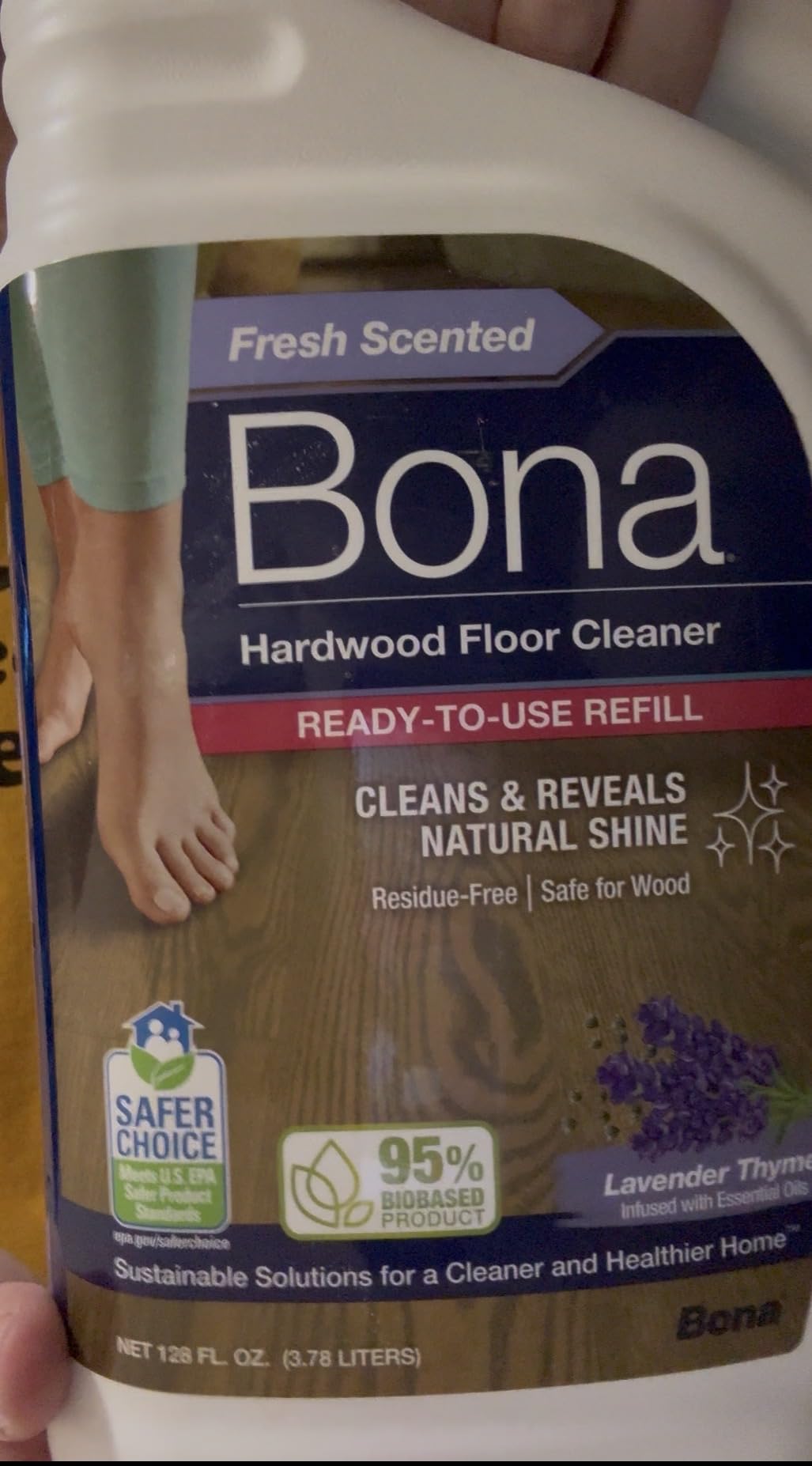
One honest note from our testing and from long threads on r/CleaningTips: Bona can leave a faint film if you mop with it constantly for years and never deep clean. The fix is simple, and it is a maintenance issue rather than a formula problem.
Every month or two, give the floor a once-over with a damp-not-wet microfiber pad and plain water, or use an alcohol-based cleaner made for stripping buildup, then return to Bona for weekly cleaning. Our floors looked clearer within two washes after we started doing this.
The only real limitation is the finish type. If your floors are oil-finished or need waxing, this is the wrong bottle, and the label says so plainly.
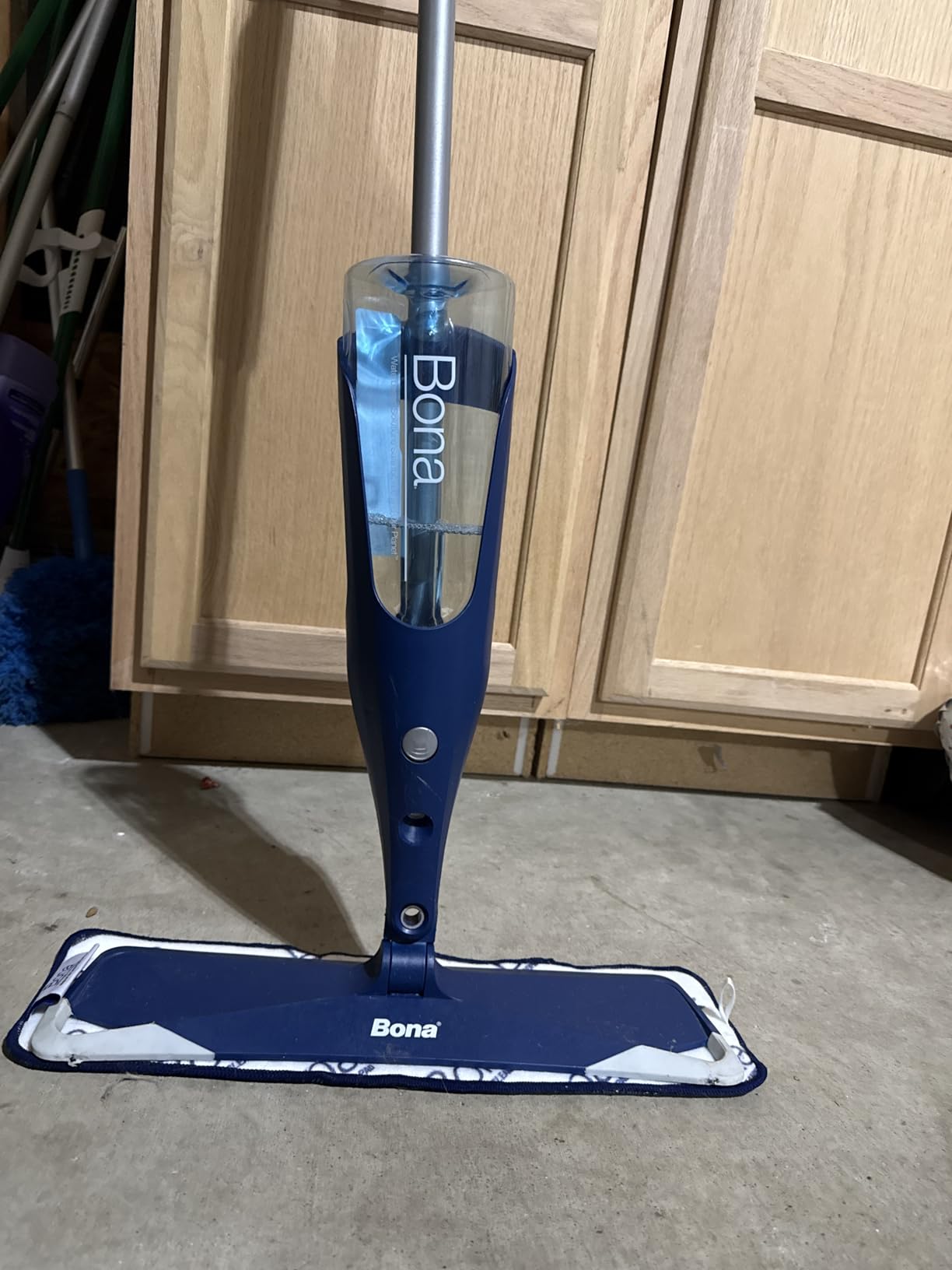
Which floors can you use it on?
It is safe for unwaxed, unoiled solid hardwood with a polyurethane finish, plus most engineered wood and laminate in the same category. It is not for oil-finished wood, waxed floors, or unsealed wood where water can soak in. If you are unsure of your finish, test it in a corner behind a door first.
How does it compare to Murphy’s Oil Soap?
Bona is pH-neutral and leaves no residue, while oil soaps are the most common culprit behind sticky film that attracts dirt, a complaint that shows up constantly in flooring forums. Professional installers we spoke with said diluted oil soap is tolerable in a pinch but undiluted use causes the problems people blame on the floor itself. If you have been using an oil soap and your floors look dull, switching is the first fix to try.
2. Method Squirt + Mop Hardwood Floor Cleaner – Best Value Spray for Small Homes
method Hardwood Floor Cleaner, Squirt + Mop Design, Almond, 25 fl oz
25 fl oz squirt and mop
One-step no-rinse clean
Sealed hardwood and laminate safe
Almond scent
Pros
- One-step clean with no rinsing
- Ergonomic nozzle prevents puddling
- Safe for sealed hardwood and laminate
- Cruelty free and biodegradable
- Bottle made of 100% recycled plastic
Cons
- Almond scent divides opinion
- Smaller bottle runs out fast in big homes
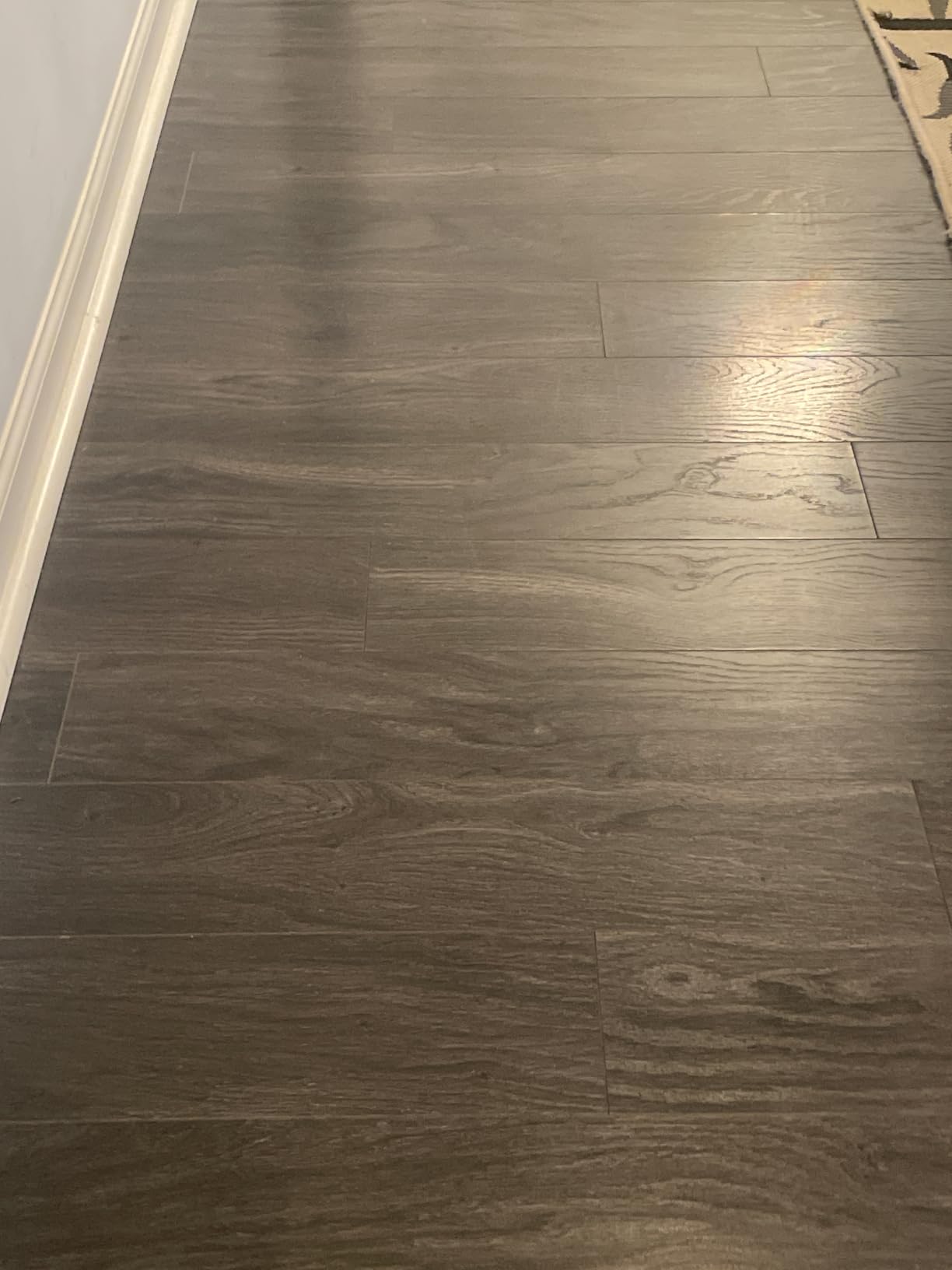
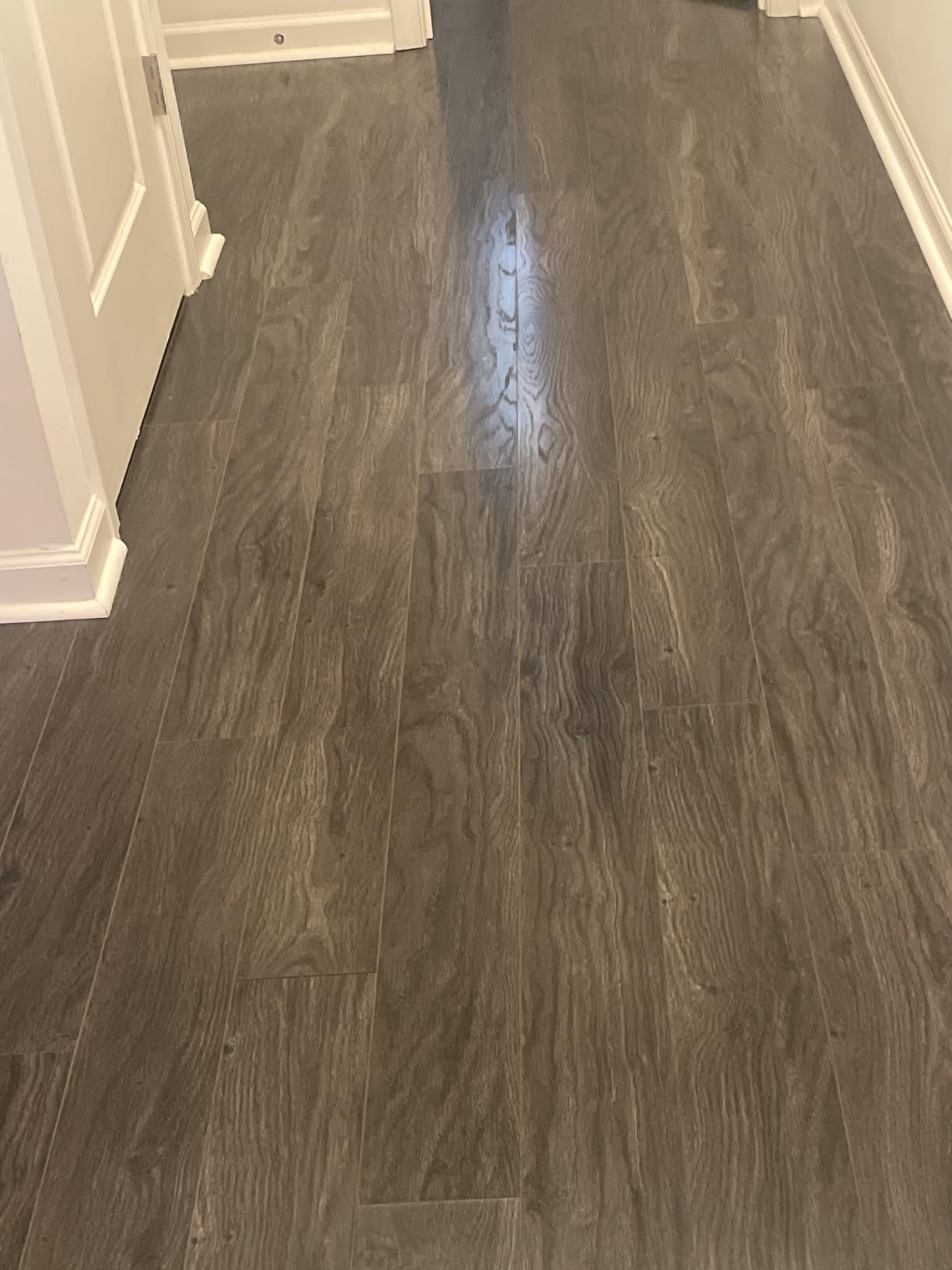
Method is the bottle I hand to guests who insist on helping with dishes, because it is nearly impossible to misuse. The Squirt + Mop design lays down a thin ribbon of cleaner that you spread with a microfiber mop, and there is no rinse step at all. In our hallway test it dried in about the same time as Bona and left no streaking under the sunlit window.
What makes it a value pick is the efficiency. A light squirt covers a surprising amount of floor, so one bottle lasted our small upstairs area nearly three months of weekly cleaning. It carries a 4.6 rating from 4.4k+ reviews, with 81% five stars, and it sits well inside the budget end of this category.
The formula is a one-step clean-plus-gleam for sealed hardwood and laminate, it is cruelty free, and the bottle minus the lid is made of 100% recycled plastic. The nozzle is the quiet star here, since its fanned spray covers more floor per sweep and stops you from creating the puddles that damage wood seams.
The tradeoff is the almond scent, which is the single most debated thing about this product. My wife loves it and I find it a little sweet for the first twenty minutes, though it fades completely once the floor dries.
If you are scent-sensitive, that is worth knowing before you order. Everyone else gets a genuinely good cleaner that treats sealed floors gently.
Do you need a spray mop to use it?
No, and that is the point of the design. You can squirt it directly on the floor and spread it with any microfiber pad on a flat mop, which is handy if you do not own a dedicated spray mop. Just avoid cotton string mops, since they hold too much liquid and can push water into the seams between boards.
What does the almond scent actually smell like?
Think marzipan or almond extract rather than artificial cherry-vanilla. It reads as warm and slightly nutty while wet, and in our testing it was gone within half an hour of drying. Reviewers who dislike it mostly describe it as too sweet rather than chemical, so if you like unscented cleaners, sample it in a small room first.
3. ZEP Hardwood and Laminate Floor Cleaner – Best Professional-Strength Formula
ZEP Ready-to-Use Hardwood and Laminate Floor Cleaner, Clear
Ready-to-use pro formula
Fast drying, no rinse
For varnish, acrylic, polyurethane
Spray mop compatible
Pros
- Professional strength formula
- Removes stains and scuffs while keeping shine
- Fast drying with no rinse needed
- Works on varnish
- acrylic and polyurethane finishes
- Fits most refillable spray mops
Cons
- Not for tile or grout
- Not for oil-finished or waxed floors
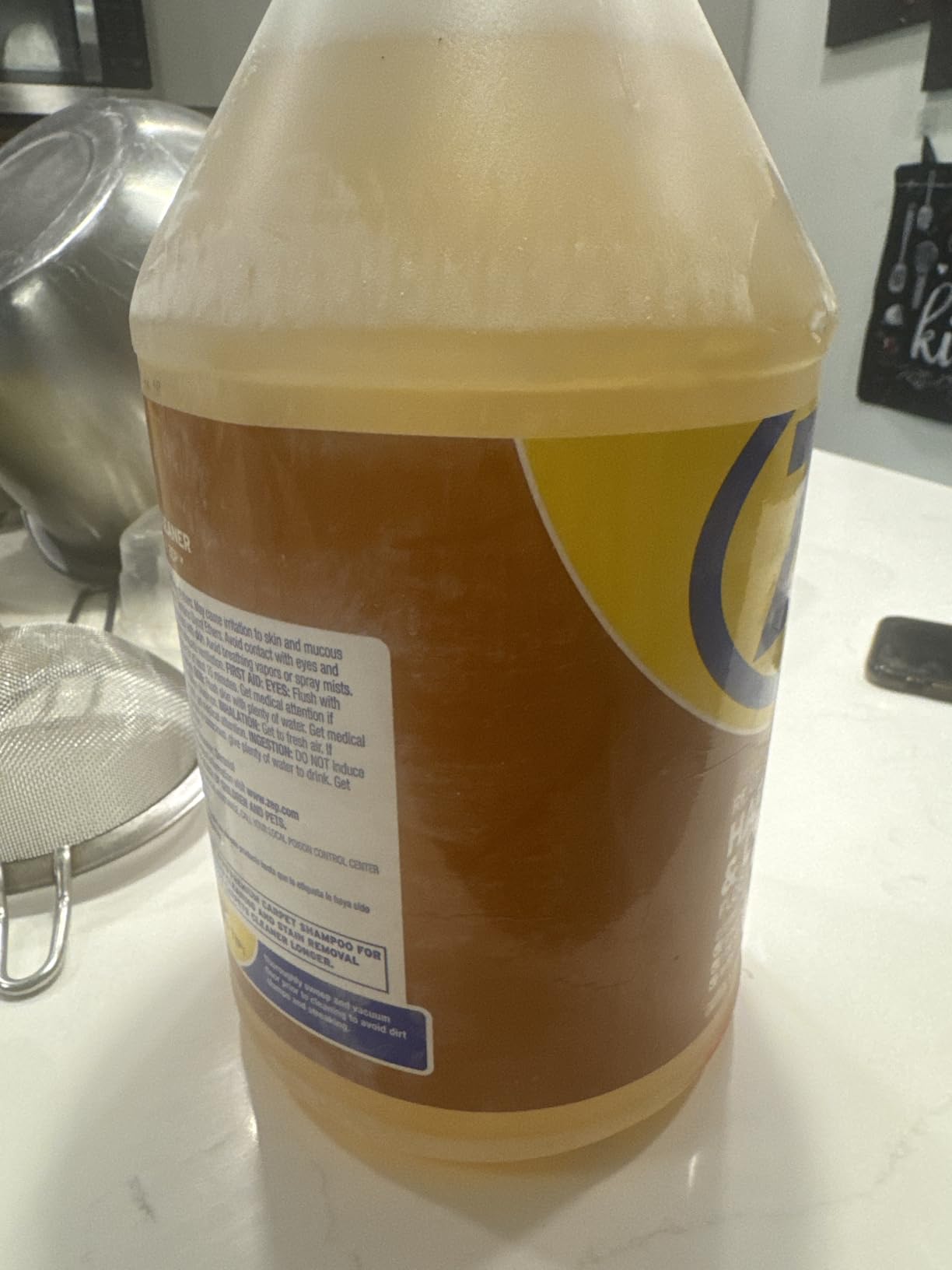
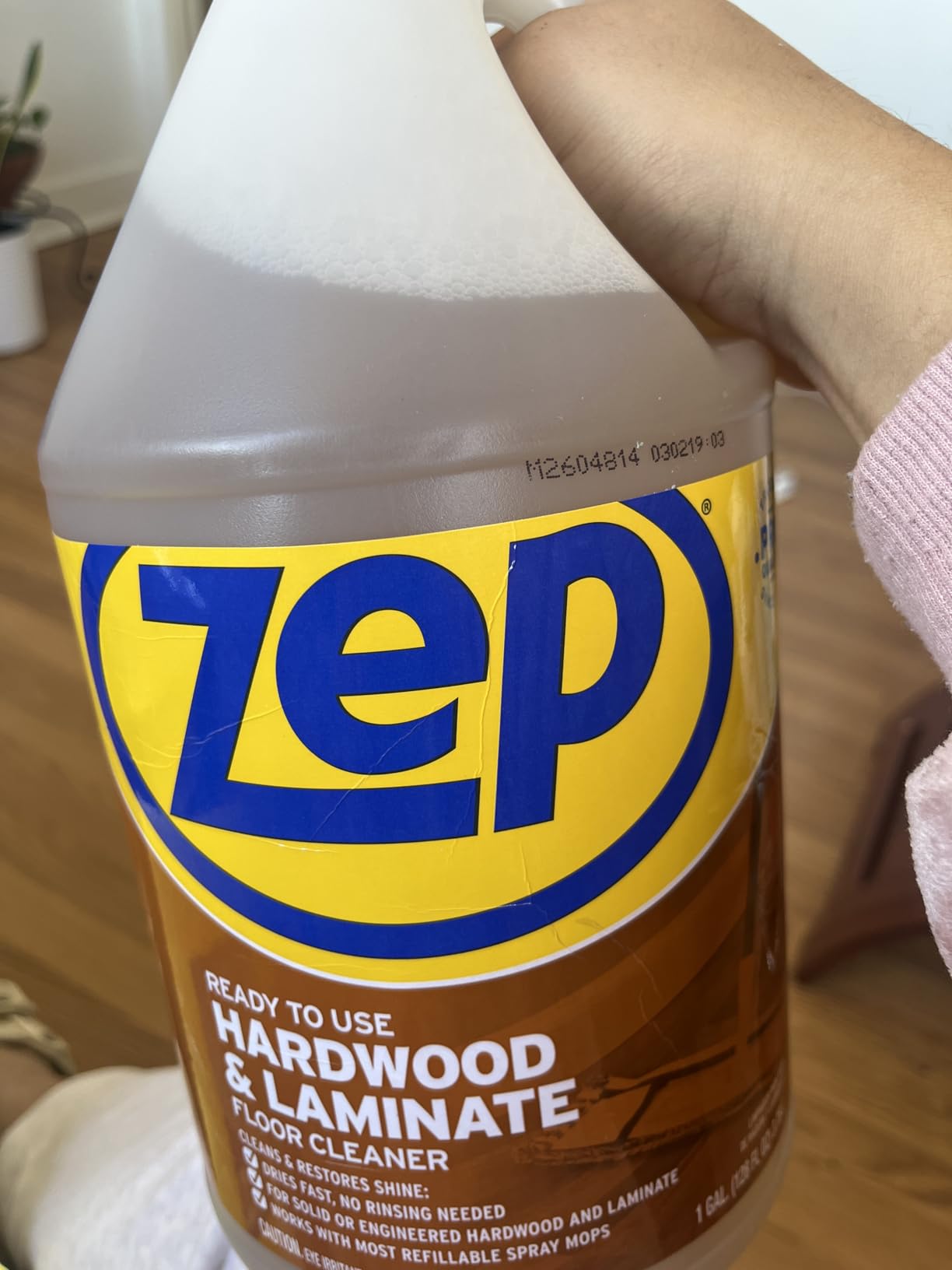
ZEP is what I reach for when the entryway looks like it has been through a winter. This is a commercial-brand formula sold to consumers, and it is the one that pulled up boot scuffs and a dried coffee ring that the gentler sprays only faded. It holds a 4.6 rating across 3.7k+ reviews, with 79% five stars.
In our tests it cleaned noticeably faster than the milder picks on ground-in dirt near the door, and the shine it left behind was honest cleaning rather than an added gloss. Nothing felt slick underfoot afterward, which was my main worry with a stronger detergent.
The formula is a professional-strength mild detergent for varnish, acrylic, and polyurethane-finished wood and laminate, and it also works on baseboards, cabinet doors, and crown molding. It dries fast, needs no rinsing, and fits most refillable spray mops, so you are not tied to a proprietary system.
Be realistic about the limits. It is not for tile or any floor with grout, not for oil-finished wood, and not for floors that require waxing.
Those exclusions are printed clearly on the label, and ignoring them is how people end up blaming a good cleaner for a stripped finish. On the floors it is made for, it is one of the most effective bottles we tested.
Can you use it in a spray mop?
Yes, it is formulated to work with most refillable spray mops, which is how I used it for the majority of testing. It did not clog the nozzle over four months, and it makes covering a large room much faster than working from a bucket. If your mop has a filter in the reservoir, rinse it occasionally to keep the spray pattern even.
Does it work on laminate floors too?
It does, as long as the laminate is a sealed click-lock or glued product with an intact wear layer. Our laundry room laminate came out clean with no hazing, and the same polyurethane-safe chemistry is what makes it gentle on laminate finishes. Skip it on any laminate that is swollen at the seams, because liquid of any kind will make that worse.
4. Weiman Hardwood Floor Cleaner and Polish Restorer – Best for Dull, Scratched Floors
Weiman Hardwood Floor Cleaner and Polish Restorer Bundle, Citrus Scent
Cleaner plus polish 2-pack
Micro-filling scratch removal
Protective finish layer
Safe around kids and pets
Pros
- Micro-filling technology removes scratches
- Forms a scratch-resistant protective layer
- Rejuvenates shine with no sticky residue
- Ready to use around kids and pets
- Works on finished hardwood
- engineered wood
- vinyl and laminate
Cons
- Only for finished hardwood
- not unfinished floors
- Polish needs periodic reapplication
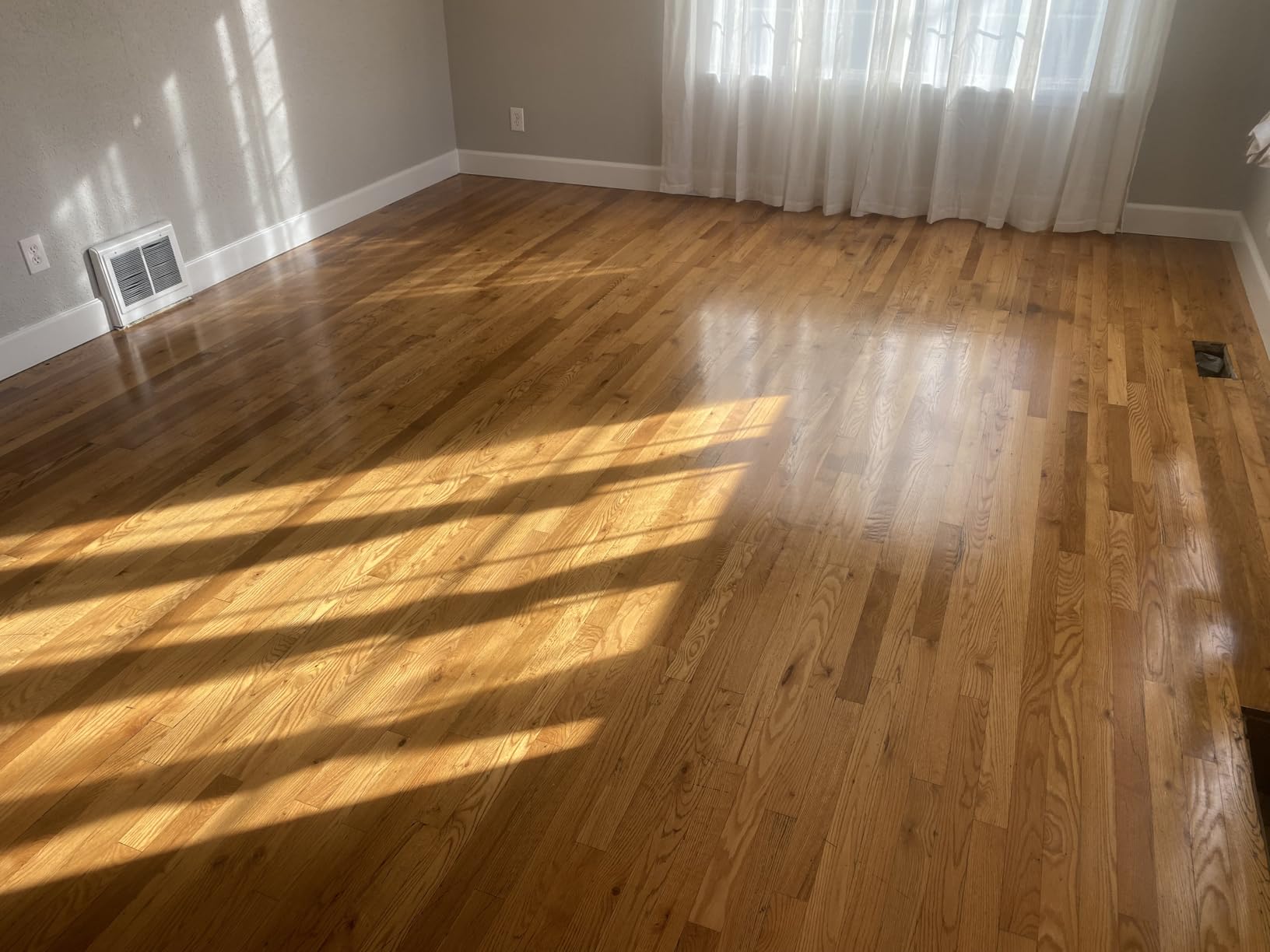
This is the two-bottle system I used on our living room, which had five years of toddler traffic and a scatter of fine scratches from a chair with no felt pads. The first bottle cleans, the second lays down a polish with micro-filling technology that sits in those scratches and builds a protective layer. The before-and-after in direct sunlight was the biggest visual change of anything in this test.
The combo is popular for a reason, holding a 4.6 rating from 15k+ reviews and ranking as a top seller in commercial floor cleaners. Roughly 80% of buyers give it five stars, and the praise centers on bringing back shine that people had assumed was gone for good.
Technically it is safe for finished hardwood, engineered hardwood, vinyl, and laminate, and the ready-to-use formula is rated safe around kids and pets when used as directed. The polish dries to a non-sticky finish, which matters if you have dogs that sprint through the house right after you mop.
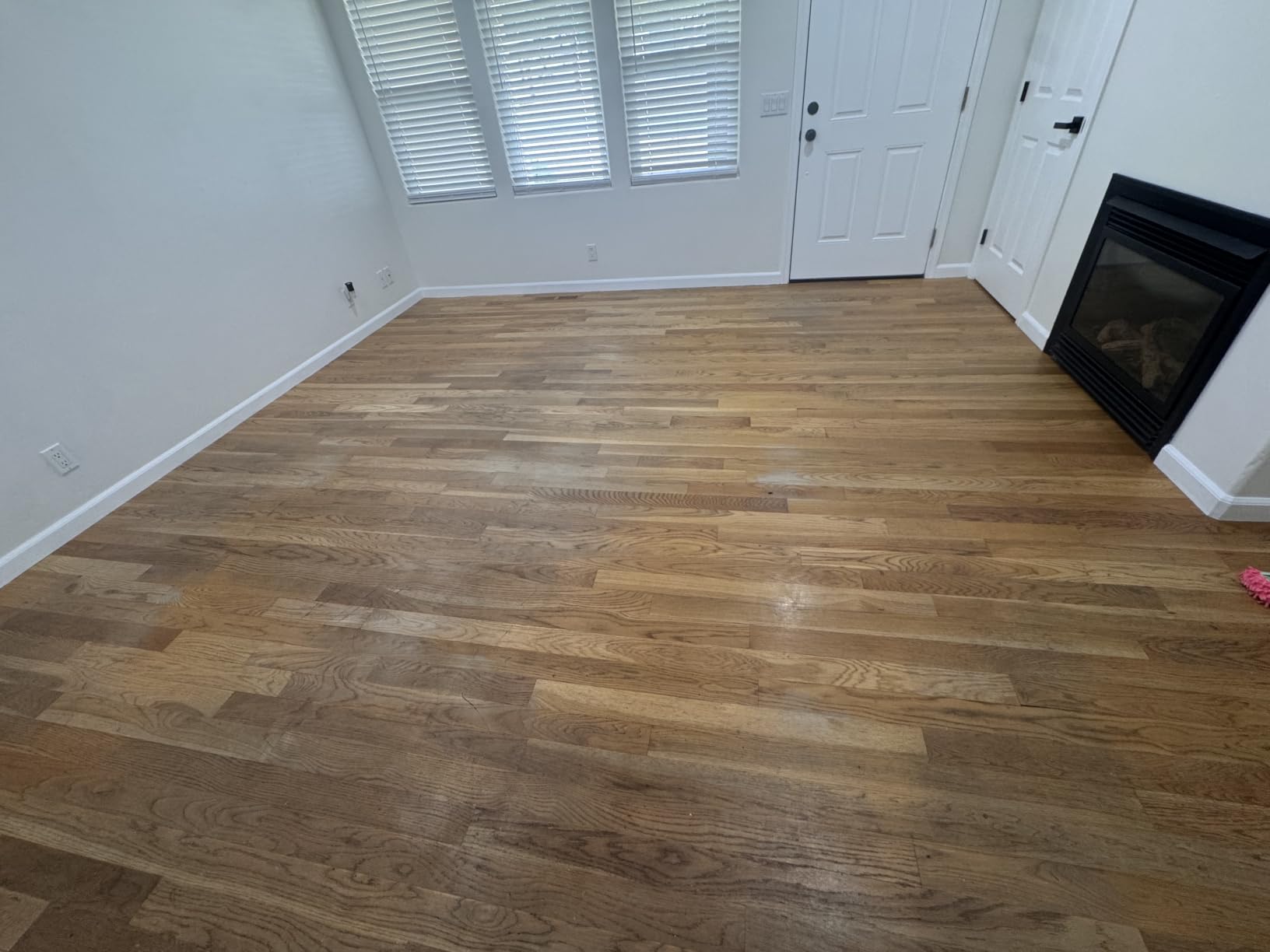
Two honest cautions from our use and from flooring forums. First, this only belongs on finished floors, never unfinished wood.
Second, a polish layer is a maintenance product, not a permanent fix. Forum users who complain about a plastic-like coating are almost always reapplying polish every week without cleaning first, which stacks layers unevenly. Used a few times a year over a clean floor, it behaves beautifully.
How do you use the two bottles together?
Clean first, polish second, and do not mix them. Vacuum and dust mop the floor, wash it with the cleaner bottle and a microfiber pad, let it dry fully, then apply the polish in thin sections with a clean pad working toward the exit. Thin coats look better than thick ones, and you want to stay off the floor while it cures.
How often should you apply the polish?
For a normal household, every one to three months in high-traffic rooms and less often elsewhere. Our living room kept its improved look for about ten weeks before the hallway path started to dull. Whenever water stops beading on the surface or the shine goes patchy, that is your signal to clean and reapply.
5. Rejuvenate All Floors Cleaner – Best Multi-Surface Pick
Rejuvenate All Floors Cleaner 32 Oz, Fresh Citrus Scent
32 oz all-floors cleaner
pH neutral formula
Fresh citrus scent
Safe for pets and kids
Pros
- Safe on sealed hardwood
- tile
- vinyl and laminate
- Breaks down dirt and grime quickly
- pH neutral and safe for pets and kids
- Fresh citrus scent
- Compatible with Click n Clean mop
Cons
- Can cloud some dark tile
- Not Prime eligible in all areas
- Needs correct dilution for some surfaces
Rejuvenate is the bottle I keep for houses that are not just hardwood. In our case that means the sealed oak in the kitchen, the vinyl plank in the basement playroom, and the tile in the mudroom, all cleaned from one product. It holds a 4.5 rating across 13k+ reviews, with 73% five stars.
On hardwood it behaved like a solid mid-tier cleaner, breaking down grime quickly without leaving a film. The fresh citrus scent is the most noticeable thing about it, and it made the whole first floor smell clean for an hour or so after mopping.
The formula is pH neutral, safe for pets and kids when used per the label, and designed for sealed hardwood, tile, vinyl, and laminate. It pairs with the Rejuvenate Click n Clean mop, but a regular microfiber mop works just as well.
There are limits worth knowing. Some reviewers report a cloudy film on dark tile, so test a corner before doing the whole floor in that finish.
It also needs proper dilution on certain surfaces, so read the label rather than guessing, and note that it is not always Prime eligible depending on your area. Neither issue showed up on our hardwood.
Which floors is it safe on?
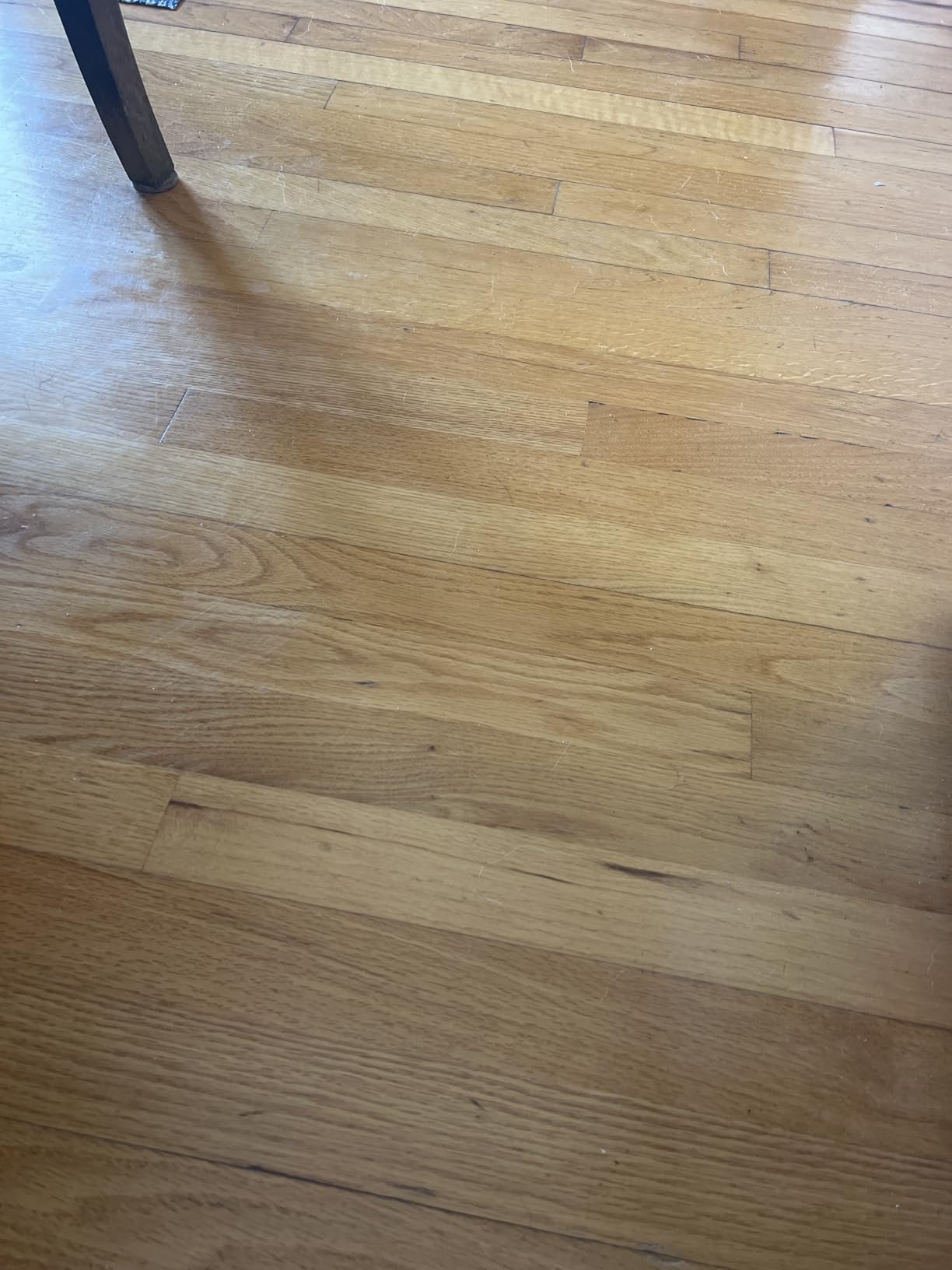
Sealed hardwood, tile, vinyl, laminate, and most other hard, sealed surfaces. The key word is sealed, since unsealed stone, waxed wood, and anything that absorbs water should stay dry-cleaned. If your tile is dark or has visible porosity, do a small patch test and check it under bright light once dry.
Does the citrus scent linger after drying?
It hangs around for about an hour in our house, then fades to almost nothing by the next morning. It reads as actual lemon rather than a synthetic air freshener, and none of our testers found it irritating. If you prefer completely unscented cleaners, Bona is the closer match in this lineup.
6. Bruce Hardwood & Laminate Floor Cleaner – Best for Engineered Wood and Laminate
Bruce Hardwood & Laminate Floor Cleanr – 64oz Refill – 2 Pack
64 oz refill 2-pack
No streaks or dull film
Hardwood and laminate safe
Works with spin dry mops
Pros
- Leaves a clean streak-free finish
- No dull film after drying
- Excellent on engineered wood and laminate
- Keeps floors looking like new
- Large refill size lasts for months
Cons
- Bottle can arrive leaky
- Container quality feels cheap for the price
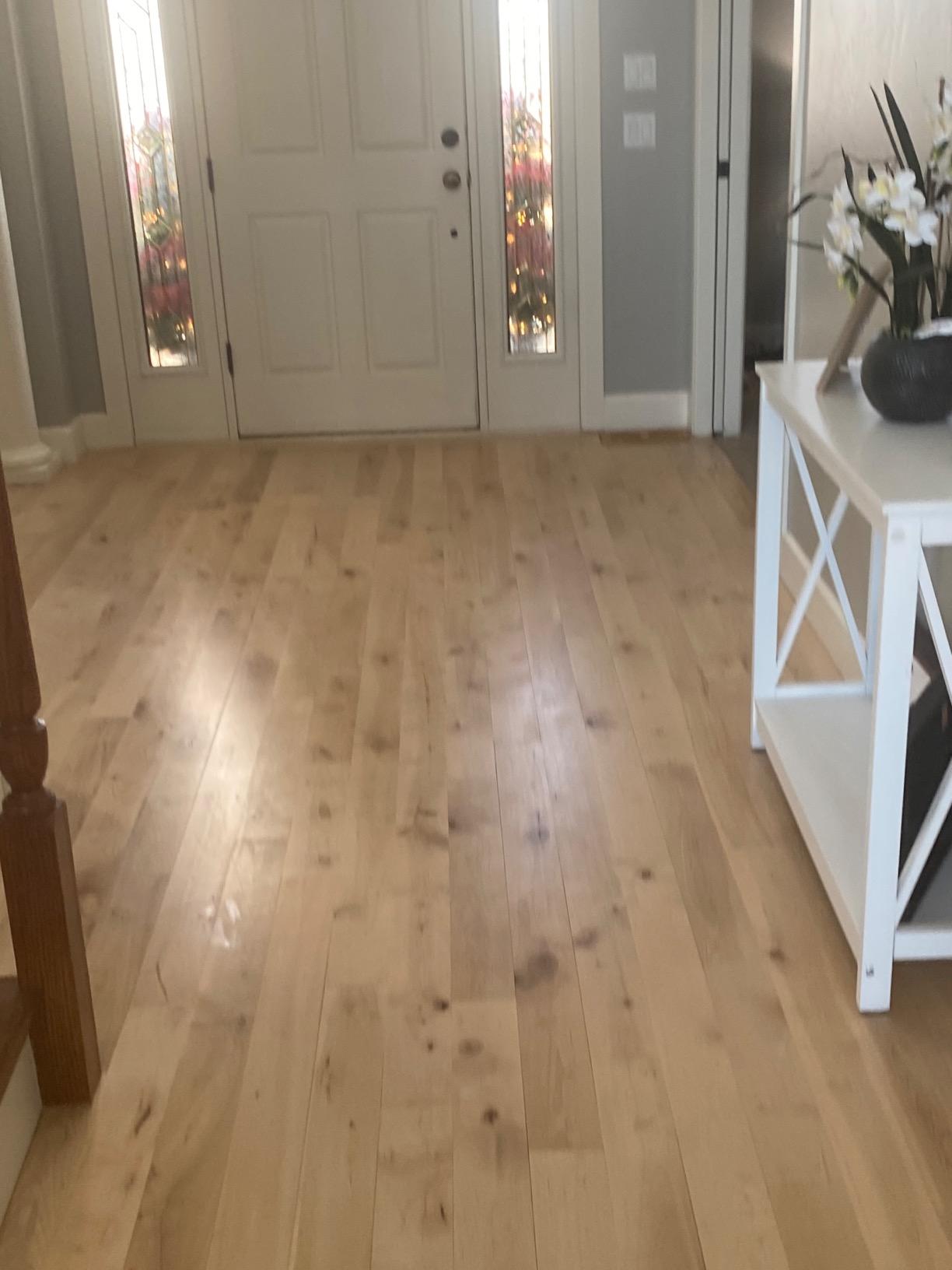
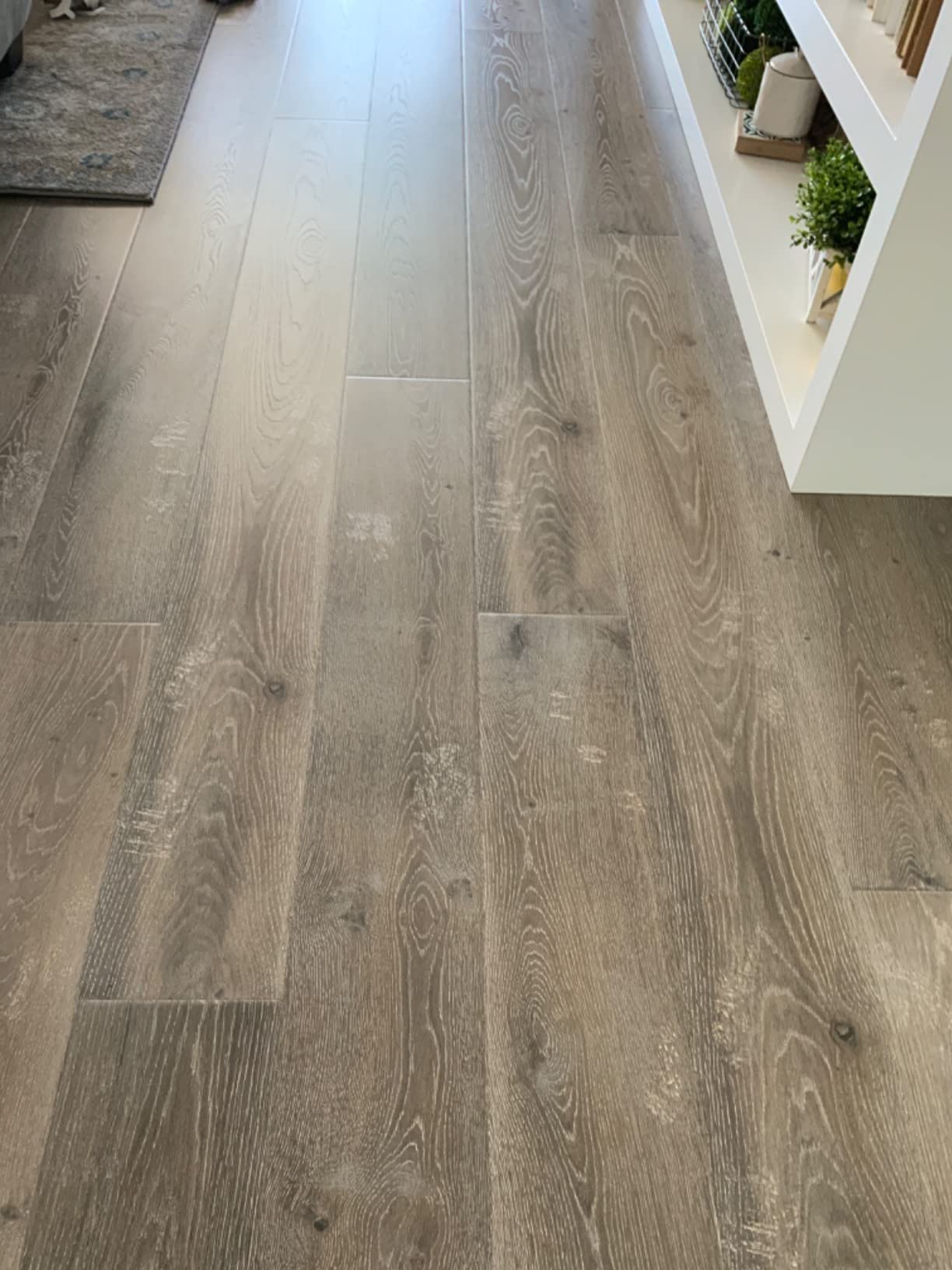
Bruce is a flooring manufacturer rather than a cleaning brand, and that changes how the product is built. This is the cleaner Bruce recommends for its own wood floors, which matters if your warranty specifies manufacturer-approved products. In our engineered-wood bedroom it left zero streaks and none of the dull film that cheaper cleaners can leave behind.
It matches Bona at a 4.7 average, here from 4k+ reviews, with 84% five stars. Reviewers consistently describe floors that look like new, and our experience on engineered planks and laminate was the same.
You get a 64-ounce refill in a two-pack, which is a lot of cleaning solution for one order. It is also compatible with Ocedar spin dry mops, a nice touch if you already own one for your tile floors.
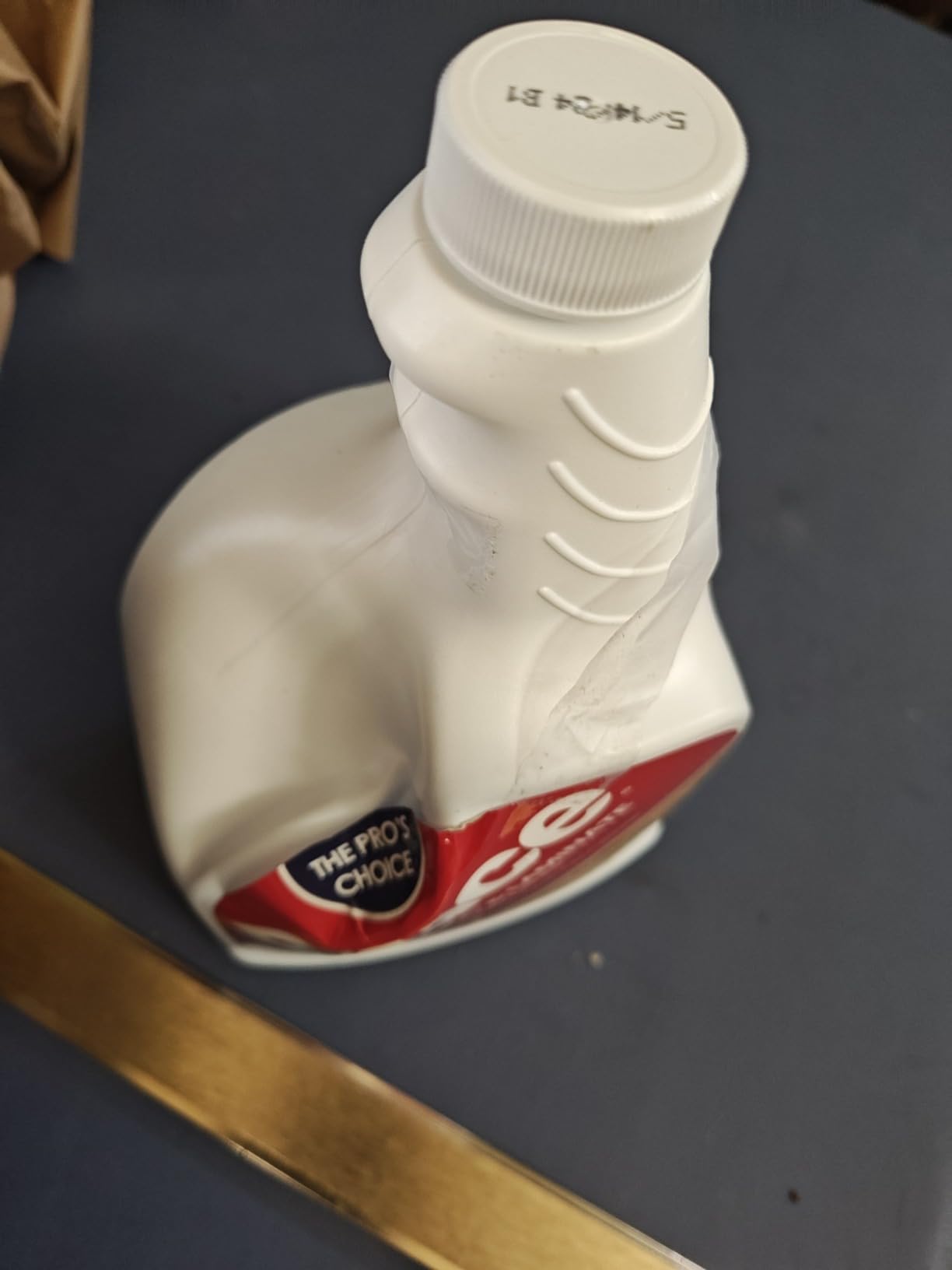
The complaints are about the packaging, not the liquid. A recurring theme in reviews is bottles that arrive leaking, and ours came through fine but felt thin-walled.
Our suggestion is to decant it into a sturdy spray bottle when it arrives and check the cap seam in the shipping box. It is an annoying flaw in an otherwise excellent cleaner.
Why choose a flooring brand’s own cleaner?
Because finish compatibility is the whole game with wood floors, and a flooring manufacturer has no incentive to sell you something that damages its product. Bruce also publishes care guidance around this cleaner, so you are following one consistent system instead of mixing advice. If your floors are Bruce, this is the safest choice on this list.
How far does the two-pack go?
Farther than you expect, since you only need a light mist per section rather than a wet mop. In our testing the equivalent of one 64-ounce bottle covered roughly 2,000 square feet of weekly cleaning for about two months. Stored sealed and out of direct sun, the second bottle keeps fine until you need it.
7. OdoBan Neutral pH Floor Cleaner Concentrate – Best Concentrate for Large Homes
OdoBan Professional Series Neutral pH No Rinse Floor Cleaner Concentrate, 1 Gallon
1 gallon concentrate
Makes up to 128 gallons
Neutral pH, no rinse
Non-toxic, bleach-free
Pros
- One gallon makes up to 128 gallons of solution
- Neutral pH and no-rinse formula
- Streak-free finish
- Works on sealed wood
- vinyl
- tile and sealed concrete
- Non-toxic and bleach-free
Cons
- Can feel sticky if over-diluted or over-applied
- Not for marble
- Does not whiten grout
OdoBan is the pick that changed how I think about floor cleaner economics. One gallon of concentrate mixes into up to 128 gallons of cleaning solution at roughly one ounce per gallon of water, which is why cleaning crews and anyone with a big house buy it. Our basement and main floor ran on a single bottle through the entire test period.
It carries a 4.6 rating from 1.7k+ reviews, with 78% five stars, and the professional series labeling reflects where you will actually see it used. On our sealed wood it cleaned well and dried streak-free with no rinsing.
The formula is neutral pH, non-toxic, and bleach-free, effective on vinyl, tile, sealed concrete, and sealed wood. There is a light minty lavender scent that stays subtle rather than perfuming the house.
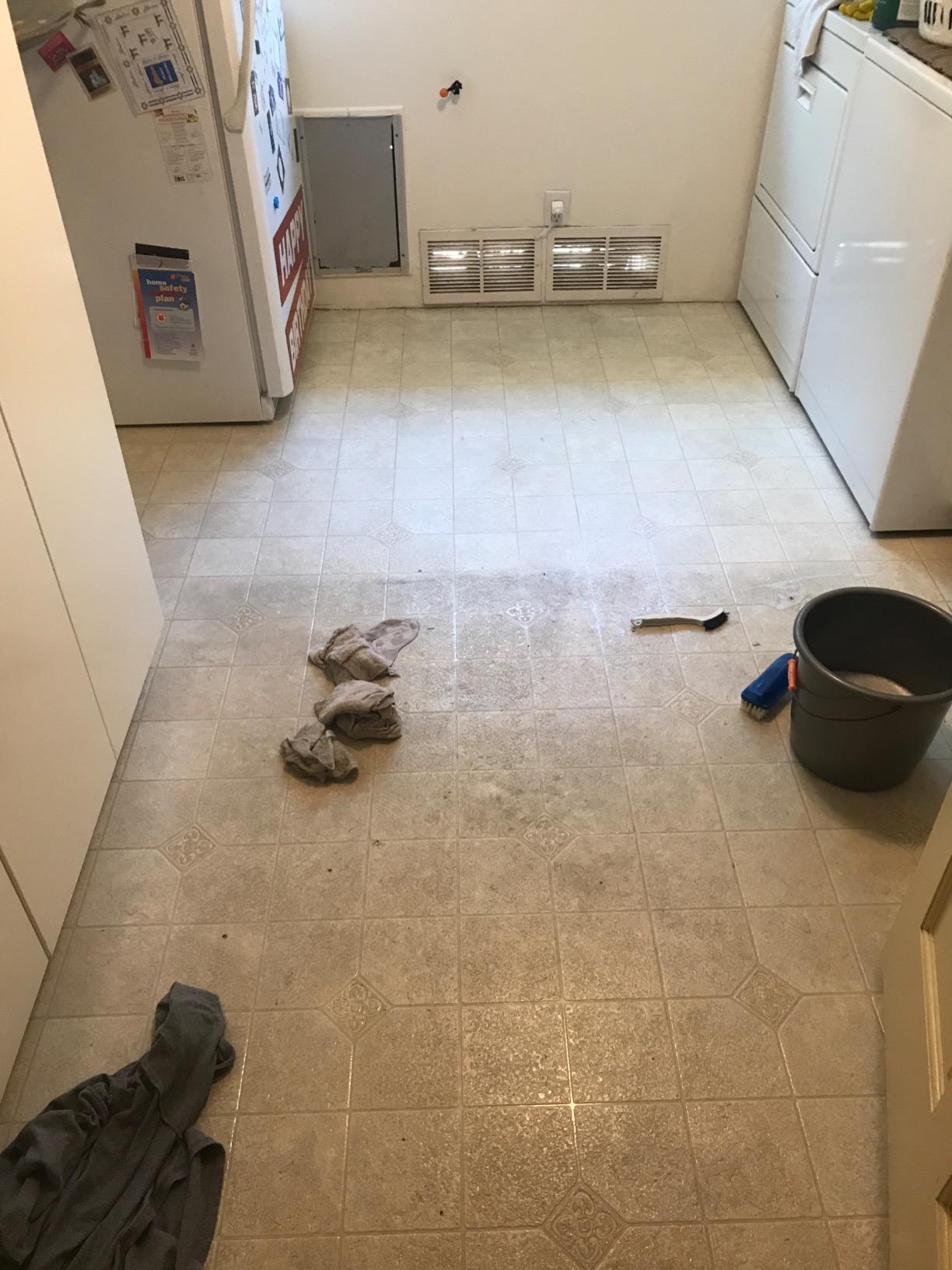
Dilution discipline is everything here. The most common complaint, a sticky feel, comes from measuring heavy or mopping with too much solution on the pad.
Use a marked cap or a cheap measuring shot glass, mix only what you will use that day, and wring the mop well. It is also not for marble and will not whiten grout, so keep a separate product for those jobs.
What dilution ratio should you use?
The standard mix is one ounce of concentrate per gallon of water, which is what produces the 128-gallon yield from the jug. For routine damp mopping on sealed wood you can go lighter, and for heavy soil in entryways stay at the full ratio rather than pouring extra. Mark your cap once and you will never guess again.
Is it really safe for sealed wood?
Yes, when the floor is genuinely sealed and you mop damp rather than wet. The neutral pH means it neither etches the finish nor leaves an alkaline film, which is the same property that makes it safe on vinyl and sealed concrete. Skip it on unsealed wood, waxed floors, and marble, since those surfaces need specialty care.
How to Choose a Hardwood Floor Cleaner?
Picking the right bottle comes down to four things, and none of them are marketing claims. Here is what actually matters when you stand in the aisle or scroll a product page.
Insist on a pH-neutral formula
This is the single most important spec on the label. A pH-neutral cleaner neither etches the polyurethane finish nor leaves an alkaline residue, which is why flooring manufacturers keep repeating it. Acidic DIY mixes like vinegar can dull a finish over time, and strong alkaline degreasers can strip it.
Decide between residue-free and extra cleaning power
For weekly maintenance on floors in decent shape, a residue-free spray like Bona or Method is all you need. If you have ground-in dirt, scuffs near doors, or a household that is hard on floors, a professional-strength option like ZEP cleans faster. The middle ground is fine too, which is where Rejuvenate sits.
Match the cleaner to your finish
Almost every failure we read about in forums traces back to this step. Polyurethane-finished floors accept nearly every pick on this list, while oil-finished and waxed floors reject most of them, including Bona and ZEP. When in doubt, call the company that installed or finished your floor, because the wrong cleaner can void the warranty.
Weigh concentrate versus ready-to-use
Ready-to-use sprays win on convenience and on controlling how much liquid touches your floor, which is why most people prefer them. Concentrates like OdoBan win on cost per cleaning and on cutting plastic waste, at the price of measuring carefully. If your cleaner use is measured in gallons per month, concentrate is the easy call.
Look for certifications if you have pets or babies
EPA Safer Choice certification means the ingredient list has been reviewed against safety and environmental criteria, and USDA biobased labeling tells you how much of the formula comes from renewable sources. Bona carries both. They are not the only measure of a good cleaner, but they are an easy shortcut for households where kids and animals crawl on the floor.
Hardwood Floor Care: The Do’s and Don’ts
Most hardwood damage we saw documented in forums was caused by cleaning habits, not by the cleaner itself. Follow the short list below and you will avoid nearly all of it.
Do these things
Vacuum or dust mop before washing, since grit is what actually scratches a finish.
Use a microfiber pad and keep it barely damp, wringing out excess liquid as you go.
Clean in the direction of the wood grain so the mop lifts soil out of the grain rather than across it.
Work toward an exit so you are never standing on wet floor.
Spot-test any new cleaner in a low-visibility corner and check it dry under bright light.
Deep clean or strip buildup occasionally if you use the same cleaner for years.
Don’t do these things
Never use a steam mop on hardwood, since forced moisture into the seams causes warping and buckling.
Skip oil soaps and wax-based polishes for routine cleaning, because sticky residue attracts dirt and layered polish turns uneven.
Do not use a soaking cotton string mop, which leaves standing water between the boards.
Avoid vinegar and water as a regular routine, as acidity slowly dulls polyurethane.
Do not mix cleaners or layer a new product over an unwashed floor.
Check your warranty terms before using anything not approved by the floor’s manufacturer.
How to Clean Hardwood Floors the Right Way
The professional method is dry-first, damp-second, and it takes less time than most people spend arguing with a bucket. Here is the routine our team settled on after four months of testing.
Clear and vacuum. Pick up rugs and cords, then vacuum with a hard-floor setting or dust mop to remove grit that would otherwise scratch under a wet pad.
Mist, do not flood. Spray a light band of cleaner onto one section of floor, or squirt it ahead of the mop if you are using a product like Method.
Mop with the grain. Work a clean microfiber pad over the section in the direction of the boards, rinsing or swapping the pad as it picks up soil.
Finish and let it dry. Move section by section toward your exit, keep foot traffic off for fifteen to twenty minutes, and toss the pad in the laundry.
For polish-style products like the Weiman combo, add a fifth step: let the cleaned floor dry fully, then apply the polish in thin coats with a dedicated pad. That extra drying time is what keeps the finish even.
Frequently Asked Questions
What’s best to use on hardwood floors to clean them?
A pH-neutral, water-based spray cleaner and a microfiber mop are the best combination for hardwood floors. Spray a light mist, mop with the grain, and let the floor air dry. Bona, Method, and Bruce all make safe, residue-free options for sealed polyurethane-finished floors.
What is the best cleaner for wood floors?
Bona Hardwood Floor Cleaner is the best overall choice for most wood floors. It is pH-neutral, residue-free, fast drying, EPA Safer Choice certified, and safe for unwaxed, unoiled polyurethane-finished floors. For dull or scratched floors, the Weiman cleaner and polish combo restores shine, and OdoBan concentrate is the most economical for large homes.
What is the number one hardwood floor cleaner?
Bona Hardwood Floor Cleaner Spray is the number one pick, with a 4.7 average rating from more than 49,000 reviews and about 84% five-star ratings. It is also the consumer brand flooring installers mention most often, which matters if you want to keep your warranty intact.
How do professionals clean hardwood floors?
Professionals clean hardwood with a dry-first method: vacuum or dust mop to remove grit, then damp-mop with a pH-neutral, no-rinse cleaner using a microfiber pad. They never use steam mops on wood, never flood the floor, and they choose concentrates like OdoBan or pro lines like ZEP for volume work. Periodically they deep clean or strip old cleaner buildup before applying a maintenance polish.
Are steam mops safe for hardwood floors?
No, steam mops are not safe for hardwood floors. The forced hot moisture drives water into the seams between boards, which causes cupping, warping, and buckling over time. Many flooring warranties are voided by steam cleaning. Use a barely damp microfiber mop with a pH-neutral cleaner instead.
Final Verdict: The Best Hardwood Floor Cleaners for 2026
After four months of weekly cleaning, spot tests, and long-term residue checks, the best hardwood floor cleaners for 2026 split cleanly by need. Bona remains the best overall for sealed polyurethane floors, Method handles small homes for less money, and Weiman’s cleaner-plus-polish combo is the fix for dull, scratched rooms.
Add ZEP for heavy traffic, Bruce if warranty compliance matters, Rejuvenate for mixed floor types, and OdoBan concentrate when cost per gallon counts. Pair any of them with a microfiber mop and the dry-first routine above, and your floors will thank you for years.