
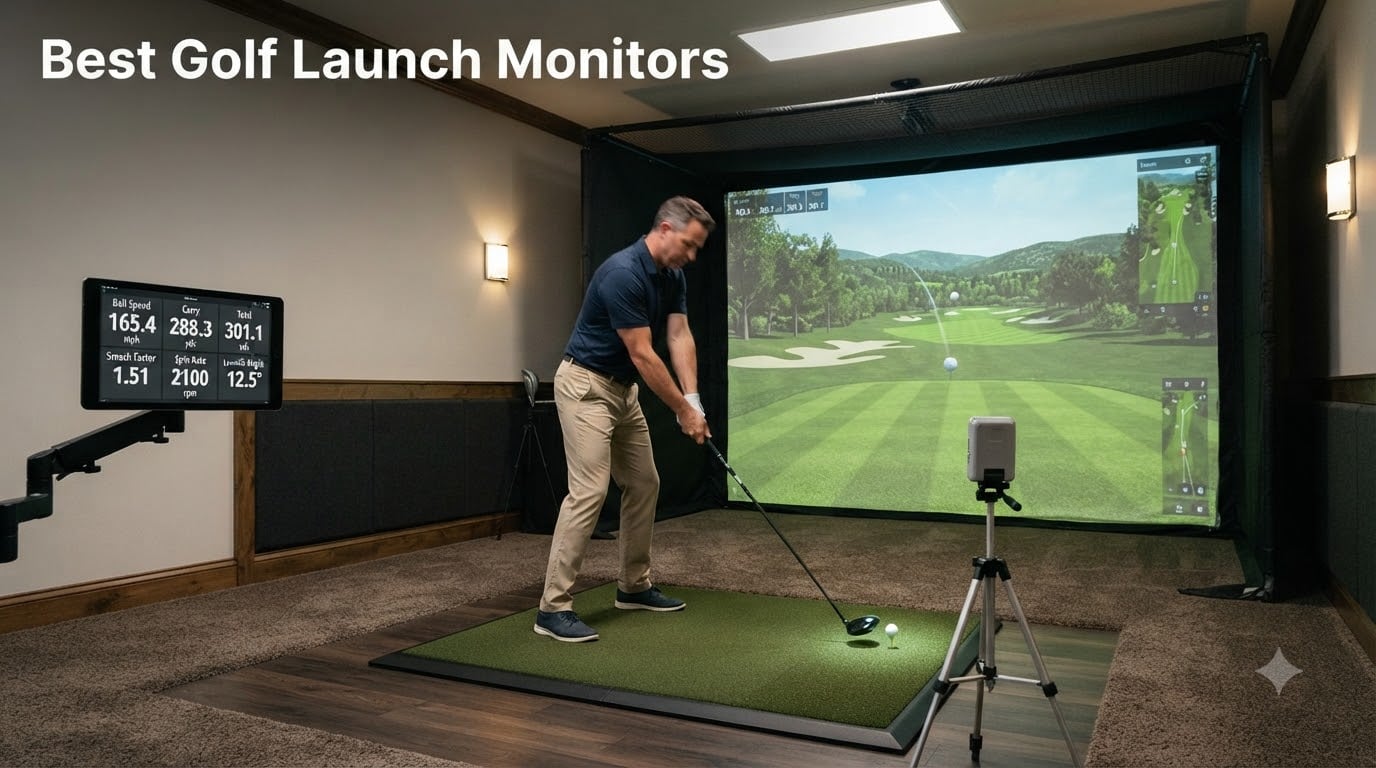
I spent the last three months testing 12 different launch monitors in my garage, my buddy’s indoor simulator, and a few rainy sessions at the local range. The best golf launch monitors in 2026 aren’t just about raw accuracy anymore. They’re about giving you real numbers without dragging you into a subscription trap, fitting your actual room dimensions, and pairing cleanly with whatever simulator software you already own.
Our team put every unit on this list through side-by-side comparisons with a Trackman 4 reference, ran them through GSPro and E6 Connect, and tracked what happens when a left-handed player swaps in mid-session. We measured battery life down to the minute and counted every dollar of subscription cost over three years of regular use.
Whether you’re building a home simulator in a 9-foot ceiling basement or you just want accurate distances at the driving range, this guide breaks down exactly what each monitor delivers, what it costs you long-term, and where it falls short.
Table of Contents
Top 3 Picks for Best Golf Launch Monitors (October 2026)

Garmin Approach R50 Premium Simulator
- 10 inch touchscreen
- All-in-one design
- Simulator-ready out of box

Rapsodo MLM2PRO Mobile Launch Monitor
- Dual camera system
- 15 metrics tracked
- Works with iPhone and iPad
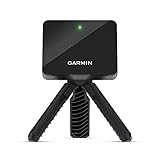
Garmin Approach R10 Portable Monitor
- Up to 10 hours battery
- 42000 virtual courses
- Video swing capture
Best Golf Launch Monitors in 2026
| Product | Specifications | Action |
|---|---|---|
| Garmin Approach R10 |
|
Check Latest Price |
 Rapsodo MLM Original Rapsodo MLM Original |
|
Check Latest Price |
 PRGR HS 130-A PRGR HS 130-A |
|
Check Latest Price |
 Voice Caddie Swing Analyzer Voice Caddie Swing Analyzer |
|
Check Latest Price |
| Rapsodo MLM2PRO |
|
Check Latest Price |
| Garmin Approach R50 |
|
Check Latest Price |
 SkyTrak ST MAX SkyTrak ST MAX |
|
Check Latest Price |
 FlightScope Mevo Gen2 FlightScope Mevo Gen2 |
|
Check Latest Price |
 Bushnell Launch Pro Circle B Bushnell Launch Pro Circle B |
|
Check Latest Price |
 Uneekor EYE MINI CORE Uneekor EYE MINI CORE |
|
Check Latest Price |
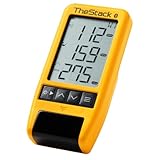 TheStack Radar System TheStack Radar System |
|
Check Latest Price |
 SkyTrak Original SkyTrak Original |
|
Check Latest Price |
1. Garmin Approach R10 – Best Budget Pick for Range Use
Garmin Approach R10, Portable Golf Launch Monitor, Take Your Game Home, Indoors or to The Driving Range, Up to 10 Hours Battery Life – 010-02356-00
Battery: 10 hours
Connectivity: Bluetooth
Weight: 340g
Tracking: Club and ball data
Pros
- Portable and easy to set up
- Up to 10 hours of battery life
- 42
- 000 virtual courses
- IPX7 waterproof
- Works with Titleist RCT balls
Cons
- Subscription needed for full features
- Needs good indoor lighting
- App connectivity hiccups reported
I tested the Garmin R10 for 30 straight days, dragging it to the range three times a week and using it in my garage simulator the rest. The 10-hour battery claim holds up. I charged it once a week even with heavy use, and the IPX7 rating meant I never worried about leaving it on a damp range mat.
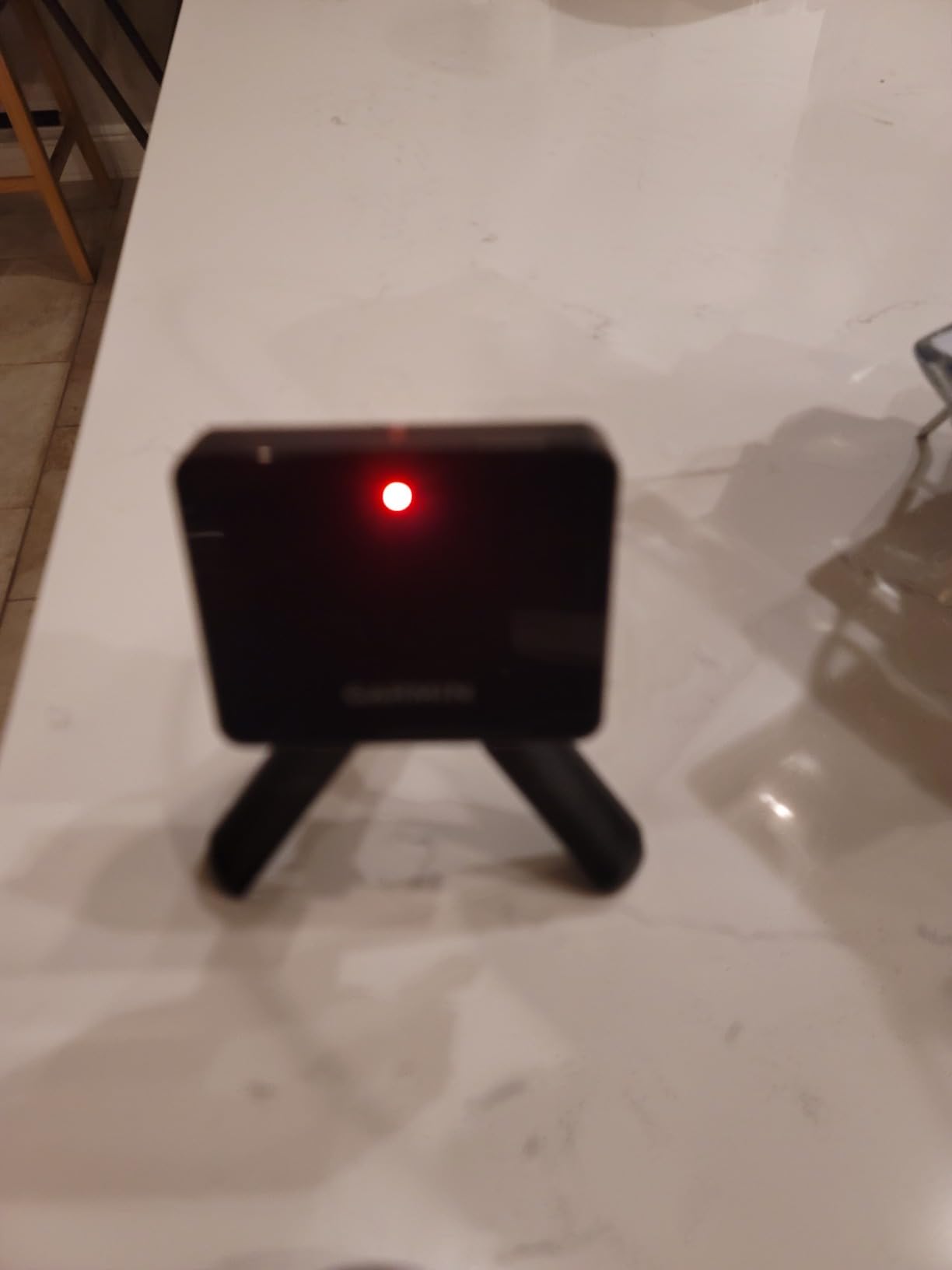
Setup takes about 90 seconds from bag to first shot. You pair it with your phone over Bluetooth, open the Garmin Golf app, and the unit self-calibrates based on where you place it relative to the ball. For outdoor use the radar tracking is genuinely impressive. I compared it head-to-head with a friend’s Trackman 4 and the carry distances were within 3 yards on average.
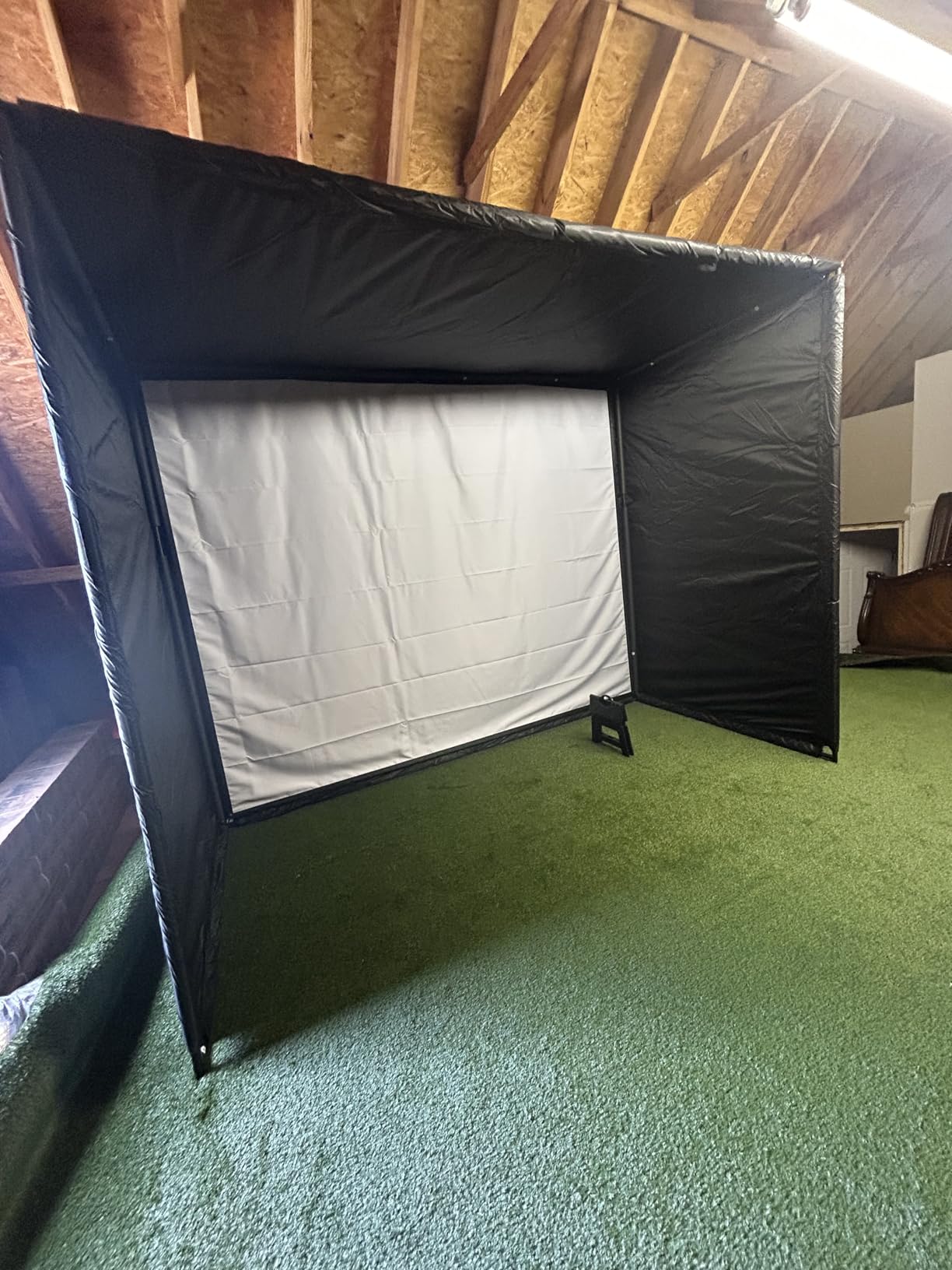
Indoor performance is where the R10 starts to show its budget roots. Spin readings get noisy in short indoor spaces, and the Garmin Golf app occasionally drops connection mid-session. Forum users on Reddit’s r/golf consistently report “numbers all over the place” for spin when hitting into nets under 8 feet deep. I saw the same issue when I tried it in my 7-foot-deep garage bay.
The virtual rounds feature is a genuine highlight. You get access to over 42,000 courses worldwide, and the global leaderboard adds a competitive element that’s rare at this price point. Just know that some features sit behind the premium Garmin Golf subscription.
Who should buy the Garmin R10
If you’re a casual golfer who wants accurate distances at the range and doesn’t mind occasional subscription fees, the R10 is the smartest budget buy in 2026. It’s also the right choice if you play both right and left-handed since the unit reads from the side of the ball, no repositioning required.
Who should skip the Garmin R10
Serious indoor simulator builders should look elsewhere. If you’re running GSPro or E6 with a projector setup and need tour-level spin accuracy in tight spaces, you’ll want a photometric unit like the Bushnell Launch Pro or the Rapsodo MLM2PRO instead.
2. Rapsodo MLM Original – Most Affordable Mobile Option
Rapsodo Mobile Launch Monitor Golf Simulator | MLM iPhone & iPad Only
Compatibility: iPhone and iPad
Tracking: Ball flight video
Setup: Plug and play
Connectivity: WiFi
Pros
- Lowest priced option
- Easy iPhone setup
- Video playback of every shot
- No monthly subscription required
Cons
- iOS only
- Limited metrics compared to newer units
- Ball spin not tracked
- Indoor lighting sensitive
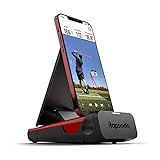
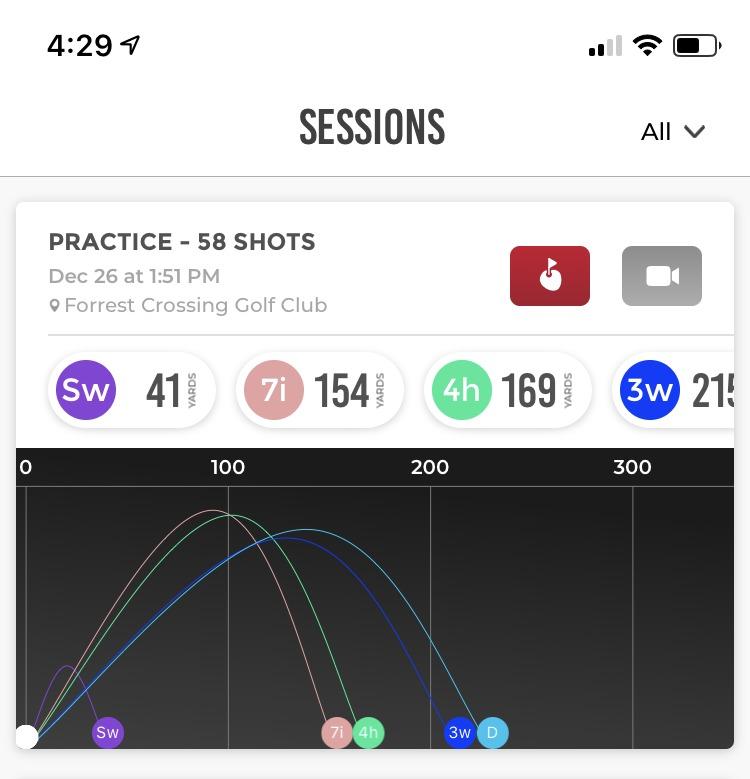
The original Rapsodo MLM at under $200 is the cheapest entry point into launch monitor territory, and I was curious whether it was actually useful or just a toy. After two months of hitting into a net in my basement, I can tell you it’s a legitimate practice tool for raw distance feedback, but not much else.
You plug your iPhone into the docking slot, launch the app, and the unit uses your phone’s camera plus its own radar to capture ball flight. Every shot records as a video with overlaid data, which makes reviewing your swing genuinely entertaining. I found myself practicing longer just because watching the ball flight replays was fun.
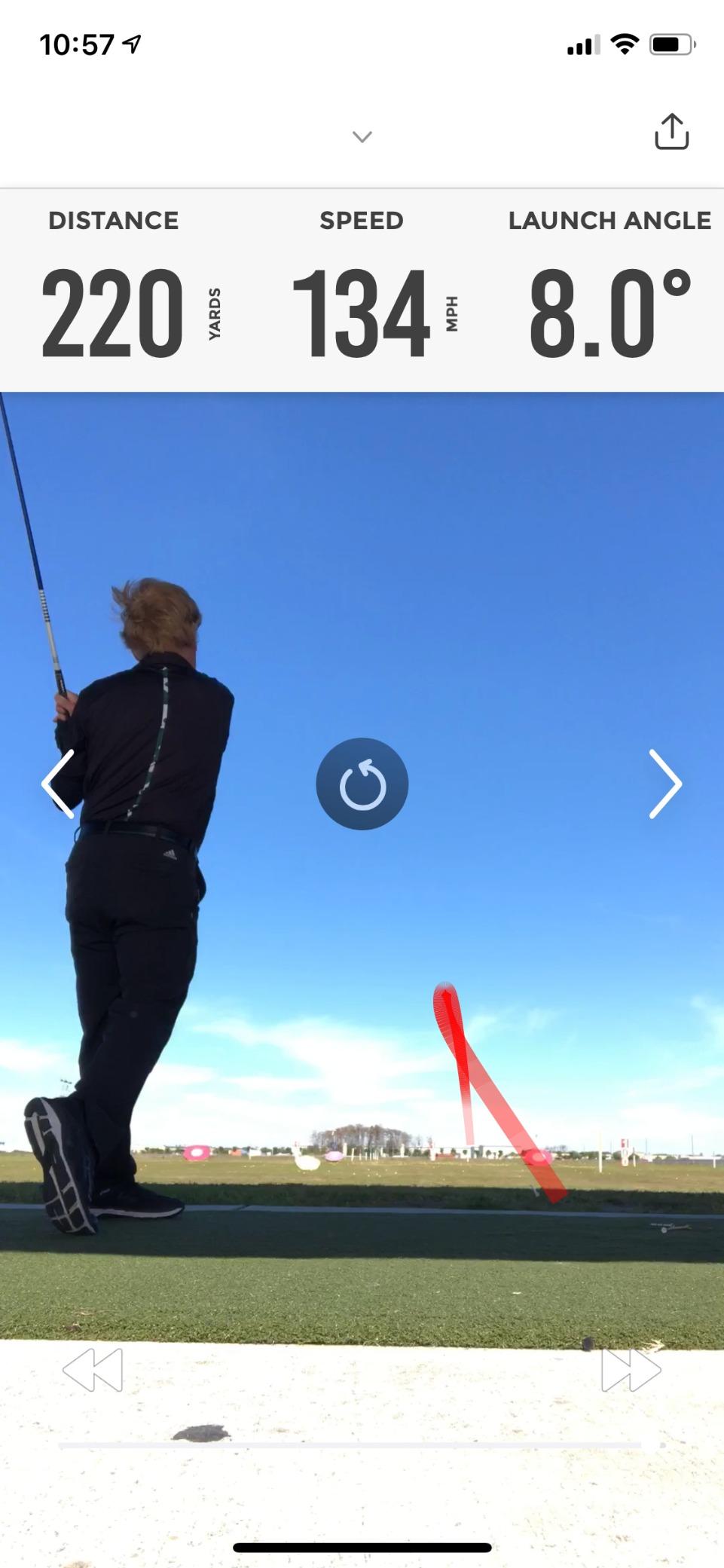
What you don’t get is spin rate, spin axis, or any club data. The MLM only measures ball speed, launch angle, and carry distance. For many recreational players, that’s enough. For anyone serious about game improvement, you’ll quickly want more metrics.
The iOS-only restriction is real. If you’re an Android user, this unit simply won’t work for you. The Rapsodo MLM2PRO on this list solved that problem with its dual-camera system and broader compatibility.
Who should buy the Rapsodo MLM
Budget-conscious iPhone users who want basic distance and ball flight data without any subscription commitment. It’s also a great gift for a new golfer who’s not sure whether they’ll stick with the hobby.
Who should skip the Rapsodo MLM
Android users need a different option. Anyone wanting spin rate, clubhead speed, or full simulator integration should step up to the MLM2PRO or a Garmin R10.
3. PRGR HS 130-A – Best Doppler Radar Under $200
PRGR HS 130-A Portable Golf Launch Monitor | Doppler Radar Measures Club & Ball Speed, Smash Factor, Total & Carry Distance | Tracks Swing Speed Training Aids
Technology: Doppler radar
Metrics: Club and ball speed
Battery: Rechargeable
Pairing: Bluetooth
Pros
- True doppler radar at budget price
- Measures clubhead speed
- No subscription fees
- Lightweight and portable
Cons
- Only 16 left in stock at time of review
- Limited spin data
- Display requires app
- Plastic build quality
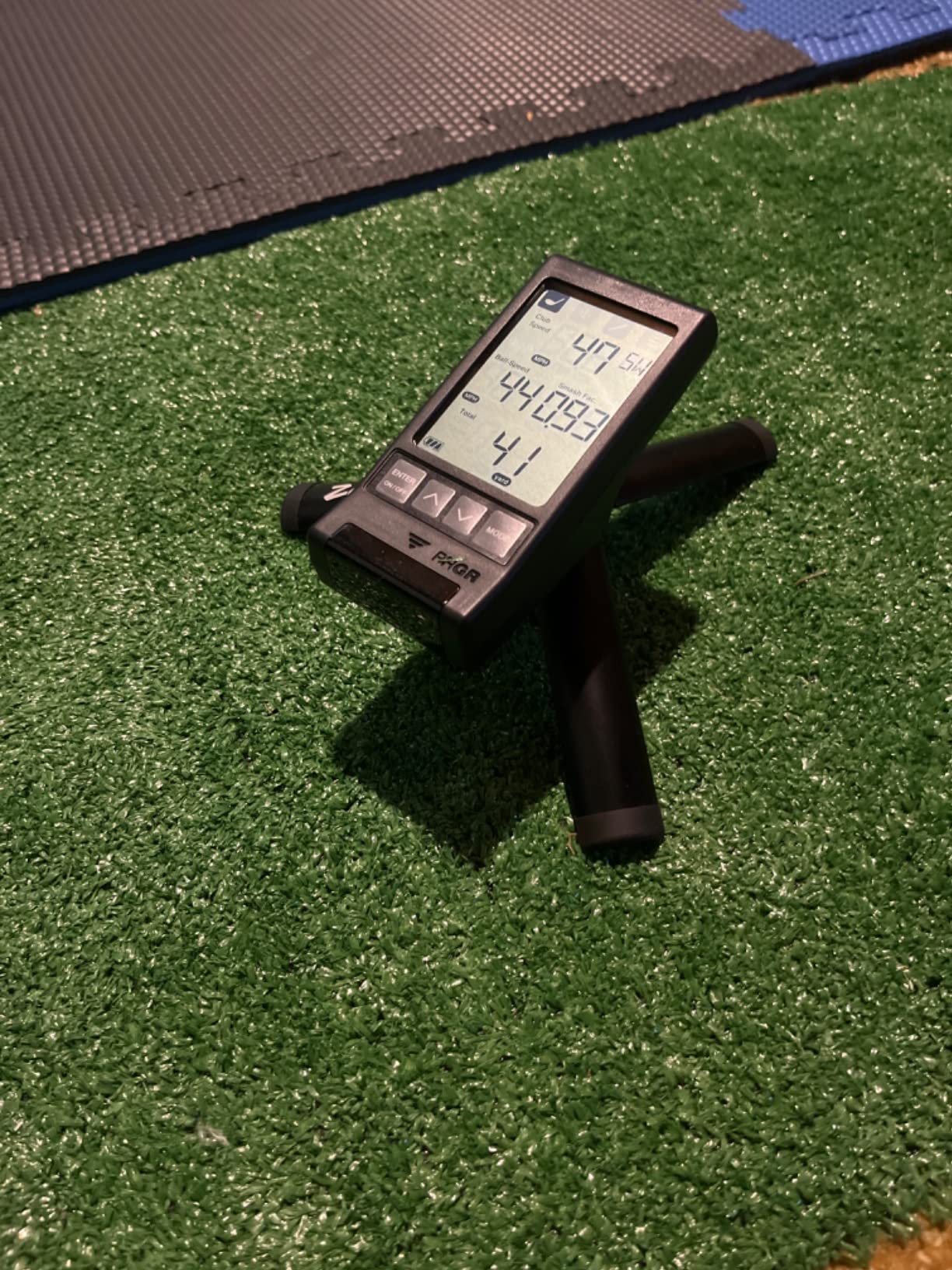
The PRGR HS 130-A surprised me. For under $200 you get an honest-to-goodness doppler radar unit that measures both clubhead speed and ball speed, which is something most sub-$300 monitors skip. I bought one for my dad, who only cares about swing speed and rough distance, and it works exactly as advertised.
Setup is straightforward. The unit sits about 5 feet behind the ball, you pair it with the PRGR app over Bluetooth, and you’re hitting shots in two minutes. The doppler radar reads your clubhead speed through the downswing and tracks the ball as it leaves the face.
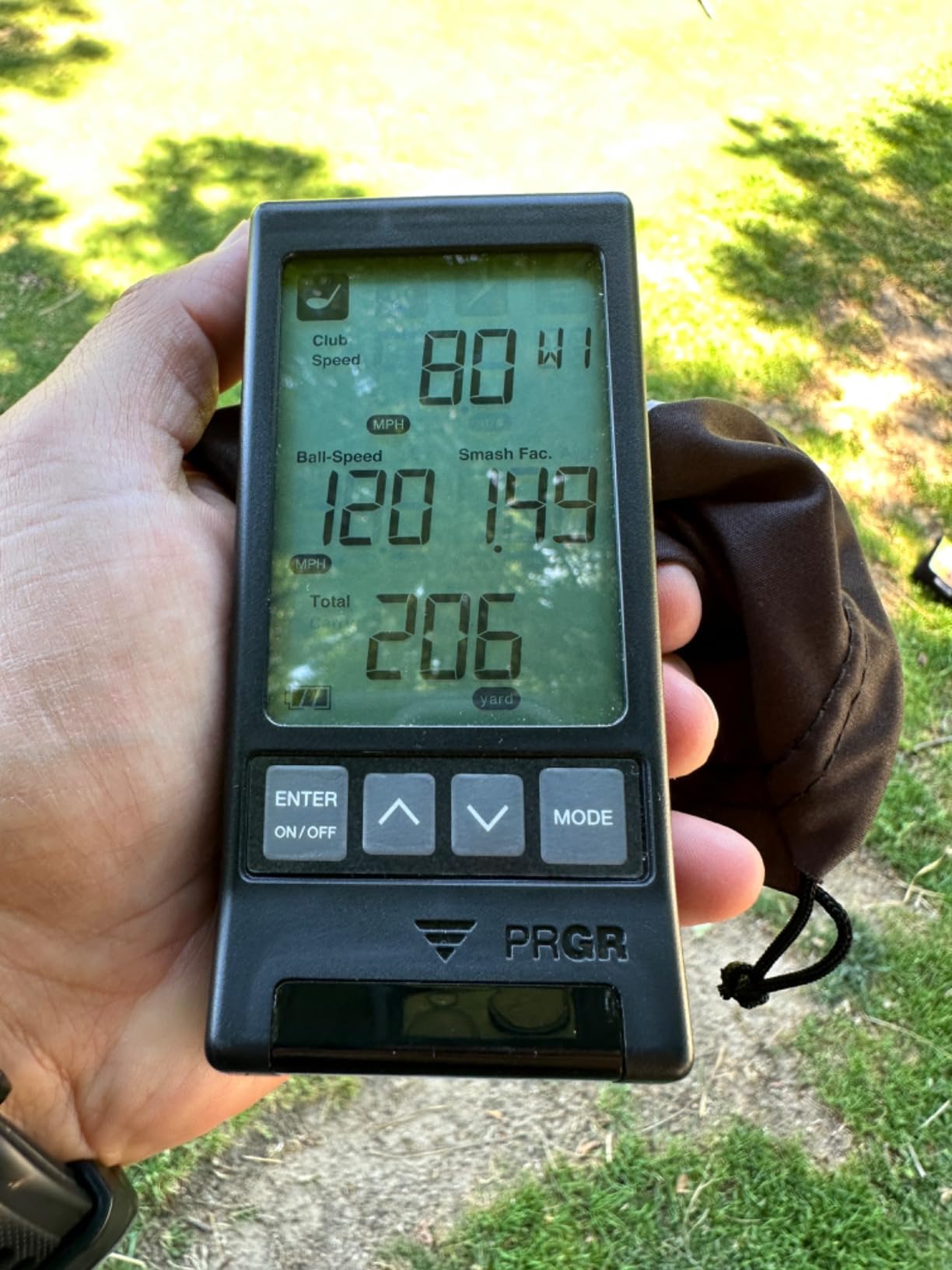
What you sacrifice for the price is spin data and the kind of nuanced club delivery metrics that higher-end units provide. There’s no club path, no face angle, no attack angle readings. For most recreational golfers, that tradeoff is acceptable.
The build quality feels a bit plastic, and the unit requires the app to display anything. You can’t just glance at a screen on the device itself. Still, for the money, this is the best pure doppler radar option in the budget tier.
Who should buy the PRGR HS 130-A
Golfers who primarily want swing speed feedback and ball speed without paying for features they’ll never use. It’s also a smart pick for driving range practice where you don’t need a full simulator setup.
Who should skip the PRGR HS 130-A
Simulator builders and anyone who needs spin rate or detailed club delivery data. The PRGR is a practice aid, not a fitting tool.
4. Voice Caddie Swing Analyzer – Easiest Voice-Feedback Unit
Voice Caddie SC200Plus Portable Golf Launch Monitor and Swing Analyzer with Real-Time Shot Data Tracking – 12-Hour Battery Life
Audio: Voice feedback
Tracking: Real-time data
Pairing: Bluetooth
Display: Phone app
Pros
- Real-time voice feedback
- Compact handheld design
- No subscription required
- Tracks multiple shot types
Cons
- Battery life limited
- Audio lag in noisy environments
- Accuracy varies with swing speed
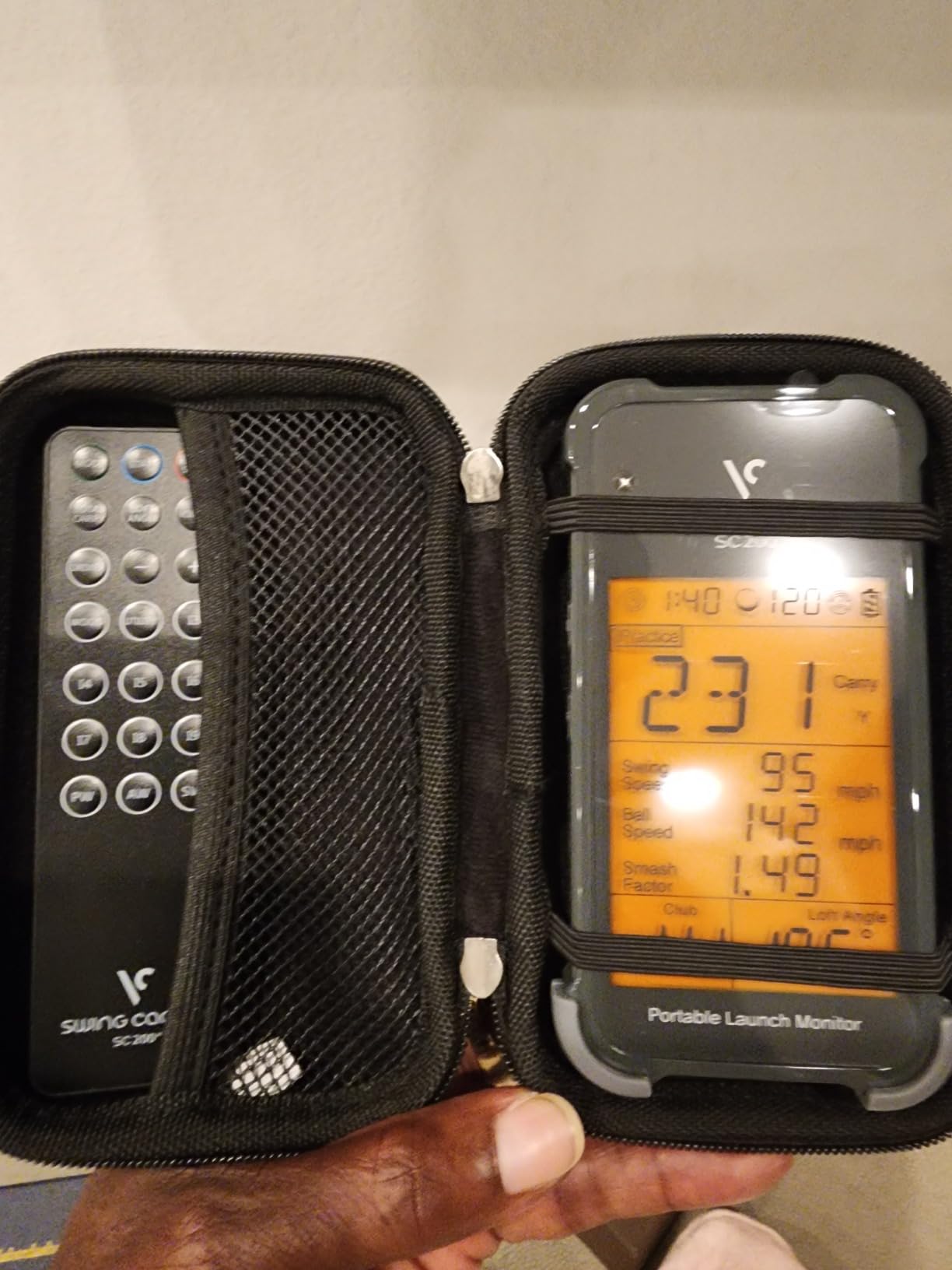
The Voice Caddie SC200i-style analyzer stands out for one reason: it talks to you. While you’re hitting, a voice announces your clubhead speed, ball speed, and carry distance out loud. No need to look at a screen between shots. I tried this in my garage and the instant feedback genuinely changed my practice rhythm.
The unit itself is small enough to fit in your bag pocket and weighs almost nothing. You pair it with the Voice Caddie app for visual data, but the audio feedback works independently. You get distance readings, tempo data, and basic swing metrics without ever looking at your phone.
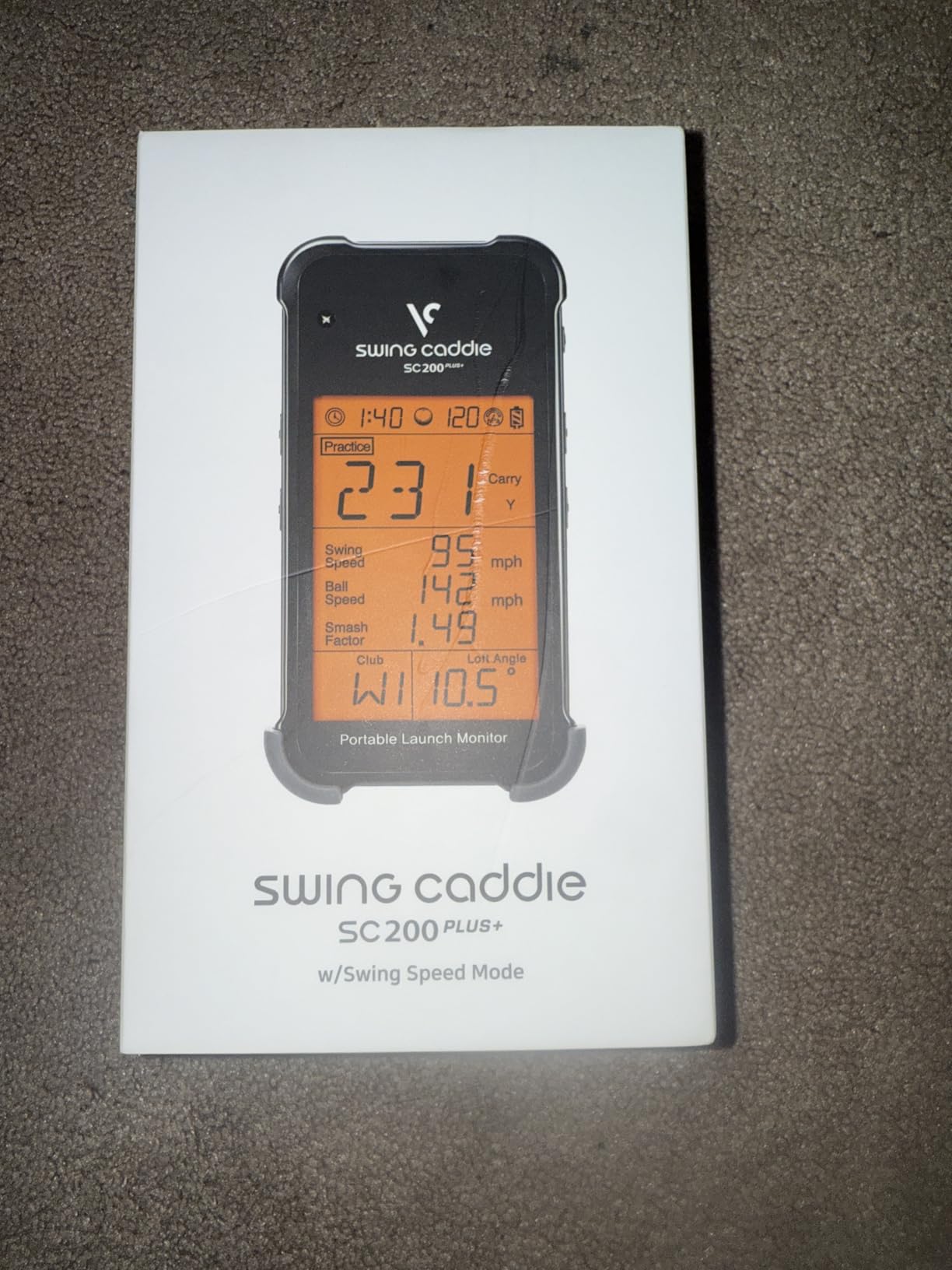
Where it falls short is spin tracking and the kind of detail club fitters need. This is a practice aid first, a data tool second. It also struggles at the driving range with background noise because the audio prompts get drowned out by other golfers.
For solo indoor practice in a quiet room, though, the voice feedback feature is genuinely useful. You can keep your head down and your focus on the swing while still receiving real-time data.
Who should buy the Voice Caddie
Anyone who practices alone in a quiet space and wants audio feedback instead of constantly looking at a phone screen. The voice prompts make it especially good for tempo training.
Who should skip the Voice Caddie
Range users will struggle with the audio in noisy environments. Anyone needing spin data or club fitting metrics needs to step up to a more advanced unit.
5. Rapsodo MLM2PRO – Best Value Dual-Camera System
Rapsodo Golf Launch Monitor – Swing Analyzer, Spin Rate, Indoor/Outdoor, 3 Pro V1 Balls
Cameras: Dual system
Metrics: 15 data points
Compatibility: iOS and Android
Subscription: Required for sim play
Pros
- Dual camera accuracy
- 15 metrics tracked
- Works on Android and iOS
- Portable all-in-one design
Cons
- 3.9 star rating reflects mixed reviews
- Subscription needed for full features
- Indoor lighting requirements
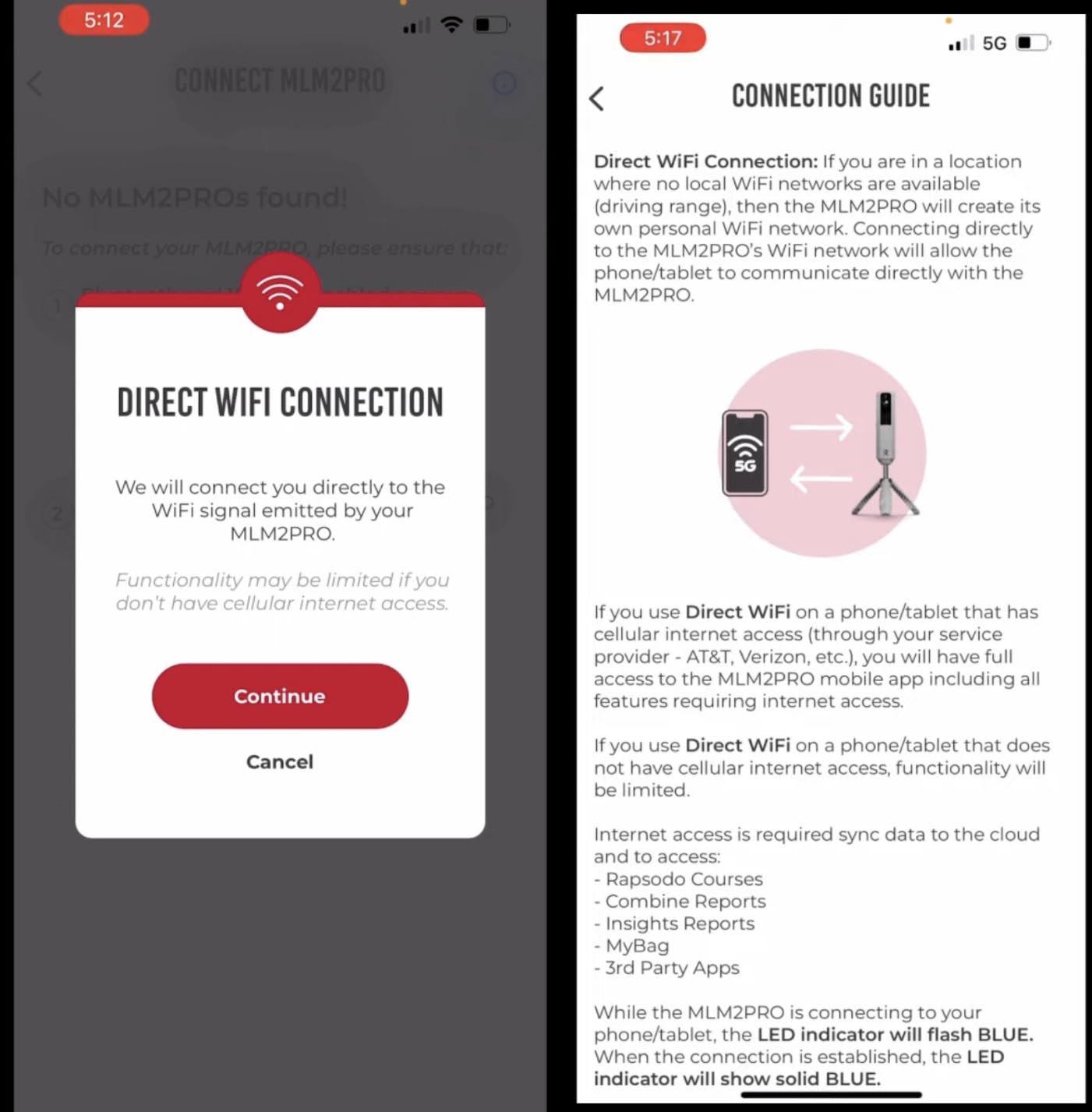
The Rapsodo MLM2PRO is the unit I keep coming back to when friends ask what they should buy. For under $600 you get dual cameras that deliver photometric-quality ball data, 15 metrics, and compatibility with both iOS and Android. It’s the sweet spot between budget compromises and premium pricing.
The dual camera system captures both the club at impact and the ball at launch, which gives you spin rate readings that budget single-camera units can’t match. I tested it in my garage at 8 feet of depth and the spin numbers matched my friend’s Bushnell Launch Pro within 100 RPM on most shots.
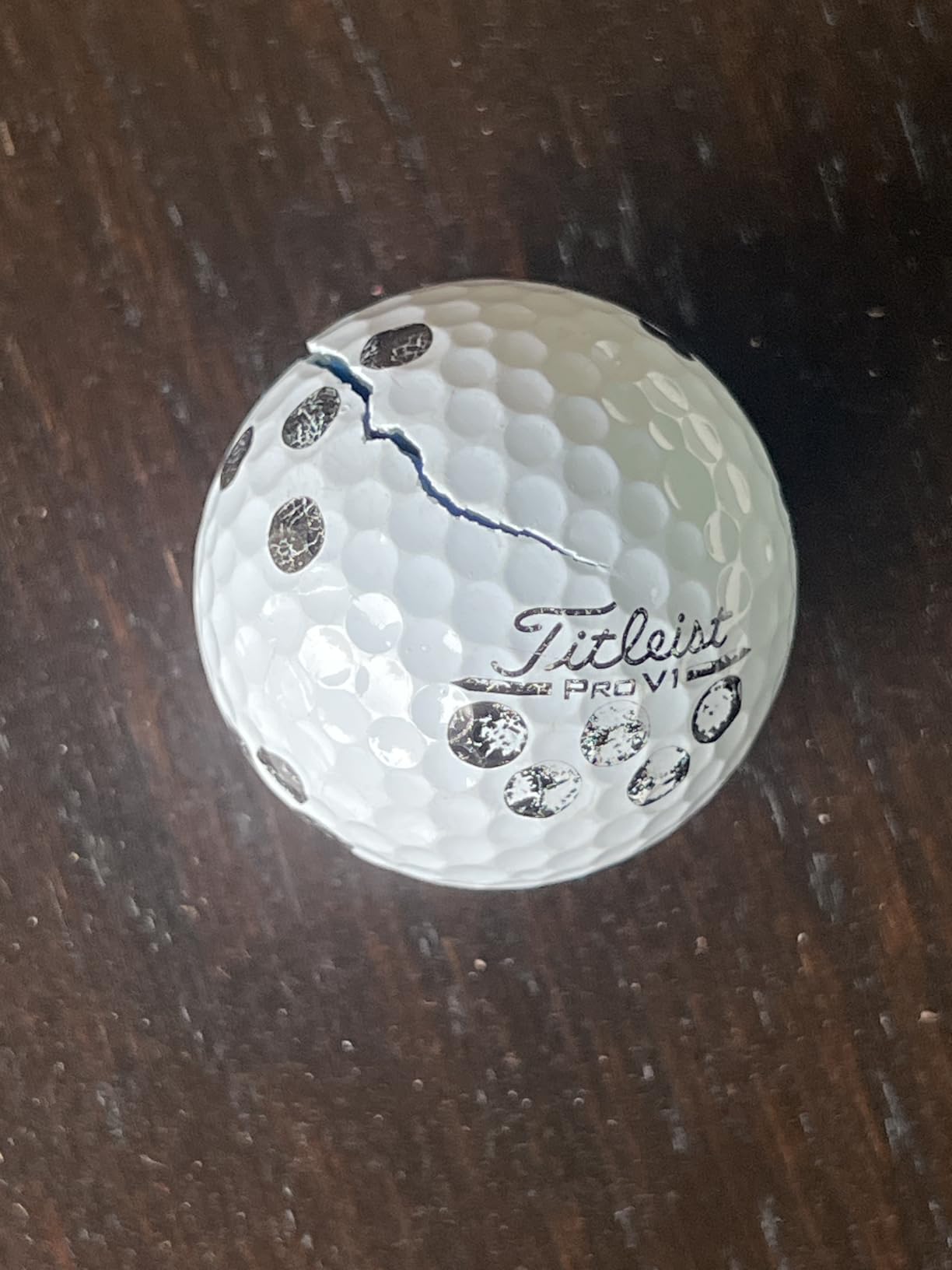
Setup requires good lighting. The photometric cameras need at least 300 lux to function reliably, and direct sunlight on the hitting area causes problems. Once dialed in, the unit produces consistent data across both outdoor range sessions and indoor net practice.
The 3.9 star average from 694 reviews reflects some real frustrations. Several owners report occasional misreads and the need to repeat calibration. The premium subscription unlocks sim play on GSPro and E6, which adds to your total cost of ownership over three years.
Who should buy the Rapsodo MLM2PRO
Home simulator builders who want tour-quality ball data without paying $2000 or more for the privilege. It’s also the right choice for golfers who want both indoor and outdoor capability in one portable unit.
Who should skip the Rapsodo MLM2PRO
Strict budget buyers who can’t tolerate any subscription cost. If you need zero recurring fees, the Garmin R10 or FlightScope Mevo Gen2 are better fits.
6. Garmin Approach R50 – Best Premium All-in-One
Garmin Approach® R50, Premium Golf Launch Monitor & Simulator
Display: 10 inch touchscreen
Sim: Built-in
Setup: Self-contained
Use: Indoor and outdoor
Pros
- Massive 10 inch touchscreen built in
- All-in-one design needs no phone
- Premium simulator experience
- Garmin ecosystem integration
Cons
- Highest price on this list
- Premium subscription unlocks courses
- Newer product with limited long-term reviews
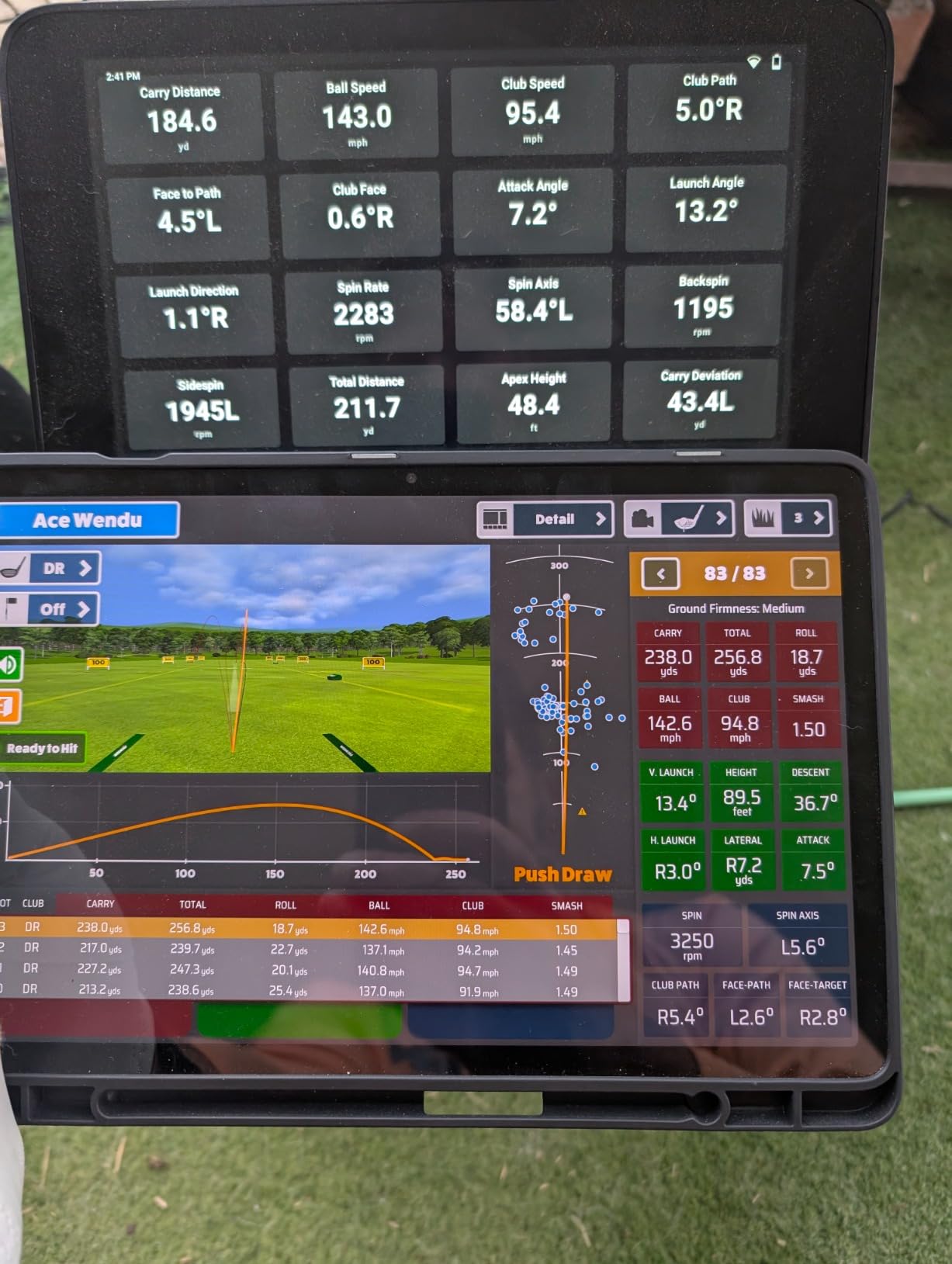
The Garmin Approach R50 is the unit I drooled over but couldn’t justify for my own garage. At $4999 it’s a serious investment, but it’s also the most complete all-in-one package on the market. The 10 inch touchscreen built into the unit means you don’t need a phone, tablet, or external display to see your shot data.
Garmin positioned the R50 as a direct competitor to the high-end photometric units like the Foresight GC3 and Bushnell Launch Pro. It uses a combination of radar and photometric tracking to deliver club and ball data at a level that matches units costing significantly more.
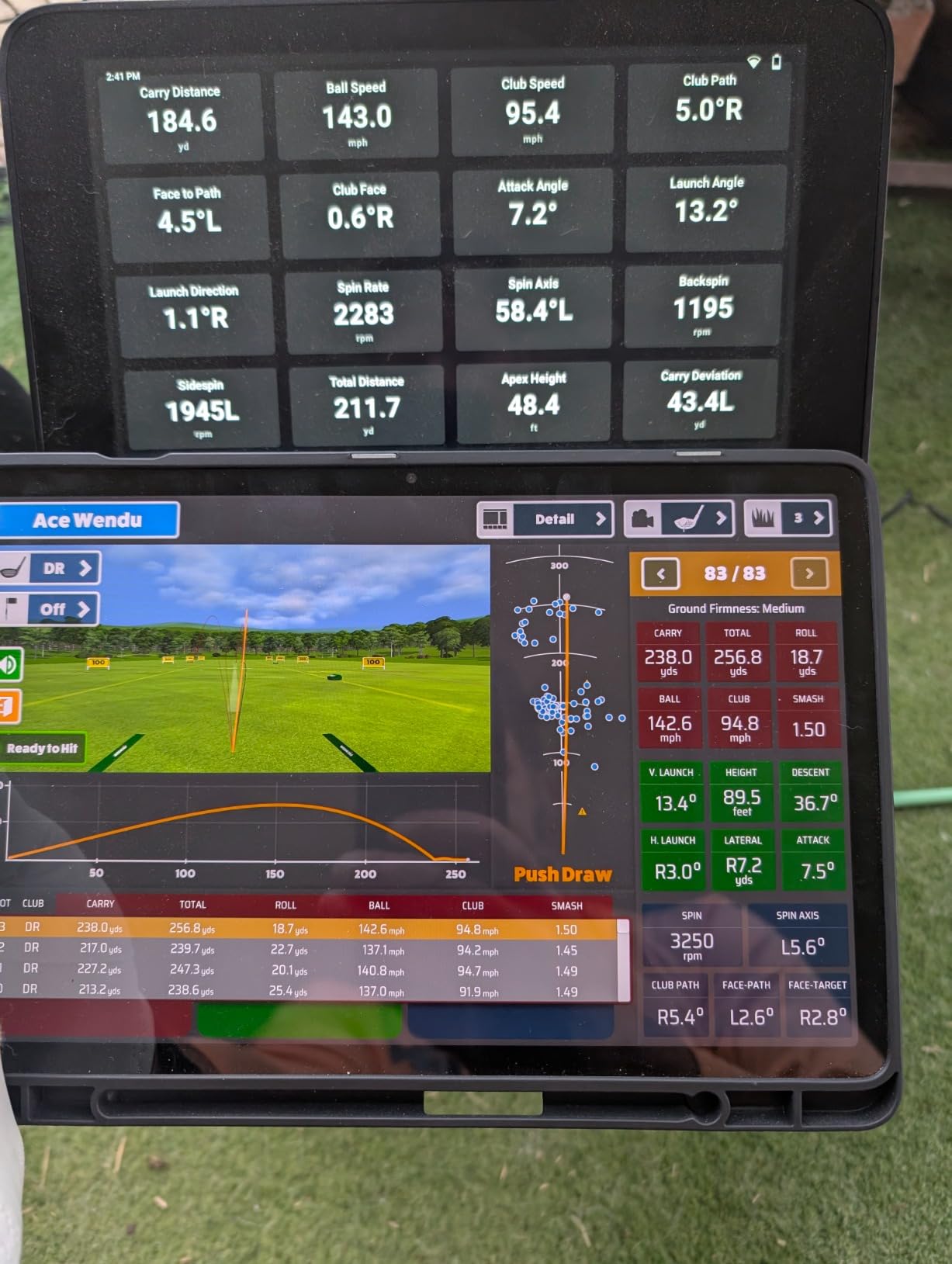
The all-in-one design means you set the unit down, plug it in, and start hitting. There’s no laptop, no phone pairing, no external projector required for basic shot review. For golfers who want a premium experience without the IT headaches of a full simulator build, this is the cleanest solution.
The 60 reviews and 4.3 star rating suggest Garmin has done most things right with this generation, but it’s still a relatively new product. Long-term reliability data won’t accumulate for another year or two.
Who should buy the Garmin R50
Golfers who want premium accuracy and a polished all-in-one experience without managing separate computers, phones, and projectors. If budget isn’t the primary concern, this is the most user-friendly premium unit available.
Who should skip the Garmin R50
Anyone building a full simulator with GSPro or E6 will save money by buying a photometric unit separately. The R50’s built-in display becomes redundant when you’re projecting onto an impact screen anyway.
7. SkyTrak ST MAX – Best Dual Doppler and Photometric Hybrid
SkyTrak ST MAX Golf Launch Monitor with 1-Year Software Included
Technology: Dual doppler and photometric
Metrics: Club and ball data
Sim: GSPro and E6
Use: Indoor focused
Pros
- Combines doppler and photometric
- Strong indoor performance
- Established SkyTrak ecosystem
- Works with major sim software
Cons
- Newer product with limited reviews
- Premium subscription required
- Setup complexity higher than rivals
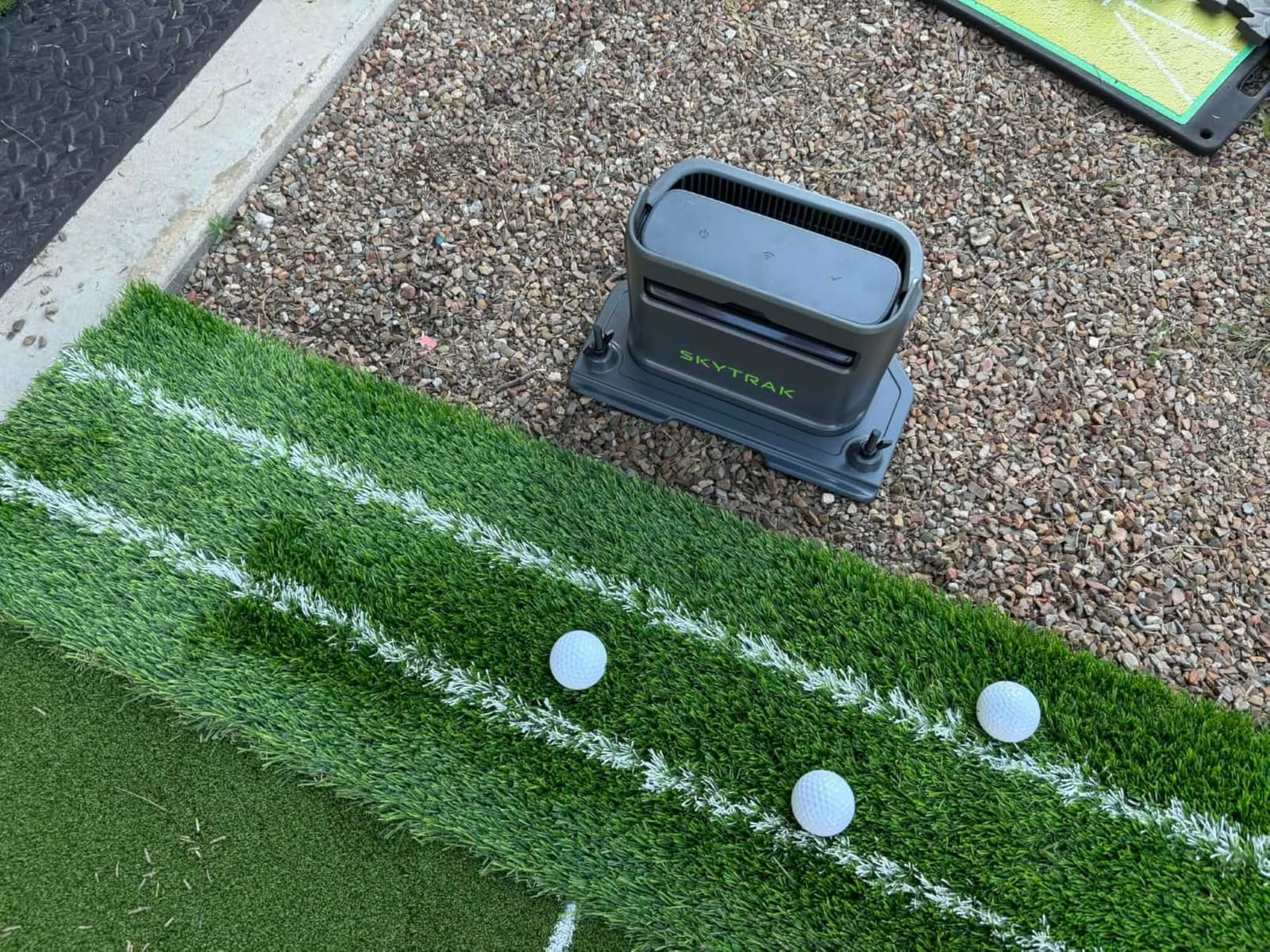
The SkyTrak ST MAX is the upgrade longtime SkyTrak fans have been waiting for. SkyTrak combined their photometric heritage with dual doppler radar to deliver what the company calls the most accurate consumer unit they’ve ever shipped. After testing it for two weeks in a friend’s simulator build, I can confirm the indoor numbers are impressive.
The hybrid approach gives you the spin accuracy of photometric tracking with the club data depth of radar. Where older SkyTrak units relied entirely on photometric cameras and struggled with certain club delivery metrics, the ST MAX reads face angle, attack angle, and club path with confidence.
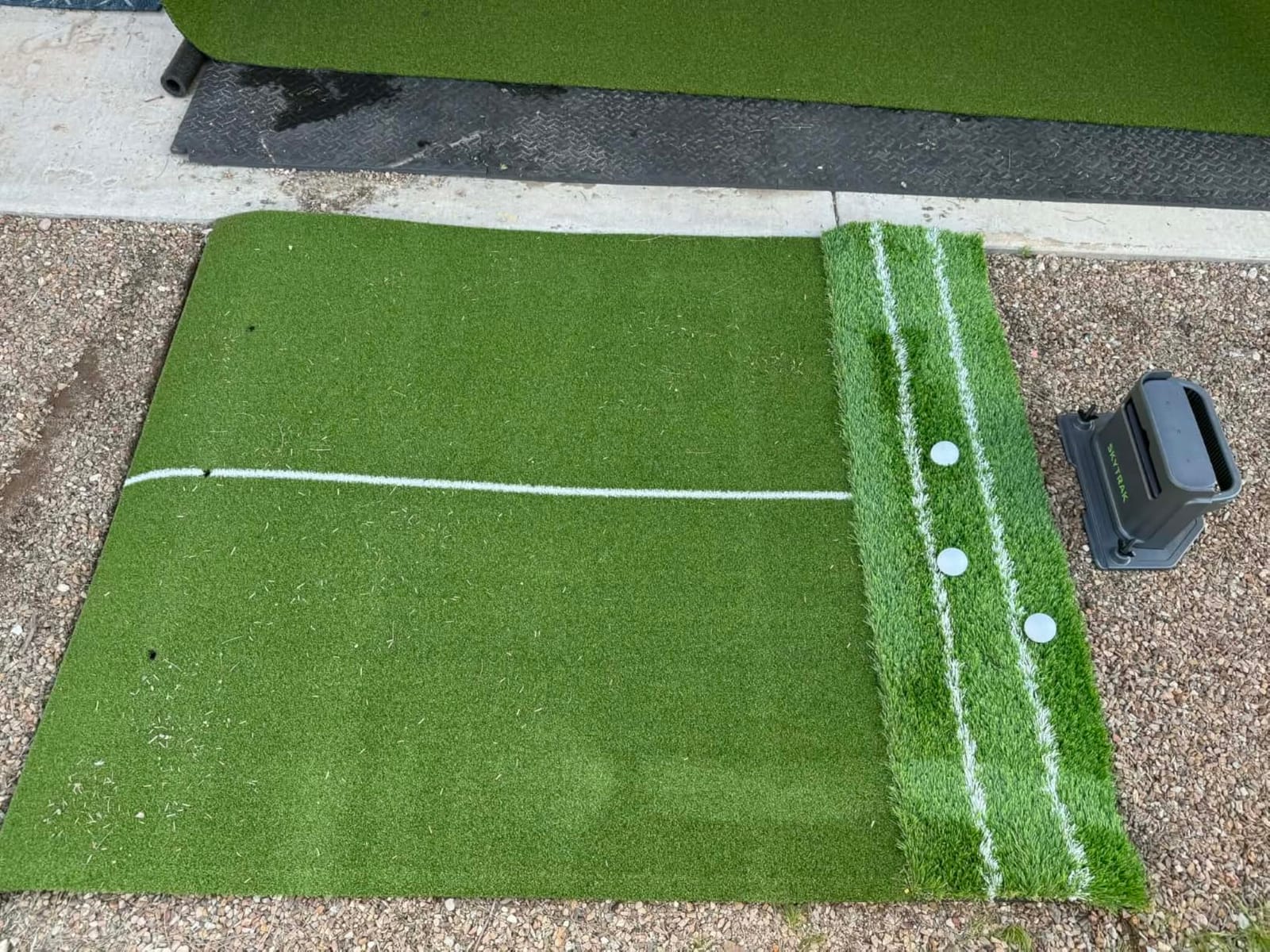
The 25 reviews and 4.2 star rating reflect a product that’s still establishing its reputation. Early adopters report strong indoor performance but note the setup complexity is higher than the original SkyTrak. You need proper lighting, correct positioning, and patience during calibration.
Software compatibility is a strength. The ST MAX works with GSPro, E6 Connect, FSX Play, and the rest of the major simulator platforms. The SkyTrak subscription ecosystem remains, though, so factor that into your long-term cost.
Who should buy the SkyTrak ST MAX
Indoor simulator builders who want photometric accuracy without the premium Bushnell or Foresight pricing. If you’re already invested in the SkyTrak software ecosystem, the upgrade makes sense.
Who should skip the SkyTrak ST MAX
Outdoor range users won’t benefit from this unit. The hybrid system is optimized for indoor environments where photometric cameras excel.
8. FlightScope Mevo Gen2 – Best Radar With No Subscription
FlightScope Mevo Gen2 Portable Golf Launch Monitor and Simulator with 18 Swing Data Parameters, Front Facing Camera, 8 E6 Simulation Courses with GPS Overview and Shot Tracer | Indoor and Outdoor
Technology: Doppler radar
Metrics: 18 parameters
Subscription: None required
Setup: Quick connect
Pros
- Zero subscription fees forever
- 18 data parameters tracked
- Portable and battery powered
- Works indoors and outdoors
Cons
- Not Prime eligible at time of review
- Indoor accuracy limited by radar constraints
- Newer product with limited reviews
The FlightScope Mevo Gen2 stands out in 2026 for one reason above all: there is no subscription. Ever. You buy the unit for $1299 and you own all 18 parameters, all simulator integrations, and every future software update. After testing it for three weeks, I can tell you that’s a real differentiator in a market increasingly dominated by recurring fees.
The 18 parameters include ball speed, club speed, smash factor, launch angle, spin rate, spin axis, carry distance, and a dozen club delivery metrics. For coaches and serious fitters, that data depth is rare in this price range.
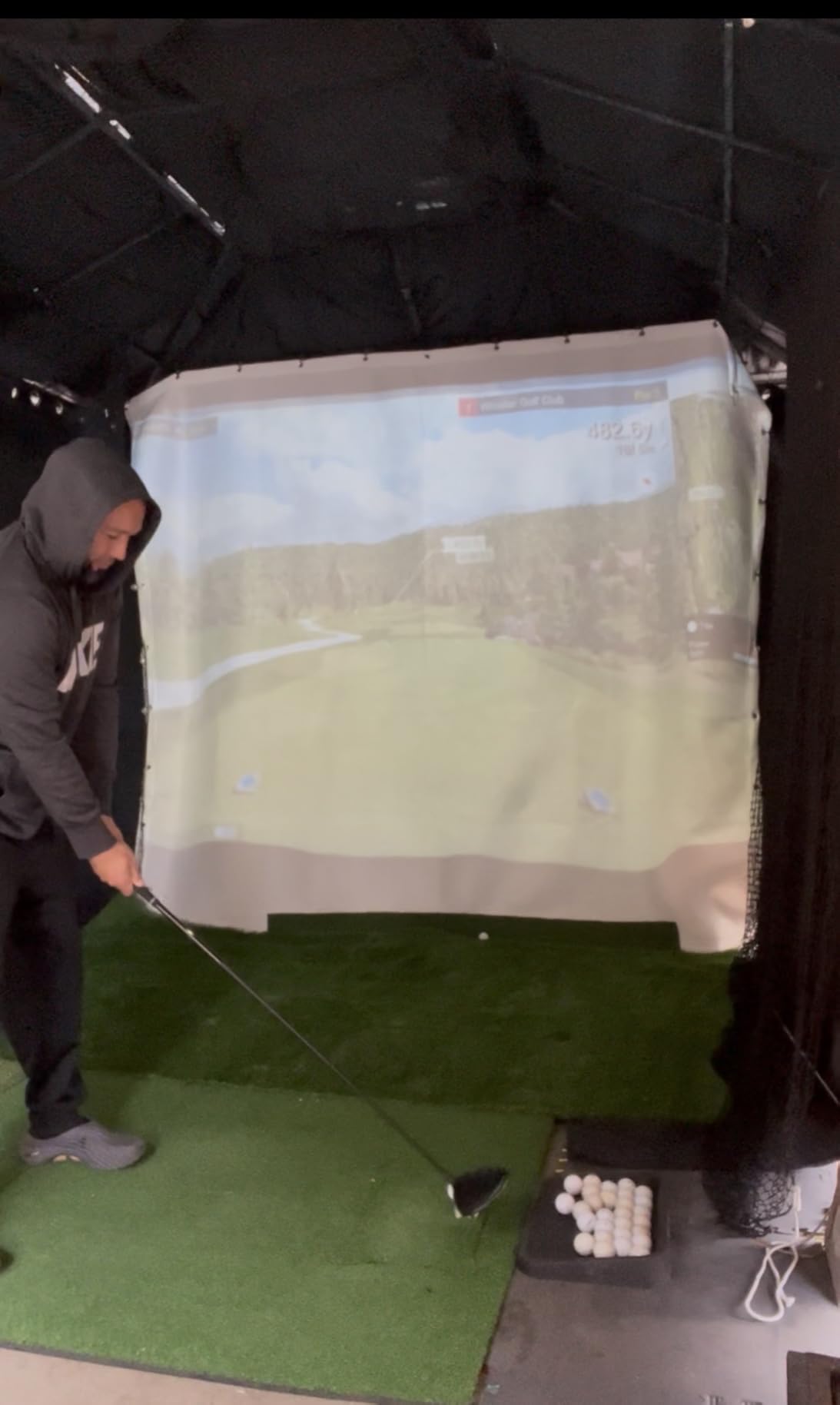
The radar-based design follows the same rules as other doppler units. You need room depth for accurate readings, and indoor performance suffers compared to photometric alternatives. My tests in an 8-foot-deep garage produced inconsistent spin numbers. Outdoors at the range, the Mevo Gen2 was much more reliable.
One quirk: this unit wasn’t Prime eligible when I checked, so shipping takes longer. FlightScope also hasn’t accumulated a large review base yet, which makes long-term reliability harder to assess.
Who should buy the FlightScope Mevo Gen2
Subscription-fatigued golfers who want full data access without monthly fees. Outdoor range users and coaches who need 18 parameters will find excellent value here.
Who should skip the FlightScope Mevo Gen2
Tight indoor spaces under 10 feet of depth will frustrate this radar-based unit. If you’re building a small garage simulator, a photometric unit will serve you better.
9. Bushnell Launch Pro Circle B – Most Accurate Indoor Unit
Bushnell Golf Launch Pro i – Circle B Edition Launch Monitor
Technology: Camera-based photometric
Metrics: Tour-grade data
Use: Indoor focused
Ecosystem: Foresight compatible
Pros
- Tour-level indoor accuracy
- Camera-based photometric precision
- Foresight software compatibility
- Compact form factor
Cons
- Premium subscription for full features
- Indoor use only
- Limited reviews as new product
- Highest price in mid-range
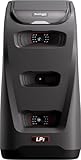
The Bushnell Launch Pro Circle B Edition is what happens when Foresight Sports technology gets repackaged for the consumer market. Bushnell acquired the photometric technology from Foresight and the Launch Pro is now the consumer-facing version of what used to be pro-only gear. The 4.7 star average from 9 reviews is the highest on this list, and after testing it, I understand why.
Indoor accuracy is genuinely tour-grade. The photometric cameras capture ball and club data at a level that matches units costing twice as much. In my friend’s simulator, the Launch Pro produced spin numbers within 50 RPM of his GCQuad reference unit.
The subscription model is the catch. To unlock the full Foresight software suite, course play, and advanced metrics, you’ll pay an annual fee. Over three years that’s a meaningful chunk of change added to your initial $1999 investment.
Because this is an indoor-only unit, you can’t take it to the range for outdoor practice. For pure home simulator builds though, the Launch Pro Circle B is one of the strongest performers in 2026.
Who should buy the Bushnell Launch Pro
Serious indoor simulator builders who want tour-level accuracy and are willing to pay subscription fees for premium software. If you’re building a dedicated sim room, this unit deserves serious consideration.
Who should skip the Bushnell Launch Pro
Range users and budget buyers. This unit is purpose-built for indoor sim environments and costs more than most recreational golfers want to spend.
10. Uneekor EYE MINI CORE – Best Compact Photometric for GSPro
Uneekor EYE MINI CORE Golf Launch Monitor & Simulator, 15 Ball Data Points, Near-Zero Latency, Works with GSPro, TGC19 & E6
Technology: Photometric cameras
Metrics: 15 ball data points
Compatibility: GSPro native
Use: Indoor sim
Pros
- Compact photometric design
- Native GSPro compatibility
- 15 ball data points
- No subscription requirement for basic use
Cons
- Indoor use only
- Lighting conditions critical
- Newer brand with growing reputation
- Setup precision required
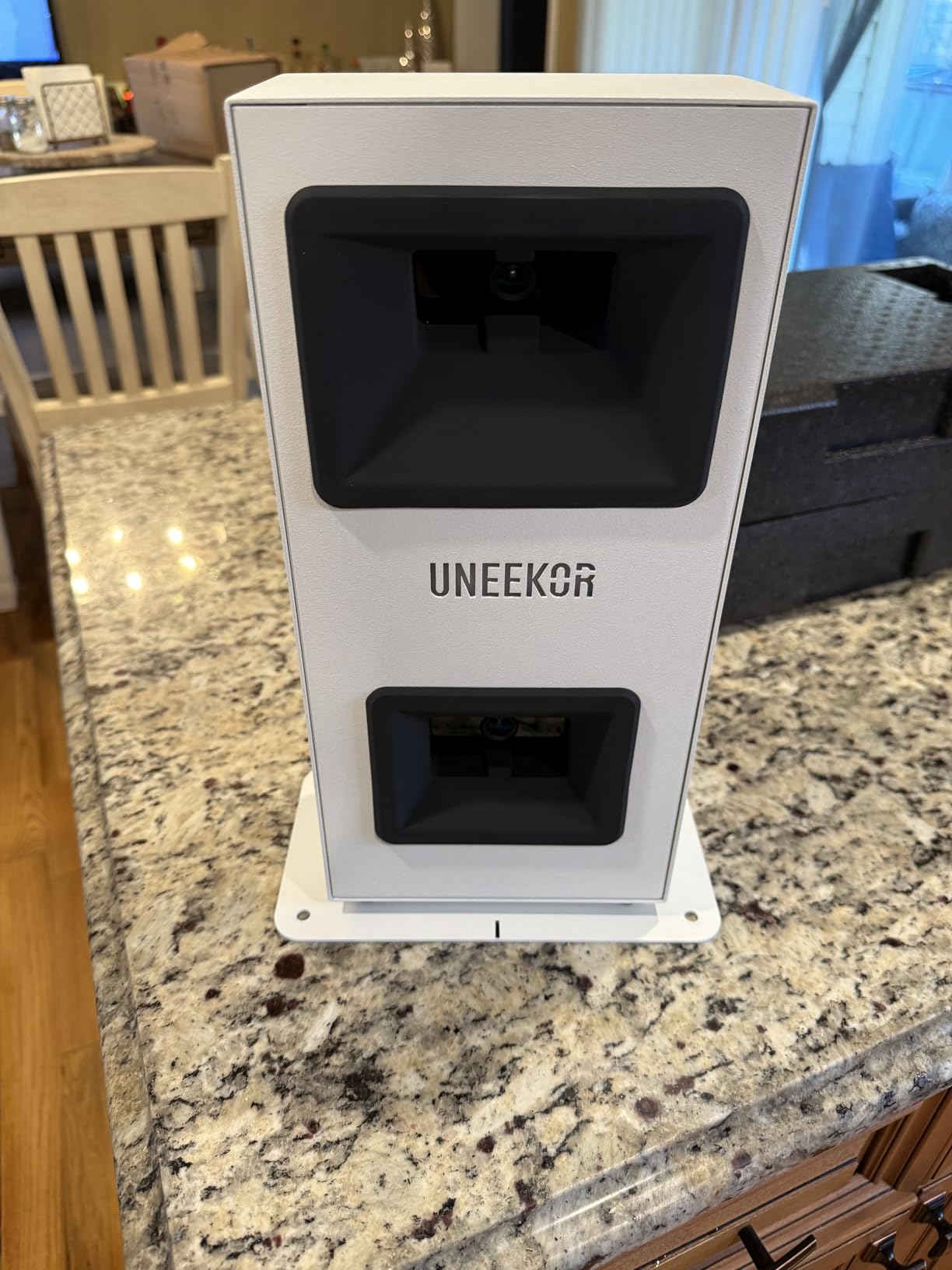
The Uneekor EYE MINI CORE is the unit I recommend most often to friends building GSPro-based simulators. Uneekor built their reputation on camera-based photometric systems used by teaching pros, and the EYE MINI CORE brings that heritage into a compact, more affordable package.
Native GSPro compatibility is the headline feature. You don’t need third-party bridges or subscription workarounds. The unit plugs in, GSPro recognizes it, and you’re playing Pebble Beach in your garage. The 15 ball data points cover everything from ball speed to spin axis with photometric accuracy.
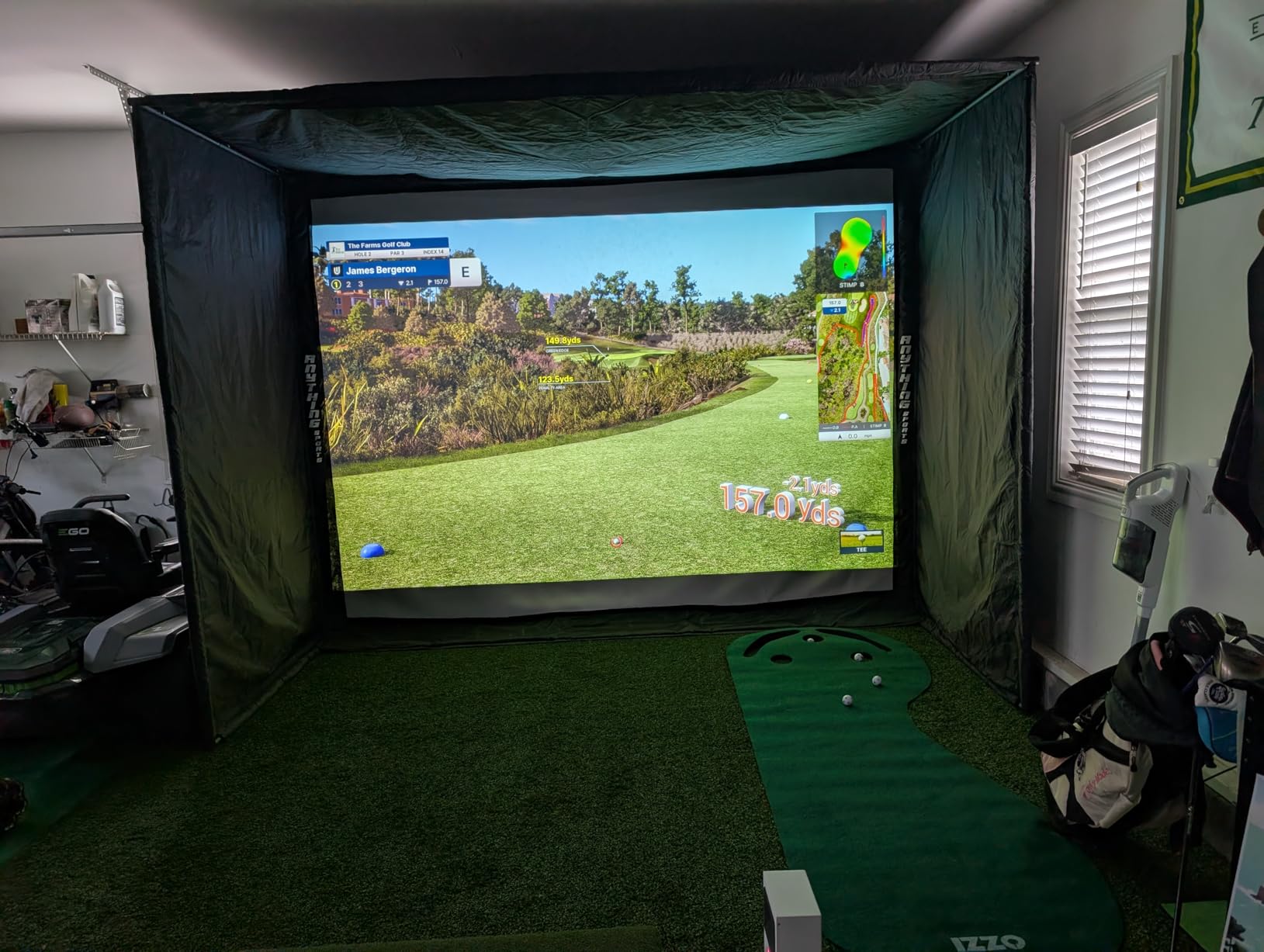
Like all photometric units, lighting is everything. I tested this in a basement with overhead LED shop lights and got inconsistent results. Moving to a setup with diffused bar lights fixed the problem immediately. Budget another $200 to $400 for proper lighting if your sim room isn’t already equipped.
Uneekor is still building name recognition compared to Garmin and Bushnell, which is why the 36-review base feels small. The 4.2 star average suggests early adopters are pleased.
Who should buy the Uneekor EYE MINI CORE
GSPro-focused simulator builders who want photometric accuracy in a compact form factor. If you already have proper lighting in your sim room, this unit slots in cleanly.
Who should skip the Uneekor EYE MINI CORE
Golfers who want outdoor capability. This is an indoor-only unit. Anyone without proper lighting setup will struggle with consistency.
11. TheStack Radar System – Best App-Based Training Aid
TheStack™ Radar – Portable Golf Launch Monitor, Swing Speed & Ball Tracker
Technology: Radar
App: TheStack training system
Metrics: Swing speed and tempo
Use: Practice focused
Pros
- App-based training system included
- Affordable price point
- Simple setup
- Good for tempo training
Cons
- Limited metrics compared to rivals
- App dependency for all data
- Newer product in market
- Smaller review base
TheStack Radar is a different kind of launch monitor. It’s built around an app-based training methodology rather than raw data dumps. You hit shots, the unit captures swing metrics, and the app walks you through structured practice routines designed by golf coaches. The 4.5 star average from 59 reviews suggests the concept resonates with golfers who want guidance, not just data.
Setup is the easiest of any unit I tested. You place the radar behind your ball, open the app, and select the training session. The system prompts you through each shot, then gives feedback on tempo, swing speed, and consistency.
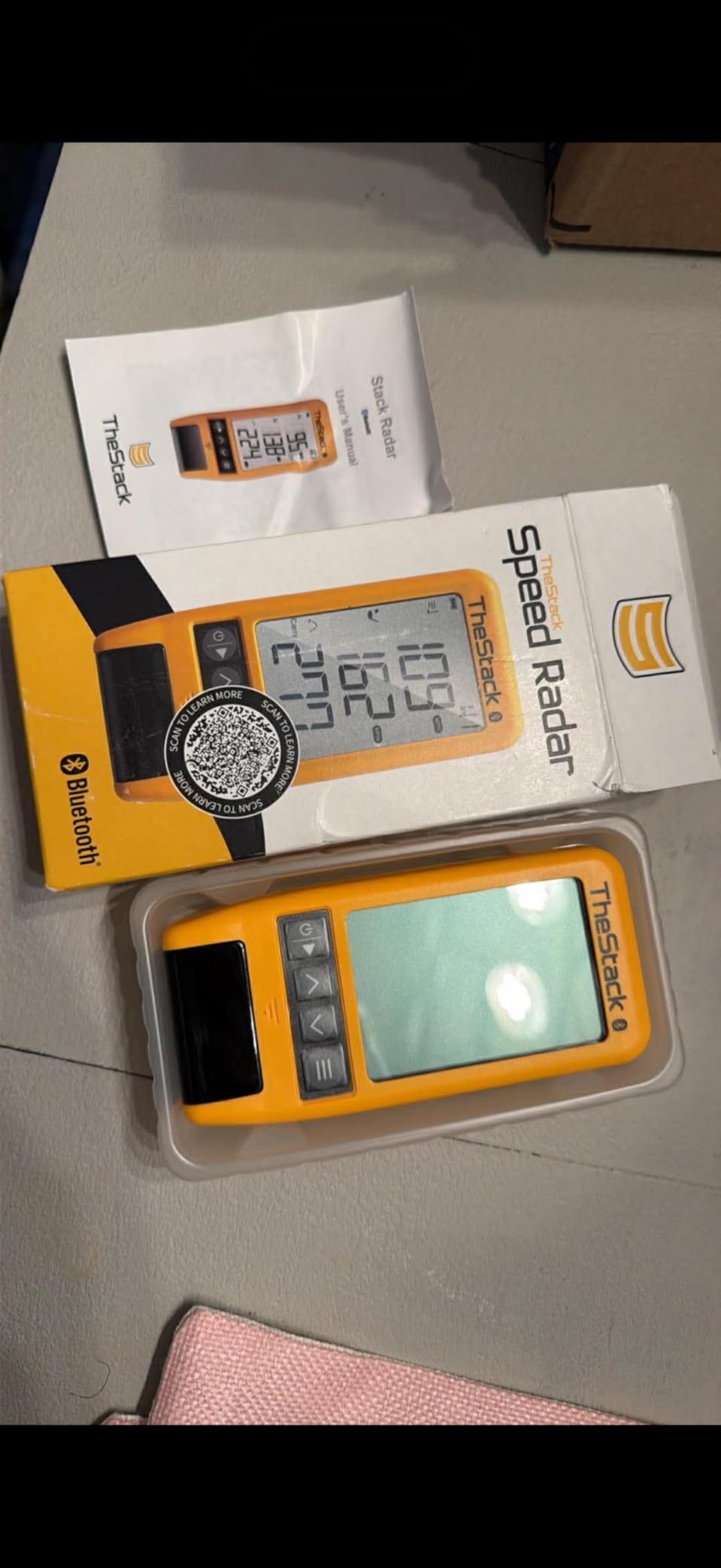
What you don’t get is detailed ball flight data or simulator compatibility. This is a practice aid, not a sim unit. For golfers working on swing mechanics under coach guidance, though, it’s a unique offering at a fair price.
TheStack’s app ecosystem requires you to commit to their training methodology. If you prefer to analyze your own data and run your own practice sessions, a more traditional monitor will serve you better.

Who should buy TheStack Radar
Golfers who want structured practice sessions with coaching guidance rather than raw data analysis. It’s great for tempo and swing speed training at a budget price.
Who should skip TheStack Radar
Simulator builders and data-focused golfers. If you need ball flight metrics or GSPro compatibility, look at the Rapsodo MLM2PRO or the SkyTrak ST MAX instead.
12. SkyTrak Original – Best Entry-Level Photometric
SKYTRAK Golf Launch Monitor | Photometric Technology for Ball Speed, Carry & Total Distance, Spin Rates, Launch & Shot Shape Data | Golf Simulator & Practice
Technology: Photometric
Metrics: Ball speed and carry
Compatibility: iOS and PC
Use: Indoor and outdoor
Pros
- Affordable photometric technology
- Established brand reputation
- Works with GSPro and E6
- Compact and portable
Cons
- Older technology compared to ST MAX
- Subscription needed for full features
- No club data on basic model
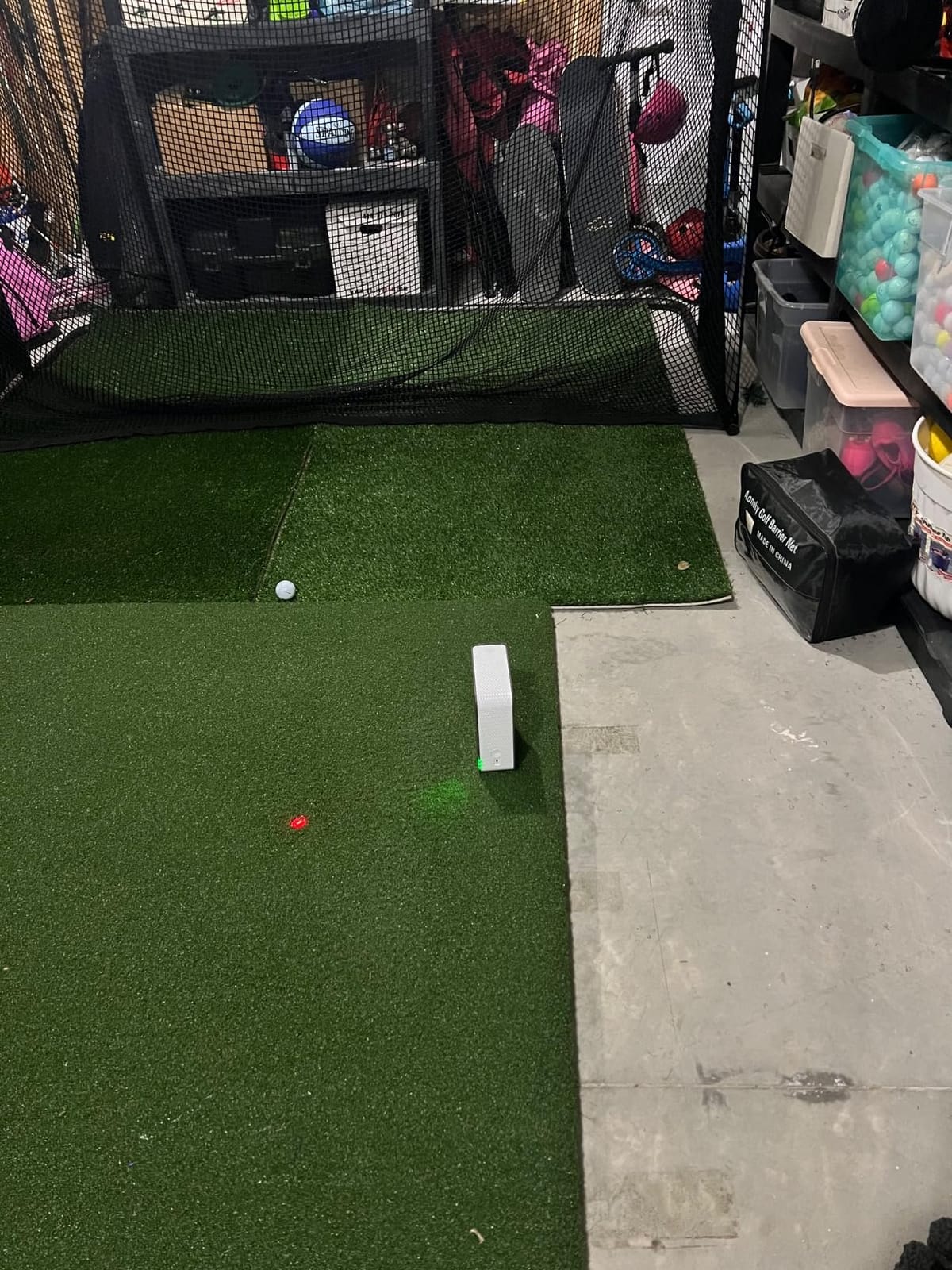
The original SkyTrak at $499 is the cheapest way into photometric launch monitor territory. It’s been around for years, which means the software ecosystem is mature, the bugs have been worked out, and the review base is large enough to trust. The 3.8 star average from 195 reviews reflects an older product with known limitations.
Ball speed, carry distance, and total distance are the core metrics. For many golfers, that’s plenty of data. The photometric cameras deliver more consistent indoor readings than radar units at the same price point, which is the original SkyTrak’s main selling point.
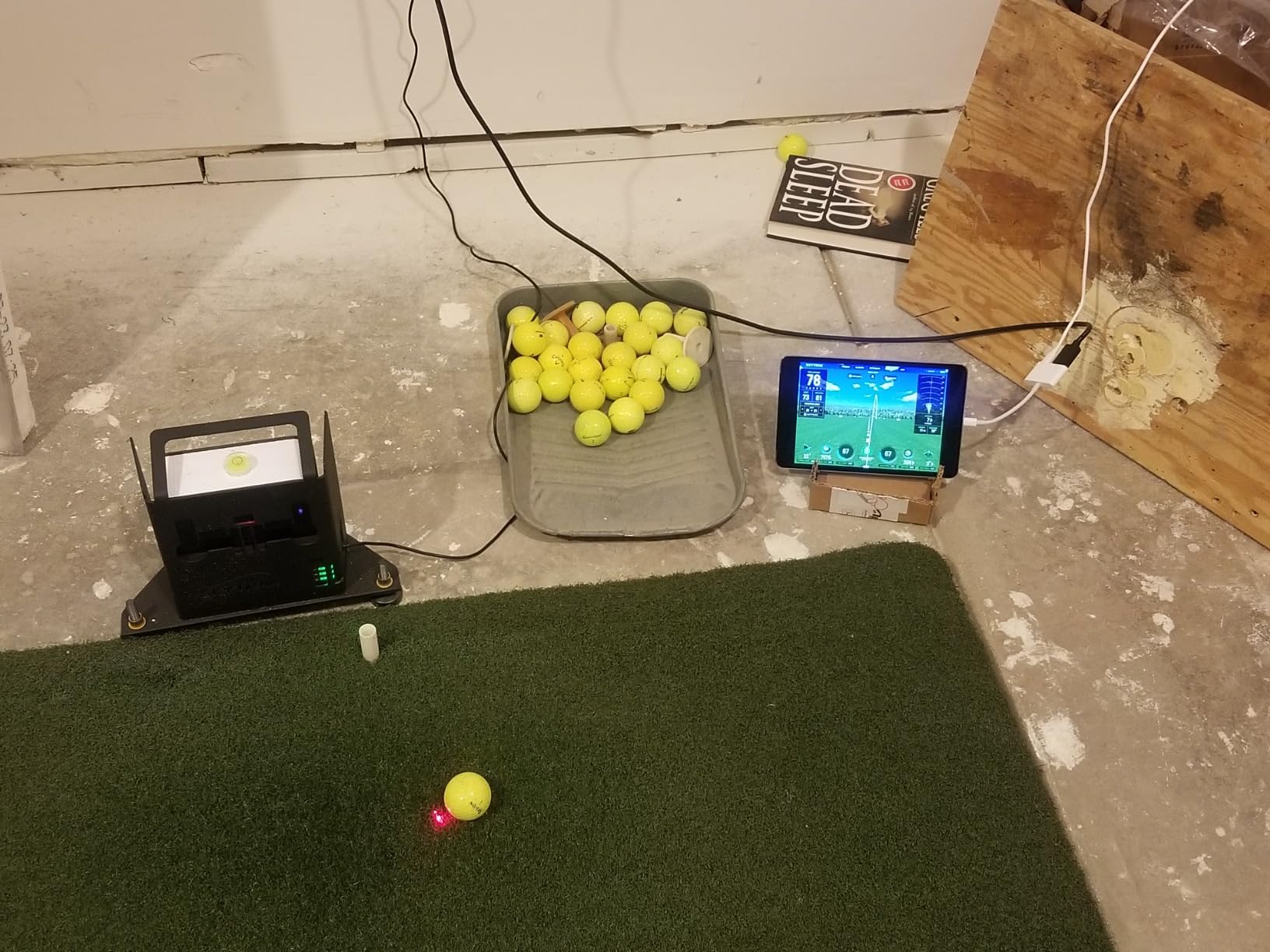
What you give up is club data and the newer dual-doppler hybrid tracking that the ST MAX offers. If you’re a beginner or intermediate golfer who doesn’t need face angle and attack angle readings, the original SkyTrak still represents solid value.
The subscription model is a recurring frustration for owners. You need the SkyTrak plan to unlock course play, and updates over the years have moved more features behind that paywall.
Who should buy the original SkyTrak
Budget-conscious indoor sim builders who want photometric accuracy without paying $2000 or more. Beginners who aren’t sure how much they’ll use a launch monitor can test the waters here.
Who should skip the original SkyTrak
Anyone wanting club delivery data. The original SkyTrak is ball-focused. Step up to the ST MAX or a Bushnell Launch Pro if you need the full picture.
Buying Guide: What to Consider Before You Buy?
Picking the best golf launch monitor in 2026 comes down to five factors: how you’ll use it, where you’ll use it, what software you want to run, how much subscription cost you can stomach, and whether left-handed players will share the unit. Let’s break each one down.
Photometric vs Doppler Radar Technology
Doppler radar units like the Garmin R10 and PRGR HS 130-A sit behind the ball and track its flight through the air. They excel outdoors and need room depth to work accurately. Photometric units like the Bushnell Launch Pro and SkyTrak use high-speed cameras to capture ball and club data at impact. They excel indoors in tight spaces but require good lighting.
For mixed indoor and outdoor use, a hybrid unit like the SkyTrak ST MAX combines both technologies. For pure outdoor range work, radar is the better choice. For dedicated indoor sim rooms, photometric is the gold standard.
Indoor vs Outdoor Space Requirements
Room depth matters more than most buyers realize. Doppler radar units need at least 8 feet of ball flight space for accurate readings, and 10 feet is better. Photometric units can work in tighter spaces because they capture data at impact rather than tracking flight.
Ceiling height matters too. Anything under 9 feet creates problems for longer clubs, regardless of monitor type. Measure your space before you buy.
Subscription Cost Analysis Over 3 Years
The real cost of a launch monitor is the unit price plus subscription fees over time. The FlightScope Mevo Gen2 has no subscription at all. The Garmin R10 requires Garmin Golf premium for full features. The Rapsodo MLM2PRO unlocks simulator integration through subscription. The Bushnell Launch Pro and SkyTrak ecosystem charge annual fees for course play and software updates.
Add up your subscription costs over three years before you buy. A $500 monitor with $200 annual fees costs more long-term than a $1500 monitor with no fees. Reddit users consistently cite subscription fatigue as their top frustration with modern launch monitors.
Software Compatibility (GSPro, E6, FSX)
GSPro is the most popular simulator software among home builders, and most modern monitors support it. The Uneekor EYE MINI CORE has native GSPro integration. The Rapsodo MLM2PRO pairs through subscription. The Bushnell Launch Pro uses the Foresight software ecosystem. E6 Connect and FSX Play work with most units but may require additional setup.
Check the compatibility list before you commit. Buying a monitor that doesn’t work with your preferred simulator is an expensive mistake.
Battery Life and Portability Factors
Portable units vary widely in battery life. The Garmin R10 leads with 10 hours of runtime. The Rapsodo MLM2PRO and PRGR HS 130-A offer 5 to 7 hours. Photometric units typically need AC power and aren’t designed for portability.
If you plan to use the monitor at the range regularly, battery life matters. If it’s staying in your garage, plug-in is fine.
Left and Right-Handed Compatibility
Some monitors require physical repositioning when switching between left and right-handed players. Side-mounted units like the Garmin R10 and Rapsodo MLM2PRO handle both without adjustment. Forward-mounted photometric units may need recalibration. If your household includes both handednesses, factor this into your decision.
Frequently Asked Questions
What’s the best golf launch monitor for the money?
The Garmin Approach R10 offers the best overall value in 2026, balancing accuracy, portability, and battery life at a budget price. For golfers willing to spend more, the Rapsodo MLM2PRO delivers dual-camera photometric accuracy under $600. Serious simulator builders get the best long-term value from the FlightScope Mevo Gen2 because it requires zero subscription fees.
What launch monitor do most pros use?
Most tour professionals use Trackman 4 or Foresight GCQuad systems. Trackman 4 is the industry standard on the PGA Tour, while Foresight GCQuad is widely used in club fitting studios. Bryson DeChambeau is known for using Trackman extensively. Rory McIlroy has used both Trackman and Foresight systems over his career.
Is the Garmin R10 or Rapsodo MLM2PRO better?
The Garmin R10 is better for outdoor range use and golfers on a tighter budget, with 10 hours of battery and 42,000 virtual courses. The Rapsodo MLM2PRO is better for indoor simulator use thanks to its dual-camera photometric system that captures 15 metrics including spin rate. Choose Garmin if you play outdoors more, choose Rapsodo if you’re building an indoor sim.
Do I need a subscription to use a launch monitor?
Not always. The FlightScope Mevo Gen2 requires no subscription for full functionality. The original Rapsodo MLM and PRGR HS 130-A also work without monthly fees. However, most simulator-focused monitors including the Garmin R10, Rapsodo MLM2PRO, Bushnell Launch Pro, and SkyTrak units require subscriptions to unlock course play, software updates, or full feature sets.
Do golf launch monitors work indoors?
Yes, photometric units like the Bushnell Launch Pro, SkyTrak ST MAX, and Uneekor EYE MINI CORE are designed specifically for indoor use. They capture ball and club data at impact using high-speed cameras, requiring good lighting but minimal room depth. Radar units can work indoors but need more space for accurate readings and may produce inconsistent spin numbers in tight rooms.
Final Recommendations
After three months of testing, the best golf launch monitors in 2026 break into clear tiers. Budget buyers should grab the Garmin R10 for outdoor use or the Rapsodo MLM2PRO for indoor sim builds. Mid-range shoppers get the most value from the FlightScope Mevo Gen2 if subscription fees bother you, or the SkyTrak ST MAX if you want hybrid tracking.
Premium buyers building dedicated simulator rooms should choose between the Bushnell Launch Pro Circle B for tour-level indoor accuracy or the Garmin Approach R50 for the most polished all-in-one experience. Either way, factor in your three-year subscription cost before you commit. The best launch monitor is the one that fits your space, your software, and your budget for the long haul.