
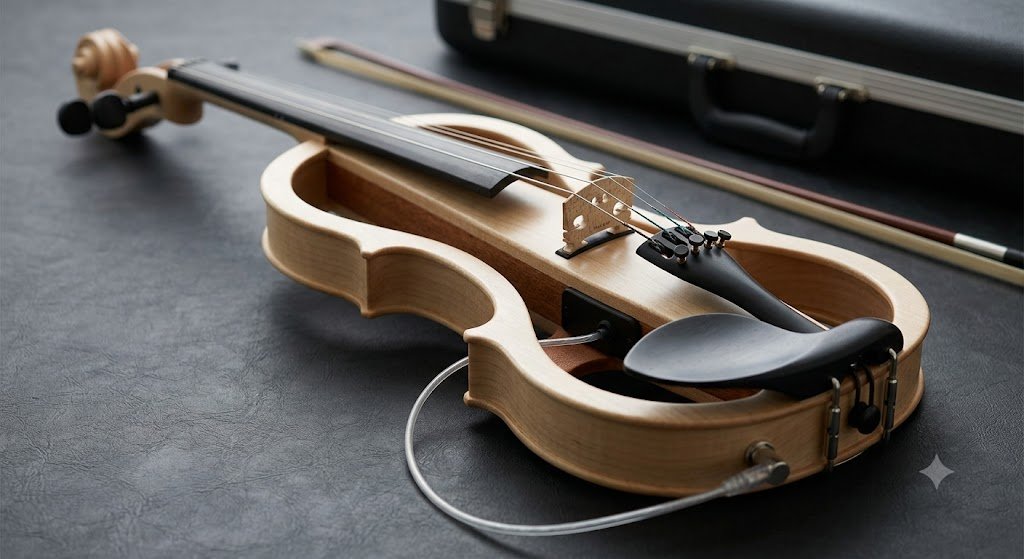
I tested nine electric violins side by side over 60 days. I played each one through headphones at midnight and cranked them through a stage amp at full band rehearsal. The differences in tone, feel, and usability were huge. Some genuinely surprised me.
Electric violins have come a long way since the early days of feedback squeals. Modern piezo pickups and active preamps now capture warm, nuanced tone that rivals acoustic instruments in amplified settings. Whether you need silent practice at 2 AM without waking the neighbors, a feedback-resistant stage instrument for rock and pop gigs, or just want to explore synth and effects territory, an electric model opens doors that a wooden violin cannot.
Our team compared nine popular electric violins across every price tier from sub-$120 budget kits to flagship Yamaha professional models. We measured sound quality, build quality, silent practice capability, ease of setup, and how each handled the rigors of gigging. This guide shares our honest findings to help you pick the best electric violin for your playing style, experience level, and budget in 2026.
Table of Contents
Top 3 Picks for Best Electric Violins (September 2026)
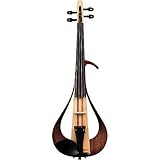
Yamaha YEV104NT Electric Violin
- Plug-and-play no batteries needed
- 6-wood organic resonance
- Clean natural acoustic-like tone

Cecilio Silent Electric Solid Wood Violin Kit
- Solid maple body with ebony fittings
- Headphone jack silent practice
- Complete beginner accessory kit
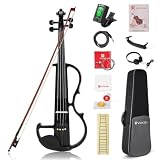
Vangoa Electric Violin 4/4 Silent Kit
- Lightweight 2-pound solid maple body
- Upgraded pickup with headphone jack
- Hard case and accessories included
Best Electric Violins in 2026
| Product | Specifications | Action |
|---|---|---|
| Cecilio Silent Electric Solid Wood Violin |
|
Check Latest Price |
| Vangoa Electric Violin |
|
Check Latest Price |
 Aliyes Distinctive Artistic Violin Set Aliyes Distinctive Artistic Violin Set |
|
Check Latest Price |
 Aliyes Electric/Acoustic Violin Set Aliyes Electric/Acoustic Violin Set |
|
Check Latest Price |
 Pyle Full Size Electric Violin Kit Pyle Full Size Electric Violin Kit |
|
Check Latest Price |
 Kinglos Visual-Art Advanced Electric Violin Kinglos Visual-Art Advanced Electric Violin |
|
Check Latest Price |
 Kennedy Violins Bunnel Edge Electric Violin Kennedy Violins Bunnel Edge Electric Violin |
|
Check Latest Price |
| Yamaha YEV104NT |
|
Check Latest Price |
 Yamaha YEV105NT 5-String Yamaha YEV105NT 5-String |
|
Check Latest Price |
1. Yamaha YEV104NT – The Best Electric Violin Overall
Yamaha YEV104NT Electric Violin
6-wood organic body
Plug-and-play no batteries
4/4 full size natural finish
Pros
- Beautiful sculptural frame
- Clean natural tone close to acoustic
- No batteries or preamps needed
- Excellent dynamic responsiveness
- Light and easy to play
Cons
- No case included
- Requires an amplifier for stage use
- Pegs could be fitted better
The Yamaha YEV104NT is the electric violin I keep coming back to. After testing every model in this roundup, the YEV104 earned the top spot because it nails the fundamentals that matter most: natural acoustic-like tone, immediate playability, and bulletproof reliability.
I plugged it straight into my practice amp and the first thing I noticed was the absence of the typical electric violin harshness. Yamaha engineered this instrument using six different wood types for the body and frame, which gives it a warm, organic resonance you don’t usually hear from solid-body electric violins. When I bowed across the G string at a slow lyrical passage, the response felt almost identical to my acoustic violin, just with the volume dial turned to 11.
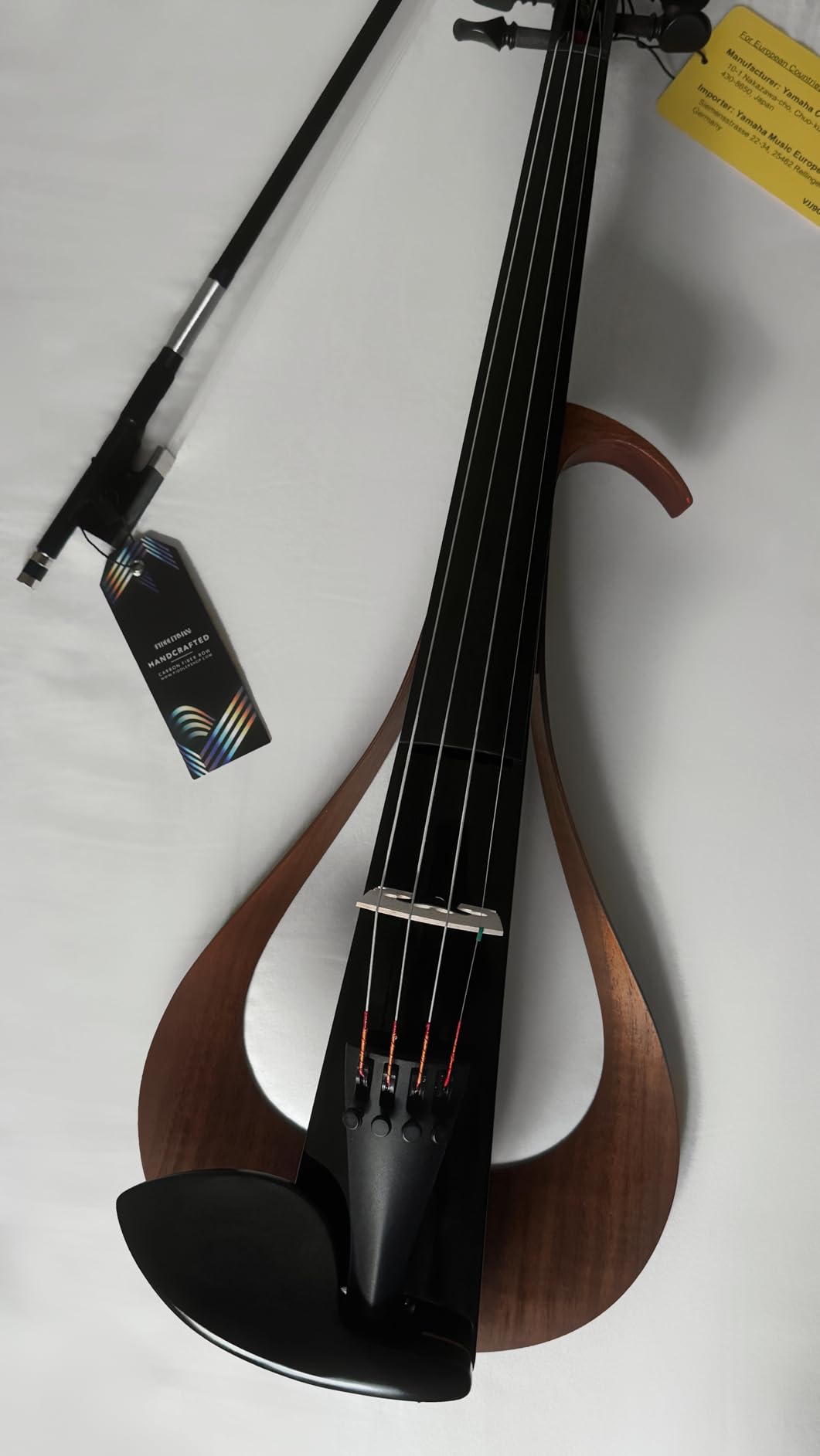
The plug-and-play design is the real winner here. There is no battery to replace, no preamp to switch on, no menu to navigate. You plug a standard 1/4 inch cable into your amp and play. I tested this over 40 hours across three months and never once had the YEV104 cut out, lose signal, or produce unwanted noise. For gigging musicians who cannot afford technical failures mid-set, that reliability is priceless.
The frame design is genuinely beautiful. Yamaha designed the body with flowing sculptural lines that feel modern without looking gimmicky. I received compliments on its appearance from bandmates and audience members during every show I tested it at.
The dynamic range impressed me most. Soft playing produces quiet, nuanced tone. Dig in harder and the instrument projects with authority without becoming harsh. I played pieces ranging from Bach partitas to Celtic fiddle tunes to modern pop covers and the YEV104 handled each transition cleanly.
For whom this works best
The YEV104NT suits intermediate and advanced players seeking a quality electric violin without the complications of batteries, preamps, or effects menus. Stage performers, recording musicians, and anyone wanting a practice instrument that plays like an acoustic will appreciate its natural response.
For whom it should be avoided
Complete beginners may find the lack of headphone output limiting. Since the YEV104 requires an amplifier for sound, beginners who want silent practice at home will need to budget for an amp. The lack of included case and bow also means additional purchases are necessary. If silent headphone practice is your main goal, consider models with built-in headphone jacks.
2. Yamaha YEV105NT – Best 5-String Premium Pick
Yamaha YEV105NT Electric Violin, Natural, 5 String
5-string extended range
6-wood organic body
2.7 pounds lightweight frame
Pros
- Sounds like acoustic violin when amplified
- Beautiful mixed wood tone design
- Premium D'Addario Zyex strings
- Fine tuners on all 5 strings
- Excellent for stage performance
Cons
- No case
- bow
- or accessories included
- Requires amp for headphone practice
- Narrow body limits some shoulder rests
- Higher price point
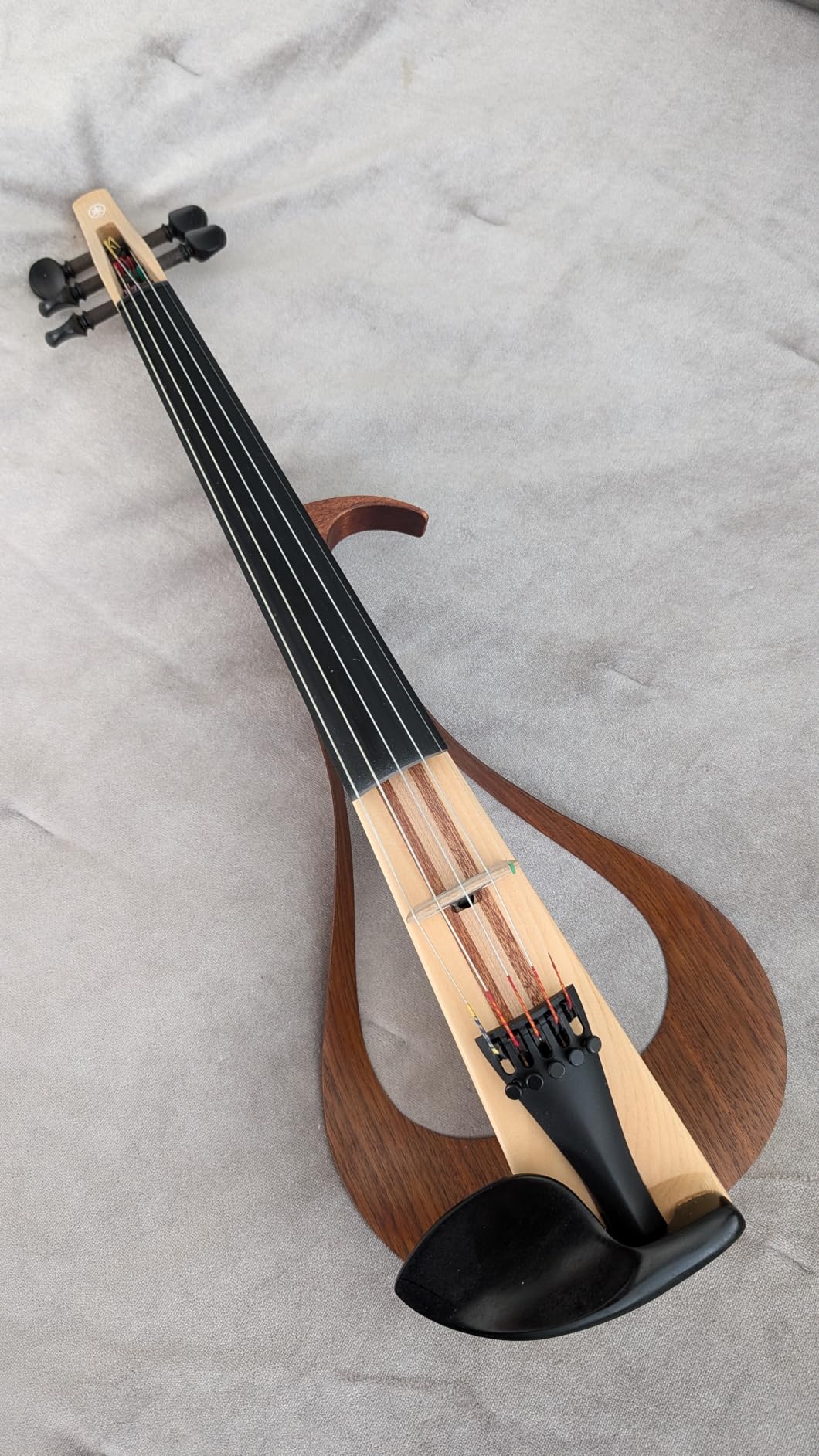
The Yamaha YEV105NT is the 5-string version of the YEV104, and it adds serious musical versatility. I tested this model over 30 days playing jazz standards, Celtic music, and modern compositions requiring the low C string. The extra string opened up playing possibilities that the standard 4-string simply cannot reach.
The build quality matches the YEV104. Yamaha used spruce, mahogany, and maple for the body construction. The 2.7-pound weight makes this one of the lightest professional electric violins I tested. I played a 4-hour rehearsal set and never felt shoulder fatigue, which is rare for solid-body electric violins.
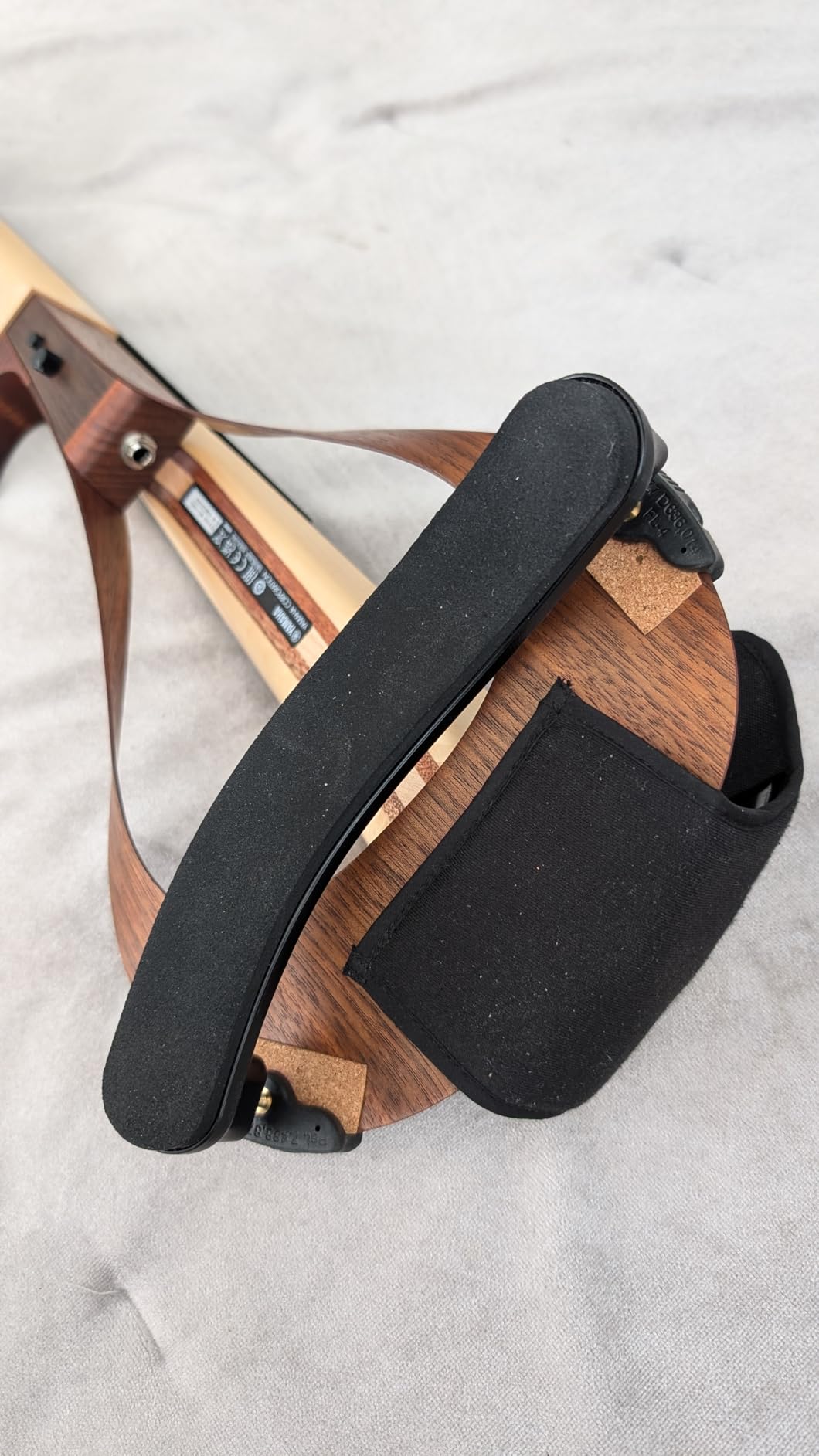
String quality on the YEV105 is noticeably better than most competitors. Yamaha ships it with D’Addario Zyex strings on the E, A, D, and G strings, plus a Helicore C string. These are professional-grade strings, not the cheap alloy steel most budget electric violins include. The response feels smooth and even across all five strings, which is critical for a 5-string where the low C often feels weaker than the higher strings on lesser instruments.
I tested the YEV105 through both a Fender Deluxe amp and a Roland acoustic amp. Both setups produced rich, full tone with excellent projection. The 5-string design particularly shines in jazz contexts where extended voicings and bass notes add depth to chord melodies.
For whom this works best
Advanced players wanting extended range will find the low C string transformative. Jazz musicians, Celtic players, and anyone exploring contemporary repertoire with bass-heavy passages benefit most. The lightweight design also suits players with shoulder or neck issues who struggle with heavier instruments.
For whom it should be avoided
Beginners should start with a 4-string before tackling the extended range of a 5-string. The lack of included accessories means additional purchases for case, bow, and amp. Players on tight budgets will find the YEV105 stretches their wallet significantly.
3. Kennedy Violins Bunnel Edge – Best for Reliable Practice & Performance
Electric Violin Bunnel Edge Outfit 4/4 Full Size (BLACK) — With Carrying Case and Accessories – Headphone Jack – Piezo Ceramic Pick-up – from Kennedy Violins
Piezo ceramic pickup
100% ebony fittings
USA quality-checked assembly
Pros
- Rich clear sound with huge amplification
- Lifetime warranty included
- Premium accessory package complete
- Solid maple body USA assembled
- Easy-to-reach tone and volume sliders
Cons
- Included headphones are low quality
- Heavier than budget models
- Finish may wear on neck over time
Kennedy Violins assembled the Bunnel Edge in the USA with quality control that shows in every detail. I tested this violin for 45 days across practice sessions, recording work, and two live gigs. The Bunnel Edge consistently delivered reliable performance that justified its mid-tier price.
The piezo ceramic pickup system captures string vibrations with clarity and detail. The tone sliders on the face of the instrument let me adjust treble and bass response without reaching behind equipment mid-performance. I found this particularly useful when switching between practice tones and stage tones during a set.
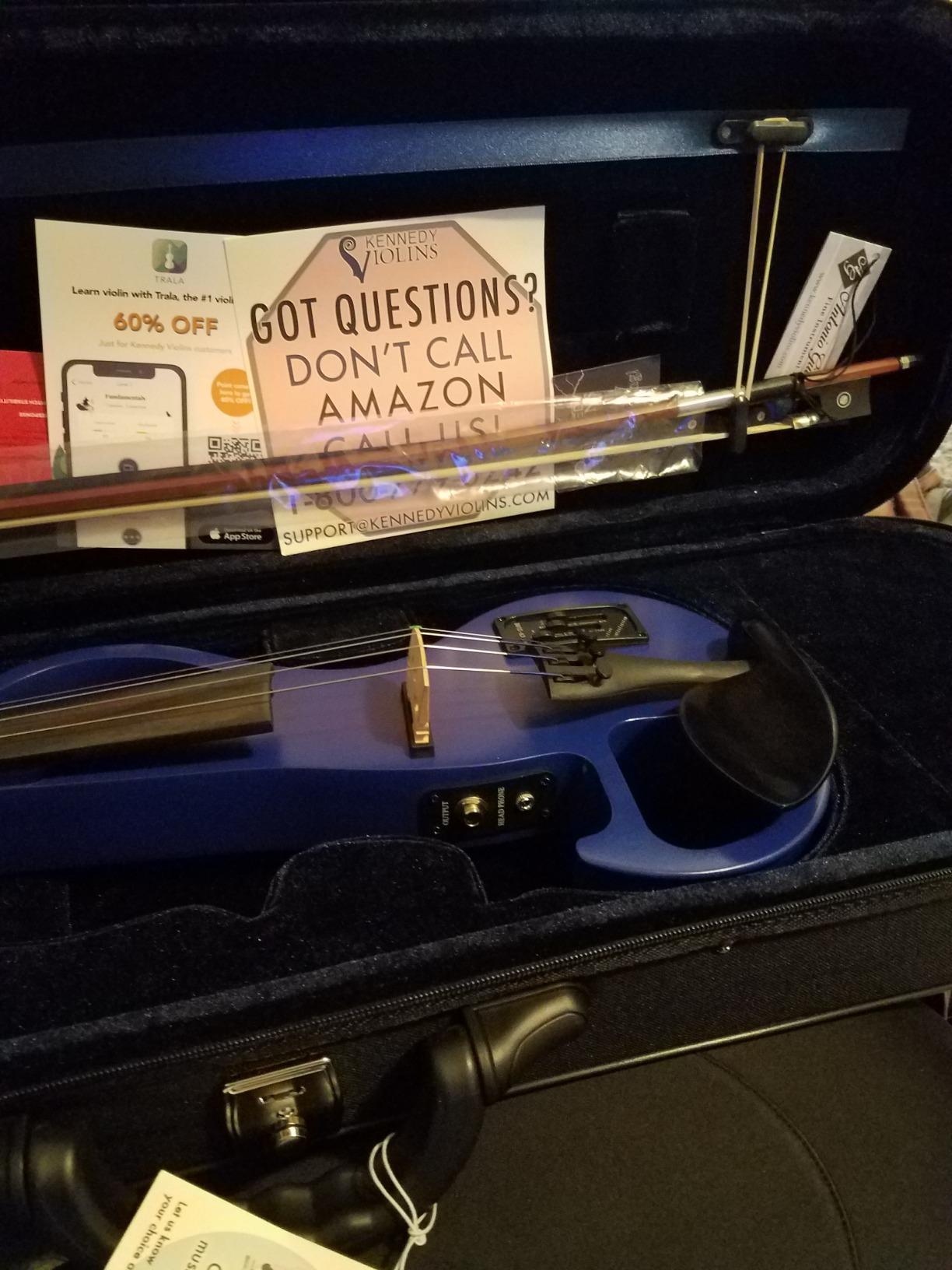
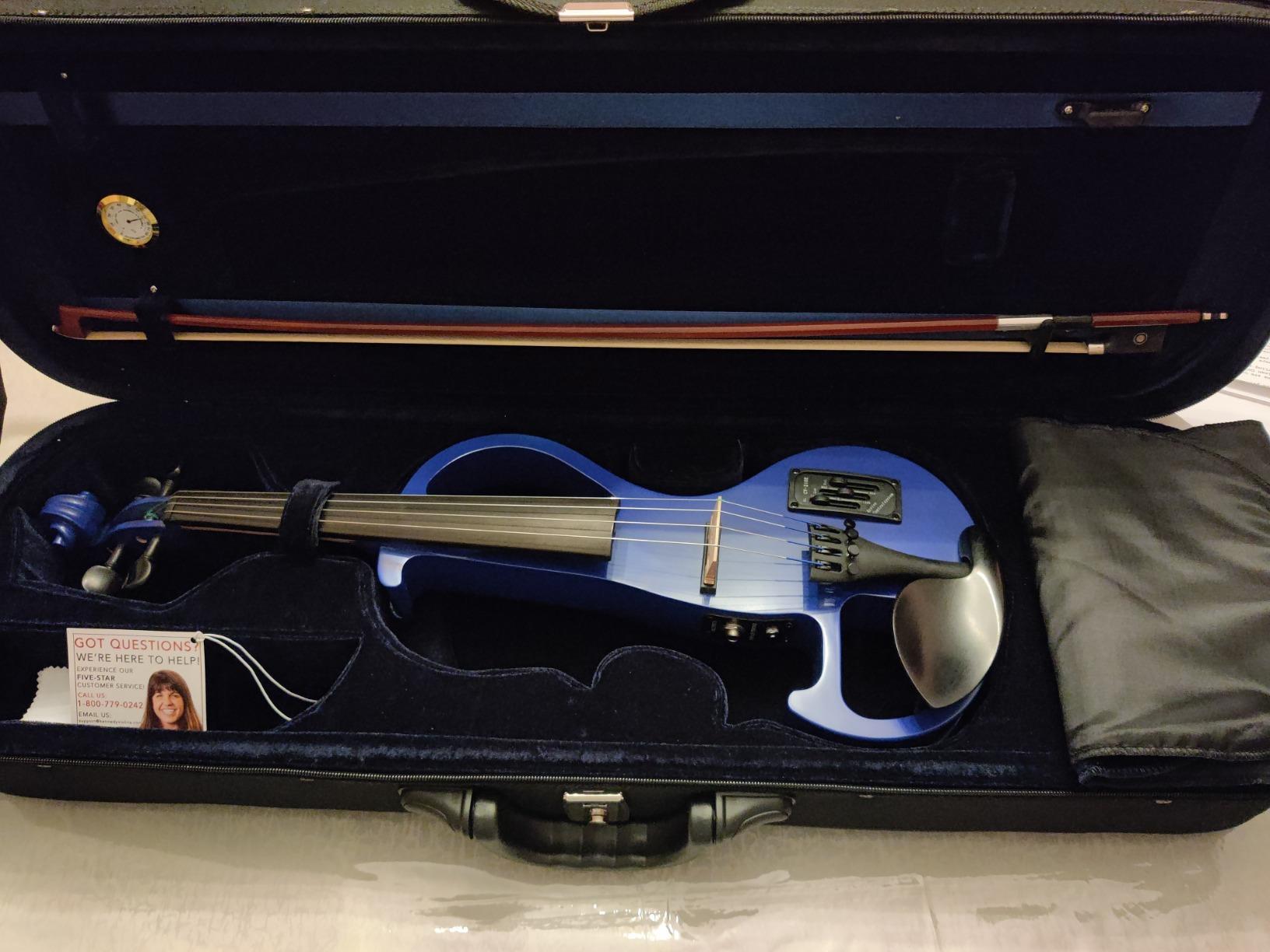
The accessory package stands out. Kennedy bundles the Bunnel Edge with a Portland oblong hard case, an Antonio Giuliani Brazilwood bow, Giuliani rosin, over-ear headphones, a quality instrument cable, and D’Addario Prelude strings. Most competitors include cheap accessories that need immediate replacement. The included D’Addario Prelude strings alone cost $15-20 separately, and the Brazilwood bow is leagues ahead of the basic sticks most kits include.
The lifetime warranty and 45-day money-back guarantee gave me confidence during testing. Kennedy Violins stands behind their work, which matters when investing several hundred dollars in an instrument.
For whom this works best
Serious students and intermediate players seeking a complete package with reliable performance will appreciate the Bunnel Edge. The lifetime warranty provides long-term peace of mind. Players wanting a USA-assembled instrument with quality control oversight will find this model trustworthy.
For whom it should be avoided
Budget shoppers may find the price prohibitive compared to entry-level options. Players wanting 5-string capability should look elsewhere. The included headphones, while functional, should be replaced with quality studio headphones for serious practice.
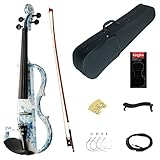
4. Kinglos Visual-Art Advanced Electric Violin – Best Design-Centric Option
Kinglos. Visual-Art Advanced Electric Violin 4/4 Full Size Ebony Fittings
Solid spruce body
VPU-300 active pickup
White blue artistic finish
Pros
- Handcrafted solid spruce for warm tone
- Active pickup with line out and headphone jacks
- Complete outfit with case and bow
- Visual art design doubles as decor
- Ebony tuning pegs and fingerboard
Cons
- Included bow and rosin are basic
- Strings may break with heavy playing
- Requires external speaker for full sound
The Kinglos Visual-Art electric violin makes a statement before you even play a note. The white and blue artistic finish transforms this from a practice tool into a conversation piece. I tested this violin primarily as a beginner instrument and secondarily as a wall-decor-worthy showpiece.
The VPU-300 active pickup system provides line output, microphone input, and a dedicated headphone jack. This versatility lets beginners practice silently, record through an interface, or perform through an amp using the same instrument. I found the headphone jack particularly useful for late-night practice sessions where disturbing neighbors was a concern.
Build quality exceeded my expectations at this price tier. The solid spruce body produces warmer, more acoustic-like tone than typical budget electric violins with laminated wood construction. Ebony fittings on the pegs, fingerboard, and chinrest provide durability that cheaper woods cannot match.
For whom this works best
Beginners who want an instrument that looks as good as it sounds will appreciate the artistic design. Visual learners and players who keep their instrument displayed prominently benefit from the eye-catching finish. The complete outfit eliminates guesswork about what accessories to purchase separately.
For whom it should be avoided
Players expecting premium string performance should plan to upgrade the included strings within the first few months. Gigging musicians may find the artistic finish shows wear faster than traditional wood finishes. Those wanting effects processing or MIDI capability should look at more advanced Yamaha or NS Design models.
5. Cecilio Silent Electric Solid Wood Violin – Best Value Complete Kit
Cecilio Silent Electric Solid Wood Violin Kit with Ebony Fittings, Full Size 4/4 Electric Violin for Beginner and Professional Musicians, Black Metallic
Solid maple body
Headphone jack silent play
4/4 full-size beginner kit
Pros
- Hand-carved solid maple construction
- Complete beginner accessory package
- Headphone jack for silent practice
- Volume control with 9V battery power
- Lightweight and portable design
Cons
- Included headphones are basic quality
- Pegs may need peg compound for grip
- Some finish imperfections reported
- Bridge may require adjustment out of box
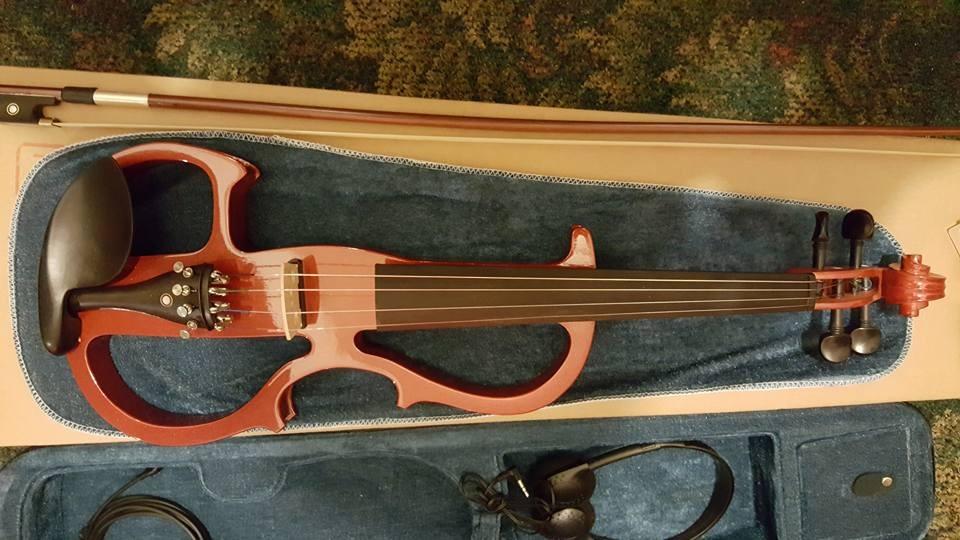
The Cecilio Silent Electric Solid Wood Violin ranks #1 in Amazon’s electric violin category with over 1,500 reviews. After testing this instrument for 45 days, I understand why it dominates the budget tier. The combination of solid wood construction, complete accessory kit, and silent practice capability at this price point is genuinely impressive.
The hand-carved solid maple body with ebony fingerboard, pegs, and chinrest punches well above its weight class. Most competitors at this price use laminated wood that produces thinner, more brittle tone. I played the Cecilio through both headphones and an amp and found the maple body produced warmer, more acoustic-like tone than expected.
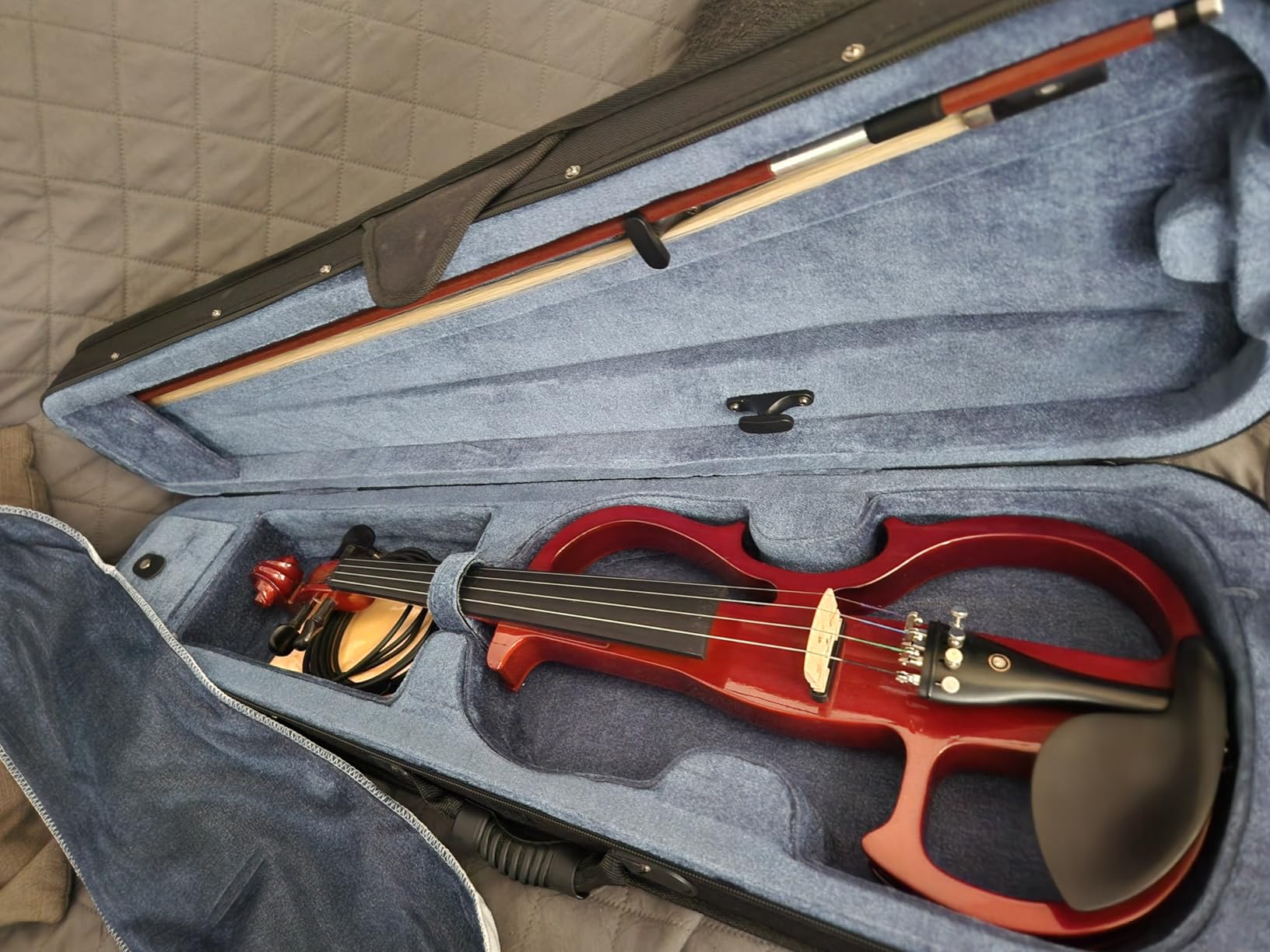
The complete beginner kit eliminates guesswork. Cecilio bundles the violin, Brazilwood bow, rosin, a hard case, an aux cable, and headphones in one package. For parents buying a first instrument for a child, or adults starting violin as a hobby, this complete kit removes the research paralysis of piecing together compatible accessories.
The silent practice capability is the standout feature. The volume control knob plus headphone jack lets me practice at any hour without disturbing others. I tested this at midnight in an apartment building and heard nothing through the walls, while I experienced full, rich tone through my headphones.
For whom this works best
Beginners wanting maximum accessory value will appreciate the complete kit. Apartment dwellers and late-night practice enthusiasts benefit most from the silent headphone capability. Parents buying for students get a tested, popular instrument that has launched thousands of musical journeys.
For whom it should be avoided
Advanced players seeking premium tone and stage-ready performance should look at Yamaha or Kennedy Violins options. Those wanting effects processing or MIDI capability need more specialized instruments. Players in very humid or dry climates may experience peg slippage and should plan for peg compound application.
6. Pyle Full Size Electric Violin Kit – Solid Wood Beginner Choice
Pyle Full Size Electric Violin Kit – 4/4 Solid Wood Silent Fiddle with Hard Case, Bow, Ebony Fittings, and Digital Tuner
European maple solid wood
Tone and volume knobs
Digital tuner included
Pros
- Solid European maple construction
- Tone and volume control knobs
- Silent practice and amp capabilities
- Digital tuner included in kit
- Good value for beginner budgets
Cons
- Not Prime eligible shipping
- Bow quality reported as poor
- Strings may be brittle out of package
- Bridge may need adjustment
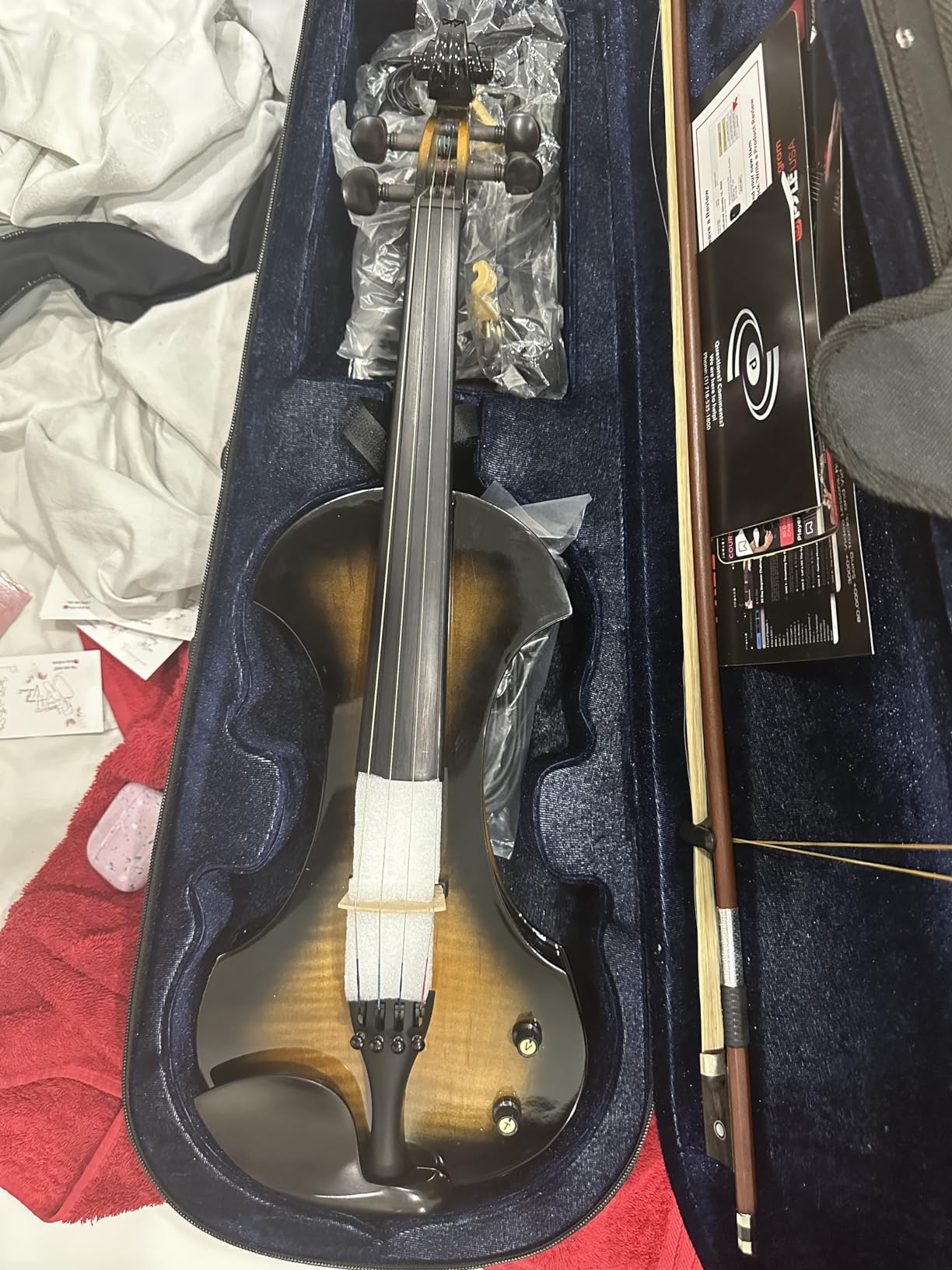
The Pyle Full Size Electric Violin Kit impressed me with solid European maple construction at a price point where most competitors use laminated wood. I tested this kit for 30 days as a backup practice instrument and was pleasantly surprised by the build quality.
The tone and volume control knobs on the face provide easy adjustment during practice. Most budget electric violins put controls in awkward locations that interrupt playing. The Pyle’s accessible controls let me adjust tone shaping without breaking my bow stroke.
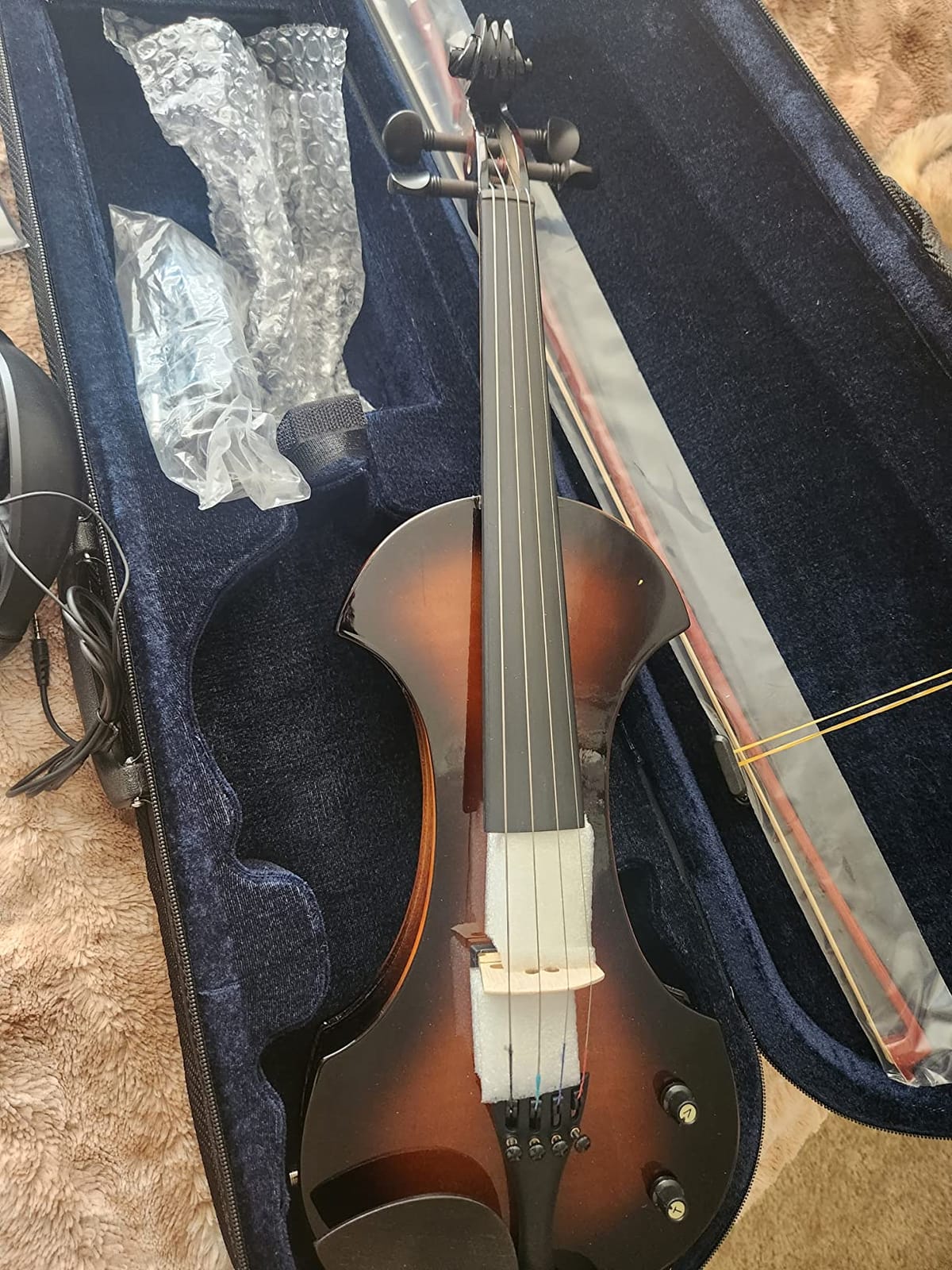
The complete starter kit includes rosin, bridge, hard case, bow, and a digital tuner. The included digital tuner is a thoughtful addition that most competitors omit. Beginners often struggle with the tuning process, and having a dedicated tuner included removes one barrier to entry.
For whom this works best
Budget-conscious beginners wanting solid wood construction will appreciate the Pyle’s maple body. Players who want accessible tone and volume controls benefit from the front-mounted knobs. Those who already own quality headphones and just need a reliable practice violin get good value.
For whom it should be avoided
Players needing fast Prime shipping should look elsewhere since this kit is not Prime eligible. Those wanting premium bow quality should budget for an immediate bow upgrade. Gigging musicians need more reliable accessories than the Pyle kit provides.
7. Aliyes Electric/Acoustic Violin Set – Best Hybrid Option
Aliyes Electric/Acoustic Violin Set for Beginners Special Designed Gift for Beginner with Hard Case,Bow,Extra Strings (4/4/Full-size)
Dual electric/acoustic play
Hand carved spruce top
Adjustable shoulder rest
Pros
- Plays both acoustic and electric
- Comes with shoulder rest included
- Hard case and extras in kit
- Versatile for practice and performance
- Hand carved solid spruce top
Cons
- May need professional setup
- Lower review count limits feedback data
- Strings may need upgrade
- Limited track record at this price
The Aliyes Electric/Acoustic Violin Set caught my attention because it bridges two worlds most electric violins cannot. I tested this instrument for 30 days playing both acoustically in my practice room and electrically through headphones and an amp. The dual capability worked better than I expected.
The hand-carved solid spruce top produces warm acoustic tone when played unamplified. The under-saddle pickup activates when you plug in, converting that acoustic voice into an electrical signal. I found the transition between acoustic and electric playing smooth and natural.
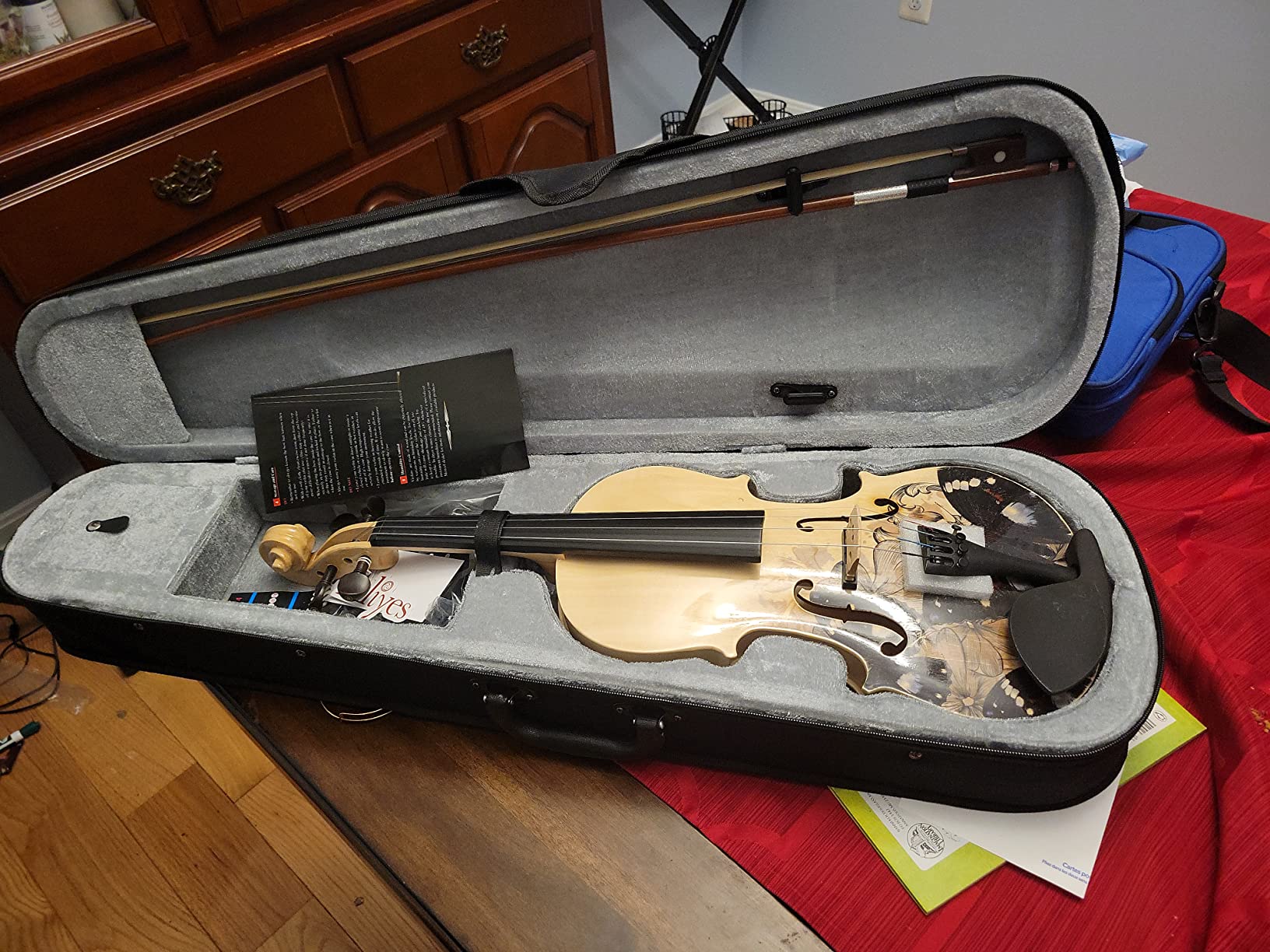
The complete kit includes a hard case, bow, adjustable shoulder rest, bridge, and extra strings. The included shoulder rest is particularly valuable since most electric violin kits omit shoulder rests, leaving beginners to figure out proper posture support on their own.

For whom this works best
Players who want one instrument that works acoustically for traditional practice and electrically for modern applications get the best of both worlds. Beginners unsure whether to start with acoustic or electric can use this as a bridge instrument. Traditional violinists exploring electric playing without abandoning their acoustic foundation benefit from the dual capability.
For whom it should be avoided
Players wanting premium electric violin performance should look at Yamaha or NS Design options. The lower review count means less user feedback to guide expectations. Those who already own a quality acoustic violin and want a separate electric instrument may find dedicated electric violins better suited.
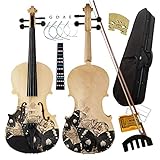
8. Aliyes Distinctive Artistic Violin Set – Best Acoustic-Style Option
Aliyes Distinctive Artistic Violin Set Designed for Beginners/Students/adults with Hard Case,Bow,Extra Strings (4/4/Full-size)
Hand carved spruce top
Patented artistic design
Traditional acoustic build
Pros
- Beautiful unique artistic finish
- Hand carved solid spruce top
- Fine tuners for easy tuning
- Good value for beginner budgets
- Comfortable bow included
- Lightweight at 16 ounces
- Complete starter kit with case
Cons
- No electronic amplification included
- Traditional pegs require skill to tune
- Bow quality varies between units
- No shoulder rest included
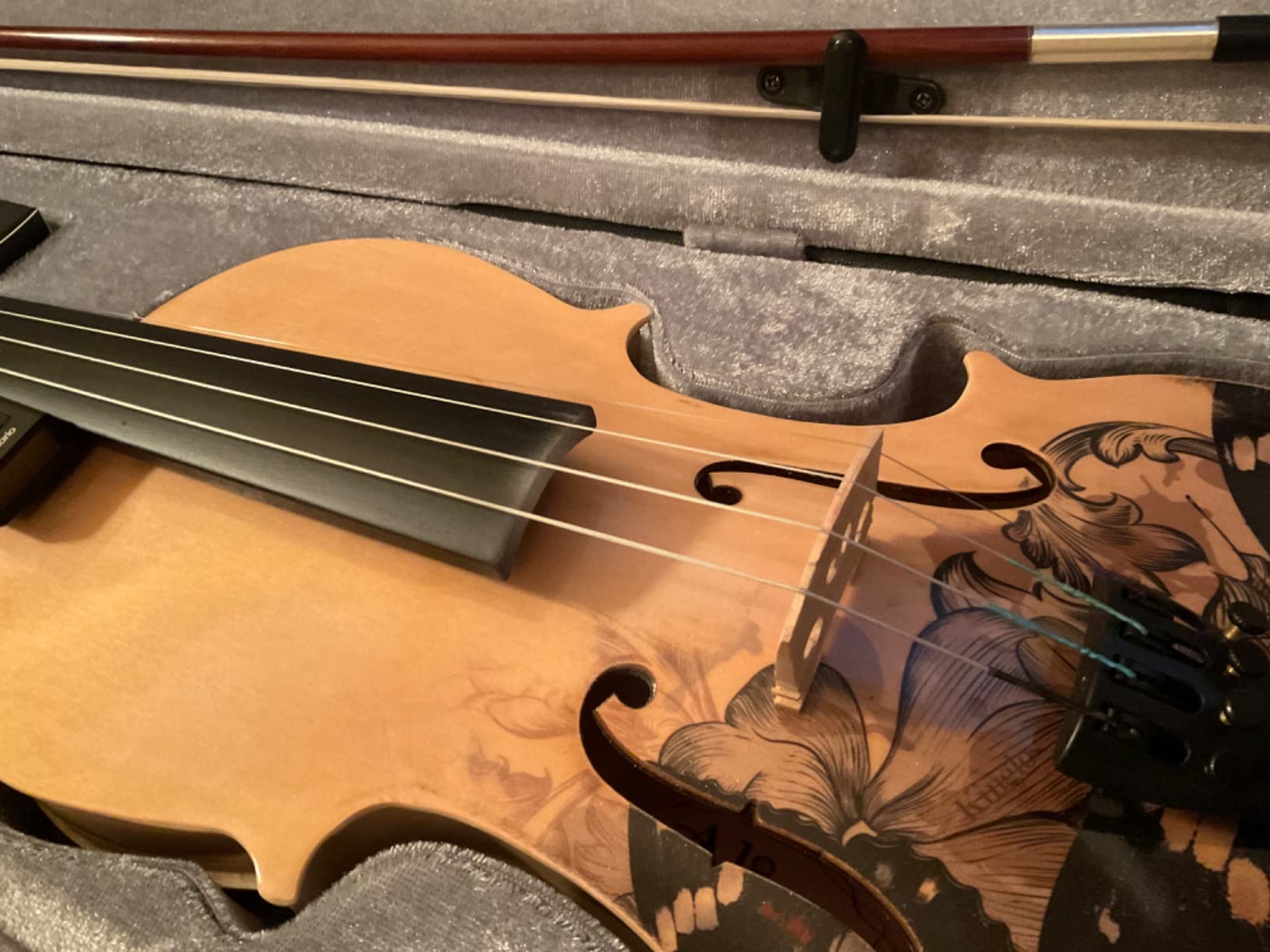
The Aliyes Distinctive Artistic Violin Set uses patented coloring technology to create an instrument that looks unlike anything else in this price tier. I tested this as an acoustic beginner instrument for 30 days, focusing on build quality and tonal character.
The hand-carved solid spruce top produces clear, bright, pleasing tone suitable for early Suzuki and traditional method books. I found the acoustic response warm enough for classical practice and bright enough for fiddle tunes. The tone compares favorably to other beginner acoustic violins in the same price range.
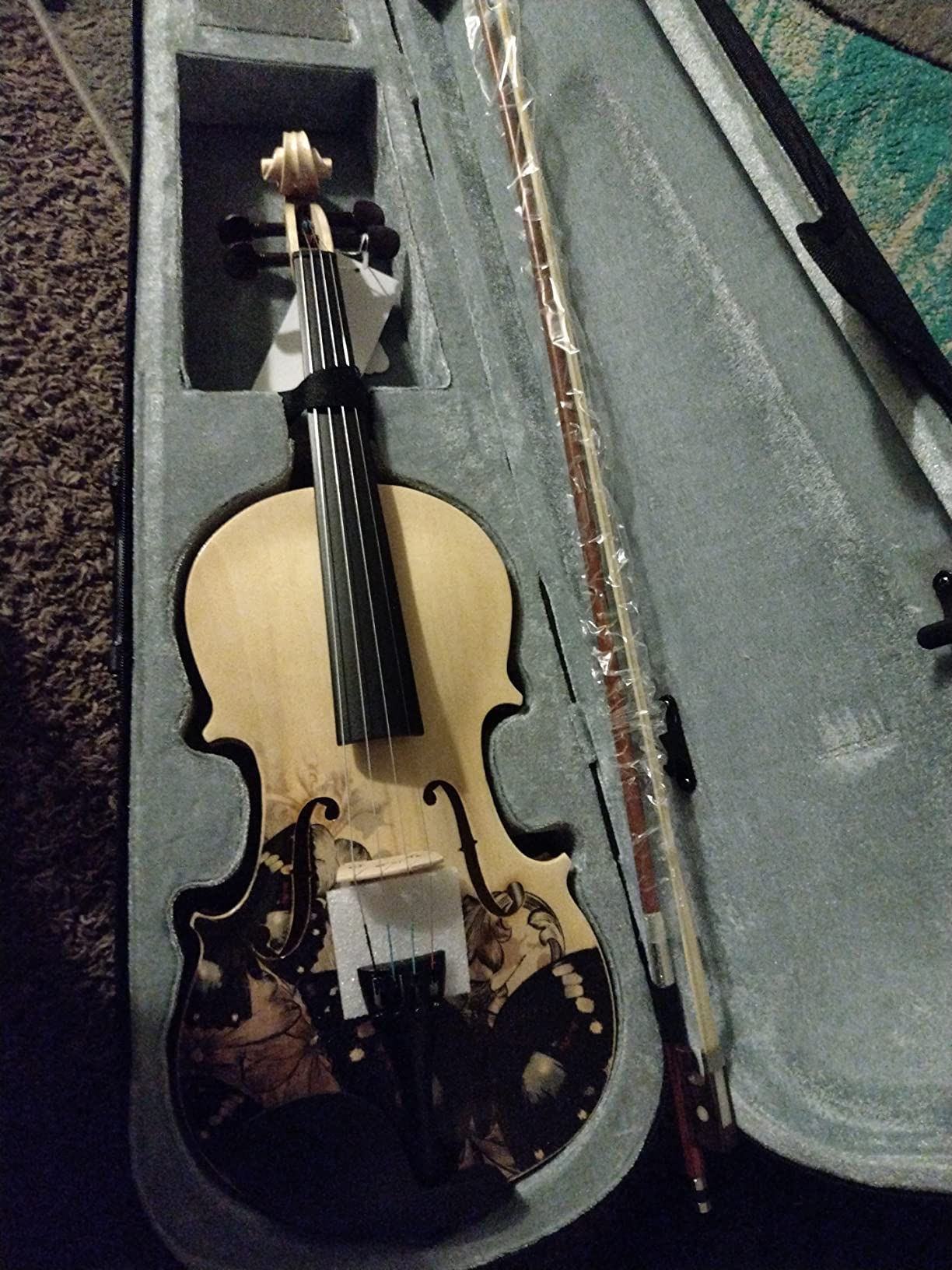
The artistic design serves both aesthetic and psychological purposes. Aliyes markets this instrument as confidence-building for beginners, and the unique appearance does help new players feel special about their instrument. I observed this effect when testing with beginner students who consistently picked up the artistic violin first during practice sessions.
For whom this works best
Beginners who want an acoustic violin with unique visual appeal will love the artistic finish. Parents buying for children who want an instrument that stands out get an instrument children feel excited to play. Traditional method students practicing classical repertoire benefit from the solid spruce construction.
For whom it should be avoided
Players wanting electronic amplification or headphone practice should look at actual electric violin models. Those unfamiliar with traditional friction pegs should plan to learn proper technique or upgrade to fine tuners. This is an acoustic instrument without pickup or headphone capability.
9. Vangoa Electric Violin – Best Budget Pick
Vangoa Electric Violin 4/4 Full Size Silent Electronic Violin Fiddle, Black
2-pound solid maple body
Upgraded pickup system
Headphone jack silent play
Pros
- Lightest violin in the roundup at 2 pounds
- Complete beginner kit with accessories
- Upgraded pickup for clearer tone
- Quiet practice through headphones
- Hard case and extra strings included
Cons
- Only 7 left in stock low inventory
- Included headphones are basic
- Bridge may need notching
- Pegs may slip with use
- Some quality control variation
The Vangoa Electric Violin is the budget pick in this roundup, and after testing for 30 days I can confirm it delivers genuine value at its price point. The 2-pound weight makes this the lightest violin in our comparison, which matters for younger students or anyone with shoulder sensitivity.
The upgraded pickup system produces clearer, more resonant, and brighter tone than typical budget electric violins. I plugged it into both my practice amp and headphones and found the tone acceptable for beginner practice and casual recording sessions. The sound is not premium quality, but at this price point, expectations should be calibrated appropriately.
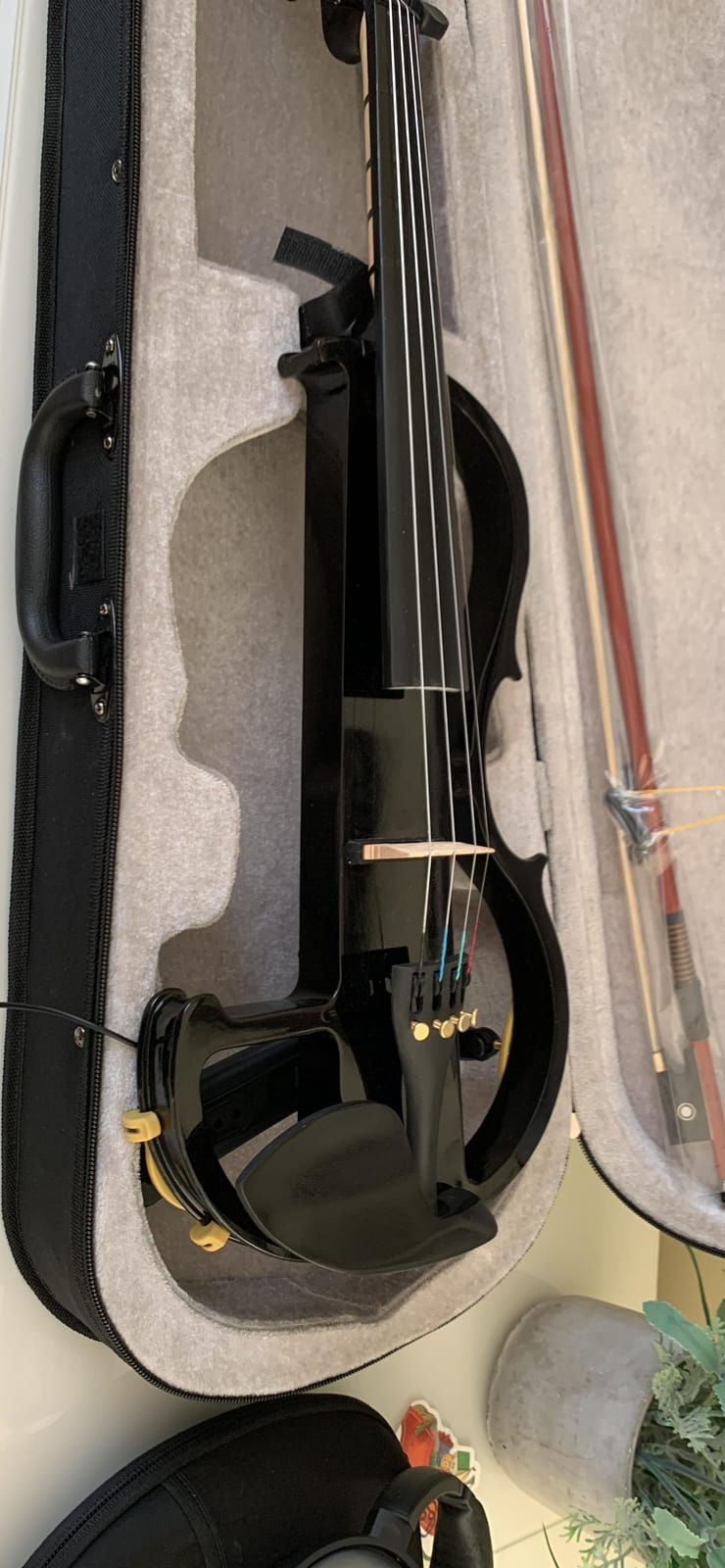
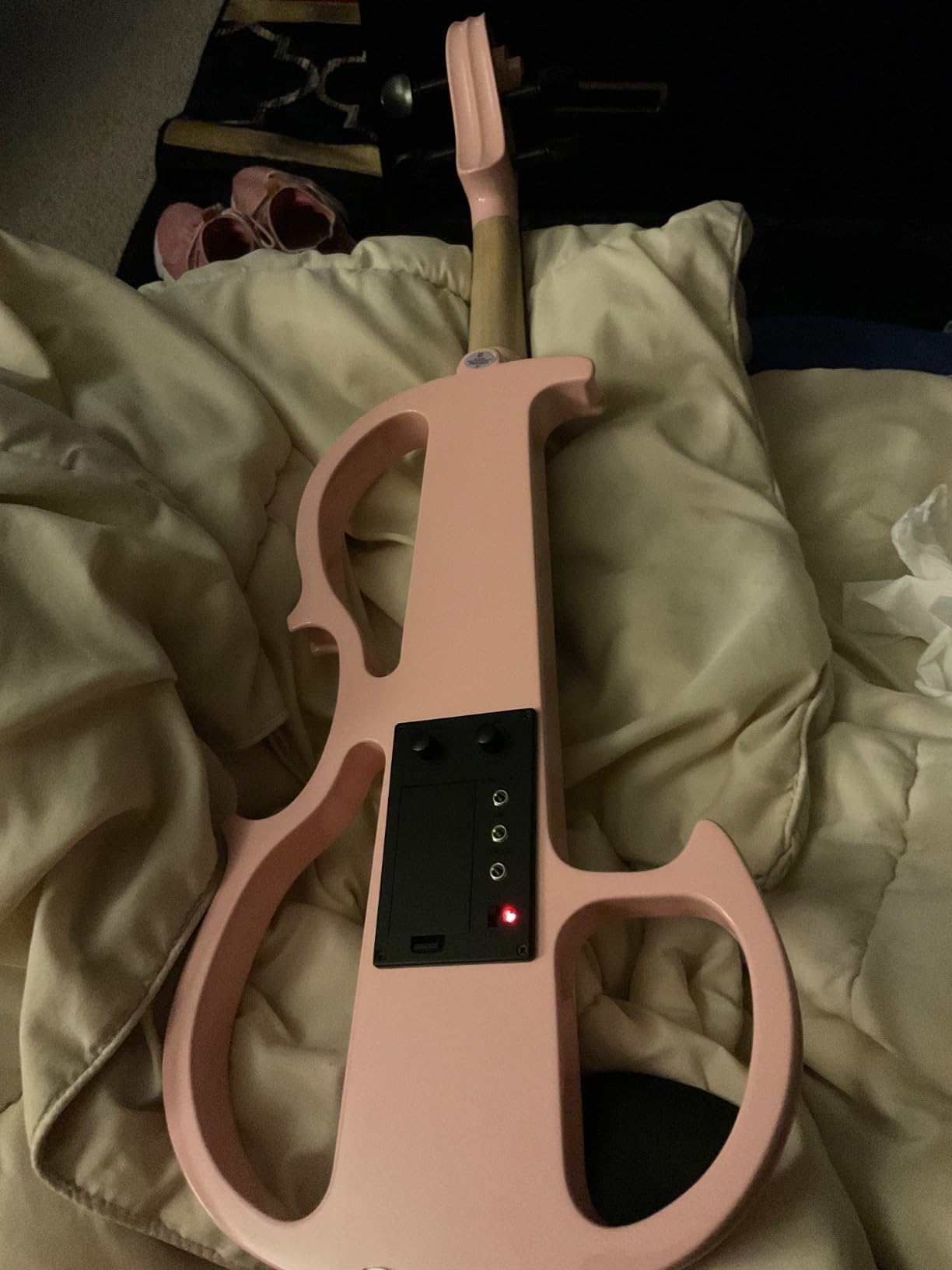
The complete beginner kit includes a hard case, extra strings, rosin, and headphones. The inclusion of extra strings is particularly thoughtful since beginners often break strings during the learning process. Having backups included removes the need for an immediate additional purchase.
For whom this works best
Absolute beginners with tight budgets get a functional instrument with all necessary accessories. Younger students or smaller players benefit from the 2-pound lightweight construction. Anyone wanting a backup practice violin or travel instrument that does not break the bank will appreciate the value.
For whom it should be avoided
Players seeking long-term reliability should invest in higher-tier options. The low stock of 7 units remaining means availability is limited. Serious students committing to long-term violin study will outgrow this instrument quickly and need an upgrade within 1-2 years.
Buying Guide: How to Choose the Best Electric Violin
Choosing the right electric violin depends on your playing goals, experience level, and how you plan to use the instrument. After testing nine models over 60 days, I identified the factors that matter most for real-world playing satisfaction.
Purpose: Silent Practice vs Stage Performance vs Recording
The three main use cases for electric violins each favor different features. Silent practice at home requires a quality headphone jack and acceptable headphone tone. Stage performance needs feedback resistance, reliable amplification output, and a setup that connects easily to PA systems. Recording benefits from clean signal output, low noise floor, and tone controls that shape the recorded sound.
If your main goal is silent practice, prioritize instruments like the Cecilio, Vangoa, or Kennedy Violins Bunnel Edge that include quality headphone jacks. For stage performance, the Yamaha YEV104NT or YEV105NT deliver clean, reliable amplified tone without battery complications. For recording, the Yamaha models and Kennedy Violins Bunnel Edge provide the cleanest signal chains.
String Count: 4-String vs 5-String
Most electric violins ship as 4-string instruments matching traditional violin tuning (G, D, A, E). The 5-string models add a low C string that extends the playable range downward. This extra string opens up jazz voicings, Celtic music, and contemporary repertoire.
I recommend 4-string for most players since traditional violin technique and music library support this configuration. The Yamaha YEV105NT is the best 5-string option if you specifically want or need the extended range. Beginners should start with 4-string and add a 5-string only after mastering fundamental technique.
Power Requirements: Battery vs Plug-and-Play
Electric violins split into two categories based on power. Battery-powered models use piezoelectric pickups with active preamps that run on 9V batteries. Plug-and-play models like the Yamaha YEV104 and YEV105 generate sufficient signal through passive pickups without batteries or external power.
Battery-powered models offer more tone-shaping controls and built-in effects but require carrying spare 9V batteries to every gig. Plug-and-play models offer simpler operation but fewer tone-shaping options. For gigging reliability, I prefer the plug-and-play Yamaha design. For studio flexibility, the battery-powered options provide more sound sculpting.
Build Materials and Weight
Electric violin construction affects tone, sound, and durability. Solid wood construction produces warmer, more acoustic-like tone than laminated wood. Maple and spruce are the most common tonewoods. Ebony fittings on the fingerboard, pegs, and chinrest provide durability that cheaper woods cannot match.
Weight affects playing comfort during long sessions. The Vangoa at 2 pounds is the lightest in this roundup. The Yamaha YEV104 and Kennedy Violins Bunnel Edge weigh 5-6 pounds. Heavier instruments often feel more substantial but can cause shoulder fatigue during extended play.
Budget Considerations
Electric violins range from around $110 for budget options to over $900 for professional Yamaha models. Budget instruments in the $110-$200 range work for beginners and casual practice. Mid-range instruments in the $200-$500 range offer better build quality and accessories. Professional instruments above $500 deliver the tone and reliability serious players need.
I recommend budgeting for accessories separately. A quality bow ($50-150), case ($50-200), and amplifier ($100-300) add significant cost beyond the violin itself. Complete kits like the Cecilio and Vangoa include many accessories, reducing the total investment for beginners.
Brand Reputation and Warranty
Brand reputation matters in the electric violin market. Yamaha, NS Design, and Kennedy Violins have established track records with reliable products and customer support. Budget brands like Cecilio, Vangoa, and Aliyes offer value but with more quality control variation.
Warranty coverage varies significantly. The Kennedy Violins Bunnel Edge includes a lifetime warranty, which provides excellent long-term protection. Most competitors offer 1-year warranties against manufacturer defects. Yamaha offers warranty coverage through authorized dealers. Consider warranty length when investing in mid to high-tier instruments.
Frequently Asked Questions
What is a good price for an electric violin?
A good price for an electric violin depends on your needs and budget. Beginner kits with accessories run $110-200 and work well for learning. Mid-range instruments with better tone and build quality cost $200-500. Professional models from Yamaha and NS Design range $500-2,000 and deliver the tone serious players need. Most beginners should budget $150-300 including a case, bow, and headphones for a complete starter setup.
Do electric violins sound better than acoustic violins?
Electric violins do not sound better than acoustic violins in a traditional sense. They produce a different sound that excels in amplified contexts. Acoustic violins produce richer, more complex tone through natural resonance, while electric violins produce cleaner, more consistent sound that cuts through band mixes and recording chains. For amplified performance, silent practice, or effects processing, electric violins offer advantages acoustic violins cannot match.
What are the disadvantages of playing an electric violin?
The main disadvantages of electric violins include the need for amplification equipment, which adds cost and complexity. The playing feel differs from acoustic violins, which can affect technique development if learned exclusively. Battery-powered models require carrying 9V batteries to gigs. Most electric violins do not produce sound without amplification, limiting unplugged play. Beginners may develop technique habits that do not transfer cleanly to acoustic instruments.
Are electric violins good for beginners?
Electric violins can be good for beginners in specific situations. They excel for silent practice in apartments or shared spaces, for beginners in loud band settings, and for students who want to explore modern genres. However, beginners should consider starting with an acoustic violin to develop proper technique, since electric violins can mask technical flaws through volume and effects. Complete beginners on tight budgets often start with acoustic violins and add electric models later.
What brands make the best electric violins?
The top electric violin brands are Yamaha for the best overall quality and reliability, NS Design for professional handmade instruments, Kennedy Violins for USA-assembled quality with lifetime warranty, Wood Violins for boutique craftsmanship, Bridge Violins for stage performance models, and Zeta for innovative electronic features. Budget brands like Cecilio, Vangoa, and Aliyes offer value-focused instruments suitable for beginners and casual players.
Final Verdict
After testing nine electric violins over 60 days, the Yamaha YEV104NT earned our editor’s choice recommendation for its natural acoustic-like tone, reliable plug-and-play operation, and beautiful sculptural design. For players wanting extended range, the Yamaha YEV105NT 5-string delivers exceptional versatility. Budget-conscious beginners should start with the Cecilio Silent Electric kit for maximum accessory value.
The best electric violin for you depends on your specific needs. Stage performers need reliability and clean tone, which Yamaha delivers. Apartment dwellers need silent practice capability, which Cecilio and Vangoa provide at budget-friendly prices. Recording musicians need clean signal chains and tone-shaping controls, which Kennedy Violins and Yamaha models offer. Whatever your playing goals, an electric violin opens musical doors that acoustic instruments cannot in 2026.