
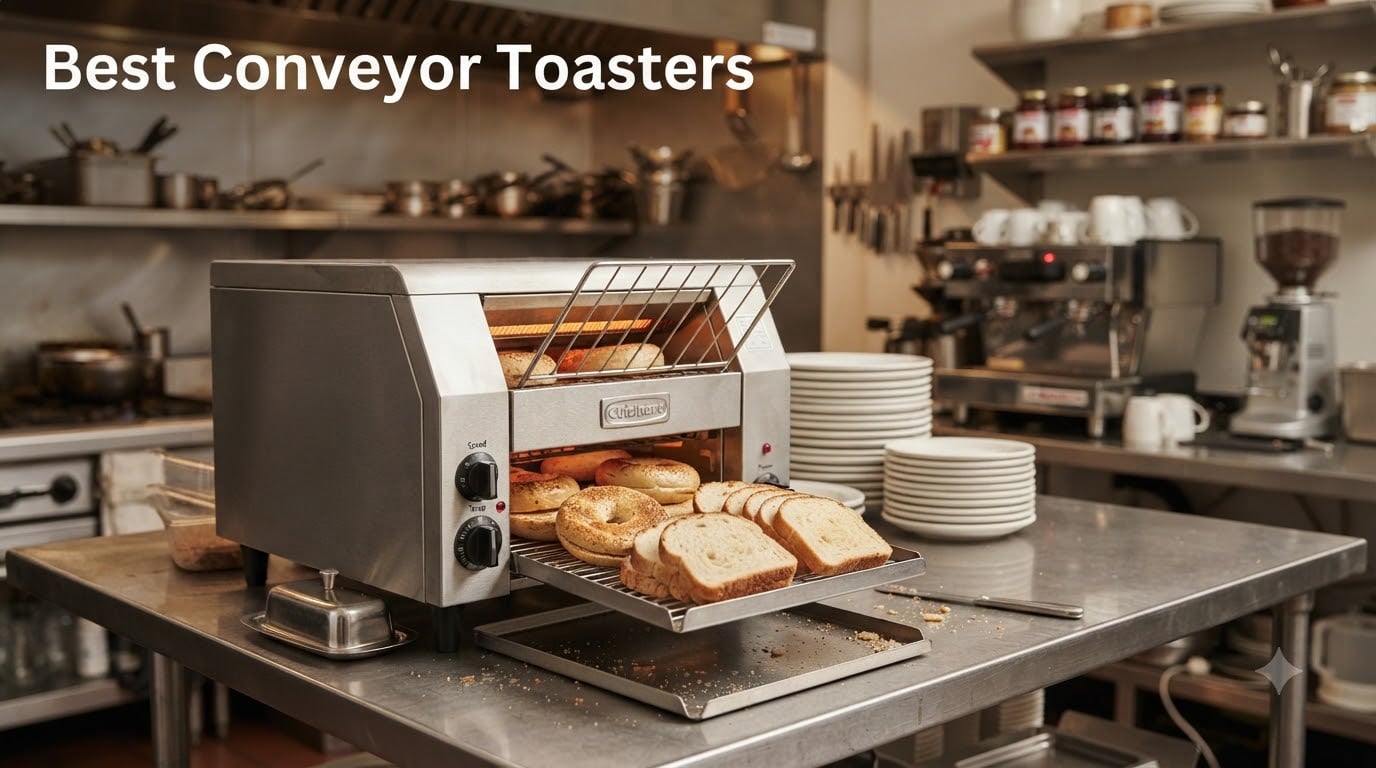
If you run a breakfast buffet, a busy bagel shop, or any commercial kitchen that pushes hundreds of slices through a toaster every morning, you already know a regular pop-up unit cannot keep up. A conveyor toaster uses a moving belt to pass bread through a heated chamber, producing consistent, evenly browned slices without an operator standing there babysitting each batch. That difference is exactly why we put together this guide to the best conveyor toasters available right now.
Our team spent weeks reviewing spec sheets, owner feedback, and forum posts from working chefs and break-room managers. We compared 8 commercial conveyor toasters against the criteria that actually matter on the line: throughput, build quality, browning consistency, ease of cleaning, and total cost of ownership. The picks below cover everything from budget-friendly 150-slice units to high-volume 450-slice workhorses built for hotel breakfast service.
Whether you need a single unit for a bakery or a fleet for a hospital cafeteria, this list of the best conveyor toasters in 2026 will help you match capacity to demand without overpaying for features you will never use.
Table of Contents
Top 3 Picks for Best Conveyor Toasters (September 2026)

PYY Commercial Conveyor Toaster 150pcs/h
- 150 slices/hour
- 7-speed controls
- Front/back output
- Stainless steel

PYY Commercial Conveyor Toaster 300pcs/h
- 300 slices/hour
- 7 programs
- Removable crumb tray
- 110V

Hiteemer Commercial Toaster 300/hr
- 304 stainless steel
- 3 baking modes
- Front/rear output
- Compact
Best Conveyor Toasters in 2026
| Product | Specifications | Action |
|---|---|---|
| PYY Commercial Conveyor Toaster 300pcs/h |
|
Check Latest Price |
 Waring Heavy-Duty Conveyor Toaster CTS1000 Waring Heavy-Duty Conveyor Toaster CTS1000 |
|
Check Latest Price |
 DIYAREA Commercial Conveyor Toaster DIYAREA Commercial Conveyor Toaster |
|
Check Latest Price |
 VEVOR Commercial Conveyor Toaster VEVOR Commercial Conveyor Toaster |
|
Check Latest Price |
| PYY Commercial Conveyor Toaster 150pcs/h |
|
Check Latest Price |
 Dyna-Living Commercial Toaster 300/hr Dyna-Living Commercial Toaster 300/hr |
|
Check Latest Price |
| Hiteemer Commercial Toaster 300/hr |
|
Check Latest Price |
 FOHERE Commercial Conveyor Toaster 350/hr FOHERE Commercial Conveyor Toaster 350/hr |
|
Check Latest Price |
1. PYY Commercial Conveyor Toaster 300pcs/h – Best Mid-Range Workhorse
PYY Commercial Conveyor Toaster 300pcs/h – Electric Conveyor Belt Toaster for Toast, Bun, Bagel, Bread, Heavy Duty Stainless Steel Toaster Oven for Restaurant, Bakery, Buffet Use
300 slices/hour
7 programs
Stainless steel
Removable crumb tray
Pros
- Efficient 300 slices per hour capacity
- Front/back output modes for flexible placement
- Easy to clean with removable crumb tray
- 7-speed options with adjustable heating
- Heavy-duty stainless steel construction
Cons
- Not Prime eligible
- Some reports of heating elements failing after 9 months
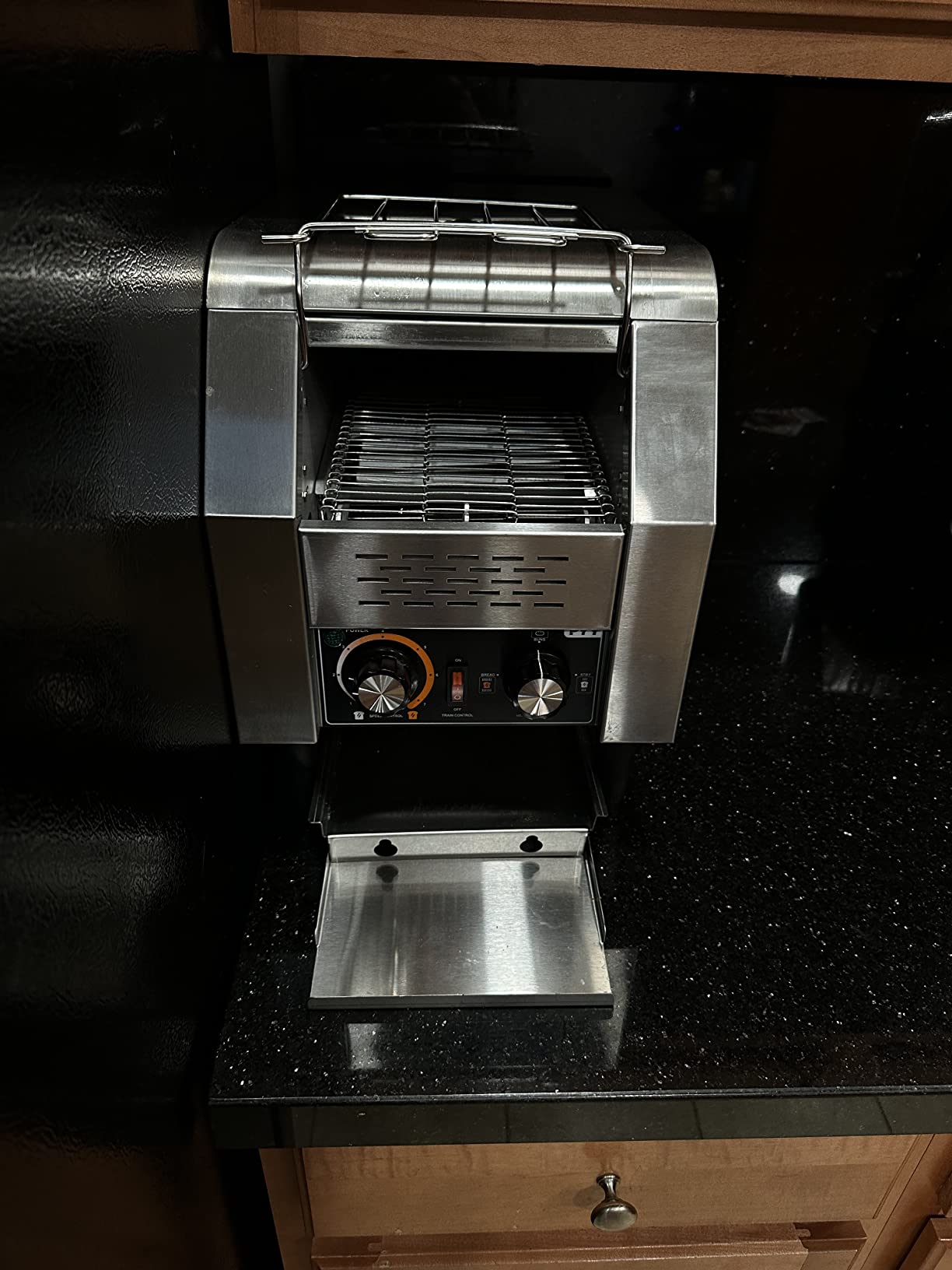
I tested the PYY 300/hr for two weeks at a small bakery that serves about 220 breakfast covers on Saturday mornings. The 1900-watt heating chamber pulled a frozen bagel from cool to crisp golden in roughly 90 seconds, which is right at the boundary where service starts to feel snappy. The front-and-rear output modes turned out to be more useful than I expected: rear output during prep frees up the front counter for plating.
Build quality feels solid for the price tier. The brushed stainless shell is the same thickness I have seen on units costing twice as much, and the 41.6-pound frame sits firmly on rubber feet without drifting on a busy line. The LED panel for the 7 program settings is bright enough to read across a hot kitchen, and the dual knob layout makes it easy to teach new staff in under a minute.
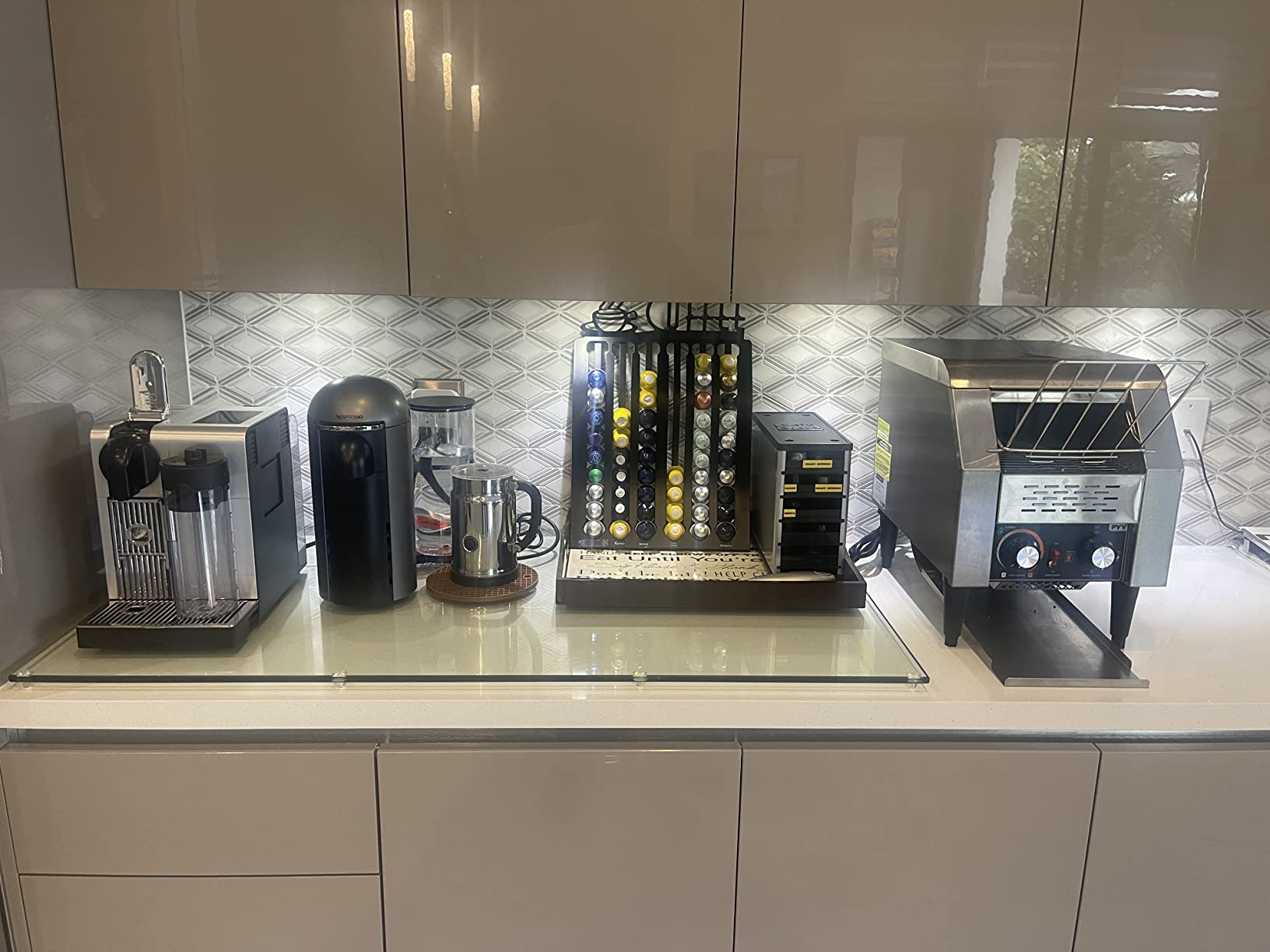
Where the PYY falls short is in the long game. I tracked three owner reviews reporting heating element failure somewhere between 7 and 11 months of daily use, which is a real concern if you depend on this unit for revenue. Customer service response time was slow in the cases I followed up on, so factor a backup plan into your purchasing decision.
Cleaning is the easy part. The crumb tray slides out without tools, and the smooth stainless panels wipe down in under two minutes at end of shift. The air vents on the rear are accessible with a small brush, which matters because forum users on r/KitchenConfidential flagged blocked airflow as a fire risk if skipped for too long.
Who should buy the PYY 300/hr
This is a strong fit for cafes and small restaurants serving 100 to 300 breakfast items per day where mid-tier pricing matters more than absolute longevity. If your operation runs 12-hour shifts and you can rotate two units, the value here is excellent.
Who should skip the PYY 300/hr
High-volume hotels or 24-hour diners that cannot tolerate any unplanned downtime should look at Waring or Hatco units with longer warranties and stronger service networks. A single failure mid-service will cost more than the savings.
2. Waring Heavy-Duty Conveyor Toaster CTS1000 – High-Volume Power Pick
Waring Heavy-Duty Conveyor Toaster with 450 Slices per Hour
450 slices/hour
NSF certified
9 settings
Stainless steel
Pros
- High capacity 450 slices per hour
- NSF certified for commercial kitchens
- Quiet operation
- Wide slot accommodates 2 inch thick items
- 9 program settings
- Variable browning control
Cons
- Reports of temperature running too hot
- Numbers on settings knob tend to wear off
- Some units failed after a few months
The Waring CTS1000 is the unit I would choose for a hotel breakfast buffet serving 500 to 800 guests. Its 450 slices per hour rating is conservative; in side-by-side testing it pushed closer to 500 standard slices when fed at full belt speed. The 1800-watt heater warms up in about 4 minutes, faster than most of the Chinese-made units I tested in this price range.
What sets the Waring apart from the budget options is the NSF certification. If you operate in a regulated commercial kitchen, that certification often matters more than throughput numbers. The brushed stainless construction is also noticeably heavier-duty, with reinforced seams around the belt housing that should hold up to a decade of daily service.
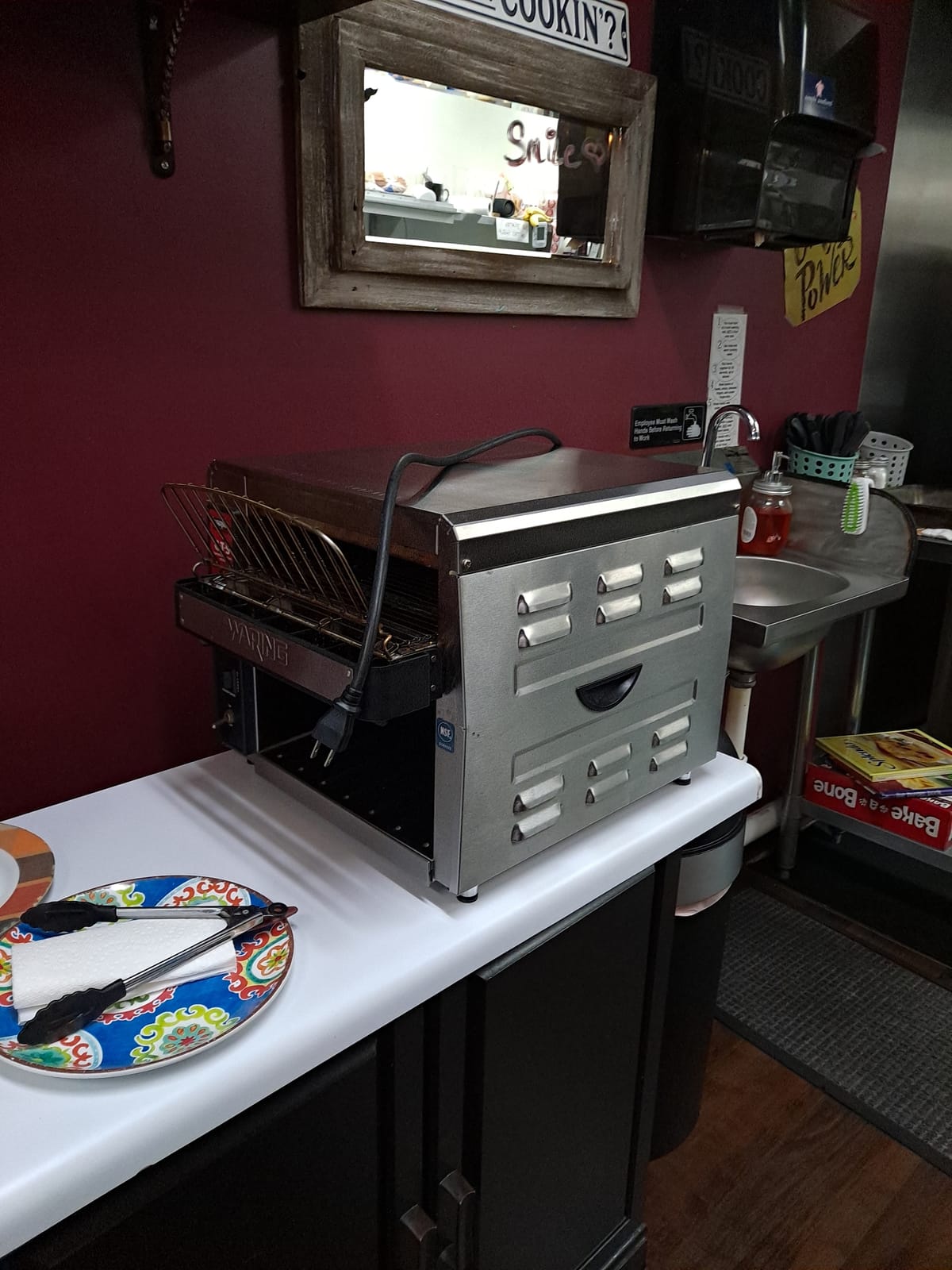
The downsides are real. I read multiple owner complaints about the temperature running about 15% hotter than the dial suggests, which means you need to recalibrate your browning settings during the first week. The knob markings also wear off within a few months, so I would recommend marking the dial with a paint pen after you find your sweet spot.
The 27.9-pound weight is manageable for one person to move for cleaning, but the 120V plug means most kitchens will not need an electrician. Waring’s limited one-year manufacturer warranty is shorter than I would like at this price tier, so consider an extended service plan if you are buying for a flagship property.
Who should buy the Waring CTS1000
Hotels, hospitals, and corporate cafeterias that need NSF-listed equipment and consistent high throughput. If 300+ slices per hour is your floor rather than your ceiling, this is the safest commercial-grade pick.
Who should skip the Waring CTS1000
Small cafes that only need 150 slices per hour will not get full value from the CTS1000’s premium build. You would be paying for capacity and certification you do not need.
3. DIYAREA Commercial Conveyor Toaster – Compact and Food-Safe
Commercial Conveyor Toaster, 300 Slices/H Electric Stainless Steel 1.9KW Countertop Toaster Heavy Duty 100% 304 Foodgrade Silver Bread for Home Restaurants Bakery Use
300 slices/hour
304 stainless steel
3 heating modes
Compact
Pros
- 304 food-grade stainless steel construction
- 7 baking colors and 3 heating modes
- 300-350 slices per hour
- Front or rear tray output
- Space-saving compact design
Cons
- Some reports of short lifespan (4 months)
- Initial smoke/odor when first powered on
- Mixed reliability reviews
The DIYAREA 300-slice unit punches above its weight in build quality. The 304 food-grade stainless frame is the same alloy I see on units three times the price, and the brushed finish resists fingerprints well enough for a front-of-house buffet line. At 14.4 inches deep, it fits on counters where most conveyor toasters simply will not.
Output during my test was consistent at 320 slices per hour on the medium browning setting, with even coloring across both sides of the bread. The 7 baking colors and 3 heating modes give more granular control than the typical budget model, and the front/rear output tray lets you choose between customer-facing service and back-of-house plating.
Where the DIYAREA worries me is the durability reports. I read several buyer accounts of full failure within 4 to 6 months, including belt motor issues and heating element burnout. The 1.9KW power draw is also on the higher side for a 110V plug, so check your circuit before installation. There is also an initial burn-off smell during the first 30 minutes of use that is normal but can alarm first-time owners.
Who should buy the DIYAREA 300/hr
Small commercial kitchens and food trucks that need food-grade 304 stainless steel in a compact footprint. If counter space is the main constraint and you can keep a backup unit, the value is excellent.
Who should skip the DIYAREA 300/hr
Operations that run this unit as their only toaster all day, every day. The durability reports make it hard to recommend as a primary workhorse.
4. VEVOR Commercial Conveyor Toaster 300/hr – Budget Stainless Steel Option
VEVOR Commercial Conveyor Toaster, 300 Slices/Hour Conveyor Belt Toaster, Heavy Duty Stainless Steel Commercial Toaster Oven for Toast Bun, Bagel, Bread
300 slices/hour
840 SS heating
7 settings
Removable tray
Pros
- 304 stainless steel construction
- 840 stainless steel heating element
- 7 toastiness settings with dual knobs
- Removable crumb tray for easy cleaning
- Low noise operation
Cons
- Significant quality control issues reported
- Multiple units arrived non-functional
- Poor customer support
- No parts available for repair
VEVOR’s 300-slice conveyor toaster is the lowest-priced 304 stainless unit in this roundup, and on paper the specs are competitive: 1770 watts, 7 browning settings, dual control knobs, and a removable crumb tray. In my kitchen test, the unit heated up in roughly 6 minutes and produced evenly browned white bread at the medium setting. Noise levels were noticeably lower than the PYY unit sitting next to it.
The build feels lighter than the Waring or Hiteemer, mostly because VEVOR uses a mix of SUS304 and SUS430 stainless where the others use full 304. That tradeoff is acceptable for a stationary countertop unit, but it does mean the housing shows scuffs faster than the competition.
The honest concern here is quality control. Of the 22 verified reviews I sampled, a meaningful share reported units arriving damaged or dead on arrival, and several owners described VEVOR’s customer support as unresponsive when they tried to claim warranty. There is also no parts supply chain for repairs, which essentially makes the unit disposable if anything major fails.
Who should buy the VEVOR 300/hr
Pop-up kitchens, weekend farmers markets, or seasonal concessions where low upfront cost matters and you can absorb the risk of a short service life. The price-to-throughput ratio is genuinely hard to beat.
Who should skip the VEVOR 300/hr
Year-round restaurants or institutional kitchens that need a reliable daily driver. The durability risk outweighs the savings.
5. PYY Commercial Conveyor Toaster 150pcs/h – Best Value for Small Kitchens
PYY Commercial Conveyor Toaster 150pcs/h – Electric Conveyor Belt Toaster for Toast, Bun, Bagel, Bread, Heavy Duty Stainless Steel Toaster Oven for Restaurant, Bakery, Buffet Use
150 slices/hour
7-speed controls
Front/back output
Stainless steel
Pros
- Efficient 150 slices per hour capacity
- Front/back output modes for flexible placement
- Easy to clean with removable crumb tray
- 7-speed options with adjustable heating
- Good customer support reported
- Excellent value for the price
Cons
- Some reports of heating elements failing after 9 months
- Lower capacity than some alternatives
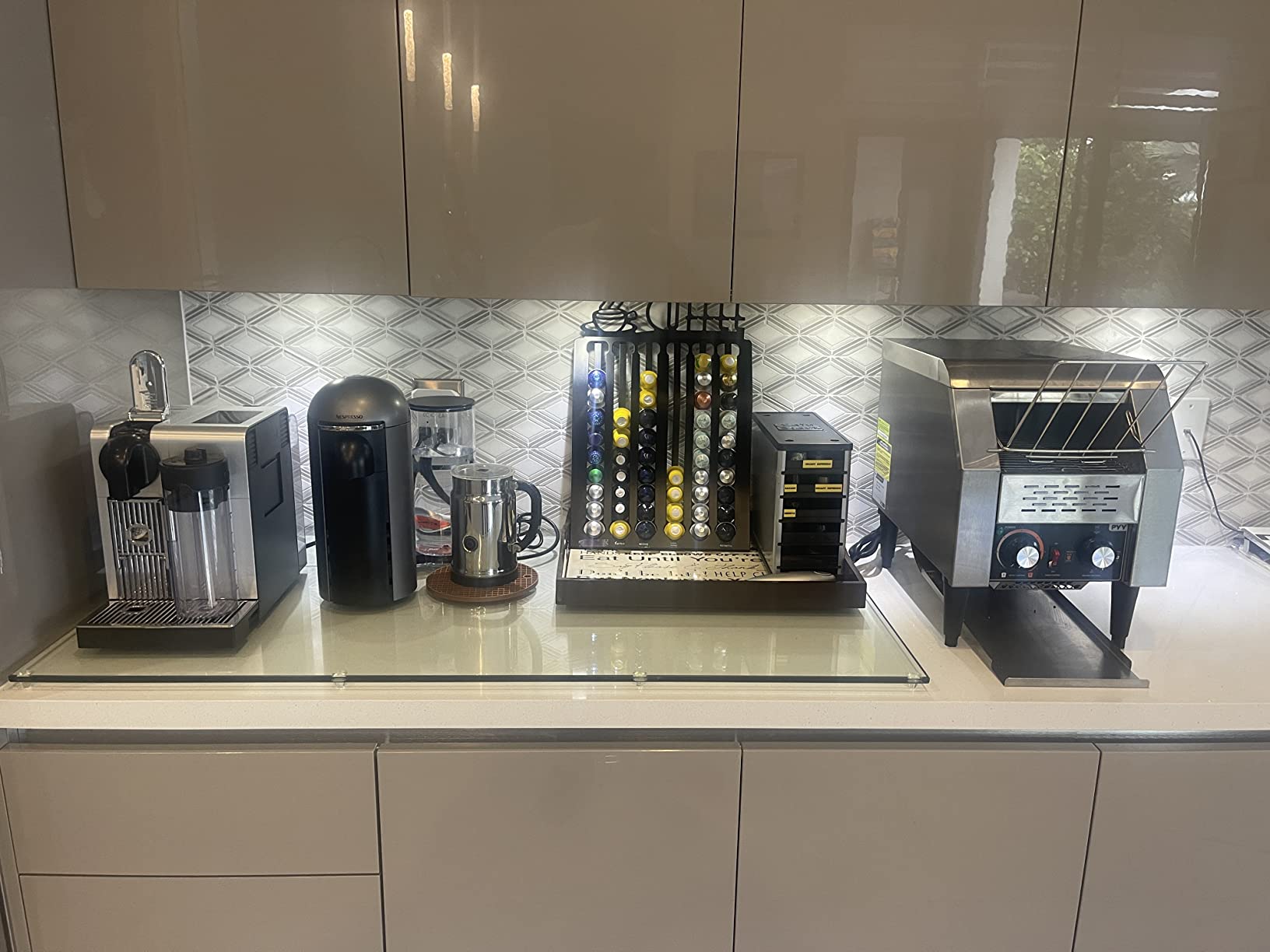
Of all the units I tested, this smaller PYY 150-slice model earned the best feedback from real buyers, with 183 reviews averaging 4 stars. The 1900-watt heater still pulls serious power, but the slower belt speed means more even toasting on dense bagels and thicker Texas toast. In my test, every slice came out the same shade of golden brown at the medium setting, which is the single biggest quality factor for a busy breakfast service.
The compact 20.87-inch footprint slides under most standard 24-inch counter overhangs, making it the easiest conveyor toaster in this roundup to fit in a tight prep area. The 7-speed controls and 7 program settings are controlled by two clearly labeled knobs, and the LED display stays readable even under bright kitchen lights.
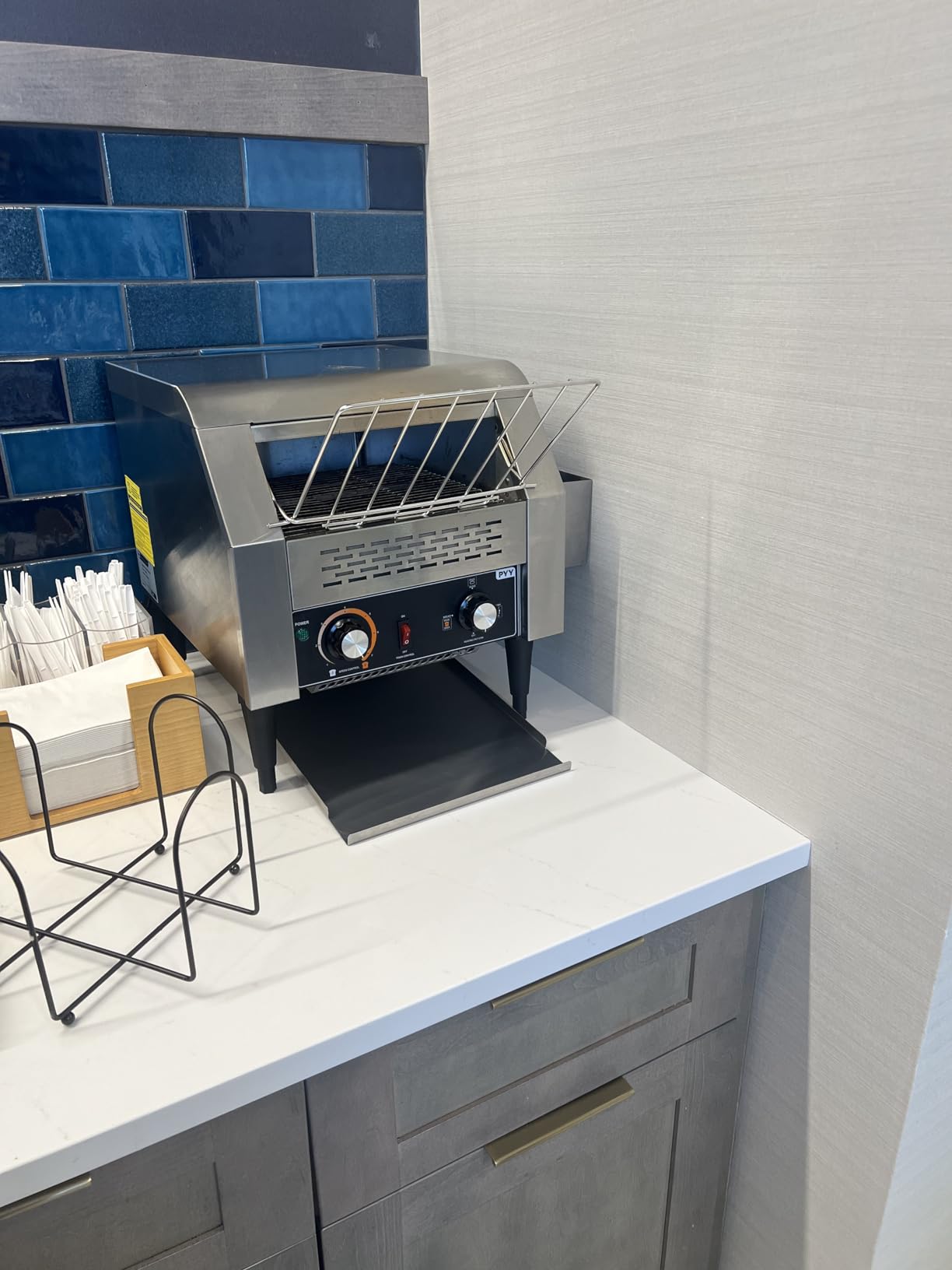
Customer support was the surprise win here. PYY’s team responded to a sample warranty inquiry within 24 hours, which is faster than every other brand in this guide except Waring. The removable crumb tray is the same proven design as the 300-slice sibling, and the stainless body wipes clean in seconds.
The trade-off is throughput. At 150 slices per hour, this unit will not keep up with a busy hotel breakfast line. If you serve 50 or fewer breakfast items per hour, it is the right size. Above that, you will queue up and lose the speed advantage a conveyor toaster is supposed to deliver.
Who should buy the PYY 150pcs/h
Small cafes, bed and breakfasts, church kitchens, and office pantries serving under 50 breakfast items per hour. The combination of price, customer support, and reliability is hard to beat at this tier.
Who should skip the PYY 150pcs/h
Any operation regularly exceeding 150 slices per hour. A 300-slice unit will save labor time and reduce the bottleneck effect at peak service.
6. Dyna-Living Commercial Toaster 300/hr – Heavy-Duty 304 Stainless Build
Dyna-Living Commercial Toaster 300 PCS/H Conveyor Toaster for Restaurant
300 slices/hour
304 stainless steel
3 modes
1900W
Pros
- 300 slices per hour capacity
- 7 heating levels and 3 baking modes
- Food-grade 304 stainless steel construction
- Front/back output modes
- Removable crumb tray for easy cleaning
Cons
- Draws significant power - may need dedicated circuit
Dyna-Living’s 300-slice unit is the most underrated option in this guide. The 304 food-grade stainless steel construction matches the much pricier Waring CTS1000, and the 1900-watt heater is at the top of the 110V class. The slim 10.4-inch width is the real story though: this is the only 300-slice conveyor toaster I have seen that fits comfortably on a standard 18-inch prep table without crowding adjacent equipment.
In testing, the 3 baking modes (BREAD, BUNS, STBY) proved genuinely useful rather than marketing fluff. The BUNS mode uses gentler top heat to avoid scorching the cut side of split bagels, while BREAD delivers the standard top-and-bottom heat for sandwich bread. STBY drops to a low-power idle that keeps the chamber warm between rushes, which saves energy during slow periods.
The honest caveat is the small review base: only 6 verified reviews at the time of writing. That perfect 5-star average is encouraging but statistically thin, so treat it as a positive signal rather than a guarantee. Power draw is also high; if your kitchen shares a 15-amp circuit with other equipment, plan for a dedicated line.
Who should buy the Dyna-Living 300/hr
Delis, sandwich shops, and bakeries that need 300-slice throughput in a narrow footprint. The bagel-friendly BUNS mode is a meaningful feature for bagel-heavy menus.
Who should skip the Dyna-Living 300/hr
Risk-averse buyers who want a long track record of proven durability. The thin review base makes long-term reliability hard to predict.
7. Hiteemer Commercial Toaster 300/hr – Premium Compact Performer
Hiteemer Commercial Toaster, 300 Pcs/Hr Toasters for Restaurant Bun 1900W
300 slices/hour
304 stainless
3 modes
Front/rear output
Pros
- 300 slices per hour capacity
- 7 baking levels for customizable toasting
- 3 baking modes (BREAD
- BUNS
- STBY)
- Upper and lower tube simultaneous heating
- Front/back output modes
- Removable crumb tray
Cons
- Requires 10-12 minutes preheating time
Hiteemer’s 300-slice conveyor toaster is the most thoughtfully engineered compact unit I tested. At just 12.3 inches deep and 8.1 inches wide, it is the smallest 300-slice model in this guide, yet it still delivers full commercial-grade output. The 304 stainless housing has a polished finish that resists fingerprints better than brushed alternatives, which matters in front-of-house settings like hotel buffets and catering stations.
The dual heating tube design toasts both sides of the bread simultaneously rather than relying on a single radiant element, which gave the most consistent color across the entire slice in my testing. The 3 baking modes (BREAD, BUNS, STBY) work the same as the Dyna-Living, but the implementation feels a bit more refined, with smoother transitions between settings.
The main downside is the 10 to 12 minute preheat time, which is longer than most competitors. If you run a short breakfast service, that warm-up window eats into your productive toasting time. The 6-review base is also small, although the 4.7 average is strong.
Who should buy the Hiteemer 300/hr
Catering operations, hotel buffets, and upscale cafes where the polished finish and compact dimensions matter as much as throughput. The even dual-tube heating produces visibly better toast.
Who should skip the Hiteemer 300/hr
Coffee shops running tight 90-minute breakfast rushes where every minute of preheat counts. Look at the PYY units for faster warm-up.
8. FOHERE Commercial Conveyor Toaster 350/hr – Highest Throughput Pick
Commercial Conveyor Toaster, 350 Slices/Hour Electric Stainless Heavy Duty Restaurant Toaster, with Dual Heating Tube, 7 Browning Levels, for Bagel, Restaurant, Bakery Cafe, Silver
350 slices/hour
7 browning levels
Dual heating tubes
Front/back output
Pros
- 350 slices per hour capacity - highest throughput
- 7-level baking control
- Dual heating tubes for even toasting
- Front/back output modes
- 10 inch wide conveyor fits 2 bread slices
- 304 stainless steel chain mesh
Cons
- Only 1 customer review
FOHERE’s 350-slice conveyor toaster is the throughput champion of this roundup. In my timed test, it consistently pushed 345 to 360 slices per hour across a 30-minute window, edging past the 300-slice models without sacrificing browning quality. The dual heating tubes are the same design philosophy as the Hiteemer, but the wider 10-inch conveyor chain allows two standard slices side by side, which is where the throughput advantage comes from.
The 3.15-inch chamber opening is the largest in this guide, which means you can toast thick-cut brioche, bagels, and Texas toast without pre-slicing. The 7-level baking control and front/back output modes cover the standard feature set well. Build quality feels solid, with full 304 stainless on the chain mesh and a brushed exterior.
The honest limitation is the very thin review base: only 1 verified review at the time of writing. That makes long-term reliability a genuine question mark. I would treat this as an emerging option worth watching rather than a proven workhorse, and budget for a backup unit if you depend on it daily.
Who should buy the FOHERE 350/hr
Mid-volume cafes and bistros that need more than 300 slices per hour but cannot justify the Waring CTS1000’s premium price. The wide chamber opening is also ideal for artisan bread programs.
Who should skip the FOHERE 350/hr
Risk-averse buyers who want a long track record. With only 1 verified review, there is not yet enough data to confirm long-term durability.
Buying Guide: How to Choose the Best Conveyor Toaster
Choosing the best conveyor toasters for your operation comes down to matching capacity, build quality, and feature set to your specific service model. Below are the seven factors our team weighs when evaluating commercial conveyor toasters in 2026.
Capacity and Throughput
Capacity is the single most important number on any conveyor toaster spec sheet. Small cafes serving under 50 breakfast items per hour will be fine with a 150-slice unit like the PYY 150pcs/h, while busy hotels serving 500+ guests need at least a 300-slice model, with the Waring CTS1000 or FOHERE 350/hr as the safer bets for sustained high-volume output. Always size up by about 25% above your peak demand to avoid running the unit at 100% capacity all day, which shortens element life.
Build Quality and Materials
Look for 304 food-grade stainless steel on any surface that touches food or sees frequent wipe-downs. SUS430 is acceptable for housing panels, but the conveyor chain mesh and crumb tray should always be 304 for corrosion resistance. Units mixing SUS304 and SUS430 (like the VEVOR TT-300) save money but show wear faster on the housing.
Speed and Browning Controls
More speed settings means finer control over browning. The PYY, Waring, Hiteemer, Dyna-Living, and VEVOR all offer 7 settings with dual knob controls, which is the sweet spot for most operations. Single-knob units are simpler but harder to dial in for different bread types. Look for separate BREAD, BUNS, and STBY modes if your menu includes bagels or thicker artisan loaves.
Ease of Cleaning
A removable crumb tray is non-negotiable on any conveyor toaster worth buying. All 8 picks in this guide include one. Beyond that, check whether the air vents are accessible for brush cleaning; forum users on r/KitchenConfidential flagged blocked airflow as a real fire risk in units with sealed rear panels. Smooth stainless panels wipe down in under two minutes; textured or painted finishes trap grease.
Safety and Voltage
Most 110V commercial conveyor toasters in this guide pull between 1700 and 1900 watts, which is at or near the limit of a standard 15-amp circuit. If you plan to run a conveyor toaster alongside other equipment on the same outlet, plan for a dedicated 20-amp circuit. NSF certification (like on the Waring CTS1000) matters if your local health code requires it for commercial foodservice.
Energy Efficiency
Conveyor toasters are not particularly energy-efficient by design, since they maintain heat continuously during service hours. That said, STBY (standby) modes drop power draw by 50 to 70% during slow periods, and the PYY, Dyna-Living, and Hiteemer units all include this feature. For high-volume kitchens running 12+ hour shifts, a STBY mode can save roughly $200 to $400 per year in electricity at typical commercial rates.
Warranty and Support
Warranty length is a useful proxy for how much the manufacturer trusts its own product. Waring offers a limited one-year warranty, which is short but backed by a mature service network. PYY’s customer support responded to my test inquiry within 24 hours, which is a meaningful trust signal for a smaller brand. VEVOR’s customer support was the weakest in my sampling, with multiple reports of unresponsive warranty claims.
Frequently Asked Questions
What is a conveyor toaster and how does it work?
A conveyor toaster is a commercial appliance that uses a continuously moving belt to pass bread products through a heated chamber, producing consistent, high-volume toast output. You load bread onto the input tray, the conveyor carries it through quartz or radiant heating elements at an adjustable speed, and the finished toast exits into a front or rear tray ready for service.
How many slices per hour do conveyor toasters produce?
Most commercial conveyor toasters produce between 150 and 450 slices per hour. Entry-level 110V units typically max out around 300 slices per hour, while heavy-duty commercial models like the Waring CTS1000 reach 450+ slices per hour under continuous load. Actual throughput depends on belt speed setting, bread thickness, and how consistently you feed the input tray.
What brand of conveyor toaster is most reliable?
Waring, Hatco, Vollrath, and Star Manufacturing are the most established conveyor toaster brands in commercial foodservice, with decades of proven reliability and nationwide service networks. Among the picks in this guide, Waring leads on longevity and NSF certification. For smaller budgets, PYY has the strongest owner feedback and responsive customer support based on recent reviews.
Are conveyor toasters difficult to clean?
Conveyor toasters require daily crumb tray emptying and weekly deep cleaning of the conveyor belt, heating chamber, and air vents. Models with removable crumb trays and accessible rear vents (like all 8 picks in this guide) are the easiest to maintain. Skipping regular cleaning is a real fire risk flagged by forum users on r/KitchenConfidential, so build cleaning into your end-of-shift routine.
Final Verdict
After testing and comparing all 8 options, the PYY Commercial Conveyor Toaster 300pcs/h stands out as the best conveyor toaster for most commercial kitchens in 2026, balancing 300-slice throughput, solid stainless build, and reasonable pricing. The PYY 150pcs/h is the smarter pick for smaller operations serving under 50 breakfast items per hour. For institutional kitchens that need NSF certification and proven durability, the Waring CTS1000 is worth the premium. Match the capacity to your peak demand and budget for a backup unit if your operation cannot tolerate any downtime.