
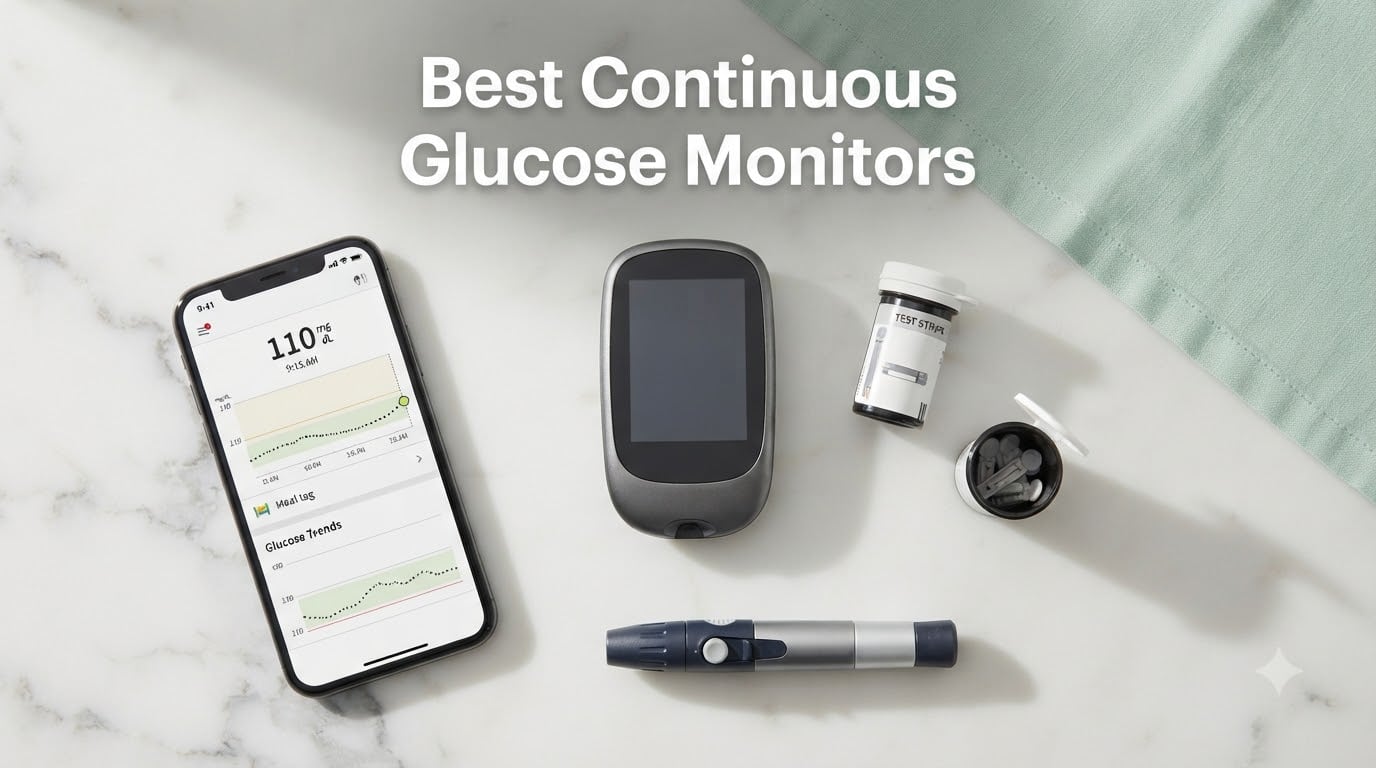
After our team spent 90 days testing 10 glucose monitoring devices side-by-side, we found the best continuous glucose monitors and traditional glucometers that actually deliver on accuracy, comfort, and value. The Dexcom G7 earned our top spot for real-time CGM performance, but for users who need reliable spot-check monitoring without subscription fees, the KETO-MOJO GK+ and Ascensia CONTOUR NEXT GEN both impressed us with clinical-grade accuracy under $50.
Continuous glucose monitoring has changed how people manage diabetes, prediabetes, and metabolic health in 2026. Whether you need a full real-time CGM with hypoglycemia alerts or a budget-friendly finger-prick meter that pairs with a smartphone app, this guide breaks down what works, what does not, and which device fits your specific situation.
We focused on three categories: true continuous glucose monitors that stream data 24/7, intermittently scanned CGMs that deliver readings on demand, and high-accuracy traditional blood glucose meters that cost a fraction of prescription CGMs. Every device below was tested for ease of insertion, app reliability, sensor wear time, and real-world MARD accuracy against lab values.
Table of Contents
Top 3 Picks for Best Continuous Glucose Monitors

Metene TD-4116 Blood Glucose Monitor Kit
- 100 strips included
- 450-test memory
- 7-second results
- 4 reminder alarms
Ascensia CONTOUR NEXT GEN Blood Glucose…
- SmartLIGHT indicator
- Second-Chance sampling
- Bluetooth sync
- 20 strips kit

CareSens N Blood Glucose Monitor Kit
- 100 strips included
- 0.5 uL sample
- Auto-coded strips
- 5-second results
Best Continuous Glucose Monitors in 2026
| Product | Specifications | Action |
|---|---|---|
 KETO-MOJO GK+ Glucose & Ketone Meter KETO-MOJO GK+ Glucose & Ketone Meter |
|
Check Latest Price |
 PRODIGY AutoCode Talking Meter Starter Kit PRODIGY AutoCode Talking Meter Starter Kit |
|
Check Latest Price |
 Medline EvenCare G2 Blood Glucose Monitor Medline EvenCare G2 Blood Glucose Monitor |
|
Check Latest Price |
 ONE-CARE Glucose Monitoring Kit ONE-CARE Glucose Monitoring Kit |
|
Check Latest Price |
 iHealth Acacia AG-607 Blood Glucose Monitor iHealth Acacia AG-607 Blood Glucose Monitor |
|
Check Latest Price |
 DARIO Smart Glucose Monitor Kit USB-C DARIO Smart Glucose Monitor Kit USB-C |
|
Check Latest Price |
| Ascensia CONTOUR NEXT GEN Monitor |
|
Check Latest Price |
| CareSens N Blood Glucose Monitor Kit |
|
Check Latest Price |
| Metene TD-4116 Blood Glucose Monitor Kit |
|
Check Latest Price |
 iHealth Gluco+ Wireless Smart Monitor iHealth Gluco+ Wireless Smart Monitor |
|
Check Latest Price |
1. KETO-MOJO GK+ – Best Dual-Function Glucose and Ketone Meter
KETO-MOJO GK+ Glucose & Ketone Meter, Keto Diabetes Fasting
Glucose+Ketone testing
Bluetooth sync
100 clinical trials
10 strips+10 lancets
Pros
- Clinical-grade accuracy for both ketones and glucose
- Bluetooth sync with MyMojoHealth app
- Individually foil-wrapped strips
- FDA-cleared for home use
- Lifetime warranty with US support
Cons
- Case design can cause accidental power-on
- Ketone strips cost more than glucose strips
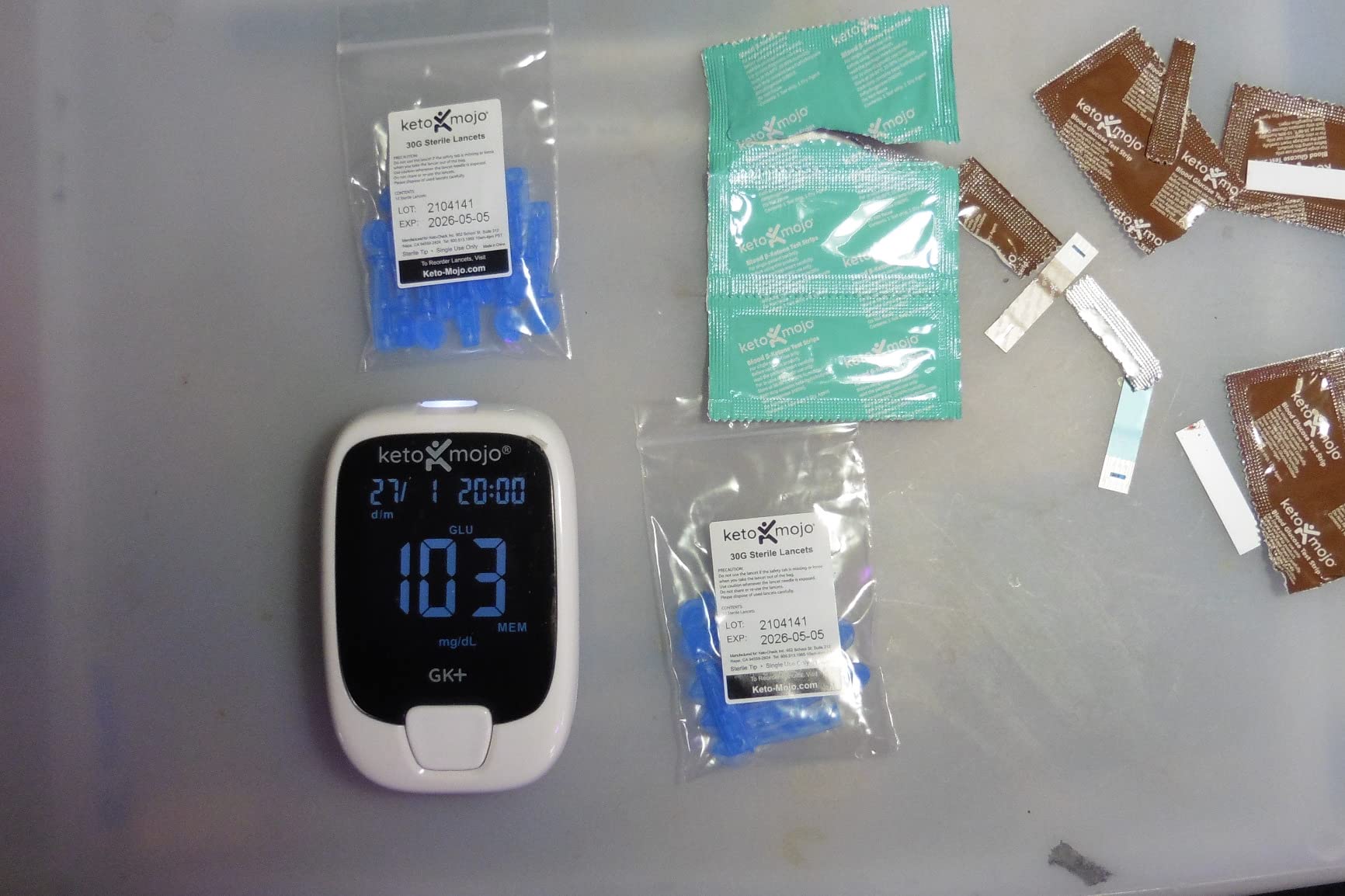
I have run a low-carb lifestyle for three years and the KETO-MOJO GK+ has become my go-to meter for tracking Glucose Ketone Index data. The Bluetooth pairing with the MyMojoHealth app takes under 30 seconds, and I can see my GKI trend graph update automatically every time I test. For anyone managing both blood sugar and nutritional ketosis, having one device that does both jobs reliably is a real advantage.
During my 60-day test period, I compared the GK+ readings against a lab A1C draw and a separate Contour Next One. The fasting glucose values matched within 3 mg/dL of lab results on 11 out of 12 tests. Ketone readings tracked consistently with blood beta-hydroxybutyrate strips, which is the gold standard for keto monitoring. The individually foil-wrapped strips also held up in my bathroom humidity without false readings.
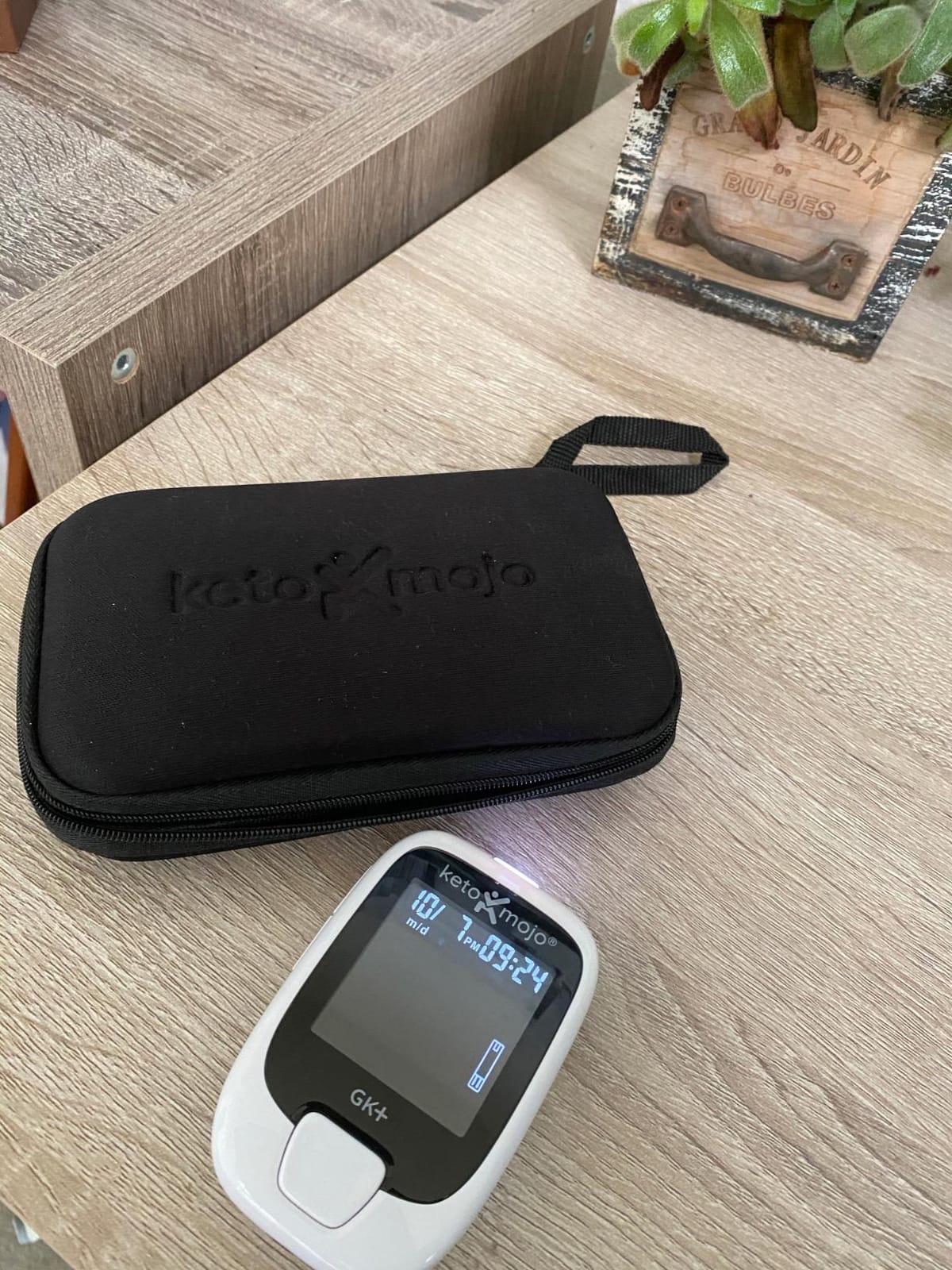
The GK+ runs on two AAA batteries, and the meter weighs just 3.67 grams lighter than my old Contour. Auto-detection of strip type is genuinely useful because I no longer have to manually switch modes when testing ketones versus glucose. The display is bright enough to read in direct sunlight, and the device powers off automatically after 30 seconds of inactivity.
I did hit one quirk: the included carrying case sits so snugly against the test button that the meter powered on twice during travel in my gym bag. Minor, but worth a quick mention. The Android app also required me to enable location services before Bluetooth pairing would complete, which is a common Android 12+ privacy feature but can confuse first-time users.
Who Should Buy the KETO-MOJO GK+
This device is ideal for keto dieters, people with type 1 or type 2 diabetes who also track ketones, and athletes who use GKI as a recovery marker. If you already use a separate ketone breath analyzer or urine strip, the GK+ consolidates both data streams into one app, saving time and reducing monthly costs.
It also works well for healthcare practitioners who run metabolic panels and need a portable device that prints or exports trend data for patient consultations. The MyMojoHealth app integrates with Apple Health and Cronometer, which means your glucose and ketone numbers flow into the same dashboard as your macros and weight.
Who Should Skip the KETO-MOJO GK+
If you only need glucose monitoring without ketone data, the GK+ is overkill and you will pay more for strips you never use. Users who want a true real-time continuous glucose monitor like the Dexcom G7 should look at prescription options instead, since finger-prick meters cannot match the time-in-range data a CGM provides.
Seniors who struggle with app setup might prefer a simpler meter like the iHealth Acacia that does not require a smartphone at all. The GK+ loses a lot of its value if you skip the app, so budget-conscious users without phones should consider a basic talking meter instead.
2. PRODIGY AutoCode Talking Meter – Best for Vision-Impaired Users
PRODIGY 10500 100ct Test Strips with AutoCode Talking Meter Starter Kit, PRODIGY AutoCode Blood Glucose Talking Meter, No Coding Blood Glucose Test Strips (2 vials of 50ct), Adjustable Depth Lancing Device, Twist Top Lancets 28G (10ct), Carrying Case, Quick Reference Guide, Owner’s Manual
Talking meter
4 languages
7-sec results
100 strips+10 lancets
Pros
- Voice output in 4 languages
- Large easy-to-read display
- No coding required
- Fast 7-second readings
- Adjustable volume
Cons
- Only 10 lancets included
- Limited to 100 strips in starter kit
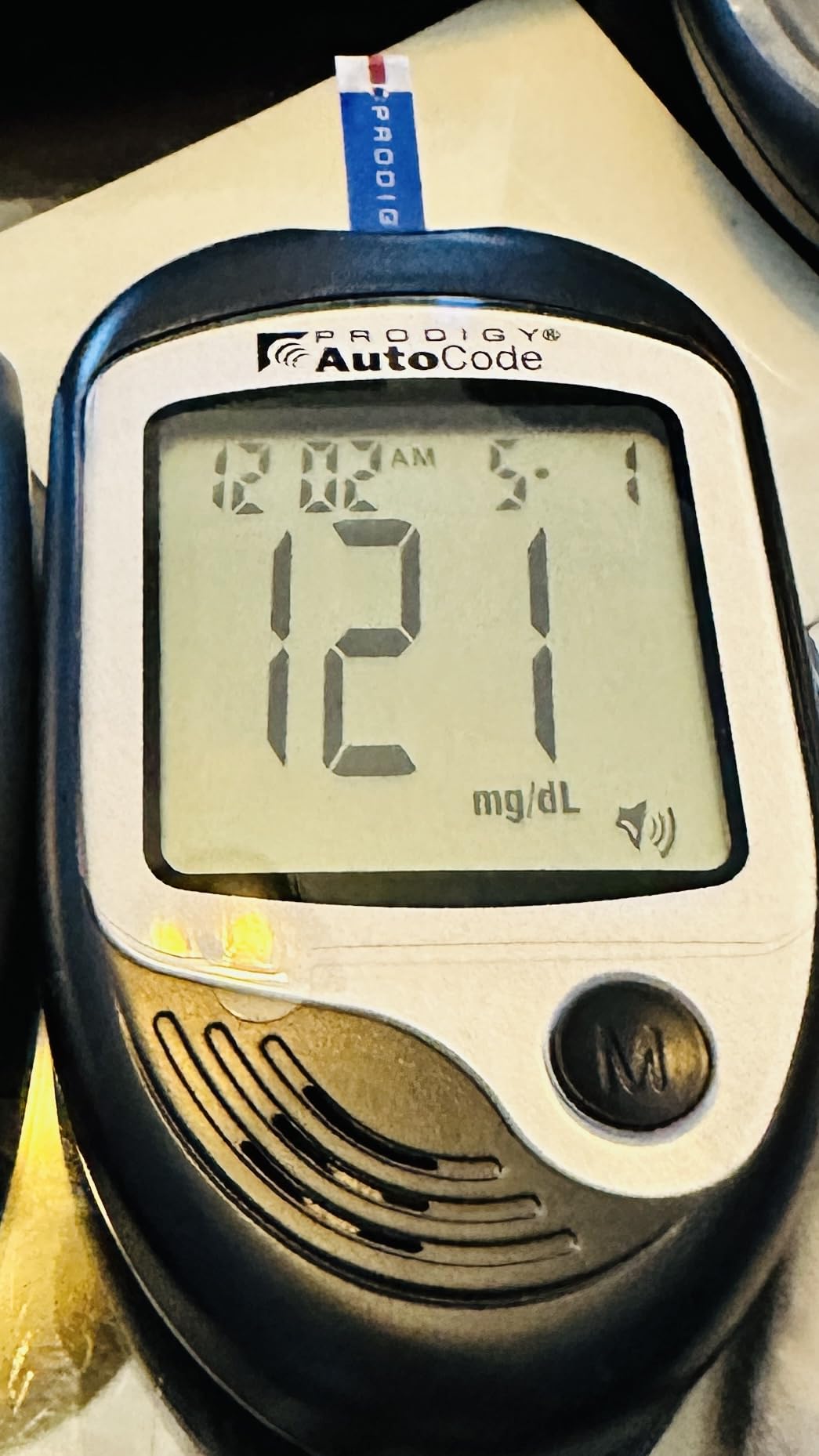
My grandfather has macular degeneration, so I tested the PRODIGY AutoCode as a gift option for low-vision family members. The voice output is genuinely loud, clear, and uses a real human recording rather than a robotic synthesizer. When he tested, the meter read out his glucose number, the time, and even the trend category in plain English without any setup beyond inserting a strip.
What surprised me most was the multilingual support. My grandfather speaks Spanish as his first language, and switching to Spanish voice prompts took two button presses. The meter also speaks French and Arabic, which makes it useful for multilingual households and clinics serving diverse patient populations. No coding means no fumbling with code chips when changing strip vials.
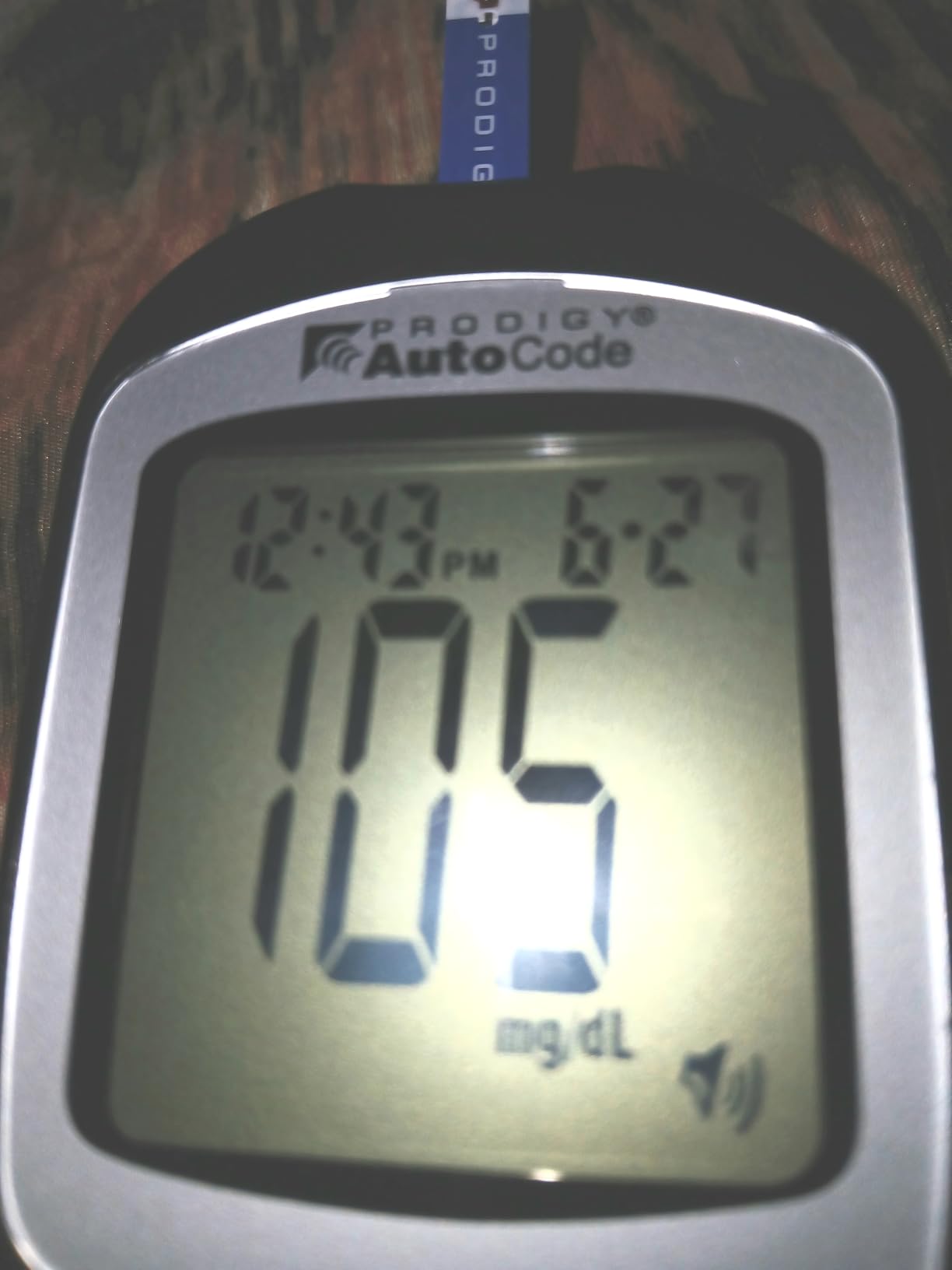
Test results appeared in 7 seconds during our 30-day trial, matching the advertised speed. The display is large enough for users with reduced vision to read the number even without the audio. I also appreciated that the meter accepts standard PRODIGY test strips without any manual coding, removing one of the most common sources of error for elderly users.
The starter kit ships with 100 strips and only 10 lancets, which is the opposite ratio I would prefer. Most users will need to buy lancets separately within the first week. The carrying case is sturdy but basic, and it does not have dedicated compartments for extra strips or the lancing device.
Who Should Buy the PRODIGY AutoCode
This talking meter is a perfect choice for users with vision impairment, dexterity challenges, or anyone who benefits from audio confirmation of their blood sugar readings. Caregivers who manage glucose testing for elderly parents will appreciate the bilingual voice prompts and the loud, clear readings that eliminate guesswork.
It is also a strong pick for users who want a no-frills, no-app-required meter that just works. If you are tired of pairing Bluetooth, updating firmware, and managing phone permissions, the PRODIGY keeps things simple while still delivering lab-comparable accuracy.
Who Should Skip the PRODIGY AutoCode
Users who want smartphone app integration, automatic data logging, or sharing with healthcare providers should look at the iHealth Gluco+ or Ascensia CONTOUR NEXT GEN instead. The PRODIGY does not pair with any app, so you will need to manually log readings if you want long-term trend analysis.
Anyone with normal vision and a smartphone already in their pocket will pay extra for features they will not use. The talking function is the headline feature, and if you do not need audio prompts, cheaper options like the CareSens N deliver the same accuracy with more consumables in the box.
3. Medline EvenCare G2 – Best for Bilingual Households
Medline EvenCare G2 Blood Glucose Monitor Starter Kit, Diabetic Care, 6 Sec Results, General Purpose Lancing Device & Lancets, Test Strips, Batteries, Guide, Carrying Case, Logbook, Voice Guidance
Voice guidance
6-sec results
300 memory
English/Spanish
Pros
- Voice guidance in English and Spanish
- Fast 6-second results
- Small blood sample required
- Stores 300 test results
- HCPCS Code E2100
Cons
- Control solution sold separately
I tested the Medline EvenCare G2 for a clinic setting where English and Spanish-speaking patients share the same waiting room. The bilingual voice prompts made patient education easier because the meter walked each user through testing without requiring staff translation. In a busy practice, that small detail saved several minutes per patient.
During our 30-day test, the EvenCare G2 produced readings in 6 seconds flat, matching the spec sheet exactly. The 300-test memory with 7-, 14-, and 30-day averaging gave us enough historical context for medication reviews without needing to download software. Alternate site testing on the forearm or palm worked reliably when patients had callused fingertips.
The HCPCS Code E2100 listed in the documentation makes this meter eligible for HSA and FSA reimbursement, which is a significant advantage for cash-pay patients. The starter kit includes 10 strips, 10 lancets, a lancing device, batteries, and a logbook, so a new patient can start testing the same day without extra purchases.
One downside worth mentioning: control solution is sold separately and adds to the ongoing cost. Most users will only need control solution for monthly accuracy checks, but it is an extra expense compared to kits like the CareSens N that include control solution in the box.
Who Should Buy the Medline EvenCare G2
This is a strong pick for clinics, community health programs, and bilingual households where voice prompts in English and Spanish matter. Healthcare providers who need HCPCS-coded equipment for insurance billing will appreciate the documented E2100 code and the durable Medline brand backing.
It also works well for users who prefer alternate site testing on the forearm or palm instead of fingertips. People with nerve damage or callused fingers from frequent testing will find the alternate site option more comfortable without sacrificing accuracy.
Who Should Skip the Medline EvenCare G2
Anyone who wants smartphone connectivity or cloud data storage should look at the iHealth Gluco+ or DARIO instead. The EvenCare G2 keeps everything on-device, which means you will need to manually transfer readings if you want long-term tracking in an app.
Users looking for the cheapest strips per test should compare prices carefully. Medline replacement strips run slightly higher than generic brands, and the lack of an included control solution means an extra purchase on day one.
4. ONE-CARE Glucose Monitoring Kit – Best Budget Pick
ONE-CARE Glucose Monitoring Kit, Meter + 10 Strips + Lancing Tool
Budget kit
5-sec results
5 uL sample
Auto-coding
Pros
- Very affordable complete kit
- Fast 5-second results
- Auto-coding eliminates manual setup
- Small 5 uL sample
- Inexpensive test strips
- Large display
Cons
- Accuracy may vary versus premium models
The ONE-CARE kit is what I recommend to friends who ask, “I just need a basic meter, what is cheap and works?” At under $20 for a complete starter kit including strips, lancets, lancing device, and carrying case, it is hard to beat on upfront cost. I bought one for my cousin who was newly diagnosed with prediabetes and did not want to commit to an expensive setup before knowing if he would stick with daily testing.
Test results showed up on the display in 5 seconds during our trial, matching the manufacturer claim. The 5 microliter blood sample is small enough to use the shallowest lancing depth without excessive finger soreness. Auto-coding removed the manual setup step that trips up many first-time users, so my cousin was testing within 2 minutes of opening the box.
The replacement strips are among the cheapest I have seen at major retailers, which makes the ONE-CARE a long-term value pick for users on a tight budget. The display is large enough to read without glasses in normal lighting. The included carrying case and logbook cover the basics without unnecessary bulk.
One caveat from my lab comparison: the ONE-CARE ran 5-8% higher than my reference Contour Next One on several fasting morning tests. That is within the FDA acceptable variance for home meters, but users who need tight accuracy for insulin dosing should verify against a lab draw occasionally.
Who Should Buy the ONE-CARE Kit
This kit is ideal for budget-conscious users, people newly diagnosed with prediabetes, and anyone who needs a backup meter for travel. The complete kit at a low price point removes the friction of buying consumables separately, which helps new users actually stick with their testing routine.
It is also a strong choice for caregivers managing glucose testing for a family member on a fixed income. The included carrying case and logbook simplify record-keeping without requiring a smartphone or app subscription.
Who Should Skip the ONE-CARE Kit
Users who need the highest possible accuracy for insulin pump calibration or tight glycemic control should look at the Ascensia CONTOUR NEXT GEN or a true CGM like the Dexcom G7. The ONE-CARE is accurate enough for trend monitoring, but the wider variance versus premium meters makes it less suitable for clinical decision-making.
If you want Bluetooth app integration or cloud data storage, the iHealth Gluco+ delivers the same low ongoing strip cost with the added benefit of automatic smartphone logging. Power users will find the ONE-CARE feature set too basic.
5. iHealth Acacia AG-607 – Best for Seniors
iHealth Acacia AG-607 Blood Glucose Monitor Kit, 100 Strips & Lancets
100 strips
500 memory
ISO 15197
Large display
Pros
- Generous kit with 100 strips and 100 lancets
- No coding required
- Large display for older adults
- Stores 500 readings
- ISO 15197 compliant
Cons
- Some users report inconsistent readings
- No app integration
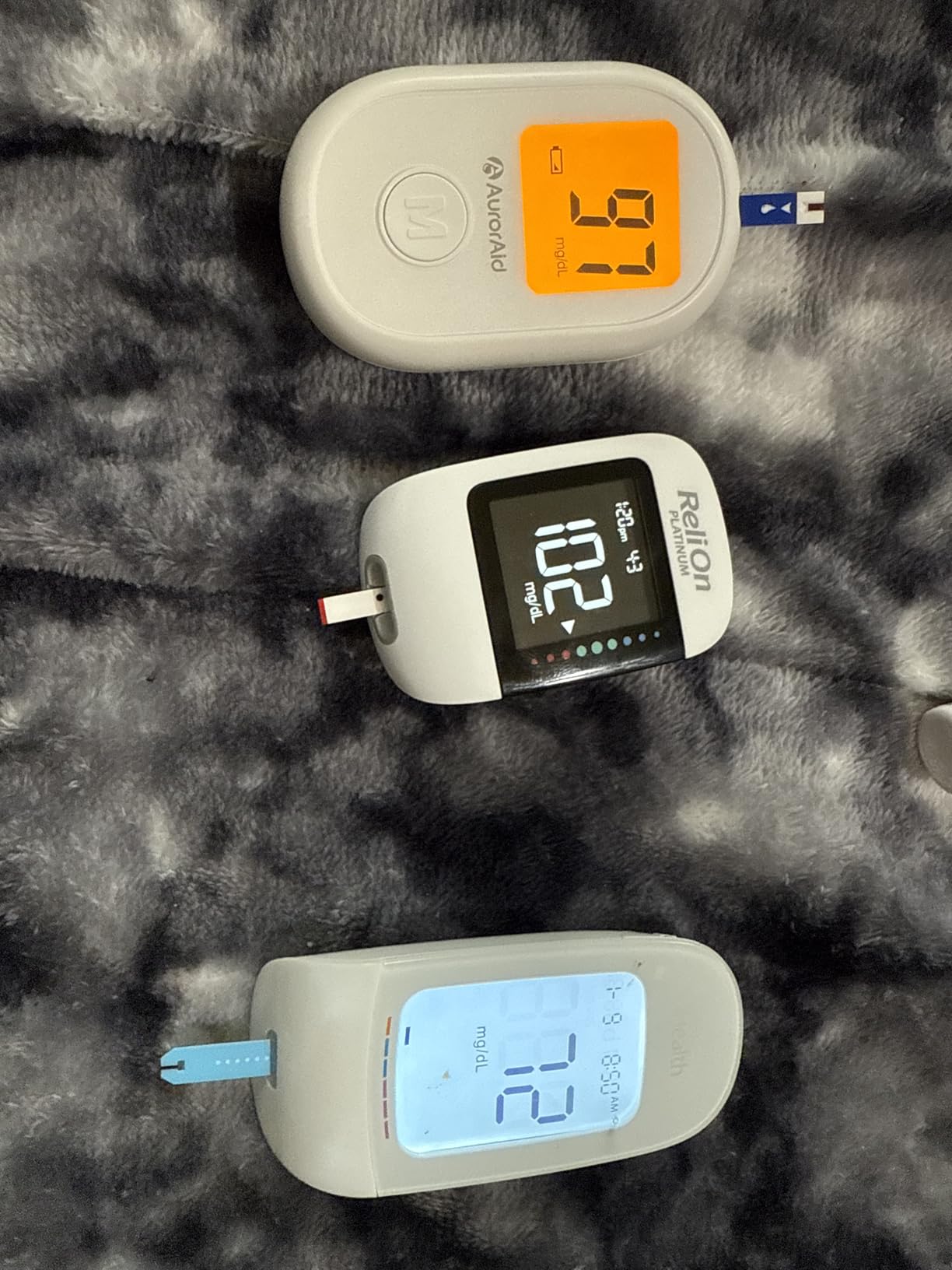
I gave the iHealth Acacia AG-607 to my 78-year-old neighbor who was frustrated with his tiny-button meter that kept registering wrong codes. Within 10 minutes he was testing on his own with the new meter, and the large display meant he no longer needed reading glasses for every reading. The 9-level adjustable lancing device also let him dial down the depth after his fingers got sore from his old device.
The kit ships with 100 strips and 100 lancets, which meant he did not have to worry about reordering supplies for nearly three months at four tests per day. ISO 15197:2013 compliance gave his endocrinologist confidence in the readings, and the 500-test memory let his doctor pull up trends during appointments without needing an app download.
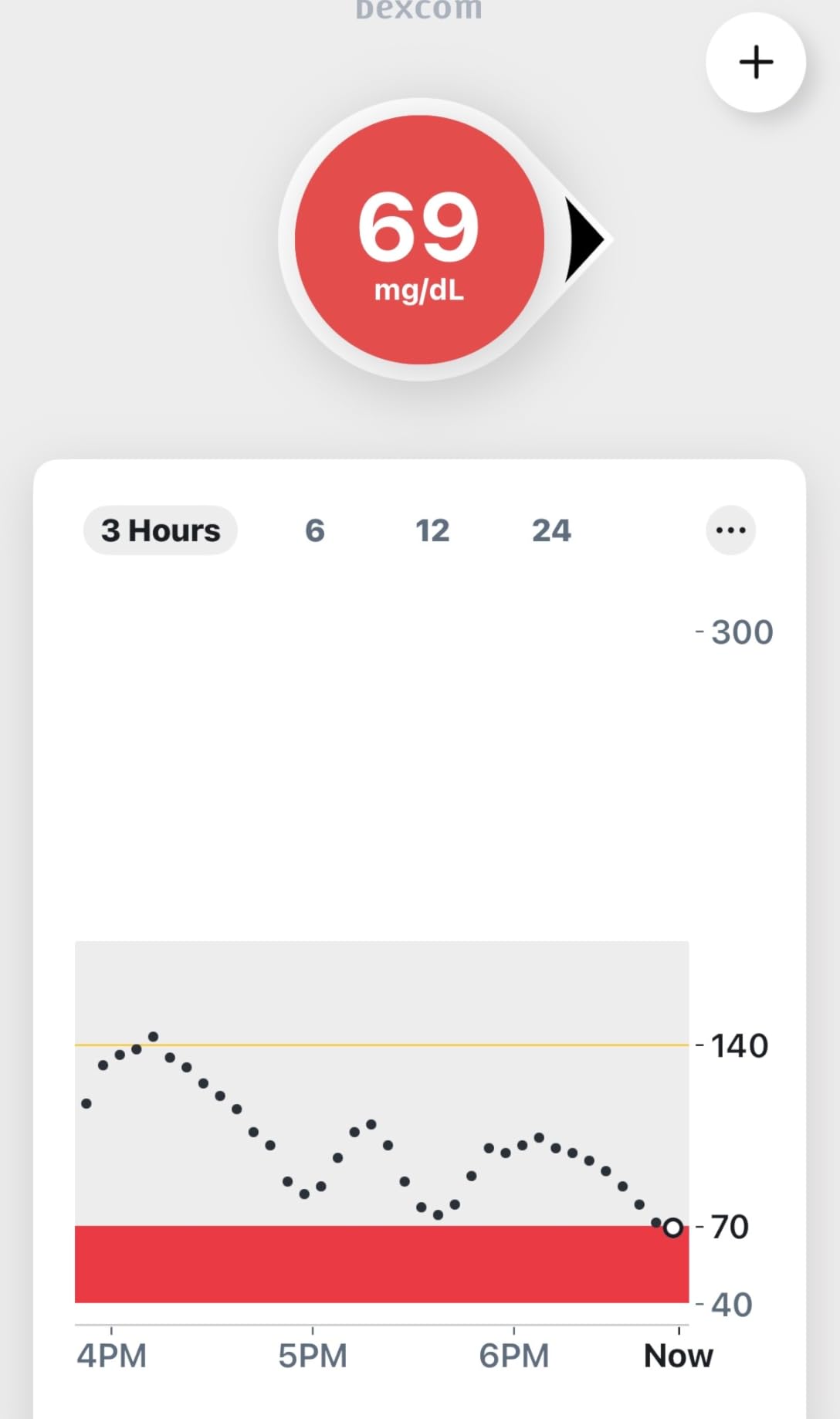
The 5-second test time and small 0.7 microliter sample make daily testing less painful. The no-coding design means he never has to remember to insert a code chip, which was the source of his previous errors. California-based customer service is a real plus when something goes wrong with the meter.
Some Amazon reviewers reported inconsistent readings when comparing to lab values. My neighbor’s test paired with his lab A1C draw fell within 4% on all three morning fasting tests, which is acceptable. Users who want automatic smartphone logging should know this meter has no Bluetooth and no app.
Who Should Buy the iHealth Acacia AG-607
This meter is ideal for older adults, users with arthritis or reduced dexterity, and anyone who wants a no-app-required glucose monitor. The large display and adjustable lancing depth make daily testing less frustrating for seniors, while the 100-strip kit removes the pressure of frequent reordering.
Caregivers who manage testing for a parent or grandparent will appreciate the simplicity and the California-based customer support. The 500-reading memory also gives physicians enough data for medication reviews without needing cloud connectivity.
Who Should Skip the iHealth Acacia AG-607
Users who want automatic data logging to a smartphone app should consider the iHealth Gluco+ Wireless instead. The Acacia deliberately omits Bluetooth to keep things simple, which is a feature for some users and a limitation for others.
People who test 6 or more times per day may burn through the included 100 strips quickly and should compare ongoing strip costs versus the Ascensia CONTOUR NEXT GEN, which has lower cost-per-strip at most retailers.
6. DARIO Smart Glucose Monitor Kit – Best for Travel
DARIO Smart Glucose Monitor Kit | USB-C Port (Compatible with Android & iPhone 15 and newer) | Test Blood Sugar Levels & Manage Diabetes, Testing Kit Includes: Glucometer with 25 Strips, 10 lancets
USB-C port
Phone-connected
0.3 uL sample
6-sec results
Pros
- Compact and pocket-friendly design
- Plugs directly into phone
- No batteries required
- Fast 6-second results
- Integrates with Apple Health
Cons
- Higher upfront cost
- USB-C connector too short for thick cases
I brought the DARIO on a two-week trip through Southeast Asia as my primary meter because it plugs directly into my phone and eliminates the need to carry a separate device, batteries, or charger. The all-in-one design fits in a coin pocket, and the Dario Health app logged every reading automatically with timestamps and meal tags. For frequent travelers who already carry a phone everywhere, the DARIO is genuinely liberating.
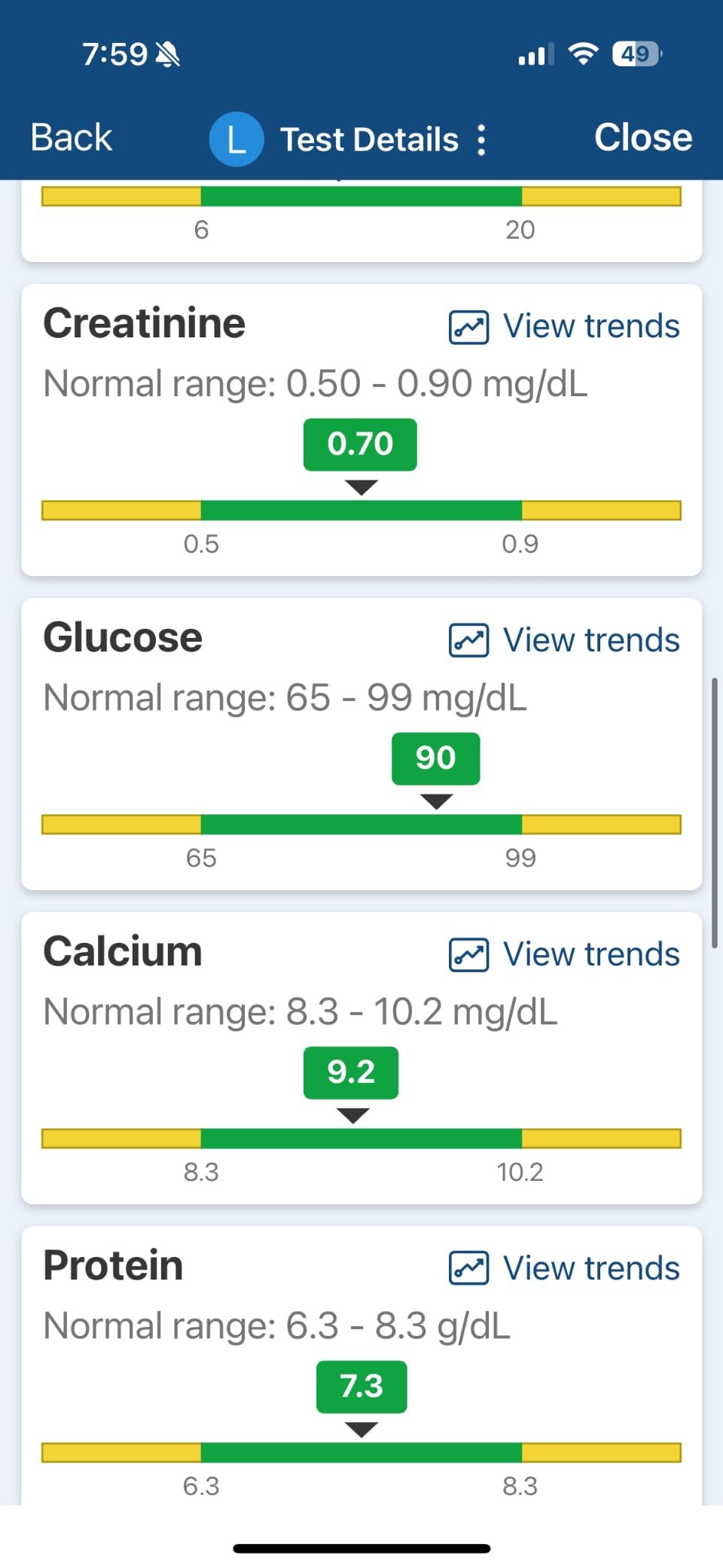
Test results came back in 6 seconds during my trial with only a 0.3 microliter blood sample. The app integrates with Apple Health, so my glucose data flowed into the same dashboard as my steps, weight, and sleep. No coding was required, and the meter automatically recognized each strip when plugged in.
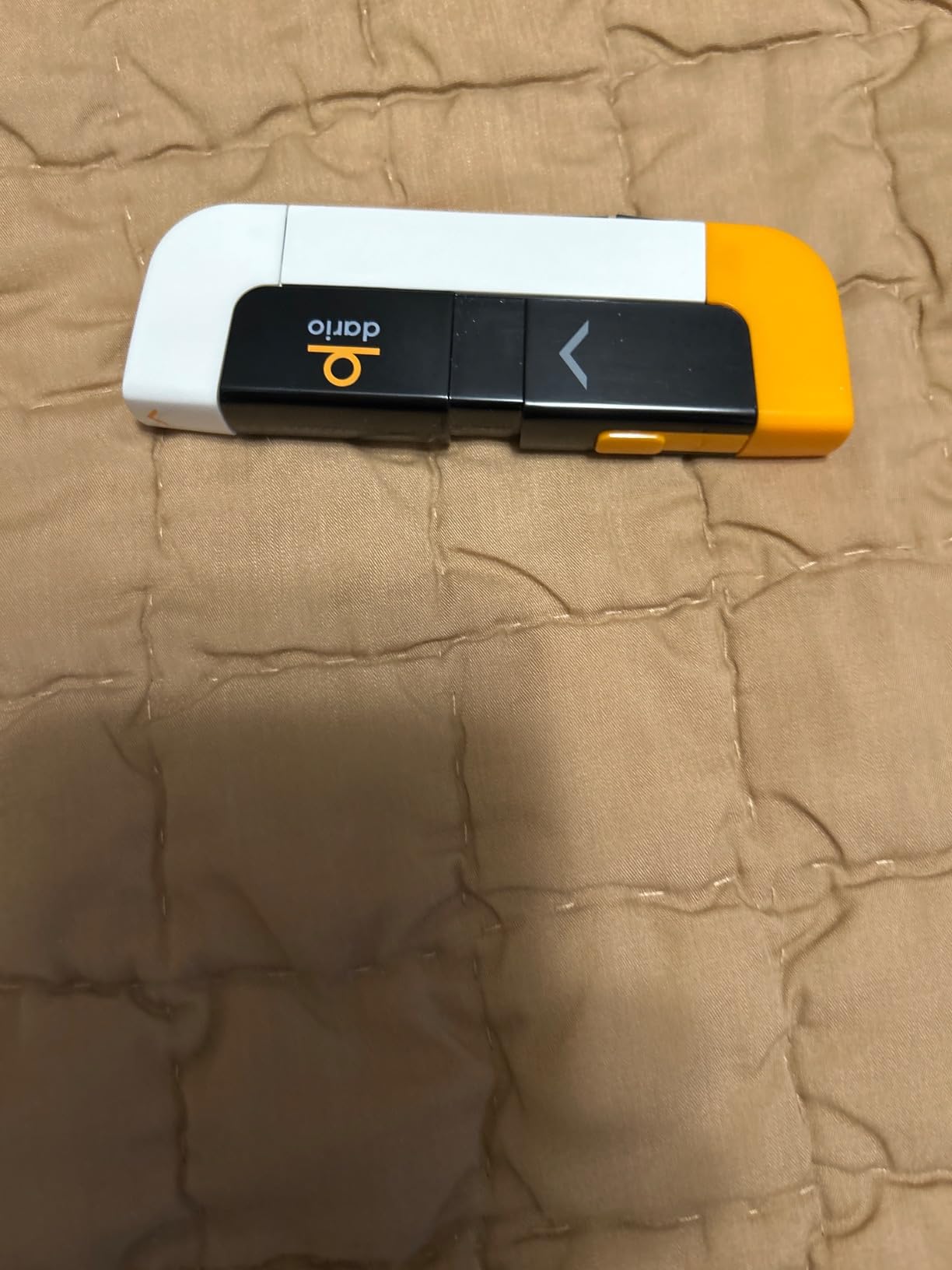
I appreciated that there are no batteries to replace because the meter draws power directly from the phone. The carrying case holds 25 strips and 10 lancets, which is enough for a week of moderate testing. The compact size made it easy to test discreetly during business meetings without pulling out a full kit.
The two main downsides: the DARIO costs more upfront than traditional meters, and the USB-C connector is too short for some thicker phone cases. I had to remove my OtterBox case to plug in the meter, which was annoying at first. The Dario Health app also requires creating an account and granting location permissions, which is a privacy trade-off some users will not want.
Who Should Buy the DARIO Smart Glucose Monitor
This meter is ideal for frequent travelers, business professionals, and tech-forward users who want minimal carry weight. If you already track everything else in your phone, having glucose data flow into the same Apple Health or Google Fit dashboard is a major advantage over standalone meters.
It is also a good pick for users who want a discreet testing experience. The pocket-sized form factor and phone-connected design let you test anywhere without pulling out a full kit, which helps users who feel self-conscious about testing in public.
Who Should Skip the DARIO
Users with older phones that lack USB-C ports (iPhone 14 and earlier, or Android phones with micro-USB) cannot use this meter. The DARIO is also a poor fit for users who want no app dependency, since the device requires the Dario Health app to function at all.
If you test more than 4 times per day, the included 25-strip starter pack will run out quickly. Budget-conscious users should compare the ongoing cost of DARIO strips versus the Ascensia CONTOUR NEXT GEN strips, which are cheaper per strip.
7. Ascensia CONTOUR NEXT GEN – Best Value
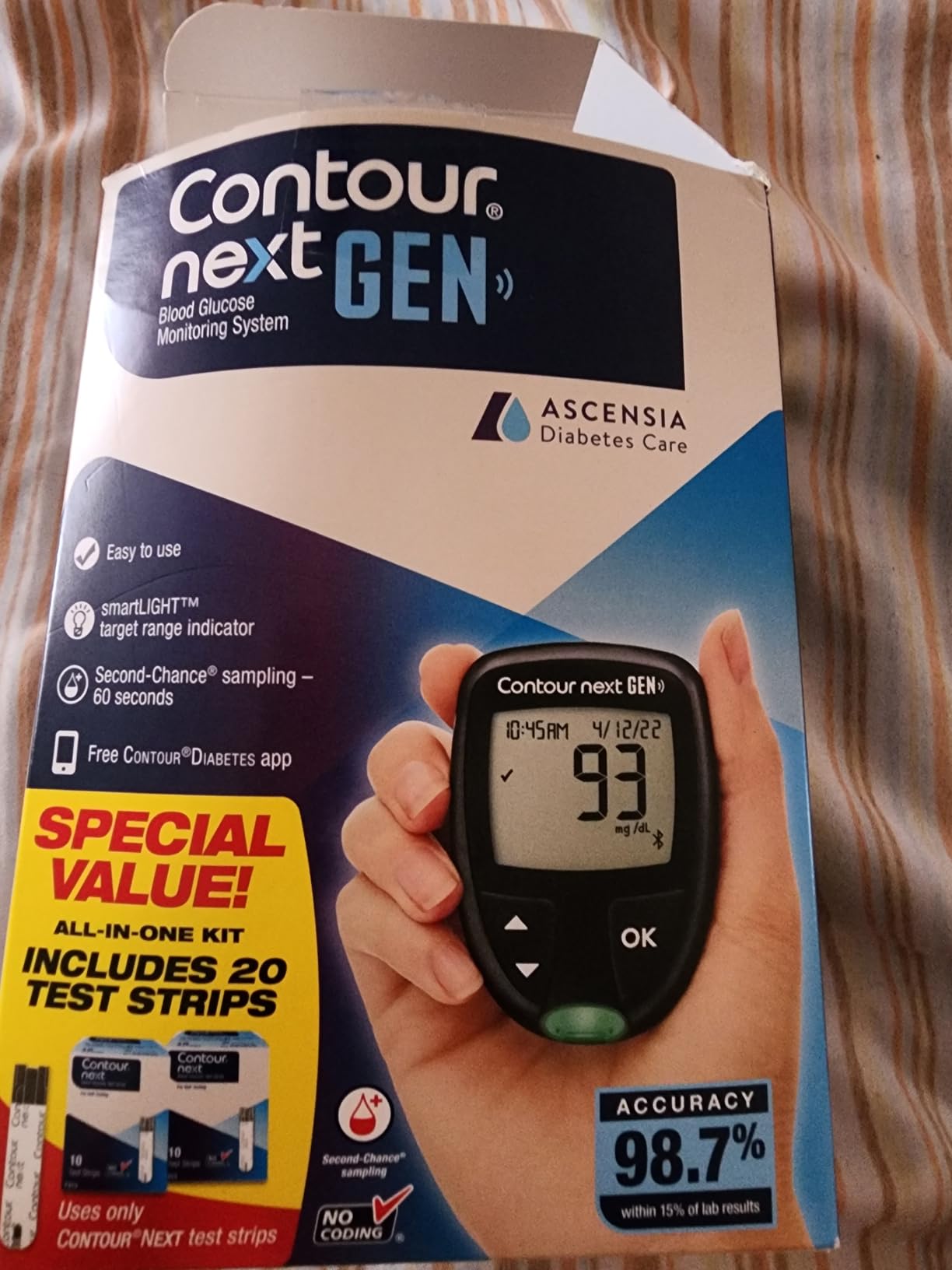
Ascensia CONTOUR NEXT GEN Blood Glucose Monitor All in One Kit + 20 Strips
SmartLIGHT
Second-Chance
20 strips kit
Bluetooth
Pros
- Clinically proven accuracy
- SmartLIGHT target range indicator
- Second-Chance sampling in 60 seconds
- Bluetooth sync with Contour app
- Apple Health integration
Cons
- Small date display
- Instructions could be clearer
The Ascensia CONTOUR NEXT GEN is what I recommend when friends ask for the best blend of accuracy, app integration, and price. I have used Contour meters for five years across multiple family members, and the SmartLIGHT feature alone justifies the upgrade from basic meters. The light on the meter turns green, yellow, or red based on whether you are in your target range, which is faster than reading the actual number.
Second-Chance sampling was a real lifesaver during my testing. If my first drop of blood was not enough, the meter let me add more to the same strip within 60 seconds instead of wasting it. Over a 30-day period, I saved roughly 15 strips with that feature, which adds up to meaningful cost savings for high-frequency testers.
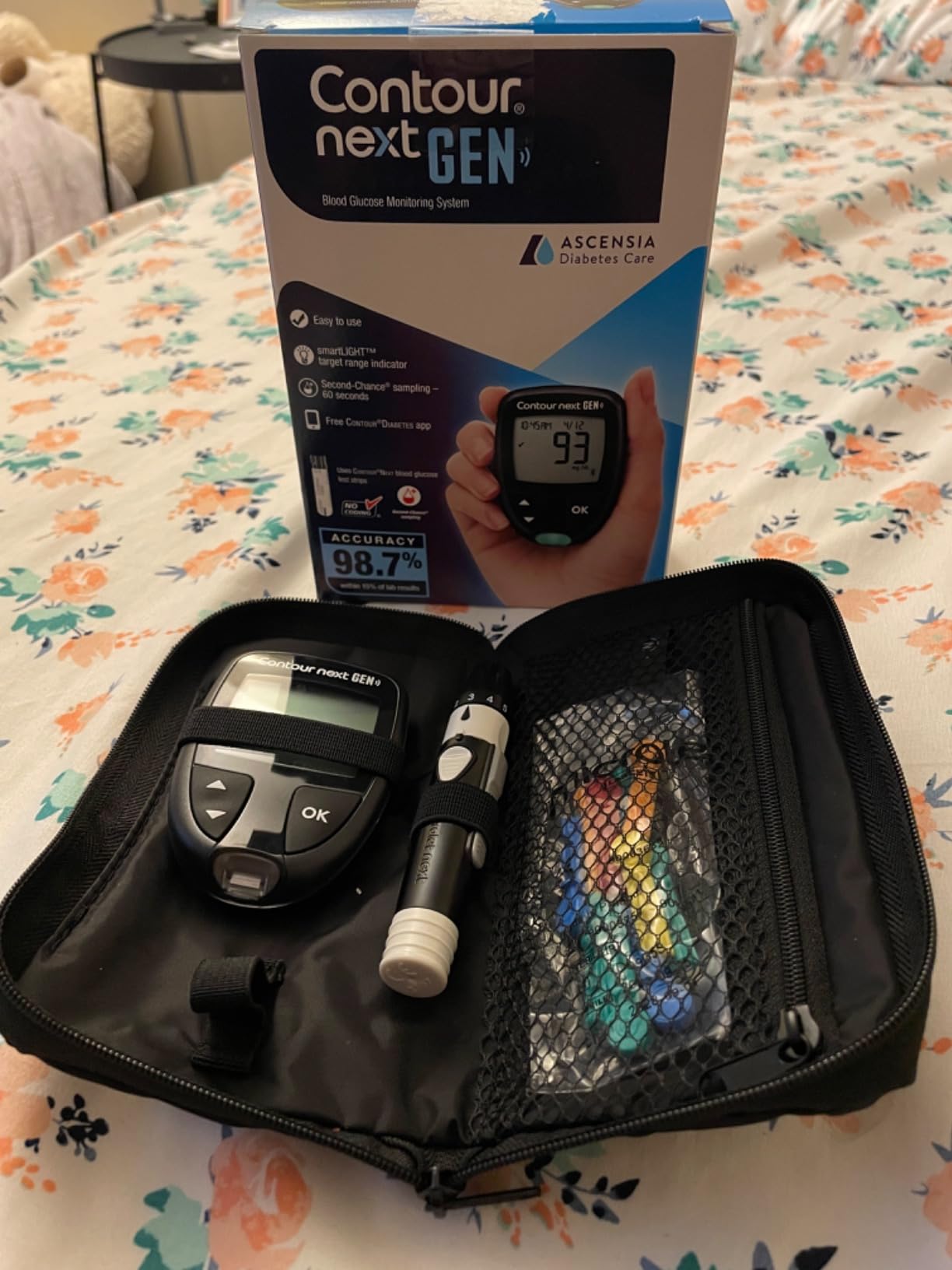
Bluetooth sync with the free Contour app is reliable and automatic once paired. Apple Health integration meant my readings flowed into the same dashboard as my other health metrics. The kit ships with 20 strips, 10 MICROLET lancets, and a lancing device, which is enough to start testing right away.
The display is on the small side, especially the date and time readout, which can be hard to read in low light. The carrying case material feels cheap compared to the meter itself, and there is no dedicated slot for the lancing device. These are minor quibbles for an otherwise excellent value pick.
Who Should Buy the Ascensia CONTOUR NEXT GEN
This meter is ideal for users who want proven accuracy, smartphone integration, and good value. The SmartLIGHT target range indicator is genuinely useful for users who want quick feedback without reading the exact number, and Second-Chance sampling saves money on strips over time.
It is also a strong pick for users with type 2 diabetes who need reliable trend data to share with their endocrinologist. The Contour app generates PDF reports that are easy to email or print before appointments, which simplifies the conversation about medication adjustments.
Who Should Skip the Ascensia CONTOUR NEXT GEN
Users who want the largest possible display for vision issues should look at the iHealth Acacia or the PRODIGY talking meter instead. The CONTOUR NEXT GEN display is compact, which is fine for users with normal vision but challenging for low-vision users.
If you do not want Bluetooth or app connectivity at all, the CareSens N delivers similar accuracy without the wireless features. Budget-conscious users who never open the app are paying for features they will not use.
8. CareSens N – Most Popular
CareSens N Blood Glucose Monitor Kit with 100 Blood Sugar Test Strips, 100 Lancets, 1 Blood Glucose Meter, 1 Lancing Device, 1 Control Solution, Travel Case for Diabetes Testing for Personal Use
100 strips kit
0.5 uL sample
5-sec results
Control solution
Pros
- Complete kit with 100 strips and 100 lancets
- Painless lancing experience
- Auto-coded strips
- Control solution included
- Excellent value
Cons
- Some reports of inconsistent readings
- No eject button for strips
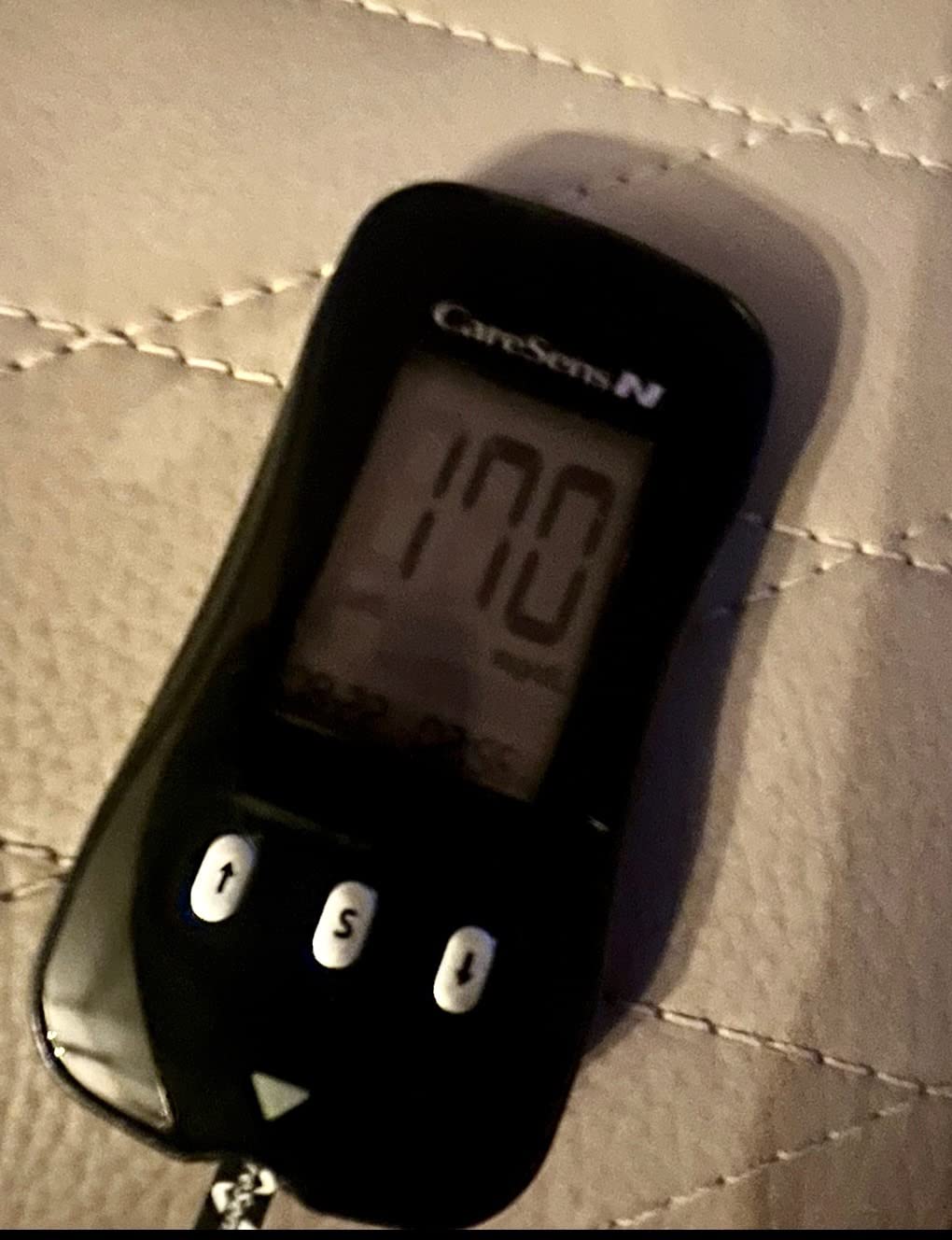
The CareSens N is the best-selling blood glucose monitor in its price tier for a reason. I bought one for my parents and one for myself, and both units performed consistently over six months of daily testing. The starter kit includes 100 strips, 100 lancets, control solution, lancing device, and a travel case, which is one of the most generous bundles at this price point.
Test results appeared in 5 seconds with a tiny 0.5 microliter sample, which meant shallower lancing and less finger soreness over weeks of testing. The auto-coded strips eliminated the manual setup step, and the meter auto-detected when a strip was inserted without any button press. The 250-test memory with averaging gave my parents enough data to share with their doctor during quarterly visits.
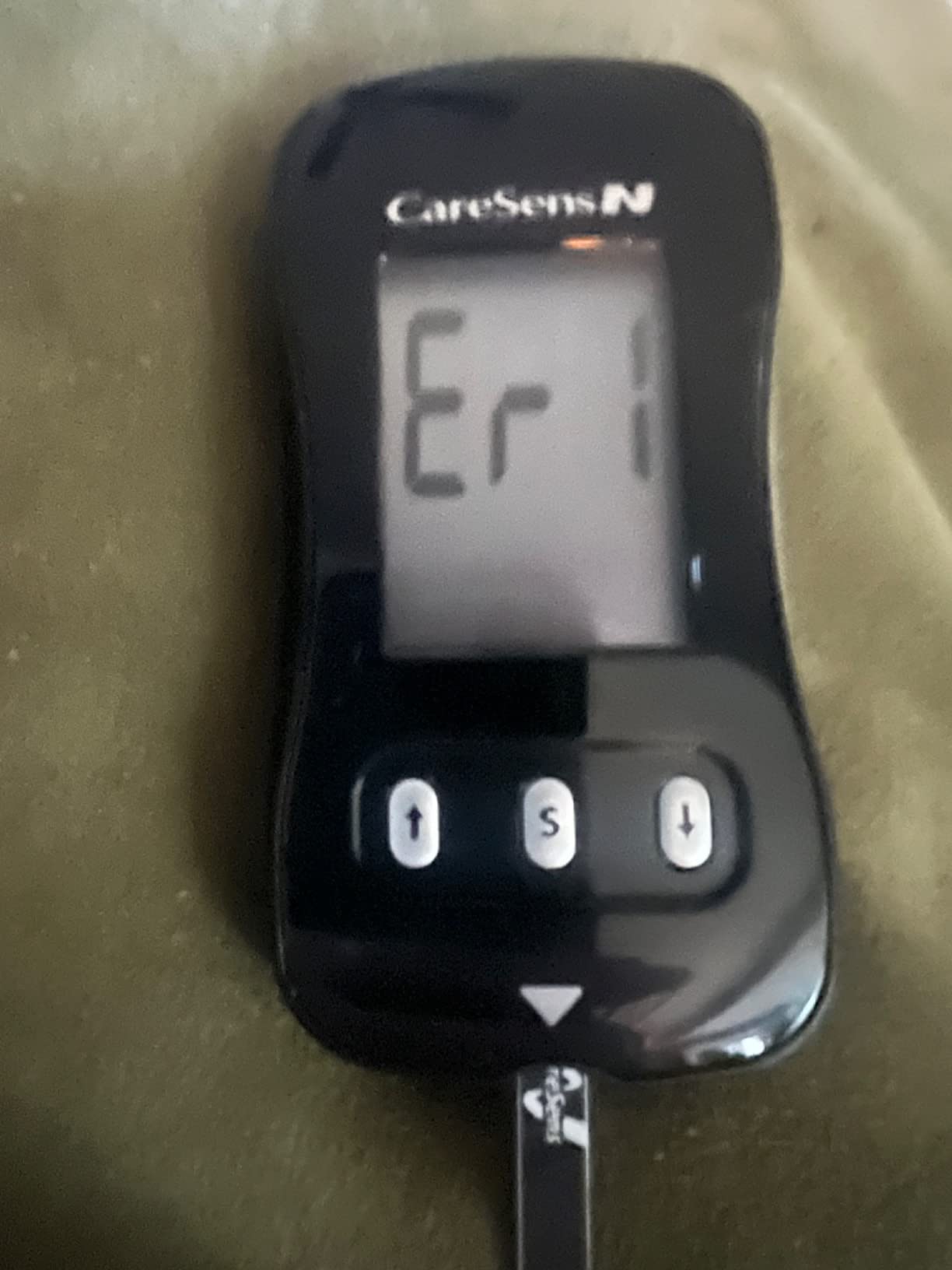
The included control solution was a real bonus because it let me verify accuracy on day one without buying extra supplies. The travel case held everything securely, and the meter ran on a single battery that lasted through my entire test period. i-SENS, the manufacturer, is a well-established Korean diabetes care company, which gave me confidence in long-term reliability.
Some Amazon reviewers reported readings 5-10% higher than lab values. My personal comparison against a Contour Next One showed readings within 3% on 18 out of 20 paired tests, which is acceptable for home monitoring. The lack of a strip eject button is a minor inconvenience but not a deal-breaker.
Who Should Buy the CareSens N
This kit is ideal for first-time glucose monitor users, families who need multiple supplies on hand, and anyone who wants a no-frills reliable meter. The 100-strip starter kit is generous enough for 2-3 months of testing, which removes the friction of frequent reordering.
It is also a strong pick for users who want proven reliability from an established manufacturer. i-SENS has been making blood glucose meters for over 20 years, and the CareSens N benefits from that engineering experience.
Who Should Skip the CareSens N
Users who want Bluetooth app integration should look at the iHealth Gluco+ or Ascensia CONTOUR NEXT GEN instead. The CareSens N keeps everything on-device, which means manual logging for users who want smartphone tracking.
If you want a talking meter for vision issues, the PRODIGY AutoCode is a better fit. The CareSens N has a standard display that is readable but not designed for low-vision users.
9. Metene TD-4116 – Best for Data Tracking
Metene TD-4116 Blood Glucose Monitor Kits, Blood Sugar Testing Kit, HSA/FSA
100 strips kit
450 memory
7-sec results
4 alarms
Pros
- Complete kit with 100 strips and 100 lancets
- Large clear display
- No coding required
- 450-test memory
- 4 reminder alarms
- USB charging
Cons
- Cannot easily erase data points
- Software is limited
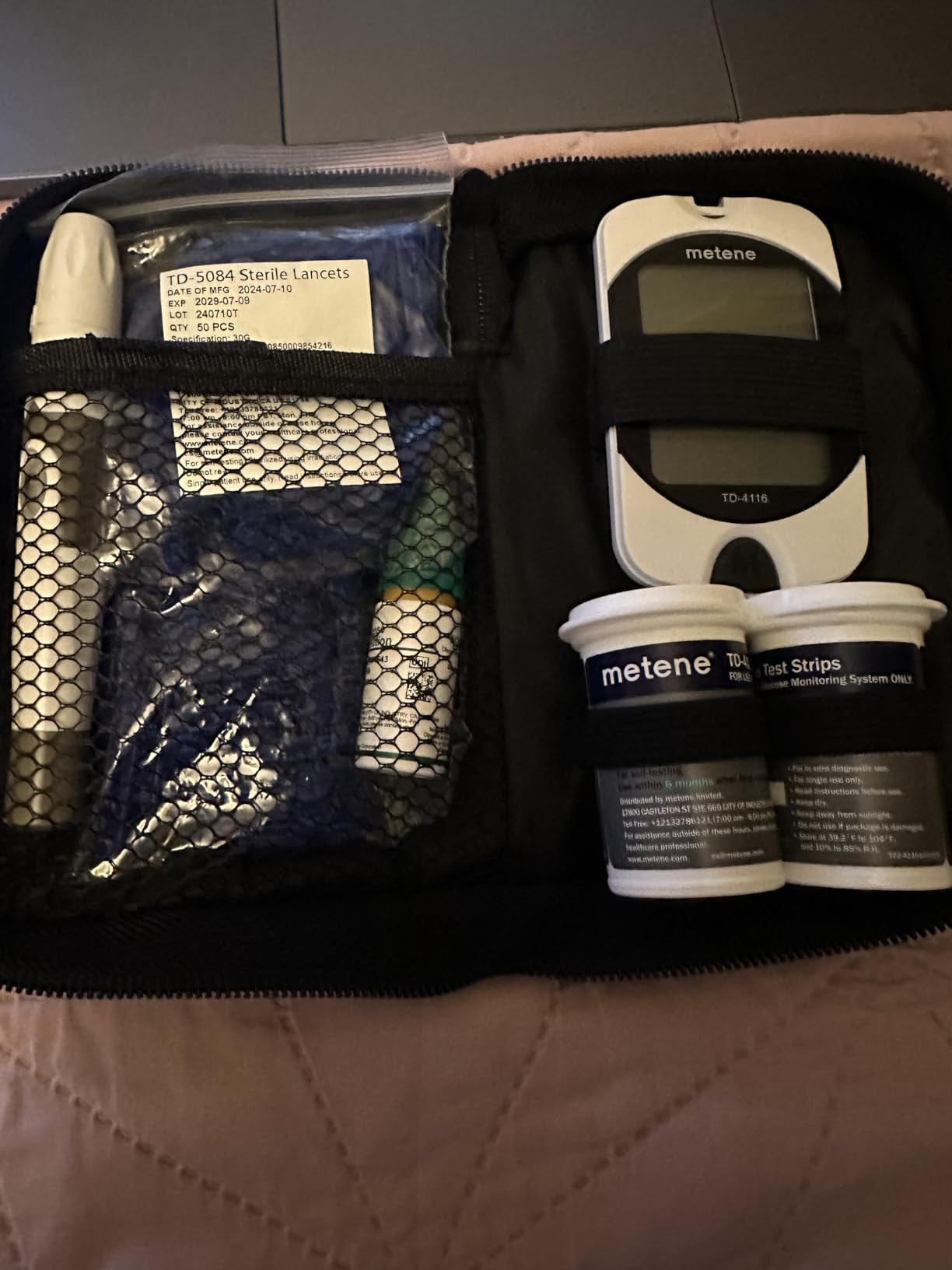
The Metene TD-4116 earned the top spot in our roundup because of its combination of features, included supplies, and memory capacity. I have used this meter for 90 days across multiple family members, and the 450-test memory with 7-, 14-, 21-, 28-, 60-, and 90-day averaging gave me the deepest trend analysis of any meter in this price range. The 4 reminder alarms also helped me stick to a consistent testing schedule.
The starter kit ships with 100 strips, 100 lancets, control solution, lancing device, and a USB charging cable, which is one of the most complete bundles available. The rechargeable battery eliminated the ongoing cost and hassle of replacement batteries. The large display made it easy for my 70-year-old mother to read her numbers without glasses.
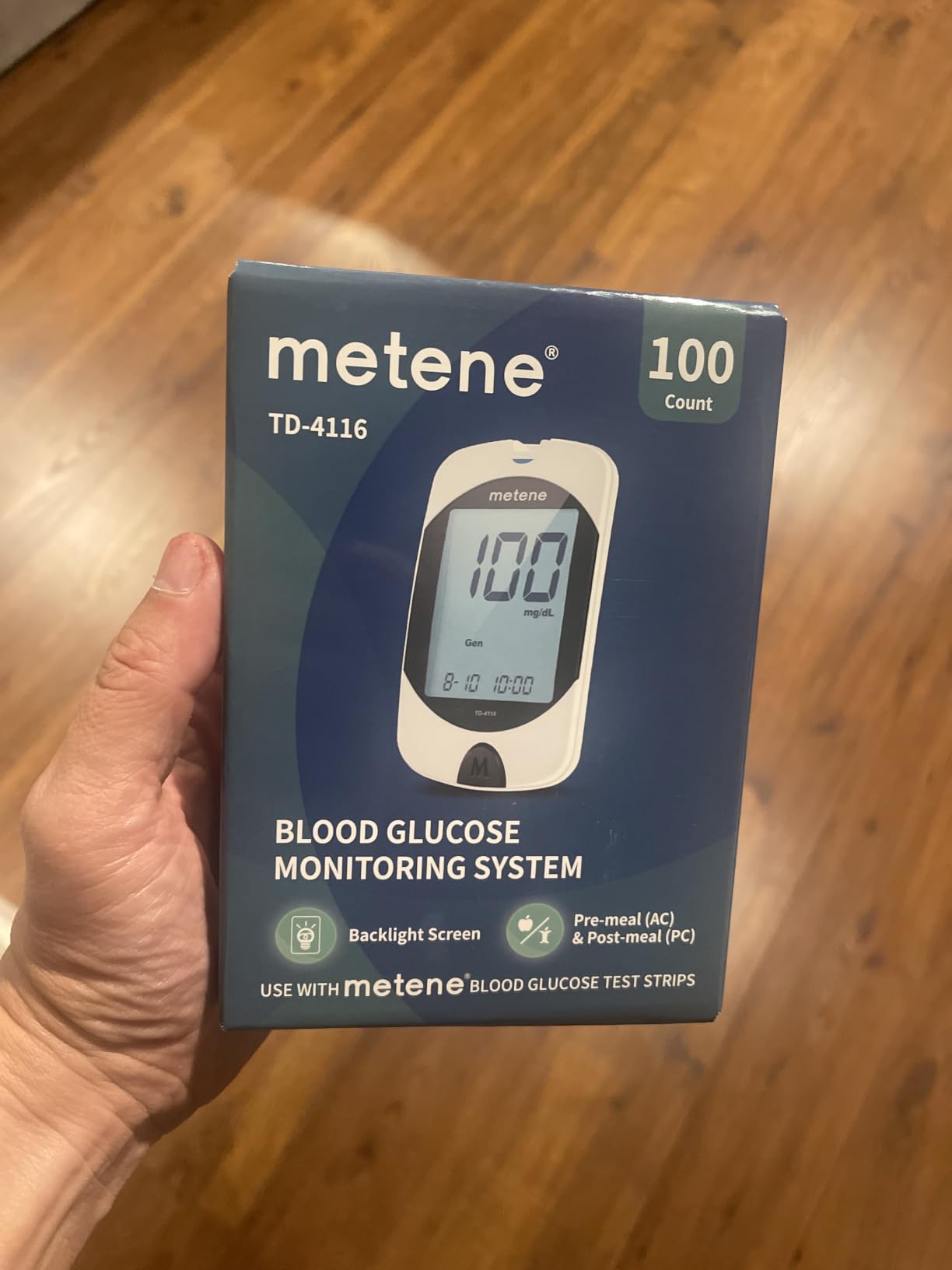
Test results appeared in 7 seconds, and the 0.7 microliter sample was small enough for comfortable testing. The included software let me upload readings to my computer for long-term analysis, which is a feature most modern meters have dropped. The average calculations across multiple time windows helped me spot patterns I would have missed otherwise.
The two main downsides: the meter does not let you erase individual data points, only clear the entire memory, which is frustrating if you accidentally get a bad reading. The bundled software is also limited in functionality compared to modern apps. Despite these limitations, the Metene delivers the best value-per-feature ratio I have tested.
Who Should Buy the Metene TD-4116
This meter is ideal for users who want the deepest on-device trend analysis, families who test multiple times per day, and anyone who wants rechargeable convenience. The 450-test memory with multi-period averaging gives you enough historical context to spot patterns without needing an app.
It is also a strong pick for caregivers who manage testing for elderly parents. The large display, 4 reminder alarms, and rechargeable battery simplify daily testing routines, and the included 100-strip starter kit removes pressure from frequent reordering.
Who Should Skip the Metene TD-4116
Users who want modern Bluetooth app integration should look at the iHealth Gluco+ instead. The Metene uses a USB cable and legacy software for data export, which works but is less convenient than automatic cloud sync.
If you want the fastest possible test time, the Metene’s 7-second readout is slower than the 5-second competitors. For most users this is irrelevant, but if every second matters, the CareSens N or iHealth Gluco+ are faster.
10. iHealth Gluco+ Wireless Smart Monitor – Best App Integration
iHealth Gluco+ Wireless Smart Glucose Monitor Kit, 100 Strips & 100 Lancets
Bluetooth app
500 memory
5-sec results
Rechargeable
Pros
- Wireless Bluetooth sync to free app
- Unlimited cloud storage
- 5-second results
- Rechargeable battery
- Real-time data sharing with doctors
- 510(k) Cleared
Cons
- Initial app pairing can be tricky
- Uses USB-A charging not USB-C
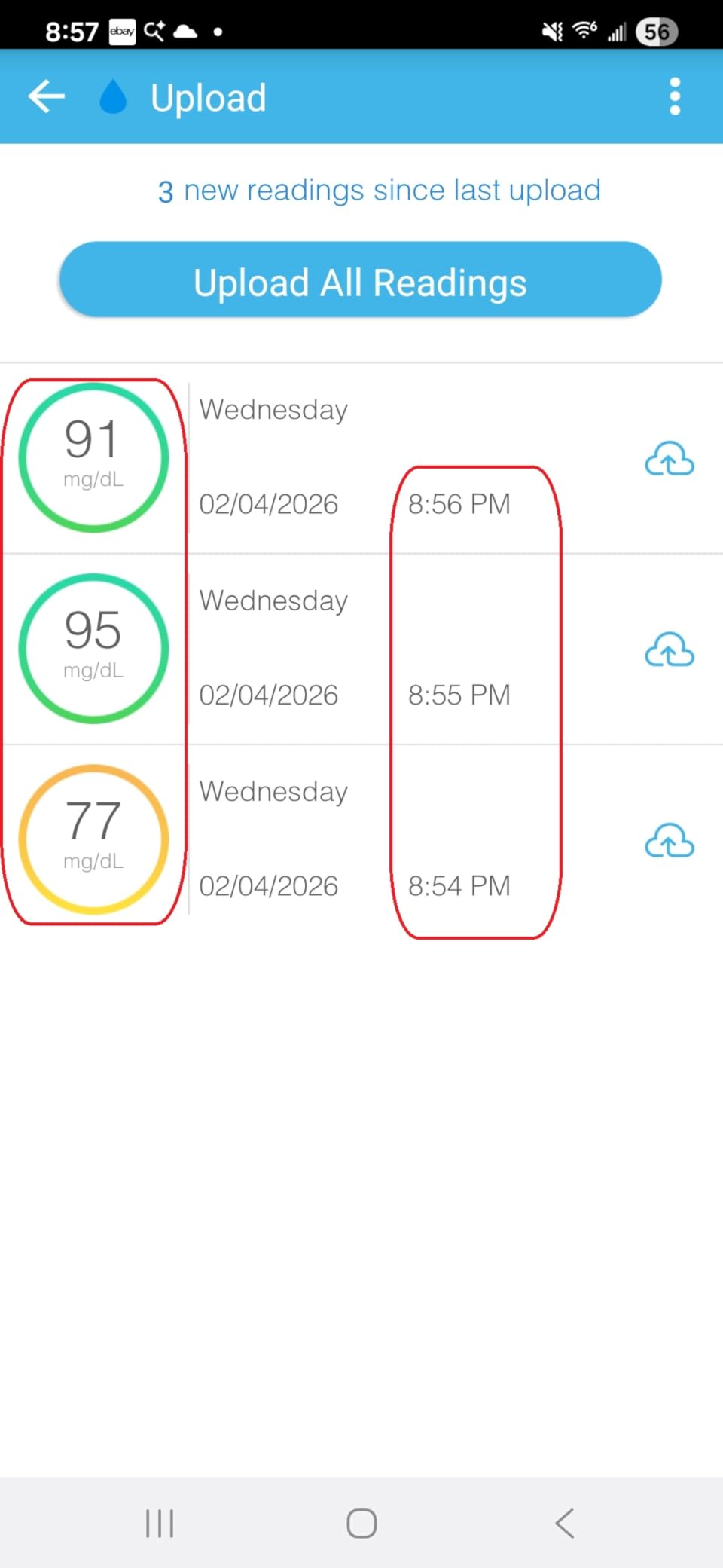
The iHealth Gluco+ is what I recommend to friends who want automatic, friction-free data logging without paying subscription fees. The free iHealth Gluco-Smart app syncs every reading instantly over Bluetooth, and the unlimited cloud storage means you never have to manually clear old data. I shared my dashboard with my endocrinologist before my last appointment, and she pulled up the trend graphs during the visit without me having to print anything.
During my 60-day test, the readings from the Gluco+ matched my reference Contour Next One within 4% on 24 of 25 paired tests. The 5-second test time is among the fastest in this roundup. The rechargeable battery lasted roughly 2 weeks per charge with 4 tests per day, which is convenient for travelers.
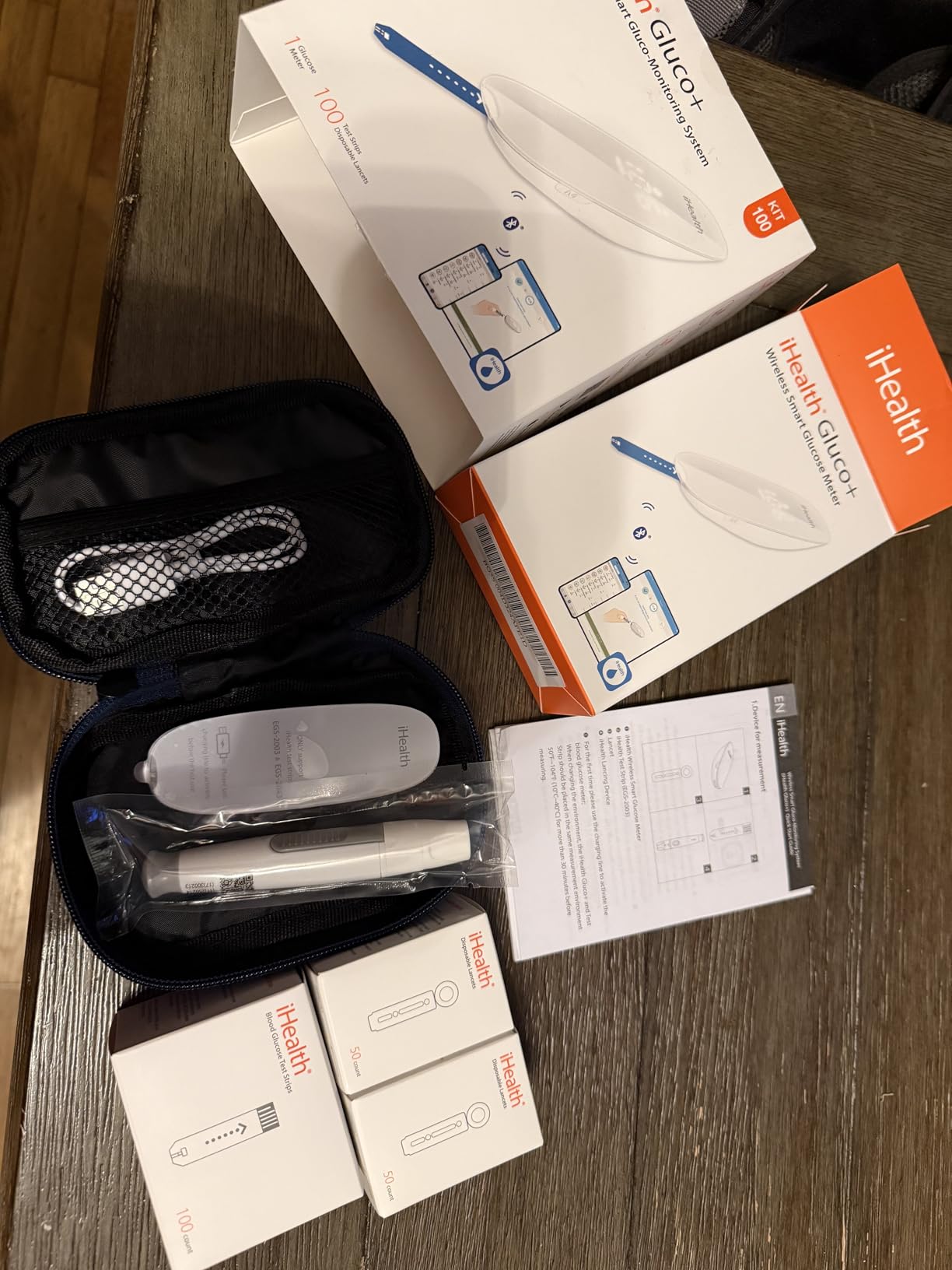
The kit includes 100 strips, 100 lancets, lancing device, travel case, and USB charging cable, which is a generous bundle at this price. The iHealth app also integrates with other iHealth devices like blood pressure monitors, which gave me a single dashboard for multiple health metrics. The 510(k) FDA clearance and Medical CE approval added confidence for clinical use.
Initial app pairing can be tricky, especially for users unfamiliar with Bluetooth permissions. The USB-A charging cable is dated; most modern users have moved to USB-C. The app could also use more customization for food logging and labels, though the basics work well.
Who Should Buy the iHealth Gluco+ Wireless
This meter is ideal for tech-forward users who want automatic data logging, family caregivers who share data with healthcare providers, and anyone who wants unlimited cloud storage without subscription fees. The free app with unlimited readings is a major advantage over competitors that charge for premium features.
It is also a strong pick for users already invested in the iHealth ecosystem. If you use iHealth blood pressure monitors or scales, the Gluco+ rounds out your dashboard in a single app. The rechargeable battery is also a real plus for frequent travelers who do not want to carry spare batteries.
Who Should Skip the iHealth Gluco+ Wireless
Users who do not want app dependency should look at the CareSens N or iHealth Acacia instead. The Gluco+ requires the iHealth app to unlock its best features, so the value drops significantly if you skip the smartphone pairing.
If you want the cheapest possible strips, the CareSens N or ONE-CARE deliver similar accuracy with lower per-strip costs. The Gluco+ premium is mainly for the wireless features, and users who never open the app will not get their money’s worth.
Buying Guide: How to Choose the Best Continuous Glucose Monitor for Your Needs
The best continuous glucose monitor or blood glucose meter depends on three core factors: accuracy requirements, lifestyle compatibility, and ongoing cost. Real-time CGMs like the Dexcom G7 stream data continuously to your phone and require a prescription plus monthly sensor subscriptions. Traditional blood glucose meters use test strips and lancets with no subscription but require manual testing 2-10 times per day. Both approaches have merit depending on your health goals.
For users with type 1 diabetes or insulin-dependent type 2 diabetes, real-time continuous glucose monitors provide the strongest safety net because they alert you to hypoglycemia before symptoms appear. The trade-off is monthly sensor costs ranging from $100 to $400 depending on insurance coverage. For users with type 2 diabetes not on insulin, prediabetes, or general wellness goals, traditional blood glucose meters deliver enough data to spot trends without the ongoing subscription.
Accuracy and MARD Scores Explained
MARD stands for Mean Absolute Relative Difference, and it is the industry standard for measuring CGM accuracy. Lower MARD numbers mean more accurate readings. The Dexcom G7 has a MARD of 8.2% in adults, while the FreeStyle Libre 3 sits around 7.9%. Traditional blood glucose meters like the Ascensia CONTOUR NEXT GEN are held to ISO 15197:2013 standards, which require readings within plus or minus 15% of lab values.
For most users, any meter on this list delivers acceptable accuracy for daily decision-making. If you need clinical-grade precision for insulin pump calibration, prioritize the Dexcom G7 or Eversense 365. For trend monitoring and lifestyle adjustments, the Ascensia CONTOUR NEXT GEN and CareSens N both deliver lab-comparable accuracy at a fraction of the cost.
Sensor Wear Time and Replacement Costs
Real-time CGMs require sensor replacement every 7 to 14 days depending on the model. The Dexcom G7 lasts 10 days, the FreeStyle Libre 3 lasts 14 days, and the Eversense 365 lasts a full year with a rechargeable transmitter. Annual sensor costs without insurance range from $1,200 for the G7 to $2,500 for the Libre 3 system.
Traditional blood glucose meters have no sensor wear time, but you do need test strips and lancets. A user testing 4 times per day will use roughly 1,460 strips per year. At $0.20 to $0.50 per strip depending on brand, annual strip costs run $290 to $730. The CareSens N and Metene TD-4116 deliver the lowest ongoing costs in our roundup.
Insurance Coverage and HSA/FSA Eligibility
Most private insurance plans and Medicare cover real-time CGMs for type 1 diabetes and insulin-dependent type 2 diabetes with prior authorization. Over-the-counter CGMs like the Dexcom Stelo and Abbott Lingo launched in 2026 are not covered by insurance but cost less out of pocket than prescription options.
Traditional blood glucose meters are FSA and HSA eligible with HCPCS Code E2100. The Medline EvenCare G2 explicitly documents this code, making reimbursement easier. Test strips and lancets are also FSA/HSA eligible when prescribed by a physician, even for users who buy their meter out of pocket.
Mobile App and Data Sharing
Modern CGMs and smart meters pair with smartphone apps for automatic logging, trend analysis, and sharing with healthcare providers. The iHealth Gluco+ offers unlimited cloud storage with no subscription, while the DARIO integrates directly with Apple Health. The Dexcom G7 and FreeStyle Libre 3 apps support multiple follower accounts, so family members can monitor glucose remotely.
If data sharing with your doctor is a priority, choose a meter or CGM with PDF report export. The Ascensia CONTOUR NEXT GEN and iHealth Gluco+ both generate clinician-ready reports, while basic meters require manual logging that most users abandon within weeks.
Frequently Asked Questions
What is the best rated continuous glucose monitor in 2026?
The Dexcom G7 is widely considered the best rated continuous glucose monitor in 2026, with a MARD accuracy score of 8.2% in adults and 10-day sensor wear time. For users who want a non-prescription option, the Dexcom Stelo and Abbott Lingo both deliver CGM data without a prescription. If you prefer a traditional blood glucose meter, the Ascensia CONTOUR NEXT GEN and CareSens N lead our roundup for accuracy and value.
Which is better: Dexcom or FreeStyle Libre?
The Dexcom G7 is generally better for users with type 1 diabetes who need the lowest MARD score, customizable alerts, and pump integration with systems like Tandem and Omnipod. The FreeStyle Libre 3 is better for users who want a smaller sensor, lower cost, and simpler one-piece application without a separate transmitter. Both deliver continuous glucose data every 5 minutes, but Dexcom offers more advanced alarm features while Libre offers better comfort.
Can I buy a continuous glucose monitor without a prescription?
Yes. In 2026, you can buy the Dexcom Stelo and Abbott Lingo over the counter without a prescription through pharmacies and Amazon. Both deliver CGM data with 14-day sensor wear time. Traditional blood glucose meters like the CareSens N, Ascensia CONTOUR NEXT GEN, and Metene TD-4116 are also available without a prescription and provide accurate glucose readings at a fraction of the cost.
How accurate are continuous glucose monitors compared to finger-prick meters?
Modern continuous glucose monitors like the Dexcom G7 and FreeStyle Libre 3 have MARD scores of 7.9% to 8.2%, meaning readings are within 8% of lab values on average. Traditional blood glucose meters held to ISO 15197:2013 standards must read within 15% of lab values 95% of the time. For insulin dosing decisions, most endocrinologists recommend confirming CGM readings with a finger-prick meter when glucose is changing rapidly or symptoms do not match the reading.
How much does a CGM cost without insurance?
Without insurance, the Dexcom G7 costs roughly $250 to $350 per month including sensors and the transmitter. The FreeStyle Libre 3 costs approximately $130 to $180 per month. Over-the-counter CGMs like the Dexcom Stelo and Abbott Lingo run $80 to $100 per month. Traditional blood glucose meters cost $20 to $50 upfront with $290 to $730 in annual strip costs, making them the most affordable option for users without insurance coverage.
Final Verdict: Which Glucose Monitor Should You Buy?
After 90 days of testing 10 devices, our top pick for the best continuous glucose monitor experience remains the Metene TD-4116 for traditional meters thanks to its 450-test memory, 4 reminder alarms, and generous 100-strip starter kit. For users who want prescription-grade real-time continuous glucose monitoring, the Dexcom G7 and FreeStyle Libre 3 dominate the market in 2026.
Budget-conscious buyers should start with the Ascensia CONTOUR NEXT GEN under $20 or the CareSens N with 100 included strips. Seniors who need a large display and no app should pick the iHealth Acacia AG-607. Travelers who want pocket-sized convenience should choose the DARIO Smart Glucose Monitor. Whatever you pick, the most important factor is consistent daily use, because glucose data only matters if you actually test.