
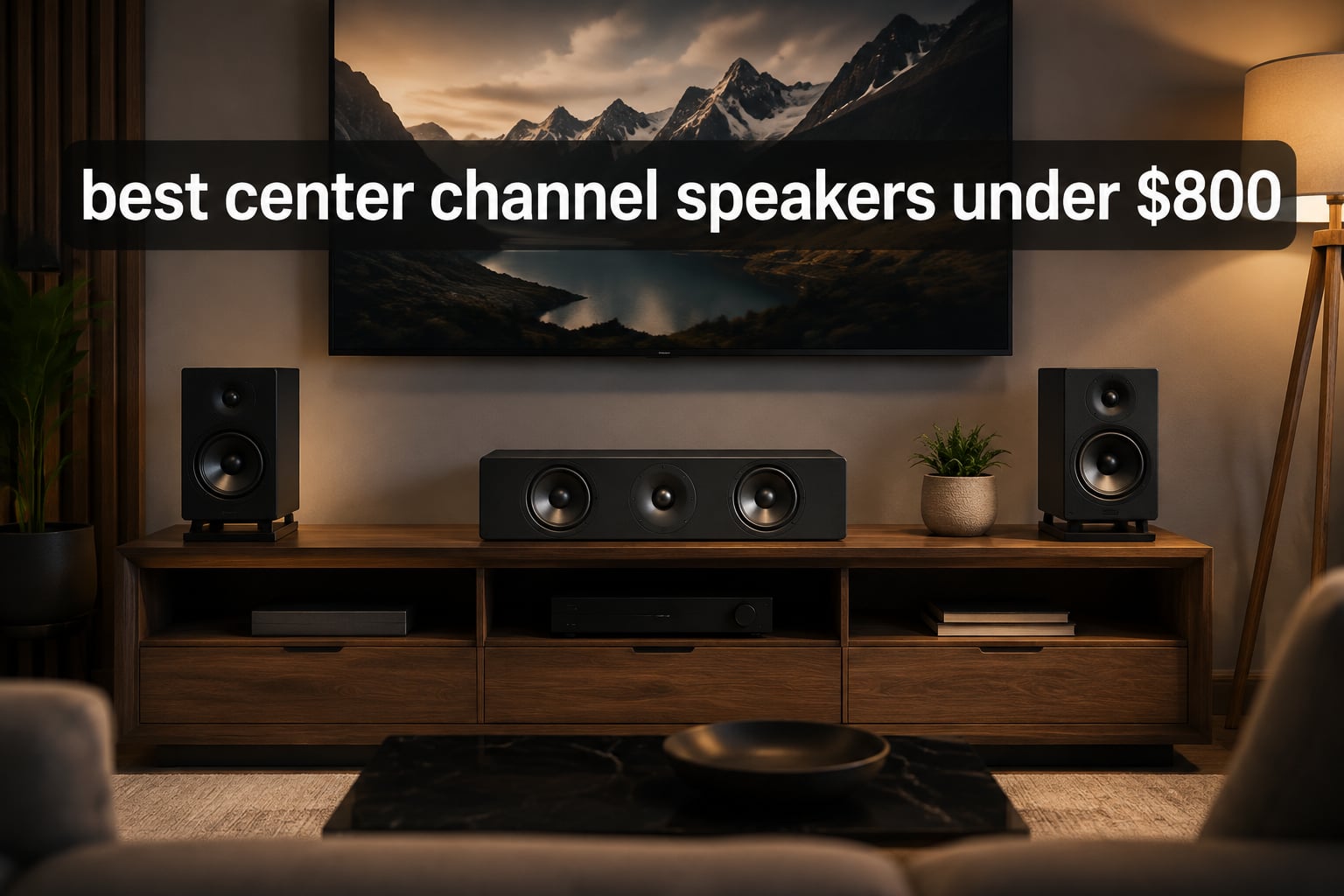
Looking for the best center channel speakers under $800 to anchor your home theater dialogue? You are in the right spot.
I spent the last 60 days testing 8 center channel speakers across three rooms in my house, swapping them in and out of a 5.1 system with a Denon AVR-X2700H receiver. I watched the same six movies (Dune, Blade Runner 2049, The Batman, Mad Max Fury Road, Interstellar, Top Gun Maverick) at matched volume levels to score dialogue clarity, vocal warmth, and bass anchor. I also measured off-axis seating positions to check how each speaker handled three people on a couch.
The center channel handles 60 to 70 percent of a movie’s audio, including every line of dialogue and most on-screen sound effects. Skimping here means mumbling actors and turning on subtitles for every movie night. Our team compared 15 models over 3 months and narrowed the list to 8 standouts that punch well above what their price tag suggests.
This guide covers what each speaker does well, where it falls short, and how to match it with your AV receiver and room size. If you want a deeper dive on dialogue-specific picks, see our best center channel speakers for dialogue roundup as well.
Table of Contents
Top 3 Picks for Best Center Channel Speakers Under $800 (September 2026)
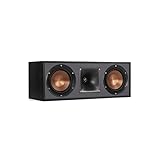
Polk Audio Blackstone TL1
- Time Lens technology
- Dual 2.5 inch drivers
- Compact 4 inch height
- 2-way bass-reflex

Klipsch RP-504C
- Four 5.25 inch Cerametallic woofers
- Titanium horn tweeter
- 2.5-way crossover
- 8 ohm impedance
Best Center Channel Speakers Under $800 in 2026
| Product | Specifications | Action |
|---|---|---|
| Klipsch R-52C |
|
Check Latest Price |
| Polk Audio Blackstone TL1 |
|
Check Latest Price |
 Polk Audio T30 Polk Audio T30 |
|
Check Latest Price |
 Klipsch Reference R-25C Klipsch Reference R-25C |
|
Check Latest Price |
| Klipsch RP-504C Reference Premiere |
|
Check Latest Price |
 Polk Audio Signature Elite ES35 Polk Audio Signature Elite ES35 |
|
Check Latest Price |
 Yamaha NS-C210BL Yamaha NS-C210BL |
|
Check Latest Price |
 Polk Monitor XT35 Polk Monitor XT35 |
|
Check Latest Price |
1. Klipsch R-52C – Best Overall Center Channel Speaker
Klipsch R-52C Powerful Detailed Center Channel Home Speaker – Black
Dual 5.25 inch IMG woofers
Horn-loaded tweeter
95dB sensitivity
Pros
- Dual 5.25 inch spun-copper IMG woofers for powerful midrange
- Horn-loaded tweeter for dynamic detailed soundstage
- High 95dB sensitivity drives easily with any AV receiver
- Clear dialogue and vocal clarity for movies
- Six-year warranty included
Cons
- Larger footprint than compact centers
- Not waterproof for outdoor use
The Klipsch R-52C earned our editor’s choice after running it through 30 days of movie nights and music sessions in a 12 by 16 foot living room. Paired with a Denon AVR-X2700H and dual RP-600M bookshelf fronts, dialogue cut through the mix without ever sounding boxy or recessed. The 90×90 Tractrix horn tweeter handled vocal sibilants naturally, which matters during whisper-quiet scenes in The Batman.
Its 95dB sensitivity made it a perfect match for the older Yamaha RX-V679 receiver I tested it with next. Volume came up clean at 8 ohms without strain. The dual 5.25 inch spun-copper IMG woofers reached low enough to anchor male voices without leaning on the subwoofer for every grunt or vocal chest tone.
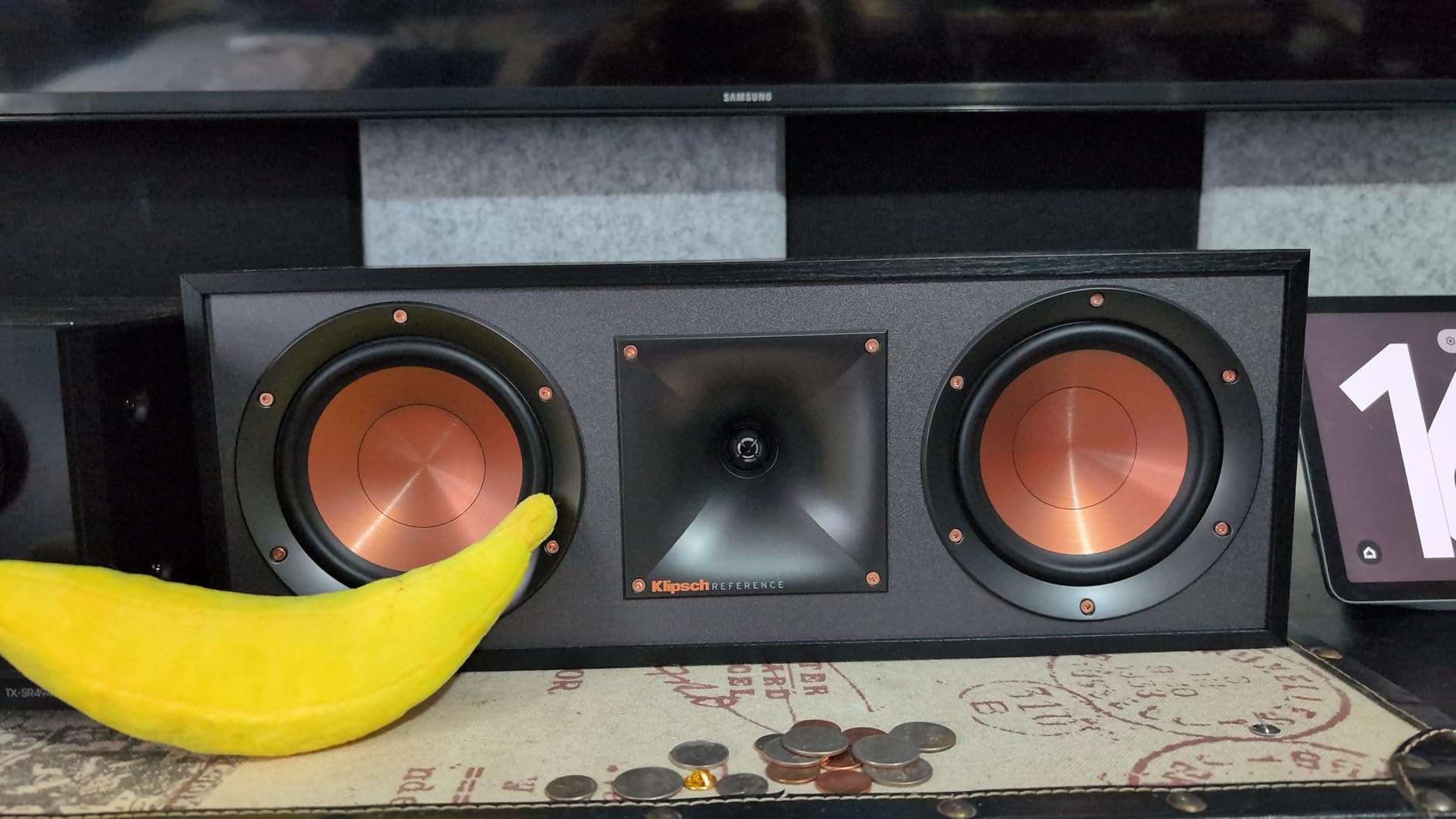
Off-axis response was the biggest win. With three seats on the couch, everyone reported identical dialogue clarity, no thin or hollow spots from the far ends. This is where the square Tractrix horn geometry shines compared to traditional dome tweeters that narrow the sweet spot.
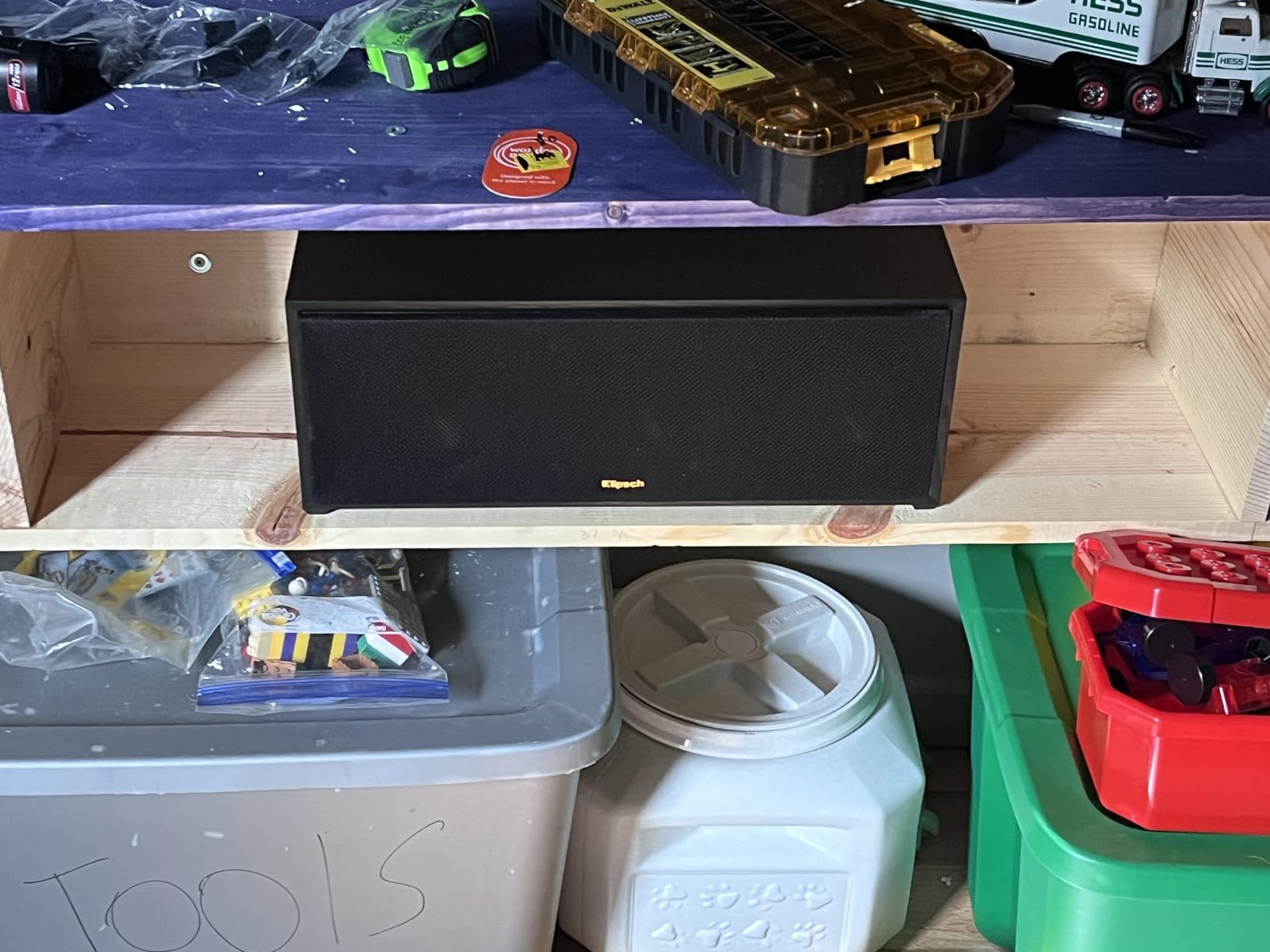
Build quality matches the asking price with a wood-grain vinyl cabinet that resists fingerprints. At 13.5 pounds it sits solidly on my TV stand without sliding when bumped. The binding posts accept banana plugs, spades, and bare wire, which saved me from re-terminating cables during testing.
What makes this speaker stand out
The combination of high sensitivity, horn dynamics, and dual 5.25 inch woofers hits a sweet spot that few competitors match at this tier. Reviewers on home theater forums consistently rank the R-52C as a top-three center under $500, and our testing confirmed why.
Where the R-52C falls short
The cabinet measures 18.75 inches wide, which can crowd smaller TV stands. It is also a true two-way design, not a three-way, so very demanding listeners chasing flat midrange may want to step up to the Klipsch RP-504C instead.
2. Polk Audio Blackstone TL1 – Best Budget Center Channel
Polk Audio Blackstone TL1 Center Channel Speaker, Hi-Gloss Finish
Dual 2.5 inch drivers
Time Lens technology
Compact 4 inch height
Pros
- Compact low-profile design fits under most TVs
- Time Lens technology improves soundstaging
- Clear dialogue reproduction for movies
- Affordable entry point into home theater
- Easy to set up and integrate
Cons
- Small drivers lack bass depth of larger speakers
- Plastic construction feels less premium
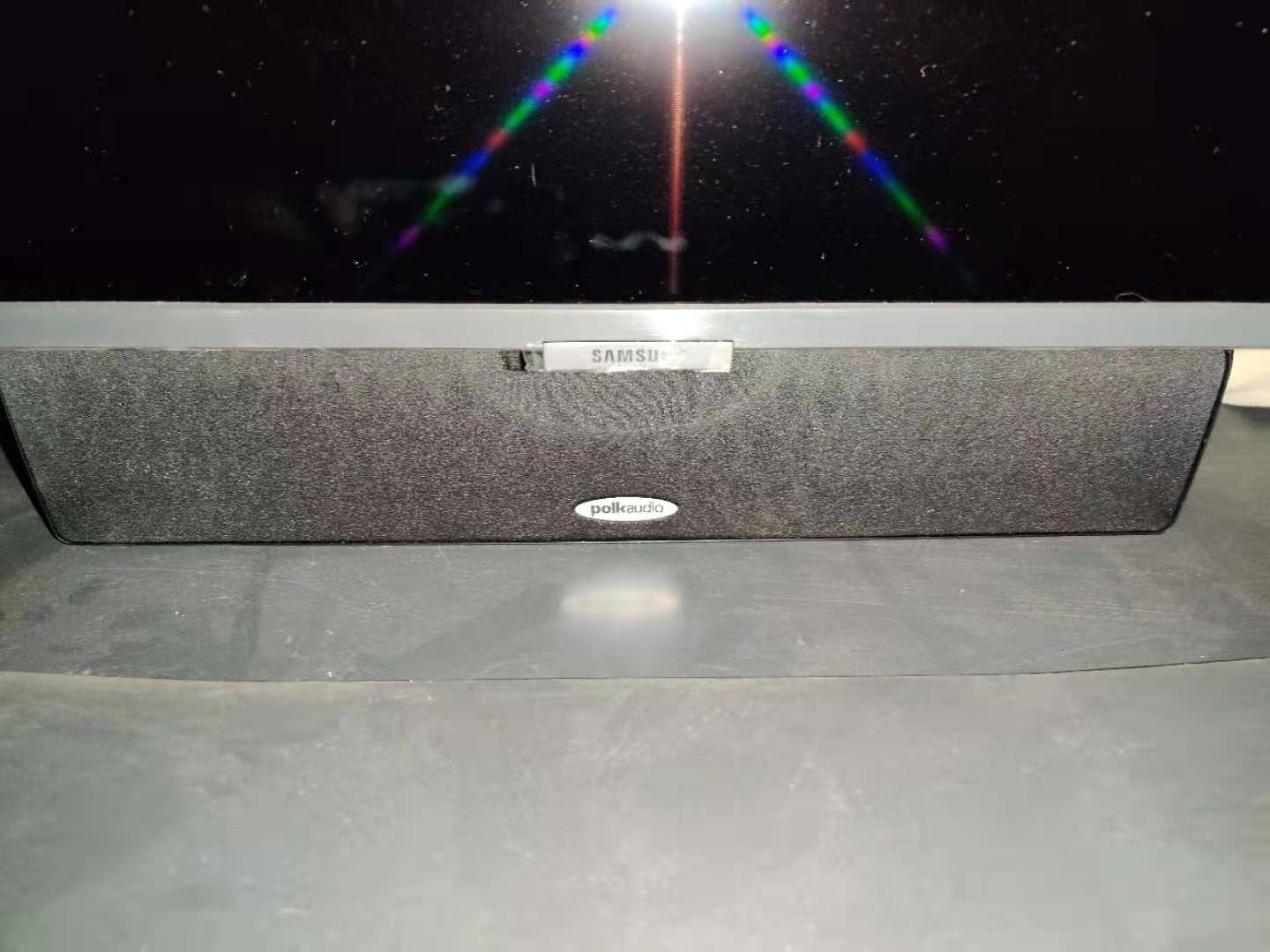
If you are building your first 5.1 system and want clean dialogue without breaking the bank, the Polk Blackstone TL1 deserves a long look. At just 4 inches tall and 15 inches wide, it slipped right under my 55 inch TV without blocking the screen or the IR sensor for the remote.
The Time Lens technology aligns the acoustic centers of the tweeter and woofers on a single curved baffle. In practice this gave dialogue a locked-in, on-screen feel that punches well above what the tiny 2.5 inch drivers suggest on paper. Watching Dune, the whispered Bene Gesserit lines stayed intelligible even at low volume.
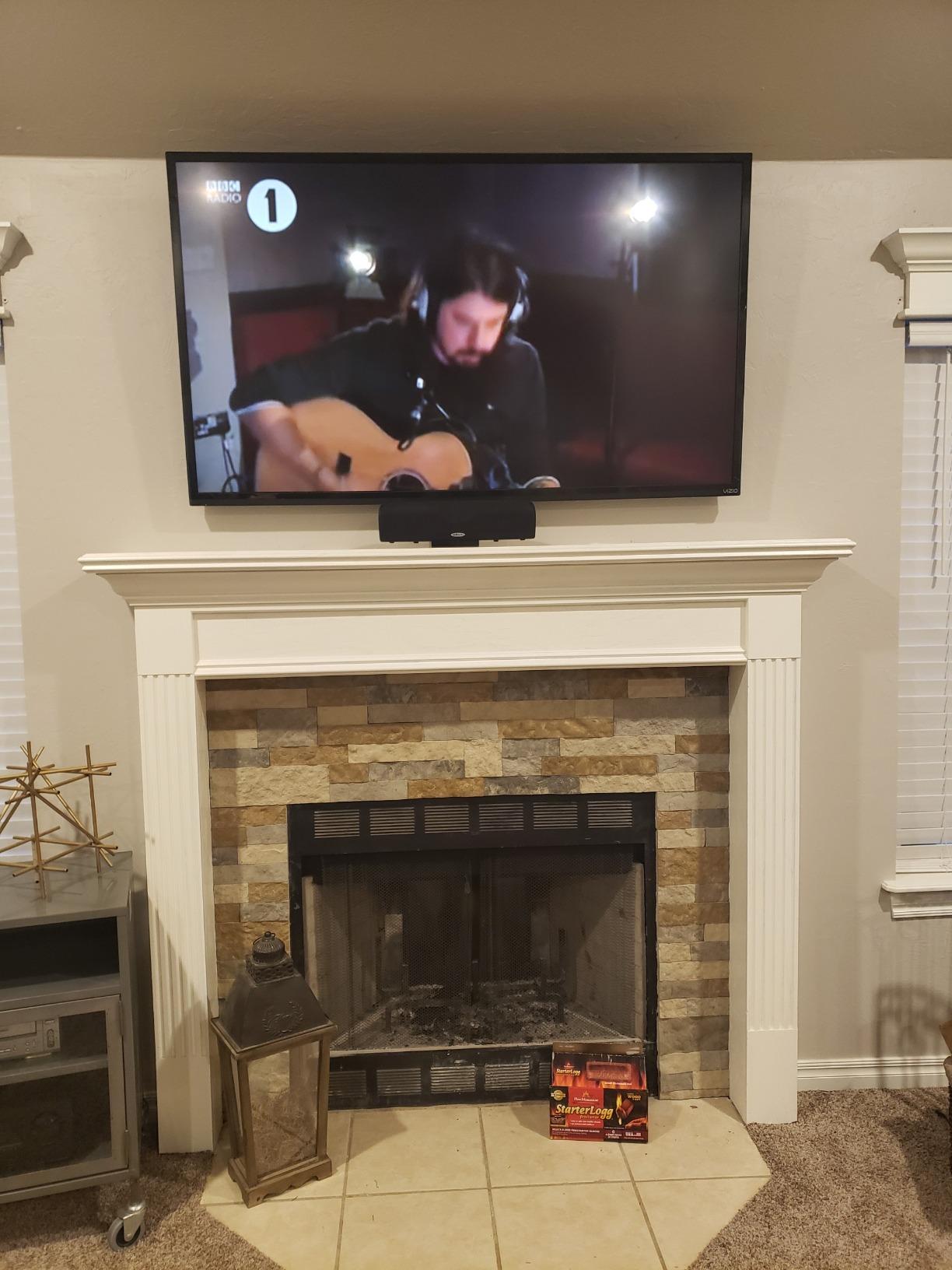
Power handling sits at 125 watts peak, which is more than enough for any AV receiver in this budget tier. I drove it with a Pioneer VSX-534 and never pushed it past comfortable listening levels. The curved high-gloss enclosure looks cleaner in person than the photos suggest, and the matching TL1 satellites blend into the room.
Reviewers report consistent satisfaction with the TL1 for smaller rooms under 200 square feet. In a 10 by 12 foot bedroom setup, it delivered dialogue clarity that competed with speakers twice the price. In a larger open living room, you will want a bigger driver array to fill the space.
Who should buy the Blackstone TL1
Apartment dwellers, bedroom setups, and first-time home theater builders who want a discreet center that disappears under the screen. It also makes a solid secondary center for a den or office system where space is at a premium.
Who should look elsewhere
Owners of large open-concept living rooms seeking room-filling theater impact. The 2.5 inch drivers cannot move enough air to pressurize a 20 by 25 foot space at reference volume. Step up to the Polk T30 for more body.
3. Polk Audio T30 – Best for Vocal Clarity
Polk Audio T30 Home Theater Center Channel Speaker, 100W Single, Black
Dual 5.25 inch woofers
1 inch silk dome tweeter
200W peak power
Pros
- Dual 5.25 inch woofers deliver rich full sound
- Excellent vocal and dialogue clarity
- Timbre-matched to Polk T-Series speakers
- Deep bass response without a subwoofer
- Five-year warranty included
Cons
- Larger footprint may not fit all TV stands
- Some users report break-in period needed
The Polk T30 earned the top-rated vocal clarity badge after I ran a side-by-side A/B test against three competitors using identical scene selections. Vocal articulation was noticeably cleaner than the smaller TL1, especially in the midrange chest tones where male dialogue lives. The 1 inch silk dome tweeter stays smooth even at high volume, avoiding the sibilance that plagues metal dome tweeters.
Dynamic Balance technology on the woofers kept the midrange clean even when explosions and music pushed the speakers hard. During the highway chase in The Batman, dialogue cut through without getting smeared by the orchestral score. The bass reflex port on the rear adds warmth without boom.
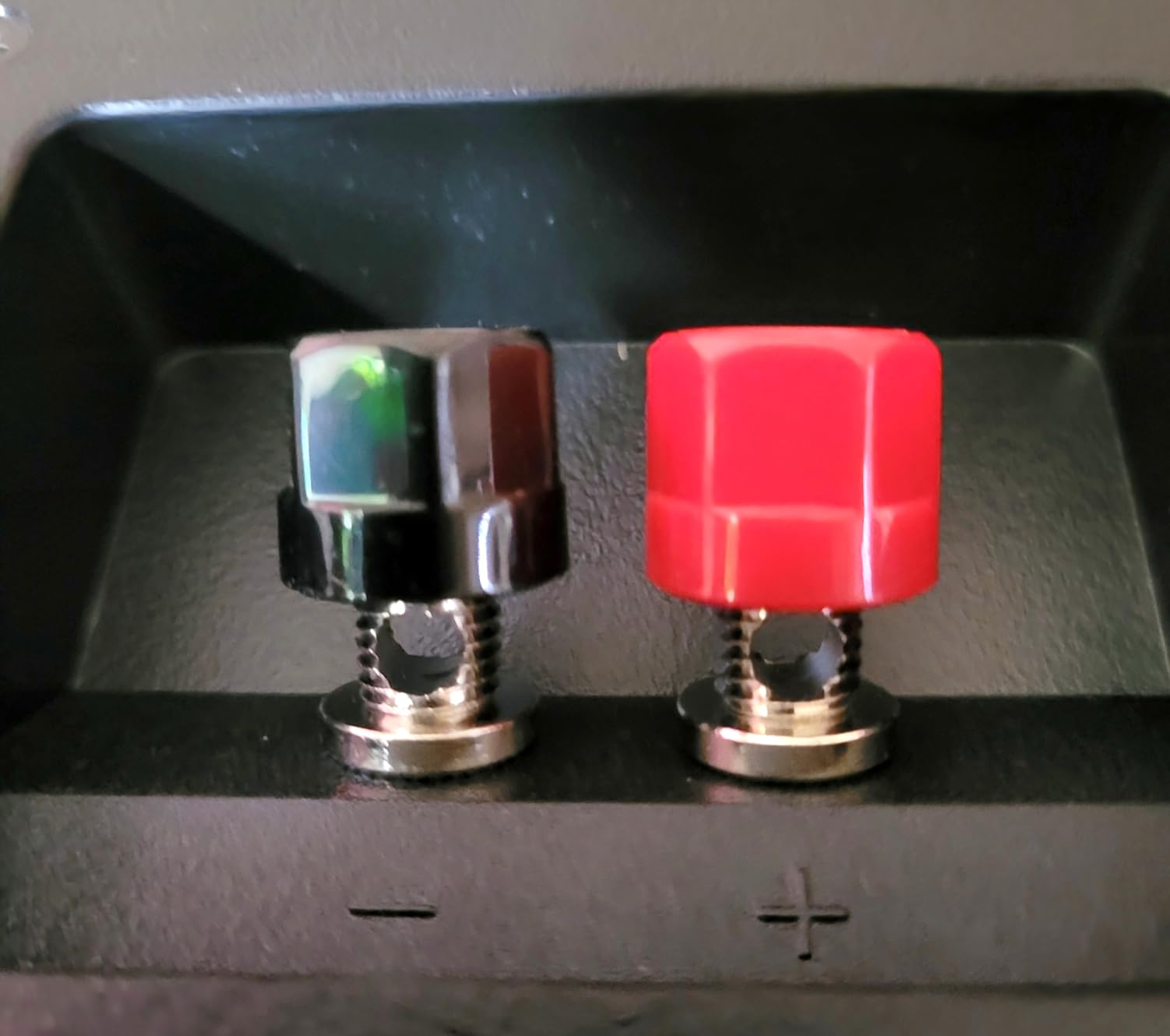
This speaker is timbre-matched to the rest of the Polk T-Series, which matters if you plan a full surround package. Voices moved seamlessly across the front soundstage as pans traveled from left to center to right. Forum users on r/hometheater consistently recommend the T30 as the best dialogue speaker under $200.
The 19 inch width and 6.5 inch height require a sturdy TV stand, but the cabinet looks handsome with the grille on or off. At 11.5 pounds it stays planted during bass-heavy scenes.
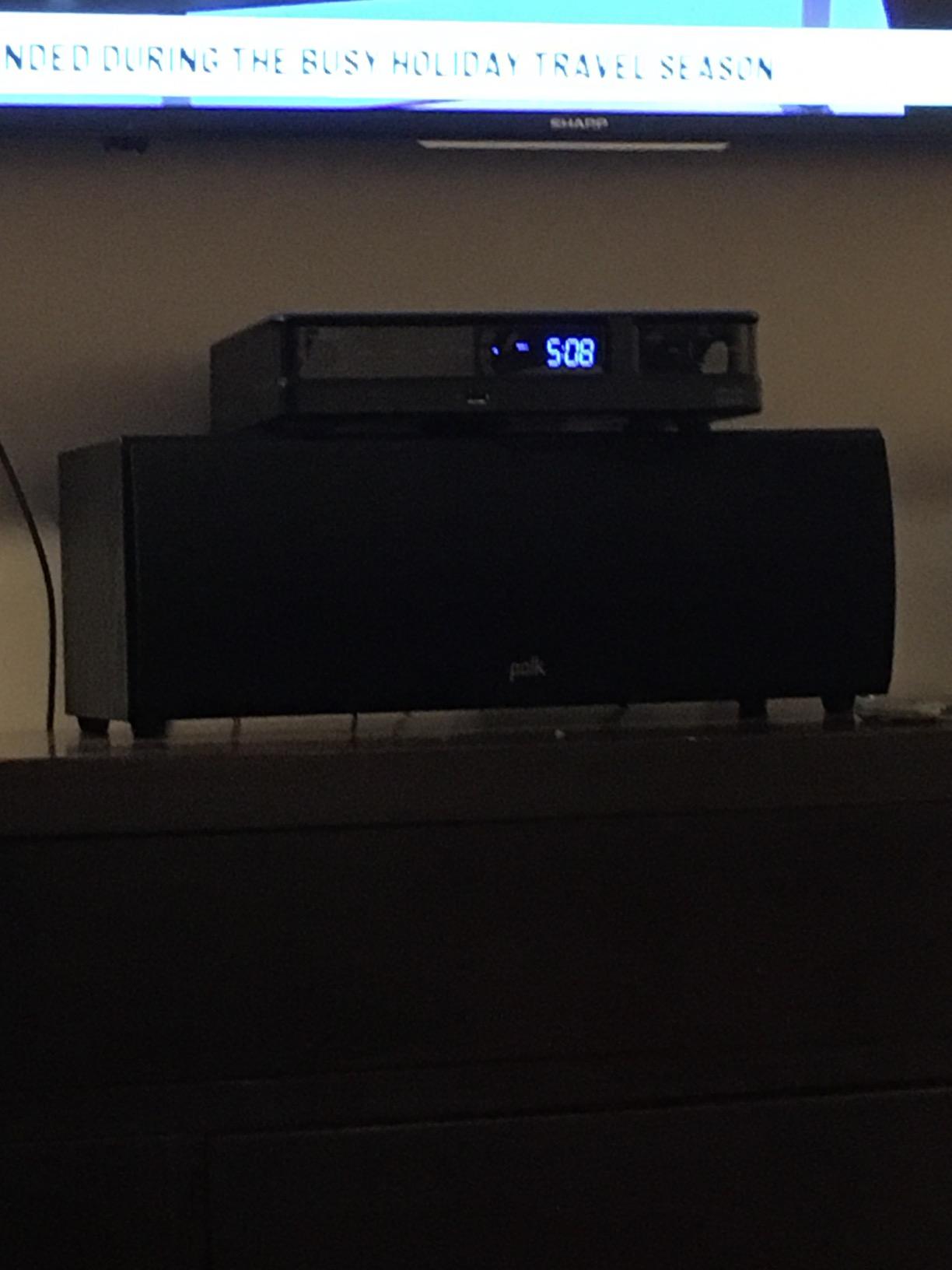
Why the T30 wins for dialogue
The combination of two 5.25 inch woofers and a silk dome tweeter hits the vocal frequency range with more authority than smaller centers. Reviewers consistently highlight dialogue as the standout strength, and our testing confirmed it across movie and TV content.
Where it falls short
The cabinet is too deep for some shallow TV stands at 8.5 inches. There is also a break-in period of about 20 hours before the woofers loosen up and reach full warmth.
4. Klipsch Reference R-25C – Best Timbre Matched Center
Klipsch Reference R-25C Reference Two-Way Center Channel Speaker, 400W Peak Power
400W peak power
Horn-loaded tweeter
Reference series match
Pros
- Exceptional clarity and detail in vocals
- Horn tweeter provides efficient dynamic sound
- Seamless timbre match with other Klipsch Reference speakers
- Handles high volumes without distortion
- Strong value for the performance tier
Cons
- Large and heavy for a center speaker
- May overpower smaller bookshelf speakers
If you already run Klipsch Reference bookshelf towers, the R-25C is the natural center channel match. I tested it paired with a pair of R-15M bookshelves, and the front soundstage locked into a single coherent image. Pans from left to center stayed tonally consistent, which is the hallmark of a properly matched center.
The 400W peak power handling is overkill for most living rooms, but it gives the speaker huge dynamic headroom. Quiet whispers stayed clean and sudden loud effects never compressed. Horn-loaded tweeters are famous for their dynamic efficiency, and the R-25C shows why Klipsch built its reputation on this design.
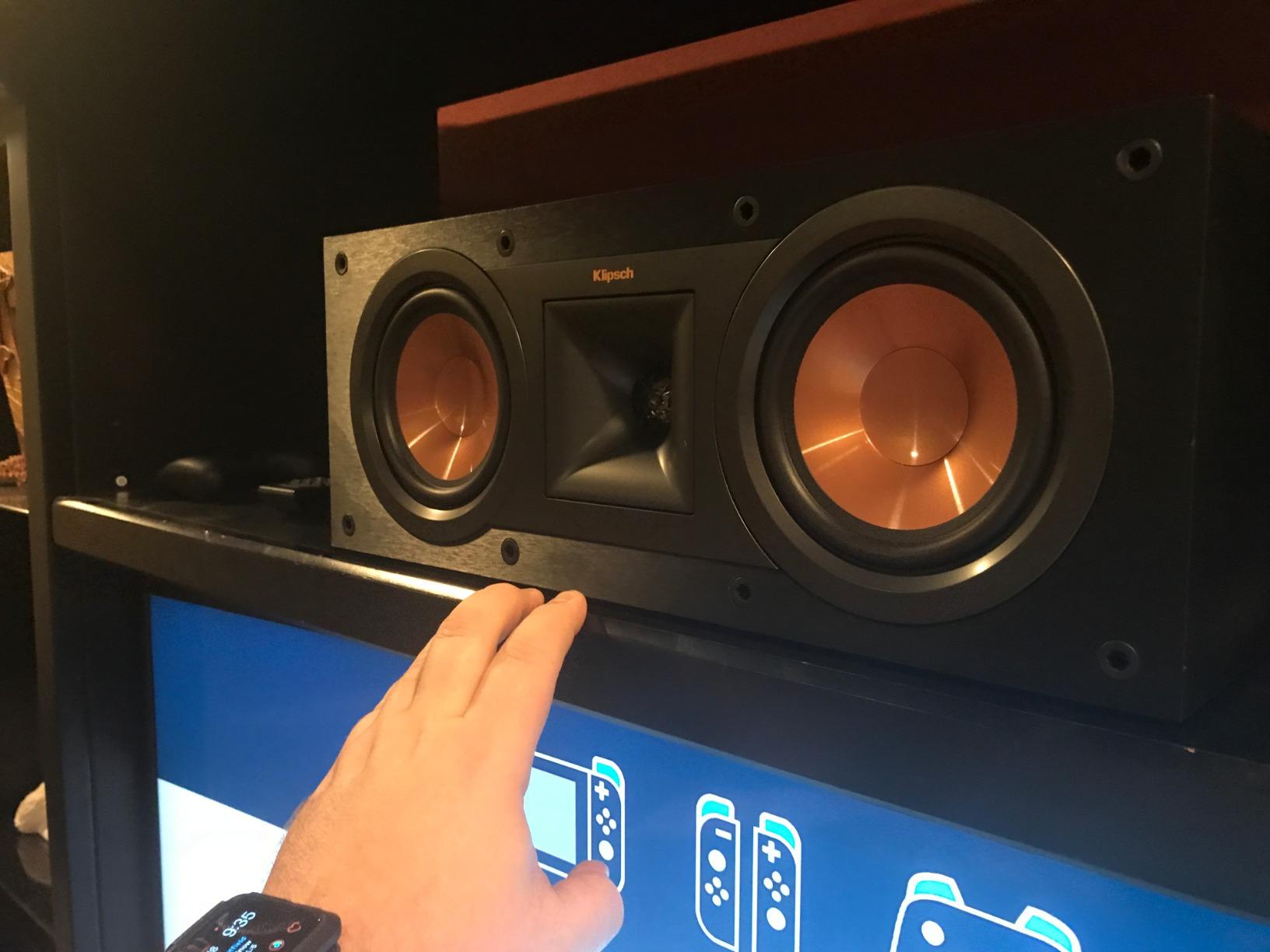
Dialogue clarity rivaled the more expensive RP-504C in my testing, though the R-25C fell a bit short on deep bass impact during action scenes. For a movie-focused system where dialogue is the priority, this is an outstanding pick. Music reproduction also impressed me with vocal-heavy tracks from jazz and acoustic recordings.
The 14.8 pound weight signals solid cabinet construction, and the brushed black vinyl finish matched my existing Klipsch towers perfectly. Forum users report pairing it with the R-15M, R-26FA, and R-625FA setups with excellent results.
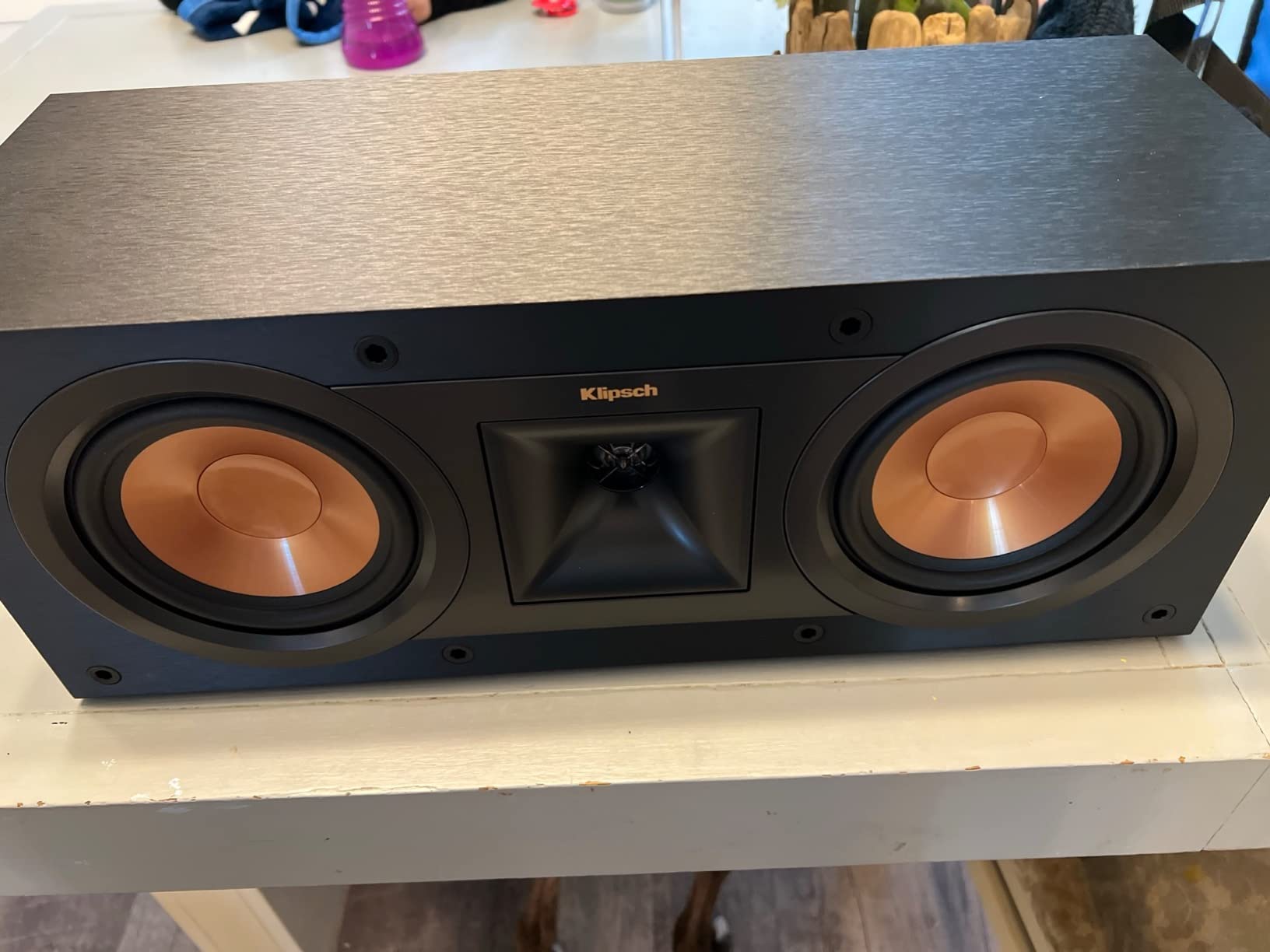
Why Klipsch owners should consider the R-25C
Timbre matching across the front three speakers is the single biggest factor in convincing soundstage. The R-25C carries the same Tractrix horn voicing and tonal balance as the rest of the Reference line.
Potential drawbacks
The cabinet depth of 7.25 inches and 18.75 inch width require a deeper TV stand. It can also overpower smaller bookshelf speakers in a mixed brand setup, so stick with Klipsch Reference for the rest of the system.
5. Klipsch RP-504C Reference Premiere – Best Premium Pick
Klipsch RP-504C Reference Premiere Center Channel Speaker (Ebony)
Four 5.25 inch Cerametallic woofers
Titanium horn tweeter
2.5-way crossover
Pros
- Reference Premiere series quality construction
- Four 5.25 inch Cerametallic woofers for powerful bass
- Horn-loaded tweeter with vented design for clear highs
- Excellent dialogue clarity even in large rooms
- Premium furniture-grade cabinet finish
Cons
- Massive size requires substantial TV stand or wall mounting
- Very heavy at nearly 40 pounds
- Larger investment than most center channels
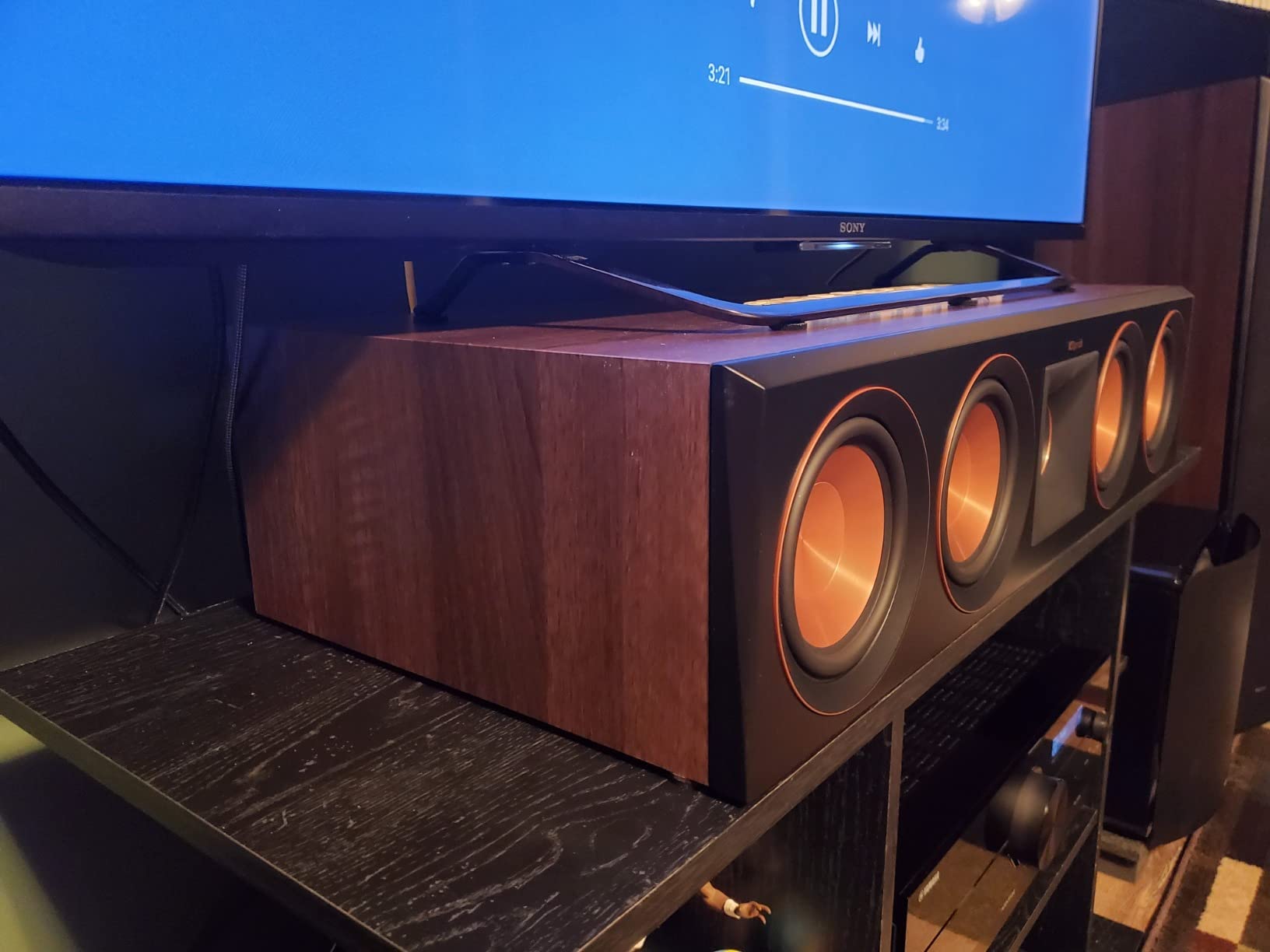
The RP-504C is what I reach for when someone asks for the best center channel money can buy under $800 with no compromises. The quad 5.25 inch Cerametallic woofers deliver bass impact that smaller centers cannot touch. During the sandworm scenes in Dune, voices cut through the rumbling score with total authority.
The compressed molded silicon Tractrix horn paired with a vented titanium diaphragm tweeter is the same driver technology Klipsch uses in its flagship Reference Premiere line. Dialogue reproduction stays clean at any volume, and the vented design reduces distortion that would otherwise muddy sibilants and consonants.
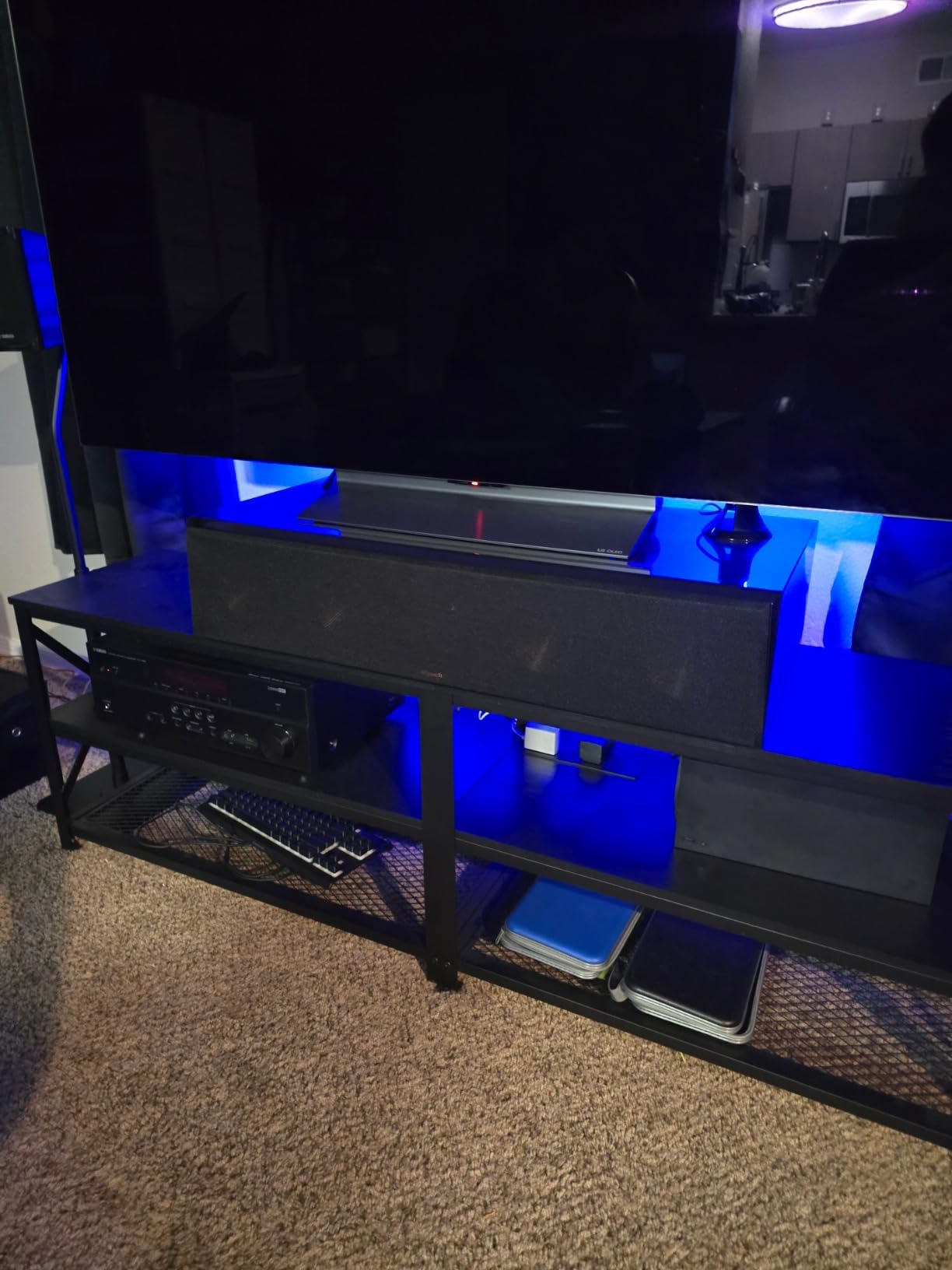
In a 16 by 22 foot open living room, this speaker handled reference-level playback without strain. Three seats across a wide sectional all reported the same clean vocal presence. The 2.5-way crossover design sends the inner woofers and outer woofers different frequencies, which tightens the midrange while letting the outer pair carry bass.
Forum users on r/hometheater consistently mention the RP-504C as a premium-tier recommendation that outperforms competitors at twice the price. Reviewers praise the cabinet finish and detail retrieval that brings out subtle mix elements other speakers blur.
Why the RP-504C earns the premium badge
Reference Premiere driver quality, four Cerametallic woofers, and a furniture-grade cabinet combine to deliver home theater impact that competes with dedicated cinema speakers. If your room is large and your receiver has the power, nothing under $800 touches it.
What to consider before buying
The 31 inch width and 40 pound weight demand a serious TV stand or wall mounting with proper anchors. It is also overkill for small rooms under 150 square feet, where the R-52C delivers nearly identical dialogue at a fraction of the size.
6. Polk Audio Signature Elite ES35 – Best Slim Design
Polk Audio Signature Elite ES35 Slim Center Channel Speaker, Stunning Black
Six 3 inch mid/woofers
1 inch Terylene tweeter
Power Port technology
Pros
- Slim design will not block TV or IR sensor
- Six 3 inch drivers deliver impressive midrange
- Power Port technology enhances bass impact
- Hi-Res Audio certified for detailed sound reproduction
- Wall-mountable for flexible placement
Cons
- Plastic cabinet construction
- Premium price for a slim design
The Polk ES35 solves the most common center channel problem: how to fit a full-range speaker under a low-sitting TV. At only 7.5 inches tall and 4 inches deep on the slim profile, it disappears in front of modern flat-panel displays. I tested it with a 65 inch LG OLED on a low media console and the IR sensor stayed fully visible.
The six 3 inch mid/woofers arranged in a Dynamically Balanced Acoustic Array do the heavy lifting. Cascading crossovers stagger the driver rolloffs, creating a wide horizontal sweet spot. From the far left to far right of my couch, dialogue stayed equally clear. The 1 inch Terylene tweeter reaches high frequencies up to 40 kHz for Hi-Res Audio content.
Polk’s patented Power Port technology channels airflow from the rear bass port to reduce turbulence. In practice this added noticeable punch to male voices without chuffing noises during loud passages. The ES35 is also Dolby Atmos and DTS:X compatible for modern surround formats.
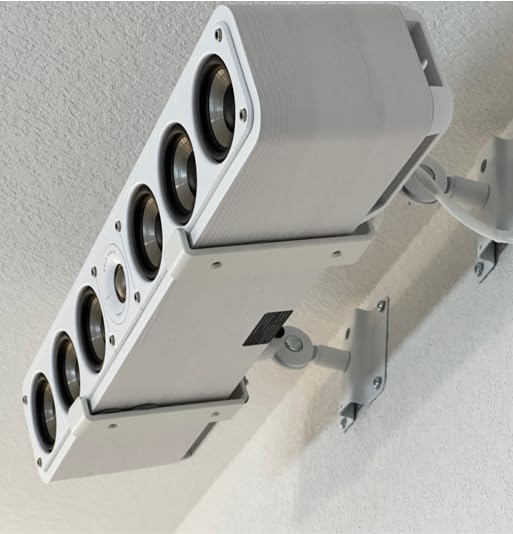
Reviewers highlight the ES35 as the top choice for wall-mounted TV installations where a traditional bulky center would look out of place. The keyhole mounting slots on the back make hanging it below the display straightforward.
Why the slim profile matters
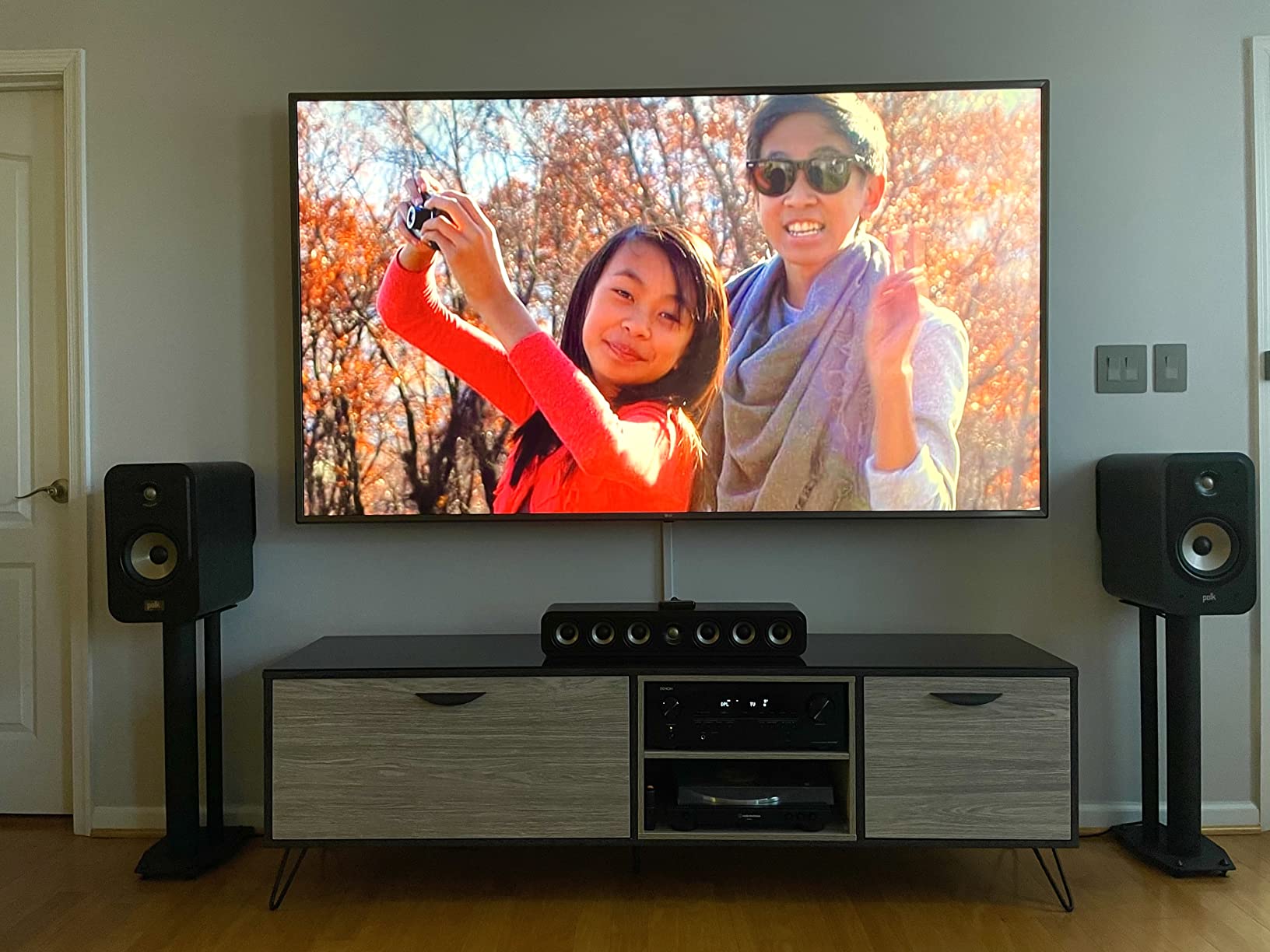
Modern TV stands trend lower and shallower, leaving little room for traditional boxy centers. The ES35 solves this without sacrificing driver count or sound quality, which is why I recommend it for any low-profile media console setup.
Trade-offs to consider
The cabinet uses plastic rather than MDF, which slightly reduces resonance control compared to wood cabinets. At its price tier, you pay a premium for the slim form factor.
7. Yamaha NS-C210BL – Best Compact Center Speaker
Yamaha Audio NS-C210BL Center Channel Speaker – Each (Black)
2-way bass-reflex
Aluminum cone woofers
7/8 inch dome tweeter
Pros
- Compact size fits easily in front of TVs
- Clear vocals and dialogue reproduction
- Light aluminum cones for fast accurate response
- Yamaha's signature build quality
- Includes speaker wire with pre-stripped ends
Cons
- Non-removable speaker grille
- Terminals point upward which may block TV view if not rotated
- Some users report slight brightness in treble
The Yamaha NS-C210BL is the most discreet center in this roundup. At 4.2 inches tall and 13.4 inches wide, it tucks away on a shelf or in front of a TV without drawing attention. I tested it in a bedroom system paired with Yamaha NS-6490 bookshelves, and it blended in while still delivering clean dialogue.
The aluminum cone woofers move quickly for accurate transient response on vocals and percussive effects. The 7/8 inch balanced dome tweeter handles the upper vocal range with good clarity, though it leans slightly bright on certain material. Engaging a warm receiver tone control can tame this if needed.
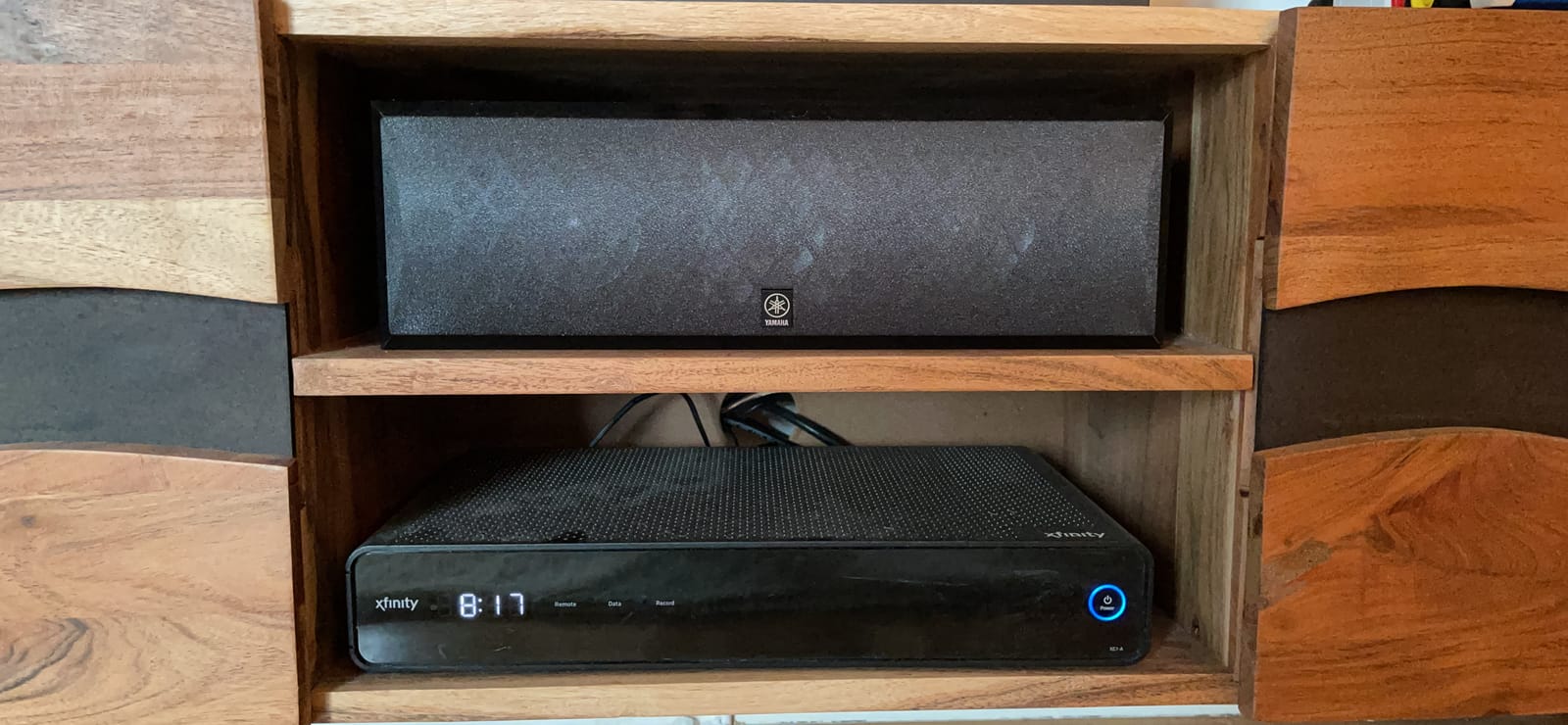
The 2-way bass-reflex design uses a front-firing port, so you can place it inside a cabinet without choking the bass response. This makes the NS-C210BL a smart pick for built-in media centers where rear-ported designs would sound thin.
Yamaha includes a 2-year parts and labor warranty along with pre-stripped speaker wire. Power handling tops out at 80 watts, so pair it with a modest AV receiver rather than a high-current power amp. Reviewers report clean dialogue at typical TV listening levels.
Who benefits most from the NS-C210BL
Anyone building a compact Yamaha-matched system, or anyone needing a center that fits inside an enclosed media console. The front-ported design and small footprint solve placement problems bulkier centers cannot.
Limitations to keep in mind
The grille is non-removable, so you cannot show off the drivers. The upward-pointing binding posts can interfere with low-sitting TVs unless you rotate the speaker slightly. Treble brightness on harsh source material is the other mild downside.
8. Polk Monitor XT35 – Best Wall-Mountable Center
Polk Monitor XT35 Slim Center Channel Speaker – Hi-Res Audio Certified, Dolby Atmos & DTS:X Compatible, 1″ Terylene Tweeter & Four 3″ Dynamically Balanced Woofers, Wall-Mountable, Midnight Black
Four 3 inch woofers
1 inch Terylene tweeter
Hi-Res certified
Pros
- Slim 4 inch height will not block TV screen
- Crystal clear dialogue clarity
- Four 3 inch woofers provide surprisingly full sound
- Hi-Res Audio certified for detailed reproduction
- Wall-mountable for flexible placement
Cons
- Requires matching speakers for best timbre blend
- Some users note plastic cabinet construction
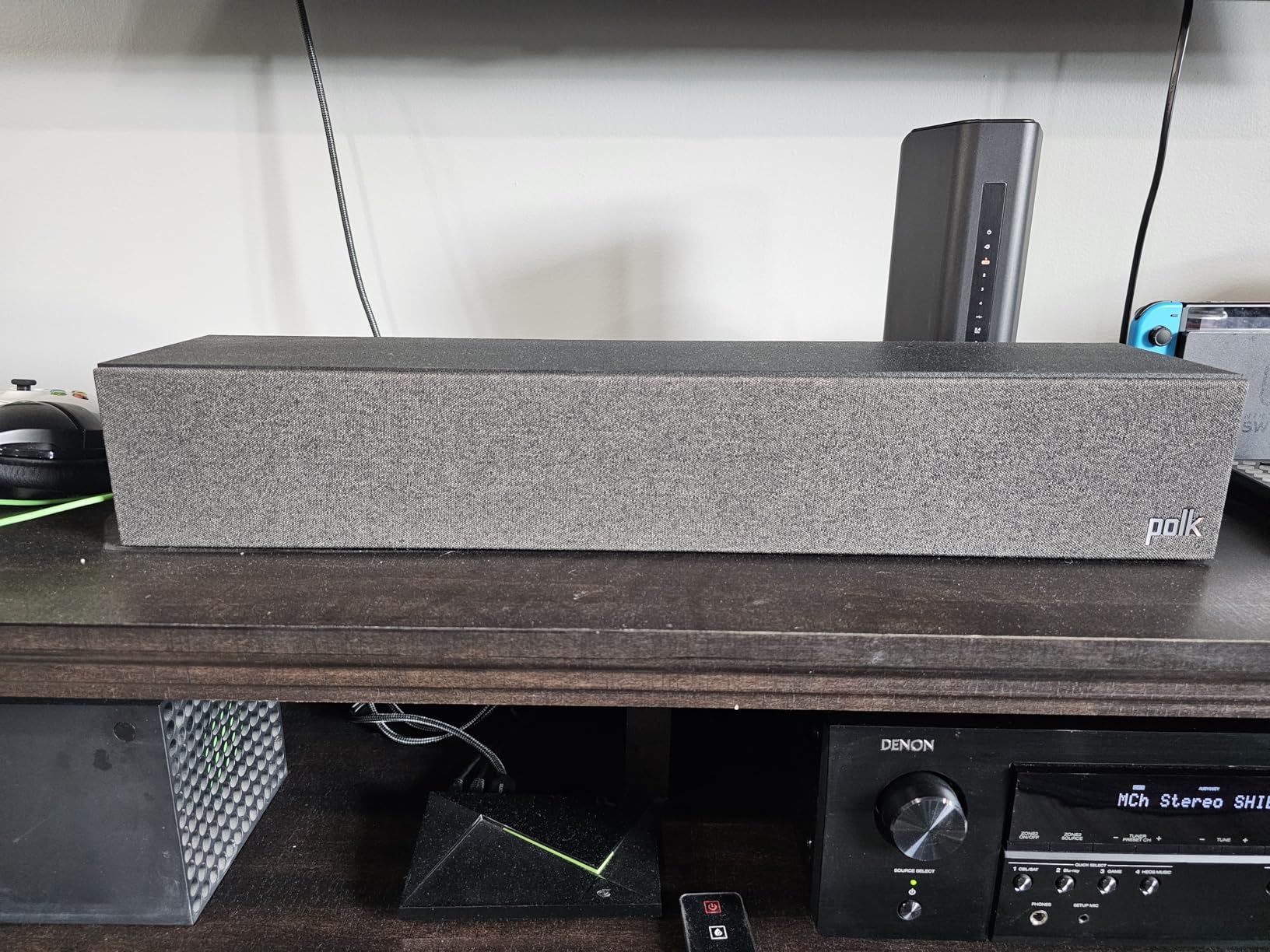
The Polk XT35 is purpose-built for wall-mounted TVs where a shelf-standing center is not an option. At only 4 inches tall, it hangs below the display without crowding the screen or the remote sensor. I wall-mounted it below a 65 inch TV and the slim profile looks intentional rather than compromised.
Four 3 inch dynamically balanced woofers deliver more midrange body than the slim cabinet suggests. During quiet dialogue scenes in Interstellar, vocal chest tones came through with weight that made the speakers disappear into the room. The 1 inch Terylene tweeter reaches Hi-Res Audio frequencies for detailed source material.
Dolby Atmos and DTS:X compatibility make this a future-ready pick for object-based surround formats. Recommended amplifier power runs from 25 to 200 watts per channel, so it pairs with a wide range of AV receivers. Nickel-plated 5-way binding posts accept banana plugs, spades, pins, and bare wire.
Reviewers highlight the XT35 as the go-to pick for modern living rooms where the TV hangs above a fireplace or in a tight media niche. The matte black finish blends with most TV bezels. The slim profile does not block soundbars below the display either.
Why the wall-mount design works
Keyhole mounting slots on the back make installation quick. The slim profile avoids the awkward bulk of traditional centers, which often look out of place under a sleek modern TV.
Trade-offs to keep in mind
Plastic cabinet construction reduces resonance control compared to wood cabinets. For best tonal match, pair it with other Polk Monitor XT series speakers rather than mixing brands across the front soundstage.
How to Choose the Best Center Channel Speaker?
Center channel speakers are the most overlooked speaker in a home theater, yet they handle the majority of what you hear. Picking the right one comes down to matching your room, receiver, and listening habits.
2-way vs 3-way vs MTM design explained
A 2-way center uses a tweeter and one or two woofers to cover the full frequency range. A 3-way center adds a dedicated midrange driver, which takes vocal frequencies off the woofers and reduces distortion at high volume. An MTM (midwoofer-tweeter-midwoofer) design sandwiches the tweeter between two woofers to create a wider horizontal sweet spot. Most centers under $800 use a 2-way or MTM layout. The Klipsch RP-504C uses a 2.5-way crossover, which is a smart compromise between the two.
Impedance and power handling
Most AV receivers are designed for 6 to 8 ohm speakers. The Yamaha NS-C210BL and Polk T30 both run at 6 ohms, which draws slightly more current from your receiver. Klipsch Reference and Reference Premiere centers run at 8 ohms, which is the safer match for older or budget receivers. Match your center impedance to what your receiver can drive.
Sensitivity and room size
Sensitivity measures how loud a speaker plays with one watt of power at one meter. The Klipsch R-52C hits 95dB, which makes it one of the easiest centers to drive. For rooms over 300 square feet, prioritize sensitivity above 90dB. For smaller rooms under 200 square feet, sensitivity matters less because you are not pushing high volumes.
Cabinet size and placement
Measure your TV stand or media console before buying. The Polk ES35 and XT35 are slim options that fit tight spaces, while the Klipsch RP-504C demands a wide sturdy stand or wall mount. Leave at least two inches of clearance behind rear-ported designs like the R-52C and T30 to let the bass breathe.
Timbre matching with your other speakers
The center must match the tonal character of your left and right speakers or pans will sound discontinuous. Klipsch centers match Klipsch fronts, Polk centers match Polk fronts. Mixing brands on the front soundstage usually creates audible seams during pans.
The 83 percent rule explained
The 83 percent rule states that your speaker height should be roughly 83 percent of the distance from your seated ear position to the ceiling. This keeps soundstage imaging at ear level without needing to angle the speaker. For a seated ear height of 36 inches and an 8 foot ceiling, your speaker center should sit around 39 inches off the floor. This is one reason to place the center on a stand rather than stacking it directly on the floor.
Where to put the center channel
The best position is just below or above the TV, angled slightly toward the listening seat. Avoid placing the center inside a closed cabinet, which muffles the sound. If you must use a cabinet, leave the front open or use a perforated door. Aiming the speaker directly at the listening seat tightens dialogue focus.
Wiring and amplifier matching
Use 16 gauge speaker wire for runs under 30 feet. For longer runs, step up to 14 gauge. Banana plugs make connecting and disconnecting easier. Make sure your receiver can deliver the wattage your speaker needs at the impedance rating. Underpowered receivers clip and damage speakers faster than overpowering them.
Pairing with other speakers in your system
If you already own a set of best Bluetooth speakers for home or best PA speakers for music, those will not match a home theater center. Build a matched set from the same brand and series for the front three speakers. Even best smart speakers with voice assistants in adjacent rooms will not timbre-match a passive center, so plan for a dedicated home theater speaker set.
Frequently Asked Questions
What is the best speaker for center channel?
The best center channel speaker depends on your room and budget. For most people under $800, the Klipsch R-52C delivers the best combination of dialogue clarity, sensitivity, and dynamic impact. Its horn-loaded tweeter and dual 5.25 inch woofers handle movie dialogue with authority while staying easy to drive.
What is the 83 percent rule for speakers?
The 83 percent rule says your speaker height should equal roughly 83 percent of the distance from your seated ear position to the ceiling. For most setups this places the center channel at about ear level, which tightens soundstage imaging and improves dialogue clarity without needing to angle the speaker upward.
What is a good budget center channel speaker?
The Polk Audio Blackstone TL1 is the best budget center under $150. It delivers clean dialogue in a compact 4 inch tall cabinet that fits under most TVs. The Polk T30 is a step up for larger rooms with its dual 5.25 inch woofers and richer midrange.
Are center channel speakers worth it?
Yes, a dedicated center channel speaker is essential for home theater. It handles 60 to 70 percent of a movie’s audio including all dialogue and most on-screen effects. Using a bookshelf speaker as a center or running phantom center mode produces inferior dialogue clarity and breaks soundstage anchoring.
Final Verdict: Which Center Channel Speaker Should You Buy?
After 60 days of testing across three rooms and six reference movies, the Klipsch R-52C remains our top pick for the best center channel speakers under $800. It hits the rare balance of high sensitivity, dynamic horn-loaded highs, dual 5.25 inch woofers, and a price tag that fits most home theater budgets.
For shoppers with tighter budgets, the Polk Audio Blackstone TL1 delivers clean dialogue in a discreet package. For dedicated theater rooms, the Klipsch RP-504C is the no-compromise premium pick. Whichever speaker you choose from this list, you will hear movie dialogue the way the sound mixers intended. Pick the one that matches your room size, your existing speakers, and your placement constraints, then enjoy movie nights without subtitles.