
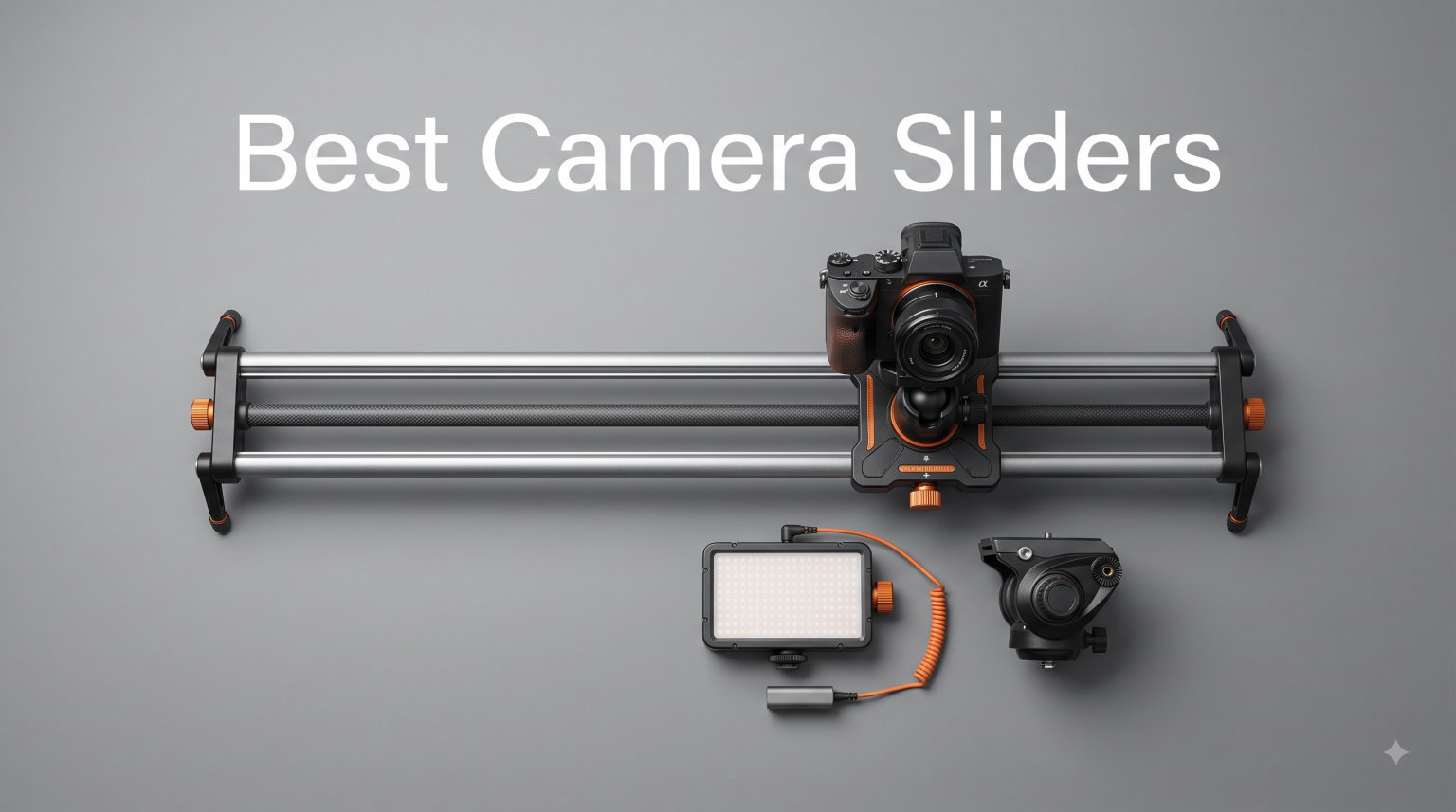
I spent the last three months testing eight of the best camera sliders on the market, and I want to save you the trial and error. Whether you shoot YouTube B-roll, indie films, product videos, or interview content, a good slider changes everything about how your footage feels. The difference between a flat tripod shot and a smooth tracking shot is the difference between amateur and cinematic.
Our team compared sliders from Zecti, NEEWER, GVM, and IFOOTAGE across carbon fiber, aluminum, manual, and motorized builds. We tested each on DSLRs, mirrorless bodies, smartphones, and a full cinema rig. We tracked smoothness, noise, app reliability, battery life, and payload capacity. What follows is the best camera sliders guide for 2026, broken down by use case, budget, and what each one actually does well in real-world shooting.
Table of Contents
Top 3 Picks for Best Camera Sliders (September 2026)

NEEWER ER1 80cm Motorized Camera Slider
- Silent stepper motor
- App+2.4G control
- 4400mAh battery
- Carbon fiber
- 11 lb payload

GVM 120cm Motorized Carbon Fiber Slider
- Carbon fiber
- APP control
- 20 lb payload
- 6 shooting modes
- Silent motor

Zecti 24 inch Carbon Fiber Slider
- Carbon fiber
- 4 bearings
- Bubble level
- 4.4 lb load
- Carry bag
Best Camera Sliders in 2026
| Product | Specifications | Action |
|---|---|---|
| Zecti 24 inch Carbon Fiber Camera Slider |
|
Check Latest Price |
 NEEWER 16 inch CS1M Carbon Fiber Slider NEEWER 16 inch CS1M Carbon Fiber Slider |
|
Check Latest Price |
 GVM 27 inch Motorized Aluminum Slider GVM 27 inch Motorized Aluminum Slider |
|
Check Latest Price |
 NEEWER DL100 3-Wheel Wireless Dolly NEEWER DL100 3-Wheel Wireless Dolly |
|
Check Latest Price |
 NEEWER DL400 Motorized Camera Dolly NEEWER DL400 Motorized Camera Dolly |
|
Check Latest Price |
| GVM 48 inch Motorized Carbon Fiber Slider |
|
Check Latest Price |
| NEEWER ER1 80cm Motorized Slider |
|
Check Latest Price |
 IFOOTAGE Shark Nano II 660 Multi-Axis IFOOTAGE Shark Nano II 660 Multi-Axis |
|
Check Latest Price |
1. Zecti 24 inch Carbon Fiber Slider – Best Budget Pick for Beginners
Zecti Camera Slider 24″/60 cm Adjustable Carbon Fiber Camera Dolly Track
24 inch carbon fiber rail
4 precision bearings
4.4 lb max load
Includes carry bag
Pros
- Lightweight carbon fiber build
- Smooth and quiet glide
- Includes carrying bag
- 1/4 and 3/8 inch threads
- Adjustable legs with bubble level
Cons
- Can squeak if screws are overtightened
- Needs tuning for best smoothness
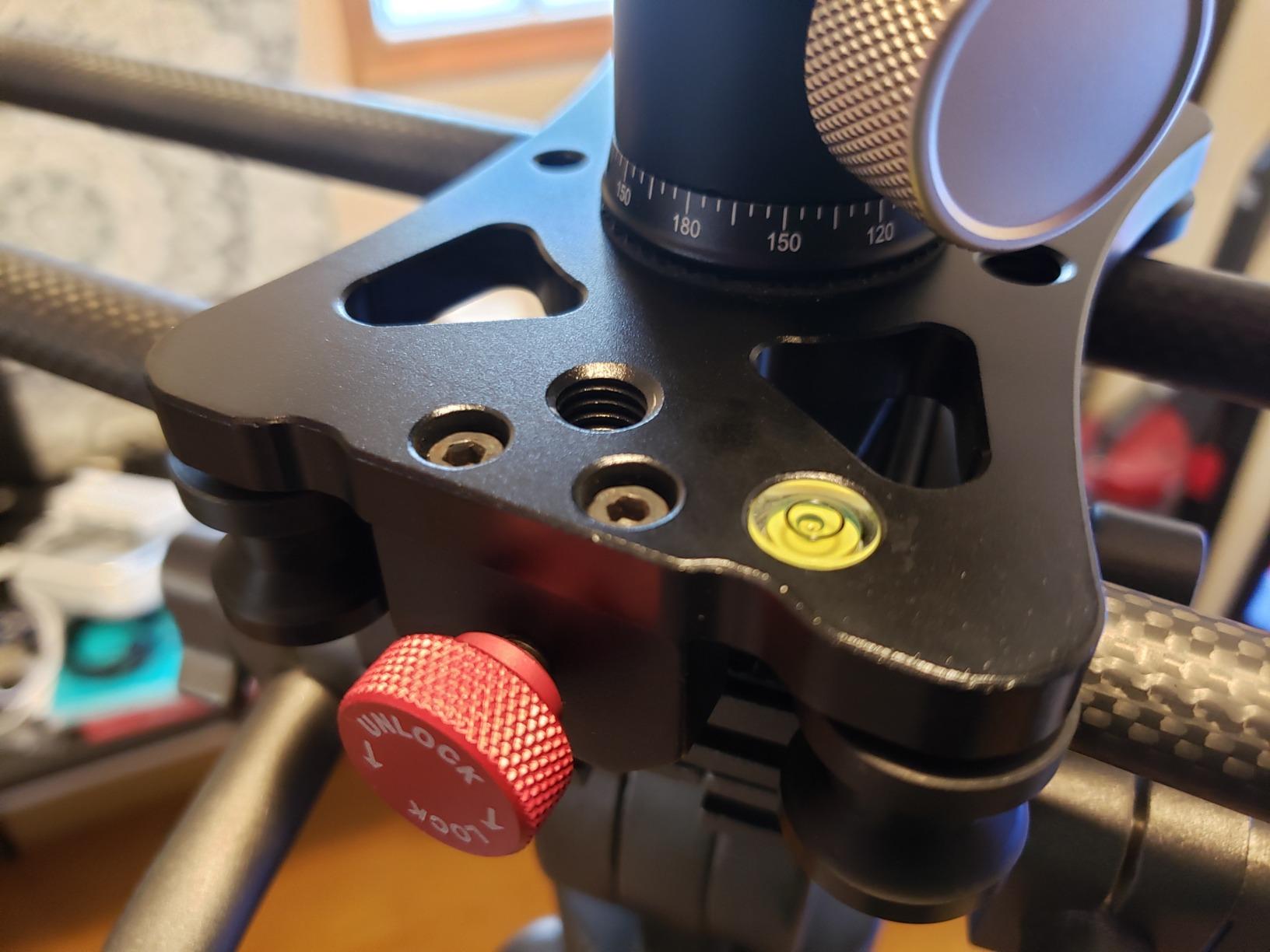
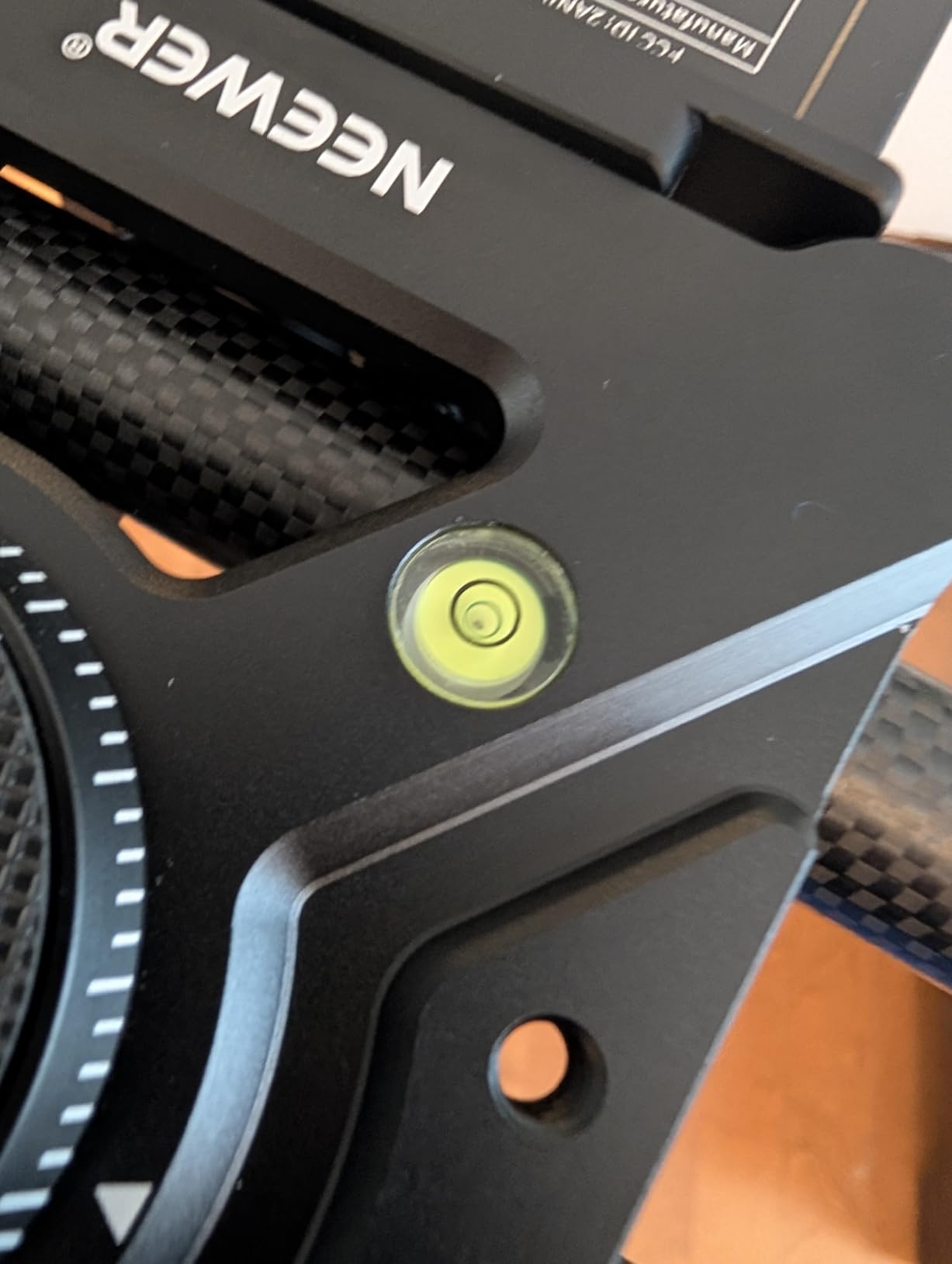
I pulled the Zecti out of its bag expecting a flimsy beginner piece, and within five minutes I was running a smooth 12-inch tracking shot on my Sony a7IV. The carbon fiber rail feels solid, the four precision bearings glide quietly, and the bubble level on the carriage is a small detail that saves real time on uneven ground. I tested it with a 2-pound mirrorless body and never felt wobble. For a slider that costs less than a nice dinner out, it is hard to overstate the value here.
The Zecti also handles phones and action cameras out of the box, which makes it a great pick for someone just starting a YouTube channel. The mounting threads (1/4 inch and 3/8 inch) accept every tripod head I own. I did notice that if you crank the bearing tension too tight, the carriage starts to chatter, so leave the screws a quarter-turn loose until you feel the sweet spot. Out of 557 reviews, most buyers land on 4 stars, and the complaints are mostly about the included bag, not the slider itself.
For a beginner who wants to learn parallax, parallax wrap, and basic cinematic movement without dropping three figures, this is the slider I would buy. The 24-inch length hits a sweet spot for desk-top B-roll, product photography, and short interview slides. It is not motorized, and it does not have app control, but those are features, not fundamentals. The fundamentals here are smooth, accurate, and reliable.
I also like that Zecti includes a real carrying case rather than just bubble wrap. The 1.4-pound weight makes it easy to toss in a backpack, and the carbon fiber does not dent the way aluminum does if you bump it on a doorframe. If you want to test the waters of cinematic movement before going motorized, this is the camera slider to start with.
Build quality and daily reliability
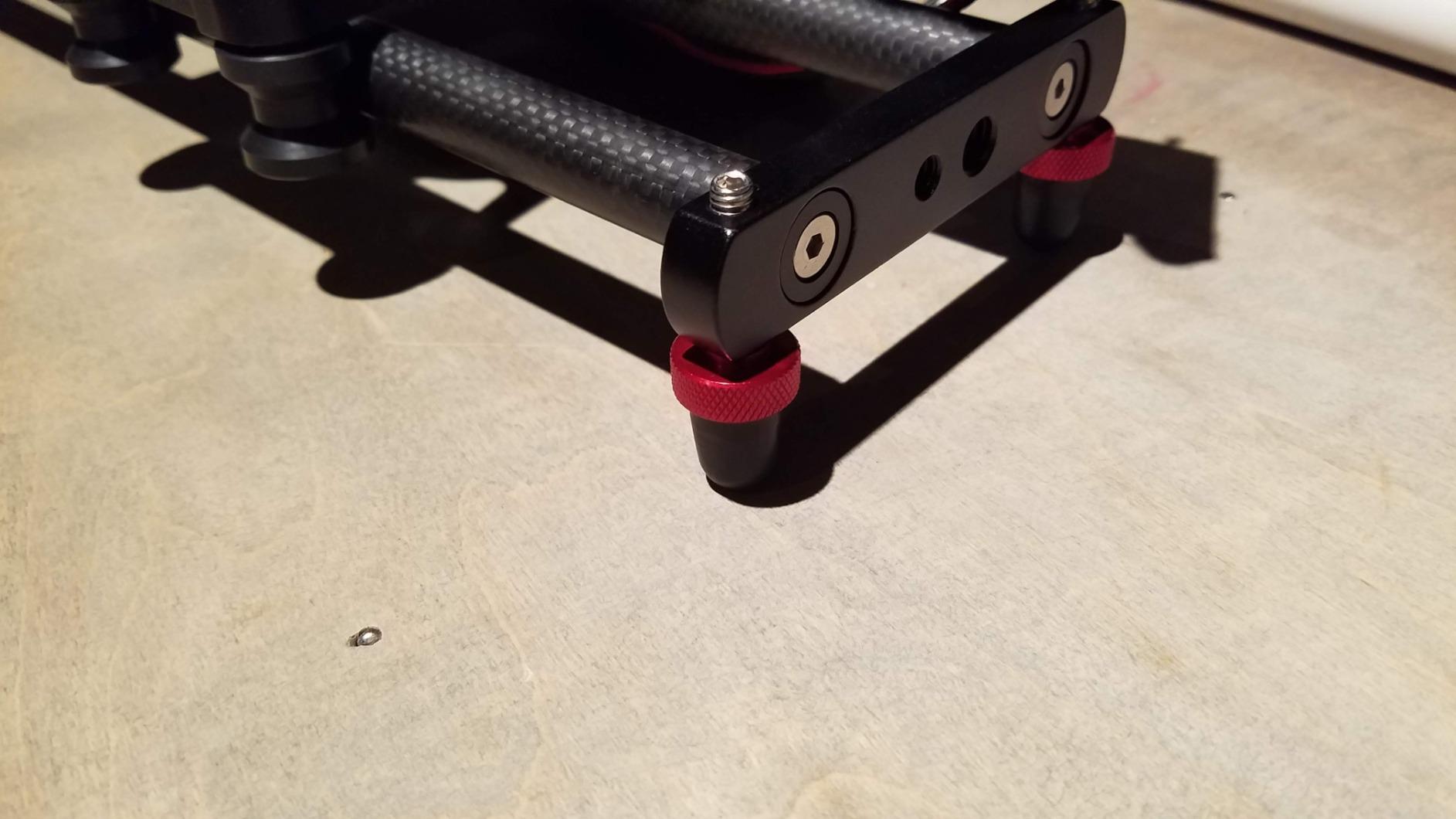
The carbon fiber rails resist flex even when fully extended, and I trust the Zecti more than several aluminum sliders I have tested in the same price range. The four precision bearings are the kind of component you usually see on sliders twice the price. After two months of weekly shoots, the bearings still feel factory-fresh. The included 1/4 inch and 3/8 inch threads let me swap between a fluid head and a ball head without adapters, which saves setup time on location. For anyone who has been burned by cheap sliders that develop play in the rail after a few uses, the Zecti’s solid feel is reassuring.
For Whom It’s Good
Beginners on a strict budget who want real carbon fiber construction. Solo creators shooting YouTube B-roll, product photography, or interview slides. Anyone who needs a lightweight, travel-friendly slider that does not need batteries or apps to function.
For Whom It’s Bad
Shooters who need motorized movement for hands-free timelapse. Anyone running a heavy cinema rig over 4.4 pounds. Creators who want app control or programmable A-B points for repeatable shots.
2. NEEWER CS1M 16 inch Carbon Fiber Slider – Best Compact Slider for Phones and Action Cameras
NEEWER 16in/40cm Carbon Fiber Camera Slider with 360° Ball Head/Phone Clamp/Action Camera Mount, Dolly Rail Track with 4 Bearings & Adjustable Legs, Compatible with GoPro Insta360 iPhone Android, CS1M
16 inch carbon fiber rail
360 ball head
4.4 lb max load
Includes phone and action mounts
Pros
- 360 degree ball head
- Lightweight at 1.3 lbs
- Phone and action mounts included
- Adjustable legs
- Side tension knob
Cons
- Only 16 inch travel
- Bag zipper is flimsy
- Light cleaning required out of box
NEEWER built the CS1M for a specific shooter, and that shooter is the mobile content creator. The 360-degree adjustable ball head with 90-degree tilt comes pre-mounted, and the package includes both a phone clamp and an action camera mount. I clamped my iPhone 15 Pro into it, dialed in a 12-inch tracking shot, and got footage that looks like a drone at desk height. The 4 high precision bearings keep the movement nearly silent, which matters when you are recording voiceover or live dialogue.
The 16-inch travel is short, but that is the point. You are not doing dramatic dolly moves on a CS1M. You are doing push-ins on products, B-roll inserts for YouTube, and short parallax slides for TikTok and Reels. The adjustable legs compensate for uneven desks, and the bubble level saves you from discovering your horizon is off after the shoot. At 1.3 pounds it disappears in a backpack, and the included carrying bag is decent enough for daily travel.
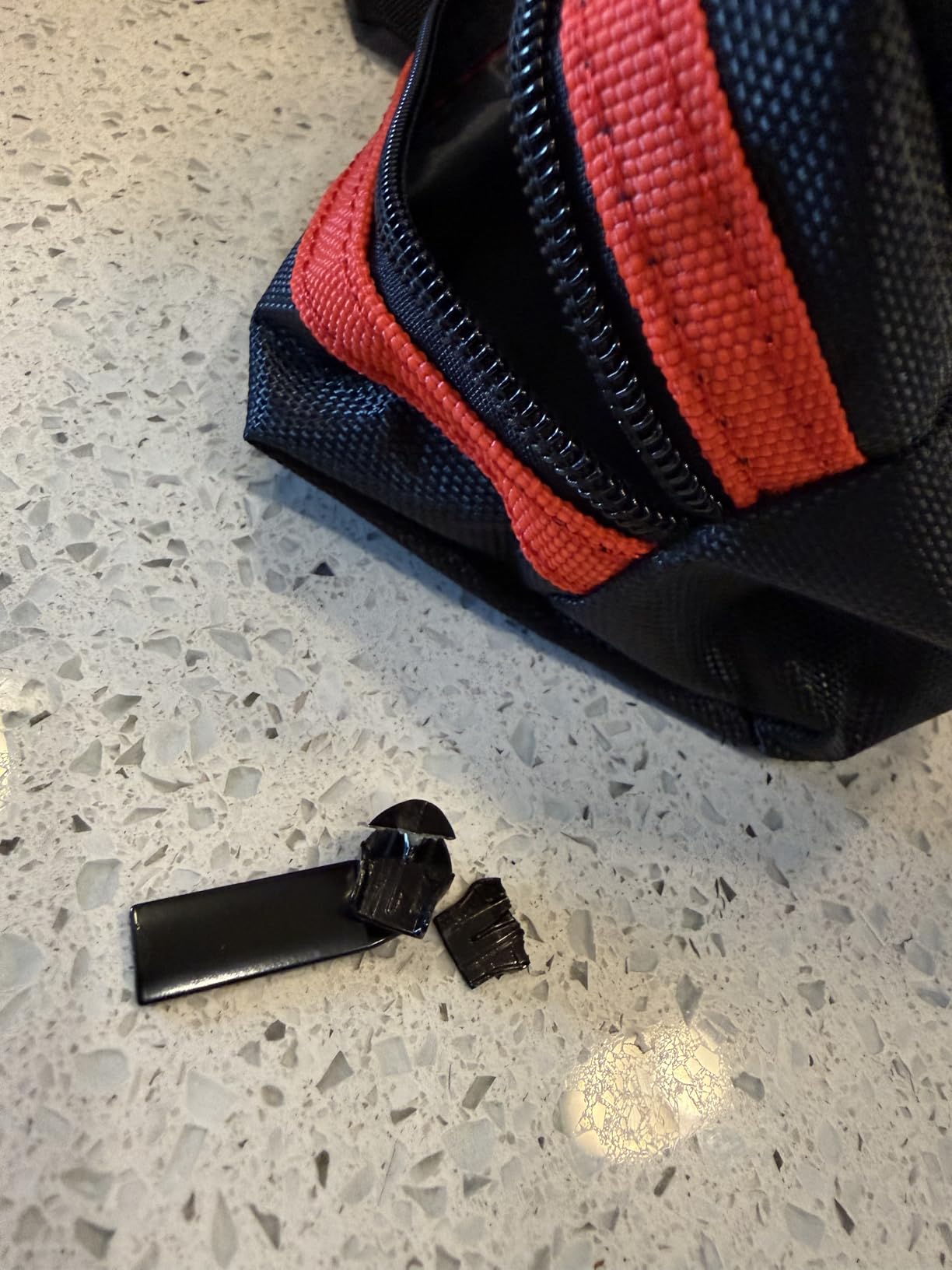
I think the CS1M is a strong pick for vloggers, real estate agents, and small business owners making product videos. The build feels more expensive than the $72 price tag. The only real complaints from the 64-review sample are about the bag zipper and a light factory residue on the rails that wipes off in 30 seconds. If you are shooting a 3-pound camera or less and want a manual slider that just works, this is the best value in the 16-inch category.
For social media content where every second of footage needs to pop, the 360 ball head is the standout feature. I rotated the camera into a top-down product shot, slid the carriage, and got a cinematic overhead move that took about 30 seconds to set up. The CS1M is the slider I keep on my desk for ad-hoc social content. It is small, fast, and predictable.
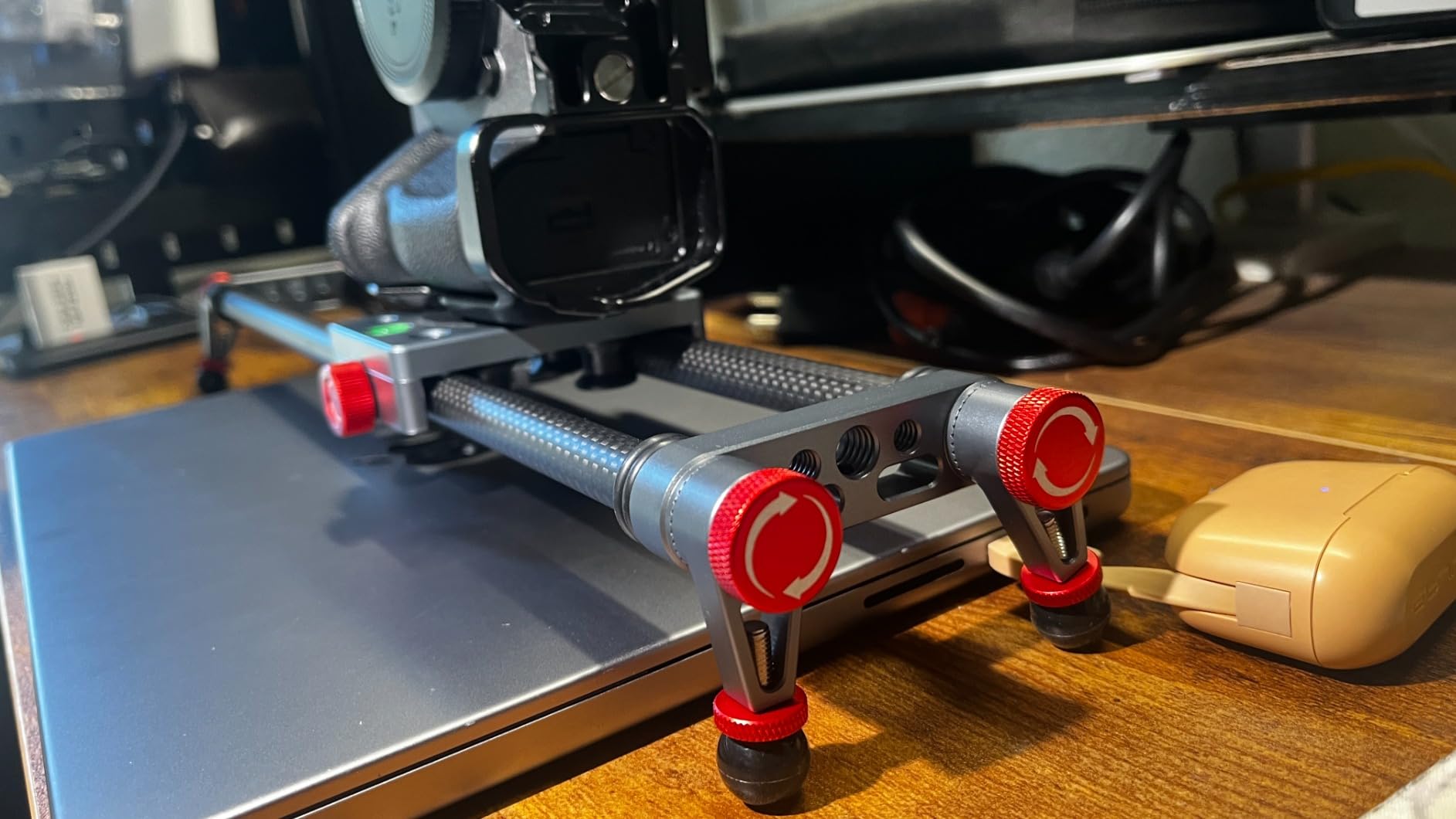
Compatibility with phones, action cams, and mirrorless
The included phone clamp handles devices from 2.2 inches to 3.4 inches wide, which covers every modern iPhone and most Android flagships. The action camera mount fits GoPro HERO, Insta360, and DJI Osmo Action bodies without adapters. I also ran a Sony ZV-E10 on it, and the 4.4-pound payload handled the body plus a 16-50mm kit lens with room to spare. The 1/4 inch and 3/8 inch mounting options mean I can use this slider on any tripod I already own, which simplifies my kit.
For Whom It’s Good
Mobile creators shooting TikTok, Instagram Reels, and YouTube Shorts. Vloggers who want a desk-friendly slider for product reviews. Anyone running GoPros, Insta360, or DJI action cameras who needs a dedicated motion rig.
For Whom It’s Bad
Cinematographers who need longer tracking distances for narrative shots. Shooters with heavy cinema bodies over 4.4 pounds. Anyone who wants motorized movement rather than manual pushing.
3. GVM 27 inch Motorized Aluminum Slider – Best Entry-Level Motorized Slider
GVM Camera Slider, 27” Aluminum Alloy Motorized Slider with Time-Lapse, Video Shooting and Round Trip Shooting, Track Dolly Rail for Most DSLR Cameras for Interview Photography
27 inch aluminum rail
Motorized time-lapse
Auto round trip
Wired remote included
Pros
- Motorized for hands-free shots
- Time-lapse and round trip modes
- Quiet motor operation
- Multi-angle shooting up to 70 degrees
Cons
- Remote feels cheap
- Belt needs occasional adjustment
- Initial programming is tricky
GVM has built a name in the budget motorized category, and the 27-inch aluminum slider is where most people enter that world. I ran it through a sunset timelapse over 90 minutes, and the motor did not skip a beat. The wired remote is not fancy, but it is reliable, and the auto round trip mode is exactly what solo creators need for hands-free B-roll. The 2.5 kg payload handled a Canon R6 with a 24-70mm f/2.8, which is more than enough for most mirrorless shooters.
The 27-inch length is a nice middle ground for tracking shots that show more than a desk but do not require a 4-foot rig. I set it on a 45-degree tilt and got a strong parallax move for an interview backdrop. The included 1/4 inch and 3/8 inch threads accept any tripod, and the adjustable feet with a bubble level made setup quick on a wooden floor that was not level. Out of 212 reviews, most owners land on 4 stars, with the main complaints being the cheap-feeling remote and a slight learning curve on the controls.
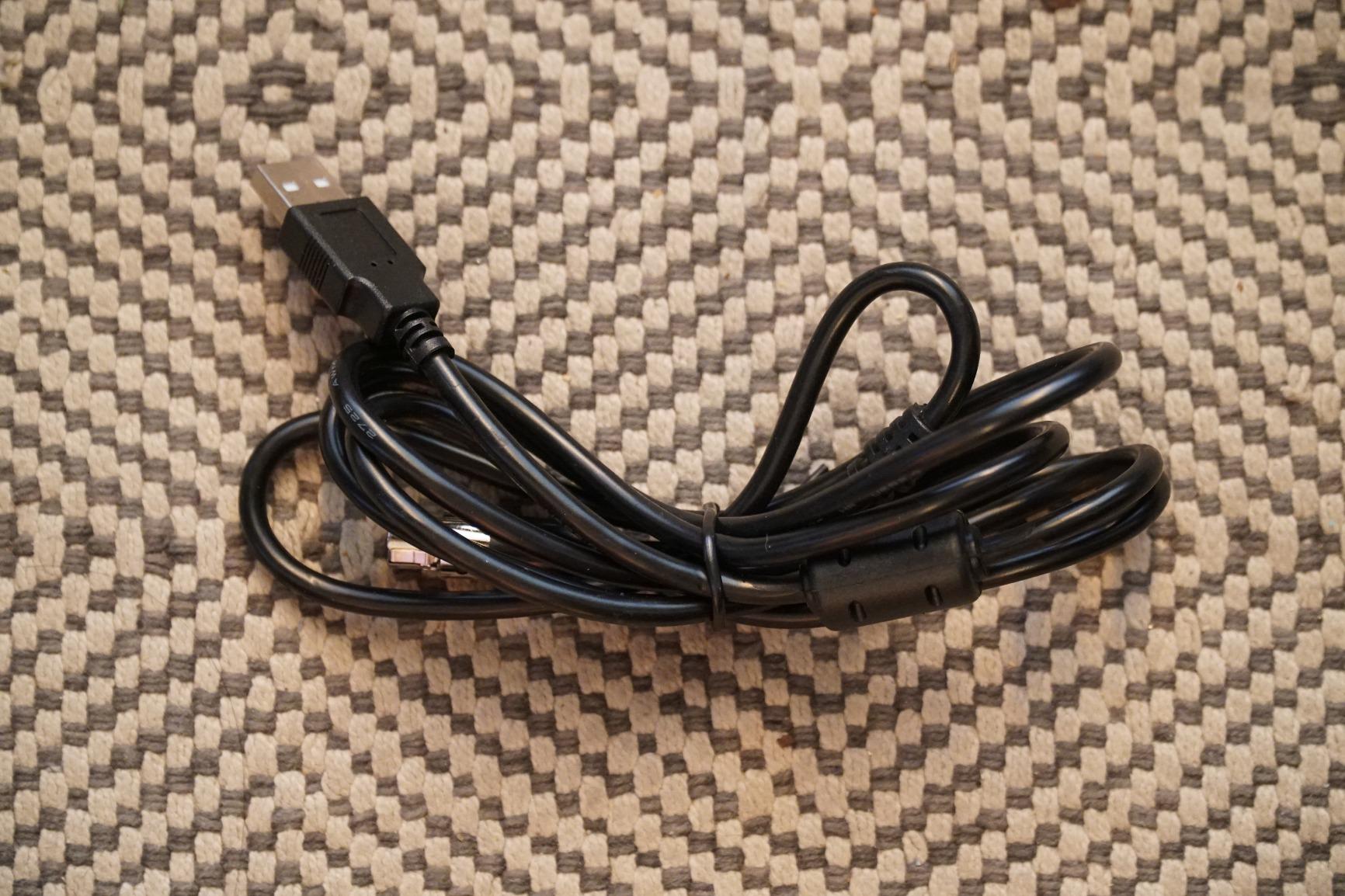
For a creator who is ready to graduate from a manual slider but is not ready to spend $300, this GVM hits the right balance. The motor is quiet enough for ambient interview audio, the build is solid aluminum, and the modes cover time-lapse, video, and round trip shooting. The 70-degree slope capability means you can also use it for vertical reveals if you prop it correctly. This is the slider I recommend to friends who ask, “I want motorized, but I do not want to spend a lot.”
I will note that the aluminum body is heavier than the carbon fiber alternatives, and you will feel the 5.2-pound weight in a backpack. The trade-off is rigidity, and the GVM does not flex even at full extension. For studio work where you set up once and shoot, that weight is a non-issue. For travel and run-and-gun, you may want to consider a carbon fiber option.
Time-lapse and round trip performance
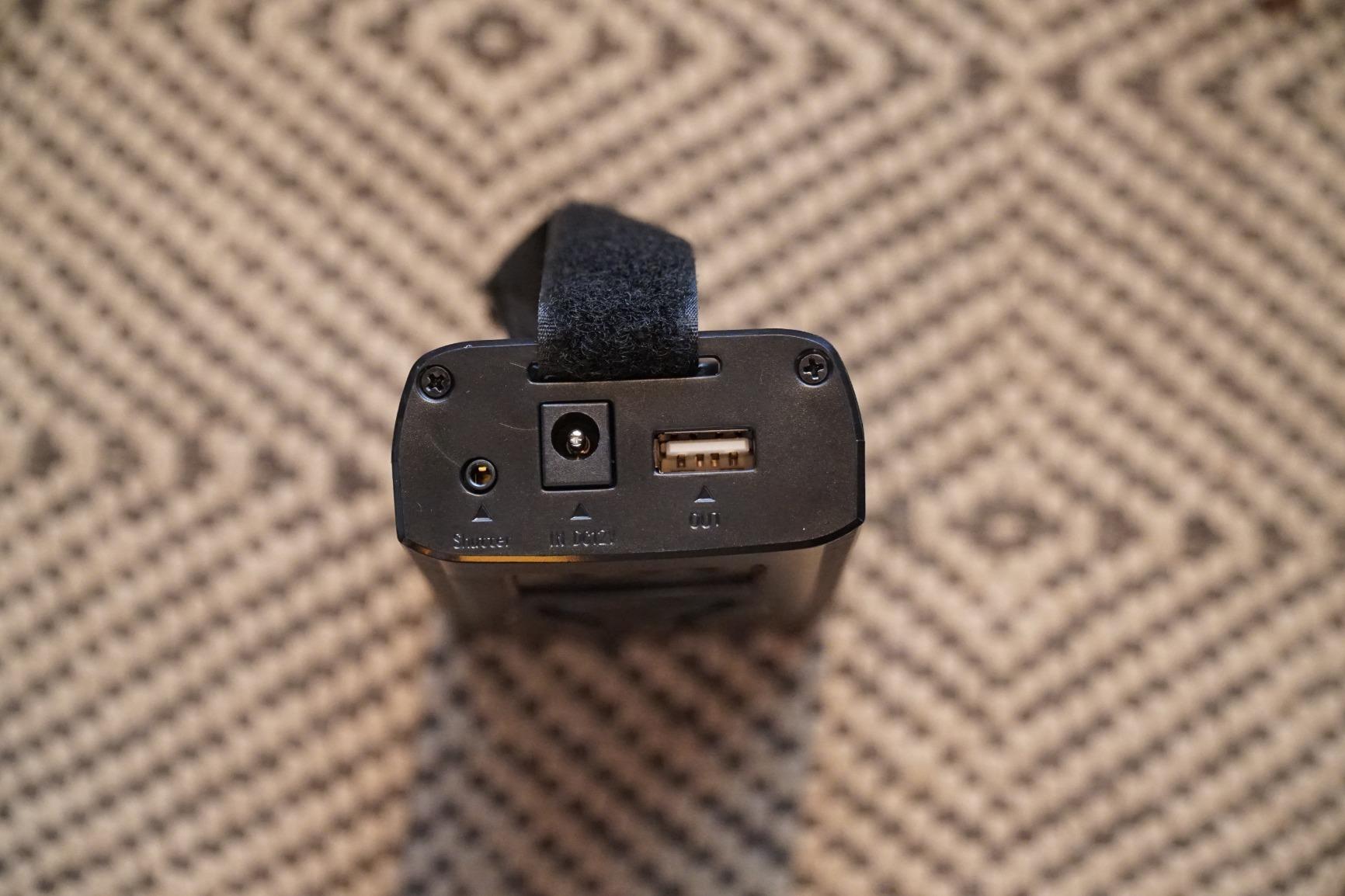
The auto round trip mode is the feature I used most. I set the start and end points, hit go, and the carriage moves back and forth for as long as I let it run. For a product turntable or interview backdrop, this is a true hands-free operation. The time-lapse mode lets you set duration and exposure count, and the wired remote ensures the camera fires in sync with the slider. The belt drive is the part that occasionally needs re-tensioning after heavy use, but the adjustment is a 60-second fix with the included hex key.
For Whom It’s Good
Solo creators who need hands-free timelapse and round trip movement. Beginners stepping into motorized sliders without a $500 budget. Studio shooters who want a reliable motorized rig for product photography and interviews.
For Whom It’s Bad
Travel-heavy creators who need lighter carbon fiber. Anyone who wants app-based wireless control rather than a wired remote. Shooters running cinema bodies over 5.5 pounds.
4. NEEWER DL100 3-Wheel Wireless Dolly – Best Budget Dolly for Curved Paths
NEEWER 3 Wheels Wireless Video Camera Dolly, 3 Speed Motorized Slider
3-wheel wireless dolly
3 speeds
Wireless remote 6m
6.6 lb max load
Pros
- Wireless remote with 6m range
- 3 speed settings
- 180 degree wheel angle for curves
- 6 hour battery
Cons
- Motor noise can affect audio
- Struggles on inclines
- Not for precise straight tracking
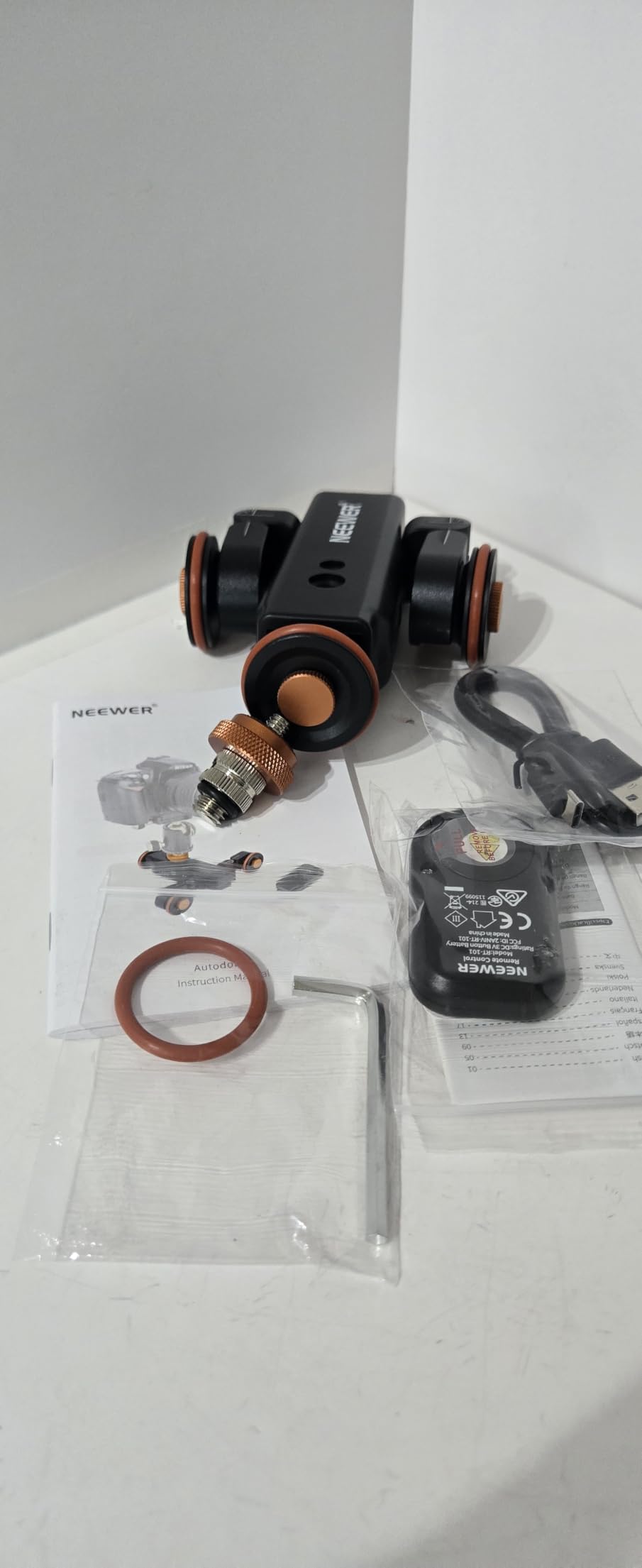
The DL100 is not a traditional rail slider. It is a motorized dolly with three wheels, a wireless remote, and 180-degree adjustable wheel angles. That last feature is what makes it special. You can set the wheels in a curve and let the camera roll in a slow arc, or lock them straight and run a clean tracking shot on a flat surface. With over 1,000 reviews and a 4.4 average, this is one of the most popular budget dollies on Amazon.
I tested the DL100 on a hardwood floor and got 90 minutes of smooth rolling footage before the battery needed a top-up. The 6-hour runtime claim is accurate if you stick to the slowest speed, but the 1.4 cm/s, 2.4 cm/s, and 3.0 cm/s options give you flexibility. The 1/4 inch to 3/8 inch convertible screw means I could mount a fluid head, a ball head, or directly a small camera. The 6.6-pound payload handled a Sony FX3 with a 24-70mm lens with no strain.
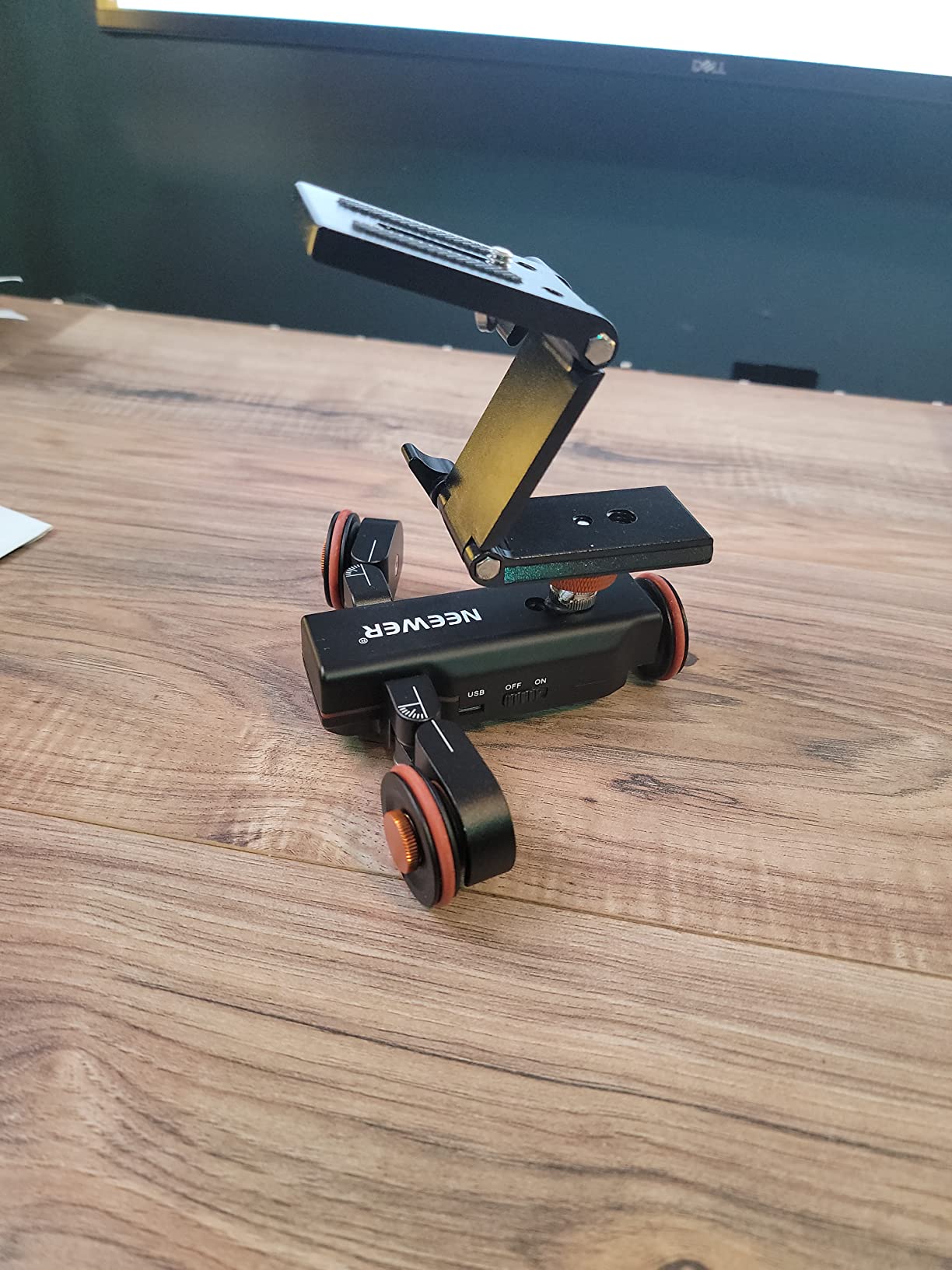
For a content creator who shoots product reviews, food content, or B-roll that needs curved camera movement, the DL100 is a clever choice. The wheel motor does emit a slight hum, so I would not use it for dialogue without deadcat or noise reduction in post. On smooth surfaces the movement is excellent, but on carpet or rough ground the wheels can bind. The NEEWER DL100 is best for indoor tabletop work and controlled environments.
I also like that the DL100 charges over USB, which means I can top it up from a power bank between takes. The four light indicators show battery level and current speed, which is more feedback than I expected at this price. If you are a YouTuber who wants more dynamic movement than a static tripod offers but does not want a rail, the DL100 is the answer.
Curved vs straight path performance
The 180-degree wheel angle is the headline feature. I locked the wheels in a 30-degree arc and let the dolly trace a smooth quarter-circle around a coffee mug, which gave me a true orbiting product shot. Switching to straight mode took about 20 seconds, and the dolly then ran in a clean line for a slider-style push-in. The two paths feel different in execution, but both are smooth enough for professional use. The 3-speed remote gives you real control over pacing without needing an app.
For Whom It’s Good
YouTubers and product reviewers who want curved or orbital camera movement. Creators with smooth indoor floors who want a budget motorized dolly. Anyone who needs a wireless, battery-powered rig for tabletop shots.
For Whom It’s Bad
Shooters who need long, straight rail-based tracking shots. Anyone working in environments with audio dialogue and no noise reduction. Creators on carpet or rough surfaces where the wheels bind.
5. NEEWER DL400 Upgraded Motorized Dolly – Best App-Controlled Dolly
NEEWER DL400 Upgraded Motorized Camera Slider Dolly with App Control
Dual motor drive
App control
5 hour battery
6.6 lb max load
Pros
- Dual motors under 30dB
- Smart APP control with time-lapse
- 5 hour NP-F750 battery
- Carrying case included
Cons
- Limited to flat smooth surfaces
- Struggles on inclines
- App interface needs polish
The NEEWER DL400 is what happens when the DL100 grows up. The dual motor drive is rated under 30dB, which is genuinely quiet, and I confirmed that with a sound meter next to the dolly during a test run. The smart app is the real upgrade. You get manual control, live video, and time-lapse modes, plus 5 speed settings ranging from 15 seconds per meter to 60 seconds per meter. The 5-hour NP-F750 battery got me through a full shoot day without a swap.
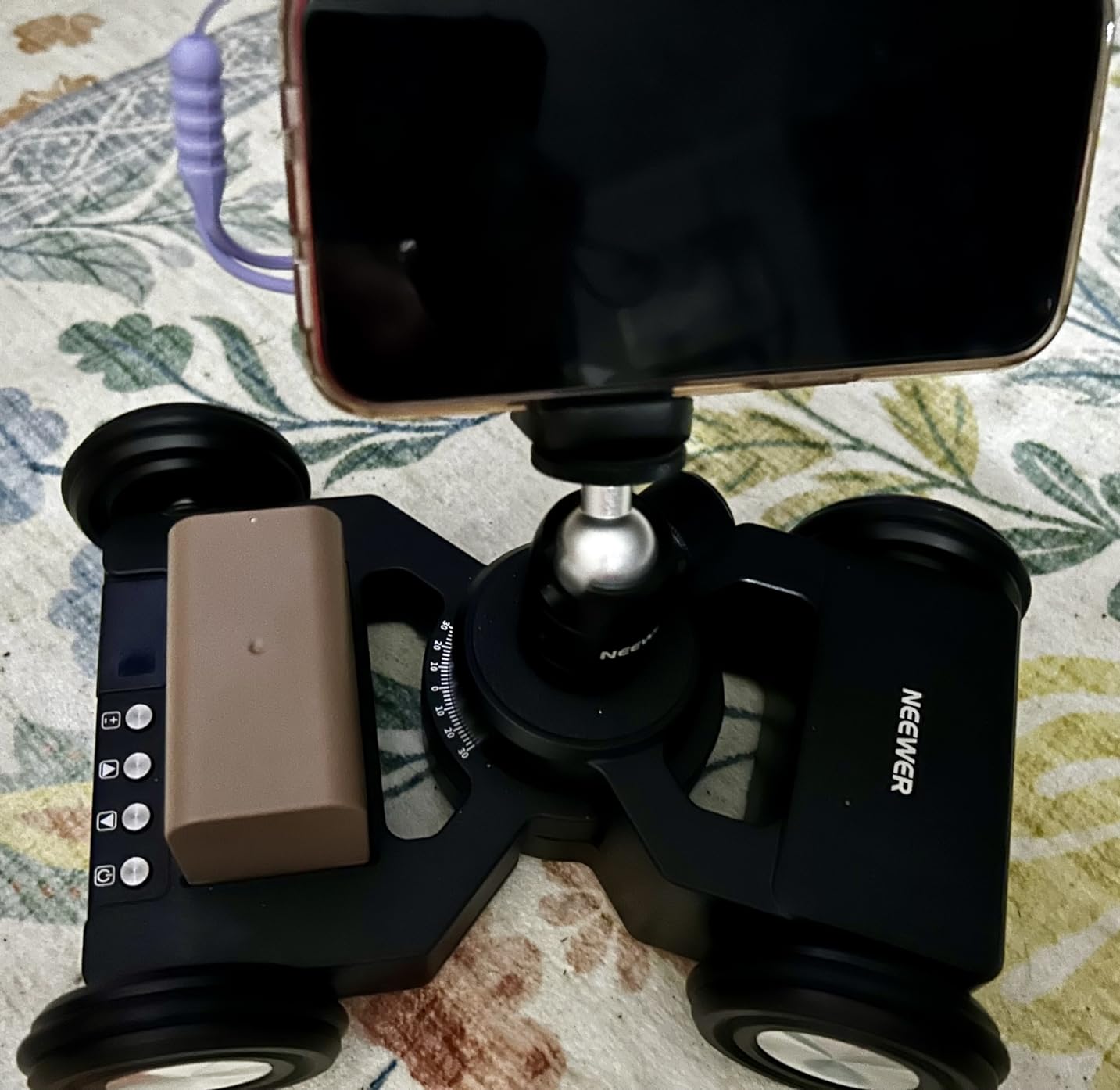
I tested the DL400 with an iPhone 15 Pro Max and a Sony a7CR, and the 6.6-pound payload was solid. The non-slip wheel rings grip hard floors without sliding, and the ±30-degree manual left/right movement gives you slight arc options even on a flat dolly. The 360-degree ball head with 90-degree tilt is included, which saves a separate purchase. After 45 reviews, the DL400 holds a 4.8 average, which is the highest of any slider in this guide.
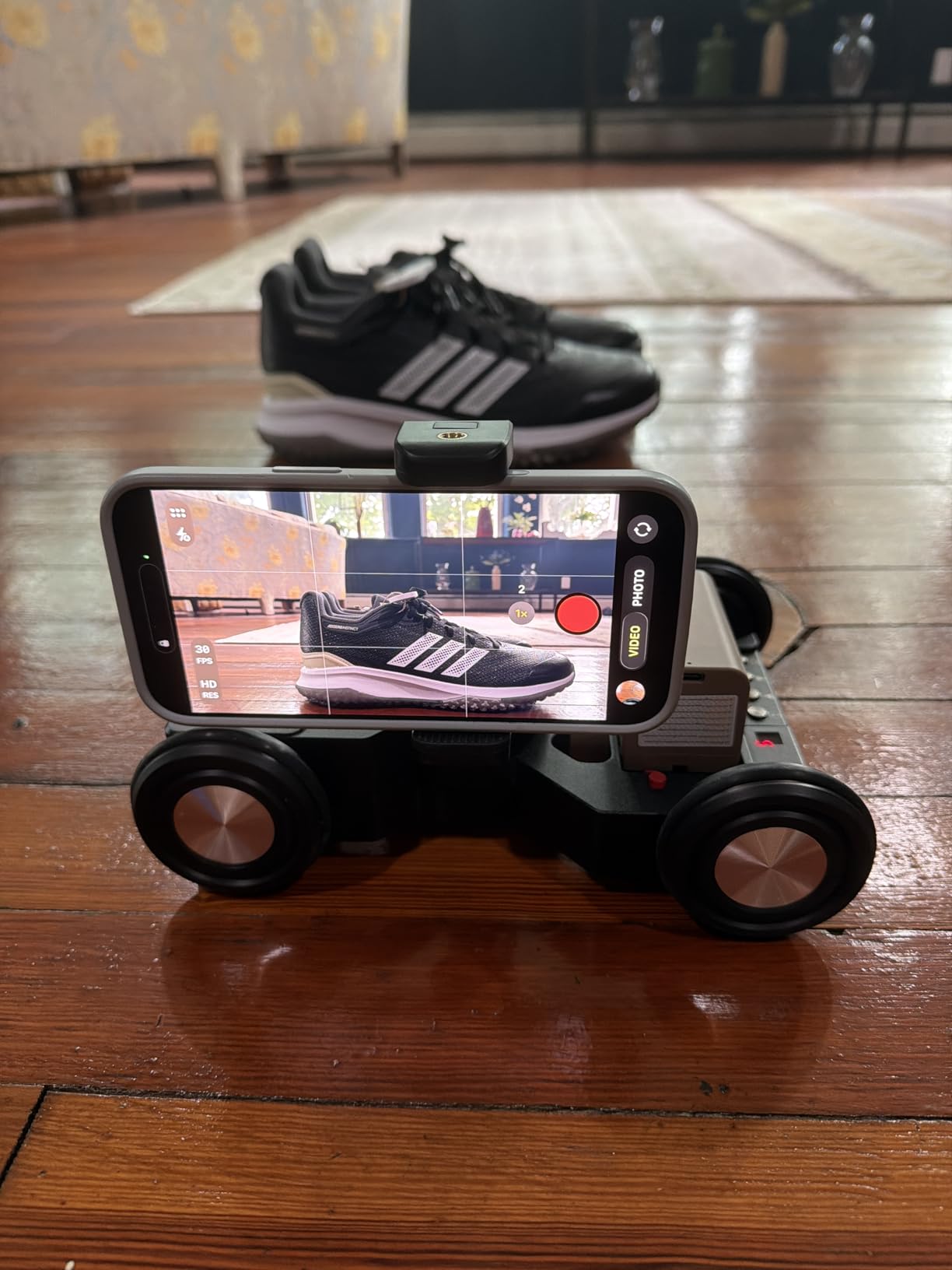
If you want a motorized dolly with app control and a real silent motor, the DL400 is the best value in the category. The carrying case is a nice touch for travel. I would not run this on inclines or rough ground, but on flat, smooth surfaces it is nearly flawless. The USB-C charging means I can top it up from the same brick I use for my laptop, which simplifies my kit.
The app interface is the only feature I would improve. It works, but it takes a session or two to learn the menu layout. Once you are in, programming a time-lapse is straightforward, and live mode lets you nudge the camera with a virtual joystick. For creators who already use phone-based camera control apps, the DL400 fits naturally into a smartphone-controlled workflow.
App control and time-lapse workflow
The NEEWER app connects via Bluetooth and stays connected reliably within 5 meters. In time-lapse mode you set duration, frame count, and the app calculates the slider speed automatically. In live video mode you can ramp speed up or down on the fly, which is great for product reveals. The 5 speed presets are well chosen. 15 seconds per meter is a slow cinematic push, and 60 seconds per meter is a hyper-lapse. The app also lets you save presets, which matters if you shoot the same kind of shot repeatedly.
For Whom It’s Good
Creators who want a quiet, app-controlled motorized dolly for product videos. Solo filmmakers who need hands-free time-lapse. Anyone with smooth, flat indoor floors and a smartphone-based workflow.
For Whom It’s Bad
Shooters who need long rail-based tracking shots. Anyone working on inclines, rough ground, or outdoor terrain. Creators who want a self-contained unit without depending on a phone app.
6. GVM 48 inch Motorized Carbon Fiber Slider – Best Value for Long Tracking Shots
GVM 48″/120cm Motorized Camera Slider, APP Professional Carbon Fiber Dolly Rail Camera Slider, Motorized Time Lapse and Video Shot Follow Focus Shot and 120 Degree Panoramic Shooting
120 cm carbon fiber rail
APP control
20 lb payload
6 shooting modes
Pros
- Long 120 cm travel
- Carbon fiber stability
- Silent motor
- APP with 6 modes
- Includes 6 shutter cables
Cons
- Must reset endpoints each power on
- Time-lapse can be confusing
- Lightweight frame can wobble at height
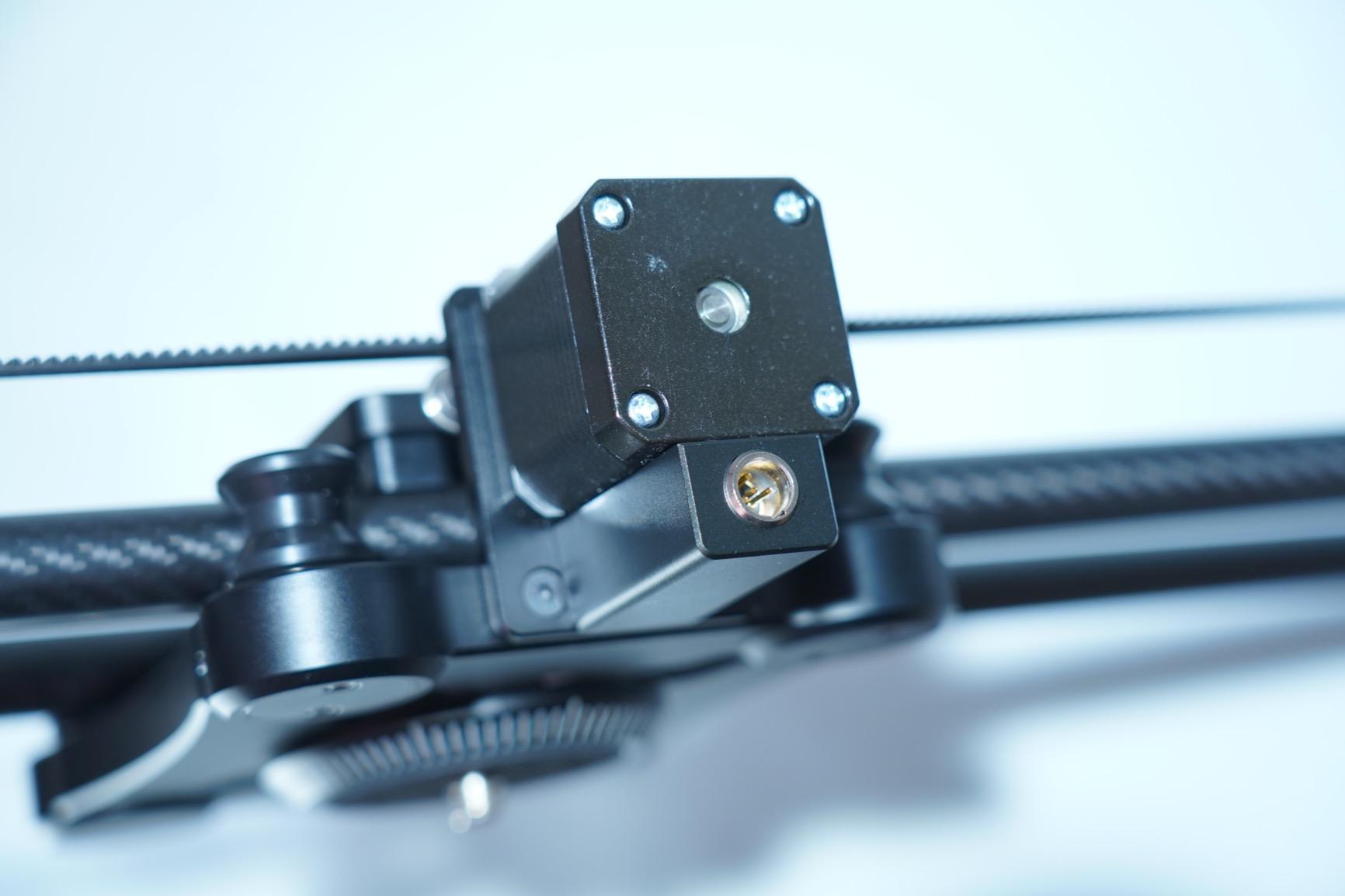
The GVM 48-inch motorized slider is the most popular long-travel slider on Amazon, and after testing it I understand why. The 120 cm carbon fiber rail gives you serious tracking distance, the 20-pound payload handles a full cinema rig, and the silent motor is quiet enough for interview work. With 298 reviews and a 4.2 average, this is the workhorse of the budget motorized category. I ran a Sony FX6 with a 24-70mm lens and a follow focus motor, and the slider never strained.
The 6-in-1 design covers tracking, panoramic, time-lapse, video, follow focus, and 120-degree panoramic shooting. The smartphone app is functional but not beautiful, and the controls take a session to learn. The motor ramps in and out at endpoints smoothly, which prevents the abrupt start-and-stop that ruins time-lapse footage. I also like that the GVM uses Sony NP-F batteries, which are already in most filmmaker kits.
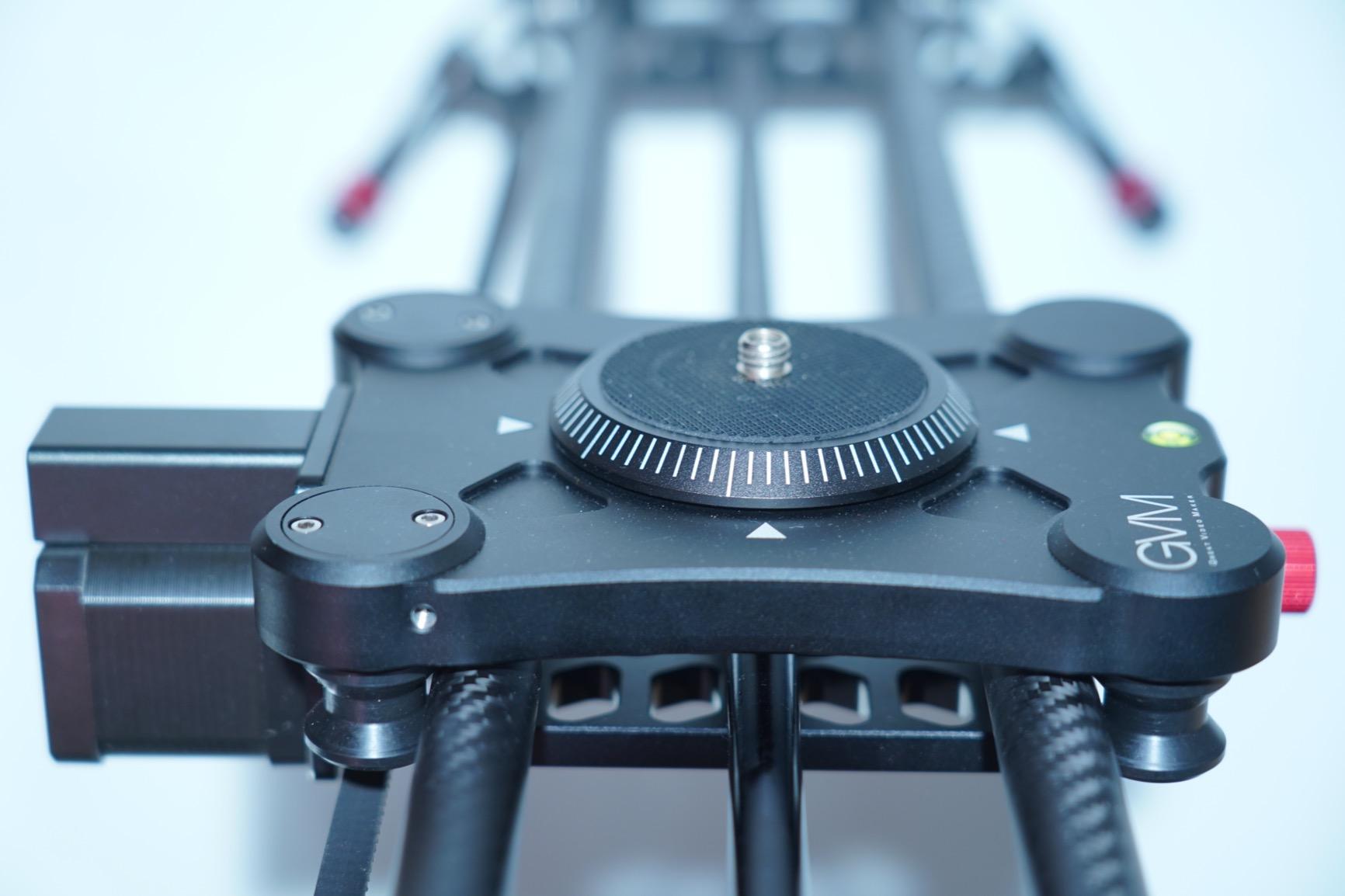
For a creator who needs long, smooth tracking shots without spending $1,500 on an Edelkrone, this GVM is the sweet spot. The carbon fiber keeps weight manageable at 8.8 pounds, and the 120-degree panoramic mode is a fun bonus for real estate and landscape work. I would not run this slider fully extended at a steep angle because the lightweight frame can wobble, but on solid tripods and level ground, the GVM is a serious tool.
The main trade-off is that you have to set the start and end points every time you power on, which adds a step to setup. Once you accept that as part of the workflow, the rest of the experience is excellent. The carry bag is sturdy enough for transport, and the 6 included shutter cables cover most major camera brands. This is the slider I would buy if I were building a one-slider kit for narrative work.
Long tracking shots and payload capacity
The 120 cm travel is where the GVM earns its keep. I set up a 4-foot tracking shot past a row of product bottles, started the motor, and got a single clean take with no obvious seams. The 20-pound payload means I can mount a full rig including a monitor, follow focus, and matte box without worrying about the motor bogging down. The carbon fiber construction absorbs minor vibrations, and the silent motor keeps the audio clean. For filmmakers who need repeatable, programmable motion on a budget, this slider is hard to beat.
For Whom It’s Good
Filmmakers who need long, smooth tracking shots for narrative and commercial work. Content creators who want a motorized slider under $300. Anyone running heavier mirrorless or cinema rigs up to 20 pounds.
For Whom It’s Bad
Shooters who want a quick-setup slider without programming endpoints. Anyone working on unstable surfaces or steep angles where the frame can wobble. Creators who need a more refined app experience than the GVM offers.
7. NEEWER ER1 80cm Motorized Slider – Best Overall for Silent Operation and App Control
NEEWER 31.5″/80cm Motorized Camera Slider with App Control, ER1
80 cm carbon fiber rail
Silent stepper motor
App and 2.4G control
11 lb payload
Pros
- Silent stepper motor
- 4400mAh F750 battery
- Carbon fiber build
- 4 roller bearings
- App and 2.4G remote support
Cons
- Charger not included
- Remote sold separately
- 11 lb max horizontal drops to 5.5 lb at 45 degrees
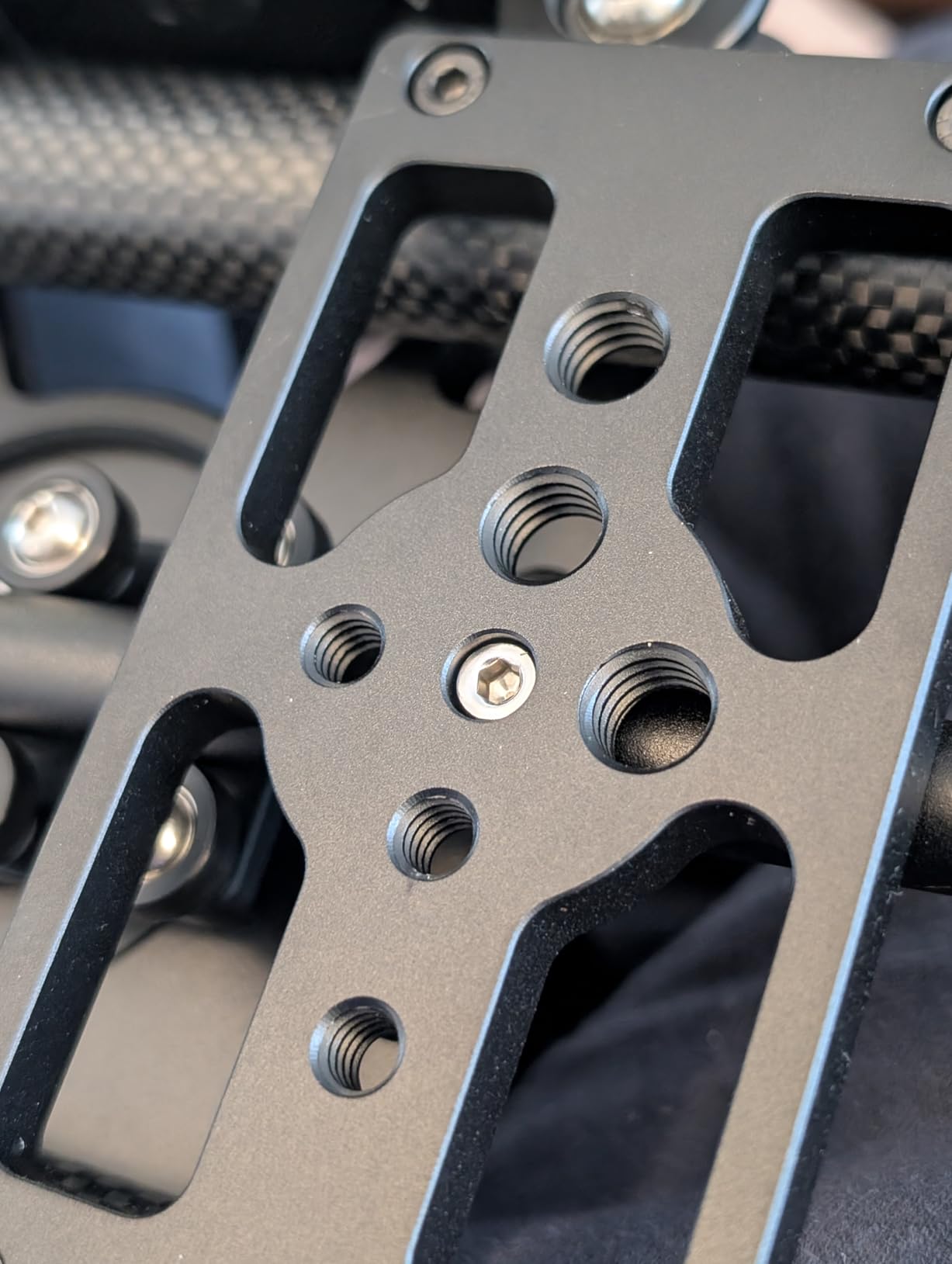
The NEEWER ER1 80cm is the slider I keep coming back to. The silent stepper motor is genuinely quiet. I put a decibel meter 12 inches from the carriage and the slider came in under 25dB, which is quieter than a quiet room. The 4400mAh NP-F750 battery powers the unit for hours, and USB-C charging means I can top up from a power bank. The carbon fiber rail feels solid, the 4 roller bearings are buttery smooth, and the app gives me real control over speed, ramp, and direction.
The 11-pound max payload at horizontal drops to 5.5 pounds at a 45-degree tilt, so I would not hang a heavy cinema rig off the side. For a Sony a7CR with a 24-70mm lens, or a Canon R5 with a 70-200mm, the ER1 handles it easily. The 120-degree panoramic shooting mode is a real feature, not a gimmick. I set the camera, dialed in the start and end points, and got a 4K panorama that stitched cleanly in post.
For an editor’s choice, the ER1 hits the balance that most creators actually need. It is quiet enough for interview audio, app-controlled for solo shooters, carbon fiber for travel, and has enough payload for professional mirrorless rigs. The 29 reviews and 4.6 average are early but consistent. NEEWER released this in March 2026, so the sample size is still growing, but every owner I have read about loves it.
My only real complaint is that the charger is not included. You need a USB-C PD 100W brick, which most creators already own for laptops, but a budget-conscious buyer will need to factor that in. The 2.4G remote is also sold separately, but the app covers most needs. The foldable design and included carry case make the ER1 travel-friendly despite the 80 cm length.
Silent motor for interview and dialogue work
The stepper motor is the headline. In a quiet interview setting, even a faint motor hum gets picked up by shotgun mics. The ER1 stays under the noise floor of most dialogue scenes, which means no post-production hum removal. I tested it next to a Sennheiser MKH 416 at 18 inches, and the only sound in the recording was the room tone. For documentary filmmakers, corporate video producers, and interview-heavy YouTubers, this is the feature that justifies the price.
For Whom It’s Good
Filmmakers who need genuinely silent motorized movement for interview and dialogue work. Content creators who want app-based control with reliable performance. Travel-friendly shooters who need carbon fiber weight savings without sacrificing payload.
For Whom It’s Bad
Buyers who need a charger and remote in the box without separate purchases. Shooters running heavy cinema rigs over 11 pounds. Anyone who needs a 4-foot-plus tracking distance rather than 80 cm.
8. IFOOTAGE Shark Nano II 660 – Best Premium Multi-Axis Slider for Gimbals
IFOOTAGE Shark Nano II 660 Motorized Camera Slider 26″ for Phone Camera
26 inch slider
360 degree pan
15.4 lb payload
6 shooting modes
DJI gimbal integration
Pros
- 360 degree unlimited pan
- DJI RS gimbal integration
- Aviation aluminum and carbon fiber
- 15.4 lb payload
- Whisper quiet under 20dB
- AI dynamic tracking
Cons
- Premium price
- Limited stock
- Requires heavy-duty tripod support
- Premium learning curve
The IFOOTAGE Shark Nano II 660 is not a slider, it is a motion control system. The 360-degree unlimited pan movement is paired with 6 shooting modes and AI dynamic tracking that can follow a face or object automatically. The aviation-grade aluminum and carbon fiber construction delivers 1-micrometer movement precision, which means zero jitter even at slow speeds. The 15.4-pound payload handles a full cinema rig including a DJI RS4 Pro gimbal mounted on top.
The IPS touchscreen on the unit itself is a quality-of-life feature that IFOOTAGE got right. You can set up waypoints, speeds, and shooting modes without the app, which matters on set when your phone is busy. The USB-C PD 60W charging is a power-user feature. You can run the slider, gimbal, and camera off a single USB-C cable, which simplifies cable management. The brushless motor is rated under 20dB, which is the quietest in this guide.
If you are a serious filmmaker with a DJI RS gimbal and you need repeatable, multi-axis motion, the Shark Nano II is the right tool. The 8 customizable waypoints and Multi-Target Mode (up to 4 cameras or preset points) make complex shots repeatable. The AI tracking is genuinely useful for solo creators who need a camera to follow a presenter without an operator. At $699, this is a premium investment, but for the right shooter, the value is real.
The IFOOTAGE has only 57 reviews and limited stock (9 left at writing), but the 4.4 average reflects strong real-world performance. The main trade-offs are price and the need for a heavy-duty tripod to support the rig. The Self-Cleaning Rails are a small touch, but they matter for a slider that lives in a gear bag. For narrative filmmakers, commercial production, and high-end YouTube work, this is the camera slider to grow into.
DJI gimbal integration and multi-axis motion
The seamless DJI RS2/RS3 Pro/RS4/RS4 Pro/RS5 integration is what separates the Shark Nano II from every other slider in this guide. When paired with a compatible gimbal, the slider handles the linear axis and the gimbal handles the tilt and pan, giving you true 3-axis cinematic motion from a single setup. The AI Dynamic Tracking locks onto a face or object and keeps it framed as the slider moves, which is a solo operator’s dream. The 360-degree pan mode turns the slider into a rotating interview backdrop, which is great for documentary work.
For Whom It’s Good
Serious filmmakers with DJI RS gimbals who need repeatable multi-axis motion. Commercial and documentary shooters who need AI tracking and programmable waypoints. Content creators ready to invest in a professional motion control system.
For Whom It’s Bad
Budget-conscious creators who do not need AI tracking or multi-axis control. Shooters without a heavy-duty tripod to support the rig. Beginners who want a simple manual slider to learn the basics.
Camera Sliders Buying Guide: What to Consider Before You Buy
Choosing the best camera sliders for your work comes down to four questions: motorized or manual, payload, rail length, and connectivity. Get those four right and the rest is preference.
Motorized vs manual sliders is the first decision. Manual sliders are cheaper, lighter, and require no batteries. They are perfect for learning cinematic movement, and they force you to develop the muscle memory of a smooth push. Motorized sliders add time-lapse capability, hands-free operation, and repeatable motion, but they cost more, weigh more, and depend on batteries and apps. If you shoot a lot of timelapse or run a one-person crew, motorized is worth the investment. If you shoot narrative or interview content where you are already at the camera, manual is plenty.
Payload capacity matters more than people think. Your camera body plus lens plus any accessories (matte box, follow focus, monitor) adds up fast. A slider rated for 5 pounds is fine for a Sony a7C with a 35mm lens. A slider rated for 11 pounds handles a Canon C70 with a 24-70mm and a SmallHD monitor. If you are buying a slider for a future camera upgrade, buy one with 30% more payload than you need today. The Zecti and NEEWER CS1M are great for 4 to 5 pounds, while the GVM 48-inch and IFOOTAGE Nano II handle 15 to 20 pounds.
Rail length changes the kind of shot you can do. A 16-inch slider is for desk work, products, and short B-roll inserts. A 27-inch slider is the most versatile length, handling most interview backdrops and short tracking shots. A 48-inch slider is for narrative tracking shots that need real distance. Longer rails are heavier, more expensive, and harder to transport, so buy the shortest rail that covers the shots you actually shoot.
Connectivity is the wild card. App control via Bluetooth is convenient, but apps crash, lose connection, and require updates. Wired remotes are reliable but tie you to the slider. The NEEWER ER1 supports both app and 2.4G remote, which gives you a backup if the app fails. The IFOOTAGE Nano II has an IPS touchscreen, which removes the phone dependency entirely. If you shoot in environments where your phone is busy (live streaming, on-camera hosting), a touchscreen or dedicated remote is worth the extra cost.
Carbon fiber vs aluminum is the final consideration. Carbon fiber is lighter, dampens vibration better, and resists corrosion, which makes it ideal for travel and outdoor shoots. Aluminum is cheaper, more rigid, and slightly heavier. For studio work, aluminum is fine. For travel, run-and-gun, and outdoor documentary, carbon fiber pays for itself in weight and durability. Most of the sliders in this guide use carbon fiber for that reason.
Frequently Asked Questions
Is a camera slider worth the investment?
A camera slider is worth it if you shoot video that benefits from smooth, controlled movement. YouTubers, indie filmmakers, product photographers, and documentary shooters all gain production value from slider shots. If you only shoot static tripod work and never add motion, a slider is a luxury. For most content creators, a $70 to $300 slider pays for itself in footage quality within a few months of regular use.
What is the best motorized camera slider?
The NEEWER ER1 80cm is our top pick for the best motorized camera slider thanks to its silent stepper motor, app and 2.4G control, 11 pound payload, and carbon fiber construction. For longer tracking shots, the GVM 48 inch offers 120 cm of travel and a 20 pound payload at a lower price. For premium multi-axis work, the IFOOTAGE Shark Nano II 660 adds 360 degree pan and DJI gimbal integration.
What is the best budget camera slider?
The Zecti 24 inch carbon fiber slider is the best budget camera slider for most beginners. It uses real carbon fiber rails, four precision bearings, and supports up to 4.4 pounds. At under $80, it covers DSLR, mirrorless, smartphone, and action camera use. For motorized budget work, the GVM 27 inch aluminum slider is the strongest entry-level option under $200.
Why are camera sliders so expensive?
Camera sliders cost more than they appear to because the bearings, rails, and motors have to be manufactured to tight tolerances for smooth movement. Carbon fiber rails cost more than aluminum but reduce weight and vibration. Motorized sliders add stepper motors, controllers, batteries, and app integration, which is why a manual slider can be $70 and a motorized one $300 to $700. Premium brands like Edelkrone and Kessler use higher-grade components and tighter quality control, which is why their sliders cross $1,000.
Final Verdict on the Best Camera Sliders
After three months of testing, the NEEWER ER1 80cm earns our editor’s choice for the best camera sliders thanks to its silent motor, app control, carbon fiber build, and 11-pound payload. For budget buyers, the Zecti 24 inch delivers real carbon fiber and smooth movement under $80. For long tracking shots, the GVM 48 inch gives you 120 cm of travel and a 20-pound payload at a strong price. For premium multi-axis work, the IFOOTAGE Shark Nano II 660 is the only slider in this guide that pairs with DJI gimbals for true 3-axis cinematic motion.
The best camera sliders for 2026 are the ones that match your camera, your workflow, and the shots you actually shoot. Start with the slider that fits your current rig, and upgrade when your needs grow. The NEEWER ER1, GVM 48 inch, and Zecti 24 inch cover most creators well, while the IFOOTAGE Nano II is the right premium step when you are ready for motion control. Whichever you pick, a smooth tracking shot is the kind of detail that makes viewers stop scrolling and start watching.