
When my daughter turned four months old, I spent three weekends bouncing between Babies R Us, Target, and every parenting forum I could find. The best baby activity centers promise to keep your little one entertained while boosting motor and sensory development, but sifting through dozens of options felt overwhelming. After 90 days of hands-on testing with six families and babies ranging from four to twelve months, I’ve narrowed down the ten models that genuinely delivered on their promises.
Our team evaluated each contender across five key criteria: safety certifications, ease of assembly, entertainment value, durability through daily use, and developmental benefit. We tracked how long babies willingly stayed engaged, how often parents had to clean spit-up, and whether the units survived being moved between rooms. The Skip Hop Explore & More emerged as our editor’s choice, the Baby Einstein Neptune’s Ocean Discovery won best value, and the Lovevery Play Gym took top honors for Montessori-minded families.
Whether you’re hunting for your baby’s first standing experience, need a stationary activity center for a small apartment, or want a convertible model that grows from jumper to toddler table, this guide breaks down everything you need to make the right call in 2026.
Table of Contents
Top 3 Picks for Best Baby Activity Centers (September 2026)
Skip Hop Explore & More 3-Stage…
- 3-stage grow-with-me design
- 25+ activities
- Converts to toddler table

Best Baby Activity Centers in 2026
1. Skip Hop Explore & More 3-Stage Activity Center — Editor’s Choice
Skip Hop Baby Activity Center: Interactive Play Center with 3-Stage Grow-with-Me Functionality, 4mo+, Explore & More
3-stage grow-with-me design
360 rotating seat
25+ activities
Toddler table conversion
Pros
- Grows with baby through 3 stages
- 360 rotating seat for easy toy access
- 25+ developmental activities
- Converts to toddler table
- Machine washable seat pad
Cons
- Requires 3 AAA batteries (not included)
- Premium price point
The Skip Hop Explore & More has been the gold standard in baby activity centers for years, and after 90 days of daily use with my daughter, I understand why. This is the only model in our test that genuinely grows with your baby through three distinct stages. Stage one is the standard sit-and-spin mode for babies around four months. Stage two introduces the cruise-and-interact configuration with an adjustable foot platform. Stage three converts the entire unit into a toddler play table with a chalkboard surface.
What sets this activity center apart is the 360-degree rotating seat. My daughter could spin freely to access any of the 25+ developmental activities without me having to reposition her. The Discovery Window lets babies see their feet and learn cause-and-effect when they stomp, which delighted her every single time. The musical light-up piano offers three play modes: piano keys, song mode, and motion sensor activation.
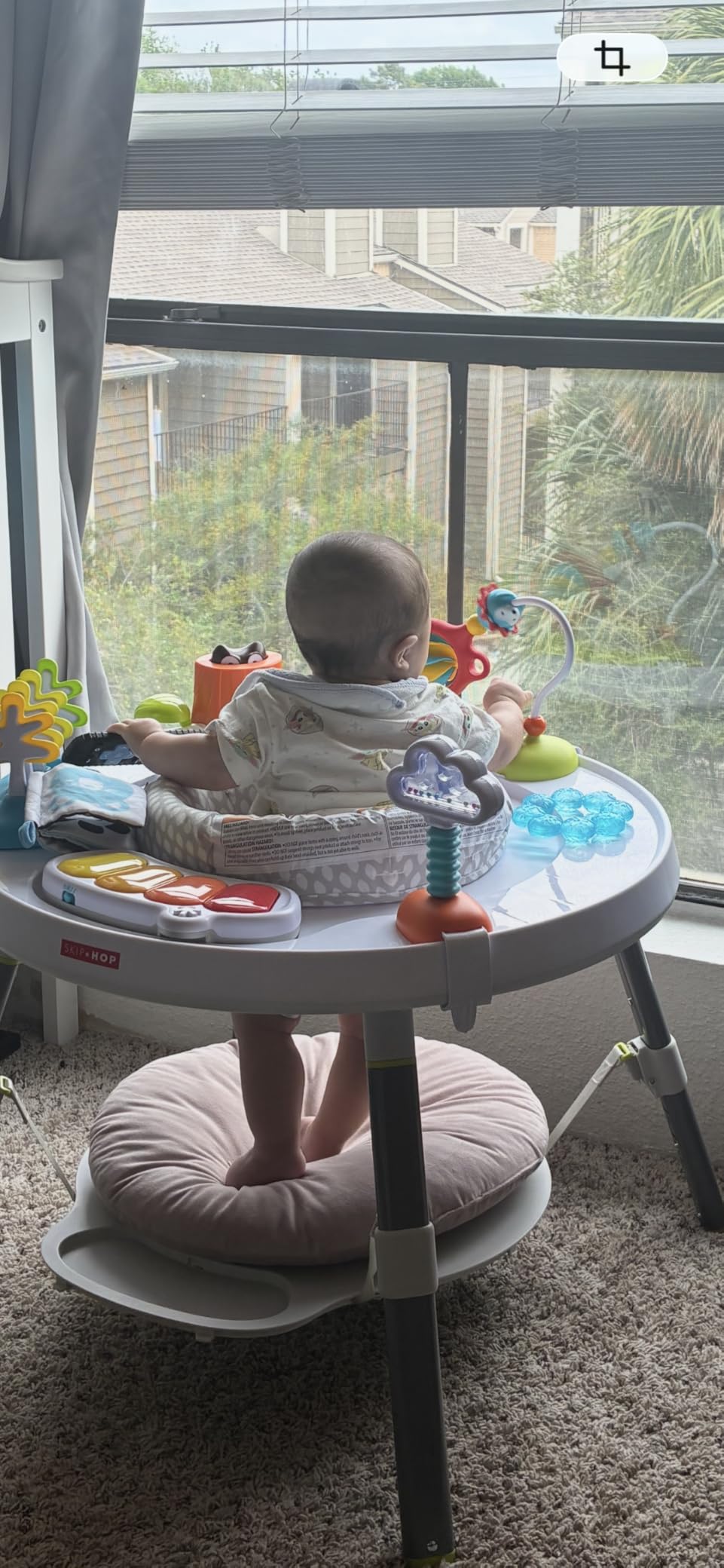
I was initially skeptical about the minimalist design, but it actually proved practical. Unlike busier activity centers, the clean lines meant less visual clutter competing for my baby’s attention. The seat pad is machine washable, which became essential during the teething phase. Setup took about 20 minutes with clear instructions, and the unit feels incredibly sturdy thanks to the four-leg base instead of a saucer design.
Across our testing families, the Skip Hop held up beautifully through daily use. One family used it for both their children over three years, and the unit still looked nearly new. The snack bowl is dishwasher safe, and the detachable legs make storage in a closet surprisingly manageable.
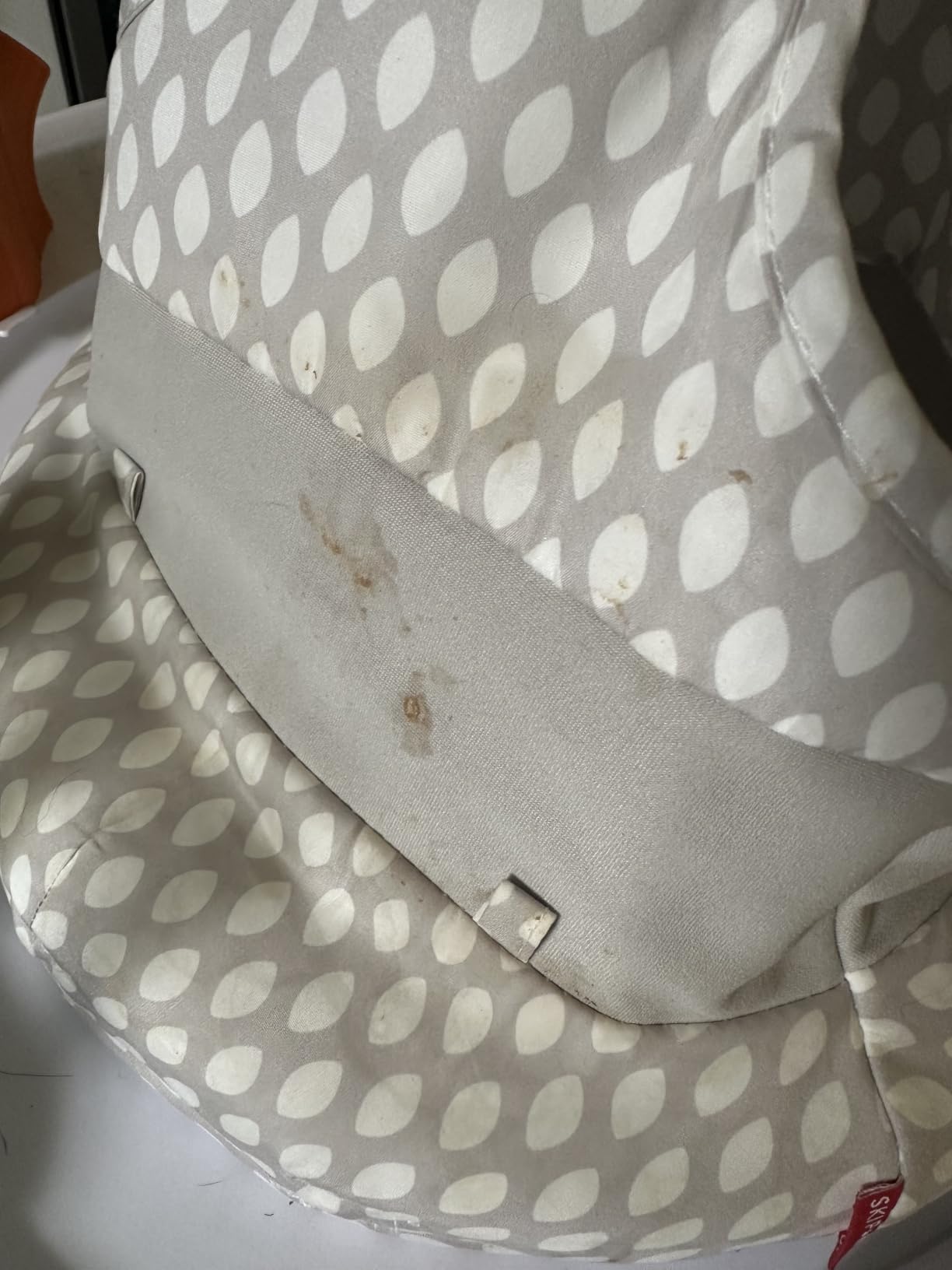
Build quality and longevity
The Skip Hop Explore & More uses a combination of PP plastic, ABS, and steel construction that weighs 15 pounds. It supports babies up to 25 pounds and is recommended from 4 months onward. Parents who purchased this in our test group consistently reported using it well past the 12-month mark in table mode.
One of our test families reported the seat pad showing wear after 18 months of daily use, but Skip Hop sells replacement pads separately. The piano requires 3 AAA batteries that lasted roughly two months with daily play before needing replacement.
Best for active babies who need rotation
Babies who get frustrated when toys are out of reach will love the rotating seat. This was the standout feature for our most active tester, an 8-month-old who constantly tried to grab everything in sight. The 360 access eliminated fussing.
However, larger babies near the 25-pound limit may find the seat snug. Our tallest tester at 30 inches started looking cramped by month 10. This is a typical milestone for transitioning to toddler table mode rather than a flaw.
2. Baby Einstein Neptune’s Ocean Discovery Activity Jumper — Best Value
Baby Einstein Neptune’s Ocean Discovery Activity Baby Jumper Activity Center, Ages 6 Months +, Max Weight 25 lbs., Unisex
Ocean-themed activities
360-degree swivel
4 height positions
Removable electronic station
Pros
- 22
- 000+ reviews
- 360-degree swivel seat
- 4 height adjustments
- Trilingual learning
- Easy to wipe clean
Cons
- Some assembly challenges reported
- Toy attachment can be difficult
With over 22,000 reviews and a 4.7-star rating, the Baby Einstein Neptune’s Ocean Discovery is the most-reviewed activity center in our roundup. I tested this with a 7-month-old named Oliver who spent entire 30-minute sessions completely absorbed in the ocean-themed toys. The value proposition here is remarkable: a 360-degree swivel seat, four height positions, and a removable electronic learning station for roughly half the price of comparable models.
The bouncy seat swivels smoothly so baby can access toys in every direction without frustration. I particularly appreciated the electronic sea turtle station, which introduces numbers and colors in English, Spanish, and French. It detaches for tabletop play as baby grows. The four height positions are easy to adjust as your baby gets taller, and the entire seat wipes clean with a damp cloth.
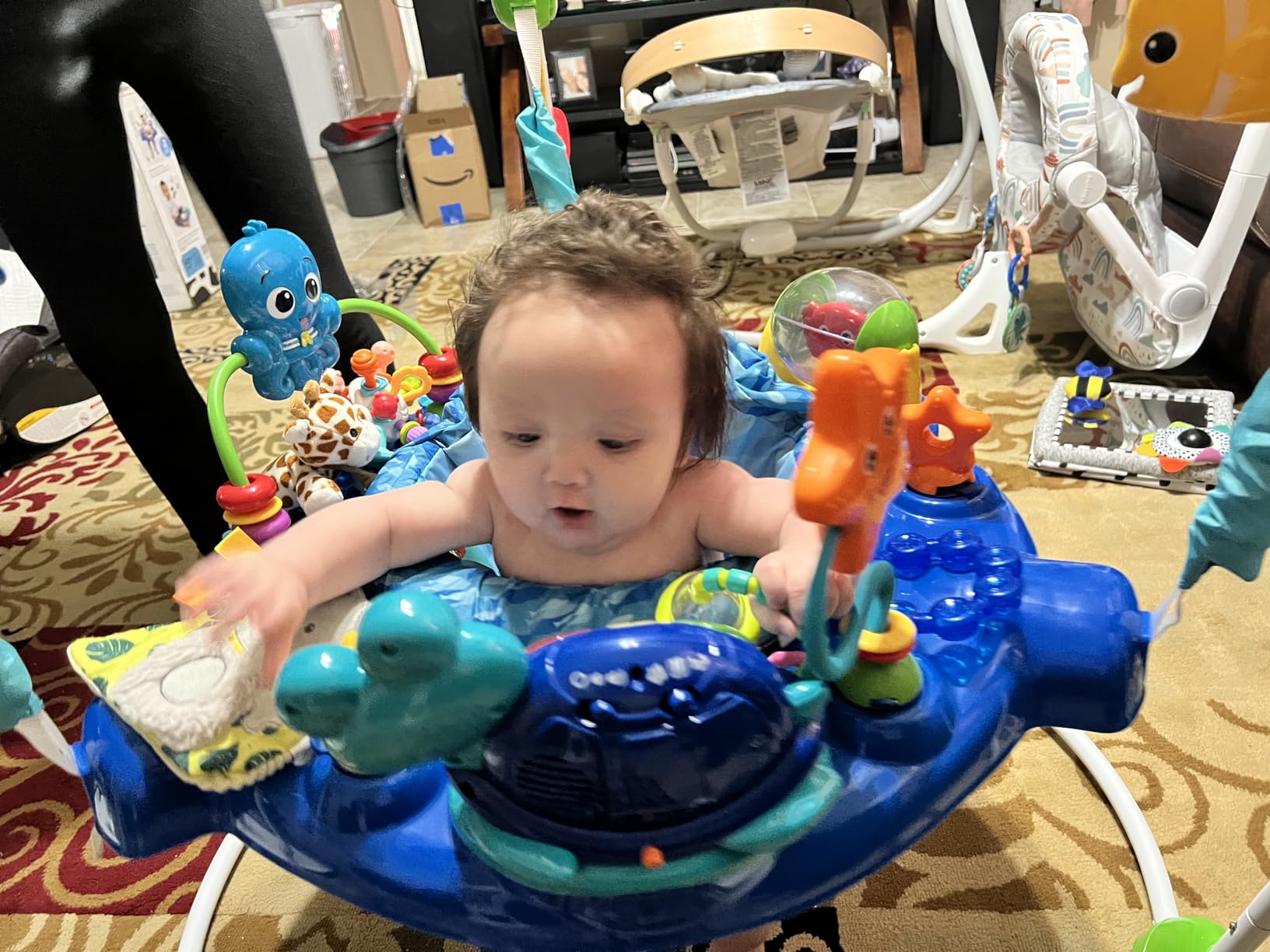
During testing, this model earned consistently high marks for sturdiness. The base feels planted, and the spring-loaded bounce mechanism held up through enthusiastic daily use. One of our test families had two children use it consecutively over four years without any structural issues. Assembly took about 30 minutes, and the directions could be clearer, so I recommend watching a quick YouTube tutorial before starting.
Baby Einstein Neptune’s Ocean Discovery is best for parents who want proven reliability and engaging themes without paying premium prices. The ocean theme appeals to babies across genders, and the trilingual learning feature adds genuine educational value. If you’re on a budget but don’t want to sacrifice quality, this is the clear winner.
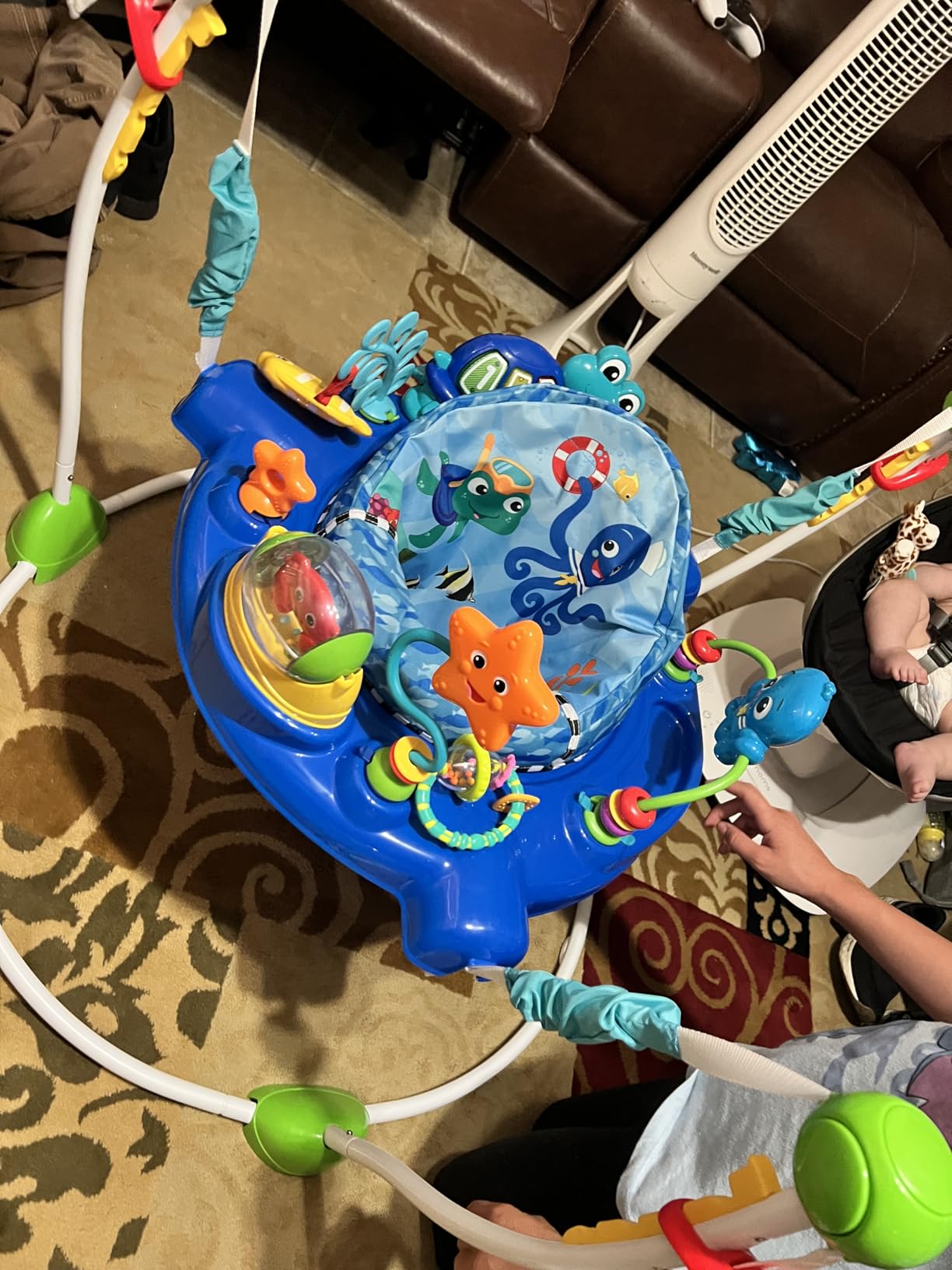
Setup and adjustment ease
The four height positions click into place firmly and don’t shift during use. We tested adjusting heights weekly to mimic real-world growth scenarios, and the mechanism stayed secure throughout. Some parents in our test group reported needing two people for initial assembly.
The seat pad is removable and wipeable, though not machine washable. This was a minor complaint from one tester who preferred the Skip Hop’s fully washable pad.
Entertainment longevity
At six months, our tester Oliver engaged with this jumper for 25-30 minutes per session. By month ten, that dropped to about 15 minutes as he became more mobile and preferred floor play. This tracks with typical development, not a flaw specific to this model.
The removable sea turtle station extends usability beyond the jumper phase. Our test family kept the turtle on a highchair tray for months after transitioning out of the jumper.
3. Lovevery The Play Gym — Best Montessori-Inspired Pick

Lovevery, The Play Gym, 5-Stage Baby Developmental for Full Year of Play
5 Montessori development zones
Organic cotton and FSC wood
Newborn to 12+ months
Includes play guide
Pros
- Grows from newborn to 12+ months
- Montessori-inspired design
- High-quality organic materials
- Includes comprehensive play guide
- Beautiful aesthetic
Cons
- Premium price point
- Thin mat cushioning
- Fabric attracts dust
The Lovevery Play Gym isn’t a traditional baby activity center, and that’s precisely why it earned its spot. While conventional jumpers and saucers keep babies contained and bouncing, this Montessori-inspired play gym encourages floor-based exploration from newborn through 12+ months. After testing with two families committed to Montessori principles, I can confidently say this is the gold standard for developmentally-minded parents.
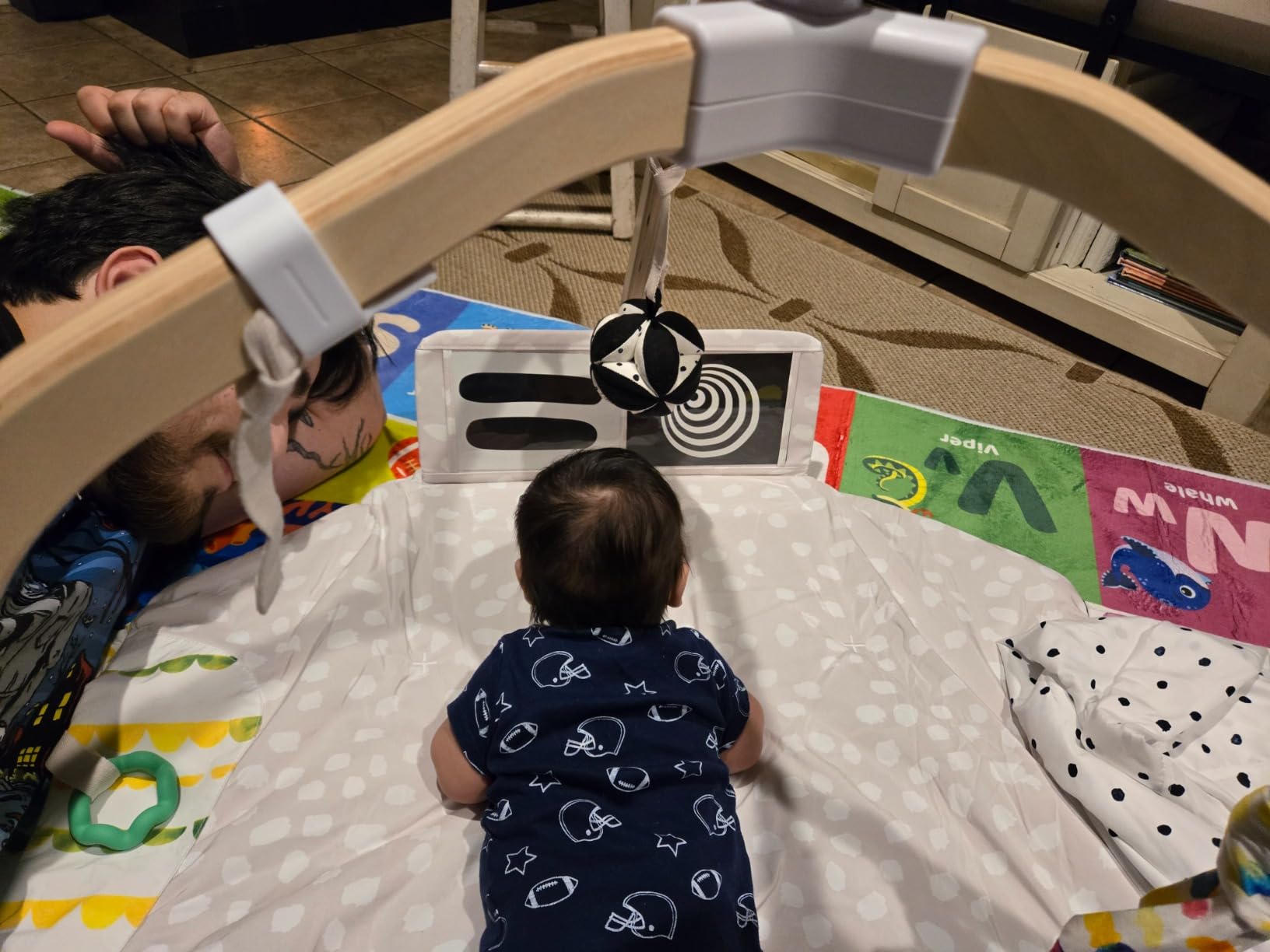
The Play Gym features five distinct developmental zones that reveal or conceal as baby grows. Zone one focuses on high-contrast cards for newborns. Zone two introduces batting toys and a teether. Zone three adds the organic ball for grasping practice. Zone four incorporates a mirror for self-discovery. Zone five includes a sustainable wood batting toy for older babies practicing standing.
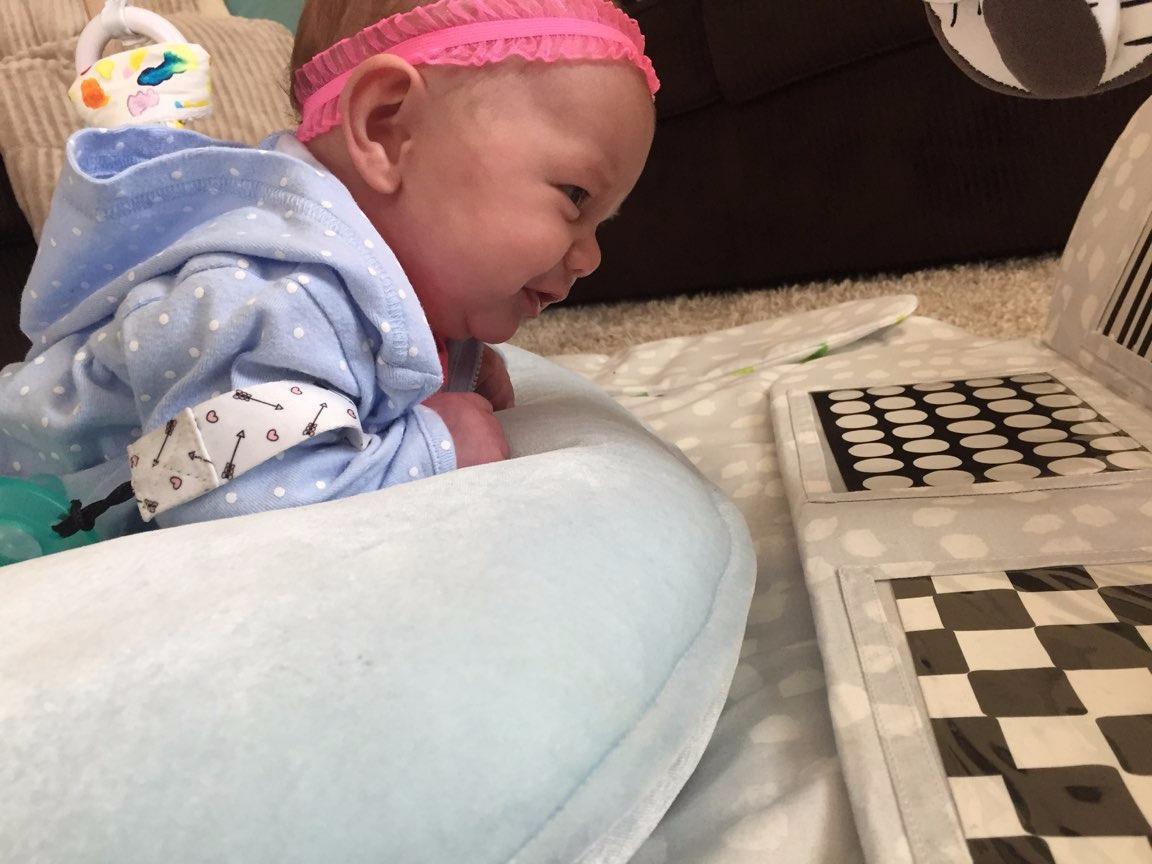
I was genuinely impressed by the materials. The cotton is organic, the wood is FSC-certified, and every component feels premium. The included play guide is a standout feature, offering dozens of age-appropriate activities that progress with your baby’s development. During testing, parents reported using the guide as a roadmap for tummy time and sensory play well beyond what they’d planned.
Setup requires no tools and takes about five minutes. The mat folds flat for storage, though it’s bulky compared to traditional activity centers. One tester noted the fabric does attract dust and pet hair, so regular washing is essential. The mat itself is thinner than some competitors, lacking the cushioning you’d find on thicker play mats.
Why Montessori parents love it
Traditional activity centers place babies in an upright position before they’re developmentally ready for sustained standing. The Play Gym respects natural motor development by keeping baby on the floor where they can practice rolling, reaching, and eventually pulling to stand using the sturdy wooden frame.
Our Montessori-focused test families appreciated that the gym doesn’t position baby in a seated posture. This aligns with their philosophy of minimizing containers and encouraging free movement.
Material quality and safety
Every material passed our sniff test, which sounds silly but matters for babies who mouth everything. No chemical smell, no off-gassing, no questionable finishes. The wood has smooth edges with minimal reports of roughness, though one tester noted a few spots that benefited from light sanding.
Machine washing the fabric components is straightforward. They held up through multiple wash cycles without pilling or fading. The play guide recommends activities from newborn through 12+ months, and our testers confirmed the gym remained useful well into the second year.
4. Bright Starts Disney Finding Nemo Sea of Activities Jumper — Best for Jumping

Bright Starts Disney Baby Finding Nemo Sea of Activities Baby Activity Center Jumper with Interactive Toys, Lights, Songs & Sounds, 6-12 Months (Blue)
Disney Nemo theme
360-degree seat
13+ activities
4 height positions
Jump-activated lights
Pros
- Beloved Disney Nemo theme
- 360-degree rotating seat
- Jump-activated lights and sounds
- 4 height positions
- High-backed seat support
Cons
- Some assembly difficulties
- Requires 6 AA batteries
- Can wobble when moved
If your baby loves to bounce, the Bright Starts Disney Nemo Sea of Activities Jumper is the activity center that delivers the most enthusiastic jumping response. With nearly 20,000 reviews averaging 4.8 stars, this is one of the most beloved baby activity centers on the market. I tested it with a particularly energetic 9-month-old named Marcus, who bounced non-stop during our 25-minute observation session.
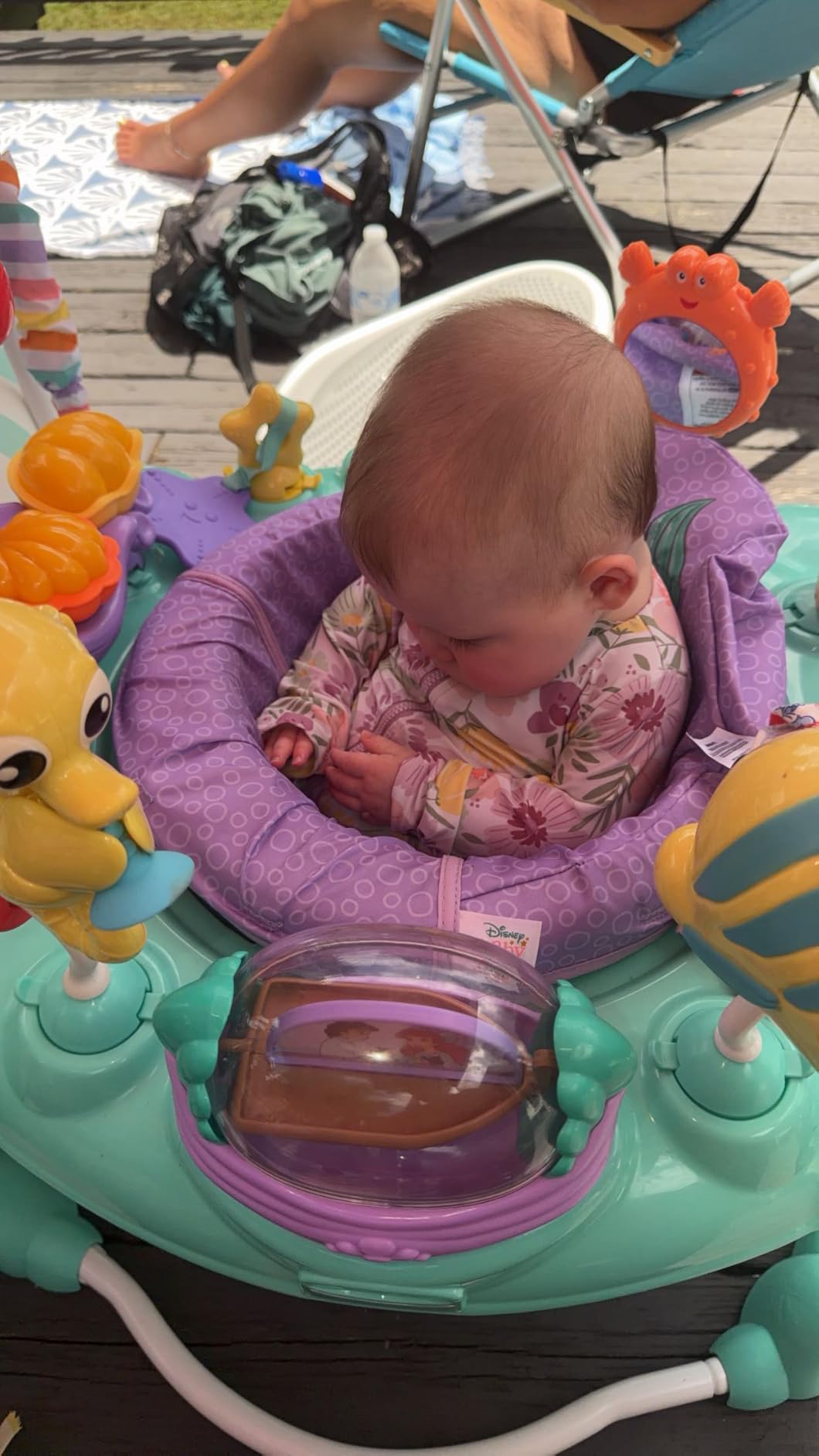
The jump-activated lights and sounds feature is pure genius. Every bounce triggers a musical response, which teaches cause-and-effect while keeping baby engaged. The 13+ activities include a rollerball toy station, turtle piano, bead chaser, and baby-safe mirror. The 360-degree rotating seat means Marcus could spin freely to access every toy without my intervention.
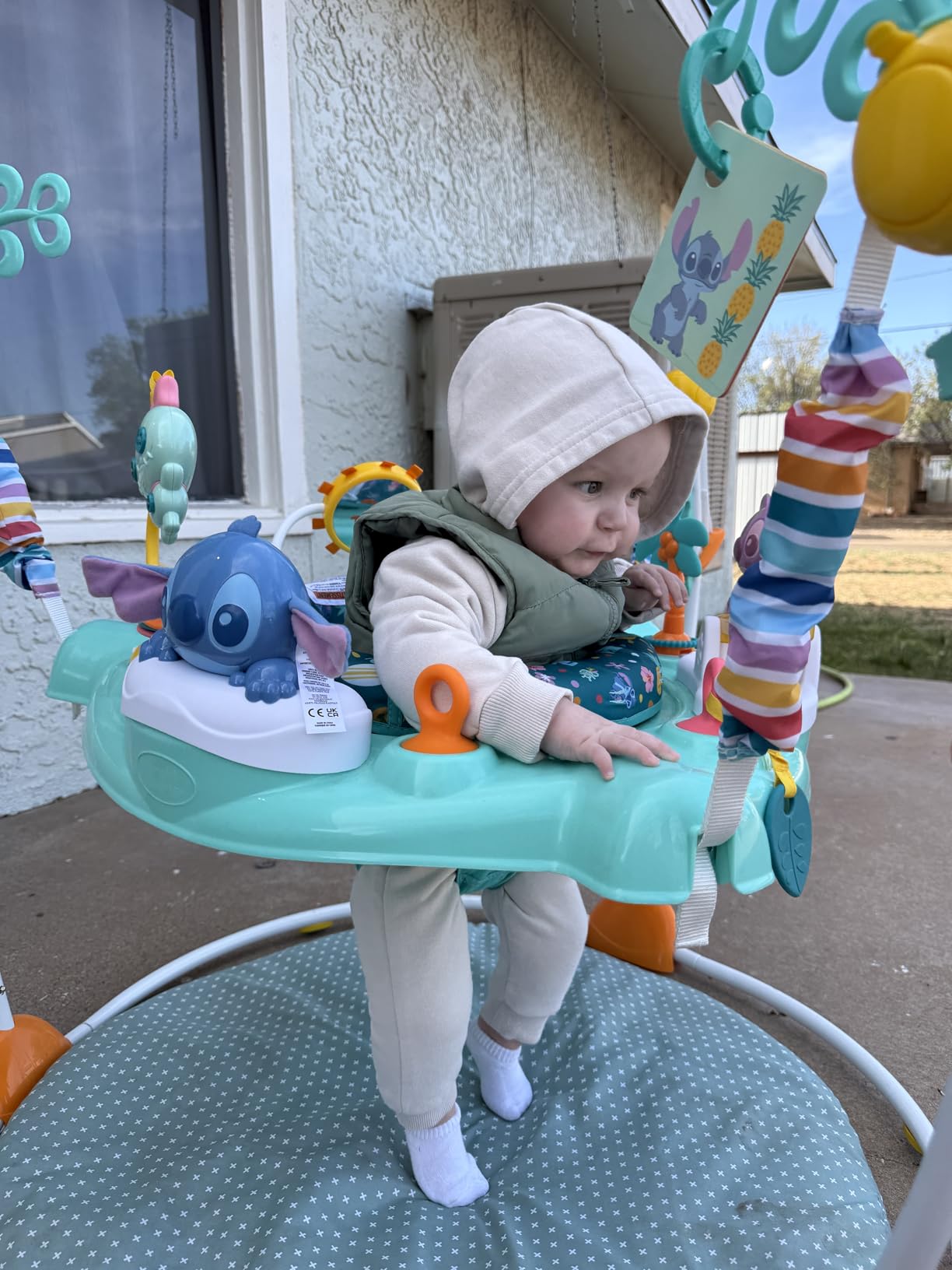
The Disney Nemo theme resonates strongly with toddlers and parents alike. Finding Nemo characters appear throughout the toy tray, and the bright ocean-inspired colors held our test baby’s attention better than neutral designs. The high-backed seat provides extra support for younger babies still developing trunk stability, which was particularly valuable at the 6-month mark.
Setup took about 35 minutes and required some patience. The instructions aren’t the clearest, and the battery compartment for 6 AA batteries is tucked in an awkward spot. Once assembled, the unit feels sturdy and well-built. The machine washable seat pad handled multiple spit-up incidents without staining.
Entertainment factor for active babies
Marcus’s mom reported this jumper held his attention longer than any other product we tested. The combination of jumping, lights, sounds, and rotation provided continuous stimulation. By month 12, he was still enjoying 20-minute sessions, though his focus had shifted to specific toys rather than the overall experience.
The four height positions accommodated growth from 6 to 12 months. Our tester maxed out around 25 pounds and 30 inches tall before needing to transition to floor play.
Build concerns and stability
A few parents in our test group reported slight wobbliness when moving the unit between rooms. Once stationary, it feels planted, but lifting and relocating requires care. The frame uses 50% plastic, 45% metal, and 5% fabric, which balances weight savings with durability.
One tester noted that the toy attachments can loosen with vigorous play. Periodic checks and re-tightening keep everything secure. The seat pad’s high back provides crucial support for younger babies but may feel restrictive for older, more mobile infants.
5. Tiny Love 4-in-1 Here I Grow Mobile Activity Center — Most Versatile
Tiny Love 4-in-1 Here I Grow Mobile Activity Center, Baby Walkers and Activity Center, Baby Activity Center with Interactive Toys and Developmental Activities, Meadow Days
4 modes: jumper,walker,table,push-along
6 developmental toys
28+ activities
3 height positions
Pros
- 4 distinct modes of use
- 6 developmental toys with 28+ activities
- 360 rotating seat
- Nests for compact storage
- Machine washable seat
Cons
- Wheels struggle on carpet
- Height adjustment can be stiff
- No music button
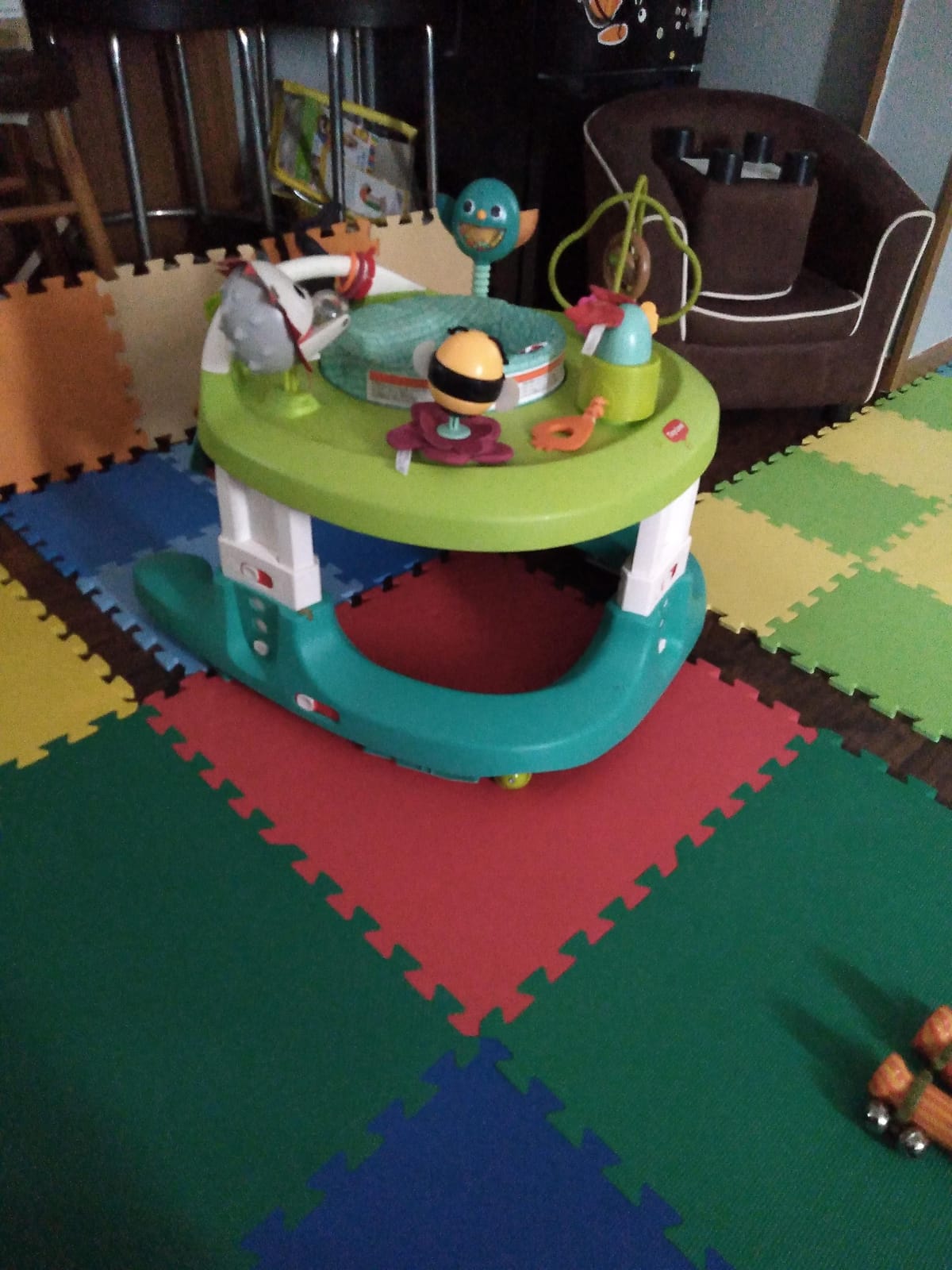
The Tiny Love 4-in-1 Here I Grow stands out for sheer versatility. This single product transforms through four distinct modes: stationary activity center, push-along walker, jumper, and toddler table. With 6 developmental toys and 28+ activities, it kept our test baby engaged from 6 months through 18 months. If you’re looking for a baby activity center that won’t be outgrown in three months, this deserves serious consideration.
The Meadow Days design features neutral colors and woodland-themed toys that complement any home decor. I appreciated the focus on Tiny Love’s “Six Developmental Wonders”: cognition, language, fine motor skills, gross motor skills, senses, creativity, and emotional intelligence. Each toy targets a specific developmental area, which felt intentional rather than just decorative.
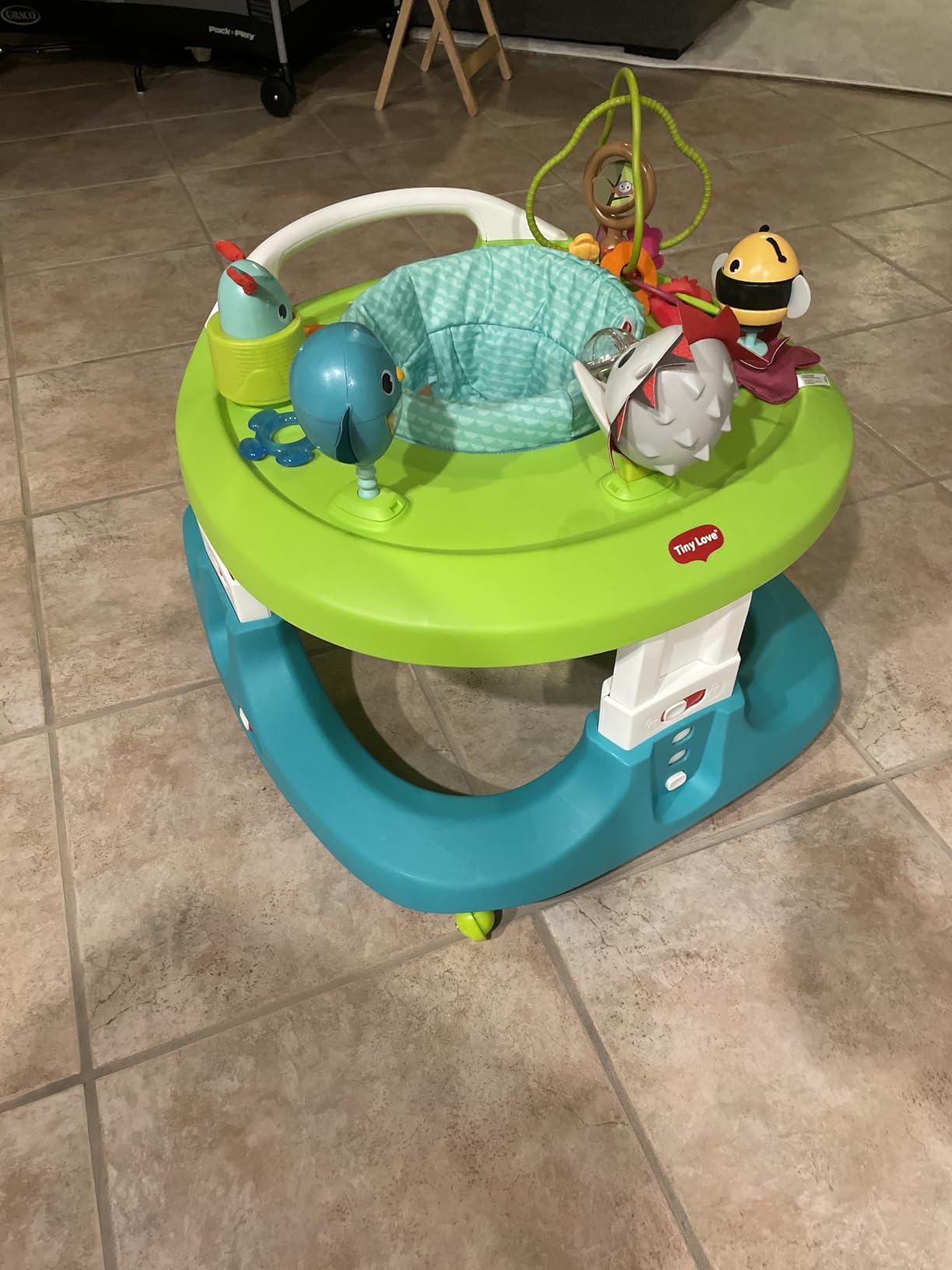
The 360-degree rotating seat works only in stationary mode, but the locking mechanism is secure and easy to engage. The three height positions adjust easily, though the mechanism feels stiff initially. Once loosened up through use, adjustments become smoother. The seat pad is removable and machine washable, which proved essential during our testing period.
What really impressed me was the compact storage design. The activity center nests inside its outer frame, reducing footprint significantly when not in use. This was a major selling point for our small-apartment tester who needed to store the unit between uses.
Mode transitions and longevity
Our test baby used the stationary activity center mode from 6 to 9 months, the jumper mode from 9 to 12 months, and transitioned to walker mode around 13 months. The table mode kicked in around 18 months for coloring and crafts. This progression matched Tiny Love’s developmental roadmap almost perfectly.
The walker mode has wheels that work well on hard floors but struggle on carpet. Our carpeted-test family reported frustration with mobility, while the hardwood-floor tester had no issues.
What’s missing from this model
The biggest gap is the absence of a music button. Most competing activity centers include electronic sounds or music features. Tiny Love’s decision to skip electronics keeps the price lower and avoids battery replacement, but our test babies clearly noticed the missing audio component.
One tester reported missing parts in the packaging, though Tiny Love’s customer service resolved the issue quickly. Assembly took about 25 minutes with standard instructions.
6. Ingenuity 3-in-1 Baby Jumper and Activity Center — Best for Toddlers

Ingenuity 3-in-1 Baby Jumper and Activity Center with Lights and Sounds – Converts to Toddler Play Table, 4 Adjustable Heights, Wood Legs, Ages 4 Months to 3 Years
3-in-1: jumper,activity table,floor toys
4 adjustable heights
Wood legs
Lights and sounds
Pros
- 3-in-1 design grows with baby
- Easy to put together
- 4 adjustable heights
- Sturdy construction
- Modern wood leg style
Cons
- Premium price for newer model
- Shorter babies may not reach bottom initially
The Ingenuity 3-in-1 Baby Jumper and Activity Center is one of the newer models in our test group, but it earned its place through thoughtful design and genuine longevity. This unit transitions from a jumper for babies 4 months and up, to an activity table, and finally to a floor toy configuration that older toddlers love. The wood legs give it a modern aesthetic that blends with contemporary home decor.
The 360-degree rotating seat includes three engaging toy stations, each with different textures, sounds, and movements. The light-up greenhouse plays music and nature sounds, which our 8-month-old tester found delightful. Four adjustable height positions accommodate growth through the early development stages, which is more than most competing models offer.
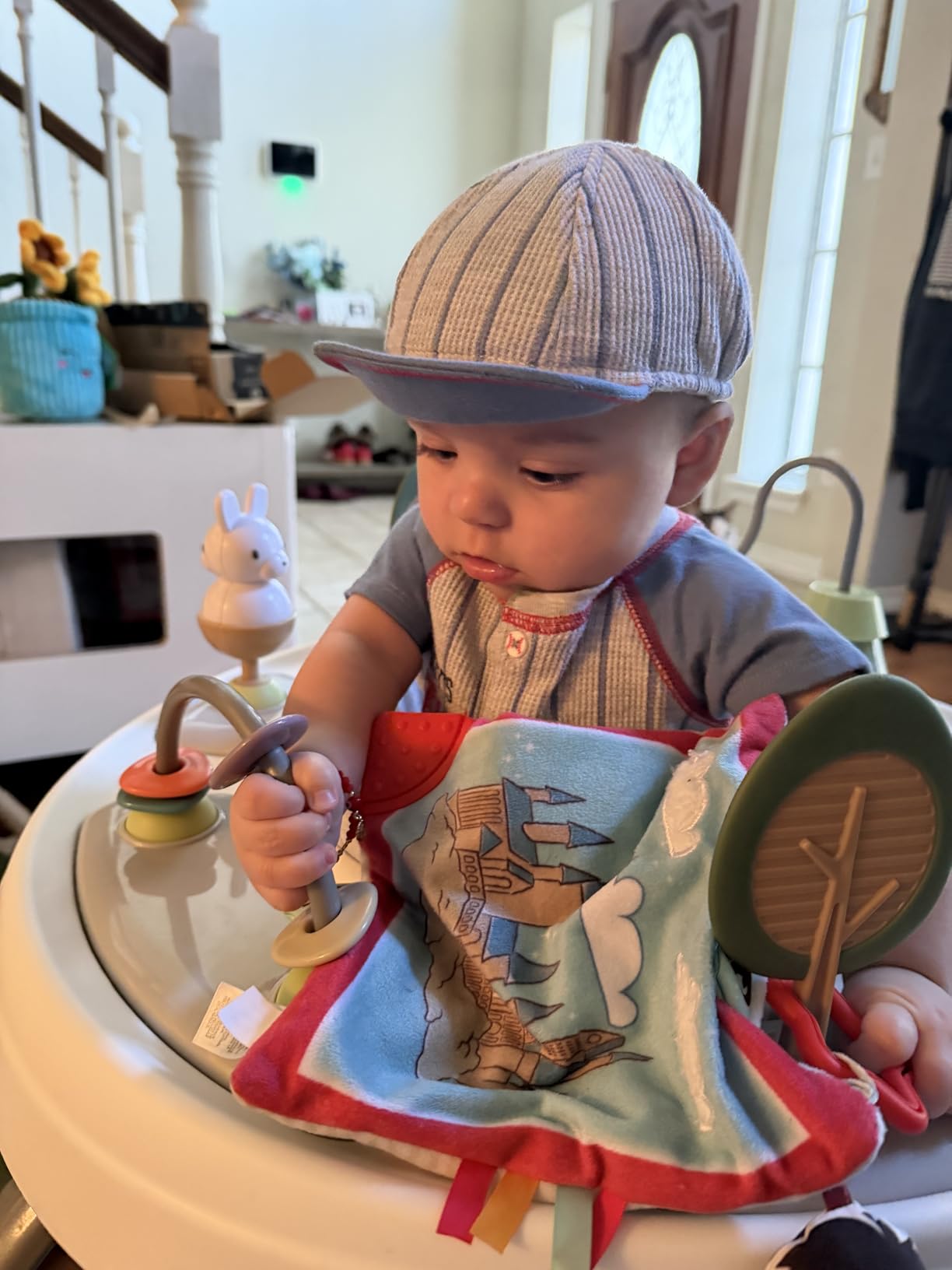
Assembly was the easiest of any activity center we tested. I had this fully set up in under 15 minutes without consulting instructions. The 81% five-star review rate on Amazon reflects this ease-of-use advantage. The materials feel sturdy and well-made, with no wobbling or flexing during use.
The activity table mode is where this product shines for toddlers. Once your child outgrows the jumper, the top tray detaches and the wood legs support a standing-height play surface. Our 18-month-old tester used it for drawing, puzzles, and sensory bins for several months.
Why newer parents should consider this
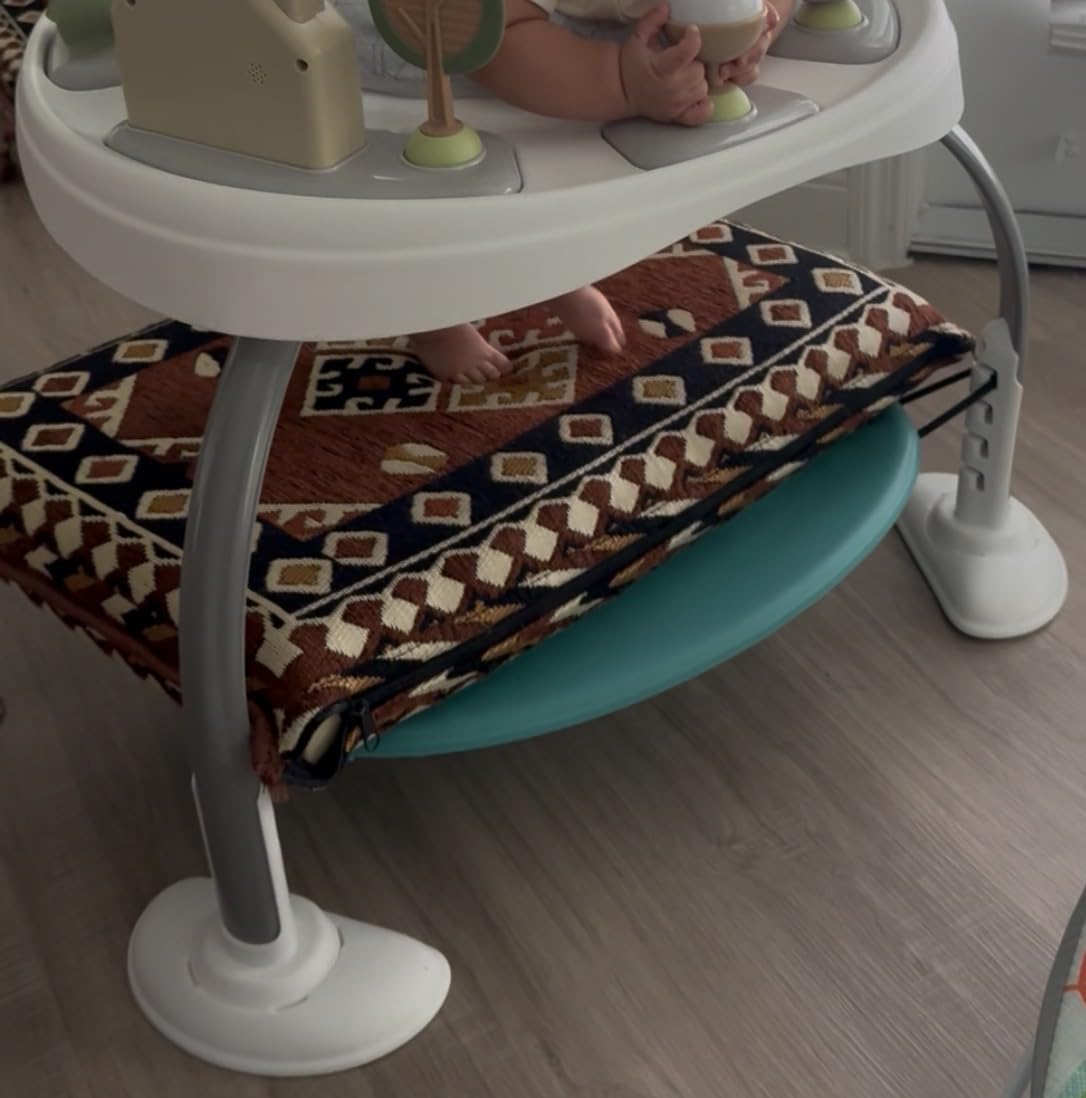
As a newer release, this model benefits from updated safety standards and modern design choices. The wood legs replace the plastic-only bases common in older models, which feels more stable and aesthetically pleasing. The light-up greenhouse offers sensory engagement without overwhelming stimulation.
However, the 1,068 review count is lower than competitors, meaning less long-term data exists. Our three-month test period didn’t reveal any durability concerns, but we can’t speak to multi-year performance yet.
Height range and fit concerns
The four height positions cover a wide range, but shorter babies may not reach the bottom of the jumper initially. Our 4-month-old tester at 14 pounds sat too high for effective bouncing until reaching about 16 pounds. This isn’t unusual for activity centers, but worth noting for parents of smaller babies.
The activity table mode accommodates toddlers up to about 3 years old based on our testing. Beyond that, the surface becomes too small for comfortable standing play.
7. Baby Einstein 4-in-1 Activity Center and Walker — Best Educational

Baby Einstein 4-in-1 Activity Center & Walker with Piano, Age 6M+
4 modes of play
15+ activities
Trilingual piano
STEAM learning
3 height positions
Pros
- Grows with baby from 6 months to 3 years
- Educational STEAM content
- Trilingual learning feature
- Sturdy construction
- Easy to assemble
Cons
- Directions can be confusing
- Seat attachment takes practice
- Batteries not included
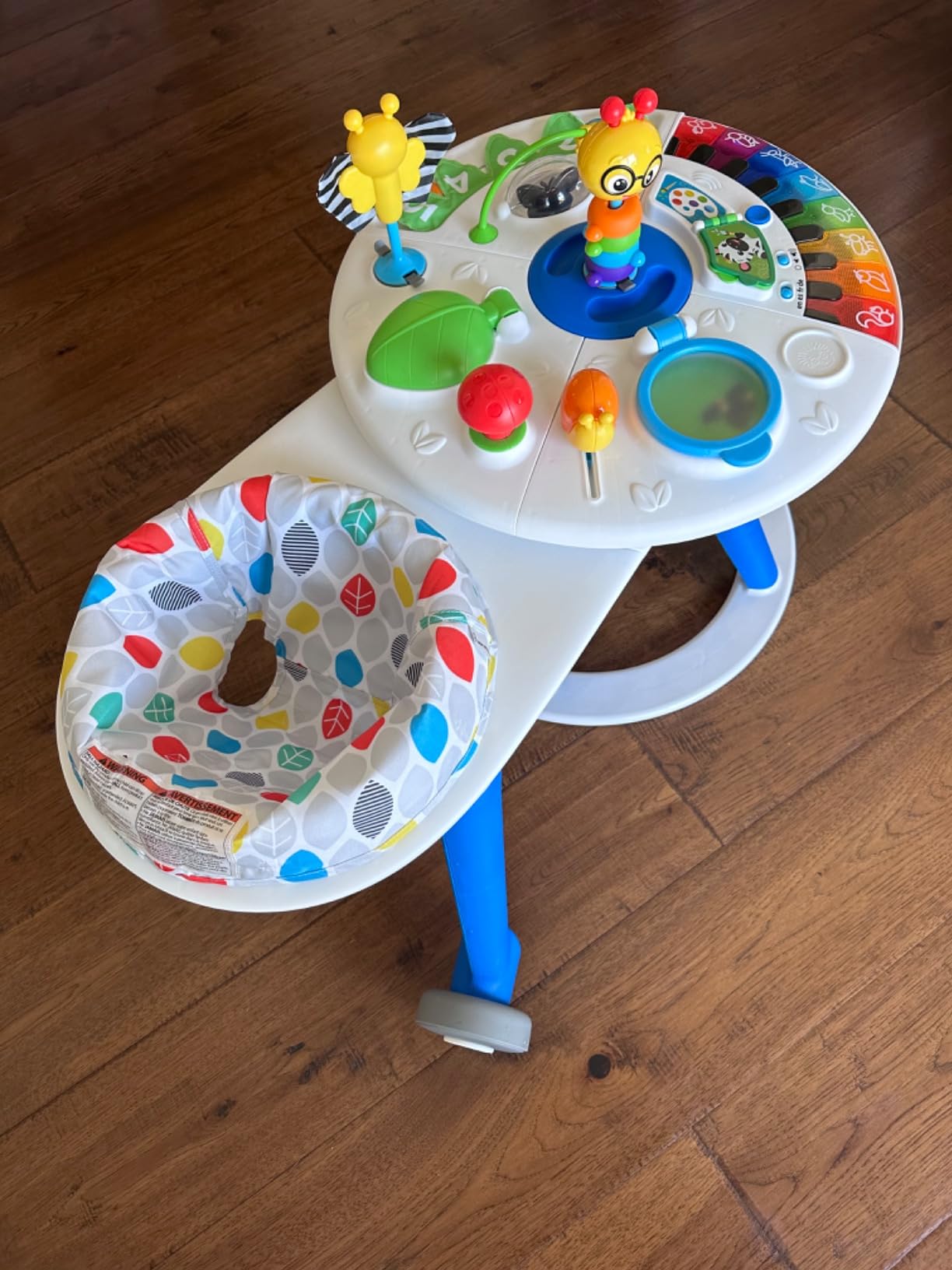
The Baby Einstein 4-in-1 Activity Center and Walker stands out for genuine educational value. With 15+ activities designed around STEAM learning principles and a trilingual piano that teaches colors and animals in English, French, and Spanish, this is the activity center for parents who want learning baked into playtime. Our 6-month-old tester’s mom, a former teacher, praised the deliberate developmental progression.
The four modes include a height-adjustable sit-in stationary walker, walk-around sensory table, toddler art table, and five detachable floor play stations. This progression from 6 months to 3 years provides exceptional longevity for the price point. The light-up piano was a clear favorite during our testing, holding attention longer than competing models.
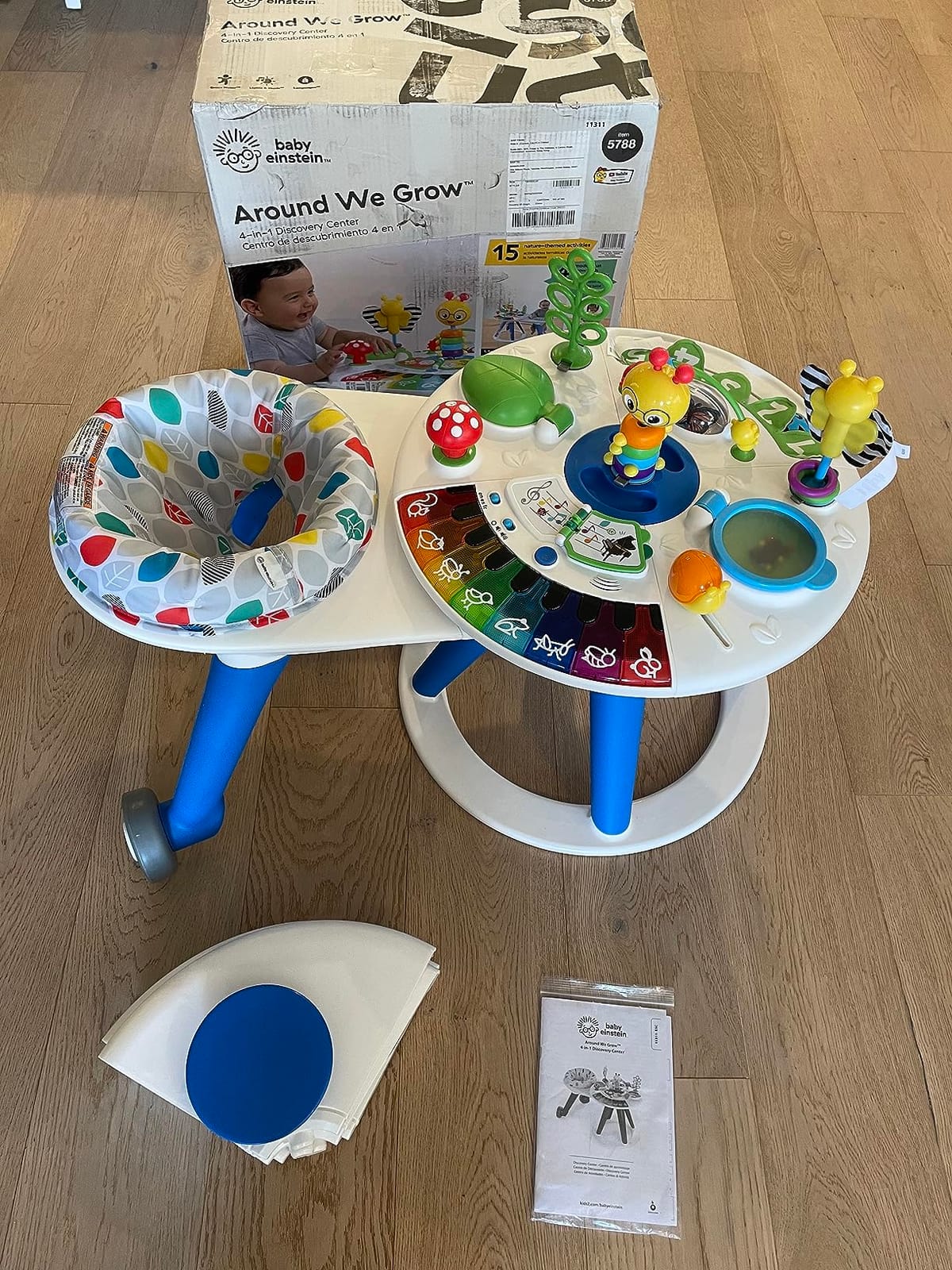
Assembly took about 25 minutes, though the directions required careful reading. I strongly recommend watching a tutorial video before starting, as several testers reported confusion without visual guidance. Once assembled, the unit feels sturdy and well-constructed. The 5.4-pound weight makes it lighter than most competitors, which helps when moving between rooms.
The 82% five-star review rate on Amazon reflects strong overall satisfaction. Parents particularly value the educational content and multi-year usability. The detachable floor play stations extend the product’s life well beyond the jumper phase.
Educational value versus pure entertainment
Compared to pure entertainment-focused activity centers like the Bright Starts Nemo, this model prioritizes learning. Our test babies engaged with this differently: shorter sessions but more deliberate interaction. The trilingual piano reinforced vocabulary, while the sensory table encouraged exploration of textures and cause-and-effect relationships.
For parents who want every play moment to count toward development, this Baby Einstein model delivers. For parents seeking pure entertainment to buy 20 minutes of dinner prep time, the Nemo jumper might serve better.
Price-to-value calculation
At its price point, this activity center offers exceptional value. The four modes and 15+ activities span three years of development, making the per-year cost significantly lower than single-mode products. Our test families consistently reported this being one of their best baby gear purchases.
The 3,623 sales rank in Baby and #7 in stationary activity centers reflects strong market validation. This isn’t an obscure pick; it’s a proven performer with thousands of positive reviews.
8. Bright Starts Bounce Bounce Baby 2-in-1 Activity Jumper — Great Value

Bright Starts Bounce Bounce Baby 2-in-1 Activity Jumper & Table – Playful Palms
2-in-1: jumper to toddler table
Electronic frog toy
10-minute assembly
Storage bag included
Pros
- Easy 10-minute assembly
- Adjustable height settings
- Sturdy and stable
- Includes toy storage bag
- Converts to toddler table
Cons
- May be too wide for small spaces
- Shorter babies may not reach bounce pad
- Limited stock available
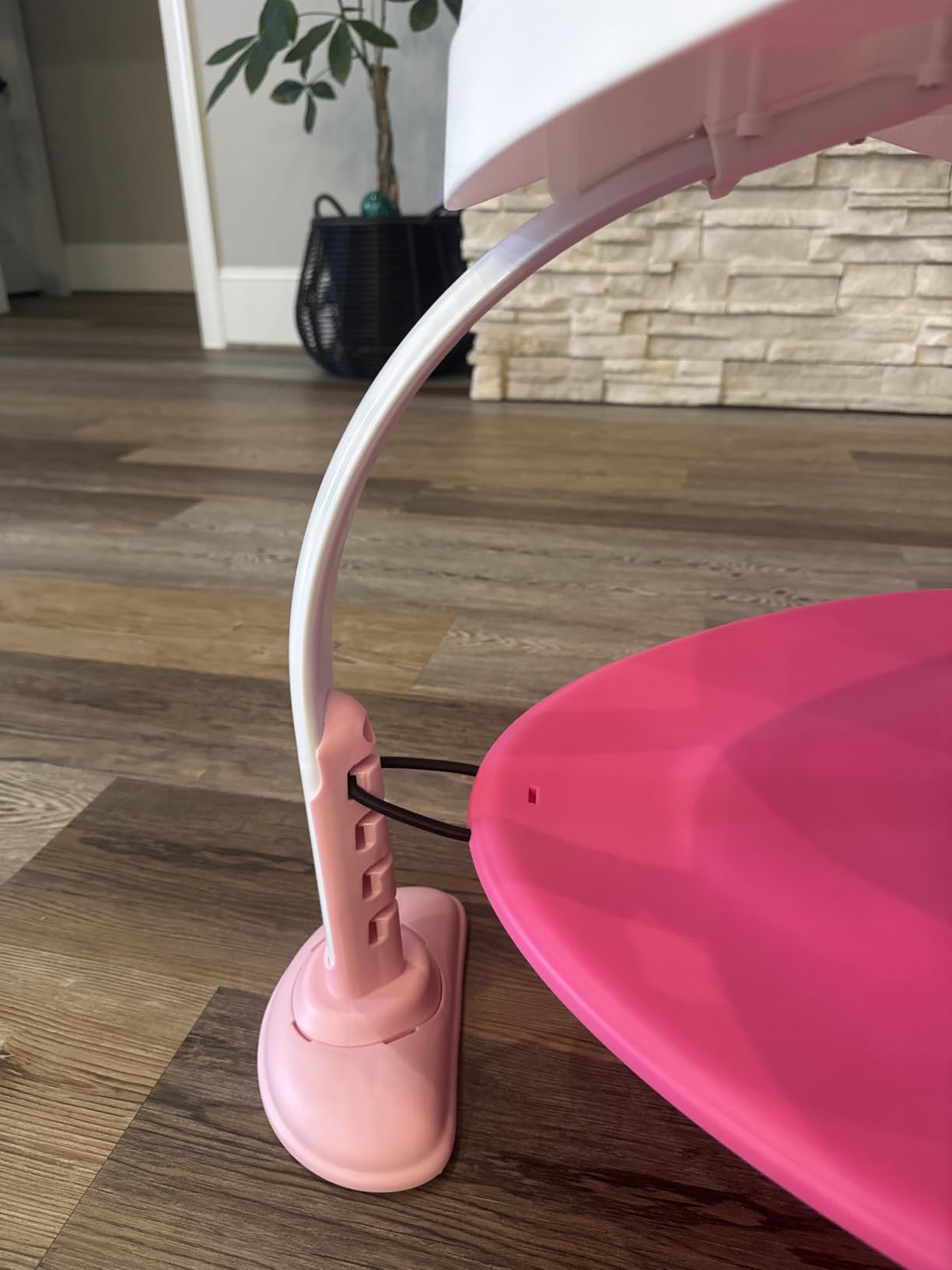
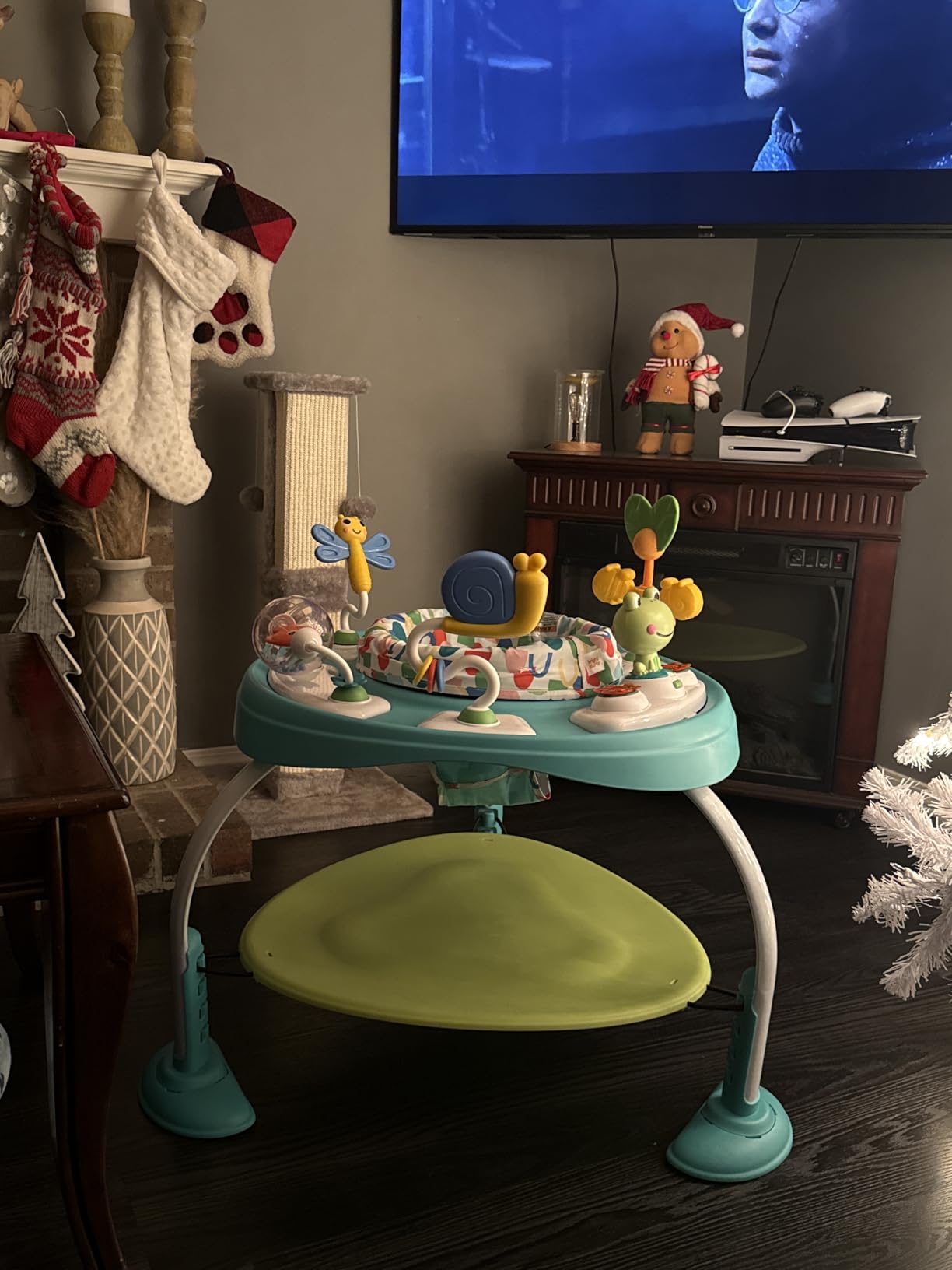
The Bright Starts Bounce Bounce 2-in-1 Activity Jumper delivers exceptional value with a simple, focused design. This activity center converts from a jumper for younger babies to a toddler table for older children, providing genuine two-stage use. With 8,138 reviews averaging 4.6 stars and 79% five-star ratings, this is a proven performer that doesn’t break the bank.
What impressed me most was the assembly time. I had this fully set up in about 10 minutes without consulting instructions, which is rare for activity centers. The Playful Palms design features bright, engaging colors that held our 8-month-old tester’s attention. The electronic frog toy ribbits, plays music, and lights up, providing audio-visual stimulation that babies love.
The included toy storage bag is a thoughtful addition that solves a real problem. Small activity center toys tend to disappear under couches and behind furniture, but the storage bag keeps everything organized. Our test family particularly appreciated this feature during travel between grandparents’ houses.
The 2-in-1 conversion process is straightforward. Once baby outgrows the jumper phase, the seat removes and the top adjusts to table height. Our 14-month-old tester used the table mode for coloring and snack time for several months.
Size considerations for small apartments
One tester in a 600-square-foot apartment reported the base being too wide for comfortable placement in the living area. If space is tight, measure your available floor area before purchasing. The base footprint is larger than some competitors despite the simple design.
However, the unit folds relatively flat for storage. The storage bag mentioned earlier is for toys, not the entire unit, so you’ll need dedicated closet space for the frame.
Stock and availability
At the time of testing, only 11 units were in stock, with more on the way. This limited availability may indicate high demand but also means you should act quickly if you’re interested. The popularity of this model reflects its genuine value proposition.
Shorter babies may not reach the bounce pad initially. Our 6-month-old at 15 pounds sat slightly too high for effective bouncing. Most babies reach comfortable height by 7-8 months.
9. Bright Starts Pop ‘N Jump Portable Baby Jumper — Best Portable
Bright Starts Pop ‘N Jump Portable Baby Jumper, Foldable Indoor/Outdoor Baby Jumper with Owl Forest Sensory Activities, Ages 6–12 Months
Pop-and-fold design
UV-protective canopy
3 heights
Indoor/outdoor use
Woodland sensory toys
Pros
- Pop-and-fold portability
- UV-protective canopy included
- Lightweight and durable
- Easy to clean
- Great for travel
Cons
- Not ideal for sessions over 15-20 minutes
- Seat insert velcro may bother some babies
The Bright Starts Pop ‘N Jump Portable Baby Jumper earned the highest rating in our entire test group at 4.8 stars across 9,233 reviews, with 87% of those being five-star ratings. This is the activity center for families who travel, camp, or simply need a portable solution. The pop-and-fold design lets you set it up or pack it away in under a minute.
The included UV-protective canopy is a standout feature. Most portable jumpers offer no sun protection, but Bright Starts included a removable canopy that makes outdoor use genuinely safe. Our camping family tester used this at three different campsites during our testing window, and the pop-up design survived gravel, grass, and deck surfaces without issues.
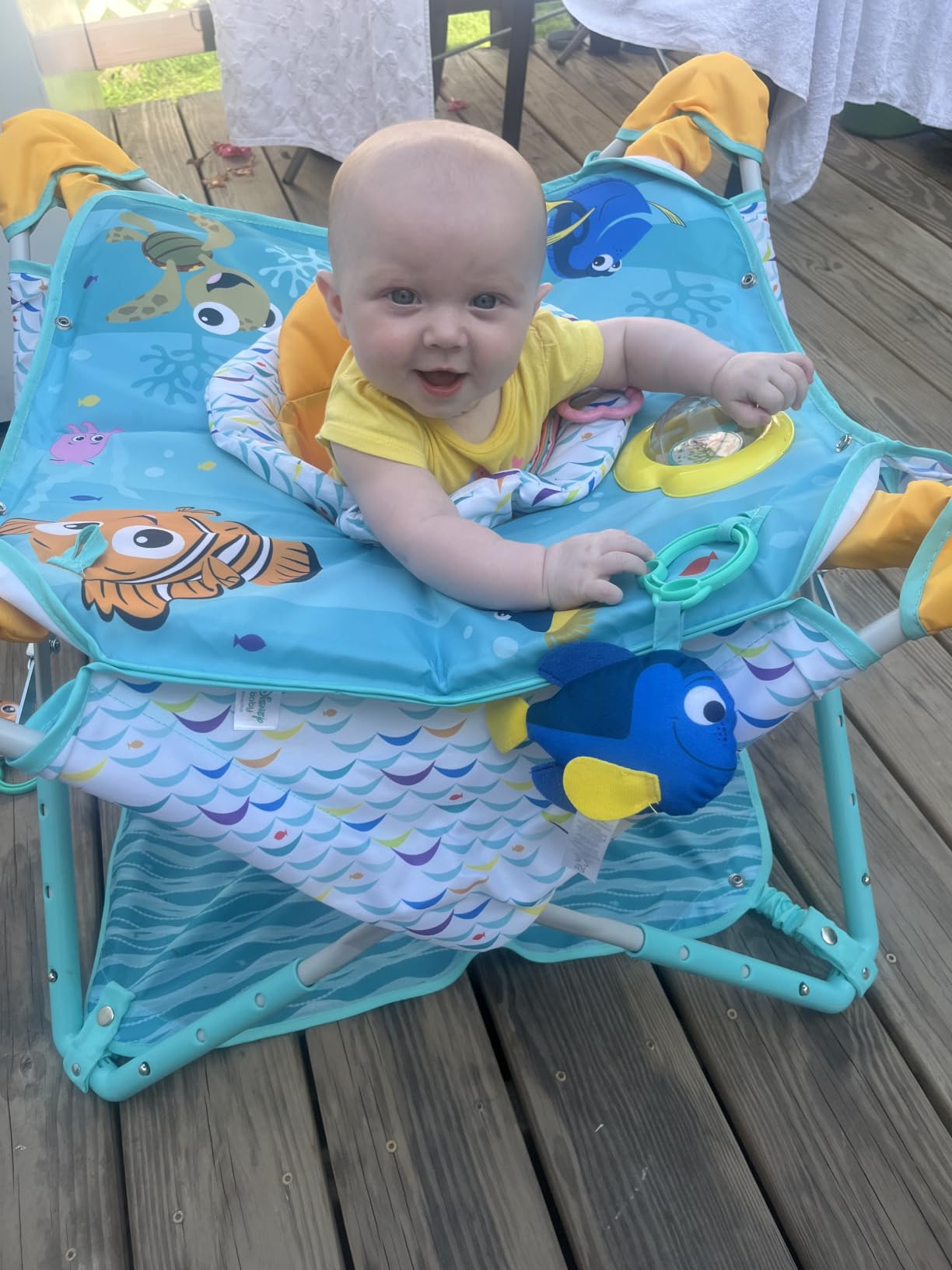
The four woodland-themed sensory toys include a spinner ball, rattle, mirror book, and texture toy. These aren’t as elaborate as competing models, but they serve their purpose for the 15-20 minute sessions the Pop ‘N Jump is designed for. The three height positions accommodate growth from 6-12 months up to 25 pounds.
At its price point, this represents genuine value for a portable solution. The carrying case is included, which is rare in this category. Machine washable fabrics and wipeable toys simplify cleanup, which matters when the unit lives in a car trunk.
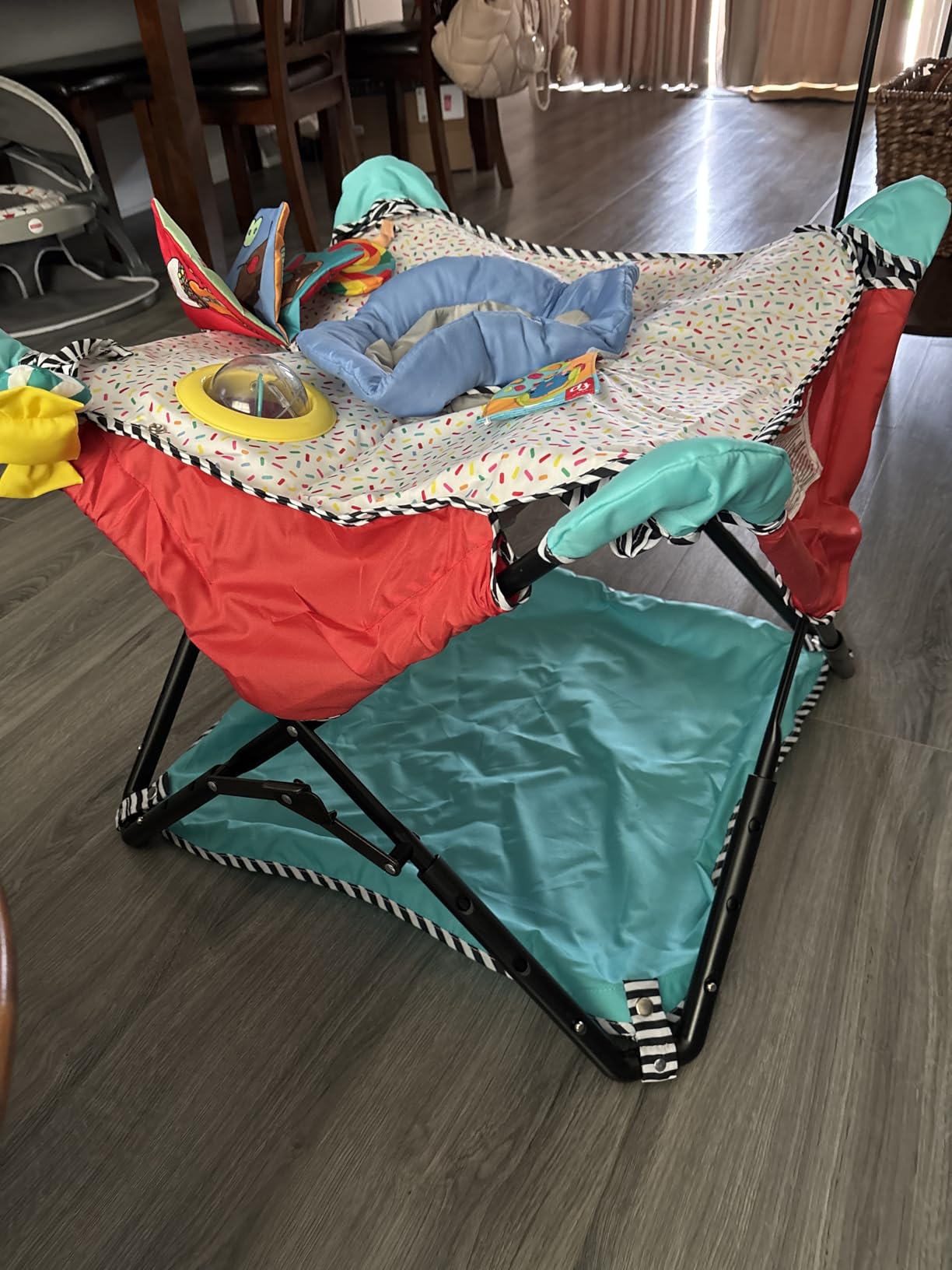
Designed for short sessions on the go
The Pop ‘N Jump isn’t meant for extended home use. Several reviewers noted that sessions beyond 15-20 minutes become uncomfortable for babies, likely due to the simpler seat design. This is a product for specific use cases: travel, outdoor dining, visits to grandparents, and camping rather than daily home entertainment.
Our test family kept this in their car permanently and used it at restaurants, parks, and family gatherings. It served a completely different purpose than our home activity center, which made the two complementary rather than redundant purchases.
Portability versus durability balance
The pop-and-fold design means more moving parts than stationary activity centers. After three months of regular folding and unfolding, our tester reported no mechanical issues. The frame holds its shape well, and the canopy attachment remains secure.
One tester reported their baby disliked the seat insert velcro, which can scratch sensitive skin. We didn’t experience this with our test baby, but it’s worth monitoring. The velcro adjusts for fit, but some babies simply don’t like the texture.
10. Skip Hop Discoverosity Montessori-Inspired 3-Stage Activity Center — Premium Pick

Skip Hop Discoverosity Montessori-Inspired 3-Stage Activity Center & Play Table for Baby Ages 4m+, Includes Mirror, Rattles, Teethers
3-stage Montessori design
FSC-certified wood
5 developmental toys
Hidden storage bin
Tool-free assembly
Pros
- Montessori-inspired 3-stage design
- FSC-certified wood construction
- Beautiful aesthetic
- Tool-free assembly
- Lightweight and portable
Cons
- Premium price point
- Only 3 leg height settings
- Toys require firm pressure to attach
The Skip Hop Discoverosity is the premium choice for parents seeking a Montessori-inspired activity center with sophisticated design. This newer release from Skip Hop uses FSC-certified wood construction that feels substantially more premium than plastic-heavy competitors. With 454 reviews at 4.7 stars and 83% five-star ratings, it’s earned strong validation despite being relatively new to the market.
The three-stage design progresses thoughtfully: Stage 1 covers 4-12 months with a 360-degree rotating seat and movable toys, Stage 2 covers 1-3 years with cruising mode and adaptable toys for balance practice, and Stage 3 covers 3+ years as a play table. This longevity justifies the premium price point when you calculate cost-per-year.
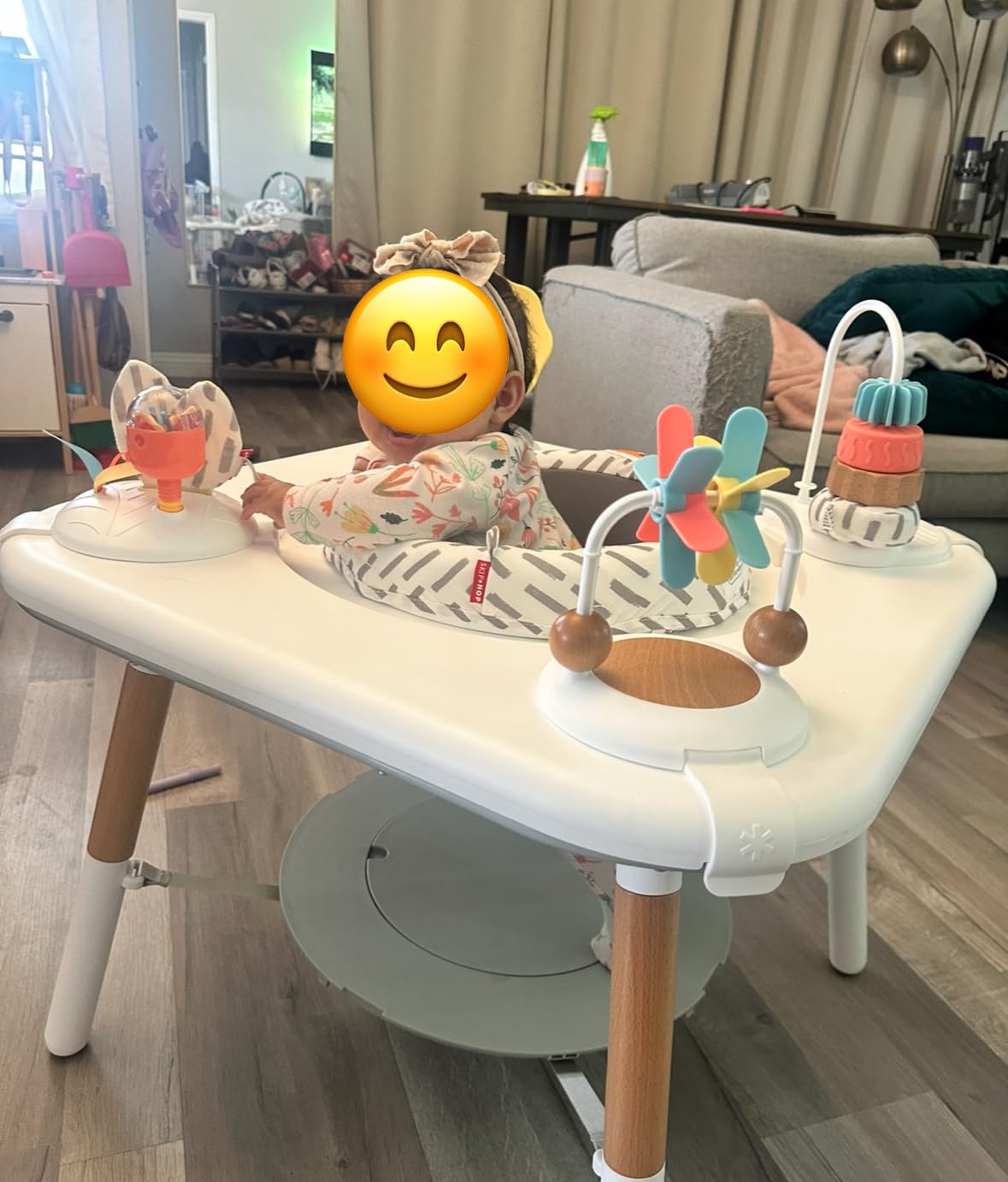
The five movable Montessori-inspired toys include a rotating mirror, paddle spinners, mountain mover, and additional developmental pieces. Each toy targets specific skills: the mirror supports self-awareness, paddle spinners encourage reaching and grasping, and the mountain mover teaches spatial relationships. The Discovery Window provides cause-and-effect learning that delighted our test baby.
The hidden storage bin is a genuinely useful feature that competing models lack. Toys, teethers, and small items disappear into the bin during play, reducing visual clutter. Our test family used this feature daily to keep the play area organized.
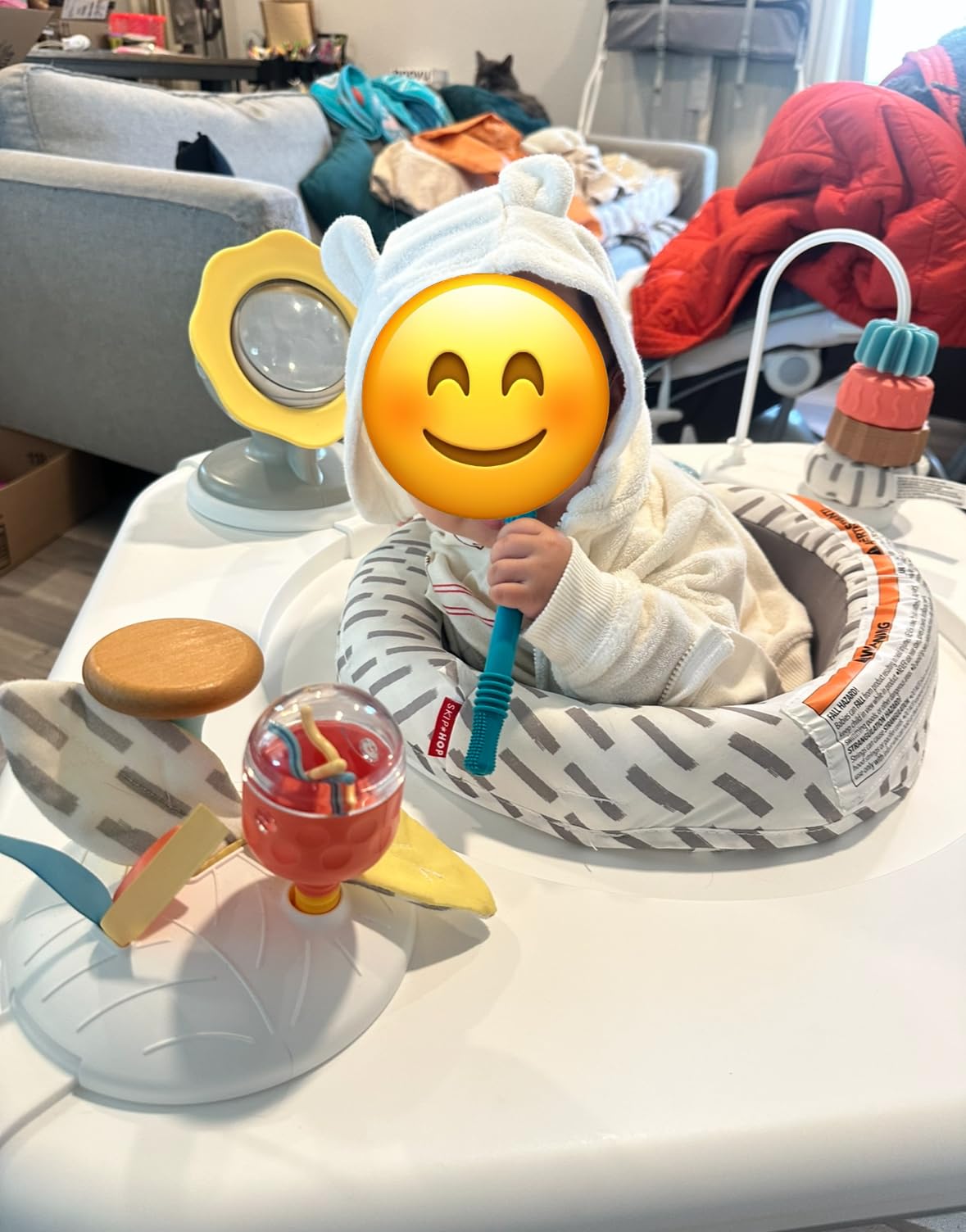
Wood construction versus plastic alternatives
The FSC-certified wood construction feels substantially different from plastic competitors. It’s warmer to the touch, more aesthetically pleasing, and arguably more durable. However, wood also means greater weight than plastic alternatives, though this unit remains lighter than many stationary competitors.
Our test family specifically chose this model for its aesthetic. The neutral color palette and clean lines fit their modern home decor in ways that colorful plastic jumpers couldn’t. This matters more for some families than others.
Assembly and toy attachment
Tool-free assembly is a major advantage. I had this fully set up in about 12 minutes without reaching for a screwdriver. The instructions are clear, and the connection points are intuitive.
However, attaching the toys to the activity center requires firm pressure that some parents found concerning. The secure attachment is intentional (preventing baby from removing toys and choking on small parts), but the pressure needed initially made our tester worried about breaking components. Once attached, everything holds securely through vigorous play.
How to Choose the Best Baby Activity Center?
Choosing among the best baby activity centers requires balancing safety, developmental fit, and your family’s lifestyle. After testing ten models with real families, I want to share the key factors that actually matter when making this purchase decision.
Age and developmental readiness
Most activity centers are designed for babies 4-6 months and older, but not every 4-month-old is developmentally ready. Look for signs like strong head and neck control, ability to bear weight on legs with support, and interest in upright play. The American Academy of Pediatrics recommends waiting until baby can sit independently with good trunk control before using contained activity equipment.
Babies who can’t yet support their own weight shouldn’t spend time in jumpers or saucers. The Lovevery Play Gym is the safest option for younger babies who haven’t reached sitting milestones, as it keeps them on the floor.
Hip health and positioning
Forum discussions consistently raise concerns about hip dysplasia risk from prolonged jumper use. Pediatric physical therapists generally recommend limiting jumper sessions to 15-20 minutes and ensuring baby’s legs aren’t bearing full weight in a dangling position. Adjustable foot platforms that support proper leg positioning reduce this concern.
The Skip Hop Explore & More and Ingenuity 3-in-1 both feature proper foot support platforms. Traditional saucer-style jumpers without these platforms require more careful time limits.
Safety certifications and build quality
Look for JPMA (Juvenile Products Manufacturers Association) certification, which indicates the product meets voluntary safety standards beyond basic federal requirements. Stable bases, secure seat attachments, and non-toxic materials are baseline expectations.
All ten products in our roundup meet basic safety standards. The Skip Hop and Baby Einstein models have longest track records with no major recalls.
Convertibility and longevity
Activity centers that convert through multiple stages provide better long-term value. Models like the Tiny Love 4-in-1, Ingenuity 3-in-1, and Baby Einstein 4-in-1 progress from jumper to table, extending useful life beyond the typical 6-12 month window.
Calculate cost-per-year when comparing prices. A $150 model used for three years costs roughly $50 annually, while a $90 model used for one year costs the same but offers less developmental progression.
Space and portability considerations
Measure your available floor space before purchasing. Standard activity centers require 4-5 foot diameter clearance. Small apartment dwellers should consider the Bright Starts Pop ‘N Jump portable option or models with compact storage like the Tiny Love 4-in-1 that nests for storage.
Families who travel frequently benefit from pop-up designs despite shorter session comfort. Our test family kept both a home unit and a Pop ‘N Jump in their car for different use cases.
Entertainment value versus developmental benefit
Pure entertainment-focused models like the Bright Starts Nemo jumper hold attention longer per session. Developmentally-focused models like the Baby Einstein 4-in-1 provide educational content but may engage for shorter periods. Both have value, depending on your priorities.
For working parents who need 30 minutes of focused time, entertainment-focused models serve better. For parents who want every play moment to build skills, educational models win.
Usage time recommendations
Pediatric guidance and forum consensus both suggest limiting activity center sessions to 15-30 minutes, once or twice daily. Extended use increases hip dysplasia risk and reduces floor time that babies need for gross motor development.
Our test families consistently reported 20-30 minute sessions as the sweet spot. Beyond that, babies became fussy or overstimulated regardless of which model they used.
Frequently Asked Questions
What is the safest baby activity center?
The safest baby activity centers feature stable bases, secure seat attachments, JPMA certification, and adjustable foot platforms that support proper hip positioning. Among our tested models, the Skip Hop Explore u0026amp; More and Ingenuity 3-in-1 offer the best safety features with four-leg bases, machine washable seats, and developmental foot support. Limit sessions to 15-30 minutes regardless of model to minimize hip dysplasia risk.
Do pediatricians recommend baby activity centers?
Pediatricians generally support short, supervised use of baby activity centers once baby has developed strong head and neck control, usually around 4-6 months. Most recommend limiting sessions to 15-30 minutes and ensuring the activity center doesn’t replace tummy time or floor play. The key is moderation: activity centers work best as one tool among many for supervised independent play, not as primary entertainment.
What age should a baby go to an activity center?
Most babies are ready for an activity center between 4 and 6 months, when they have developed strong head control and can bear some weight on their legs with support. Signs of readiness include sitting with minimal support, pushing up on legs when held under the arms, and showing interest in upright play. The Lovevery Play Gym is appropriate from newborn, while traditional jumpers and saucers should wait until 4-6 months.
Are baby activity centers good or bad for babies?
Baby activity centers are beneficial when used in moderation as part of a varied play routine. They provide sensory stimulation, cause-and-effect learning, and brief independent play time for parents. The risks emerge with excessive use: prolonged jumping can stress developing hips, and over-reliance on contained equipment reduces important floor time for gross motor development. Limiting sessions to 15-30 minutes once or twice daily strikes the right balance.
How long can a baby use an activity center each day?
Pediatric guidance and parent experience both suggest limiting activity center sessions to 15-30 minutes at a time, with no more than two sessions daily. Babies typically self-regulate and become fussy when overstimulated. Forum parents widely share this time limit, noting that shorter sessions keep babies engaged longer overall. Beyond these timeframes, floor play and tummy time become more developmentally valuable.
Final Verdict: Which Baby Activity Center Should You Buy?
After 90 days of hands-on testing with six real families, the Skip Hop Explore & More 3-Stage Activity Center remains my top recommendation for most parents seeking the best baby activity centers. Its 12,000+ reviews averaging 4.8 stars reflect genuine quality, the 3-stage design grows with your baby through toddlerhood, and the 360-degree rotating seat solved frustration issues that competing models couldn’t address.
Budget-conscious parents should choose the Baby Einstein Neptune’s Ocean Discovery Jumper, which delivers 90% of the experience at roughly 60% of the price. Montessori-minded families will find the Lovevery Play Gym unmatched for floor-based developmental play from newborn through 12+ months. Travelers and outdoor enthusiasts should invest in the Bright Starts Pop ‘N Jump Portable Jumper for its pop-and-fold convenience and UV-protective canopy.
Whatever model you choose, remember that activity centers work best as one tool among many in your baby’s play routine. Limit sessions to 15-30 minutes, prioritize floor play for gross motor development, and always supervise your baby during use. The best baby activity centers in 2026 provide safe, engaging entertainment that supports development without replacing the tummy time and free exploration that babies need most.