
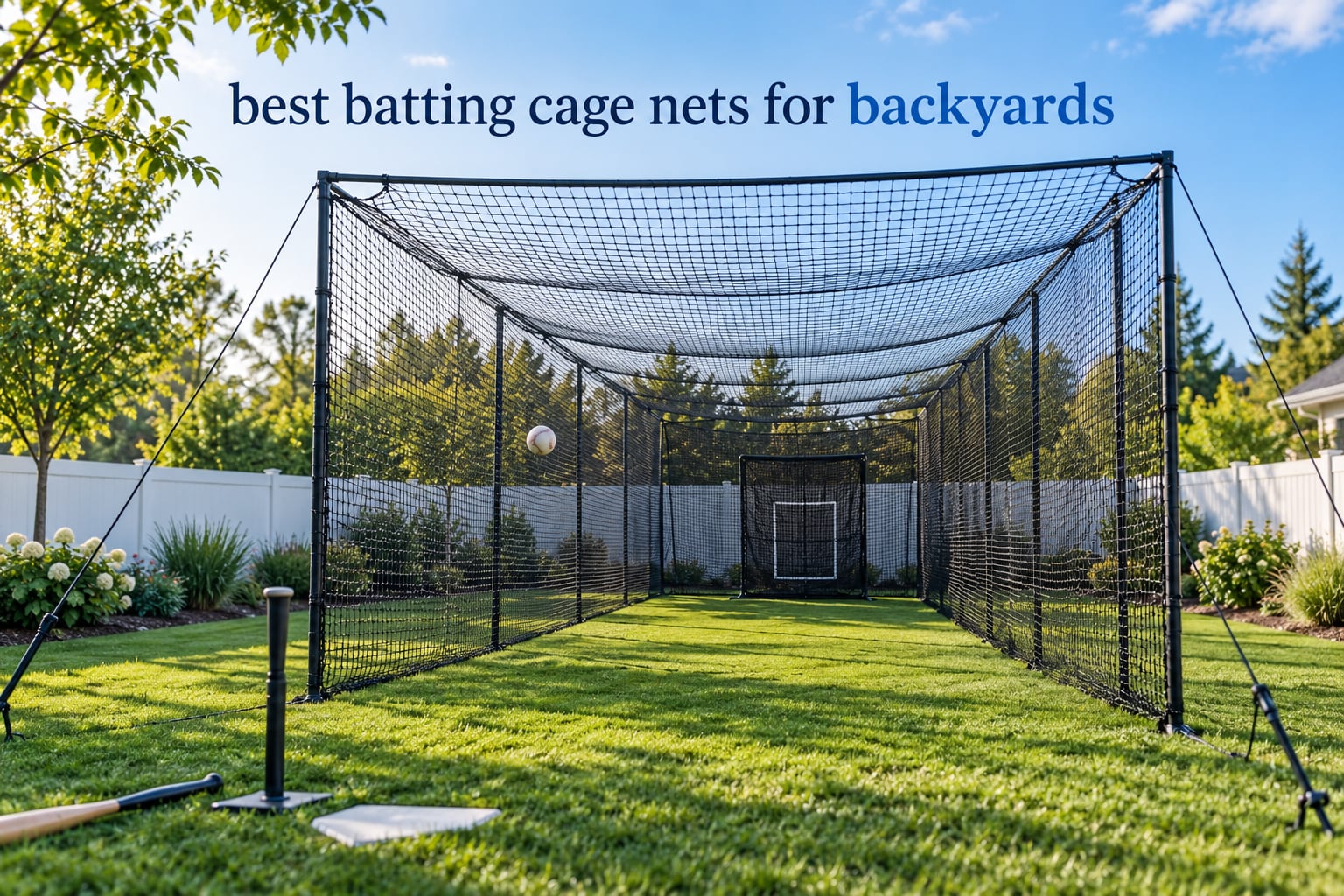
A batting cage net is the single most useful piece of gear you can add to a backyard for a baseball or softball player. It is also the most misunderstood one. Most families open a search for the best batting cage nets for backyards and immediately drown in specifications they do not need: twine grades, mesh counts, burst strengths, and knot types that all sound identical after five minutes of reading.
Here is the short version. A batting cage net is heavy-duty mesh that forms the walls, roof, and backstop of a practice tunnel or a portable backstop. It is hung from a frame under tension so that a batted ball hits the mesh, loses its energy, and drops to the ground instead of flying into your neighbor’s window. The grade and material of that mesh decide whether it survives one season or a decade of sun, wind, and hard contact.
We compared all ten nets in this roundup against each other on net weight and strand count, mesh opening, weather resistance, included hardware, and how much frame work each one still needs after it arrives. The results cover everything from a simple open backstop net to a full 40-foot steel tunnel, so you can match a net to your yard and your hitter rather than the other way around. If you are still deciding how much yard space you can give up, our guide to the best batting cages covers the frame side of the equation.
Updated for 2026, every pick below reflects the specifications the manufacturer publishes, plus what buyers report after living with the net through a full season.
Table of Contents
Top 3 Best Batting Cage Nets for Backyards (October 2026)
If you only read one section, read this one. These three cover the most common setups: a multi-sport barrier net, a full-length enclosed tunnel, and a net-only replacement for a frame you already own. Each one earns its place for a different reason, and the details behind every pick run deeper in the individual reviews below.

NQB 10x30FT Backstop Net
- Heavy duty nylon
- 1.8 inch square mesh
- 33FT rope and steel hanging kit
- 11 size options

Skywalker Sports 40 Foot Cage
- 40 ft length
- 10 ft overhead clearance
- UV-treated netting
- Collapsible steel frame
ORIENGEAR #45 PE Net Only
- 1.88 inch #45 knotted mesh
- UV-stabilized polyethylene
- Self-closing side door
- Four length options
All 10 Batting Cage Nets Compared Side by Side
Before the individual reviews, here is the whole field in one scan. Two of these products are net-only, meaning you supply the frame yourself. Three are complete portable kits with poles included. The rest sit in between, and the differences in mesh opening and strand count below matter more than the brand names do.
| Product | Specifications | Action |
|---|---|---|
| NQB Baseball Backstop Net 10x30FT |
|
Check Latest Price |
 Apex Sports 22x12x8 Ft Portable Cage Apex Sports 22x12x8 Ft Portable Cage |
|
Check Latest Price |
| Skywalker Sports 40 Foot Batting Cage |
|
Check Latest Price |
 WICTTISPOSI 7×7 Baseball Net WICTTISPOSI 7×7 Baseball Net |
|
Check Latest Price |
| ORIENGEAR #45 PE Net Only |
|
Check Latest Price |
 VEVOR 55x12x12 Ft Batting Netting VEVOR 55x12x12 Ft Batting Netting |
|
Check Latest Price |
 Syhood 35x10x10 Ft Polyester Net Syhood 35x10x10 Ft Polyester Net |
|
Check Latest Price |
 Vertura 22x12x8 Ft Portable Cage Vertura 22x12x8 Ft Portable Cage |
|
Check Latest Price |
 RIIFRILY #42 HDPE Net Only RIIFRILY #42 HDPE Net Only |
|
Check Latest Price |
 amazgolf 10x10x10 Ft Baseball Net amazgolf 10x10x10 Ft Baseball Net |
|
Check Latest Price |
1. NQB Baseball Backstop Net 10x30FT – Multi-Sport Barrier Netting With a Hanging Kit
NQB Baseball Backstop Net, Heavy Duty Batting Cage Netting, Sports Barrier
Nylon netting
1.8 inch square mesh
10x30 ft
4.03 kg
Rope and steel kit
Pros
- Holds up to repeated impact
- Includes 33FT rope and hanging kit
- Eleven size options
- Handles several sports
Cons
- 1.8 inch mesh passes small training balls
- Installation takes planning and hardware
This is the net I recommend to the widest range of families, and it earns the top spot here on the strength of its 4.7 rating across more than 250 reviews. The NQB is a flat barrier net rather than a full tunnel, which means it hangs on a fence, a wall, or a simple pole frame and stops balls before they leave the yard.
The mesh is 1.8 inch square nylon, and the whole 10×30 ft panel weighs just over 4 kg, so a single adult can lift and reposition it. The kit includes 33 feet of rope plus a steel hanging kit, which removes the most common reason net-only purchases fail: nobody wants to buy hardware separately on day two.
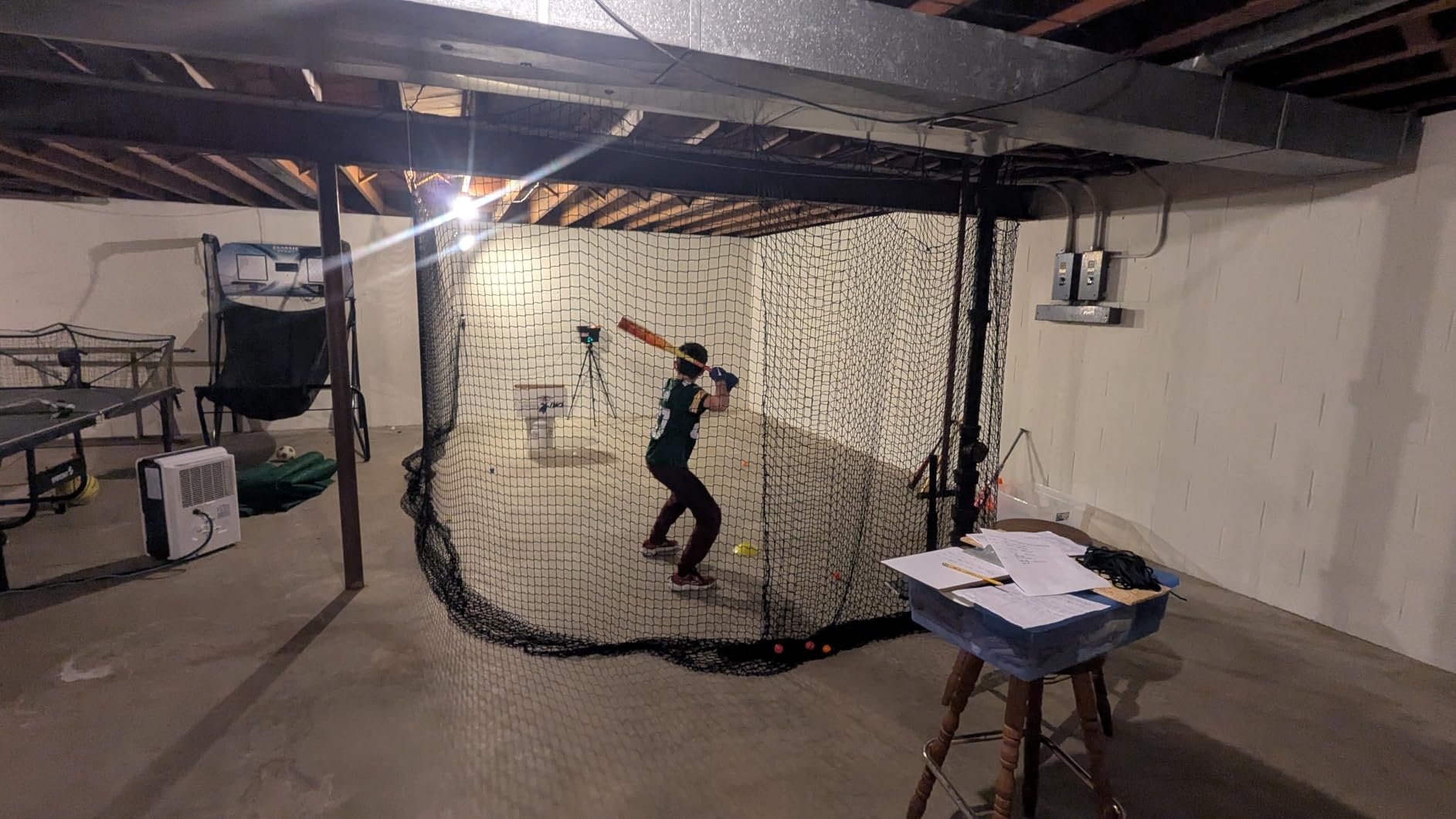
What stands out most is how many sports it absorbs. Buyers report using the same panel as a hockey, soccer, volleyball, lacrosse, and basketball backstop, and the review data shows minimal wear after extended outdoor use. That versatility is what turns it into an editor’s choice rather than a niche baseball purchase.
The honest limitation is the 1.8 inch mesh opening. Reviewers note that small training balls and whiffle balls can pass straight through, so if you are working on contact drills with youth players using soft practice balls, buy the smaller-mesh option from this brand’s range instead.
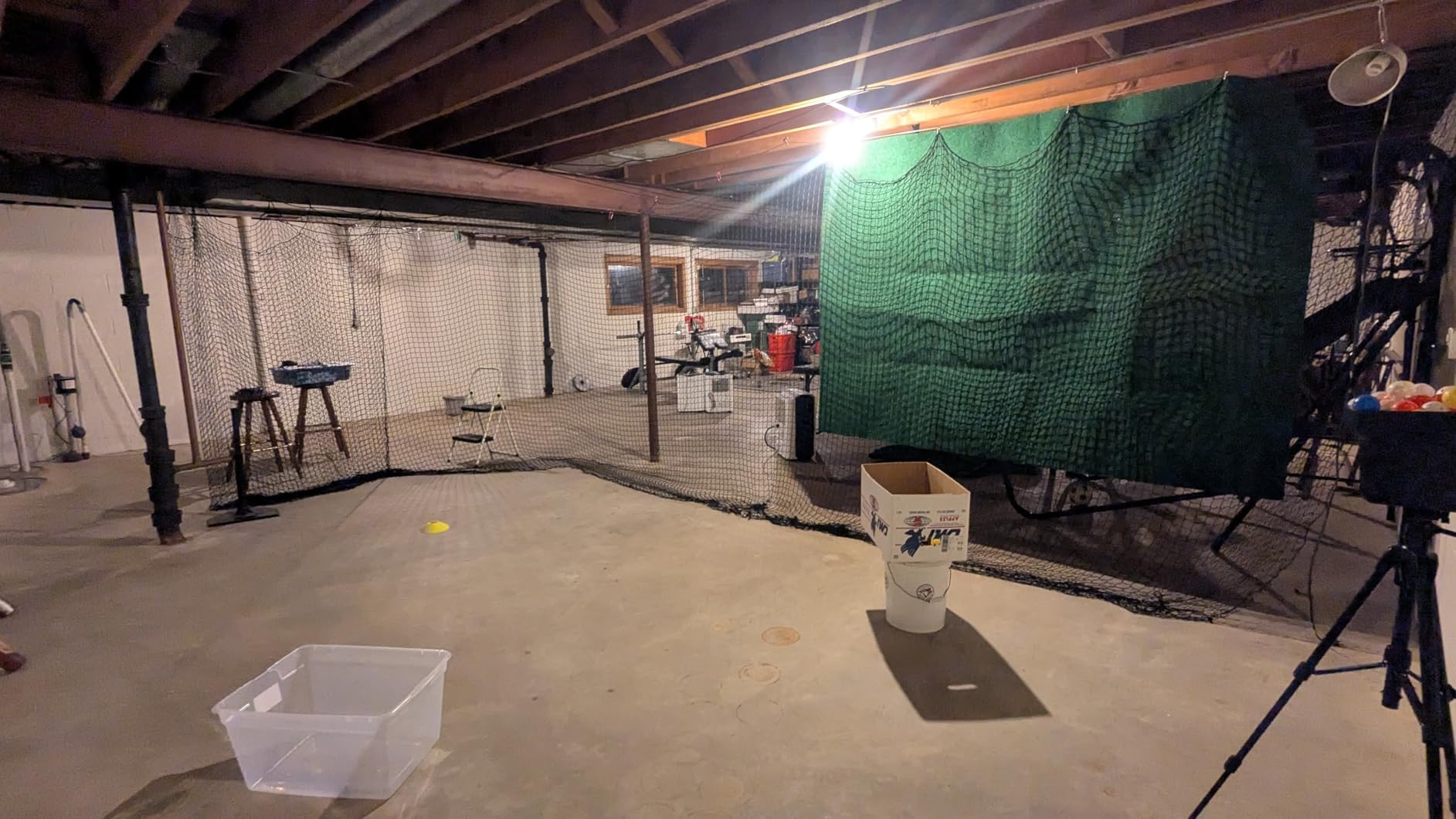
What to check before you buy
Measure your intended run before you order, because the 10×30 ft panel is wider than it is tall and needs a straight, clear mounting line. If you plan to mount it on an existing wooden fence, the square mesh size matters less than whether the fence boards are far enough apart to catch the twine.
Buyers also mention that the hardware assumes some familiarity with mounting a barrier. If you have never hung netting before, budget an afternoon and watch the install footage before you start.
Who should skip it
Skip this net if you need full three-sided coverage for machine pitching, because a flat barrier gives you a backstop and not a tunnel. It is also the wrong choice for a hitter who works with small practice balls that vanish through 1.8 inch openings.
For a full frame-and-net kit instead, our picks below cover portable cages from 22 feet up to a 55-foot fully enclosed tunnel.
2. Apex Sports Portable Batting Cage 22x12x8 Ft – All-In-One Kit With a Pitching Machine Hole
Apex Sports Portable Batting Cage 22x12x8 Ft, Baseball & Softball Net Cage
22x12x8 ft cage
3-ply 1.25 inch polyester
12.7mm fibreglass poles
15.31 kg
Pros
- Complete kit with stakes and carry bag
- Solid fibreglass poles
- Forgiving 3-ply netting
- Stores between sessions
Cons
- Most polarized rating in the group
- Net and pole wear under heavy use
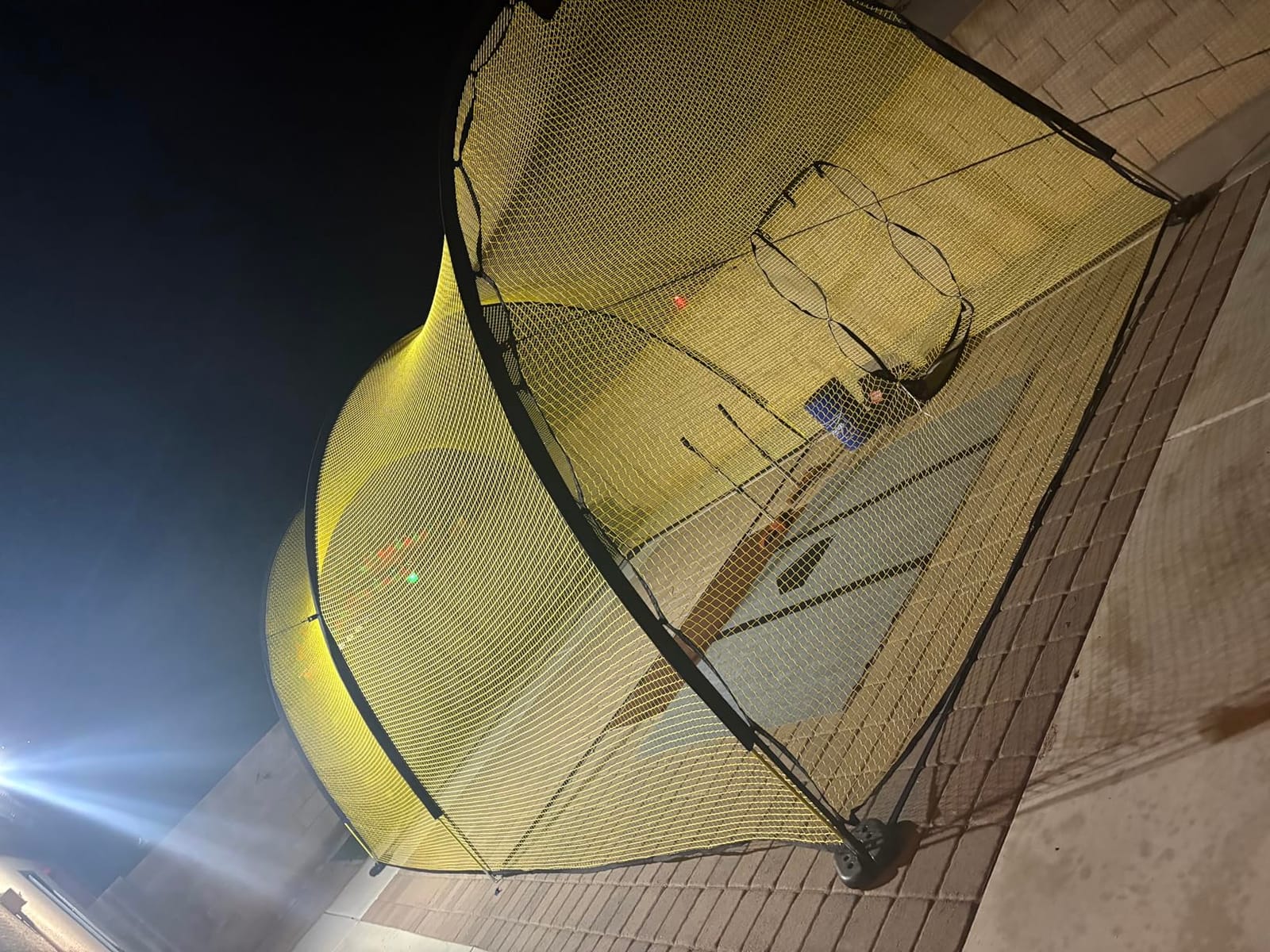
The Apex Sports 22x12x8 is the most genuinely portable full cage in this roundup, and the built-in 3.5 by 2 foot pitching machine hole is the feature that separates it from a simple backstop. You can set it in the driveway on Saturday, swing, fold it into the carry bag, and have the yard back on Sunday.
The structure uses 12.7 mm fibreglass poles, which are lighter than steel and will not rust, paired with 3-ply 1.25 inch polyester netting. That netting is soft-rebounding, meaning a mistimed swing pushes the mesh rather than stopping a ball dead, which is kinder to bats and to younger hitters.
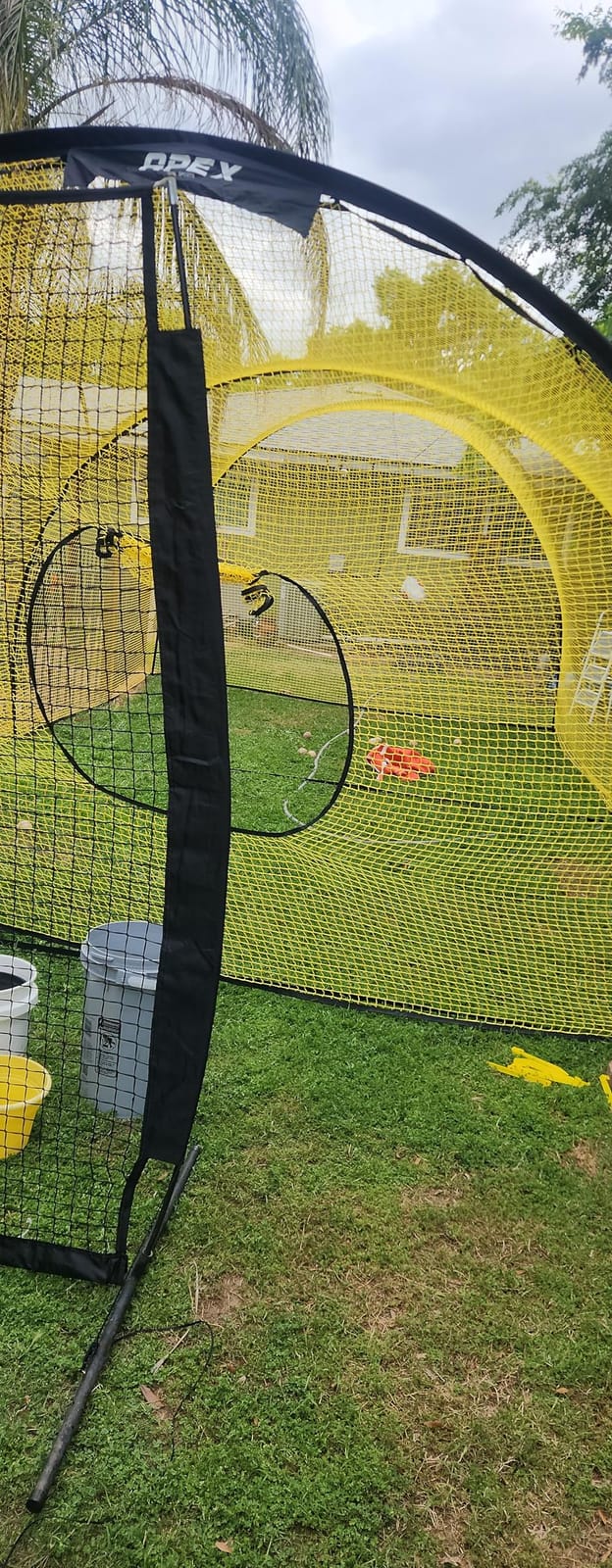
Included hardware is unusually complete for a portable cage: eight plastic stakes, the supporting nets, and a carry bag all come in the package. At 15.31 kg, the whole assembly is a two-person carry rather than a solo lift.
The reason this sits at number two is the rating profile. Its 4.0 average is the most polarized in the group, with a notable share of one-star feedback, and that complaint pattern centers on netting and pole wear under heavy, repeated use. For a family doing tee work and occasional soft toss, that is fine. For daily machine work, a steel-framed tunnel holds up better over years.
What to check before you buy
Look at your ground, not just your footprint. The eight plastic stakes are adequate for level lawn, and reviewers of similar kits recommend re-anchoring in wind. If your yard is sloped or hard soil, plan on heavier ground anchors than the ones included.
Also confirm the cage height against your hitter. Eight feet of overhead clearance works for most youth and many adult hitters, but taller players taking high-arcing pitches will want more vertical room than this frame gives.
Who should skip it
Skip it if you swing with a wood bat at full speed every single day, or if the cage will live outdoors year-round in full sun. The polyester netting and fibreglass poles are built for regular practice sessions, not permanent outdoor installation.
It is also more than most people need. If tee work in the garage is the goal, a 7×7 practice net is a fraction of the commitment.
3. Skywalker Sports 40 Foot Competitive Batting Cage – Full-Length Steel Tunnel
Skywalker Sports 40 Ft Collapsible Batting Cage, Indoor/Outdoor
40 ft long
10 ft overhead clearance
Rust-resistant steel
UV-treated net
Pros
- True 40 ft of hitting length
- Collapsible frame stores away
- Angled leg braces
- Clear instructions
Cons
- Netting sags until you add tension
- Balls escape under the net without added weight
- No access door out of the box
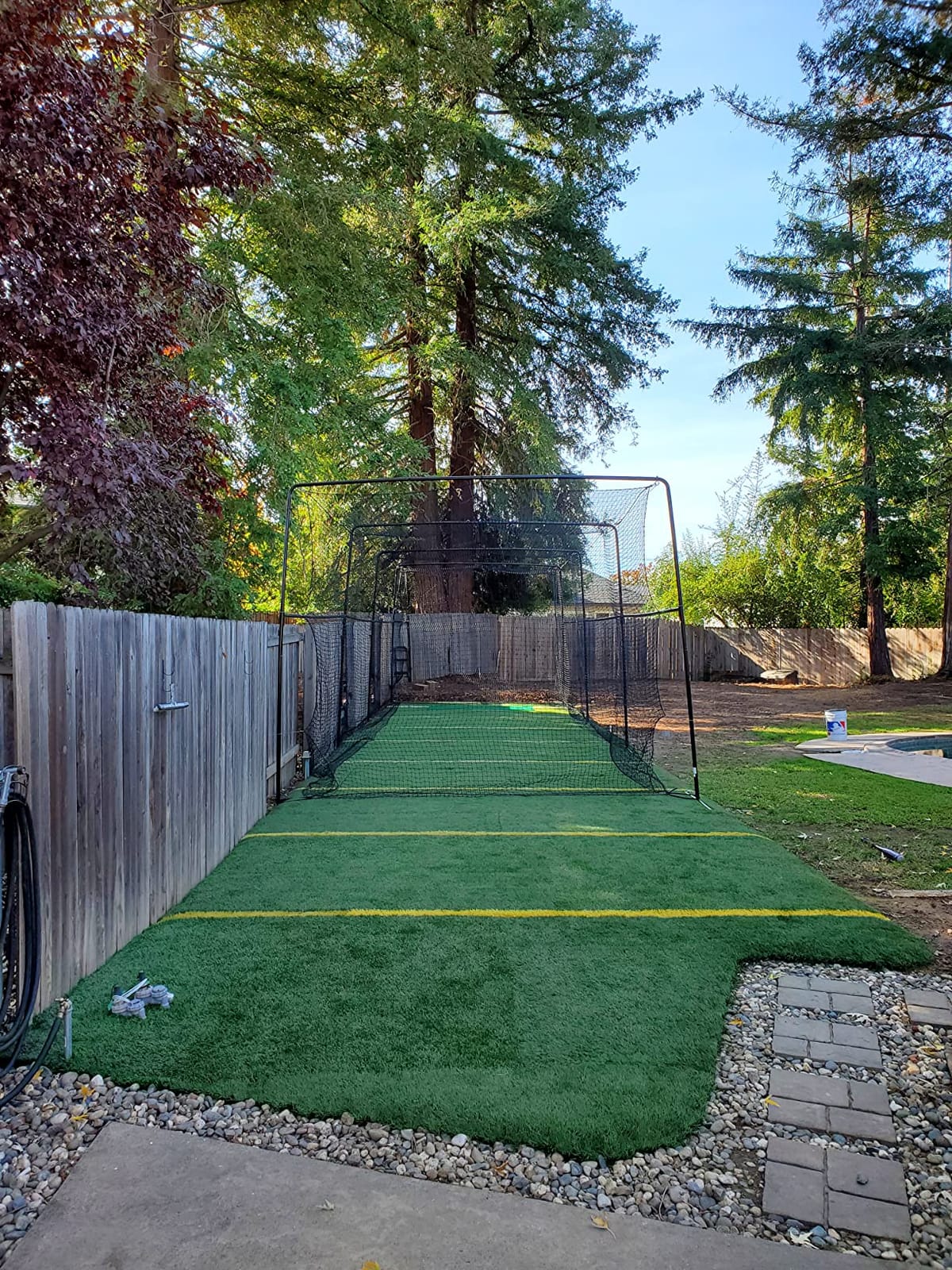
Everything else in this roundup is a barrier, a backstop, or a compact practice net. The Skywalker 40 Foot is a real batting tunnel, with 40 feet of length and 10 feet of overhead clearance at 480 by 144 by 120 inches. For a hitter taking live batting practice, that length is the whole point.
The frame is rust-resistant steel tubing with angled leg braces, and the net is UV-treated. It collapses for storage, which matters because a 40-foot tunnel laid out permanently will dominate almost any yard. Package weight is listed at 99 pounds.
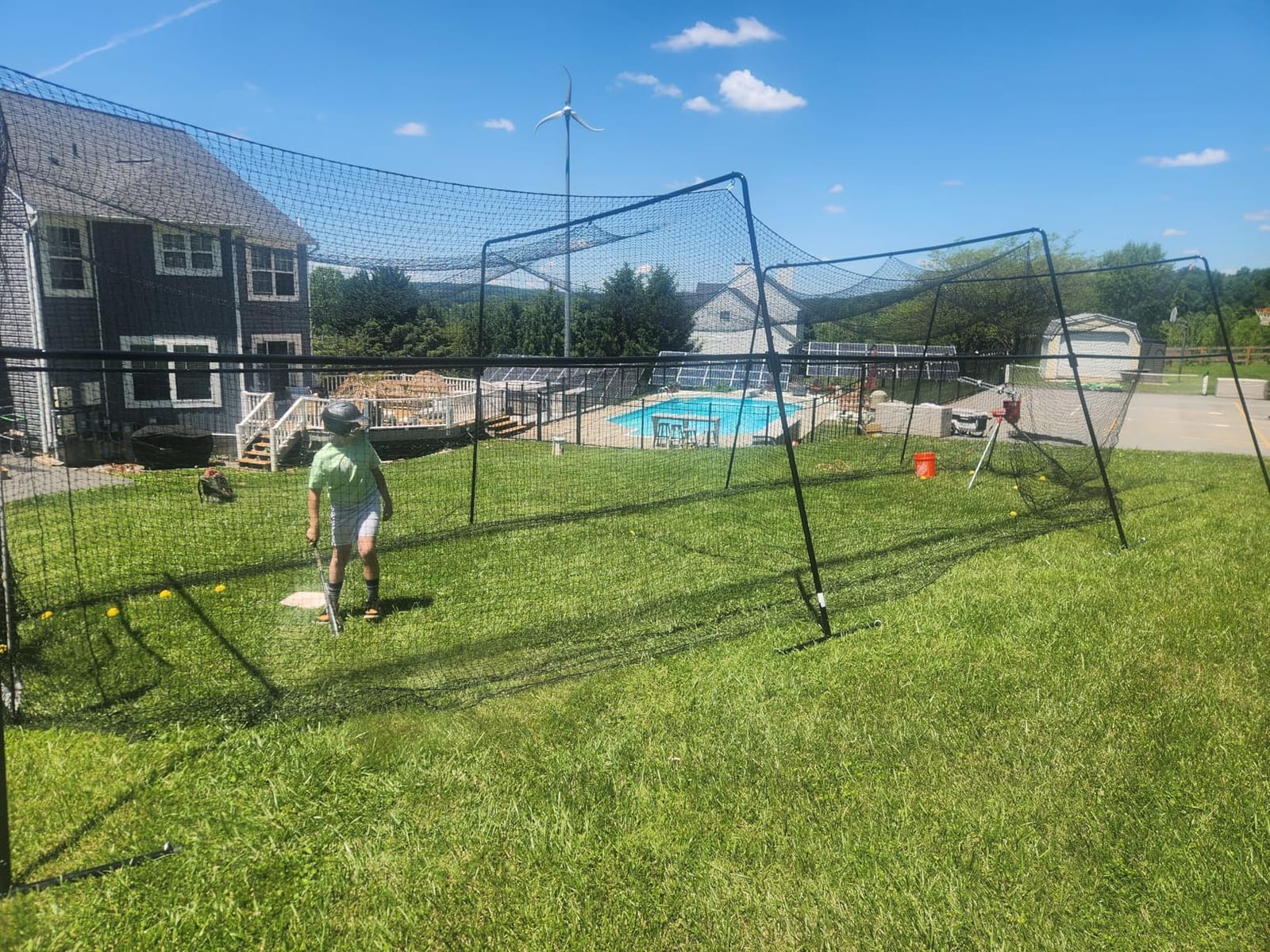
The build quality and value versus assembling a cage from parts is what reviewers praise most, and the frame carries a 3-year limited warranty with a 1-year limited warranty on other parts. Coaches of youth and high school programs use it, which tells you something about how it handles daily volume.
There is a real to-do list once it is up. The most common piece of advice from owners is to budget extra hardware: bungee cords for net tension, ground stakes or anchors, pole padding, and a self-cut door. Reviewers also note that balls escape under the light netting unless you add weight along the bottom edge.
What to check before you buy
Check your yard length honestly. You need the 40-foot run plus room for a pitcher behind the plate, and you need a clear path to the frame. This is a two-person teardown, and owners say the disassembly takes more effort than the product video suggests.
Plan for the door and tensioning hardware from day one. The netting sags noticeably out of the box, and a sagging net is both a performance problem and a ground-ball leak.
Who should skip it
Skip it if your yard cannot spare a 40-foot straight run, or if you need the space for anything else in any given season. A folding practice net serves a much smaller footprint for the same tee-work practice.
It is also overkill for a beginner. A 12-year-old working on mechanics gets more out of a 22-foot portable cage and a bag of soft toss balls.
4. WICTTISPOSI 7×7 Baseball Softball Net – Cube Design On a Steel Frame
Baseball Softball Net with Blocking System, 7x7ft Batting Cage Practice Net
7x7 ft cube
25mm steel frame
7-ply nylon mesh
Rated to 130 mph
Pros
- Contains balls on multiple sides
- Sturdy metal frame
- Quick elastic-cord assembly
- Folds into a bag
Cons
- Small footprint limits it to short hits
- 14 percent one-star feedback
- Needs re-anchoring in wind
This is the highest-volume product in the whole roundup and ranks at the top of its category on sales rank, so it is worth understanding who it is for. The WICTTISPOSI is a 7×7 ft cube with netting on the front, top, and rear plus a central target pocket, which means it surrounds the ball on three sides rather than stopping it from one direction.
The frame is 25 mm thickened steel reinforced tubing, which is noticeably heavier and more stable than the thin fibreglass poles on most portable cages at this size. The 7-ply nylon tear net is rated to withstand ball speeds up to 130 mph. The unit weighs 8.38 kg and includes a storage bag.
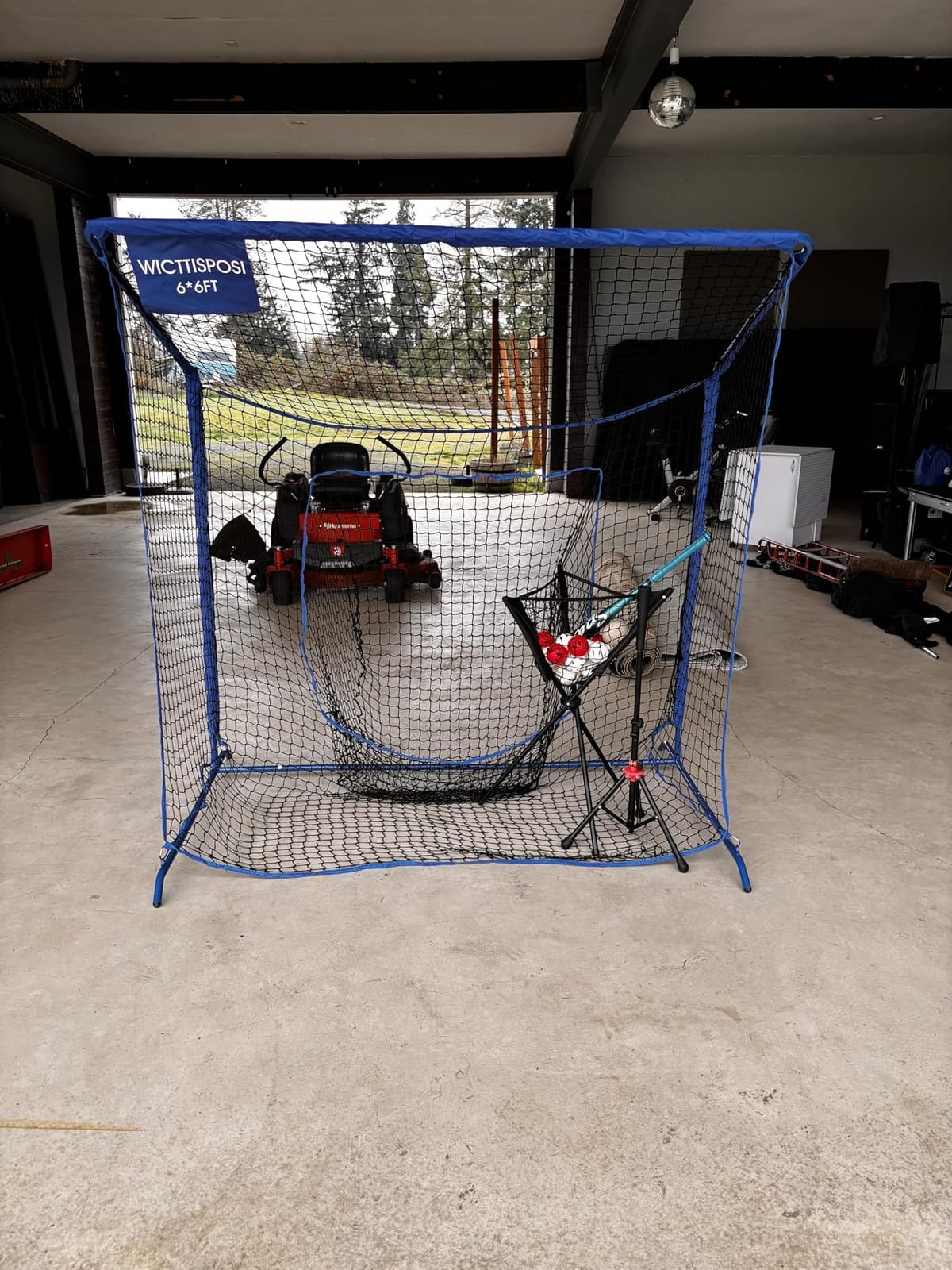
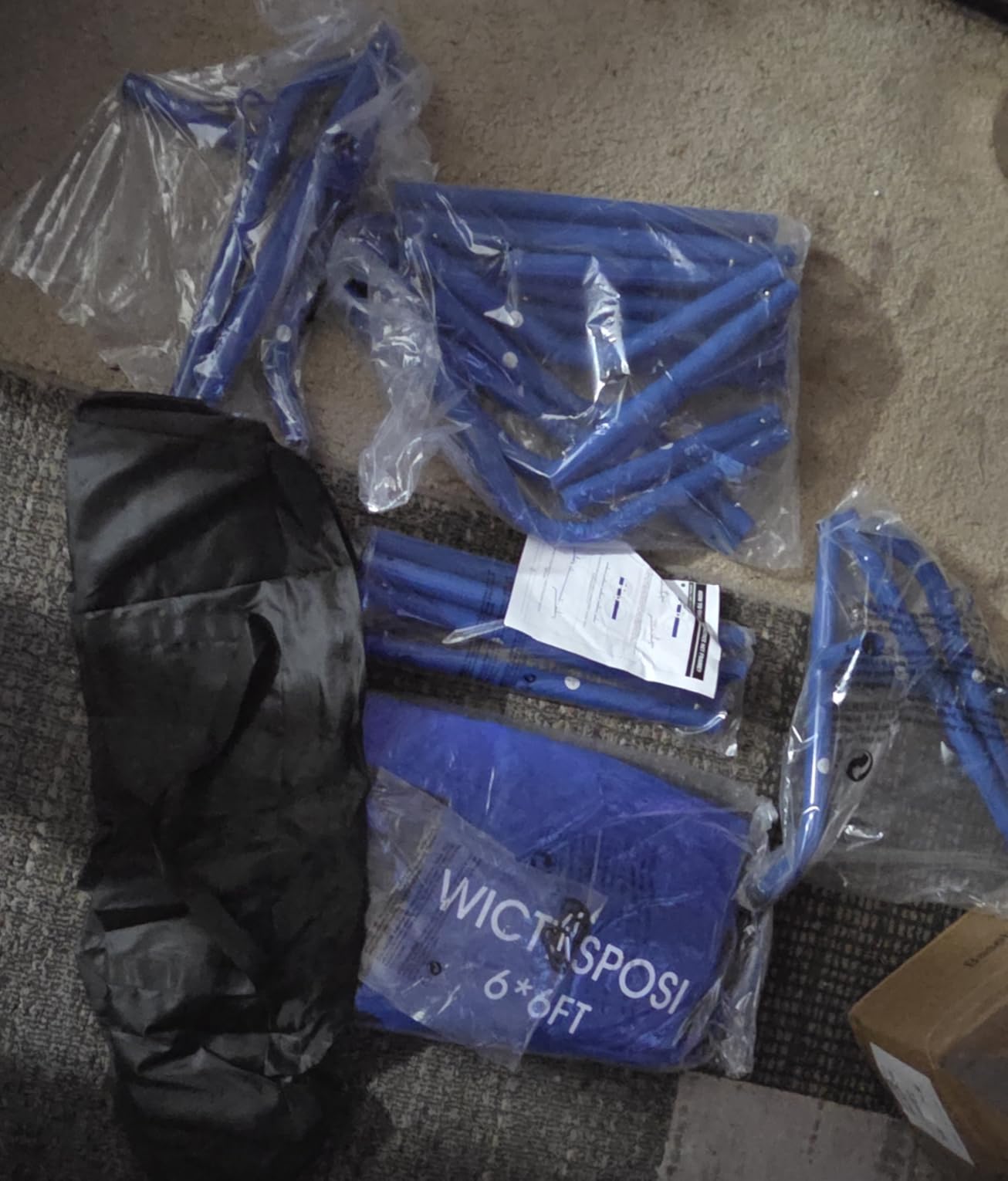
Assembly uses pre-assembled elastic cords, so the setup is close to tool-free and fast. That is the real argument for this net: it goes from bag to usable in about the time it takes to find a good tee.
The limitation is scale. A 7×7 footprint suits youth development, tee work, and short front toss, and it will not survive a full adult swing on a hard hit without deflecting it. Fourteen percent of reviews are one-star, and durability failures plus wind-related tipping are the recurring complaints.
What to check before you buy
Check the hitter’s age and swing speed before anything else. Elevated feet adapt to uneven ground, but the small footprint means hard-hit balls that clear the top will be gone in the neighbor’s yard. Buy the taller 10×7 or 12×7 variant of the same design if your player is older.
Bring your own anchors. The frame is stable but reviewers note it needs re-anchoring in windy conditions, and a lightweight cube is the first thing to tip over in a gust.
Who should skip it
Skip it if you need machine pitching or long front toss from a distance, or if you are an adult hitter working on power. Those sessions need a taller, longer tunnel with a proper backstop plane.
Do buy it if you want practice net capability this week, with no frame building and no hardware shopping. It folds away cleanly when practice is done.
5. ORIENGEAR 1.88 Inch #45 PE Net Only – The Best Net-Only Upgrade
ORIENGEAR Baseball Batting Cage Nets, ONLY NET, 10’H x10’W x 35’L Baseball and Softball Cage Netting, 1.88″ Mesh, Professional Fully Enclosed Heavy Duty PE Hitting Cage Net with Door, Without Poles
Net only
1.88 inch #45 knotted PE
UV-stabilized
25.3 lb
Pros
- Knotted mesh survives years of use
- Self-closing side door
- Generous slack fits existing frames
- Turns a garage into a cage
Cons
- Poles and hooks sold separately
- One reviewer reports no machine opening
If you already own a frame, or plan to build one with galvanized pipe, this is the pick. The ORIENGEAR is net only, sold in lengths from 20 feet to 70 feet, and it is the most genuinely heavy-duty netting in this roundup.
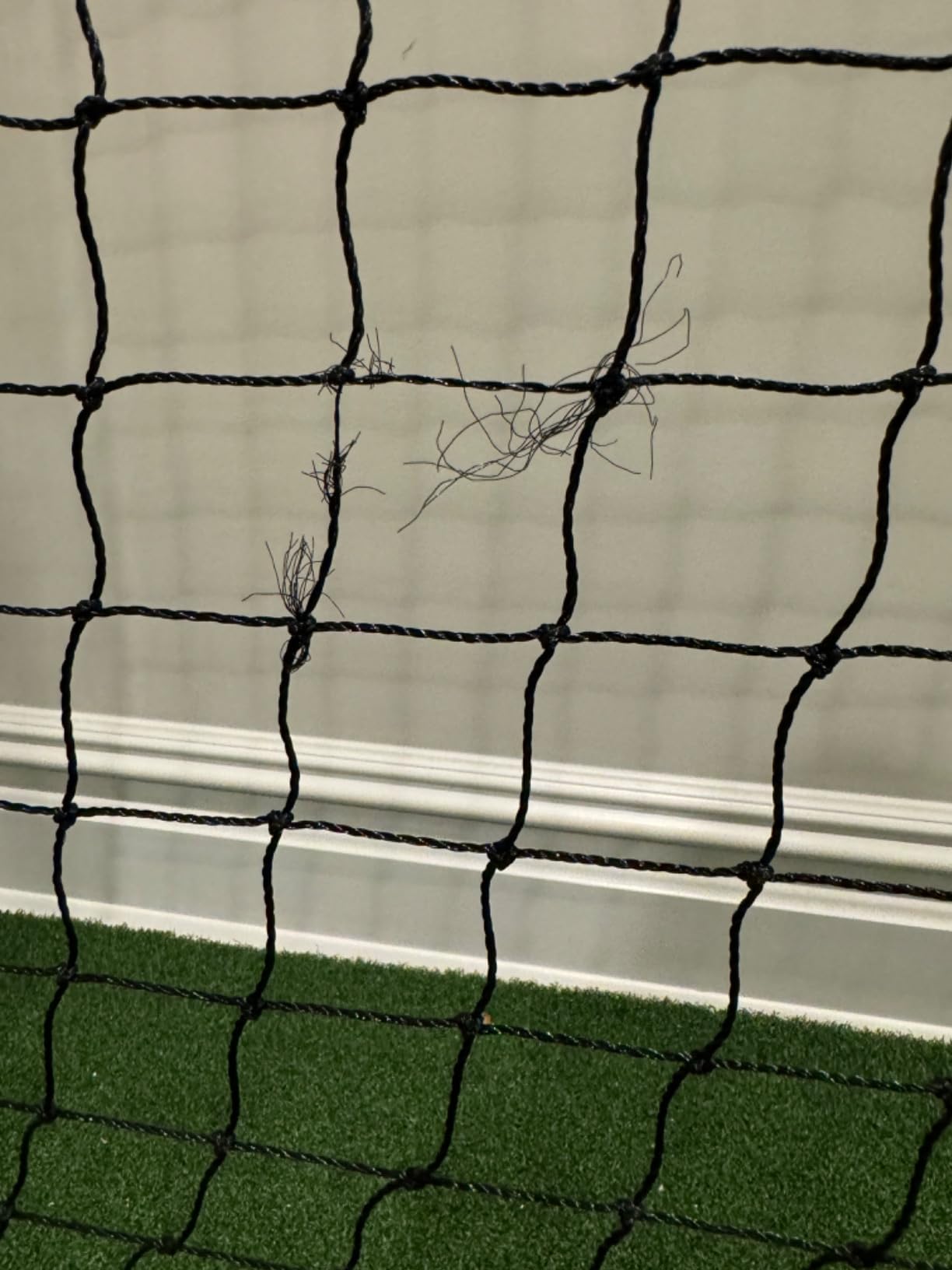
The mesh is 1.88 inch #45 knotted UV-stabilized polyethylene. Knotted construction is the important detail here: the knots spread impact across neighboring strands rather than letting a puncture travel, and reinforced edges prevent the fraying that ends most polyester nets.
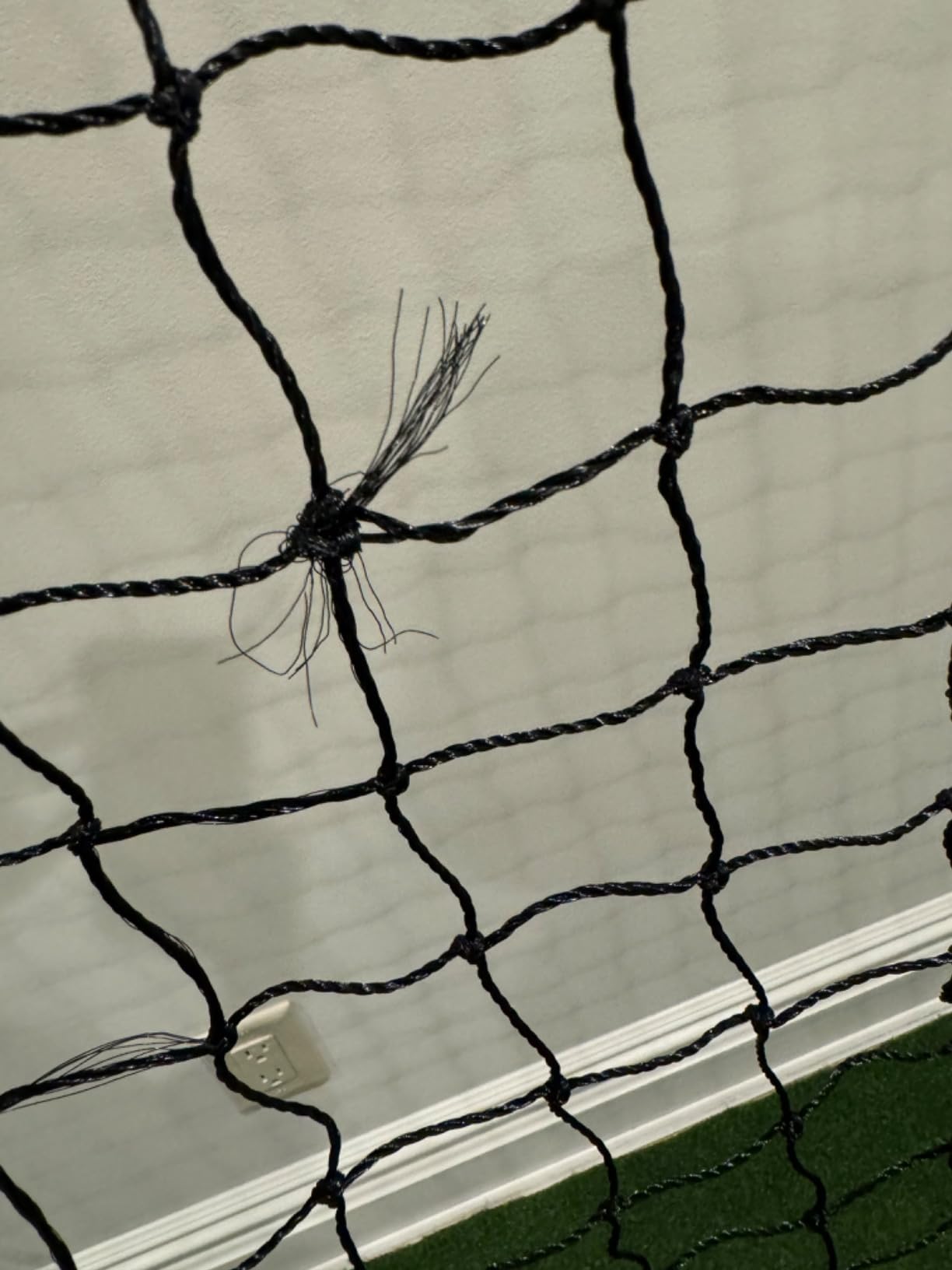
Owners report the netting holding up after years of daily use in sun and rain, with 78 percent of reviews at five stars. The self-closing side entry door, measuring 78.7 inches high by 31.5 inches wide, is what keeps balls from spilling out when nobody is holding it.
Installation is a single afternoon for two people. The net comes with three pull cords, two tethers, and a center roof tether, and the generous slack makes it easy to pull onto an existing frame without a fight.
What to check before you buy
Confirm the hardware situation before you order, because poles and hooks are not included. The included cords and tethers are enough to skin a frame you have already built, but not enough to build one from nothing.
Forum discussion among fastpitch softball users recommends buying netting sized to 12 feet of height even when your frame is shorter, because it fits on the diagonal and leaves enough ground slack to keep ground balls inside. That advice applies directly to this net.
Who should skip it
Skip it if you have never built a frame, because you will spend the savings on hardware you did not plan for. It is a net for someone who already knows what poles, hooks, and tensioning points look like.
It is also the wrong pick for garage-only use, where a light nylon barrier like the NQB does the same job with far less effort.
6. VEVOR 55x12x12 Ft Batting Netting – Fully Enclosed PE Tunnel Net
VEVOR Baseball Batting Netting,55FT Professional Softball Baseball Batting Hitting Training Net, Practice Portable Pitching Cage Net with Door & Carry Bag, Heavy Duty Enclosed PE Netting(NET ONLY)
55x12x12 ft enclosed
30-strand knotted PE
Net only
36.2 lb
Pros
- Encloses stray balls far better
- 30-strand mesh resists tearing
- Hook-and-loop door
- Storage bag included
Cons
- Poles and frame sold separately
- One-piece design means cutting the door
- Heaviest net-only purchase here
The VEVOR is the longest net-only option here and one of the few that fully encloses a tunnel, measuring 55 by 12 by 12 feet. That enclosure is the difference between a backstop and a batting cage: ground balls, liners, and high-arcing pop-ups all stay inside instead of rolling into the yard.
The mesh is 30-strand knotted polyethylene, described by the manufacturer as weather and corrosion resistant, and it is a one-piece design intended as a replacement for square cages. The package includes a 600D storage bag and 18 climbing buckles for the door and tie-downs.
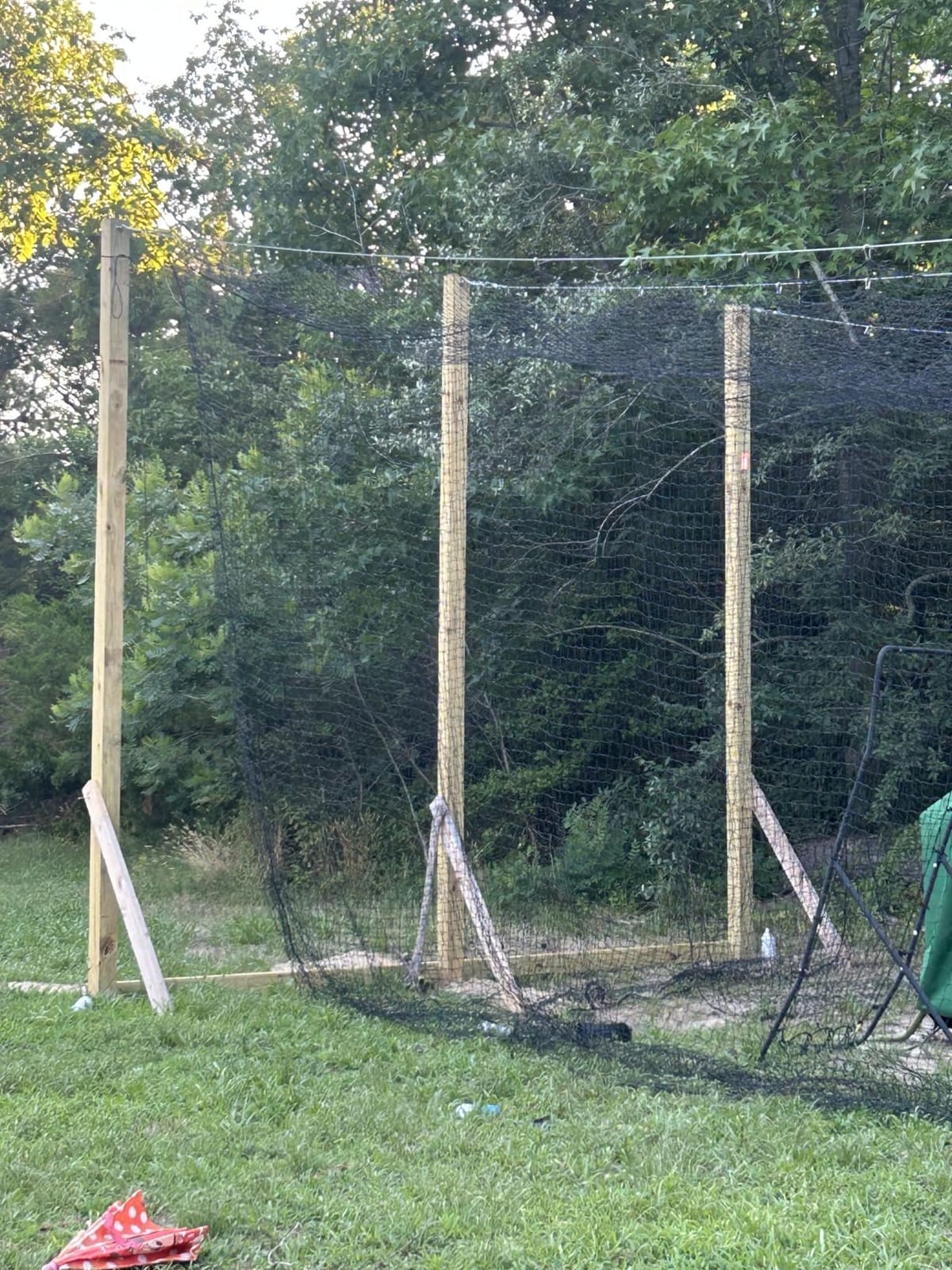
Reviewers value the coverage and the mesh durability, with 75 percent of ratings at five stars. The hook-and-loop door is a straightforward way in and out, and the buckles make the net manageable in sections rather than one immovable wall.
Two practical warnings. First, the door in a one-piece design has to be cut by you if you want it in a different position, so measure before you cut. Second, at 36.2 pounds this is the heaviest and bulkiest net in the roundup, and installation is a two-person job.
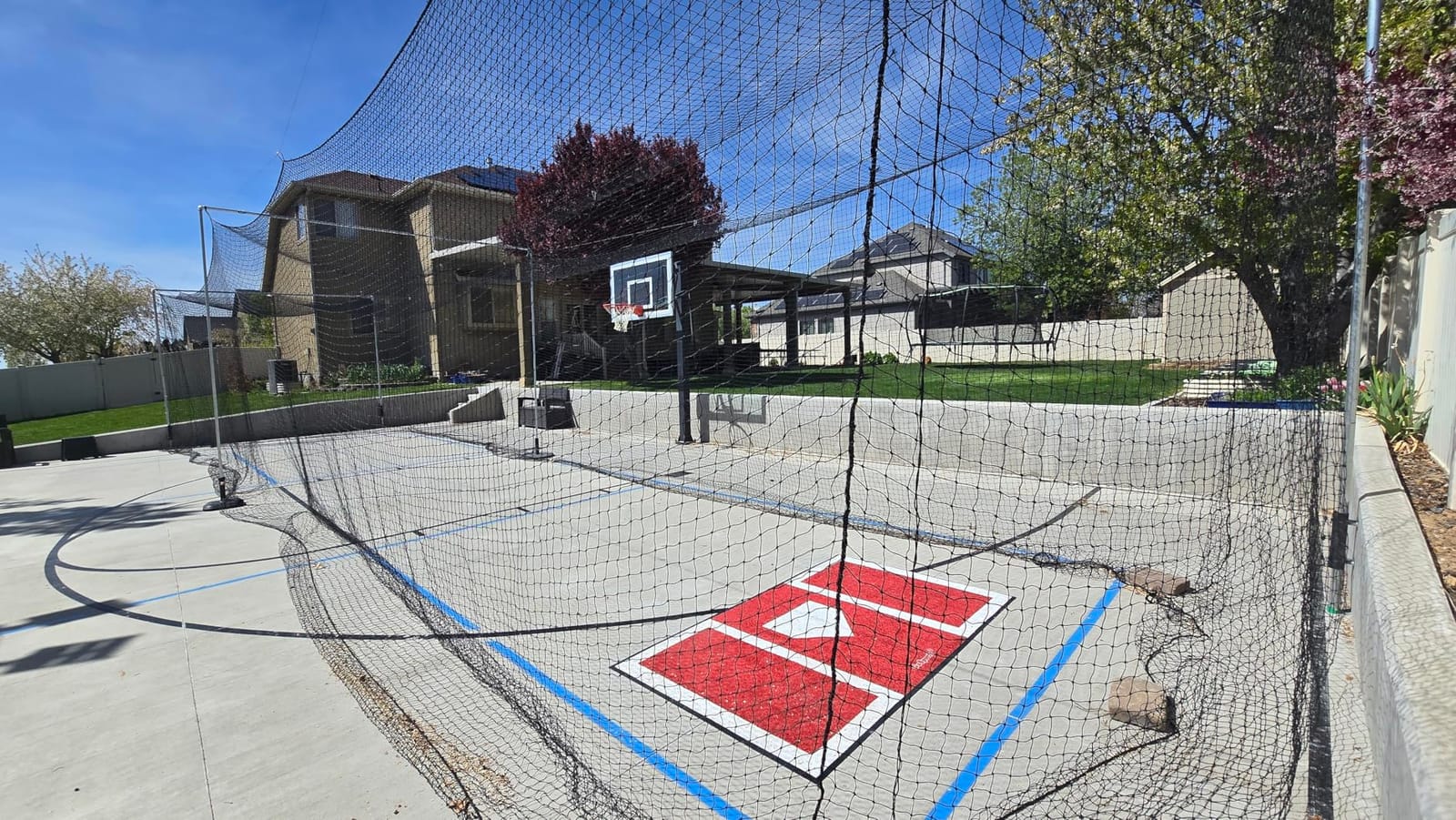
What to check before you buy
Check that you can hang a 55-foot tunnel at all. Twelve feet of height needs tall uprights and either a roof structure or tensioned cable lines, and a 55-foot run needs a very long yard or a field edge. This is a farm, park, or serious-program purchase rather than a typical suburban backyard one.
Plan the hardware separately. The 18 included climbing buckles cover tie-downs, but the frame itself is entirely your build.
Who should skip it
Skip it if your yard is smaller than about 60 feet in length, or if you need the net to be genuinely portable. At this size it goes up once and stays up.
For a 20 to 35 foot net that one person can still handle, the ORIENGEAR and RIIFRILY picks are the better fit.
7. Syhood 35x10x10 Ft Polyester Batting Cage Net – Budget Net-Only Option
Syhood Baseball Batting Cage Net for Backyard NET ONLY, 35 x 10 x 10 ft
Net only
35x10x10 ft
1.75 inch mesh
9.98 kg
Pros
- Survives storms and hot climates
- Attaches to a DIY frame
- Several size options
- Corner drawstrings simplify fitting
Cons
- Mesh thinner than some buyers expected
- One report of a first-use tear
- Frame and poles sold separately
The Syhood is the most compact of the net-only picks at roughly 35 by 10 by 10 feet, and it is a sensible match for a yard where a 40-foot tunnel will not fit. It is also the lightest of the net-only options at 9.98 kg, which makes putting it up and taking it down a one-person job.
The mesh is polyester with oxford seams, described as UV and corrosion resistant, and the mesh opening is 1.75 inch. Four corner drawstrings plus a reinforced center seam are what make fitting it to a frame or even a pair of trees straightforward.
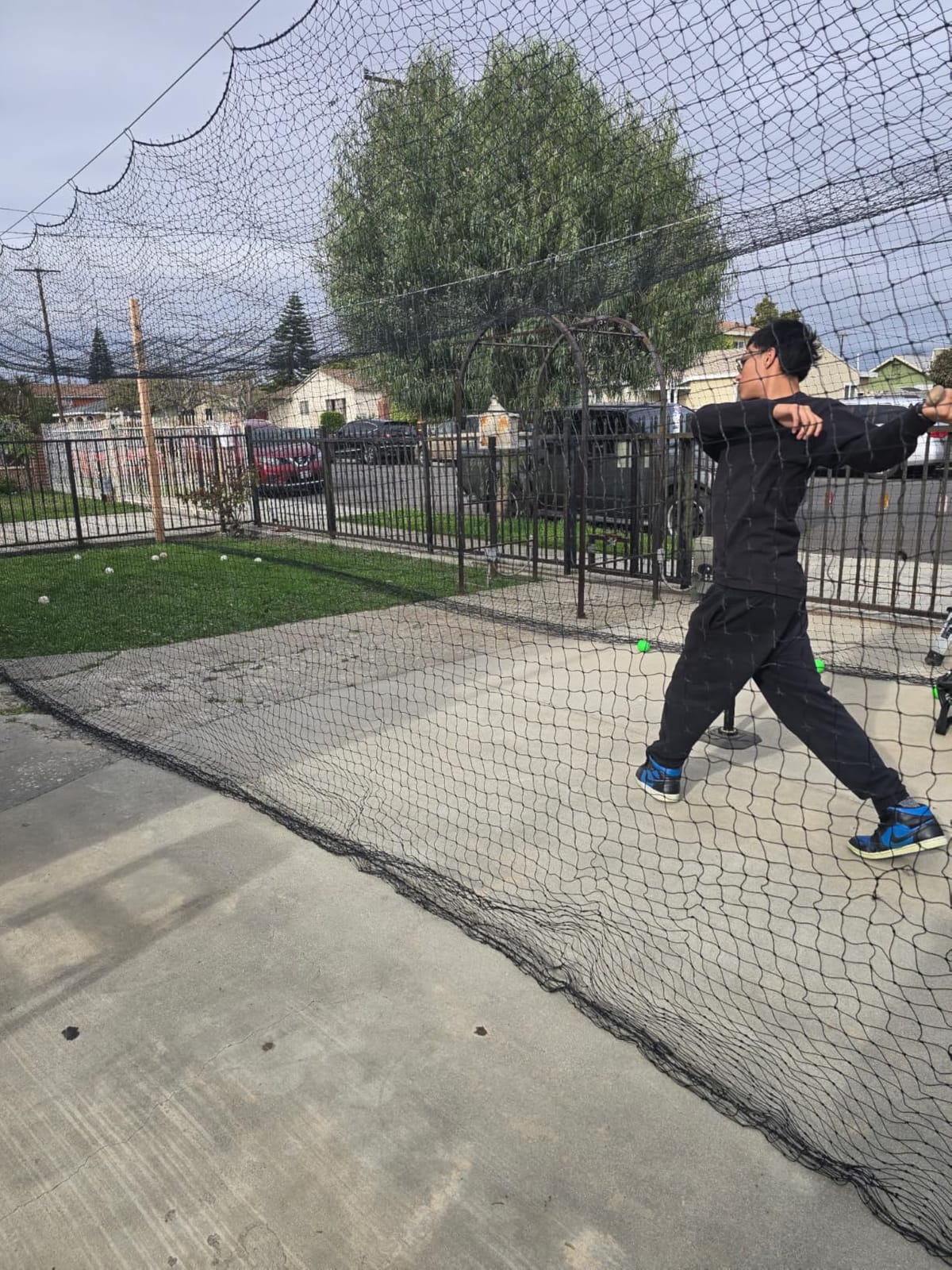
Buyers are largely satisfied with the netting quality, particularly once it is attached to a self-built frame, and reports mention it holding through multiple storms in hot climates. Five size options are available, so you can size to the yard rather than adapting the yard to the net.
The caveat is mesh thickness. Several isolated reviews describe the netting as thinner than expected, and one buyer reported a tear on first use when a ball struck the frame. For a family using soft toss and tee balls, that is an acceptable trade. For daily machine pitching, choose a knotted polyethylene net instead.
What to check before you buy
Measure your frame twice, because a 35 by 10 by 10 net on a shorter frame will leave you without the ground slack you need. The drawstrings pull the corners tight, so slack at the base is what keeps ground balls from escaping under the netting.
Reinforce the poles before the net goes up. Most tear reports involve a ball catching bare frame tubing rather than a failure in the mesh itself.
Who should skip it
Skip it for machine work or for a hard adult hitter, because 1.75 inch polyester mesh is not built for that impact level. Choose the ORIENGEAR or RIIFRILY net if the tunnel will see hard contact on a regular basis.
It is a good pick when budget matters and the frame work is going to a weekend anyway.
8. Vertura 22x12x8 Ft Portable Batting Cage – Blue Oxford Net With Anchors
Portable Batting Cage 22ft x 12ft x 8ft Baseball & Softball Batting Cage
22x12x8 ft cage
3-ply Oxford polyester
14mm fibreglass poles
28 lb
Pros
- Sturdier than the class suggests
- Detachable door for long pitching
- Blue net aids ball tracking
- Carry bag included
Cons
- Assembly takes an hour or more
- Pitching window has no cover net
- Wind ropes can break at anchors
The Vertura is the cage we would pick for a hitter who tracks ball visually, and the reason is the color. The 3-ply Oxford polyester netting is a bright blue rather than the standard black, and buyers consistently single that out as making a ball far easier to follow through the hitting zone.
Structurally it is in the 22 by 12 by 8 foot class, with 14 mm fibreglass poles and 16-strand braided ground ropes terminating in metal anchors. The 3.3 by 1.6 foot pitching machine opening and the detachable door are what let a pitcher work from well beyond 20 feet.
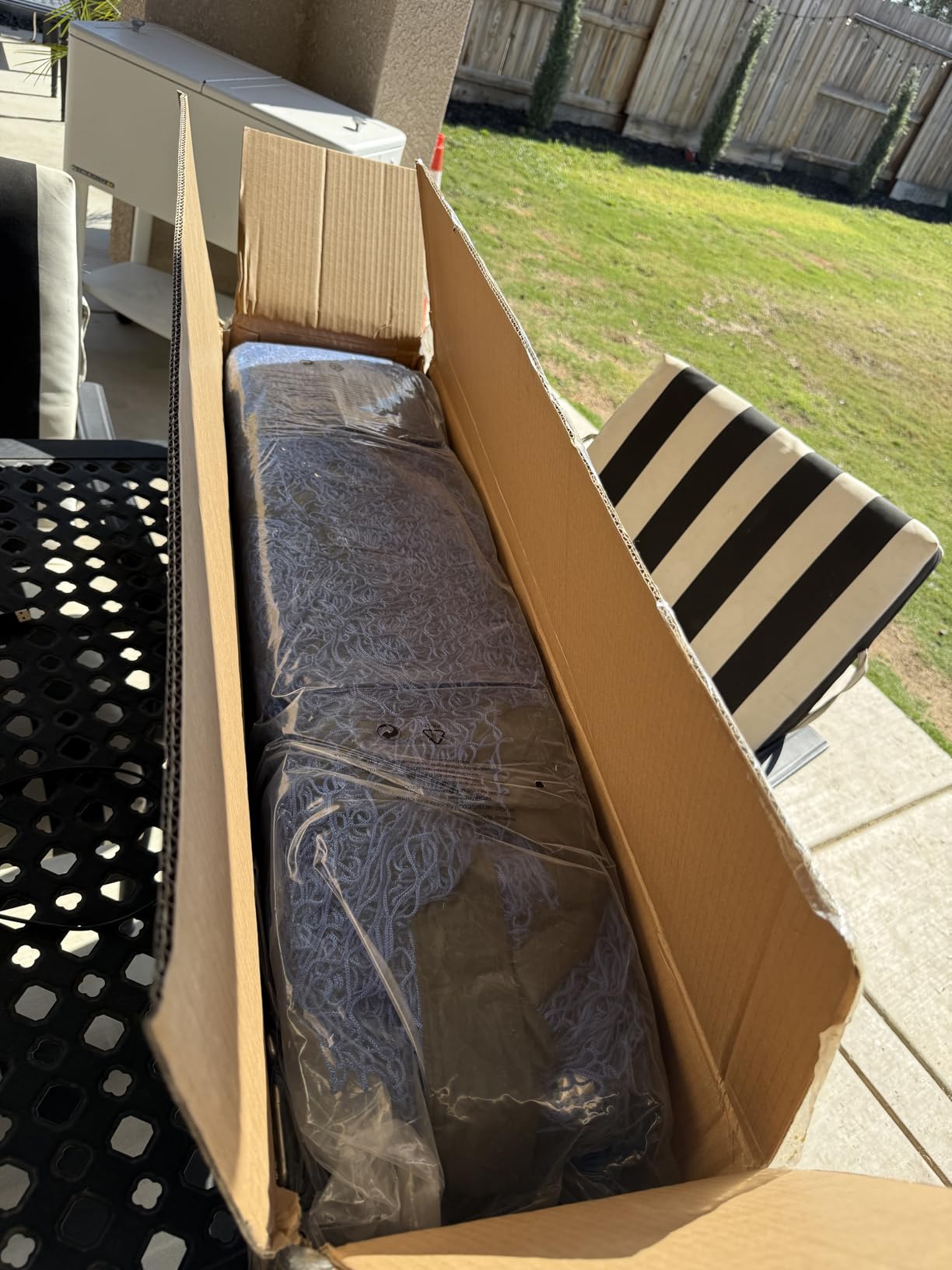
At 28 pounds with a carry bag, it folds away between sessions, and reviewers call it the best value cage in its class. The pole thickness and net stability draw the most praise, and the box carries a 1-year warranty.
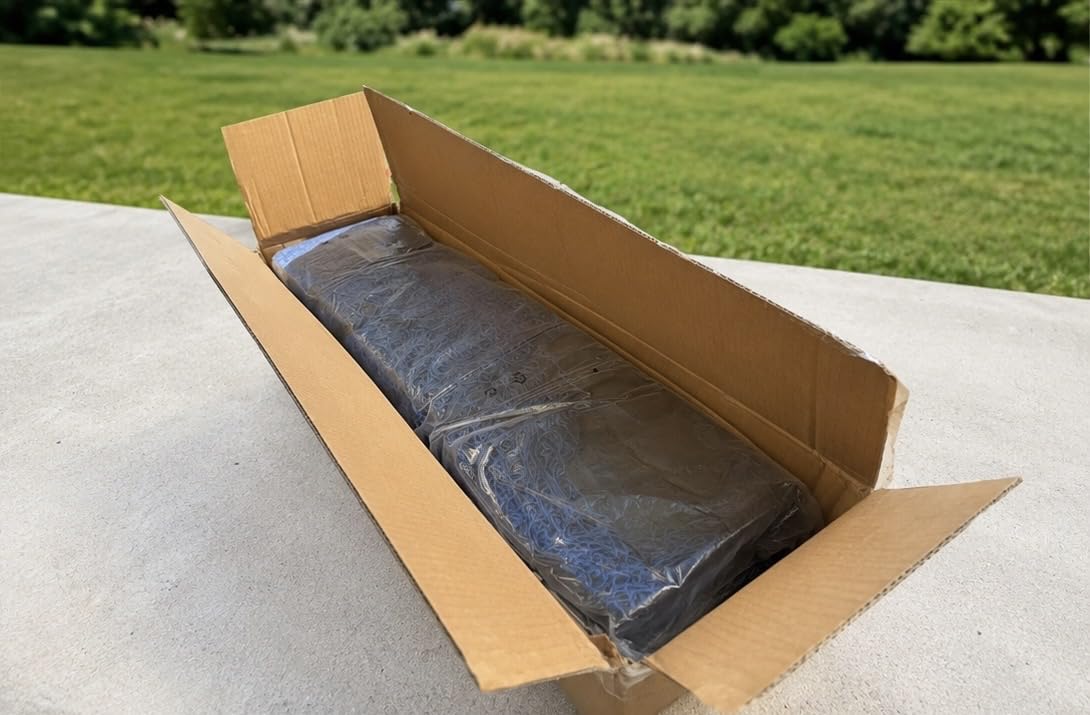
Two recurring complaints are worth planning around. The pitch window arrives without a cover net, so machine pitchers will be throwing through a bare opening, and some buyers have had wind ropes break at the supplied anchors. The manufacturer lists assembly at about an hour with two to three people, so plan the build accordingly.
What to check before you buy
Count the helpers before you open the box. Two to three people and an hour is the realistic figure, not the optimistic one. Budget a spot to store the 28-pound bundle out of the way when practice is done.
If you will use a pitching machine, decide how you will cover the window, because that net is not in the box and the opening is a straight line back toward the hitter.
Who should skip it
Skip it if you need to set up and tear down in under ten minutes on your own. This is a semi-permanent practice setup, not a grab-and-go net.
It is also not the right choice if you already own a solid frame, because the poles and cage net here are integrated. Buy a net-only product in that case.
9. RIIFRILY #42 HDPE Batting Cage Net – High Burst Strength Net Only
RIIFRILY Baseball Batting Cage Nets, 20’L/35’L/55’L/70’L
Net only
#42 HDPE mesh
220 lb strand burst
Buckles and 120FT of cord
Pros
- HDPE holds up well outdoors
- Installs in minutes by one person
- Two-year warranty
- Slack stops ground balls
Cons
- Mesh less stiff than some buyers expected
- Net hangs about 11 ft not 12
- Door can leave a gap
The RIIFRILY is the other net-only pick worth serious consideration, and it is the one to choose if durability figures matter to you more than mesh stiffness. The #42 HDPE mesh is rated at 220 pounds of burst strength per strand, which is the highest published number in this roundup.
It is sold in 20, 35, 55, and 70 foot lengths, with #30 and #45 mesh options, and it carries a 2-year warranty, which is longer than most net-only products offer. The kit includes 8 climbing buckles and 6 tie cords totaling 120 feet.
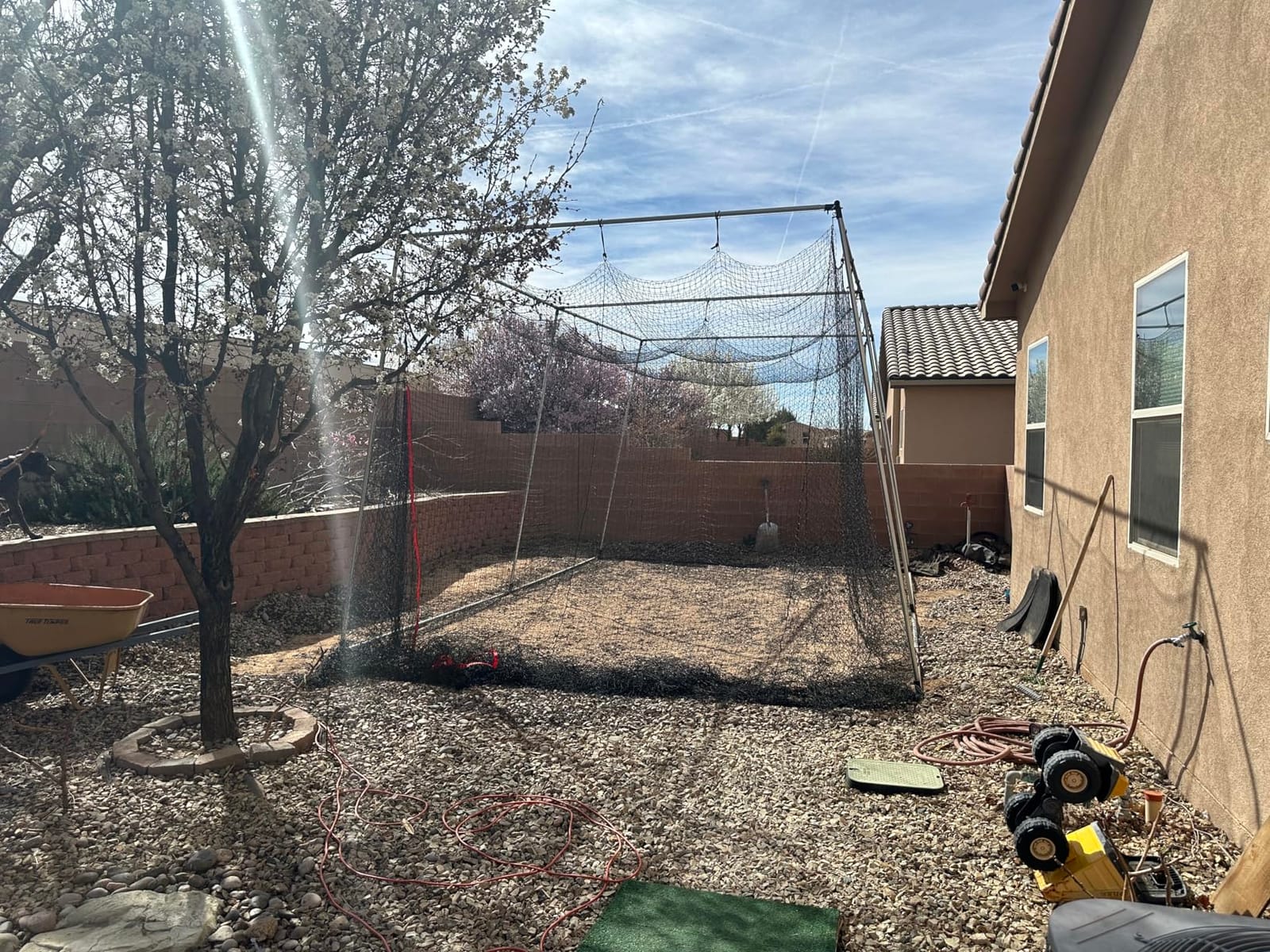
Owners report quick single-person installation, and the extra slack in the net is what stops ground balls from escaping under the bottom edge. The manufacturer states the #42 polyethylene is tested for over 5 years of outdoor use.
The honest complaints are about expectations. The mesh is less stiff than some buyers assumed, the net hangs closer to 11 feet than a true 12 on taller frames, and one reviewer found the door opening large enough to be difficult to close, needing an extra piece of netting. Measure your frame height before ordering the taller option.
What to check before you buy
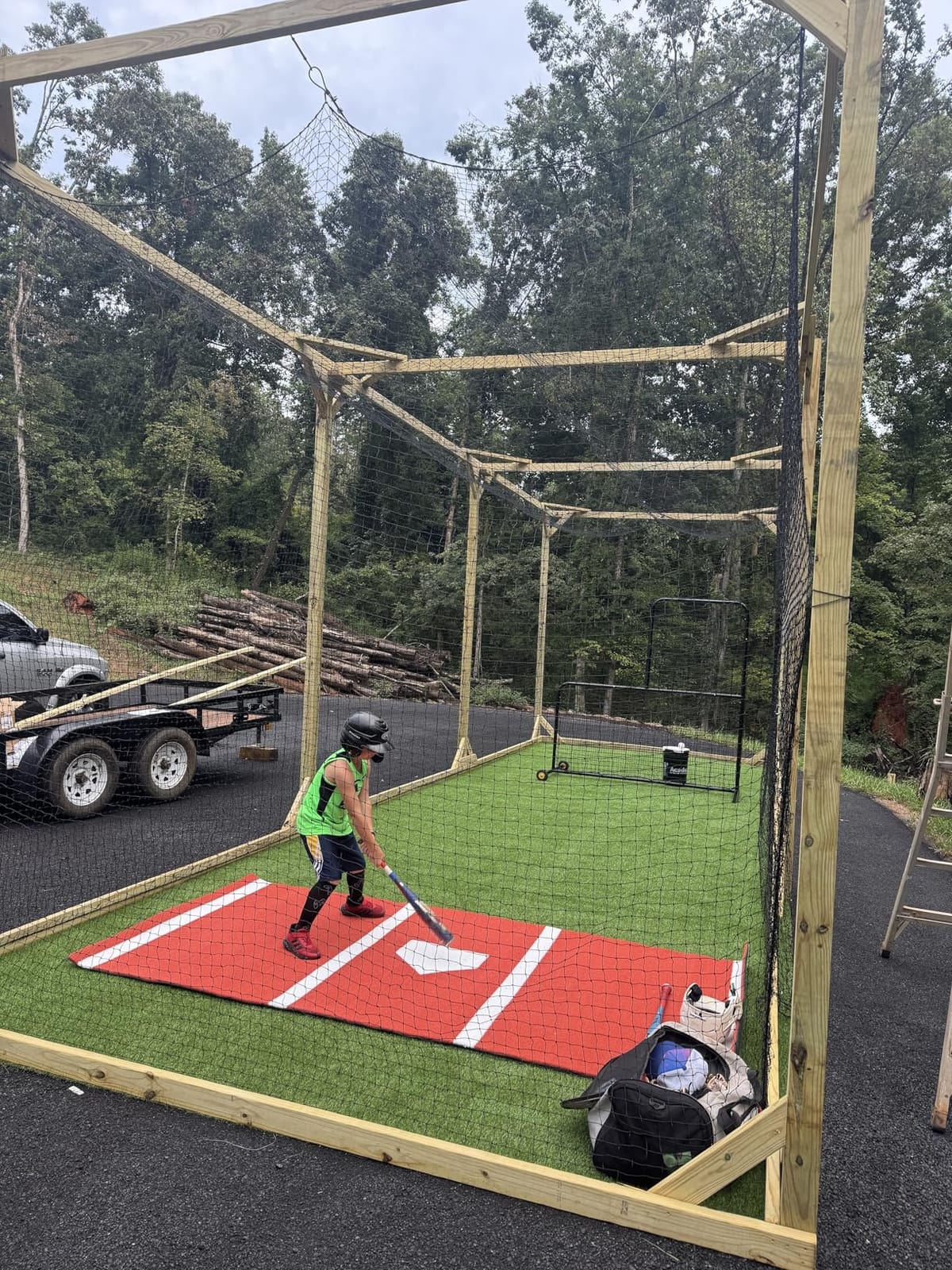
Check that your frame fits the length you order, and that your uprights are 12 feet or shorter if you are sensitive about the hanging height. A net designed for a 12-foot frame settles slightly below that once tensioned.
Decide where the door goes before installation, because the buckles and cords are simpler to place on a bare frame than to add once the net is fully tensioned.
Who should skip it
Skip it if you want a taut, drum-tight net right out of the box, since HDPE is flexible by design and will feel softer than a stiff polyester net. Skip it if you have no frame, for the same reason as the ORIENGEAR: poles and hardware are not included.
It is the best choice here for a DIY builder who wants the most published strength per pound of netting.
10. amazgolf 10x10x10 Ft Baseball Net – Fast Corner-Tie Installation
amazgolf 10x10x10ft Baseball Baseball Batting Cages Only/Batting Cage Net, Heavy Duty Backstop Nets/Barrier Net for Backyard, Hitting Net for Baseball, Softball
Net only
10x10x10 ft cube
8 corner rope ties
Tools and rope included
Pros
- Highest average rating here at 4.9
- Ties on in minutes
- Weather resistant
- Works without a frame build
Cons
- Frame and poles not included
- Only a 6 month warranty
- Lighter netting dampens less
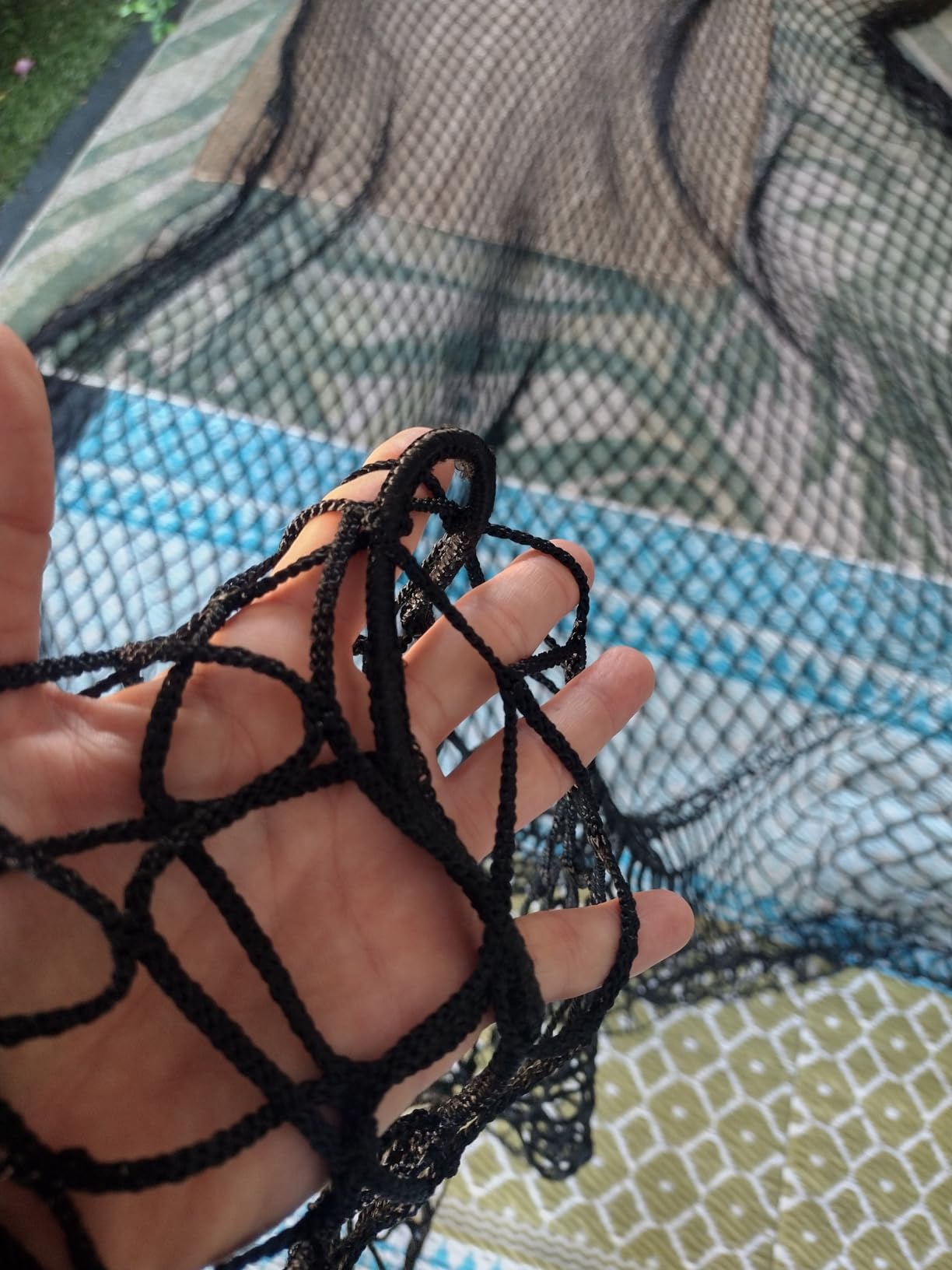
The amazgolf net closes out the list as the simplest possible entry into backyard practice, and it carries the highest average rating in this roundup at 4.9. There are no one-star or two-star reviews in the data, which is unusual for a product in this category.
It is a 10x10x10 ft cube that you tie to an existing frame at eight corners with rope. The package includes three 10-foot ropes and an installation tool, and 10 by 10 by 20 ft and 10 by 10 by 35 ft versions give you rectangular options if your frame is longer.
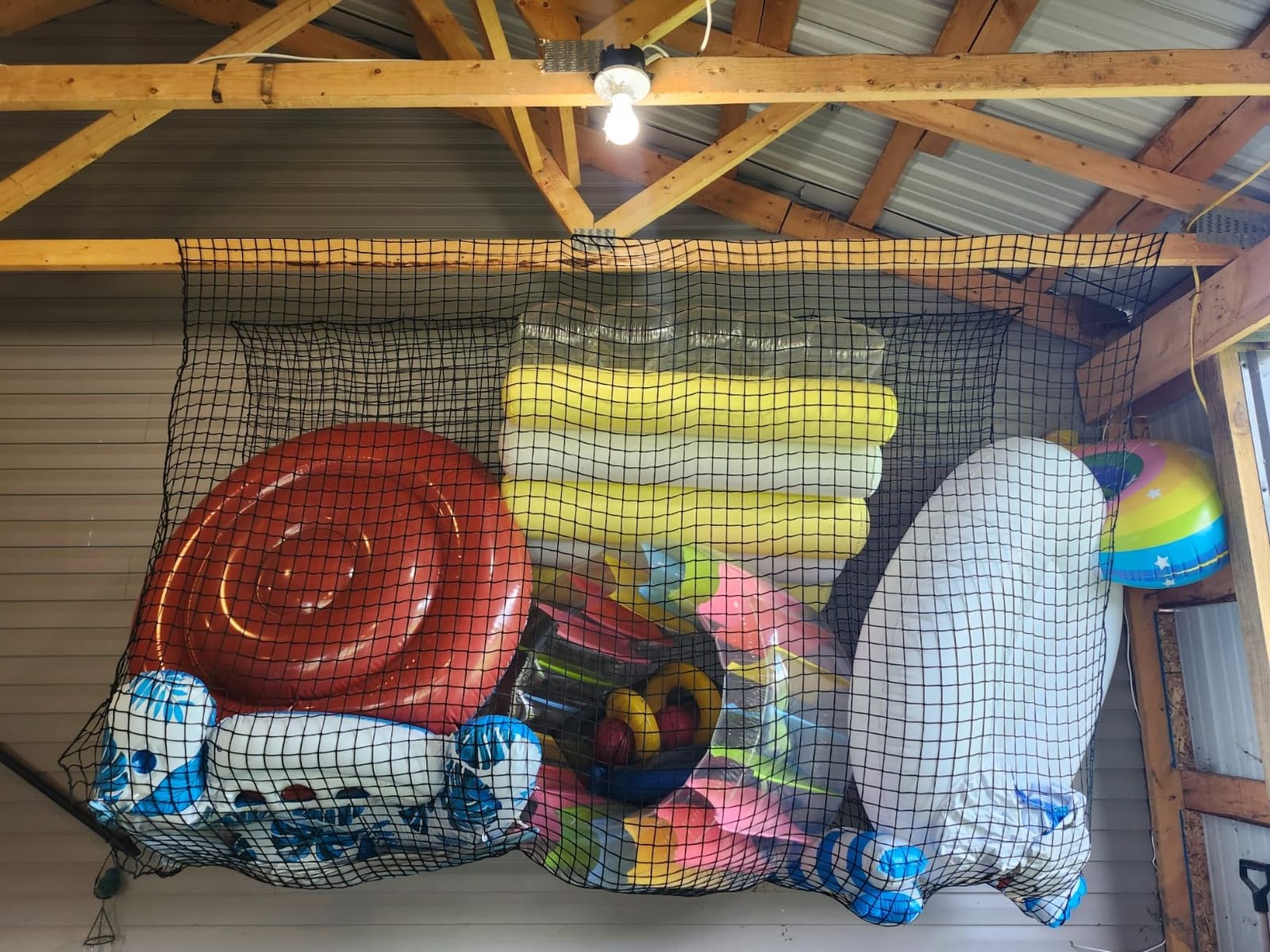
Buyers cite easy corner-tying installation and all-weather durability, reporting that the net can stay up in sun or rain without removal. For a family that already has poles and wants a barrier this week, it is the least complicated purchase in the guide.
The limits are straightforward. The warranty is 6 months, which is the shortest here, and reviewers note the nylon netting is lighter and offers less impact damping than PE nets. That is fine for tee work and soft toss; it is not a machine-pitching net.
What to check before you buy
Check the mesh material before committing it to hard hits. The listing describes nylon netting that is lighter and less damping than polyethylene, so if your hitter is swinging hard, spend the extra and choose a knotted PE net such as the ORIENGEAR.
Check your corner points too. This net hangs from eight corners, so the frame needs to be square and stable at the top corners, or the cube will sit unevenly.
Who should skip it
Skip it if you do not already have a frame, since poles are excluded and the 6-month warranty offers little recourse for hardware problems. Skip it for daily machine work or a hard adult hitter.
Buy it if the goal is a cheap, weather-tolerant backstop you can put up in an afternoon with rope and a wrench.
How to Choose a Batting Cage Net: Grade, Material, Size, and Safety
What the net grade numbers actually mean
The number in front of the hash, like #24, #36, #42, or #45, describes twine thickness. Lower numbers are thinner twine, higher numbers are thicker, and thicker twine absorbs more impact before it stretches or tears. That is why the #42 and #45 nets in this roundup are the ones we recommend for machine pitching and hard adult hitters, while the 1.25 inch 3-ply polyester netting in the portable cages is fine for youth development.
Mesh opening is a separate number and it is the one that decides whether a ball stays in. The nets here run from 1.25 inch openings on the portable cages up to 1.88 inch on the tunnel nets. A standard adult baseball will pass through a large opening in the wrong conditions, so match the opening to the ball, not the other way around.
Net material: poly, HDPE, nylon, or polyester
Polyethylene and HDPE are the durable outdoor choices. They are UV-stable, rot-resistant, and stretch rather than shatter under impact, which is why the ORIENGEAR, RIIFRILY, and VEVOR nets all use PE twine in this roundup. Nylon is lighter and easier to handle but offers less impact damping, and the forum consensus among r/slowpitch users splits between cheap pop-up socks for casual tee work and full-length tunnels for serious practice.
Polyester sits in the middle and is the most common material in portable kits, because it is soft-rebounding and light enough to carry. It is also the material buyers most often report fraying at the seams after a season or two, so check for reinforced or oxford seams when you buy.
Net only versus net and frame kits
Net-only products like the ORIENGEAR, VEVOR, Syhood, RIIFRILY, and amazgolf nets assume you have poles, hooks, and anchors already. They are more economical per square foot of coverage and they let you build a frame to fit an awkward yard. Complete kits like the Apex Sports, Vertura, and Skywalker cages arrive with poles, and the 7×7 cube includes its own frame.
Choose net-only if you already own a frame or are comfortable with galvanized pipe. Choose a kit if you want practice this week with no build, and accept a smaller footprint and a lighter frame.
How far should the net sit from a wall or fence?
Give yourself 8 to 12 feet of clearance between the batter and any wall, fence, or neighboring property line. Balls that miss a badly angled net will travel further than most people expect, and the frame poles themselves can send a ball back toward the hitter if a round one clips the tubing.
Two rules reduce that risk. Mount the net so the hitting surface angles slightly upward and back so deflected balls roll to the ground instead of rebounding, and pad the pole bases or keep them out of the swing path entirely.
Size, anchoring, and climate
Match cage length to the drill. Tee work needs about 7 feet, soft toss needs roughly 20 to 30 feet, front toss wants 30 to 40 feet, and machine pitching wants a fully enclosed 40 to 70 foot tunnel. Height matters too: 8 feet is workable for youth, while 10 to 12 feet gives taller hitters room on high-arcing pitches.
Anchor for wind rather than for looks. Bungee cords, turnbuckles, ground stakes, or sandbags along the bottom edge are what stop a cage from swaying or collapsing in a gust, and they are also what stop balls from escaping underneath. For climate, the same rule applies everywhere: UV-stabilized or UV-treated netting is the difference between a net that lasts years and one that bakes and becomes brittle in a single season.
Finally, leave ground slack. Netting pulled drum-tight along the bottom line will spit ground balls straight out. A shallow curve at the base is what keeps them in, and it is the detail most often missing from a first-time installation.
Frequently Asked Questions
What is the best baseball net for playing in the backyard?
For most families, the NQB 10x30FT backstop net is the best starting point because it includes rope and a steel hanging kit and can be moved by one adult. A 7×7 cube net like the WICTTISPOSI suits younger players doing tee work, while a 22-foot portable cage is the right jump for soft toss and machine work.
What is the best material for a batting cage net?
UV-stabilized polyethylene or HDPE is the best material for year-round outdoor use because it resists sun damage, rot, and impact. Nylon is lighter and easier to carry but damps less impact, and polyester is the most common choice in portable kits because it is soft-rebounding and lightweight.
How far should batting cage net be from the wall?
Leave 8 to 12 feet between the batter and any wall, fence, or property line. Angling the net slightly upward and back lets deflected balls roll to the ground instead of rebounding, and keeping poles padded or out of the swing path prevents round balls from ricocheting back at the hitter.
How much space do you need for a backyard batting cage?
Budget 7 feet of depth for tee work, 20 to 30 feet for soft toss, 30 to 40 feet for front toss, and 40 to 70 feet for machine pitching. Add 8 to 12 feet of clearance behind the batter so deflected balls do not reach a wall or fence line.
Is nylon or polyester better for a batting cage net?
Polyester is the better all-around outdoor choice because it is rot-resistant and soft-rebounding, which is easier on bats and younger hitters. Nylon is lighter and easier to hang, which matters for portable nets, but it damps less impact and is more prone to fraying at the seams over time.
Conclusion
After comparing all ten options on mesh weight, strand count, weather resistance, and the hardware you still have to buy afterward, the NQB 10x30FT backstop net remains the best all-round choice for most backyards in 2026, with a 4.7 rating that reflects how well it absorbs hard sessions without fraying. Buy the Skywalker 40 Foot cage if you have the yard length and need real live batting practice, and buy the ORIENGEAR #45 knotted PE net if you already own a frame and want the toughest mesh per pound.
Match the net to the hitter rather than to the brand name, and check the two things buyers most often regret: a frame that was never anchored, and a net pulled too tight along the bottom. Get either of those right and any of the picks on this list will outlast your player’s next two age groups. If shade over the practice area matters too, our picks for the best gazebos for backyards and shade canopies are worth reading before summer practice starts.