
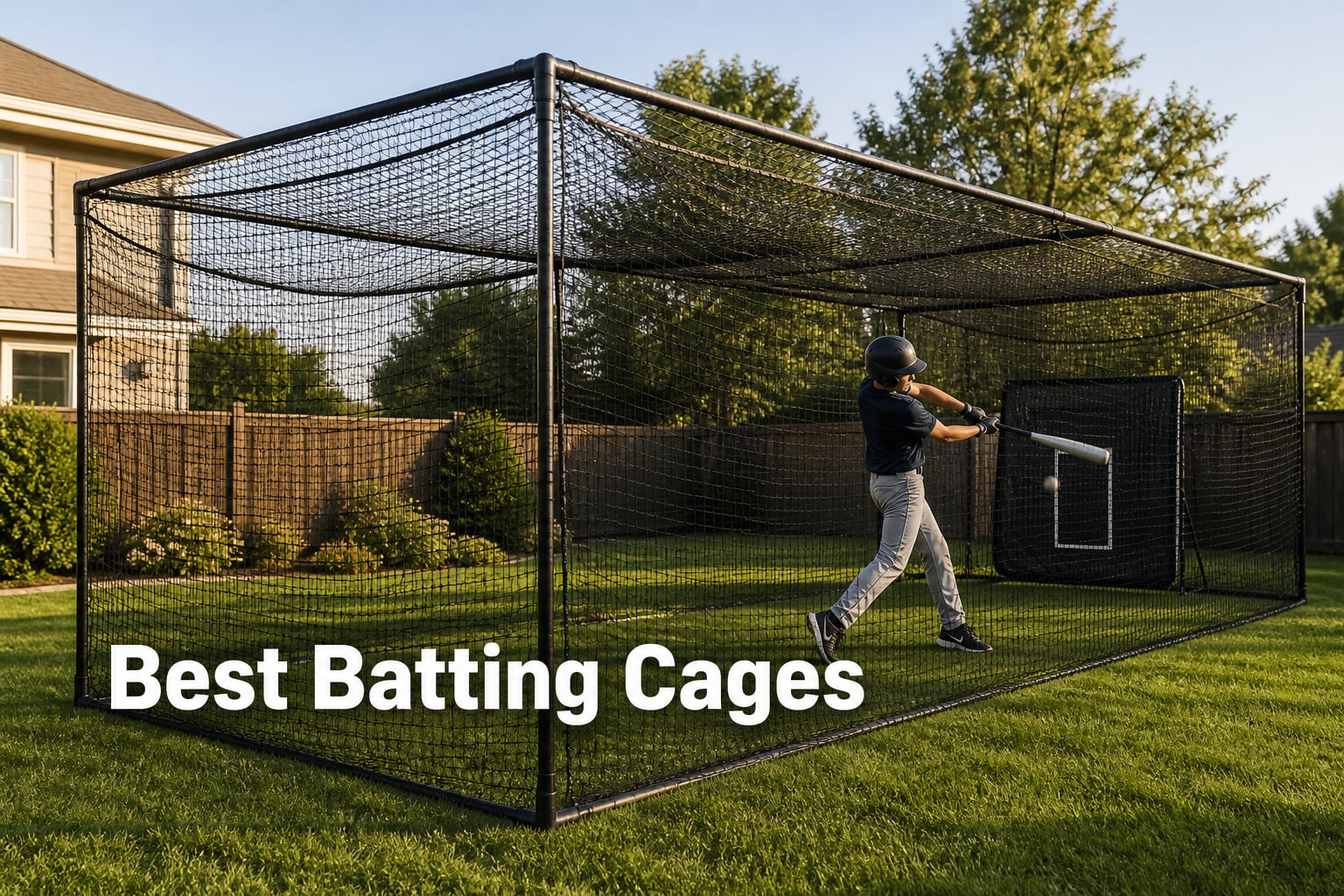
Skipping trips to the commercial cage is the main reason families buy a backyard batting cage. One Reddit parent in r/Softball mentioned paying $70 for a 30-minute session at an indoor facility, and that number alone justifies a one-time purchase for most households. Our team spent weeks comparing 10 of the most popular baseball and softball batting cages on the market to find out which ones actually survive real practice.
The best batting cages share three traits: a frame that stays upright in wind, netting that handles repeated hard contact, and a size that fits both your yard and your player’s age. Those sound obvious, but plenty of budget cages fail at least one of them within a season. We dug through thousands of customer reviews, forum threads, and spec sheets to separate the durable cages from the ones that sag, tear, or tip over.
In this guide, you’ll find our top 3 picks, a full comparison table of all 10 cages, detailed individual reviews, a sizing and buying guide built around what real users report, and answers to the most common questions. Whether you need a portable batting cage for travel-team warmups, a freestanding batting cage for the backyard, or a heavy-duty net for a training facility, there’s a pick here for you.
Table of Contents
Top 3 Picks for Best Batting Cages (October 2026)

Skywalker Sports 40ft Batting Cage
- 40ft x 12ft x 10ft
- Collapsible steel frame
- Indoor and outdoor use
- 3-year frame warranty

Apex Sports 22ft Portable Cage
- 22ft x 12ft x 8ft
- Pitching machine hole
- Carry bag included
- Under $200
MR 24ft Mobile Wheeled Cage
- Built-in swivel wheels
- 45-ply net rated 150 MPH
- Lifetime warranty
If you want the short version: the Skywalker Sports 40-foot cage is the best all-around backyard batting cage for serious practice. The Apex Sports 22-foot cage is the best portable batting cage for families on a budget. And the MR 24ft mobile cage is the premium option for teams that need to roll a cage around a facility.
Best Batting Cages in 2026
| Product | Specifications | Action |
|---|---|---|
| Skywalker Sports 40ft Cage |
|
Check Latest Price |
| Apex Sports 22ft Portable Cage |
|
Check Latest Price |
 Arikit 30ft Batting Cage Arikit 30ft Batting Cage |
|
Check Latest Price |
 ANYTHING SPORTS 40ft Cage ANYTHING SPORTS 40ft Cage |
|
Check Latest Price |
 PLAYAPUT 30ft Cage PLAYAPUT 30ft Cage |
|
Check Latest Price |
 EnjoyColor 40ft Pro Cage EnjoyColor 40ft Pro Cage |
|
Check Latest Price |
 ORIENGEAR 30ft Cage ORIENGEAR 30ft Cage |
|
Check Latest Price |
 WICTTISPOSI 20ft Metal Cage WICTTISPOSI 20ft Metal Cage |
|
Check Latest Price |
| MR 24ft Mobile Wheeled Cage |
|
Check Latest Price |
 VEVOR 55ft Cage Net Only VEVOR 55ft Cage Net Only |
|
Check Latest Price |
The table above covers every cage we reviewed. Sizes range from a compact 20 feet up to a full 55-foot net, and prices span from budget-friendly to professional-grade. Below, we break down each one in detail.
1. Skywalker Sports 40ft Batting Cage – Best Overall Backyard Cage
Skywalker Sports 40 Ft Collapsible Batting Cage, Indoor/Outdoor
40ft x 12ft x 10ft
Rust-resistant steel frame
UV-treated netting
Collapsible for storage
99 lbs total
Pros
- Easy assembly
- Sturdy steel frame
- Collapsible for storage
- Survives windy conditions
- 3-year frame warranty
Cons
- Net can sag between sections
- Light-duty net under heavy use
- Needs extra staking in wind
This is the cage I’d put in my own yard first. The 40-foot length gives a real pitcher-to-hitter distance, and the 10-foot overhead clearance means older players can swing without clipping the top. Reviewers consistently call out how straightforward the assembly is, and the angled leg braces genuinely keep it planted through repeated swings.
What impressed our team most is the versatility. The collapsible steel frame moves indoors for winter practice and back out in spring, which is rare at this price point. One owner reported their cage surviving multiple windy seasons, though they added extra stakes to do it, which matches the feedback across the 171 reviews.
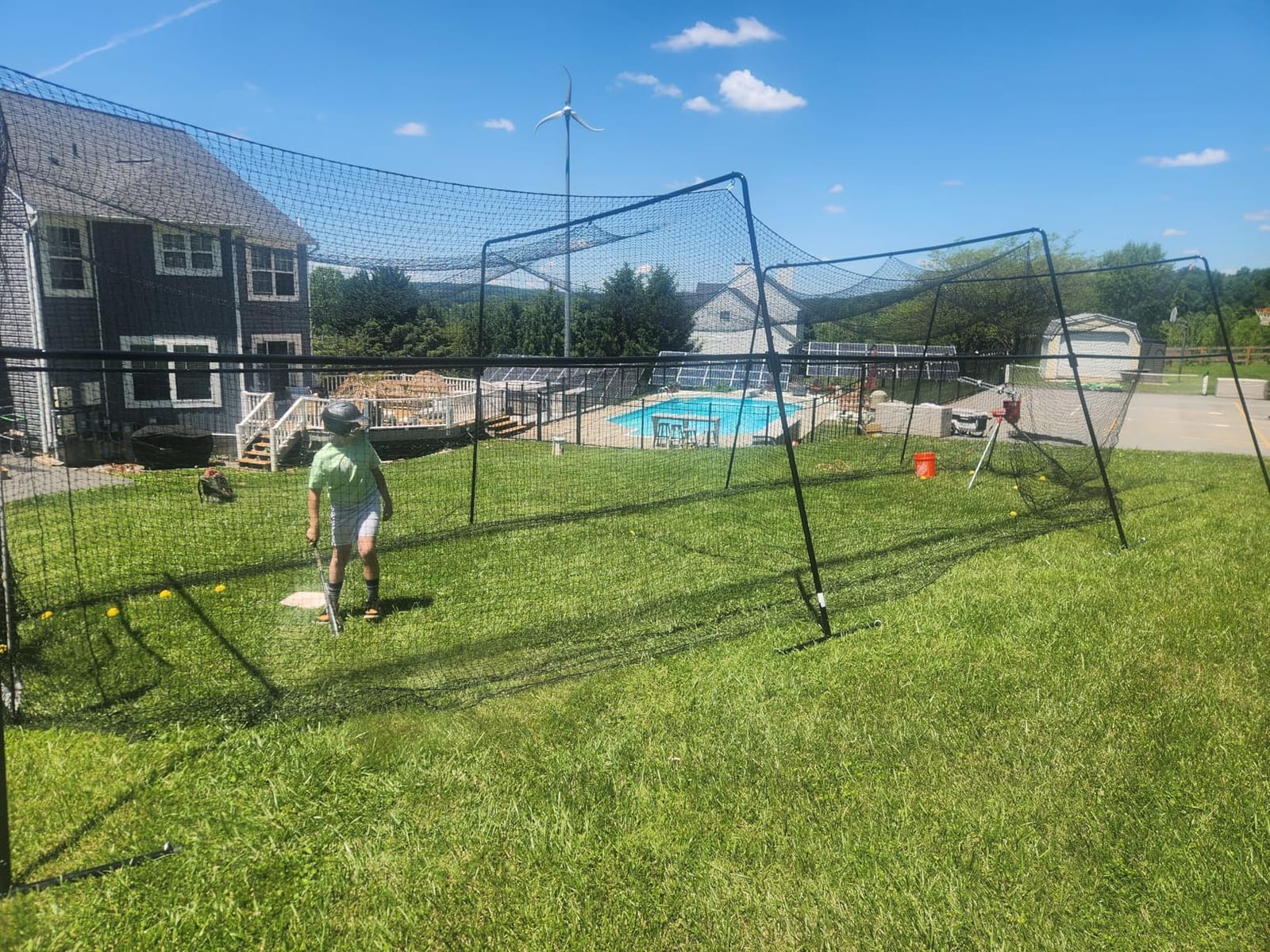
The weaknesses are real but manageable. The net can sag between frame sections over time, and hitters who blast batting-practice fastballs every day may wear through the stock netting within a couple of seasons. Most owners simply replace the net with a heavier grade down the road and keep the frame, which is the cheaper path anyway.
At 99 pounds, it’s stable but not something you’ll toss in a trunk for weekend travel. Think of it as a semi-permanent backyard installation that can come down when needed. The 3-year limited frame warranty adds peace of mind that budget fiberglass cages don’t offer.
Space and Age Requirements
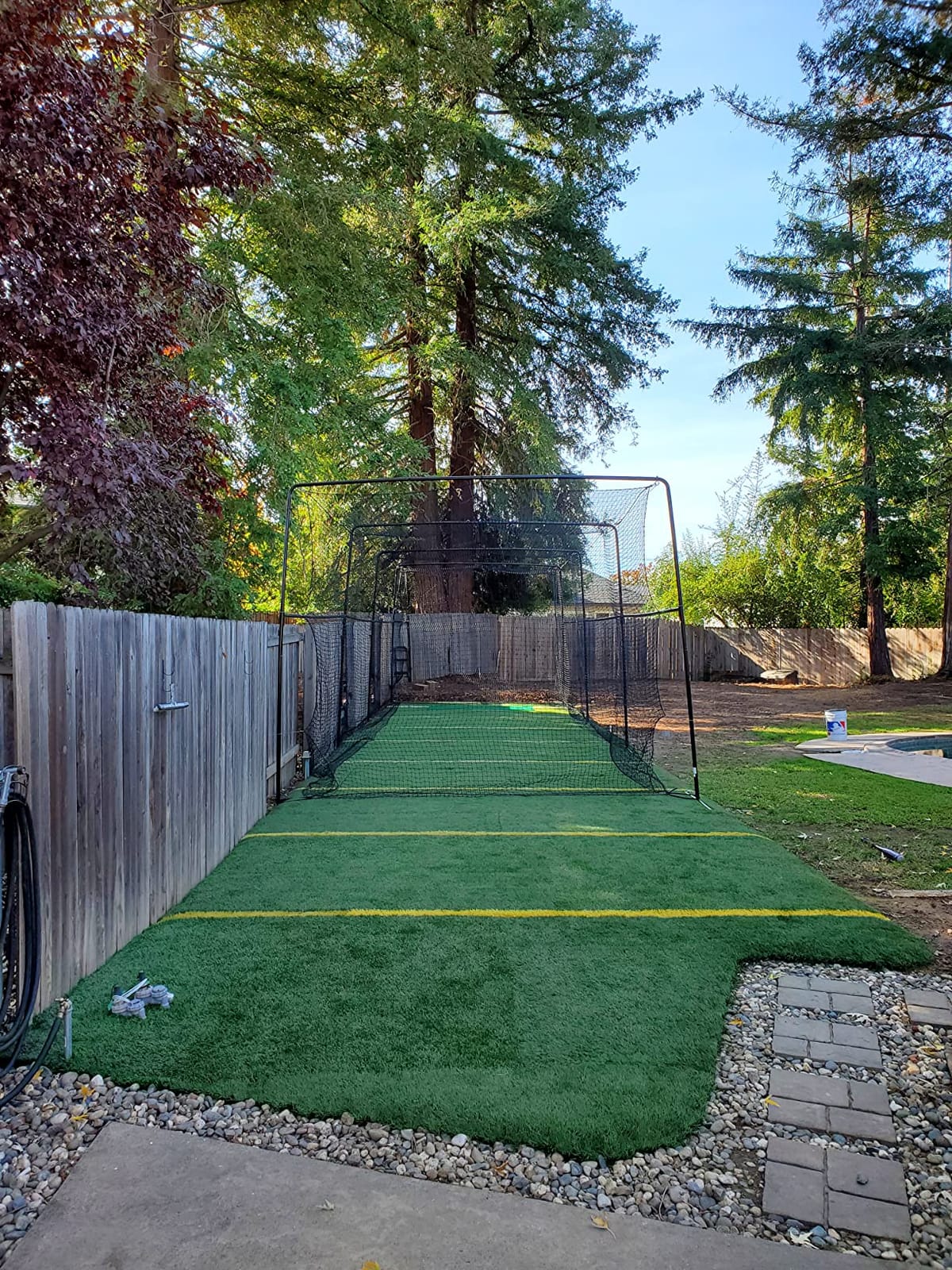
You need roughly 42 by 14 feet of clear yard space, and that footprint suits players from around age 10 through adult. The 10-foot height handles full swings from taller teens without restriction. If your yard is tighter than that, consider a 30-foot cage instead.
Weather and Wind Performance
The frame handles rain and sun well thanks to rust-resistant coating and UV-treated netting. Wind is the one condition where owners recommend adding your own heavy-duty stakes and tie-downs. With proper anchoring, multiple reviewers report multi-year outdoor use without frame damage.
2. Apex Sports 22ft Portable Batting Cage – Best Budget Portable Pick
Apex Sports Portable Batting Cage 22x12x8 Ft, Baseball & Softball Net Cage
22ft x 12ft x 8ft
3-ply polyester net
12.7mm fibreglass poles
Pitching machine hole
Carry bag included
Pros
- Portable with carry bag
- Easy 2-person assembly
- Durable 3-ply netting
- Pitching machine hole
- Great price
Cons
- Plastic clips can bend in heat
- Weak included stakes
- Net may tear with high-speed hits
- Tie-down straps are weak
For the money, this is the best portable batting cage we reviewed. The whole package weighs about 34 pounds and folds into the included carry bag, so it genuinely travels to the park, a tournament, or a grandparents’ backyard. Two people can have it up in well under an hour.
The built-in 3.5 by 2 foot pitching machine hole is a smart touch at this price. You can drop a machine or a screen right into the cage and run live-arm or machine reps. Reviewers, over 181 of them, consistently praise the value and the sturdy fibreglass poles that hold the 12-foot width stable.
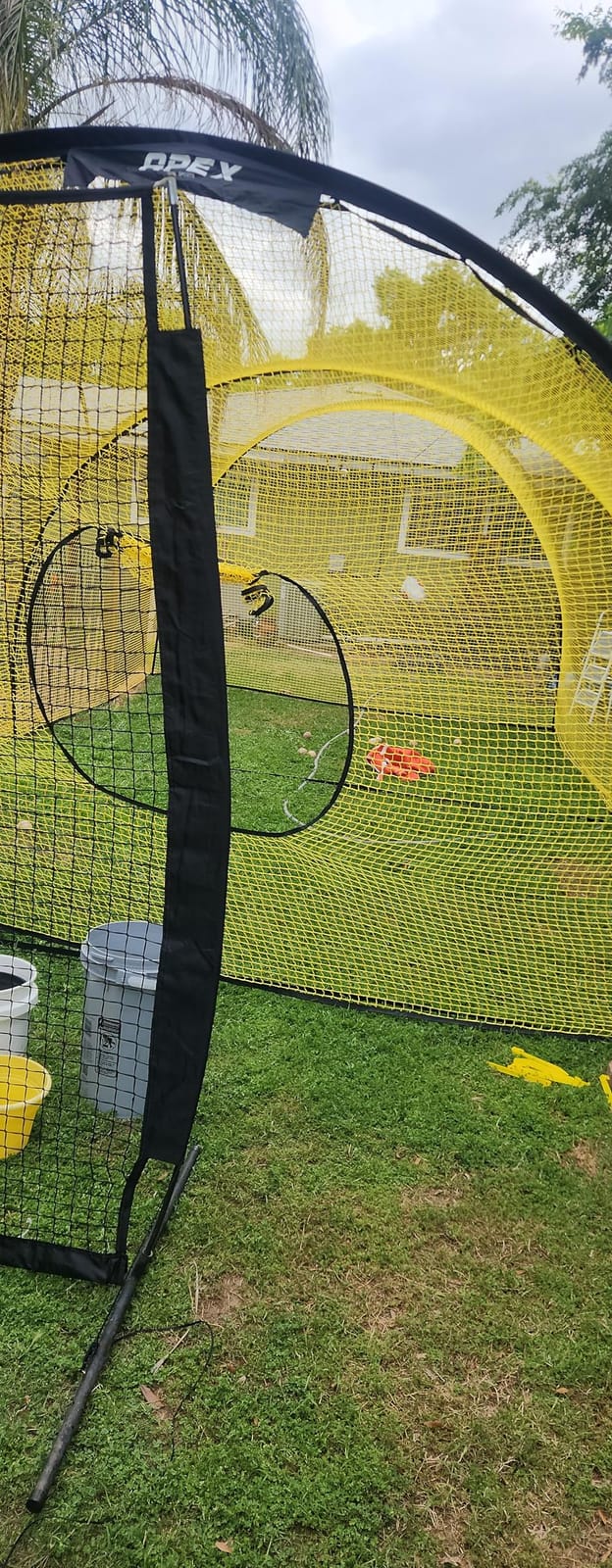
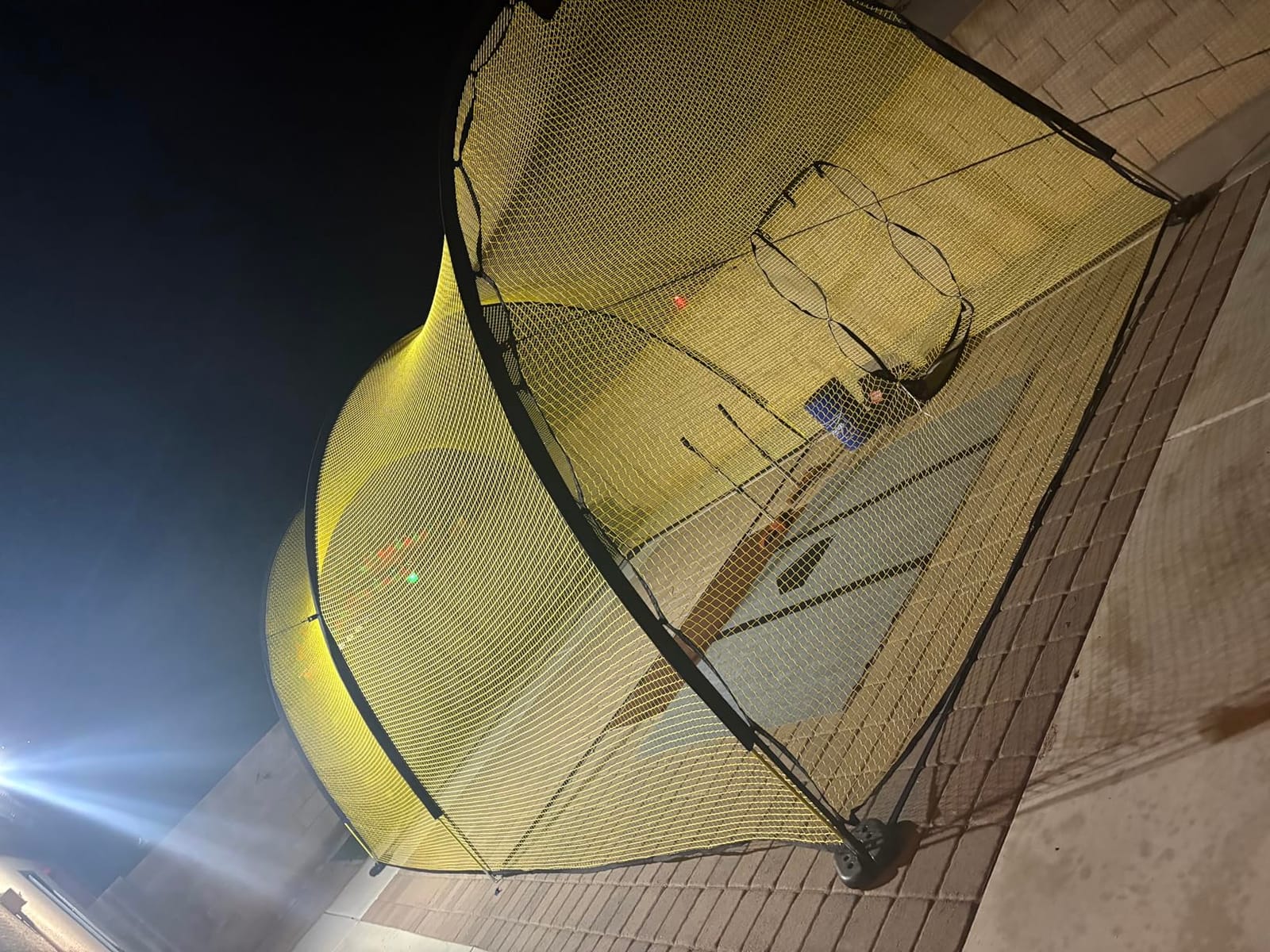
The corners get cut where you’d expect on a budget cage. The plastic connector clips can soften and bend in direct summer heat, and the included stakes and tie-down straps are too weak for real wind. Plan on spending a few dollars on better stakes and ratchet straps, and this cage performs far above its price.
The 3-ply net rebounds balls softly and handles normal youth and teen hitting fine. Travel-team high schoolers hitting full exit-velocity balls may eventually tear it, so this is best for youth baseball, softball practice, and soft toss rather than elite power hitters.
Who Should Buy This Size
The 22-foot length works best for tee work, soft toss, front toss, and short-distance machine pitches. It’s ideal for players under 14 or for coaches running warmup stations. If you need fullpitcher-to-plate distance, step up to a 30 or 40-foot cage.
Setup and Take-Down Time
Two adults can assemble it in roughly 30 to 45 minutes the first time and faster after that. Take-down is similar, and everything fits back into the carry bag. Solo setup is possible but frustrating, so bring a helper.
3. Arikit 30FT Batting Cage – Best Mid-Size Training Cage
Upgrade 30FT Baseball and Softball Batting Cage Net and Frame, Large Batting Cages Net with Steel Frame for Home – Backyard Batting Cage with Pitching Backstop and Carry Bag
30ft x 13ft x 9ft
High-strength fiberglass poles
3-ply polyester net
Removable gate
Target and carry bag
Pros
- Large 30ft training space
- Durable fiberglass poles
- Training target included
- Good wind resistance
- Removable gate design
Cons
- Ground pegs are low quality
- Gaps near pitching machine hole
- Requires 2 people
- Hoops may fall in storms
The Arikit 30-footer hits a sweet spot between the short portable cages and the big 40-foot units. At 13 feet wide and 9 feet tall, it feels roomy inside, and the manufacturer rates it for players from age 4 through adult. Our team likes that it solves a specific problem: no more chasing balls into the neighbor’s yard.
The elasticated one-piece pole design is genuinely clever. Two people can set it up or break it down in about 15 minutes once you’ve done it a few times, and the included carry bag makes it a realistic option for families who move it between seasons.
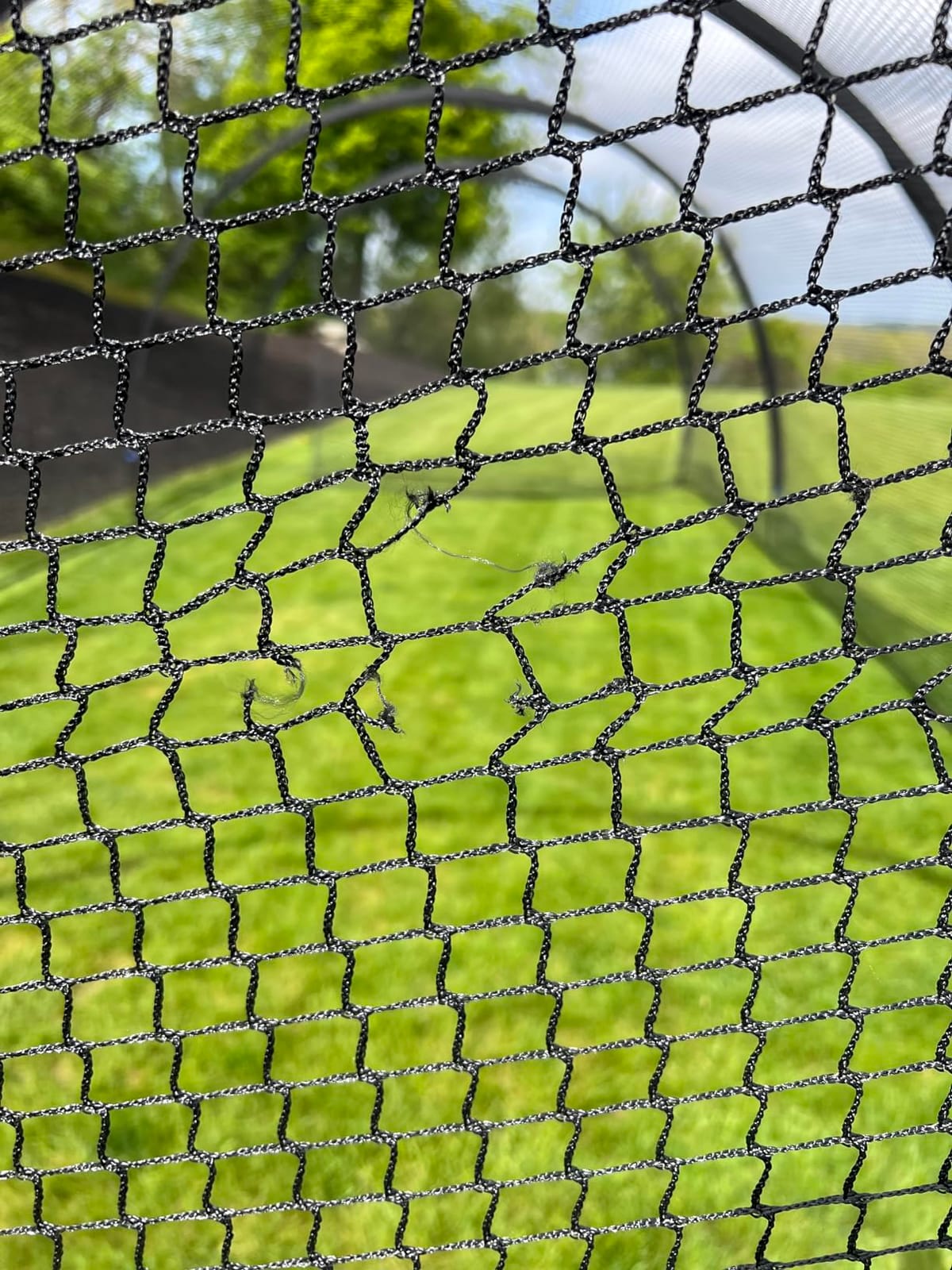
The included training target is a nice bonus for hitting accuracy work, and reviewers give the fiberglass poles good marks for durability. Wind resistance is decent when it’s properly staked, though the stock ground pegs are the weakest part of the package.
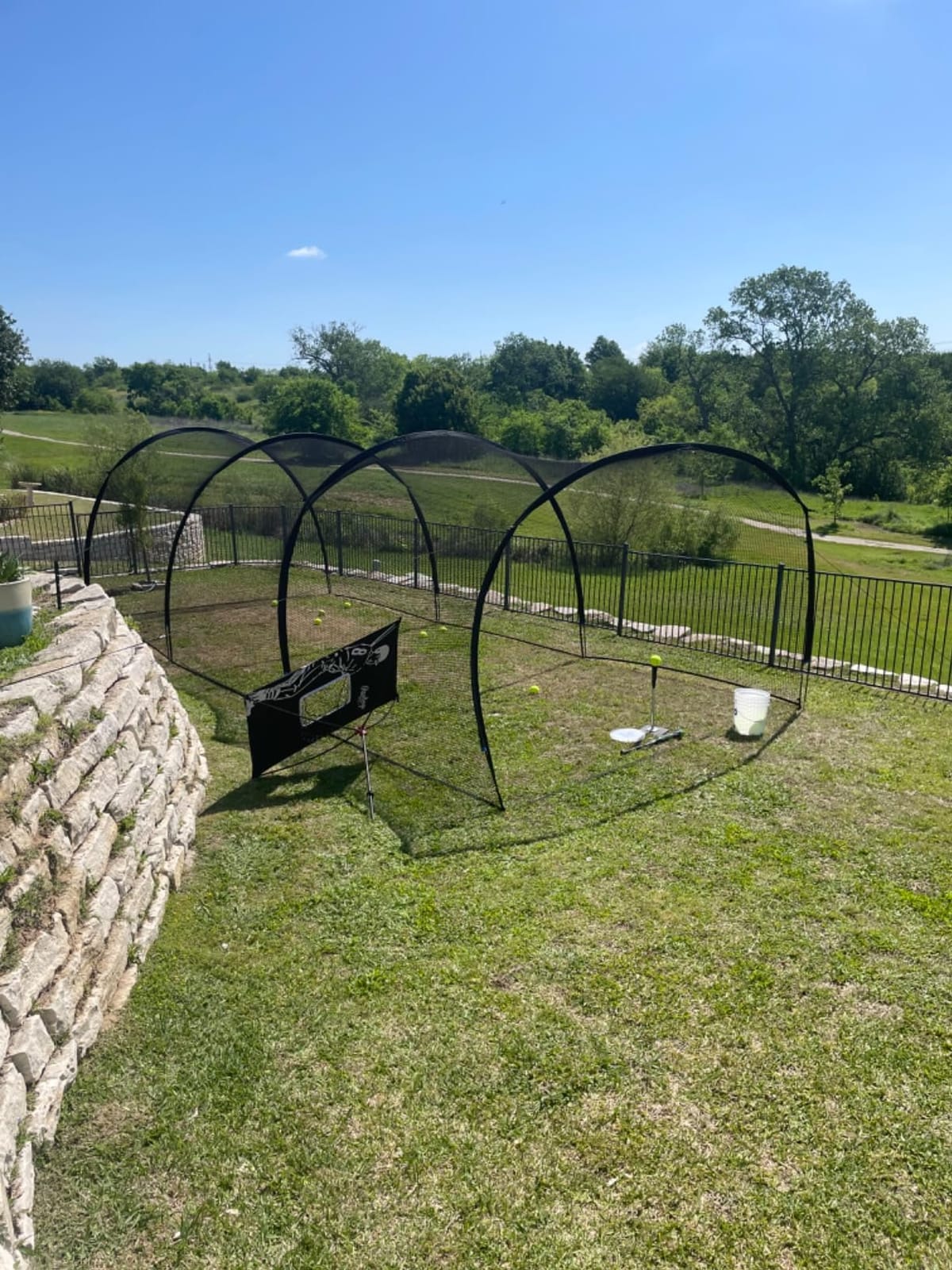
Two complaints show up across the 132 reviews: small gaps can appear near the pitching machine opening, and the hoop poles can come down in serious storms. The fix for both is simple, better stakes and taking it down before big weather, but it’s worth knowing upfront.
Pitching Machine Compatibility
The cage accommodates a pitching screen or small machine inside, and the enclosure keeps mis-hit balls contained. Watch the gap issue around the machine opening and add a few zip ties if balls sneak through. It works for both baseball and softball machines.
Best Yard Size for 30 Feet
Plan for about 32 by 15 feet of level ground. That fits most suburban backyards comfortably, and the 9-foot height clears adult swings. It’s the cage I’d recommend for a family with mixed-age players who all share practice time.
4. ANYTHING SPORTS 40 Foot Collapsible Batting Cage – Best Full-Size Value
ANYTHING SPORTS 40 Foot Collapsable Batting Cage, Perfect Baseball Batting Cage, Softball Batting Cage, Complete Package with Frame and Netting. Freestanding Portable Batting Cage for Backyard
40ft length
Collapsible aluminum frame
Freestanding design
Pitching machine door
138 lbs
Pros
- Collapsible frame design
- Straightforward assembly
- Pitching machine door
- Good backyard size
- Labeled pieces and clear instructions
Cons
- Light gauge aluminum poles
- Net hangs inside reducing space
- Assembly needs multiple people
- Net durability concerns
This is the cage for buyers who want full 40-foot pitching distance without the premium price of a steel commercial unit. The complete package arrives with frame and netting together, and the labeled pieces and clear instructions earn consistent praise in reviews.
The dedicated door and opening for a pitching machine is where this cage earns its keep for serious practice. You can run machine reps at real distance, which is what actually translates to game at-bats. At 138 pounds, it’s also freestanding and can be repositioned or collapsed for the off-season.
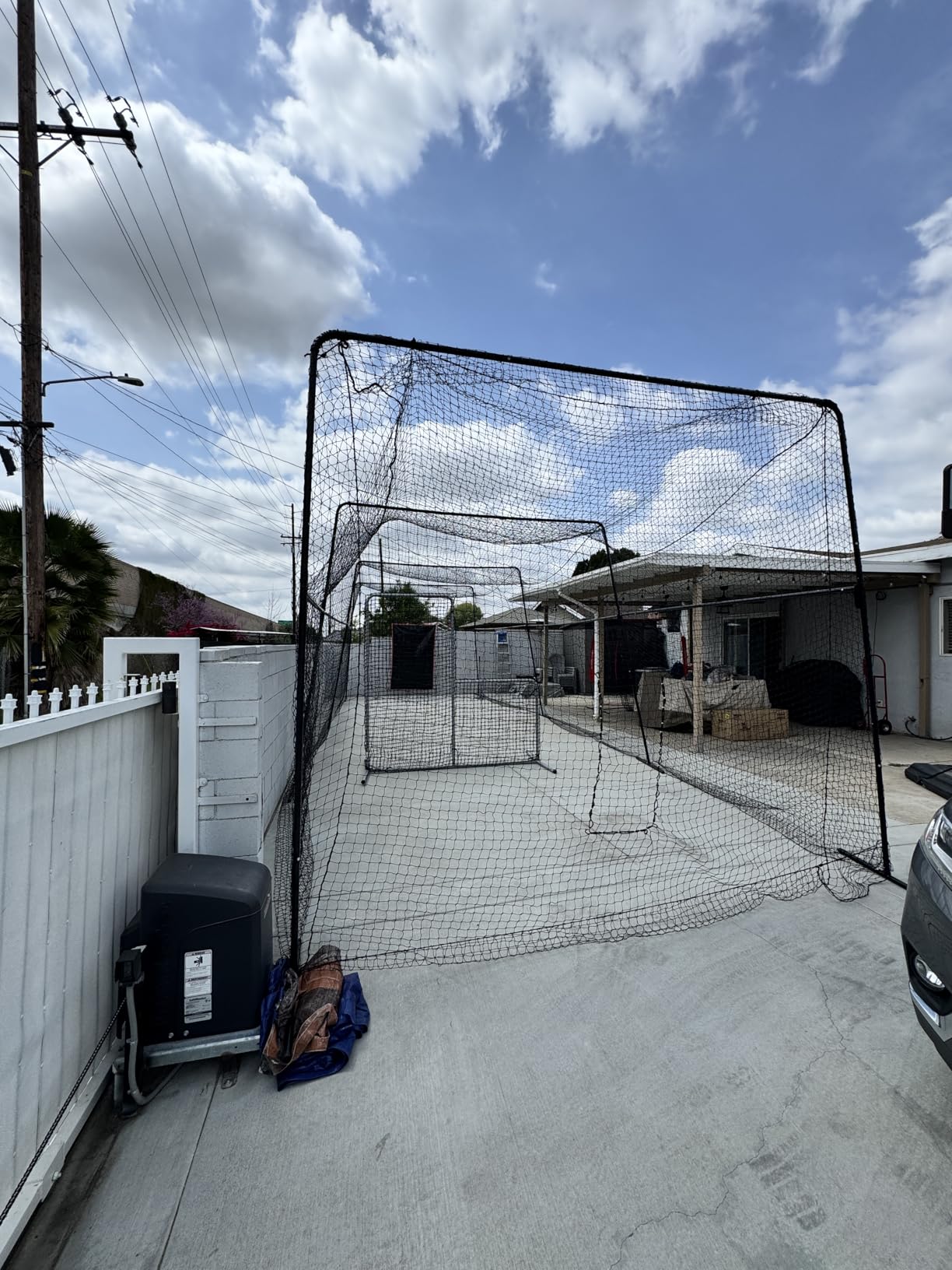
The trade-offs center on materials. The aluminum poles are lighter gauge than I’d like, and the net hangs on the inside of the frame, which eats into usable width. Reviewers note you effectively lose some swinging room compared to cages with external net suspension.
Families doing daily heavy use report net wear over time, same story as most mid-range cages. For a household practicing several times a week, it holds up well. For a team or facility running hours of daily reps, step up to a commercial-grade unit.
Assembly Difficulty
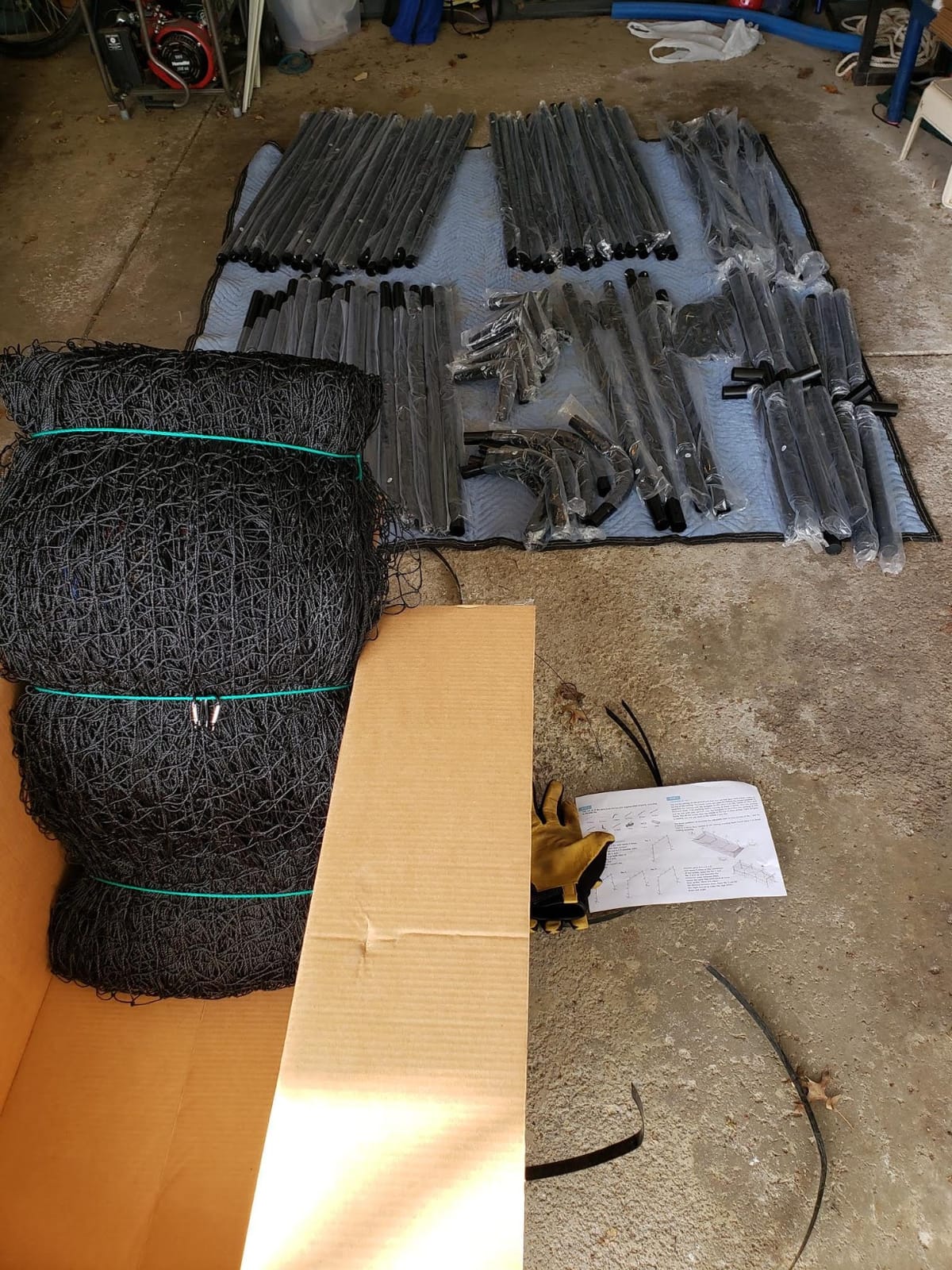
Count on two to three people and a couple of hours for first assembly. The collapsible design means subsequent setups go faster. Choose your spot carefully because moving it fully assembled is a multi-person job at 138 pounds.
Net Replacement Options
Because the frame is a standard 40-foot rectangle, replacement nets are easy to find. Owners who wore out the original net report fitting heavier #36 or #42 gauge nets on the same frame, extending the cage’s life for years.
5. PLAYAPUT 30FT Batting Cage – Best Newcomer With Training Features
PLAYAPUT 30FT x 12FT x 8FT Batting Cage for Baseball & Softball
30ft x 12ft x 8ft
Steel poles and nylon mesh
Detachable door
18in x 48in pitching hole
12 ground stakes
Pros
- Sturdy nylon mesh build
- Training target included
- Detachable pitcher door
- 12 stakes and guide ropes
- Tool-free assembly
Cons
- Limited review count
- Setup requires patience
- Not mobile once assembled
This is the highest-rated cage on our list at 4.7 stars, though the review count is still small since it launched in March 2025. The early feedback is strong, and it already ranks #32 in the batting cage category, which suggests real demand behind those numbers.
The feature set punches above its price. You get a detachable door for live-arm pitching, an 18 by 48 inch pitching machine hole, red target zones for accuracy work, and a stability kit with guide ropes and 12 ground stakes. That’s a more complete package than cages costing considerably more.
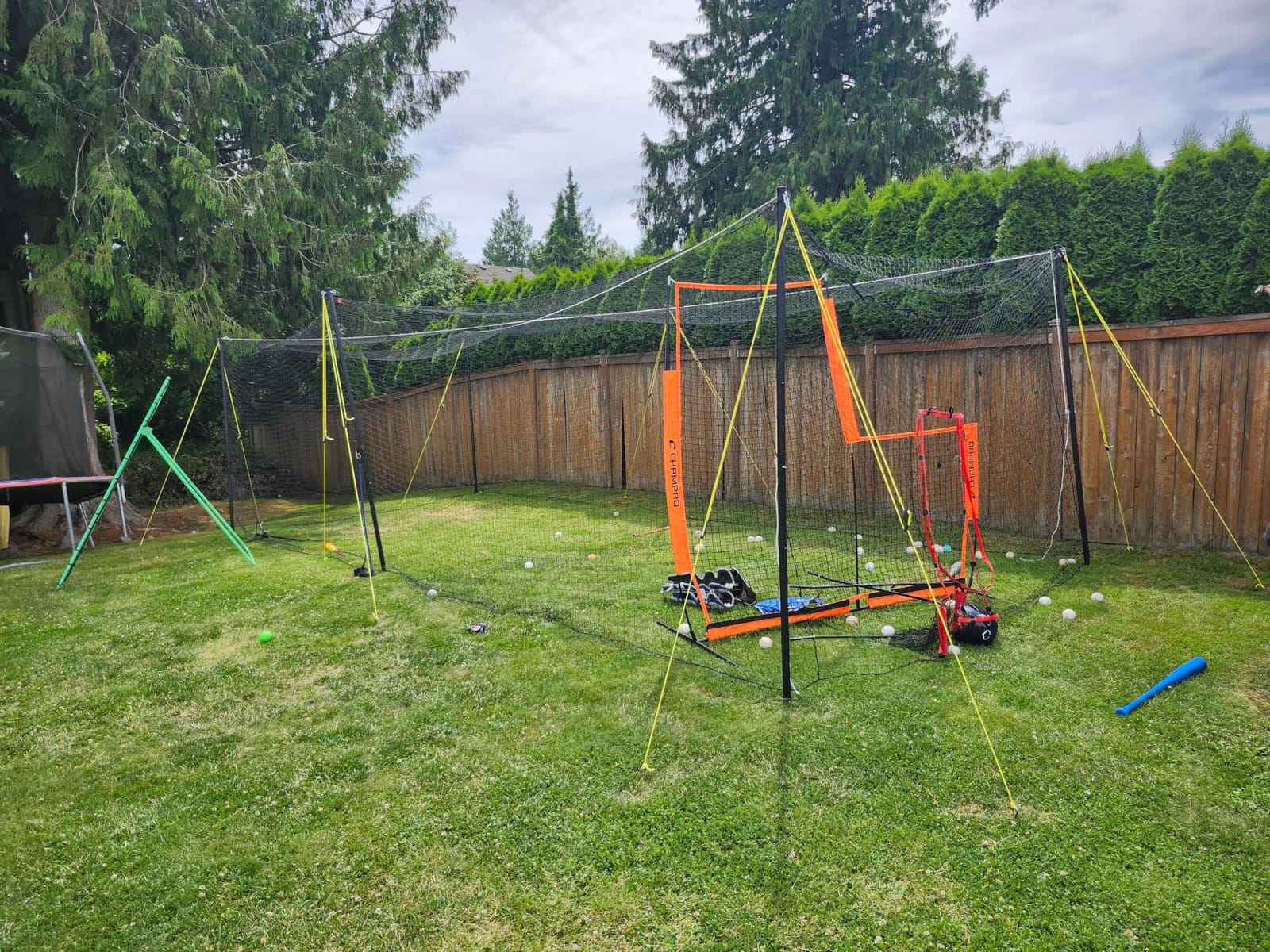
Tool-free assembly is legitimate here, though reviewers note the first setup takes patience while you learn the pole sequence. The steel pole frame with nylon mesh feels stiffer than fiberglass-pole competitors, and it stands up to hard contact without the rebound wobble.
The honest caveat is simply maturity. With only a handful of reviews, nobody has logged multiple seasons on this cage yet, so long-term durability is an open question. The 1-year customer support offering provides a reasonable safety net for early adopters.
Multi-Sport Use
The manufacturer rates it for baseball, softball, and even golf work. The 8-foot height is fine for baseball and softball swings. For golf, stick to short-iron and wedge work to keep balls contained.
Stock and Availability
This cage has been running low on stock, which is common for fast-moving new listings. If it’s available when you check, the combination of rating, features, and price makes it a smart buy. If it’s out, the Arikit 30-footer is the closest alternative.
6. EnjoyColor 40 FT Professional Batting Cage – Best Heavy-Duty Steel Frame
40 FT Baseball & Softball Batting Cage Net with Frame – Professional 40 Foot Training Cage for Backyard, Includes Pitching Machine Hole, 1.26″ Heavy-Duty Galvanized Steel Poles & 45-PLY PE Netting
40ft x 10ft x 10ft
1.26in galvanized steel frame
45-ply PE netting
59in strike zone target
125 lbs
Pros
- Professional 40ft size
- Galvanized rust-resistant steel
- 45-ply net absorbs impacts
- Strike zone target included
- Weather and UV resistant
Cons
- Some poles arrive bent
- Assembly is difficult
- High return shipping costs
- Instructions could be clearer
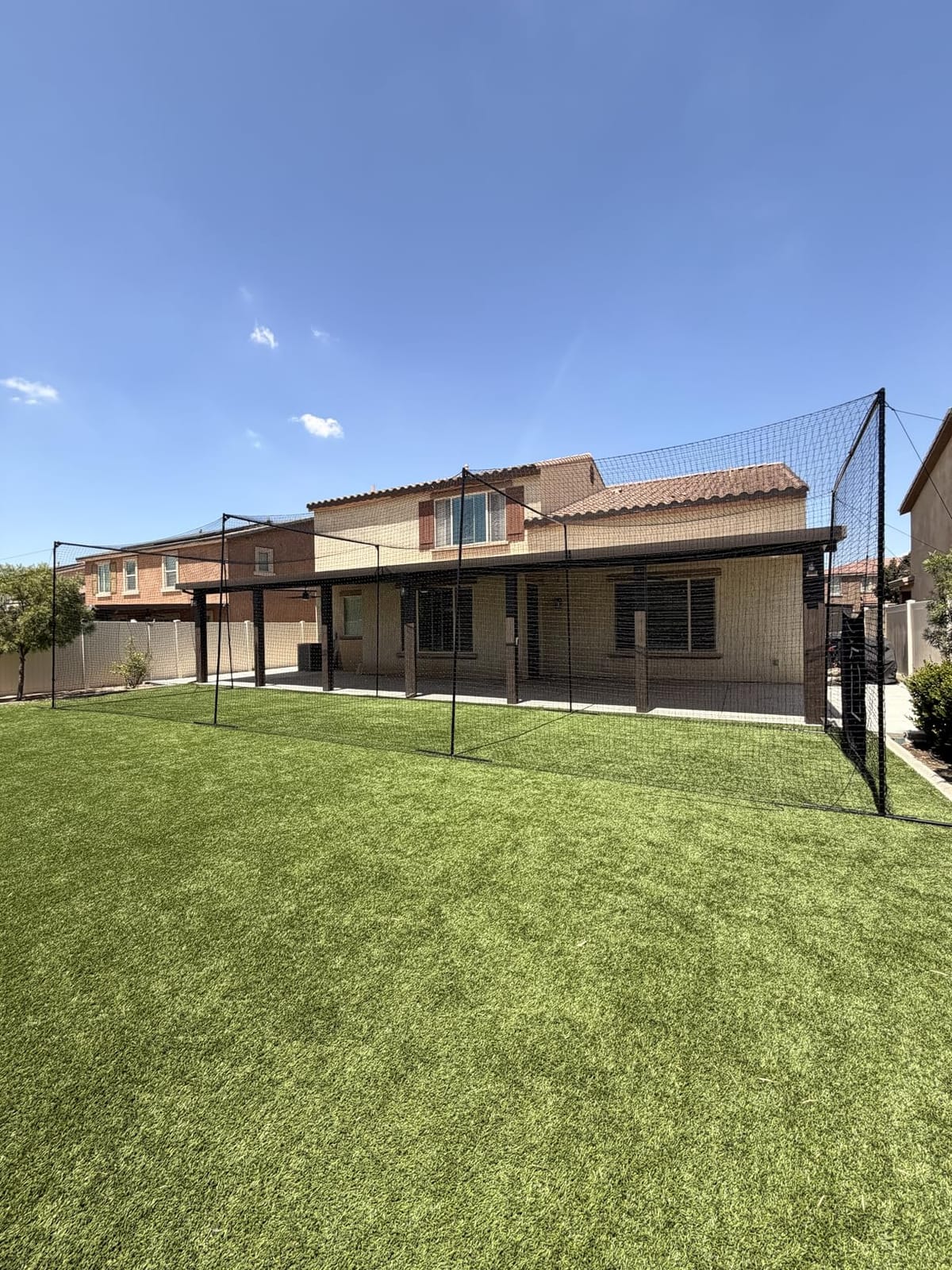
This is the most overbuilt cage on our list under $500. The 1.26-inch galvanized steel frame and 45-ply high-density PE netting are specs you normally see on commercial batting cages costing far more. It’s built to sit outside year-round and take daily abuse.
The 59 by 59 inch strike zone target is a genuinely useful training tool, letting hitters work pitch recognition and location, not just contact. Combined with the full 40-foot length and 10-foot ceiling, this cage supports realistic batting practice for teens and adults.
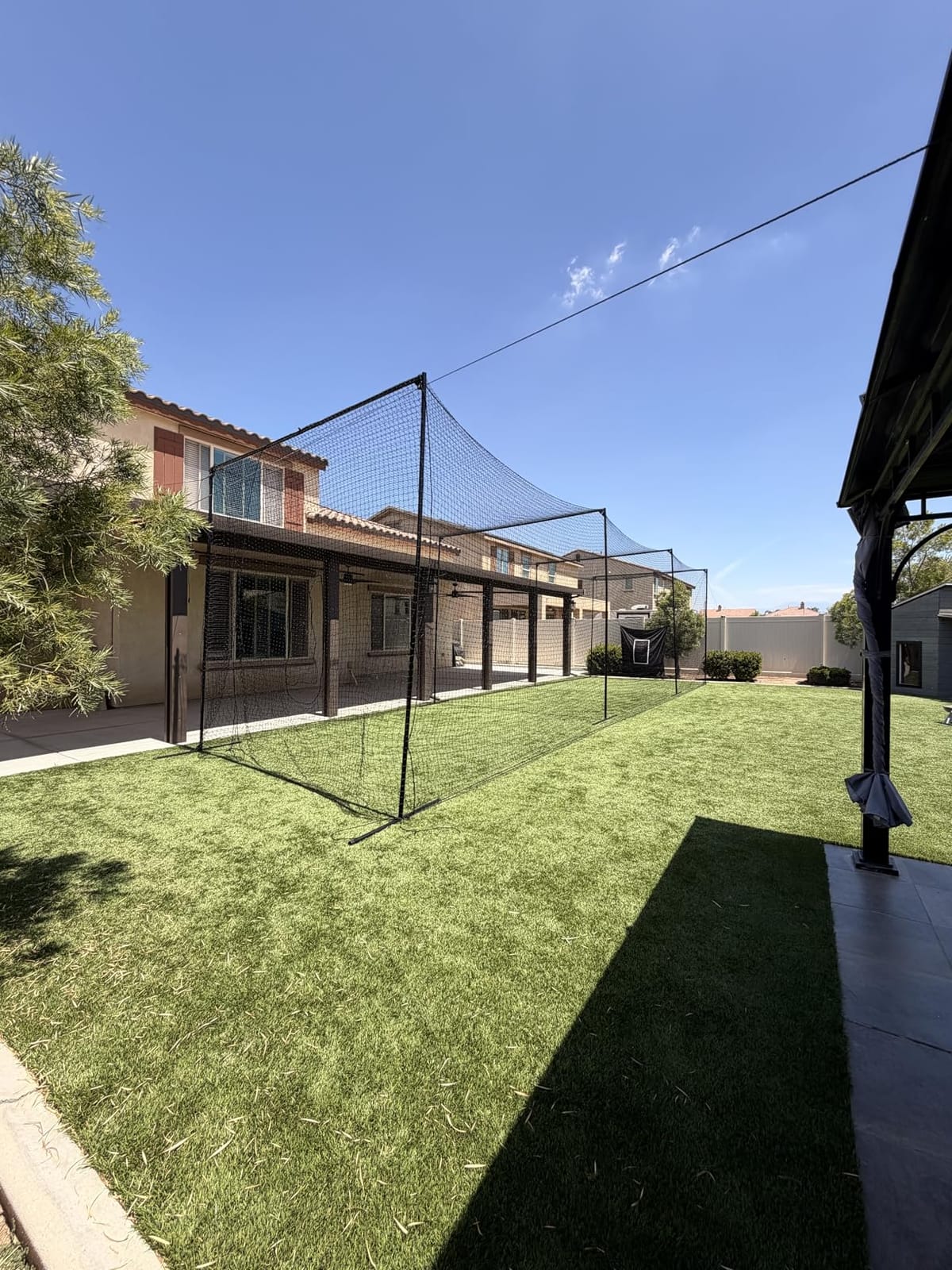
Quality control is the catch. Several of the few reviewers reported poles arriving bent, and the instructions leave something to be desired. Assembly is a multi-person, multi-hour job, so budget an afternoon and inspect every pole the day it arrives.
Also note this one doesn’t ship Prime, so delivery takes longer and return shipping on a 125-pound package is expensive. Inspect on arrival and deal with any bent poles immediately rather than after assembly day.
Longevity Expectations
The galvanized frame and UV-treated 45-ply net are rated for years of outdoor exposure. Owners who received clean units report professional-quality performance. This is the cage to buy once if your player is serious and will use it for years.
Assembly Planning
Clear a full day, recruit two helpers, and lay out every component before starting. The snap-together steel frame goes smoothly once you understand the sequence. Doing a dry run of the manual first saves real frustration.
7. ORIENGEAR 30FT Baseball Batting Cage – Most Popular Budget Cage
Baseball Batting Cage 30ft for Backyard, Baseball Training Equipment Netting Cages, Golf Softball Baseball Nets for Batting with Frame and Net, Hitting and Pitching Practice, Orange
30ft x 12ft x 8ft
1.25 inch mesh
Fiberglass and iron poles
Button-linked entrance
38.8 lbs
Pros
- Durable polyester net with oxford seams
- High-strength fiberglass poles
- Omni-directional coverage
- Includes ground stakes and spare pole
- Budget-friendly price
Cons
- Pole cords can break during disassembly
- Yellow plastic spikes may break
- Poles can break with ball impacts
- Wind guy lines need precise adjustment
With 424 reviews, this is the most-purchased cage on our list and currently the #3 best seller in the category. That volume of feedback makes it the easiest cage to evaluate: most owners are satisfied, and the failure points are well documented.
The price is the story here. You get a fully enclosed 30 by 12 by 8 foot cage with a button-linked side entrance, oxford cloth seams on the net, and both iron and fiberglass poles in the frame. For youth players and casual family practice, it does the job at a fraction of big-cage cost.
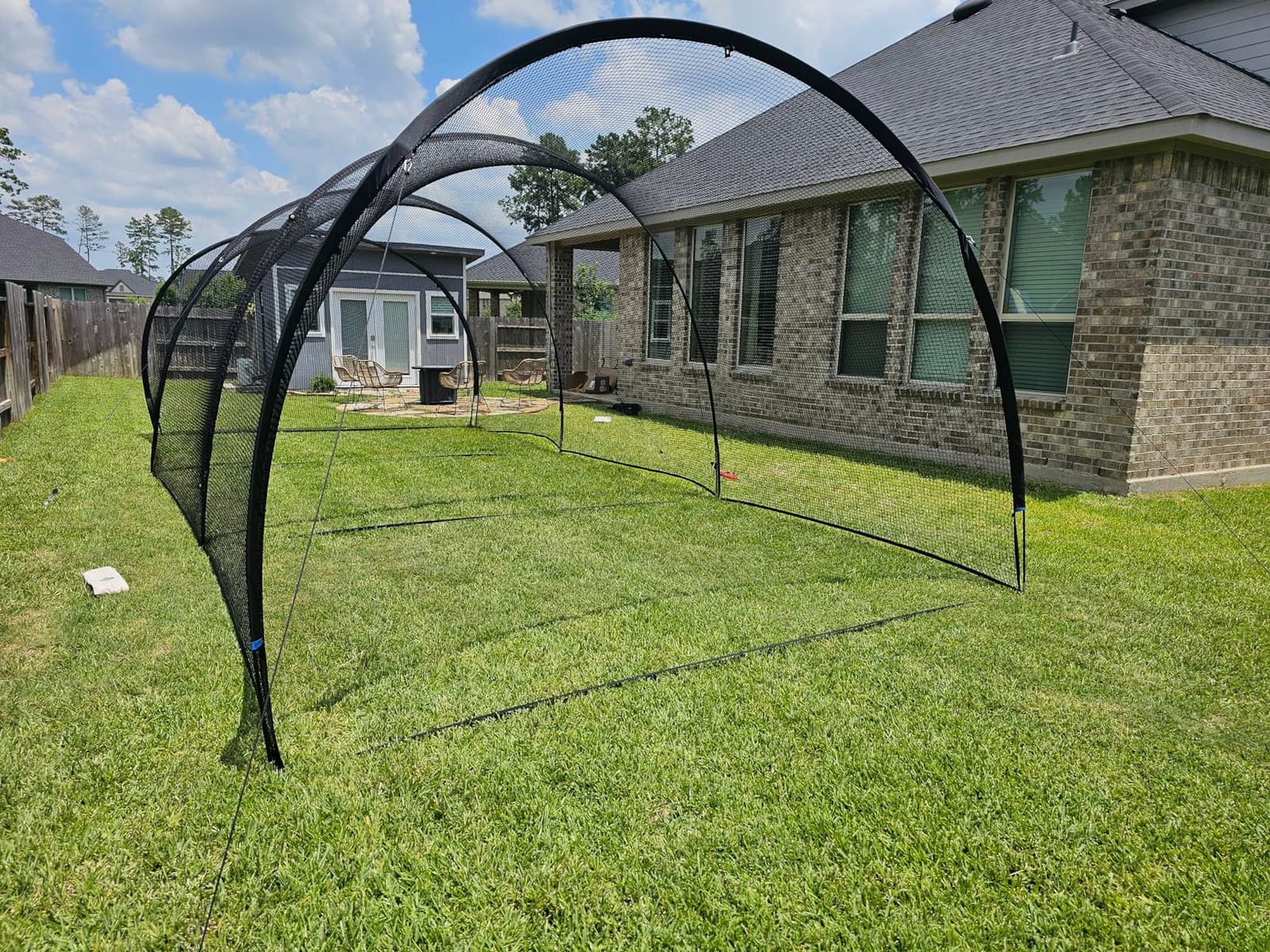
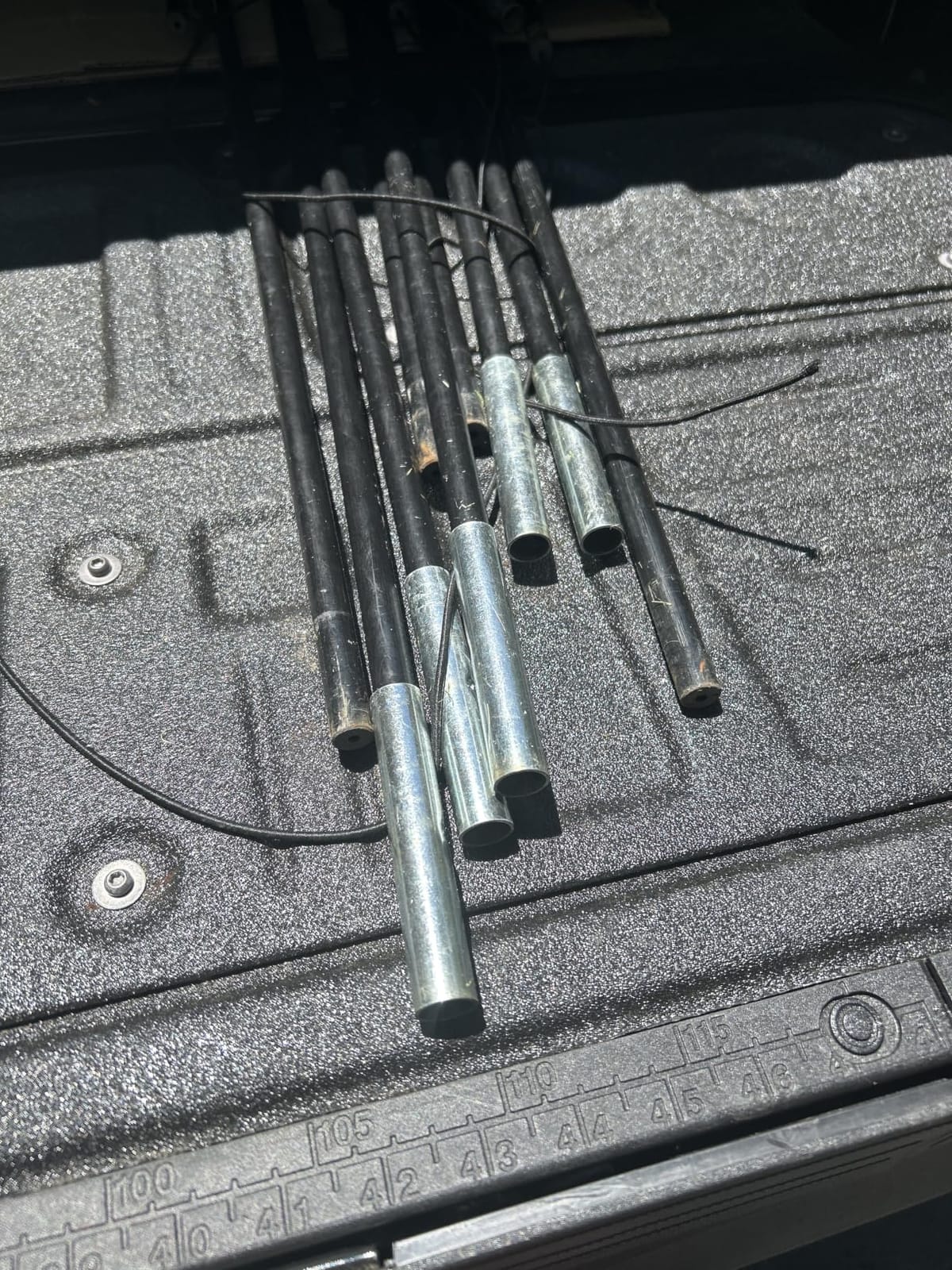
Durability is genuinely mixed, and I want to be straight about that. Some owners report pole breakage from direct ball impacts, and the elastic pole cords can snap during disassembly if you’re rough with them. Others report 6-plus months of solid performance, which is respectable at this price.
The fixes are cheap: swap the plastic spikes for metal stakes, adjust the wind guy lines carefully, and take the cage down before storms. Treated with reasonable care, most owners get solid value from it.
Realistic Lifespan
Expect 1 to 3 seasons of regular youth use depending on your climate and care habits. The included spare pole and 1-year warranty soften early failures. For a first cage that tells you whether your kid will stick with baseball, that’s a fair deal.
Best User Profile
Parents of players roughly 8 to 14 years old doing tee work, soft toss, and front toss are the sweet spot. High school players with high bat exit speeds should look at the steel-framed EnjoyColor or Skywalker instead.
8. WICTTISPOSI 20x10x8ft Batting Cage – Best Compact Metal Frame Cage
Batting Cage Net with Metal Frame, 20x10x8ft Baseball Softball Practice Net
20ft x 10ft x 8ft
25mm thickened steel frame
7-ply nylon net
130 MPH ball rating
Zipper edge design
Pros
- 7-ply net handles high-speed hits
- Heavy-duty metal frame
- Pre-assembled elastic cords
- Storage bag included
- Rated 30
- 000+ hits
Cons
- Poles may bend after extended use
- Heavy once assembled
- Wind ropes need proper staking
- Replacement parts availability unclear
This is the cage for smaller yards that still want a real metal frame. The 20 by 10 by 8 footprint fits in tight suburban spaces where a 30 or 40-foot cage simply won’t go, yet the build quality is well beyond budget fiberglass cages.
The numbers are impressive on paper: 7-ply nylon netting rated for ball speeds up to 130 mph and a claimed 30,000-hit lifespan. In practice, reviewers confirm it handles hard teen and adult contact without the tearing that plagues cheap nets.
Assembly gets good marks thanks to semi-automatic pre-assembled elastic cords, and the edge-wrapped zipper design makes entry cleaner than tie-door setups. At around 85 pounds, it’s stable in use but not something you’ll move around casually.
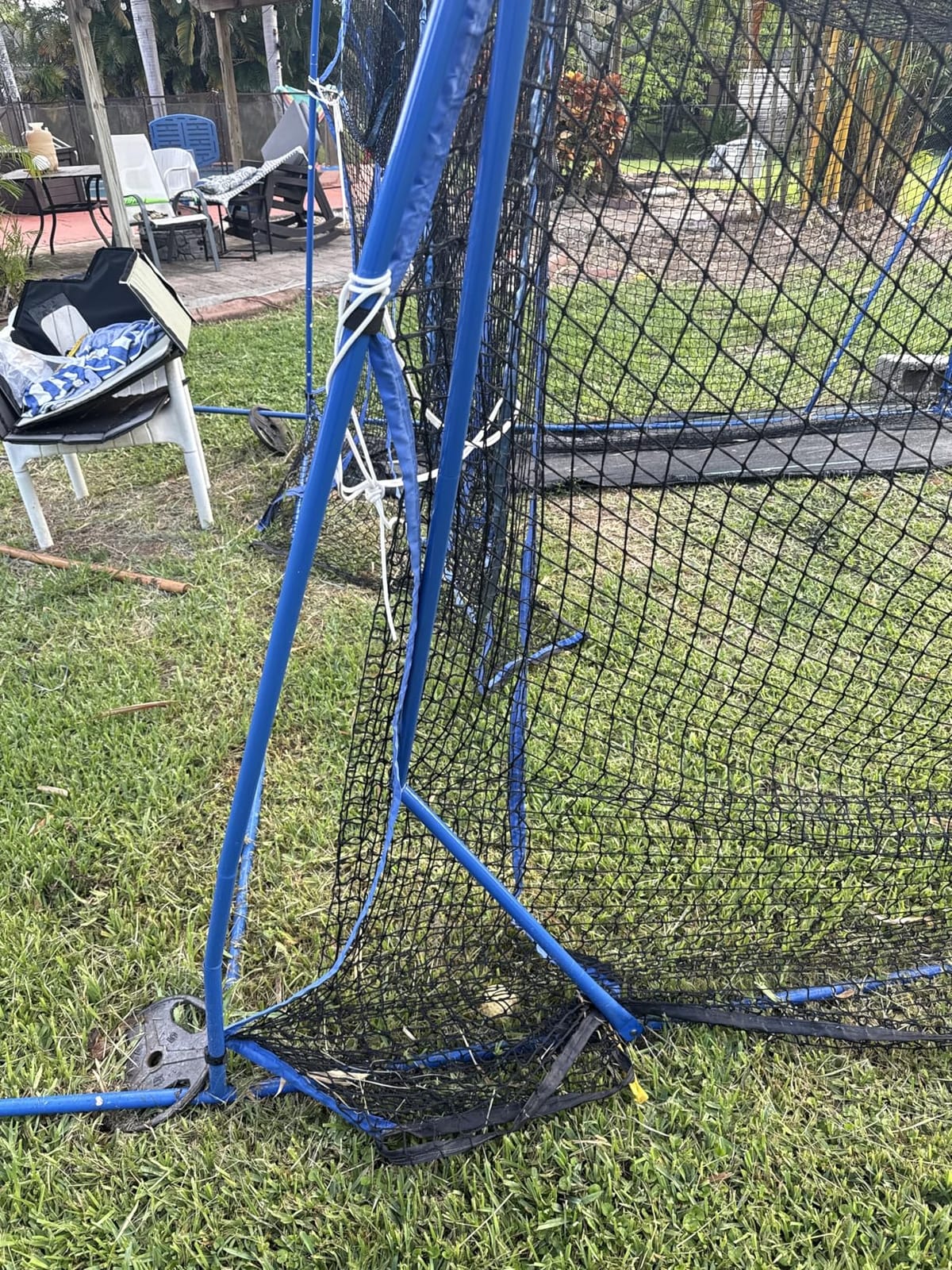
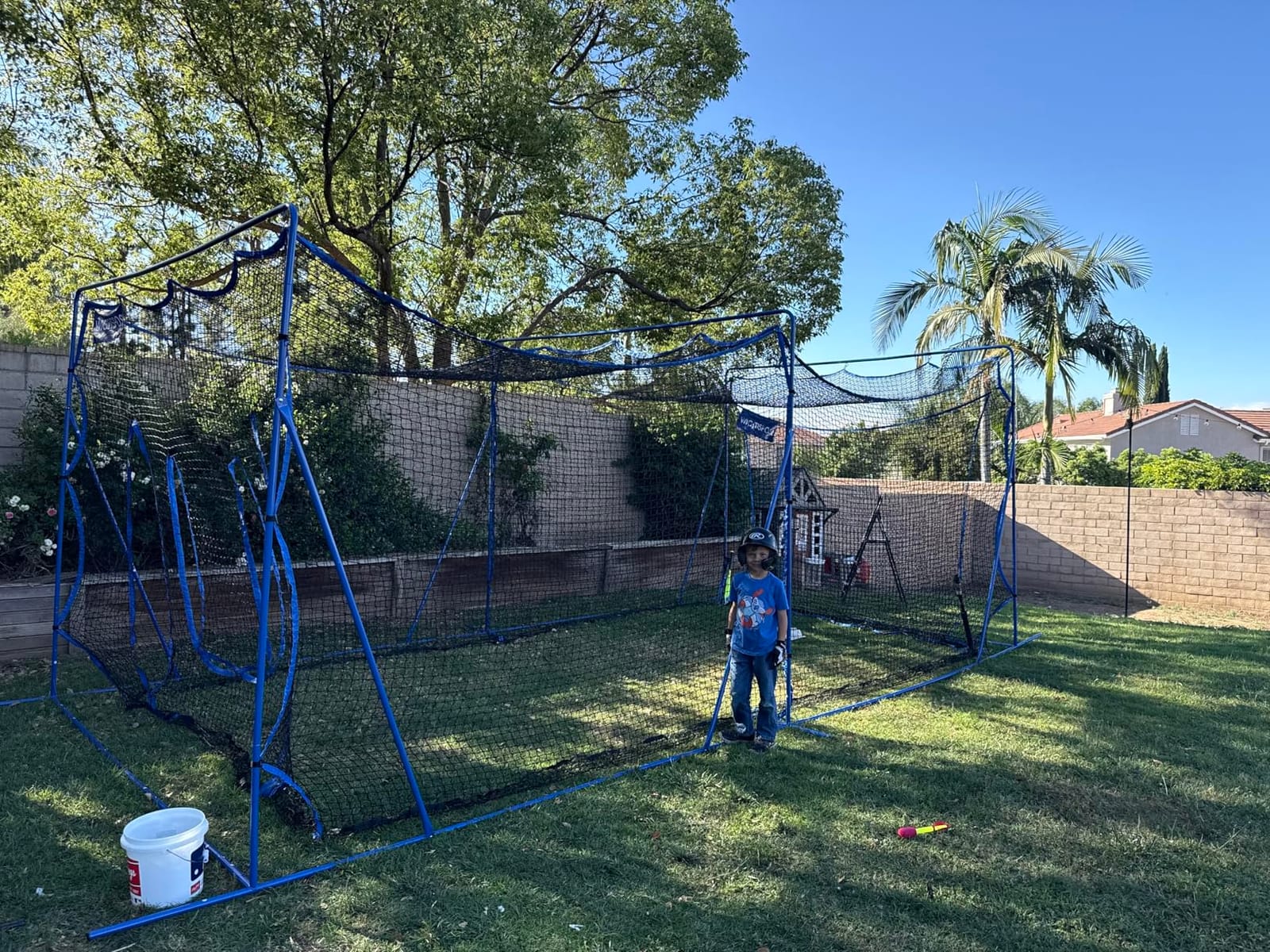
The long-term question is the poles. A few owners report bending and snapping after extended heavy use, and replacement parts availability is unclear. For moderate home use, that’s unlikely to be an issue within the warranty period.
Small Yard Fit
You need only about 22 by 12 feet of space, which fits side yards and compact backlots. The 8-foot height works for most players, though very tall adults may find the ceiling close on follow-throughs.
Hit Count Reality Check
Casual families will never approach the 30,000-hit rating. Daily-use players will, and that’s who the rating matters for. Track your net’s condition seasonally and expect years, not months, from the 7-ply material.
9. MR 24ft Mobile Baseball Batting Cage – Best Wheeled Cage for Teams
MR 24ft Mobile Baseball Batting Cage with Wheels, Portable Hitting Cage
24ft x 12ft x 12ft
45-ply PE net rated 150 MPH
Swivel wheels
Snap-on steel poles
Lifetime warranty
Pros
- Built-in wheels for mobility
- 45-ply net handles 150 MPH hits
- Reinforced anti-rust steel frame
- Lifetime warranty
- 12ft ceiling height
Cons
- Assembly needs 2+ people for 90 minutes
- Inflatable tires need refilling
- Heavy for true portability
- Handle listed but not included
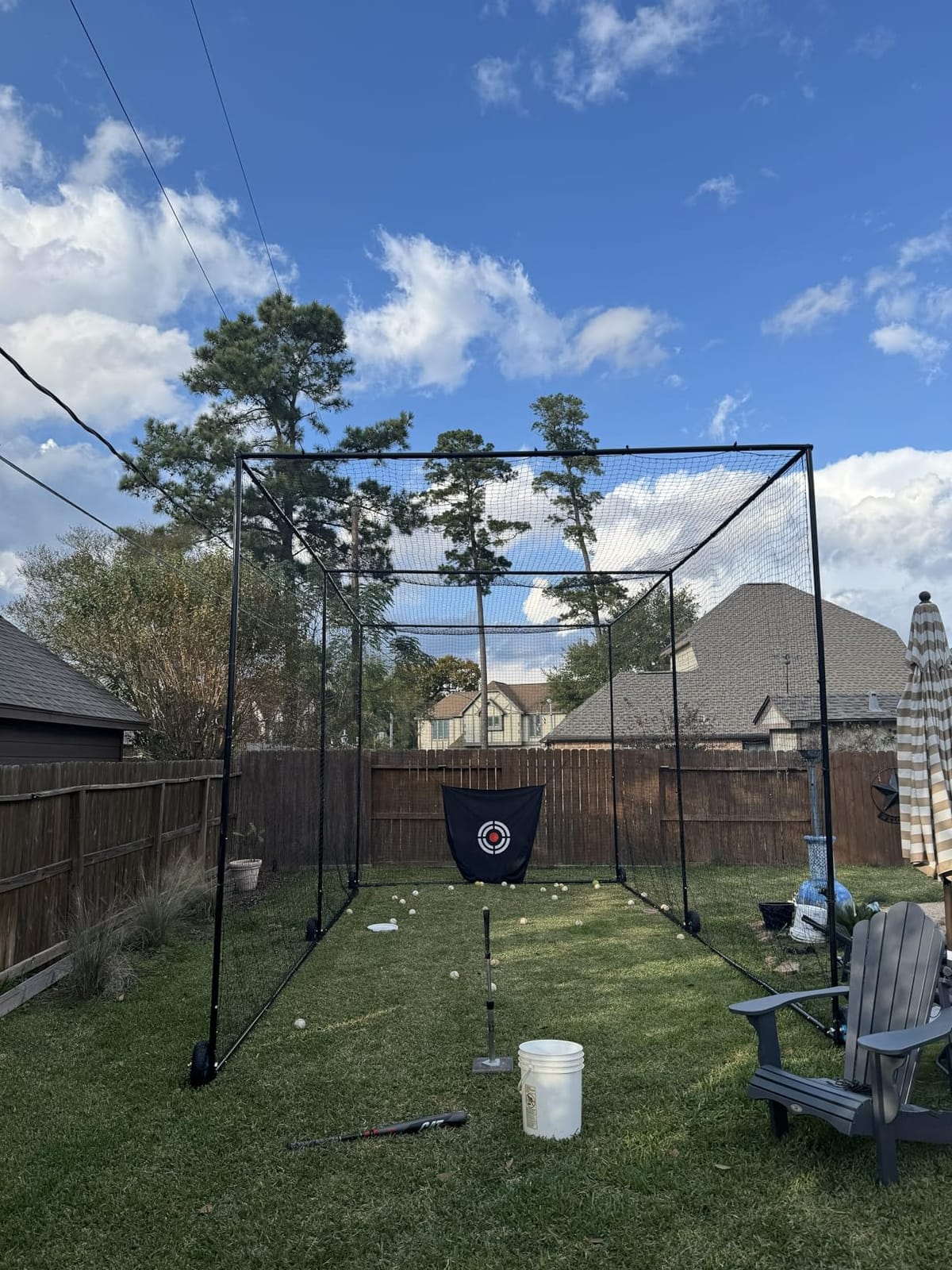
The wheeled design is what sets this cage apart from everything else on our list. Built-in swivel wheels let one person roll a fully assembled, fully enclosed cage across a property, which is exactly what coaches and facility owners need when practice space does double duty.
The build is genuinely professional grade: 45-ply PE netting rated for fastballs up to 150 mph, double-stitched 600D seams, and a reinforced steel frame with anti-rust coating. The 12-foot ceiling is the tallest on our list, giving unrestricted swings for the biggest hitters.
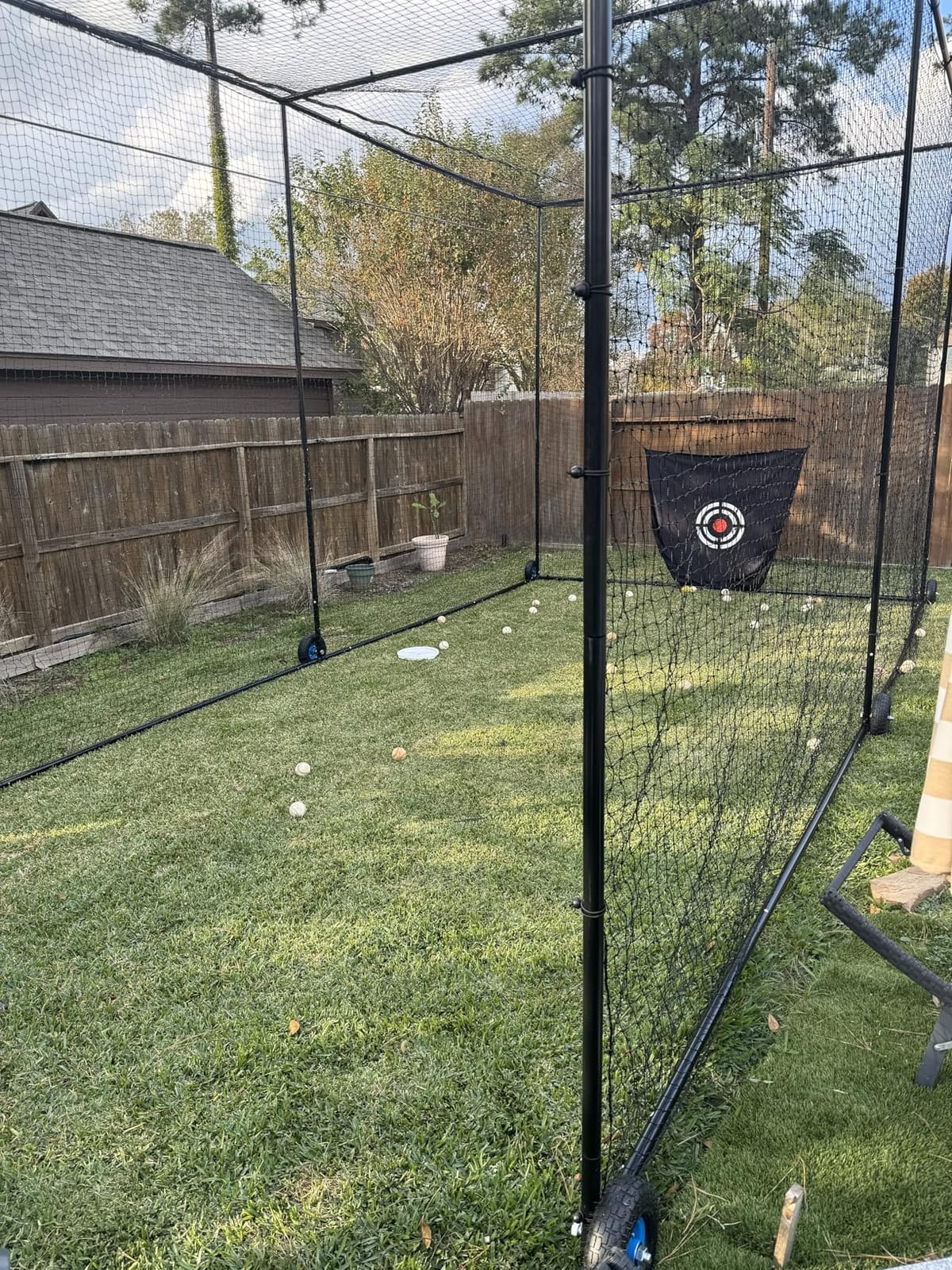
Snap-on poles keep assembly to about 45 to 90 minutes with two people, and the lifetime warranty signals real confidence from the manufacturer. The 4.6-star rating from early owners backs that up.
Be realistic about “mobile” versus “portable.” At 238 pounds, this cage moves around a property easily but does not travel in a minivan. Also note one reviewer caught a listed built-in handle that doesn’t actually exist, a small but honest discrepancy.
Team and Facility Use
This is the cage I’d recommend for travel teams, schools, and shared training spaces. Roll it out for hitting practice, roll it back for field work. The 150 mph net rating means it shrugs off the hardest hitters on any roster.
Maintenance Needs
The inflatable tires occasionally need refilling, so keep a small pump on hand. Otherwise, the anti-rust frame and heavy net need only occasional inspection. It’s built to live outdoors through seasons of use.
10. VEVOR 55FT Batting Cage Net – Best Net-Only DIY Option
VEVOR Baseball Batting Netting,55FT Professional Softball Baseball Batting Hitting Training Net, Practice Portable Pitching Cage Net with Door & Carry Bag, Heavy Duty Enclosed PE Netting(NET ONLY)
55ft x 12ft x 12ft
30-strand knotted PE mesh
Net only, no frame
Hook-and-loop door
18 climbing buckles
Pros
- Excellent value
- Thick 30-strand knotted mesh
- Weatherproof in sun and rain
- Built-in door closure
- Available in 10 to 70ft sizes
Cons
- Net only
- frame not included
- Some reports of holes on arrival
- Requires DIY frame build
- Low balls can escape under bottom edge
This is the path serious DIYers take, and it’s the #1 best seller in the category for a reason. You supply the frame, whether that’s pressure-treated posts, a cable system between trees, or galvanized pipe, and VEVOR supplies a serious 30-strand knotted PE net at a fraction of complete-cage cost.
The 55-foot length supports true game-distance pitching practice, and the netting itself is legitimately thick. Reviewers praise how it holds up to sun and rain, and the hook-and-loop door closure is a thoughtful touch you don’t always get on net-only products.
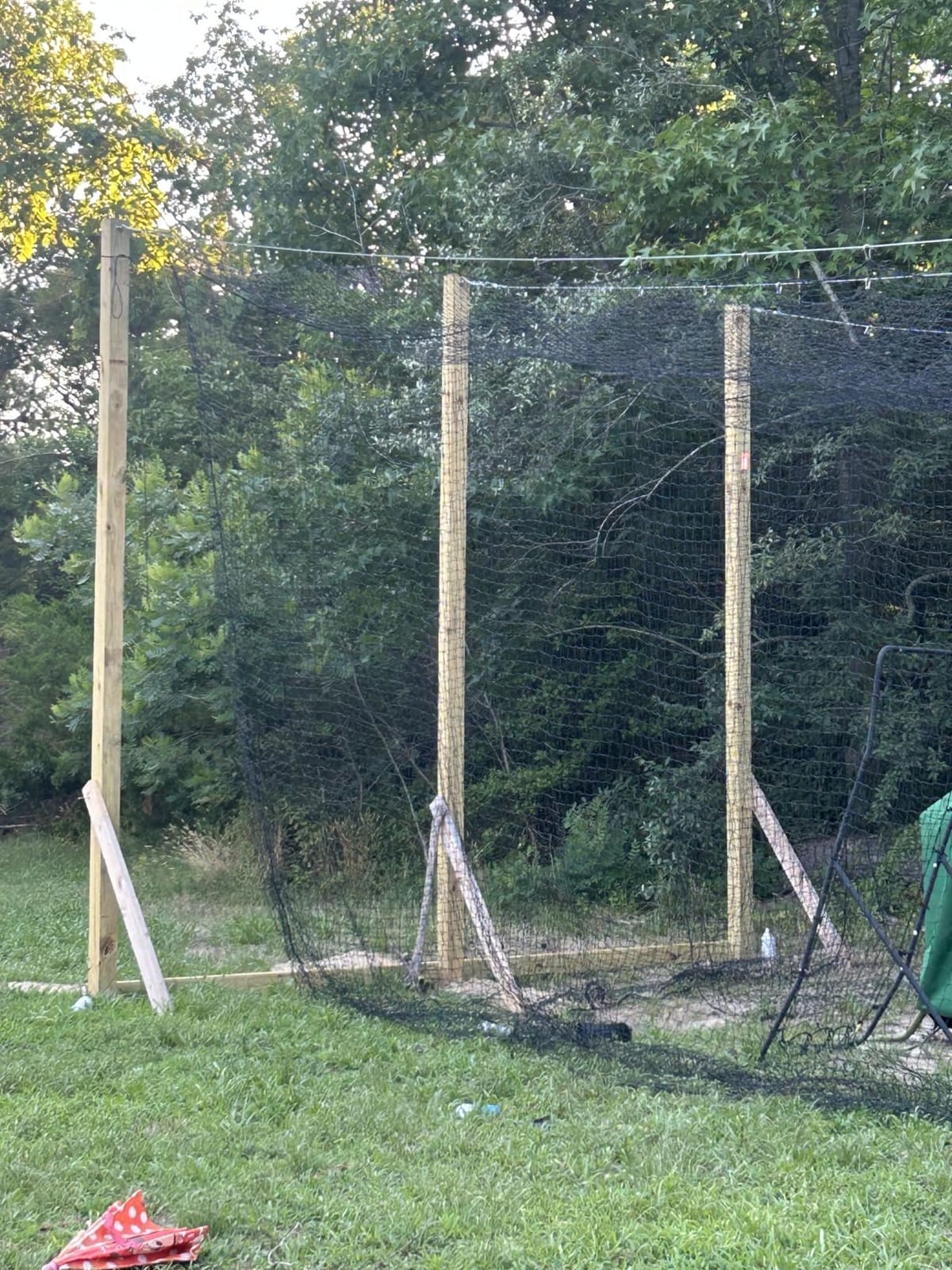
The obvious requirement is that you must build or buy a frame. Forum builders on r/Homeplate frequently discuss exactly this approach, and the consensus matches the specs here: a 55-foot net on a well-built cable or post frame outperforms most kits. Just inspect the net on arrival, as a few buyers reported holes from shipping.
Sizing flexibility is a quiet advantage. The same product line comes in 10, 35, 42, 55, and 70-foot lengths, so you can match your exact space instead of forcing a standard kit size into your yard.
DIY Frame Basics
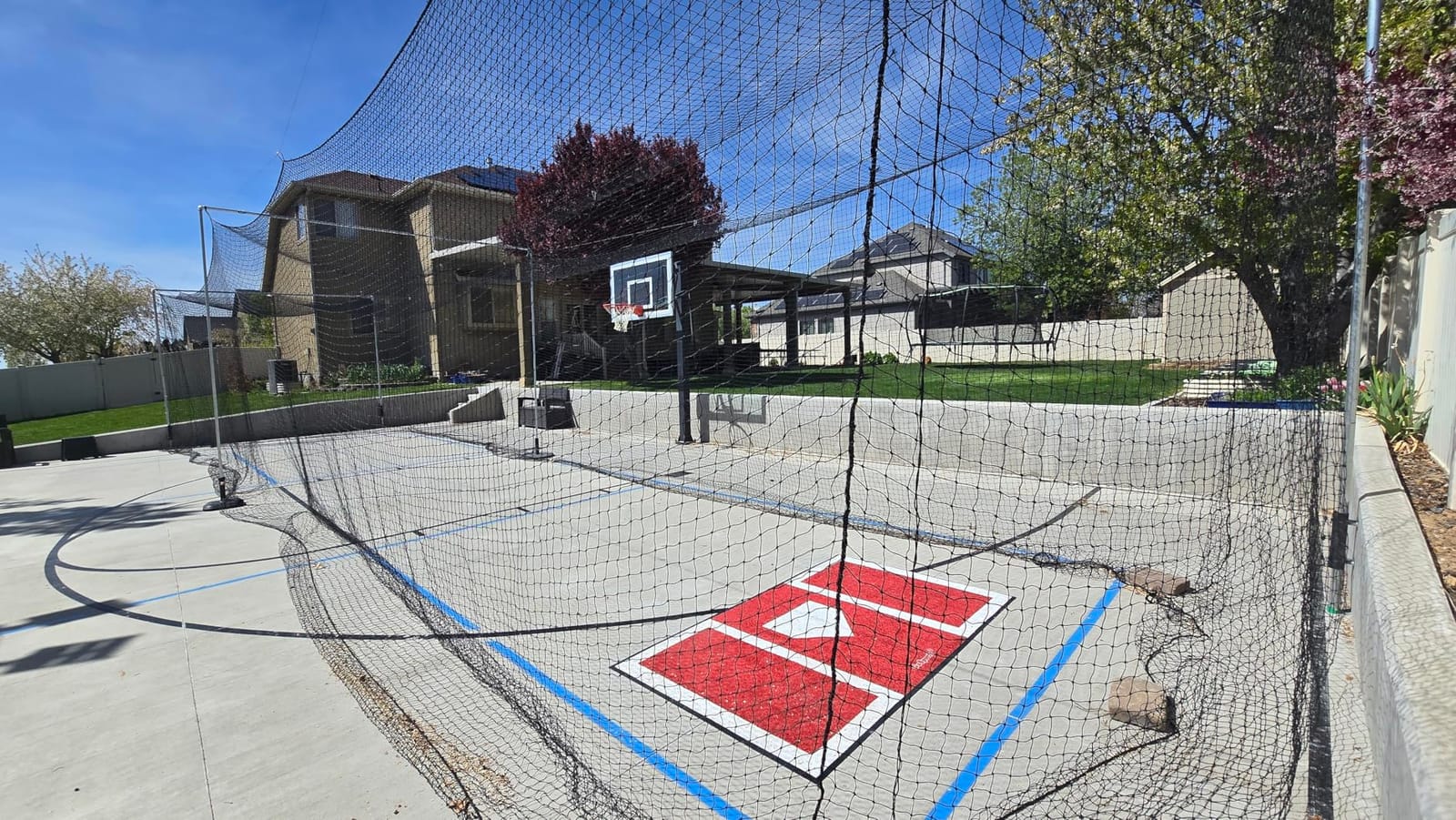
Budget roughly the cost of 6 to 8 posts or two sturdy anchor points plus cable, tensioners, and hardware. Keep the net suspended with slack so it absorbs rather than rebounds hard hits. The 18 included climbing buckles handle attachment.
Cost vs Complete Cages
Even after frame materials, most DIY builds using this net come in under comparable complete cages while producing a sturdier permanent structure. The trade is your labor and a weekend of work.
How to Choose the Best Batting Cage: Buying Guide
Choosing well comes down to five decisions: size, frame material, net quality, portability, and weather demands. Here’s how our team thinks through each one, informed by what real users report after months of use.
Sizing by Age and Use
Sizing is the first question in every forum thread on backyard cages, and the community consensus is clear: 10 feet of width is generally considered sufficient, and 50 to 65 feet of length is ideal when space allows.
In practice, here’s the breakdown our team recommends. Youth players under 10 do fine in a 20 to 22-foot cage for tee work and soft toss. Players 10 to 14 need 30 feet for front toss and machine work at partial distance. Teens and adults benefit from 40 feet or more for realistic pitch distance. Height matters too: 8 feet works for kids, but 10 to 12 feet prevents tall players from clipping the ceiling on follow-through.
One Reddit thread on r/Homeplate settled on a simple rule that matches our testing: buy the longest cage your yard fits, because length is the one dimension you can’t fix later. Width under 10 feet, though, starts to feel cramped fast.
Frame Materials: Fiberglass vs Steel vs Aluminum
Fiberglass poles flex in wind and bounce back, which is why most portable cages use them, but they can snap from direct ball impacts. Steel frames, like the galvanized poles on the EnjoyColor and MR cages, are the durable choice for permanent outdoor placement. Aluminum sits in between: lighter and rust-proof but more bend-prone, as ANYTHING SPORTS reviewers noted.
Match the frame to your use. Occasional family practice and seasonal takedown: fiberglass is fine and saves money. Year-round outdoor installation and daily team use: pay for steel.
Netting Quality and Ply Ratings
Net ply ratings tell you how many strands make up the twine, and higher numbers mean longer life. Budget 3-ply nets suit youth hitters, 7-ply handles teens and high-speed machines, and 45-ply netting is commercial territory rated for 150 mph contact.
UV treatment matters as much as ply if the cage lives outdoors. Sun degrades polyethylene and polyester faster than hits do, which is why weather-treated nets like the VEVOR and Skywalker outlast untreated ones even at similar ply.
Portability: Know the Difference
There’s portable and there’s mobile, and confusing the two causes buyer’s remorse. Truly portable cages like the Apex 22-footer weigh under 40 pounds and pack into a carry bag for the park. Mobile cages like the MR 24-footer move on wheels across a property but never leave it. Freestanding steel cages like the EnjoyColor are essentially permanent once assembled.
Decide before buying: do you need a cage that travels, one that repositions, or one that stays put? The answer changes the right pick completely.
Weather and Anchoring
Wind is the number one killer of batting cages, mentioned in review sections of nearly every product we analyzed. The stock stakes on most budget cages are inadequate, so nearly every experienced owner upgrades to screw-in ground anchors or ratchet straps.
Take cages down before serious storms regardless of anchoring. Several Arikit and ORIENGEAR owners learned this the hard way with collapsed hoops and snapped poles. A 10-minute takedown saves a season of aggravation.
Price Tiers and What to Expect
Under $250 gets you a functional portable cage with fiberglass poles and a 3-ply net, best for youth and casual use. The $250 to $500 range buys larger footprints, better netting, and sturdier frames suitable for teens. Above $500 you’re into steel-framed, weatherproof cages that support daily serious practice, and premium wheeled units for teams.
The other number worth knowing: a single 30-minute session at many commercial facilities runs $30 to $70, based on the prices users quoted in city subreddit threads. A backyard cage pays for itself quickly at that rate, usually within a season for an active player.
DIY vs Pre-Built Kits
No competitor guide we reviewed covers this properly, so here’s the straight comparison based on builder experiences. A DIY build using a net like the VEVOR and your own posts or cable runs cheaper than comparable kits and produces a sturdier permanent structure. The cost is a full weekend of labor, some hardware-store know-how, and no warranty safety net beyond the net itself.
Pre-built kits trade money for time. They go up in an afternoon with hand tools, come with matched components, and include warranties. For most families, a kit is the right call. For handy owners with a permanent spot, DIY wins on stability and total cost.
Frequently Asked Questions
What is the best batting cage for backyard?
The Skywalker Sports 40-foot cage is the best backyard batting cage for most families. It offers full pitching distance, a sturdy collapsible steel frame, indoor and outdoor use, and a 3-year frame warranty. For tighter budgets or smaller yards, the Apex Sports 22-foot portable cage is the top value pick.
How much does a batting cage cost?
Home batting cages cost between roughly $110 and $1,200. Net-only options like the VEVOR 55ft run near the low end, portable fiberglass-pole kits sit in the $180 to $360 range, and steel-framed or wheeled cages like the MR 24ft run $480 to $1,200. Commercial facility cages cost considerably more.
Are batting cages worth the money?
For an active player, yes. Commercial cage sessions commonly cost $30 to $70 per 30 minutes, so a backyard cage typically pays for itself within one or two seasons of regular practice. Owners also cite the convenience of unscheduled reps, tee work, and soft toss without reservations or travel.
What size batting cage do I need?
Youth players under 10 can use a 20 to 22-foot cage, players 10 to 14 do best with 30 feet, and teens and adults should get 40 feet or more for realistic pitching distance. Width of 10 to 13 feet works for most setups, and height should be 8 feet for kids or 10 to 12 feet for taller players.
Can you use a batting cage for softball?
Yes. Every cage in this guide handles both baseball and softball. Softball works at slightly shorter distances, so a 30 to 40-foot cage is plenty. Look for a pitching machine hole or detachable door if you plan to use a machine, which most cages here include.
Do batting cages mess up bats?
Composite bats can be damaged by dimpled machine balls used at commercial facilities, which is why many facilities require composite-safe balls or only allow them in cage rentals. With your own backyard cage using real baseballs or softballs, your bat wears the same as it would in normal practice.
Conclusion
Our top recommendation for the best batting cages in 2026 is the Skywalker Sports 40-footer for most families, the Apex Sports 22-foot cage for budget portability, and the MR 24ft wheeled cage for teams. Pick the size that fits your yard, match the frame to your climate and usage, upgrade the stakes on day one, and you’ll have reps in your backyard within a weekend.