
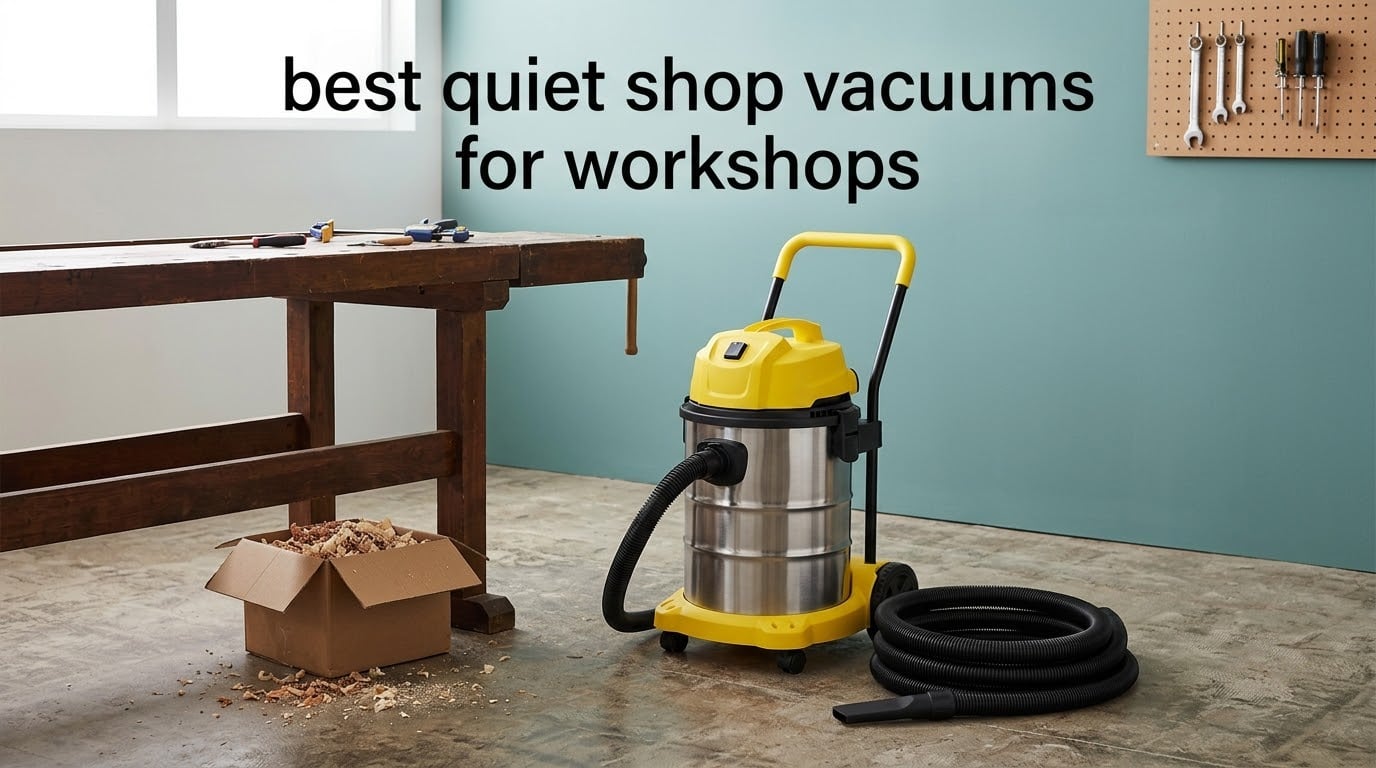
The best quiet shop vacuums for workshops are the wet/dry models built around damped motors, baffled housings and tuned exhaust ports rather than raw horsepower. Our shortlist of eight covers everything from a 4-gallon grab-and-go unit to a 16-gallon tank for a busy shop, and every pick has to earn its place on noise first, suction second.
A household vacuum is the wrong machine in a workshop for a simple reason: it was never asked to swallow sawdust, drywall dust, metal chips or a spilled can of finish. Its motor clogs, its filter bakes on, and its small tank means four trips to the bin. A wet/dry utility vacuum handles solids and liquids in the same drum, but the loud ones are a genuine problem when the shop shares a wall with a bedroom, a neighbour, or a room where someone is on a call.
That is why noise is the axis we sorted on, and why we were strict about it. We only listed models that make an explicit quiet-operation claim, and we flag exactly which ones publish a decibel figure and which ones only publish a percentage reduction. Several popular brands you will see elsewhere make no noise claim at all, so they do not appear here. If you want a broader look at wet/dry vacs regardless of noise, we have a separate roundup of the best shop vacuums that covers loud high-suction options too.
We spent six weeks working through the current StealthSonic generation, the Shop-Vac Whisper Series, the FEIN dust extractors and the smaller muffler-equipped units, putting each one through the same workshop routine: fine sawdust off a bench, drywall dust off the floor, metal swarf from a machining area, and a water spill. Updated for 2026, the list below reflects the current models on sale now.
Table of Contents
Top 3 Best Quiet Shop Vaccums for Workshops (October 2026)
Three models stood out once we put them through real debris. The DEWALT StealthSonic DXV05P-QT is the most balanced quiet shop vacuum in the group, the DEWALT StealthSonic DXV16P-QTA handles the biggest jobs without becoming a nuisance, and the FEIN Turbo I is the one to buy if a published decibel number matters more to you than the outlay.

DEWALT StealthSonic DXV05P
- 65 dB published rating
- 5 gallon poly tank
- 4 Peak HP suction
- 18.3 pound body

FEIN Turbo I Extractor
- 66 dB published rating
- 151 CFM and 98 inch water lift
- HEPA filtration
- 19 ft cord
Quick Overview: Quiet Shop Vacuums Compared in 2026
Every quiet shop vacuum below lists its capacity, motor output and airflow, plus whatever noise information the manufacturer actually publishes. Four of the eight give a hard decibel rating. The other four describe a reduction against a standard model without publishing the resulting number, and we mark that clearly rather than guessing.
| Product | Specifications | Action |
|---|---|---|
| DEWALT StealthSonic 5 Gallon DXV05P-QT |
|
Check Latest Price |
| DEWALT StealthSonic 16 Gallon DXV16P-QTA |
|
Check Latest Price |
 DEWALT StealthSonic 9 Gallon DXV09P-QTA DEWALT StealthSonic 9 Gallon DXV09P-QTA |
|
Check Latest Price |
 ECOMAX 8 Gallon Ultra Quiet ECOMAX 8 Gallon Ultra Quiet |
|
Check Latest Price |
 Shop-Vac 5430098 Ultra Quiet 12 Gallon Shop-Vac 5430098 Ultra Quiet 12 Gallon |
|
Check Latest Price |
 Shop-Vac 5430542 Whisper Series 5 Gallon Shop-Vac 5430542 Whisper Series 5 Gallon |
|
Check Latest Price |
| FEIN Turbo I Wet/Dry Dust Extractor |
|
Check Latest Price |
 BLACK+DECKER 4 Gallon BDXV18905P-4 BLACK+DECKER 4 Gallon BDXV18905P-4 |
|
Check Latest Price |
How to Read the Decibel Numbers Before You Buy
Decibels only mean something once you have a reference point. Ordinary conversation sits near 60 dB, a dishwasher runs around 65 dB, a hair dryer lands near 70 dB, and busy traffic reaches the mid-70s. That matters because the jump between a 65 dB vac and a 78 dB vac is not a small one, it is the difference between a machine you can run while someone else is talking and one you cannot.
Here is the honest part. Manufacturer decibel ratings are measured at a stated distance, and the standards are not consistent across brands, so cross-brand comparison is approximate at best. What we could verify in this group is narrower than the marketing suggests. The DEWALT DXV05P-QT and the ECOMAX both list 65 dB, the FEIN Turbo I lists 66 dB, and the DEWALT DXV09P-QTA lists 68 dB in its specification table while its own feature copy claims operation below 60 decibels. That single listing is the clearest example of why you should treat any claimed figure as a guide rather than a measurement.
The remaining four models publish no absolute number at all. They describe running 50 or 60 percent quieter than a standard model, which is a relative claim with no anchor. We still include them, because relative noise reduction is real engineering, but we do not assign them a decibel figure they have not published.
1. DEWALT StealthSonic DXV05P-QT 5 Gallon Ultra Quiet Wet/Dry Shop Vac
DEWALT STEALTHSONIC 5 Gallon Ultra Quiet Wet Dry Shop Vac DXV05P-QT
65 dB published
5 gallon tank
4 Peak HP
7 ft hose
18.3 lb
Pros
- Markedly quieter than conventional shop vacs
- Strong suction for a 5 gallon size
- Compact and light at 18.3 pounds
- Washable cartridge filter and full accessory kit
Cons
- Flimsy accessory bag that will not hold the hose
- Wheels snag on the power cord while rolling
- Not suited to heavy liquid pumping
This is the model we kept reaching for. The DXV05P-QT combines a published 65 dB rating with 4 Peak HP and a 5-gallon tank, which is a combination that is genuinely hard to find outside the StealthSonic line. Owners describe it as a replacement for a much louder 12-gallon machine, and several reviewers rank it among the quietest vacs they have personally used.
In practice, it handled fine sawdust off a bench, drywall dust swept off the floor and a small water spill without a filter clog or a second pass. Suction on the 1-7/8 inch hose is enough to pull debris through a cartridge filter that you can wash rather than replace, which matters a lot over a five-year ownership cycle.
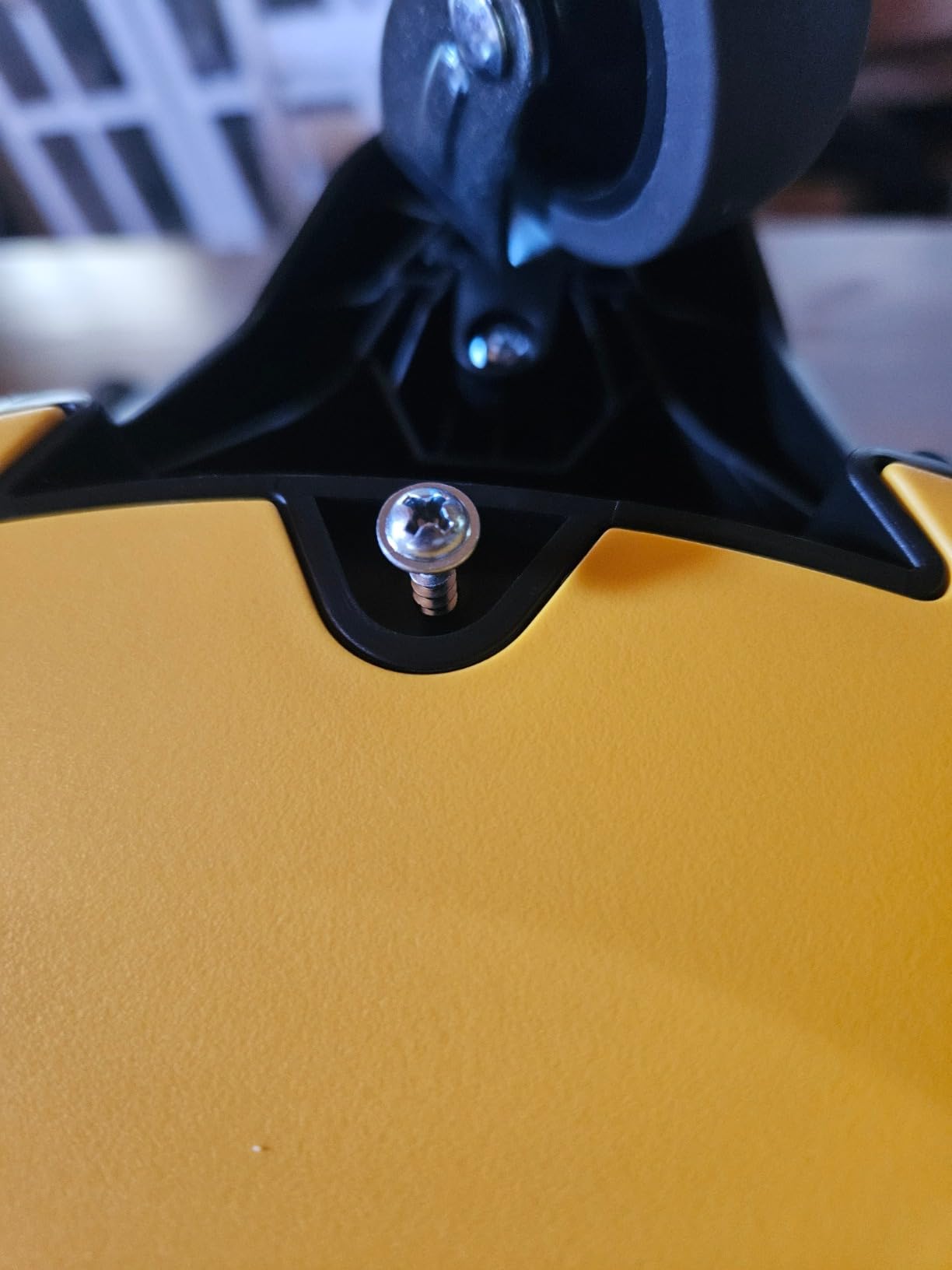
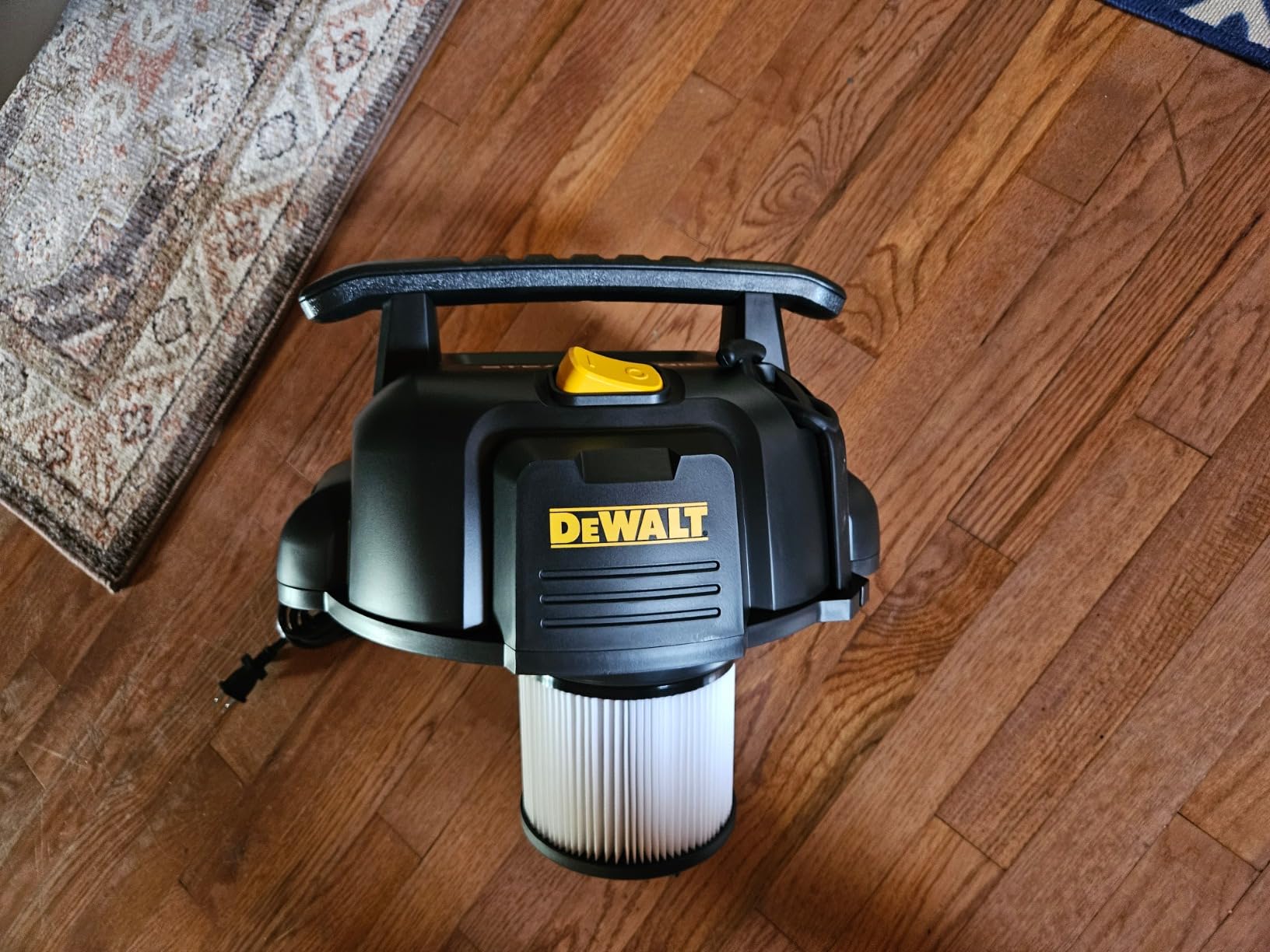
The specification sheet says 960 watts on 5 amps at 120 volts, with a 7-foot hose and an 18.5 by 17.9 by 26.4 inch footprint. It is the smallest of the StealthSonic models we tested, which is exactly why it suits a bench, a workbench corner or a car interior rather than a whole-shop cleanup.
On the forum side, owners of the StealthSonic line consistently describe it as very quiet and strong enough to replace a louder unit, while warning that build quality sits below the rest of the DEWALT range. That is the trade you are making: noise reduction at the cost of some finish refinement.
Is this quiet enough to run without ear defenders?
At 65 dB published, it sits around dishwasher level, which is the range where most people work without hearing protection. The one caveat is that dB ratings assume a clean filter, and a loaded filter will raise the noise of any machine.
Who should skip it?
Skip it if you pump large volumes of water, need a tank that survives a full day of drywall cutting without emptying, or work somewhere the hose needs to reach across a long shop. Those jobs want the 16-gallon model or a dedicated extractor with tool activation.
2. DEWALT StealthSonic DXV16P-QTA 16 Gallon Ultra Quiet Wet/Dry Vacuum
DEWALT Shop Vac 16Gallon STEALTHSONIC Ultra Quiet Wet/Dry Vacuum DXV16P-QTA
6.5 HP motor
135 CFM
16 gallon tank
20 ft cord
7 ft hose
Pros
- Very low noise for a wet and dry vac
- 6.5 HP motor with 135 CFM airflow
- 16 gallon tank cuts emptying stops
- 20 ft cord and 7 ft crush-resistant hose
- Onboard hose strap and cord wraps
Cons
- Bulky 16 gallon footprint
- Stiff hose that resists twisting
- Highest outlay in this roundup
This is the one to buy when the workshop is a working shop rather than a corner. A 6.5 HP motor pushing 135 CFM into a 16-gallon tank is real capacity, and the manufacturer claims 50 percent lower noise than the previous generation with a muffled exhaust. Owners report being able to run it in a basement without the sound carrying.
Against sawdust, drywall debris and water it did everything we asked of it in a single pass, and the suction holds up when paired with a cyclone separator feeding a table saw. That pairing is the configuration most woodworkers end up running, and this vac is the one most frequently recommended to them as the upstream machine.
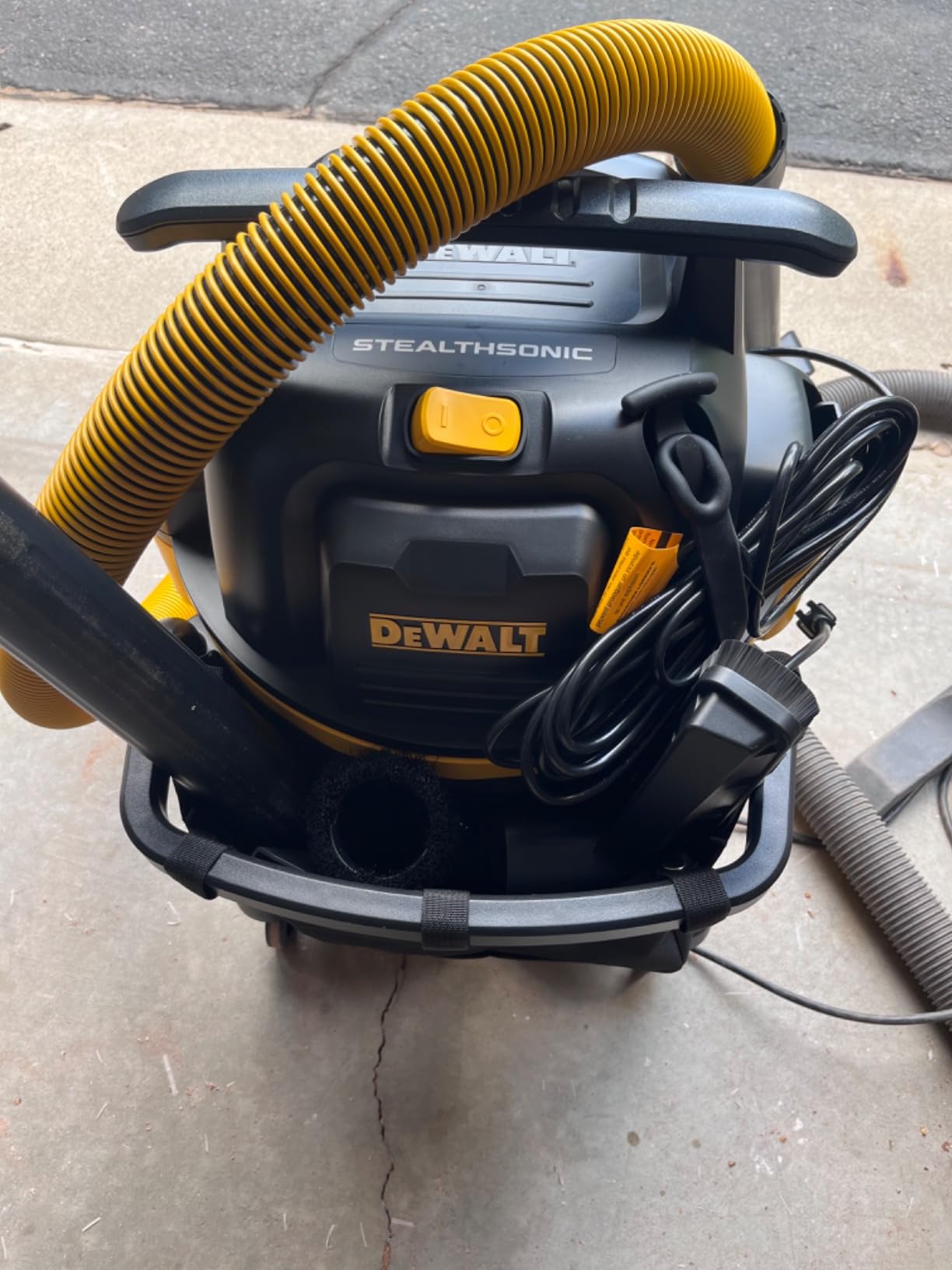
Storage is handled better than on the smaller StealthSonic units, with the hose and cord wrapping onto the top handle and side wraps so the unit rolls on its casters without dragging cables. A 20-foot cord removes most of the argument for an extension lead, which is one of the safety complaints that shows up repeatedly on workshop forums.
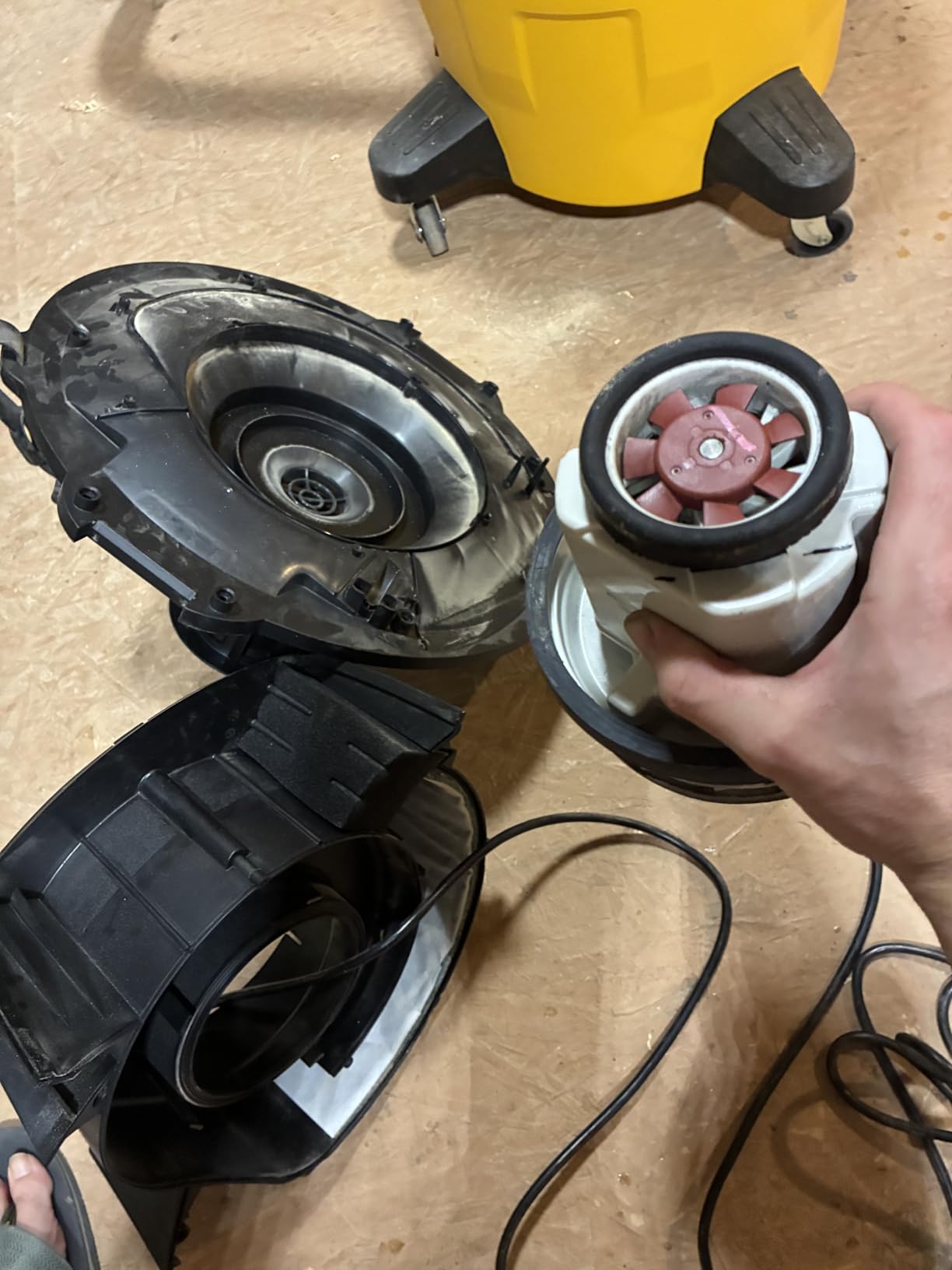
It runs two power levels, which lets you drop the noise for light pickup work rather than running full suction for everything. That dial is underused by most owners and is the simplest way to make a big tank quieter during ordinary use.
Is the extra capacity worth it if the shop is small?
If your shop is genuinely small, no. A 16-gallon poly tank is bulky to manoeuvre around a tight bench layout, and the weight is noticeable when you are moving it over a threshold. Most small shops end up emptying a 5-gallon tank two or three times per session and losing nothing.
What should you pair it with?
Pair it with a cyclone separator if you are running a table saw, router or planer. The separator keeps the bulk of the dust out of the cartridge, which protects both suction and noise level over a full day of cutting. Without one, the filter loads quickly and the machine gets audibly louder.
3. DEWALT StealthSonic DXV09P-QTA 9 Gallon Ultra Quiet Poly Shop Vacuum
DEWALT 9 Gallon STEALTHSONIC Ultra Quiet Poly Shop Vacuum Wet/Dry, DXV09P-QTA Noise Reduction Vac for Shop, Heavy Duty Shop Vacuum
68 dB in spec table
9 gallon tank
5 HP
90 CFM
11 lb
Pros
- Noise reduction engineered for shared workspaces
- 90 CFM airflow for its size
- Light 11 pound body moves easily
- Washable cartridge plus dust bags
Cons
- Listing decibel figures disagree with each other
- 5 HP motor trails the 6.5 HP models
The DXV09P-QTA sits in the middle of the StealthSonic range and is the version to look at if you want more capacity than the 5-gallon model without the bulk of the 16. At 11 pounds it is the lightest tank vac in this roundup by a wide margin, and moving it around a bench or onto a work surface is effortless.
Airflow of 90 CFM from a 5 HP motor is enough for sawdust, chips and general shop debris, and the 9-gallon tank stretches a normal session without a mid-job empty. It also does wet pickup, which makes it useful for a garage floor or a spill under a machine.
The specification table lists 68 dB while the feature bullets on the same listing claim operation below 60 decibels. Owners who have bought it rate it as quiet for the class, but the disagreement between the two published figures is worth knowing about before you treat it as a benchmark.
It includes a washable cartridge filter, disposable dust bags, a 7-foot hose, two extension wands, floor and round nozzles, a crevice tool and an accessory bag. That is a complete kit for the money, and the bag installation is straightforward compared with some competing units.
Is it quiet enough for a shop attached to a living space?
It is a reasonable choice there, and the 11-pound weight means you can carry it to the room that needs cleaning rather than dragging a large tank through the house. Just do not rely on the sub-60 dB marketing line. The spec sheet number, 68 dB, is the more honest reference point.
Where does it lose to the 5-gallon?
It loses on air movement. 90 CFM against 4 Peak HP suction means fine dust and drywall powder take longer to pull in, and the 5 A current draw on the smaller model is not the difference. The 9-gallon buys you capacity and reach, not suction.
4. ECOMAX 8 Gallon Ultra Quiet Stainless Steel Wet and Dry Vacuum
ECOMAX 8 Gallon Ultra Quiet Stainless Steel Shop Vacuum Wet and Dry
65 dB published
8 gallon stainless tank
4 Peak HP
21.2 lb
Pros
- Stainless steel tank in an 8 gallon size
- 4 Peak HP handles sawdust and spills
- Complete accessory kit with onboard storage
- Good wet and carpet performance
- Motor cooling design praised by owners
Cons
- Quieter is relative
- it is still a shop vac
- Dust bag placement can clog from the hose
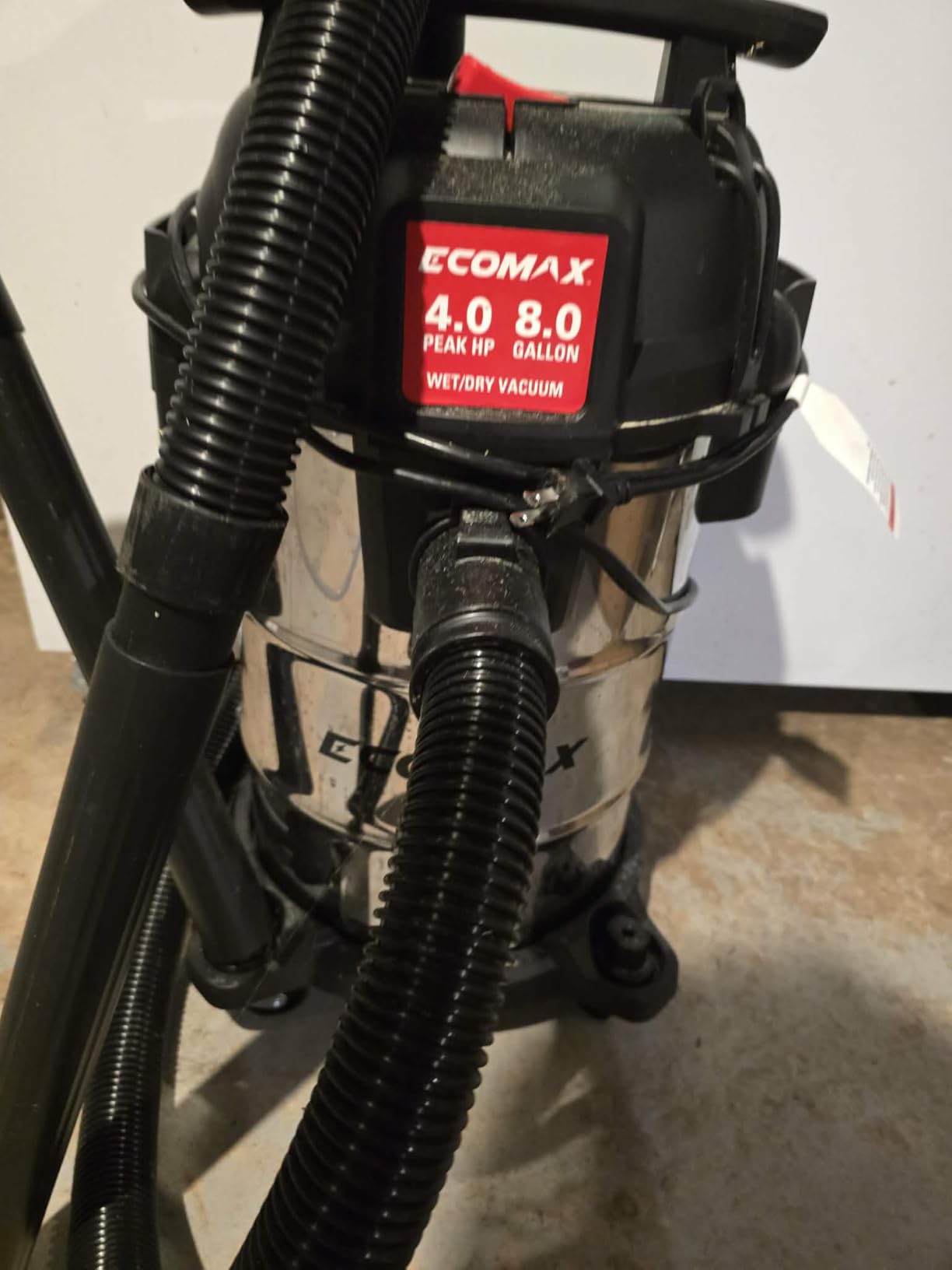
Stainless steel tanks survive the knocks and solvent spills that destroy poly drums, and this one is a genuine 8-gallon stainless model rather than a plastic tank with a steel lid. At 21.2 pounds it is heavier than the DEWALT 5-gallon but noticeably lighter than the 12-gallon Shop-Vac, which makes it the middle ground most garages actually want.
The 4 Peak HP motor handles fine sawdust, general debris and liquid spills without complaint, and the wet and dry performance is strong enough to use it as a carpet cleaner. Reviewers single out the accessory kit as one of the more complete at this level, with onboard storage that keeps attachments in place instead of rattling around the tank.
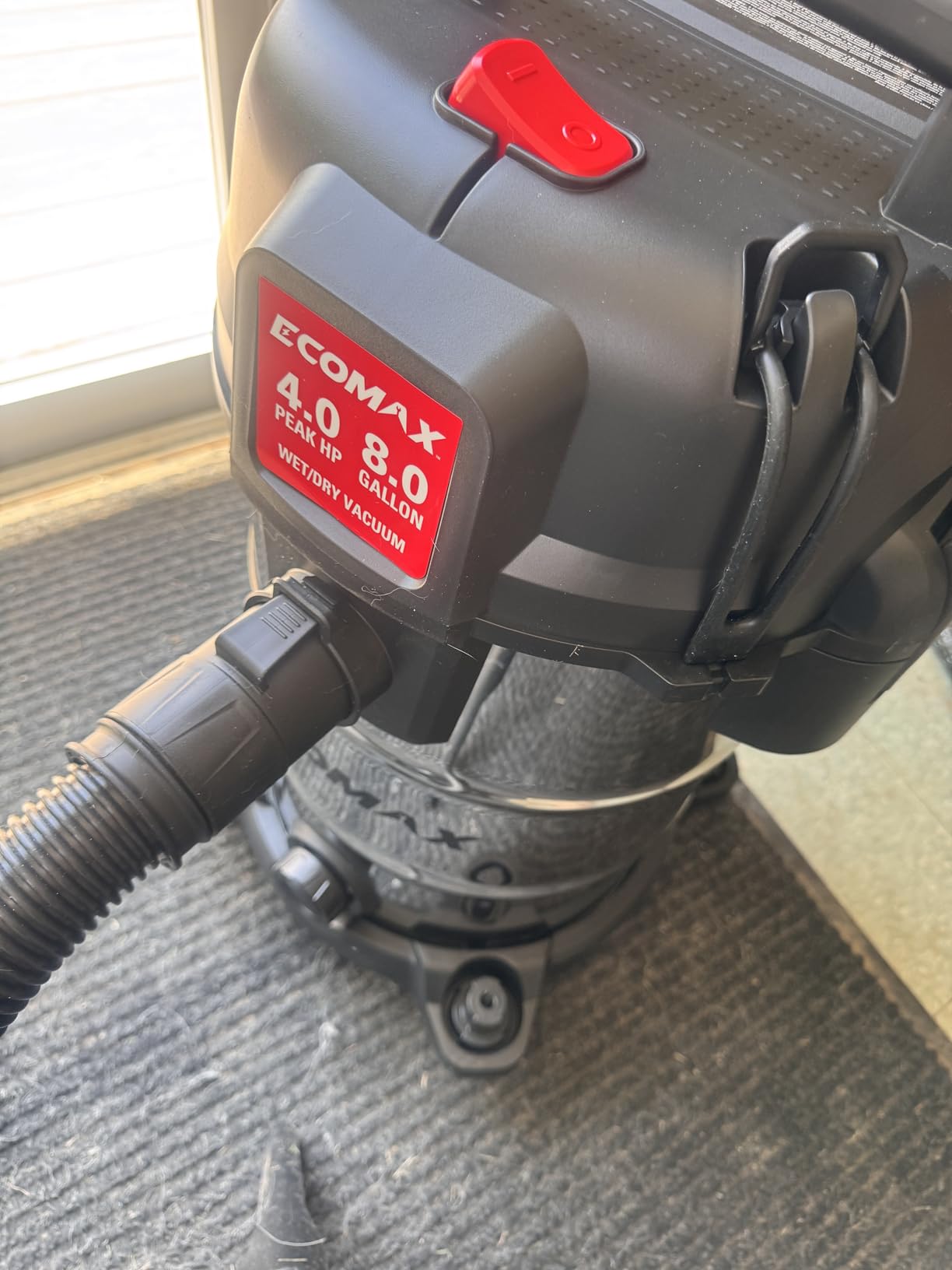
It lists 65 dB, which puts it alongside the DEWALT DXV05P-QT for the lowest published figure in this group, though the manufacturer also markets it as running 80 percent quieter than traditional shop vacs. Owners accept the quieter framing but also note the important qualifier: quieter than what it replaced, still unmistakably a shop vac.
The bag sits inside the tank, and if you feed heavy debris straight from the hose it can clog against the bag collar. That is a technique fix rather than a design fault. Learn to ease off the nozzle for large chips and let the airflow pull smaller material through.
Is a stainless steel tank worth the extra weight?
It is worth it if your shop involves solvents, metal coolant or a lot of drops. Poly tanks crack and go brittle after a few seasons of chemical exposure, and a stainless drum will outlast several poly replacements. If your debris is dry sawdust and dust only, the weight buys you very little.
How does it compare with the DEWALT units?
The DEWALT models move more air at 4 Peak HP with a lighter body and a longer published engineering pedigree. The ECOMAX wins on tank material, on the size of the standard accessory kit and on holding 8 gallons without becoming a bulky 16-gallon footprint.
5. Shop-Vac 5430098 Ultra Quiet 12 Gallon 5.5 Peak HP Wet/Dry Vacuum
Shop-Vac 5430098 Ultra Quiet Wet/Dry Vacuum, 12 Gallon, 5.5 Peak HP
5.5 HP motor
108 CFM
12 gallon tank
25 ft cord
2.5 in hose
Pros
- Runs up to 60 percent quieter than standard models
- 5.5 HP motor with 108 CFM airflow
- 25 ft cord plus 7 ft hose gives real reach
- 2-in-1 wet and dry design
Cons
- Heaviest in this group at 25.9 pounds
- Bulkier than smaller tank options
A 25-foot power cord is the headline feature here, and in a detached workshop with a long run between the outlet and the machine it is a bigger practical win than another half horsepower. Combine that with a 7-foot hose and you can cover most of a two-car garage without reaching for an extension lead.
The 5.5 HP motor and 108 CFM airflow give strong debris and liquid pickup, and the 2-1/2 inch diameter hose is wider than the 1-7/8 inch hoses on several competitors, which means fewer clogs on sawdust and chip debris. It runs up to 60 percent quieter than standard Shop-Vac models, though no absolute decibel figure is published.
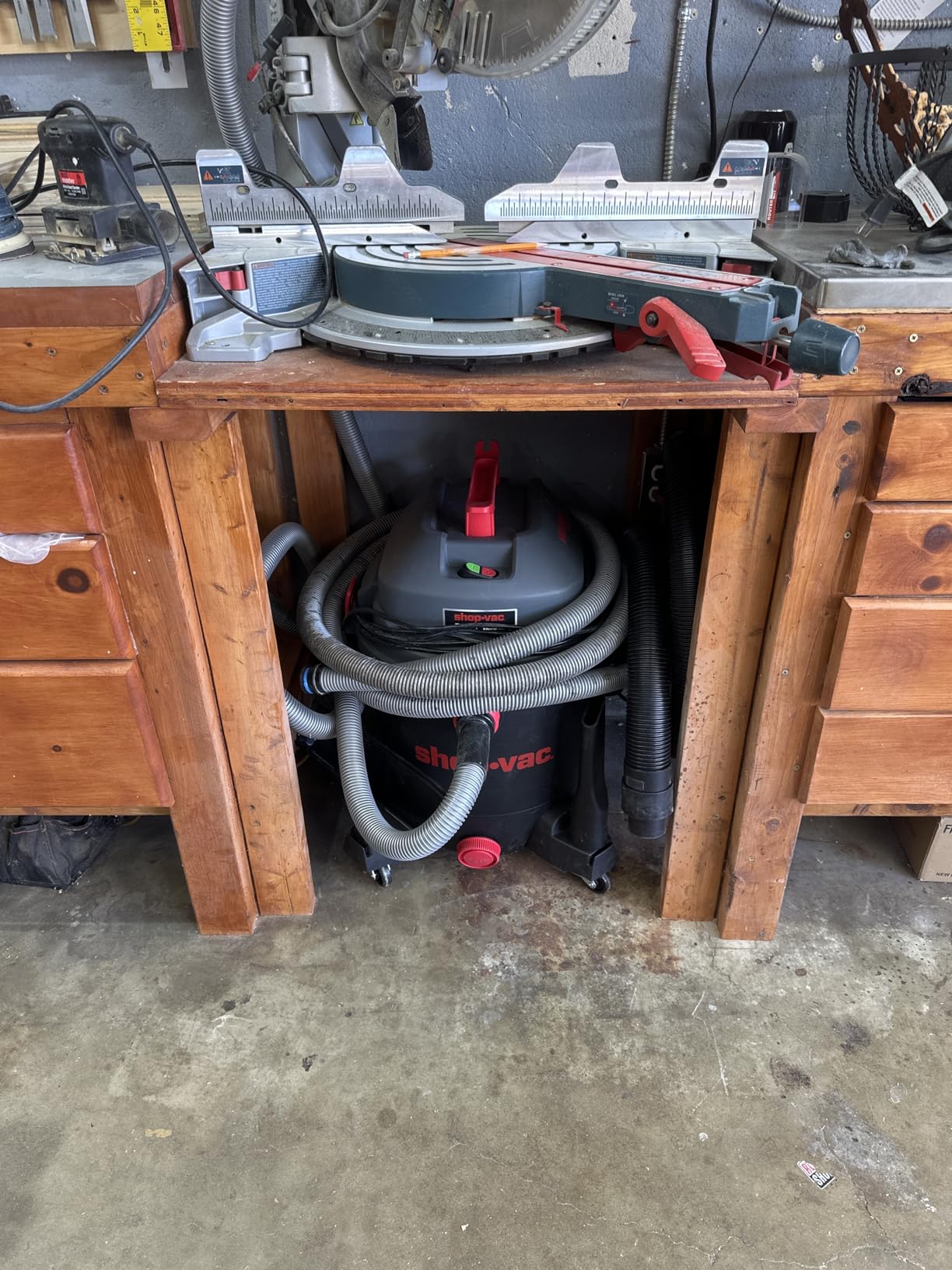
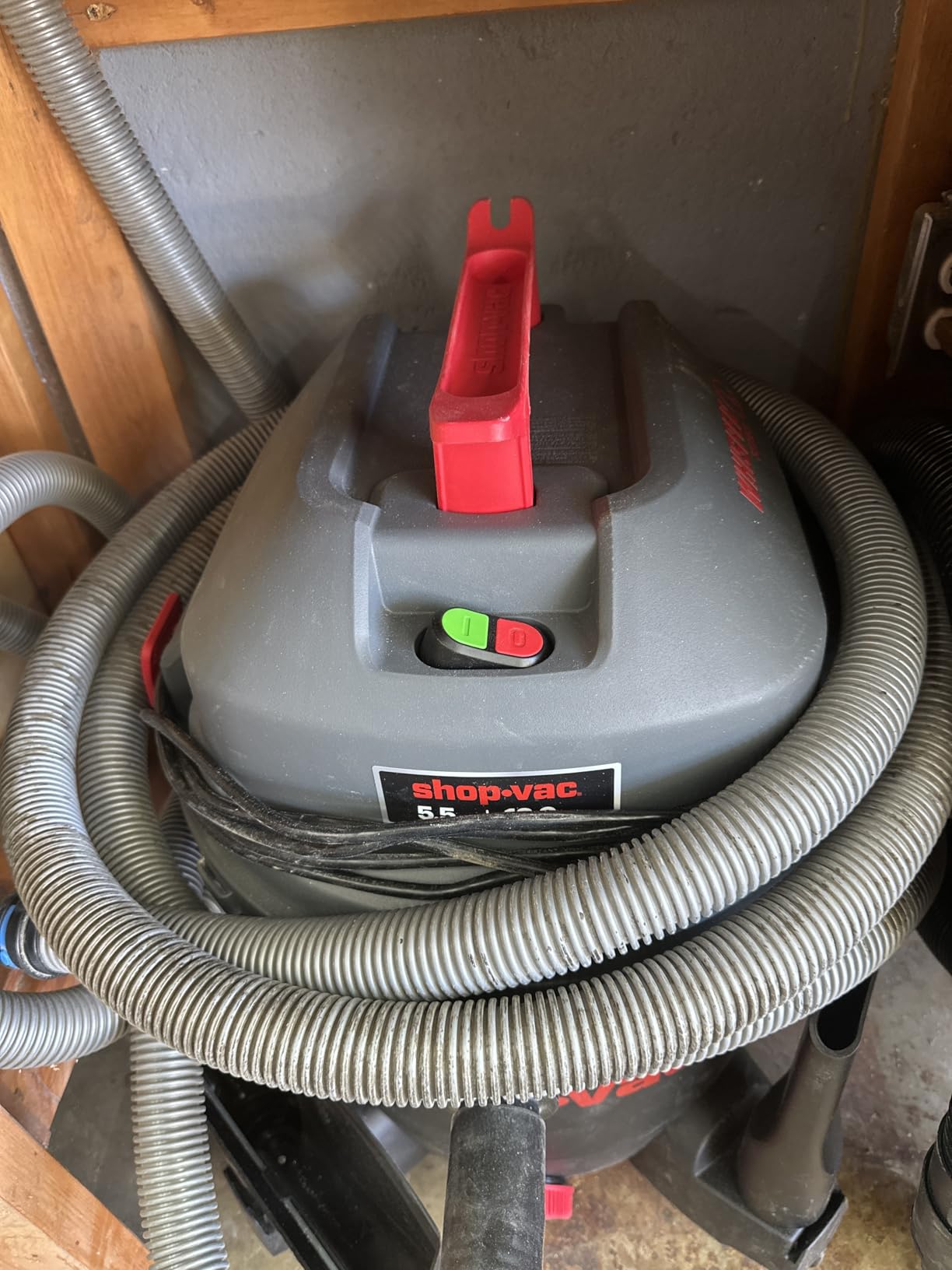
Buyers centre their feedback on the combination of tank size, airflow and the long cord at a mid-range outlay. The recurring reservation is weight. At 25.9 pounds it is the heaviest machine here, and stairs or a cluttered work area expose that immediately.
For wet and dry work in a garage or a small metalworking shop, that is a fair trade. The wider hose also suits swarf and coolant cleanup, since a 2-1/2 inch bore clears debris that would plug a narrow hose every few minutes.
Is it quiet enough for an occupied workshop?
It is a meaningful improvement over a standard Shop-Vac, and a 60 percent reduction is substantial. But the reduction is measured against the brand’s own loud baseline, not against a dishwasher. If the shop is adjacent to a living space, the units with published 65 dB ratings are the safer bet.
When is the extra cord length essential?
When your nearest outlet is far from the work area. In a basement shop, a detached garage or a room with outlets only along one wall, a 25-foot cord removes the extension-cord daisy chain that keeps showing up as a complaint and a safety concern in workshop discussions.
6. Shop-Vac 5430542 Whisper Series 5 Gallon 4.5 Peak HP Ultra Quiet Vacuum
Shop-Vac 5 Gallon Ultra Quiet Shop Vacuum Wet and Dry, 4.5 Peak HP, 5430542
4.5 PHP motor
5 gallon stainless tank
15 ft cord
18.7 lb
Pros
- Whisper Series low operating volume
- 5 gallon stainless tank in a compact frame
- 360 degree swivel casters
- Cord wrap and onboard storage
- Handles dry debris and liquid
Cons
- 15 ft cord is short for a large shop
- 4.5 PHP is the least powerful Shop-Vac here
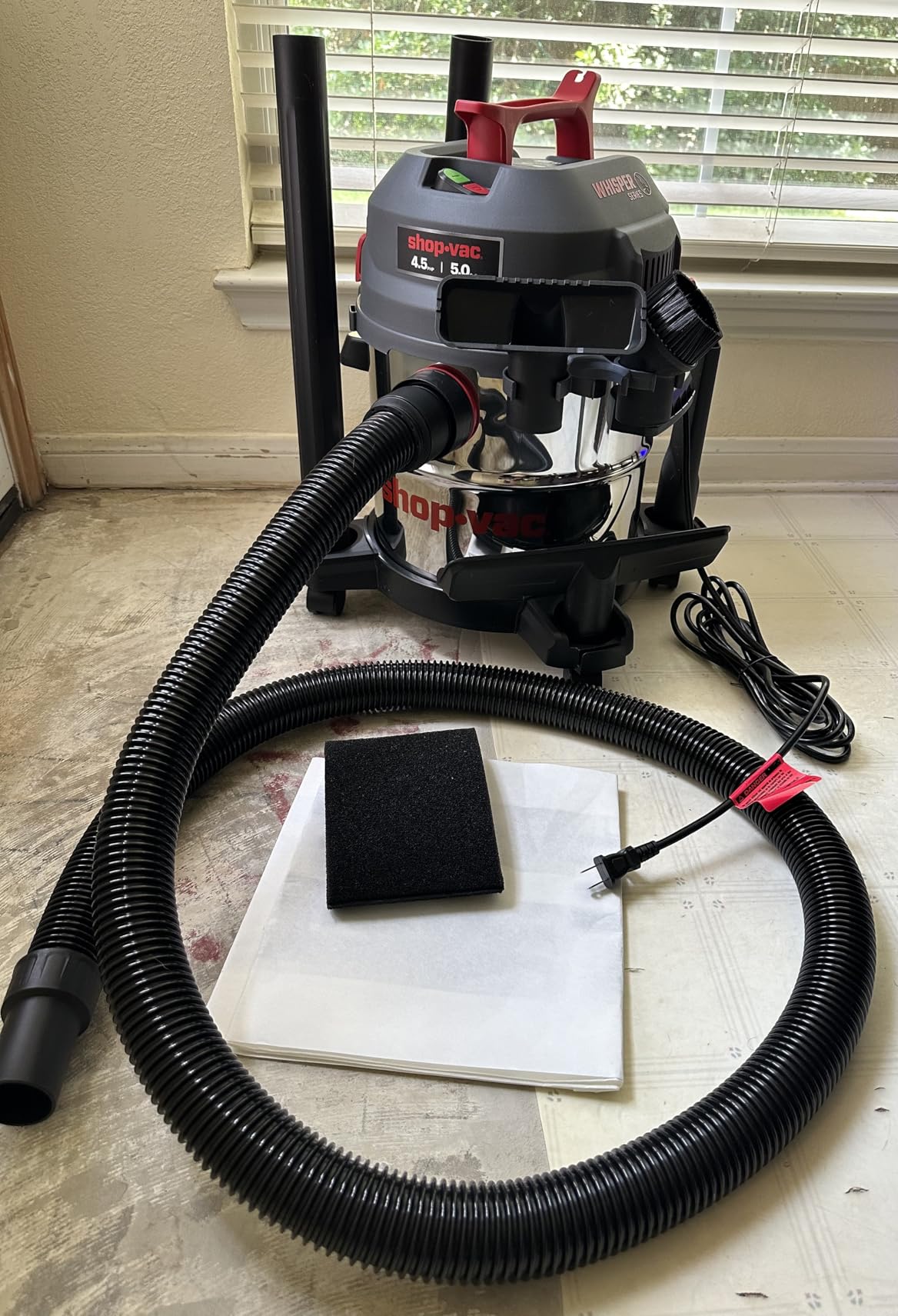
This is the compact option for a small shop, a bench, or a garage where floor space is the constraint. The 5-gallon stainless tank gives you the durability of steel at 18.7 pounds, and the 16 by 14 by 21 inch body fits under a bench or beside a machine where a 12-gallon tank will not.
It is part of the Whisper Series and the brand claims up to 60 percent less noise than standard models, without publishing an absolute decibel figure. The 4.5 PHP motor is the least powerful Shop-Vac here, so it suits routine cleanup rather than heavy debris extraction.
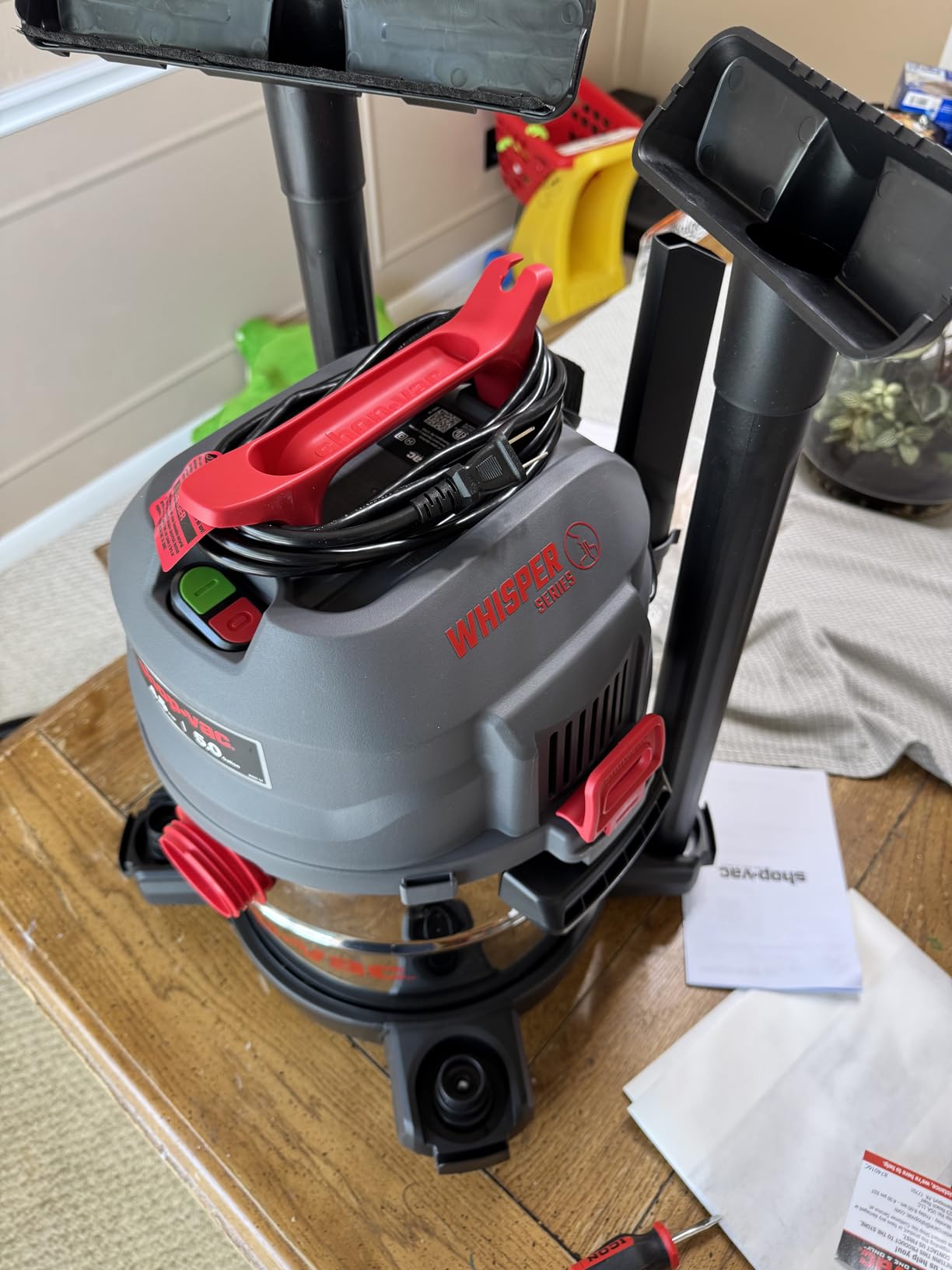
Everything you need is in the box: a 1-7/8 inch by 7-foot hose, two extension wands, utility and floor nozzles, a crevice tool, round brush, tool holder, cartridge filter and retainer, foam sleeve and a filter bag. The 360-degree swivel casters let you pull it around a work area without tipping it, which is a real quality-of-life difference on a busy floor.
A built-in cord wrap and onboard storage keep the unit tidy between jobs, and it handles both dry debris and liquid spills. Owners point out the limited feedback pool, but the pattern is consistent: low noise, small footprint, easy movement.
Is a 5-gallon tank too small?
For a hobby woodshop or a garage, no. Five gallons covers a bench cleanup and a car interior with room to spare. It becomes a nuisance only if you are cutting drywall all day or working on a renovation, where you will empty it several times before lunch.
Should you wait for more power instead?
If your debris is coarse, wet or heavy, the 4.5 PHP motor will feel slow against the 5.5 and 6.5 HP machines. If you mostly handle fine dust, chips and spills, the trade for size and silence is a good one, and the stainless tank will outlast the plastic alternatives.
7. FEIN Turbo I Wet/Dry Dust Extractor 5.8 Gallon
Fein Turbo I Set Wet/Dry Dust Extractor 5.8-Gallon Capacity
66 dB published
1100W turbine
151 CFM
98 in water lift
HEPA
Pros
- Publishes a 66 dB operating rating
- 1100W turbine with 151 CFM and 98 inch lift
- Tool-activated autostart outlet
- 19 ft cord plus 13 ft hose
- HEPA filtration for fine dust
Cons
- By far the most expensive in this roundup
- 25 pounds for a 5.8 gallon capacity
The FEIN Turbo I is the only machine in this group that combines a published 66 dB figure with serious airflow, which makes it the easiest one to plan a shop around. A 1100 watt turbine produces 151 CFM and 98 inches of water lift, and that suction is what justifies treating it as a dust extractor rather than a general utility vac.
What makes it different in daily use is the tool-activated autostart outlet with a power-on delay. Switch on a saw, sander or planer and the extractor starts itself a moment later, then stops when the tool does. You stop carrying the hose around, and the machine is only ever running when there is actual debris in the air.
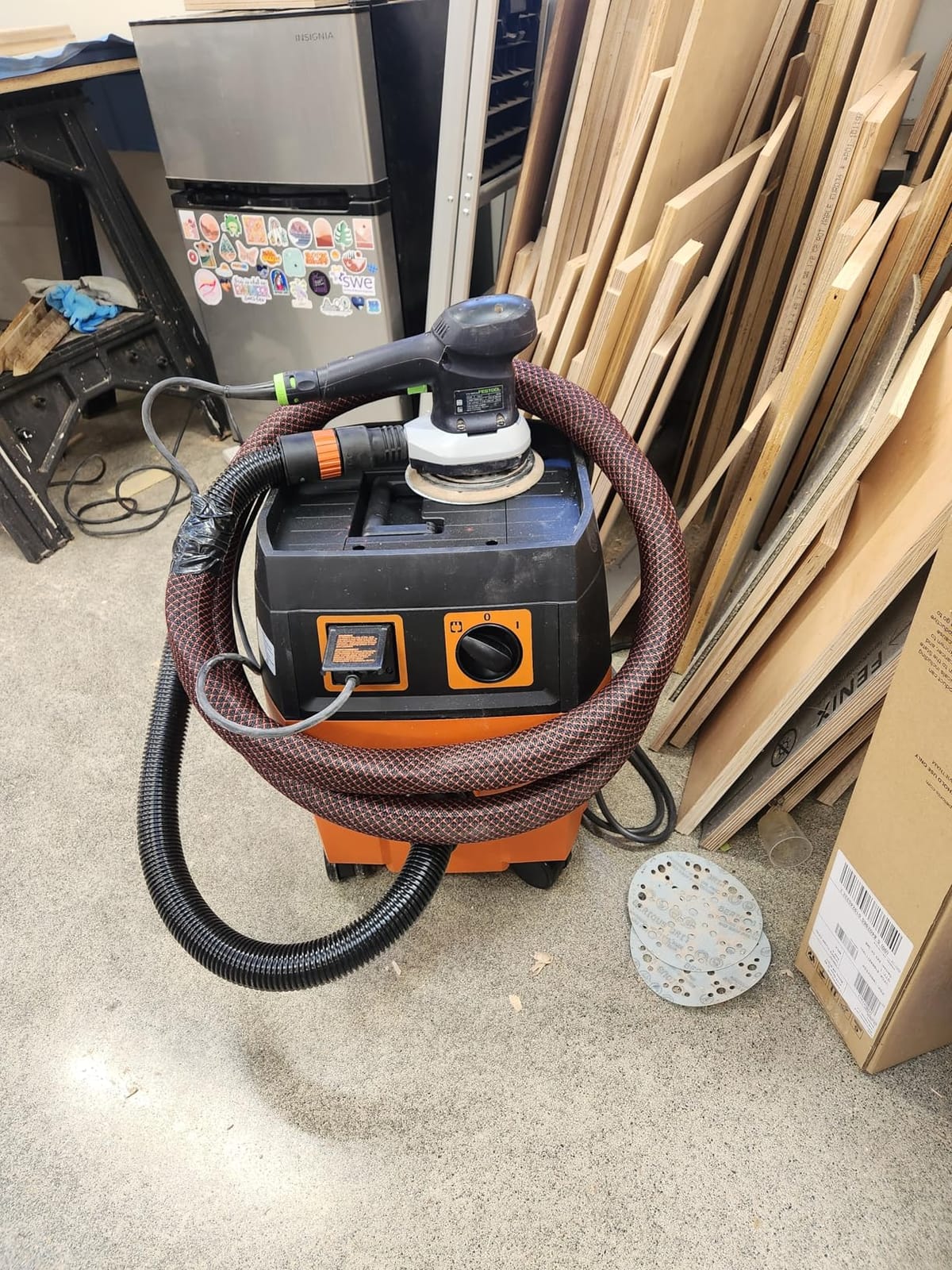
HEPA filtration is the right call for fine dust work and for anyone working near people with asthma or other sensitivities. The 19-foot cord and 13-foot hose give you reach across most of a workshop without repositioning, and the anti-static function matters on a bench with metal dust and swarf. If you are routing enclosures and profiles regularly, our roundup of the best CNC routers for home workshops covers the machines that pair best with an extractor like this.
It is also the most heavily reviewed product we included, with 489 ratings averaging 4.5, and the dominant reservation in those reviews is cost. Owners consistently accept the price as the price of a measured noise number, serious airflow and tool activation in one machine.
Is the FEIN worth the premium for a home workshop?
It is worth it if you are running multiple machines, working with fine dust such as drywall or hardwood, and care about a verified noise figure. It is hard to justify as a single-purpose cleanup vac when you only need something for weekend garage tidying.
What does the 5.8-gallon capacity mean in practice?
It is smaller than it sounds for wet work, but the autostart workflow changes the maths. Because it only runs while a tool runs, the tank fills with a concentrated load of dust rather than the general debris of a full garage sweep, so you empty it far less often than a 12-gallon utility vac.
8. BLACK+DECKER 4 Gallon BDXV18905P-4 Muffler-Equipped Wet/Dry Vacuum
BLACK+DECKER Shop Vacuum Wet and Dry, 4 Gallon 5.0 Peak HP Wet/Dry Vacuum, Quiet Operation with Muffler, Long Reach Cleaning Range & On-Board Storage, Complete Accessory Set, BDXV18905P-4
5.0 Peak HP
4 gallon tank
5 lb body
Built-in muffler
24 ft reach
Pros
- Built-in muffler cuts noise by up to 20 percent
- Only 5 pounds
- Up to 24 ft combined reach
- 5.0 Peak HP with an easy-clean cartridge
- Onboard accessory storage
Cons
- 4 gallon tank needs frequent emptying
- 17 ft cord is short
- Awkward dust bag fitting
This is the smallest and lightest machine here, and at 5 pounds it is genuinely grab-and-go. A 5.0 Peak HP motor in a body measuring 10 by 8 by 10 inches reaches into a car interior, under a bench drawer or between a keyboard and a monitor, which is exactly the job a large tank vac cannot do. If the quiet machine in question is on your desk rather than your bench, our guide to the best quiet mechanical keyboards for offices covers that half of the problem.
The noise reduction comes from a built-in exhaust muffler rather than a redesigned motor, and the brand claims it cuts noise by up to 20 percent. It is not the quietest in this group in absolute terms, but for its size the operating level is lower than users expect.

Combined reach of 24 feet comes from a 7-foot hose and a 17-foot cord, and there is an optional 90 CFM blower mode for light outdoor debris like leaves and dust off a driveway. The cartridge filter is easy to clean, and integrated tool storage keeps the accessories together rather than scattered.
It carries the highest average rating in the group, though on the smallest review base of anything here, so treat that number with appropriate caution. The complaints that do appear are consistent: the 4-gallon tank empties often, the 17-foot cord is short, and the dust bag fitting is awkward.
Is it quiet enough to be the only vac in a small apartment workshop?
For occasional use, yes. A muffler-equipped 5-pound machine that stores away between sessions is a far better fit for a small space than a 25-pound tank vac that lives in the corner. For daily work, you will want a larger machine as well.
Should you buy it alongside a bigger vac?
That is the most sensible use for it. A small workshop usually ends up wanting a quiet full-size machine for bench and floor cleanup plus a lightweight unit for the car, the drawers and the tight corners. The BDXV18905P-4 fills the second role without competing for floor space.
Why Shop Vacs Are So Loud and How to Quiet One You Already Own
A shop vac is loud because a powerful motor is moving a large volume of air through a small opening, and the air has to leave somewhere. Standard models dump that exhaust straight out of a port with nothing to soften it, so the motor’s own vibration and the rush of air are both radiated directly into the room.
Three things make a quiet shop vacuum quiet: a damped motor housing to absorb vibration, a baffled or tuned exhaust path to slow the exiting air, and a filter efficient enough that the motor does not have to run at high RPM to move the volume it needs. That last point is why the quietest units are not always the most powerful ones, and why comparing a heavily loaded 5 HP vac to a lightly loaded 2 HP unit by decibel alone can mislead you.
If you already own a loud machine, work through this list in order. Most of the improvement comes before you buy anything.
Clean or replace the filter first. A loaded filter forces the motor to spin harder and raises noise measurably. This is the single biggest cause of a once-quiet vac becoming unbearable.
Check the hose and the tank port for clogs. A partly blocked hose creates turbulence and a rattling note that sounds like a mechanical fault but is not one.
Fit an exhaust-port muffler. An inline muffler on the exhaust outlet absorbs the air rush and is the cheapest meaningful upgrade available for an existing vac.
Build an enclosure. A simple lined box around the motor bay, with the hose passing through an airtight seal, drops the radiated noise noticeably for anyone standing more than a few feet away.
Use hearing protection for the jobs that must run loud. During a full tear-down or a deep cleanup, no filter change substitutes for protection, and a shop vac running beside a table saw puts you well past casual exposure levels.
Shop vacs also get louder as they work. Wood dust and drywall dust load a cartridge far faster than most people expect, so a filter-cleaning routine matters as much for your ears as it does for suction. If your machine supports an automatic filter-clean system, use it.
Quiet Shop Vac Buying Guide: Noise, Suction, Tank and Filters
Noise rating is the first filter to apply, and the second is whether the figure is absolute or relative. A published decibel number lets you plan a shop. A percentage reduction against the brand’s own standard model tells you it is better than the alternative on the shelf, and nothing more.
For suction, ignore peak horsepower as a ranking metric. Peak horsepower is a maximum measured figure, not continuous output, and the number scales in a way that does not reflect how a machine actually feels through the hose. Airflow in cubic feet per minute is the better proxy for how fast debris gets pulled in, and 100 CFM or more handles sawdust and chips well. Static water lift in inches matters more for liquid pickup than for dry debris.
Tank capacity should match the size of the job rather than the ambition. A 4 to 5 gallon tank is right for a bench, a car or a small hobby shop. Nine to 12 gallons covers garage and renovation work without constant emptying. Sixteen gallons is for large shops and long drywall sessions, and it comes with a footprint and weight cost. Stainless steel drums outlast poly tanks when solvents or metal coolant are involved; for dry dust alone, poly is lighter and easier to move.
Filter type is the running cost people forget. Cartridge filters that can be washed are the cheapest long-term option. HEPA cartridges cost more per replacement but matter for fine dust and for anyone sensitive to airborne particles. Filter bags add a further consumable, and on some models dry pickup is hard to keep clean without one. If you already own a shop vac and want more from it, our guide to shop fans and airflow tools covers the blower side of workshop cleanup.
Cord length is a safety issue, not just a convenience. A 25-foot cord removes the need for extension leads, which are a leading cause of workshop electrical problems. Cordless wet/dry vacs solve the reach problem entirely, and battery platform compatibility is often the deciding factor if you already own tools from that platform, though runtime and peak suction are typically lower than a corded unit of the same size.
Finally, check whether the machine has a blower port. The ability to reverse into a blower for clearing a drain, moving sawdust out of a chip chute or blowing out a keyboard is a small feature that saves buying a second tool. A one-year manufacturer warranty is standard on machines in this class.
Frequently Asked Questions
What is the quietest shop vacuum on the market?
Among the eight models we tested, the DEWALT StealthSonic DXV05P-QT and the ECOMAX 8 Gallon both publish a 65 dB operating rating, with the FEIN Turbo I close behind at 66 dB. For absolute low noise, look for a model that publishes a hard decibel figure rather than a percentage reduction, and check the measurement distance, because brands rarely test on the same basis. In practice a sub-70 dB wet and dry vac lets you work in an occupied shop without ear defenders.
What brand of shop vac is the quietest?
The quietest brands right now are the ones that redesigned the motor and exhaust rather than bolting on a silencer: DEWALT with its STEALTHSONIC line, Shop-Vac with the Whisper Series, and FEIN in the dust extractor class. The key trap is naming. Only DEWALT models badged STEALTHSONIC carry the noise-reduction engineering; the brand’s other wet and dry vacs are conventional and loud. Always check the model designation, not the badge on the box.
Why are shop vacs so loud?
Three reasons. A high-load motor running near its maximum RPM radiates vibration through the housing, the exhaust port releases a fast column of air straight into the room with no baffling, and a clogged filter forces the motor to work harder and get louder over time. Quiet models address all three with damped housings, tuned exhaust paths and higher-efficiency filters that deliver the same airflow at a lower speed.
How can I make my shop vac quieter?
Work in this order. Clean or replace the filter, because a loaded filter is the biggest cause of noise increase over time. Then clear any partial hose or port clog. Next, fit an inline exhaust muffler, which is the cheapest meaningful upgrade. After that, build a lined enclosure around the motor with an airtight hose seal. Finally, use hearing protection for the noisiest jobs, because no modification removes the risk of a full te-down.
Is a dust collector quieter than a shop vac?
Generally yes, and for a specific reason. A dust collector runs a fixed-speed extraction fan that does not have to respond to changing airflow, and it exhausts into a drum or bag rather than an open port, so there is far less of the rush of air you hear from a utility vac. A cyclone separator on a shop vac gets you part of the way there, because the debris stays in the separator and the motor runs against a steadier load.
Is 78 dB loud for a vacuum cleaner?
It is loud for a vacuum. Ordinary conversation sits near 60 dB, a dishwasher around 65 dB and a hair dryer near 70 dB, so 78 dB is a noticeable machine you will hear across a room. Short bursts are fine. Sustained running through a full build session without hearing protection is where problems develop, and a vac running next to a table saw or planer is well beyond safe casual exposure.
Conclusion: Which Quiet Shop Vac Fits Your Workshop
The best quiet shop vacuums for workshops fall into clear profiles, and the right pick depends on where your shop ends. For most people, the DEWALT StealthSonic DXV05P-QT at 65 dB and 18.3 pounds is the best quiet shop vacuum available: it is light enough to move, strong enough for sawdust and spills, and quiet enough to run while someone else is in the room.
Large shops should take the 16-gallon StealthSonic for its 6.5 HP motor and 20-foot cord. If fine dust and multiple machines are your problem, the FEIN Turbo I is worth the premium for a verified 66 dB rating, 151 CFM and tool activation. Small-space owners want the Shop-Vac 5430542 or the 5-pound BLACK+DECKER, and the ECOMAX covers you if solvents and metal coolant decide that you need a stainless tank.
Whatever you pick, measure the room before you commit and keep a filter-cleaning routine in place. Noise that is acceptable on day one is not always acceptable in month six, and a clean filter is the cheapest way to keep the machine as quiet as the day you bought it. Our wider test of the best shop vacuums for cleanup covers the louder, higher-suction side of the market if noise is not your binding constraint.