
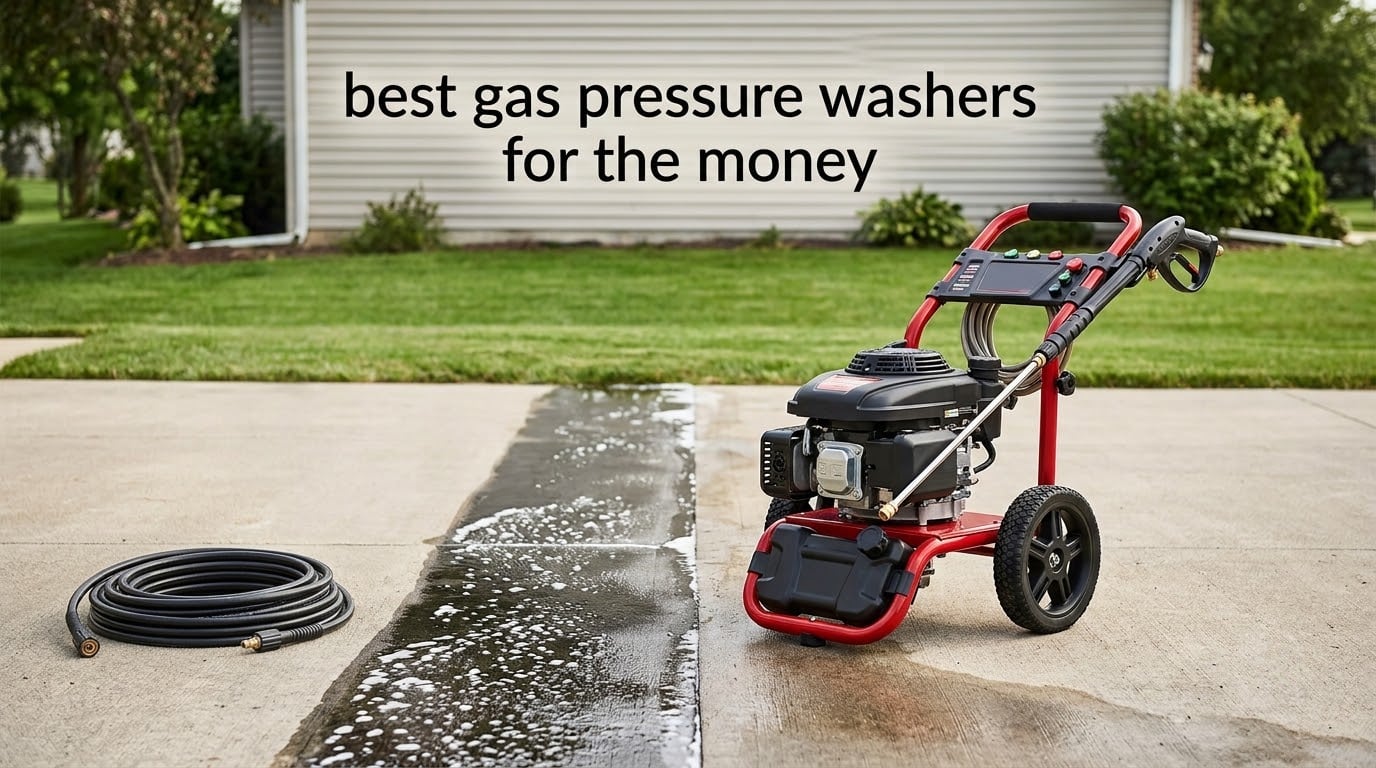
Here is the short answer: the SIMPSON PowerShot 3300 (PS3228) is the best gas pressure washer for the money. It pairs a Honda GX200 engine with a 3300 PSI, 2.5 GPM triplex pump, it has the deepest owner history of any machine we looked at with more than 2000 ratings, and its pump carries a five-year commercial warranty that most rivals do not offer. If your budget stretches further, the Simpson ALH3228 is the machine to buy once and stop thinking about it.
Everything else in this roundup trades against that pick in some direction. Some give you more flow. Some give you a longer hose. Some give you a smaller body that fits under a workbench. None of them give you the same combination of a real Honda engine, a commercial-grade pump, and enough verified owners to know what breaks.
We spent weeks going through spec sheets, warranty fine print, and owner reports across eleven gas pressure washers, then split them by the only two numbers that actually predict how a driveway gets clean: PSI and GPM. We also looked hard at the things that end up costing you money later, namely engine oil, pump oil, fuel, and the parts that wear out. If you are still deciding between gas and electric, our electric pressure washer roundup covers the other side of that decision. Our broader gas pressure washer guide goes deeper on nozzle technique and surface-safe PSI levels.
Two things to know before you start reading. First, a gas washer is a small engine attached to a water pump, which means it needs fuel, oil changes, and a warm-up and cool-down discipline that an electric unit never asks of you. Second, most of the machines below are 49-state compliant, meaning they are not legal for sale in California. Only two of the eleven carry current CARB certification, and we flag both.
Table of Contents
Top 3 Best Gas Pressure Washers for the Money in 2026
Our top three covers three very different buyers. The Simpson PowerShot 3300 is the one we would put in our own garage. The Simpson ALH3228 is the one to buy if you plan to use it commercially or want the longest pump coverage available anywhere in this group. The Ezasin 3500 is the one to buy if raw cleaning power per dollar matters more to you than brand history.

SIMPSON PowerShot 3300
- Honda GX200 engine
- 3300 PSI
- 2.5 GPM
- AAA triplex plunger pump
- 25 foot MorFlex hose
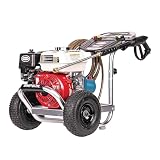
Simpson ALH3228 Aluminum Series
- Honda GX200
- 3400 PSI
- 2.5 GPM
- CAT triplex pump
- 5 year pump warranty
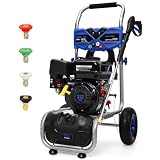
Ezasin 3500 PSI Gas Washer
- 3500 PSI
- 2.3 GPM
- 212cc 7HP OHV engine
- onboard soap tank
- 25 foot hose
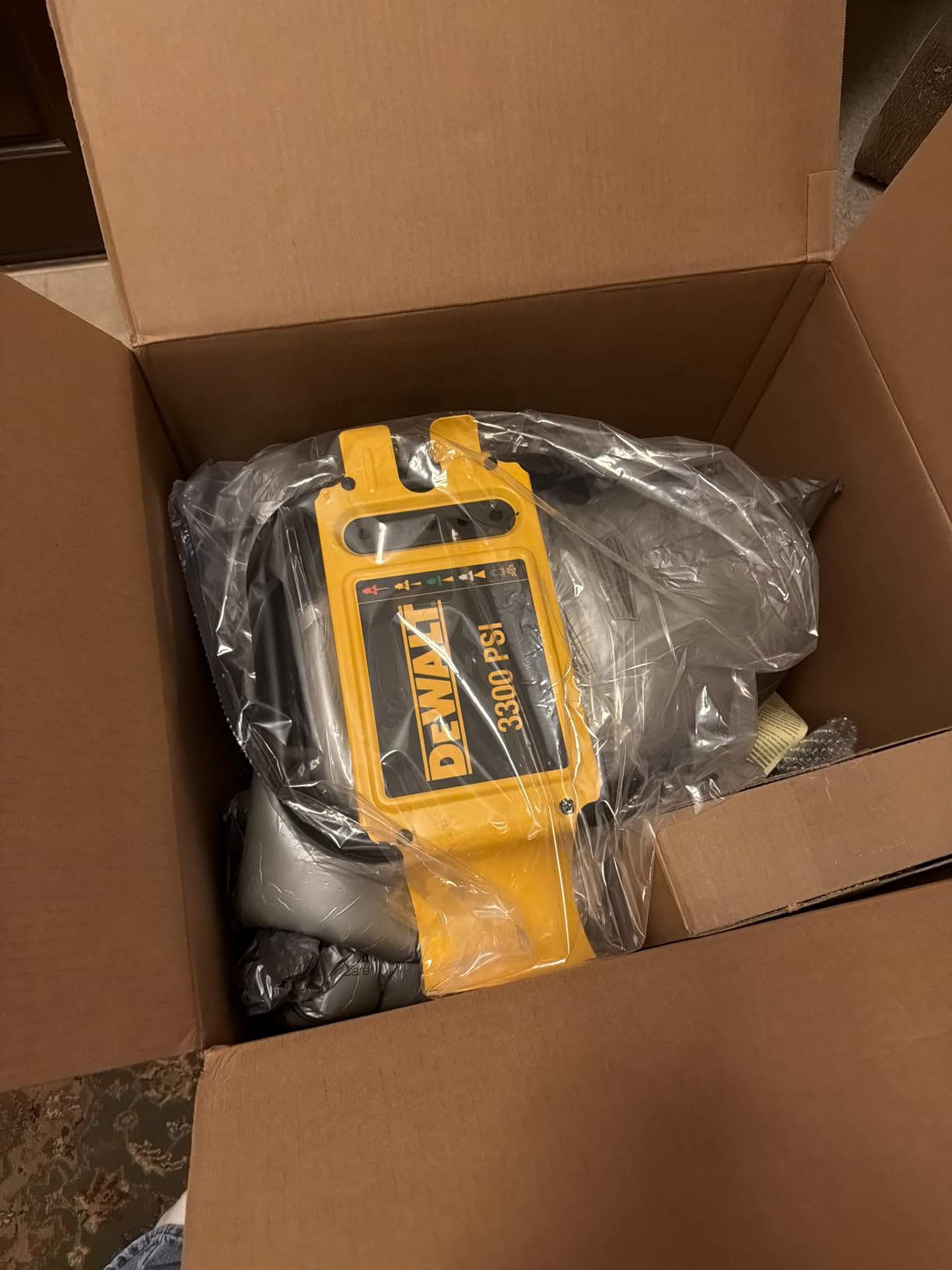
Two other machines deserve a mention before the individual reviews. The DeWalt 3300 has the longest warranty structure we found anywhere in this roundup, with five years on the frame, and the WEN 3400 pairs a 2.7 GPM flow rate with a three-year warranty and 12-inch never-flat wheels. Both are strong runners-up for anyone who puts warranty length above engine brand above all else.
All 11 Gas Pressure Washers Compared (October 2026)
Read this table before you scroll further. The two columns that matter most for value are flow rate, because a lot of dirt removal comes from rinsing rather than pushing, and pump type, because that is where first-season failures come from. Every price-linked figure on this page is shown through the check buttons, since street prices move constantly.
| Product | Specifications | Action |
|---|---|---|
| SIMPSON PowerShot 3300 |
|
Check Latest Price |
 Simpson Clean Machine 3400 Simpson Clean Machine 3400 |
|
Check Latest Price |
 DeWalt 3300 PSI DXPW3300-S DeWalt 3300 PSI DXPW3300-S |
|
Check Latest Price |
| Simpson ALH3228 Aluminum Series |
|
Check Latest Price |
| Ezasin 3500 PSI Gas Washer |
|
Check Latest Price |
 PowerSmart 3800 PSI PowerSmart 3800 PSI |
|
Check Latest Price |
 PowerSmart 3400 PSI Compact PowerSmart 3400 PSI Compact |
|
Check Latest Price |
 VEVOR 3400 PSI Gas Washer VEVOR 3400 PSI Gas Washer |
|
Check Latest Price |
 IvyBess 4200 PSI IvyBess 4200 PSI |
|
Check Latest Price |
 Steupoek 4200 PSI Steupoek 4200 PSI |
|
Check Latest Price |
 WEN 3400 PSI PW224G WEN 3400 PSI PW224G |
|
Check Latest Price |
One pattern jumps out immediately. The four machines with the highest review counts are all Simpson or DeWalt models with a decade of service history behind them, while the four highest-rated machines in the group are newer brands with fewer than 250 ratings each. High ratings on a thin review base tell you the samples that reached you worked well. They do not tell you what happens in season three.
1. SIMPSON PowerShot 3300 PSI – Our Best Gas Pressure Washer for the Money
SIMPSON Cleaning PS3228 PowerShot 3300 PSI Gas Pressure Washer, 2.5 GPM, Honda GX200 Engine, Includes Spray Gun and Extension Wand, 5 QC Nozzle Tips, 5/16-inch x 25-foot MorFlex Hose, 49-State
3300 PSI
2.5 GPM
Honda GX200 engine
25 ft MorFlex hose
74.8 lb
Pros
- Honda GX200 engine with low-oil shutdown
- Maintenance-free AAA triplex plunger pump
- 25 foot MorFlex hose resists kinks and abrasion
- Five quick-connect nozzles plus 16 inch spray wand
- 10 inch pneumatic tires roll over gravel and curbs
Cons
- Pump seal wear reported around the two year mark
- Relief valve and quick-connect fittings are a recurring weak point
- The included 16 inch wand is short for overhead reach
- Noisy enough that owners wear foam earplugs
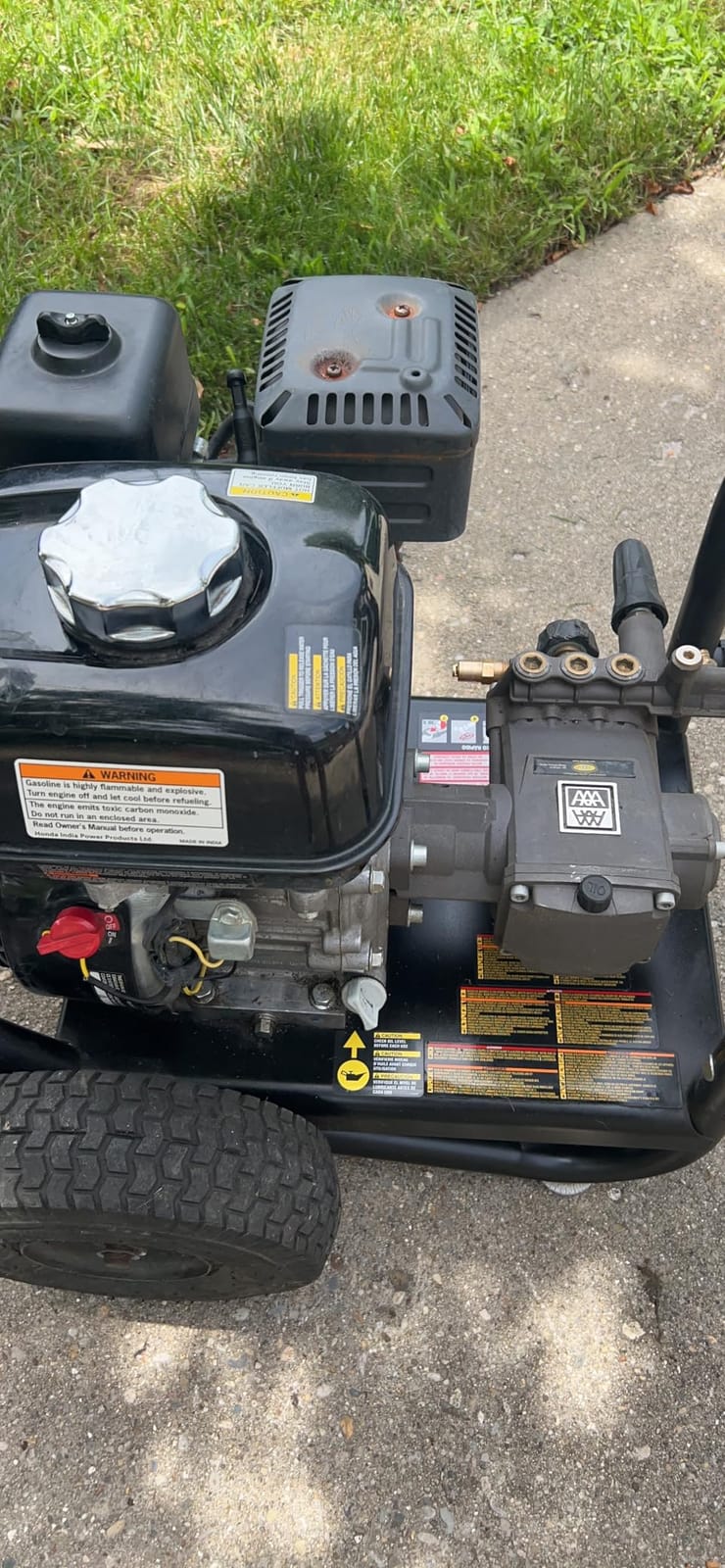
The first thing you notice about this machine is the engine. A Honda GX200 is a commercial-series overhead valve design that any small engine shop in the country can service, and owners consistently report that it starts on the first or second pull even after sitting through a winter. Low-oil shutdown is standard on this engine, which is the cheapest insurance you can buy against the single most common way a gas washer dies.
The second thing you notice is that the pump is a real AAA triplex plunger unit with an integrated unloader and thermal relief valve. That matters more than the PSI headline. Triplex pumps run cooler, hold pressure more steadily under a long spray, and have replaceable wear components that a repair shop can service. Most of the cheaper machines in this roundup ship an axial cam pump, which is a lighter-duty design.
Cleaning performance is where the 3300 PSI and 2.5 GPM pairing earns its keep. Owners use it on concrete driveways, decks, siding, fencing, equipment, and graffiti, and the combined force and flow is enough to lift built-up grime without the streaking you get from a high-PSI low-flow setup. The thermal relief valve protects the pump when you park the trigger on a long job without shutting the engine down.
The honest weakness is pump seal longevity. A number of owners report seal and piston wear showing up around the two-year mark, and Simpson treats that as a wear item rather than a defect, so it falls outside warranty. Relief valves and quick-connect fittings are the other recurring weak point, and replacement parts from their support line can take a while to arrive. Budget for a hose and fittings kit in year three rather than being surprised.
Is it worth the premium over a cheaper Simpson?
Yes, if the machine will live in a garage you control and get used several times a year. The Clean Machine in slot two uses an axial cam pump and a 208cc CRX engine, and it costs materially less. The PowerShot costs you more up front and gives you a Honda engine, a triplex pump, and pneumatic tires, which is the difference between a washer that survives a decade and one that survives a few seasons.
What should you check before the first use?
Fill the engine with SAE 10W-30, check the pump oil sight window if your unit has one, and connect water before you start the engine. Run it for a few minutes at low pressure with the trigger pulled to purge air from the line, or the pump will run dry and complain. Keep the fuel level at least half an inch below the filler neck, and do not run it in a closed garage, even with the door fully open.
2. Simpson Clean Machine 3400 PSI – Best for Homeowners Who Want Reach
Simpson Clean Machine 3400 PSI Gas Pressure Washer, 2.5 GPM, CRX engine
3400 PSI
2.5 GPM
208cc CRX engine
25 ft MorFlex hose
61 lb
Pros
- Starts easily with low-oil shutdown
- Maintenance-free axial cam pump with thermal relief
- Low-profile frame at 61 lb stores and moves easily
- 25 foot MorFlex hose with quick-connect fittings
- Four quick-connect tips plus M22 gun and 16 inch wand
Cons
- Axial cam pump is lighter duty than a commercial triplex design
- One-year pump and frame warranty is short for the money
- Engine noise is a common complaint
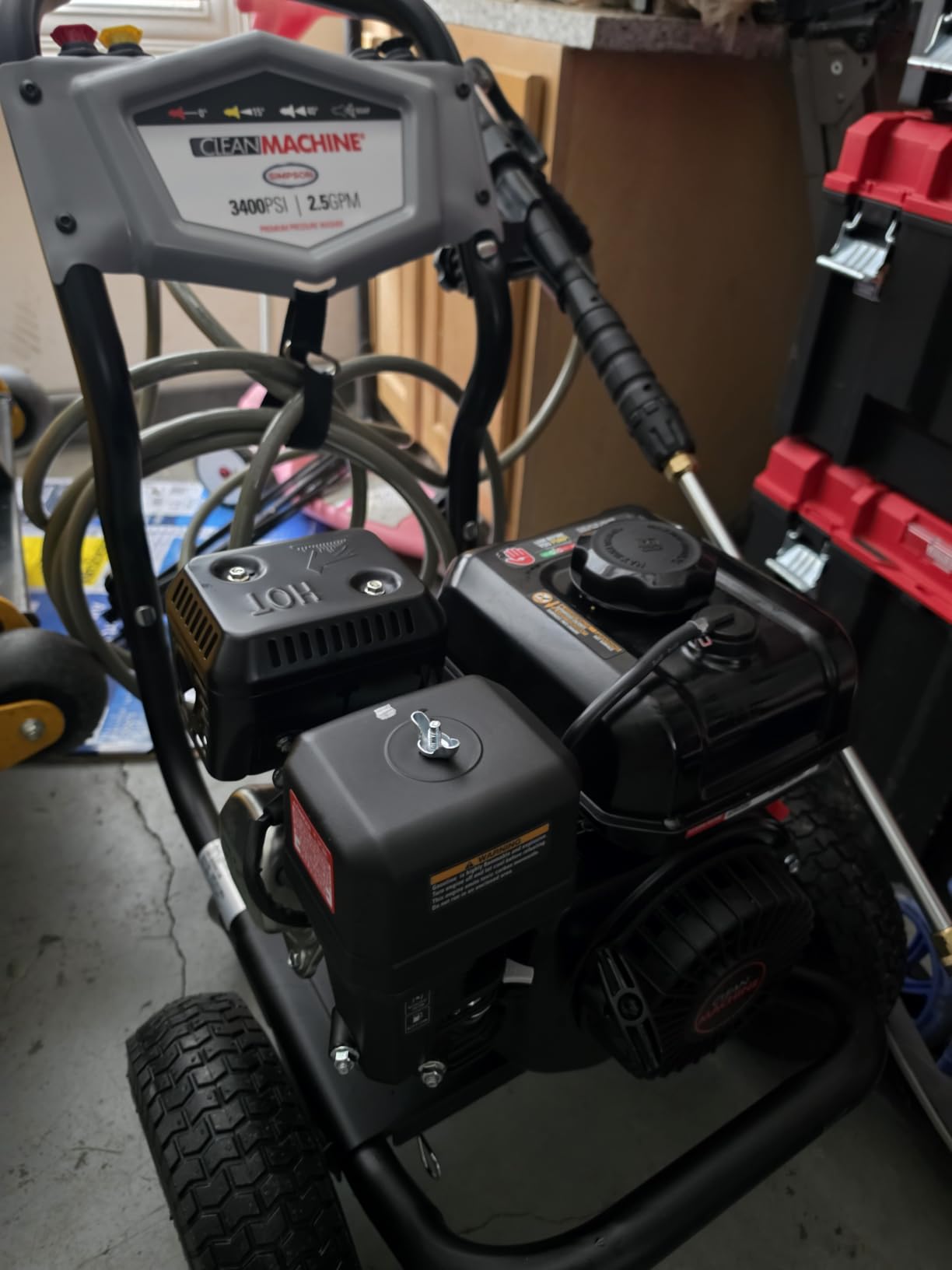
This is the machine most homeowners end up with, and the reason is simple: it does the job at 3400 PSI without asking you to become a small engine mechanic. The 208cc CRX engine is built by Simpson specifically for this chassis, starts easily, and carries low-oil shutdown. Over 2000 ratings averaging 4.3 tells you the ownership experience is uneventful in the way you want a homeowner machine to be.
At 61 pounds with a low-profile frame measuring 37 by 30 by 21 inches, it is the easiest machine in this roundup to load into a vehicle and to slide onto a shelf. The 10-inch pneumatic tires handle gravel driveways without the constant dragging you get from small caster-style wheels. Storage footprint is a real deciding factor for a lot of people, and this one wins it.
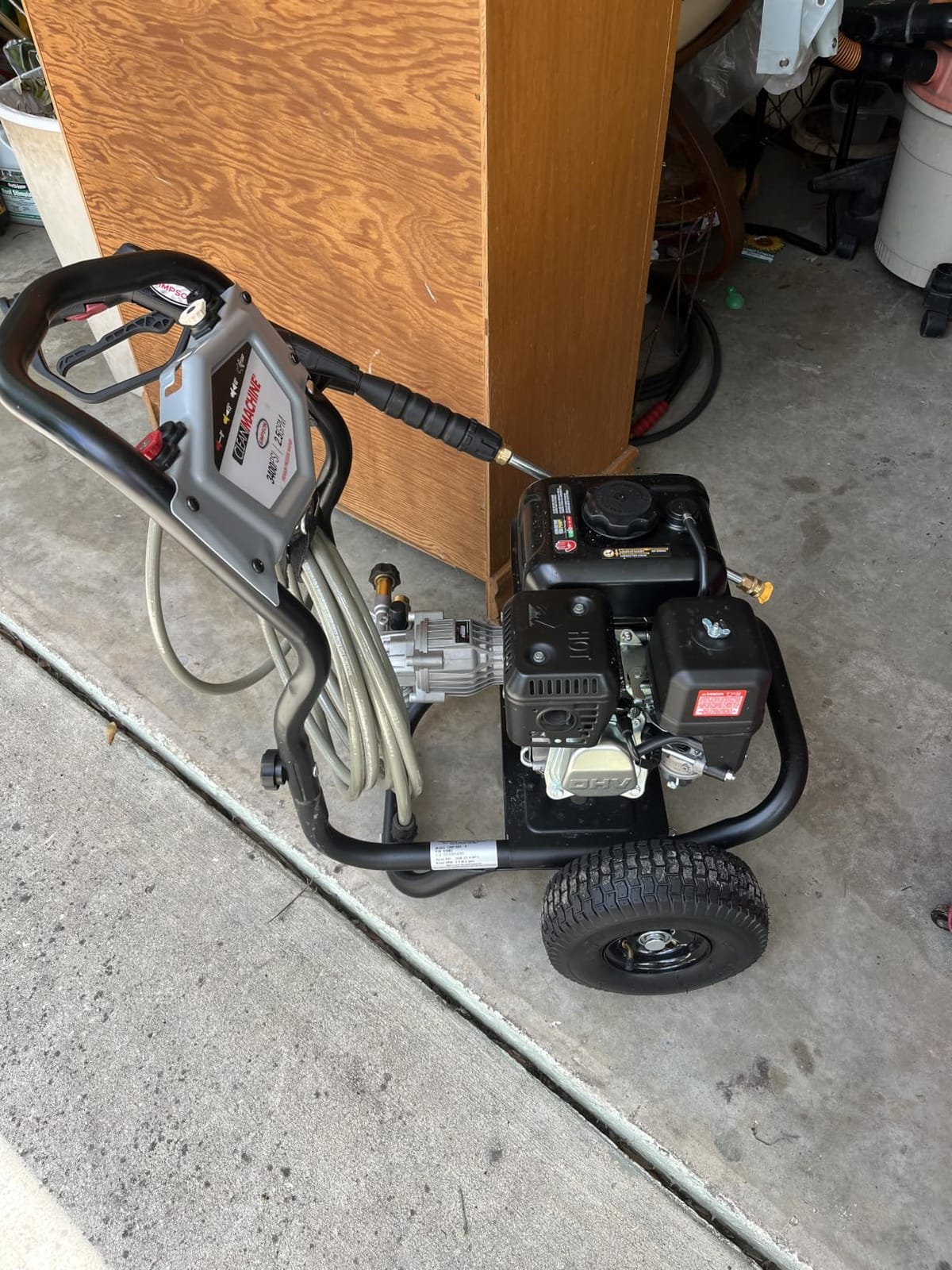
The pump is the tradeoff. An axial cam pump is simpler, quieter, cheaper, and adequate for residential work, but it does not have the wear-part serviceability or the sustained-pressure consistency of a triplex pump under long jobs. If you are cleaning a large commercial driveway every week, look at the ALH3228 in slot four instead. If you are cleaning once a season, this pump will outlast your patience.
Owner feedback also flags noise as the thing people notice most. Any small gas engine is loud, and a recoil-start axial cam unit running at full throttle is not quiet. Budget for hearing protection, and check your local noise rules before you plan a long Sunday morning session near a property line.
How much power is actually enough for a residential driveway?
More than most people think. A two-car driveway with typical grime and some algae needs roughly 3000 to 3400 PSI at around 2.5 GPM, which is exactly what this machine delivers. The 25 foot hose is the more limiting factor than the pressure rating, because you will spend real time repositioning the unit rather than walking around it.
What does the warranty actually cover?
Two years on the engine, one year on the pump, one year on the frame. That is thin against the DeWalt in slot three, which carries five years on the frame and three on the pump, and thinner than the WEN’s three-year blanket coverage. If you keep the machine for five years or more, warranty length is one of the strongest proxies for how long the brand intends to stand behind it.
3. DeWalt 3300 PSI DXPW3300-S – Best Warranty Coverage in the Roundup
DeWalt 3300 PSI Gas Pressure Washer, 2.4 GPM, Residential Model DXPW3300-S
3300 PSI
2.4 GPM
208cc engine
25 ft hose
5 yr frame warranty
Pros
- Five year frame
- three year pump
- two year engine coverage
- Easy-to-start 208cc engine with simple assembly
- Welded steel frame with powder-coated finish
- Compact 64 pound design on 10 inch pneumatic tires
- Includes 25 ft hose and five quick-connect nozzles
Cons
- 2.4 GPM is the lowest flow here so large surfaces take longer
- 49-state compliant so not sold in California
- Axial cam pump is lighter duty than a commercial triplex
Warranty length is the entire argument for this machine, and it is a good one. Five years on the frame, three on the pump, two on the engine is the most generous component coverage in this roundup, and it applies to the parts that actually fail. Frame rust and pump wear are what end most pressure washers, and this is the only residential unit here where both are covered well beyond the standard year.
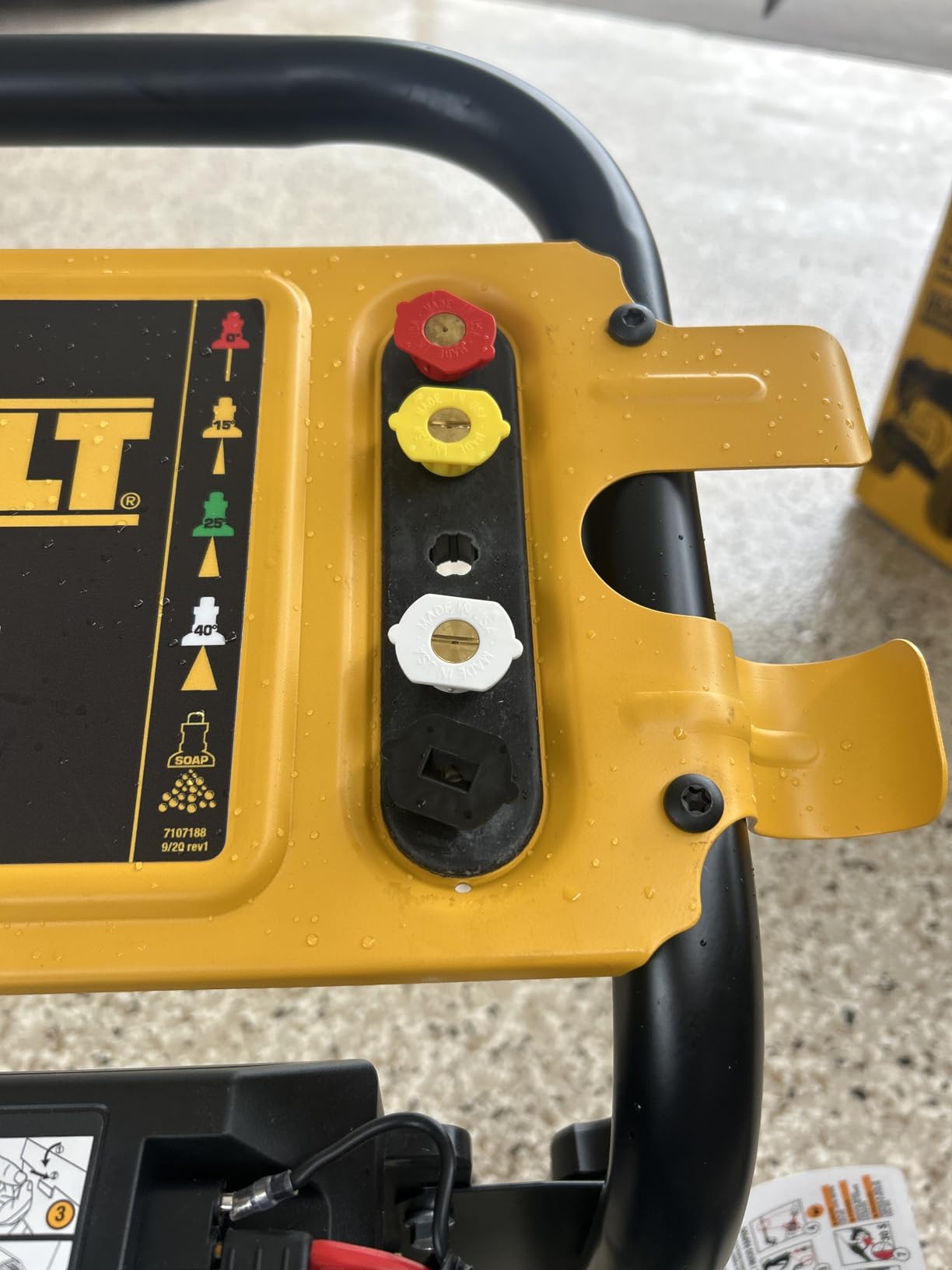
Everything else about it is competent and unexciting in a good way. The 208cc engine is easy to start, assembly is simple enough for a first-time owner, and the welded steel frame with a powder-coated finish resists corrosion well. The 25 foot abrasion-resistant hose, five quick-connect nozzles from 0 to 40 degrees plus soap, an ergonomic spray gun, and a 16 inch steel wand cover essentially every residential task.
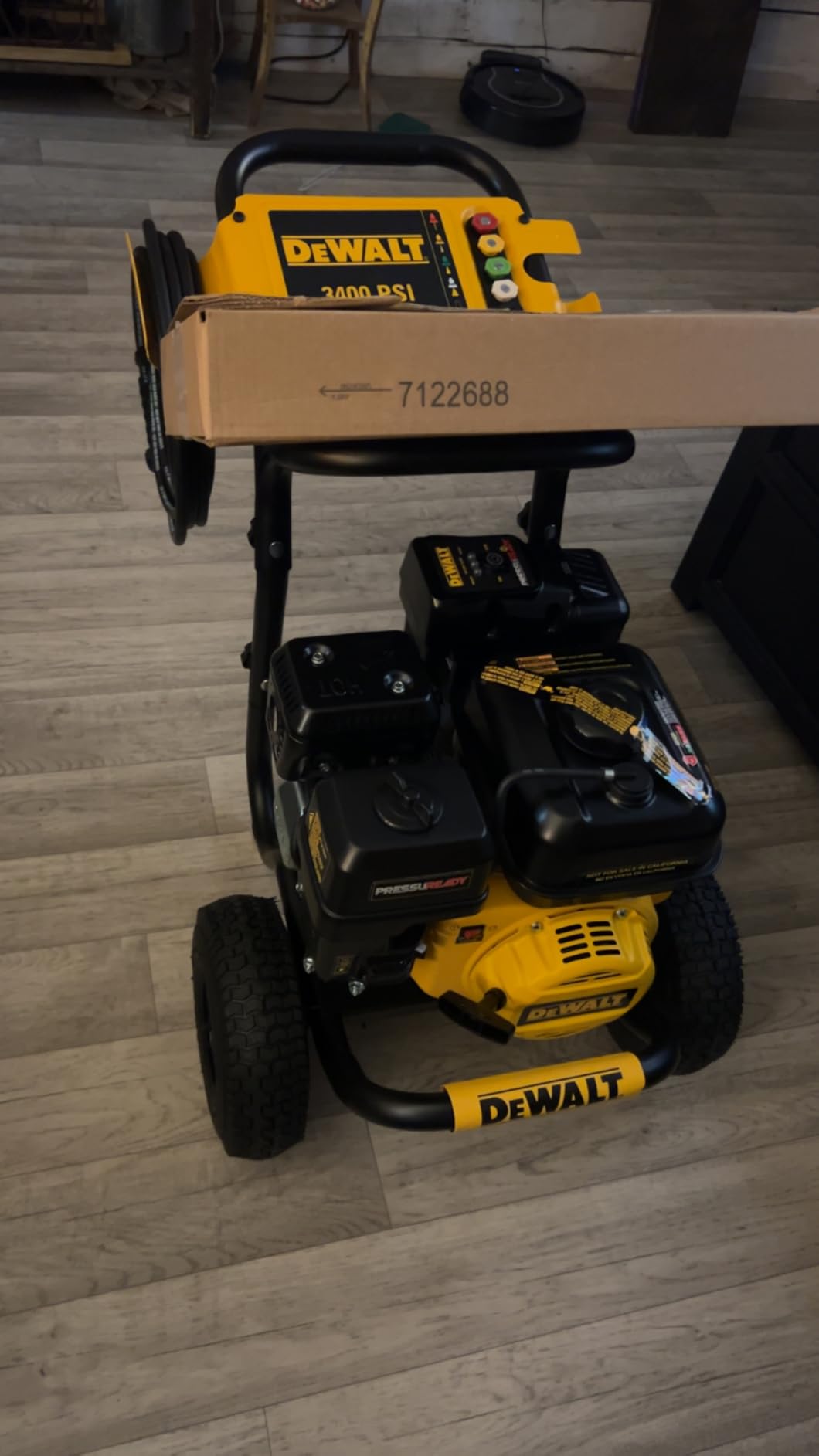
The one number that works against it is 2.4 GPM. That is the lowest flow in the group, and flow is what carries loosened dirt away. On a two-car driveway the difference is minor. On a long commercial run, a three-story house, or a property with a lot of flat concrete, you will notice the washer sitting in one place while the wand stays in another.
It is also a 49-state model, so California buyers need to look at the CARB-certified alternatives in this roundup instead. Keep the fuel level half an inch below the filler neck to avoid spillage, and expect a faint gasoline odor right out of the box because these are factory-tested before shipping.
Is a longer warranty a better reason to buy than a better engine?
For a homeowner keeping the machine five years or more, yes, warranty length is a surprisingly strong signal. A brand that commits to five years on a frame is betting on its own powder coat and welds. A brand that commits to one year is telling you what it thinks its frame is worth. That said, engine brand still matters for the parts you can actually get repaired locally.
Who should skip this one?
Anyone cleaning very large flat areas where flow is the bottleneck, and anyone in California who cannot legally buy a 49-state unit. If your property is mostly driveway and walkway with a long run between the water spigot and the far corner, the 4.0 GPM machines in the later slots will finish the job in noticeably less time despite costing less.
4. Simpson ALH3228 Aluminum Series – Best Buy-It-Once Machine
Simpson Cleaning 3400 PSI Gas Pressure Washer, 2.5 GPM Power Washer for Commercial Use, Honda GX200 Engine, 25-Foot Hose, Aluminum Series, 49-State (ALH3228-S)
3400 PSI
2.5 GPM
Honda GX200
CAT triplex pump
73 lb
Pros
- Honda GX200 commercial-series engine that any shop can service
- CAT Industrial triplex pump with thermal relief protection
- Five year limited pump warranty
- the strongest in the roundup
- Aircraft-grade aluminum platform resists corrosion
- Professional gun with safety lock-out and five quick-connect nozzles
Cons
- Highest cost in this roundup by a wide margin
- 73 pounds is heavy to load solo into a vehicle
- Aluminum tubing can dent on rough job sites
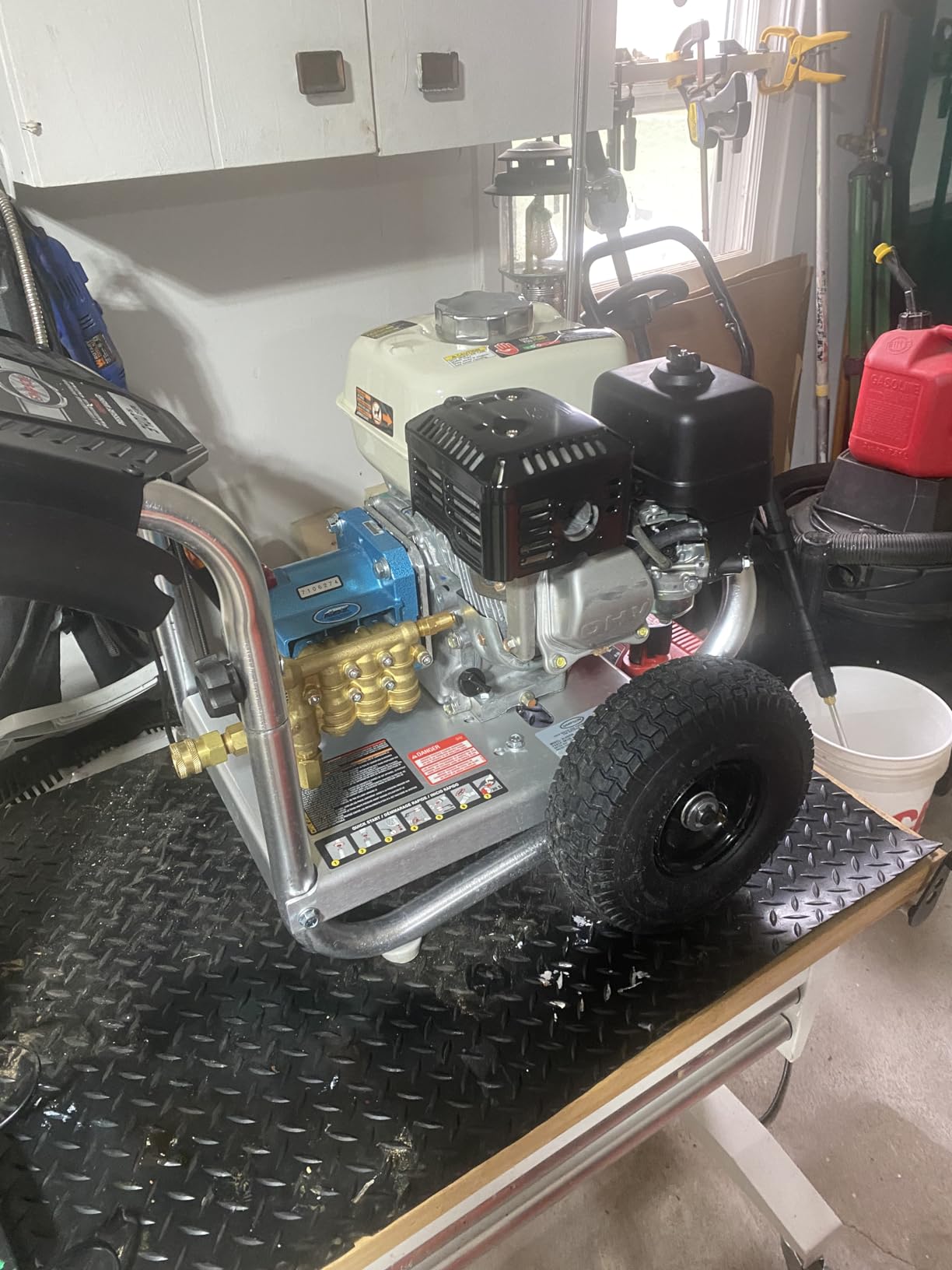
This is the machine to buy if pressure washing is closer to a job than a chore. The Honda GX200 commercial-series engine is the same family of engine that Simpson puts in contractor equipment, and the CAT Industrial triplex pump is a name longtime users on DIY and contractor forums consistently treat as a longevity benchmark. Those two components are the reason this washer can run several days a week without the pump quitting on you.
The warranty structure backs that up. Five years limited on the pump, three years limited commercial on the engine, one year on the frame. That pump coverage is the best in this roundup by two full years, and pumps are what fail. Contractors who buy this unit generally describe it as a long-term investment, which is the correct mental model for the money involved.
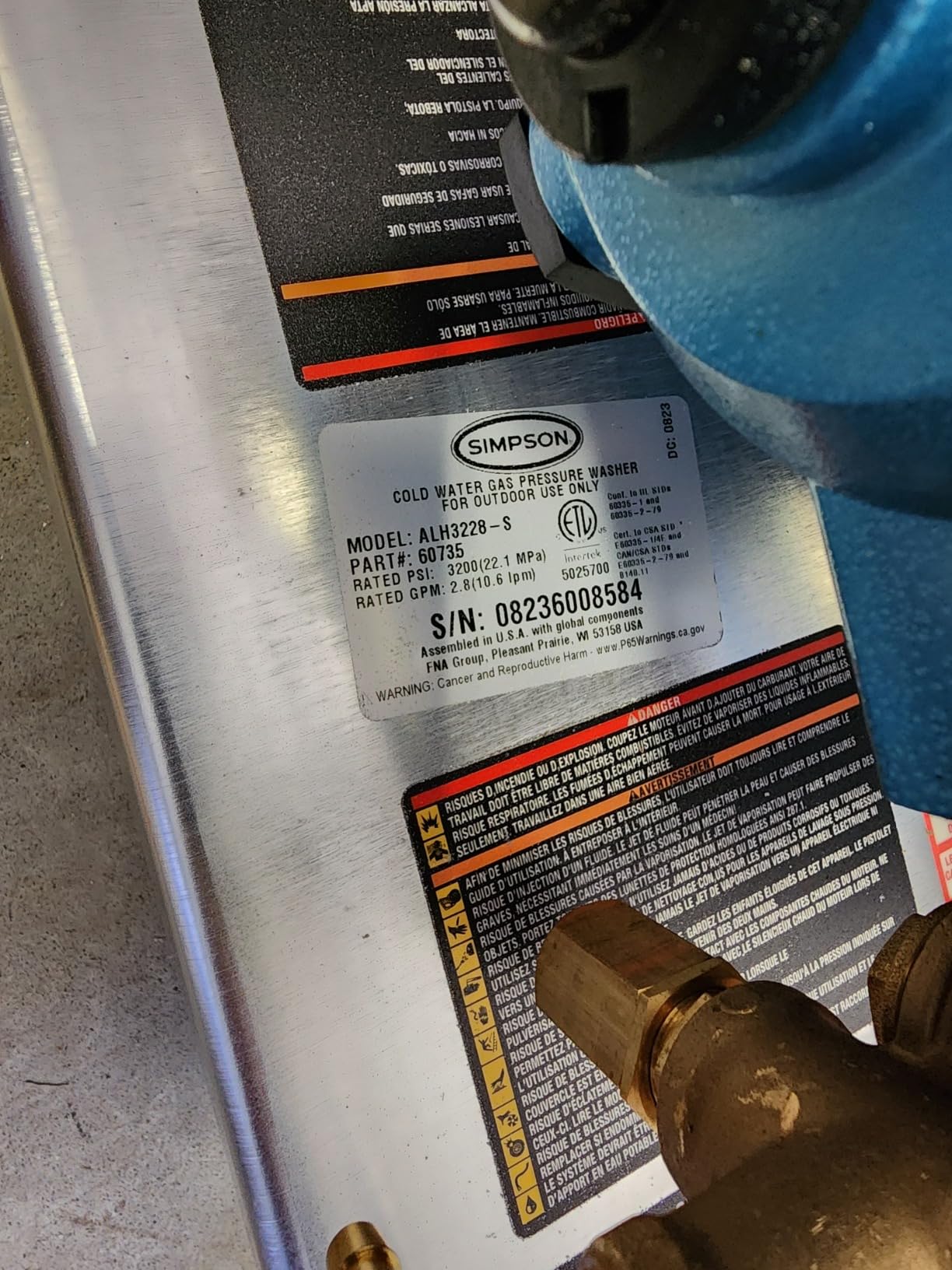
The platform is aircraft-grade aluminum with brushed extruded aluminum tubing, chosen for corrosion resistance and job-site durability. Ten-inch premium pneumatic tires roll over uneven ground. The accessory package is a professional one, with a spray gun that has a safety lock-out, a 16 inch steel wand, and five quick-connect nozzles covering 0, 15, 25, 40, and soap.
Be realistic about the weight. At 73 pounds, loading it into a pickup solo is a genuine chore, and the aluminum tubing can dent if you take a corner too fast or clip a kerb. Those are the honest costs of the premium tier, and if you are only cleaning twice a year they are not worth paying. Keep the fuel level at least half an inch below the filler neck, and note this is a 49-state unit.
Is the Honda engine worth the extra money over a generic OHV clone?
For daily use, yes. A GX200 is a documented, widely serviced engine with a large parts network, and a Honda is what you will find in a small engine shop in almost any town. A generic clone may have a similar spec sheet, but when it needs a part, your realistic options get thinner fast. That difference matters more over five years than it does on day one.
Who should not buy this washer?
Anyone with a shed the size of a garden shed, and anyone whose total cleaning hours over the life of the machine can be counted in the dozens. The 74.8 pound PowerShot in slot one is lighter, still has a Honda engine, and still has a triplex pump. This machine is not better at cleaning, it is better built for abuse, and abuse only pays off if you actually apply it.
5. Ezasin 3500 PSI – Best Value for Cleaning Power
Ezasin Gas Powered Pressure Washer 3500 PSI – 2.3 GPM Heavy Duty High Power Washer,209CC 7HP Engine with 25Ft Pressure Hose, Axial Aluminum Pump, Soap Tank, 4 Quick Connect Nozzle (Blue)
3500 PSI
2.3 GPM
212cc 7HP OHV
25 ft hose
63 lb
Pros
- 3500 PSI strips softwood and lifts years of moss from siding and stairs
- 212cc 4-stroke OHV engine starts in one or two pulls
- Easy assembly with good written directions
- 10 inch tires and a 25 foot hose give a workable radius
- Customer service resolved a no-start problem quickly
Cons
- Thermal and tip sensors can stop it starting in hot sun or when tipped
- Fragile gun brackets can break while the unit is running
- Manual is thin on warm-up
- cool-down
- and oil change guidance
- Some units failed shortly after delivery
- Only a one-year warranty
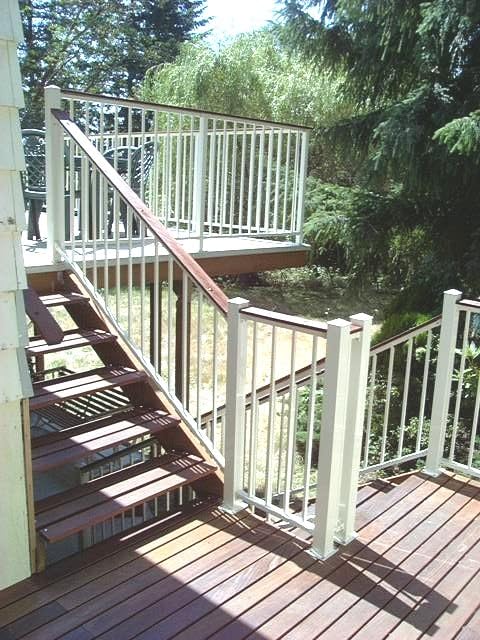
The 4.4 average here is the highest among the machines with meaningful owner volume in this roundup, and the reasons owners give are consistent. The 3500 PSI is real cleaning power, and owners specifically mention stripping softwood and lifting years of Pacific Northwest moss off siding, stairs, and walkways. The 212cc four-stroke OHV engine at 7 horsepower starts in one or two pulls and runs efficiently, and the four-stroke design means no premixing oil.
For the money you are spending, you get an onboard soap tank, four quick-connect nozzles covering 0, 25, 40, and soap degrees, 10 inch tires, and a 25 foot high-pressure hose. Assembly is straightforward with directions people actually rate as readable, which is more than can be said for several machines in this list. Dual front rubber pads add stability on uneven ground.

Now the parts you should read twice. This machine has thermal and tip sensors that can refuse to start when the unit has been sitting in hot sun, and can cut out mid-run if it gets tipped while running. The brackets that hold the long spray gun are described as fragile and can break under load. And the manual is thin on exactly the guidance that keeps a small engine alive, meaning warm-up, cool-down, and oil intervals.
There is also a small but real number of outright early failures reported shortly after delivery, and the warranty is one year, which is the shortest here. Set aside the fact that the sensors need shade and a level stance, and use SAE 10W-30 with 0.5 liters added at first start, and this becomes a capable budget washer.
Is the onboard soap tank actually useful or just a gimmick?
It is useful, with one condition. The tank and the soap nozzle let you pre-apply detergent, let it dwell, and then knock the loosened dirt off with plain water. That is the correct order of operations for anything with organic growth, and a machine that cannot do it means carrying a separate foamer. The condition is that the tank is small, so you refill it more often than you expect on a big job.
What breaks first on this class of machine?
Almost never the pump. It is the sensors, the gun brackets, and the documentation that get in the way. Before the first job, tighten every hose connection with the gasket seated, keep the machine out of direct sun while it cools, and locate the oil fill and drain points before you need them. Owners also report that customer service resolved problems quickly, which matters when the warranty is short.
6. PowerSmart 3800 PSI – Best Reach for Tall Siding
PowerSmart Gas Pressure Washer, 3800 PSI and 2.5 GPM for House Cleaning
3800 PSI
2.5 GPM
212cc OHV
35 ft super-flex hose
61 lb
Pros
- Highest pressure figure in the roundup at 3800 PSI with full 2.5 GPM
- 212cc 4-stroke OHV engine reaches second-story surfaces
- 35 foot super-flex hose gives more reach than typical
- Rugged steel frame
- 10 inch pneumatic tires
- onboard soap tank
- hook and sling storage
- PWMA performance certified and EPA engine certified
Cons
- Tiny 0.79 gallon soap tank needs frequent refills
- Newer brand with a smaller review base than the established models
- Axial pump is lighter duty than a commercial triplex
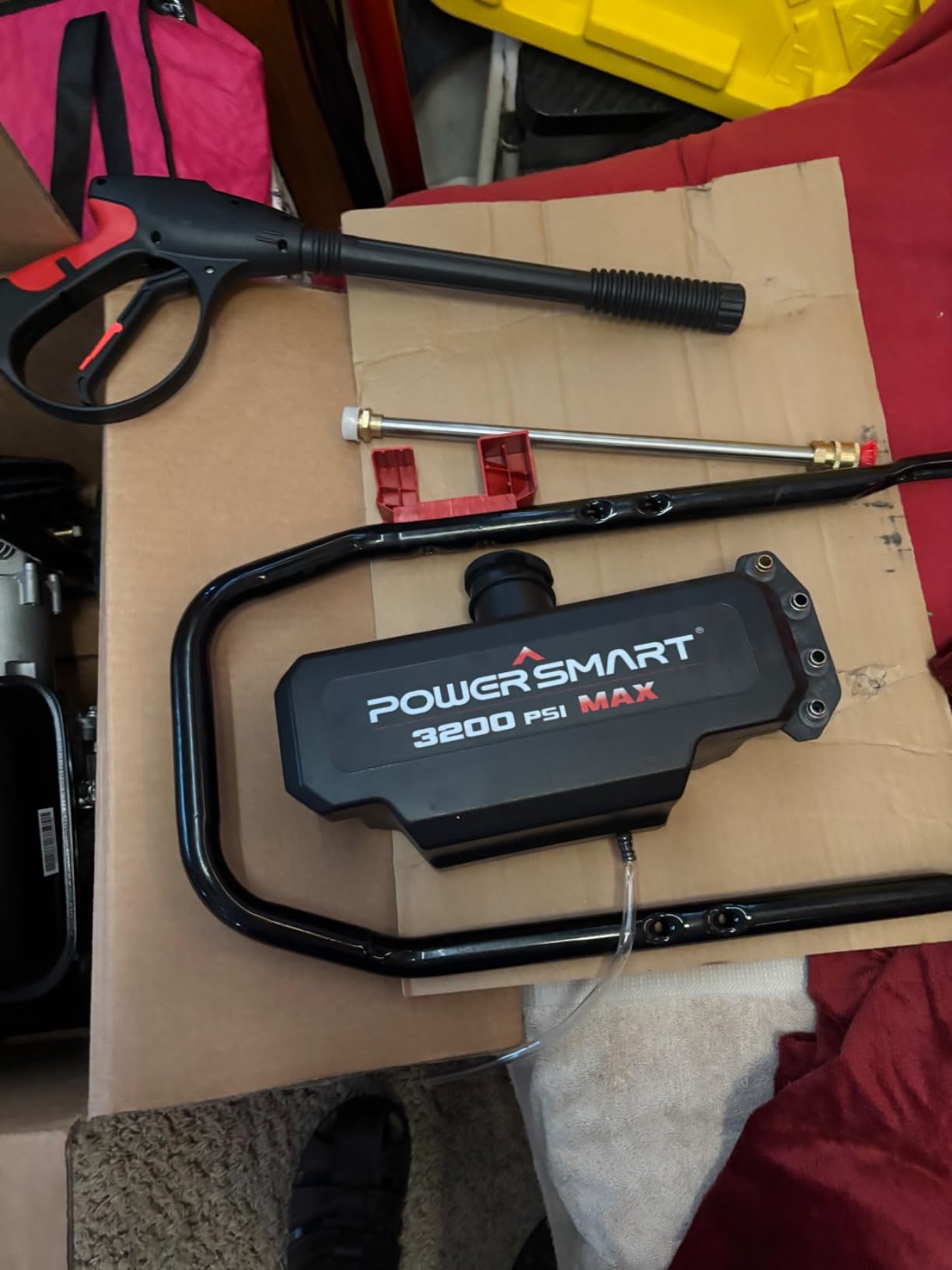
Two things separate this from every other machine at this level. The 3800 PSI is the highest pressure figure in the roundup, and it is paired with a full 2.5 GPM rather than a flow number that has been trimmed to hit a headline. That combination is why owners report reaching second-story siding without climbing a ladder with a wand in one hand.
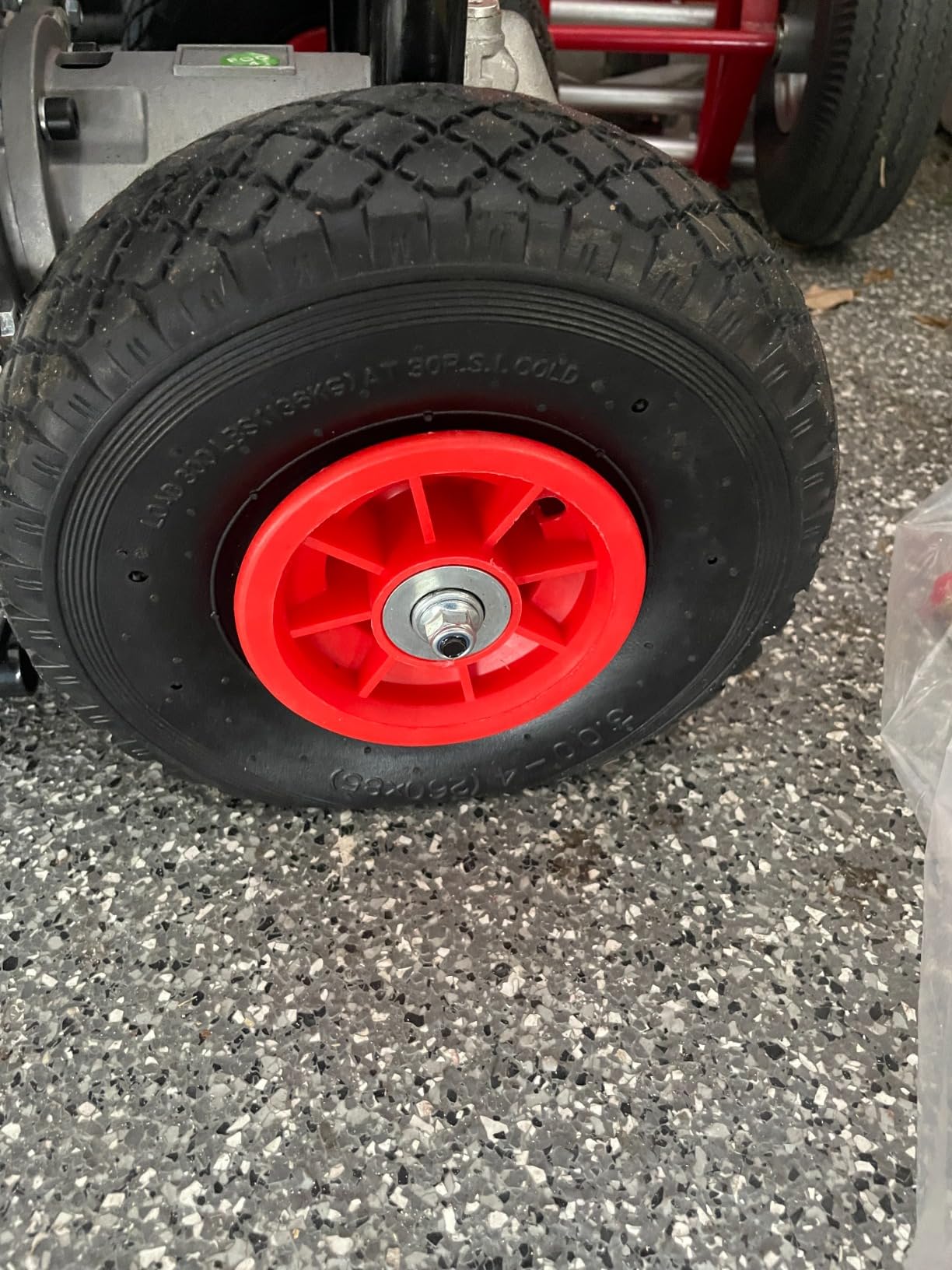
The second is the hose. At 35 feet of abrasion-resistant super-flex material, you get roughly ten more feet of working radius than the 25 foot standard, and that extra reach is what makes second-story work practical from the ground. Ten-inch pneumatic tires, a soft-grip handle, and a hook-and-sling storage setup keep it manageable and tidy.
It is also one of only a few machines here with real third-party certification behind the claims. It is PWMA performance certified, compliant with UL 1776 safety standards, and EPA engine certified. That is worth paying attention to, because a large share of the competition in this category publishes no certification at all.
The reservations are straightforward. The onboard soap tank holds 0.79 gallons, which you will refill several times on a whole-house job. The brand is newer, with a review base of 192 against more than 2000 for the established Simpson models, so we have less long-term data. And the axial pump is a lighter-duty design than the triplex units on the Honda-powered machines.
Is more pressure always better on siding and decks?
No, and this is where the 3800 PSI headline needs context. Pressure is force; flow is how fast you rinse the dirt away. Use a wide fan nozzle and keep the wand moving, and the extra pressure helps with stubborn algae. Park a red 0 degree nozzle on wood and you will etch it, on vinyl siding you can force water behind panels, and on a car you will strip clear coat. High psi plus low flow is the most common way people damage their property.
Is the 35 foot hose worth the extra reach?
For anything above one story, yes. That extra ten feet of radius means you can hold a steady fan spray on second-story siding from the lawn instead of dragging the machine, repositioning the inlet hose, and restarting. For single-level work it matters much less, and the additional hose weight is mild extra handling on a 61 pound machine.
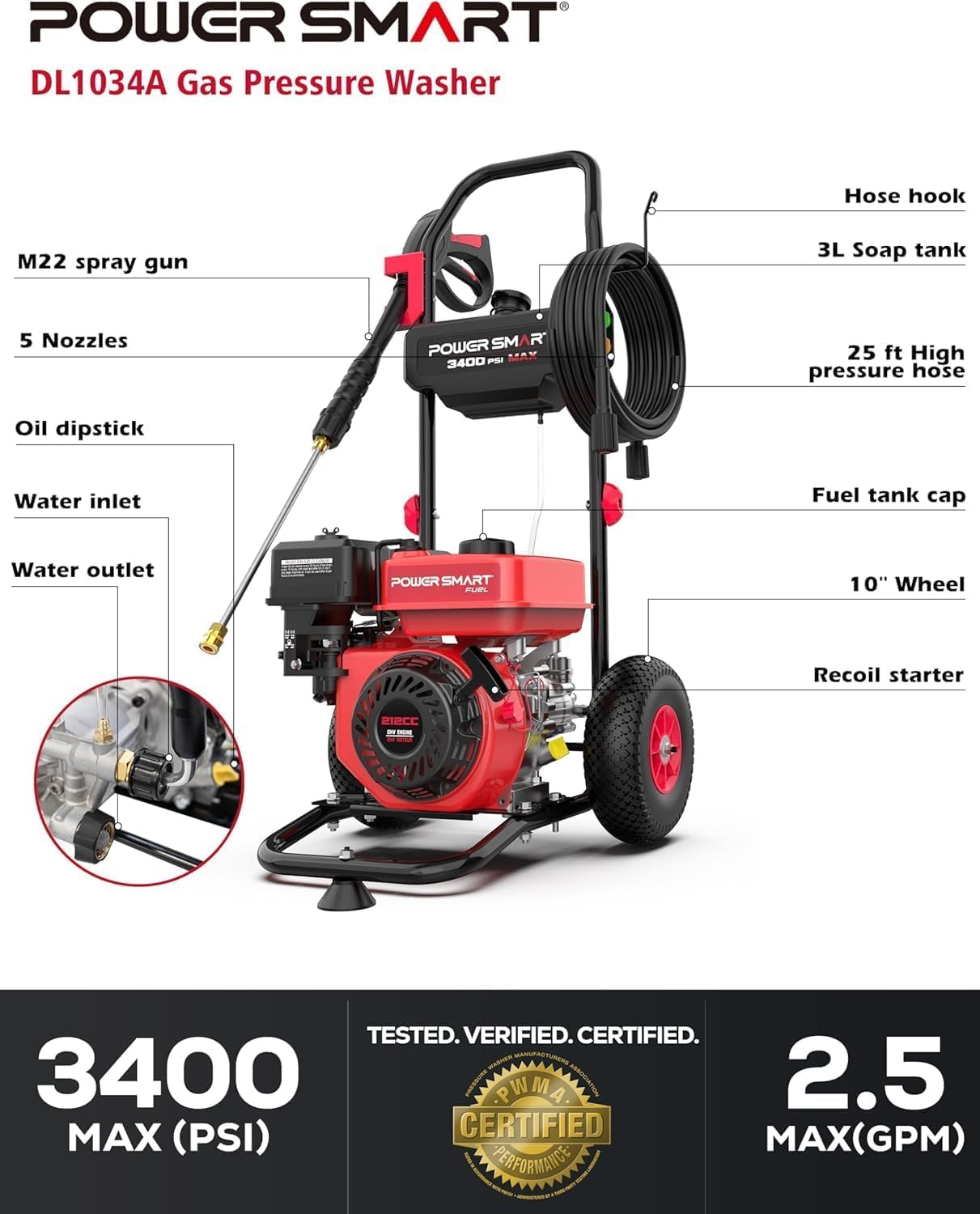
7. PowerSmart 3400 PSI Compact – Best for Tight Storage
PowerSmart Gas Pressure Washer 3400 PSI, 2.5 GPM Gas Powered Pressure Washer, 212CC Engine, 10″ Wheels, 5 Nozzles for Patio, Car, Driveway, Fence & Home Cleaning
3400 PSI
2.5 GPM
212cc OHV
31 lb
folds down for storage
Pros
- Full-size 3400 PSI and 2.5 GPM in a 31 pound body
- 212cc 4-stroke pull-start engine runs in seconds with no oil mixing
- Foldable handle and wheels for garage or shed storage
- Five quick-connect nozzles from 0 to 40 degrees plus soap
- Owners report it handles whole-house pre-paint jobs and truck washing
Cons
- Listing is described as an older version with inconsistent build quality
- One reviewer received broken parts with an oil leak
- Noticeably noisier than electric units
- Oil filler and hose hookup sit awkwardly near the wheels
- Smallest review base and lowest average rating in the roundup
The reason to consider this machine is simple: it delivers genuine full-size gas pressure, 3400 PSI at 2.5 GPM, in a body that weighs 31 pounds. That is less than half the weight of the Honda-powered machines here, and with a foldable handle it collapses into a shed corner that would not fit a full-size frame. The 212cc four-stroke OHV engine pull-starts in seconds and needs no oil mixing, which removes the most common beginner mistake.
Owners use it for whole-house exterior prep before painting and for washing trucks, and the five quick-connect nozzles from 0 through 40 degrees plus soap give you enough pattern control for both jobs. For a renter, a condo owner, or anyone storing equipment in a genuinely small space, the power-to-size ratio here is hard to argue with.
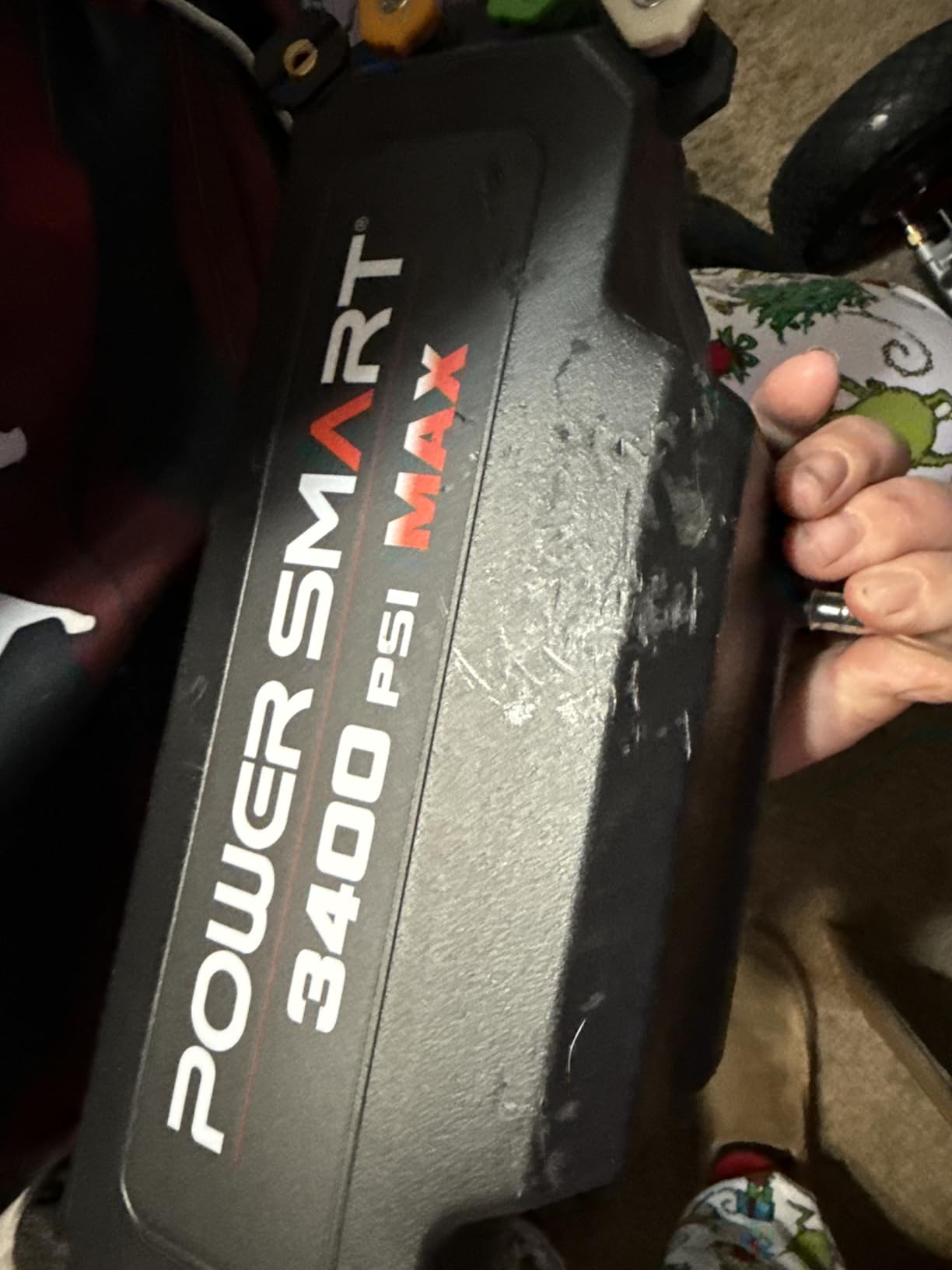
What gives us pause is quality control rather than capability. The listing is described as an older version of the model, build quality is inconsistent, and one reviewer received a unit with broken parts and an oil leak that looked like an opened box. The oil filler and hose hookup are also placed in awkward spots near the wheels, which turns a two-minute service into a wrestling match.
At 97 ratings it has the thinnest owner base in the roundup and the lowest average rating, and at 4.2 the gap to the leaders is small but real. Owners also report it is noisier than electric units, which tracks with a small engine running without a large acoustic cabinet.
When does a 31 pound washer beat a 61 pound one?
When storage is the binding constraint and you have to carry it. If your machine lives in a rented garage, a small shed, or the back of a hatchback, weight becomes a recurring tax paid on every single job. At 31 pounds you can lift this to a deck or a truck bed without a second person, and the folded handle means you are not losing a whole wall of space to it.
How do you handle the quality control complaints?
Inspect the unit the day it arrives. Check the frame welds, look under the engine and the pump for signs of an oil leak, confirm every hose connection seats without weeping, and run the engine for five minutes before you accept it. If anything arrives broken or leaking, deal with it immediately through the seller rather than after the first use, and keep the shipping box until you are satisfied.
8. VEVOR 3400 PSI – Most Versatile with a Solid Pump
VEVOR Gas Powered Pressure Washer 3400 PSI 2.6 GPM, with Spray Gun and Extension Wand, 5 Quick Connect Nozzles, Copper Pump
3400 PSI
2.6 GPM
210ml 4-spoke engine
26 ft hose
57 lb
Pros
- Cleaning power owners compare favorably to premium electric washers
- Quick assembly with a straightforward first-start procedure
- Copper and aluminum pump feels solid and well built
- 26 ft abrasion-resistant hose with on-machine accessory storage
- Five quick-connect metal nozzles plus soap
Cons
- Engine on/off switch can vibrate to the off position mid-run
- Instructions are thin on oil quantity and type
- Some included fasteners are low quality
- A few units arrived leaking oil or would not start
- Very loud in operation
At 2.6 GPM this machine has more flow than most of the field, and that is the spec that makes it feel stronger than its 4.0 average suggests. Reviewers compare its cleaning performance favorably against premium-brand electric washers they have owned, and they report successful work on driveways, patios, siding, fences, and vehicles. The copper and aluminum pump is the part owners single out as feeling well made for the money.
Setup is quick, the 26 foot abrasion-resistant hose is slightly longer than the 25 foot standard, and every accessory stores on the machine, which means you are not hunting for a nozzle in the grass. The five quick-connect metal nozzles cover 0, 15, 25, 40, and soap, and the gun uses a standard quick connection.
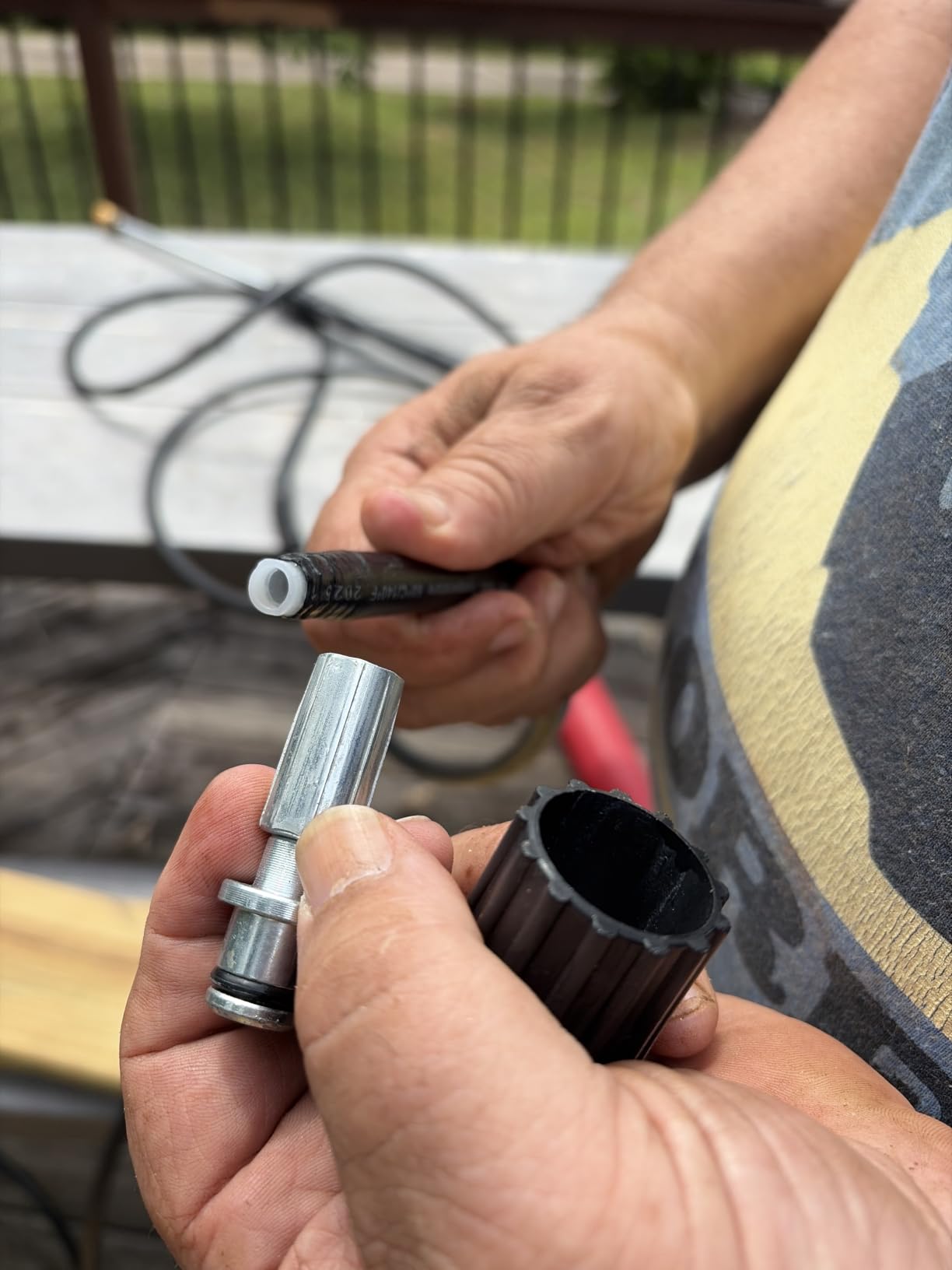
The most repeated complaint is a specific, fixable one: the engine on and off switch can vibrate into the off position during operation, and several owners have replaced it with a sturdier aftermarket switch. Instructions are thin on practical details like oil quantity, oil type, and idle adjustment, and some included fasteners are reported as low quality. A small minority received units that leaked oil or would not start.
Two other practical notes. Owners describe it as very loud, more so than the other machines here, so hearing protection is not optional. And the pull cord is mounted at the front of the frame, which makes starting awkward in a way that takes about a minute of getting used to.
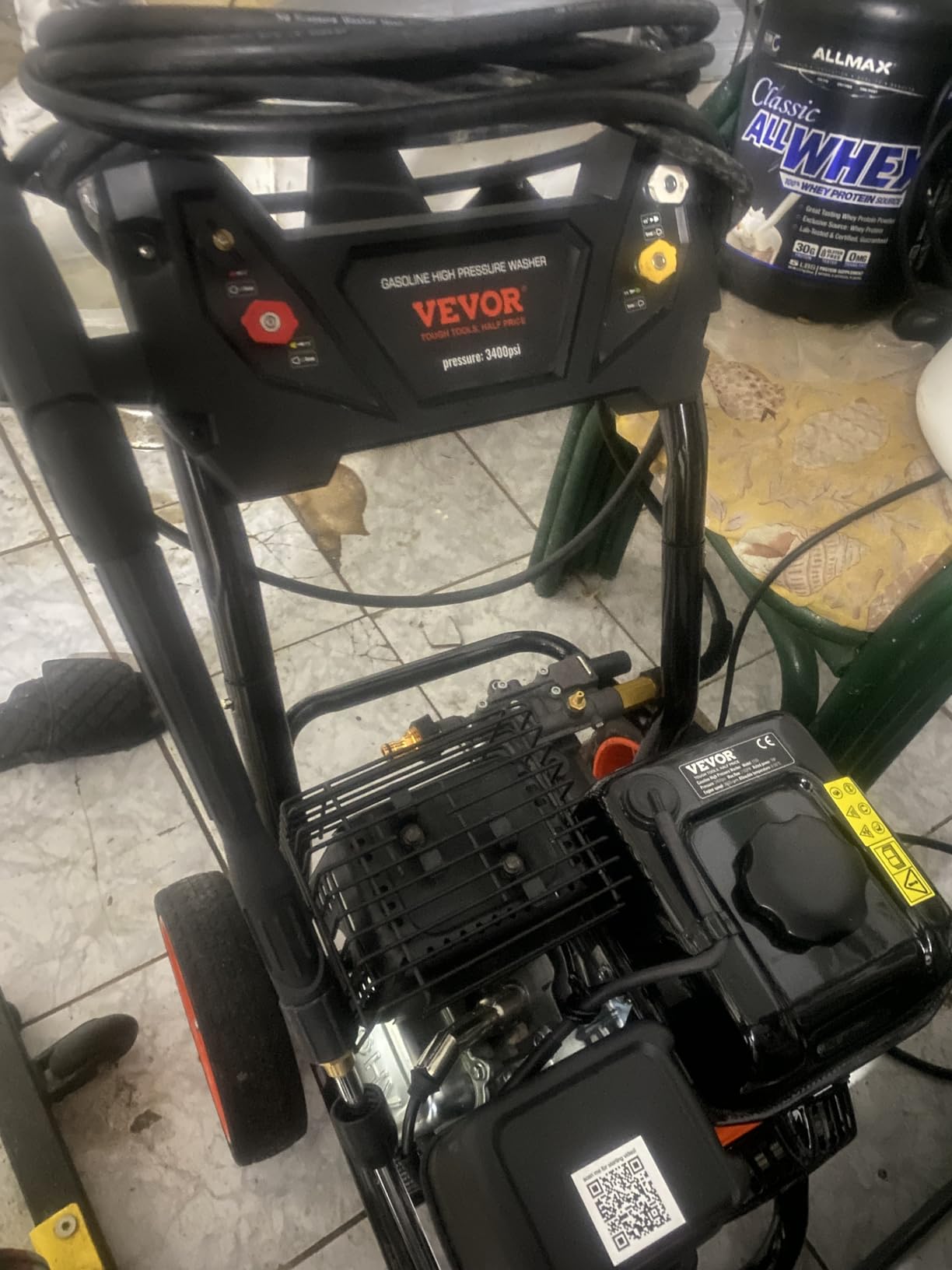
Is a 4.0 average a warning sign on this machine?
It is the lowest average in this roundup, and the rating distribution explains it: roughly one in five ratings is one star. That pattern usually points to a specific component rather than a general quality level, and here it lines up with the reported switch failures and out-of-box oil leaks. The bulk of owners report good machines that perform well, so treat the low average as a component risk you should inspect, not a verdict on the whole design.
Is the copper and aluminum pump a real advantage?
Some of it is real. Owners who have run these pumps describe the build as solid, and copper and aluminum pump bodies do run cooler than cheap castings. But pump body material is not the same as pump quality, which comes down to the triplex versus axial cam design, the unloader quality, and the presence of thermal relief. This one is an axial design, so the premium machines with triplex pumps still lead on sustained heavy use.
9. IvyBess 4200 PSI – Highest Flow in the Roundup
Gas Pressure Washer 4200PSI Gas Power Washer 4.0 GPM 212CC Commercial High Powered Pressure Washer, with Spray Gun and Extension Wand, 5 Quick Connect Nozzles, Copper Pump
4200 PSI
4.0 GPM
212cc 7HP OHV
25 ft hose
66 lb
Pros
- 4200 PSI and 4.0 GPM suits heavy residential and light commercial work
- 212cc 7HP four-stroke OHV engine with a wear-resistant axial cam pump
- Dual 3L soap tank with an adjustable mix switch
- 25 ft hose cuts the need to move the machine around the site
- Anti-rust steel frame with 10 inch pneumatic all-terrain wheels
Cons
- Only 30 ratings
- so long-term durability data is limited
- Review text was not available in our data so defects could not be verified
- Manual mixes SAE 10W-30 fill guidance with metric tank specs
Flow is the story here. A 4.0 GPM output is roughly 60 percent more water per minute than the 2.5 GPM machines that dominate this roundup, and on large flat surfaces like long driveways, patios, and parking areas that is the difference between one pass and two. Paired with 4200 PSI, this is the most aggressive cleaning combination in the group.
The rest of the specification supports it. A 7HP 212cc four-stroke OHV engine drives a premium axial cam pump rated for high wear resistance. There is a 3.6 liter fuel tank, which is large for this class and reduces refills on long jobs, plus a dual soap tank of 3 liters with an adjustable mix switch so you can dial detergent concentration. Five quick-connect nozzles run from 0 to 60 degrees.
It is also one of only two machines here with current EPA, CARB, and ETL certification, so it can be sold in California. The wand fitting is a standard quarter inch quick connect, which means surface cleaners, extension wands, and foam cannons from other brands will all work. The warranty is two years.
Why is the review base so small?
Because the listing is newer than most of the field. At 30 ratings it has the thinnest verified owner history in this roundup, and we were not able to retrieve detailed written review text for it. High averages on small samples describe the machines that reached owners intact rather than the long-term reliability picture, and we weight the established models more heavily for that reason.
Who should buy a 4.0 GPM machine over a 2.5 GPM one?
Anyone cleaning large flat concrete on a regular basis, running multiple units, or working a property where you would otherwise be constantly moving the machine. The extra flow rinses faster and shortens the job, and the larger fuel tank supports the longer runtime that creates. For a small deck and two cars, the simpler 2.5 GPM machines are more than enough and easier to handle.
10. Steupoek 4200 PSI – Best Never-Flat Wheels and CARB Access
4200 PSI Gas Pressure Washer, 4.0 Max GPM 212CC 7HP Commercial Gas Power Washer, Spray Gun and Wand, 5 Nozzle Set, for Cars/Fences/Driveways/Homes/Patios/Furniture
4200 PSI
4.0 GPM
212cc 7HP engine
25 ft hose
66 lb
Pros
- Strong controllable pressure that removes brake dust without stripping paint
- Multiple nozzle angles cover siding
- concrete
- decks
- cars
- and furniture
- Assembly takes about ten minutes
- Two-year warranty with EPA and CARB certification
- Quarter inch quick connect accepts surface cleaners and foam cannons
Cons
- Poorly worded instructions with inadequate images
- No real grip handles on the unit for lifting
- 1L soap tank is smaller than competing units
- Some of the 30 ratings appear to cover hoses and accessories
This is the other 4200 PSI and 4.0 GPM machine, and the setup is comparable: a 7HP 212cc gasoline engine, a commercial-grade pump, five quick-connect nozzles from 0 to 60 degrees plus a dedicated soap nozzle, and a 25 foot high-pressure hose. EPA and CARB certified with a two-year warranty, so California buyers have a second option here.
What separates it is the running gear. The large never-flat tires mean you are not airing down a tube every few months, and they hold up on lawns, gravel, and mud where pneumatic tires need the same care. A trigger safety lock on the spray gun is a genuine safety improvement over models without one, and the quarter inch quick-connect fitting is a genuine compatibility win for accessories.
Owners report pressure they can control, which is the important word: it removes ingrained grime and brake dust without stripping paint or etching wood, as long as you use the right nozzle. Assembly reportedly takes about ten minutes, and the unit is easy to wheel between jobs on those tires.

How good are the assembly instructions really?
They are the weakest part of this machine. Owners describe the written instructions as poorly worded and dependent on inadequate images, which makes first assembly confusing even though the process itself only takes about ten minutes. There are also no proper grip handles on the unit itself, so lifting it out of the box is awkward. Budget an extra half hour on day one.
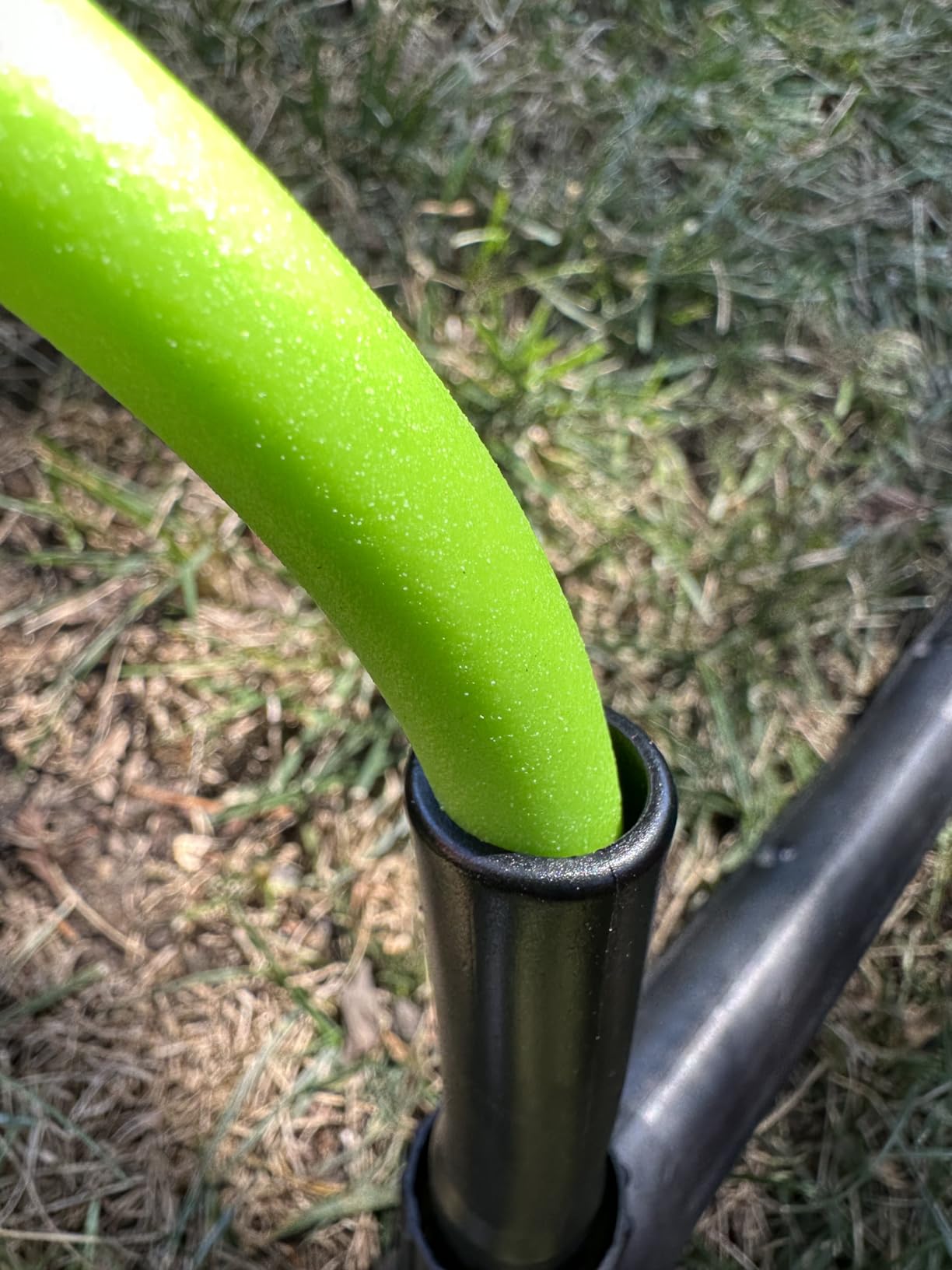
What should you verify before relying on this washer?
Run it for a full cycle before you start a job and confirm the engine holds speed under load and the pump reaches pressure without surging. Check that the trigger safety lock engages and that all five nozzles seat properly in the quick connect. At 30 ratings, some of which appear to cover replacement hoses rather than the washer, treat this as a capable specification sheet with limited long-term evidence behind it.
11. WEN 3400 PSI PW224G – Best Warranty for the Money Tier
WEN 3400 PSI Gas Pressure Washer with 223cc Engine, 2.7 GPM Flow Rate and Onboard Soap Tank (PW224G)
3400 PSI
2.7 GPM
223cc OHV
12 in never-flat wheels
3 yr warranty
Pros
- 3400 PSI and 2.7 GPM from a 223cc OHV engine covers typical home work
- Axial cam pump selected for spray consistency and service life
- 25 foot reinforced hose plus an onboard soap tank
- 12 inch never-flat wheels make moving and storing simple
- Three-year warranty and ETL listing
Cons
- Weakest rating distribution here with a 15 percent one-star share
- 2.7 GPM means longer runs on large surfaces than 4.0 GPM models
- Free-text review content was not available so specific defects could not be verified
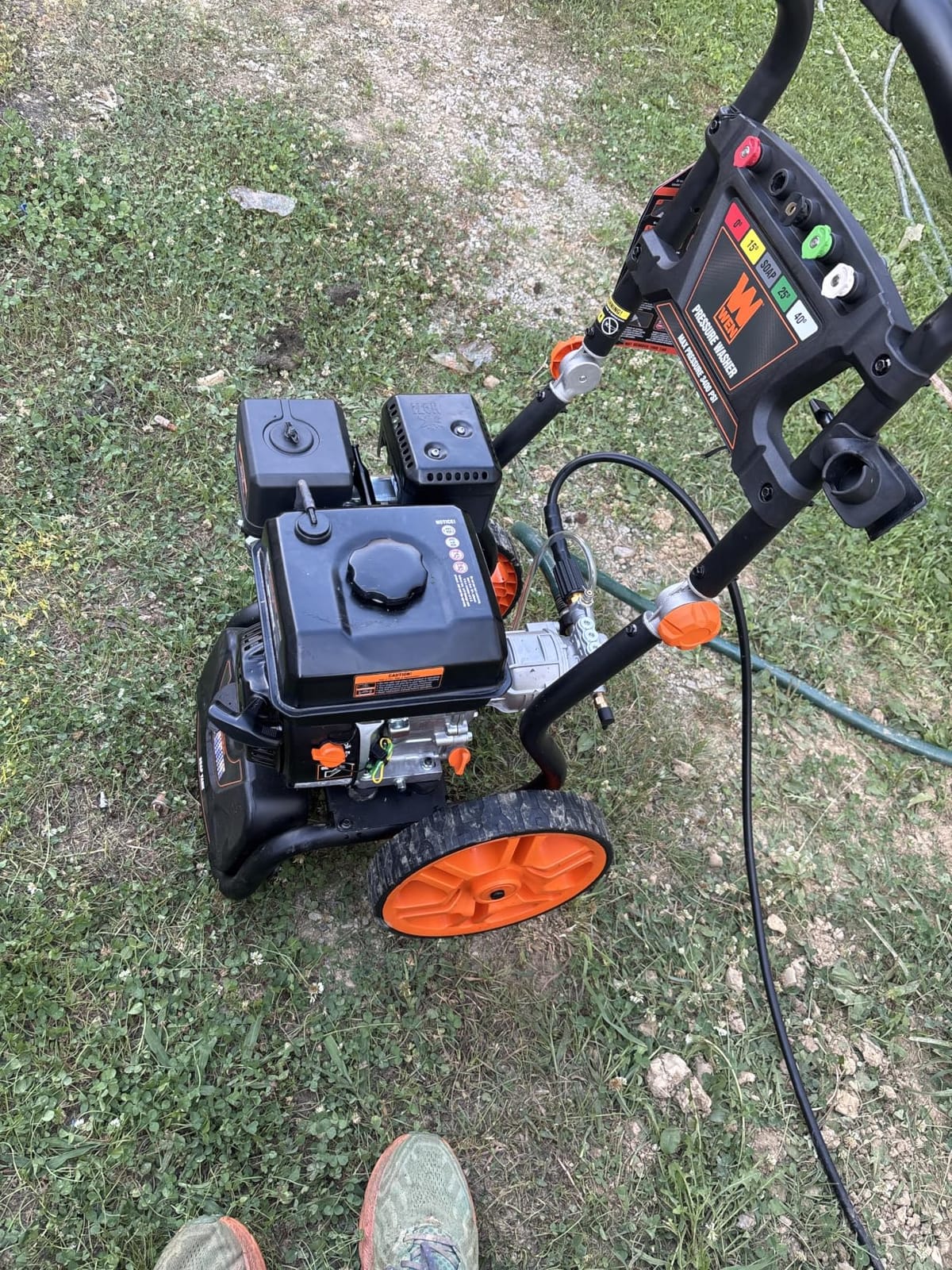
The 2.7 GPM flow rate here is the best balance in the roundup for a homeowner. It is meaningfully faster than the 2.4 and 2.5 GPM machines without the 66 pound bulk of the 4.0 GPM units, and it comes from a 223cc four-stroke OHV engine that is a step up in displacement from the 208cc engines most of the field uses.
The feature set is aimed squarely at convenience. There is a 25 foot reinforced hose, an onboard soap tank, five quick-connect nozzles including a dedicated soap nozzle, a quick-connect spray gun, and a 0.7 gallon fuel tank. The 12 inch never-flat wheels are the largest in the roundup, which is not a small thing on uneven ground or gravel, and they never need air. The warranty is three years, and it is ETL listed.
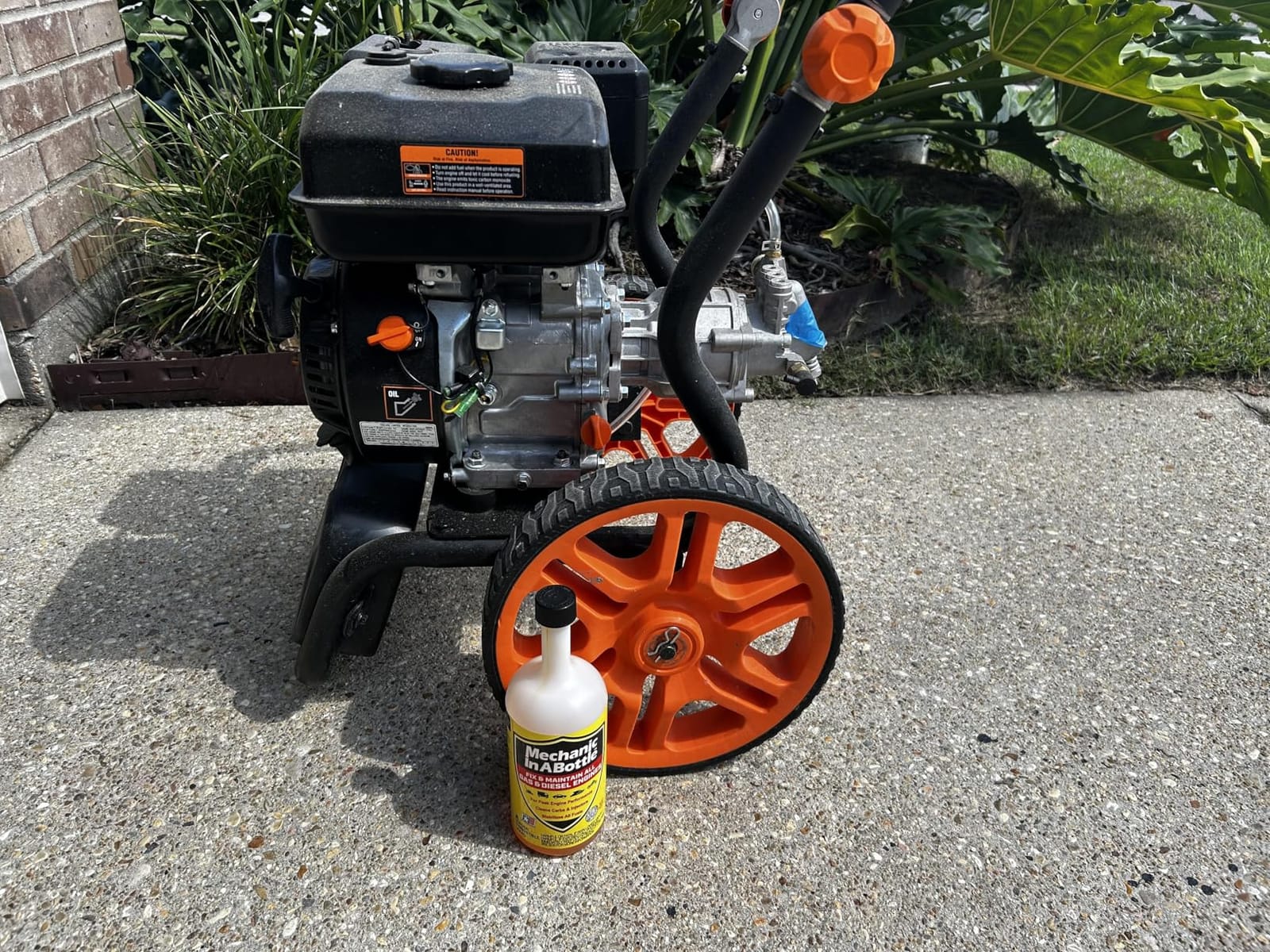
Is the axial cam pump the weak point here?
It is a lighter-duty design than a triplex pump, and it is why the power comes from a larger engine instead. Axial cam pumps work fine for residential jobs, especially with the 2.7 GPM flow keeping the pressure load steady. They are simply less forgiving under sustained daily commercial use, where a triplex pump with replaceable wear components is the better long-term bet.
What does the 4.1 average actually tell you?
It tells you the machine has a wide spread of outcomes. The rating distribution is about 73 percent five star but 15 percent one star, and that is the widest gap in the roundup. Buyers who receive a working machine generally find the output and accessory package adequate for home use. The one-star block points to some units needing service or replacement, so inspect yours early and keep the proof of purchase.
How to Choose: PSI, GPM, Pumps and Engines
Start with flow, not pressure. PSI is the force that breaks a surface bond, and GPM is the volume of water that carries the loosened dirt away. A 3300 PSI machine at 2.5 GPM produces 8250 of combined cleaning power. A 4200 PSI machine at 4.0 GPM produces 16800, which is roughly double the work per hour and explains why the high-flow machines finish a driveway in one pass rather than three.
For most homes, the sweet spot sits between 2.3 and 2.6 GPM at 3000 to 3500 PSI. Below 2.0 GPM you will spend more time moving dirt around than removing it, and above 4.0 GPM you are carrying 66 pounds of machine for capacity your driveway does not need. The 2.7 GPM WEN in slot eleven is the most efficient of the smaller machines here, and the 4.0 GPM pair in slots nine and ten is the right choice only for genuinely large flat areas.
Engine brand is the strongest longevity signal, and the ordering that shows up repeatedly in owner discussion is Honda first, then Briggs and Stratton, then manufacturer-branded OHV engines, then generic clones. A Honda GX200 is a documented, widely serviced design, and a small engine shop in nearly any town can work on it. That is not a brand preference, it is a parts-availability fact.
Pump type is the second signal, and it is the one most buyers skip. An axial cam pump is simple, quiet, cheap, and fine for seasonal residential work. A triplex plunger pump runs cooler under sustained load, holds pressure more steadily, and has replaceable wear components. It is the reason the two Honda-powered Simpson machines in slots one and four have the strongest pump coverage in this roundup. For regular or commercial use, pay for the triplex.
Finally, check the warranty component by component rather than reading a single number. A five year frame, three year pump, and two year engine, as on the DeWalt, tells you something very different from a one-year blanket. And if you buy in California, filter the list down to the CARB-certified machines, which here means the IvyBess and the Steupoek.
Gas vs Electric, Soap Tanks, Noise and the Cost of Ownership
Electric units produce around 2000 to 2400 PSI at 1.5 to 2.0 GPM, need no fuel and no oil, run quietly, and start instantly. Gas units here run 3300 to 4200 PSI at 2.3 to 4.0 GPM, clean a large area roughly twice as fast, and trade all of that convenience for fuel, two types of oil, a recoil start, and real maintenance. If you have a two-car driveway and a car to keep clean, an electric unit is probably enough. If you have a long driveway, a house, a fence line, and a deck, gas is the only practical option. Our electric roundup covers the smaller-surface case in full.
The onboard soap tank question comes up constantly, and owners generally contradict the gimmick framing. Detergent needs to be applied and allowed to dwell before you knock it off, and a machine that cannot do that means carrying a separate foamer attachment. Most tanks here hold under one gallon, so expect refills on a whole-house job. It is a real convenience, not a decisive factor, and it should not drive your purchase.
Noise is the most common complaint about this entire category, and it is not a defect. A small recoil-start engine at full throttle is loud, and owners across the board recommend foam earplugs, particularly on the axial cam machines which spin faster. Check your local noise ordinances and think about neighbours before planning an early Sunday start. Ear protection is not optional on any machine in this roundup.
For total cost, count fuel, engine oil, pump oil, and a spark plug, not the sticker price. If you run a washer for four hours a month, fuel is a minor line. Two oil changes a year and one pump oil check a year is trivial. The bigger cost is premature failure, and that is where engine and pump choice pay off. Our gas grill maintenance guide covers the small-engine care routines that transfer directly, including fuel stabilization and seasonal storage.
Storage is the discipline most first-time gas washer owners skip, and skipping it is the main reason these machines disappoint. Run the engine to full operating temperature before shutting down, disconnect the battery if it has one, drain or run out old fuel or add stabilizer, disconnect the water supply, and blow the remaining water out of the pump by running it without the inlet connected. Never start a stored machine with water in the pump unless you are about to use it. The pressure-related buying guides we publish follow the same seasonal storage logic.
One last piece of owner wisdom that matches our experience: forum regulars on hobbyist and contractor boards consistently recommend confirming the pump has an oil sight window and choosing a Honda engine over a generic clone, and they treat brands like Kranzle as the closest thing to a buy-it-for-life gas pressure washer, with Kärcher frequently recommended as a quality budget option. Those brands did not make our shortlist, so treat them as names to research on your own rather than picks from us.
Frequently Asked Questions
What is the best gas pressure washer for the money?
The SIMPSON PowerShot 3300 is our pick. It pairs a Honda GX200 engine with a 3300 PSI, 2.5 GPM AAA triplex pump, a 25 foot MorFlex hose, and a five-year limited pump warranty. It also has the deepest owner history here, with more than 2200 ratings averaging 4.3, so the long-term experience is documented rather than assumed.
What is the most reliable brand of gas pressure washer?
Reliability in this category tracks the engine and pump more than the badge on the frame. Machines built around a Honda GX200 and a triplex plunger pump lead on longevity, and Simpson builds several of them. Briggs and Stratton engines come next, then manufacturer-branded OHV engines. Generic clone engines are the ones we would avoid for a machine you plan to keep.
What is the best budget gas pressure washer?
The Ezasin 3500 PSI is the strongest budget option in this roundup, with a 4.4 average, 3500 PSI, and an onboard soap tank. The VEVOR 3400 is the alternative if you want more flow at 2.6 GPM, but its 4.0 average and reported engine switch problems give us less confidence. Both are axial cam pump designs, so neither is a heavy-duty choice.
Which pressure washer offers the best value for money?
Value is best measured by cleaning units, which is PSI multiplied by GPM. The SIMPSON PowerShot 3300 delivers 8250 cleaning units with a Honda engine and a five-year pump warranty. The Steupoek and IvyBess machines deliver 16800 cleaning units, but each has only around 30 ratings, so the proven value pick remains the Simpson.
Is an onboard soap tank worth it or a gimmick?
It is useful rather than essential. Pre-applying detergent and letting it dwell before rinsing is the correct order for algae and organic growth, and an onboard tank saves carrying a separate foamer. Most tanks here hold under one gallon, so expect refills on large jobs. Judge the machine on pump and engine instead and treat the soap tank as a convenience feature.
The Best Gas Pressure Washer for the Money
The SIMPSON PowerShot 3300 wins this roundup because it is the only machine here where the engine, the pump, the warranty, and the owner history all point the same way. A Honda GX200 you can have serviced anywhere, a triplex pump with a five-year warranty, and more than 2200 ratings averaging 4.3 make it the pick we would put in our own garage in 2026.
Buy the Simpson ALH3228 if you plan to use it commercially and want the longest pump coverage available. Buy the Ezasin 3500 if you want maximum cleaning power per dollar and can live with a one-year warranty and a careful eye on the gun brackets. Buy the DeWalt 3300 if warranty length outranks everything else, and the WEN 3400 if you want never-flat wheels and soap on board.
Whatever you choose, buy the pump type you need. A triplex pump and a documented engine brand are what separate a washer that lasts a decade from one that disappoints you in the second season, and that difference is worth far more than any feature on the box.