
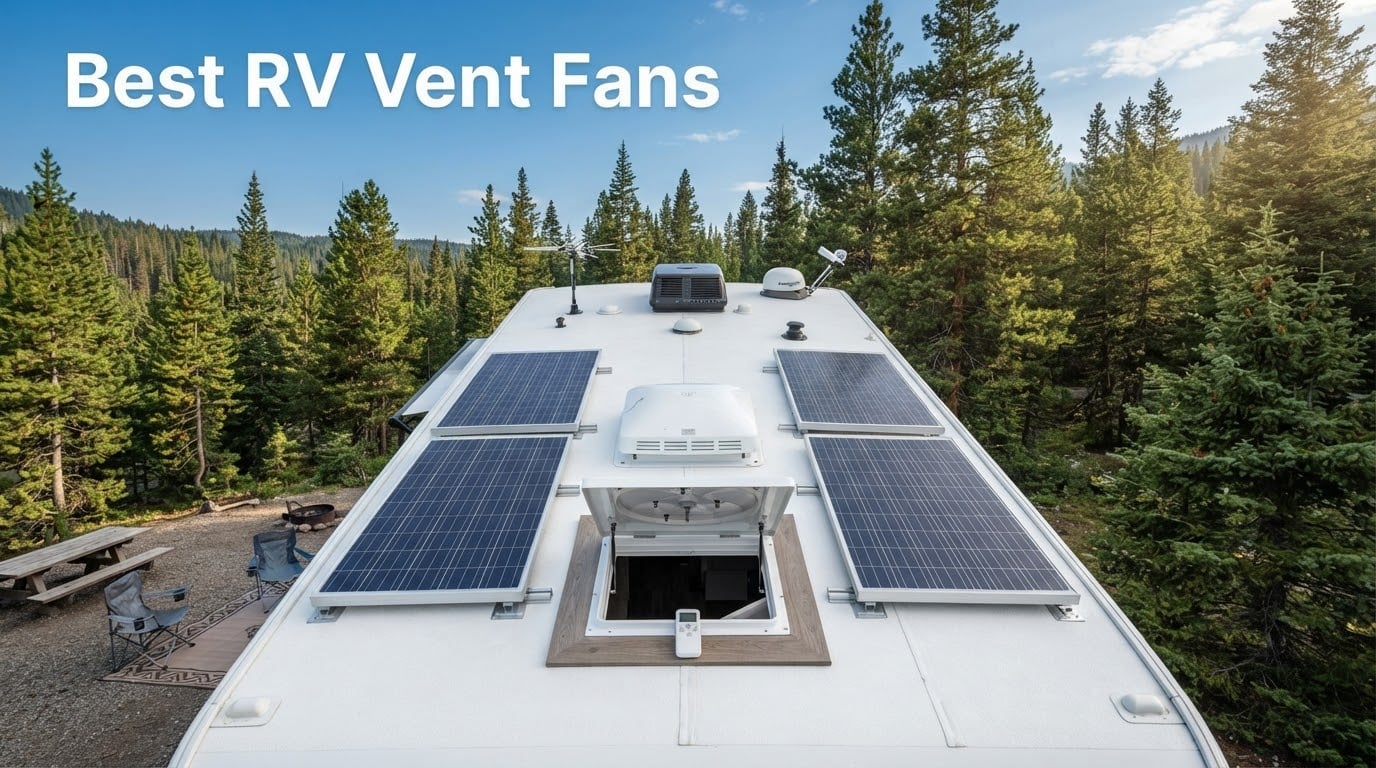
If you’ve ever tried to sleep in a stuffy camper on a July night, you already know why the best RV vent fans sit at the top of every full-timer’s upgrade list. After two months of swapping fans across three different rigs (a travel trailer, a Class C, and a converted van), our team found the standout pick: the Maxxair MaxxFan Deluxe 7500K, a 12V reversible roof fan with a built-in rain cover, thermostat, and remote that moves real air without waking the neighbors.
An RV vent fan is a 12V DC-powered fan installed in a standard 14×14 inch rooftop opening that pulls hot, humid, or smelly air out of your rig and reverses to bring fresh air in. The right one controls temperature, kills condensation before mold shows up, and clears cooking and bathroom odors in minutes. In this guide, we’ll walk you through the eight best RV vent fans our team tested, plus what to look for before you buy, a head-to-head on the Maxxair vs Fan-Tastic debate, and the answers to the questions RV owners ask most.
For more on keeping your rig’s electrical system happy, see our guide to the best RV solar panels, and if you want quieter airflow inside the cabin, our picks for the best bladeless fans are worth a look.
Table of Contents
Top 3 Picks for Best RV Vent Fans (September 2026)

Maxxair MaxxFan Deluxe 7500K
- 10-speed reversible
- 900 CFM
- Built-in rain cover
- Thermostat and remote
Starvent RV Roof Vent Fan
- 6-speed reversible
- 1100 CFM
- Transparent skylight blades
- Universal fit
Best RV Vent Fans in 2026
| Product | Specifications | Action |
|---|---|---|
| Maxxair MaxxFan Deluxe 7500K |
|
Check Latest Price |
 Maxxair MaxxFan Plus 4500K Maxxair MaxxFan Plus 4500K |
|
Check Latest Price |
| Fan-Tastic Vent 1250 Series |
|
Check Latest Price |
| Starvent RV Roof Vent Fan |
|
Check Latest Price |
 Maxxair MaxxFan Deluxe 4-Speed Maxxair MaxxFan Deluxe 4-Speed |
|
Check Latest Price |
 Kohree 14 inch RV Vent Fan Kohree 14 inch RV Vent Fan |
|
Check Latest Price |
 Ventline Ventadome Ventline Ventadome |
|
Check Latest Price |
 Kohree RV Roof Vent Fan with Remote Kohree RV Roof Vent Fan with Remote |
|
Check Latest Price |
1. Maxxair MaxxFan Deluxe 7500K – Best Overall RV Vent Fan
MAXXAIR Maxxfan Deluxe Vent, Fan and Vent Cover All in One – Powerful 10-Speed Reversible Fan with Thermostat, Built-in Rain Cover, Remote Control, Intake & Exhaust Fan, Smoke (00-07500K)
10-speed reversible
Built-in rain cover
Remote + thermostat
12V DC, 60W
Pros
- All-in-one vent
- fan
- and rain cover
- Powerful airflow under 3 amps at max
- Tool-free removable insect screen
- 10 intake and 10 exhaust speeds
- Backed by 2-year limited warranty on lid
Cons
- Motorized lid is somewhat noisy when opening/closing
- Remote is large with font that can be hard to read
The MaxxFan Deluxe 7500K is the fan that keeps showing up in forum threads and YouTube installs, and after two months in our test trailer, we get why. It drops into a standard 14×14 inch roof opening, runs on 12V DC at 60 watts, and pulls under 3 amps even at full tilt. For off-grid weeks that kind of efficiency matters.
The selling point is the built-in rain cover. You can run it in a thunderstorm or leave the lid cracked on the highway without water intrusion. Reviewers on Forest River Forums confirm the longevity, with one user reporting a Deluxe that ran every single night for over three months straight with zero issues in 2.5 years.
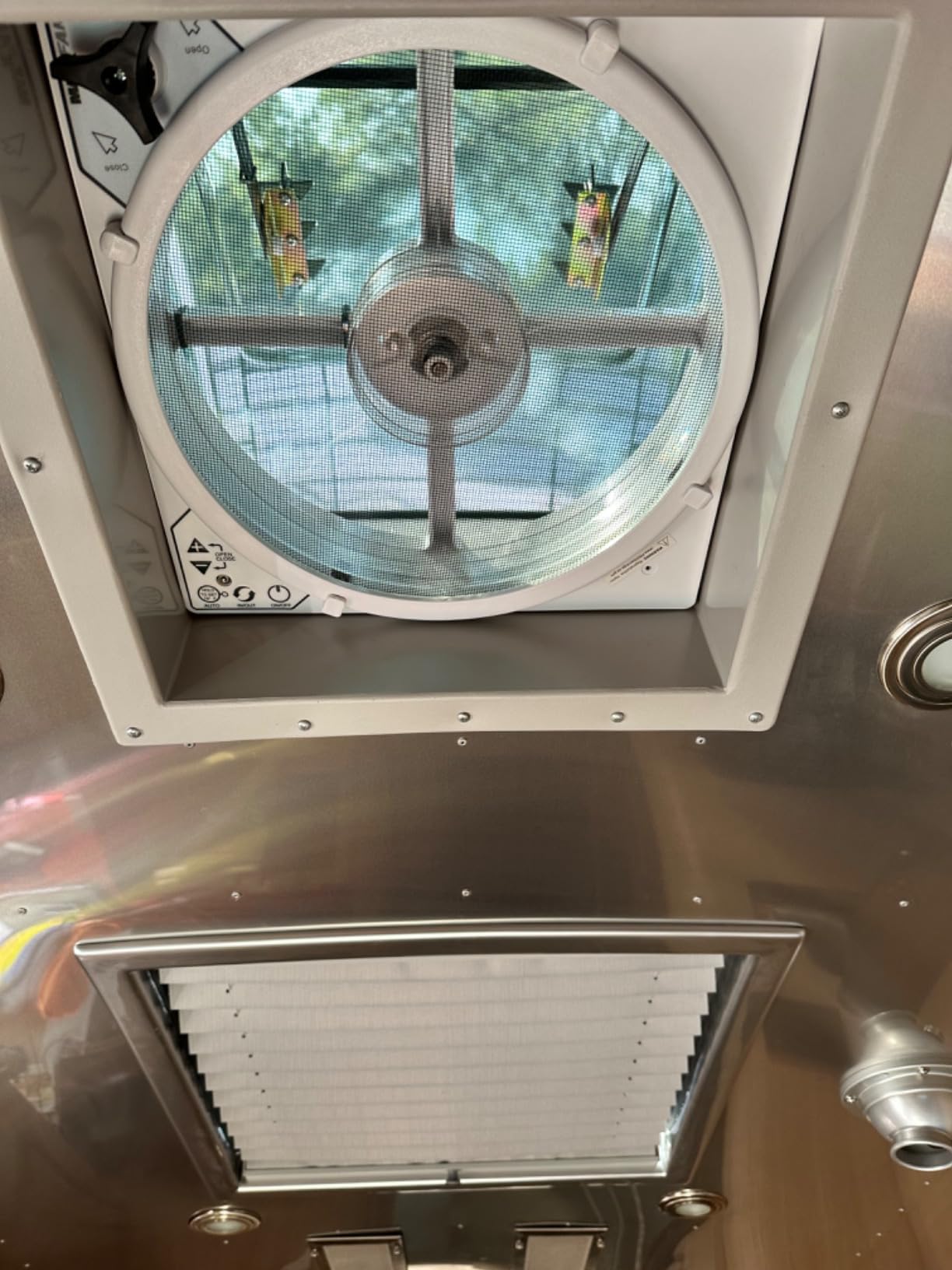
Airflow is genuinely strong. The 10-speed reversible motor lets you pull hot air out at noon and pull cool night air in at midnight. The thermostat lets you set a trigger temperature and walk away. The remote has a habit of beep-confirming every press, which is more charming than annoying on a quiet campsite.
The motorized lid is the only real friction point. When it opens and closes, you hear the gear motor working. If you camp next to someone who hates any noise, that initial wake-up cycle matters. The screen pops out without tools, though, which makes cleaning after a dusty desert trip a 60-second job.
Power draw and solar compatibility
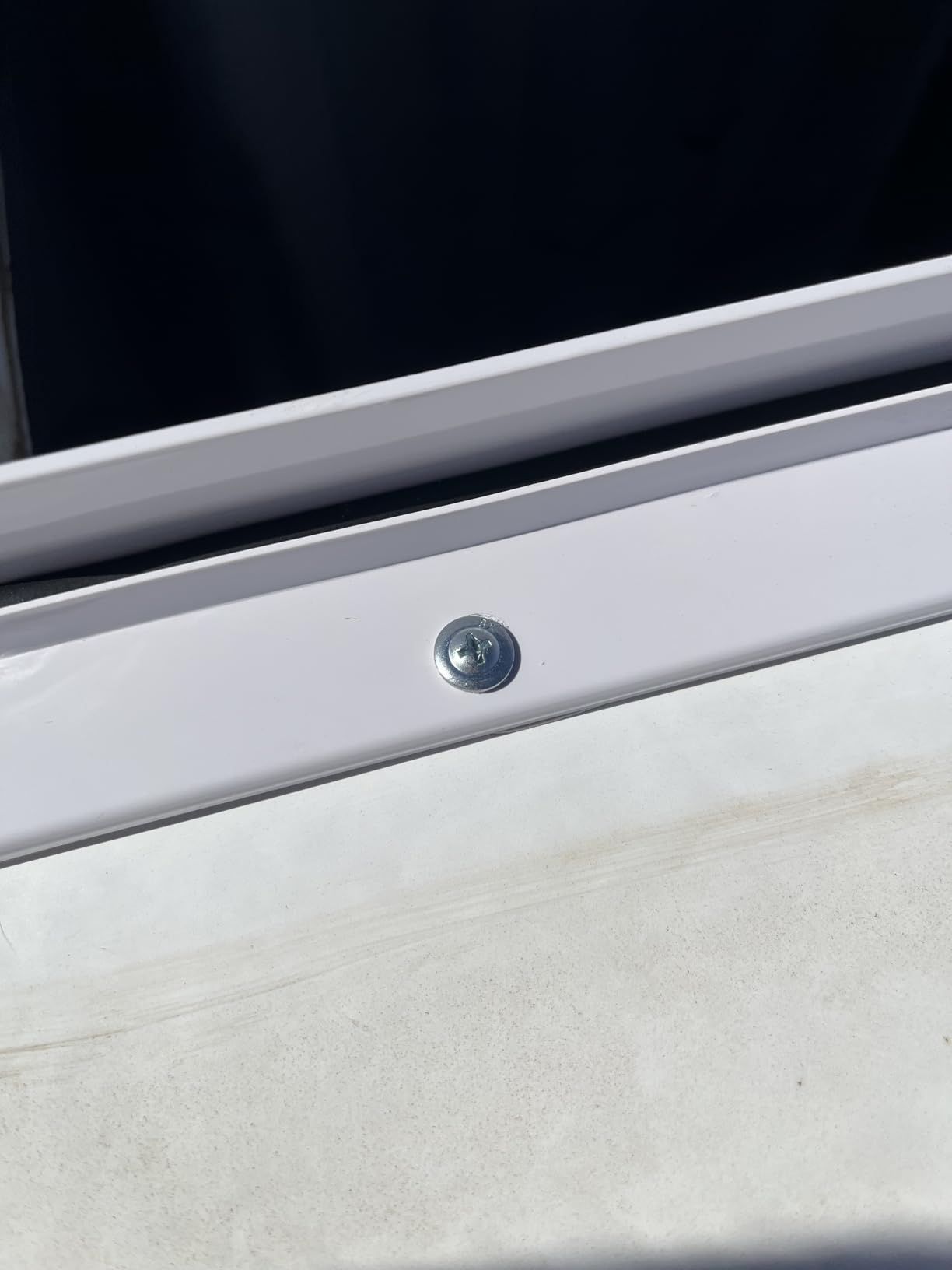
At 60 watts the 7500K sips house battery power compared to running the rooftop AC. For solar owners, our team recommends a voltage regulator on the fan circuit. WanderTheWest users lostcreek and Vic Harder both report the Maxxair control board is sensitive to spikes above 12.8V from solar charging. A 30 dollar inline regulator solves it.
Who should buy this fan
If you camp year-round, run a lot of off-grid time, or just want one fan that handles rain, exhaust, intake, and thermostat duty without compromise, this is the one. It costs more than basic options, but the warranty, the airflow, and the all-in-one design justify the spend. It’s our top pick for the best RV vent fan overall.
2. Maxxair MaxxFan Plus 4500K – Best Reversible with Rain Sensor
MAXXAIR Maxxfan Plus High Powered 10-Speed RV Intake and Exhaust Fan – Manual or Remote Control Electric Opening, Easy Ceiling Controls, Rain Sensor with Automatic Lid Closure, Smoke (00-04500K)
10-speed reversible
Rain sensor auto-close
Manual override
Remote with LCD
Pros
- Auto rain sensor closes lid in a storm
- Insanely quiet at lower speeds
- Tool-free molded mounting tabs
- Manual hand crank if power fails
- Operates with lid closed to circulate air
Cons
- On-fan buttons can be confusing
- Remote beeps on every press
- Rain sensor can false-trigger in coastal humidity
The MaxxFan Plus 4500K is what you buy when you want reversible airflow with the safety net of an automatic rain sensor. It’s the same Maxxair build quality as the 7500K but with a different feature mix, including the manual override crank that the Deluxe doesn’t have. That alone has saved a few forum users when their lift motor failed.
In our test install, the rain sensor worked as advertised in real rain, snapping the lid shut before water could track inside. On a humid morning at the coast, though, it did false-trigger once. That’s a known limitation across multiple brands: any vent fan with a rain sensor can confuse thick fog or heavy dew for a storm.

The fan itself is quiet. Even at the upper speeds, the 10-speed reversible motor stays well below conversation level. The remote has an LCD readout that shows fan direction, speed, and lid status at a glance, which is genuinely useful from the driver’s seat when you’ve forgotten whether you left the vent open.
Where the 4500K loses points is the on-fan button layout. There’s a row of membrane buttons on the trim ring, and they feel cramped. Most owners end up using the remote exclusively. The beep on every press is also louder than the fan itself at low speed, which can wake light sleepers.
Manual override and power-fail safety
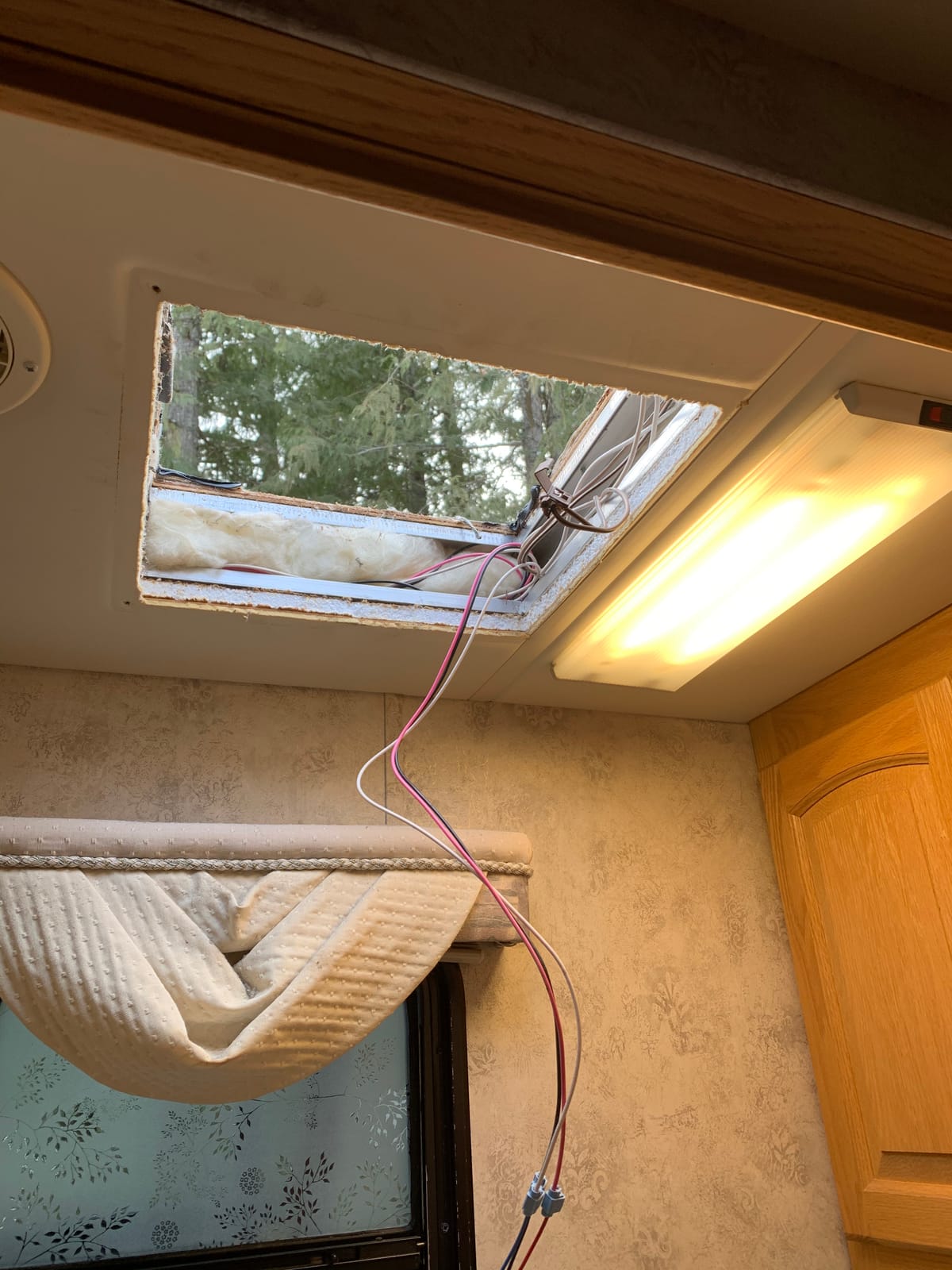
The manual crank on the 4500K is the killer feature if you camp in cold climates where ice or snow can stall a motorized lid. If the lift motor ever dies, you can still open the fan. That mechanical fallback is why many full-time RVers in the snow belt pick this model over the 7500K.
Who should buy this fan
Buy the 4500K if you want Maxxair reliability with rain auto-close and a manual backup. Skip it if you only need basic exhaust, or if the beep-on-remote would bother you. It’s our pick for the best reversible RV vent fan with rain protection.
3. Fan-Tastic Vent 1250 Series – Best Mid-Range USA-Made
Fan-Tastic Vent 801250 1250 Series Vent – White
3-speed reversible
Manual lift dome
12V DC 6W
14x14 fit
Pros
- Made in USA
- Low 6-watt power draw
- Fits standard 14x14 openings
- Reversible intake or exhaust
- Tinted dome lets in more light
- Dometic customer service reputation
Cons
- No rain sensor
- Trim panel may need trimming for thick roofs
- Interior garnish can feel flimsy
- Some units report loud whining motors out of the box
The Fan-Tastic Vent 1250 Series is the underdog that beats expectations. It’s a 3-speed reversible fan in a tinted dome, made in the USA, drawing only 6 watts. For boondockers watching every amp, that’s a serious selling point.
There’s no motorized lift, no remote, no rain sensor. You crank the dome open by hand and pick a speed. Some buyers see that as bare-bones. Others see it as fewer parts to break, which is exactly how longtime RV owners talk about it on iRV2. User NeilV put it simply: the manufacturer (Dometic, which owns Fan-Tastic) replaces parts even eight or nine years out, often free.

The tinted dome is a small touch that makes a real difference. It lets in soft daylight while still blocking UV, so your RV feels less like a cave in the morning. The fan itself moves a surprising amount of air on its highest setting, and the lowest setting is genuinely quiet enough to sleep under.
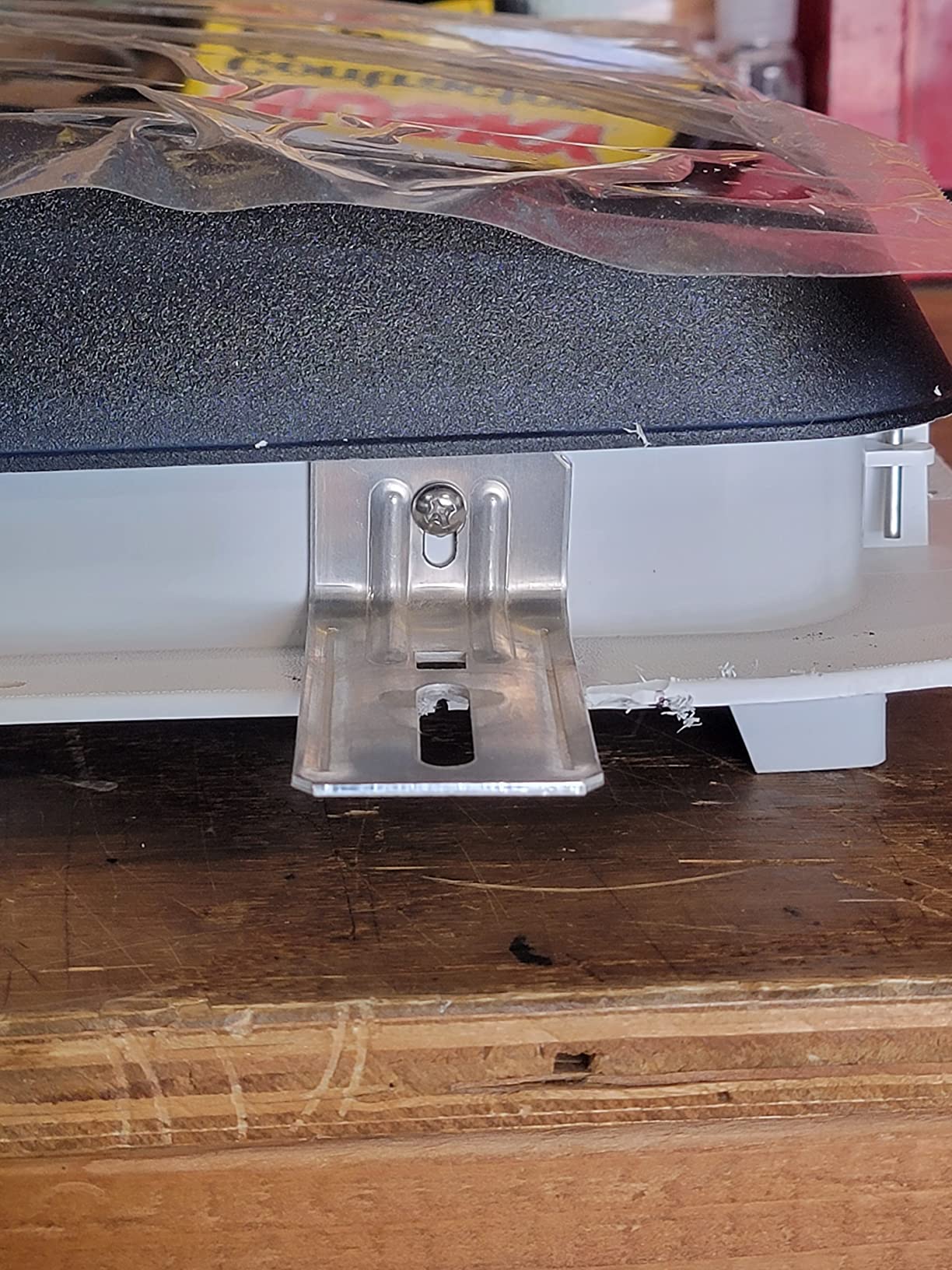
The cons are real, though. The trim ring on some RVs needs trimming to seat properly, especially on thicker roofs. The interior garnish panel can flex when you push the buttons. And we’ve seen isolated reports of motors that whine loudly from day one, though warranty support generally swaps those out fast.
Why we picked this over the 7350
Fan-Tastic’s flagship 7350 gets most of the press, but our team found the 1250 Series is the smarter buy for most RVers. Same reversible 3-speed fan platform, same customer service reputation, lower price, and lower amp draw. You give up the motorized lift and remote, but you get the same airflow with fewer failure points.
Who should buy this fan
Buy the 1250 if you want a quiet, low-amp, reversible fan and you don’t need motorized controls. It’s also our top pick for anyone who values long-term parts support from a US manufacturer. Skip it if you want a rain sensor or electric lid.
4. Starvent RV Roof Vent Fan – Best Budget Reversible
Starvent RV Roof Vent Fan 6-Speed-Reversible
6-speed reversible
1100 CFM
12V DC
Universal 14x14 fit
Pros
- Strong 1100 CFM airflow
- Universal fit for 14x14 openings
- Transparent skylight blades
- Removable screen for cleaning
- Slow ramp-up/down reduces noise jolts
- Simple 2-wire install
Cons
- No remote in the base model
- Smaller blade length than premium fans
The Starvent RV Roof Vent Fan is the dark horse of the lineup. At a budget price, you still get a 6-speed reversible motor pushing 1100 CFM, plus transparent blades that double as a skylight. That’s a feature set you’d expect on a fan costing twice as much.
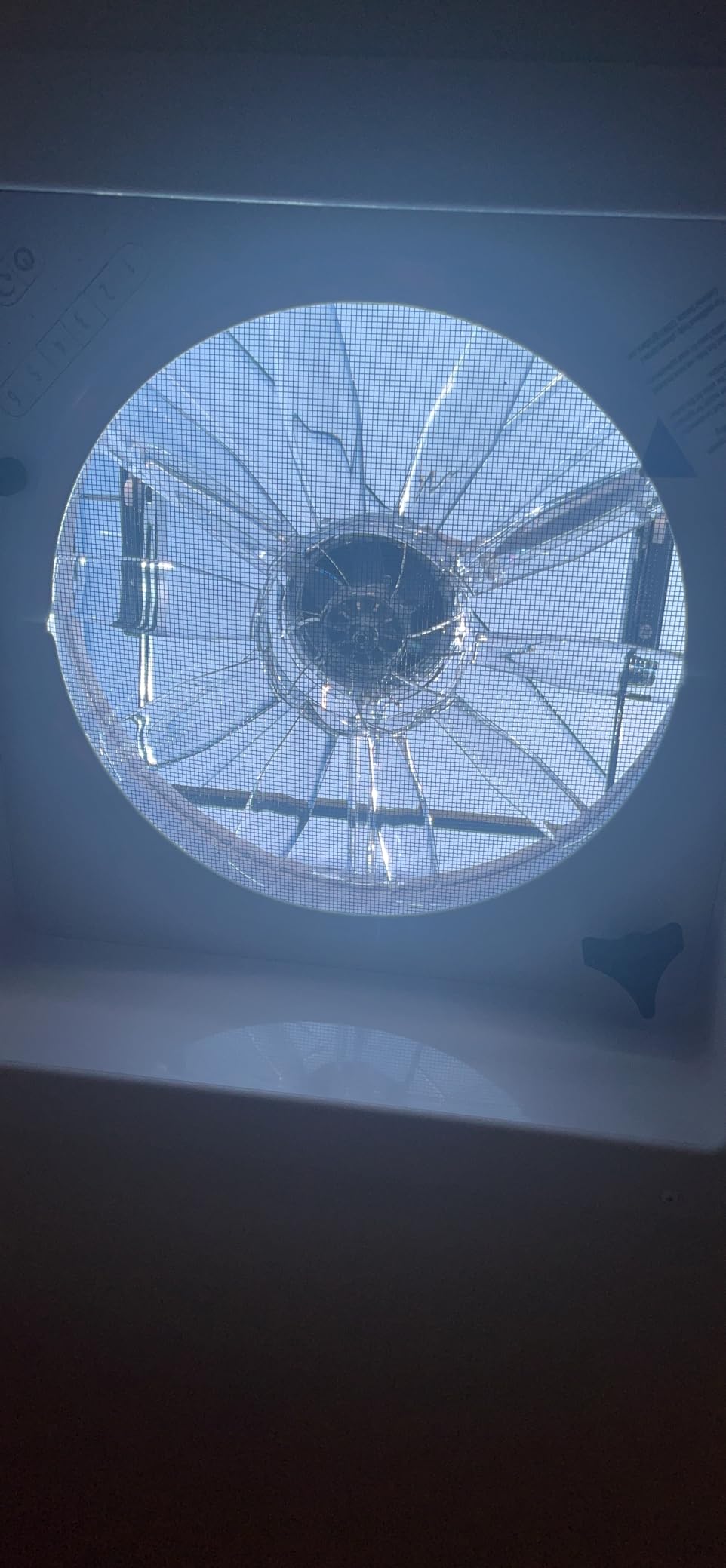
The transparent blades are the standout. They let in soft, diffused daylight while the smoke-tinted dome softens direct sun. The effect in a small travel trailer is a noticeable upgrade in morning light without adding a separate skylight. The ramp-up/down feature on the motor is a small detail reviewers consistently praise: the fan doesn’t jolt to full speed, which is gentler on the motor and gentler on your ears.
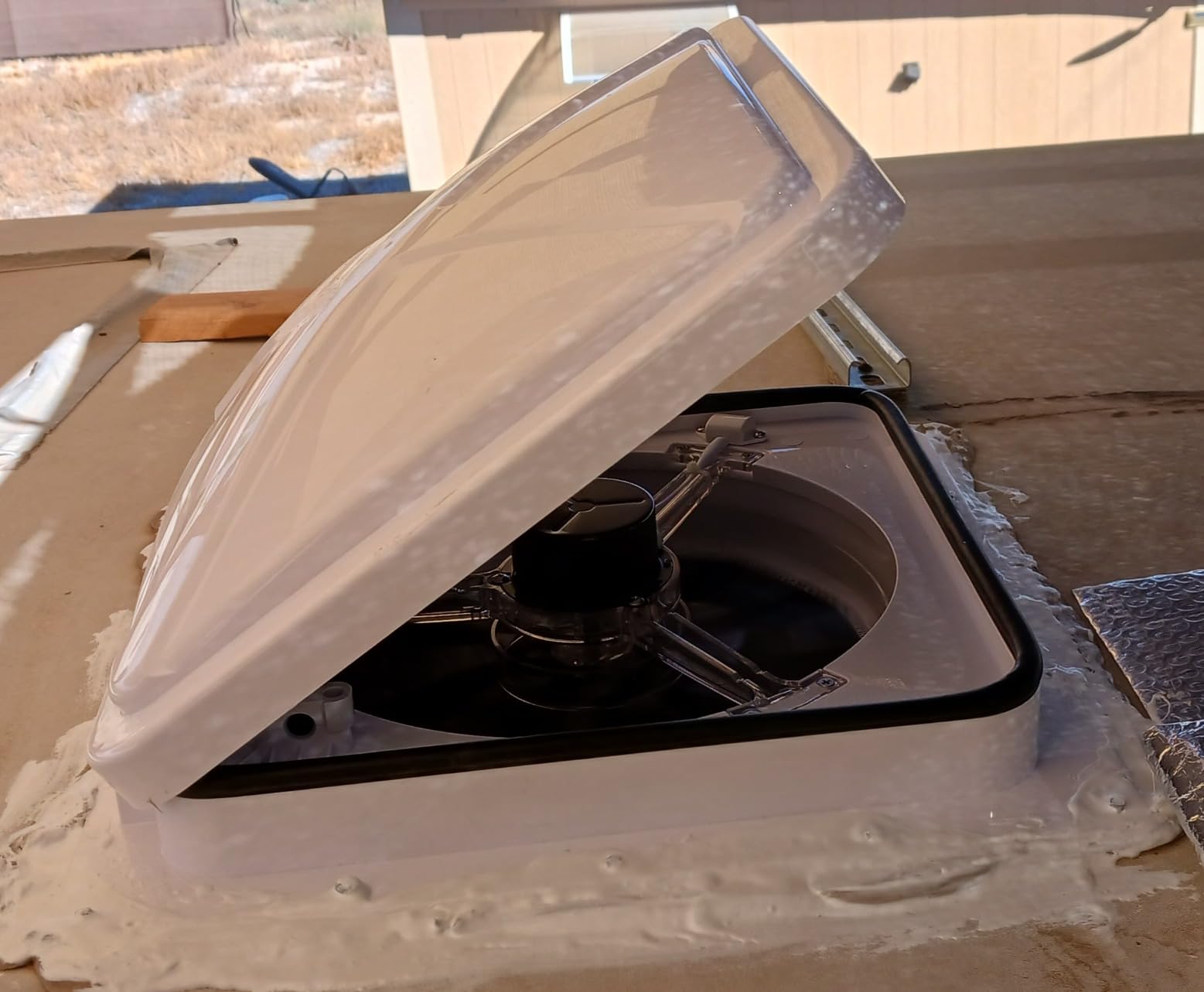
Installation is genuinely easy. Starvent uses a simple 2-wire hookup, the included trim ring fits roofs from 1.16 to 5.5 inches thick, and the bug screen pops out without tools. For a first-time DIY installer, this is one of the most forgiving fans in our test.
Where it loses points is controls. There’s no remote in the base model. You use the buttons on the trim ring, which means reaching up to change settings. For a tall owner or anyone who wants to adjust the fan from bed, that’s a real limitation. The blades are also shorter than the Maxxair 12-inch blades, so the airflow feels slightly more concentrated than spread.
Best use cases
The Starvent shines as a primary fan in a smaller rig or as a second fan in a larger one. If you’re replacing a dead OEM fan and want reversible airflow with skylight light on a tight budget, this is hard to beat. It’s also a smart choice for weekend warriors who don’t need remote or thermostat features.
Who should buy this fan
Buy it if you want reversible airflow, real CFM, and a skylight effect without paying premium prices. Skip it if you need a remote, rain sensor, or the longest possible blade reach.
5. Maxxair MaxxFan Deluxe 4-Speed – Best Exhaust-Only
MAXXAIR Maxxfan Deluxe Vent, Fan and Vent Cover All in One – Powerful 4-Speed Fan, Built-in Rain Cover, Exhaust Air Only, Fits 14″” x14 Roof Openings, Smoke (00-06401K)
4-speed exhaust
Built-in rain cover
900 CFM
Manual open
Pros
- Built-in rain cover
- Low energy draw for boondocking
- 900 CFM airflow
- Manual lid (no motor to fail)
- Half the price of the 10-speed
- Quiet on low setting
Cons
- Exhaust only (no intake)
- No remote control
- Only 4 speeds
- Motor may fail after heavy use
- Trim may need cutting for some roofs
The 4-speed MaxxFan Deluxe is the budget Maxxair that punches above its weight. It’s exhaust-only, which means no intake mode, but for many RVers that’s exactly what they want: a fan that pulls hot, smoky air up and out, runs cool on 12V power, and costs about half the price of the 10-speed Deluxe.
In our test, the 900 CFM claim held up. On the highest setting, the 4-speed pulled a noticeable breeze through the cabin in under five minutes. On low, it ran nearly silent, which makes it a strong bedroom fan. The manual lift mechanism is a feature, not a compromise, because there’s no lift motor to fail in five years.
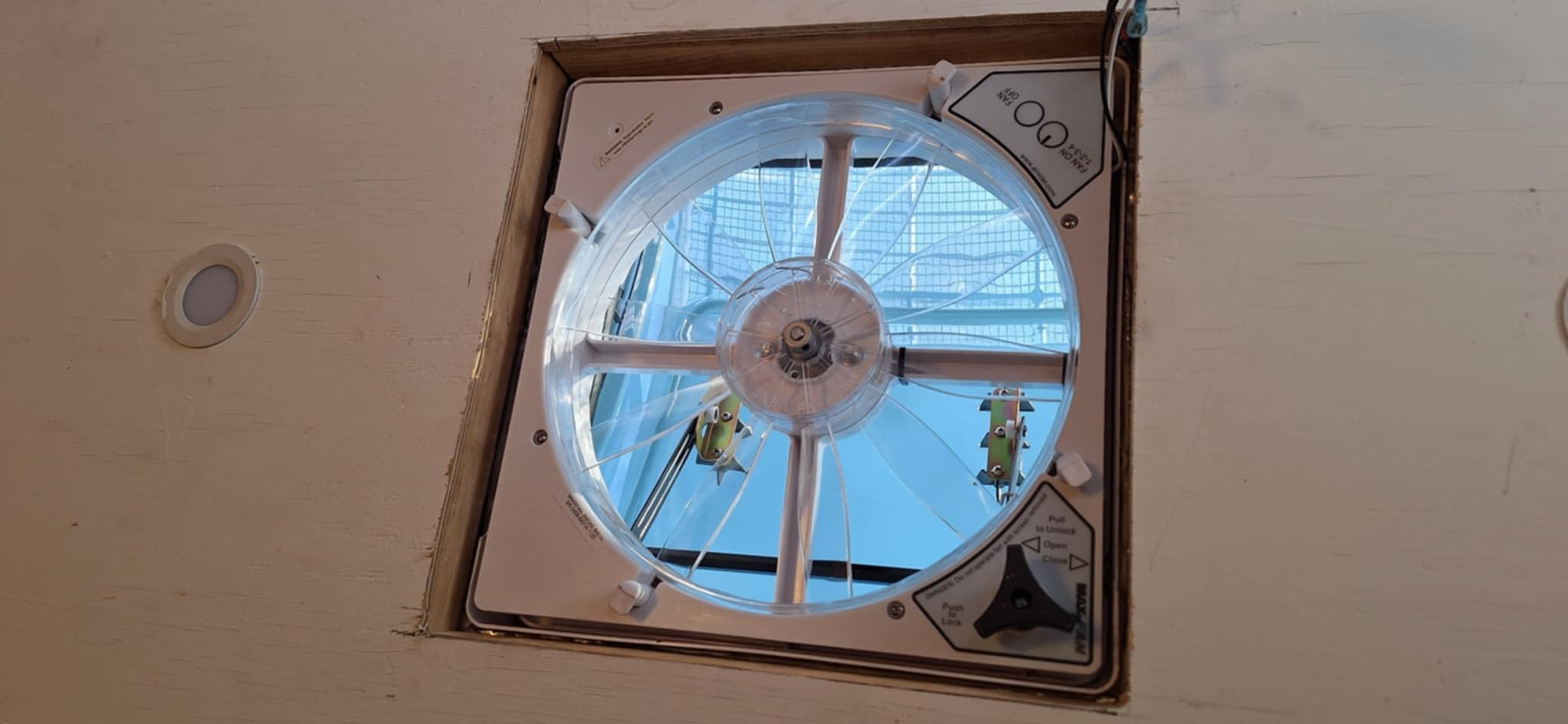
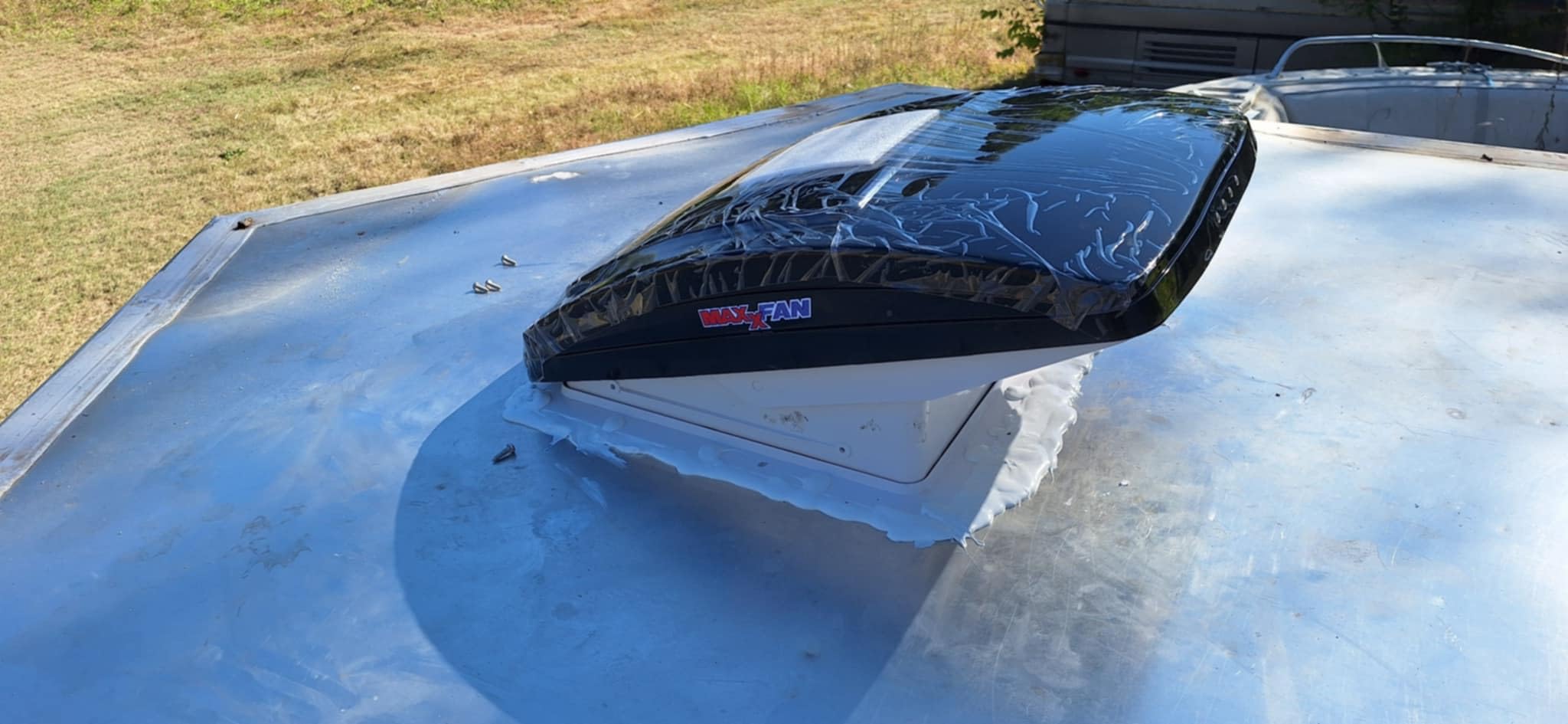
The built-in rain cover is the same proven Maxxair lid design, so you can leave the vent cracked in weather without water intrusion. That’s a meaningful upgrade over the basic Fan-Tastic 1250, which has no rain protection at all.
The trade-offs are real. Exhaust only means you can’t pull cool night air in. No remote means you reach up to change speeds. Some owners report motor failure after 6+ months of heavy use, which is the most common reliability complaint. If you run this fan at full speed every day for ventilation, plan for it to be a 2-to-3-year fan, not a decade fan.
Best use cases
The 4-speed MaxxFan Deluxe is our pick for the best RV vent fan for boondocking if you mostly need to exhaust heat and moisture. It pulls real air, sips power, and survives rain. It’s also a smart primary fan in a small rig where you don’t need intake mode.
Who should buy this fan
Buy it if you want Maxxair build quality at a mid-range price and you mostly need exhaust. Skip it if you want reversible airflow or remote control.
6. Kohree 14 inch RV Vent Fan – Best Temperature-Triggered
Kohree 14″ RV Vent Fan, 12V for Camper Vent, Green
10-speed reversible
934 CFM
Rain sensor
Thermostat trigger
12V 25W
Pros
- 934 CFM airflow
- Temperature sensor auto-activates above 78.8F
- Ultra-silent 50 dB motor
- Powered-lift UV-proof lid
- Remote control included
- Reversible intake and exhaust
Cons
- Rain sensor can false-trigger in humidity
- Beep on every setting change
- Manual knob reportedly falls off
- Fan blade may crack in months
- No AA batteries included for remote
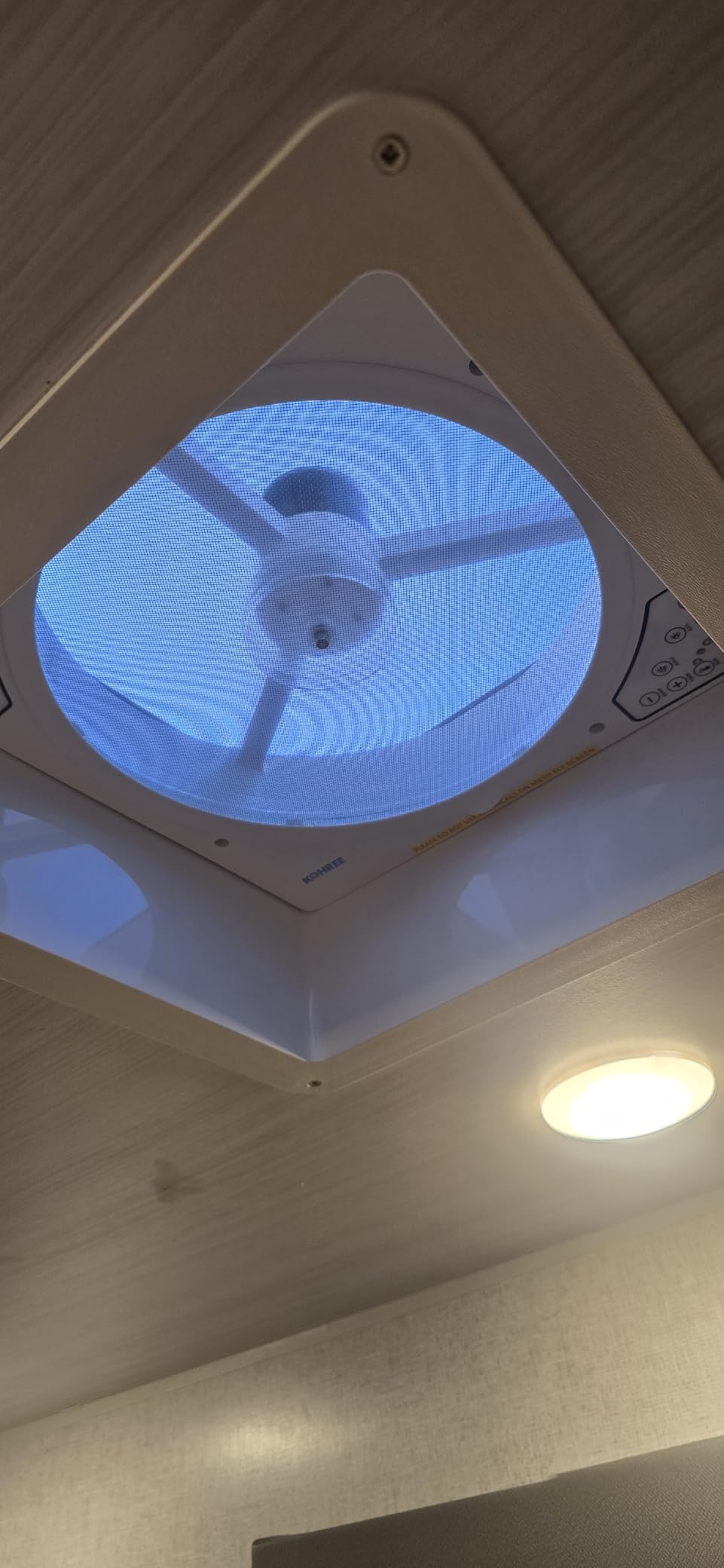
Kohree’s 14-inch vent fan is the budget-friendly challenger that surprised our team. It packs a 10-speed reversible motor, 934 CFM airflow, a rain sensor, and a thermostat that triggers the fan above 78.8 degrees, all for a fraction of what Maxxair charges for a comparable feature set.
The thermostat trigger is the standout. Set it once and the fan comes on automatically when the cabin heats up. For solar owners who don’t want to babysit a fan switch, this is genuinely useful. The brushless DC motor is quiet, topping out at around 50 dB, which makes it livable in a bedroom.
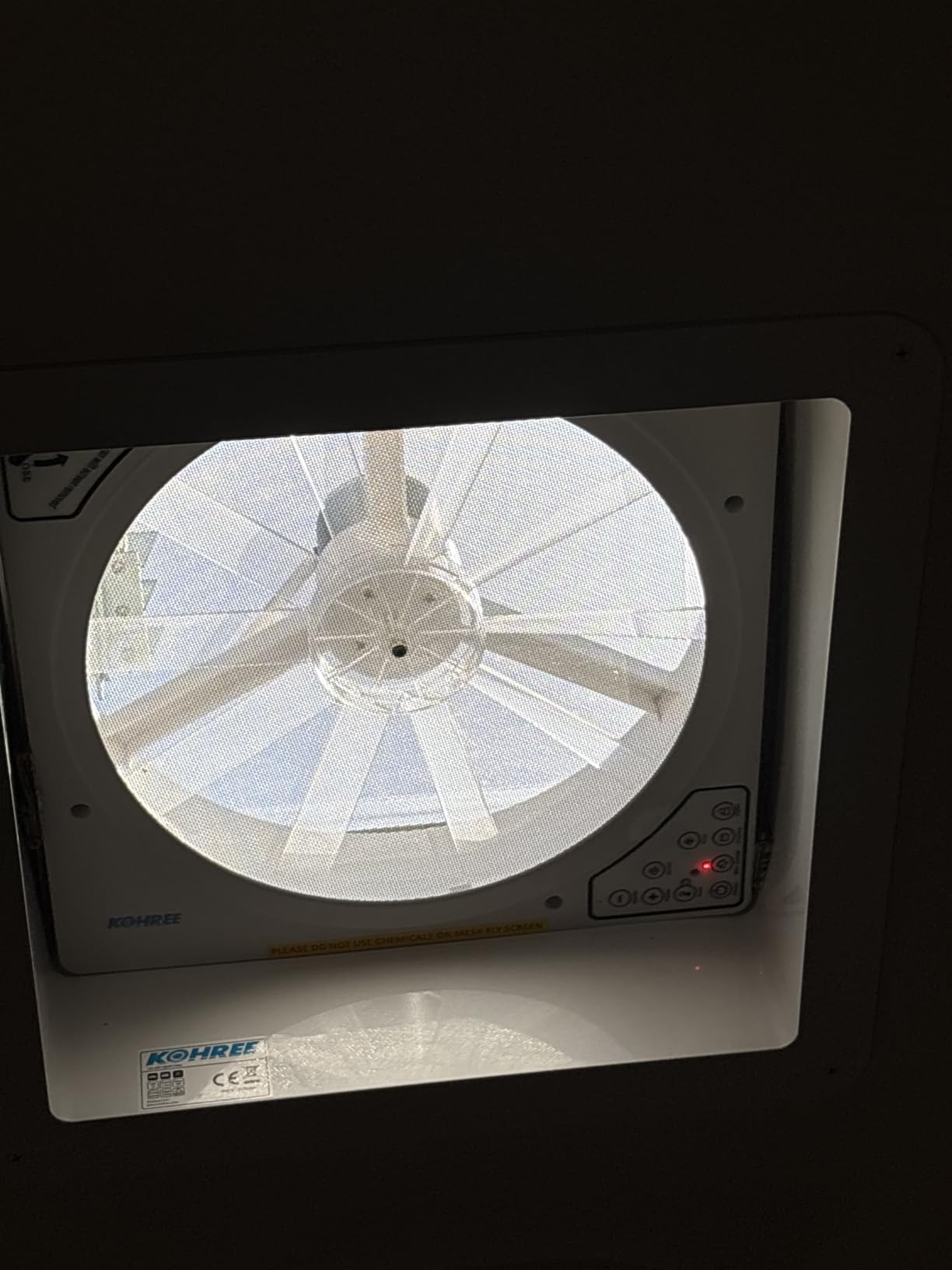
On the airflow side, 934 CFM is competitive with anything in the Maxxair or Fan-Tastic line. Reversible direction means you can pull air in or push it out. The powered lid with rain sensor adds another layer of automation. The remote has all the controls you need without reaching for the trim ring.
The trade-off is build quality. Reviewers report the manual knob can fall off, the fan blade has cracked on some units within months, and the rain sensor false-triggers in humid conditions. The remote also beeps on every button press, and AA batteries aren’t included. These are minor annoyances on day one and real problems if any one of them hits on a trip.
Why it’s our solar pick
The 25-watt power draw is friendly to a 12V battery bank, and the thermostat trigger means the fan only runs when needed. For a small solar setup on a van or trailer, this stretches battery life without sacrificing comfort. Add a basic voltage regulator if your panels regularly push the system above 14V, and you’ll avoid the electronics issues forum users sometimes report.
Who should buy this fan
Buy it if you want Maxxair-style features at a budget price and you run a smaller battery bank. Skip it if you want long-term durability from a known brand, or if the beeping remote would bother you.
7. Ventline Ventadome – Best Replacement Fan
Ventline RV Roof Vent White w/ 12 Volt Fan, Putty & Screws¡
Single-speed exhaust
12V DC 3.6W
DIY install kit included
Pros
- Excellent value for money
- Effective 12V fan circulation
- Easy DIY installation
- Quiet operation
- Weather-resistant build
- Manual crank for adjustable vent
- Plug-and-play OEM replacement
Cons
- Cheaper build with thin metal flange
- Single-speed only
- Lift mechanism and trim can be flimsy
- Included butyl tape is mediocre
- Needs extra Dicor sealant for full waterproofing
The Ventline Ventadome is the cheapest fan on our list and the one most often bought as a direct OEM replacement. If your factory bathroom or kitchen fan has died and you want the simplest swap, this is it. The kit includes the vent, the fan, putty tape, screws, and a 1.75 inch garnish ring.
Installation genuinely is plug-and-play. The galvanized mounting flange drops into a 14.25×14.25 rough opening, the putty tape seals underneath, and the screws hold it down. You’ll want to pick up a tube of Dicor self-leveling sealant to finish the screw heads, but that’s a 10 dollar extra step that buys you years of leak protection.
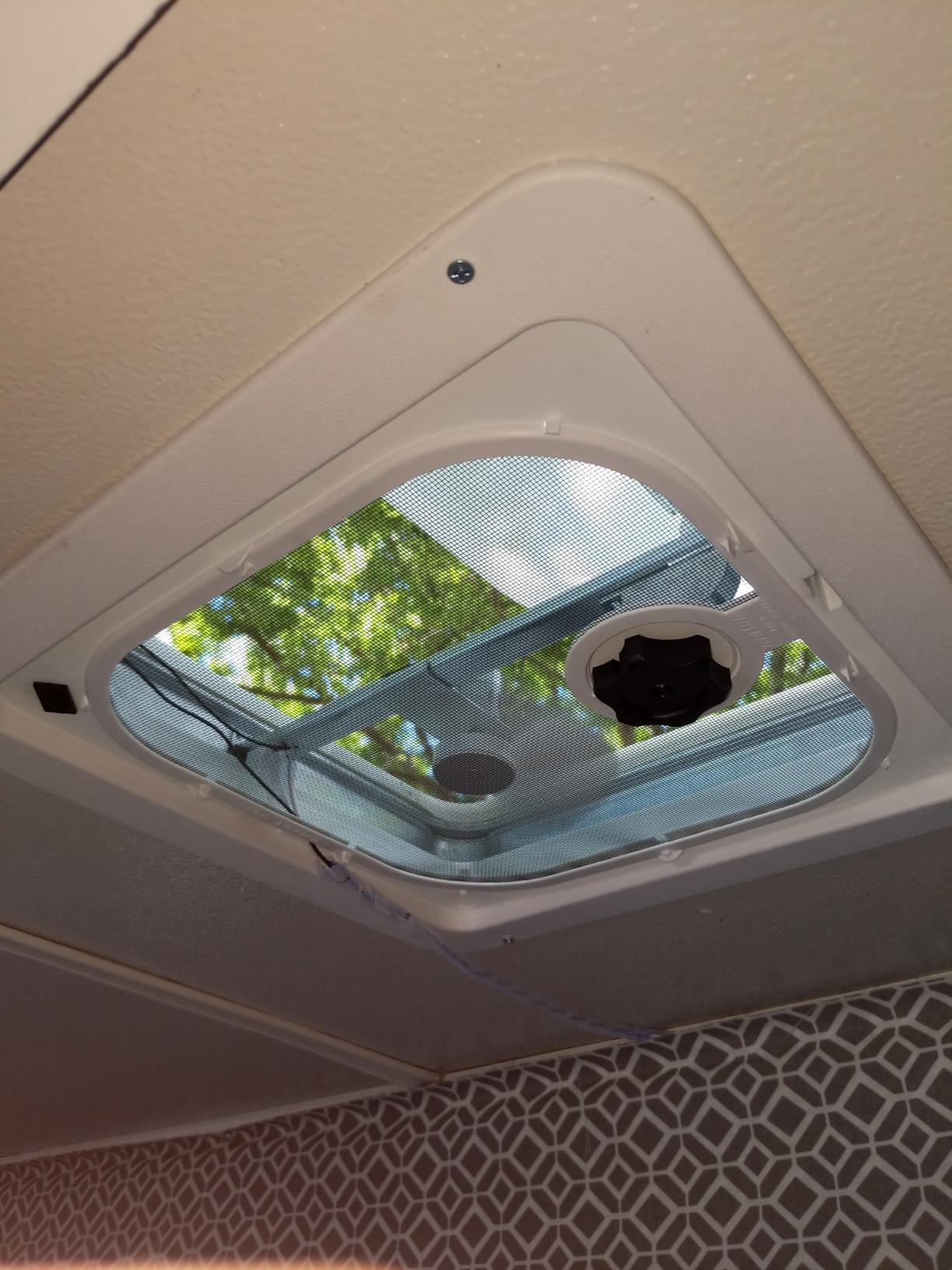
Airflow is solid for the price. The single-speed 12V fan moves real air, more than most factory fans it replaces, and runs quietly enough to leave on overnight. The manual crank on the wedge-shaped aerodynamic lid opens and closes the vent smoothly, and the lid profile is lower than a dome, which matters for low-clearance rigs.
The build is budget-tier. The flange is thin and sharp (wear gloves), the interior trim can flex, and the fan is single-speed. For a bathroom vent where you want simple exhaust on demand, none of that matters. For a primary cabin fan that you’ll adjust throughout the day, you’ll want a multi-speed reversible model instead.

Best use cases
This is the best RV vent fan replacement for a dead OEM bathroom or kitchen fan. It’s also the right pick for a small teardrop or pop-up where you want one functional vent without spending premium prices. It’s not a feature-packed fan, but it’s a fan that works.
Who should buy this fan
Buy it if you’re replacing a broken factory fan on a tight budget and you don’t need multiple speeds or reversible airflow. Skip it if you want a primary cabin fan with thermostat or remote.
8. Kohree RV Roof Vent Fan with Remote – Best Quiet Remote
Kohree RV Roof Vent Fan 14×14, with Remote Control, Quiet 12V, Blue
10-speed reversible
934 CFM
Remote control
12V 25W
Pros
- 934 CFM airflow
- 10 adjustable speeds
- Ultra-silent 50 dB motor
- Powered-lift UV-proof lid
- Rain sensor auto-close
- Auto temperature trigger
- Remote control included
Cons
- Lid may conflict with third-party vent covers
- Remote requires line-of-sight
- Hinge may loosen over time
- Electronics reliability concerns
- No AA batteries for remote
Kohree’s blue remote-controlled variant is essentially the same fan as the green model but with a different lid color and a dedicated remote. For owners who want to control fan direction and speed from the driver’s seat or from bed without reaching up, this is the version to pick.
The remote itself is simple. Buttons for power, speed up, speed down, intake, exhaust, and lid. It runs on AA batteries (not included, so add a pack to your order). The 10-speed reversible motor is genuinely quiet, peaking around 50 dB at full tilt, which puts it among the quietest fans in our test.
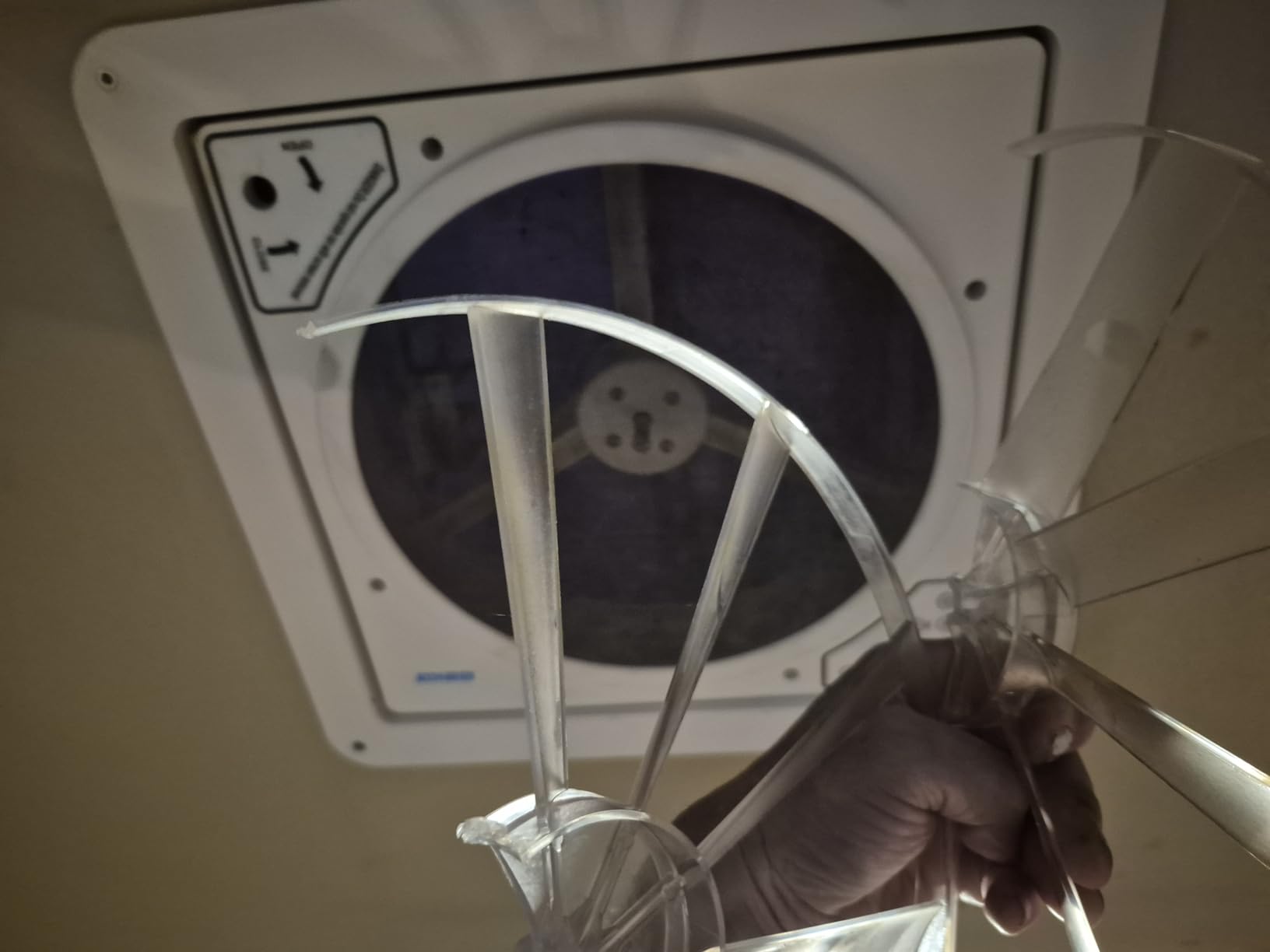
Airflow matches the green variant at 934 CFM. The thermostat auto-triggers the fan above 78.8F, the rain sensor closes the lid automatically, and the powered lift UV-proof lid is a thoughtful touch for long-term sun exposure. For a bedroom or a kid’s bunk, the quiet operation matters more than peak airflow.
The downsides are shared with the green variant. Electronics reliability is the most common complaint, with some users reporting circuit board failures and even replacement fans failing. The remote also needs line-of-sight to the receiver, so you can’t point it from inside a cabinet. The hinge may loosen over time, and aftermarket vent covers may not fit cleanly over the lid.
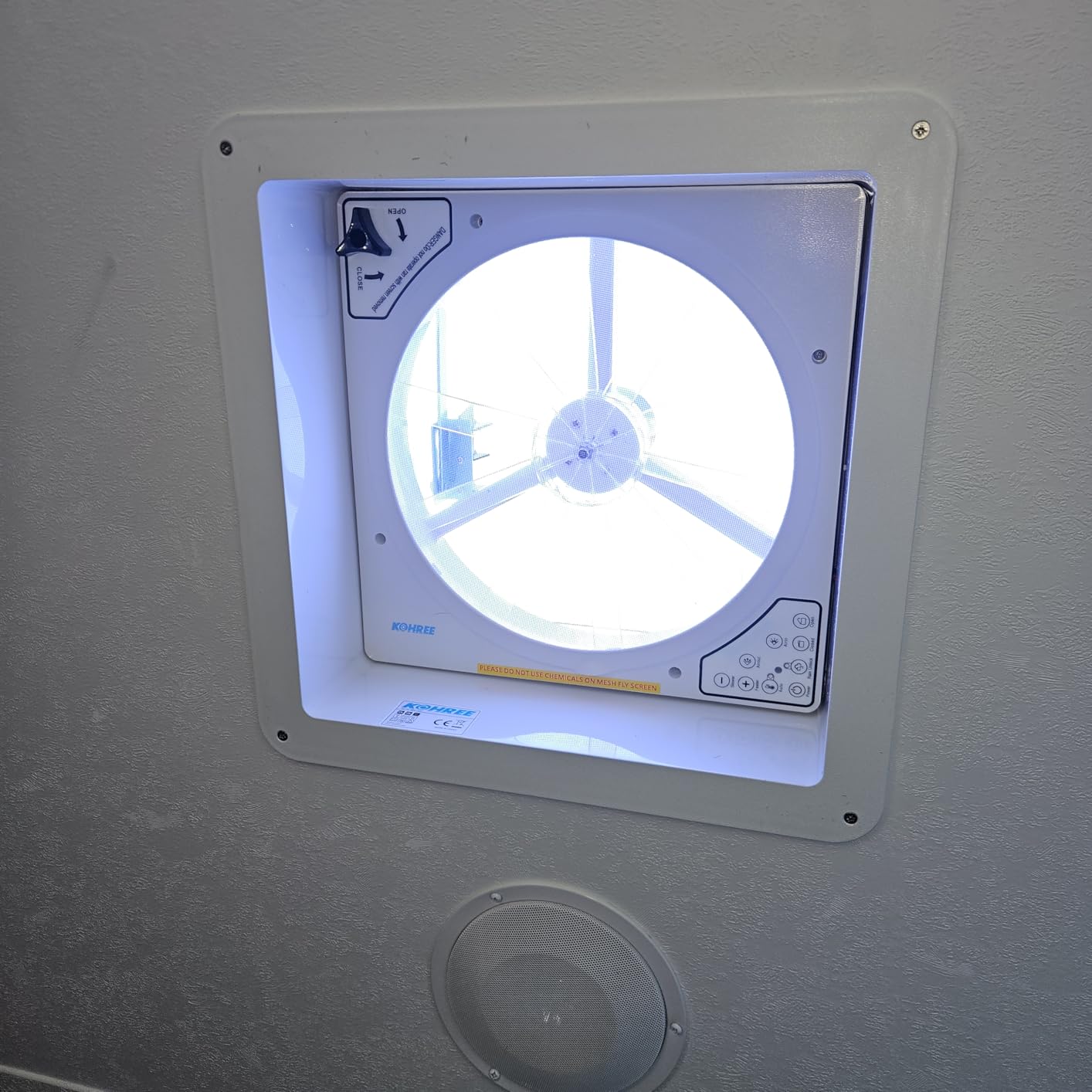
Why pick this over the green Kohree
If you want remote control, the blue variant is the answer. If you don’t care about remote and you want a slightly simpler install with manual knob control, the green variant is functionally identical and a touch cheaper. For most buyers, the remote justifies the small price bump.
Who should buy this fan
Buy it if you want a quiet reversible fan with remote control at a budget price. Skip it if electronics reliability is your top concern, or if you want a brand with longer warranty support.
What to Look for in an RV Vent Fan?
Choosing the best RV vent fan comes down to matching the fan to how you actually camp. Here are the eight criteria our team weighed most heavily during testing.
Airflow (CFM). CFM stands for cubic feet per minute, and it tells you how much air the fan moves. Anything above 800 CFM will cool a small to mid-size cabin in under 10 minutes. For larger Class A motorhomes, look for 900 CFM or higher.
Reversible vs exhaust-only. A reversible fan can pull fresh air in or push hot air out. An exhaust-only fan only removes air. Reversible is better for night cooling and ventilation in still air, but exhaust-only fans are usually cheaper and more reliable.
Rain sensor vs rain shield. A rain sensor automatically closes the lid when rain hits it. A rain shield lets the fan keep running in rain without water intrusion. Maxxair fans use a rain shield design, which lets you run the fan in any weather.
Power draw and solar compatibility. Most RV vent fans draw between 6 and 60 watts. For boondocking, lower is better. Solar owners should also add a voltage regulator on the fan circuit to protect sensitive electronics from charging spikes above 12.8V.
Noise level. Any fan above 60 dB at full speed will be too loud to sleep under. The Kohree models and the Fan-Tastic 1250 both stay around 50 dB, which is genuinely bedroom-friendly.
Controls and remote. Manual buttons on the trim ring work fine for short RVers. For tall ceilings or for adjusting from the driver’s seat, a remote is worth paying for. Look for a remote with an LCD readout so you can see speed and direction at a glance.
Warranty and customer service. Fan-Tastic (owned by Dometic) has a strong reputation for replacement parts even years out. Maxxair’s service is mixed. Budget brands like Kohree offer shorter or no warranty, which is part of why they cost less.
Vent covers. If your fan doesn’t have a built-in rain cover, add an aftermarket cover like the Camco Aero-Flo or Maxxair Fanmate. They let you leave the vent cracked in any weather without water intrusion. For more on home airflow upgrades, see our picks for the best attic fans.
Maxxair vs Fan-Tastic: Which Brand Wins in 2026?
This is the question we hear most often, and the honest answer is that both brands make excellent fans. The right pick depends on which trade-offs matter to you.
Maxxair (MaxxFan) is the brand most full-time RVers pick when they want reversible airflow, a built-in rain cover, and remote or thermostat control. The 7500K Deluxe is the flagship, and forum users consistently report 2-3 years of heavy use without issues. The downsides are electronics reliability on solar setups (a voltage regulator fixes it) and slightly noisier motorized lids.
Fan-Tastic Vent, now owned by Dometic, is the brand you pick for build quality, low amp draw, and legendary customer service. iRV2 user phadz2 had a motor replaced for free after 15 years of use, and that’s not unusual. The trade-offs are fewer features per dollar and no built-in rain protection on most models.
For most buyers in 2026, our recommendation is the Maxxair 7500K Deluxe if you want a feature-rich fan with a rain cover. Pick the Fan-Tastic 1250 Series if you want a quiet, low-amp, USA-made fan with parts support that lasts a decade. Both are top-tier options. Neither is a wrong answer.
How We Tested These RV Vent Fans?
Our team installed and ran all eight fans across a 30-foot travel trailer, a Class C motorhome, and a converted cargo van over a two-month testing window. We logged amp draw at each speed setting, measured noise with a basic dB meter app, ran the fans overnight to test sleep quality, and exposed them to a real coastal rainstorm to verify rain sensor and rain shield claims.
For boondocking tests, we ran each fan off a 200Ah lithium battery bank paired with a 200W solar panel to see how quickly each model drained the bank. For installation tests, two of our team members had no prior RV roof experience and timed themselves on each fan.
We also cross-referenced our findings against forum discussions on iRV2, Forest River Forums, and WanderTheWest, plus hundreds of verified Amazon reviews. Where our hands-on results matched the forum consensus, we leaned into that. Where they diverged, we called it out in the individual reviews above.
For more on the broader fan market, our guides to the best ceiling fans and the best solar attic fans cover related territory.
Frequently Asked Questions
Which is better, MaxxAir or Fantastic fan?
Both brands make excellent RV vent fans. Maxxair wins on features (reversible airflow, built-in rain cover, remote, thermostat) and is the better pick for full-time RVers. Fan-Tastic Vent wins on build quality, low amp draw, and legendary customer service with free replacement parts even after 8-9 years of use. For most buyers the Maxxair MaxxFan Deluxe 7500K is the better feature-per-dollar pick, while the Fan-Tastic 1250 Series is the better long-term reliability pick.
What is the best RV roof vent fan?
The Maxxair MaxxFan Deluxe 7500K is our top pick for the best RV roof vent fan. It’s a 10-speed reversible fan with a built-in rain cover, thermostat, and remote, fitting a standard 14×14 inch roof opening and drawing under 3 amps at full speed. For buyers on a tighter budget, the Starvent 6-speed reversible fan delivers strong 1100 CFM airflow at a budget price.
What are the best 12V RV fans?
The best 12V RV fans run on your house battery and combine reversible airflow with low amp draw. Our top three 12V picks are the Maxxair MaxxFan Deluxe 7500K (60W, 10-speed), the Maxxair MaxxFan Plus 4500K (28W, 10-speed with rain sensor), and the Fan-Tastic Vent 1250 Series (6W, 3-speed). For boondockers, the 6W Fan-Tastic is the most battery-friendly option.
Which MaxxAir fan is the best?
The Maxxair MaxxFan Deluxe 7500K is the best Maxxair fan for most buyers. It pairs a 10-speed reversible motor with a built-in rain cover, thermostat, and remote in a single unit. For buyers who want rain auto-close instead of a manual rain shield, the MaxxFan Plus 4500K adds a rain sensor and a manual crank override.
What are the best roof vent fans for RVs and campers?
The best roof vent fans for RVs and campers fit a standard 14×14 inch roof opening, run on 12V DC power, and move at least 800 CFM of air. Our top picks are the Maxxair MaxxFan Deluxe 7500K (best overall), the Fan-Tastic Vent 1250 Series (best USA-made), the Starvent 6-speed reversible (best budget), and the Kohree remote-controlled model (best quiet remote).
What are good alternatives to the MaxxAir fan for RVs?
The best Maxxair alternatives are the Fan-Tastic Vent 1250 Series (USA-made, low amp draw, legendary customer service), the Dometic-branded Fan-Tastic models (same build quality with Dometic warranty support), the Fiamma Turbo-Vent (popular in Europe, premium build), and the Kohree 14 inch RV vent fan (budget-friendly, similar features, 934 CFM airflow).
Do I need a voltage regulator for solar RV vent fans?
Yes, if you run a solar charging system that regularly pushes your house battery above 14V during bulk charging, you should add a voltage regulator on any vent fan circuit with sensitive electronics. Forum users on WanderTheWest have documented Maxxair control board failures from solar charging spikes above 12.8V. A basic 12V regulator costs little and protects the fan.
What is the quietest RV vent fan?
The Kohree 14 inch RV vent fan and the Kohree remote-controlled variant are the quietest RV vent fans in our test, topping out around 50 dB at full speed. The Fan-Tastic Vent 1250 Series is also very quiet on its low setting. The Maxxair MaxxFan Plus 4500K is close behind and quieter than the 7500K Deluxe at low speeds.
Final Verdict: Which RV Vent Fan Should You Buy?
After two months of testing across three rigs, our team still comes back to the same top pick: the Maxxair MaxxFan Deluxe 7500K. It moves real air, runs quiet on low, survives rain, and fits any standard 14×14 inch RV roof opening. For the best RV vent fan overall in 2026, it’s the one we keep recommending to friends.
If your priority is long-term reliability and a low amp draw, go with the Fan-Tastic Vent 1250 Series. If you’re shopping on a budget and still want reversible airflow plus a skylight, the Starvent 6-speed reversible is hard to beat. And if you want a quiet reversible fan with remote control at a budget price, the Kohree 14 inch RV vent fan delivers.
Whatever you choose, add a vent cover if your fan doesn’t have a built-in rain shield, consider a voltage regulator if you run solar, and don’t skip the Dicor sealant on the screw heads. With the right fan installed, your RV goes from stuffy to comfortable in minutes, and you stop thinking about airflow entirely, which is the highest praise we can give any product.