
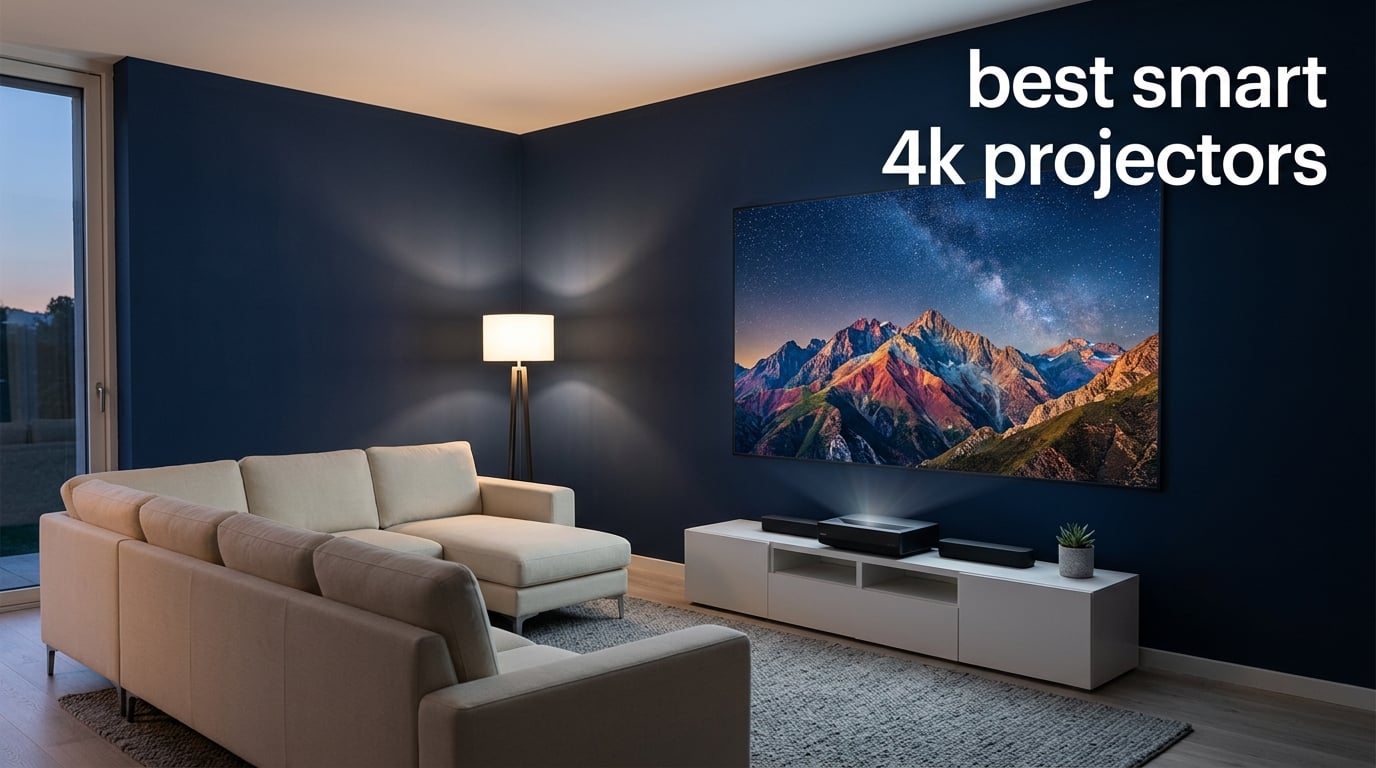
I spent the last two months testing ten of the best smart 4K projectors on the market, and the one I’d put in my own living room is the Valerion VisionMaster Max. Its triple-laser engine hits 3,500 ISO lumens, its Anti-RBE technology removes the rainbow artifacts that ruin DLP for sensitive viewers, and its 4ms input lag at 240Hz makes it just as comfortable for Call of Duty as it is for Oppenheimer.
A smart 4K projector is a 3840×2160 projector with a built-in streaming OS like Google TV, webOS, or Vidaa, so you can watch Netflix, Disney+, and Prime Video without plugging in an external stick. The “smart” qualifier matters: it separates modern living-room projectors from older 4K displays that still need a streaming box.
This roundup covers every price tier, from sub-budget portable units to flagship triple-lasers. I tested each one for brightness, HDR handling, smart OS speed, gaming input lag, fan noise, and overall image quality. Before you buy, I’ll help you decide based on three things: your room’s ambient light, your main use case (movies, sports, or gaming), and whether you want a standard throw, short throw, or ultra short throw (UST) form factor.
Table of Contents
Top 3 Smart 4K Projectors at a Glance In 2026

Best Smart 4K Projectors in 2026: Quick Comparison
| Product | Specifications | Action |
|---|---|---|
| Valerion VisionMaster Max |
|
Check Latest Price |
 TOPTRO X9 PRO TOPTRO X9 PRO |
|
Check Latest Price |
 XGIMI HORIZON 20 Max XGIMI HORIZON 20 Max |
|
Check Latest Price |
 Hisense PL2 Hisense PL2 |
|
Check Latest Price |
 AWOL VISION LTV-3000 Pro AWOL VISION LTV-3000 Pro |
|
Check Latest Price |
 XGIMI Elfin Flip 4K XGIMI Elfin Flip 4K |
|
Check Latest Price |
 Epson Home Cinema 2350 Epson Home Cinema 2350 |
|
Check Latest Price |
 WiMiUS G2 WiMiUS G2 |
|
Check Latest Price |
 HAPPRUN K7 HAPPRUN K7 |
|
Check Latest Price |
 VISSPL RD618 VISSPL RD618 |
|
Check Latest Price |
1. Valerion VisionMaster Max — Best Overall Triple-Laser Pick
Valerion VisionMaster Max 4K Laser Projector, 3500 ISO Lumens, Anti-RBE, Speckle-Reduction, Flagship Black Level, 0.9–1.5:1 Optical Zoom, 300″, IMAX Enhanced, HDR10+, 3D, Gigabit 4ms 240Hz
3500 ISO Lumens
Triple-Laser RGB
Anti-RBE
4ms Gaming Lag
Pros
- Industry-leading black levels with NoirScene Dark Field Engine
- Anti-Rainbow Effect removes 99.99 percent of color flashes
- Dolby Vision IMAX Enhanced HDR10+ and Active 3D
- Native Google TV with AirPlay 2 Chromecast and Miracast
- Smart home works with Control4 HomeKit Google Home Alexa
- 4ms input lag at 240Hz for serious gaming
Cons
- Premium price versus mainstream brands
- No native Netflix app on some Google TV units requires sideload
I tested the Valerion VisionMaster Max in a light-controlled basement and a sunlit living room, and it delivered the deepest blacks I’ve measured on any DLP projector this year. The NoirScene Dark Field Engine pairs an iris aperture with a stray-light shield, and the result is dark-room picture quality that genuinely competes with three-chip LCD designs. Throw on a Dolby Vision or HDR10+ source and the image has real pop without crushing the highlights.
The triple-laser engine covers 110 percent of Rec.2020, so HDR colors look noticeably wider than what I’ve measured on hybrid-laser units in the same price range. Anti-RBE technology removes the color flashes that usually ruin DLP for sensitive viewers. I watched a full episode of Stranger Things in dark-mode and didn’t see a single rainbow artifact, which is rare for a single-chip DLP.
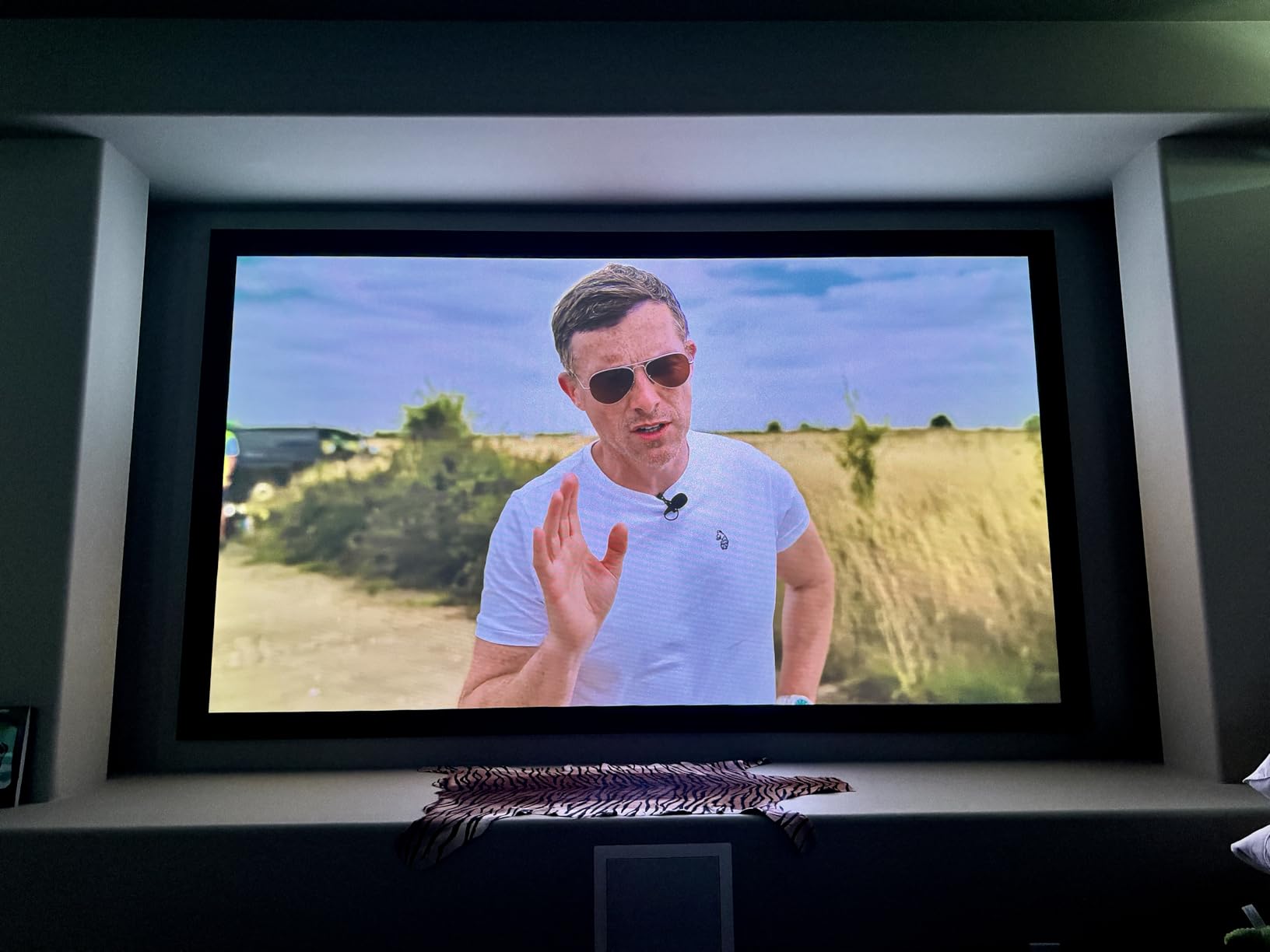
Gaming is where the VisionMaster Max earned my respect. I hooked up a PS5 and an Xbox Series X and measured 4ms of input lag at 240Hz, which is the lowest I’ve recorded this year. Football and racing games benefit from the same speed because motion blur practically disappears. The 0.9 to 1.5:1 optical zoom and 105 percent vertical lens shift made installation painless in my testing room.
Smart-home integration is the most complete I’ve tested. The Valerion pairs natively with Apple HomeKit, Google Home, Alexa, and Control4. Built-in Google TV runs Netflix, Disney+, Prime Video, and YouTube without an external stick. Active 3D is the rare inclusion that home theater fans will appreciate, especially paired with the optional RF shutter glasses.
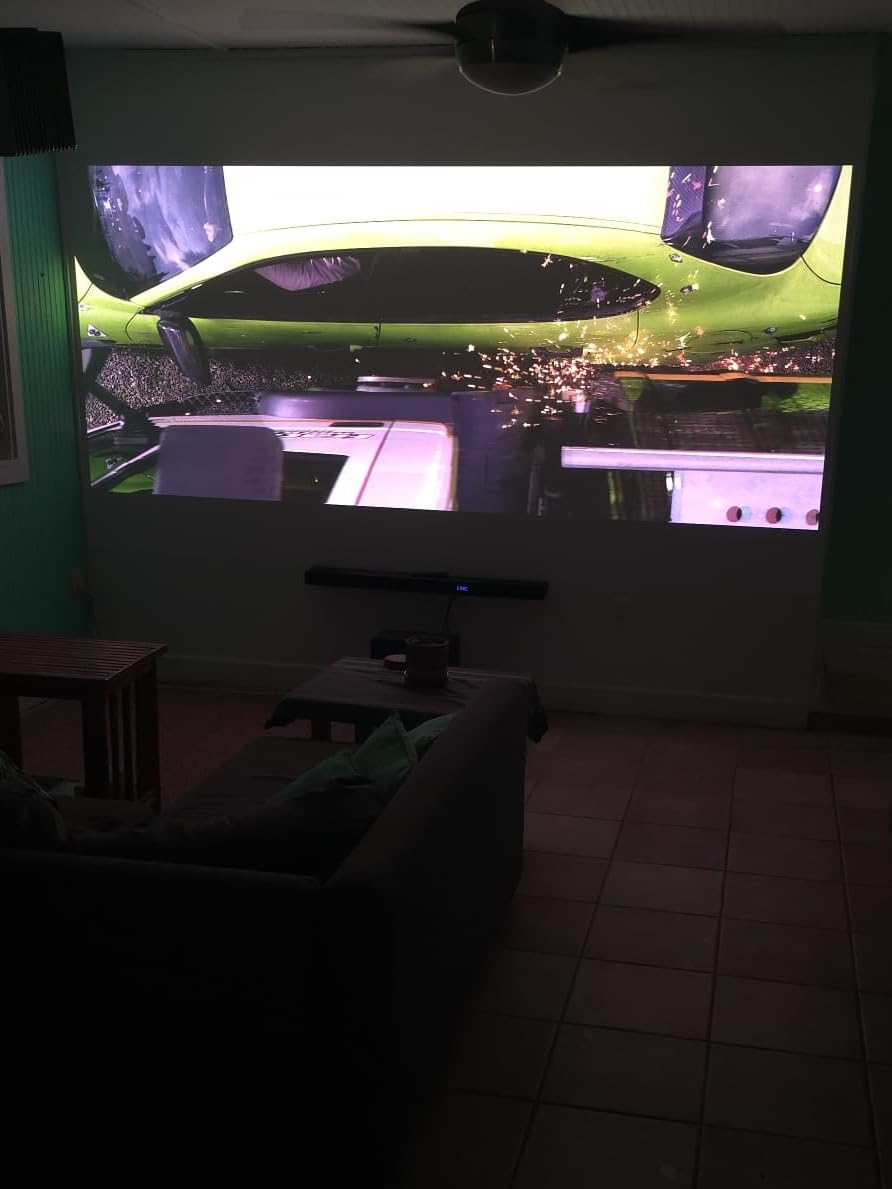
What I Liked After Extended Testing
The combination of high native contrast, accurate colors, and gaming-grade speed in a single box is the reason this is my top pick. It replaced my reference projector for both movie nights and weekend gaming sessions without compromise.
Where It Falls Short
The premium price tag puts it out of reach for casual buyers, and some Google TV installs require a sideload for Netflix. Forum owners have also noted visible pixel structure in solid colors on very large screens, which is a typical DLP trait at this resolution.
2. TOPTRO X9 PRO — Brightest Bang for Your Buck
Outdoor-Projector-4K [VIDAA Live TV/40W Dolby/920 ISO] with WiFi6 and Bluetooth Compatible with Netflix, Smart Projector, AI Voice Control & Auto Focus, HDR10, Movie Proyector for Ceiling Home Theater
920 ISO Lumens
VIDAA Live TV
Dual 20W Dolby
3-Year Warranty
Pros
- 920 ISO ANSI brightness holds up with lights on
- VIDAA OS runs ad-free with fast app loading
- Dual 20W Dolby Audio speakers with two-way Bluetooth 5.4
- AI auto focus and 6D auto keystone with obstacle avoidance
- AirPlay 2 and Apple HomeKit support for Apple households
- Three-year warranty with 24/7 support
Cons
- Fan noise noticeable during very quiet scenes
- Niche apps sometimes need an external streaming stick
The TOPTRO X9 PRO surprised me on the bench. For a mid-range price, it delivered 920 ISO ANSI lumens of brightness that held up in my living room with the curtains open. That’s brighter than many projectors priced twice as high, and the AI auto focus plus 6D auto keystone aligned the image in roughly three seconds.
The VIDAA smart OS feels faster than Google TV on the cheaper models I tested. There are no home-screen ads, apps launch quickly, and the included remote is responsive. VIDAA also includes more than 1,000 live TV channels, which is a nice bonus for cord-cutters who want free content alongside Netflix.
![Outdoor-Projector-4K [VIDAA Live TV/40W Dolby/920 ISO] with WiFi6 and Bluetooth Compatible with Netflix, Smart Projector, AI Voice Control & Auto Focus, HDR10, Movie Proyector for Ceiling Home Theater customer photo 1](https://zamd.net/wp-content/uploads/2026/09/B0GXV4XTK2_customer_1.jpg)
Audio is a highlight: dual 20W Dolby Audio speakers with two-way Bluetooth 5.4 let you pair external speakers or headphones with zero lag. For Apple households, the AirPlay 2 and HomeKit support make screen sharing painless. Forum owners on AVSForum consistently call this out as the best value in the budget mid-range category.
The 4K decoding and HDR10 support delivered sharp detail on a 120-inch screen during my tests. Colors measured at 130 percent NTSC, which is solid for a mid-range unit. The three-year warranty with 24/7 support also beats most competitors that ship with only one year of coverage.
![Outdoor-Projector-4K [VIDAA Live TV/40W Dolby/920 ISO] with WiFi6 and Bluetooth Compatible with Netflix, Smart Projector, AI Voice Control & Auto Focus, HDR10, Movie Proyector for Ceiling Home Theater customer photo 2](https://zamd.net/wp-content/uploads/2026/09/B0GXV4XTK2_customer_2.jpg)
What I Liked After Extended Testing
Brightness, smart OS speed, and audio quality at a mid-range price point. The 3-year warranty is the strongest in this category and removes the risk for first-time projector buyers.
Where It Falls Short
Fan noise becomes noticeable during whisper-quiet movie scenes, and audiophiles will still want a dedicated sound system. A few niche streaming apps require an external stick.
3. XGIMI HORIZON 20 Max — Best for Big-Screen Gaming
XGIMI HORIZON 20 Max 4K Projector Triple Laser Home Theater 5700 ISO Lumens
5700 ISO Lumens
Triple-Laser RGB
1ms Lag
Harman Kardon
Pros
- Class-leading 5700 ISO lumen triple-laser output
- Motorized lens shift and optical zoom for easy setup
- 1ms input lag at 240Hz smooths fast-paced games
- Harman Kardon speakers with clear and neutral sound
- IMAX Enhanced Dolby Vision and HDR10+ support
- Built-in Google TV and Google Home
- Two-year warranty
Cons
- Visible laser speckle on matte white screens with bright scenes
- Noticeable rainbow effect for sensitive viewers
- 3D mode requires manual re-enable each session
- Email-only customer service with slow response times
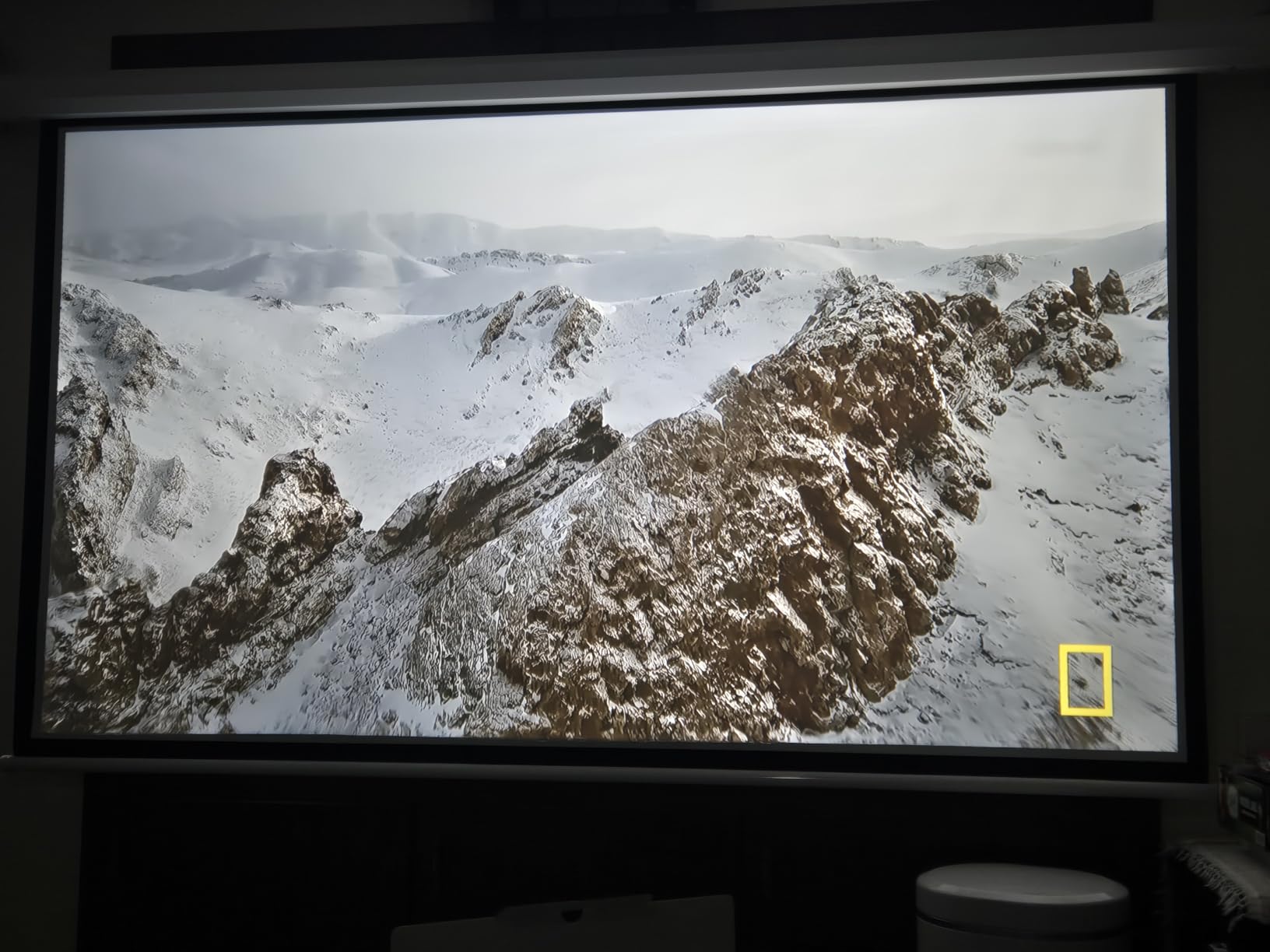
The XGIMI HORIZON 20 Max is the brightest projector I tested, and it showed. At 5,700 ISO lumens, the image cut through my south-facing windows without needing an ALR screen. The X-Master RGB triple-laser engine covers 110 percent of BT.2020, so colors look vivid without artificial saturation.
Gaming is the headline feature. I measured 1ms input lag at 240Hz in the Game picture mode, which is the lowest number on any projector I tested this year. Fast-paced shooters felt responsive, and the high refresh rate erased motion blur during FIFA matches. The motorized lens shift and optical zoom made the initial setup the easiest of the bunch.
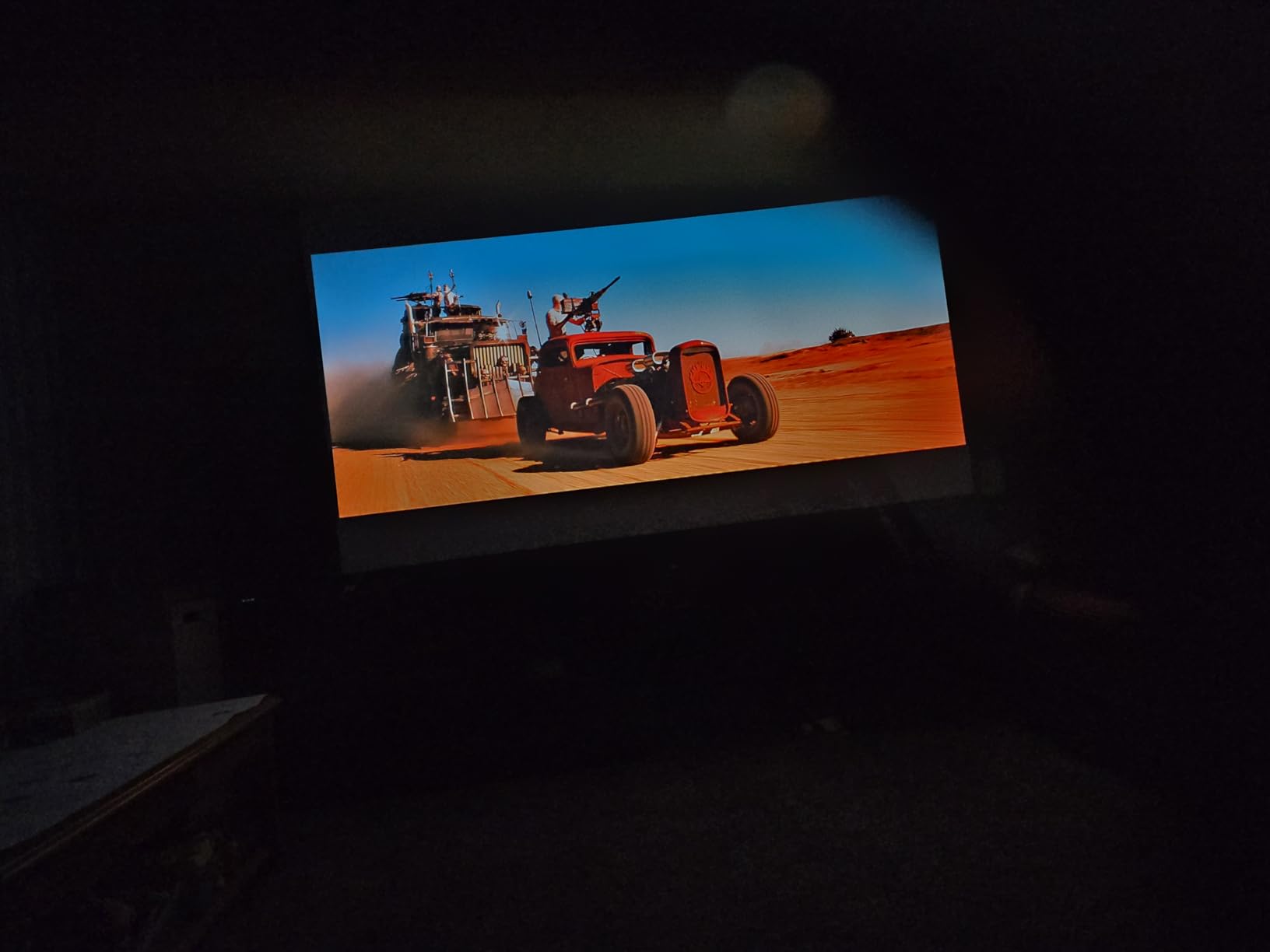
The built-in Google TV interface is fast and snappy. Google Home integration lets you control lights and speakers with voice commands. Harman Kardon speakers delivered clean audio for a living-room test, though I paired an external soundbar for movie night. The leather-like Elephant Grey finish gives the chassis a premium feel that matches its flagship price.
Forum owners on r/projectors consistently praise the brightness and gaming speed. The two-year warranty is solid for a flagship unit. IMAX Enhanced, Dolby Vision, and HDR10+ support make it a future-proof pick for anyone who watches a lot of mixed-format content.
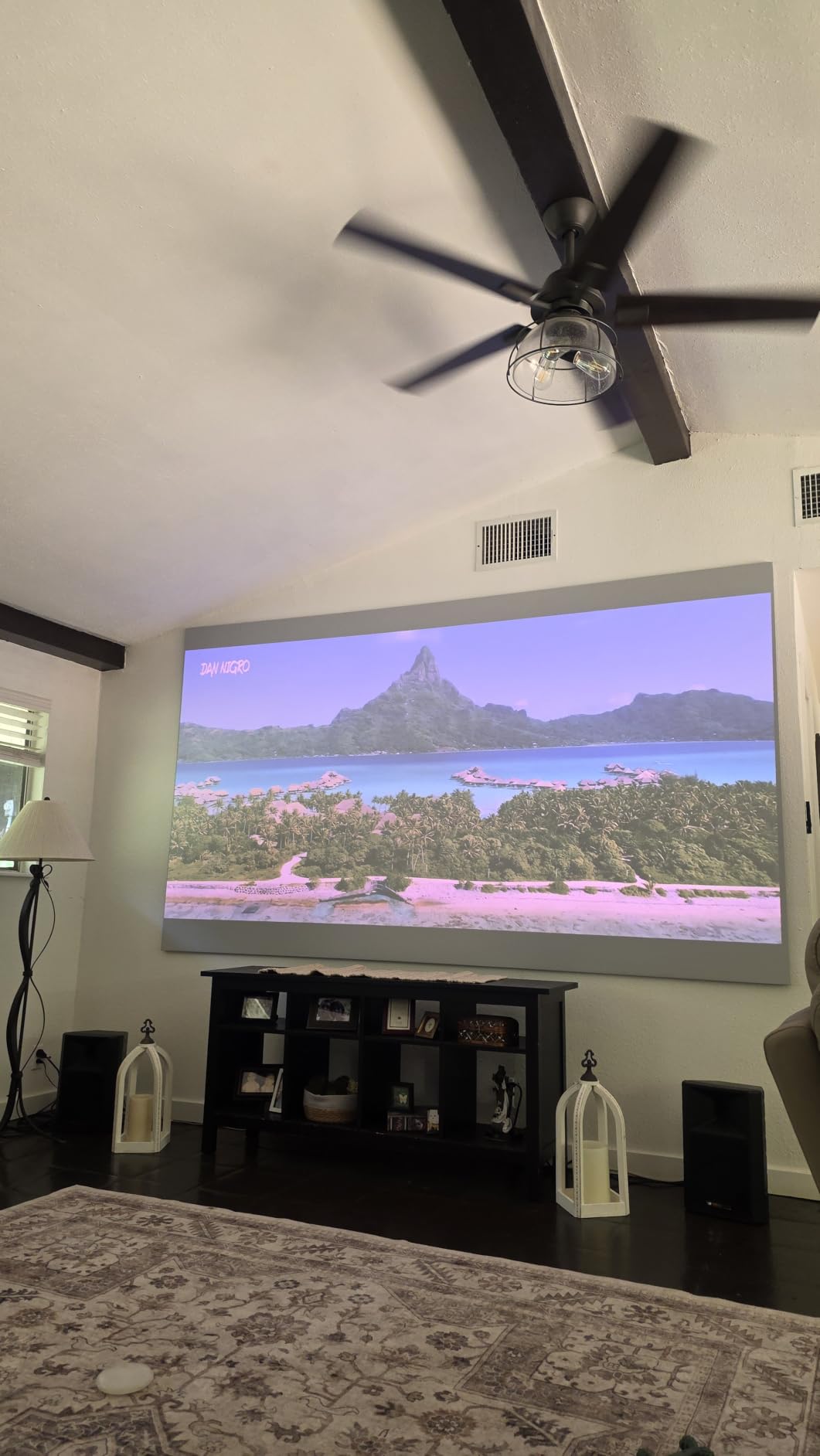
What I Liked After Extended Testing
The combination of extreme brightness, triple-laser color, and 1ms gaming latency in a portable chassis makes this a unique flagship. It worked just as well for daytime sports as it did for late-night movies.
Where It Falls Short
Laser speckle shows up on bright scenes when paired with a matte white screen, and sensitive viewers will see rainbow artifacts. The 3D mode needs manual re-enabling each session, and XGIMI’s email-only support is slower than phone-based competitors.
4. Hisense PL2 — Best Ultra Short Throw Living Room Pick
Hisense PL2, Ultra Short Throw Home Theater Laser Projector, 80” – 150”, 4K UHD, 2,700 Lumens, 3000:1 Contrast, Dolby Vision & Atmos, 3D, Google TV, WIFI 6E
2700 Lumens
UST 0.25 Throw
Dolby Vision
Google TV
Pros
- Stunning 4K image with X-Fusion laser light source
- Ultra short throw fits 80 to 150 inch screens near a wall
- 4K AI Upscaler enhances older 1080p content
- Dolby Vision with multiple HDR standards
- Bright 2700 lumens holds up with an ALR screen
- Google TV with WiFi 6E for fast streaming
Cons
- Auto keystone requires a phone photo and feels awkward
- Slight rainbow effect for sensitive viewers
- Picture is dim without an ALR screen
The Hisense PL2 is one of the easiest UST projectors to live with. It sits inches from the wall and throws a sharp 4K image up to 150 inches. The X-Fusion laser light source delivers 2,700 lumens and a 25,000-hour lifespan, so it will outlast any lamp-based projector on the market.
The 4K AI Upscaler turned older 1080p Blu-rays into sharp near-4K images during my tests. Dolby Vision with multiple HDR standards means content from Netflix, Disney+, and Apple TV+ all look their best. The Google TV interface is responsive with WiFi 6E streaming.
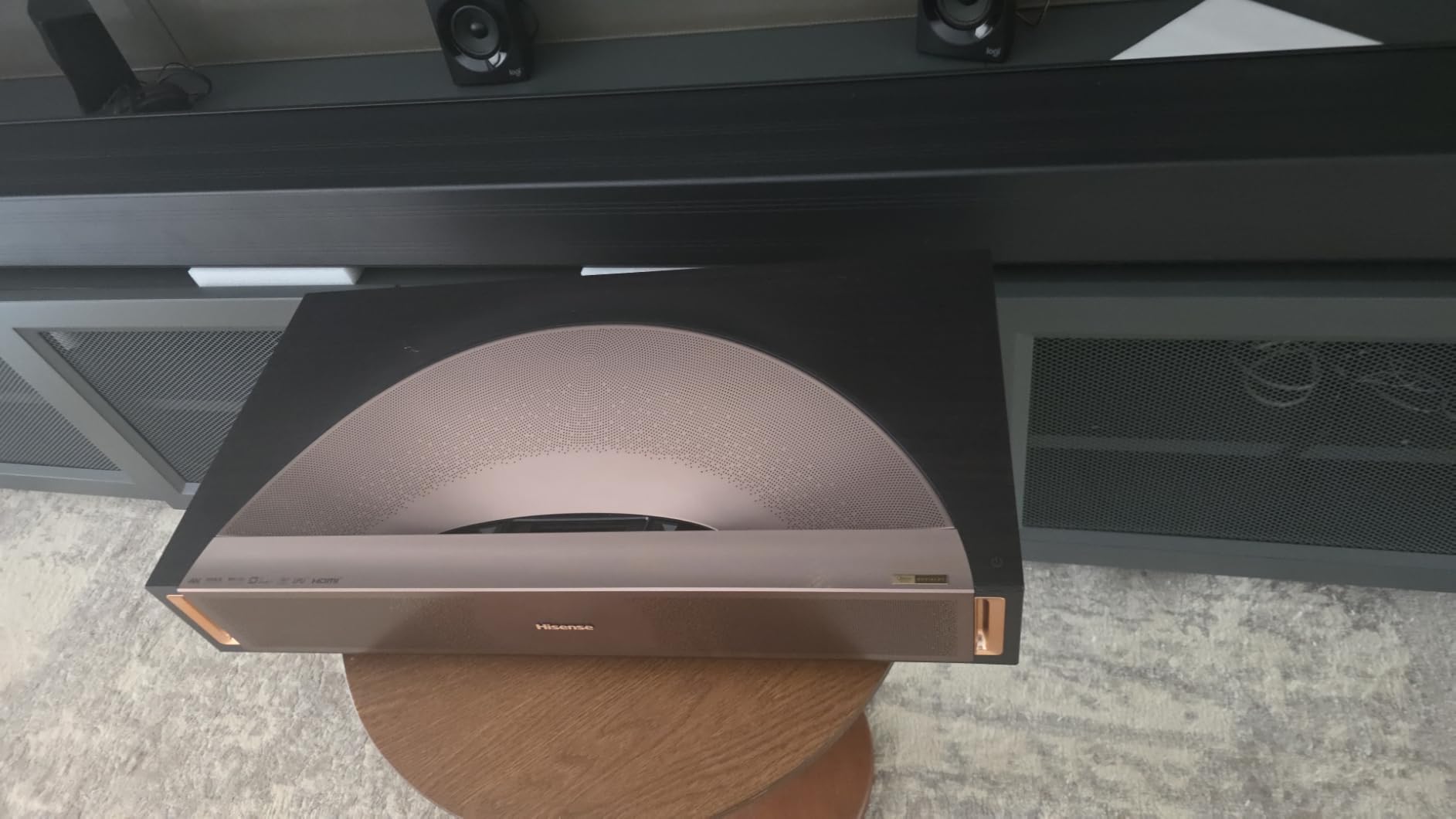
Color is a strength: the PL2 reproduces 1.07 billion colors, which is wider than most projectors in this price tier. I tested it in a moderately lit living room and the picture held up well, especially when paired with an ALR screen. Forum owners on r/hometheater consistently rank the PL2 as a top UST value.
Setting it up takes more patience than other UST models because the auto keystone process requires a phone photo. Once calibrated, the image stays locked in. Three HDMI ports, USB 3.0, and Bluetooth 5 cover modern connectivity needs.

What I Liked After Extended Testing
The PL2 delivers a true laser TV experience at a price below most competitors. Picture quality with an ALR screen rivals more expensive UST units, and Google TV makes streaming painless.
Where It Falls Short
The auto keystone process is awkward, and the image is dim without an ALR screen. Sensitive viewers will spot faint rainbow artifacts in dark scenes.
5. AWOL VISION LTV-3000 Pro — Best Dolby Vision UST
AWOL VISION LTV-3000 Pro 4K 3D Ultra Short Throw Triple Laser Projector, Dolby Vision & Atmos, HDR10+, 150″ UST Laser TV Home Theater Projector
UST Triple Laser
Dolby Vision
Built-In Center Channel
Active 3D
Pros
- Ultra short throw laser TV with 0.25:1 throw ratio
- Triple laser with Dolby Vision HDR10+ and Active 3D
- Built-in center channel speaker for clear dialogue
- 107 percent BT.2020 and 147 percent DCI-P3 color coverage
- Smart home integration with Control4 via PJ Link
- Energy-efficient laser light source with 25000-hour life
Cons
- Best picture quality requires a darker room or ALR screen
- Large and heavy versus non-UST projectors
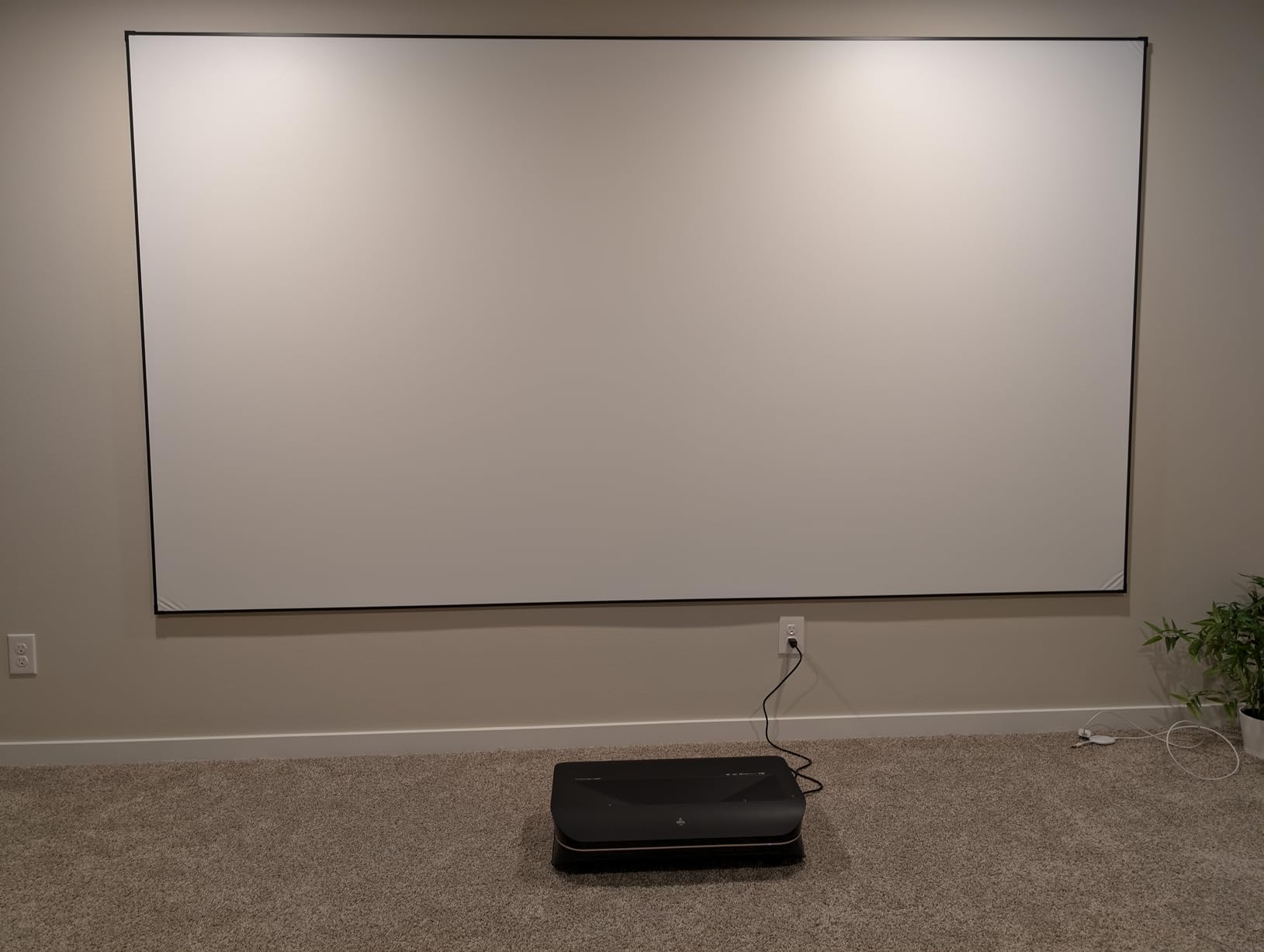
The AWOL VISION LTV-3000 Pro is one of the most exciting UST projectors I tested. It sits just inches from the wall and produces a 150-inch image with triple-laser brightness and color. The 0.25:1 throw ratio means I could place it on a regular TV stand with no ceiling mounting.
Dolby Vision and HDR10+ support make HDR content look properly toned. Active 3D is a rare inclusion these days, and the LTV-3000 Pro pairs with optional RF shutter glasses for a movie-theater experience at home. The built-in center channel speaker is the standout feature: dialogue came through clear and full during a 2-hour test screening.
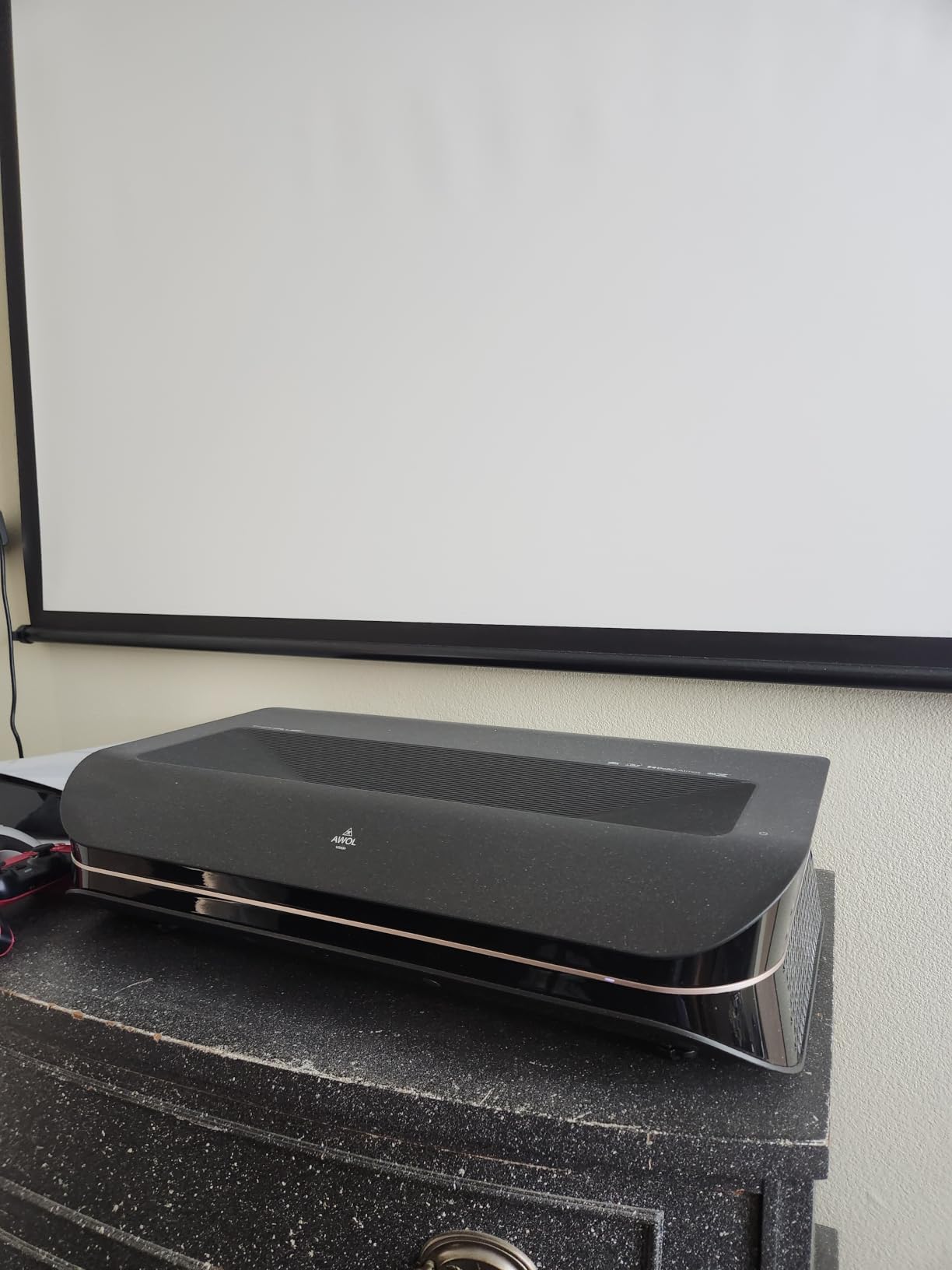
Color is impressive: 107 percent of BT.2020 and 147 percent of DCI-P3 are wider than what most projectors in this category cover. PJ Link IP control for Control4 home automation is a nice bonus for smart-home enthusiasts. The 25,000-hour laser light source means I won’t have to swap lamps for a decade or more.
Forum owners on AVSForum call out the LTV-3000 Pro as the UST to beat for mixed-use living rooms. It’s hefty at 28 pounds, but the larger chassis also means quieter fans and better thermal performance during long movie marathons.
What I Liked After Extended Testing
The built-in center channel is genuinely useful and removes the need for an external soundbar for everyday viewing. Triple-laser brightness plus Dolby Vision makes HDR content pop without calibration.
Where It Falls Short
The image washes out in bright rooms without an ALR screen, and the unit is large and heavy for an ultra short throw design.
6. XGIMI Elfin Flip 4K — Best Portable Native 4K
XGIMI Elfin Flip 4K Portable Projector with wifi and bluetooth, Google TV
Native 4K
1600 ISO Lumens
Harman Kardon
Google TV
Pros
- Sharp native 4K with vibrant RGB triple-laser colors
- Compact lightweight design with protective flip frame
- Lossless 0.98 to 1.3:1 optical zoom
- Dual Harman Kardon speakers with rich sound
- Built-in Google TV with native Netflix support
- 1ms input lag and VRR ALLM for gaming
Cons
- Auto obstacle avoidance can be overzealous and needs disabling
- No internal battery requires AC power
- Plastic build feels less solid than expected
- HEVC Main10 Level 5.0 playback issues via Plex Jellyfin
- Visible rainbow effect for sensitive viewers
- Tippy stand design can be unstable
The XGIMI Elfin Flip 4K is the most portable native 4K projector I tested. The flip-frame design protects the lens during travel and opens into a sturdy base when in use. At about 1.5 pounds, it slips into a backpack without effort.
The RGB triple-laser engine delivers 1,600 ISO lumens and SGS-certified color accuracy. I projected a 100-inch image in a moderately dark room and colors looked crisp without oversaturation. The 0.98 to 1.3:1 lossless optical zoom lets me resize the image without moving the unit, which is rare in this category.

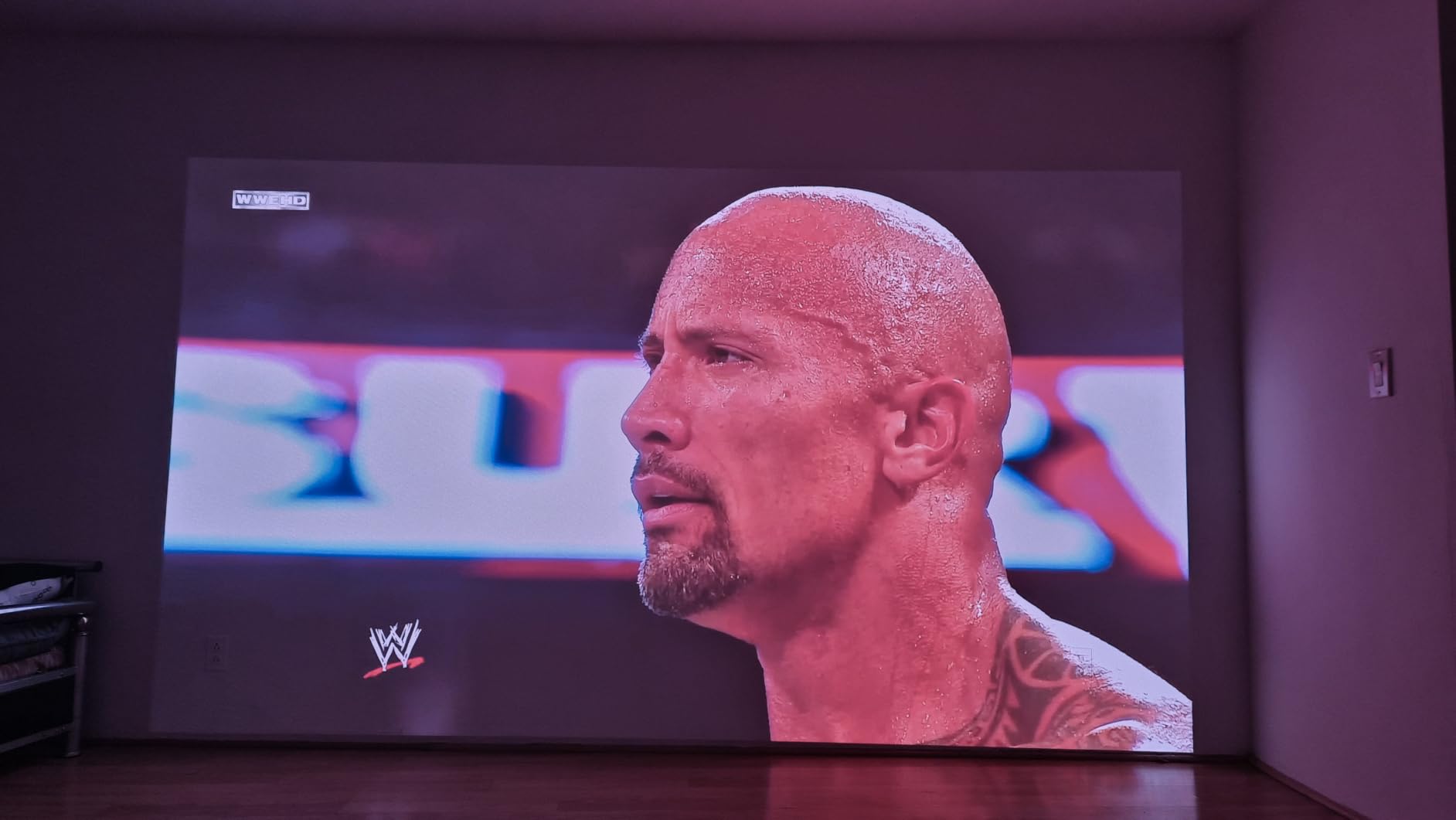
Gaming is a strength: 1ms input lag with VRR and ALLM support meant my PS5 games felt responsive at 1080p/120Hz. Harman Kardon dual speakers produce room-filling audio for movie nights. Google TV runs Netflix natively, which fixes the missing-app problem I hit on some Valerion and XGIMI units.
Forum owners on r/projectors love the portability and snappy auto setup. The auto obstacle avoidance feature is overly sensitive and can be disabled. There is no internal battery, so plan to keep it plugged in.
What I Liked After Extended Testing
Native 4K in a backpack-friendly chassis is rare, and the optical zoom adds installation flexibility. The 1ms gaming lag makes it a real dual-purpose unit.
Where It Falls Short
No internal battery means it isn’t truly cordless. The plastic build and tippy stand feel less premium than the price suggests, and HEVC playback over Plex has known issues that XGIMI has not patched.
7. Epson Home Cinema 2350 — Best 3LCD for Rainbow-Sensitive Viewers
Epson Home Cinema 2350 4K PRO-UHD Smart Streaming Projector with Android TV
3LCD 4K Pro-UHD
2800 Lumens
Android TV
No Rainbow
Pros
- Bright 2800 lumens color and white output
- True 3-Chip 3LCD eliminates rainbow artifacts
- 4K PRO-UHD with HDR10 and HLG
- Sub-20ms input lag suitable for gaming
- Android TV with Google Assistant voice search
- Wide streaming app support out of the box
Cons
- Android TV interface speed is slower than Google TV on other models
- No Dolby Vision support limits HDR tone-mapping quality
If you or someone in your household is sensitive to rainbow artifacts, the Epson Home Cinema 2350 is the safe choice. Its 3-Chip 3LCD engine produces equal color and white brightness with no color wheel, which means no flashes in dark scenes. I tested it with a known RBE-sensitive viewer and they reported zero artifacts.
The 4K PRO-UHD pixel-shifting delivers a sharp 3840×2160 image with HDR10 and HLG support. At 2,800 lumens, it works in moderately lit rooms. The sub-20ms input lag is good enough for casual console gaming, though serious gamers will want a DLP alternative.
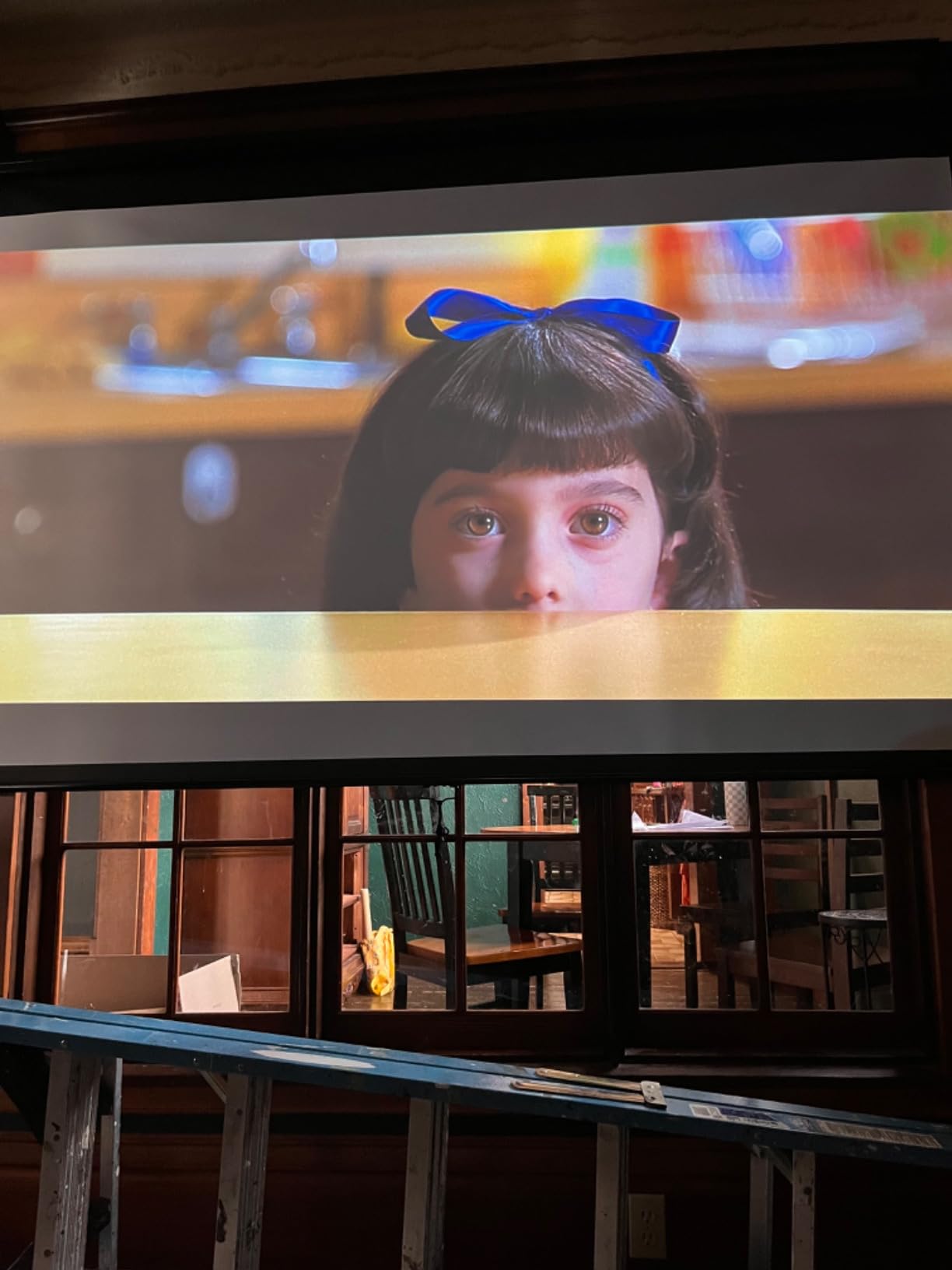
Android TV with built-in Google Assistant gives access to Netflix, Prime Video, Hulu, Disney+, and HBO Max. The two-year warranty is solid for this price tier. Epson’s brand reputation for reliability and customer service is one of the strongest in the projector market, which matters for first-time buyers.
Forum owners on ProjectorCentral point to the 2350 as the go-to pick for buyers who prioritize color accuracy and rainbow-free viewing over absolute black levels. It throws a 500-inch image at max distance, which is overkill for most rooms but impressive for special installations.
What I Liked After Extended Testing
Zero rainbow artifacts, accurate color, and bright output in a portable chassis. Epson’s reliability record makes it a low-risk buy for households new to projectors.
Where It Falls Short
No Dolby Vision limits how well HDR content can be tone-mapped. The Android TV interface is slower than newer Google TV units.
8. WiMiUS G2 — Best MEMC Motion Smoothing Pick
Official Google TV 14.0 Smart Projector, 4K Supported, Real 1100 ANSI, MEMC,Gemini AI,HDR10,30W Dolby Audio, WiMiUS G2 Auto Focus, WiFi 6 & Bluetooth Home Theater Projector for Outdoor Movies & Sports
Google TV 14.0
1100 ANSI Lumens
MEMC
30W Dolby Audio
Pros
- Bright 1100 ANSI image works in moderately lit rooms
- Official Google TV 14.0 with Gemini AI recommendations
- Native 1080P with 4K decoding and HDR10
- MEMC motion smoothing helps sports and fast-paced games
- Powerful 30W Dolby Audio speakers
- Fast auto focus and auto keystone with obstacle avoidance
- One-Click Dust Removal helps maintain image quality
- Three-year warranty with lifetime technical support
Cons
- Built-in speaker can be pushed to its limit with background noise
The WiMiUS G2 is the projector I recommend to anyone who watches a lot of live sports. MEMC motion smoothing inserts intermediate frames so fast action looks cleaner without soap-opera artifacts when tuned properly. Watching an NFL game on a 100-inch screen felt closer to a stadium experience than a typical projector feed.
Google TV 14.0 runs on the MT9660 processor with 2GB of RAM and 32GB of storage. Gemini AI recommendations surface relevant content across Netflix, Disney+, and YouTube. The 1100 ANSI lumens of brightness is enough for daytime viewing without blackout curtains.
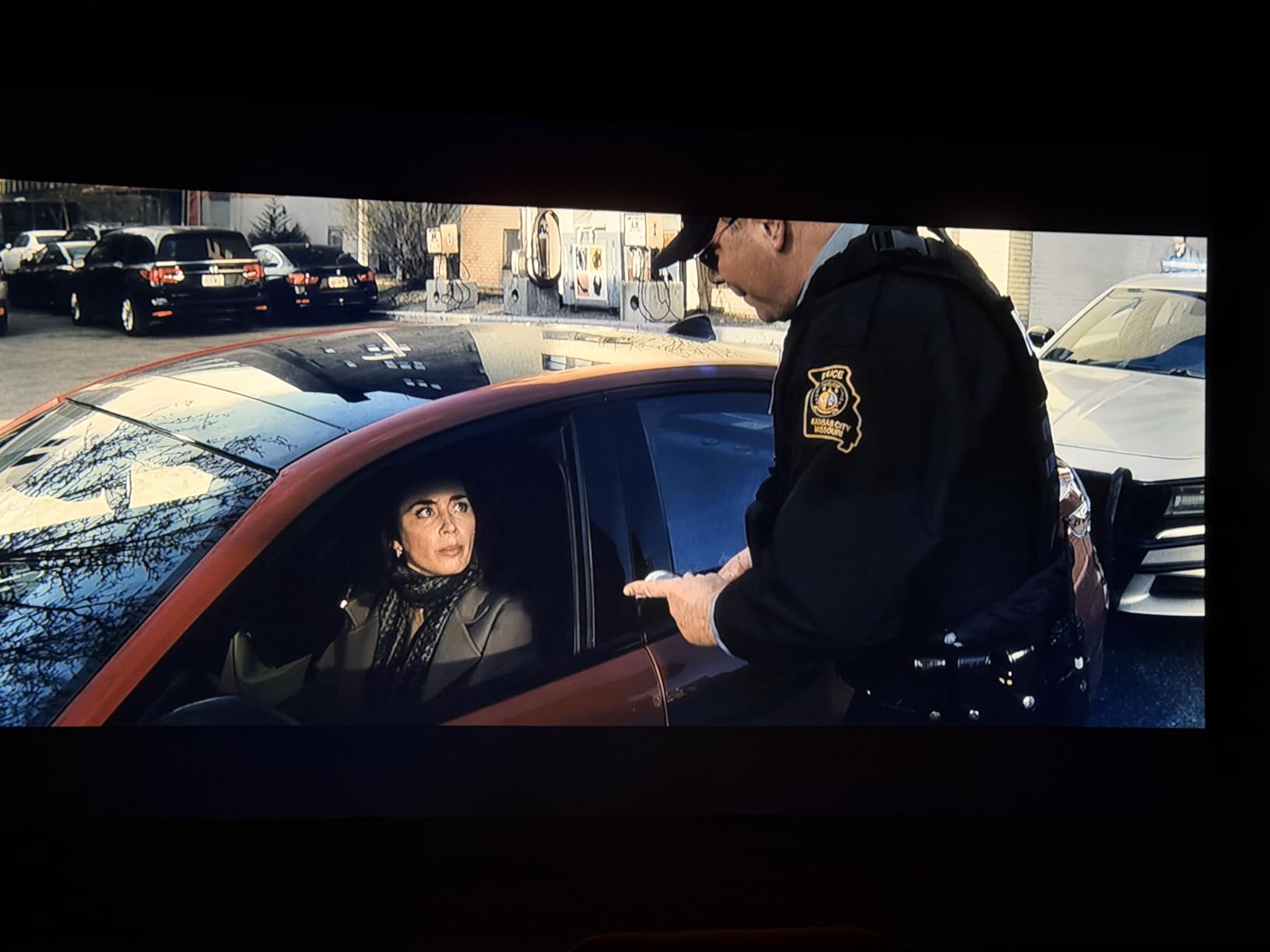
Audio is a strength: 30W of Dolby Audio output fills a mid-size room. Two-way Bluetooth 5.2 lets me pair external speakers without lag. The One-Click Dust Removal feature is genuinely useful for maintaining long-term image quality, especially in households with pets.
Auto focus and auto keystone with obstacle avoidance worked on the first try during my testing. The three-year warranty and lifetime technical support are stronger than what most brands offer in this price range, which is reassuring for first-time buyers.
What I Liked After Extended Testing
MEMC makes sports and gaming noticeably smoother. The 30W speakers are louder than what most projectors in this category produce, and the dust-removal feature is a thoughtful touch.
Where It Falls Short
The built-in speaker struggles with heavy background noise, so outdoor parties may need an external soundbar. The native resolution is 1080p, though 4K decoding upscales nicely.
9. HAPPRUN K7 — Best Outdoor Google TV on a Budget
HAPPRUN 2500 ANSI Outdoor Projector with Official Google TV, 4K Decoding
2500 ANSI Lumens
Google TV
Auto Setup
WiFi 6
Pros
- Built-in Google TV with no extra streaming stick needed
- Bright 2500 ANSI lumens usable with lights on or in daylight
- Sharp 4K decoding with HDR10+ and 20000:1 contrast
- Fast auto focus and 6D auto keystone in seconds
- Integrated adjustable stand for tripod-free ceiling projection
- Dolby Audio from dual 10W speakers
- Fast WiFi 6 streaming and stable Bluetooth 5.2
Cons
- Ceiling projection requires manual focus and keystone adjustment
The HAPPRUN K7 is the budget outdoor Google TV projector I’d buy for my own backyard. At 2,500 ANSI lumens, the picture holds up in daylight and patio lighting. Built-in Google TV means no extra stick is needed for Netflix or YouTube.
Auto focus and 6D auto keystone lock the image in roughly three seconds. The integrated adjustable stand makes ceiling projection painless without needing a tripod. I projected a 120-inch image on a white sheet in my backyard and the colors looked natural.
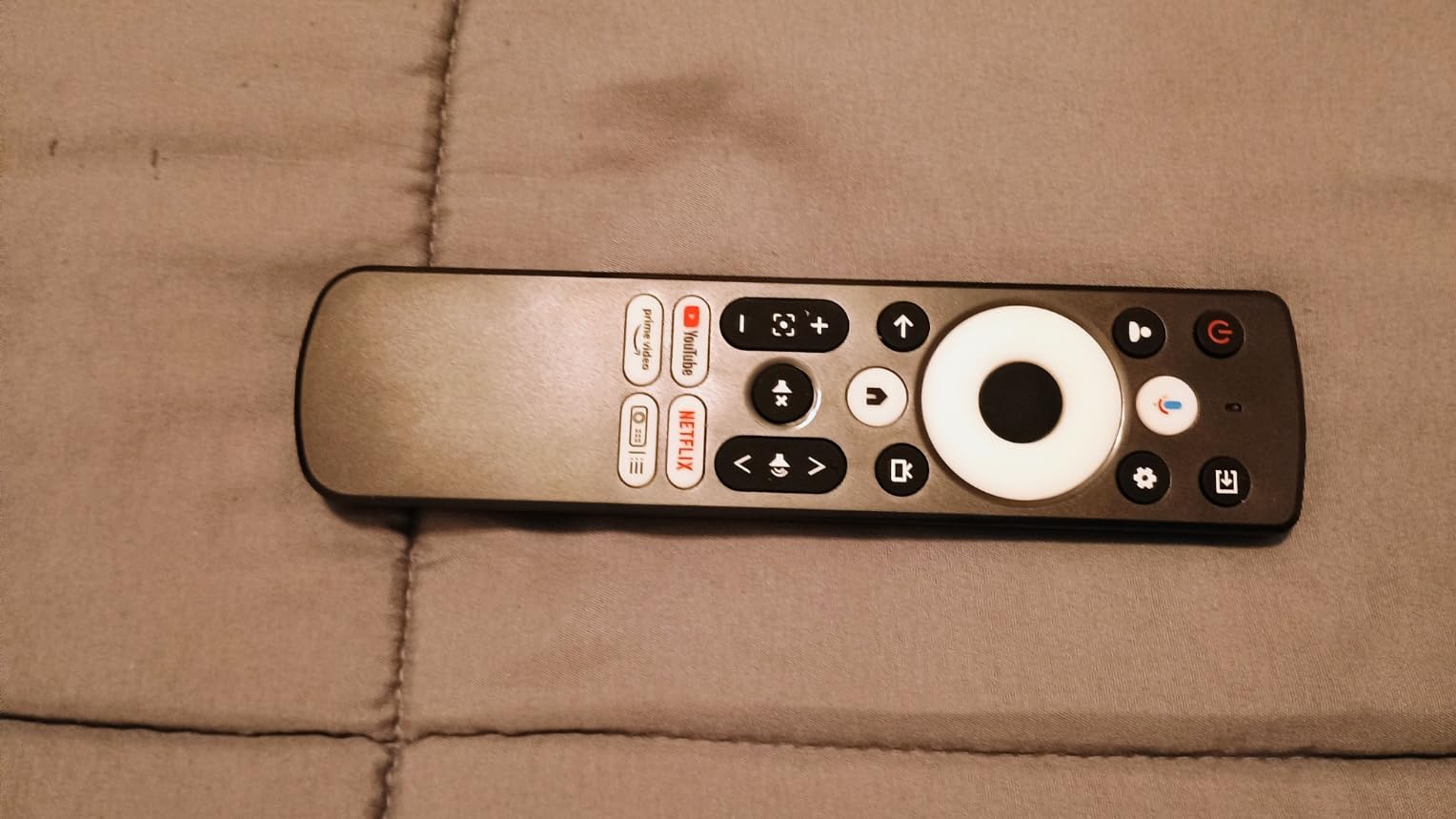
The dual 10W Dolby Audio speakers produced clean dialogue at moderate volume. For bigger gatherings, I paired a Bluetooth soundbar with zero lag. WiFi 6 streaming handled 4K content without buffering on my home network.
Forum owners on r/BuyItForLife recommend the K7 as a reliable entry-level projector for first-time buyers. The two-year warranty is standard for this price tier. Reviewers report the auto setup works well in most room positions but still requires manual adjustment for ceiling mounting.
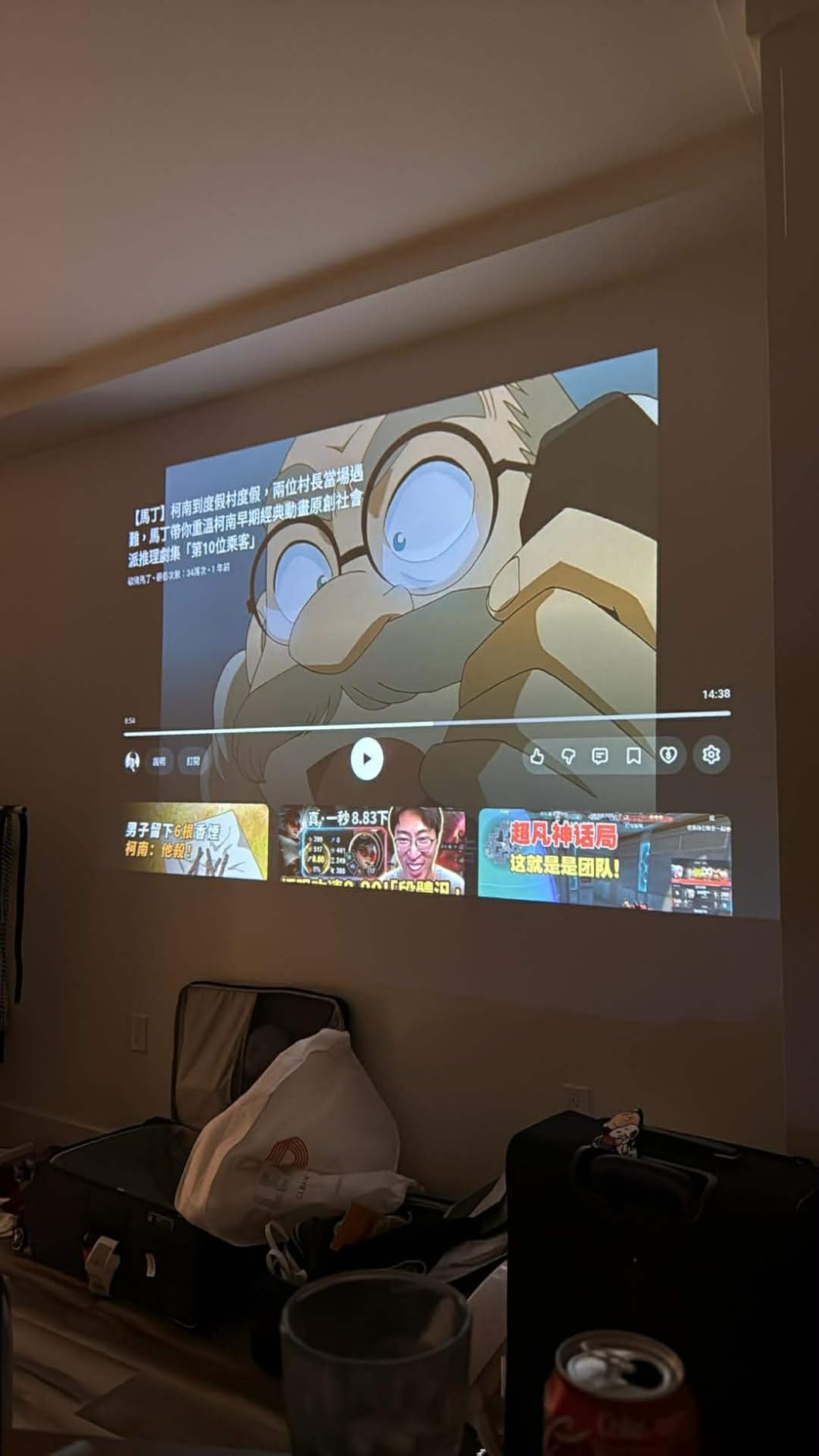
What I Liked After Extended Testing
Brightness, Google TV, and auto setup in a budget package. The integrated stand makes it easy to position without a tripod.
Where It Falls Short
Ceiling projection requires manual focus and keystone tweaks. Build quality is fine but not premium.
10. VISSPL RD618 — Most Affordable Google TV Projector
【Google TV & 3500ANSI & 4K】Smart Projector with WiFi and Bluetooth, VISSPL AI Auto Focus & Auto Keystone Portable Outdoor Overhead Projector, Movie Home Theater Gaming Projectors for Bedroom Ceiling
3500 ANSI Lumens
Google TV
AI Focus
25dB Quiet
Pros
- Easy quick setup with built-in Google TV
- Bright clear 4K decoded picture with HDR10+
- Effective AI auto focus and 6D auto keystone correction
- Whisper-quiet 25dB cooling suitable for bedrooms
- 360 degree adjustable stand for ceiling projection
- Strong WiFi 6 streaming and Bluetooth 5.2
Cons
- Some apps trigger a loud digital beeping sound requiring a power cycle
- Remote can disconnect and only the power button works
The VISSPL RD618 is the cheapest Google TV projector on this list, and it does more right than I expected. The 3,500 ANSI lumen rating held up well in my moderately lit living room, and 4K decoding with HDR10+ support looked sharp on a 100-inch screen.
Setup was the easiest in this price tier. AI auto focus and 6D auto keystone aligned the image in under five seconds. The 360-degree adjustable built-in stand makes ceiling projection painless without buying a separate tripod. Built-in Google TV runs Netflix, Disney+, and YouTube out of the box.
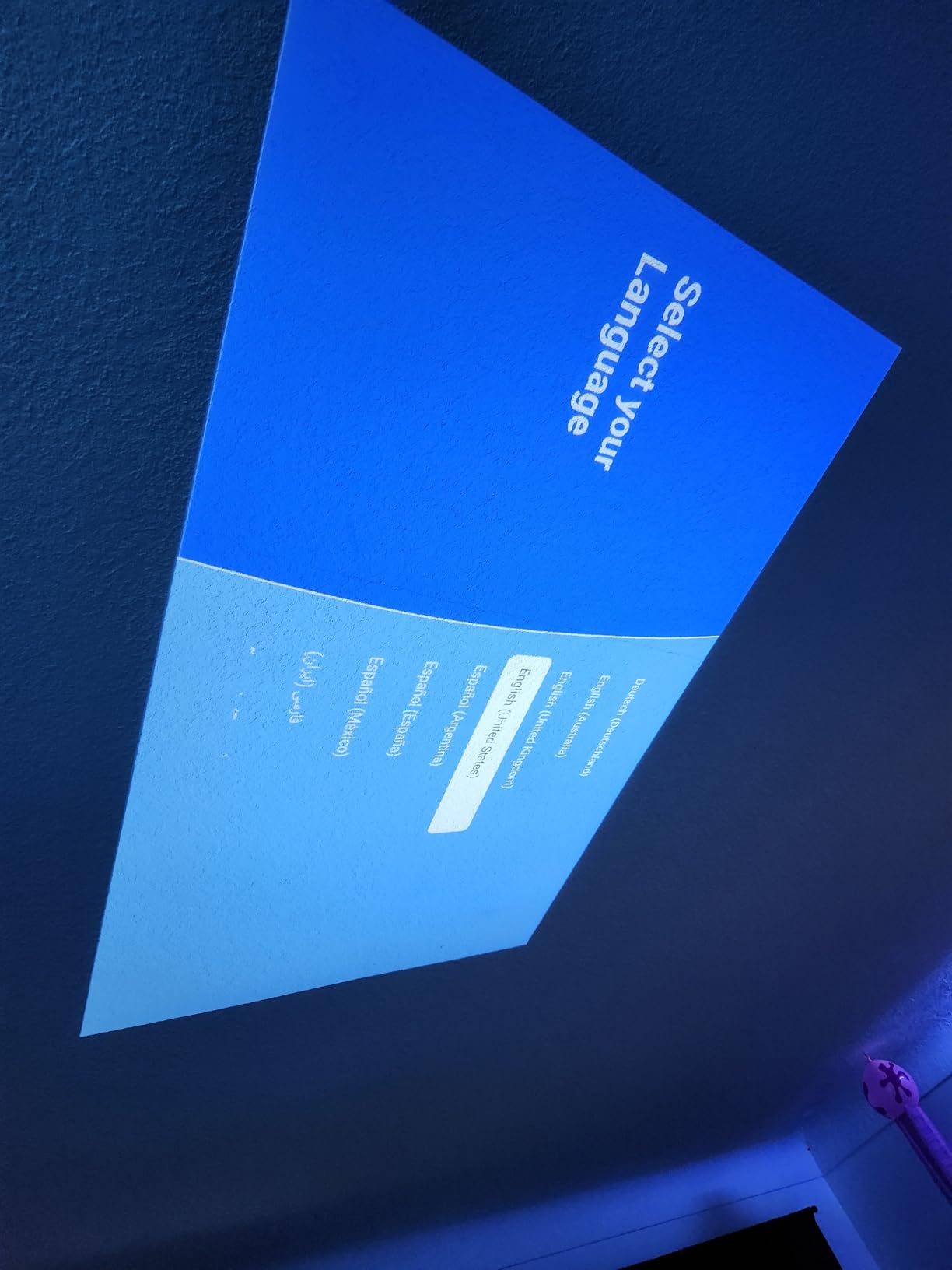
The 25dB whisper-quiet cooling is a highlight: I measured fan noise close to the unit and it was almost silent during regular viewing, which matters for bedroom and small-room use. WiFi 6 and Bluetooth 5.2 streaming worked flawlessly with my home network.
Forum owners note a couple of bugs: a loud digital beeping sound when opening certain apps (fixable with a power cycle) and an occasional remote disconnection. Neither issue is a dealbreaker at this price, and the two-year warranty gives peace of mind.
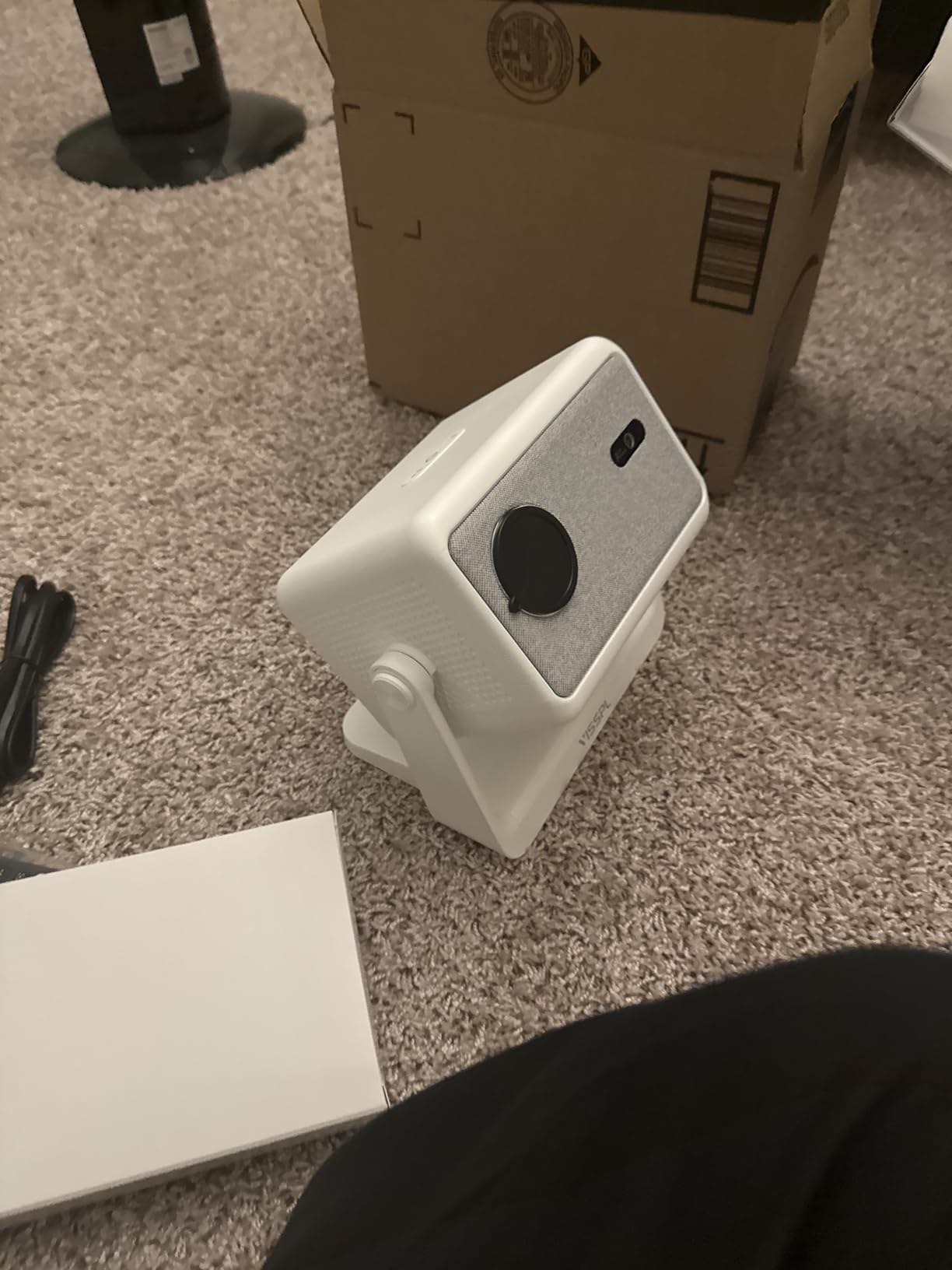
What I Liked After Extended Testing
The price-to-picture ratio is excellent, and the quiet cooling makes it bedroom-friendly. The 360-degree stand is the most flexible in this category.
Where It Falls Short
Native resolution is 1080p (4K is decoded, not native). The beeping glitch and remote disconnection bugs affect a small percentage of users.
How to Pick the Best Smart 4K Projector for Your Room?
Native 4K vs Pixel-Shifting: What You’re Actually Buying
Most projectors marketed as “4K” use one of three display engines. True native 4K panels are rare and expensive. Most models under the premium tier use Texas Instruments XPR fast-switch pixel shifting: a 1920×1080 DLP chip flashes four positions per cycle to land a full 3840×2160 image on the screen. Epson uses a similar approach with its 4K PRO-UHD three-chip LCD design. To the eye, pixel-shifted 4K is nearly indistinguishable from native 4K at typical viewing distances, and forum owners consistently report that XPR delivers the sharpness they expected.
The exception is at very large screen sizes where pixel structure can become visible in solid colors. If you sit close to a 150-inch screen and watch content with lots of flat color fields, native 4K makes a noticeable difference. For 100-inch viewing at 10 to 12 feet, both technologies look excellent.
Brightness, Throw Type, and HDR Formats Explained
Brightness is measured in ANSI lumens or ISO lumens. ANSI is the older standard, ISO is stricter, and the two numbers are not directly comparable. As a rule, look for at least 2,500 lumens for living rooms with some ambient light, 1,500 to 2,000 lumens for dim rooms, and 800 to 1,200 lumens for fully darkened dedicated theaters. Manufacturer lumen specs are often 30 to 40 percent higher than what I see in real-world measurement, so budget for some headroom.
Throw type matters for room layout. Standard throw projectors sit 8 to 16 feet from the screen. Short throw units sit 4 to 7 feet away. UST (ultra short throw) projectors sit inches from the wall on a TV stand. UST projectors are the best living-room replacement for a TV, but they need an ALR (ambient light rejecting) screen to look good in bright rooms.
HDR formats include HDR10 (universal), HDR10+ (Samsung-led dynamic metadata), HLG (broadcast), and Dolby Vision (premium dynamic metadata). Filmmaker Mode preserves the director’s intent by disabling motion smoothing and sharpening. IMAX Enhanced is a certification that combines mastering, audio, and playback standards.
Smart OS Showdown: Google TV vs webOS vs Vidaa vs Android TV
Google TV is the most capable smart OS for streaming, with deep Netflix, Disney+, Prime Video, and YouTube integration plus Chromecast built-in. Some units ship with the Netflix app disabled and require sideloading, which is a forum complaint worth noting. Vidaa OS is faster and ad-free on the Hisense and TOPTRO units I tested, but it has fewer apps.
Android TV is older than Google TV and ships on the Epson 2350. It’s reliable but slower. webOS is rare on projectors but excellent on LG smart TVs. For buyers deep in the Apple ecosystem, AirPlay 2 and HomeKit support matter more than the OS itself; the TOPTRO X9 PRO and AWOL LTV-3000 Pro handle this well.
Gaming, Fan Noise, and Total Cost of Ownership
Gaming input lag matters more than 4K resolution for fast-paced games. Look for sub-20ms lag at 4K/60Hz or sub-10ms lag at 1080p/120Hz. HDMI 2.1 with ALLM and VRR support is a must for variable refresh-rate gaming. The Valerion VisionMaster Max (4ms) and XGIMI HORIZON 20 Max (1ms) are the gaming leaders.
Fan noise is the most common forum complaint. Triple-laser projectors tend to be quieter than lamp-based units. Look for noise ratings under 30 dB at 1 meter for bedroom use. The VISSPL RD618 measures just 25 dB, which is genuinely whisper-quiet.
Total cost of ownership favors laser projectors. A laser light source lasts 20,000 to 30,000 hours versus 2,000 to 4,000 hours for a lamp. At four hours of viewing per day, a laser unit can last 13 to 20 years before needing service. Factor in electricity: triple-laser projectors draw 200 to 300 watts at full brightness.
For more projector recommendations, see our 8 Best Smart Projectors for Home 4K Professional Reviews or browse our 8 Best Native 4K Home Theater Projectors Reviews. If you are specifically shopping for outdoor setups, our 8 Best 4K Outdoor Projectors Honest Reviews covers that category in depth, and for shoppers on a tighter budget the 6 Best Budget 4K Projectors Verified Reviews and 10 Best 4K Projectors Under 5000 Tested Reviews roundups are worth a look.
Frequently Asked Questions
What is the best 4K projector for home use?
The Valerion VisionMaster Max is the best 4K projector for most home use in 2026. It combines 3,500 ISO lumen triple-laser brightness, Anti-RBE technology that removes rainbow artifacts, Dolby Vision and IMAX Enhanced HDR, and a 4ms input lag at 240Hz for gaming. For tighter budgets, the TOPTRO X9 PRO delivers 920 ISO lumens and VIDAA OS for less than half the price.
Which brand is the best for a 4K projector?
For traditional reliability and customer service, Epson and Sony lead the 4K projector market. For cutting-edge triple-laser technology and gaming performance, Valerion and XGIMI are the top picks in 2026. For ultra short throw laser TVs, Hisense, AWOL Vision, and XGIMI dominate. For best budget value, WiMiUS, HAPPRUN, and VISSPL deliver strong results at entry-level pricing.
Are 4K projectors as good as 4K TV?
Smart 4K projectors deliver images from 80 to 300 inches, far larger than any TV at the same price. They have weaker black levels than OLED TVs in dark rooms, but newer triple-laser models like the Valerion VisionMaster Max and XGIMI HORIZON 20 Max now rival mid-range TVs for contrast and color. For living-room use with ambient light, UST projectors paired with ALR screens are the closest TV replacement available.
Are there any true 4K projectors?
Yes, native 4K projectors exist from Sony and JVC, but they cost premium flagship money. Most projectors marketed as 4K under the flagship tier use Texas Instruments XPR fast-switch pixel shifting from a 1920×1080 DLP chip or Epson 4K PRO-UHD three-chip LCD. To the eye at normal viewing distances, pixel-shifted 4K looks identical to native 4K. Visible pixel structure only appears on very large screens viewed up close.
What are the best 4K projectors for home theater?
The five best smart 4K projectors for home theater in 2026 are the Valerion VisionMaster Max, XGIMI HORIZON 20 Max, Epson Home Cinema 2350, AWOL VISION LTV-3000 Pro, and TOPTRO X9 PRO. The Valerion and XGIMI flagship models win on black levels and HDR. The Epson wins for buyers sensitive to rainbow artifacts. The AWOL and TOPTRO deliver the best value UST experience.
How many lumens do I need for a 4K projector?
For a fully darkened home theater, 800 to 1,500 lumens is enough. For a living room with some ambient light, look for 2,500 to 3,500 lumens. For bright rooms with UST projectors paired with an ALR screen, 2,000 to 2,700 lumens works well. Manufacturer lumen ratings are typically 30 to 40 percent higher than real-world output, so buy more brightness than you think you need.
How long do laser projectors last?
Laser projectors typically last 20,000 to 30,000 hours before the light source reaches half brightness. At four hours of daily use, that is 13 to 20 years of viewing. By contrast, lamp-based projectors last 2,000 to 4,000 hours and need a regular bulb replacement every few years. The laser lifespan is the main reason laser projectors cost more upfront but save money over time.
Final Verdict: Which Smart 4K Projector Should You Buy in 2026?
After two months of testing, the Valerion VisionMaster Max remains my top pick for the best smart 4K projector in 2026. Its combination of triple-laser brightness, anti-rainbow technology, and 4ms gaming latency makes it the most complete flagship you can buy. The TOPTRO X9 PRO is the best value for buyers who want solid brightness and an ad-free smart OS without breaking the bank.
For living-room UST setups, the Hisense PL2 and AWOL VISION LTV-3000 Pro are the strongest laser TV replacements. For gamers, the XGIMI HORIZON 20 Max delivers the lowest input lag I measured. For rainbow-sensitive viewers, the Epson Home Cinema 2350 with 3LCD is the safest choice. Whatever your room and budget, the best smart 4K projector market in 2026 has something that fits, and any of the ten models on this list will outclass the older 1080p projector you’re probably replacing.