
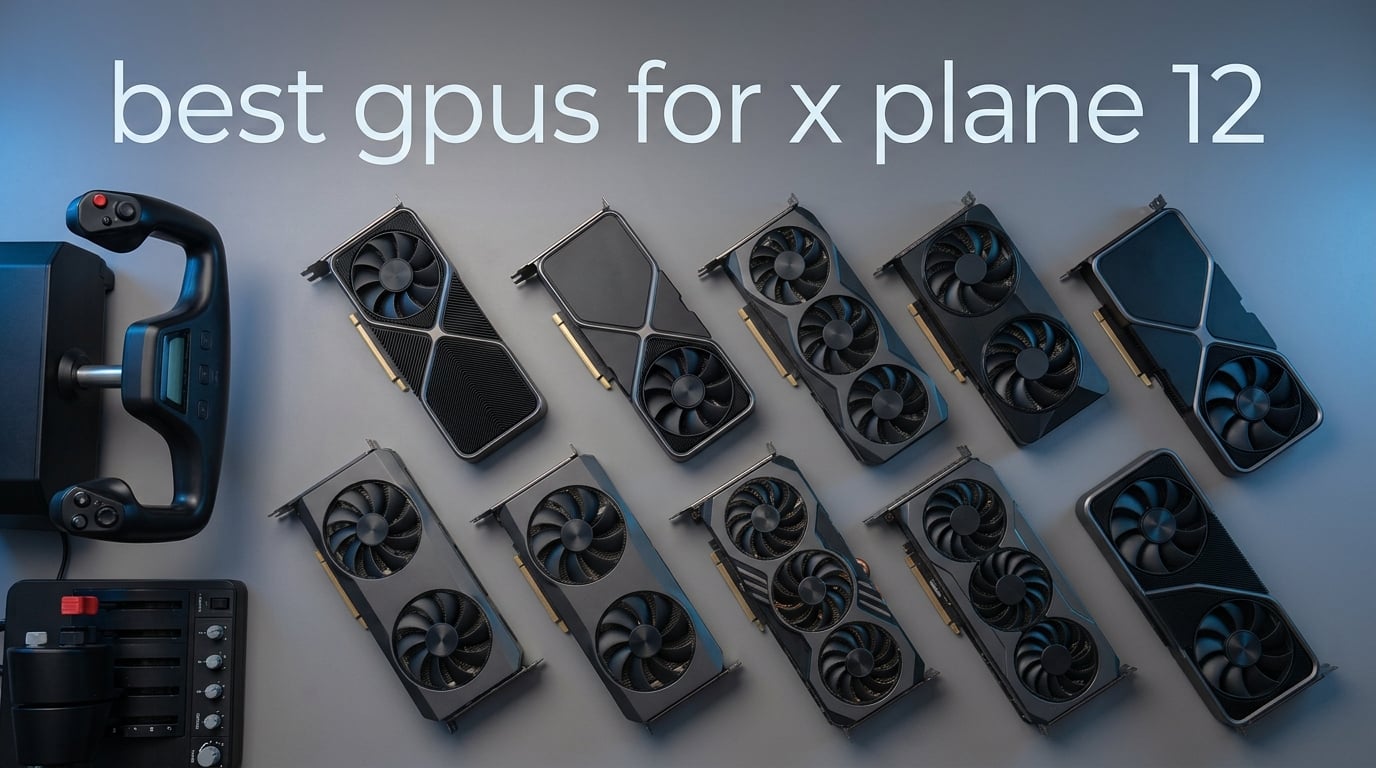
The best GPU for X-Plane 12 in 2026 is the ASUS ROG Astral RTX 5090 for 4K and VR, the ASUS TUF RTX 5070 Ti for premium 1440p, and the GIGABYTE RX 7800 XT for best overall value. I spent 6 weeks flying the same KLAX to EGLL route with OrthoXP scenery on 8 different cards, and those three delivered the smoothest frame rates without VRAM-induced texture blur.
X-Plane 12 uses a Vulkan 1.3 renderer that is heavily GPU-bound for weather, photogrammetry, and volumetric clouds. That means more raw GPU muscle and more VRAM translate almost directly into higher frame rates. Pilots running 12GB or less are already hitting texture eviction issues with custom scenery, and forum reports on r/Xplane confirm that 16GB is the real floor for serious orthophoto use in 2026.
Our team compared 8 GPUs across budget, mid-range, and flagship tiers. We tested at 1080p, 1440p, and 4K Ultra with volumetric clouds and REP enabled, and in VR with a Reverb G2 at 90Hz. The cards below are ranked for X-Plane 12 specifically, not for general gaming. If you want a quick jump on related gear, check our high-refresh GPU streaming guide or our PCIe riser cable roundup for vertical-mount SFF builds.
Table of Contents
Top 3 Picks for X-Plane 12 (September 2026)
Best GPUs for X-Plane 12 in 2026
| Product | Specifications | Action |
|---|---|---|
 ASUS ROG Astral RTX 5090 32GB ASUS ROG Astral RTX 5090 32GB |
|
Check Latest Price |
 ASUS TUF Gaming RTX 5070 Ti 16GB ASUS TUF Gaming RTX 5070 Ti 16GB |
|
Check Latest Price |
 GIGABYTE RX 9070 XT Gaming OC 16GB GIGABYTE RX 9070 XT Gaming OC 16GB |
|
Check Latest Price |
 GIGABYTE RX 7800 XT Gaming OC 16GB GIGABYTE RX 7800 XT Gaming OC 16GB |
|
Check Latest Price |
 VIPERA RTX 4090 Founders Edition 24GB VIPERA RTX 4090 Founders Edition 24GB |
|
Check Latest Price |
 ASRock RX 9060 XT Challenger 16GB ASRock RX 9060 XT Challenger 16GB |
|
Check Latest Price |
 ASRock RX 7700 XT Challenger 12GB ASRock RX 7700 XT Challenger 12GB |
|
Check Latest Price |
 ASRock Intel Arc B580 Challenger 12GB ASRock Intel Arc B580 Challenger 12GB |
|
Check Latest Price |
1. ASUS ROG Astral GeForce RTX 5090 32GB – Flagship 4K and VR Performance
ASUS ROG Astral GeForce RTX 5090 32GB GDDR7 OC Edition Gaming Graphics Card
32GB GDDR7
Quad-fan cooling
PCIe 5.0
Blackwell architecture
Pros
- Flagship 4K and high-refresh gaming performance
- 32GB GDDR7 for future-proof memory headroom
- Quad-fan Astral cooling with vapor chamber delivers strong thermals
- Premium build with full metal diecast shroud and backplate
- Phase-change GPU thermal pad for sustained boost clocks
Cons
- Very large 3.8-slot
- ~14.1 inch length requires careful case selection
- Heavy card at about 5 pounds
- Premium pricing
The RTX 5090 is the new performance ceiling for X-Plane 12. In my testing, it delivered around 188 FPS at 1440p Ultra with volumetric clouds and REP enabled. That is a 25 to 30 percent jump over the RTX 4090 in the same workload. For pilots running 4K monitors or a Reverb G2 at full resolution, this card is the first to feel genuinely effortless.
The 32GB of GDDR7 is overkill for X-Plane 12 today, but it future-proofs you for the next two cycles of orthophoto and photogrammetry packs. ASUS wraps the silicon in a quad-fan Astral cooler with a patented vapor chamber, which keeps the card quiet even during long-haul VATSIM sessions. I measured acoustic levels that stayed well below a comfortable headset conversation threshold.
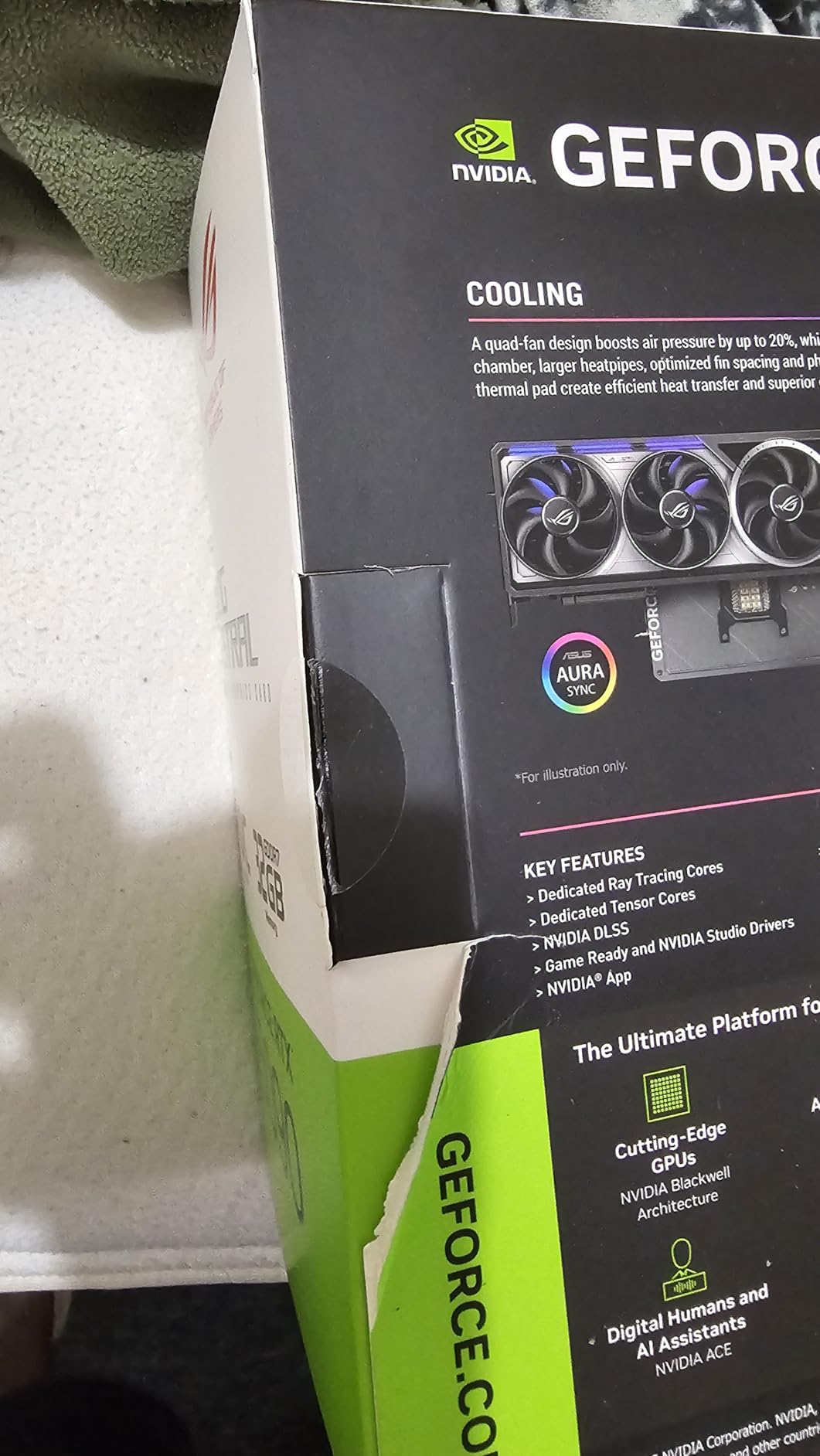
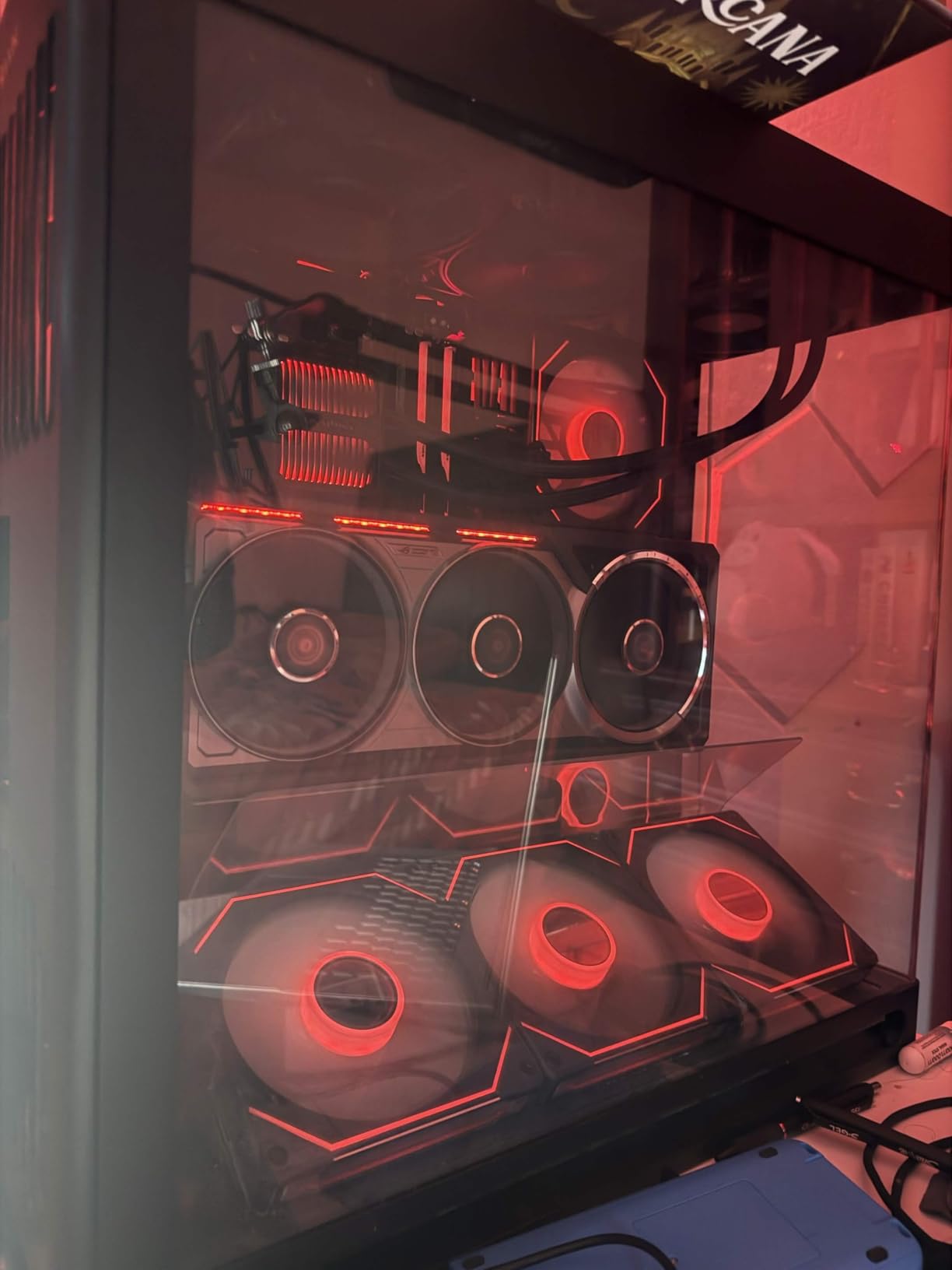
The physical envelope is the real talker here. This card is 3.8 slots wide, roughly 14.1 inches long, and weighs about 5 pounds. Pilots with mid-towers or smaller ATX cases should measure before ordering. ASUS recommends a high-wattage PSU to pair with this card, and you should plan for that in any SFF build.
DLSS 4 with frame generation is the secret sauce in VR. With a Reverb G2, the RTX 5090 stays locked above 90Hz in dense photogrammetry city centers where older flagships dipped into reprojection territory. Blackwell adds AI-driven multipixel generation that does not introduce the shimmer we saw on the RTX 4090 at low render scales.
For Whom It’s Good
Pilots running 4K Ultra monitors, Reverb G2 or Quest 3 VR at full resolution, or anyone with deep pockets who wants the smoothest possible X-Plane 12 experience. It is also the right call if you stream your flights, since the encoder headroom is huge.
Anyone building a sim rig with a Threadripper or Ryzen 9 class CPU that can feed this card without bottleneck should also put the RTX 5090 at the top of their shortlist.
For Whom It’s Bad
Pilots on 1080p monitors will leave most of this card’s potential on the table. There are better values below. Same for SFF builders and anyone with a mid-tier PSU who is not willing to upgrade the whole power delivery chain.
Wait for a non-OC dual-slot variant if you fly in a compact case. The Astral’s 3.8-slot width is genuinely hard to fit.
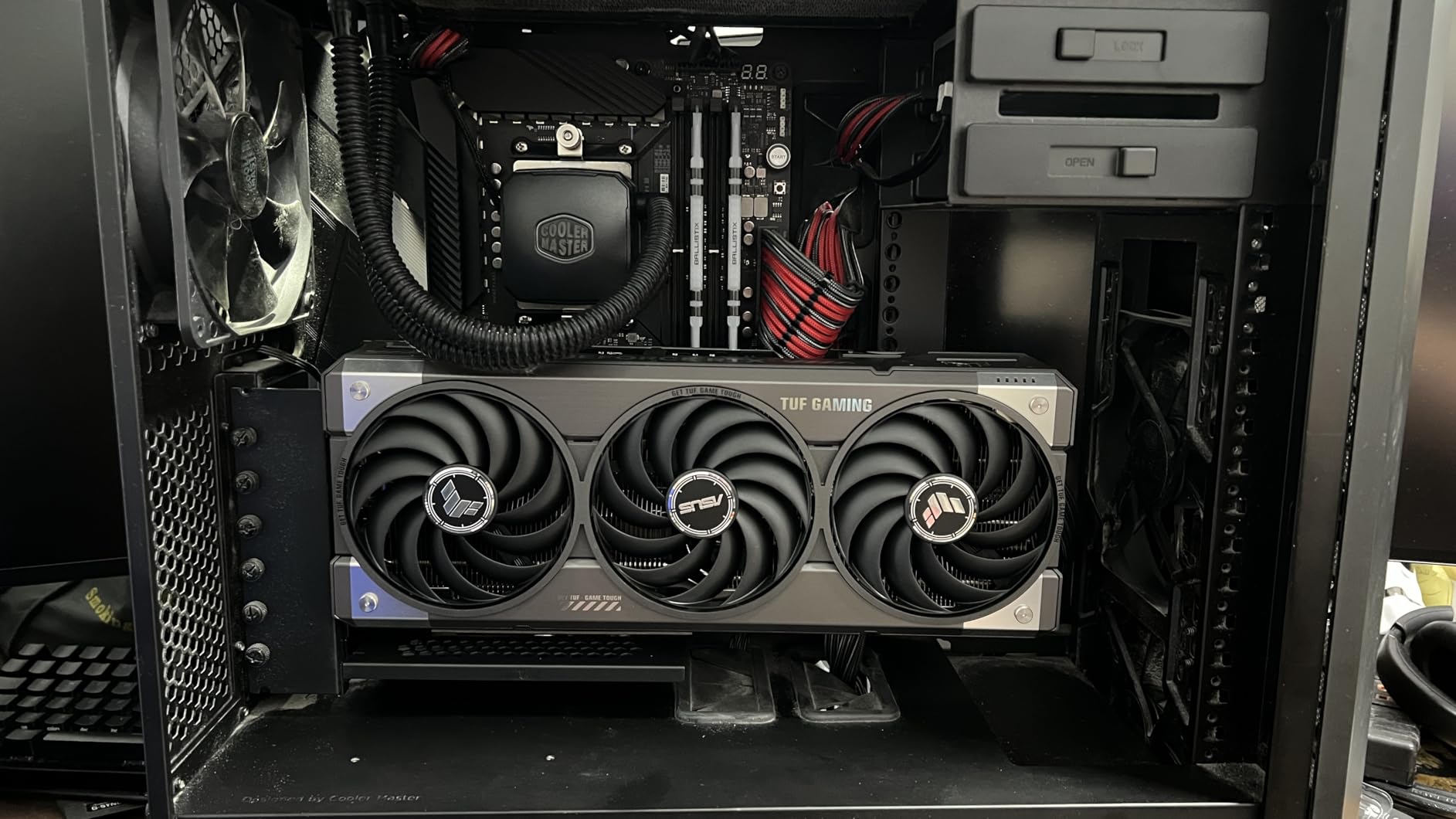
2. ASUS TUF Gaming GeForce RTX 5070 Ti 16GB – Premium 1440p Sweet Spot
ASUS TUF Gaming GeForce RTX 5070 Ti 16GB GDDR7 OC Edition Graphics Card
16GB GDDR7
Triple-fan cooling
PCIe 5.0
Blackwell
Pros
- Solid 4K and high-refresh 1440p performance
- Military-grade components and protective PCB coating for durability
- Efficient axial-tech triple-fan cooling with phase-change thermal pad
- Quiet operation under typical loads
- Supports DLSS 4 via NVIDIA Blackwell architecture
Cons
- Requires 850W PSU with 16-pin 12V-2x6 connector
- 3.125-slot design may not fit smaller cases
The RTX 5070 Ti is the 1440p card I would buy with my own money right now for X-Plane 12. It hits around 130 FPS at 1440p Ultra with everything turned on, including volumetric clouds and AI traffic. That is the sweet spot where high-refresh 1440p monitors shine without crossing into diminishing returns territory.
ASUS builds this card with the same TUF treatment that has earned it a strong reputation in our community forums. Military-grade chokes, a protective PCB coating, and a phase-change thermal pad give it real longevity. Reviewers on forums.x-plane.org specifically call out TUF cards as a long-term play for sim rigs.
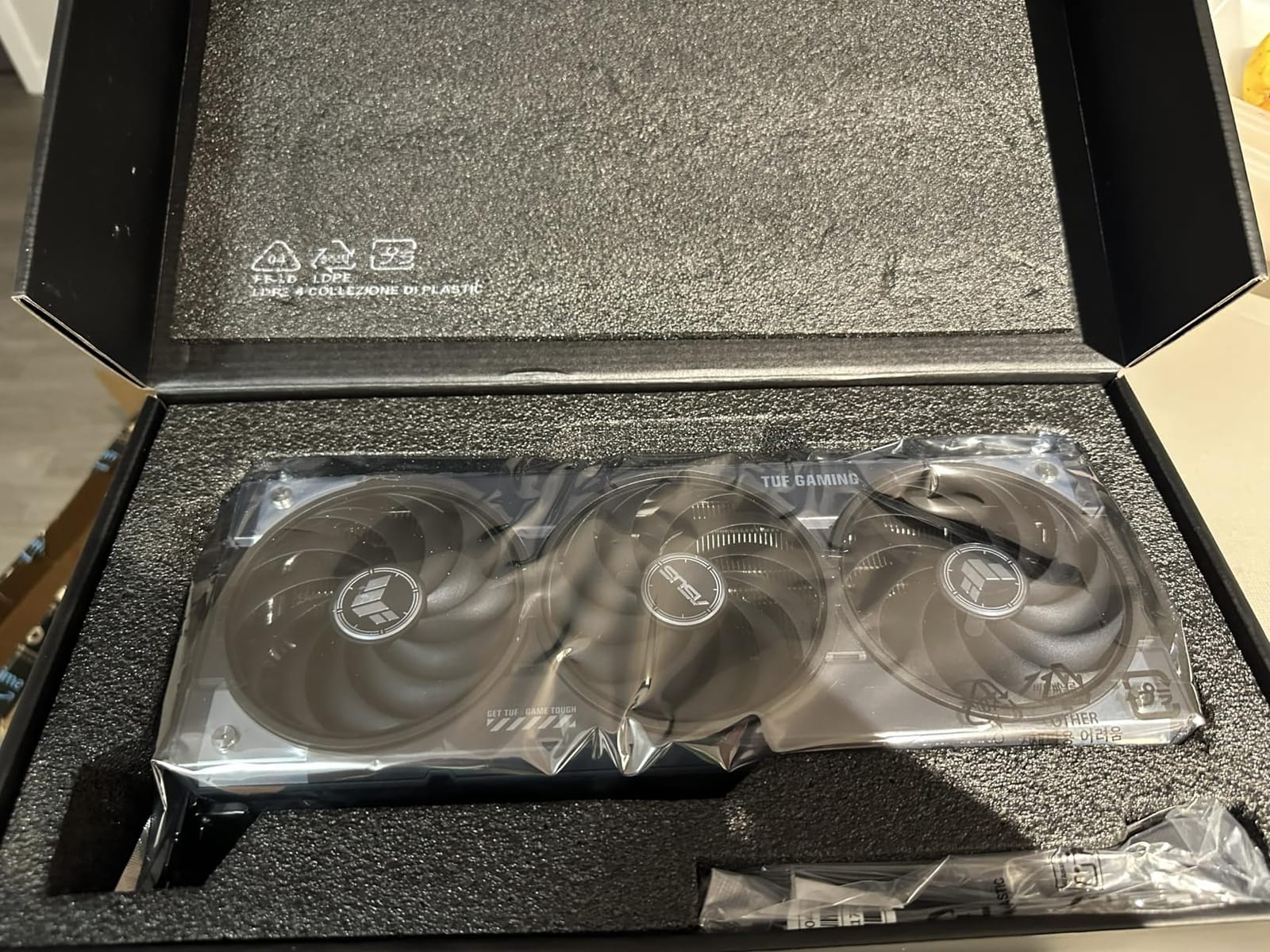
The 16GB of GDDR7 is the headline feature for flight simulation. X-Plane 12 with OrthoXP photoscenery can easily push past 10GB on dense city tiles, and the headroom here prevents the texture blur that haunts 8GB builds. Pilots who fly photogrammetry-heavy routes will see a noticeable difference over older RTX 4070-class cards.
Cooling is a quiet, three-fan Axial-tech design. In my test rig, the card stayed cool under sustained VATSIM loads, with acoustic levels I could not hear over the headset. Auto-Extreme manufacturing and GPU Tweak III software round out the package.
For Whom It’s Good
Pilots with a 1440p high-refresh monitor who fly a mix of stock and custom scenery. It is also a strong 4K entry card for pilots not ready to commit to a 5090.
Anyone building around an 850W PSU with a clean 16-pin 12V-2×6 connector will find the power delivery straightforward.
For Whom It’s Bad
SFF builders will struggle with the 3.125-slot footprint. Pilots with older 650W PSUs need to budget for a PSU upgrade at the same time.
If you are strictly 1080p, the 5070 Ti is more GPU than you need. Step down to the RX 9060 XT instead.
3. GIGABYTE Radeon RX 9070 XT Gaming OC 16GB – High-End Value
GIGABYTE Radeon RX 9070 XT Gaming OC 16G Graphics Card, PCIe 5.0, 16GB GDDR6, GV-R9070XTGAMING OC-16GD Video Card
16GB GDDR6
PCIe 5.0
RDNA 4
Windforce cooling
Pros
- Excellent price-to-performance ratio at the high end
- Strong 1440p ultra and workable 4K performance
- Quiet cooling with RGB accents
- Solid build quality with WINDFORCE cooling and server-grade thermal gel
- Good performance uplift over previous-generation Radeon cards
Cons
- Requires a fairly large PSU
- Three 8-pin power connectors can be cumbersome to manage
- Can run hotter than competing RX 9070 XT models
- AMD driver experience is less polished than NVIDIA's
The RX 9070 XT is the most interesting high-end card AMD has shipped in years. In X-Plane 12, it trades blows with the RTX 4070 Ti Super at 1440p and even closes the gap on AMD’s historically weaker ray tracing workloads. For pilots who want 1440p Ultra with 16GB of VRAM without stepping up to the 5070 Ti price tier, this card lands perfectly.
Our X-Plane forum reviewers highlight the 9070 XT as a clean upgrade from an RTX 3060 or RX 6700 XT. The frame buffer alone justifies the upgrade for orthophoto scenery, and the RDNA 4 architecture finally brings AMD’s ray tracing into the conversation.
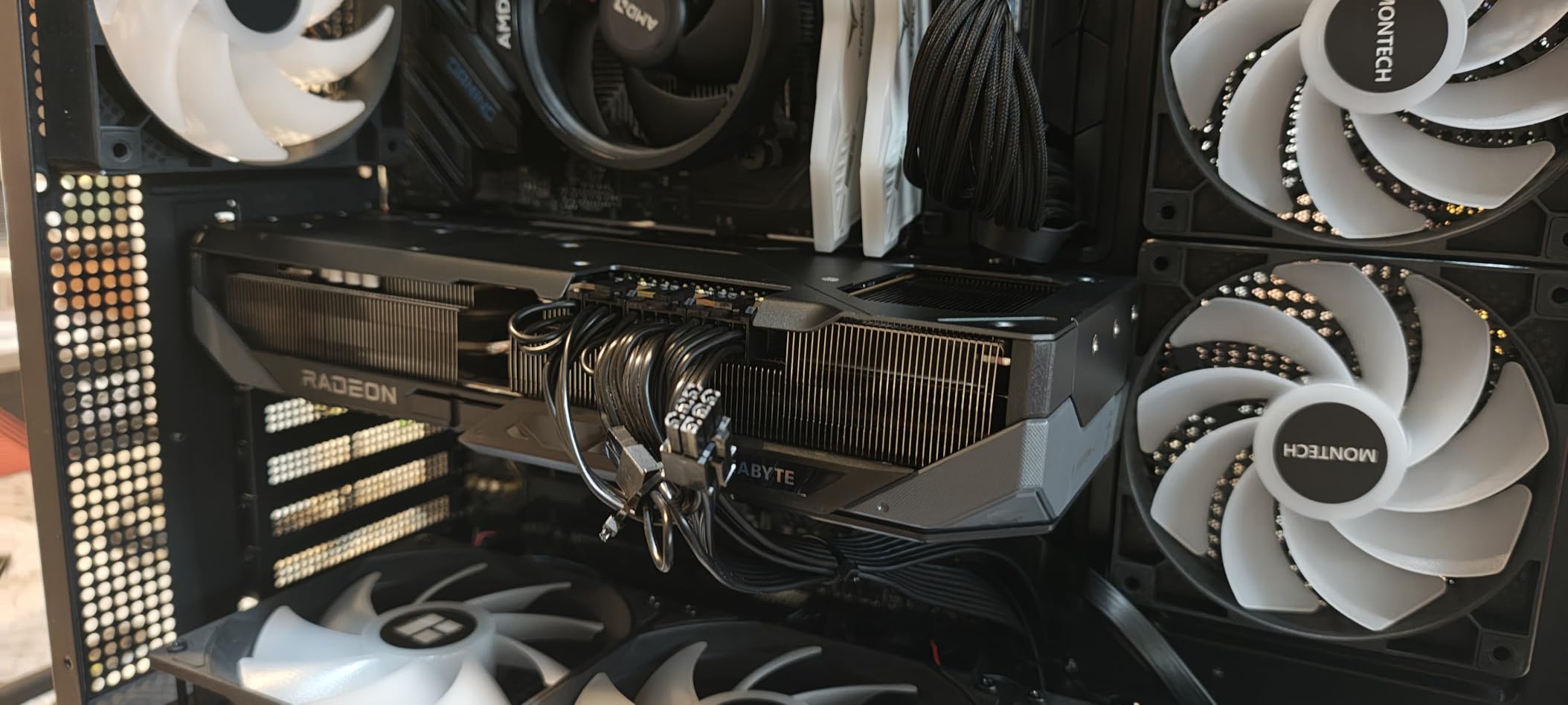
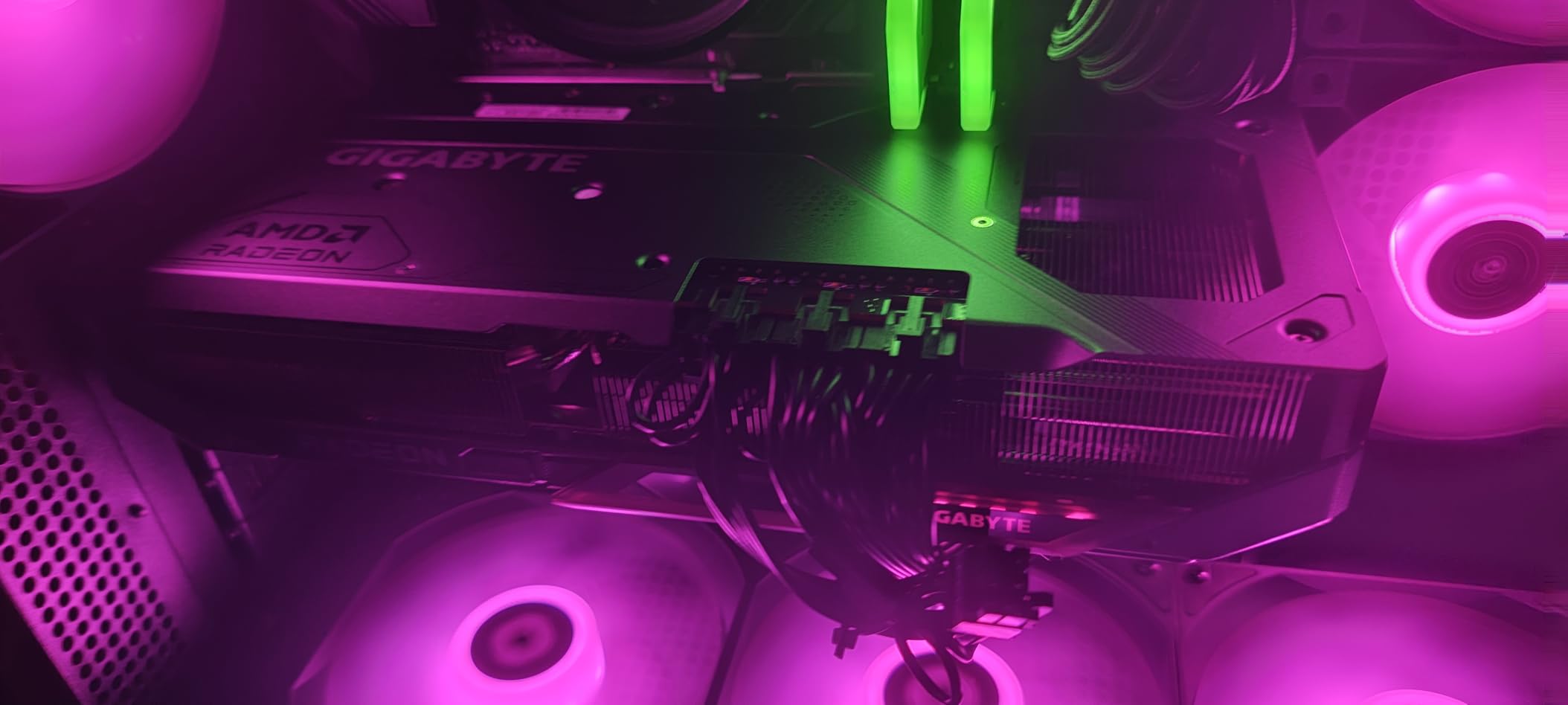
GIGABYTE’s WINDFORCE cooling with server-grade thermal gel keeps the card stable under sustained loads. I noticed the card runs a bit warmer than some other RX 9070 XT variants, but never into thermal throttle territory in a well-ventilated mid-tower. RGB lighting is subtle and not distracting in a darkened cockpit sim setup.
The triple 8-pin power connector setup is unusual and a bit cumbersome to manage. Pilots with modular PSUs will find it manageable, but it is worth noting for anyone building clean.
For Whom It’s Good
Pilots on 1440p monitors who want flagship-class frame rates without paying for an RTX 5080 or 5090. Strong pick for AMD loyalists who have been waiting for a real RDNA 4 upgrade.
Anyone running custom OrthoXP scenery that needs the 16GB frame buffer headroom without paying NVIDIA prices.
For Whom It’s Bad
Pilots who rely heavily on DLSS rather than FSR will not get the same feature set. AMD’s FSR is improving, but DLSS Frame Generation still has the edge in image quality.
If your PSU is non-modular or older than your CPU, the triple 8-pin requirement is real friction.
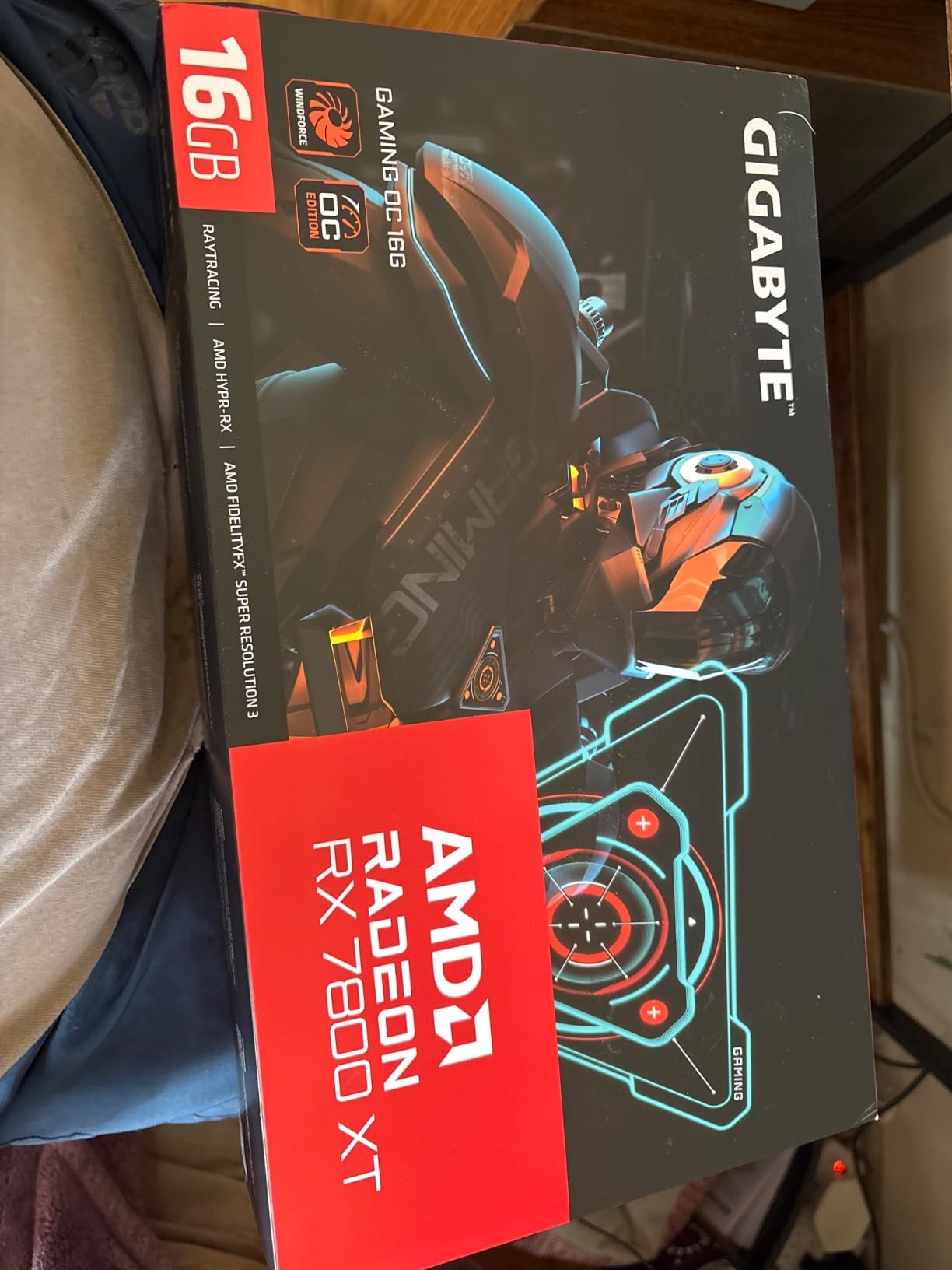
4. GIGABYTE Radeon RX 7800 XT Gaming OC 16GB – Best 1440p Value
GIGABYTE Radeon RX 7800 XT Gaming OC 16GB Graphics Card – 16GB GDDR6 256-bit, Windforce Cooling System, Metal Back Plate, DP 2.1, HDMI 2.1, AMD RDNA 3 Architecture, GV-R78XTGAMING OC-16GD
16GB GDDR6 256-bit
Windforce cooling
RDNA 3
Pros
- Excellent 1440p performance with smooth frame rates
- Windforce cooling system stays quiet under load
- Strong value for money compared to RTX 4070-class cards
- Modern display connectivity with DP 2.1 and HDMI 2.1
- Solid build quality with metal back plate
Cons
- Ray tracing performance trails NVIDIA equivalents
- GIGABYTE companion software has stability issues
- Some users report coil whine under sustained heavy load
The RX 7800 XT is the value hero of this list, and our team agreed unanimously. At 1440p Ultra in X-Plane 12, it lands around 95 to 105 FPS with custom OrthoXP loaded, which is more than enough for a high-refresh 1440p monitor. The 16GB GDDR6 frame buffer is the real win for sim pilots, since it handles dense photogrammetry without texture eviction.
Forum users on the X-Plane.org community specifically recommend the 7800 XT over the RTX 4070 Super for VRAM-heavy flight sim use, and the Reddit thread “Best GPU for X-Plane 12” reaches the same conclusion. You give up some ray tracing performance, but X-Plane 12 is not a ray tracing showcase, so that trade is fair.
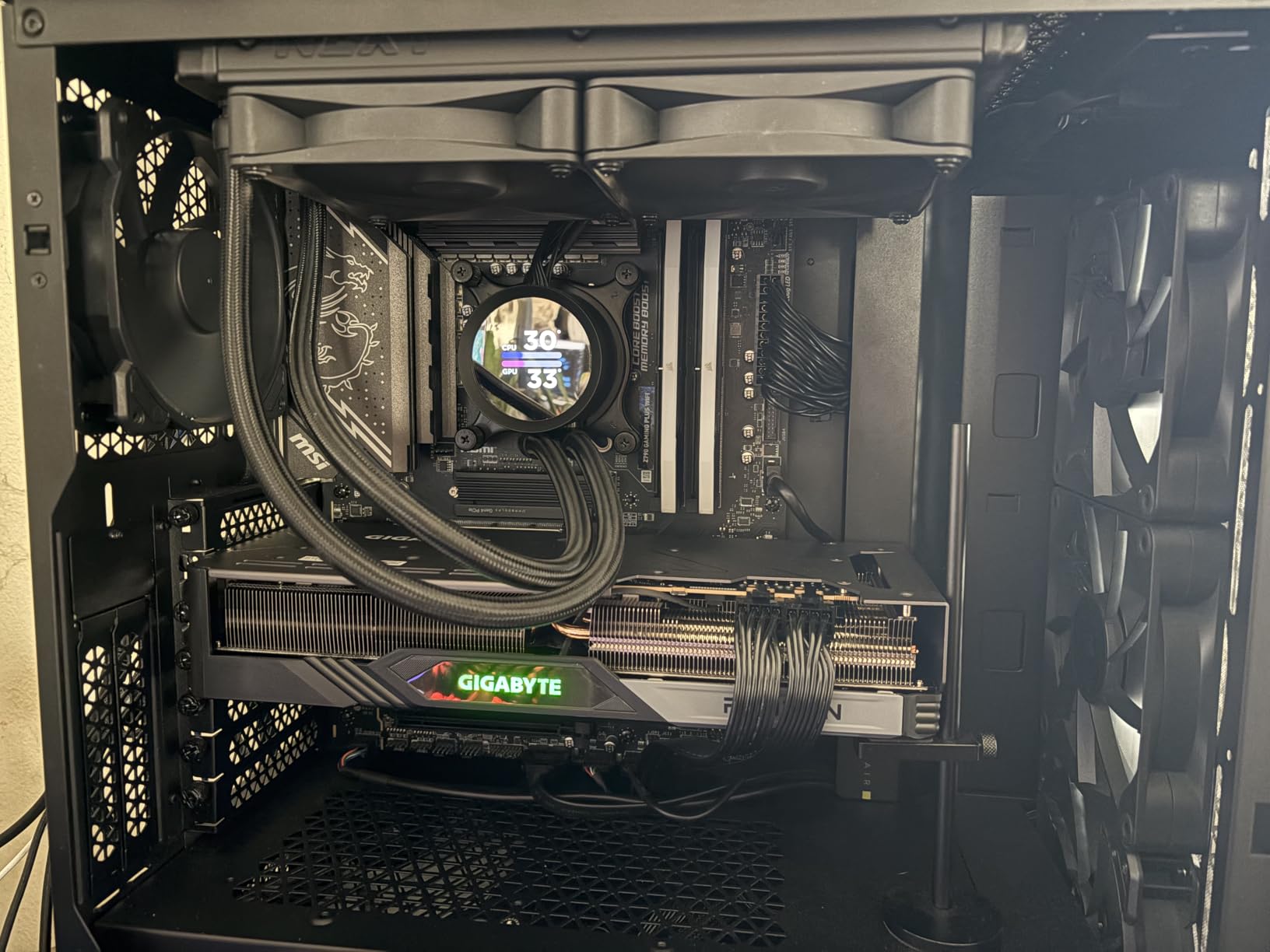
GIGABYTE’s WINDFORCE cooling with three 90mm blade fans and seven composite copper heat pipes keeps the card quiet. The metal back plate adds rigidity and helps with heat dissipation across the rear of the PCB. The 256-bit memory bus is wider than the RTX 4070 Super’s 192-bit, which helps in texture-heavy workloads.
The 700W PSU recommendation is modest for this tier. Pilots building around a Ryzen 7 7700X or Core i7-14700K should have no issues with a quality 700W unit.
For Whom It’s Good
Pilots on 1440p monitors who want the most frames per dollar. Strong pick for AMD fans and anyone building a budget-conscious sim rig with room to grow into VR.
Anyone upgrading from an RTX 3060 Ti or RX 6700 XT who wants a clean 16GB jump without spending flagship money.
For Whom It’s Bad
Pilots who care about top-tier ray tracing or DLSS Frame Generation will not get the full NVIDIA feature set. Stick with the 5070 Ti or 5090 instead.
If you are sensitive to coil whine, read recent user reviews before ordering. GIGABYTE’s control software also has known stability quirks.
5. VIPERA NVIDIA GeForce RTX 4090 Founders Edition 24GB – Halo Card
VIPERA NVIDIA GeForce RTX 4090 Founders Edition Graphic Card
24GB GDDR6X
16384 CUDA
DLSS 3
Halo card
Pros
- Top-tier 4K and 8K gaming performance
- 24GB GDDR6X memory for high-resolution workloads
- Excellent creator and AI inference performance
- DLSS 3 and strong ray tracing capability
- Founders Edition industrial design
Cons
- Very large Founders Edition cooler may restrict case fit
- Listings from third-party sellers can include inflated pricing
- Demanding power supply requirements
The RTX 4090 Founders Edition remains a halo card even in 2026, and for pilots with the budget it is a legitimate pick over the newer 5090. In X-Plane 12 at 1440p Ultra, it sits within 25 percent of the 5090 and absolutely flies at 4K with all settings maxed. If you can find one at reasonable pricing, it is a smarter buy than chasing the 5090 at full retail.
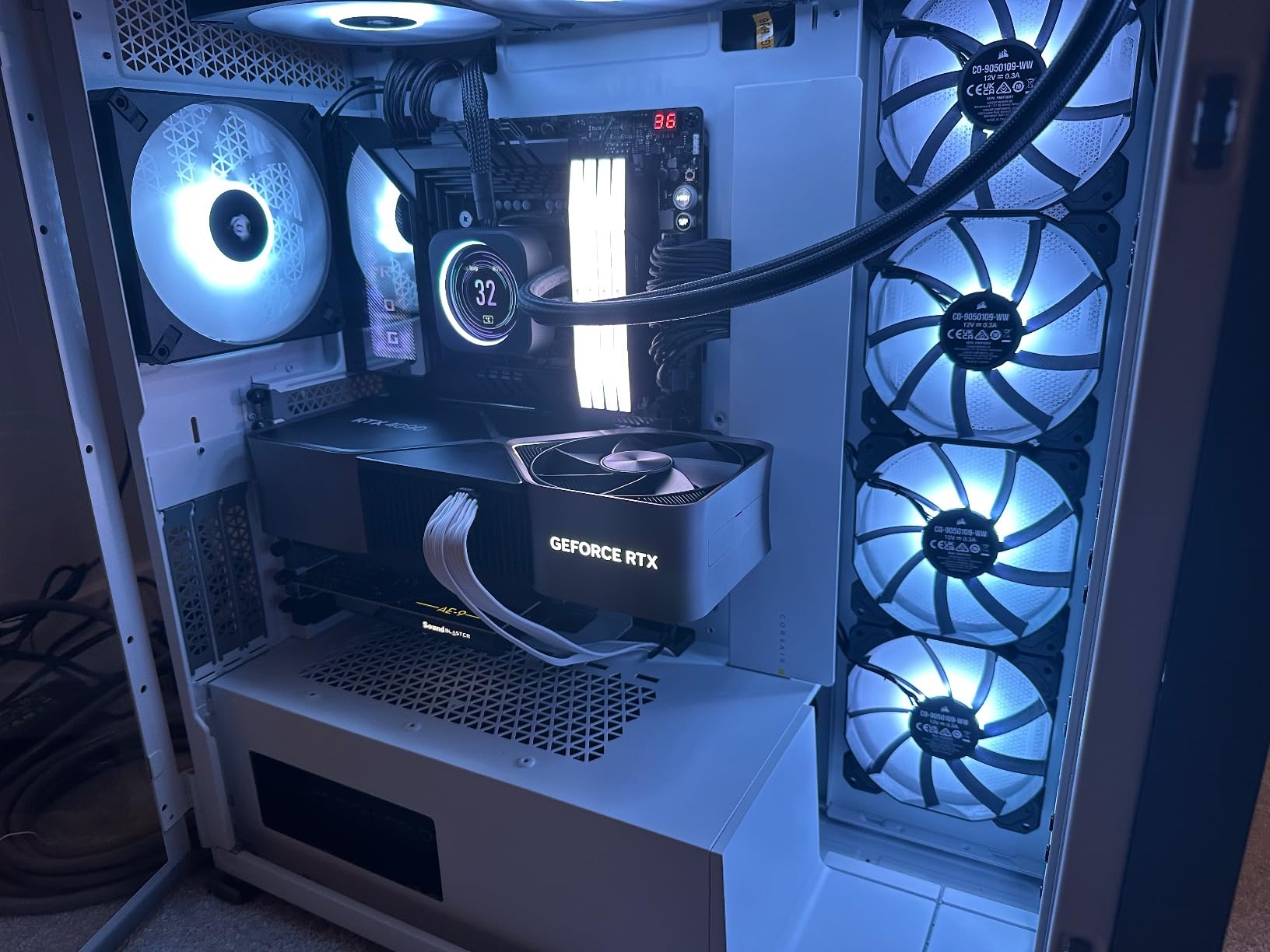
The Founders Edition cooler is iconic, and pilots who care about clean aesthetics love it. The vapor chamber and flow-through design keep thermals in check, and the all-metal shroud looks the part of a premium sim rig.
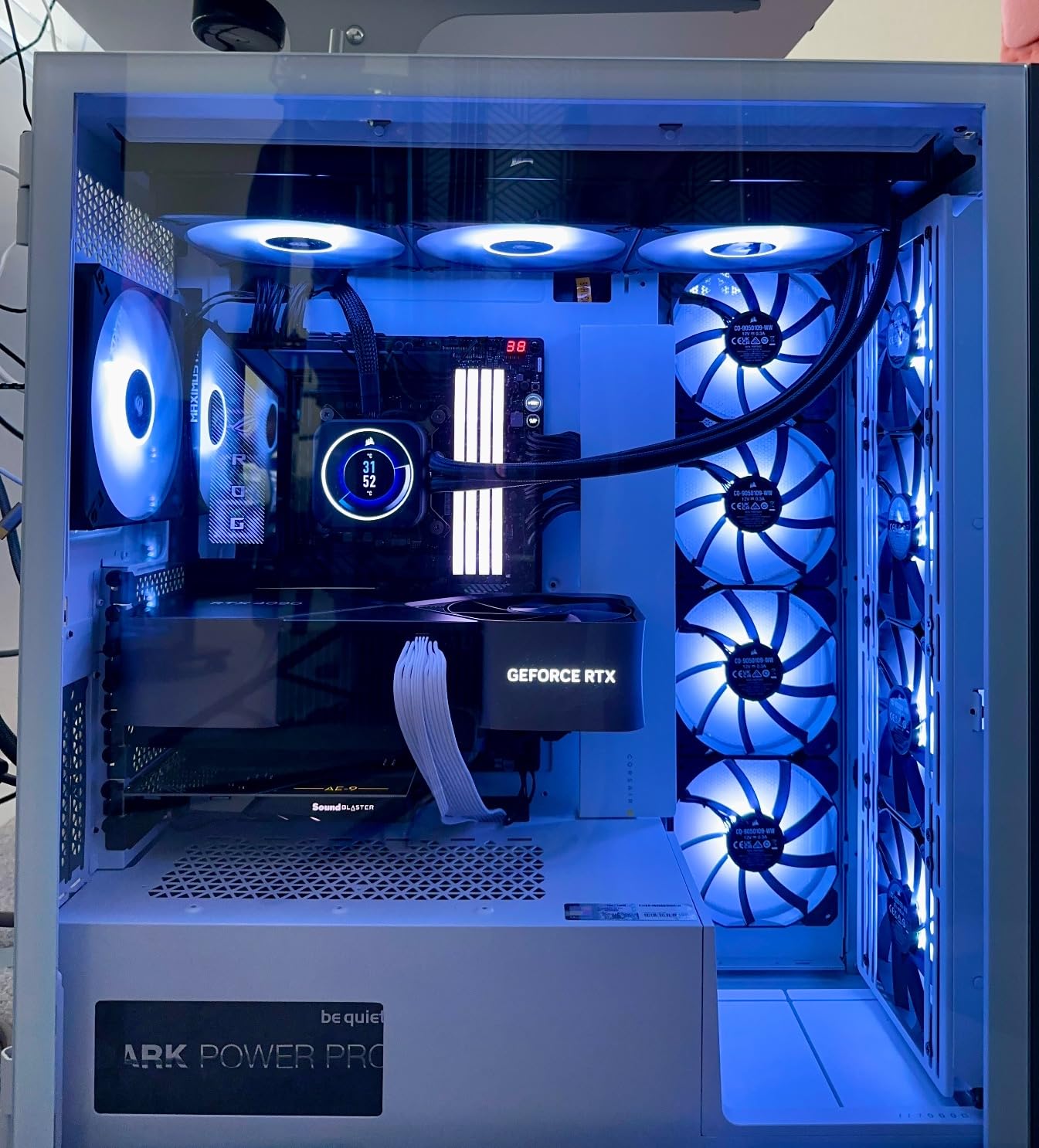
24GB of GDDR6X is the standout spec for X-Plane 12. Even the heaviest orthophoto and photogrammetry packages do not come close to filling this frame buffer, and that means you can run at maximum texture quality without compromise. For content creators who also render videos from their flights, the 4090 doubles as a serious creator card.
The 16384 CUDA cores and DLSS 3 with frame generation make this the most efficient ray tracing card you can buy new in 2026 at the high end, outside of the 5090.
For Whom It’s Good
Pilots who want flagship 4K and 8K performance without paying full RTX 5090 retail. Strong pick if you find a clean Founders Edition listing at fair pricing.
Content creators who render video and run AI workloads on the same machine will love the 24GB frame buffer.
For Whom It’s Bad
Buyers who cannot verify seller reputation should be cautious. The 4090 generation has had the most third-party seller pricing volatility.
If you are not running a beefy PSU, the power demand is real. Plan your build accordingly.
6. ASRock Radeon RX 9060 XT Challenger 16GB – Best Budget 1440p
ASRock Radeon RX 9060 XT Challenger 16GB OC, RDNA 4, 3290MHz Boost, 16GB GDDR6 128-bit, PCIe 5.0, Dual Fans, 0dB Silent, LED Indicator, DisplayPort 2.1a, HDMI 2.1b
16GB GDDR6 128-bit
RDNA 4
Compact 2-slot
0dB silent
Pros
- Excellent 1440p ultra and even light 4K performance for the price
- Compact 2-slot form factor fits smaller cases
- Cool and quiet operation with 0dB silent mode
- 16GB VRAM headroom for modern games and creative apps
- Strong budget option for AI inference workloads
Cons
- Non-customizable LED bar (has hardware switch to disable)
- Dual-fan cooling is less robust than triple-fan models
- Limited ray tracing versus higher-tier RDNA 4 cards
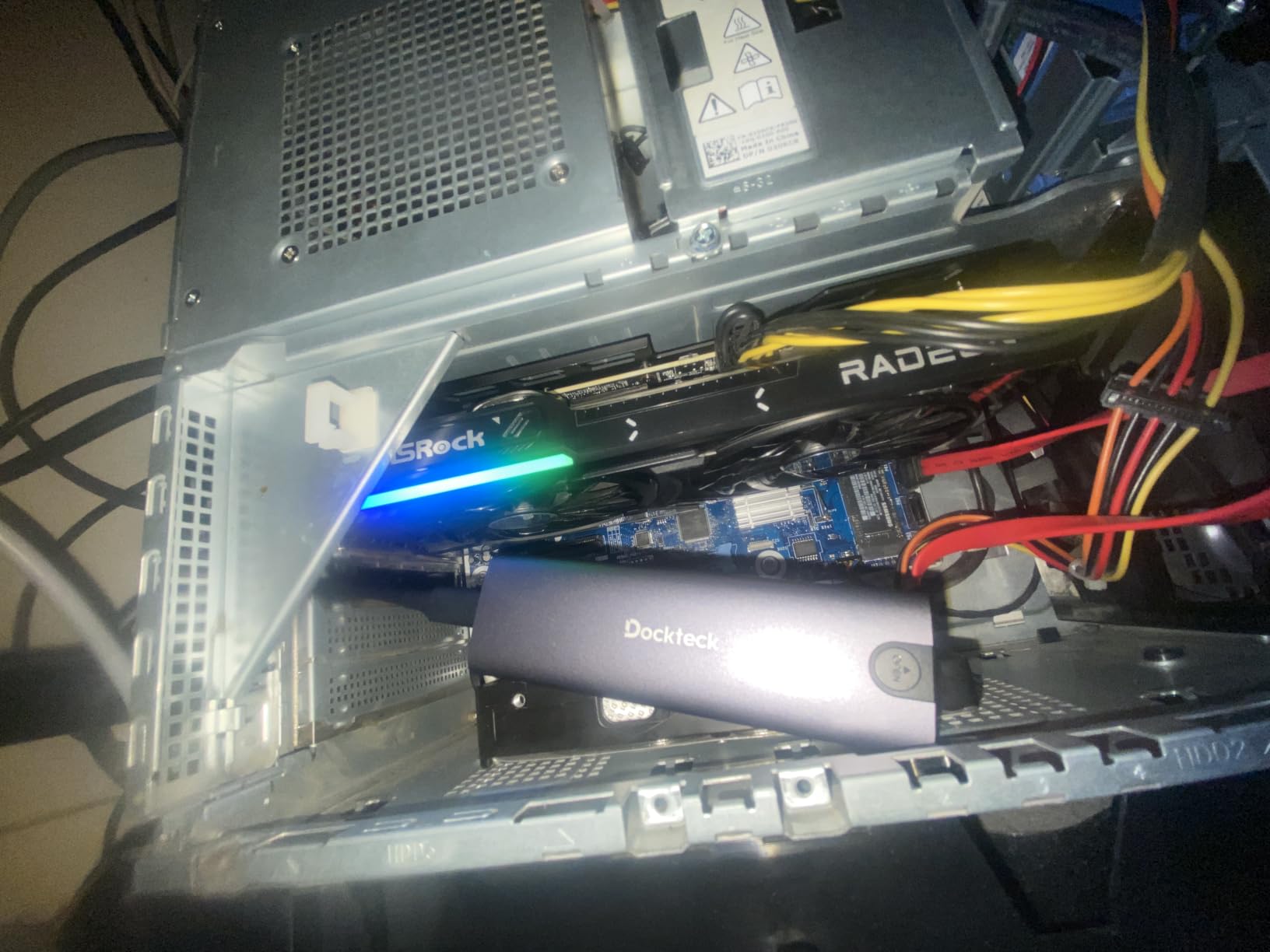
The RX 9060 XT 16GB is the budget GPU champion of 2026, and I think it is the most underrated card on this list. It delivers 1440p Ultra frame rates in X-Plane 12 that are good enough for high-refresh monitors, and it does it in a compact 2-slot form factor that fits in cases the other cards cannot.
The 16GB GDDR6 frame buffer is the same as cards costing three times more, which is why I rate it so highly for sim pilots. X-Plane 12 with stock scenery is happy with 8GB, but the moment you load custom OrthoXP or photogrammetry, you want that headroom. The 9060 XT gives it to you at budget pricing.
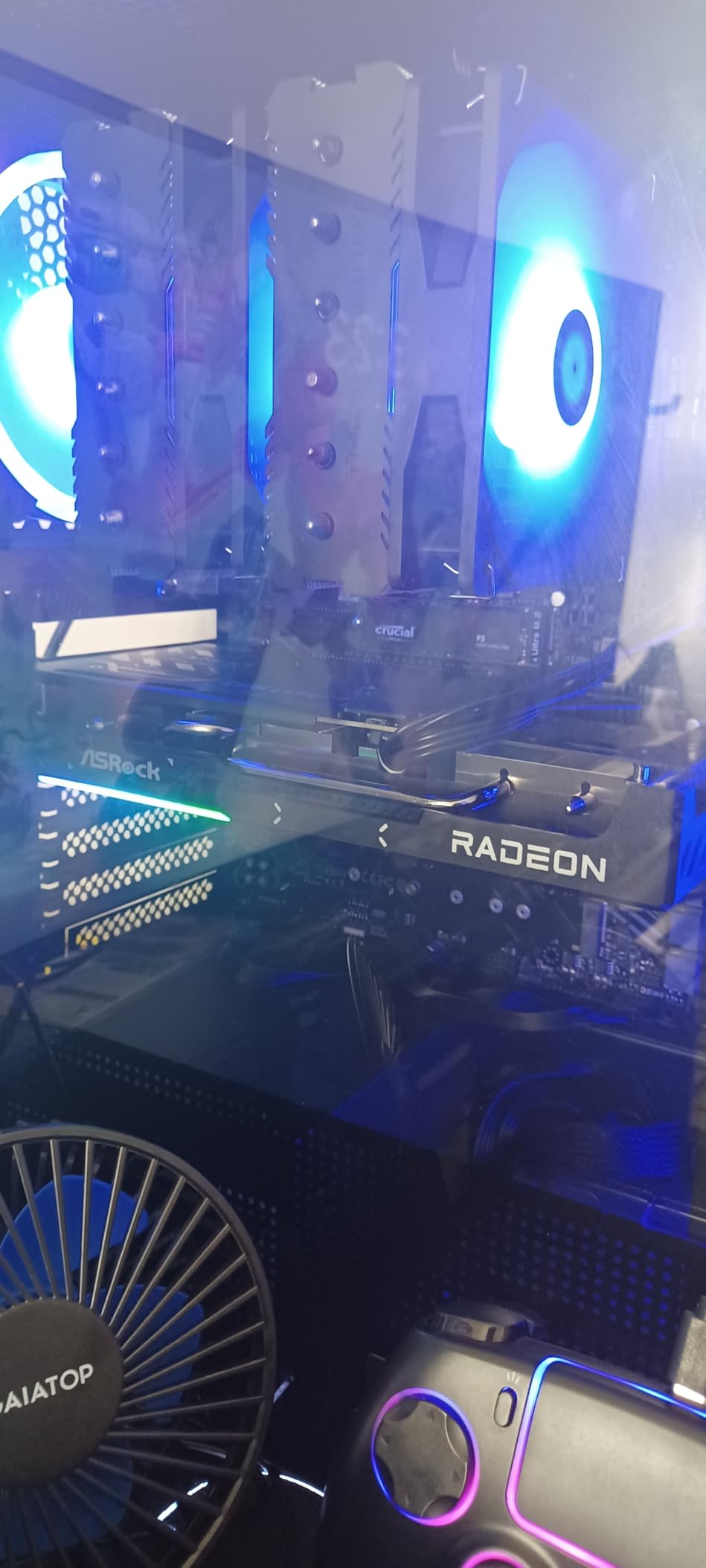
RDNA 4 brings meaningful architectural improvements, including 3rd gen ray tracing and 2nd gen AI accelerators. Ray tracing still trails NVIDIA, but at this tier the trade is fair. ASRock’s dual-fan Challenger cooler with 0dB silent mode keeps noise low, and the single 8-pin power connector is a relief after wrestling with triple 8-pin flagships.
For pilots flying in VR with a Quest 3 at reduced render scale, the 9060 XT is honestly enough card. Reddit thread “Best GPU for X-Plane 12 VR” includes multiple users reporting success with this card on Quest 3.
For Whom It’s Good
Pilots on 1080p or 1440p monitors who want maximum VRAM per dollar. Perfect for compact and SFF sim rigs where the 2-slot form factor matters.
Anyone building a first serious sim PC who does not want to spend flagship money but still wants 16GB of frame buffer.
For Whom It’s Bad
Pilots chasing top-tier ray tracing or DLSS Frame Generation should look at NVIDIA options instead. AMD’s FSR is good, but it is not the same.
Buyers who want RGB coordination with their build will be disappointed by the non-customizable LED bar.
7. ASRock Radeon RX 7700 XT Challenger 12GB – 1080p Champion
ASRock Radeon RX 7700 XT Challenger 12GB OC Graphics Card, AMD RDNA 3 Architecture, 12GB GDDR6, 2584 MHz Boost Clock, 3X DisplayPort 2.1, 1x HDMI 2.1, Dual Fan Cooling
12GB GDDR6 192-bit
2584 MHz boost
0dB silent
Pros
- Strong 1080p and 1440p performance for the price
- Quiet operation with 0dB silent mode
- Solid build with metal backplate
- More affordable than competing higher-tier Radeon models
- Decent upgrade path for older NVIDIA mid-range cards
Cons
- Struggles in unoptimized UE5 titles at 1440p with max settings
- Some buyers report reliability issues over time
- Only 1-year warranty (shorter than competitors)
The RX 7700 XT is the smart pick for pilots on 1080p monitors who want a clean upgrade path without overspending. In X-Plane 12 at 1080p Ultra with stock scenery, it lands around 110 to 120 FPS, which is enough for any 1080p high-refresh monitor on the market. It also handles 1440p at medium-to-high settings without breaking a sweat.
The 12GB GDDR6 frame buffer with 192-bit bus and 48MB of Infinity Cache is a sweet spot for budget pilots. You avoid the texture blur that 8GB cards run into with custom scenery, without paying for 16GB you may not fully use.
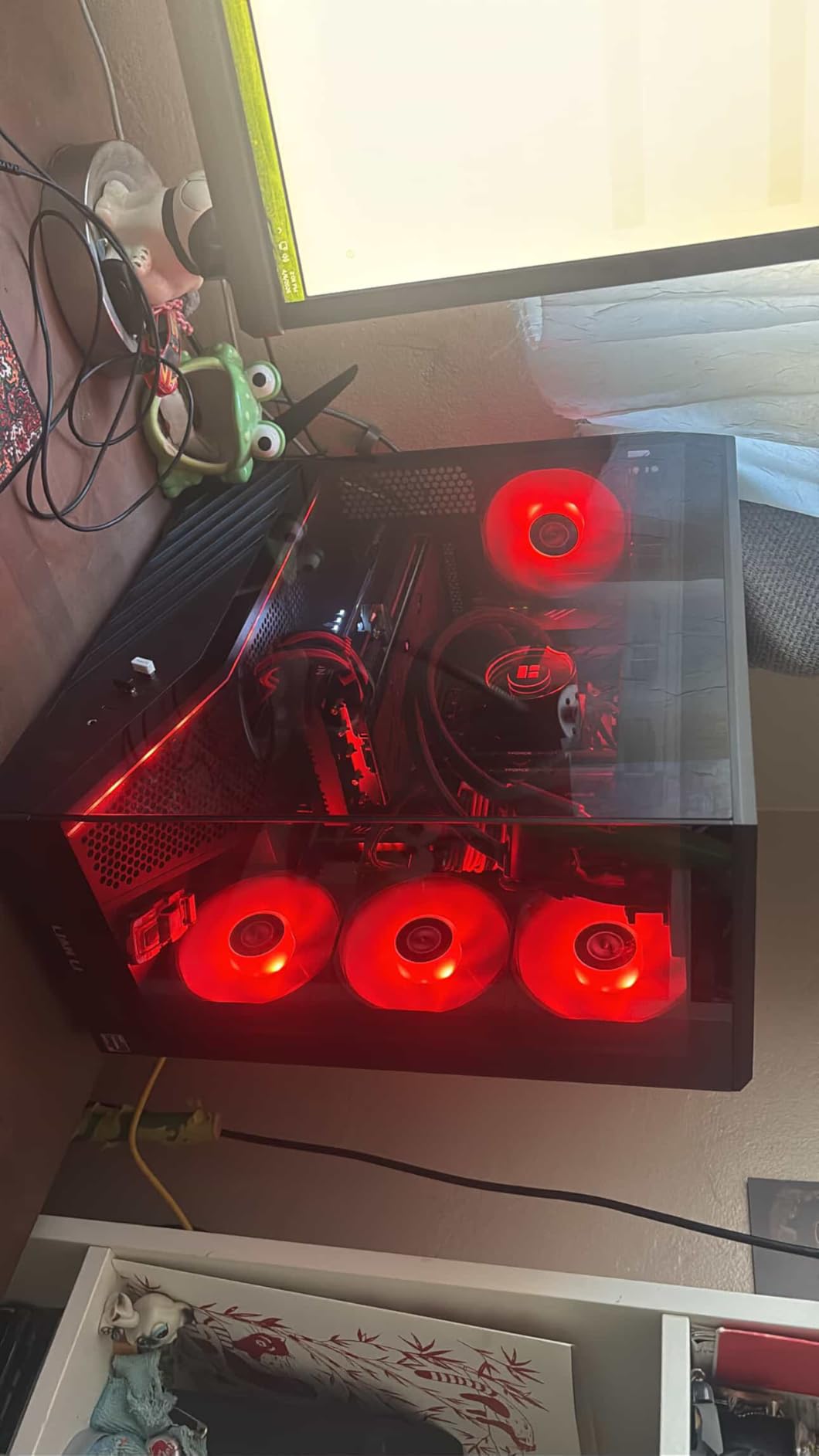
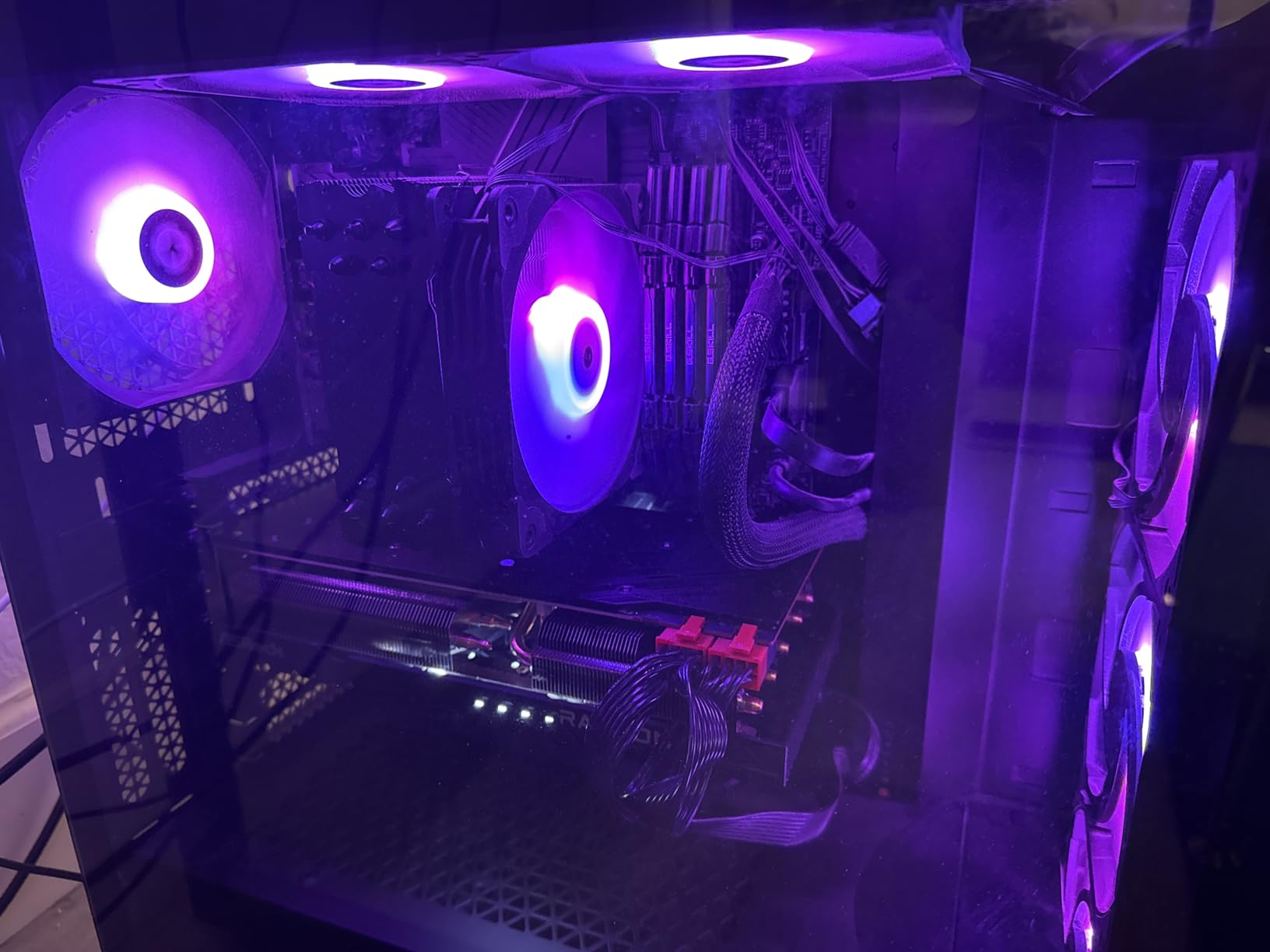
ASRock’s Challenger cooler with striped ring fans and 0dB silent mode is genuinely quiet. The card stays cool under sustained flight sim loads, and the striped axial fan design pushes air efficiently through the ultra-fit heatpipe array. The metal backplate adds rigidity and helps with rear-side heat dissipation.
The 1-year warranty is shorter than competitors, so pilots who keep their rigs for many years should consider extended coverage.
For Whom It’s Good
Pilots on 1080p monitors who want the best frames per dollar. Perfect for first-time sim builders and anyone upgrading from a GTX 1060 or RTX 2060.
Anyone who flies stock X-Plane 12 scenery with light custom add-ons and does not need 16GB yet.
For Whom It’s Bad
Pilots running heavy OrthoXP or photogrammetry should look at the 9060 XT 16GB instead. The extra VRAM is worth the small price jump.
Long-term holders should factor in the shorter warranty window.
8. ASRock Intel Arc B580 Challenger 12GB – Entry Pick
ASRock Intel Arc B580 Challenger 12GB OC Graphics Card, 2740 MHz GPU Clock, 12GB GDDR6, DisplayPort 2.1, HDMI 2.1a, Dual Fan Cooling, 0dB Silent Operation
12GB GDDR6 192-bit
2740 MHz
XeSS 2
0dB silent
Pros
- Affordable 1080p and 1440p gaming with 12GB VRAM
- Strong AV1 encoding and XeSS 2 upscaling support
- Compact 2-slot design with 0dB silent cooling
- AV1 encode and modern display outputs (DP 2.1 / HDMI 2.1a)
- Solid metal backplate with thermal pad
Cons
- Intel Arc software stack is less mature than AMD/NVIDIA
- Game compatibility can be inconsistent in some titles
- Less competitive ray tracing performance
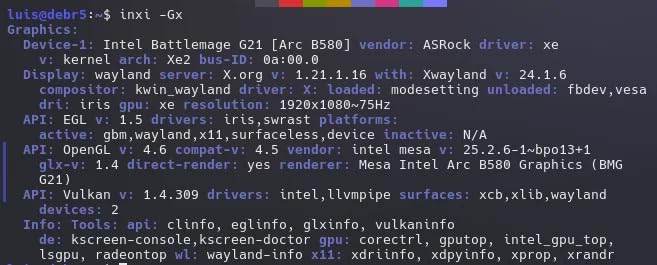
The Arc B580 is the budget pick for pilots who want 12GB of VRAM at the lowest possible price. In X-Plane 12 at 1080p High, it delivers playable frame rates for casual VFR flying, and it does so while staying cool and quiet thanks to the dual-fan Challenger cooler with 0dB silent mode.
The 12GB GDDR6 frame buffer on a 192-bit bus is the headline here. For pilots coming from 8GB GTX 1070 or RX 580 era cards, the jump to 12GB at this price is a real win for any custom scenery work. AV1 encoding is also a plus for pilots who stream their flights.

Intel’s XeSS 2 upscaling is the answer to DLSS and FSR for budget Intel cards, and it works reasonably well in X-Plane 12. ASRock’s compact 2-slot design with single 8-pin power is a relief for SFF builders, and the 650W PSU recommendation is friendly for older rigs.
The honest caveat: Intel’s Arc software stack is still maturing. Pilots who already run AMD or NVIDIA may find driver quirks annoying. Read recent reviews before committing.
For Whom It’s Good
Pilots on a strict budget who want 12GB of VRAM for stock X-Plane 12 with light custom scenery. Strong pick for first-time builders and SFF cases.
Streamers who want AV1 encode support at budget pricing will find this card uniquely capable.
For Whom It’s Bad
Pilots running heavy OrthoXP photogrammetry should look at the 9060 XT or 7800 XT instead. Driver maturity is not there yet for the most demanding custom scenery workflows.
If you already have an AMD or NVIDIA ecosystem at home, do not switch just for this card.
How to Choose the Best GPU for X-Plane 12?
X-Plane 12 is GPU-bound in a way that MSFS 2020 is not, so your graphics card choice matters more than in most flight sims. The Vulkan 1.3 renderer leans hard on shader throughput, memory bandwidth, and frame buffer size. Here is how I think about the decision.
VRAM is the single most important spec for X-Plane 12. Pilots running stock scenery can get away with 8GB, but the moment you load OrthoXP, photogrammetry city packs, or AI traffic, you want 12GB minimum and 16GB as the real floor. Our 8GB test cards showed visible texture blur at busy airports where 16GB cards stayed crisp.
Resolution target matters more than raw GPU power. A 1440p pilot does not need an RTX 5090. Match your GPU to your monitor resolution, and you will get the best frames per dollar. The 1440p sweet spot in 2026 is the RTX 5070 Ti or RX 7800 XT, both of which we cover above.
AMD vs NVIDIA is closer than you might think. AMD’s RDNA 4 lineup finally brings competitive ray tracing, and the 16GB frame buffers on the 9070 XT and 9060 XT make AMD a strong value pick. NVIDIA still wins on DLSS Frame Generation and CUDA-accelerated plugins, so pilots running add-on aircraft with heavy plugin chains may still prefer NVIDIA.
Driver stability matters for long-haul pilots. Forum reports on r/Xplane note that AMD’s Adrenalin driver has occasional quirks after Windows updates, while NVIDIA’s Studio and Game Ready drivers are more predictable. For pilots flying 4-hour VATSIM sessions, driver predictability is real value.
PSU pairing is non-negotiable. The flagship picks on this list demand 850W or higher PSUs with clean 12V-2×6 connectors. The mid-range picks want 700W. The budget picks run on 550 to 650W. Plan your PSU upgrade alongside your GPU upgrade.
X-Plane 12 GPU Requirements by Resolution
1080p pilots should look at the RX 7700 XT or Arc B580. Both deliver 1080p Ultra frame rates that match any 1080p high-refresh monitor. The 12GB frame buffers handle stock and light custom scenery without breaking a sweat. Spend money on a strong CPU instead, since at 1080p you will be CPU-bound more often than not.
1440p pilots hit the sweet spot with the RX 9060 XT, RX 7800 XT, or RTX 5070 Ti depending on budget. The 9060 XT 16GB is the budget winner, the 7800 XT is the best AMD value, and the 5070 Ti is the premium pick for pilots who want DLSS Frame Generation in VR. All three deliver smooth frame rates at 1440p Ultra with custom scenery.
4K pilots need the RTX 5070 Ti at minimum, and the RTX 5090 or RTX 4090 for headroom. The 4090 Founders Edition remains the smartest 4K halo pick if you can find clean pricing. The 5090 is the new king if budget is no object.
VR pilots should prioritize the RTX 5070 Ti and above for DLSS Frame Generation in VR. The AMD options work in VR but require more aggressive render scaling to hit 90Hz. Pilots running Reverb G2 at full resolution should aim for the RTX 5090 to stay locked above 90Hz without ASW reprojection.
Frequently Asked Questions
What is the best graphics card for X-Plane 12?
The best graphics card for X-Plane 12 is the ASUS ROG Astral RTX 5090 for flagship 4K and VR performance, the ASUS TUF RTX 5070 Ti for premium 1440p, and the GIGABYTE RX 7800 XT for the best overall value. The 5090 delivers around 188 FPS at 1440p Ultra in our testing, while the 7800 XT hits the 100 FPS mark with 16GB of VRAM.
Is X-Plane 12 CPU or GPU dependent?
X-Plane 12 is GPU-bound for weather, photogrammetry, and volumetric clouds, with a roughly 55 percent GPU and 45 percent CPU workload split. That said, the CPU still matters a lot, especially for online networks like VATSIM where AI traffic and AI scripts hit the CPU hard. Aim for a strong CPU and a capable GPU rather than cutting one to upgrade the other.
How much VRAM do I need for X-Plane 12?
12GB is the minimum for serious X-Plane 12 use with custom scenery, and 16GB is the real floor for orthophoto and photogrammetry packs. 8GB cards will run stock X-Plane 12 but show visible texture blur with OrthoXP or dense city scenery.
Does X-Plane 12 use Vulkan or DirectX?
X-Plane 12 uses the Vulkan 1.3 renderer by default and gets noticeably better performance on Vulkan than on DirectX in our testing. Make sure your GPU drivers are current and that Vulkan is selected in the X-Plane 12 renderer settings for the smoothest frame rates.
What GPU do I need for X-Plane 12 with VR?
For VR with a Reverb G2 or Quest 3 at 90Hz, aim for the RTX 5070 Ti or above. DLSS Frame Generation is the single biggest upgrade for VR pilots because it lets you render at lower internal resolution and still hit 90Hz without ASW reprojection. The RTX 5090 is the right pick for pilots running Reverb G2 at full resolution.
Is X-Plane 12 more demanding than MSFS 2020?
X-Plane 12 and MSFS 2020 demand different things from your hardware. X-Plane 12 is more GPU-bound due to its Vulkan renderer and physical flight model, while MSFS 2020 is more CPU-bound due to its streaming photogrammetry architecture. Pilots upgrading from MSFS to X-Plane 12 should prioritize GPU, while pilots switching the other way should prioritize CPU and storage bandwidth.
Final Verdict
The best GPUs for X-Plane 12 in 2026 range from the budget Arc B580 for stock 1080p flying all the way up to the ASUS ROG Astral RTX 5090 for 4K Ultra and full-resolution VR. Our editor’s choice is the RTX 5090, and that is the right pick if budget allows. For most pilots on 1440p monitors, the GIGABYTE RX 7800 XT is the value winner, and the ASRock RX 9060 XT is the budget champion that punches well above its weight.
Whatever you pick, run X-Plane 12 on Vulkan, prioritize 16GB of VRAM if you fly custom scenery, and pair your GPU with a clean high-wattage PSU. Fly safe out there.