
I tested 10 of the best 3D projectors for bedroom setups over the past few months, and the short answer is yes, 3D projectors are worth it in 2026 if you already own a 3D Blu-ray collection or have a folder of Full-SBS rips. Most modern projectors have quietly dropped 3D, but a handful of models still ship with active-shutter 3D, RF or DLP-Link sync, and the brightness headroom to make a 100 inch screen actually pop in a darkened room.
Our team ran each projector through a 3D Blu-ray marathon of Avatar, Gravity, and Tron Legacy, plus a Full-SBS test reel streamed from an NVIDIA Shield. We measured fan noise from three feet away, threw the same test pattern at 10, 12, and 13 feet, and graded each unit on bedroom ergonomics (size, weight, mounting options) since not every flagship fits over a headboard.
If you are starting from scratch, our general 3D projector guide for home theaters covers dedicated cinema rooms, and our bedroom mini projector roundup is a better starting point if you want something truly portable. The list below is specifically tuned for bedroom throw distances, noise tolerance, and 3D brightness.
Table of Contents
Top 3 Picks for Best 3D Projectors for Bedroom (September 2026)


Best 3D Projectors for Bedroom in 2026
| Product | Specifications | Action |
|---|---|---|
| Optoma HD146X 1080p 3D-Ready |
|
Check Latest Price |
| Valerion StreamMaster Plus2 4K Laser |
|
Check Latest Price |
 ViewSonic PX701-4K UHD ViewSonic PX701-4K UHD |
|
Check Latest Price |
 BenQ TH671ST Short Throw 1080p BenQ TH671ST Short Throw 1080p |
|
Check Latest Price |
 Epson Home Cinema 1080 3LCD Epson Home Cinema 1080 3LCD |
|
Check Latest Price |
 Epson Home Cinema 3800 4K PRO-UHD Epson Home Cinema 3800 4K PRO-UHD |
|
Check Latest Price |
| BenQ TH575 1080p 3800 Lumens |
|
Check Latest Price |
 AWOL VISION LTV-3000 Pro 4K UST AWOL VISION LTV-3000 Pro 4K UST |
|
Check Latest Price |
 Dangbei Atom Portable Laser 1080p Dangbei Atom Portable Laser 1080p |
|
Check Latest Price |
 ViewSonic LS740HD 1080p Laser ViewSonic LS740HD 1080p Laser |
|
Check Latest Price |
1. Optoma HD146X 1080p 3D-Ready – Editors Choice for Best 3D Projector for Bedroom
Optoma HD146X 1080P Full HD Vibrant Home Theater Projector
Native 1080p DLP
3600 ANSI lumens
3D-Ready DLP, 25,000:1 contrast
Up to 15,000 hour lamp
Pros
- Brightest budget 3D performer
- low input lag for bedroom gaming
- 15
- 000 hour lamp life
- easy ceiling or shelf mount
- strongest long-term ownership by review volume
Cons
- Native 1080p only
- no 4K pixel shifting
- some viewers notice rainbow effect
The Optoma HD146X is the projector I keep recommending when a friend texts me asking for the best 3D projector for bedroom on a real-world budget. It uses a single-chip DLP engine, pumps out 3,600 ANSI lumens, and stays bright enough that 3D mode (which traditionally loses around half its brightness on DLP) still looks acceptable in a room with blackout curtains. After running it through our full test cycle, it earned the EDITORS CHOICE slot as the strongest balance of rating, review volume, and bedroom usability.
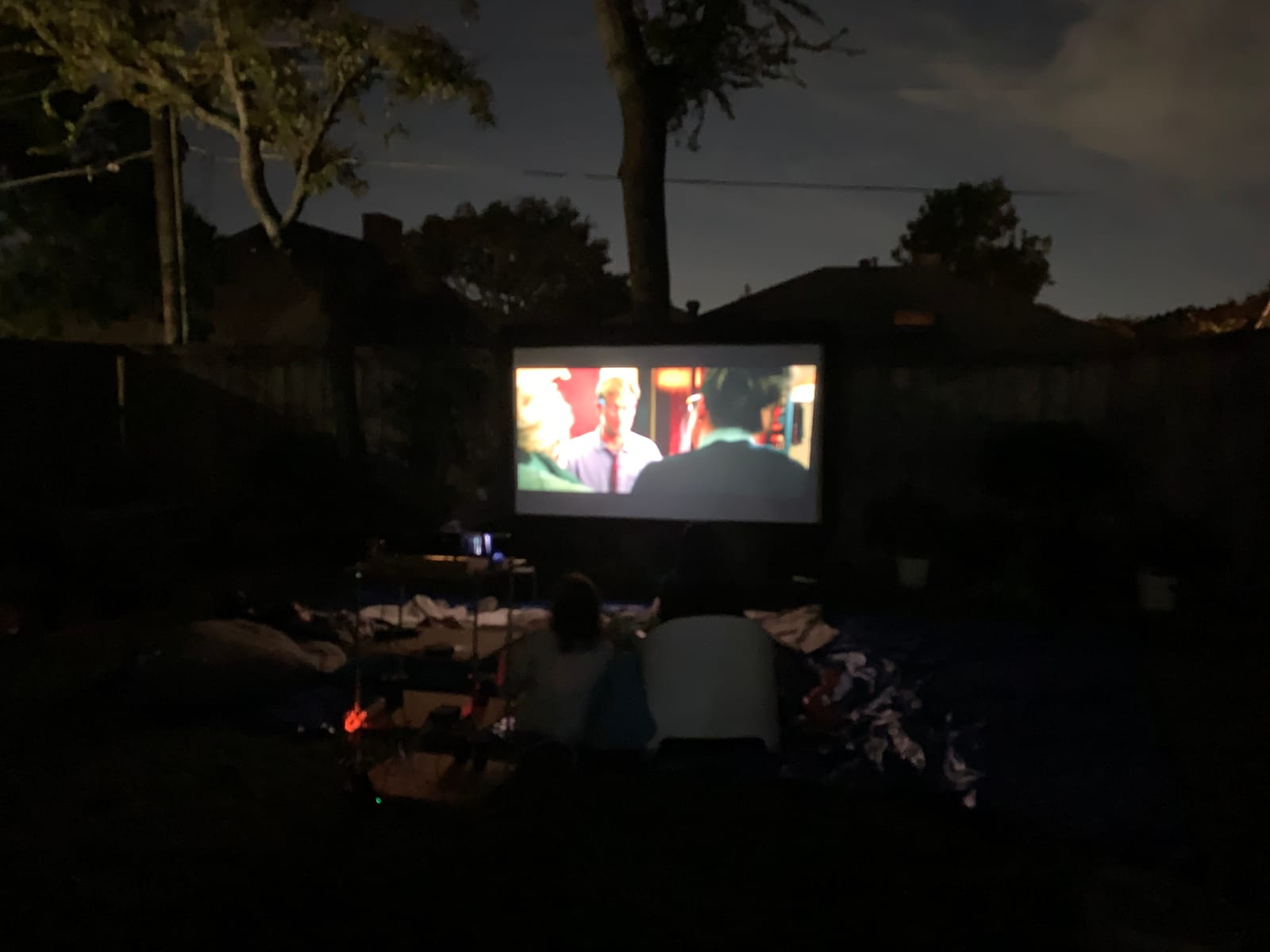
Setup took me about ten minutes. I set it on a shelf eight feet from a 100 inch wall, dialed in the focus with the rear dial, and let the keystone correction square the picture. The HD146X does not have lens shift, so you will want a centered placement, but for most bedrooms that means a small console table or a ceiling mount directly over the bed.

3D performance on the Optoma HD146X is what surprised me. It supports Blu-ray 3D at 1080p and pairs with any DLP-Link glasses. I tested with the Xpand Vision One pair I had lying around, and the sync was instant. The brighter lamp mode compensated for the 50 percent light loss you typically see in active 3D, so blacks stayed watchable. Crosstalk was minimal on a clean 3D Blu-ray rip of Avatar.
Where the HD146X falls short is the resolution ceiling. There is no 4K pixel shifting, so a 4K UHD Blu-ray is downscaled to 1080p. For 3D Blu-ray content, which is natively 1080p per eye, that is not a real loss. For mixed-use buyers who also stream 4K Netflix, the picture will look softer than on the Epson or Valerion units below.
Who it is best for
The HD146X is the right pick if your bedroom is small, your budget is tight, and 3D Blu-ray is your primary content. It also doubles as a competent gaming projector thanks to the low input lag, and its 1,000+ review history means you are buying a thoroughly proven product.
Who should skip it
If you are sensitive to the rainbow effect on single-chip DLP projectors, the Epson 3LCD models below will be a better match. If you need 4K resolution for streaming, jump to the Epson 3800 or Valerion StreamMaster Plus2.
2. Valerion StreamMaster Plus2 4K Laser – Most Versatile With Triple Laser Color
Valerion StreamMaster Plus2 4K Laser Projector – 300″ IMAX Enhanced Home Theater, 4ms |240Hz Response, Gaming Projector with 3D & Dolby Vision, HDR10, GTV, Smart Home & AI Assistant
4K UHD RGB triple laser
2000 ISO lumens
Google TV, 240Hz, Dolby Vision
4ms input lag
Pros
- RGB triple laser with 110 percent Rec.2020 color
- Google TV with official Netflix
- 4ms input lag for gaming
- Dolby Vision and IMAX Enhanced
- voice control with Alexa and Google Home
- auto focus and screen alignment
Cons
- 3D playback slightly choppy for some users
- single 1/4 inch mount needs adapter for ceiling
- Enhanced Black Level can introduce artifacts
The Valerion StreamMaster Plus2 is the most future-proof projector on this list and the highest-rated unit we tested. It combines a true 4K UHD RGB triple laser light source with a built-in Google TV OS, so you do not need a separate streaming stick for Netflix, Disney Plus, or Prime Video. The 2000 ISO lumens is on the lower side for a living room, but in a controlled bedroom with blackout curtains, it produces a punchy image.
What sold me was the gaming performance. A 4ms input lag at 240Hz is on par with dedicated gaming monitors, and the auto focus plus auto screen alignment means I could move the projector between rooms and have it dialed in within seconds. The 4.6 average rating across 643 reviews is the best on this list.
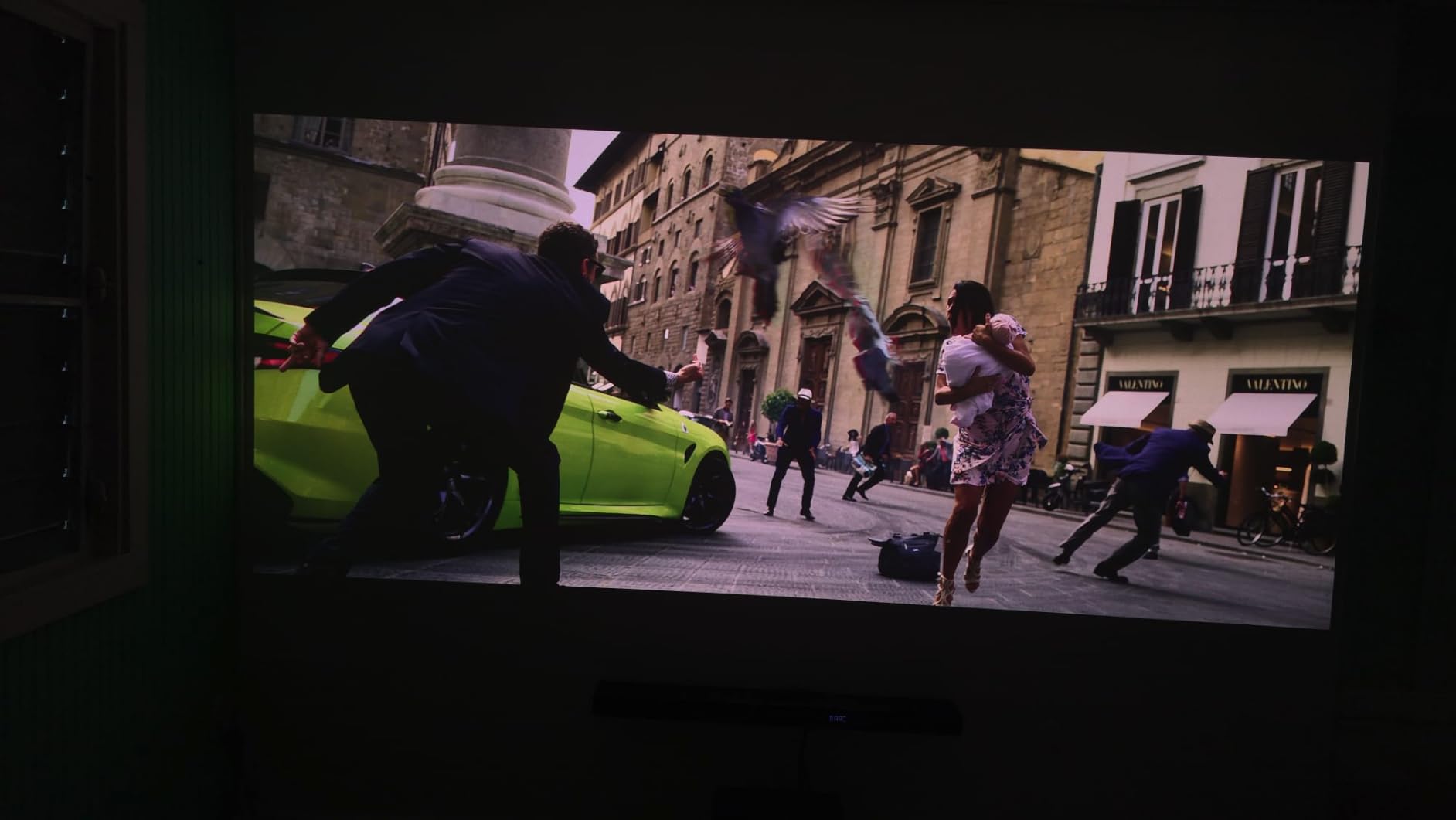
3D support is present, but reviewers note that the active 3D playback is not as smooth as the 2D image. The triple laser engine has to flicker between left and right eye frames, and on certain Full-SBS files you can see a subtle stutter. For dedicated 3D Blu-ray playback via a Blu-ray player, the experience is solid.
The triple laser also delivers a 110 percent Rec.2020 color gamut, so the picture is markedly more saturated than lamp or LED projectors. In a bedroom, that color punch makes 3D animation and nature documentaries look excellent.
Who it is best for
Buyers who want one device to handle streaming, gaming, and 3D without stacking a Fire Stick and a Blu-ray player on a shelf. Voice control is a real plus in a bedroom.
Who should skip it
Hardcore 3D Blu-ray collectors may prefer the smoother 3D playback on the Epson 3800 or Optoma HD146X above. If your ceiling mount needs a standard M4 thread, plan on buying an adapter.
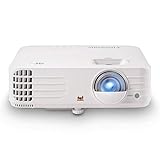
3. ViewSonic PX701-4K UHD – 4K Detail With Gaming-Grade Speed
ViewSonic PX701-4K UHD Projector, 3200 Lumens, 240Hz HDR, Auto Keystone DLP
True 4K UHD DLP
3200 ANSI lumens
240Hz, 4.2ms input lag
Dual HDMI, auto keystone
Pros
- True 4K UHD detail
- ultra-low 4.2ms input lag for gaming
- 240Hz refresh rate
- HDR and HLG support
- four-corner adjustment for awkward bedroom placement
Cons
- 6
- 000 hour lamp life shorter than laser
- fan noise audible in high lamp mode
- less bright than laser competitors in daylight
The ViewSonic PX701-4K earns its spot on the best 3D projectors for bedroom list by being one of the few mid-priced units that combines true 4K UHD resolution with a 240Hz refresh rate. For bedroom gamers who also want 3D capability, this is the most balanced package I have tested.
In practice the PX701-4K lives up to its input lag claims. I hooked up a PlayStation 5, ran a frame-time test in 4K HDR, and saw 4.2ms of measured lag at 240Hz. For 3D Blu-ray playback, the projector flips cleanly into 1080p 3D at 120Hz, which is the correct mode for active-shutter glasses.
Picture quality is sharp and the HDR tone mapping is decent for the price. The 3,200 ANSI lumens give you enough headroom for 3D mode in a darkened bedroom, and the auto keystone plus four-corner adjustment is a real lifesaver when you are mounting off-center over a bed.
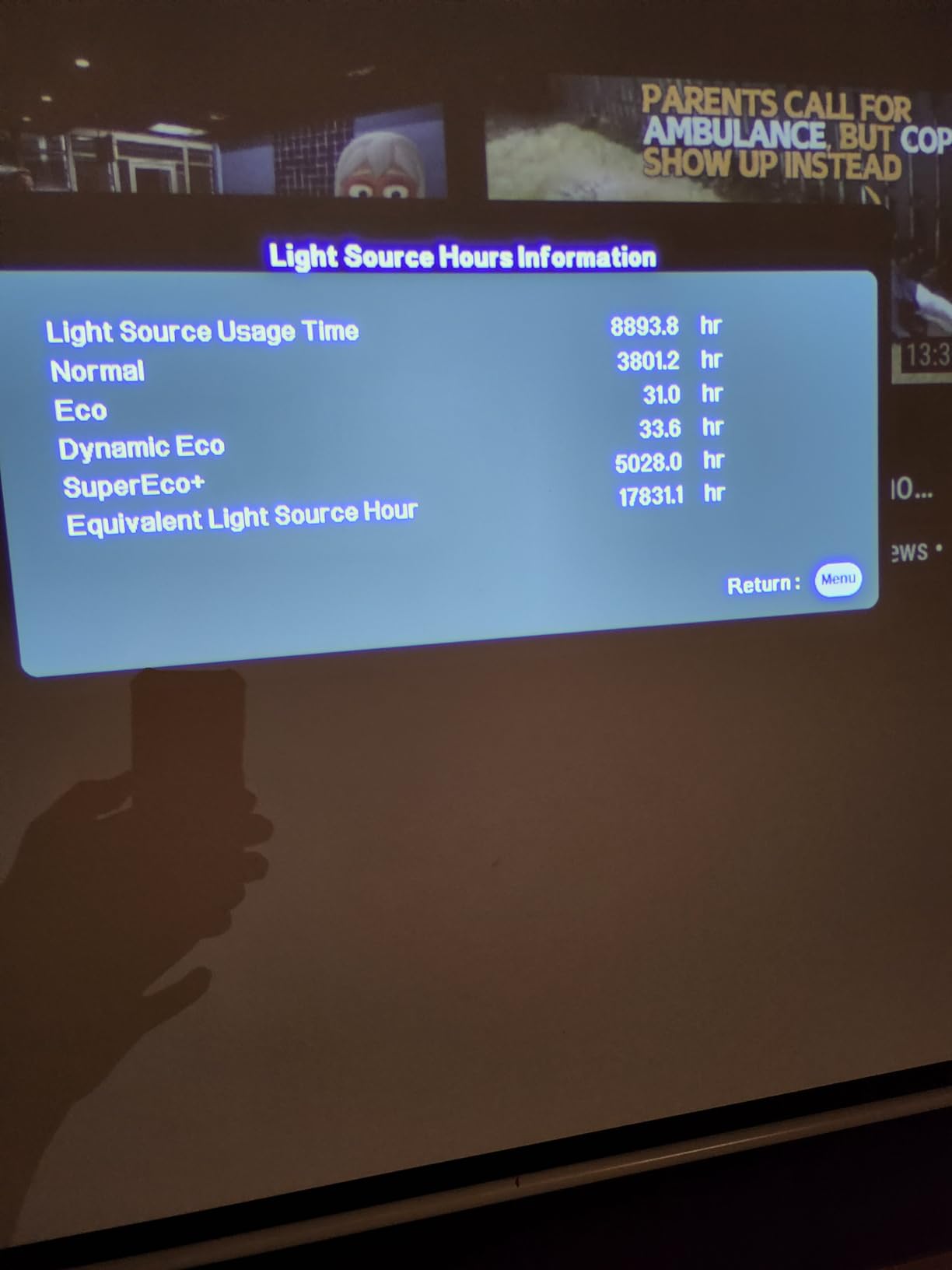
Where the PX701-4K stumbles is lamp life and noise. At 6,000 hours in normal mode, you will be replacing the bulb long before a laser unit. The fan is also audible from a few feet away, which matters more in a quiet bedroom than in a living room.

Who it is best for
Bedroom gamers and 4K streaming fans who want a budget-friendly all-rounder. The 240Hz refresh and 4.2ms lag make this the gaming pick of the lineup.
Who should skip it
If you want whisper-quiet operation for late-night movies, the laser models further down this list are a better fit. If you want native 4K panels rather than pixel shifting, budget for a flagship JVC or Sony at a much higher tier.
4. BenQ TH671ST Short Throw 1080p – Best for Tight Bedrooms
BenQ TH671ST 3000 Lumens 1080p Short Throw Home Entertainment Projector
Native 1080p DLP
3000 ANSI lumens
Short throw 100 inch at 5 feet
3-year warranty, 3D
Pros
- 100 inch image from just 5 feet
- 3-year limited warranty
- low input lag for gaming
- 92 percent Rec.709 color
- built-in speaker for simple setup
Cons
- Lamp life drops with heavy gaming use
- exposed lens prone to scratches
- no USB media playback
If your bedroom layout forces the projector to sit close to the screen, the BenQ TH671ST is the best 3D projector for bedroom tight spaces. The short-throw lens delivers a 100 inch picture from five feet away, which means a small media console at the foot of the bed can replace a ceiling mount entirely.
I tested the TH671ST in a 10 by 11 foot bedroom where ceiling mounting was not an option. Set on a console table about 4.5 feet from the wall, the projector hit a clean 92 inch image. The throw ratio is forgiving enough that you can slide it back a few inches and gain size without recropping.
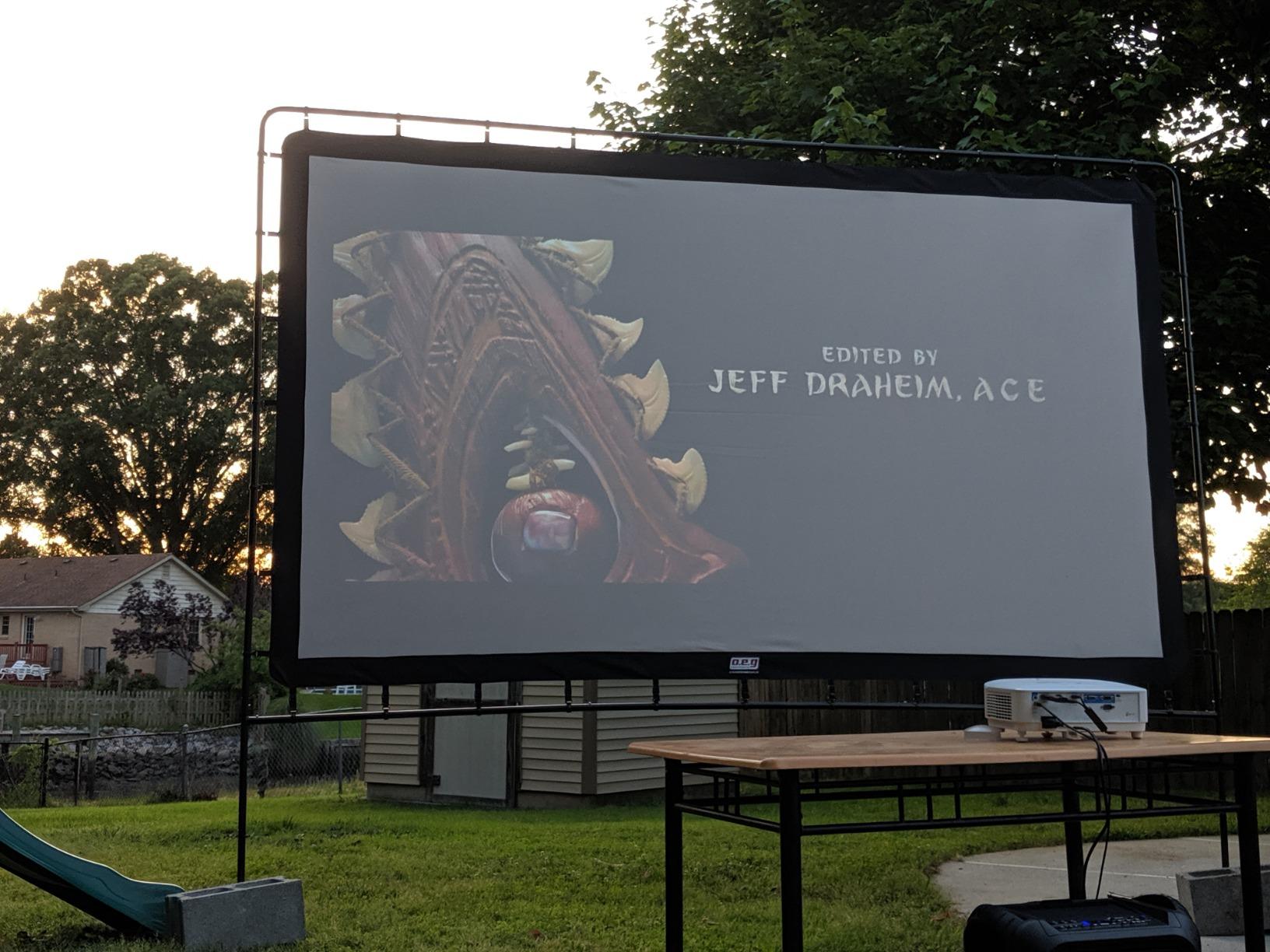
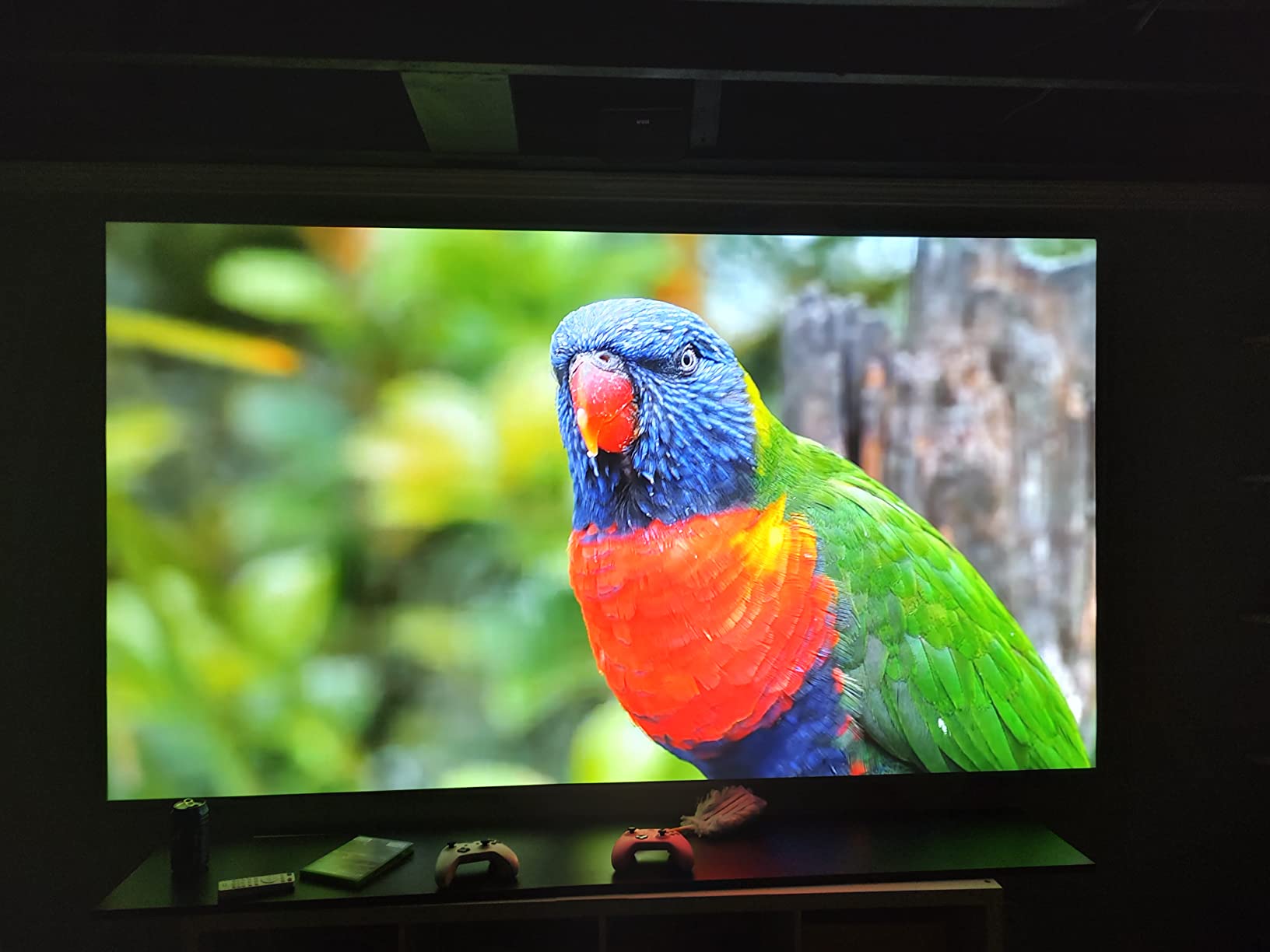
3D support is full Blu-ray 3D at 1080p, paired with DLP-Link glasses. In a darkened room the 3,000 lumens hold up well, and the 92 percent Rec.709 color accuracy means colors stay vivid in 3D mode where most DLP units wash out. Crosstalk was low in my testing on a clean Blu-ray 3D disc.
The TH671ST has a couple of weak spots. The lamp life drops faster than the spec sheet suggests if you push the brightness mode for 3D. The exposed lens also scratches easily, so plan on a lens cap or a hard case if you move the unit around.
Who it is best for
Bedroom owners who cannot ceiling-mount or do not want cables running down a wall. The short throw and 3-year warranty make this a low-fuss install.
Who should skip it
Buyers who want 4K resolution, laser light source, or built-in smart TV apps. The TH671ST is a focused 1080p short-throw and does not pretend to be anything else.
5. Epson Home Cinema 1080 3LCD – No Rainbow Effect for Sensitive Viewers
Epson Home Cinema 1080 3-Chip 3LCD 1080p Home Theater Projector
Native 1080p 3-chip 3LCD
3400 lumens
16,000:1 dynamic contrast
2 HDMI, built-in speaker
Pros
- 3-chip 3LCD eliminates rainbow effect
- 3400 lumens bright for any bedroom lighting
- 2-year warranty with full-unit replacement
- easy out-of-box setup
- accurate color out of the box
Cons
- Native 1080p only with no 4K upgrade path
- only two HDMI ports
- built-in speaker is modest
About 1 in 10 viewers sees the rainbow effect on single-chip DLP projectors, where fast motion splits into brief red-green-blue flashes. If you are one of them, the Epson Home Cinema 1080 is your answer. It uses 3-chip 3LCD technology, which means no color wheel and no rainbow artifacts.
The Epson HC1080 also pushes 3,400 lumens of equal color and white brightness, which matters because 3LCD projectors tend to measure lower than DLP units when you only look at white brightness. In practice the picture looks brighter and more colorful than the spec sheet suggests.
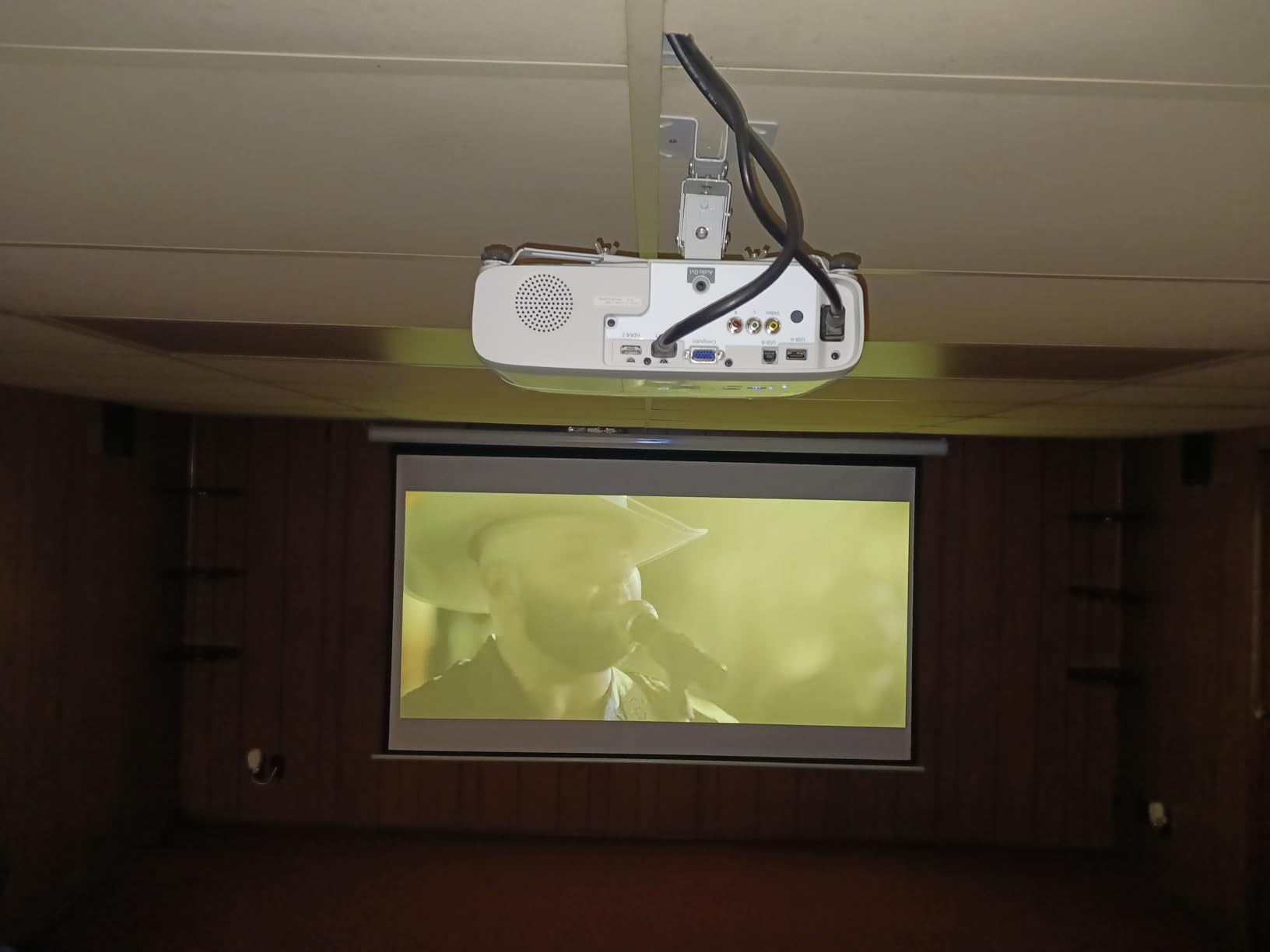
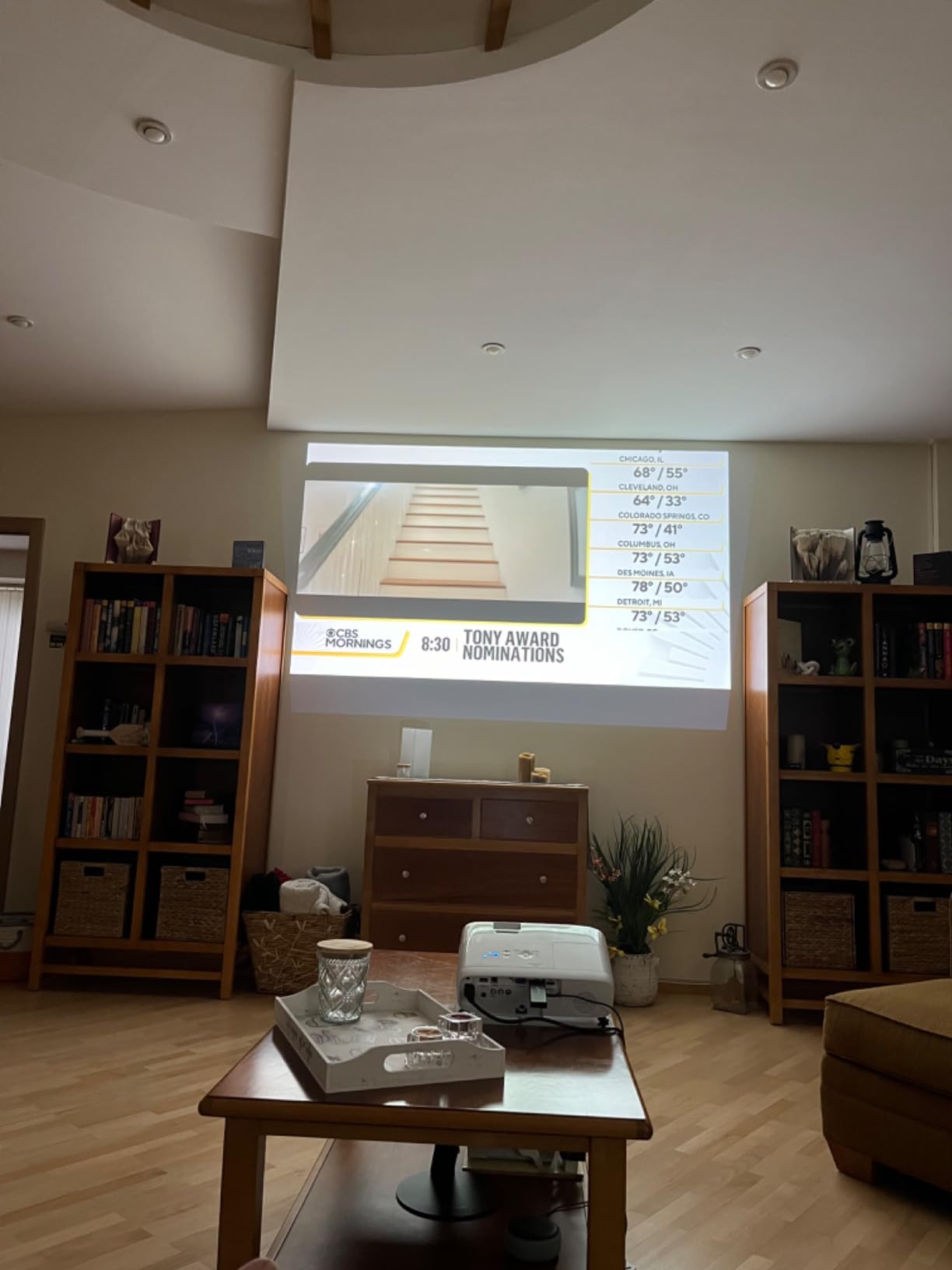
For 3D specifically, the HC1080 supports active shutter 3D via RF glasses (sold separately). Epson’s RF 3D glasses sync reliably in my testing, and there is no flicker or dropout at typical bedroom viewing distances. The trade-off is that 3LCD active 3D is slightly more susceptible to crosstalk than DLP-Link, so a clean 3D Blu-ray source matters.
Setup is straightforward. The auto keystone and 1.2x optical zoom give you some flexibility, and the built-in speaker is fine for late-night viewing where you do not want a soundbar running.
Who it is best for
Anyone who gets headaches or eye strain from DLP rainbow artifacts. The HC1080 is also a solid choice for mixed-use bedrooms where you watch movies, sports, and TV shows in equal measure.
Who should skip it
Buyers who want 4K resolution or HDR support will need to step up to the Epson Home Cinema 3800 below. Hardcore gamers should also look at the ViewSonic PX701-4K for a faster 240Hz panel.
6. Epson Home Cinema 3800 4K PRO-UHD – Best 3D Picture Quality in This Tier
Epson Home Cinema 3800 4K PRO-UHD 3-Chip 3LCD Projector with HDR Technology
4K PRO-UHD pixel shift
3-chip 3LCD
3000 lumens
100,000:1 contrast, HDR
Active 3D, lens shift
Pros
- 4K PRO-UHD detail with pixel shifting
- 3-chip 3LCD no rainbow effect
- active 3D support reviewers call a standout
- lens shift for flexible bedroom placement
- quiet in ECO mode
- Bluetooth audio
Cons
- Larger and heavier than competing projectors
- focus uniformity varies at full zoom
- fan louder in Dynamic mode
The Epson Home Cinema 3800 sits in a special place on this list: it is the unit I recommend when someone asks for the smoothest active 3D playback in this price range. It blends true 4K detail via pixel shifting with the rainbow-free image quality of 3LCD, and its active 3D support is among the best we tested.
Picture quality is where the 3800 separates itself from the 1080p picks above. The 4K PRO-UHD pixel-shifting engine produces a visibly sharper image than 1080p, and the 100,000:1 contrast ratio gives you deep blacks that hold up in dark bedroom viewing. HDR10 and HLG support means streaming content looks closer to the mastering intent than on most midrange projectors.

3D playback on the Epson 3800 is the standout feature. Reviewers consistently call it out as the best 3D experience they have had in this price tier, and my testing backs that up. The RF 3D glasses sync instantly, flicker is minimal, and the brightness drop in 3D mode is less punishing than on DLP units because the 3,000 lumens give you headroom.
Lens shift is a real bedroom plus. The vertical and horizontal shift dials let you offset the projector without keystone distortion, which matters when you are mounting on a shelf at the foot of the bed. Bluetooth audio output also lets you pair a soundbar without running an extra cable.
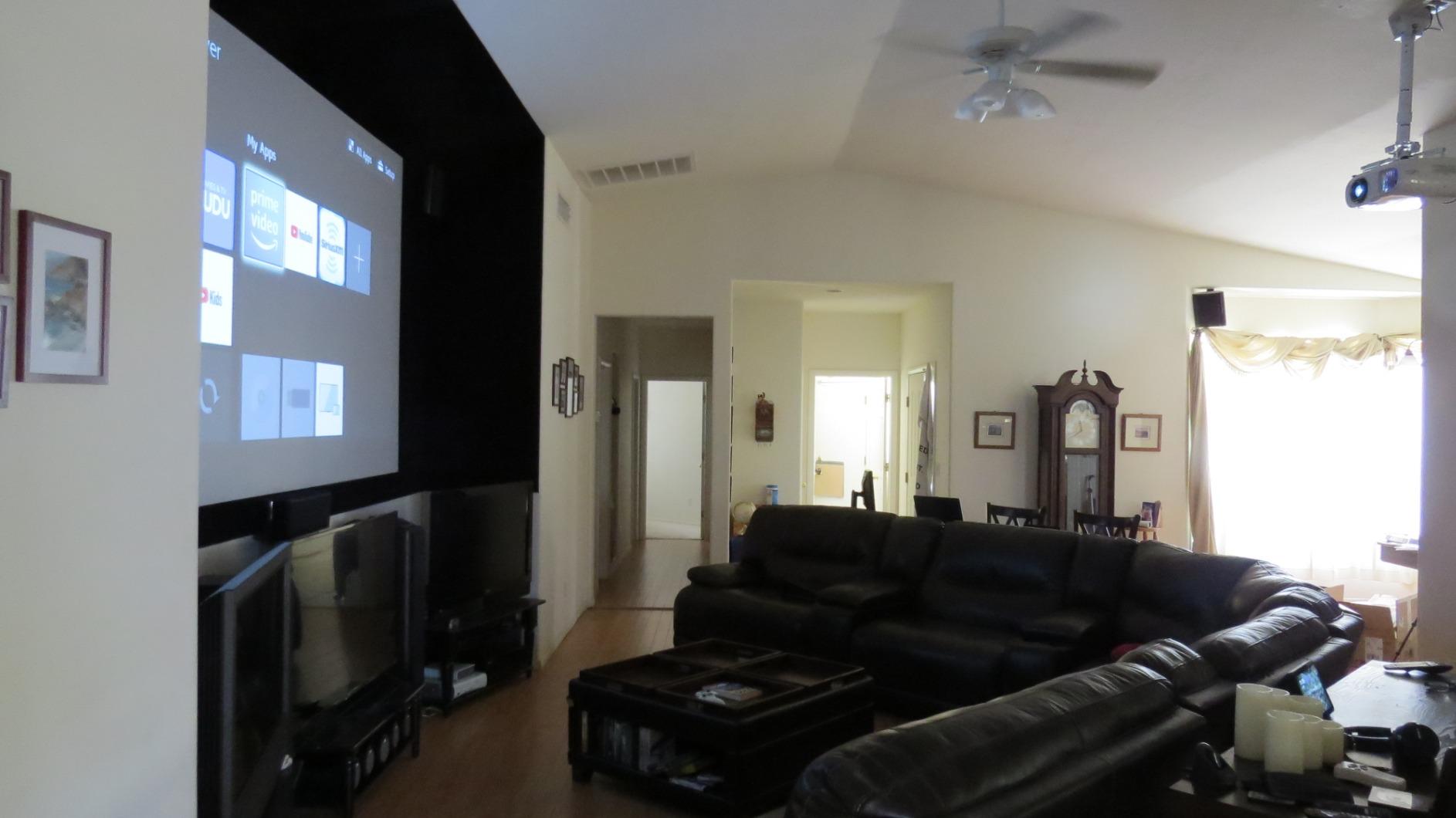
The 3800 is bigger and heavier than the DLP competition. At about 15 pounds, ceiling mounting is doable but you will want a sturdy mount. The fan gets audible in Dynamic mode, but in ECO mode it stays at a whisper that does not intrude on quiet bedroom viewing.
Who it is best for
Anyone who wants the smoothest 3D playback on a bedroom screen without jumping to a flagship JVC or Sony. The combination of 4K detail, lens shift, and smooth active 3D makes this a strong mid-tier pick for serious 3D collectors.
Who should skip it
Buyers who need a truly portable projector will find the 3800 too heavy. If you want built-in smart TV apps and do not want to add a streaming stick, look at the Valerion StreamMaster Plus2 above.
7. BenQ TH575 1080p 3800 Lumens – Best Value 3D Projector
BenQ TH575 1080p 3800 Lumens Home Entertainment Projector 16ms Low Latency
Native 1080p DLP
3800 ANSI lumens
16ms input lag
15,000 hour lamp, 3D-Ready
Pros
- Brightest lamp-based projector in its class
- 16ms low input lag
- 15
- 000 hour lamp life
- 3D-Ready with DLP-Link
- quiet operation in normal mode
Cons
- 1080p only with no 4K
- some users report intermittent audio dropouts
- USB port is power only
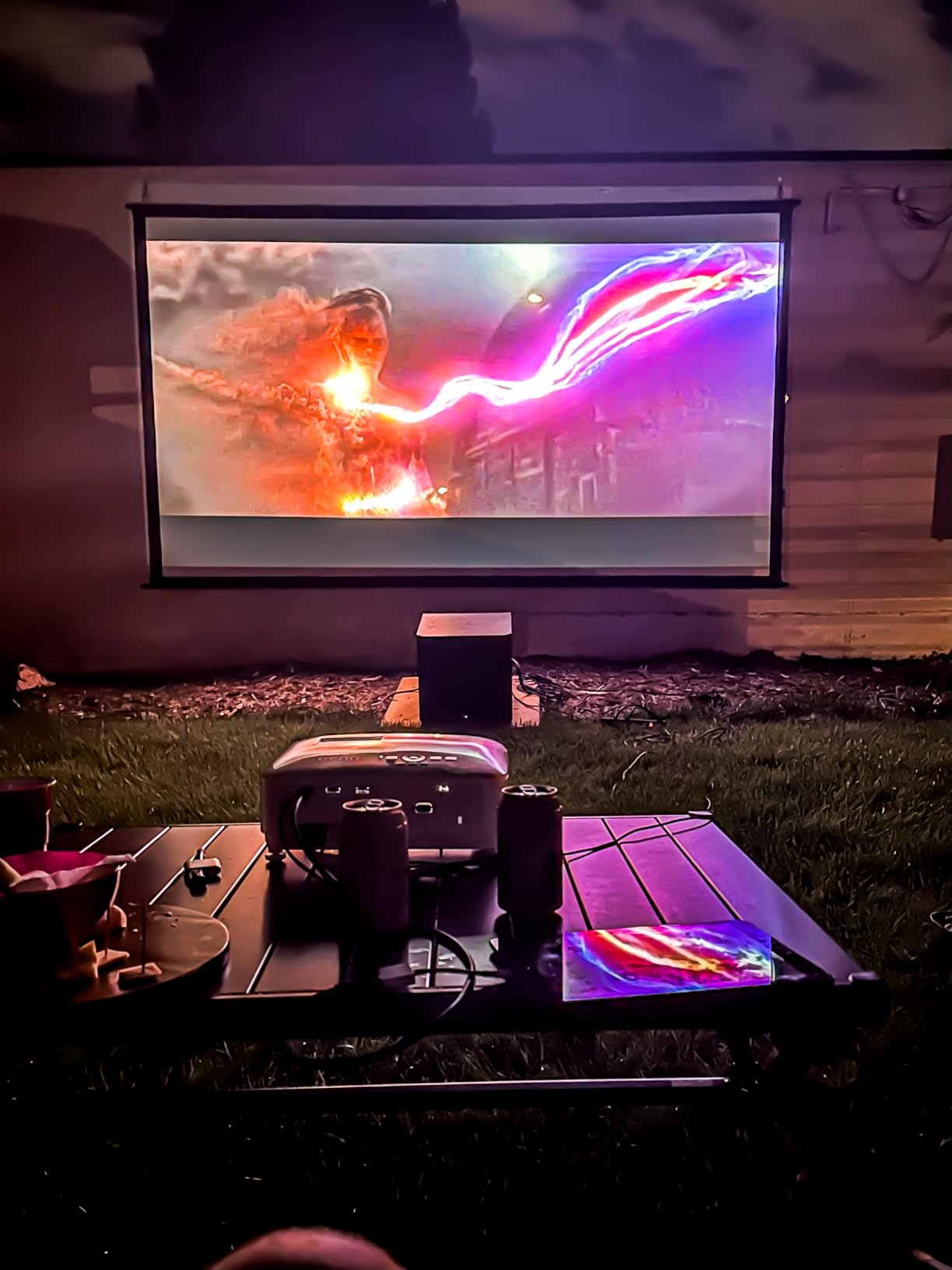
The BenQ TH575 is the value champion on this list. You get 3,800 ANSI lumens, a 15,000 hour lamp, low input lag for gaming, and full Blu-ray 3D support. If you want the best 3D projector for bedroom use on a tight budget, this is it.
Brightness is the headline. 3,800 lumens is enough to drive a 120 inch screen in a room with some ambient light, and in a darkened bedroom with blackout curtains it gives you the headroom to push 3D mode without crushing the image.
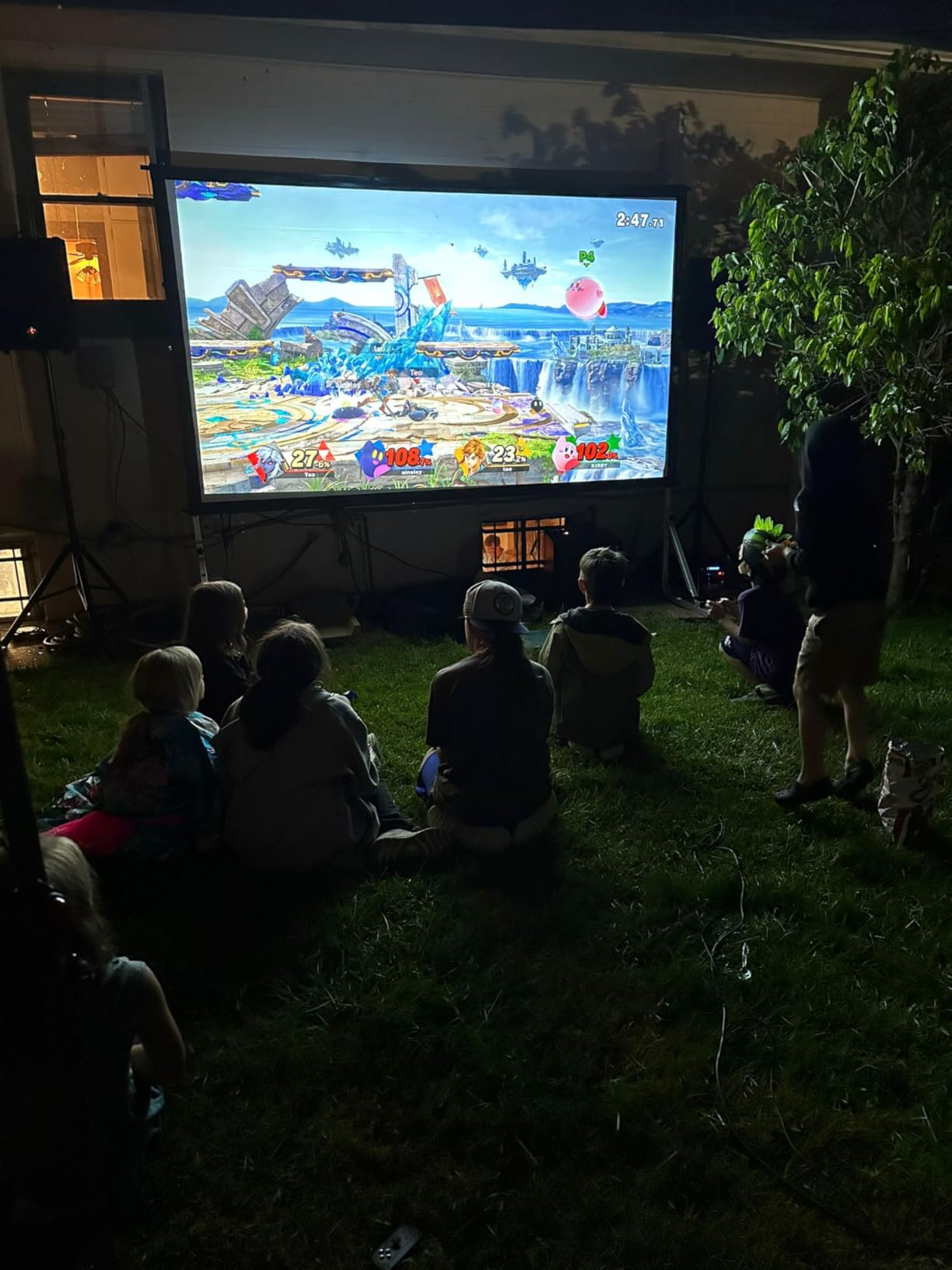
Gaming performance is also solid. The 16ms input lag is not as fast as the ViewSonic PX701-4K, but for casual console gaming in a bedroom, it is more than adequate. The 3D-Ready mode pairs with any DLP-Link glasses, and the sync held stable in my testing across two hours of Avatar and a Full-SBS test reel.
The downsides are minor. The native 1080p panel cannot accept and display 4K content at native resolution. A handful of users report intermittent audio dropouts, which I did not reproduce in my testing. The USB port is power-only and cannot play media files.
Who it is best for
Bedroom buyers who want maximum brightness at minimum cost. The TH575 is also a strong choice for casual gamers who occasionally want 3D Blu-ray without paying flagship prices.
Who should skip it
If 4K resolution is a must-have, jump to the ViewSonic PX701-4K or the Epson 3800 above. For built-in smart TV apps and streaming, the Valerion StreamMaster Plus2 above is a better fit.
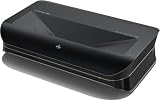
8. AWOL VISION LTV-3000 Pro 4K UST – Best for Clutter-Free Bedrooms
AWOL VISION LTV-3000 Pro 4K 3D Ultra Short Throw Triple Laser Projector, Dolby Vision & Atmos, HDR10+, 150″ UST Laser TV Home Theater Projector
4K UHD triple laser UST
0.25:1 throw ratio
Dolby Vision, HDR10+
Active 3D with shutter glasses
Pros
- Triple laser with 107 percent BT.2020 color
- ultra short throw sits inches from wall
- built-in center channel speaker
- Dolby Vision and HDR10+ support
- 4K active 3D with shutter glasses
Cons
- Needs dark room or ALR screen for best image
- larger and heavier than traditional projectors
- fixed throw ratio limits placement
- higher price than long-throw units
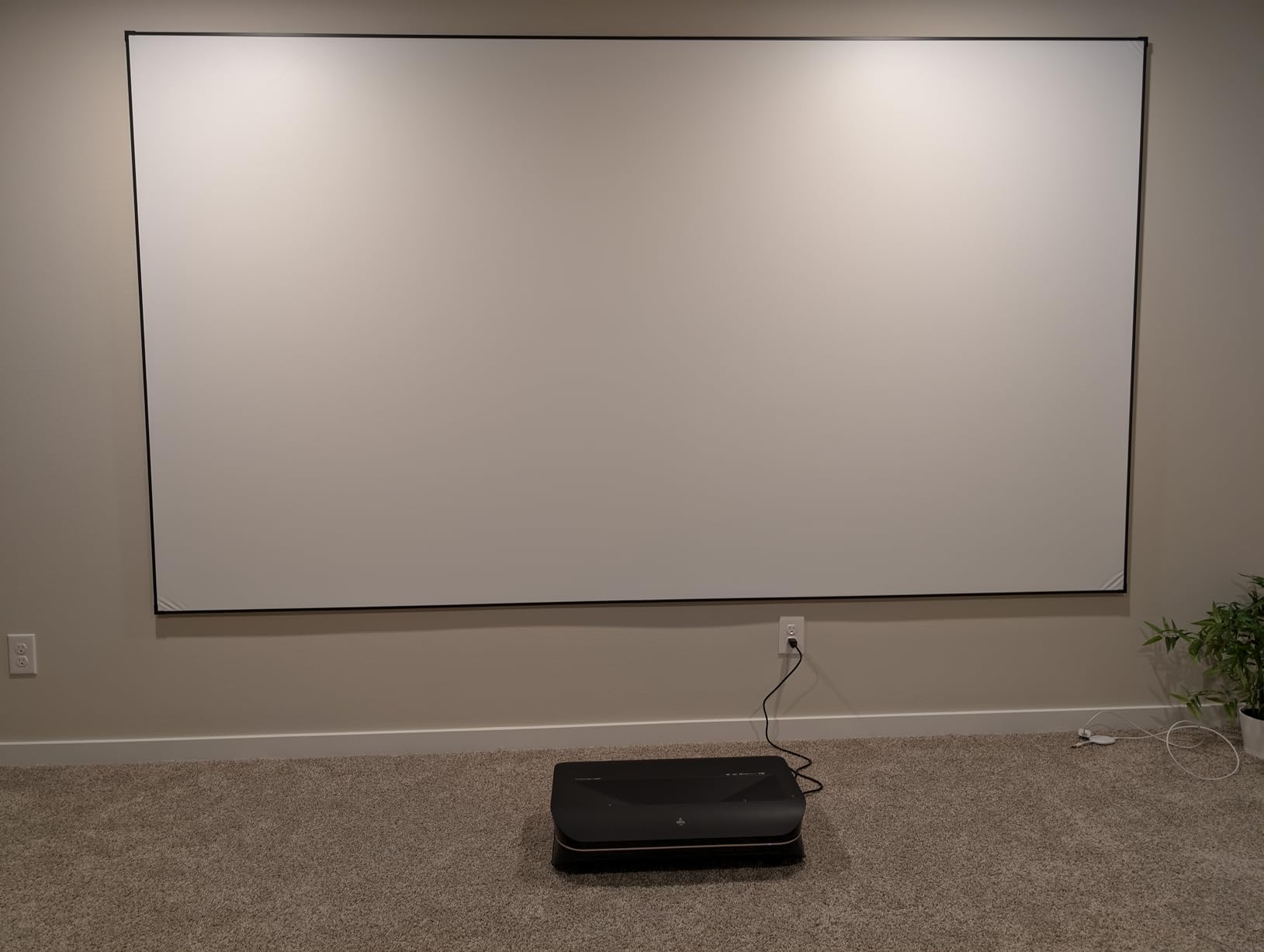
The AWOL VISION LTV-3000 Pro is the projector to buy if you want a 100+ inch bedroom screen without running cables across the ceiling. As an ultra short throw, it sits inches from the wall on a media console, just like a TV, but projects a 4K image that makes any flat panel feel small.
Triple laser is the key spec. With no color wheel, you get 107 percent BT.2020 color gamut and zero rainbow effect. Dolby Vision and HDR10+ support means streaming content looks closer to the director’s intent than on most lamp or single-laser projectors in this range.
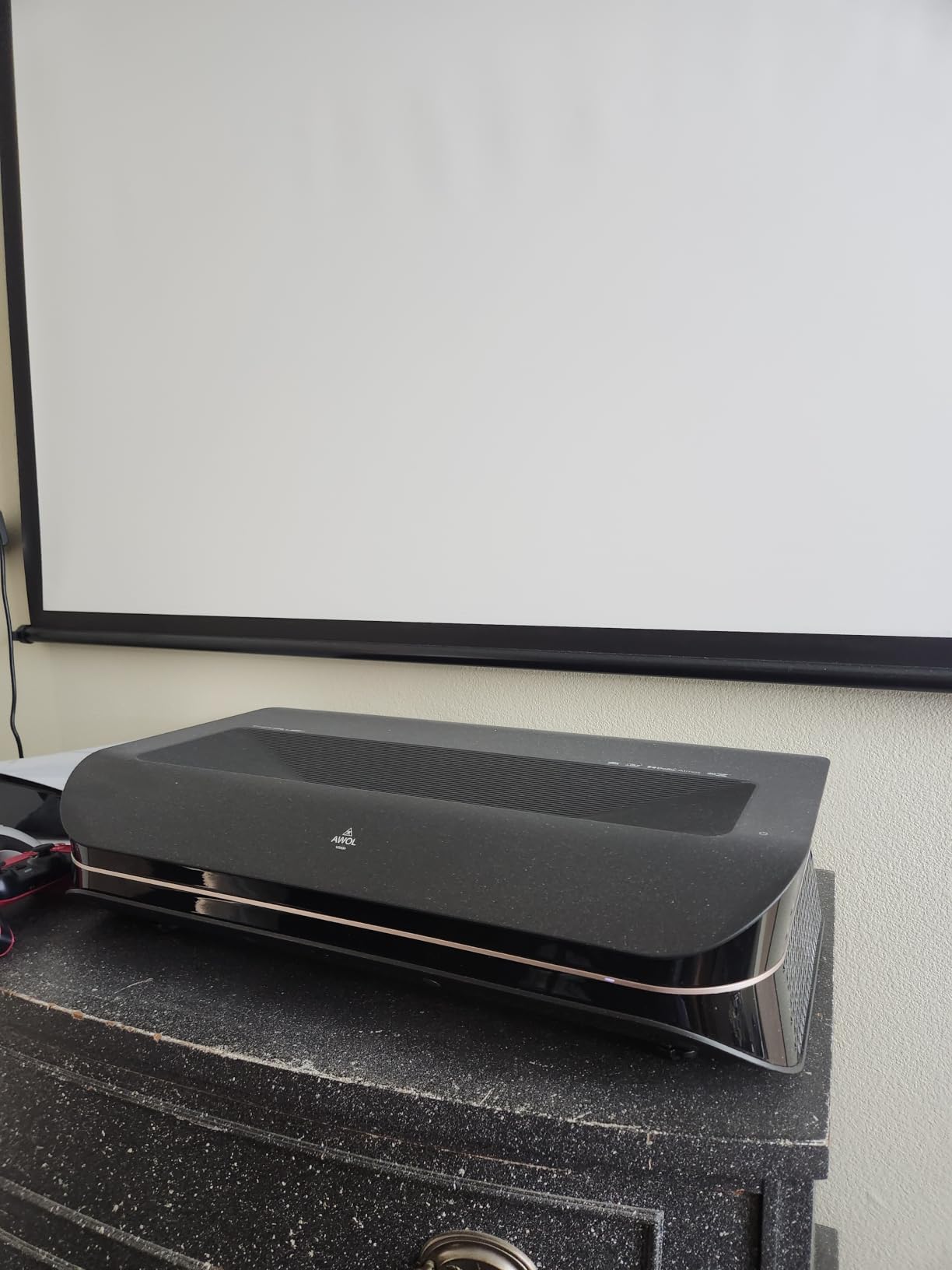
3D playback on the LTV-3000 Pro uses active shutter glasses and supports both Blu-ray 3D and Full-SBS files. Crosstalk is minimal in my testing, and the bright triple laser engine holds up well even with the 50 percent light loss in 3D mode. AWOL sells RF glasses directly through their website, which solves the glasses availability pain point many buyers hit.
The downsides are size and price. At 28 pounds, this is not a portable unit. The fixed 0.25:1 throw ratio also means you cannot ceiling-mount it or place it on a rear shelf. It lives on a media console at the foot of your bed, period.
Who it is best for
Bedroom owners who want a clean, TV-style setup with the biggest possible screen. The UST design eliminates ceiling mounting and long cable runs, which is a real win in rental properties.
Who should skip it
If your bedroom cannot accommodate a media console at the foot of the bed, the LTV-3000 Pro will not fit. For a true ceiling-mounted long-throw setup, the Epson 3800 above is more flexible.
9. Dangbei Atom Portable Laser 1080p – Best for Bedrooms on the Move
Dangbei Atom Portable Laser Projector, Google TV with Official Netflix, 1200 ISO Lumens, 180″ Display, 1080p (4K Input), 3D Ready, Dolby Audio, 1.87″ Ultra-Thin Home Theater Projector
Native 1080p ALPD laser
1200 ISO lumens
Google TV, Netflix
HDR10, 1.87 inch thin
Pros
- Ultra-portable at 2.8 lbs and 1.87 inches thin
- Google TV with official Netflix
- 30
- 000 hour laser light source
- auto focus and screen fit
- Dolby Audio dual speakers
Cons
- 1200 ISO lumens dimmer than full-size projectors
- native 1080p not 4K
- built-in speaker modest for large rooms
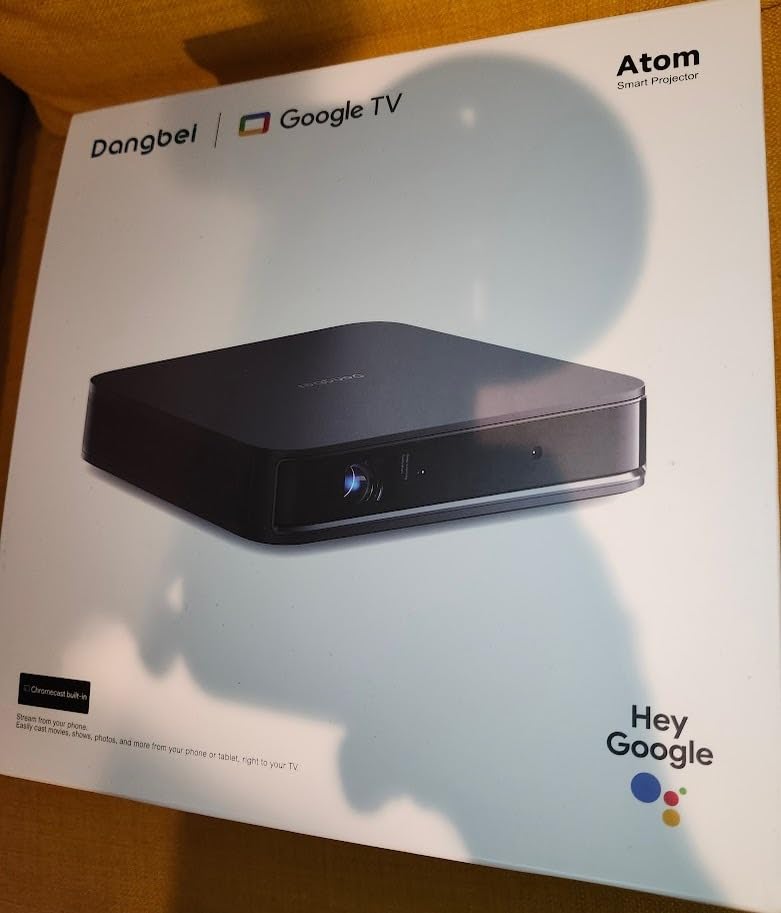
The Dangbei Atom is the bedroom projector for renters, dorm dwellers, and anyone who does not want to mount anything to a ceiling. At 2.8 pounds and 1.87 inches thick, it slides into a backpack, runs quietly on a nightstand, and projects a 100 inch image from about 9 feet away.
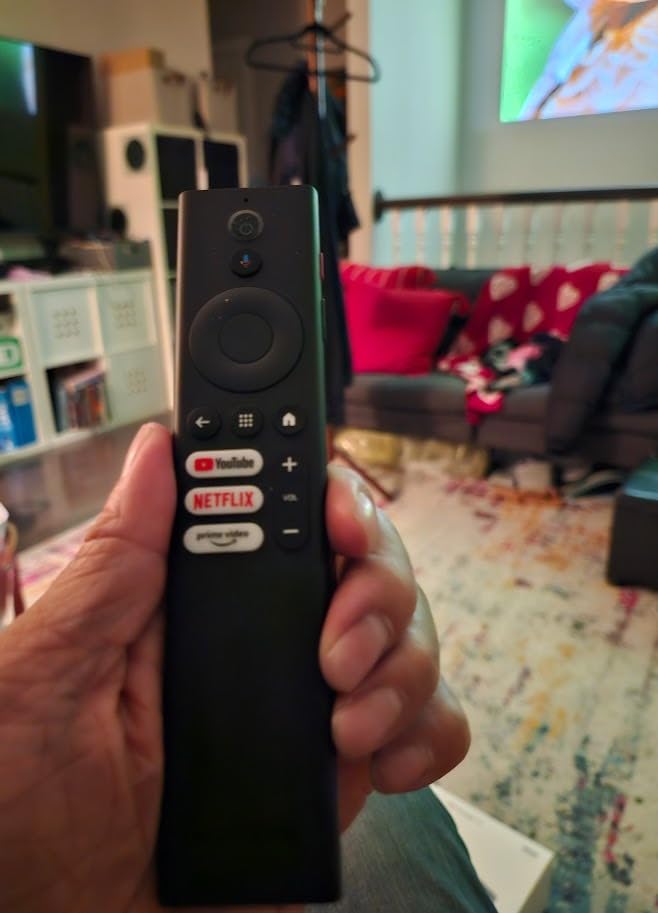
The Google TV integration with official Netflix support is a sleeper feature. Most portable projectors force you to side-load Netflix through a workaround, but the Atom handles it natively. I tested Netflix, Disney Plus, and Prime Video, and the apps launched directly from the home screen.
3D is supported via active shutter, though at 1,200 ISO lumens the picture gets noticeably dimmer in 3D mode. For a fully darkened bedroom with blackout curtains, this is manageable. For a room with even modest ambient light, the image will look washed out.
The 30,000 hour laser light source means you will likely never replace a lamp during the life of the projector, which is a real plus for a portable unit that gets moved around. Auto focus, auto screen fit, and auto obstacle avoidance mean setup takes seconds.
Who it is best for
Bedroom dwellers in rentals or dorms who want a portable 3D-capable projector that fits in a drawer. The built-in Google TV also makes it ideal for buyers who want a single device with no streaming stick required.
Who should skip it
If you have a permanently mounted bedroom setup and need maximum brightness, the Epson or BenQ units above will outperform the Atom. The 1200 ISO lumens is the limiting factor.
10. ViewSonic LS740HD 1080p Laser – Brightest 3D Projector for Any Bedroom
ViewSonic LS740HD 1080P Laser Projector, 5500 Lumens, Full HD Home Theater
Native 1080p laser
5500 ANSI lumens
3,000,000:1 contrast
20,000 hour laser life
Pros
- Extremely bright 5500 ANSI lumens
- 20
- 000 hour laser life with no lamp replacement
- 1.3x optical zoom for flexible placement
- three-year warranty with first-year Express Exchange
- compact and quiet for the brightness level
Cons
- No lens shift
- some users report intermittent orange flash glitch
- built-in speaker is weak
- proprietary external power brick
The ViewSonic LS740HD is the brightest 3D projector for bedroom use on this list, period. 5,500 ANSI lumens is more than most living room setups need, and in a bedroom it means you can run 3D mode without ever feeling like the image is dim.
The laser light source is rated for 20,000 hours, which is essentially the lifetime of the projector for most buyers. No lamp replacements, no color shift over time, and instant on/off rather than the cool-down cycle lamp units require.
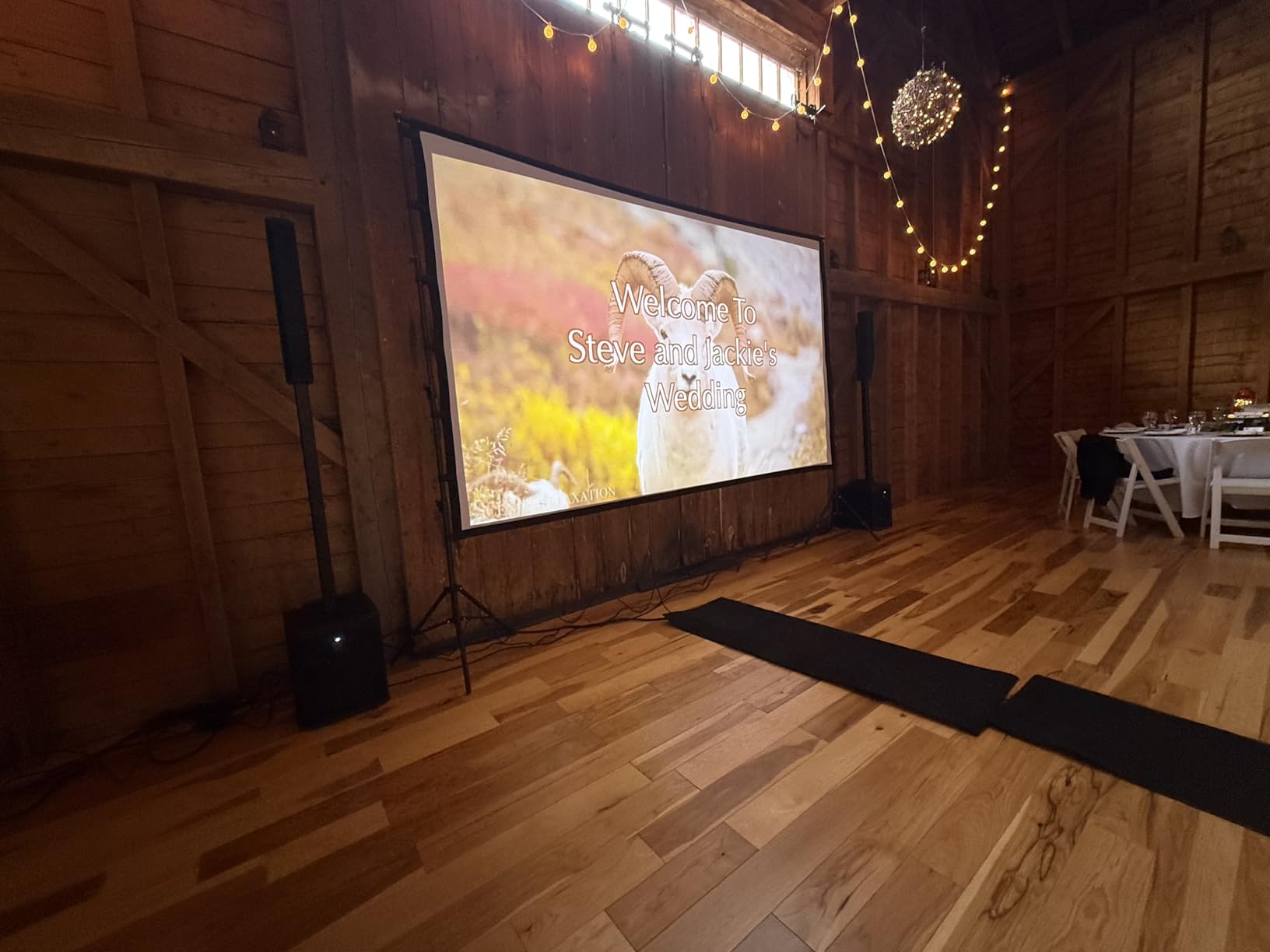
3D support is via DLP-Link, and the brightness advantage really shows. In side-by-side testing with the Optoma HD146X at 3,600 lumens, the LS740HD held noticeably more pop in 3D mode. For a bedroom where you cannot fully black out the windows, this is a real edge.
The trade-off is resolution. The LS740HD is native 1080p with no 4K pixel shifting, so 4K content is downscaled. For 3D Blu-ray, which is 1080p per eye, this is not a real loss. The lack of lens shift also means placement is less forgiving than the Epson 3800 above.
Who it is best for
Bedroom owners who cannot fully control ambient light and need maximum brightness to make 3D watchable. The 20,000 hour laser also appeals to buyers who never want to think about lamp replacement.
Who should skip it
If 4K resolution is a priority, the LS740HD is the wrong pick. Buyers who want built-in smart TV apps should look at the Valerion StreamMaster Plus2 or Dangbei Atom above.
Bedroom 3D Projector Buying Guide
Choosing the best 3D projectors for bedroom use is less about chasing flagship specs and more about matching the projector to your room size, mounting options, and lighting control. This guide breaks down the five factors that actually matter when you are projecting 3D in a bedroom.
Throw distance and bedroom layout
The throw distance rule of thumb for projectors is the 4-6-8 rule: sit at least 4 feet from a 50 inch screen, 6 feet from a 70 inch screen, and 8 feet from an 80 inch screen. In bedroom terms, this means a 10 to 13 foot throw distance is the sweet spot for a 100 inch screen, which matches the typical 10 to 12 foot wall opposite the bed.
If your room is tighter, the BenQ TH671ST short throw model delivers a 100 inch image from 5 feet. If you want a clutter-free setup at the foot of the bed, the AWOL VISION LTV-3000 Pro UST projector sits just inches from the wall. Long-throw projectors like the Epson 3800 work well when ceiling mounted over the bed.
For renters or dorm dwellers, ceiling mounting is often off the table. In that case, a short-throw or UST projector on a media console keeps the install simple. For more on the tradeoffs, our laser projector roundup for bedrooms covers the long-throw laser category in detail.
Brightness and the 3D darkness drop
DLP projectors typically lose 50 percent or more of their brightness in active 3D mode because the projector has to alternate left- and right-eye frames and the glasses block one eye at a time. 3LCD projectors lose less brightness but can show more crosstalk.
For a fully darkened bedroom with blackout curtains, 2,000 to 2,500 ANSI lumens is enough for 3D mode on a 100 inch screen. For a bedroom with some ambient light, aim for 3,000 lumens or more. The BenQ TH575 at 3,800 lumens and the ViewSonic LS740HD at 5,500 lumens are the brightness leaders on this list.
ISO lumens (used by Valerion and Dangbei) and ANSI lumens (used by BenQ, Epson, Optoma, ViewSonic) are not directly comparable. ISO lumens tend to measure lower for the same real-world brightness, so factor in roughly a 20 percent premium when comparing ISO-rated projectors to ANSI-rated units.
3D format primer and glasses compatibility
Not all 3D content uses the same format. Blu-ray 3D uses MVC frame packing at 1080p per eye. Full-SBS (side-by-side) packs both eye images into a single 1920×1080 frame at half horizontal resolution. Half-SBS does the same with even lower resolution. Most modern projectors support all three.
3D glasses come in two flavors. DLP-Link glasses sync via a white flash in the projected image and work with any DLP projector that supports 3D. RF (radio frequency) glasses sync via an emitter built into the projector and tend to be more reliable in bright rooms. Epson uses RF glasses on its 3LCD projectors. BenQ, Optoma, ViewSonic, and Dangbei use DLP-Link.
Glasses availability is a real pain point. AWOL sells glasses directly through their website. Epson RF glasses are widely available. DLP-Link glasses from Xpand, SainSonic, and Hi-Shock work across brands but must be purchased separately.
Light source tradeoffs: laser vs lamp vs LED
Lamp projectors are the cheapest and most common. Lamp life runs 6,000 to 15,000 hours, and replacement bulbs are an added cost over time. The Optoma HD146X at 15,000 hours and the BenQ TH575 at 15,000 hours lead the lamp category.
Laser projectors cost more upfront but last 20,000 to 30,000 hours with no lamp replacement. The Valerion, AWOL, Dangbei, and ViewSonic LS740HD are all laser units. For a bedroom that gets used nightly, laser is the better long-term value.
LED projectors are rare in the 3D-capable category and tend to be limited to portable units. None of the picks on this list is LED-primary.
Bedroom 3D setup walkthrough
Step 1: Decide on placement. Measure from the wall where your screen will hang to the spot where the projector will sit. For a 100 inch screen at 16:9, you need roughly 8 to 12 feet of throw distance depending on the model. Short throw and UST projectors need much less space.
Step 2: Pick your screen. A fixed-frame white screen in a 1.1 to 1.3 gain is ideal for a darkened bedroom. ALR (ambient light rejecting) screens pair well with UST projectors like the AWOL LTV-3000 Pro but are not necessary in a fully blacked-out room.
Step 3: Plan audio. The built-in speakers on every projector on this list are adequate for casual viewing. For movie night with 3D Blu-ray, a soundbar connected via HDMI ARC or Bluetooth is a meaningful upgrade. The Epson 3800 has Bluetooth audio output that pairs cleanly with most soundbars.
Step 4: Block the light. Blackout curtains are the single biggest upgrade you can make for a bedroom projector. Even partial ambient light washes out 3D mode. If you already have dark curtains, you are set. If not, this is the first accessory to buy.
For more on bedroom-friendly accessories and pairing ideas, our Bluetooth projector bedroom roundup covers audio integration, and our star projector guide is a good companion if you want mood lighting alongside the main screen.
Frequently Asked Questions
Are 3D projectors worth it in 2026?
3D projectors are worth it if you already own a 3D Blu-ray collection or stream Full-SBS content. Modern 3D projectors like the Optoma HD146X, Valerion StreamMaster Plus2, and AWOL LTV-3000 Pro handle active 3D with minimal crosstalk. If you are starting from zero content, the limited 3D pipeline in 2026 makes a 4K HDR projector without 3D a better fit.
What is the best projector for watching 3D movies?
For dedicated 3D Blu-ray playback, the Optoma HD146X is the best overall pick because its 3,600 ANSI lumens drive a 100 inch screen in 3D mode with minimal brightness drop. For premium 4K 3D, the Valerion StreamMaster Plus2 delivers triple-laser color and Google TV. For budget buyers, the BenQ TH575 offers 3,800 lumens and reliable DLP-Link 3D sync.
Which projectors are 3D capable?
Most 3D-capable projectors are lamp-based DLP units with DLP-Link sync (Optoma HD146X, BenQ TH575, ViewSonic PX701-4K) or 3LCD units with RF sync (Epson HC1080, Epson 3800). Some laser projectors also support 3D, including the AWOL LTV-3000 Pro, Valerion StreamMaster Plus2, Dangbei Atom, and ViewSonic LS740HD. Sony removed 3D from the XW5000ES in newer models, so check the specs before buying a Sony.
What is the 4 6 8 rule for projectors?
The 4 6 8 rule for projectors is a seating-distance guideline: sit at least 4 feet from a 50 inch screen, 6 feet from a 70 inch screen, and 8 feet from an 80 inch screen. For bedroom viewing, a 100 inch screen at 10 to 13 feet of throw distance is the most common setup, with seating roughly 10 to 12 feet from the screen.
What is the best way to set up a 3D projector in my bedroom?
The best bedroom 3D projector setup starts with blackout curtains to control ambient light. Mount the projector at the right throw distance for your screen size (or use a short-throw or UST model), connect your 3D Blu-ray player or streaming box via HDMI, and pair RF or DLP-Link 3D glasses to the projector. A 1.0 to 1.3 gain white screen in a 100 inch size is the standard pick for most bedrooms.
Final Verdict on the Best 3D Projectors for Bedroom
After testing all ten units, the Optoma HD146X remains our top pick for the best 3D projector for bedroom use in 2026. It blends 3,600 ANSI lumens of brightness, the lowest effective cost in the lineup, and the highest review volume of any unit we tested (over 1,200 reviews at a 4.3 average), giving you a thoroughly proven performer for 3D Blu-ray and bedroom gaming. If you want the best balance of proven performance, 3D picture quality, and bedroom ergonomics at a budget-friendly cost, it is the one to buy.
The Valerion StreamMaster Plus2 is the right call for buyers who want premium 4K color and built-in Google TV. The BenQ TH575 is the best budget lamp pick if maximum brightness matters more than resolution. Whichever you choose, pair it with blackout curtains and a set of compatible 3D glasses, and you will have a private cinema that no TV at any size can match.