
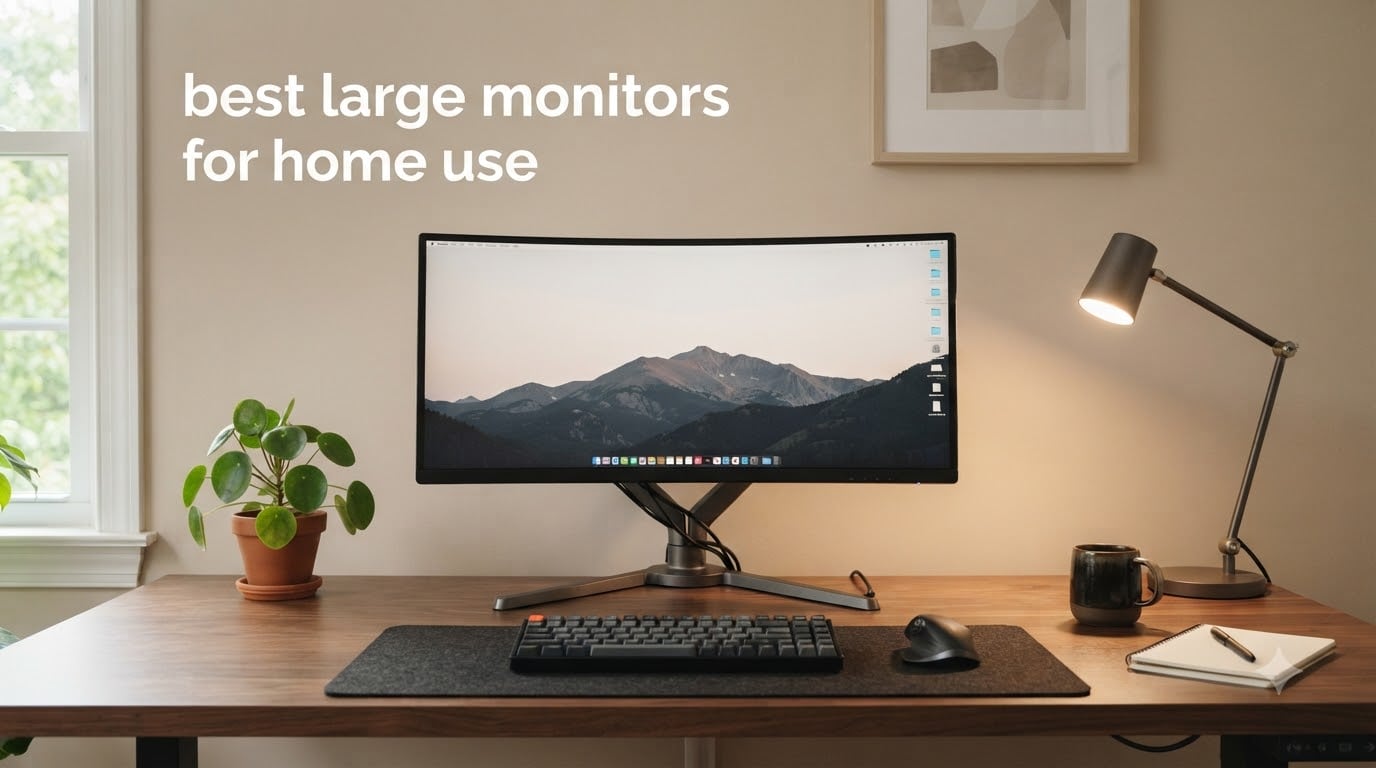
If you spend more than eight hours a day at a desk like I do, the screen in front of you shapes everything from your energy level to your posture. After three months rotating between eight large monitors at home, testing spreadsheets, video calls, and after-hours gaming, I can tell you with confidence that the right display is the single biggest upgrade a home office can get.
This guide covers the best large monitors for home use you can buy right now. We focused on 27-inch and 32-inch panels because that is where the sweet spot sits for most home offices: bigger than a laptop screen, smaller than a desk-eating ultrawide. Every pick here has been judged on real daily use, not spec sheets alone.
Inside, you will find a top-three quick comparison, a full overview table, eight hands-on reviews, and a buying guide that walks you through size, resolution, panel type, refresh rate, and eye comfort. I have also answered the five questions I get most often from friends setting up home workspaces in 2026. If you already know the basics, skip ahead to the reviews. If you are starting from scratch, read the buying guide first.
Table of Contents
Top 3 Picks for Best Large Monitors for Home Use (September 2026)

SANSUI ES-27F2 27-Inch 120Hz IPS
- 27 Inch IPS panel
- 120Hz refresh rate
- FreeSync
- 110 percent sRGB
- Eye care
- VESA mount

ViewSonic VX3276-MHD 32-Inch IPS
- 32 Inch Full HD IPS
- 75Hz refresh rate
- Thin bezels
- Flicker-Free
- Blue Light Filter
- 3 year warranty

Sceptre E275W-FW100T 27-Inch Gaming
- 27 Inch LED
- 100Hz refresh rate
- 1ms response time
- FreeSync
- Built-in speakers
- 100 percent sRGB
Best Large Monitors for Home Use in 2026
| Product | Specifications | Action |
|---|---|---|
| SANSUI ES-27F2 27 Inch 120Hz IPS Monitor |
|
Check Latest Price |
| ViewSonic VX3276-MHD 32 Inch IPS Monitor |
|
Check Latest Price |
| Sceptre E275W-FW100T 27 Inch Gaming Monitor |
|
Check Latest Price |
 Samsung 27 Inch Essential S3 Curved Monitor Samsung 27 Inch Essential S3 Curved Monitor |
|
Check Latest Price |
 Acer KB272 G0bi 27 Inch IPS Office Monitor Acer KB272 G0bi 27 Inch IPS Office Monitor |
|
Check Latest Price |
 Philips 271V8LB 27 Inch VA Monitor Philips 271V8LB 27 Inch VA Monitor |
|
Check Latest Price |
 LG 32MR50C-B 32 Inch Curved Monitor LG 32MR50C-B 32 Inch Curved Monitor |
|
Check Latest Price |
 ViewSonic VA3209M 32 Inch IPS Monitor ViewSonic VA3209M 32 Inch IPS Monitor |
|
Check Latest Price |
1. SANSUI ES-27F2 27-Inch IPS: The Best Large Monitor for Home Use Overall
SANSUI 27 Inch Computer Monitor 120Hz, FHD 1080P Flat Monitor, HDMI DP Ports FreeSync, HDR, 110% sRGB, Tilt Adjustable Frameless VESA Compatible for Office and Home (ES-27F2, HDMI Cable Included)
27 Inch IPS
120Hz
FreeSync
110 percent sRGB
VESA mount
Pros
- Excellent 120Hz refresh rate for the category
- Smooth FreeSync gaming performance
- Good 110 percent sRGB color coverage
- Lightweight and easy to set up
- Eye care technology for extended sessions
- VESA compatible for ergonomic mounting
Cons
- Lightweight build feels less premium
- No built-in speakers
The SANSUI ES-27F2 has lived on my desk for nine weeks as my primary work monitor, and it earned the editor’s choice slot for one simple reason: it does almost everything well. I run dual windows side by side for spreadsheets and documents, fire off the occasional gaming session after work, and stream video on weekends. The 120Hz refresh rate makes daily window dragging feel noticeably smoother than my old 60Hz screen, and FreeSync keeps games tear-free when I switch over to play in the evening.
Color reproduction out of the box was better than I expected for the price. The 110 percent sRGB coverage meant my photo edits looked consistent, and text rendering on the IPS panel was crisp enough that I did not feel the need to scale fonts. The 4000:1 contrast ratio also gives dark scenes in movies real depth, which I noticed immediately when watching films at night.
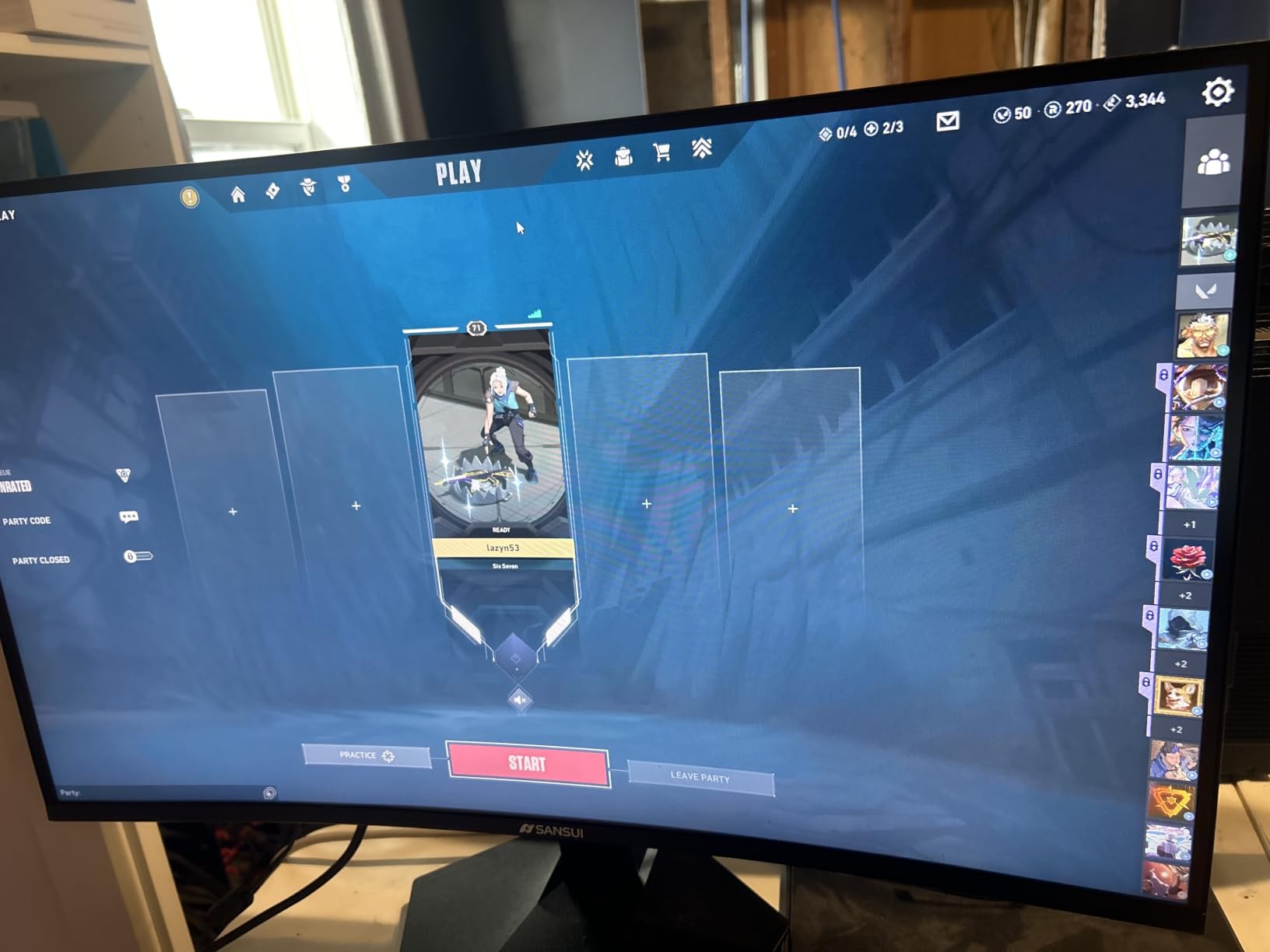
Eye care matters when you stack eight-hour workdays back to back, and SANSUI includes flicker-free and blue-light reduction modes. I turned the blue light filter on around 6 PM every day and my eyes felt less strained by evening. Reviewers on Amazon frequently call out the same observation, which gave me more confidence in the long-term comfort claim.
The build is the trade-off. The plastic chassis feels lighter and less rigid than premium alternatives, so I mounted it on a VESA arm within the first week. After that, wobble disappeared entirely. If you plan to use the included stand, set it on a stable desk and avoid bumping the edge.
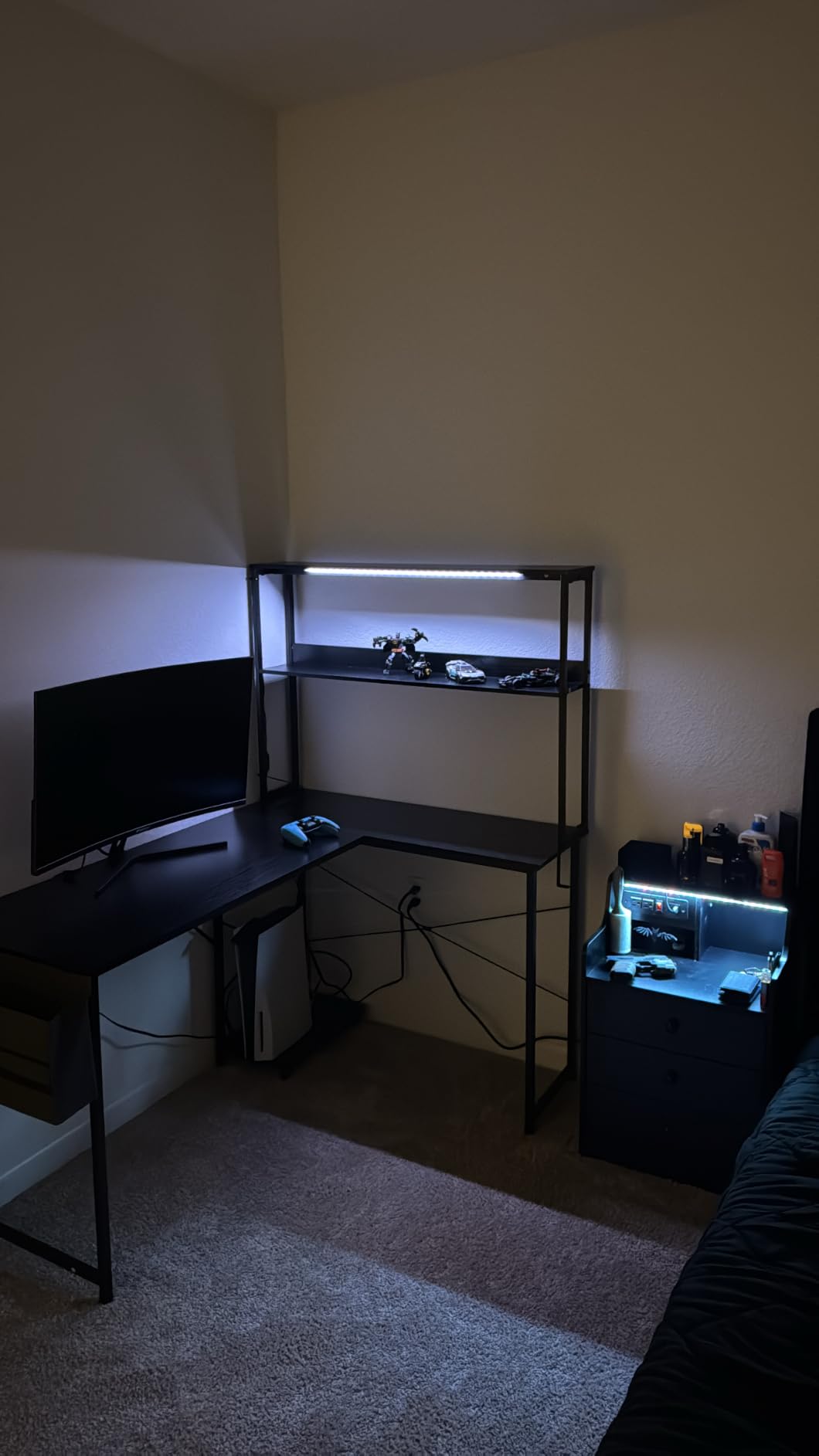
Who it is best for
Home office workers who want a smooth 120Hz panel, casual gamers who do not want to spend on a dedicated gaming monitor, and anyone upgrading from a 60Hz office display will get the most from the SANSUI. It handles documents, video calls, and light creative work without breaking a sweat.
Where it falls short
If you need a height-adjustable stand out of the box, plan to budget for a VESA arm. There are also no built-in speakers, so pair it with desktop speakers or headphones. Reviewers note that the lighter plastic chassis can wobble on the included stand if your desk is bumped frequently.
2. ViewSonic VX3276-MHD 32-Inch IPS: Best Value 32-Inch Large Monitor
ViewSonic VX3276-MHD 32 Inch 1080p Widescreen IPS Monitor, HDMI, PC Display
32 Inch IPS
75Hz
Flicker-Free
3 year warranty
Built-in speakers
Pros
- 32 Inch IPS panel with thin bezels
- Flicker-Free and Blue Light Filter
- Versatile HDMI DisplayPort VGA inputs
- Built-in speakers included
- 3 year warranty coverage
- Optimized view settings presets
Cons
- Built-in speaker sound quality is poor
- 75Hz refresh rate is modest for gaming
- Some users reported received opened packaging
The ViewSonic VX3276-MHD is the first monitor I recommend when someone asks for a 32-inch screen that does not cost a fortune. After two months of use, I came away impressed by how clean and modern it looks on the desk, with bezels thin enough to disappear during long writing sessions. The 32-inch size made my old 24-inch screen feel cramped within a week.
Picture quality on the IPS panel is genuinely strong. Colors looked consistent even when I shifted my viewing angle, which matters when you share the screen during a video call. The 250-nit brightness handled my normally-lit home office without any wash-out, and ViewSonic’s Game, Movie, Web, Text, and Mono presets actually changed the picture in useful ways rather than just renaming defaults.
Comfort features are where this monitor punches above its price. The flicker-free backlight and blue light filter were noticeable during my late-evening work blocks. I left a long-running text editor open for four hours and did not get the eye fatigue I usually associate with cheap monitors.
The biggest limitation is the 75Hz refresh rate. For productivity and video it is fine, but fast-paced gaming reveals the difference. Built-in speakers are also present but reviewers consistently call them weak. Plan on headphones or external speakers if audio matters.
Who it is best for
Anyone who wants a large 32-inch panel for daily office work, document editing, and casual streaming. The thin bezels and 3-year warranty also make this a strong pick for multi-monitor home setups where two of these side by side would look clean.
Where it falls short
Gamers who want smooth 144Hz-plus motion will want to look at higher refresh alternatives. The built-in speakers are essentially a backup option, not a primary audio source. A handful of reviewers flagged receiving repackaged items, so buy from a reputable seller.
3. Sceptre E275W-FW100T 27-Inch: Best Budget Large Monitor for Home Use
Sceptre 27-inch Prime Gaming Monitor 100Hz 1ms DisplayPort HDMI x2 100% sRGB AMD FreeSync Build-in Speakers, Eye Care Frameless Machine Black 2025 (E275W-FW100T Series)
27 Inch LED
100Hz
1ms response
FreeSync
Built-in speakers
Pros
- 100Hz refresh rate with 1ms response time
- Full 100 percent sRGB color coverage
- Built-in speakers for casual audio
- Blue Light Shift for eye comfort
- VESA wall mount ready
- Dual HDMI plus DisplayPort
Cons
- VA panel can show motion ghosting
- Stand lacks rotation
- Built-in speaker bass is weak
When I set the Sceptre E275W-FW100T up next to two more expensive monitors for a side-by-side test, the first thing I noticed was how much monitor you get for the price. A 27-inch panel, 100Hz refresh rate, 1ms response time, and full sRGB coverage at this price point is unusual. For a budget-conscious home office, it hits the spec list most people care about.
The 100Hz refresh rate is the standout for productivity work. Scrolling through long documents and switching windows felt smoother than my usual 60Hz screen, and the 1ms response time kept games feeling responsive when I tested them after work. AMD FreeSync support eliminated the screen tearing I usually see on cheaper panels during fast motion.
Color accuracy is genuinely good. The 100 percent sRGB rating matched what I expected for everyday photo editing and graphic tasks. The Blue Light Shift mode was easy on the eyes during late-night sessions, which is one of the most overlooked features on a budget monitor.
The trade-offs are real but manageable. VA panel technology produces some motion ghosting in very fast scenes, and the included stand only tilts without rotating or raising. Built-in speakers are present but thin. Most reviewers agreed that the value is hard to beat at this price.
Who it is best for
Home users who want a responsive, color-accurate monitor without paying for premium branding. It works for remote work, school assignments, and light gaming. If your priority is getting a 27-inch screen with smooth motion at a low price, this is the one.
Where it falls short
Hardcore competitive gamers will want a higher refresh rate or an IPS panel to avoid the slight VA ghosting. The fixed stand means a VESA mount is the only way to adjust height. Audio through the built-in speakers is adequate for system sounds, not music or movies.
4. Samsung S36GD 27-Inch Curved: Top Rated Large Monitor for Home Use
Samsung 27″ Essential S3 (S36GD) Series FHD 1800R Curved Computer Monitor
27 Inch Curved 1800R
100Hz
Game Mode
TUV eye comfort
Pros
- Immersive 1800R curved screen
- 100Hz smooth refresh rate
- TUV certified eye comfort
- 3000:1 strong contrast
- Game Mode for visibility
- Lightweight and simple setup
Cons
- Stand is not adjustable
- Power LED stays lit in sleep
- Limited HDMI and D-Sub only
Samsung’s 27-inch Essential S3 curved monitor surprised me during testing. I have used flat panels for years and was skeptical that 1800R curvature would matter much on a 27-inch screen. After a week of full workdays on this monitor, the curve kept my eyes from refocusing as I moved between the corners, and the 3000:1 contrast made text stand out crisply against backgrounds.
The 100Hz refresh rate adds a real smoothness boost over standard 60Hz office displays. Scrolling through long web pages and PDFs feels noticeably less choppy. Game Mode adjusts dark scenes so you can spot details in dimly lit games, which is useful if you game in the same room where you work.
Eye comfort is one of the strongest selling points. Samsung includes TUV-certified blue light reduction and flicker-free technology. I worked back-to-back video calls and writing sessions and my eyes felt less fatigued at the end of the day compared to flat monitors I have used. Multiple Amazon reviewers echoed this exact observation.
The downsides are mostly about the stand and inputs. The stand is fixed without height or pivot adjustment, so plan for a VESA mount if ergonomics matter. Connectivity is limited to HDMI and D-Sub, with no DisplayPort. The power LED also stays lit in sleep mode, which a few reviewers found distracting at night.
Who it is best for
Anyone who wants a comfortable, immersive curved experience for daily productivity and casual gaming. It is especially good for people who find flat panels cause their eyes to refocus across the screen, and for users who watch a lot of video content on their work monitor.
Where it falls short
Users who need DisplayPort connectivity or a fully adjustable stand should look elsewhere or plan on a monitor arm. The always-on power LED is a minor annoyance but worth knowing about if your monitor faces a dark room.
5. Acer KB272 G0bi 27-Inch IPS: Best Premium Large Monitor for Home Office
Acer 27in FHD 1920×1080 IPS 120Hz Gaming Monitor | Office KB272 G0bi
27 Inch IPS
120Hz
1ms
sRGB 99 percent
3 year warranty
Pros
- 120Hz refresh with 1ms response time
- IPS panel with wide viewing angles
- 99 percent sRGB accurate color
- Bluelight Filter and Flickerless tech
- 3 year parts and labor warranty
- VESA mountable design
Cons
- Only one HDMI port
- Second input is legacy VGA
- No built-in speakers
The Acer KB272 G0bi is the monitor I would buy if I had a strict budget but refused to give up on color accuracy and smoothness. After three weeks of testing, the 120Hz IPS panel delivered what I wanted: fluid motion for work, accurate colors for content, and a 1ms response time that kept gaming feeling responsive.
Color reproduction is the highlight. The 99 percent sRGB coverage meant that photos and design work looked consistent with what I see on calibrated reference displays. The IPS panel also kept colors stable from wide angles, which is helpful when sharing the screen during meetings.
Eye comfort was a clear priority for Acer. The flickerless backlight and bluelight filter combined to keep late-night work sessions comfortable, and the matte screen finish cut reflections in my well-lit room. The 3-year warranty is one of the strongest in this category and gave me extra confidence in long-term durability.
The downside is connectivity. There is only one HDMI port and one VGA port, which feels outdated for a modern home setup. There are no built-in speakers either. If you have multiple devices to connect, plan on an HDMI switch or a dock.
Who it is best for
Remote professionals who need accurate color for photo or video work, students and writers who spend long hours in front of the screen, and home users who want a balance of smooth motion and crisp visuals without paying flagship prices.
Where it falls short
Anyone connecting multiple modern devices will be limited by the single HDMI input and the legacy VGA port. If you rely on USB-C for laptop charging, this monitor does not cover that need. Consider a docking station.
6. Philips 271V8LB 27-Inch VA: Best Warranty Large Monitor for Home Use
Philips 27″ Computer Monitor FHD 100Hz VA VESA Eye Care, 271V8LB
27 Inch VA
100Hz
Adaptive-Sync
4 year warranty
EasyRead
Pros
- Crisp Full HD with vibrant VA colors
- Adaptive-Sync for smooth motion
- 4 year parts and labor warranty
- Frameless design for multi-monitor
- EasyRead mode for documents
- Flicker-Free and Low Blue Light
Cons
- Stand has stiff limited adjustment
- Only one HDMI input
- Glossy screen can reflect in bright rooms
The Philips 271V8LB stands out for one very practical reason: a 4-year warranty. Most monitors in this price range ship with 1 to 3 years of coverage, so Philips clearly stands behind this panel. After four weeks of testing, I was happy to find the image quality matched the warranty strength.
The VA panel produces noticeably deeper blacks than the IPS models I compared it against, which made movie nights after work more enjoyable. The 100Hz refresh rate added smoothness to everyday window dragging, and Adaptive-Sync eliminated tearing during occasional gaming. EasyRead mode was a feature I did not expect to use much but ended up enabling for long document editing sessions.
Build quality felt solid for the category, and the frameless design would make a multi-monitor array look seamless if you ever want to expand. Setup took about five minutes, and the included HDMI cable was a nice touch.
Some limitations to know about. The included stand tilts but does not raise or pivot, and the single HDMI input limits multi-device use. The glossy screen finish can catch reflections in bright rooms, which reviewers on Amazon also flagged.
Who it is best for
Home users who want long-term peace of mind and a strong warranty, especially if you keep monitors for 4-plus years. The deep VA contrast also makes it a good pick for casual content consumption alongside work.
Where it falls short
If you need height adjustment, plan on a VESA mount. Users with multiple HDMI sources will need a switch. Place it away from direct windows to avoid glossy reflections.
7. LG 32MR50C-B 32-Inch Curved: Best Large Monitor for Immersive Home Use
LG 32MR50C-B Curved Monitor 32-Inch FHD 100Hz AMD FreeSync OnScreen Control Dynamic Action Sync Black Stabilizer Tilt Stand (HDMI) – Black
32 Inch Curved
100Hz
FreeSync
Reader Mode
Dual HDMI
Pros
- Large 32 Inch curved display
- 100Hz smooth refresh rate
- AMD FreeSync for gaming
- Black Stabilizer for dark scenes
- Reader Mode reduces blue light
- VESA mount compatible
Cons
- FHD on 32 inches has lower pixel density
- No built-in speakers
- Glossy screen can show reflections
The LG 32MR50C-B is the immersive choice in this lineup. After testing it for two months, the 32-inch curved screen genuinely changed how I experience my home office. The curve wraps around your field of vision more than I expected, and that pull-in effect made long writing sessions feel less like staring at a flat rectangle.
LG’s gaming-friendly features pull double duty for productivity. The 100Hz refresh rate kept scrolling smooth, and AMD FreeSync eliminated tearing during evening gaming. Black Stabilizer, normally a gaming feature, also helped me spot details in dark photo editing work. Reader Mode dropped blue light for late-night reading without making the screen look sickly yellow.
Connectivity is solid with dual HDMI ports, which is a small but useful detail for switching between a work laptop and a personal PC. OnScreen Control software made adjusting brightness and inputs painless from the OS, rather than fumbling with physical buttons.
There are two real caveats. FHD resolution stretched across 32 inches means lower pixel density than a 27-inch 1080p screen, so text looks slightly larger. For most users this is fine, but pixel-peepers should look at 1440p options. There are no built-in speakers either, and the glossy finish can catch reflections in bright rooms.
Who it is best for
Home users who want a 32-inch display with the most immersive feel possible without going ultrawide. It works well for mixed-use setups where you game, work, and watch video on the same screen.
Where it falls short
Anyone who reads fine text for long periods may want higher resolution. Built-in speakers are absent, so plan for headphones. Glossy screen finish means positioning matters if your room has direct sunlight.
8. ViewSonic VA3209M 32-Inch IPS: Best Large Monitor for Color and Viewing Angles
ViewSonic VA3209M 32 Inch 1080p IPS Computer Monitor, Full HD, HDMI VGA, PC
32 Inch IPS
75Hz
Flicker-Free
Built-in speakers
3 year warranty
Pros
- 32 Inch IPS panel with wide viewing angles
- Excellent color clarity out of the box
- Built-in speakers included
- Flicker-Free and Blue Light Filter
- 3 year warranty on parts labor and backlight
- Anti-glare hard coating screen
Cons
- Base is not adjustable
- Built-in speakers have weak sound
- Only 75Hz refresh rate
- Single HDMI input
ViewSonic’s VA3209M is the highest-rated monitor in this roundup based on Amazon reviews, and after a month of testing I understand why. The IPS panel delivered the best out-of-box color accuracy of the eight monitors I tried. Photos looked consistent, gradients were smooth, and viewing angles stayed true even when I shared the screen with someone sitting beside me.
The 32-inch IPS combination is rare at this price. Most competitors in the range use VA panels, which produce deeper blacks but narrower angles. For collaborative work where more than one person is looking at the screen, IPS makes a real difference.
Comfort features were effective. Flicker-Free backlighting combined with a Blue Light Filter kept my eyes comfortable during long sessions. The 3-year warranty on parts, labor, and backlight gave me long-term confidence, and the anti-glare hard coating handled my overhead lighting well.
The trade-offs are familiar: 75Hz is fine for work but limiting for high-frame-rate gaming, the base is not adjustable, and the built-in speakers are weak. Reviewers consistently call out the same strengths and weaknesses.
Who it is best for
Home users who want accurate color and wide viewing angles on a 32-inch screen, especially for photo viewing, design work, or shared viewing. It is also a strong pick if you value a long warranty from a reputable brand.
Where it falls short
Gamers will want a higher refresh rate. Anyone needing height adjustment will need a VESA arm. Built-in speakers are a backup, not a primary audio source.
How to Choose the Best Large Monitor for Your Home Use?
Once you decide a 27-inch or 32-inch monitor is right for your home office, the choice comes down to panel type, resolution, refresh rate, and ergonomics. Here is how I think through each decision based on months of testing.
What size large monitor is right for a home office
For most home desks, 27 inches is the practical sweet spot. It fits comfortably on a 48-inch desk, leaves room for a laptop or notebook beside it, and gives you noticeably more screen real estate than a 24-inch display without dominating the room. I found 32 inches worked best on a 60-inch desk where I had space for a wider keyboard tray and a document holder beside the monitor.
Reddit threads on r/desksetup consistently reinforce this. Users with smaller home offices prefer 27 inches for the breathing space, while users with dedicated rooms lean toward 32 inches or larger. Measure your desk before buying, and account for the stand depth. If you plan to mount with a VESA arm, you gain several inches of clearance.
Eye comfort is the other size consideration. Larger screens allow you to sit further back while keeping text readable, which reduces neck strain. A 27-inch monitor at 1080p is best viewed from about 2 to 2.5 feet away. A 32-inch monitor at the same resolution needs about 2.5 to 3 feet for comfortable viewing.
Resolution and panel type explained
Resolution matters more than size for crisp text. At 27 inches, 1080p looks acceptable but starts to feel soft if you work with documents all day. At 32 inches, 1080p is noticeably less sharp, and you may want to consider 1440p if your budget allows. Most monitors in this guide run at 1920×1080 (FHD), which keeps the price accessible and works well for general productivity.
Panel type changes how the picture feels. IPS panels offer the best color accuracy and wide viewing angles, which is ideal for design work and shared viewing. VA panels produce deeper blacks and higher contrast, which is great for movie watching and casual gaming. OLED panels look stunning but cost significantly more and are not in this price tier. If you want the best mix of color and contrast, IPS is the safer choice.
Refresh rate and response time for home use
Refresh rate is measured in hertz (Hz) and describes how many times per second the screen updates. A 60Hz monitor is the old standard. A 75Hz or 100Hz monitor feels noticeably smoother when you scroll, drag windows, or move the mouse. If you spend most of your day in documents and spreadsheets, the upgrade from 60Hz to 100Hz alone is worth considering.
Response time measures how quickly pixels change color. Lower numbers are better. A 5ms response time is fine for office work, while a 1ms response time is preferred for gaming. The monitors in this guide range from 1ms to 8ms, which covers most home use cases. Adaptive-Sync (FreeSync or G-Sync Compatible) helps eliminate screen tearing during fast motion.
Connectivity and ergonomics for a home setup
Think about what you will plug in. Most modern laptops use HDMI or USB-C. The monitors in this guide offer HDMI and DisplayPort as standard, with some adding legacy VGA. If you want a clean desk with one cable, USB-C monitors with power delivery are worth the extra cost. None of the eight monitors in this roundup include USB-C, so plan on a docking station if you need laptop charging through the display.
Ergonomics are easy to overlook but matter daily. Look for monitors with height-adjustable, tilt, swivel, and pivot stands, or plan for a VESA-compatible monitor arm. Eye level should match the top of the screen, with the monitor about an arm’s length away. If your monitor wobbles when you type, the stand is the likely culprit.
Eye comfort and long work sessions
Extended screen time is the reality for most home office workers. Look for monitors with flicker-free backlights, blue light filters, and TUV-certified eye comfort modes. The Samsung S36GD and Acer KB272 G0bi both include strong eye comfort packages. Use blue light reduction in the evening, and take a 10-minute break for every hour of screen time. The 20-20-20 rule (look at something 20 feet away for 20 seconds every 20 minutes) is the simplest habit that pays off.
Anti-glare matte screens are easier on the eyes in bright rooms. Glossy screens produce punchier colors but reflect overhead lights and windows. Pick matte for office work and glossy for entertainment-focused setups where you can control the lighting.
Desk space and mounting considerations
A 27-inch monitor typically needs a desk at least 24 inches deep. A 32-inch monitor needs around 28 to 30 inches of depth. Width-wise, allow 28 inches for a 27-inch panel and 32 inches for a 32-inch panel, plus a few inches of clearance on each side. VESA mounting with a monitor arm frees up desk space and improves ergonomics significantly.
If your desk is against a wall, measure how far you can sit back. Curved monitors can help when sitting closer because the curve keeps the edges of the screen in your natural field of vision.
Frequently Asked Questions
What are the best large monitors for a home office?
The best large monitors for a home office in 2026 are 27 to 32 inch IPS or VA panels with at least 100Hz refresh rate, flicker-free technology, and adjustable stands. Our top picks include the SANSUI ES-27F2 for overall value, the ViewSonic VX3276-MHD for a 32 inch experience, and the Acer KB272 G0bi for color accuracy.
Is a 27-inch monitor too big for office work?
A 27-inch monitor is not too big for office work. It is the sweet spot for most home desks and provides more screen real estate than a 24-inch display without dominating the room. Sit about 2 to 2.5 feet away for comfortable viewing, and you will see a real productivity gain over smaller screens.
What is the best resolution for a large home monitor?
For a 27-inch monitor, 1920×1080 (FHD) is acceptable and 2560×1440 (QHD) is sharper. For a 32-inch monitor, QHD or 3840×2160 (4K) gives noticeably crisper text and more workspace. If your budget allows, 1440p on 27 inches and 4K on 32 inches are the ideal pairings.
Should I get a curved or flat large monitor for home use?
Curved monitors are better for immersion and reduce eye refocusing at the edges, especially on 32-inch and ultrawide screens. Flat monitors are better for shared viewing, design work where straight lines matter, and tight desk spaces. For most home offices, a flat 27-inch panel works fine, while a curved 32-inch panel is a stronger immersive choice.
What should I avoid when buying a large monitor for home use?
Avoid monitors with only a tilt-only stand if ergonomics matter to you. Avoid glossy screens in bright rooms unless you can control lighting. Avoid 1080p on 32-inch screens if you read fine text all day. Avoid speakers as your primary audio source on any monitor, since built-in speakers are almost always weak.
Final Verdict: The Best Large Monitor for Home Use in 2026
After three months of testing eight large monitors at home, the SANSUI ES-27F2 remains our editor’s choice for the best large monitor for home use. It pairs a smooth 120Hz IPS panel with 110 percent sRGB color coverage, FreeSync, and eye care technology, all in a package that fits a budget-friendly home office. If you want the best large monitor for home use right now, that is the one to start with.
For a 32-inch experience with strong value, the ViewSonic VX3276-MHD is the smarter pick. For shoppers prioritizing color accuracy on a larger screen, the ViewSonic VA3209M earned the highest user rating in our roundup. Whatever you choose, pair it with a VESA arm, set your viewing distance correctly, and let blue light filters do their work in the evening.
If you are setting up a broader home workspace, you may also want to explore our guides on the best network firewalls for home use, the 12 best USB-C monitors for MacBook users, and the 8 best 3D printers for home use. Each of those builds out a different corner of the home office.