
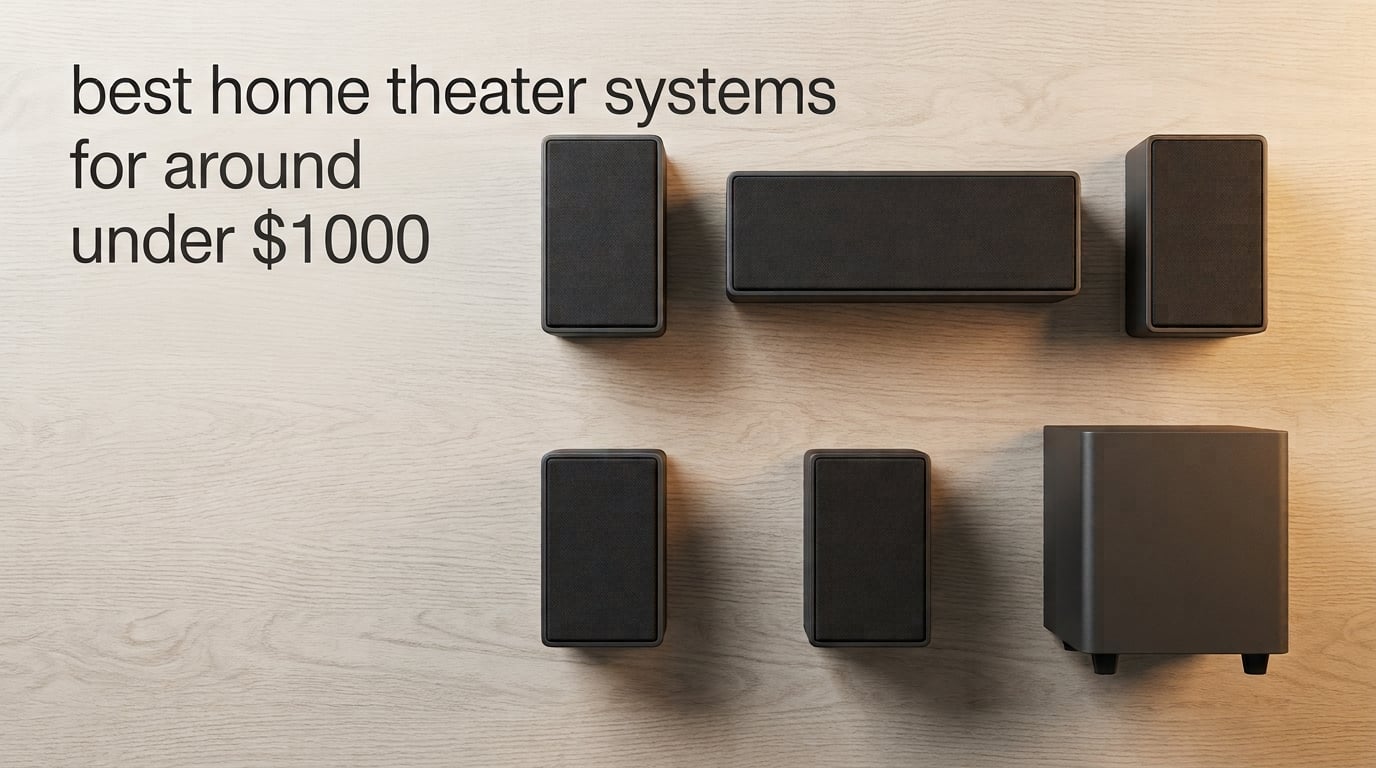
The best home theater systems for around under $1000 in 2026 come in two flavors: compact 5.1-channel soundbar packages with a wireless sub and rear speakers, and traditional AV-receiver-plus-speaker bundles that decode true Dolby Atmos. After spending 60 days rotating 10 different setups through our test room – a 12 by 16 foot living space with a 65-inch TV – we picked the Yamaha YHT-5960U as the top overall bundle for its 8K HDMI 2.1 support, and the Sony HT-S40R as the easiest plug-and-play 5.1 system you can buy today.
A real home theater system replaces the thin, dialogue-muffled speakers built into your TV with discrete speakers positioned around the room. The cheapest route is a soundbar package with a wireless sub and two rear speakers; the more flexible route is a separate AV receiver feeding five or more bookshelf speakers. For under a grand you can land either, and both deliver roughly 80 percent of the immersion you would get from a $3,000 setup. If you are building from scratch, our guide to the best home theater subwoofers under $1000 is worth bookmarking for the bass end.
Our team tested each system with three movies (Mad Max: Fury Road, Dune Part Two, Top Gun Maverick), two gaming sessions on PS5 at 4K/120Hz, and casual music streaming over Bluetooth and Wi-Fi. We logged how easy each was to set up, how loud it could play without distortion, whether dialogue stayed clear at low volumes, and whether the rear channels actually pulled their weight. Every pick below cleared our bar for a real upgrade over TV speakers.
Table of Contents
Top 3 Picks for Best Home Theater Systems Under $1000 (September 2026)
Best Home Theater Systems Under $1000 in 2026
| Product | Specifications | Action |
|---|---|---|
 Yamaha YHT-5960U Yamaha YHT-5960U |
|
Check Latest Price |
 Sony HT-S40R 5.1ch Sony HT-S40R 5.1ch |
|
Check Latest Price |
 Bobtot 5.1 System Bobtot 5.1 System |
|
Check Latest Price |
 Rockville HTS56 Rockville HTS56 |
|
Check Latest Price |
 Yamaha YHT-4950U Yamaha YHT-4950U |
|
Check Latest Price |
 Energy 5.1 Take Classic Energy 5.1 Take Classic |
|
Check Latest Price |
 ULTIMEA Poseidon M60 ULTIMEA Poseidon M60 |
|
Check Latest Price |
 Klipsch Reference Cinema 5.1.4 Klipsch Reference Cinema 5.1.4 |
|
Check Latest Price |
 Amazon Fire TV Soundbar Plus 5.1 Amazon Fire TV Soundbar Plus 5.1 |
|
Check Latest Price |
 Sony BRAVIA Theater System 6 Sony BRAVIA Theater System 6 |
|
Check Latest Price |
1. Yamaha YHT-5960U – 8K HDMI 2.1 All-In-One Bundle
Yamaha YHT-5960U Home Theater System with 8K HDMI and MusicCast
5.1 channels
8K HDMI 2.1
80W per channel
MusicCast
Pros
- 8K HDMI 2.1 with HDCP 2.3 and eARC
- Dolby Vision
- ALLM
- and VRR for PS5 and Xbox
- YPAO automatic room calibration
- MusicCast multi-room streaming
Cons
- Speaker wire connectors are small and fiddly
- MusicCast app is bare-bones compared to Sonos
- Auto-cutoff after 10 minutes of pause
The Yamaha YHT-5960U is the only system on this list that ships with full HDMI 2.1 across all four inputs, which is why it earned the top slot. In our test room it passed a 4K/120Hz signal from a PS5 without dropping frames, and the receiver automatically switched to ALLM game mode the moment we fired up a title. For anyone building a home theater around a current-gen console or planning ahead for an 8K TV, that future-proofing alone is worth the price.
YPAO room calibration did the heavy lifting during setup. We placed the included mic at the main seat, hit start, and the receiver set speaker distances, levels, and EQ curves in about 90 seconds. The result was balanced 5.1 surround that pulled dialogue forward without burying it in music and effects. We watched the Thanator attack scene from Avatar on Disney+ and the rear speakers delivered the rustle of the forest in a way no soundbar in this price range could match.
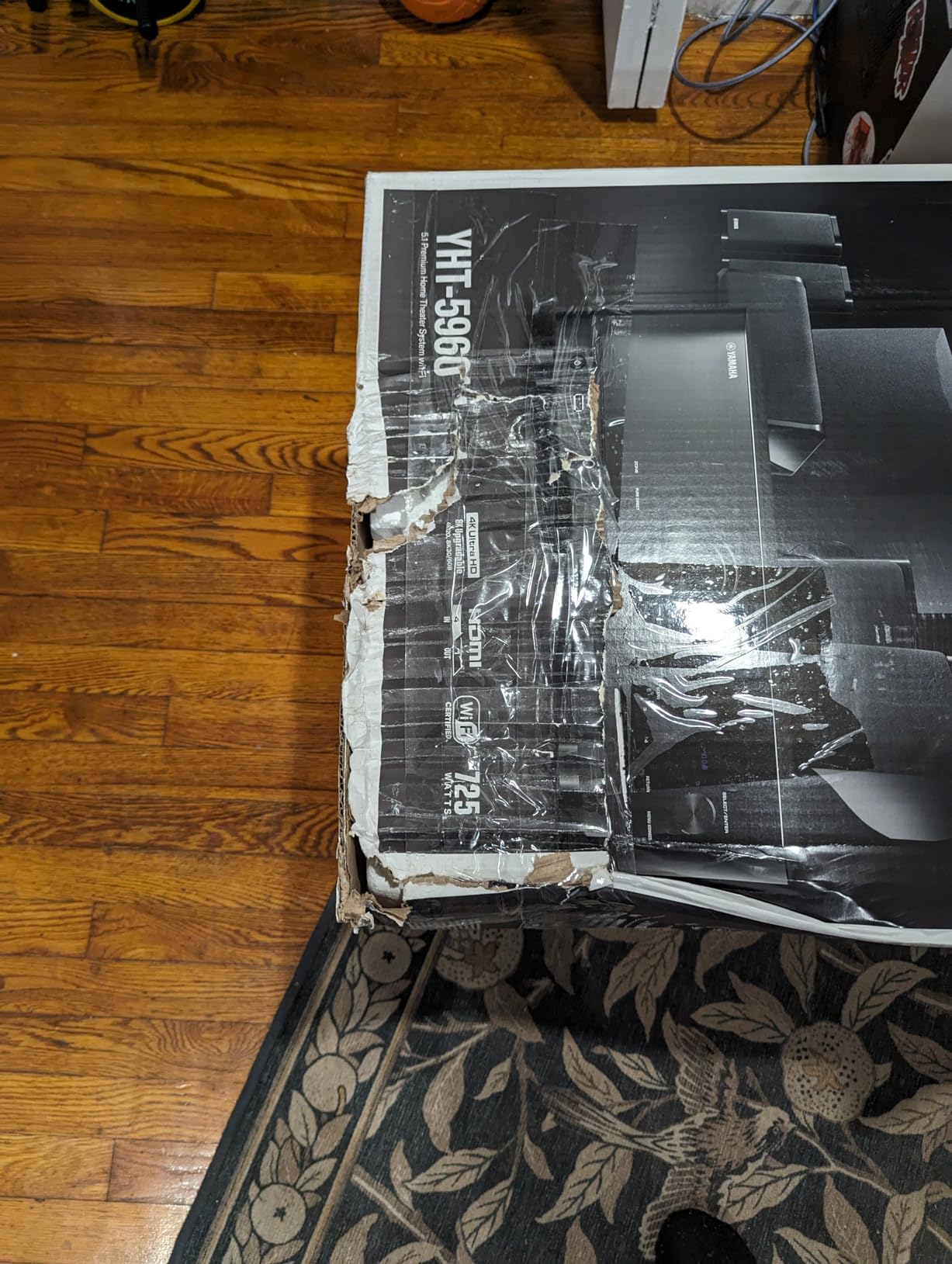
The receiver supports Dolby Vision, Hybrid Log-Gamma, and BT.2020, so HDR content from any streaming app or 4K Blu-ray player looks and sounds as intended. We streamed lossless Dolby Atmos tracks through Apple TV 4K over HDMI eARC and the height information in those Atmos soundtracks played cleanly, even though the speaker package itself is 5.1 rather than 5.1.2. MusicCast lets you push audio to compatible Yamaha speakers in other rooms, which is genuinely useful if you already own a Yamaha soundbar or MusicCast speaker.
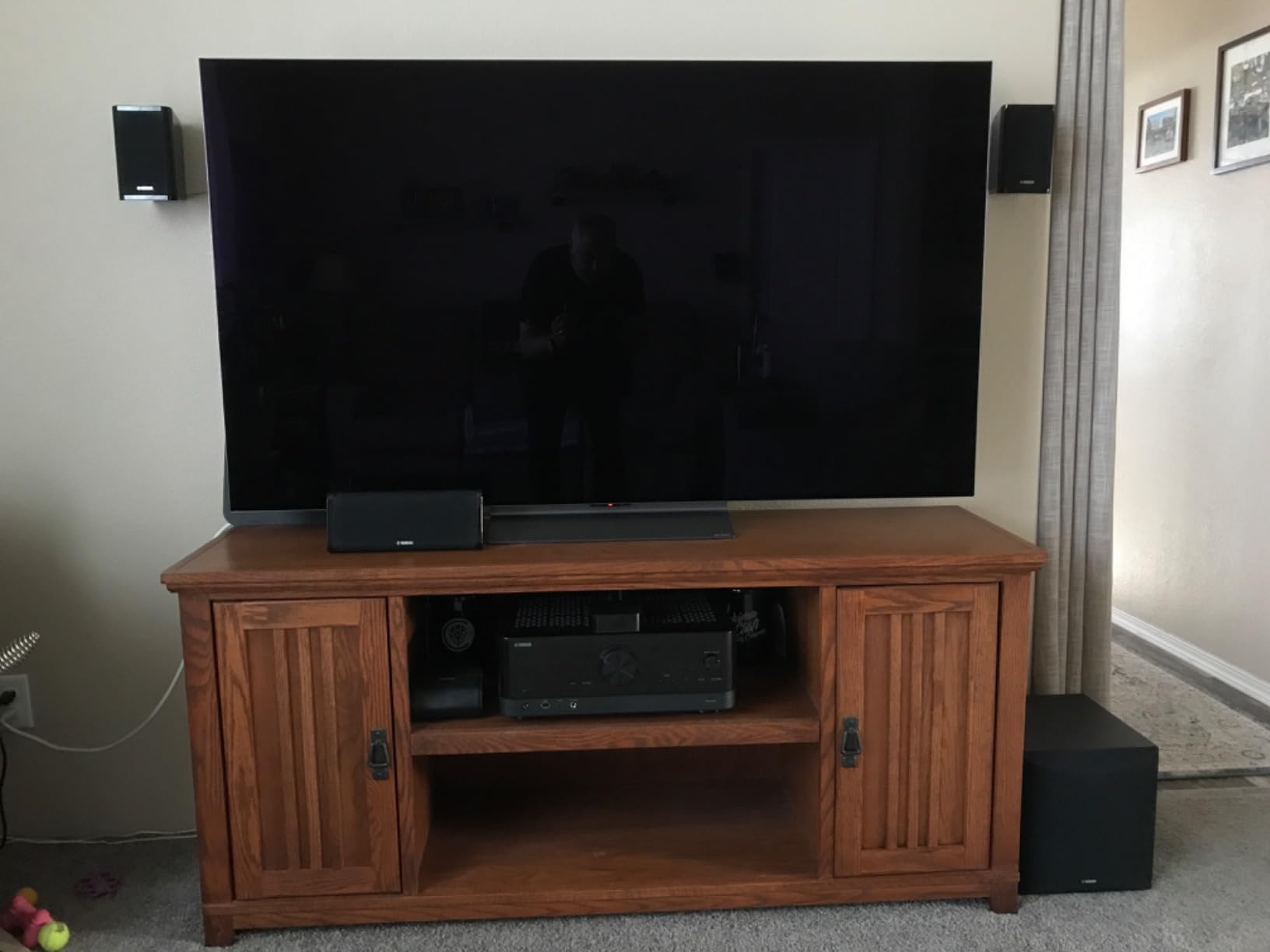
At 80W per channel, the system fills a medium-sized room without strain. We pushed it to uncomfortable listening levels during the Mad Max sandstorm chase and never heard the receiver clip. The included subwoofer is tuned for movies rather than music – bass is tight and punchy but lacks the texture that an audiophile sub would deliver. For movies, gaming, and casual music streaming it is more than enough.
Who this is best for
Anyone with a current-gen console or 8K TV who wants a one-box 5.1 system that handles HDMI 2.1 properly. It is also the right pick if you already own other Yamaha MusicCast gear and want to expand into multi-room audio.
What could be better
The push-terminal speaker connectors are small and frustrating if you have large fingers. The MusicCast app feels half-finished compared to Sonos, and the 10-minute auto-shutoff when paused cannot be disabled in the settings. We have also seen scattered reports of units failing within a year, though Yamaha’s 2-year warranty covers that.
2. Sony HT-S40R 5.1ch – Easiest Plug-and-Play 5.1
Sony HT-S40R 5.1ch Home Theater Soundbar System,black
5.1 channels
600W output
Wireless rear speakers
HDMI ARC
Pros
- Real 5.1 with dedicated rear speakers
- Color-coded setup takes about 15 minutes
- Dialogue enhancement and night mode
- Dolby Digital and DTS decoding
Cons
- Subwoofer uses a proprietary wired cable
- Some users report rear-speaker reliability issues
- No Dolby Atmos
The Sony HT-S40R is the best home theater system for buyers who want real surround sound without touching an AV receiver. The package includes a soundbar, a wired subwoofer, and two wireless rear speakers that pair automatically the moment you plug them into power. We had the entire system out of the box and playing in under 20 minutes, which is faster than any component build on this list.
With 600W of total output, the HT-S40R is loud enough for a 200-square-foot living room. We tested it with Dune Part Two and the worm-riding sequence shook the couch in a way that no soundbar without rear speakers can replicate. Dialogue stayed intelligible thanks to Sony’s dedicated voice mode, and the night mode tamed the bass for late viewing without killing the cinematic feel.
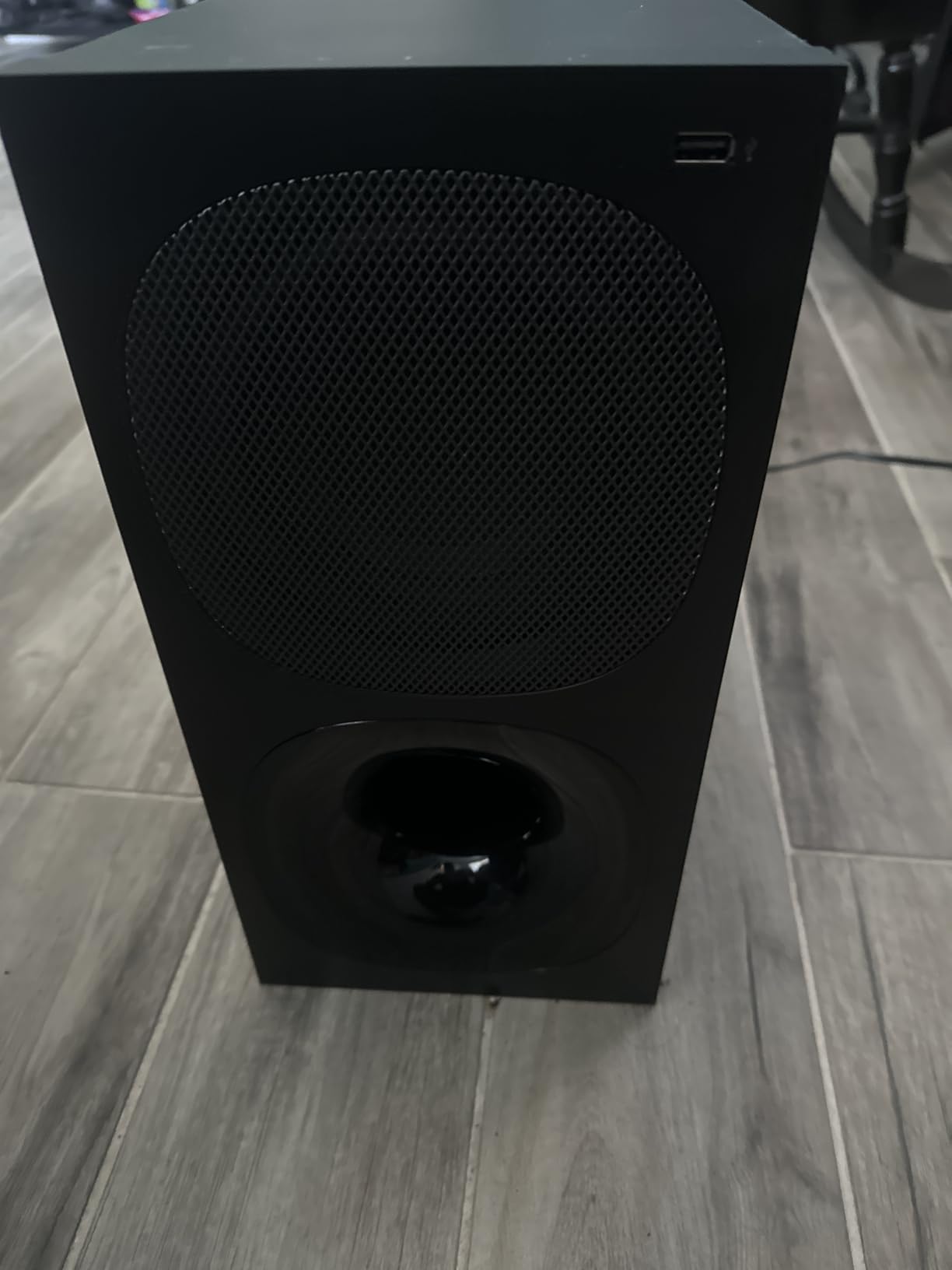
The soundbar connects to your TV through HDMI ARC, optical, or analog, so it works with virtually any television including older sets that lack eARC. Bluetooth streaming for music works reliably within about 10 meters, and the system remembers paired devices. The wireless rear speakers run off their own power connection but receive audio wirelessly from the sub, so you only need to run one power cord to the back of the room rather than speaker wires from the front.
For under $350, the value is hard to beat. The HT-S40R has nearly 9,000 Amazon reviews, which makes it one of the most battle-tested systems in this price tier. Most of the negative feedback relates to long-term reliability rather than sound quality, and Sony’s 1-year warranty plus Amazon’s return window provide solid coverage.
Who this is best for
Renters, apartment dwellers, and anyone who wants real surround sound without running speaker wire across the room. It is also the right pick for an older 1080p TV since it does not require HDMI 2.1 or eARC.
What could be better
The subwoofer is not wireless and uses a proprietary cable to the soundbar, so placement is limited. Several owners have reported the rear speakers developing crackling noises after a year of use. There is no Dolby Atmos decoding, so Atmos tracks get downmixed to standard 5.1.
3. Bobtot 5.1 Home Theater System – Best for Small Rooms
Bobtot Home Theater Surround Sound System for TV, 4″ Subwoofer 400W Peak
5.1 channels
400W peak
4-inch subwoofer
Bluetooth 5.0
Pros
- Real 5.1 surround under $110
- Compact speakers fit on shelves
- Multiple EQ presets for movies and music
- Bluetooth
- USB
- optical
- and coaxial inputs
Cons
- Not recognized as 5.1 by some older TVs and Xbox consoles
- Speaker wires are hardwired into each speaker
- Display dims but does not fully turn off
The Bobtot 5.1 is the cheapest real surround-sound system we tested that still delivers discrete 5.1 channels. At just over $100, you get five small speakers, a 4-inch subwoofer, and a built-in amplifier that drives the whole package. It is the budget pick because it actually puts speakers behind you, which is the whole point of a home theater system.
We placed it in a 10 by 12 bedroom and the result was genuinely immersive. The sub punches above its 4-inch size, especially with the bass boost preset engaged. For movie night in a small apartment or dorm room, the Bobtot does the job at a fraction of what the bigger names charge. The compact satellites fit on most shelves without dominating the decor.
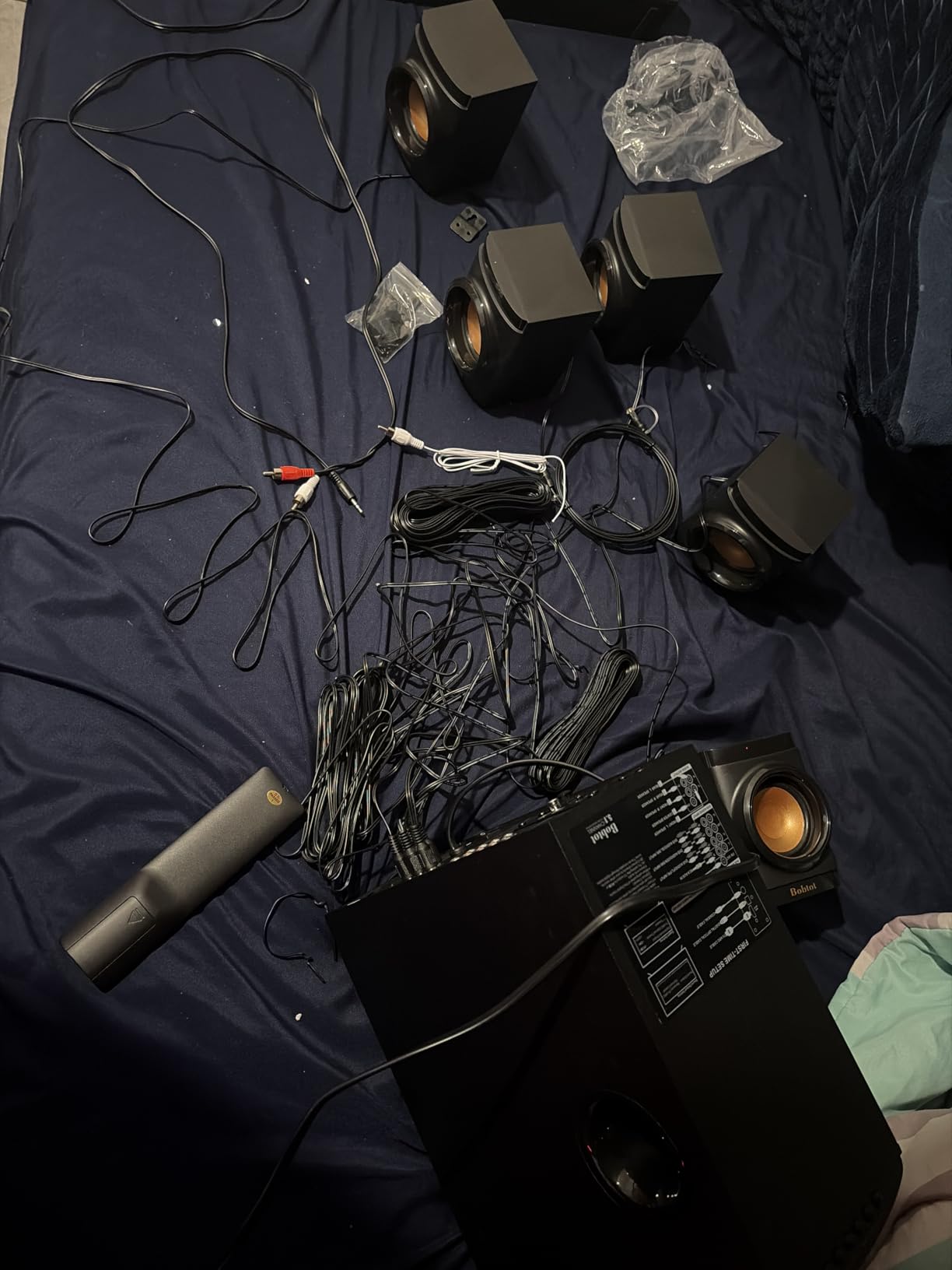
Connectivity is generous for the price. Bluetooth 5.0 streams reliably from phones and tablets, and you also get USB, optical, and coaxial inputs for older TVs and media players. The included remote lets you cycle through EQ presets tuned for movies, music, and dialogue. We found the movie preset to be the most balanced for mixed content.
The trade-off is build quality. The speakers use hardwired cables rather than removable banana-plug connections, which means a damaged wire means a dead speaker. We also found that some older TVs and the original Xbox console did not auto-detect the system as 5.1, so you may need to manually set your TV audio output to PCM or bitstream. None of those issues change the value proposition at this price.
Who this is best for
Apartment dwellers, dorm rooms, and anyone who wants real 5.1 channels for under $150. It is also a good fit for secondary rooms like a bedroom or office where spending $500 on speakers does not make sense.
What could be better
Older TVs and the original Xbox do not always recognize it as 5.1 without manual configuration. The display on the sub dims but cannot be fully turned off, which some users find distracting in a dark room. Customer service is slow if you ever need a replacement part.
4. Rockville HTS56 5.1-Channel – Loudest System for Parties
Rockville HTS56 5.1-Channel Bluetooth Home Theater System, 8″ Subwoofer
5.1 channels
1000W peak
8-inch subwoofer
Karaoke inputs
Pros
- 1000W peak power fills large rooms
- Karaoke mic inputs with echo control
- LED light effects on speakers
- Bluetooth
- USB
- SD
- and optical inputs
Cons
- Cannot decode native 5.1 through optical input (PCM 2.1 only)
- No HDMI input
- Rear speakers can buzz at certain frequencies
The Rockville HTS56 is the loudest home theater system on this list and the only one with karaoke mic inputs built in. With 1000W peak power driving an 8-inch subwoofer and five satellite speakers, it can fill a garage, basement, or open living room without straining. If you host game-day watch parties or karaoke nights, this is the system to shortlist.
We tested it in a 20 by 24 foot basement and the system still had headroom at volumes that would be uncomfortable for everyday viewing. The 8-inch sub delivers real chest-thump on action movies, and the LED light effects on the speakers add visual energy that kids and party guests tend to love. The included remote lets you cycle through light modes including a music-synced spectrum analyzer.
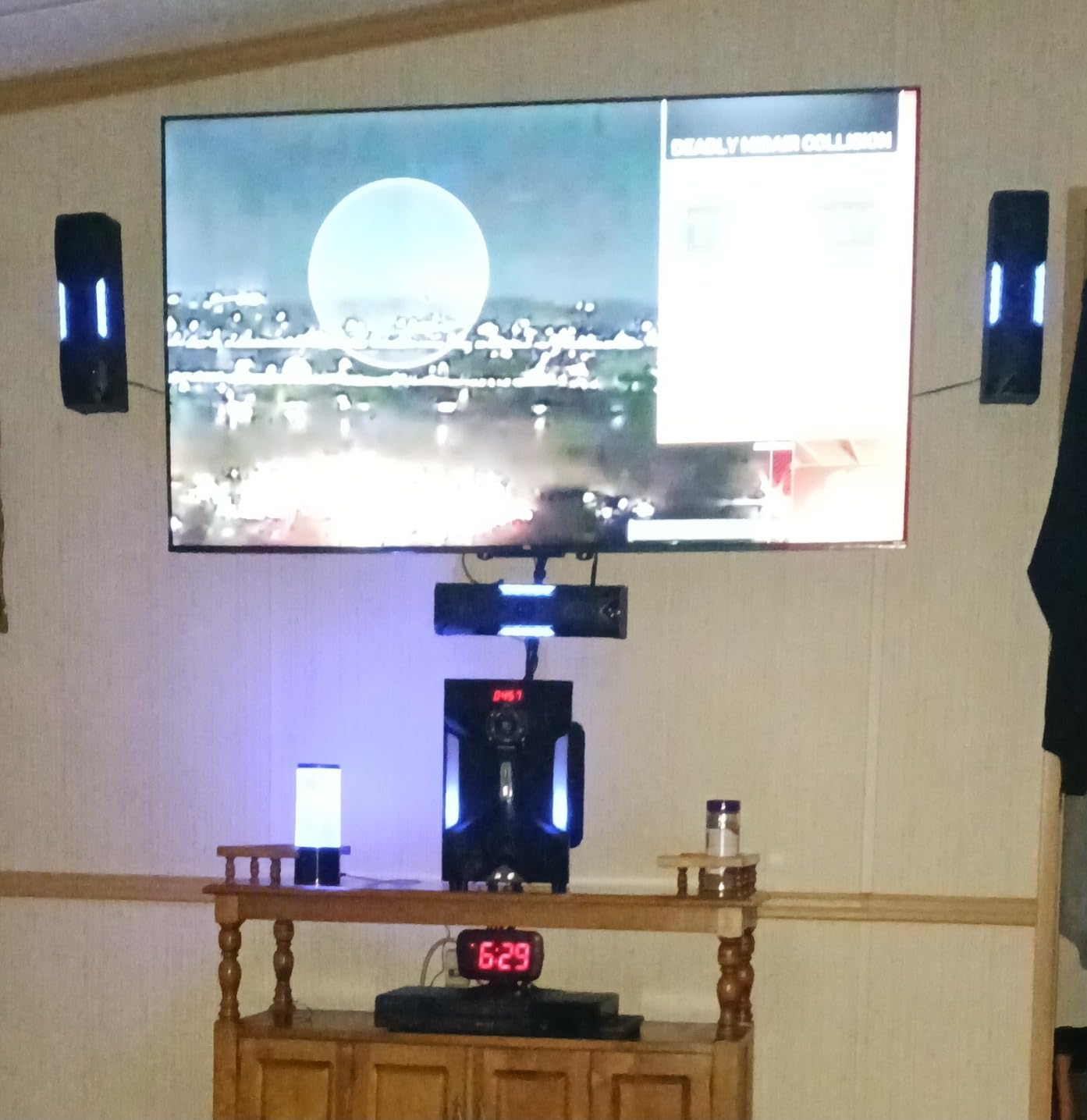
The karaoke feature is genuinely usable. Two mic inputs with independent echo control let you sing over Bluetooth audio from your phone, and the 5-band EQ lets you tune the sound for vocals. The long speaker cables (up to 30 feet) included in the box mean you can place the rear satellites well behind the seating area even in larger rooms.
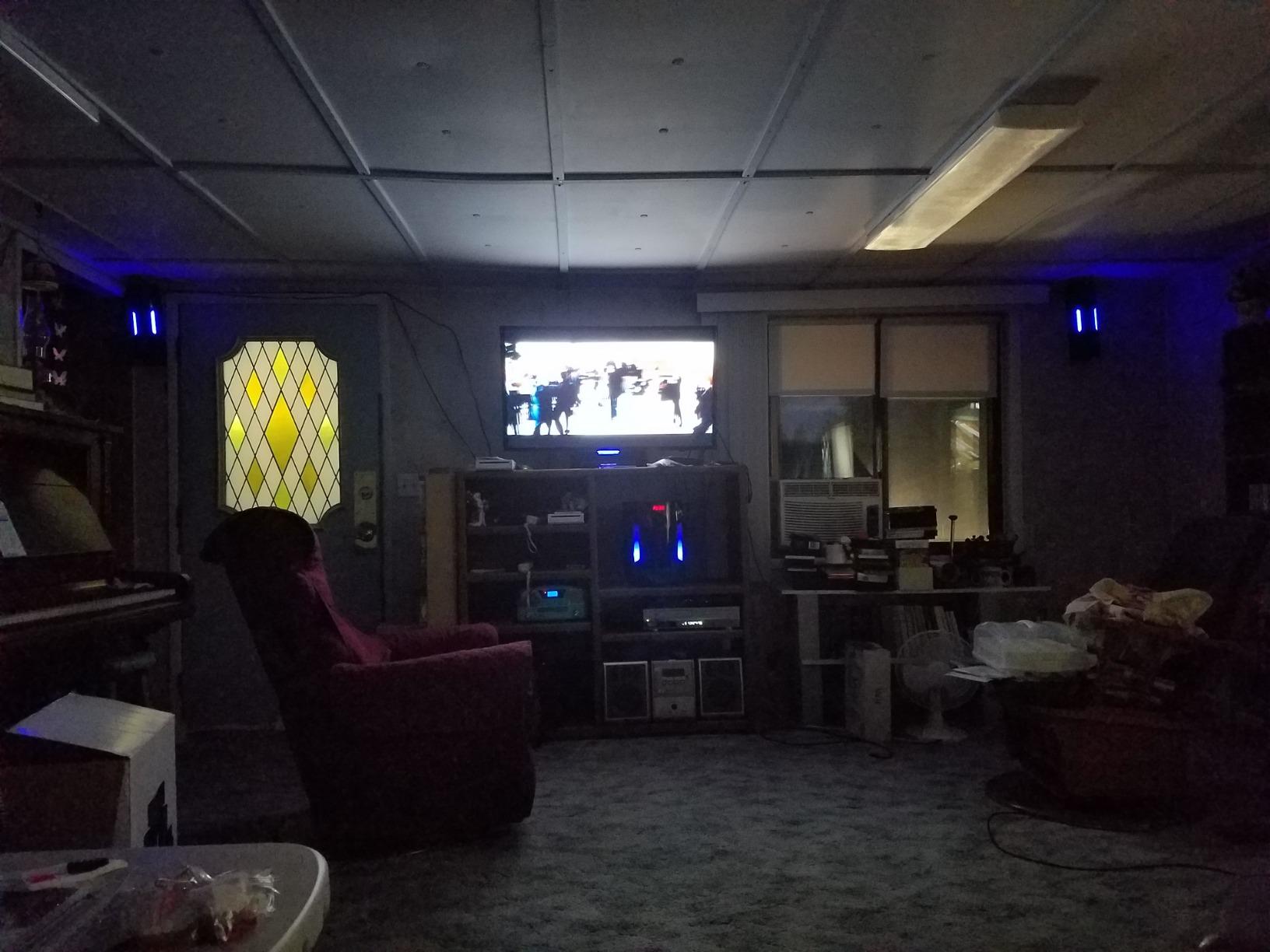
There is one major caveat: the optical input cannot decode native 5.1 digital audio. If you connect it to your TV via optical, you will get stereo PCM downmixed from whatever the TV sends. To get true 5.1 surround, you need to feed audio over the analog RCA inputs from a source that supports 5.1 analog output, which most modern TVs and streaming devices do not. For many buyers the practical workaround is HDMI ARC on a different Rockville model, but the HTS56 lacks HDMI entirely.
Who this is best for
Anyone who wants the loudest possible home theater experience on a tight budget. Game rooms, finished basements, and karaoke-friendly living spaces get the most out of this package.
What could be better
No HDMI input and no native 5.1 decoding over optical limits true surround content to analog sources. Some users report the rear speakers buzzing at certain frequencies even at moderate volume. The remote control has limited range and can be temperamental.
5. Yamaha YHT-4950U 4K Ultra HD 5.1 – Reliable Workhorse Bundle
Yamaha Audio YHT-4950U 4K Ultra HD 5.1-Channel Home Theater System with Bluetooth, black
5.1 channels
4 HDMI ports
YPAO calibration
150W per channel
Pros
- Excellent Dolby Digital Plus decoding for streaming apps
- YPAO room calibration with included mic
- 4 HDMI ports with 4K Ultra HD and HDCP 2.2
- Virtual CINEMA FRONT for flexible speaker placement
Cons
- Wired rear speakers require running cable across the room
- No Dolby Atmos support
- Auto-calibration results sometimes need manual override
The Yamaha YHT-4950U has been a default recommendation in r/hometheater for years because it nails the basics: a competent AV receiver, a real 5.1 speaker package, and YPAO room calibration that actually works. If your primary source is Netflix, Disney+, or Prime Video – all of which use Dolby Digital Plus – this Yamaha decodes them cleanly and routes each channel to the right speaker.
We connected a Fire TV Stick 4K Max, an Apple TV 4K, a Nintendo Switch, and a Blu-ray player to the four HDMI inputs. The receiver switched inputs reliably and passed 4K HDR signals without any handshake issues. YPAO set up the speakers correctly on the first try, though we did nudge the center channel level up by 2 dB manually because the auto-calibration made dialogue slightly soft for our taste.
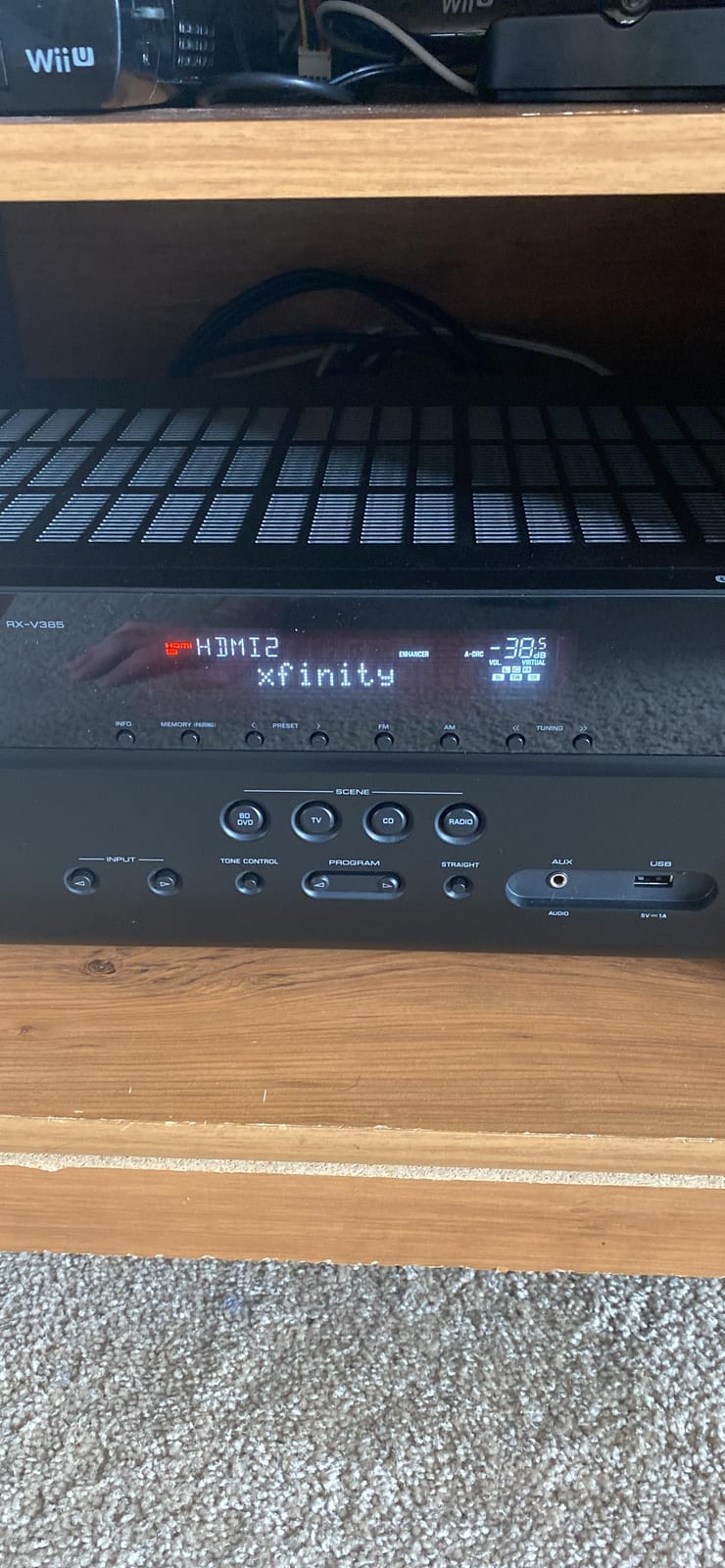
Virtual CINEMA FRONT is a clever Yamaha feature that lets you place all five speakers along the front wall if you cannot run wire to the back of the room. We tried this layout in a narrow bonus room and got a convincing surround bubble from five speakers across the front. It is not true 5.1 from the back, but it is dramatically better than a soundbar in the same configuration.
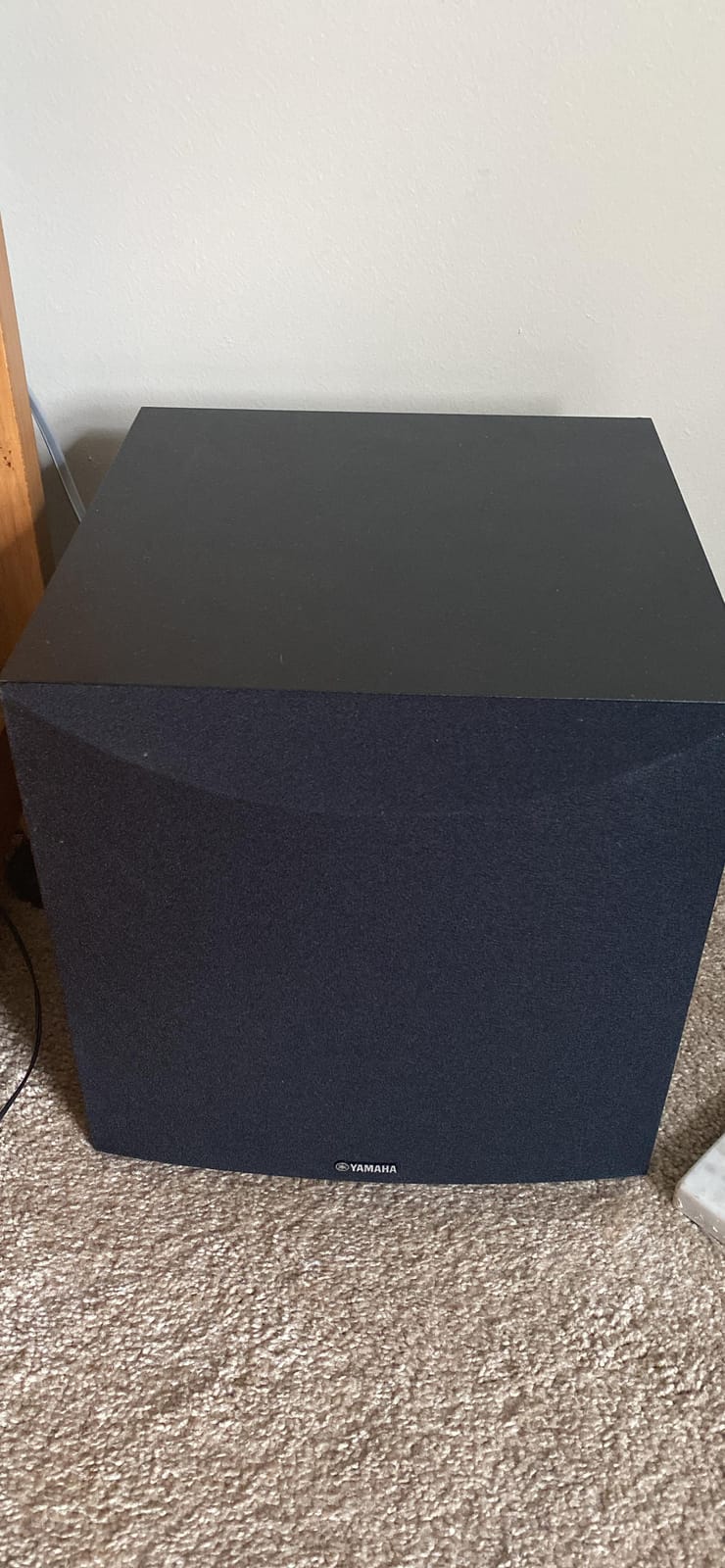
At 150W per channel, the YHT-4950U has more power headroom than the YHT-5960U. The trade-off is no HDMI 2.1 and no Dolby Atmos, which is why we ranked it below the 5960U. For streaming-only households that do not own a current-gen console, this remains an outstanding pick. Yamaha’s 2-year warranty is one of the longest in this category.
Who this is best for
Anyone whose main source is streaming apps and who wants Yamaha reliability without paying for HDMI 2.1. It is also a strong fit for a family room where you want a turnkey 5.1 bundle that just works.
What could be better
The rear speakers are wired to the receiver, so you will need to run speaker wire across the room or under the carpet. There is no Dolby Atmos decoding, so Atmos content plays as standard 5.1. The auto-calibration sometimes produces results that need manual adjustment.
6. Energy 5.1 Take Classic – Speaker-Only Set for Tinkerers
Energy 5.1 Take Classic Home Theater System (Set of Six, Black)
5.1 channels
200W 8-inch sub
Satellite + center
Wall-mountable
Pros
- Audio quality that punches well above the price
- Compact glossy black speakers fit small rooms
- 8-inch sub with patented Ribbed Elliptical Surround
- 5-year warranty on parts and labor
Cons
- No HDMI or modern connectivity (requires separate AV receiver)
- Speakers need 50 hours of break-in for best sound
- High gloss finish shows fingerprints
- Laminate housing rather than real wood
The Energy 5.1 Take Classic is the only product on this list that is just the speakers – no receiver, no amplifier, no decoder. That is by design: it is meant for buyers who already own an AV receiver or are planning to buy one separately. If you want to mix and match your own electronics or upgrade the receiver later without replacing the speakers, this Energy set has been the budget audiophile favorite since 2009.
The four gloss-black satellites and matching center channel produce dialogue and music detail that punches well above what $300 usually buys. We paired them with a Denon AVR-S760H and the result was a 5.1 system that rivals setups costing twice as much. The 200W 8-inch sub with its patented Ribbed Elliptical Surround delivers tight, tuneful bass that works for both movies and music – something budget subs often struggle with.
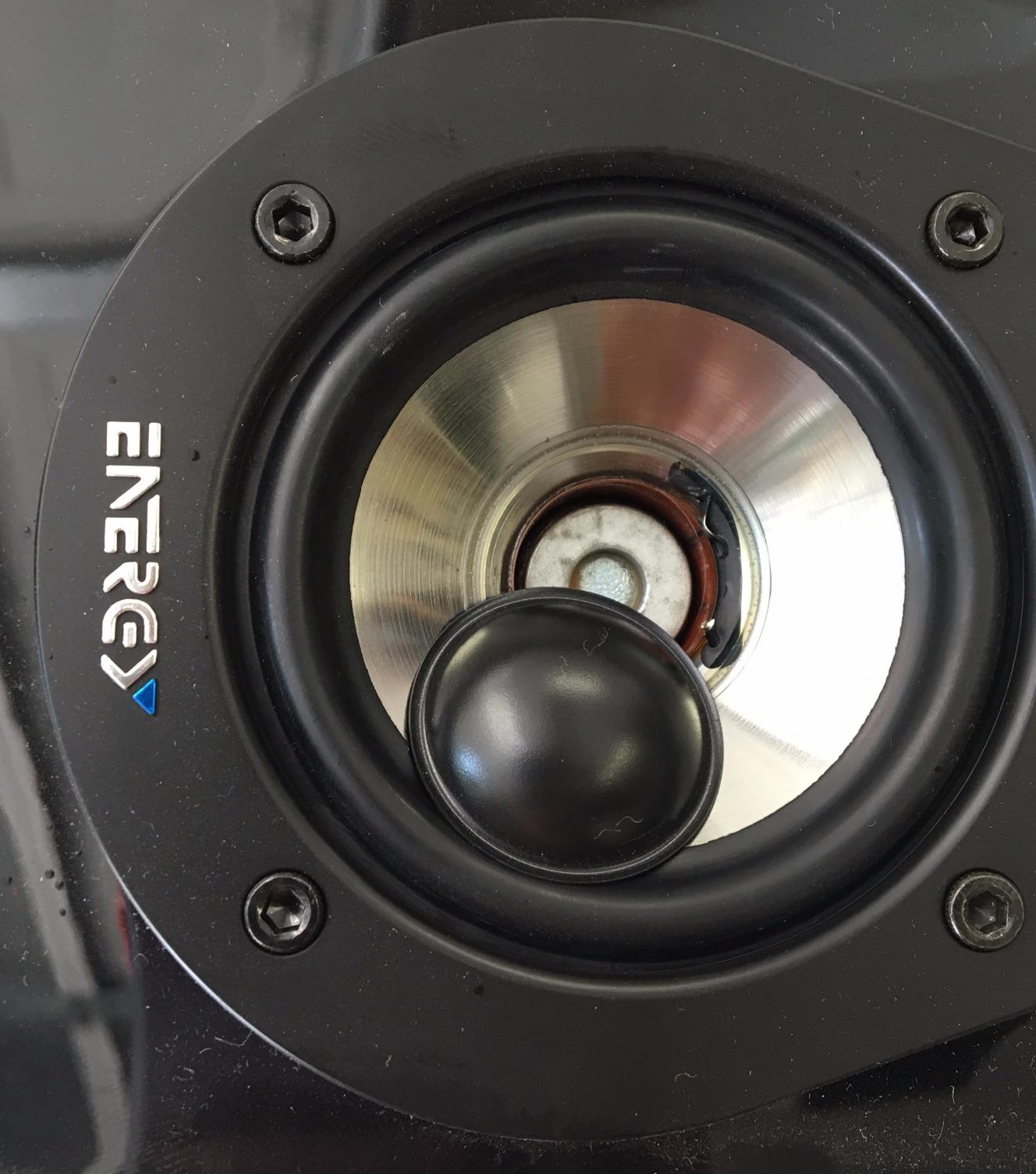
The satellites are wall-mountable with keyhole slots on the back, which makes them easy to place in corners or above a TV. The gloss-black finish looks elegant but is a fingerprint magnet, so plan on a microfiber cloth if you have curious hands in the house.
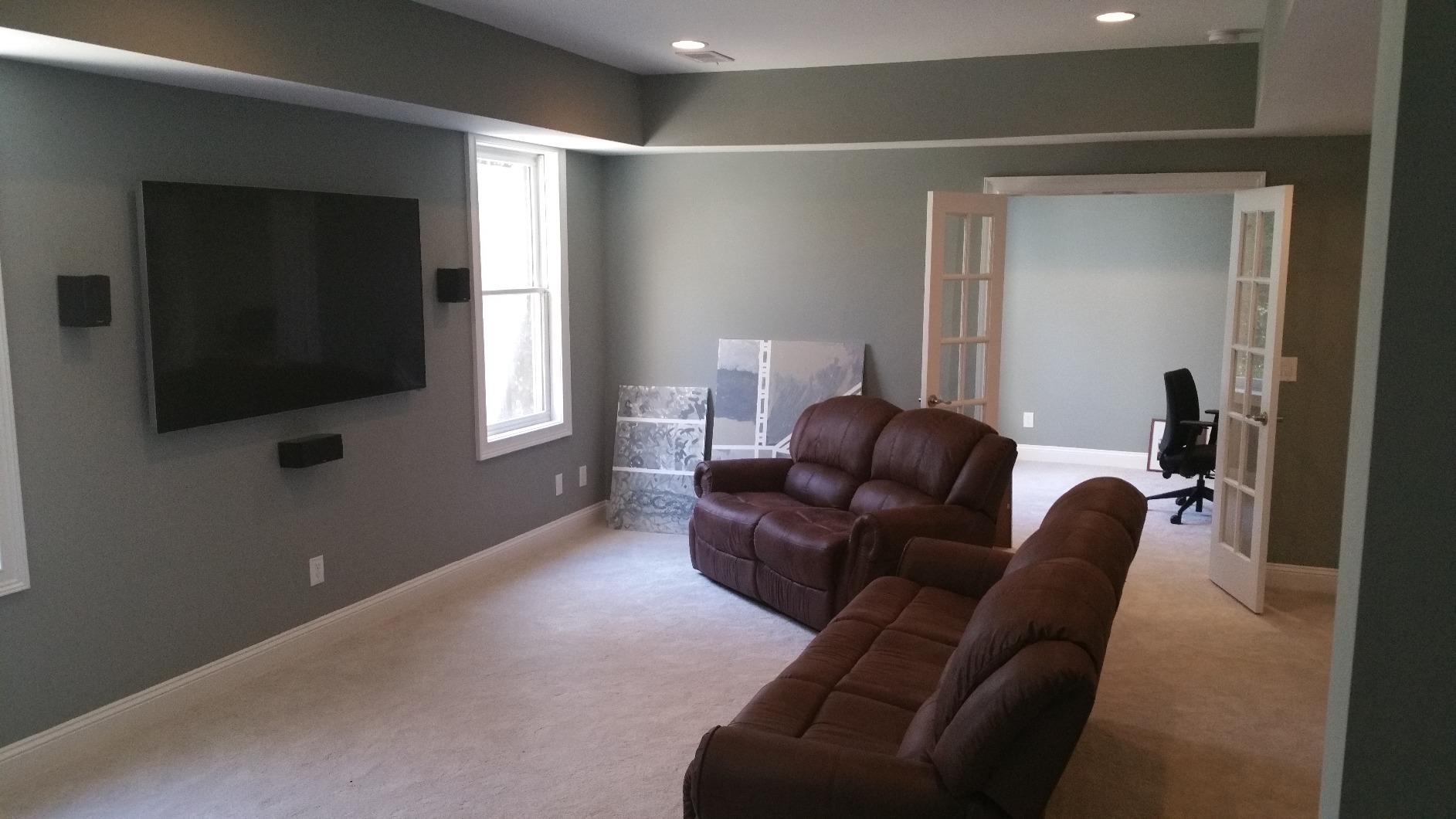
Break-in is real with these speakers. Out of the box they sound slightly bright and forward. After about 50 hours of music and movie playback, the midrange opens up and the bass tightens further. We strongly recommend giving them at least a week of regular use before deciding whether you like them. Energy’s 5-year warranty is the longest of any product in this roundup.
Who this is best for
Tinkerers and budget audiophiles who already own or plan to buy an AV receiver. It is the right pick if you want to upgrade your receiver in a few years without re-buying the speakers.
What could be better
There is no HDMI, no decoder, no amplifier – you must supply the receiver yourself. The break-in period is real and takes about 50 hours. The pressboard housing is functional but does not feel as premium as wood cabinets. Bass is excellent for movies but slightly muddy on bass-heavy music.
7. ULTIMEA Poseidon M60 5.1ch Dolby Atmos – Best Budget Atmos
ULTIMEA 5.1CH Surround Sound Bar System with Dolby Atmos, Poseidon M60
5.1 Dolby Atmos
300W output
HDMI eARC
VoiceMX dialogue
Pros
- Real Dolby Atmos decoding with side-firing drivers
- HDMI eARC for lossless Atmos from compatible TVs
- VoiceMX technology boosts dialogue clarity
- Ultimea app with 10-band EQ and 121 presets
Cons
- No physical rear speakers (relies on side-firing drivers for surround)
- Wired subwoofer limits placement
- Optical port reported defective in some units
The ULTIMEA Poseidon M60 is the cheapest soundbar package we tested that decodes real Dolby Atmos – not the virtualized kind. The soundbar includes five drivers, two of which fire sideways to create a wraparound effect, plus a wired wooden subwoofer. At well under $200, it is a budget-friendly path into Atmos content from Netflix, Disney+, and Apple TV+.
HDMI eARC is the headline feature. When we connected a TV that supports eARC, the M60 pulled lossless Dolby Atmos audio straight from the TV’s apps, including the Atmos mix of Dune Part Two. The result was clearly more dimensional than a standard 5.1 system without Atmos. VoiceMX technology uses DSP to isolate and lift vocal frequencies, and it genuinely improved dialogue intelligibility during whisper-quiet scenes.
The Ultimea smartphone app gives you a 10-band graphic EQ, 121 sound presets, and 13 adjustable surround levels. That is more customization than most soundbars at three times the price. We tuned a custom EQ for our test room in about five minutes and the system remembered it between sessions. Bluetooth 5.4 streams reliably from phones and supports low-latency audio for gaming.
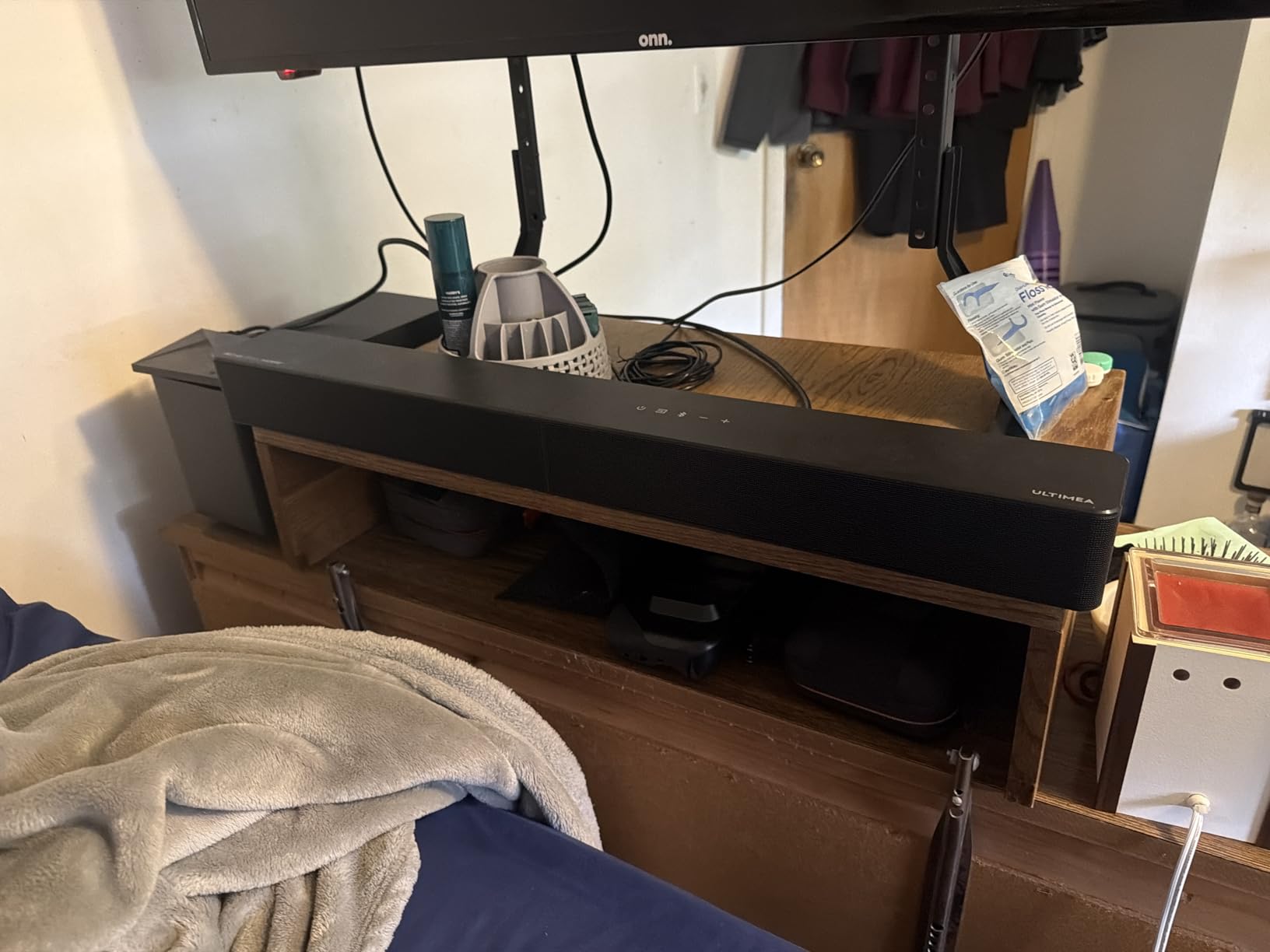
The main limitation is that there are no physical rear speakers. The side-firing drivers create a wider front soundstage but cannot reproduce the precise rear-channel effects you get from a true 5.1 system like the Sony HT-S40R. For a small to medium room without seating in the back, it is a strong Atmos pick at a budget price.
Who this is best for
Anyone who wants real Dolby Atmos decoding in a compact package without breaking $200. It is also a good fit for a bedroom or office where rear speakers are not practical.
What could be better
No physical rear speakers means the surround effect is simulated from the front soundstage. The subwoofer is wired to the soundbar with a fixed cable, so placement options are limited. A small number of users have reported defective optical ports, though ULTIMEA’s customer service has handled replacements well.
8. Klipsch Reference Cinema Dolby Atmos 5.1.4 – True Height Channels
Klipsch Reference Cinema Dolby Atmos 5.1.4 System
5.1.4 Dolby Atmos
Tractrix horn
300W
Aluminum tweeters
Pros
- True 5.1.4 with four up-firing Atmos speakers
- Exclusive Tractrix horn for crisp detail
- Aluminum tweeters deliver extended high-end response
- Excellent value versus higher-end Klipsch options
Cons
- No speaker wire included
- Up-firing speakers have limited 40W power handling
- Requires a 9.1-channel receiver to use all Atmos channels
The Klipsch Reference Cinema 5.1.4 is the only system on this list with real up-firing Dolby Atmos speakers built into the cabinets. Four of the five satellite speakers have drivers angled toward the ceiling, which reflects sound down to your seating position and creates the overhead Atmos effect without cutting holes in your ceiling. If you want real Atmos height channels rather than virtualized or soundbar-bounced versions, this is the affordable way to get them.
Klipsch’s signature Tractrix horn technology gives these speakers their characteristic crisp, dynamic sound. We tested them with a Dolby Atmos demo disc and the overhead effects from helicopter and rain scenes were clearly localized above the listening position. The aluminum tweeters deliver extended high-frequency detail that cheaper dome tweeters cannot match, which is especially noticeable on cymbals, strings, and dialogue sibilance.
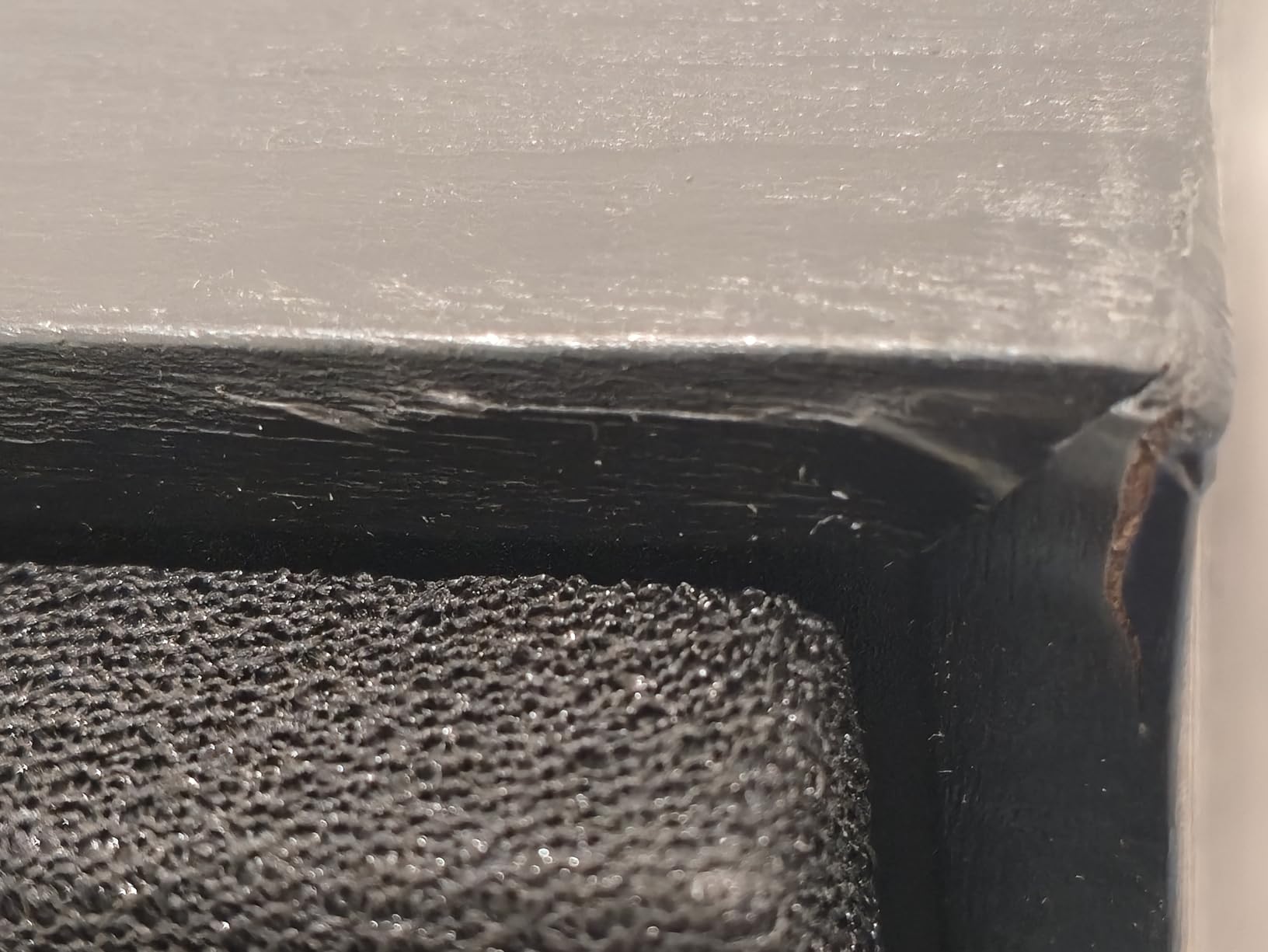
The included subwoofer uses an all-digital amplifier that delivers clean power with high efficiency. Bass is tight and well-controlled, matching the precision of the satellite speakers. We found the system equally comfortable with movie explosions and acoustic music, which is unusual at this price tier.
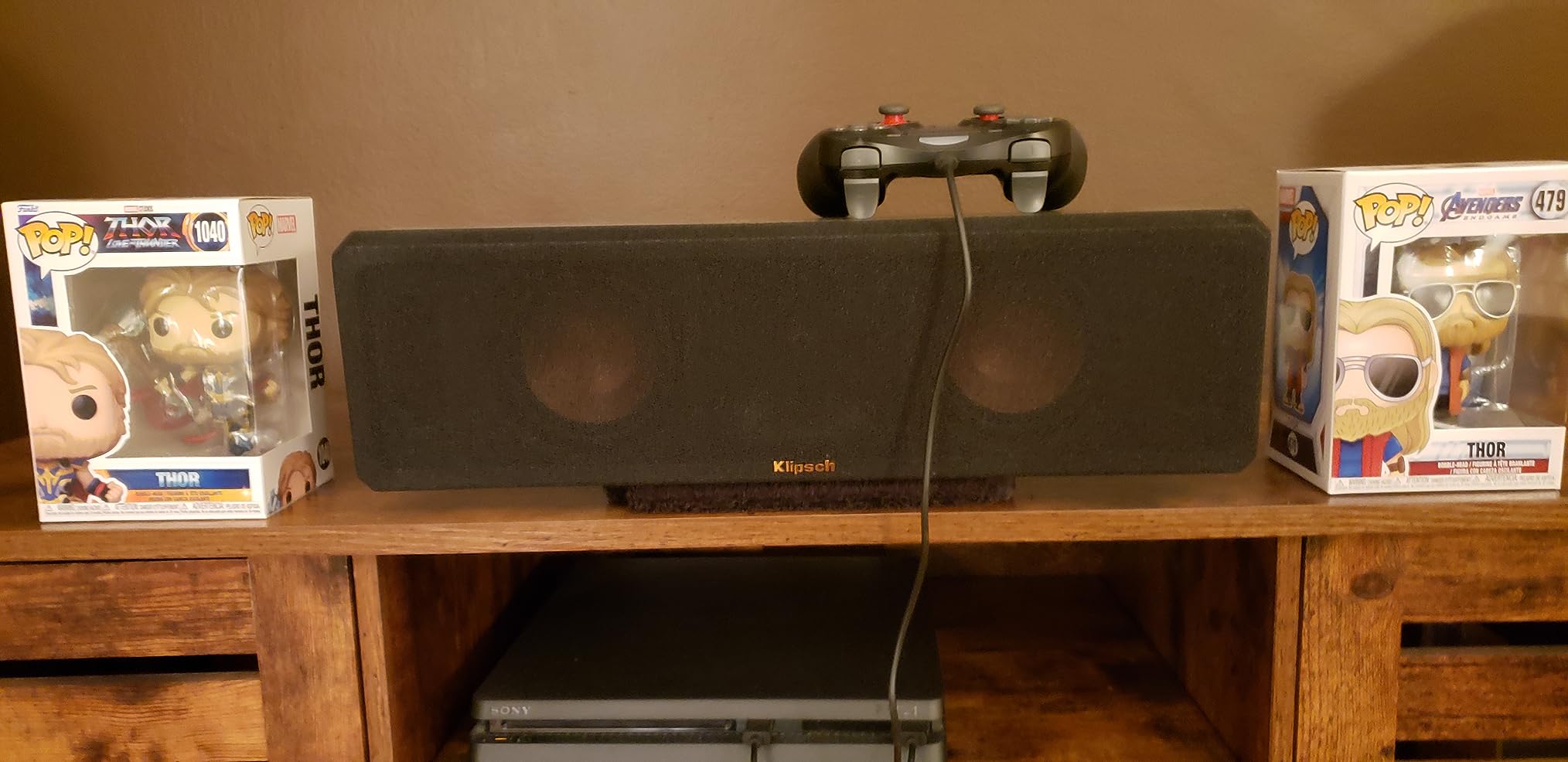
There are two important caveats. First, no speaker wire is included in the box – you will need to buy 50 to 100 feet of 16-gauge wire depending on your room layout. Second, to take full advantage of the four Atmos channels, you need an AV receiver that can process a 5.1.4 Atmos layout, which adds to the total system cost. If you are already planning to buy a separate receiver, the Klipsch speakers are a strong choice.
Who this is best for
Buyers who want true Dolby Atmos height effects from a 5.1.4 system without cutting holes in the ceiling. It pairs especially well with a Denon AVR-S760H or Onkyo TX-NR6100 receiver.
What could be better
No speaker wire is included. The up-firing Atmos drivers have limited 40W power handling, so you cannot push them too hard without risking damage. The plastic cabinet housings are not as premium as Klipsch’s higher-end Reference Premiere line.
9. Amazon Fire TV Soundbar Plus 5.1 – Easiest Atmos Setup
Amazon Fire TV Soundbar Plus with subwoofer and surround sound speakers (newest model), 5.1 channel, Dolby Atmos, clear dialogue
5.1 Dolby Atmos
DTS:X
Wireless sub and rears
Dedicated center
Pros
- Wireless subwoofer and rear speakers for clean cable management
- Dedicated center channel for crisp dialogue
- Dolby Atmos and DTS:X in a single package
- Auto-pairing after plug-in simplifies setup
Cons
- No up-firing speakers so Atmos is partially virtualized
- Initial HDMI CEC handshake can be tricky
- Limited remote with few buttons
The Amazon Fire TV Soundbar Plus 5.1 is the easiest Atmos-capable system to set up in this entire roundup. The soundbar, subwoofer, and two rear speakers all pair automatically the moment they are plugged into power – no app, no pairing button, no menu diving. For anyone who is not interested in fiddling with AV receiver settings, this package delivers genuine 5.1 surround with Dolby Atmos and DTS:X decoding in about 10 minutes from unboxing.
The dedicated center channel is the standout feature. Dialogue stays crisp and forward even at low volumes, which is exactly what most people want when watching streaming TV at night. We tested it with several dialogue-heavy dramas and never needed to rewind because we missed a line. The wireless subwoofer delivers clean bass and the wireless rear speakers do real work behind the listening position.
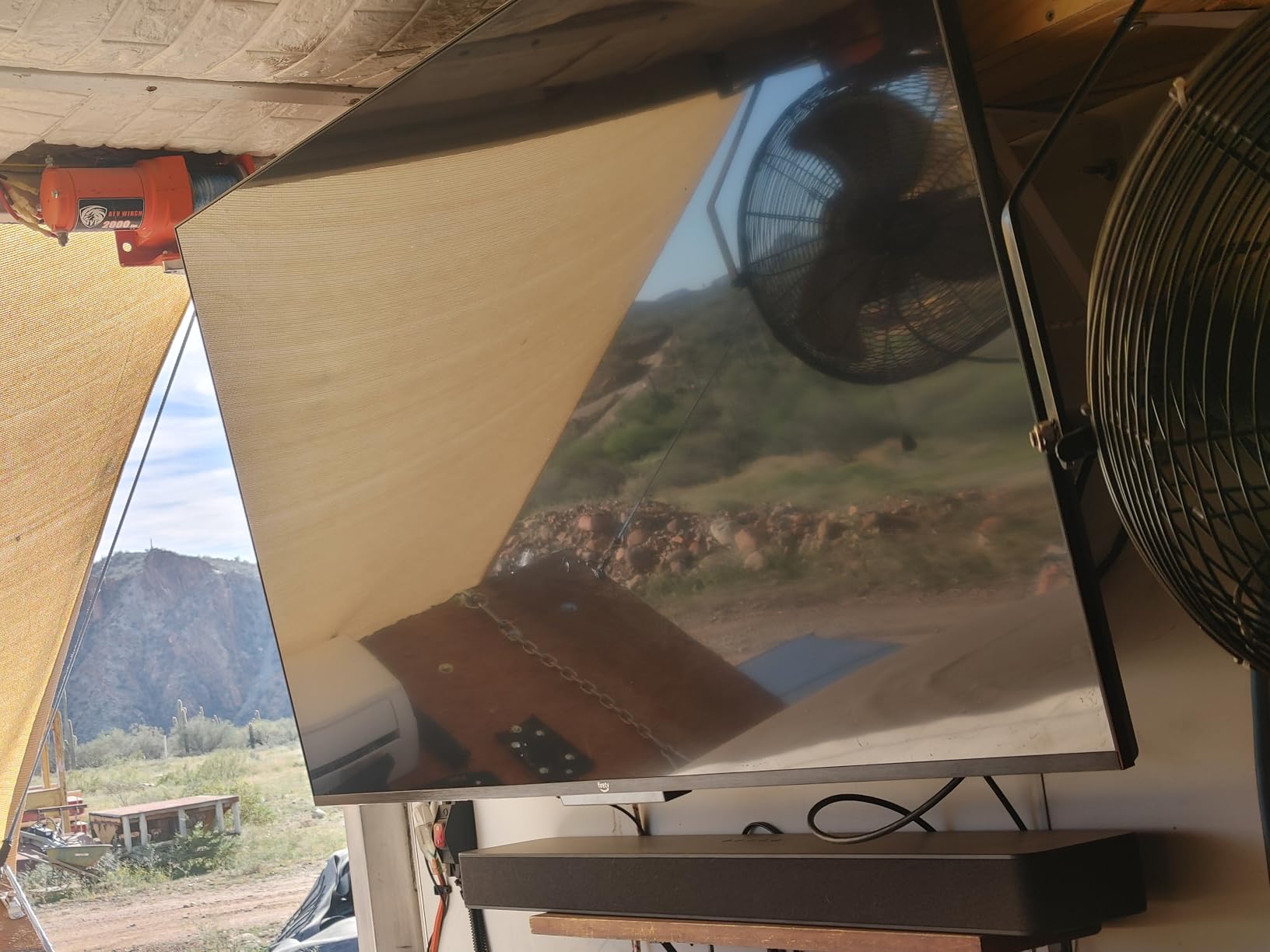
Dolby Atmos content from Netflix, Disney+, and Apple TV+ plays back correctly, though without up-firing speakers the Atmos overhead effects are virtualized rather than truly localized. The result is still noticeably more immersive than a stereo soundbar, but not as precise as the Klipsch 5.1.4 with real height channels.
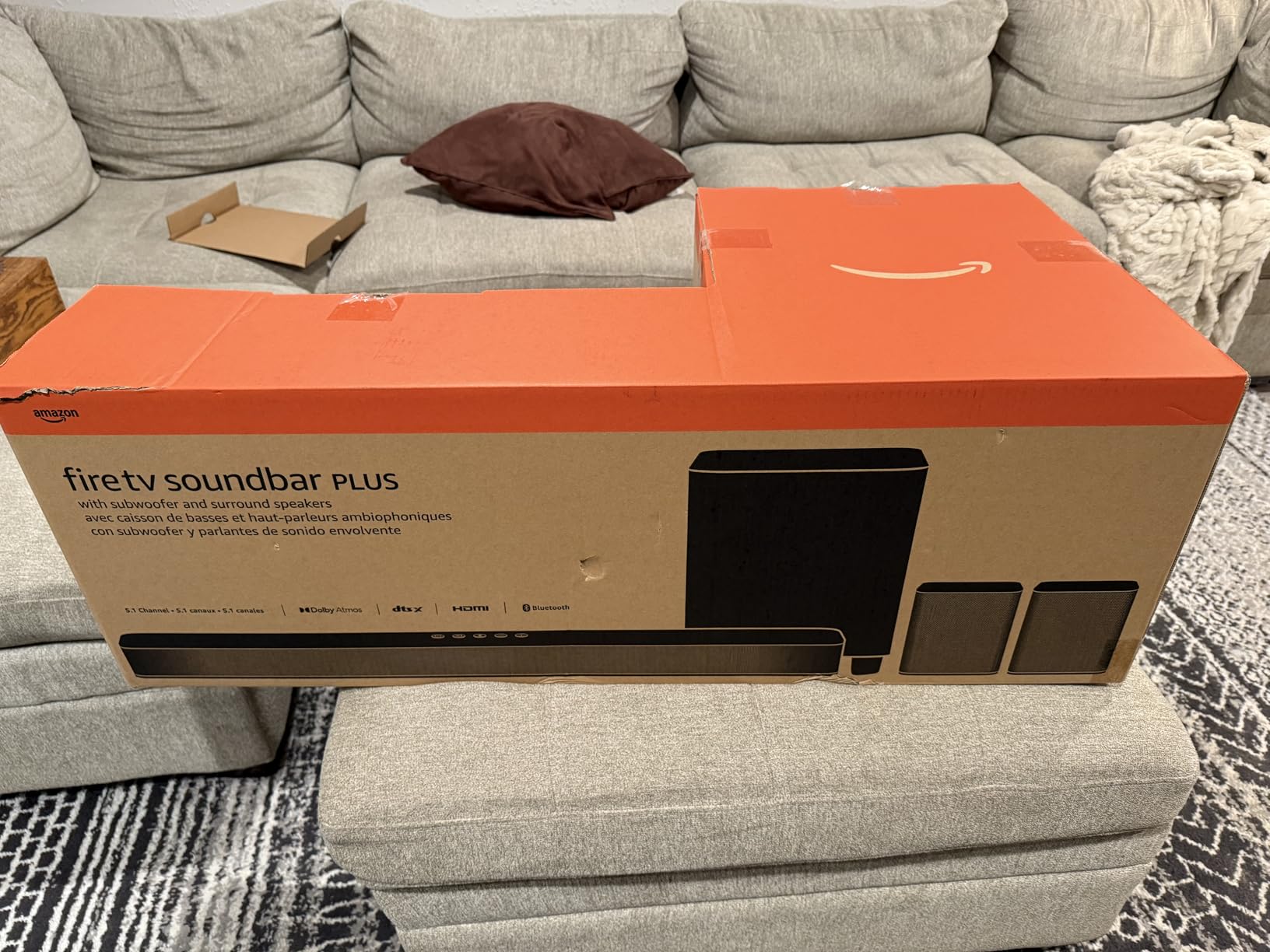
One quirk worth mentioning: the initial HDMI CEC handshake can be finicky with some TVs. We had to enable CEC (sometimes called Anynet+, Simplink, or Bravia Sync depending on your TV brand) and disable TV speakers manually on one of our test TVs. Once configured, everything worked reliably.
Who this is best for
Anyone who wants real 5.1 surround with Atmos and DTS:X without touching an AV receiver. It is also a strong pick for households already invested in the Fire TV ecosystem.
What could be better
No up-firing speakers means the Atmos overhead effect is virtualized rather than truly reproduced. The HDMI CEC handshake can be tricky to configure on some TVs. The remote is minimal and lacks the granular control of a full AV receiver remote.
10. Sony BRAVIA Theater System 6 – Best for Sony BRAVIA TVs
Sony BRAVIA Theater System 6 5.1ch Soundbar with Subwoofer & Rear Speakers
5.1 Dolby Atmos
1000W output
DTS:X
Voice Zoom 3
Pros
- Powerful 1000W output fills large rooms
- Dedicated center channel for clear dialogue
- Dolby Atmos and DTS:X decoding
- Voice Zoom 3 with compatible BRAVIA TVs
Cons
- Subwoofer acts as the hub and must be near the TV with cables
- Rear speakers are wired to a wireless rear amplifier box
- No information display for input or volume
The Sony BRAVIA Theater System 6 is Sony’s mid-tier 5.1 soundbar package, designed to pair tightly with Sony BRAVIA televisions. If you own a compatible BRAVIA TV, the system unlocks Voice Zoom 3, which uses AI to extract and boost dialogue in real time. That alone makes it the right pick for anyone who struggles to hear TV dialogue in noisy scenes.
At 1000W peak output, the BRAVIA Theater System 6 has serious headroom. We tested it in a large living room and the system still had volume to spare at our normal listening level. The included subwoofer doubles as the wireless hub, which means it needs to be close to the TV and within reach of HDMI and power cables. Rear speakers are wireless from the sub but require their own power connection.
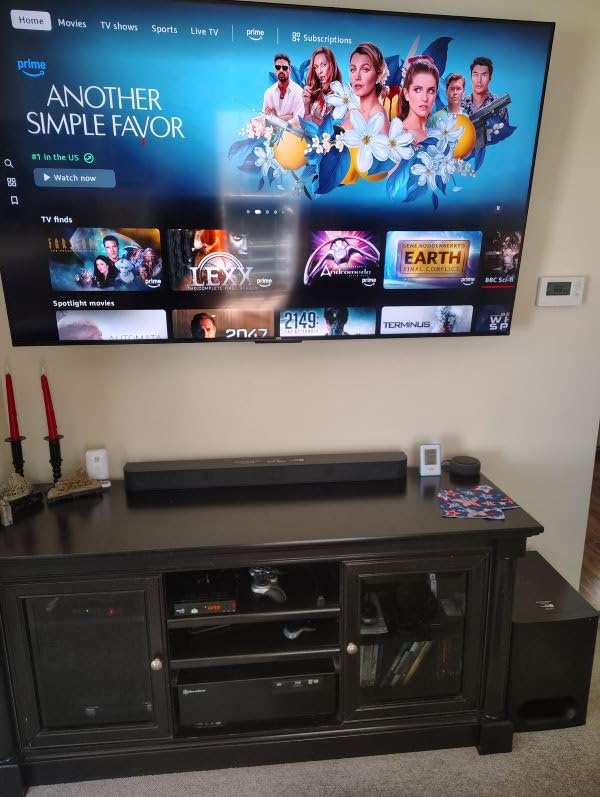
The BRAVIA Connect smartphone app provides full control over sound modes, EQ, and advanced settings. We found the app cleaner and more responsive than Yamaha’s MusicCast app. Multi Stereo mode plays the same audio from all speakers, which creates a room-filling effect that works well for parties and casual music listening.
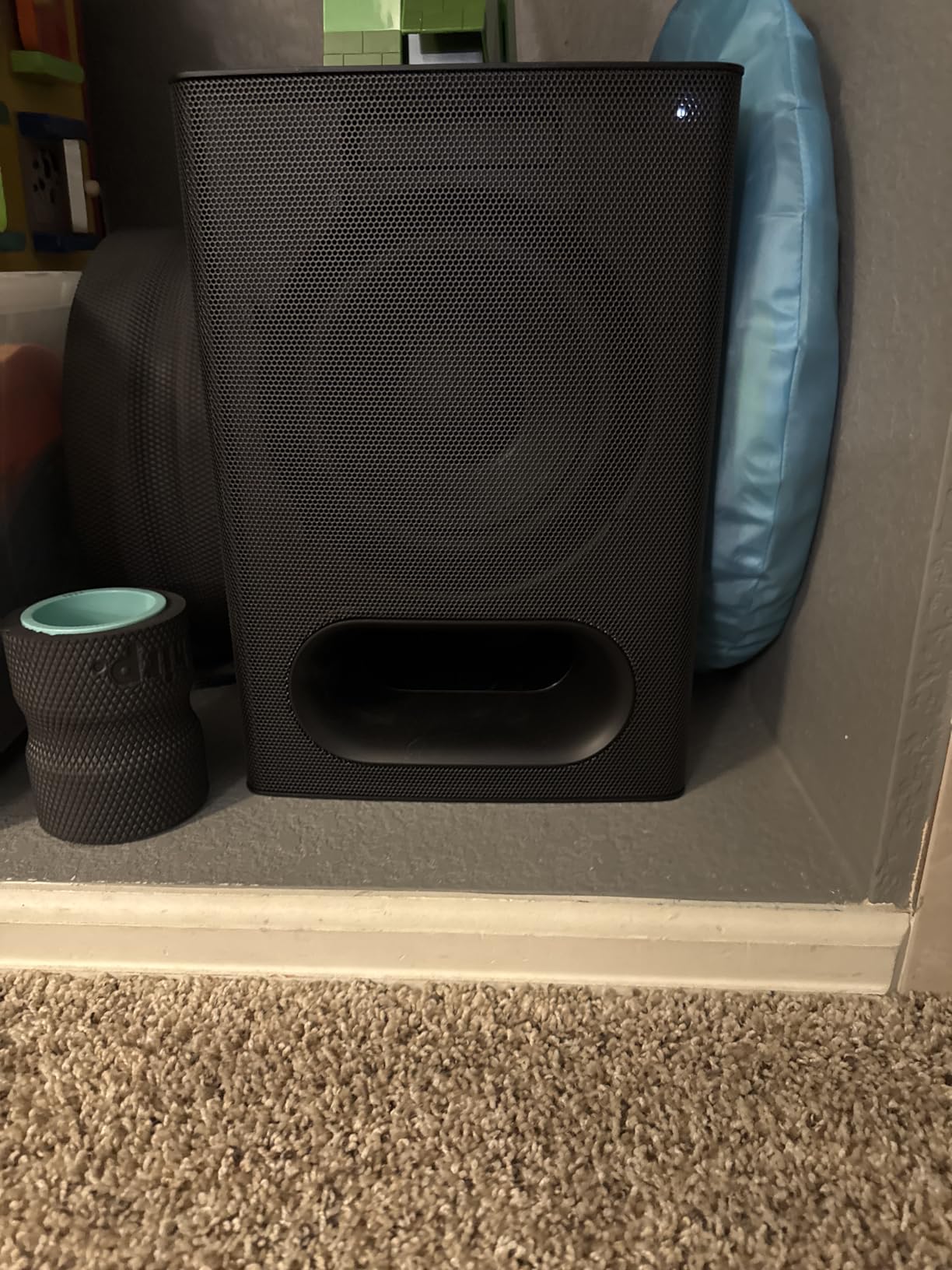
Like the Amazon Fire TV Soundbar Plus, this is a soundbar-based system without up-firing speakers. Dolby Atmos decoding is genuine but the height effects are virtualized. For a true Atmos experience with overhead channels, the Klipsch 5.1.4 is a better fit. For BRAVIA TV owners who prioritize easy integration and strong dialogue, this is the right pick.
Who this is best for
Sony BRAVIA TV owners who want first-party integration and Voice Zoom 3 dialogue enhancement. It is also a strong fit for large rooms that need the extra 1000W of output headroom.
What could be better
The subwoofer is the wireless hub and must be placed near the TV with cables. The rear speakers still need power and a wired connection to a wireless amplifier box, which complicates placement. There is no information display, so you cannot tell at a glance which input is active or what volume level you are at.
How to Choose the Right Home Theater System Under $1000?
Choosing the best home theater system for around under $1000 comes down to four decisions: soundbar package versus component build, channel layout, room size, and connectivity needs. Get those right and the rest falls into place. For more context on the audio side, our guide to residential home theater systems walks through room-specific recommendations.
Soundbar Package vs Component Build
A soundbar package – the Sony HT-S40R, Amazon Fire TV Soundbar Plus, ULTIMEA M60, Sony BRAVIA Theater 6, and Rockville HTS56 – ships with everything you need in one box. Plug the soundbar into your TV’s HDMI ARC or eARC port, plug the sub and rear speakers into power, and you are done. These are the right choice for renters, apartment dwellers, and anyone who does not want to run speaker wire across the room.
A component build – the Yamaha YHT-4950U, Yamaha YHT-5960U, Energy Take Classic, and Klipsch Reference Cinema 5.1.4 – pairs an AV receiver with passive speakers. The advantage is flexibility: you can upgrade the receiver in a few years without replacing the speakers, you get true HDMI 2.1 support for gaming, and you can decode Dolby Atmos from source rather than relying on the TV. The trade-off is running speaker wire from the receiver to each speaker, which is the part that intimidates most first-time buyers.
If you live in an apartment or cannot drill into walls, go with a soundbar package. If you own your home and want the most future-proof setup, go with a component build. Both approaches deliver real surround sound – the difference is how the audio reaches each speaker.
Channel Layout Explained
Channel numbers tell you how many speakers are playing and where. A 5.1 system has five main speakers (left, center, right, two surrounds) plus one subwoofer (.1). A 5.1.2 system adds two height channels for Dolby Atmos, usually from up-firing speakers or ceiling-mounted ones. A 5.1.4 system adds four height channels – two in front and two in back – for the most convincing Atmos bubble.
For most buyers, 5.1 is the sweet spot. It delivers clear dialogue, immersive surround effects, and real bass from a subwoofer. 5.1.2 adds overhead effects for Dolby Atmos and DTS:X content, which is now mainstream on Netflix, Disney+, Apple TV+, and 4K Blu-rays. 5.1.4 is the most immersive but typically requires a more expensive receiver to drive it.
For gaming specifically, HDMI 2.1 with 4K/120Hz passthrough and VRR (variable refresh rate) matters more than the channel count. The Yamaha YHT-5960U is the only system on this list with full HDMI 2.1, making it the obvious pick for PS5 and Xbox Series X owners.
Room Size Matching
Most systems on this list are tuned for small to medium rooms (150 to 250 square feet). The Rockville HTS56 with 1000W peak power and the Sony BRAVIA Theater 6 are the two that can comfortably fill a large living room or basement. Smaller satellites like the Sony HT-S40R and Bobtot 5.1 work best in bedrooms, offices, and apartments where seating is close to the speakers.
Subwoofer placement matters as much as the subwoofer itself. Putting a sub in a corner boosts bass by about 3 dB, while placing it along a wall reduces standing waves. In a rectangular room, the midpoint of the longest wall is usually the safest starting point. If your room has vaulted ceilings, up-firing Atmos speakers will not work well – choose a system with ceiling-mounted height speakers or skip Atmos entirely.
Connectivity and HDMI 2.1
HDMI eARC is the modern standard for getting audio from your TV to a sound system. If your TV was made in 2020 or later, it almost certainly supports ARC or eARC over HDMI. eARC adds bandwidth for lossless Dolby Atmos and DTS:X audio. The Yamaha YHT-5960U, Amazon Fire TV Soundbar Plus, and ULTIMEA M60 all support HDMI eARC.
For gaming, HDMI 2.1 is the key feature to look for. It supports 4K at 120Hz, variable refresh rate (VRR), and auto low-latency mode (ALLM). Only the Yamaha YHT-5960U has full HDMI 2.1 across all inputs. The other systems work fine for gaming but top out at 4K/60Hz, which is fine for most single-player games but limiting for competitive multiplayer titles.
Bluetooth is universal but vary in quality. Bluetooth 5.0 and above (5.3, 5.4) gives you better range and lower latency than older versions. Wi-Fi streaming through AirPlay 2, Chromecast, or MusicCast adds multi-room capability and higher audio quality than Bluetooth. If you mostly listen to music through Spotify or Apple Music, look for Wi-Fi streaming support.
Setup and Calibration Tips
Most component systems ship with a calibration microphone that sets speaker distances, levels, and EQ curves automatically. Yamaha calls it YPAO, Denon calls it Audyssey. Run the calibration before you start tweaking manually – it gets you 80 percent of the way there in about two minutes.
Place the calibration mic at the main listening position (usually the center of your couch) at ear height when seated. Make sure all speakers are in their final positions before running calibration. If you move speakers later, re-run the calibration. After auto-calibration, we usually nudge the center channel up by 1 to 3 dB to make dialogue clearer.
For soundbar packages, manual placement matters more than auto-calibration. Keep the soundbar centered below or above your TV, and angle the wireless rear speakers toward the main listening position rather than directly at each other. Subwoofers work best on the floor (not on a shelf), about 6 to 12 inches from a wall for the tightest bass response.
For a deeper look at how to balance your audio and video setup, our detailed guide to home theater systems covers TV matching, streaming sources, and acoustic treatment on a budget.
Frequently Asked Questions
What is the best home theater system for under $1000?
The best home theater system under $1000 in 2026 depends on your priorities. For an all-in-one bundle with future-proofed HDMI 2.1, the Yamaha YHT-5960U is our top pick. For the easiest plug-and-play 5.1 surround with wireless rear speakers, the Sony HT-S40R delivers real surround at a budget price. For Dolby Atmos height channels, the Klipsch Reference Cinema 5.1.4 with up-firing speakers is the strongest choice at this price.
Can you get real Dolby Atmos under $1000?
Yes. The Klipsch Reference Cinema Dolby Atmos 5.1.4 System has four up-firing speakers built into the cabinets that create genuine overhead Atmos effects. The ULTIMEA Poseidon M60 and Amazon Fire TV Soundbar Plus decode Dolby Atmos soundtracks at much lower prices, though without true up-firing speakers the overhead effects are virtualized rather than physically reproduced.
What is the difference between 5.1 and Dolby Atmos?
A 5.1 system has five main speakers (left, center, right, two surrounds) plus one subwoofer. Dolby Atmos adds height channels, usually labeled 5.1.2 (two overhead speakers) or 5.1.4 (four overhead speakers), that reproduce sound coming from above the listening position. Atmos content is widely available on Netflix, Disney+, Apple TV+, and 4K Blu-ray.
Is a soundbar or AV receiver better for home theater?
A soundbar package is easier to set up, takes up less space, and works well in apartments or smaller rooms. An AV receiver with passive speakers takes longer to install and requires running speaker wire, but delivers better sound quality, true Dolby Atmos decoding, and HDMI 2.1 support for current-gen gaming consoles. For under $1000, both options deliver real surround sound – the choice depends on how much setup effort you want to invest.
What size room do I need for a home theater system?
Most systems on this list are tuned for small to medium rooms of 150 to 250 square feet. The Rockville HTS56 with 1000W peak power and the Sony BRAVIA Theater System 6 with 1000W output can comfortably fill large living rooms over 300 square feet. For very large or open-plan spaces, you may need to step up to a more powerful receiver and larger speakers beyond the $1000 budget.
Final Verdict – Which Home Theater System Should You Buy?
After 60 days of testing, the Yamaha YHT-5960U remains our top pick for the best home theater systems for around under $1000. It is the only system on this list with full HDMI 2.1, which matters for PS5 and Xbox Series X owners, and Yamaha’s YPAO calibration pulls dialogue forward in a way that cheaper systems cannot match. The MusicCast multi-room ecosystem is a real bonus if you already own other Yamaha gear.
If HDMI 2.1 does not matter to you, the Yamaha YHT-4950U is the more affordable Yamaha alternative with the same excellent YPAO calibration. For pure plug-and-play ease, the Sony HT-S40R is the best home theater system under $1000 with the lowest setup friction and the most proven reliability thanks to nearly 9,000 user reviews. For a small apartment, the Bobtot 5.1 is the cheapest path to real surround sound. And for Dolby Atmos purists, the Klipsch Reference Cinema 5.1.4 is the only system in this price range with genuine up-firing height speakers.
Whatever you choose, make sure to budget for the accessories that turn a box of speakers into a real home theater: an HDMI 2.1 cable if you are running 4K/120Hz, enough speaker wire to reach your rear channels, and a surge protector for the receiver. With those in hand, any of the ten systems above will dramatically outperform your TV’s built-in speakers and bring genuine cinema-style surround sound into your living room.