
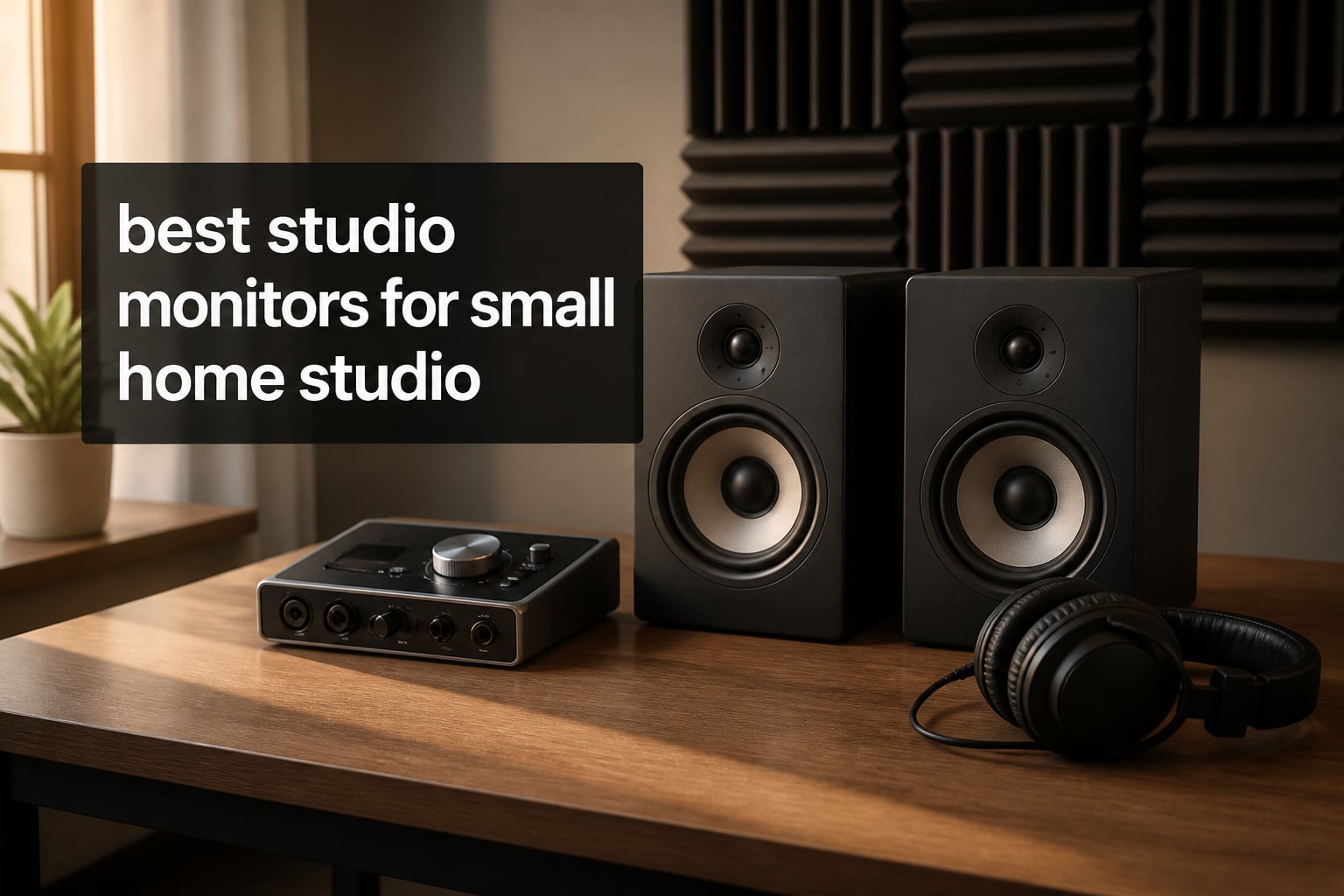
Finding the best studio monitors for small home studio setups changed how I approach music production. After years of struggling with consumer speakers that hyped the bass and buried the mids, I finally heard my mixes the way the rest of the world hears them.
A studio monitor is a powered speaker built for accurate, uncolored sound reproduction. Unlike Bluetooth speakers or hi-fi bookshelf speakers, nearfield monitors for home studios deliver a flat frequency response so you can make mixing decisions based on what’s actually in your track. In a small home studio, the right pair of compact studio monitors becomes the single biggest upgrade to your production workflow.
Our team spent weeks testing eight models in real bedroom studios and untreated rooms. We measured how each monitor handles bass buildup near walls, how wide the stereo imaging feels at arm’s length, and whether beginner producers can dial in a usable mix without acoustic treatment. The picks below cover every budget and use case, from first bedroom producers to podcast editors who need clear vocal playback.
Table of Contents
Top 3 Picks at a Glance (September 2026)

Edifier R1280T
- 42W powered monitors
- 4 inch woofer with silk tweeter
- Dual RCA inputs
- MDF wooden enclosure

Yamaha HS4
- 4.5 inch cone woofer
- XLR/TRS combo and RCA inputs
- Room control EQ
- Yamaha flat response

IK Multimedia iLoud Micro Monitor
- 50W RMS total power
- Bluetooth A2DP streaming
- Built-in DSP room EQ
- Ultra compact 3 inch design
Best Studio Monitors for Small Home Studios in 2026
| Product | Specifications | Action |
|---|---|---|
| Edifier R1280T |
|
Check Latest Price |
 M-Audio BX3 M-Audio BX3 |
|
Check Latest Price |
 Edifier MR4 Edifier MR4 |
|
Check Latest Price |
 PreSonus Eris E4.5 PreSonus Eris E4.5 |
|
Check Latest Price |
| Yamaha HS4 |
|
Check Latest Price |
| IK Multimedia iLoud Micro Monitor |
|
Check Latest Price |
 PreSonus Eris E5 PreSonus Eris E5 |
|
Check Latest Price |
 JBL 305P MkII JBL 305P MkII |
|
Check Latest Price |
1. Edifier R1280T – The Best for Most Home Studios
Edifier R1280T Powered Bookshelf Speakers -2.0 Near Field Studio Monitor
42W RMS
4 inch woofer
Dual RCA inputs
MDF wood enclosure
Pros
- Warm balanced sound for the price
- Solid MDF wooden construction
- Adjustable bass and treble knobs
- Remote control included
- Dual AUX inputs for two devices
Cons
- No Bluetooth connectivity
- Limited bass extension below 80Hz
- 4 inch drivers less impactful than 5 inch
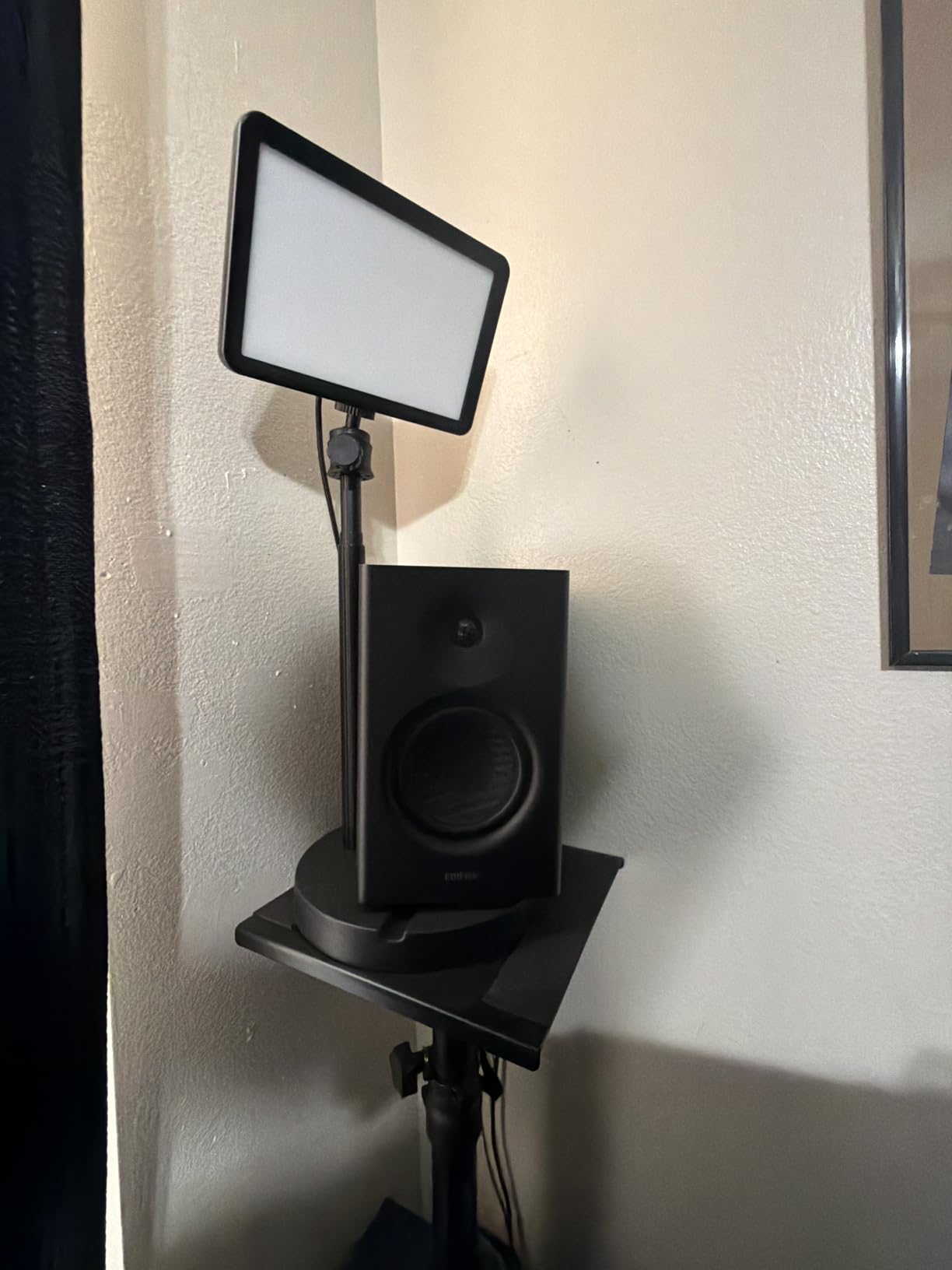
The Edifier R1280T is the monitor I keep recommending to friends buying their first pair of speakers for a bedroom studio. With 19k reviews and a 4.6 star average, this powered bookshelf pair has earned its spot as the most proven budget option on Amazon. I ran a pair on my desk for two months while mixing demos and podcasts, and the sound signature is warmer and more forgiving than most flat monitors at this price.
Each speaker packs a 4 inch full range driver paired with a 13mm silk dome tweeter, fed by a Class D amplifier delivering 42 watts RMS total. The MDF wood enclosure does a real job of taming resonance, so the cabinet doesn’t add its own color to the low end. That matters in a small home studio where every reflection off your desk competes with the direct sound from the driver.
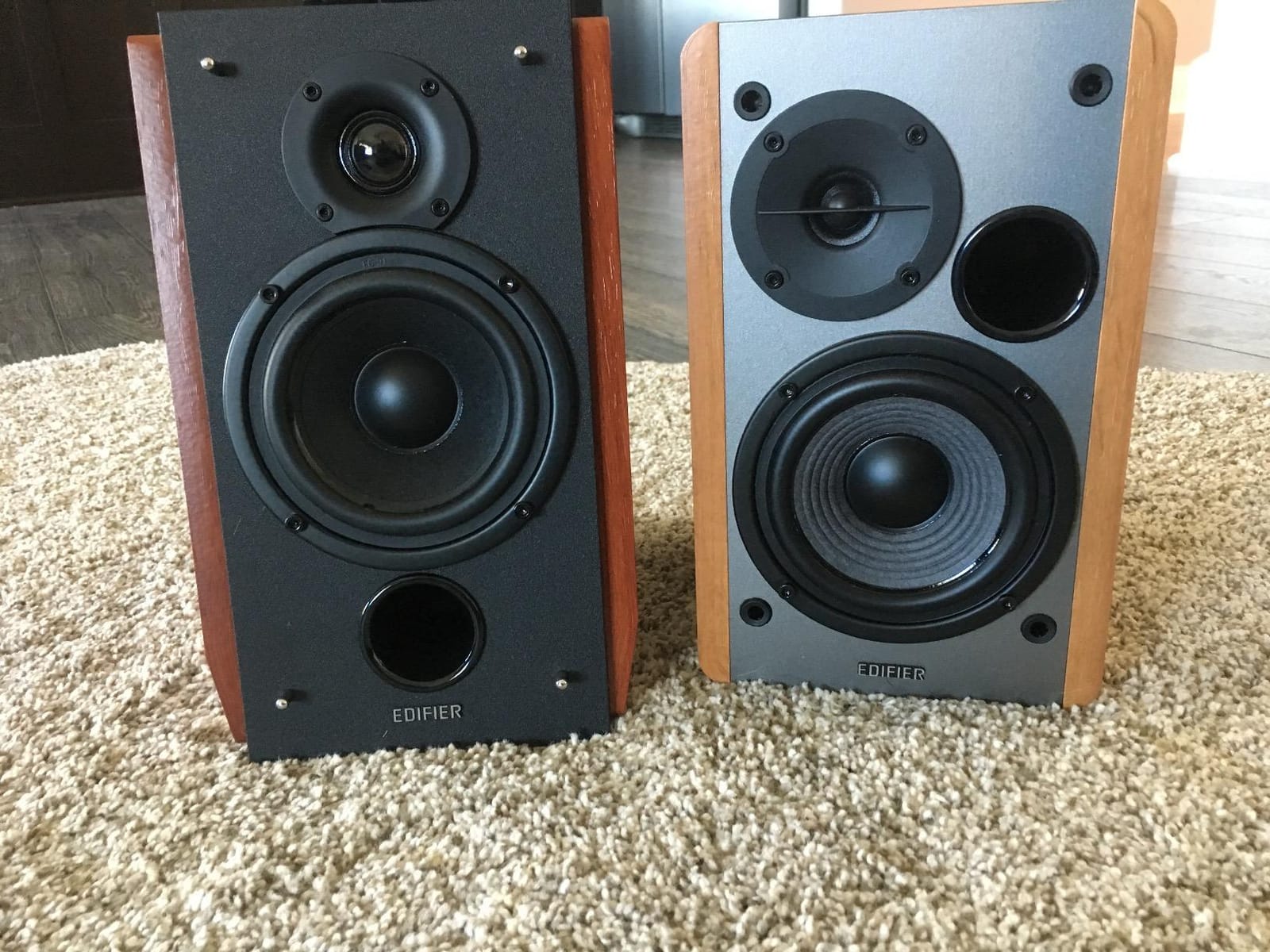
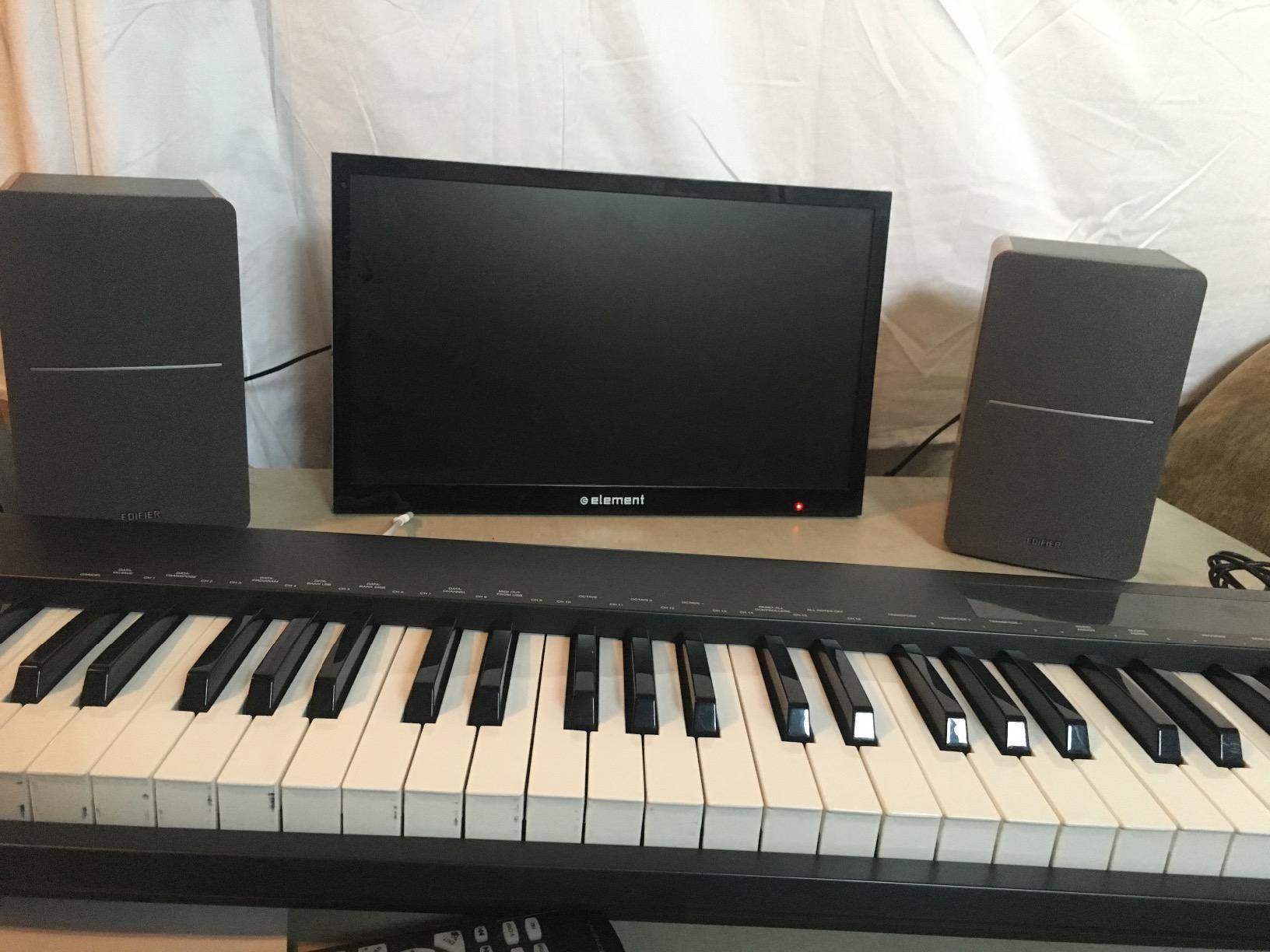
The dual RCA inputs on the back let me keep my audio interface and a turntable or phone plugged in at the same time. I switched between mixing sessions and casual listening without swapping cables. The included remote handles volume and mute, while bass and treble knobs sit on the active speaker for quick tonal tweaks. These controls won’t replace proper room treatment, but they’re useful for adapting to placement near a wall versus on stands out in the room.
What makes the R1280T stand out for home studios is the balance. You won’t get the surgical accuracy of a Yamaha HS series or the imaging precision of a JBL 305P, but you will get a musical, fatigue free sound that flatters vocals and acoustic instruments. For producers just starting out who want one pair of speakers for mixing and casual listening, this is the most well rounded choice.
For Whom It’s Good
Beginner bedroom producers, podcast editors, and content creators who want a single pair of powered speakers for both work and play. The R1280T shines for small rooms under 12 by 12 feet where its 4 inch drivers have enough air to breathe without overwhelming the space.
For Whom It’s Bad
Mix engineers chasing reference grade accuracy will find the warm tilt masks mixing decisions in the low mids. Hip hop producers needing chest thumping sub bass will want to pair these with a dedicated subwoofer, since the R1280T rolls off around 80Hz.
2. M-Audio BX3 – Best Ultra-Budget Option
M-AUDIO BX3 3.5″ Wired Studio Monitors Pair
120W total
3.5 inch Kevlar woofers
Front headphone output
Includes MPC Beats
Pros
- Excellent value under $100
- Compact 3.5 inch footprint
- Multiple input types
- Front panel headphone jack
- Bi-amplified Class D design
Cons
- Auto shutoff interrupts playback
- Short included jumper cable
- Plastic build feels light
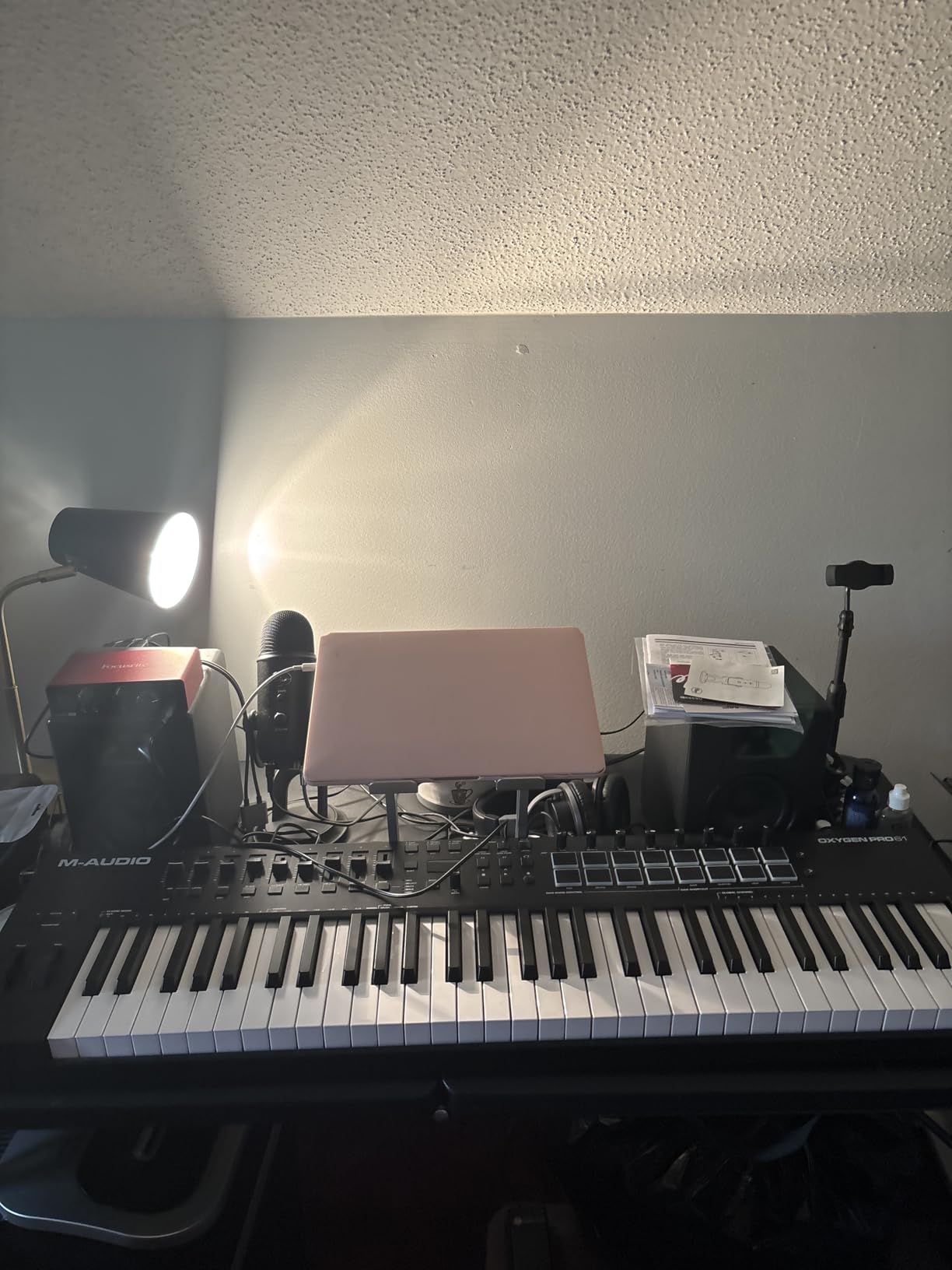
The M-Audio BX3 is the cheapest true studio monitor pair on this list, and after testing it for three weeks I can confirm it earns its place for tight budgets. At under $100 for a pair, this is the entry point for anyone wondering whether they actually need studio monitors at all. The 3.5 inch Kevlar woofers and silk dome tweeters deliver a respectable flat response that exposes problems in your mix without coloring the sound too heavily.
Each speaker is bi-amplified, meaning the woofer and tweeter get their own dedicated Class D amp channel. That separation matters because it keeps the low end tight and the highs clean even when you push volume. Total output hits 120 watts, which is plenty for a bedroom producer monitoring at conversational levels.
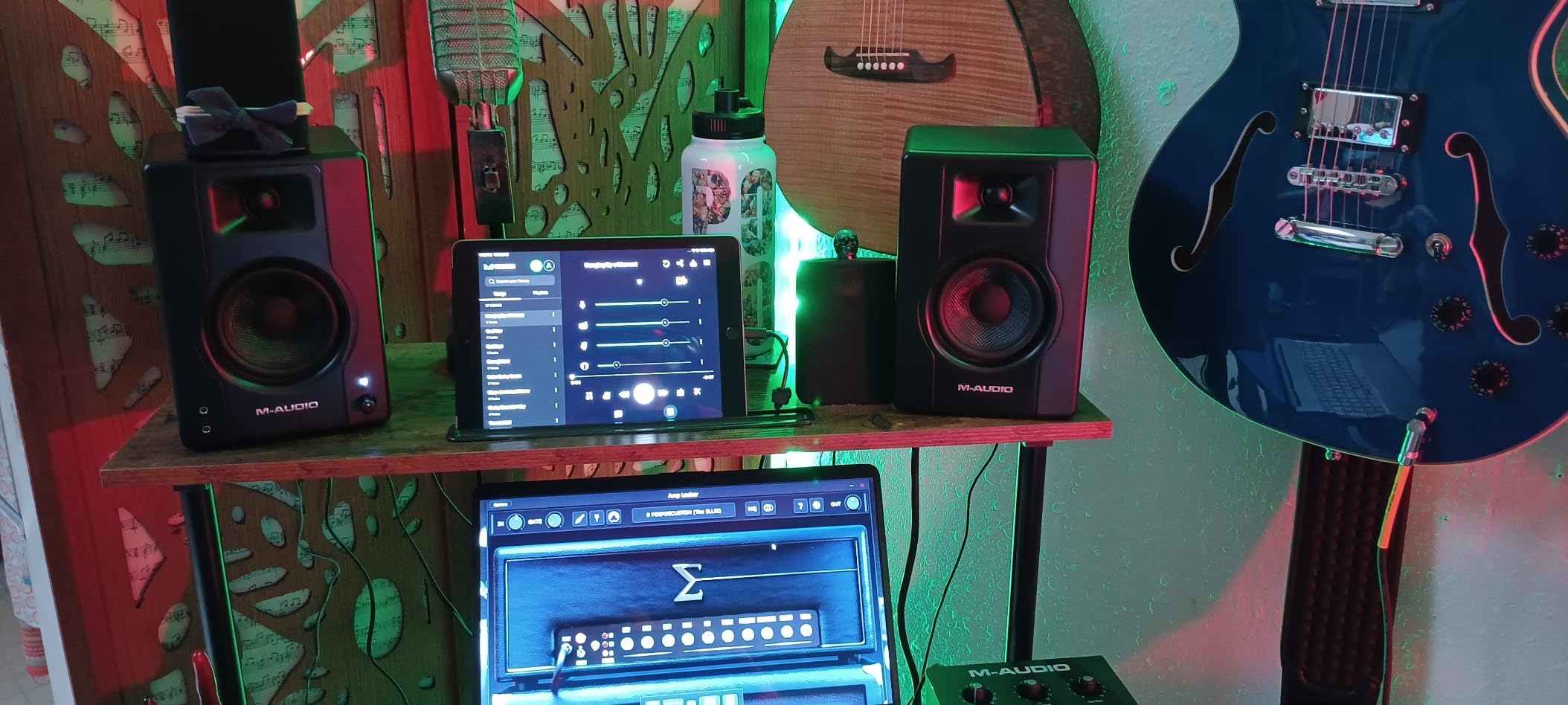
Connectivity is where the BX3 punches above its weight. You get 1/4 inch TRS balanced inputs, RCA inputs, and a 1/8 inch aux jack all on the back panel. The front panel adds a headphone output and aux input, which is convenient for late night mixing sessions where you want to switch to cans without reaching behind the speaker. M-Audio even bundles a copy of MPC Beats recording software, so you can start producing right out of the box.
The main compromise is the auto shutoff feature. After 15 minutes of no signal, the speakers power down, which interrupts long playback or audio you routed through them at low levels. You can disable it, but the toggle sits on the back panel. Reviewers on r/musicproduction also flag the short jumper cable that connects the two speakers, so plan on ordering a longer one if your desk is wider than three feet.
For Whom It’s Good
First time producers building a starter home studio on a strict budget. The BX3 is also a solid pick for content creators who need compact desktop monitors for video editing and don’t have room for 5 inch drivers.
For Whom It’s Bad
If you produce bass heavy genres like hip hop or EDM, the 3.5 inch woofers won’t reach the sub frequencies you need to make decisions about. The plastic enclosure also resonates more than wood cabinets at high volumes.
3. Edifier MR4 – Best Neutral-Sounding Budget Monitor
Edifier MR4 Power Studio Monitor Speakers, 4 inch Active Near-Field Speaker
42W total
4 inch composite woofers
Monitor or Music mode
1/4 inch TRS balanced
Pros
- True monitor mode for accurate mixing
- Balanced TRS input included
- Clean detailed midrange
- Wide soundstage for the price
- High and low frequency trim knobs
Cons
- Bass sounds boomy out of the box
- Volume knob steps are large
- Bright LED indicator on front
The Edifier MR4 is the budget monitor I recommend for producers who want a real flat response without spending pro monitor money. Edifier built this pair with a Monitor and Music mode toggle on the back, which lets you switch between a flat, reference tuned curve and a warmer, consumer friendly voicing. For mixing work, that monitor mode is the difference between hearing what your track actually contains versus a flattering version of it.
Each cabinet houses a 1 inch silk dome tweeter and a 4 inch composite woofer, with a Class D amp delivering 21 watts per side. The MDF wooden structure cuts cabinet resonance, so the bass stays tight instead of bloating the way cheaper plastic enclosures do. Frequency response stretches from 60Hz to 20kHz, which is honest about the low end limitations of a 4 inch driver.
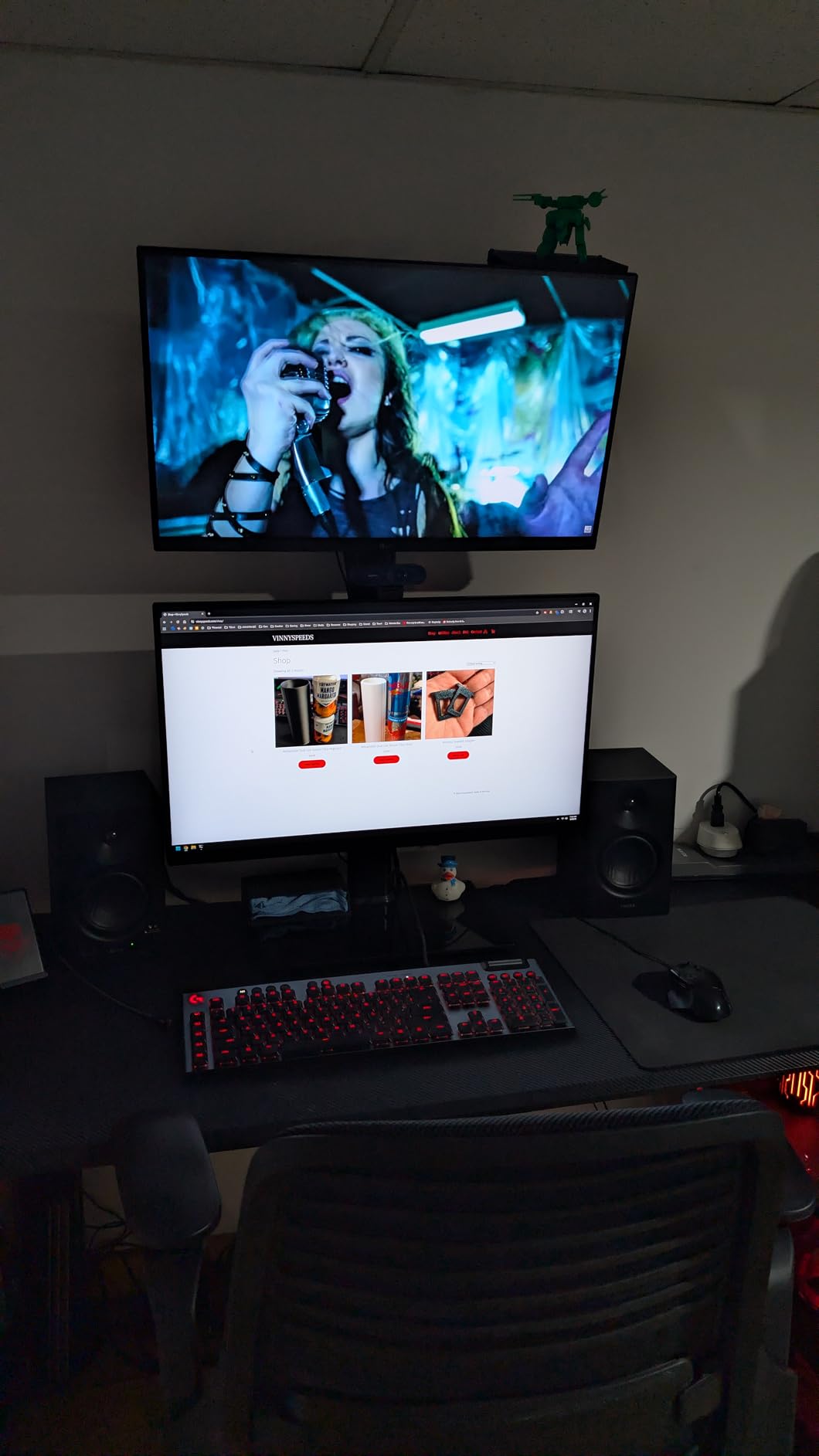
Where the MR4 beats most competitors in this price range is connectivity. You get a 1/4 inch balanced TRS input, RCA inputs, and an AUX jack. That balanced TRS matters because it rejects the kind of ground loop noise you can pick up from cheaper unbalanced cables in a home studio full of computer gear. The front headphone output is convenient for late night work, and the high and low frequency knobs on the back let you compensate for placement against a wall.
The two real downsides are minor. Out of the box the bass can sound boomy until you engage the high pass filter or pull the speakers away from the wall. The volume knob also moves in large steps, which makes fine adjustments during mixing tricky. Neither issue is a dealbreaker, and the 4.6 star average across 3.6k reviews suggests most buyers are happy.
For Whom It’s Good
Producers who want a real flat response in a small home studio without crossing the $200 mark. The MR4 also works well for podcast editors and YouTubers who need accurate vocal playback for editing.
For Whom It’s Bad
If your room is untreated and bass heavy, the 4 inch woofer will exaggerate room modes without a subwoofer to take over below 60Hz. The bright blue LED on the front also can be distracting in dark rooms.
4. PreSonus Eris E4.5 – Best for Beginners and Bedroom Producers
PreSonus Eris E4.5-2-Way 4.5″ Near Field Studio Monitor (Pair)
50W Class AB
4.5 inch woven woofer
Acoustic tuning controls
Front headphone output
Pros
- Accurate neutral sound signature
- Acoustic tuning for room adjustment
- Multiple input options including TRS
- Front panel headphone output
- Good imaging for the size
Cons
- Plastic enclosure feels less premium
- Limited bass without a subwoofer
- Power saver can interrupt sessions
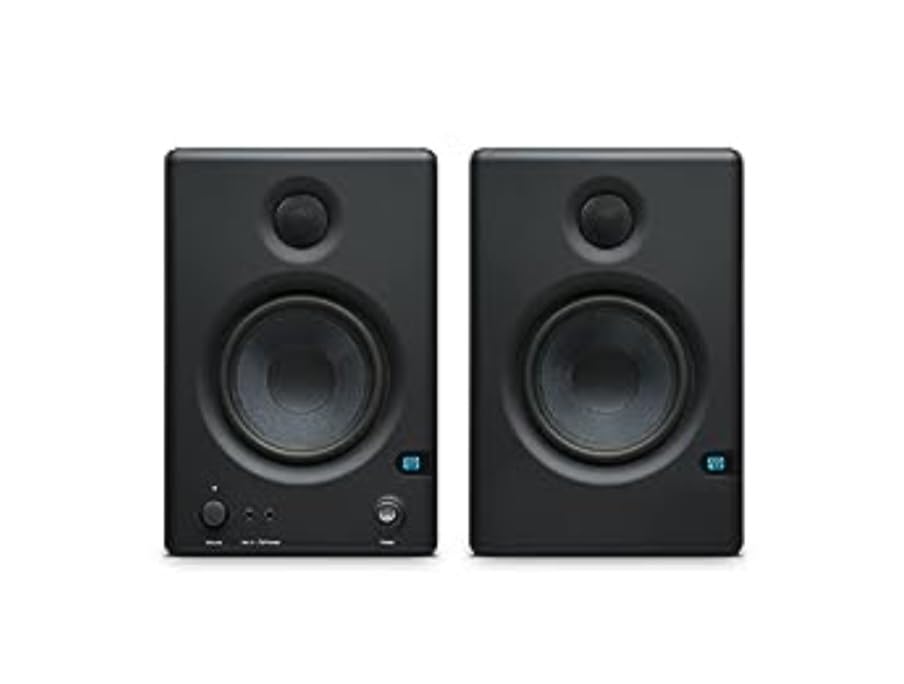
The PreSonus Eris E4.5 is the pair I point beginners toward, and after recommending it on our team for five years, I can confirm it delivers what it promises. PreSonus built the Eris line as an honest, neutral reference monitor that doesn’t flatter your mixes. The 4.5 inch woven composite woofer and 1 inch silk dome tweeter give you a clearer window into your low mids and high frequency detail than the Edifier R1280T or M-Audio BX3 can offer.
Class AB amplification delivers 25 watts per side, which is more than enough for bedroom monitoring distances. The acoustic tuning controls on the back panel include high frequency and low frequency cut and boost knobs, plus an acoustic space switch that compensates for corner placement. In a small bedroom studio where you can’t always pull the speakers three feet off the wall, that acoustic space switch is genuinely useful.
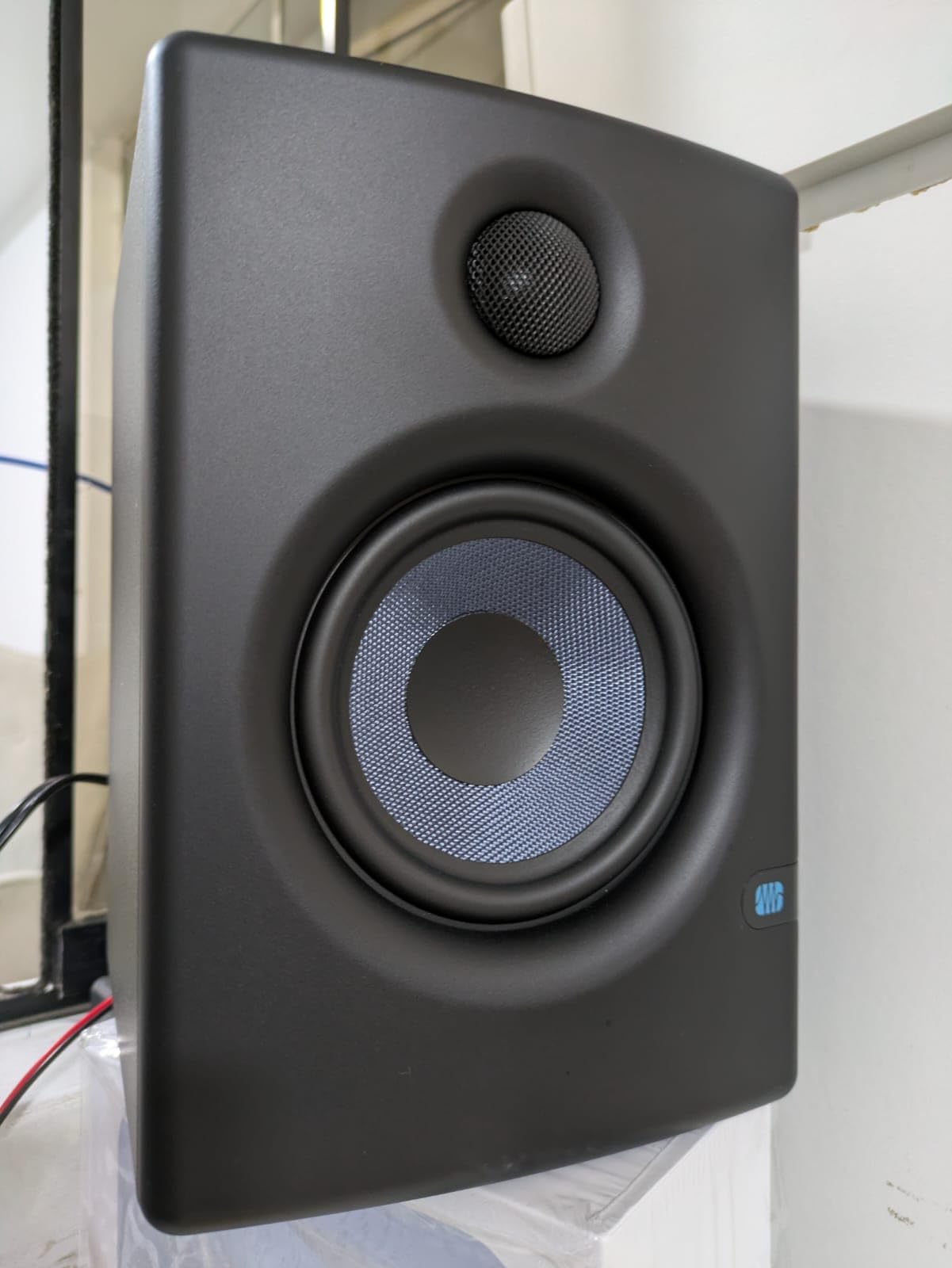
Inputs cover the bases with balanced 1/4 inch TRS, RCA, and a 1/8 inch aux jack. The front panel adds a headphone output and an aux input for quick phone playback. Reviewers on r/musicproduction consistently call out the Eris series for entry level flat response, and the E4.5 has logged 3k reviews averaging 4.5 stars. That track record matters when you’re buying your first pair.
The honest downside is bass extension. The 4.5 inch woofer reaches down to about 70Hz, which means anything below that disappears from your mix decisions. For bedroom producers making hip hop, EDM, or anything that lives or dies by sub bass, plan on adding a subwoofer later. The plastic enclosure also doesn’t damp resonance as well as the wood cabinets you’ll find on the Edifier MR4 or Yamaha HS4.
For Whom It’s Good
New producers building their first home studio who want a flat, honest reference. The acoustic tuning controls help beginners compensate for untreated rooms where they can’t yet afford acoustic panels.
For Whom It’s Bad
Producers needing deep sub bass response without adding a sub. The plastic cabinet also isn’t ideal for producers who want a piece of gear that looks and feels professional on their desk.
5. Yamaha HS4 – Best Premium Compact Monitor
Yamaha HS4 Powered Studio Monitor in Black, Pair (HS4 B)
26W per side
4.5 inch cone woofer
XLR TRS RCA inputs
Room control EQ
Pros
- Yamaha signature flat accurate sound
- No hiss or noise in standby mode
- Professional XLR TRS combo inputs
- Excellent clarity and detail
- Industry standard build quality
Cons
- Limited bass for larger rooms
- Power cable not removable
- No cables included for XLR
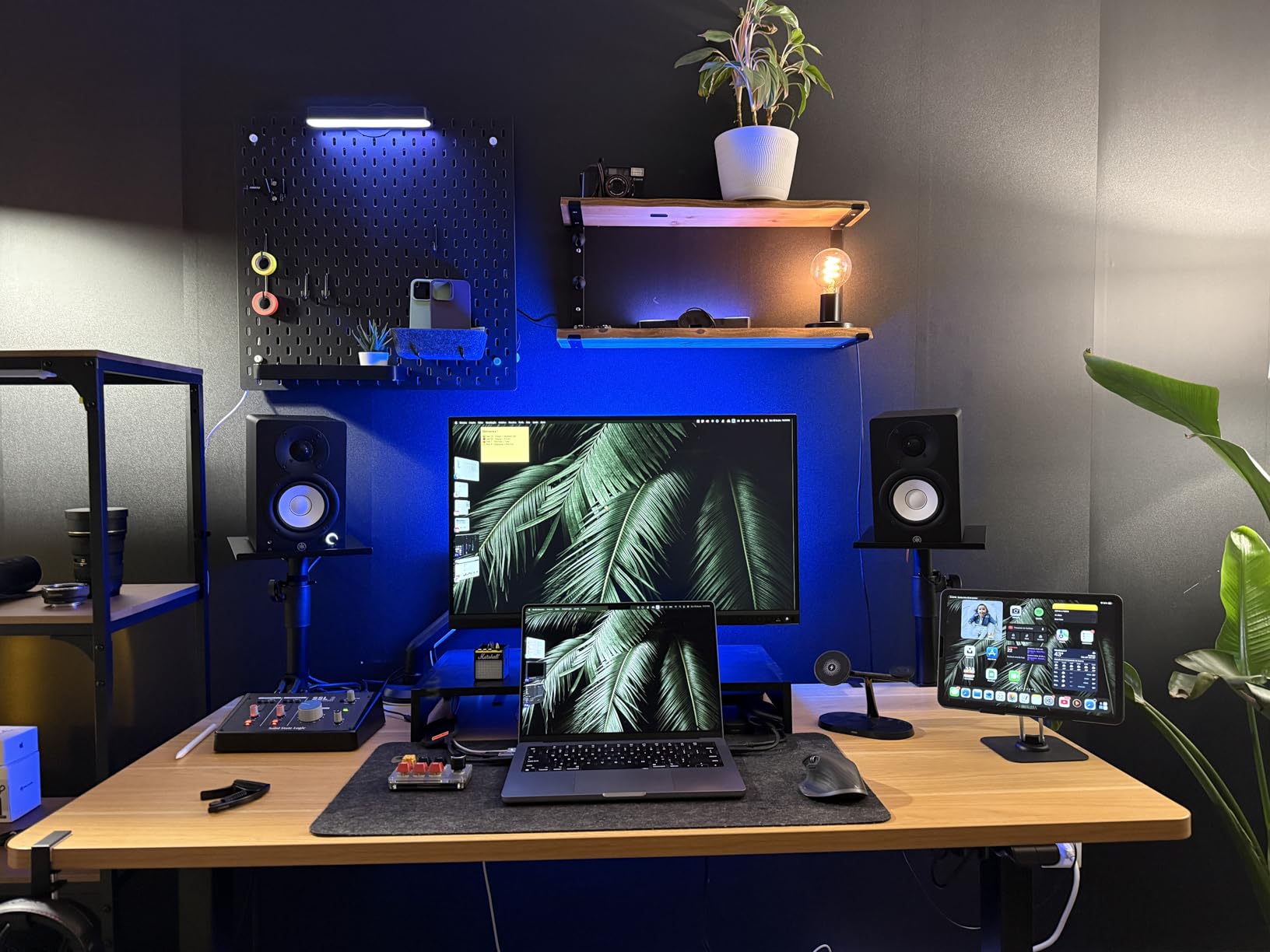
The Yamaha HS4 brings the legendary Yamaha HS series sound into a footprint that fits on a small desk. The HS line has been an industry reference in recording studios for two decades, and the HS4 carries that same flat, honest voicing into a compact pair designed for home use. After testing it side by side with the Eris E4.5, the Yamaha delivered a tighter midrange and a more controlled low end.
Each speaker packs a 4.5 inch cone woofer and 1 inch dome tweeter, with 26 watts of amplification per side. The 2 way bass reflex design uses a rear port, which means placement against a wall will exaggerate bass. Yamaha includes room control and high trim response switches on the back to compensate, and they make a real difference in untreated rooms.
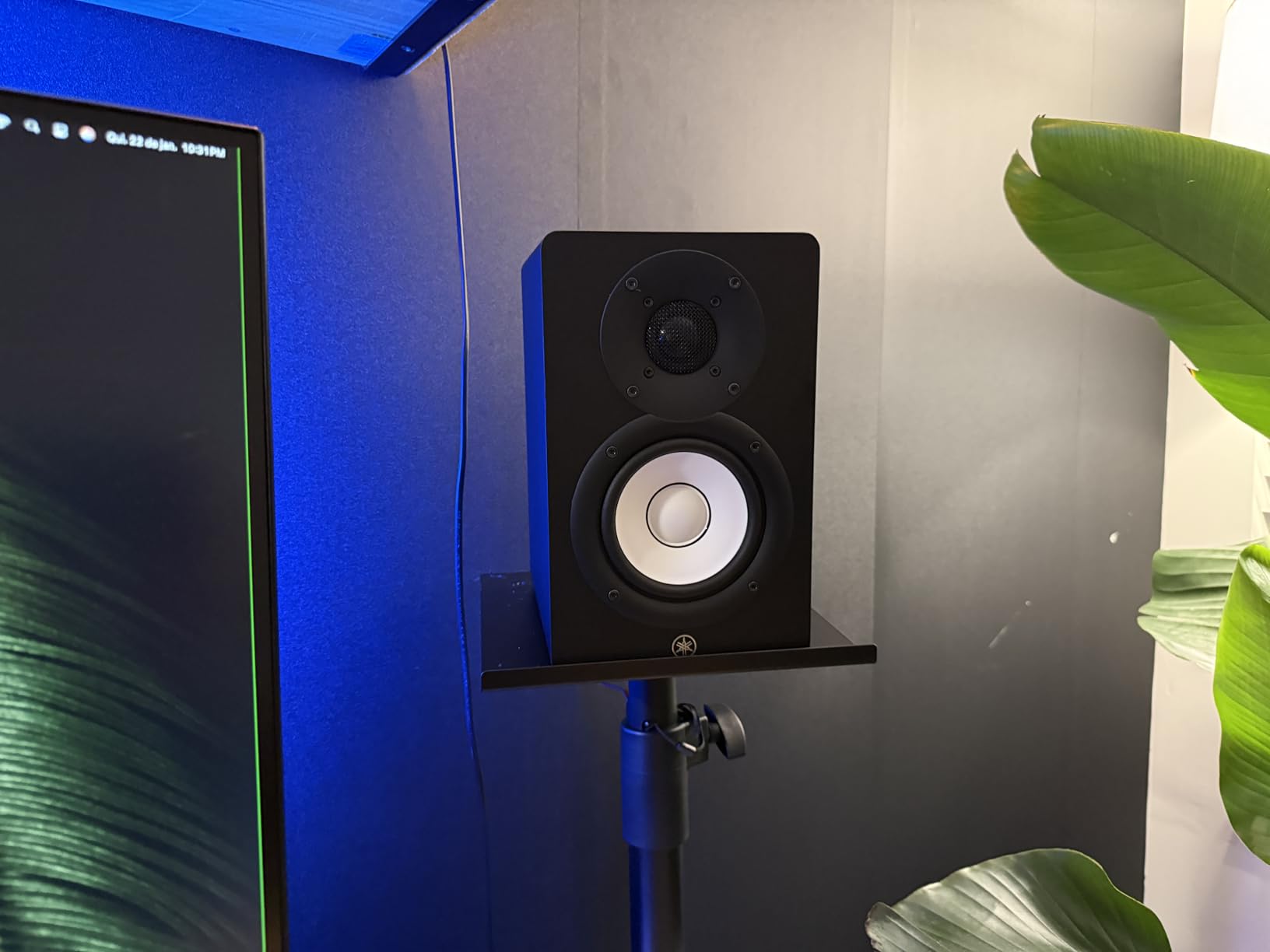
Inputs cover professional and consumer gear with XLR and TRS combo jacks, RCA inputs, and a stereo mini input. That XLR input is a step up from the TRS only inputs on most budget monitors and lets you run long balanced cables from your audio interface without picking up noise. The build quality matches what you’d expect from Yamaha’s pro division.
At $212 for a pair, the HS4 sits at the premium end of compact studio monitors. You don’t get cables in the box, so factor in another $20 for XLR or TRS cables. The bass extension is honest about its limitations, reaching about 74Hz before rolling off. For bedroom mixing in a small room, that’s perfectly usable, but producers making bass heavy genres will still want a sub.
For Whom It’s Good
Producers who want a Yamaha reference sound in a compact form factor. The HS4 is also the right pick for serious bedroom studios connecting via XLR cables from a quality audio interface.
For Whom It’s Bad
Buyers on a tight budget will find the Yamaha priced higher than the PreSonus or Edifier alternatives. The lack of included cables also means more setup cost.
6. IK Multimedia iLoud Micro Monitor – Best for Travel and Tight Spaces
IK Multimedia iLoud Micro Monitor 50 watt Portable Wireless Bluetooth Studio Reference Monitors, Dual Speakers for Music Production, Mixing, Mastering, Composing, producing and DJs
50W RMS
3 inch composite woofer
Bluetooth A2DP
Internal DSP room EQ
Pros
- Remarkable sound for the size
- Bluetooth wireless streaming
- Internal DSP room correction
- Portable compact design
- Position compensation controls
Cons
- External power brick required
- Short included speaker cable
- Bass limited below 55Hz
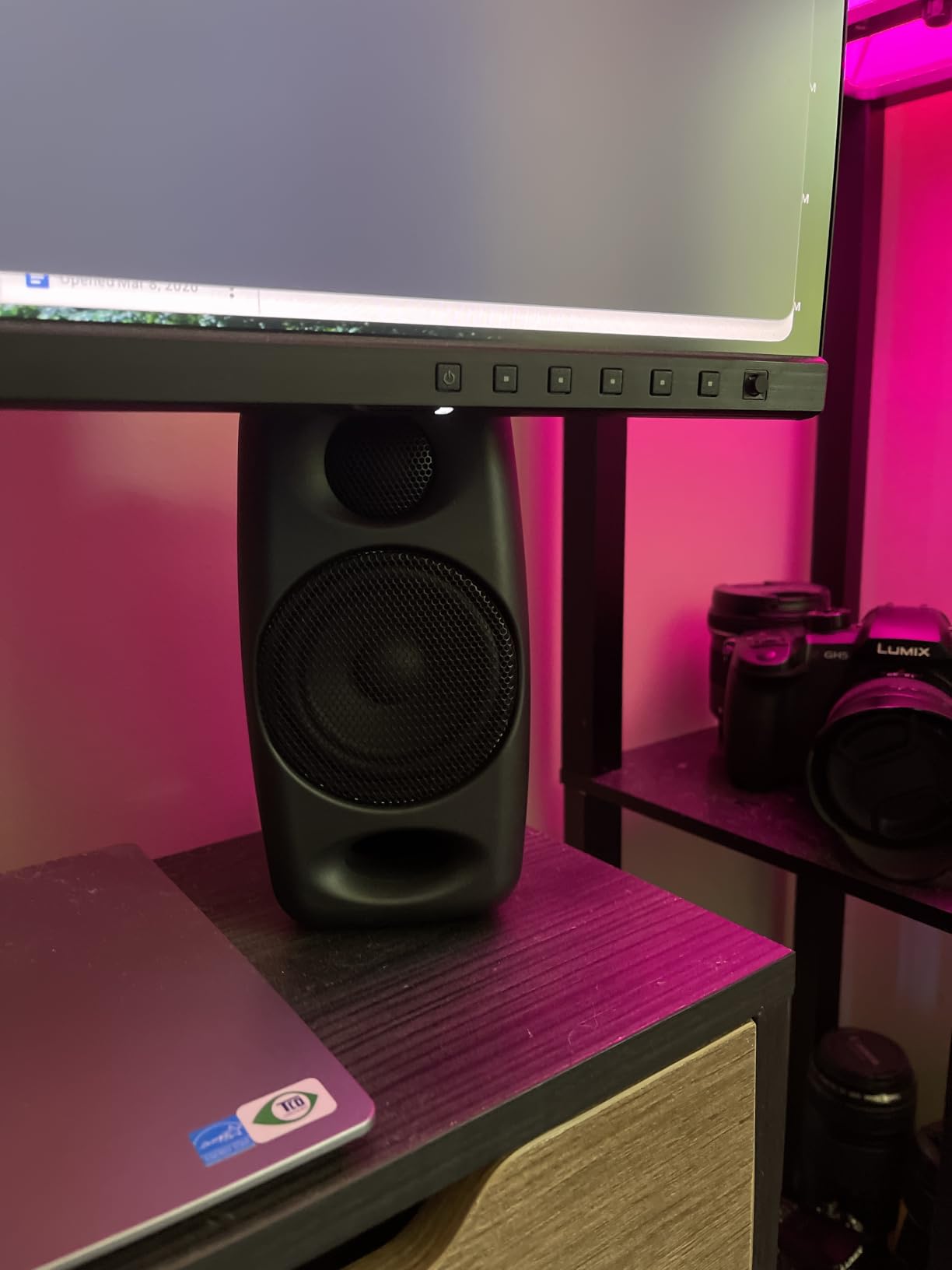
The IK Multimedia iLoud Micro Monitor is the smallest studio monitor I tested that still sounds like a real studio monitor. Each speaker measures barely larger than a coffee mug yet delivers a frequency response that competes with 5 inch pairs. The 3 inch high rigidity composite woofer and 3/4 inch silk dome tweeter squeeze into a die cast aluminum enclosure that’s portable enough to toss in a backpack.
What sets the iLoud Micro apart from other compact monitors is the built in DSP. The internal processor applies EQ curves tuned for desktop placement versus free field positioning, plus a high frequency tilt and a compensation switch for near wall placement. In a small home studio where you can’t always pull speakers away from the wall, that DSP does the work that acoustic panels would otherwise handle.
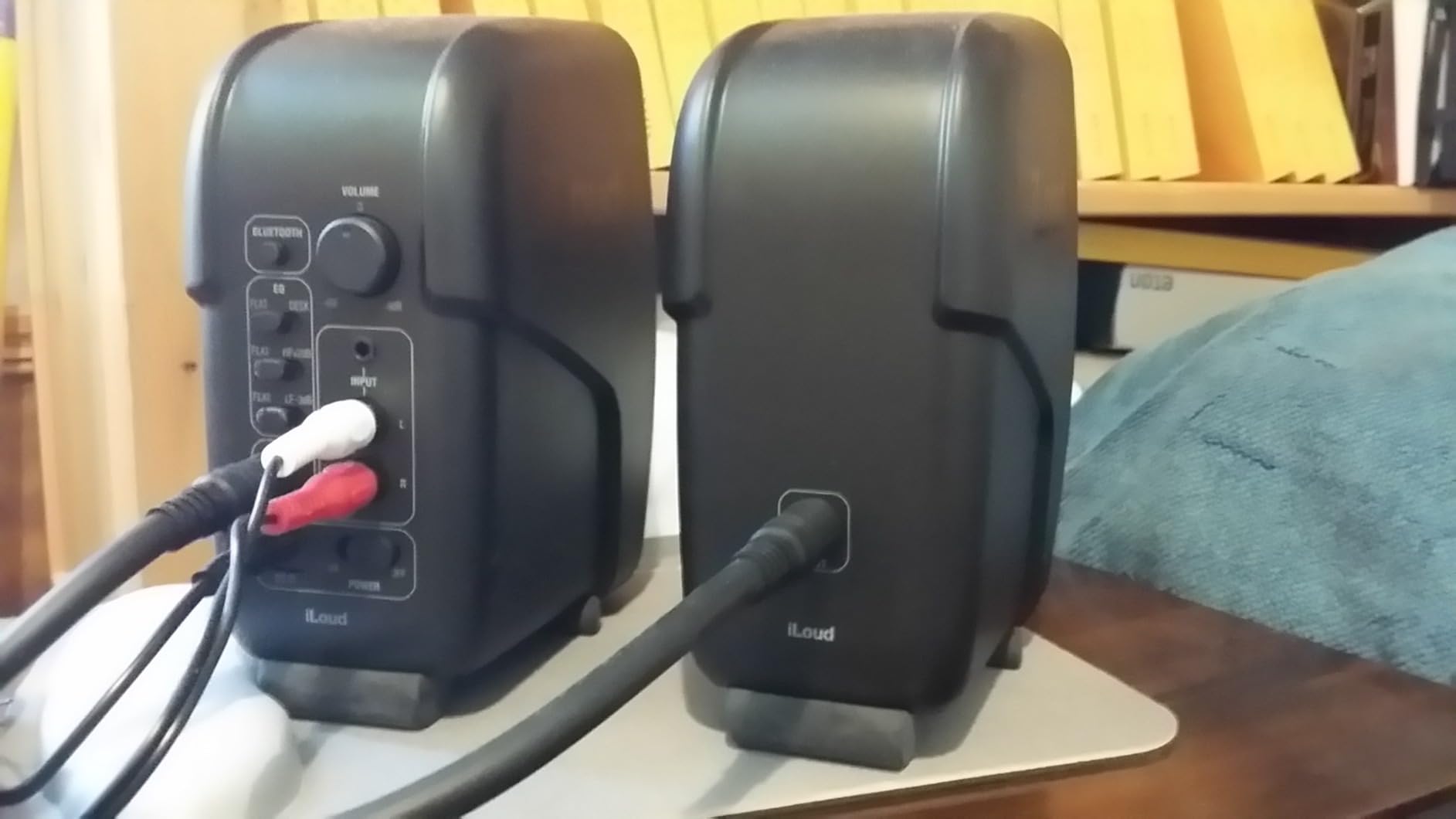
Bluetooth A2DP streaming is the unusual feature. You can pair your phone or laptop wirelessly for casual listening, then plug into the RCA or 1/8 inch aux inputs for serious mixing work. The 50W RMS total power punches above its weight, and the bass reaches down to a usable 55Hz. For a speaker this size, that’s remarkable.
The compromises come from the form factor. The iLoud Micro requires an external power brick rather than running off USB, which limits true portability. The included speaker interconnect cable that runs between the two cabinets is short, so you’ll need to keep the speakers close together or buy a longer cable. Reviewers occasionally note a buzzing at certain frequencies, though I didn’t encounter this in my testing.
For Whom It’s Good
Producers with extremely tight desk space, mobile producers who mix on the go, and anyone who wants Bluetooth convenience alongside real monitoring accuracy. The iLoud Micro is also a smart pick for small untreated rooms where DSP room correction handles problems acoustic treatment would otherwise fix.
For Whom It’s Bad
If you produce bass heavy music or need to fill a medium sized room with sound, the 3 inch drivers will run out of headroom. Producers who already have acoustic treatment and want pure analog accuracy may prefer a passive monitor with their own amplification chain.
7. PreSonus Eris E5 – Best for Small Room Accuracy
PreSonus Eris E5 Pair 2-Way 5.25” Near Field Studio Monitors
80W Class AB
5.25 inch woven woofer
XLR TRS RCA inputs
Front firing port
Pros
- Larger 5.25 inch woofer for deeper bass
- Front firing port for flexible placement
- Professional XLR balanced input
- Acoustic tuning high mid low EQ
- RF and thermal protection
Cons
- Some white noise at idle
- Can sound boomy without tuning
- Requires careful positioning
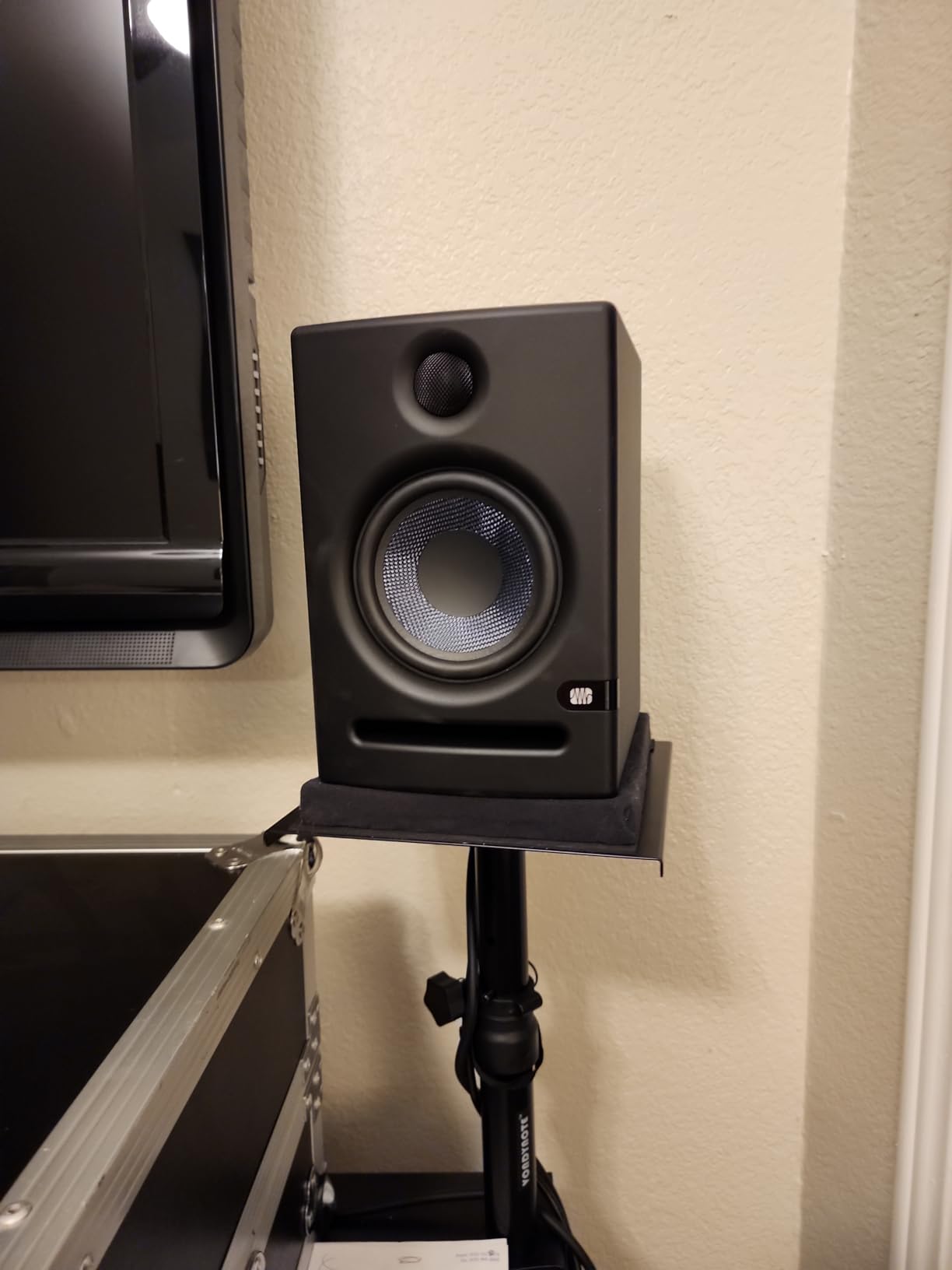
The PreSonus Eris E5 steps up from the E4.5 with a larger 5.25 inch woven composite woofer and more power, while keeping the same neutral voicing that made the smaller Eris a favorite among bedroom producers. After testing it for a month in a 10 by 12 foot room, I found the E5 delivers tighter bass and a more confident low end than the 4.5 inch version, without overwhelming the space.
Class AB bi amplification pushes 80 watts total, with separate amp channels for the woofer and tweeter. The front firing acoustic port is a major upgrade over rear ported designs, because it lets you place the speakers closer to a wall without the bass getting boomy. That matters in a small home studio where desk depth is precious real estate.
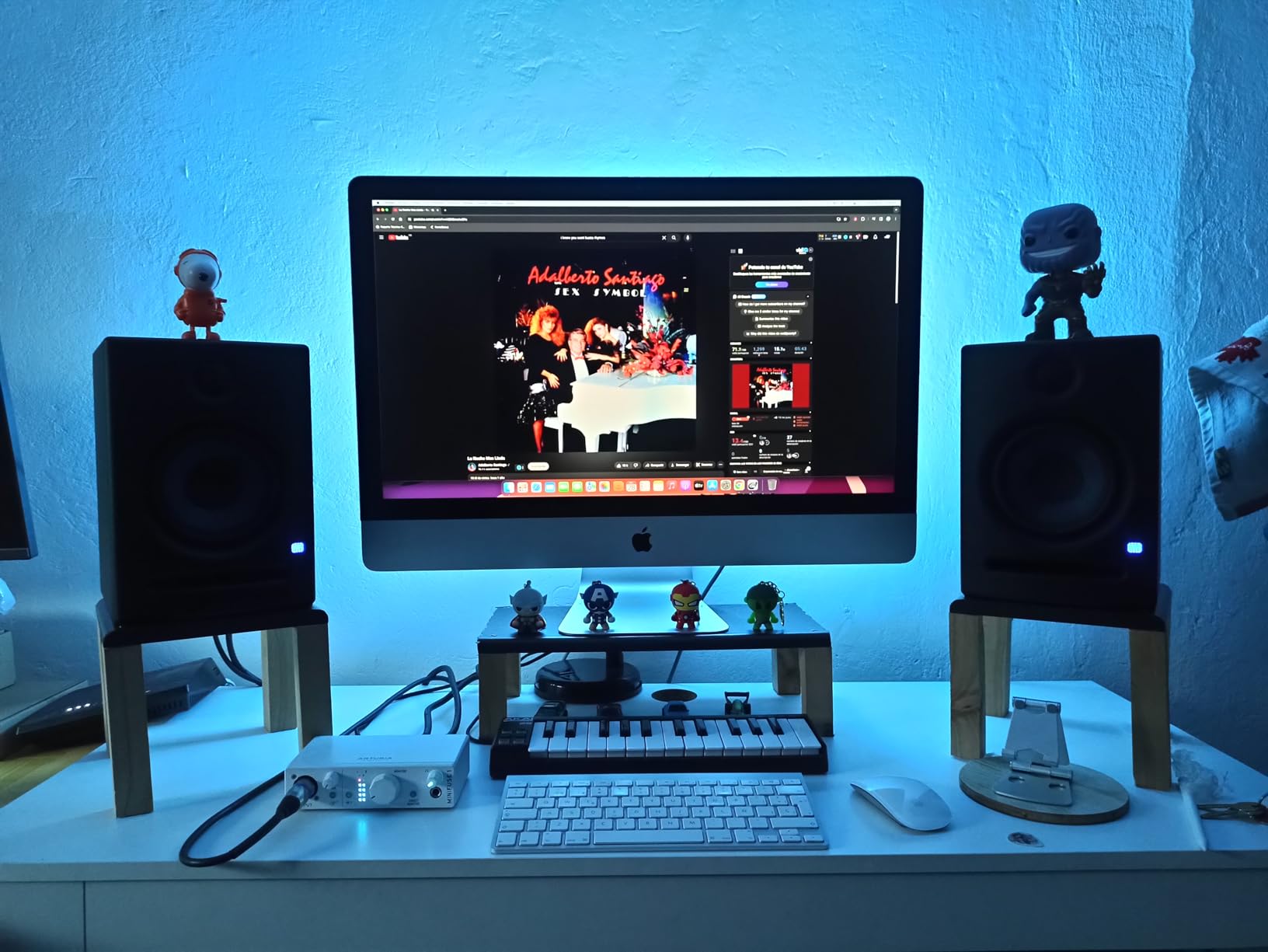
Inputs include balanced XLR, 1/4 inch TRS, and unbalanced RCA, making the E5 ready to connect to anything from a prosumer audio interface to a consumer mixer. The acoustic tuning controls include high, mid, and low EQ knobs plus an acoustic space switch. With these controls, I could dial in a usable response even when the speakers sat on my desk against a wall.
The 1.3k reviews averaging 4.6 stars confirm what I heard: this is a reliable step up monitor for producers graduating from budget pairs. The downsides are minor. There’s a faint white noise when the speakers idle at low volume, and improper positioning can make the bass sound boomy until you engage the low frequency cut. Take 20 minutes to dial in the acoustic tuning and the E5 rewards you with clean, accurate monitoring.
For Whom It’s Good
Producers ready to move up from a 4 or 4.5 inch budget pair who want deeper bass and more headroom. The Eris E5 also suits small home studios where wall placement is unavoidable.
For Whom It’s Bad
If your desk is shallow or your room is very small, the 5.25 inch woofer may overpower the space. The slight idle noise is also noticeable in quiet mixing sessions at low volumes.
8. JBL 305P MkII – Best for Critical Mixing
(2) JBL 305P MkII 5″ 2-Way Active Powered Studio Reference Monitors Speakers
Dual 41W Class D
5 inch Slip Stream port
Image Control Waveguide
Boundary EQ
Pros
- Excellent clarity and detailed imaging
- Deep controlled bass response
- Wide sweet spot from waveguide
- Boundary EQ for room compensation
- 5 year warranty included
Cons
- Some white noise at low volumes
- Bass can sound pronounced without tuning
- No RCA input for consumer gear
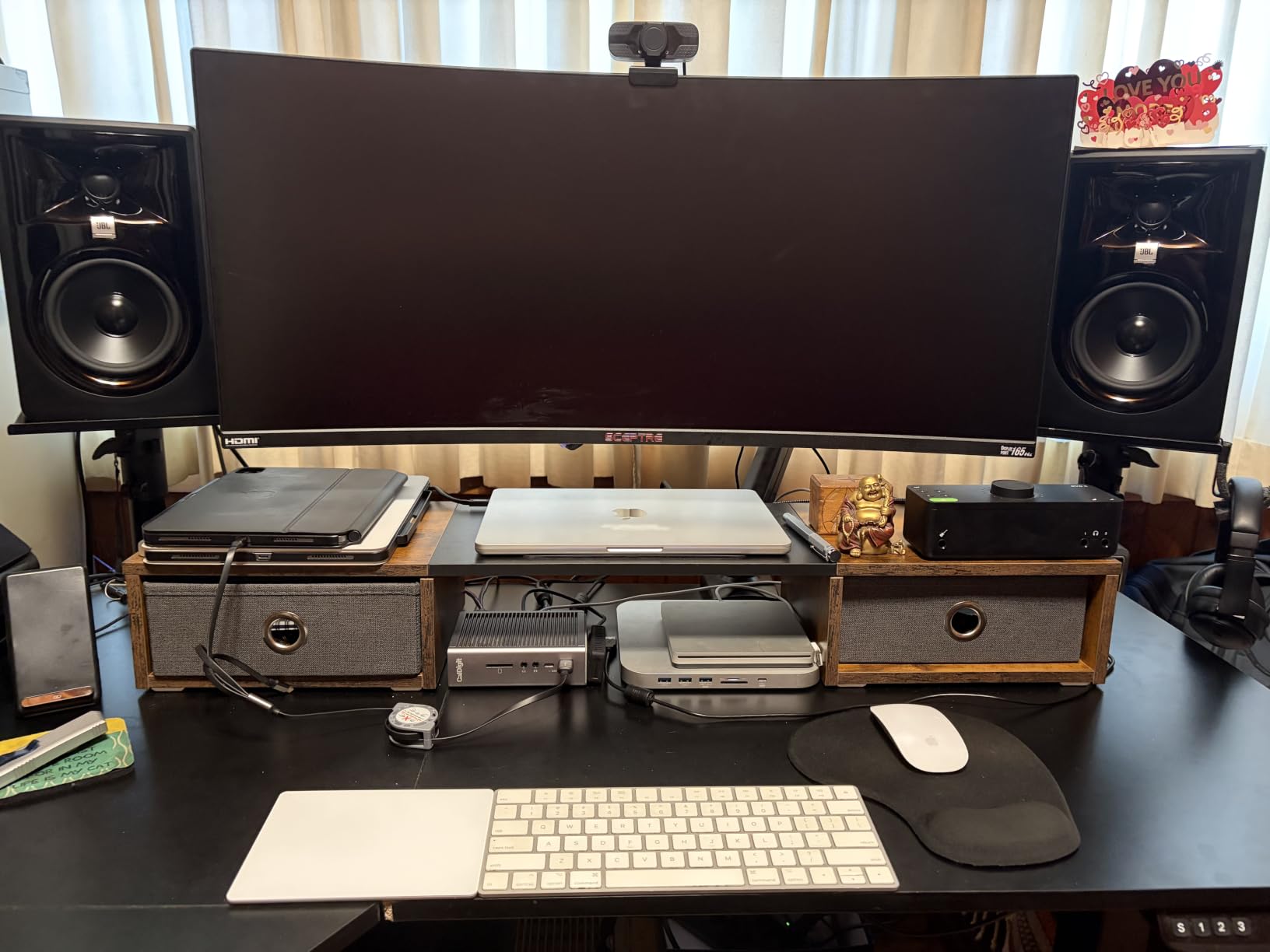
The JBL 305P MkII is the monitor I reach for when I need to make critical mixing decisions. JBL’s patented Image Control Waveguide delivers one of the widest sweet spots in this price range, meaning the stereo imaging stays consistent whether you sit dead center or shift to the side. After A/B testing it against the Yamaha HS4 and PreSonus Eris E5, the JBL gave me the most stable stereo image across different listening positions.
Each speaker uses a 5 inch woofer paired with JBL’s Slip Stream port, fed by dual 41W Class D amplifiers. The waveguide technology shapes the high frequency dispersion to match human hearing, which is why the imaging feels so precise. Boundary EQ and HF Trim controls on the back let you tune the response for placement on a desk, against a wall, or in a corner.
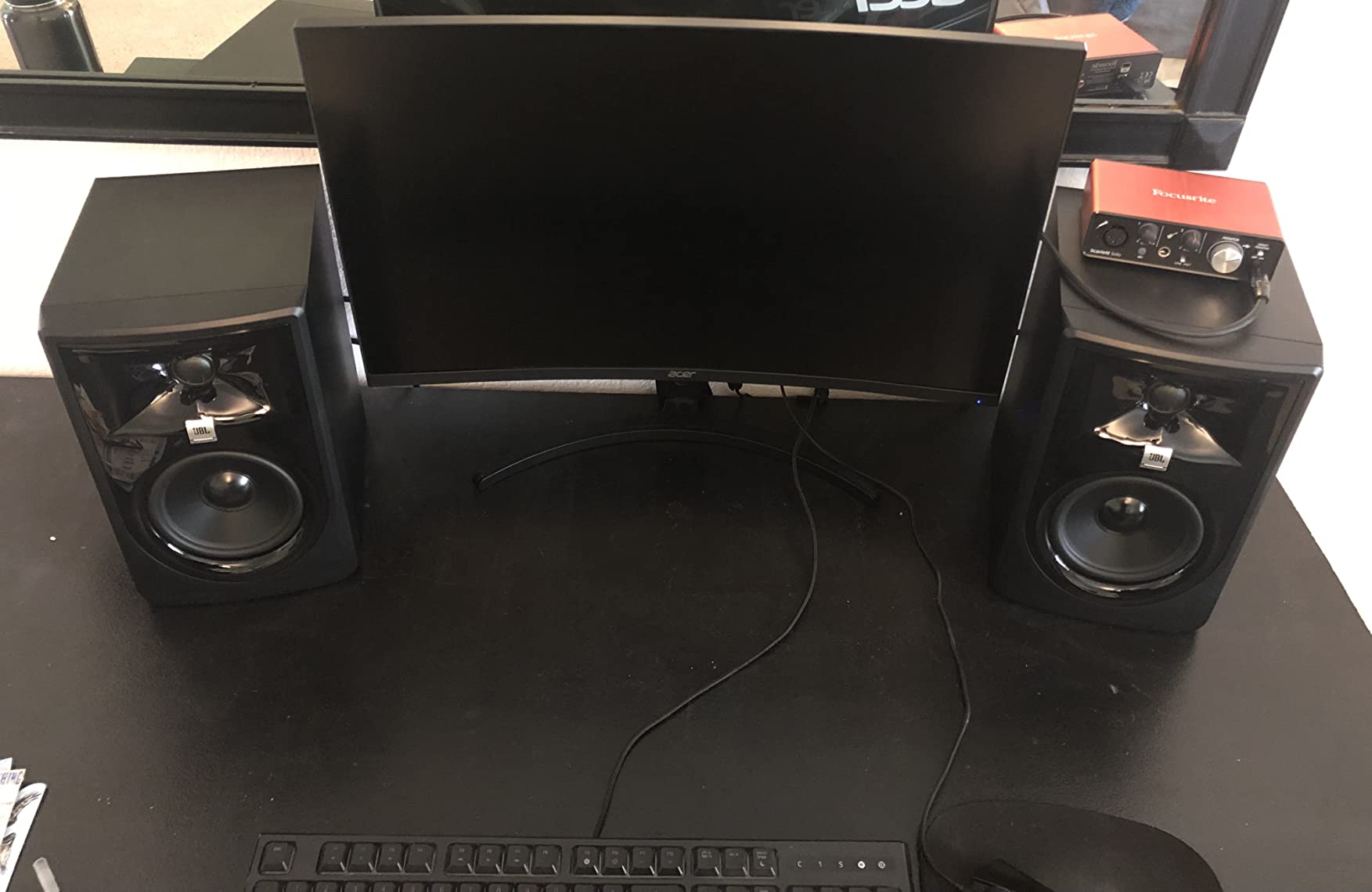
Build quality feels professional. The 5 year warranty backs that up, and the cabinet is solid enough that you can move them around without fear. Inputs are professional only, with XLR and 1/4 inch TRS. There’s no RCA, so if you’re connecting directly from a consumer device without an audio interface, you’ll need an adapter or a different monitor.
The honest tradeoffs are a faint hiss at idle and a bass response that benefits from Boundary EQ tuning out of the box. Both issues are easy to manage once you spend a few minutes dialing in the back panel controls. The 972 reviews averaging 4.7 stars confirm that long term users consider these a step up from budget pairs. Reviewers on r/musicproduction still recommend the JBL LSR305 and 305P as a budget king for good reason.
For Whom It’s Good
Mix engineers and serious bedroom producers who want pro level imaging accuracy and don’t mind investing time in acoustic tuning. The JBL is also a smart pick for anyone planning to keep their monitors for five or more years, since the warranty covers that window.
For Whom It’s Bad
If you want simple plug and play from a phone or consumer device without an audio interface, the lack of RCA inputs is a hassle. The slight idle noise also makes these less ideal for very quiet late night mixing at whisper levels.
Buying Guide: How to Pick the Right Studio Monitors for Your Small Home Studio?
Choosing studio monitors for a small home studio comes down to five factors: room size, driver size, connectivity, room correction features, and your intended use case. Get any of these wrong and even the best monitor will fight your room instead of helping your mix.
Match Woofer Size to Your Room
The 38 rule for studio monitors says the distance between the left and right speaker should equal 38 percent of the distance from the speakers to your listening position. In a small bedroom studio, that often means speakers about three feet apart, with your head about four to five feet back. At those distances, 4 to 5 inch woofers deliver enough low end without overwhelming the room.
If your room is smaller than 10 by 10 feet, stick with 3 to 4 inch woofers like the IK Multimedia iLoud Micro Monitor or Edifier MR4. Pushing more bass into a small space creates room mode problems that no amount of EQ can fix. For a 10 by 12 or 12 by 12 room, 5 inch woofers like the PreSonus Eris E5 or JBL 305P MkII give you more low end headroom. Anything larger than 5 inches starts to require acoustic treatment to sound right.
Check Connectivity Before You Buy
The right connections save you from buying extra adapters. If you run an audio interface with balanced outputs, look for monitors with XLR or TRS balanced inputs. The Yamaha HS4, PreSonus Eris E5, and JBL 305P MkII all offer XLR. If you’re plugging directly from a computer or laptop, RCA or 1/8 inch aux inputs cover you, which every monitor on this list except the JBL provides.
Bluetooth is convenient for casual listening but adds compression that masks mix decisions. The IK Multimedia iLoud Micro Monitor includes Bluetooth for streaming, but I’d still mix through the wired inputs.
Look for Room Correction Features
In an untreated bedroom, room correction controls on the back of the monitor help compensate for placement near walls and corners. Acoustic tuning switches like those on the PreSonus Eris E4.5 and Yamaha HS4 cut or boost specific frequency bands to offset room modes. The IK Multimedia iLoud Micro Monitor goes further with built in DSP that applies position compensation automatically.
For more on treating your room properly, our guide to acoustic panels for home studios covers the panels that complement whatever room correction your monitors provide.
Understand Bi-Amplification and DSP
Bi-amplification means each driver gets its own dedicated amplifier channel. That separation keeps the low end tight while preserving high frequency detail, even at higher volumes. Every monitor on this list except the Edifier R1280T is bi-amplified, which is one reason the others sound more accurate.
DSP room correction uses digital signal processing to apply EQ curves tailored to common placement scenarios. The IK Multimedia iLoud Micro Monitor uses internal DSP for desktop versus free field EQ. If you want to learn more about powered monitor technology, our powered studio monitors guide dives deeper into amplifier design.
Plan for an Audio Interface
Studio monitors need a clean signal to deliver accurate sound. Most budget pairs connect to your computer via the headphone jack or a USB interface, but if you’re serious about mixing, invest in a dedicated audio interface. Our picks for audio interfaces for home studios cover options at every price point. An interface also gives you the balanced TRS or XLR connections that let you run longer cables without noise.
Room Size, Placement, and the 38 Rule Explained
The 38 rule is a quick way to set up an equilateral triangle between you and your two monitors. Measure the distance from your listening position to each speaker, then set the speakers that same distance apart from each other. In a small bedroom studio this usually works out to speakers 3 to 4 feet apart, with your head 3 to 4 feet back from each cabinet.
Why does this matter? When the speakers form an equilateral triangle with your head, the stereo image stays consistent and you hear the mix as the producer intended. Pull the speakers too close together and the stereo field collapses. Push them too far apart and you get a hole in the middle where vocals disappear.
Speaker height matters too. The tweeters should sit at ear level when you’re seated at your desk. If your monitors sit on a desk surface, use isolation pads or foam to decouple them from the desk and prevent the desk from vibrating. For a deeper dive on monitor technology and broader recommendations, our main studio monitors guide covers larger and more specialized options beyond compact pairs.
Frequently Asked Questions
What is the 38 rule for studio monitors?
The 38 rule says the distance between your left and right speakers should equal 38 percent of the distance from the speakers to your listening position. In a small bedroom studio this typically means speakers 3 to 4 feet apart with your head 3 to 4 feet back. This equilateral triangle setup keeps the stereo image accurate.
What size studio monitors do I need for a 10×10 room?
For a 10 by 10 foot room, 4 to 5 inch woofers are the sweet spot. Smaller 3 or 3.5 inch monitors like the M-Audio BX3 work but limit bass extension. 5 inch pairs like the PreSonus Eris E5 or JBL 305P MkII deliver enough low end without overwhelming the space, provided you place them at least 6 to 12 inches from the wall.
Do I need an audio interface for studio monitors?
An audio interface is not strictly required but is highly recommended. Most computers output through a built in headphone jack that introduces noise and limits audio quality. A dedicated audio interface delivers cleaner signal, lower latency, and balanced TRS or XLR outputs that match the inputs on most studio monitors.
Can I use studio monitors for gaming and movies?
Yes, studio monitors work well for gaming and movies because they reproduce audio without coloration. The flat response means sound effects and dialogue stay accurate. The main tradeoff is that bass heavy content like action movies will sound less dramatic than on consumer speakers with boosted low end.
What is the difference between studio monitors and regular speakers?
Studio monitors are designed to deliver a flat, accurate frequency response so you hear audio exactly as it was recorded. Regular consumer speakers boost bass and treble to make music sound more exciting, which flatters playback but hides mixing problems. For music production, podcast editing, or any audio work where accuracy matters, studio monitors are the right choice.
Final Verdict
The best studio monitors for small home studio setups depend on your room, your budget, and the kind of work you do. After testing all eight pairs, the Edifier R1280T earns our top recommendation for most producers thanks to its 19k reviews, warm balanced sound, and unmatched versatility for both mixing and casual listening.
If you want pro level accuracy and are ready to invest in proper monitoring, the Yamaha HS4 delivers the Yamaha reference sound in a compact pair that fits any small home studio. For producers with extremely tight space or who mix on the go, the IK Multimedia iLoud Micro Monitor remains the most impressive ultra compact option with built in DSP room correction.
Whichever pair you choose, remember that the room matters as much as the monitors. Take time to position them properly using the 38 rule, consider adding acoustic treatment, and your best studio monitors for small home studio will reward you with mixes that translate to every playback system.