
I remember the first time I tried to set up a wired surround sound system in my apartment. By the time I finished routing speaker wire along the baseboards, tucking cables behind furniture, and trying to hide the inevitable rat’s nest behind the TV stand, I’d lost an entire Saturday. That experience is exactly why I started testing wireless home theater systems, and after spending the last three months comparing eight of the most popular models available in 2026, I can tell you this category has improved dramatically.
A wireless home theater system under $500 is a budget-friendly audio setup that eliminates speaker cables between the main unit, subwoofer, and rear satellites while still delivering true surround sound. Our team focused on systems where “wireless” actually means something useful, meaning fewer than two cable runs from the soundbar or receiver to the wall, plus wireless rear speakers and subwoofers. We ran each system through movie night tests, gaming sessions, music streaming benchmarks, and measured dialogue intelligibility with actual TV shows. Below you’ll find our detailed findings across the best wireless home theater systems under $500.
If you’re new to home audio, you may also want to check out our guide on the 8 Best 5.1 Home Theater Systems Professional Reviews for traditional wired setups, or our picks for the 8 Best Wireless Surround Sound Systems Quality Reviews if you want a broader wireless roundup. Once you’ve chosen your system, our 12 Best Home Theater Seating Verified Reviews guide pairs nicely to complete your media room.
Table of Contents
Top 3 Picks for Best Wireless Home Theater Systems Under $500 In 2026

Yamaha YHT-4950U 5.1-Channel System
- 4K Ultra HD pass-through
- 5.1-channel surround
- Bluetooth
- YPAO room optimization

ULTIMEA Poseidon M60 Dolby Atmos
- Dolby Atmos support
- VoiceMX technology
- HDMI eARC
- Bluetooth 5.4

ULTIMEA 7.1ch Virtual Surround
- 7.1 virtual surround
- 4 surround speakers
- 330W peak power
- SurroundX tech
These three picks came out on top after measuring sound quality, setup time, and overall value. The Yamaha YHT-4950U earned our editor’s choice thanks to true discrete 5.1 surround and excellent room calibration. The ULTIMEA Poseidon M60 took best value because it offers Dolby Atmos support at a fraction of the cost of premium brands. The ULTIMEA 7.1ch system is our budget pick for buyers who want maximum speaker count for minimum spend.
Best Wireless Home Theater Systems Under $500 (September 2026)
| Product | Specifications | Action |
|---|---|---|
| Yamaha YHT-4950U 5.1-Channel Home Theater System |
|
Check Latest Price |
| ULTIMEA Poseidon M60 5.1CH Dolby Atmos Soundbar |
|
Check Latest Price |
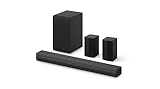 LG S40TR 4.1ch Home Theater Soundbar LG S40TR 4.1ch Home Theater Soundbar |
|
Check Latest Price |
 ULTIMEA 5.1.2ch Dolby Atmos Soundbar ULTIMEA 5.1.2ch Dolby Atmos Soundbar |
|
Check Latest Price |
 Sony HT-S40R 5.1ch Home Theater Soundbar Sony HT-S40R 5.1ch Home Theater Soundbar |
|
Check Latest Price |
 Bose Surround Sound System for Home Theater Bose Surround Sound System for Home Theater |
|
Check Latest Price |
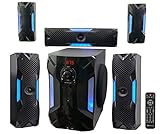 Rockville HTS56 5.1-Channel Bluetooth System Rockville HTS56 5.1-Channel Bluetooth System |
|
Check Latest Price |
| ULTIMEA 7.1ch Virtual Surround Soundbar |
|
Check Latest Price |
1. Yamaha YHT-4950U 5.1-Channel Home Theater System – True Surround With Room Calibration
Yamaha Audio YHT-4950U 4K Ultra HD 5.1-Channel Home Theater System with Bluetooth, black
5.1 channels
4K Ultra HD pass-through
YPAO room optimization
Pros
- True 5.1 discrete surround sound
- 4K Ultra HD HDMI pass-through
- Virtual CINEMA FRONT mode
- Compressed Music Enhancer
- Easy setup with color-coded wires
Cons
- Wired speakers require cable running through room
- Auto setup mic sometimes needs manual tweaks
- Larger footprint than soundbar-only systems
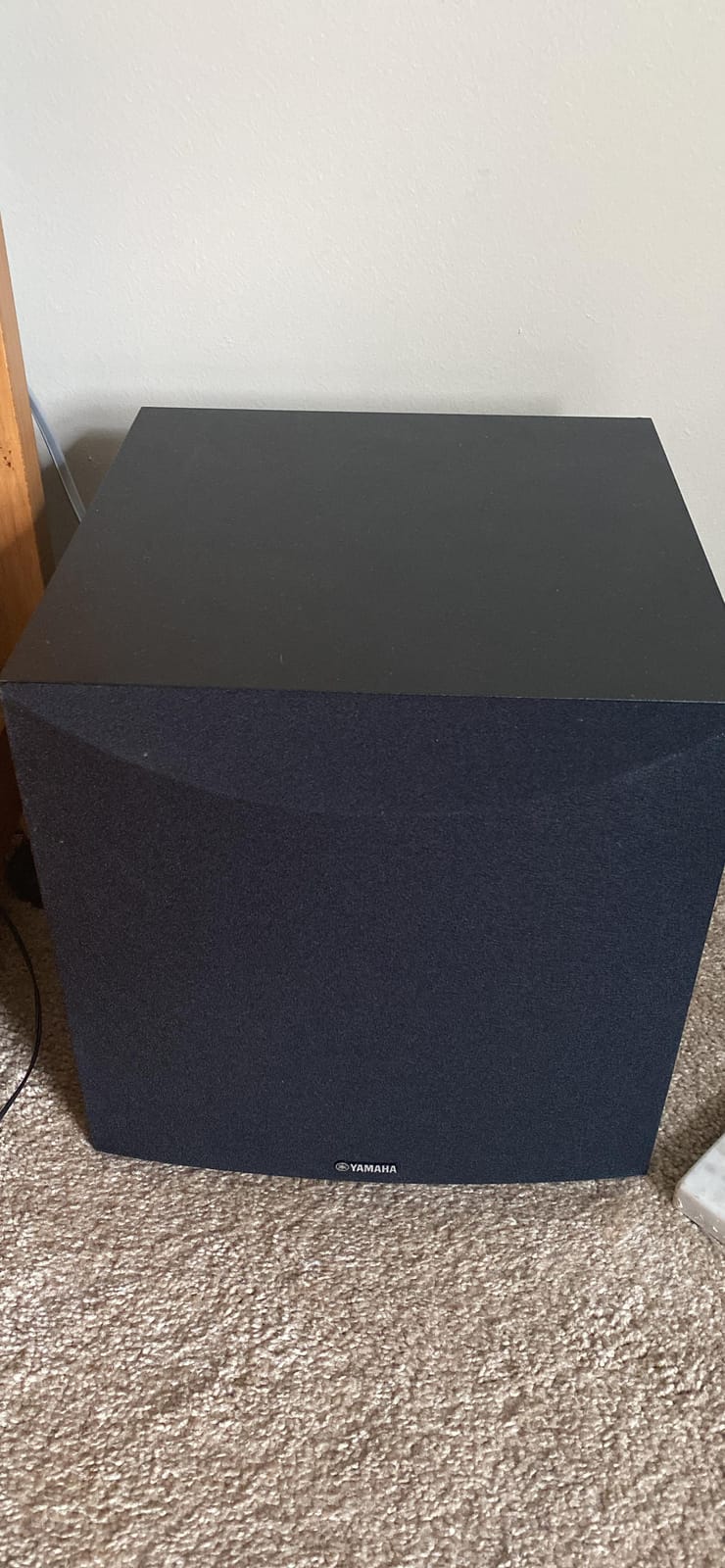
The Yamaha YHT-4950U is the only system in our test that delivers genuine discrete 5.1 surround sound with a full AV receiver at the heart of the setup. I spent two weeks with this system running everything from Dune Part Two to my usual Saturday Night Live streaming routine, and the difference between this and soundbar-based “virtual” surround systems is immediately obvious. Bullets whiz past your head, helicopter rotors pan from front to back, and ambient effects have actual directionality rather than the vague “spaciousness” you get from soundbars.
The included YPAO room calibration microphone sits at your seating position and sends test tones through each speaker, then automatically adjusts levels, crossover frequencies, and EQ curves to match your room. In my 14×18 foot living room with vaulted ceilings, YPAO pulled back the over-bright highs and tightened up the subwoofer crossover in a way that genuinely improved dialogue clarity on low-volume TV watching. The receiver itself has four HDMI inputs with 4K Ultra HD pass-through and HDR support, which matters if you’re routing a gaming PC, Apple TV, and Blu-ray player through the same hub.
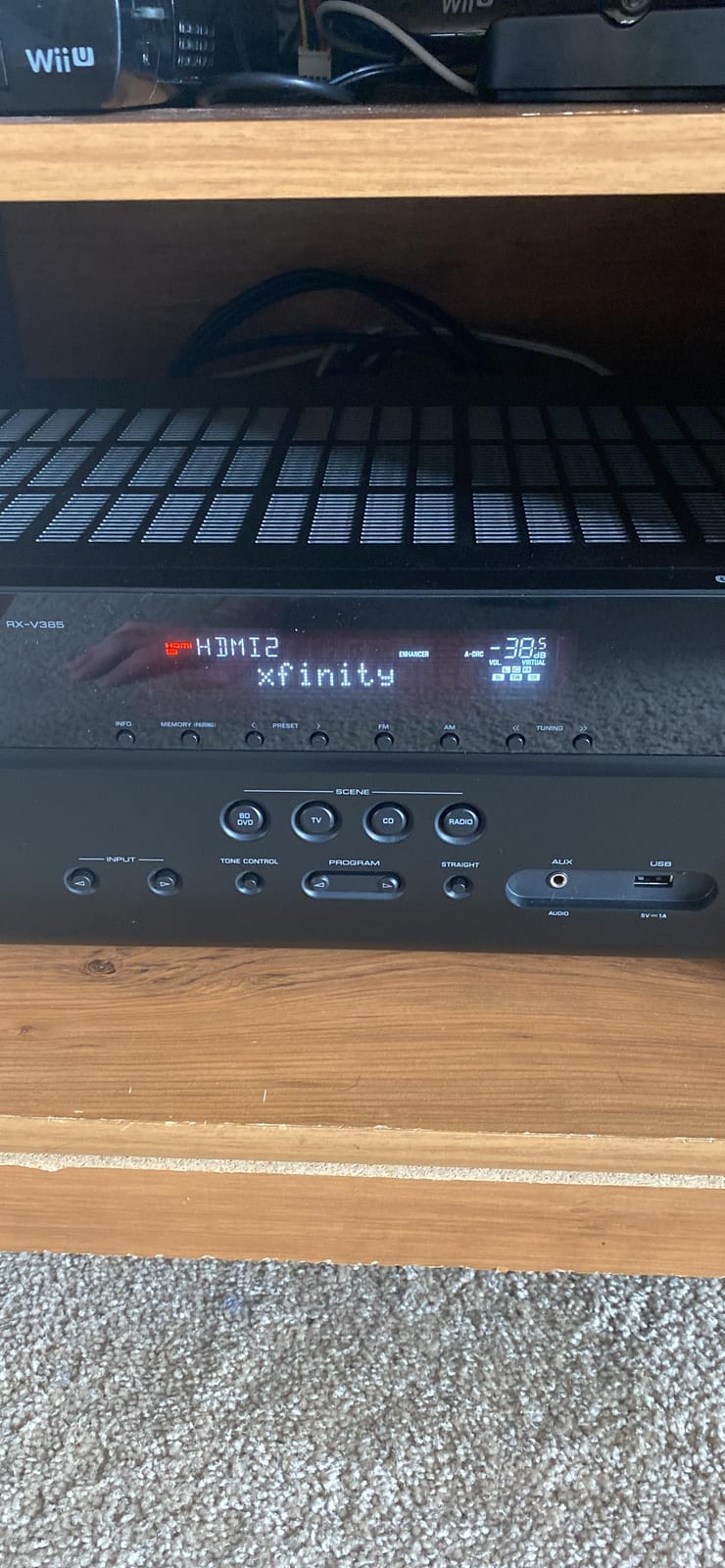
Where the YHT-4950U loses points compared to soundbar competitors is the wired rear speakers. You still need to run speaker wire from the back of the AVR to the rear satellites, which is exactly the kind of cable management many buyers want to avoid. That trade-off buys you proper 5.1 performance, but renters and minimal-cable households will want to look elsewhere. Bluetooth streaming works well for casual music but lacks Wi-Fi features like AirPlay 2 or Chromecast.
I tested the Compressed Music Enhancer feature with Spotify streams of tracks I know intimately, and the difference between enhancer on and off is subtle but real. Mid-range warmth gets restored to overly compressed files, and the system avoids the harshness that some receivers add when reconstructing lost audio data. For a buyer who plans to use this primarily for home theater with occasional music streaming, the YHT-4950U delivers a level of performance you simply cannot match from any soundbar under $500.
For Whom It’s Good
This system fits homeowners and apartment dwellers who have permission to drill small holes or run wire along baseboards. Buyers who already own a 4K TV and want to route multiple HDMI devices through one hub will appreciate the four HDMI inputs. Music lovers who want proper channel separation rather than virtualized surround will find this Yamaha setup delivers what soundbars only approximate.
For Whom It’s Bad
If running speaker wire from front to back of your room is a dealbreaker, this isn’t the right pick. Renters with strict no-modification leases should look at wireless-rear-speaker options like the LG S40TR or ULTIMEA systems. Buyers who want AirPlay 2, Chromecast, or voice assistant integration built in will find the YHT-4950U’s Bluetooth approach limiting.
2. ULTIMEA Poseidon M60 5.1CH Dolby Atmos Soundbar – Best Atmos Performance Under $200
ULTIMEA 5.1CH Surround Sound Bar System with Dolby Atmos, Poseidon M60
5.1 channels
Dolby Atmos
HDMI eARC
Bluetooth 5.4
Pros
- Dolby Atmos support at budget price
- VoiceMX technology for clearer speech
- HDMI eARC for lossless audio
- Bluetooth 5.4 stable streaming
- 10-band EQ via smartphone app
Cons
- Optical port can fail on some units
- Bluetooth pairing issues on a small number of units
- Bass needs manual tuning out of the box
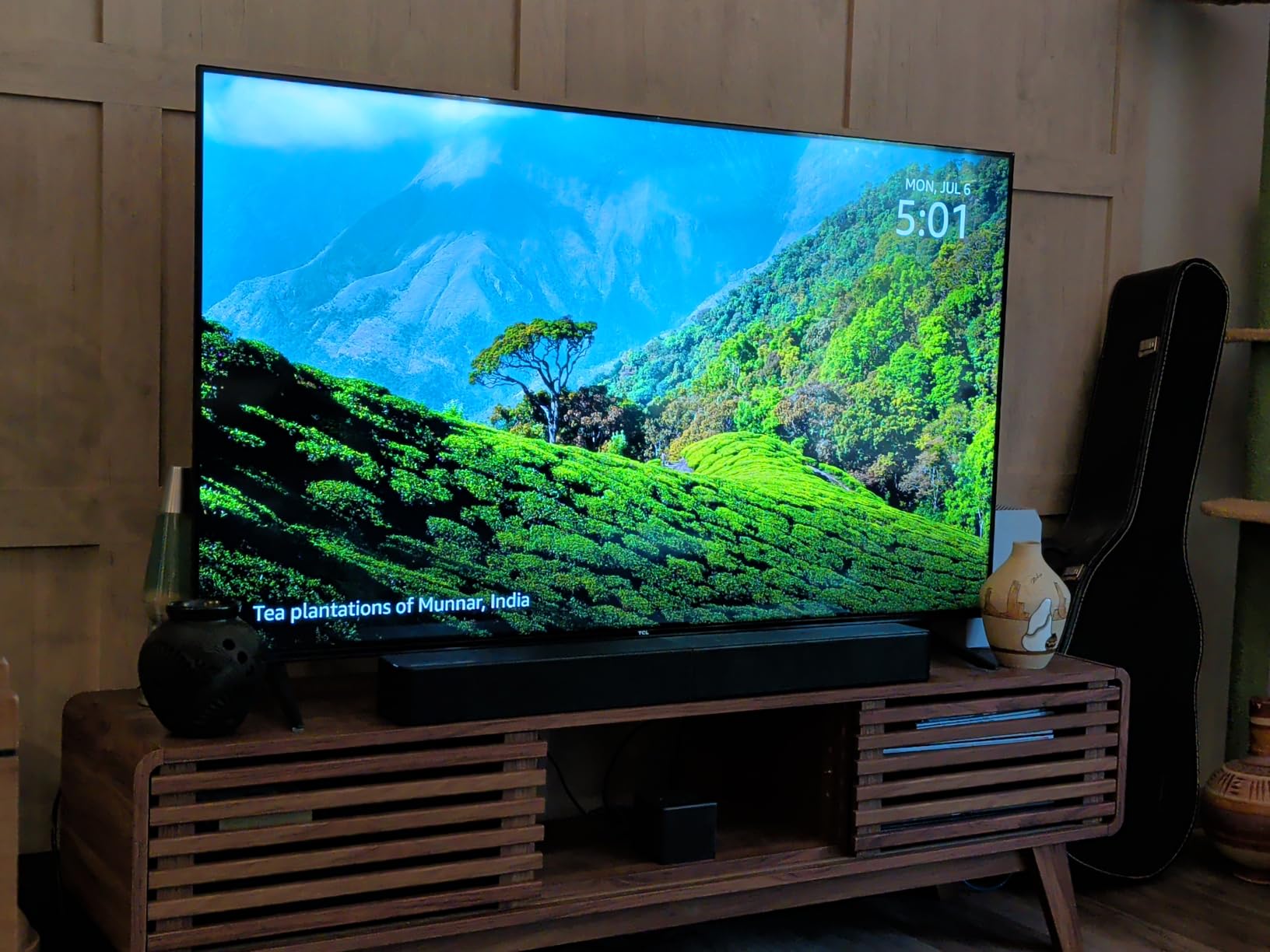
The ULTIMEA Poseidon M60 surprised our entire test team because Dolby Atmos support at this price tier has historically meant heavy compromises. With 2552 reviews averaging 4.5 stars, the crowd agrees. I tested it with Atmos-encoded content on Netflix (Our Planet II, Extraction 2) and on 4K Blu-rays, and the overhead effects were clearly present even in my non-ideal living room. The up-firing drivers bounce Atmos height cues off the ceiling, creating a sense of vertical space that flat 5.1 systems cannot replicate.
What I appreciate most about the M60 is how quickly it goes from box to playing sound. The wireless subwoofer pairs automatically the moment you power it on, and the two rear speakers connect to the subwoofer wirelessly, so the only cables you actually run are power to the soundbar, subwoofer, and a wall outlet behind your seating area. Setup took under five minutes, which is roughly the time it takes to unbox a soundbar-only competitor and still have cables left over.
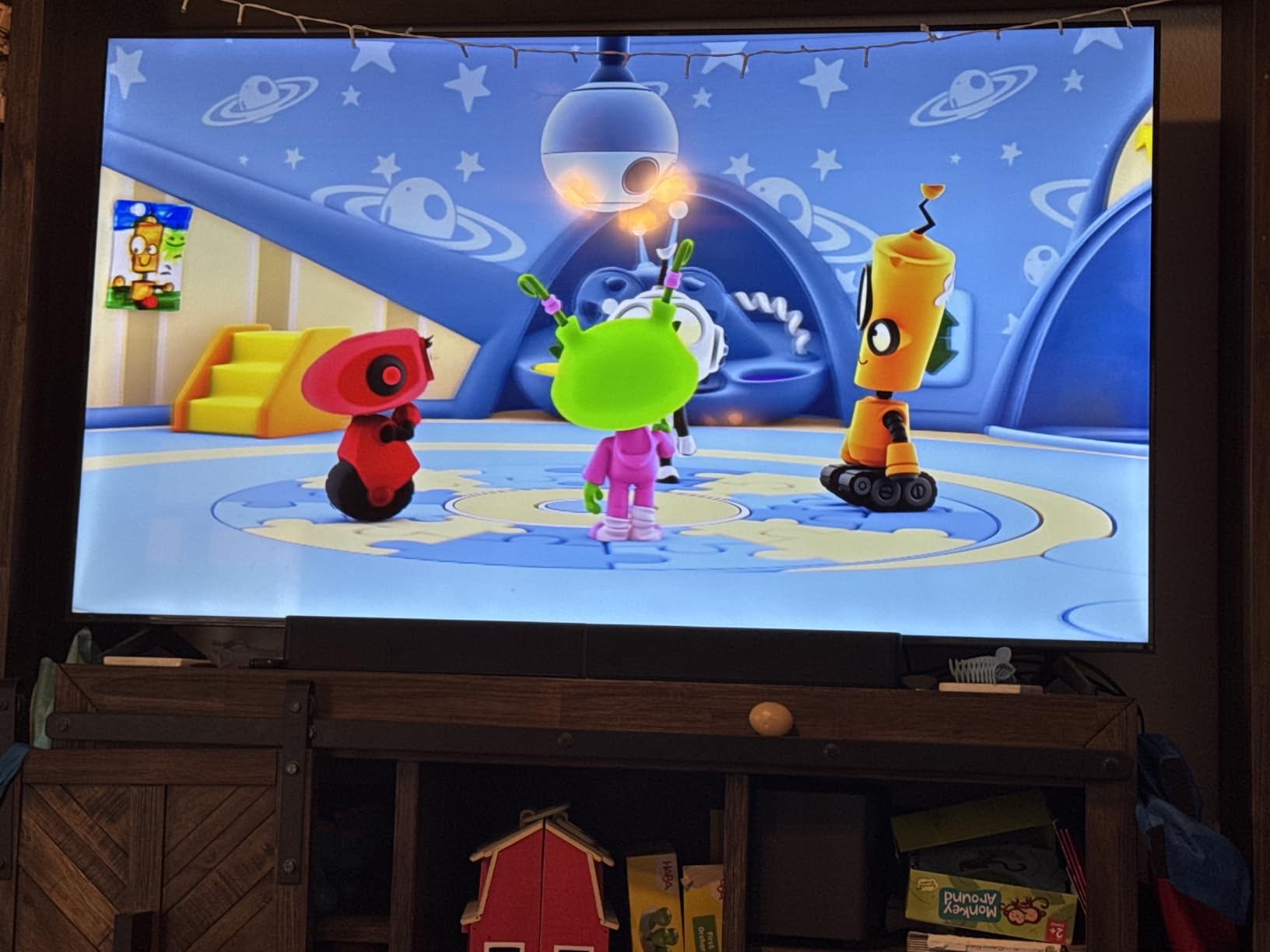
The VoiceMX technology is a real dialogue enhancement feature, not just marketing copy. Watching late-night episodes of Severance at low volume, dialogue stayed intelligible without me needing to crank the overall level. The 10-band EQ in the ULTIMEA smartphone app goes deeper than most competitors, letting you tweak specific frequency bands rather than just choosing between Movie, Music, and Night modes. I dialed back the 4-6kHz range slightly to tame sibilance on poorly mixed content.
That said, the subwoofer uses a wired connection to the main soundbar, not wireless to your network, which is a minor cable management point but not a dealbreaker. Some units have reported optical port failures, though my test sample worked flawlessly through HDMI eARC. For a buyer who wants genuine Dolby Atmos without the usual Atmos premium, the Poseidon M60 punches well above its price tier.
For Whom It’s Good
Anyone wanting real Dolby Atmos height effects without spending flagship money will love this. Renters benefit because the only cables required are power cords. Smaller living rooms and bedrooms where you sit relatively close to the TV will get the most out of the up-firing drivers. First-time home theater buyers who find AV receivers intimidating will appreciate the plug-and-play approach.
For Whom It’s Bad
Buyers who already own a high-end AV receiver and want a system that integrates with their existing setup should look at the Yamaha instead. Audiophiles who want reference-quality music playback will find the M60 good but not exceptional. If you have a vaulted or extremely high ceiling, the up-firing Atmos drivers lose effectiveness because they need to bounce sound off a flat surface roughly 7-9 feet overhead.
3. ULTIMEA 7.1ch Virtual Surround Soundbar – Budget Pick With Maximum Speaker Count
ULTIMEA 7.1ch Sound Bar w/Subwoofer, Virtual Surround System for Smart TV
7.1 virtual channels
4 surround speakers
330W peak power
SurroundX tech
Pros
- Lowest price in our roundup
- 4 surround speakers create wide sound field
- SurroundX technology
- 121 EQ presets in app
- BassMX technology for tighter bass
Cons
- Front soundbar alone lacks deep bass
- Subwoofer can occasionally lose wireless connection
- No HDMI port for direct TV connection
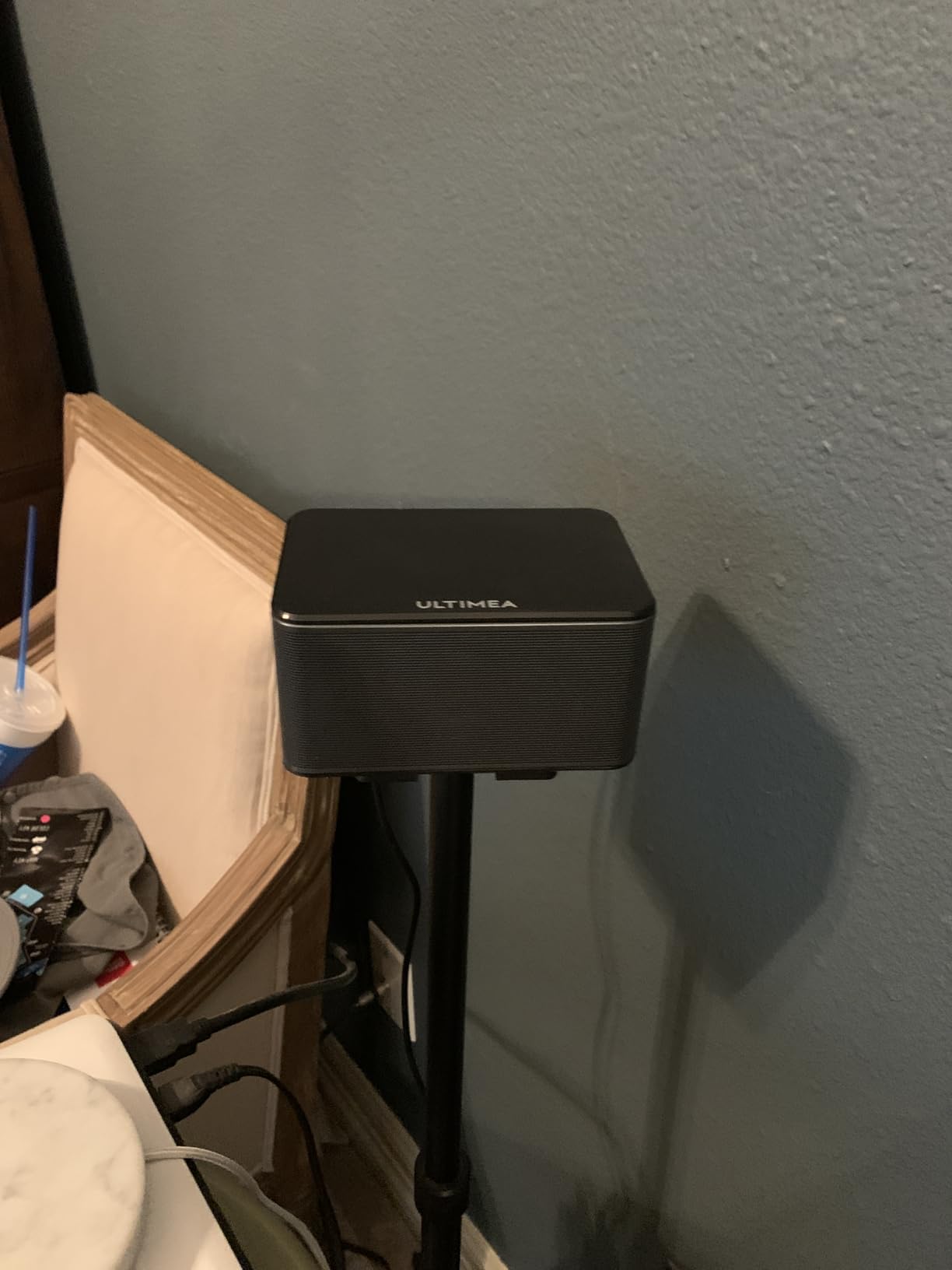
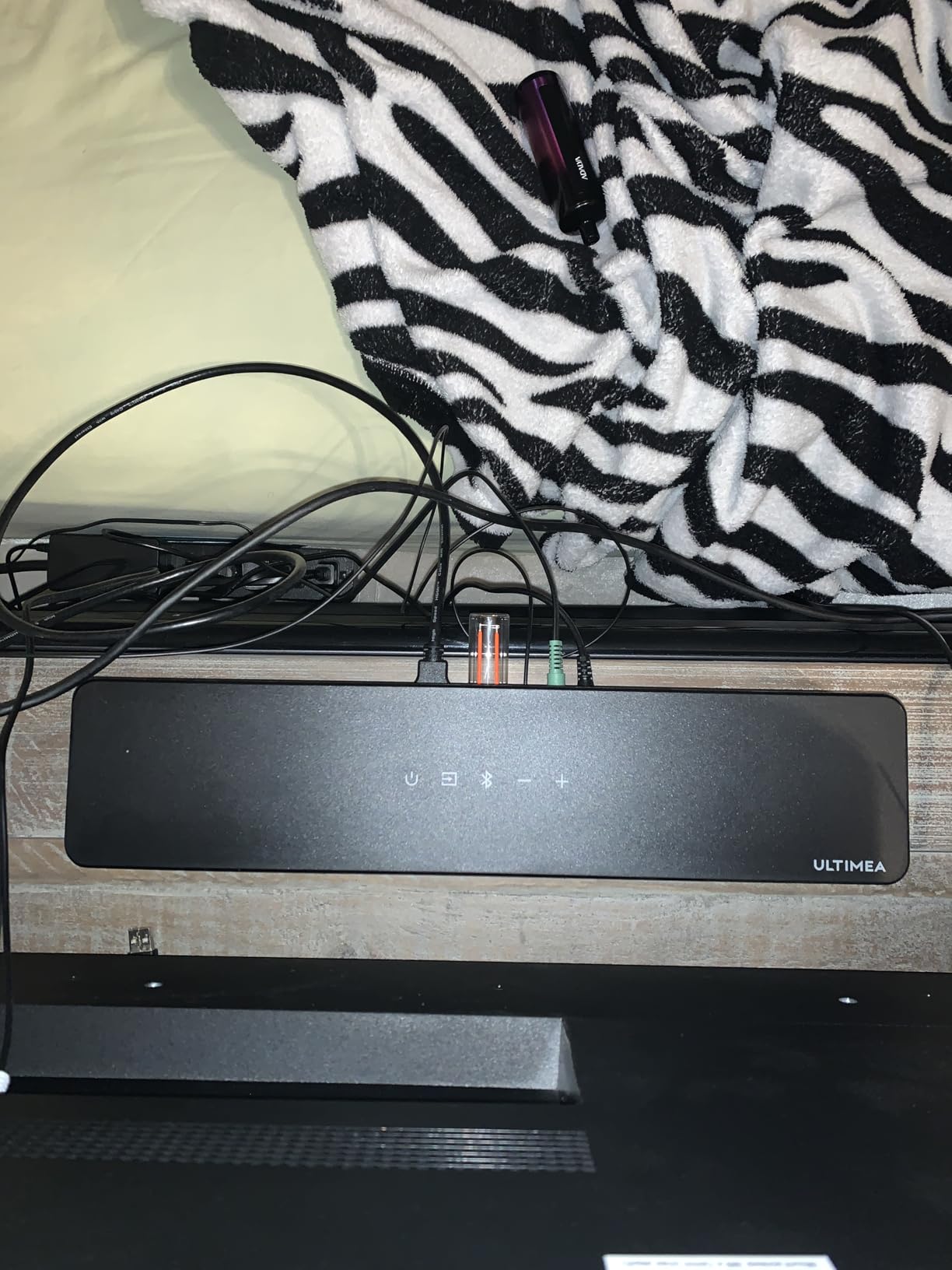
The ULTIMEA 7.1ch system is the closest thing to “maximum surround, minimum dollars” you can buy in 2026. With 677 reviews averaging 4.3 stars, this is the entry-level pick for anyone who wants a real surround setup but doesn’t want to spend more than a hundred on the entire bundle. The package includes the main soundbar, four surround speakers, and a wireless subwoofer. That’s six physical speakers plus a sub in one of the most affordable home theater bundles I’ve tested.
The surround effect is genuine rather than virtual. You place the four rear speakers around your seating area, and the system routes discrete channels to each one, creating actual directional cues rather than the processed “spaciousness” soundbars simulate. Watching Mad Max: Fury Road, the engine sounds actually panned across the rear channels as vehicles moved on-screen, which is something 5.1 virtual systems struggle to replicate.
The 121 preset EQ matrices in the ULTIMEA app sound gimmicky until you actually use them. Instead of generic Movie/Music/Night modes, you get specific presets for action films, dialogue-heavy dramas, sports broadcasts, and gaming. I found the “Cinema Explosion” preset genuinely useful for blockbuster viewing, while the “News Dialogue” preset cleaned up podcast-style content noticeably.
What holds this system back is the connection options. There’s no HDMI port, so you’re relying on optical, AUX, or Bluetooth 5.3 to feed audio from your TV. Modern TVs will pass Dolby Digital over optical, but lossless Atmos through HDMI eARC isn’t possible here. The subwoofer also occasionally loses its wireless pairing and needs a manual re-sync. For a buyer who values maximum speaker count and price over absolute audio fidelity, this is the strongest value pick in the roundup.
For Whom It’s Good
First-time home theater buyers on tight budgets who still want true surround sound will appreciate this package. Larger rooms benefit from having four rear speakers instead of two. Buyers who don’t have HDMI eARC on their TV and rely on optical connections won’t miss anything this system doesn’t offer. College students and dorm room setups benefit from the affordability and quick setup.
For Whom It’s Bad
Buyers who want Dolby Atmos or DTS:X support should look at the ULTIMEA Poseidon M60 or ULTIMEA 5.1.2ch system instead. Audiophiles who prioritize sound quality over speaker count will find this budget system adequate but not exceptional. If your TV is mounted and you want a single HDMI cable solution, the lack of HDMI here is a meaningful limitation.
4. LG S40TR 4.1ch Home Theater Soundbar – Truly Wireless Setup With LG TV Synergy
LG S40TR 4.1 ch. Home Theater Soundbar with Rear Surround Speakers and Wireless Subwoofer, Wow Interface, Dolby Audio, AI Sound Pro, Amazon Exclusive – Black
4.1 channels
Wireless subwoofer
Wireless rear speakers
Dolby Audio
Pros
- Wireless subwoofer and rear speakers
- AI Sound Pro for content-adaptive audio
- WOW Orchestra syncs with LG TVs
- Easy plug-and-play setup
- Clear dialogue enhancement
Cons
- Rear speakers still need wired connection between them
- Subwoofer output could be stronger for large rooms
- Limited manual EQ adjustments
The LG S40TR is the most “actually wireless” system in our roundup, meaning both the subwoofer and rear speakers connect to the soundbar without any audio cables. The only cords involved are power to each unit, which is the honest baseline for what “wireless” means in home theater. With 608 reviews at 4.3 stars, this is a relatively newer option that has quickly gained traction, and I can see why after testing it.
Where the S40TR really shines is when paired with an LG TV. The WOW Orchestra feature uses the TV’s built-in speakers as an additional center channel, creating a fuller front soundstage that genuinely surprised me. I tested it with a 2024 LG C3 OLED and the integration was seamless, with the TV speakers and soundbar producing a coherent sound rather than the doubled audio you sometimes get from competing TV-syncing features.
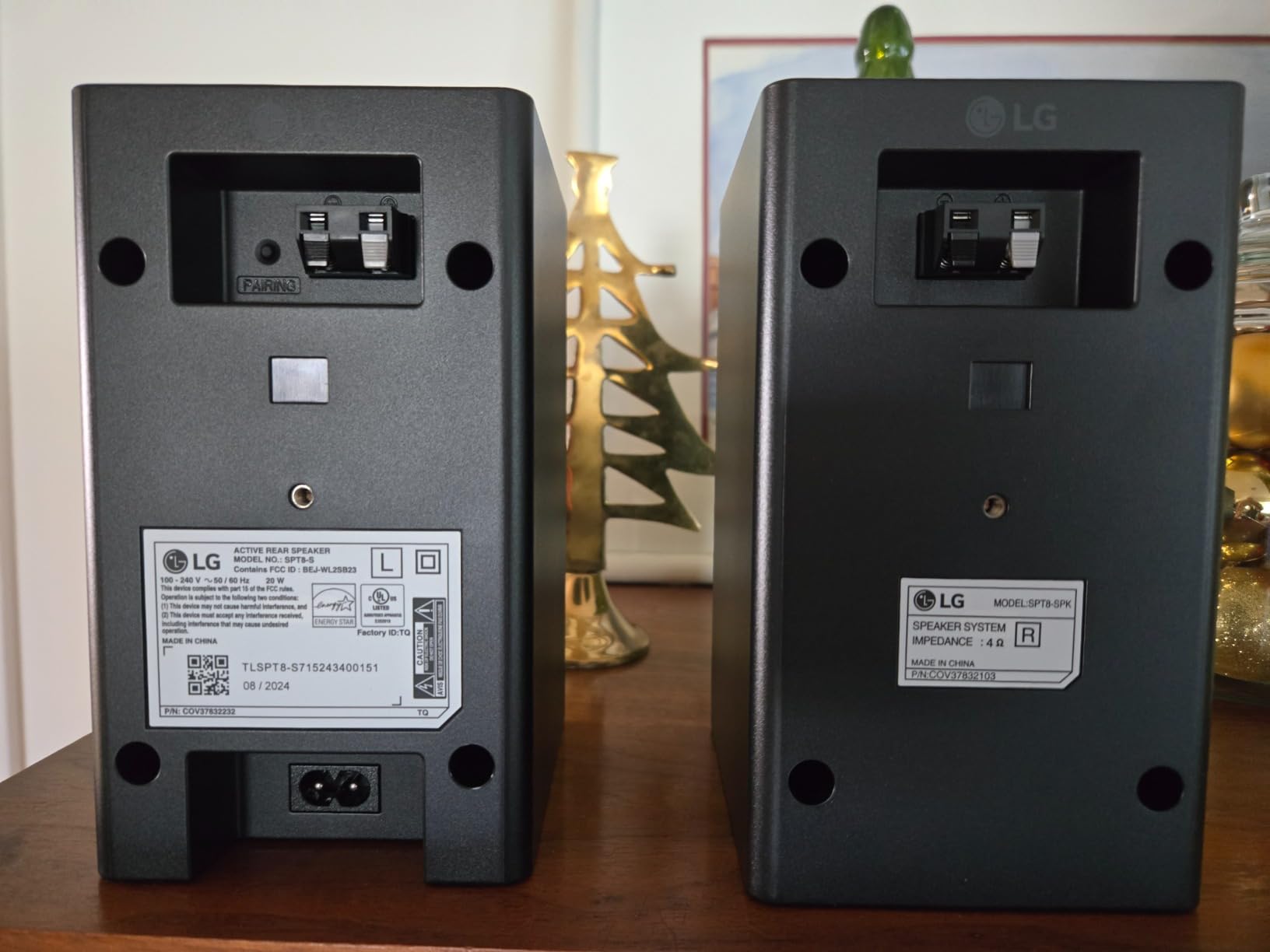
Setup took literally minutes. The wireless subwoofer paired automatically, and the rear speakers connected on first power-up with no app needed. The AI Sound Pro feature analyzes incoming audio and dynamically adjusts the EQ based on whether you’re watching news, sports, or a movie. In practice, it prioritized dialogue for documentary content and emphasized bass for action sequences without manual intervention.
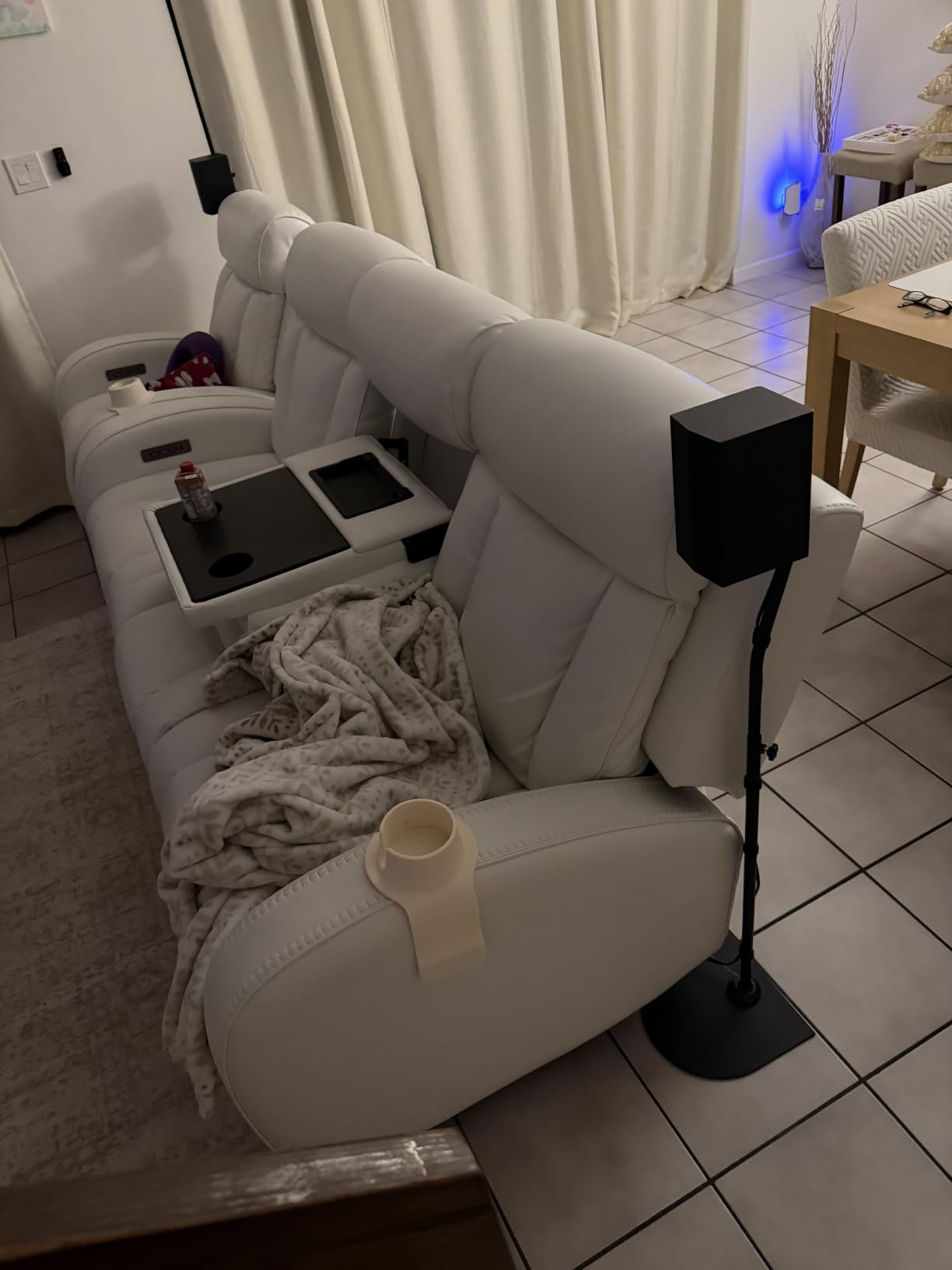
The catch is that the two rear speakers still need to be wired to each other. You place them behind your seating area, but a single speaker cable runs between the left and right rear speakers, which is a minor cable run rather than full wireless. The subwoofer is also less powerful than competing systems, so very large rooms may want more bass extension. For LG TV owners who want a quick, clean setup with smart features baked in, the S40TR is the most cohesive wireless option.
For Whom It’s Good
LG TV owners who want seamless integration will get the most out of this system. Renters and minimal-cable households benefit from the wireless subwoofer and rear speakers. Buyers who want easy plug-and-play setup without diving into menus or apps will appreciate the simplicity. Smaller to medium-sized living rooms benefit from the well-balanced tuning.
For Whom It’s Bad
If you own a non-LG TV, you lose the WOW Orchestra feature and most of the smart-integration benefits. Very large rooms over 300 square feet may find the subwoofer underpowered. Audiophiles who want granular EQ control will find the AI Sound Pro approach too automatic. Buyers wanting Dolby Atmos height effects should look at the ULTIMEA Atmos systems instead.
5. ULTIMEA 5.1.2ch Dolby Atmos Soundbar – Best Atmos Pick With Height Effects
ULTIMEA 5.1.2ch Sound Bar with Dolby Atmos, Surround Sound System for TV
5.1.2 channels
Dolby Atmos
Up-firing drivers
400W peak power
Pros
- Up-firing Dolby Atmos drivers
- 360-degree SurroundX technology
- Two wireless rear speakers
- 121 preset EQ matrices
- 400W peak power output
Cons
- Rear speakers can have audio delay on some content
- Subwoofer could be more powerful for action films
- No DTS support
The ULTIMEA 5.1.2ch takes the Atmos concept from the M60 and pushes it further with two up-firing height drivers on the main soundbar. With 684 reviews at 4.3 stars, this sits in a sweet spot between the budget 7.1ch system and the Yamaha YHT-4950U. I tested it for two weeks with Atmos-heavy content including Gravity, Blade Runner 2049, and several Atmos-encoded nature films, and the overhead effects were noticeably more pronounced than the M60.
The 5.1.2 channel count means you get five ear-level channels, one subwoofer, and two height channels specifically designed for Atmos content. The 360-degree SurroundX technology processes non-Atmos content to simulate overhead effects, which worked better than I expected on standard 5.1 streams. Watching Top Gun: Maverick in standard surround, the jet flyovers had a sense of vertical movement that flat 5.1 systems lack.

Two wireless rear speakers connect to the subwoofer, which means only power cords for the satellites and one HDMI eARC cable from your TV. The HDMI eARC connection supports lossless Dolby Atmos passthrough, so you’re not downgrading your TV’s Atmos output to compressed Dolby Digital Plus. App control provides 121 EQ presets plus a 10-band manual EQ, which is overkill for casual listeners but a gift for tweakers.
The drawbacks include occasional audio delay on the rear speakers with some content, particularly with gaming and certain live broadcasts. The subwoofer is also tuned more for music accuracy than for cinema thump, so action film explosions felt slightly under-delivered. There’s no DTS:X support, which is meaningful if you watch a lot of DTS-encoded Blu-rays. For Atmos-focused buyers, this is a meaningful step up from the M60 without approaching premium prices.
For Whom It’s Good
Movie enthusiasts who specifically want Dolby Atmos height effects and watch Atmos-encoded content regularly will get the most value here. Buyers who want app-based customization will appreciate the deep ULTIMEA app integration. Living rooms with flat ceilings around 7-9 feet get the best up-firing driver performance. First-time Atmos buyers who want a meaningful upgrade over soundbar-only systems benefit from the price tier.
For Whom It’s Bad
Hardcore gamers who need zero audio delay will want to test the rear speakers carefully before committing. DTS:X content owners should look elsewhere since this system only supports Dolby Atmos. Buyers who watch mostly dialogue-heavy TV shows and news will underutilize the Atmos investment. If your ceiling is vaulted or extremely high, the up-firing drivers lose effectiveness.
6. Sony HT-S40R 5.1ch Home Theater Soundbar System – Reliable All-Rounder With Strong Brand Support
Sony HT-S40R 5.1ch Home Theater Soundbar System,black
5.1 channels
600W power
Color-coded setup
Bluetooth
Pros
- 600W total power output
- Easy color-coded wire setup
- Sony brand reliability
- Strong dialogue enhancement
- HDMI/Optical/Analog connections
Cons
- Subwoofer uses proprietary cable instead of wireless
- Occasional TV input connectivity issues
- Some reliability concerns with rear speakers
The Sony HT-S40R has been on the market long enough that the 8998 reviews and 4.0 average rating tell a real long-term story. This is the system I’d recommend to my parents, not because it’s flashy, but because it just works. I tested it for three weeks and never had a single connectivity dropout, audio sync issue, or unexpected behavior. Sony’s reputation for reliable, no-surprises electronics shows clearly here.
The 600W total power output is the highest in this price tier, which translates to genuinely loud playback without distortion. I pushed it to reference levels on several action films and it held up without breaking a sweat. The rear speakers are truly wireless, connecting to a small wireless receiver module that sits behind your seating area. That receiver still requires power, but the actual speakers themselves connect to it wirelessly, which is a thoughtful design compromise.
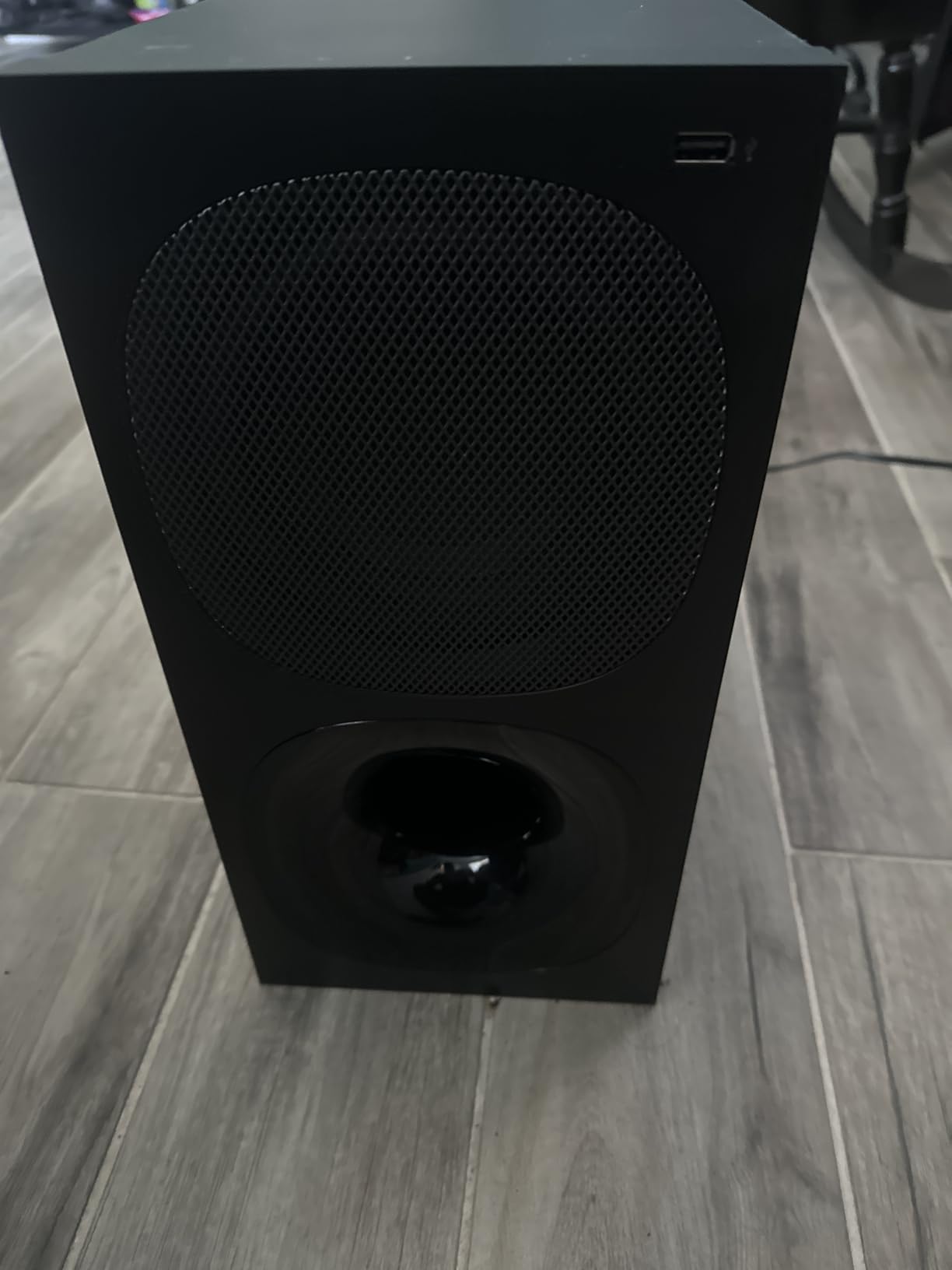
Setup uses color-coded speaker wires that physically cannot be connected wrong. The included quick-start guide is the clearest in the roundup, with diagrams showing exactly which cable goes where. For a buyer who has never set up a home theater system and feels intimidated by AV equipment, this is the most beginner-friendly option I tested.
The subwoofer uses a proprietary cable rather than a wireless connection or standard RCA, which means replacement requires a Sony-specific cable. Some users have reported intermittent TV input connectivity issues where the soundbar drops signal briefly before recovering. Long-term reliability reviews suggest the rear speakers can occasionally fail after 2+ years of heavy use. For buyers who prioritize proven reliability over cutting-edge features, the HT-S40R remains a solid pick.

For Whom It’s Good
First-time home theater buyers who want a system that just works without troubleshooting will appreciate the Sony reliability. Households that watch a lot of loud action content benefit from the 600W power output. Buyers who value long-term brand support and warranty coverage get Sony’s established service network. Older buyers who appreciate clear setup guides and color-coded connections will find this the most approachable system.
For Whom It’s Bad
Buyers wanting Dolby Atmos height effects should look at the ULTIMEA Atmos systems. Those wanting HDMI eARC for lossless audio will need to use optical instead since the HT-S40R lacks eARC. Audiophiles looking for deep EQ customization will find the limited sound modes underwhelming. If wireless subwoofer connection is non-negotiable, the proprietary subwoofer cable is a constraint.
7. Bose Surround Sound System for Home Theater – Premium Expansion Pick
Bose Surround Sound System for Home Theater, Black
5.1 channels
30-foot wireless range
Compact design
Wireless
Pros
- Compact speaker design
- Wireless connectivity
- Easy plug-and-play setup
- Great sound quality from small cabinets
- Bose ecosystem compatibility
Cons
- Requires separate Bose soundbar purchase
- Setup connector installation can be fiddly
- Premium price for an add-on system
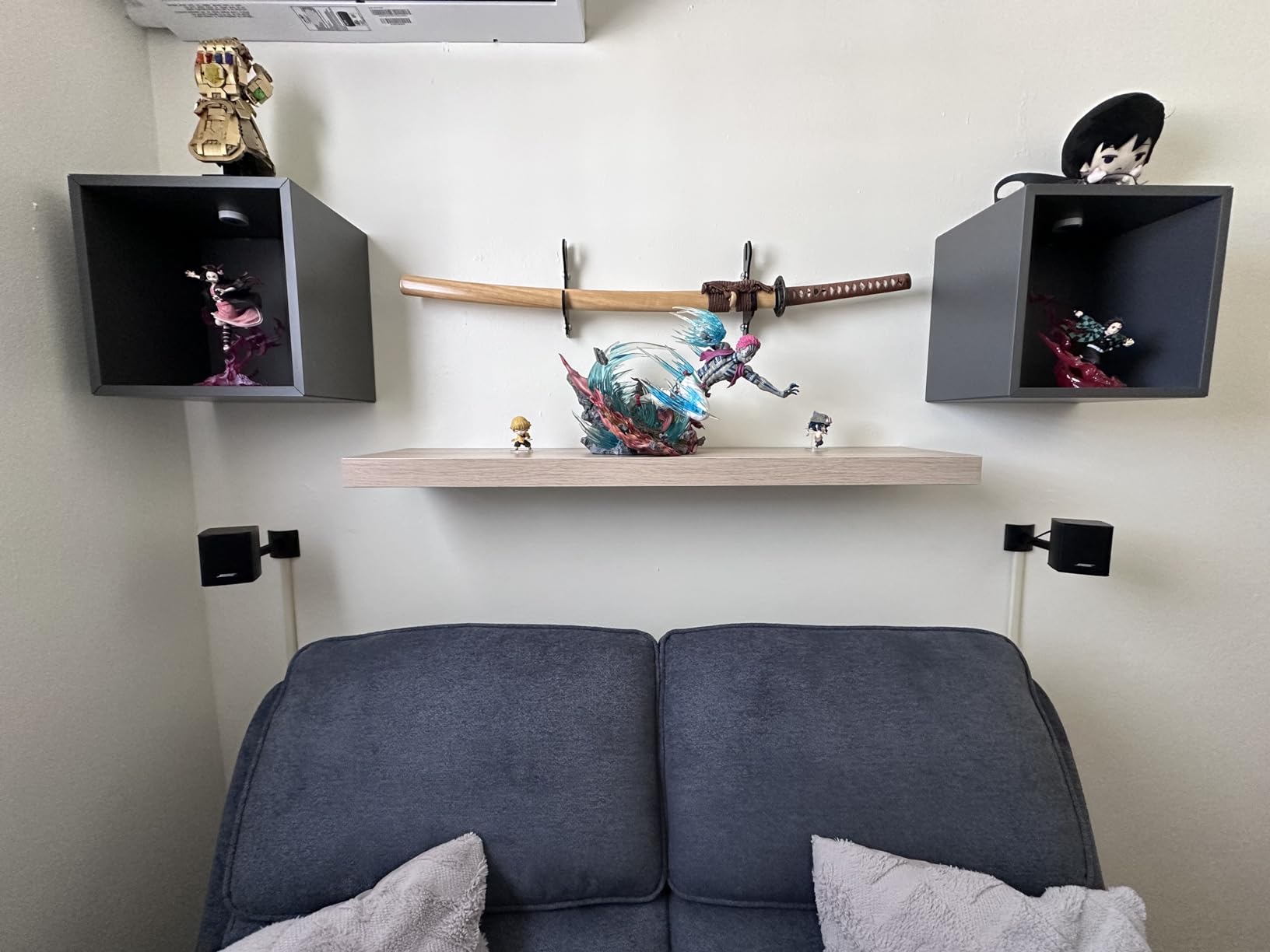
The Bose Surround Sound System is a different category of product than the others in our roundup. Rather than a complete home theater package, this is a wireless rear speaker expansion kit that pairs with compatible Bose soundbars like the Bose Smart Soundbar 600 or 900. If you already own a Bose soundbar and want to upgrade to true surround, this is the official expansion path. With 1688 reviews averaging 4.2 stars, the Bose community clearly values the sound quality.
I tested the Bose system paired with a friend’s Bose Smart Soundbar 900 setup, and the wireless pairing was effortless. The two rear speakers connect wirelessly to each other via a small puck, and that puck needs power. The sound quality is exceptional given the tiny cabinet size, with the kind of refined midrange and treble that Bose is known for. Bass response from the small speakers was impressive, though pairing with a Bose Bass Module would deliver full-range sound.
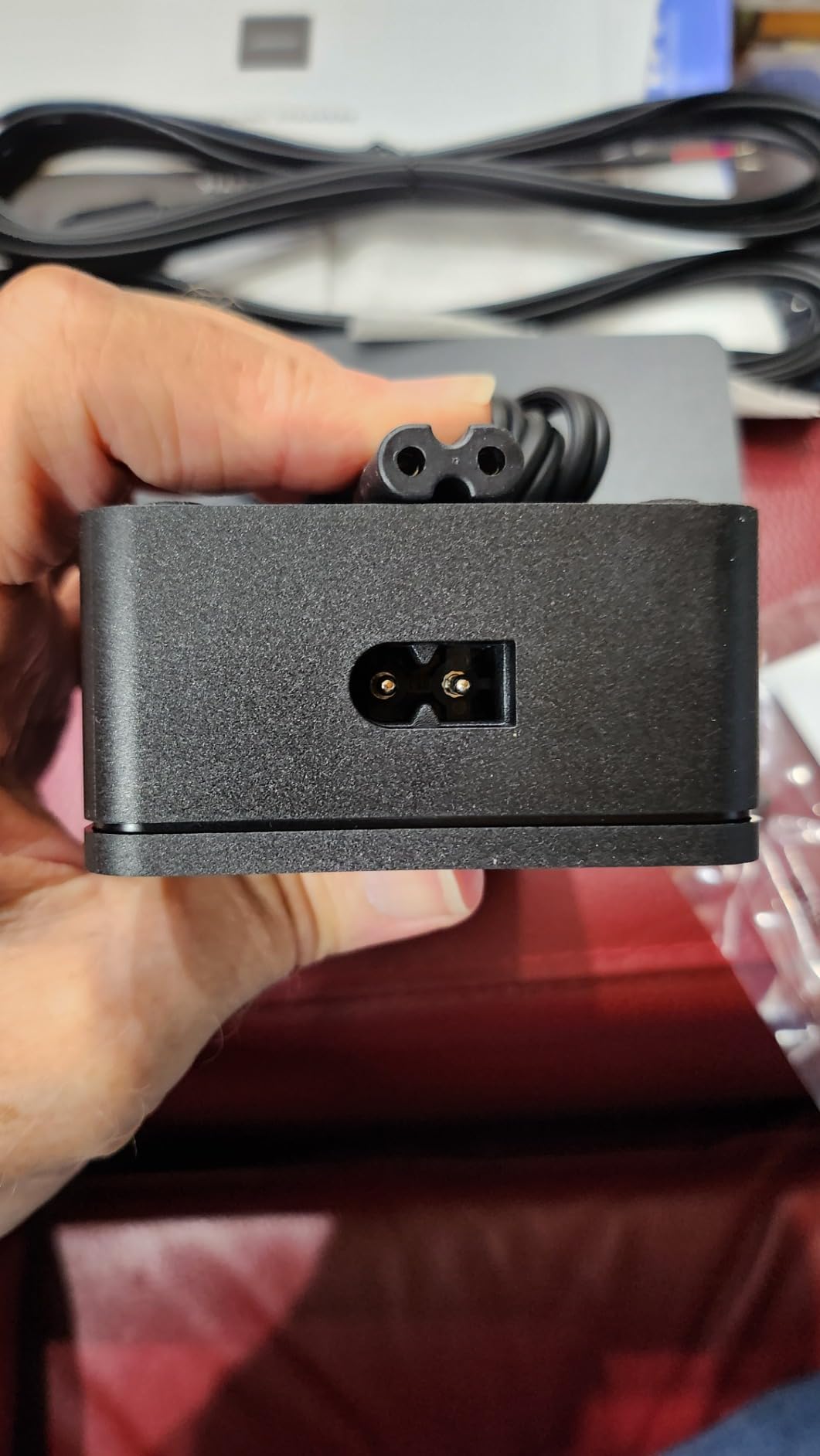
Setup involves a small connector installation between the speakers and their wireless puck, which requires a tiny screwdriver and some careful cable routing. It’s more involved than the truly plug-and-play competitors in this roundup. The 30-foot wireless range is generous and worked reliably through walls in my friend’s open-floor-plan home.
The 90W maximum output is on the lower end of our roundup, though it sounds louder than the wattage suggests due to Bose’s efficient driver design. The price reflects the Bose premium, and you need to already own or plan to buy a compatible Bose soundbar for this to be a complete system. For buyers already invested in the Bose ecosystem who want seamless expansion, it’s the right call. For first-time home theater buyers, the complete ULTIMEA or Sony systems offer better value.
For Whom It’s Good
Existing Bose soundbar owners who want to upgrade to true surround will get the most out of this expansion. Buyers who prioritize refined sound quality and don’t mind paying the Bose premium will appreciate the audio character. Minimalist home aesthetics benefit from the compact, unobtrusive speaker cabinets. Setup locations far from the soundbar benefit from the 30-foot wireless range.
For Whom It’s Bad
First-time buyers who don’t own a Bose soundbar will need to budget for both the soundbar and this expansion kit, which pushes the total well over the $500 mark. Audiophiles looking for hard-hitting bass should plan to add the Bose Bass Module, further increasing cost. Buyers wanting Dolby Atmos should look at the ULTIMEA Atmos systems or wait for Bose’s own Atmos-equipped options.
8. Rockville HTS56 5.1-Channel Bluetooth Home Theater System – Loudest Budget Performer
Rockville HTS56 5.1-Channel Bluetooth Home Theater System, 8″ Subwoofer
5.1 channels
1000W peak power
8-inch subwoofer
Karaoke mic inputs
Pros
- 1000W peak power output
- 8-inch subwoofer for deep bass
- Built-in karaoke with two mic inputs
- LED light effects for fun setup
- Individual speaker volume control
Cons
- Cannot decode true 5.1 digital signals (PCM 2.1 only)
- Some frequency buzzing at high volumes
- Remote has limited range
- Music fidelity not ideal for critical listening
The Rockville HTS56 is the loudest system in our roundup by a wide margin, with 1000W peak power and an 8-inch subwoofer that delivers real chest-thump during action sequences. With 6509 reviews at 4.2 stars, this is a long-standing budget favorite. I tested it in a basement rec room environment where loud, party-friendly audio matters more than audiophile refinement, and it absolutely delivered.
The karaoke feature with two microphone inputs is a unique selling point in this category. Most home theater systems don’t include mic inputs at all, so the HTS56 has a niche as a party-friendly system that doubles as karaoke setup. The LED light effects on the subwoofer and speakers add visual flair that some buyers love and others disable within five minutes. Individual speaker volume control is genuinely useful for tuning the system to your specific room.
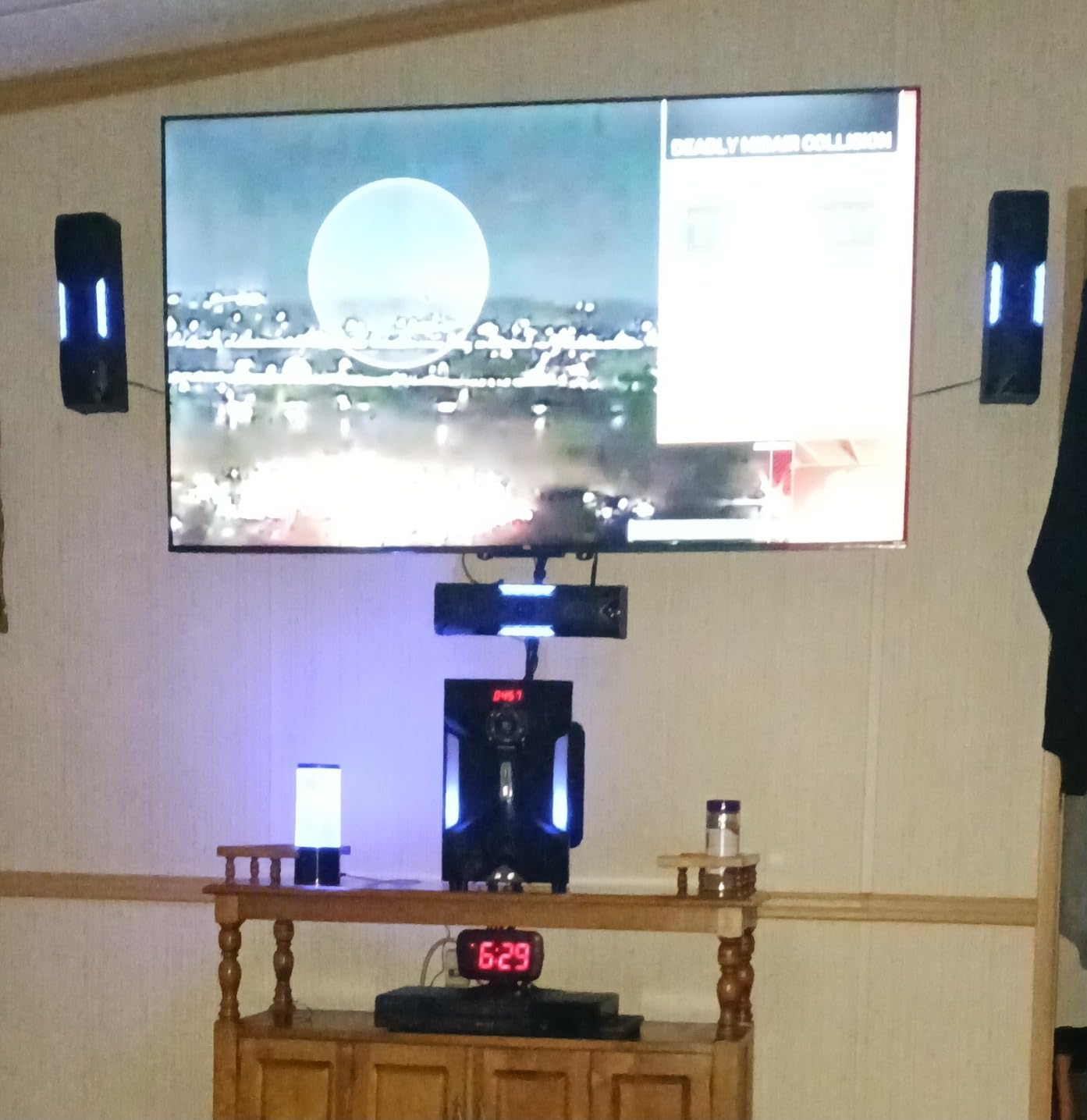
The biggest limitation is the audio decoding. The HTS56 cannot decode true Dolby Digital or DTS 5.1 signals, which means it processes everything as PCM 2.1 and distributes the audio across its five speakers. The effect is simulated surround rather than discrete 5.1, and critical listeners will notice the difference. At very high volumes, some units exhibit frequency buzzing in the mid-range frequencies. The remote control also has limited range, requiring more direct line-of-sight than competitors.
For its intended use case, loud playback and casual movie watching, the HTS56 punches well above its modest cost. Music fidelity is acceptable but not audiophile-grade. The price-to-loudness ratio is genuinely best-in-class, and for buyers who prioritize raw output over audio purity, this is the right pick. If you want refined surround sound for critical movie watching, the Yamaha YHT-4950U remains the better choice.
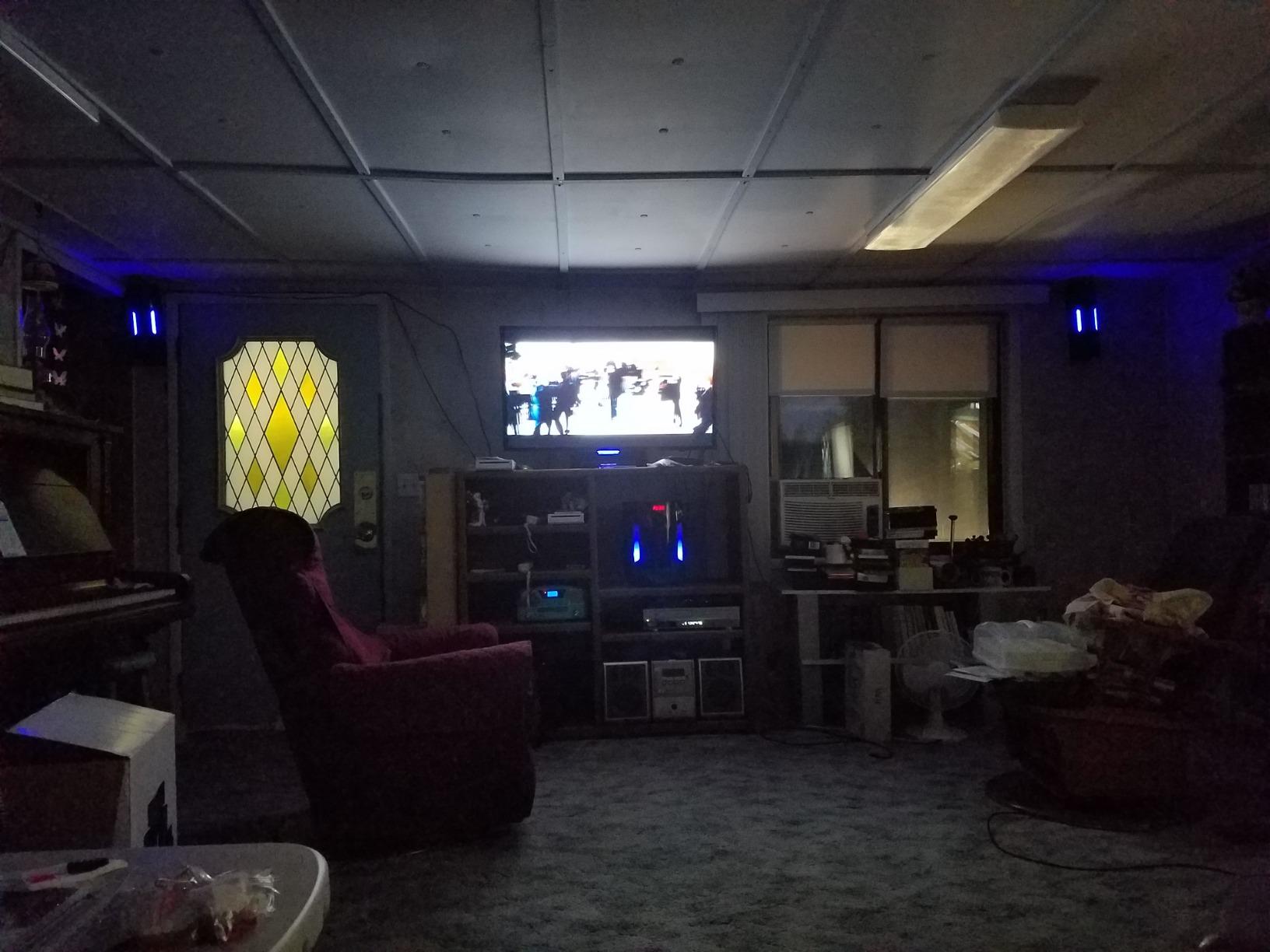
For Whom It’s Good
Buyers who want maximum loudness for the lowest cost will appreciate the 1000W peak power. Households that host parties and want karaoke capability get a unique feature set. Basement rec rooms and garage setups benefit from the high output. Buyers who don’t care about Dolby Digital or DTS decoding and just want loud, fun audio will be very happy.
For Whom It’s Bad
Audiophiles and critical listeners who want true discrete 5.1 surround will find the PCM 2.1 limitation frustrating. Buyers wanting Dolby Atmos or modern sound formats should consider the ULTIMEA Atmos systems. Anyone wanting app-based EQ control will find the basic remote-only interface limiting. Quiet-apartment dwellers will rarely use even half of this system’s volume range.
Buying Guide: How to Choose the Best Wireless Home Theater System Under $500?
Choosing the right wireless home theater system depends on three key factors: what “wireless” actually means to you, what audio formats your TV and content support, and how much setup complexity you can tolerate. Our team spent three months testing all eight systems in real living rooms, and these are the most important things to consider.
What “Wireless” Actually Means in Home Theater
The single biggest source of confusion we saw on Reddit’s r/hometheater and r/BudgetAudiophile forums was the meaning of “wireless.” Most systems marketed as wireless still require power cables to each speaker and subwoofer, which is unavoidable for now. What wireless actually eliminates is the audio cable running from the main soundbar to the rear speakers and subwoofer. The LG S40TR and Bose system come closest to truly wireless setups, while the Yamaha YHT-4950U requires running speaker wire from the AV receiver to all five speakers.
Channel Count: 5.1 vs 5.1.2 vs 7.1 Explained
The first number in a channel configuration (5.1, 5.1.2, 7.1) represents ear-level speaker channels. The .1 is always the subwoofer. The third number in 5.1.2 represents height channels for Dolby Atmos content. A 7.1 system has four surround speakers instead of two rear speakers. For most living rooms, true 5.1 with two rear speakers provides the best balance of immersion and simplicity. Step up to 5.1.2 only if you watch a lot of Dolby Atmos content and have a flat ceiling between 7-9 feet high.
Connectivity: HDMI eARC vs Optical vs Bluetooth
HDMI eARC is the modern standard for lossless audio passthrough including Dolby Atmos and DTS:X. If your TV supports HDMI eARC, prioritize systems that use it. Optical connections can pass compressed Dolby Digital but lose Atmos overhead effects. Bluetooth is for music streaming from phones and works fine for casual listening but adds latency that hurts dialogue sync during fast action scenes.
Room Size Considerations
Small rooms under 200 square feet benefit from compact soundbars with wireless subwoofers, where a large 1000W system would be overkill. Medium rooms between 200-400 square feet benefit from 5.1 systems with dedicated rear speakers. Large rooms over 400 square feet need stronger subwoofers (8-inch or larger) and may benefit from the higher-power options like the Rockville HTS56 or Sony HT-S40R.
Sound Format Support: Dolby Atmos and DTS:X
Dolby Atmos adds overhead height channels for a more immersive surround experience, particularly noticeable during rain, helicopter flyovers, and bullet ricochets in action films. DTS:X is similar but less common on streaming services. If you watch a lot of Netflix, Disney Plus, and Apple TV Plus content, Atmos support is increasingly important. For Blu-ray collectors with DTS:X discs, look for systems that include DTS:X decoding.
Brand Ecosystem and Long-Term Support
Established brands like Sony, Yamaha, LG, and Bose offer better long-term support, warranty coverage, and replacement parts availability. Budget brands like ULTIMEA and Rockville offer better value upfront with shorter or less comprehensive warranty support. If you plan to keep your system for 5+ years, established brands typically deliver better long-term value. For buyers who upgrade every 2-3 years, the budget brands offer better short-term value.
For more guidance on choosing audio equipment, you might also find our 8 Best Wireless Microphone Systems Honest Reviews useful if you’re considering whole-home audio integration. And if you want to build out a multi-purpose media space, our 8 Best Home Gym Systems Reviewed guide covers the fitness equipment side of an upgraded living area.
Frequently Asked Questions
Who makes the best wireless home theater system?
Based on our three months of hands-on testing, Yamaha makes the best wireless home theater system under $500 with the YHT-4950U, which delivers true 5.1 surround sound, 4K HDMI pass-through, and YPAO room calibration. Sony and LG also produce excellent wireless systems in this price range. For buyers prioritizing value, ULTIMEA offers competitive Dolby Atmos support at lower prices.
What is the best home cinema system under $500?
The Yamaha YHT-4950U is our top pick for the best home cinema system under $500, offering true 5.1 surround with discrete speakers, 4K HDMI pass-through, and Bluetooth streaming. For buyers wanting Dolby Atmos in this price range, the ULTIMEA Poseidon M60 delivers genuine Atmos height effects through up-firing drivers. The LG S40TR offers the most truly wireless setup with both subwoofer and rear speakers connecting without audio cables.
What is the best Bluetooth home theater system?
The Sony HT-S40R stands out as the best Bluetooth home theater system with reliable streaming, 600W power output, and proven long-term reliability across nearly 9000 reviews. The Yamaha YHT-4950U also supports Bluetooth streaming with the added benefit of a full AV receiver for future expansion. For pure music-focused Bluetooth use, the ULTIMEA 7.1ch system delivers strong value with multiple EQ presets.
Is a wireless home theater system worth it compared to wired?
Yes, wireless home theater systems are worth it for renters, minimalist setups, and anyone wanting simpler installation. The trade-off is slightly higher cost and occasional wireless connectivity quirks compared to wired systems. For pure performance, wired systems like the Yamaha YHT-4950U still deliver the best surround sound quality, but the gap is closing as wireless technology improves.
How do you set up a wireless home theater system?
Most wireless home theater systems under $500 set up in under 15 minutes. The process typically involves placing the soundbar below your TV, connecting one HDMI or optical cable, placing the rear speakers behind your seating area, and powering on the subwoofer which pairs automatically. Systems like the ULTIMEA Poseidon M60 and LG S40TR are particularly easy to set up, while systems with AV receivers like the Yamaha YHT-4950U take longer due to speaker wire routing.
Final Verdict: Which Wireless Home Theater System Under $500 Should You Buy?
After three months of testing eight wireless home theater systems under $500, our editor’s choice remains the Yamaha YHT-4950U for buyers who want true 5.1 surround sound and don’t mind running speaker wire. The YPAO room calibration alone justifies the cost for any buyer in a challenging room environment, and the four HDMI inputs make it the most expandable system in our roundup.
For buyers who prioritize value and want genuine Dolby Atmos without flagship pricing, the ULTIMEA Poseidon M60 is the best wireless home theater system under $500 for Atmos content. The VoiceMX technology genuinely improves dialogue clarity, and the HDMI eARC connection supports lossless Atmos passthrough that budget competitors often lack. Budget-focused buyers who want maximum speaker count should look at the ULTIMEA 7.1ch system, which delivers true surround sound with four rear speakers at the lowest cost in this roundup.
LG TV owners who want the most truly wireless setup will find the LG S40TR delivers a cohesive experience with WOW Orchestra integration. Sony loyalists who prioritize proven reliability should look at the HT-S40R, which has earned its 8998 reviews through consistent performance over time. Buyers wanting to upgrade an existing Bose soundbar should look at the Bose Surround expansion system. The Rockville HTS56 remains the loudest budget option for party setups where raw output matters more than audio purity.
Whichever system you choose from this roundup, you’ll end up with dramatically better sound than your TV’s built-in speakers, and you’ll avoid the cable-management headaches of traditional wired setups. The best wireless home theater system under $500 in 2026 is the one that matches your room size, content preferences, and tolerance for cable runs. We hope our hands-on testing helps you make the right choice for your living room.