
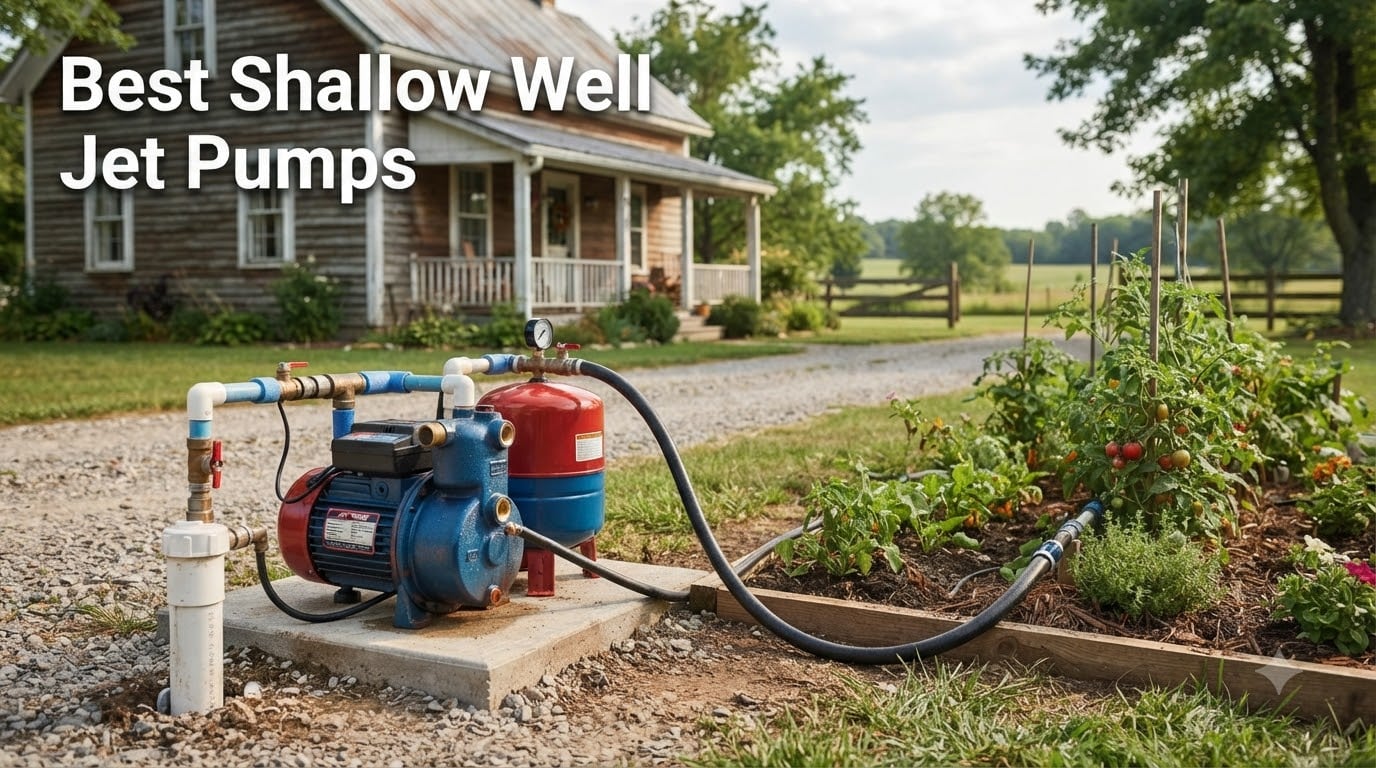
Choosing from the best shallow well jet pumps starts with one measurement: the static water level in your well. If that level is no deeper than 25 feet, an above-ground jet pump can draw water through a suction pipe, making it a practical choice for a home, cottage, cabin, small farm, or irrigation system.
A shallow well jet pump is easier to service than a submersible pump because the motor stays accessible in a basement or pump house. It also needs a sound foundation, an airtight suction line, a pressure tank, a reliable foot valve, and a plan for the day the water table drops.
I compared eight pumps using the specifications and customer feedback in the product data, then checked each one against the real buying decisions: water depth, required flow, pressure, electrical supply, corrosion risk, priming, sediment, and winterization. There are no universal winners because a large farm and a weekend cottage have very different water demands.
My short answer is simple: the Red Lion RJS-100-PREM is the strongest all-around choice for a high-flow shallow well, while the Acquaer CJE100-1 makes the most sense when a future deep-well conversion matters. The Pentair SNE-L stands out for buyers who want a cast-iron pump with a drain port for winterizing.
This list is updated for 2026. Product ratings and review counts are copied from the supplied product records, and I have not added or estimated ratings.
Table of Contents
Top 3 Picks for Best Shallow Well Jet Pumps (September 2026)
Best Shallow Well Jet Pumps in 2026
These are the eight products in the comparison. “Maximum flow” is not a promise of household flow; actual delivery falls as the pump’s total dynamic head rises, and a well with a fluctuating water table can make a conservative choice the better one.
| Product | Specifications | Action |
|---|---|---|
 Red Lion RJS-100-PREM 1 HP Red Lion RJS-100-PREM 1 HP |
|
Check Latest Price |
 Aquastrong 1.6 HP with tank Aquastrong 1.6 HP with tank |
|
Check Latest Price |
 Goulds J5S 1/2 HP Goulds J5S 1/2 HP |
|
Check Latest Price |
 Aquastrong 1.5 HP centrifugal Aquastrong 1.5 HP centrifugal |
|
Check Latest Price |
 Acquaer CJE100-1 1 HP Acquaer CJE100-1 1 HP |
|
Check Latest Price |
 Goulds J10S 1 HP Goulds J10S 1 HP |
|
Check Latest Price |
 Red Lion RJS-75-PREM 3/4 HP Red Lion RJS-75-PREM 3/4 HP |
|
Check Latest Price |
 Pentair SNE-L 1 HP Pentair SNE-L 1 HP |
|
Check Latest Price |
1. Red Lion RJS-100-PREM 1 HP Cast Iron Jet Pump
Red Lion RJS-100-PREM 115/230V, 1 HP, 23 GPM, Shallow Well Jet Pump
23 GPM
1 HP
Cast iron, 115/230V
25 ft maximum lifting height
Pros
- Strong water pressure and volume
- Quiet operation
- Cast iron construction
- Dual voltage
- Pressure switch and gauge included
Cons
- Priming issues reported
- Pressure switch may need adjustment
- Can run hot under heavy use
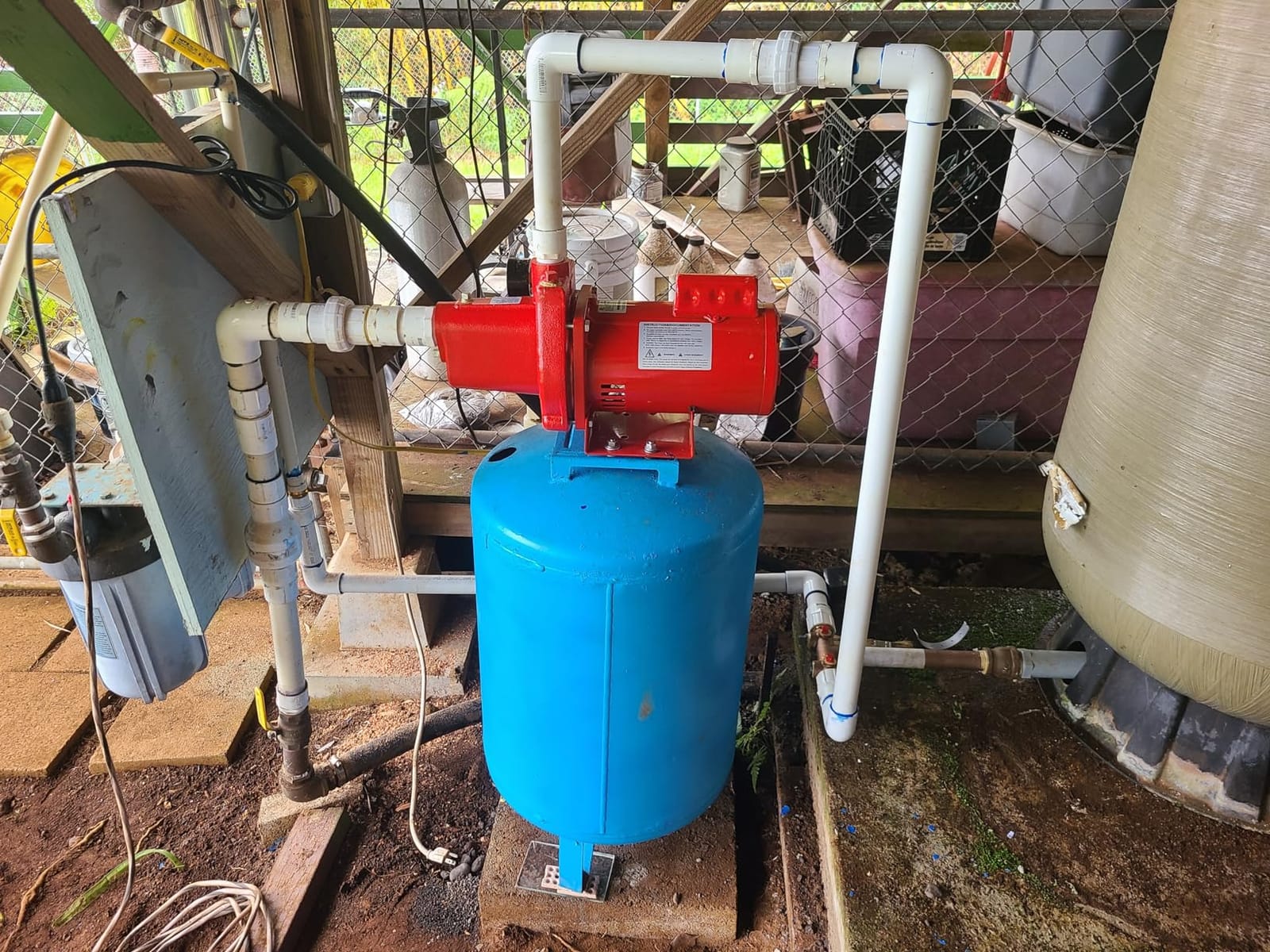
The Red Lion RJS-100-PREM is my first pick when a shallow well serves a larger home, farm, or property with several fixtures running at once. Its listed 23 GPM output, 1 HP motor, and 25-foot maximum lifting height give it the kind of capacity that can keep a pressure system from feeling undersized.
It weighs 41 pounds and has a 1-1/4-inch FNPT intake with a 1-inch FNPT discharge. The dual-voltage design is useful when a property has either 115V or 230V service, but the wiring must match the motor and local electrical code; do not assume the convenient outlet arrangement is the right connection.
The cast iron casing and volute are what I want for a permanently installed pump, and the glass-filled thermoplastic impeller and diffuser should tolerate ordinary well-water service. The supplied pressure switch and gauge also reduce the number of separate parts to source.
Customer feedback praises pressure, volume, and quiet operation, while recurring complaints mention initial priming and pressure-switch adjustment. That is a fair trade for a high-flow pump: it is capable, but a poor suction-line installation will be obvious quickly.
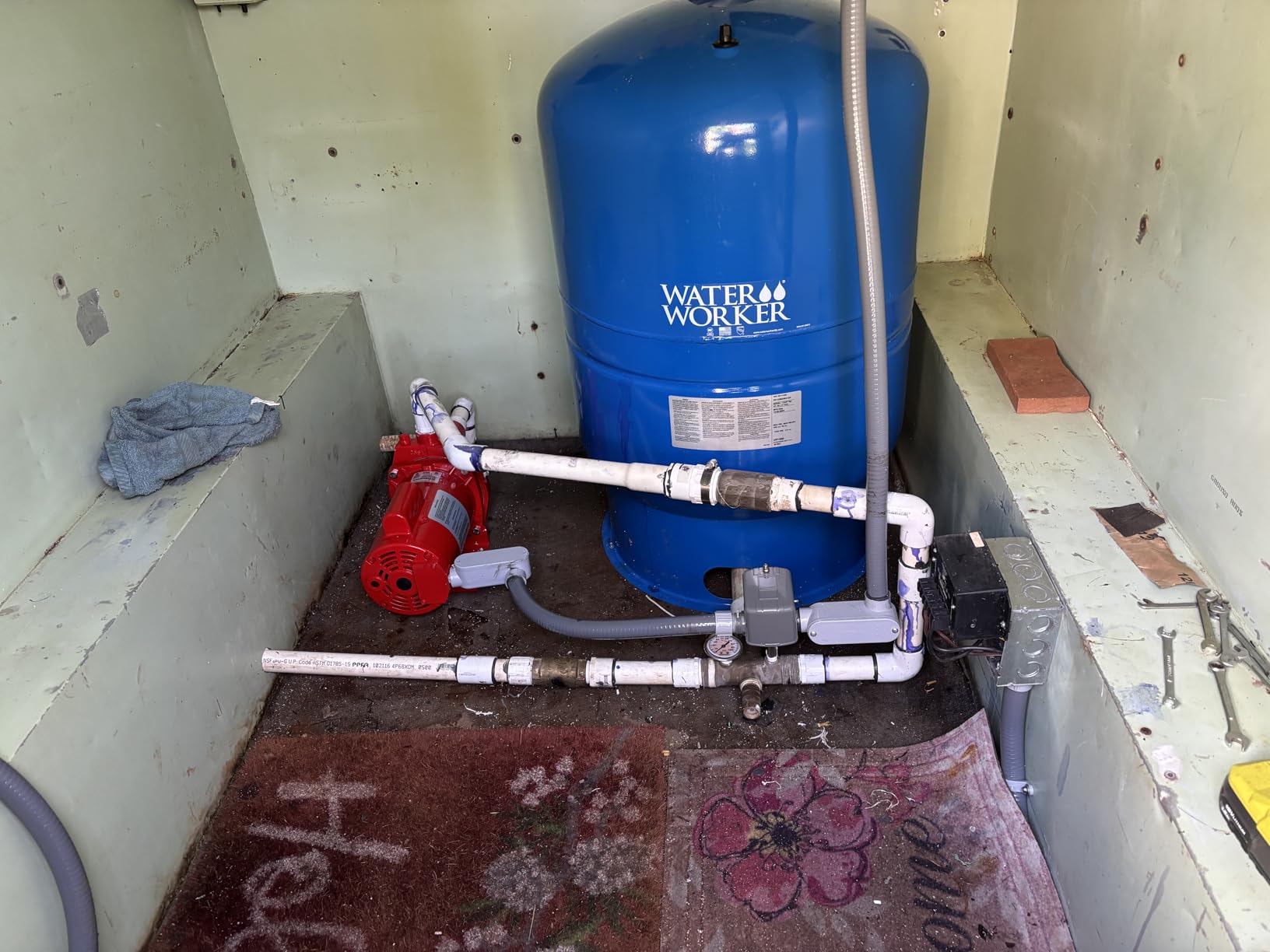
My practical test criteria for this model are simple: confirm the well water level with the pump off, keep suction piping airtight, and use a properly sized pressure tank. I would also install a pressure gauge where it can be read without opening the cabinet, because a falling reading can reveal a water-table problem before the pump overheats.
The electrical load deserves attention. The product record lists 17.6 amps at 115V and 8.8 amps at 230V, so a dedicated circuit and correct breaker sizing matter. Heavy use and poor ventilation can make the motor hot; a cool, dry pump house is part of the setup, not an accessory.
This is not my pick for a tiny cabin with a weak well or for anyone who wants the smallest possible system. It is the best fit for buyers who need meaningful flow and are comfortable commissioning a larger pump.
For whom it is good
The RJS-100-PREM fits a large residence, farm, or property with a static water level within 25 feet and a demand for stronger flow than a 1/2 or 3/4 HP pump can provide. Its cast iron body, dual voltage, and 23 GPM rating make it a sensible anchor for a permanent pressure system.
I would choose it over a compact booster when the water line has to serve multiple bathrooms, a laundry, livestock, or broad irrigation. The extra capacity gives the pressure tank room to do its job instead of asking a small pump to recover from every draw.
For whom it is bad
Avoid pairing this model with an unreliable well or a suction line that leaks air. Some buyers reported priming trouble, and a pump cannot compensate for a bad foot valve, loose fitting, or water level that has fallen below the practical suction limit.
I would also pause if the available electrical service is limited or if the pump must be installed beside a living area where motor noise is unacceptable. The listed cast iron construction and quiet feedback are positives, but an above-ground jet pump is still audible compared with a submersible.
2. Aquastrong 1.6 HP Stainless Steel Pump With Tank
Aquastrong 115V Shallow Well Garden Pump, Stainless Steel, 1320 GPH, Automatic Water Booster Jet Pump for Home, Garden, Lawn,Irrigation,1.6 HP with Pressure Tank
22 GPM
1.6 HP
Stainless steel, 115V
5 gallon tank
Pros
- NSF certified
- Stainless steel housing
- Pressure tank included
- Quiet operation
- Automatic overload protection
Cons
- Durability concerns after extended use
- Possible leaks after warranty
- Motor replacement not separately available
The Aquastrong PGA150SAN is the most package-oriented option here. It combines a listed 22 GPM, 1.6 HP shallow well pump, stainless steel housing, automatic pressure switch, and a 5-gallon pressure tank, so I would consider it when simplifying installation matters as much as buying the largest motor.
Its automatic switch starts at 20 PSI and shuts off at 40 PSI, rather than the 30/50 PSI setting common on several cast-iron models. That lower operating band can be appropriate for a basic home or garden system, but I would compare it with the home’s required pressure and fixture expectations before committing.
NSF certification is a meaningful advantage for a potable-water application, and stainless steel is attractive where corrosion is a concern. The product record also lists temperature sensing with an automatic overload stop, which is the kind of protection I want when a well’s supply is less predictable.
Customer summaries praise quiet operation, straightforward installation, and support, but some reviews raise long-term durability and leak concerns after the warranty period. I would treat those reports as a reason to inspect fittings and the pressure tank regularly, not as proof that every unit will fail.
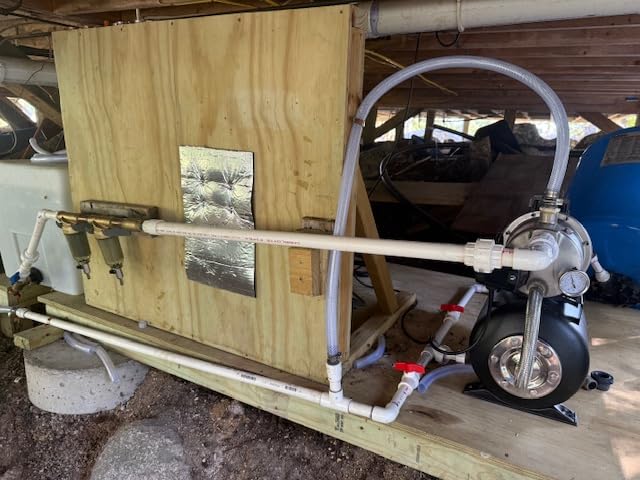
I see this model as a strong fit for a homeowner who wants fewer separate purchases. The included tank does not eliminate the need to verify tank pressure, support the plumbing, or provide an adequate air charge, but it makes the whole assembly easier to plan.
Its 115V-only specification narrows the choice for properties already arranged around 115V power. If the installation is in a damp basement, stainless steel helps, but a dry enclosure, GFCI protection, and correct drainage still matter.
For a well that produces sediment or iron, I would add a filter strategy before the water reaches the pump and fixtures. A pump is not a water-treatment system, and excess sediment can shorten the life of seals, switches, and valves.
For whom it is good
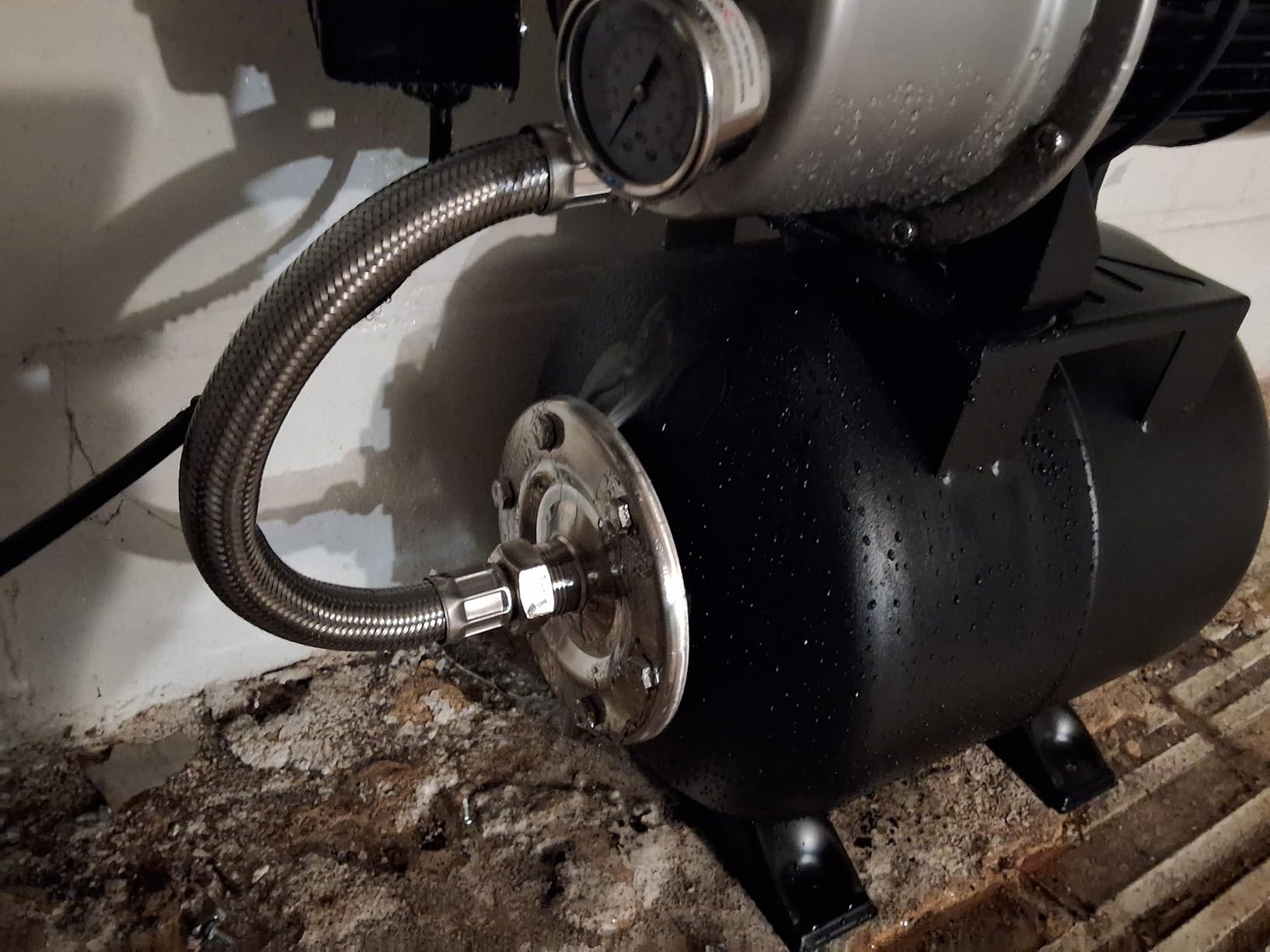
This Aquastrong is good for a household, cottage, or garden system where NSF certification, a stainless housing, and an included 5-gallon tank are priorities. It is especially attractive for someone who values quiet operation and a single coordinated package.
I would recommend it when the static water level is comfortably inside the listed 26-foot suction limit and the system does not need the higher 50 PSI operating range. Confirm the tank’s pre-charge against the planned switch settings.
For whom it is bad
It is less attractive for a buyer who needs a long service history, separate motor replacement, or a 230V installation. Limited replacement options can turn an otherwise good system into a larger replacement project if the motor fails years later.
I would also be cautious in a sediment-heavy well. A stainless housing does not remove abrasive particles from the water, and a prefilter or sediment-management plan may be necessary.
3. Goulds J5S 1/2 HP Dual-Voltage Jet Pump
Goulds Pump J5S Shallow Well Jet Pump, 115/230 volt, 1/2 hp
16.5 GPM
1/2 HP
Cast iron, dual voltage
25 ft maximum lifting height
Pros
- Well-built construction
- Easy voltage switching
- Good water pressure
- Direct replacement for older Goulds
- Reliable brand reputation
Cons
- Some damaged or seized units
- May not meet all specs
- Limited availability
The Goulds J5S is a traditional 1/2 HP shallow well jet pump for properties that do not need the flow of a 1 HP model. Its 16.5 GPM listing, 25-foot maximum lifting height, cast iron body, and stainless steel shaft make it a credible choice for a modest home, cottage, or farm service.
The dual-voltage capacitor-start motor and pressure regulator give an experienced installer flexibility. The product record identifies a 115/230V configuration, NEMA standard 60 Hz operation at 3500 RPM, and a built-in overload with automatic reset.
What I like here is the repairable, familiar architecture. If an existing property already has a Goulds footprint, a direct replacement can be more practical than redesigning the entire system, and local well-service familiarity may be easier to find.
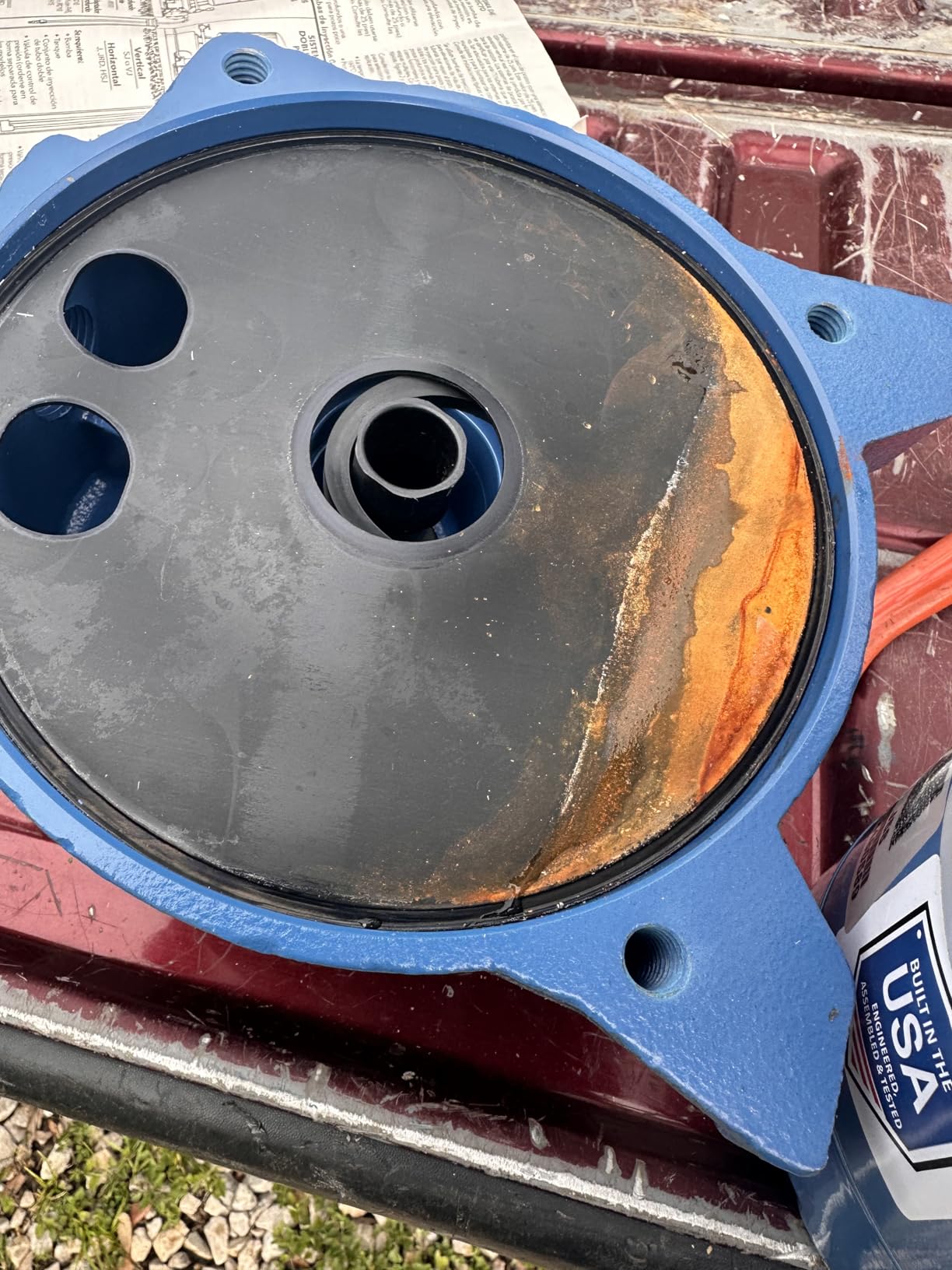
The tradeoffs are availability and consistency. Some customer summaries mention units arriving damaged or seized, and the supplied record warns that actual performance may not always match every specification. I would inspect the pump immediately and test it with a pressure gauge after installation.
Before choosing the J5S, I would measure the well’s static water level during a normal season and again after a dry spell. The 25-foot label describes the shallow-well application, not an invitation to install the pump at the limit and expect full flow.
The 1/2 HP motor is a better match for measured demand than for a wish list. A household with one bathroom, a kitchen, a laundry, and modest irrigation may be well served; a home planning several simultaneous fixtures may outgrow it.
Its cast iron construction is durable but heavy at 40.9 pounds, so I would mount it on a rigid, level base. Flexible pipe connections near the suction and discharge can reduce vibration transmitted into the building.
For whom it is good
The J5S suits a modest well system that values Goulds’ reputation, cast iron construction, and a 1/2 HP motor. I would put it high on the list when replacement compatibility and a pressure regulator are more important than maximum flow.
It is also a good discussion point with a local well professional who already services Goulds equipment. Familiar parts and service knowledge can matter more than a small difference in advertised GPM.
For whom it is bad
I would not choose it for a large home, a low-producing well, or a site with a water level close to the 25-foot limit. The lower horsepower cannot overcome those physical constraints.
The limited availability and reports of damaged units make pre-delivery inspection important. I would also avoid using the 16.5 GPM figure as a design number without accounting for depth, piping, and pressure.
4. Aquastrong 1.5 HP 4250 GPH Centrifugal Pump
AQUASTRONG 1.5 HP Shallow Well Jet/Centrifugal Pump, 4250 GPH, 115/230V, Durable Cast Iron Booster Pump for Lawn Sprinkler, Garden Irrigation
4250 GPH
1.5 HP
Cast iron, 115/230V
108 ft max head
Pros
- Very quiet operation
- Powerful water flow
- Dual voltage
- Easy installation
- Good customer support
Cons
- Switch reliability concerns
- Prime retention issues
- May trip breakers on unsuitable circuit
The Aquastrong SPRK150 is the clear high-volume irrigation choice in this group, with a listed maximum flow of 4250 GPH and a 108-foot maximum head. Its 2-inch NPT suction and 1-1/2-inch discharge are sized for moving more water than a typical household pressure pump.
The cast iron volute and automatic thermal overload protector are useful features, and the product record lists dual-voltage operation despite the detailed voltage section showing 115V. I would verify the exact terminal configuration and current requirements from the model documentation before connecting it.
Customer feedback is positive about quiet operation, strong flow, installation, and support. The less reassuring notes concern centrifugal-switch reliability, prime retention, and breaker trips when the circuit is not suitable for the motor.
I would use this model for a lawn, garden, sprinkler, or transfer application where maximum movement matters more than a compact household pressure system. It is not automatically the right choice for a small well with limited recovery.
The big number to keep in perspective is maximum flow. At a 108-foot head, actual output will be lower, and a sprinkler system with long runs can demand more pressure than the same pump can provide at its peak flow.
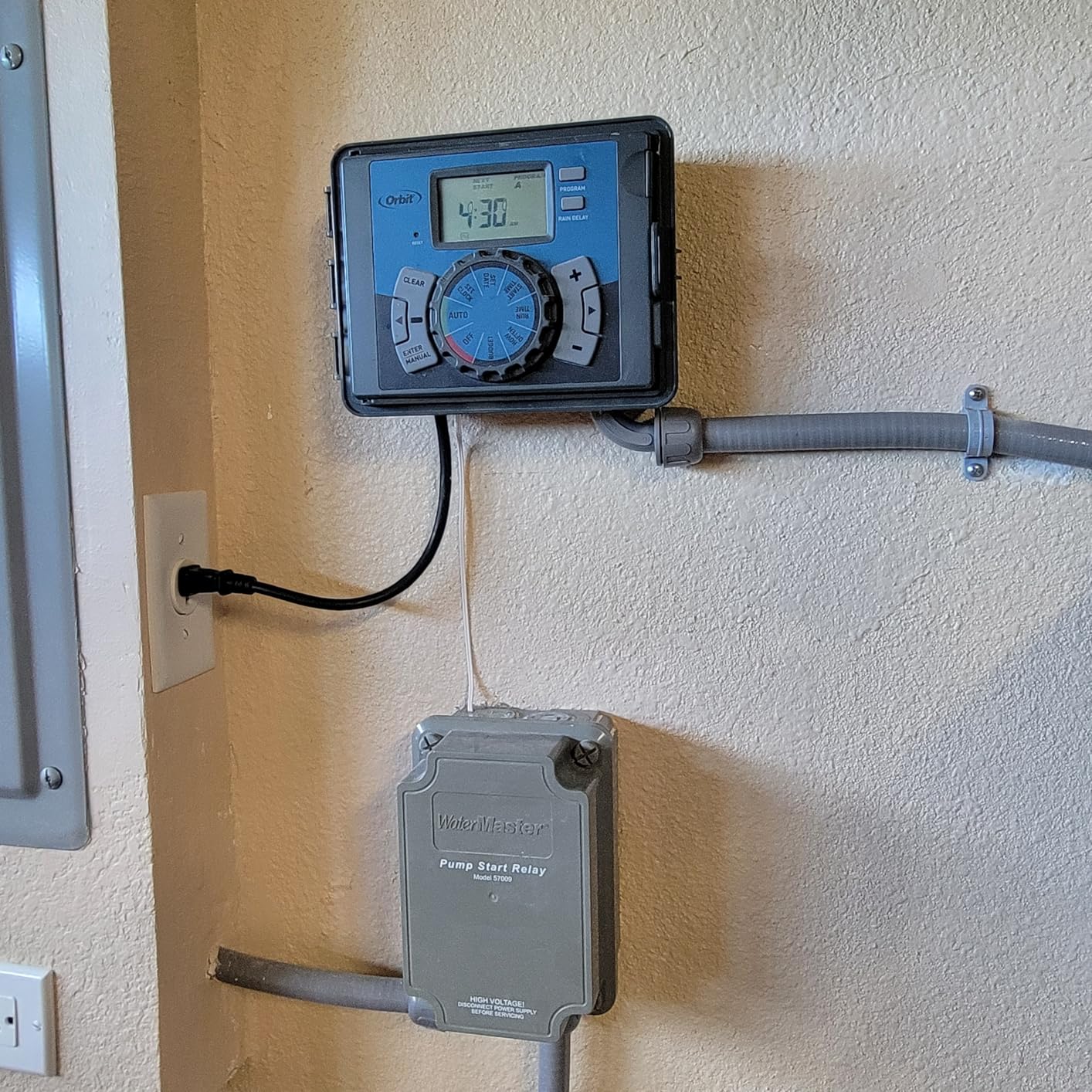
My installation checklist starts with pipe diameter, a leak-free suction path, a foot valve sized for the line, and a pump base that does not amplify vibration. I would also size the circuit based on the nameplate rather than assuming a standard household outlet is adequate.
For sediment-prone wells, I would not skip filtration or settle for a pump that runs dry. A low water table can burn out a motor faster than any warranty replacement can make up for it.
For whom it is good
The SPRK150 fits irrigation, lawn, garden, and other high-flow jobs that need a cast iron centrifugal pump. I would choose it for a property with a broad sprinkler layout and a properly designed electrical circuit.
It is also worth considering for a small farm where moving water quickly is more valuable than the compact footprint of a household jet pump. The listed 4250 GPH maximum gives useful planning headroom, provided the well can replenish at a similar rate.
For whom it is bad
It is a poor match for a tiny well, a weak electrical panel, or a homeowner expecting a quiet, low-maintenance domestic system. The same motor and plumbing capacity that make it powerful can create larger consequences when setup is wrong.
I would not ignore the reports about prime retention or centrifugal-switch issues. Confirm the return and replacement path before installation, and keep the pump protected from dry running.
5. Acquaer 1 HP Convertible Shallow Well Jet Pump
Acquaer Shallow/Deep Well Jet Pump, Cast Iron Convertible Pump with Ejector Kit, Well Depth Up to 25ft or 90ft, 115V/230V Dual Voltage, Automatic Pressure Switch
25.9 GPM
1 HP
Cast iron, dual voltage
Shallow or deep well
Pros
- Shallow and deep well conversion
- Quiet operation
- Easy installation
- Dual voltage
- Included ejector kit
Cons
- Some quality control issues
- Possible seam leaks
- Advertised performance may vary
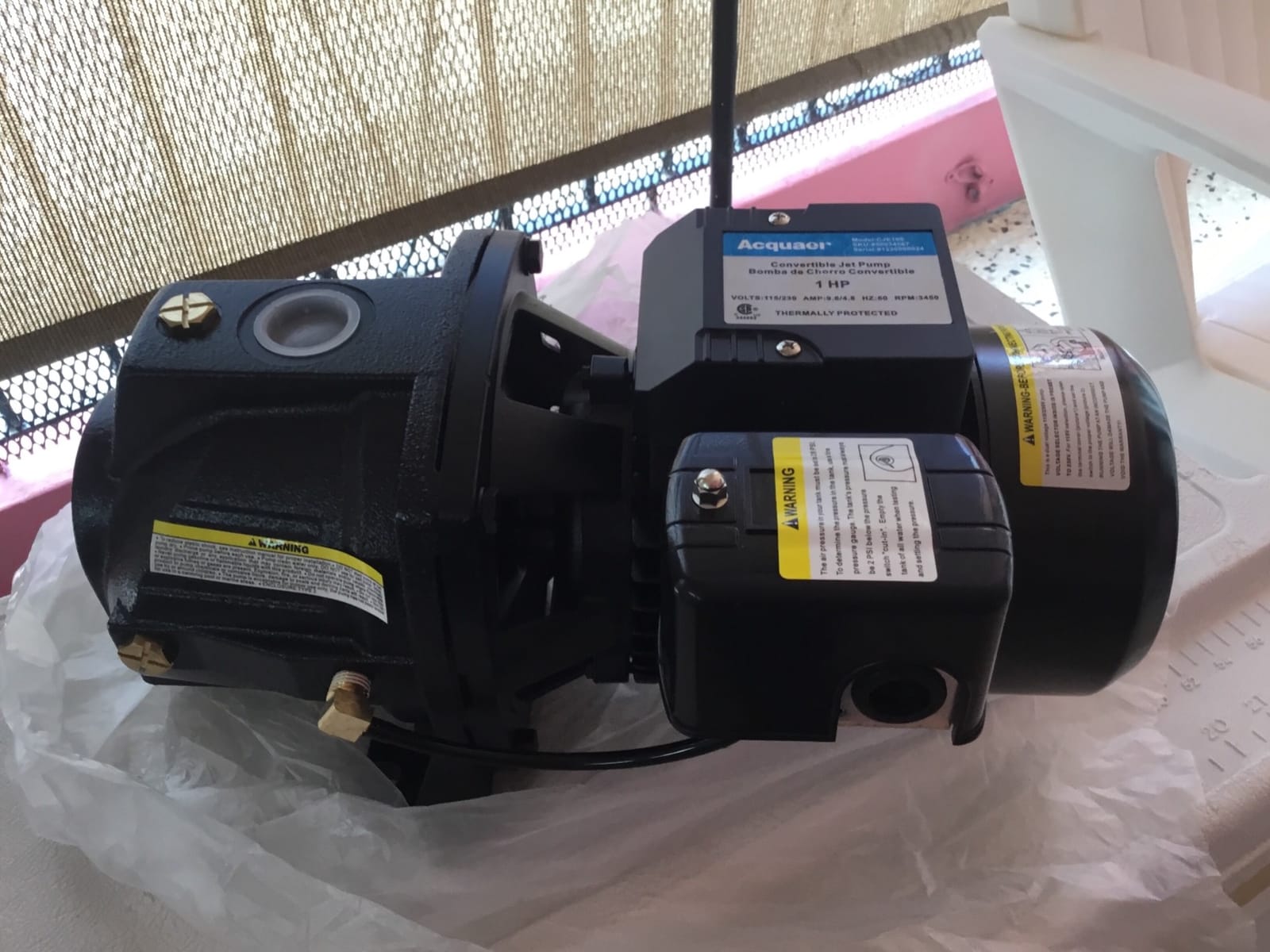
The Acquaer CJE100-1 is the most flexible choice because the same 1 HP pump can serve a shallow well from 0 to 25 feet or a deep well from 26 to 90 feet when configured with the included ejector kit. That flexibility makes it my value pick for owners who expect their well depth to change or who want one platform for two applications.
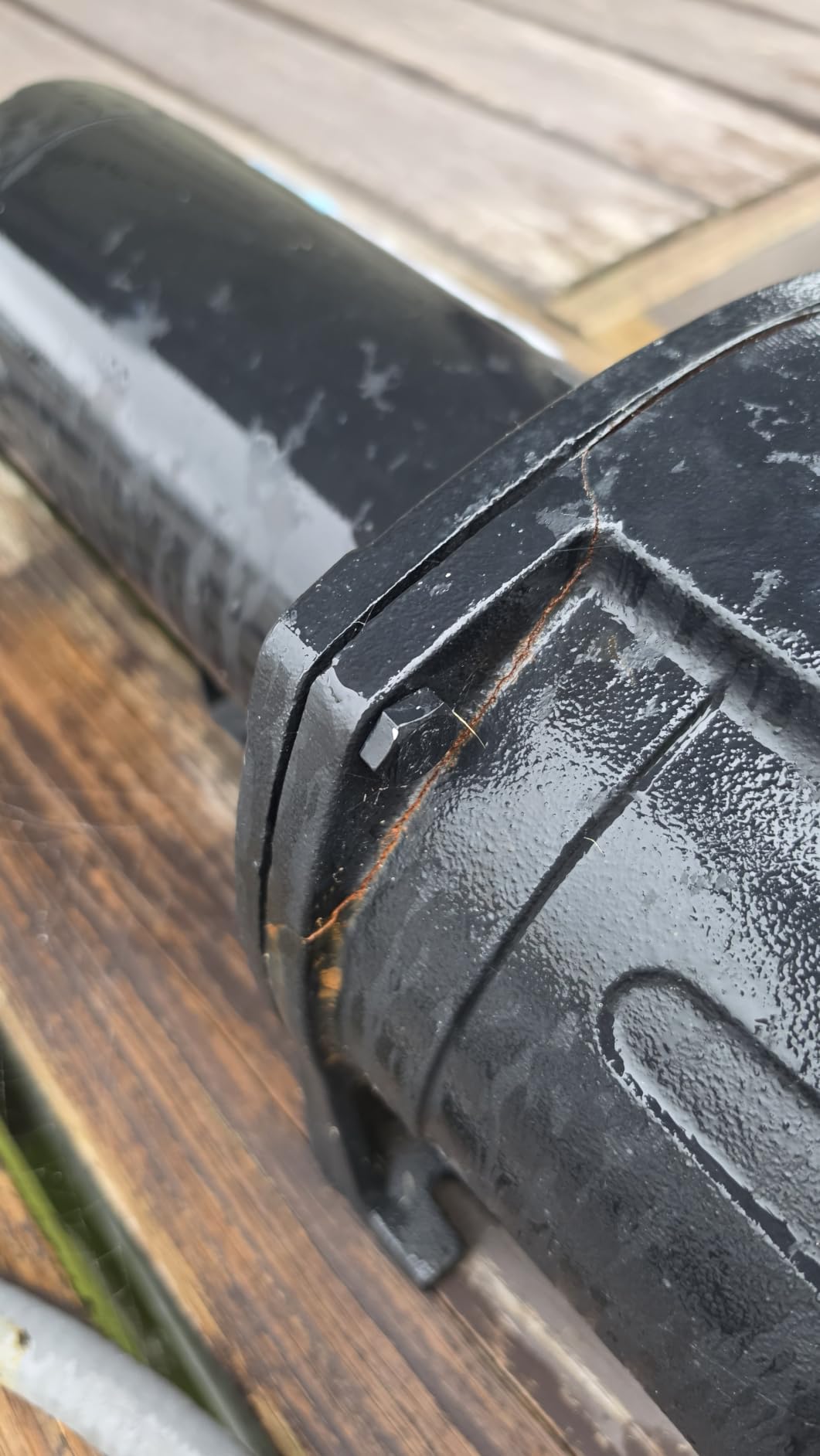
The product record lists 25.9 GPM, a 20/40 PSI automatic pressure switch, cast iron volute construction, thermal overload protection, and switchable 115V/230V operation. It weighs 36.5 pounds, which is manageable for a careful two-person installation.
Review summaries describe easy installation, quiet operation, and good value, while also noting quality-control concerns, seam leaks, and performance that can differ from advertised figures. I would treat the flexible design as a reason to buy carefully, not as a reason to skip testing.
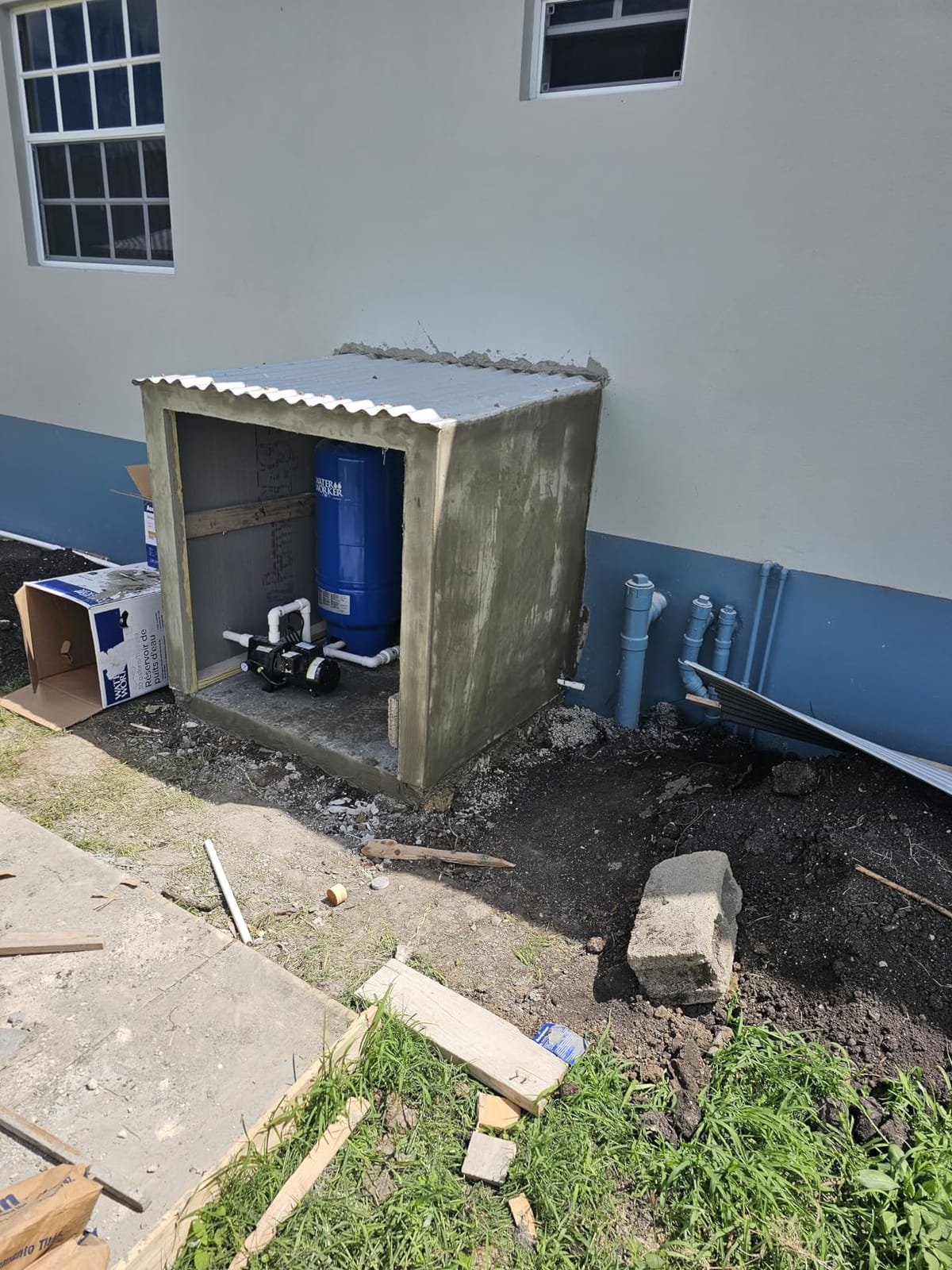
For a shallow well, the convertible setup must use the correct shallow-well ejector and plumbing arrangement. I would photograph the original configuration and follow the manufacturer’s instructions rather than assuming deep-well hardware is interchangeable.
My first test would be a controlled prime and pressure build. I would check for air leaks, verify the foot valve holds water, and watch the gauge through several start-stop cycles before connecting sensitive appliances.
The 20/40 switch is a lower-pressure system than the 30/50 setting found on some competing models. That may be adequate for basic fixtures, but irrigation and homes with higher pressure expectations deserve a direct comparison.
I appreciate the dual-voltage flexibility, but it creates a safety-critical setup step. The factory setting, wire gauge, breaker, and motor lead connections all need confirmation from the installation instructions and a qualified electrician when the answer is not obvious.
For whom it is good
The CJE100-1 is good for a property that may move from a shallow well to a deeper installation, or for a buyer who wants one pump family with an ejector kit. Its 1 HP motor, 25.9 GPM listing, and quiet operation are compelling for mixed future needs.
I would recommend it to a hands-on owner who can test the installation and monitor pressure. The flexibility is most valuable when the owner is prepared to learn the system rather than treating it as a set-and-forget appliance.
For whom it is bad
It is less suitable for someone who wants the lowest risk of leaks or a long record of identical units performing to specification. Reports of seam leaks and variability mean inspection and documentation are worth the effort.
I would also avoid choosing it solely because the maximum GPM is high. If the well cannot supply that flow, the extra advertised capacity does not solve recovery problems.
6. Goulds J10S 1 HP Self-Priming Jet Pump
Goulds J10S Shallow Well Jet Pump
25 GPM
1 HP
Cast iron, 115/230V
25 ft maximum depth
Pros
- Powerful and quiet operation
- Easy priming
- Self-priming capability
- Automatic overload reset
- Stainless steel shaft
Cons
- Very low stock
- Not Prime eligible
- Shipping damage concerns
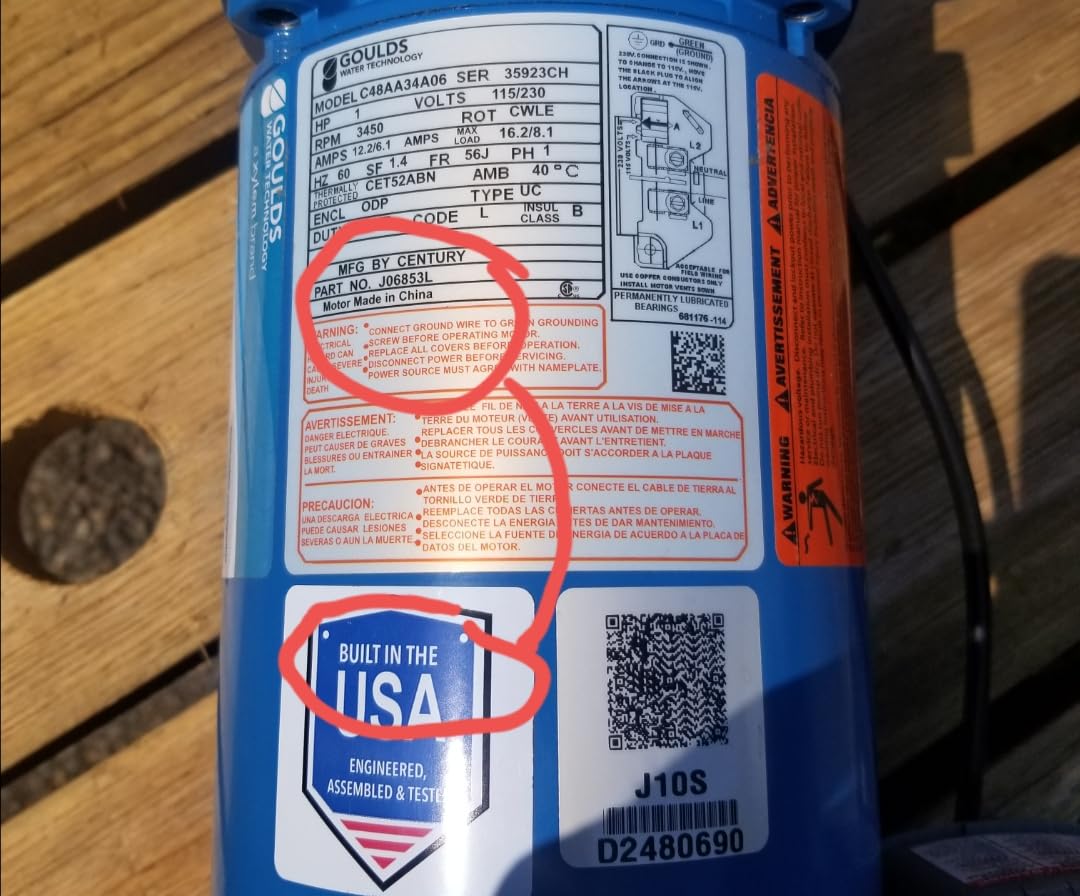
The Goulds J10S is a 1 HP shallow well jet pump with a listed 25 GPM flow, 25-foot well depth, and a familiar cast iron body with a stainless steel shaft. I see it as a strong candidate for buyers who value established pump architecture and serviceability over a modern all-in-one package.
The product record describes a capacitor-start single-phase motor, built-in overload with automatic reset, pressure regulator, and self-priming design. The 1-1/4-inch NPT suction and 1-inch NPT discharge are conventional sizes for a home or cottage system.
Customers describe powerful, quiet operation and straightforward priming, with some concern about shipping damage to pressure controls. The low stock status is another practical drawback, so I would confirm availability and delivery terms before making a design decision.
Its traditional construction is a plus when local well-service professionals already know the Goulds line. I would not pay for brand reputation while ignoring the need for a correct suction line, tank, and electrical installation.
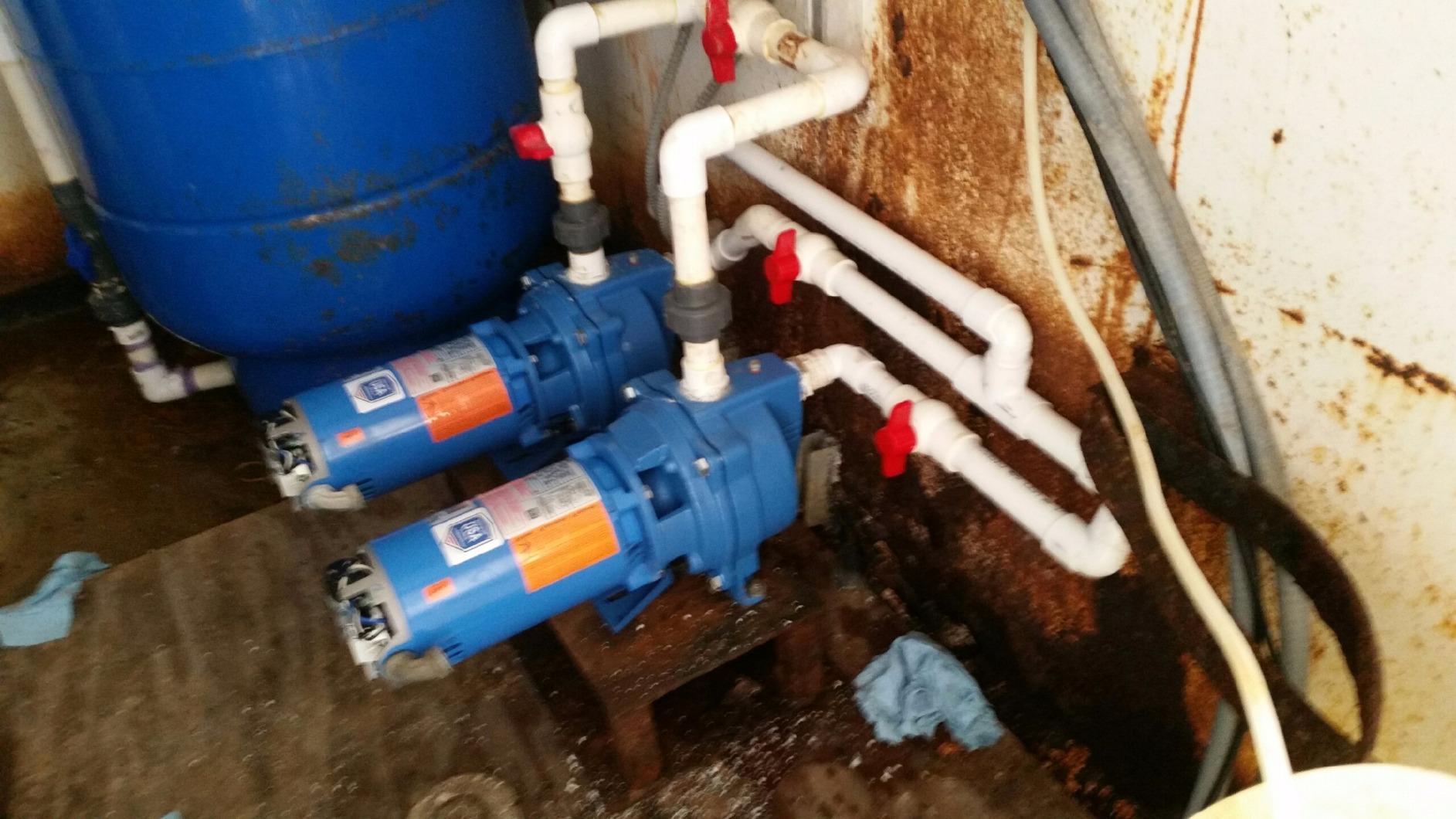
Self-priming does not mean the pump can pull water from an unlimited depth. I would fill the priming chamber, confirm the foot valve holds, and use an airtight suction line with the fewest possible joints.
The J10S is a good choice when the static level is comfortably below the pump and the system needs a 30/50 PSI switch. I would compare that pressure range with the home’s fixture and irrigation requirements before selecting it over a lower-pressure Aquastrong system.
Because the record lists only four units left and no Prime eligibility, I would buy from a seller that supports replacement if the unit arrives damaged. A pump that arrives with a bent shaft or compromised pressure control is not a bargain.
For whom it is good
The J10S fits a residential home, farm, or cottage that wants a 1 HP, 25 GPM shallow well pump with a stainless steel shaft and conventional service parts. I would favor it when quiet operation and established Goulds serviceability matter.
It is also a good candidate for a replacement where the existing plumbing and pressure arrangement already match a 30/50 PSI system. Keeping the system close to its original design can reduce installation surprises.
For whom it is bad
It is not the best choice for a buyer who needs immediate availability, Prime delivery, or a long inventory of comparable units. The low stock status is too important to treat as a footnote.
I would also be cautious after transit. Inspect the pressure controls, shaft, housing, and fittings before accepting the shipment, and retain the packaging until the first test cycle is complete.
7. Red Lion RJS-75-PREM 3/4 HP Cast Iron Jet Pump
Red Lion RJS-75-PREM 115/230V, 3/4 HP, 16 GPM, Shallow Well Jet Pump
16 GPM
3/4 HP
Cast iron, 115/230V
25 ft maximum depth
Pros
- Reliable performance
- Quiet operation
- Dual voltage
- Cast iron construction
- Pressure switch and gauge included
Cons
- Variable long-term lifespan
- May require rewiring
- Check factory voltage setting
The Red Lion RJS-75-PREM is a well-balanced 3/4 HP pump for an average home or cottage. Its listed 16 GPM flow and 25-foot maximum lifting height sit between a 1/2 HP model and a full 1 HP system, making it a practical middle ground when 25 GPM is unnecessary.
The cast iron casing and volute, glass-filled thermoplastic impeller and diffuser, dual voltage, and factory 30/50 pressure switch are useful features. A pressure gauge is included, which makes commissioning and later troubleshooting easier.
Customer feedback highlights performance, quiet operation, installation, and manufacturer support. Some buyers report varying long-term lifespan or the need to rewire for the desired voltage, so I would verify the factory setting before ordering any electrical work.
I would choose this model for a measured household load rather than using horsepower as a substitute for a flow calculation. It is a strong fit when one bathroom, ordinary laundry, and garden use are expected without several demanding fixtures operating at once.
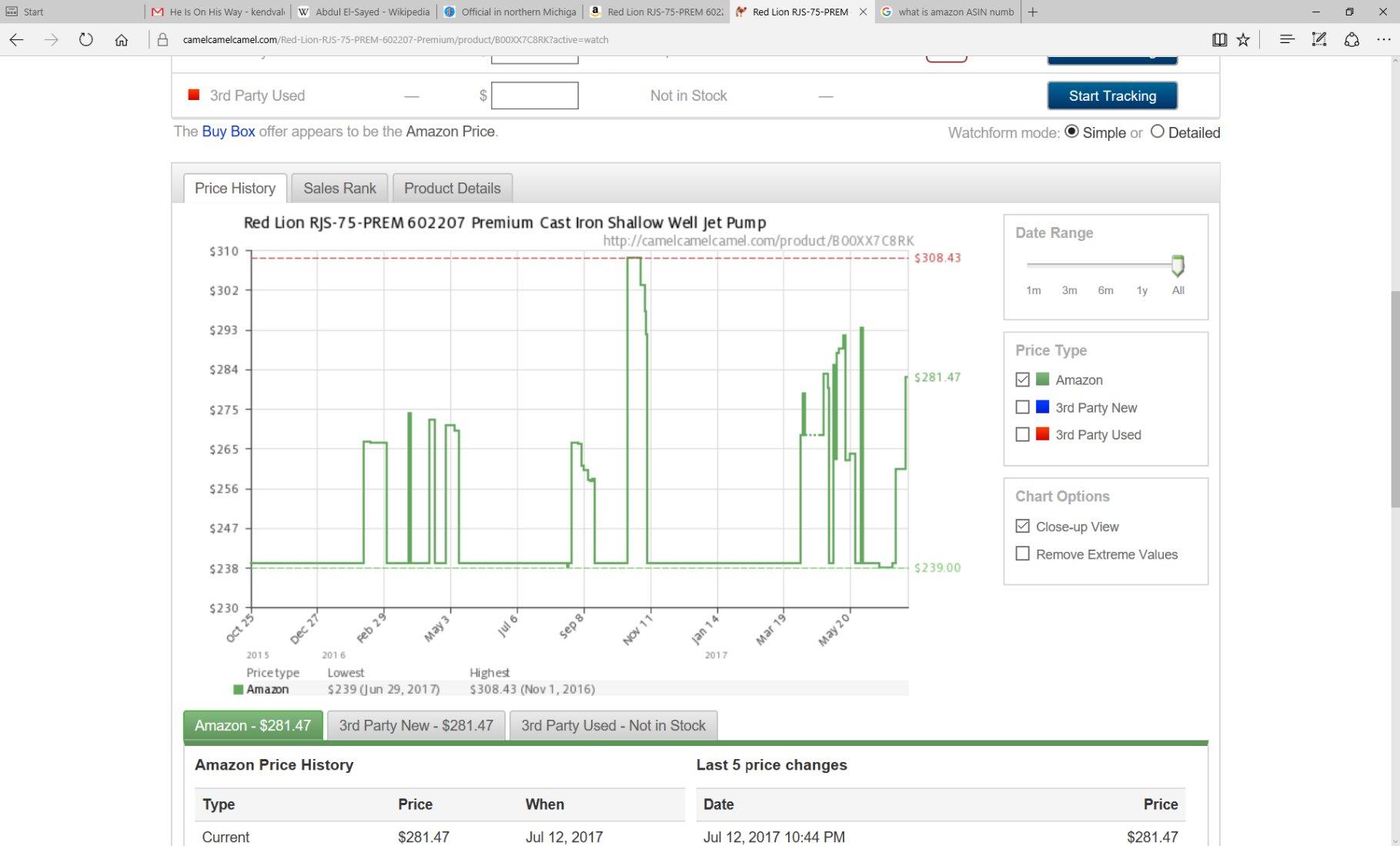
Its 38.2-pound weight and 17.72-inch length are manageable, but the base still needs to be rigid and level. I would isolate the pump from the building frame with flexible connectors where appropriate.
The 1-1/4-inch suction and 1-inch discharge give the installer a conventional layout. I would keep the suction run as short and direct as possible, because friction and air leaks can erase the difference between a well-sized 3/4 HP pump and a larger model.
For freeze-prone locations, drain the pump and protect the suction and discharge lines according to the installation instructions. An above-ground pump is easier to service, but exposed plumbing still needs the same winter care as any other water system.
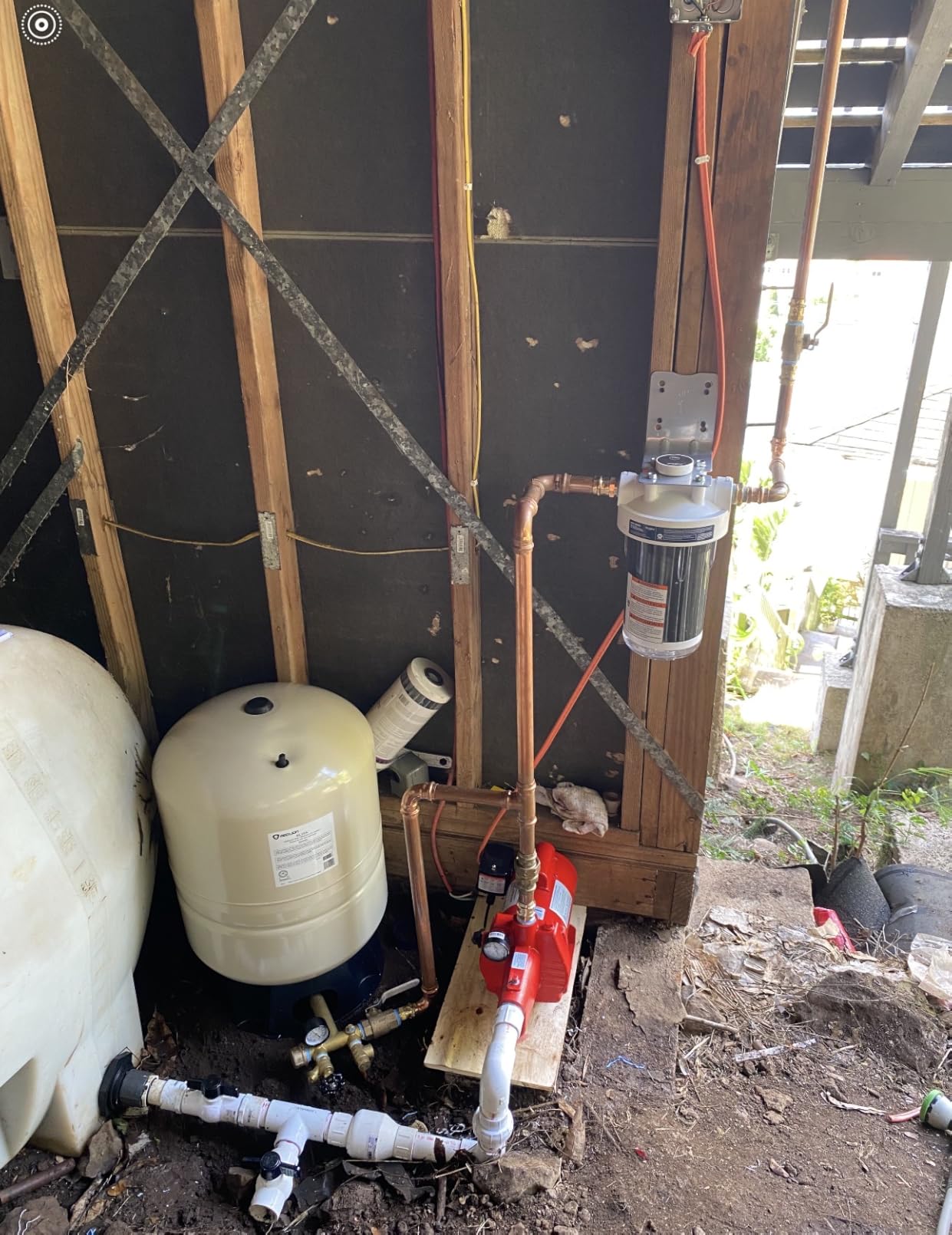
For whom it is good
The RJS-75-PREM is good for an average-sized home or cottage that needs a durable cast iron pump without the flow and electrical demand of a 1 HP system. I would put it near the top of the list for straightforward, quiet household service.
It is also sensible for an owner who values a pressure switch, gauge, dual voltage, and broad service familiarity in one package. The included gauge is a small feature that pays off when diagnosing short cycling.
For whom it is bad
I would not pick it for a large home, simultaneous high-demand fixtures, or a well whose water level sits close to 25 feet. A 3/4 HP motor has less margin than a 1 HP model when the conditions are difficult.
The reports of variable lifespan make water quality and maintenance important. A failing pressure tank, dirty filter, or dry-running condition can shorten the life of even a well-built pump.
8. Pentair SNE-L 1 HP Winterizable Jet Pump
Pentair SNE-L 1 HP 115/230 Volt Shallow Well Jet Pump
13.7 GPM
1 HP
Cast iron, dual voltage
Drain port for winterizing
Pros
- Excellent build quality
- Quiet operation
- Dual voltage
- Self-priming after filling
- Easy winterizing drain
Cons
- Very low stock
- Not Prime eligible
- Warranty support concerns
The Pentair SNE-L is a premium 1 HP shallow well pump for owners who put winterization and long-term construction first. Its listed 13.7 GPM flow is lower than several other 1 HP options, but the close-grained cast iron body, self-priming design, and dedicated drain port make it unusually service-friendly.
The record lists a 67 PSI maximum operating pressure, 154 feet of total dynamic head, a 30/50 pressure switch, and a 55-pound weight. Those numbers describe a substantial pump, not a lightweight transfer unit.
Customer summaries give this model the highest rating in the product set and praise its quiet operation, build quality, and straightforward installation. They also flag very low stock, non-Prime delivery, and concerns about warranty support, so the purchase channel matters.
I would recommend the SNE-L for a permanent, cold-climate installation where the drain port can be used as part of a real winterization procedure. It is less compelling when maximum flow is the only criterion.
The drain port does not eliminate freeze risk by itself. I would isolate the pump house, drain the pump and exposed lines, protect the well-side piping, and follow the manufacturer’s winterization directions for the exact model.
The 13.7 GPM figure deserves sizing discipline. I would use the actual fixture count and measured well recovery, then leave room for pressure loss through the pipe, tank, filters, and elevation.
Because availability is limited, I would verify the exact model number, voltage configuration, and return policy before installation. A premium pump is not a good value if a damaged or unavailable unit leaves the well offline.
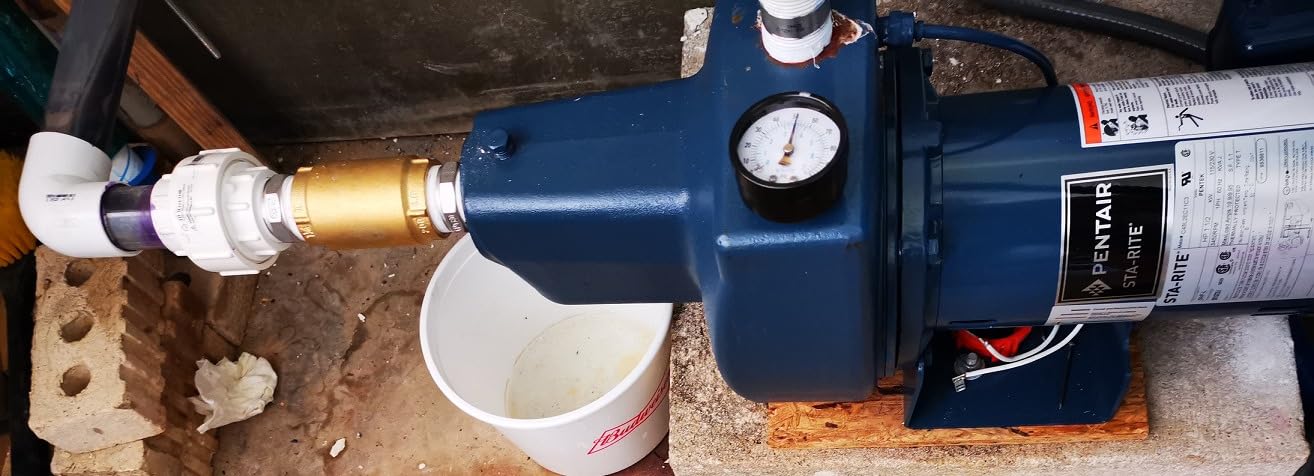
For whom it is good
The SNE-L is good for a rural home, farm, or cottage with a shallow well, cast iron preference, and a need to drain the system for winter. I would choose it when quiet operation and serviceability outweigh the need for very high flow.
It also fits a buyer who is replacing an older Pentair or similar system and wants a self-priming pump with a 30/50 switch. The drain port is a tangible benefit in a properly designed cold-weather installation.
For whom it is bad
I would not choose it for a project requiring rapid availability, Prime delivery, or a large maximum-flow number. Four units listed in stock is not the same as dependable supply.
The heavy 55-pound body also calls for a planned installation. If the pump must be moved frequently, a lighter model may be easier to live with.
How to Choose the Best Shallow Well Jet Pump
Confirm the depth before comparing horsepower
A shallow well jet pump is generally intended for a static water level of 25 feet or less. Measure the water level when the pump has not been running, then repeat the measurement during a dry period; a seasonal drop can change the right pump choice.
Do not confuse total well depth with water depth. A well can be 60 feet deep while its water level is only 15 feet below the surface, and that is a shallow-well pumping situation if the static level and lift conditions support it.
If the water level regularly falls below 25 feet, compare a convertible or deep-well configuration or a submersible pump instead. A jet pump cannot create unlimited suction, and a motor that runs dry is a common route to premature failure.
Size flow to the household, not the headline GPM
GPM means gallons per minute, but the maximum number in a listing is measured under favorable conditions. Start by adding the likely simultaneous demand from the kitchen, bathroom, laundry, livestock, and irrigation, then subtract a sensible reserve for future fixtures.
A small cottage may be satisfied by a modest 1/2 or 3/4 HP model, while a larger home or farm may justify 1 HP. The 23 GPM Red Lion and 25 GPM Goulds J10S offer more overhead than the 13.7 GPM Pentair, but the well’s recovery rate sets the real ceiling.
Use total dynamic head, not just suction lift, when calculating the system. Head includes the vertical lift plus friction losses through pipe, fittings, the tank, filters, and any elevation change between the pump and the highest fixture.
Match the pressure switch and tank to the system
The most common pressure range in this group is 30/50 PSI, while the Aquastrong models use 20/40 PSI. A 20/40 system may be adequate for basic domestic use, but irrigation and fixtures that expect stronger pressure can expose the difference quickly.
A pressure tank separates the pump from every short draw and reduces cycling. Check the tank’s air charge, check valve, fittings, and placement, and replace a waterlogged tank rather than blaming the pump for short cycling.
Forum users repeatedly identify a failing pressure tank as a cause of constant running. I would test the tank before replacing a pump: if it has no usable air reserve, the new pump may inherit the old problem.
Choose materials and voltage for the site
Cast iron housings are favored for durability and weight, while stainless steel can make sense where corrosion resistance matters. Neither material removes sediment from the water, so use filtration when the well produces sand, rust, or iron precipitate.
Confirm 115V versus 230V before ordering. Several models advertise dual voltage, but the factory setting, wire gauge, breaker, and local code still determine the safe installation; do not change voltage by trial and error.
NSF certification is important when the pump supplies drinking water. It is a material and safety distinction, not a substitute for testing the well water itself or maintaining the treatment equipment.
Plan for sediment, noise, and service access
Sediment and rust can wear an impeller, seal, and valve. I would install an appropriate filter or strainer, inspect it on a schedule, and address a changing water condition before assuming the pump is defective.
Jet pumps are above ground and therefore easier to service than submersibles, but they are usually noisier. A basement pump house, vibration isolation, and a location away from bedrooms can make a meaningful quality-of-life difference.
Forum discussions mention pumps lasting 10 to 15 years with proper maintenance, but that is an experience range rather than a guarantee. Keeping the motor cool, the tank healthy, the suction line airtight, and the water level stable gives a pump its best chance.
Install carefully and protect the system from freezing
My installation checklist is: measure the static water level, choose the correct foot valve, keep suction piping airtight and short, support the pump on a rigid base, verify voltage, set the pressure switch, charge the tank, and test several start-stop cycles.
Priming trouble is common during a new installation. If the pump will not build pressure, check the water level, leaks, foot valve, priming chamber, impeller rotation, and switch setting before concluding that the motor is bad.
For winter, drain the Pentair SNE-L through its listed drain port and winterize every exposed line and component. The same principle applies to the other pumps: drain the system, protect the well-side plumbing, and keep the pump enclosure above freezing where the local climate requires it.
DIY installation is reasonable for a homeowner who understands suction plumbing, electrical safety, pressure tanks, and local code. I would hire a qualified well or pump professional for uncertain wiring, unusual well conditions, buried plumbing, or any sign of a collapsing well or contaminated water.
Match the model to the job
Choose the Red Lion RJS-100-PREM for high-flow household or farm service, the Aquastrong 1.5 HP for irrigation and large water movement, the Pentair SNE-L for a winterizable cast iron system, and the Red Lion RJS-75-PREM for a balanced mid-size home.
Choose the Acquaer CJE100-1 when shallow-to-deep flexibility is valuable, the Goulds J5S when a 1/2 HP replacement is enough, the Goulds J10S when traditional serviceability matters, or the Aquastrong 1.6 HP when NSF certification and an included tank matter most.
The best shallow well jet pump is the one that meets the measured water level and flow demand without forcing the motor to run hot, dry, or constantly. I would favor conservative sizing, accessible service, and proven replacement support over a large maximum-flow claim.
Frequently Asked Questions
What are the best jet pumps for shallow wells?
The best jet pump depends on water depth, required flow, and installation. The Red Lion RJS-100-PREM is a strong all-around 1 HP option, the Acquaer CJE100-1 offers shallow-to-deep conversion, and the Pentair SNE-L adds a cast iron body with a winterizing drain port.
Is there a difference between a jet pump and a shallow well pump?
A shallow well pump is an application type, while a jet pump describes how it moves water. A shallow well jet pump sits above ground and uses a centrifugal impeller and venturi jet to lift water from a static level generally no deeper than 25 feet.
Who makes the best jet pumps?
Red Lion and Goulds are trusted choices for conventional cast iron shallow well jet pumps, while Acquaer stands out for convertible shallow and deep-well use. The best brand is the one with the right flow, voltage, parts, and local service support for your well.
What is the best shallow well jet pump for home use?
For many homes, the Red Lion RJS-100-PREM offers the strongest balance of 23 GPM listed flow, 1 HP power, cast iron construction, and dual voltage. A smaller Red Lion RJS-75-PREM or Goulds J5S may be more appropriate when measured demand is modest.
How deep can a shallow well pump work?
A shallow well jet pump is intended for a static water level within about 25 feet of the surface, though exact performance depends on lift, piping, pressure, and pump design. Measure the water level during normal and dry conditions, because a falling water table can make a deep-well or submersible pump necessary.
The Best Shallow Well Jet Pump for Your Water System
The best shallow well jet pumps are not defined by horsepower alone. Start with the static water level, estimate simultaneous water demand, and then match the pump to the total dynamic head, pressure range, tank, and electrical service.
I would choose the Red Lion RJS-100-PREM for a large home or farm, the Acquaer CJE100-1 for flexible future well depth, and the Pentair SNE-L when winterization and a heavy cast iron body matter most. The Goulds J10S and Red Lion RJS-75-PREM remain strong choices for owners who value traditional serviceability.
Before ordering, confirm availability, voltage, warranty support, replacement parts, and the seller’s damage policy. A carefully installed shallow well jet pump can provide accessible, dependable service for years, but only when the well, tank, suction line, and maintenance routine are treated as one system.